
A 1780 Colonial Home in One of Connecticut’s Most Private Lake Communities
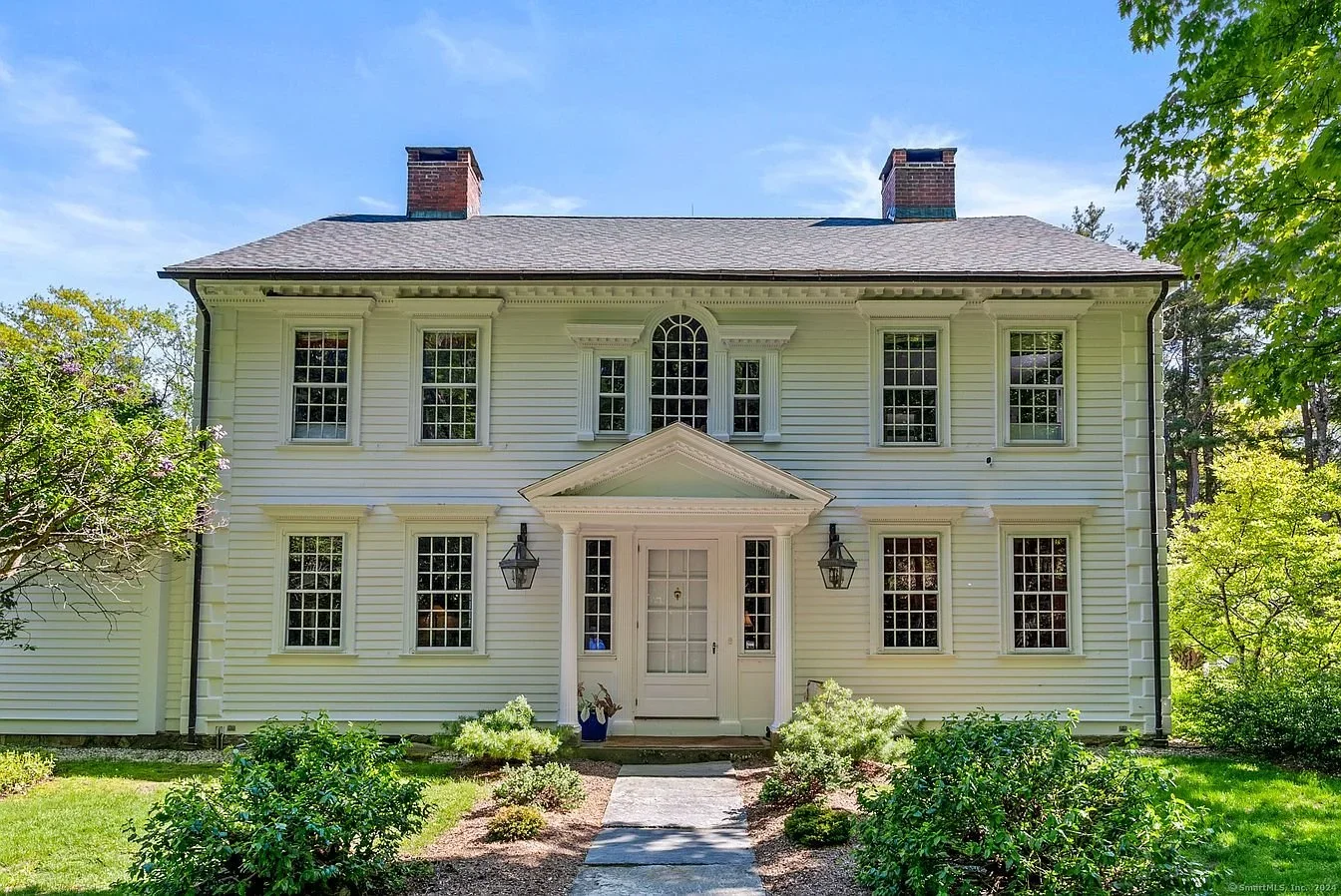
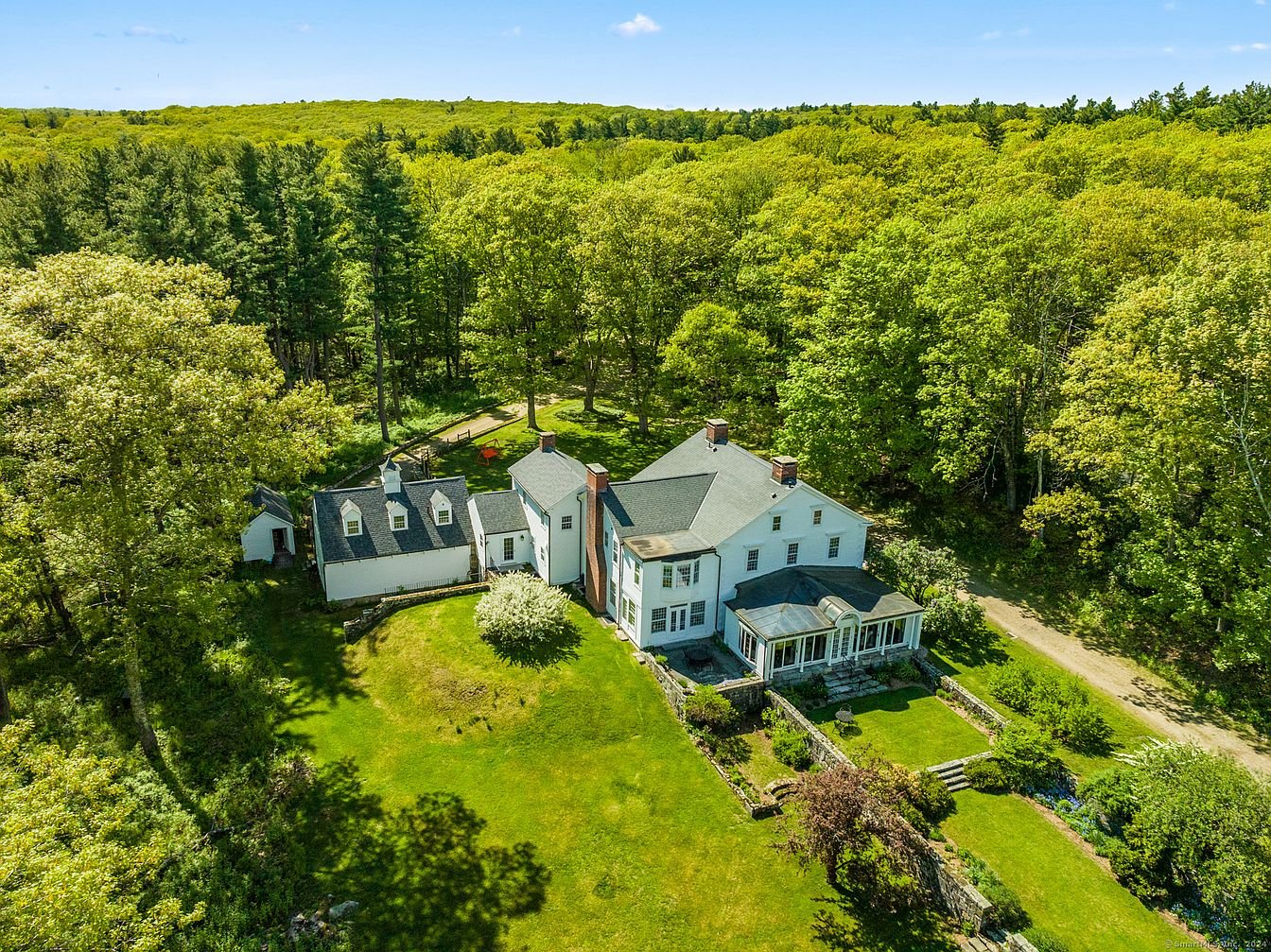
Listed by William Pitt Sotheby's International Realty for $4,490,000, this single-family residence in Norfolk, Connecticut offers 6 bedrooms, 7 full bathrooms, and 1 half bath across approximately 5,671 sq ft (527 sq m) of interior living space. The property spans 100.99 acres (40.86 hectares) within the private Doolittle Lake community in Litchfield County, part of the approximately 1,700-acre Doolittle Lake Company woods.
The Doolittle Lake Company
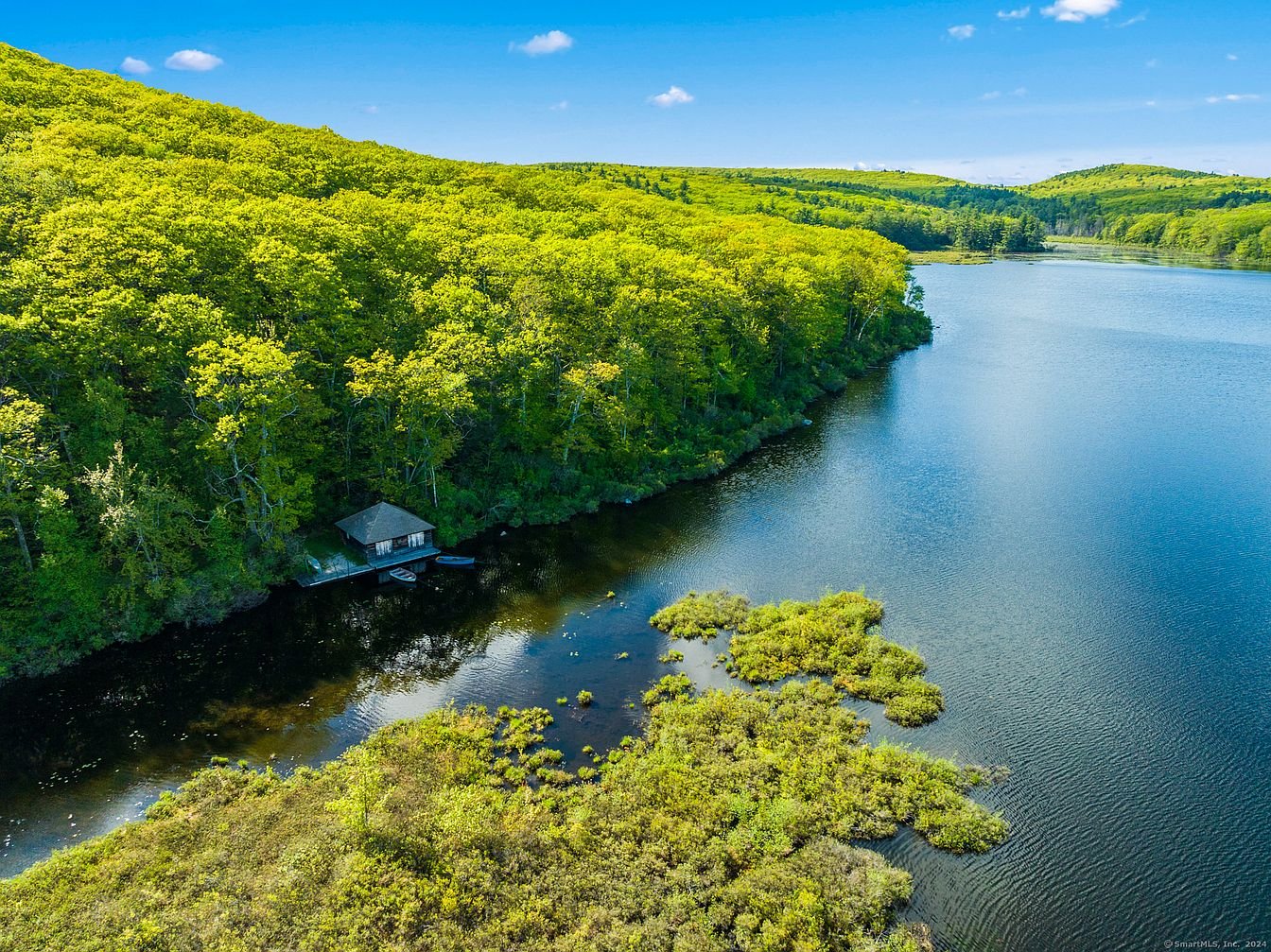
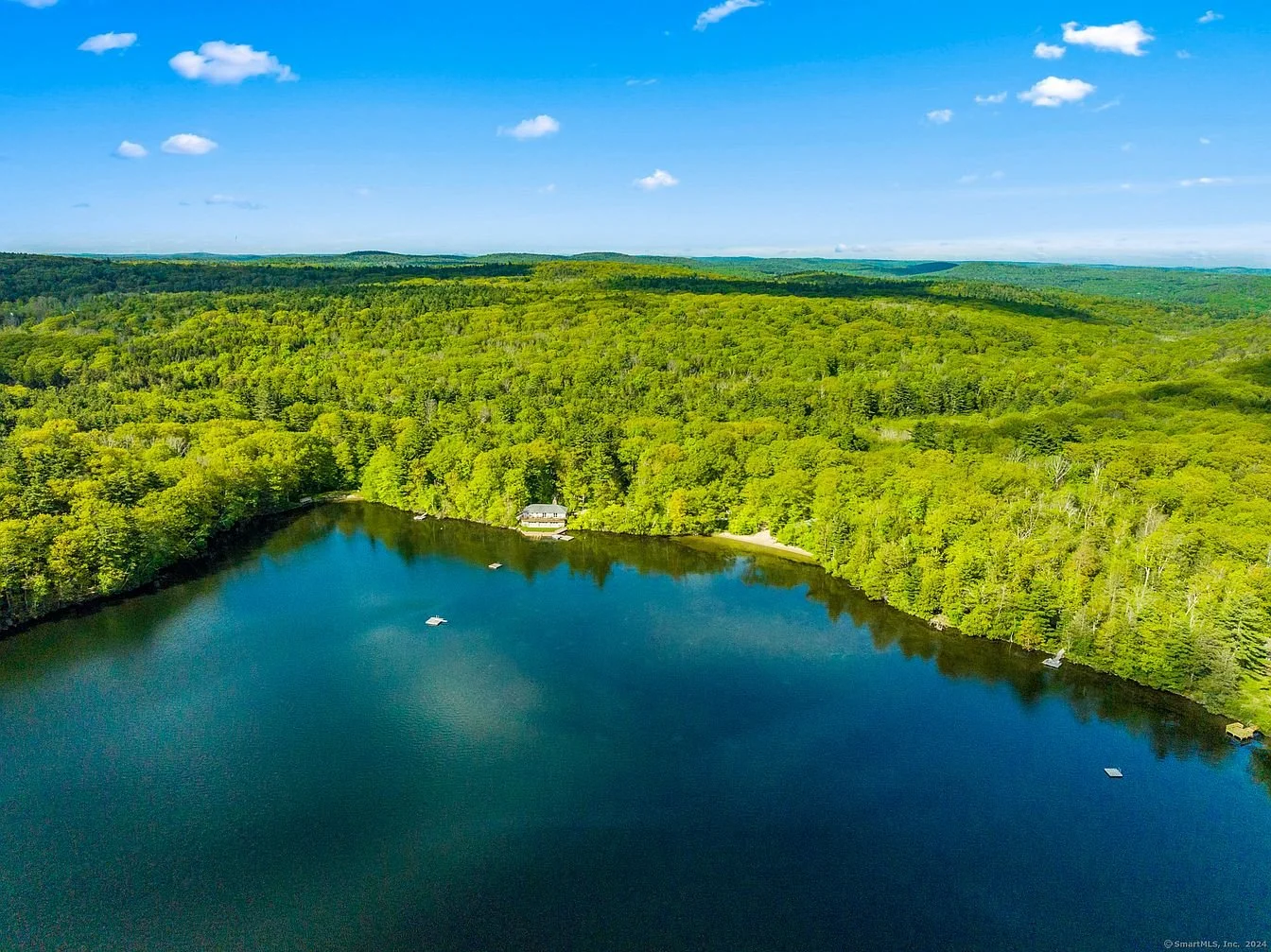
The Doolittle Lake Company is a long-established private woodland and lake enclave in northwestern Connecticut. Developed in the late 19th and early 20th centuries as a retreat destination, the company controls roughly 1,700 acres of forest, lakes, and protected land. Ownership within the enclave is limited, and properties are surrounded by collectively managed acreage, creating a level of seclusion and landscape continuity that is uncommon in the region. Residents have access to lake amenities and woodland trails, reinforcing the estate’s retreat character while maintaining privacy through private governance rather than public access.
18th-Century Origins and 1930s Relocation
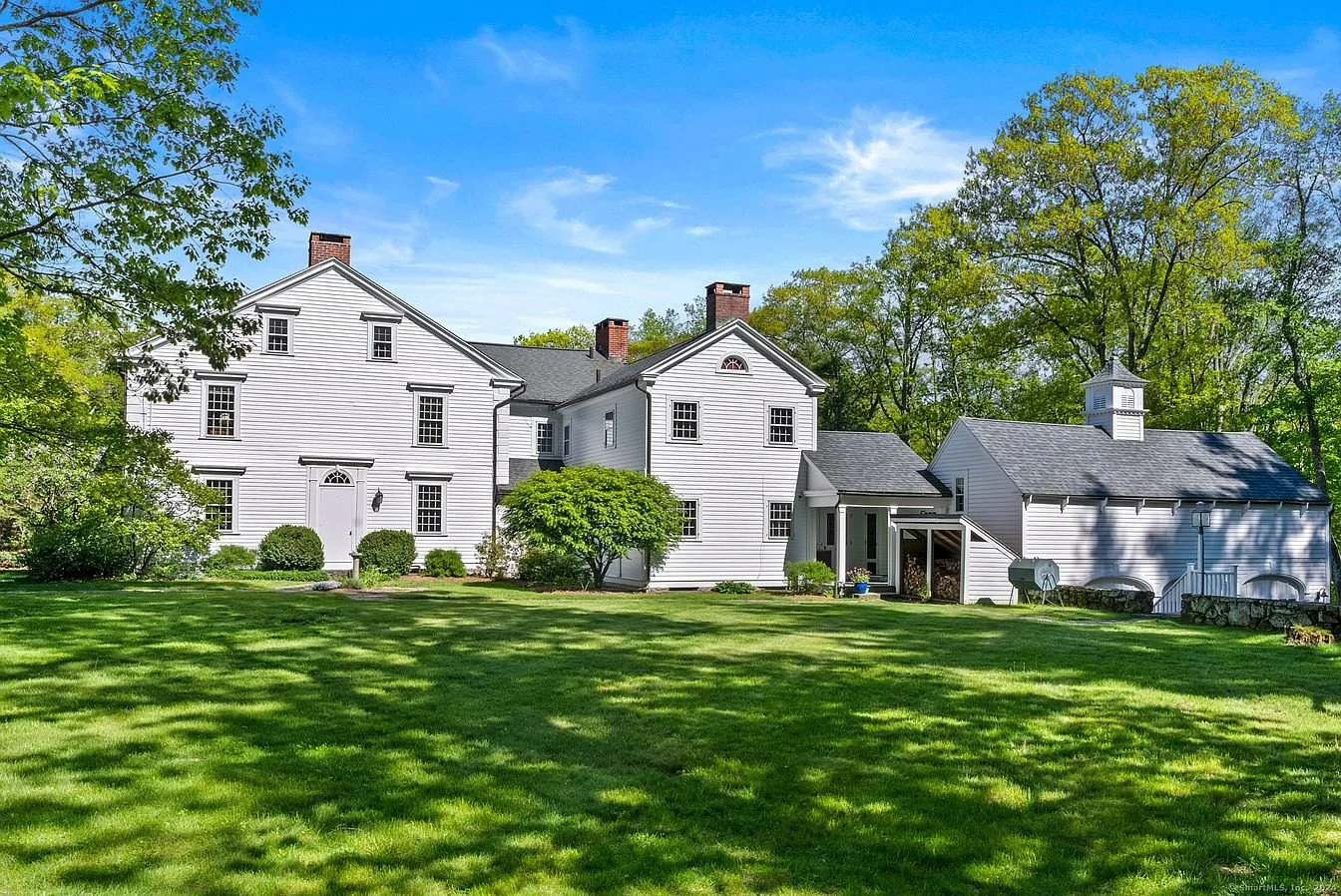
Originally built in 1780 as a classic Colonial home, the property was taken apart in Winchester, Connecticut and moved to Norfolk in the 1930s. Contemporary reporting describes a careful reconstruction process in which original materials were reused wherever possible, reflecting a preservation-minded approach rather than a simple relocation.
Architectural Oversight
The 1930s expansion and reconstruction were overseen by architect Robert Carrere. He is not the same individual as Robert Carrère of the Beaux-Arts firm Carrère & Hastings, who died in 1911. The architect connected to this property was active during the 1930s and directed the reassembly of the 18th-century structure while adapting it to a larger estate setting that balanced Colonial symmetry with early 20th-century refinement.
Sister Parish and the Kennedy / White House Connection
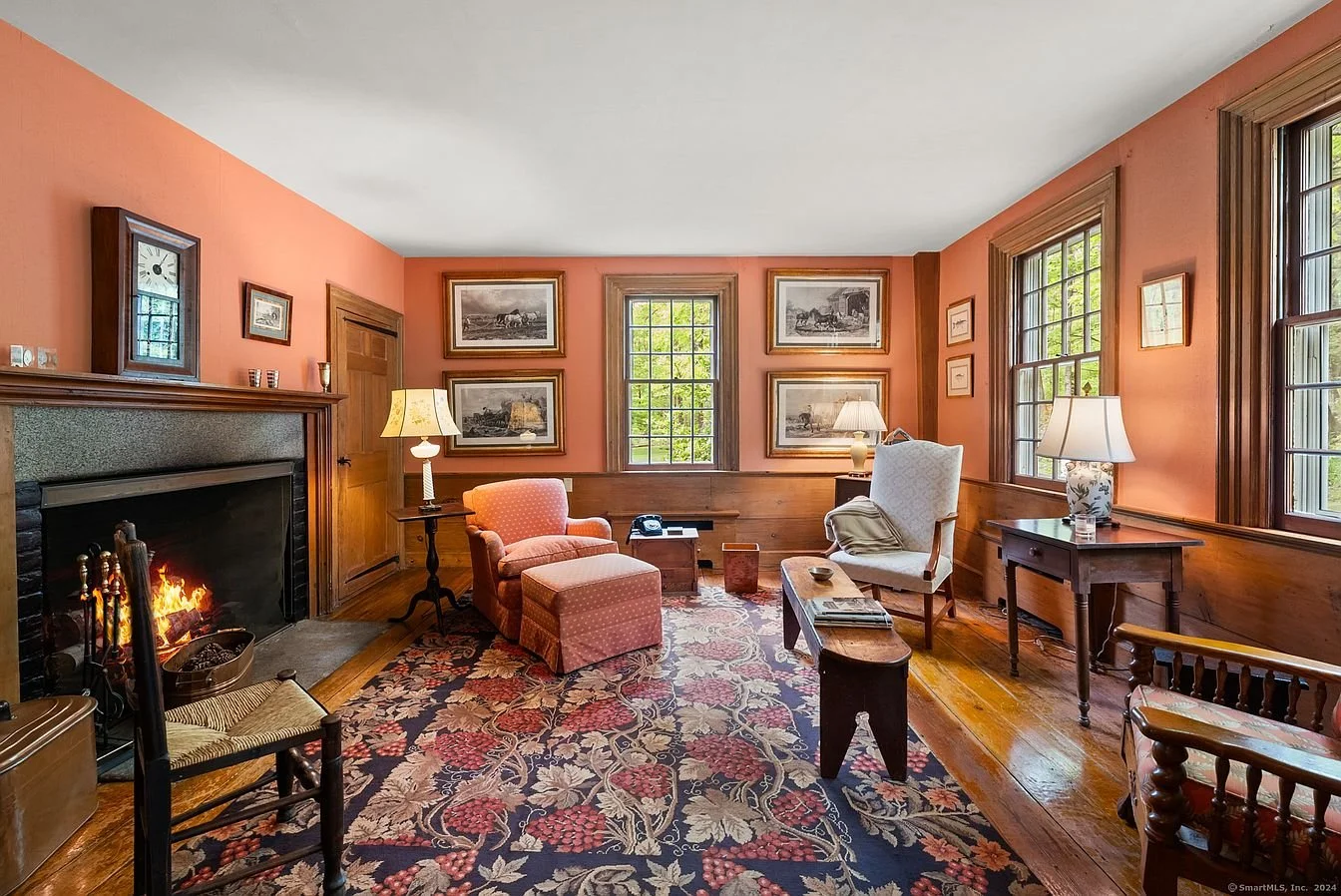
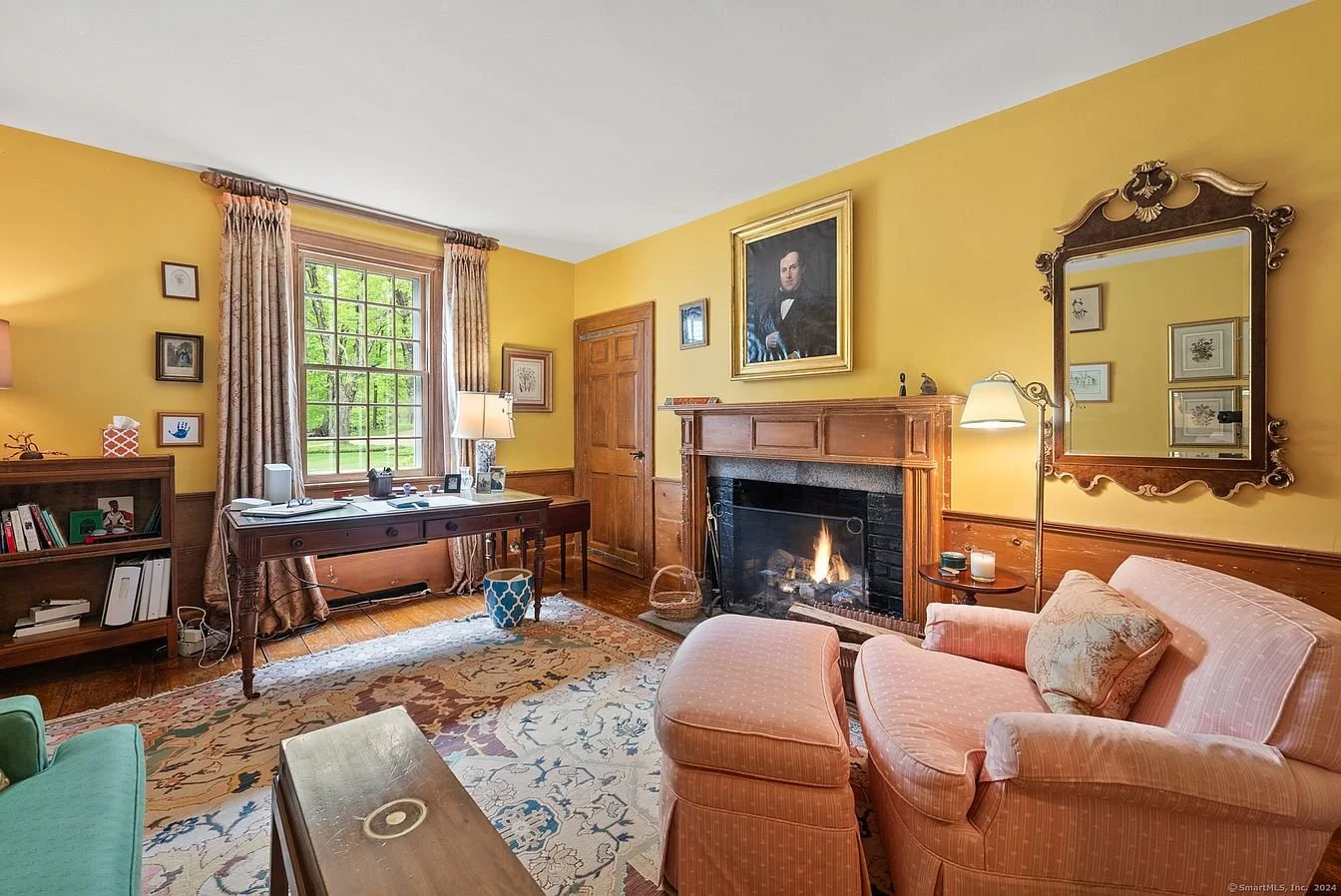
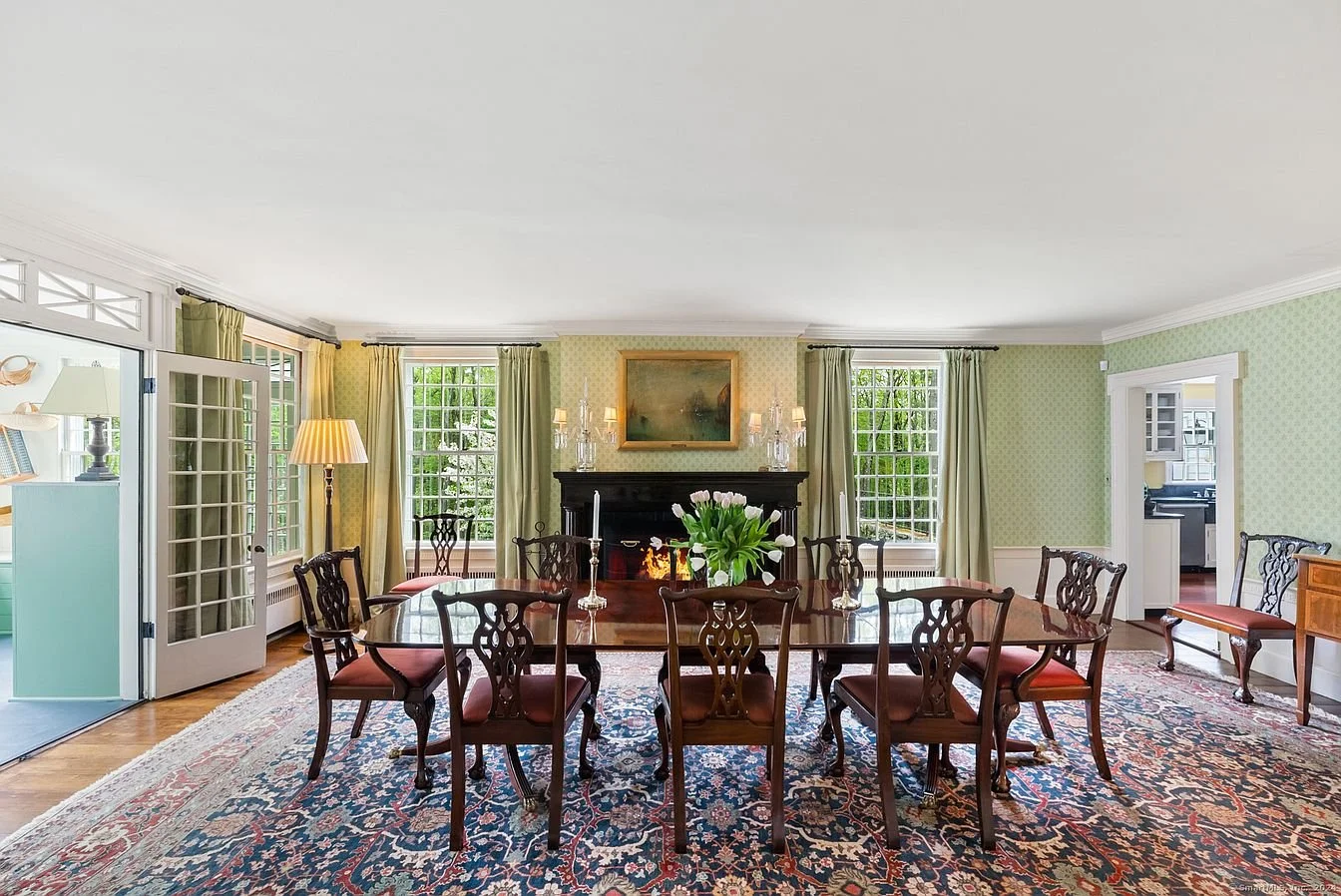
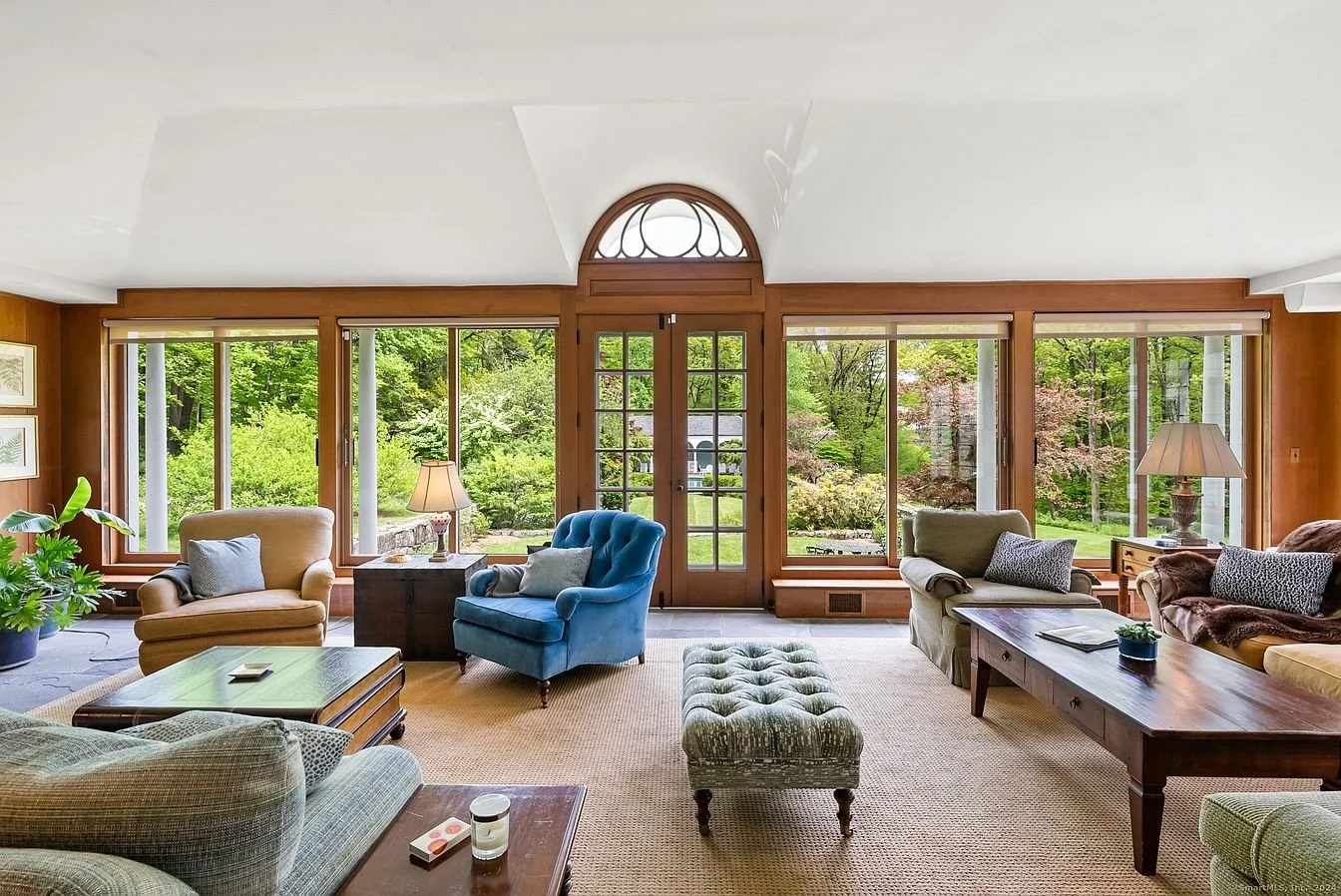
The interior retains historic character through 9 wood-burning fireplaces, wide red pine floors, high ceilings, formal reception rooms, and preserved details such as butler bells and rotary-dial telephones. According to reporting on the property’s listing, the home was decorated by Sister Parish, who incorporated various wallpapers and a Japanese watercolor mural. Parish is widely recognized for her traditional American design style and for her work with Jacqueline Kennedy Onassis. She worked on the Kennedy family’s Georgetown residence while John F. Kennedy was serving as a U.S. Senator, prior to his presidency, and later helped decorate the private family quarters of the White House during his administration.
Grounds and Amenities
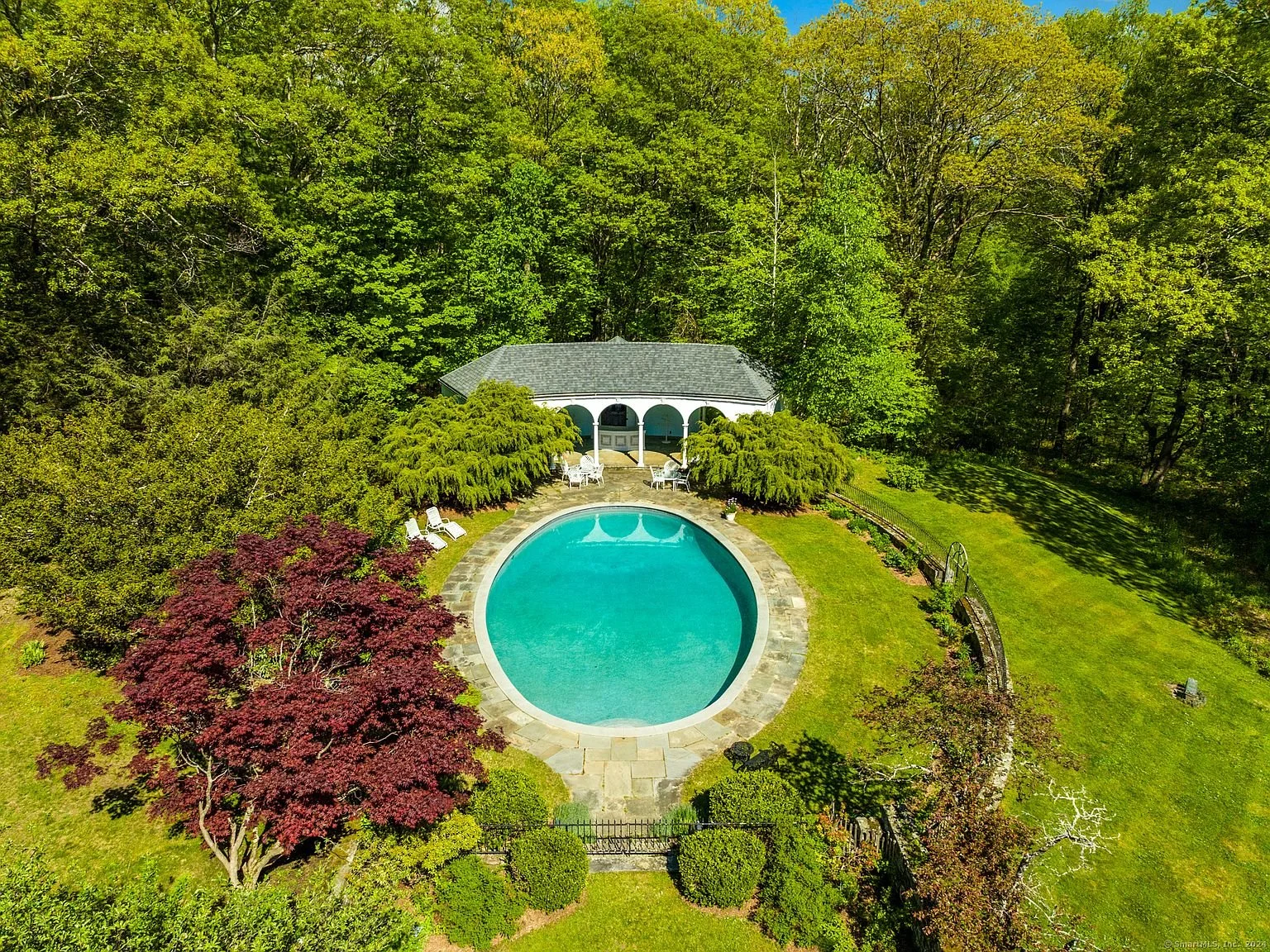
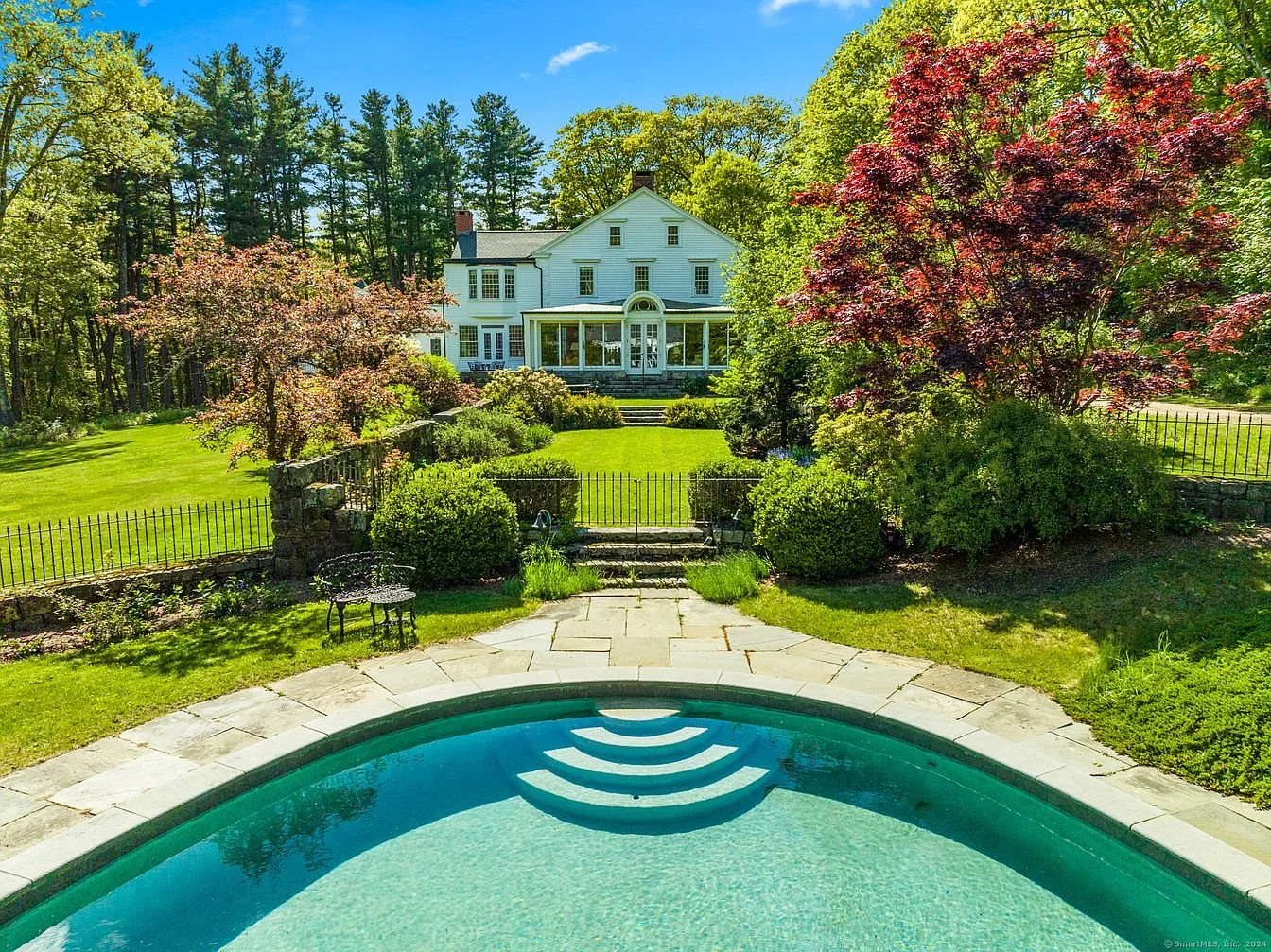
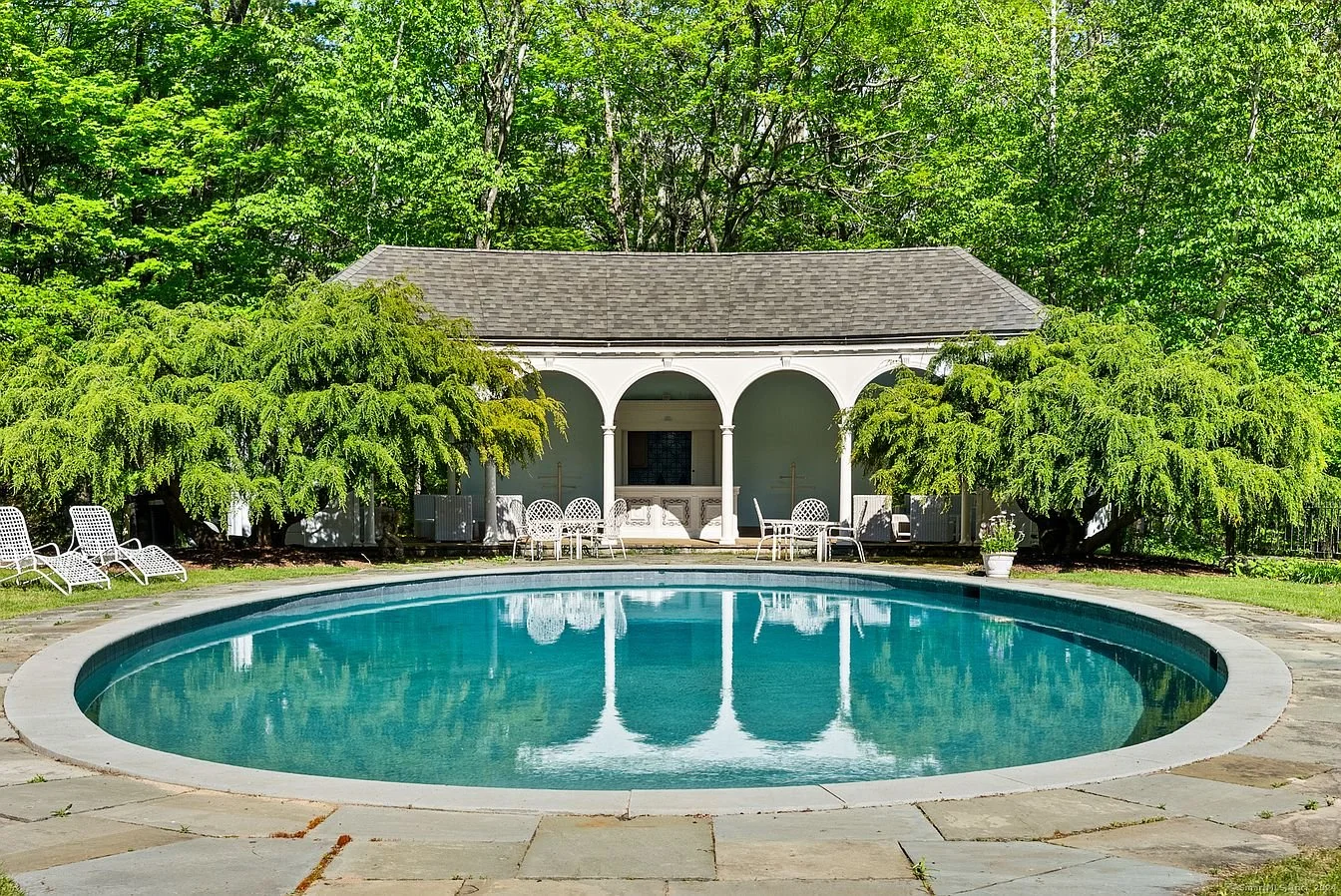
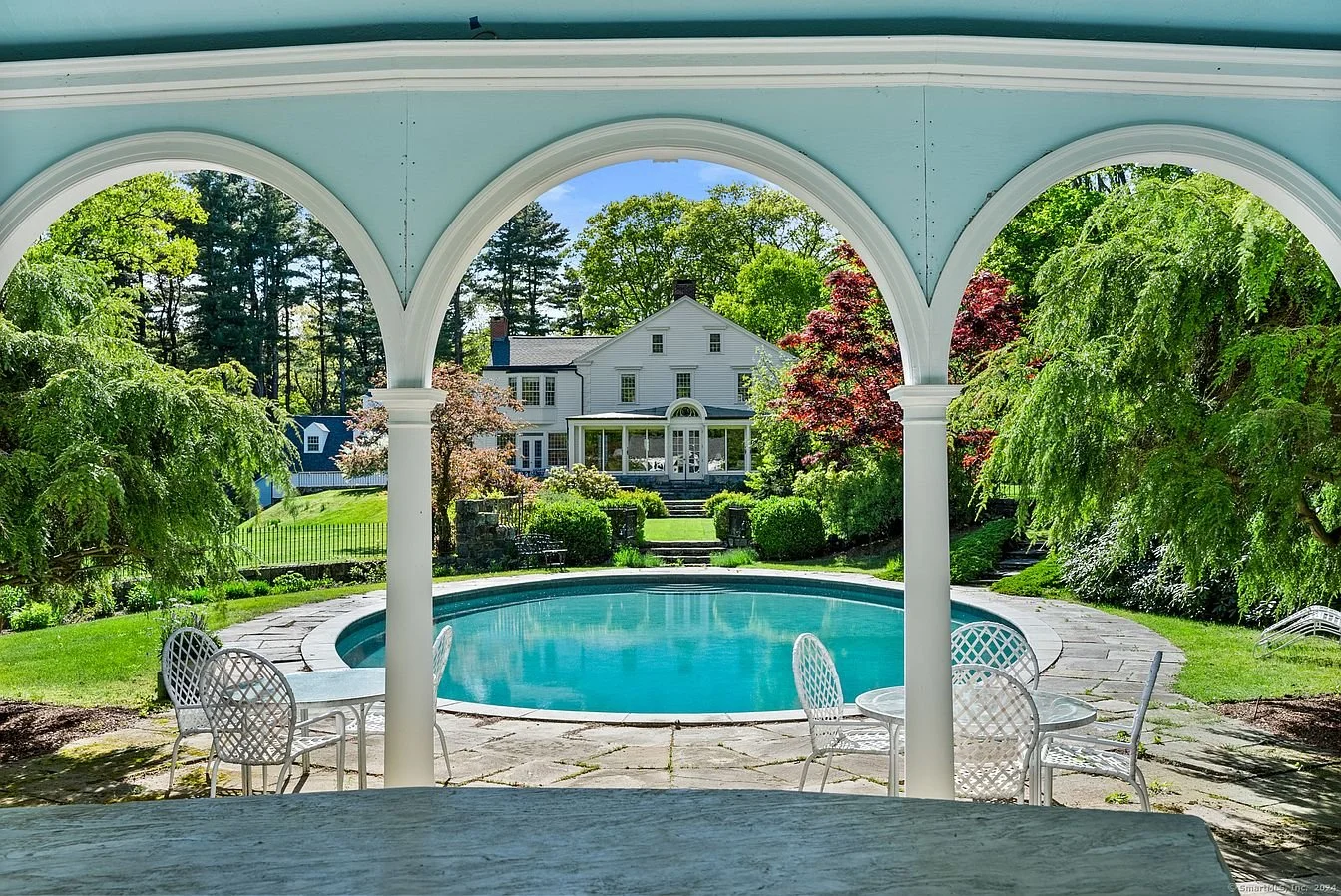
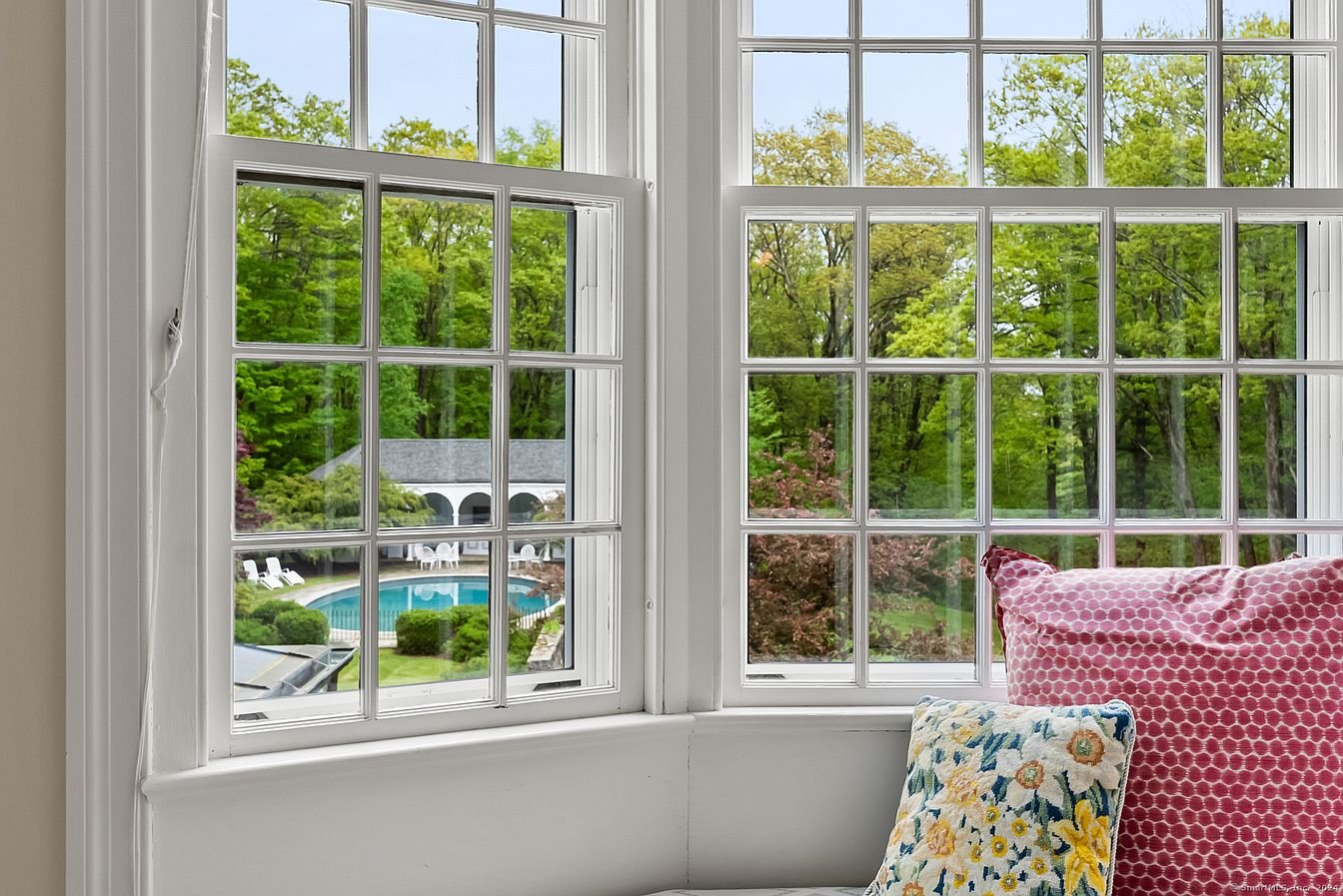
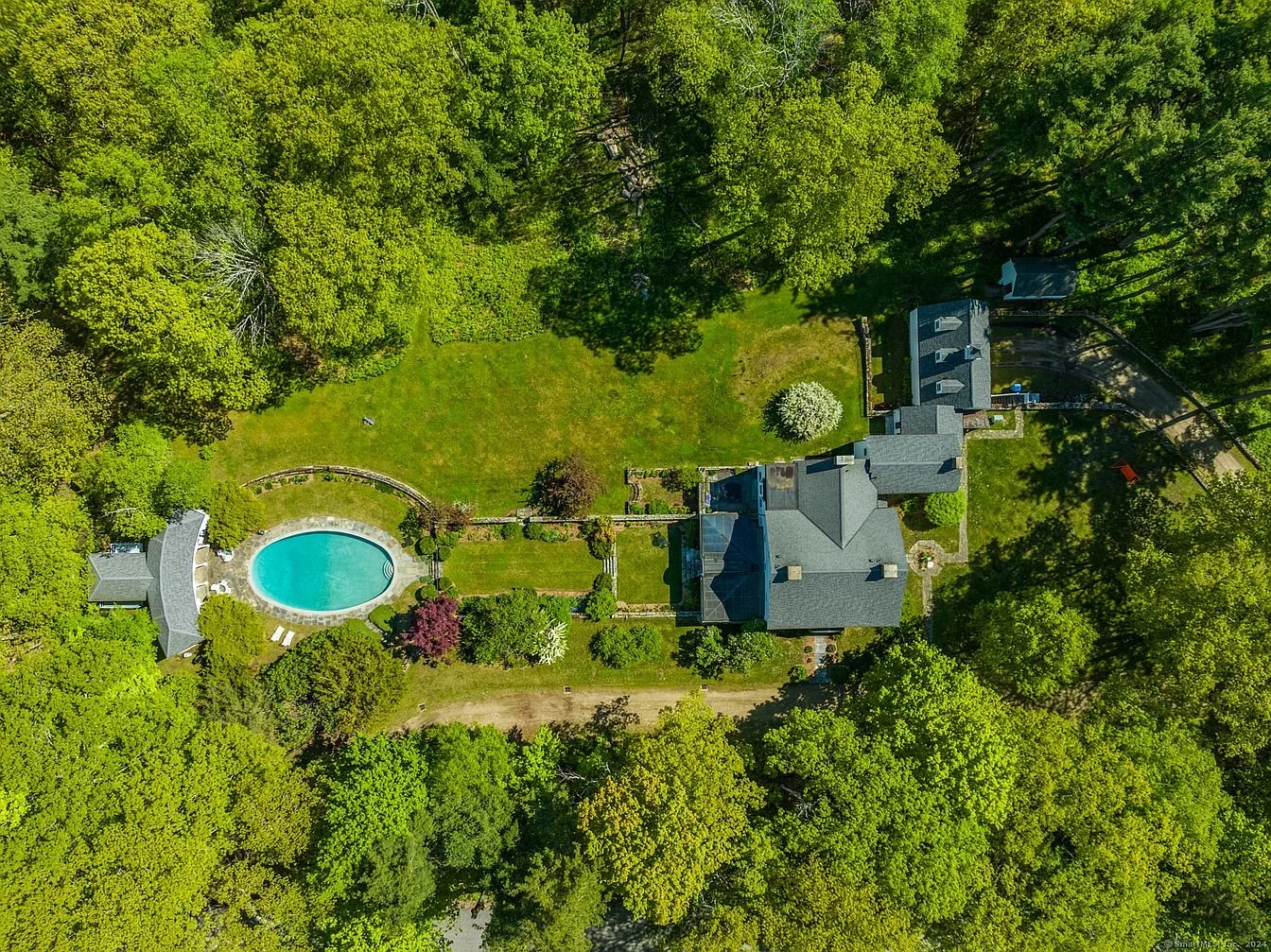
The estate includes a heated gunite swimming pool, a pool house with kitchenette and bath, established gardens bordered by stone walls, terraces, and a 3-car garage. Ownership within the enclave also provides access to lake amenities and woodland trails.
Historic Context
While not individually listed on the National Register of Historic Places, the property stands out for its 1780 origins, its careful 1930s relocation and expansion, architectural oversight by Robert Carrere, reported decoration by Sister Parish, and its position within one of Connecticut’s most private woodland lake communities.

All photos belong to the listing agency.