A Historic 500 Year Old Manor with a Moat in Normandy’s Calvados Region
Cabinet Le Nail
Beds: 3 Baths: 2+ Interior: ~250 sq m / ~2,691 sq ft Land: 3.81 ha / 9.41 acres
Amenities: Moat with bridges, four-tower fortified structure, multiple outbuildings, guest accommodations, caretaker’s cottage, garages, studio, orchard, formal gardens, woodland
Set within 3.81 hectares (9.41 acres) of private parkland just outside Saint-Pierre-sur-Dives, in the heart of Normandy’s Pays d’Auge, this manor traces its origins to the late 15th and early 16th centuries. The property sits within Calvados, a region known for its apple orchards, cider production, and Calvados brandy, with both Caen and Lisieux within reach, linking the countryside to the wider region and the coast.
The property is on the market with Cabinet Le Nail for €1,320,000.
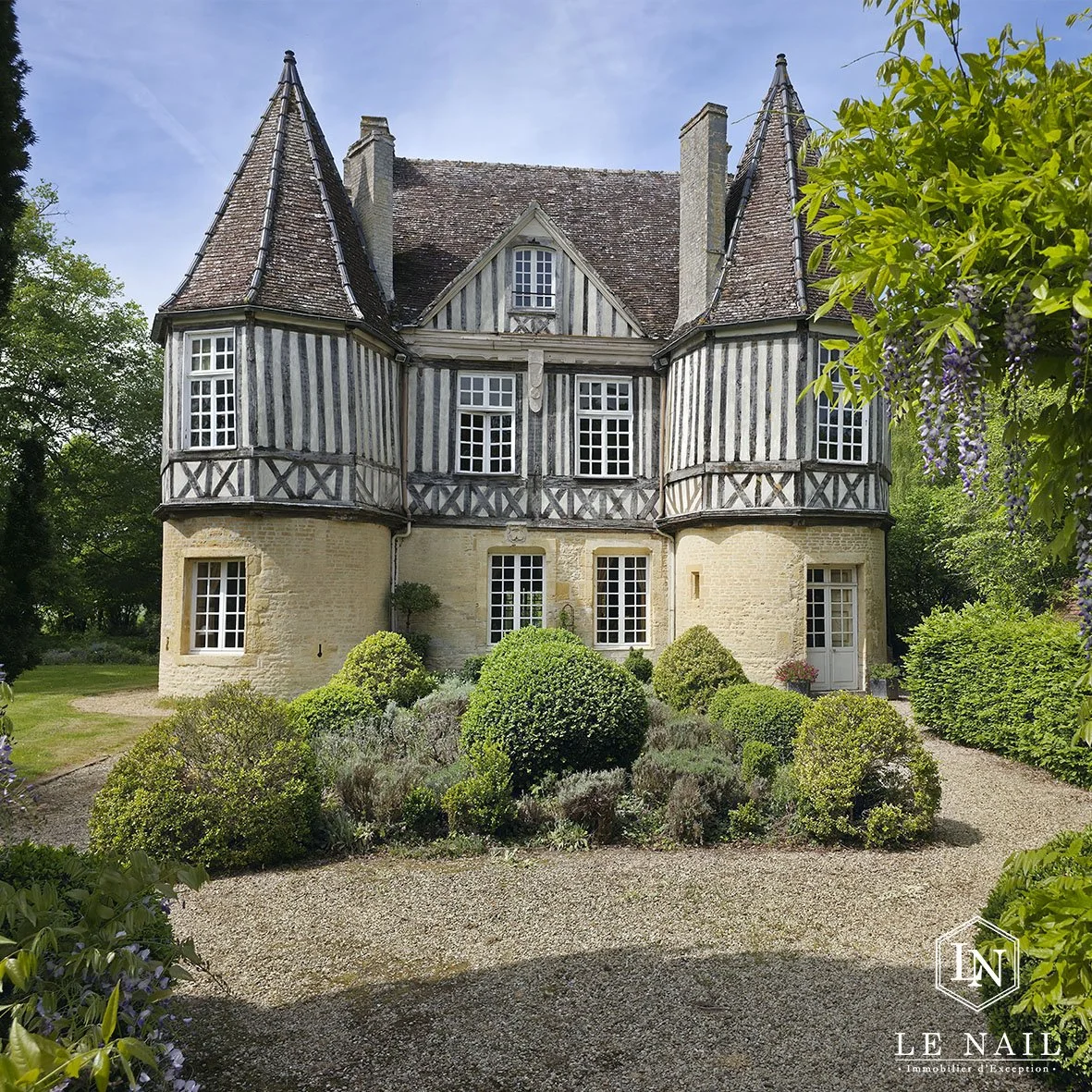
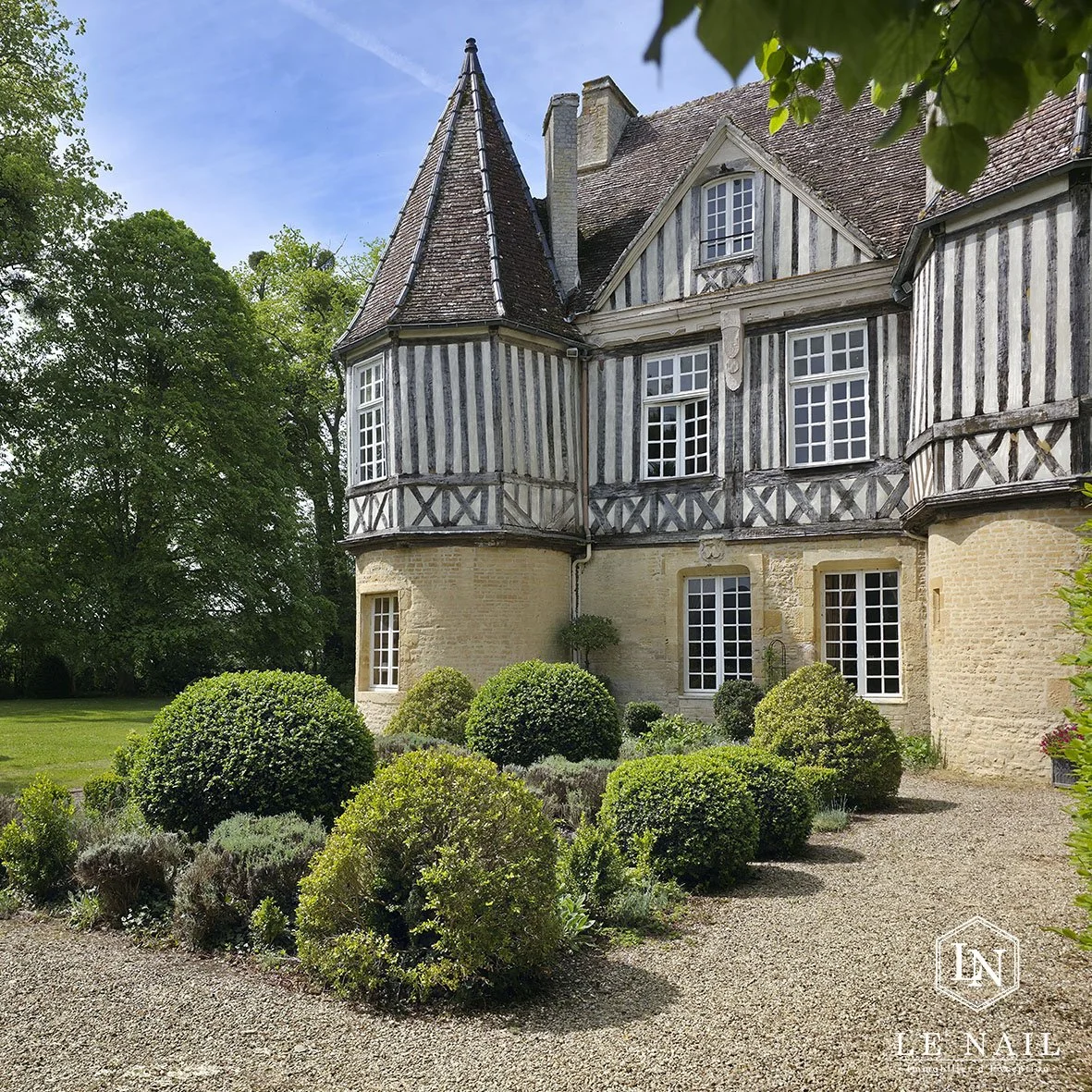
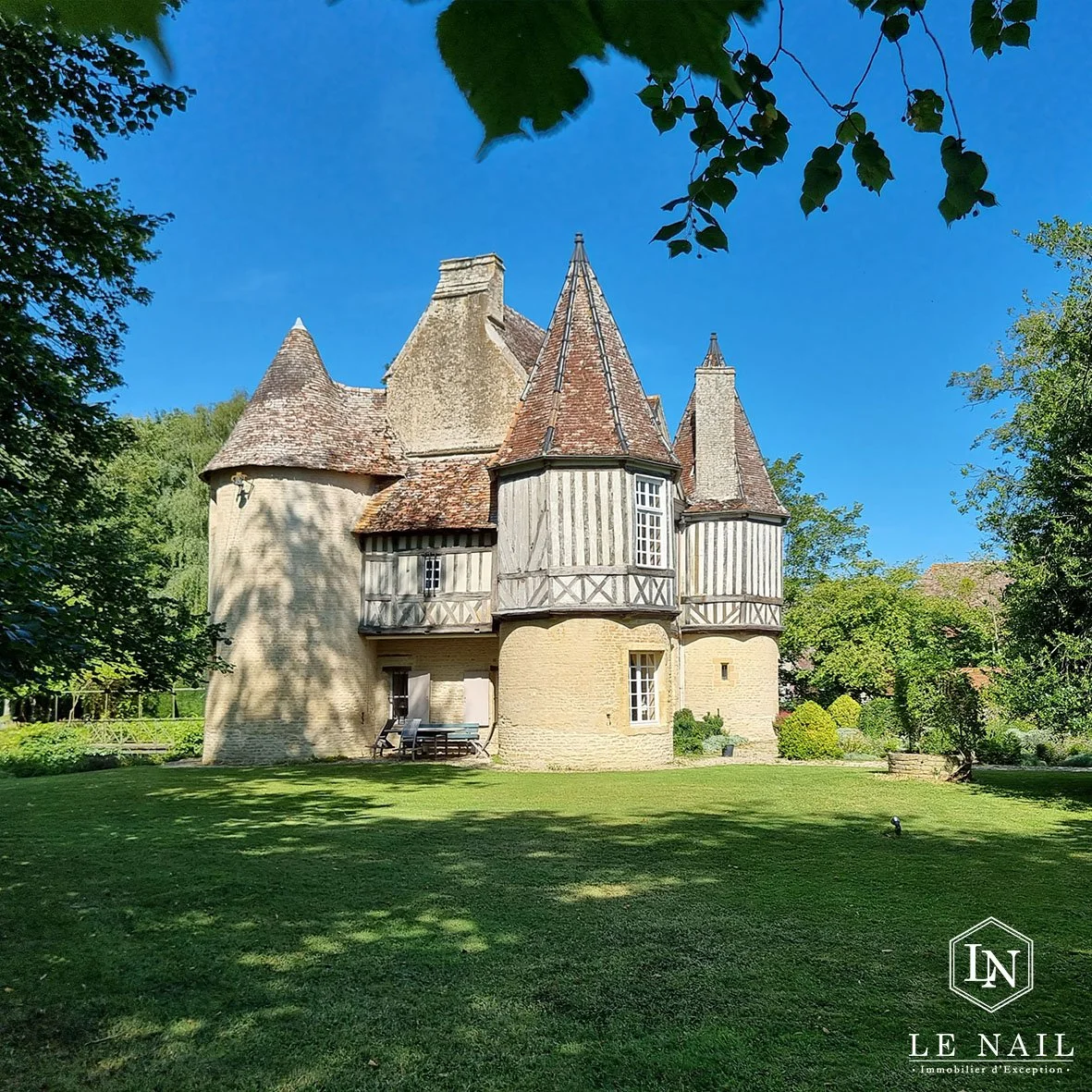
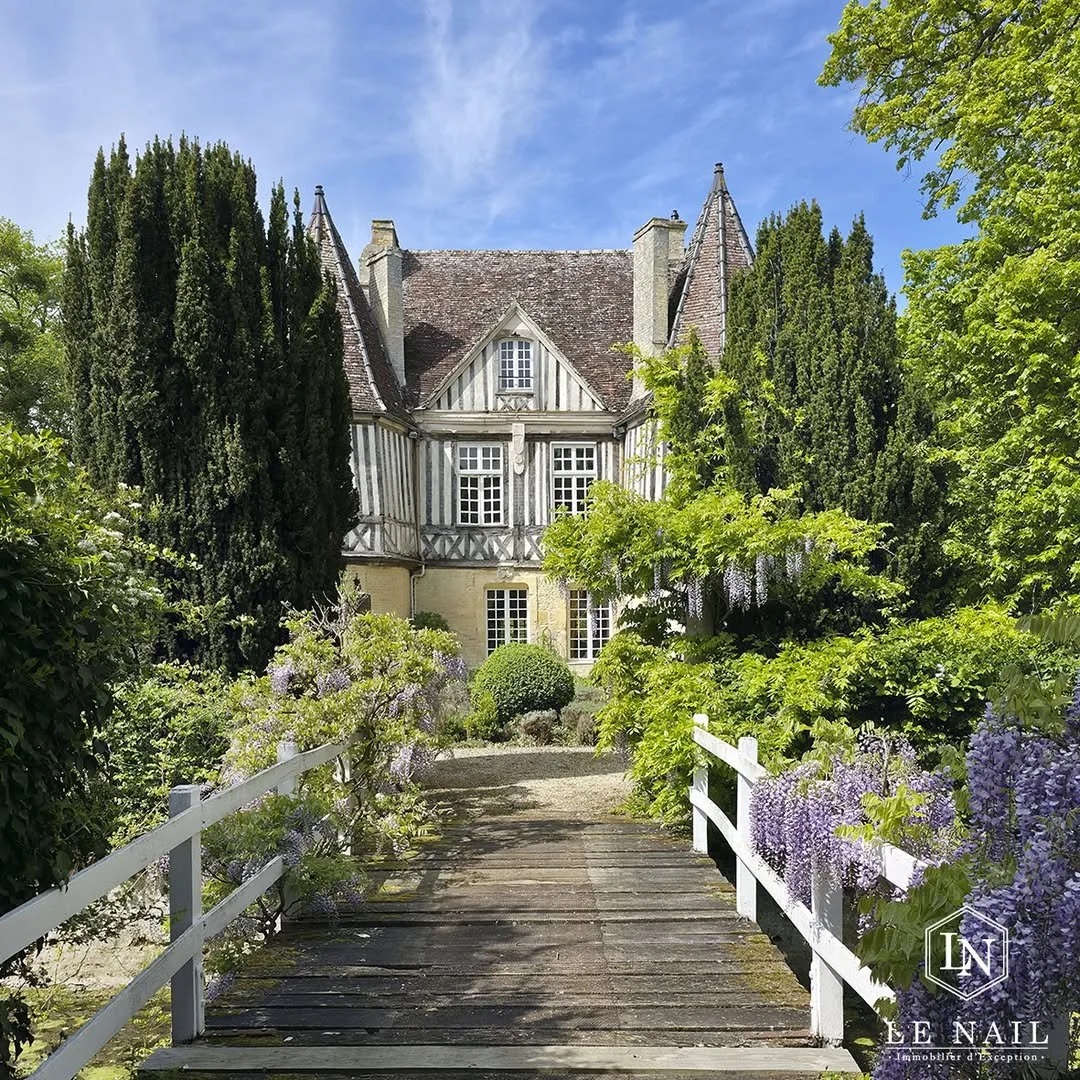
Originally built as a defensive fortification, the manor stands surrounded by a moat, with access across bridges, and retains features associated with defensive architecture, including loopholes and firing openings built into the walls. The structure follows a near-square plan, anchored by four towers—ranging from a cylindrical stone tower to a more compact, keep-like tower with timber-framed upper levels—along with an enclosed gallery connecting sections of the building.
The architecture is typical of the region, with limestone at the ground level and half-timbering above, a style seen throughout the Pays d’Auge. The structure reflects successive phases of development, with the original 15th- and 16th-century construction later modified in the 18th century, when more classical elements were introduced, including a triangular pediment on the east façade and a more symmetrical arrangement of the towers.
A 15th-century dovecote remains one of the defining historic features of the estate. These structures were used to raise pigeons, primarily for food, including squab and eggs, as well as for fertilizer, as the droppings were highly valued in agriculture. In France, dovecotes were historically a feudal privilege reserved for landowners of status, with the number of nesting niches, or boulins, directly reflecting the scale of the estate.
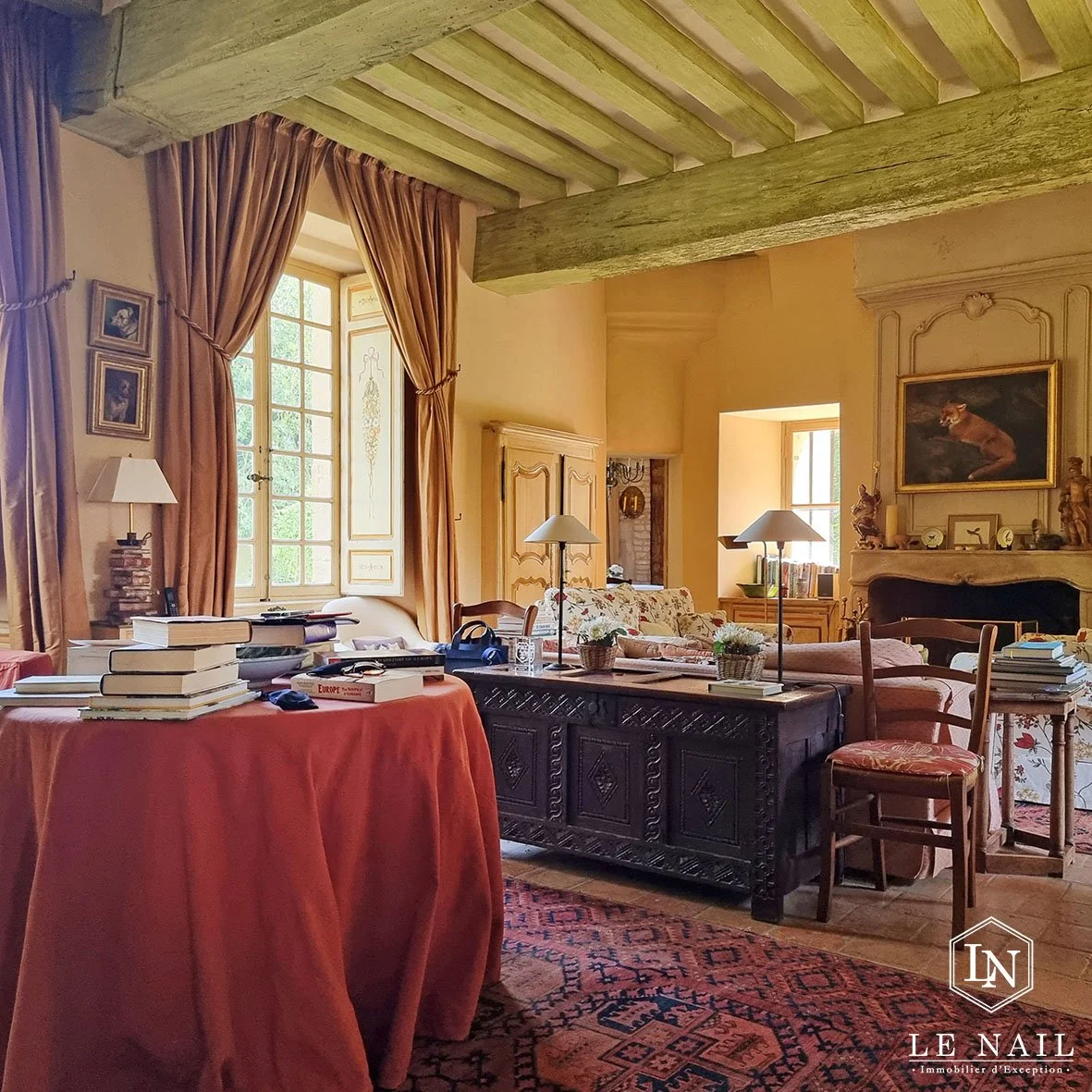
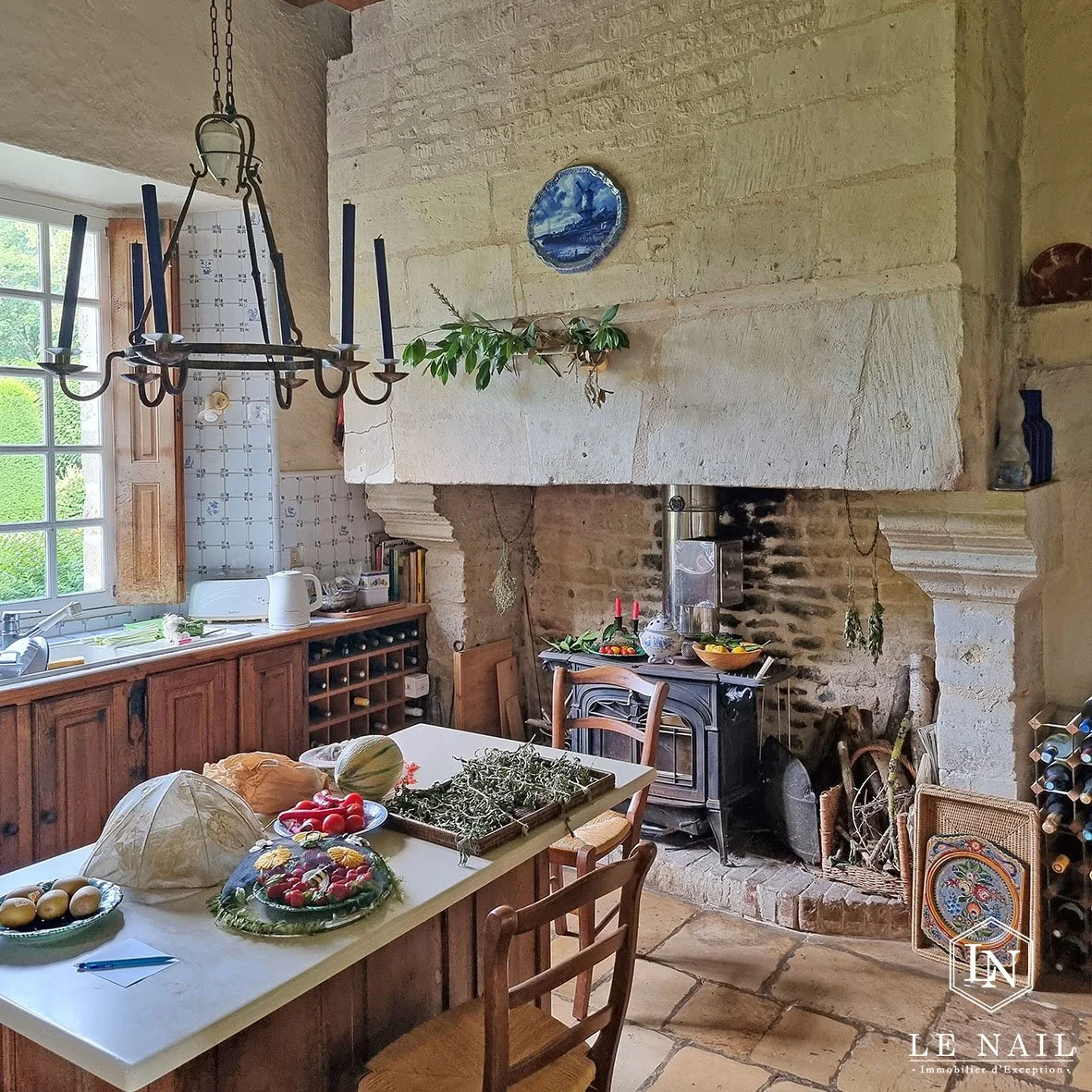
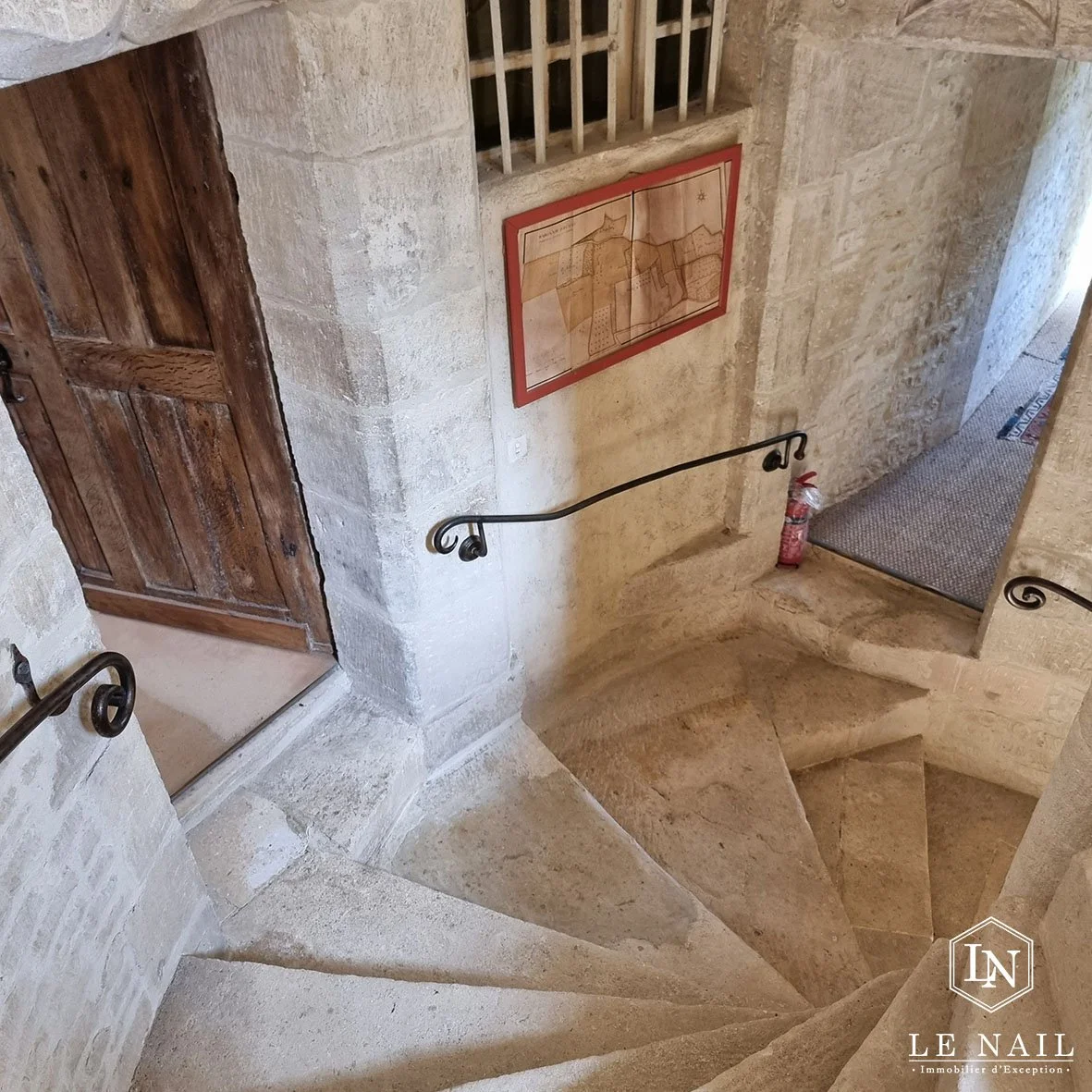
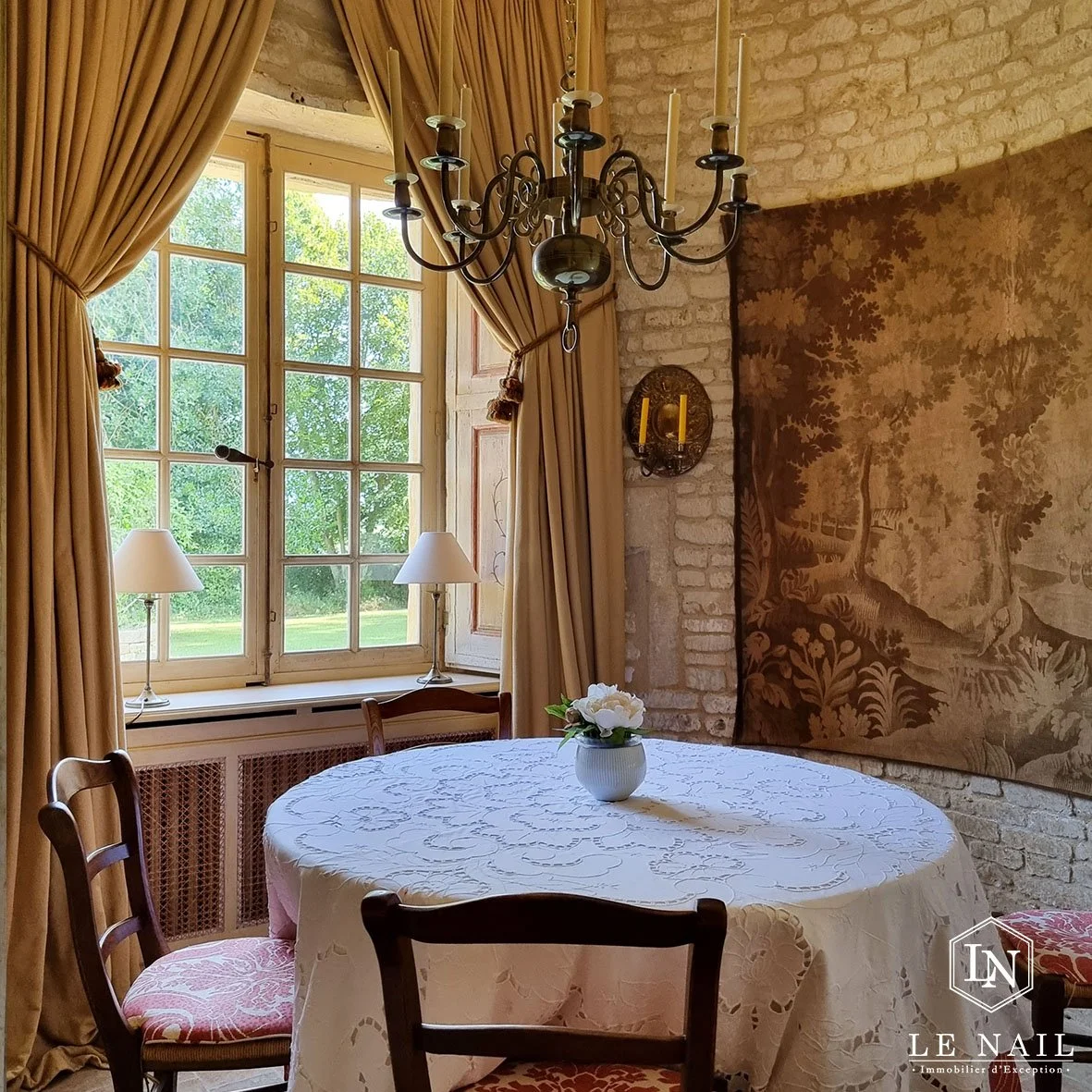
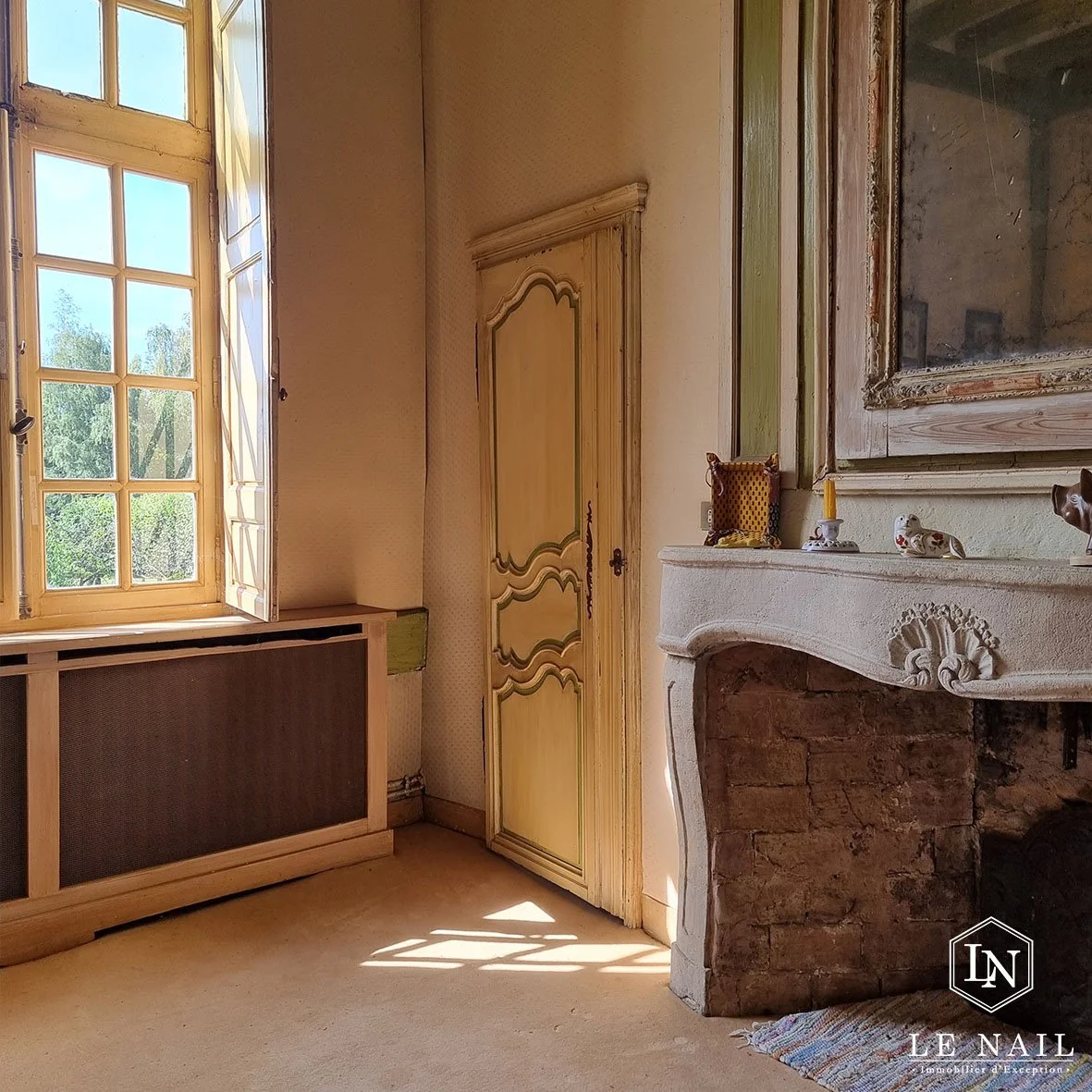
Inside, the manor remains relatively intimate, with approximately 250 m² (2,691 sq ft) of living space. Rooms are arranged through a sequence of halls, tower rooms, and connecting passages rather than a traditional plan, reflecting the building’s gradual evolution over time. Original materials appear throughout, including stone fireplaces, terracotta tile floors, exposed beams, and timber framing, with spiral staircases linking the levels.
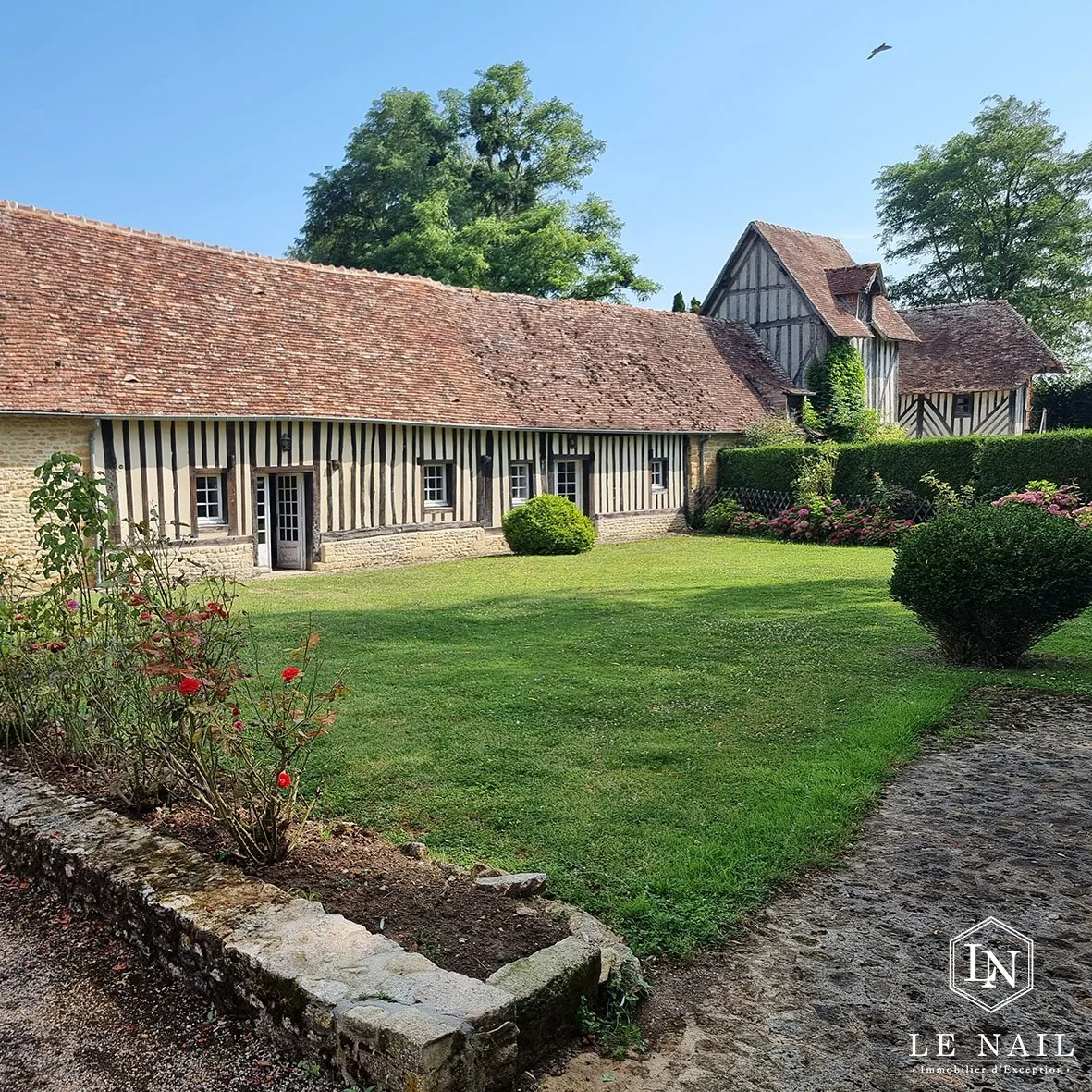
To the north, the former bailey contains a group of seven outbuildings constructed in the same regional manner, with stone bases and half-timbered upper sections. These form a functional estate compound, including a caretaker’s cottage, multiple guest accommodations, a small studio, garages, agricultural structures, and a large reception hall overlooking the moat. The reception building extends to approximately 95 square meters (1,023 sq ft), with a cathedral ceiling rising to 7.9 meters, introducing a scale suited to gatherings or events.
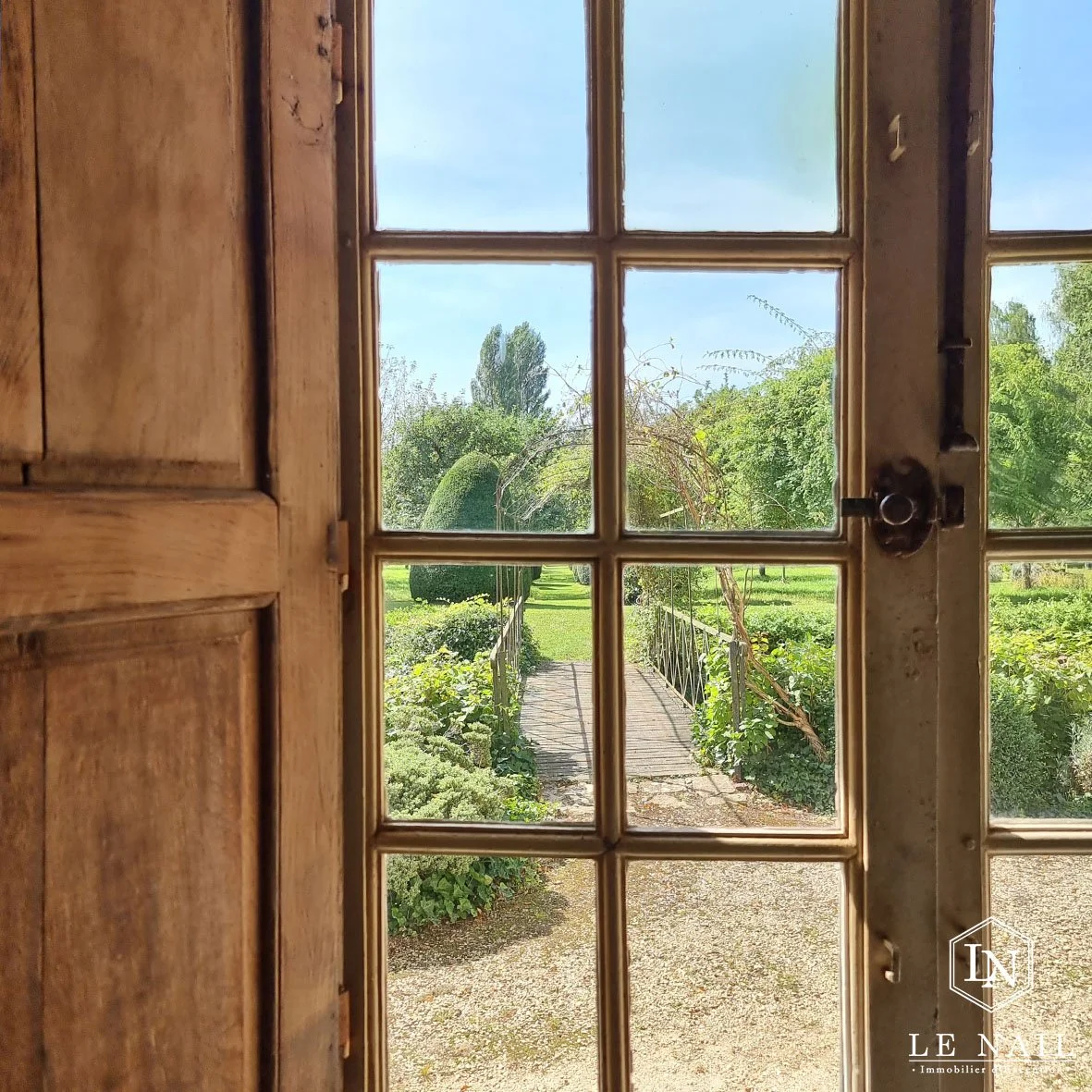
Set back from a lightly used rural road, the property benefits from complete privacy, with no visual, noise, or environmental disturbance. An entrance marked by stone pillars leads into an avenue of lime trees, opening onto an orchard and farmyard before reaching the manor, positioned beyond its moat. At the back, the gardens are more formal, laid out in straight lines with trimmed hedges and planting beds, before giving way to a wooded area.
Parts of the property, including the manor, terraces, moat, bridges, dovecote, and several outbuildings, have been listed on the Inventaire supplémentaire des Monuments Historiques since 1993, preserving both the architecture and the broader estate layout. This designation may also provide fiscal advantages for owners subject to taxation in France.
All photographs belong to the listing agency. See more on Cabinet Le Nail.