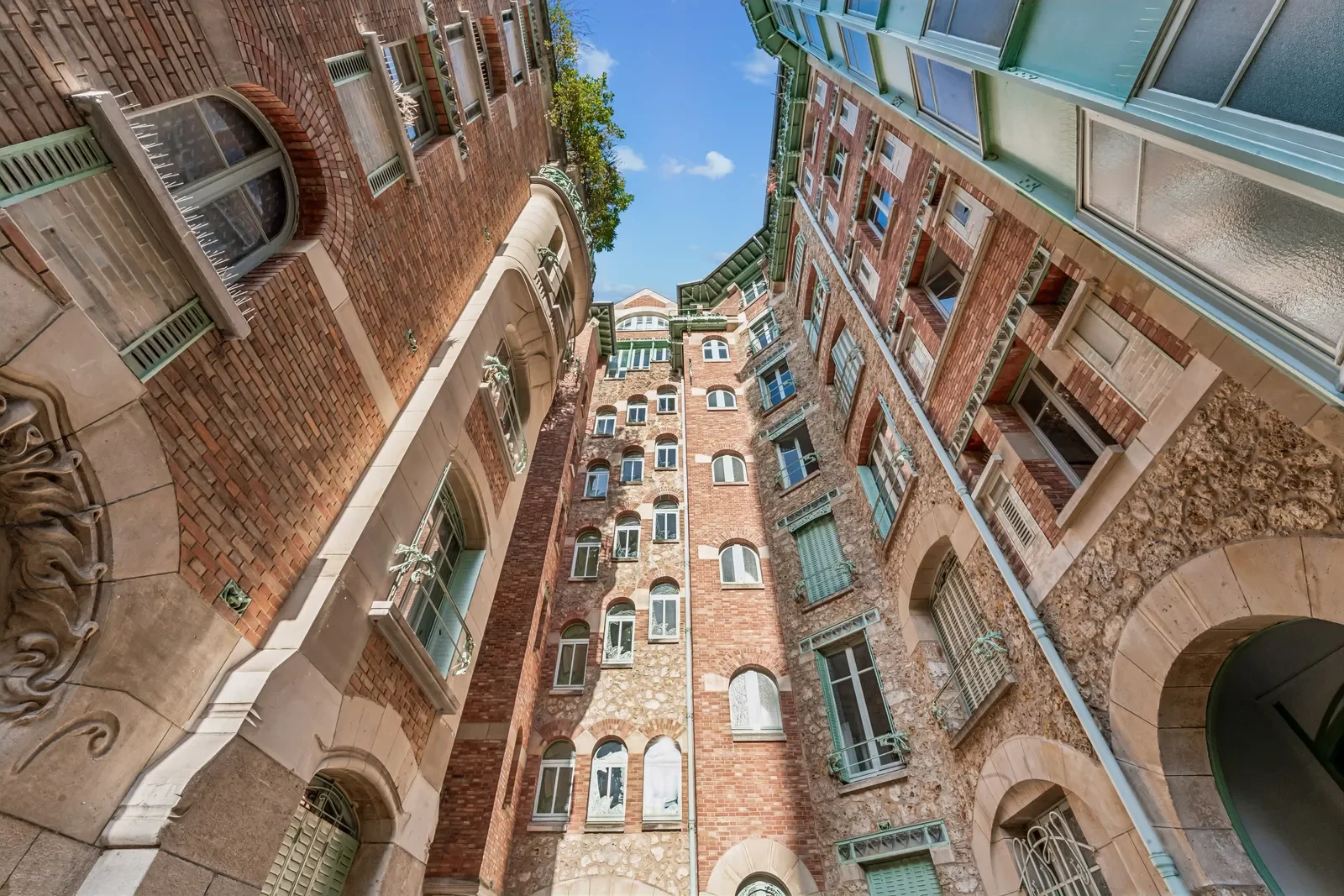
A Restored Paris Apartment Inside an Art Nouveau Building by the Architect Behind the City’s Métro Entrances
Beds: 1 Interior: 59 m² / 635 ft² Reception: 25 m² / 269 ft²
Amenities: Upper-floor position, elevator, dual-aspect layout, star-shaped floor plan, two balconies, double reception, independent fitted kitchen, bedroom, shower room, custom dressing area, preserved stained glass, mouldings, brass handles, original joinery, decorative doors, narrow-strip parquet, antique Guimard fireplace, Art Nouveau arabesques, reissued Hector Guimard wallpaper, cellar/annex only if confirmed, protected Monument Historique setting, located inside Castel Béranger in Paris’s 16th arrondissement.
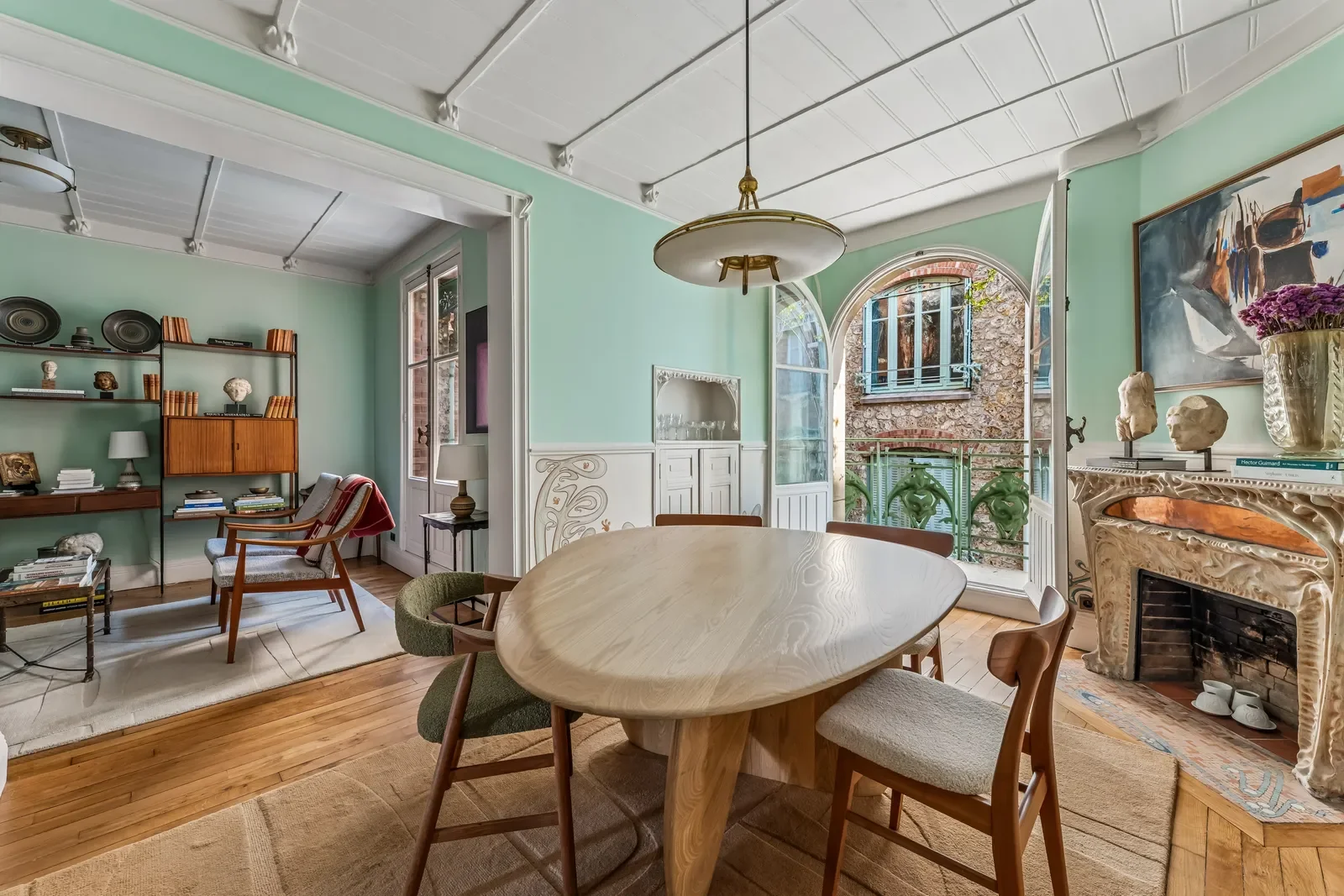
Following a restoration by CM Studio Paris, the apartment was featured in AD in 2024. “We kept in mind the idea of unifying and preserving the tone. The doors, the ceilings, everything was refreshed. That is what I wanted: not to change anything, but simply to highlight it,” the owner said.
A restored apartment inside Castel Béranger, the 1898 building often described as Paris’s first major Art Nouveau apartment building, has come to market with Paris Ouest Sotheby’s International Realty for €1,198,000.
Located in the 16th arrondissement, the 59 m², or 635 ft², residence is one of 36 apartments inside one of the defining works of Hector Guimard, the French architect and designer who became one of the leading figures of Art Nouveau in Paris. Guimard is now best known for the city’s Métro entrances, whose curving ironwork and plant-like forms remain among the most recognizable pieces of public design in Paris.
Castel Béranger came before those Métro entrances. Commissioned in the mid-1890s as a new Paris apartment building, it became the project that brought Guimard’s architectural language to wider public attention. After encountering the work of Belgian architect Victor Horta in Brussels, Guimard pushed the building toward a more experimental Art Nouveau vocabulary: asymmetry, sculptural ornament, glazed ceramics, stained glass, curving ironwork, and forms drawn from the natural world.
What made Castel Béranger significant was not simply that it looked different from the apartment buildings around it. It was that Guimard treated the entire building as one designed world. He was not only rethinking the façade, but the architecture, ironwork, ceramics, stained glass, door handles, fireplaces, fittings, decorative motifs, and shared spaces as part of a single visual language. Castel Béranger was not a conventional apartment block with Art Nouveau decoration applied to it. It was a complete architectural statement.
Castel Béranger won the City of Paris façade competition in 1898, bringing Guimard wider recognition. Soon after, from 1900 to 1902, he designed the Paris Métro entrances, which became his best-known work and brought his Art Nouveau style into everyday public life.
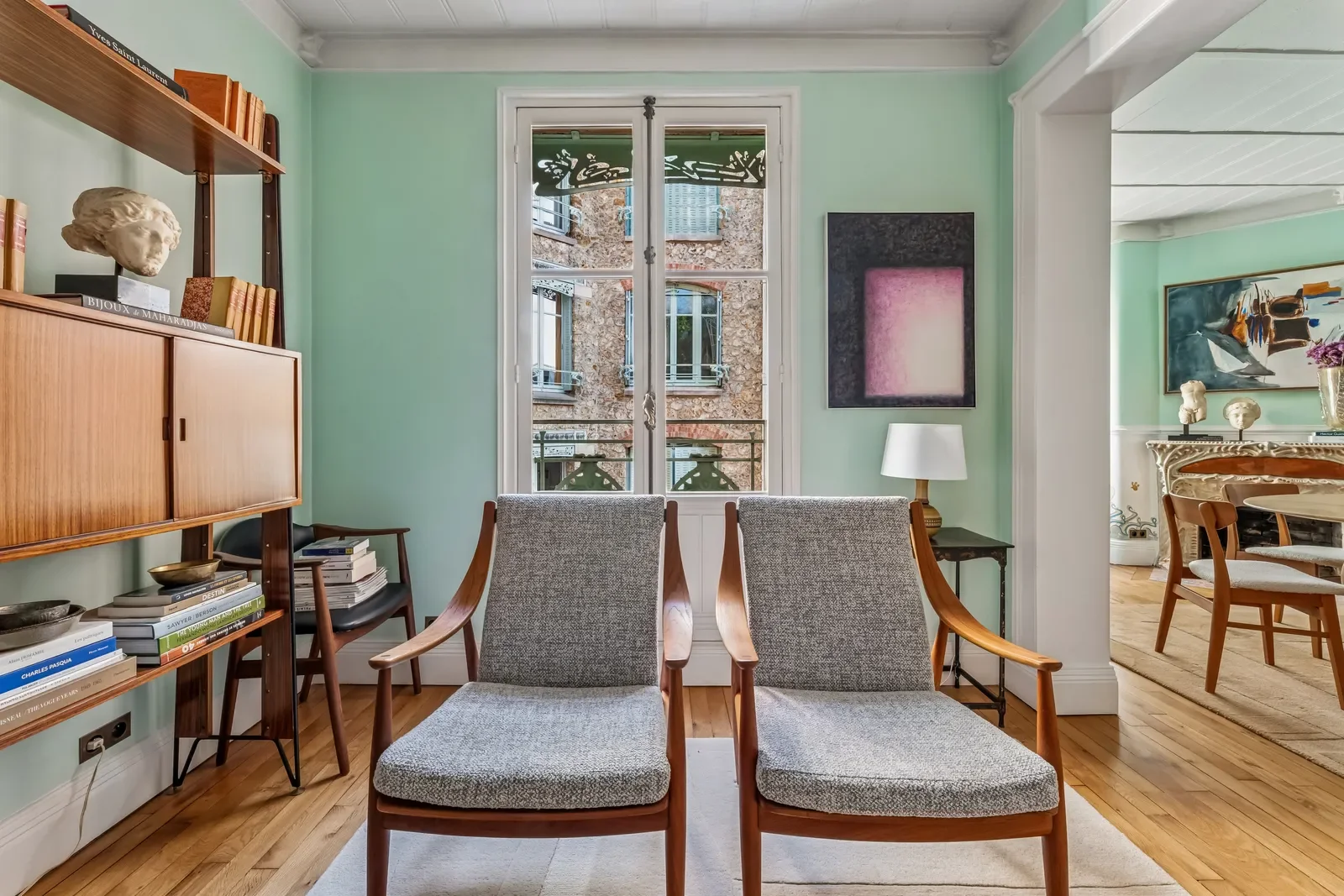
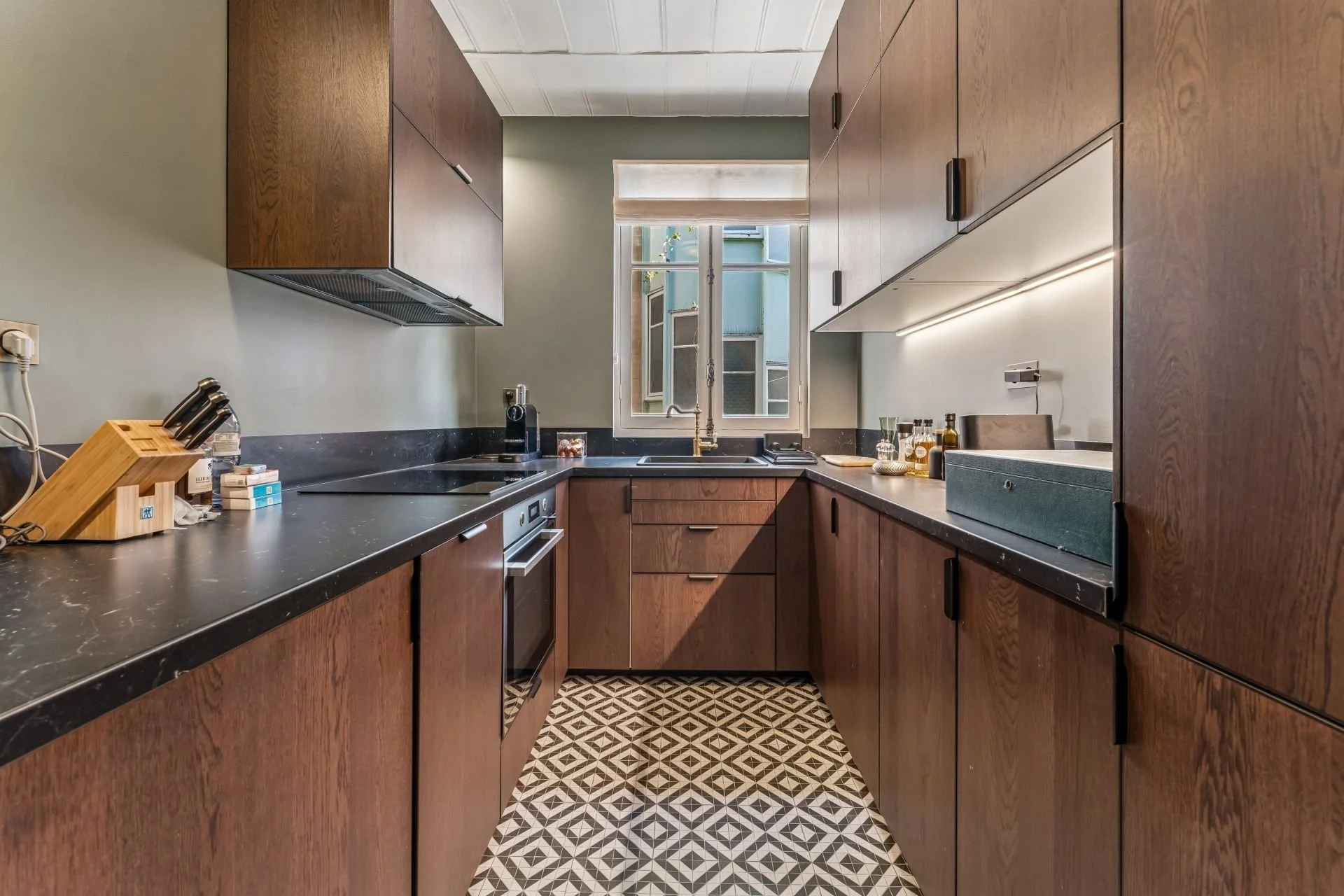
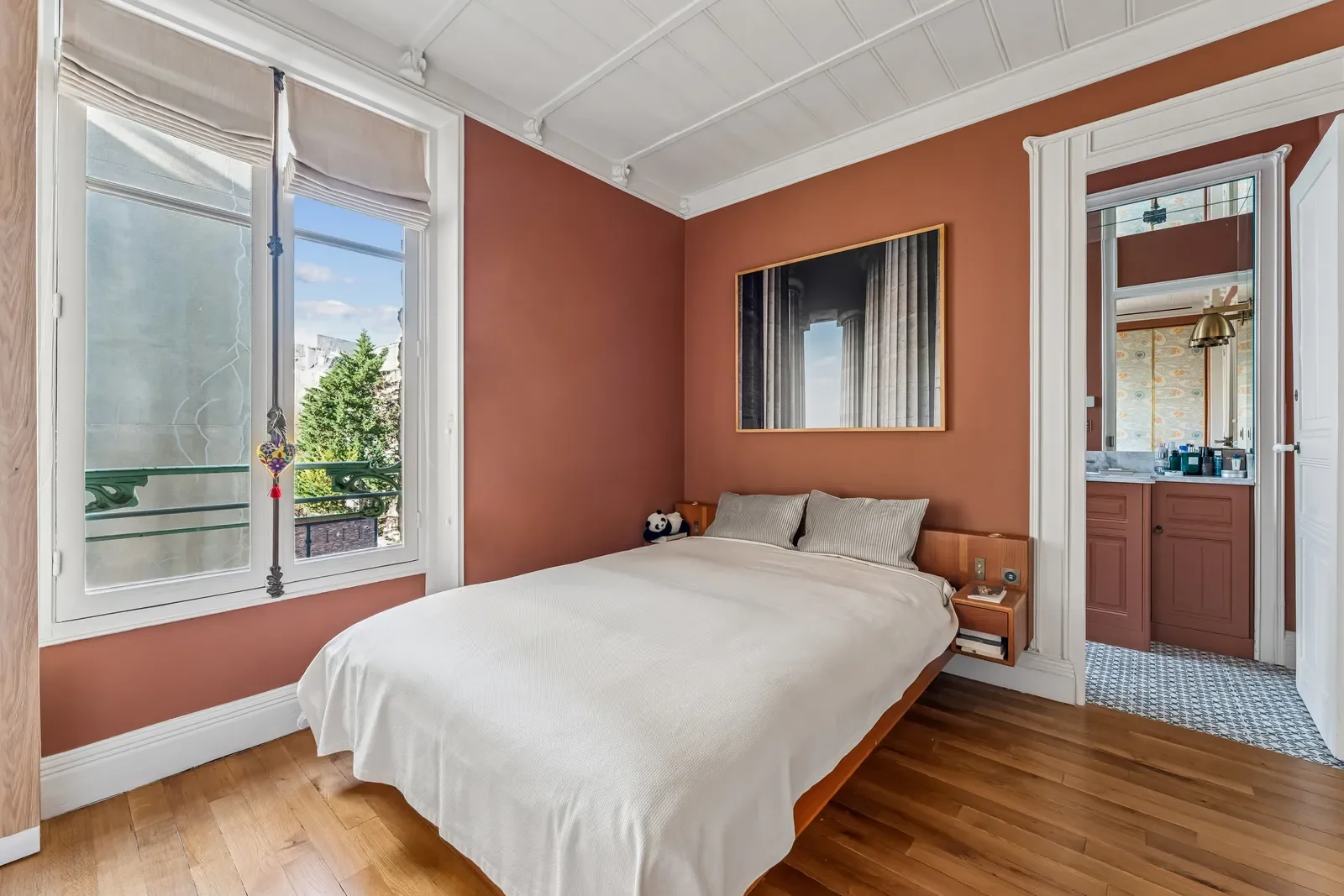
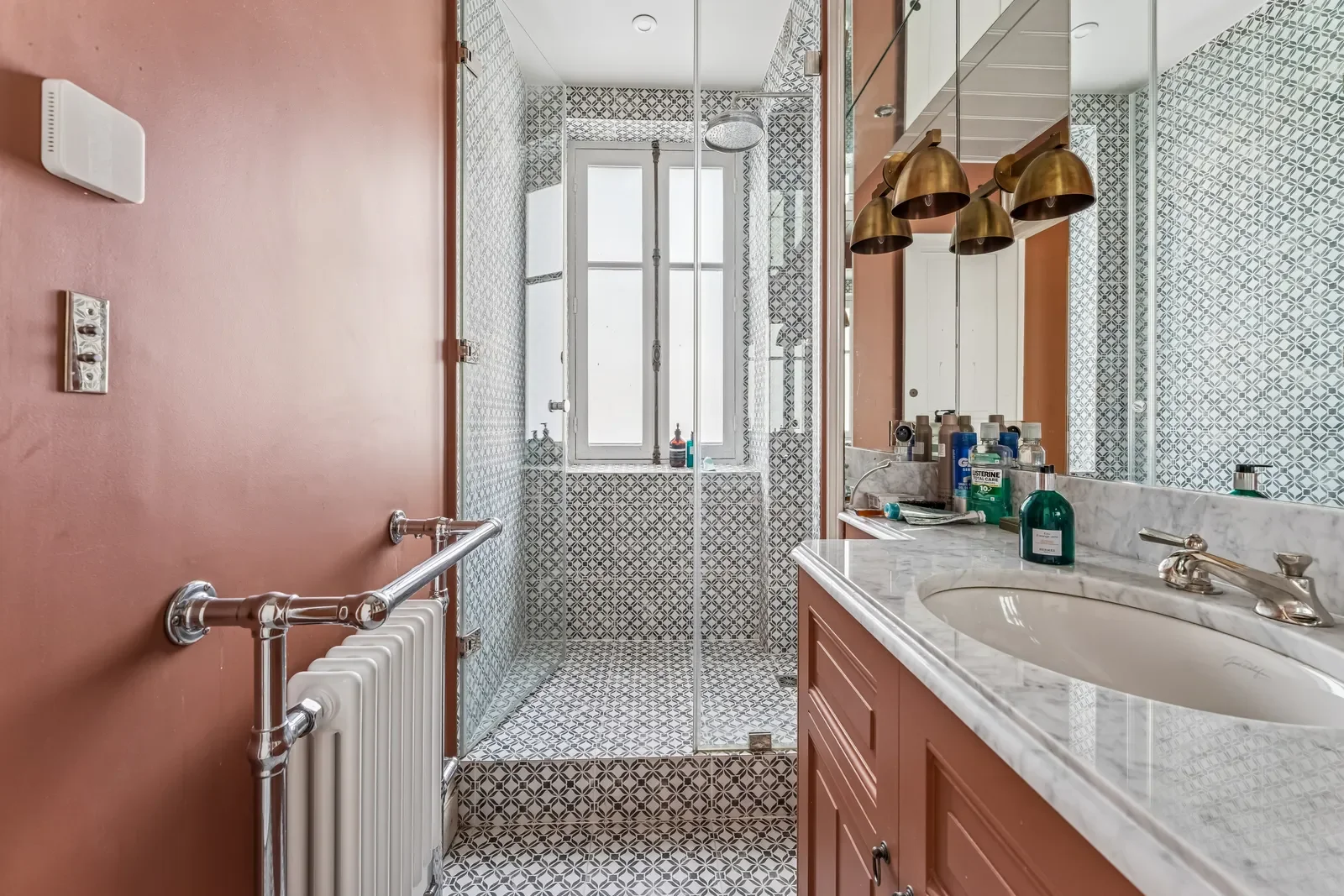
Set on an upper floor and accessed by elevator, the apartment is arranged around a plan en étoile, or star-shaped layout, designed to create a sense of circulation, balance, and light. The dual-aspect residence opens from an entrance hall toward a double reception of approximately 25 m², or 269 ft², with two balconies extending the living space outward. The apartment also includes an independent fitted kitchen, one bedroom, a shower room, and a custom dressing area.
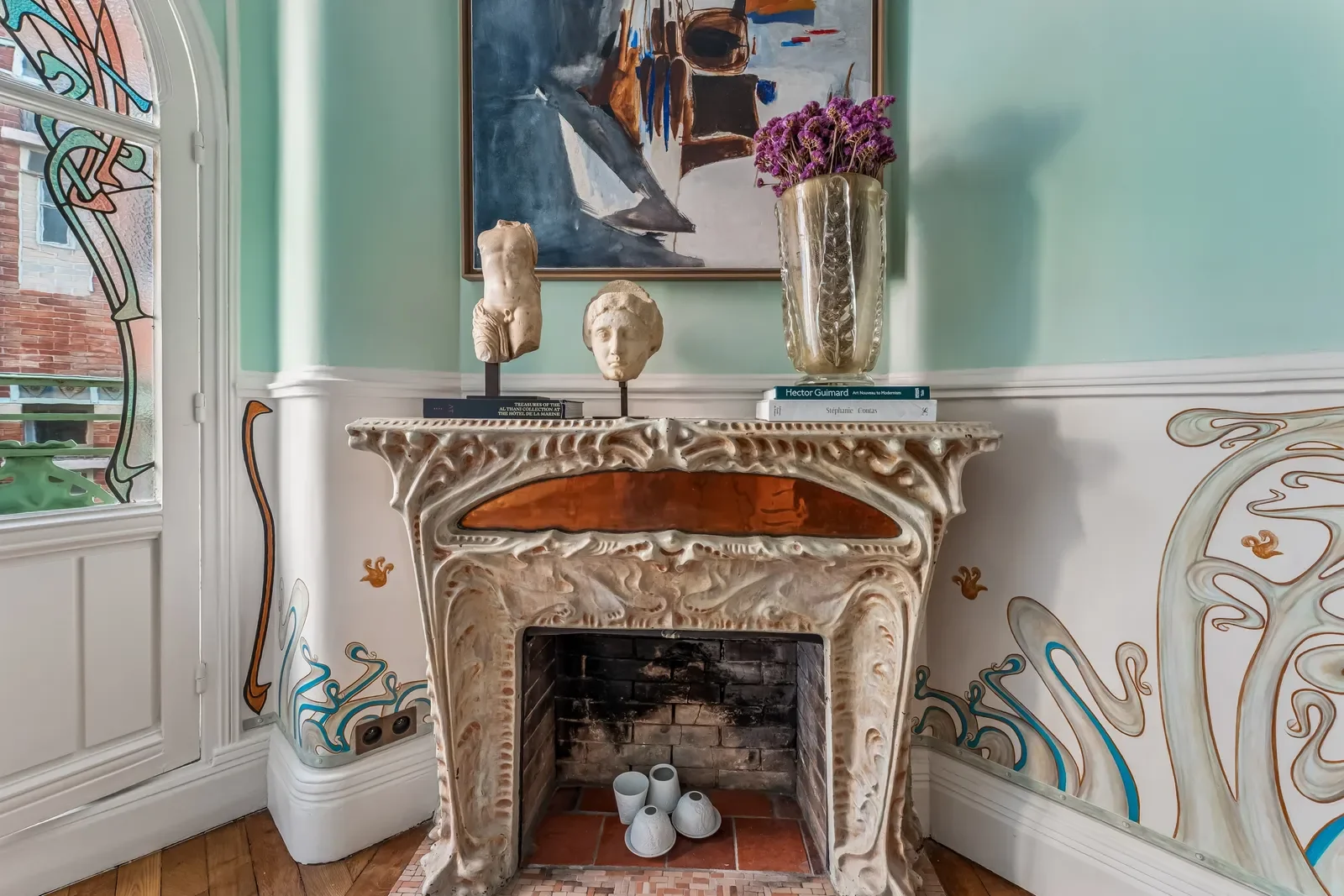
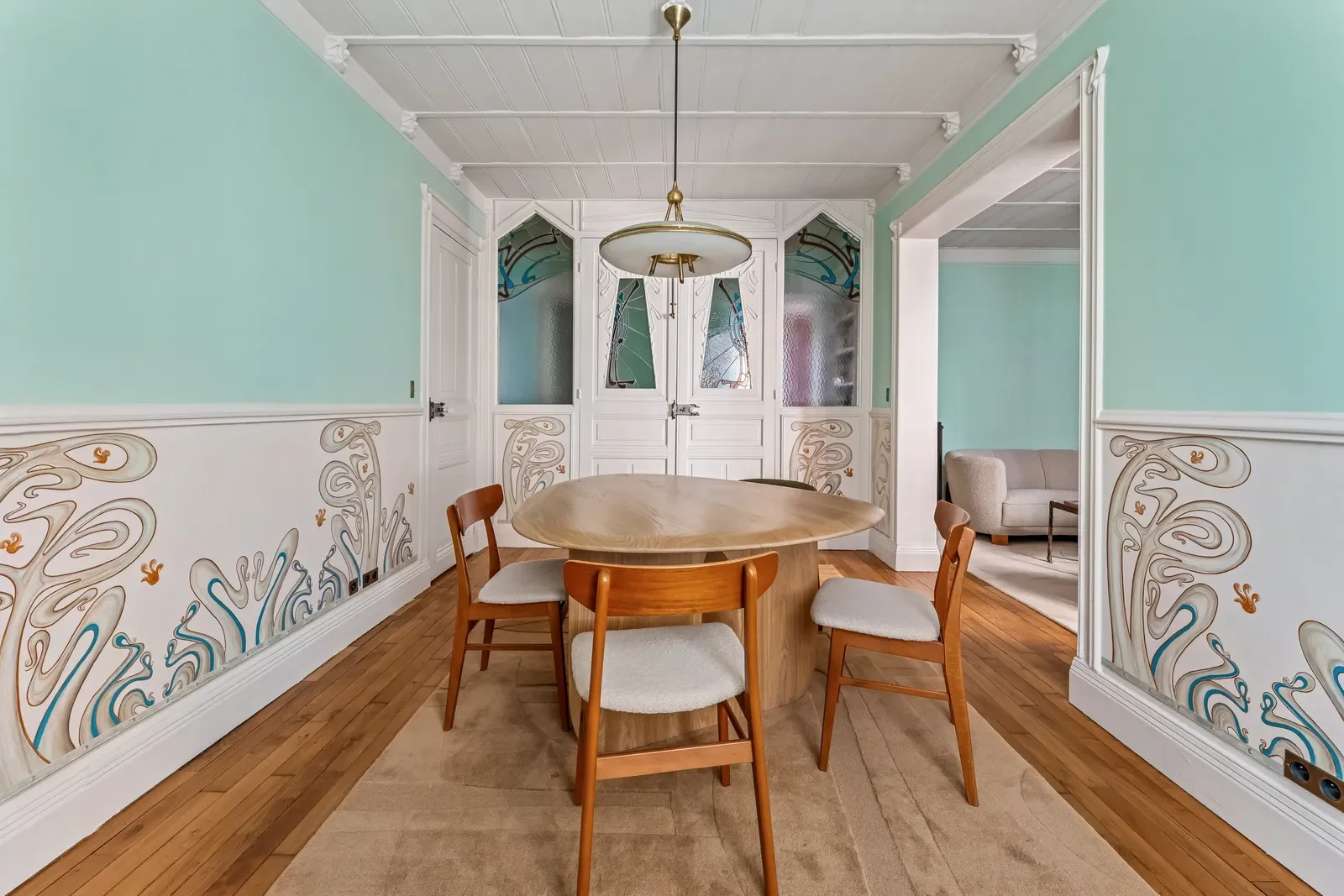
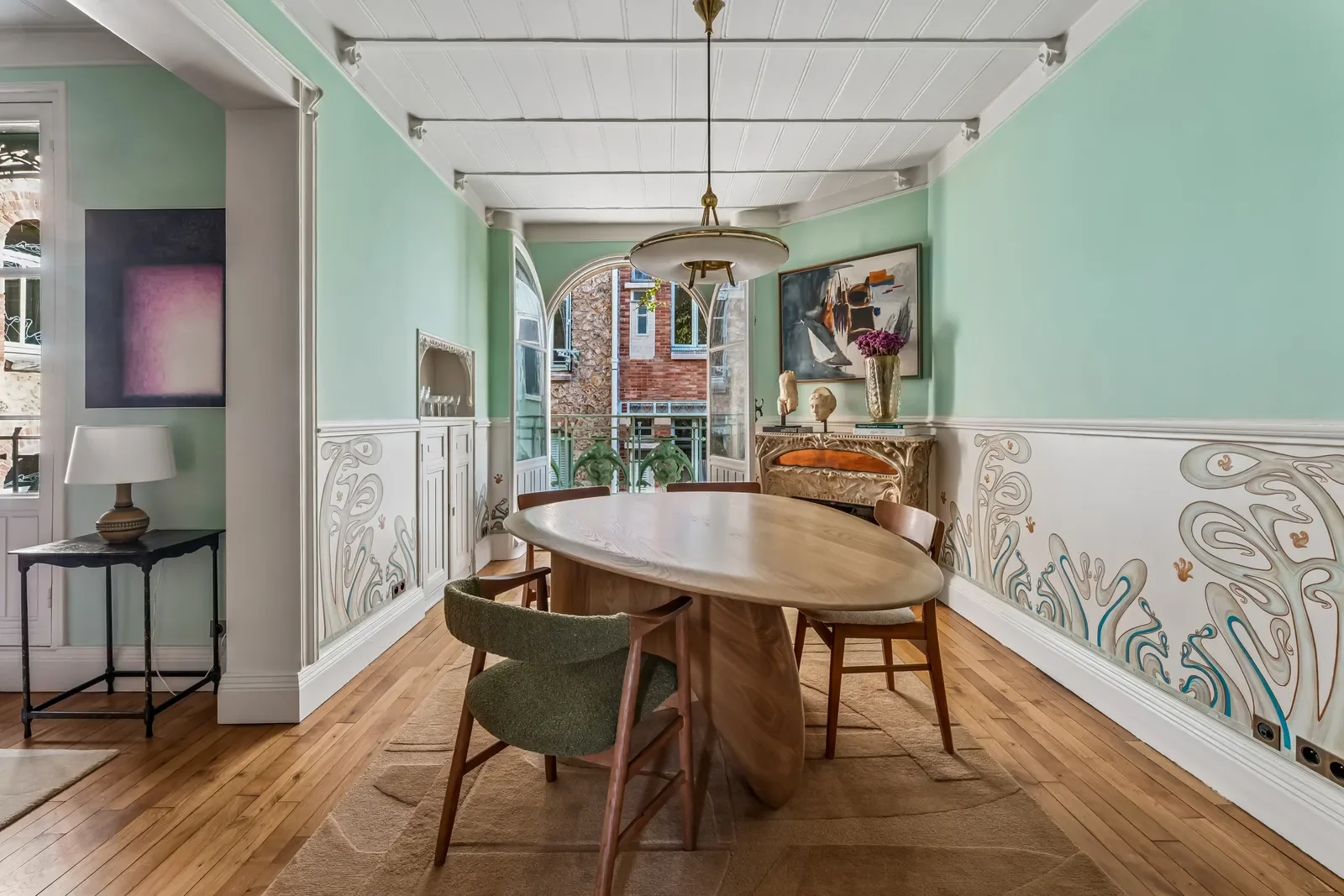
Preserved details include stained glass, mouldings, brass handles, original joinery, decorative doors, narrow-strip parquet, and an antique fireplace by Guimard.
Located at 14 rue Jean-de-La-Fontaine, Castel Béranger sits in Auteuil, in the western part of the 16th arrondissement, between the Seine and the Bois de Boulogne. The area is quieter and more residential than central Paris, with a long association with private hôtels particuliers, family apartments, and late-19th-century architecture. For an international buyer, the setting offers a different version of Paris: less postcard, more residential, with architectural significance, green space, and access to the city’s western edge.
Preserved details include stained glass, mouldings, brass handles, original joinery, decorative doors, narrow-strip parquet, and an antique fireplace by Guimard. These elements give the apartment a direct relationship to the building’s 1898 design, rather than simply placing it inside a historic address.
The residence was later restored with CM Studio Paris, the Paris-based interior architecture and design studio known for layered, timeless interiors that respond to the character of a place. Protected original elements were preserved, while the kitchen and bathroom were updated where possible. The approach was deliberately restrained, with the renovation working with the building’s Art Nouveau language rather than against it.
The apartment was previously featured by AD in 2024, when its then-owner, Octavian Popa, described the aim as one of enhancement rather than reinvention: “We have kept in mind the idea of unifying and preserving the tone. The doors, the ceilings, everything has been refreshed. That is what I wanted: not to change anything, but simply to highlight it.”
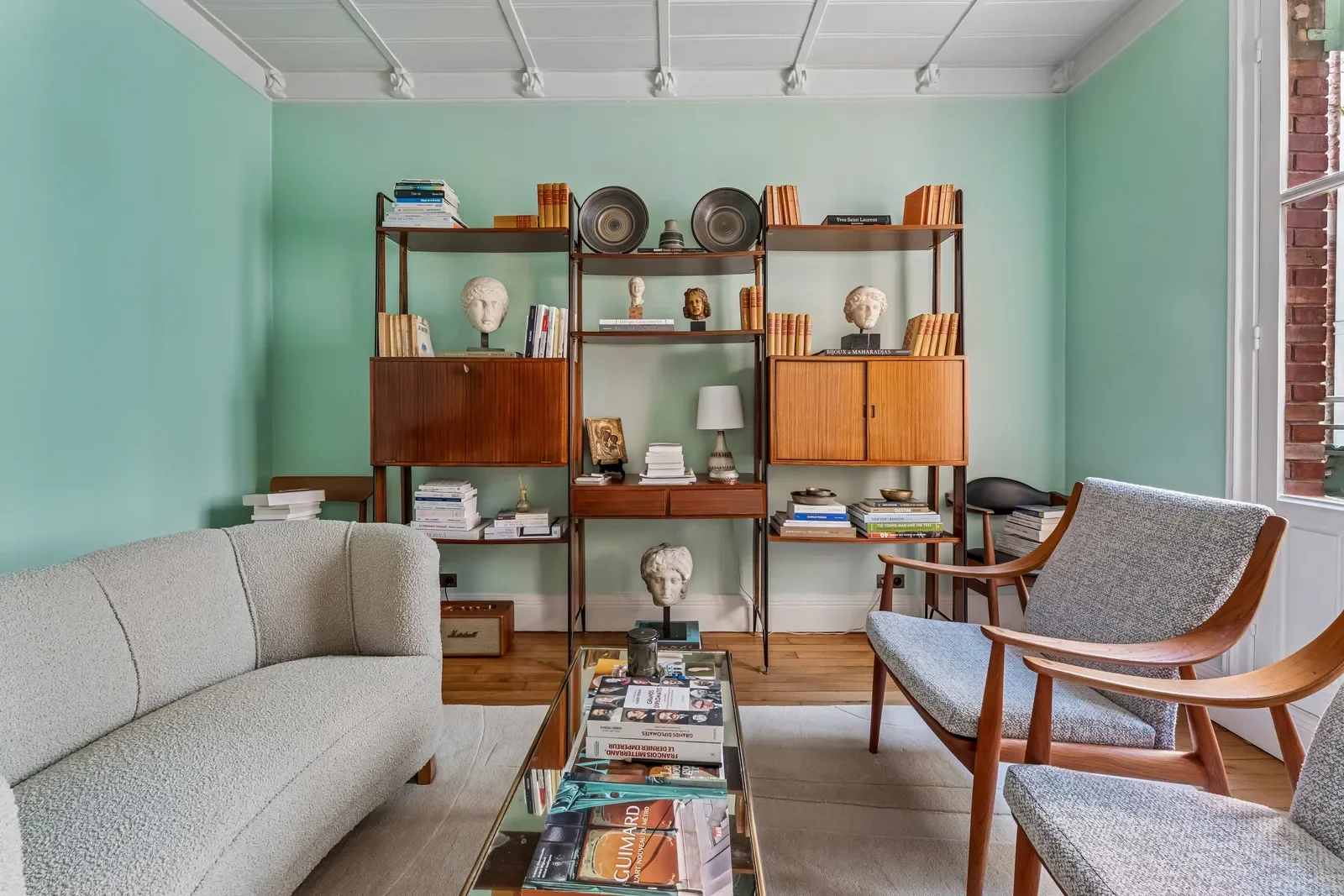
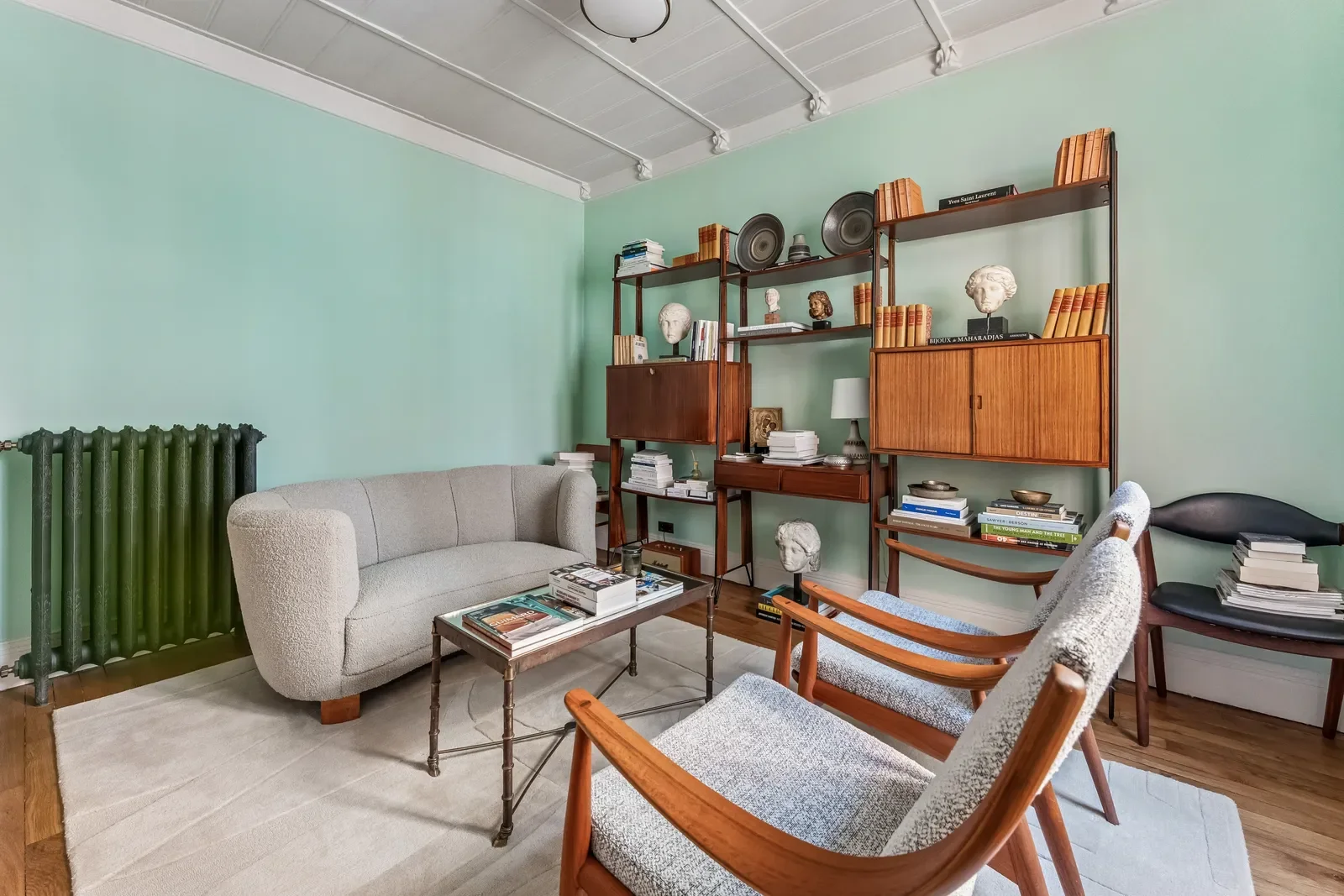
The decorative approach remains closely tied to the building’s Art Nouveau identity. In the dining room, ornamental arabesques by decorative painter Barazandeh Dauzincourt were conceived in the spirit of Guimard’s visual language, while the bedroom features a reissued Hector Guimard wallpaper. The walls are finished in a pale celadon green, a shade the former owner described to AD as a kind of “Ladurée green,” chosen for the way it evokes the natural spirit of the building and the botanical curves associated with Art Nouveau.
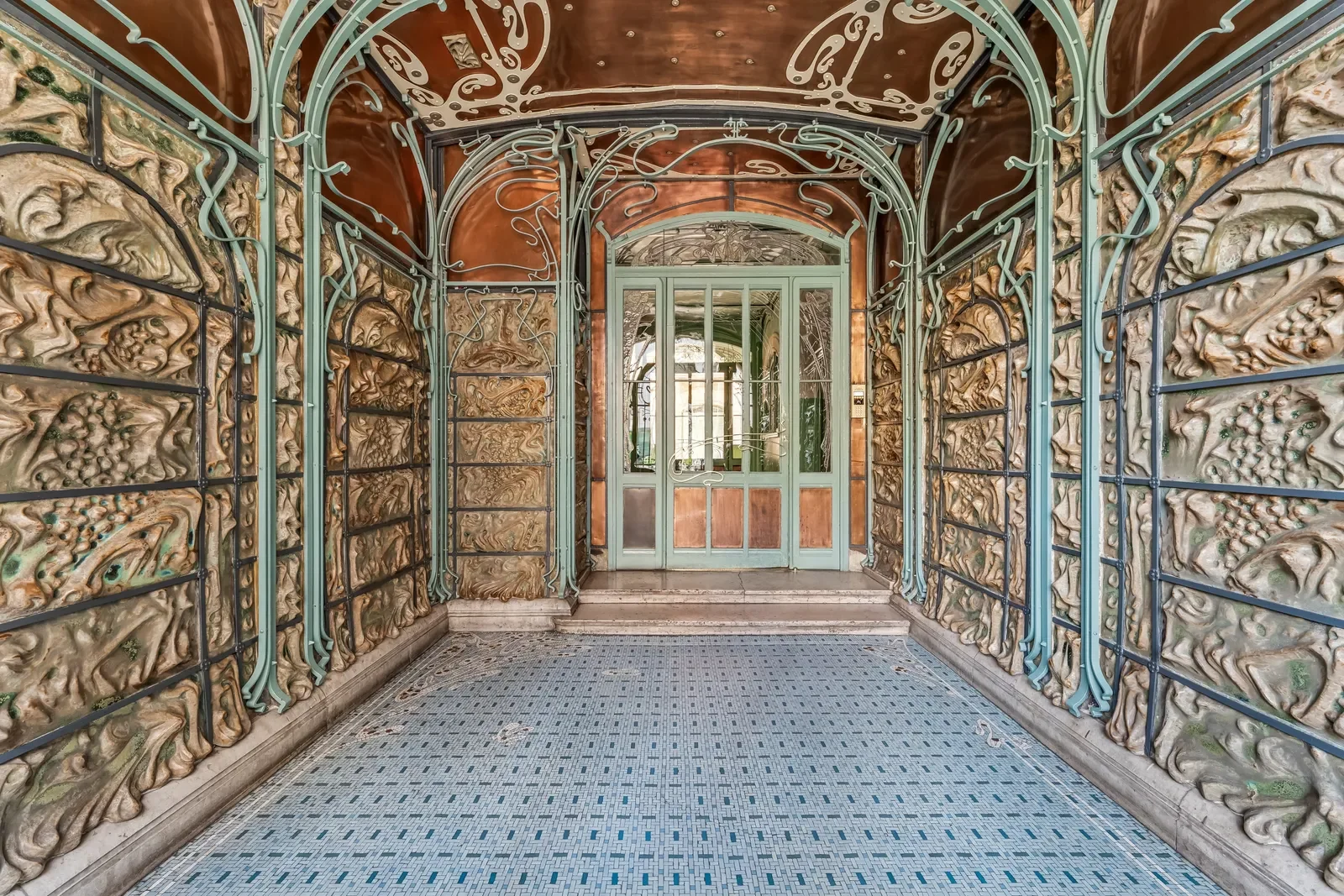
Castel Béranger’s entrance hall is among the building’s most atmospheric spaces, with flamed stoneware ceramics, metalwork, copper-toned surfaces, and a theatrical material palette that gives the interiors a distinctive, almost grotto-like character.
For an international buyer, the property’s appeal is highly specific: a compact Paris residence with balconies, elevator access, restored interiors, and a rare position inside a protected Art Nouveau building in one of western Paris’s most established residential districts. It is not simply a renovated one-bedroom apartment in the 16th arrondissement. It is a private residence inside the building that helped bring Guimard’s Art Nouveau language into Parisian residential architecture before his Métro entrances made that language part of the city’s visual identity.
All photography belongs to the listing agency. See more on Paris Ouest Sotheby’s International Realty.