
Artist Daniel Arsham Lists His NYC Home, a Former Firehouse Turned Art Studio/Residence, for $9 Million
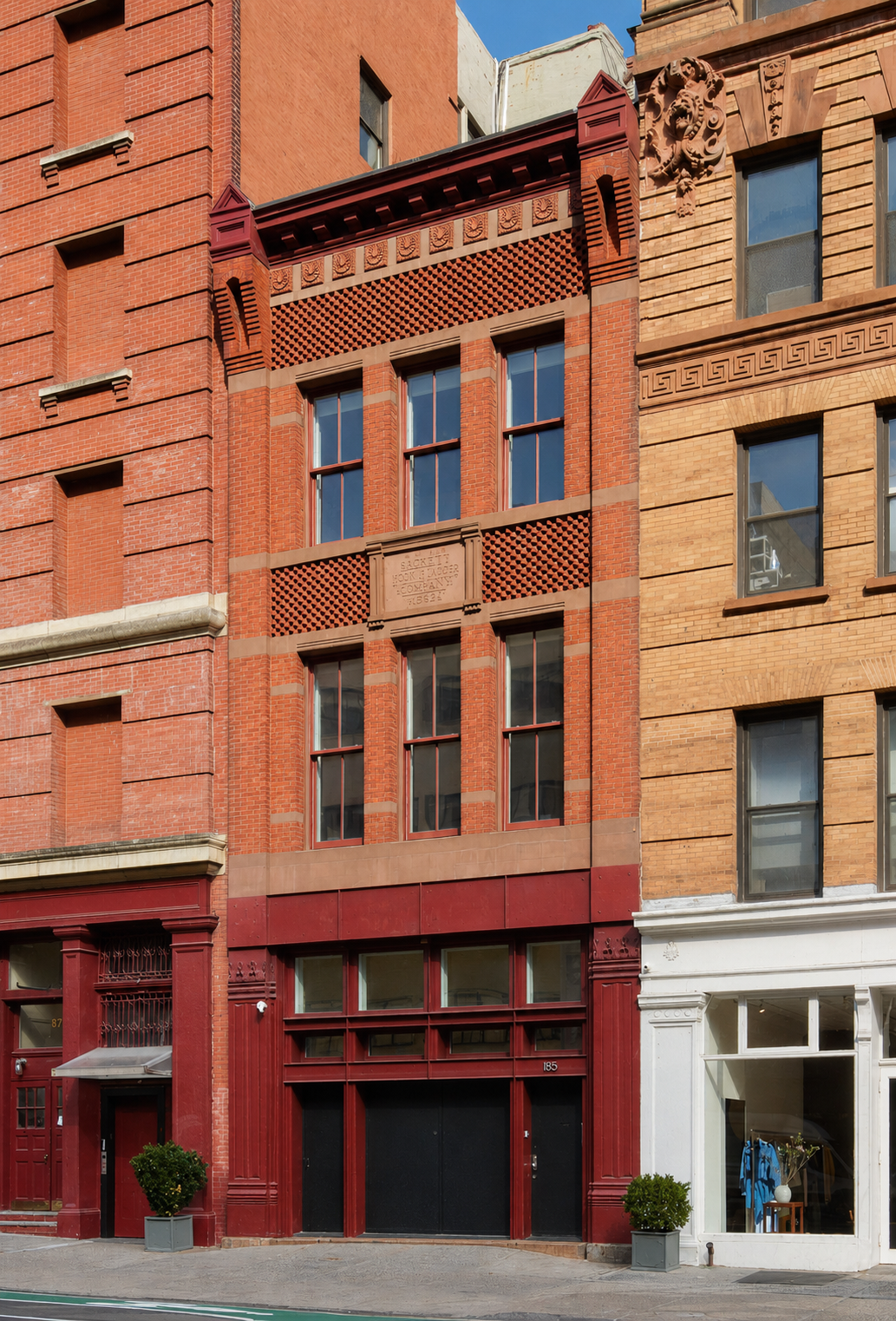

Listed with Nick Gavin of Compass for $8,995,000, 185 Lafayette Street is one of SoHo's more unusual residential offerings. Built in 1887 as the headquarters of Engine Company 55, the landmarked property has served as a firehouse, automotive repair shop, photographer's studio, and private residence over the course of nearly 140 years.
Today, the former firehouse is owned by contemporary artist Daniel Arsham, who purchased the property in 2022 and transformed it into his live-work residence and studio.
The Artist, Daniel Arsham
Born in Cleveland in 1980 and raised in Miami, Daniel Arsham has become one of the most commercially successful contemporary artists of his generation.
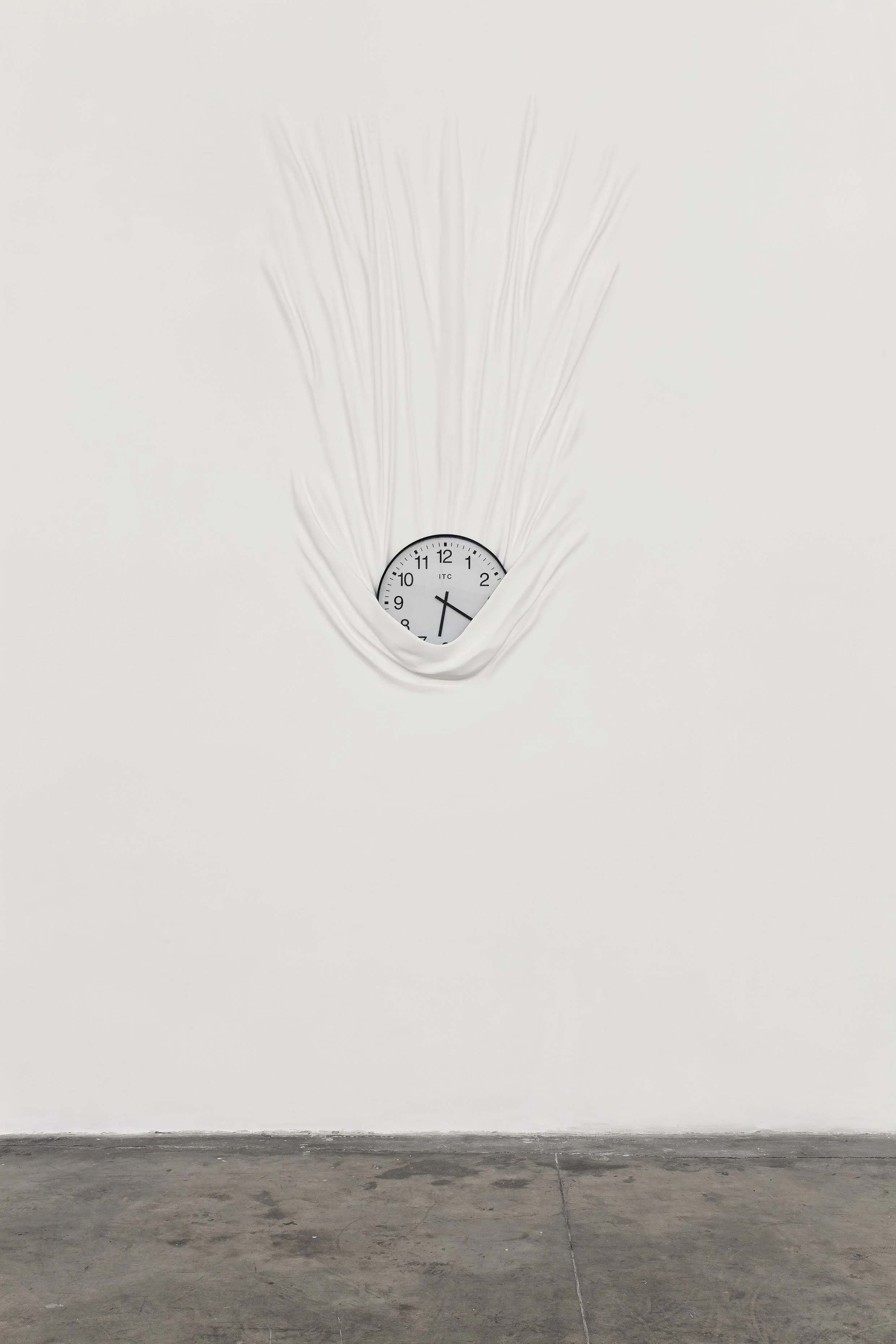
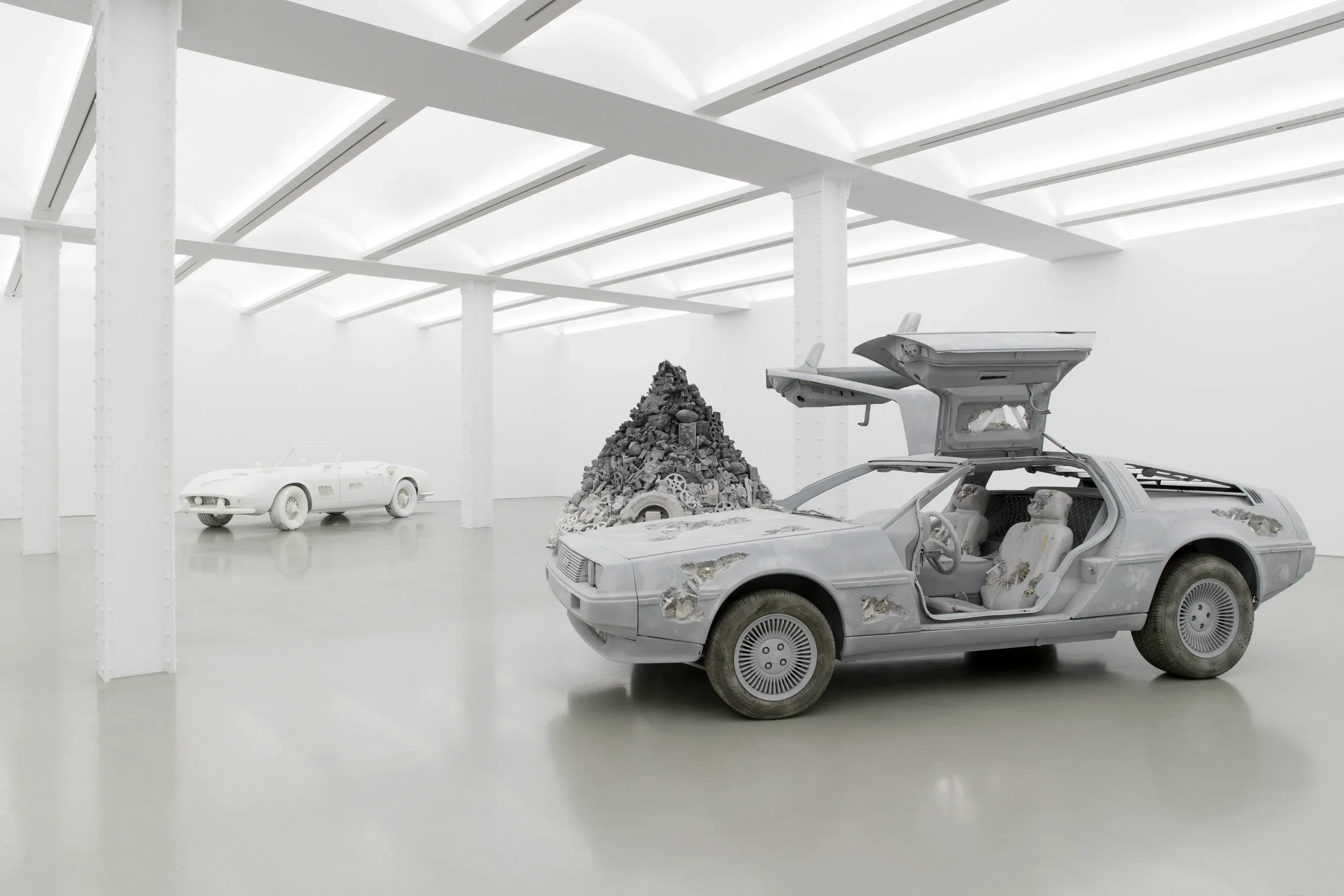
A multidisciplinary artist working across sculpture, architecture, design, painting, drawing, film, and installation, Arsham is best known for what he calls “fictional archaeology,” a body of work that transforms familiar contemporary objects into artifacts from an imagined future. Cameras, telephones, gaming systems, automobiles, and sports equipment appear eroded, fractured, or crystallized, as though they have survived for centuries.
His collaborations have included Dior, Porsche, Tiffany & Co., Rimowa, Adidas, Kith, Pokémon, Hublot, Disney, Uniqlo, and Moët & Chandon. Among his best-known works are the Future Relics series, the Eroded Porsche 911, the Eroded DeLorean, the Pokémon Archaeological Series, and Light & Time, a 20-meter sundial installation created beneath the Matterhorn in Switzerland.

Daniel Arsham's Firehouse
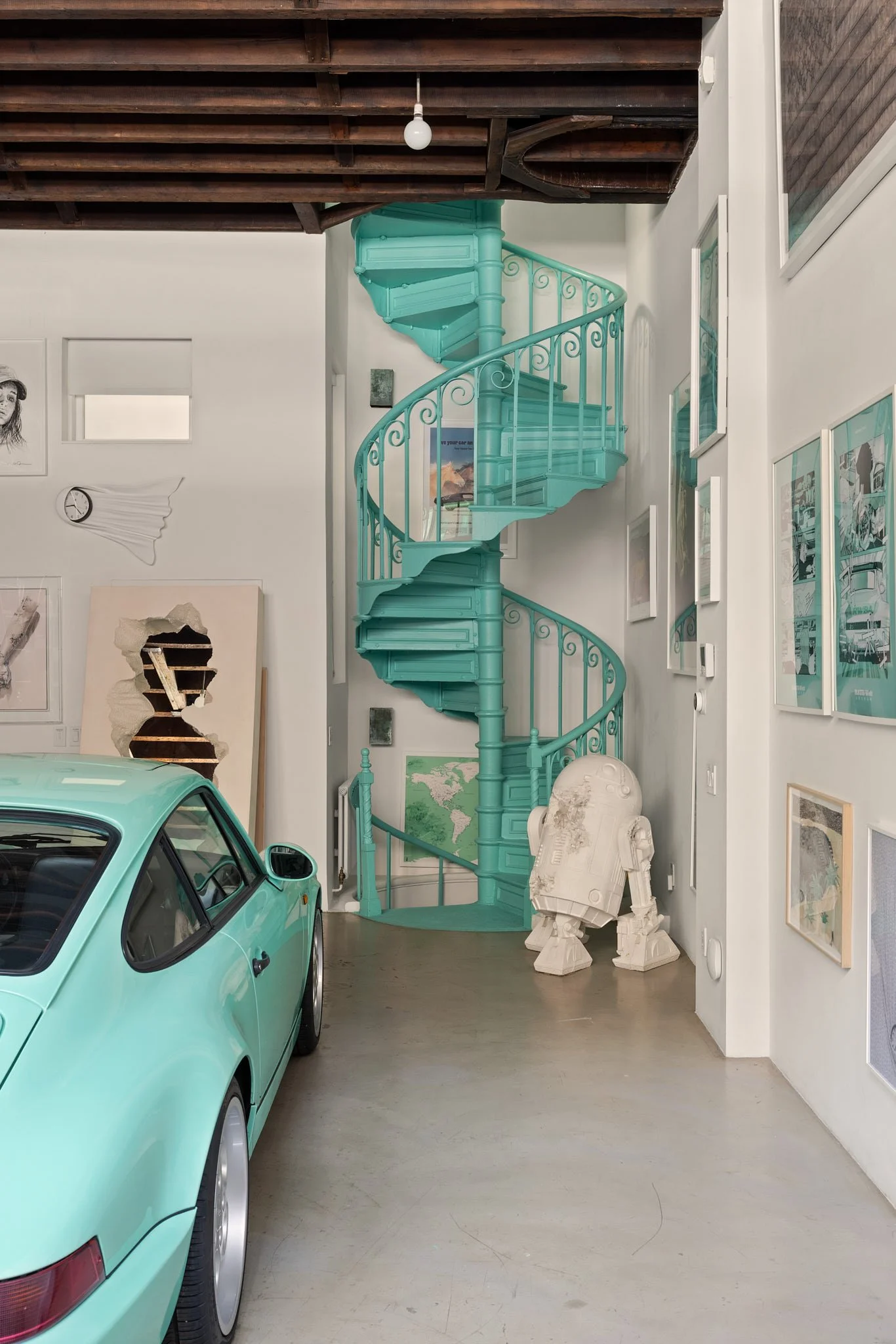
Photo Nick Gavin, Compass Real Estate
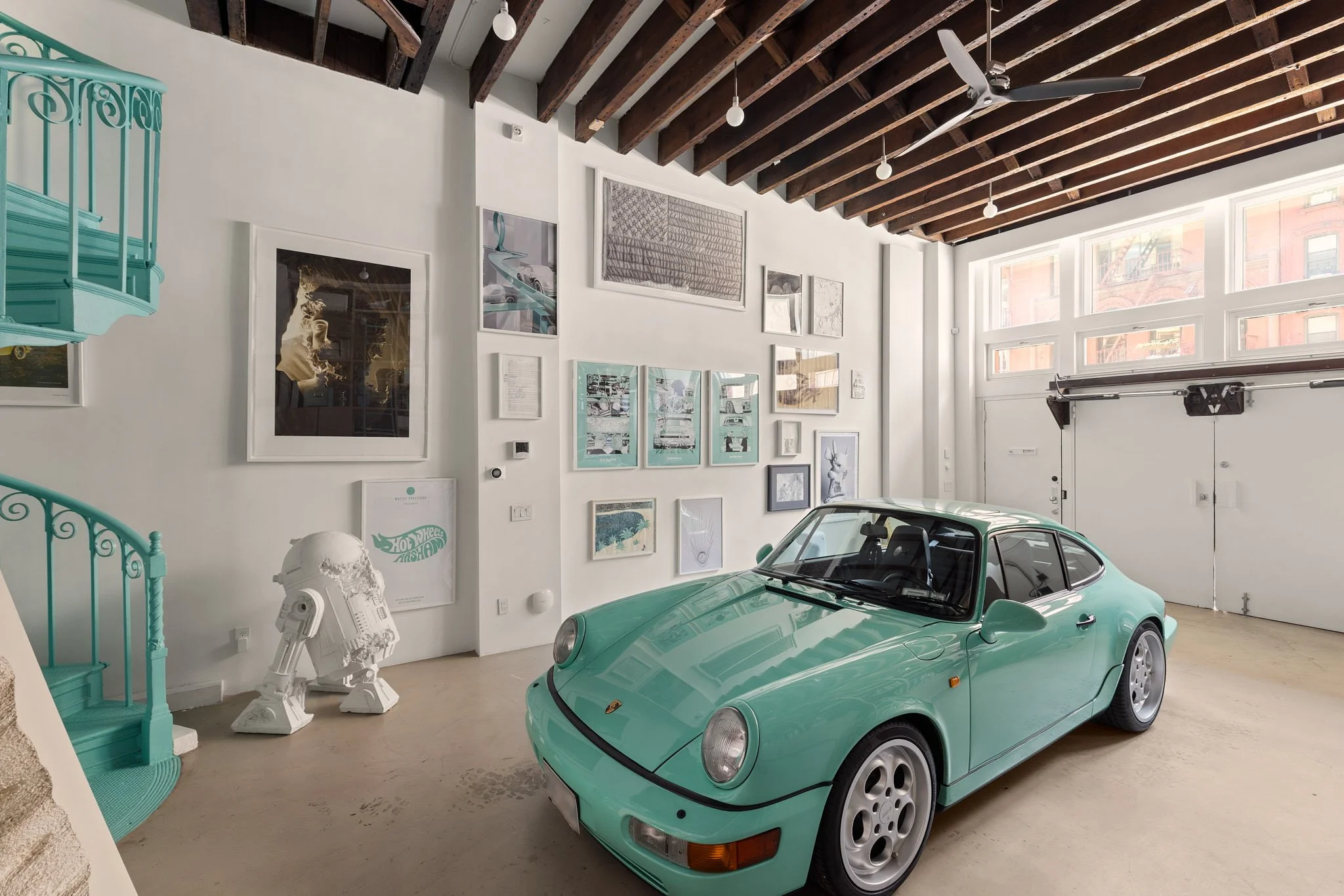
When Arsham began searching for a Manhattan home, he had one major requirement: a garage.
In a 2023 Architectural Digest feature on the property, Arsham explained that he was driving daily between Manhattan and his Long Island residence, a 1971 house designed by architect Norman Jaffe that was also previously featured by Architectural Digest. At the time, he regularly made the trip in his factory mint-green Porsche 964 Carrera 2, making secure vehicle storage a priority.
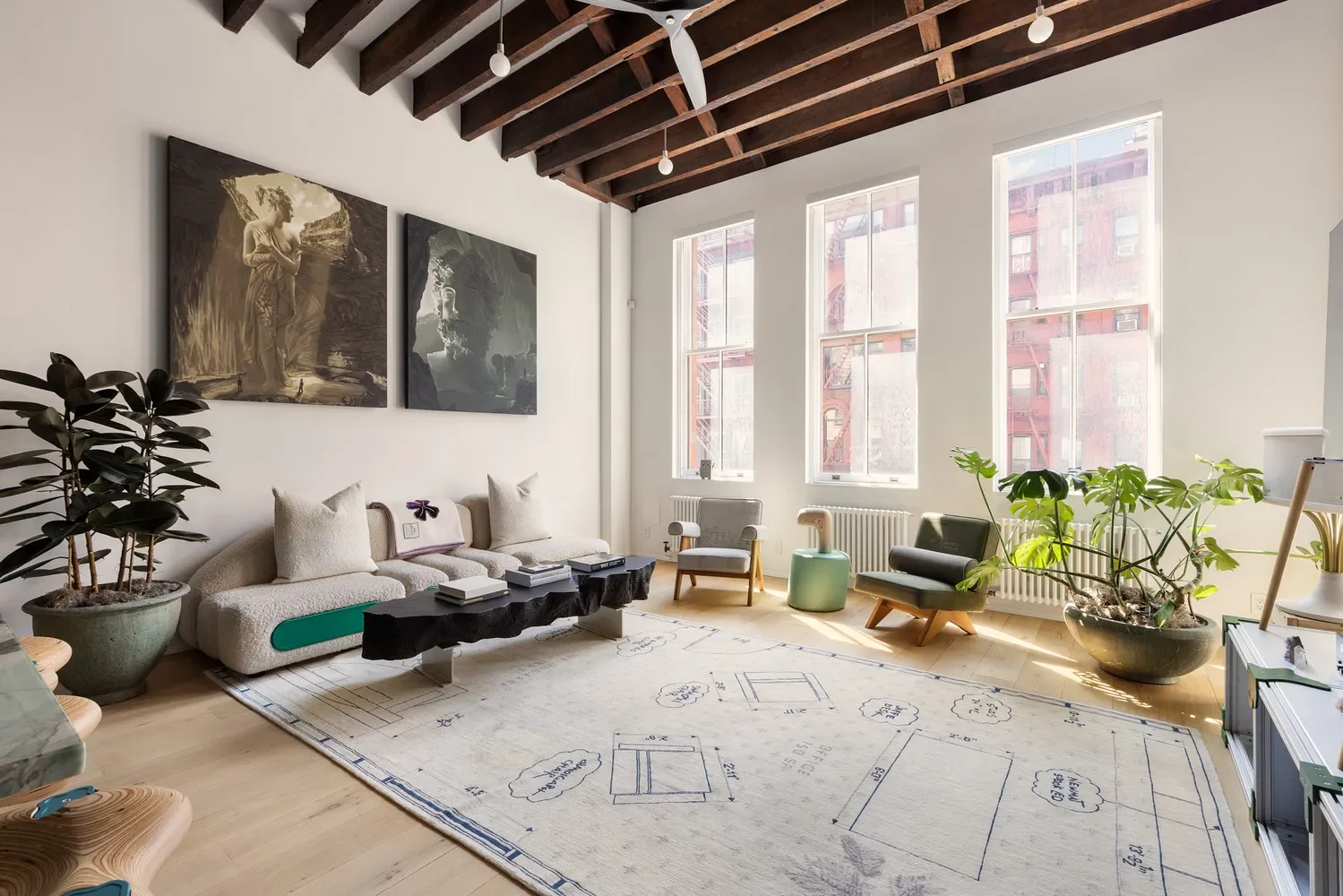
Photo Nick Gavin, Compass Real Estate
"The car is really important to me," Arsham told the magazine. "I'm very particular, and the garage needs to be clean and protected."
A friend alerted him to the former firehouse shortly after it came on the market, and Arsham quickly realized it offered something of a Manhattan unicorn: the building retained its original curb cut.
A curb cut is a break in the sidewalk that allows vehicles to drive directly into a building. In Manhattan, curb cuts are increasingly rare, and obtaining approval for a new one today is considered extremely difficult. They remove street parking, interrupt pedestrian sidewalks, and require extensive city approvals.
Originally designed for horse-drawn fire engines, the opening allows Arsham to drive his Porsche directly into the ground floor.
Renovating the Former Firehouse
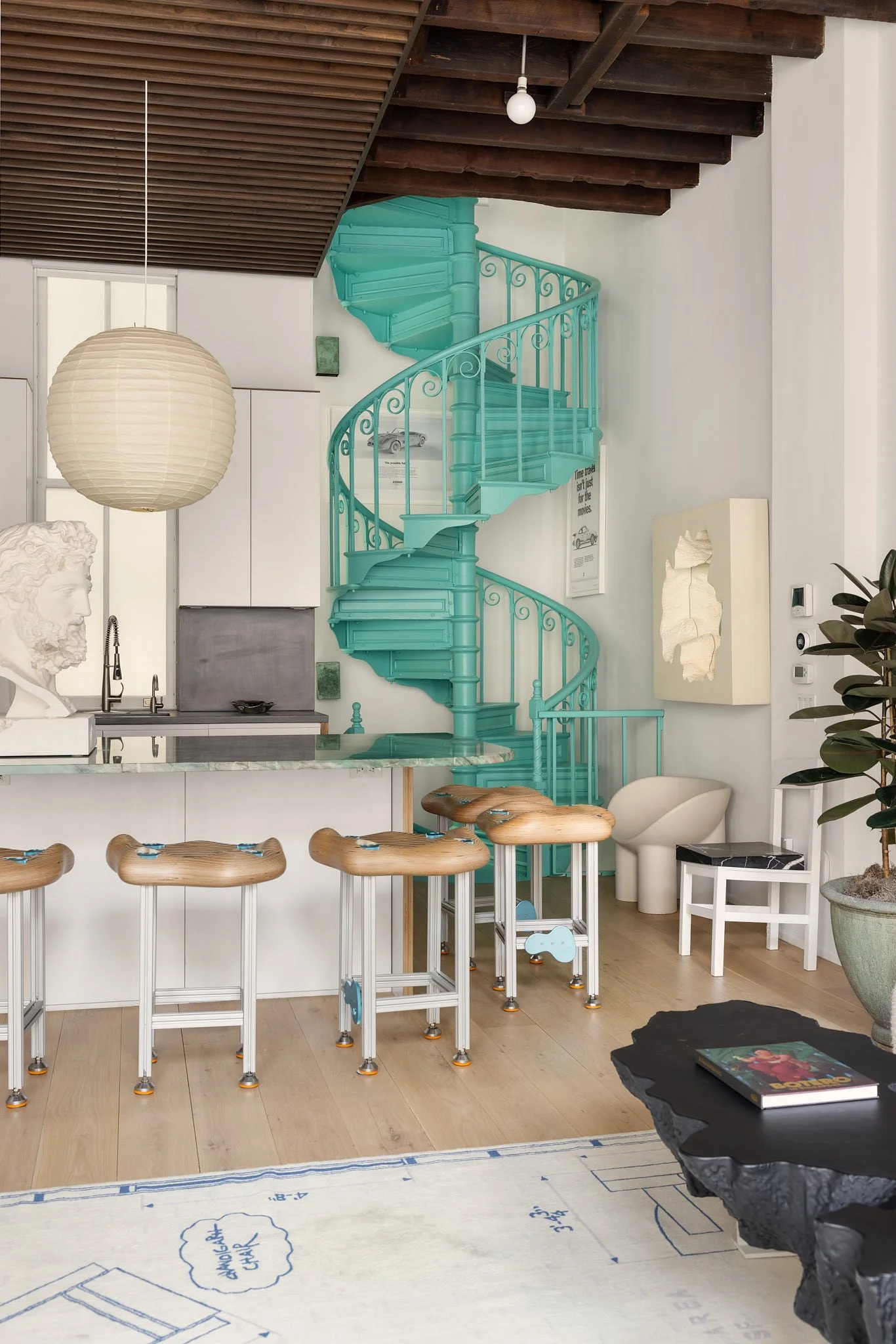
Photo Nick Gavin, Compass Real Estate
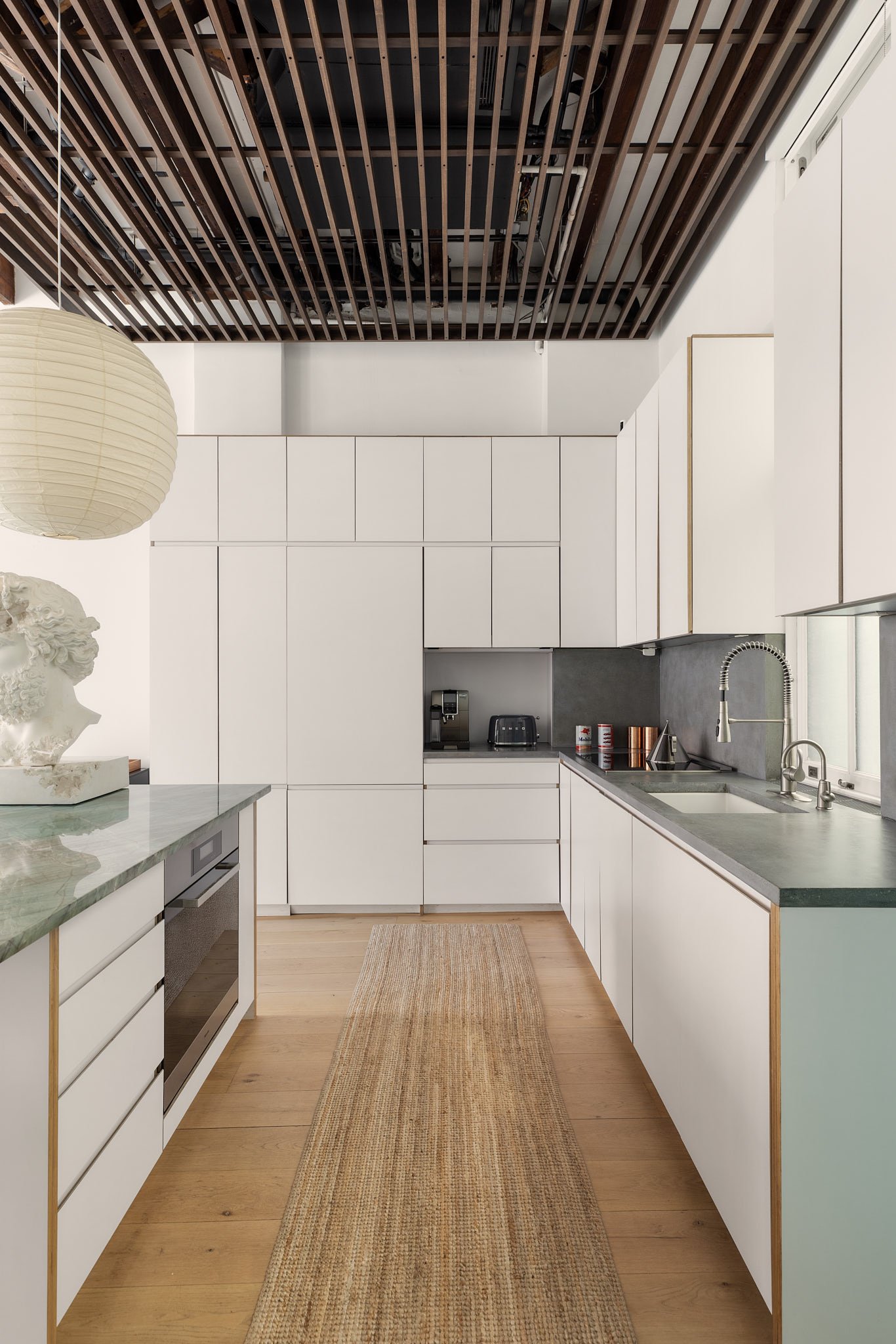
Following the purchase, Arsham updated the building's heating and cooling systems, refinished the floors, restored architectural elements, and adapted the property to support both living and working.
The ground floor now functions as a garage, studio, and workspace. Floor-to-ceiling shelving displays works from Arsham's personal collection alongside his own sculptures and design objects.
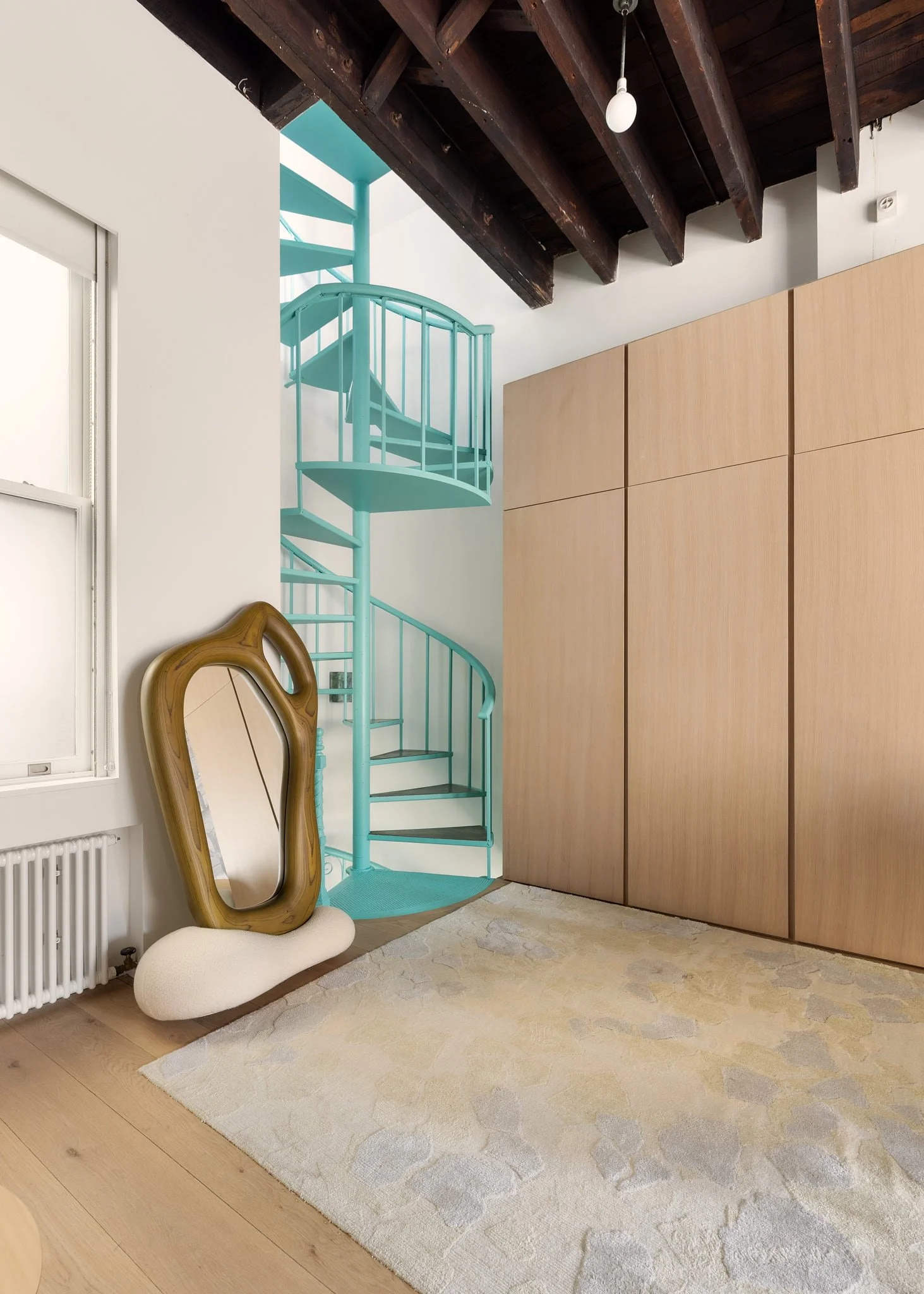
One of the residence's most distinctive features is its original cast-iron spiral staircase. Hidden beneath layers of engine-red paint for decades, the staircase was sandblasted and refinished in "Arsham Green," a mint-colored hue that appears throughout the home.
The upper levels contain living spaces furnished with pieces from Arsham Living, his furniture collection developed with Friedman Benda. Works by friends and fellow artists including KAWS and Josh Sperling appear throughout the residence alongside Arsham's own sculptures.

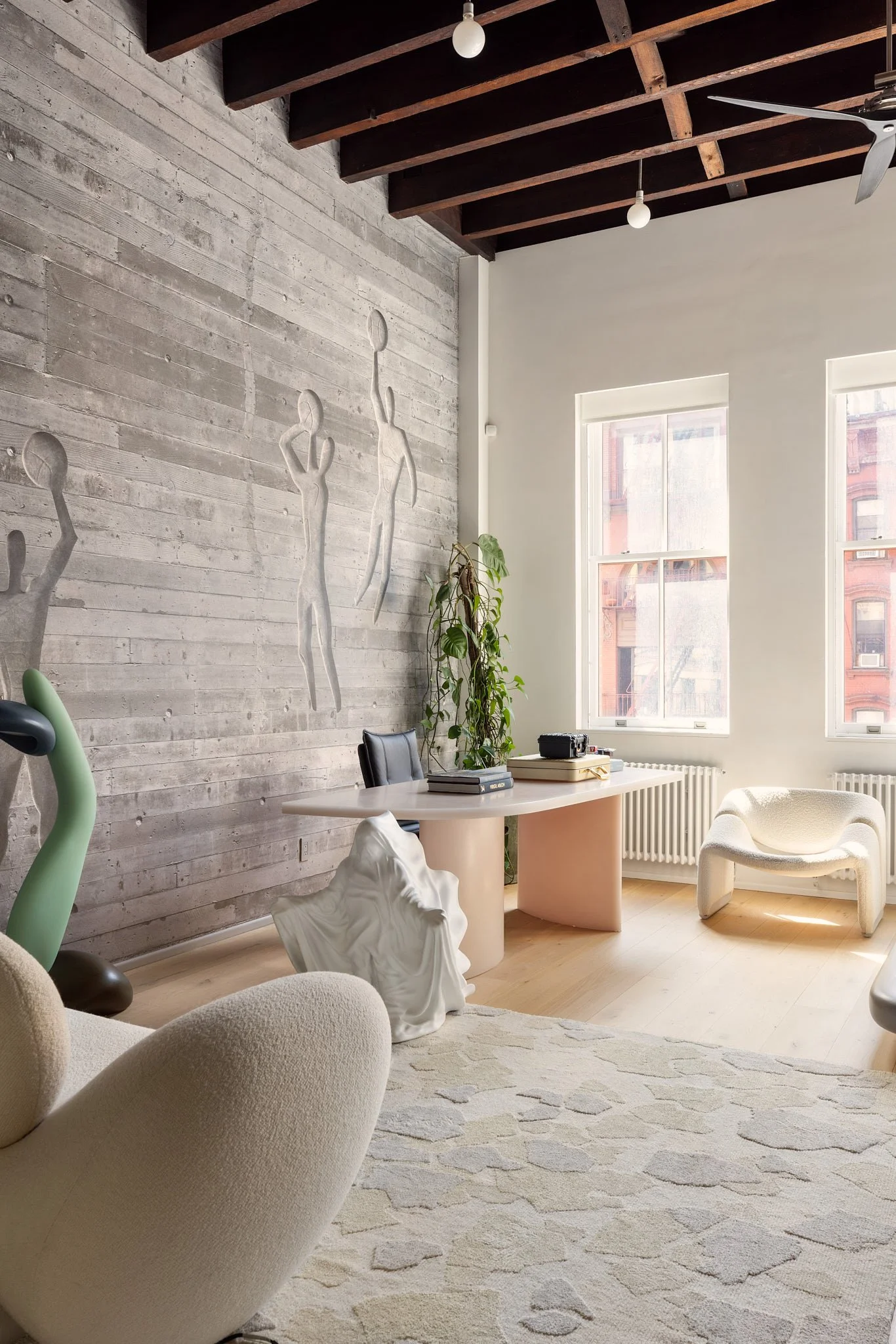
A custom Calico Wallpaper installation in the primary bedroom is designed to resemble exposed concrete. Above the bed, a bonsai tree appears to project from the wall as a sculptural relief, though it is actually part of the wallpaper itself.
On the opposite wall, basketball players emerge from the same concrete-like backdrop. The effect creates the impression of cast-concrete walls, despite the surfaces being finished with wallpaper.
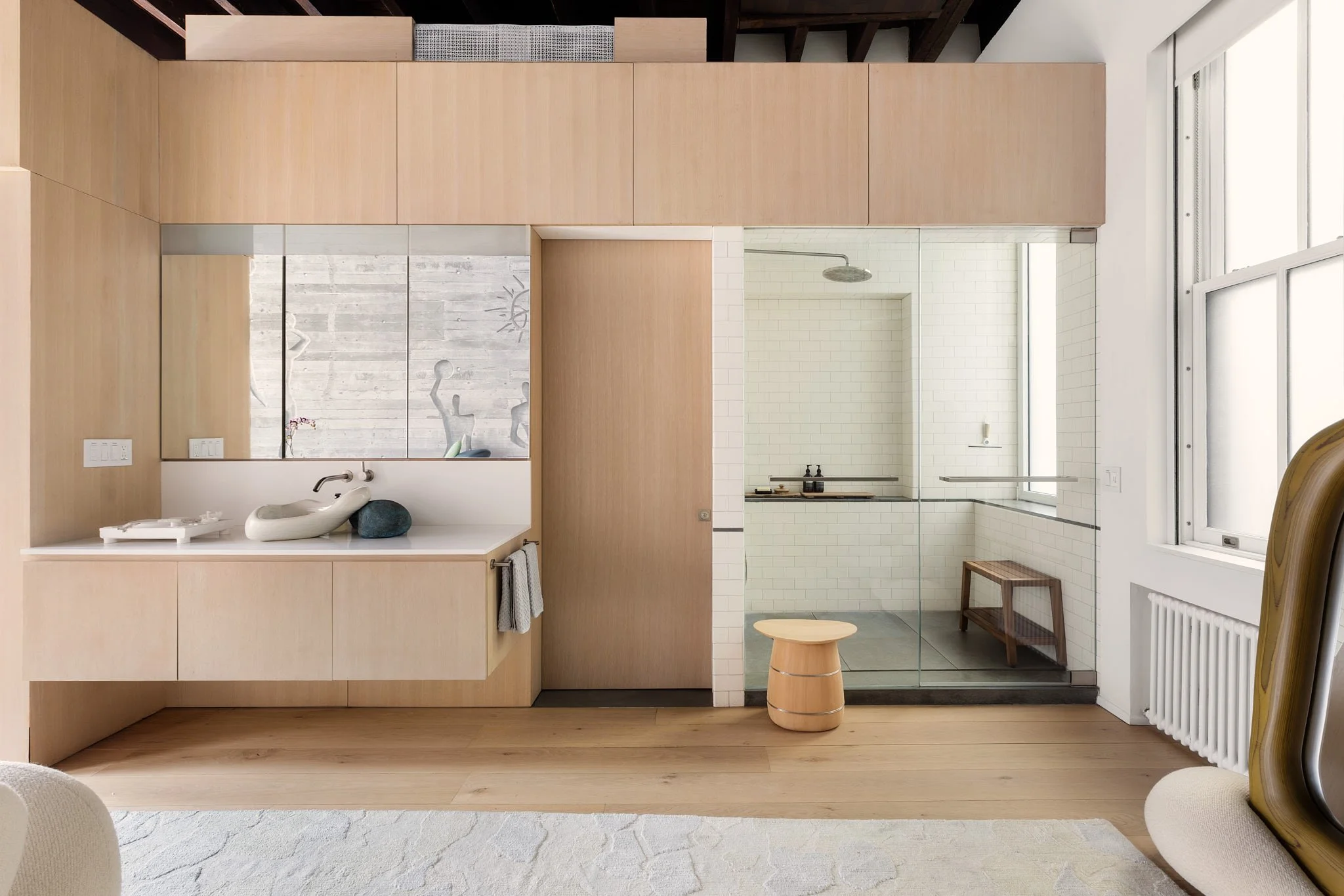
Photo Nick Gavin, Compass Real Estate
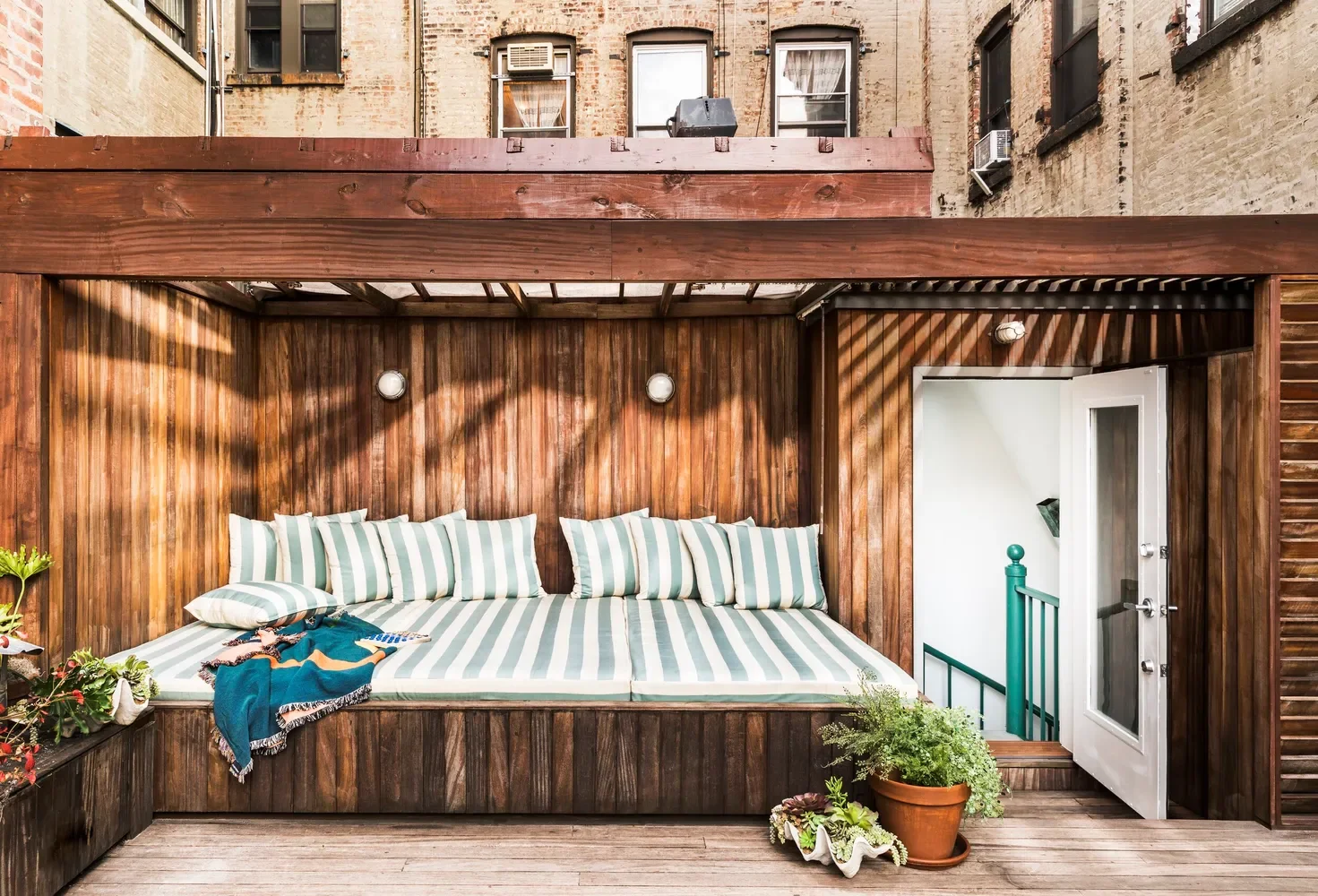
Additional custom details include a sculptural rock-like sink Ashram designed with Kohler and a landscaped rooftop terrace used for entertaining.
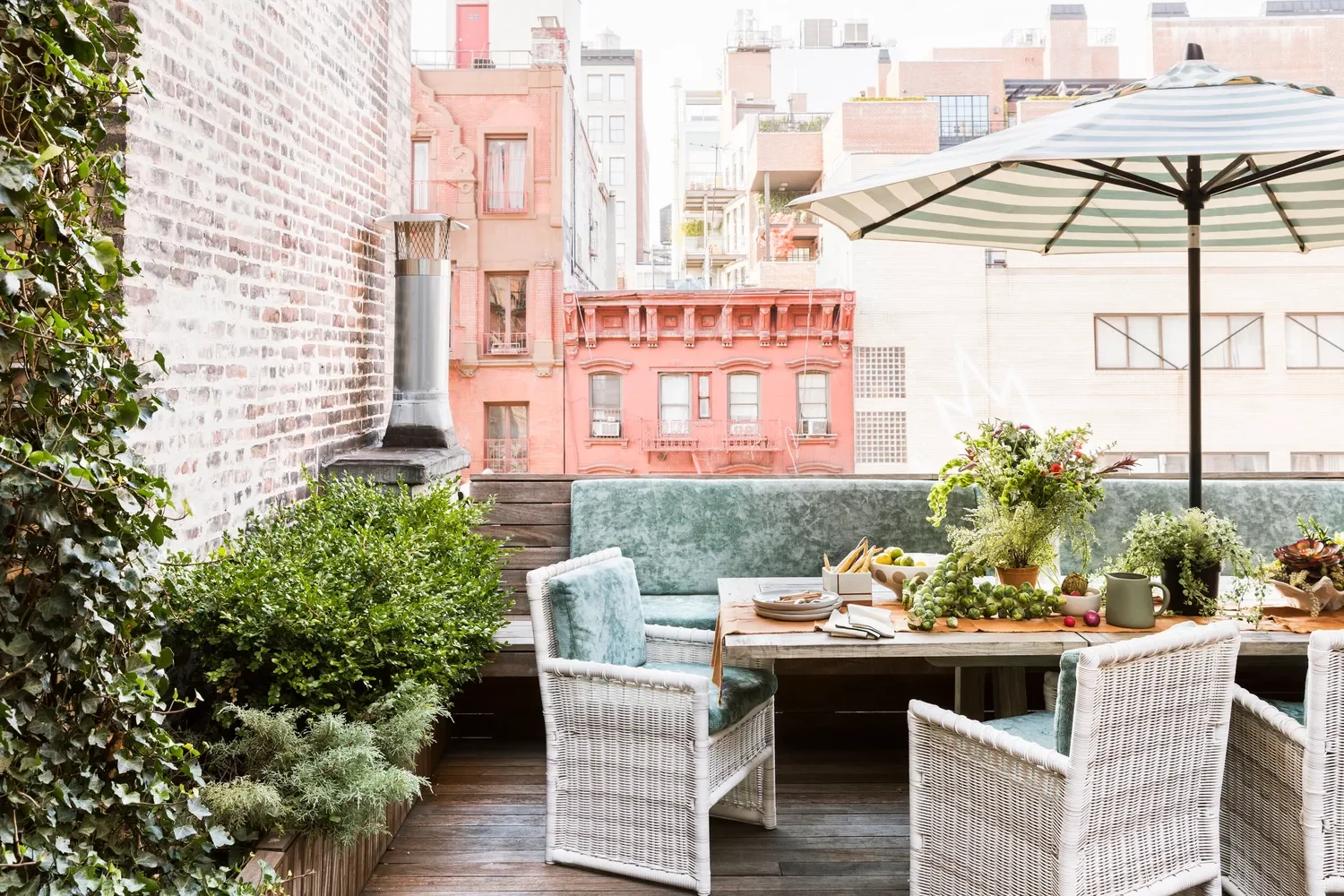
Photo Nick Gavin, Compass Real Estate
Built for Engine Company 55
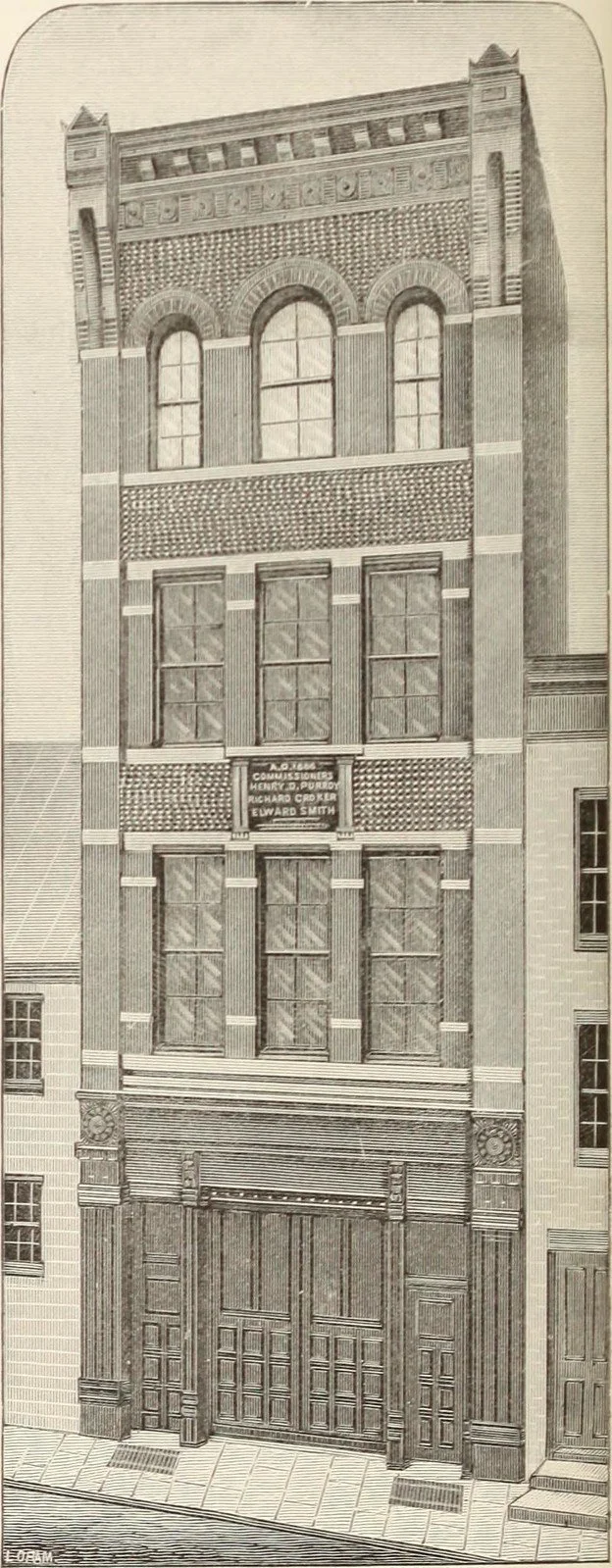
Long before it became a private residence, the property served as the headquarters of Engine Company 55.
Completed in 1887, the building was designed by Napoleon LeBrun & Son, the official architects of the New York Fire Department during the late nineteenth century. Between roughly 1879 and 1895, the firm designed more than 40 FDNY firehouses throughout the city.
The firm's most famous project would come later. Under the leadership of Napoleon LeBrun's sons, the firm designed the Metropolitan Life Tower, completed in 1909. Inspired by Venice's Campanile of St. Mark's, the tower briefly became the tallest building in the world, rising approximately 700 feet above Madison Square.
At the time of its construction, Engine Company 55 protected a neighborhood undergoing rapid change as residential structures gave way to larger commercial loft buildings. The firehouse was designed to serve this expanding district while incorporating architectural details that reflected the importance of the civic institution it housed.
A Cast-Iron Firehouse
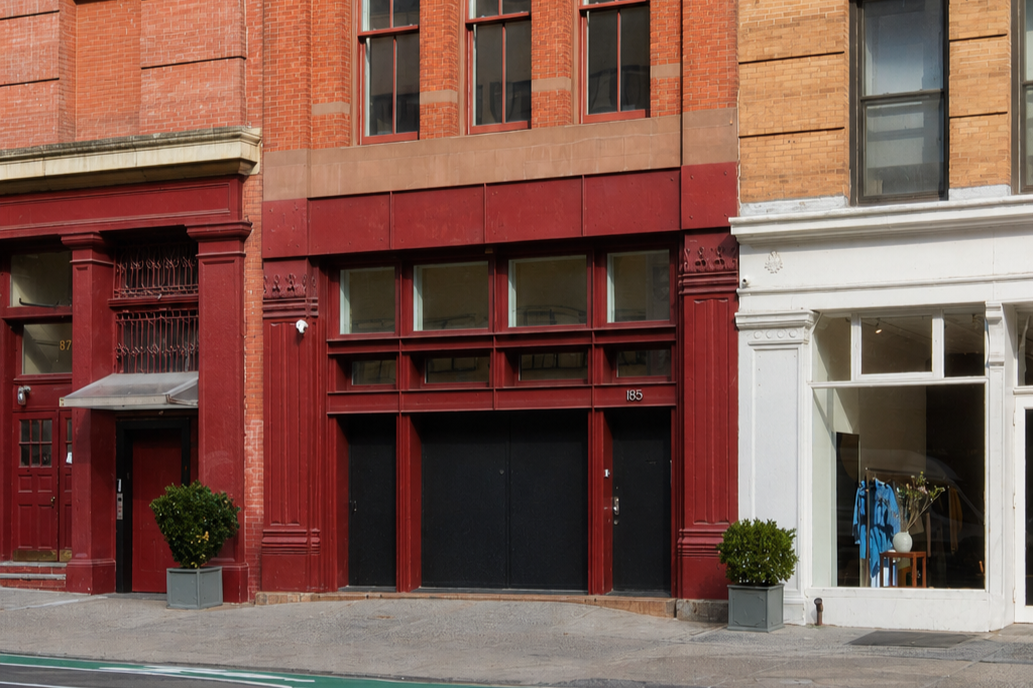
One of the building's most significant architectural features is its cast-iron base.
During the mid-to-late nineteenth century, cast iron became one of New York's defining building materials. It allowed architects to create larger windows, wider openings, and elaborate decorative façades while reducing construction costs. Hundreds of cast-iron buildings were erected throughout Lower Manhattan during this period.
Today, approximately 250 cast-iron buildings remain in New York City, with the largest concentration found in SoHo.
185 Lafayette occupies an unusual place within that history.
Unlike many nearby loft buildings that used cast iron across entire façades, the former firehouse employed the material more selectively. The cast-iron base made it possible to create the large firehouse doors while supporting the upper floors.
The result was a practical engineering solution rather than a decorative one.
Cast-iron pillars still frame the original firehouse doors today, one of the building's most visible reminders of its former use.
The Building That Moved
Only a few years after the firehouse was completed, New York City began widening Elm Street and extending Lafayette Street through Lower Manhattan.
The project required the demolition of numerous buildings along the route. In anticipation of the street widening, Engine Company 55 was relocated to a new station at Broome and Elizabeth Streets.
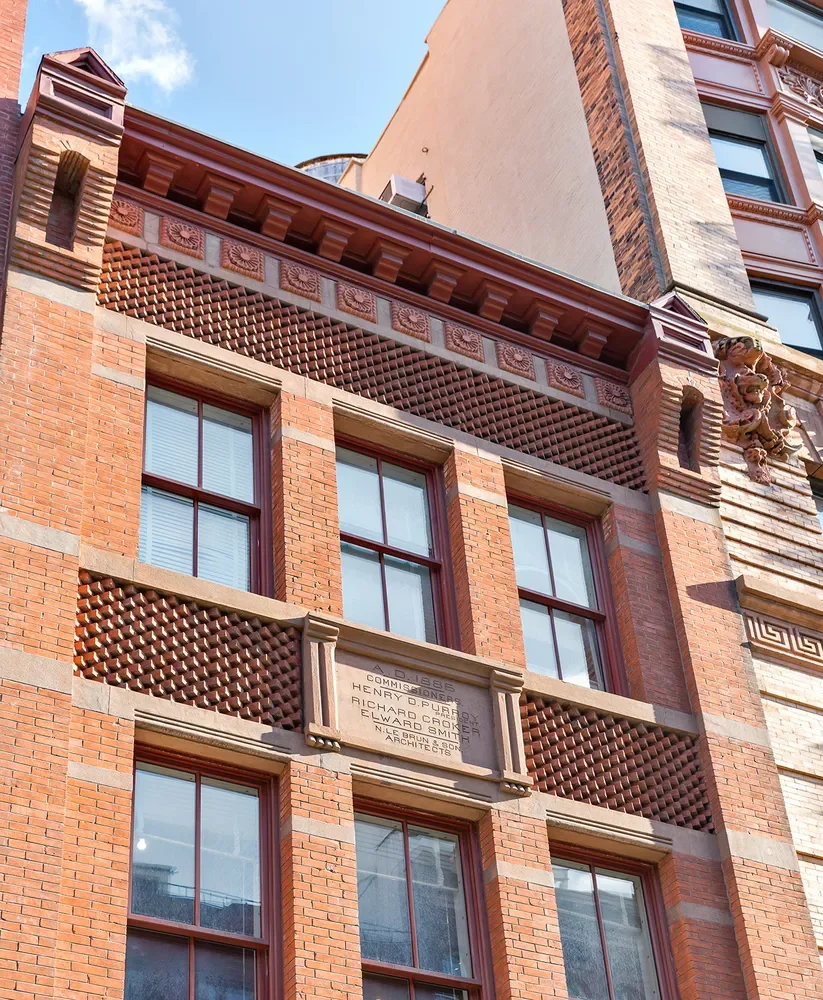
Rather than demolishing the former firehouse, the city moved the façade back to align with the new property line. During the process, the building's upper floor was removed. The stone cornice, terra-cotta rosettes, and brick corbelled brackets were carefully lowered and reinstalled, allowing the altered structure to retain much of its original appearance.
The building visible today is therefore not quite the same building completed in 1887. It is a shortened and reconfigured version that survived the transformation of Lafayette Street.
From Firehouse to Creative Space
Following the relocation of Engine Company 55, the building entered a series of new chapters.
By 1923, the ground floor operated as an automotive repair shop. Later occupants included a military surplus store, reflecting the changing commercial character of the neighbourhood.
As SoHo evolved into one of Manhattan's most desirable residential districts, the former firehouse was converted into a studio and residence in 2004.
In 2009, photographer Terry Richardson purchased the property for $3.3 million. Known for his raw, flash-lit aesthetic, Richardson became one of the most recognizable and controversial figures in fashion photography during the late 1990s and 2000s. His work appeared in publications including Vogue, GQ, and Rolling Stone, while his commercial clients included Tom Ford, Saint Laurent, Supreme, and Marc Jacobs. He also photographed celebrities such as Lady Gaga, Beyoncé, Miley Cyrus, and Kate Upton.
Richardson later sold the property off-market to artist Daniel Arsham in 2022. The transaction was brokered by Nick Gavin, who is also handling the current listing. Gavin has built a reputation representing some of New York's most special properties, including historic lofts, architect-designed residences, and notable downtown homes.
This is a property that reflects nearly 140 years of New York history—from horse-drawn fire engines and cast-iron construction to contemporary art, design, and adaptive reuse.