Mike Gilson
Beds: 4 Baths: 4 Land: 2.07 ha / 5.12 acres
Amenities: Guest cottage, pool, ocean views, decks and terraces, fireplaces, forested setting, privacy
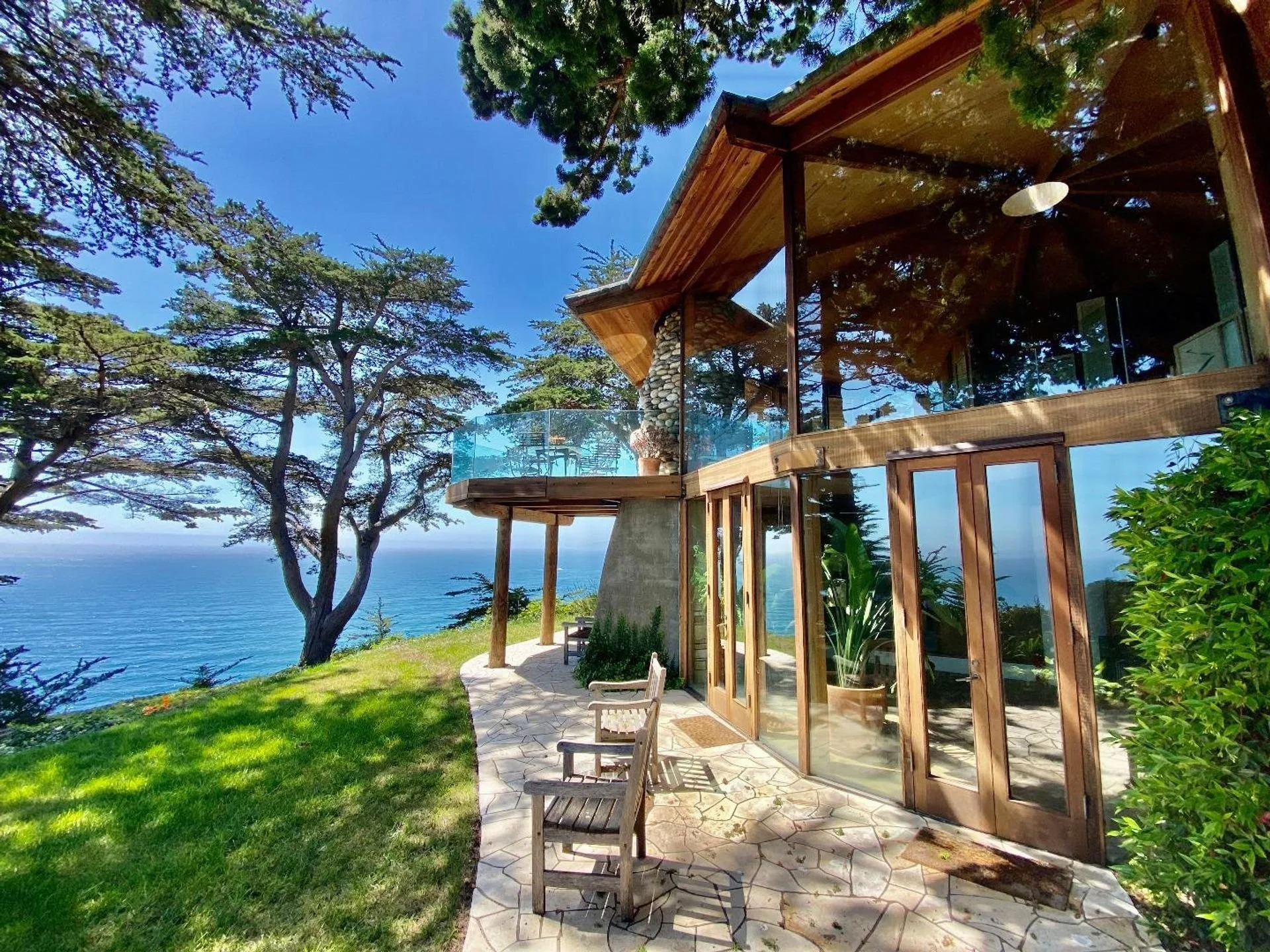
Originally built in 1965, designed by local architect Francis Palms, the property was reworked in the 1990s by Mickey Muennig, the architect known as “the man who built Big Sur,” and reflects his organic architectural style.
Something of a local legend in the region, Muennig is known for designing homes into the landscape, often using local wood, stone, and steel. He is behind dozens of residences in Big Sur and along the California coast that have helped define much of the area’s architectural character.
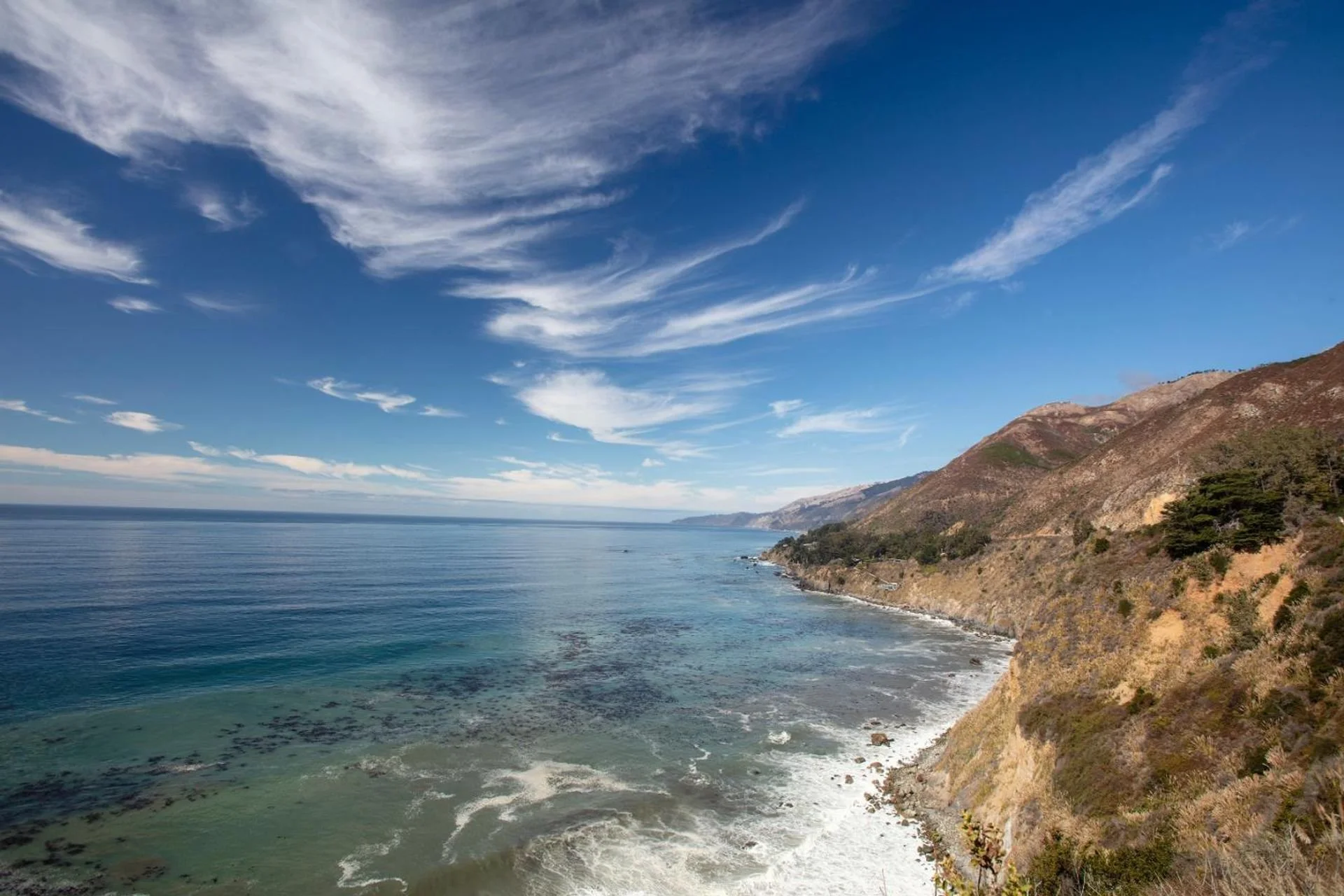
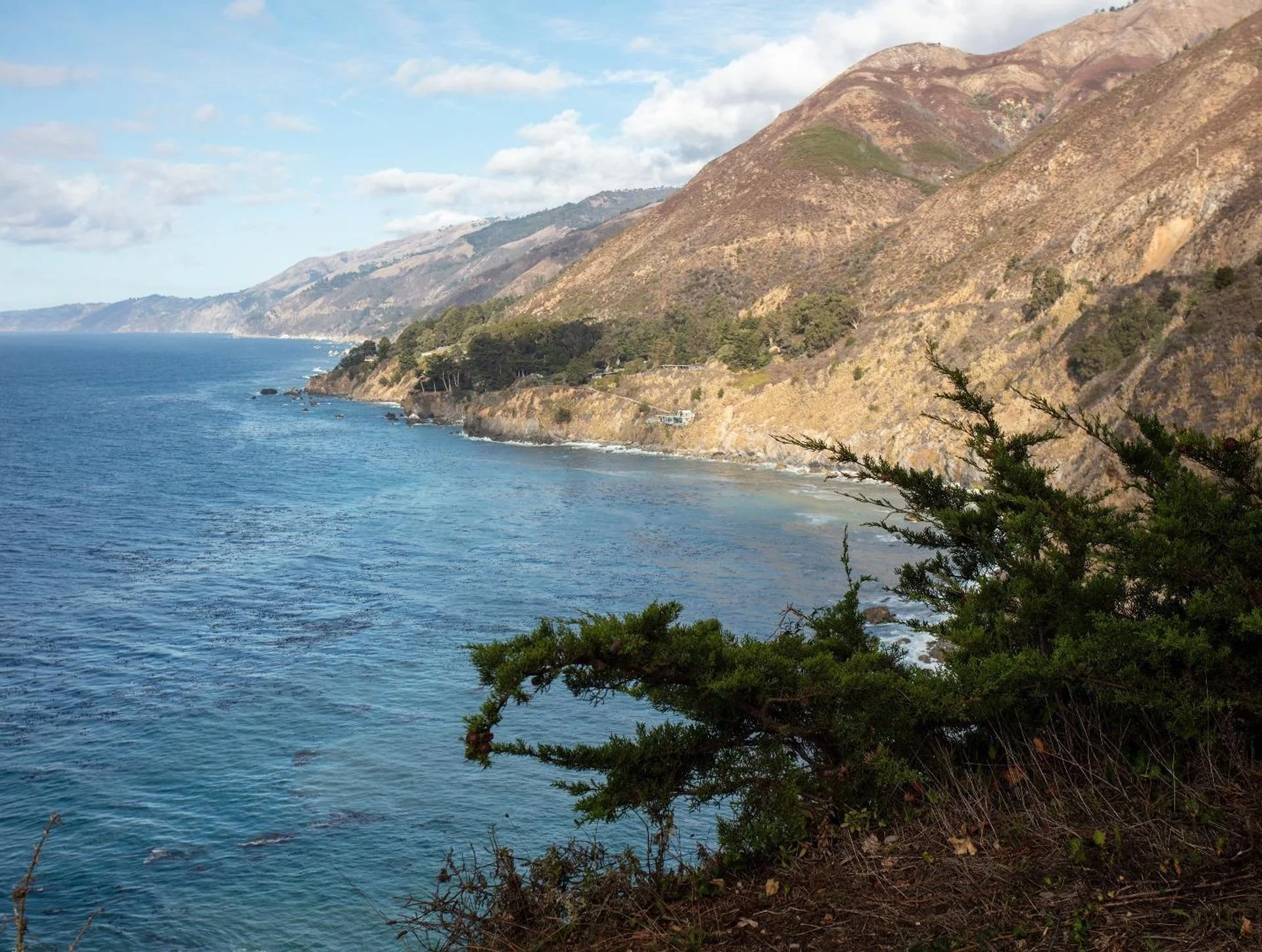
Located along a quiet stretch of California State Route 1 in Big Sur, California, the home sits within one of the most visually distinctive and tightly controlled coastal landscapes in the United States. Part of California’s coastal route which runs from LA to San Francisco, Route 1 is widely considered one of the most beautiful drives in the USA.
Development here is limited, with regulations restricting where and how homes can be built in order to preserve the landscape and coastal views.
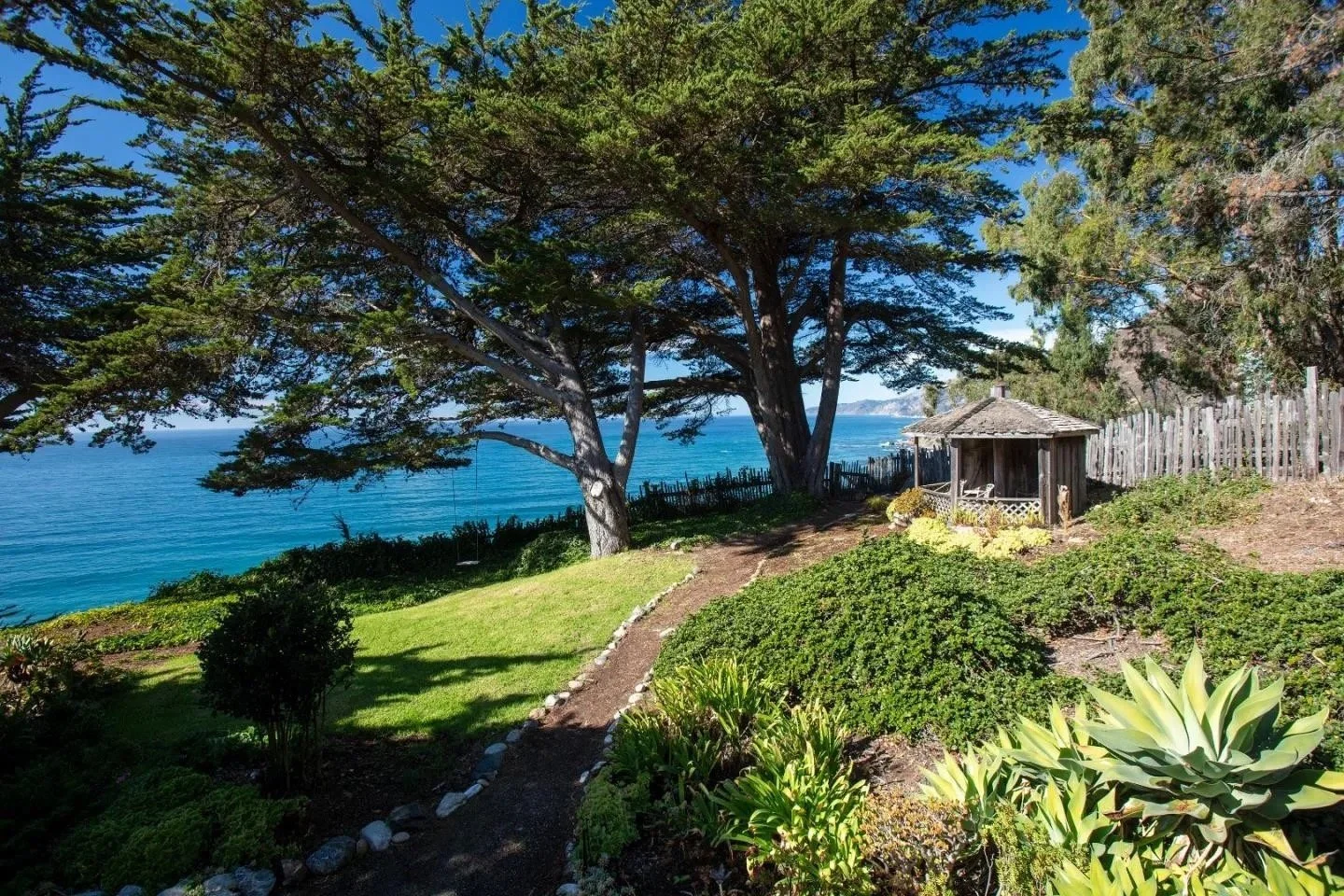
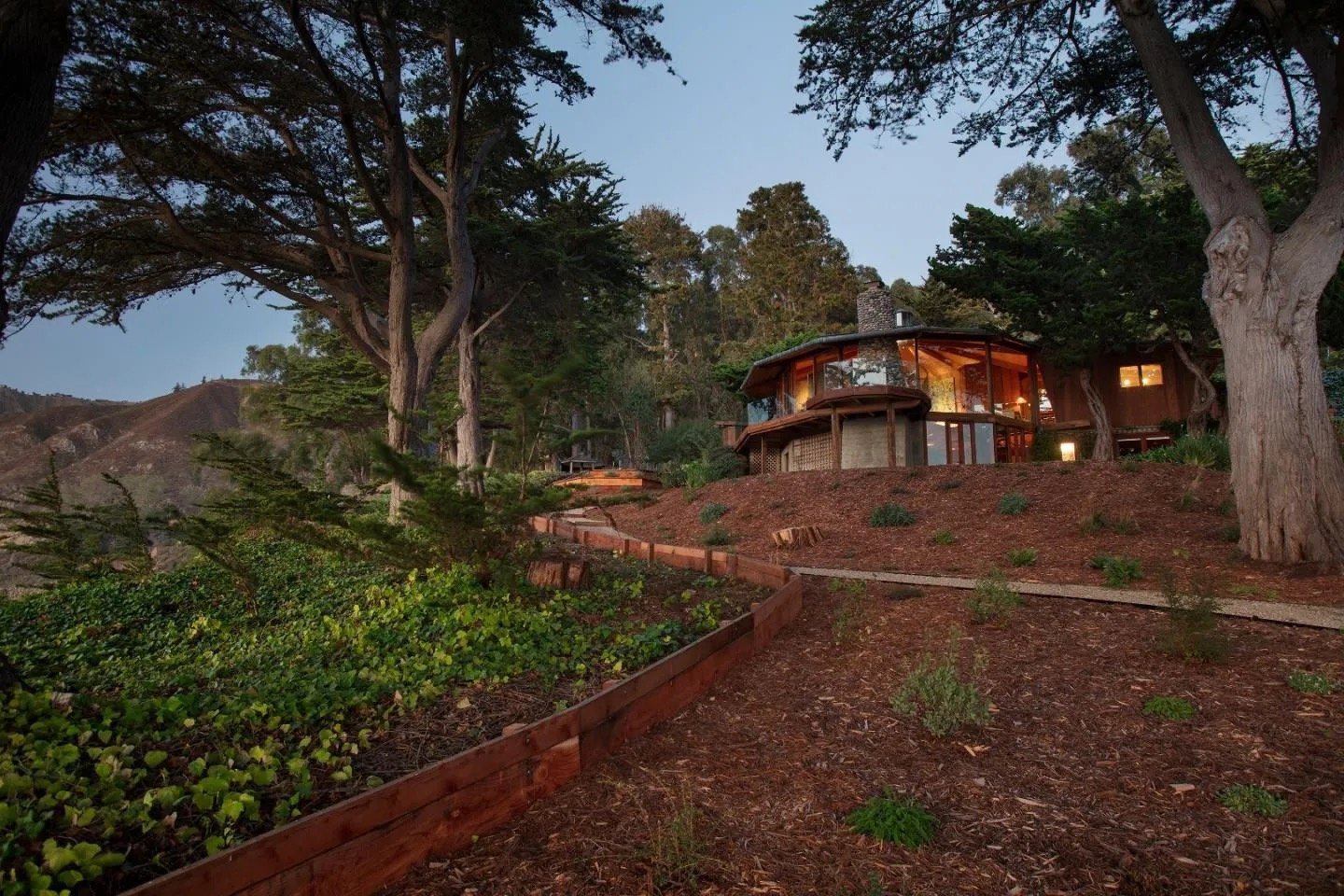
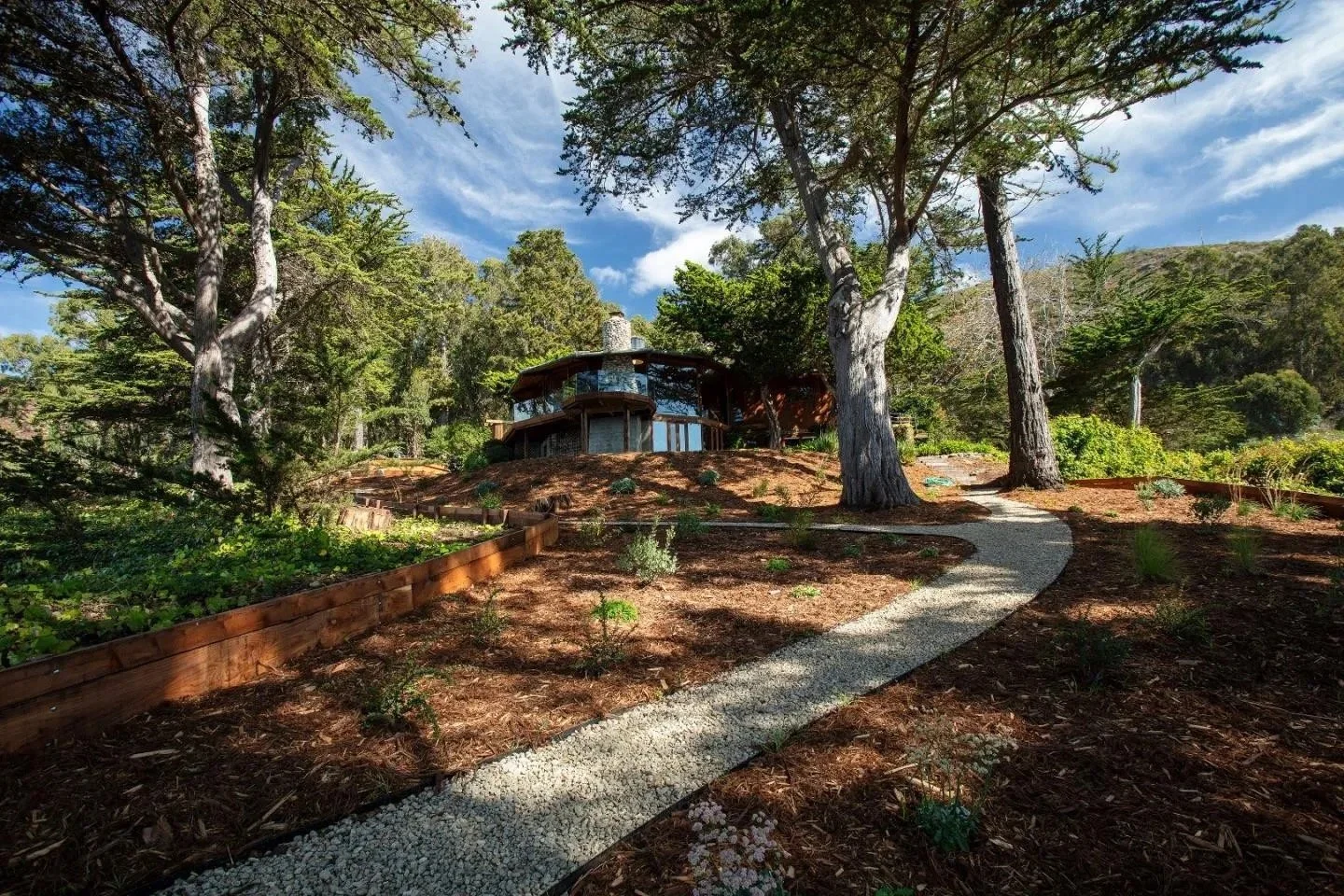
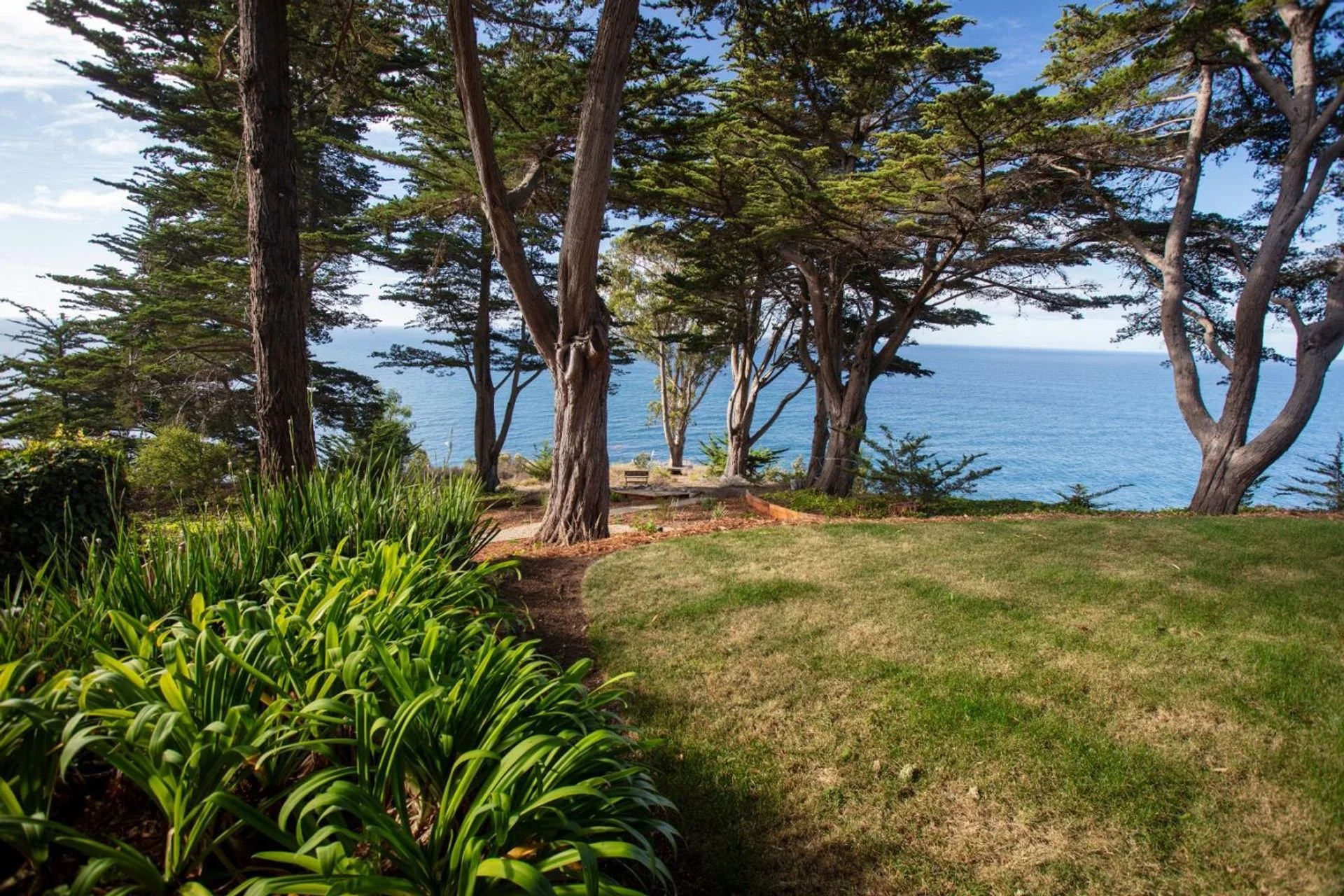
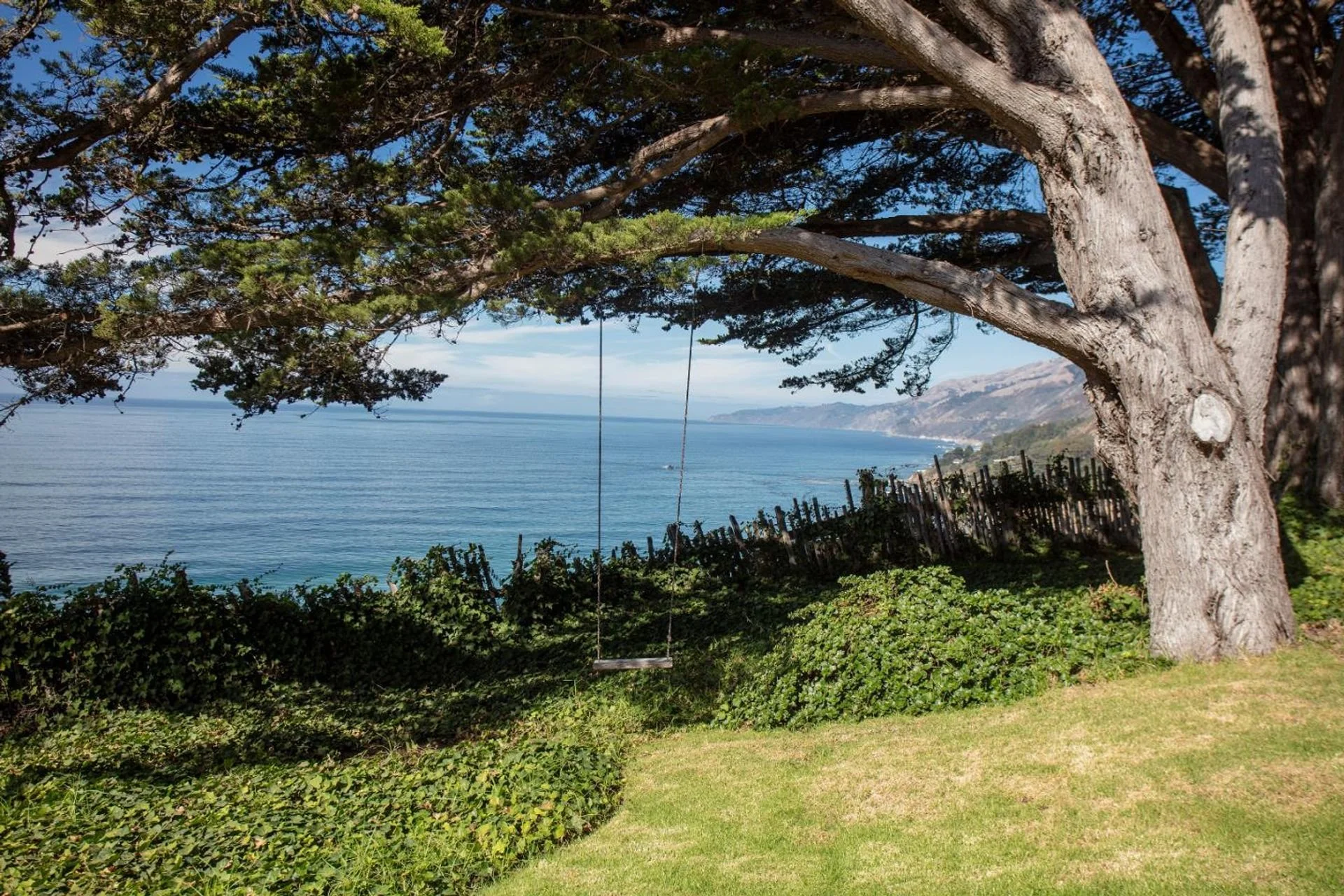
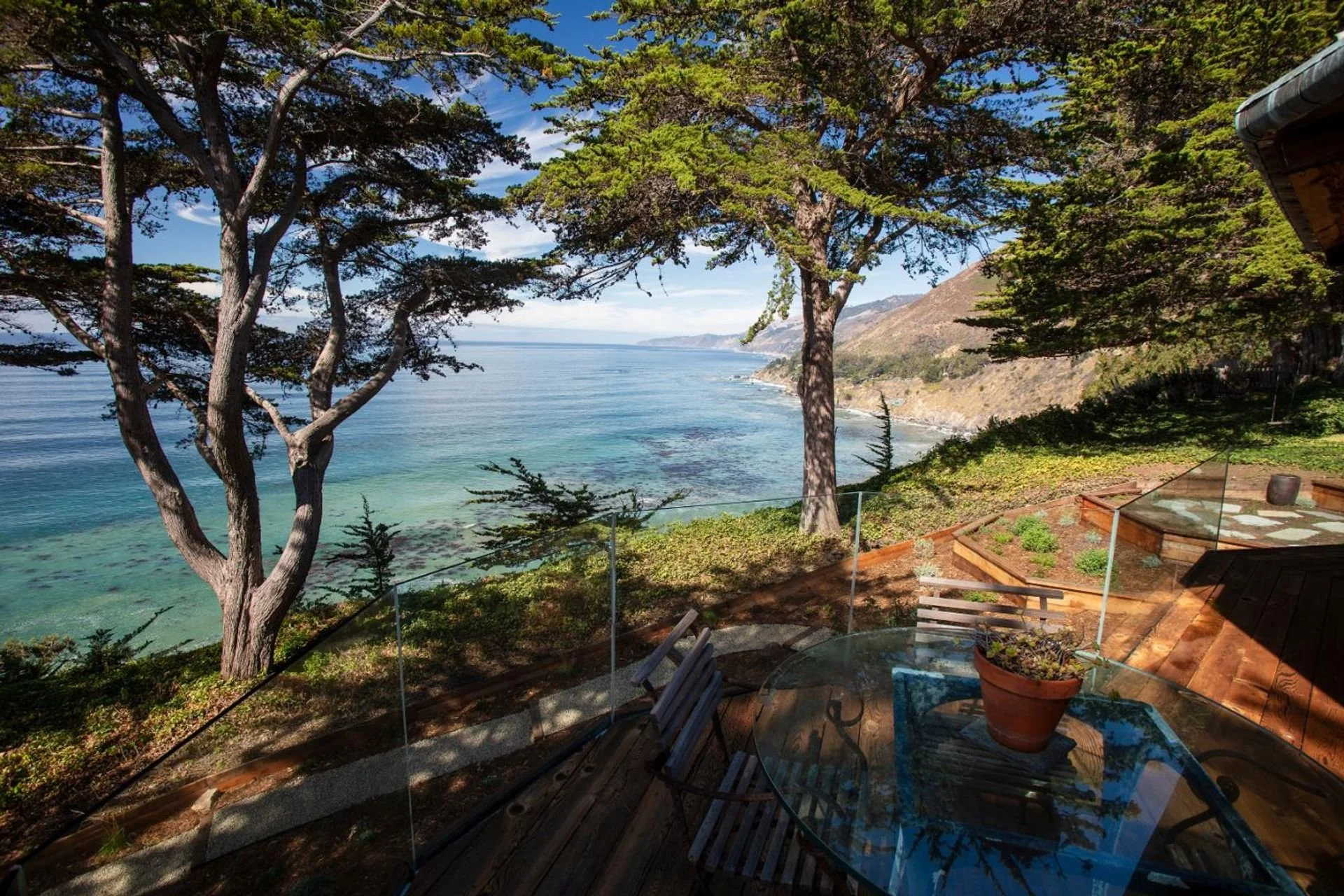
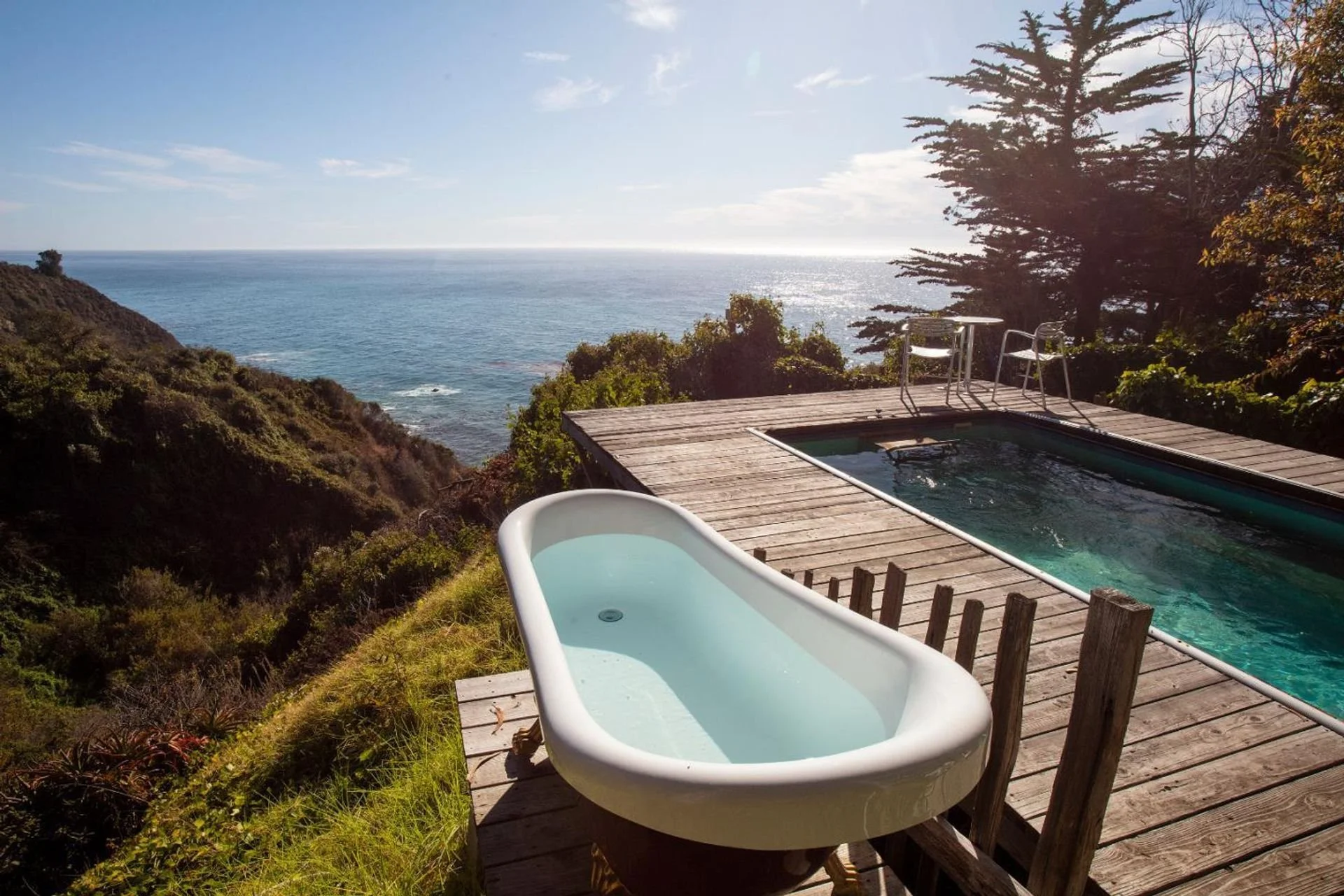
Set across approximately 5 acres (2.02 hectares), 55700 Highway 1 occupies a private, forested cliffside with views over the Pacific Ocean. The home is within walking distance of the Esalen Institute, a counterculture-era retreat known for its cliffside hot springs and role in the 1960s human potential movement, as featured in the finale of Mad Men.
Mike Gilson
Mike Gilson
The Residence
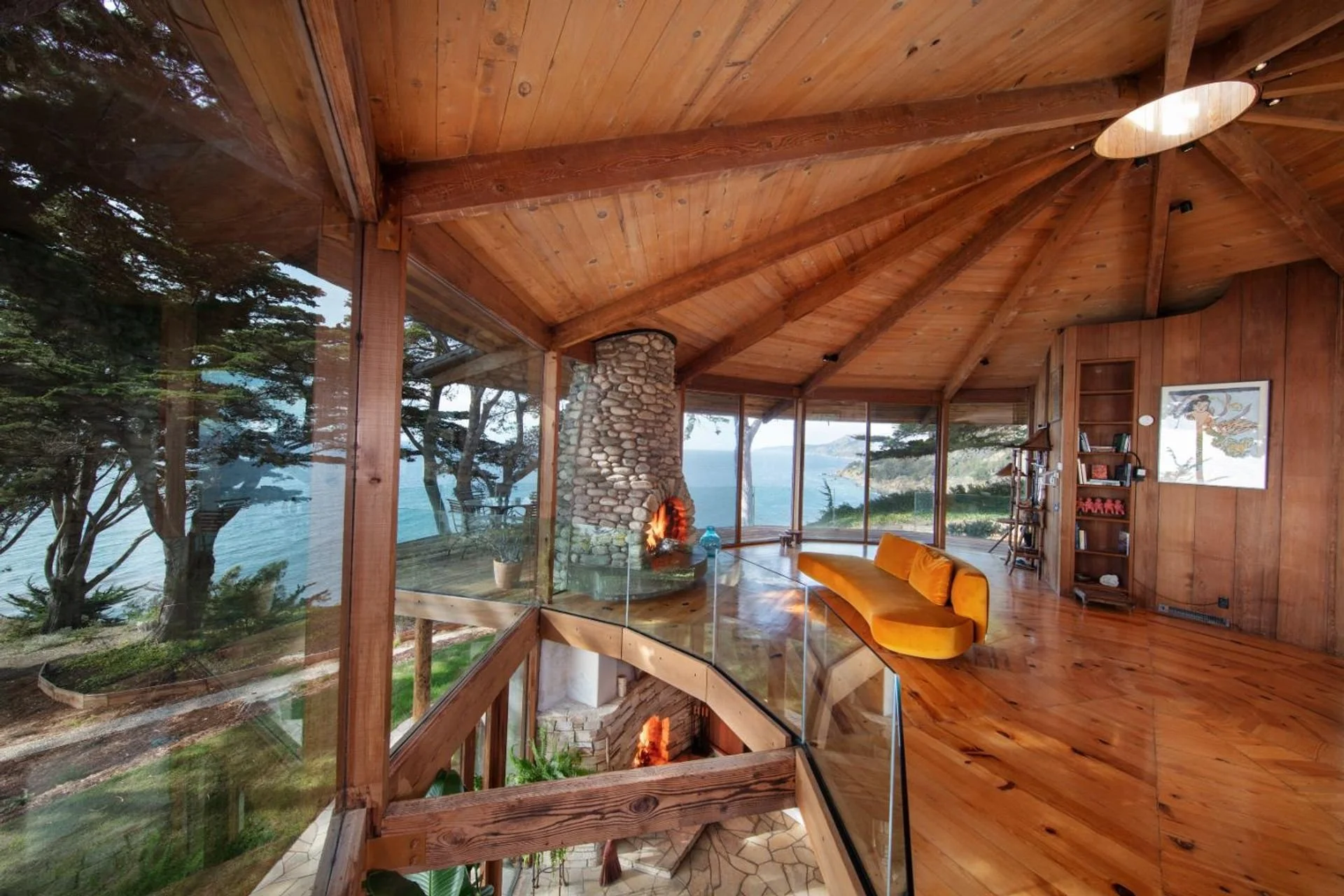
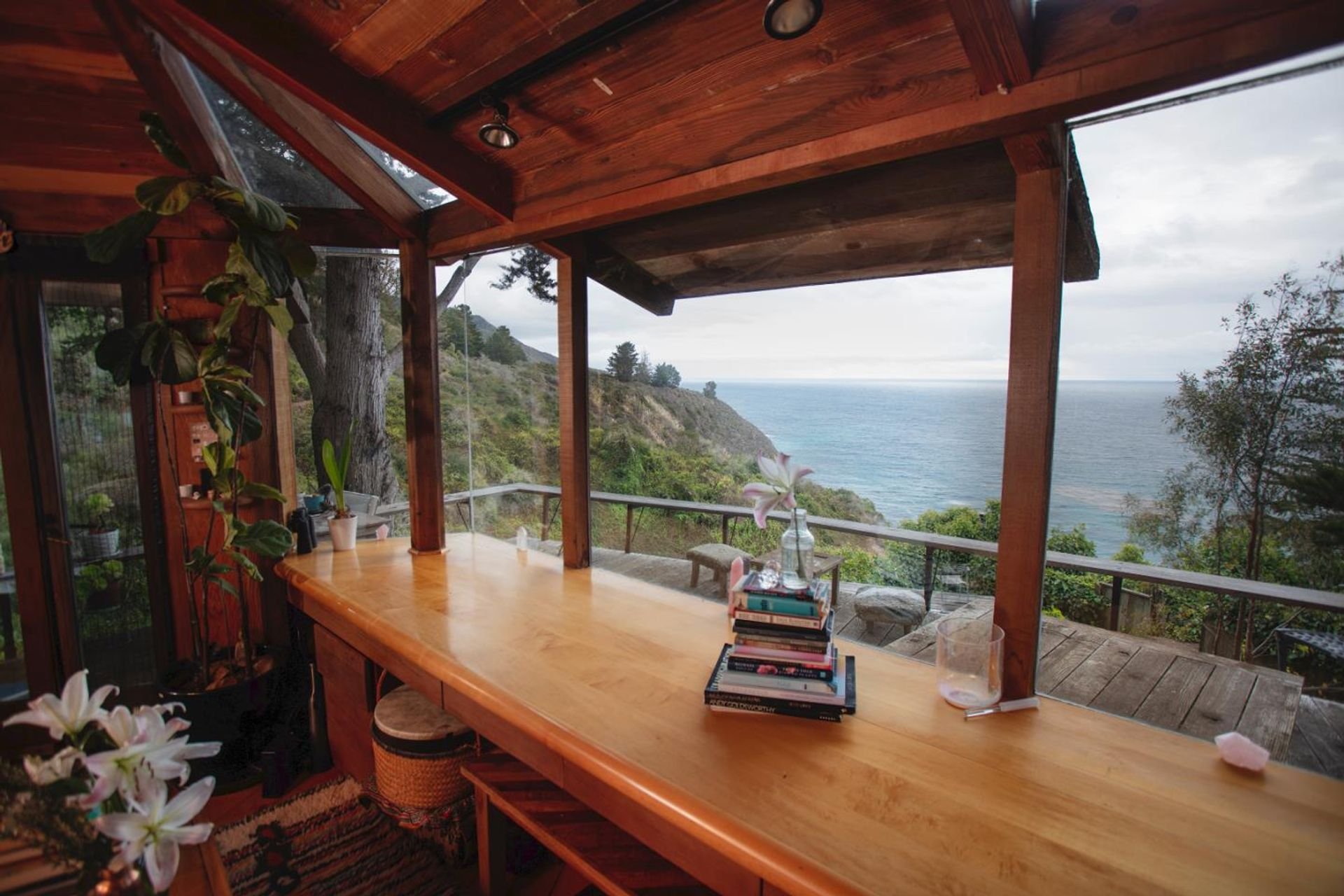
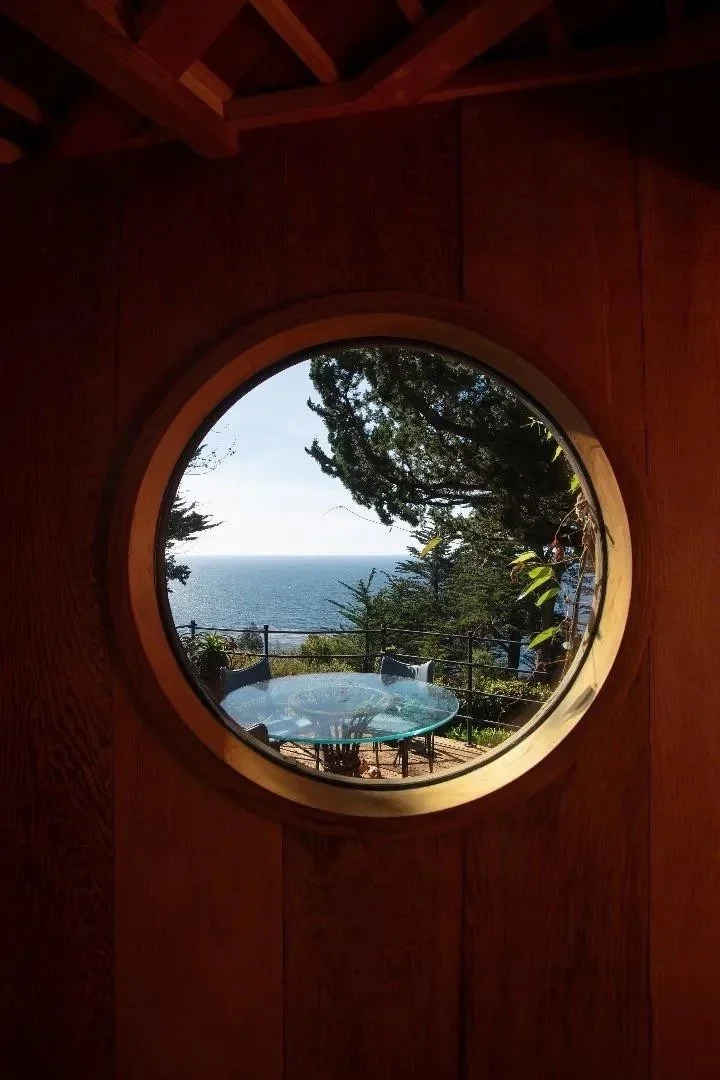
Set on an isolated, forested bluff above the Pacific Ocean, this coastal home features 180-degree coastal views, and has largely retained its original character.
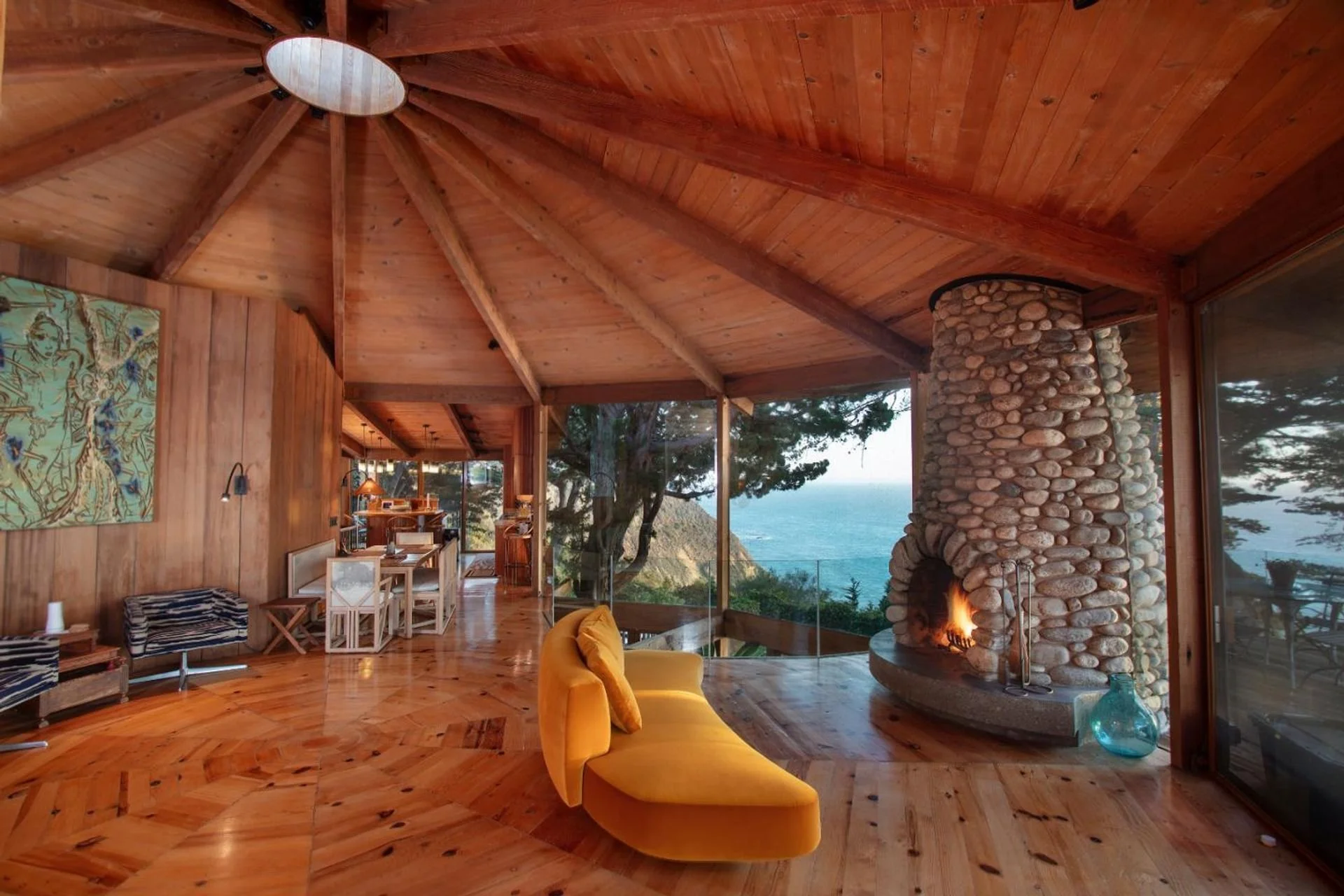
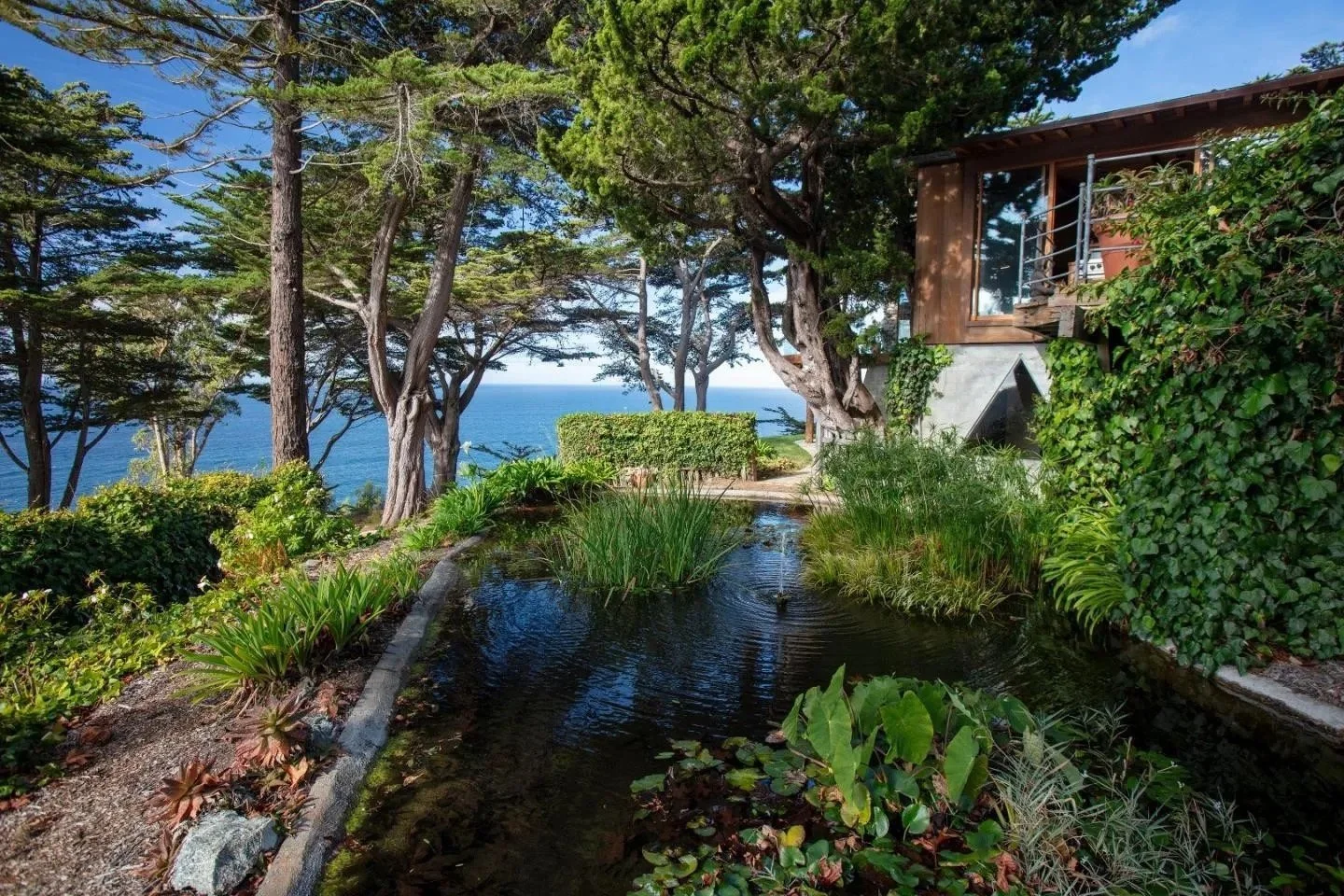
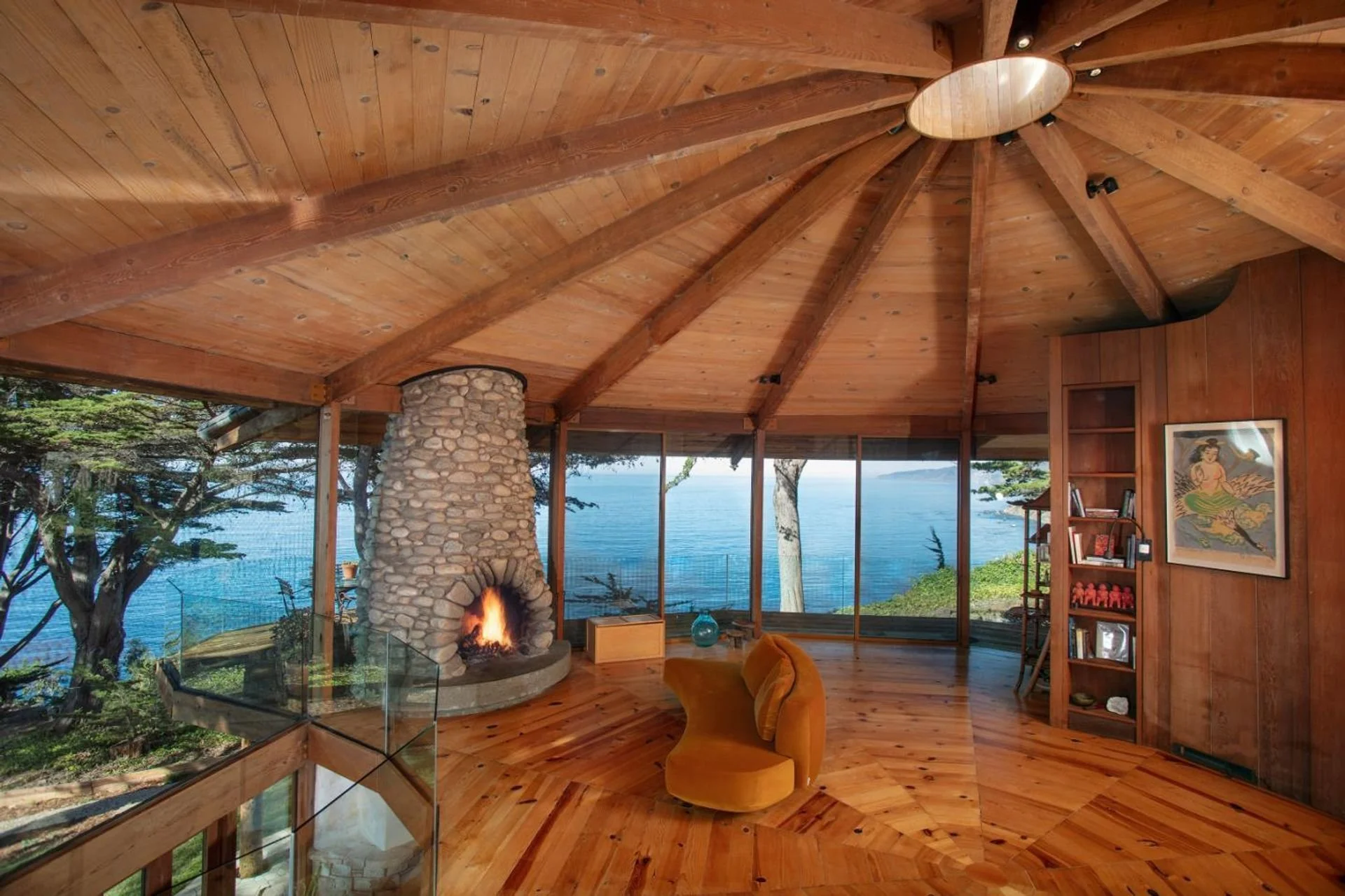
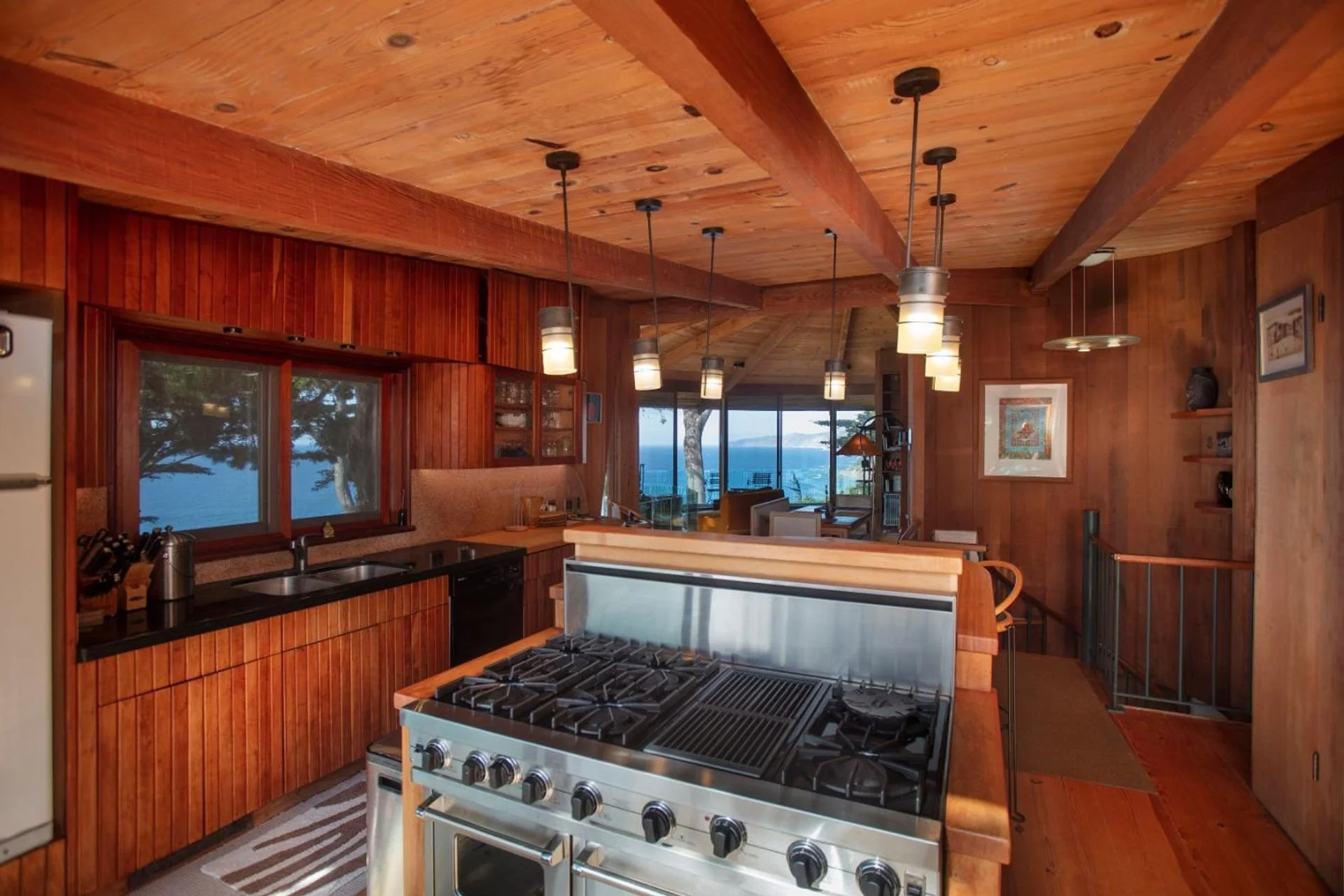
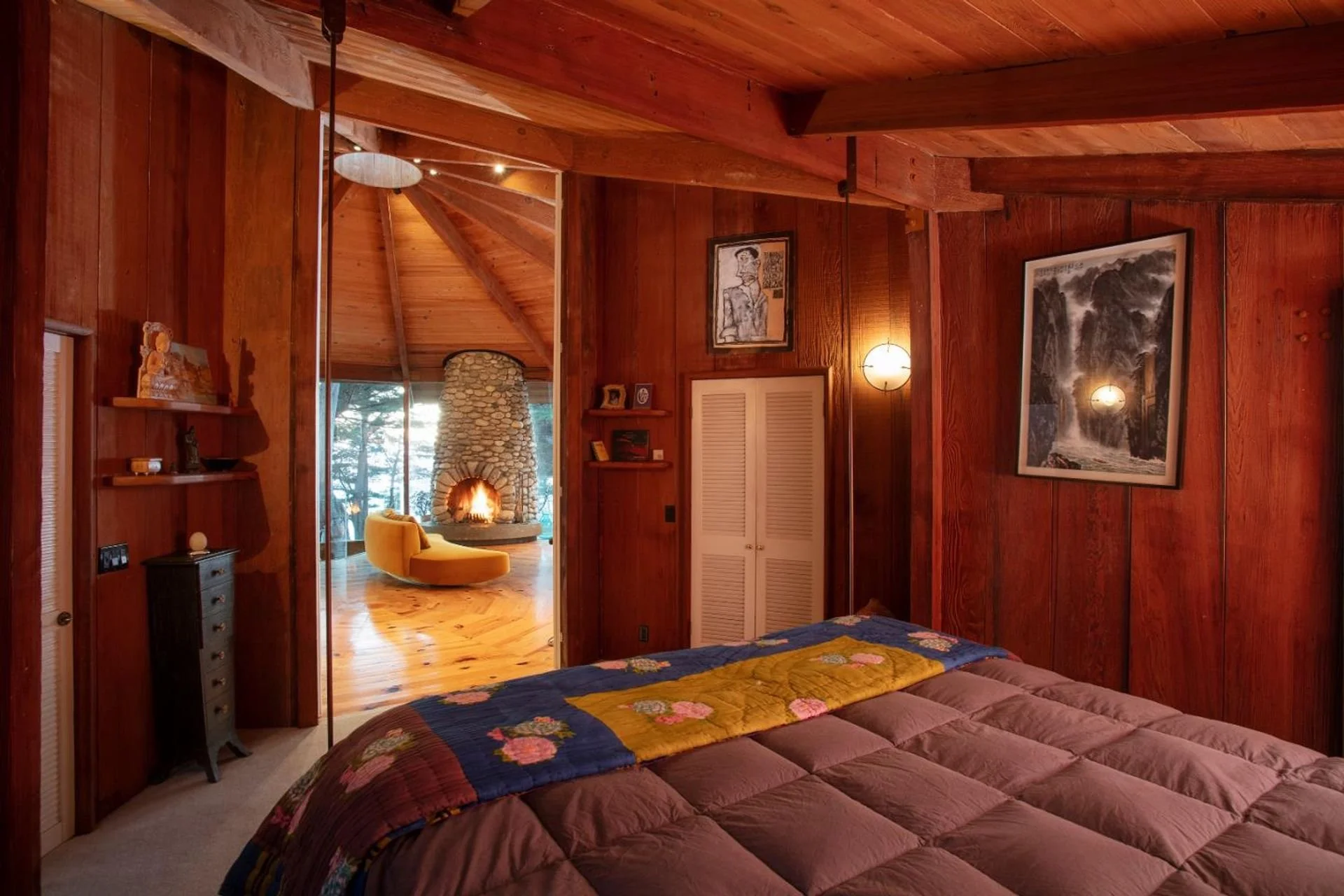
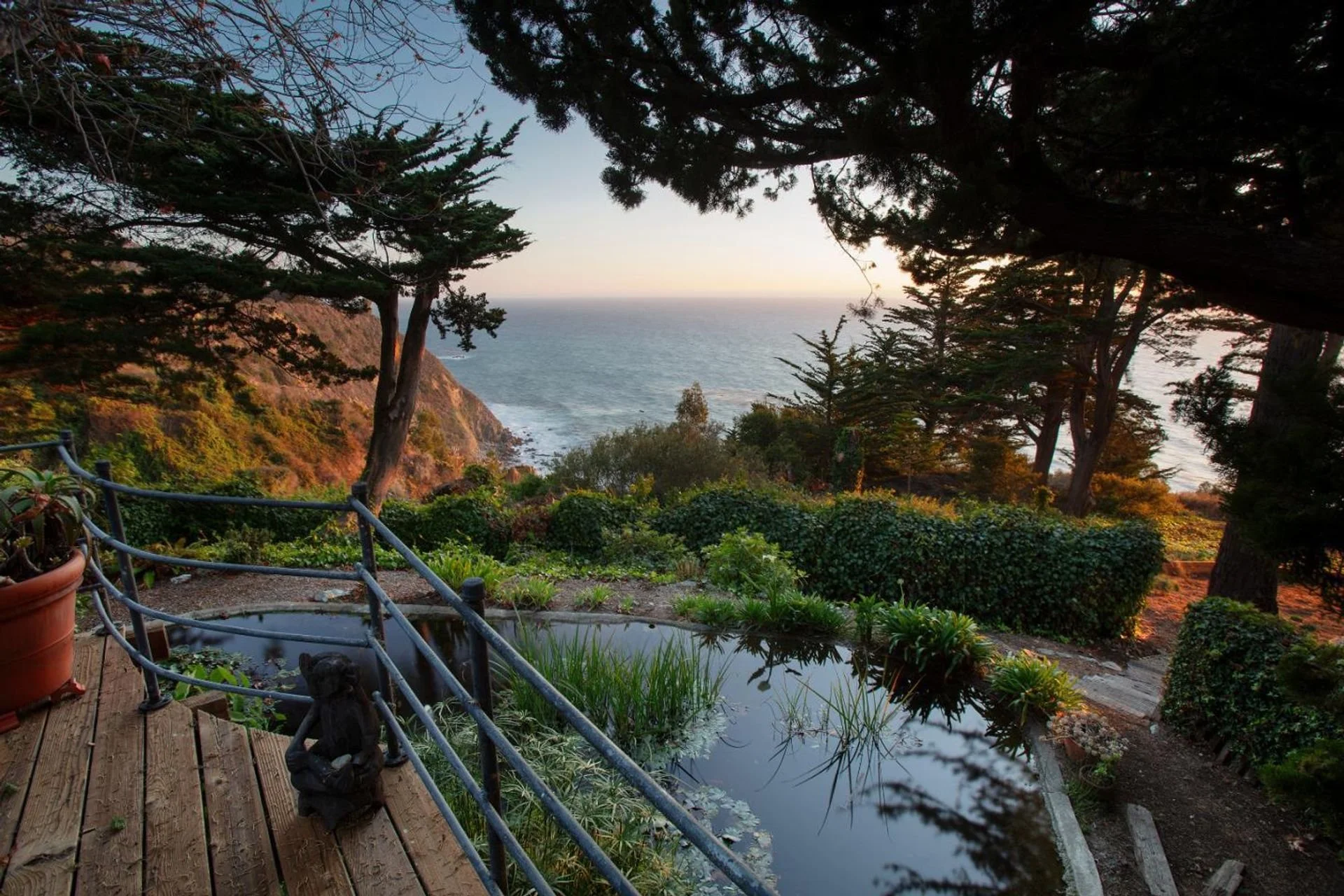
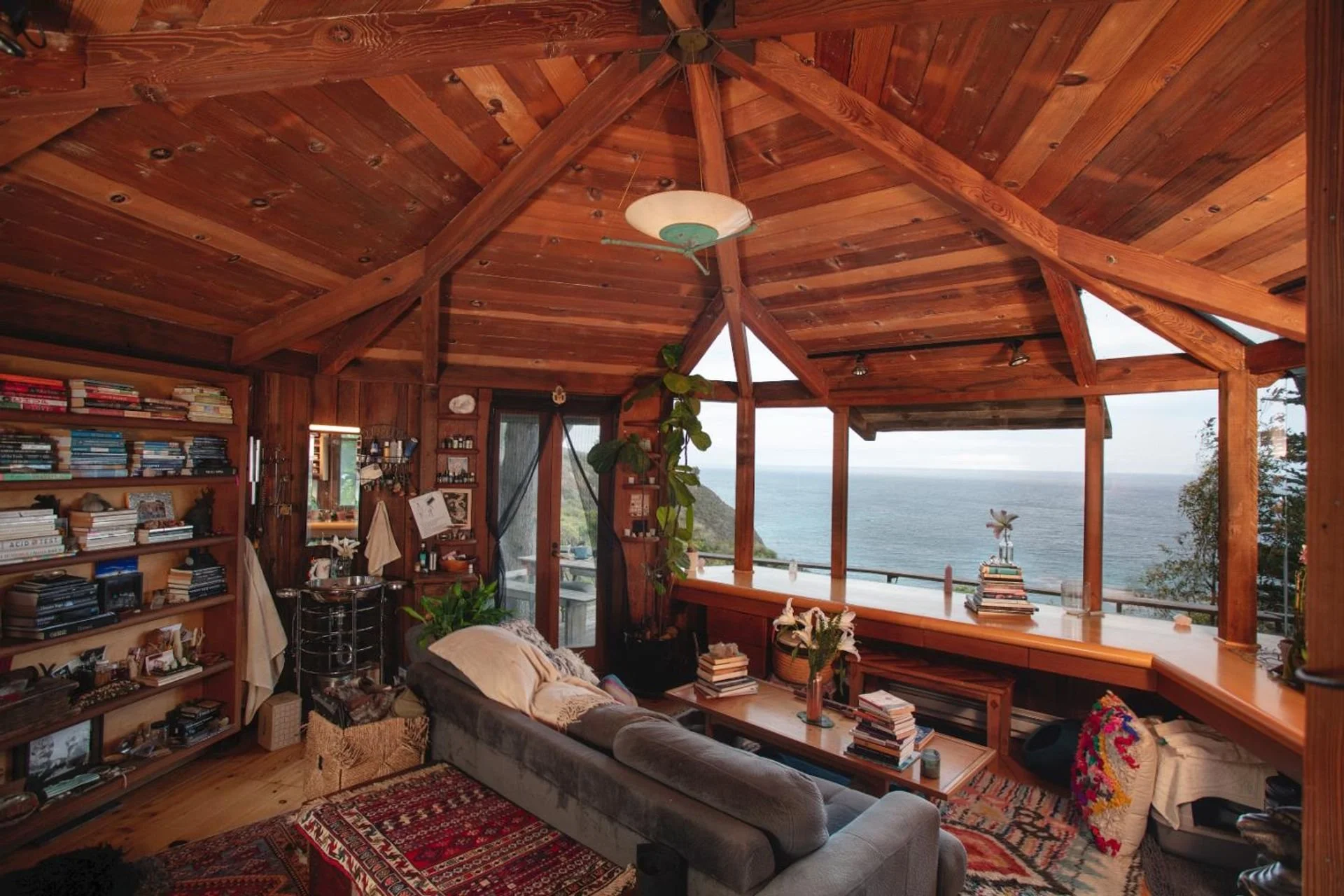
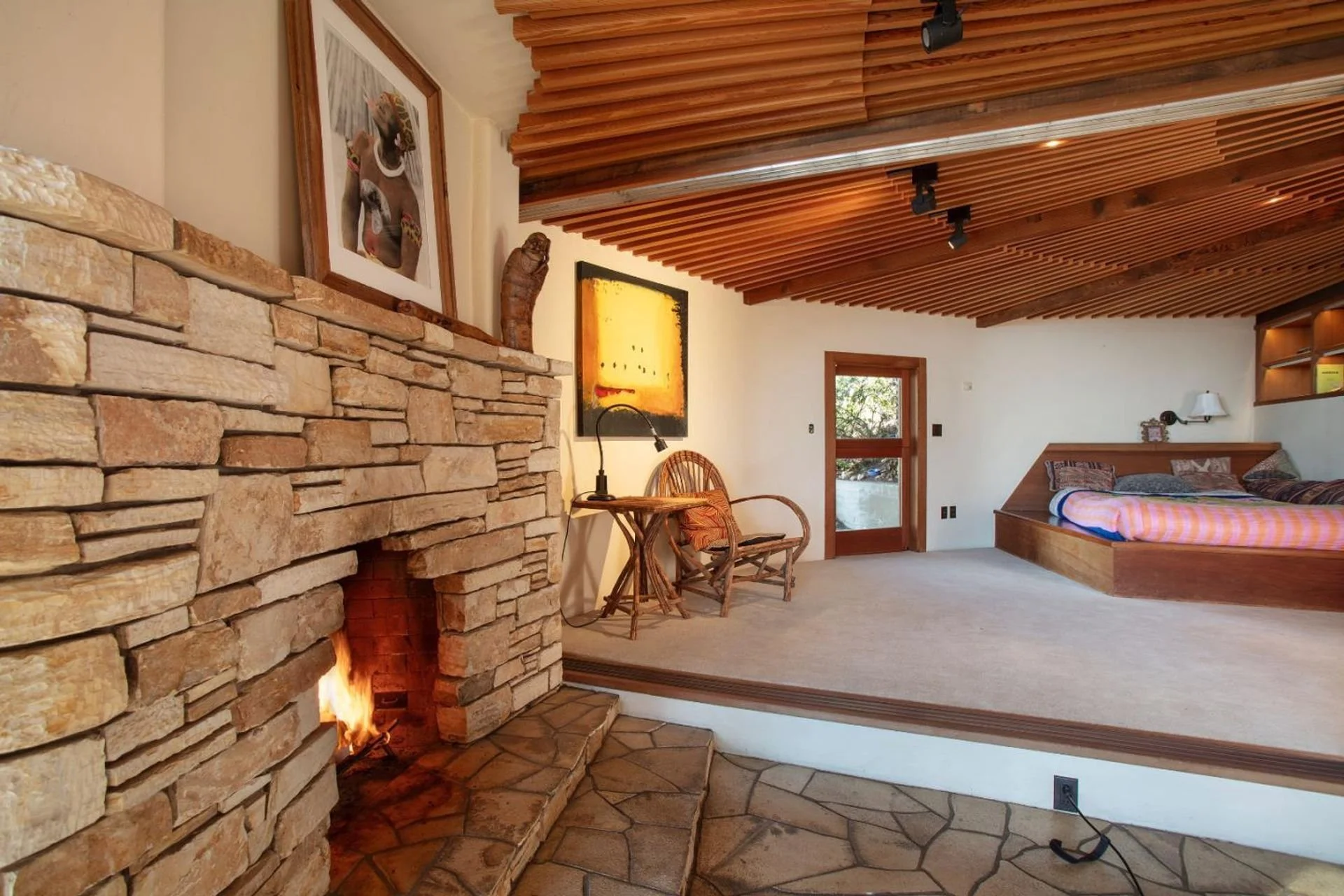
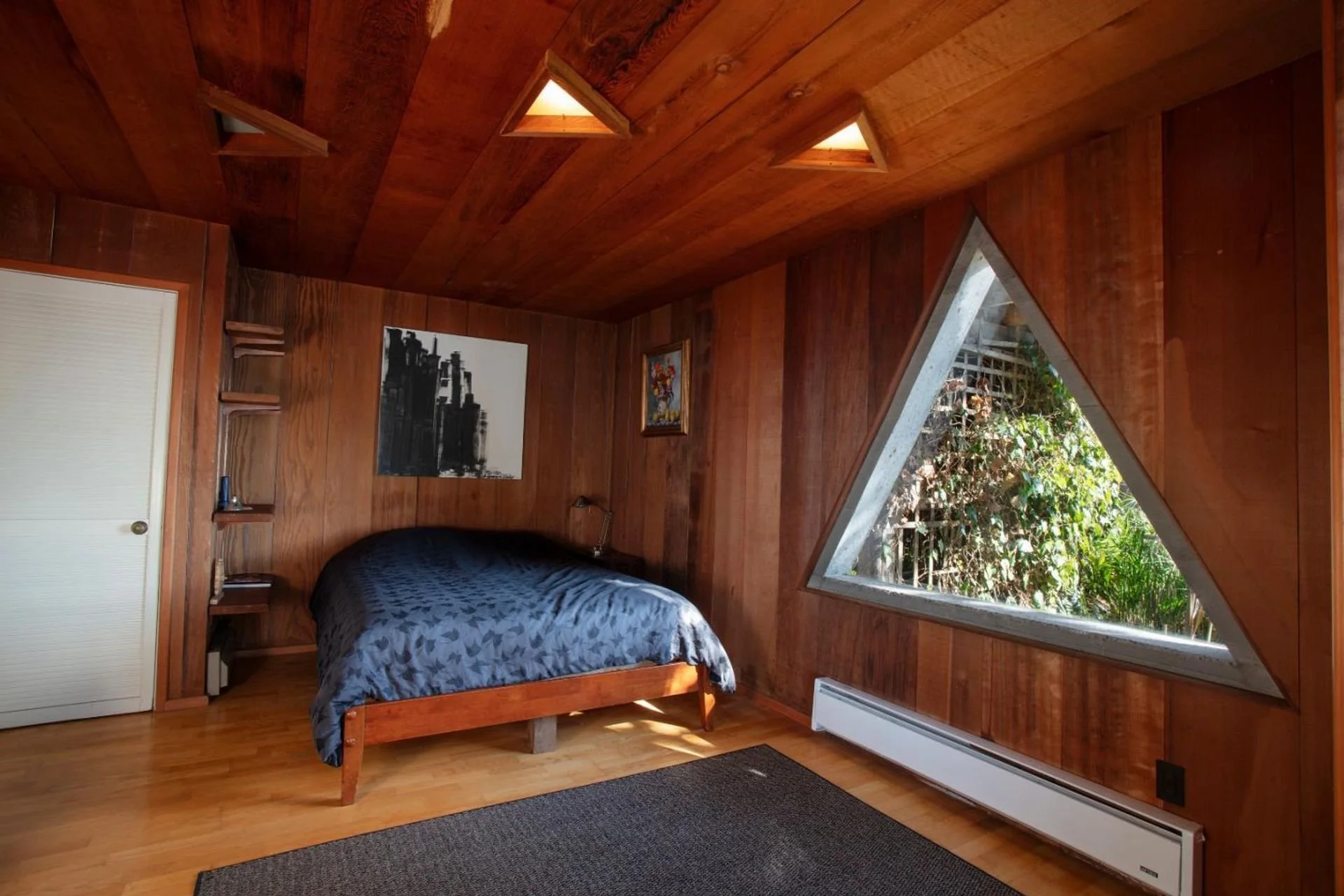
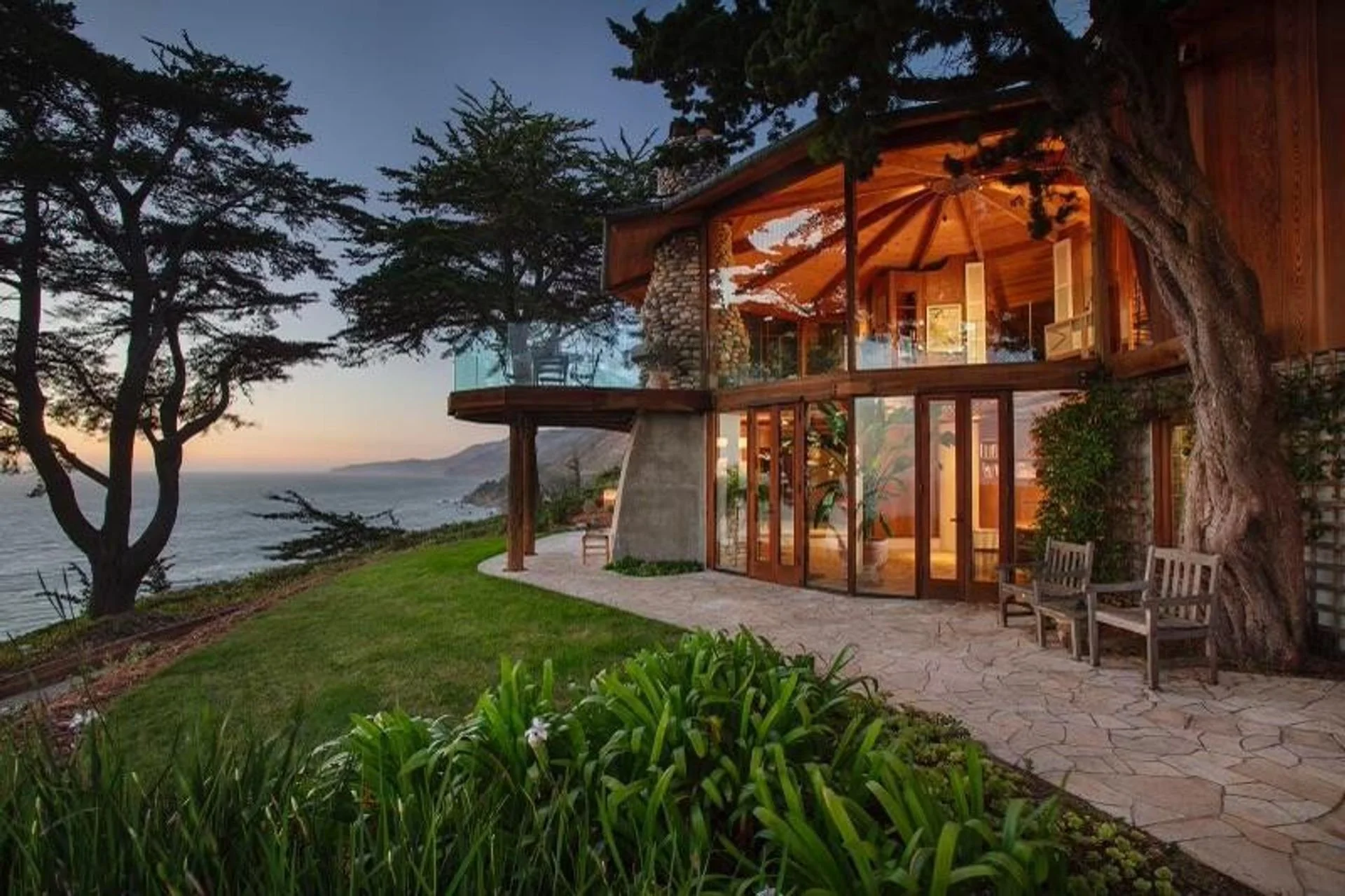
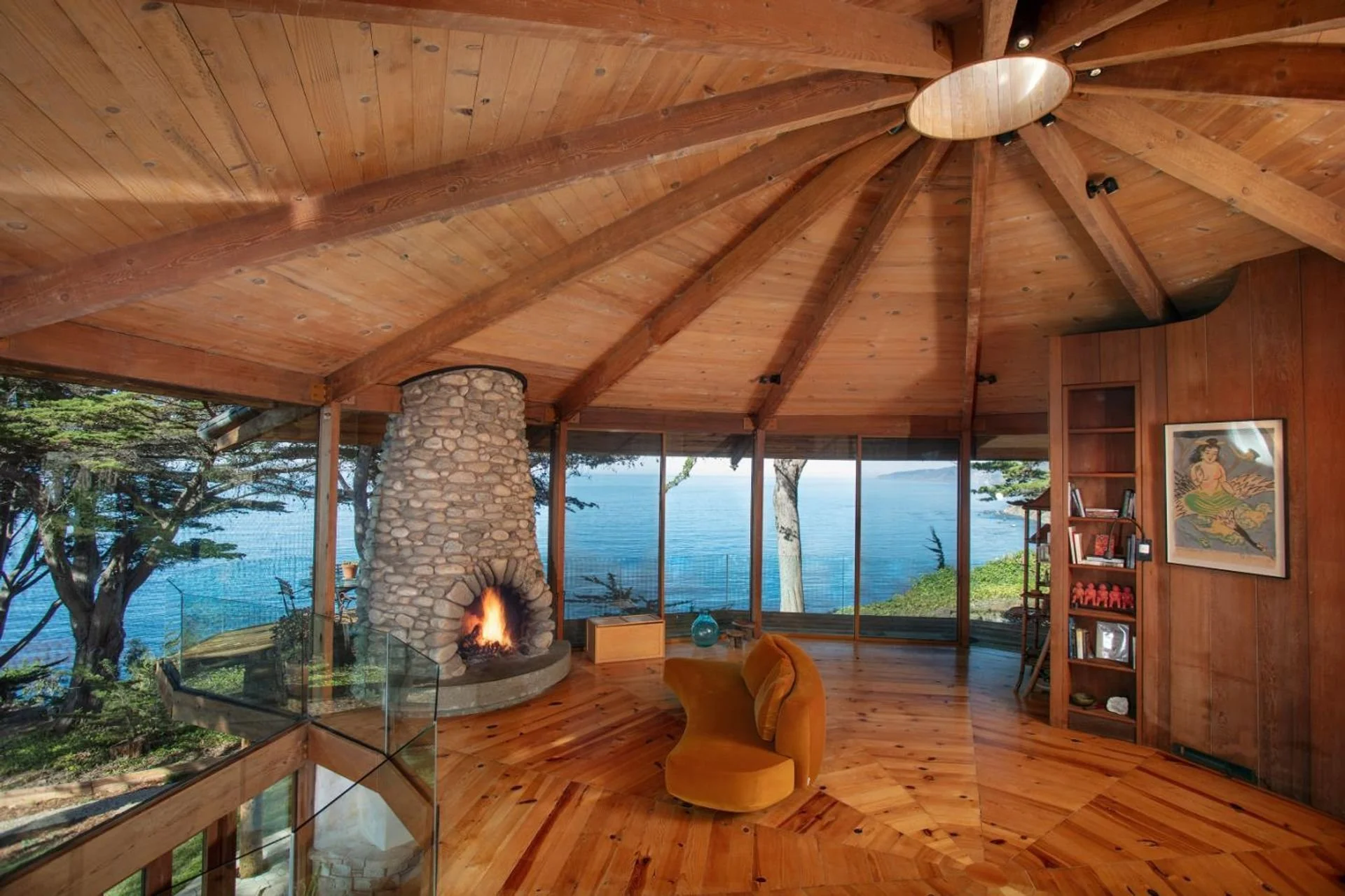
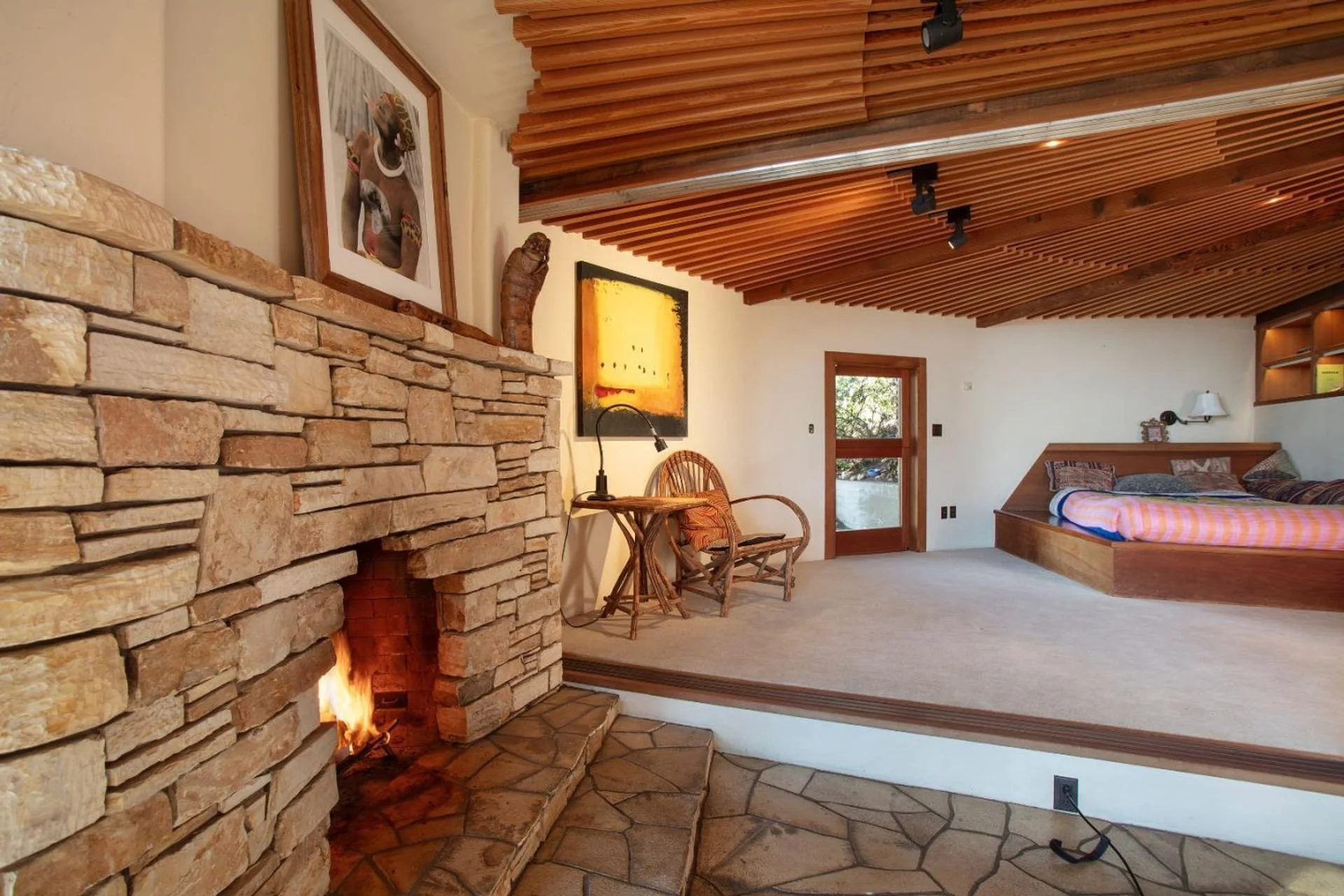
The main house includes 3 bedrooms and 2.5 bathrooms arranged across 2 levels, each with a wood-burning fireplace. The upper level is centered around a cupolaed living room with floor-to-ceiling windows and a wraparound deck facing sunset views and the coastline extending north toward Pfeiffer Point. An open kitchen leads to a second deck overlooking a lily pond, with south-facing ocean views.
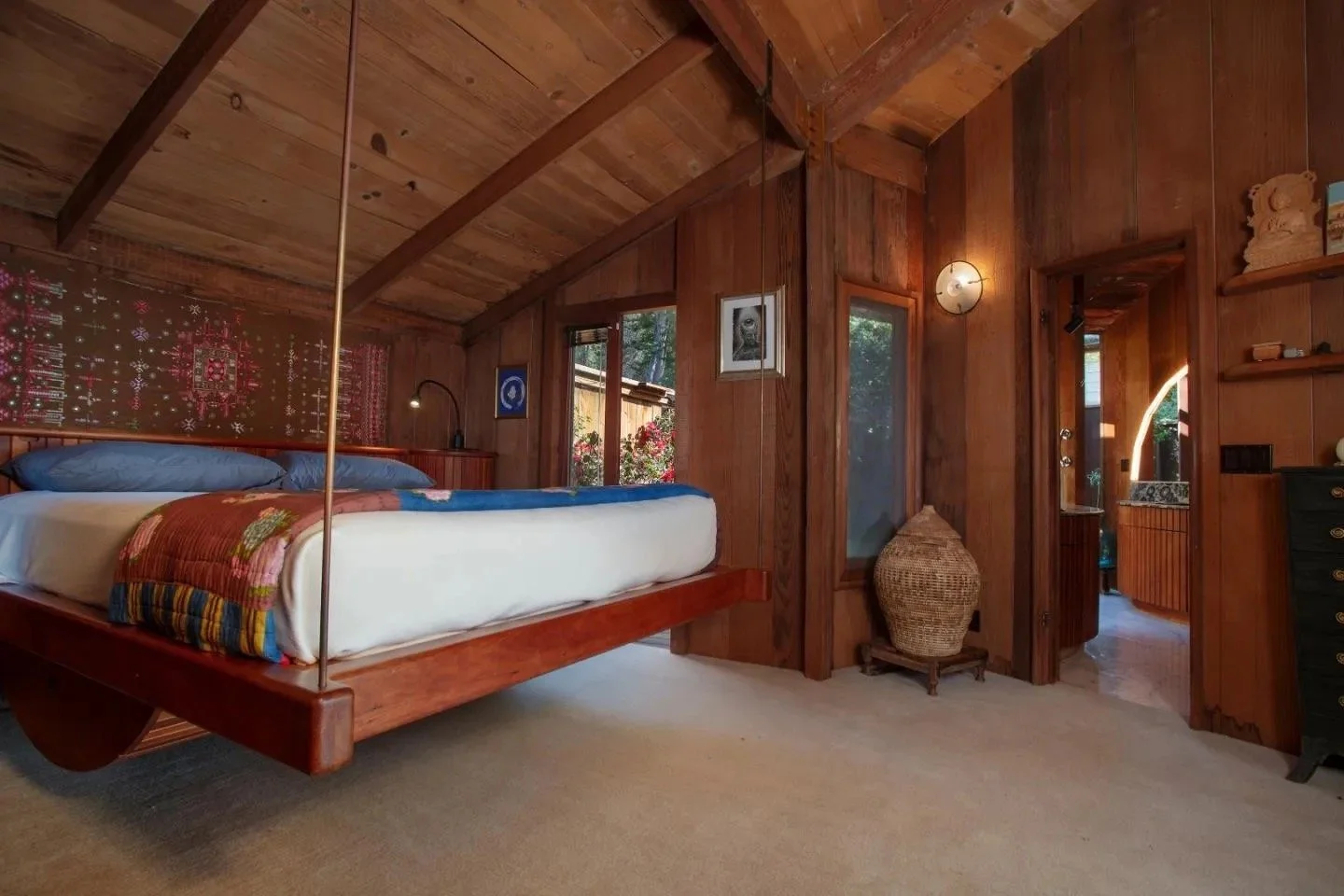
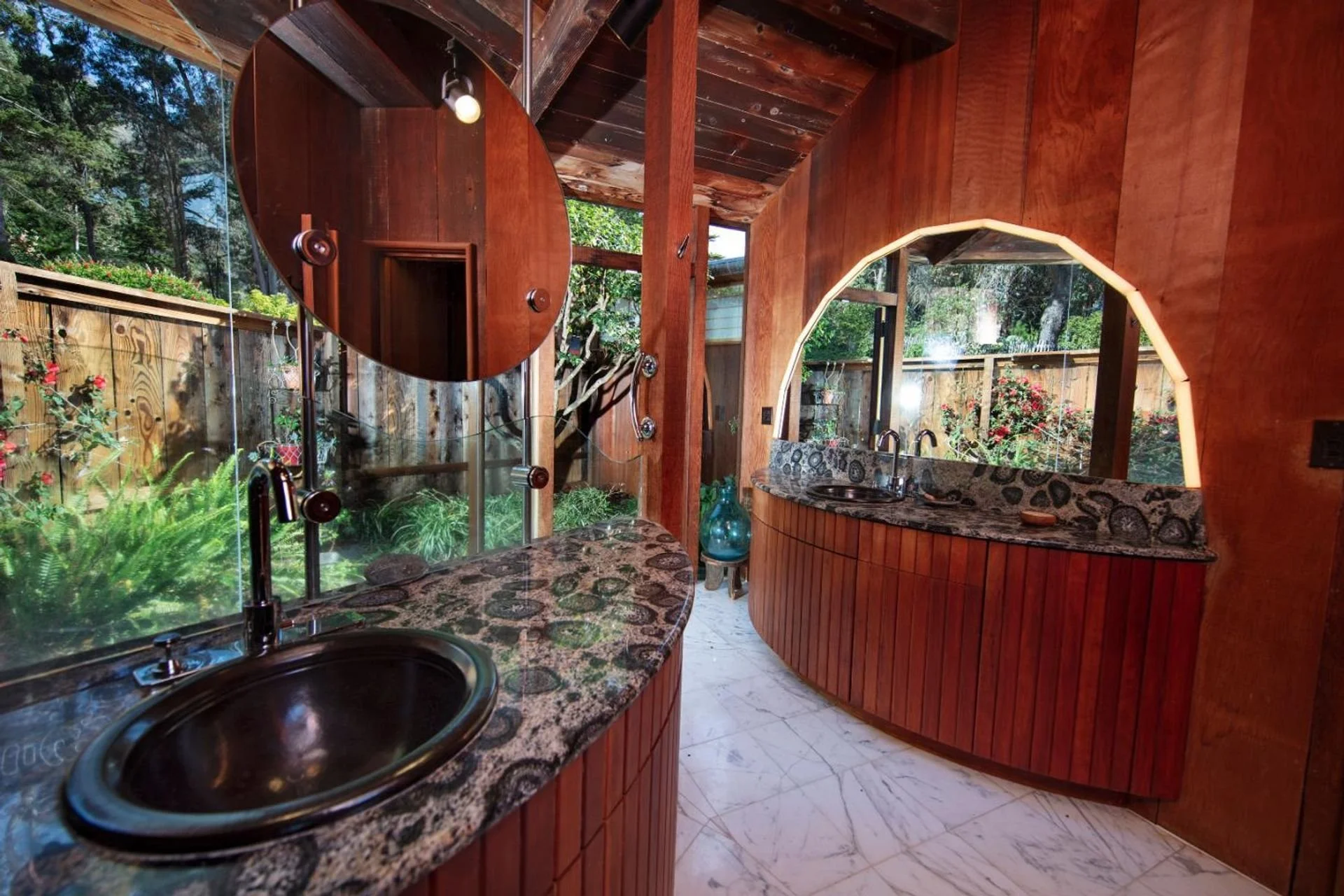
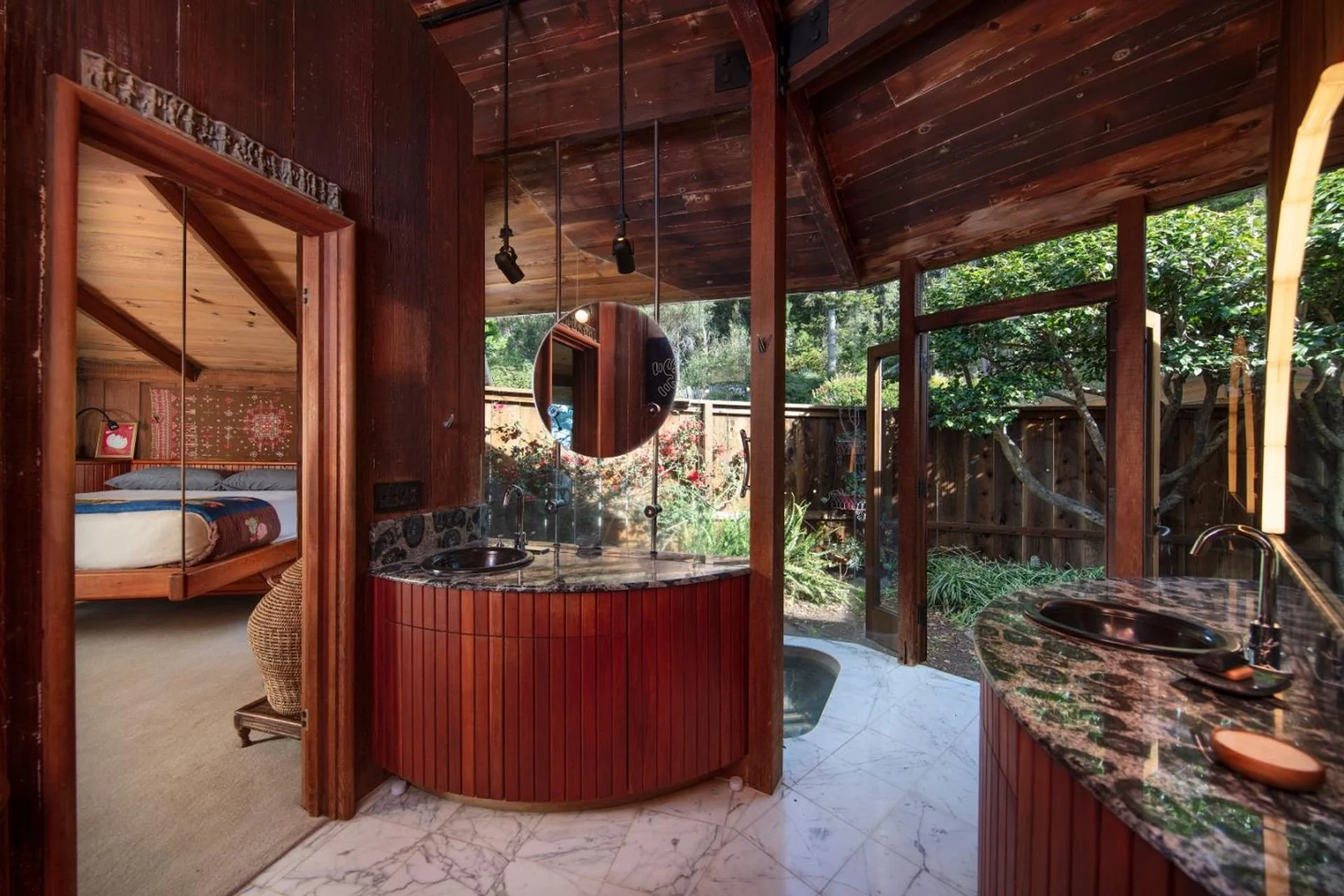
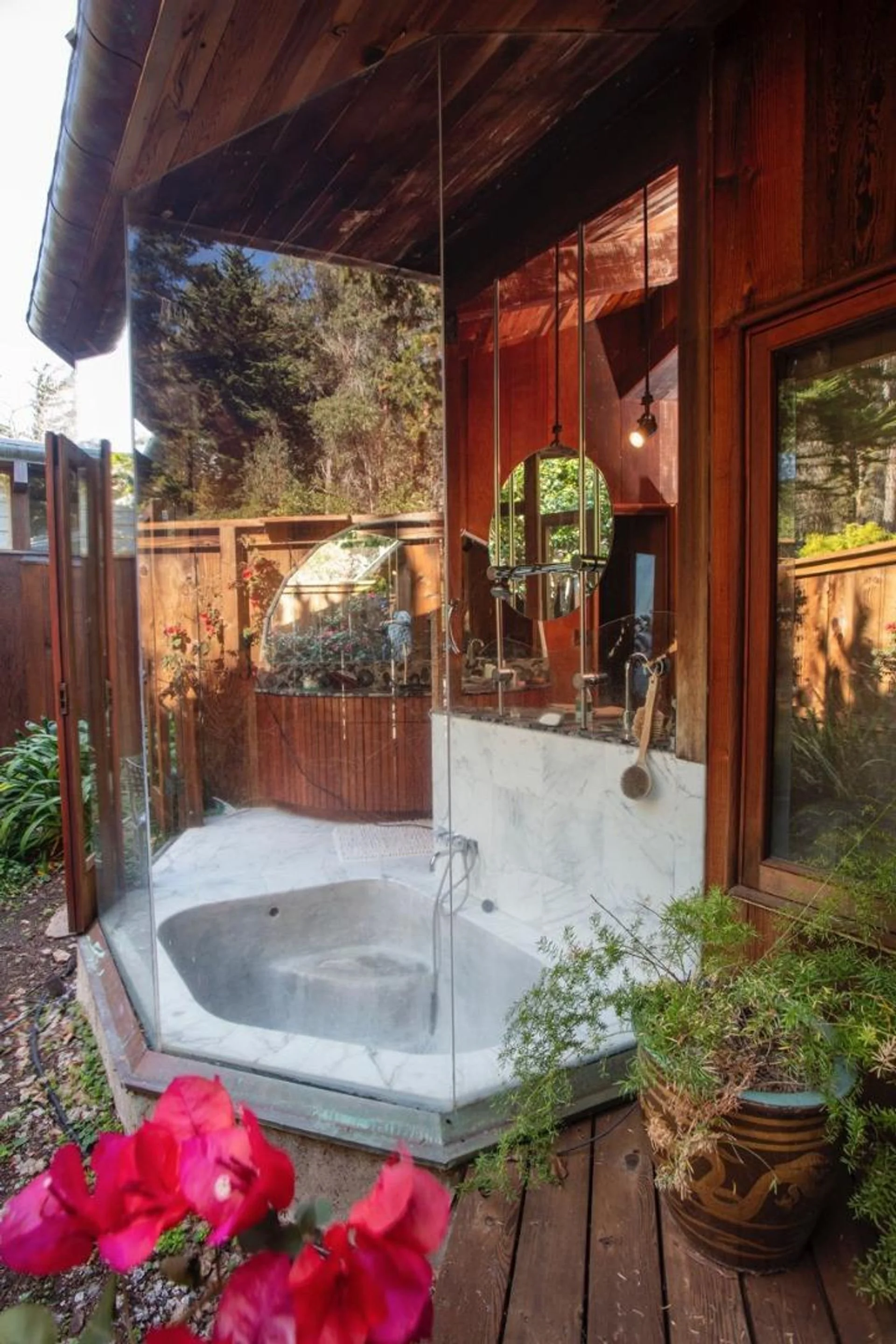
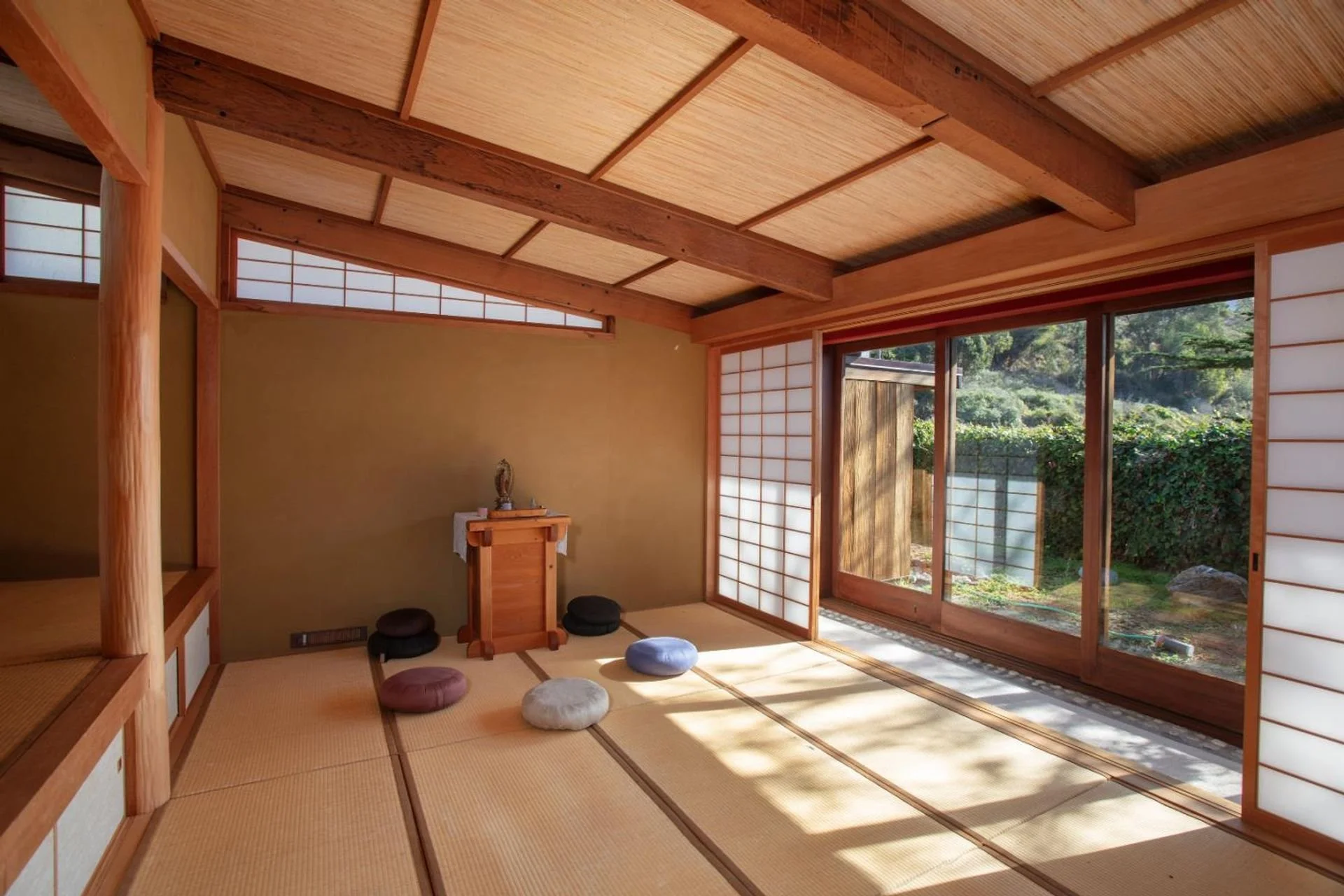
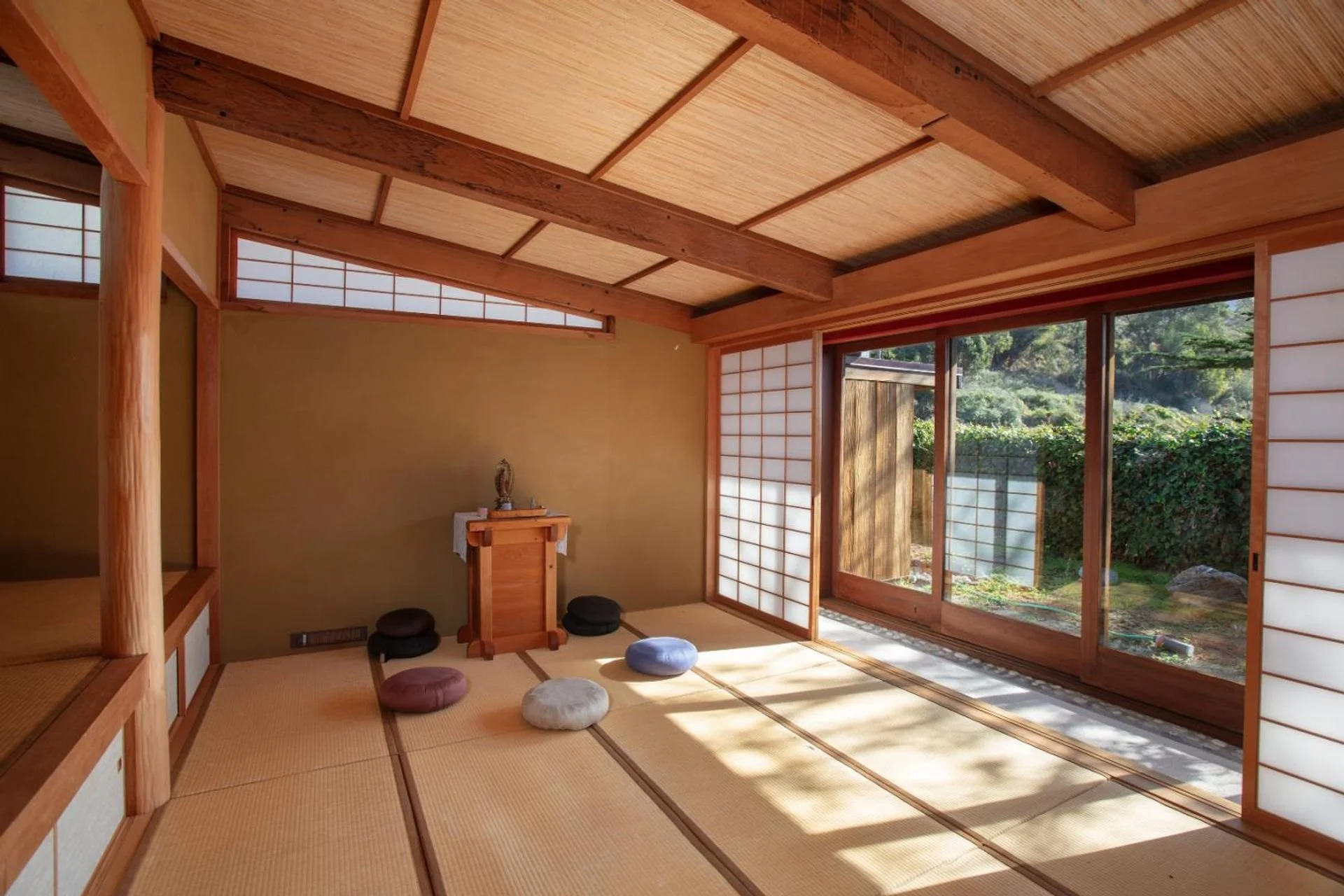
The primary suite includes a bathroom with radiant-heated marble floors, a large soaking tub, and access to a secret garden. Next to it are a study/kid’s room, a half bath, and a traditional Japanese room looking onto its own garden with a Bodhi tree.
Mike Gilson
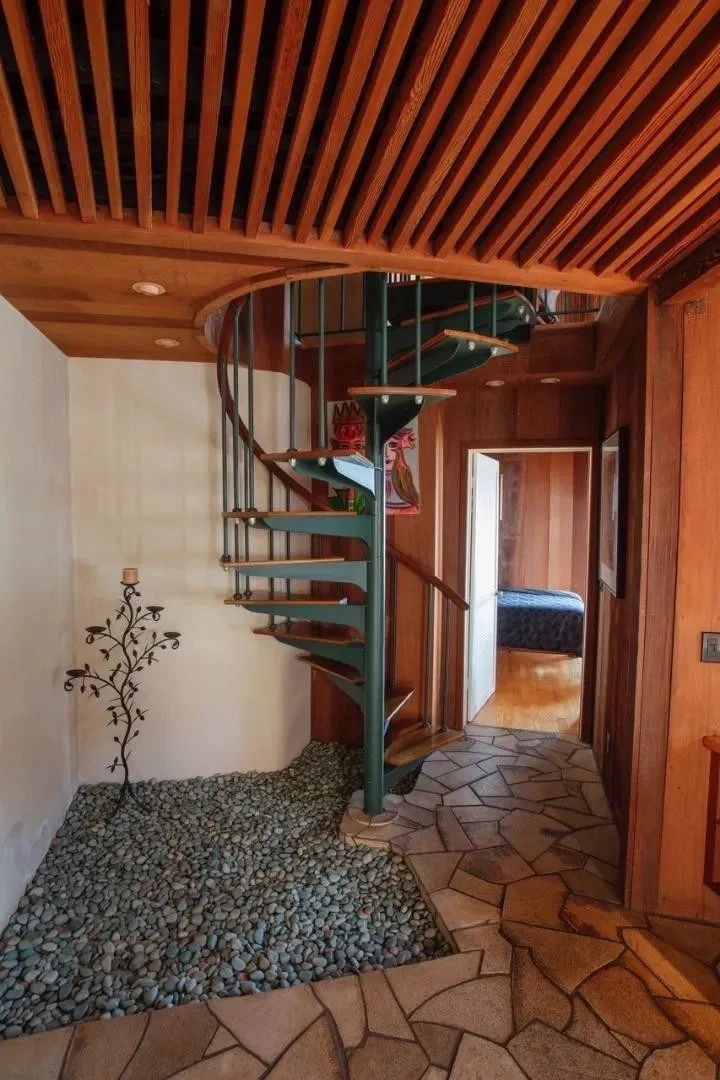
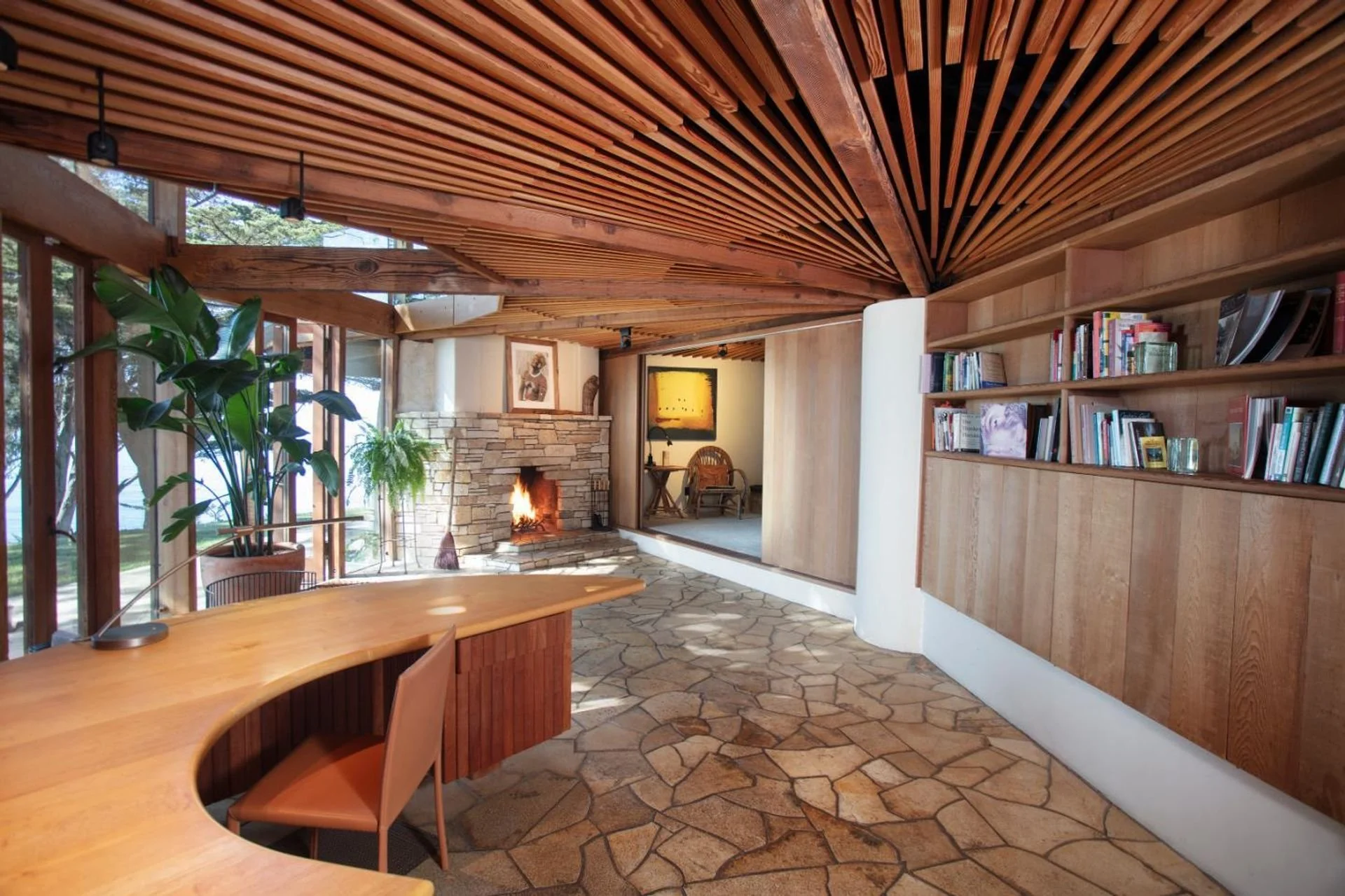
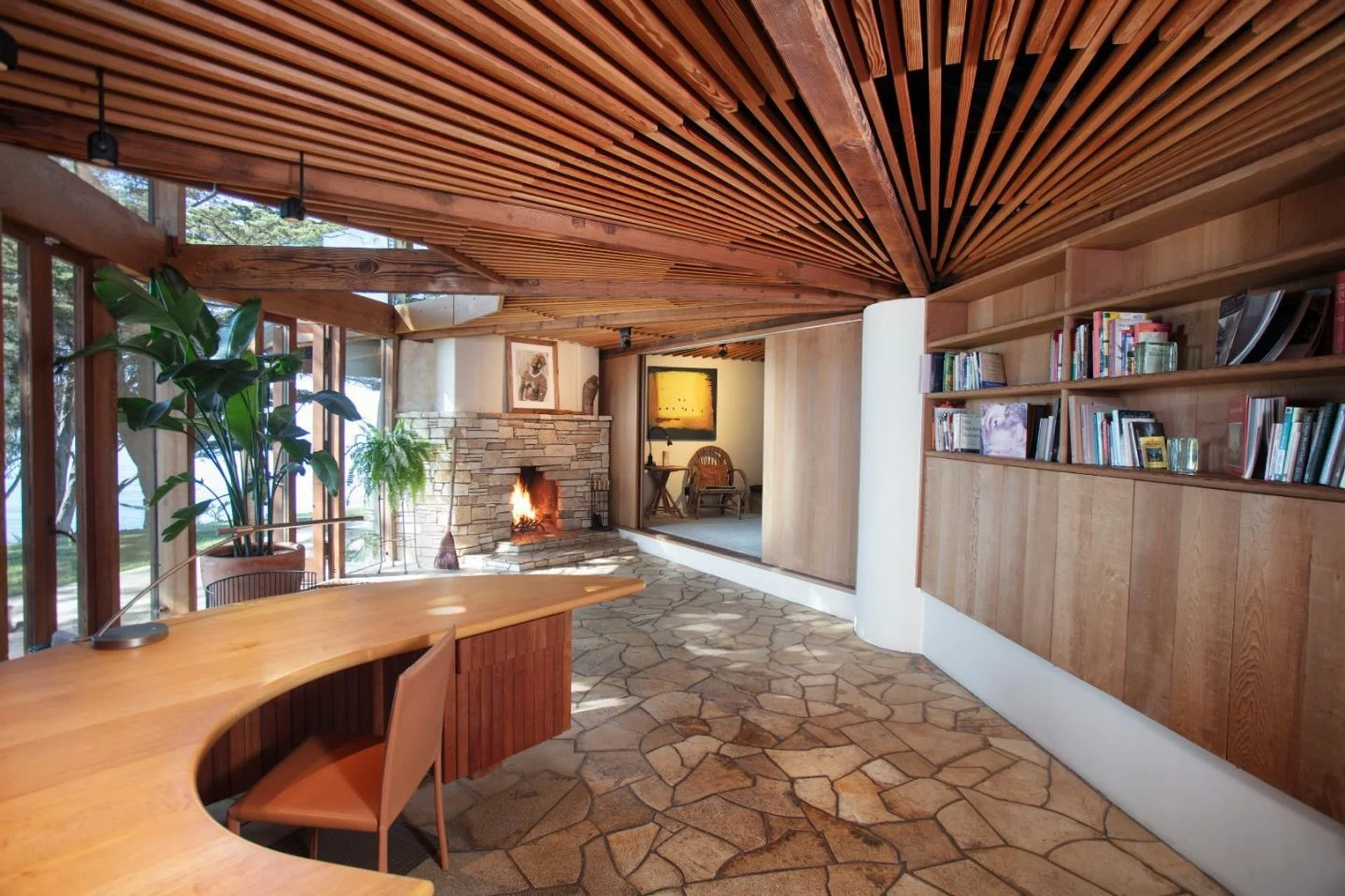
The lower level includes a spacious, Muennig-designed office with garden and ocean outlooks, flanked on one side by a bedroom and full bath, and on the other by a bedroom/media room, both with separate entrances.
Mike Gilson
Mike Gilson
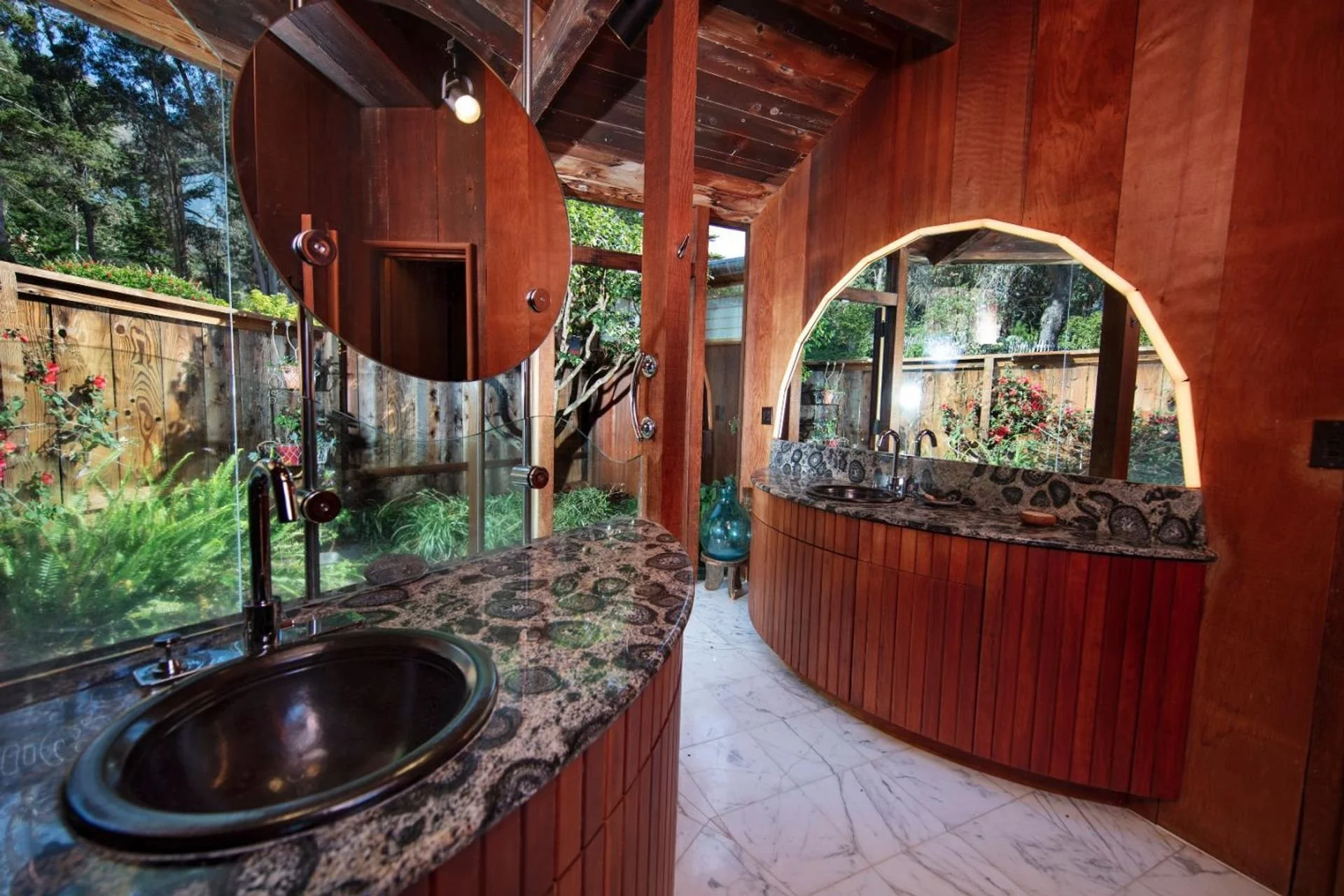
Mike Gilson
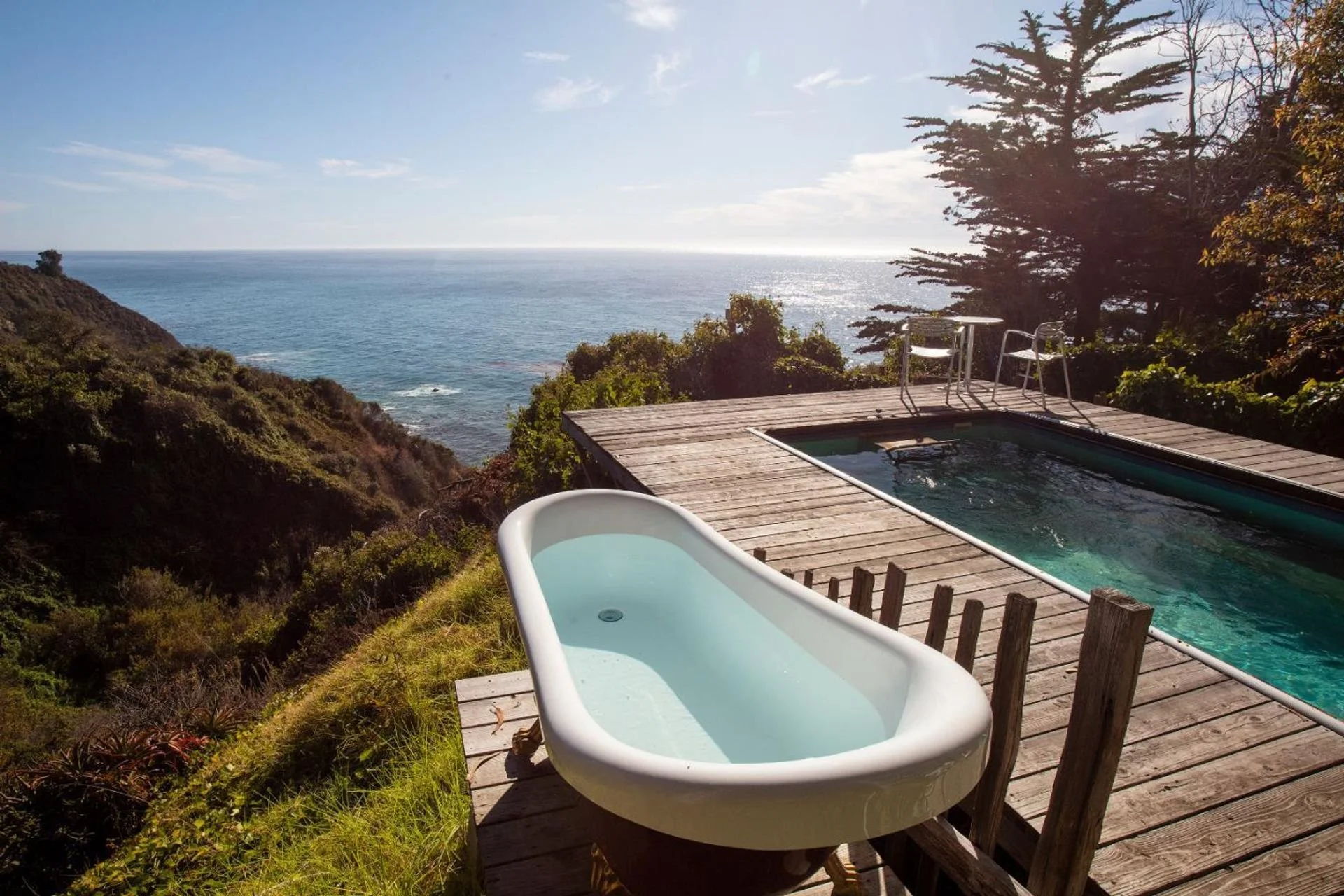
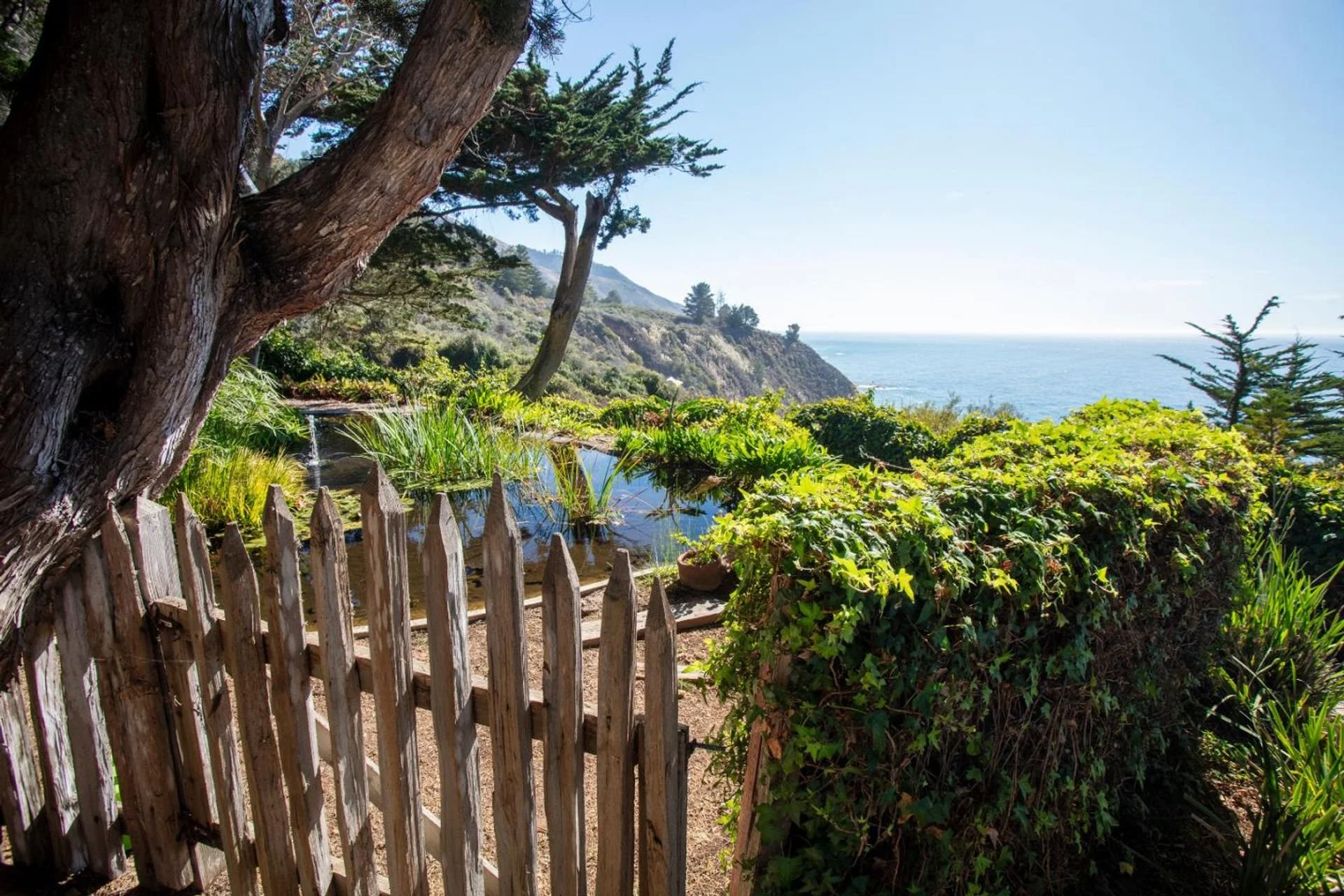
The grounds extend across approximately 5 acres and include landscaped gardens, paths, and a lily pond. A separate cottage is positioned nearby with its own deck and an endless pool, currently used as a guest space or office.
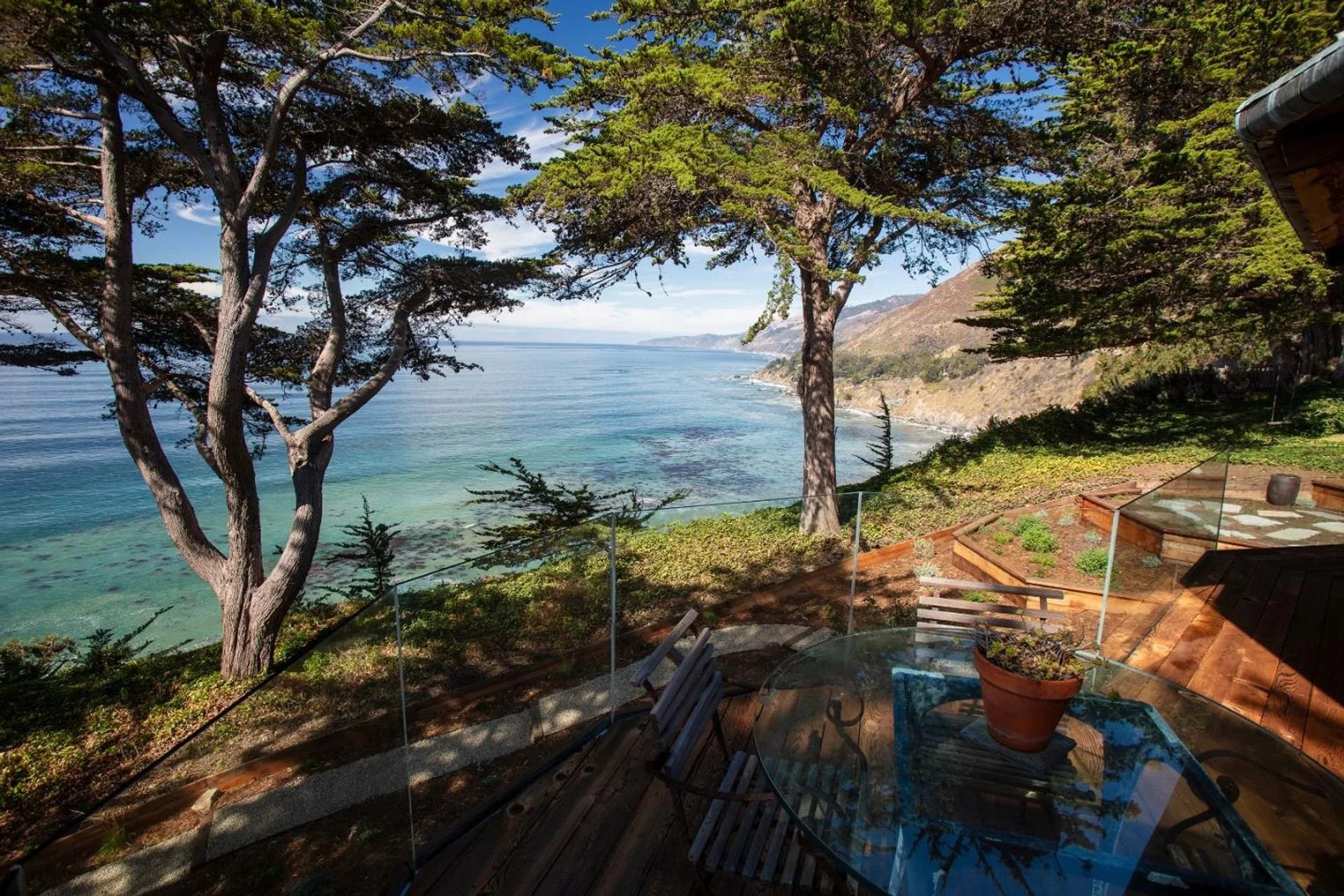
Mike Gilson
The Architects
Francis Palms was a Monterey Peninsula–based architect, though his work is less extensively documented than that of Mickey Muennig.
Mickey Muennig (1935–2021) began his architectural career in the 1950s and early 1960s. He studied architecture under Bruce Goff at the University of Oklahoma, where Goff’s experimental and unconventional approach to design would have a lasting influence on his work. During this period, Muennig worked primarily in Denver, where he developed an interest in organic architecture, influenced in part by Frank Lloyd Wright, a pioneer of designing buildings in harmony with their surroundings.
In 1971, Mickey Muennig visited Big Sur—a trip widely described as life-changing, which led him to move there shortly after. Soon after arriving, he began designing homes in the area, including early work in areas such as Partington Ridge.
Over the following decades, he developed a body of work defined by structures embedded into the landscape, curved forms, and a strong relationship between interior space and the surrounding environment. By the 1970s and 1980s, he had become one of the defining architectural figures in Big Sur, designing numerous private residences along the coast.
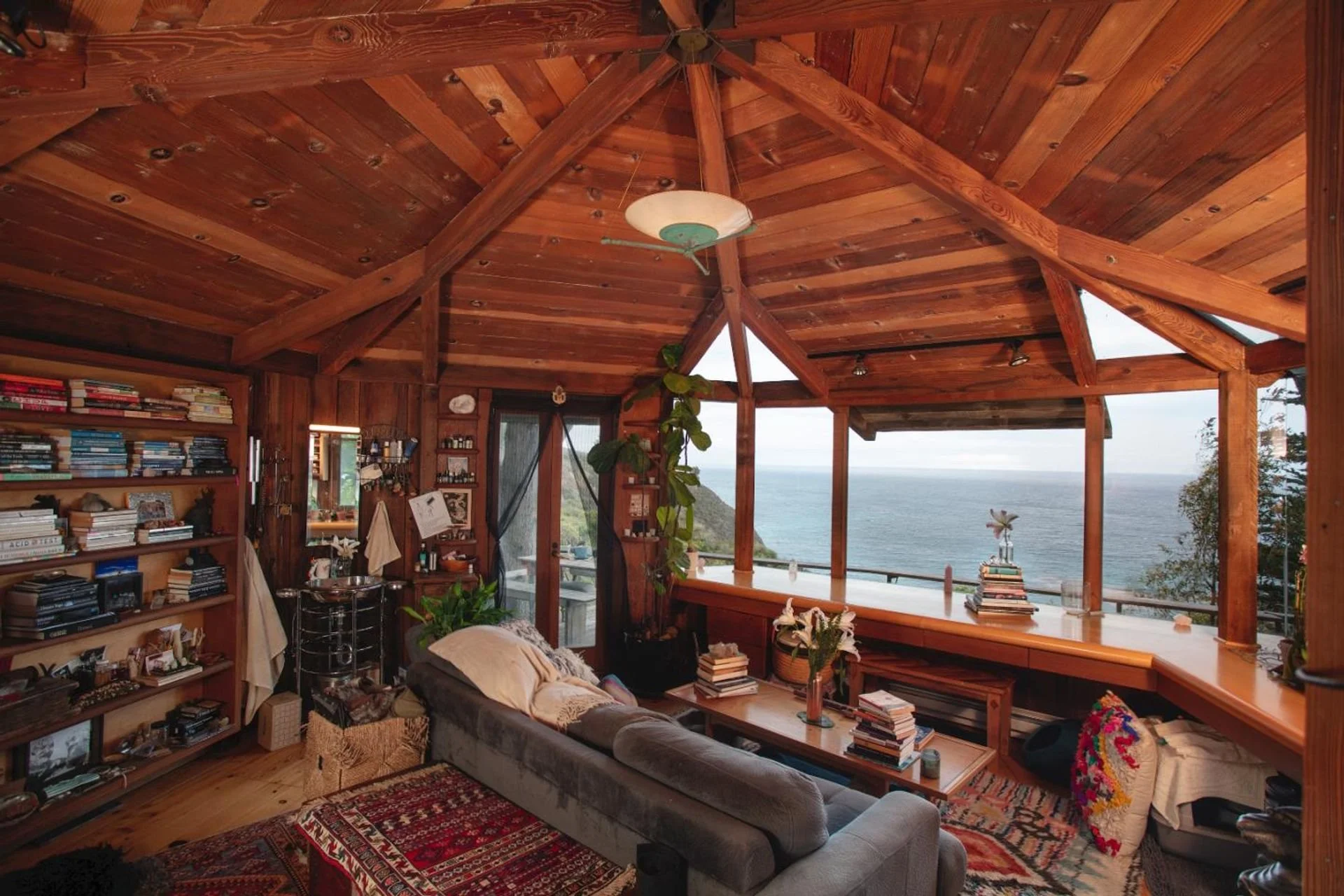
Mike Gilson
His later work, including projects associated with Post Ranch Inn, further reinforced his influence on the region’s built environment.
Another home by Muennig is also currently on the market in Big Sur. The estate at 46400 Clear Ridge Road, known as Deer Ridge, is offered at $32 million.
In recent years, properties designed by Muennig have traded at a range of prices depending on scale and location, with notable sales ranging from the mid-single-digit millions to over $30 million for larger oceanfront properties.
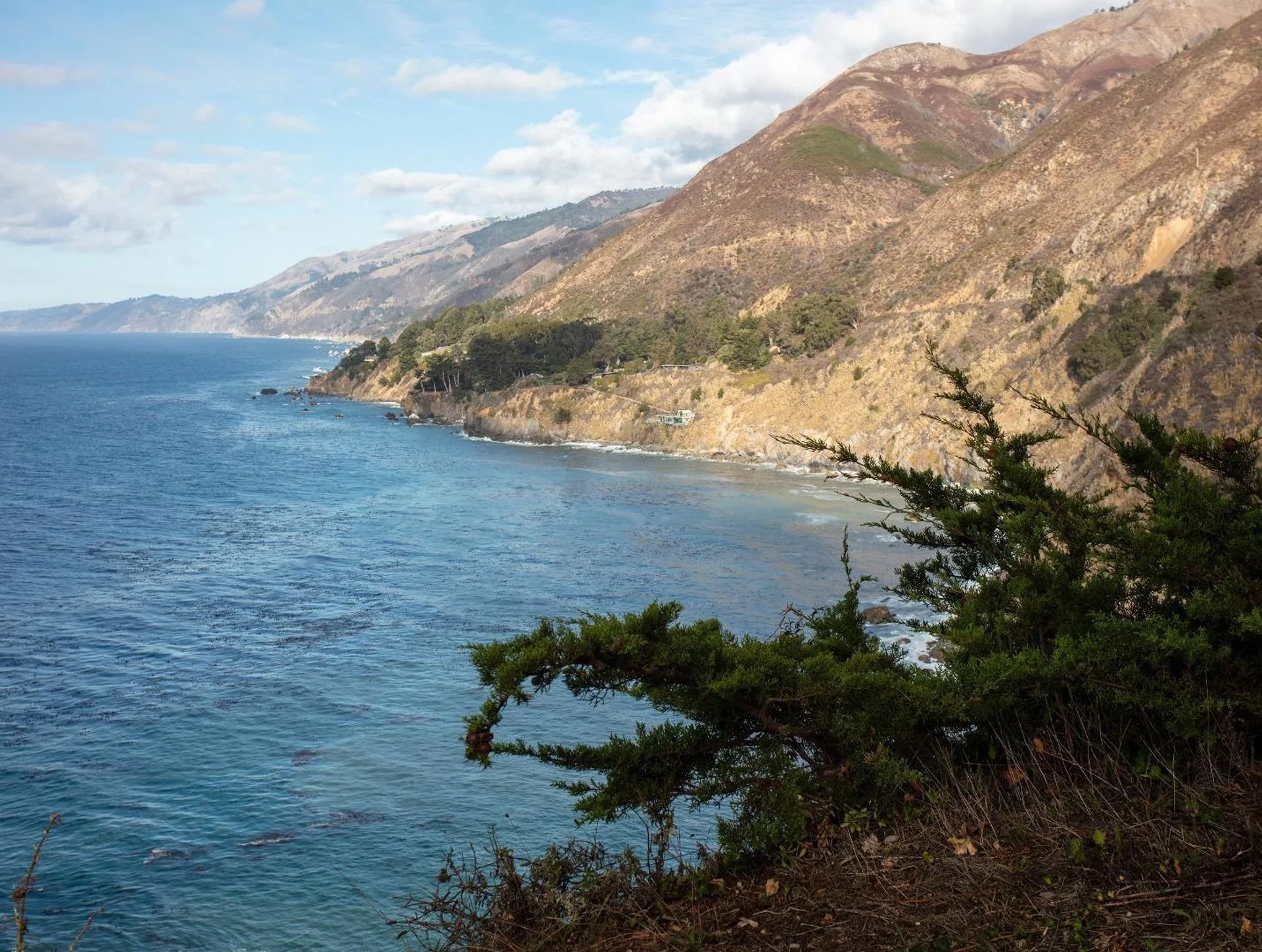
Mike Gilson
A Cultural Moment That Shaped the Region
What’s interesting about Big Sur is that the architecture many people notice today did not emerge in isolation—it can be traced back to a very specific cultural moment.
In the 1960s and 1970s, the region became part of a broader countercultural movement taking place across California. At its core, this movement rejected suburban conformity, corporate life, standardized housing, and traditional social structures. At the time, development in the region was minimal, and Big Sur became a place where people sought isolation, freedom, and alternative ways of living. It also became a place where people began experimenting not only with lifestyle, but with how homes were designed and built.
Esalen and the Shift in Thinking
At the center of this shift was the Esalen Institute. Founded in 1962, Esalen is a retreat and educational center focused on psychology, philosophy, spiritual exploration, and personal development. Located a short distance from the property, it sits on cliffs above the Pacific and is known for its natural hot springs and minimal, nature-integrated buildings.
It is not a hotel or resort in the conventional sense, but a retreat community hosting workshops, residencies, and programs. Esalen played a major role in what became known as the human potential movement, which explored consciousness, self-development, and alternative lifestyles. It attracted major thinkers and figures including Alan Watts (Eastern philosophy), Aldous Huxley (author of Brave New World), and Abraham Maslow (hierarchy of needs).
What begins to emerge is a connection between how people were thinking and how they were building. The ideas explored in places like Esalen—about self-discovery, freedom, and rethinking how life should be lived—extended into the physical environment.
From Culture to Architecture
Homes in Big Sur were no longer conceived as standardized structures, but as personal, expressive spaces designed in direct response to the landscape. Instead of imposing architecture onto the land, architects began embedding it within it.
Rather than standardized suburban layouts, architects explored irregular forms and non-linear plans. Buildings were designed to respond to the landscape rather than impose upon it, often appearing integrated into hillsides or coastal terrain.
Unlike more formal modernist architecture, structures could feel asymmetrical, improvised, and deliberately unfinished—prioritizing experience, individuality, and connection to nature over formal structure.
Many of the unconventional homes that continue to come to market in the region reflect this legacy, including this one.
Big Sur in Popular Culture
This cultural moment has also been reflected in popular media, where places like Esalen have come to represent a broader search for meaning and transformation.
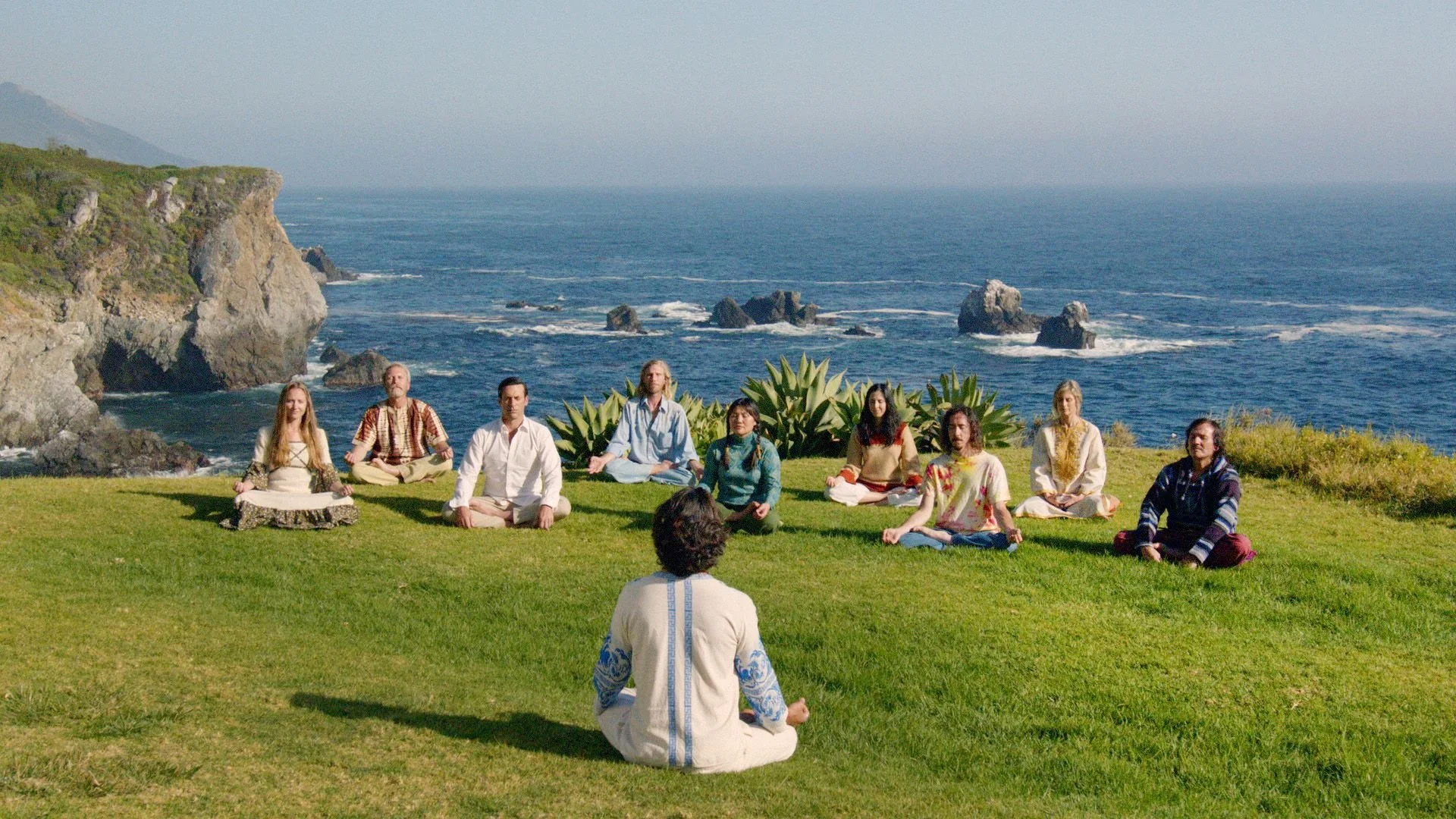
AMC
In the final episodes of Mad Men, Don Draper arrives at a coastal retreat widely interpreted as being inspired by the Esalen Institute. There, he disconnects from his corporate life and participates in group therapy sessions, reflecting the real-world practices associated with the institute and the broader movement toward self-exploration.
A similar atmosphere appears in True Detective, where California-based retreats and spiritual communities reflect the same blend of psychology, mysticism, and alternative living that Esalen helped popularize. In both cases, these environments are used as symbols of a cultural shift away from rigid structures and toward more exploratory ways of living.
Protection and Scarcity
Big Sur remains one of the most tightly regulated coastal regions in the United States, with restrictions that apply broadly across the region. Development limits both density and visibility, helping preserve the uninterrupted character of the coastline.
As a result, buildable oceanfront parcels are exceptionally rare. New construction faces lengthy approval processes, and existing homes—particularly those with architectural significance—carry increasing weight as both residences and cultural artifacts.
Within this landscape, properties like this one are defined not only by their design, but by their position within a place where architecture, environment, and cultural history remain closely connected.
Photos coutesy of the listing agency. See more on Big Sur Real Estate.