
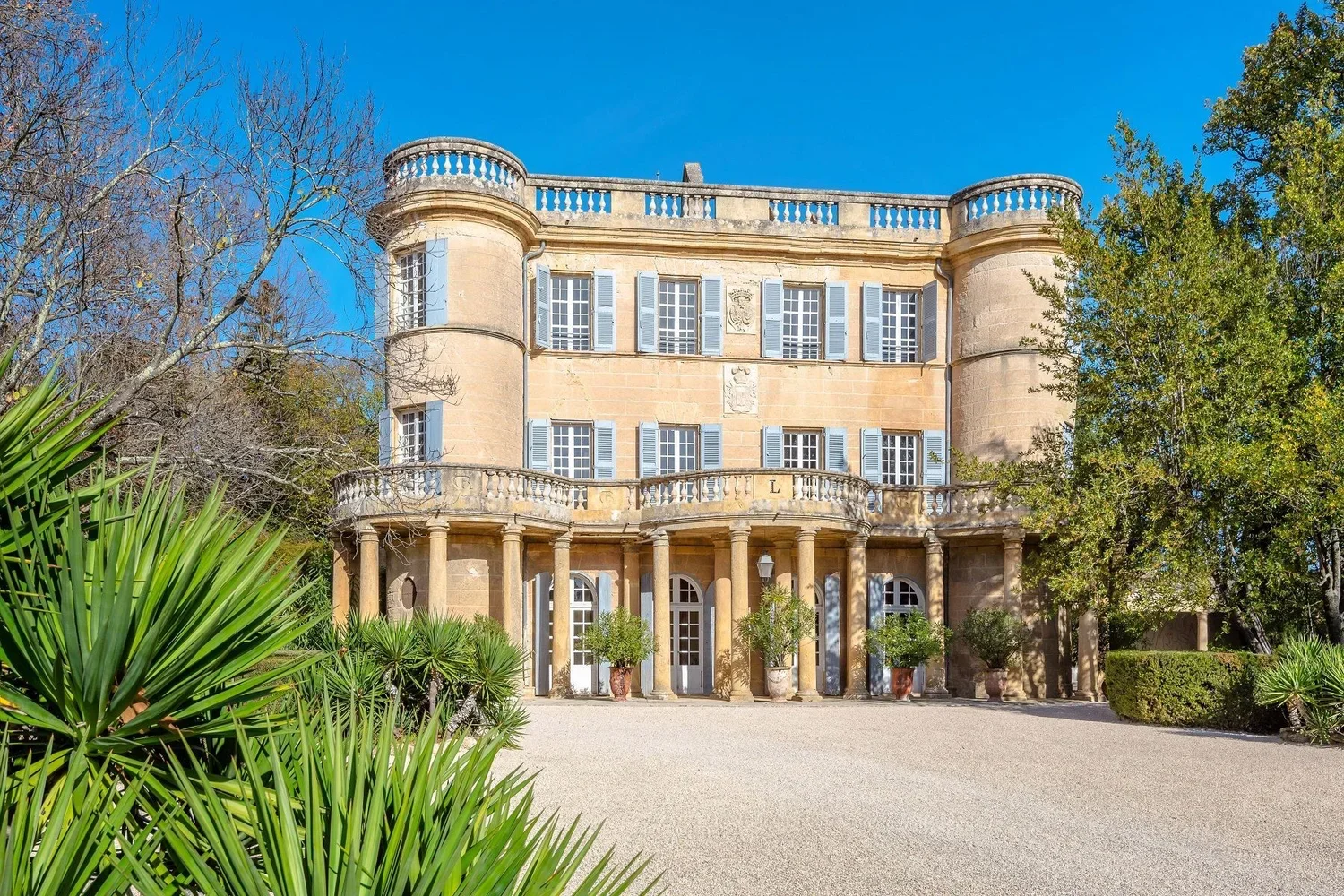
When Pablo Picasso visited Château de Castille in 1962, he exclaimed: “Give me a wall!”
Uzès sits in the Gard, west of the Rhône, between Nîmes and Avignon. It is not technically in Provence, but much of the surrounding landscape feels closely related to it: pale limestone villages, vineyards, olive groves, dry Mediterranean vegetation and open countryside.
What distinguishes Uzès is that it has retained much of this character without the same level of tourism and development found in better-known parts of Provence. The town remains compact and historic, surrounded by smaller villages and agricultural land. Roman history is also central to the area. The Pont du Gard is less than half an hour away, and the spring at Uzès once supplied water to Roman Nîmes through the aqueduct system.
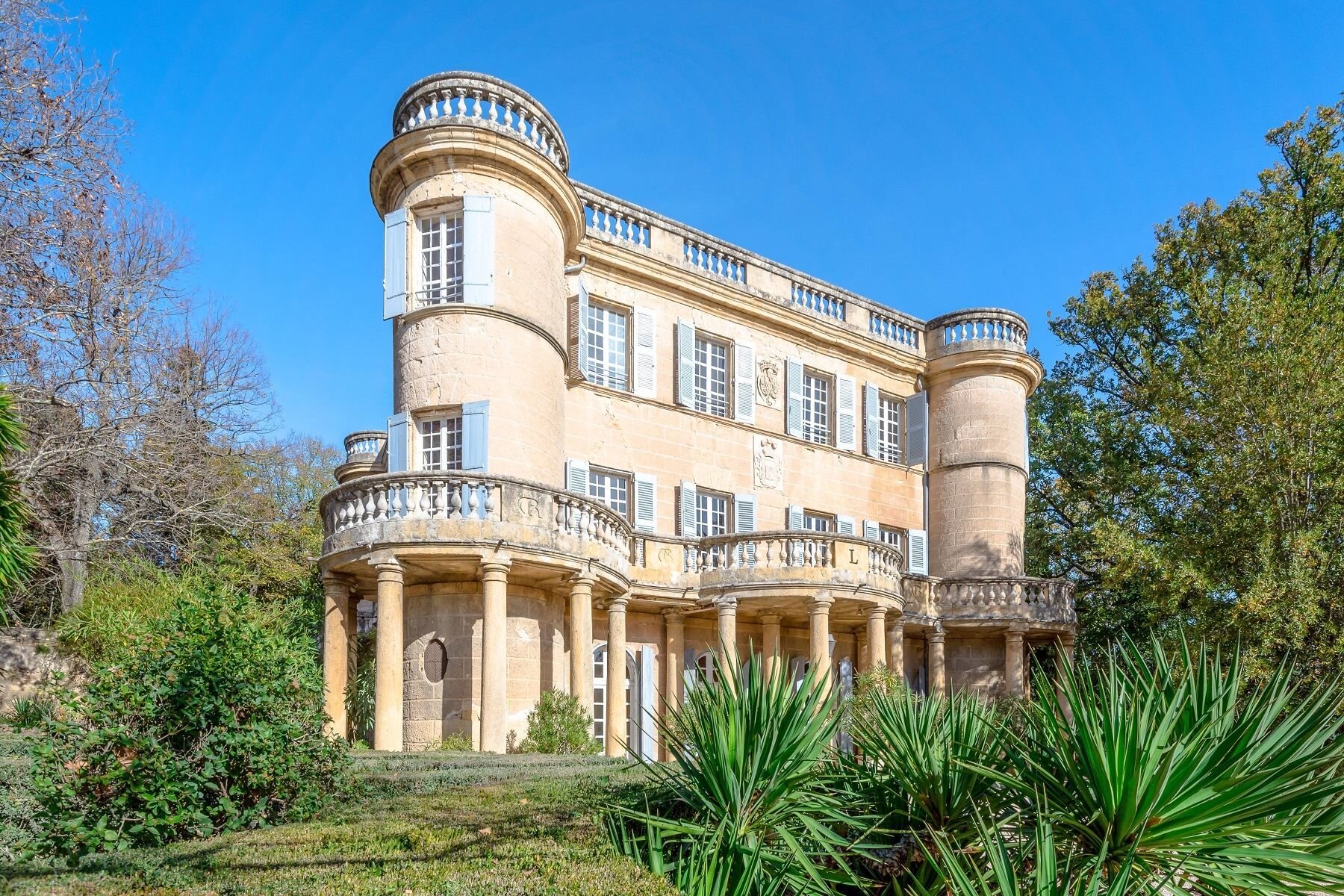
A few kilometres outside town, in the village of Argilliers, Château de Castille tells a much more unusual version of that classical history.
The estate has medieval origins, with parts of the site associated with a 13th-century fortress. Its present character, however, is largely the work of Gabriel-Joseph de Froment, Baron de Castille.
Born in Uzès in 1747, the Baron inherited the property in 1773. After travelling through Italy and England, he returned with a particular fascination for classical architecture.
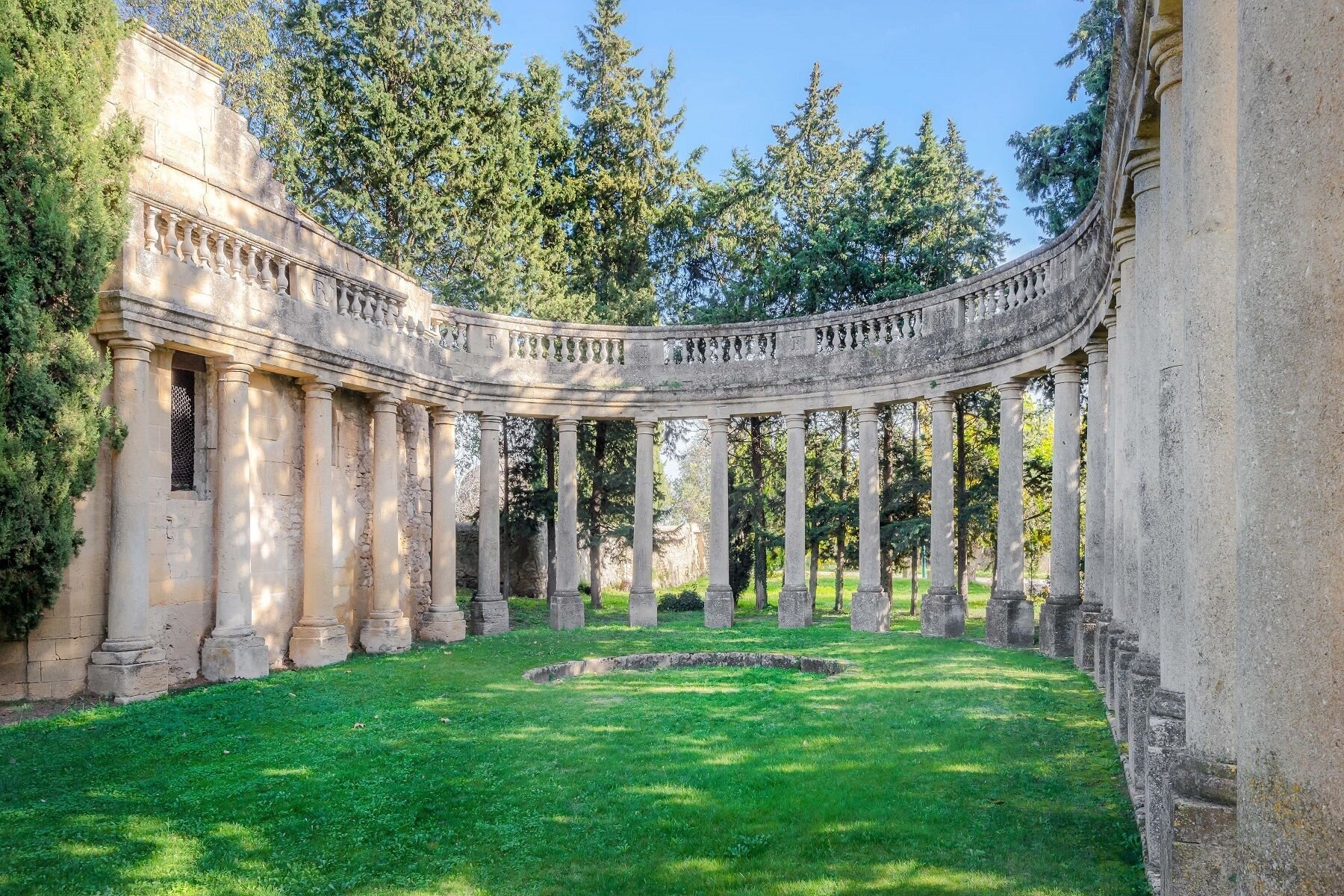
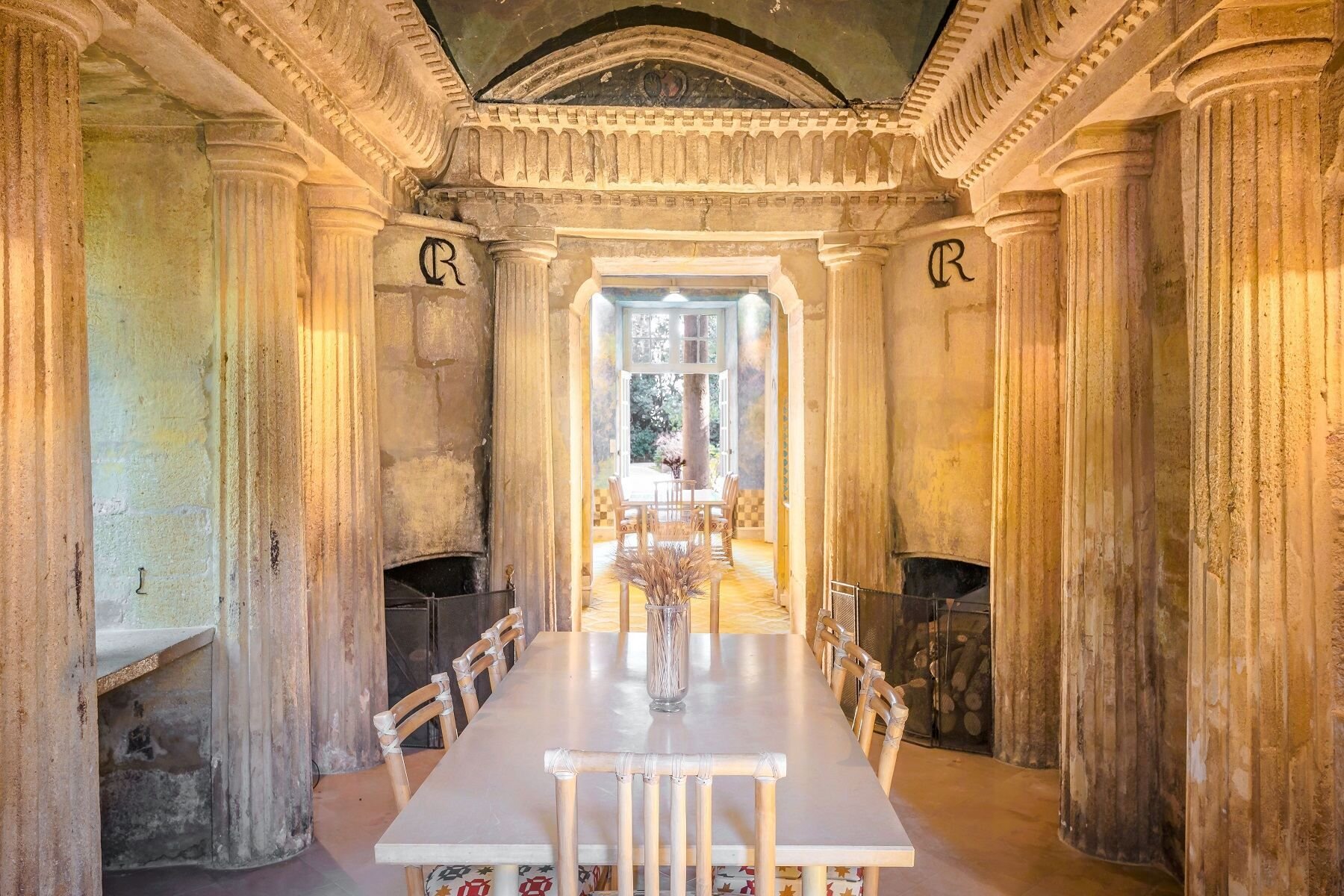
“In Italy I fell in love with columns,” he wrote. “I fell in love with them so much that in the gardens and courtyard of my own house, I’ve just built four different kinds of temples.”
His friends reportedly teased him about the obsession.
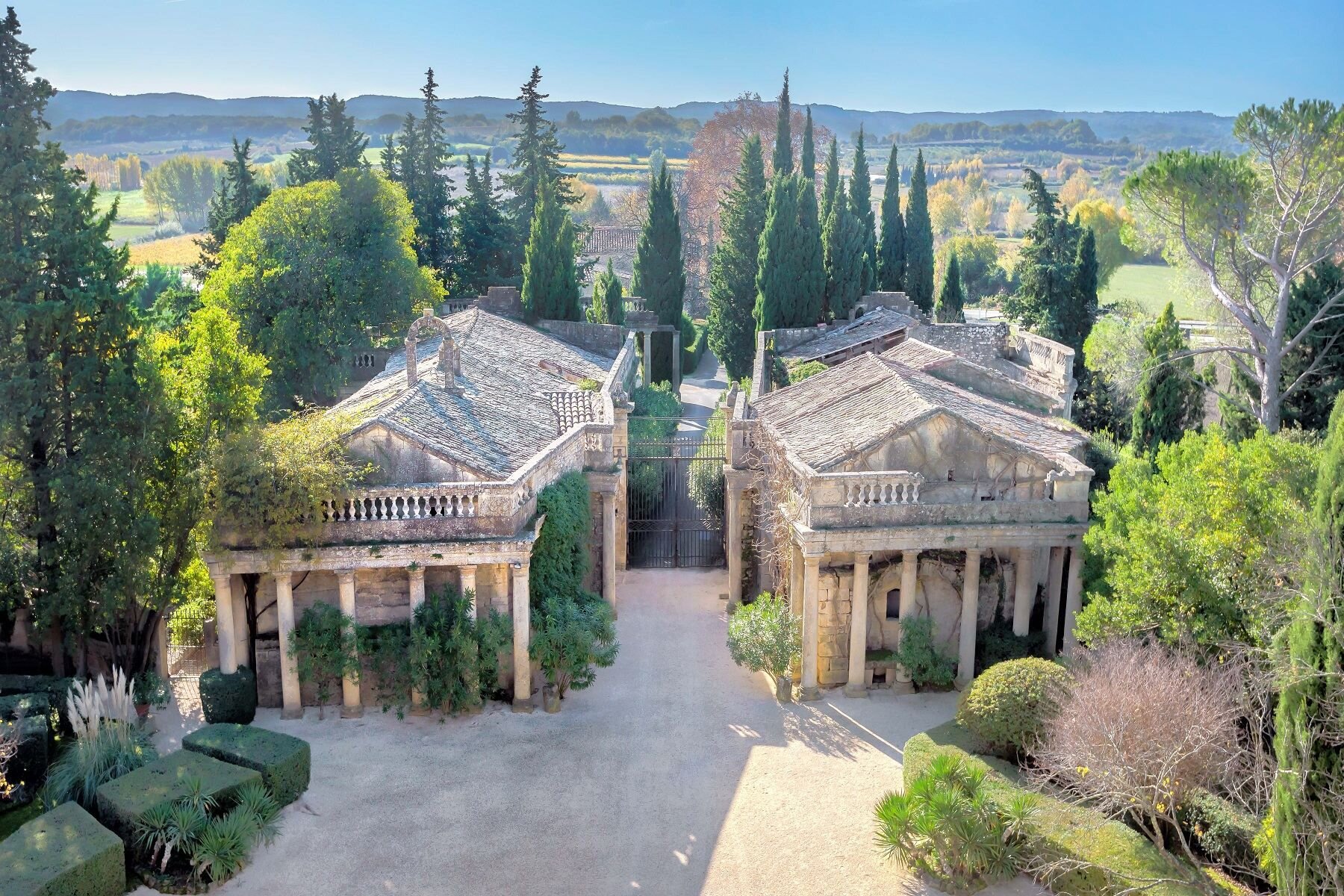
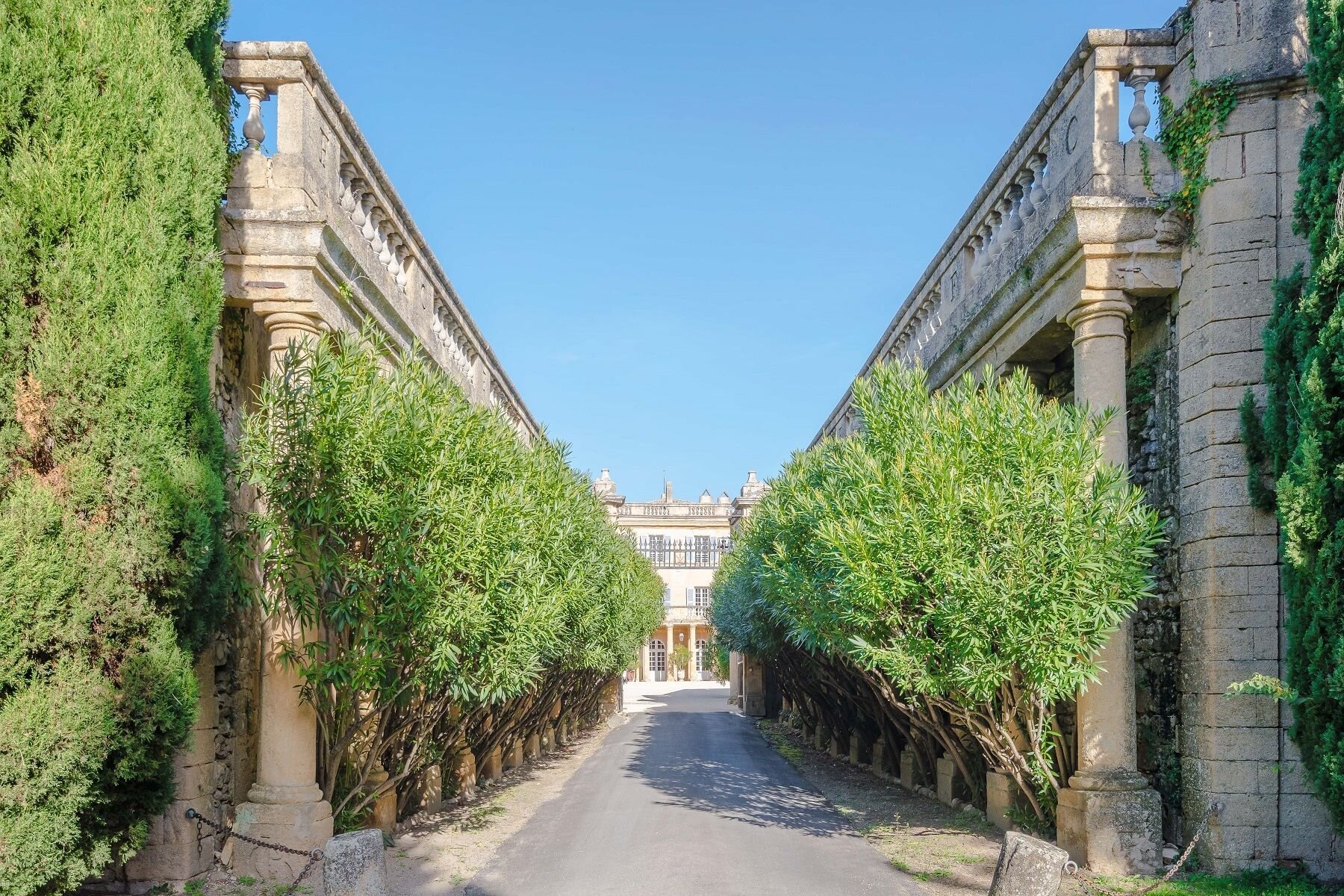
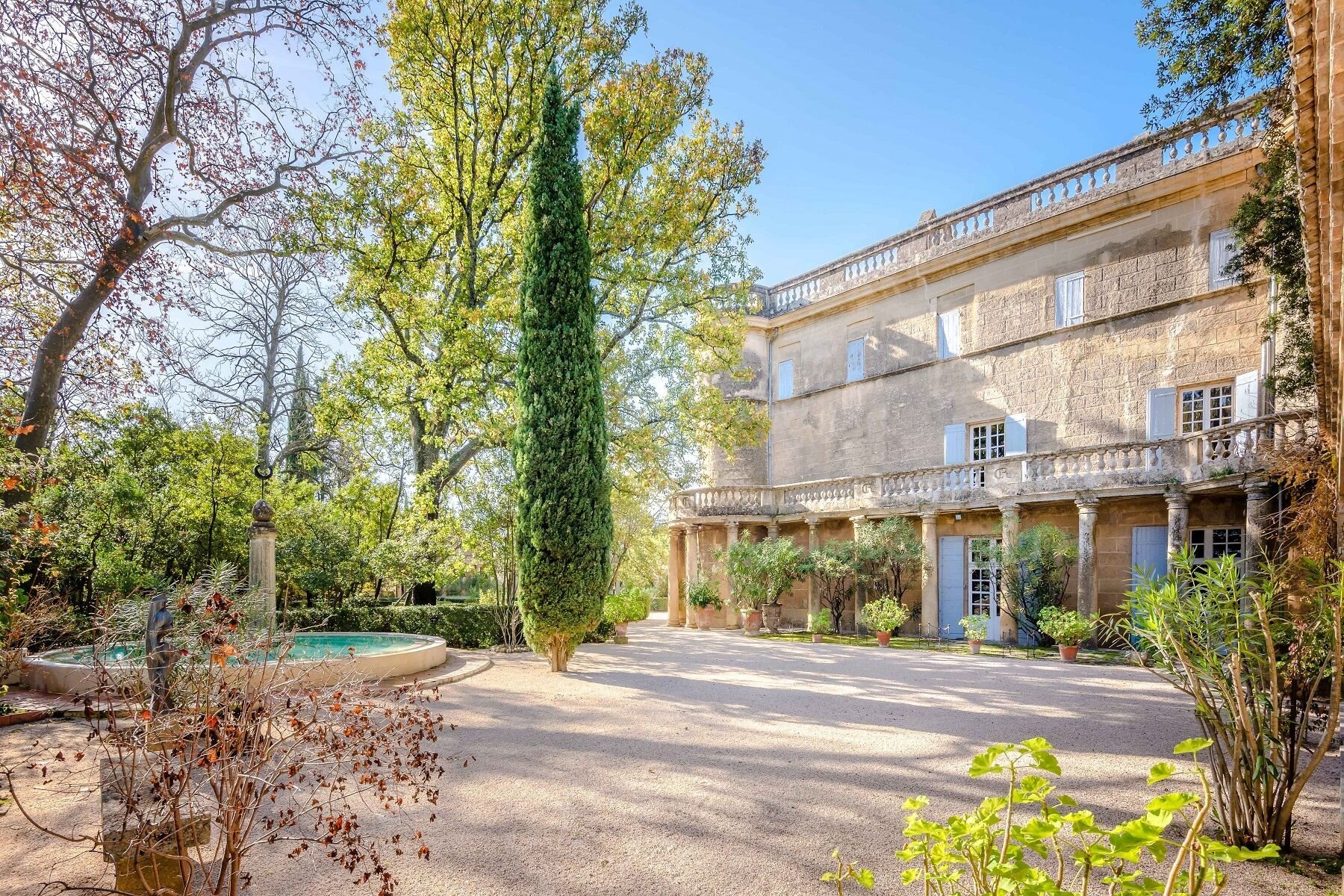
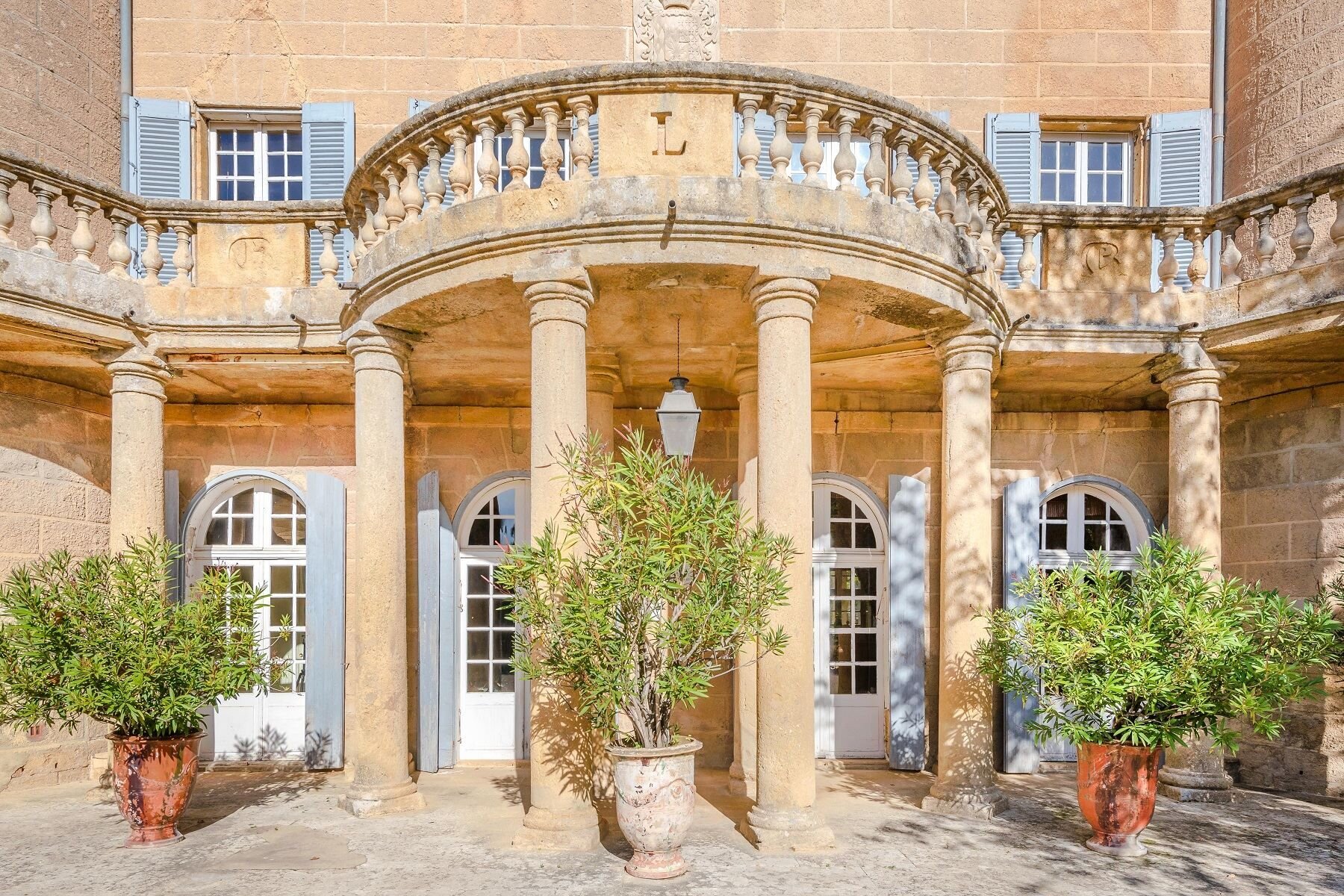
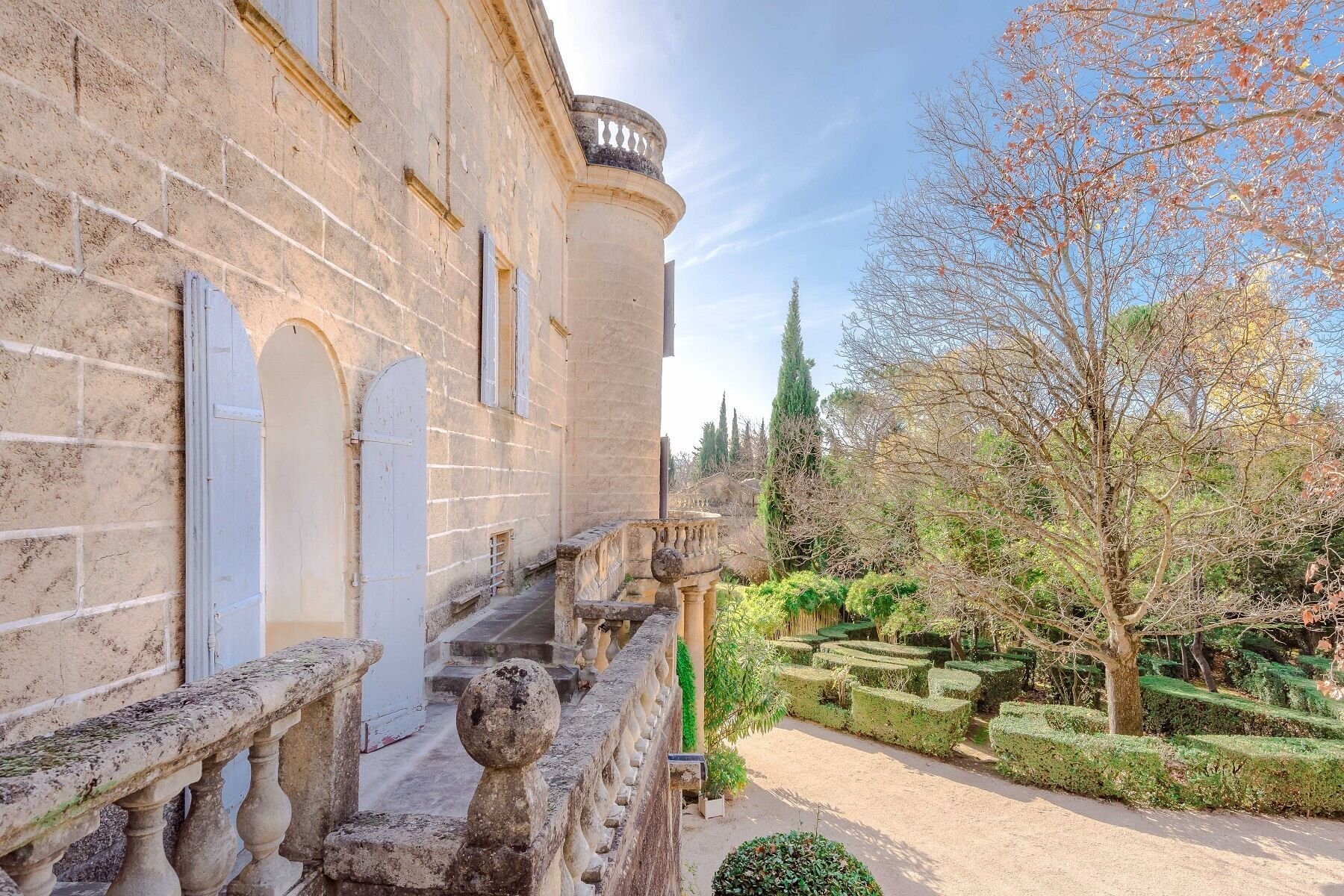
Beginning around 1788, the Baron transformed the former Manoir d’Argilliers into Château de Castille. At the entrance, two symmetrical pavilions were wrapped in antique-style colonnades. Elsewhere, he introduced references to Bernini, Tivoli, Hadrian’s Villa, Paestum and Pompeii.
The estate soon became known as “the château with a thousand columns.”
But the columns were only part of the project.
Behind the château, the Baron created an extensive parc à fabriques, a landscaped garden organized around ornamental structures and architectural follies. Seven avenues radiated from the house, leading toward temples, columns, cenotaphs and other small monuments placed throughout the grounds. Between 1789 and 1826, he created 25 of these fabriques.
Many had personal meanings.
One honoured his first wife, Épiphanie Dulong. Another commemorated his son Édouard, who was killed at the Battle of Essling. Others were connected to his second wife, Princess Herminie de Rohan, as well as friends, relatives and people he admired. A pyramidal cenotaph was dedicated to Louise de Stolberg-Gedern, Comtesse d’Albany, a close friend and correspondent.
What appears at first to be an eccentric classical garden was also a record of the Baron’s life.
Much of the park is now heavily shaded, and the old avenues are covered in a thick carpet of moss. When we visited the estate, the listing agent suggested taking off our shoes and walking barefoot along the spongey paths.
Many of the original structures have disappeared or fallen into ruin, but the layout of the park can still be read in the avenues and surviving monuments.
The Baron spent the final decades of his life continuing to build and alter the estate despite the political upheaval around him. During the French Revolution, he was arrested during the Terror and imprisoned. He avoided execution after the fall of Robespierre and was released in 1794.
He later returned to Castille, where he continued his architectural projects and charitable work around Uzès until his death in 1826.
Afterward, the estate declined.
Some of the garden structures disappeared. Others were sold or fell into ruin. By the early 20th century, the château itself had deteriorated badly enough that one government account reportedly described “rabbits in the boudoir and cows in the main salon.”
Then, in the 1950s, Château de Castille entered a very different period.
It was purchased by Douglas Cooper, the British art historian and collector who assembled one of the most important collections of Cubist art of his generation.
Cooper had also worked during the Second World War on investigations involving Nazi-looted art. In the postwar years, his circle included Georges Braque, Fernand Léger, Paul Klee, Nicolas de Staël and Pablo Picasso.
Castille became part residence, part setting for Cooper’s collection and part gathering place for artists.
Picasso visited regularly and reportedly tried to persuade Cooper to sell him the château.
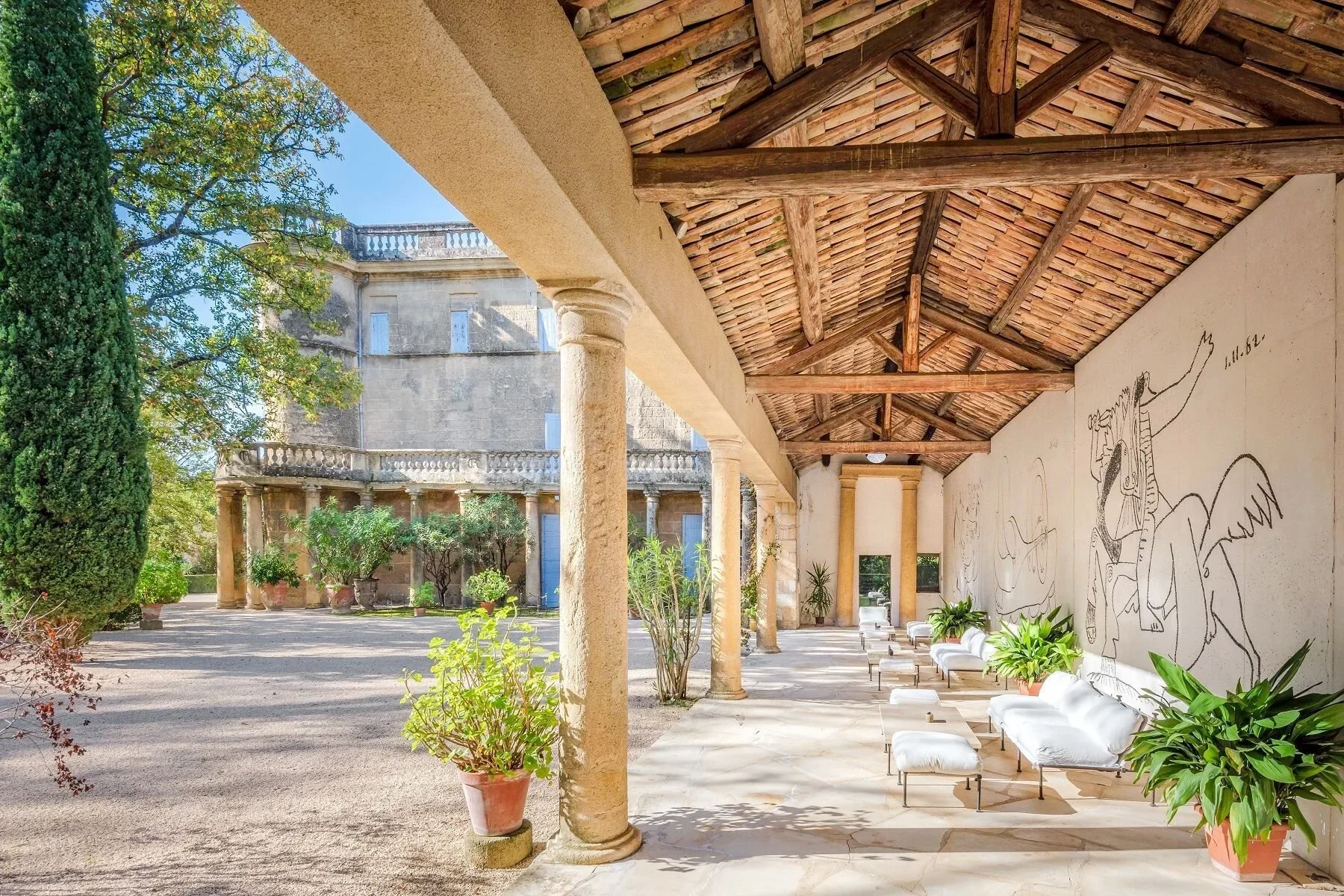
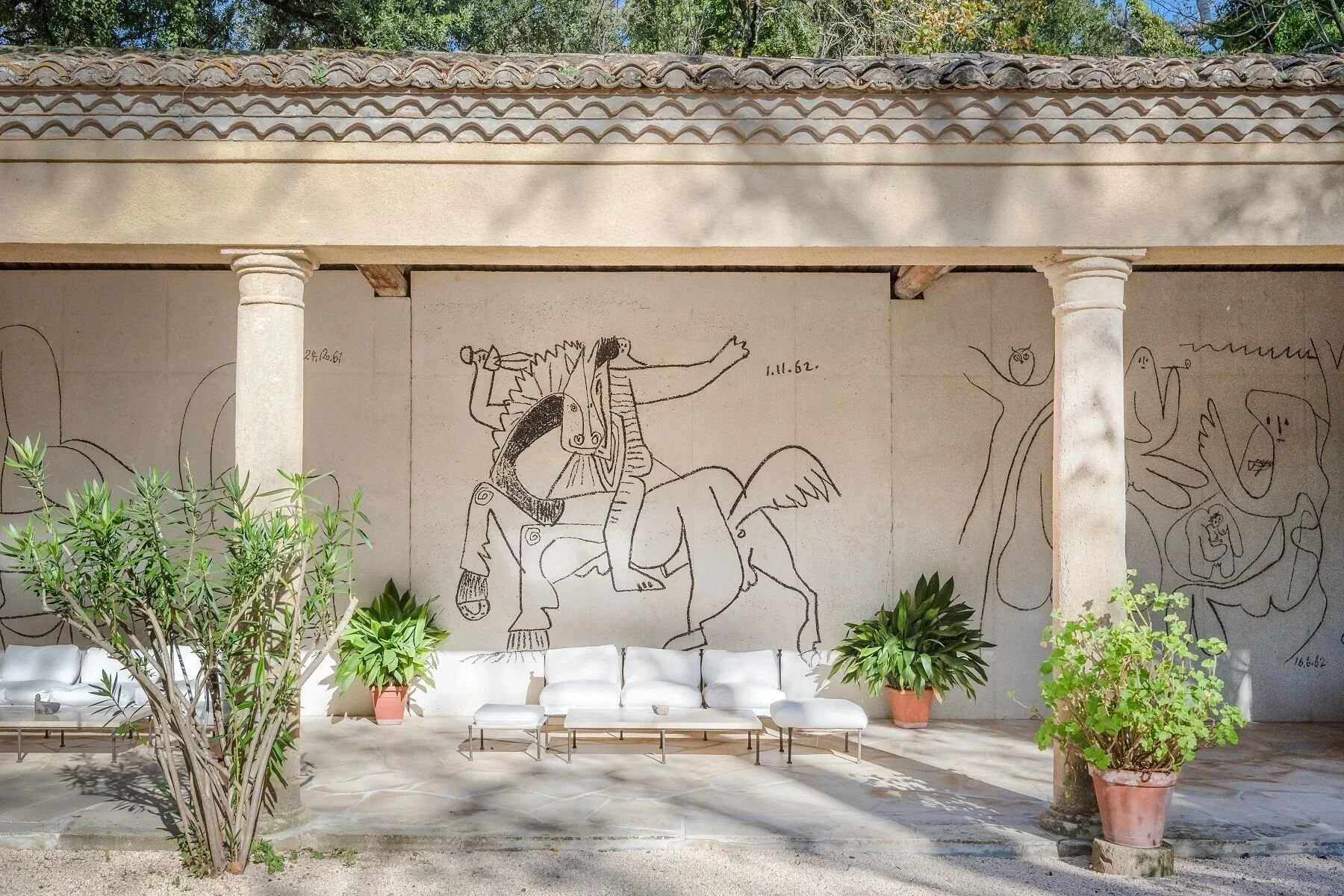
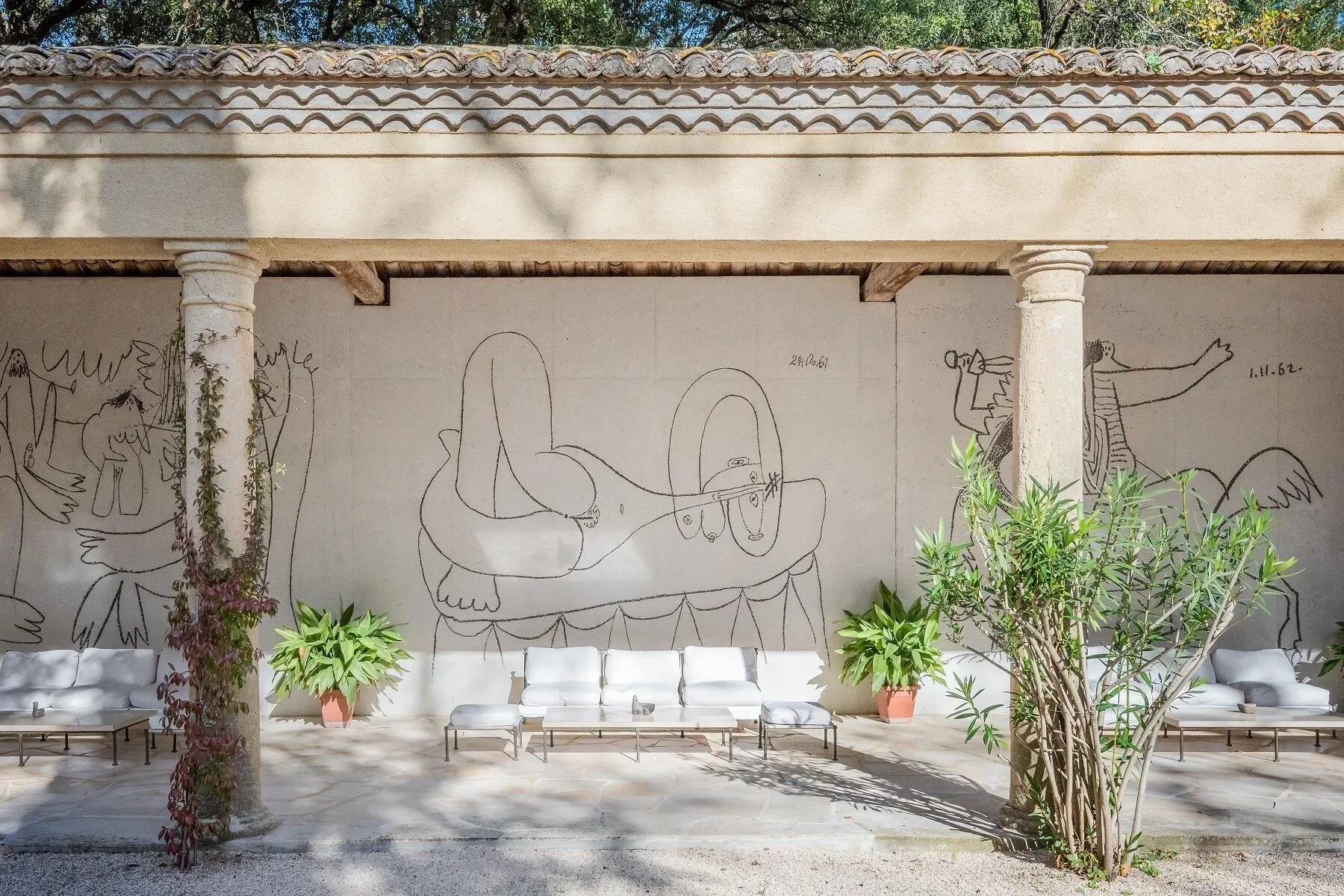
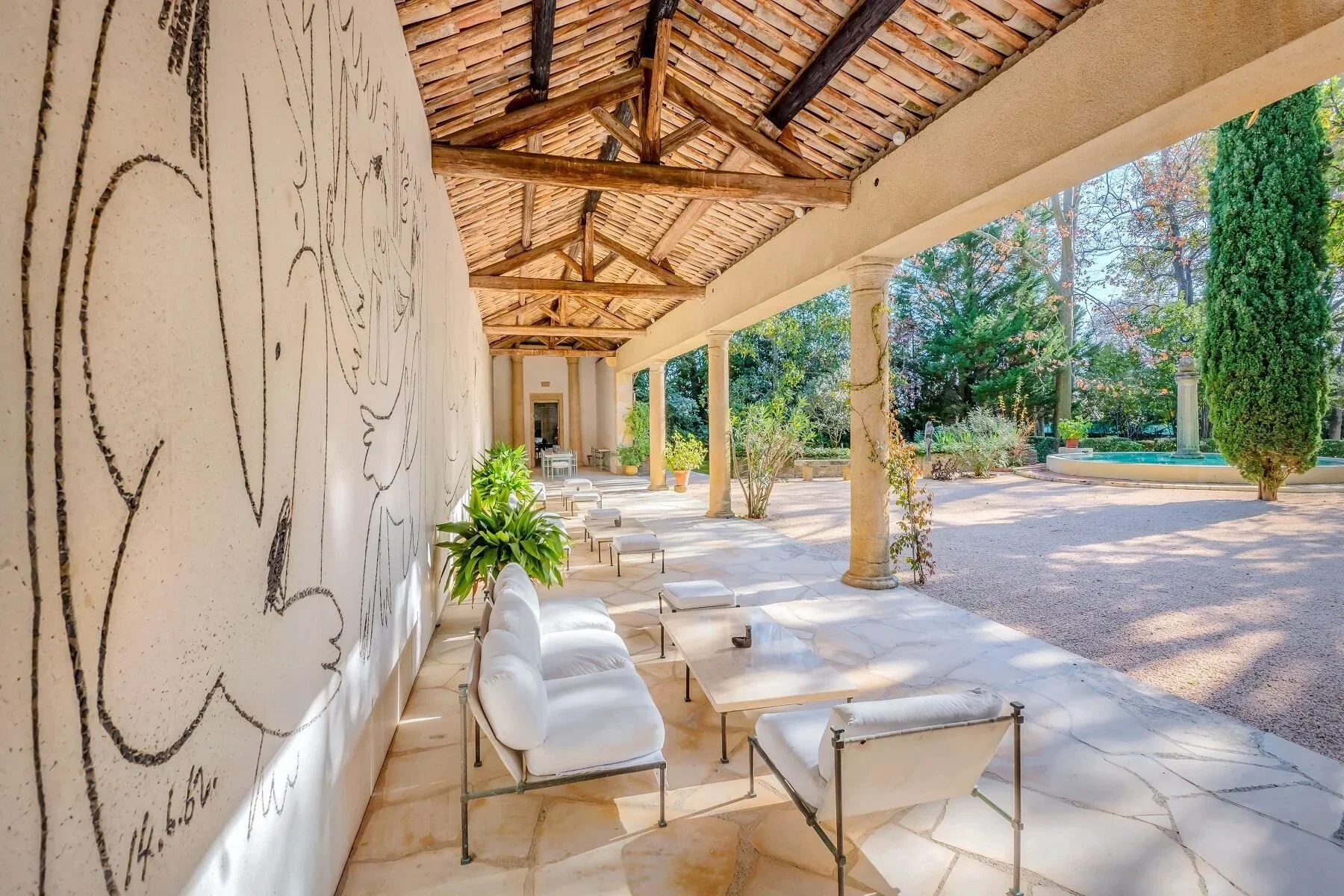
During one visit in 1962, he saw the walls of the eastern veranda and said: “Give me a wall!”
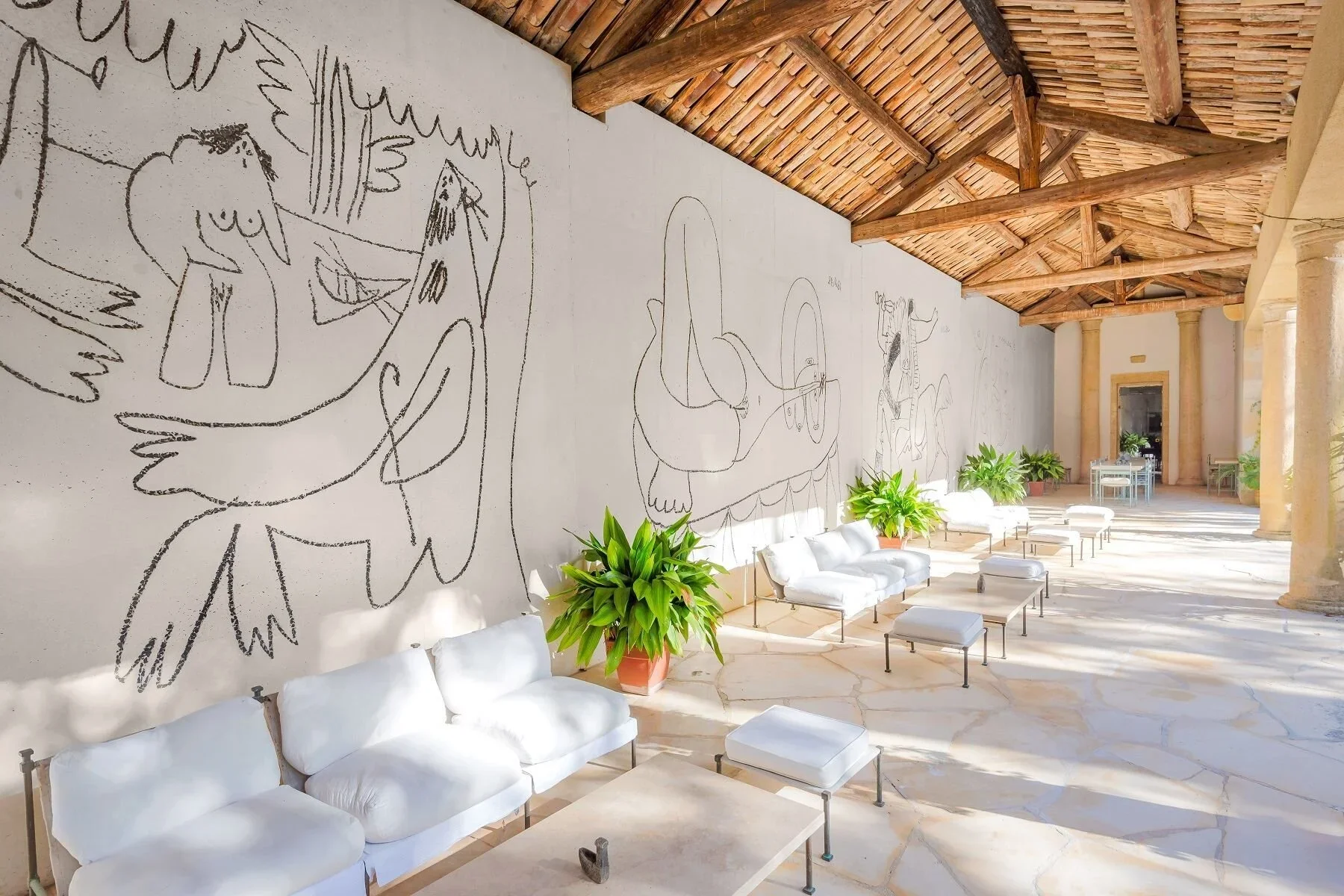
Cooper had previously admired Picasso drawings translated into concrete, and the idea developed into a larger project. Picasso produced a series of monumental designs that were later executed in concrete by the Norwegian artist Carl Nesjar, one of his frequent collaborators.
Five floor-to-ceiling works now cover the terrace walls.
Their imagery draws in part on David’s The Intervention of the Sabine Women and Manet’s Le Déjeuner sur l’herbe.
The connection to the château’s earlier history is striking.
The Baron had filled Castille with references to antiquity and the architecture he encountered in Italy.
Nearly two centuries later, Picasso was also working through earlier art, reinterpreting David and Manet on the walls of the same estate.
The works remain physically part of the building. Because they are protected along with the château under its historic monument designation, they cannot simply be removed and sold separately.
The wall is the artwork.
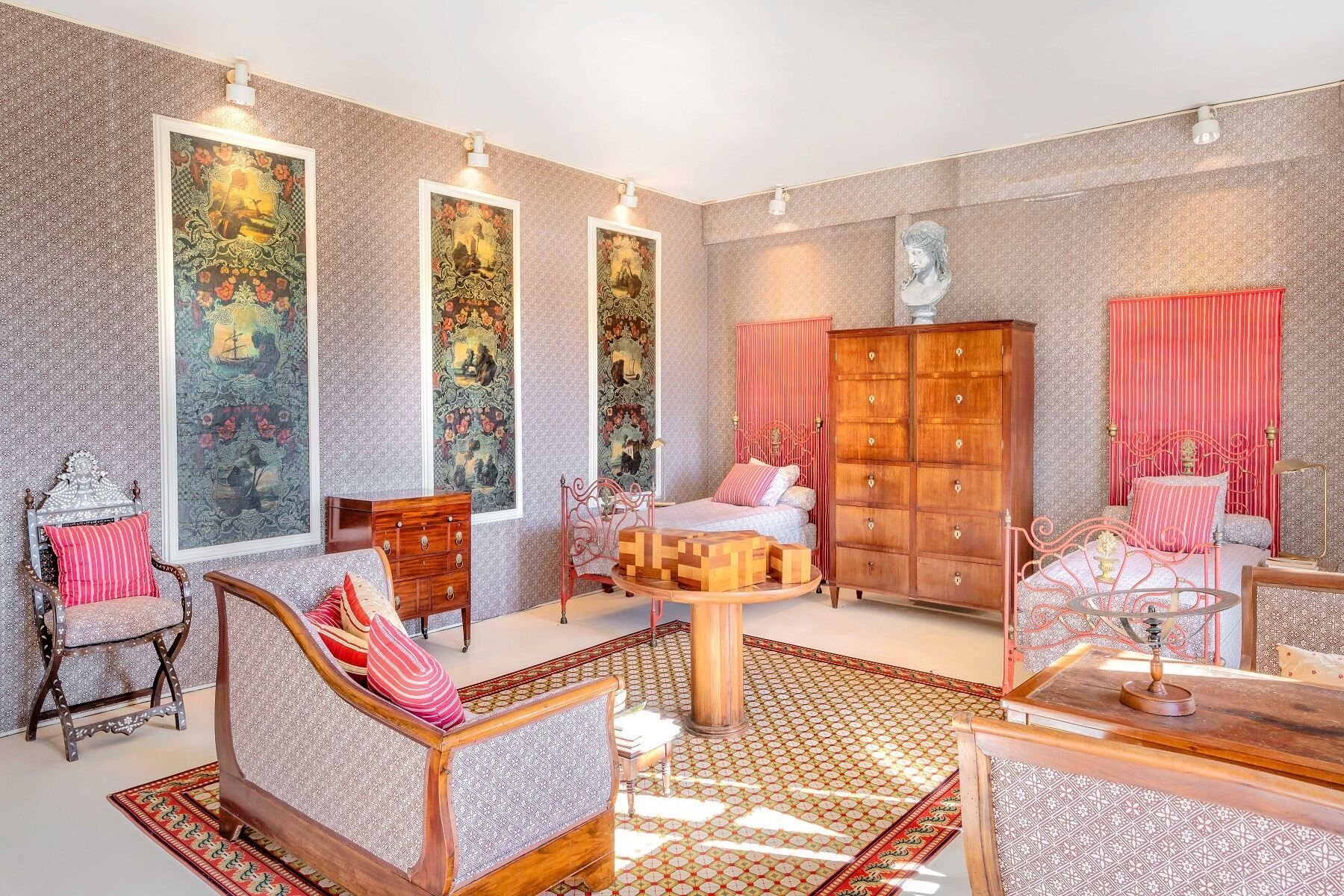
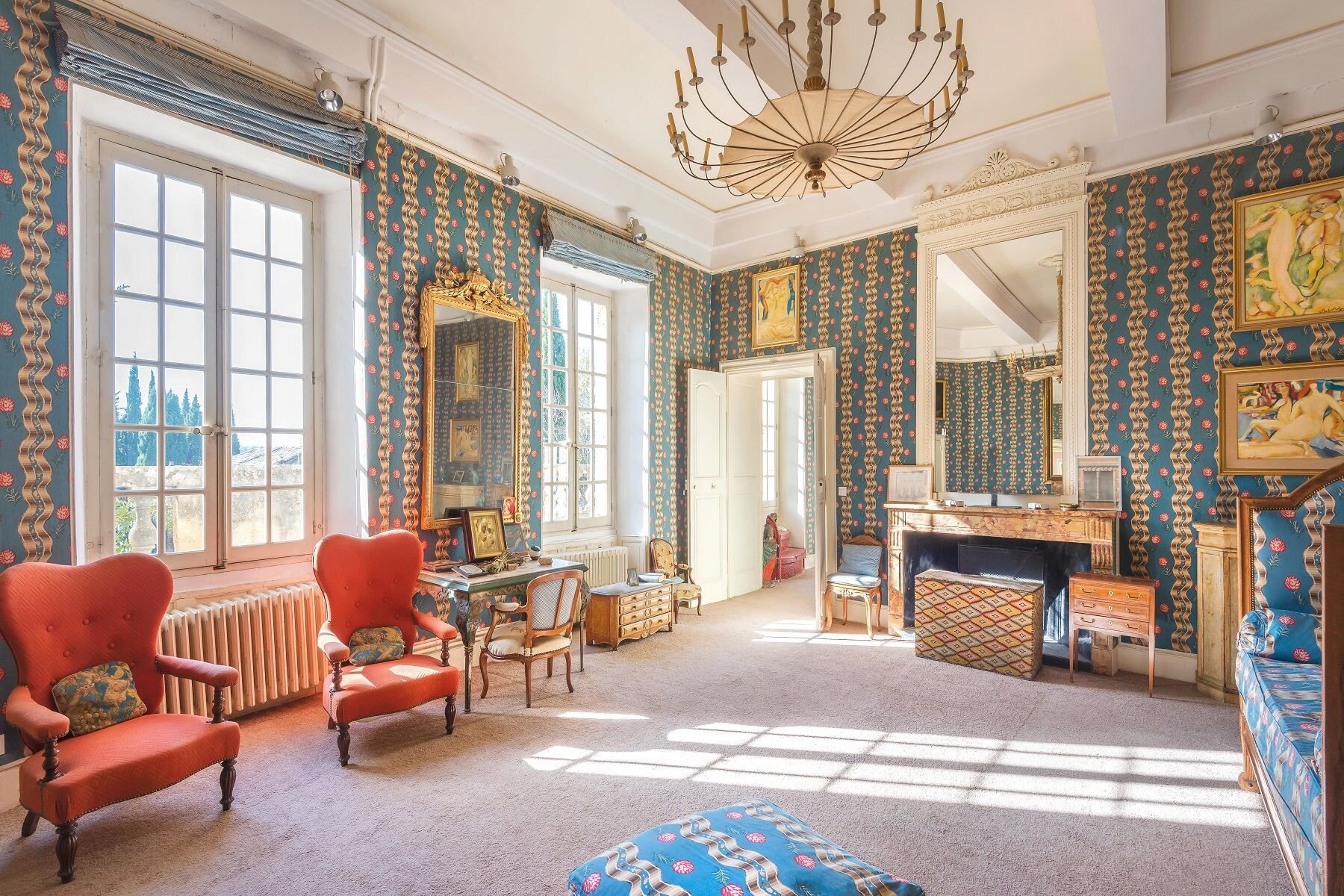
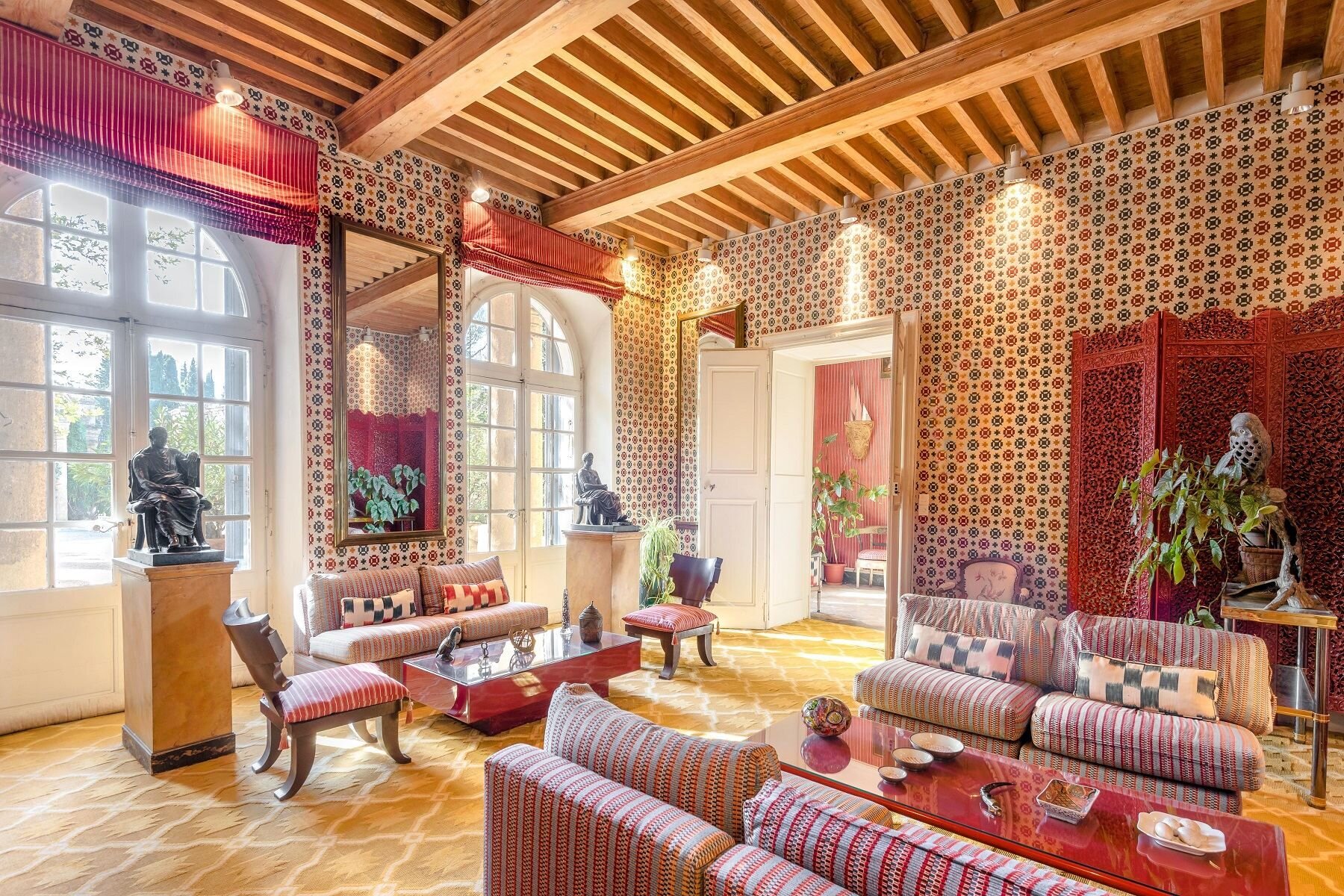
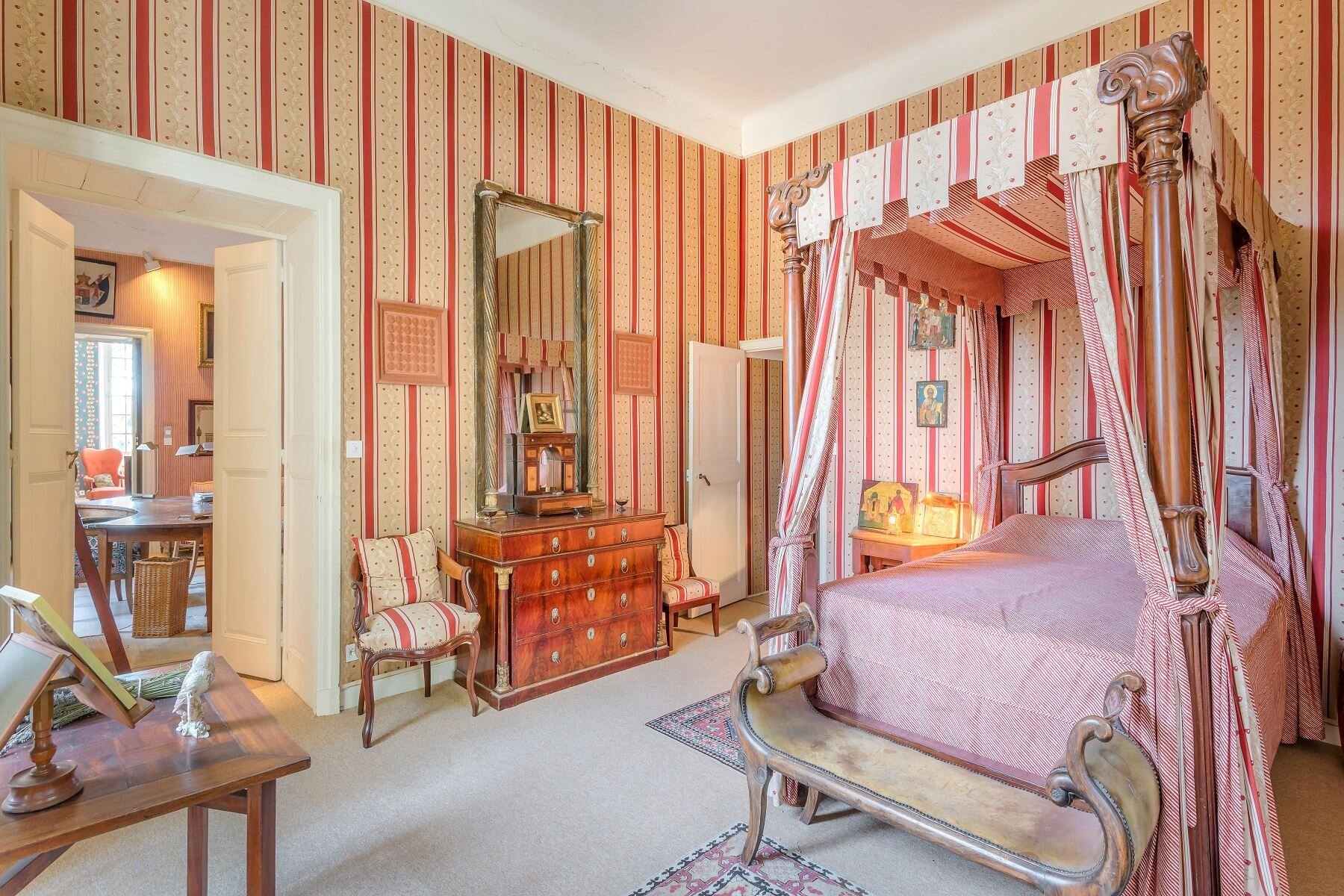
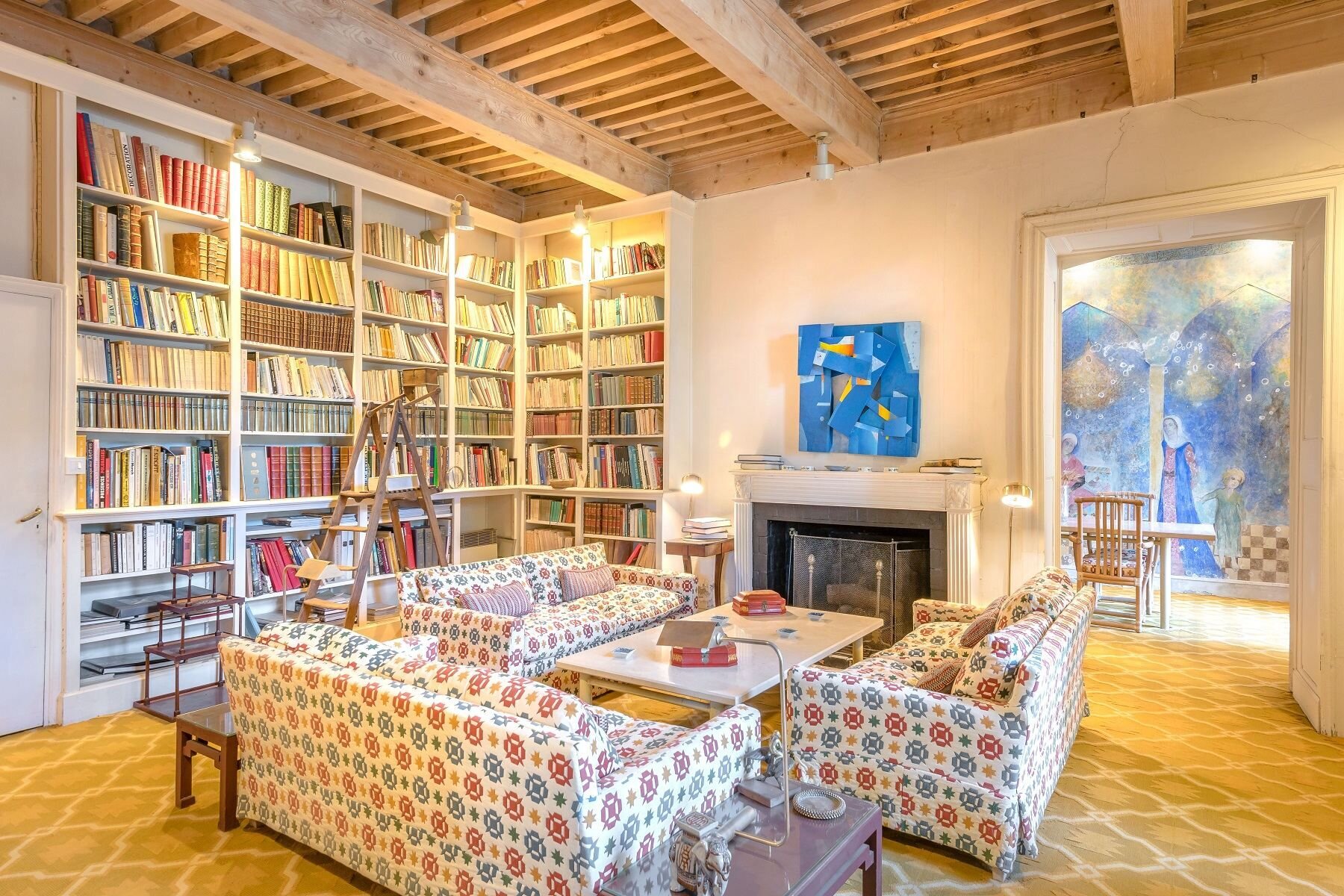
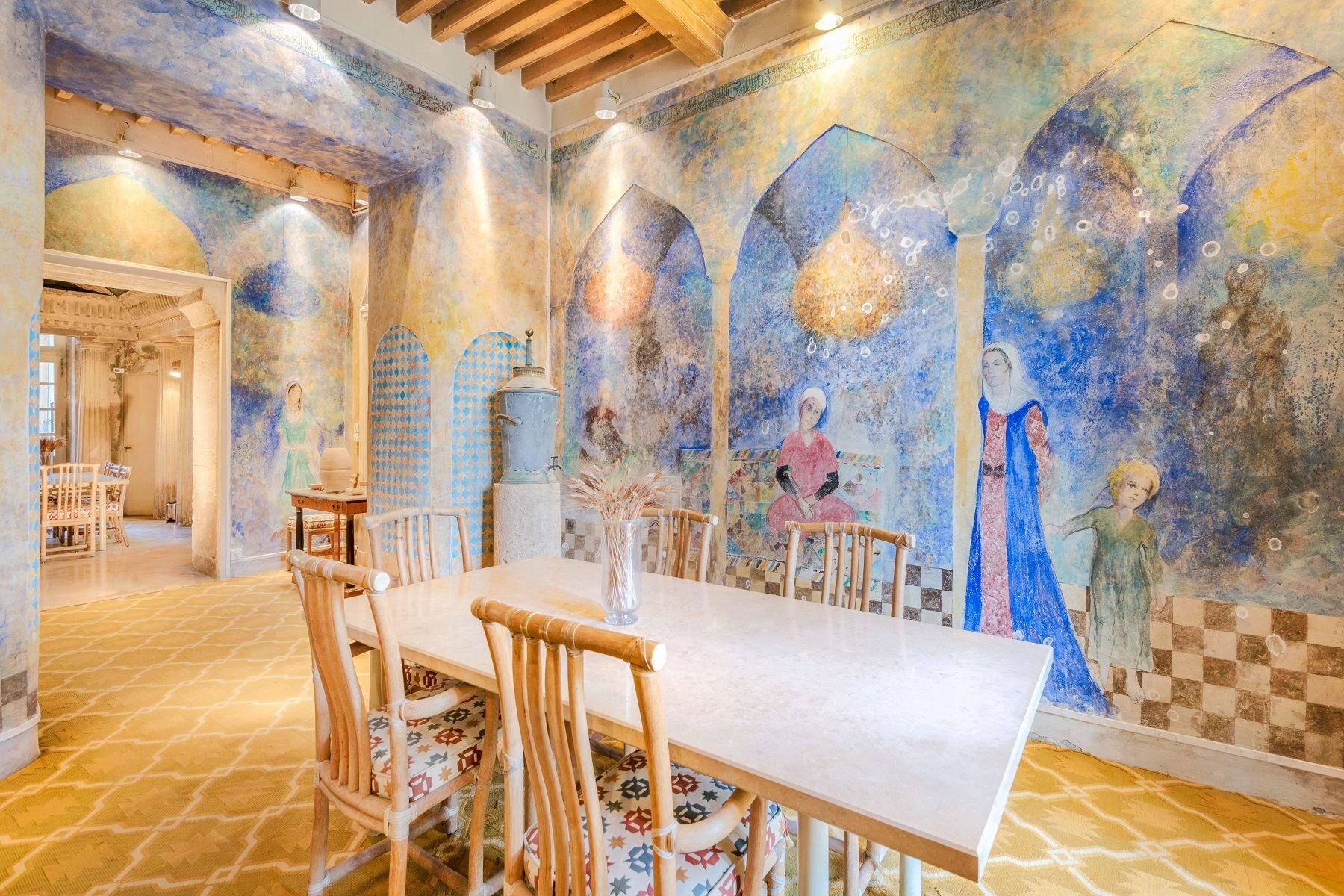
The 20-room château extends across approximately 8,611 square feet (800 m²), with several reception rooms, a dining room, library, 7 bedrooms and 8 bathrooms. Its interiors were designed by Dick Dumas, the American-born decorator known for his work on Provençal houses, combining traditional French textiles and antiques with modern prints and artwork.
The property is approached by a tree-lined drive and sits within approximately 4.94 acres (2 hectares). Formal gardens, a central water feature, historic garden structures, outbuildings and a separate staff house complete the estate.
Parts of Château de Castille are protected as a Monument Historique by the French state. The designation includes the château and entrance-pavilion façades and roofs with their colonnades, sections of the historic garden architecture, the antique-style dining room and the gallery containing Picasso’s monumental works.
The château was previously offered for sale through Uzès Sotheby’s International Realty and has since sold.
All photos belong to the listing agency.