Location: Super Garavan, Menton, French Riviera
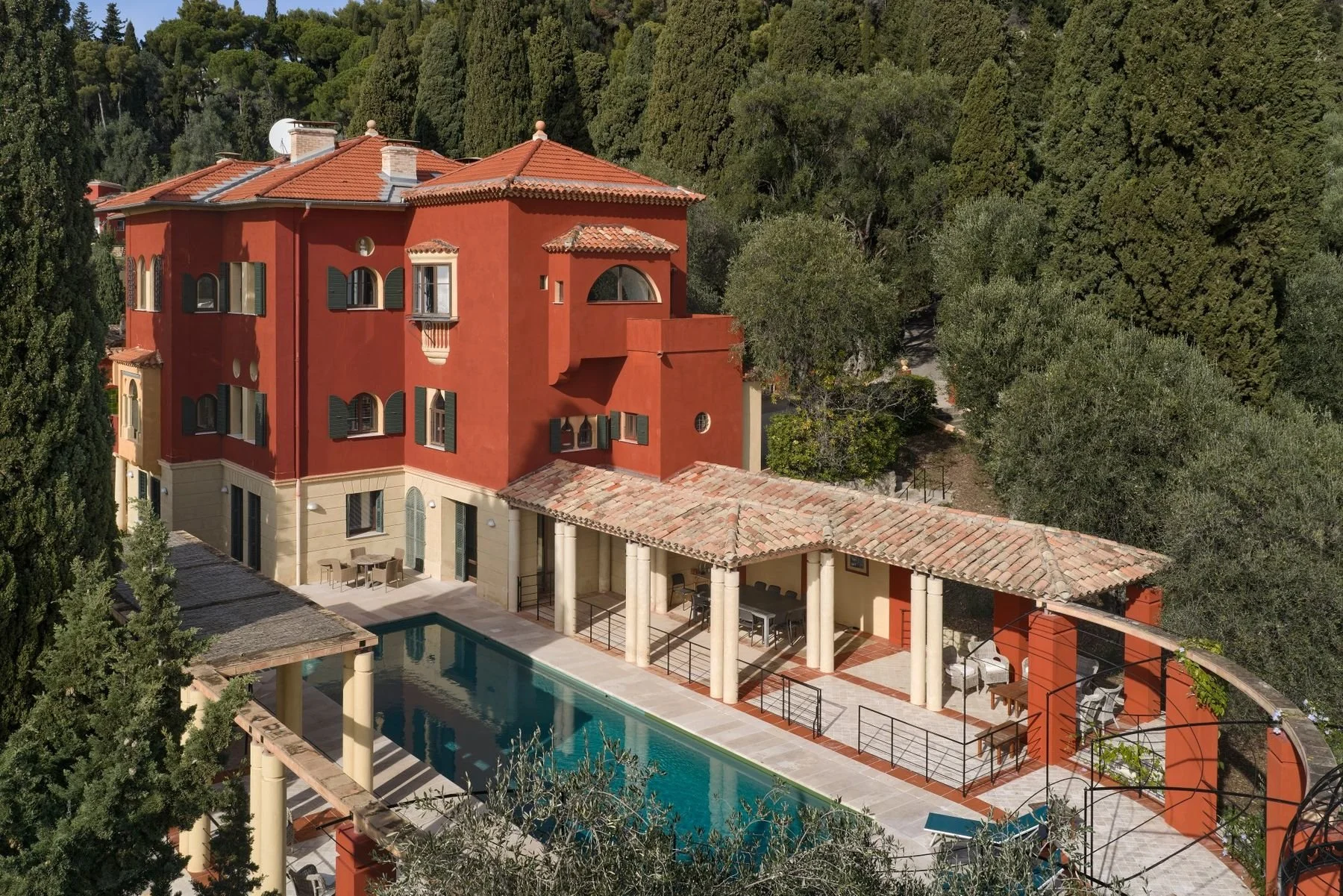
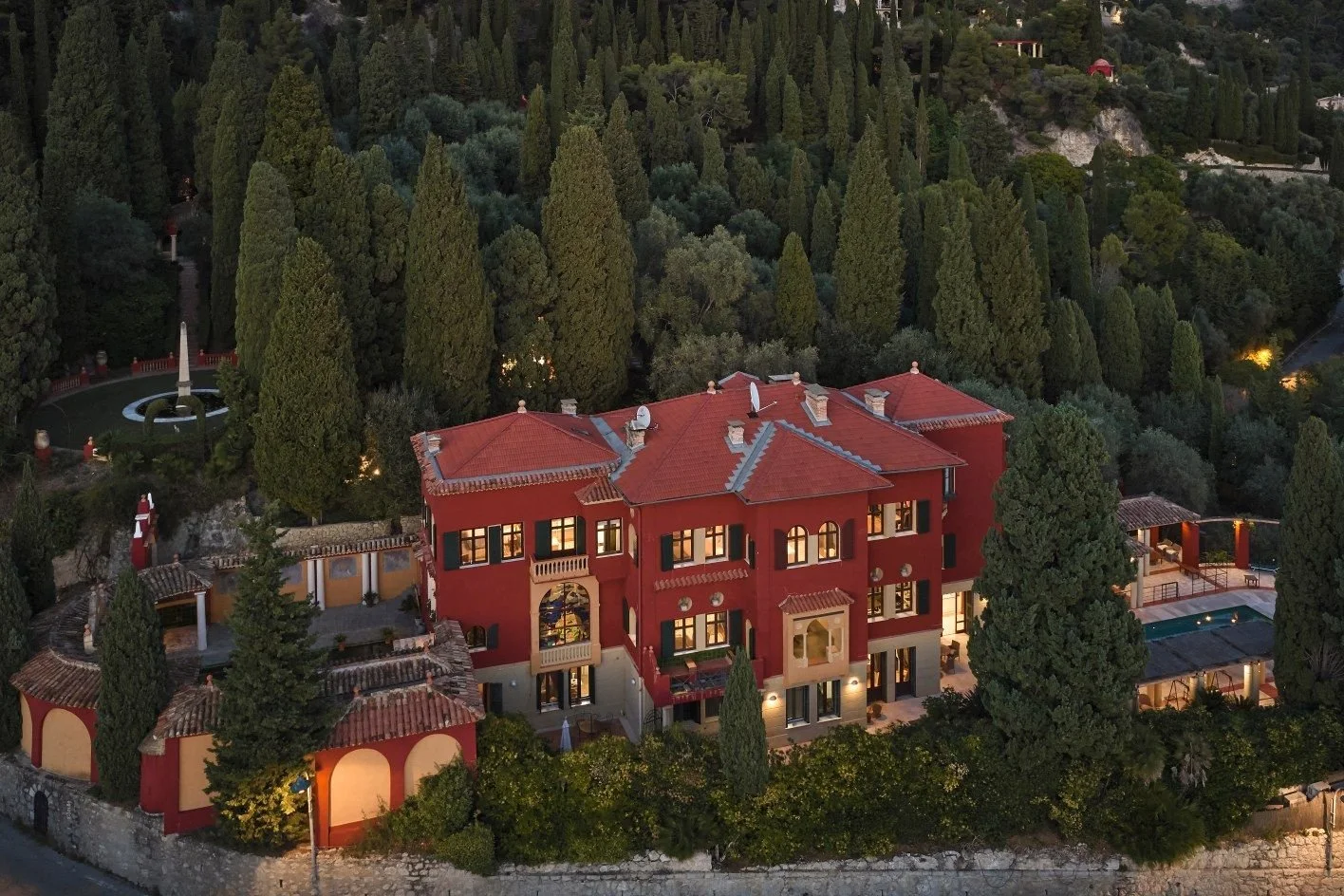
Interior: 8,030 ft² (746 m²) across the estate, including a 5,866 ft² (545 m²) main villa
Lot: 7.87 acres (3.19 hectares)
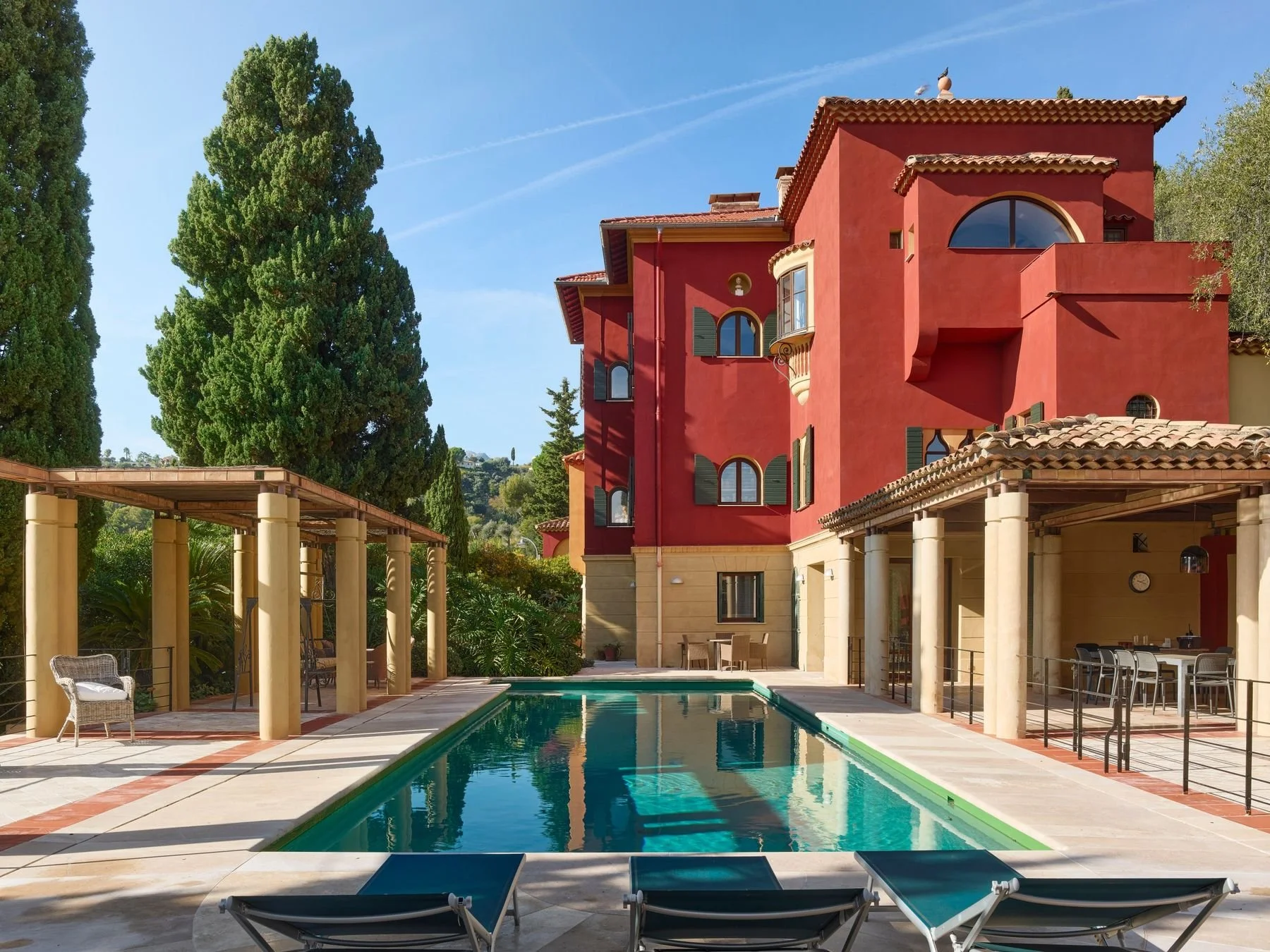
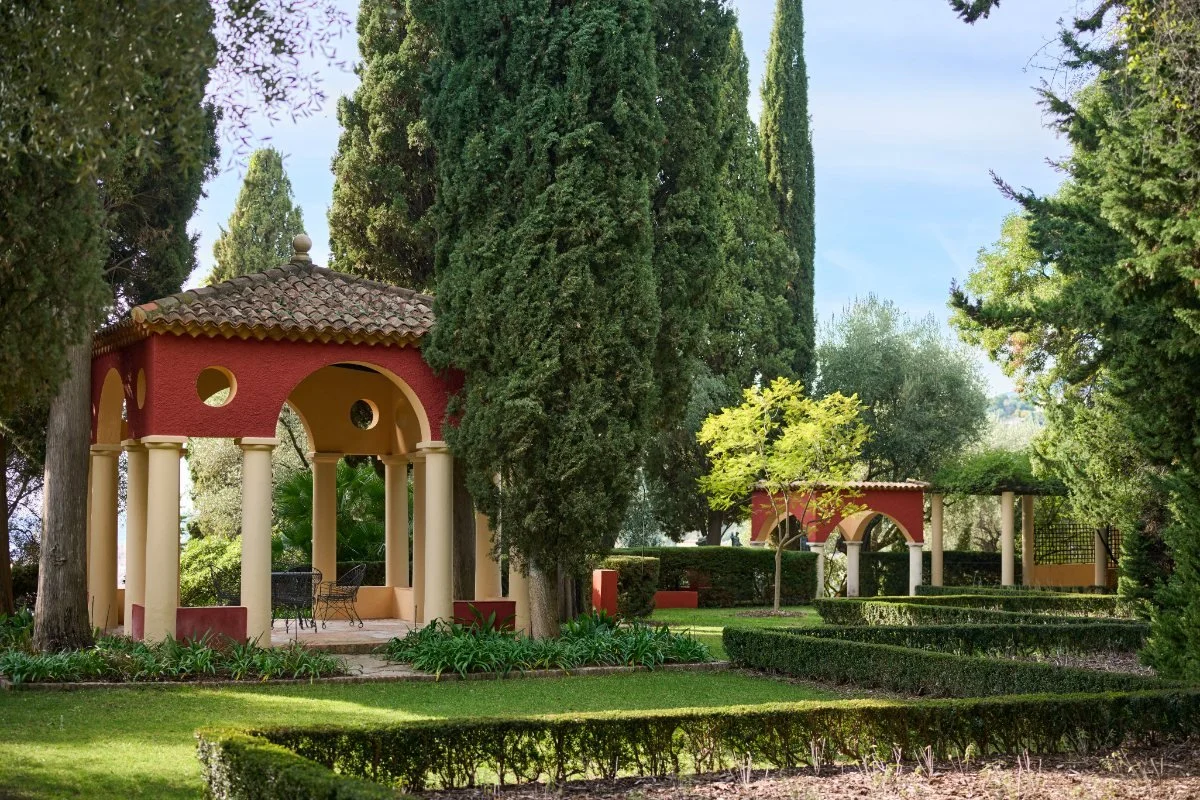
Amenities: Terraced gardens, garden pavilions, lily pond, 15-metre pool, gym, gardener’s house and guest apartment
Heritage: The house and gardens were classified as a Monument historique in 1991
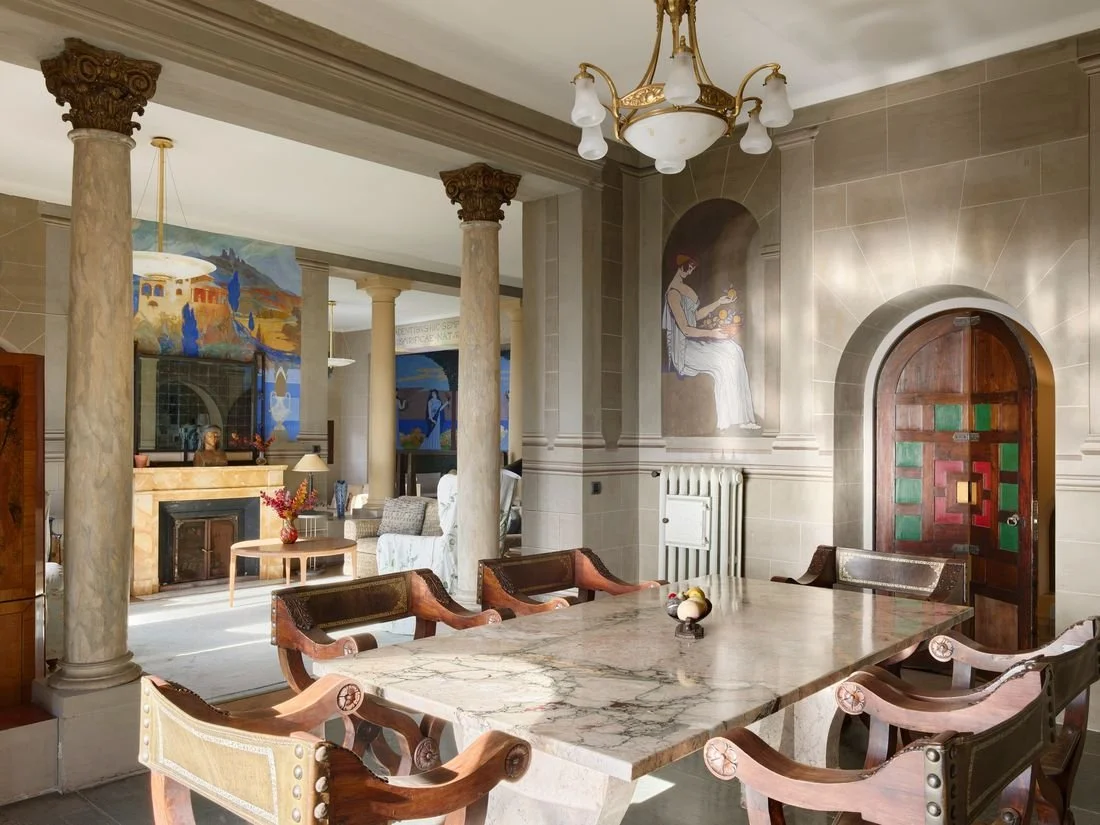
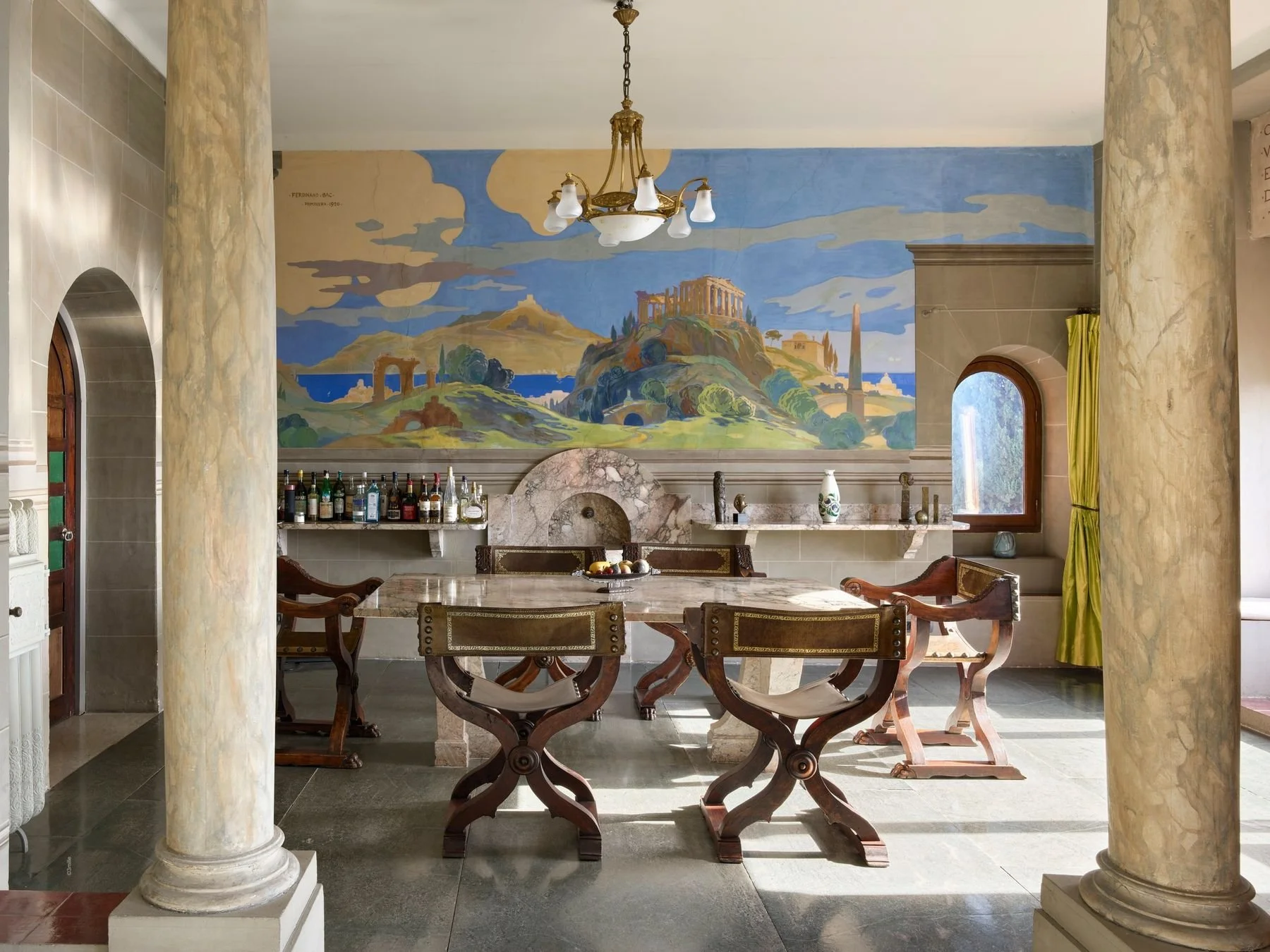
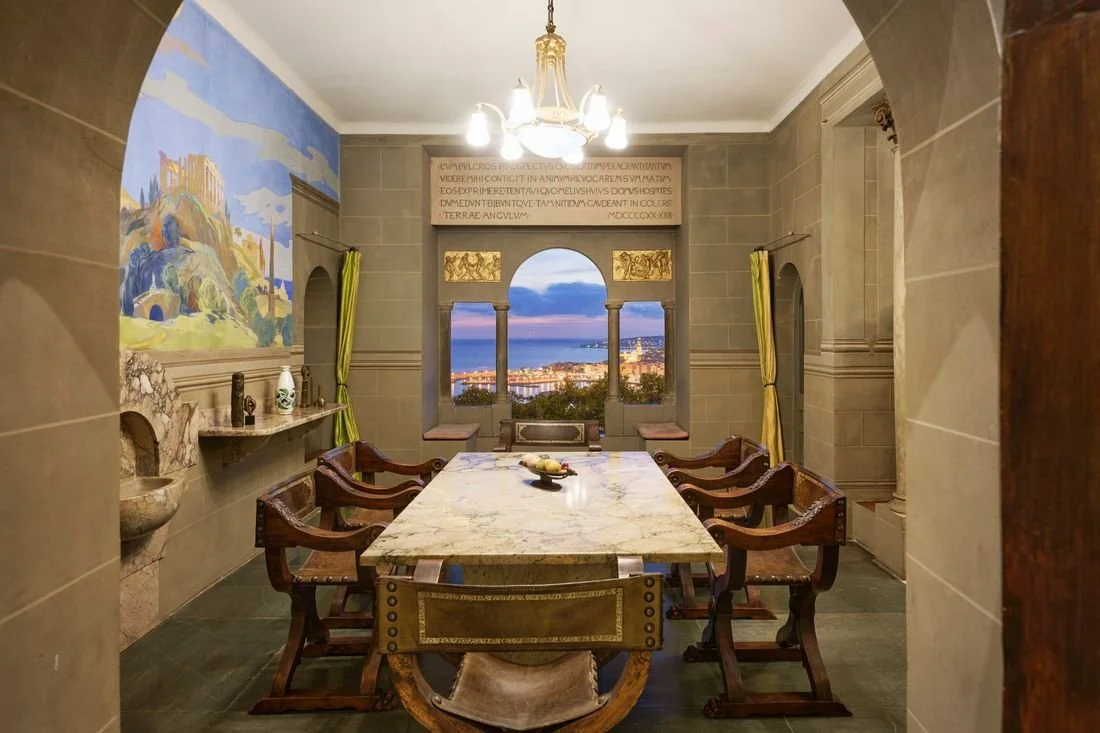
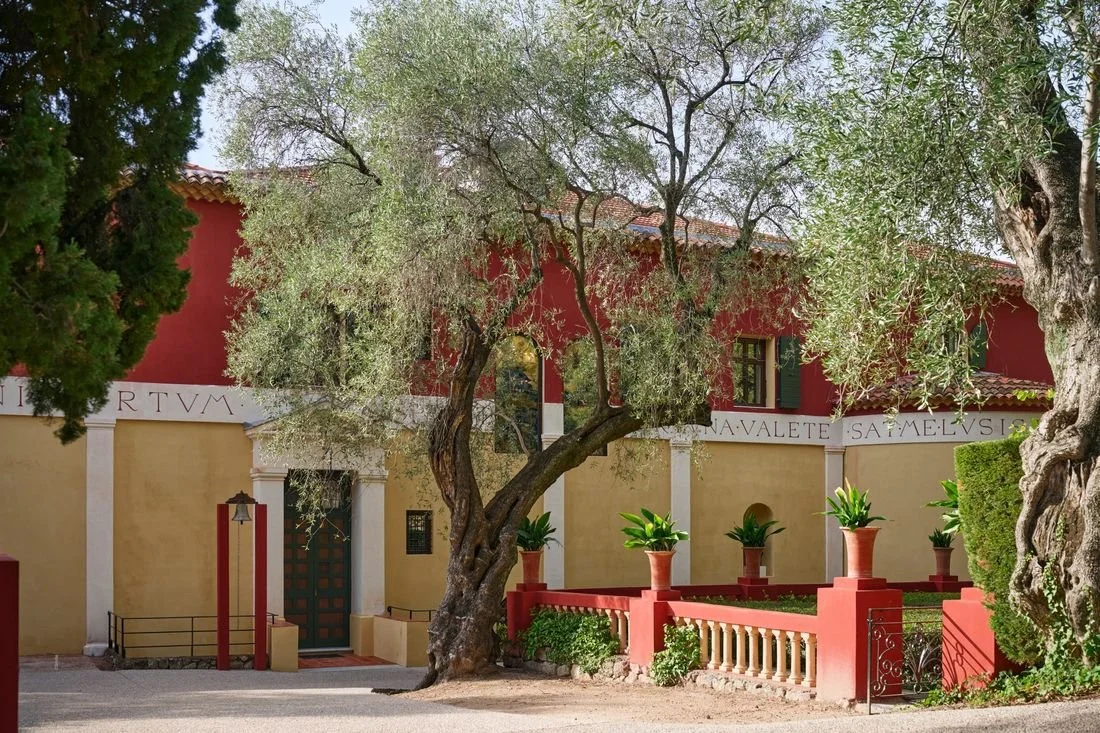
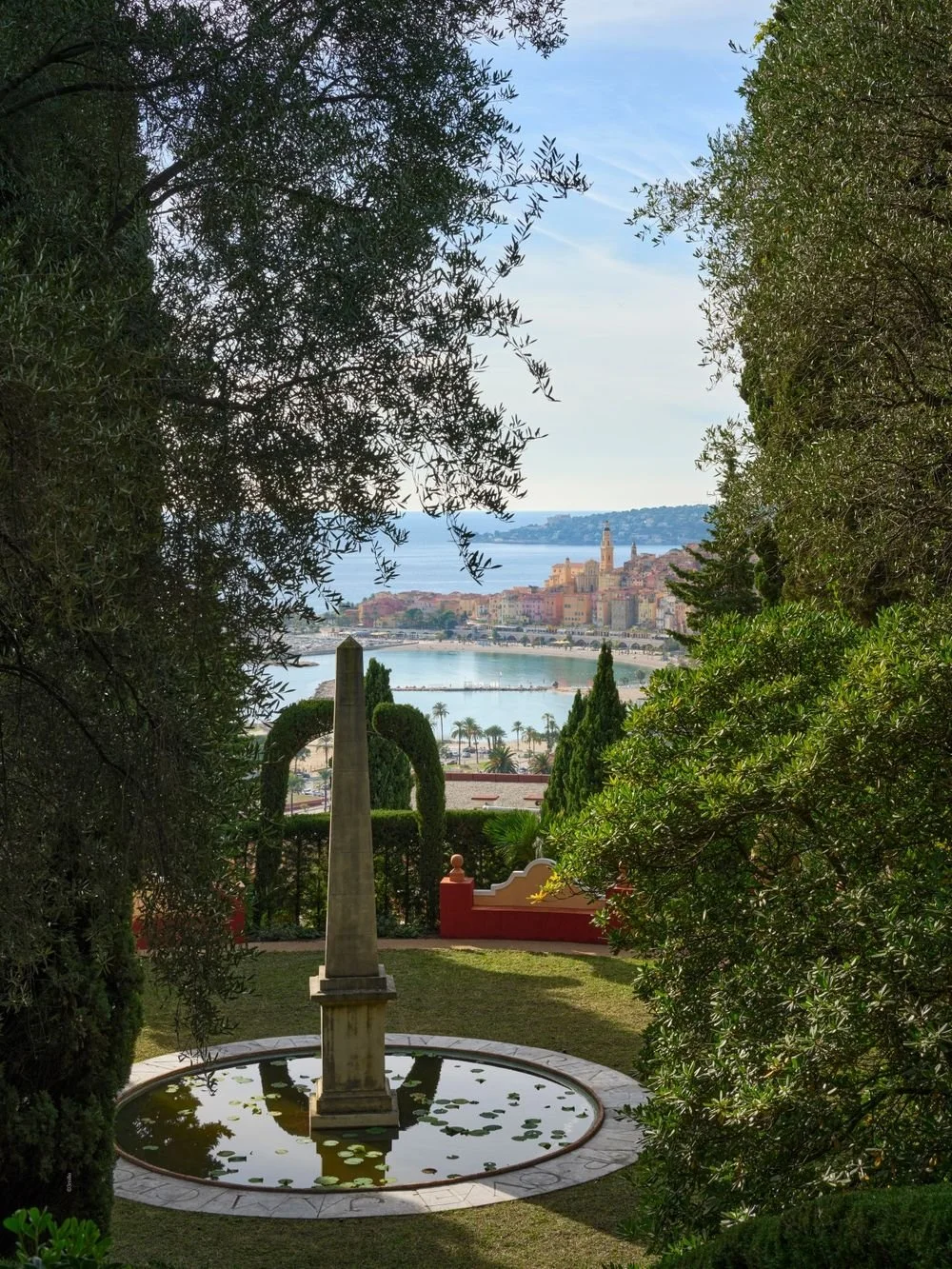
The postcard-perfect seaside town of Menton sits on a narrow stretch of the French Riviera between Monaco and Italy. Its pastel houses rise in tiers from the harbour to the bell tower of Saint-Michel. From the dining loggia at Les Colombières, a terracotta-coloured villa in the hills above Garavan, the old town comes into view across the bay, with Cap d’Ail visible in the distance.
Previously listed at €11.5 million, Les Colombières is being offered by private auction through PrimeAuctions Global, with bidding set to open on 8 December 2026. Private viewings can be arranged through Home Hunts before the auction opens.
Ferdinand Bac and His Patrons
Born Ferdinand-Sigismond Bach in Stuttgart in 1859, Bac spent time in Munich and moved to Paris while still young, making his name as a caricaturist, illustrator and writer. His father, Charles-Henri Bach, was born out of wedlock to Jérôme Bonaparte, Napoleon’s younger brother and King of Westphalia. Bac already knew the Riviera as a garden designer. At nearby Cap Martin, he had worked on the gardens of Villa Cyrnos, the retreat of Empress Eugénie, widow of Napoleon III.
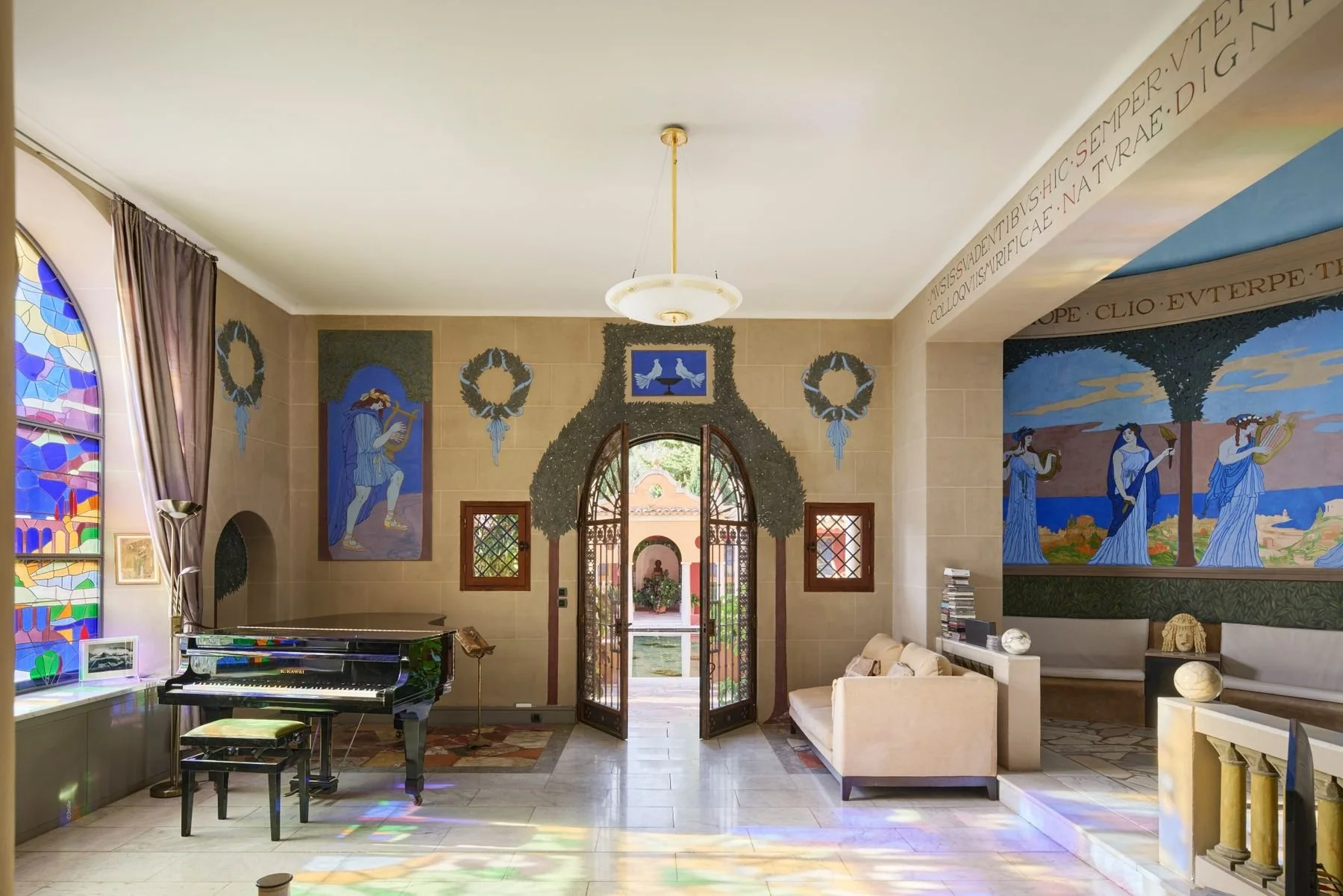
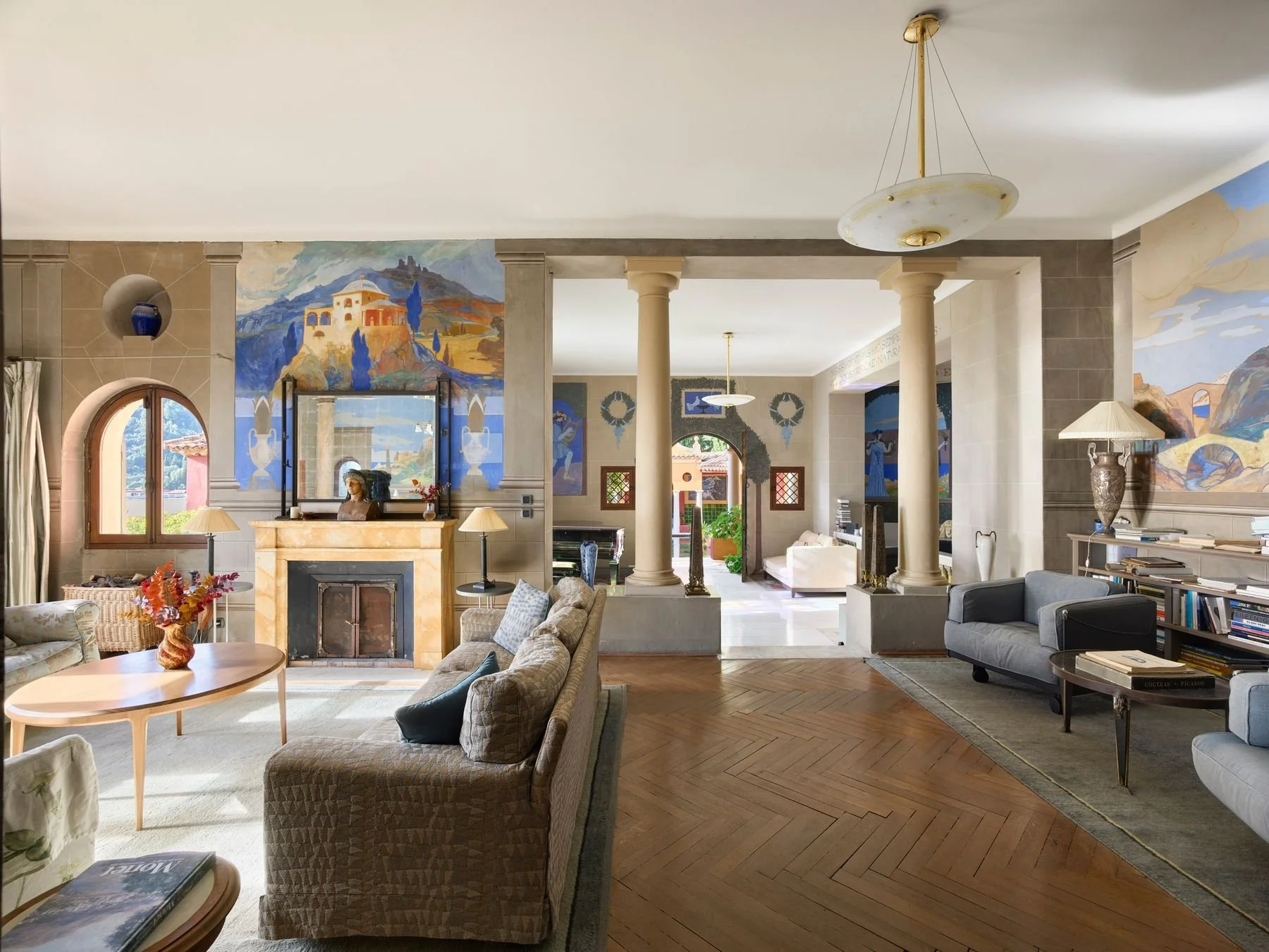
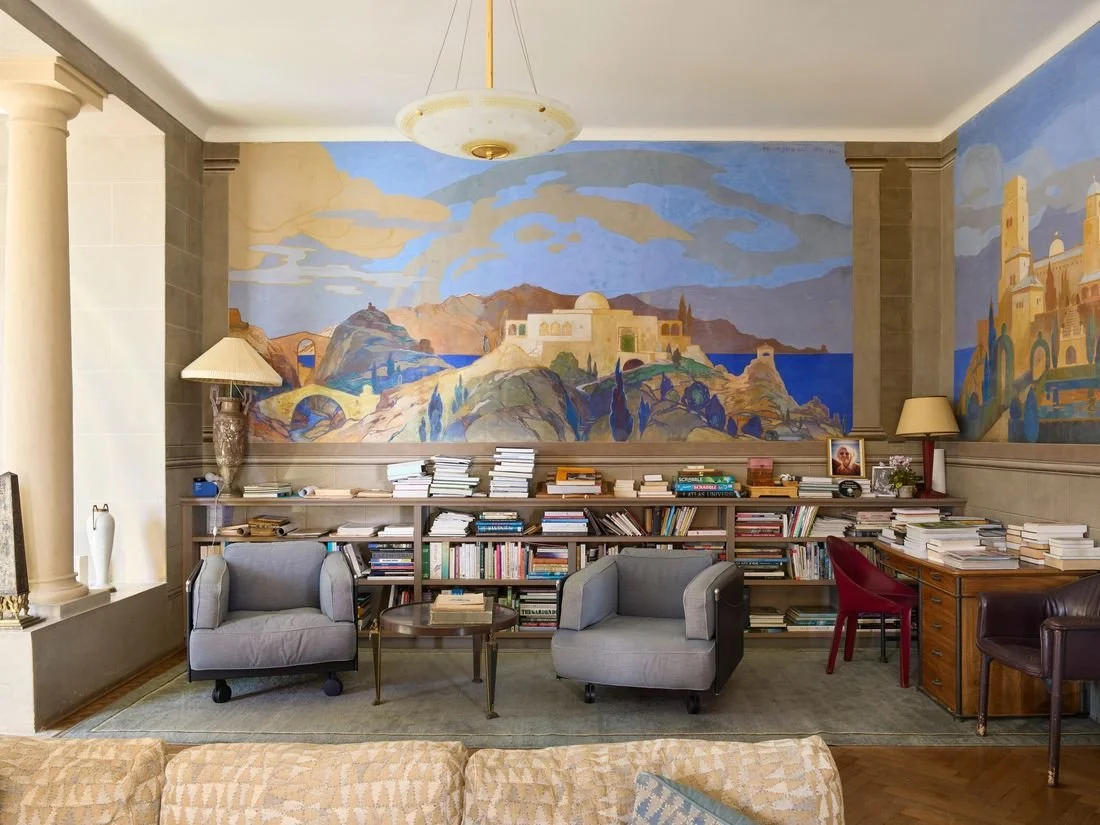
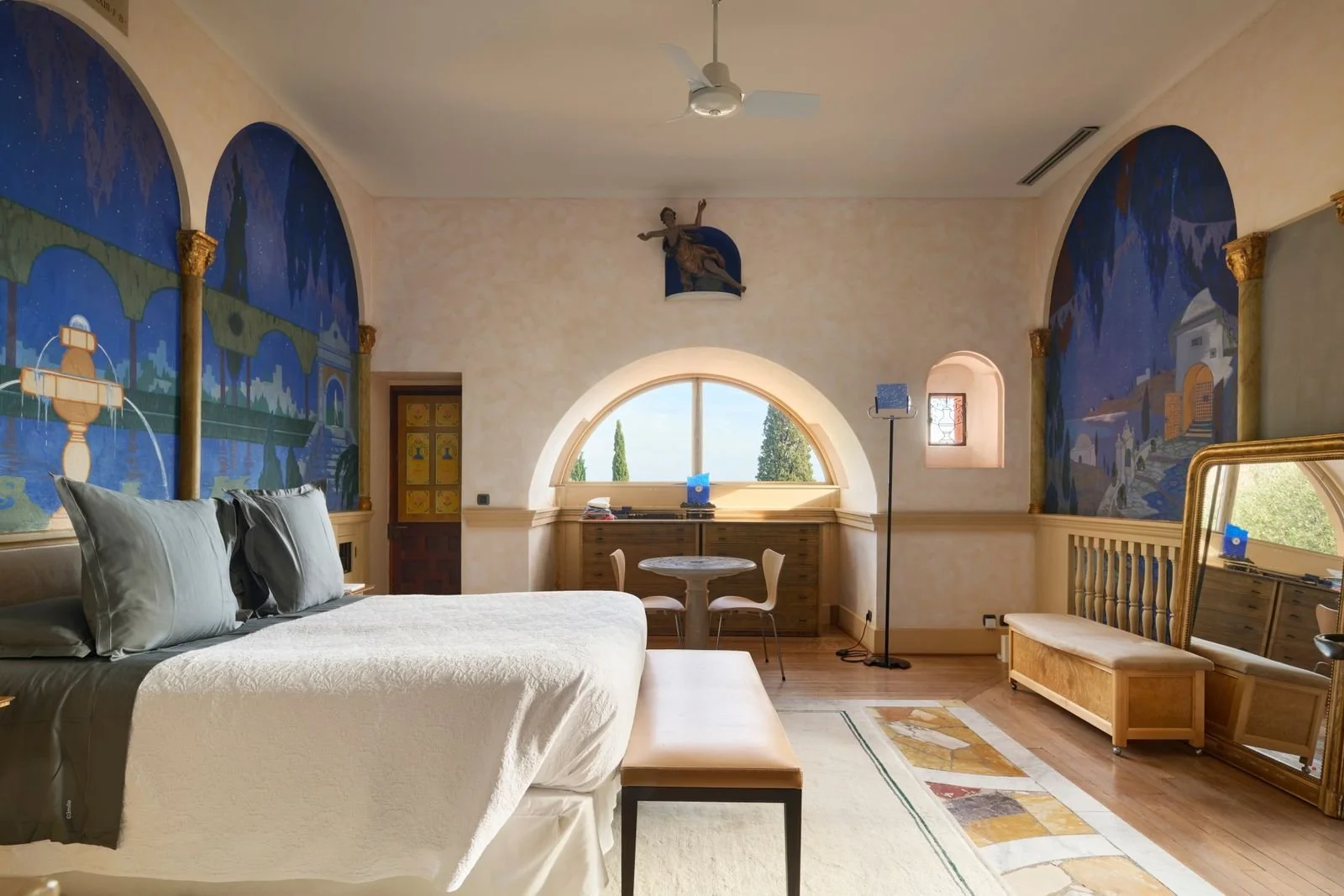
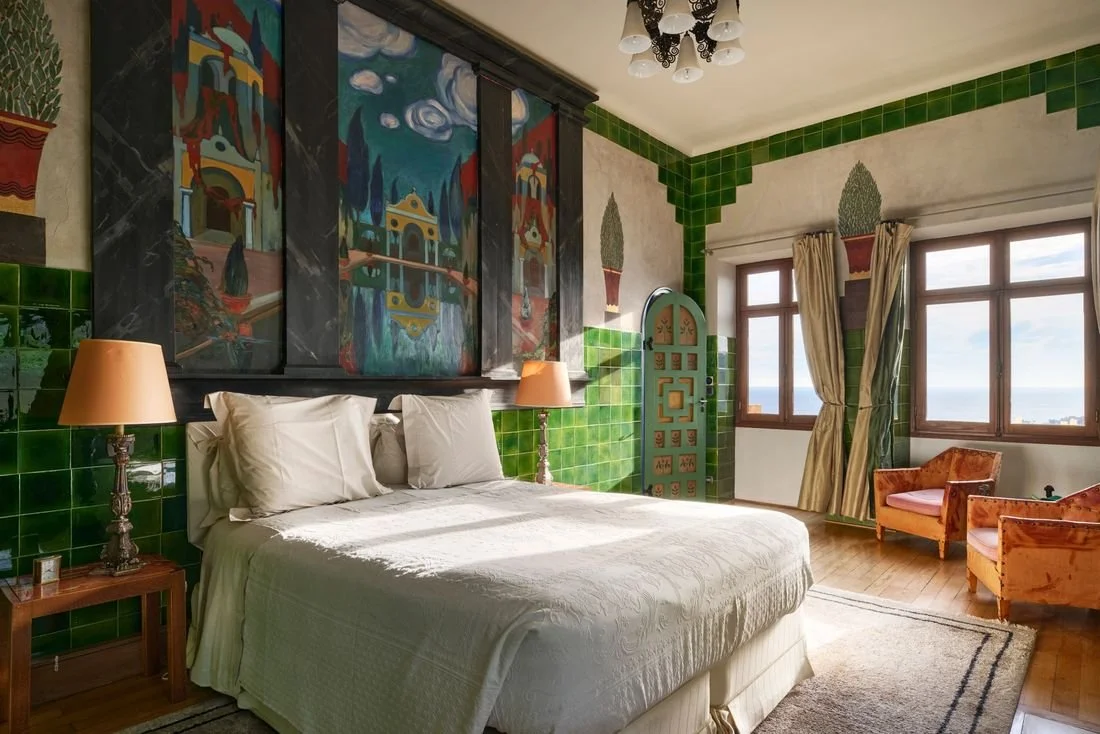
In 1918, on Bac’s advice, Émile and Caroline Ladan-Bockairy bought a hillside property that had belonged to the philosopher Alfred Fouillée. Émile came from a family with a stake in the Parisian newspaper Journal des débats. The couple wanted a winter home and invited Bac to live with them and remake the estate. Over seven years, he enlarged the villa, painted its interiors, designed furniture for its rooms and fitted the stair hall with blue-green stained glass. The grounds then extended across some 17 acres (7 hectares), with olive groves on slopes that dropped away into cliffs and ravines. According to the auction particulars, pieces designed for the villa will stay with it, along with the garden furniture and statues.
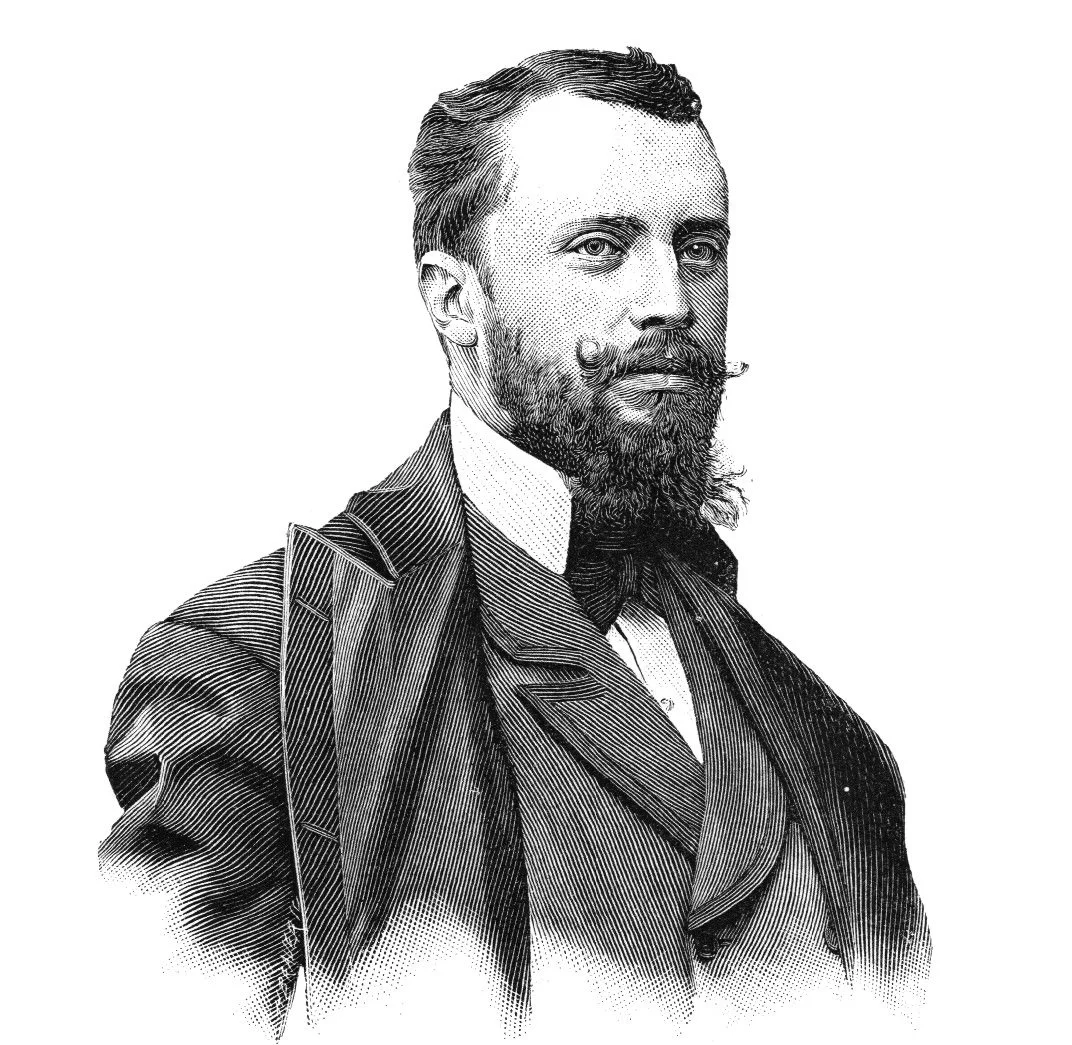
Ferdinand Bac, c. 1904. Photographer unknown, via Wikimedia Commons (public domain)
By the 1920s and ’30s, Les Colombières was known for its receptions and dinners. The poet and filmmaker Jean Cocteau came as a friend of Bac’s. The French commander Marshal Joseph Joffre, Coco Chanel and F. Scott Fitzgerald were also among the guests. Bac lived at the villa with the Ladan-Bockairys until 1939. The three are buried together in a mausoleum on a rock above the garden.
A Mediterranean Garden Built From Memory
The railway had been bringing visitors south for the winter since the 1860s. Queen Victoria’s visits helped make the coast fashionable, and the mild winters gave garden makers room to experiment. Béatrice de Rothschild chose a ridge on Cap Ferrat for the pink villa and gardens now known as Villa Ephrussi de Rothschild. At Château Balsan in Èze, the American heiress Consuelo Vanderbilt and her husband, Jacques Balsan, commissioned a garden that climbed the hillside in terraces. In Menton, Lawrence Johnston, who had created Hidcote in England, planted Serre de la Madone with species too tender for a Cotswold winter.
In 1924, while Ferdinand Bac was still working on Les Colombières, the French illustrated weekly L’Illustration featured the estate. A later account of the article recalls its criticism of wealthy winter residents who cleared cypresses, figs, pines and olives to plant imported species that gave little shade or fruit. At Les Colombières, the old trees shaped Bac’s plans. He fitted seats, steps and paths around the olive trunks and used cypresses to mark the passage from one garden to the next. The old carob tree he drew beside the Allée des Jarres in 1928 still stands.
Bac conceived the house and gardens as a single work. He drew on his travels around the Mediterranean, bringing Egyptian, Greek, Italian and Spanish references into the villa and its grounds. In 1925, he described the estate in an illustrated book. Writing the following year, he likened himself to a student of the Roman emperor Hadrian, who had wanted to turn a garden into “the temple of his memories.” At Les Colombières, those memories took the form of a series of gardens that visitors discovered one at a time, many drawn from Greek and Roman mythology.
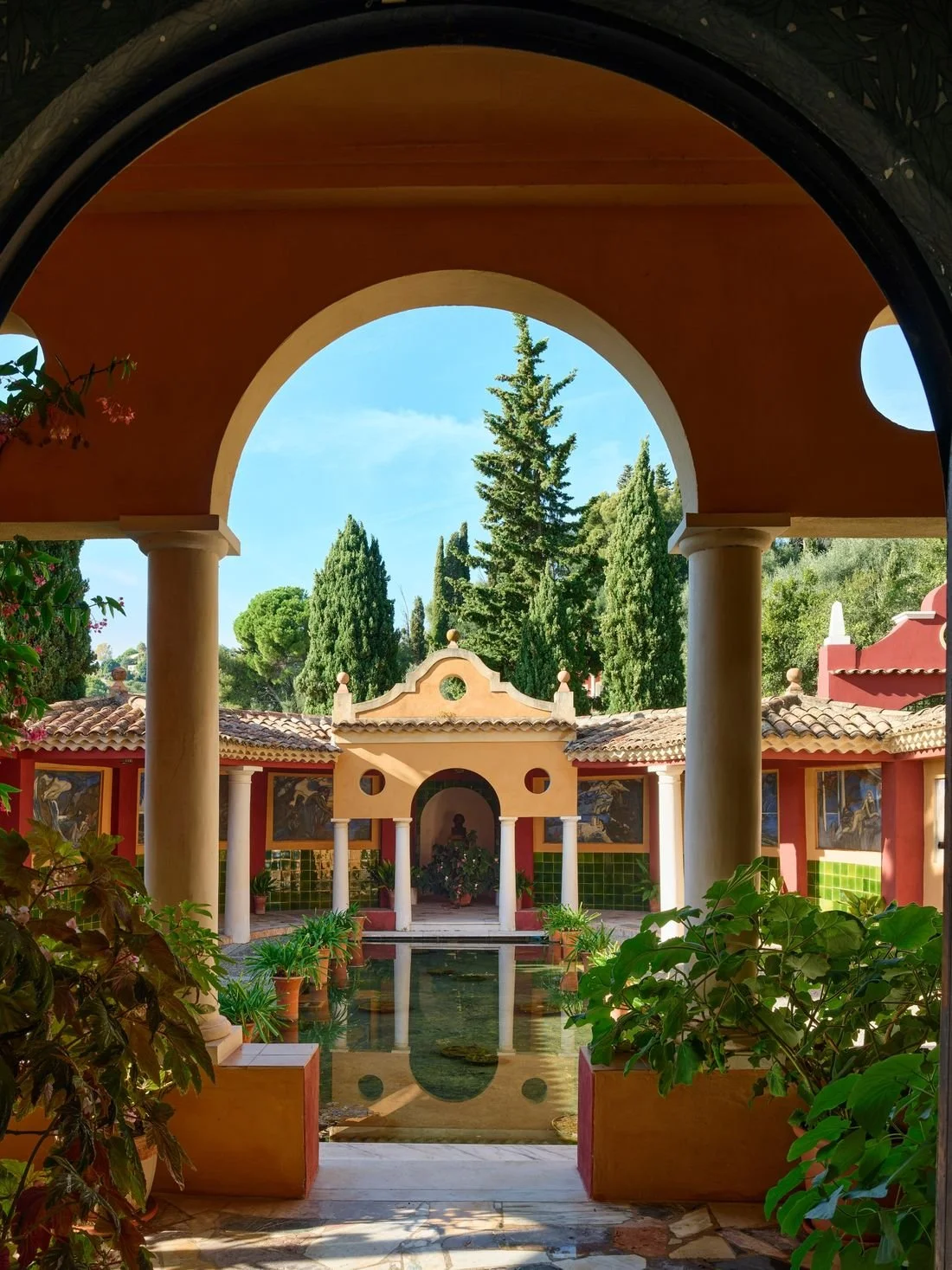
From the music room, the painted world inside the villa continues into the Garden of Homer. There, Circe, Calypso and Penelope appear on panels around a colonnaded courtyard and reflecting pool. Farther up the slope, Bac used an illustrator’s trick to make the Allée des Jarres appear longer, lining the path with progressively smaller terracotta jars. A stone obelisk rises from a lotus pond, with the bell tower of Saint-Michel across the bay. Higher still, Orpheus’s Walk follows the edge of the cliff.
The Garden Margaret Found
When Italian forces occupied Menton during the Second World War, Les Colombières housed wounded Italian officers. Émile and Bac both died in 1952. Caroline later returned with her son Édouard and his second wife, Erika, whom he had met in postwar Berlin. Erika had been a cabaret singer, according to a later account of the estate. That account also places Charles de Gaulle in the garden in 1945 and says he spoke there after the Liberation, although the speech itself remains unverified.
After Caroline’s death in 1957, the villa became a bed-and-breakfast and the Garden of Homer served as a tearoom. The same garden account describes a pizza oven taking the place of some of the Odyssey frescoes. The family sold roughly half the estate. Édouard died in 1978, Erika in 1989 and their son Charles in 1991, the year the house and gardens were classified as a Monument historique. By then, the old trees had survived, but much of Bac’s design was hard to make out beneath the overgrowth.
Margaret Likierman came across Les Colombières on a garden tour in 1992. Her husband, Michael, the British businessman who brought the furniture retailer Habitat to France, recalled the evening she called him in a 2020 interview with La Gazette Drouot.
We came to Menton by chance. We had a second home in Saint-Rémy-de-Provence, where my wife was creating a small but beautiful garden. She was tired of battling the mistral, which dries everything out. She attended a conference in Menton on the future of exceptional private gardens and visited Les Colombières while she was there. That evening she called me and said, “I’ve found something. It’s a ruin, it needs work, and it’ll keep us busy.”
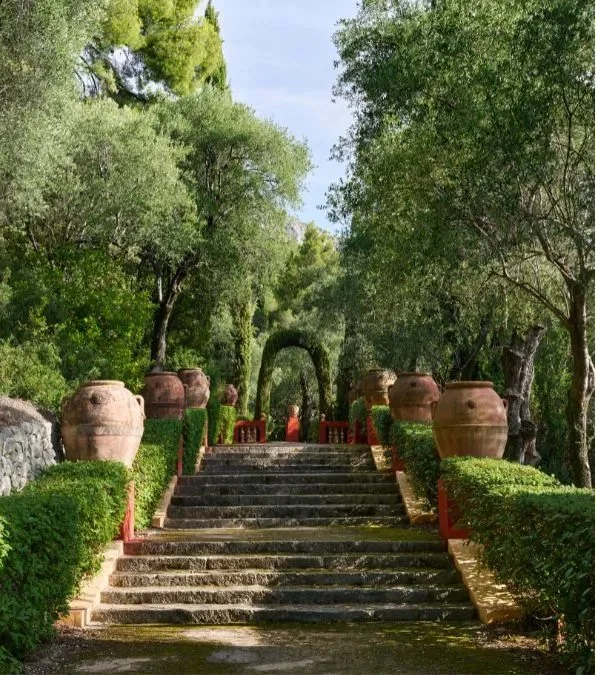
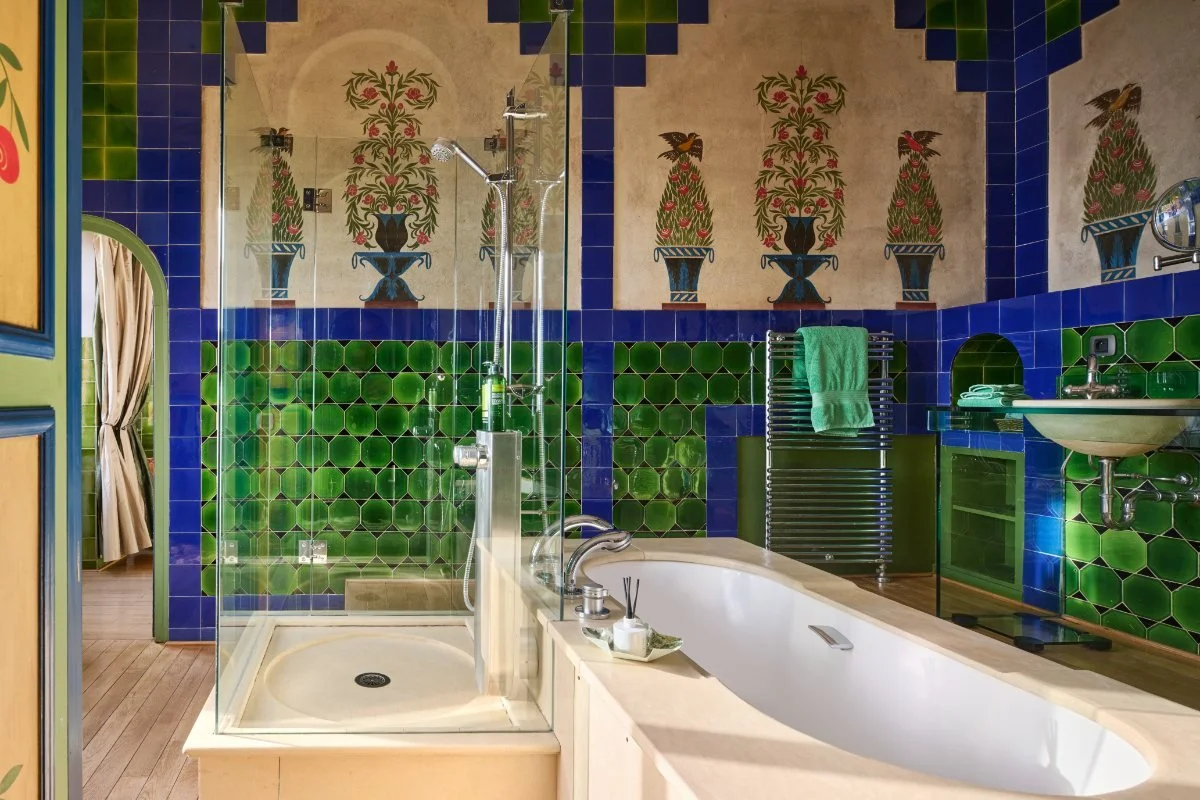
It took three years for the Ladan-Bockairy heirs to settle the estate. In the meantime, the Likiermans studied Bac’s drawings, including his sketches of the Path of the Jars and the Fountain of Nausicaa. They bought Les Colombières in 1995 and spent the next five years restoring it. Michael worked with France’s historic monuments architects to update the plumbing, add bathrooms and air conditioning, and put in a swimming pool. Italian artisans accustomed to working in churches spent two years restoring the frescoes.
Margaret worked with landscape designers Arnaud Maurières and Éric Ossart to reopen Bac’s views over Menton and replant the garden so that different plants would flower in succession. On the dry-stone terraces beneath Orpheus’s Walk, where local growers once raised cut flowers, she planted dragon trees, Seville oranges and Australian bottle trees suited to the hot, dry slope. After the Likiermans moved into Les Colombières in 2000, Michael helped lead the restoration of Johnston’s Serre de la Madone across town.
After Margaret died in 2018, Michael continued to care for Les Colombières and worked with the town of Menton to arrange guided visits to the garden and courtyard. At 86, he says it’s time to take on less. He plans to stay in Garavan and hopes the next owner will respect the history of the house and gardens he and Margaret spent five years bringing back to life.
Photography courtesy of the listing agency. See more on Home Hunts.