Photography by Lucas Soubigou-Marie.
A renovated apartment inside Castel Béranger, the 1898 building often described as Paris’s first major Art Nouveau apartment building, is on the market for €1,198,000 / ~$1.380,000.
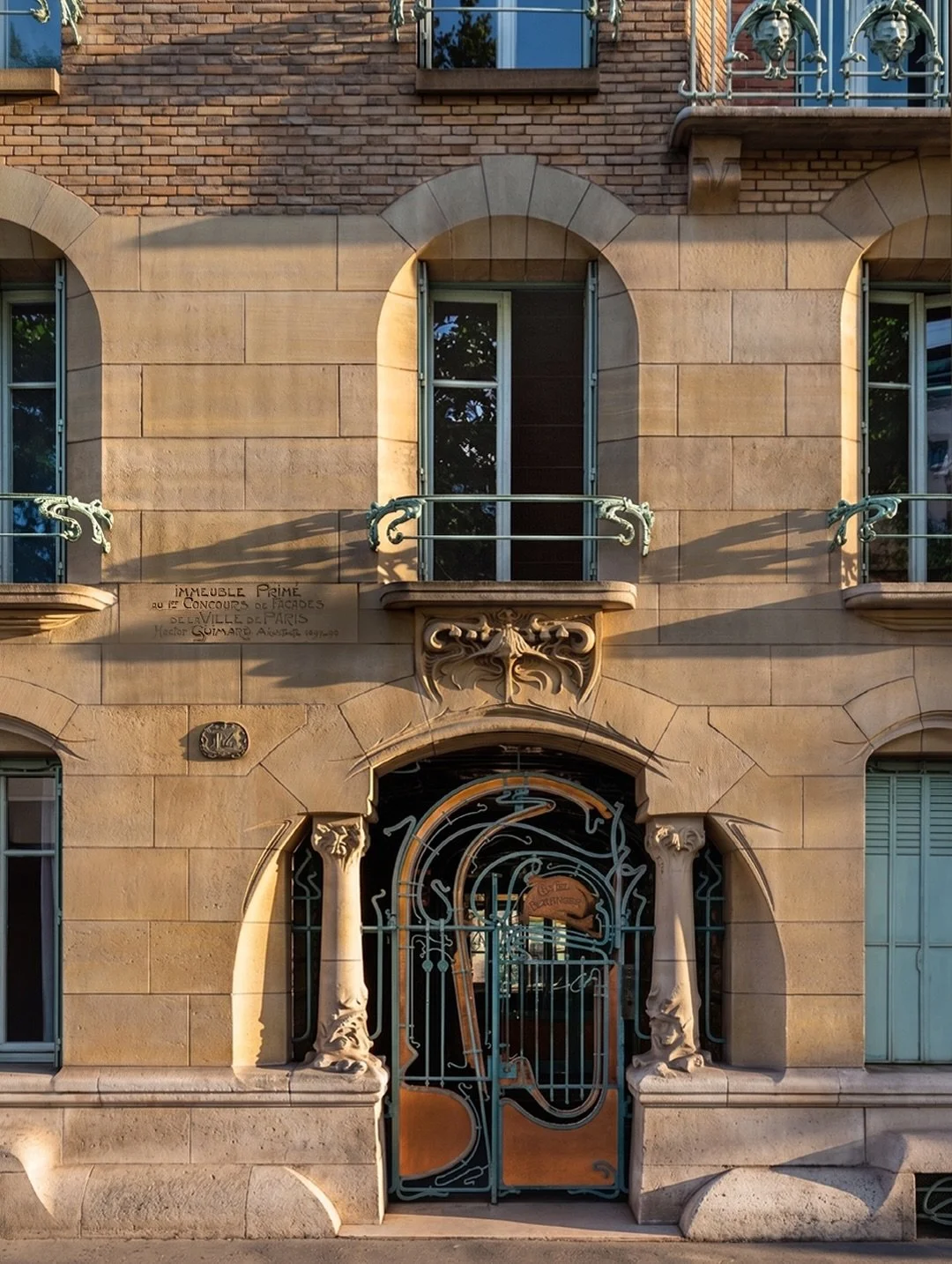
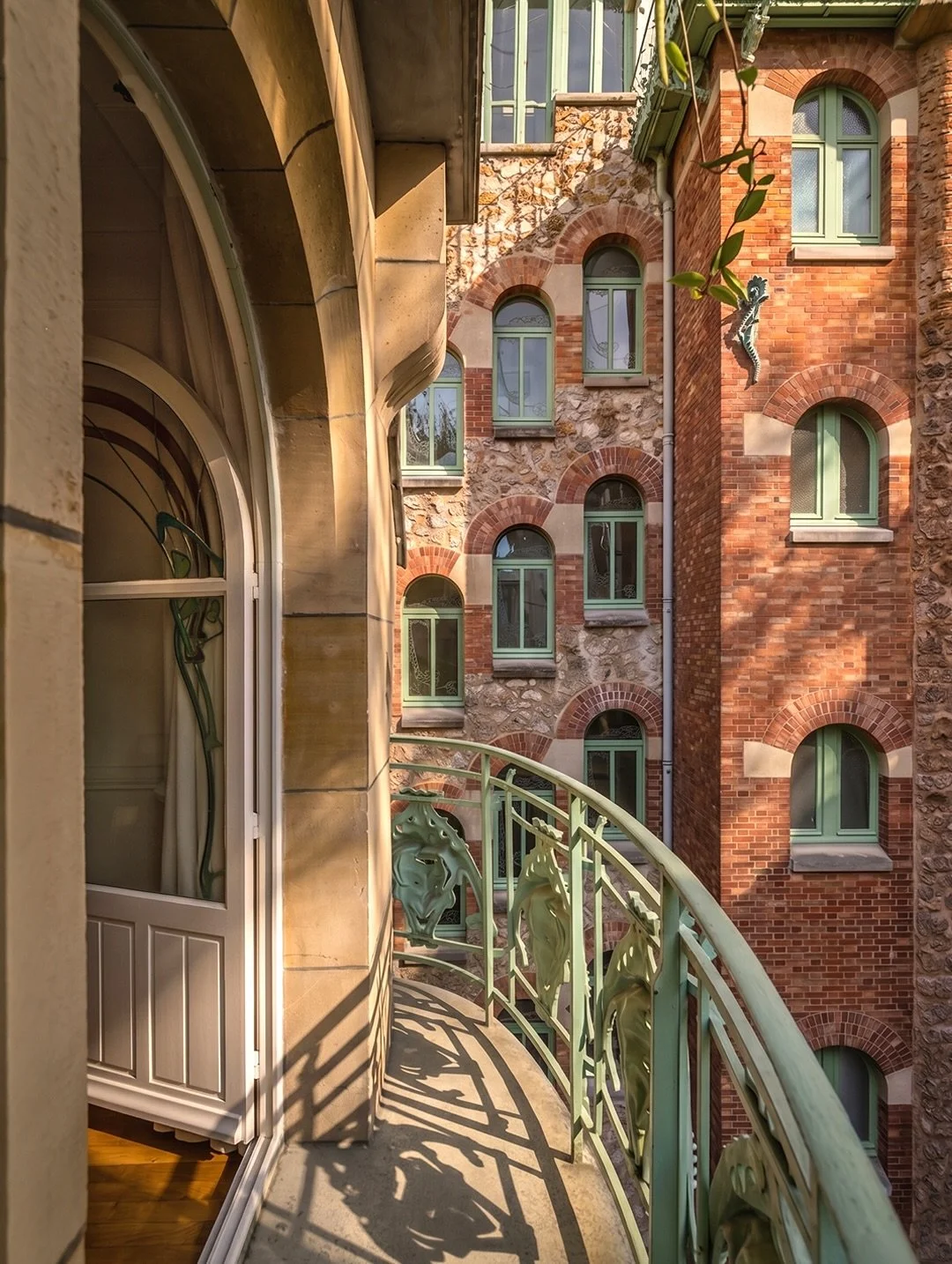
Located at 14 rue Jean-de-La-Fontaine in the 16th arrondissement, the 63 m² / 678 ft² residence is one of 36 apartments inside one of the defining works of Hector Guimard, the French architect and designer who became one of the leading figures of Art Nouveau in Paris.
Beds: 1 Interior: 63 m² / 678 ft²
Amenities: Upper-floor position, elevator, dual-aspect layout, star-shaped floor plan, two balconies, double reception, independent fitted kitchen, bedroom, shower room, custom dressing area, preserved stained glass, mouldings, brass handles, original joinery, decorative doors, narrow-strip parquet, antique Guimard fireplace, Art Nouveau arabesques, reissued Hector Guimard wallpaper, protected Monument Historique setting, located inside Castel Béranger in Paris’s 16th arrondissement.
The Architect Who Made Art Nouveau Part of Paris
Hector Guimard is best known today for his Paris Métro entrances, whose curving ironwork and plant-like forms made Art Nouveau part of everyday public life in Paris.
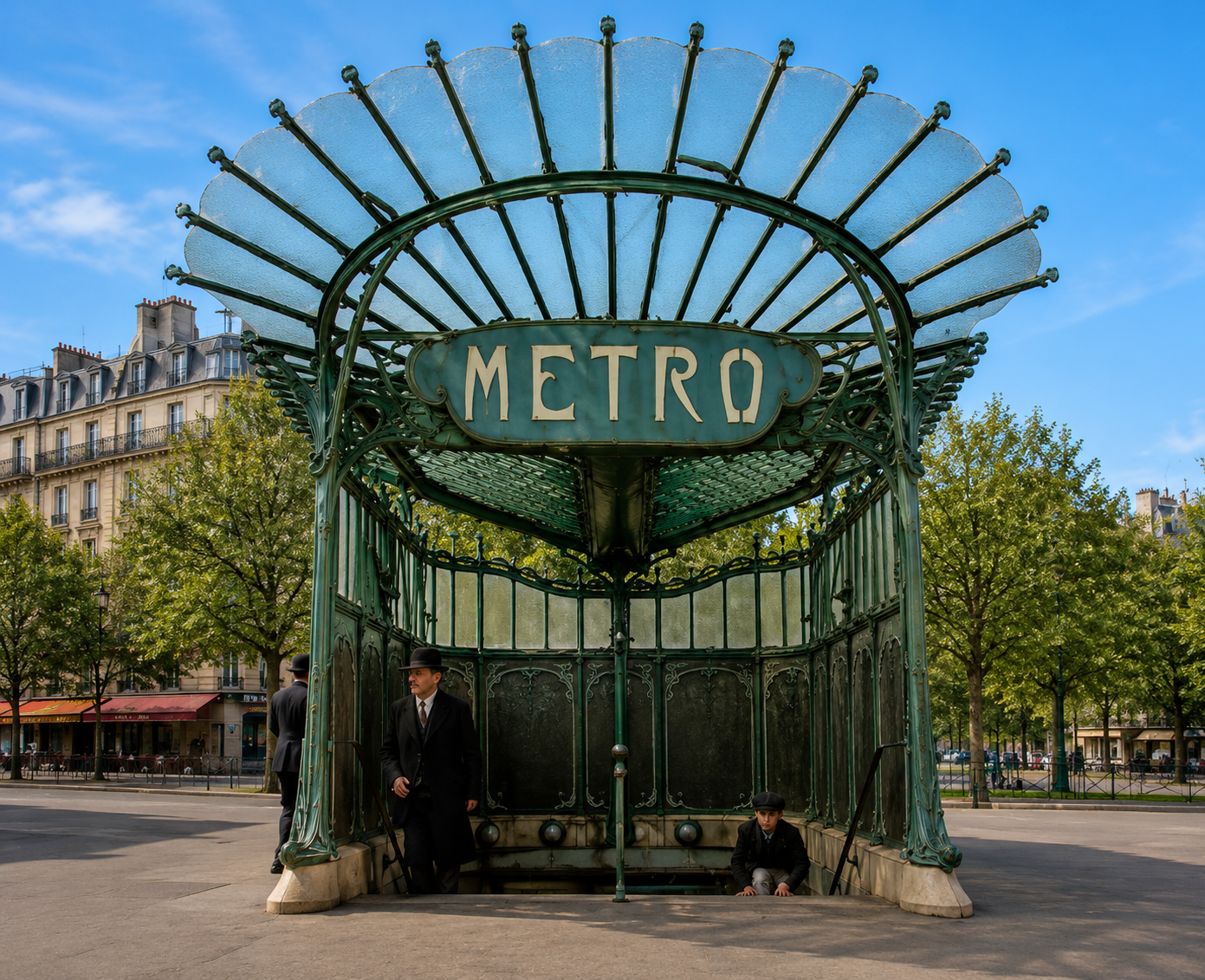
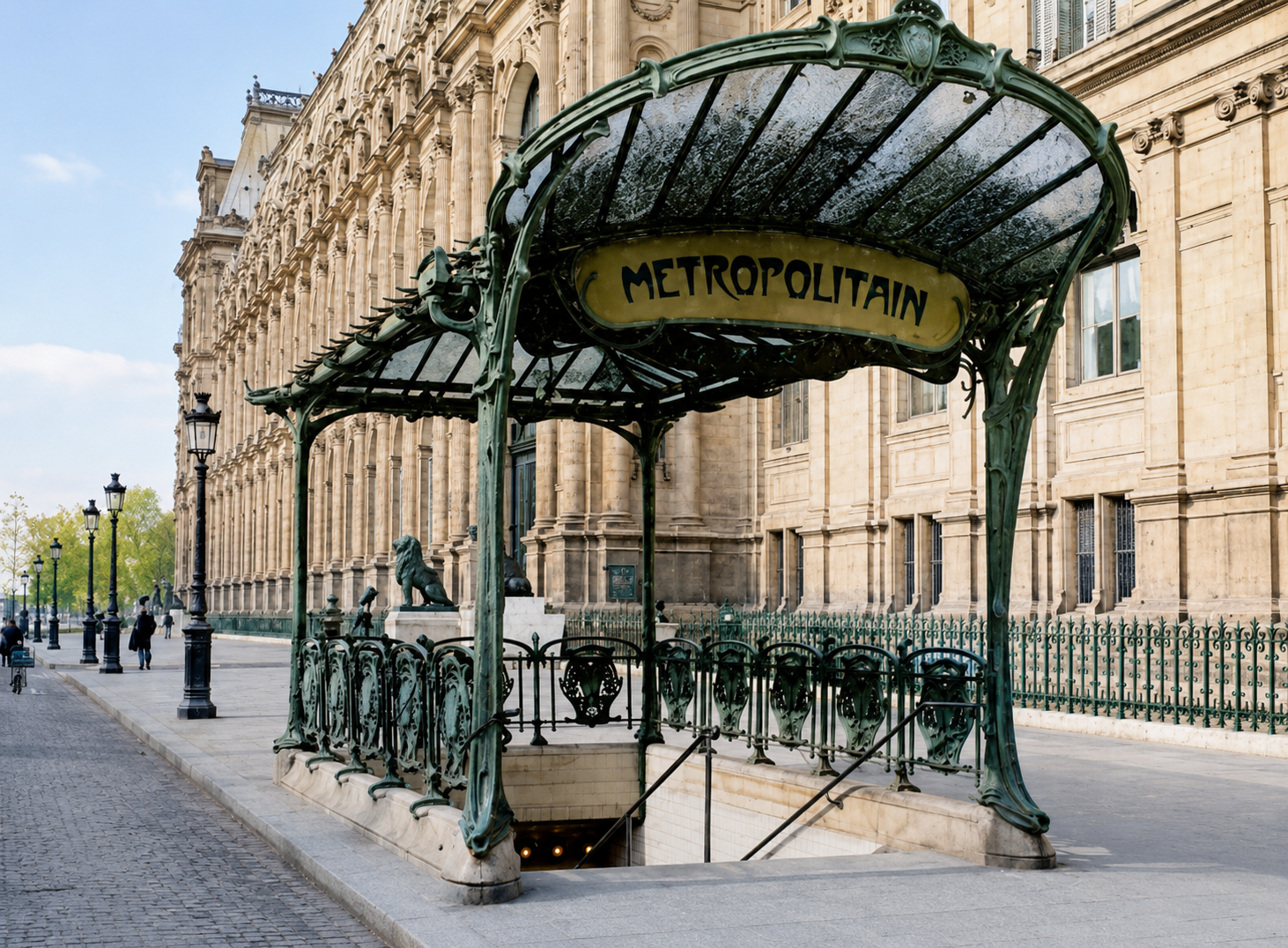
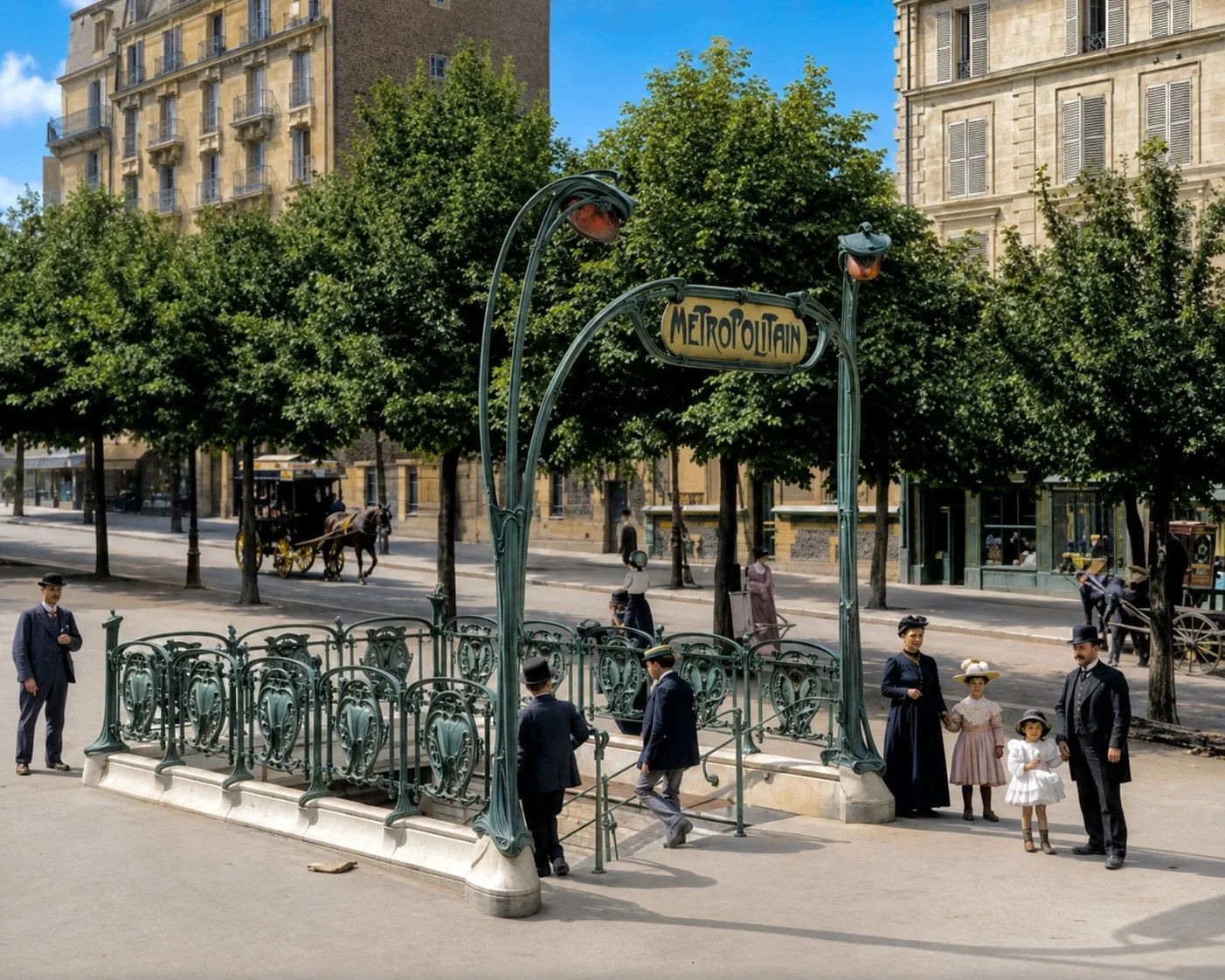
Castel Béranger came before those Métro entrances, and it was Guimard’s first major commission. He was still in his late twenties when Élisabeth Fournier, a widow from Auteuil who had invested in rental properties, commissioned him to design a residential building for the middle class. Crucially, Fournier gave Guimard unusual creative freedom, allowing him to turn what could have been a conventional apartment block into one of the most experimental buildings in Paris.
The building was originally planned in a more Neo-Gothic style. But after travelling to Brussels and seeing Victor Horta’s Hôtel Tassel, Guimard changed course. Fascinated by Horta’s fluid, linear approach, he moved away from his initial design and began reworking the building in the direction of Art Nouveau.
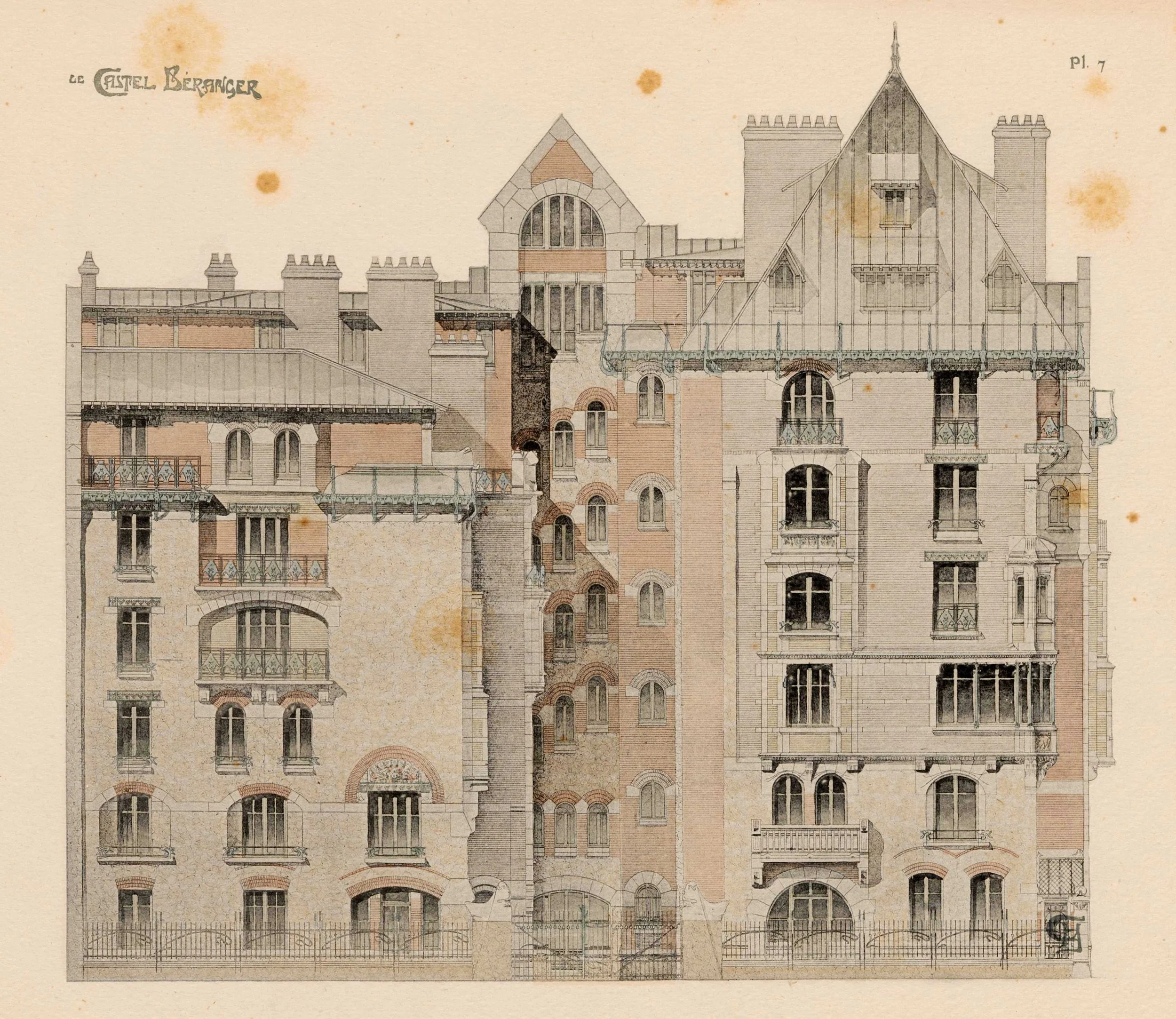
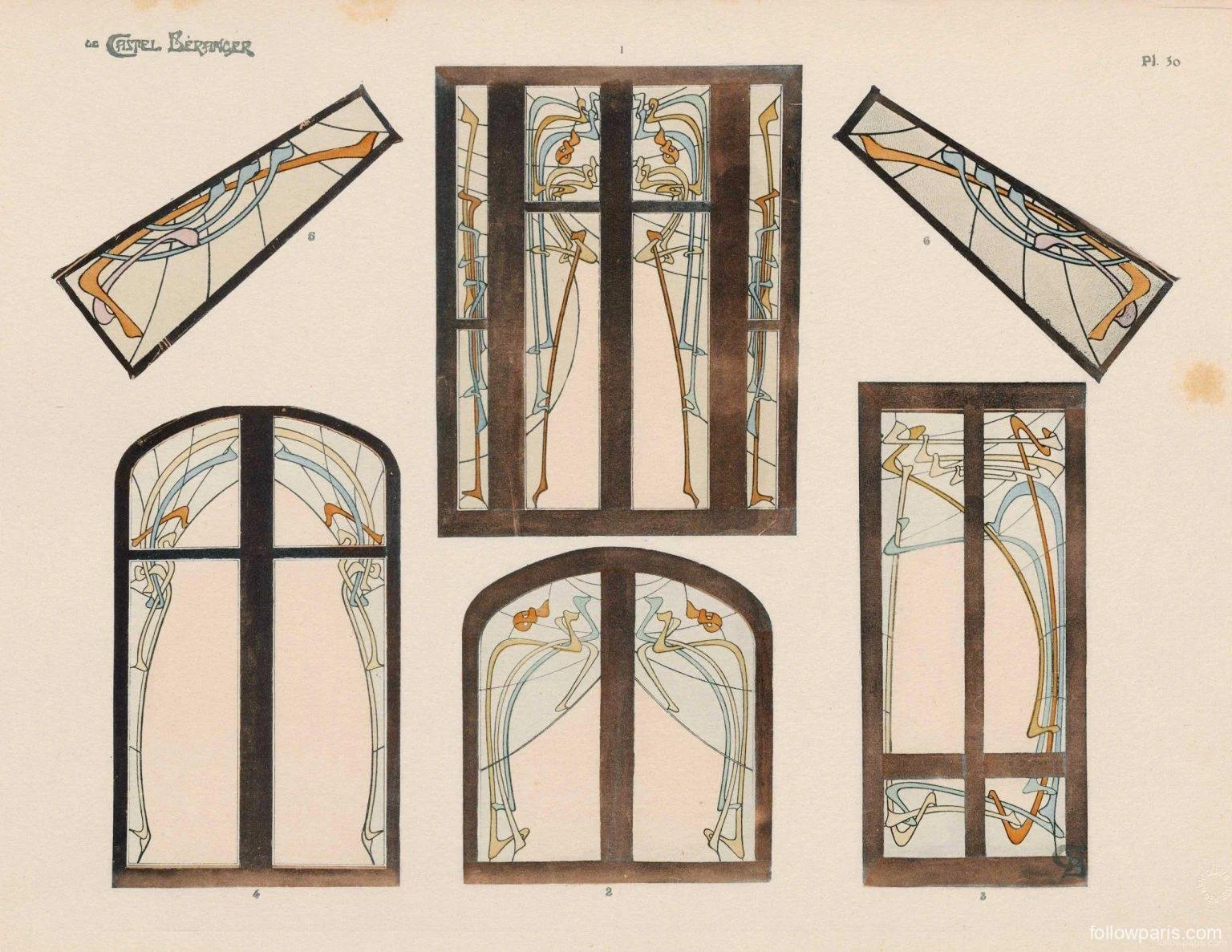
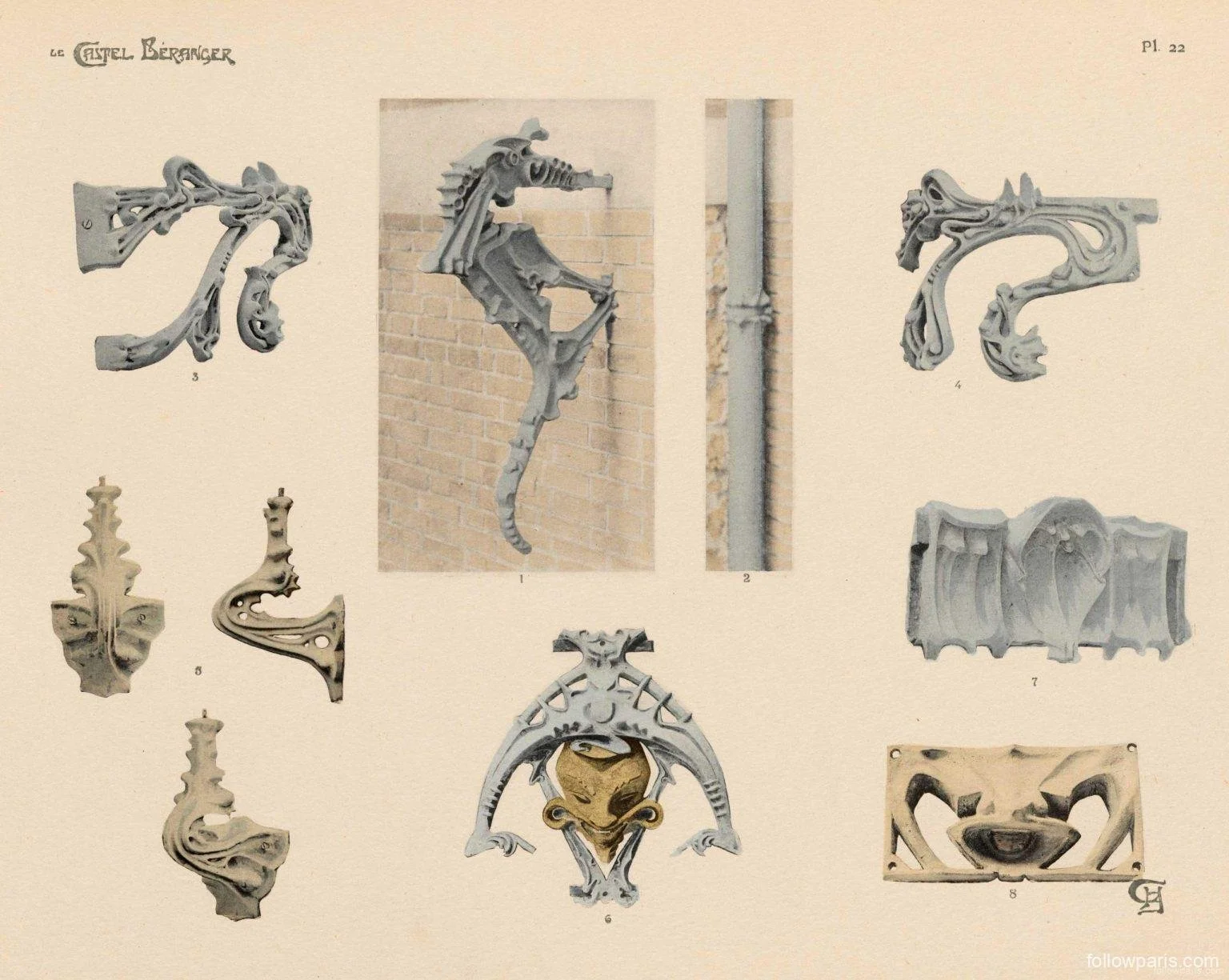
© ETH-Bibliothek Zürich
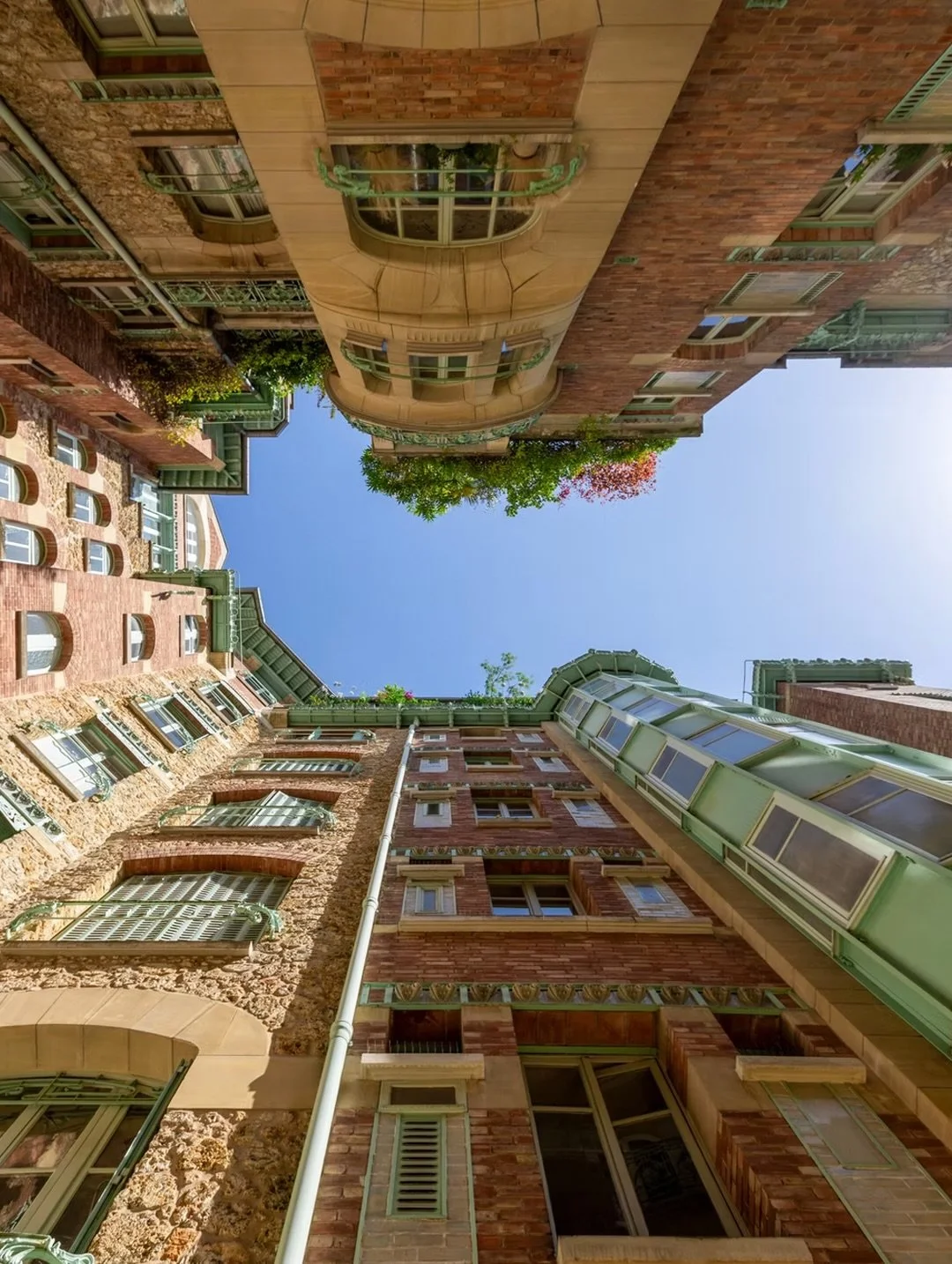
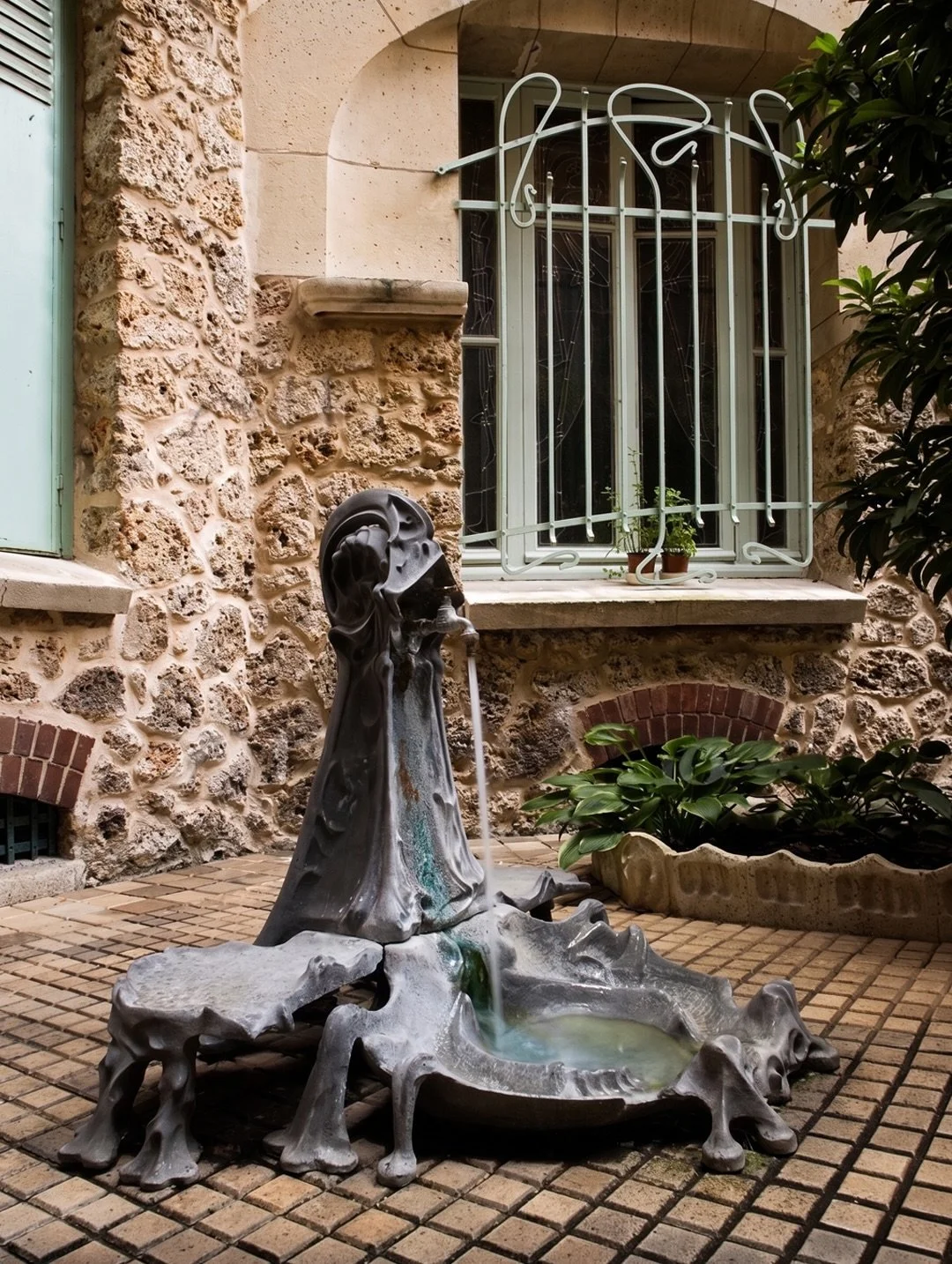
What made Castel Béranger significant was not simply that it looked different from the apartment buildings around it. It was that Guimard treated the entire building as one designed world. He shaped nearly every detail, from the façade, ironwork, ceramics, stained glass, fireplaces, carpets, wallpaper, door handles, and locks to the fittings, decorative motifs, and shared spaces. Castel Béranger was not a conventional apartment block with Art Nouveau decoration applied to it. It was a complete architectural statement.
Guimard also acknowledged the influence of Victor Horta directly. When Castel Béranger was finished, he sent Horta an album of the building’s designs, inscribed to “an eminent master and friend,” as an affectionate homage from an admirer.
When the building was completed in 1898, its strange, organic details stood out sharply against the Haussmannian apartment blocks around it. Some Parisians mocked its eccentricity, nicknaming it “Castel Dérangé,” or the “deranged castle,” but that same year it won the City of Paris façade competition, giving Guimard wider recognition. He later had the award inscribed on the façade, a permanent reminder of how quickly the building moved from provocation to recognition.
Two years later, he was commissioned to design the Paris Métro entrances, bringing his Art Nouveau style out of a private apartment building and into everyday public life. He would go on to design other important Art Nouveau buildings, including his own residence and studio, Hôtel Guimard, on avenue Mozart, and Hôtel Mezzara, another Auteuil townhouse now being restored as the future Musée Guimard, expected to open in late 2027 or early 2028.
Still, Castel Béranger remains the project that first defined Guimard’s architectural language for Paris.
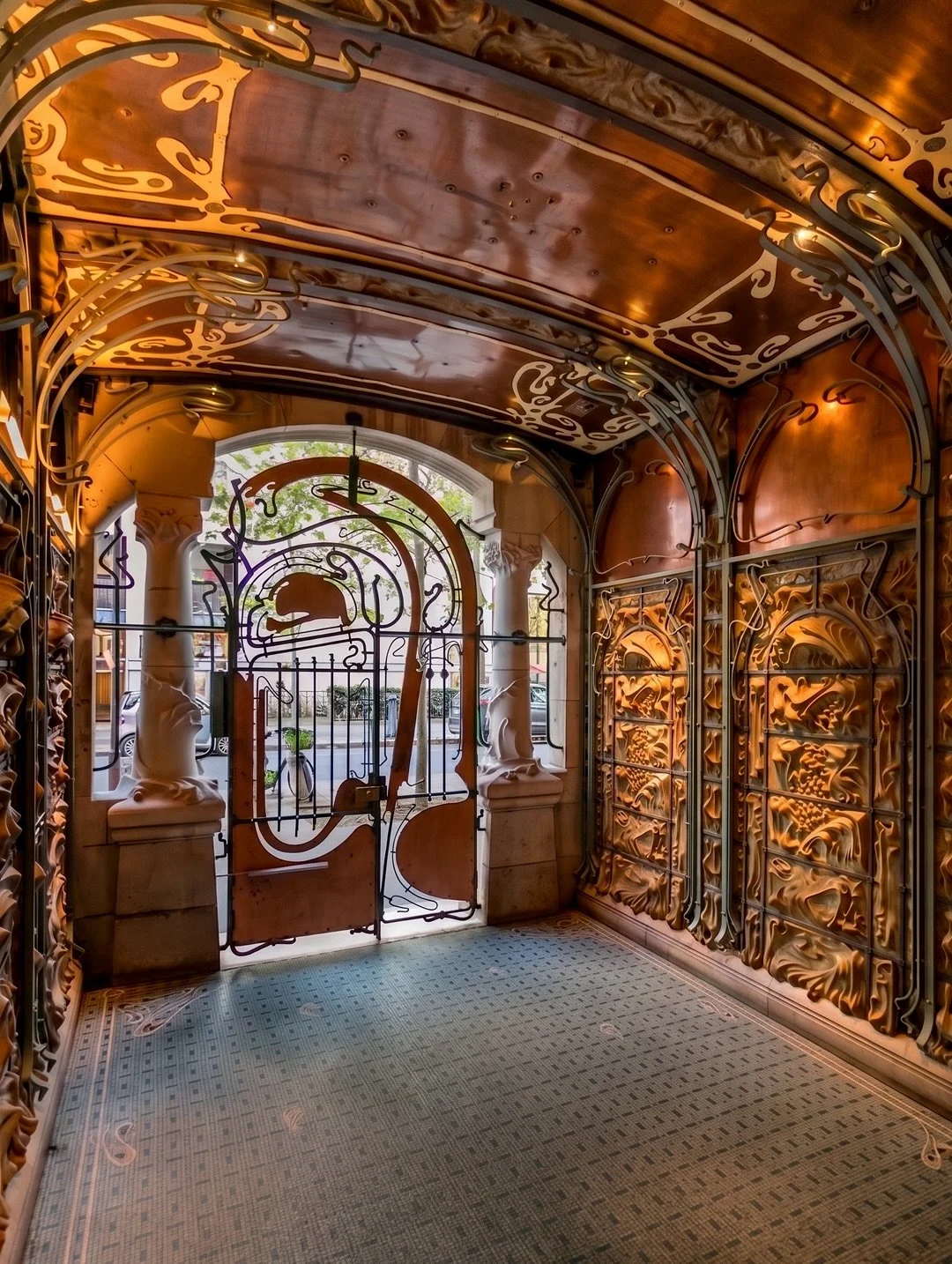
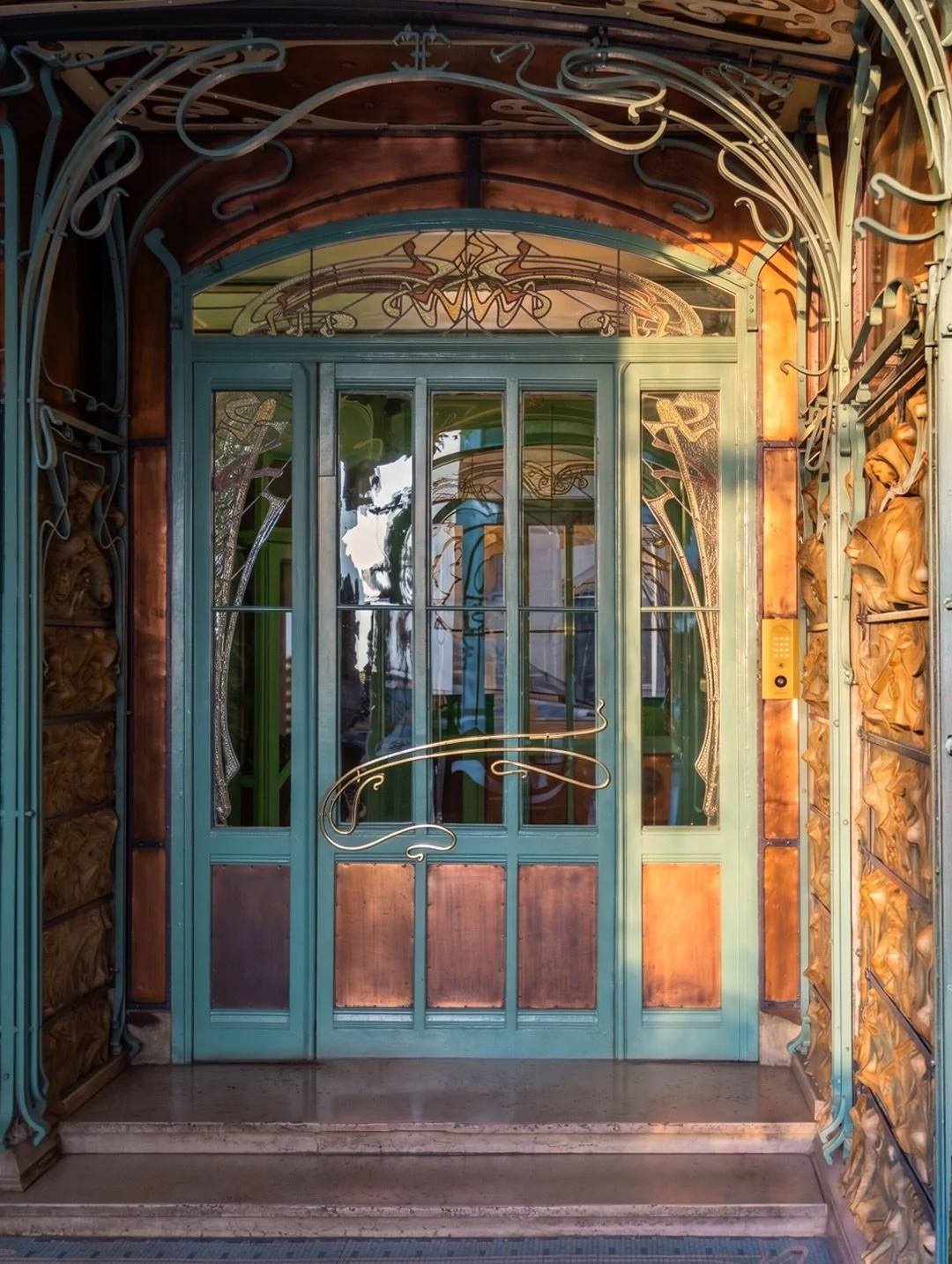
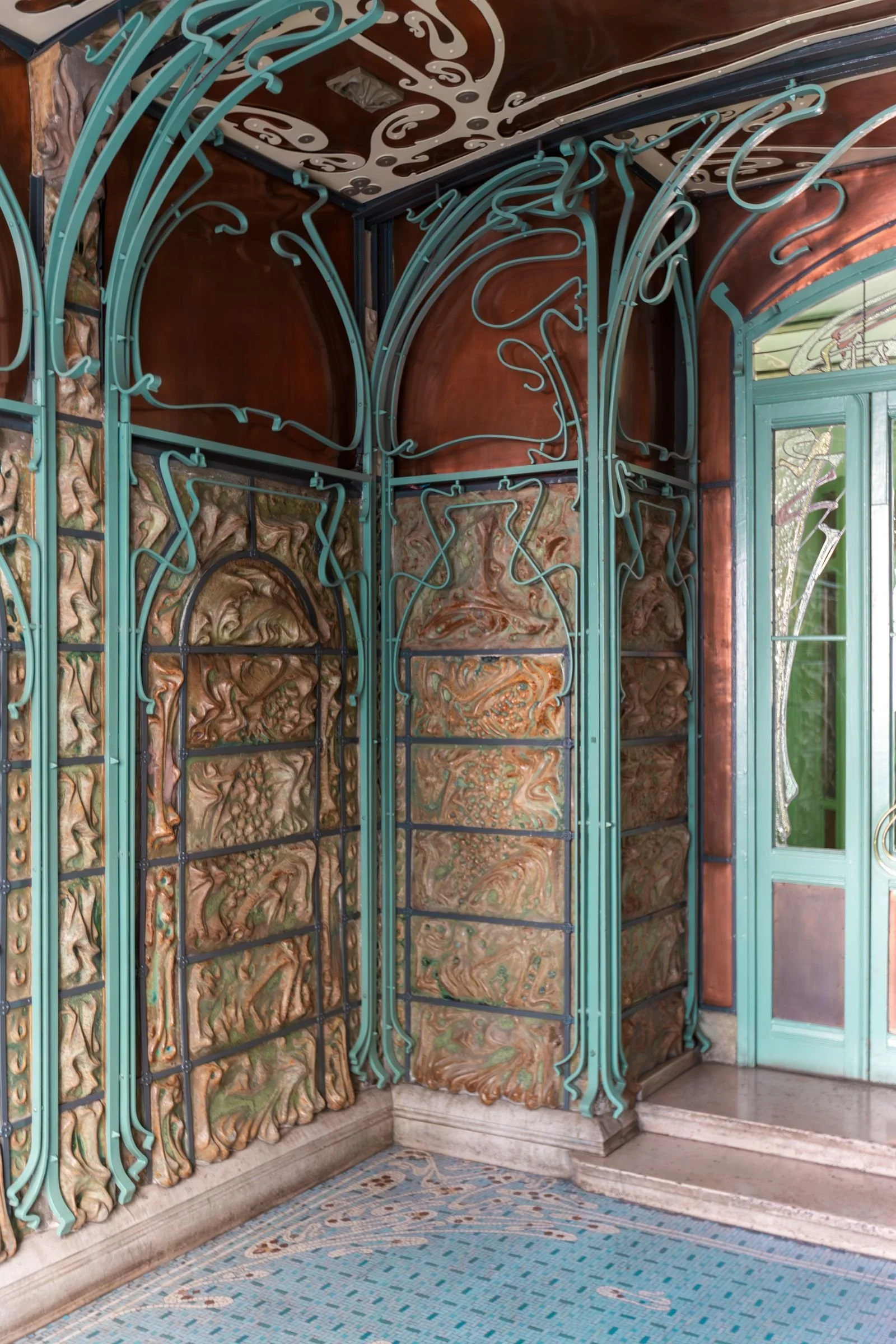
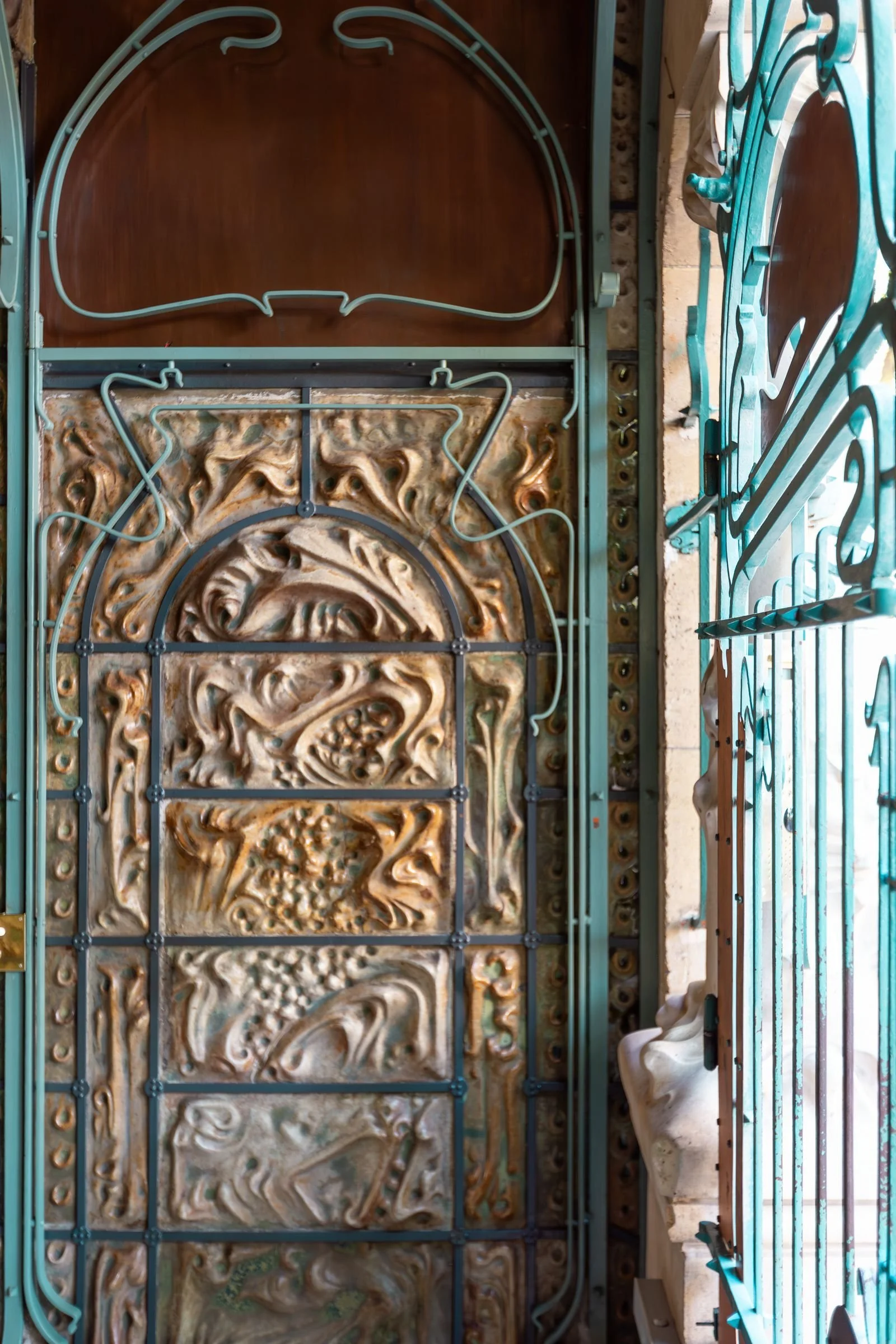
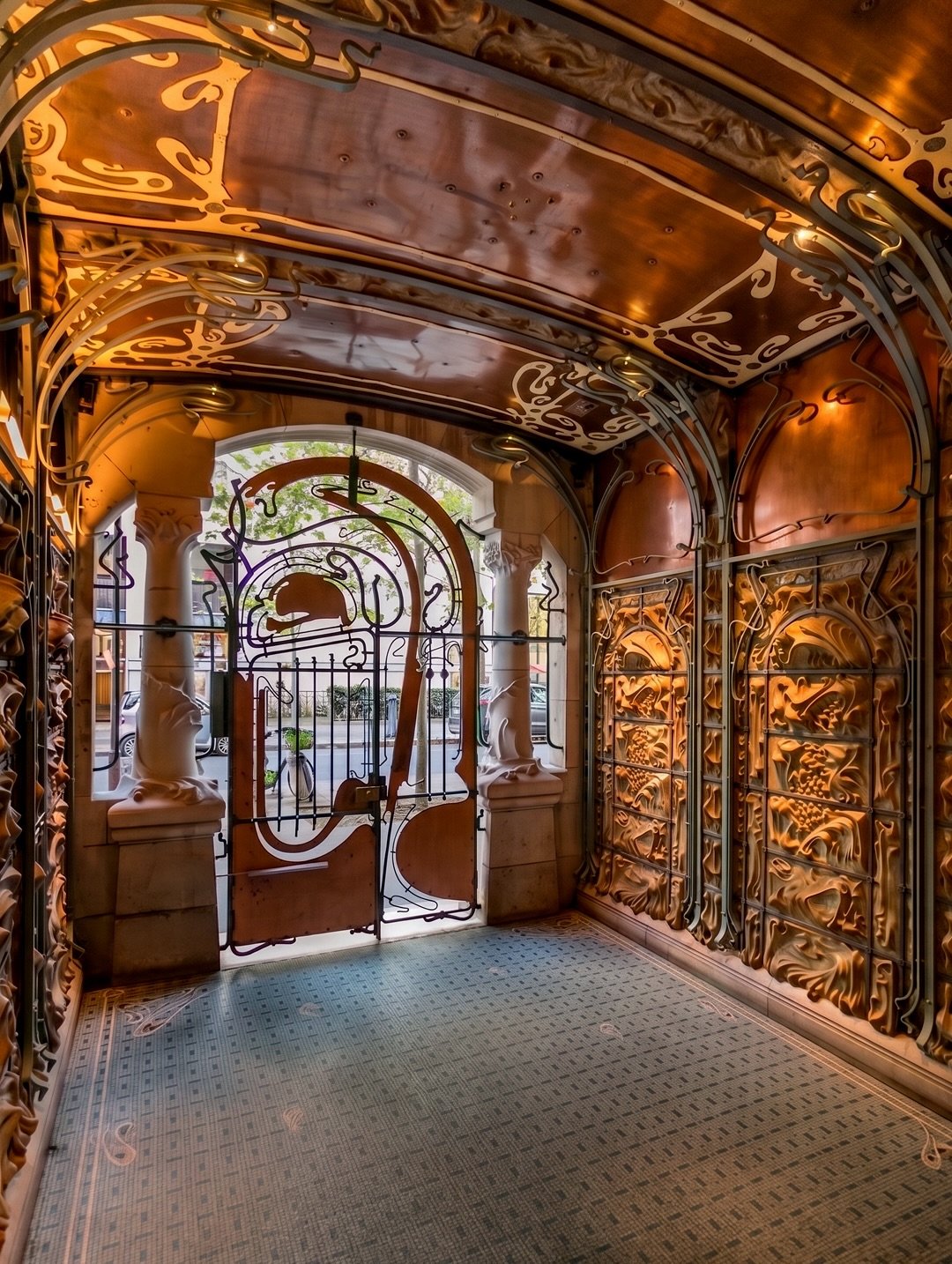
Castel Béranger’s entrance hall is among the building’s most atmospheric spaces, with flamed stoneware ceramics, metalwork, copper-toned surfaces, and a theatrical material palette that gives the interiors a distinctive, almost grotto-like character. Photography by Lucas Soubigou-Marie.
The Apartment
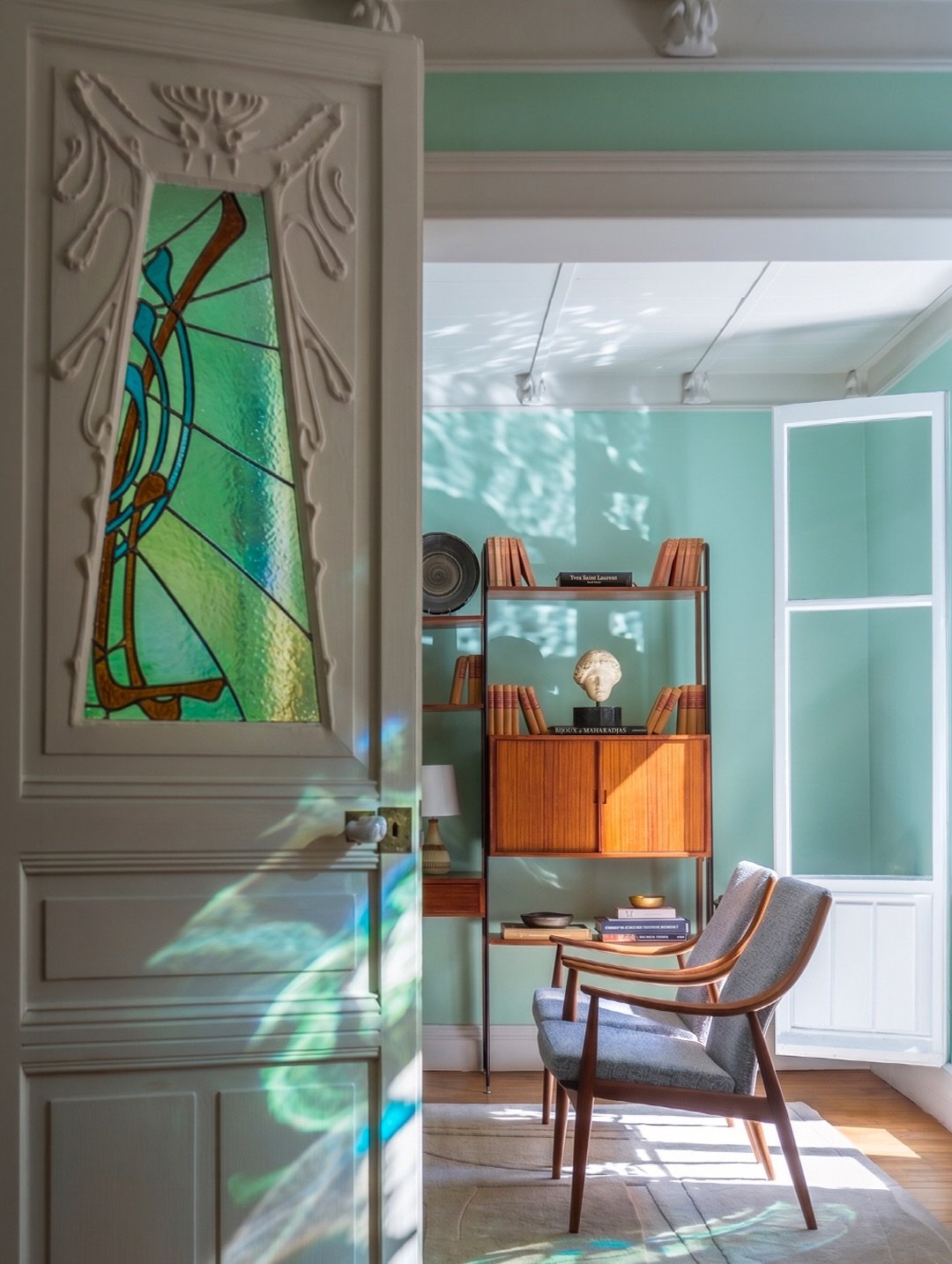
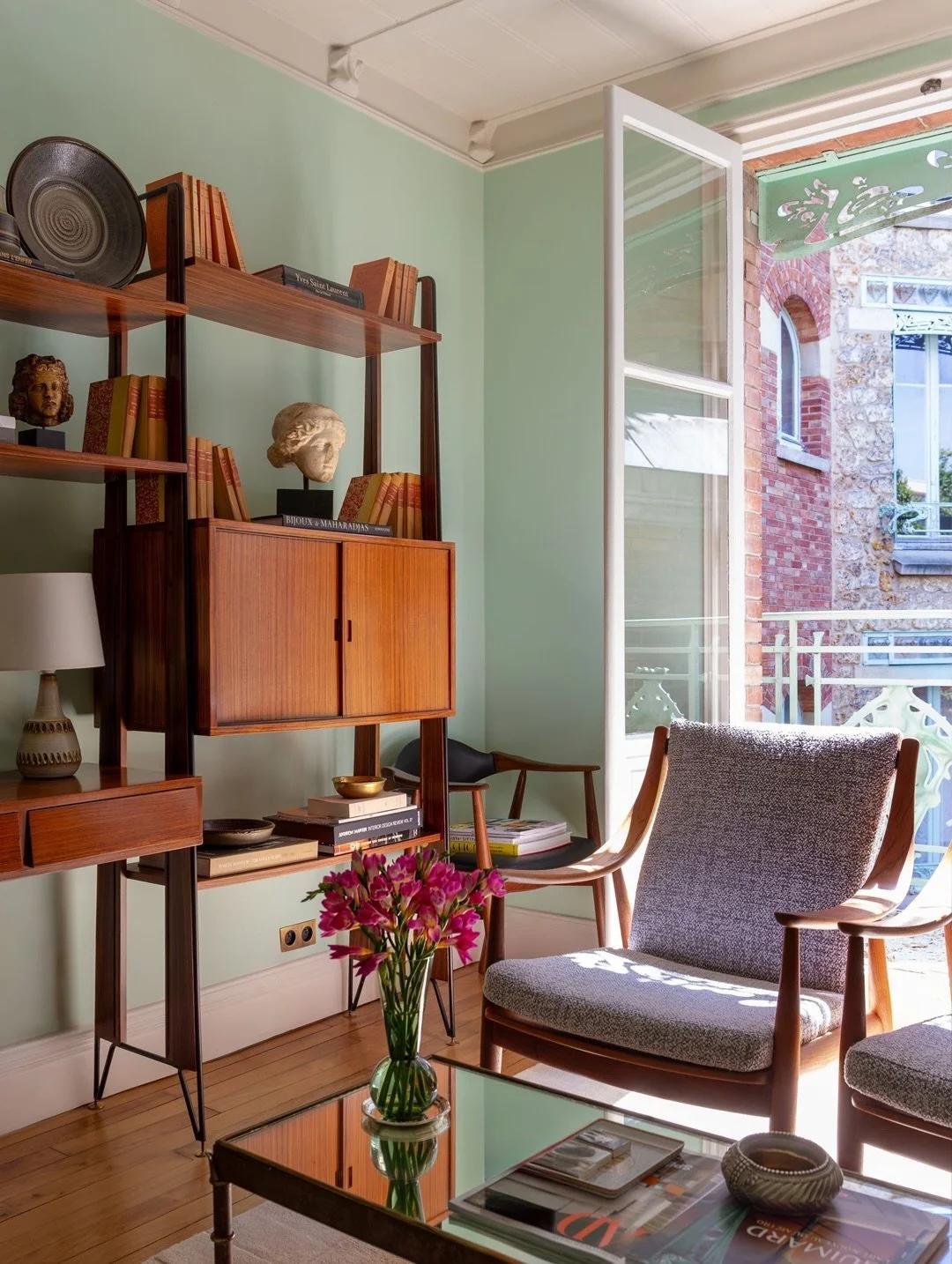
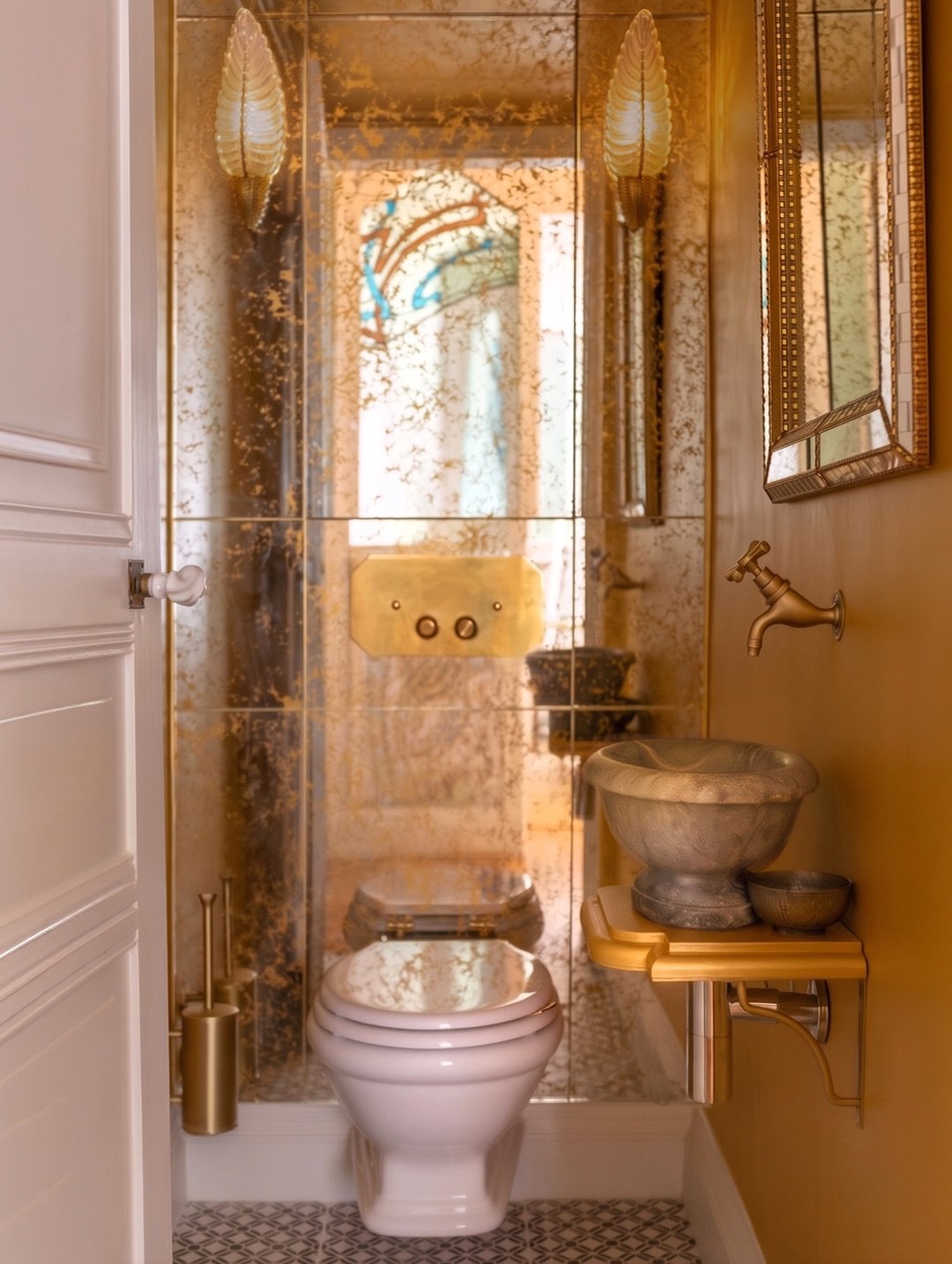
Set on an upper floor and accessed by elevator, the apartment is arranged around a plan en étoile, or star-shaped layout, designed to create a sense of circulation, balance, and light. The entrance hall opens into a dual-aspect double reception of approximately 25 m² / 269 sq ft, with two balconies, while the bedroom has its own ensuite shower room. A fitted kitchen and separate powder room complete the plan.
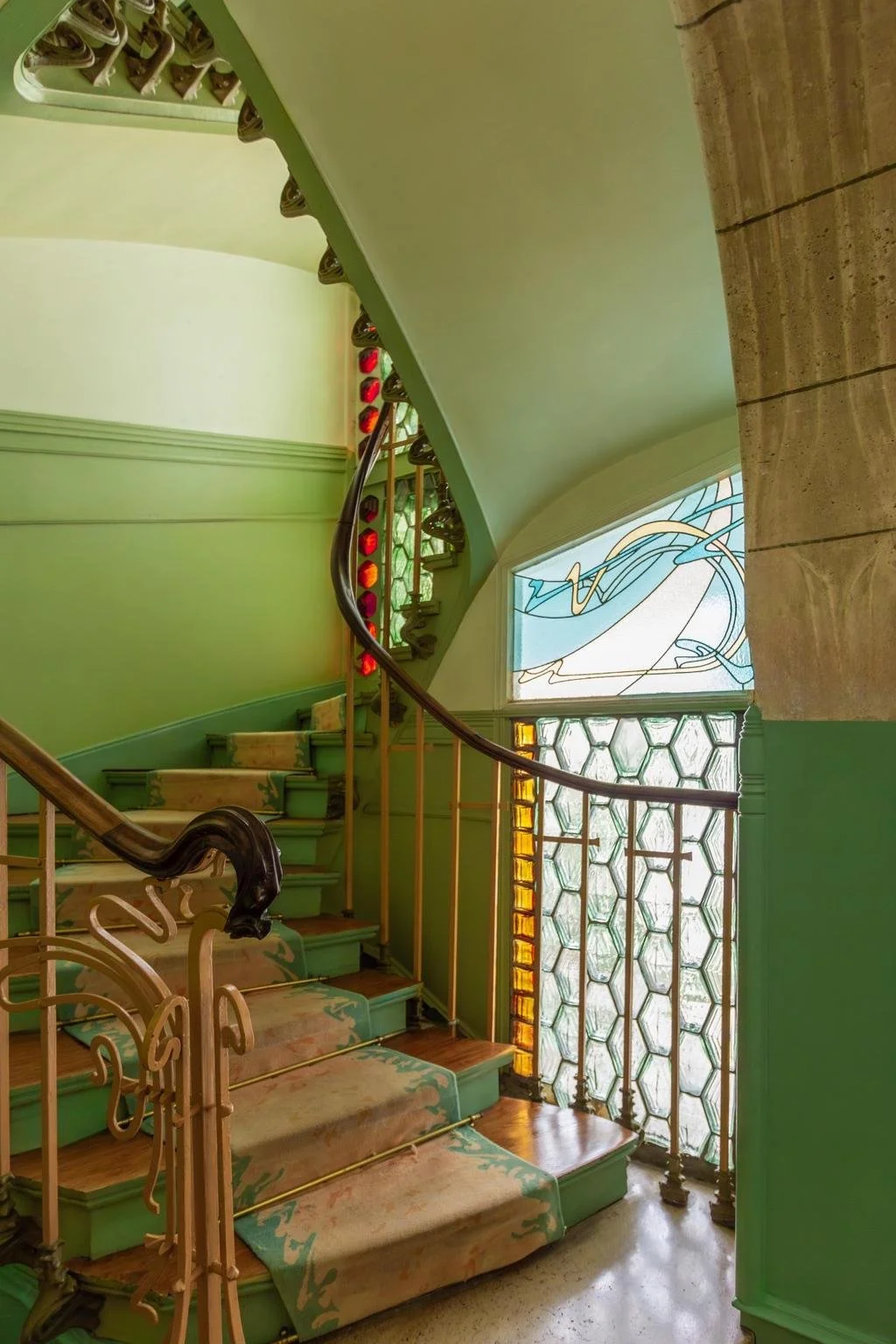
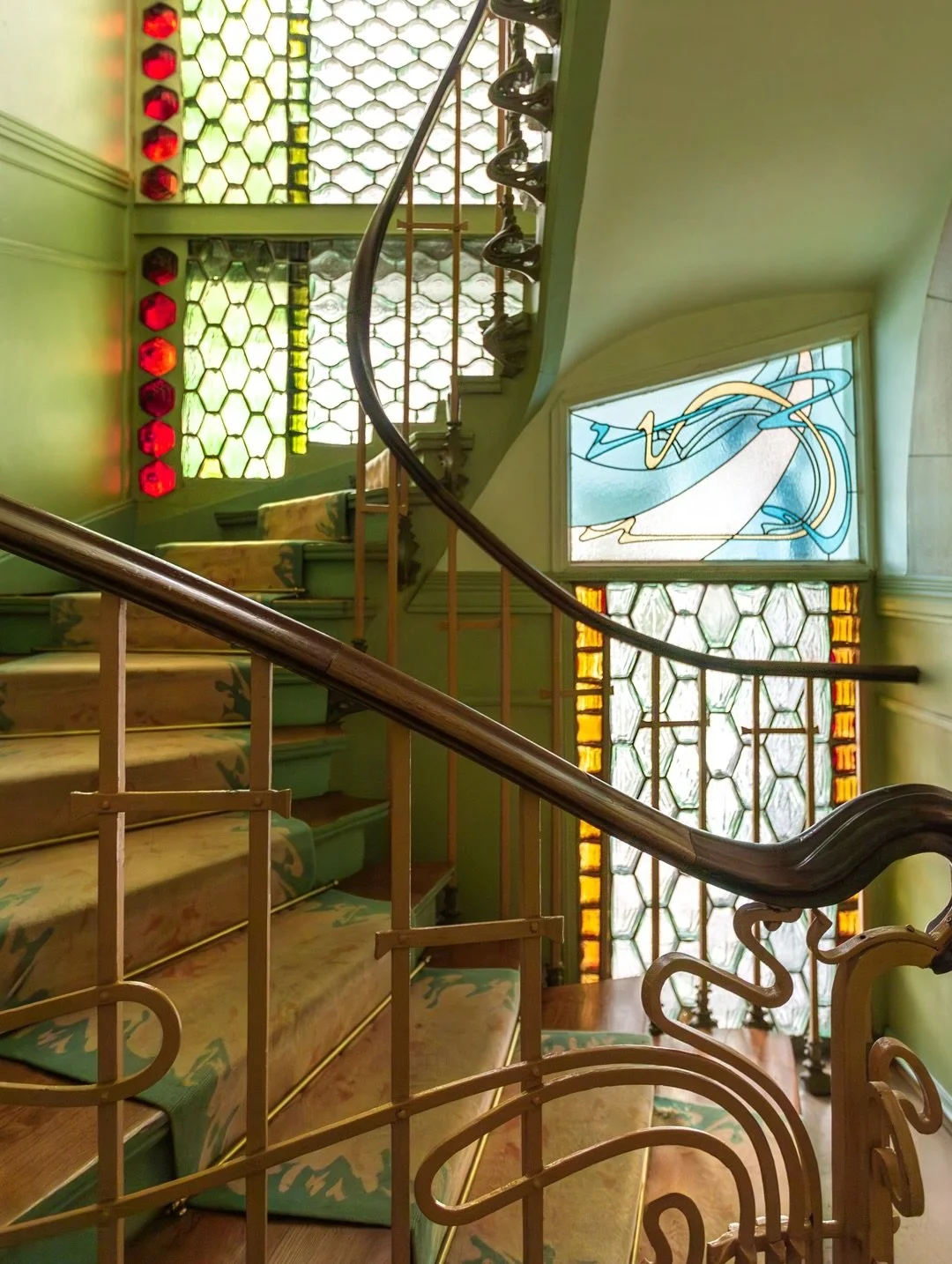
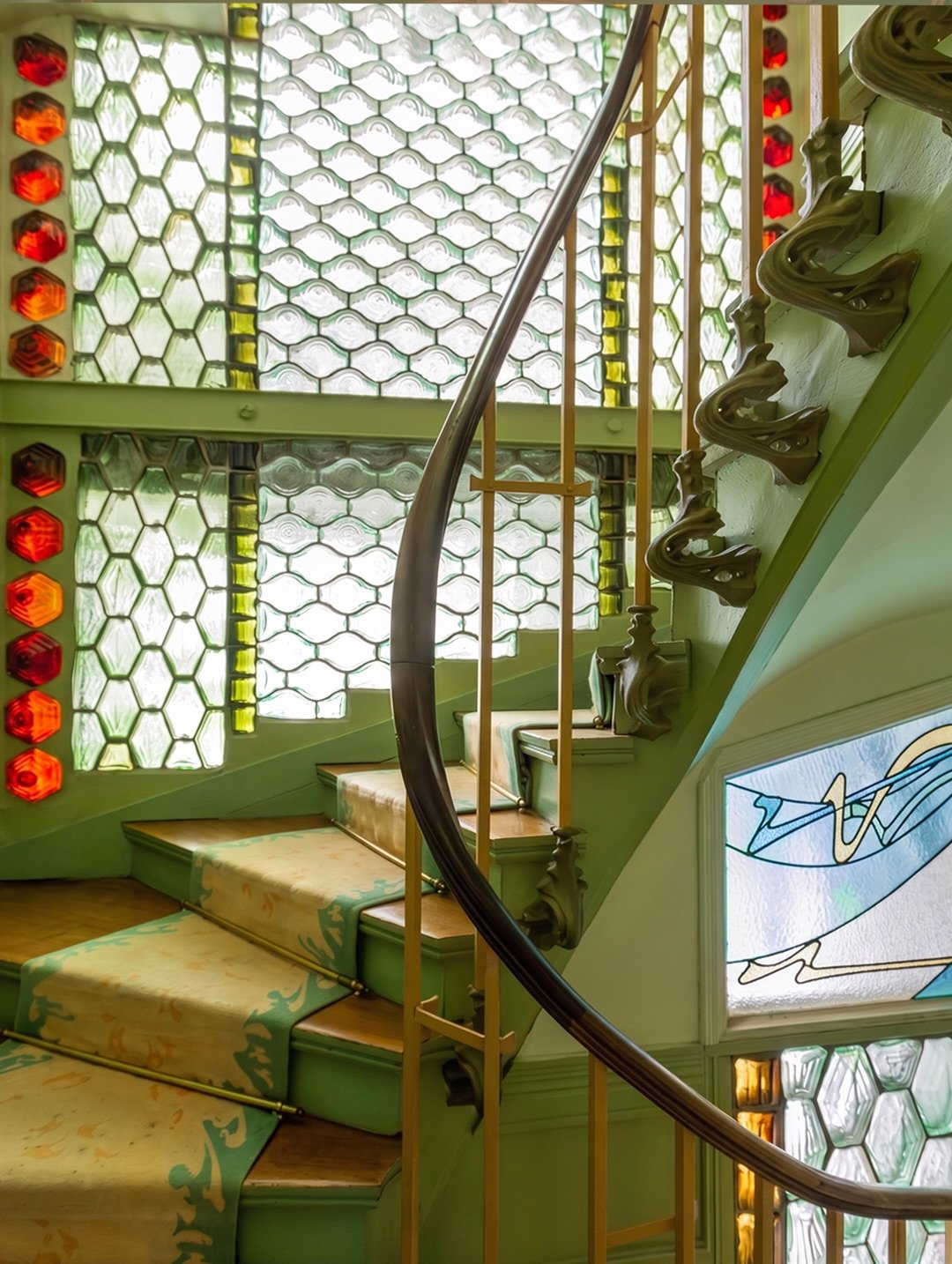
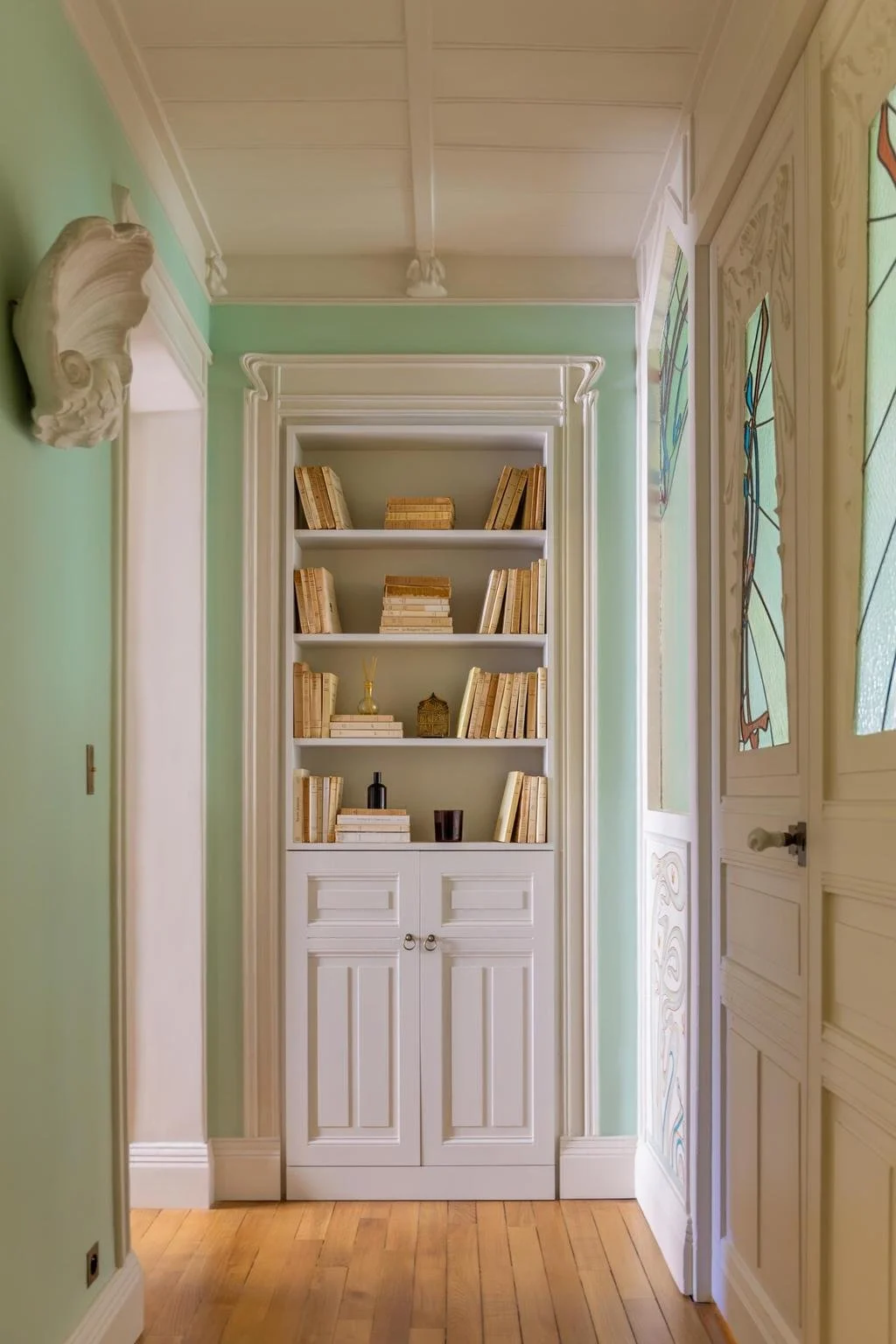
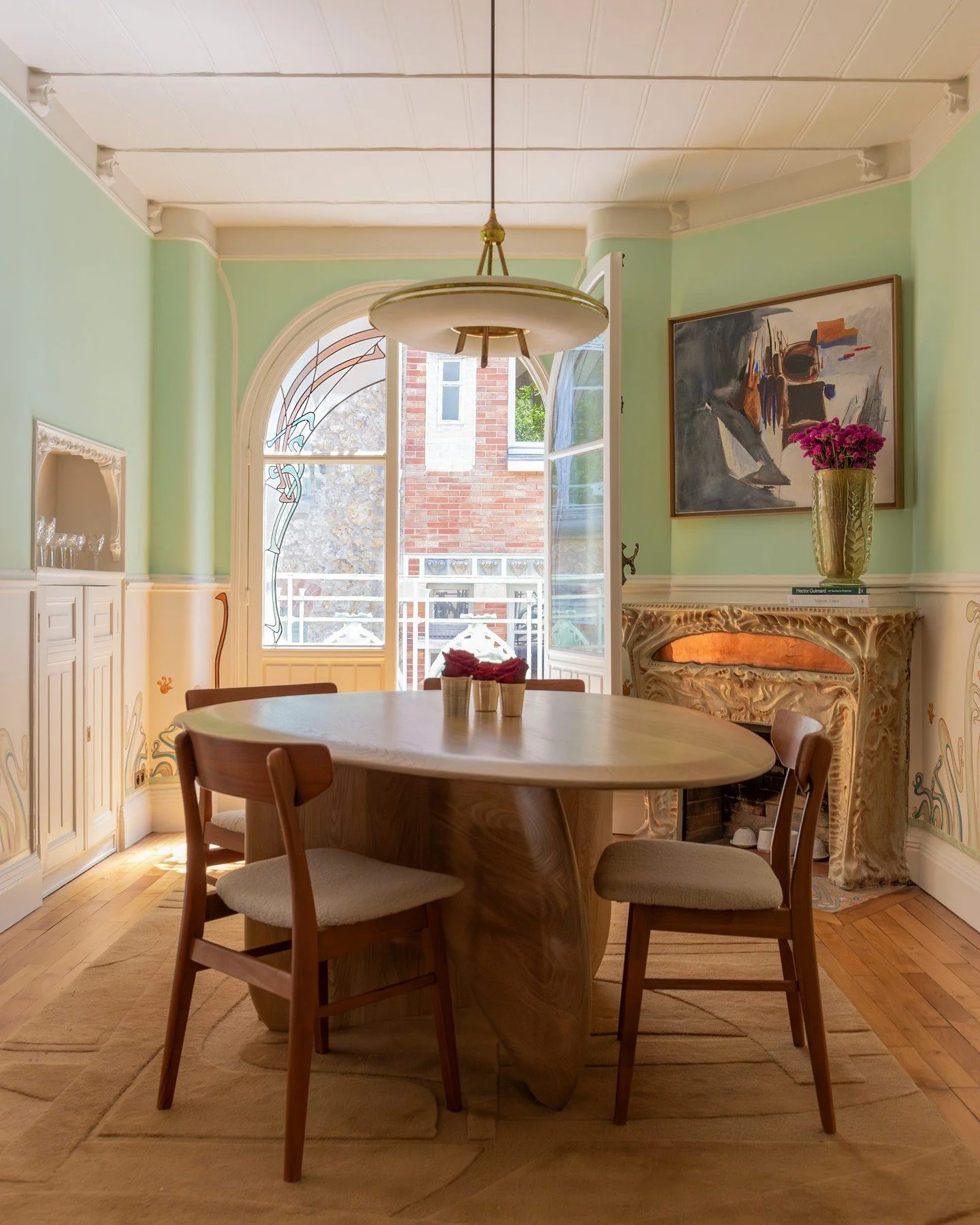
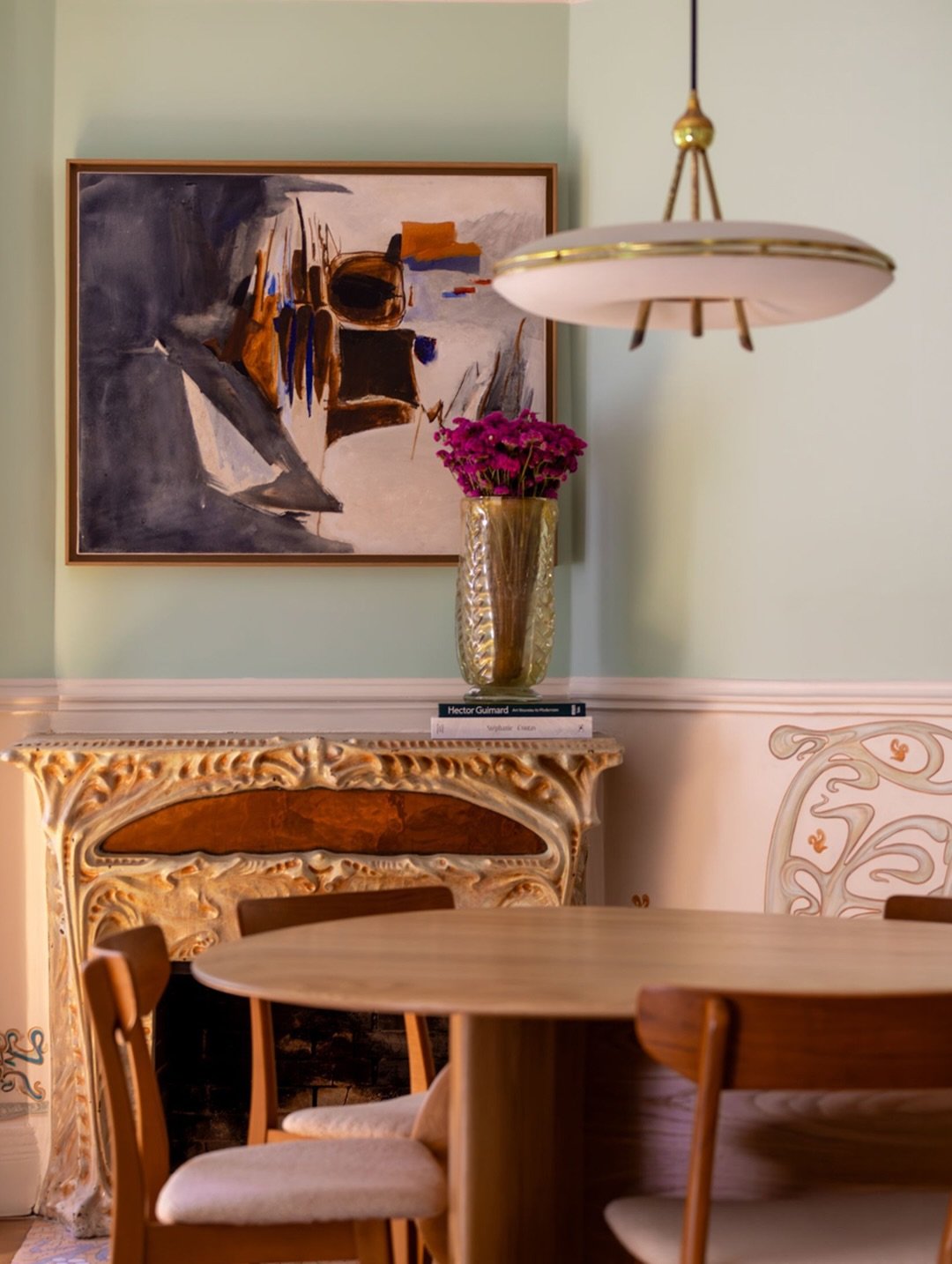
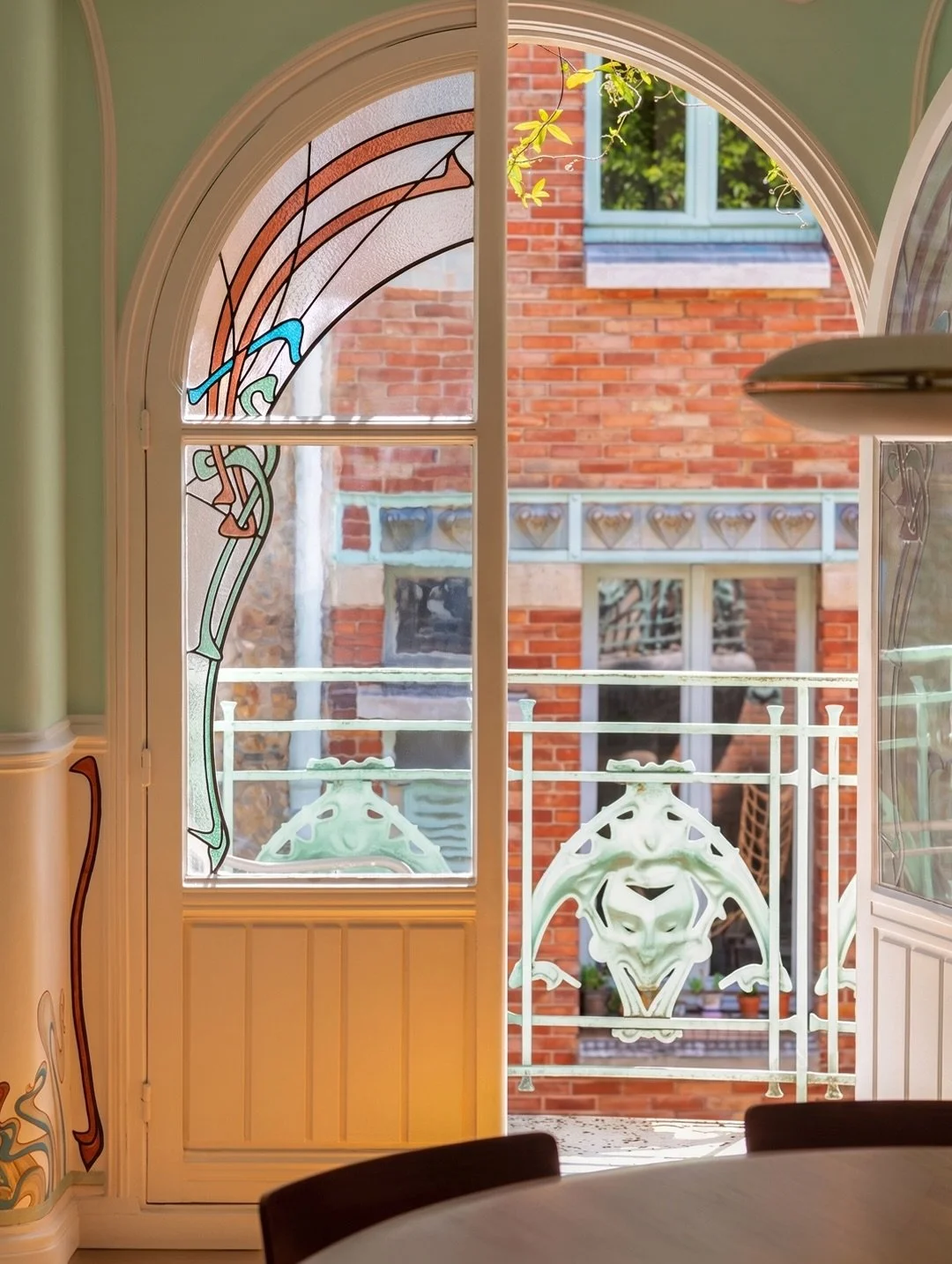
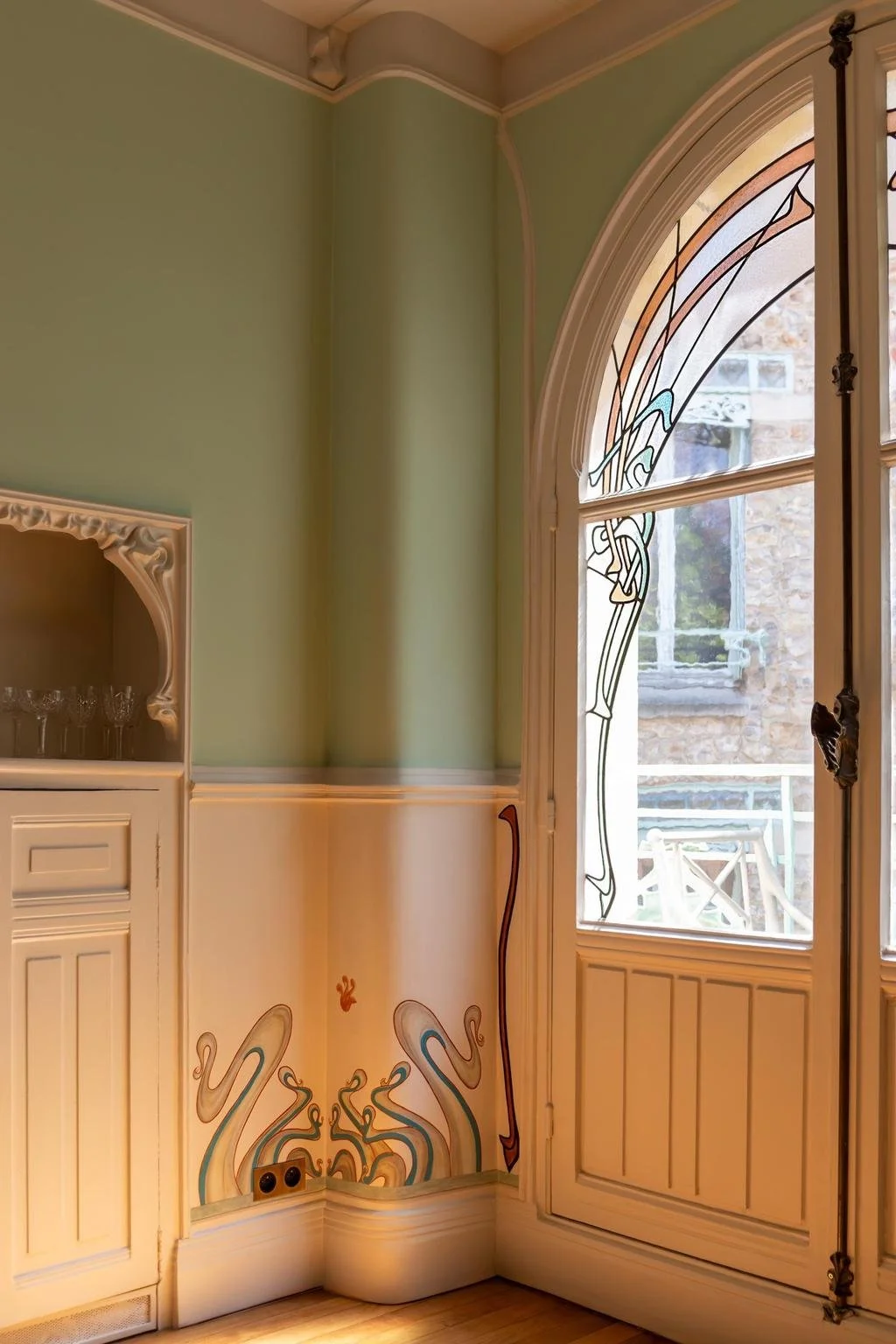
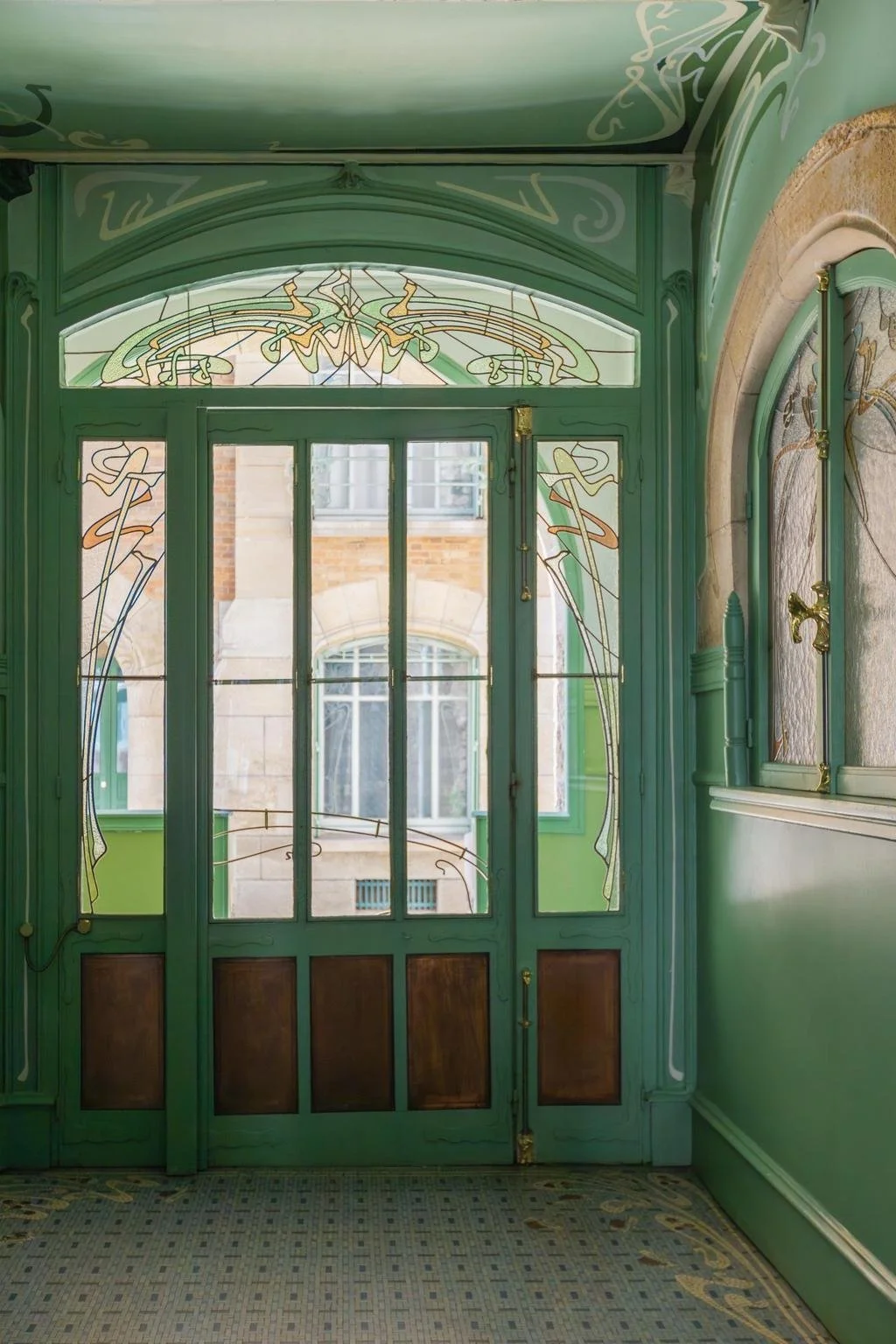
Preserved details include stained glass, mouldings, decorative ceilings, brass handles, original joinery, carved doors, narrow-strip parquet, and an antique fireplace by Guimard. Together, they give the apartment a direct relationship to the building’s 1898 design, rather than simply placing it inside a historic address.
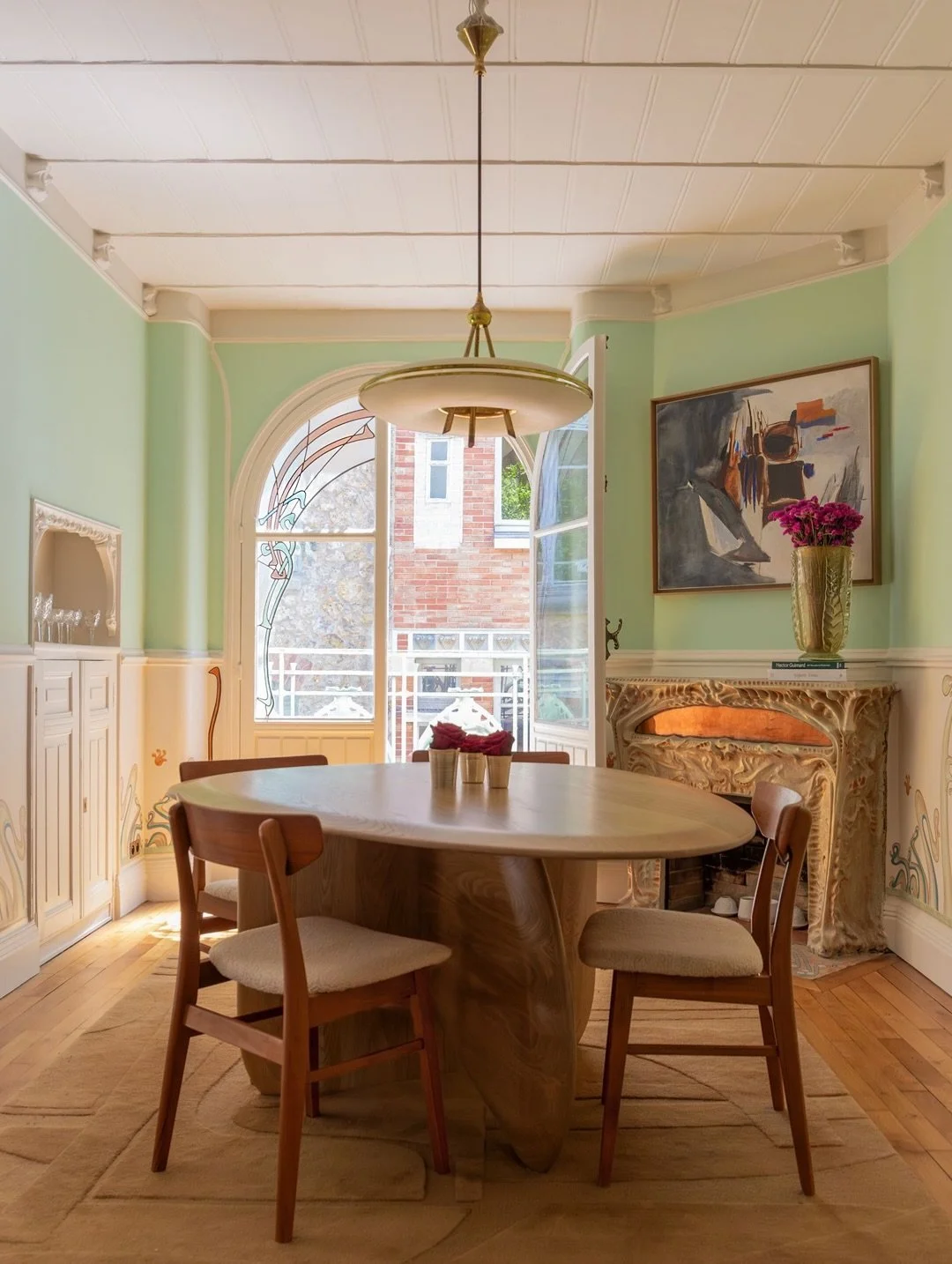
The Paris apartment was featured in Architectural Digest in 2024 following it's renovation by owner Octavian Popa. “We kept in mind the idea of unifying and preserving the tone. The doors, the ceilings, everything was refreshed. That is what I wanted: not to change anything, but simply to highlight it,” the owner said. Photography by Lucas Soubigou-Marie.
The Renovation
Octavian Popa had not been looking for an apartment with such character, and did not know Castel Béranger before seeing the listing. But he “fell in love with it” immediately, later describing the building as a kind of small Art Nouveau museum hidden within a typically Haussmannian neighbourhood.
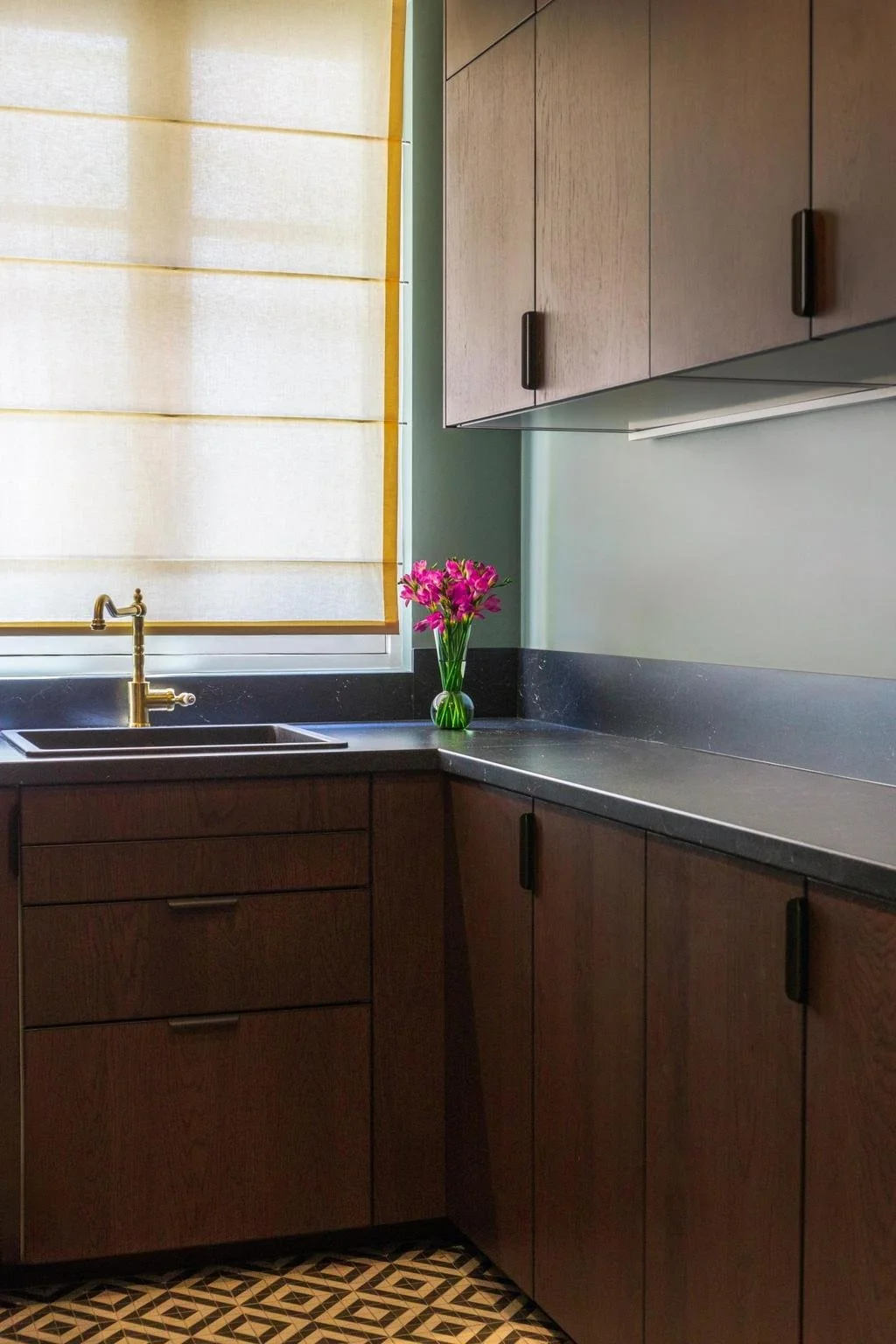
When Popa acquired the apartment, it was tired and dated, but many of its original Guimard-era details remained intact.The restoration, carried out with CM Studio Paris under the supervision of Monuments de France, focused on preserving what was already there while updating the kitchen and bathroom where possible. Protected elements, including the original niches, cupboards, windows, and doorframes, were retained, along with stained glass, parquet flooring, and other details that tie the apartment directly to Castel Béranger’s Art Nouveau language.
The apartment was featured by Architectural Digest in 2024. The owner described the ethos of the restoration project as “unifying and preserving the tone. The doors, the ceilings, everything has been refreshed. That is what I wanted: not to change anything, but simply to highlight it.”
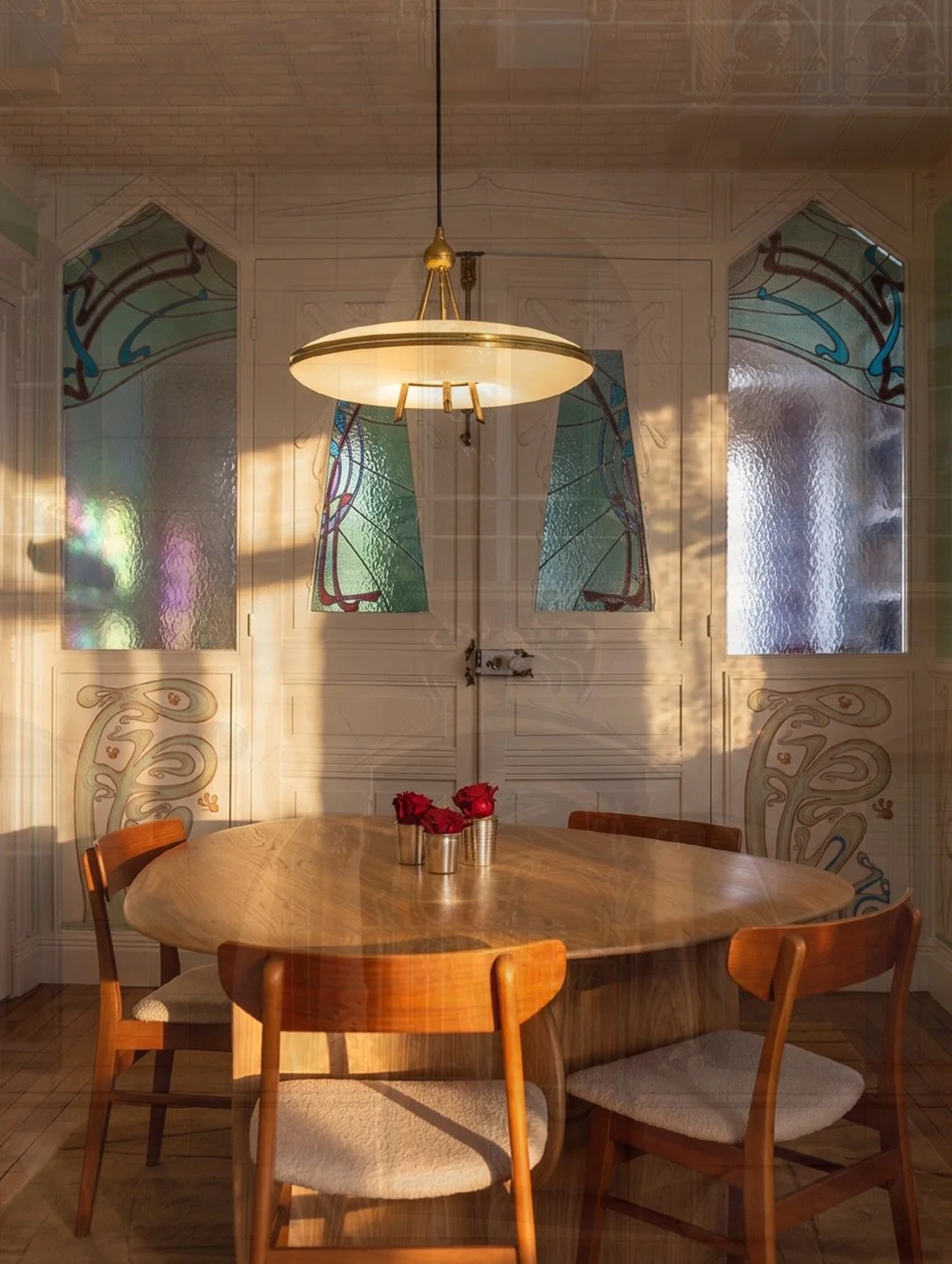
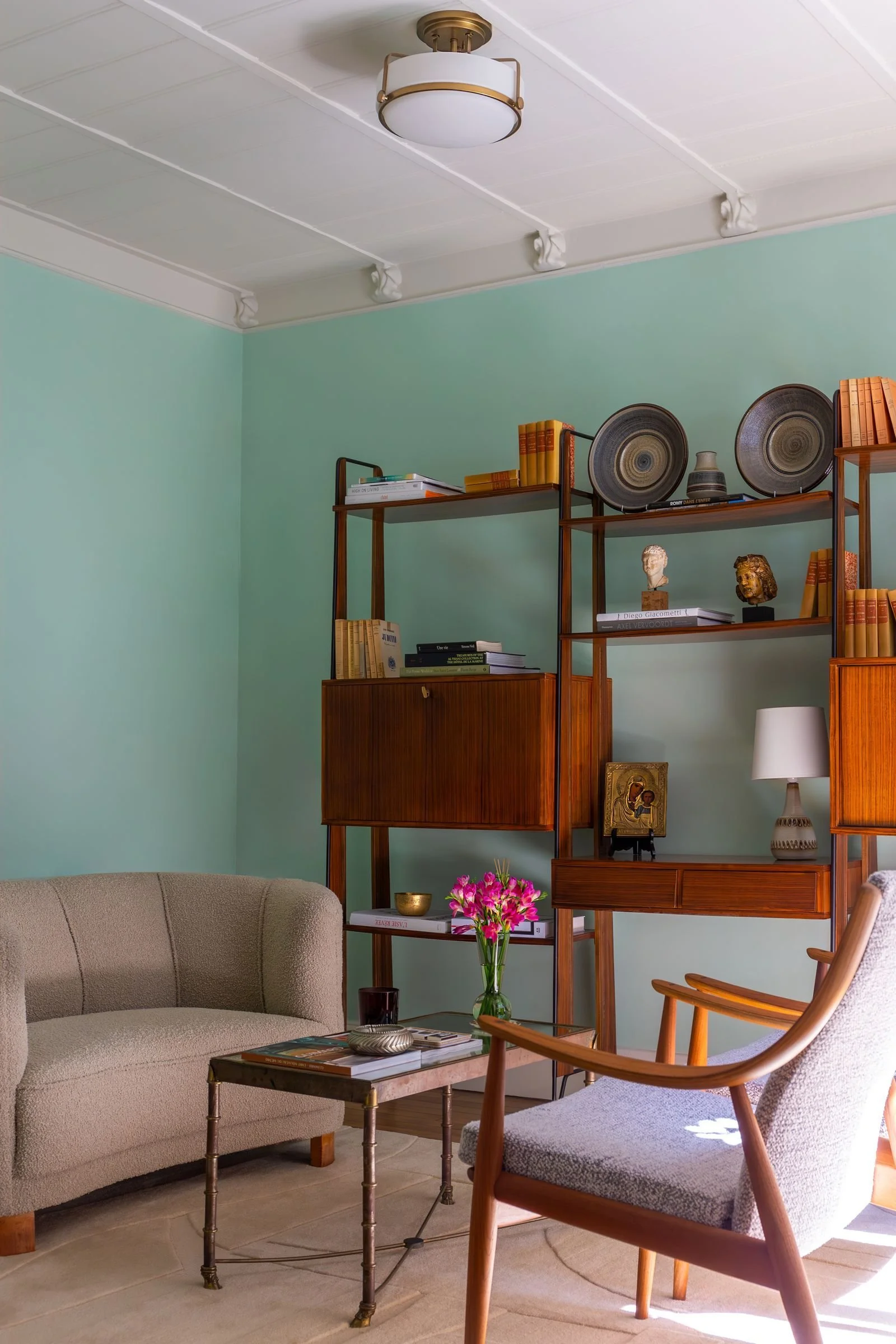
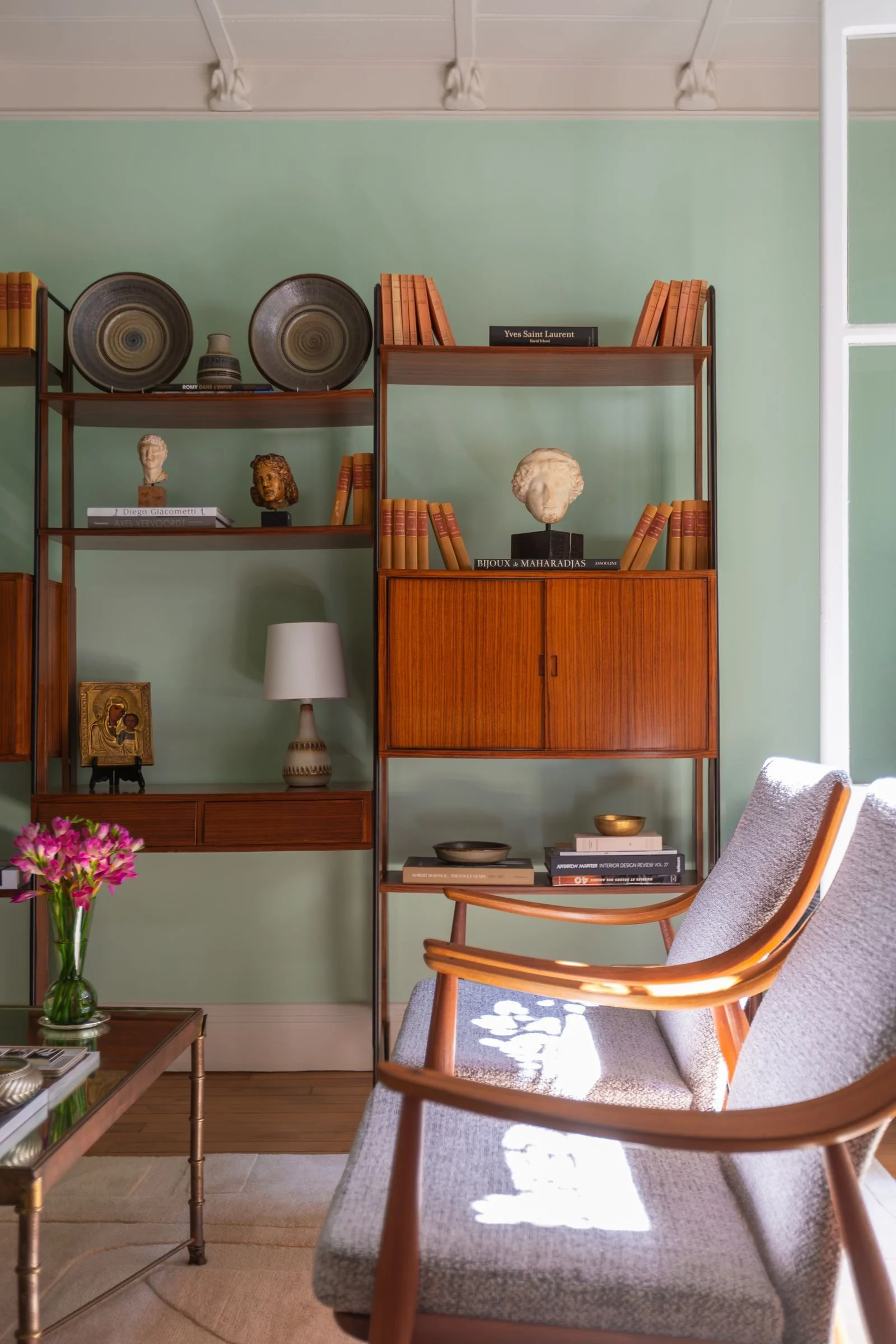
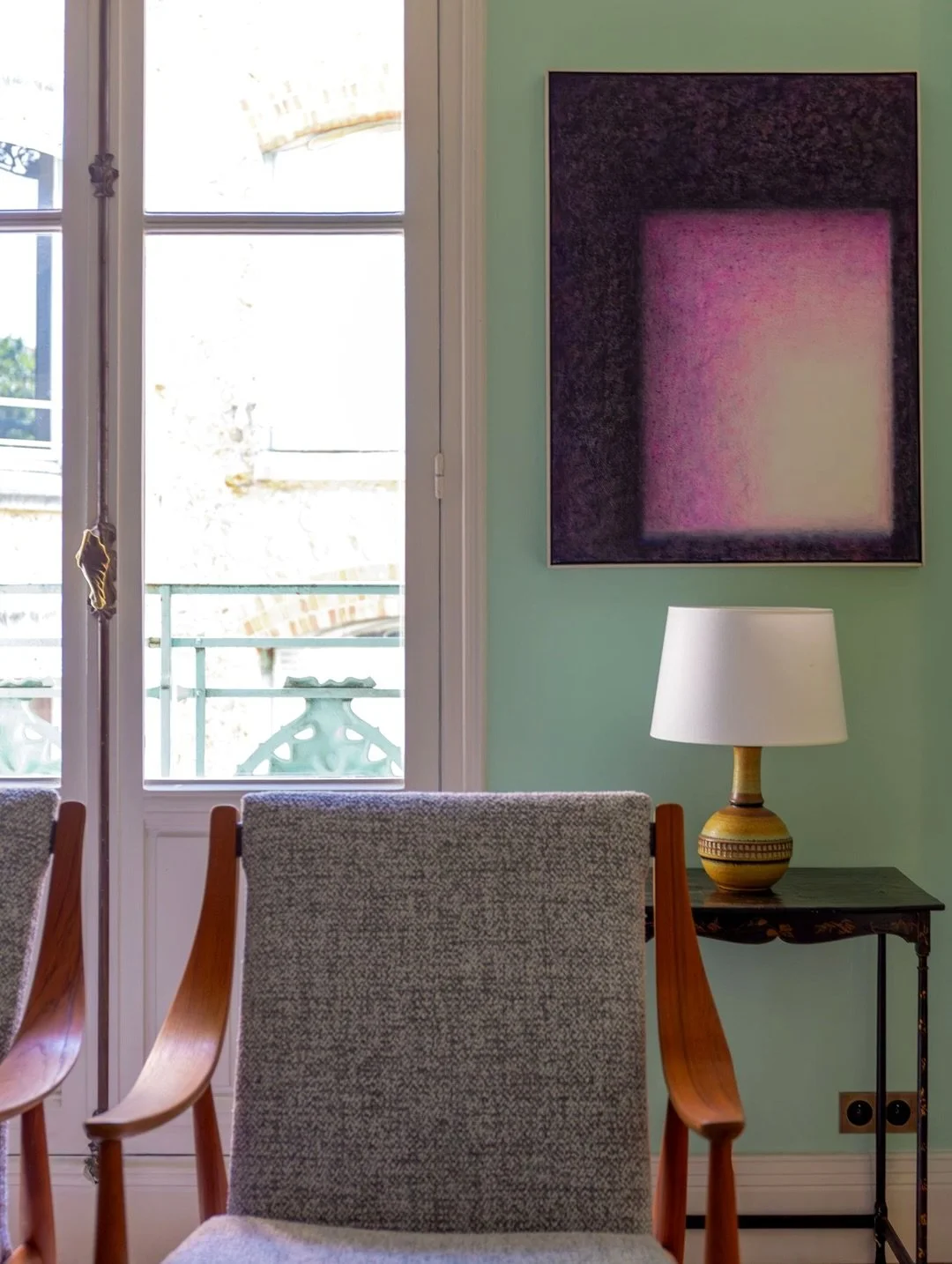
The result is a restoration that preserves Guimard’s work while allowing the space to feel personal and lived in. Alongside the restored Art Nouveau details, Popa layered in 1950s Italian furniture, Danish modern pieces, classical antiquities, religious icons, and contemporary art. In the living room, a compact 1950s Italian bookcase with a built-in desk, found at the Paul Bert Serpette flea market, holds classical pieces from Galerie Chenel, including a 1st- to 2nd-century AD head of a young man from the former Kenzo Takada collection.
During the renovation, an original wall painting by Guimard was uncovered in the dining room, leading Popa to enlist decorative painter Barazandeh Dauzincourt to create Art Nouveau-inspired arabesque drawings that extend the design throughout the apartment. In the same room, Danish flea-market chairs surround a Japanese-inspired table by designers Sandra Weingort and Casey Johnson.
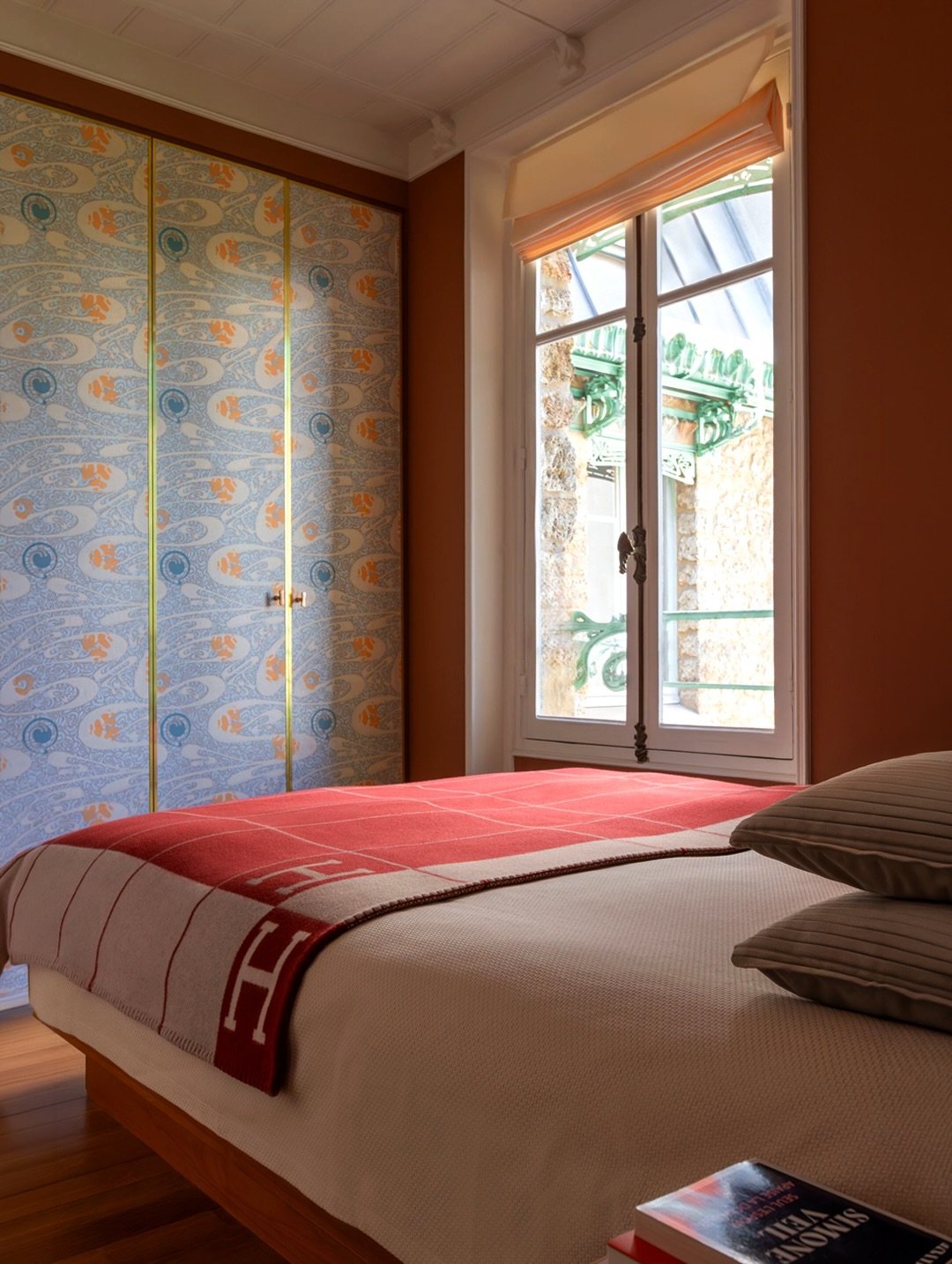
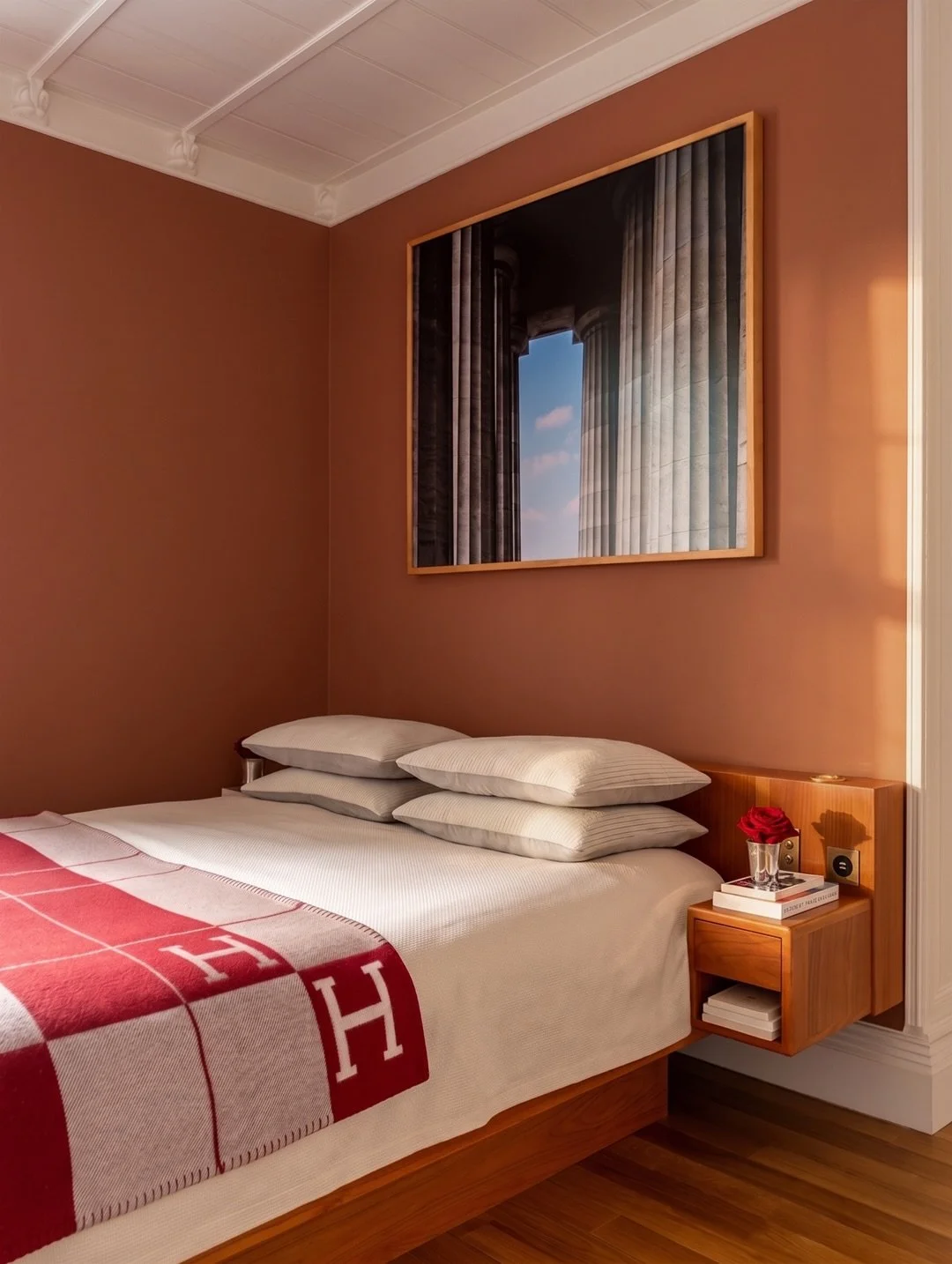
In the bedroom, a wardrobe is covered in a reissued Hector Guimard wallpaper from L’Atelier d’Offard, nodding to the wallpapers Guimard originally created for Castel Béranger. The walls are painted in Marrakesh red, echoing the warmth of the brickwork outside.
Elsewhere, the apartment is finished in a pale green, a shade the former owner described to Architectural Digest as a kind of “Ladurée green,” which also picks up the green-painted ironwork on Castel Béranger’s exterior.
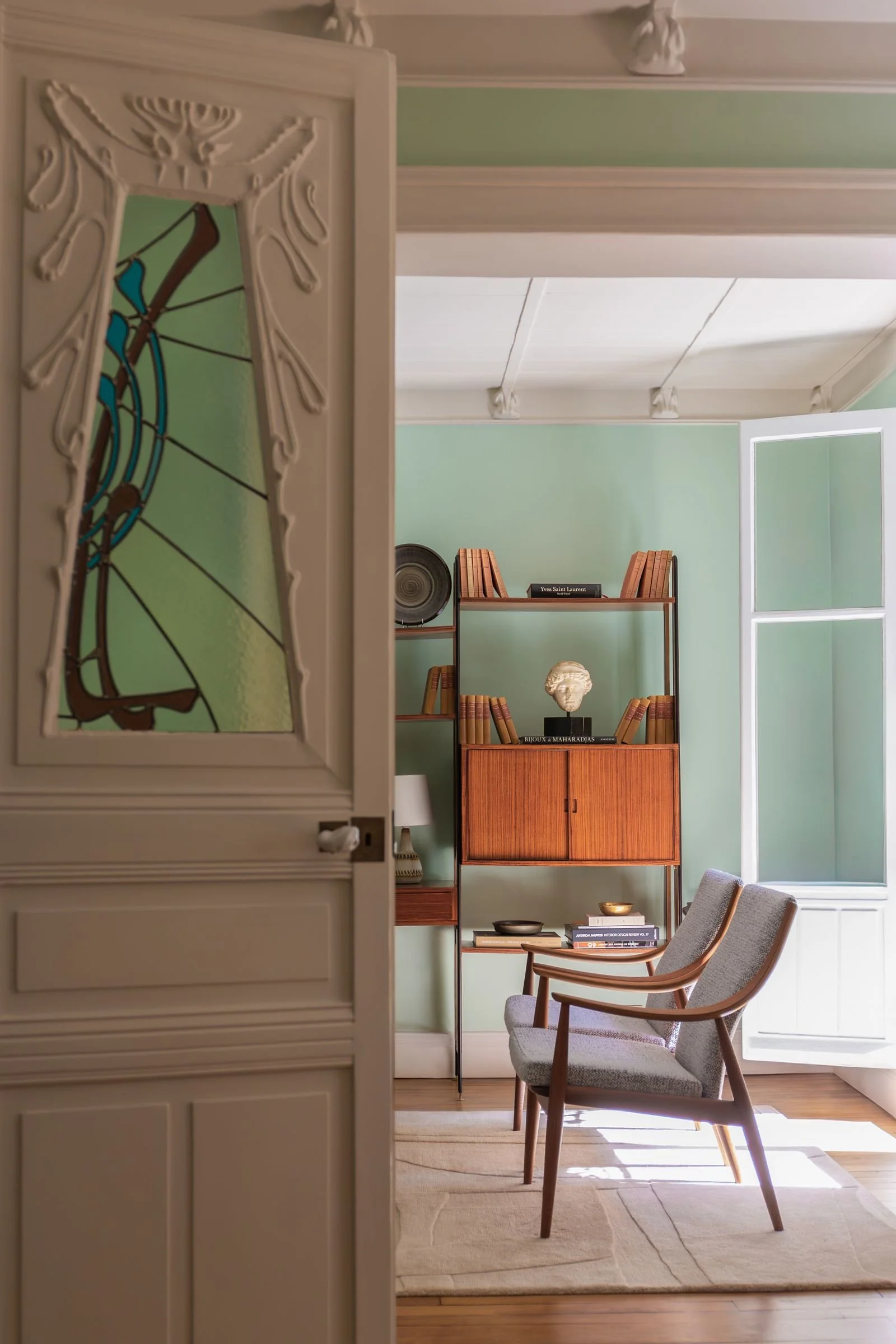
Preserved details include stained glass, mouldings, brass handles, original joinery, decorative doors, narrow-strip parquet, and an antique fireplace by Guimard. Protected elements such as the original niches, cupboards, windows, and doorframes were also retained, tying the apartment directly to Castel Béranger’s Art Nouveau language. Photography by Lucas Soubigou-Marie.
Paris’s 16th Arrondissement
Located at 14 rue Jean-de-La-Fontaine, Castel Béranger sits in Auteuil, in the western part of the 16th arrondissement, between the Seine and the Bois de Boulogne. The setting is residential and discreet rather than removed, with the Eiffel Tower visible from the street and Passy within a short walk. Long associated with private hôtels particuliers, family apartments, and Haussmannian architecture, this part of Paris offers a more insider version of the city: less postcard, more lived-in, with architectural significance, green space, and easy access to the western edge of Paris.
For an international buyer, the property’s appeal is highly specific: a compact Paris residence with balconies, elevator access, restored interiors, and a rare position inside a protected Art Nouveau building in one of western Paris’s most established residential districts.
It is not simply a renovated one-bedroom apartment in the 16th arrondissement. It is a carefully revived jewel inside one of Paris’s great Art Nouveau buildings, restored in a way that brings Guimard’s language back to life while keeping the space intimate, personal, and livable.
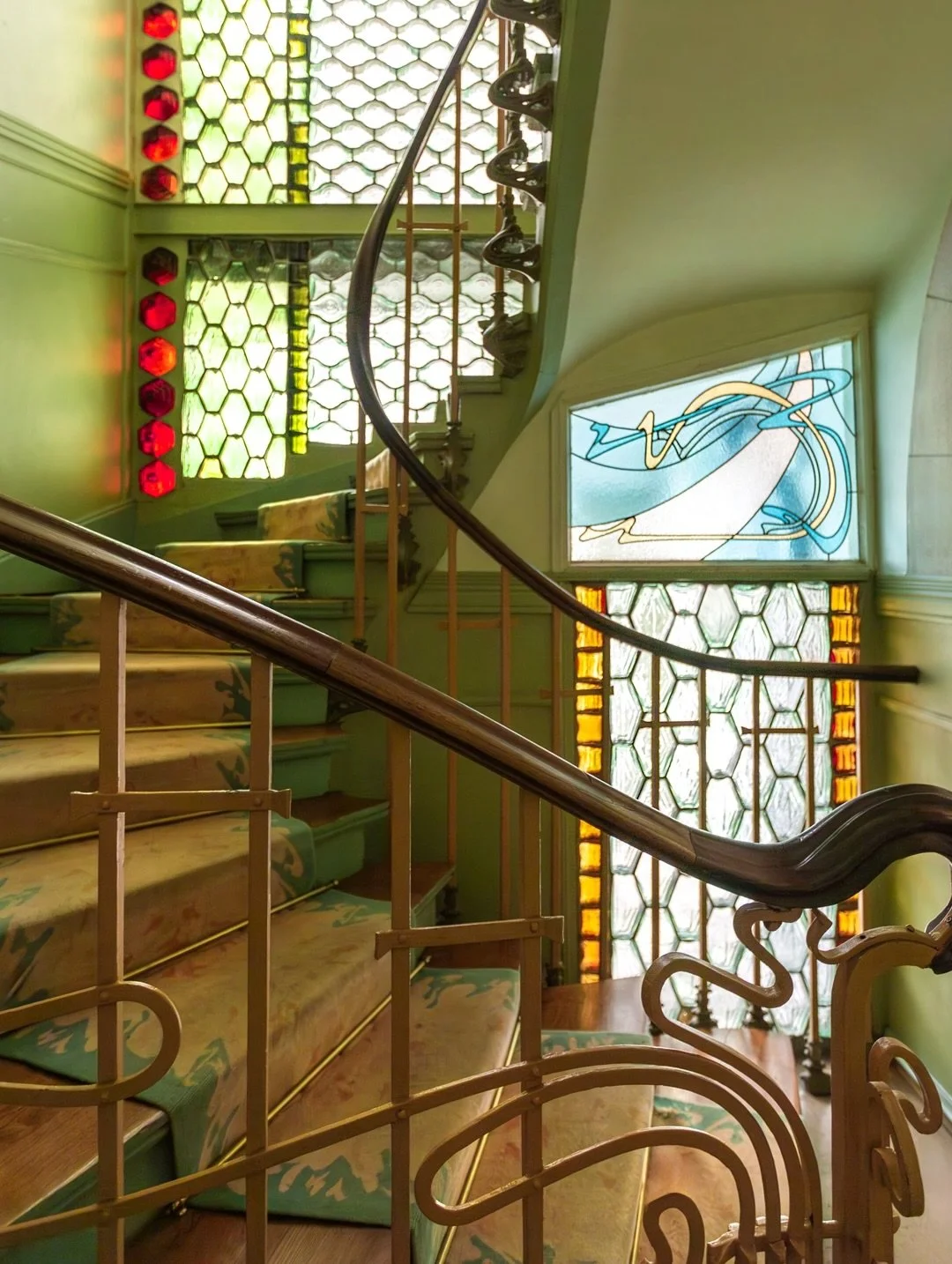
More than a century after it was built, Castel Béranger remains one of the defining works of French Art Nouveau.
Photography by Lucas Soubigou-Marie.