A 1920s Artist Retreat in Woodstock, New York Lists for $4.25 Million
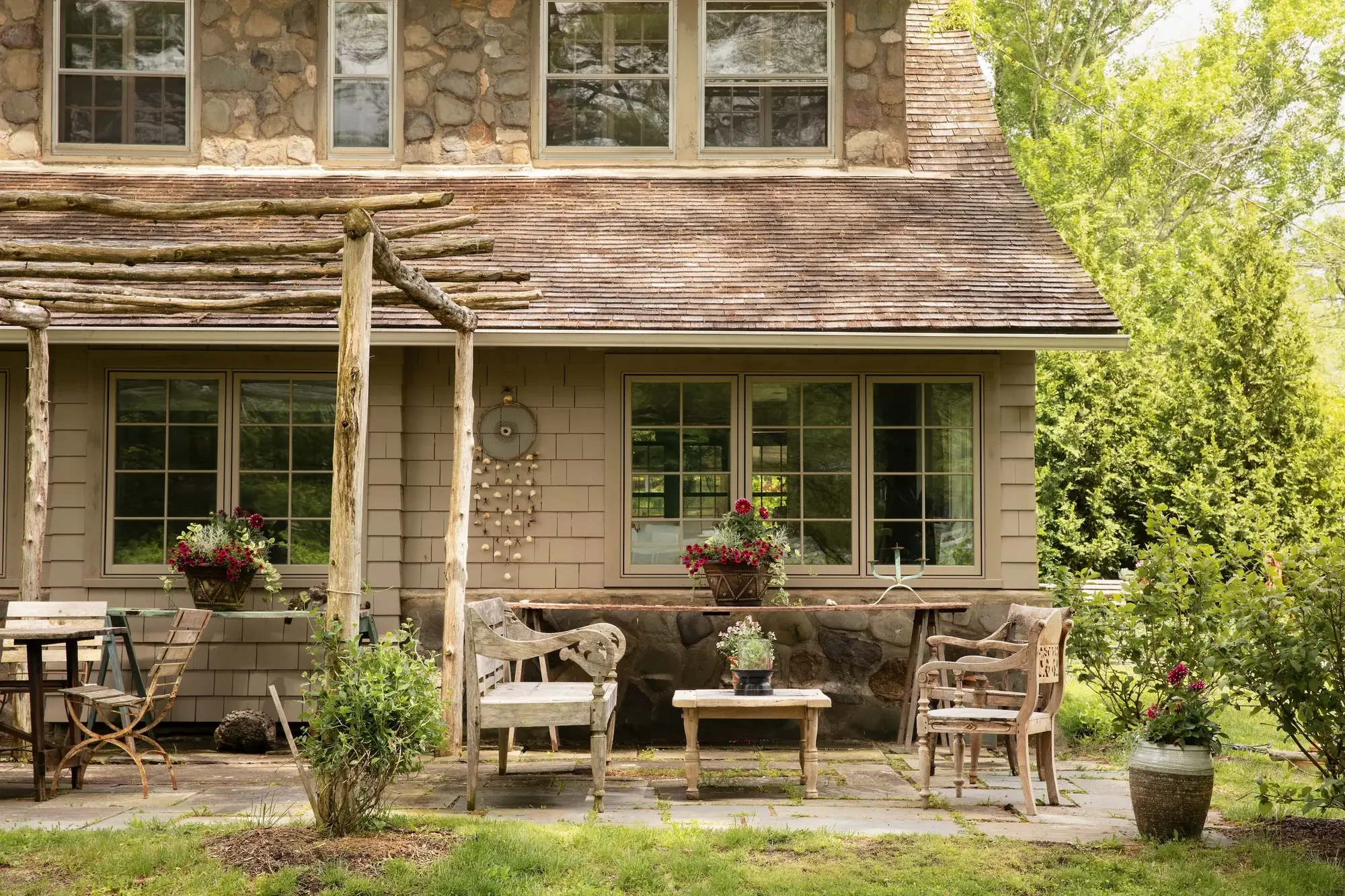
Bedrooms: 7 Bathrooms: 4 Interior: 367 m² / 3,948 ft² Lot: 0.65 ha / 1.6 acres
Amenities: Restored 1920s stone house, former artist’s studio converted into a guest cottage, landscaped grounds by Michael Trapp, Viking appliances, Stûv Belgian fireplace insert, skylights, walk-to-village location
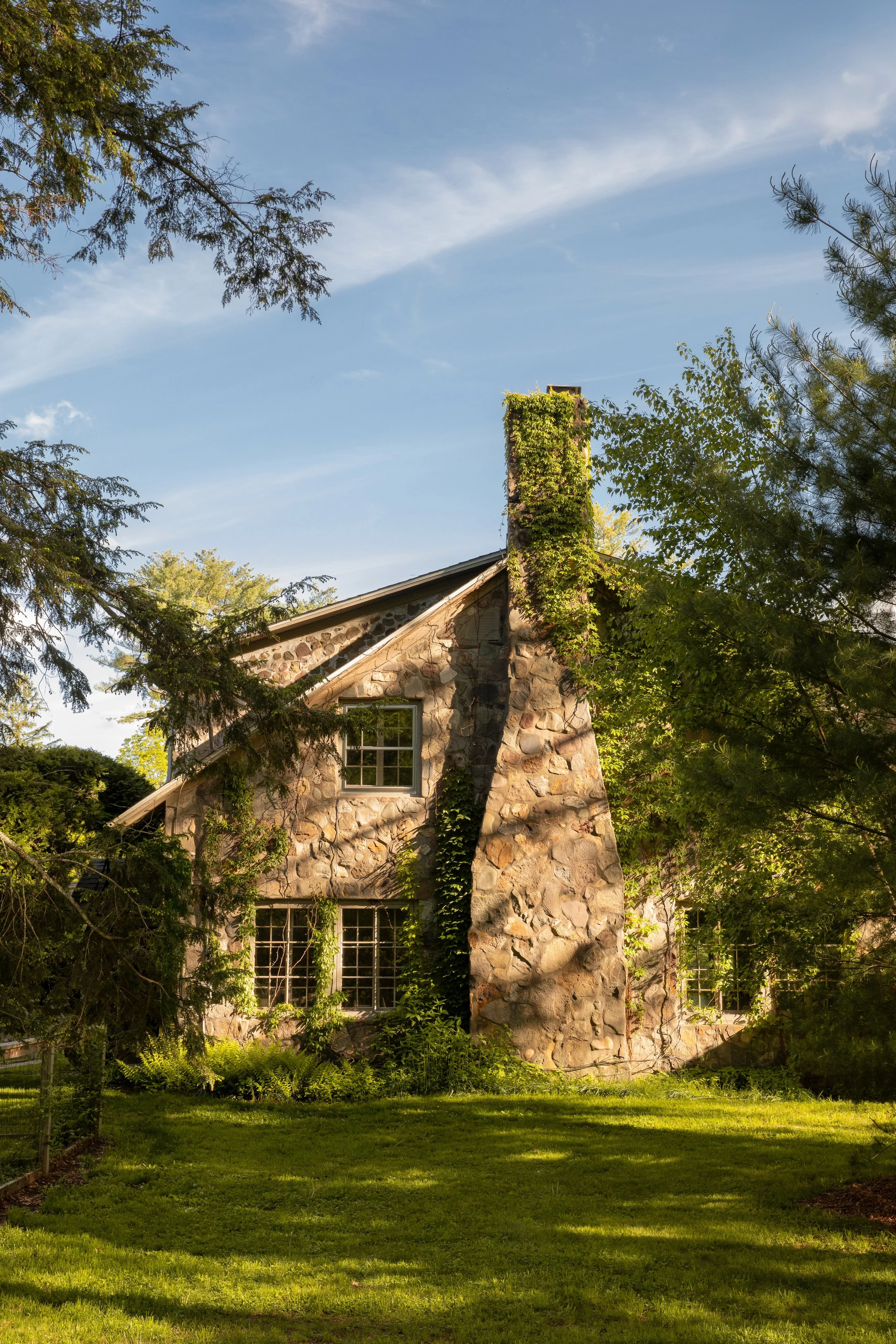
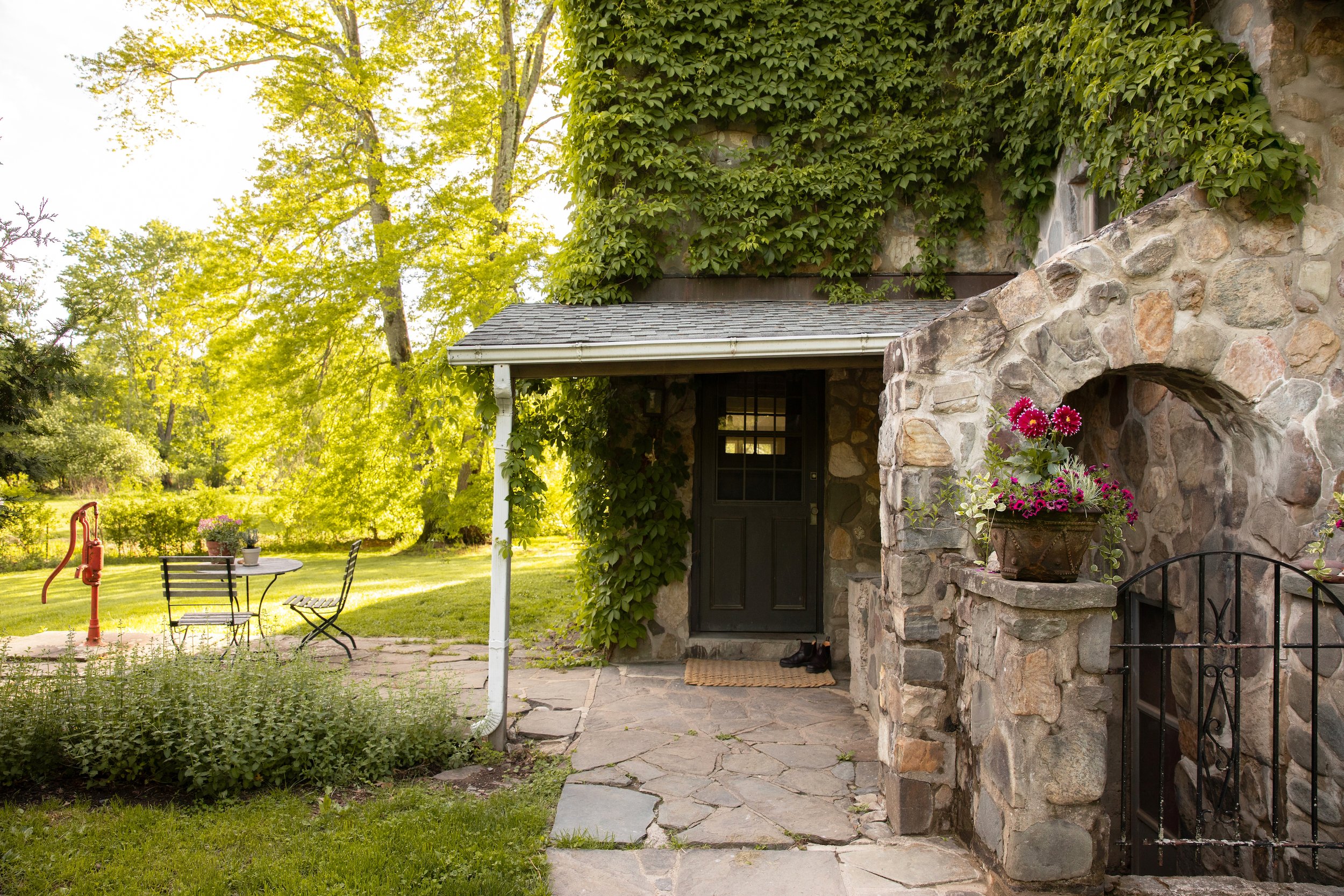
Set on a quiet road just a short walk from the center of Woodstock, New York, Library Lane is the kind of property that feels closely tied to the history of the town around it.
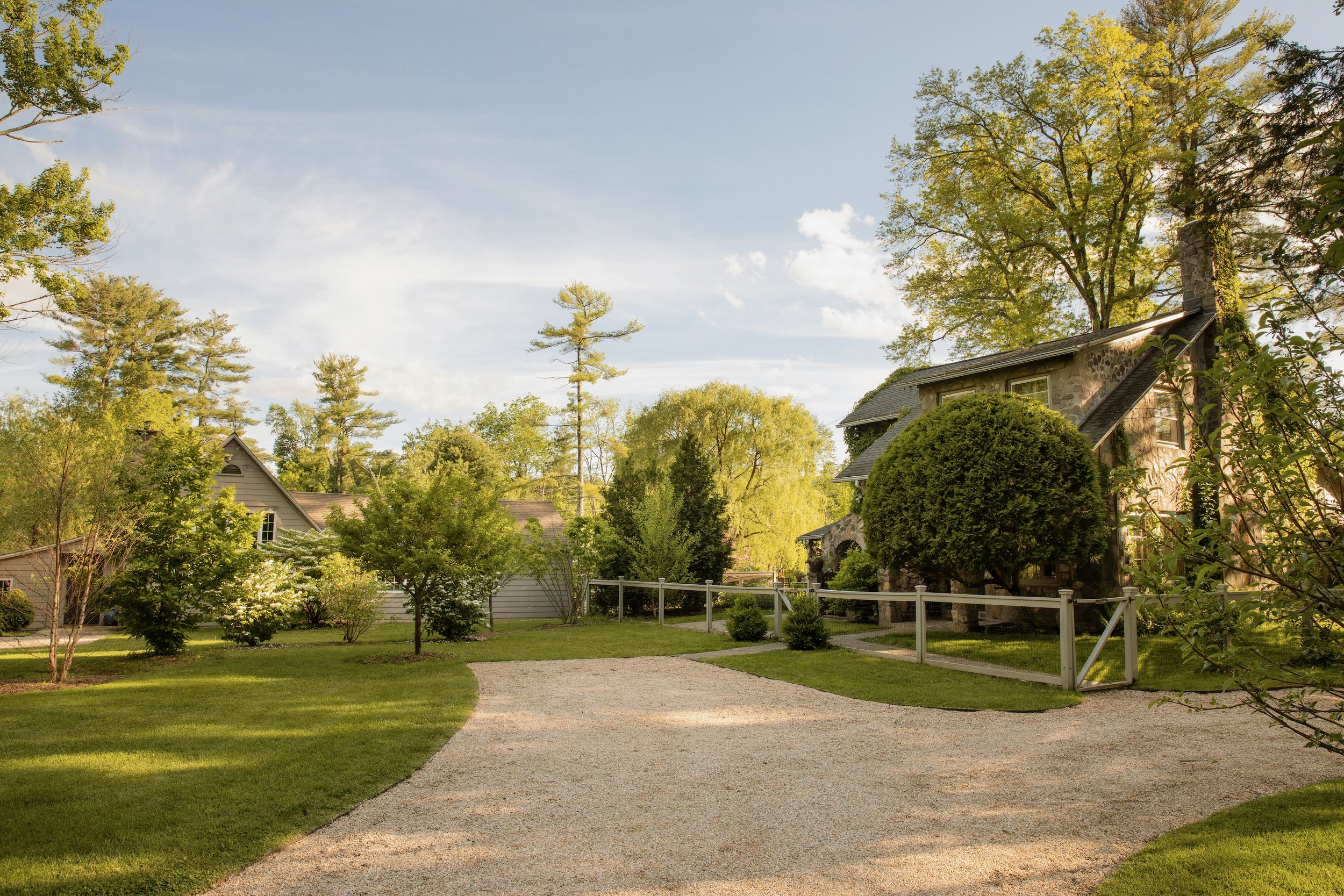
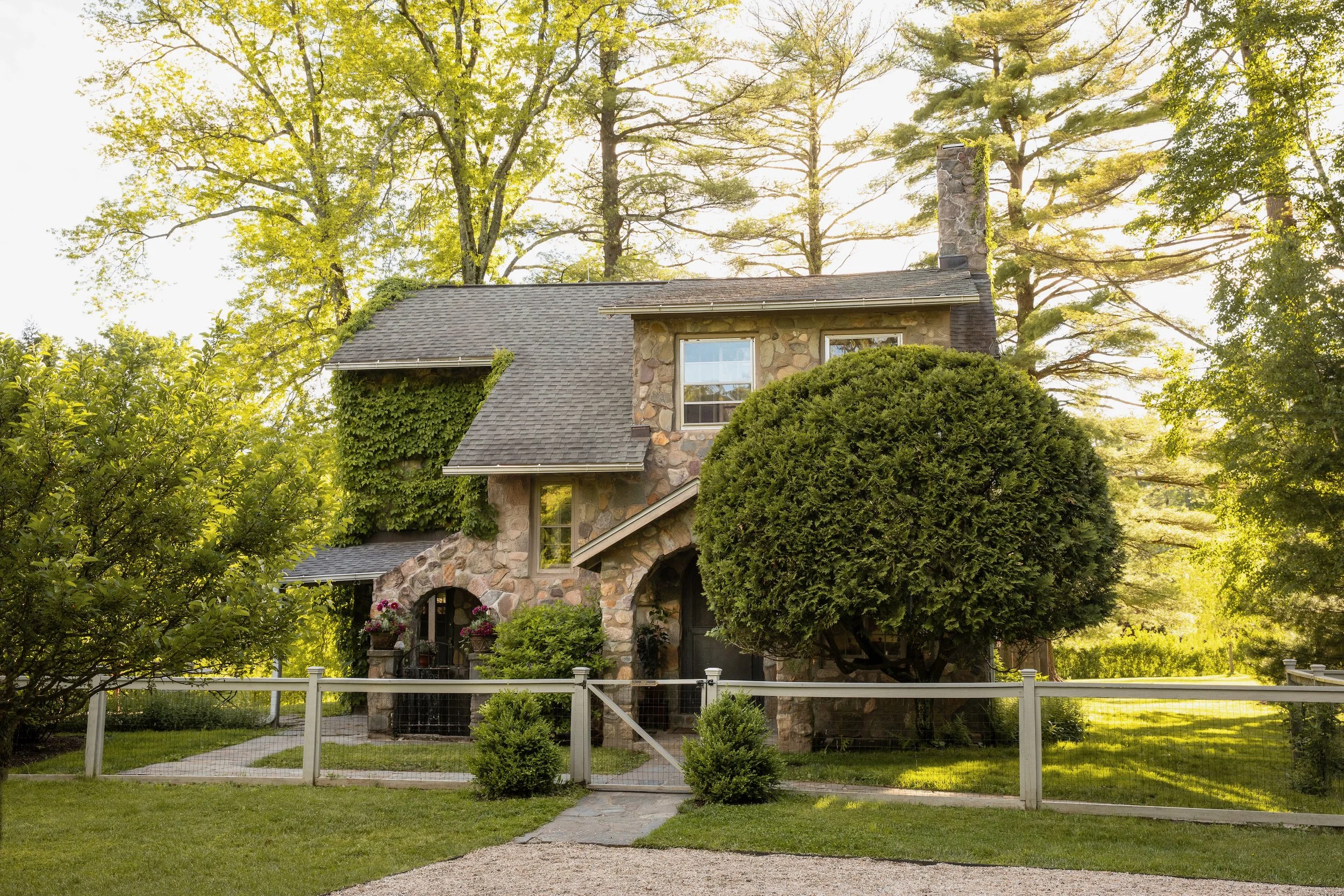
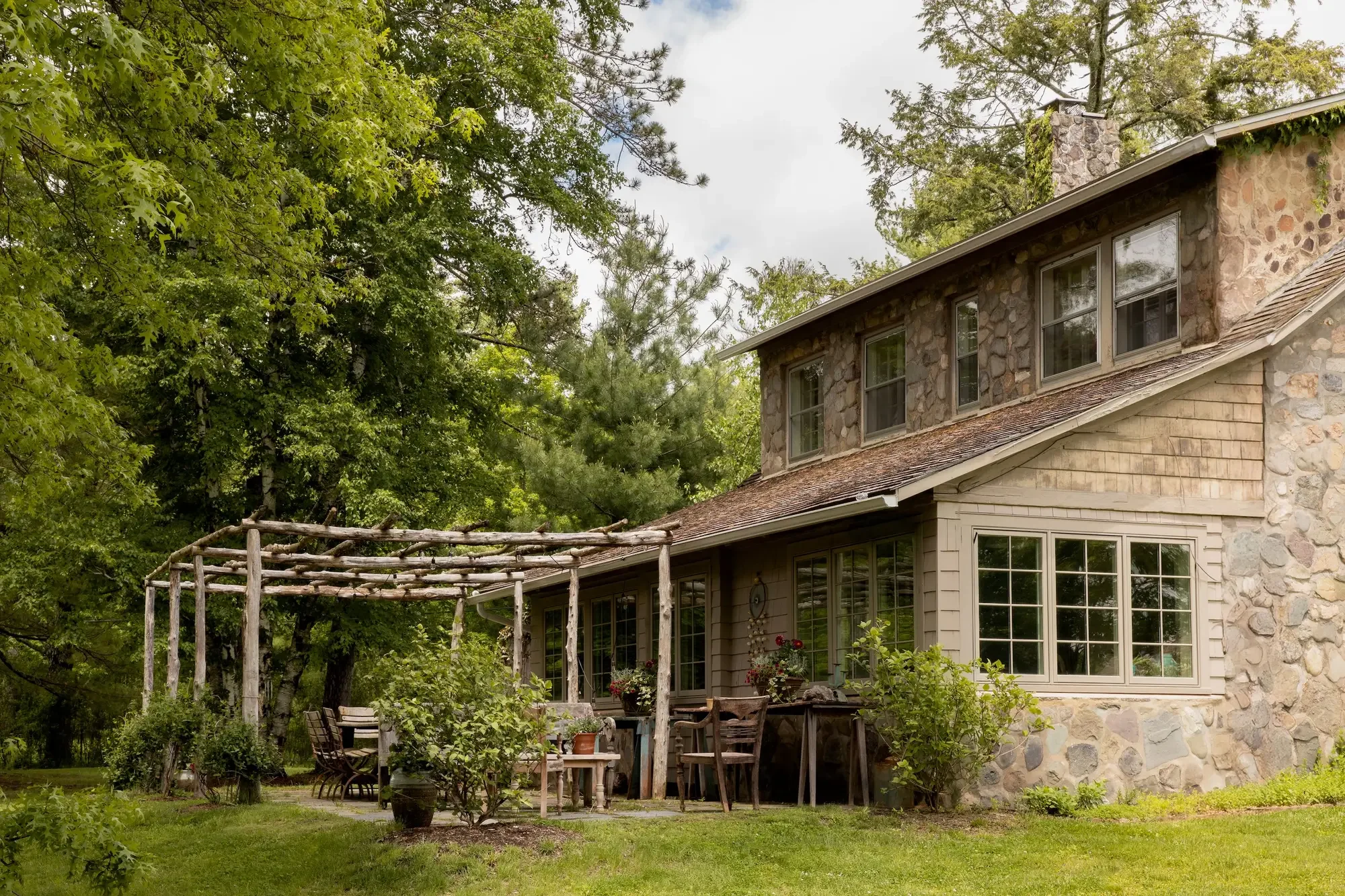
Built in the 1920s by Woodstock artist Paul Arndt, the compound brings together his original stone house and the painting studio he later built beside it. Today, the studio has been converted into a three-bedroom guest cottage, creating a seven-bedroom property spread across two characterful buildings and 1.6 acres of landscaped grounds.
The property is now listed for $4,250,000 with The Lillie K. Team at Sotheby’s International Realty.
An Artist’s Home in the Catskills
Woodstock has long been one of the Hudson Valley’s best-known creative towns. Long before the name became associated with the 1969 music festival — which actually took place about 50 miles away in Bethel — Woodstock had already established itself as a place for artists, writers, musicians, and craftspeople.
That identity began taking shape in the early twentieth century, particularly with the founding of the Byrdcliffe Arts Colony in 1902. Artists came to the area for the mountain setting, the quieter pace, and the possibility of living and working outside New York City while still remaining within reach of it.
Library Lane belongs to that early chapter of Woodstock’s story. Paul Arndt built the stone house as his home, with the separate studio serving as his place to paint. According to the listing, the property also became a gathering place for artists in his circle, many of whom lived nearby and were part of the town’s early creative community.
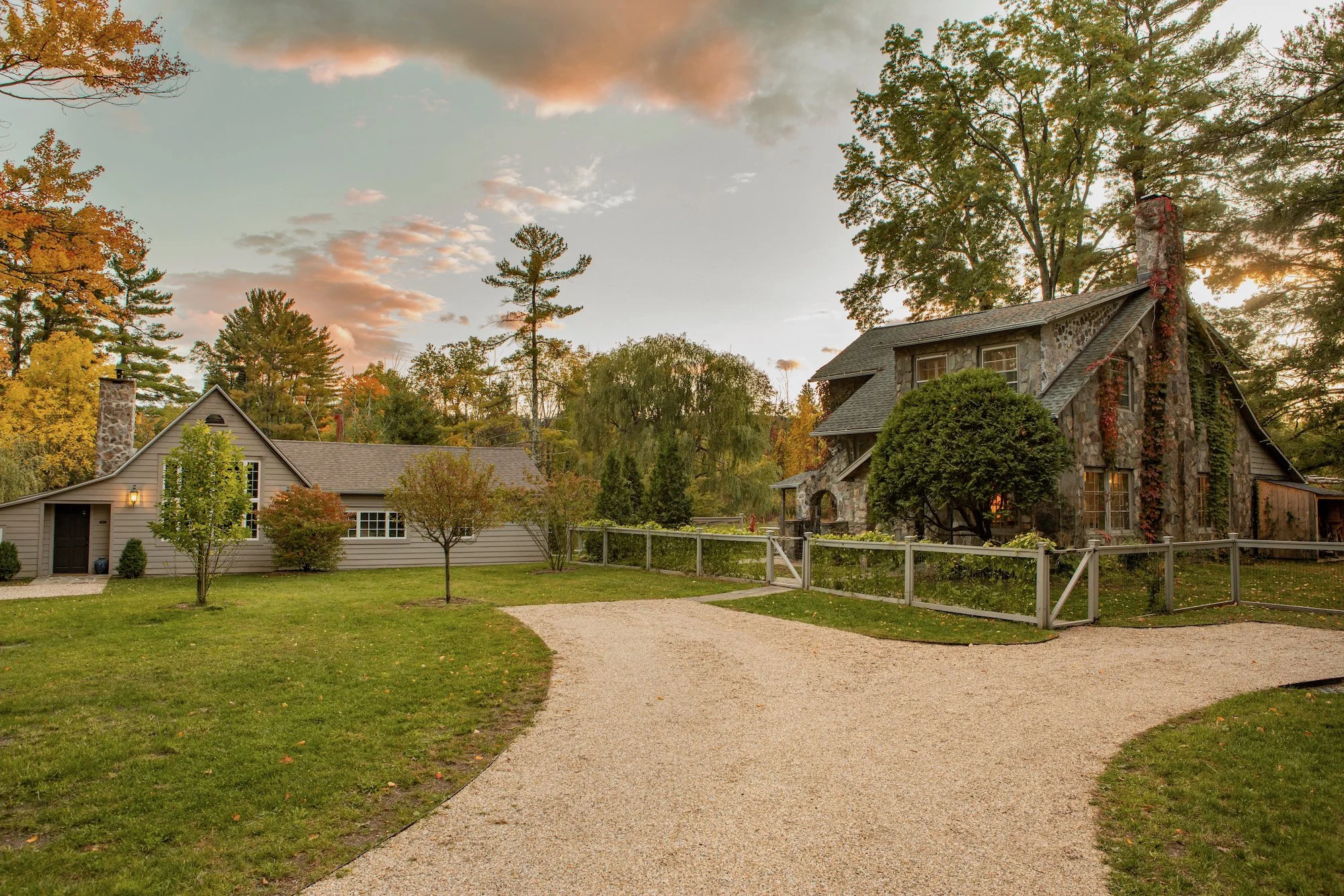
Set on 1.6 acres in the heart of Woodstock, the circa-1925 compound combines a historic stone residence with a converted artist studio guest cottage.
The Stone House
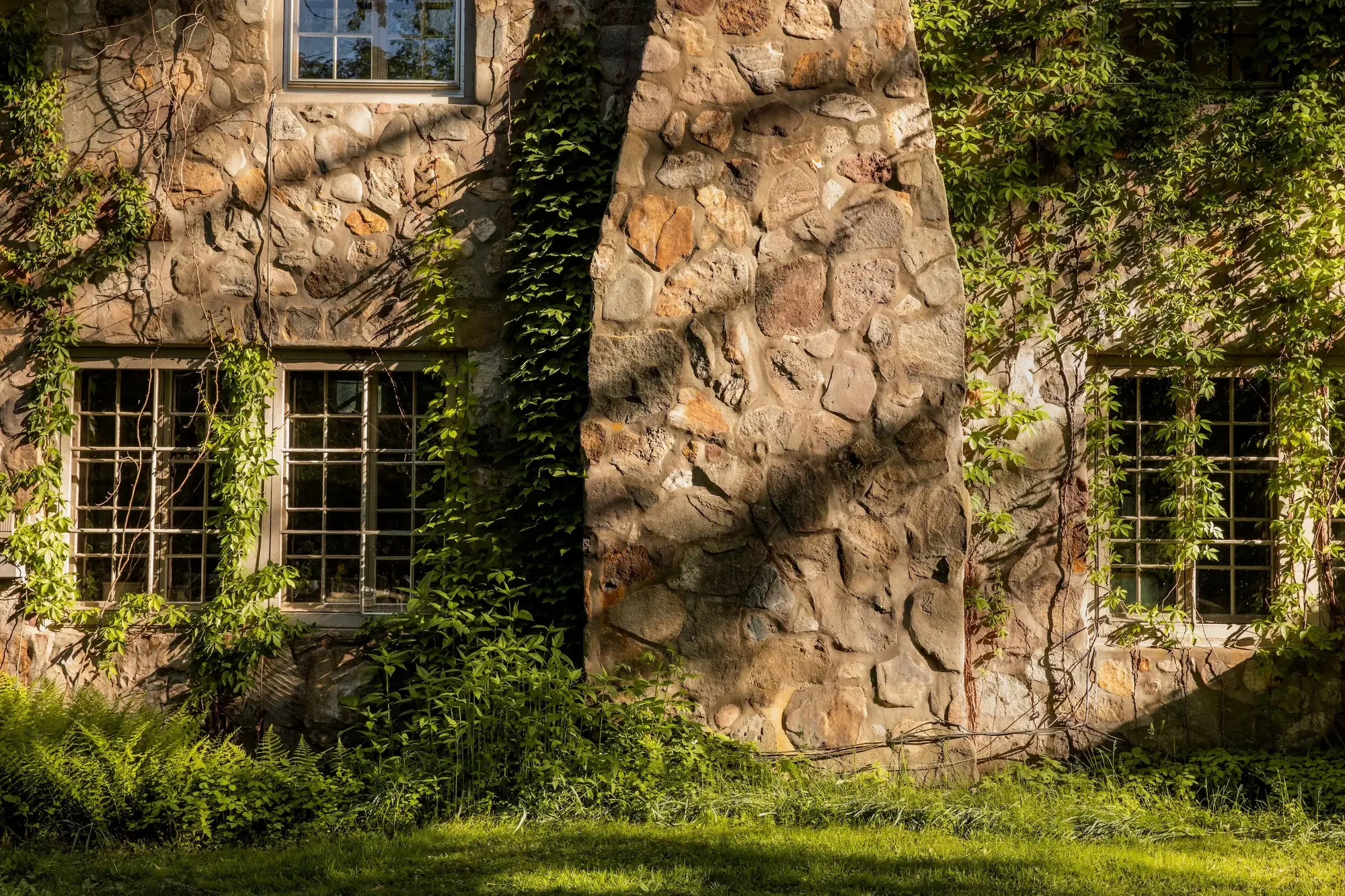
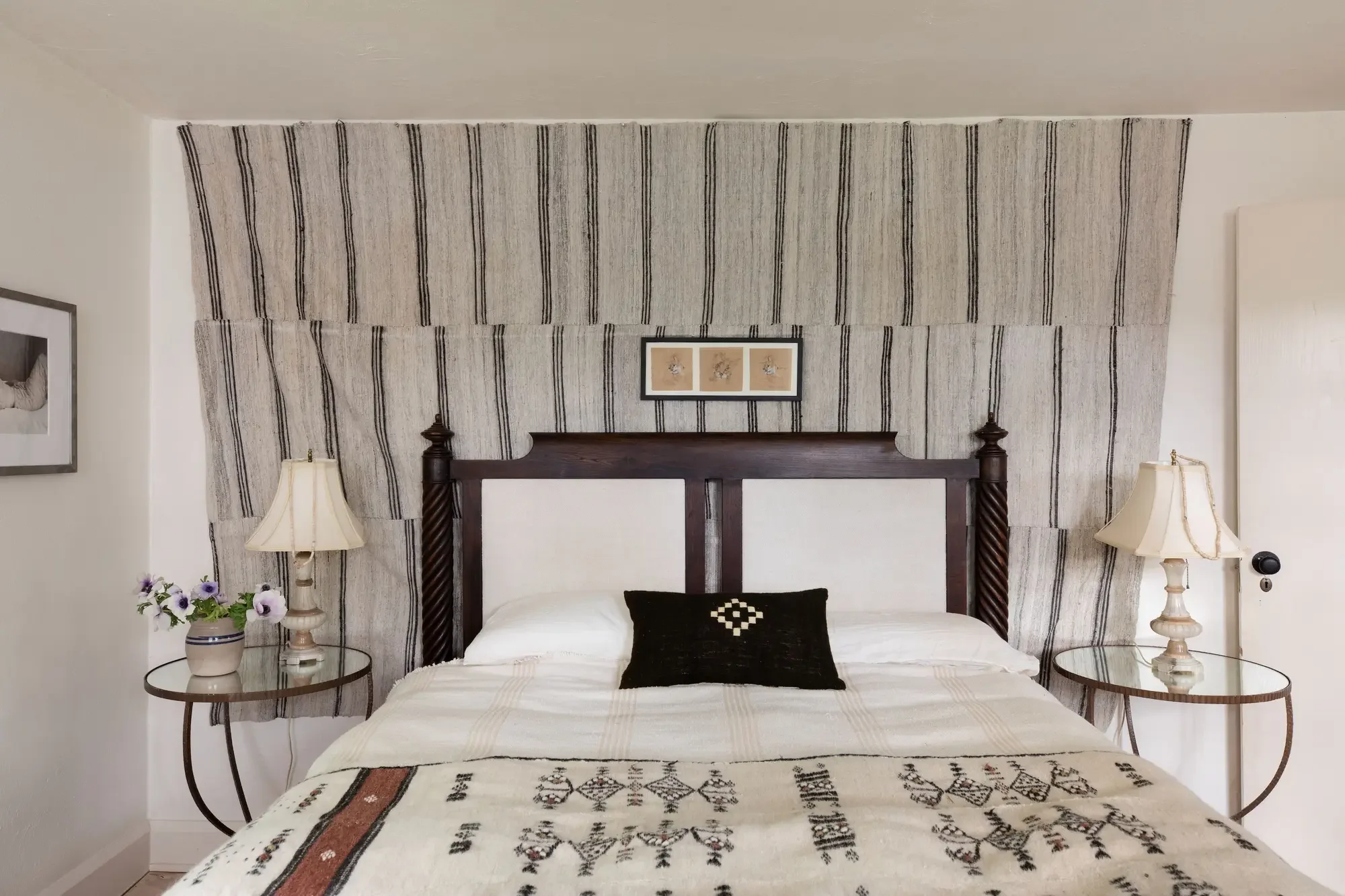
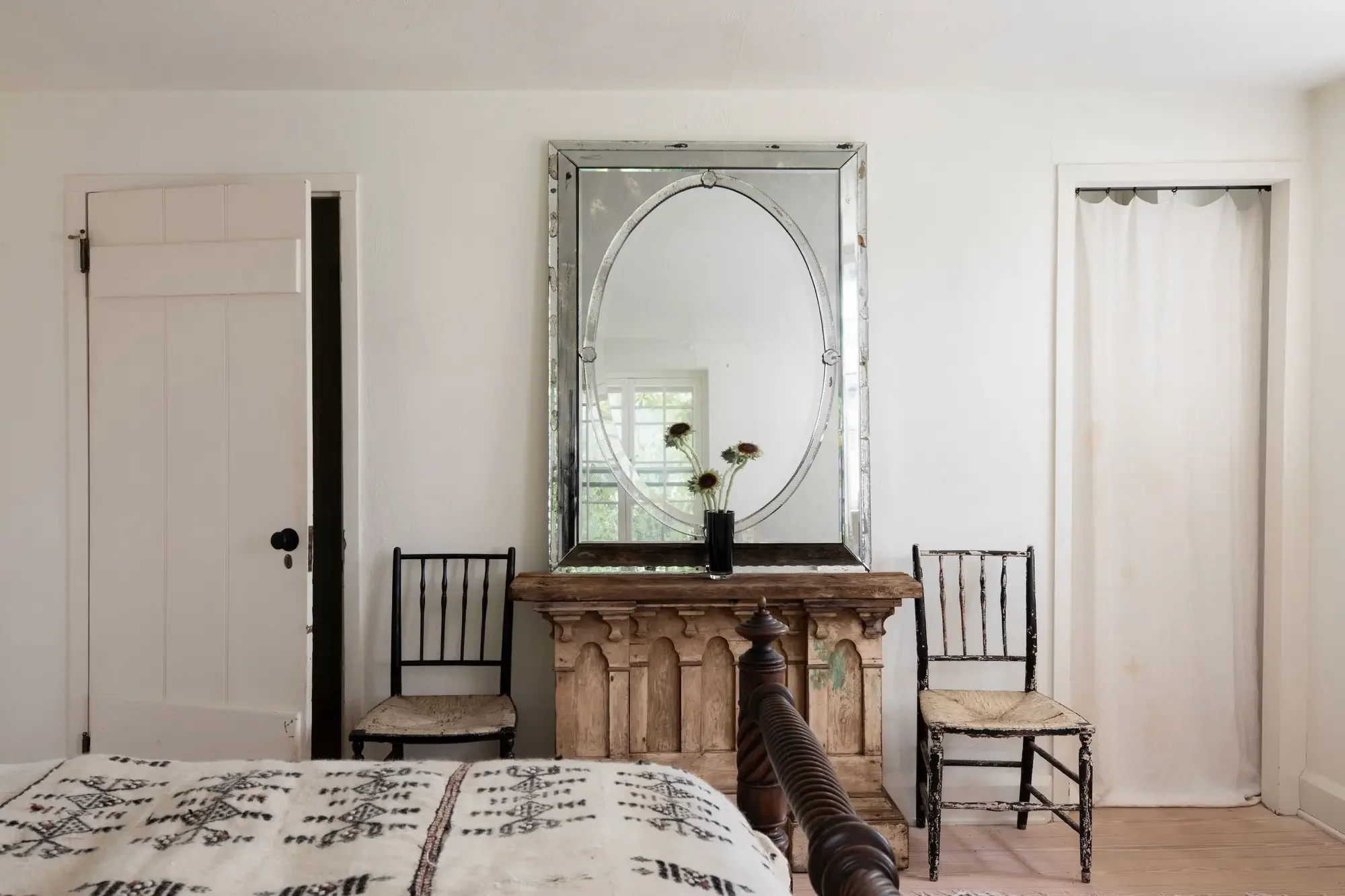
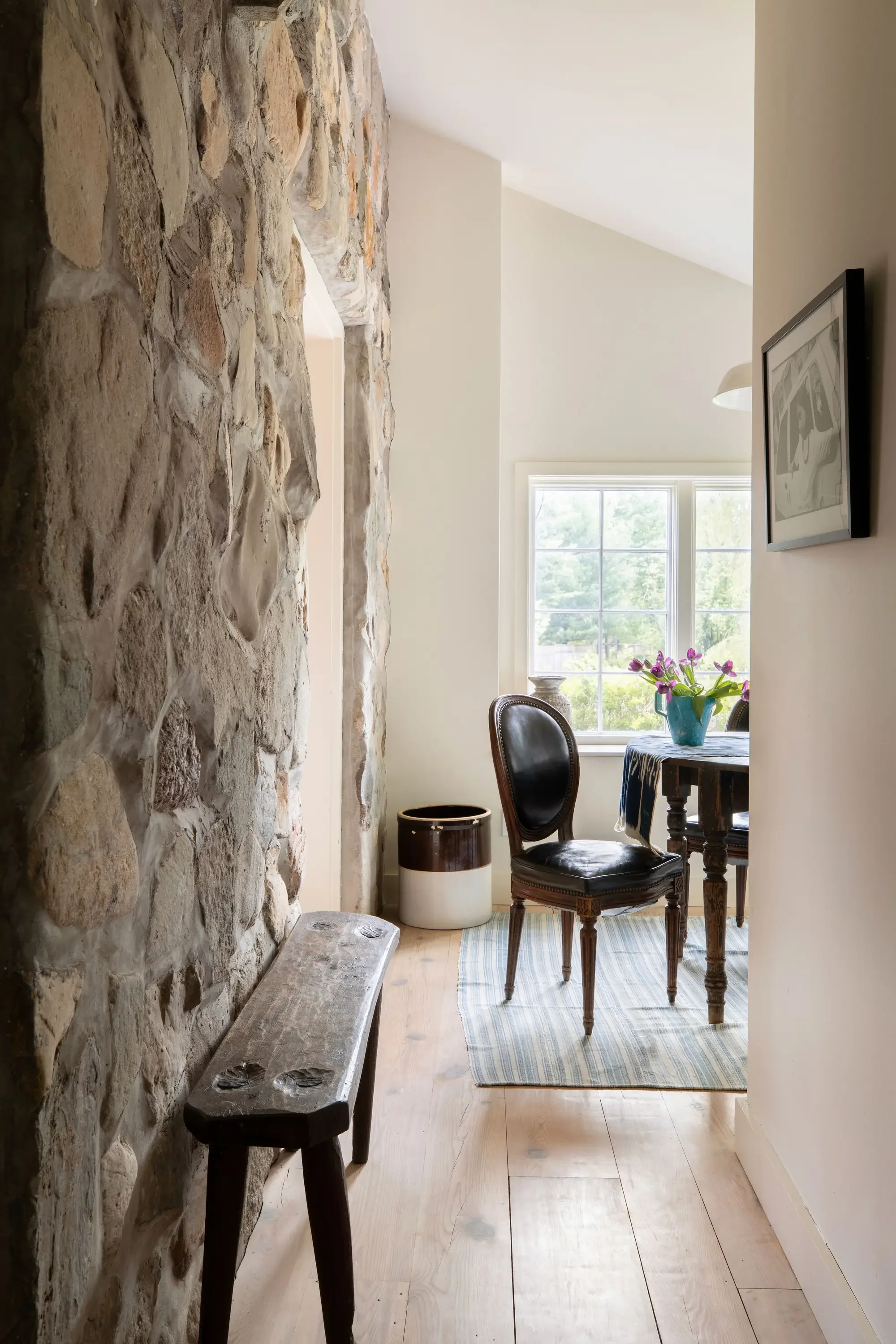
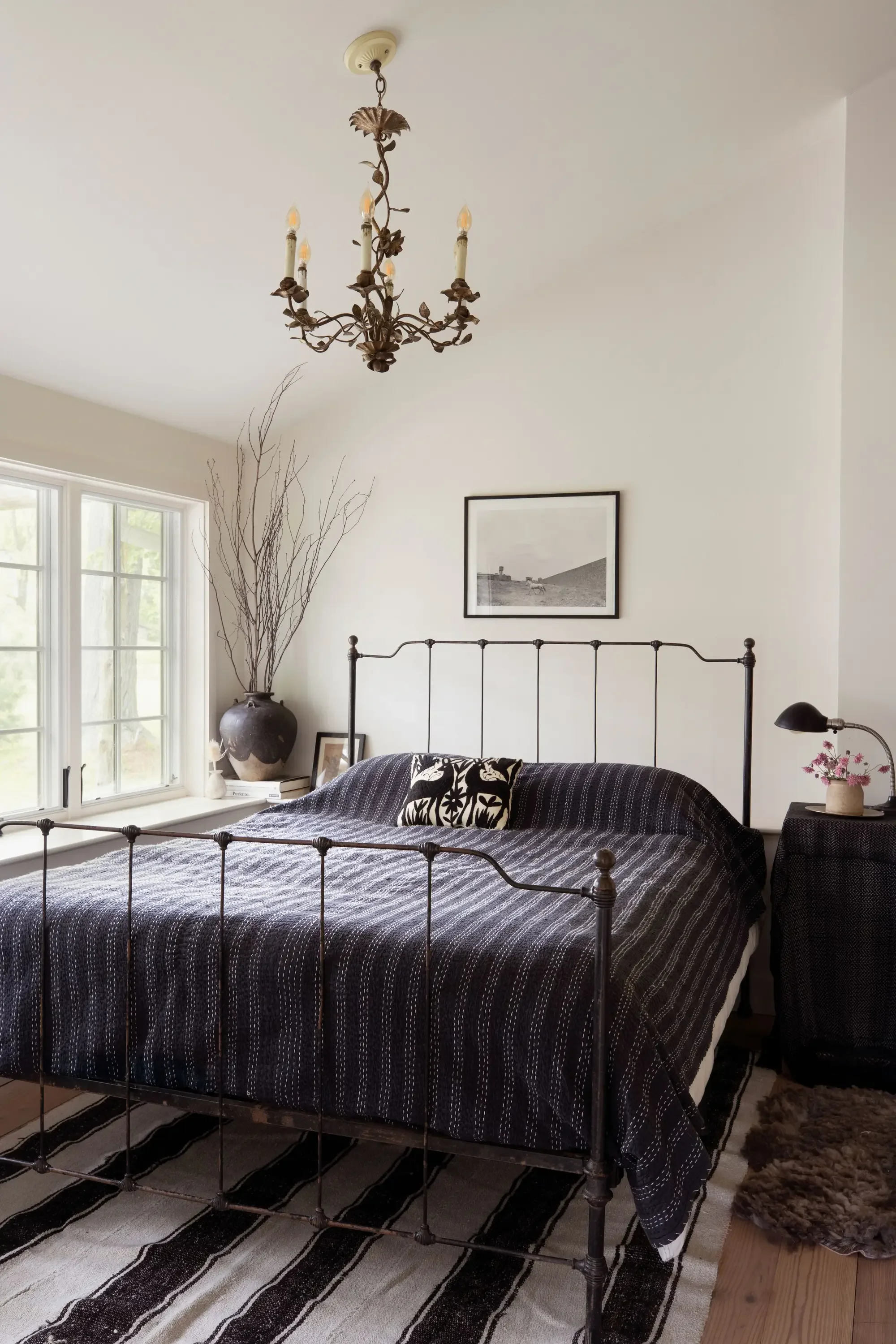
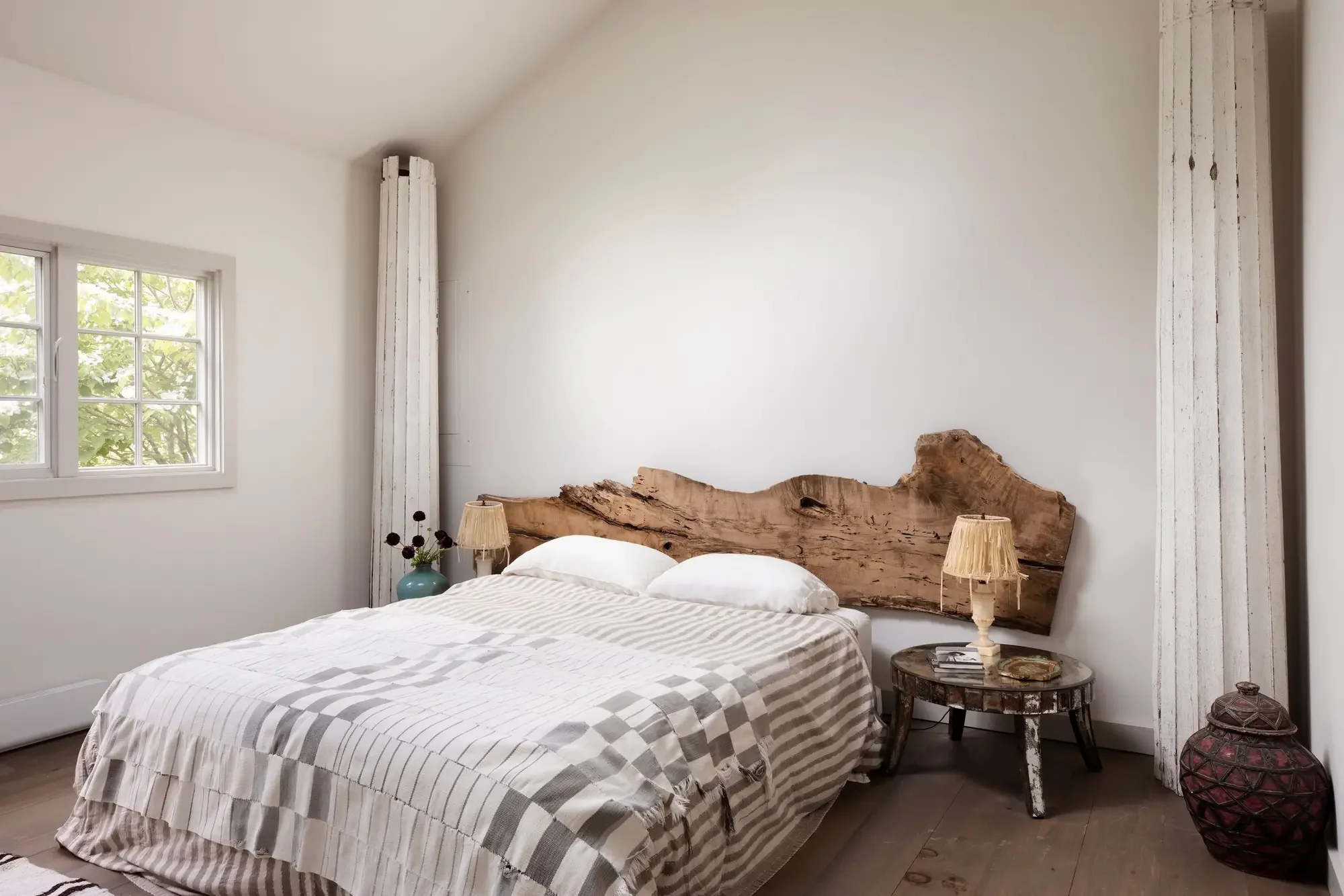
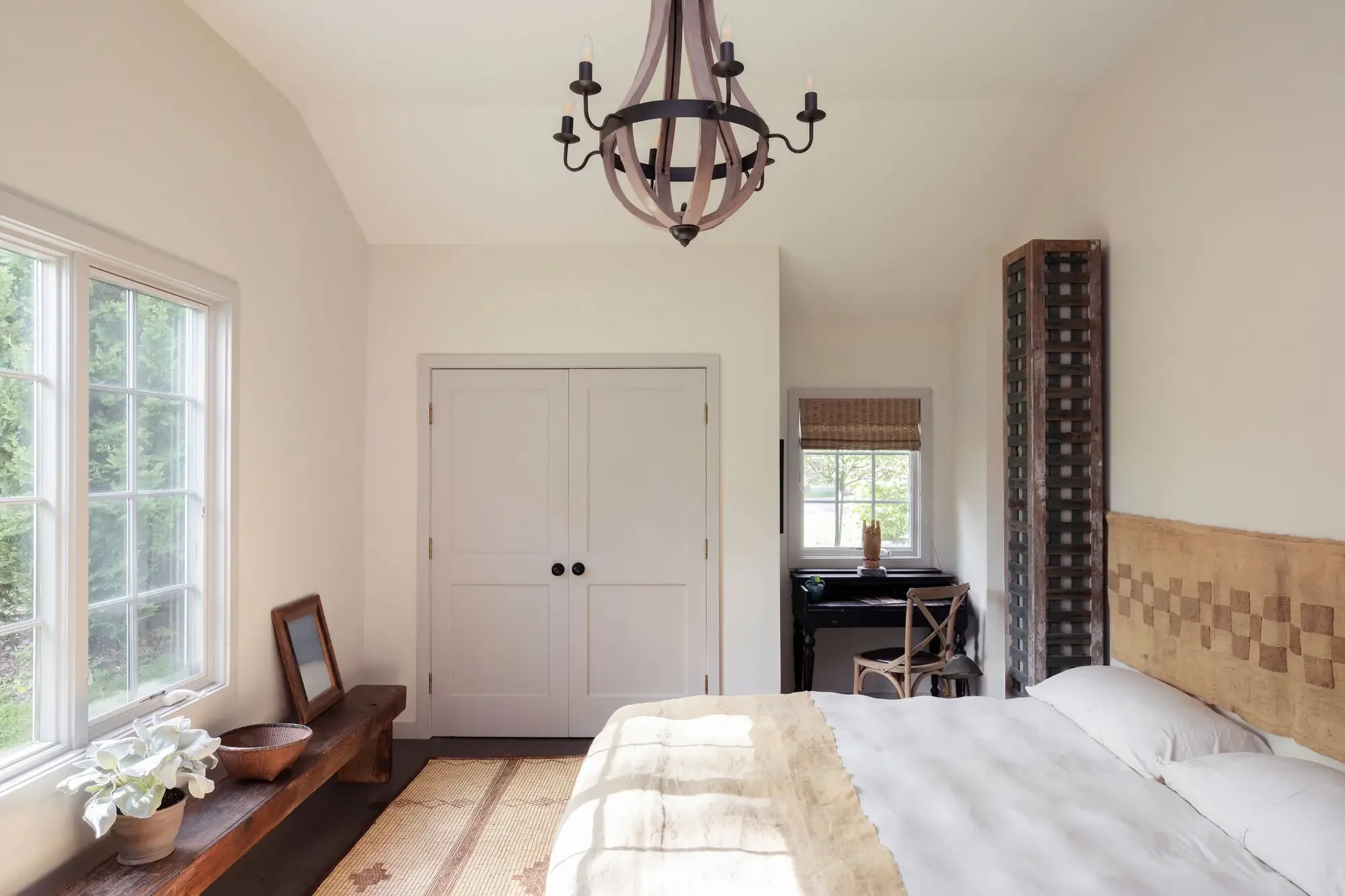
The main house is a four-bedroom, two-bathroom stone residence that has been restored by its current owner with a light touch. It keeps the feeling of an old artist’s house, but with interiors that are calm, warm, and easier to live in today.
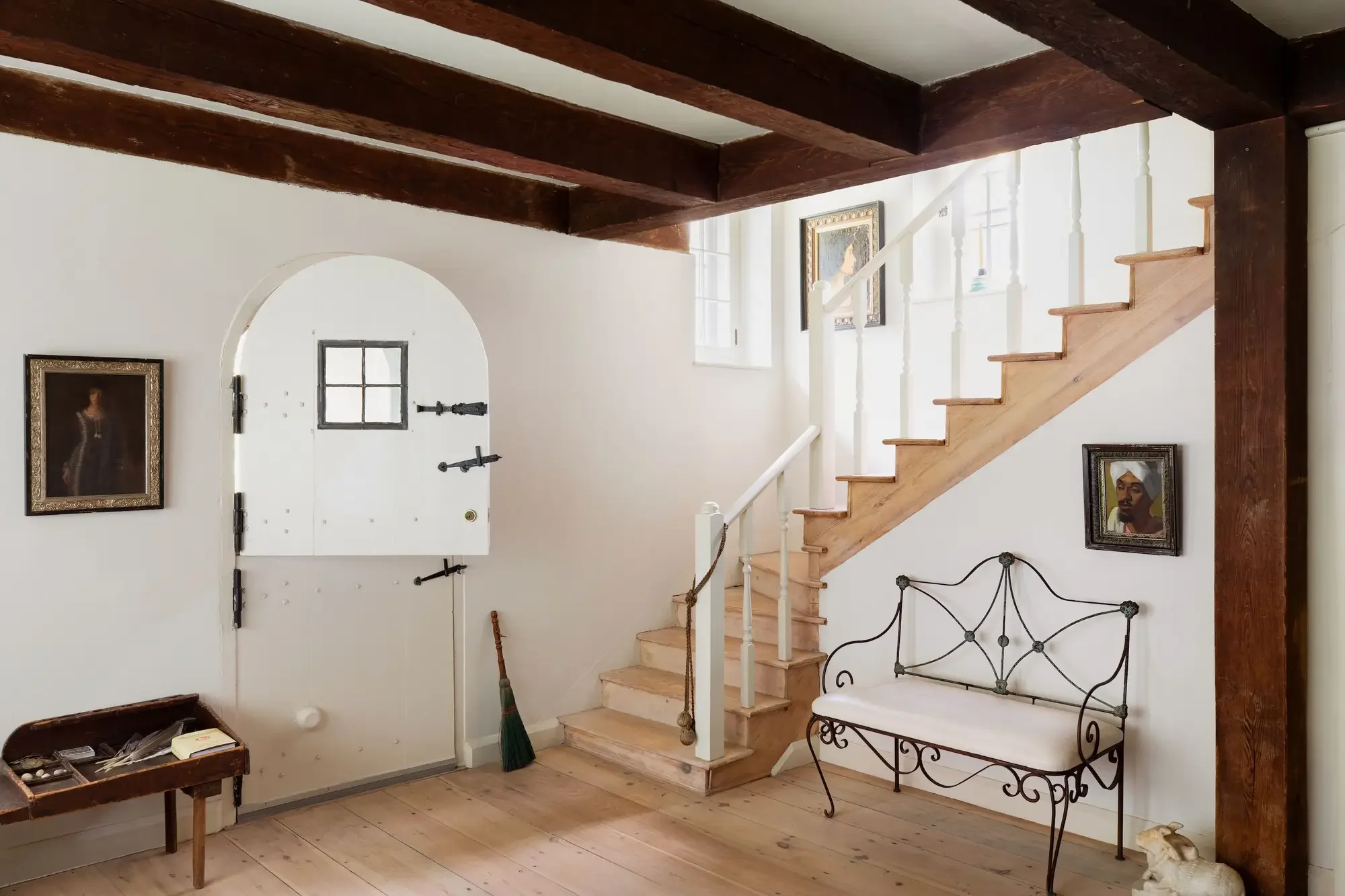
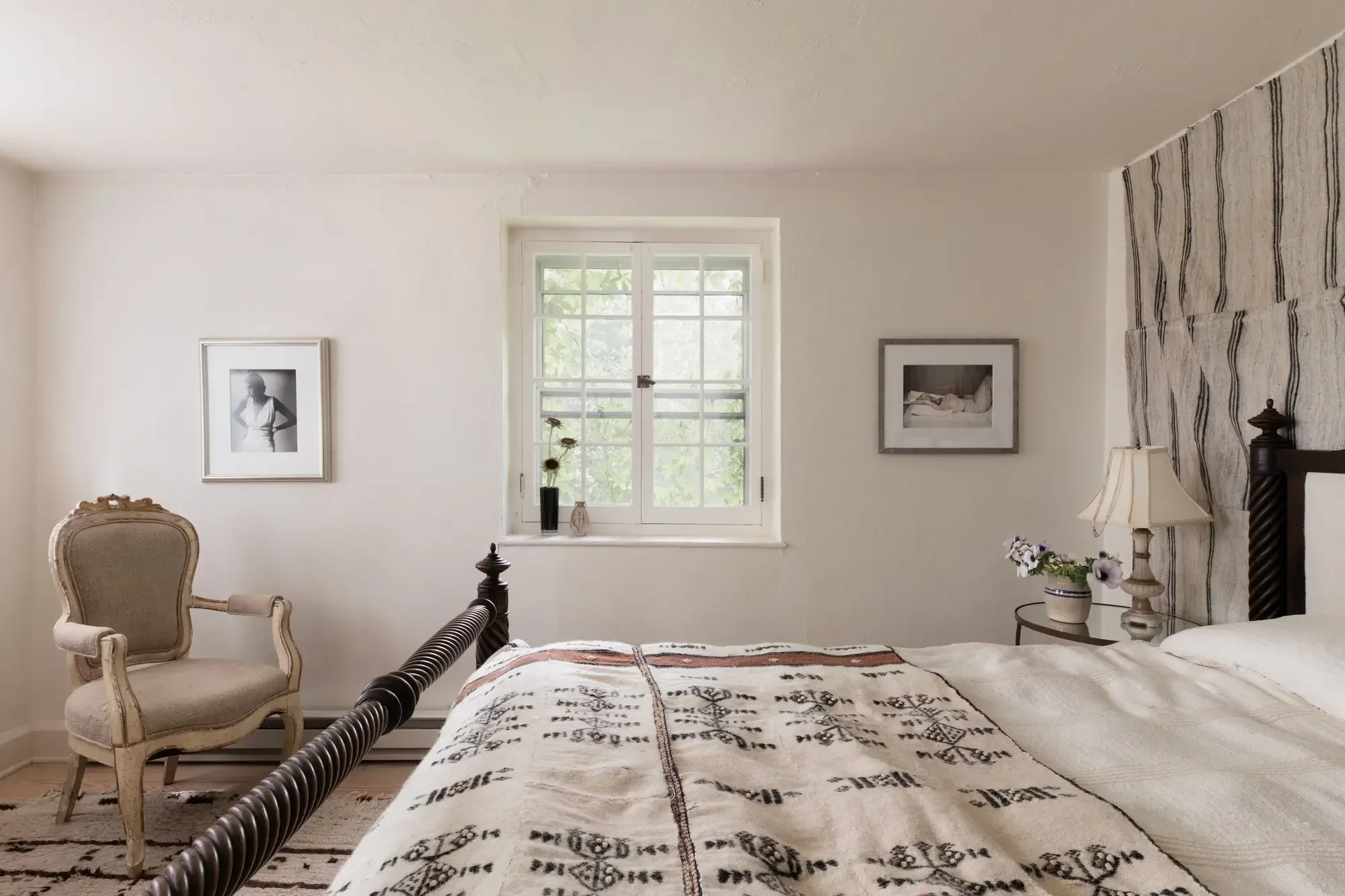
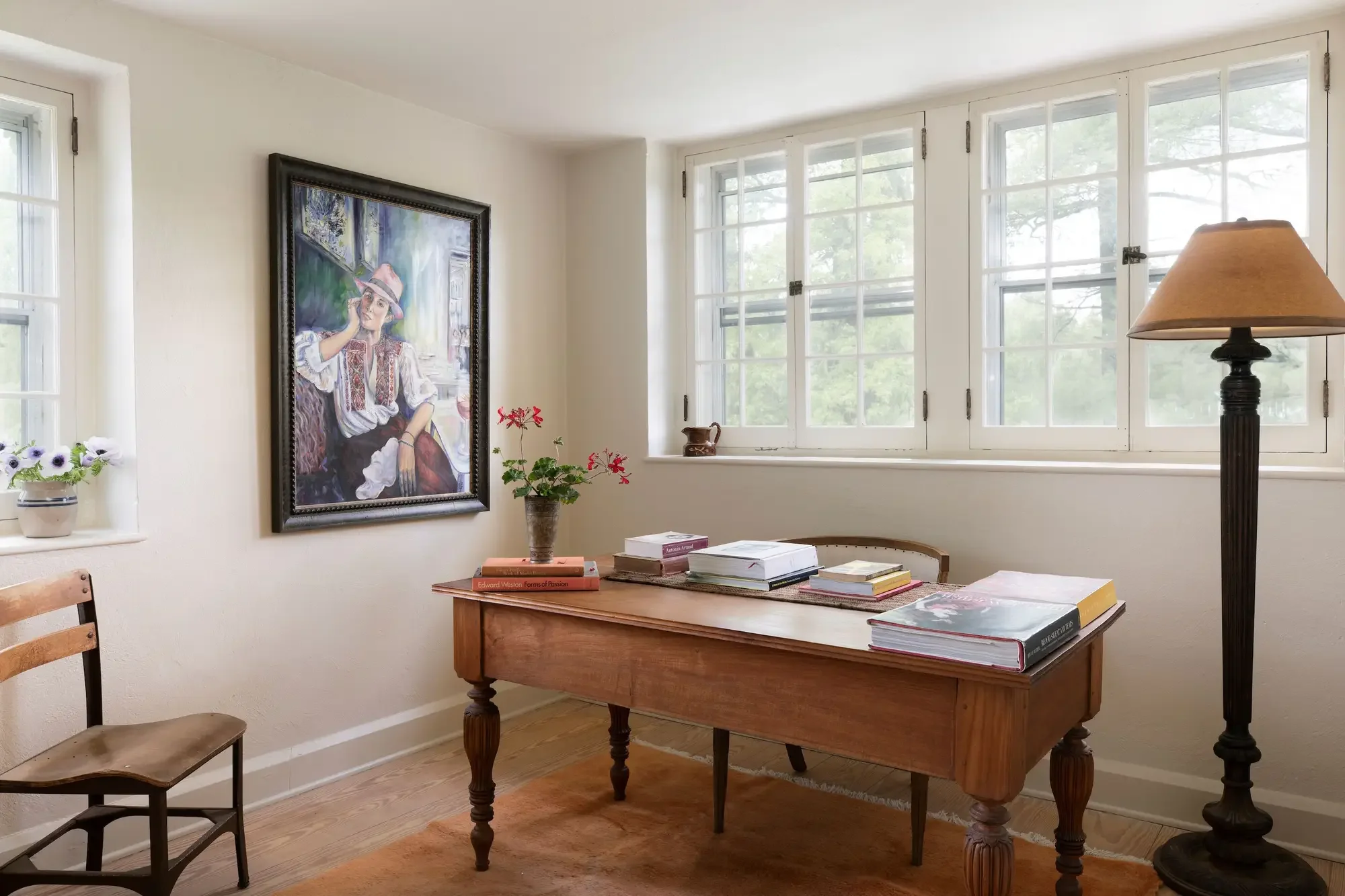
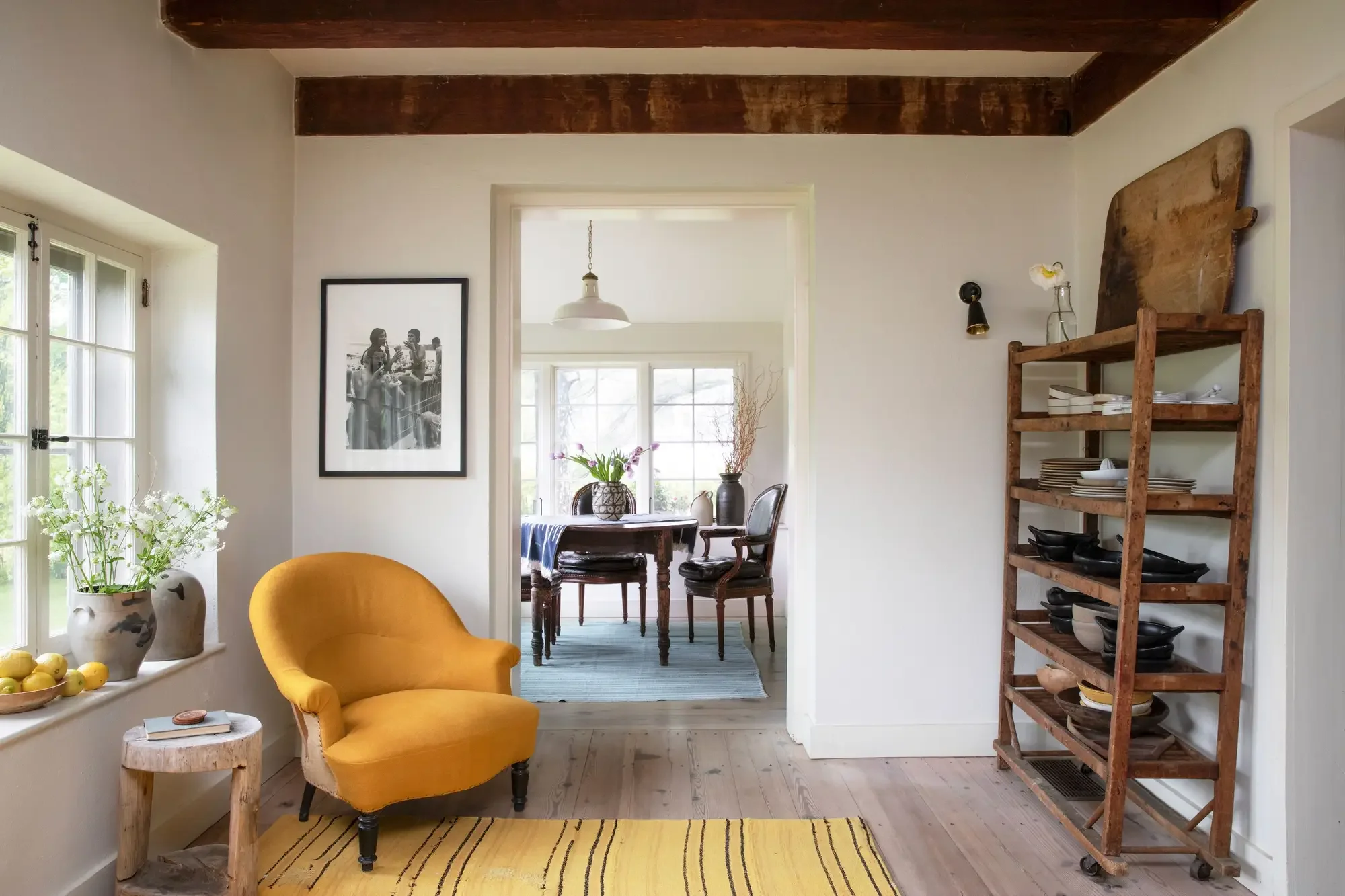
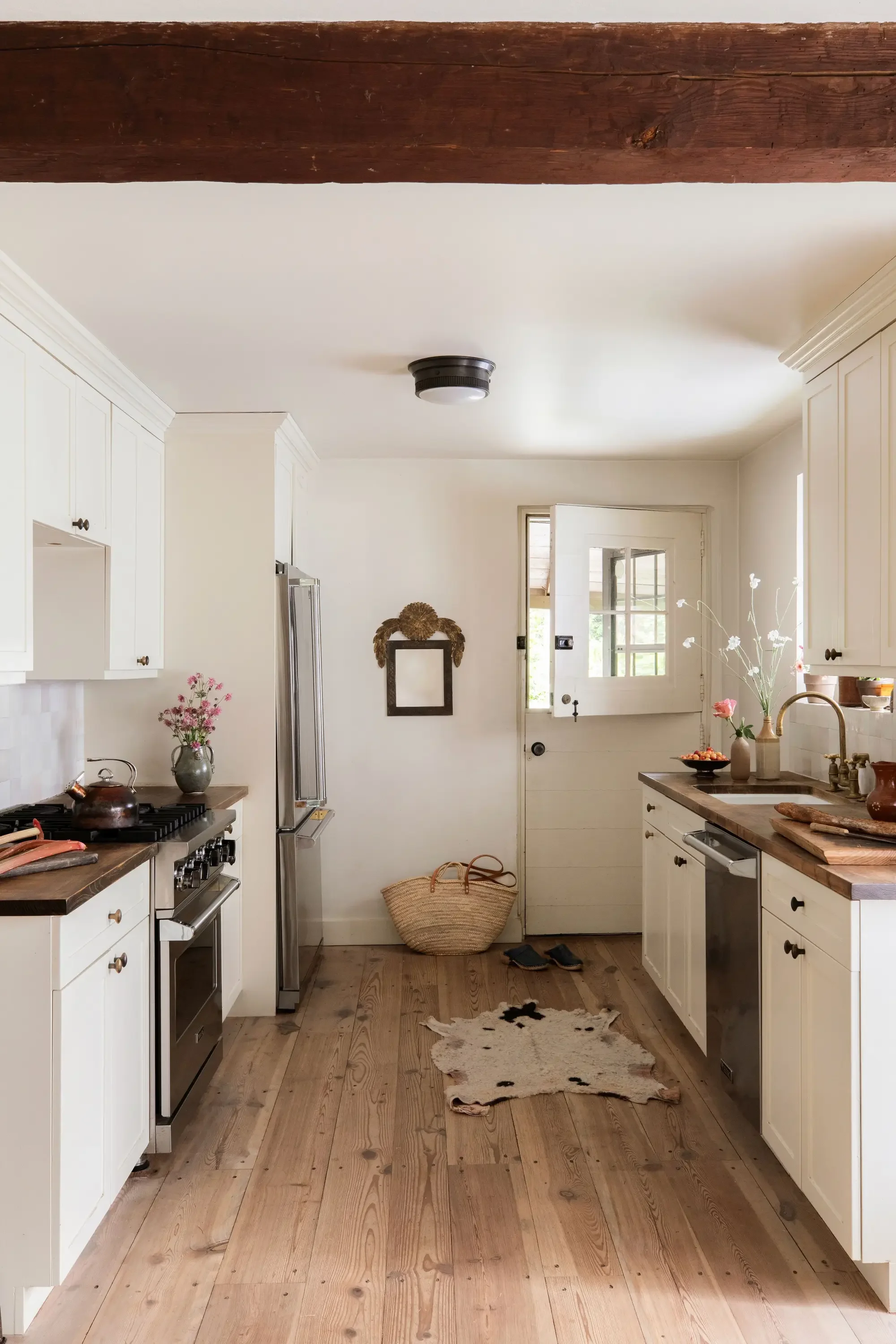
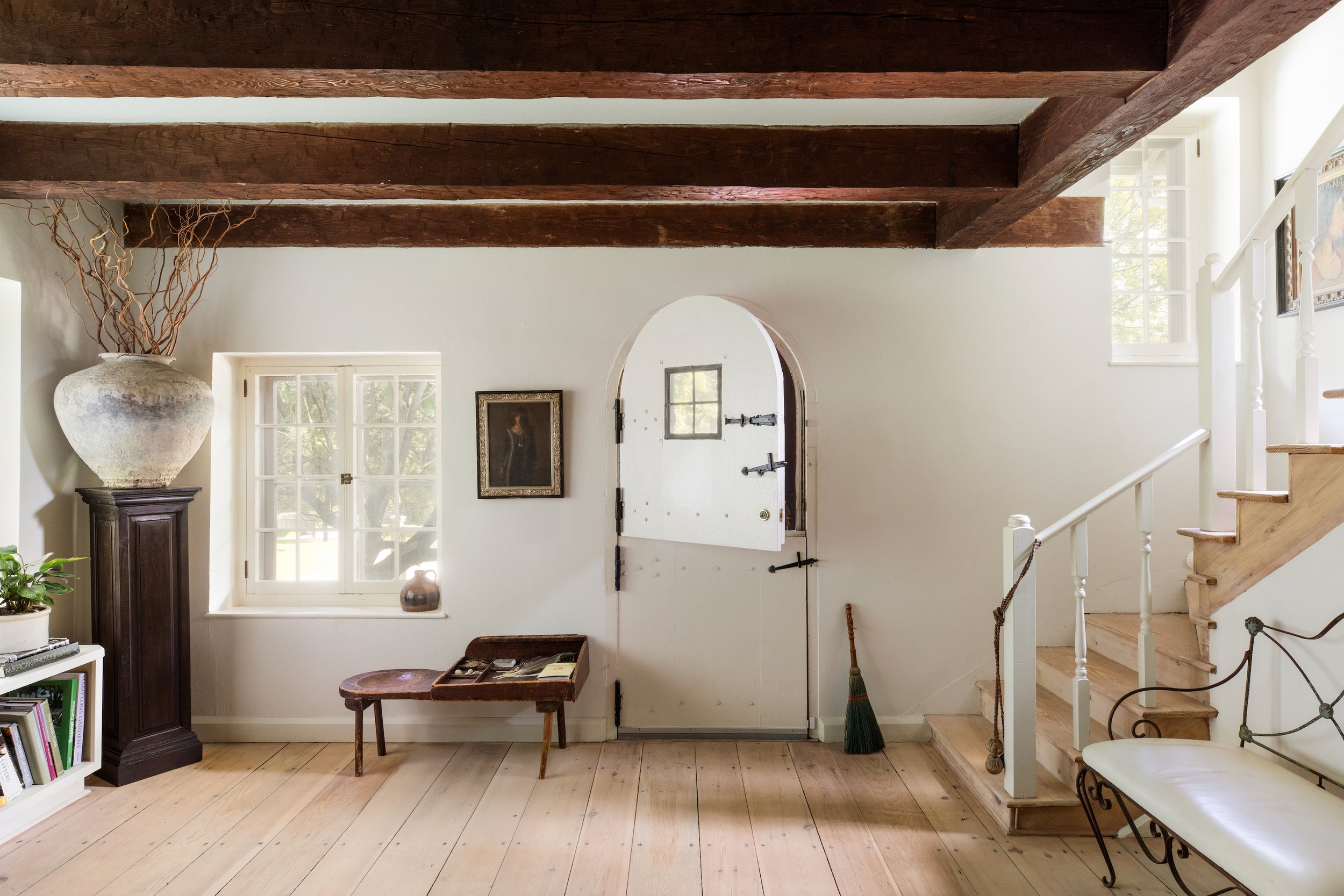
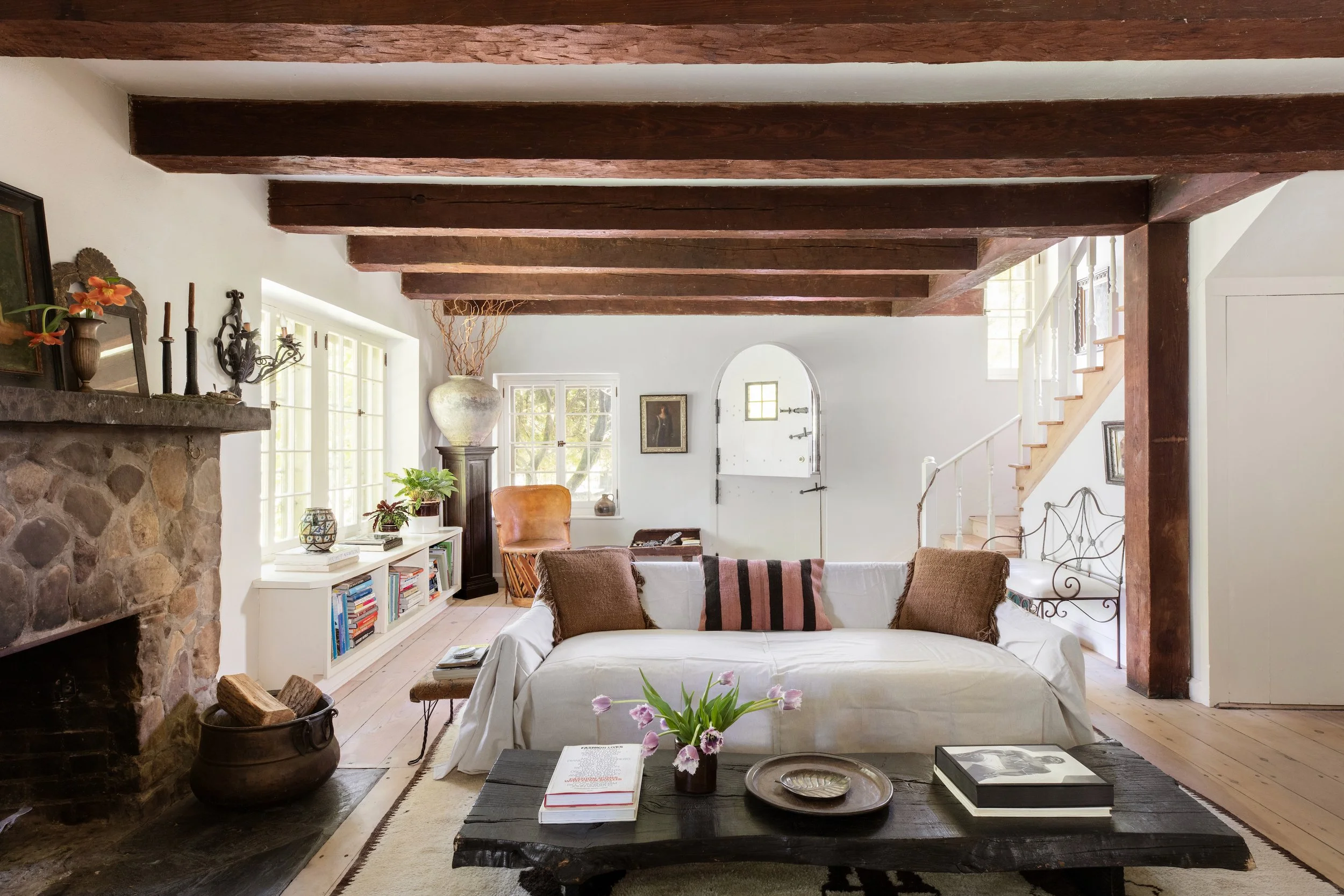
Original details remain throughout, including exposed wood beams, Dutch doors, wide-plank oak and pine floors, and wavy-glass paned windows. Those windows are one of the house’s most charming features, opening like French doors and framing views of the surrounding trees.
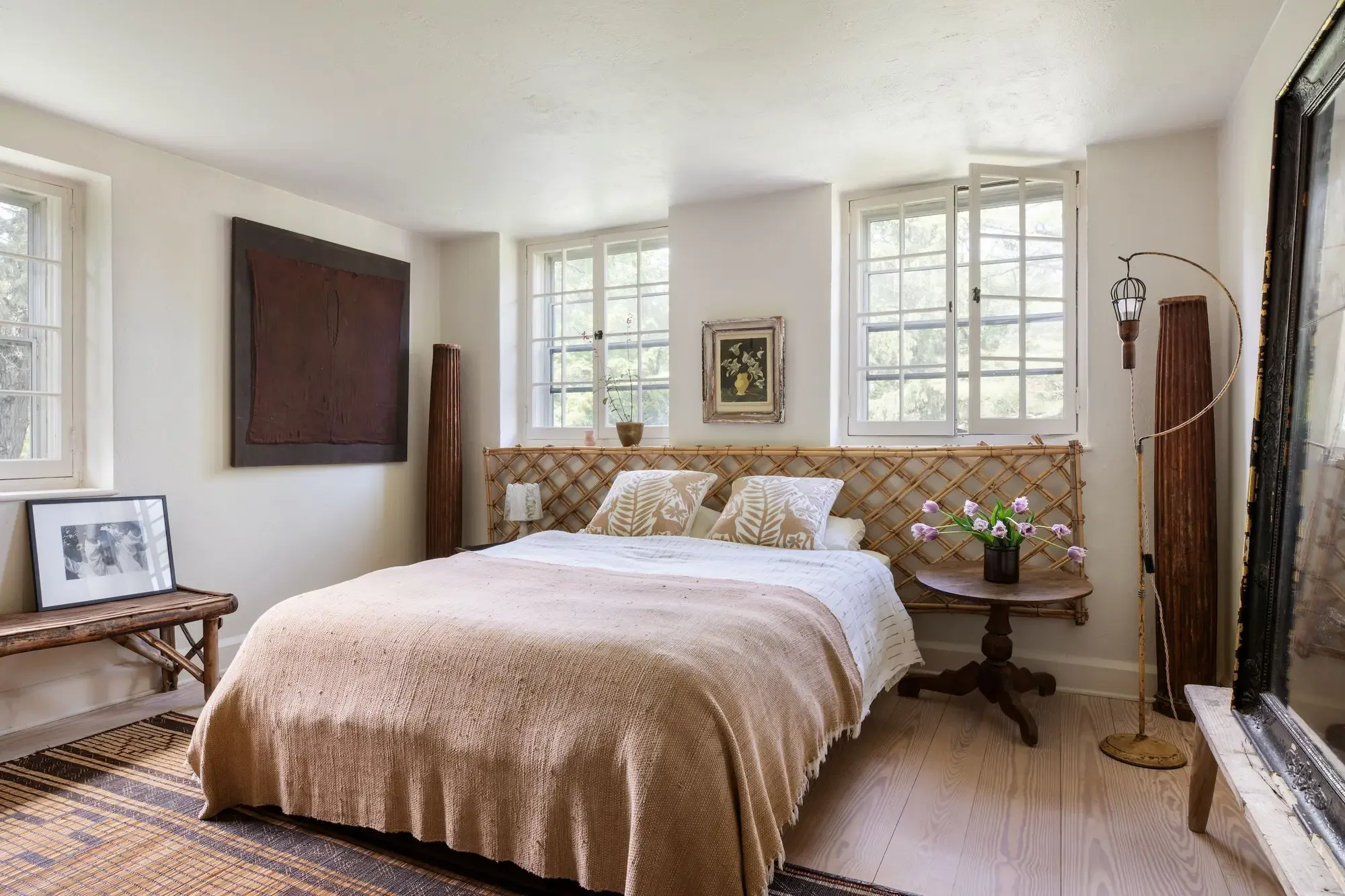
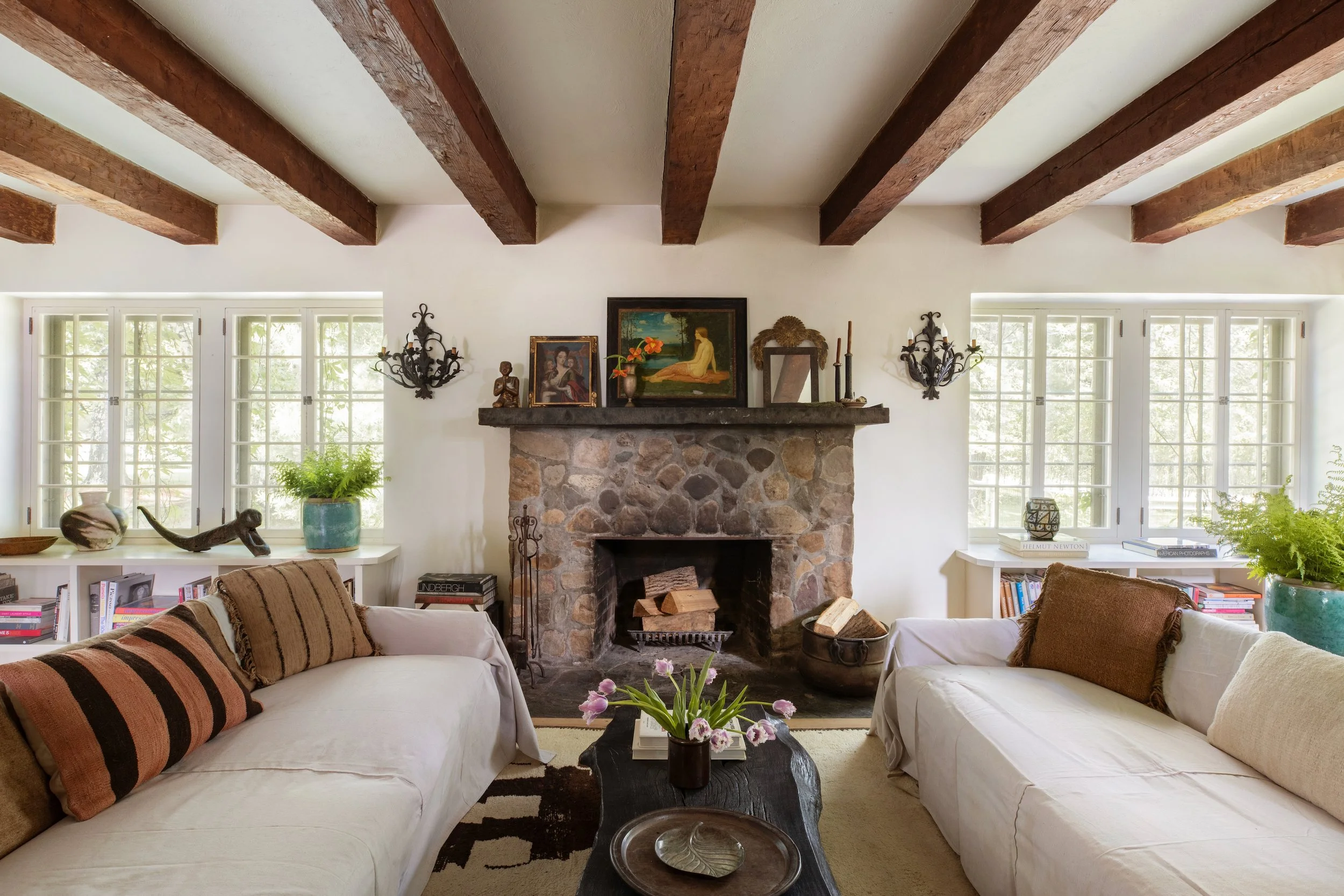
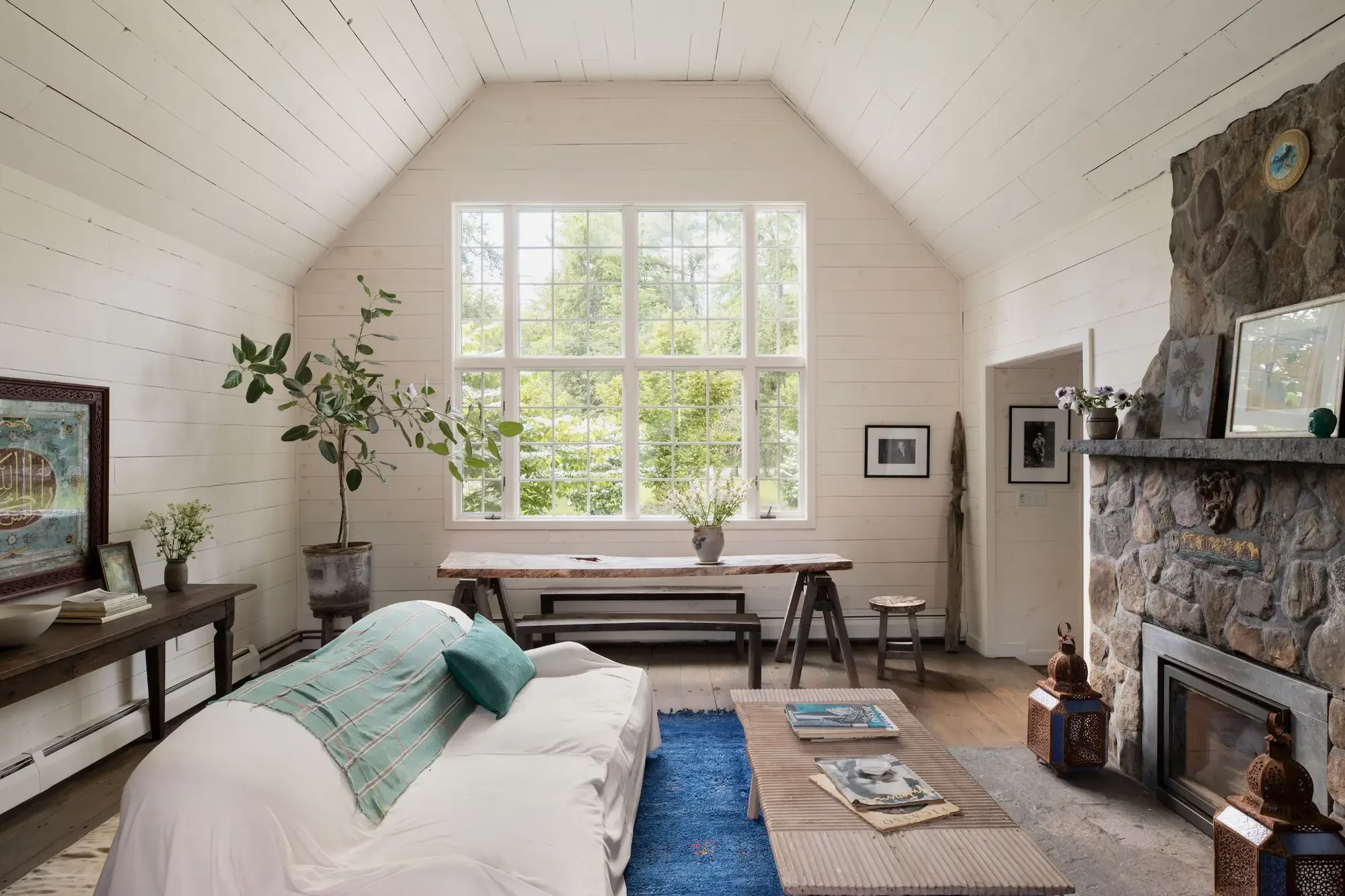
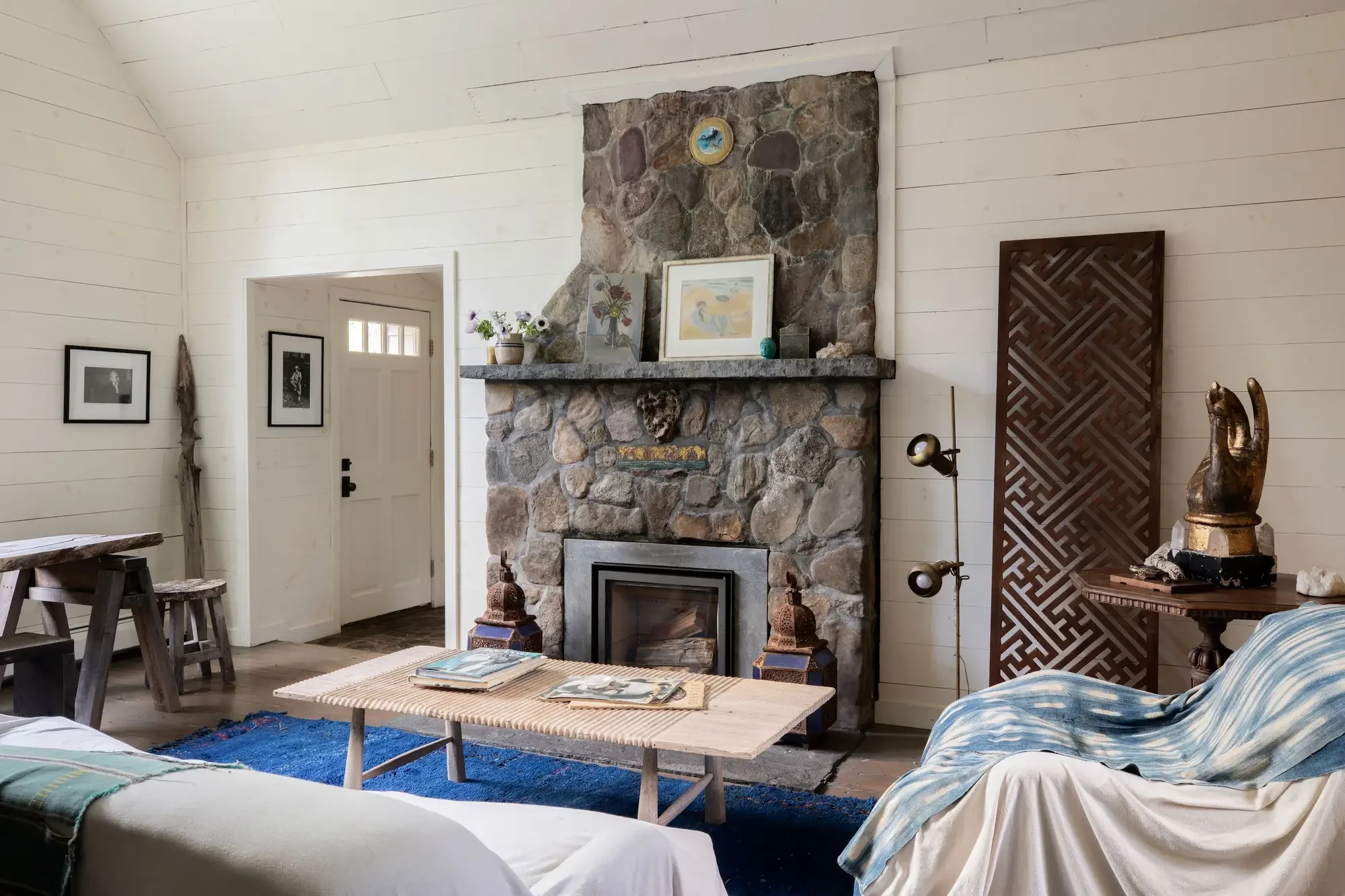
The living room is centered around a large stone-clad wood-burning fireplace, with heavy beams giving the space a grounded, intimate feeling. The four bedrooms are generously sized, including one on the ground floor.
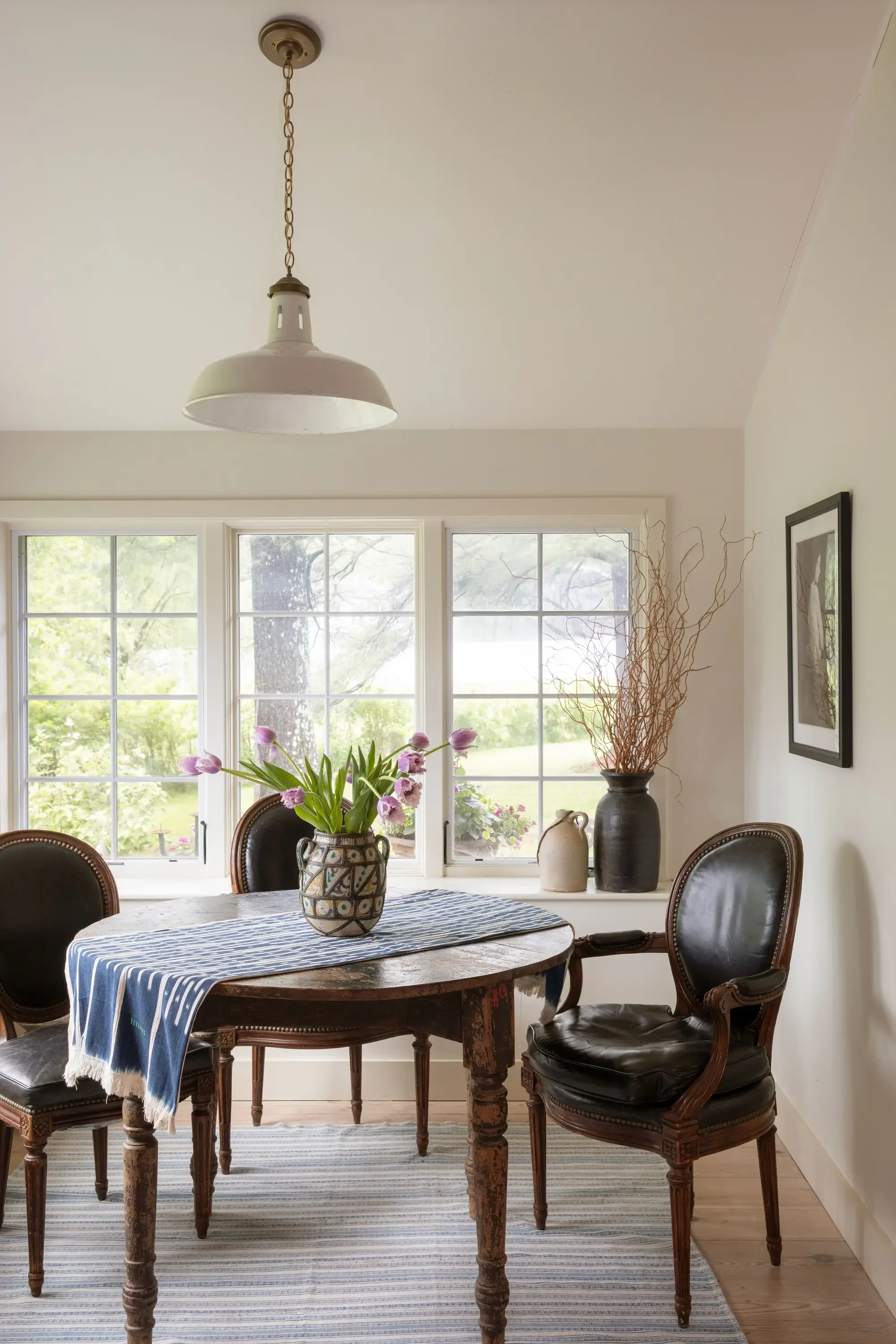
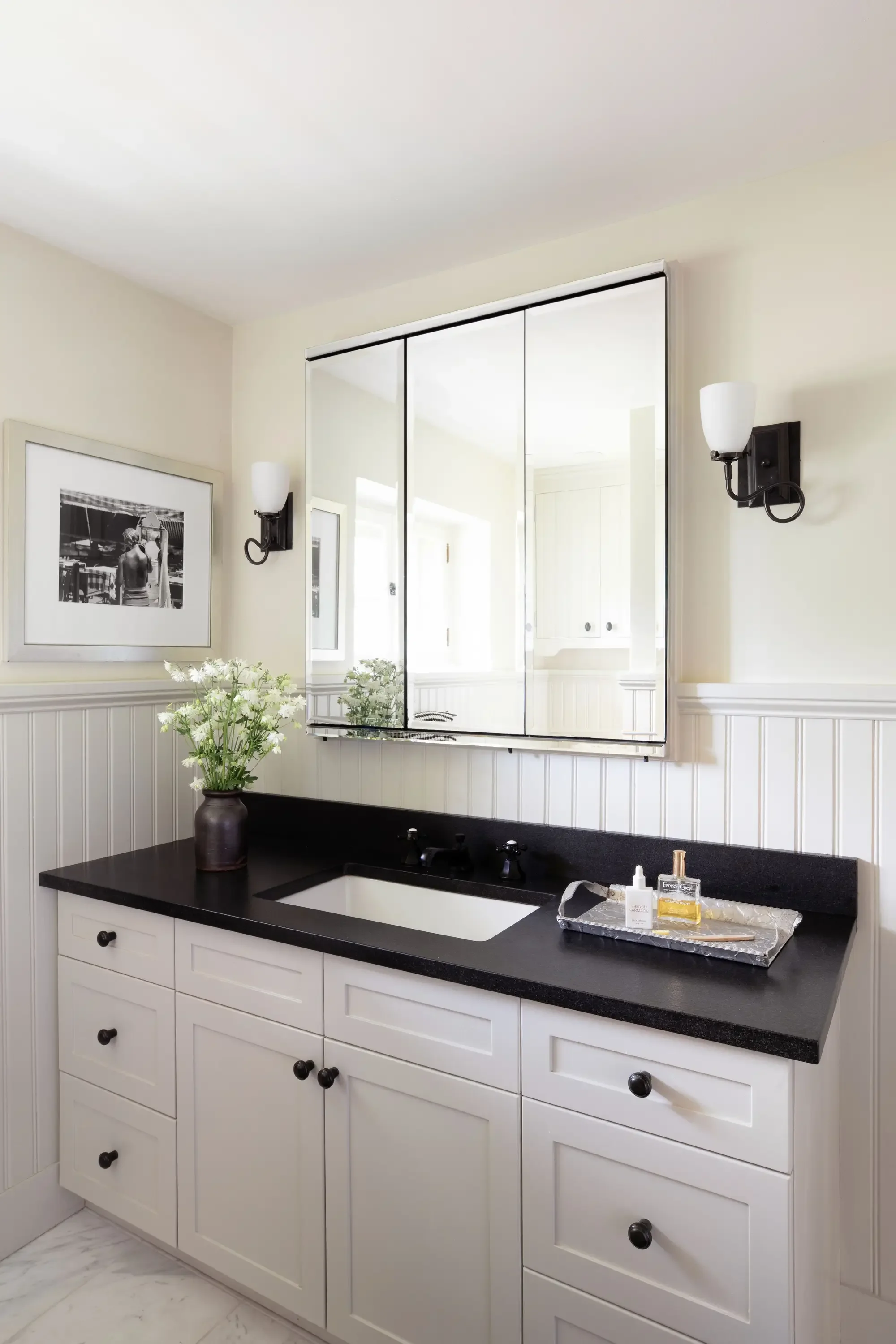
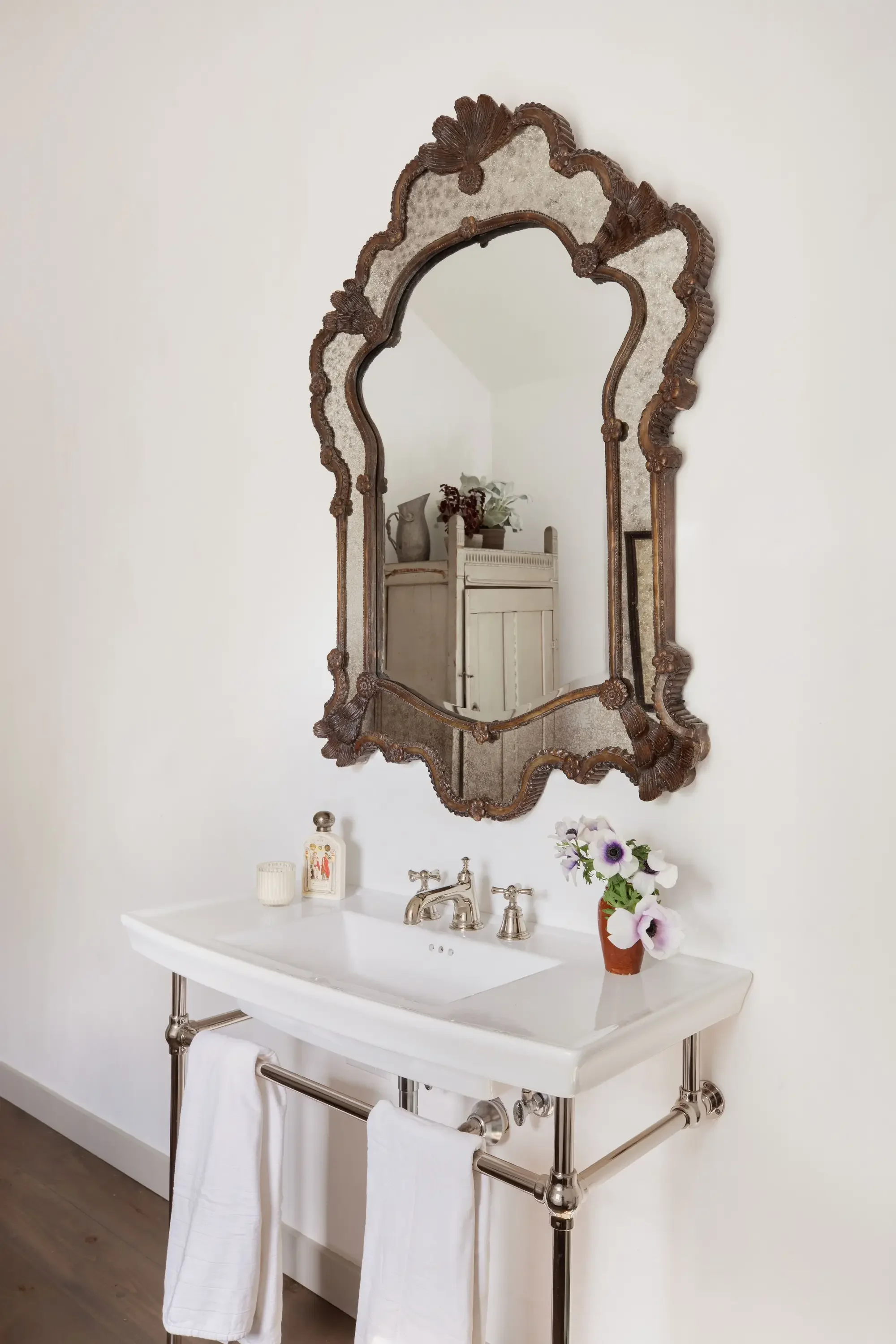
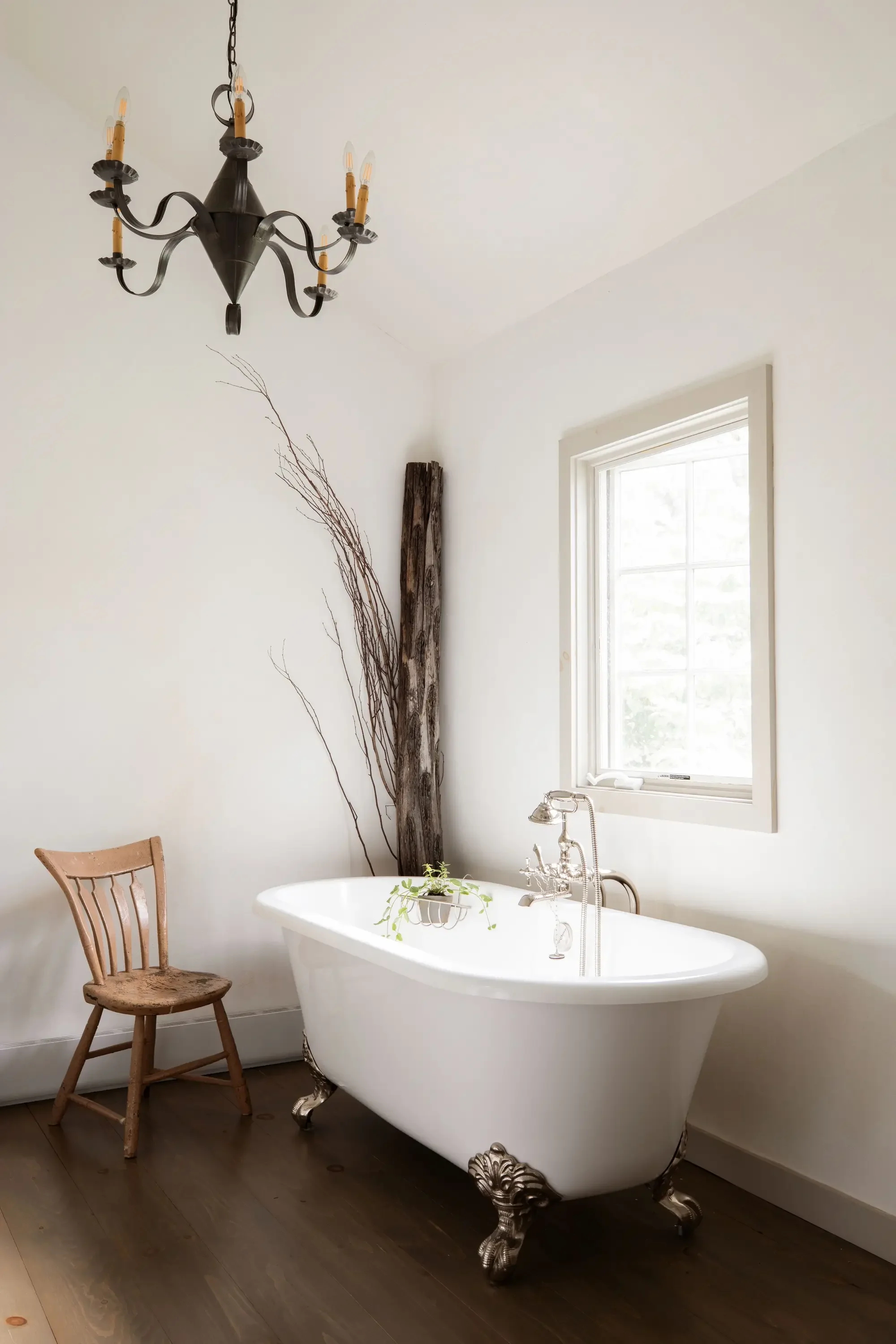
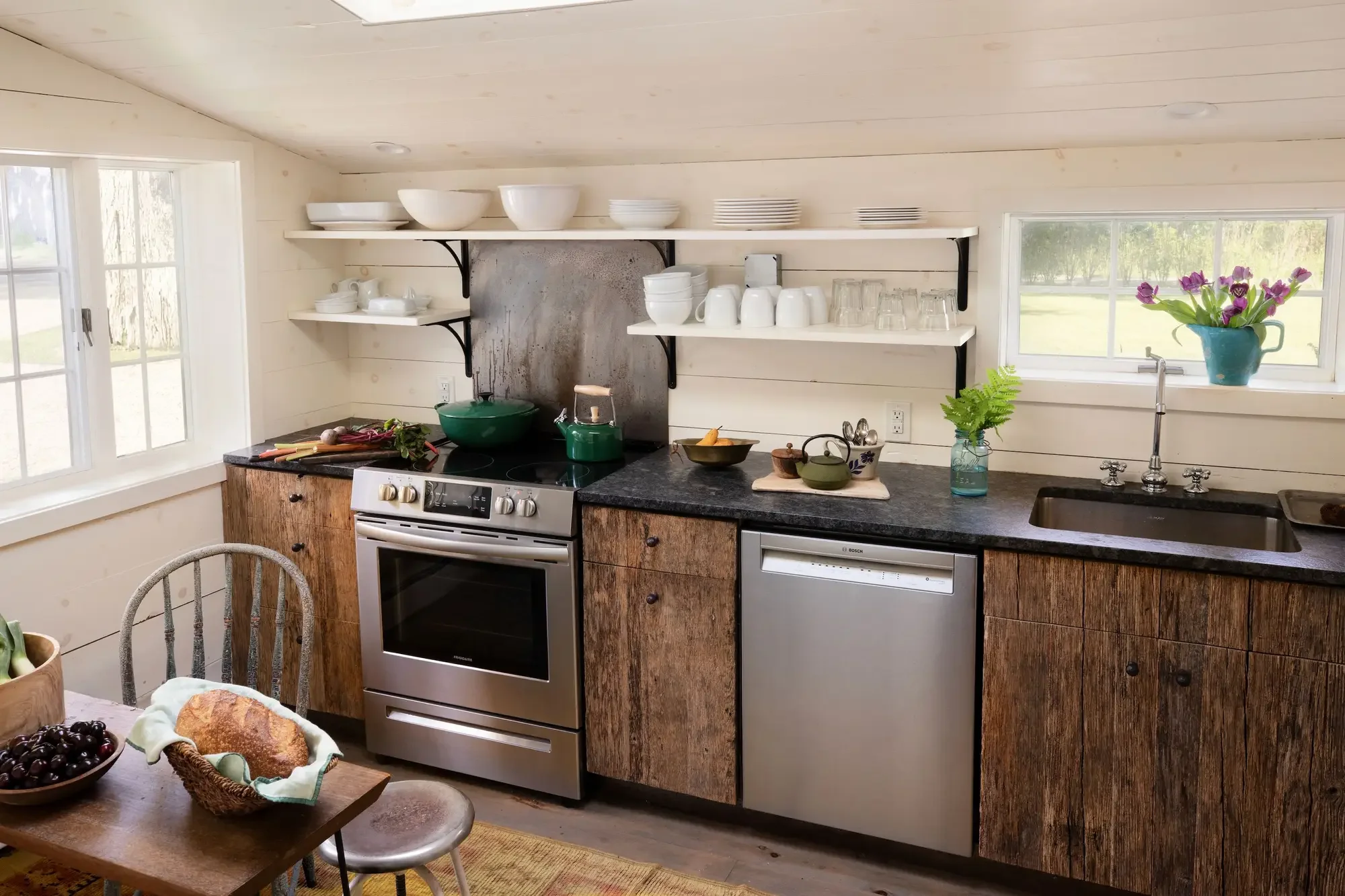
In the kitchen, Viking appliances sit alongside Siberian elm countertops, a clé tile backsplash, and an unlacquered brass Barber Wilson faucet. The primary bathroom has also been renovated, with a double sink and soaking tub.
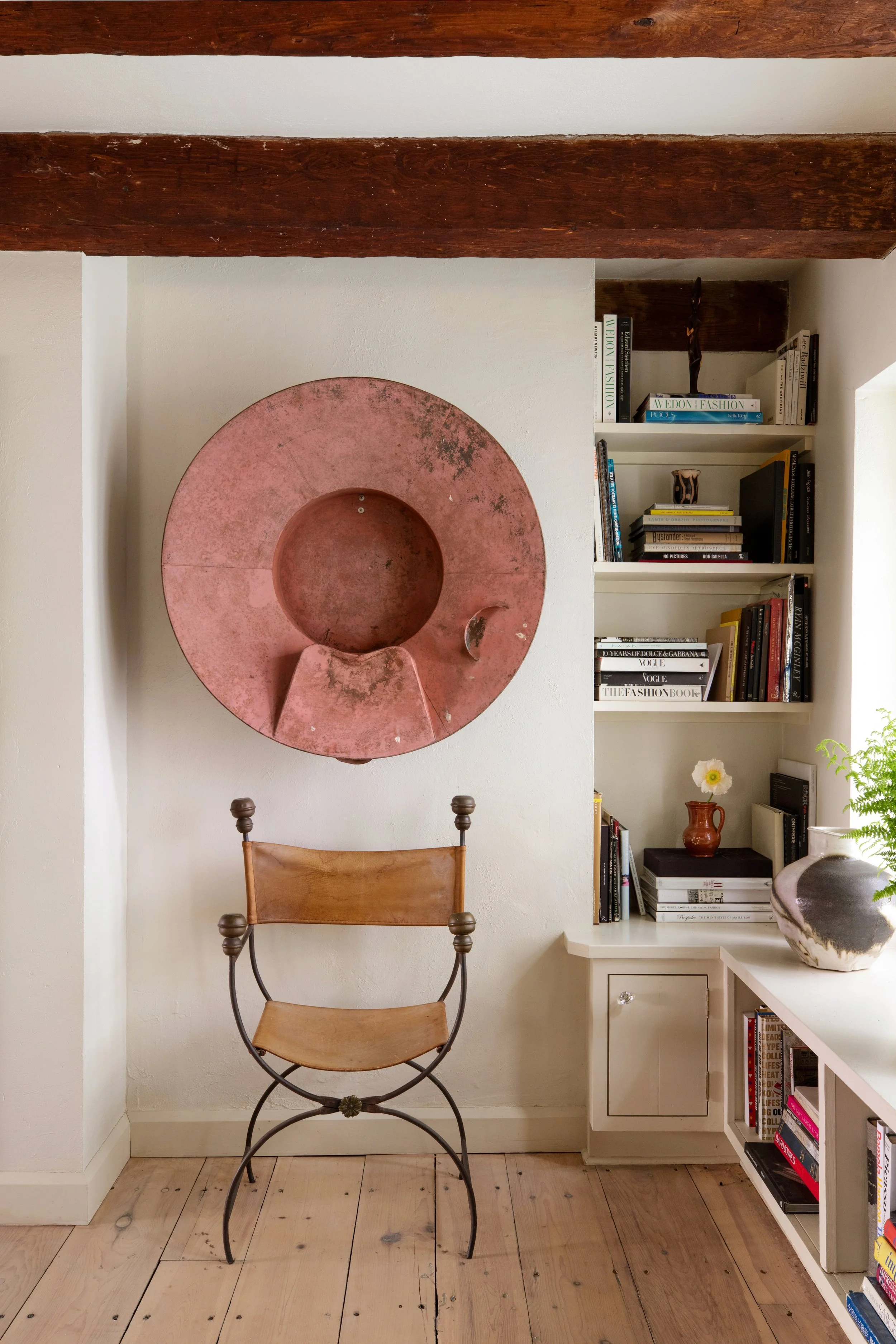
Rather than trying to make the house feel overly polished, the restoration leans into its texture and history. Stone, wood, soft colors, and simple materials give the interiors a quiet European sensibility without losing the character of the original home.
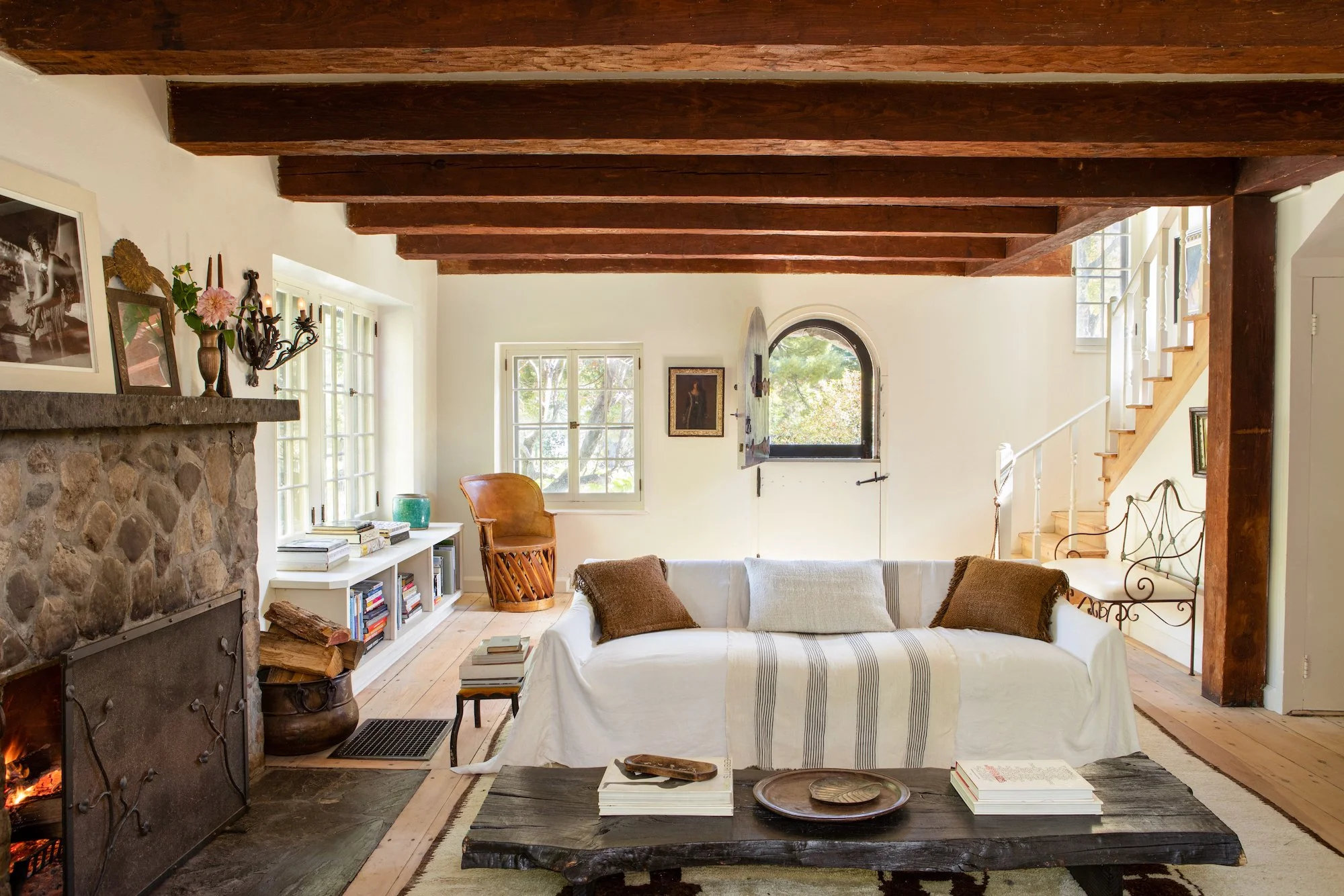
French antiques, Belgian linens, and natural materials shape the interiors, while the former painting studio has been reimagined as a Vervoordt-inspired guest cottage.
The Former Painting Studio
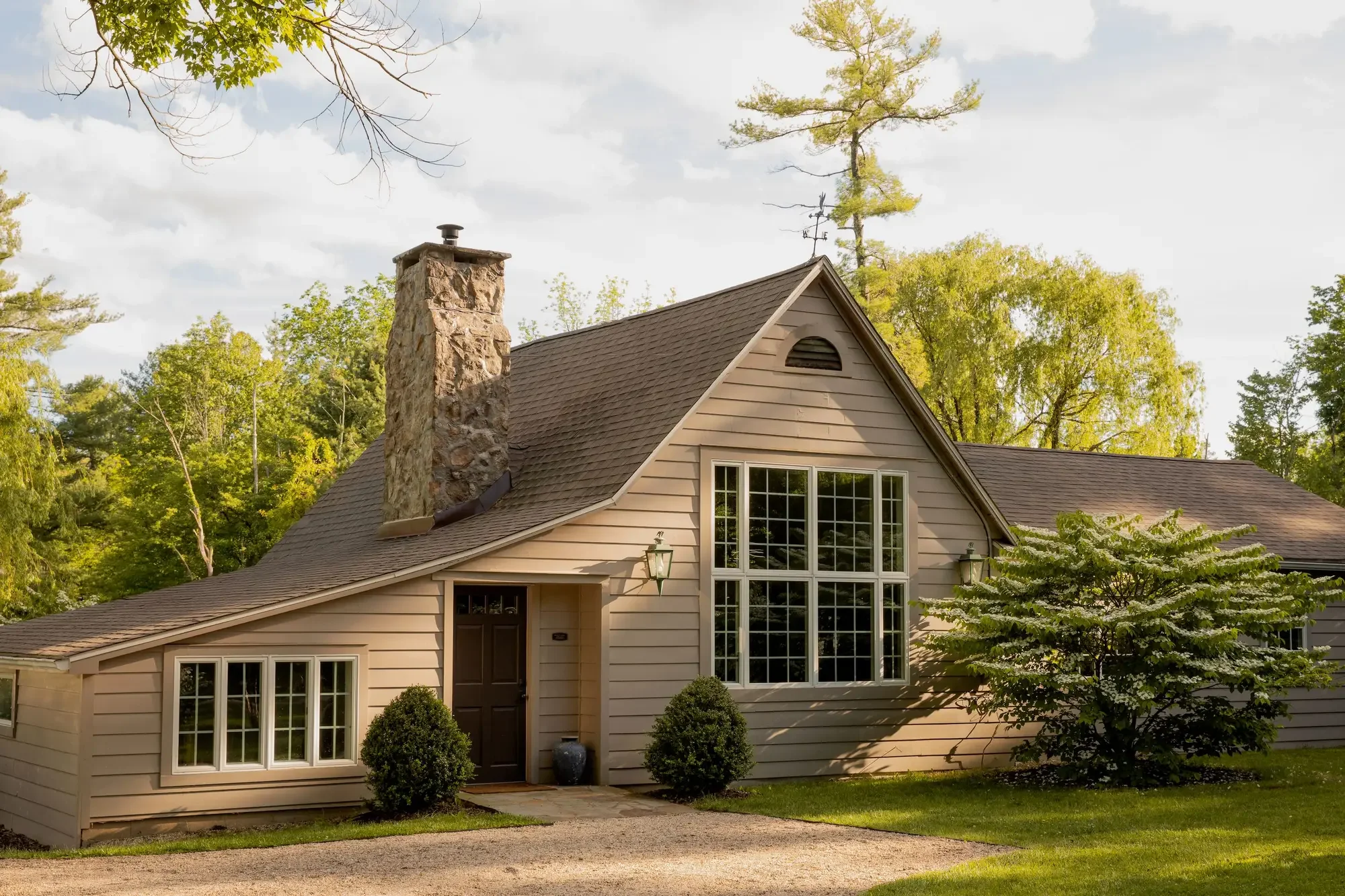
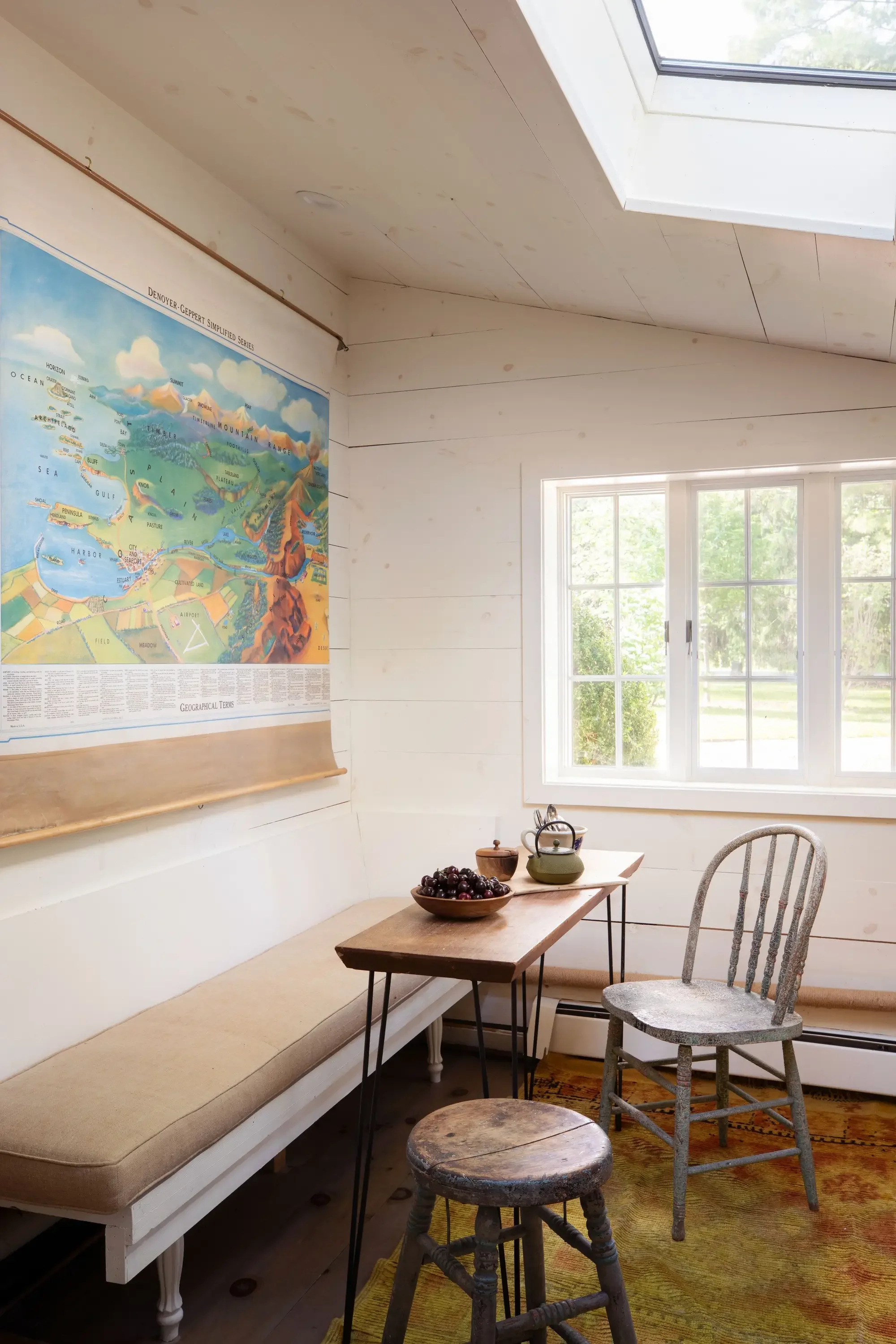
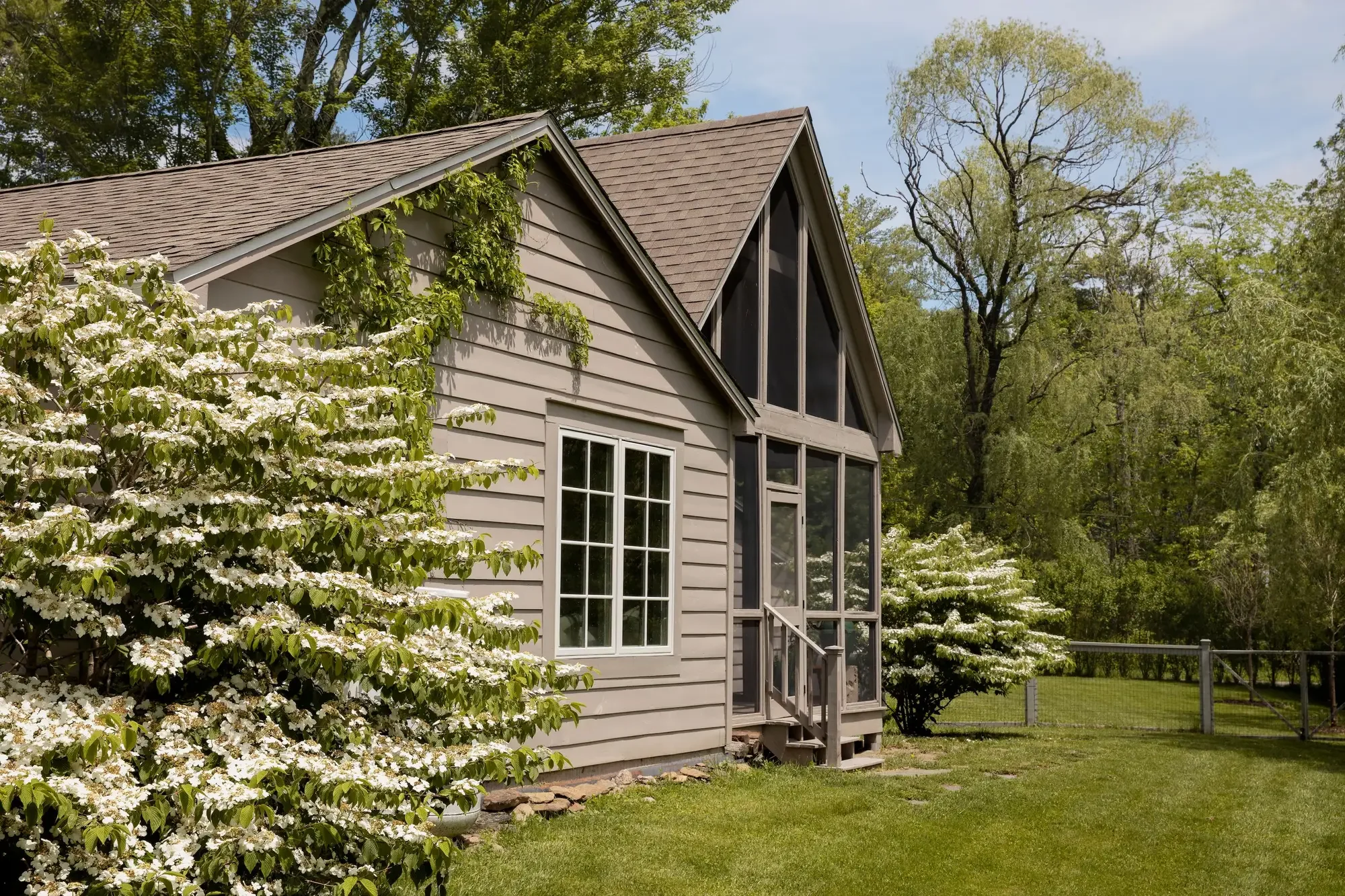
A short walk down the gravel path leads to Arndt’s former painting studio, now used as a three-bedroom guest cottage.
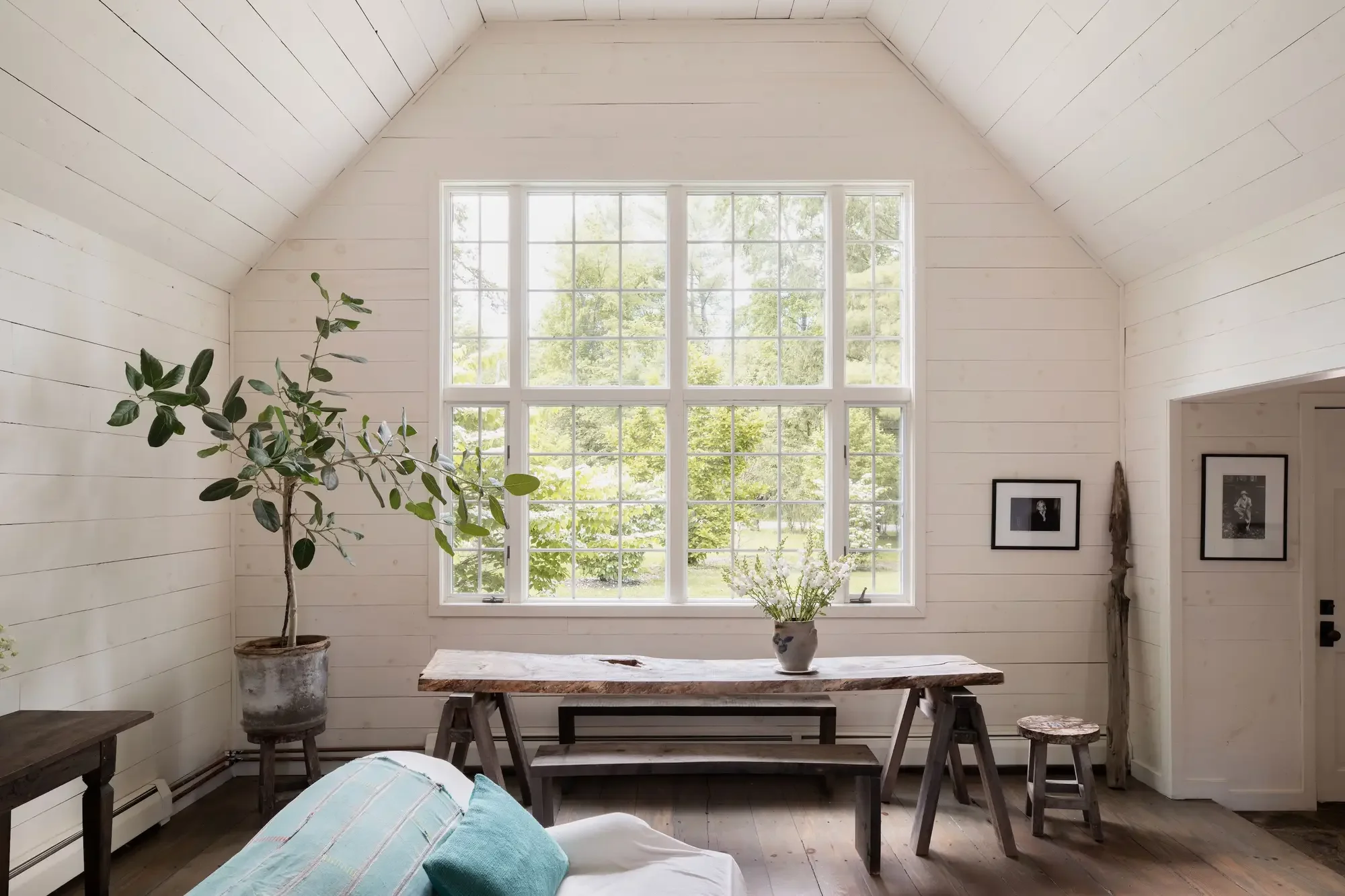
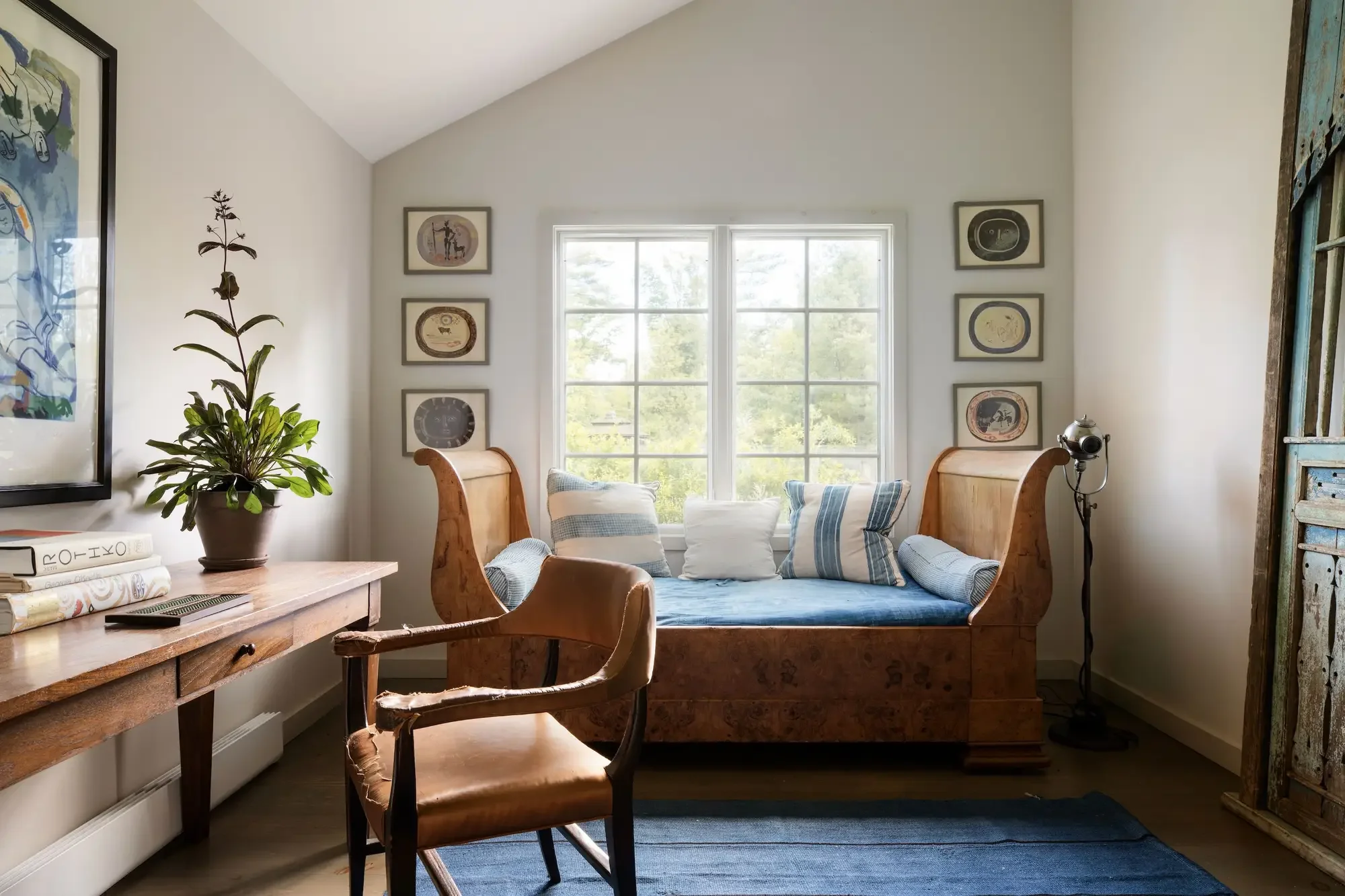
This second building has a different energy from the main house. It feels more open and studio-like, with soaring ceilings, wide pine floors, skylights, and a large picture window looking out over the gardens. The living area is anchored by an original stone fireplace, now fitted with a Stûv Belgian insert.
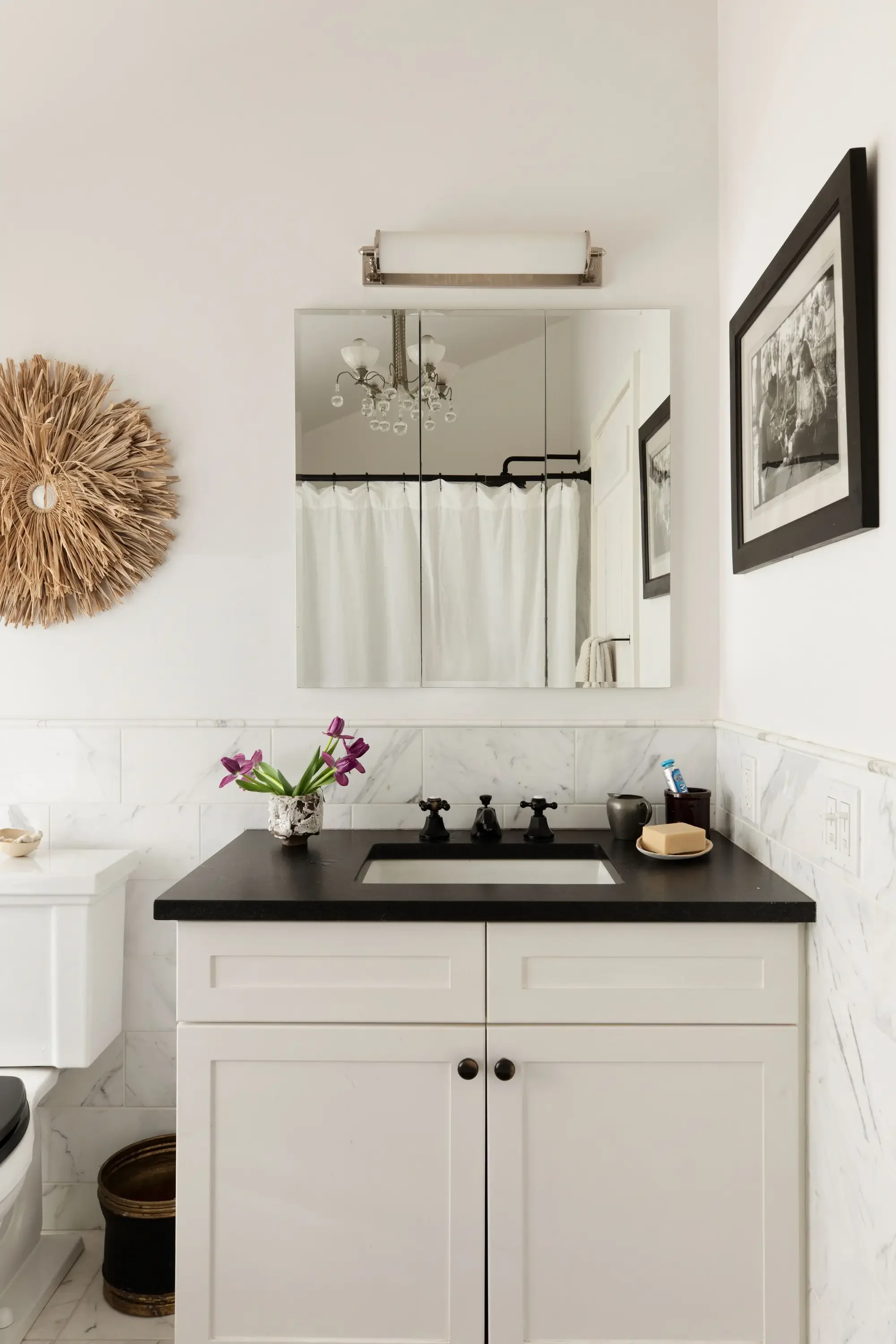
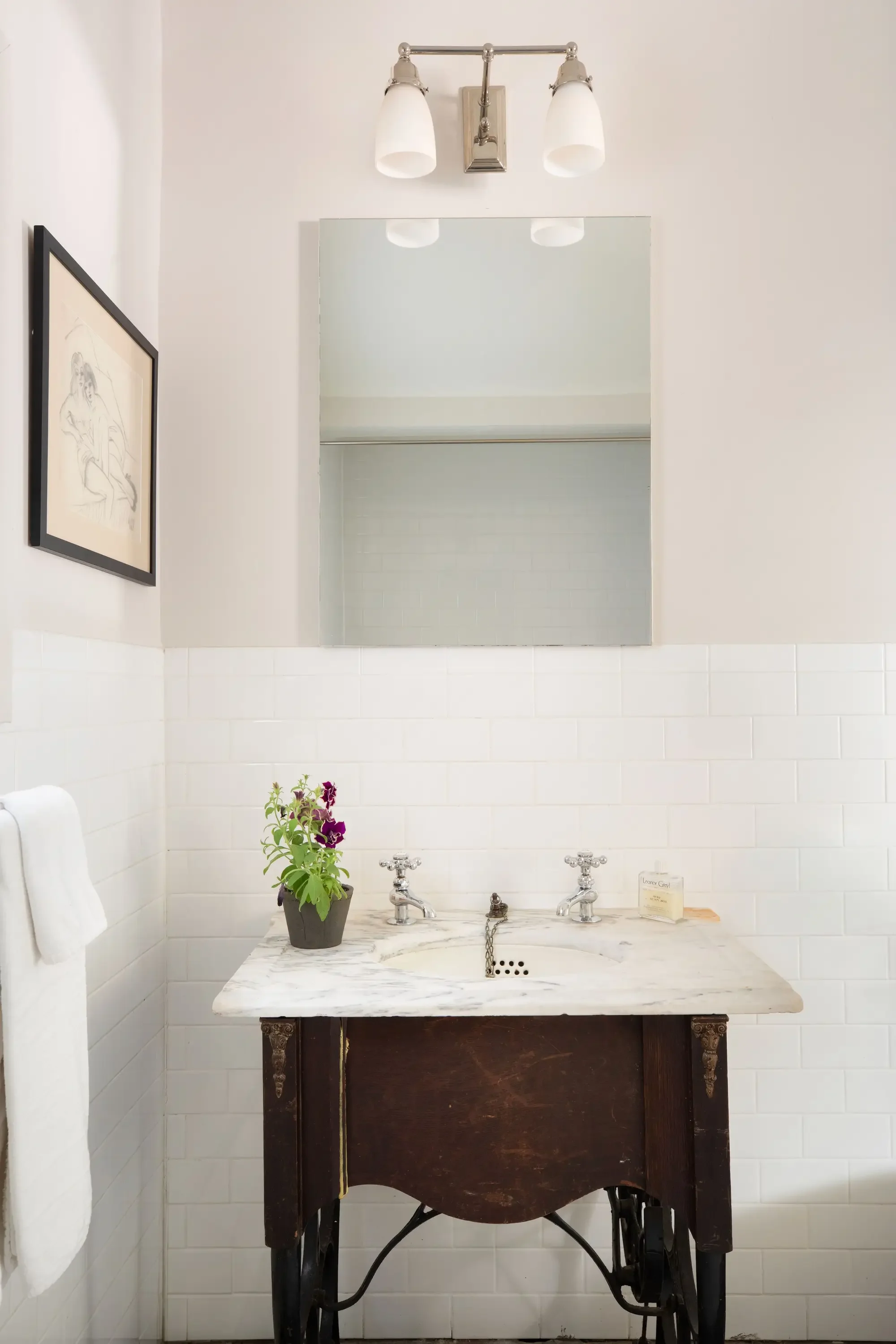
The cottage also includes a Venetian-plastered bathroom by artist Anthony Chase, adding another handmade layer to the space.
As a whole, the former studio gives the property a flexibility that is hard to find in a standard village house. It could work for guests, extended family, creative work, or simply as a separate retreat within the grounds.
Gardens by Michael Trapp
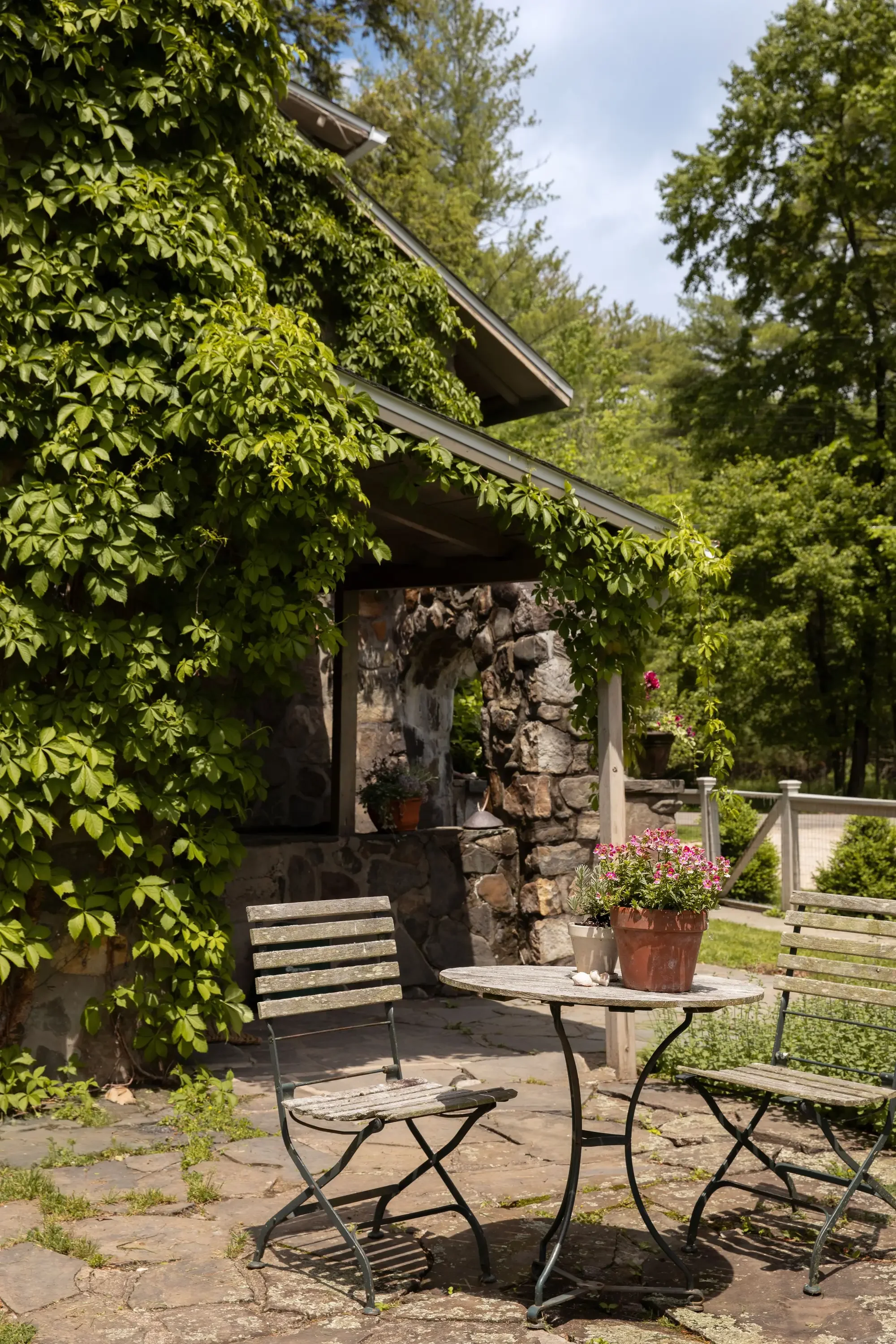
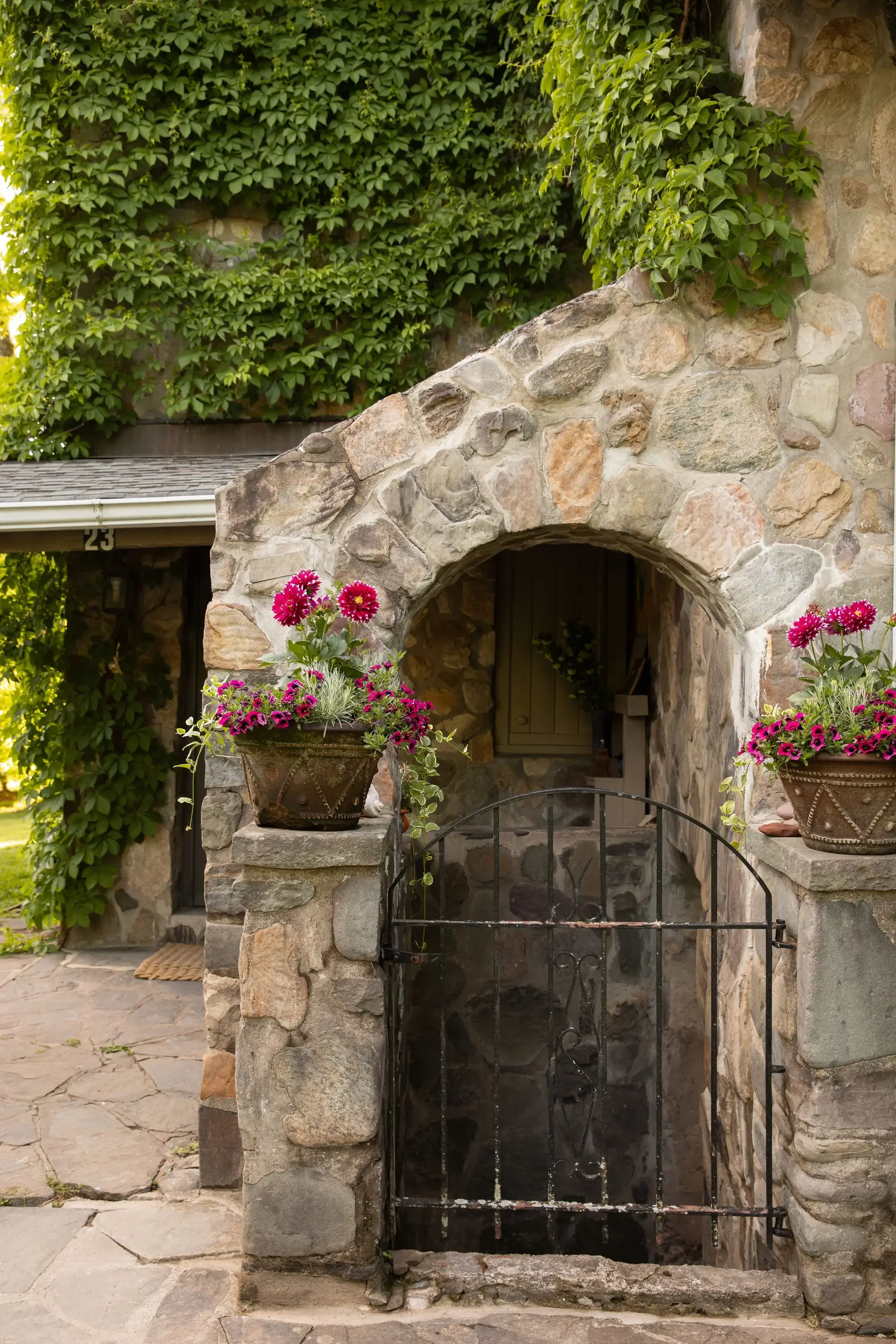
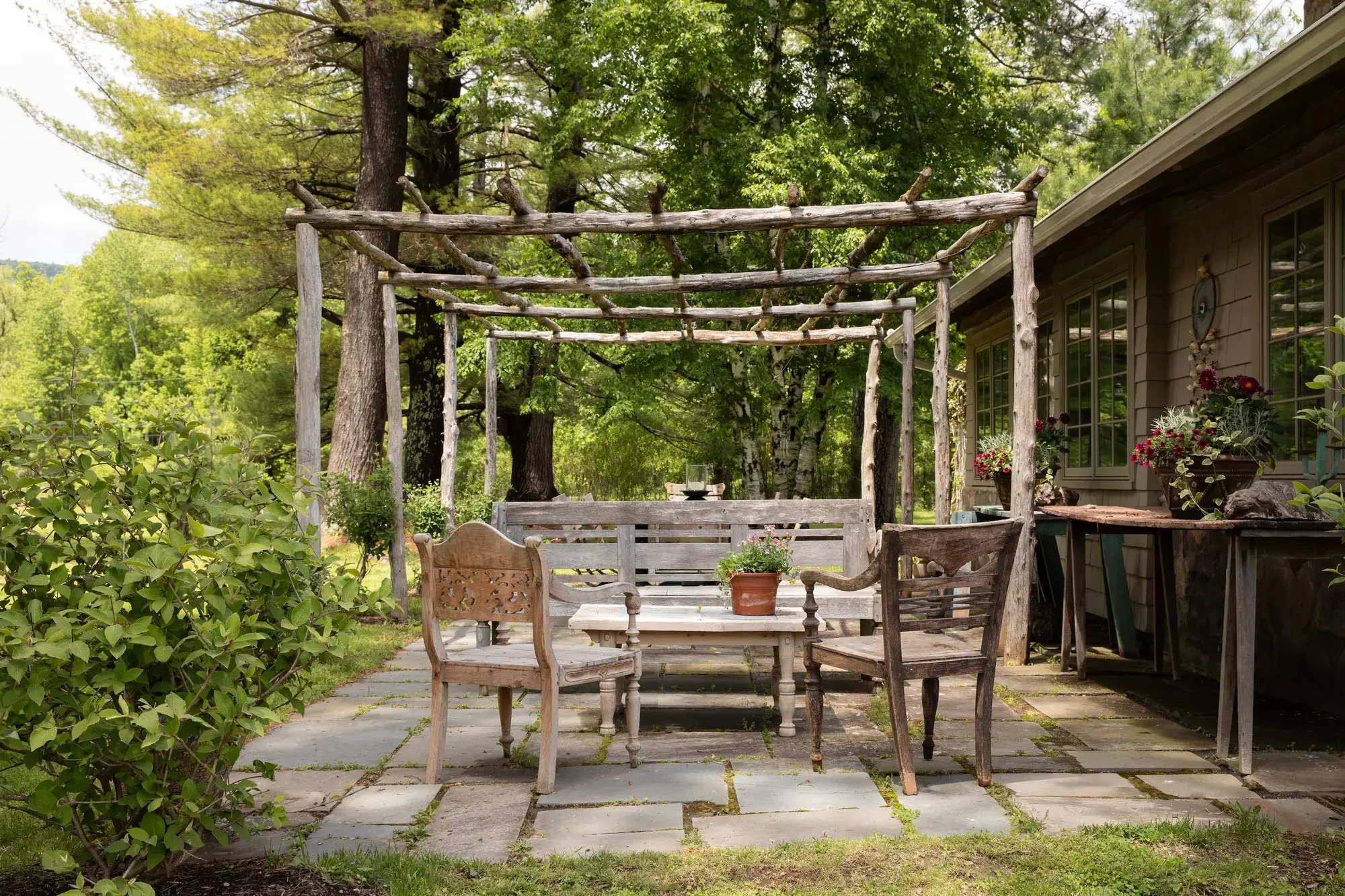
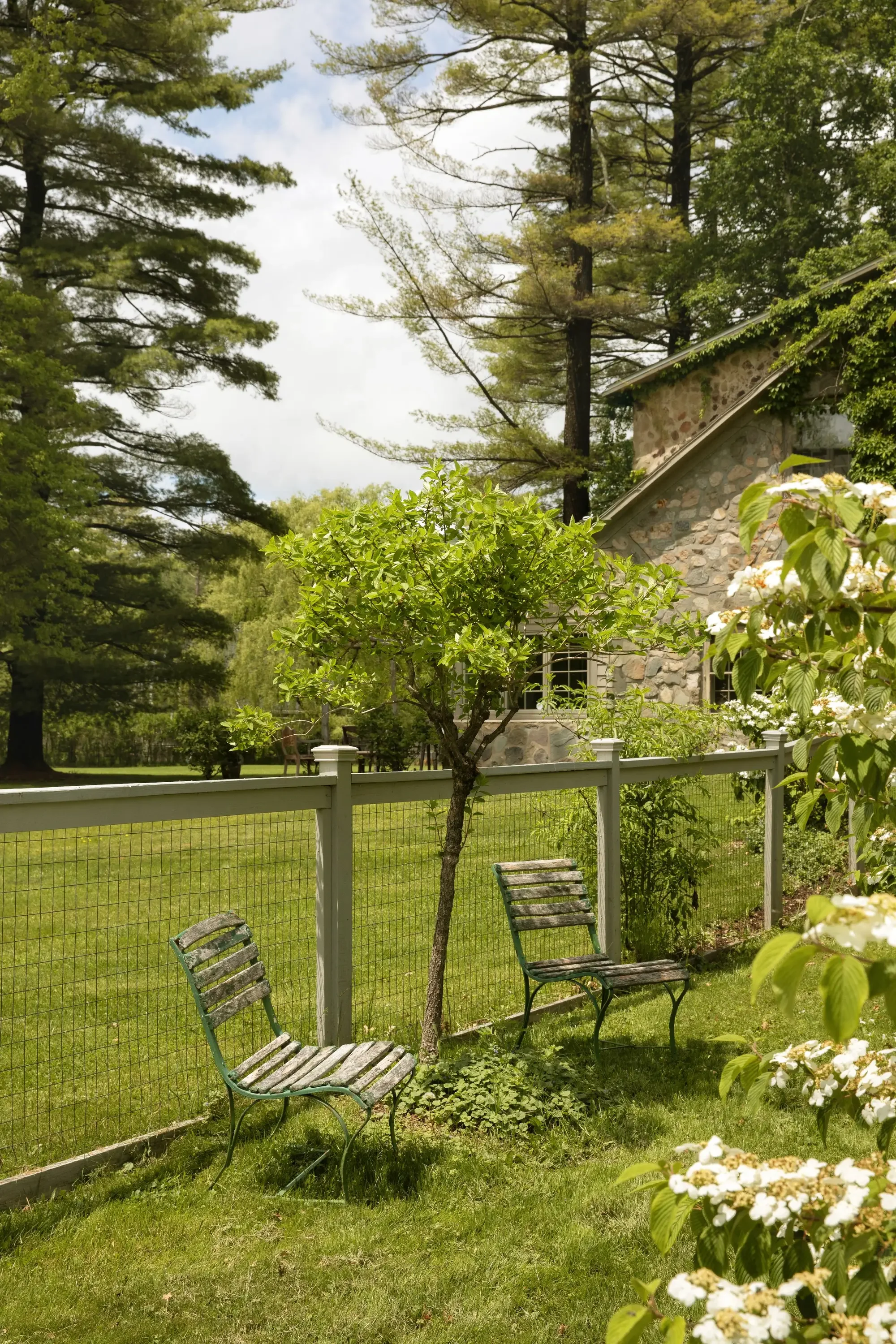
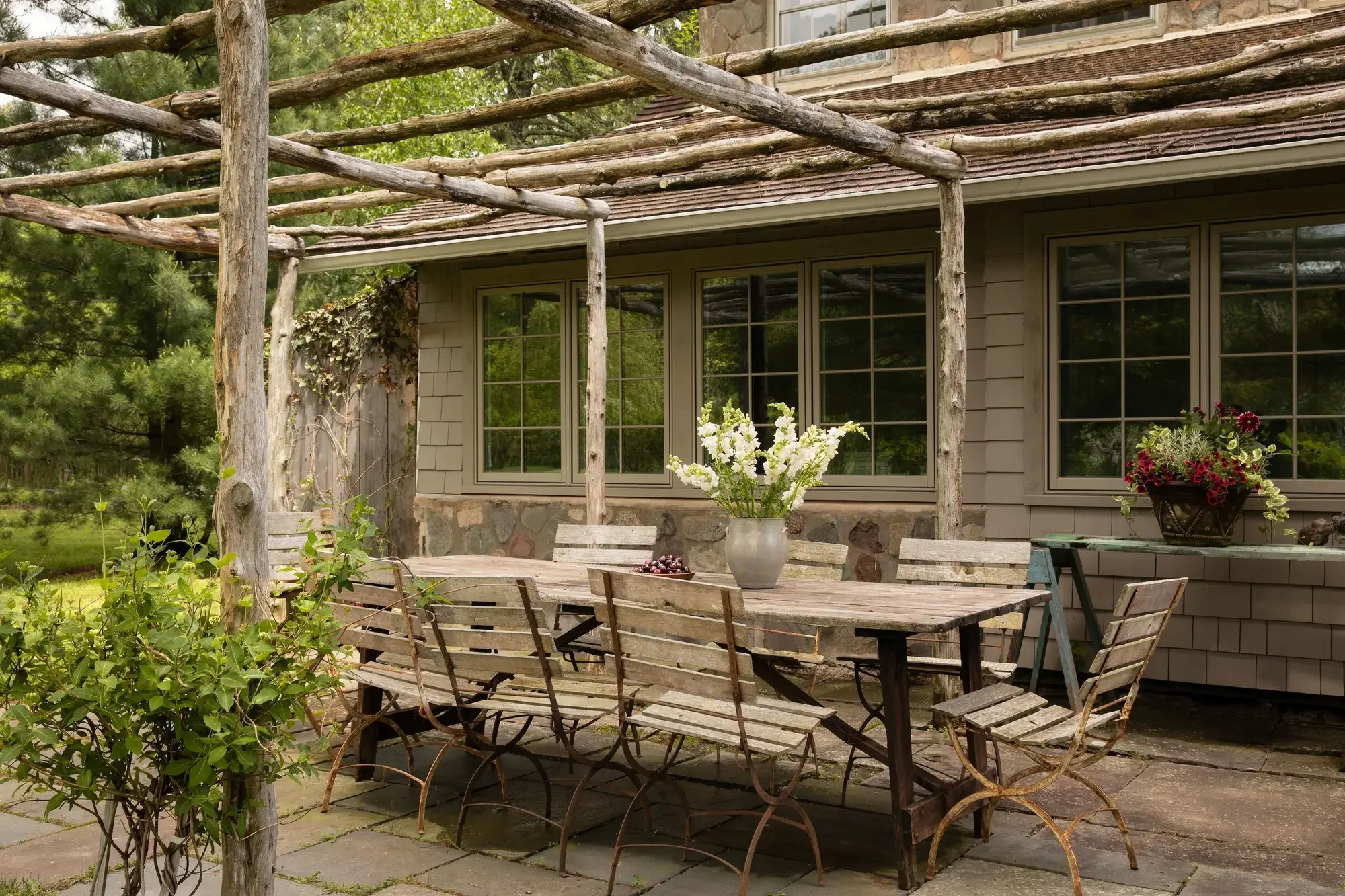
The landscape is a major part of the appeal of Library Lane. The 1.6-acre property has been shaped over several years by landscape architect Michael Trapp, with gardens that feel abundant rather than overly formal.
The grounds include mature oaks, silver birch, hemlock, magnolias, dogwoods, hydrangeas, crab apples, clematis, viburnum, rhododendrons, forsythia, privet, morning glories, and honeysuckle. Some of the oaks are described as more than 100 years old, adding to the sense that the property has grown into itself over time.
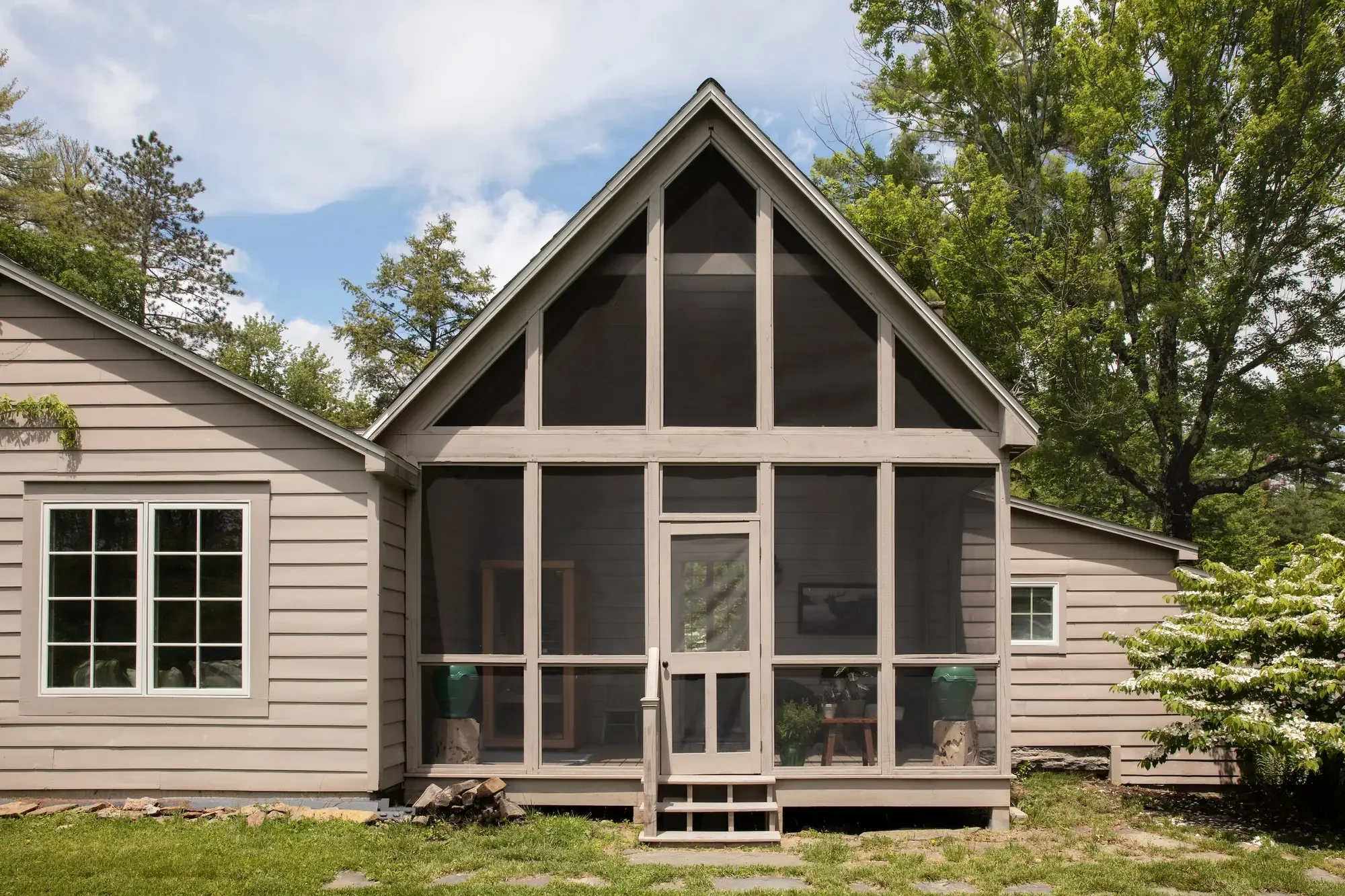
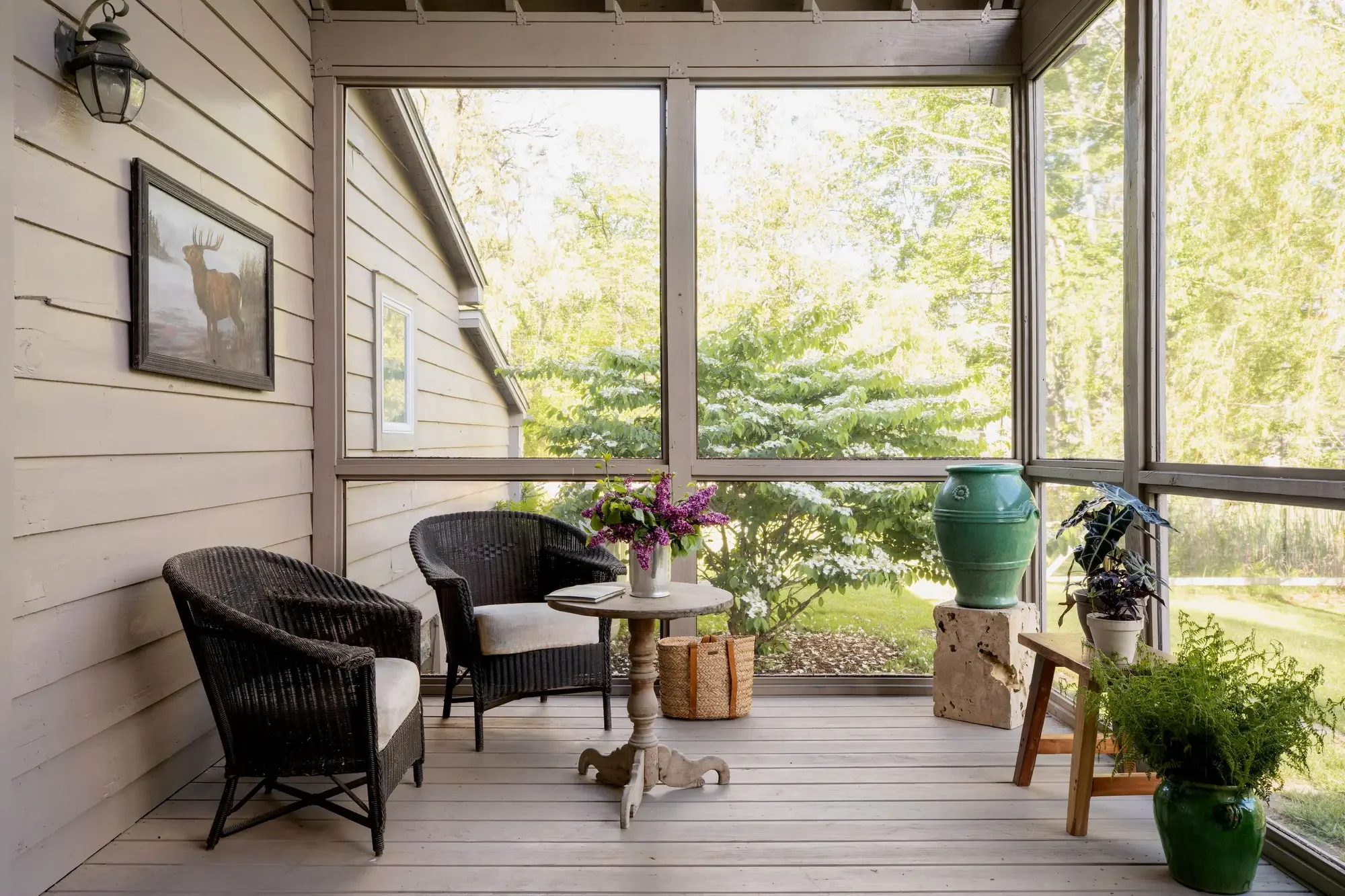
A screened-in porch with cathedral-style ceilings looks out toward the gardens, wetlands, wildlife, and trees, creating one of the property’s most peaceful corners.
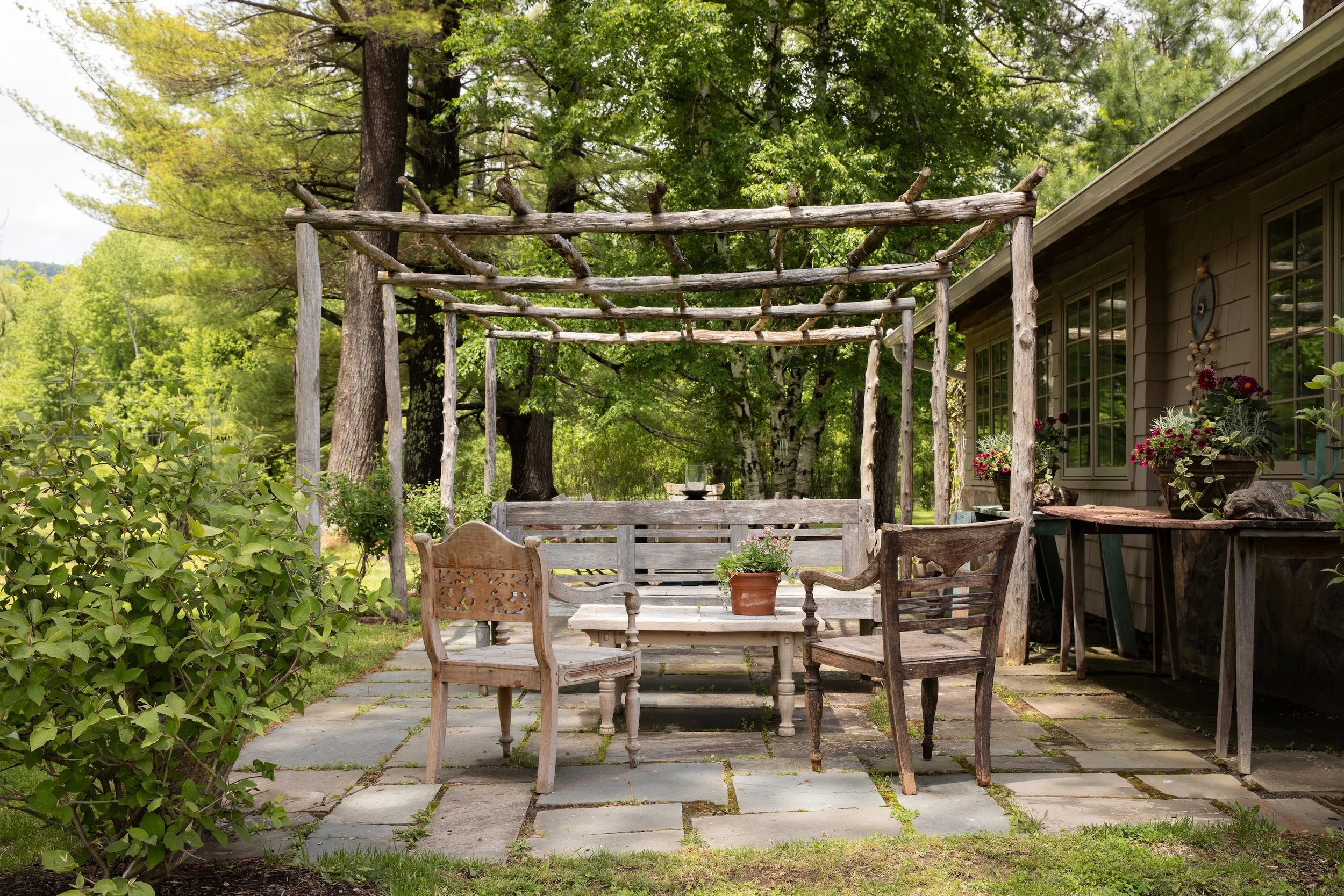
Walking distance to the village center of Woodstock, one of the Hudson Valley’s longest-standing artist communities, with a creative culture shaped by galleries, music venues, and small independent shops.
Living in Woodstock
Library Lane is located about two hours north of New York City, in Ulster County at the edge of the Catskill Mountains. One of its strongest features is its setting: quiet and tucked away, but still only about five minutes on foot from downtown Woodstock.
The village center has independent restaurants, cafés, galleries, bookstores, food shops, and music venues, while the surrounding Catskills offer hiking, wild swimming, skiing, and year-round outdoor access.
Local favorites mentioned in the listing include Silvia, Good Night, Nirvana, Moonrise Bagels, Sunflower Market, the Woodstock Tennis Club, Big Deep swimming hole, the Wednesday farmers market, and the Ashokan Reservoir.
For buyers drawn to the Hudson Valley and Catskills, Library Lane offers a rare combination: a historic artist compound, a walk-to-village location, mature landscaped grounds, and a layout that allows for both privacy and flexibility.
Nearly a century after Paul Arndt built his home and studio here, the property still feels connected to the creative spirit that made Woodstock famous in the first place.
All photographs are courtesy of the listing agency. See more at The Lillie K. Team at Sotheby's International Realty.