Château with Grand Formal Gardens, 60 km from Paris
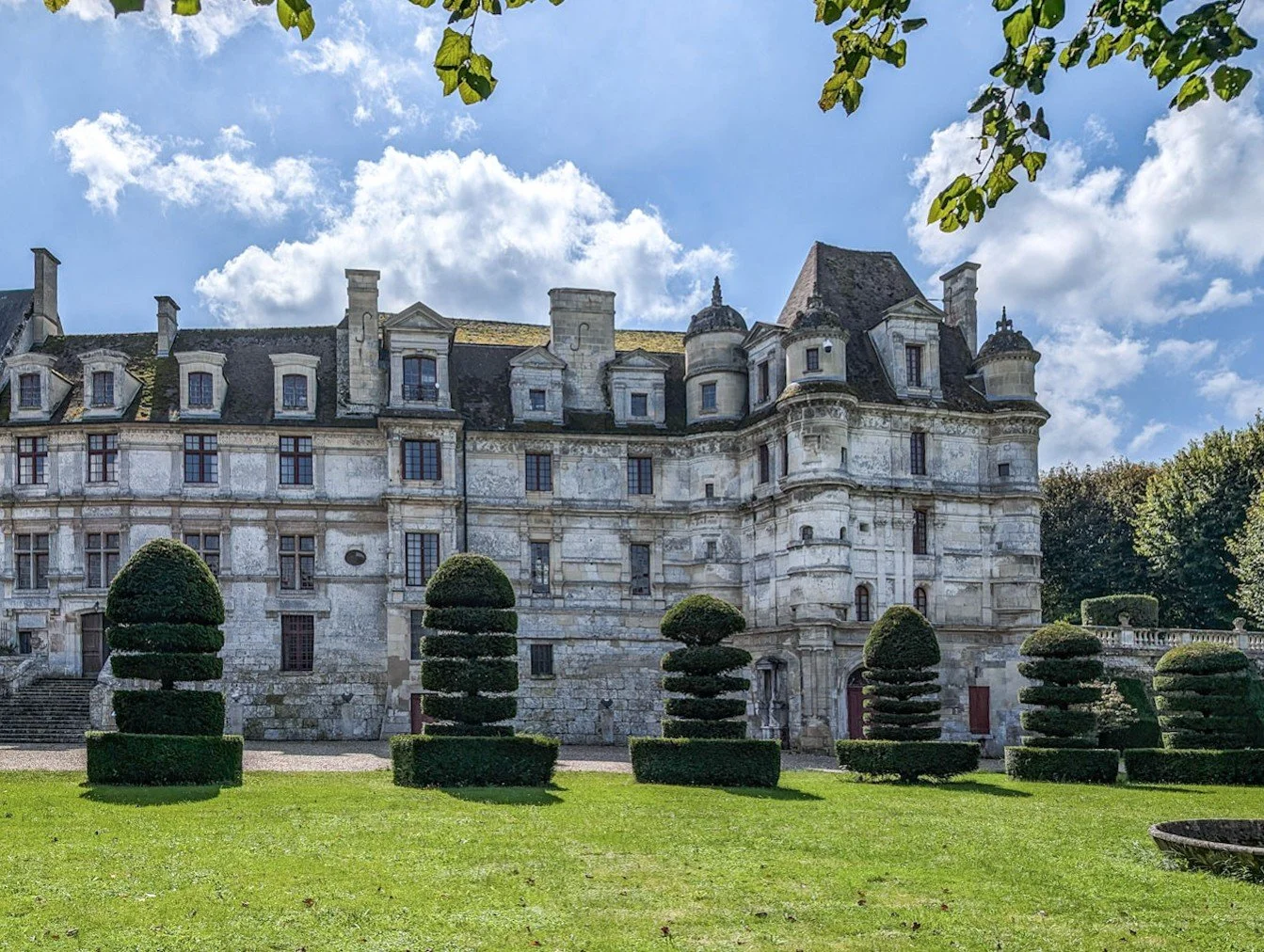
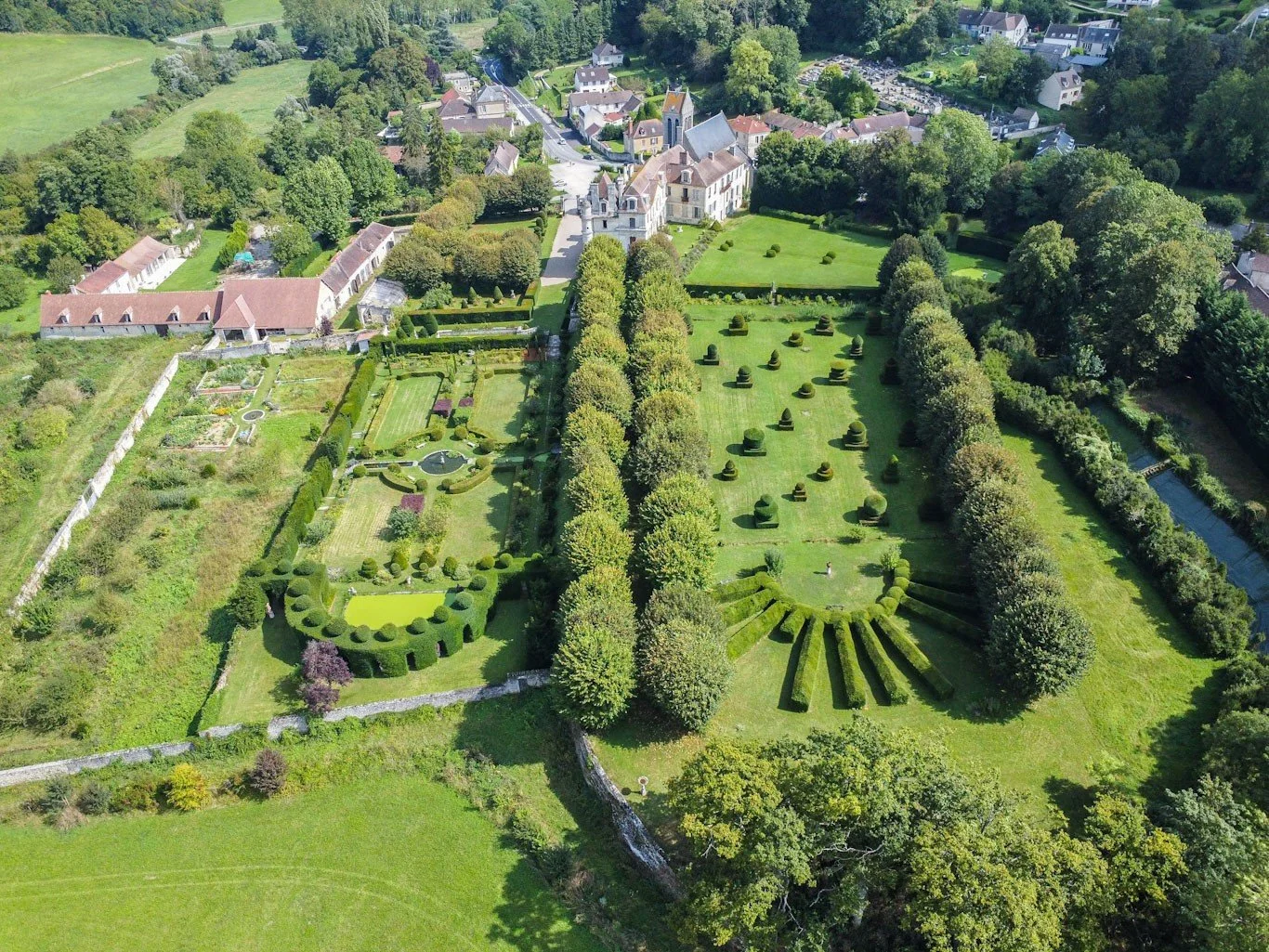
Located in a preserved valley of the Vexin français, approximately 60 kilometres (around 37 miles) northwest of Paris, this Renaissance château sits within roughly 26 contiguous hectares (about 64 acres) of private land. Of this, four hectares (just under 10 acres) are dedicated to enclosed formal gardens that wrap closely around the château itself.
Classified as a Monument Historique, the property is currently on the market for €4,460,000, listed with Denniel Immobilier.
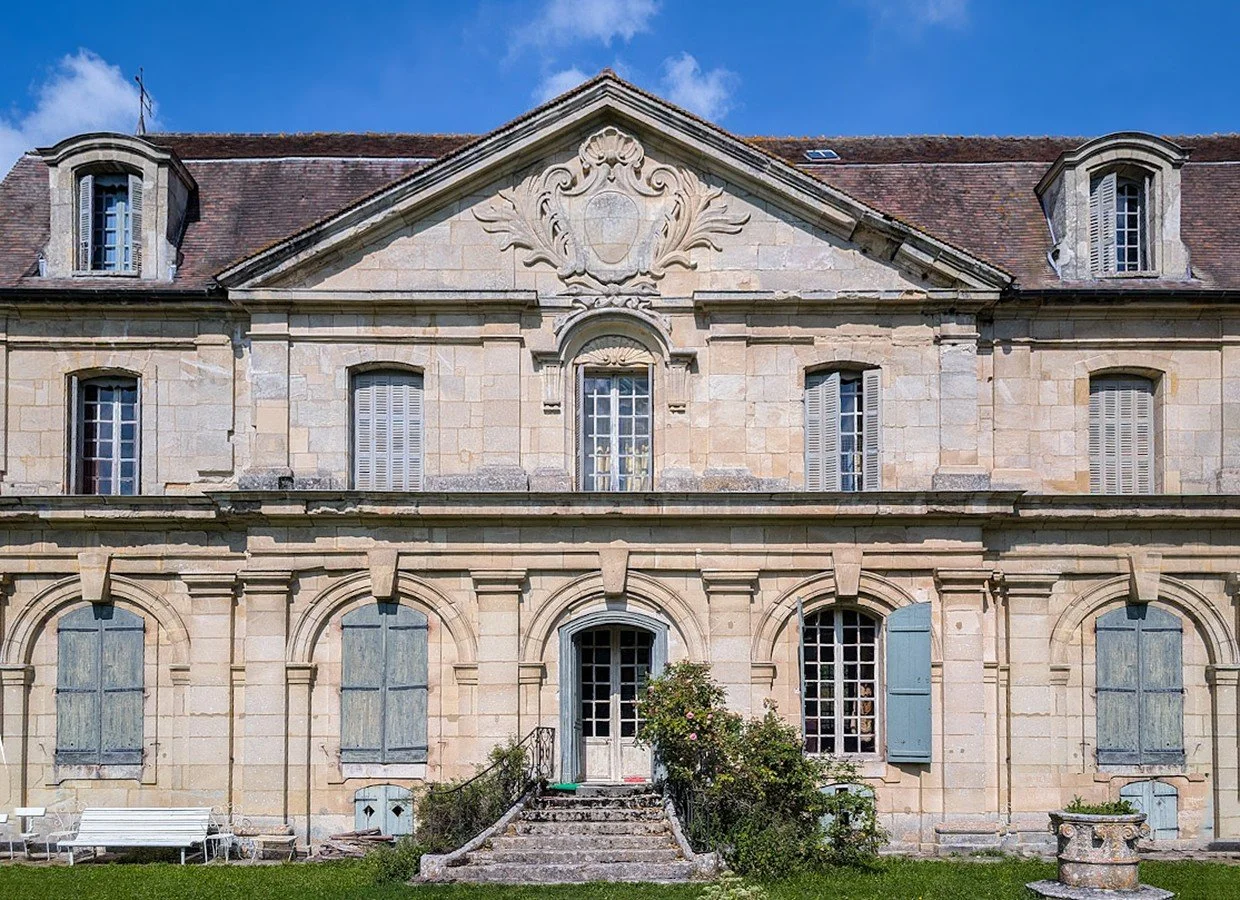
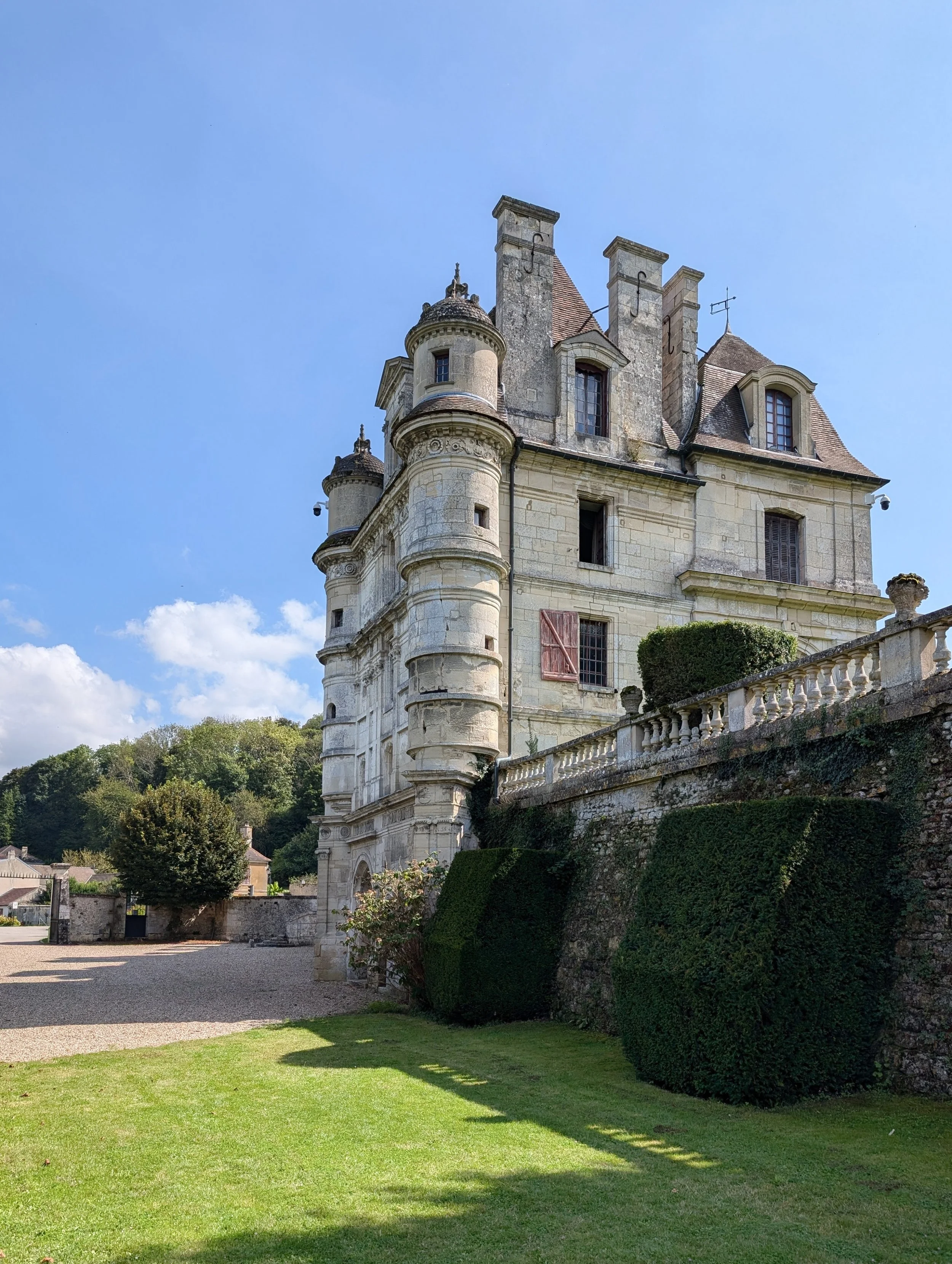
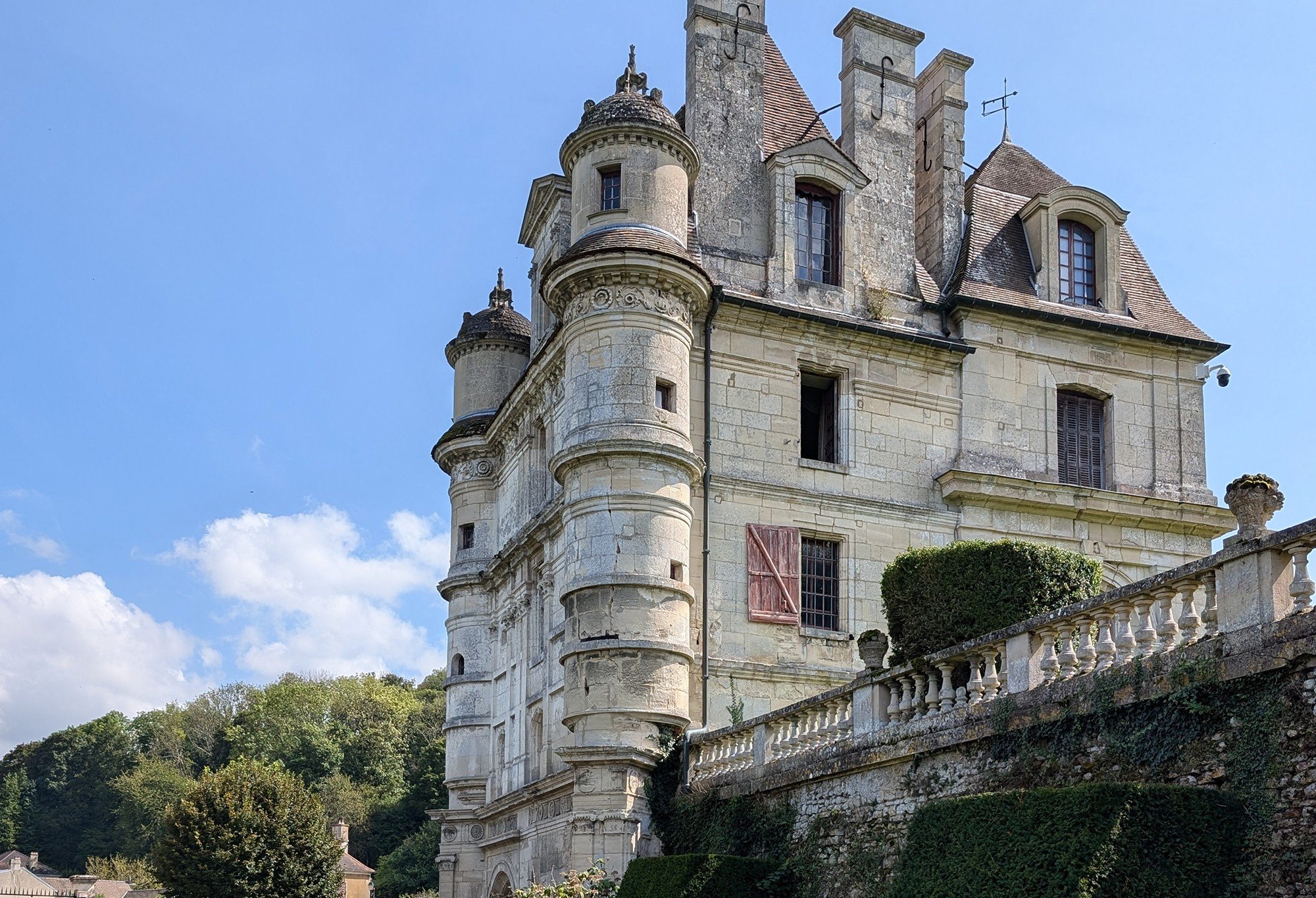
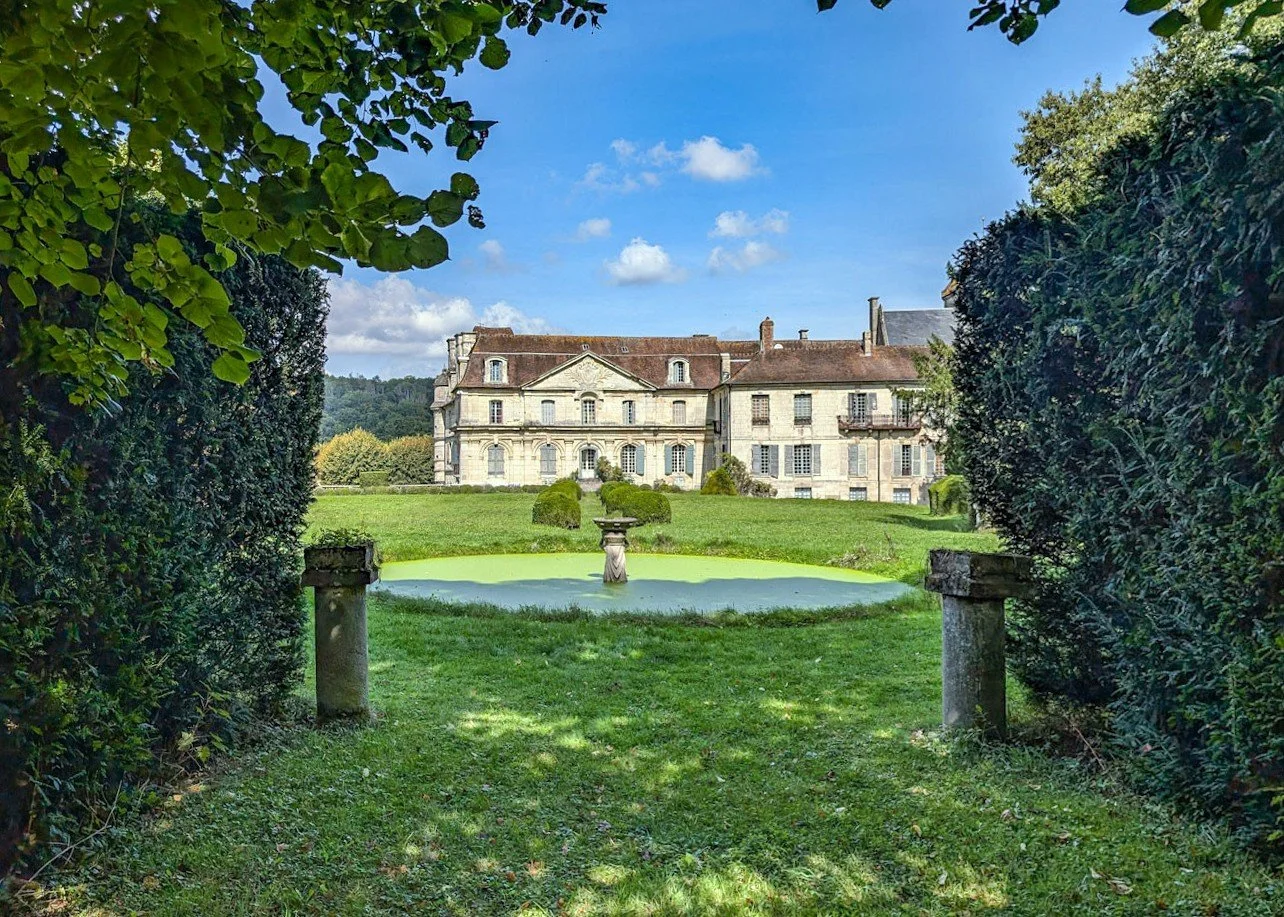
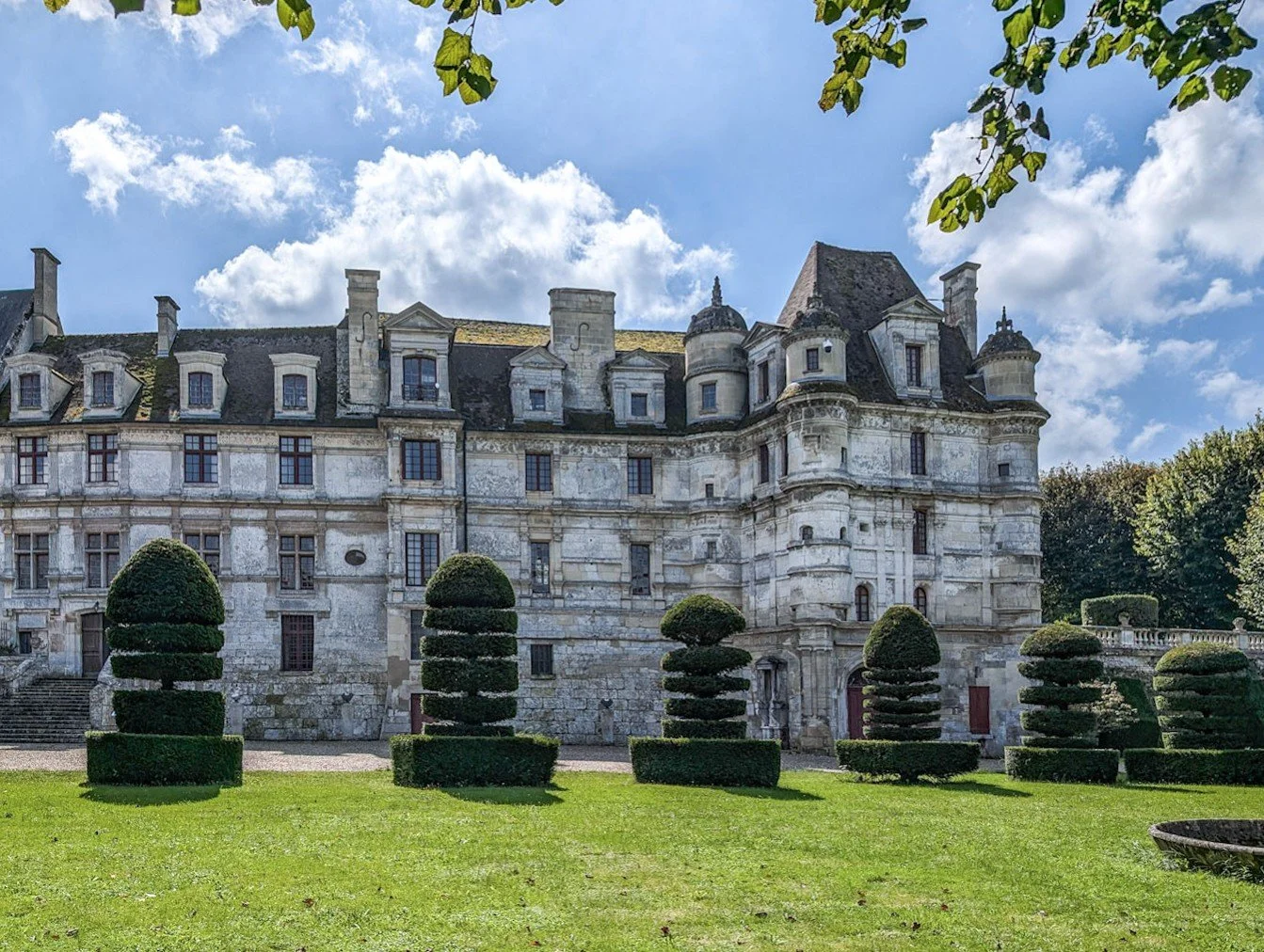
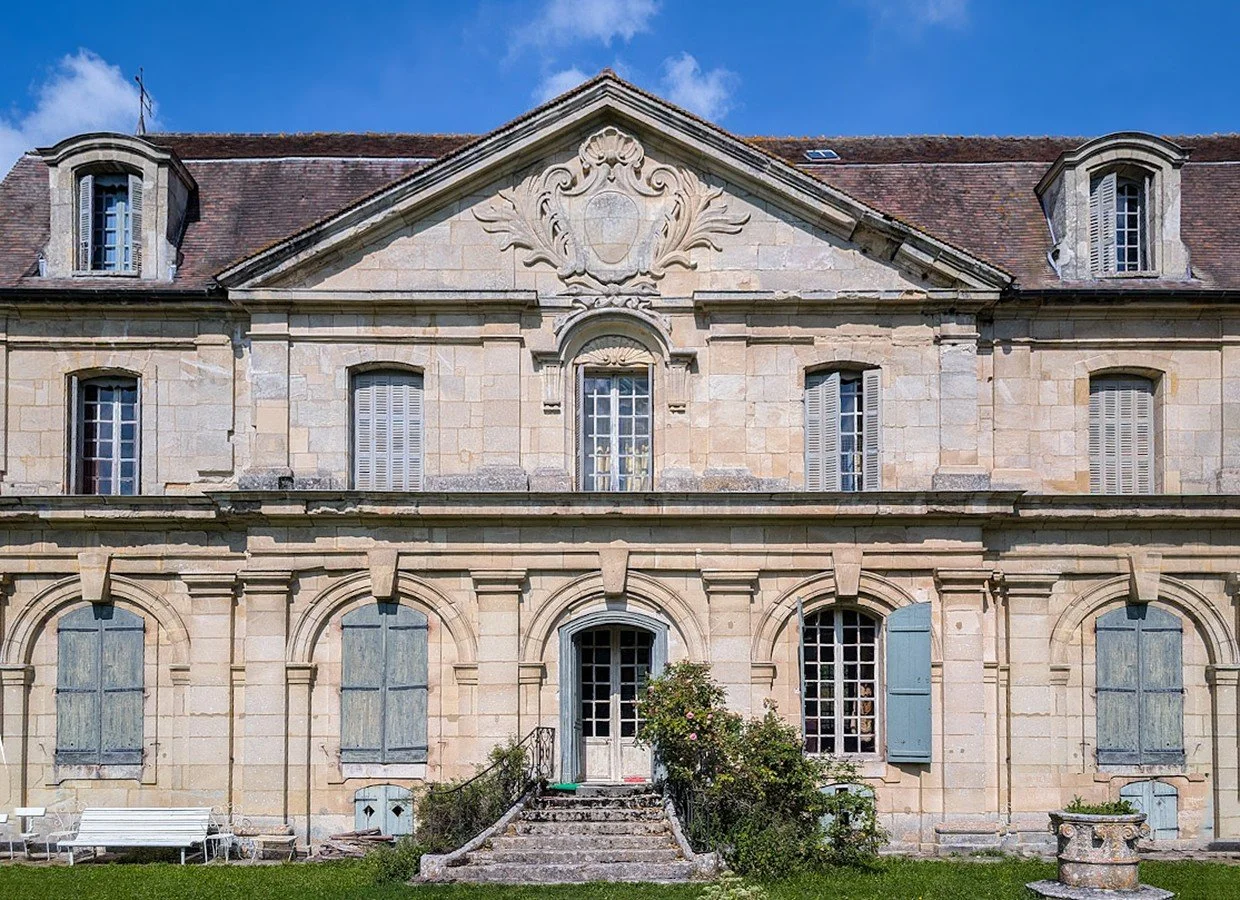
The château dates to around 1540 and was extended in several phases during the early 18th century. Its original Renaissance façade, overlooking the cour d’honneur, remains intact, with pilasters, carved capitals, and foliate friezes characteristic of the period. A medieval donjon with twin échauguettes was retained and later reworked with Renaissance detailing. To the south, a more restrained classical elevation added around 1710 introduces five ground-floor arcades opening directly onto the park.
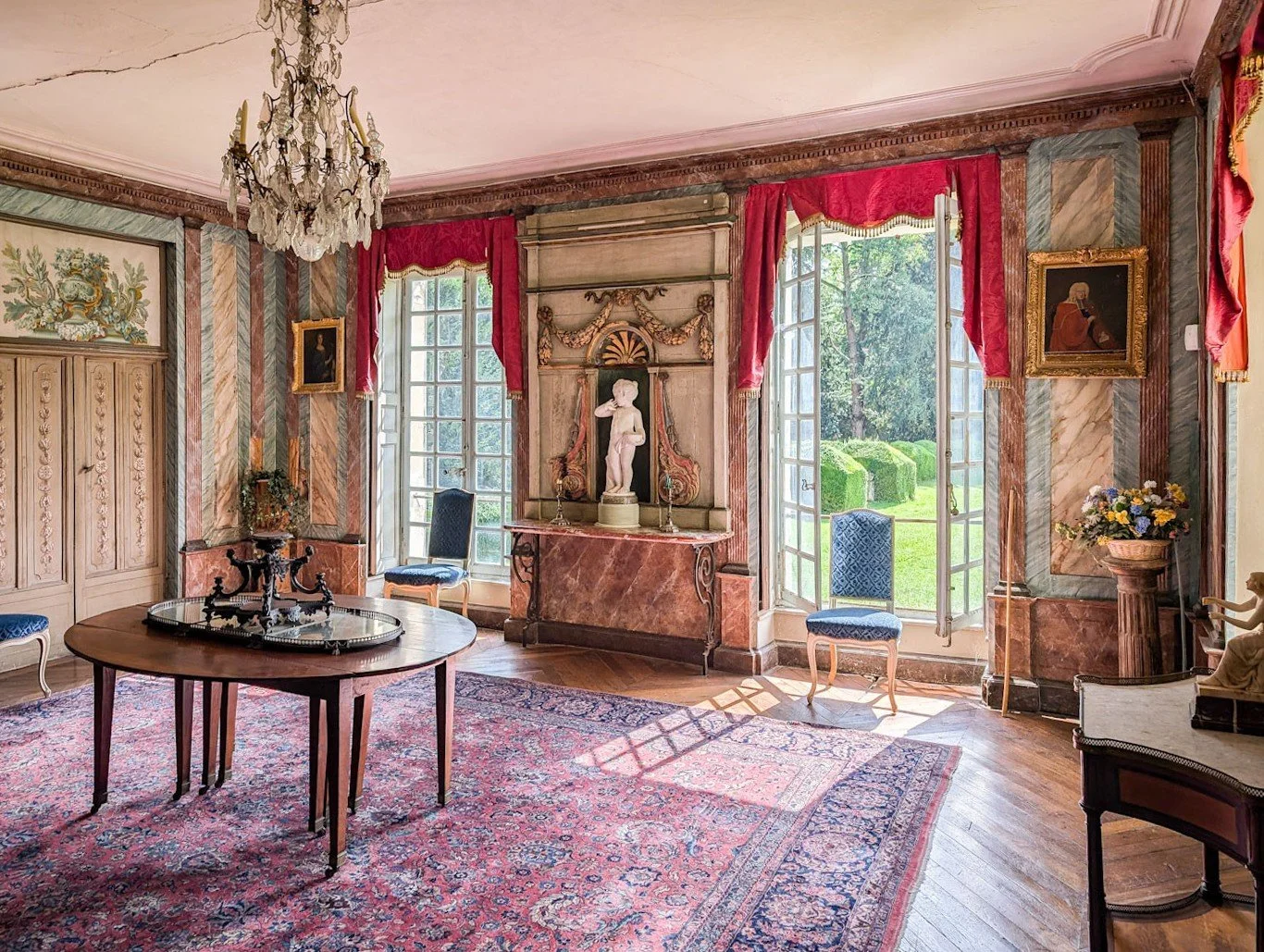
Inside, the house reflects centuries of occupation rather than a single, comprehensive restoration. Large Renaissance volumes sit alongside high-quality 18th-century decorative elements, giving the interiors a layered, lived-in character.
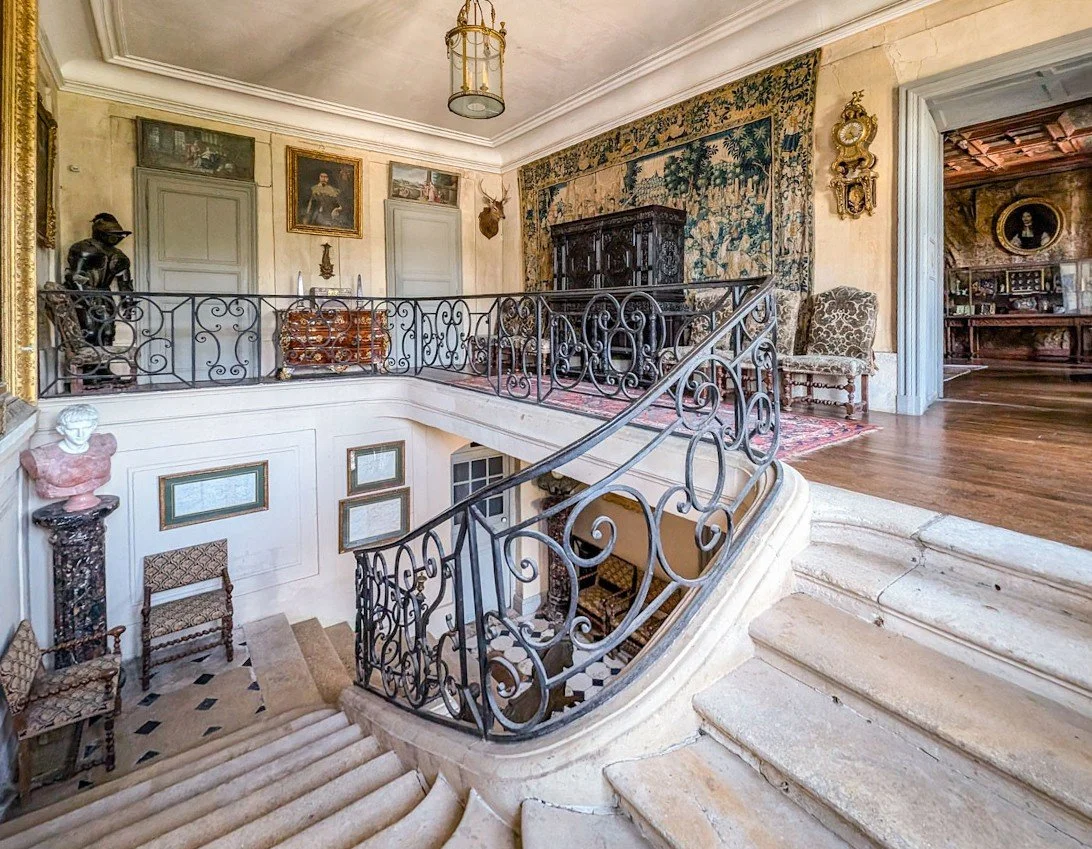
Reception spaces include two Renaissance salons with large fireplaces, a salon with a sculpted ceiling, a long Renaissance gallery, and a vaulted rampe-sur-rampe staircase. Later additions brought a bright 18th-century stair hall with cabochon flooring and an elegant wrought-iron balustrade, as well as paneled dining rooms and a dramatic two-storey library-office organised around a central light well. The upper floors provide eight bedrooms in total, including a 100 m² (approximately 1,075 sq ft) salon with a marble fireplace, alongside additional bathrooms and attic spaces.
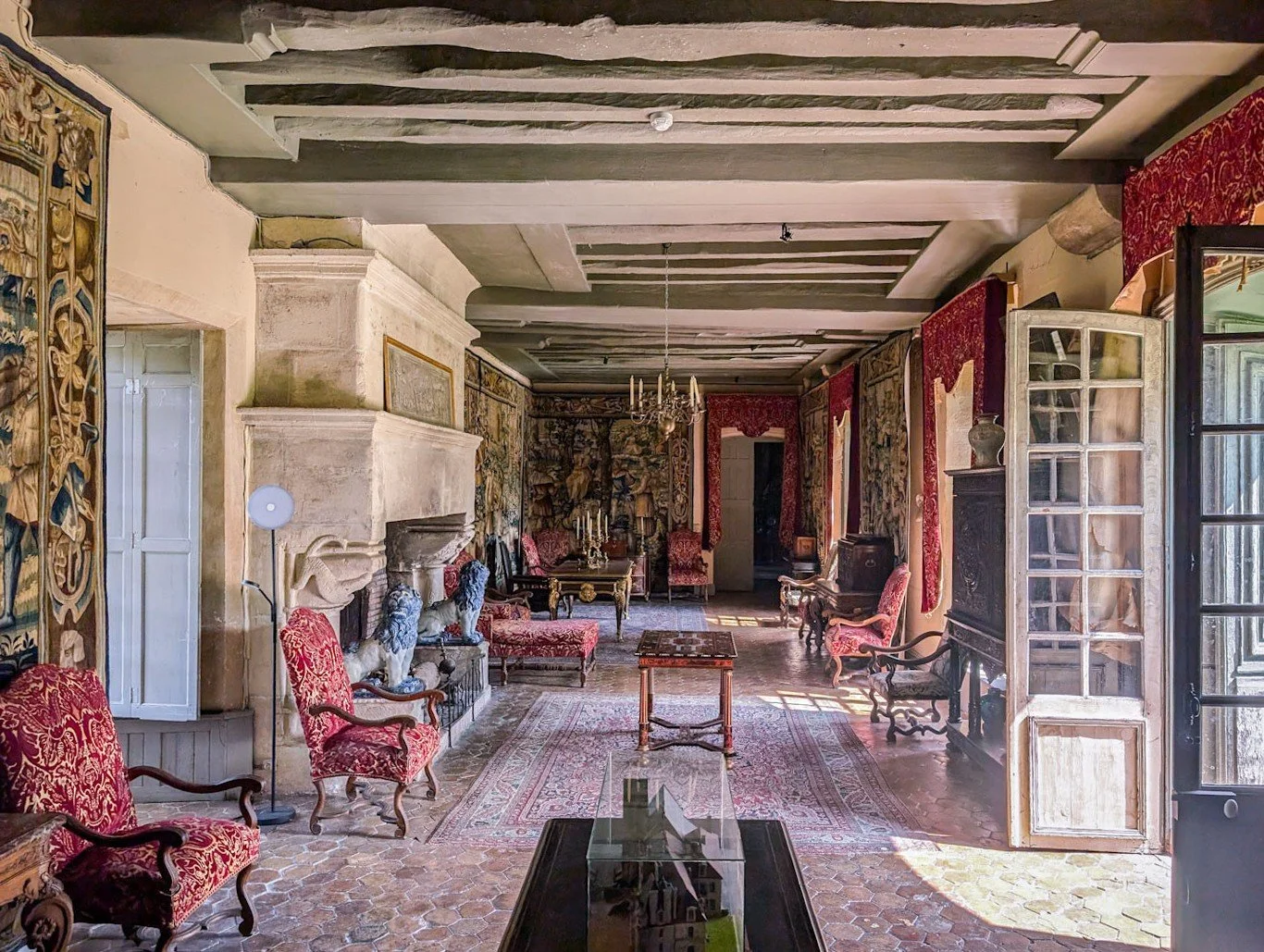
In total, the château offers approximately 2,300 m² (around 24,750 sq ft) of developed interior space. This is complemented by substantial outbuildings, including barns, a monumental press, and former agricultural structures that remain part of the estate’s historic footprint.
A caretaker’s residence of about 100 m² (1,075 sq ft), located at garden level, was restored in 2023–2024. Utilities include mains water, gravity-fed spring water, oil-fired central heating, and independent sanitation systems.
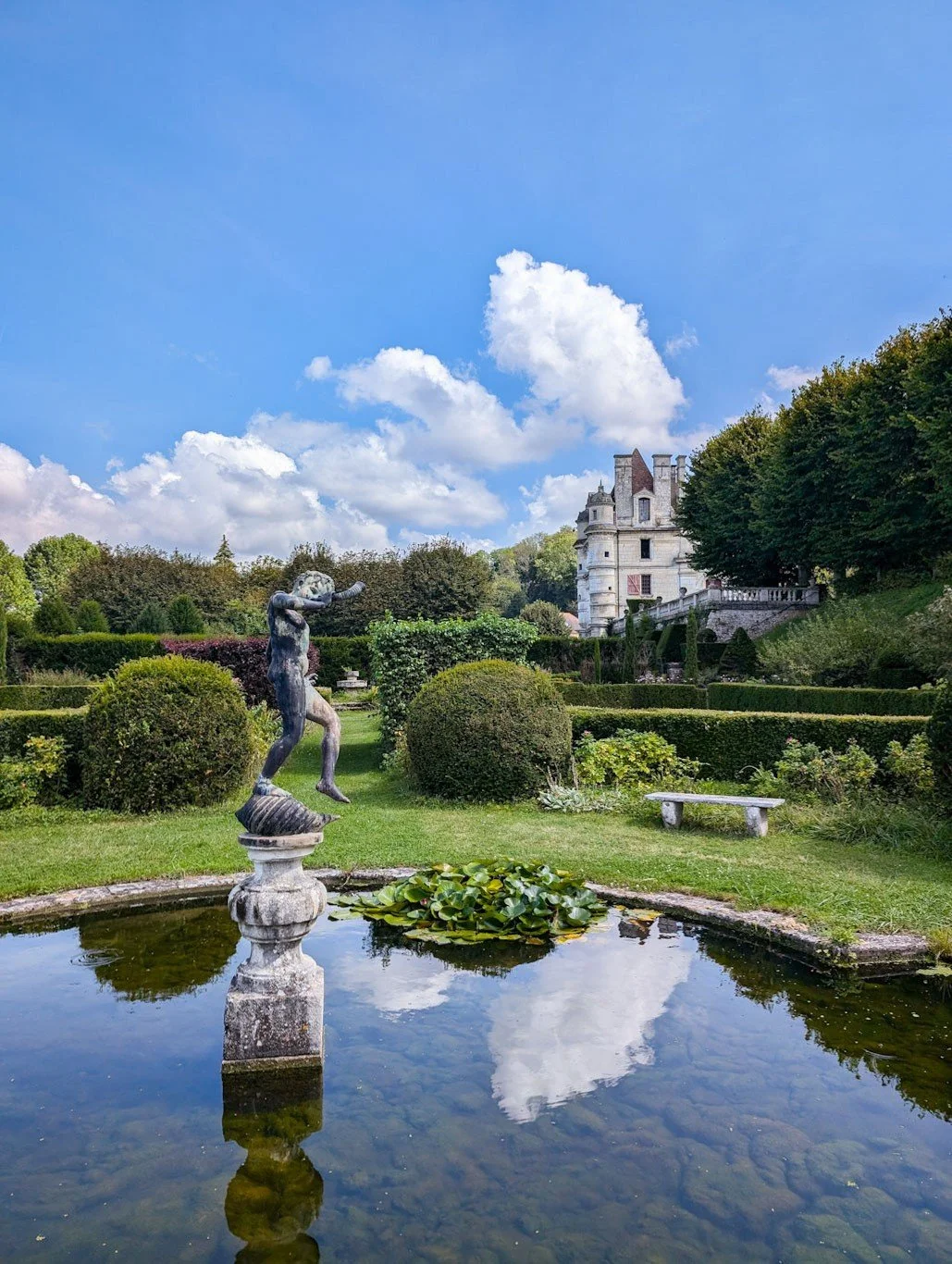
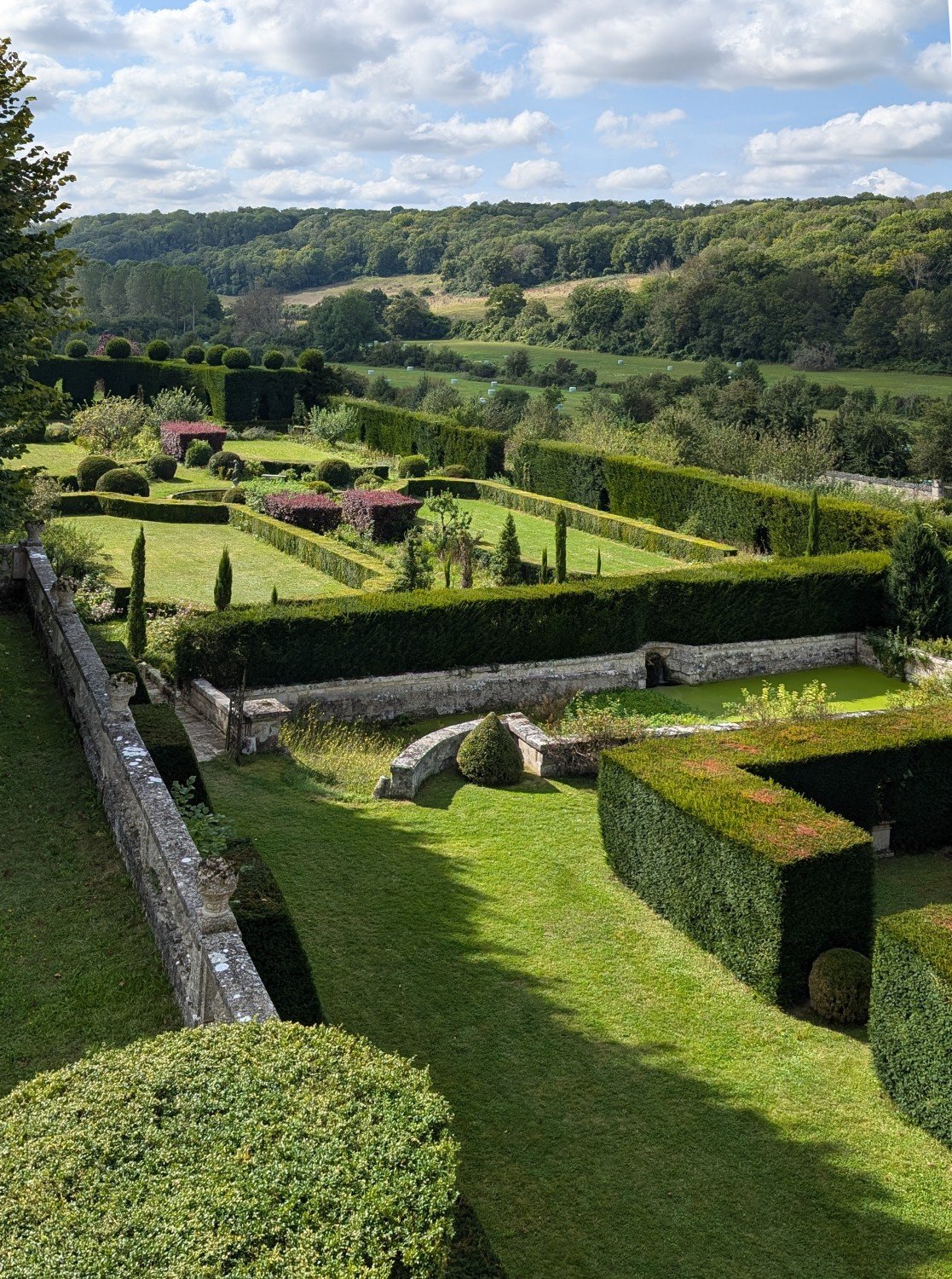
The gardens are a defining element of the property. Laid out across three Renaissance terraces and influenced by Villa Gamberaia in Tuscany, they are organised around long perspectives, clipped box and yew topiary, water features, and axial lime avenues. Distinct garden rooms include a walled garden centred on a Neptune sculpture; a greenhouse garden arranged into 24 square parterres planted with peonies, hellebores, and tulips; and the Jardin de la Lune, conceived as a symbolic landscape composition inspired by Renaissance allegory. On the upper terrace, a checkerboard parterre is planted each spring with approximately 40,000 narcissus. The gardens hold the EBTS label and were awarded the Grand Prix des Jardins in 2015.
In addition to the château, an optional 18th-century farmhouse—restored in 2023—may be acquired. The house offers approximately 500 m² (about 5,380 sq ft), five bedrooms, and a newly installed indoor swimming pool.
All photos belong to the listing agency.