

Bedrooms: 5 Bathrooms: 7 Interior: 1,134 m² / 12,206 sq ft Lot: 1.1 ha / 2.7 acres
Amenities: Swimming pool, rooftop terrace, winter garden, library, elevator, garage, parking, landscaped gardens, former stables converted for receptions and events, professional kitchen, Roman-era cave dining room, archaeological mosaics and ancient marble elements.
Once home to Sophia Loren and her husband, film producer Carlo Ponti, this secluded villa sits along Rome’s Via Appia Antica, less than 15 minutes from the historic centre. Now listed for sale with Italy Sotheby’s International Realty, it occupies an unusually private position within one of the city’s most historically protected landscapes, surrounded by mature gardens and built directly into terrain shaped by ancient Roman quarrying.
The Via Appia Antica is not simply an old road through the countryside. Begun in 312 BCE, the Appian Way was one of ancient Rome’s great military and commercial routes, eventually running southeast from the capital to Brindisi. Known as the Regina Viarum, or “Queen of Roads,” it became a corridor of trade, villas, tombs, pilgrimage and travel. Sections of its original basalt paving still survive today, lined by Roman ruins, aqueducts, funerary monuments and umbrella pines.
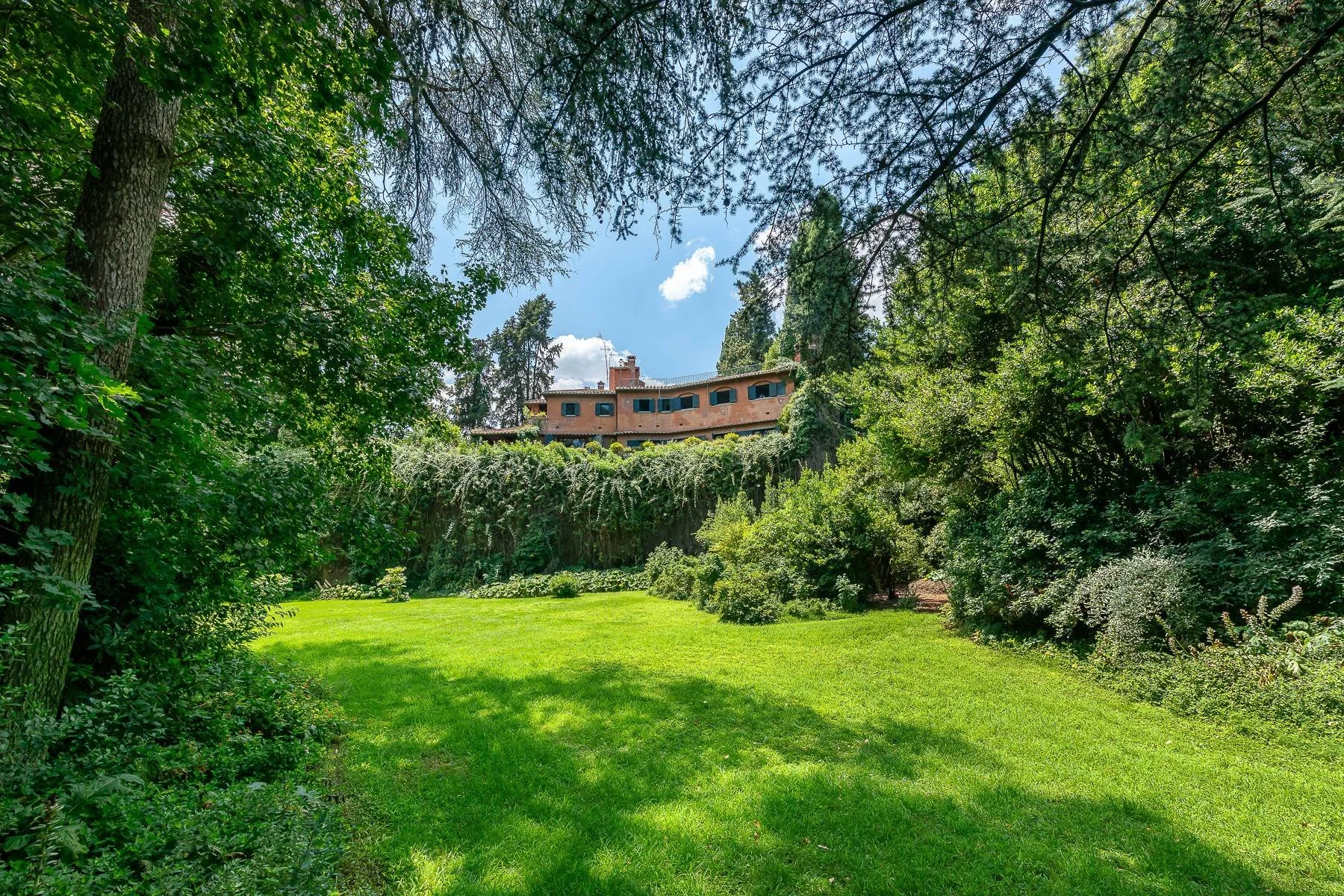
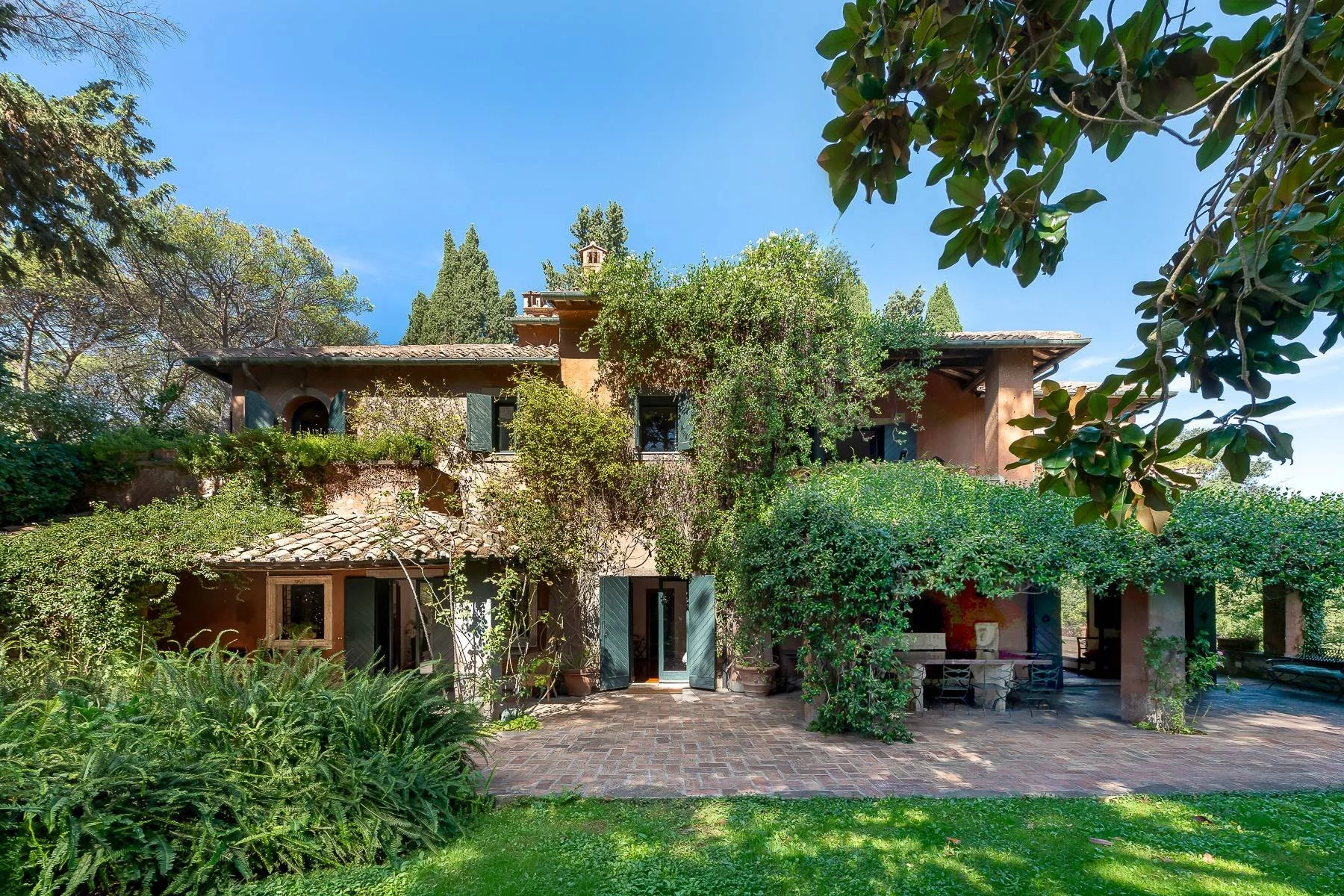
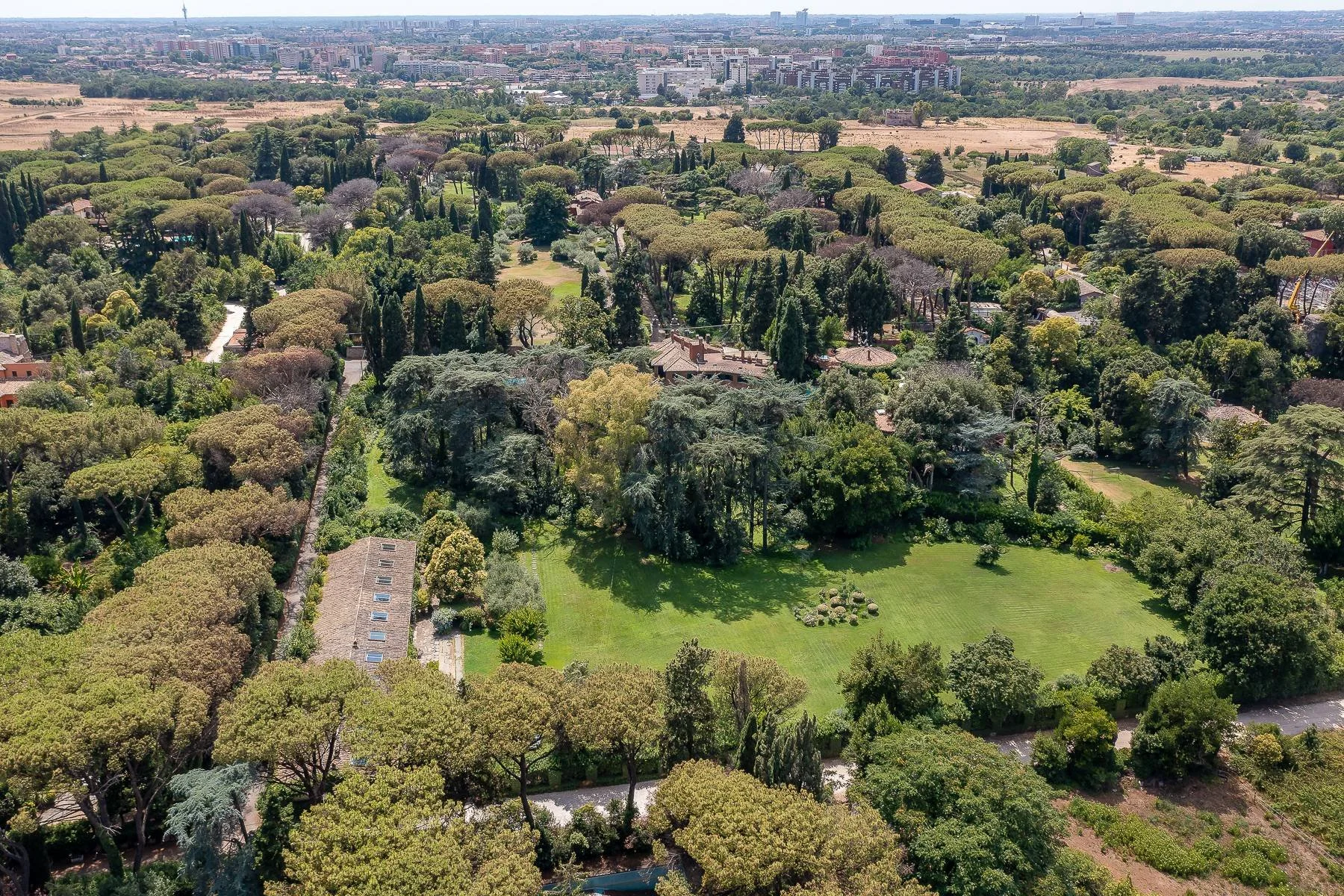
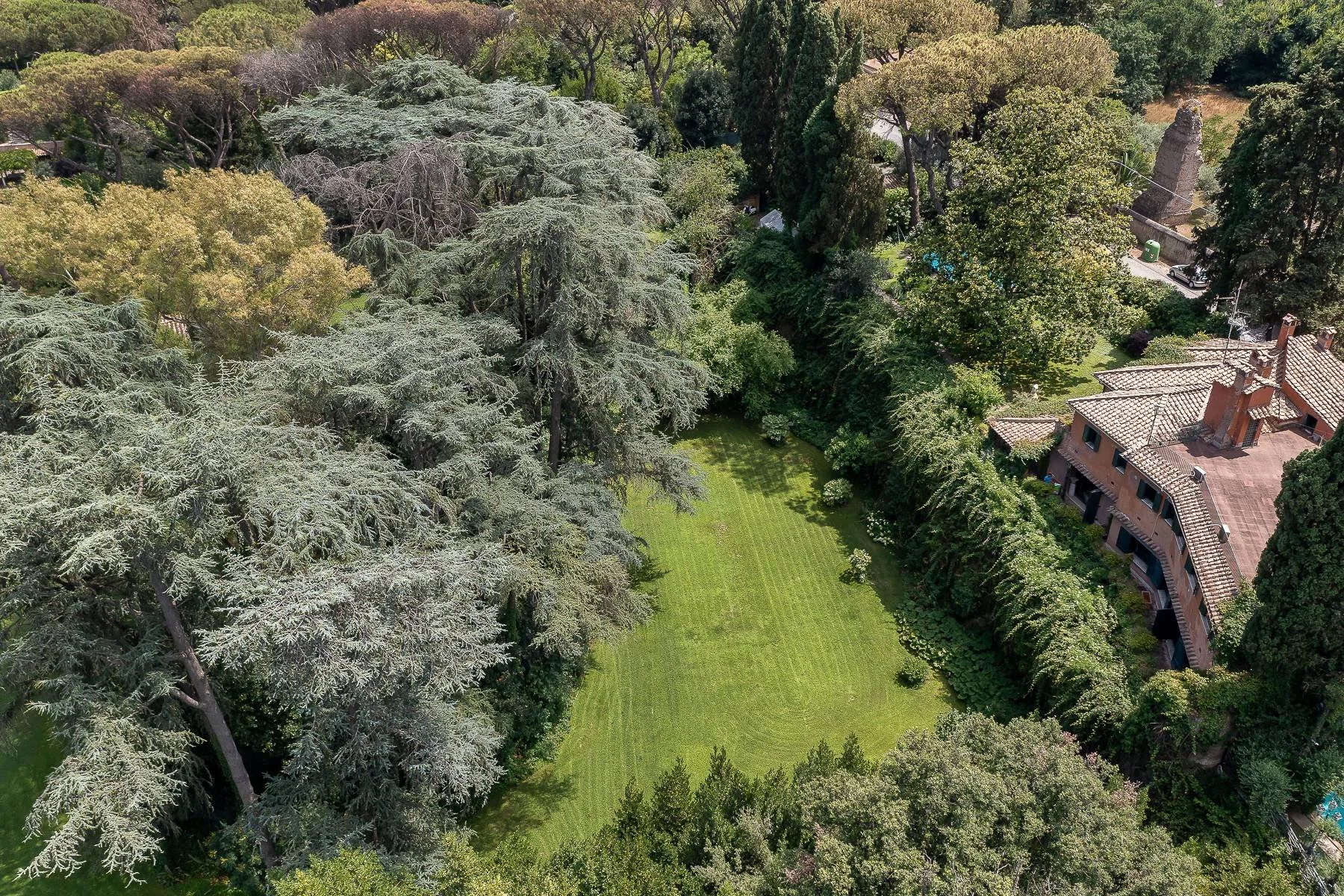
Just under 4 miles from the Colosseum on Rome’s ancient Via Appia Antica, the villa sits above a former volcanic basalt quarry, creating its natural amphitheatre-like setting. Italy Sotheby’s International Realty
Its remarkably preserved landscape still feels cinematic. In Netflix’s 2024 adaptation of Ripley, Tom Ripley drives Freddie Miles’s body out along the deserted Appian Way, with the road’s isolation becoming part of the tension of the scene. That same year, the Via Appia was inscribed on UNESCO’s World Heritage List, recognising not only the surviving road itself but the extraordinary archaeological and cultural landscape that developed around it over more than two millennia.
By the 20th century, that same combination of history, privacy and proximity to central Rome had made the area especially desirable to prominent Roman families, diplomats and figures from the film world.
Ponti acquired the property before his marriage to Loren and extensively renovated it during the 1950s and 1960s. Loren later lived there with him, and the house became closely associated with the couple during a remarkable moment in Rome’s cultural history. Cinecittà was then in its so-called “Hollywood on the Tiber” era, when major international productions were arriving in the city and Italian filmmakers were moving easily between Rome and Hollywood. Guests at the villa reportedly included Federico Fellini, Vittorio De Sica, Roberto Rossellini, Anthony Quinn, Kirk Douglas, Elizabeth Taylor, Richard Burton and Alberto Sordi.
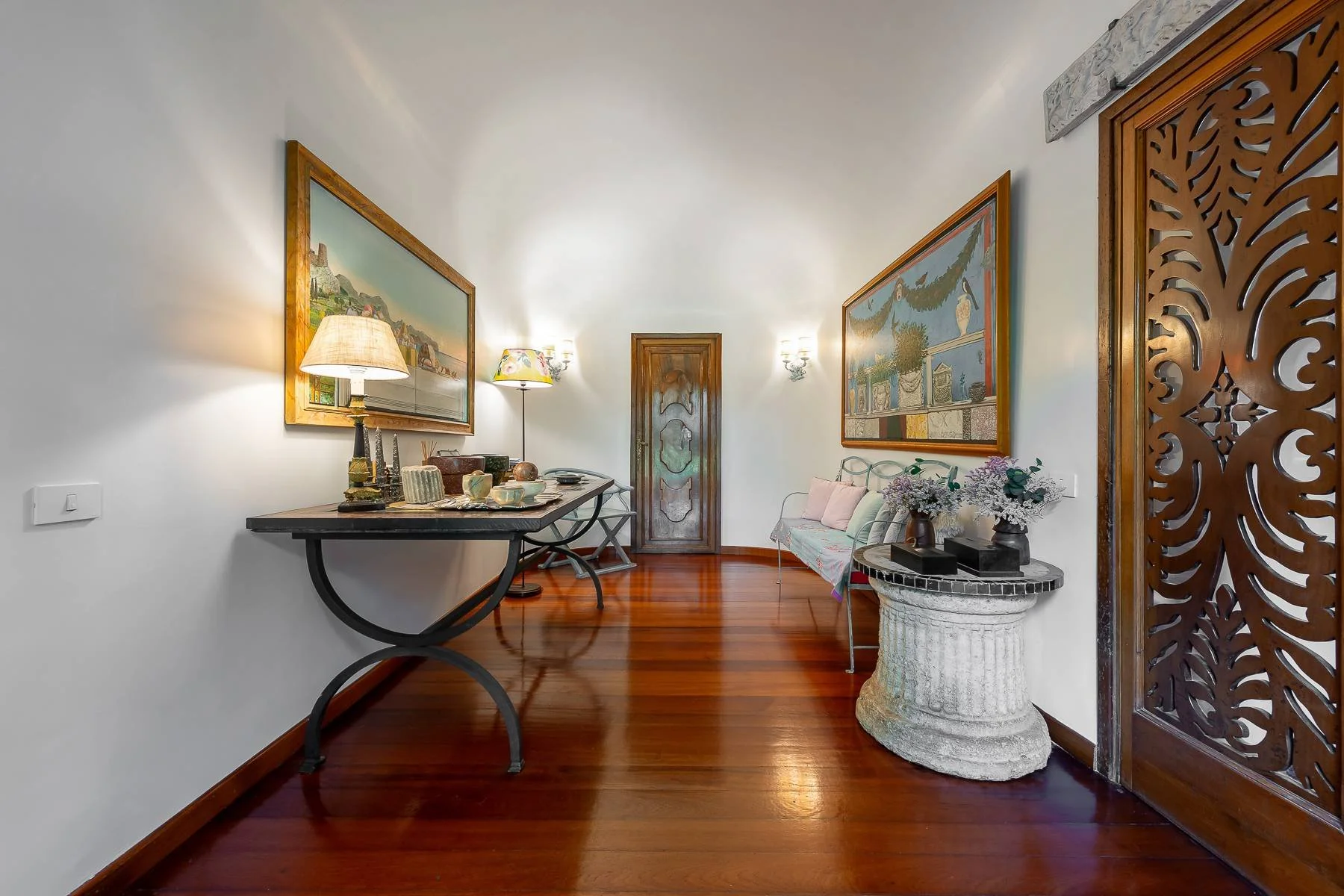
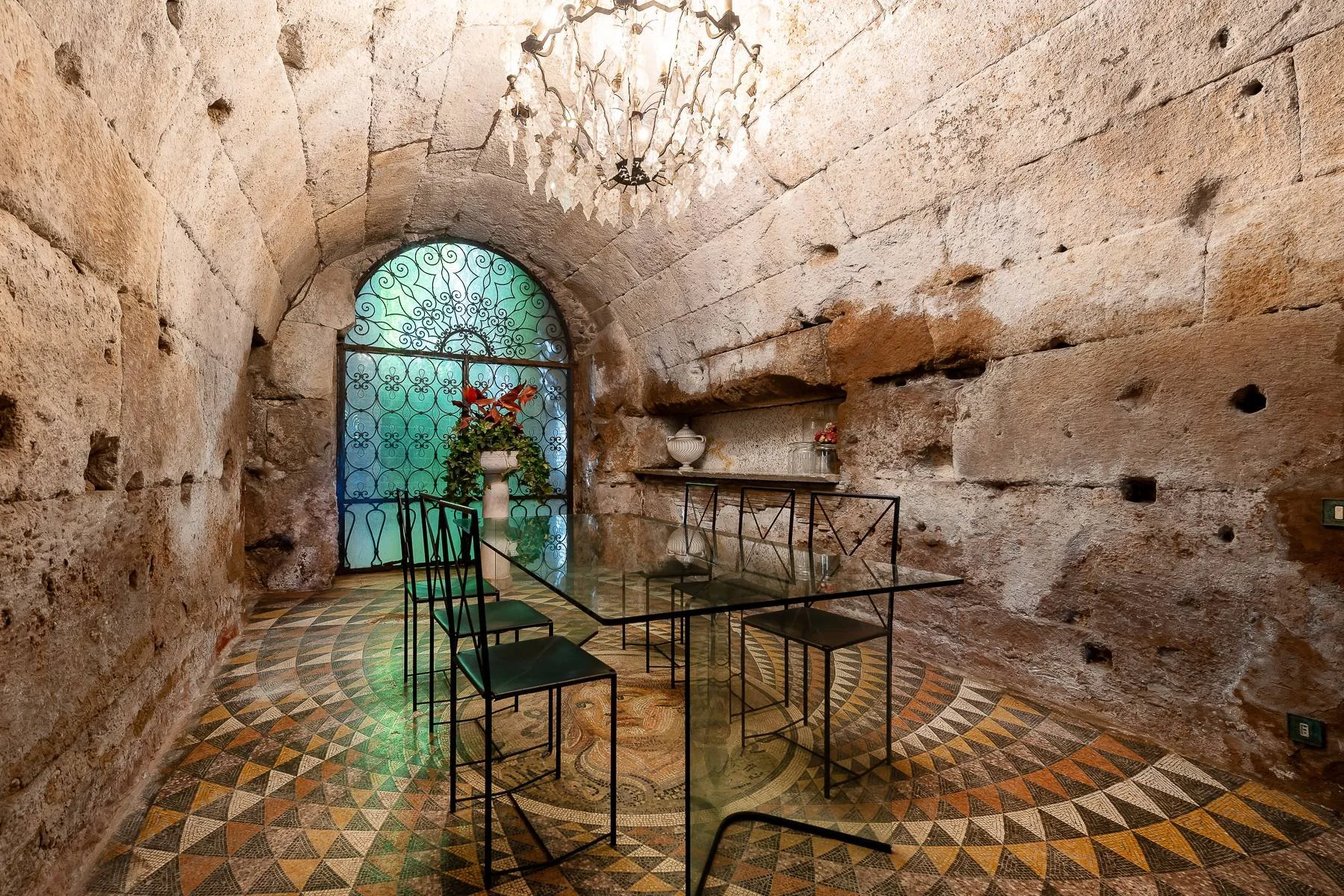
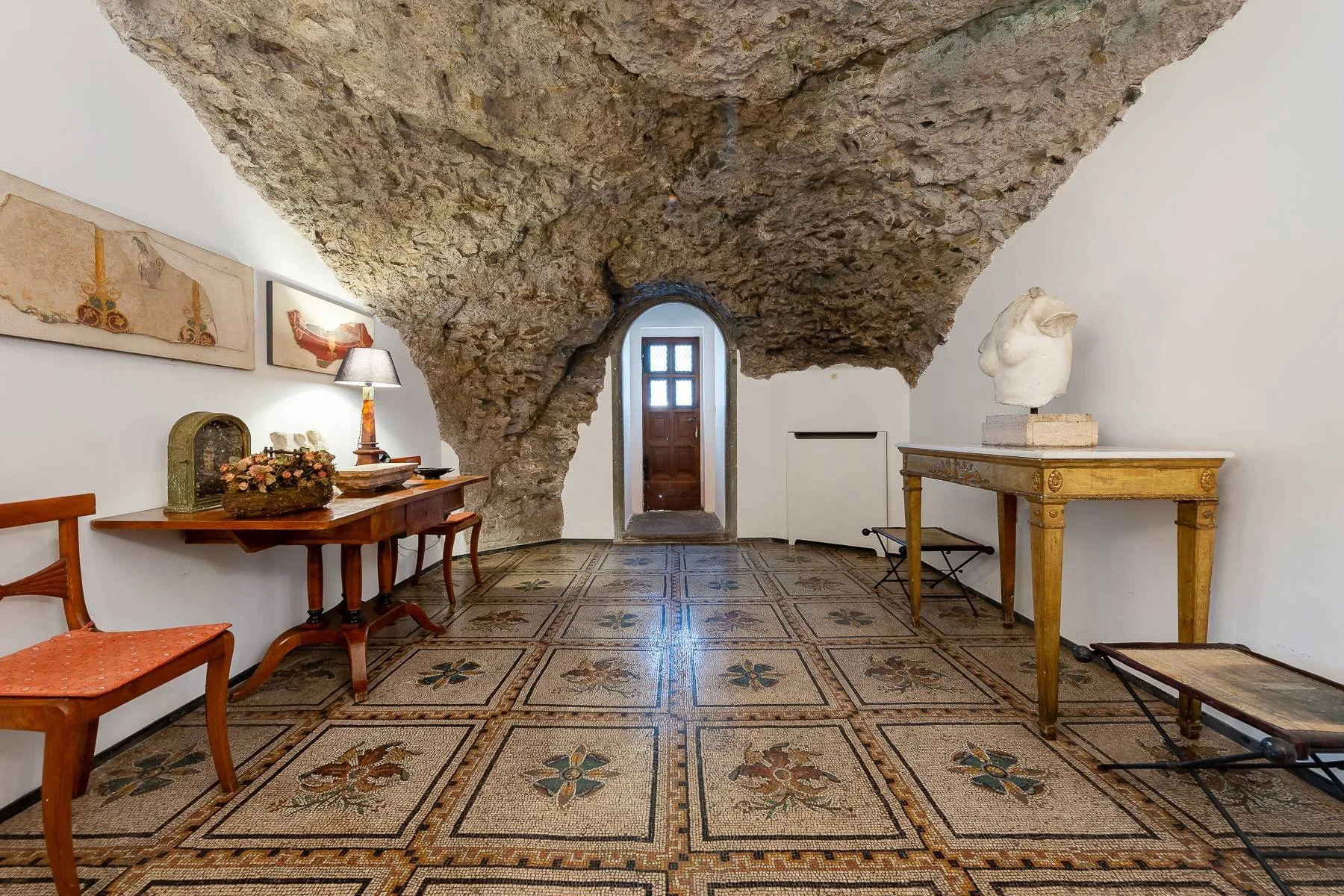
Ponti apparently enjoyed making an entrance of the house itself. Earlier reporting says he would bring guests through the most modest of the estate’s 3 doors before revealing a tufa-vaulted room with an ancient mosaic of Medusa underfoot. Sordi later used the property for the opening of A Taxi Driver in New York.
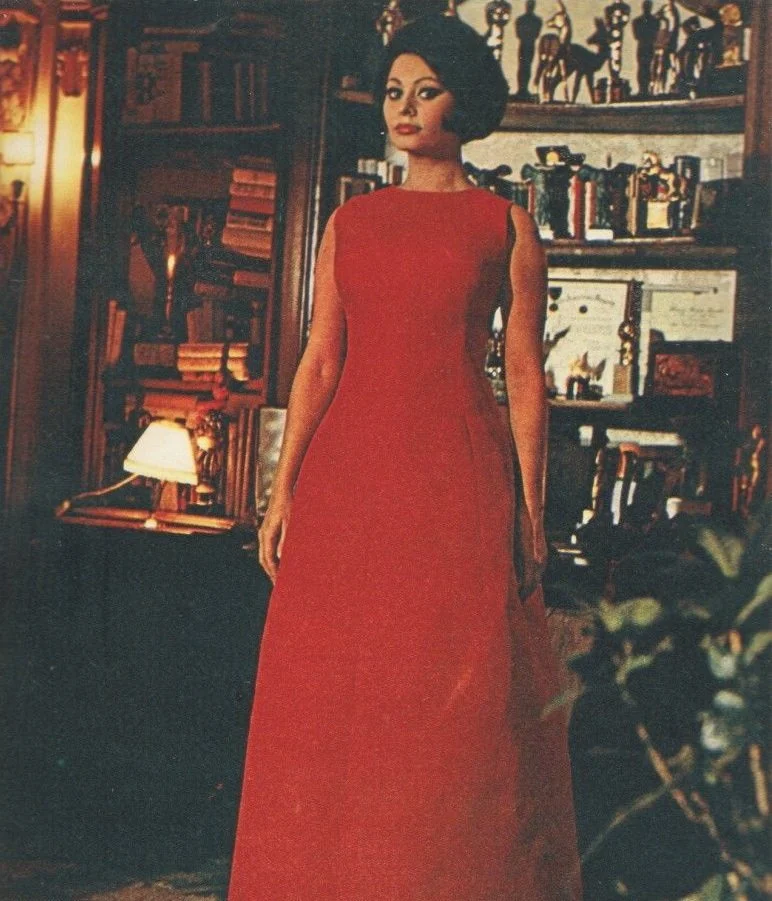
Sophia Loren at her Roman home, Villa Sara, in 1964. Wikimedia
The Appian Way villa belonged to an earlier chapter in Ponti and Loren’s life together. Around 1960, Ponti acquired Villa Sara in Marino, in the Alban Hills outside Rome, and spent years restoring the lavish 50-room residence that would become their more famous family home. When LIFE photographer Alfred Eisenstaedt visited Loren there in 1964, he photographed her among its marble halls, gardens and famously opulent interiors. Loren later described life at Villa Sara simply as “bliss.” You can see the photos here.
Ponti was among Italy’s most influential producers, with credits including Doctor Zhivago, Blow-Up and Marriage Italian Style. His partnership with Loren extended beyond their marriage into one of Italian cinema’s most important producer-actor collaborations. Among the films he produced for her was Two Women, for which Loren became the first performer to win the Academy Award for Best Actress for a non-English-language performance.
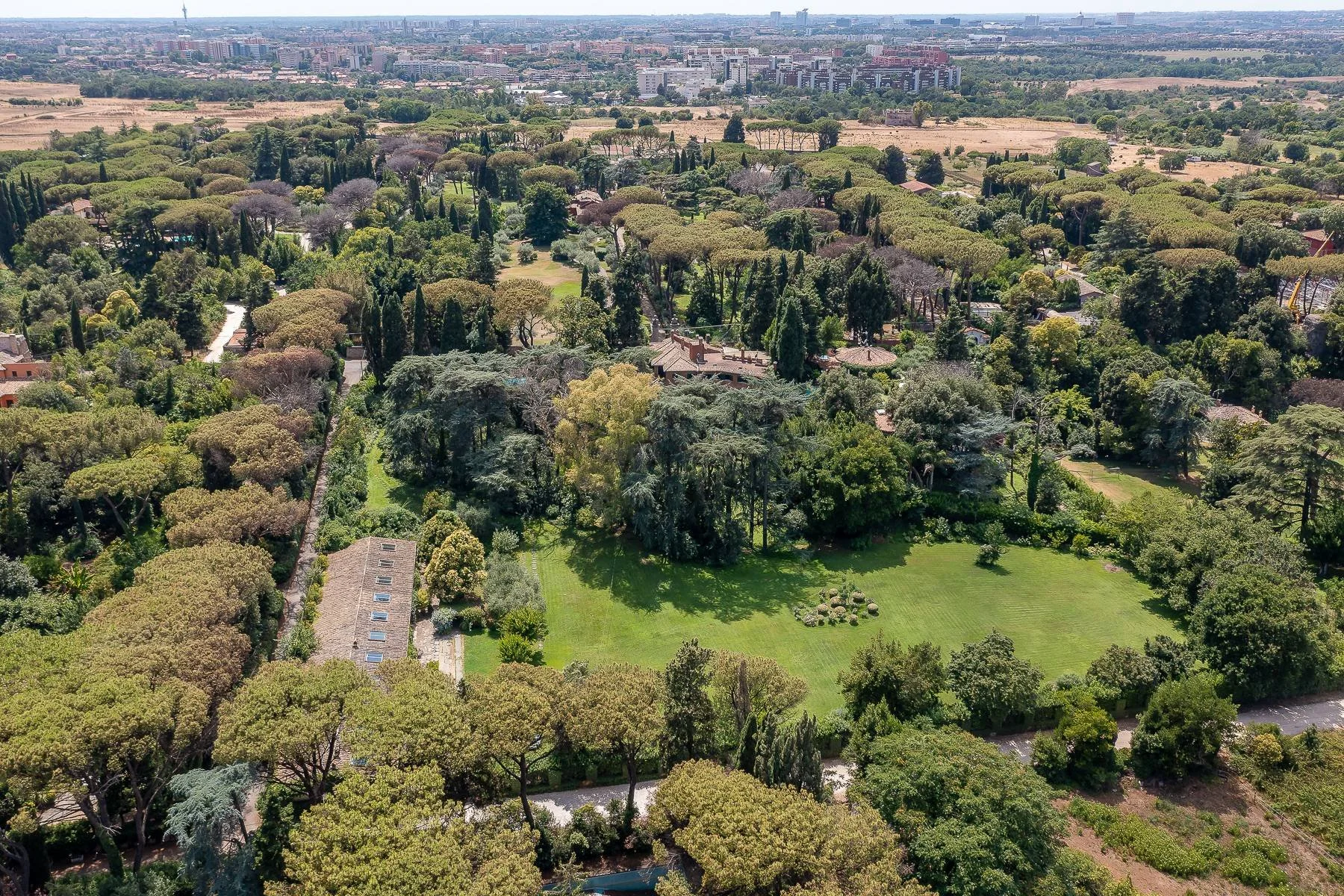
The villa sits along the Via Appia Antica, the ancient Roman road begun in 312 BCE and now recognised as a UNESCO World Heritage Site. Italy Sotheby’s International Realty
The ownership history is a little more complicated than the shorthand of “Sophia Loren’s villa” suggests. Giorgio Greco bought the property in 1985 from Ponti’s first family, and it has remained with the same family since.
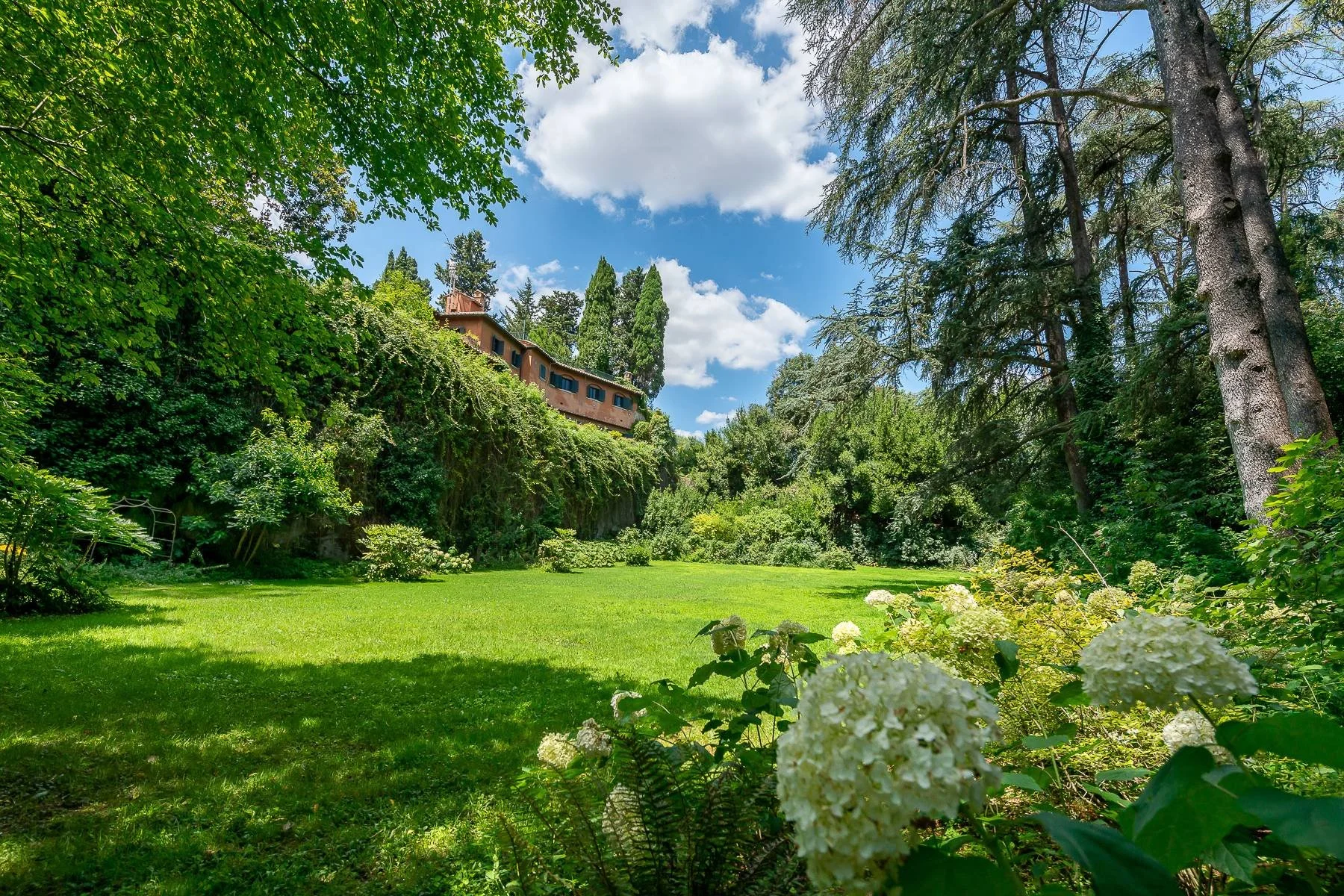
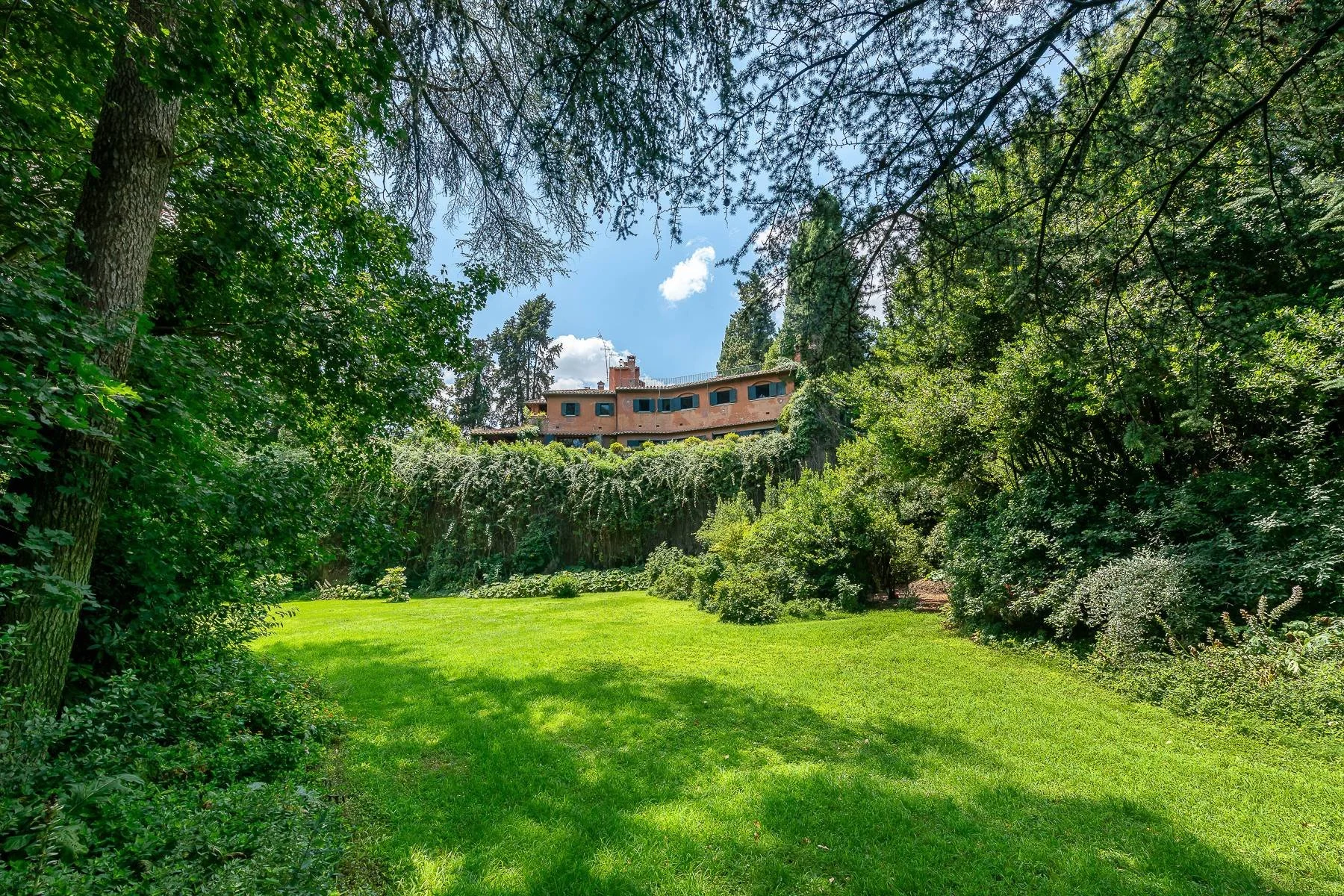
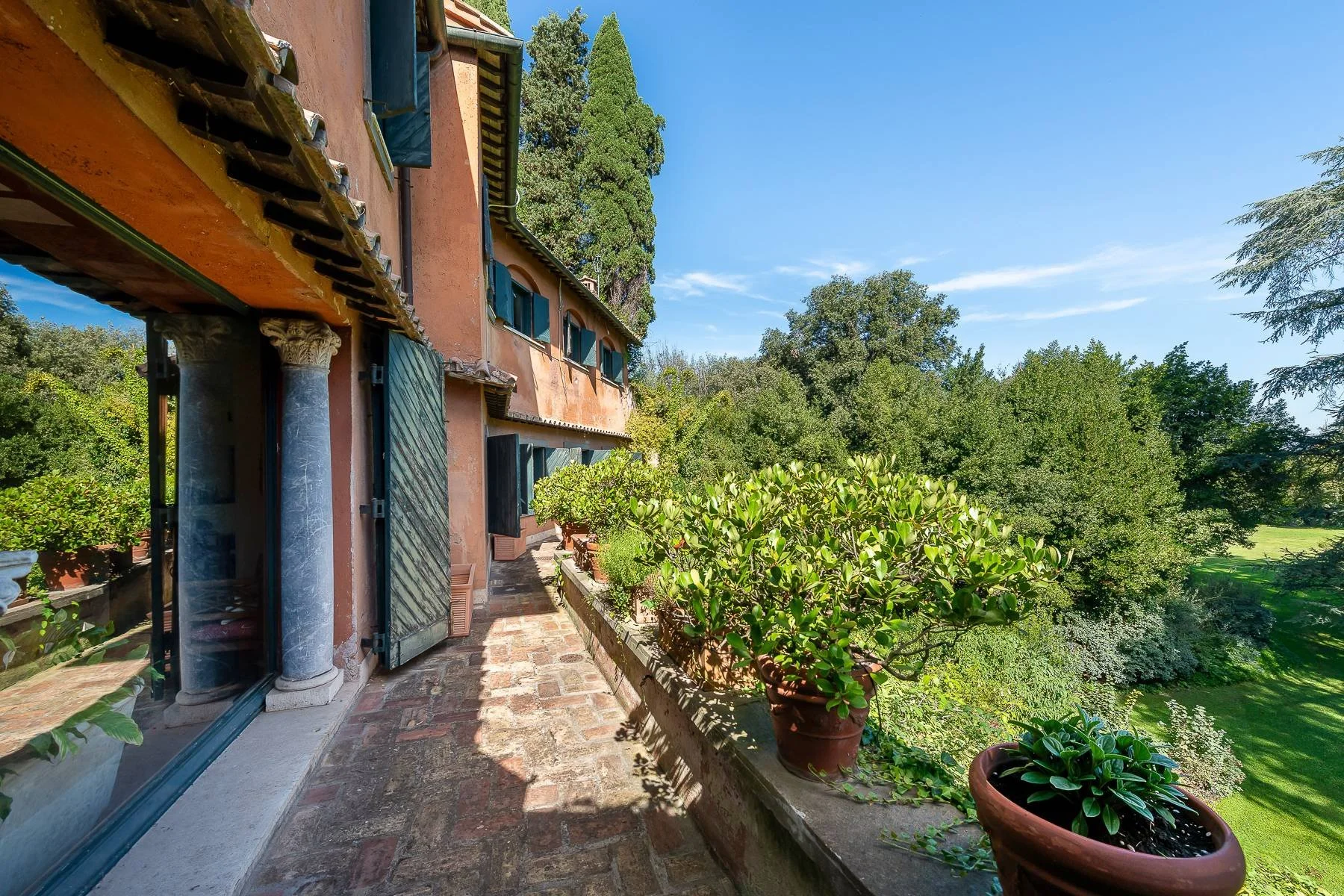
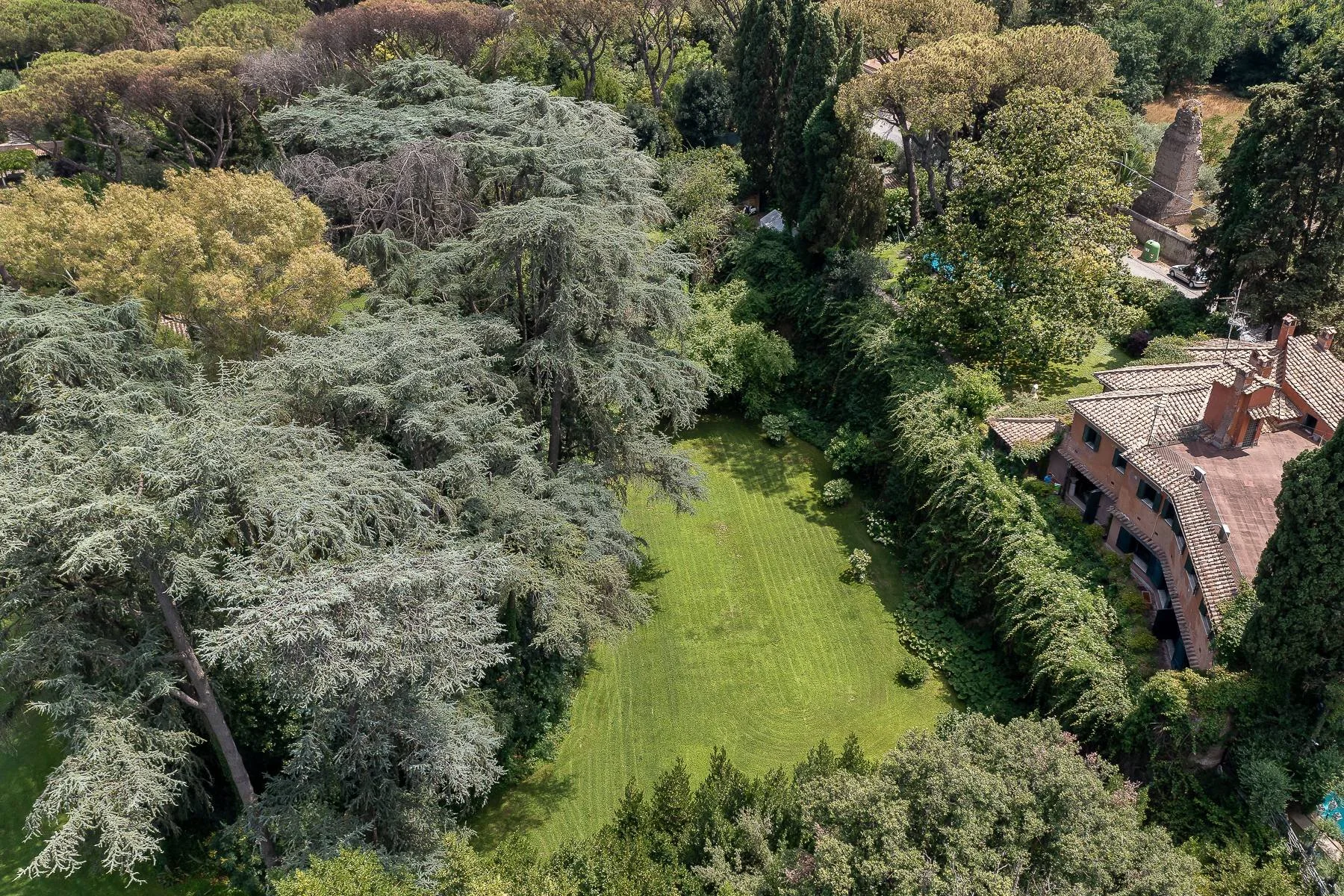
Deliciously private, the estate is hidden behind mature greenery and perimeter walls despite sitting only a few miles from the Colosseum. The villa occupies an elevated section of volcanic terrain shaped by Rome’s ancient geology. The area was historically quarried for basalt, the hard volcanic stone used by the Romans to pave sections of the Appian Way. That excavation left behind a natural amphitheatre, raising the house above its surroundings and giving it an unusually secluded position within the park.
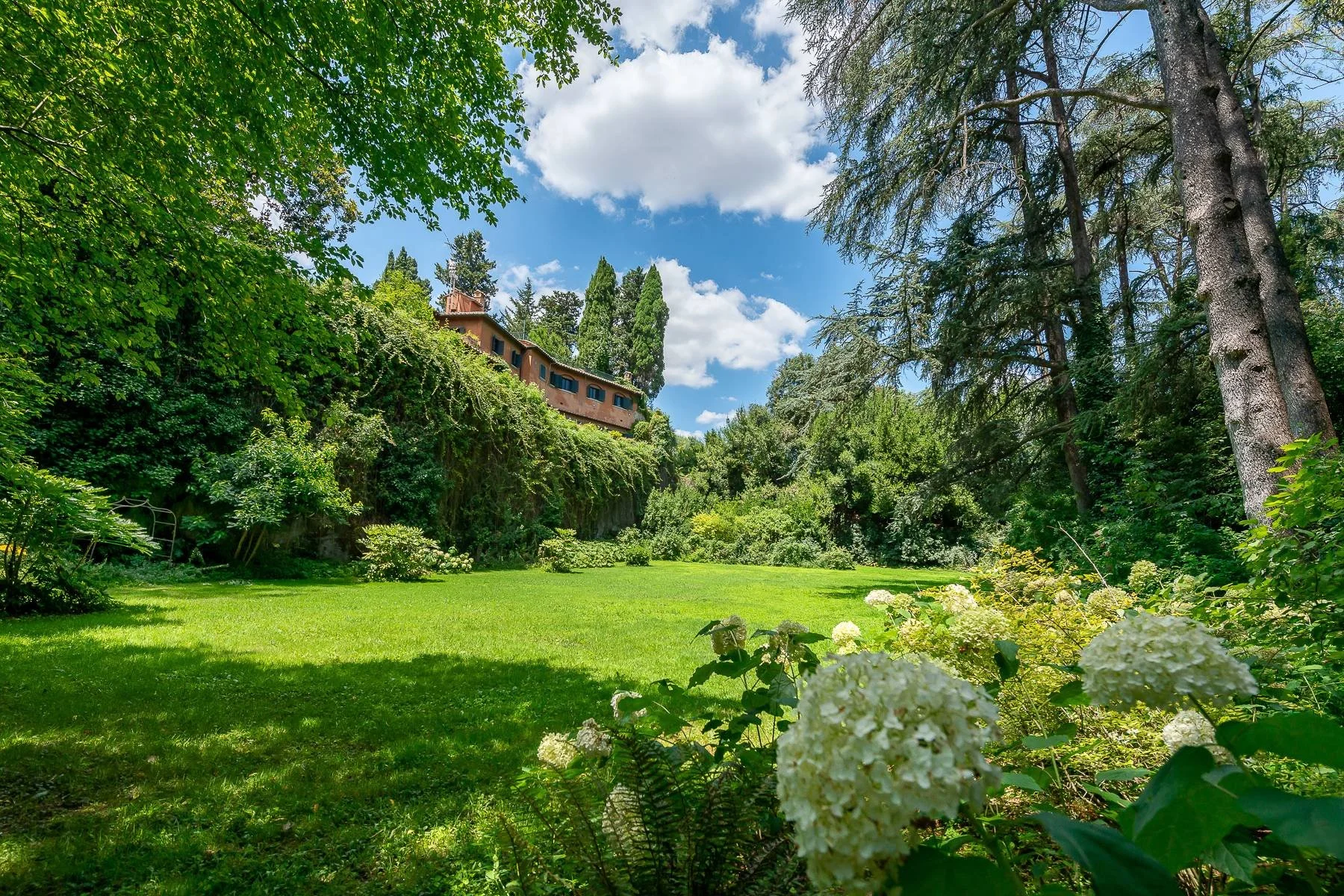
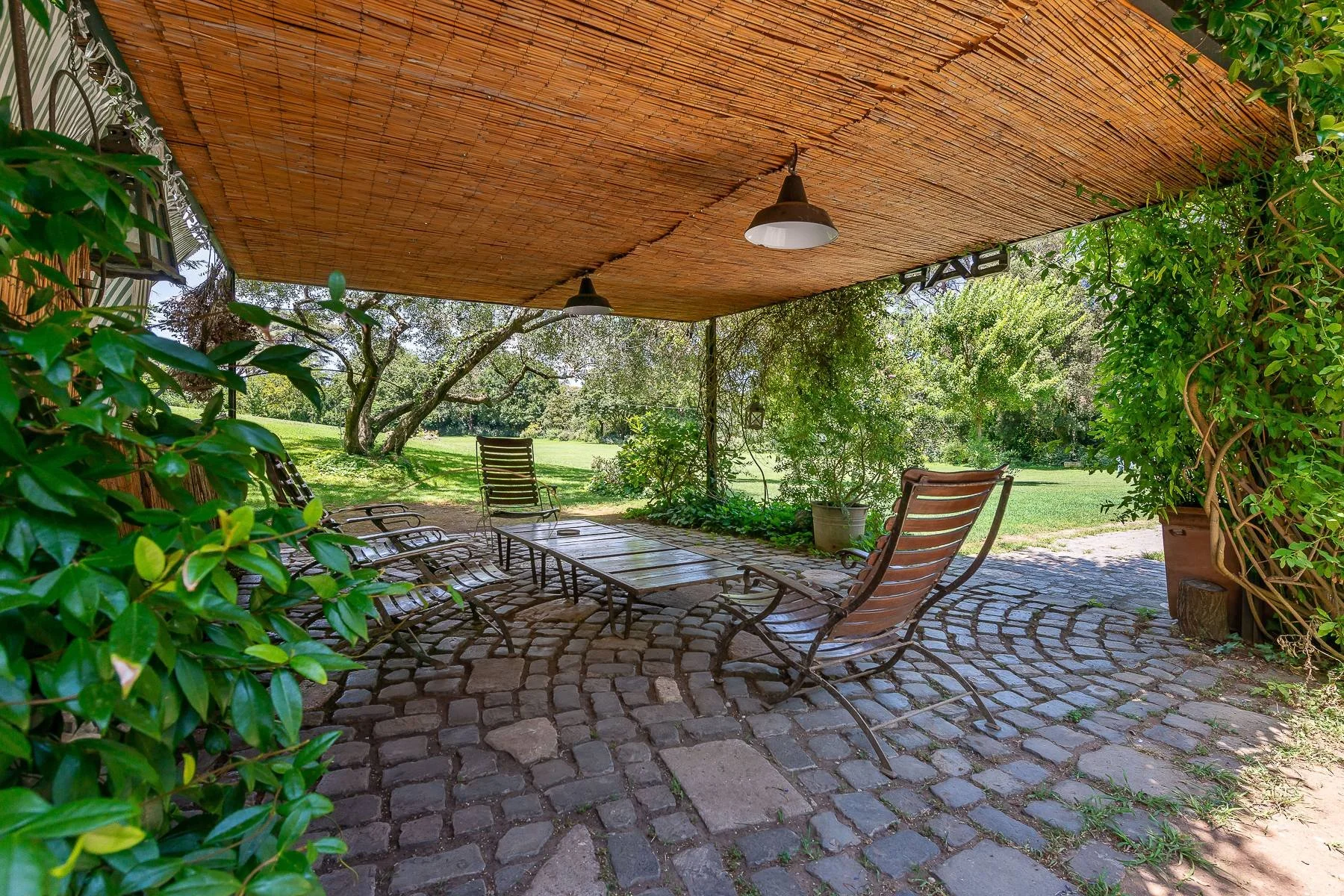
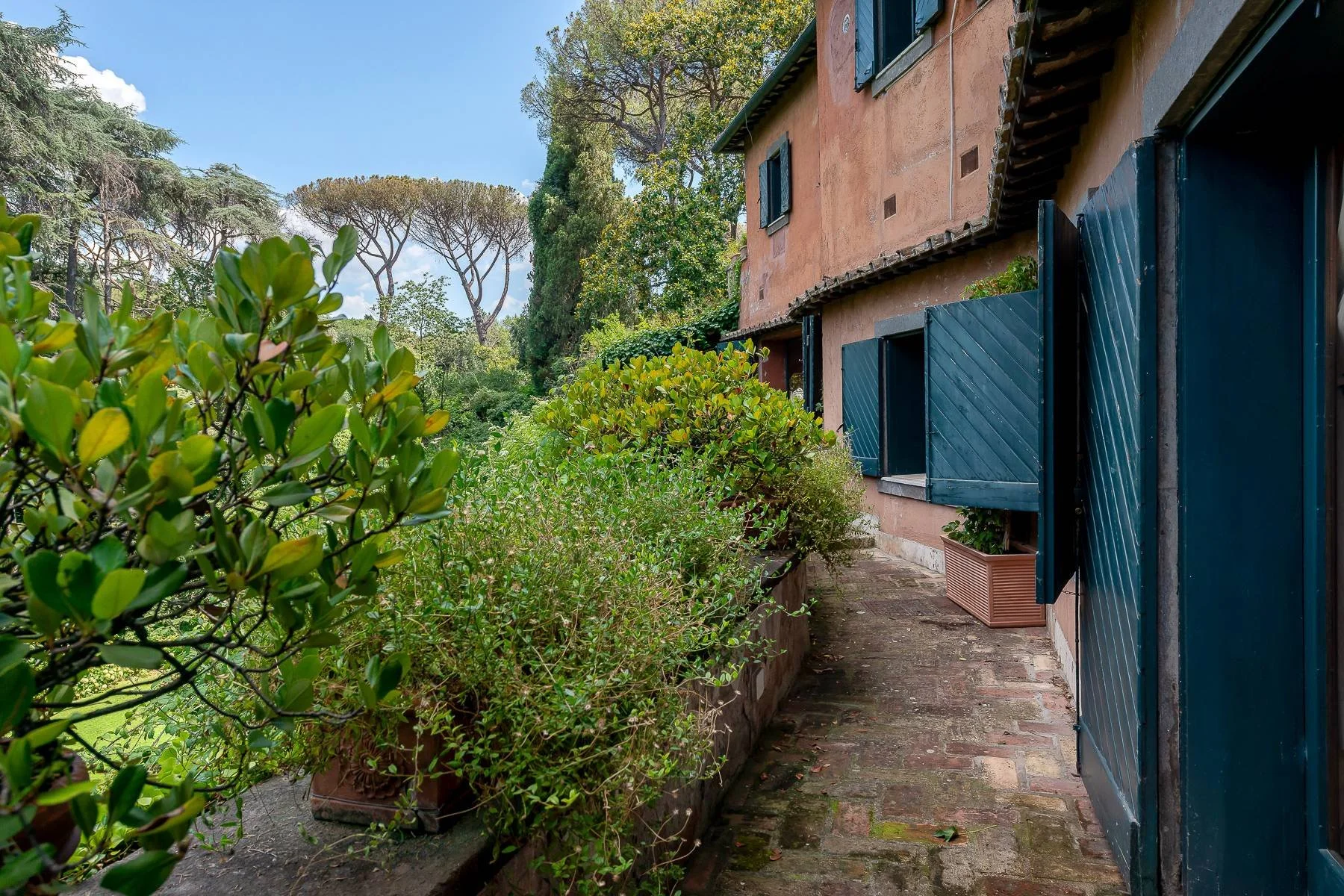
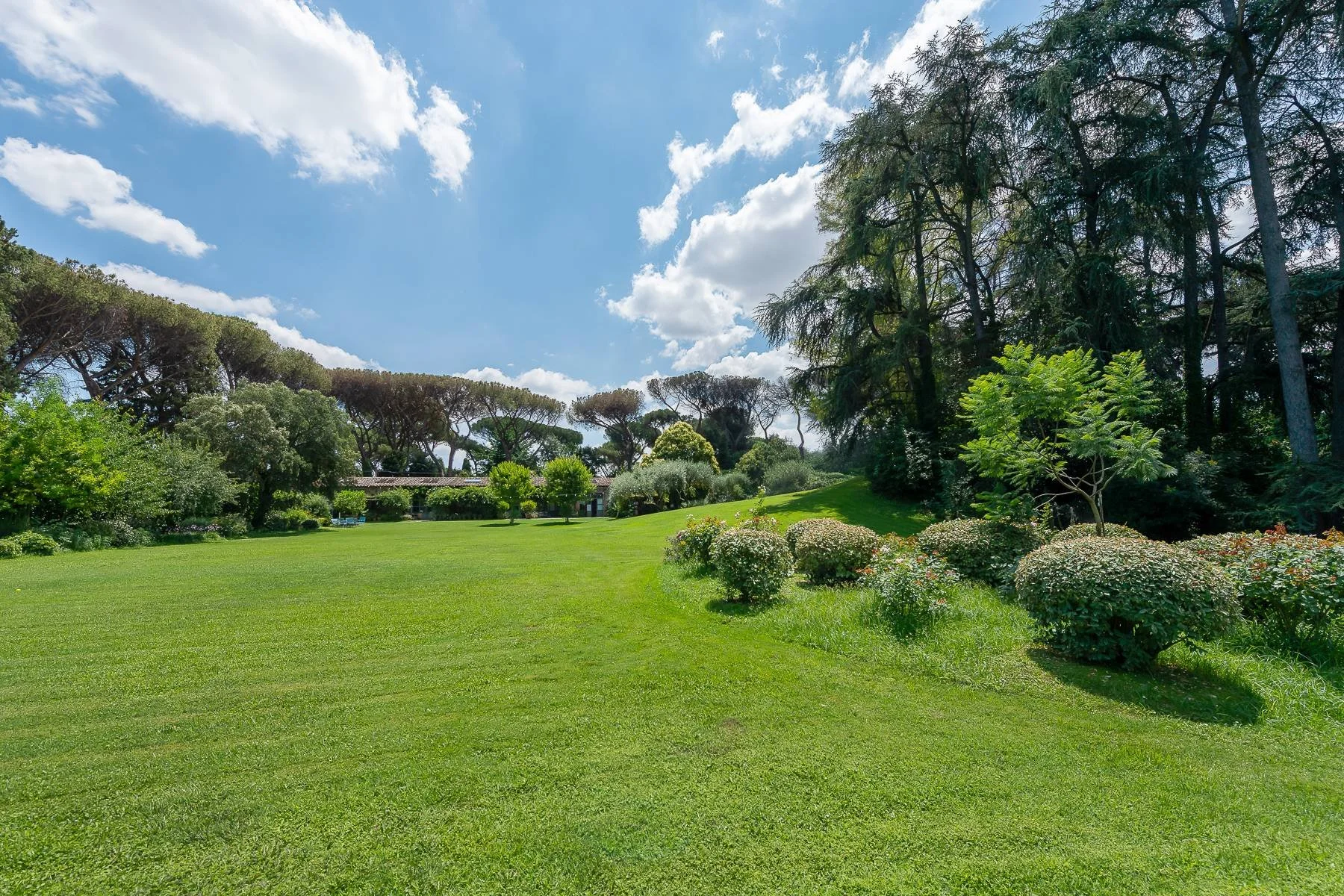
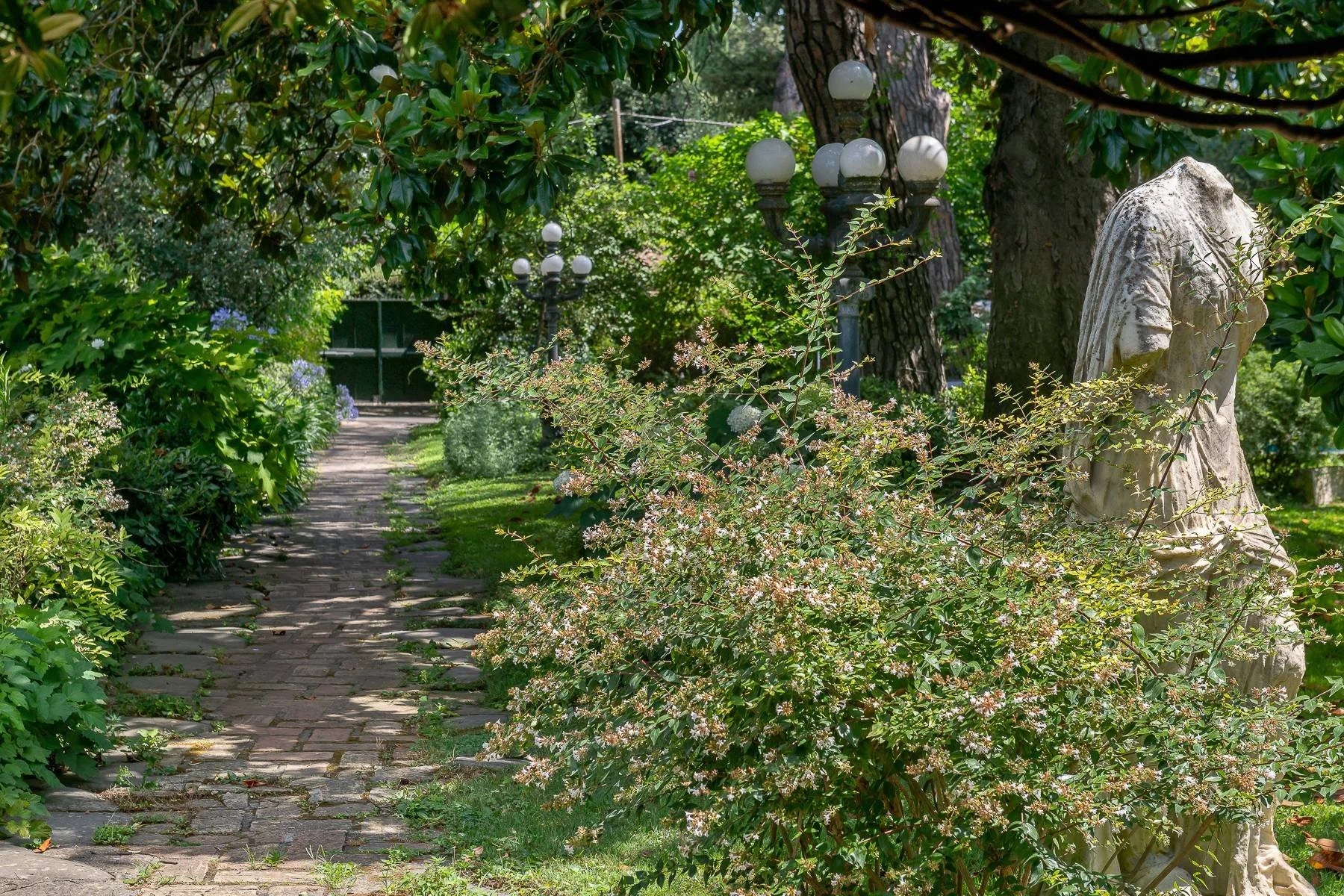
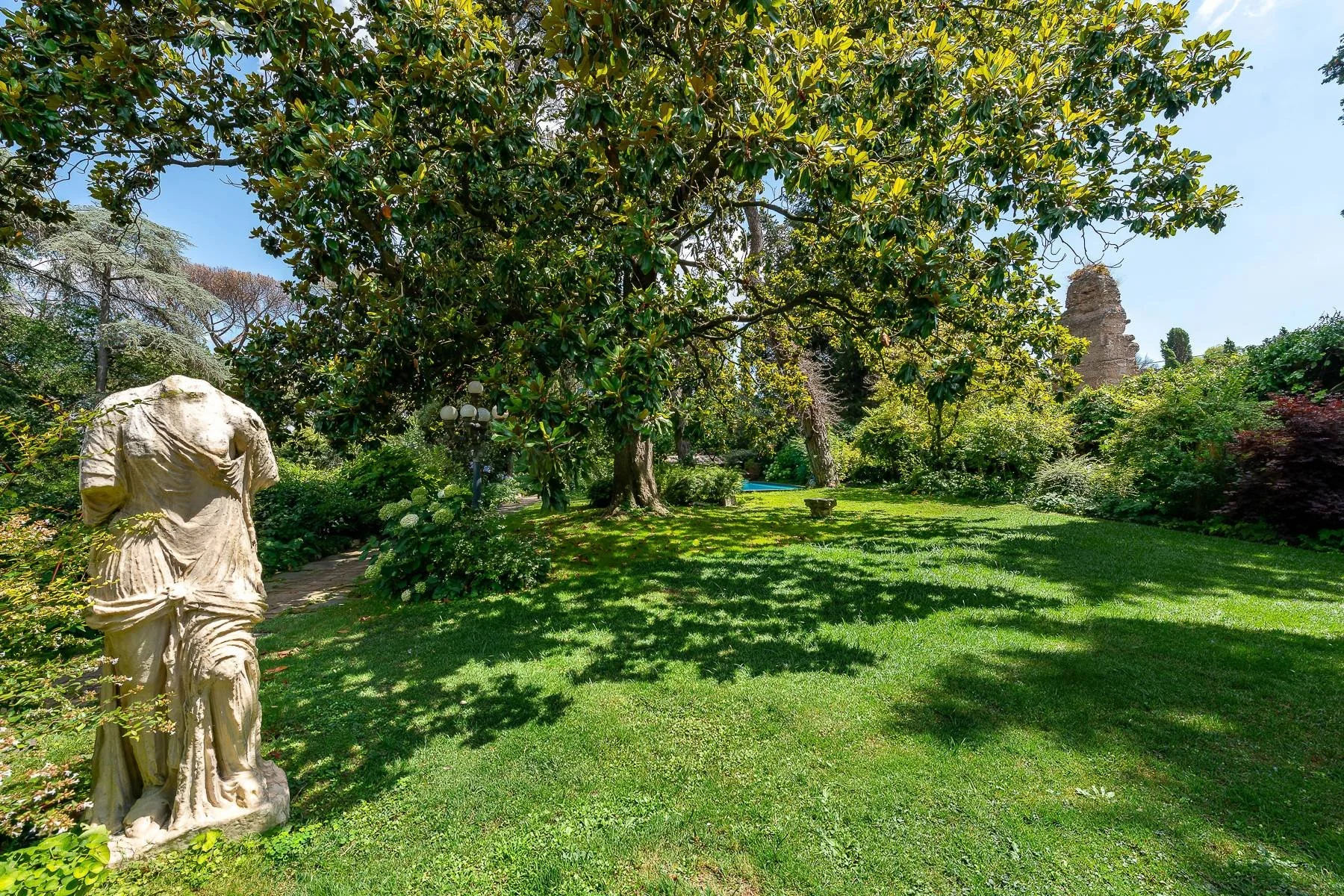
The 2.7-acre gardens are planted with mature trees, lawns and secluded outdoor spaces, creating an unusually private setting so close to central Rome. Italy Sotheby’s International Realty
Designed around 1900 by Busiri Vici, part of a prominent Roman architectural dynasty, the principal villa is described in the current listing as approximately 700 m² (7,535 ft²) and is arranged across two levels.
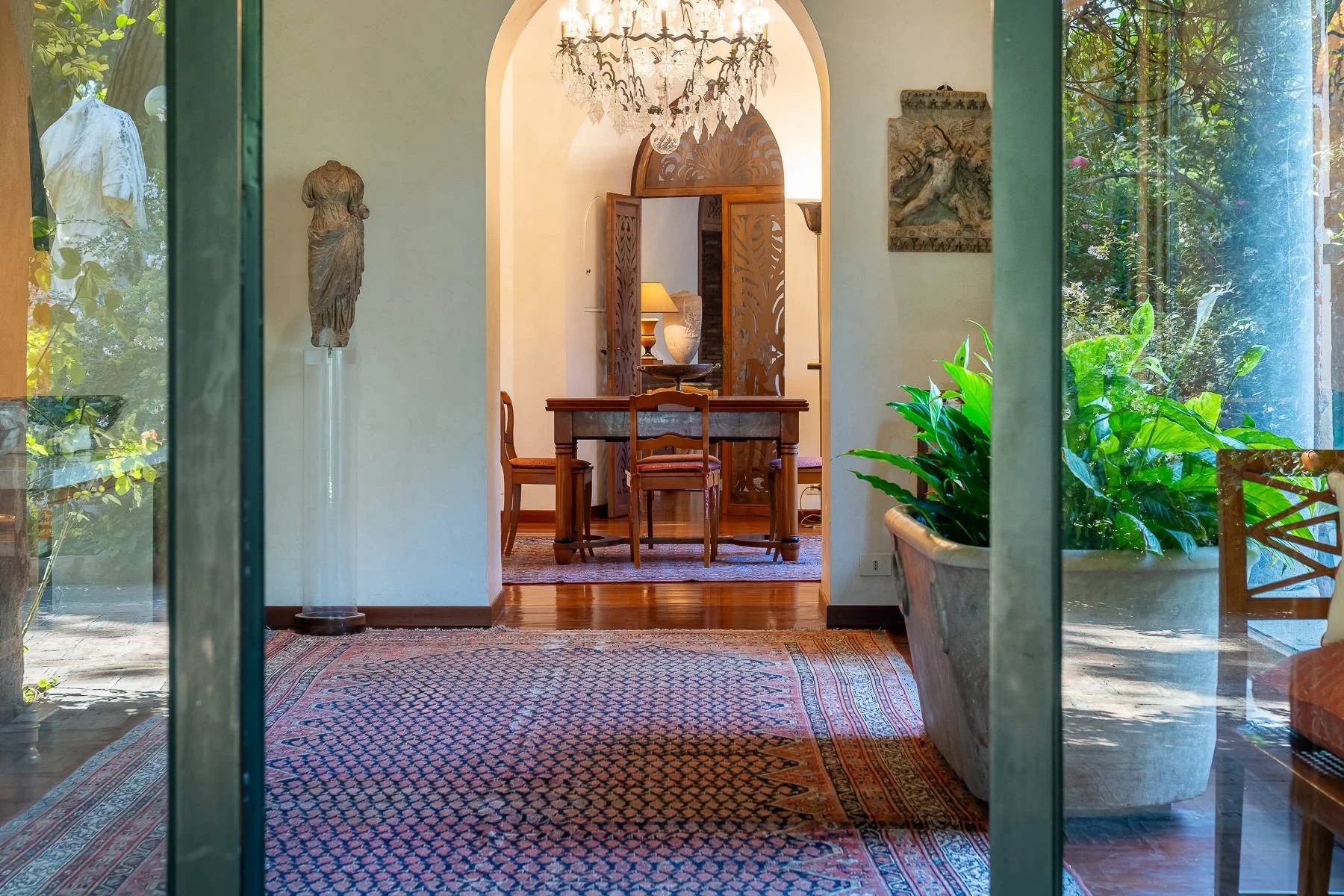
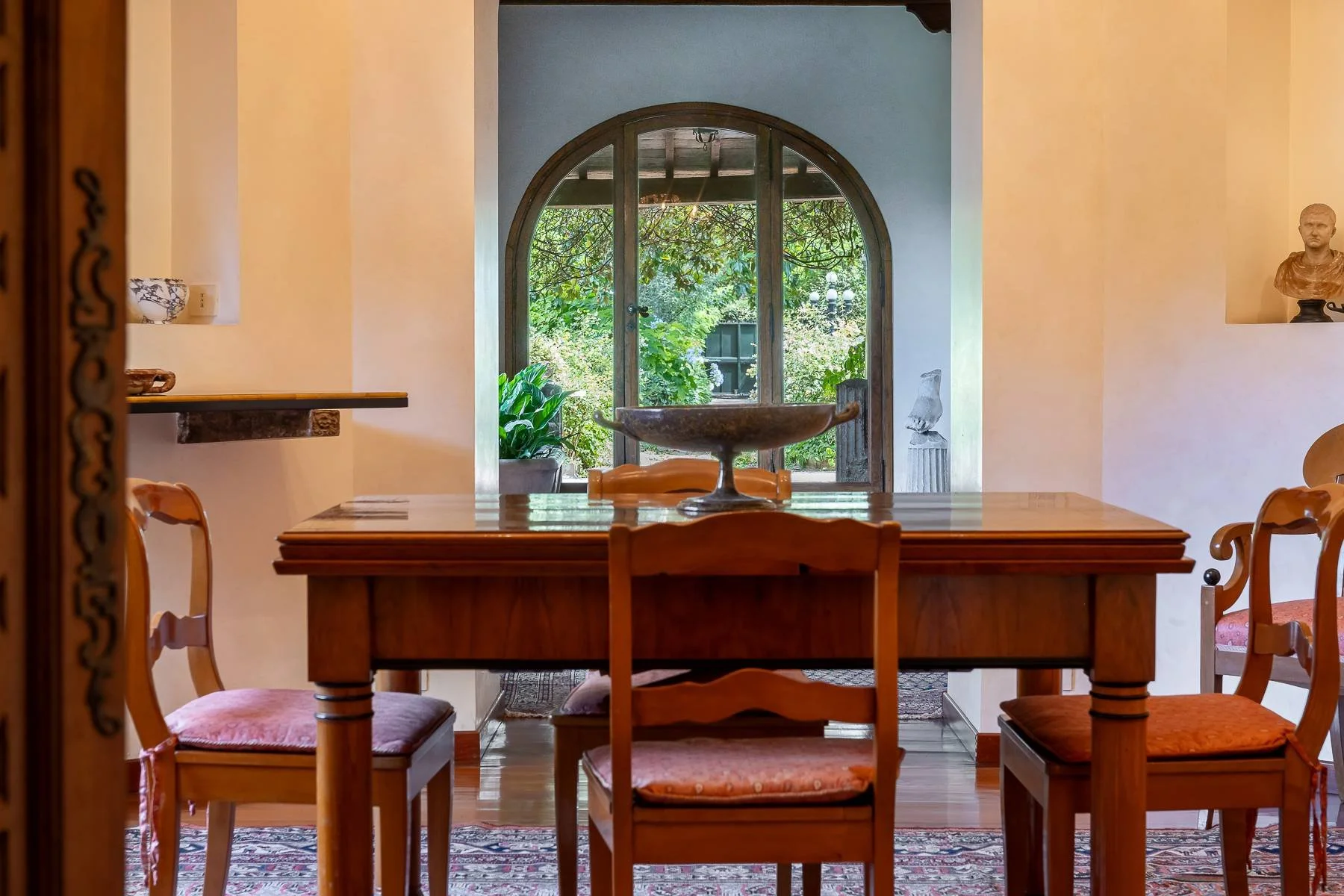
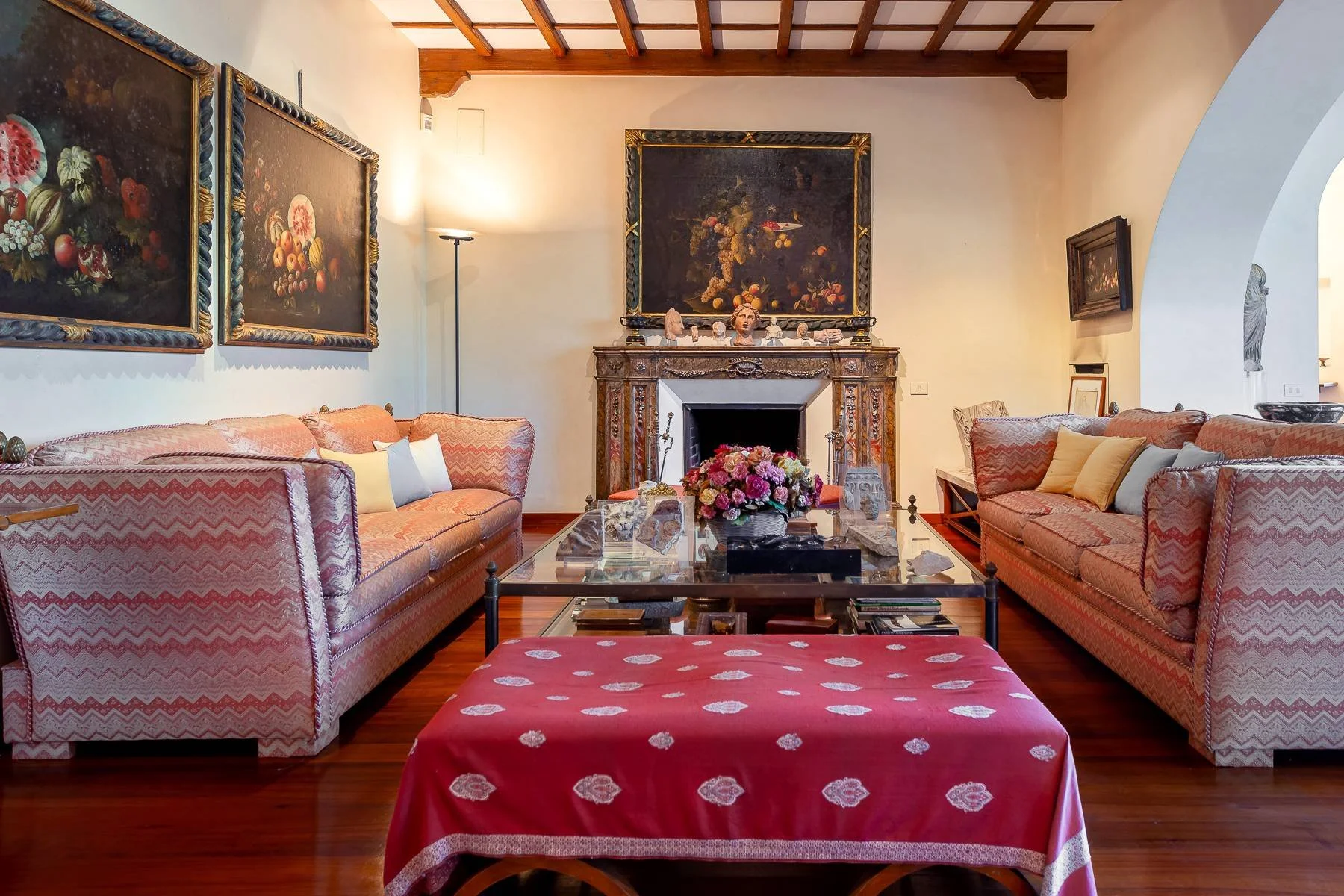
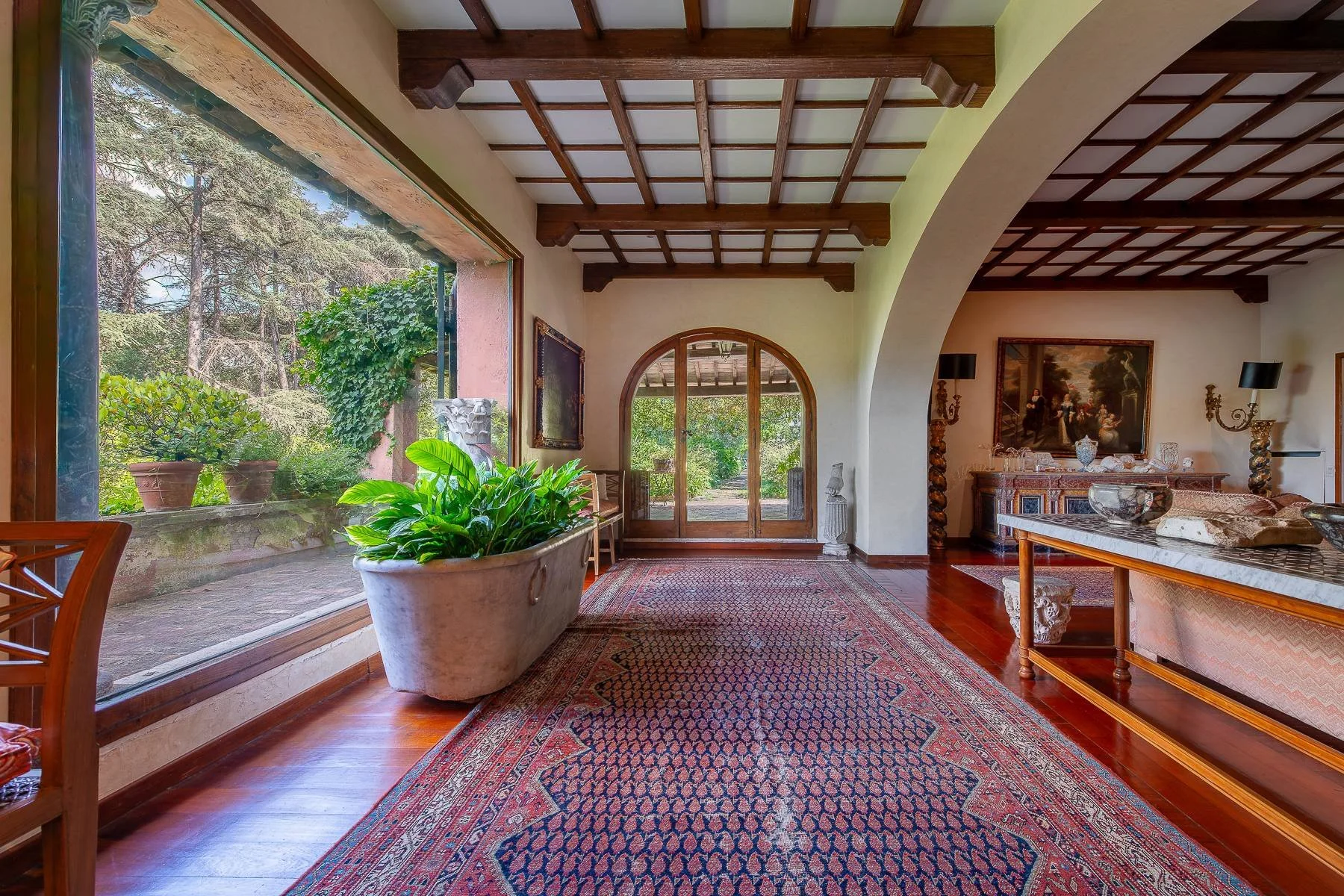
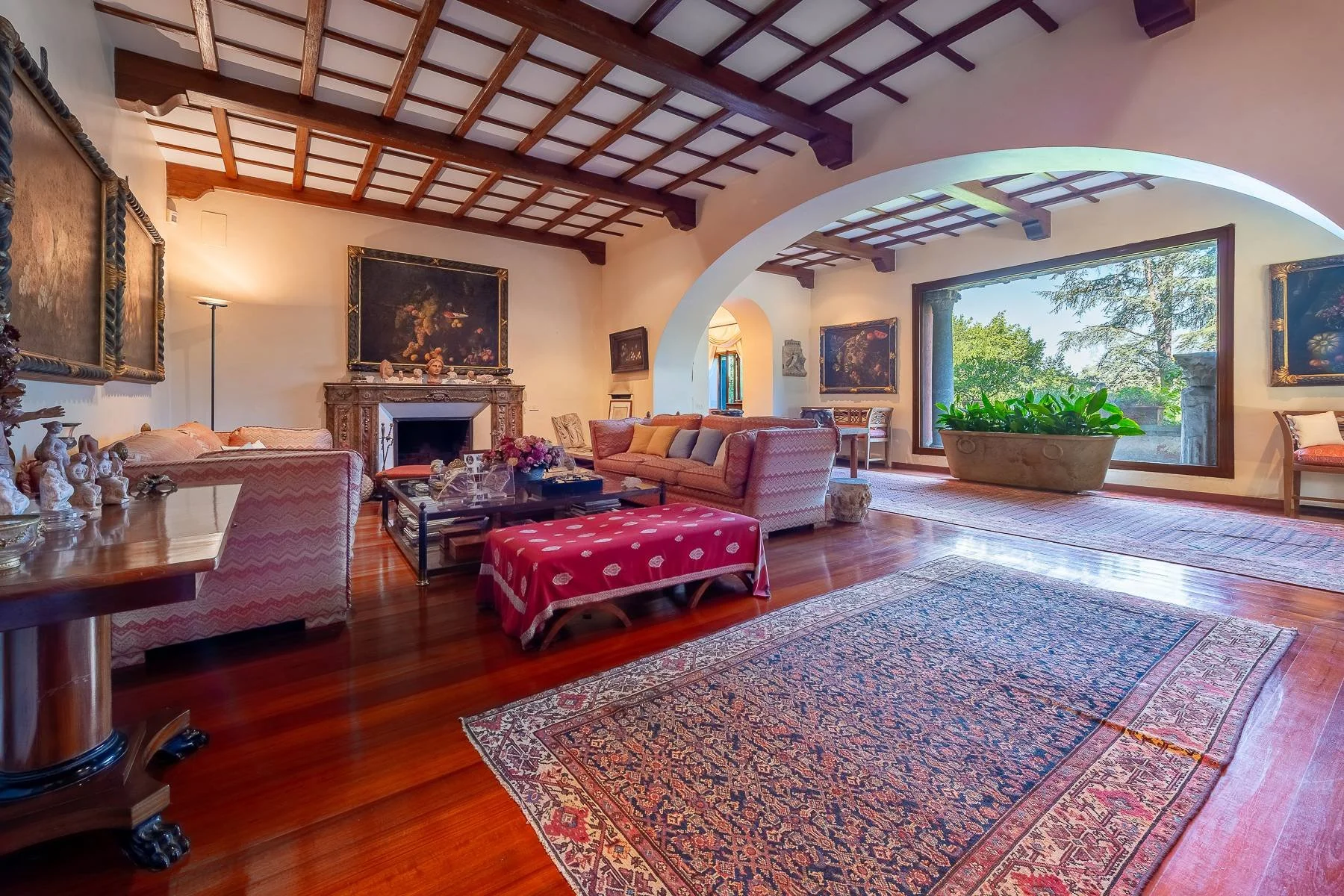
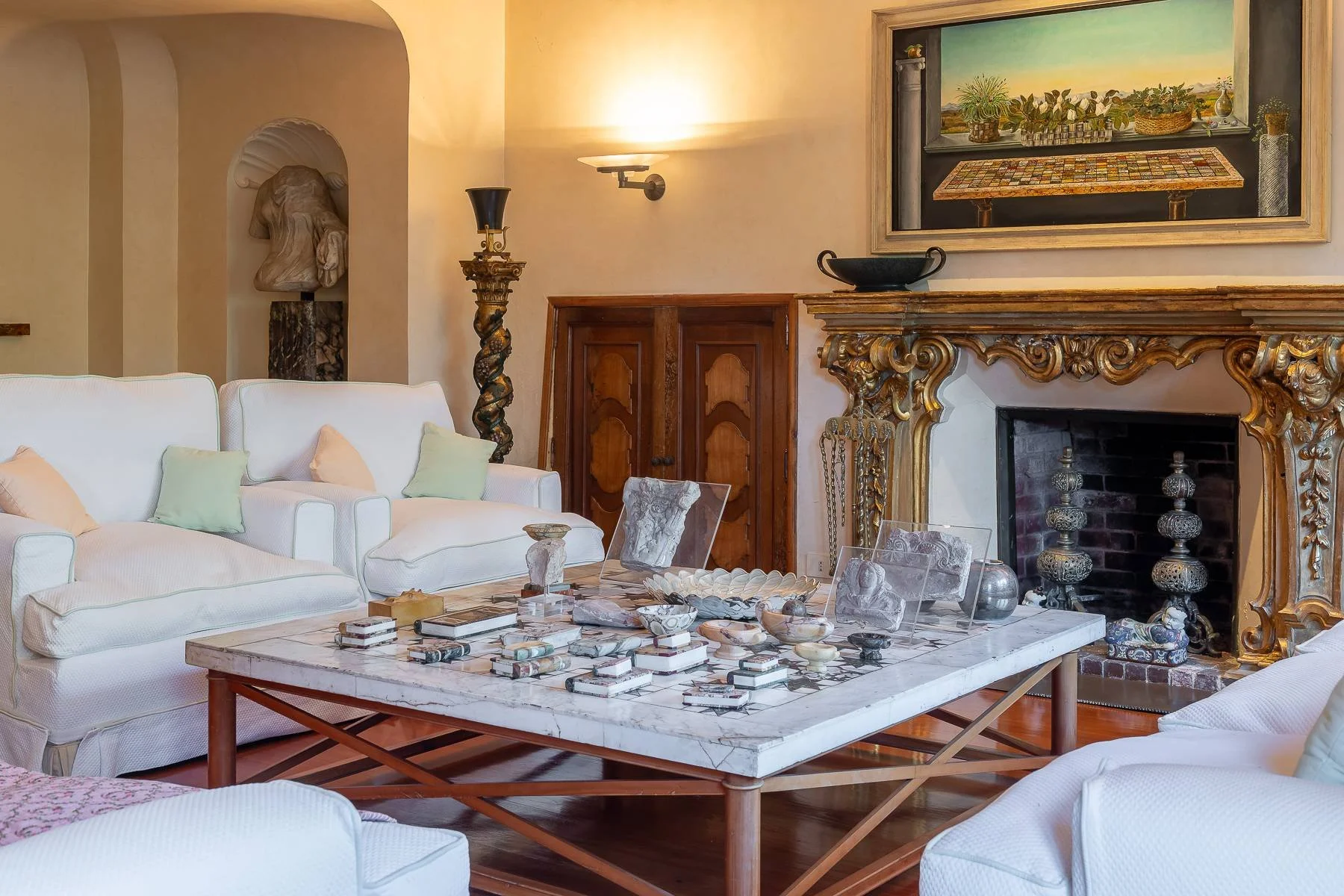
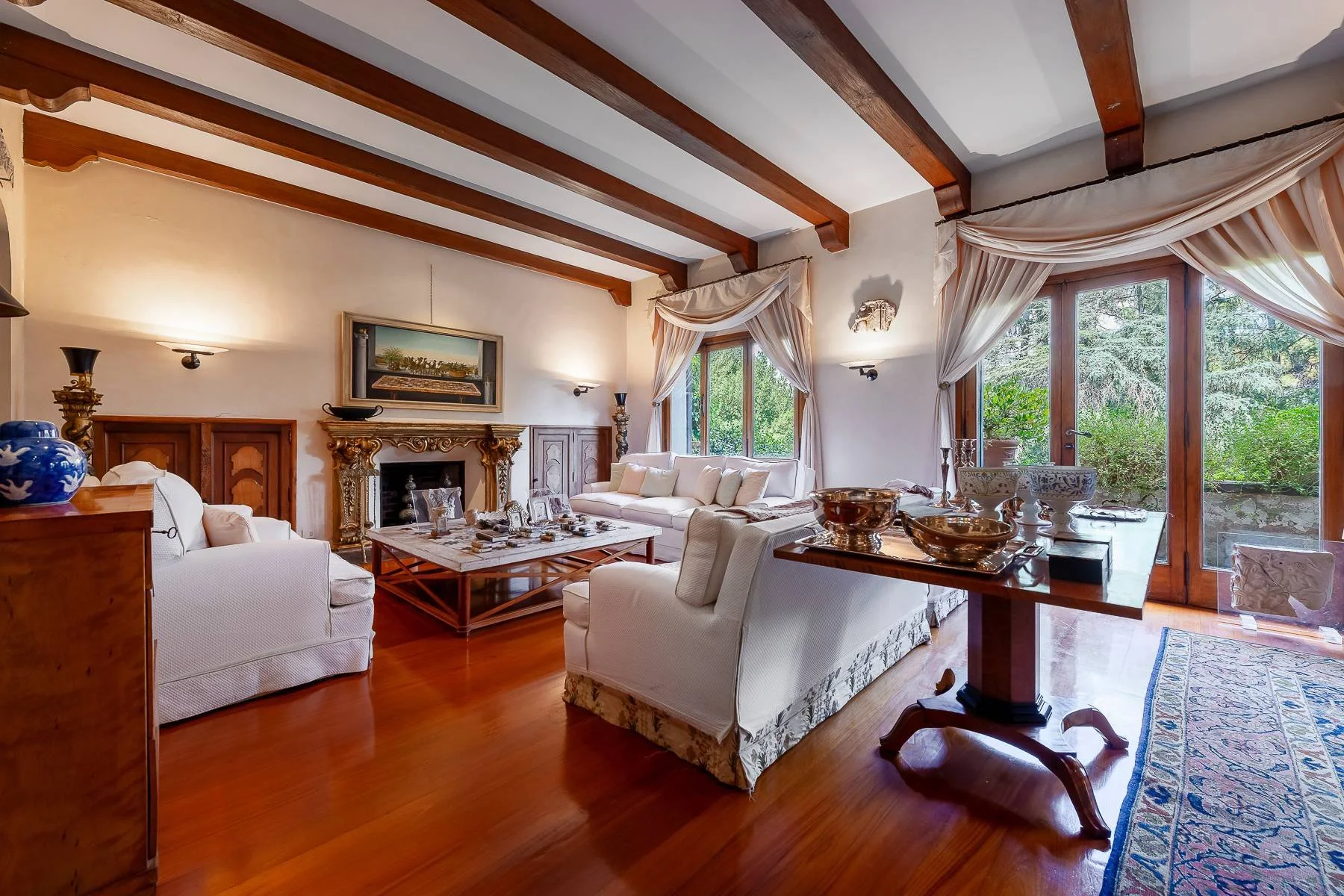
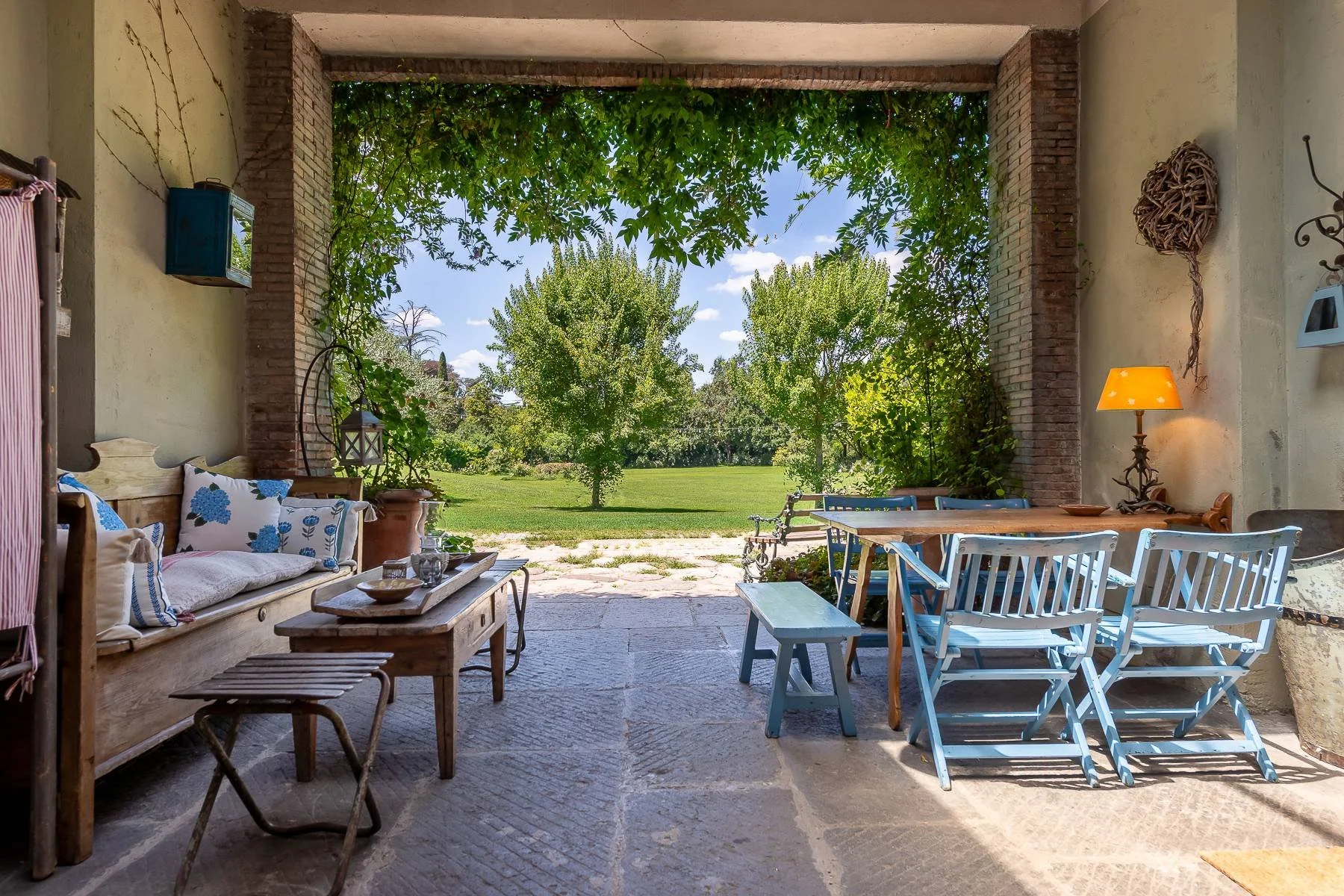
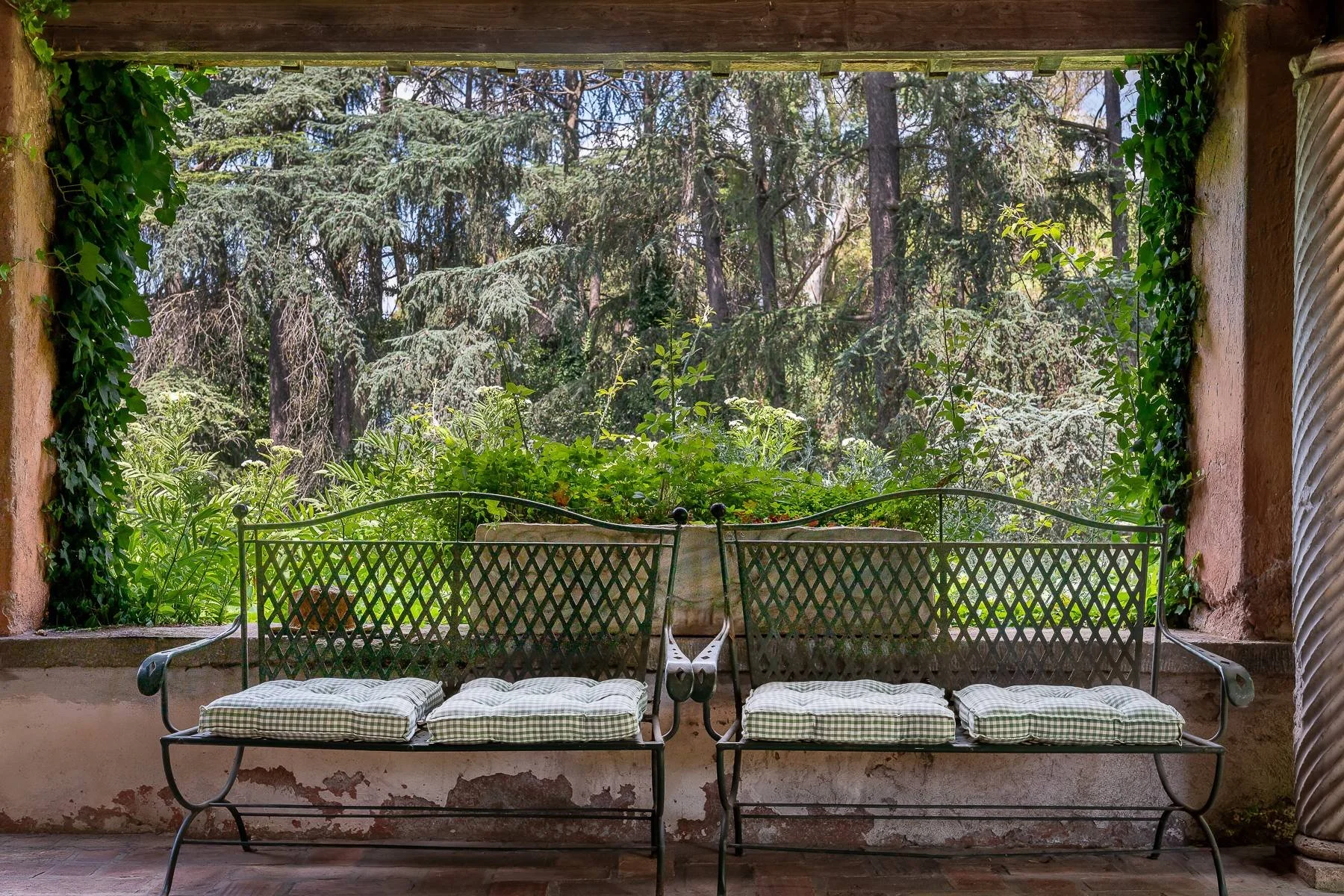
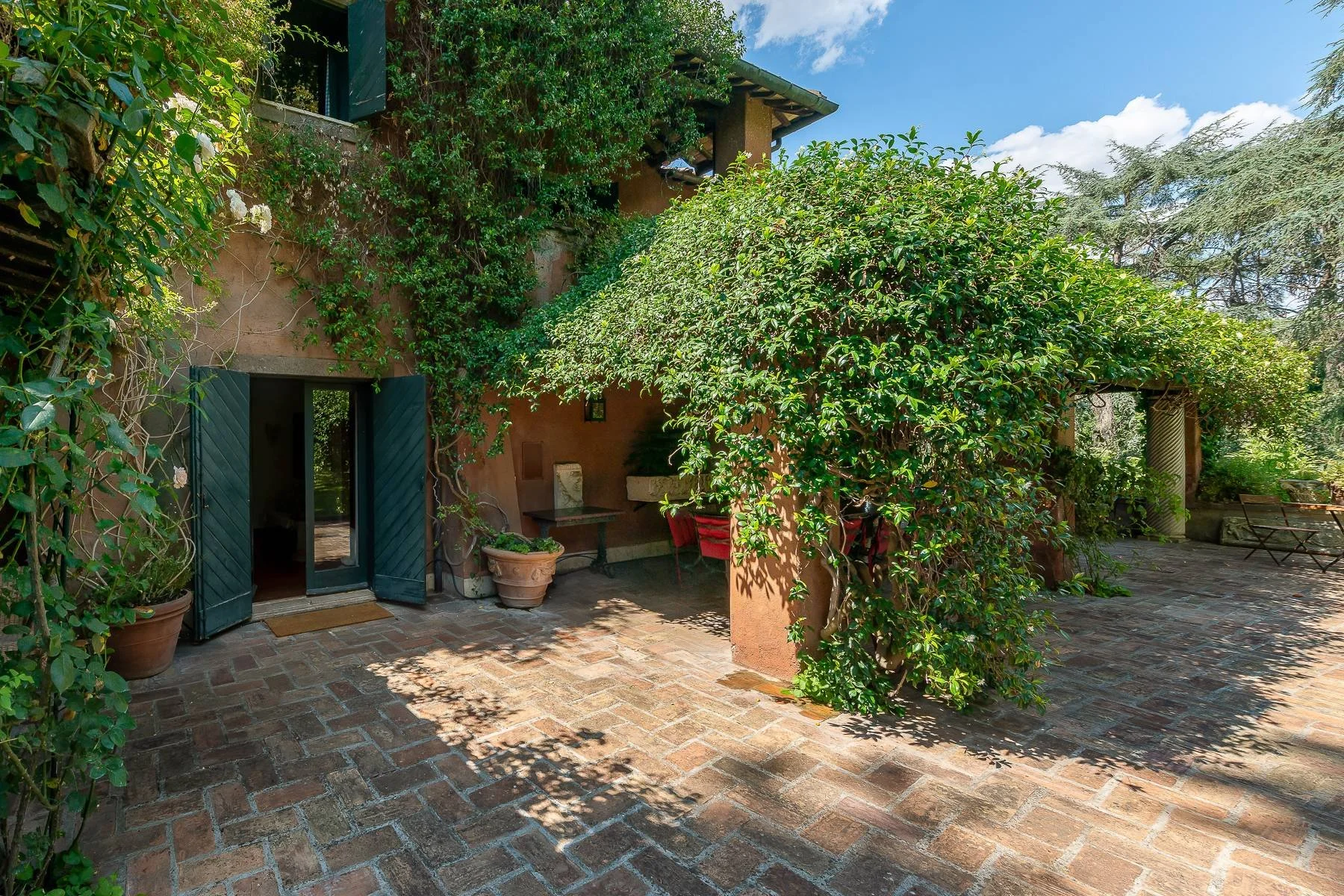
At its centre are three interconnected reception rooms, each organised around a fireplace and opening toward the gardens. Rather than feeling overly formal, the house maintains a constant relationship with the landscape through terraces, porticoes, courtyards and large garden-facing openings.
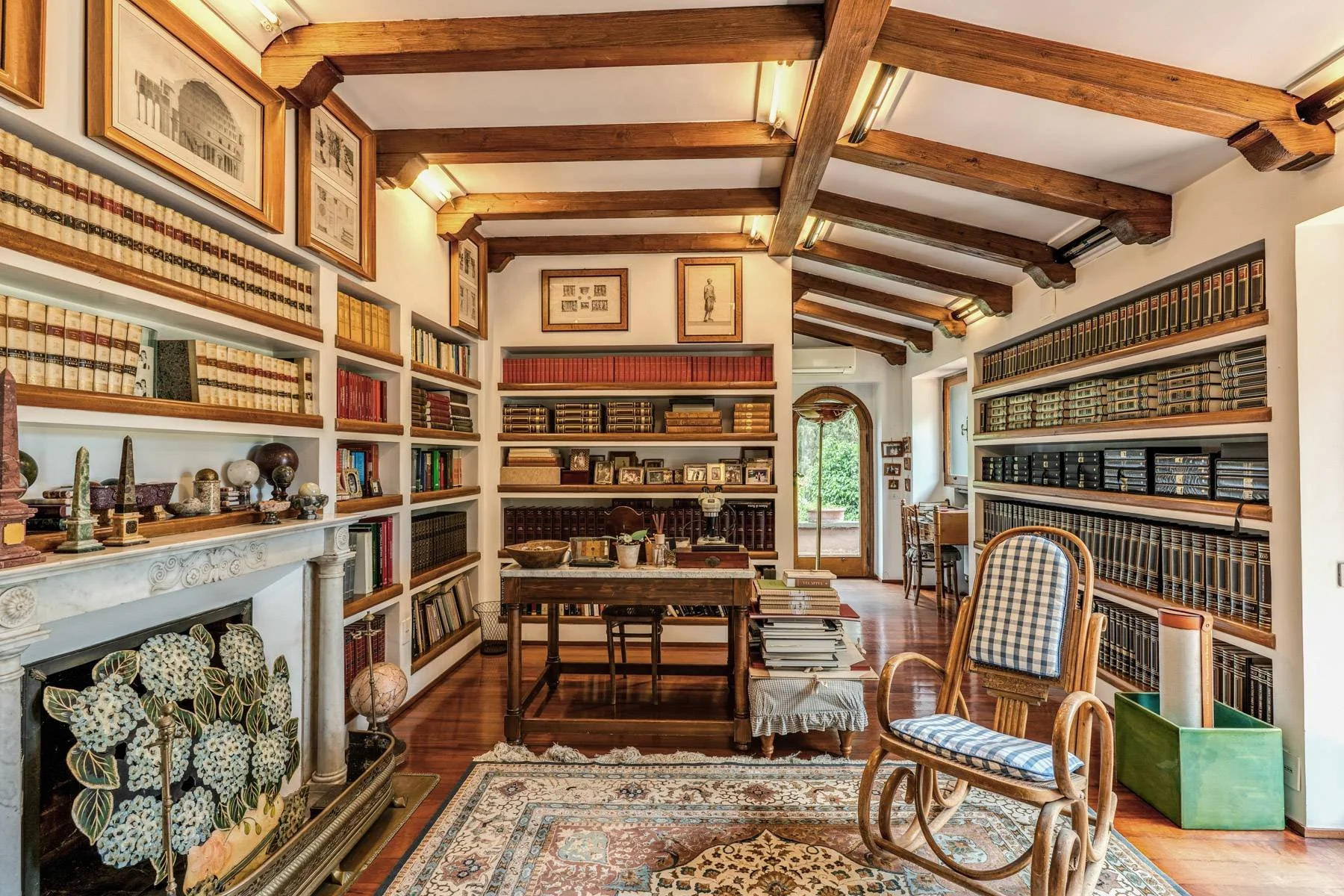
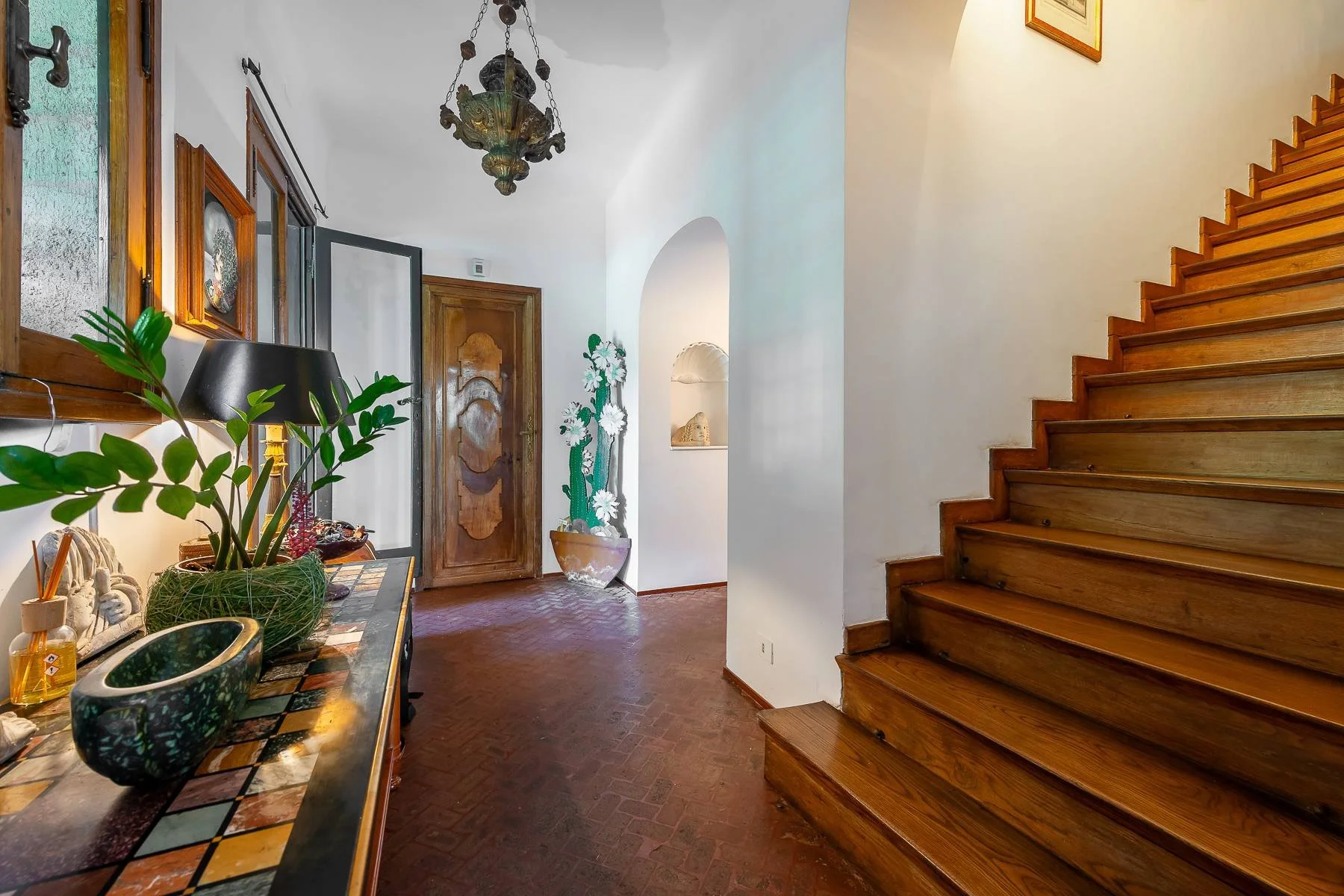
The upper level is largely devoted to private accommodation, with 5 bedrooms and 5 bathrooms alongside a library and glazed winter garden. An elevator and staircase connect the floors and continue to a rooftop terrace.
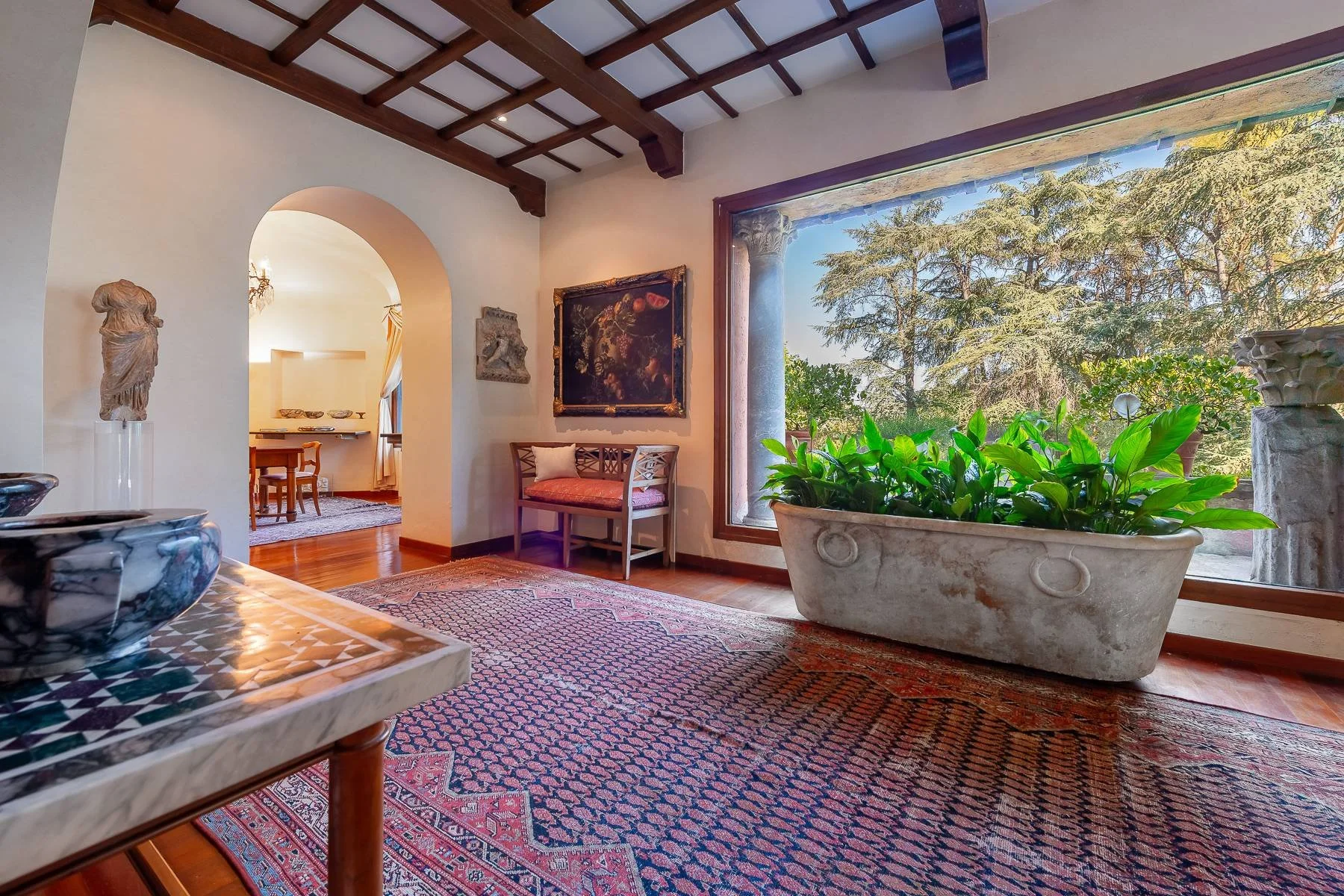
Ancient material appears throughout the house and gardens with surprisingly little ceremony. Marble fragments, statuary and archaeological elements, some more than 2,000 years old, have been incorporated into the property rather than displayed as a separate collection.

A Roman-era cavern beneath the house contains an original mosaic depicting Medusa, one of several archaeological elements incorporated into the estate. Italy Sotheby’s International Realty
One of the villa’s most extraordinary spaces lies within the ancient rock itself. The current listing describes a dining room created inside a Roman-era cavern and retaining an original mosaic depicting Medusa.
Earlier accounts of the property have also documented another subterranean tufa-vaulted room with an ancient mosaic identified as Alexander the Great. Together, these spaces give the house an unusual sense of continuity. The villa does not simply sit near ancient Rome. Parts of that archaeological landscape have been absorbed directly into the life of the house.
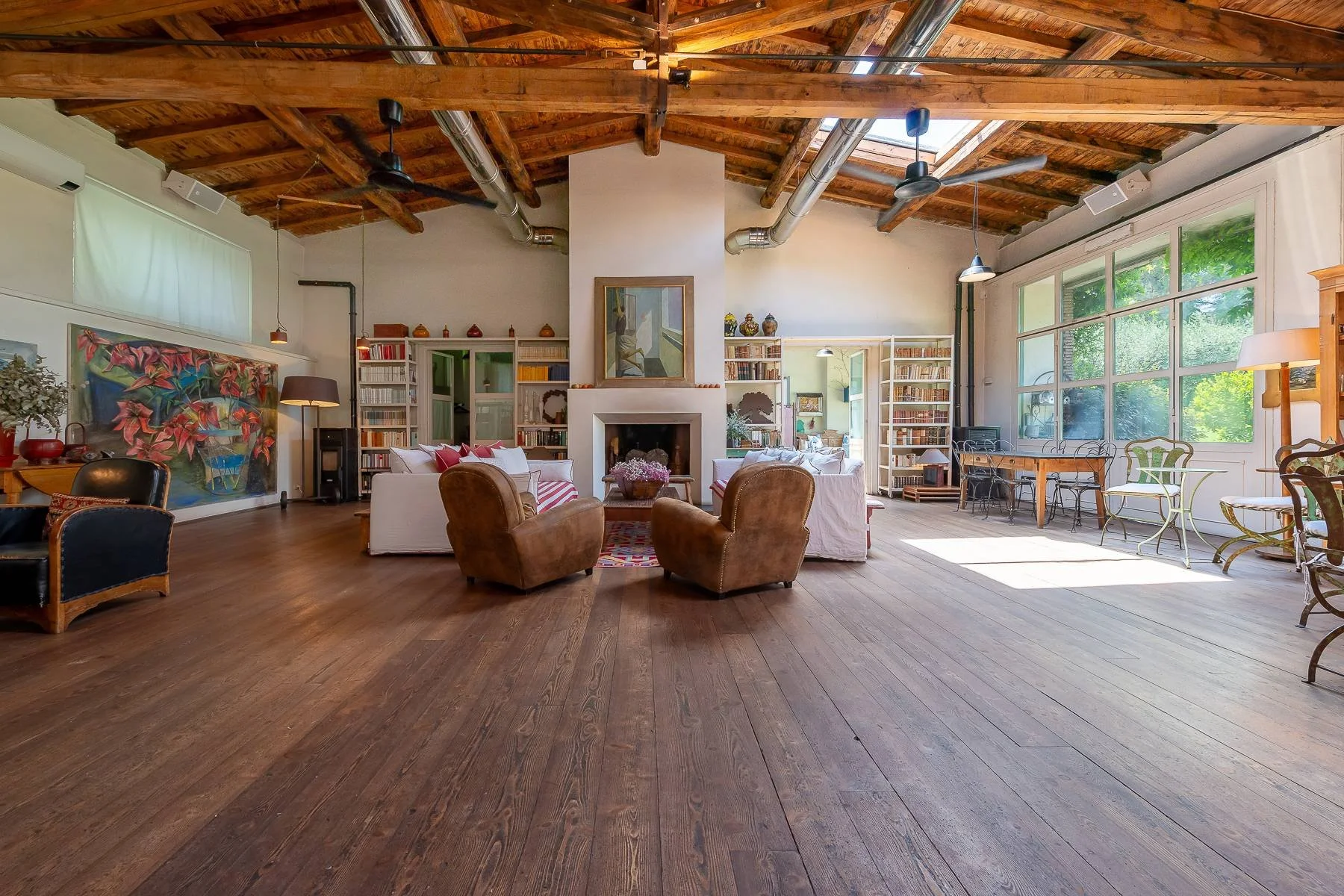
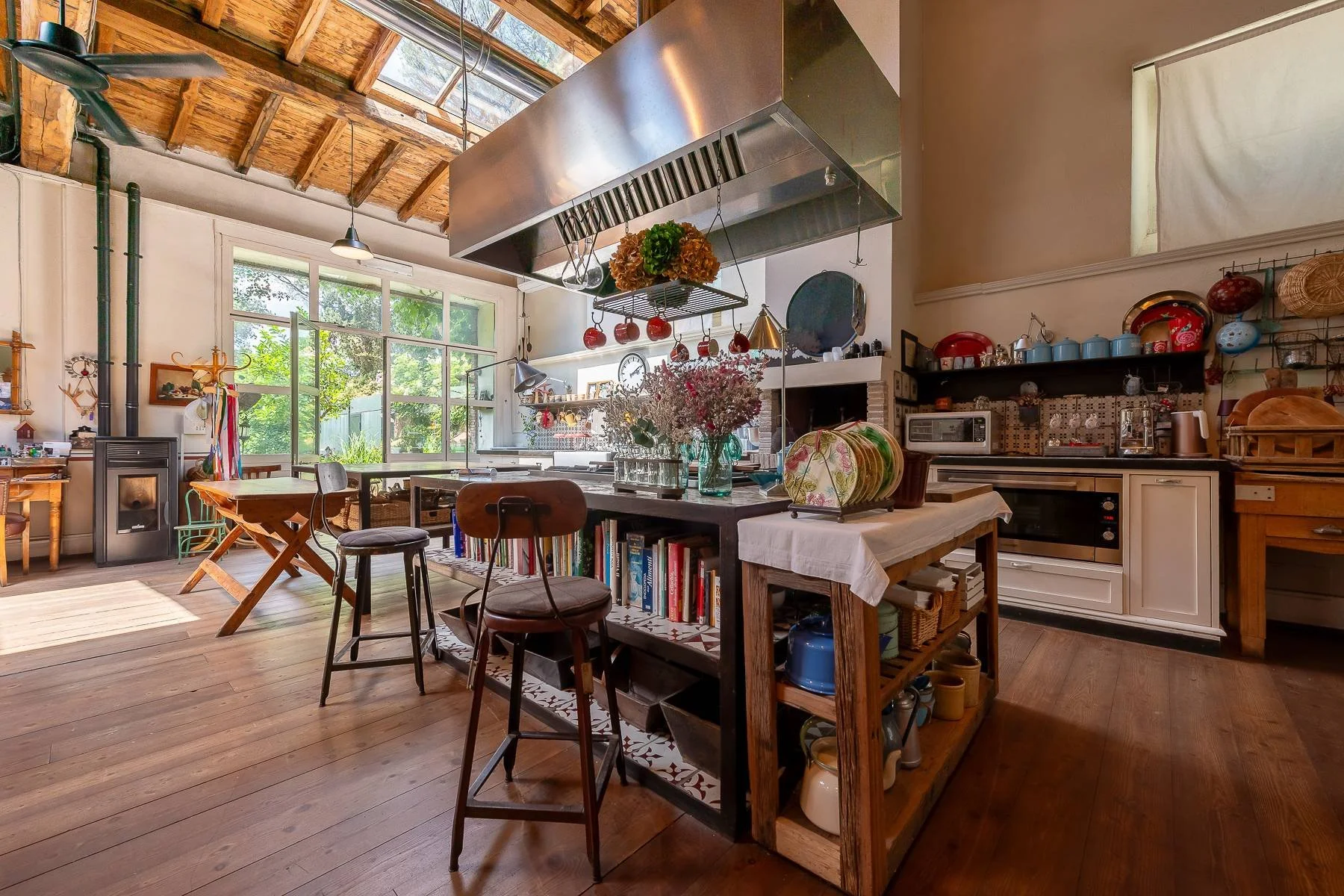
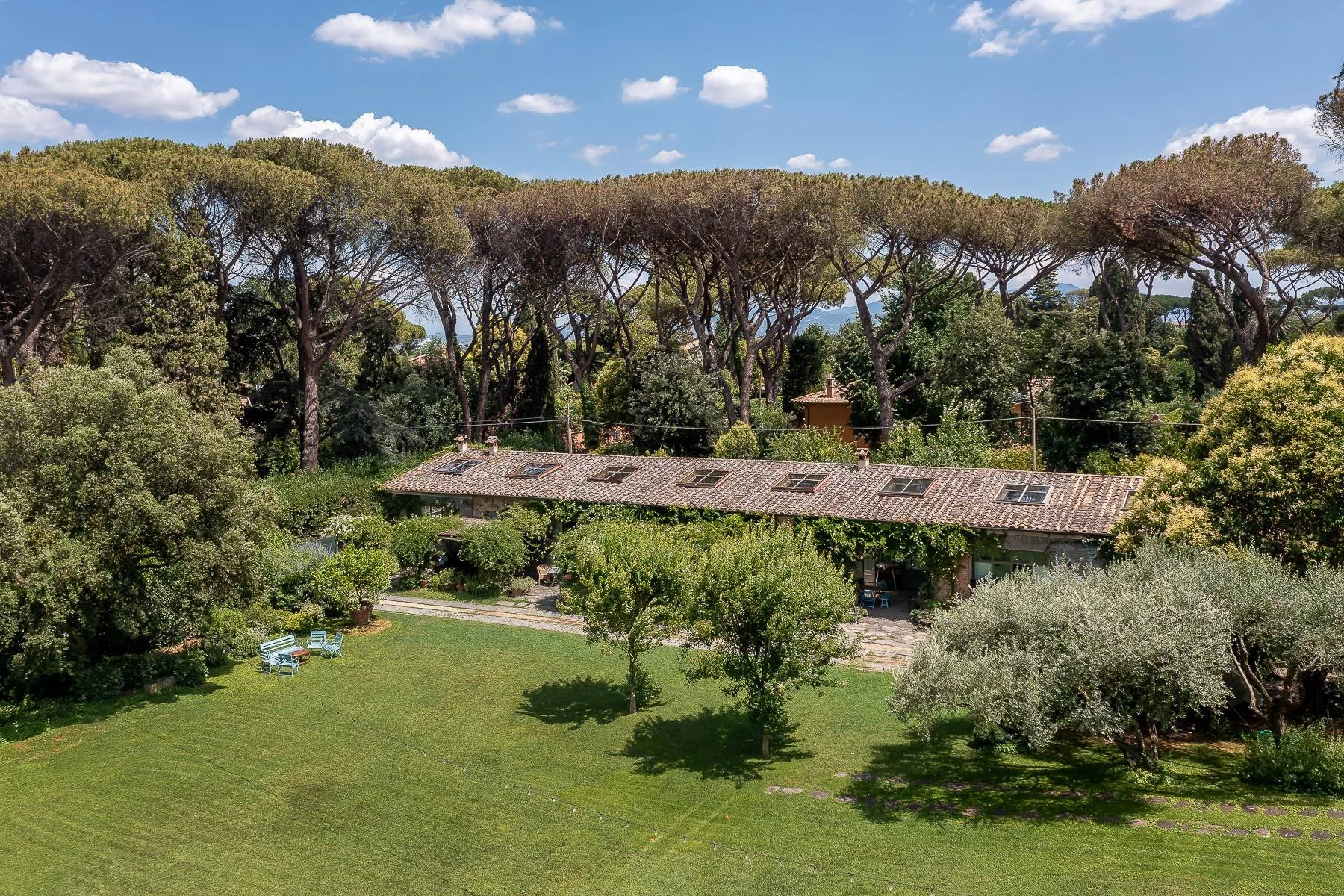
Beyond the principal residence, the estate’s former stables have been converted into a substantial secondary building of approximately 467 m² (5,027 ft²). Its main interior is arranged as a large loft-like reception space with a professional kitchen, allowing it to function independently for entertaining, gatherings or guest use.
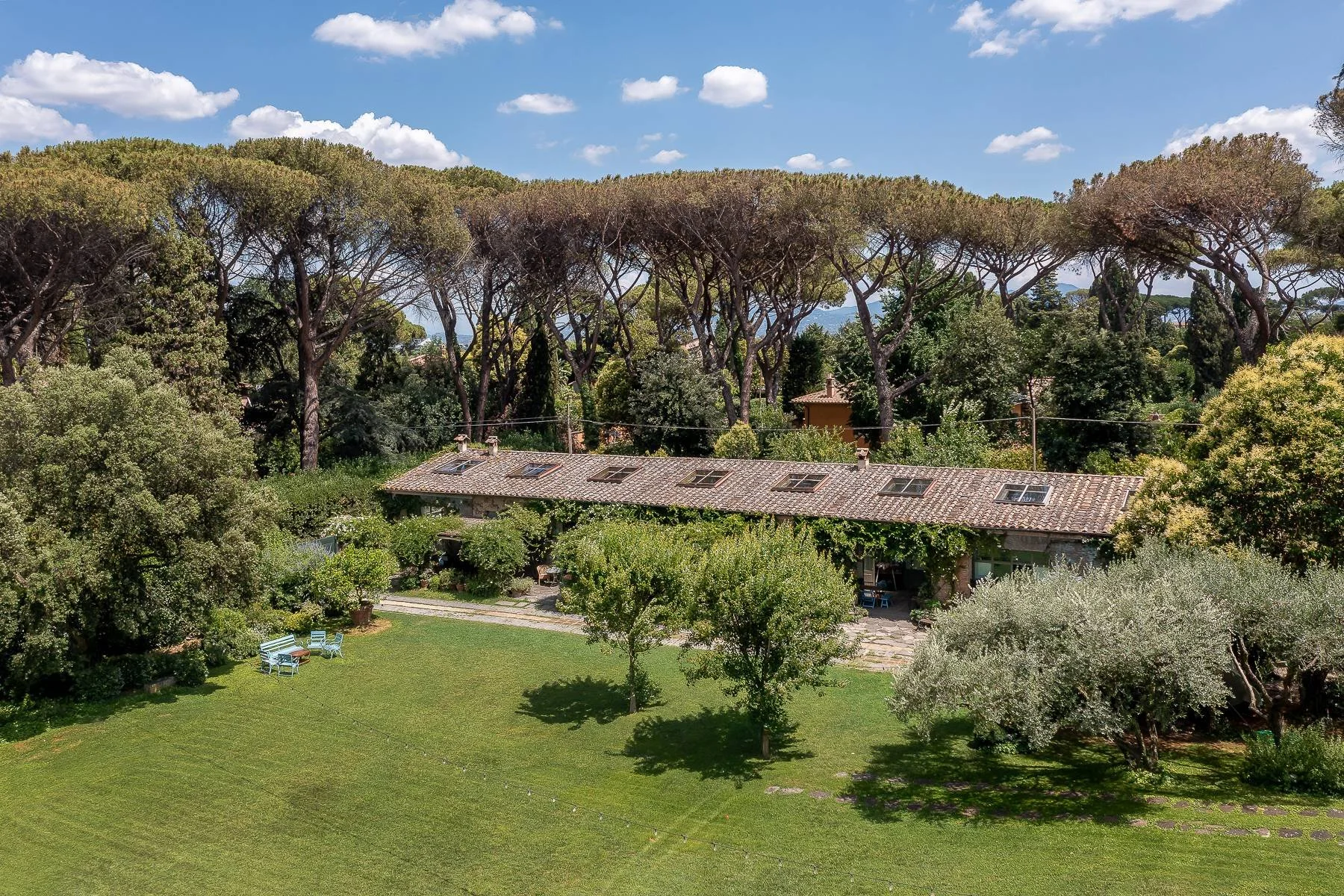
The former stables have been converted into a substantial secondary building with a large reception space and professional kitchen. Italy Sotheby’s International Realty
The current Italy Sotheby’s International Realty listing records approximately 1,134 m² (12,206 ft²) of overall built area and approximately 11,000 m² (2.7 acres) of grounds.
The gardens were developed over several decades by a landscape-architect owner and feel more immersive than formal. Mature trees, broad lawns, stone pathways and secluded outdoor rooms surround the buildings, alongside a swimming pool, garage and ancillary service spaces.
The villa has appeared on the market periodically over the past decade. In 2015 it was offered at €39.8 million, while in 2018 it was marketed at €19 million. Its most recent publicly reported asking price was approximately $26 million when it returned to the market in late 2025. It is now being offered by Italy Sotheby’s International Realty with the price available upon request.
More than the celebrity provenance alone, the property brings together several different versions of Rome at once: ancient quarry and archaeological remains, early 20th-century architecture, the glamour of postwar Italian cinema and the extraordinary landscape of the Appian Way, all within minutes of the centre of the city.
During Cinecittà’s “Hollywood on the Tiber” era, the villa reportedly hosted stars including Elizabeth Taylor, Richard Burton, Kirk Douglas and Tony Curtis. Italy Sotheby’s International Realty
All photographs belong to the listing agency. See more on Italy Sotheby’s International Realty.