A Greenwich Village Townhouse From 1836 Listed for $24 Million
Bedrooms: 11 Bathrooms: 10 full + 1 half Interior: 1,003 m² / 10,800 ft² Lot: 0.06 ha / 0.14 acres
Amenities: Rooftop terrace, Washington Square Park views, Empire State Building views, private rear outdoor space, 7 fireplaces, high ceilings, French windows, historic architectural details, flexible multi-family layout
A Greek Revival townhouse overlooking Washington Square Park has come to market with Leslie Garfield for $23,950,000, represented by Matthew Lesser, Jed Garfield, Tori Landon and Casey Leonard.
Built in 1836, 23 Washington Square North measures approximately 10,800 ft² (1,003 m²) and spans 27 feet 3 inches across a 99-foot-2-inch lot. The house is currently configured as seven apartments: a three-bedroom garden residence, two full-floor two-bedroom apartments and four one-bedroom units. In total, the property has 11 bedrooms, 10 full bathrooms and one half bath.
That configuration gives the next owner several options. It can remain a multifamily property, be used as a live-with-income residence, or be converted back into a single-family townhouse.
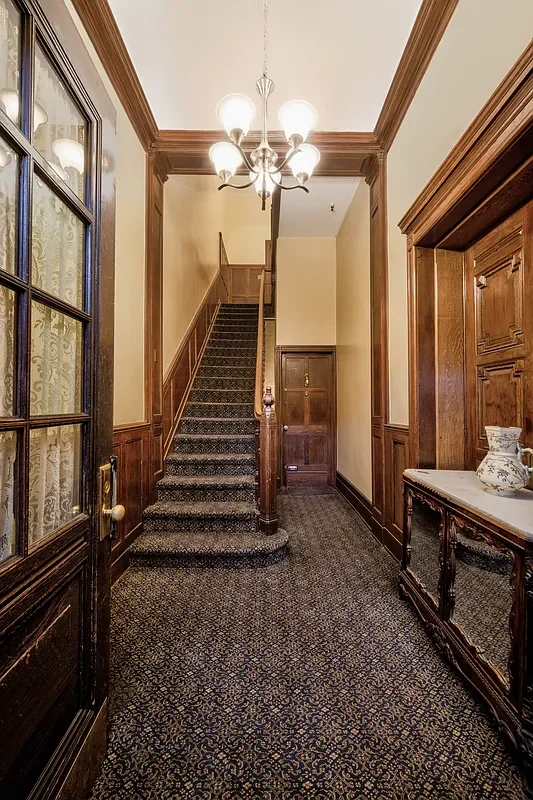
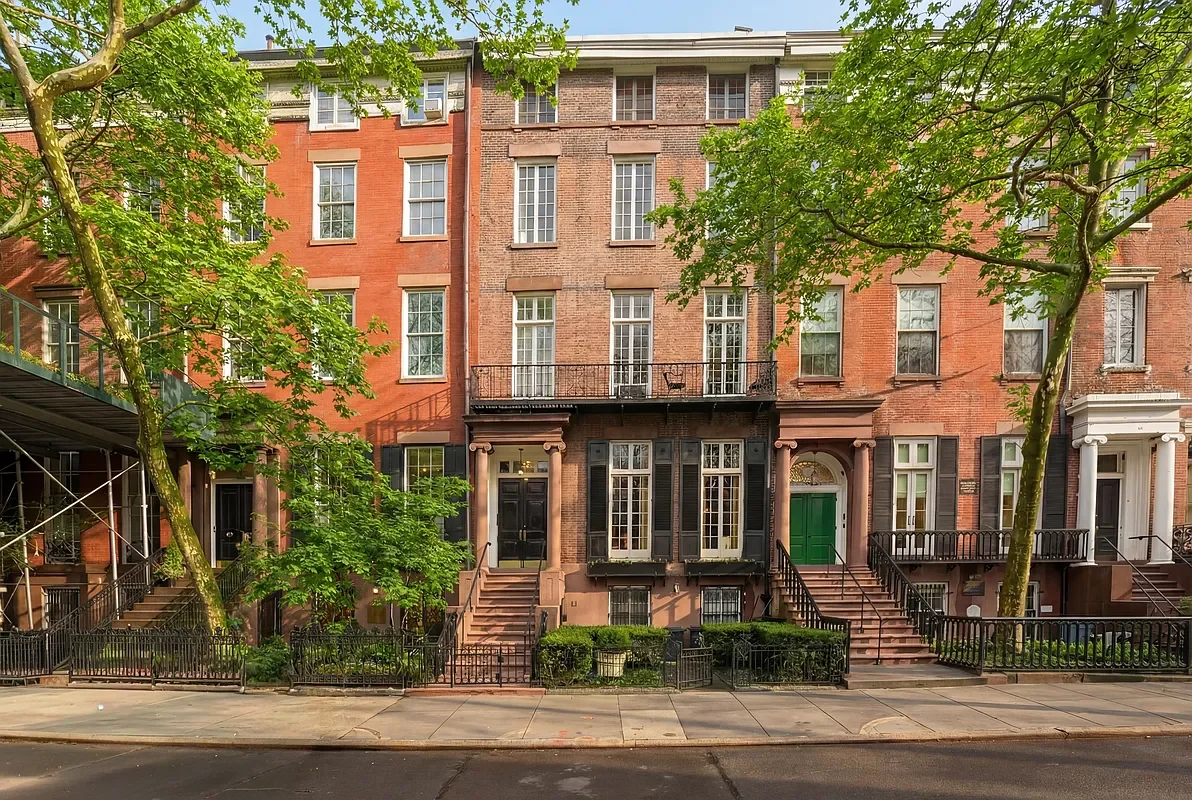
Currently divided into seven apartments, the 10,800 ft² townhouse could remain multifamily or be restored as a single-family residence.
The exterior retains its Greek Revival character, with a Flemish-bond brick façade, high stoop, paneled double entrance doors and elongated French windows.
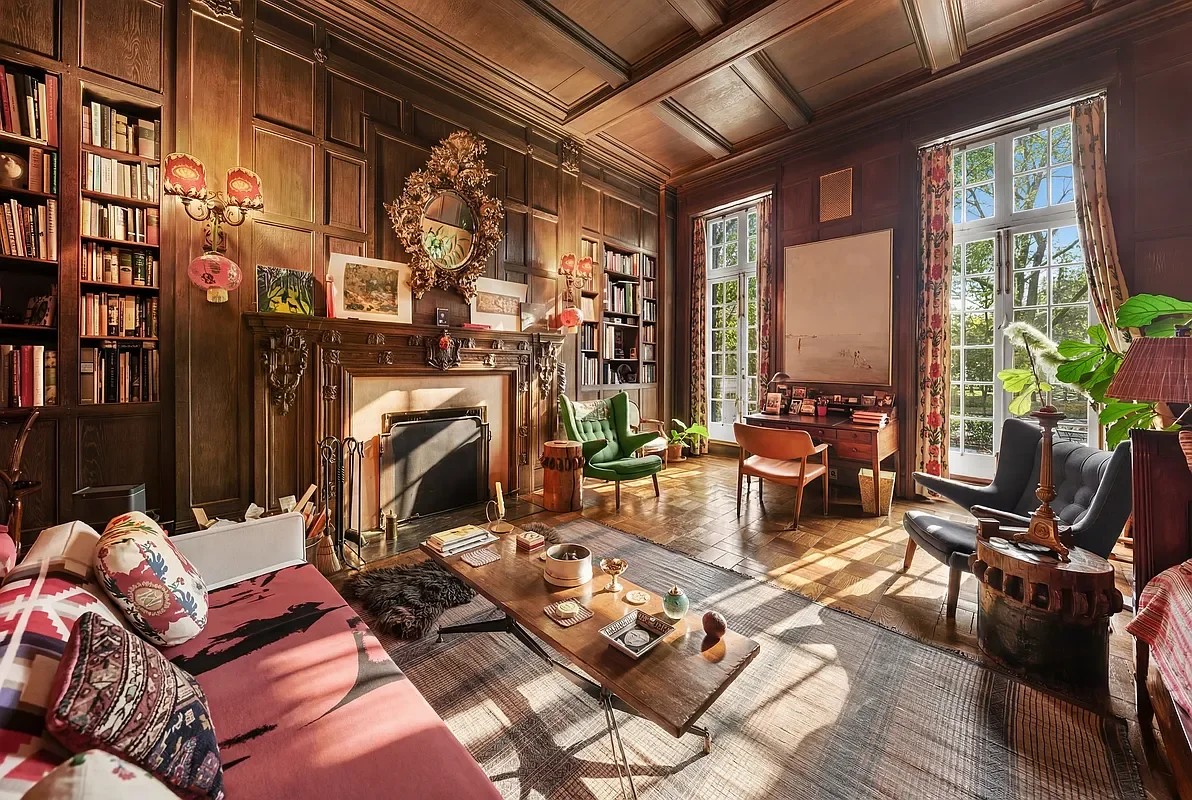
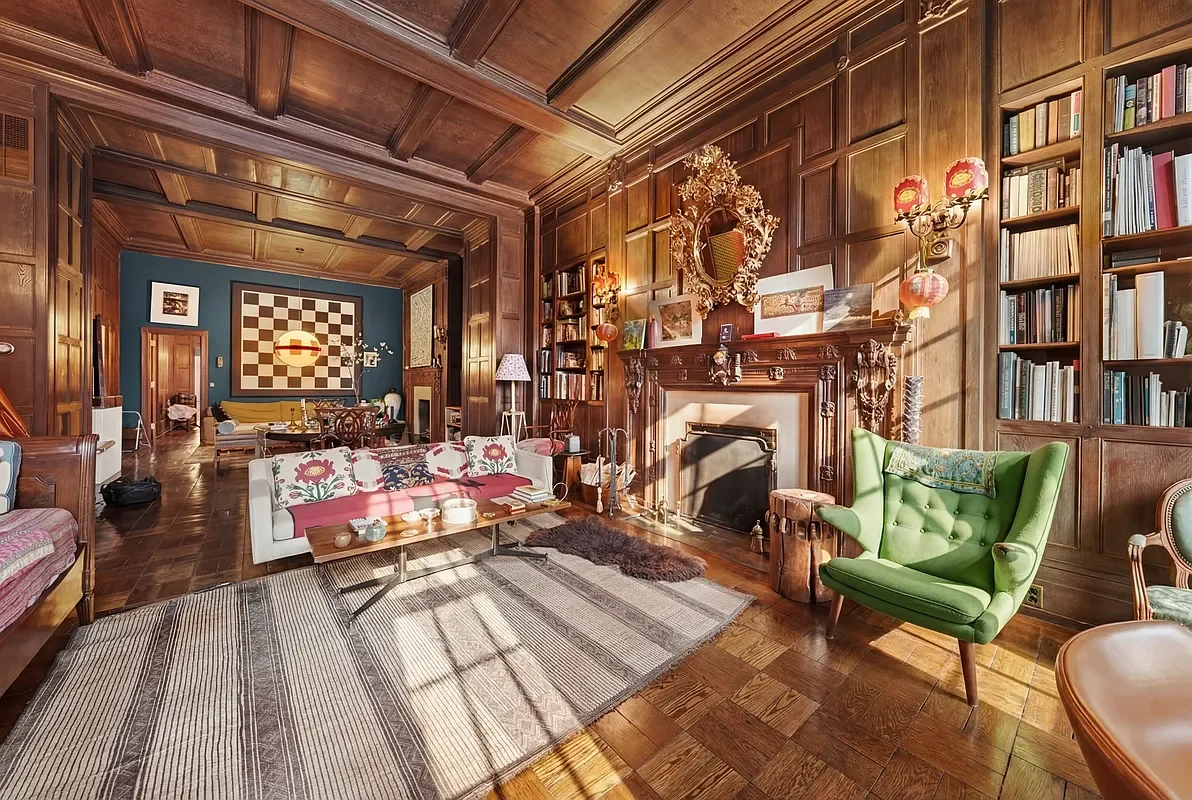
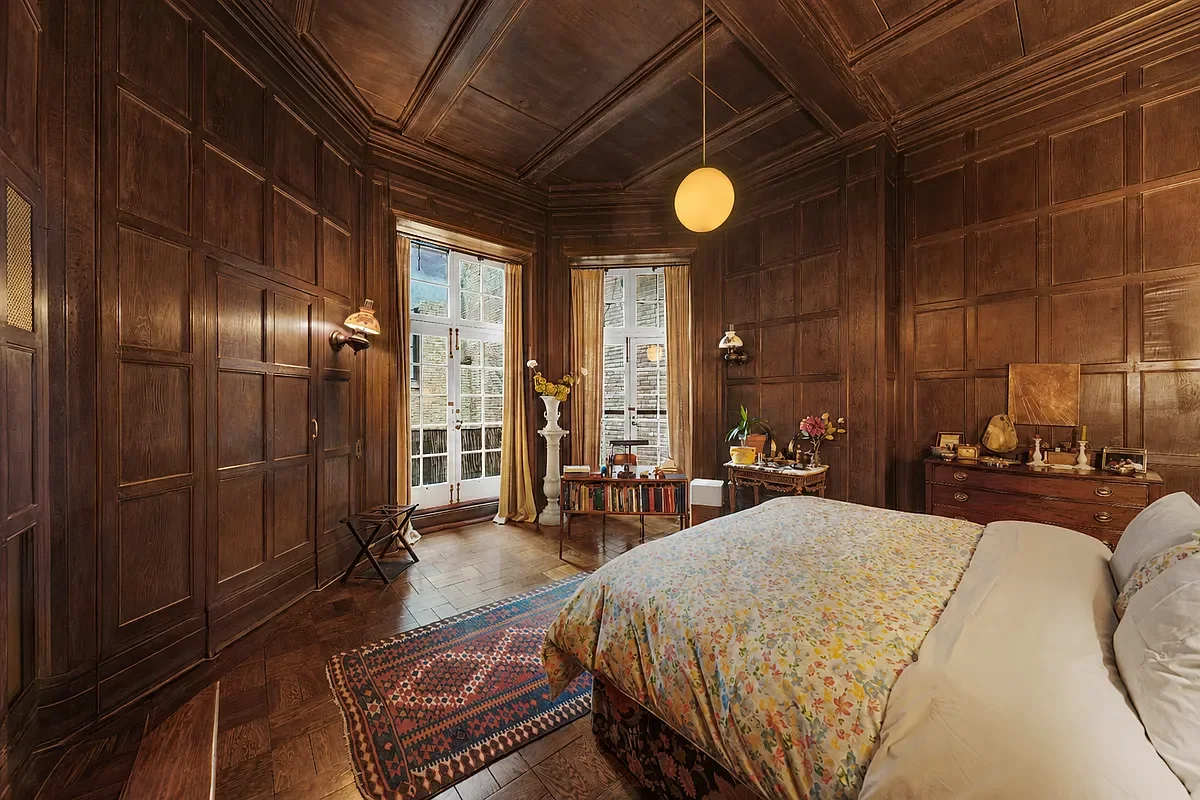
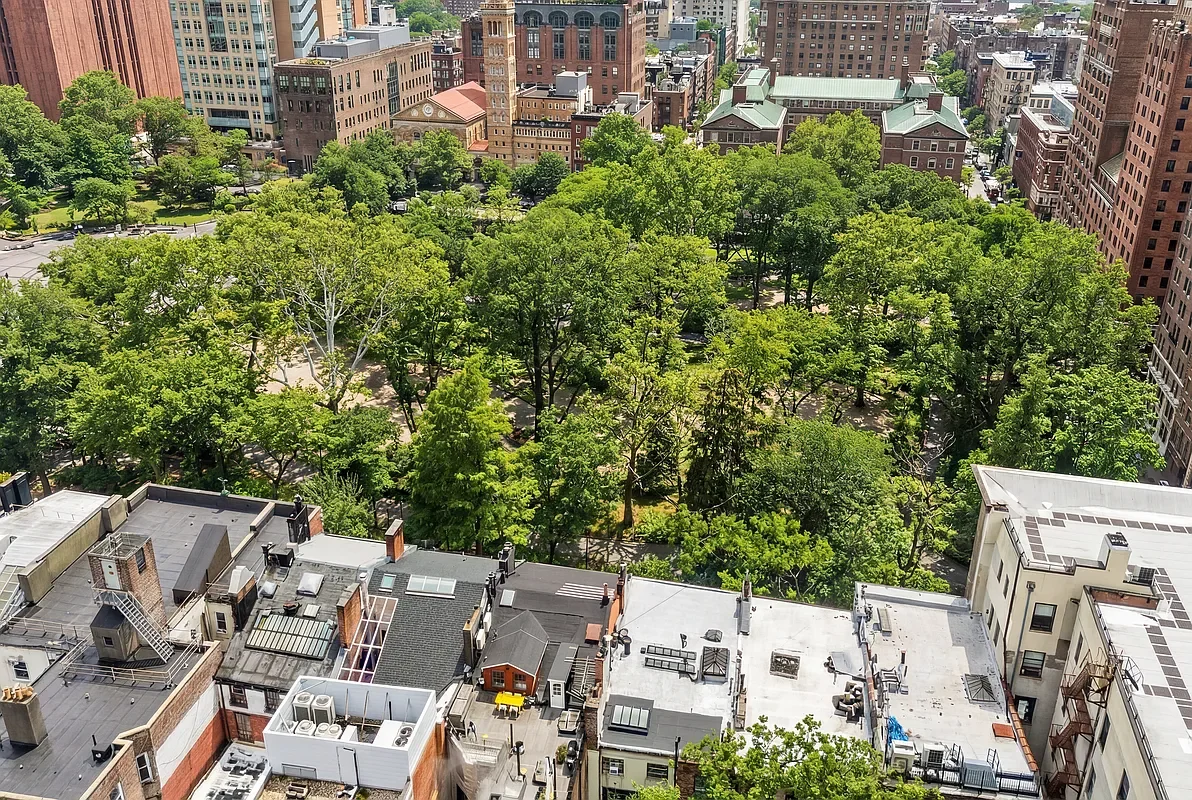
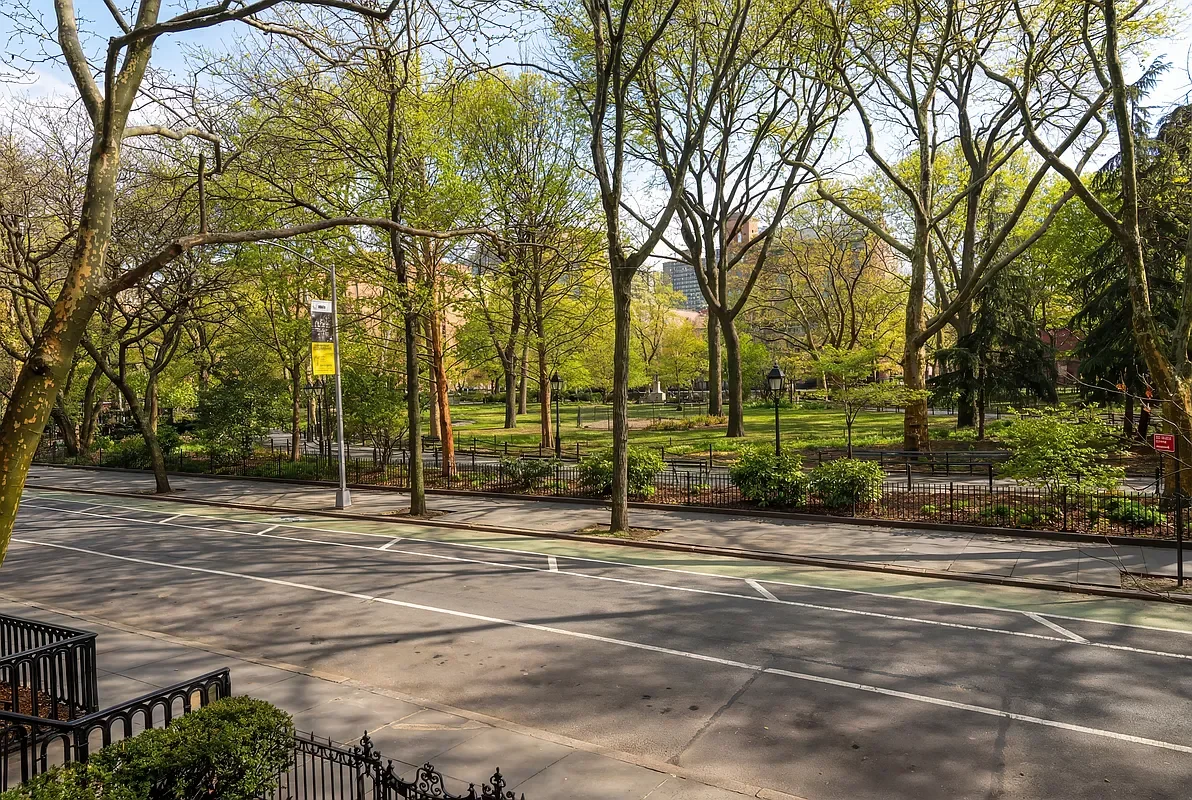
Inside, the photographs show elaborate plasterwork, tall paneled doors, substantial fireplace surrounds and detailed moldings. The parlor and upper floors have especially high ceilings, while the 27-foot-3-inch width allows for unusually broad rooms and large windows overlooking Washington Square Park.
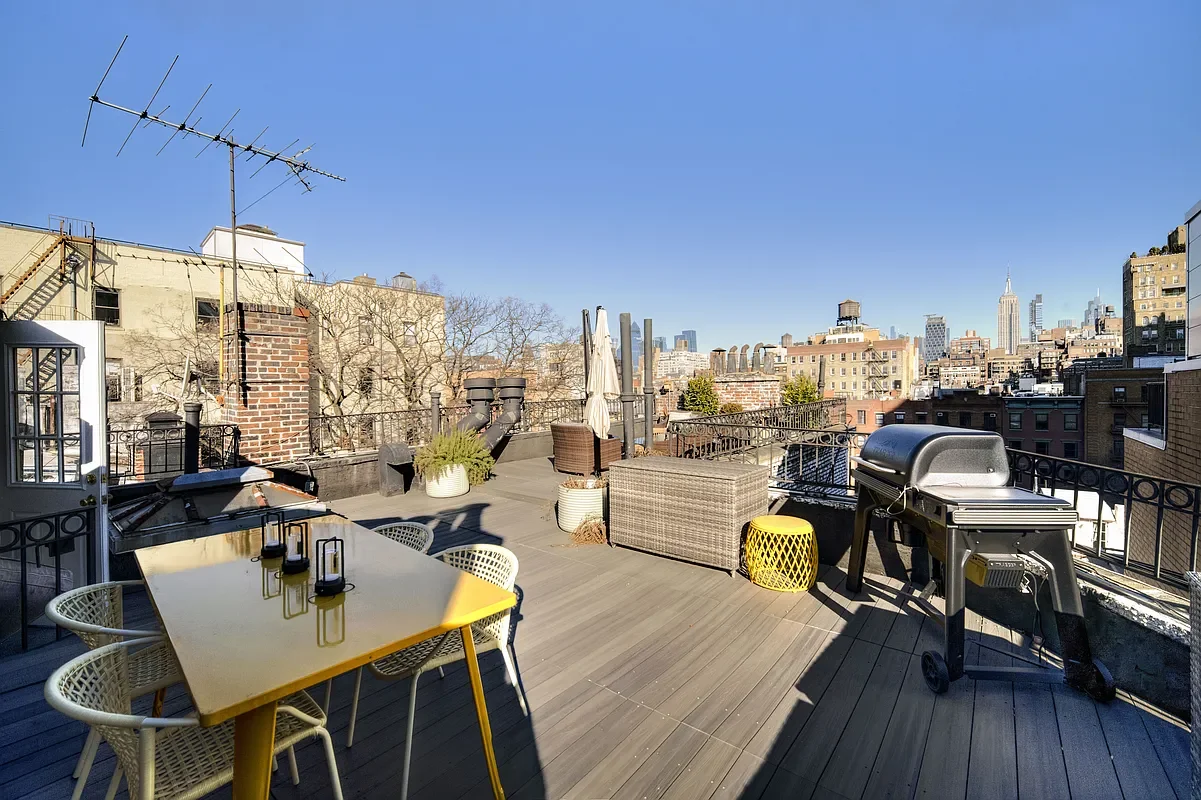
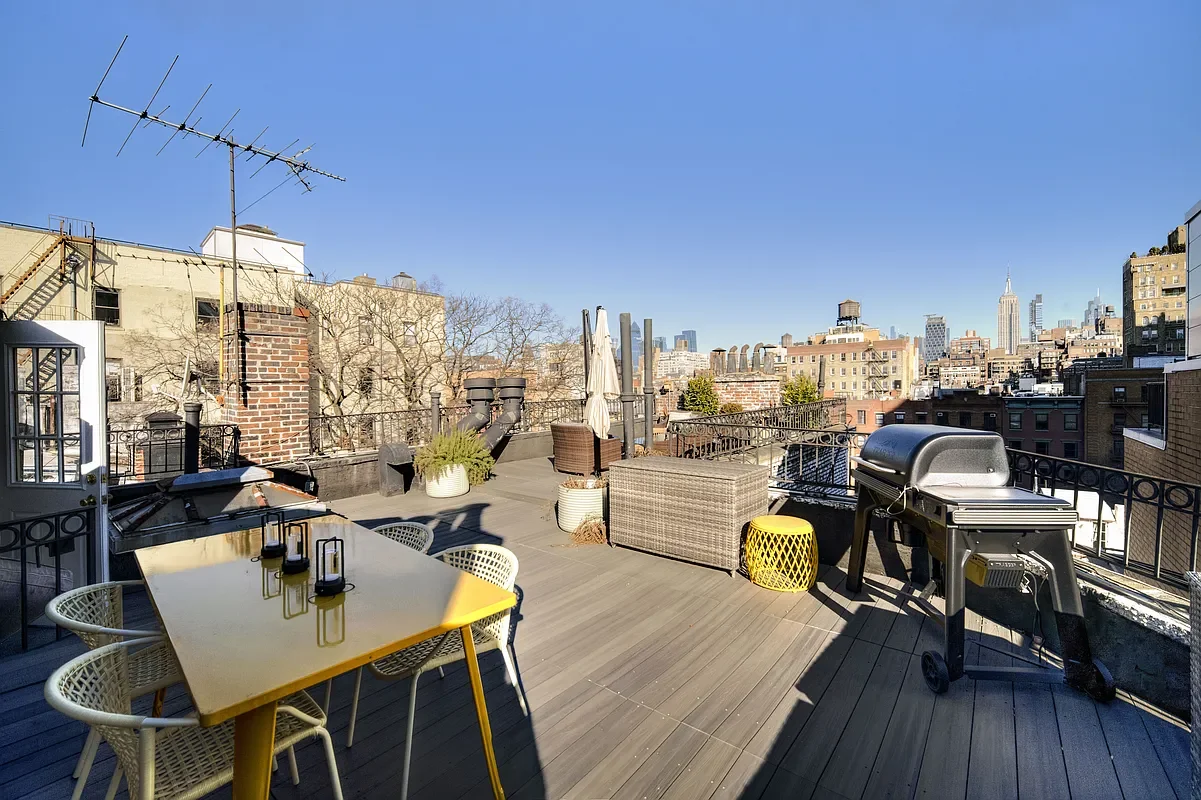
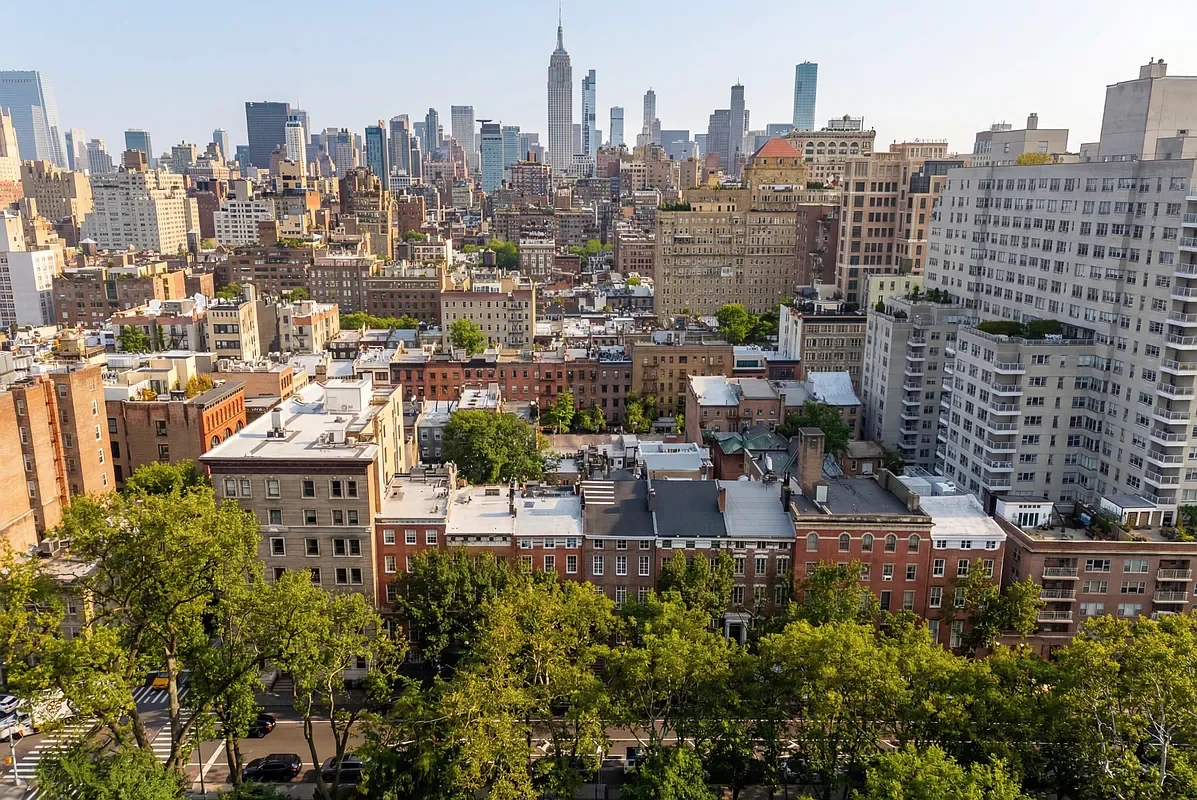
A private rooftop terrace sits above the house, with views across Greenwich Village toward the Empire State Building.
Washington Square is now one of the most recognizable parts of Greenwich Village, but when No. 23 was completed in 1836, the neighborhood was still taking shape as a fashionable residential district.
The square had only recently been established as public open space, and affluent New Yorkers were beginning to move north from the increasingly commercial streets of Lower Manhattan. Large brick townhouses rose along the north side through the 1830s, many in the Greek Revival style that was then at the height of fashion.
No. 23 was built in the middle of that shift. Its 27-foot-3-inch width, Flemish-bond brick façade, high stoop and tall French windows are part of the architectural language that came to define Washington Square North.
The address never really lost its importance. The families who first settled around the square were later joined by writers and artists, and Greenwich Village gradually developed the cultural identity it is known for today.
American author Henry James knew this stretch of Washington Square personally. Best known for The Portrait of a Lady, The Wings of the Dove and The Turn of the Screw, James had family ties to the block: his maternal grandmother lived at 18 Washington Square North, a few houses east of No. 23. The neighborhood later became the setting for his 1880 novel Washington Square.
By the early 20th century, the artistic character of the Village was becoming just as important as its residential history. Edward Hopper, one of the most important American painters of the 20th century and best known for Nighthawks, lived and worked for decades at 3 Washington Square North.
No. 23 has its own connection to that transition. Behind the main residence, on MacDougal Alley, was the house’s stable. In 1881, lawyer Edmund Randolph Robinson leased the property and commissioned architect George B. Post to enlarge the rear building. In 1909, architect Donald G. Anderson converted it into artists’ studios.
The Greenwich Village Historic District designation report records American Impressionist Ernest Lawson working there before World War I, followed by sculptor Jo Davidson after the war.
It is a small but telling piece of the neighborhood’s history: a stable built for a 19th-century townhouse becoming studio space as Greenwich Village evolved into an artists’ district.
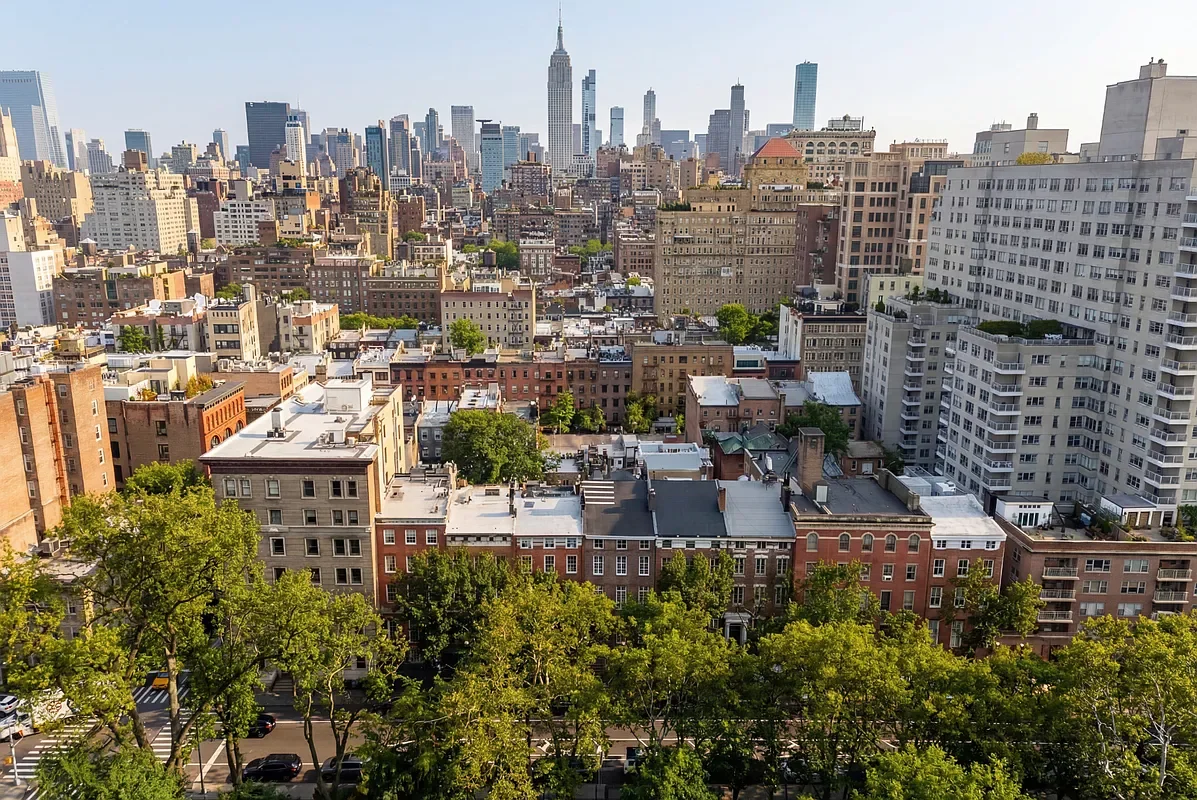
Washington Square is now one of the most recognizable parts of Greenwich Village, but when No. 23 was completed in 1836, the neighborhood was still taking shape as a fashionable residential district.
The main house had its own succession of owners and occupants. It was originally held as an investment by Elizabeth Foote, whose husband, Erasmus D. Foote, was a partner in the dry-goods firm Foote, Sterling & Co. By 1838, the house was occupied by Jonas Conkling, a dry-goods merchant and director of the Bank of New York. His family remained there into the late 19th century.
The building was later divided into apartments, which is how it remains today.
After more than 60 years in the same family, 23 Washington Square North is now back on the market. According to the listing, it is also the first townhouse directly on Washington Square Park to come to market in a decade.
All photographs belong to the listing agency. See more on Leslie Garfield.