A 1920s Rural Stone House in Puglia, Transformed into a Minimalist Villa, Asks €1,300,000
Beds: 3 Land: 2 ha / 5 acres
Amenities: Pool, outdoor kitchen, pergola-covered terraces, separate guest studio, olive grove setting
The house presents a fully realised, design-led property in a region where completed homes of this kind remain relatively limited.
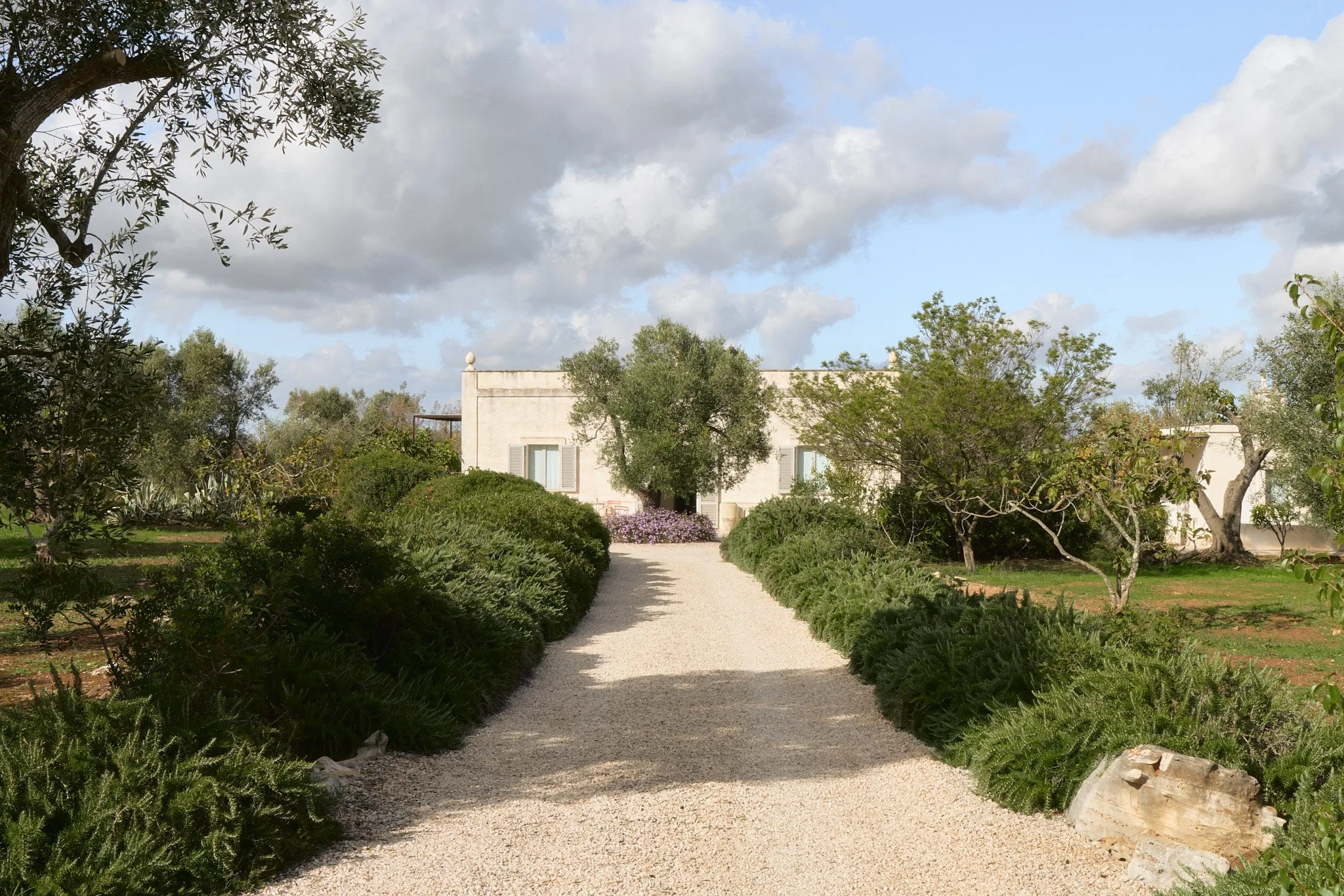
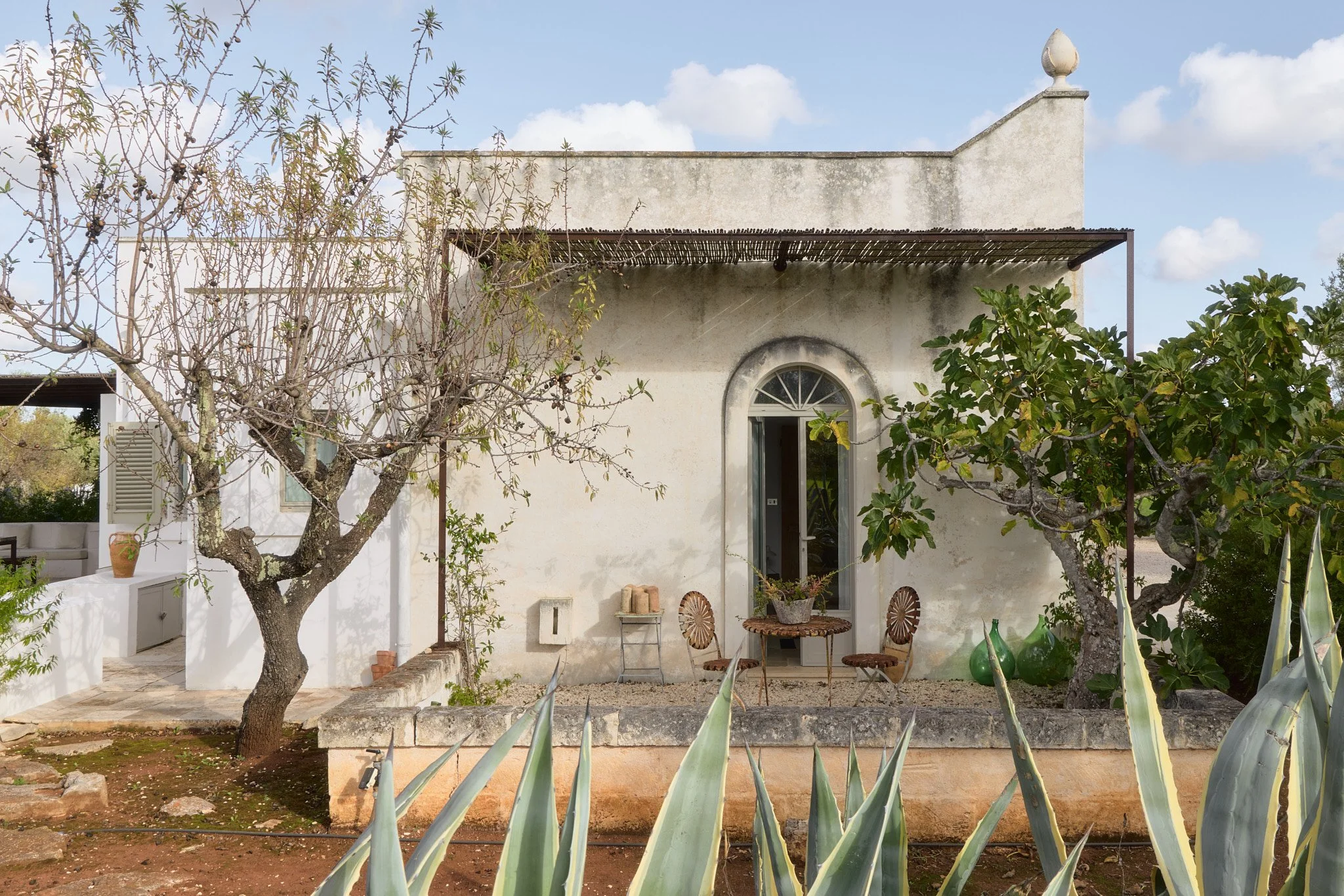
A 1920s rural stone house set just outside Ceglie Messapica, between Ostuni and Cisternino, has been reworked by British architect Andrew Trotter and reimagined as a minimalist three-bedroom residence. The property is listed with Aucoot for €1,300,000 (approx. $1.53M USD / £1.12M GBP)
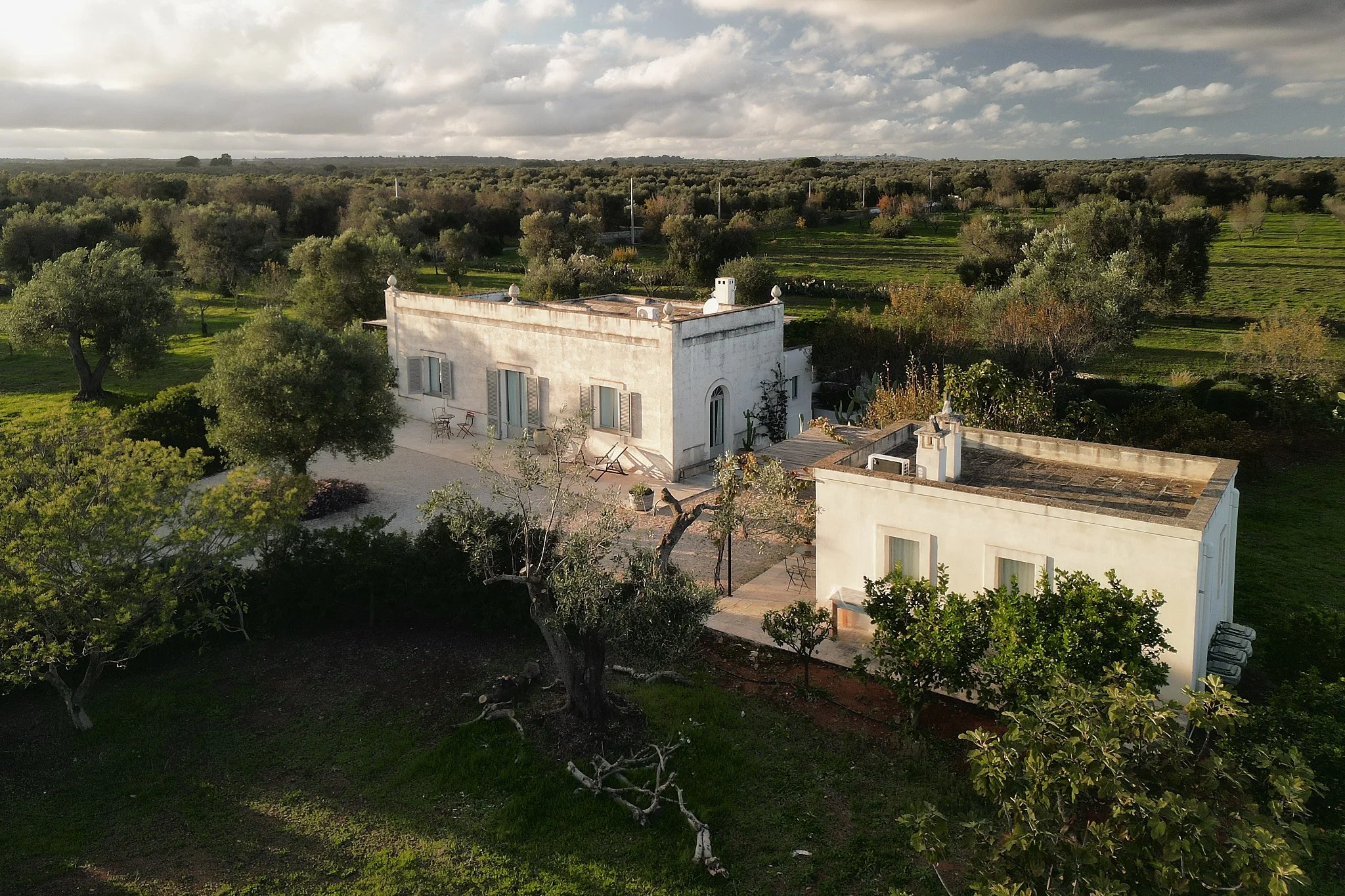
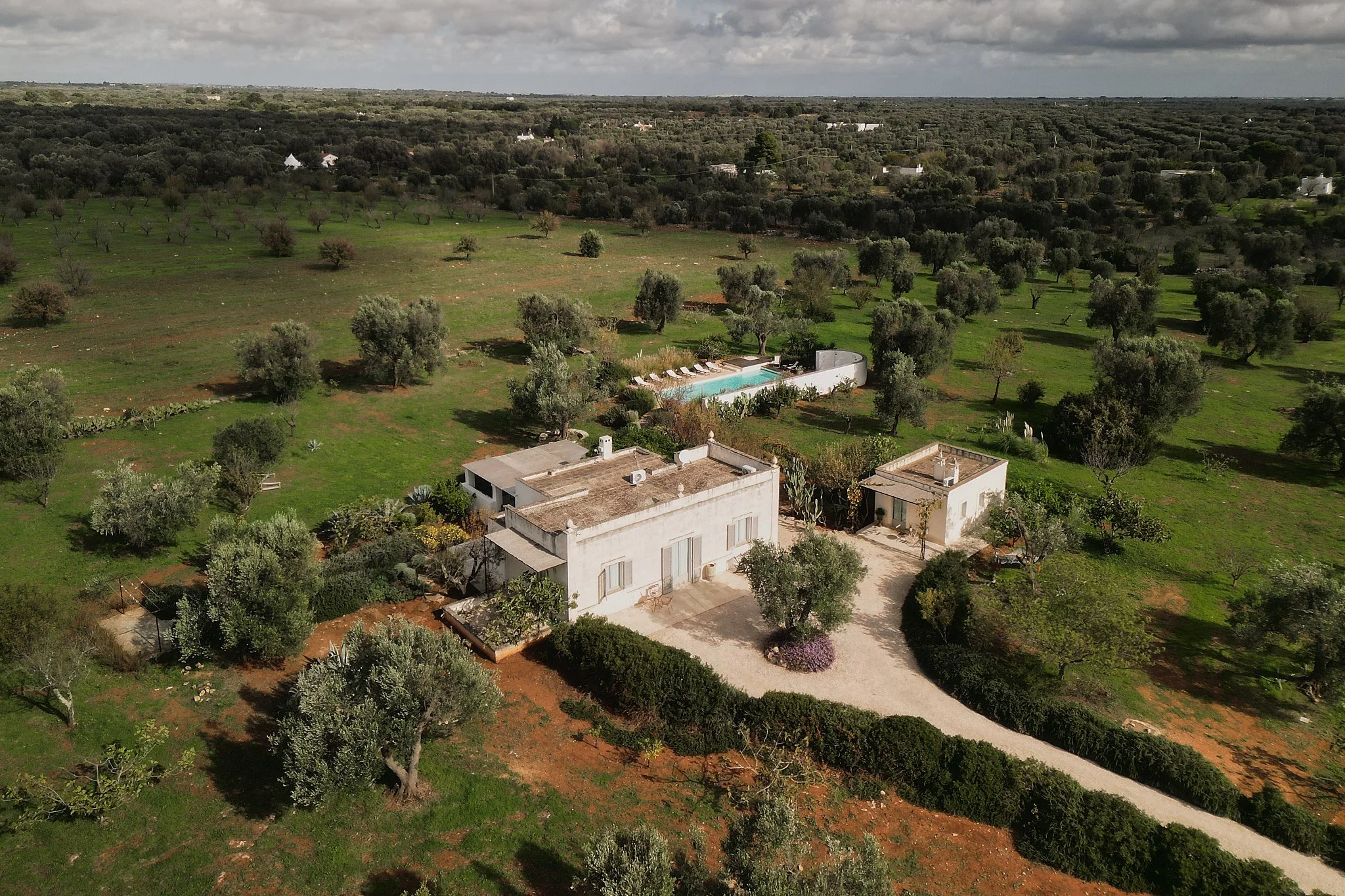
Set within approximately 2 hectares (5 acres) of olive groves, the house is arranged across a main building and a separate guest studio. The nearest beaches are around 10 kilometres (6 miles) away, with the Adriatic coast reachable in approximately 20 minutes by car. Brindisi Airport is around 25 minutes away, with Bari Airport just over an hour by car.
Trotter’s work has become closely associated with a restrained, Mediterranean approach to architecture that prioritises light, proportion and material simplicity over decoration. Through his studio, based largely in southern Europe, he has developed a body of work focused on the reworking of traditional rural buildings, particularly in Puglia. His projects, including the widely referenced Masseria Moroseta near Ostuni, have helped define a design language that is minimal without feeling austere, grounded in place and responsive to climate and local building traditions.
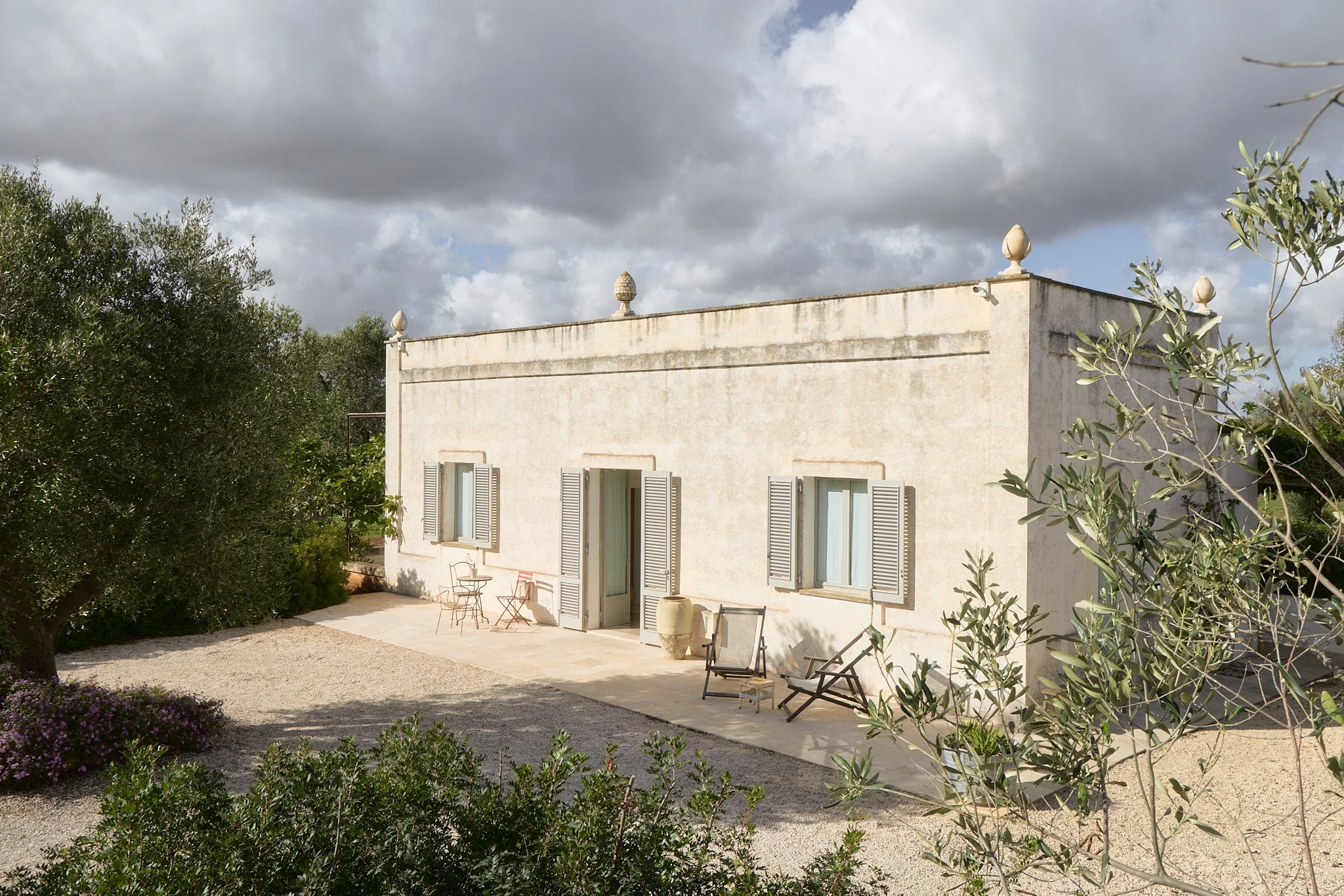
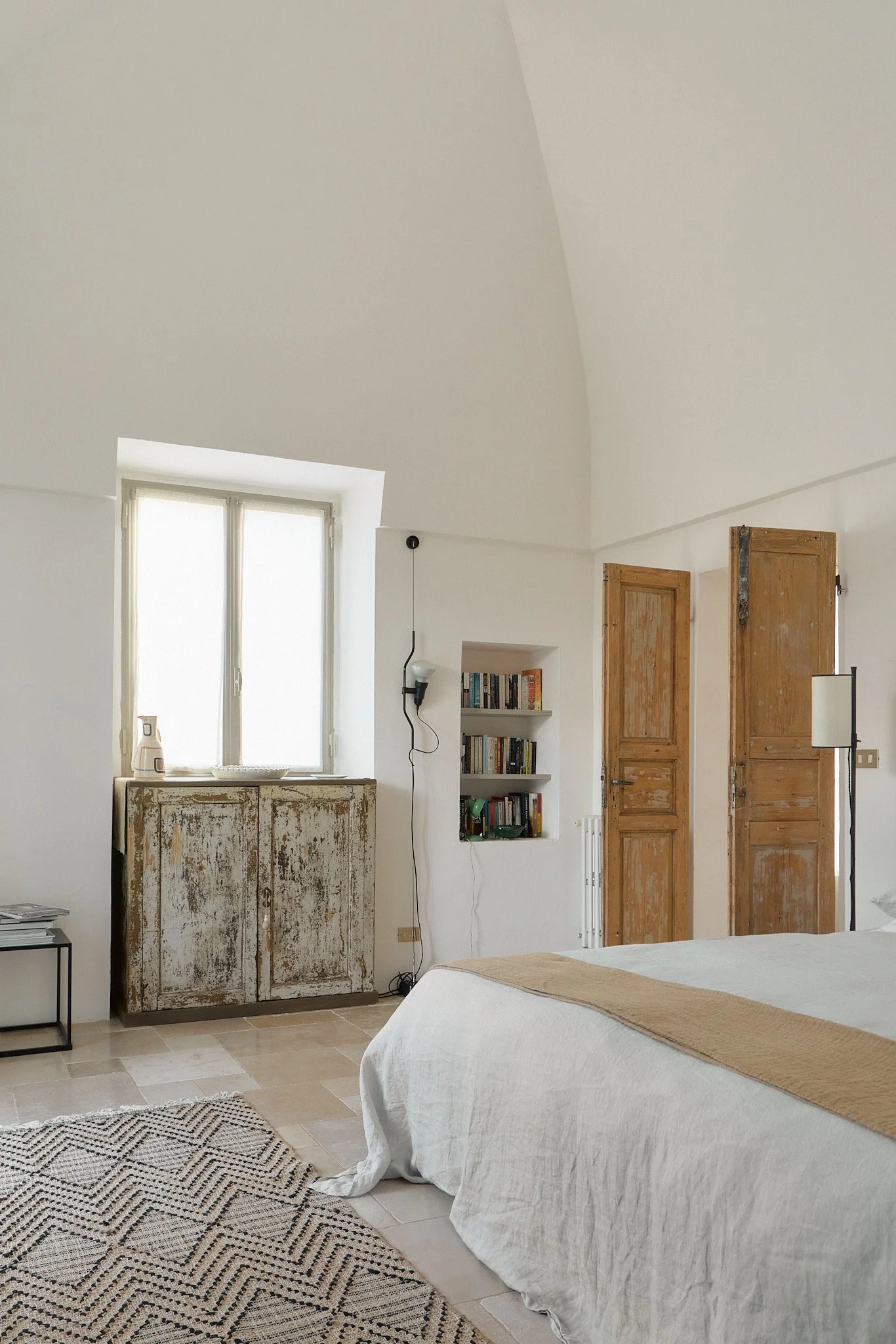
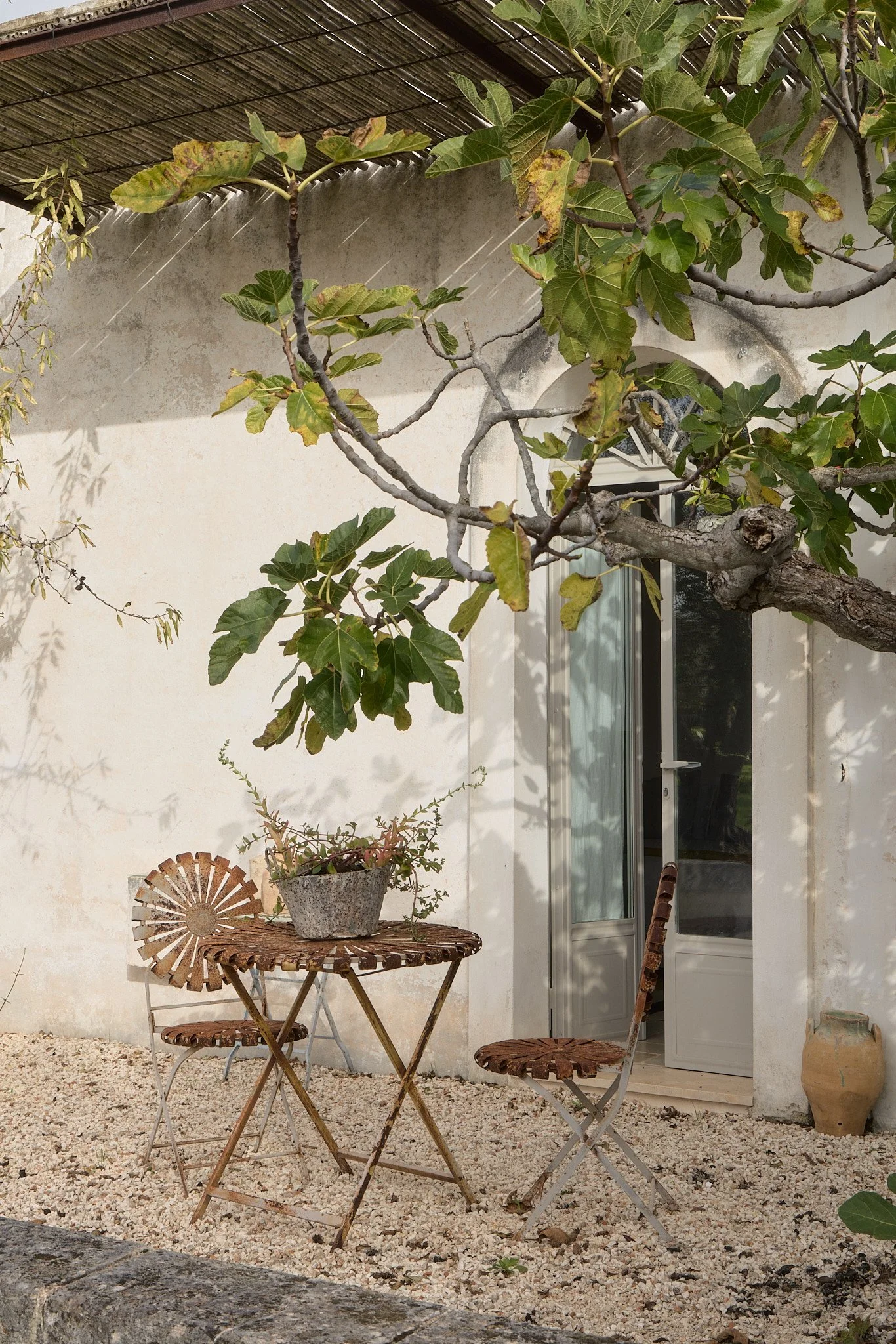
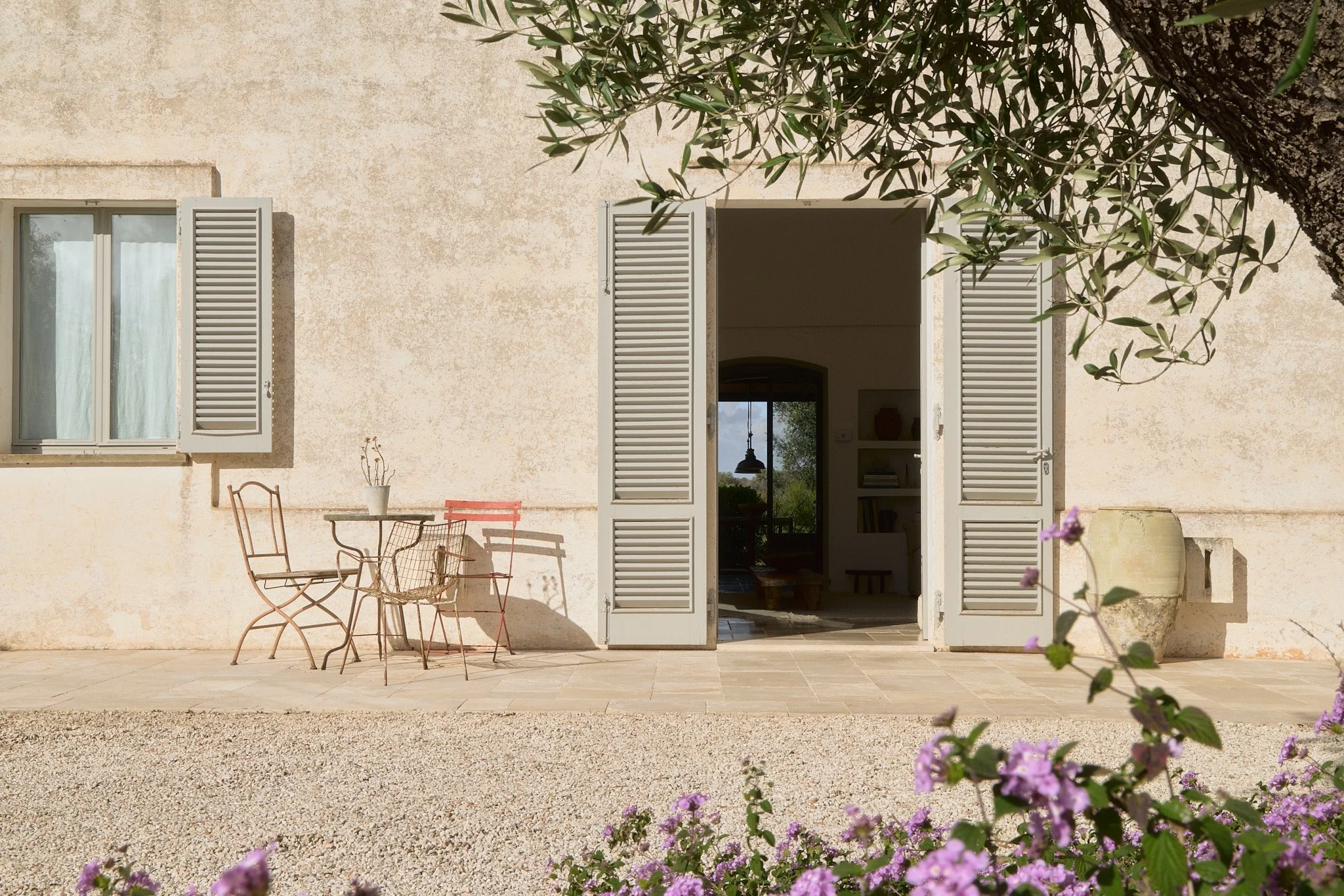
The building itself is a traditional lamia—a simple, single-storey rural dwelling typical of Puglia, defined by thick stone walls and low, rectangular volumes originally designed for agricultural use. Over time, the house had been altered, including the addition of 1980s interiors that changed its original proportions and layout. The current owner acquired the property with the intention of simplifying it, working with Trotter to remove these later layers and bring the structure back to a more coherent form.
“I describe the house as raw elegance,” the owner says. “It’s about creating beauty with carefully chosen pieces that enhance the architecture of the house.”
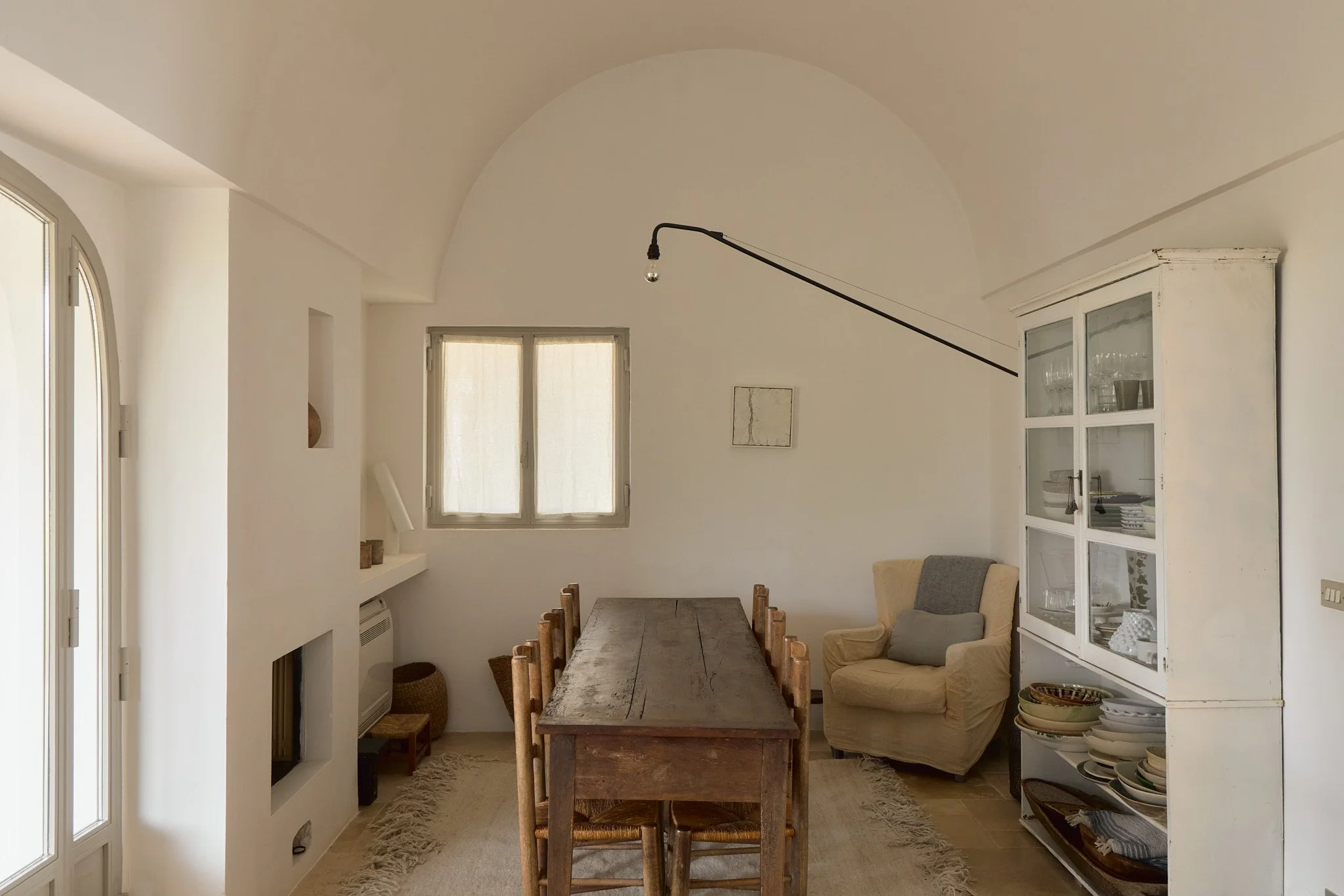
Rather than expanding the building, the project focused on refining what was already there. Thick masonry walls, low volumes and simple openings were retained, with changes centred on proportion, material and how the spaces are used. The brief was to create a house that felt comfortable and liveable, while maintaining a clear and restrained architectural language.
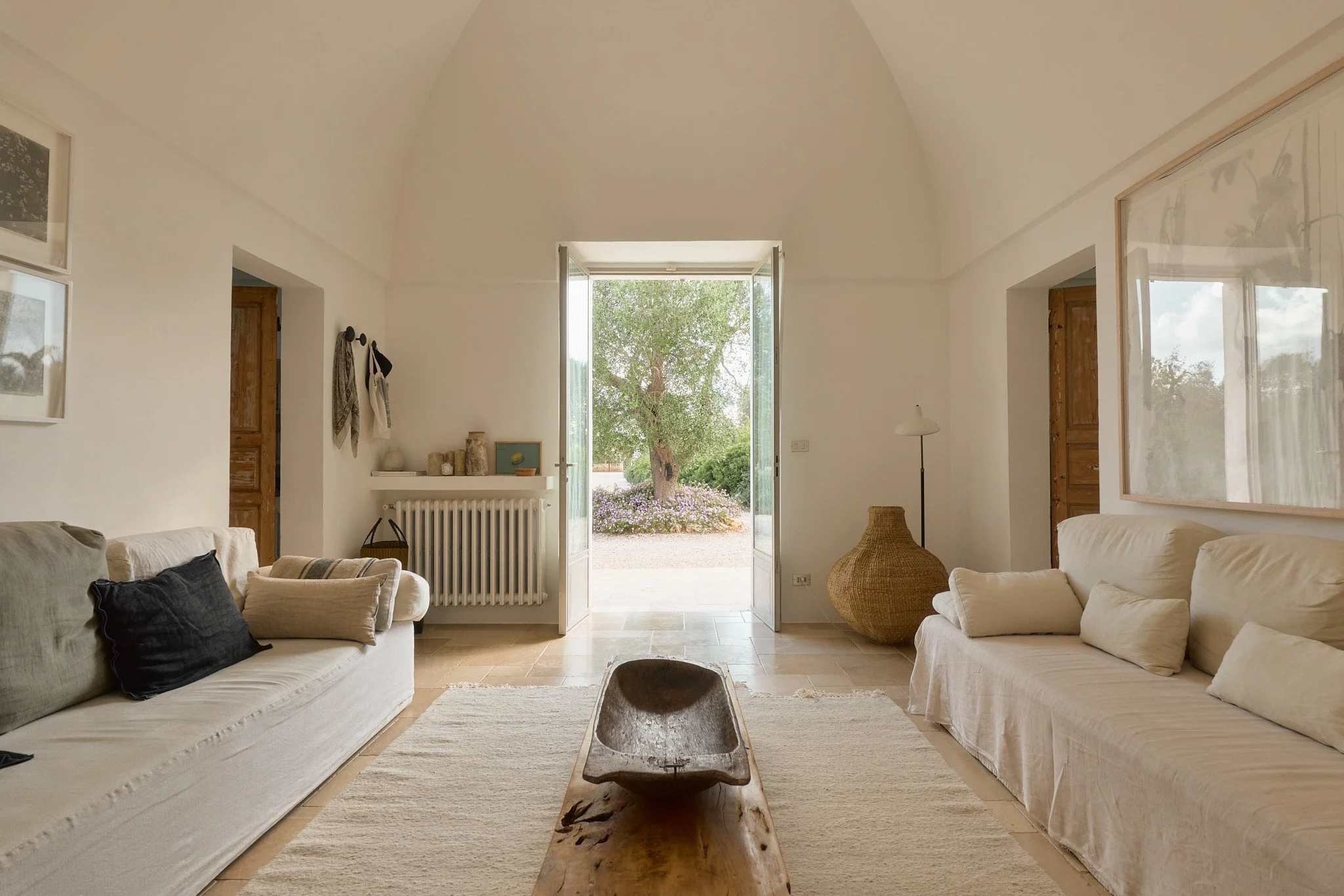
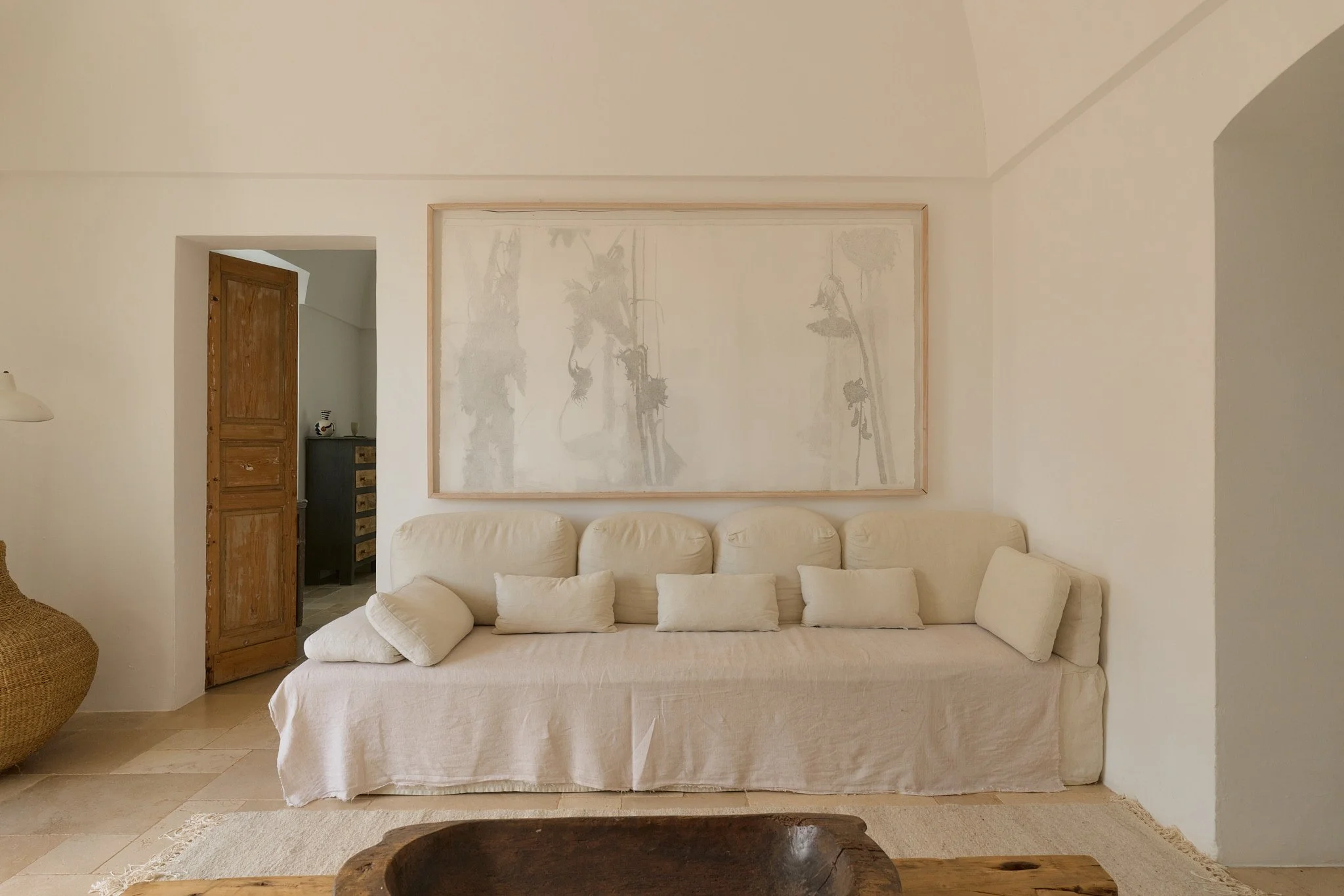
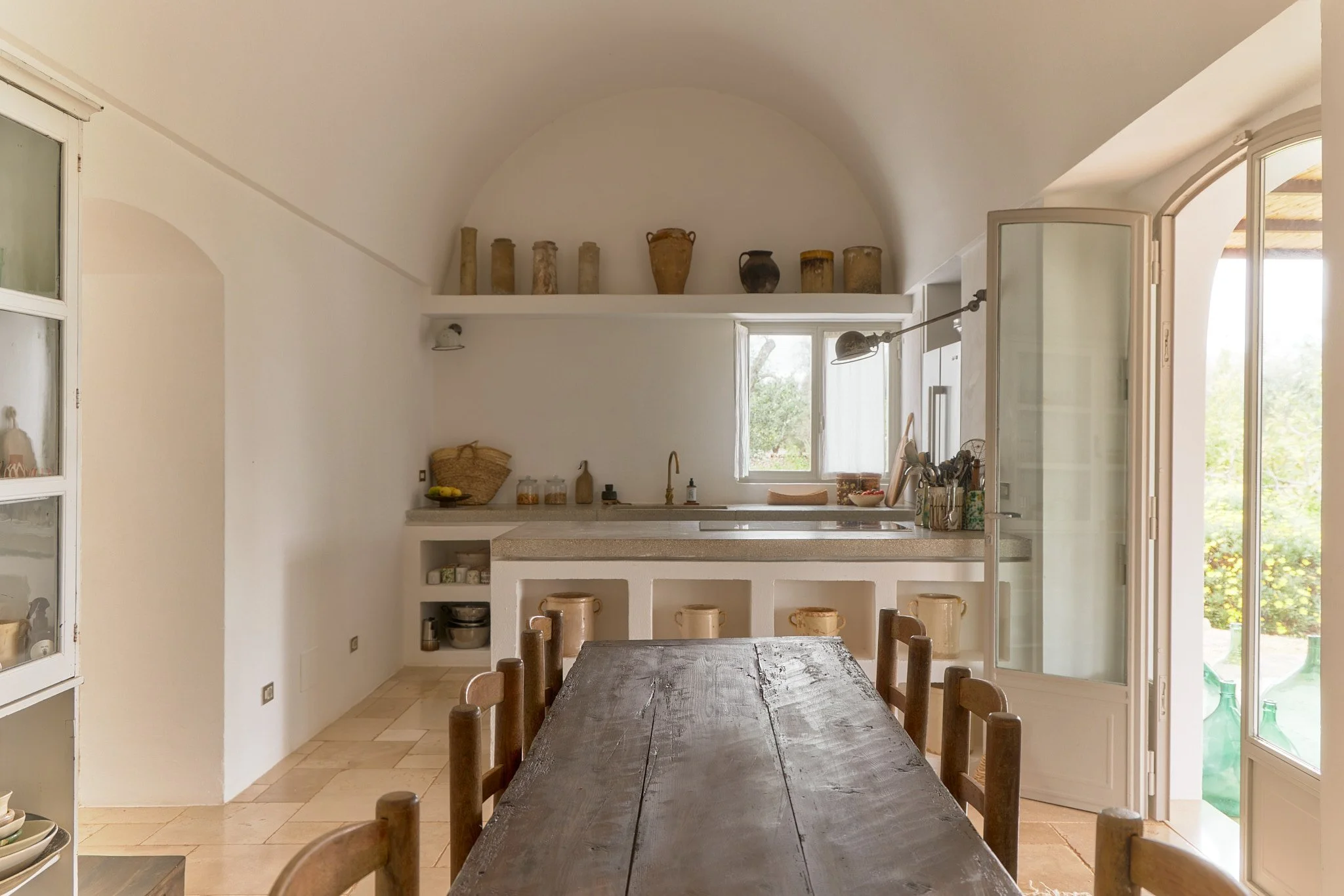
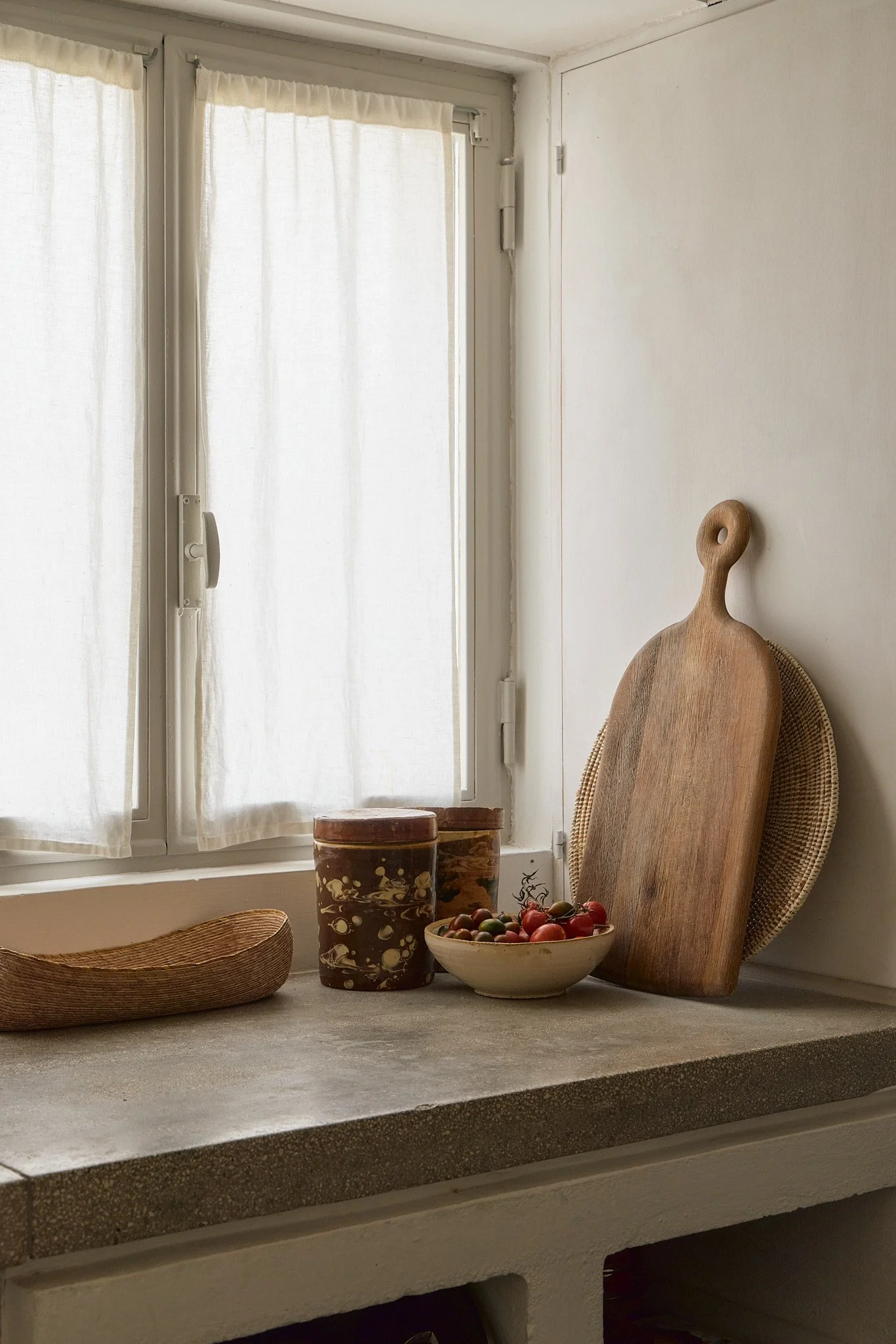
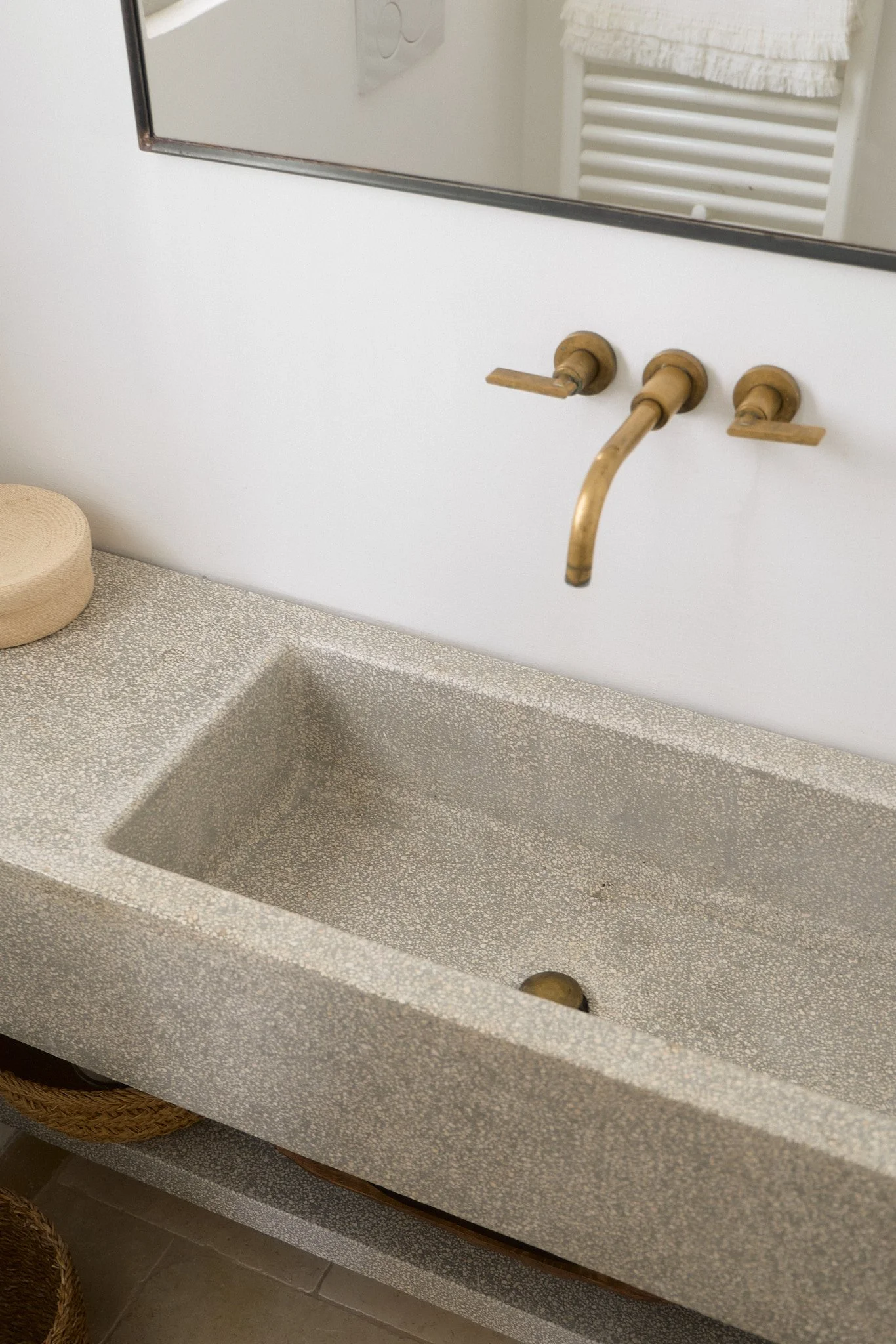
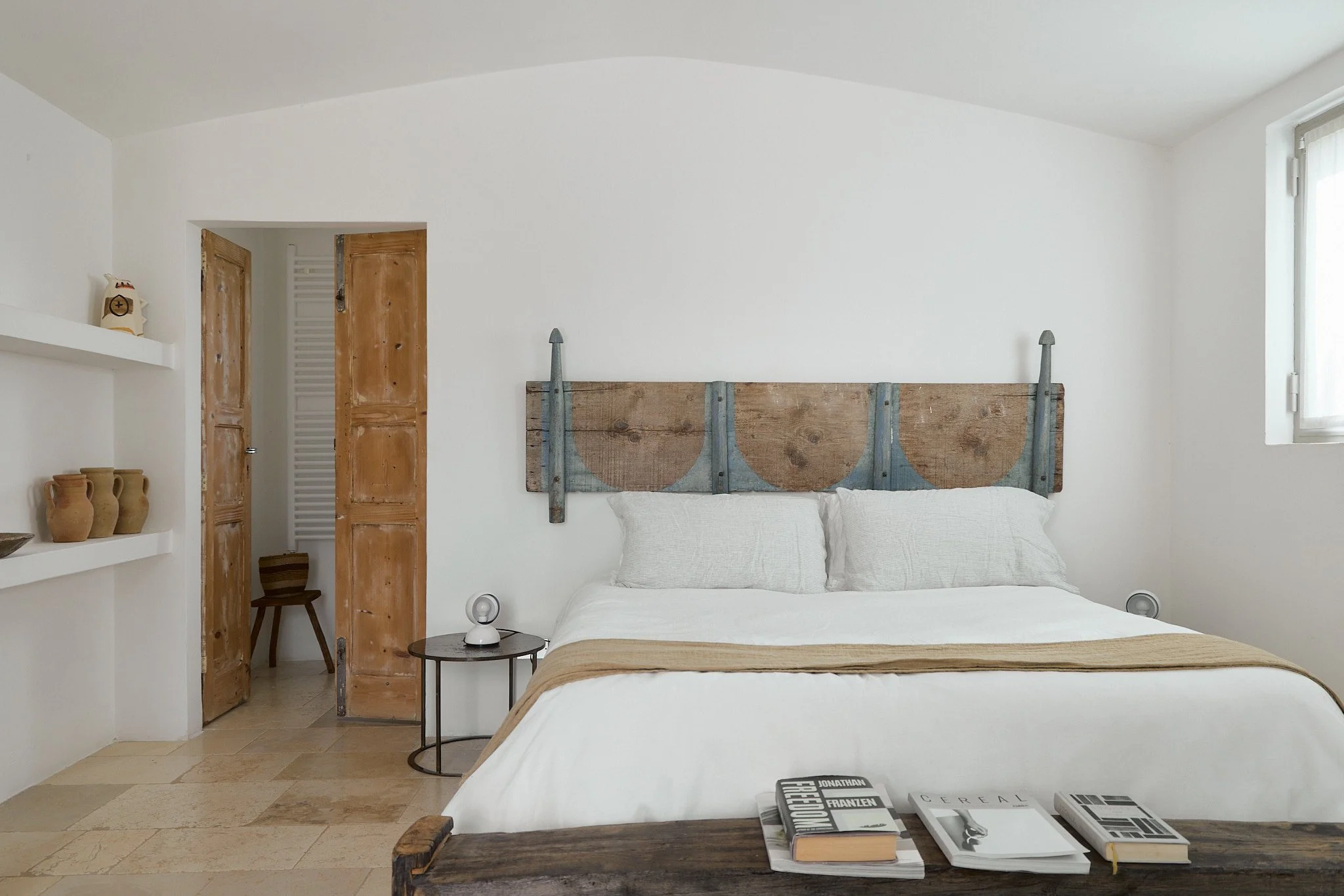
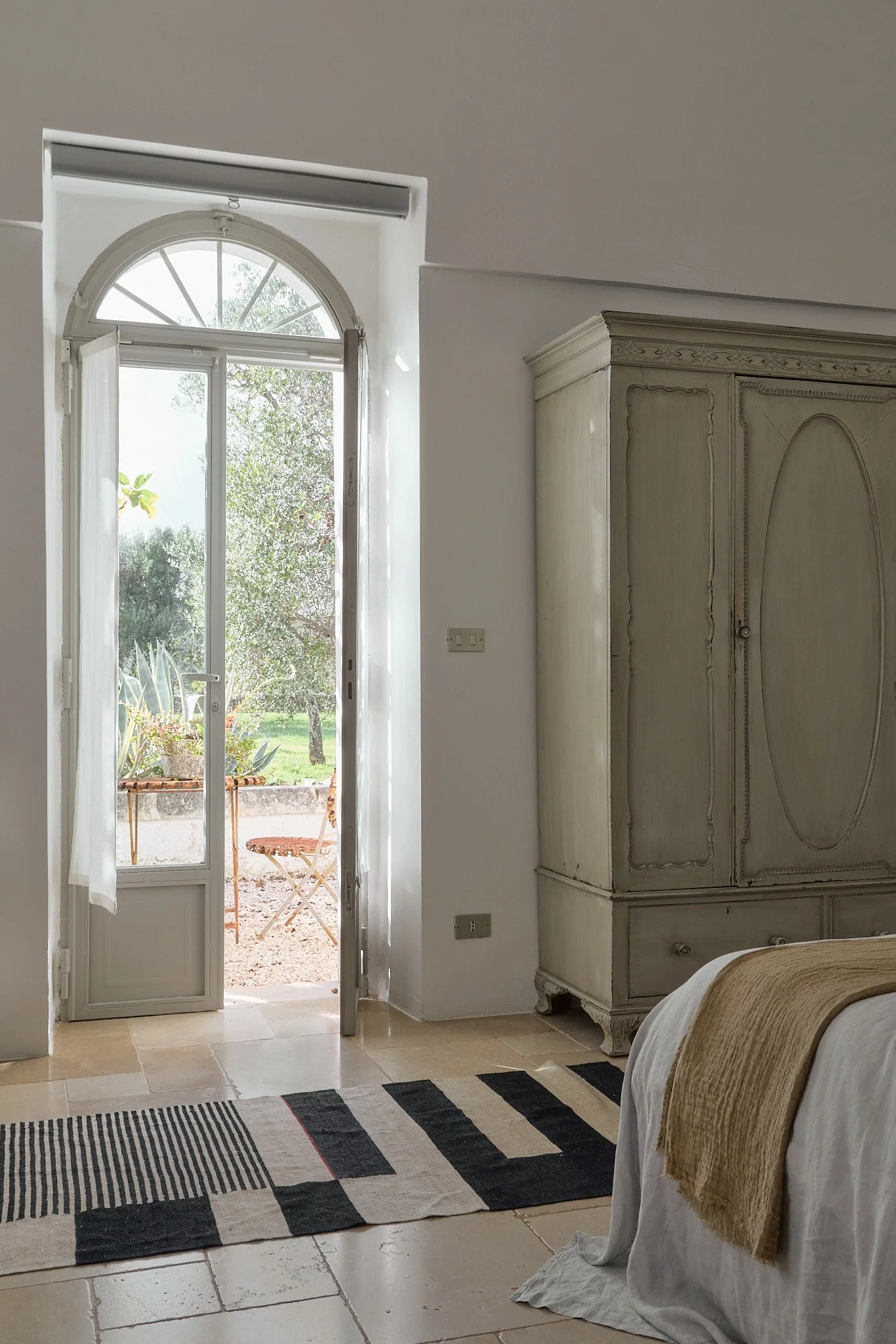
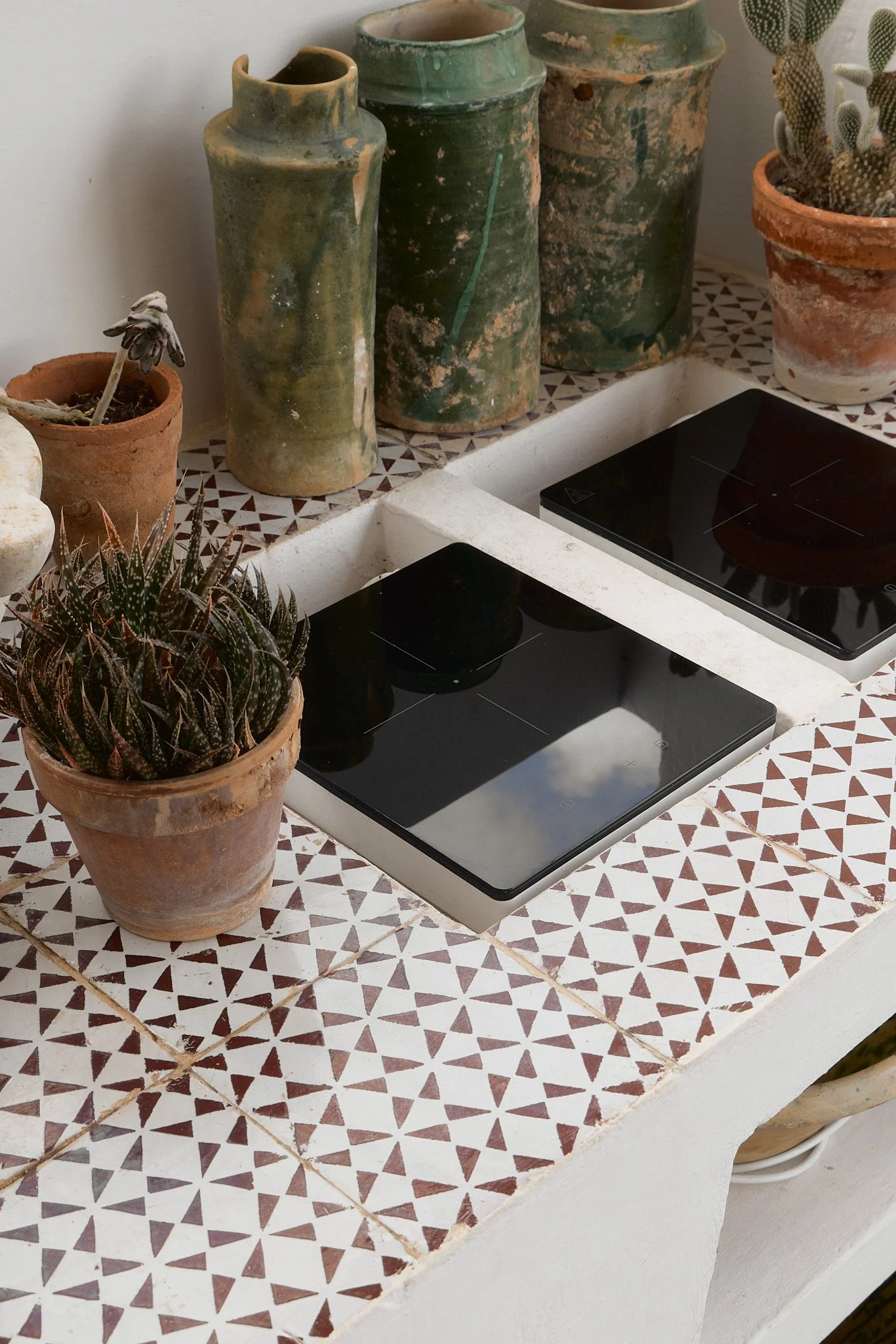
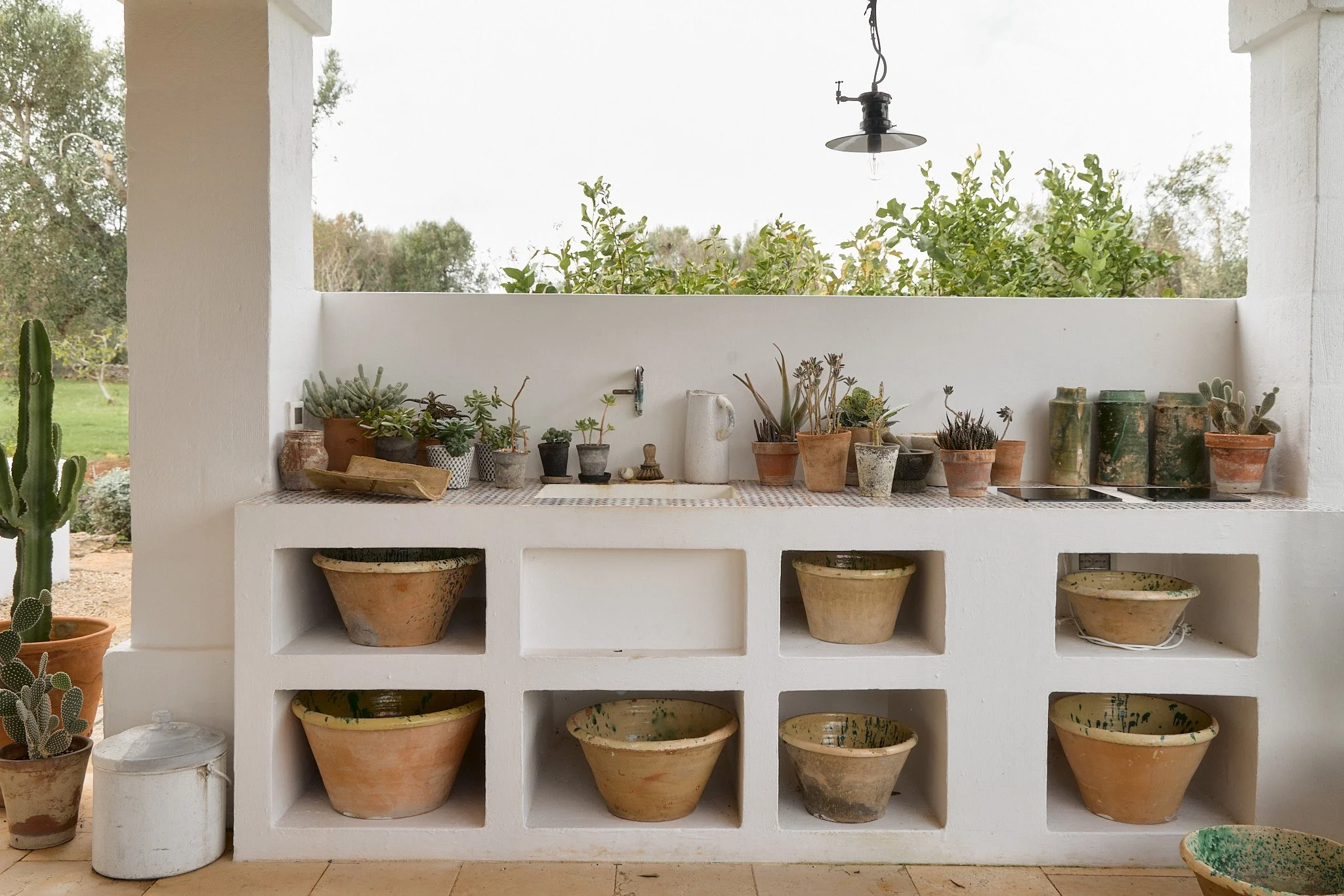
Inside, limewashed walls and softened plaster finishes are paired with local stone flooring, restored to a more natural, matte surface. The kitchen forms the centre of the house, with concrete countertops and sinks made by local artisans, combined with simple joinery and restrained brass fittings.
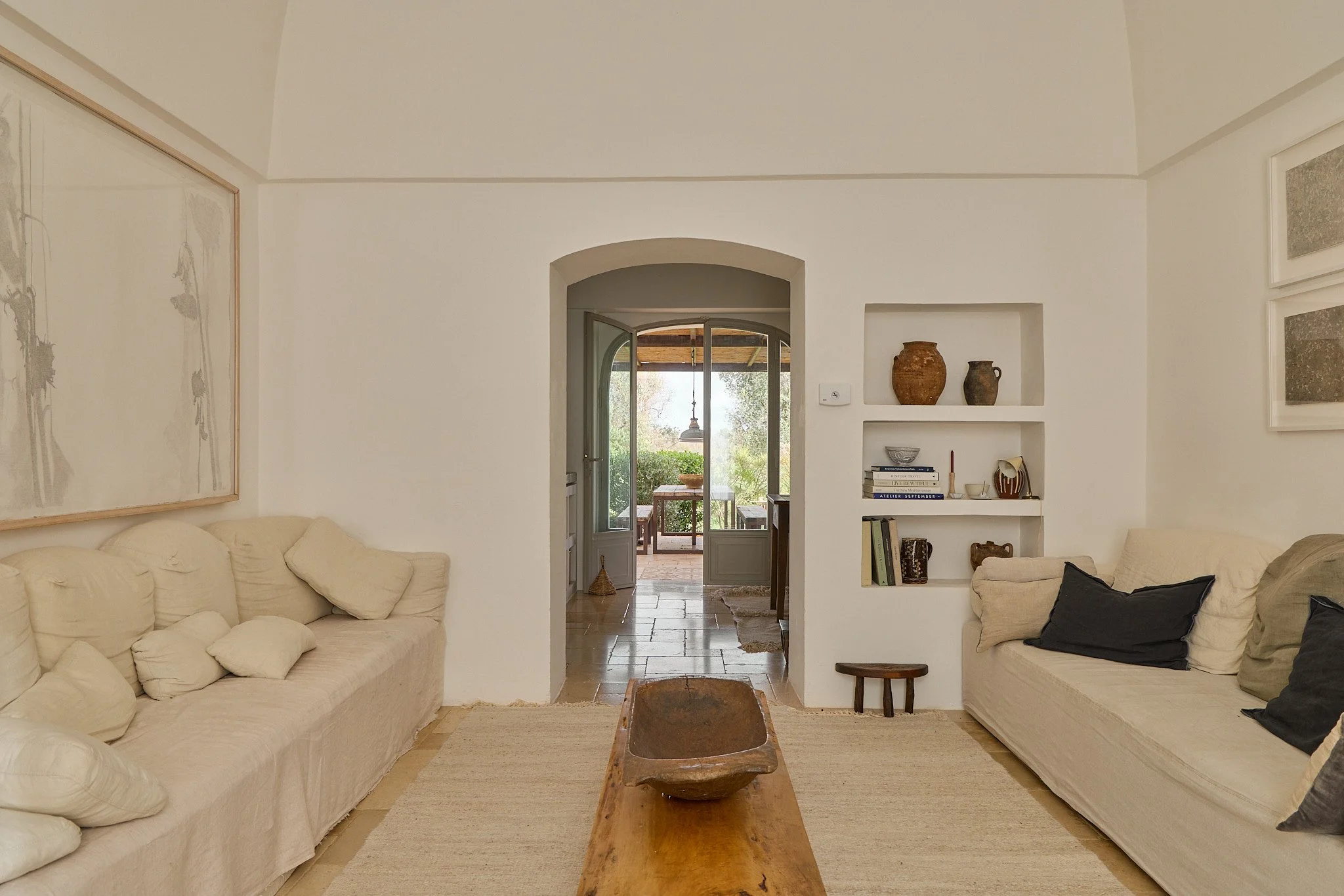
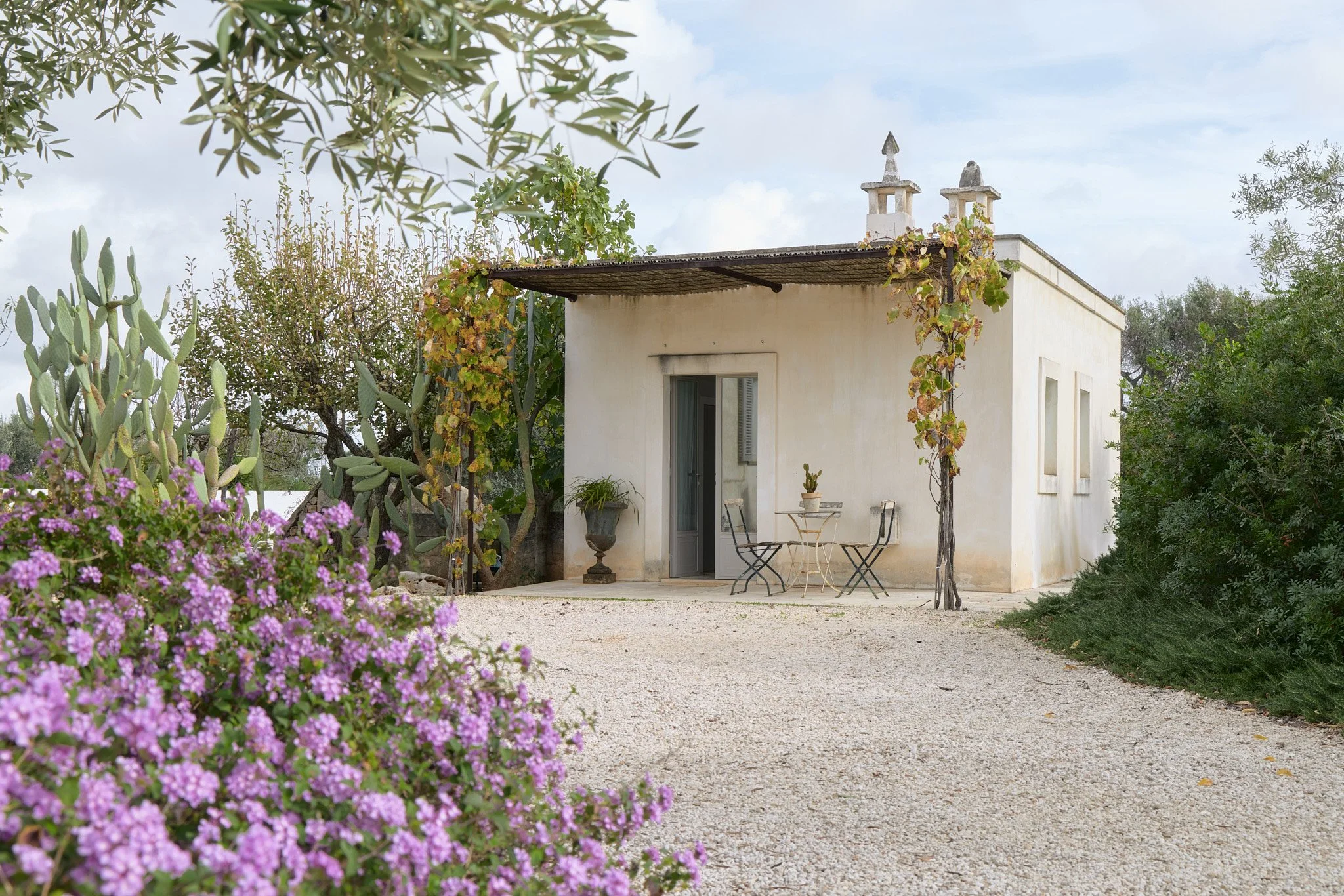
The layout centres on a living room that opens directly into the kitchen and dining area, forming the main shared space. Two en suite bedrooms are located within the main house, while a third bedroom sits in a separate studio a short distance away, complete with its own shower room and private terrace.
Openings throughout the house allow light to shift gradually during the day, changing the atmosphere of the interiors. “The house has a calm, grounded energy that makes time slow down,” the owner notes.
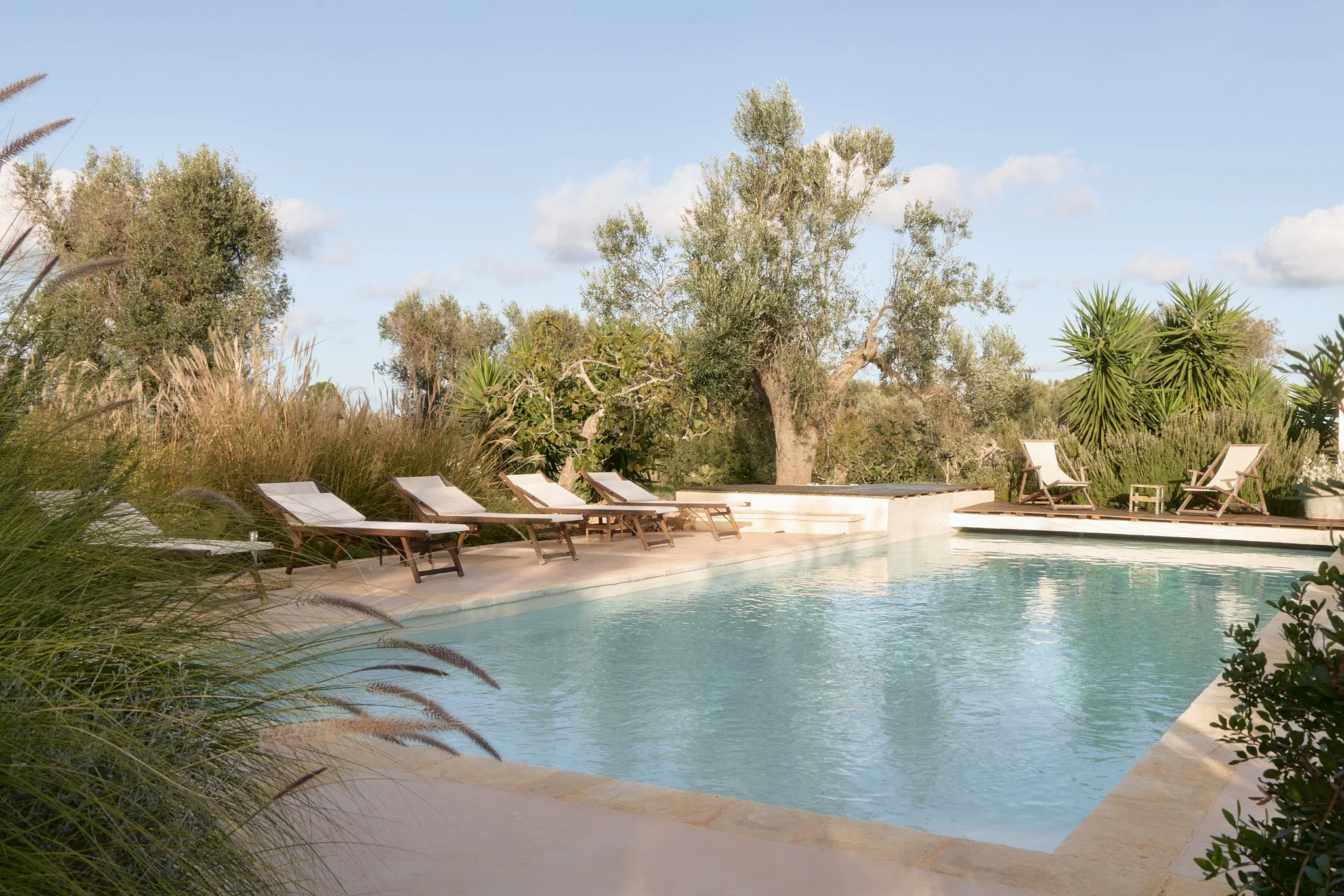
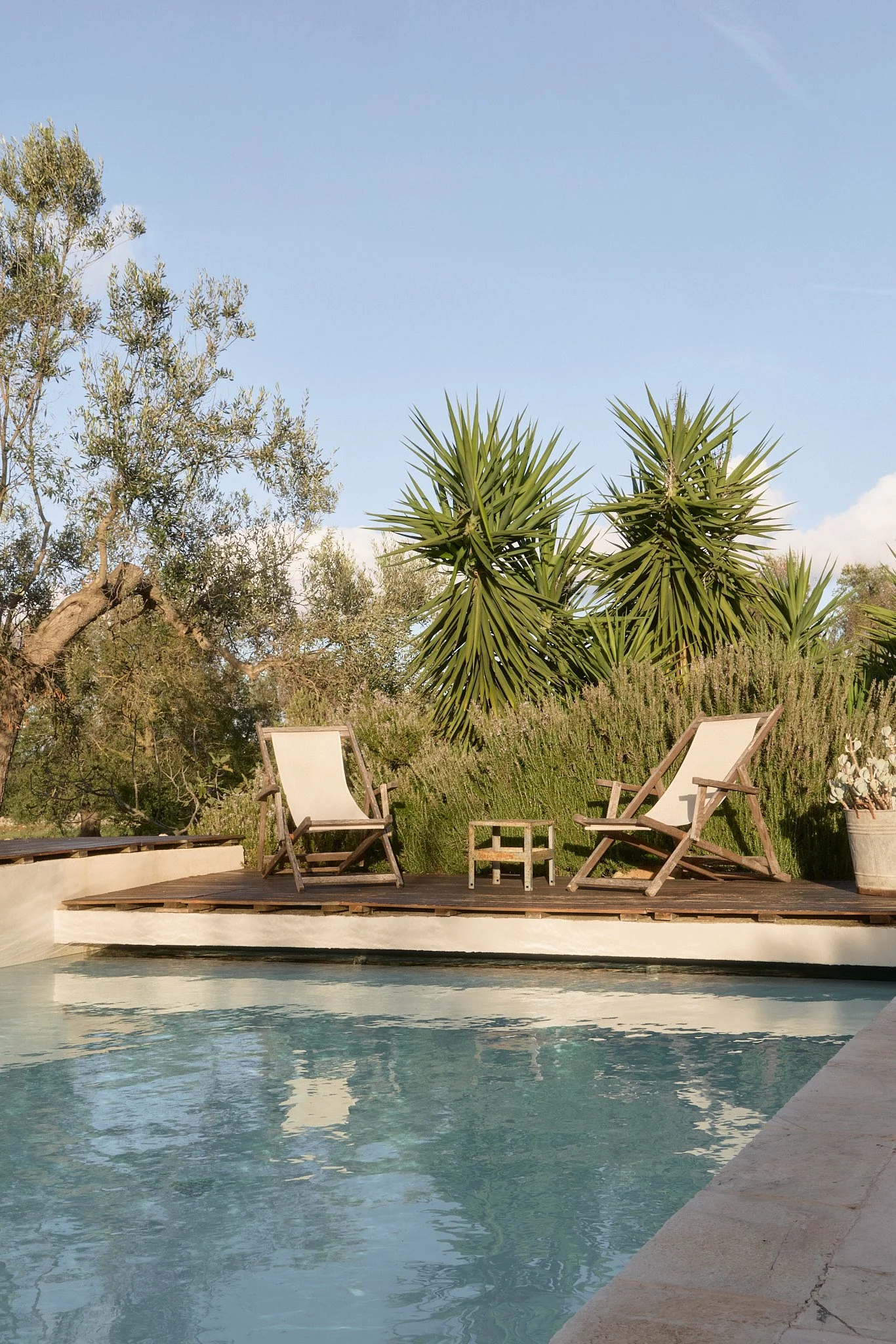
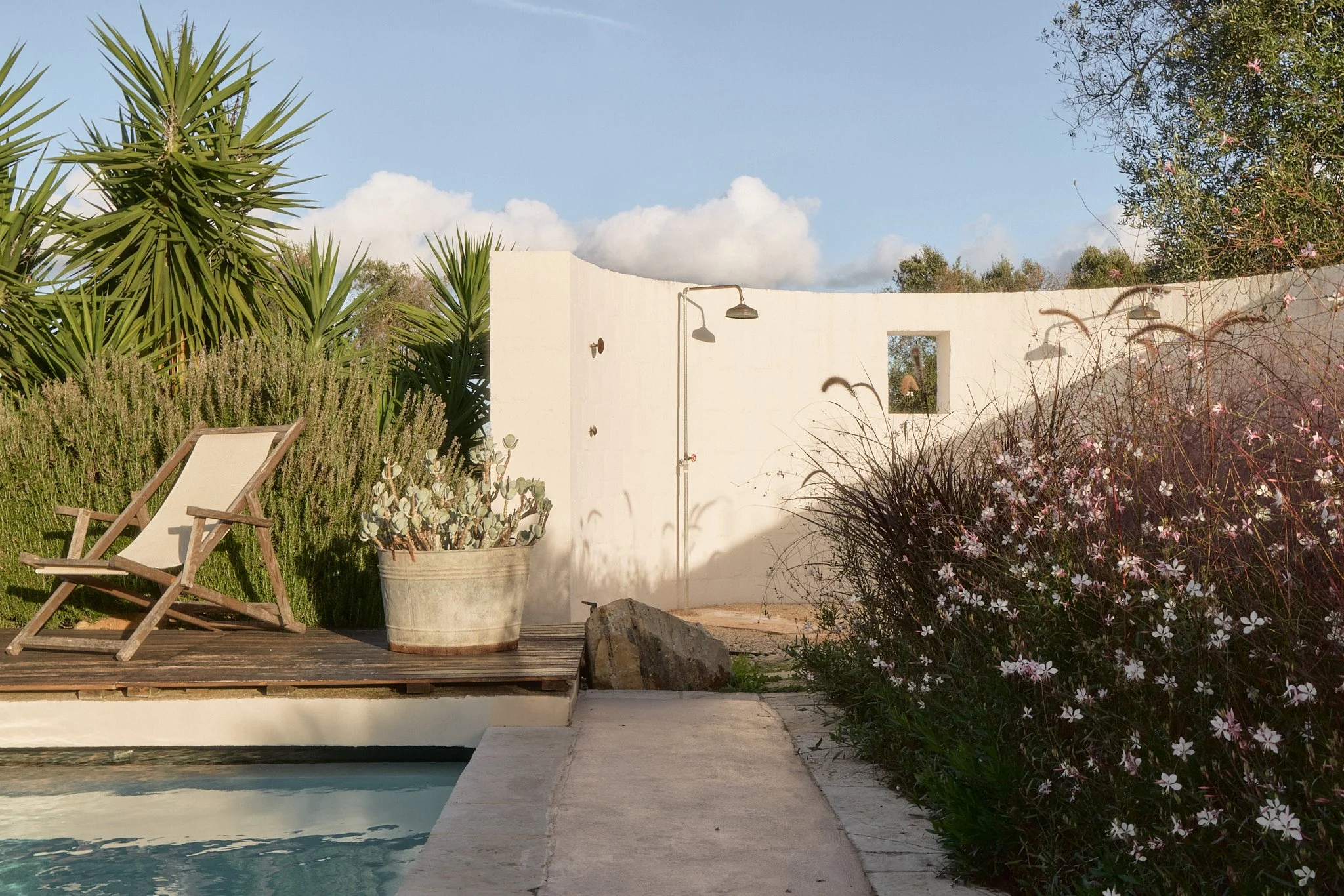
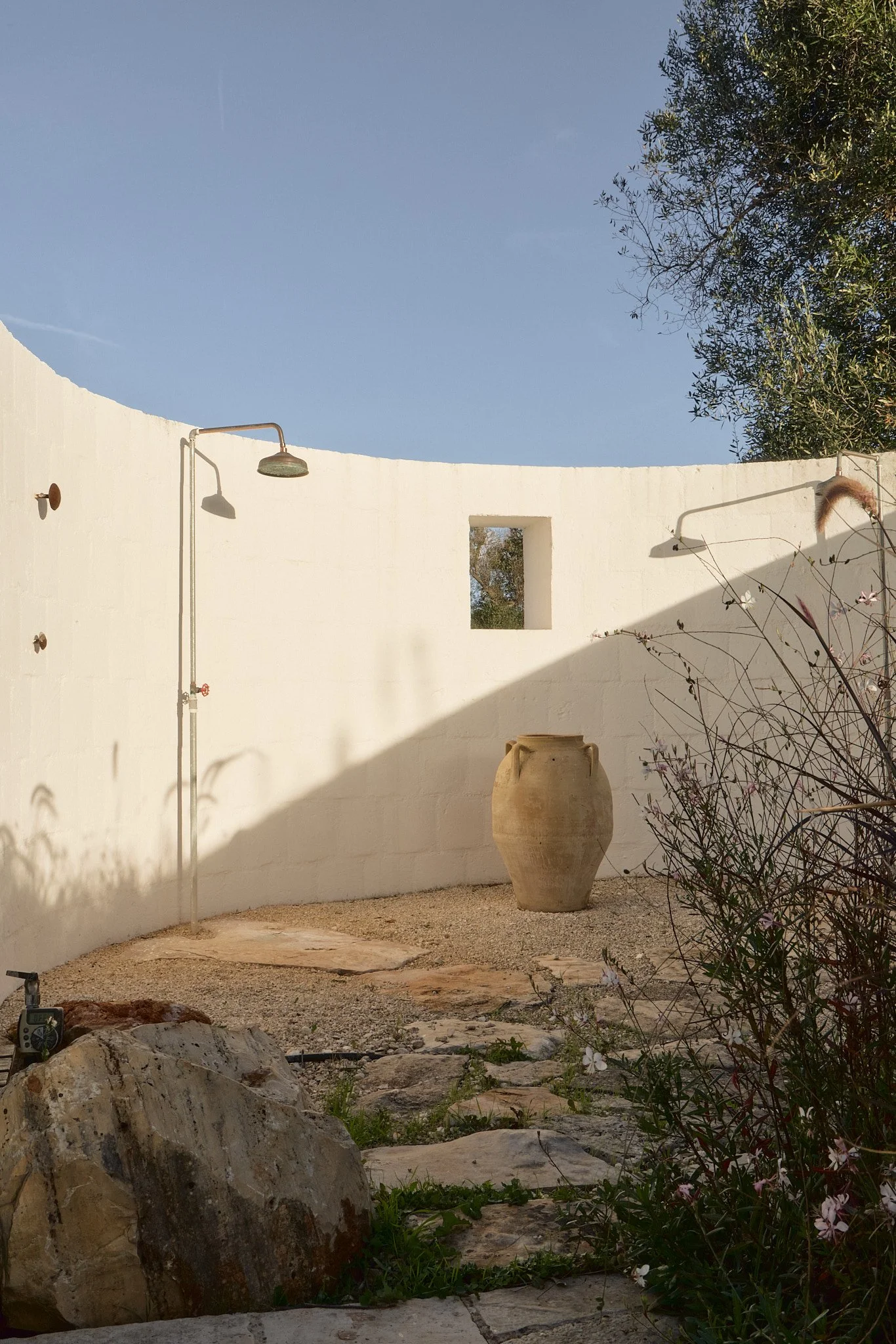
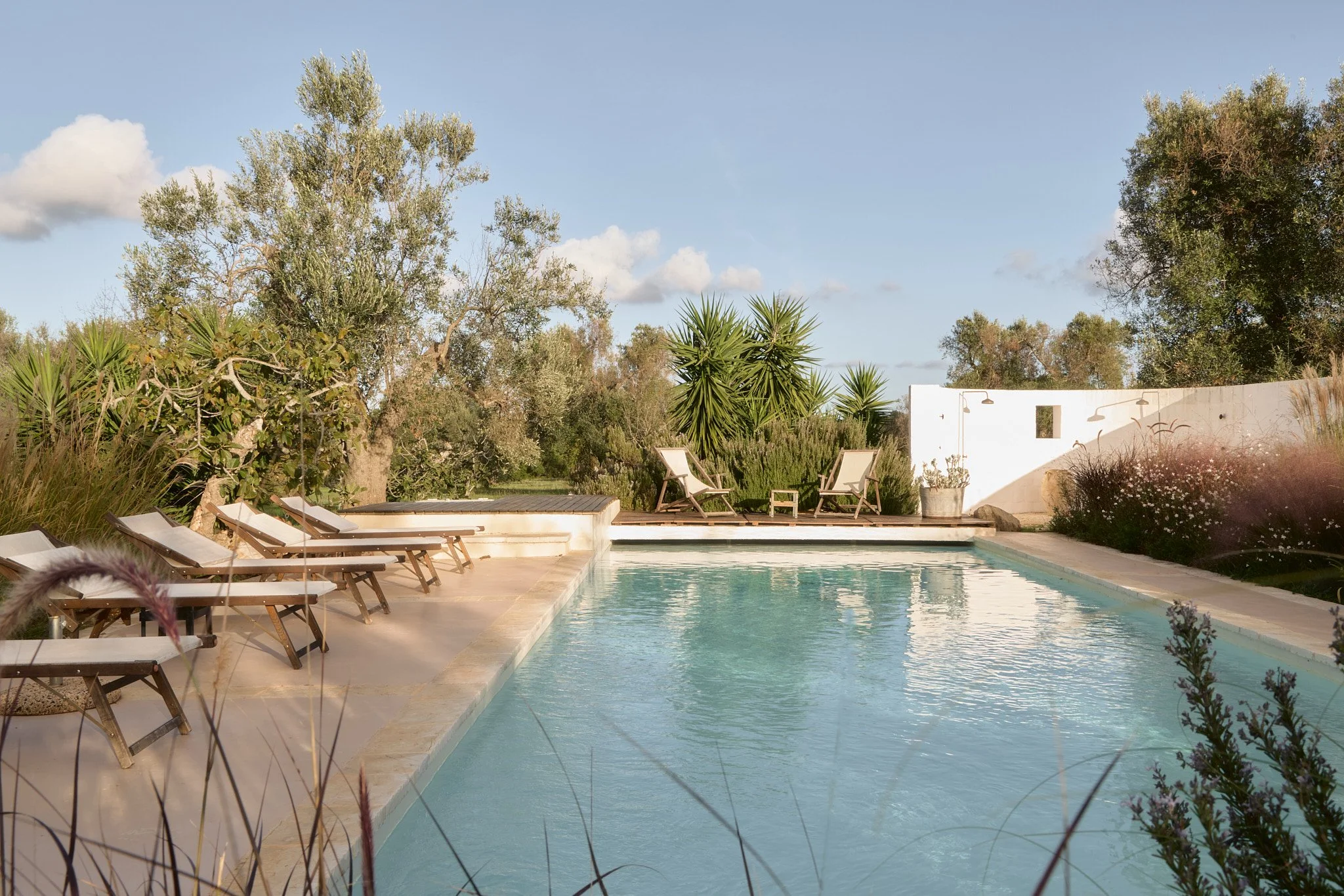
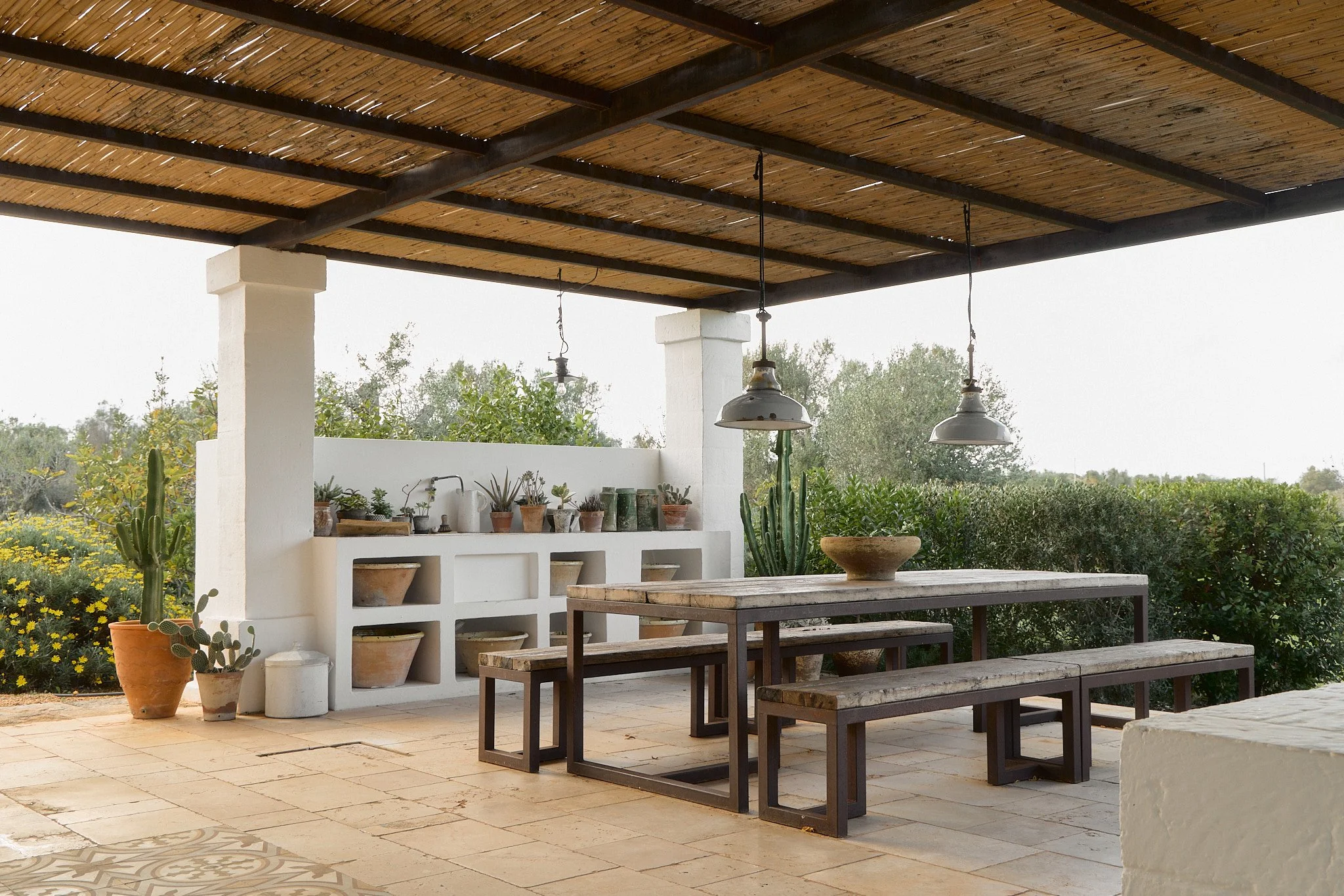
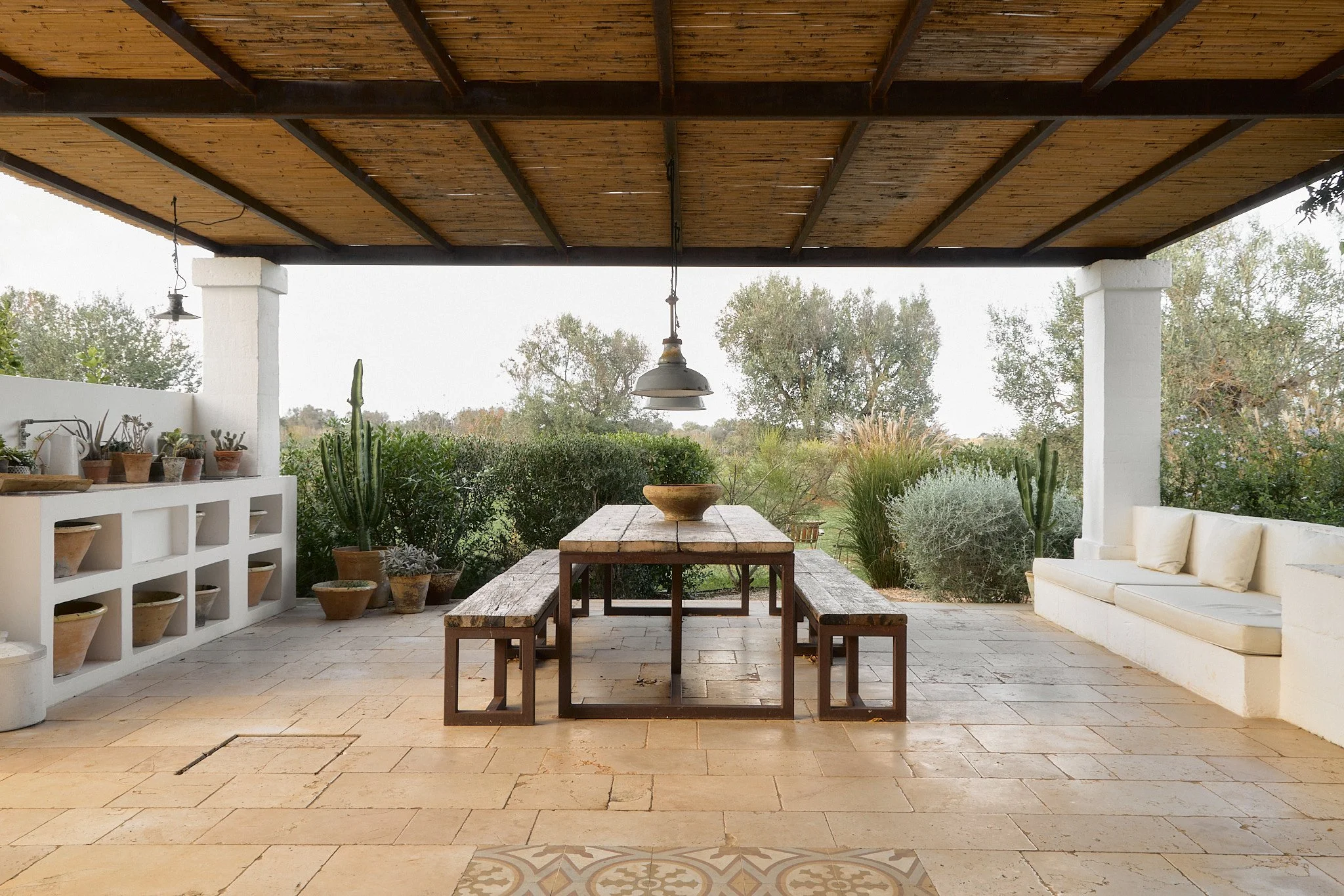
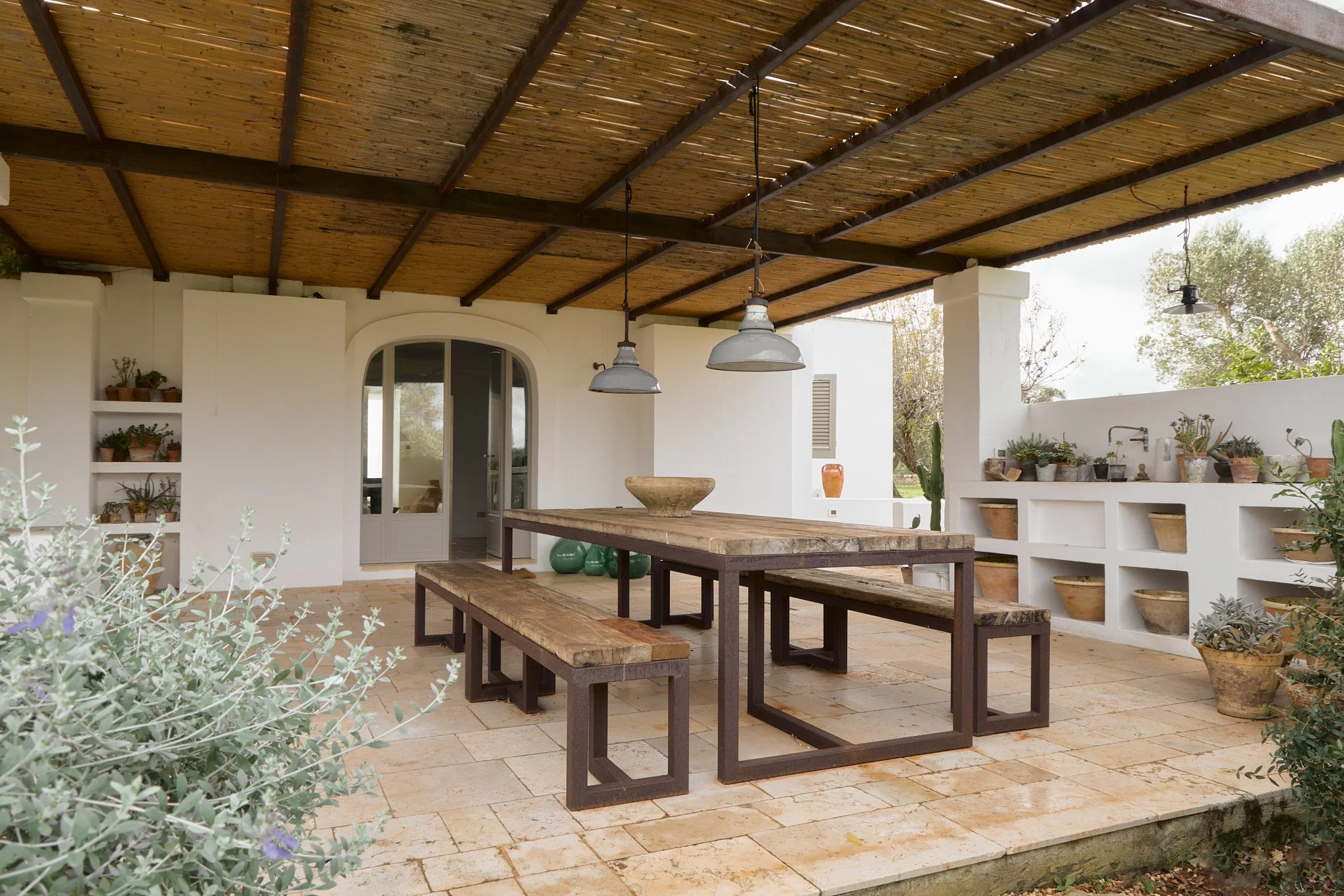
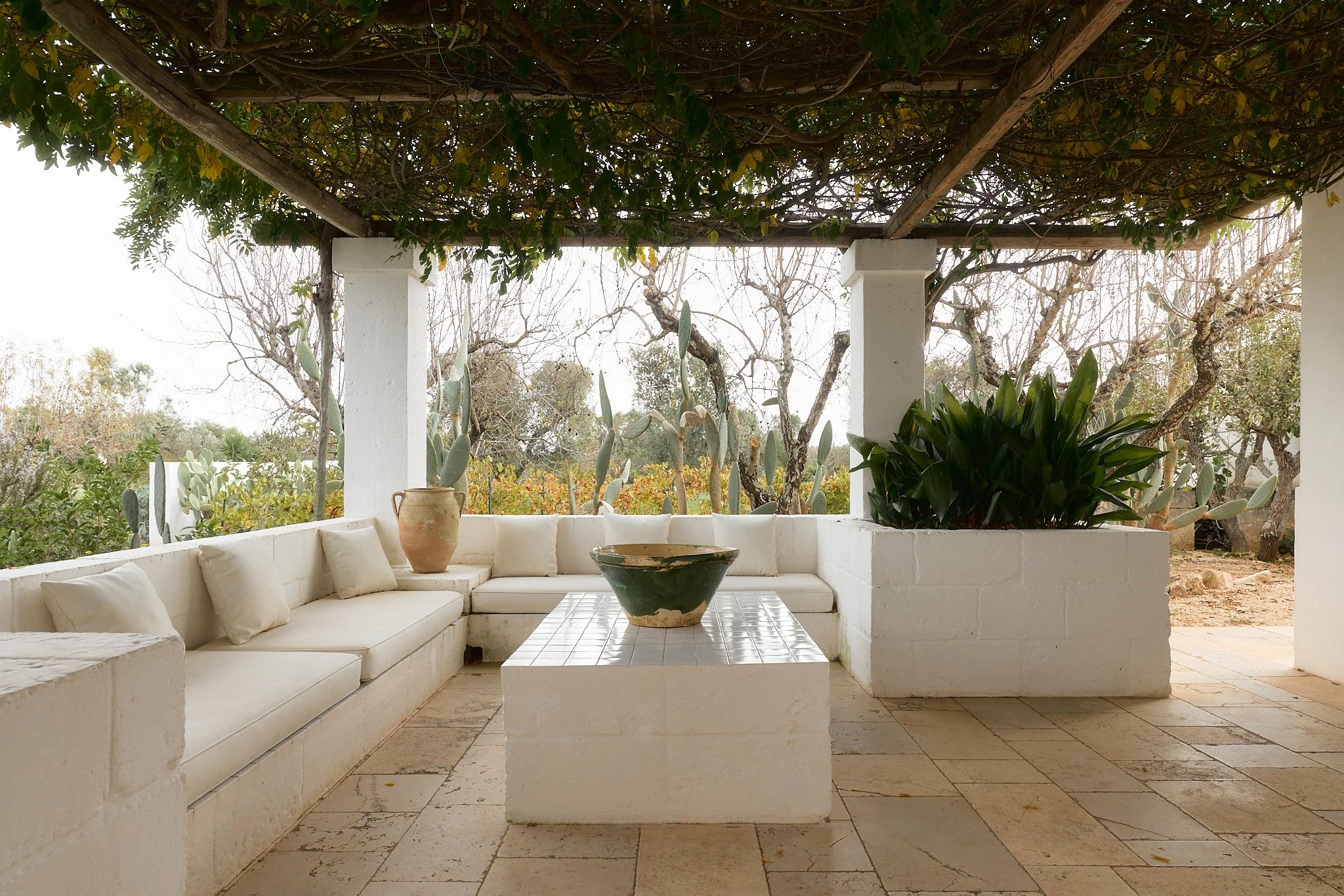
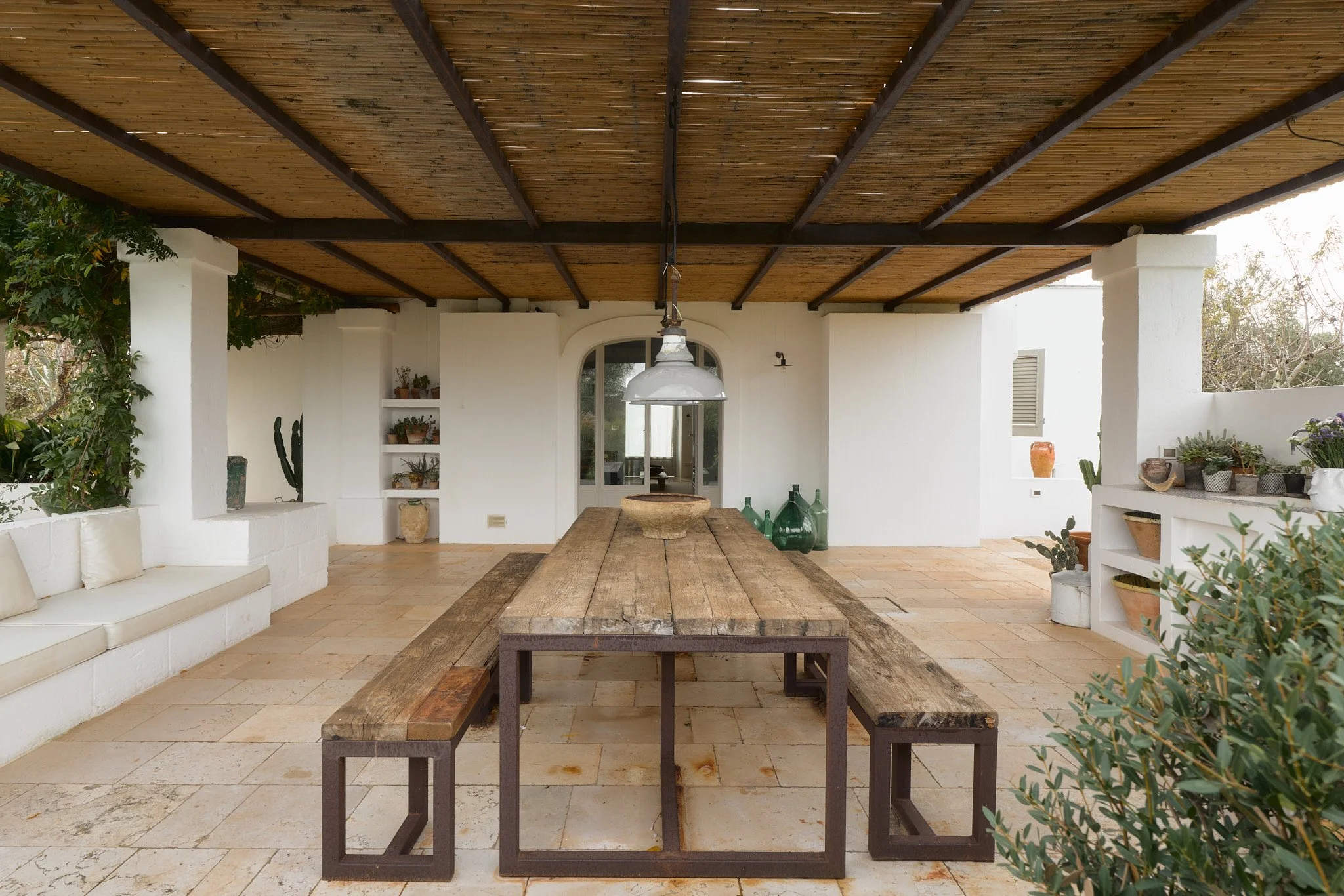
Outside, terraces extend from the house beneath timber pergolas, forming a series of outdoor living areas, including a kitchen, dining and seating spaces designed for use throughout the warmer months. A partially enclosed swimming pool sits deeper within the olive grove, surrounded by drought-tolerant planting and positioned to offer both privacy and open views across the landscape.
The property has been used both as a private residence and as a successful holiday rental, and was previously recognised as one of the top villas in Puglia by Condé Nast Traveller, with year-round use.
For the owner, the appeal is closely tied to the area. “Ceglie Messapica is one of Puglia’s hidden gems,” she says. “It has a wonderfully authentic atmosphere, but you can feel a creative energy coming through.”
Located in southern Italy, Puglia forms the heel of the country, with a landscape defined by olive groves, whitewashed towns and a large stock of traditional rural buildings. Historically less exposed to international tourism than regions such as Tuscany or the Amalfi Coast, it has seen growing interest in recent years, driven by buyers drawn to its lower density, slower pace and a built environment that remains closely tied to local materials and ways of life.
The house presents a fully realised, design-led property in a region where renovation timelines can extend over several years. Opportunities of this kind remain relatively limited, as Puglia continues to attract increasing international attention for its landscape, architecture and pace of life.
All photographs belong to the listing agency. See more on Aucoot.