1969 Space-Age Bubble House on Manhattan’s Upper East Side

The Bubble House, located in Manhattan’s Lenox Hill neighborhood, is a single-family townhouse best known for its distinctive mid-20th-century façade. Originally constructed in 1899 as a conventional rowhouse, the property was dramatically redesigned in 1969, creating one of the Upper East Side’s most recognizable—and debated—residential exteriors.
The townhouse was most recently offered at approximately $5.75 million through Leslie J. Garfield, with public listing data indicating the property is under contract at the time of publication.
“Brownstone Fever” The Re-Discovery Of New Yorks Row Houses
When the house was remodeled in 1969, much of Manhattan’s brownstone housing stock was still emerging from decades of decline. Entire blocks were marked by vacancy, disinvestment, and neglect; contemporary reporting described unsecured row houses with broken windows, some occupied by squatters or the homeless, while shootings and gang activity shaped daily life in many neighborhoods. At the same time, New Yorkers faced a housing paradox. Apartments were increasingly small and expensive, while entire townhouses, often considered risky and outdated, could be purchased for relatively modest sums, sometimes for less than the cost of a long-term apartment rental. In this environment, brownstones were not yet viewed as precious artifacts, but as affordable, flexible structures open to experimentation and reinvention.
By the early 1960s, New Yorkers had begun purchasing entire brownstone townhouses for as little as $18,000, roughly $190,000 to $200,000 in 2026, at a time when apartments were increasingly small, expensive, and in short supply. Many buyers then undertook ambitious renovations, often spending far more on transformation than on acquisition itself. Contemporary reporting notes that a fully renovated townhouse could command $80,000 by 1969, equivalent to approximately $680,000 to $720,000 in 2026.
1969 Renovation
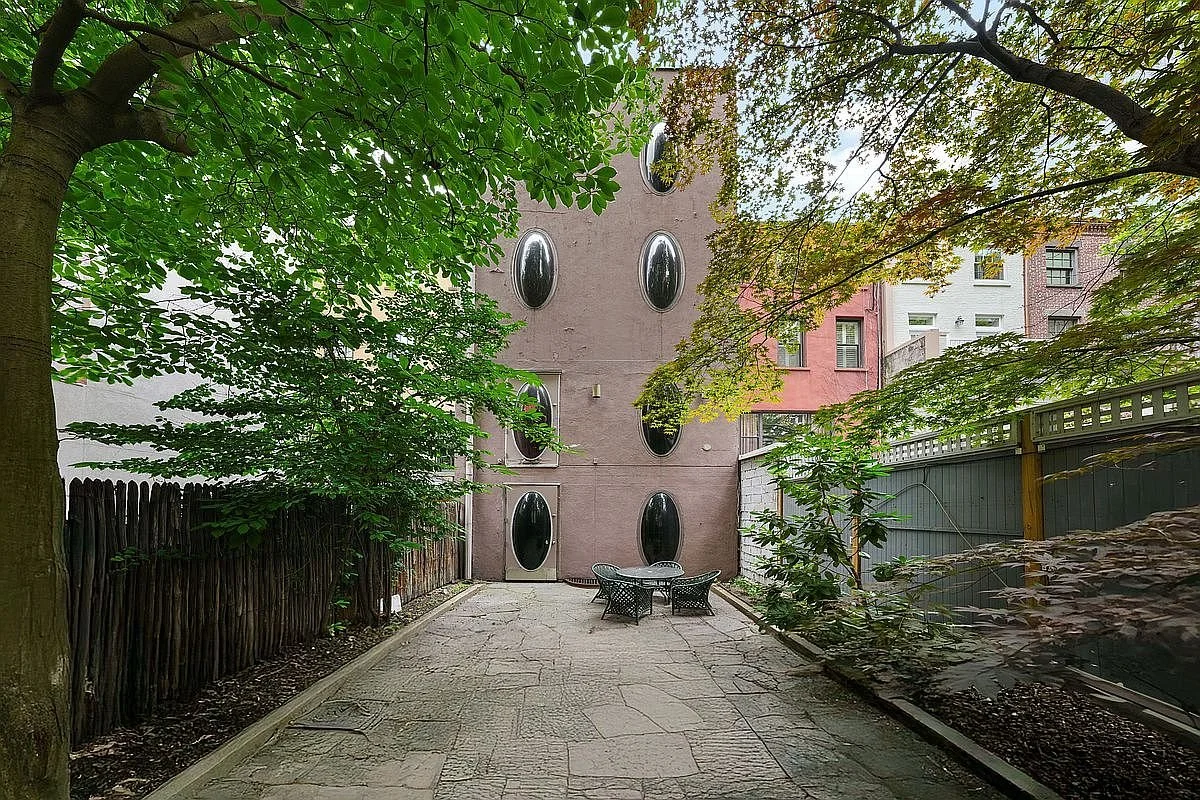
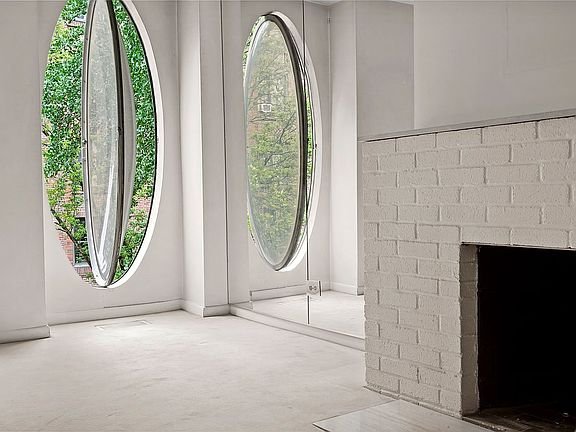
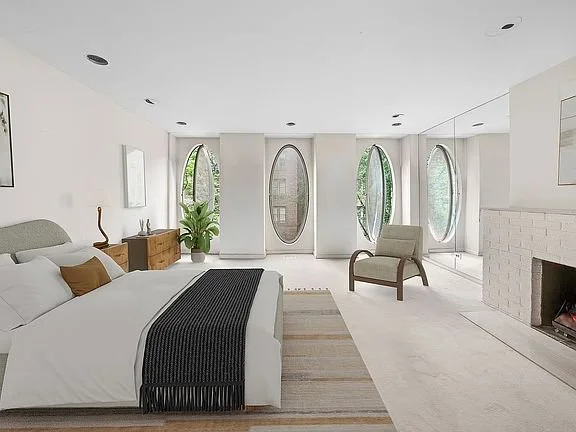
The redesign was undertaken by owner and architect Maurice Medcalfe of the firm Hills & Medcalfe. He removed the original brownstone façade and replaced it with a smooth stucco exterior and the oval bubble windows we see today. Several contemporary and later sources note that the windows were designed to pivot open and closed, functioning as a sculptural reinterpretation of the traditional bay window.
While the intervention radically altered the building’s street presence, it preserved the townhouse’s original scale, height, and footprint—an unusual approach for a private residence on the Upper East Side at the time. The oval windows, which extend outward from the façade, gave rise to the house’s enduring “Bubble House” nickname and cemented its reputation as a modernist outlier within a predominantly 19th-century streetscape.
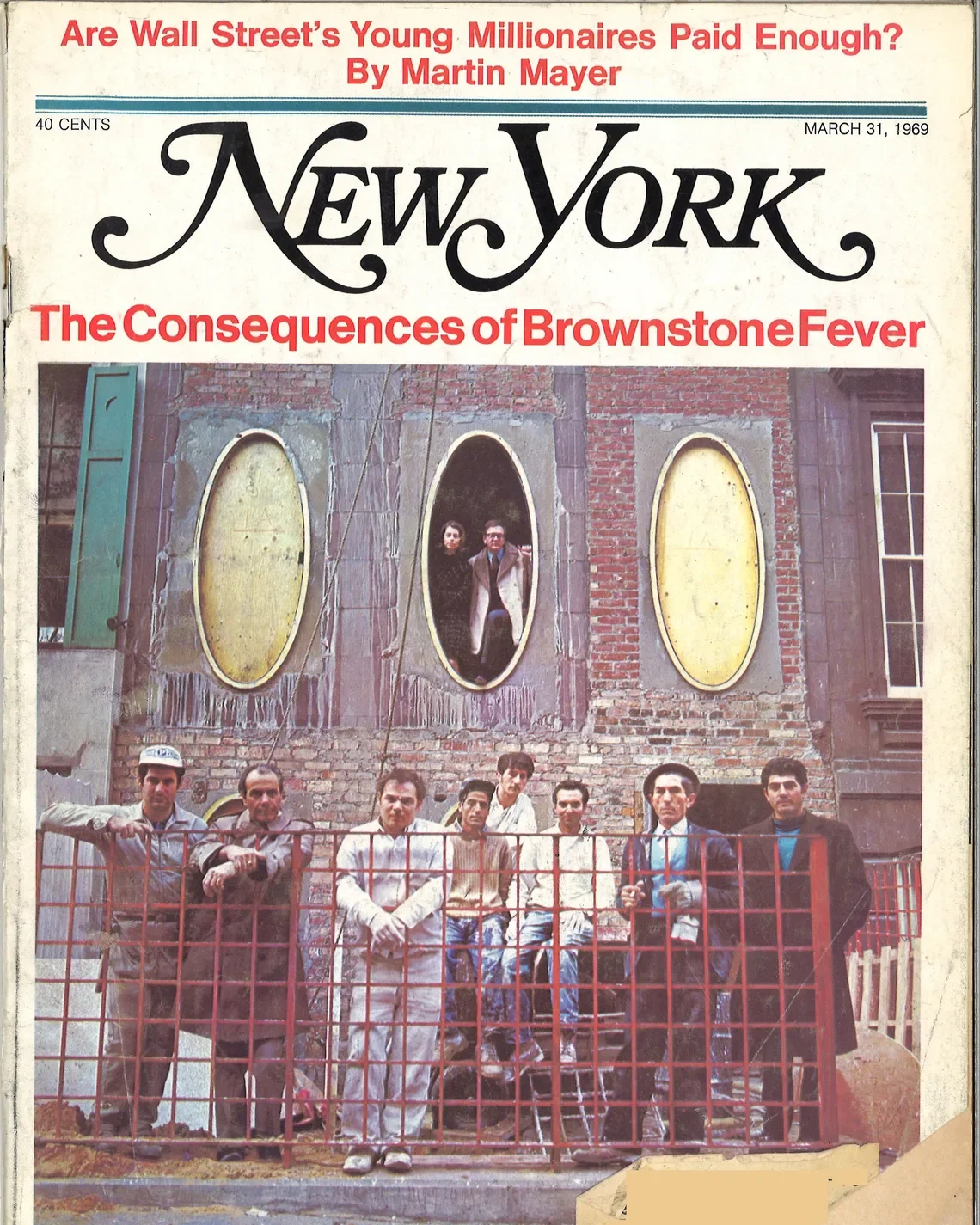
Photographs of the house during its 1969 renovation appeared in New York Magazine as part of the article “The Consequence of Brownstone Fever,” which examined the gentrification of New York City neighborhoods during that period. You can read the article here on page 22.
Interior Configuration
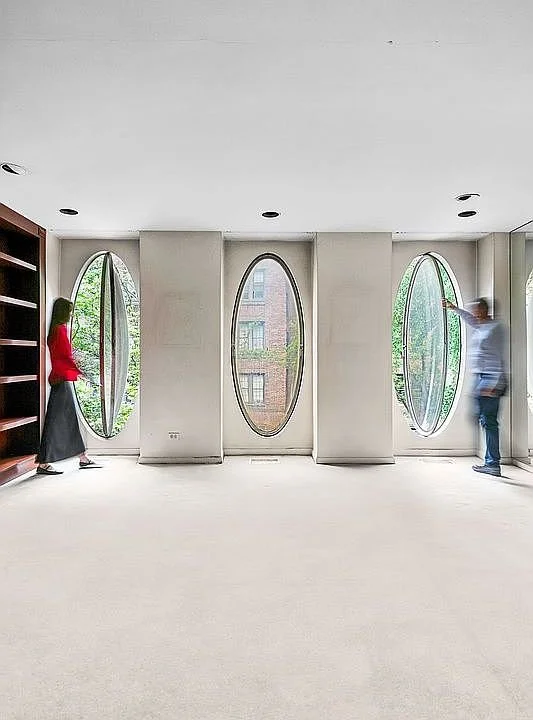
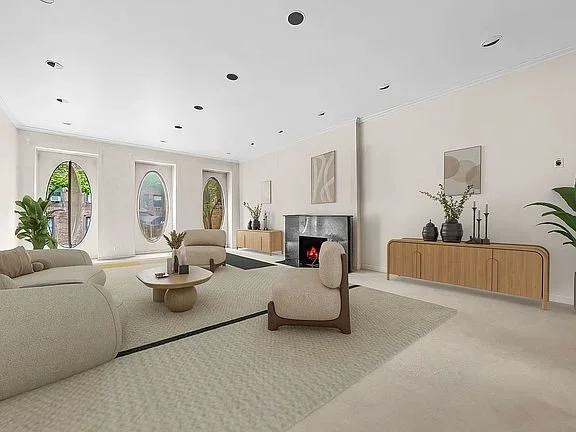
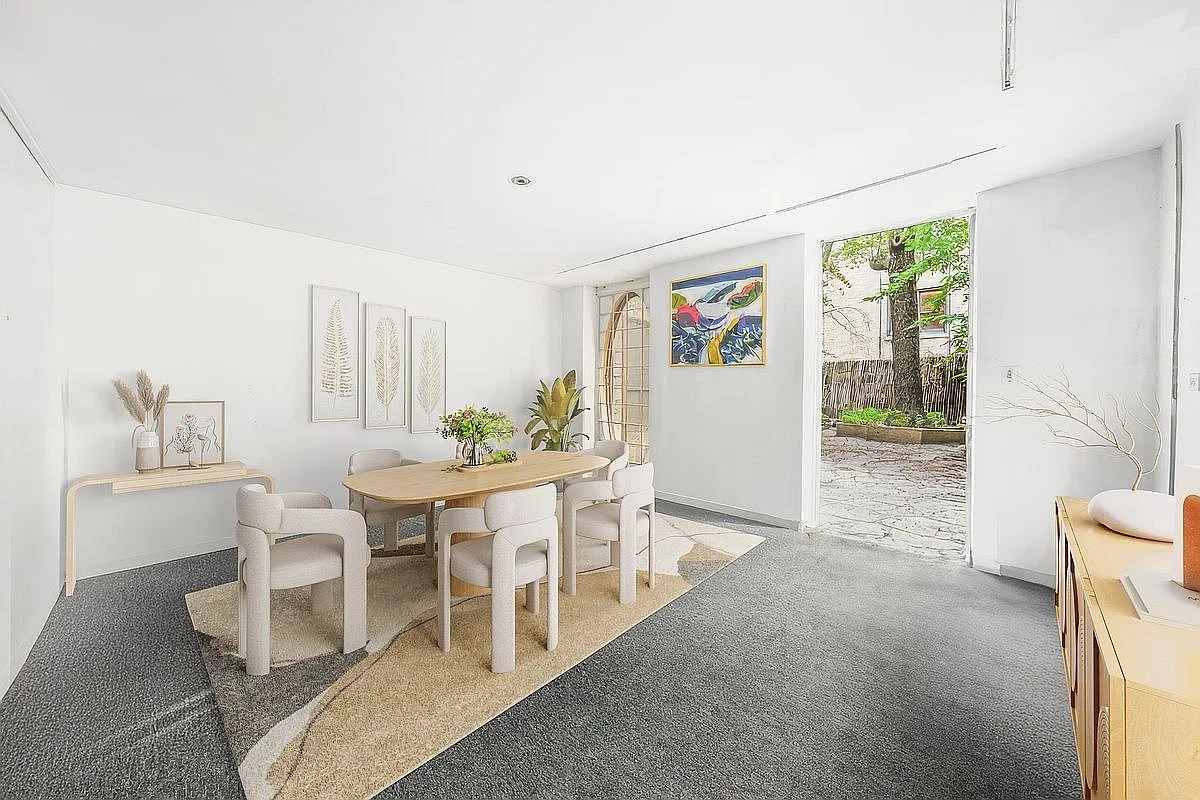
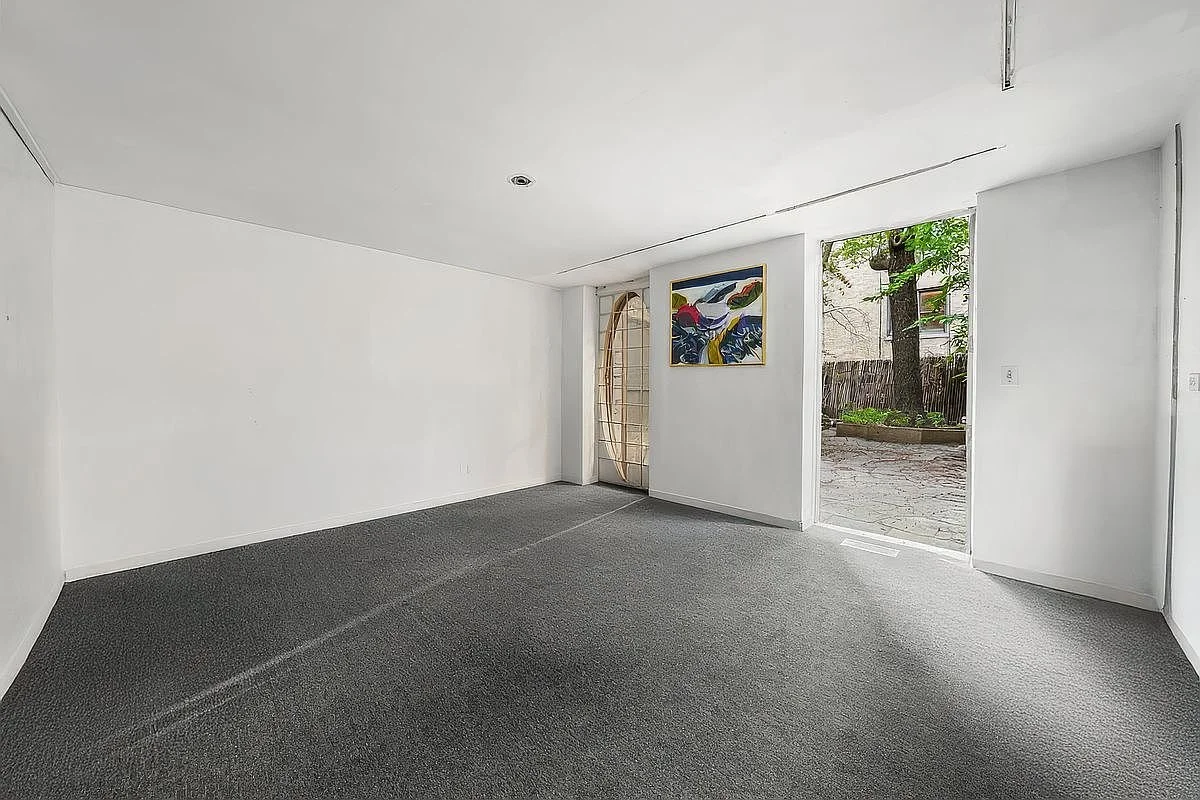
Behind the expressive façade, the interior is comparatively restrained. The townhouse is arranged across four stories plus a basement and contains approximately 4,736 square feet (ft²) of interior space. The layout includes four bedrooms, five bathrooms, and an office, with the garden level offering flexibility for live-work use.
Listing materials indicate that the interior has seen limited modernization in recent decades and requires substantial renovation. Rooms are described as generously proportioned, presenting a contrast between the bold exterior and a more conventional internal organization.
Ownership History and Status
Following the 1969 renovation, Medcalfe occupied the house for a period before selling it in 1974 to Arthur Schneier, the longtime spiritual leader of Park East Synagogue. Schneier owned the property for more than five decades, during which time the exterior remained largely unchanged.
Despite its prominence, the Bubble House has never been designated a New York City landmark. As a result, no formal historic protections apply, leaving a future owner with the legal ability to substantially alter the structure, including its defining oval windows.
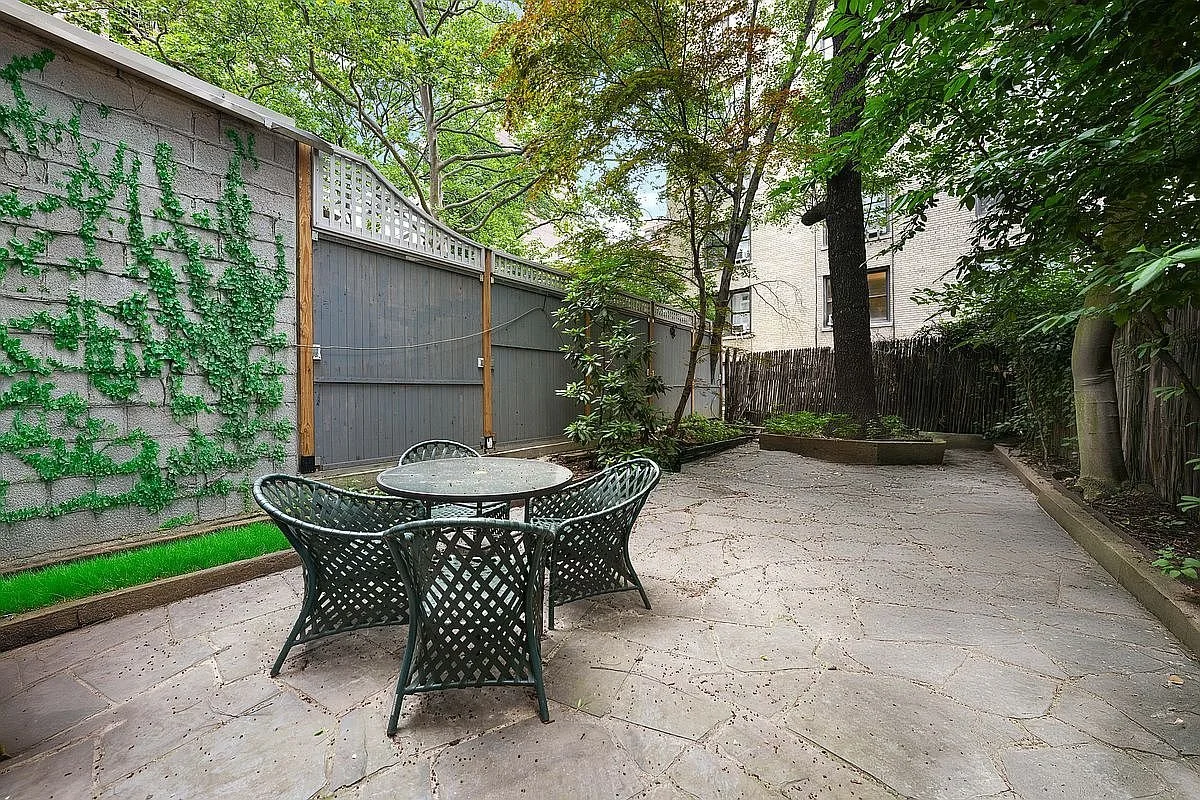
All photos belong to the listing agency.