A 3,459-Acre Scottish Estate Just 18 Miles From Edinburgh Lists for £15 Million
Bedrooms: 18
Bathrooms: 13
Interior: 1,598 m² / 17,200 ft²
Lot: 1,400 ha / 3,459 acres
Amenities: Restored Victorian walled garden with glasshouse and outbuildings, formal gardens, parterre terraces, water garden, parkland, working farm, estate cottages, stocked reservoir with fishing chalet, commercial forestry, deer stalking, former pheasant shoot, and extensive farmland, woodland and pasture.
Portmore is not a castle, but a country house built in the architectural language of one. Designed in 1850 by David Bryce, its Scots Baronial style borrowed from Scotland’s tower houses and castles, while the estate around it tells a broader story: 3,459 acres encompassing restored Victorian gardens, working farmland, woodland, a reservoir, prehistoric remains, and a location just 18 miles from Edinburgh.
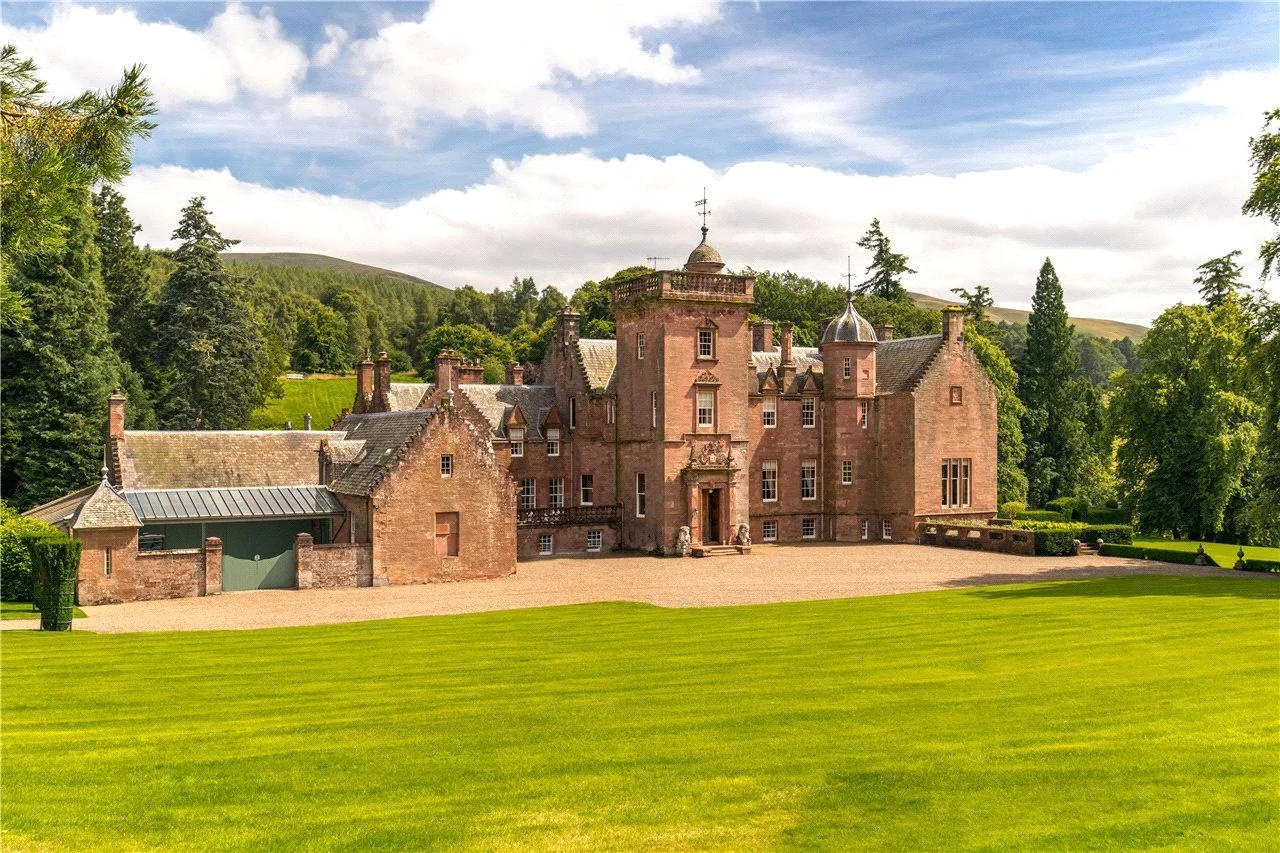
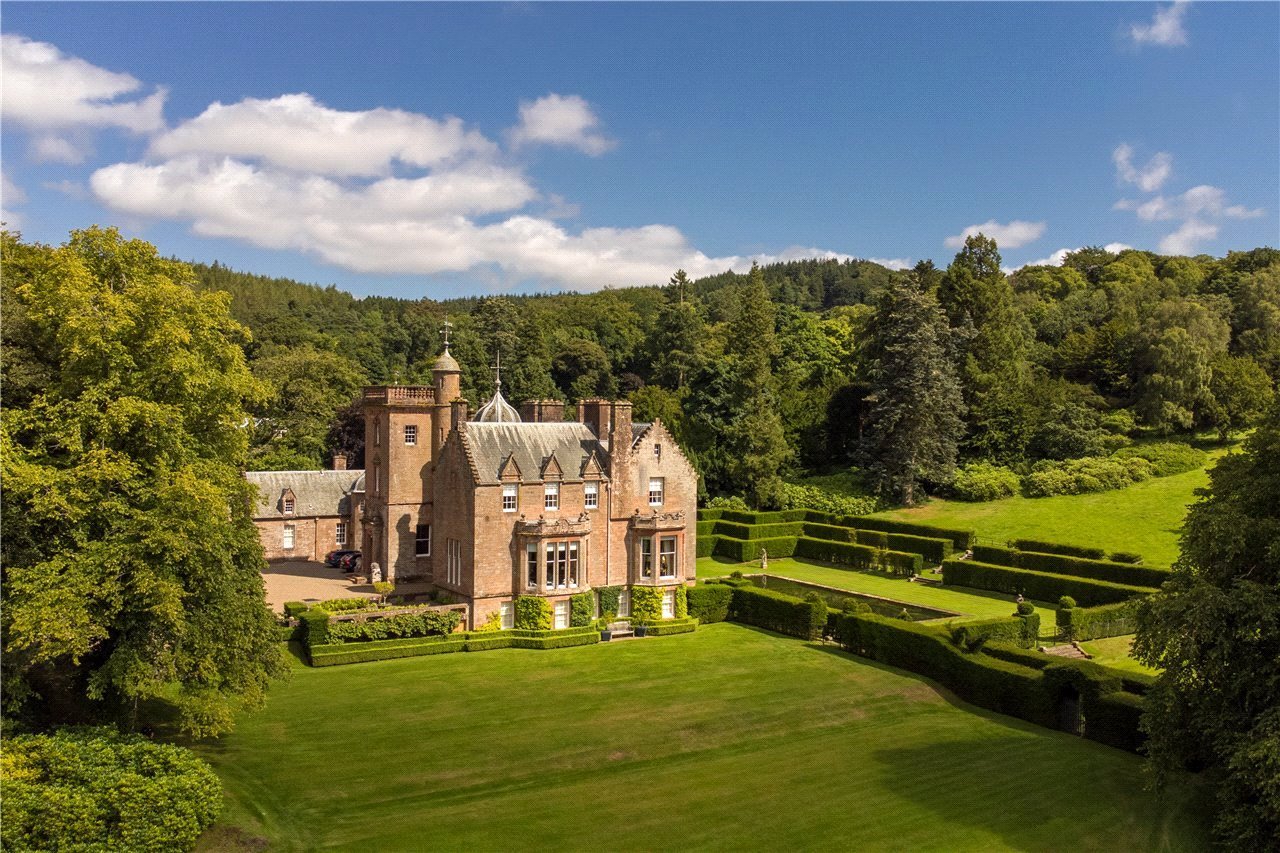
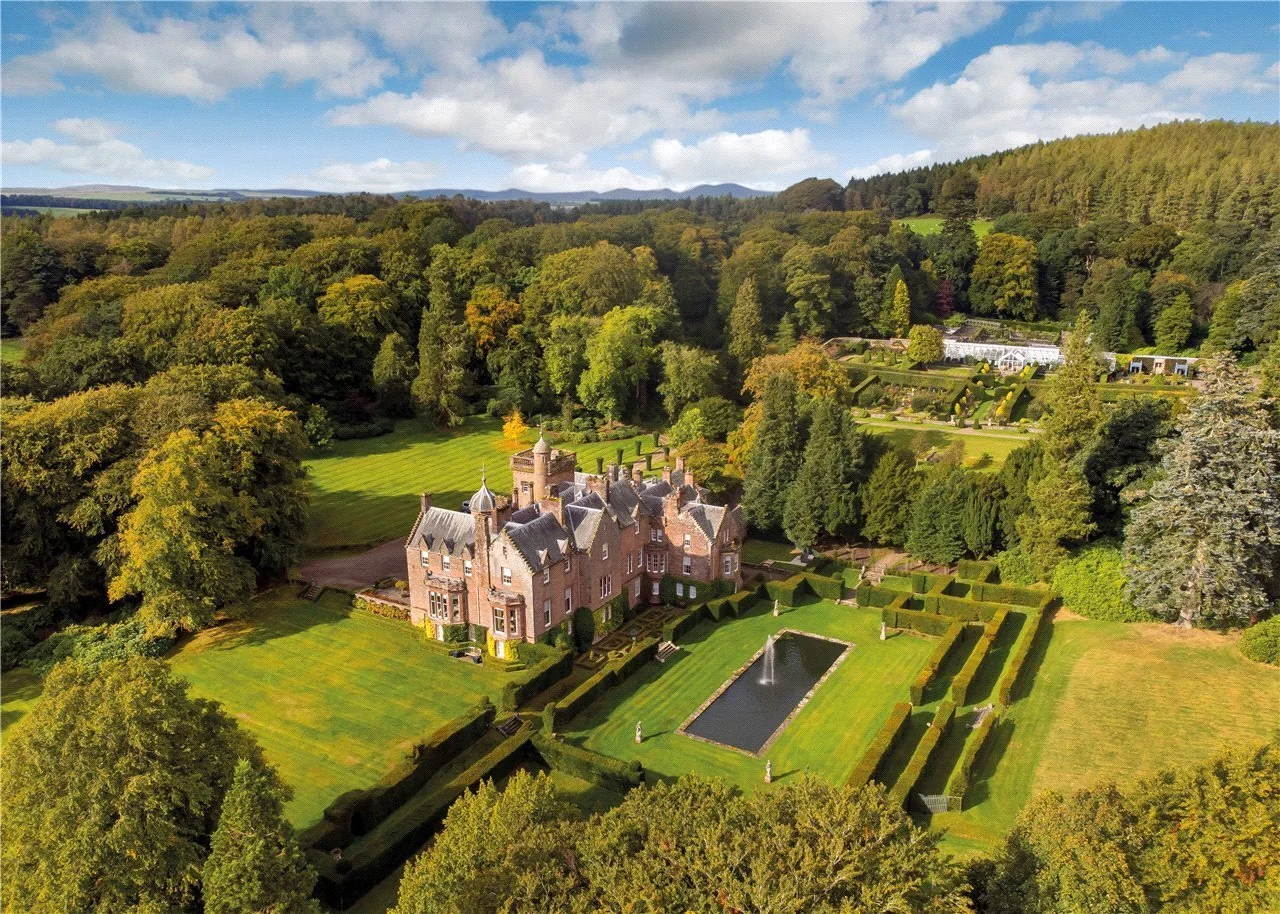
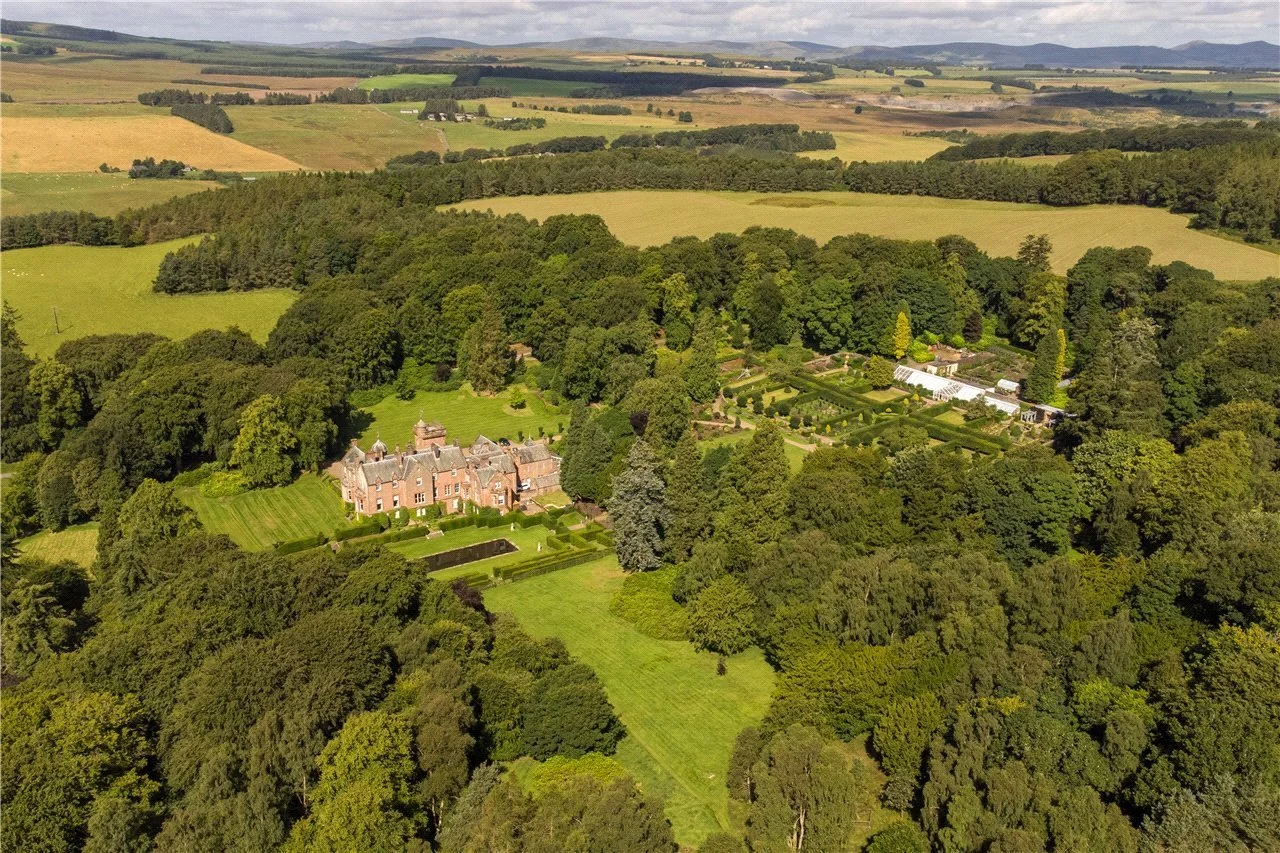
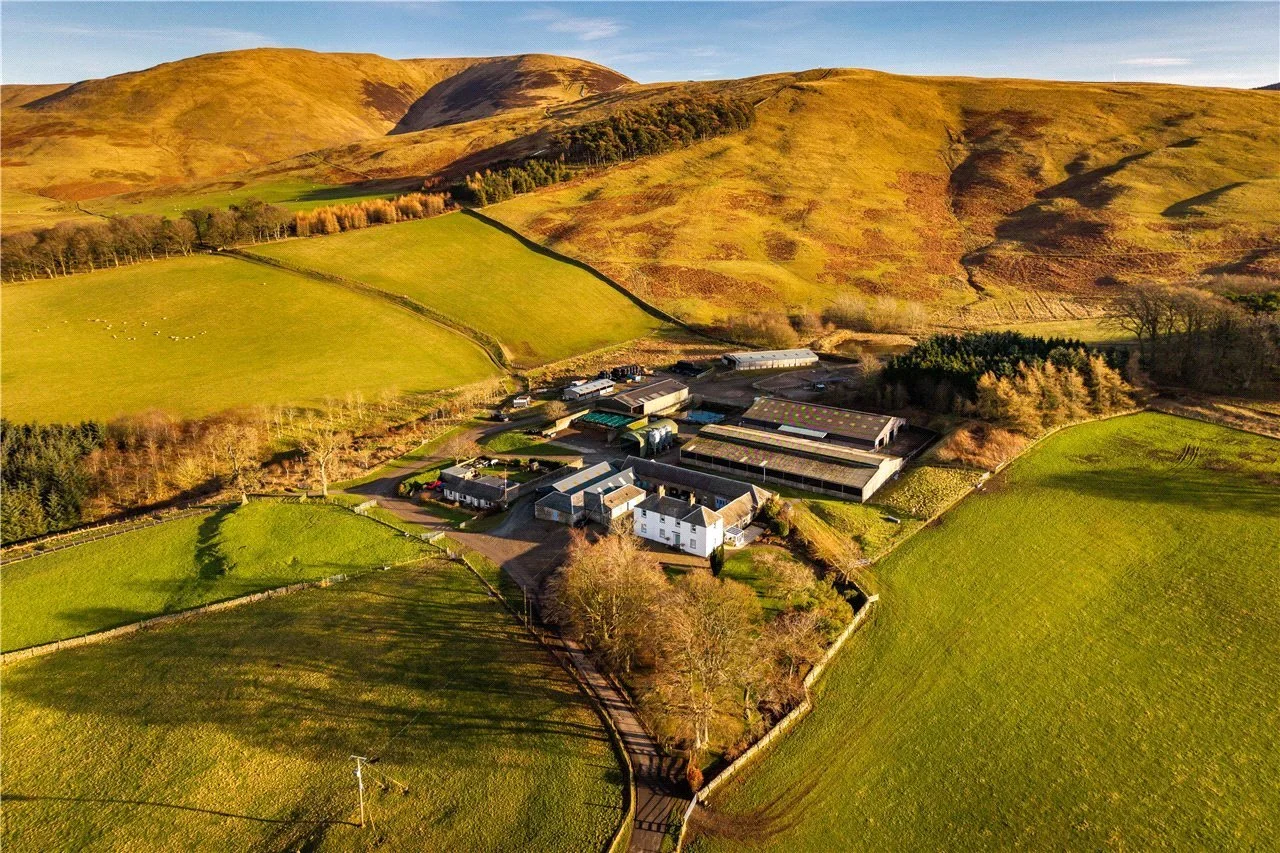
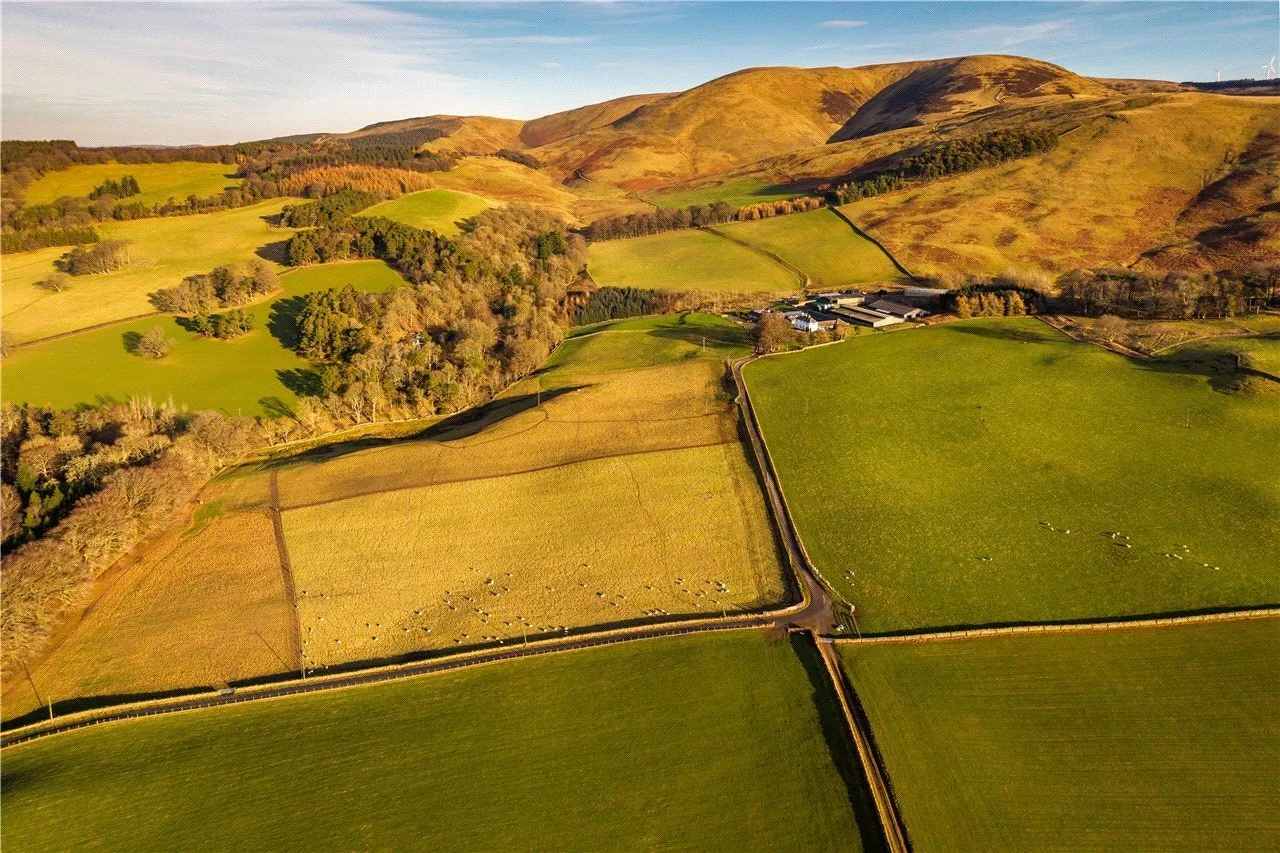
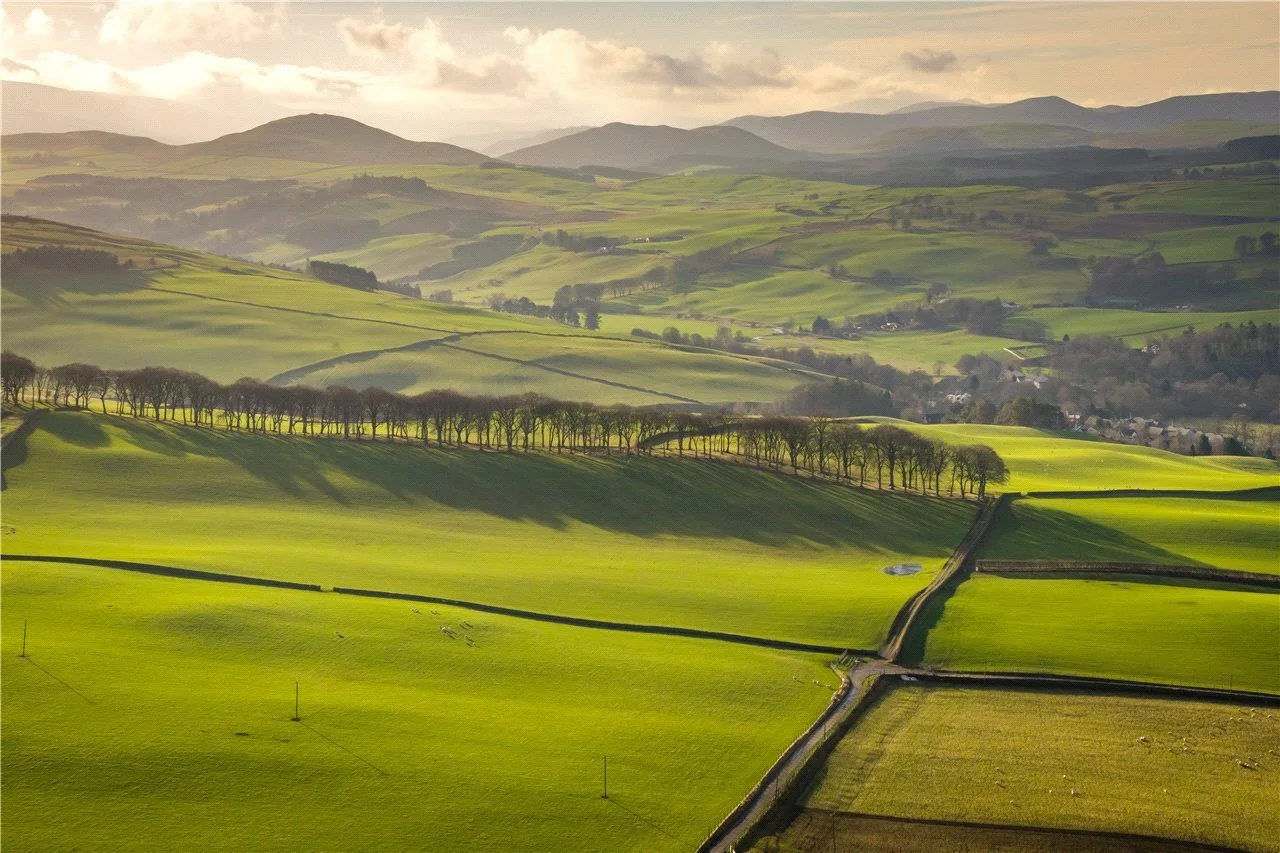
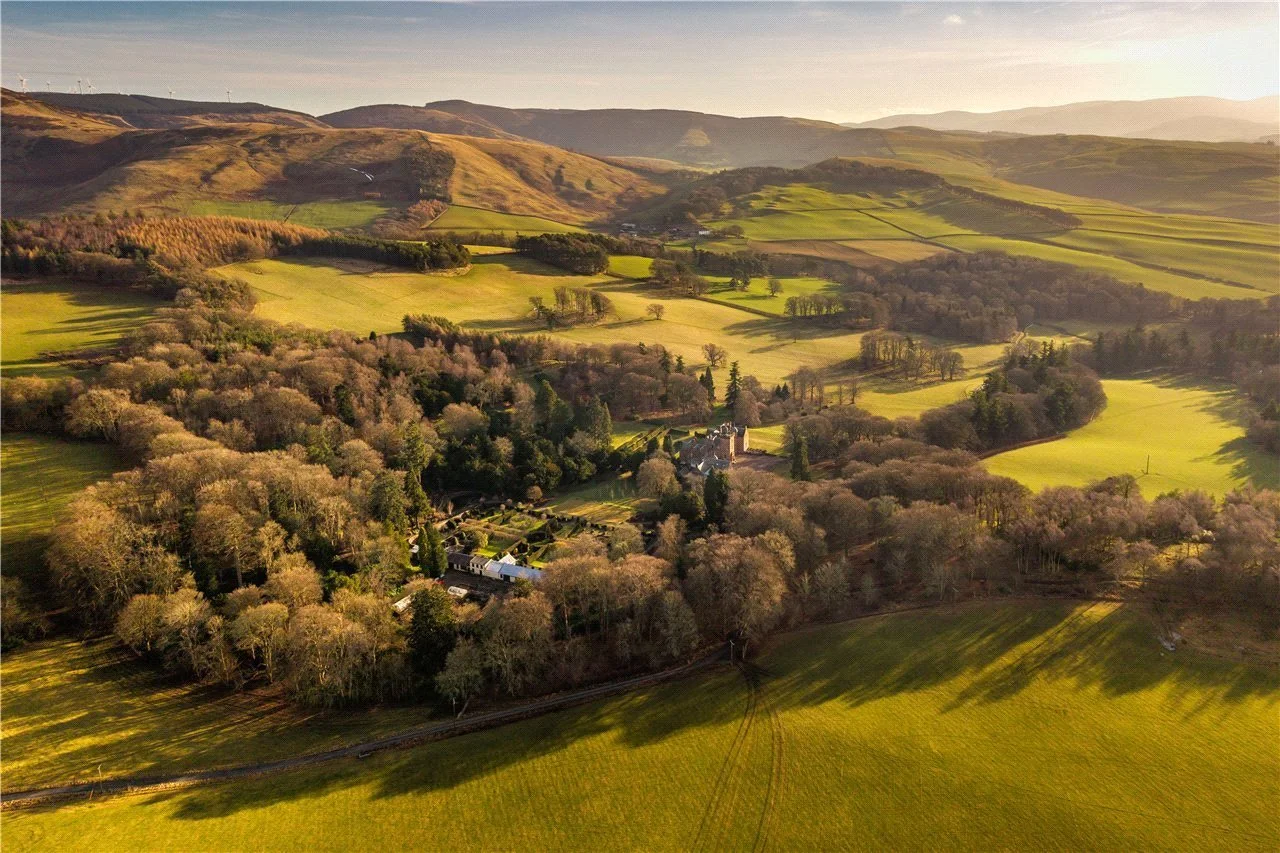
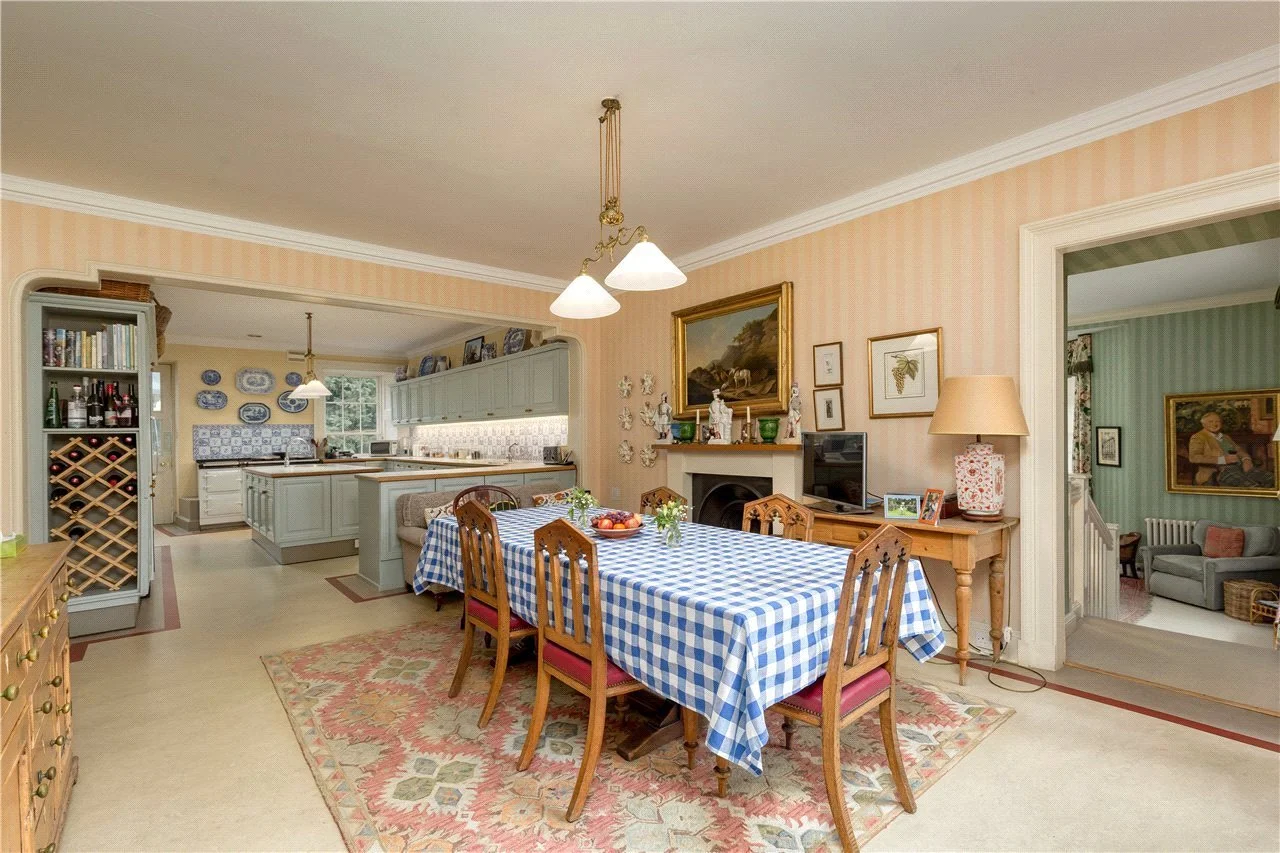
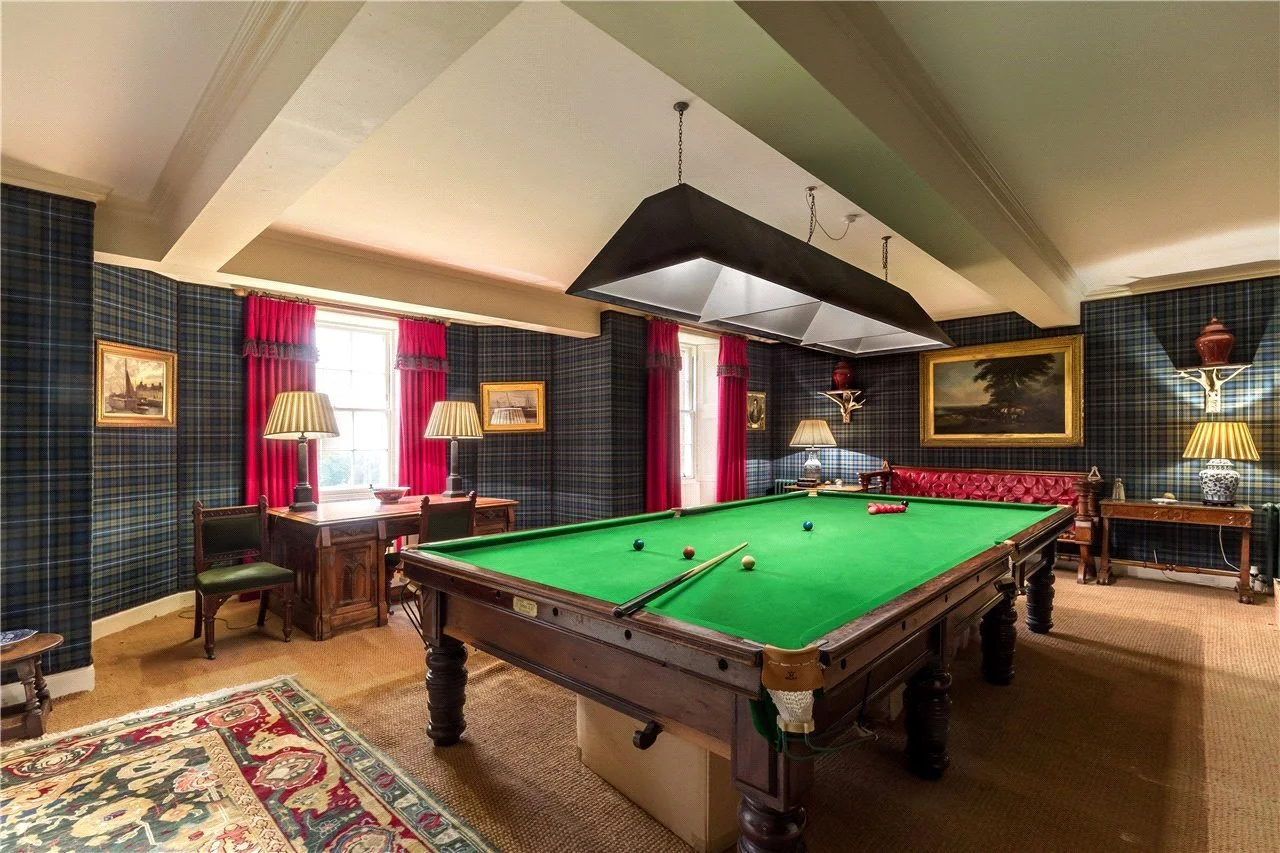
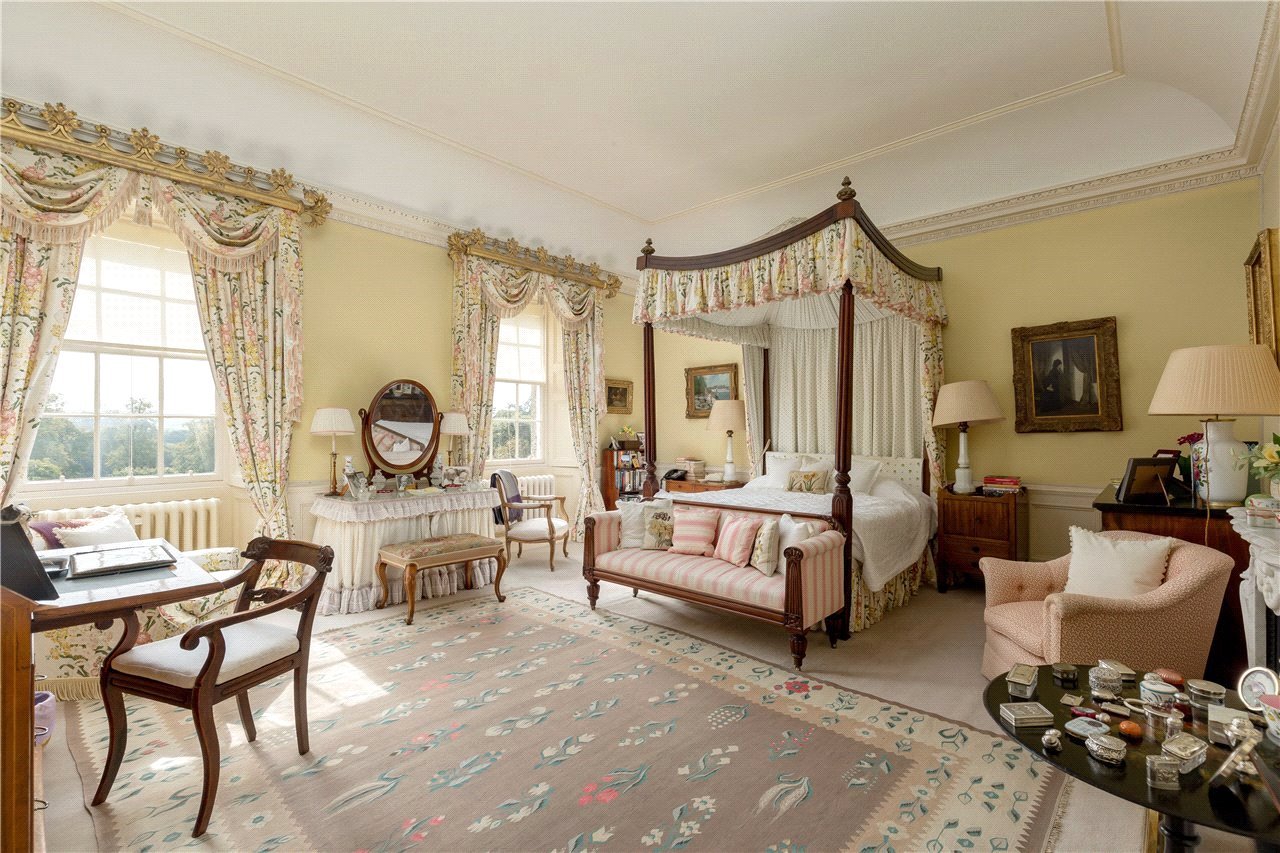
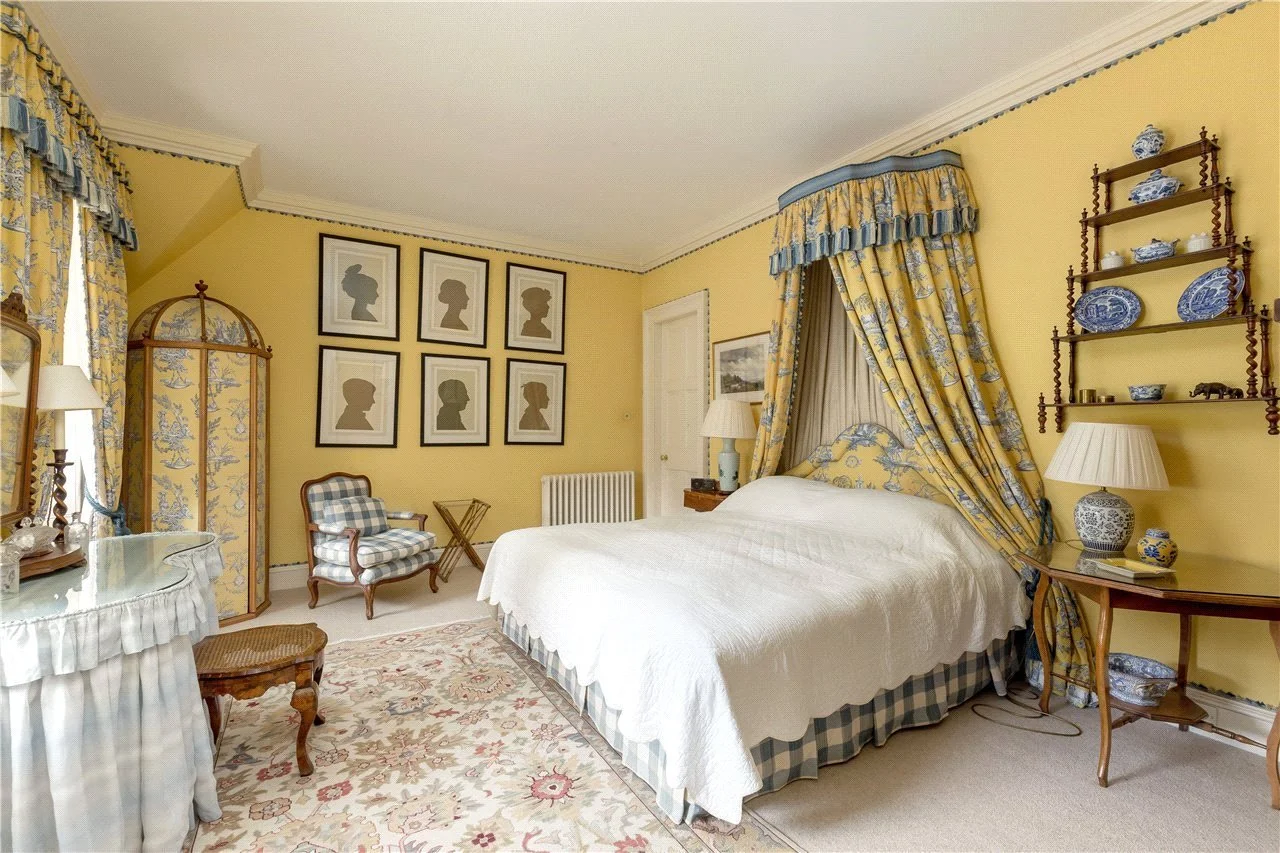
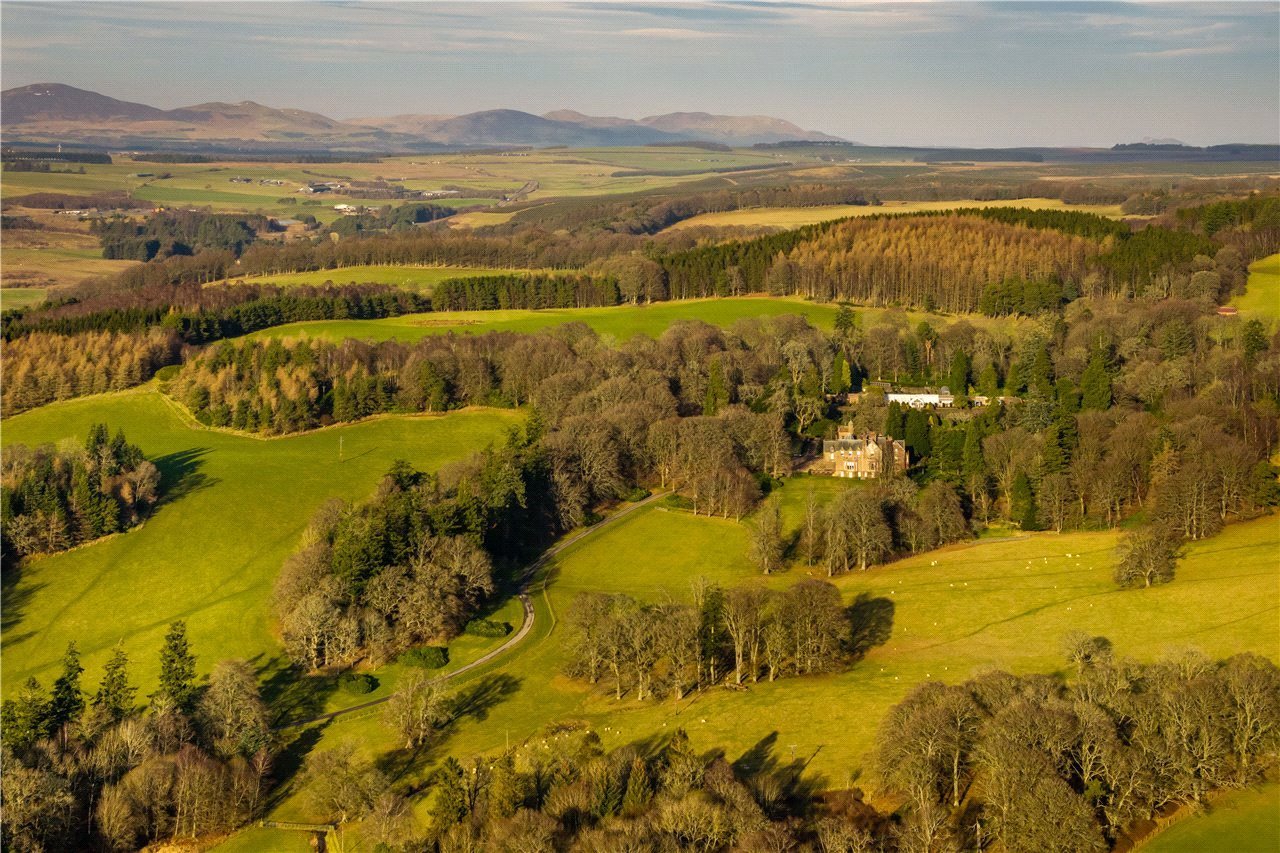
Set near Eddleston, about five miles north of Peebles in the Scottish Borders, Portmore Estate is currently on the market with Galbraith for offers over £15 million. The estate extends to approximately 1,400 ha / 3,459 acres and includes the Category A-listed Portmore House, formal gardens, a restored walled garden with Victorian glasshouses, parkland, farmland, hill ground, forestry, estate cottages, and a stocked reservoir with a fishing chalet.
At the centre of the estate is Portmore House, a red-sandstone Scots Baronial mansion designed by David Bryce, one of Scotland’s leading Victorian architects. For an international audience, Scots Baronial architecture can be understood as a distinctly Scottish form of country house architecture that took inspiration from older fortified buildings, including castles and tower houses. It was not necessarily defensive architecture, but it used the visual language of defence: towers, turrets, crow-stepped gables, dramatic rooflines, and a sense of verticality.
That distinction is part of what makes Portmore interesting. The house is not a medieval castle, but a 19th-century country residence designed with the drama and silhouette of one. Its central tower, western turrets, crow-stepped gables, sash-and-case windows, and red sandstone exterior all place it firmly within the Scots Baronial tradition, while its plan and function are those of a private country house.
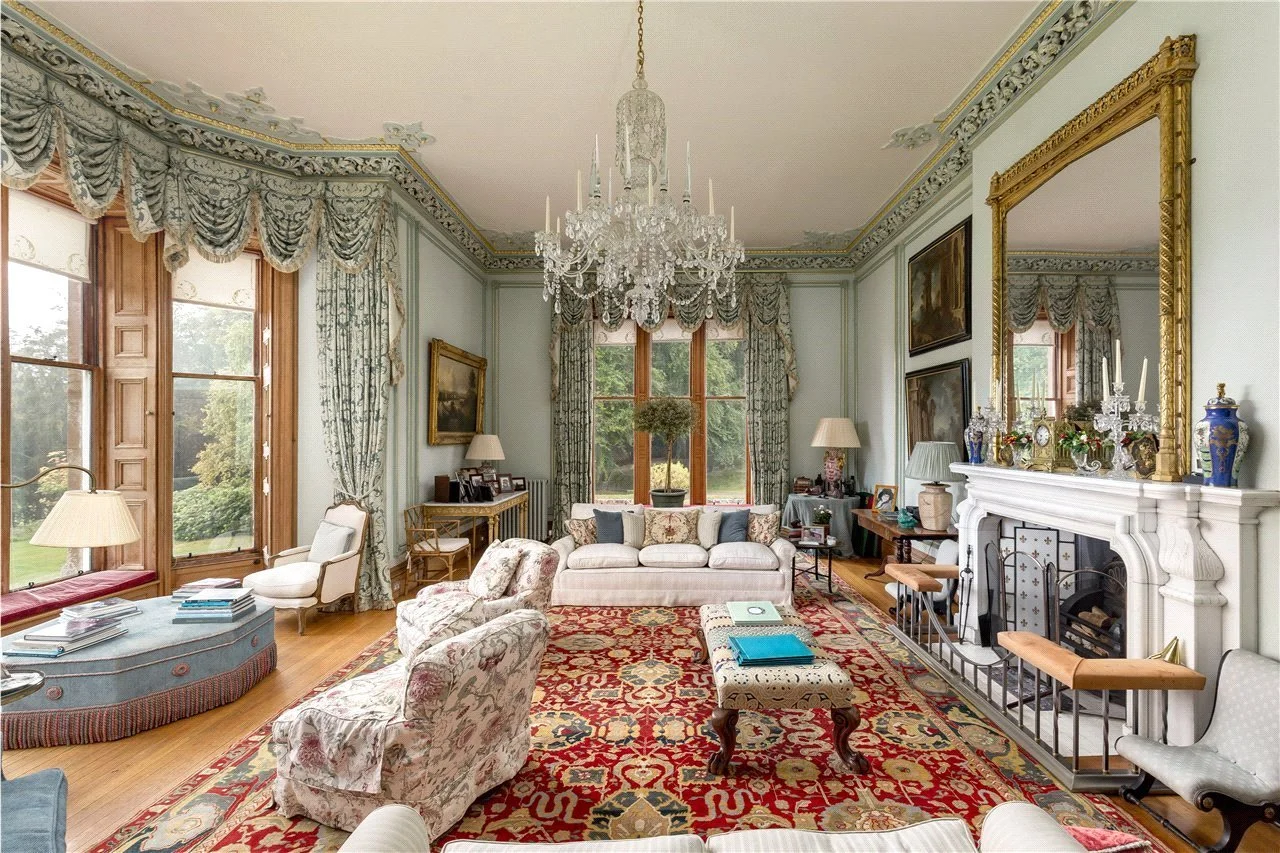
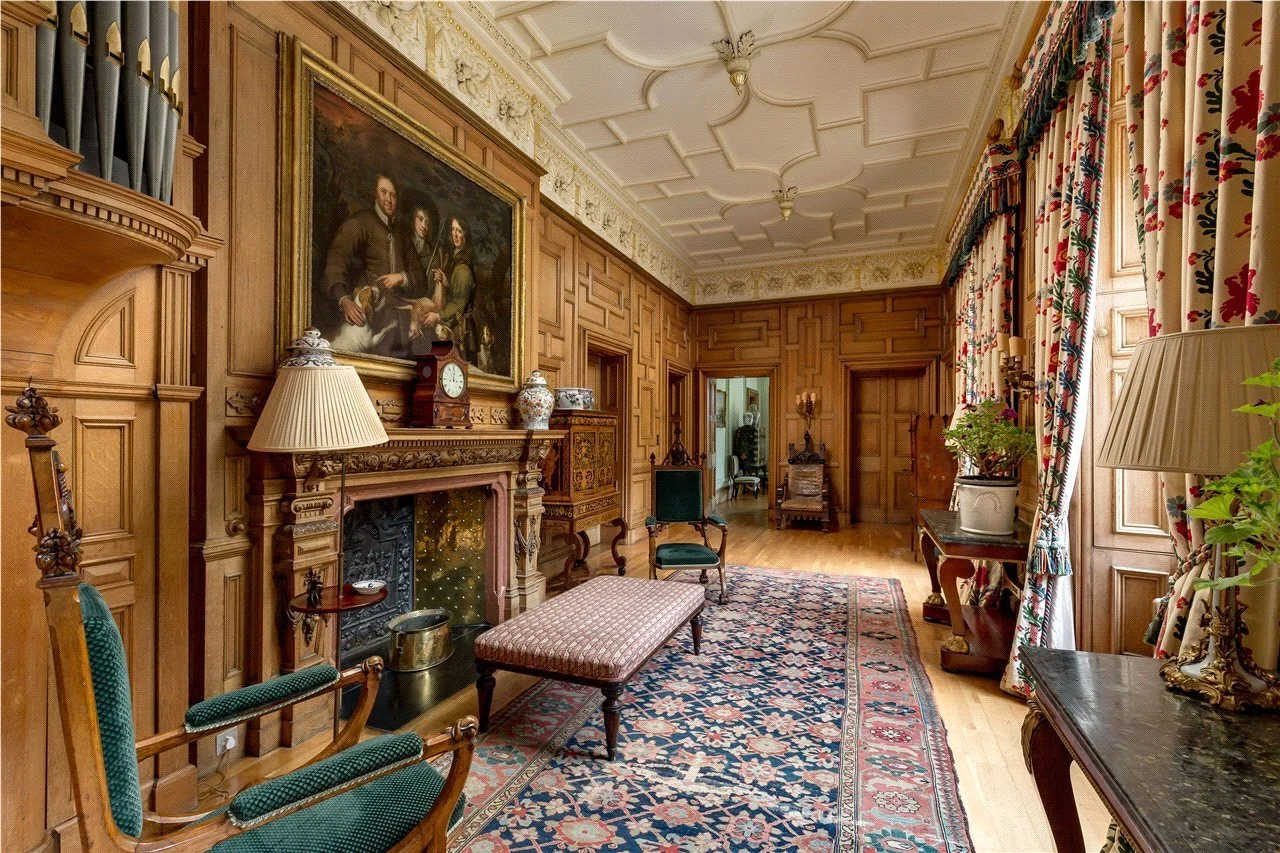
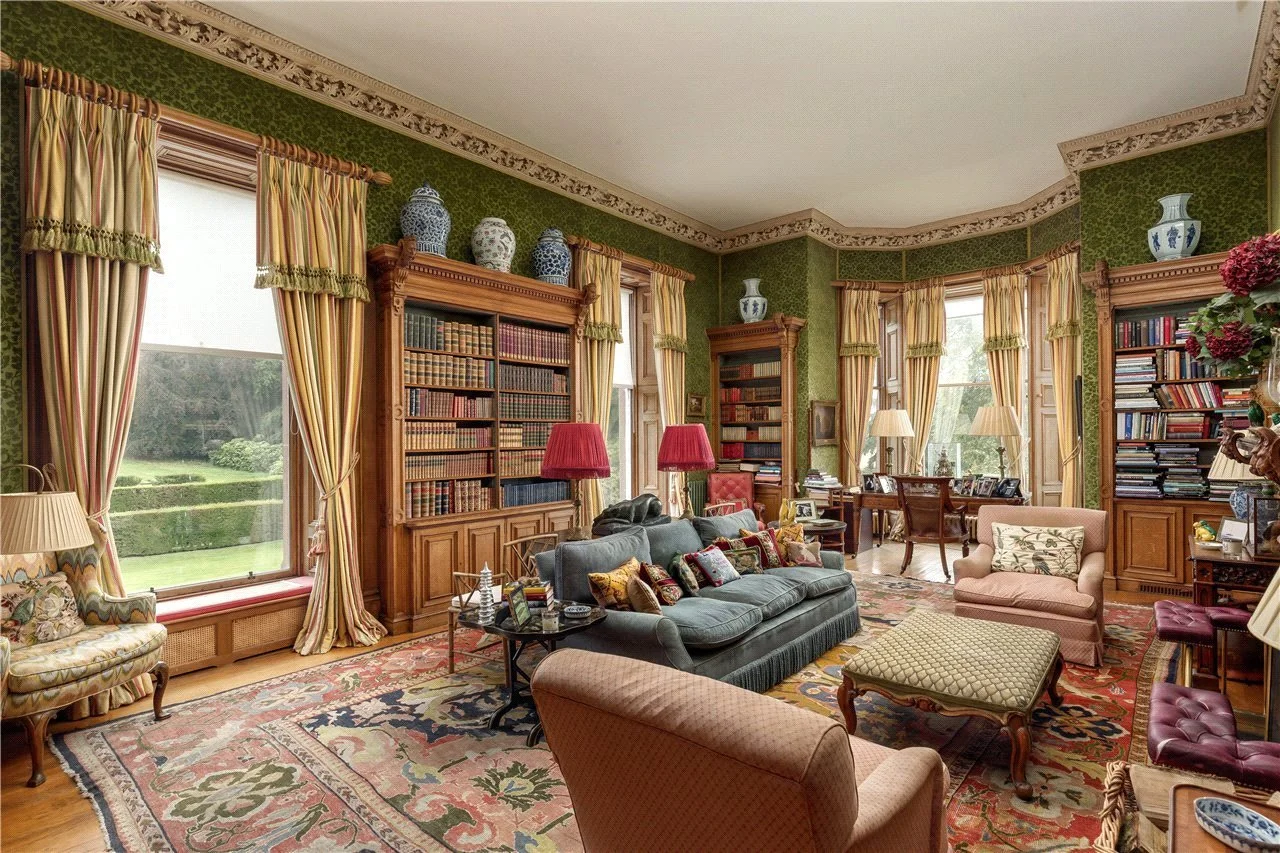
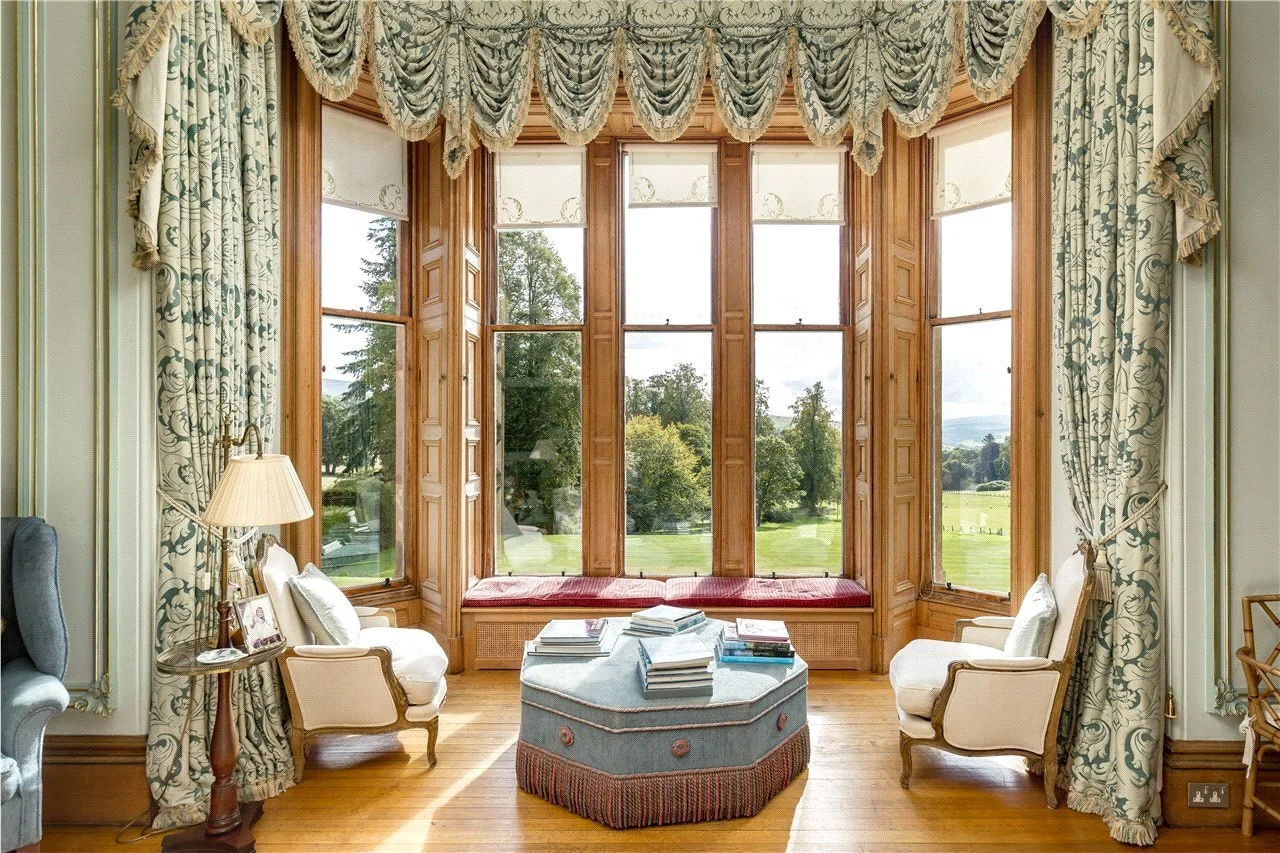
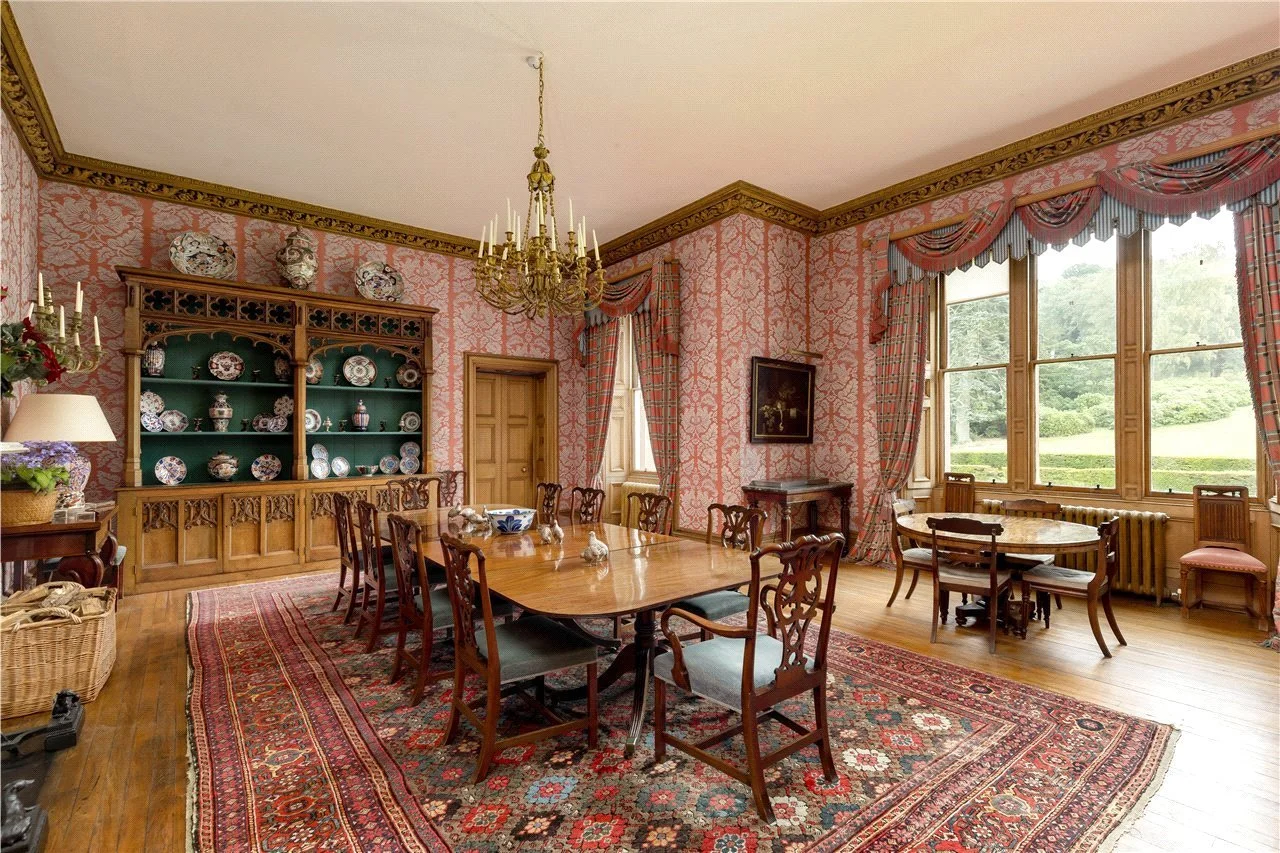
Inside, Portmore House offers five principal reception rooms and 10 principal bedrooms, along with extensive additional accommodation across the lower ground, first, and second floors. Period details include wood panelling, fine cornicing, panelled doors, fireplaces, and the original organ in the hall. The principal reception rooms include an organ room, drawing room, library, dining room, and sitting room, while the lower ground floor includes a billiard room, wine cellars, a playroom, further bedrooms, and a separate two-bedroom caretaker’s flat.
The estate’s history reaches further back than the present house. Portmore was established in the 18th century, when the Earls of Portmore acquired part of the former Blackbarony estate around 1735. It later passed to the Mackenzie family. Colin Mackenzie, who was associated with the early development of Portmore’s parkland and woodland, was a close friend of Sir Walter Scott, the author of works including Ivanhoe, Waverley, and Rob Roy, and one of the figures who helped shape the Romantic image of Scotland in the 19th century. The present mansion was built after Mackenzie’s death.
In 1850, William Forbes Mackenzie commissioned David Bryce to design the house that now anchors the estate. Following a major fire in the early 1880s, the interior was remodelled and a family wing was added to the north in 1883. The Mackenzie family left Portmore around 1890, after which the house, farms, and shoot were leased out. The wider estate was later brought to market in 1896.
Portmore’s landscape is as important as the house itself. Historic Environment Scotland describes the estate as a large, intact and restored designed landscape of outstanding architectural and archaeological interest. Its significance lies not only in the mansion, but in the relationship between the house, parkland, woodland, gardens, agricultural land, and older archaeological features.
The gardens are central to Portmore’s present identity. By the late 20th century, the essential structure of the designed landscape had survived, but the core gardens had fallen into decline. The estate’s sale in 1979 marked a turning point, and the following decades have been defined by repair, restoration, and careful garden-making.
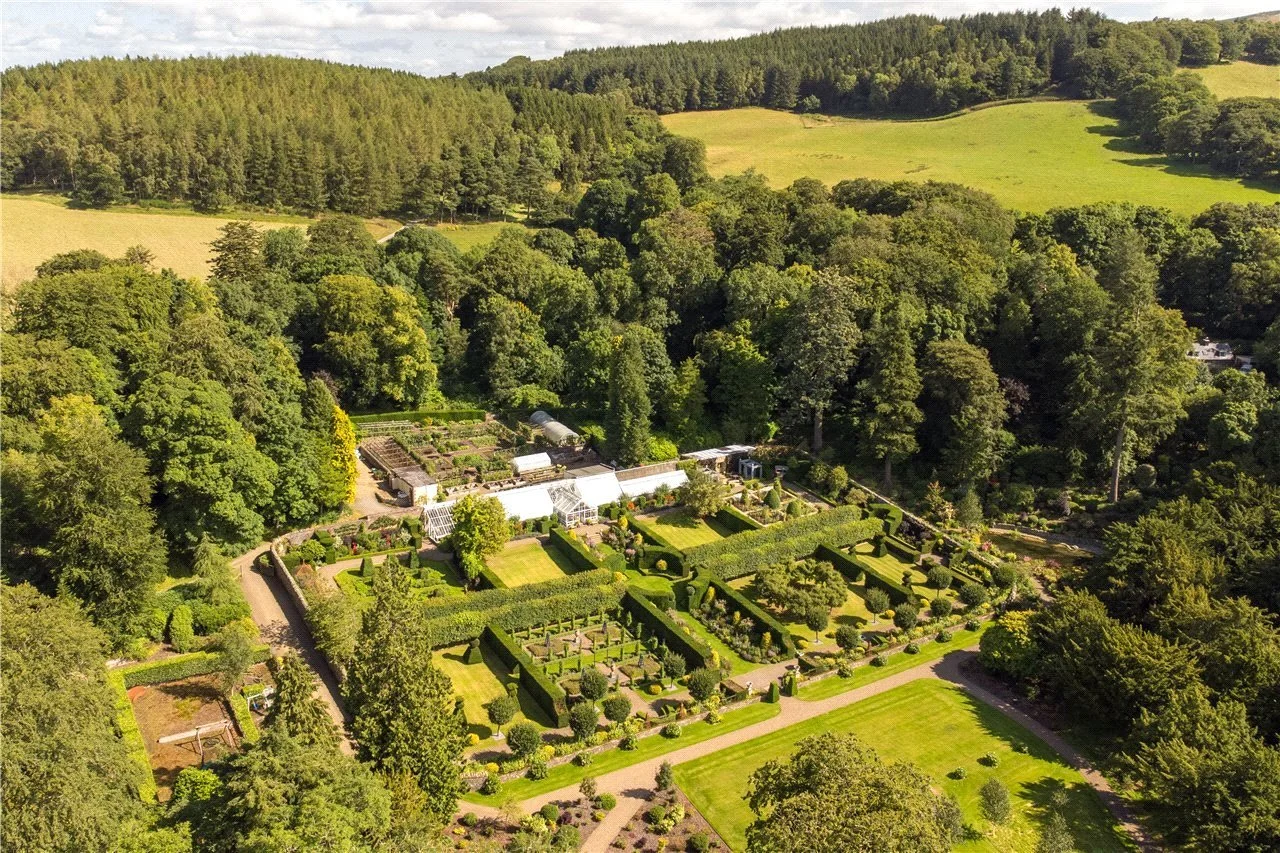
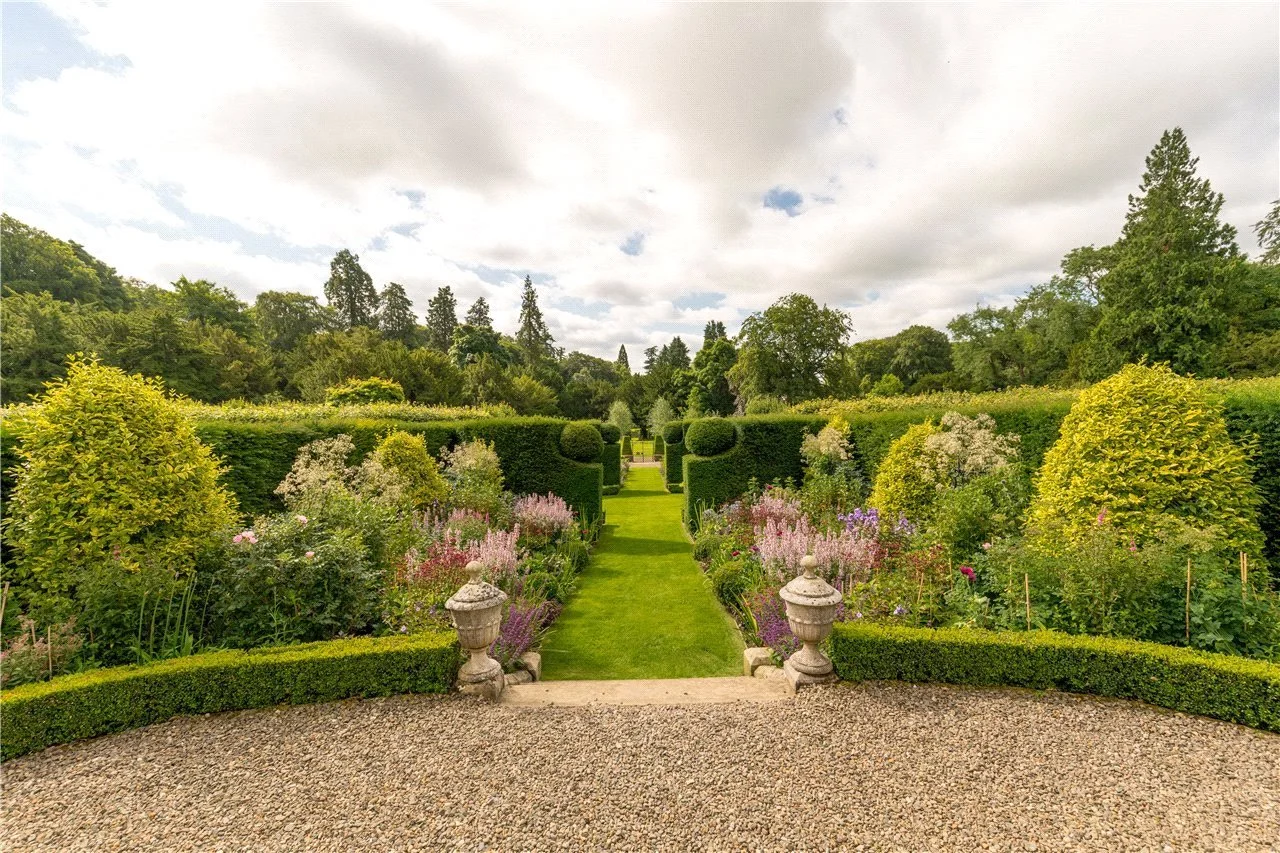
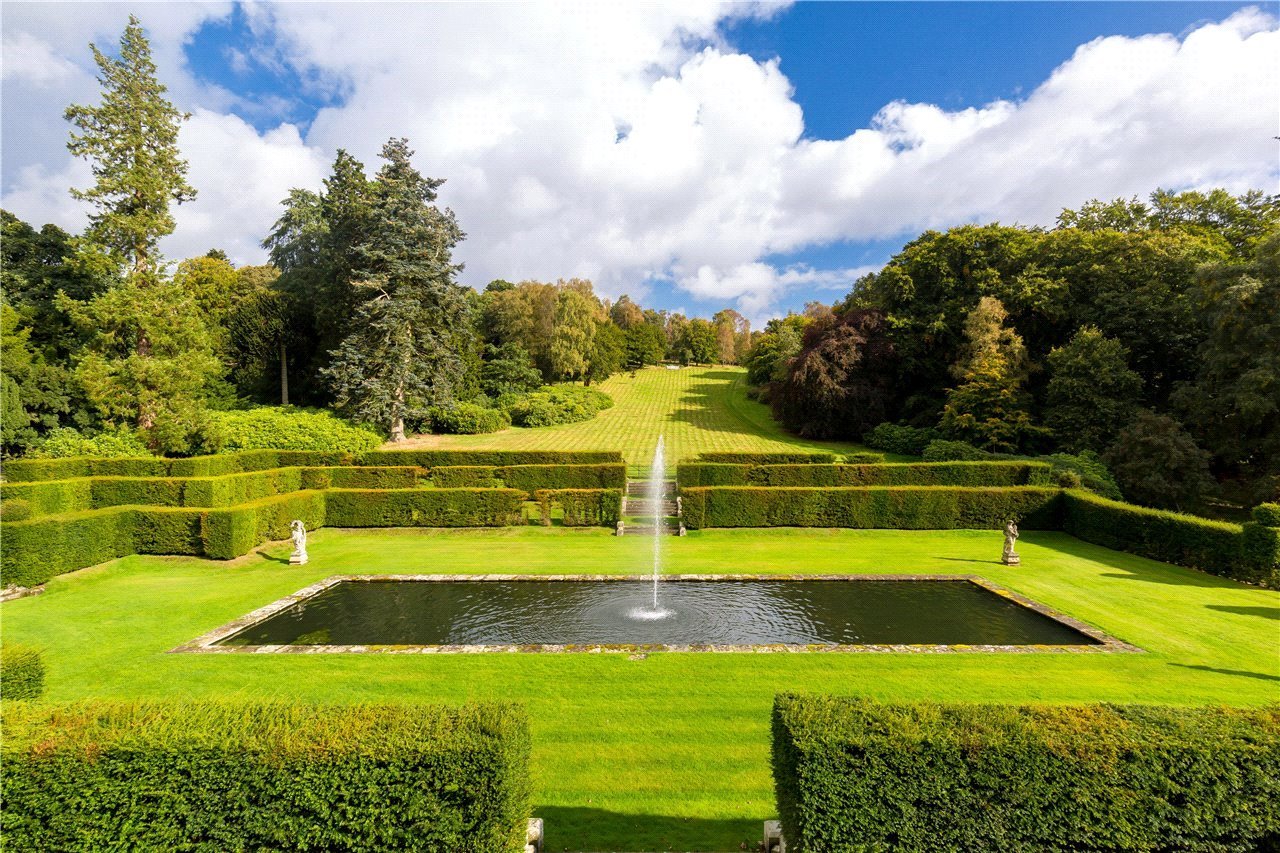
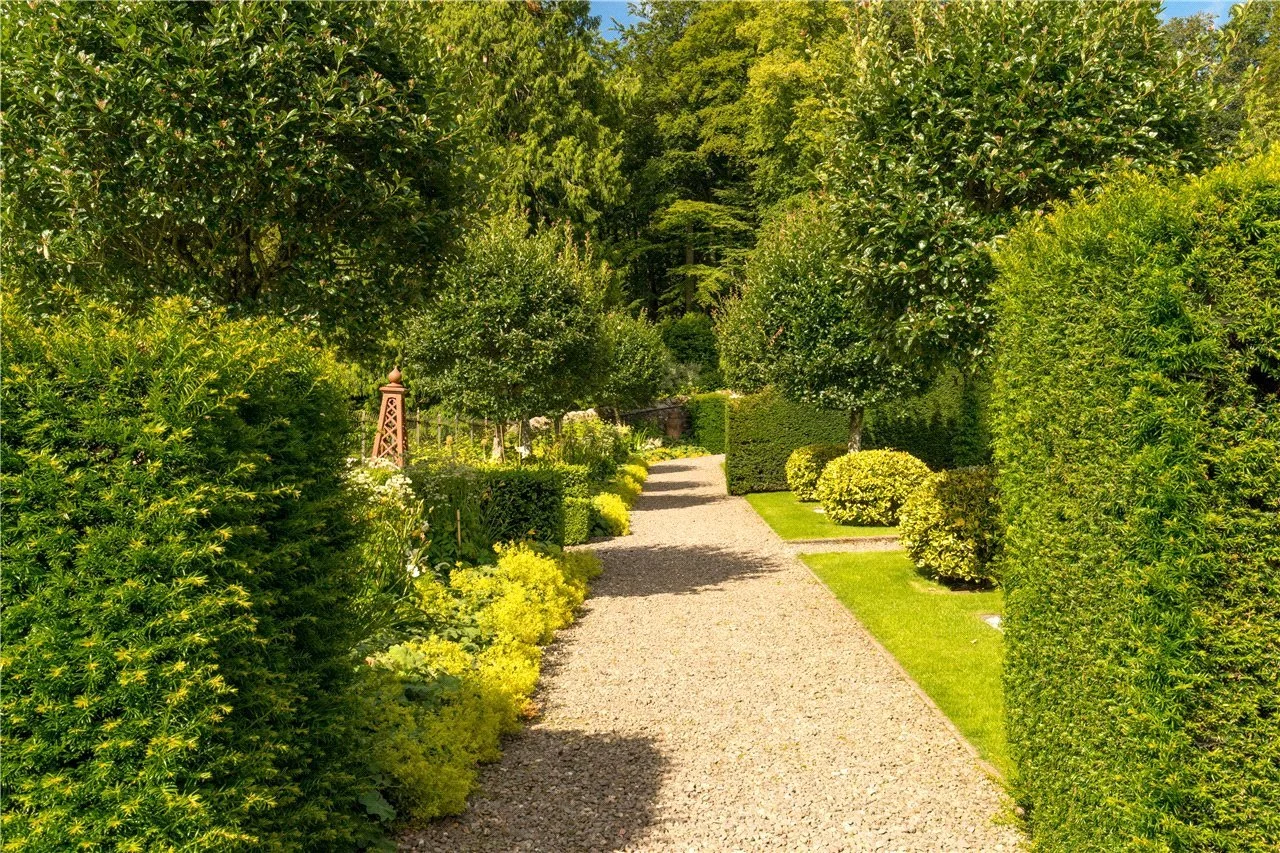
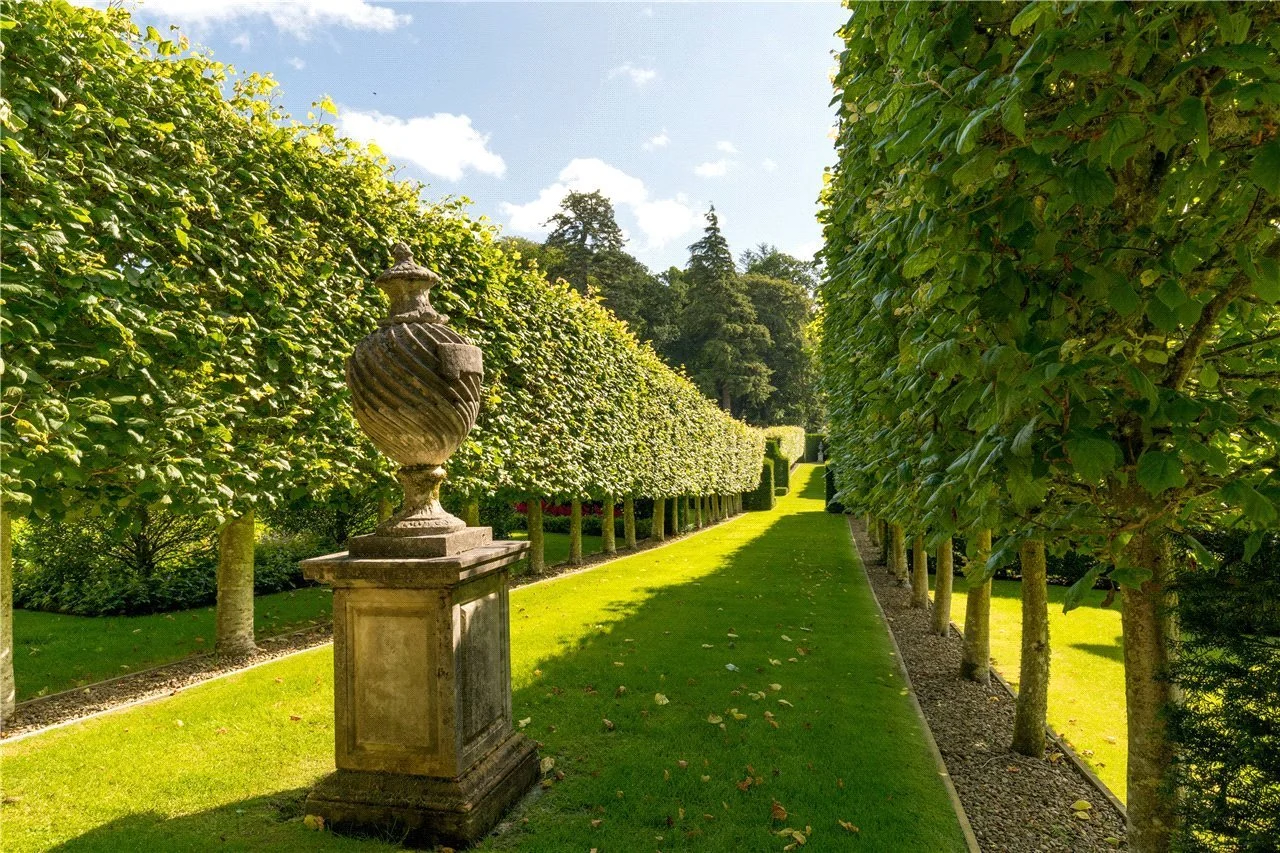
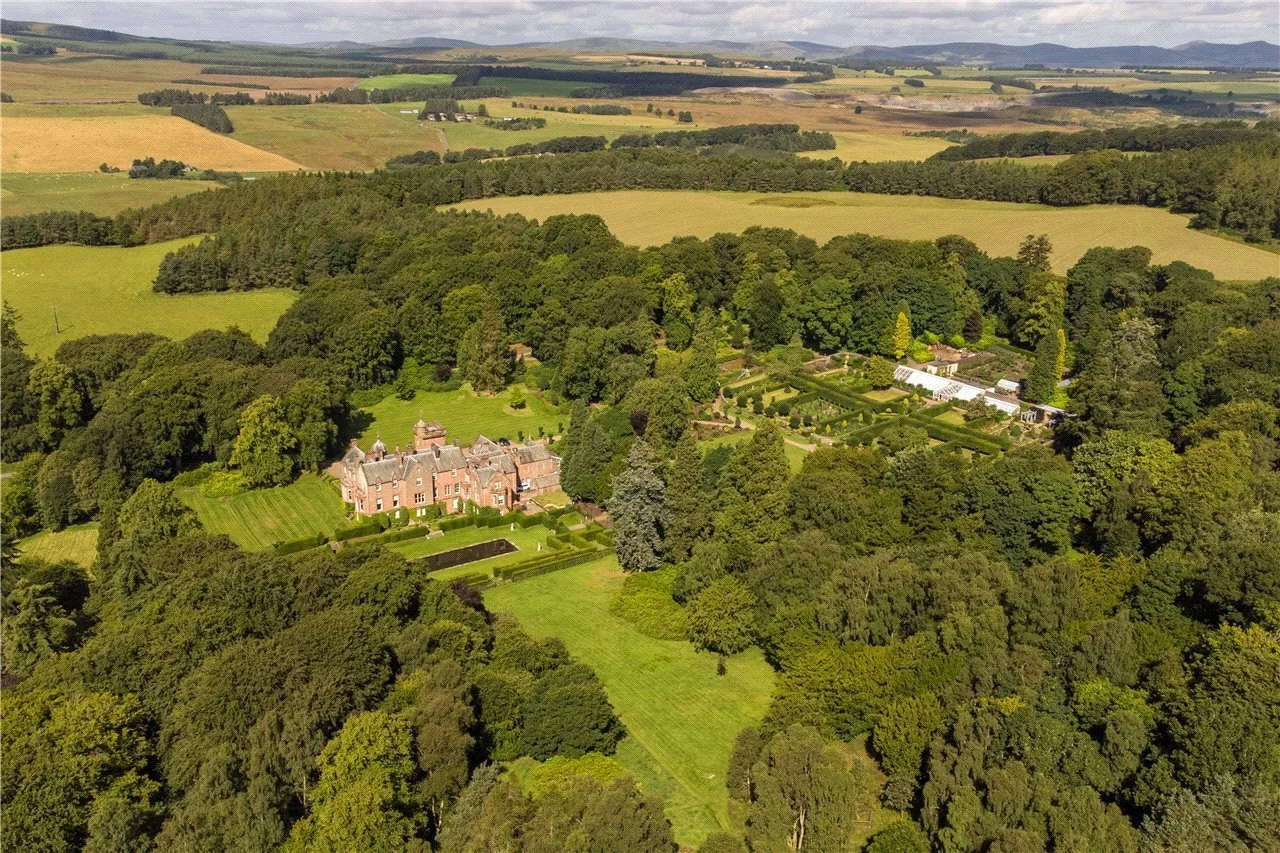
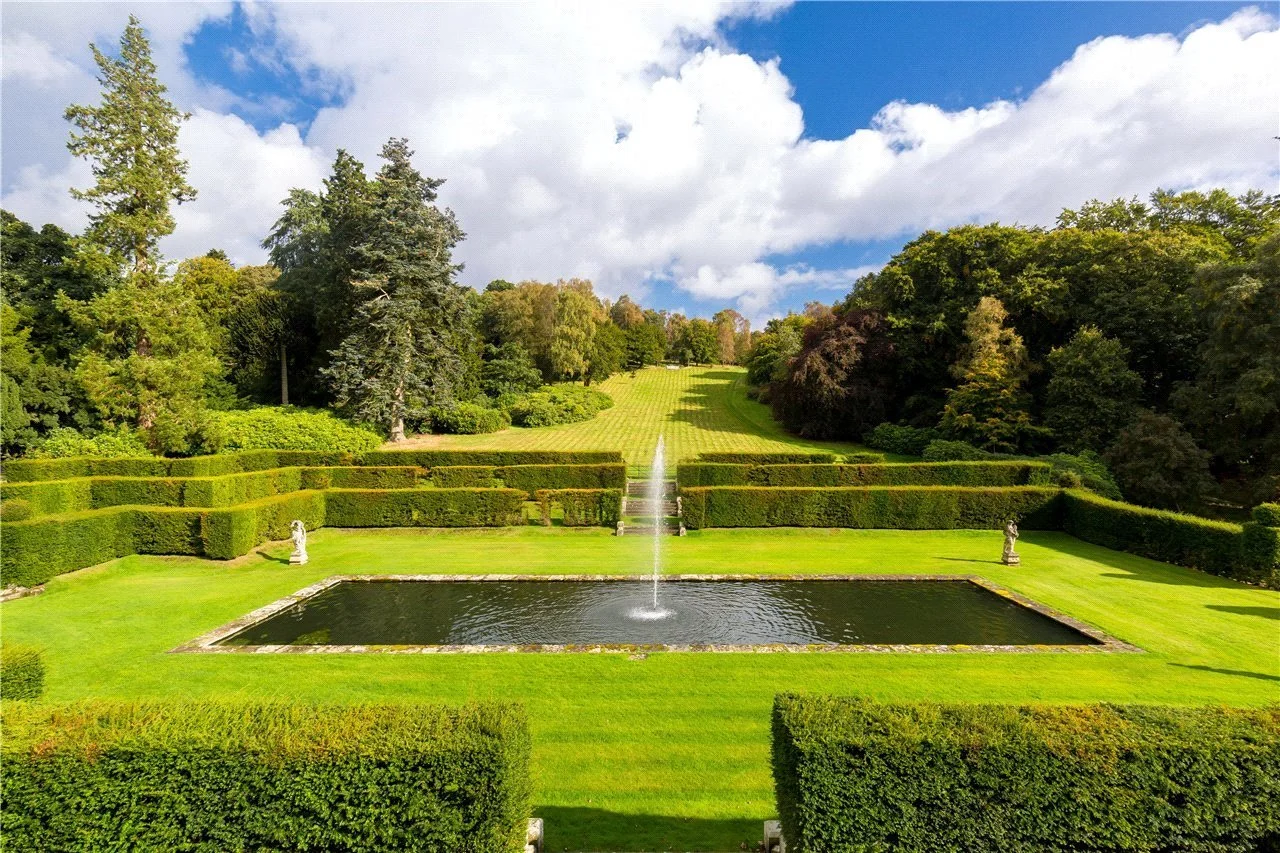
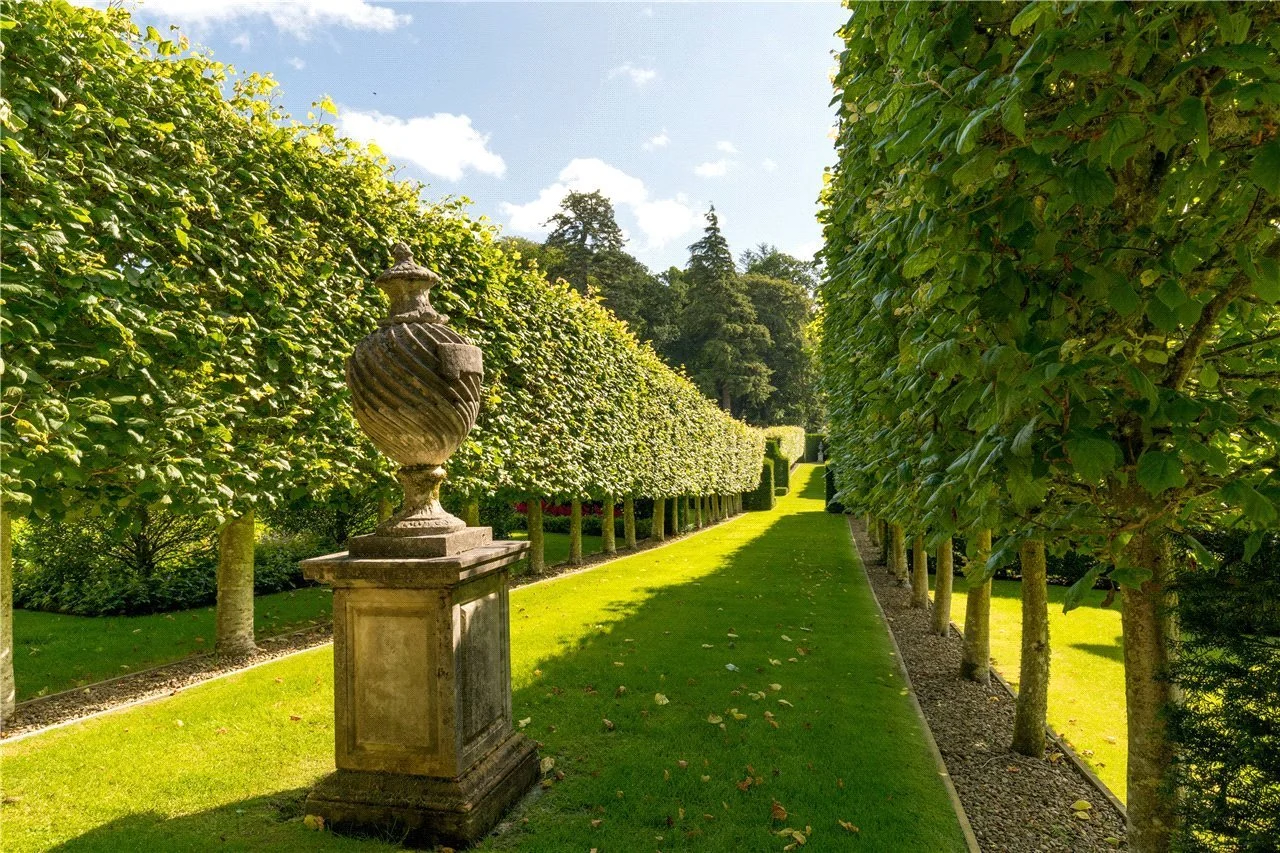
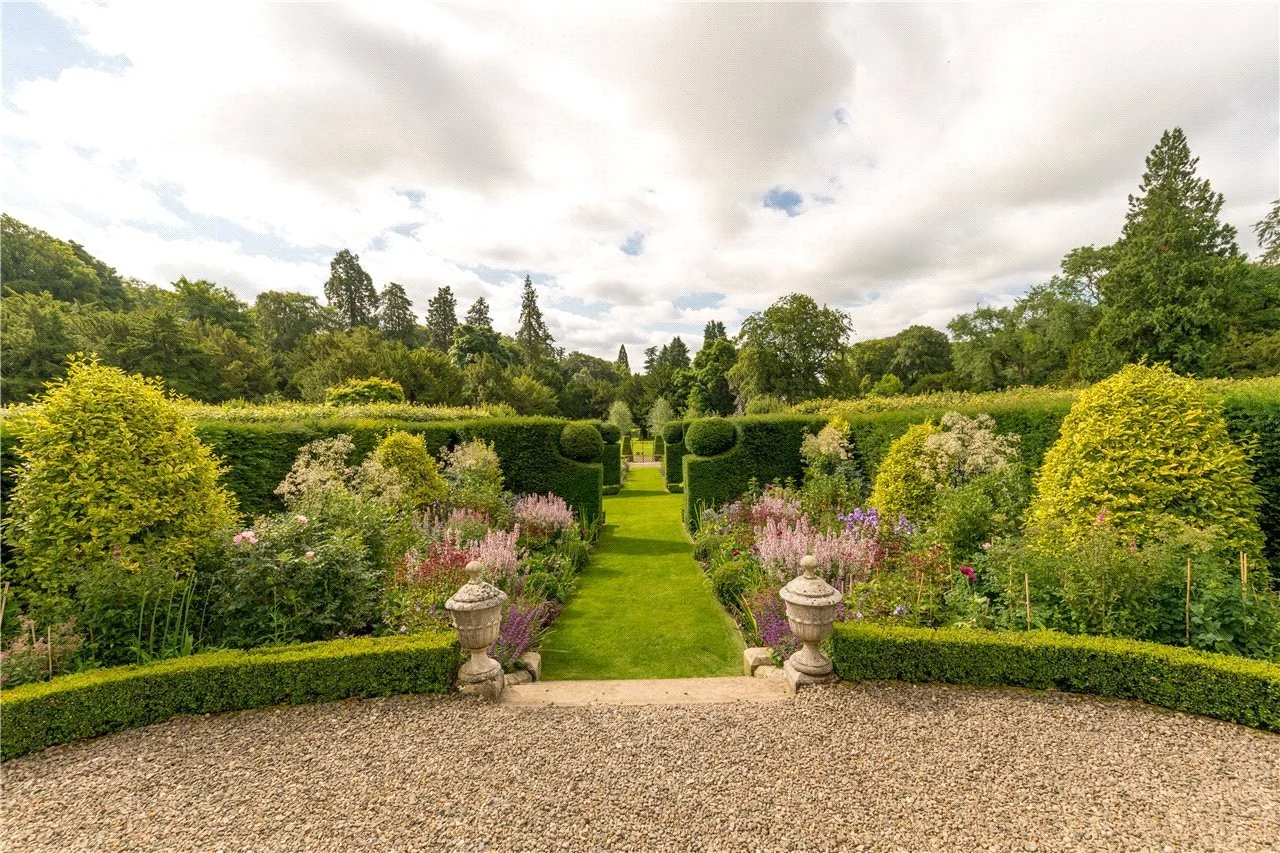
The listing notes that the gardens have been carefully restored and developed under the current ownership over the last 40 years. A tree-lined drive leads to the house, where sweeping lawns and mature specimen trees frame the approach. To the east is a formal parterre, with a stone-edged canal and fountain set into grass terraces and surrounded by yew hedges.
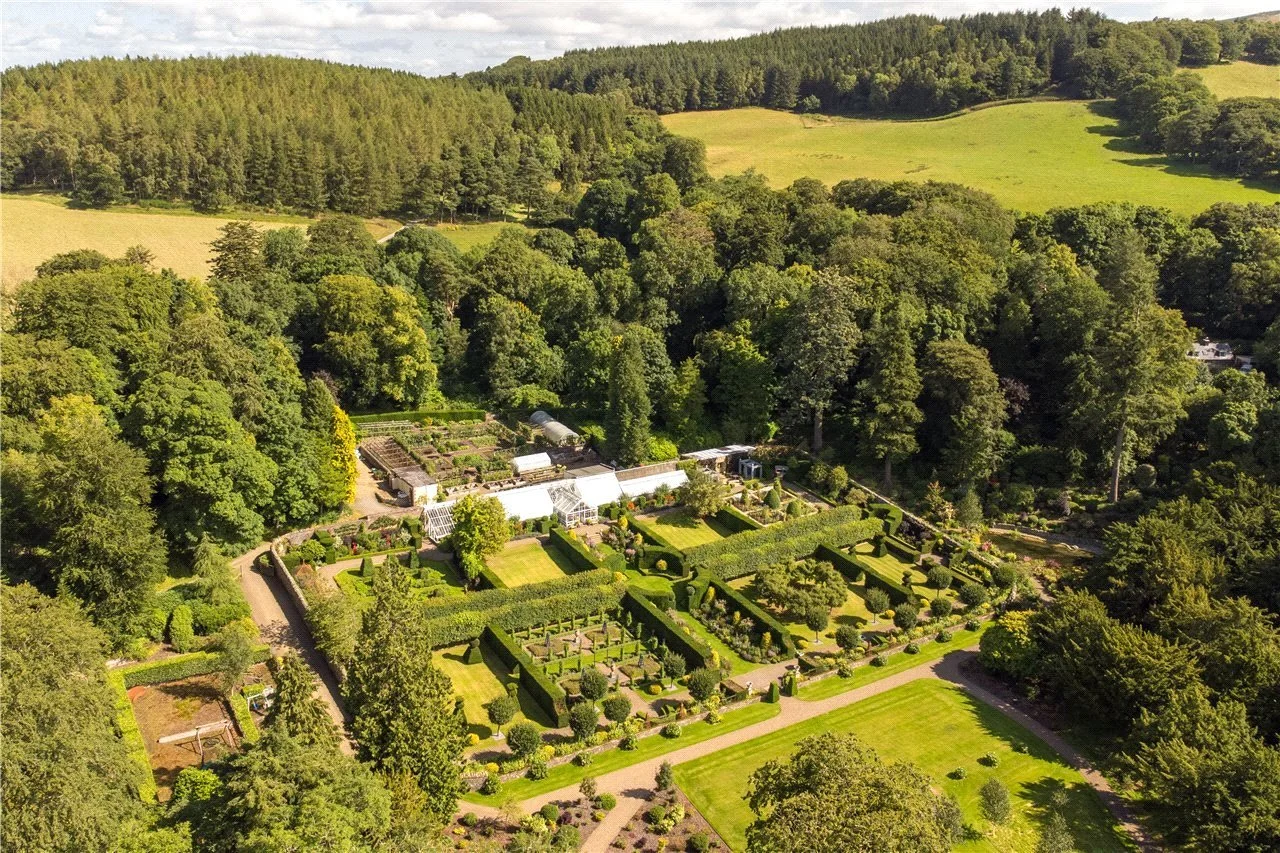
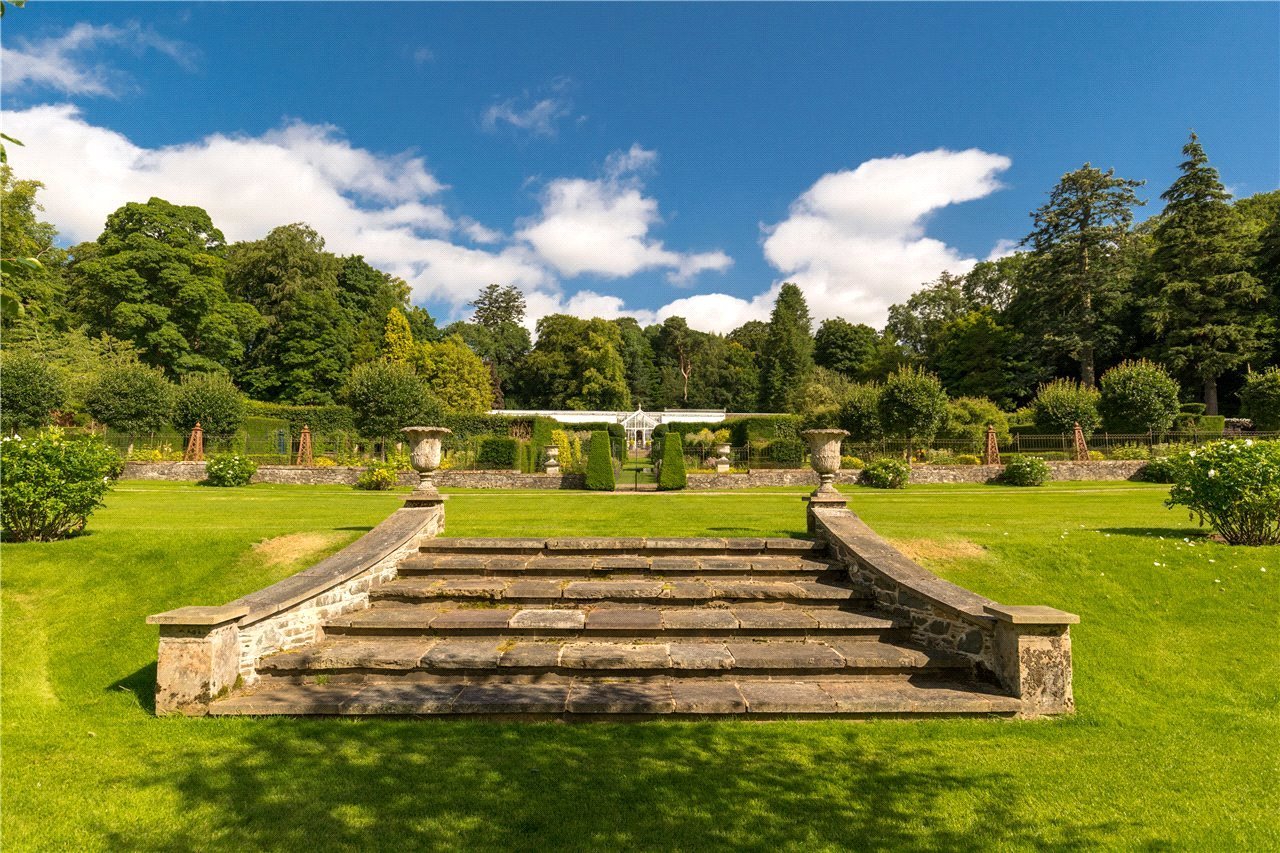
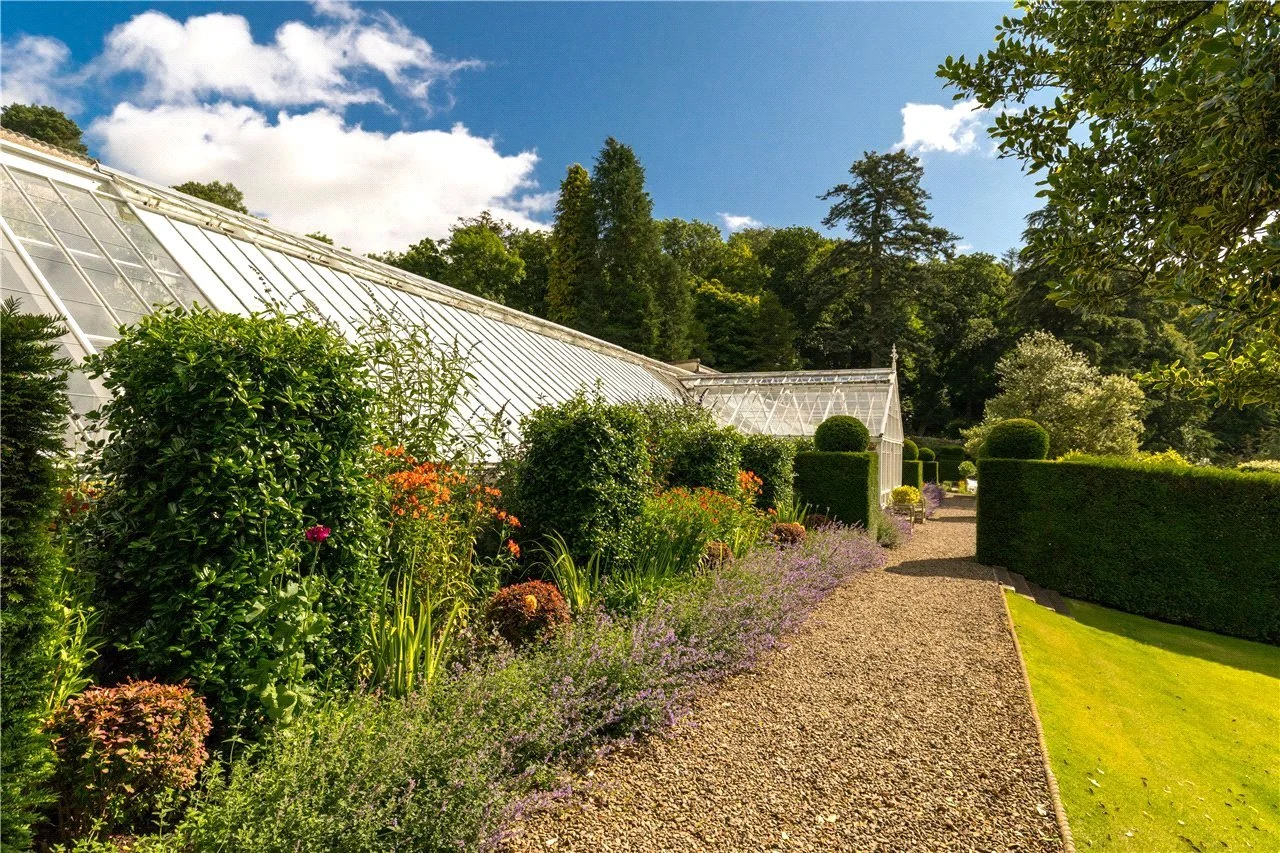
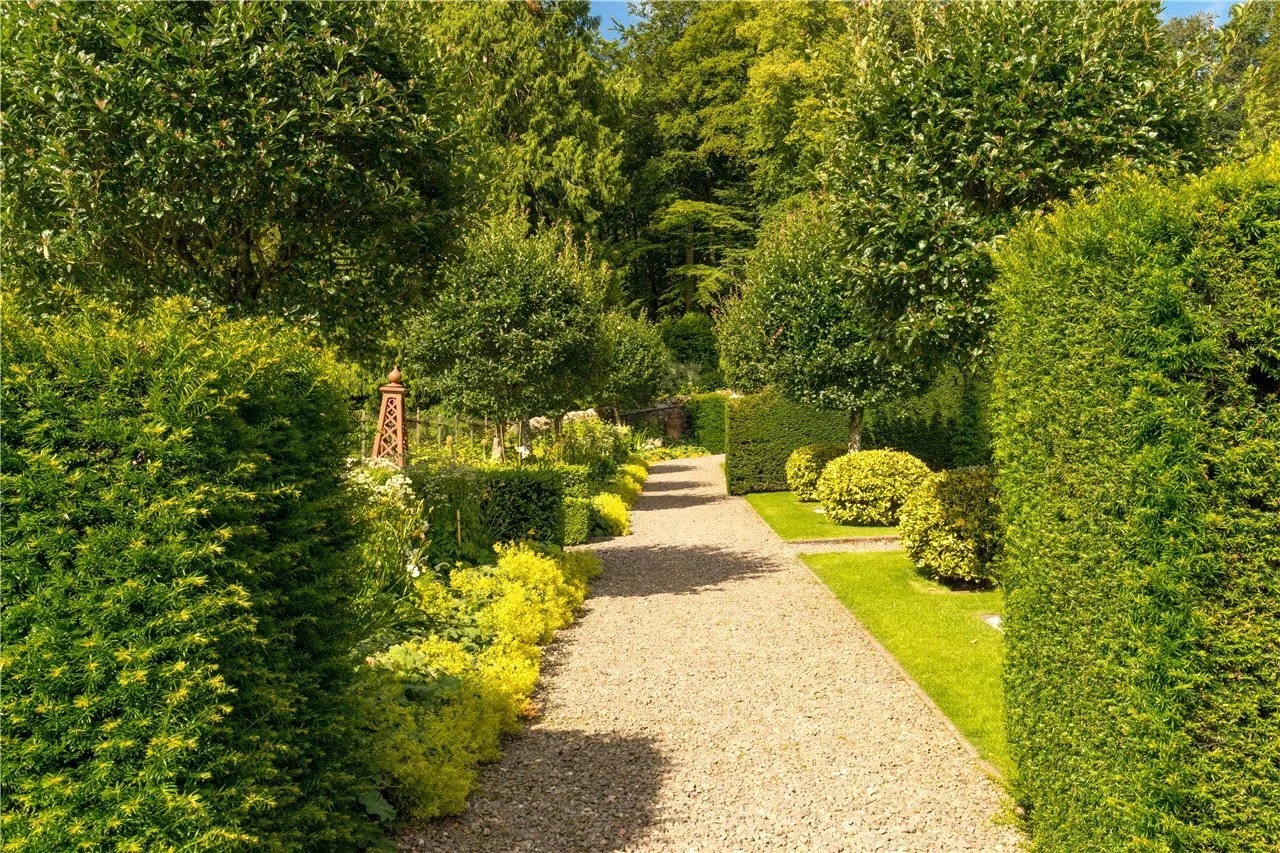
The restored walled garden is one of Portmore’s most notable features. Extending to approximately 0.6 ha / 1.5 acres, it has been extensively restored since 1987. Enclosed by a whinstone wall and wrought-iron railings, it includes Victorian glasshouses and brick outbuildings along the north side. The garden is laid out with gravel paths, lawns, hedging, herbaceous borders, specimen shrubs, and trees, combining a traditional structure with more contemporary planting.
Additional garden features include a water garden with a stream and pools, woodland walks, azaleas, rhododendrons, spring bulbs, and ornamental planting. Below the house, formal gardens of yew and box connect the mansion to the wider landscape, while the walled garden remains the clearest expression of the estate’s late 20th- and early 21st-century restoration.
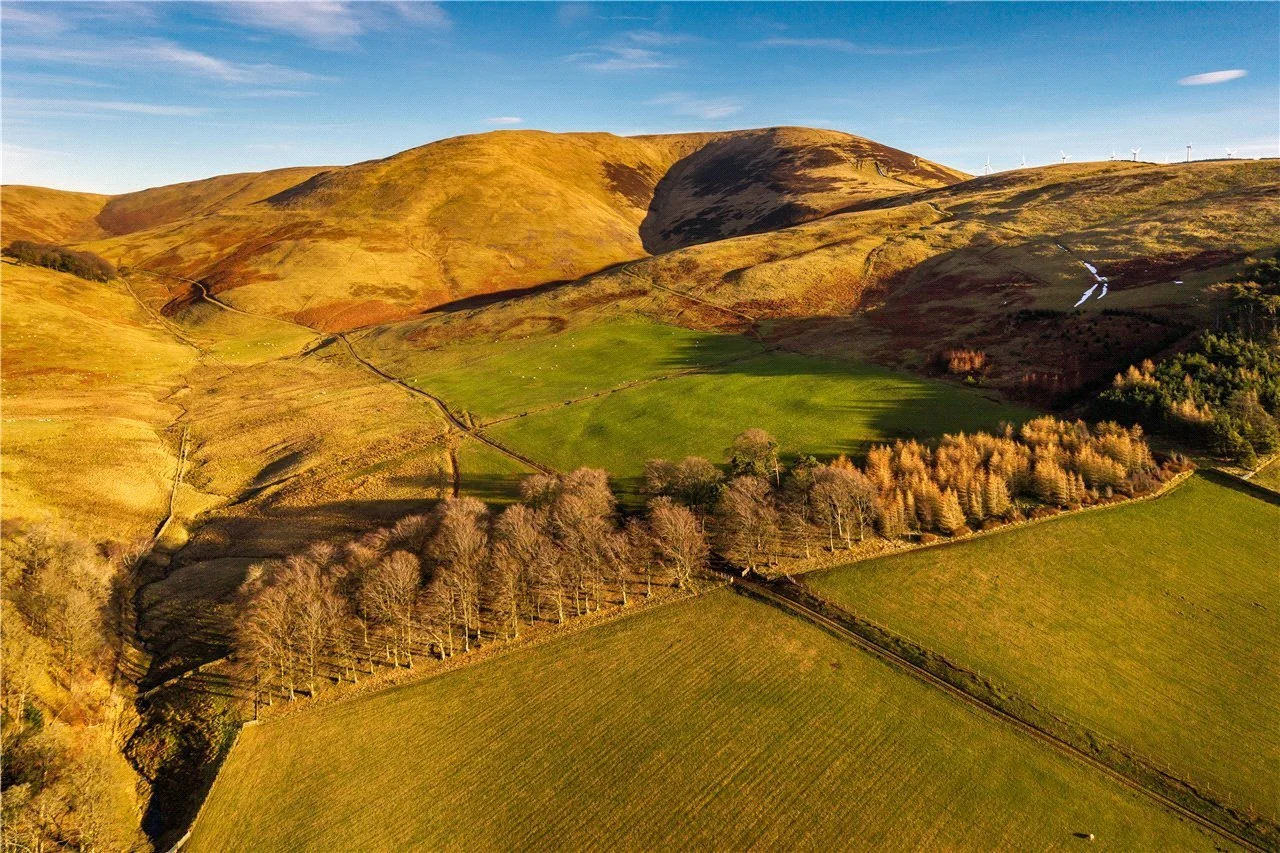
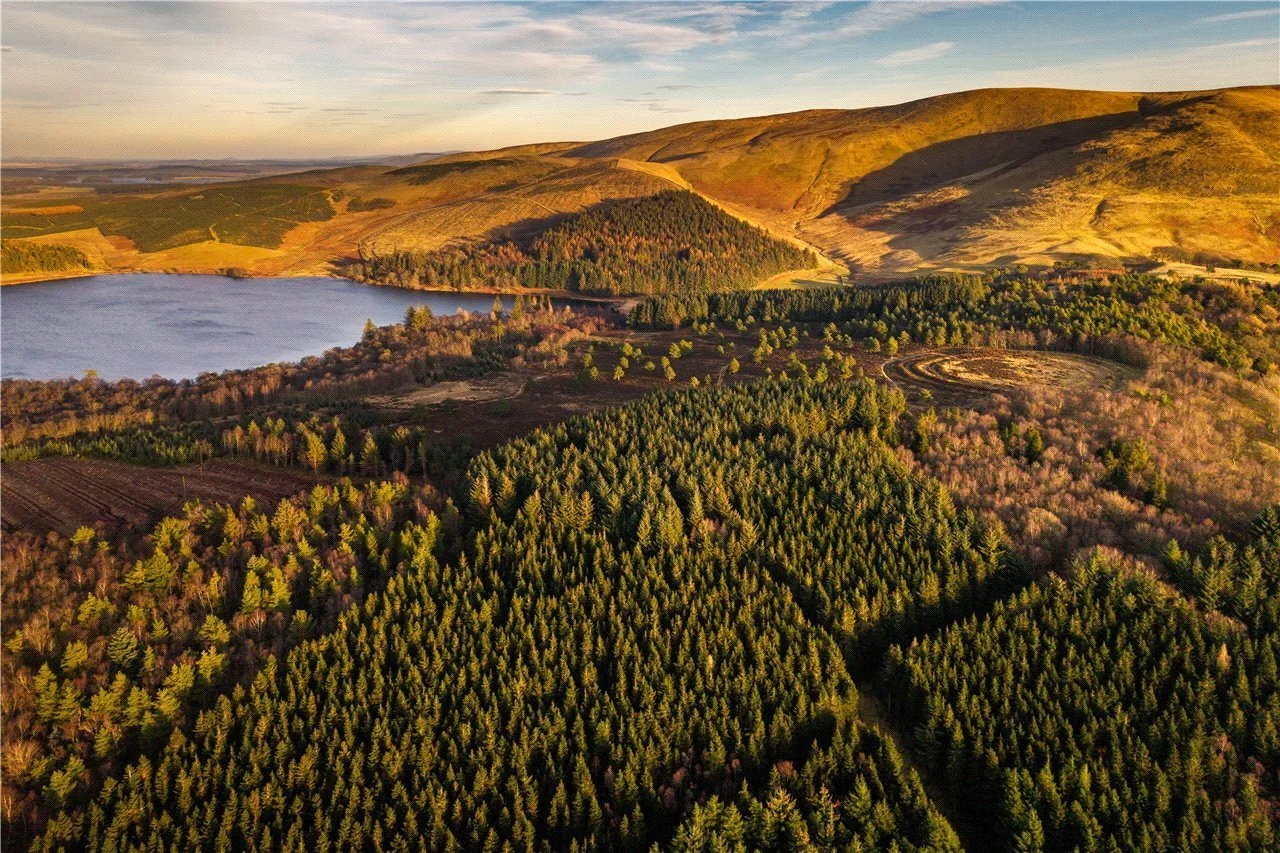
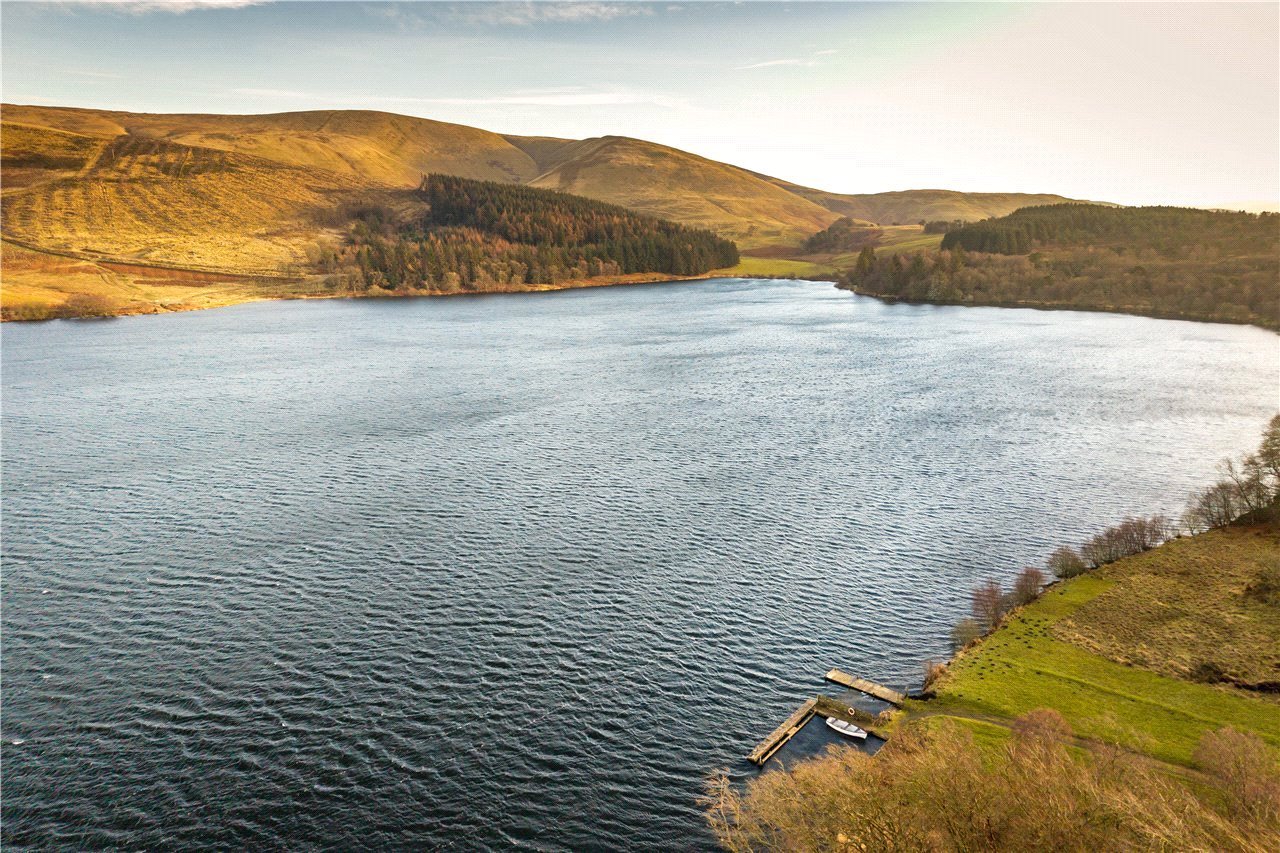
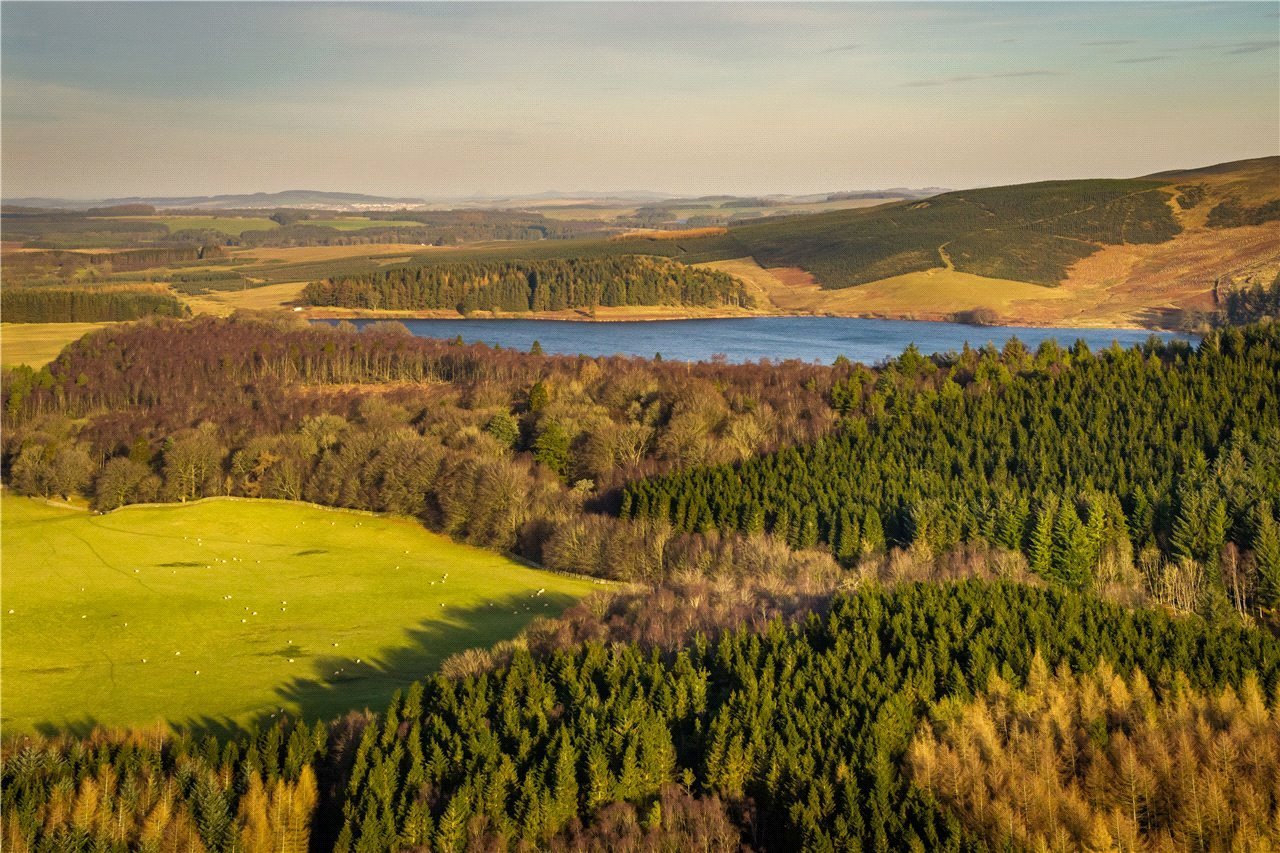
Beyond the gardens, Portmore operates as a substantial rural estate. The land includes arable and temporary grassland, permanent pasture, rough grazing, hill ground, commercial forestry, amenity woodland, and miscellaneous estate land. Woodland and forestry extend to about 259 ha / 639 acres, while Portmore Loch, a reservoir of around 42 ha / 105 acres, sits to the north of the house and includes a fishing chalet.
The estate also contains Northshield Rings, a scheduled prehistoric fort and settlement site near the reservoir. Its presence adds another historical layer to the landscape, placing Portmore within a much longer continuum of occupation and land use.
The working agricultural side of the estate is centred on Boreland Farm, which extends to approximately 911 ha / 2,253 acres. The farming enterprise has been focused on a two-flock sheep operation and a herd of 70 suckler cows. Boreland Farm includes a traditional farmhouse, a farm manager’s house, traditional outbuildings, modern farm buildings, and supporting agricultural infrastructure.
There are several additional residential properties across the estate, including Portmore Lodge, Primrose Cottage, Hillhead Cottage, Boreland Farmhouse, Boreland Cottage, and Skiprig cottages. Together, they reflect the structure of a traditional Scottish estate, where the principal house, gardens, cottages, farm, woodland, and sporting landscape form part of a larger working whole.
Portmore has also historically supported sporting use. The estate previously operated a highly regarded low-ground pheasant shoot, which has recently ceased following the retirement of the keeper. The listing notes that it could potentially be re-established, while deer stalking and fishing are also part of the estate’s recreational appeal.
All photographs belong to the listing agency. See more on Galbraith.