Bedrooms: 10 Bathrooms: 10
Interior: 21,528 ft² (2,000 m²) Lot: 13.6 acres (5.5 hectares)
Features: Frescoed interiors, historic reception rooms, fireplaces, centuries-old trees, stone sculptures, religious shrine, garden pavilion.
Built in the late 15th century, Villa Somaglia is a Renaissance residence with a history closely connected to the aristocratic families who once owned much of the surrounding land. Among its former residents was a princess whose dispute with local townspeople in 1925 became part of the area's oral history. More than a century later, the villa remains surrounded by an extensive private park, despite the town having developed around it.
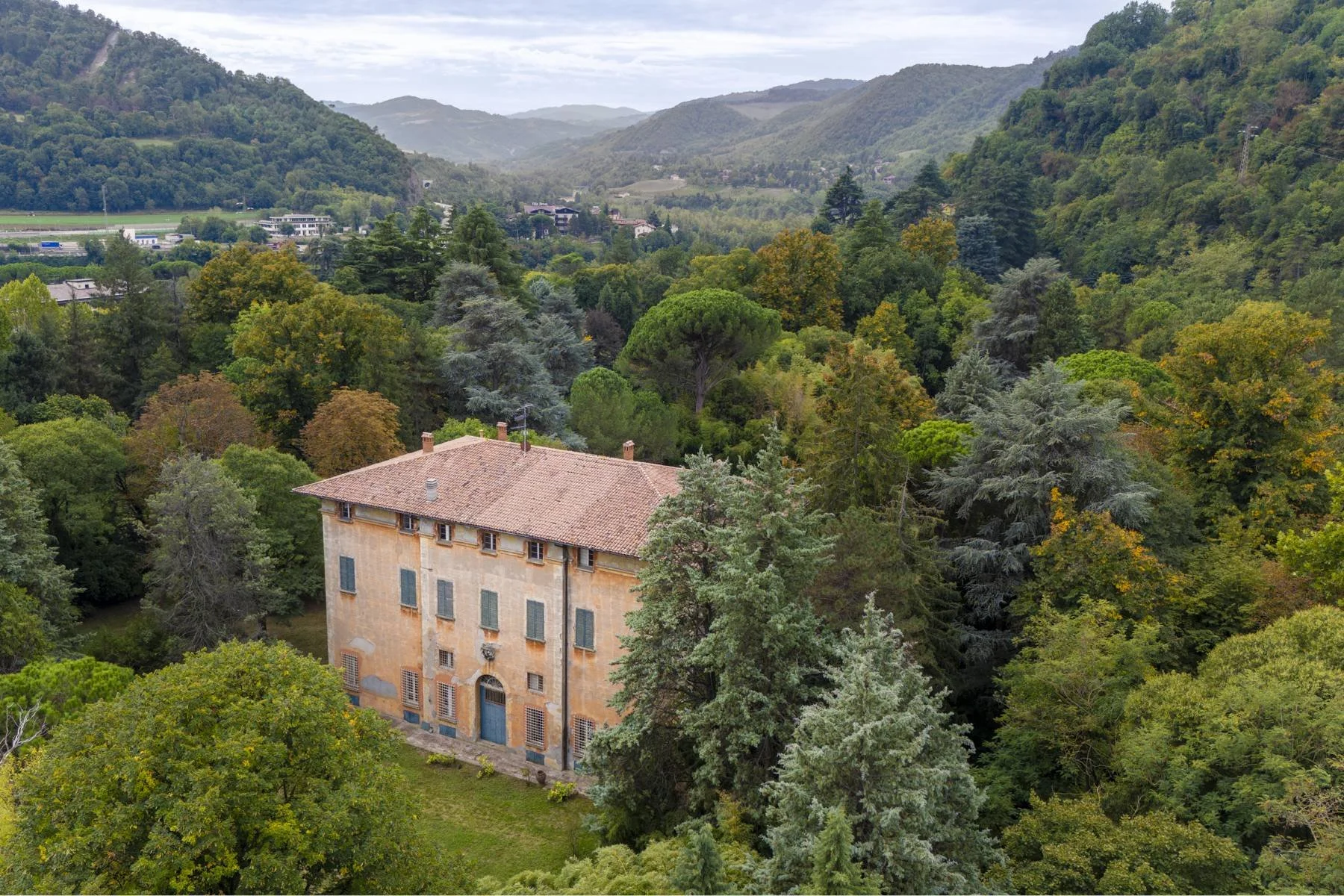
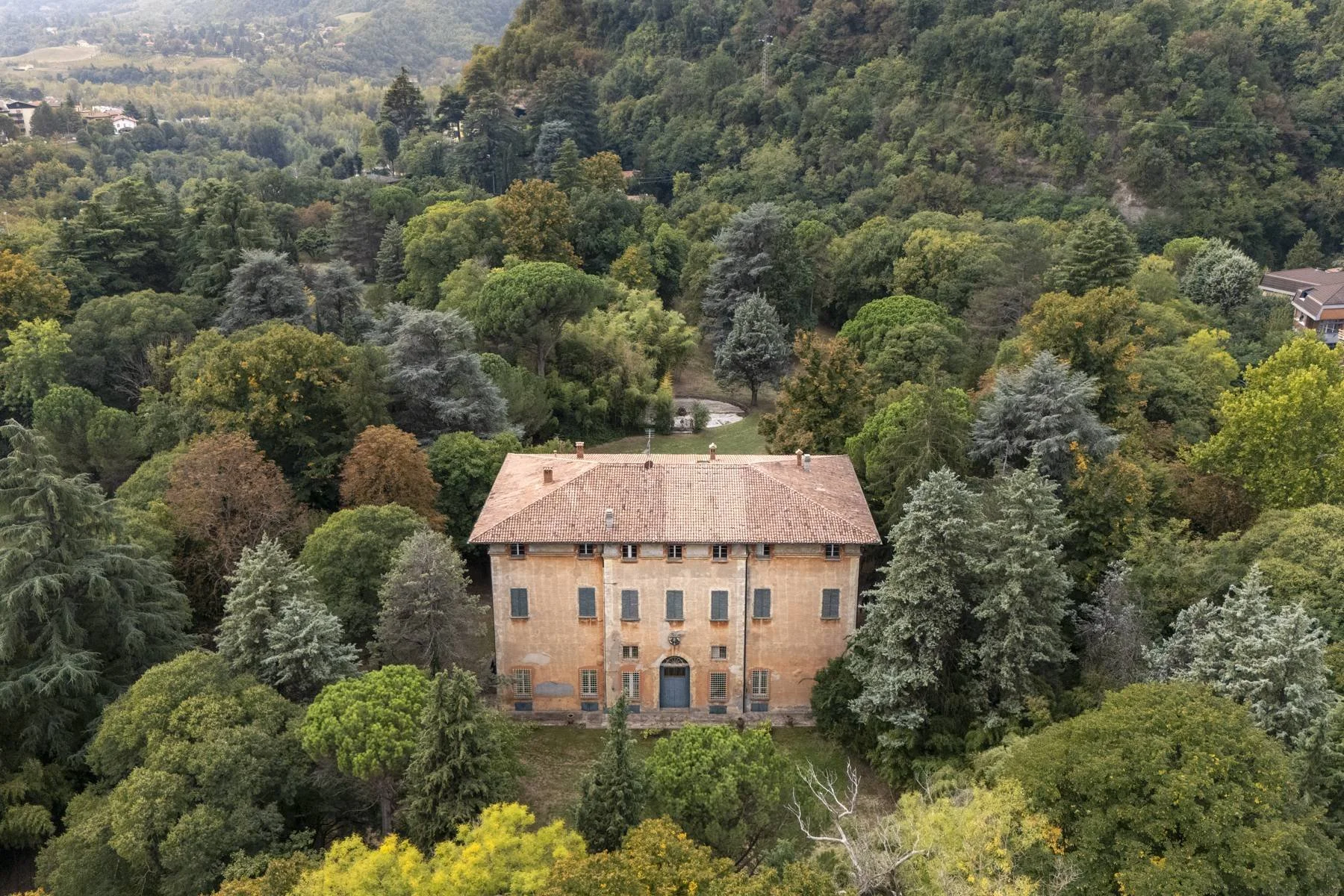
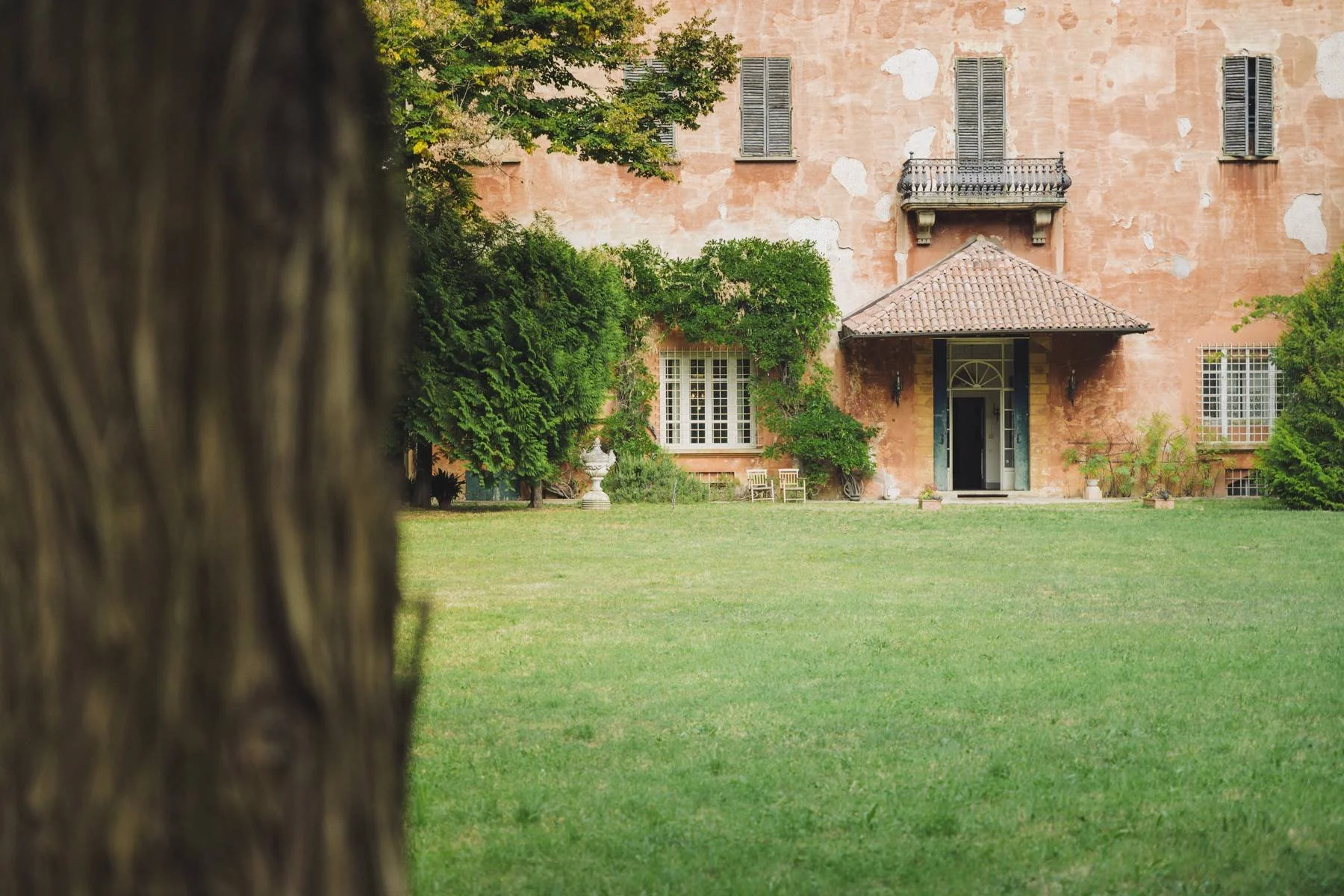
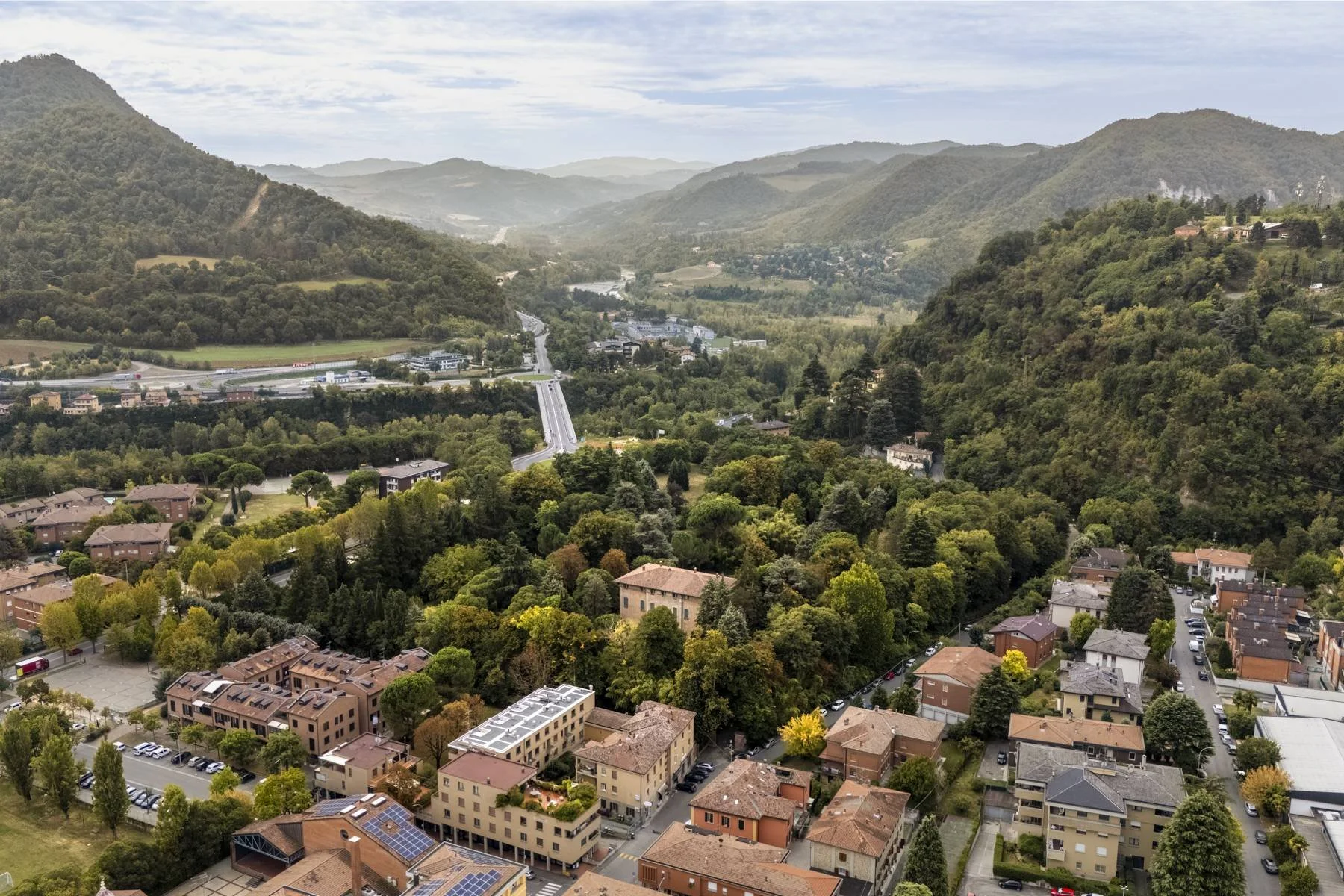
Listed for €2.1 million with Italy Sotheby's International Realty, the property occupies 13.6 acres (5.5 hectares) in Sasso Marconi, approximately 12 miles (20 km) southwest of Bologna. The three-storey residence spans approximately 21,528 ft² (2,000 m²), with 10 bedrooms and 10 bathrooms, and retains its symmetrical Renaissance layout, frescoed interiors and historic architectural details.
Bologna, the capital of Emilia-Romagna in northern Italy, is one of the country's great food cities, known for its handmade pasta, tortellini, mortadella and ragù. Often overlooked by international visitors in favour of Florence, Venice and Rome, it also has one of Europe's oldest universities, a remarkably preserved medieval centre and miles of historic porticoes, now recognised by UNESCO.
Beyond the city, the surrounding hills and countryside became home to villas built by wealthy Bolognese families, particularly during the Renaissance and subsequent centuries. These residences served as country retreats and centres of agricultural estates, often remaining in prominent families for generations. Villa Somaglia, built in the late 1400s and subsequently associated with the Ranuzzi, Banzi and Castelbarco Albani della Somaglia families, is part of that history.
The villa's history is recorded under several names, reflecting its succession through prominent Italian families. An archival inventory held by Bologna's Biblioteca dell'Archiginnasio identifies it as Villa Ranuzzi, later Villa Banzi and subsequently Villa Somaglia. By the early 20th century, it belonged to the noble Castelbarco Albani della Somaglia family, whose estate once occupied a considerable portion of what is now Sasso Marconi.
At the time, the town was known as Praduro e Sasso and was a popular summer destination for wealthy Bolognese families. The Somaglia estate extended from the higher ground overlooking the settlement towards the railway, with land reaching as far as the Reno River. The family's princess reportedly spent July and August at the villa, while maintaining a residence near Lake Como.
According to a local historical account collected by Giorgio Sinigaglia, the princess was remembered as a commanding figure who exercised considerable influence over the town. In 1925, the nearby Cartiera del Maglio paper mill sought to expand its operations and required part of the Somaglia estate to build a railway connection. The princess refused to sell, prompting protests from residents who hoped the expansion would provide employment.
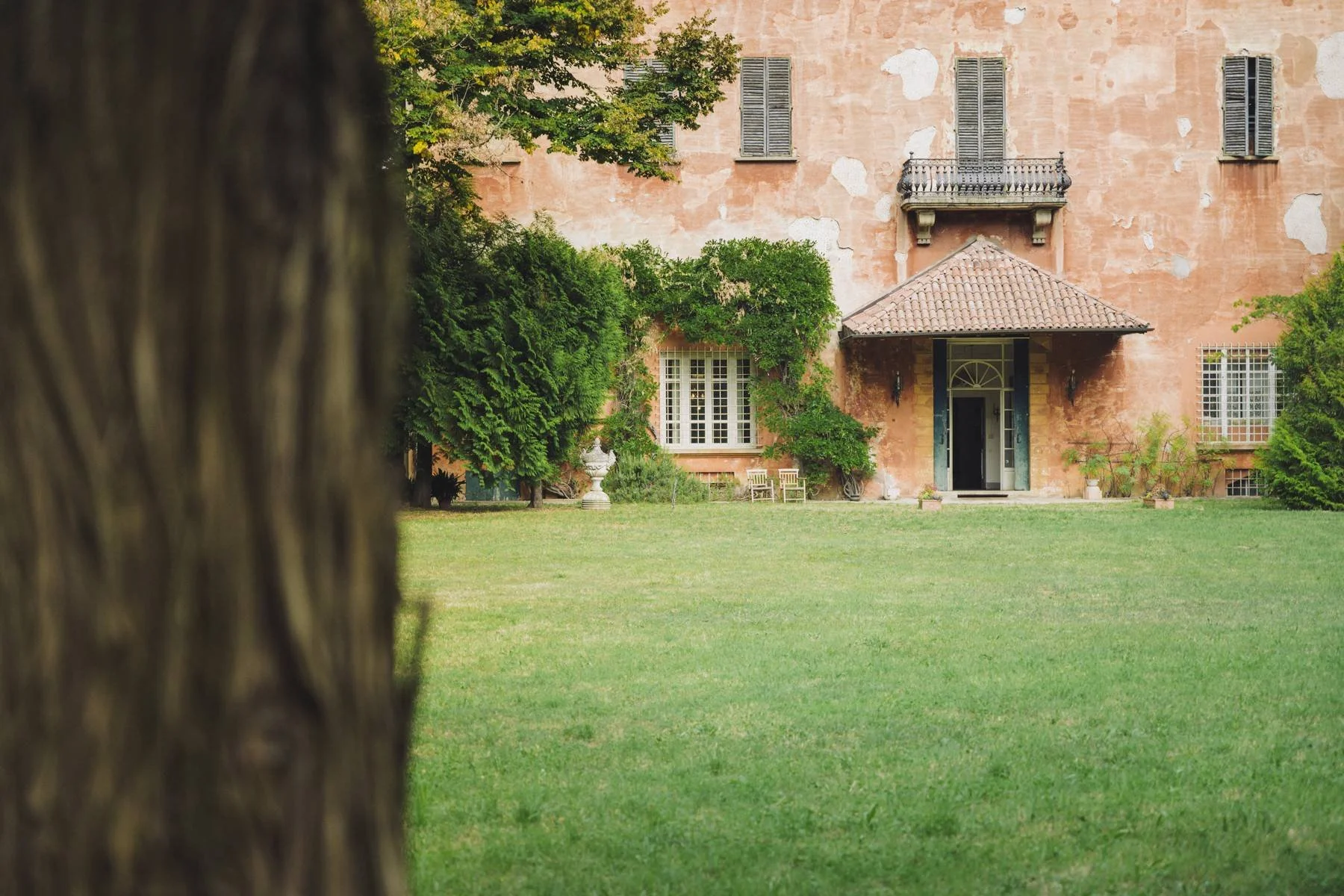
The account recalls that a group of local women confronted the princess as she returned to the villa, throwing bunches of onions at her carriage. She reportedly responded by closing the original entrance on Via Porrettana and establishing another entrance along Via Stazione, where a gatekeeper's lodge was built. The story survives through local recollections rather than contemporary reporting, but the former entrance and surviving gateposts are documented in the town's photographic history.
The princess also supported local charitable and educational institutions, including a domestic-economy school for girls and the Angela Grimaldi kindergarten. Her association with the town therefore extended beyond the management of the family's extensive landholdings.
An earlier episode in the villa's history is connected to the Sanctuary of the Madonna del Sasso. In 1787, after a rockfall threatened the sanctuary, its sacred image of the Virgin Mary was transferred to the oratory of Villa Ranuzzi for safekeeping. The image remained there until 1831, when it was moved to the newly completed sanctuary.
The Neri family acquired the Somaglia estate in 1938, after which the residence also became known locally as Villa Neri. By that time, the surrounding community had already begun to change, and the once extensive aristocratic landholding was gradually becoming part of a more developed town.
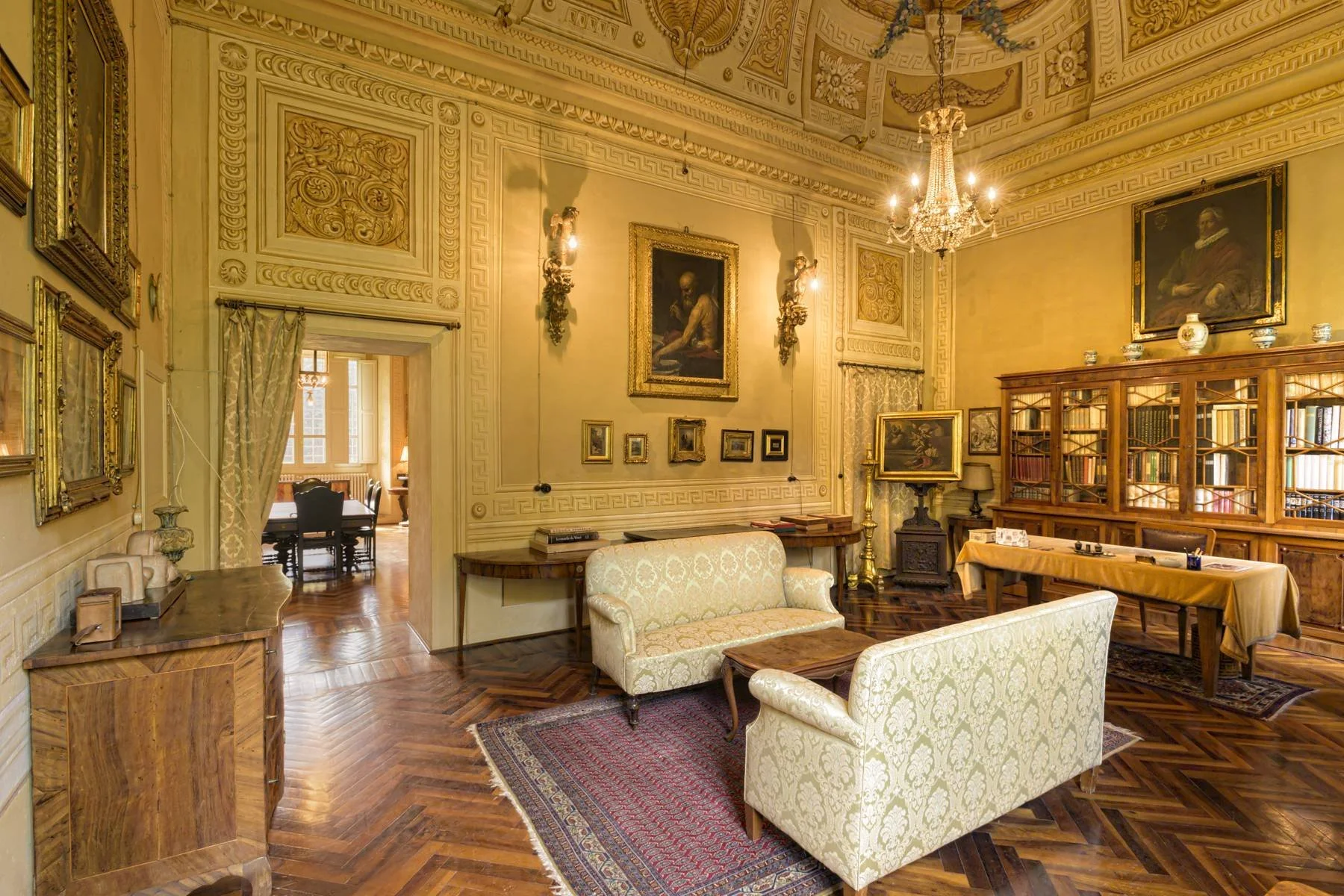
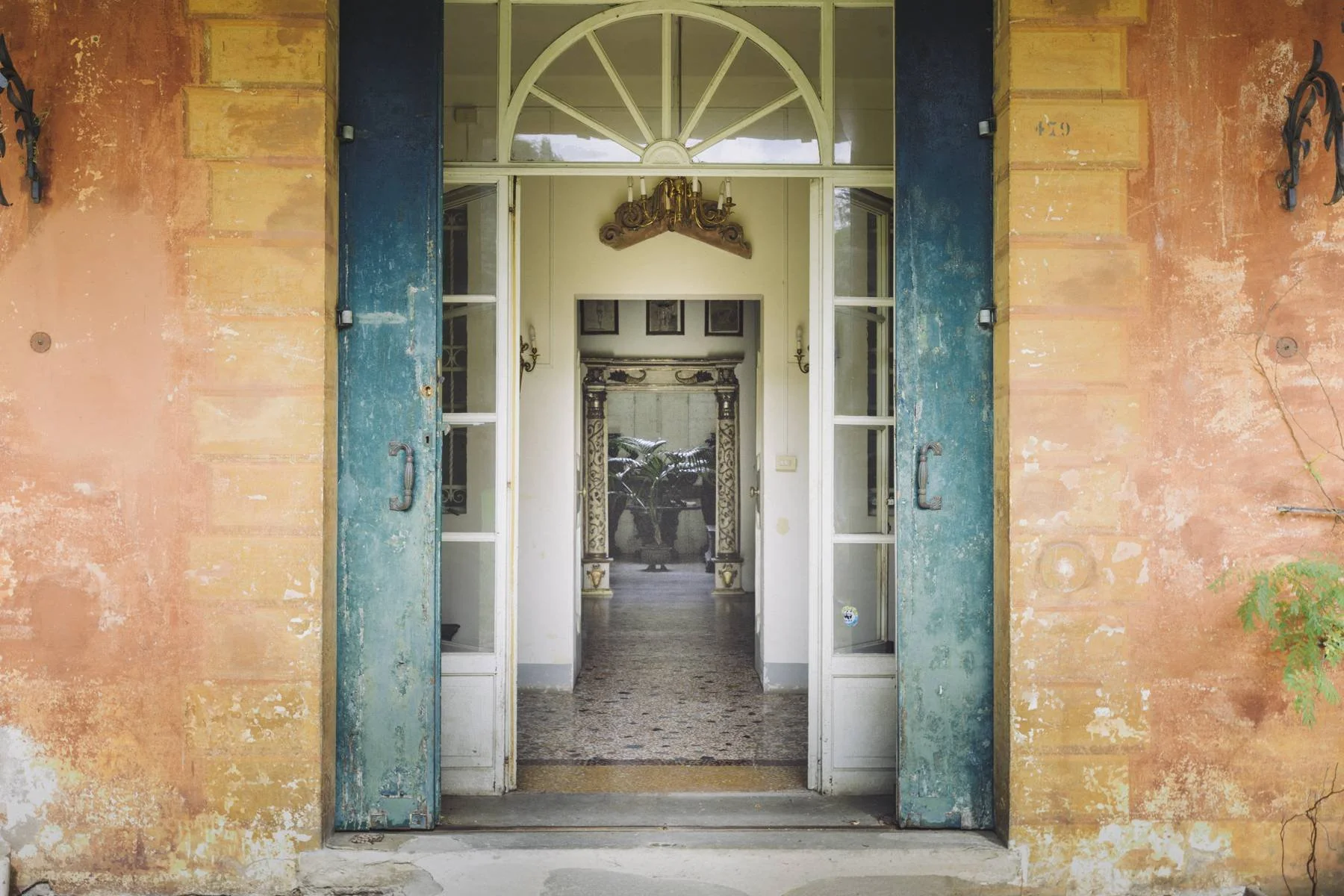
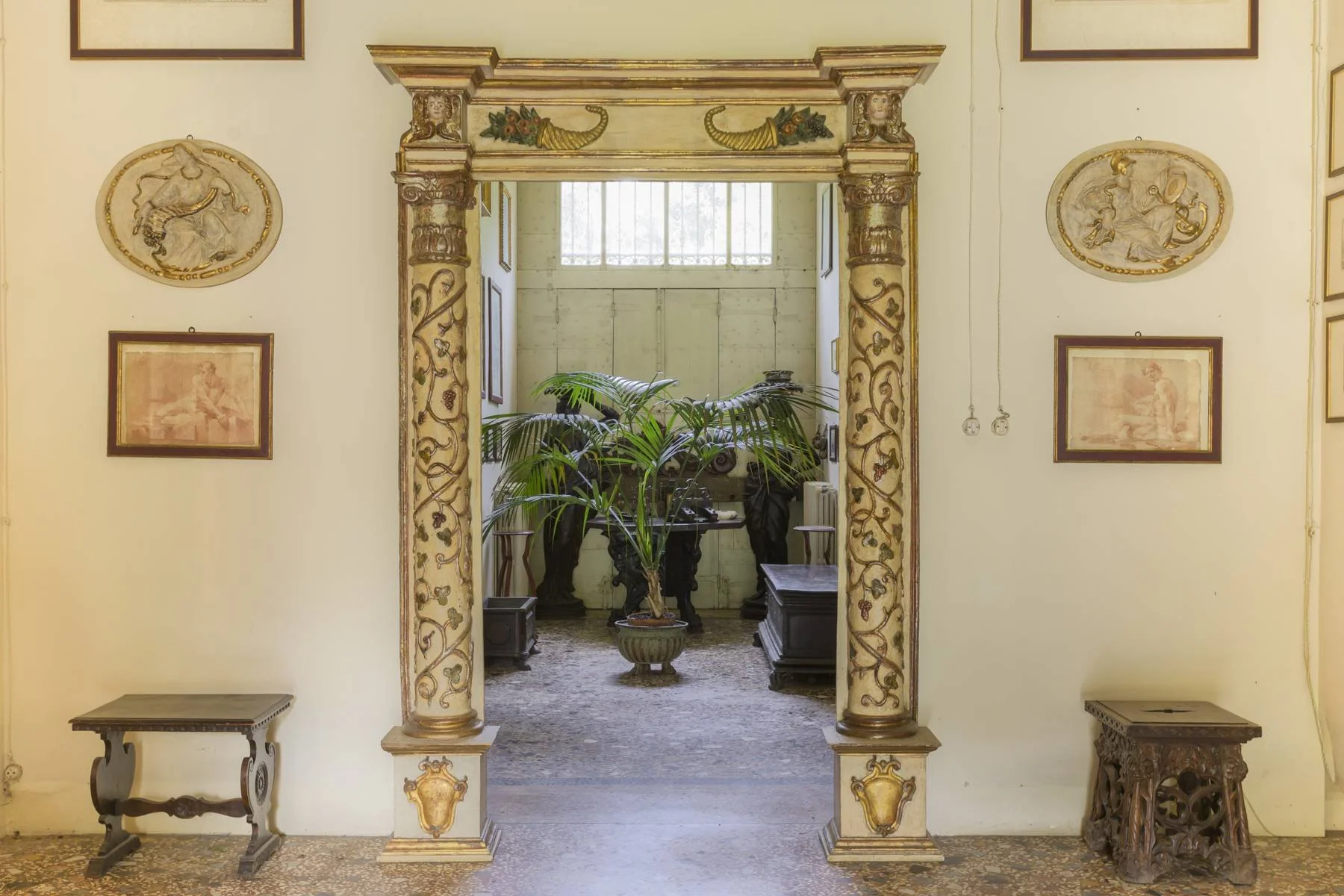
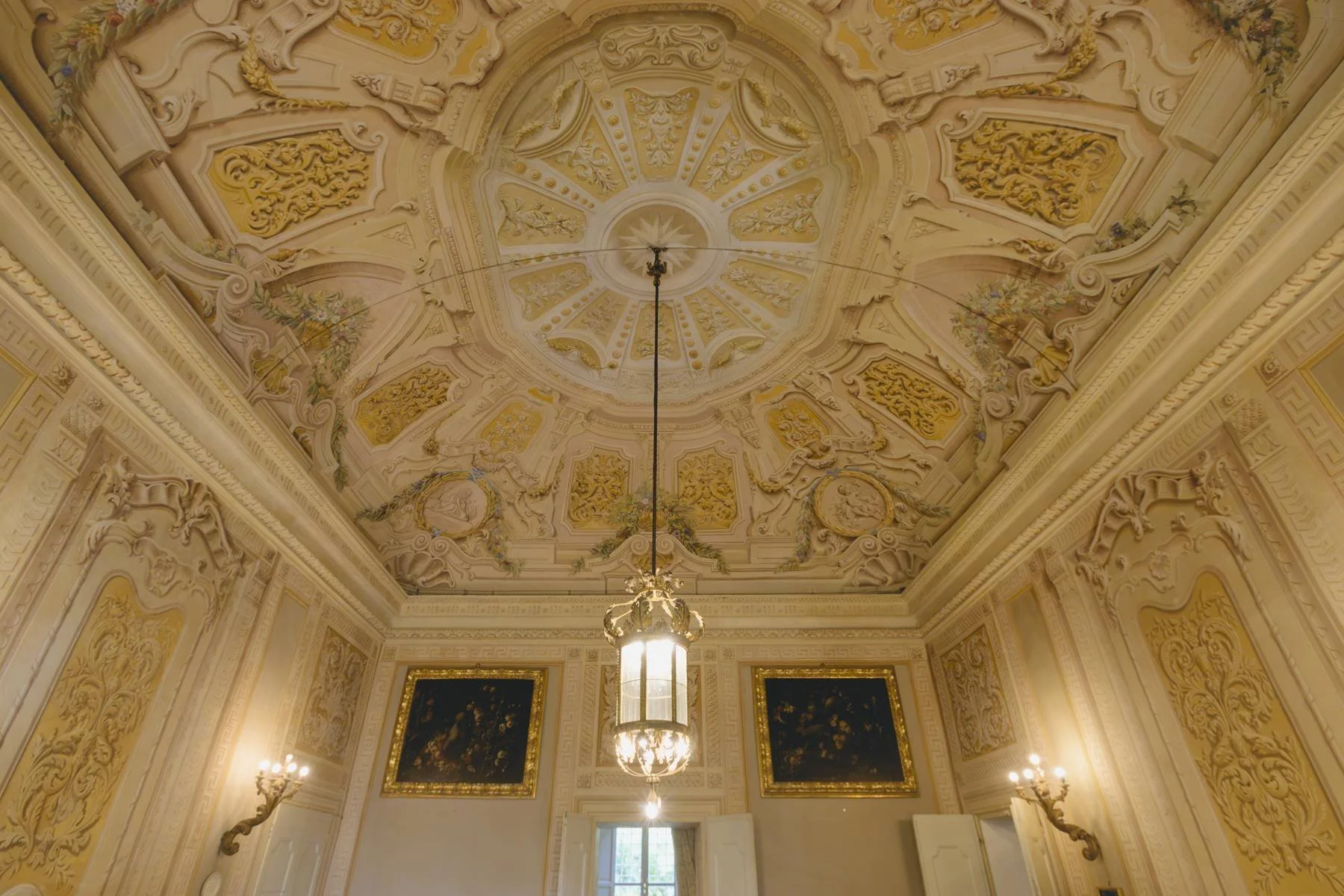
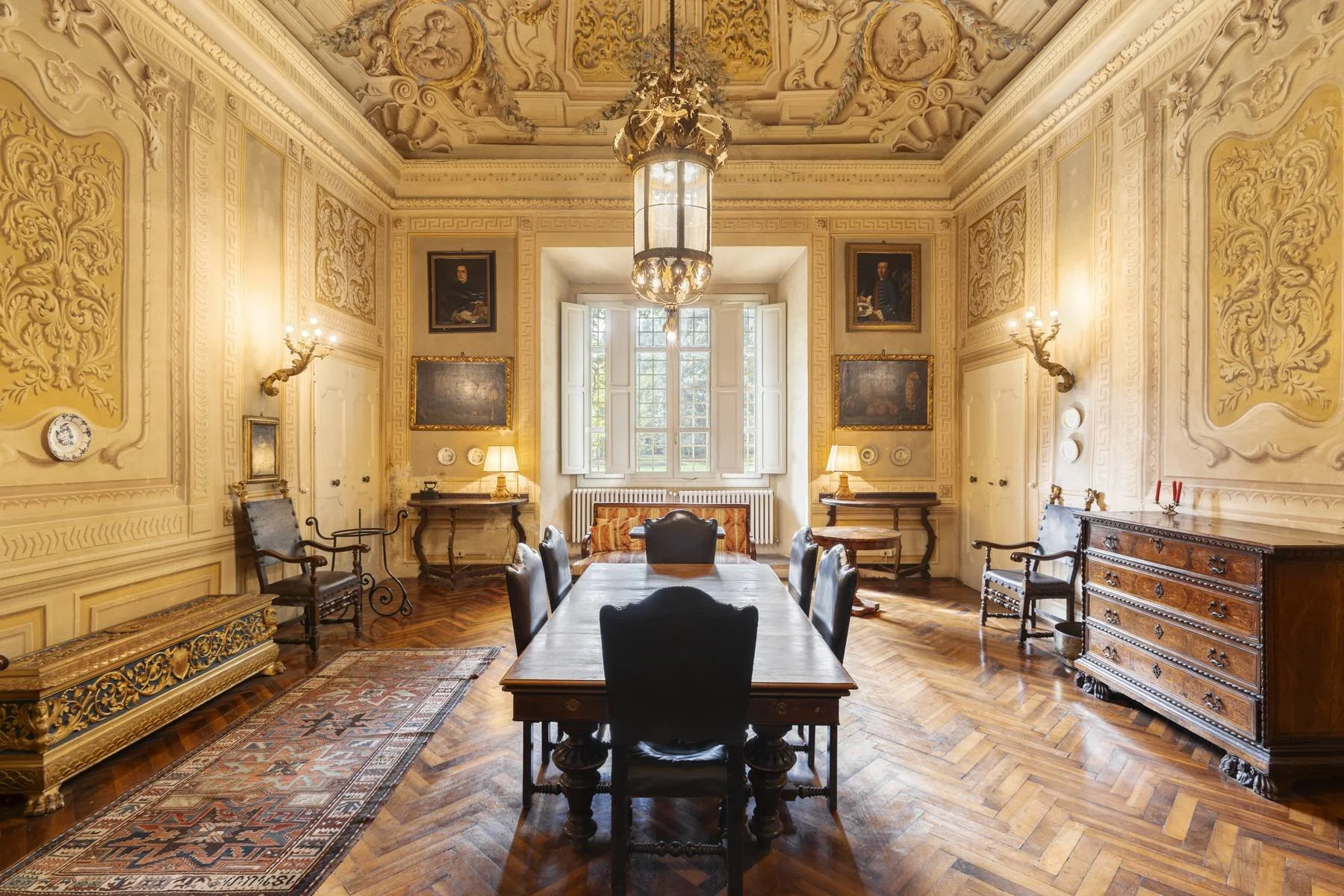
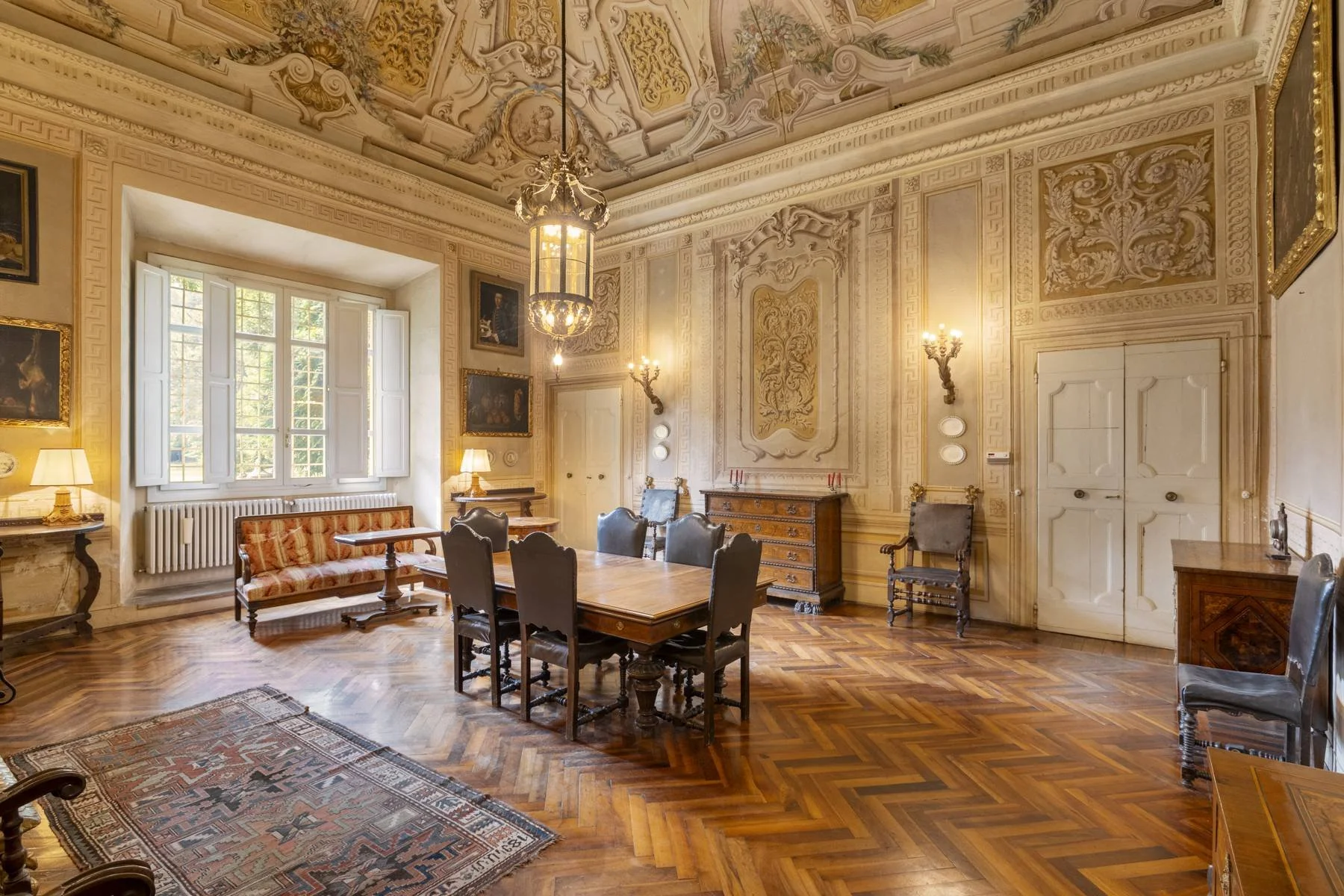
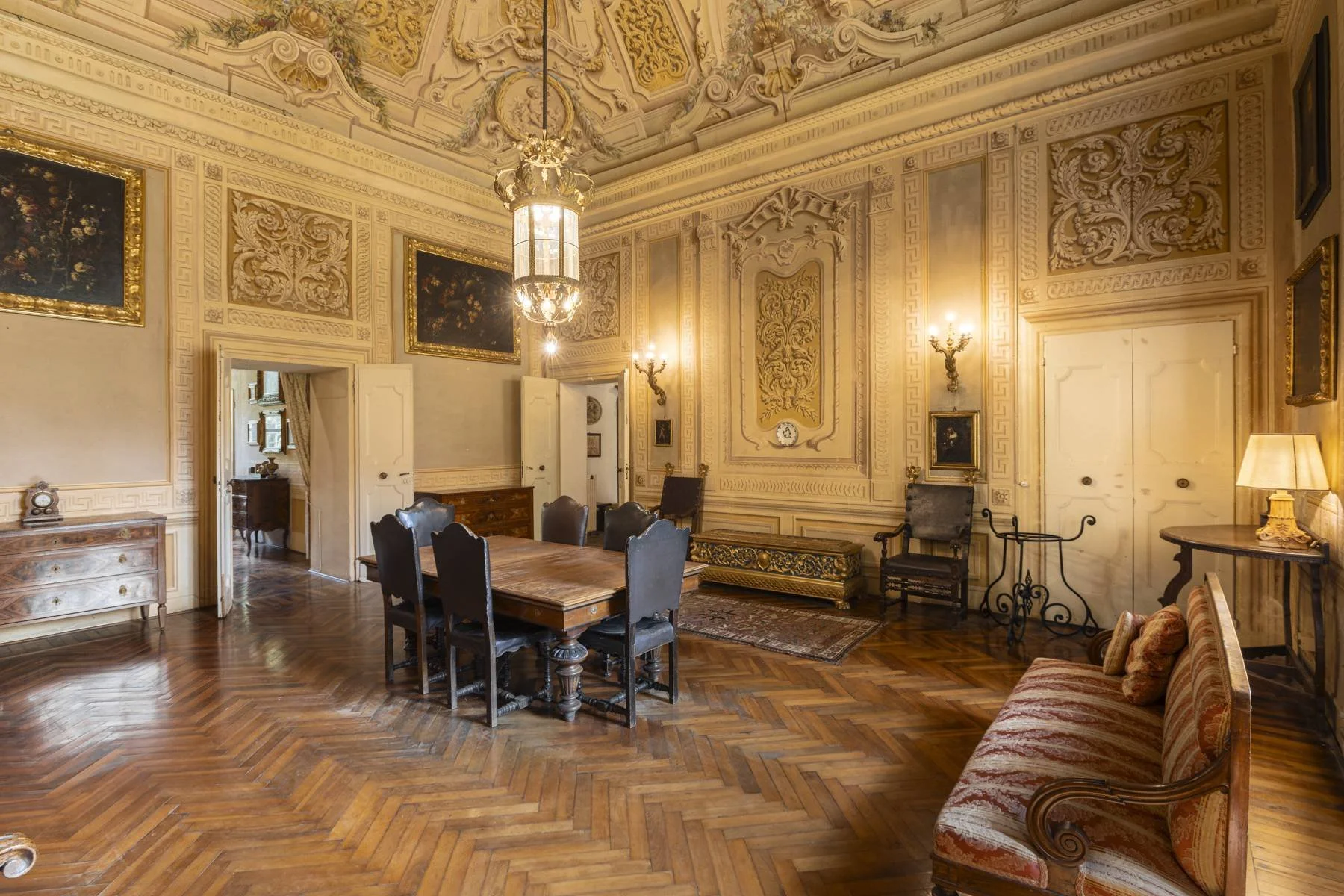
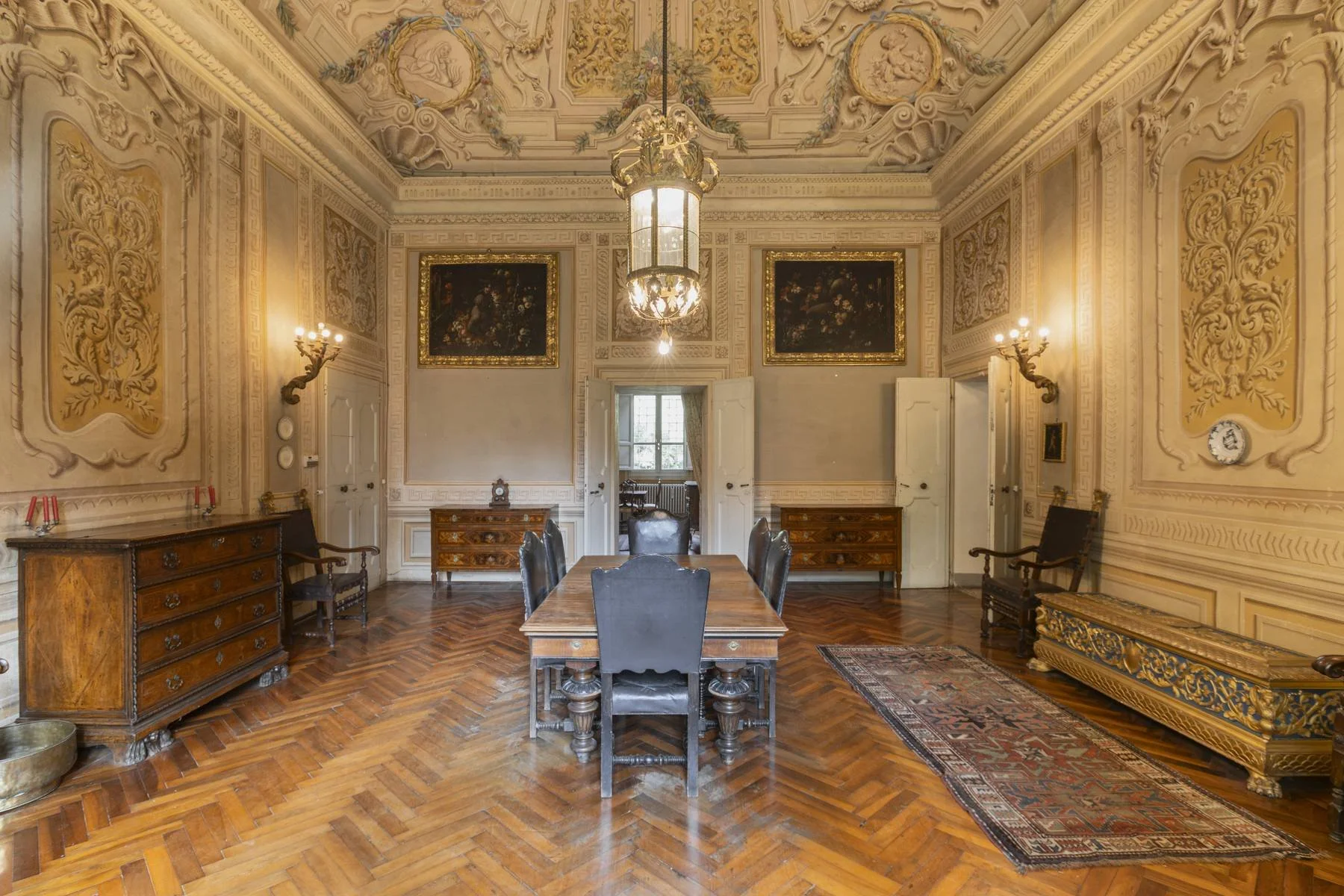
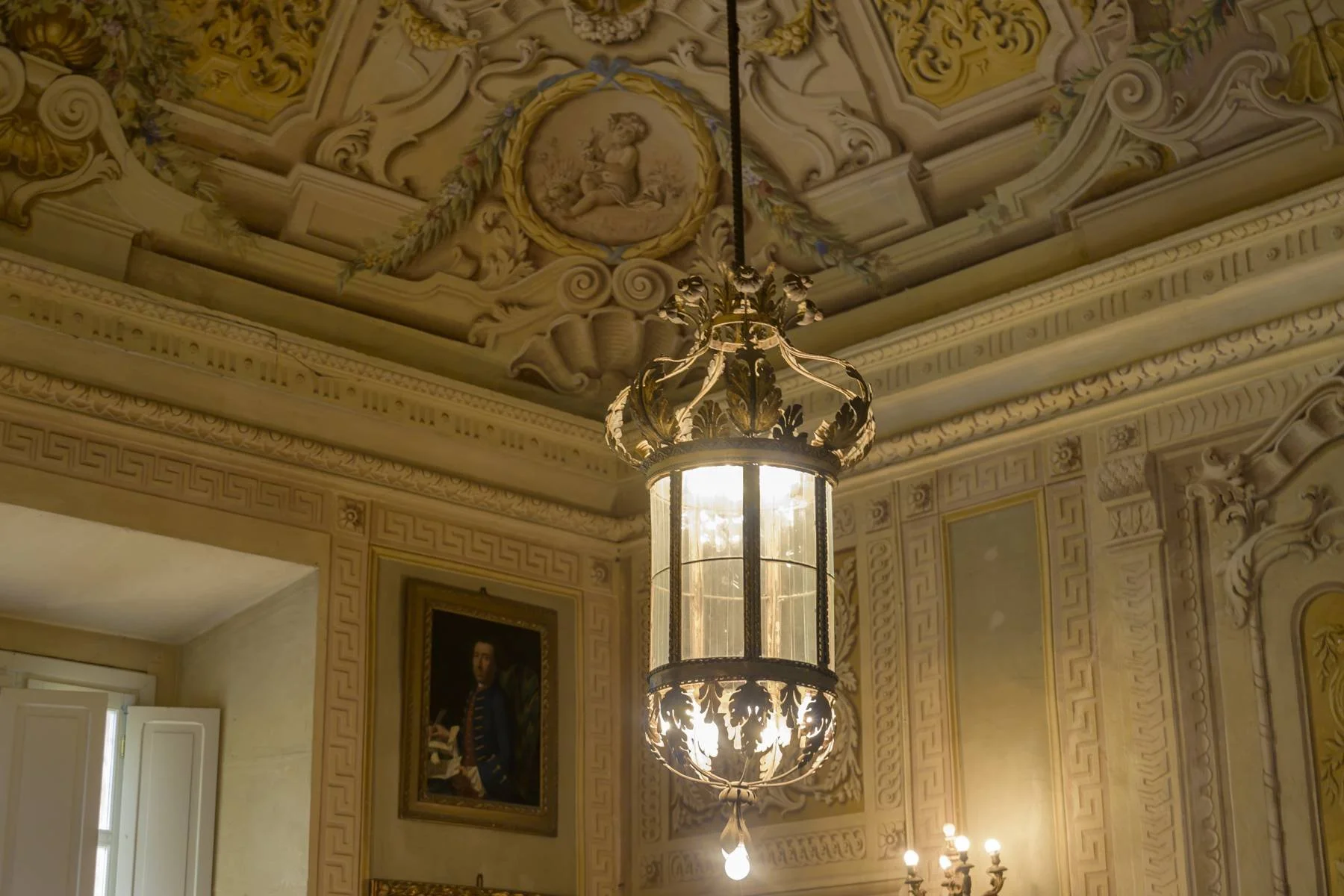
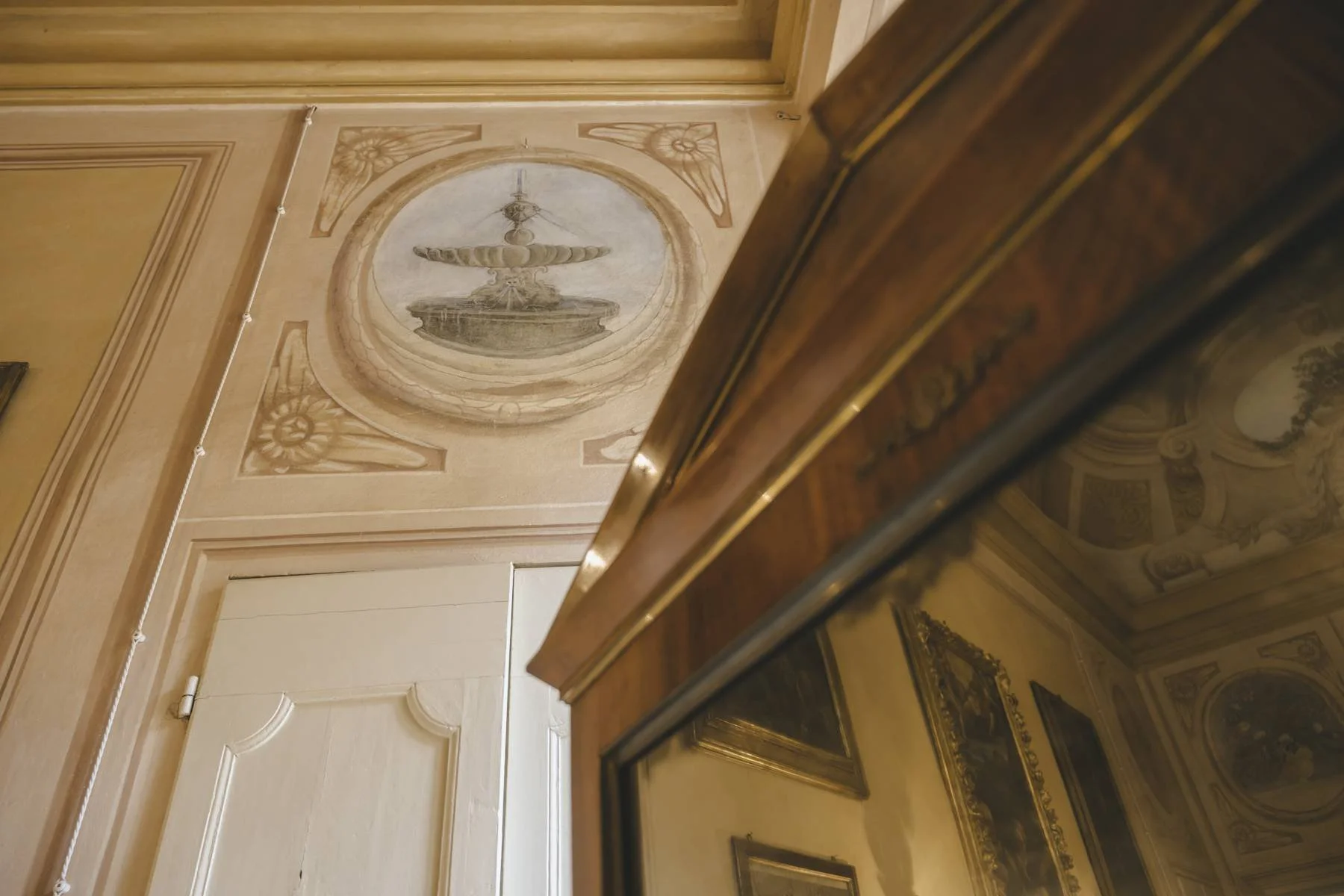
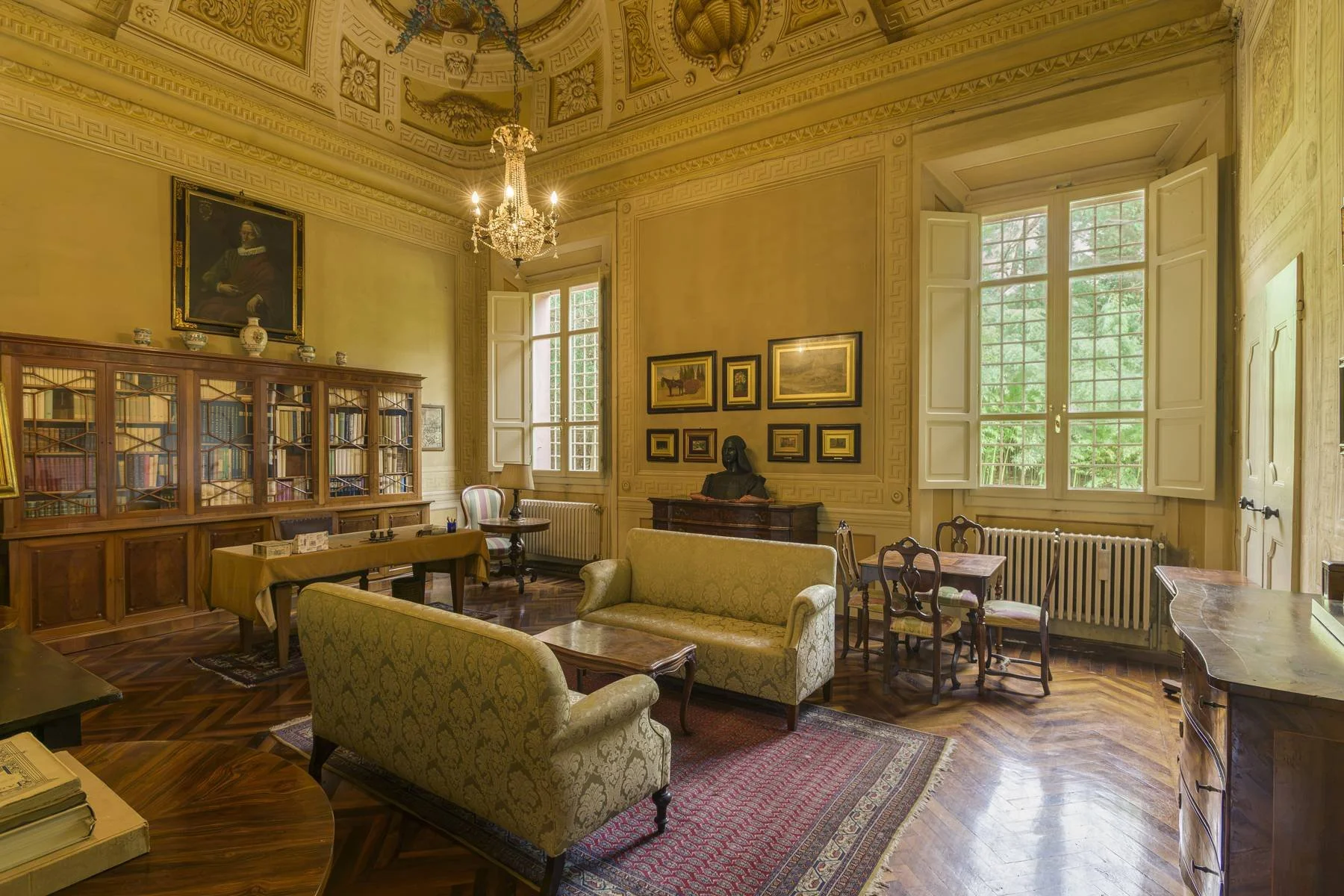
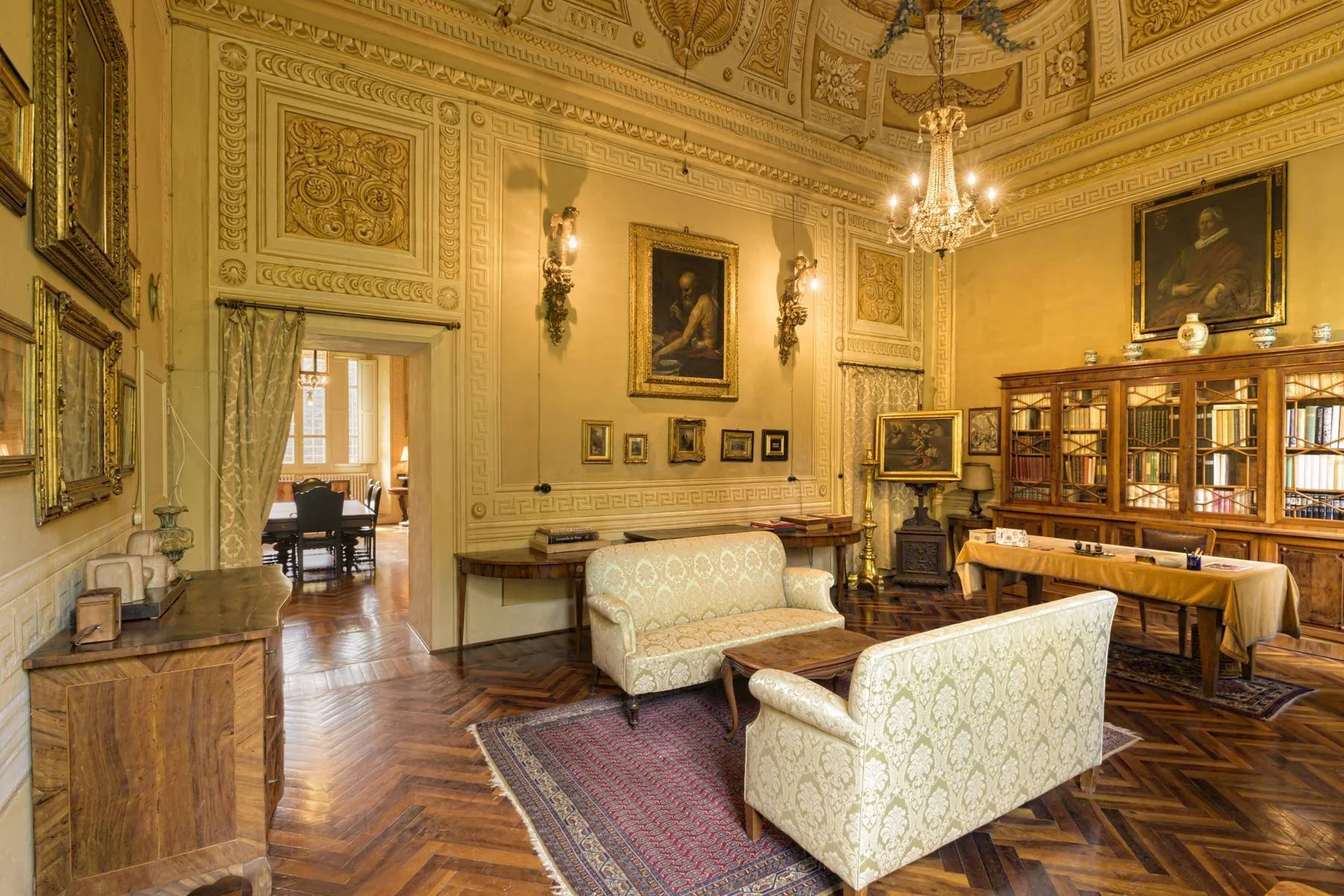
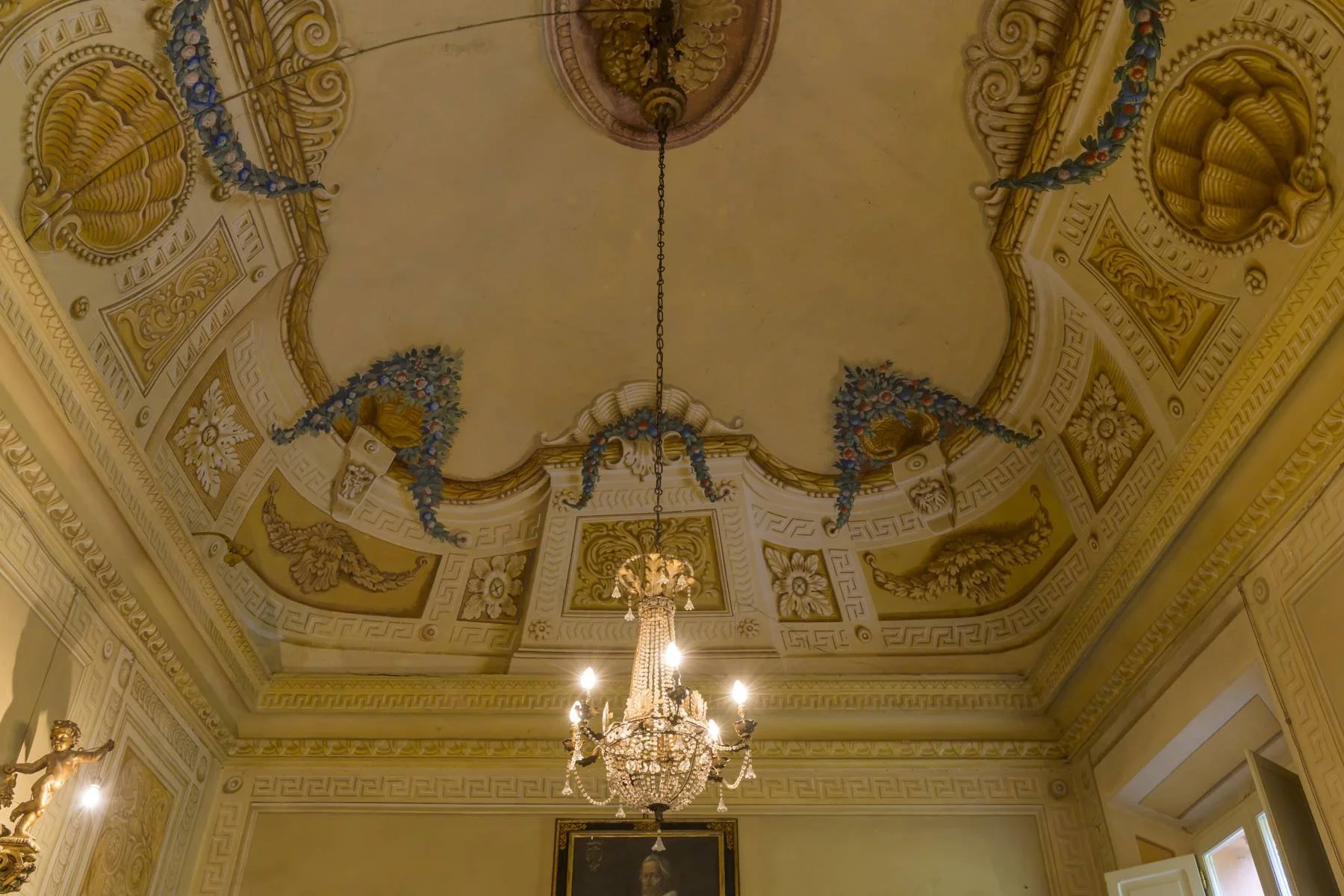
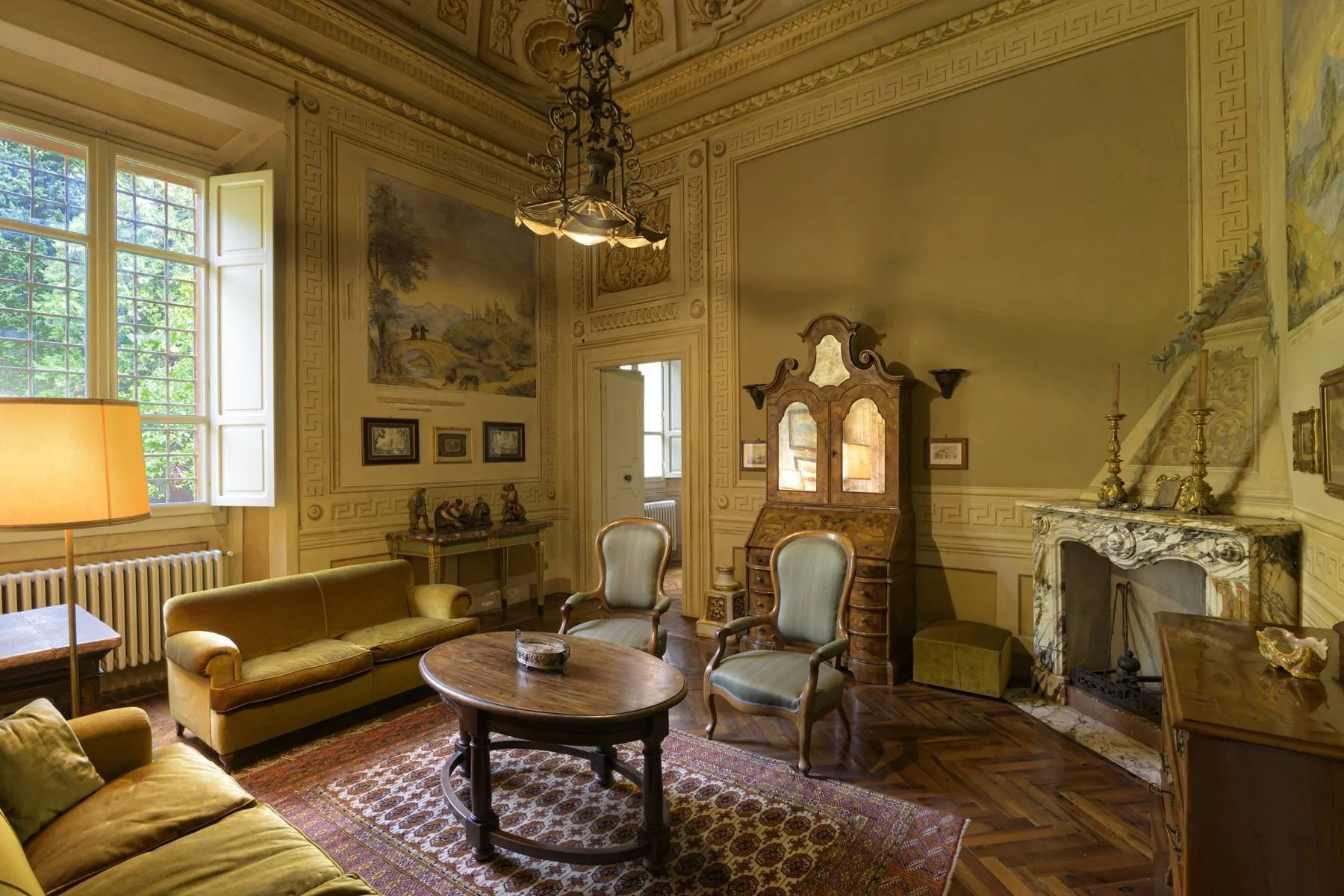
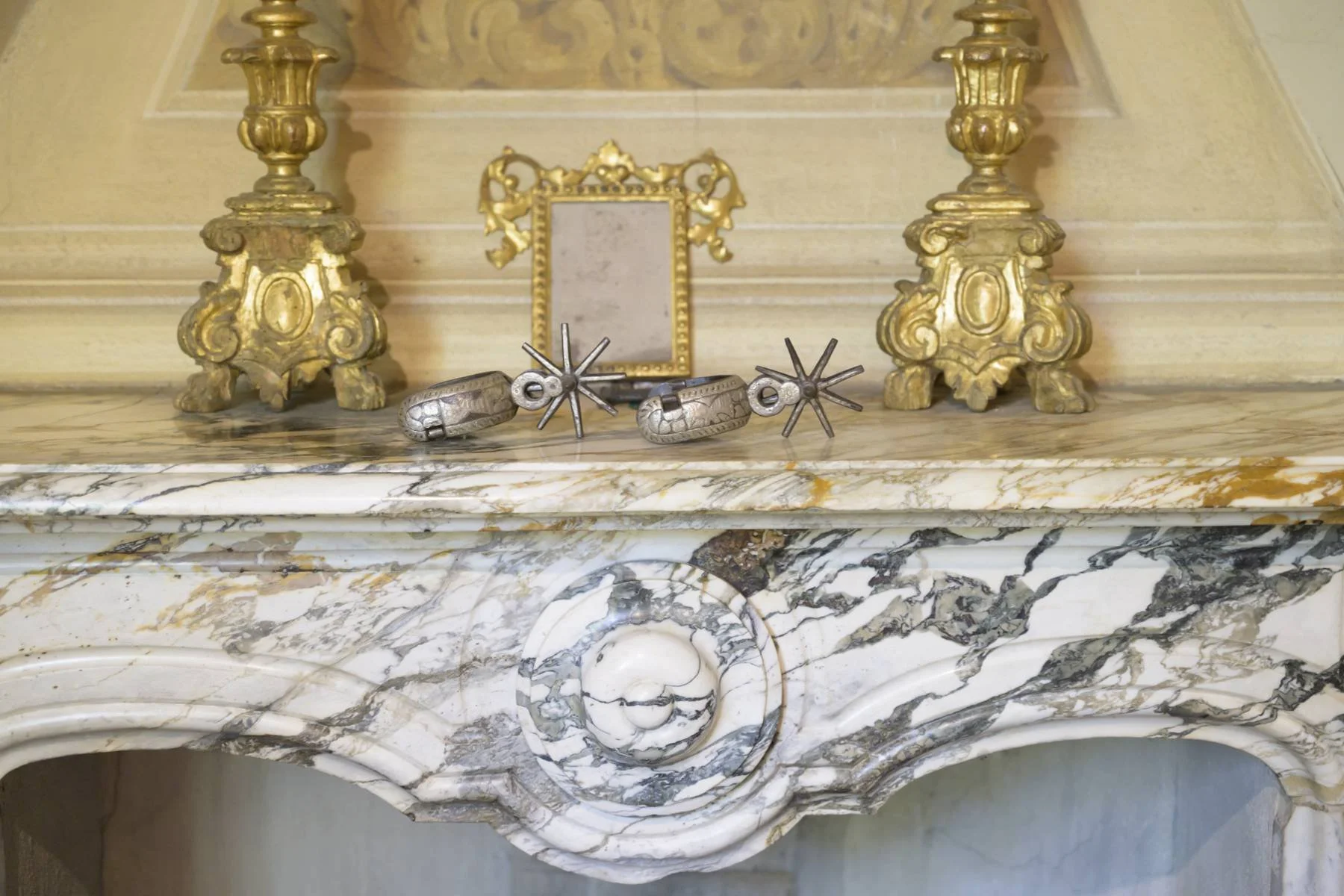
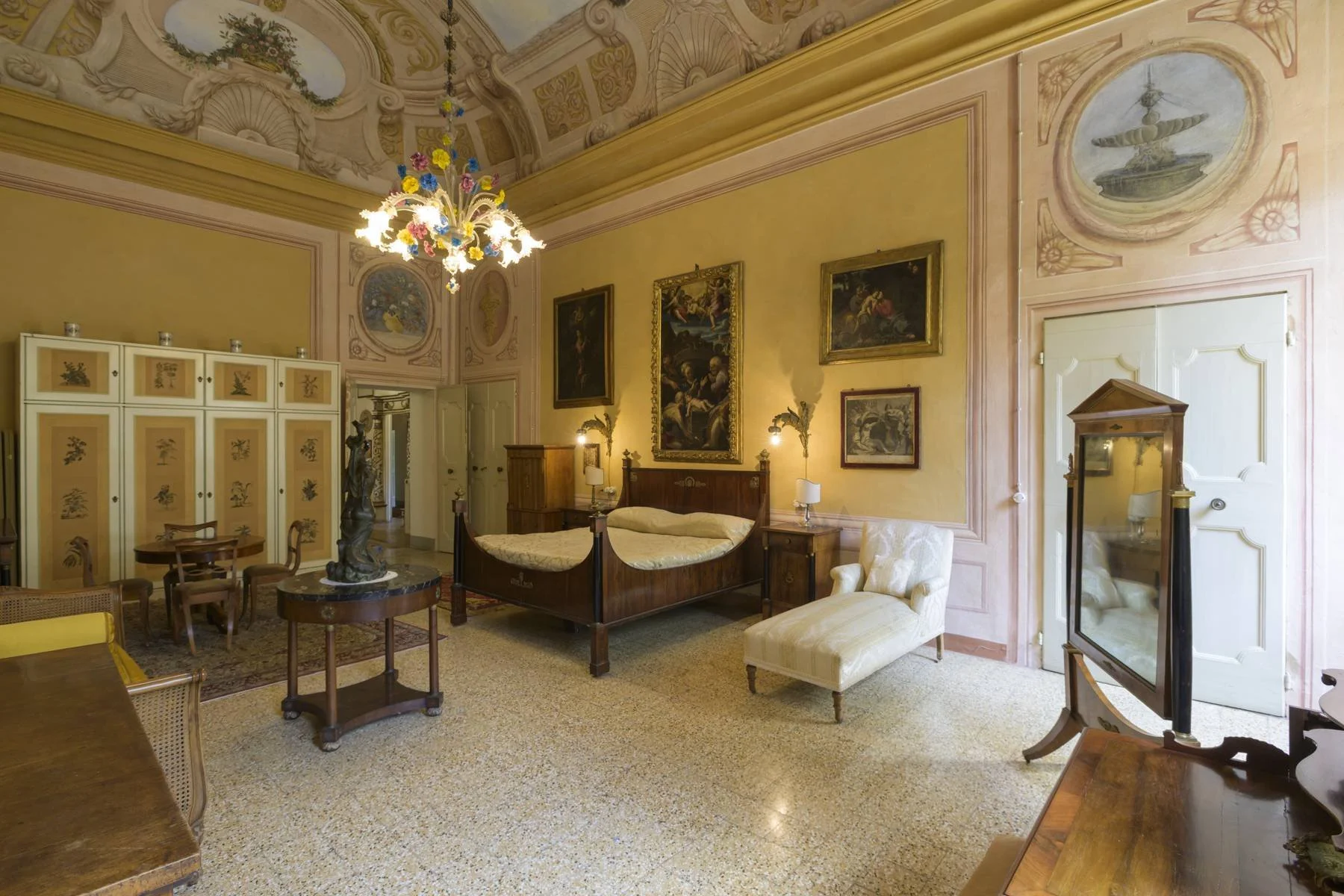
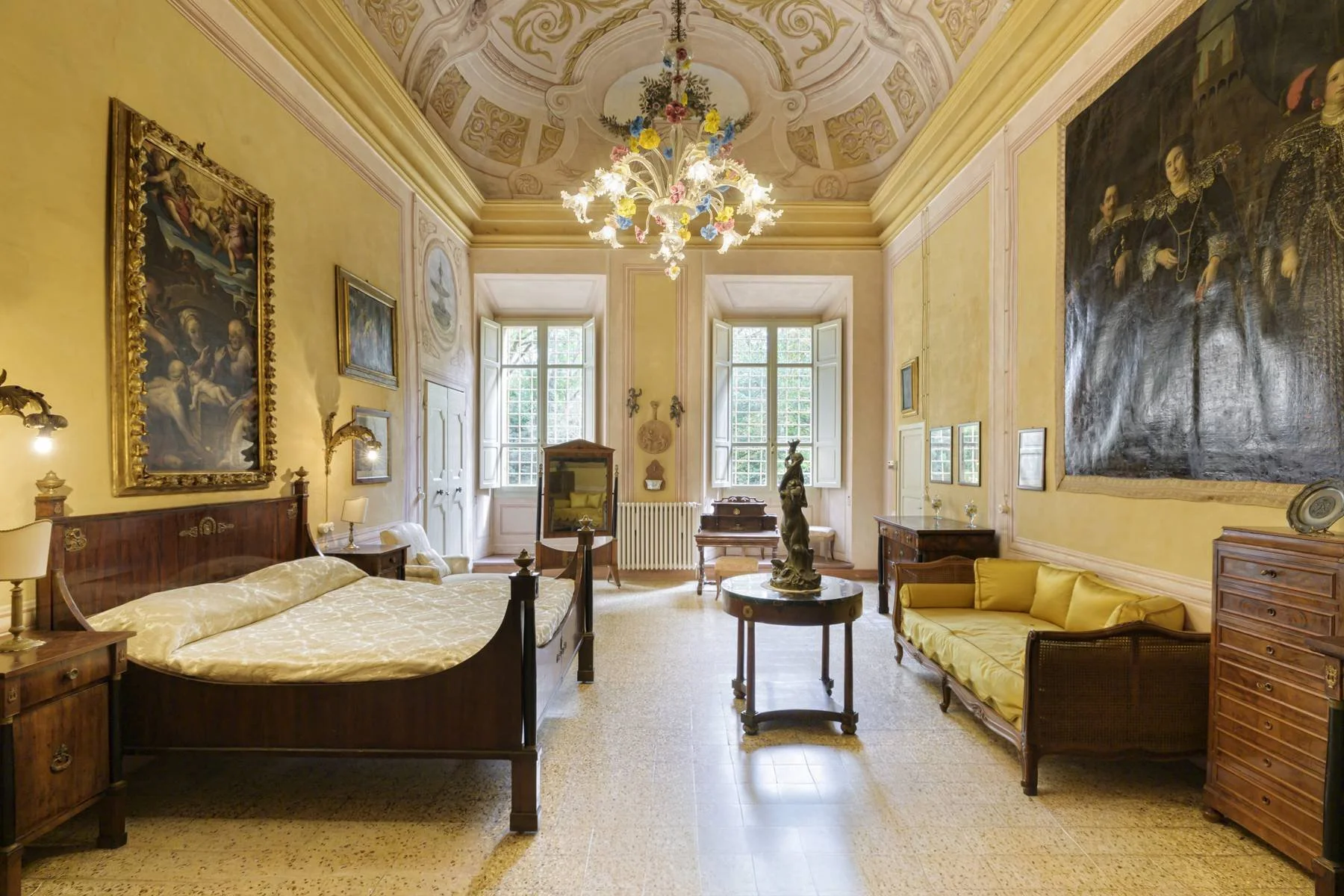
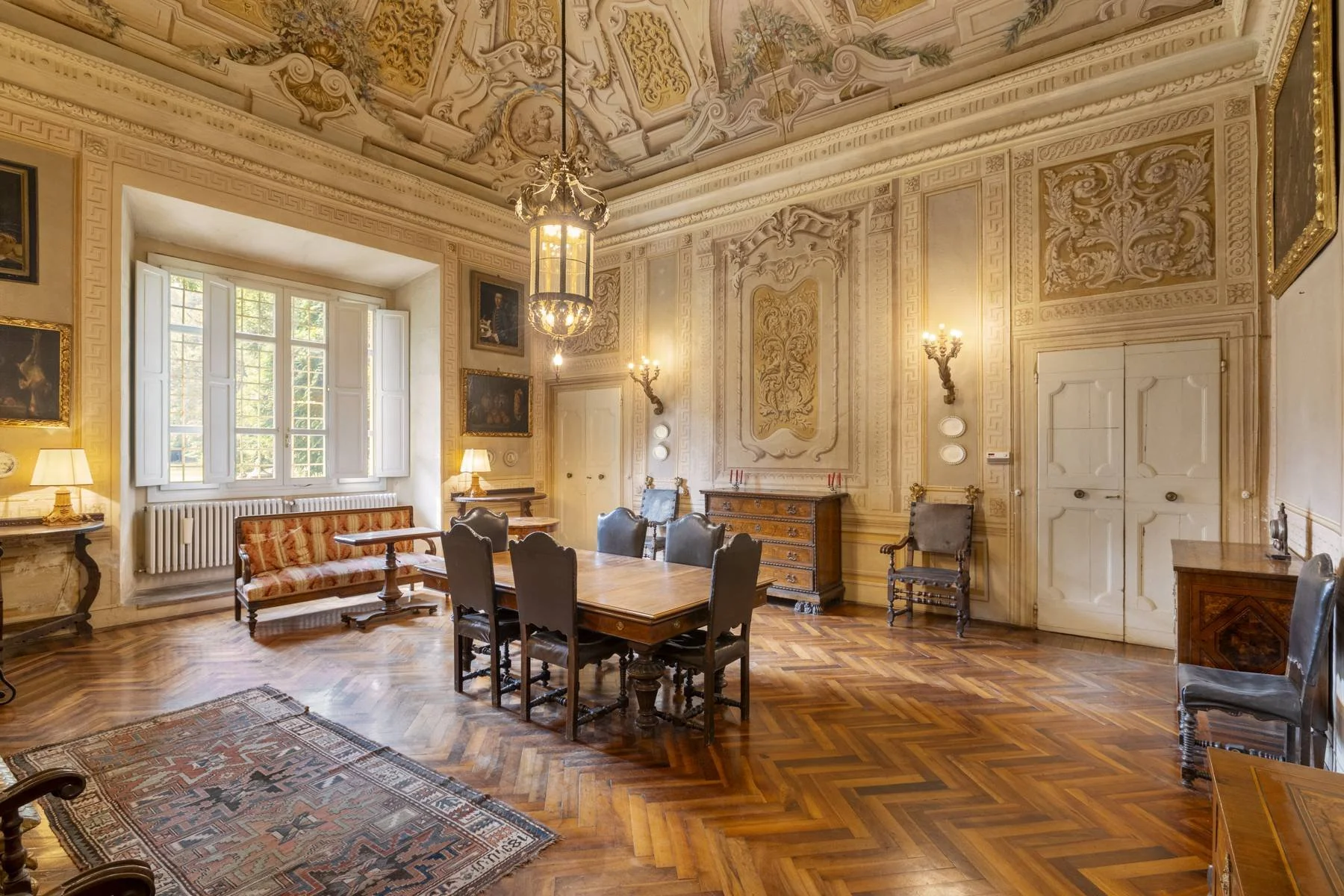
Architecturally, the villa retains the symmetrical composition of its Renaissance origins, arranged across three floors. Its interiors contain frescoed decoration, historic fireplaces and a succession of rooms reflecting the scale of the former aristocratic residence. The precise dates and artists responsible for the painted interiors have not been established, and the building may have undergone alterations under its successive owners.
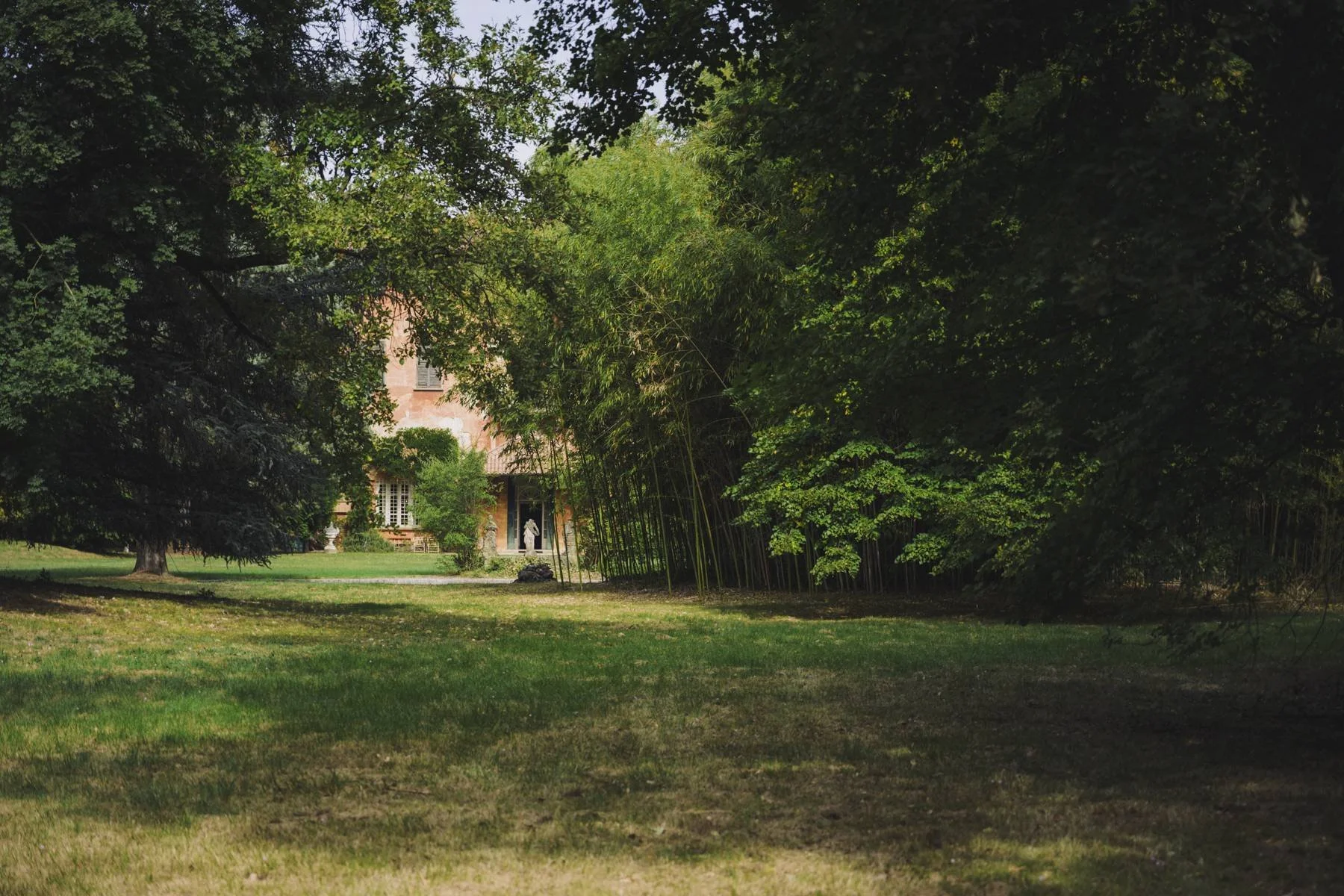
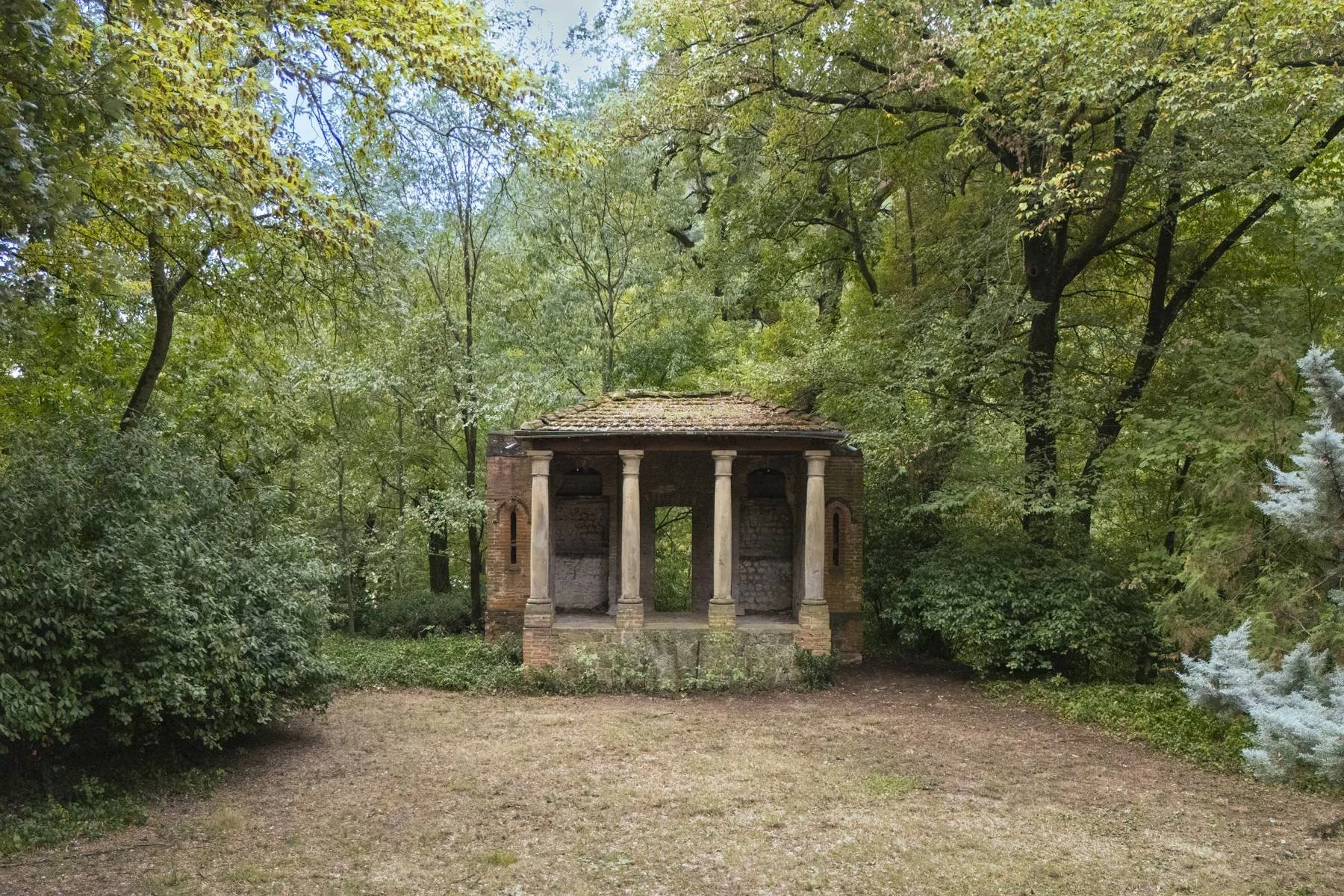
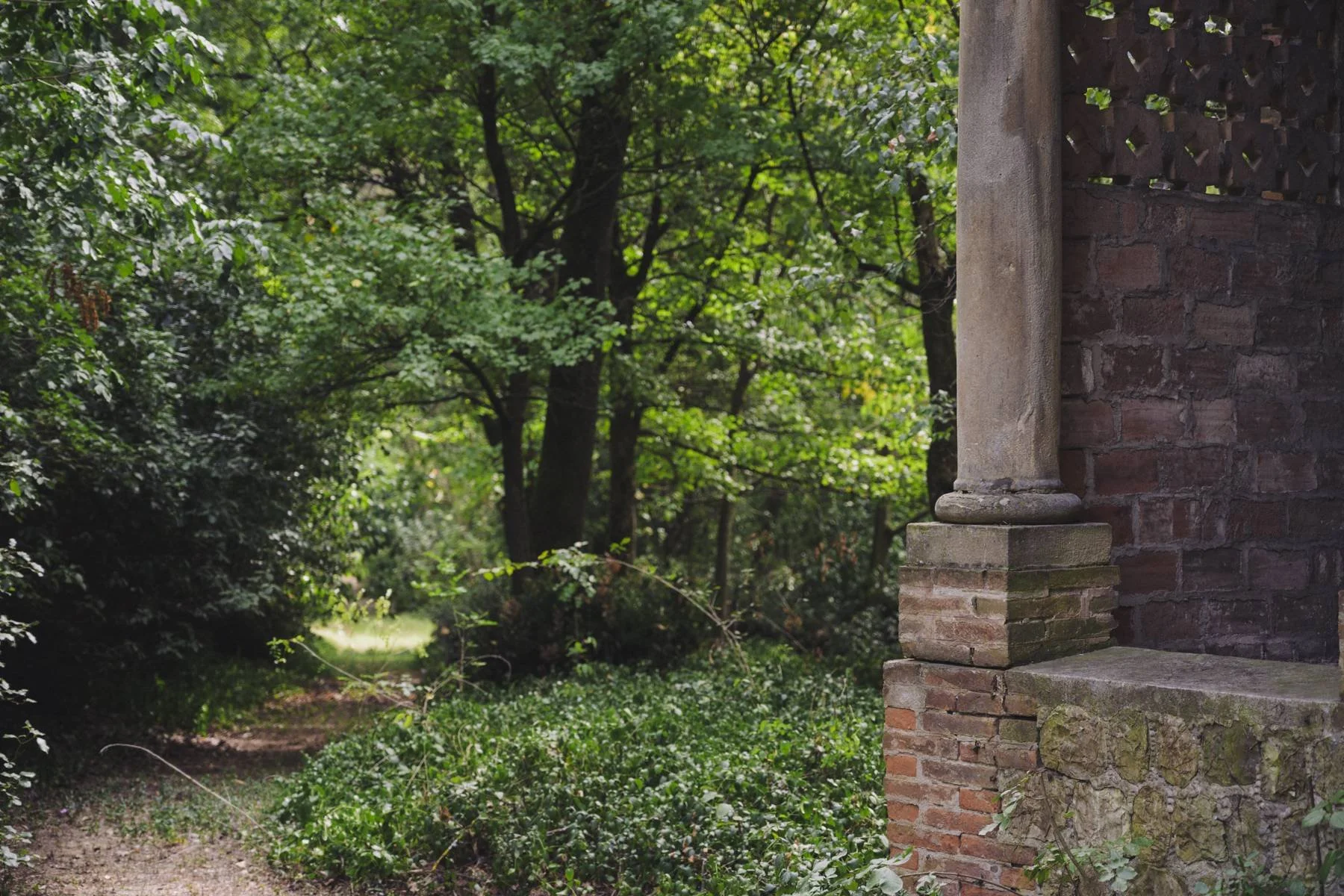
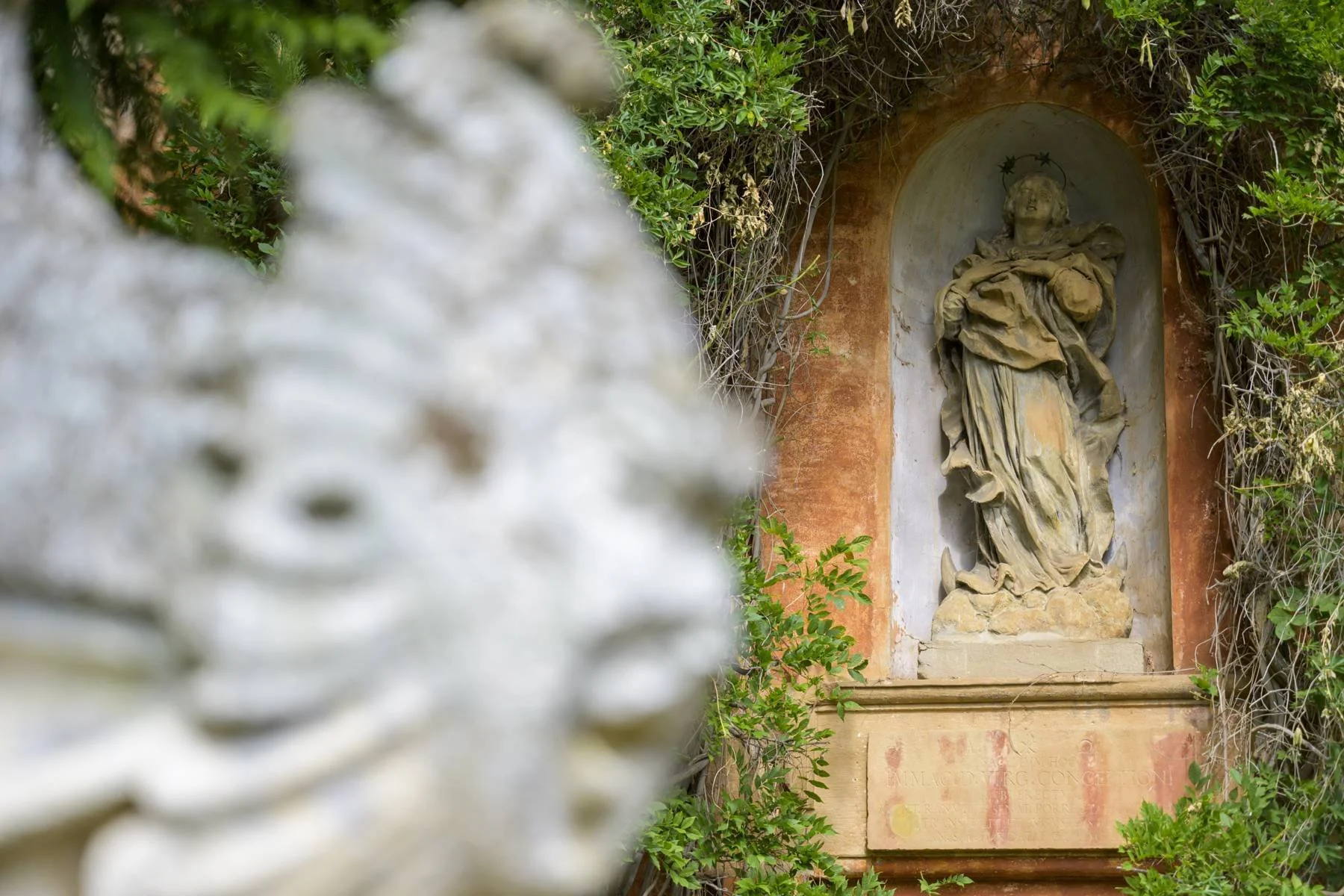
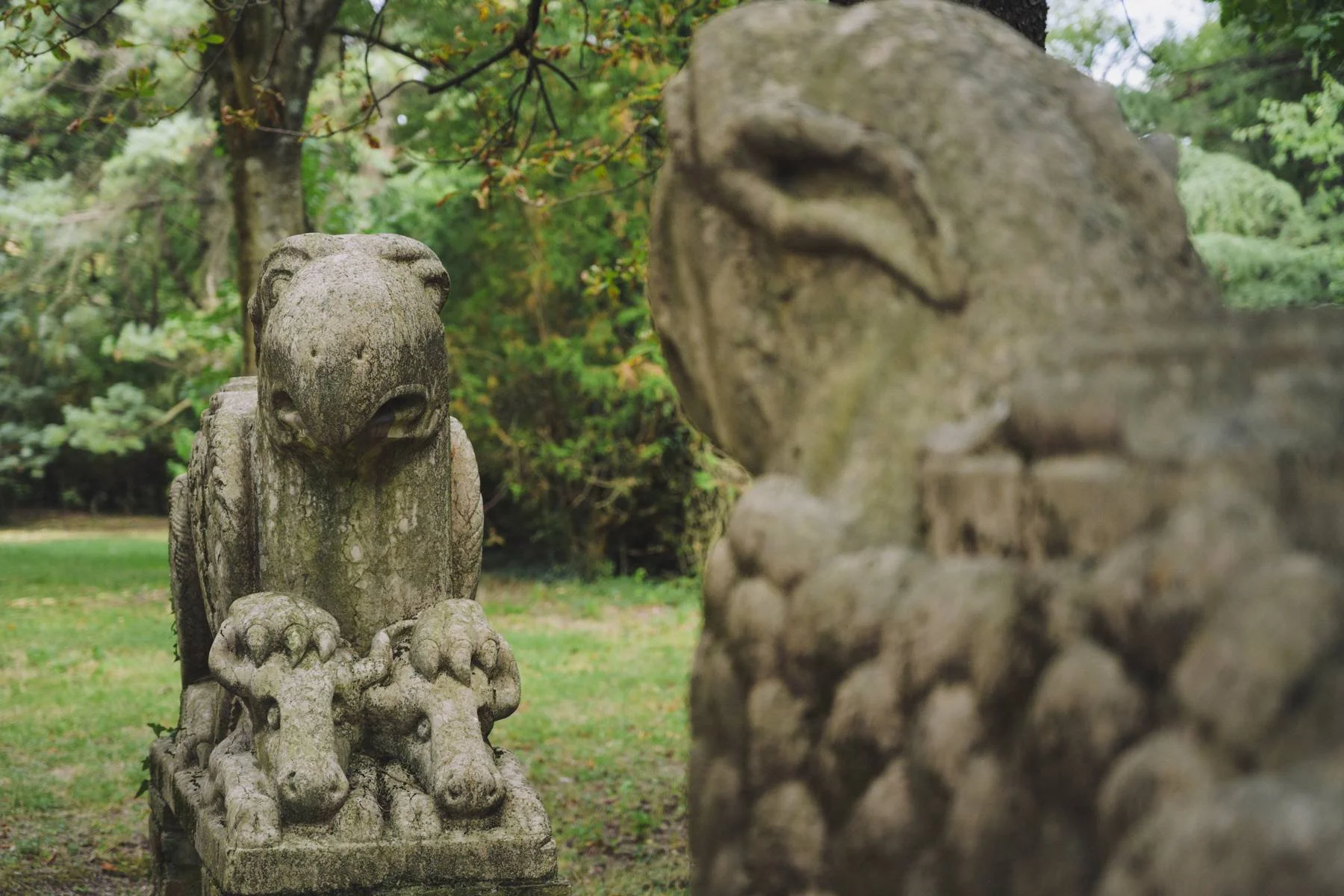
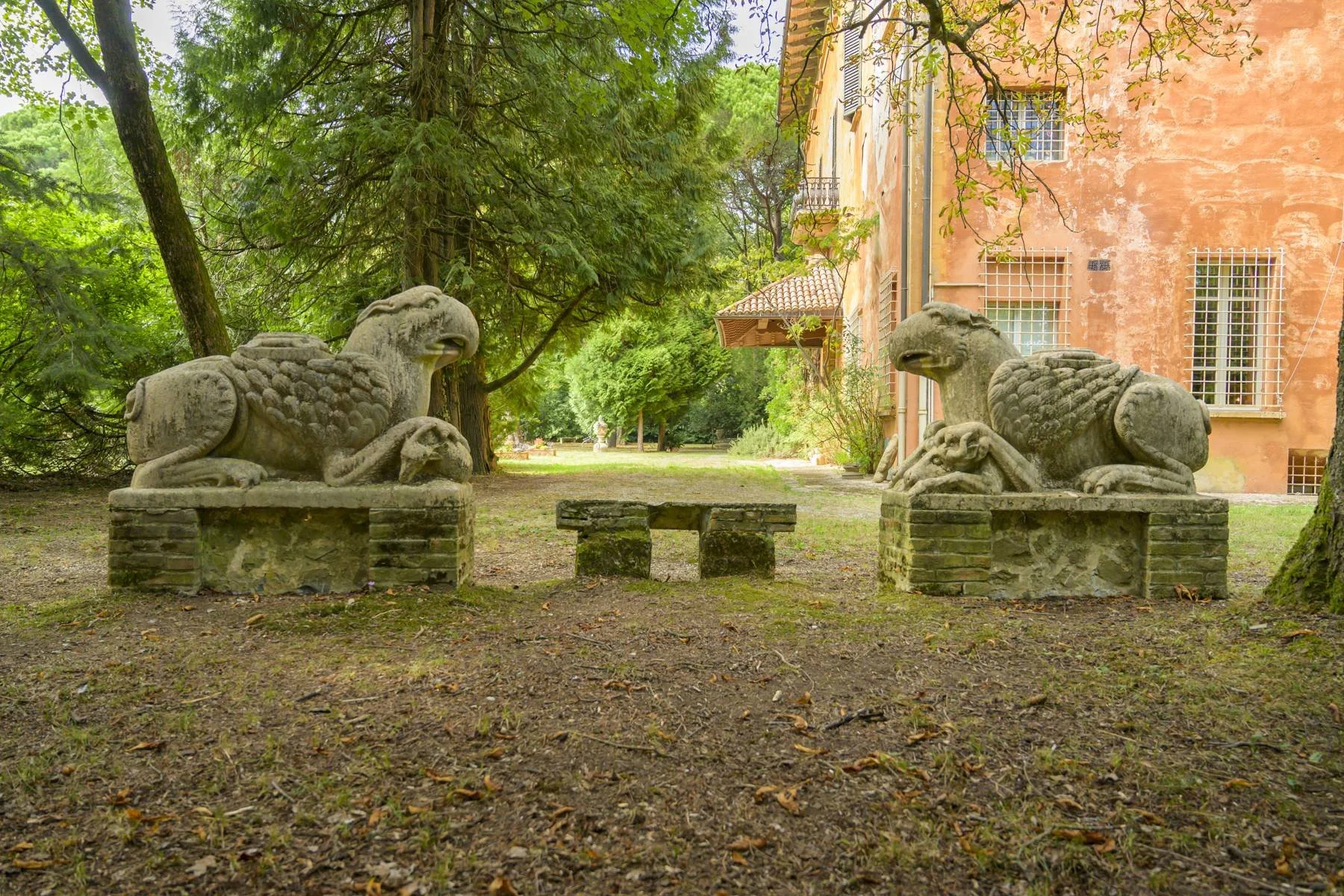
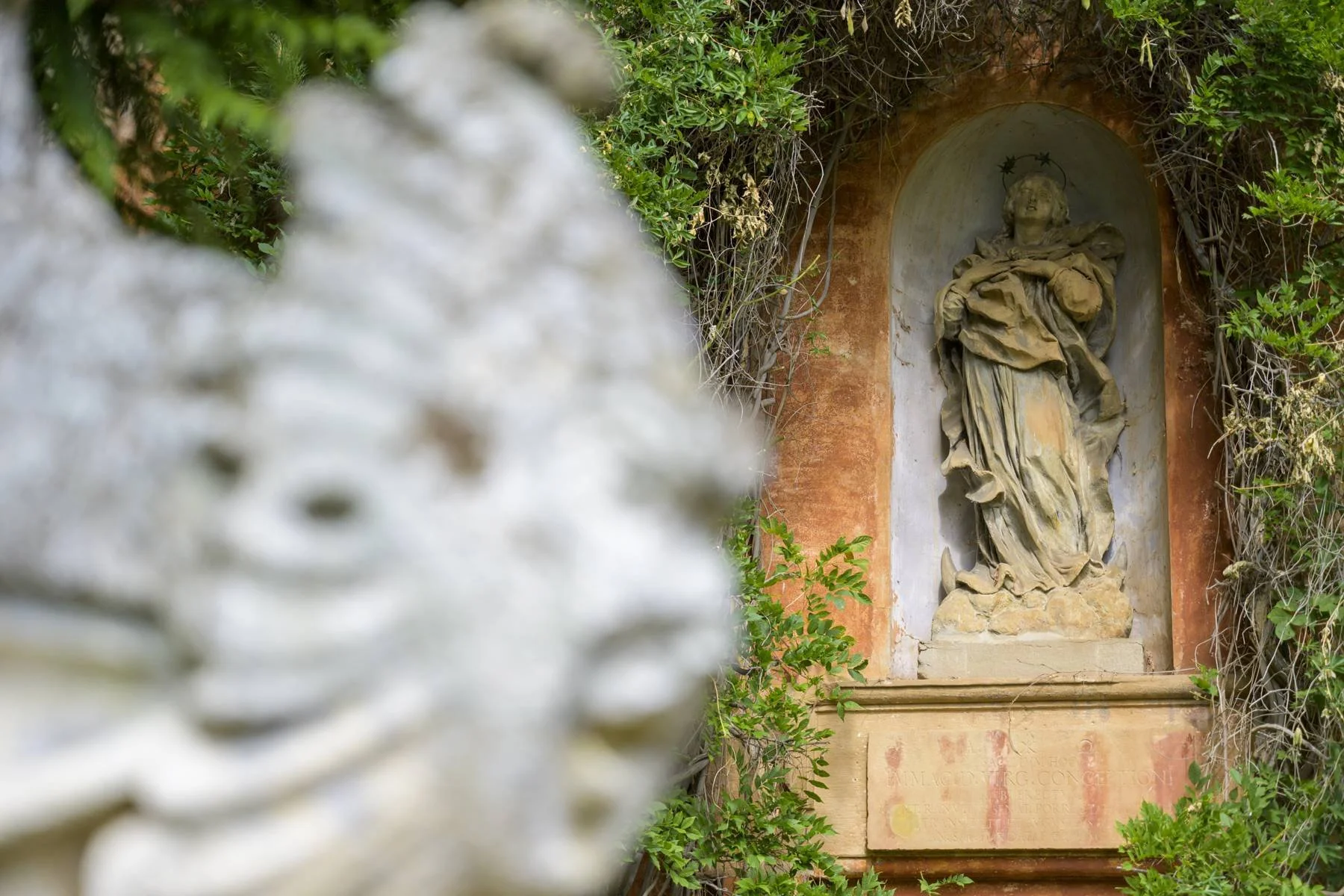
Outside, the surviving park is among the property's most distinctive features. Mature trees and dense vegetation surround the residence, creating a secluded landscape within the town. Weathered stone sculptures include a facing pair of fantastical creatures resembling griffins, traditionally used as symbols of strength and guardianship. Elsewhere, a devotional statue of the Virgin Mary stands within an arched niche, while a small columned pavilion occupies a clearing among the trees.
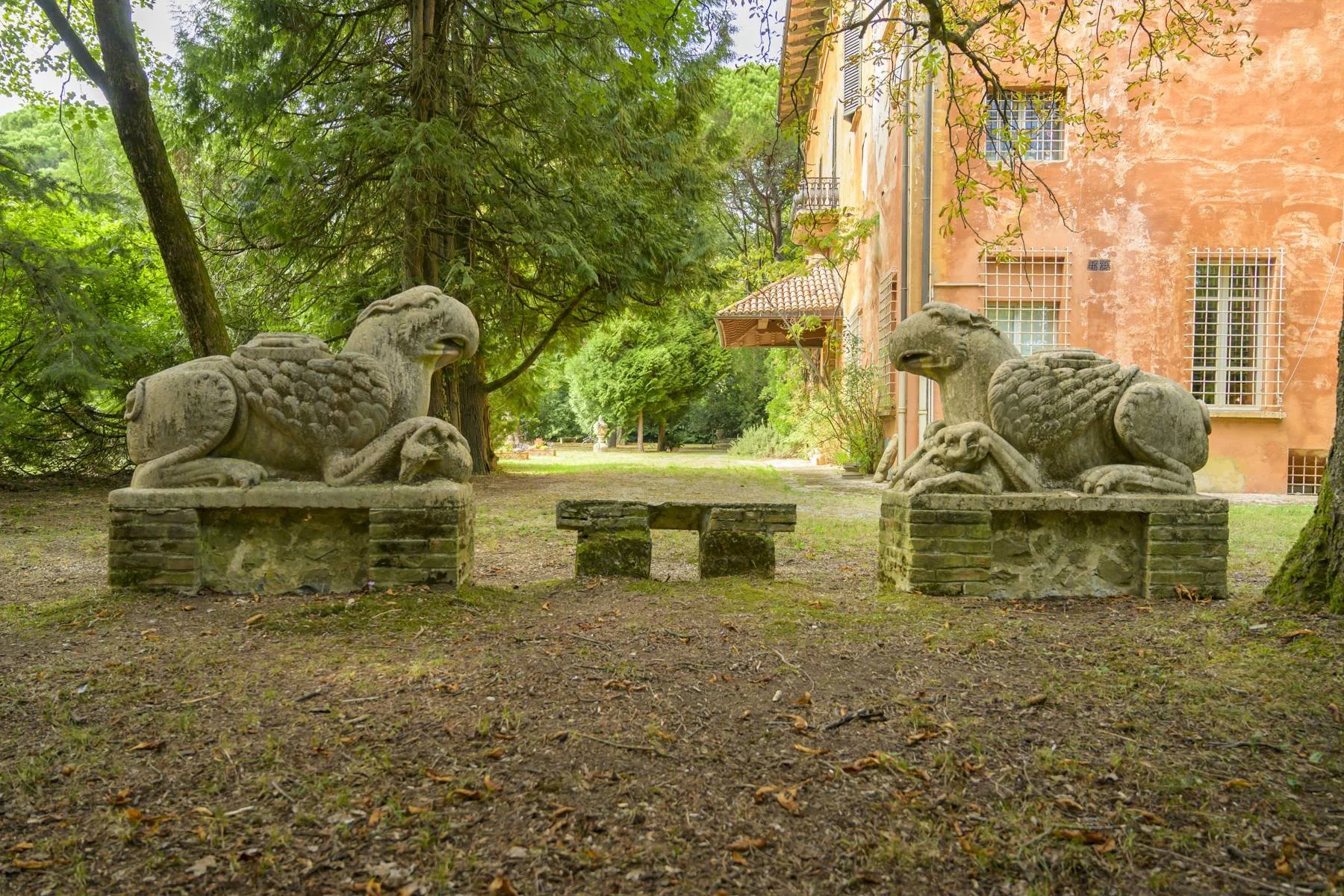
These features point to the different ways the grounds have been used and altered over time, although the dates and original purposes of the sculptures and pavilion remain undocumented. The Marian shrine is especially interesting in the context of the villa's earlier religious associations, but no direct connection between the surviving statue and the 1787 sanctuary episode has been established.
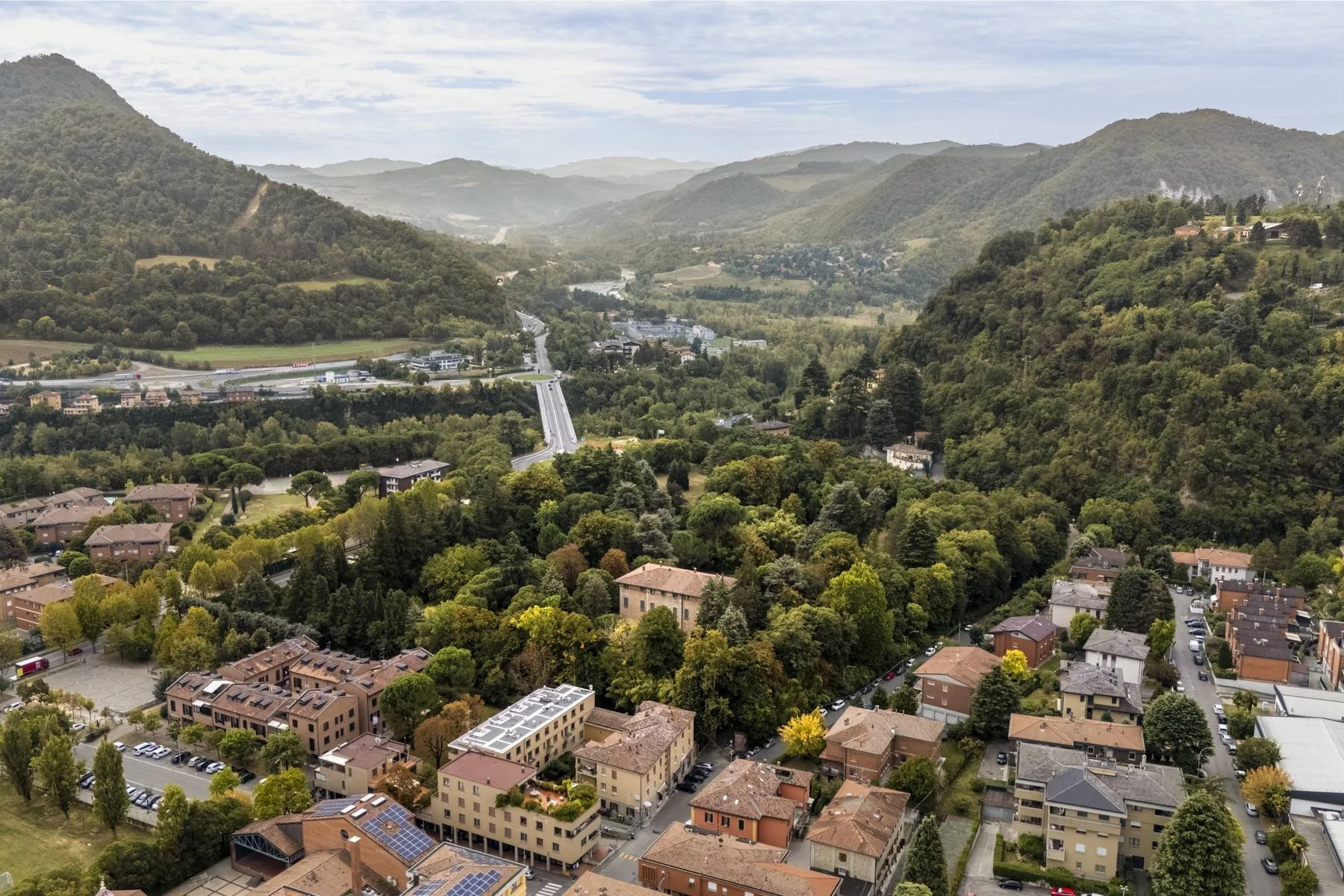
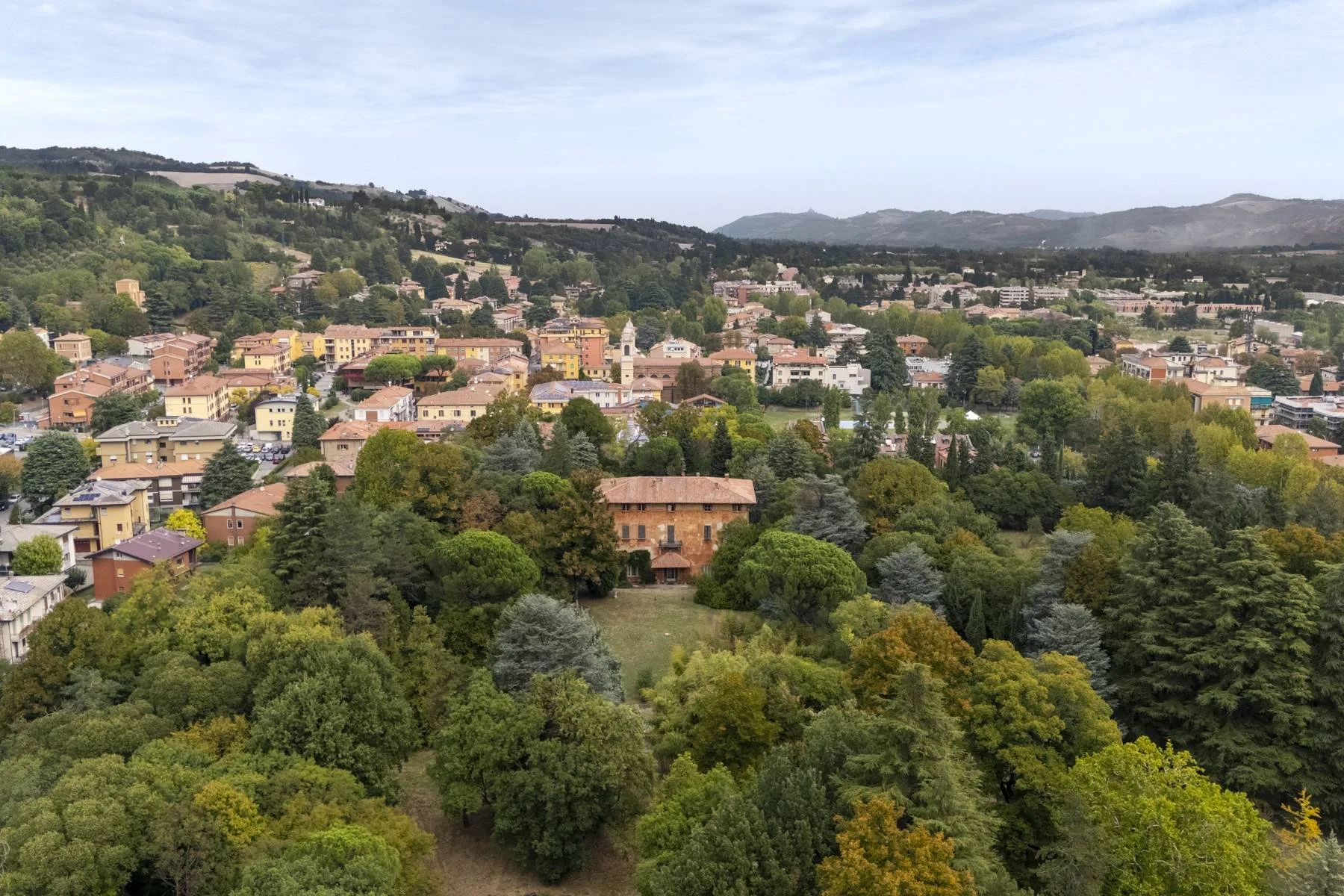
Today, Villa Somaglia remains enclosed within more than 13 acres of historic parkland, with its surrounding trees largely concealing the building from Sasso Marconi. Despite its position within the town, the property retains a degree of separation from its immediate surroundings, while central Bologna lies approximately 12 miles (20 km) away.
All photographs belong to the listing agency. See more on Italy Sotheby’s International Realty.