Bedrooms: 7 proposed
Interior: Approx. 13,500 ft² (1,254 m²), including adjoining mews building
Features: Grade II-listed Edwardian mansion, Portland stone façade, grand staircase, original Arts and Crafts plasterwork, oak-panelled reception rooms, marble fireplaces, courtyard garden, adjoining mews building and proposed leisure facilities.
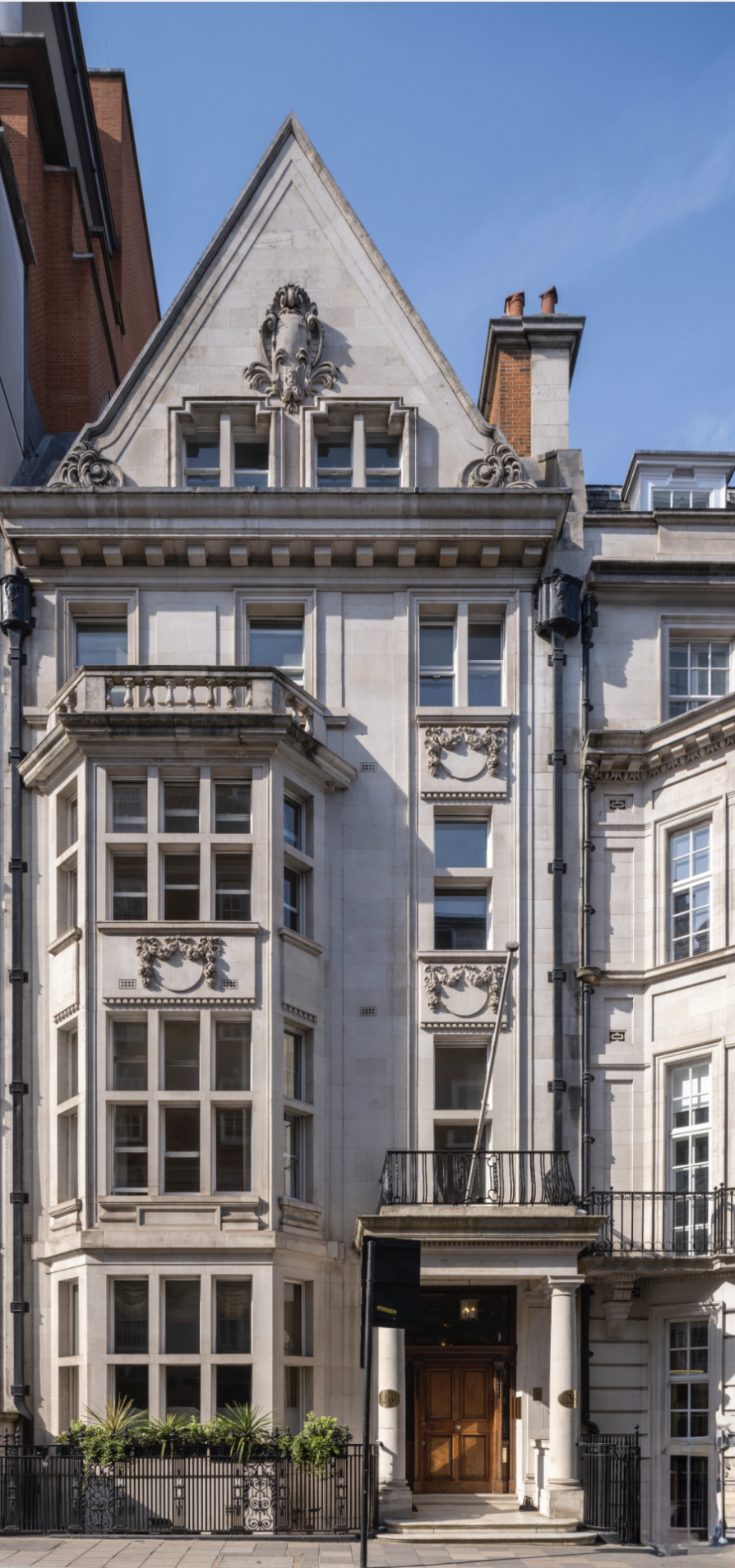
A Grade II-listed mansion in London's Mayfair, built over 100 years ago for one of the wealthiest Anglo-American industrial families of the early 20th century, is now under offer.
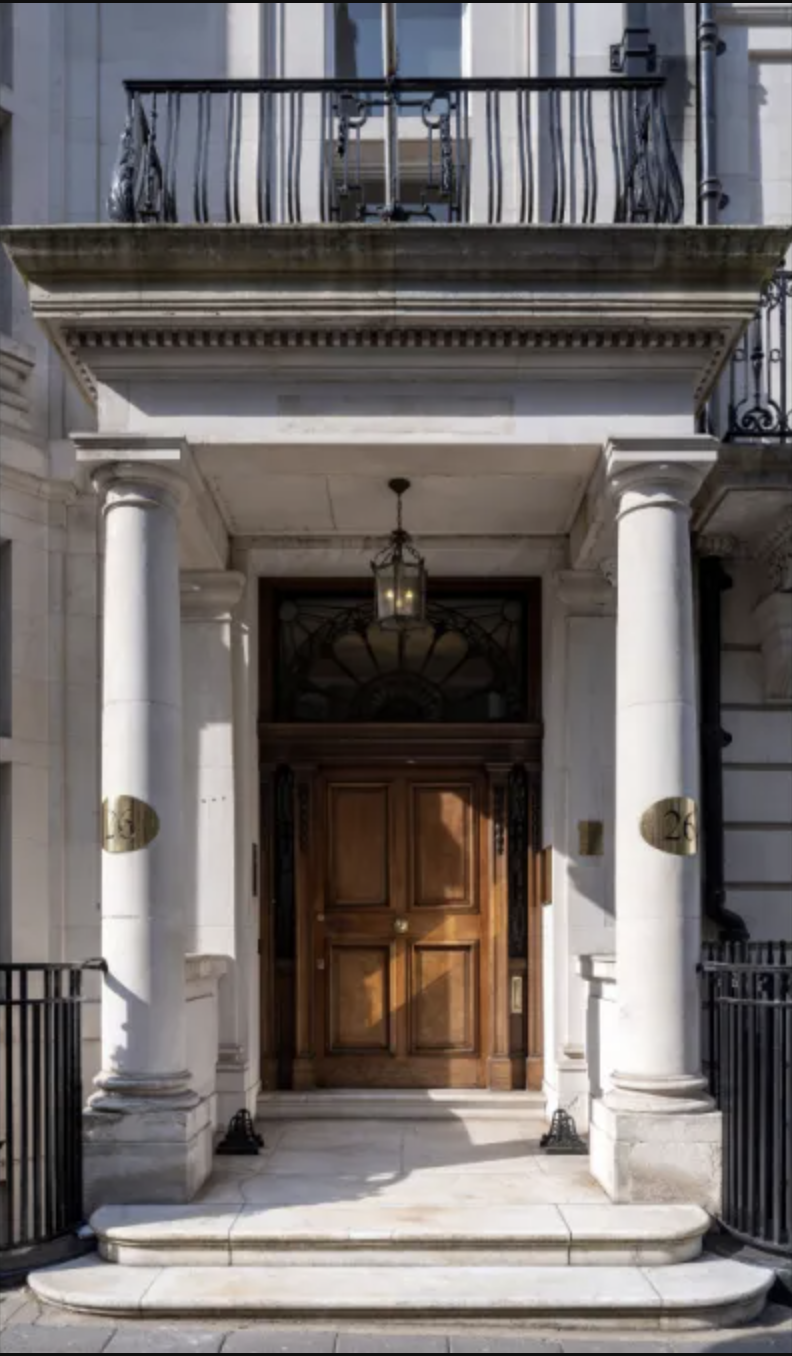
Located at 26 Upper Brook Street, the mansion was first brought to market by the Grosvenor Estate in January 2026 for £25 million, following more than 70 years of use as offices, most recently by the Bank of Africa. The Grade II-listed property remains in commercial use, with preliminary planning proposals submitted to Westminster City Council for its conversion back into a private residence. Following a reduction to £22 million, selling agent Wetherell now advertises the property as under offer. The mansion was jointly marketed by Wetherell and Knight Frank on behalf of the Grosvenor Estate.
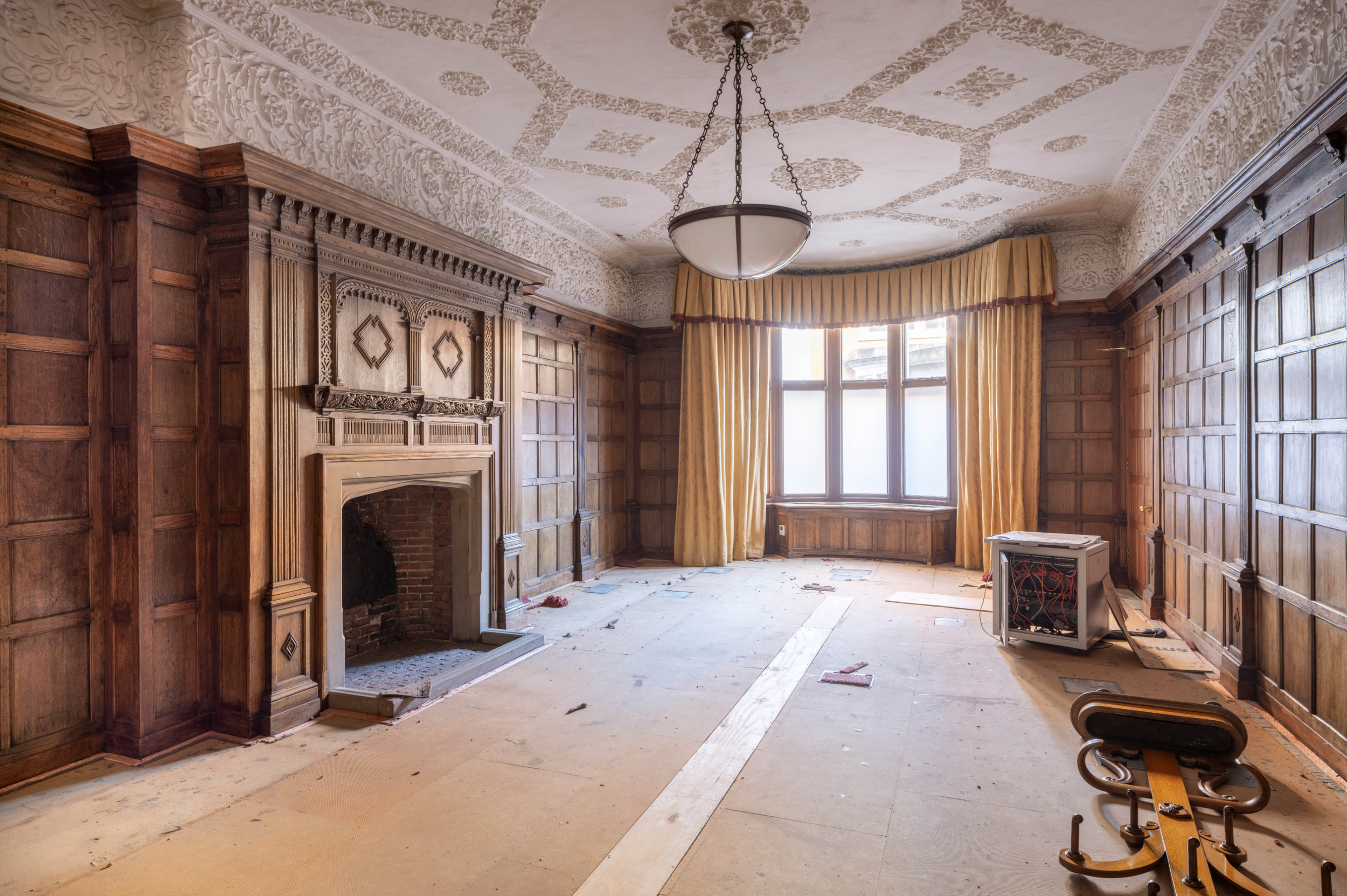
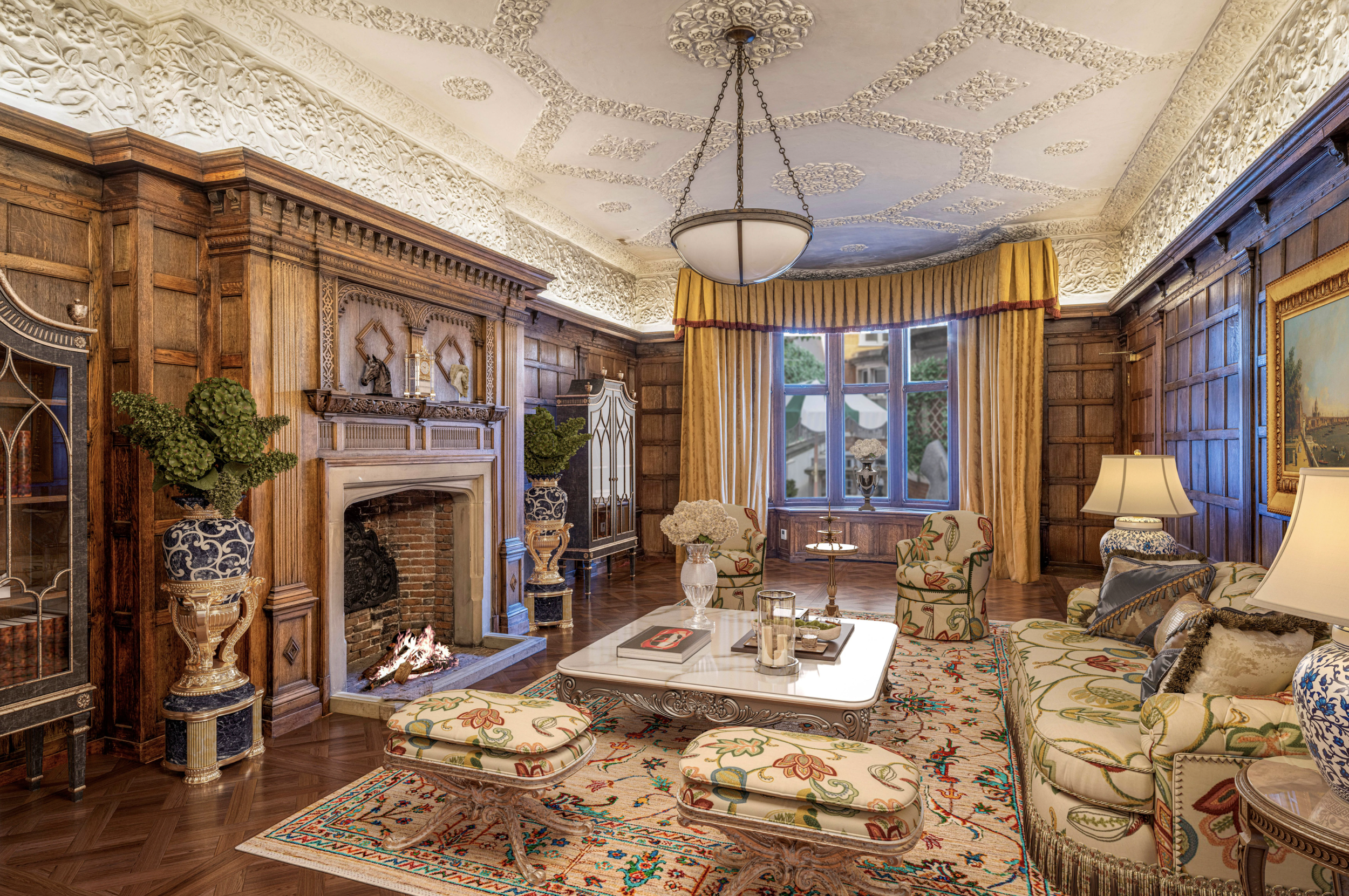
The mansion was built in 1909 for James Monro Coats, a member of the wealthy Auchincloss-Coats family, whose fortunes were made in textiles, banking and international trade during the Industrial Revolution.
The family's history can be traced to Scotland, but its wealth expanded considerably in America. In 1857, textile magnate James Coats married Sarah Ann Auchincloss, whose family had made its fortune as merchants and financiers in New York. Their marriage brought together two enormously wealthy families in what The Times described as one of the great society weddings of the period.
The scale of their fortune was extraordinary. When James Coats died in 1913, the family's textile company was reportedly worth £230 million, equivalent to approximately £34 billion in today's money, according to The Times. By the early 20th century, J&P Coats ranked among the world's largest companies, behind only US Steel and Standard Oil by market capitalisation. His son James Monro also inherited a substantial personal fortune, estimated by The Times at the equivalent of £1.6 billion.
James Monro Coats was appointed to oversee the family's London business interests and, according to The Times, first took a lease on 26 Upper Brook Street in 1899.
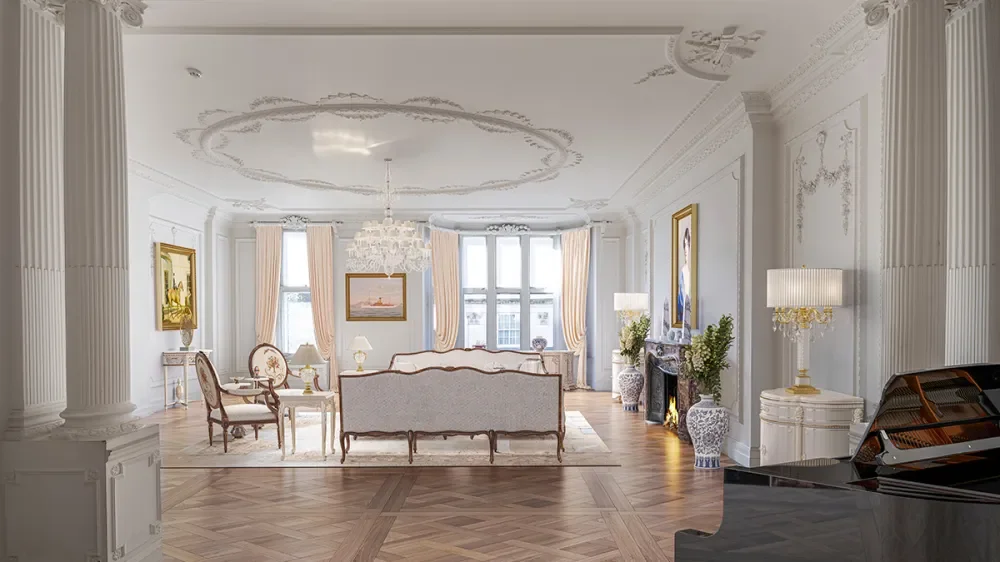
The property formed part of the Grosvenor Estate, owned by one of Britain's wealthiest aristocratic families, whose property holdings have shaped central London for more than 300 years.
The Grosvenor family's relationship with London property began in 1677, when Sir Thomas Grosvenor married Mary Davies, a young heiress who had inherited approximately 500 acres of land west of central London.
At the time, much of the land was undeveloped countryside.
As London expanded during the 18th and 19th centuries, the family developed the land into what became Mayfair and Belgravia, now two of the capital's most expensive residential neighbourhoods.
Instead of selling off all its properties, the family retained substantial ownership of the land and collected income through long leases. As London became one of the world's most expensive property markets, those landholdings became extraordinarily valuable.
The family holds the hereditary title of Duke of Westminster. Its current head is Hugh Grosvenor, who inherited the dukedom following his father's death in 2016. He chairs the trustees overseeing the family's business interests, including its substantial property holdings. Today, Grosvenor is an international real estate and investment organisation, with assets largely held through trusts benefiting successive generations of the family.
When James Monro Coats became associated with 26 Upper Brook Street, the property was an 18th-century Georgian townhouse. Coats and his wife, Annie, were reportedly dissatisfied with the existing house and wanted a London residence that could match the grandeur of their other estates in Rhode Island, the Scottish Highlands and the French Riviera. The family also owned three yachts.
In 1908, the Grosvenor Estate required the existing house to be demolished and rebuilt as a condition of granting a new lease. Coats commissioned architect Arnold Bidlake Mitchell to design a substantially grander mansion in its place.
Mitchell was an established British architect whose work included country houses, educational buildings and commissions for King Leopold II of Belgium. A Fellow of the Royal Institute of British Architects, he had received the institute's Silver Medal in 1886.
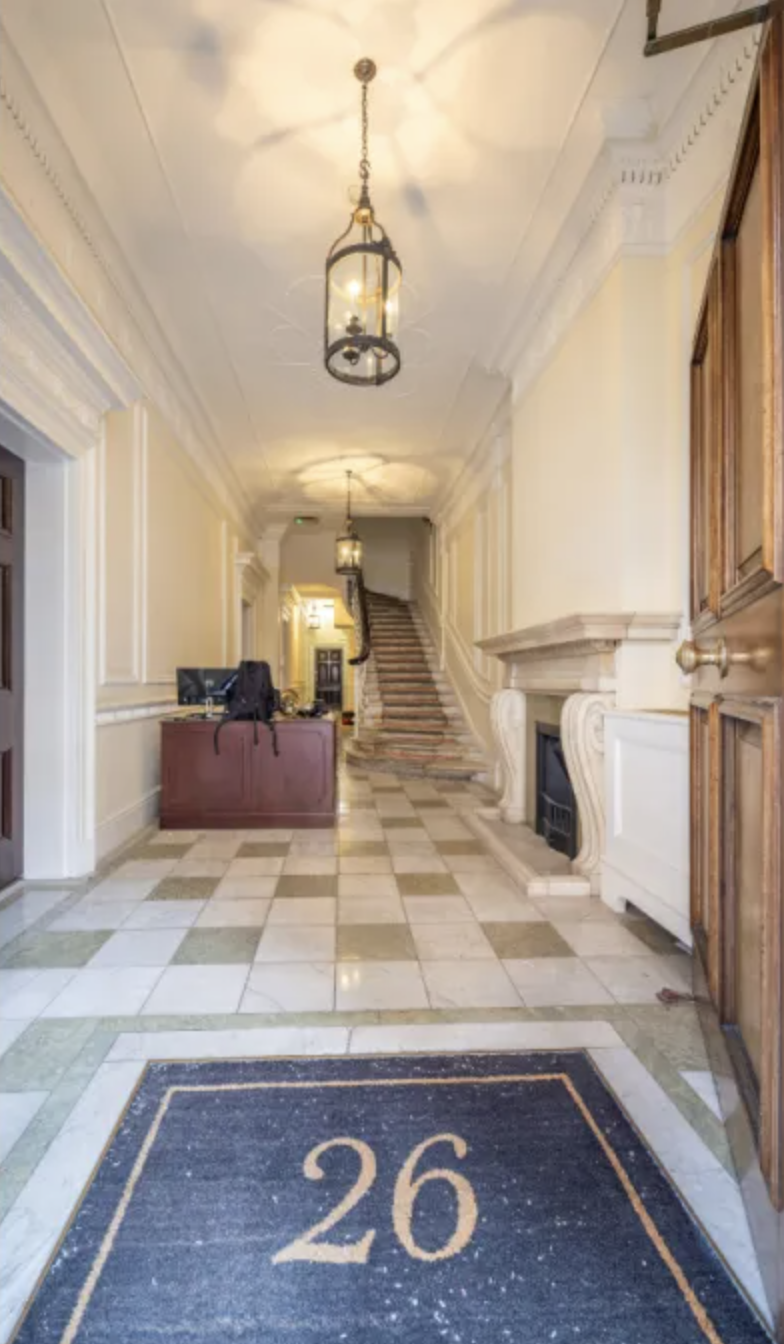
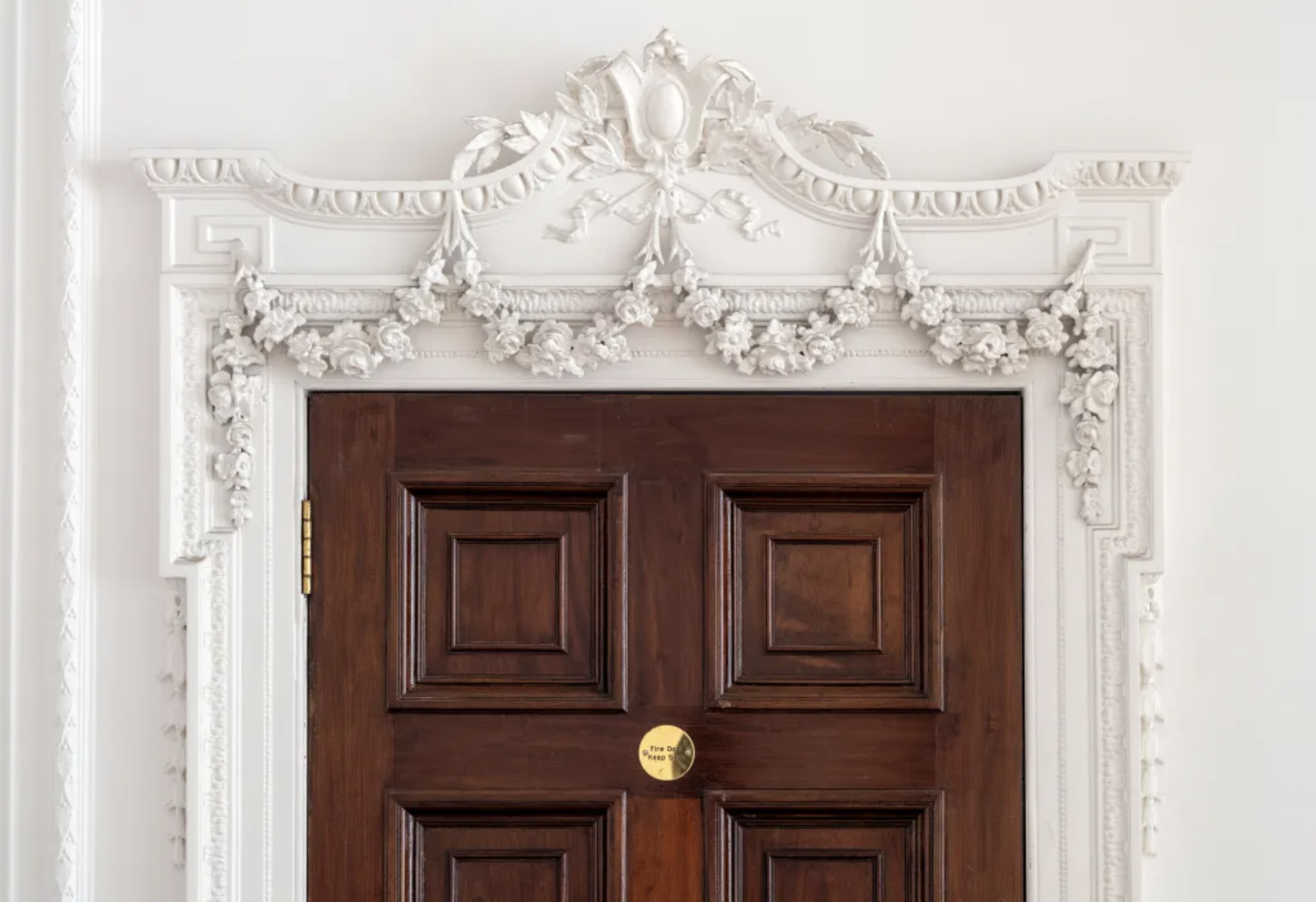
Completed in 1909, the approximately 14,000 sq ft (1,301 m²) Edwardian mansion was designed with a Portland stone façade, a marble entrance hall and a grand staircase illuminated by an oval skylight. Its interiors combined oak-panelled rooms, elaborate mahogany joinery and decorative plasterwork associated with the English Arts and Crafts movement.
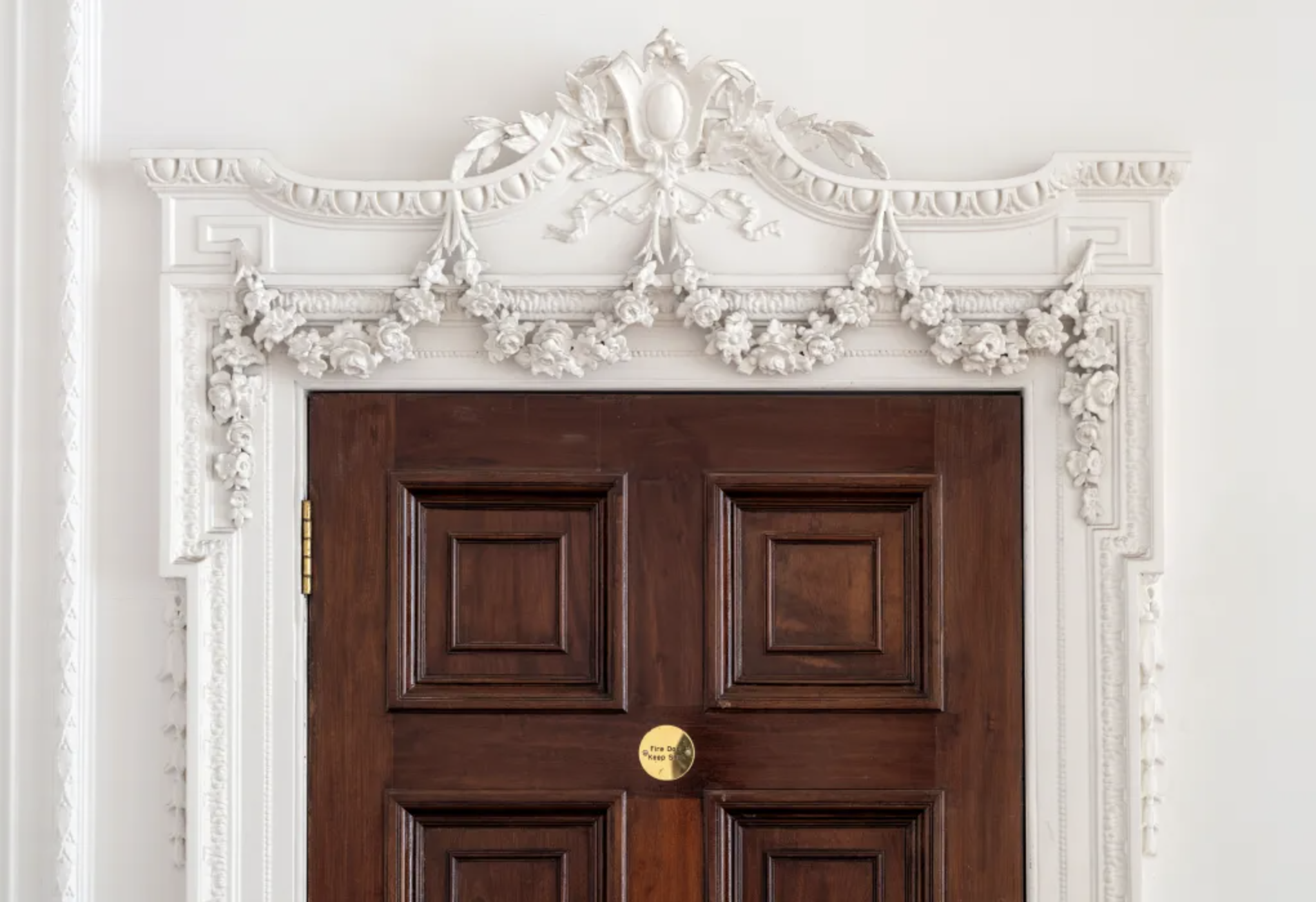
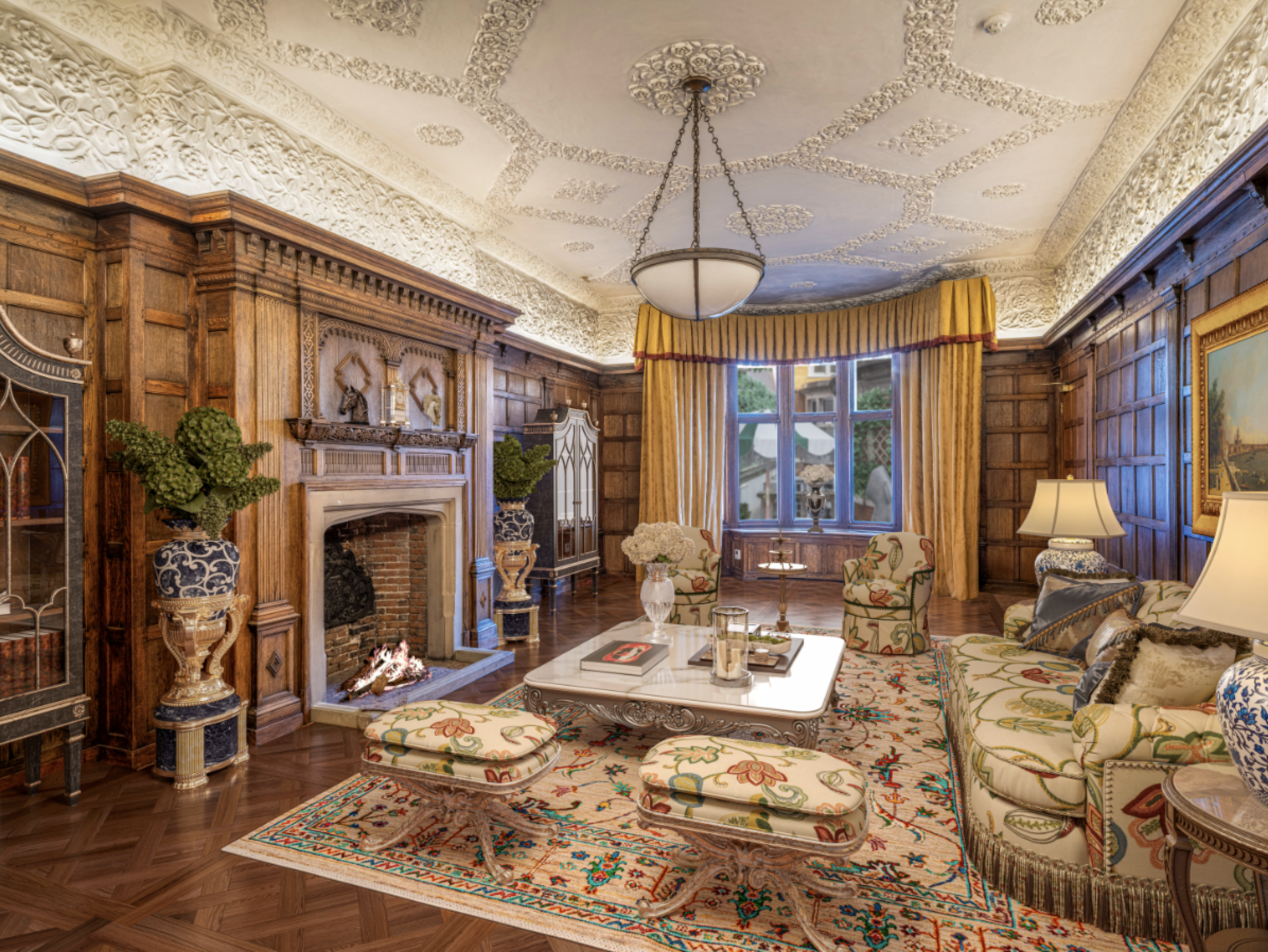
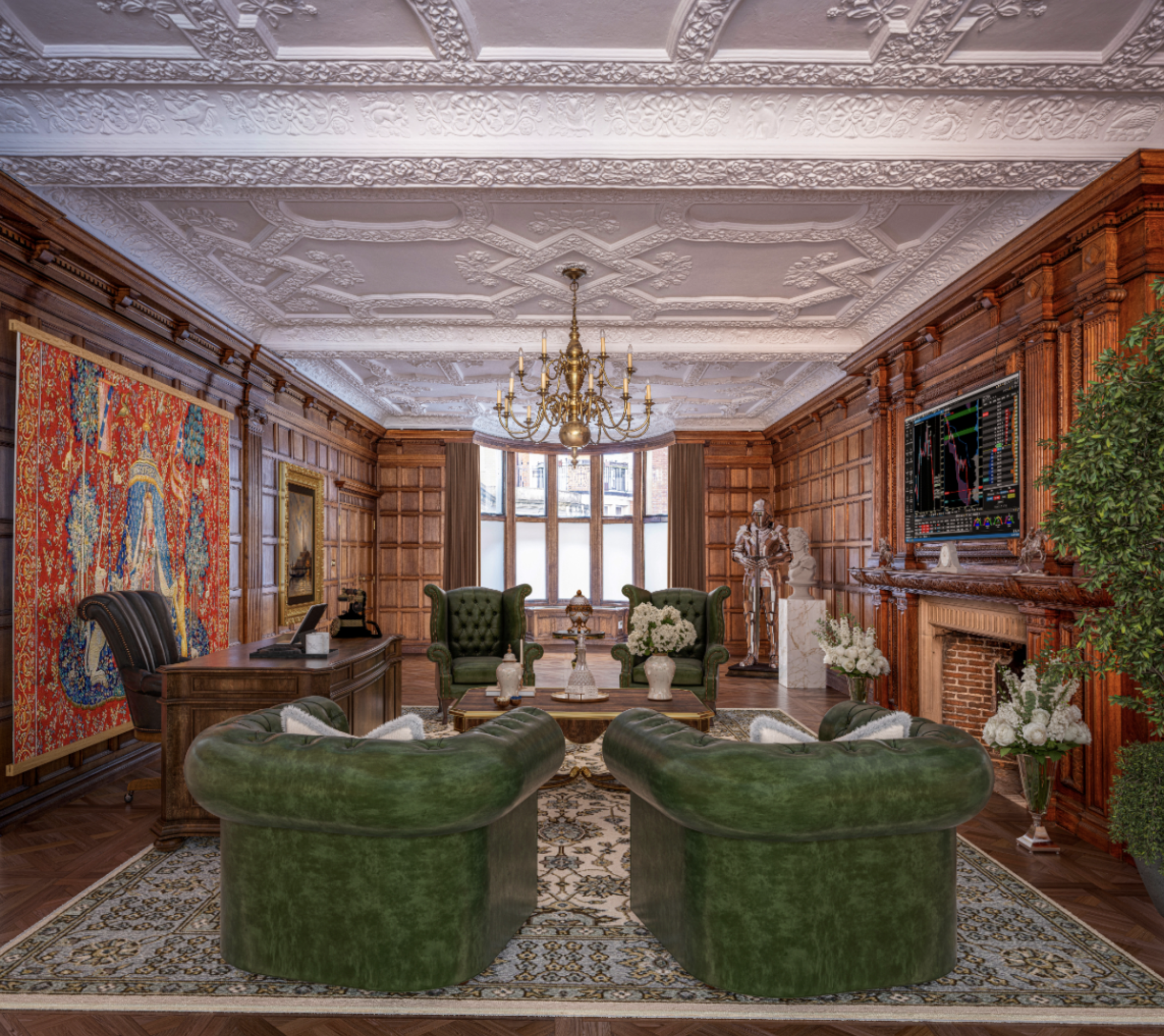
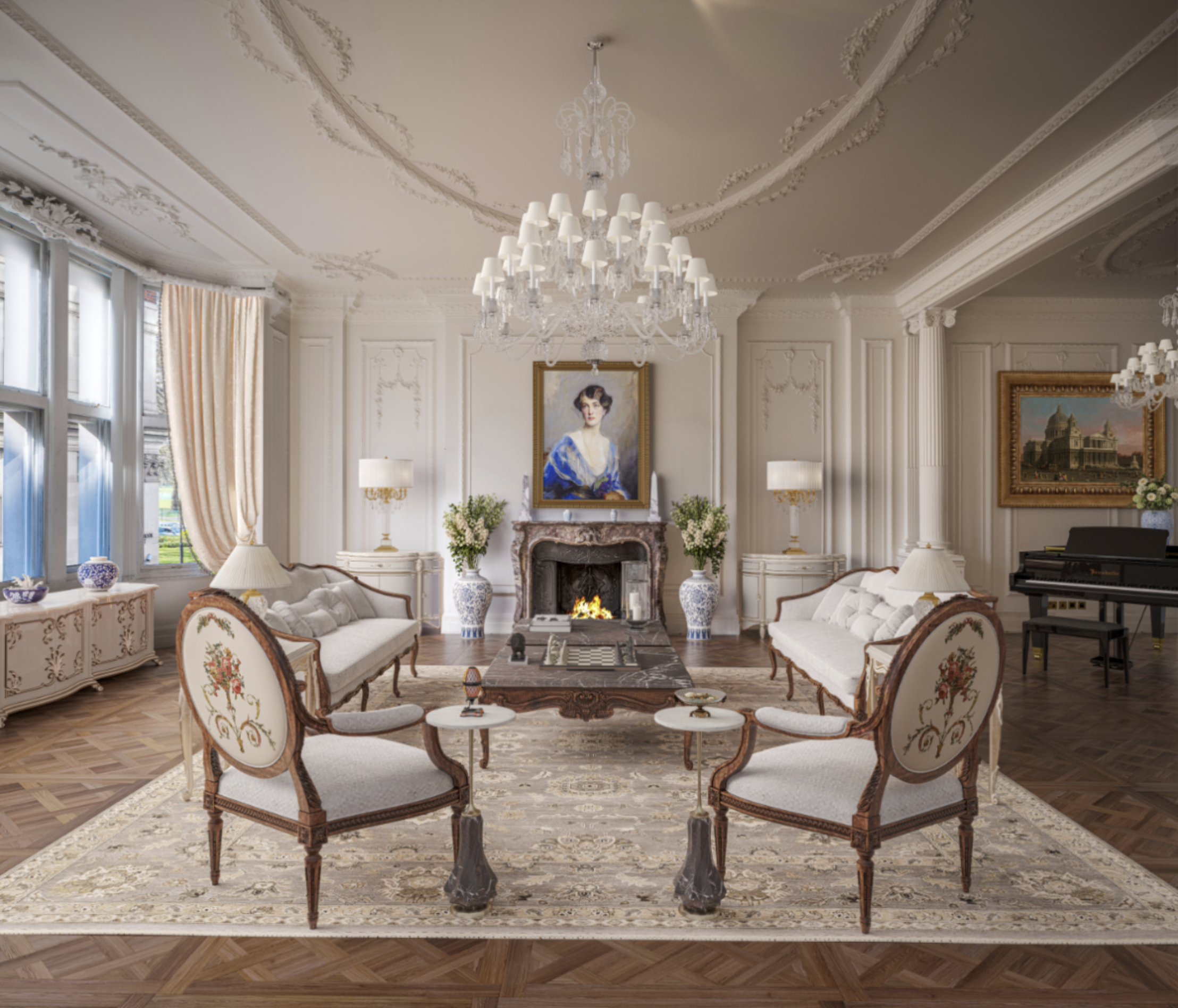
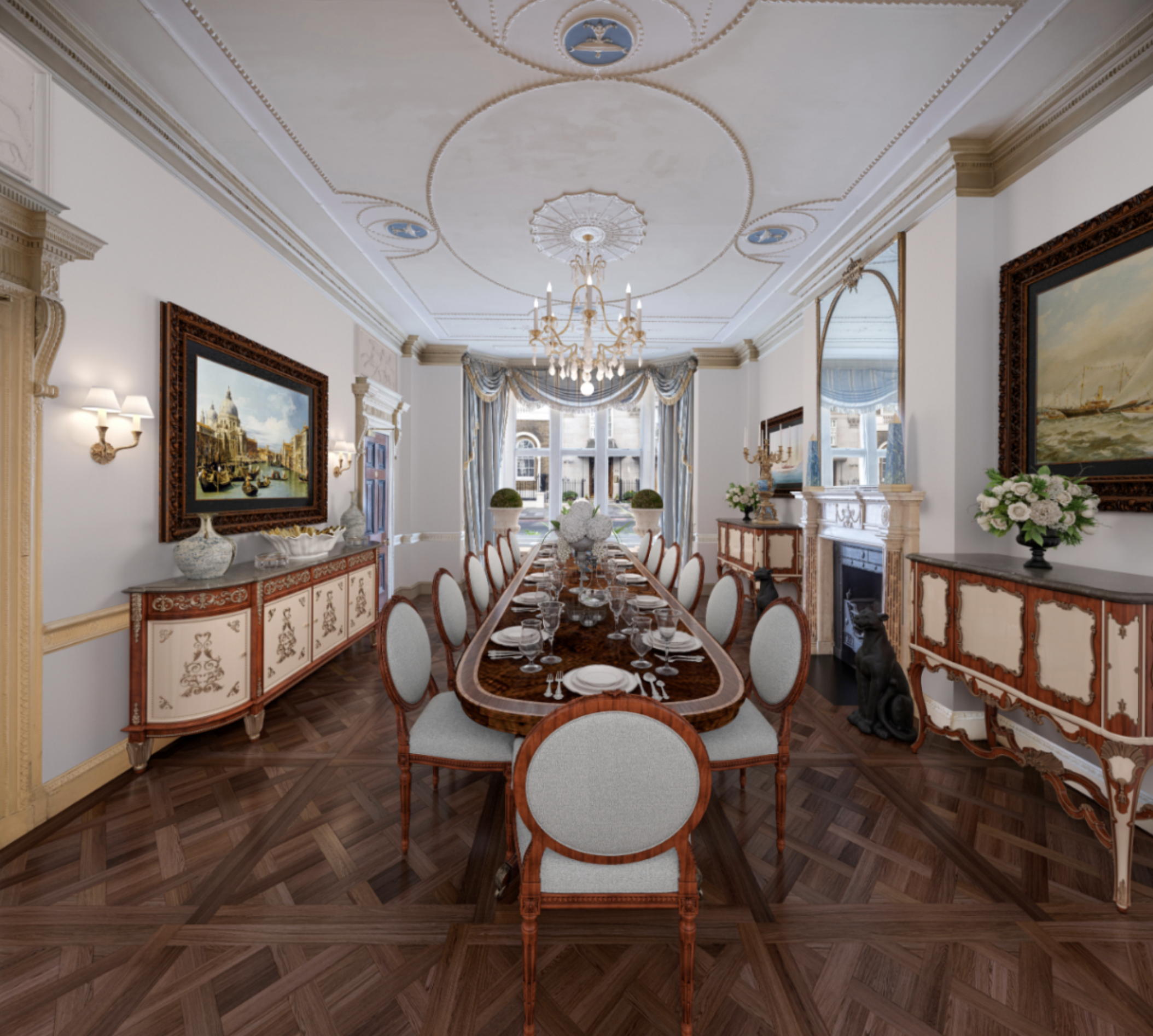
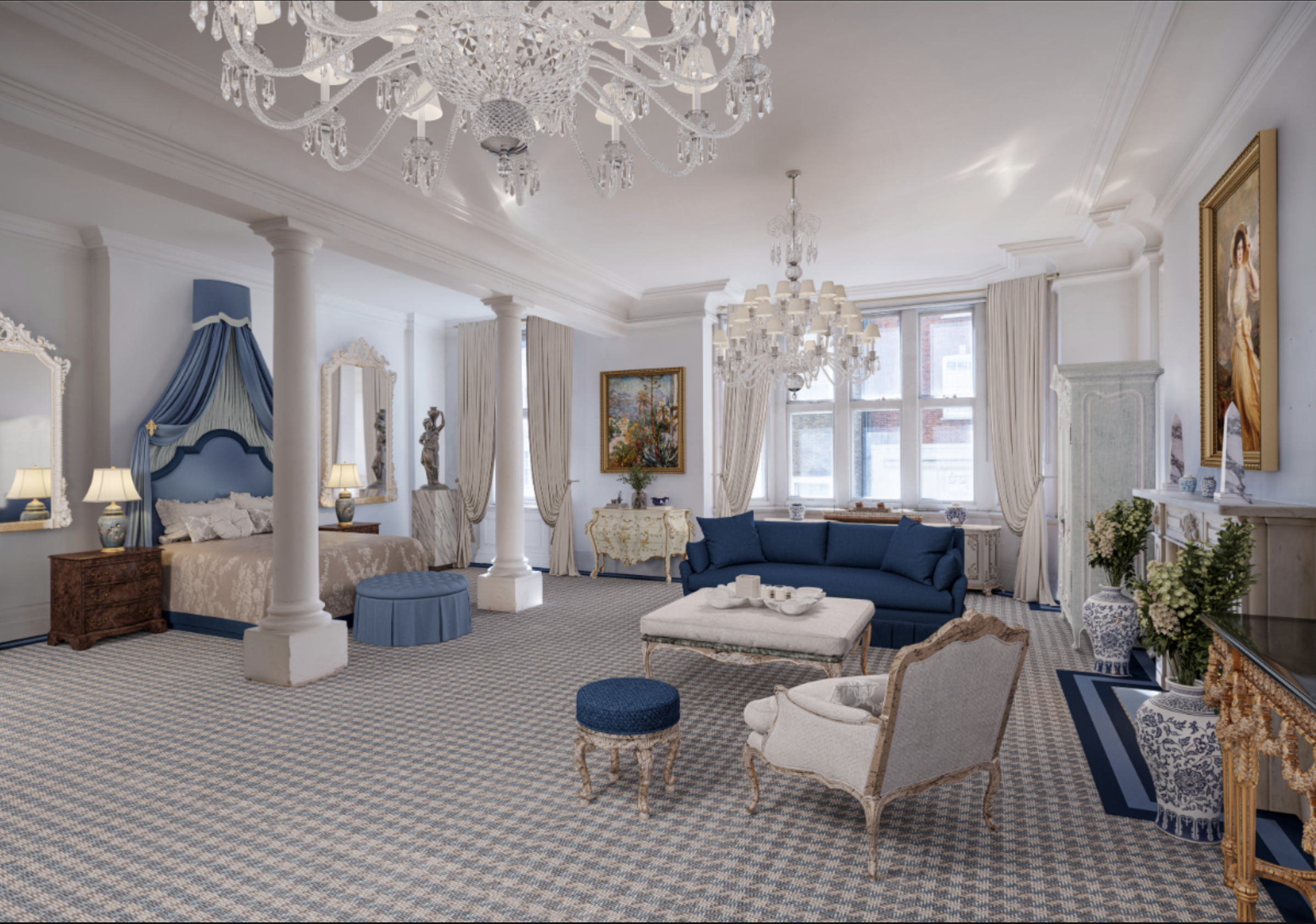
Historic England identifies particularly fine plasterwork in the dining room and library, with designs incorporating entwined roses, foliage, small animals and birds. The decoration is in the manner of Arts and Crafts designer Ernest Gimson and is thought to have been designed by George Bankart and executed by the Bromsgrove Guild. The first-floor drawing rooms, meanwhile, feature Neo-Rococo detailing, marble fireplaces and decorative panelling.
At the time, Mayfair was home to British aristocrats, international financiers and wealthy industrialists. The Auchincloss-Coats family embraced London's Edwardian social life, employing up to 12 servants at Upper Brook Street and entertaining prominent figures from both sides of the Atlantic.
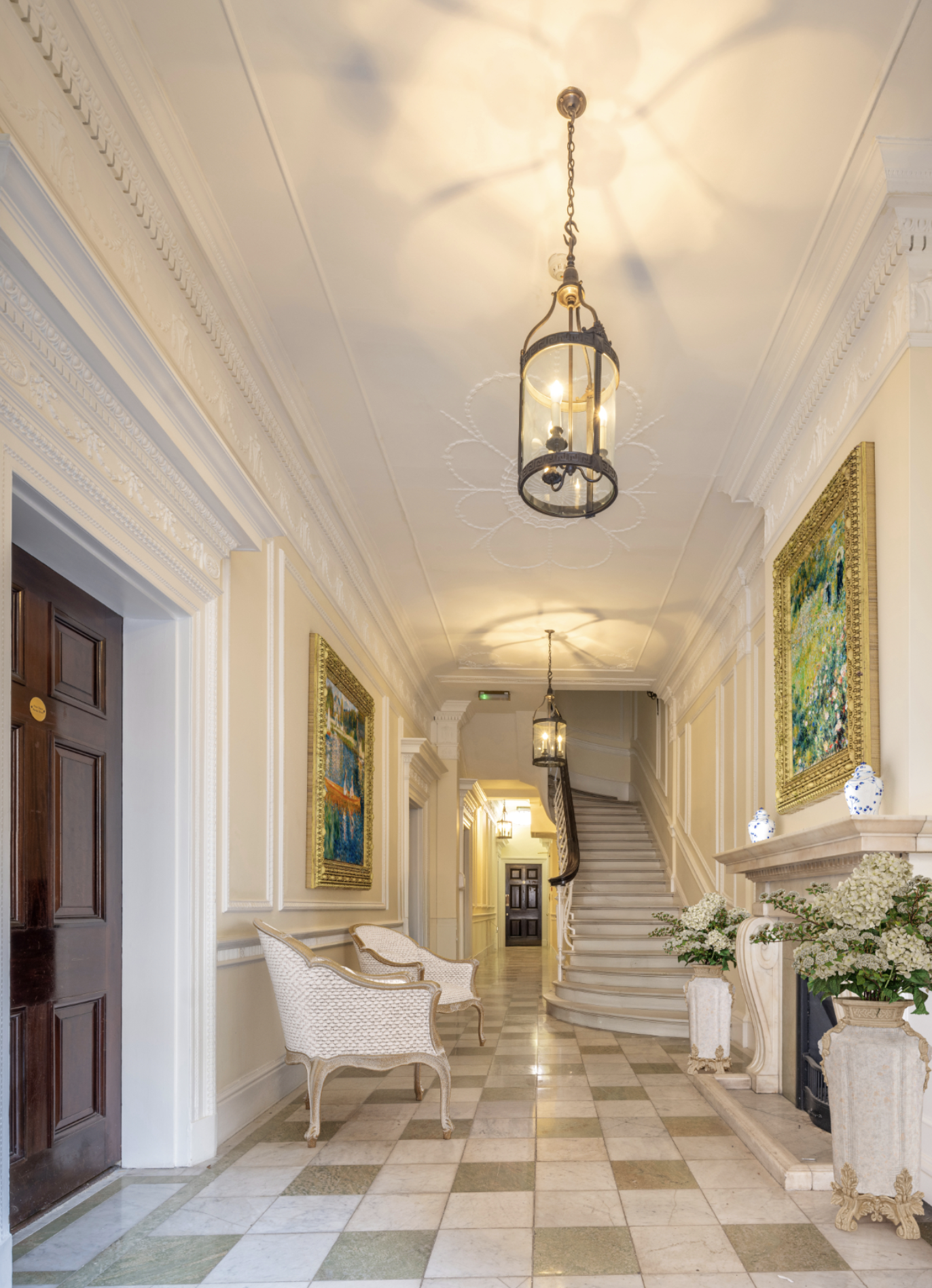
Among the mansion's reported visitors were architect Edwin Lutyens, financier Sir Ernest Cassel and Edwina Ashley, later Countess Mountbatten of Burma.
The house's connections to American high society continued into the next generation. In the summer of 1951, Jacqueline Bouvier, later Jacqueline Kennedy Onassis, and her younger sister Caroline Lee Bouvier arrived in London at the beginning of a three-month tour of Europe.
Jacqueline was 21, turning 22 that July, while her sister Lee was 18. Their mother, Janet Lee Bouvier, had married Hugh D. Auchincloss Jr. in 1942, connecting the sisters to the extended Auchincloss-Coats family. Hugh was a cousin of James Monro Coats, who had died in 1946, leaving his widow Annie at the Mayfair residence.
According to Country & Town House, the sisters stayed at 26 Upper Brook Street at the beginning of their journey, before travelling through France, Spain and Italy. Equipped with letters of introduction to prominent European families and social figures, they recorded their travels through letters, drawings and recollections.
Their account was later published in 1974 as One Special Summer, offering a glimpse into the European travels of two young American socialites, one of whom would become First Lady of the United States and the other Princess Lee Radziwill. Their stay at Upper Brook Street, however, was not documented in the published account.
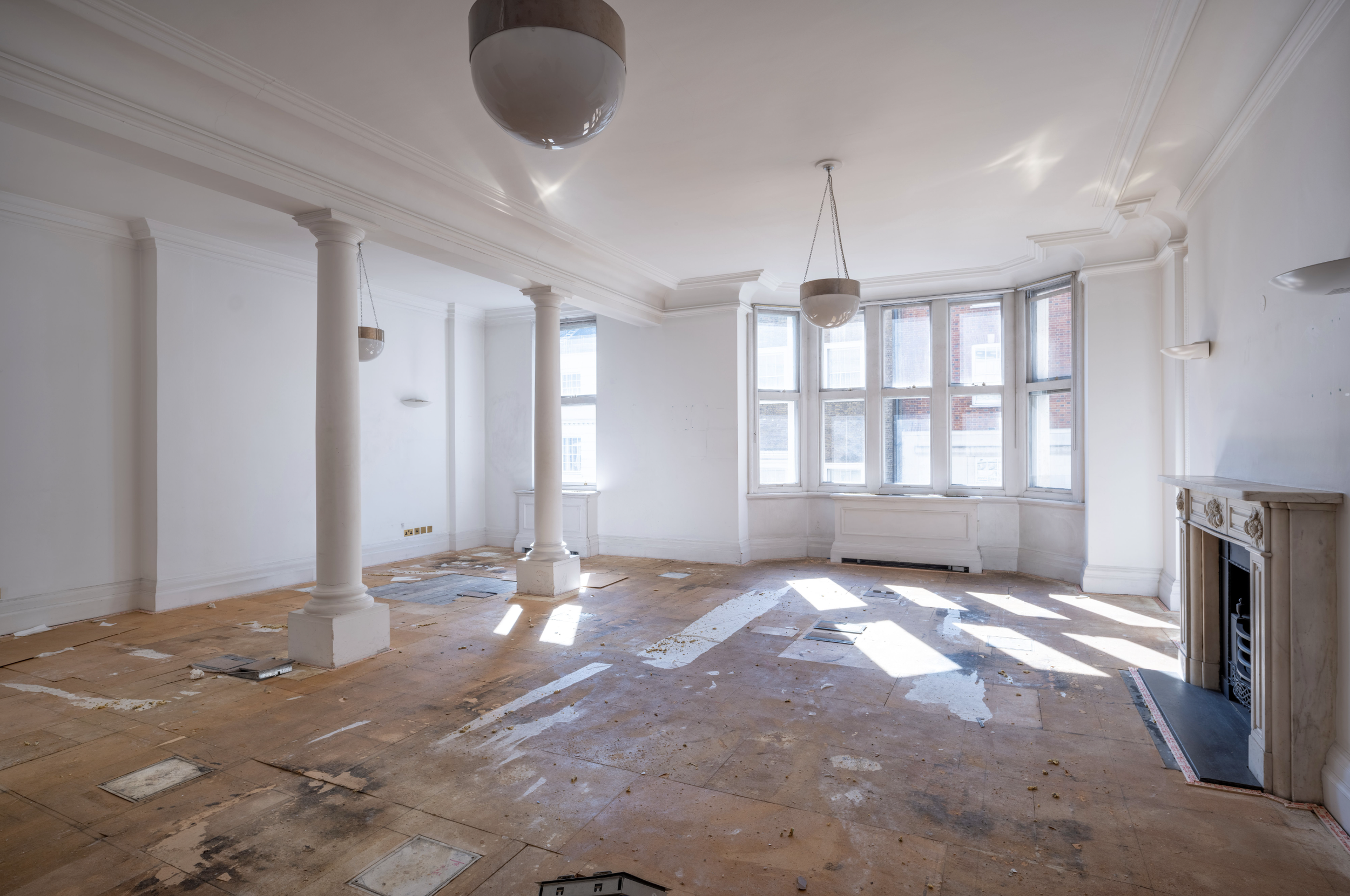
In 1953, as Mayfair increasingly became a commercial district, the Auchincloss-Coats family relinquished the property. The Grosvenor Estate subsequently leased the building as offices, where it remained in commercial use for more than seven decades.
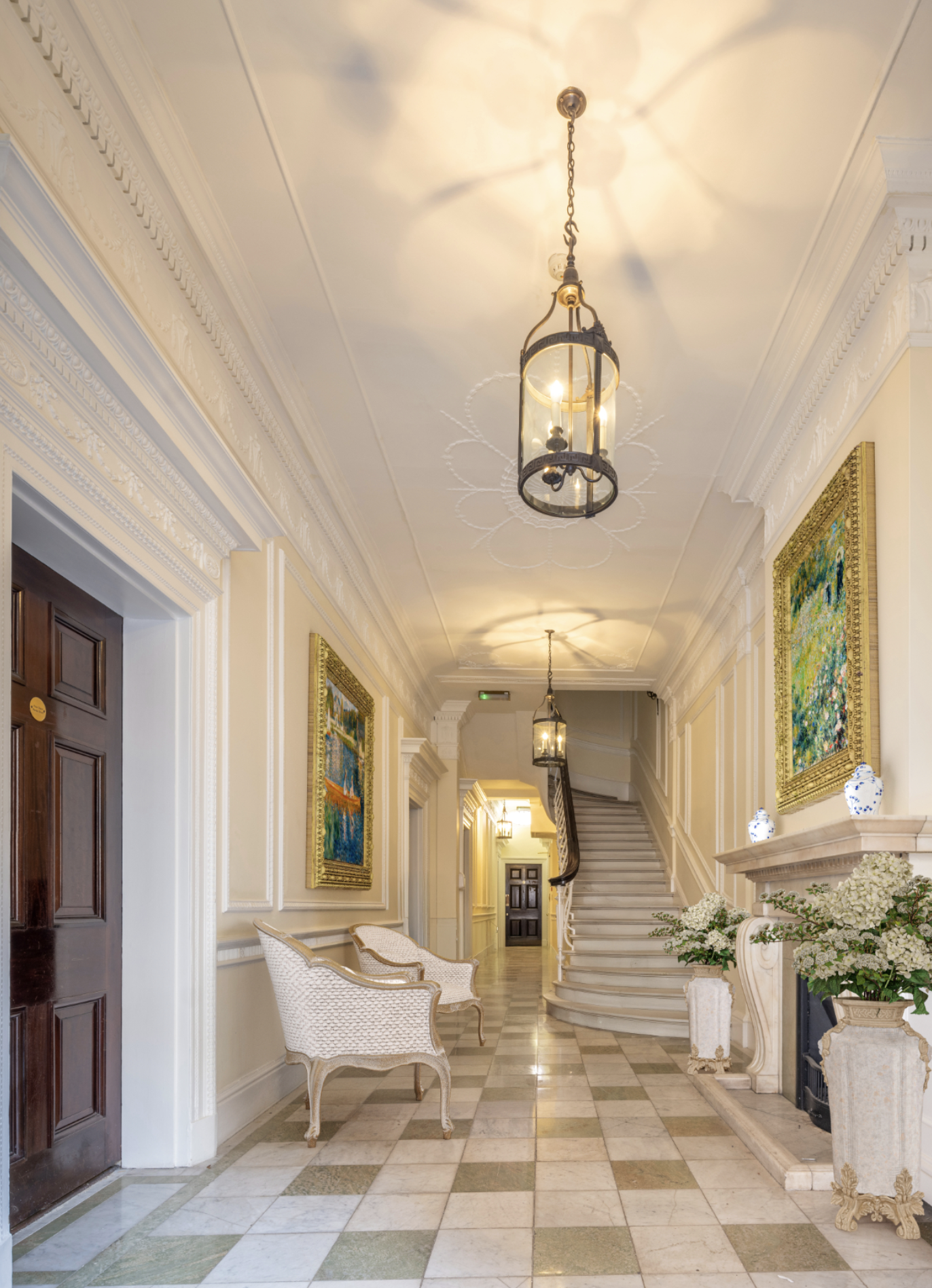
Despite this change of use, much of the original architectural detailing survives, including the grand staircase, decorative cornicing, fireplaces and high ceilings.
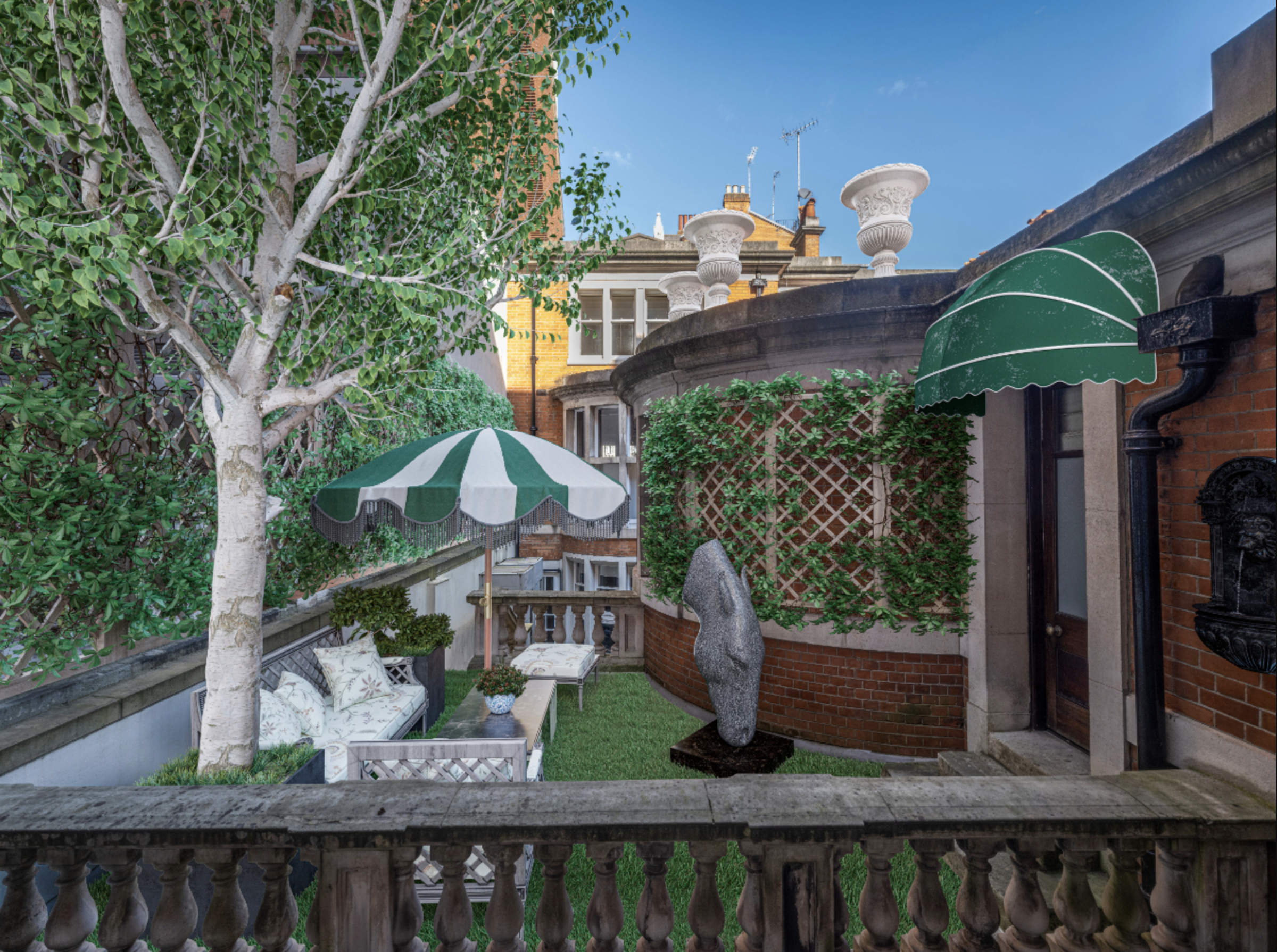
Today, the property provides approximately 13,500 sq ft (1,254 m²) of accommodation, including an adjoining mews building at 4 Wood's Mews. It also has a central courtyard garden, with upper and lower terraces connected by an exterior stone staircase.
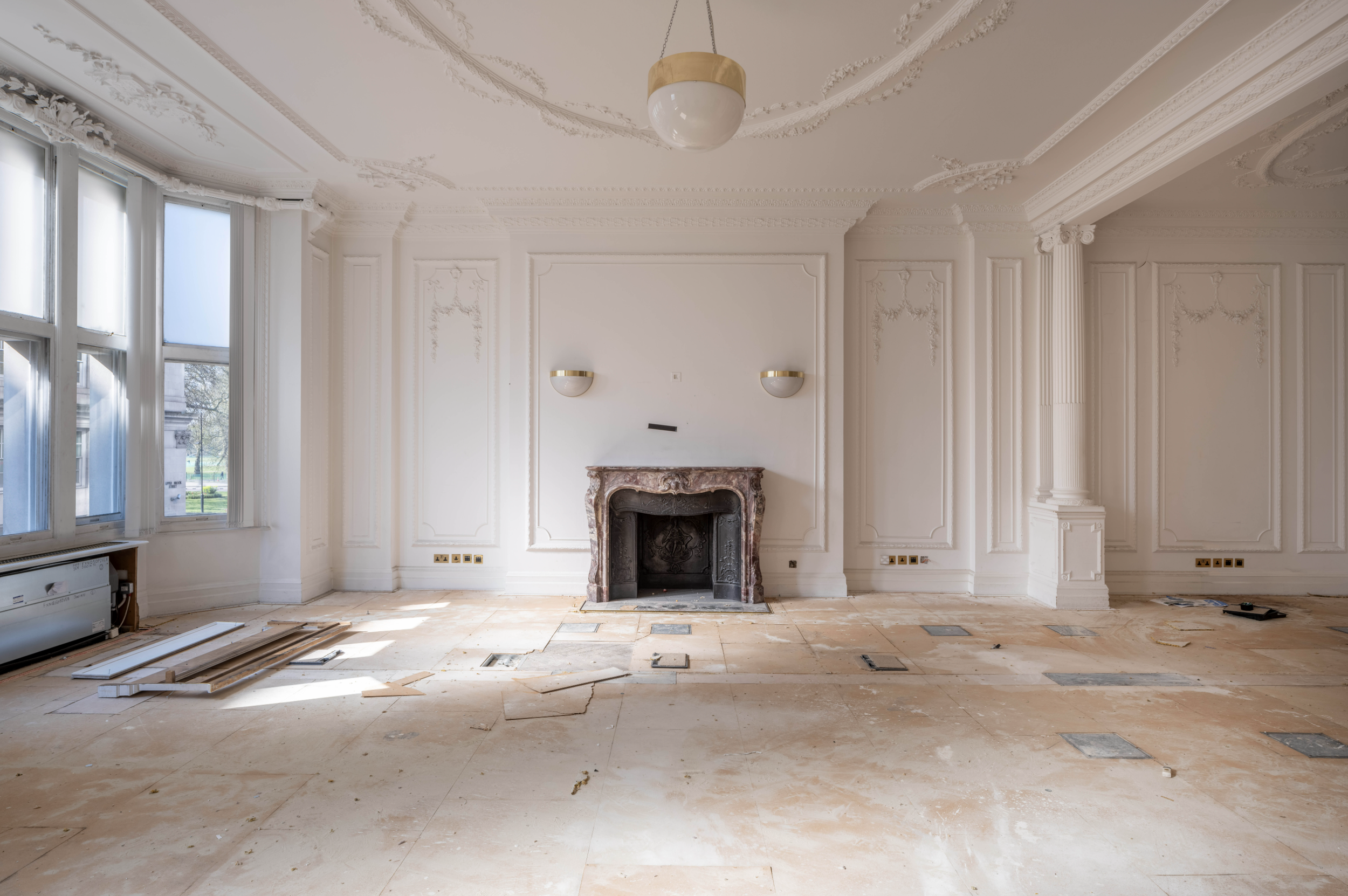
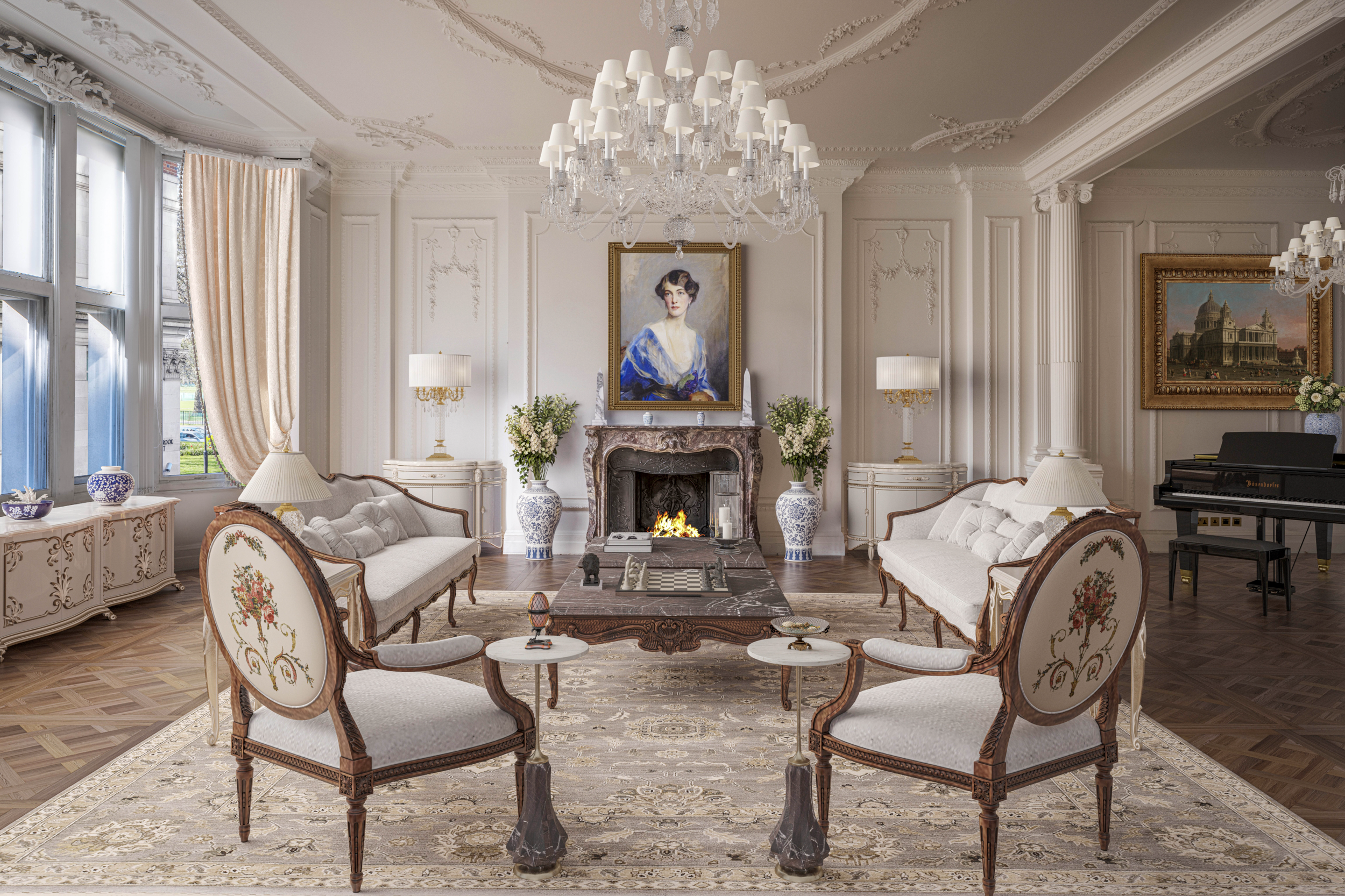
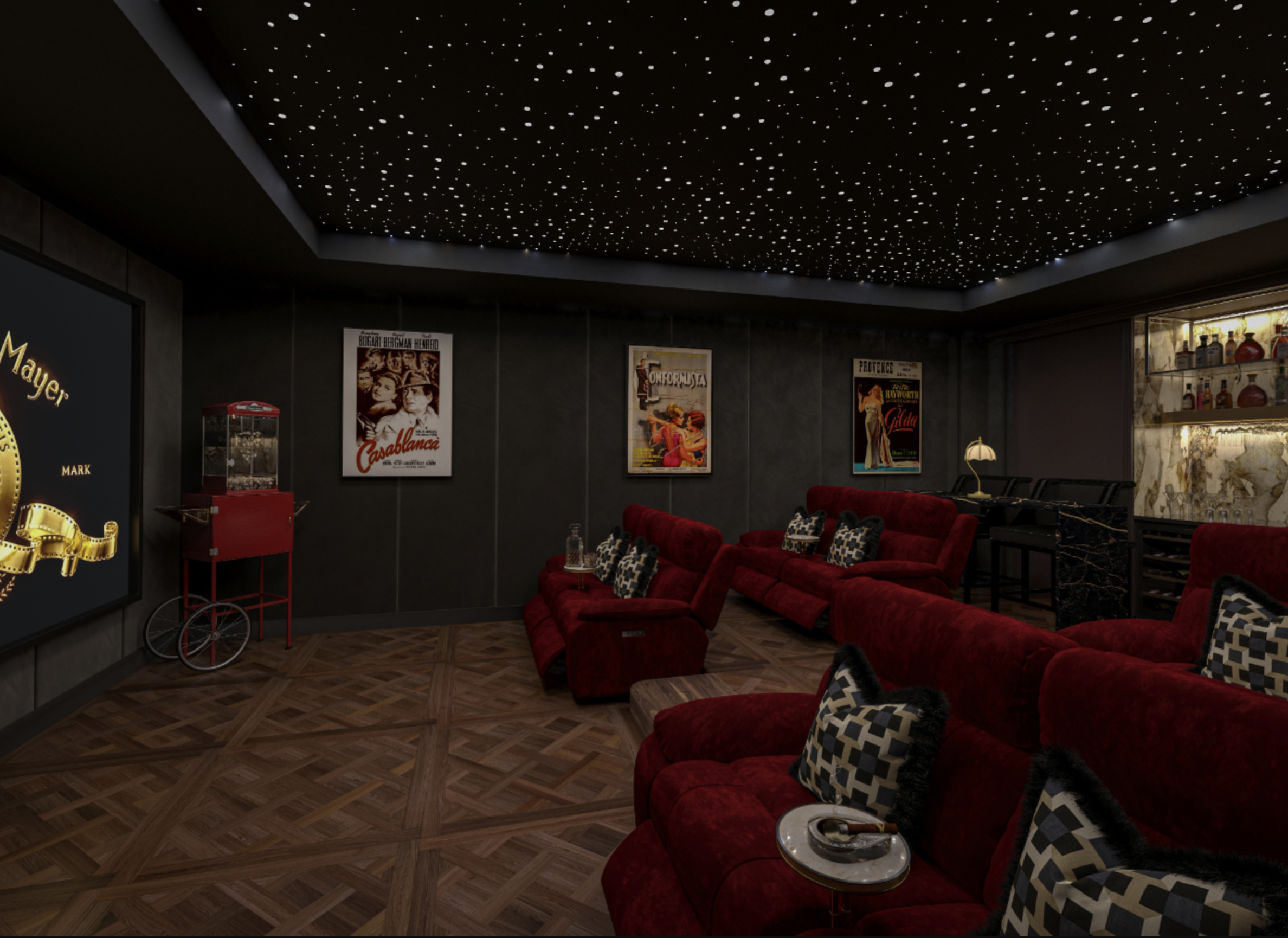
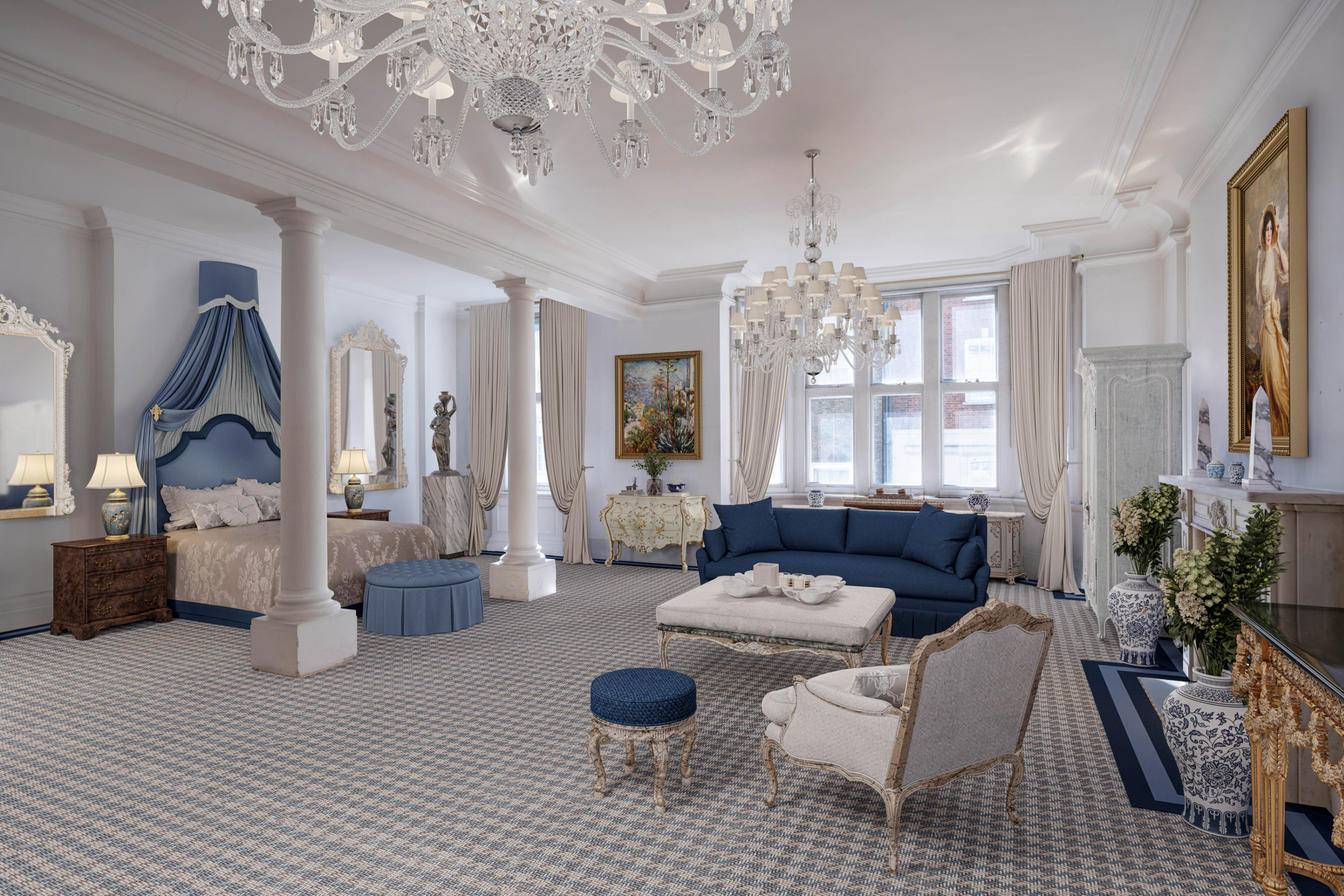
The current marketing proposes converting the property back into a single-family residence, with seven bedrooms, six reception rooms, a principal suite, staff accommodation and leisure facilities. According to Wetherell, a pre-application has been made to Westminster City Council for its return to residential use, although the property is being sold subject to its existing planning status.
The proposed restoration comes amid a wider transformation of Mayfair, where former offices and historic buildings are increasingly being reconsidered for luxury residential and hospitality use.
For decades, nearby Grosvenor Square was dominated by the American Embassy, with armed security and barriers around the diplomatic building. Following the embassy's departure to Nine Elms in 2018, its former premises have been redeveloped as a luxury hotel, while Grosvenor has invested in improvements to the surrounding public spaces.
To illustrate what 26 Upper Brook Street could look like as a private residence again, Grosvenor commissioned digital design studio Casa e Progetti to recreate its historic interiors using archival research, 3D modelling and AI-generated imagery.
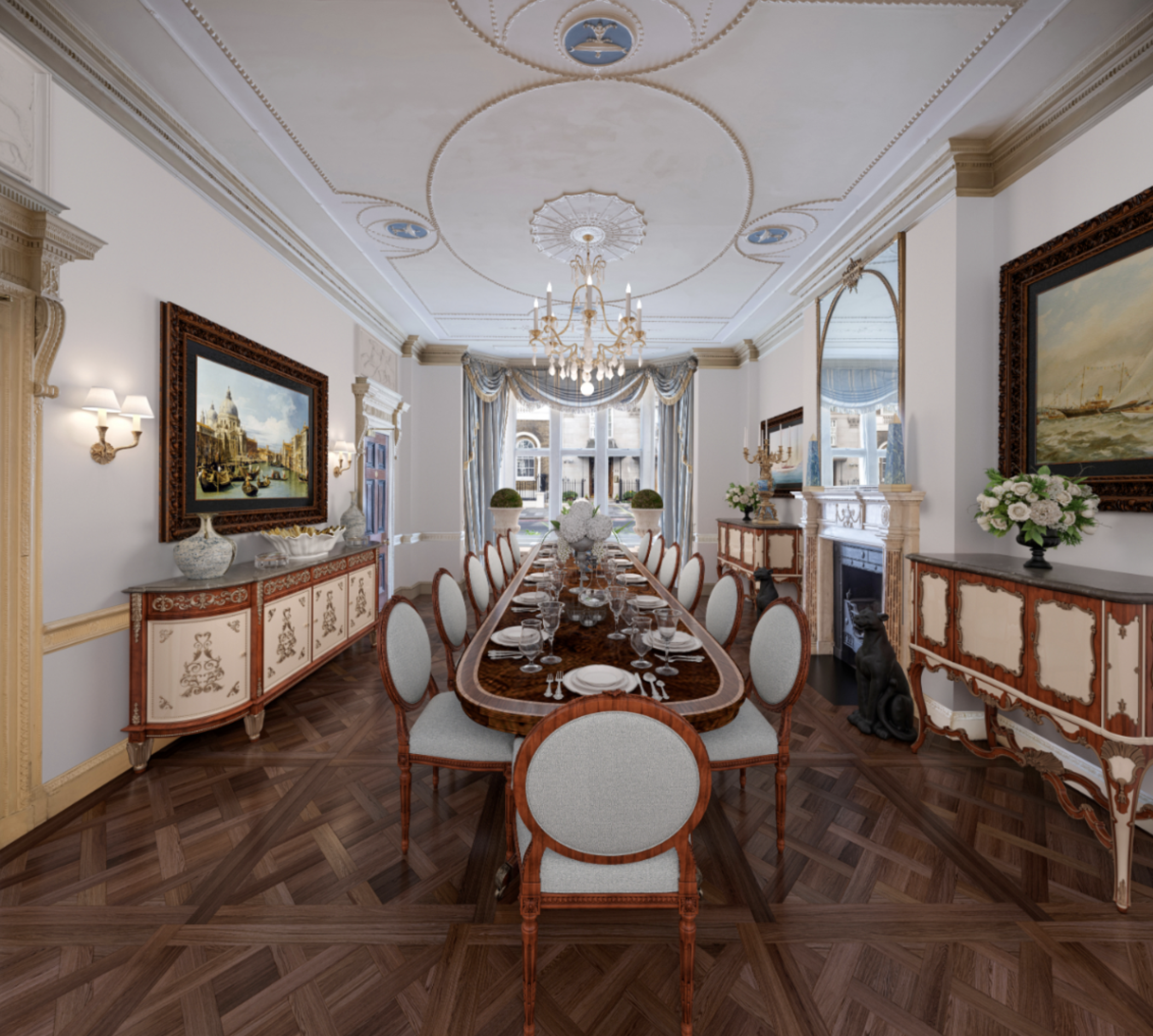
The visualisations draw on the family's former art collection and residences, including portraits by Hungarian painter Philip de László, Fabergé objects and a Canaletto painting of St Paul's Cathedral. The family's yacht, Queen of Scots, also served as inspiration for the reconstruction of the cigar room.
More than a century after the Auchincloss-Coats family established their London residence, Mayfair remains one of the world's most expensive residential neighbourhoods, attracting considerable international wealth. According to research published by Savills in September 2026, North American buyers accounted for almost 10% of prime central London property purchases over the preceding year.
Yet the concentration of wealth in Mayfair is hardly a new phenomenon. Speaking to The Times in January 2026, selling agent Peter Wetherell reflected on the fortunes of the industrial families who occupied the neighbourhood's grandest houses at the beginning of the 20th century: "if you go back to the 1880s or thereabouts, and you inflate that to today's money, you haven't seen anything yet."
A century later, the fortunes behind London's grandest addresses may have changed, but the appeal of Mayfair to the world's wealthy has not.
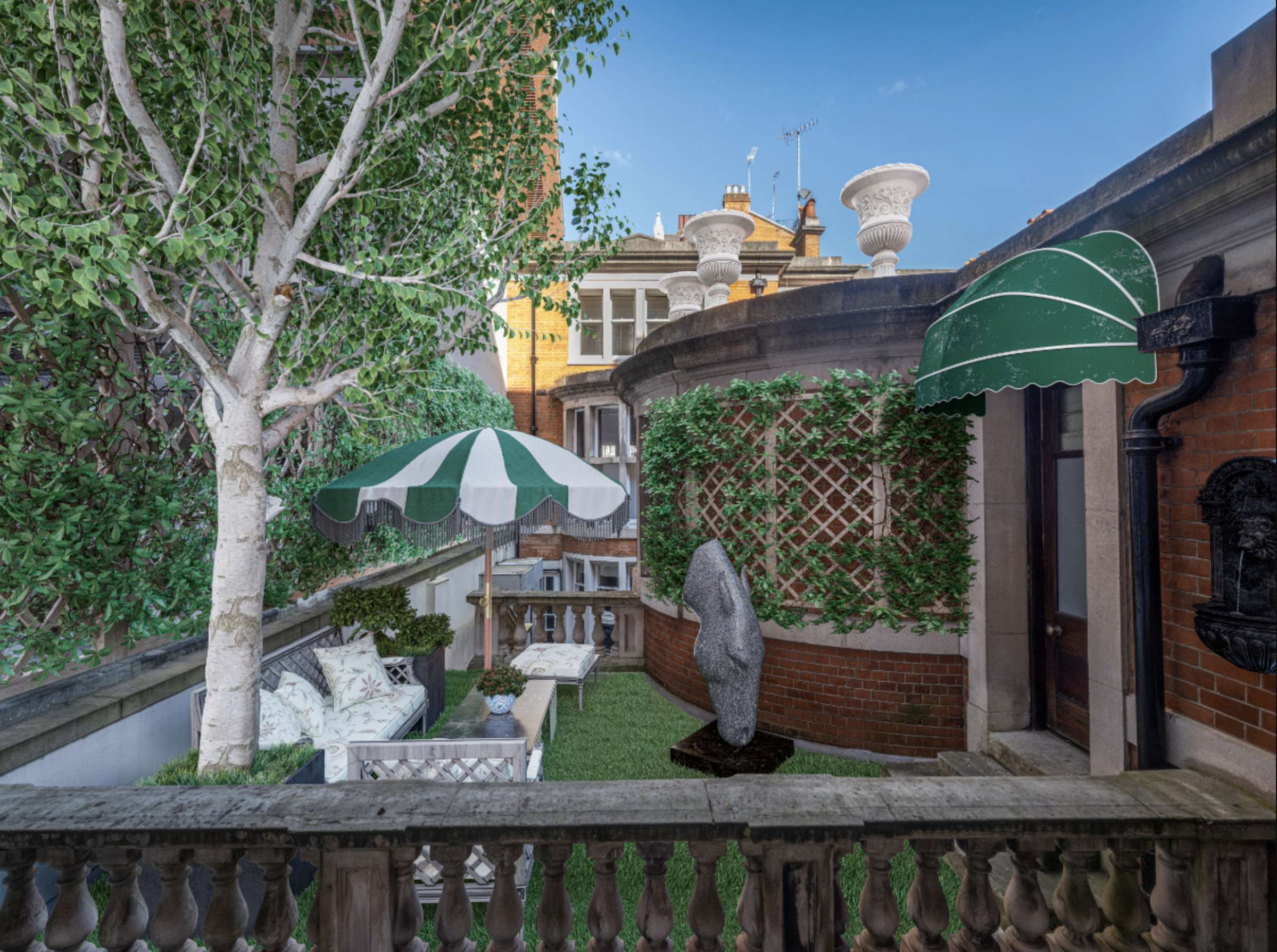
Interiors images rendered by Casa E Progetti.