A Preserved 1908 Liberty Villa From Palermo’s Belle Époque Lists for €3,800,000
Beds: 8 Baths: 7 Interior: 1,168 m² / 12,573 ft² Annexe: 82 m² / 882 ft²
Notable Features: Preserved Liberty architecture, private garden with parking, two-storey annexe, period reception rooms, walnut Art Nouveau staircase, Bevilacqua stained glass, Ducrot and Mucoli furnishings, Otama Kiyohara painted decoration, terraces, corner turrets, octagonal tower, and a central Palermo setting near Villa Malfitano Whitaker and Villino Florio.
Villa Virginia, a preserved Liberty villa in Palermo, Sicily, has come to market with Italy Sotheby’s International Realty for €3,800,000.
In Italy, Art Nouveau was known as Liberty. In Palermo, it became closely tied to the city’s turn-of-the-century elite, who commissioned houses where architecture, interiors, stained glass, furniture, textiles, ironwork, and decorative painting were designed as a whole.
Villa Virginia belongs to that world. Located on Palermo’s Via Dante, the villa sits near two important houses from the same period. Villa Malfitano Whitaker, now home to the Whitaker Foundation and open to visitors, was built in the late 1880s for Joseph Whitaker, an English-born entrepreneur, collector, and naturalist whose family fortune was tied to the Marsala wine trade. Villino Florio, also nearby, was built between 1899 and 1902 for the Florio family by Ernesto Basile, the leading architect of Palermo Liberty.
Completed in 1908, Villa Virginia was designed by Palermo architect Filippo La Porta, a student of Ernesto Basile, for Vincenzo Caruso, an entrepreneur and administrator of the Florio estates in Marsala and the Egadi Islands. The Florio connection is significant: the family was one of Sicily’s defining industrial dynasties, with interests spanning Marsala wine, tuna fisheries, shipping, and finance. La Porta is also associated with a project for the Florio tuna factory on Favignana, further tying the house to the family’s wider world of industry and design. Villa Virginia was named for Caruso’s wife, Virginia.
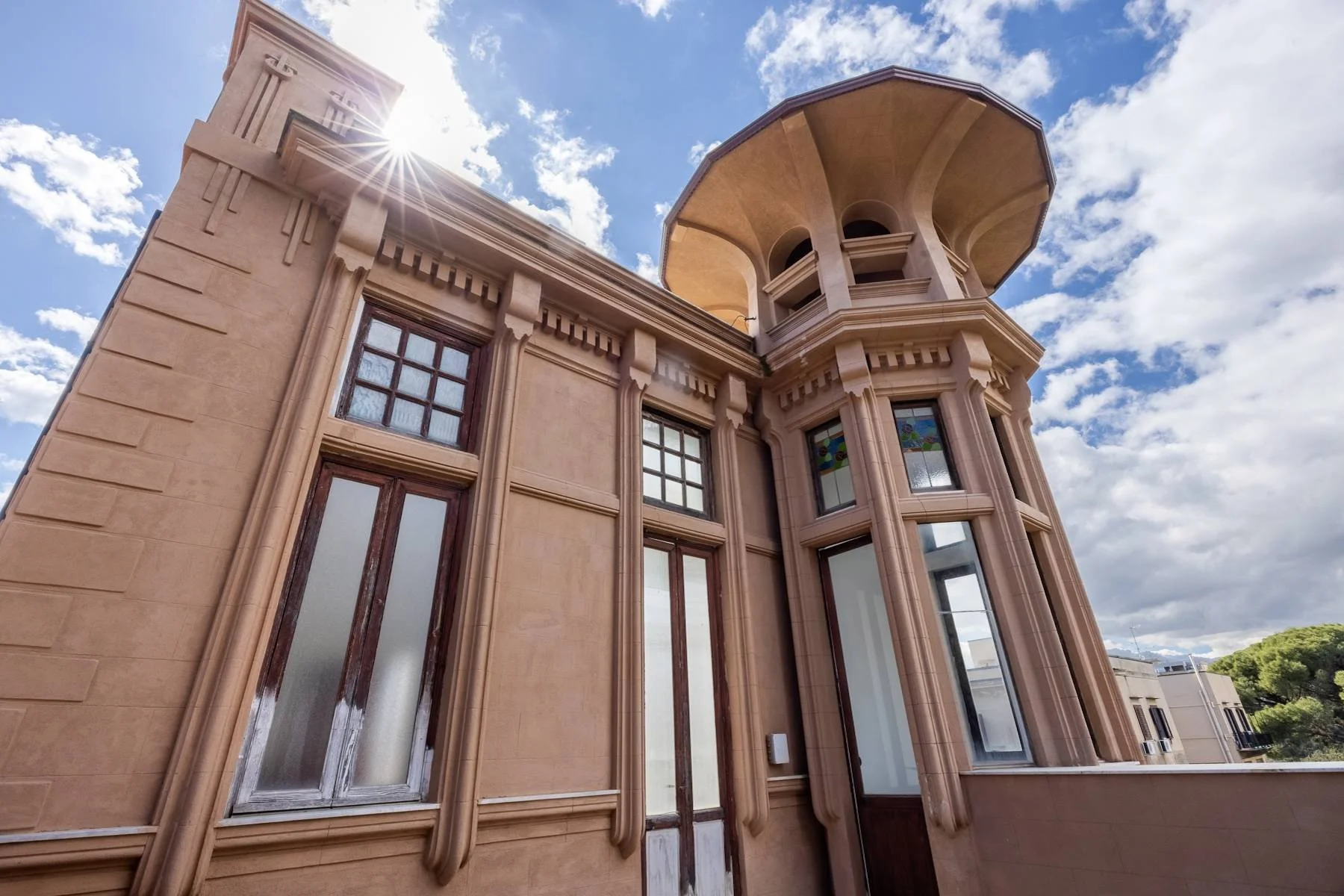
Set behind gates on Via Dante, the villa has an asymmetrical ochre façade, corner turrets, polychrome stained glass, and an octagonal tower. A wrought-iron canopy with vegetal motifs marks the main entrance, one of several details that place the house firmly within Palermo’s Liberty tradition.
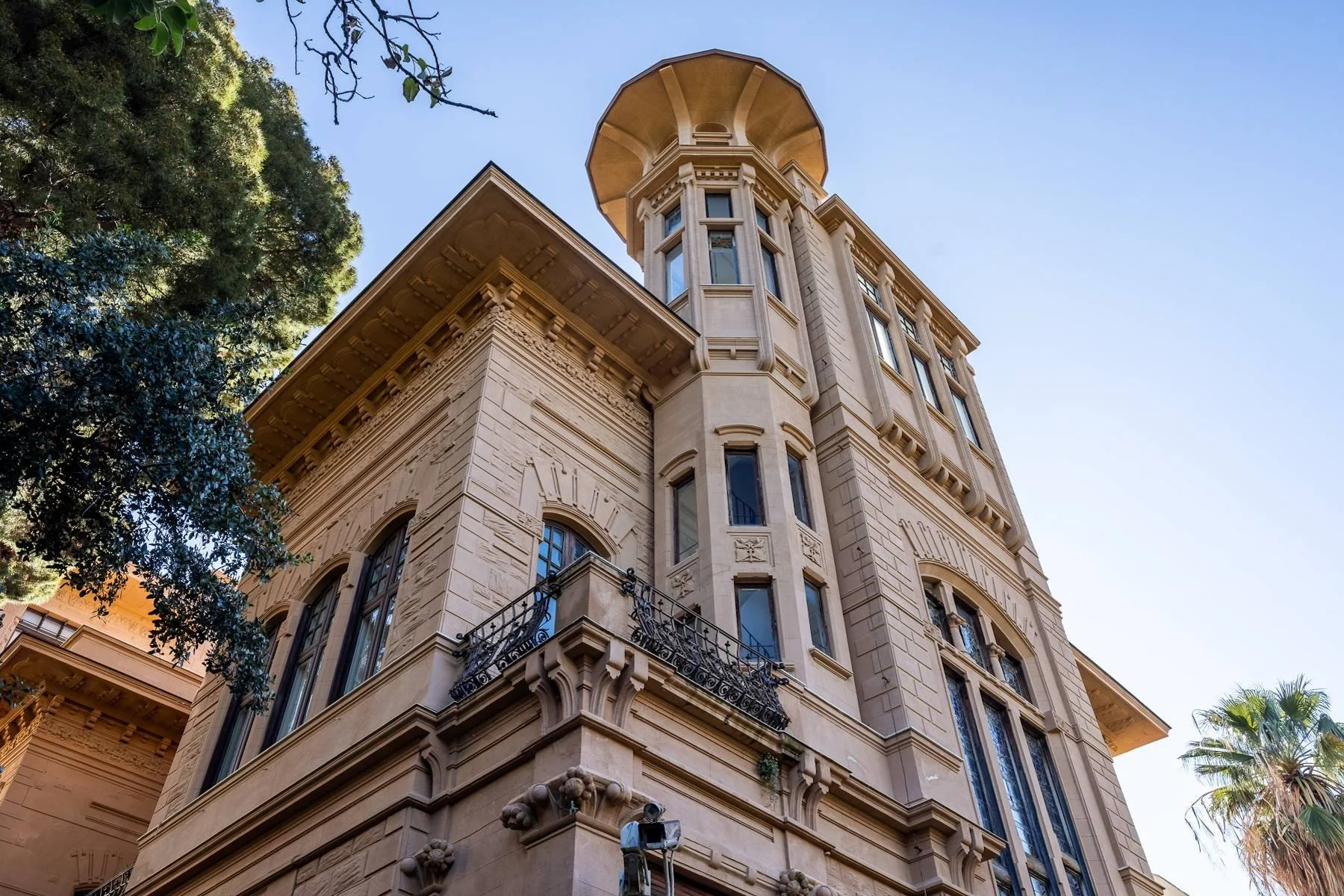
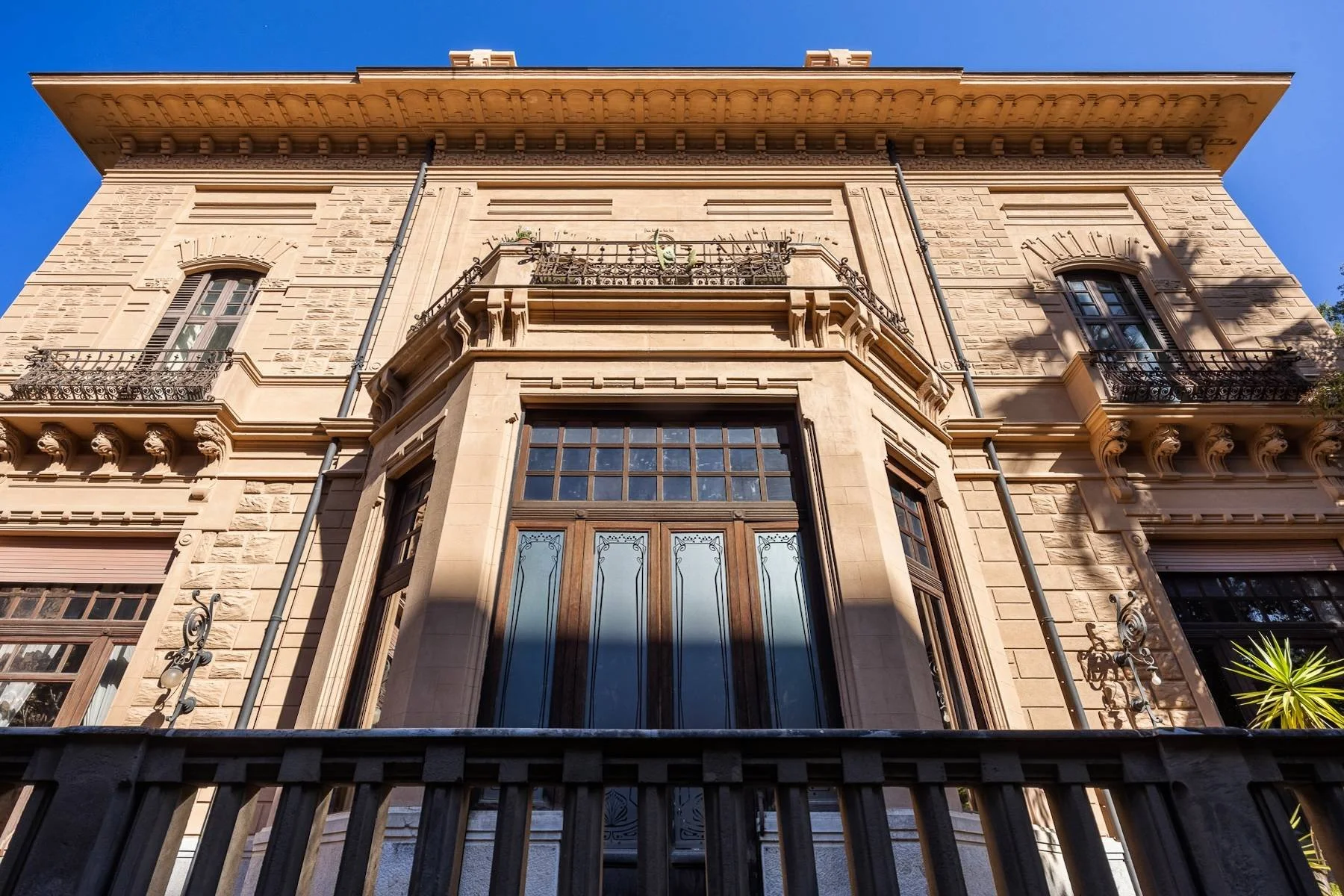
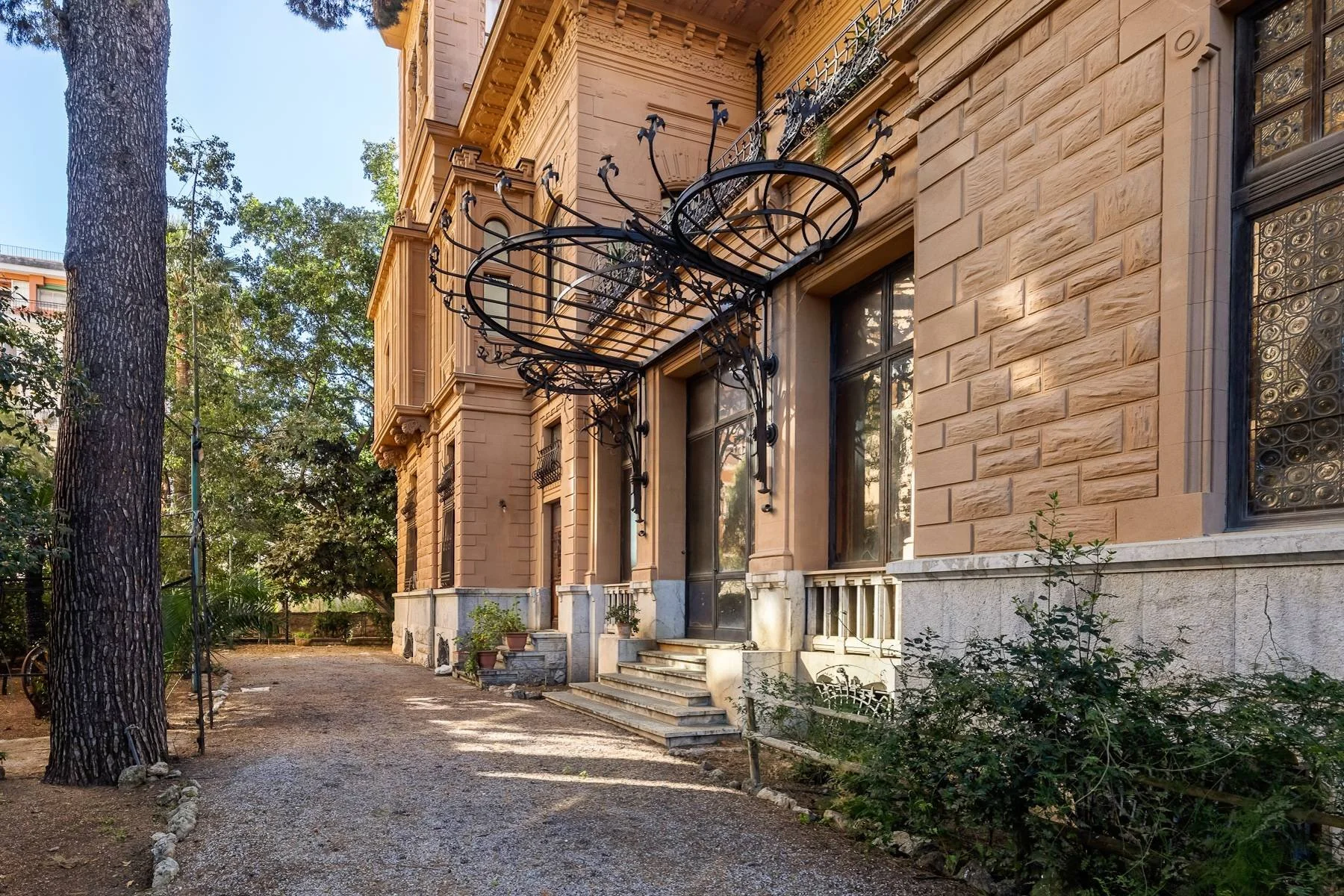
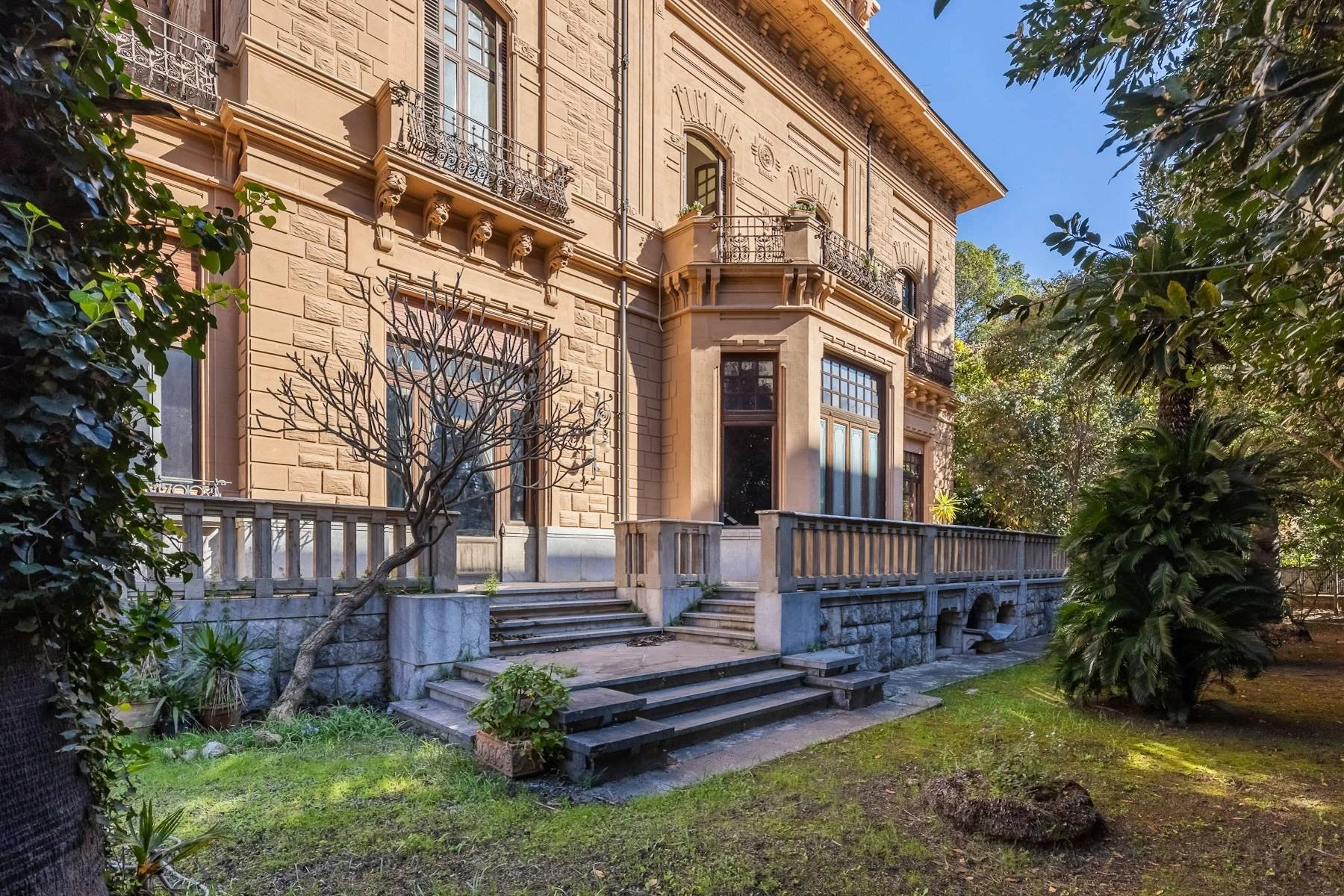
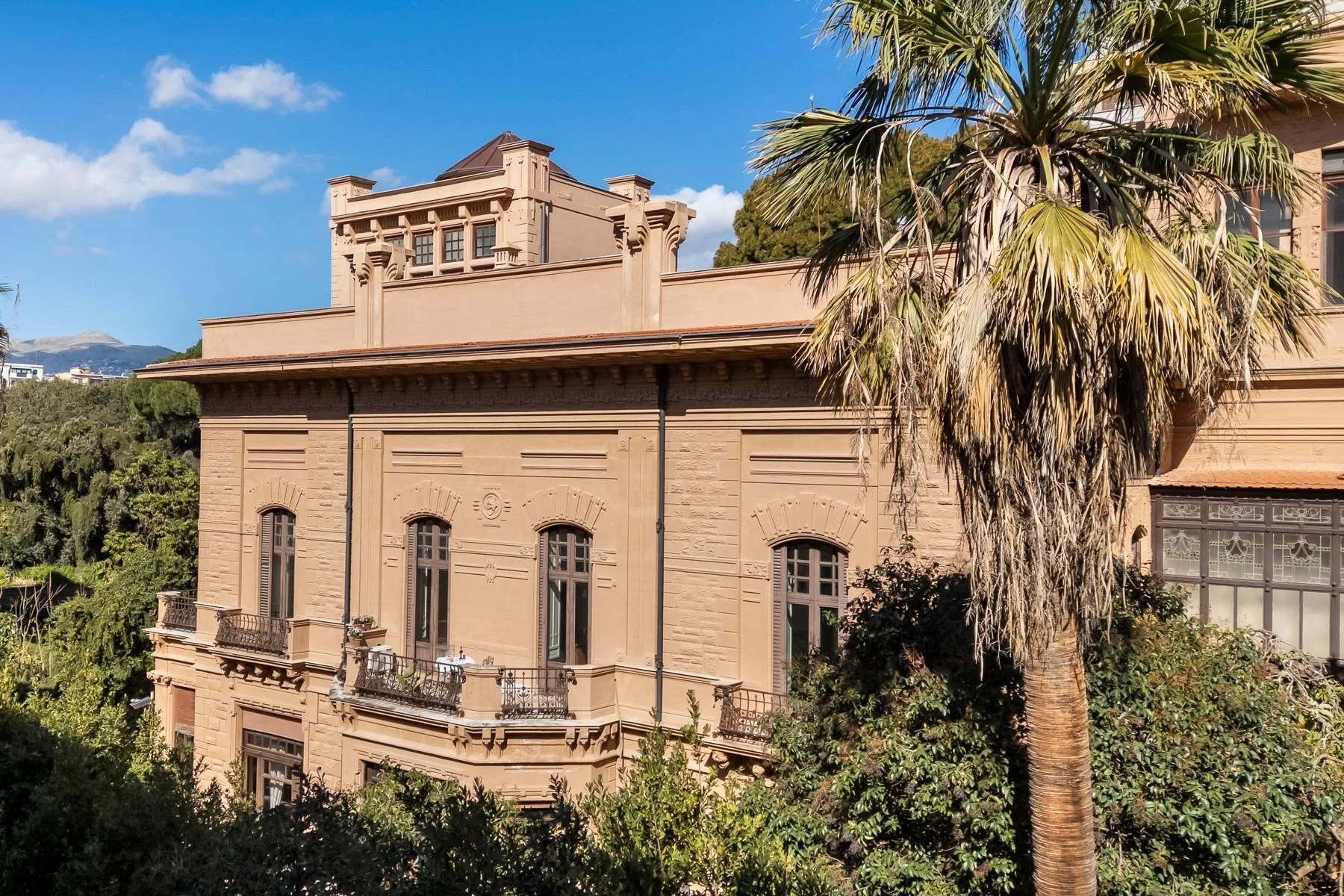
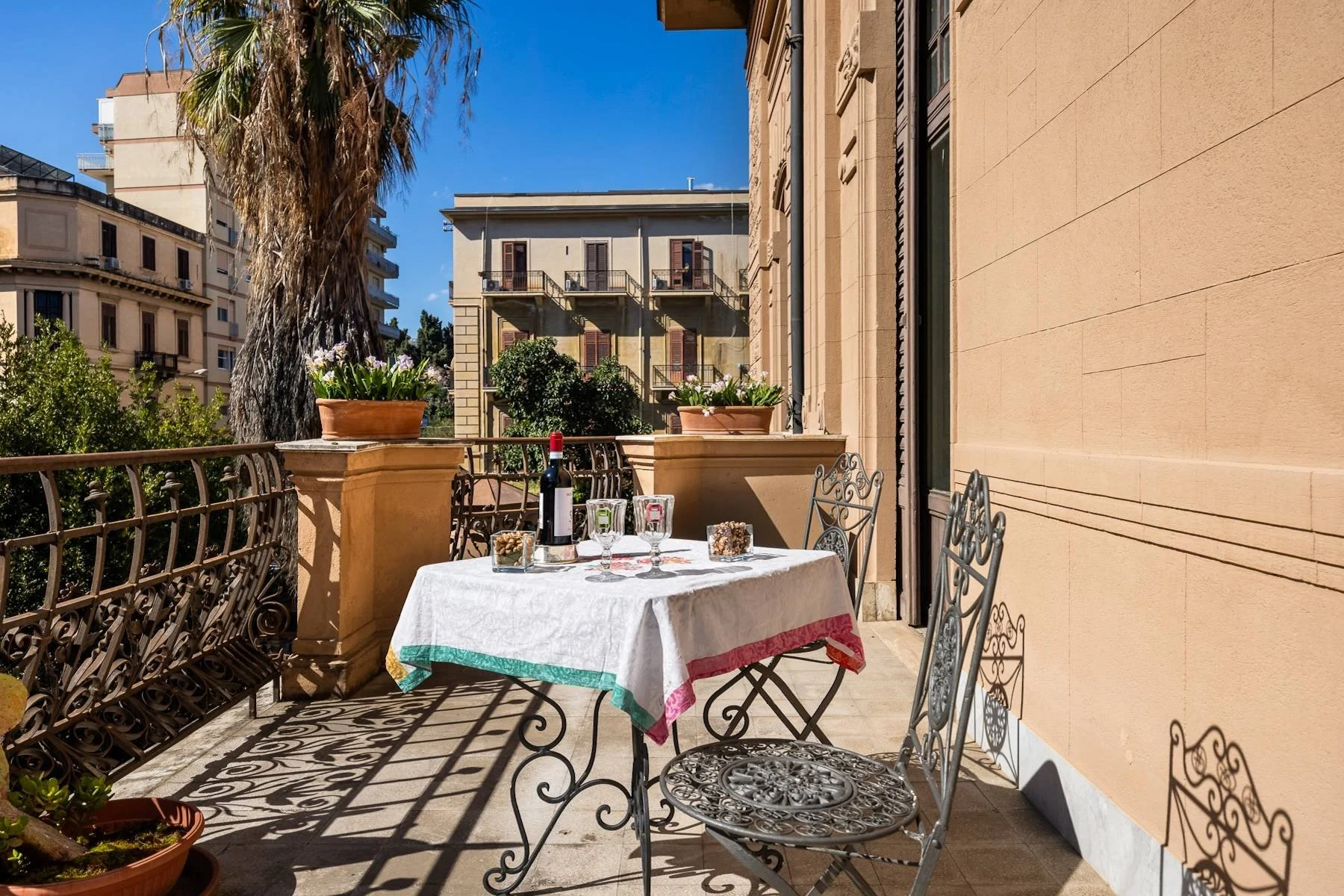
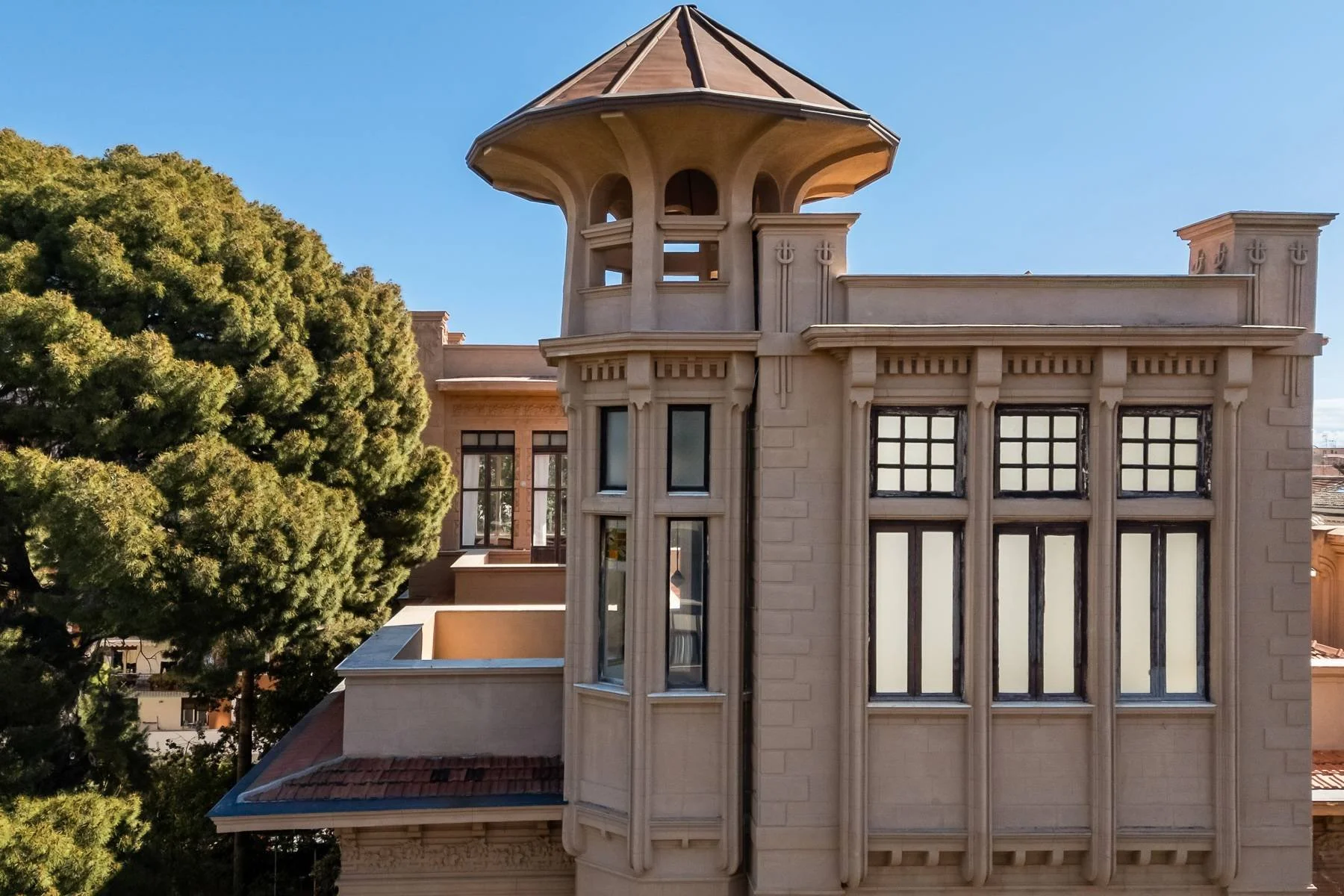
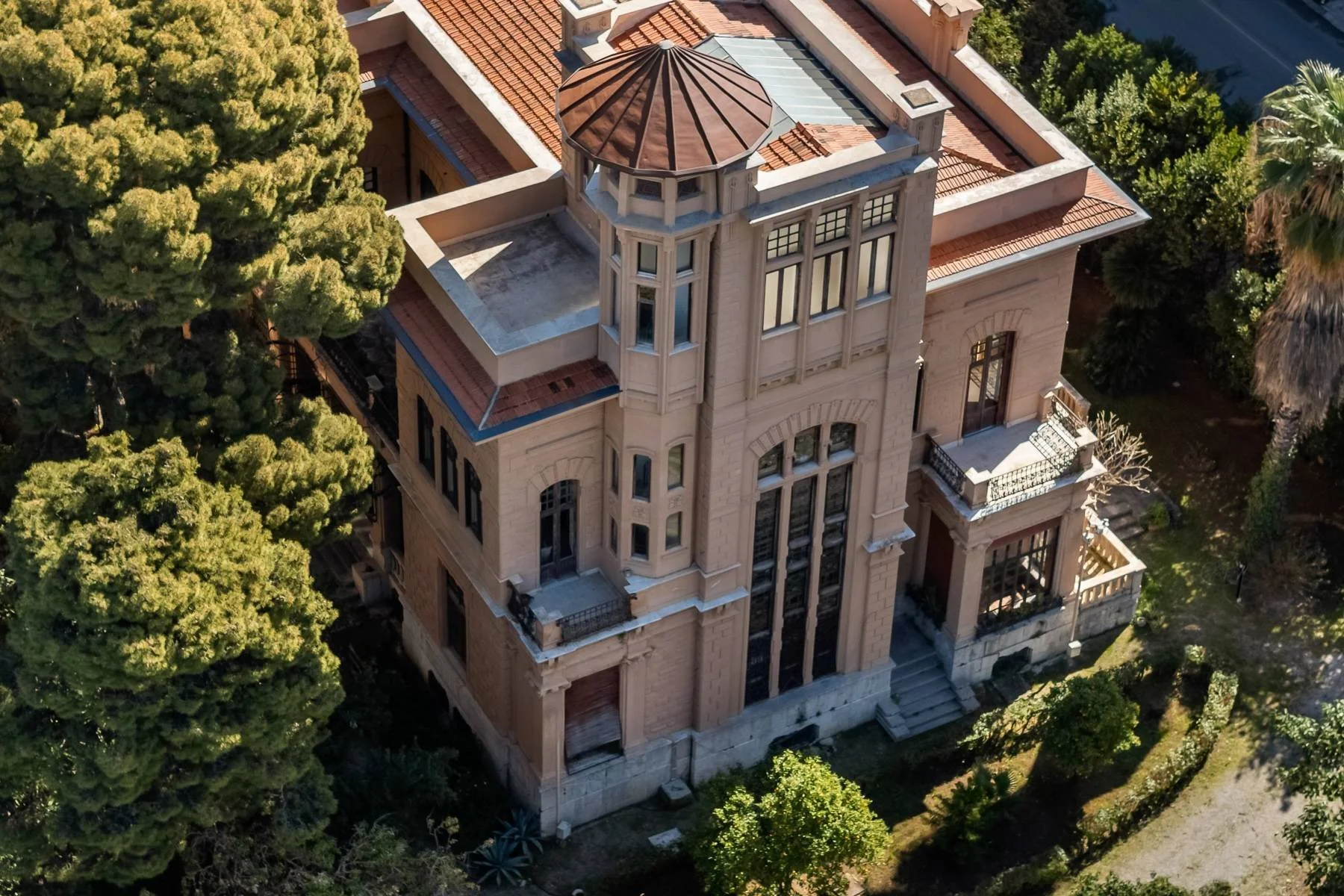
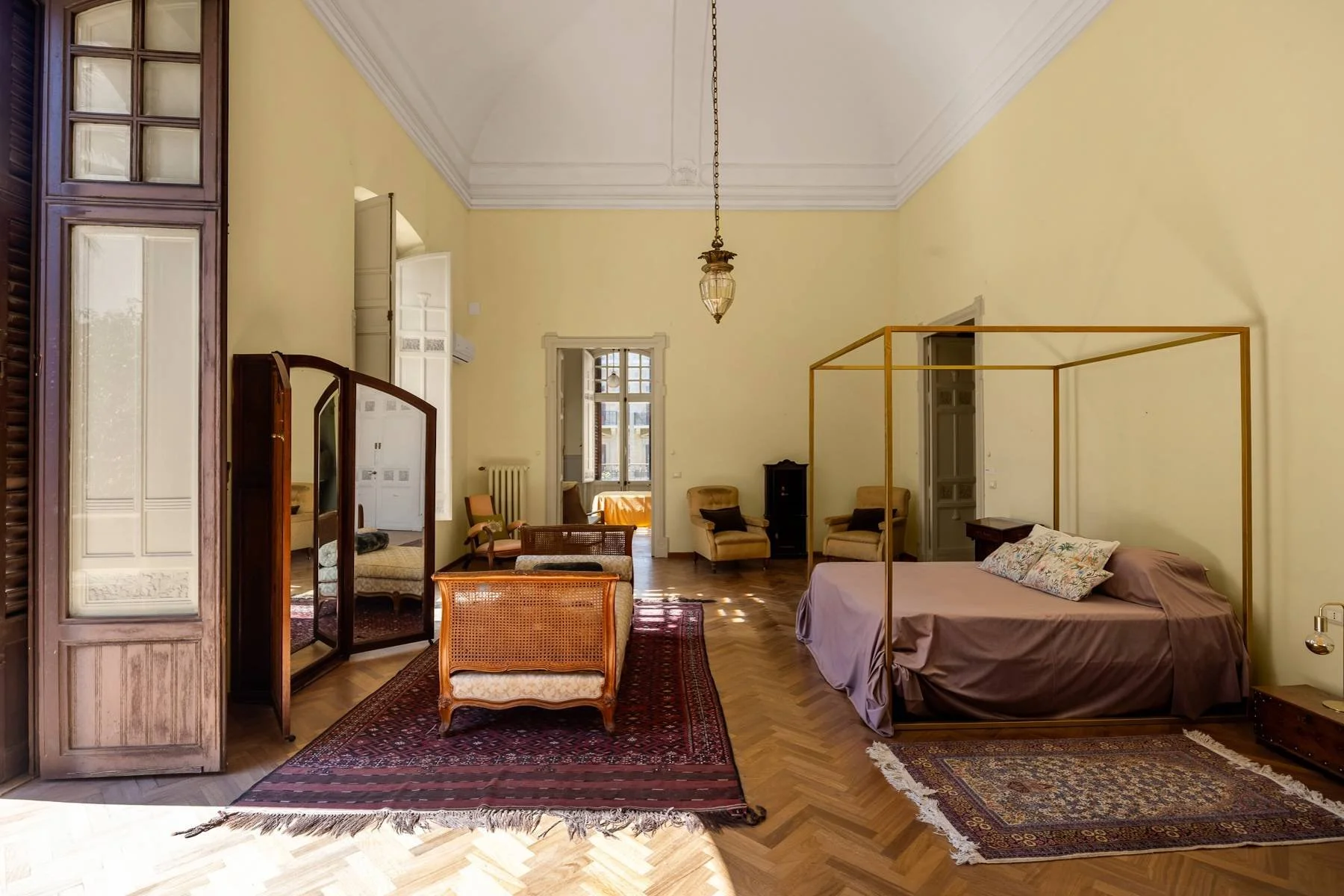
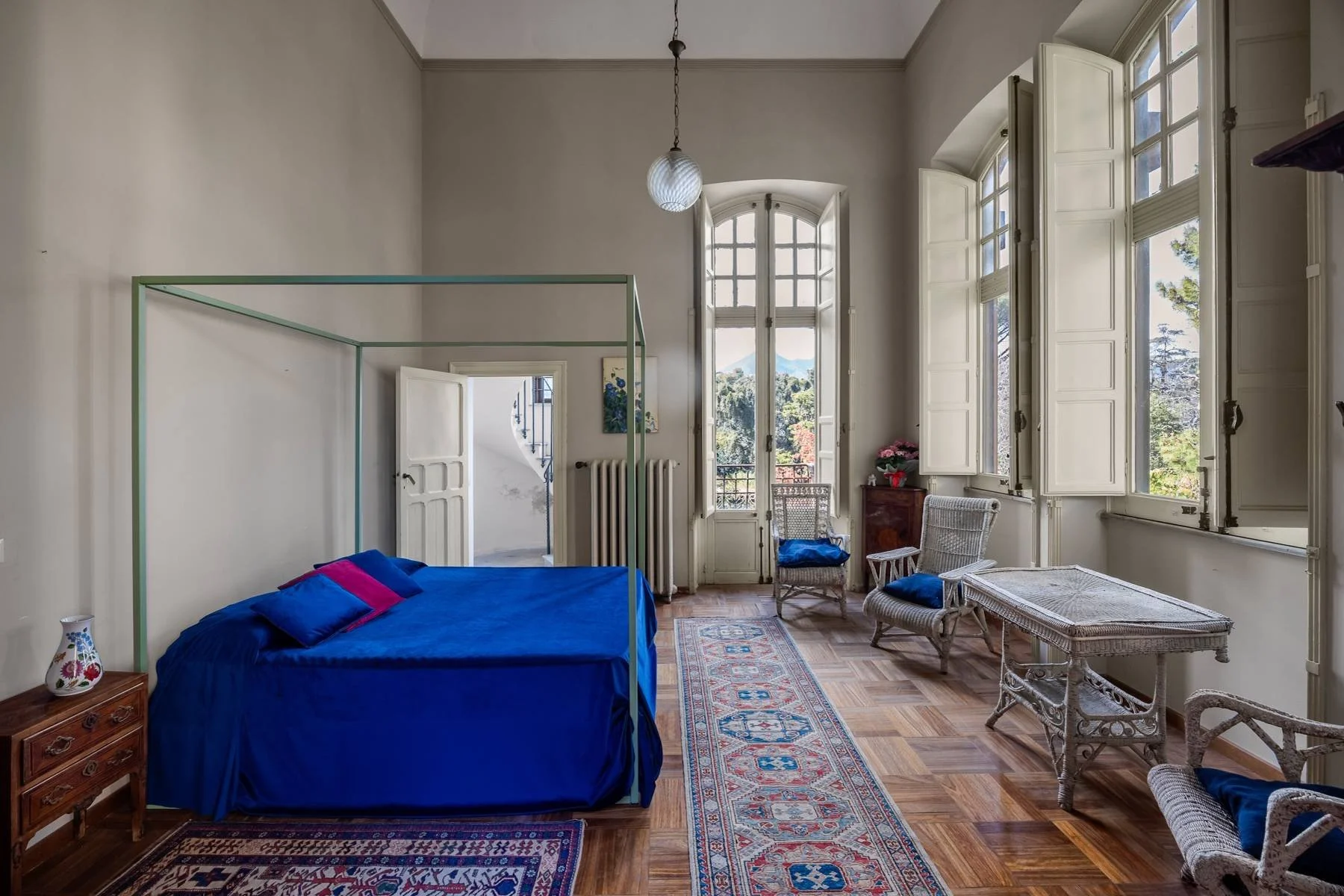
The villa offers approximately 1,168 m², or 12,573 ft², of living space arranged over two main floors and a semi-basement level, with 8 bedrooms, 7 bathrooms, a private garden with parking, and a two-storey Liberty annexe of approximately 82 m², or 882 ft².
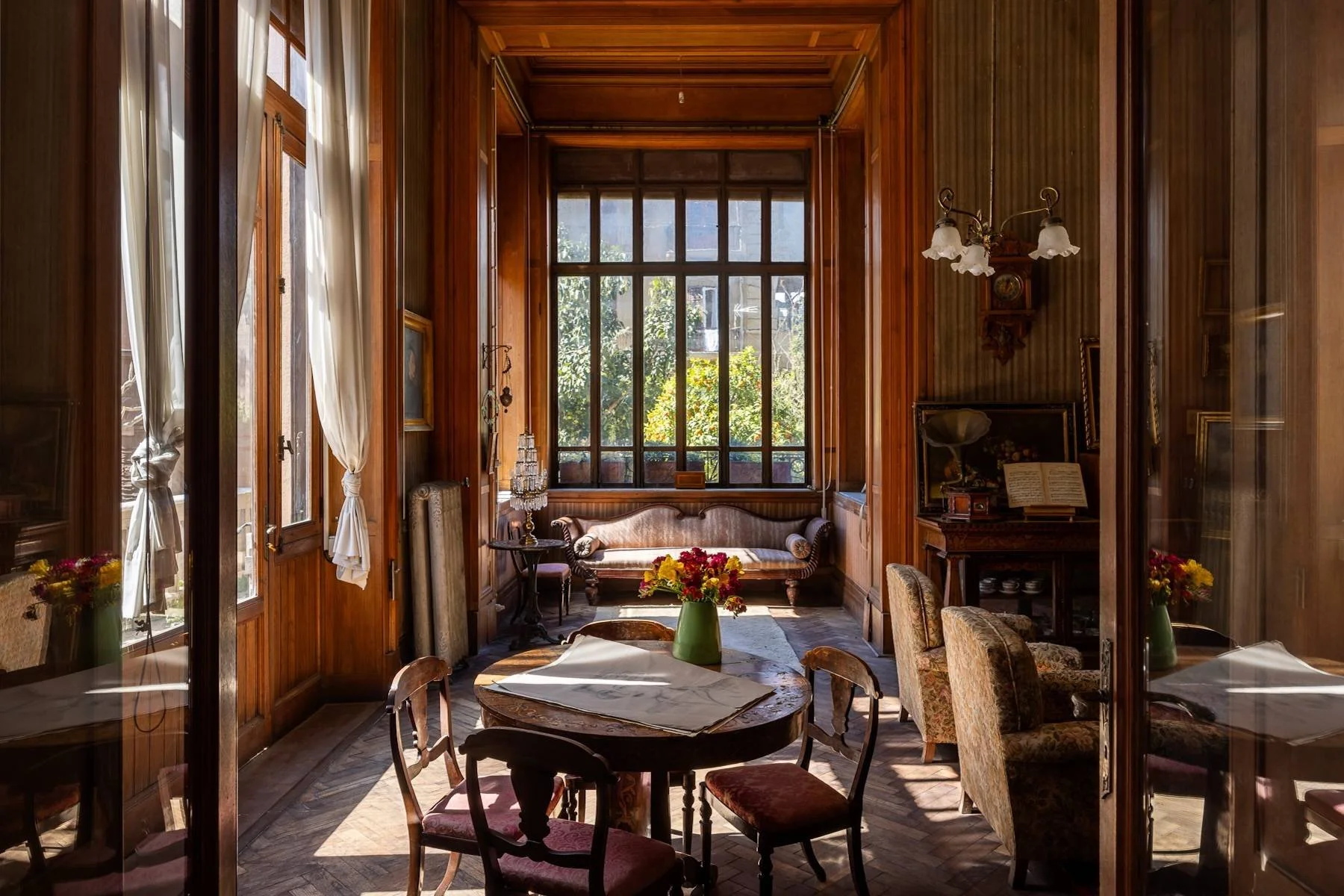
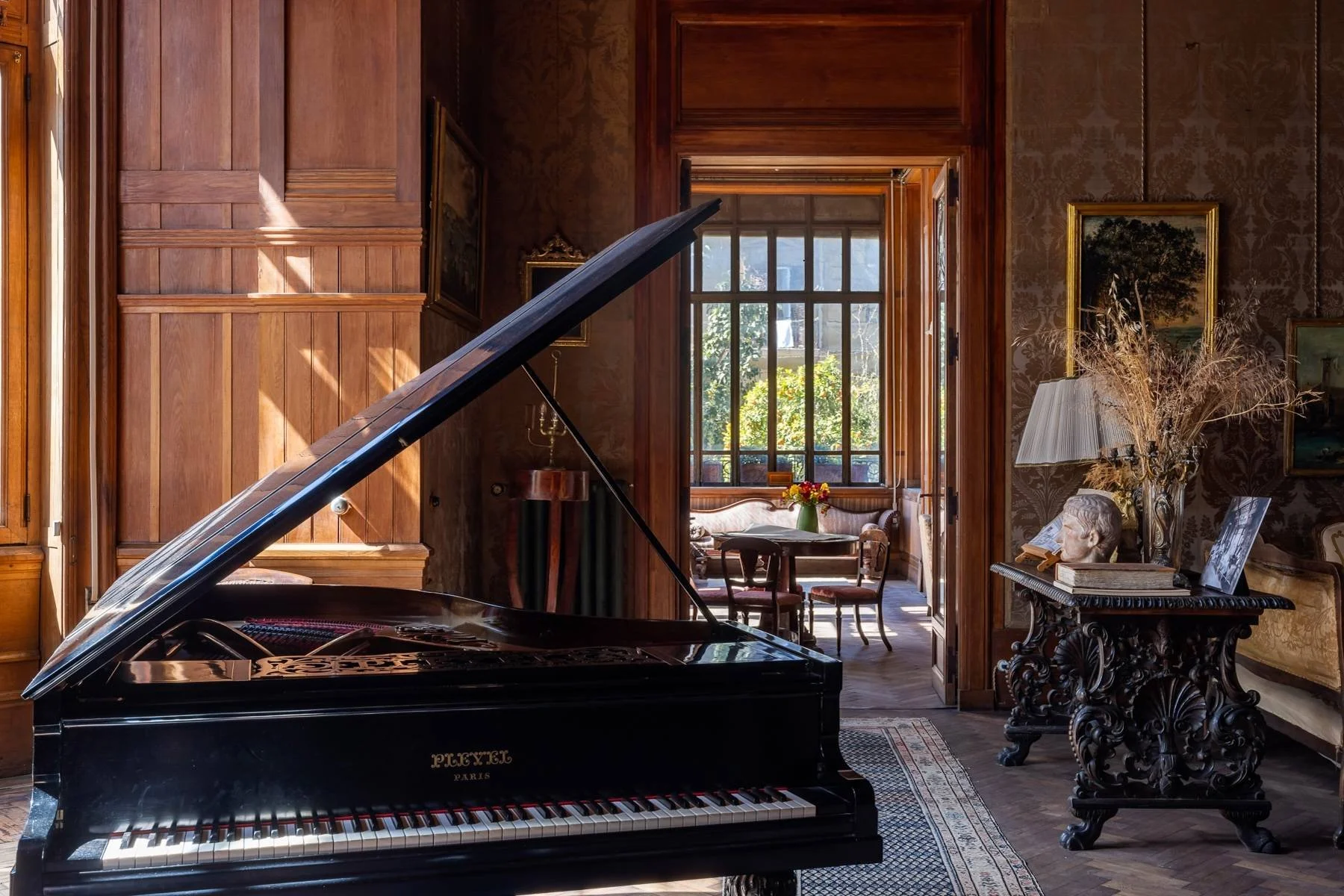
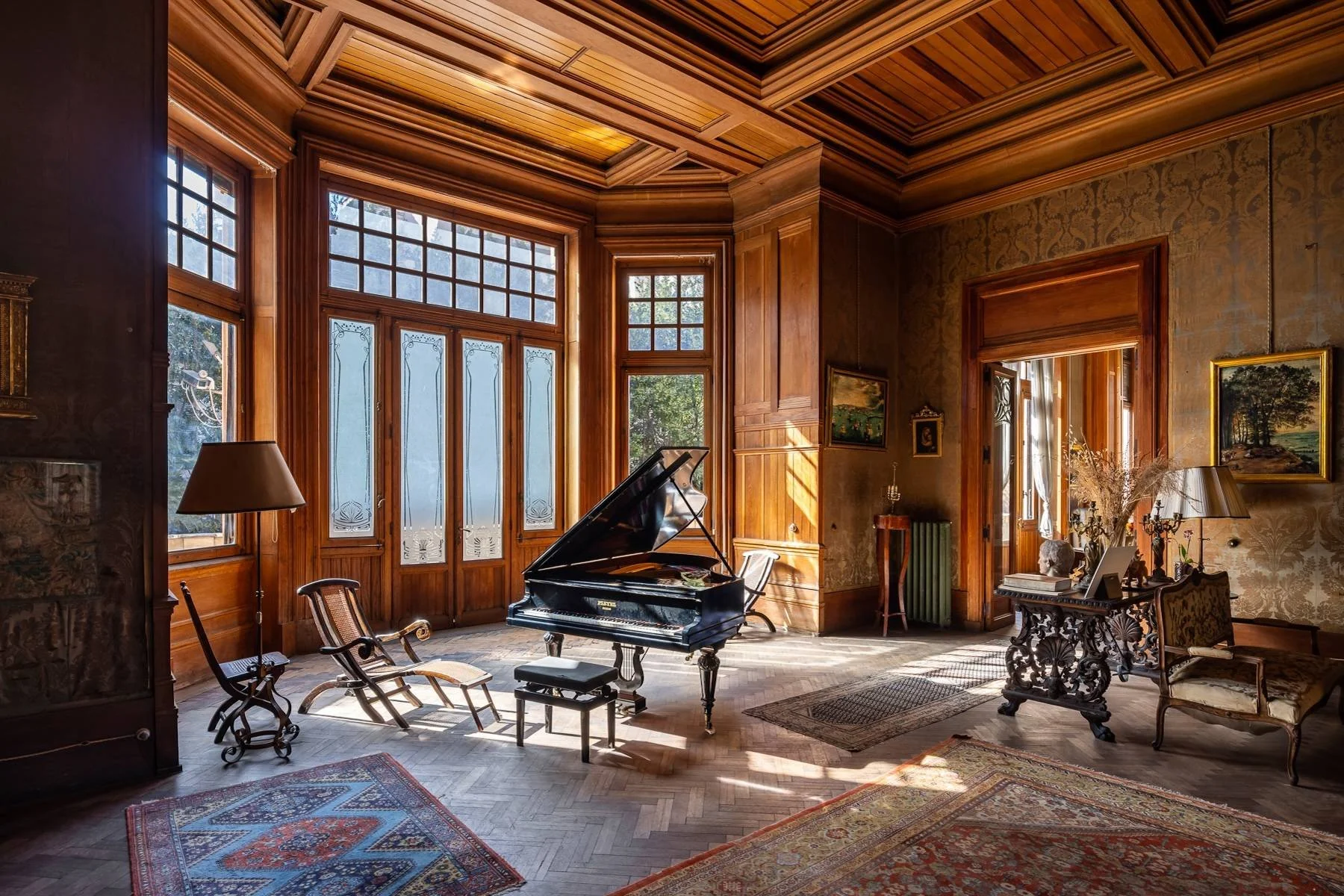
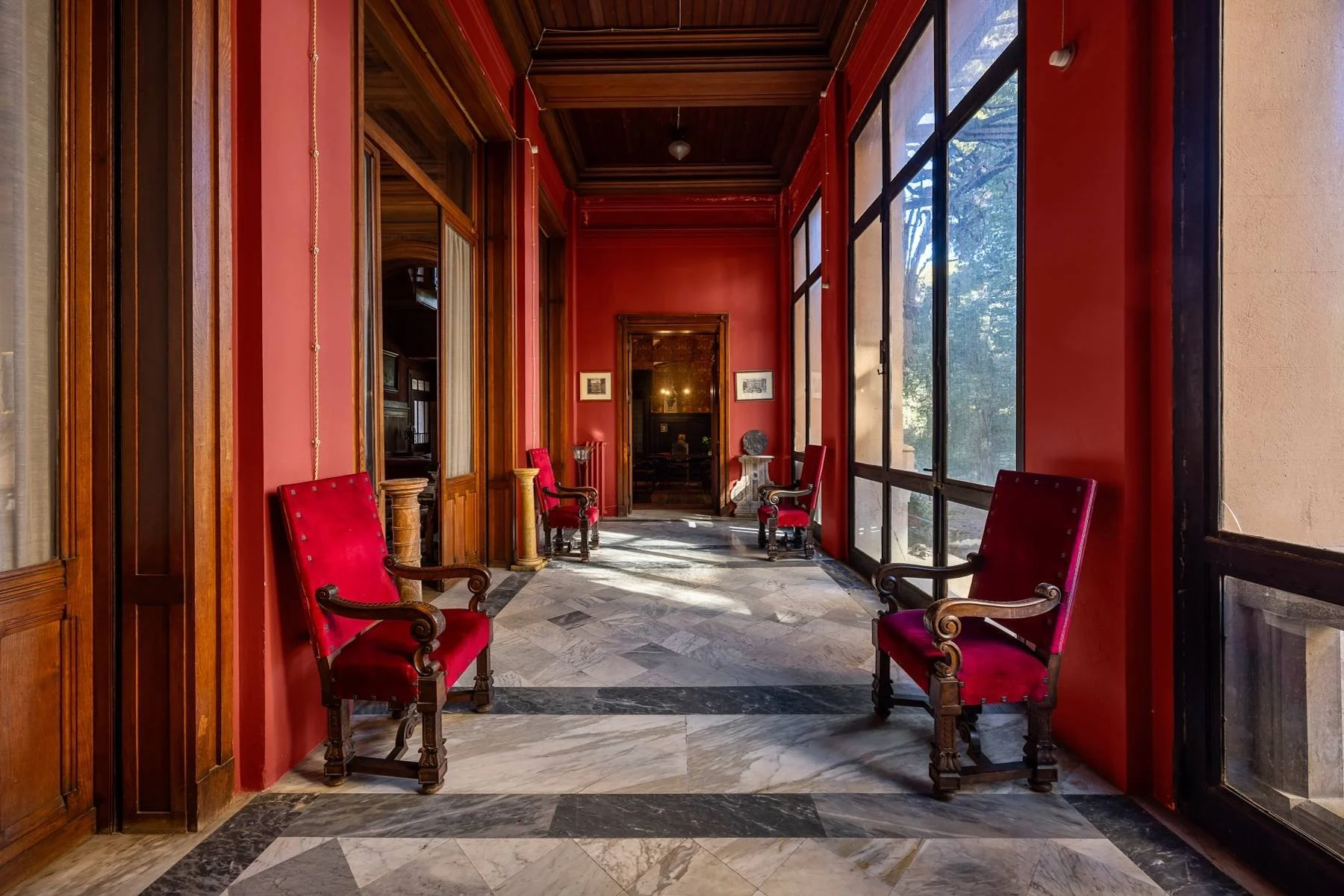
Beyond its scale, what makes Villa Virginia especially interesting is the survival of key Liberty-period interior details. In Palermo, the style was not limited to façades. It often extended inside through stained glass, staircases, furniture, textiles, painted decoration, and smaller crafted elements.
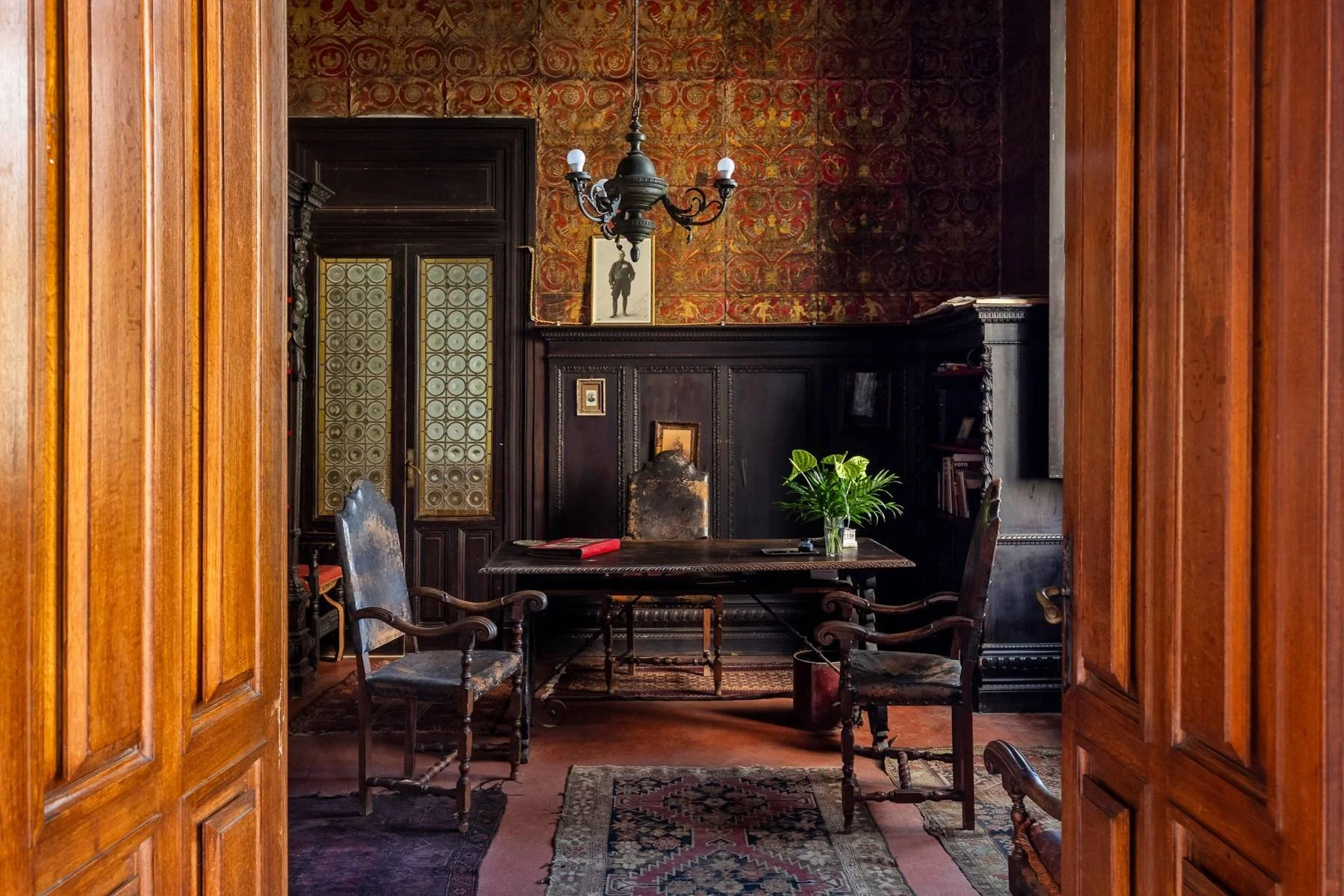
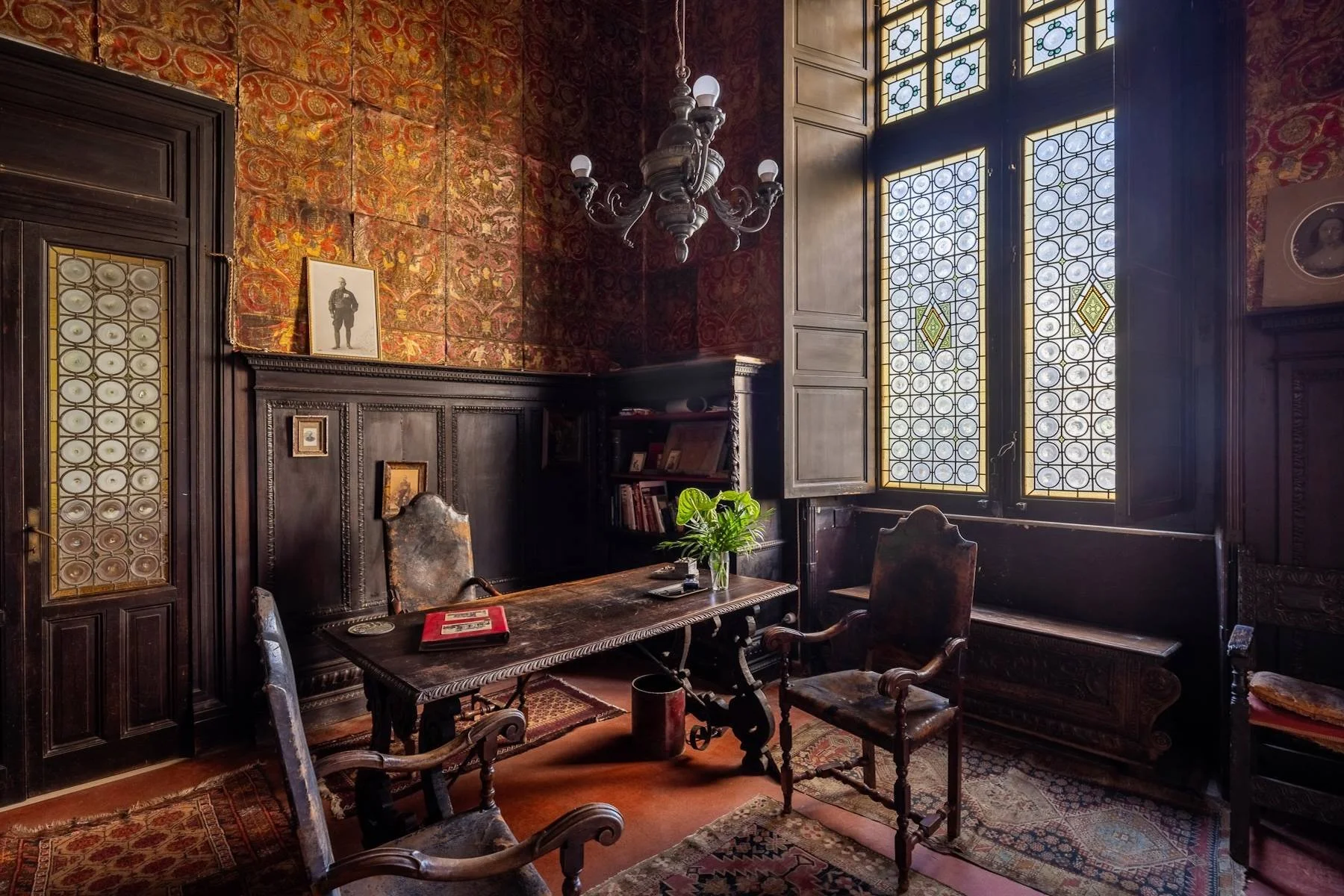
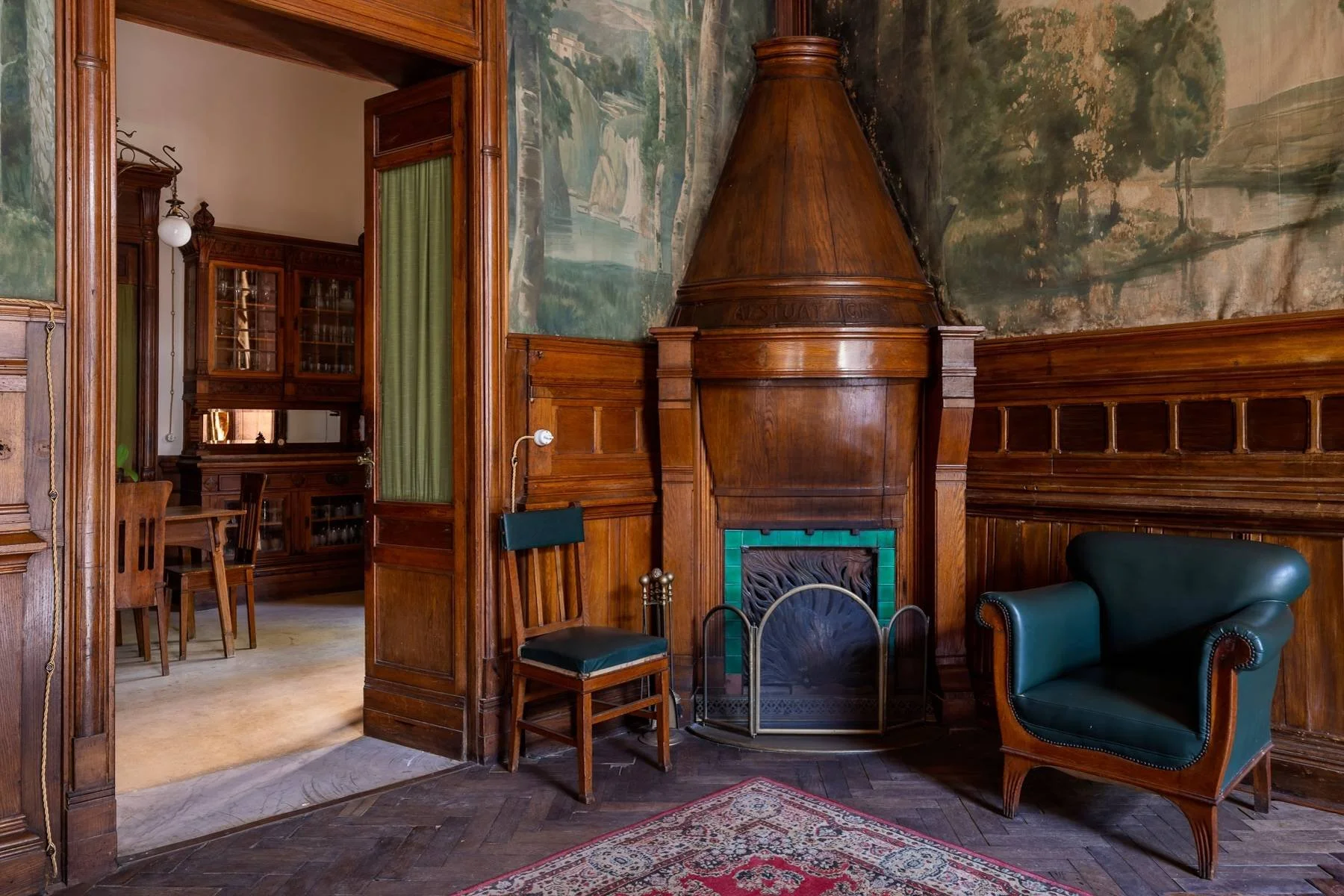
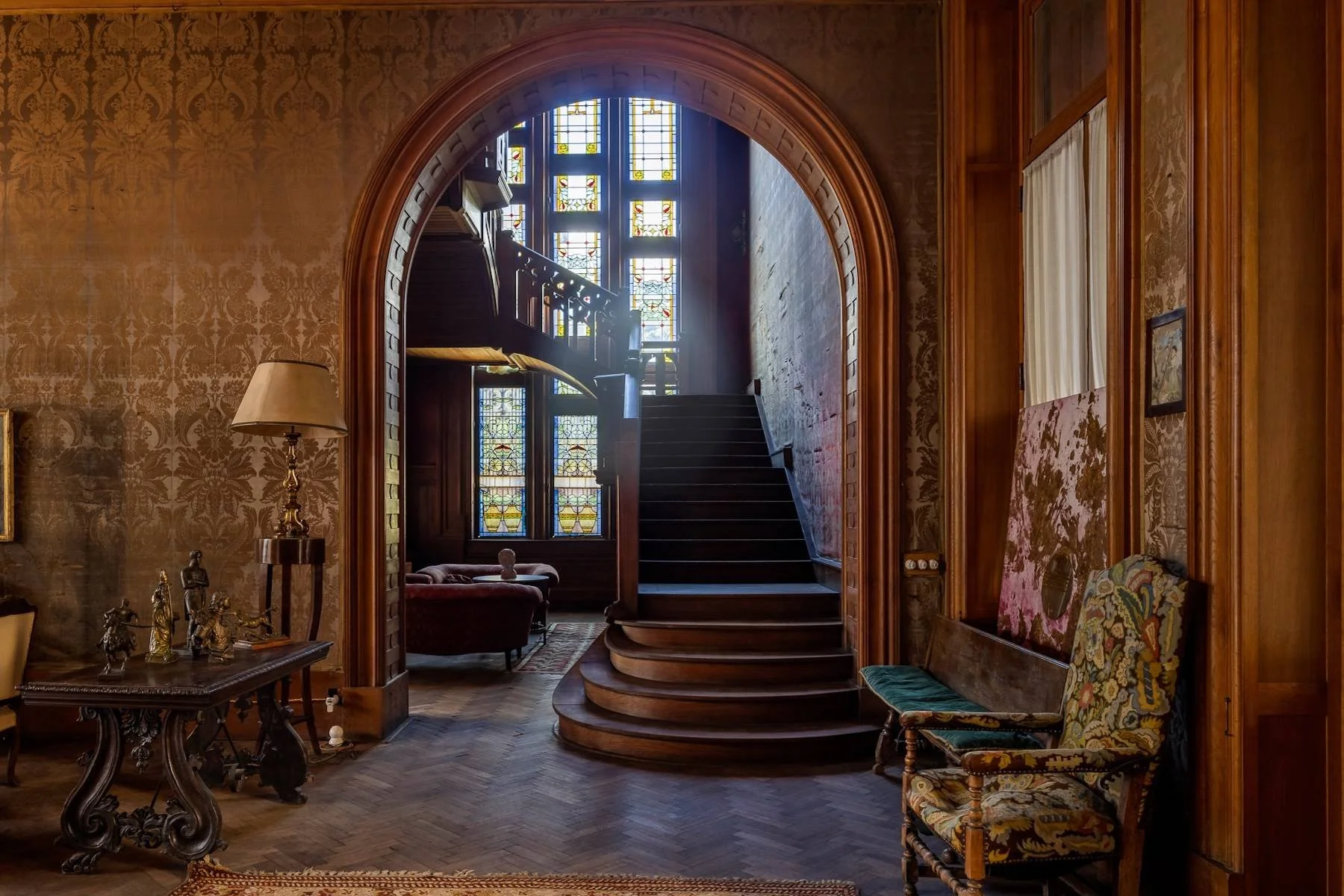
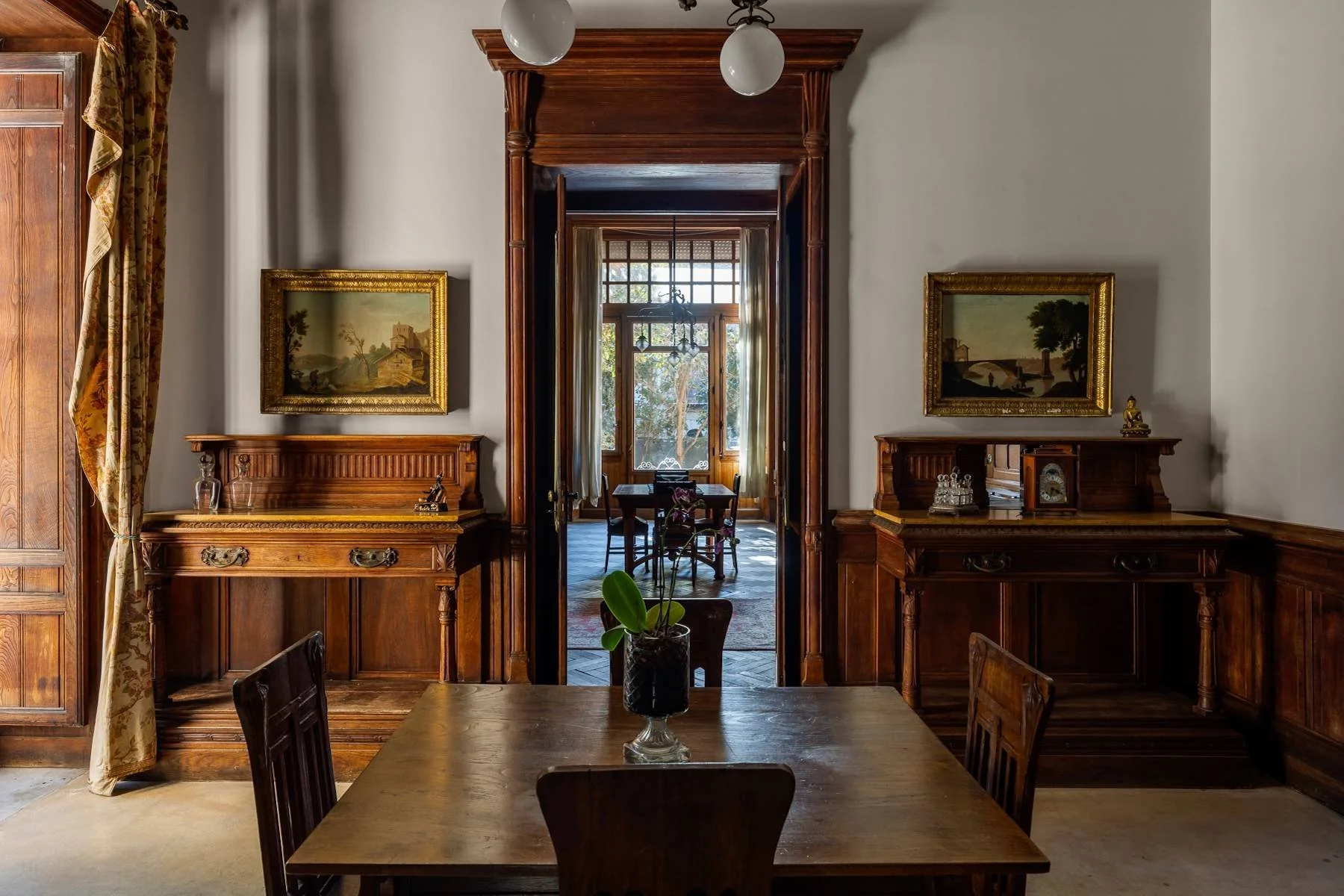
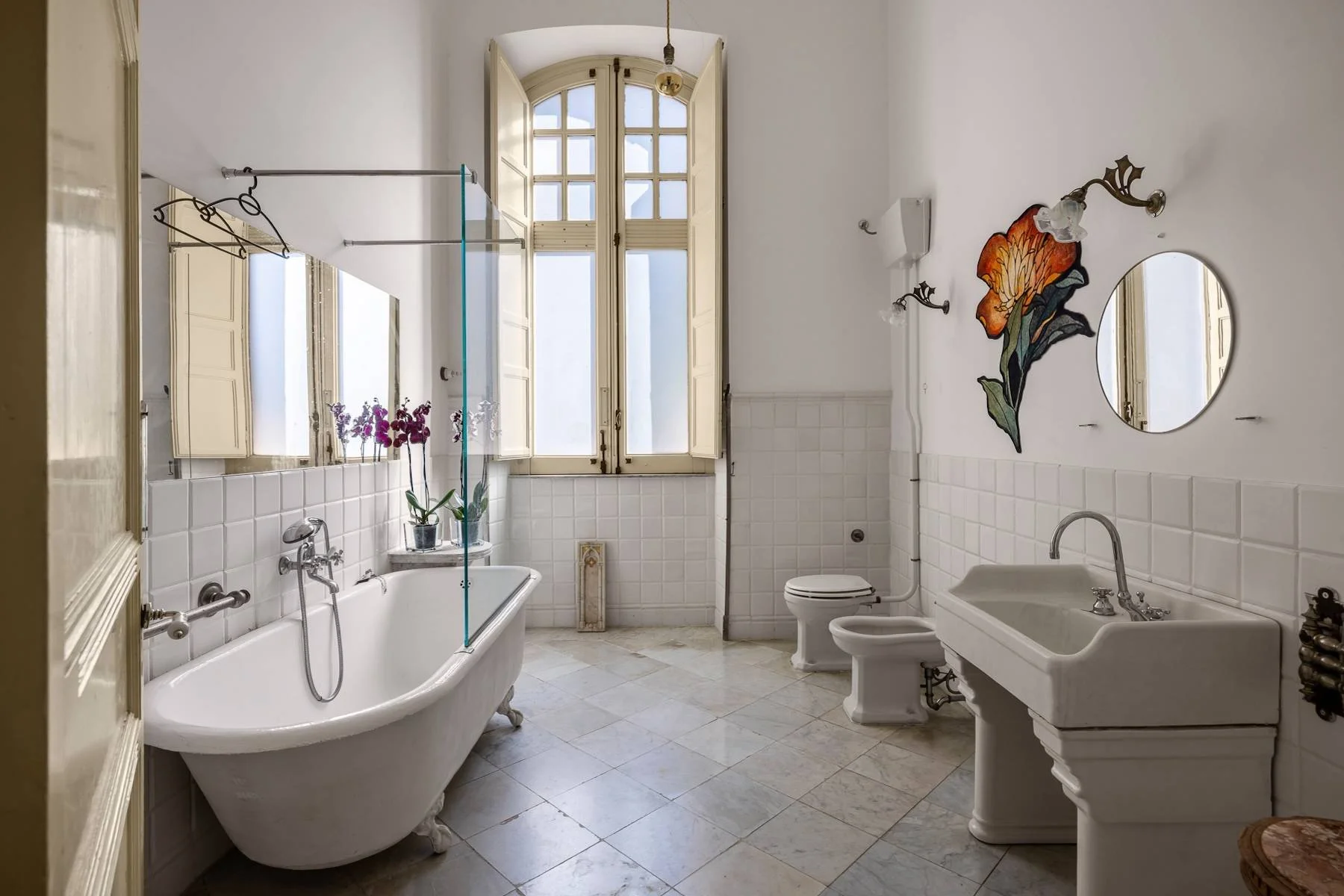
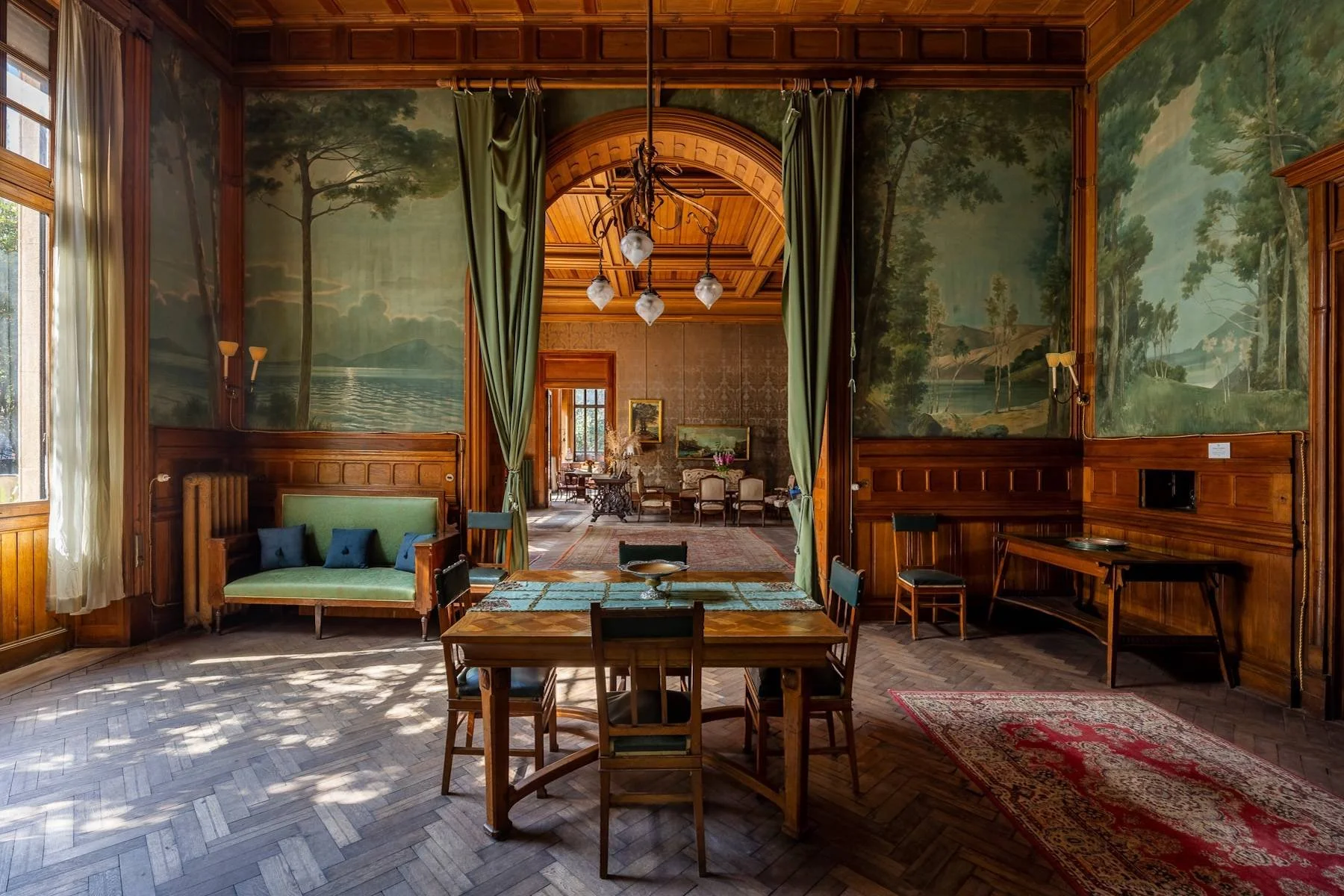
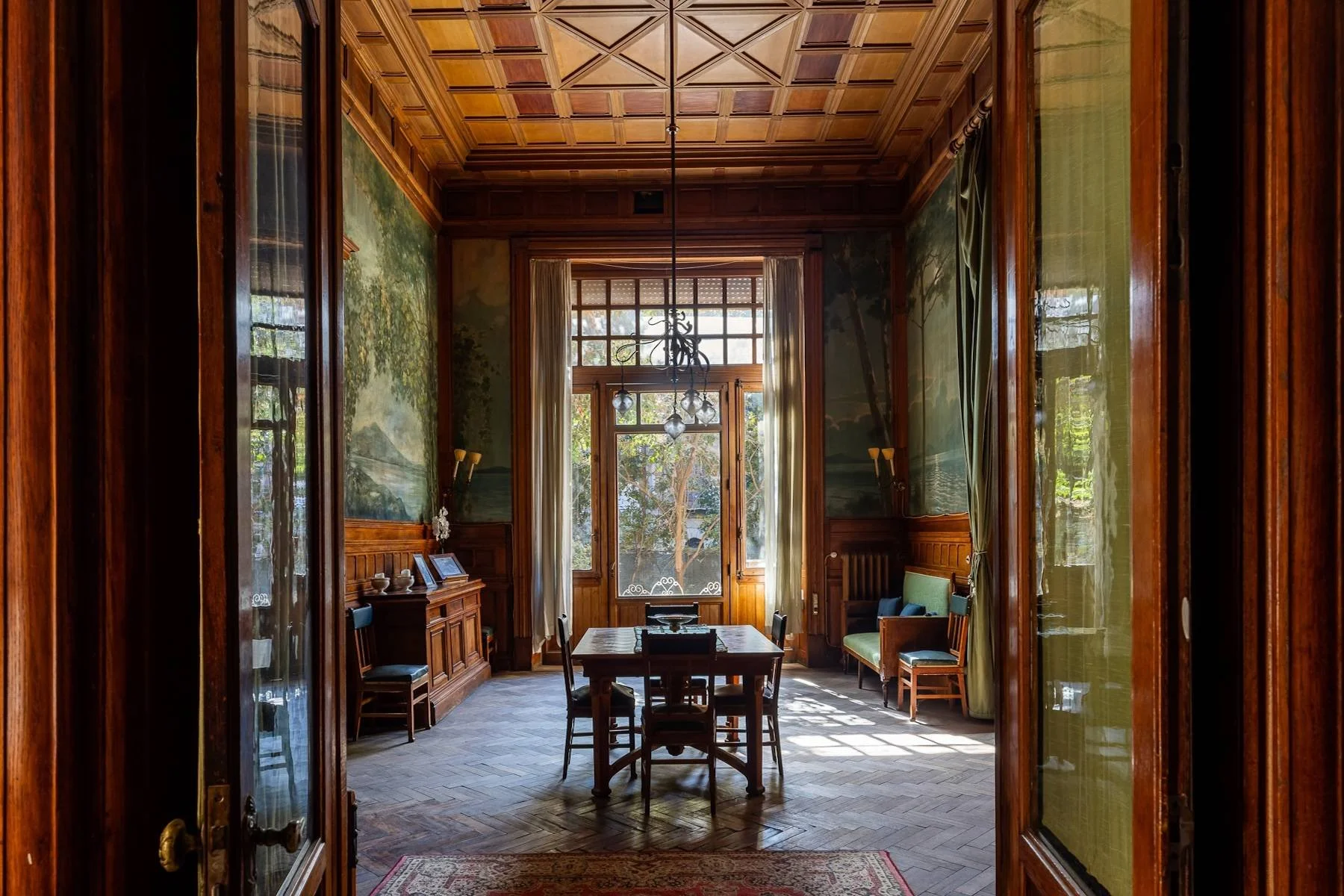
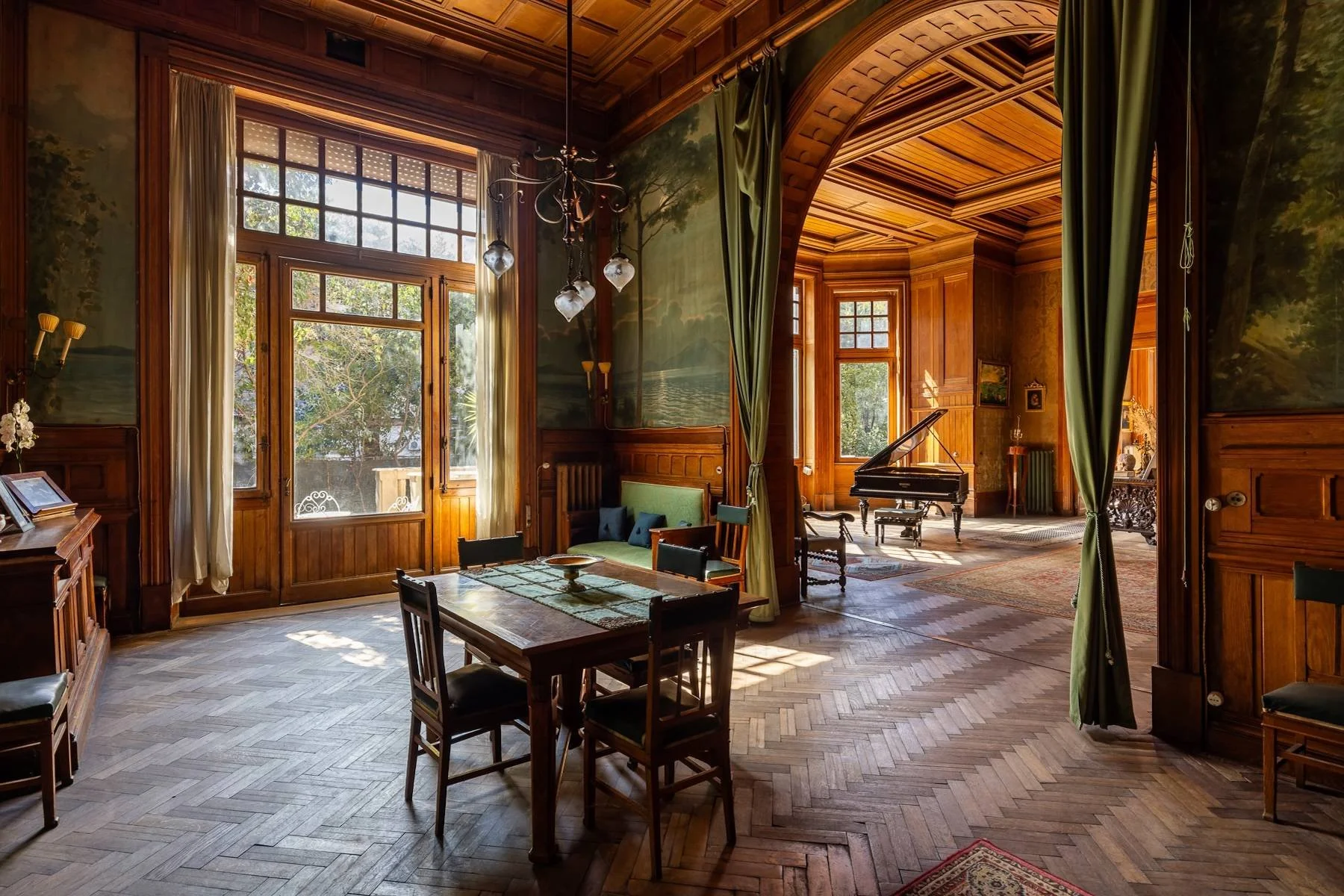
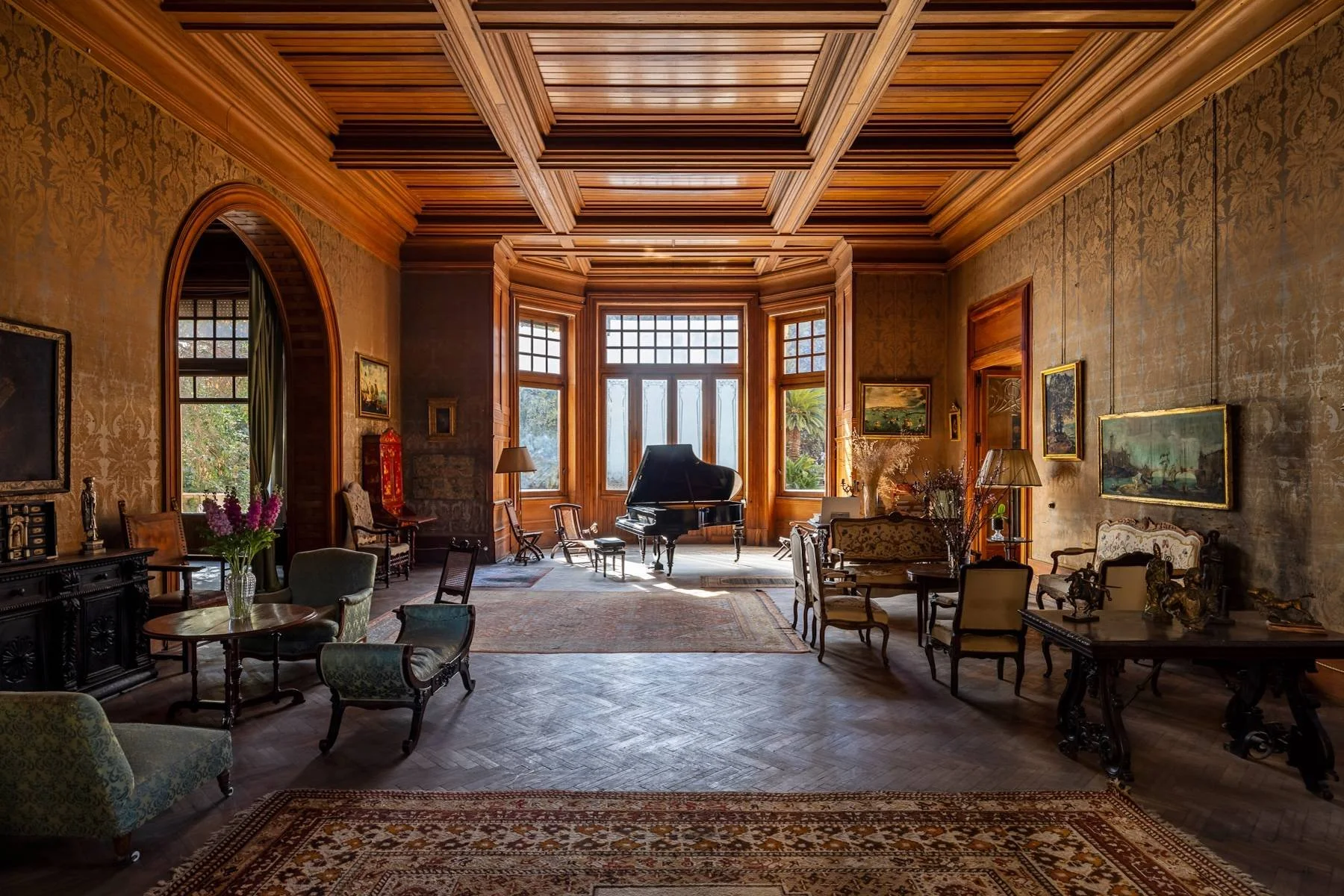
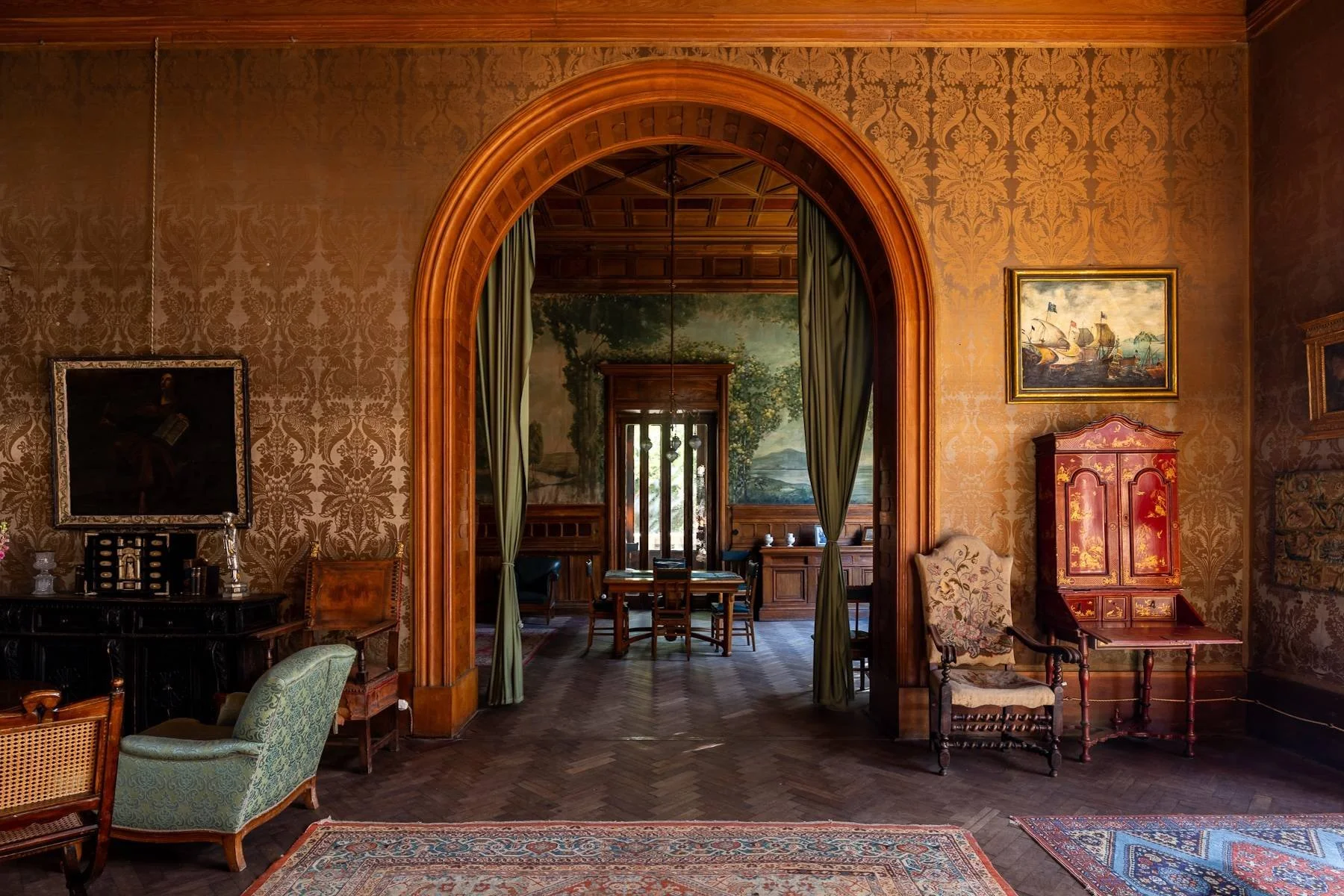
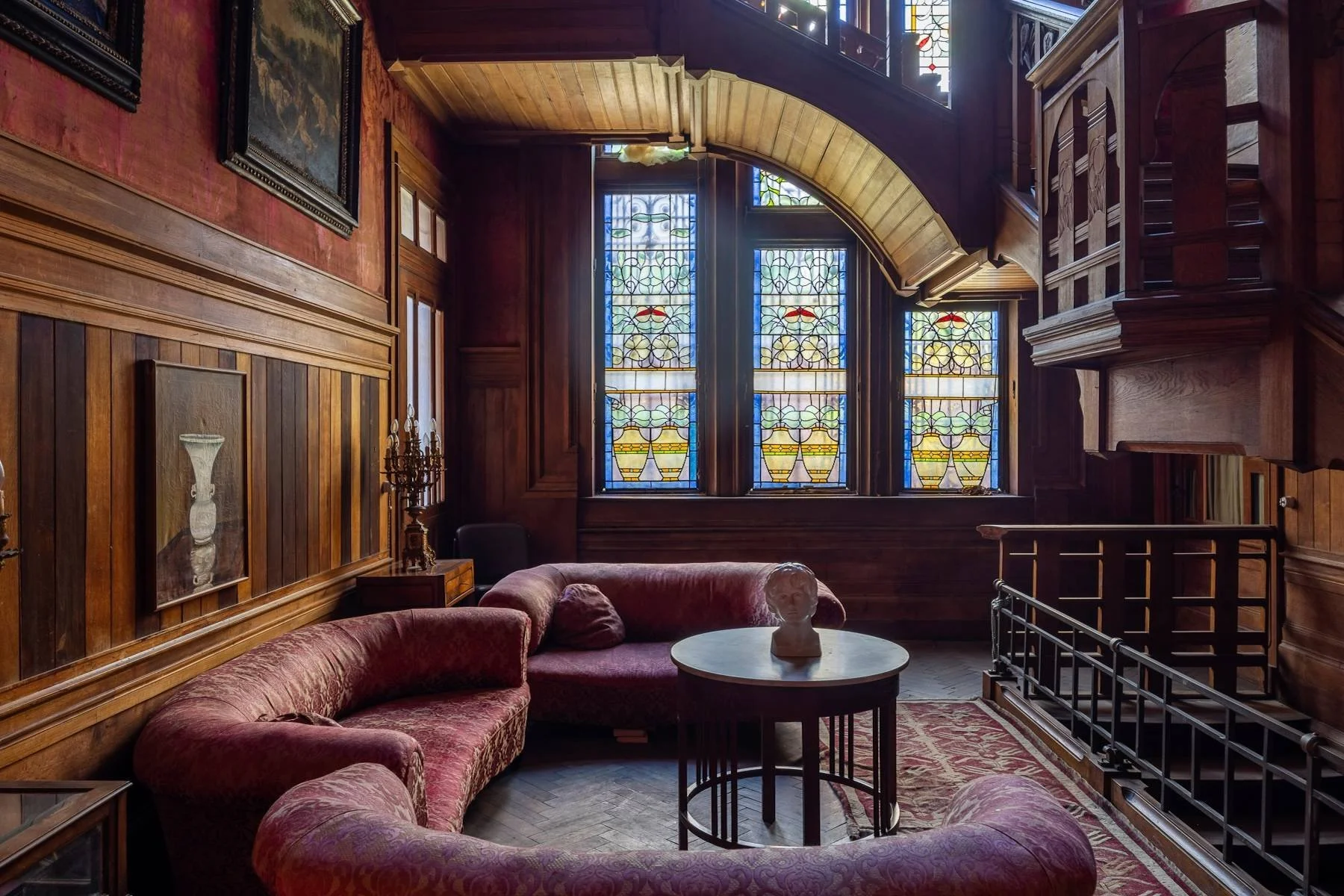
Villa Virginia still reflects that approach. Its interiors retain leaded windows, silk and gold-leaf panelling, damask fabrics, wood panelling, maple coffered ceilings, pistachio-green tapestries, and recurring pomegranate motifs. The villa was also shaped by Palermo’s decorative arts network: Giuseppe Caraffa produced the artistic lighting fixtures, including the staircase chandelier; the Li Vigni brothers carried out the stucco and plasterwork; Mucoli supplied the furnishings; and Bevilacqua created the stained glass used throughout the house. The current listing also notes furnishings from Ducrot, another historic Palermo firm closely associated with Liberty interiors and elite residential commissions.
The staircase is one of the villa’s key interior features: a grand walnut Art Nouveau staircase set beside stained glass by Maestro Bevilacqua, part of Palermo’s Liberty-period stained-glass tradition. One of the reception rooms also features work by Japanese artist Otama Kiyohara, also known as Kiyohara Tama, who settled in Palermo in the 1880s and became part of the city’s cosmopolitan artistic world. Her decoration, described as showing the Bay of Naples through delicate foliage, adds an international layer to the villa’s Liberty interior.
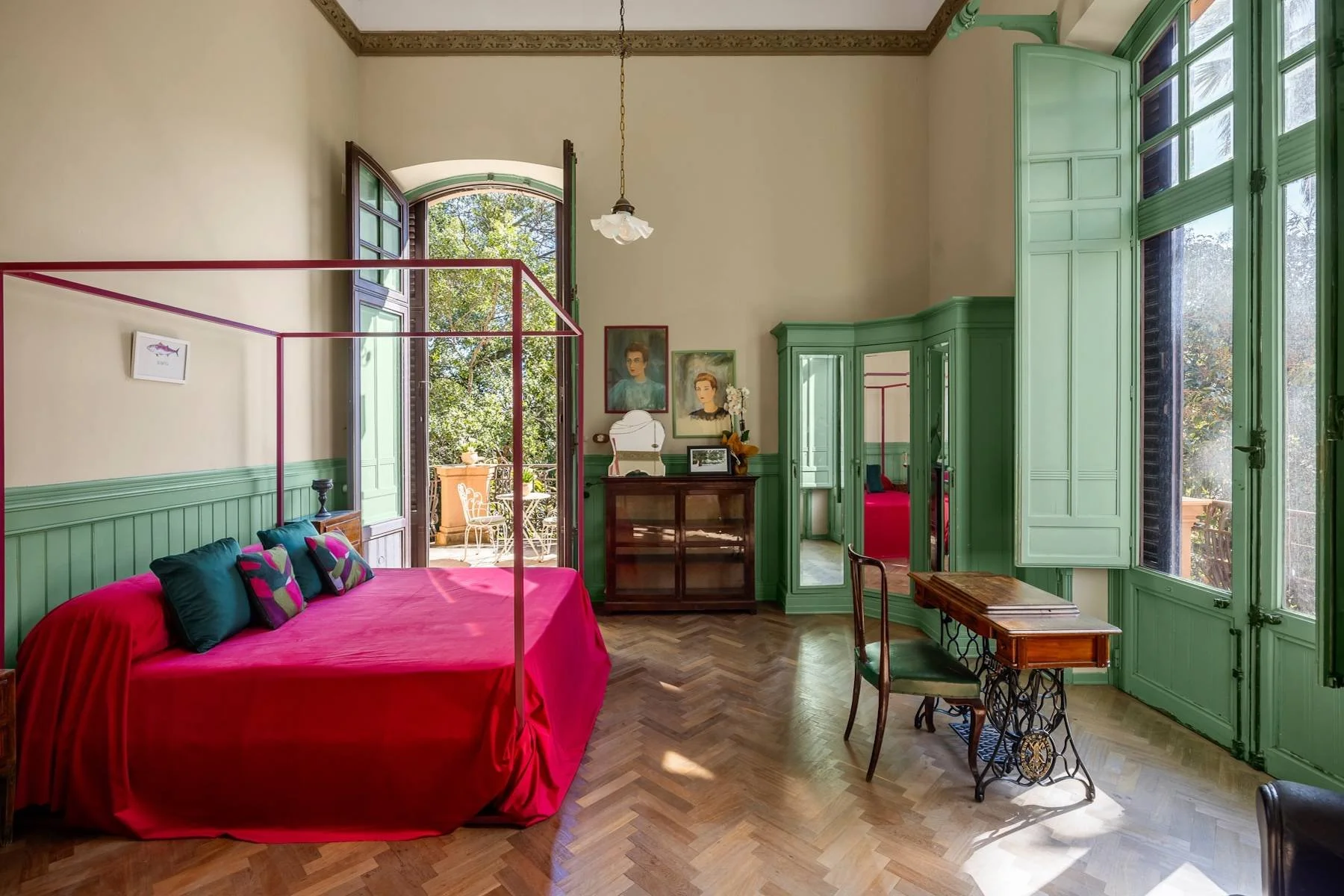
The first floor includes 5 bedrooms with access to terraces, some of which lead to the towers.
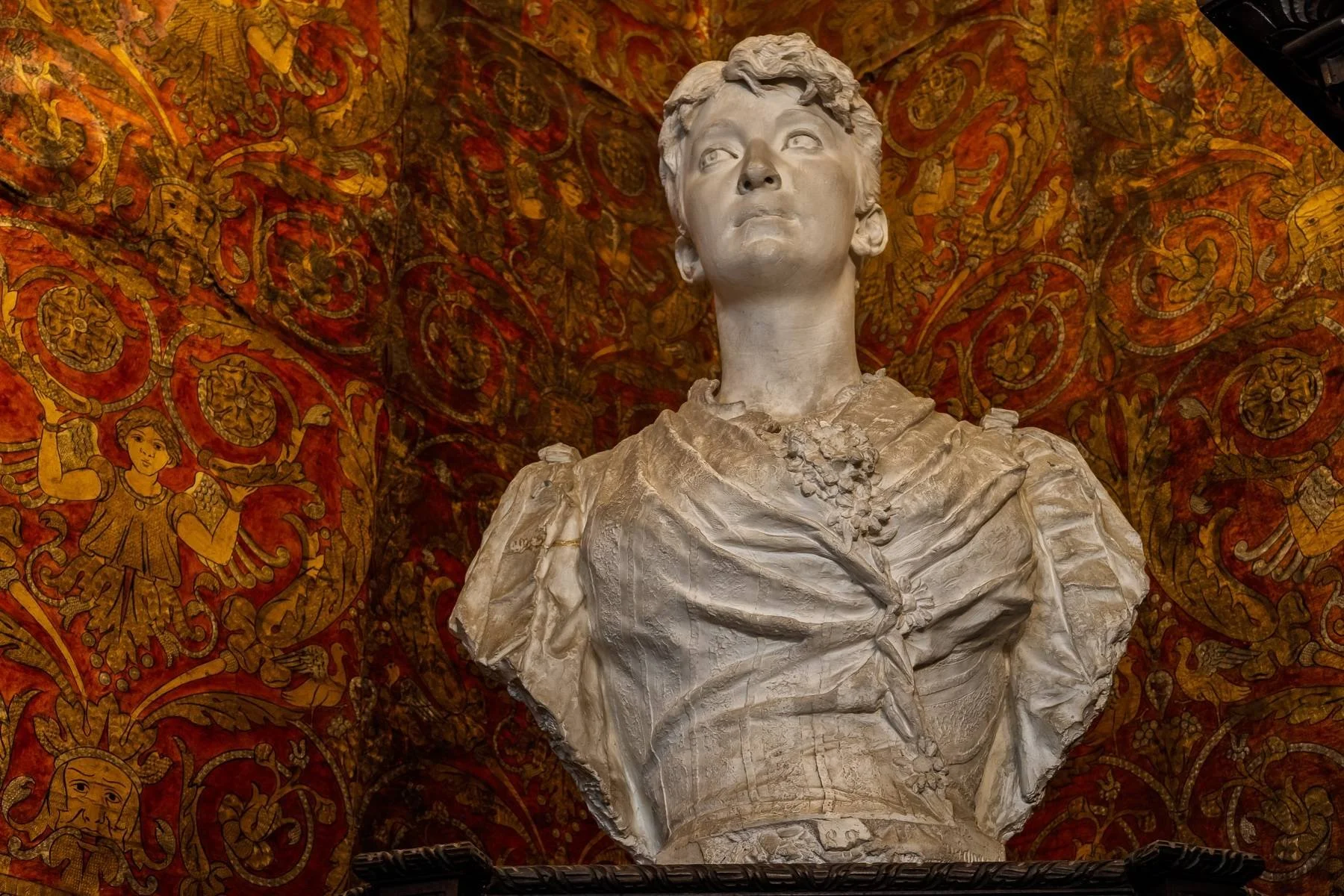
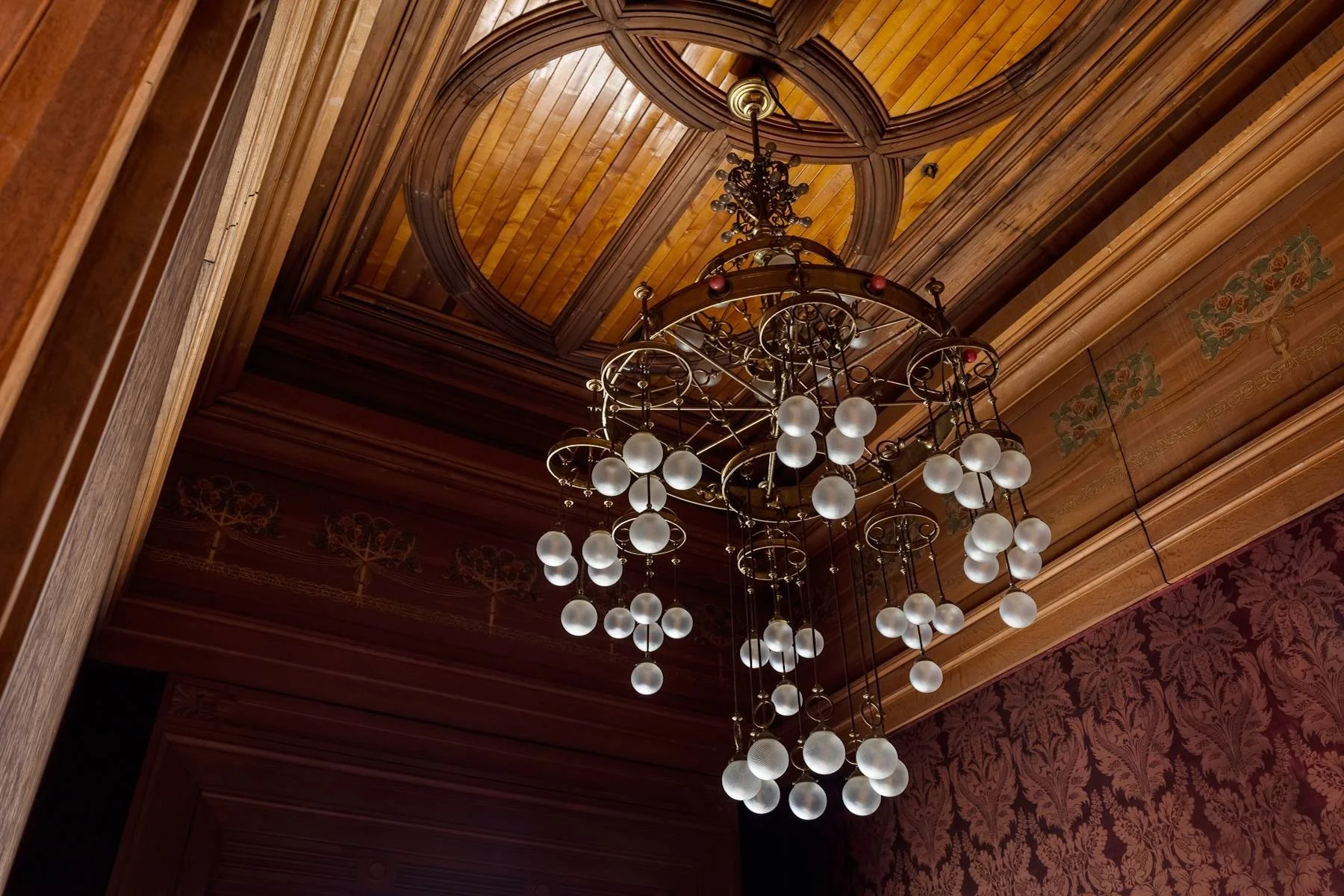
Part of Villa Virginia’s significance is that so much of it remains intact. Many of Palermo’s Liberty villas were altered, subdivided, or demolished during the postwar building boom known as the Sack of Palermo, when historic houses and gardens gave way to apartment blocks. Villa Virginia stands out as a surviving example of the early-20th-century residential world that once defined this part of the city.
The villa’s later history adds a civic dimension to its architectural story. In the late 20th century, it became associated with Leoluca Orlando, Palermo’s former anti-Mafia mayor, who lived there with his family. During that period, the house reportedly served as a setting for official and cultural encounters, receiving figures including the Dalai Lama, Pina Bausch, Wim Wenders, Mikheil Saakashvili, and Hillary Clinton.
The villa has also had a public-facing life in recent years, opening at times for guided visits, exhibitions, cultural events, and private rentals.
Villa Virginia is not just a large historic residence in central Palermo. Its significance lies in how clearly it still reflects Palermo’s Liberty period, from its architecture to the surviving decorative details that connect it to the city’s Belle Époque villa culture.
All photographs courtesy of the listing agency. See more on Italy Sotheby’s International Realty.