Christina Giffin & Diane Donohue, Monument Sotheby’s International Realty
Beds: 7 Baths: 9+1 Land: approx. 524 acres / 212 ha Main House: approx. 16,767 sq ft
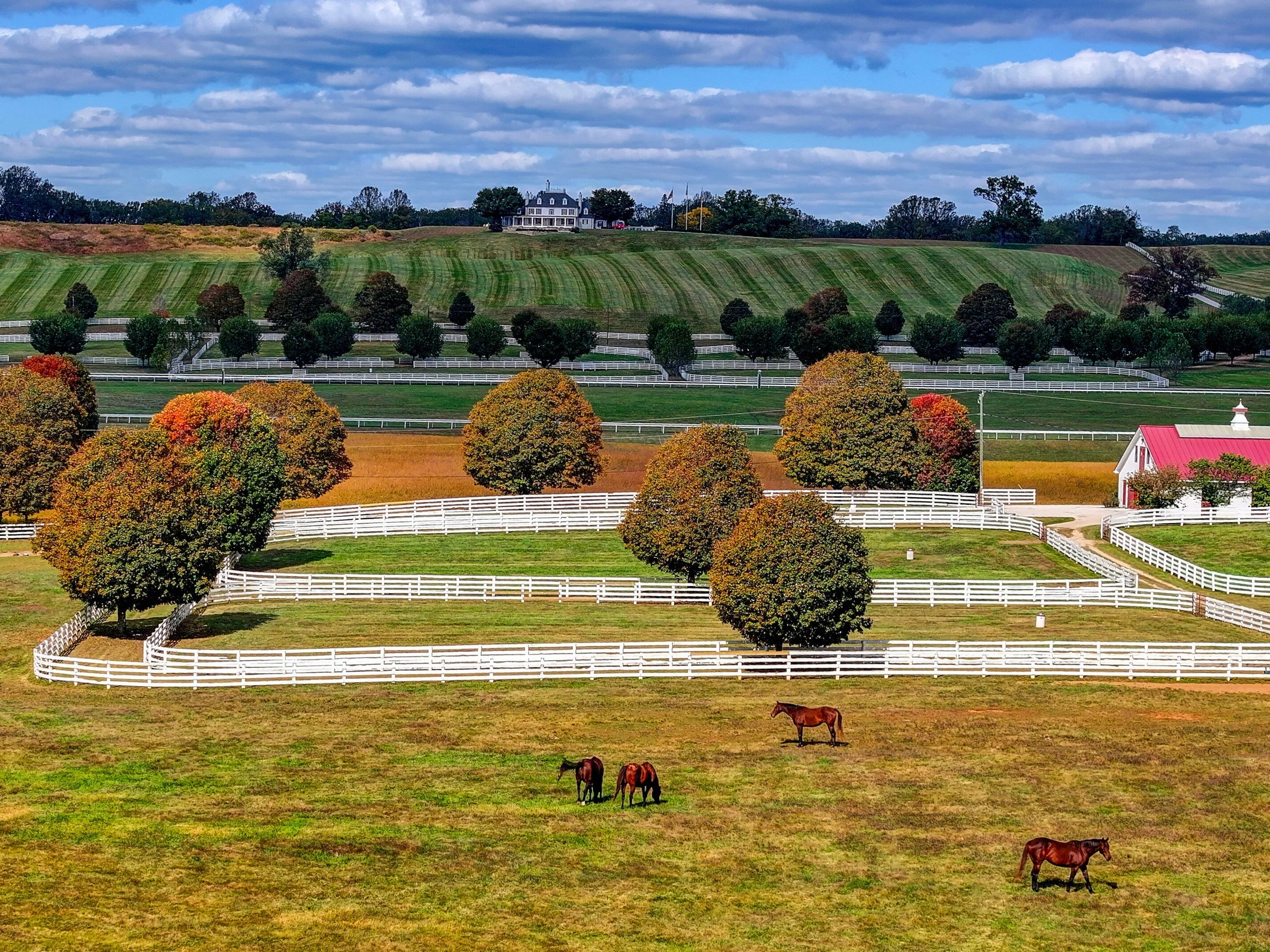
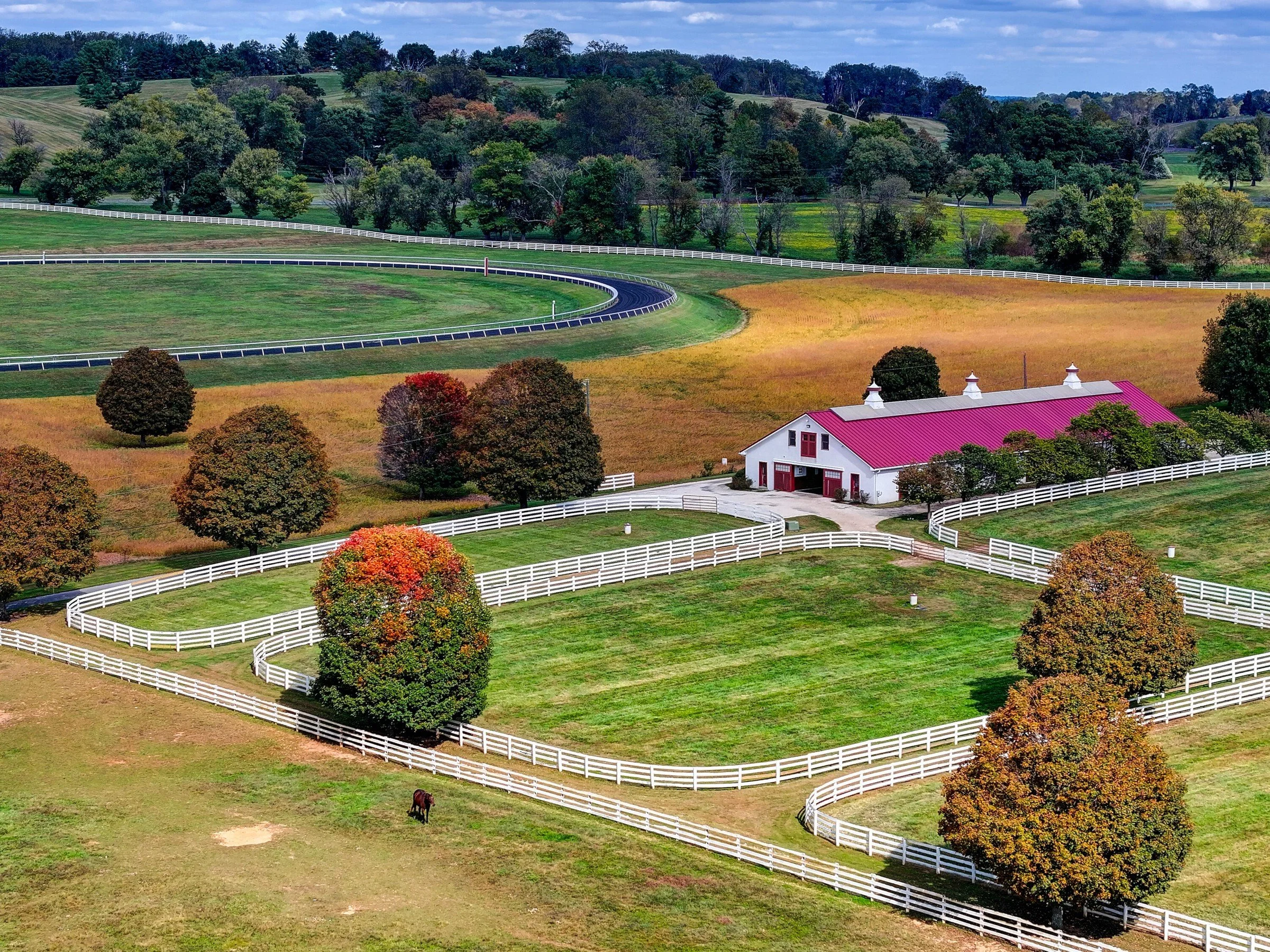
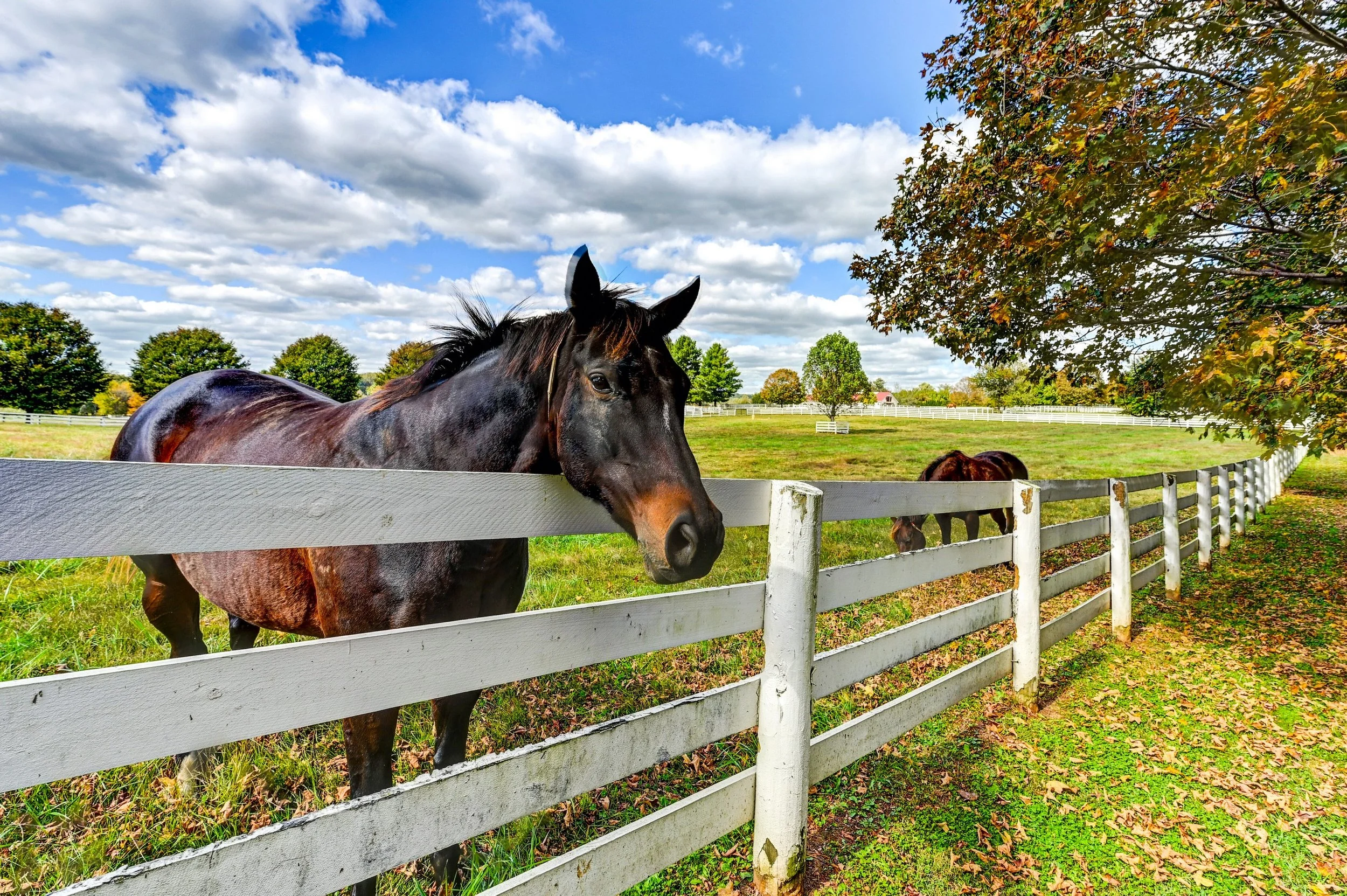
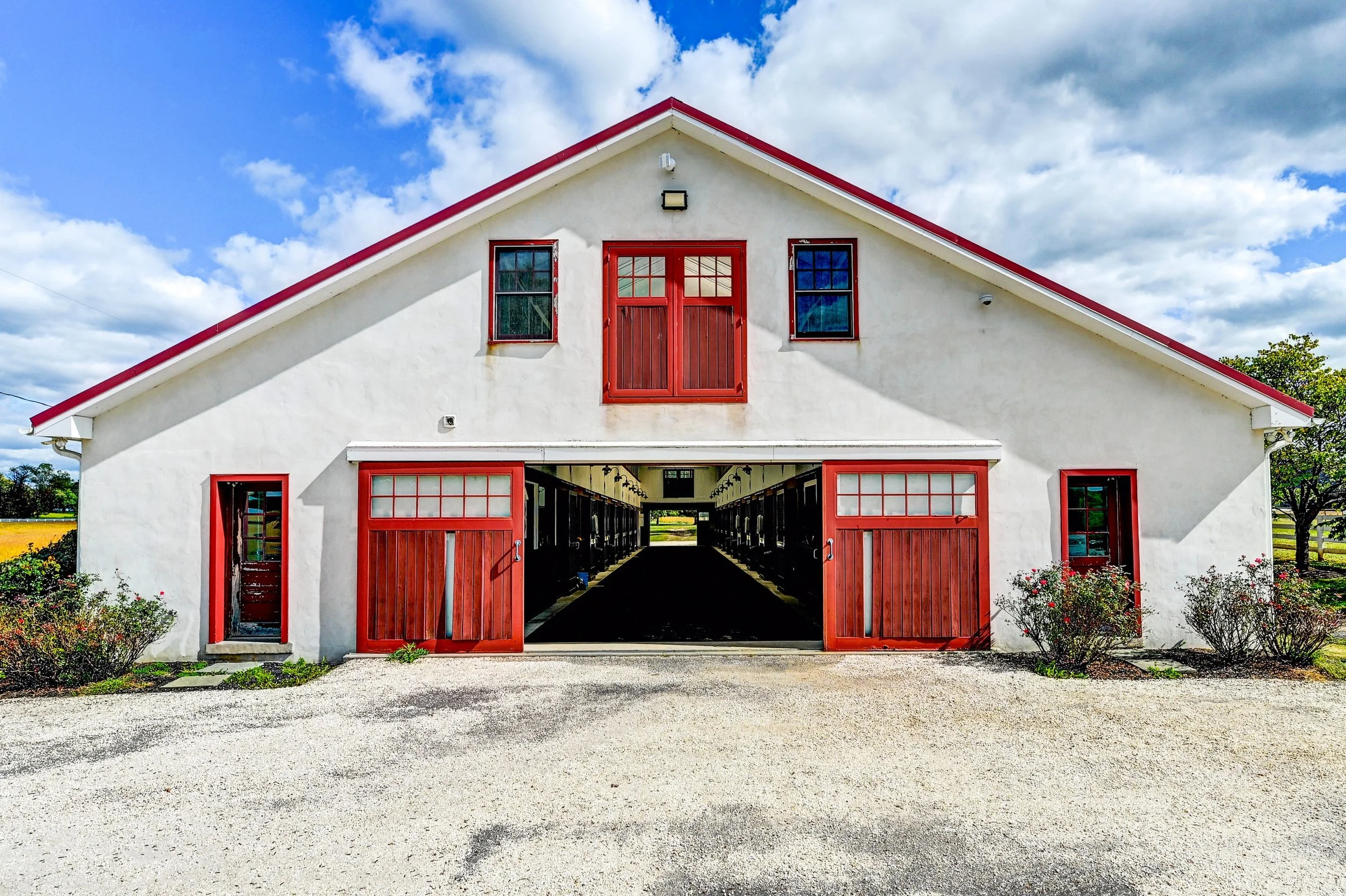
Amenities: Historic Vanderbilt-era Thoroughbred estate, restored racing and breeding infrastructure, barns with capacity for 200+ horses, paddocks, turnout fields, white-board fencing, ¾-mile Tapeta training track, indoor training track, clocker’s tower, staff and manager housing, bunkhouse, 1909 spring house supplying limestone-filtered water for Sagamore Spirit rye whiskey, Native Dancer burial site, grain fields, and panoramic views over Maryland’s Worthington Valley.
One of the last fully intact, historically significant racing estates from the golden age of American horse racing has returned to the market for $16,500,000, listed with Christina Giffin and Diane Donohue of Monument Sotheby’s International Realty.
The estate’s connections span the Vanderbilt family, Queen Elizabeth II, and Aga Khan III, as well as ties to iconic moments in racing history, including the era of Seabiscuit.
Its legacy also lives on in the bloodlines of thoroughbreds that continue to shape the global racing industry today— champion horses today can trace their lineage back to its most famous race horse, Native Dancer.
Later revived by Under Armour founder Kevin Plank, Sagamore Farm is being offered for sale as its owner refocuses on leading his company after stepping away from the time-intensive world of thoroughbred racing.
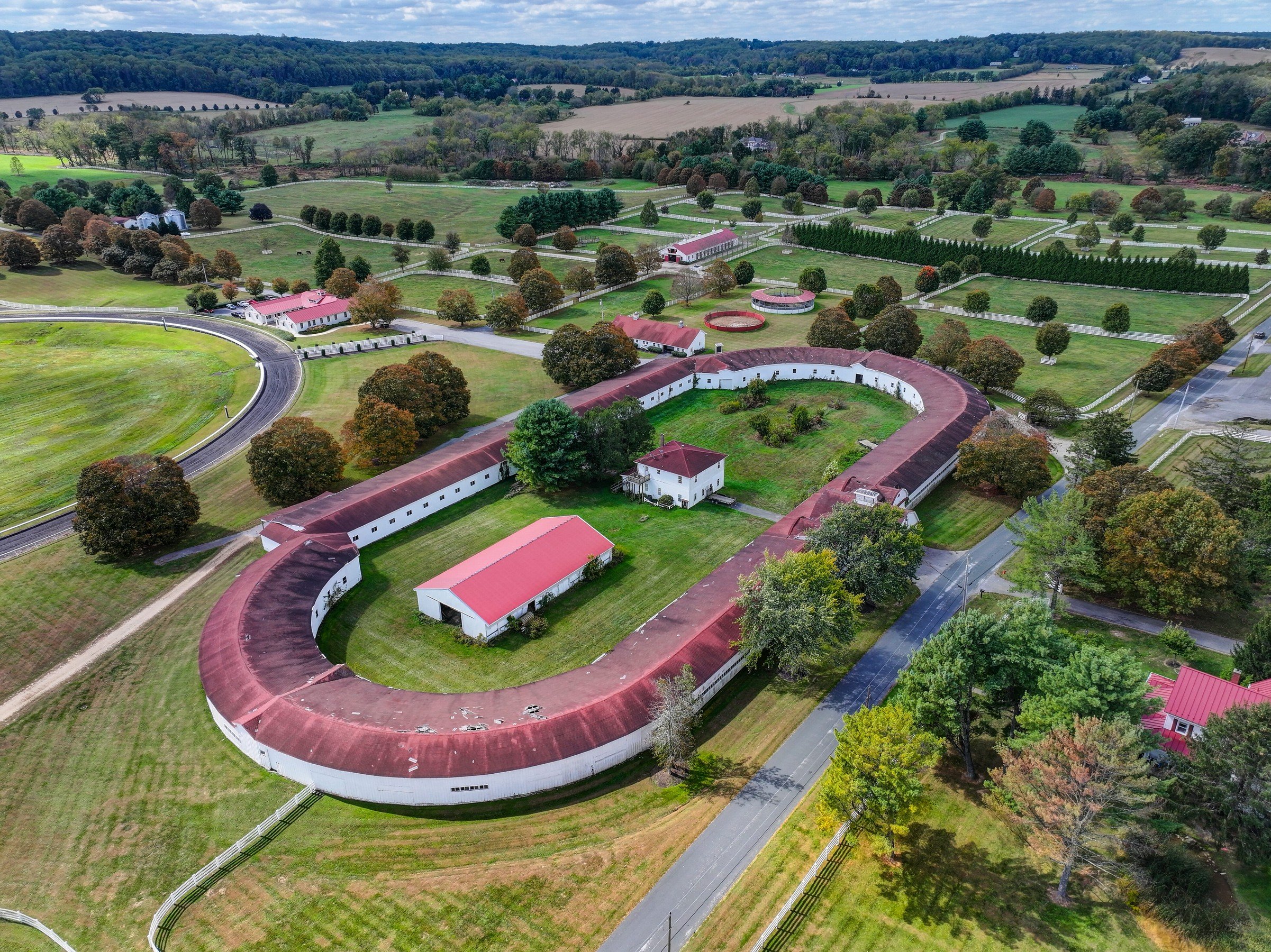
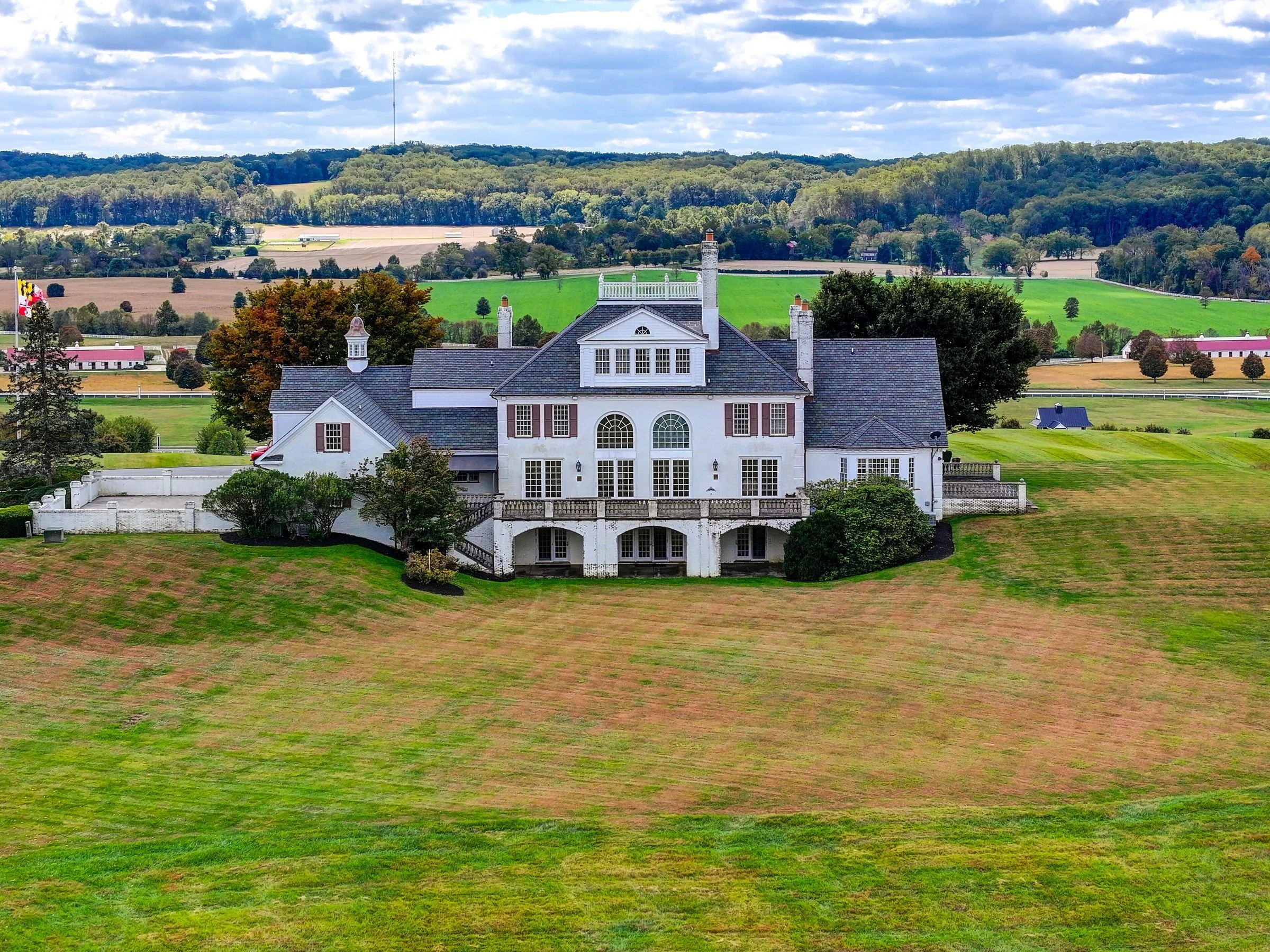
Founded 101 years ago by Baltimore industrial wealth, transformed by Alfred G. Vanderbilt Jr. into a Thoroughbred racing and breeding dynasty, and later restored by Under Armour founder Kevin Plank, who reportedly invested more than $22 million in the land and facilities, the 524-acre estate sits at the heart of Maryland horse country.
A Rare Return to Market
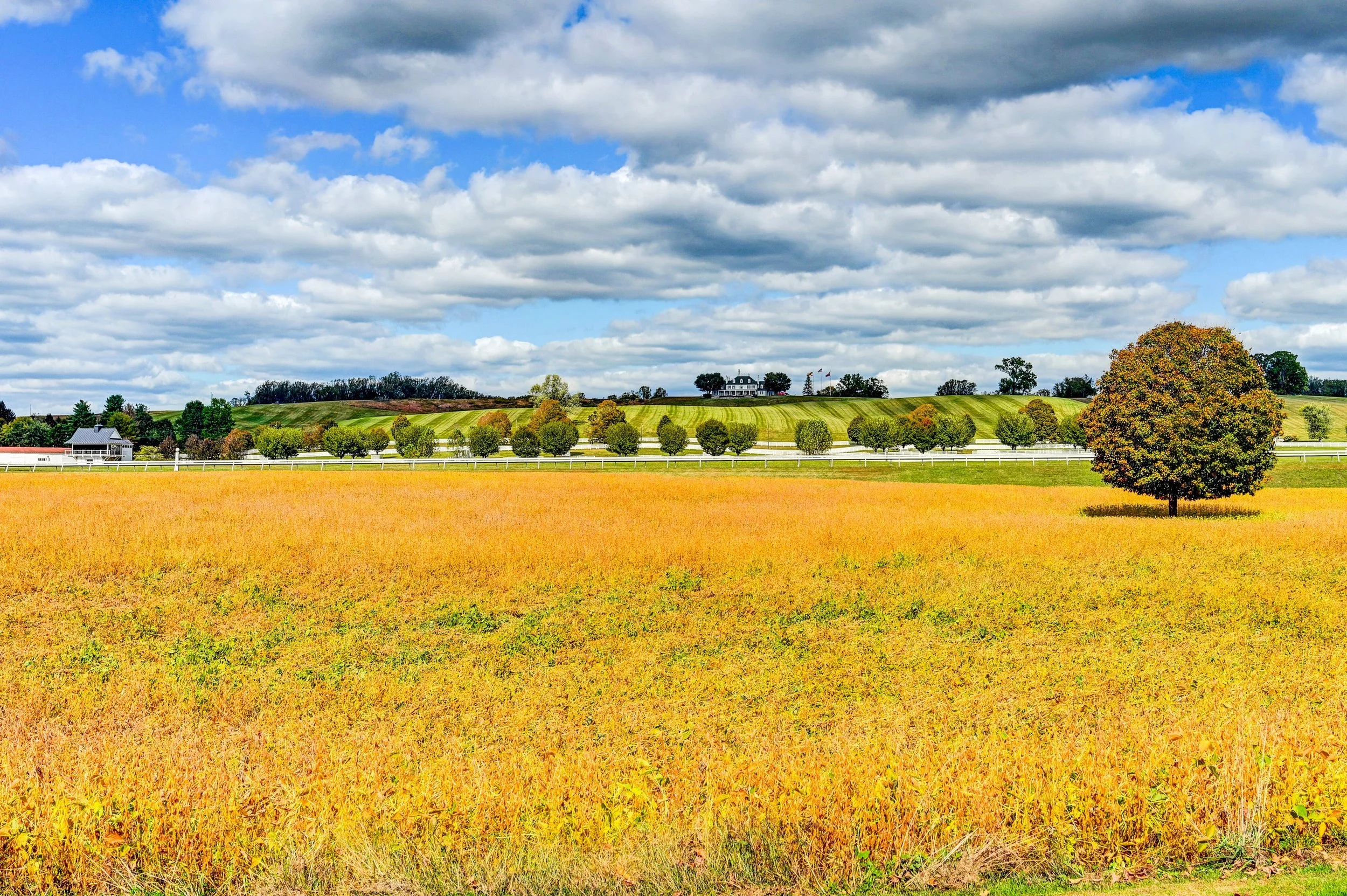
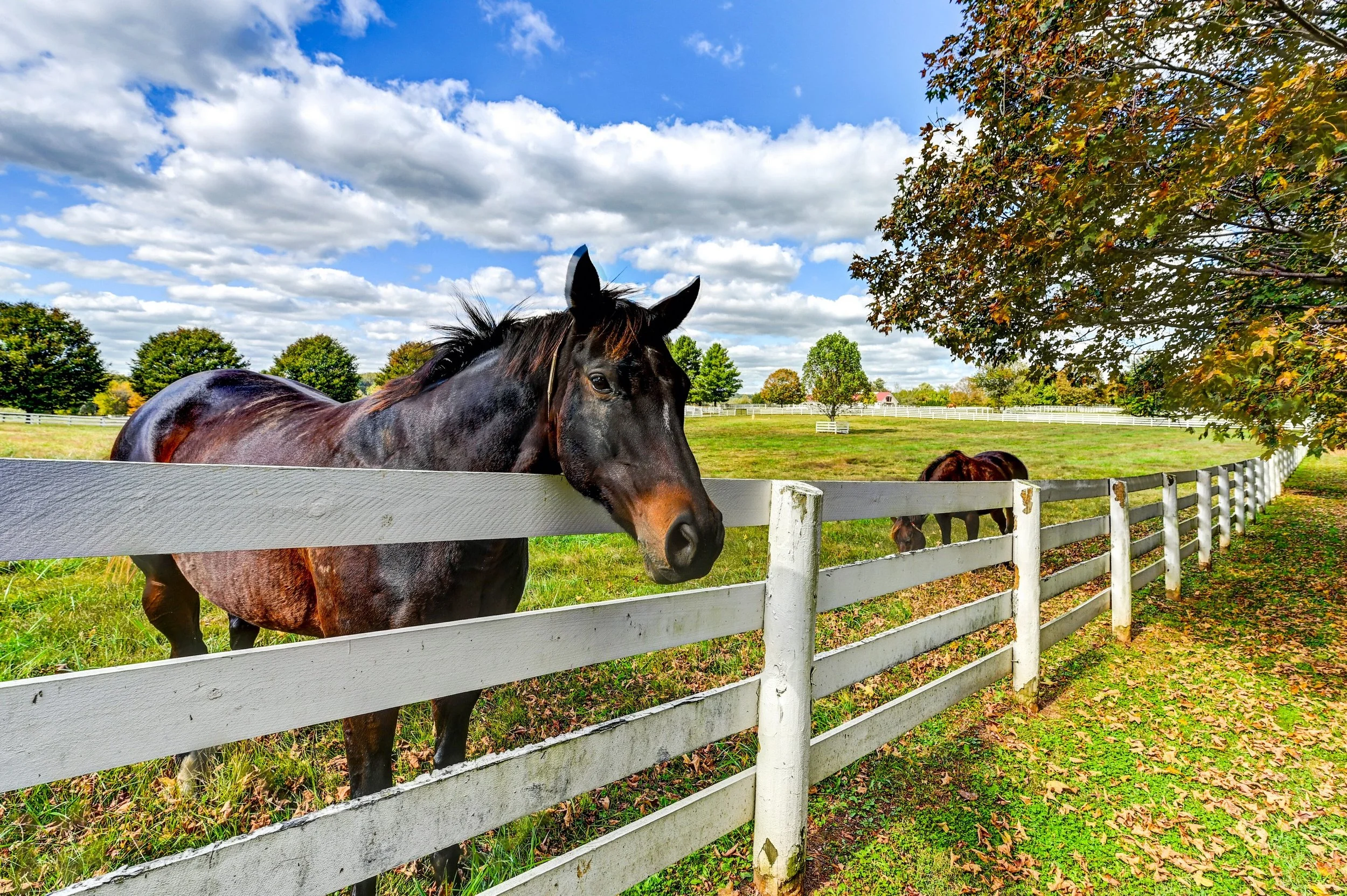
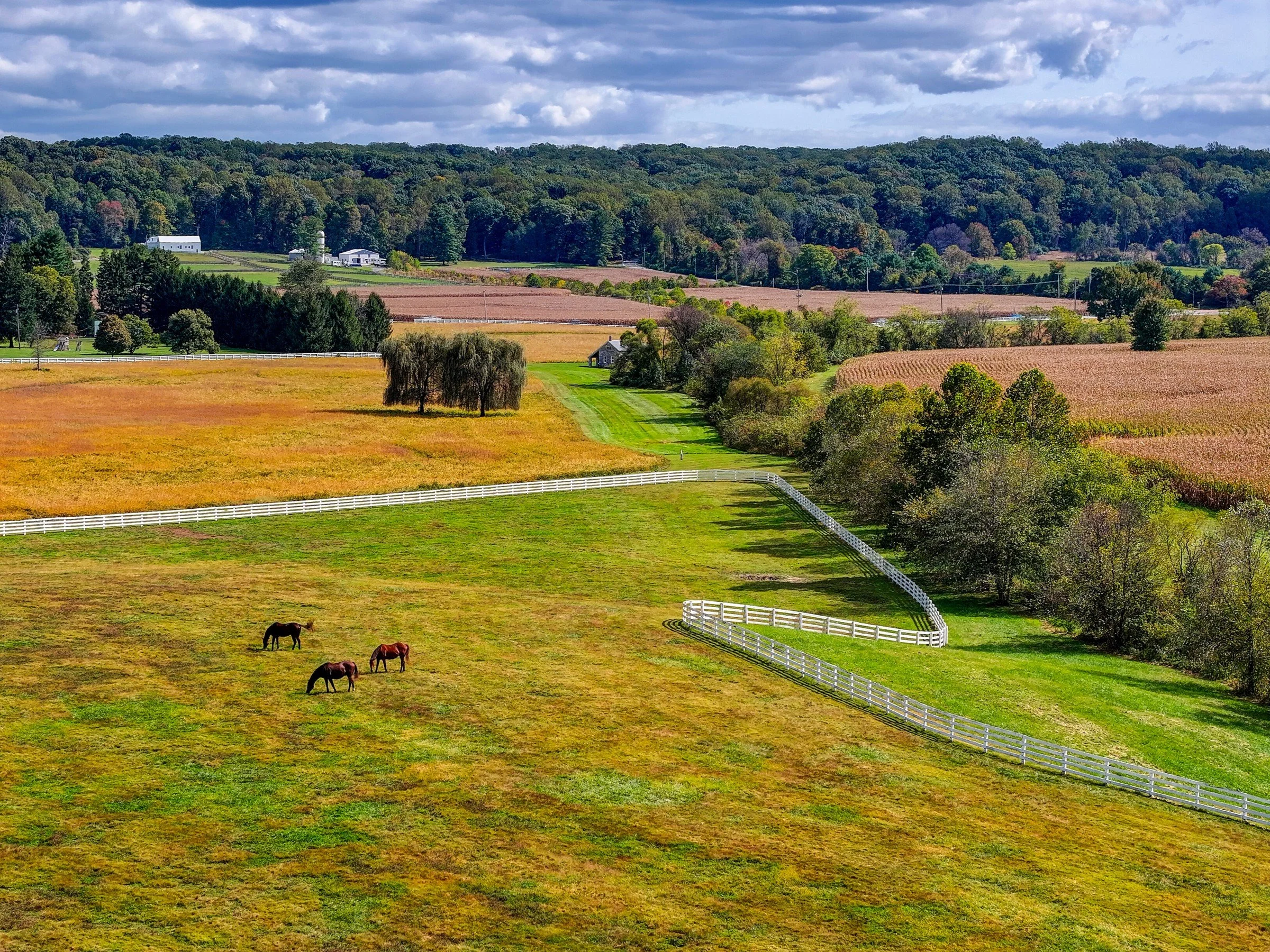
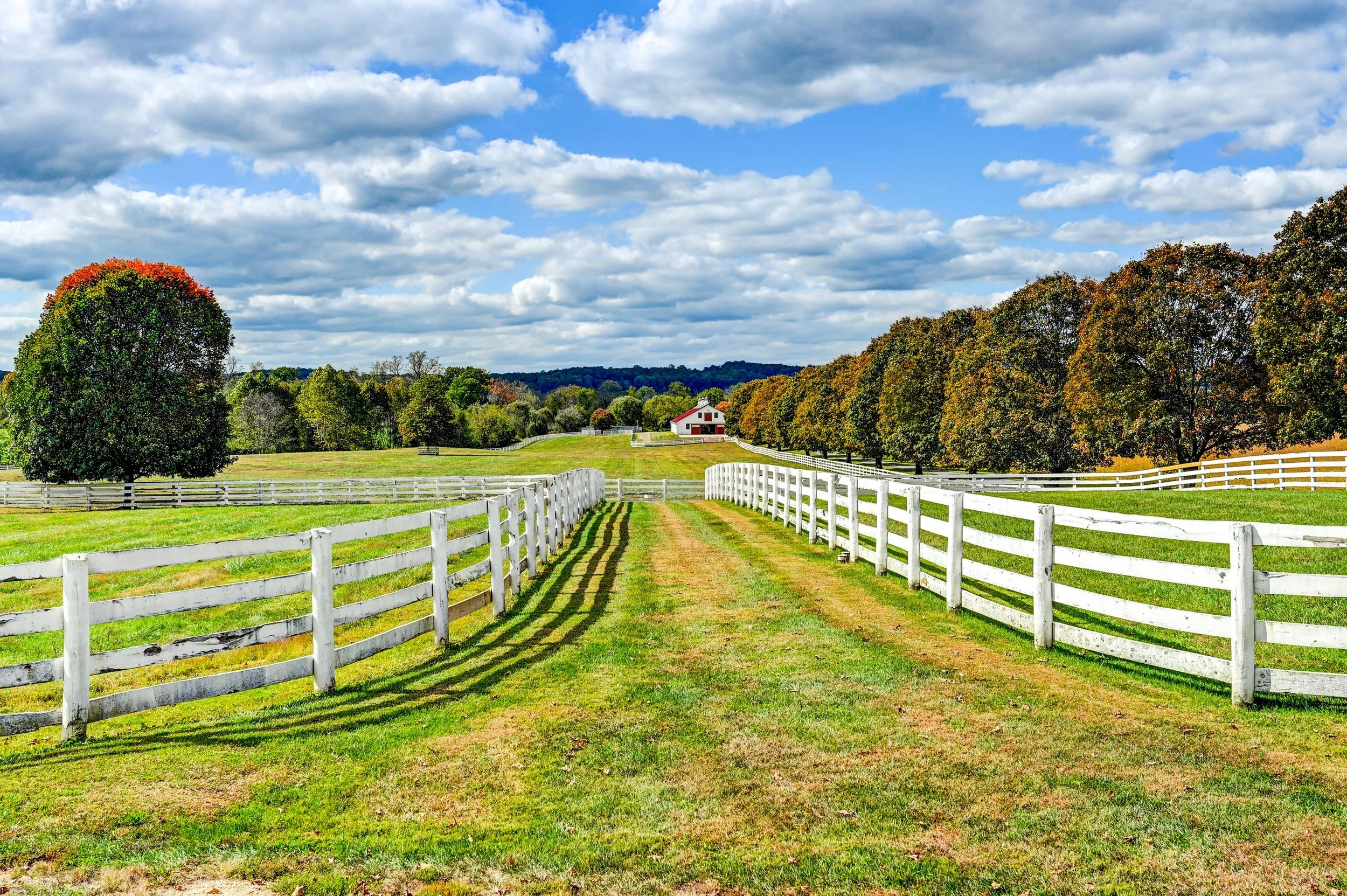
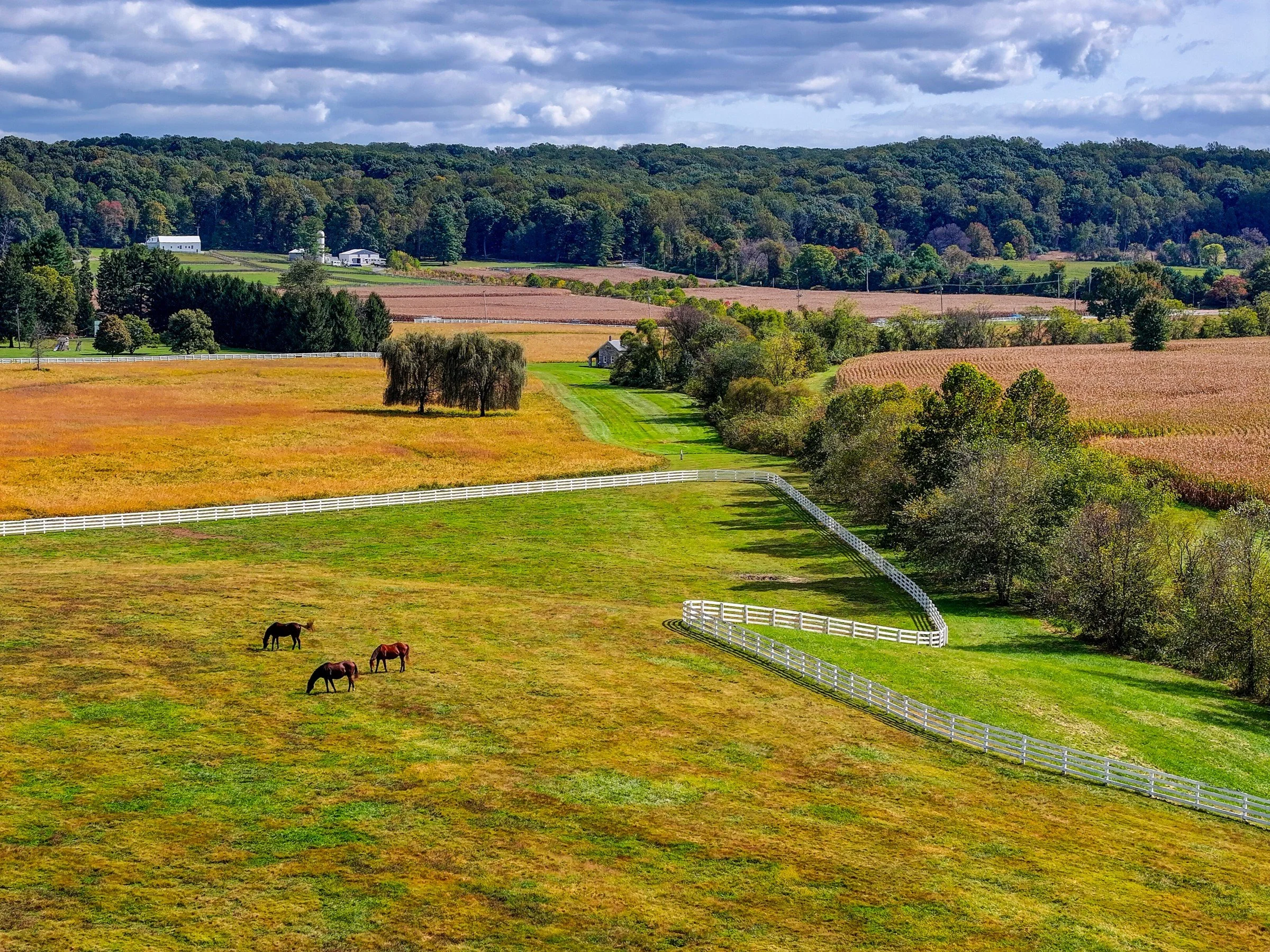
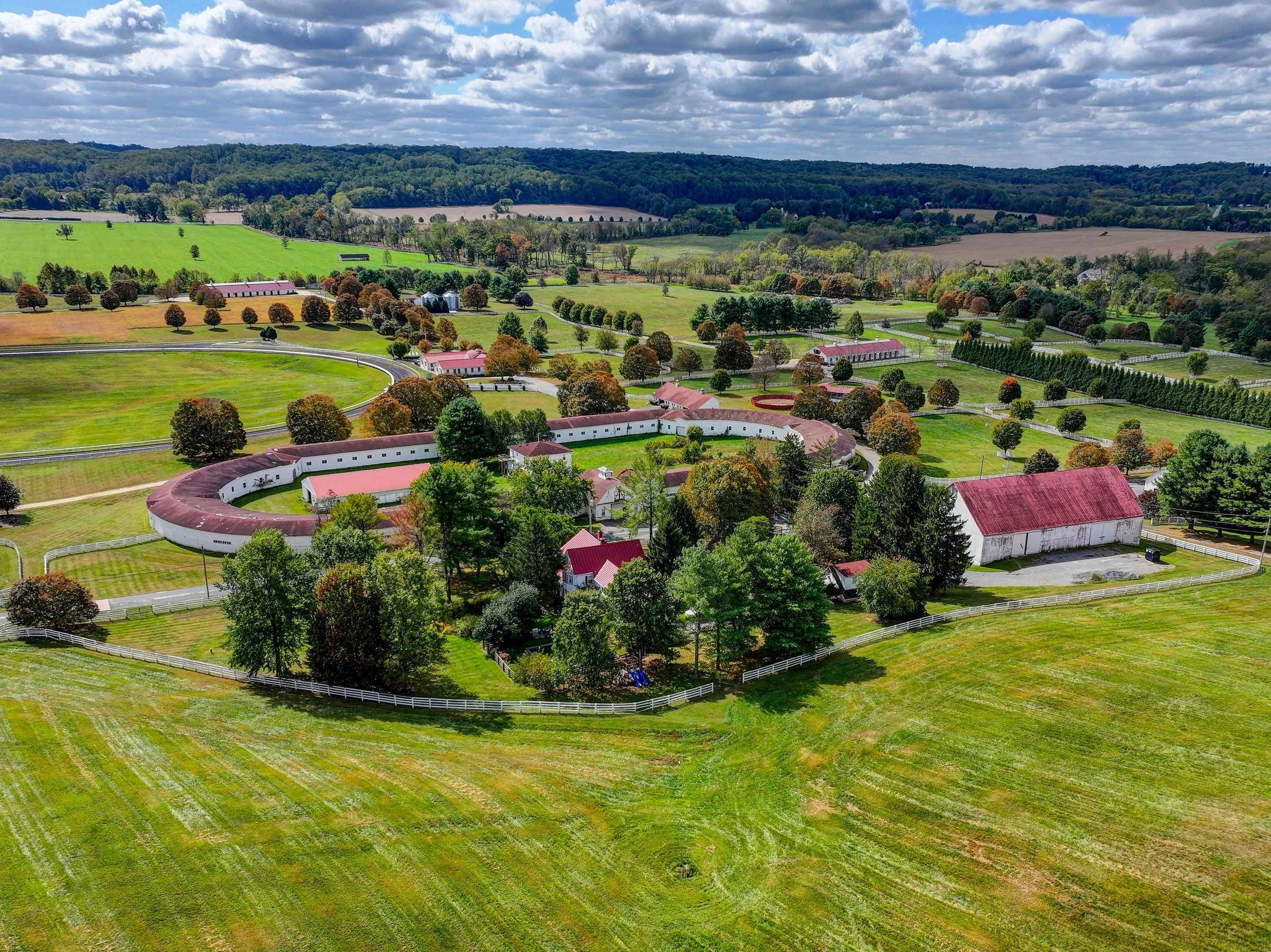
Set on roughly 524 acres in Maryland’s Worthington Valley, a scenic, historic rural area just northwest of Baltimore widely regarded at the heart of Maryland horse country, once a core horse racing region alongside Kentucky and New York.
It’s best known for its rolling farmland, white picket fences, winding country roads, and preserved historic estates. Much of the land has remained unchanged for centuries, giving it a distinctly traditional, almost English countryside feel.
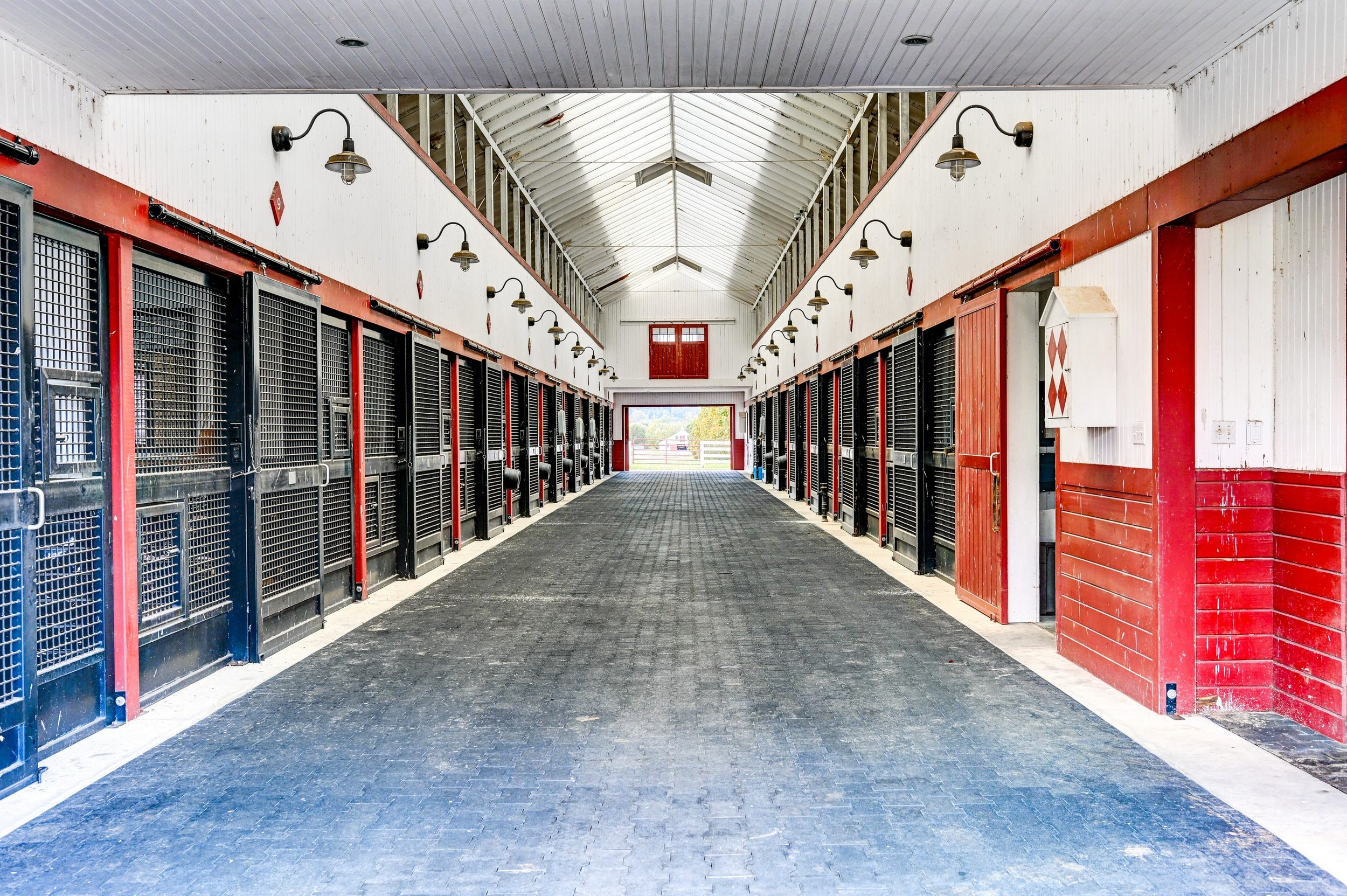
For potential buyers, this is not simply a country estate with horses. Unlike many equestrian properties that function as private estates, Sagamore was built and operated as a complete, institutional-grade breeding and training operation—capable of housing more than 100 horses and supporting every stage of the racing lifecycle.
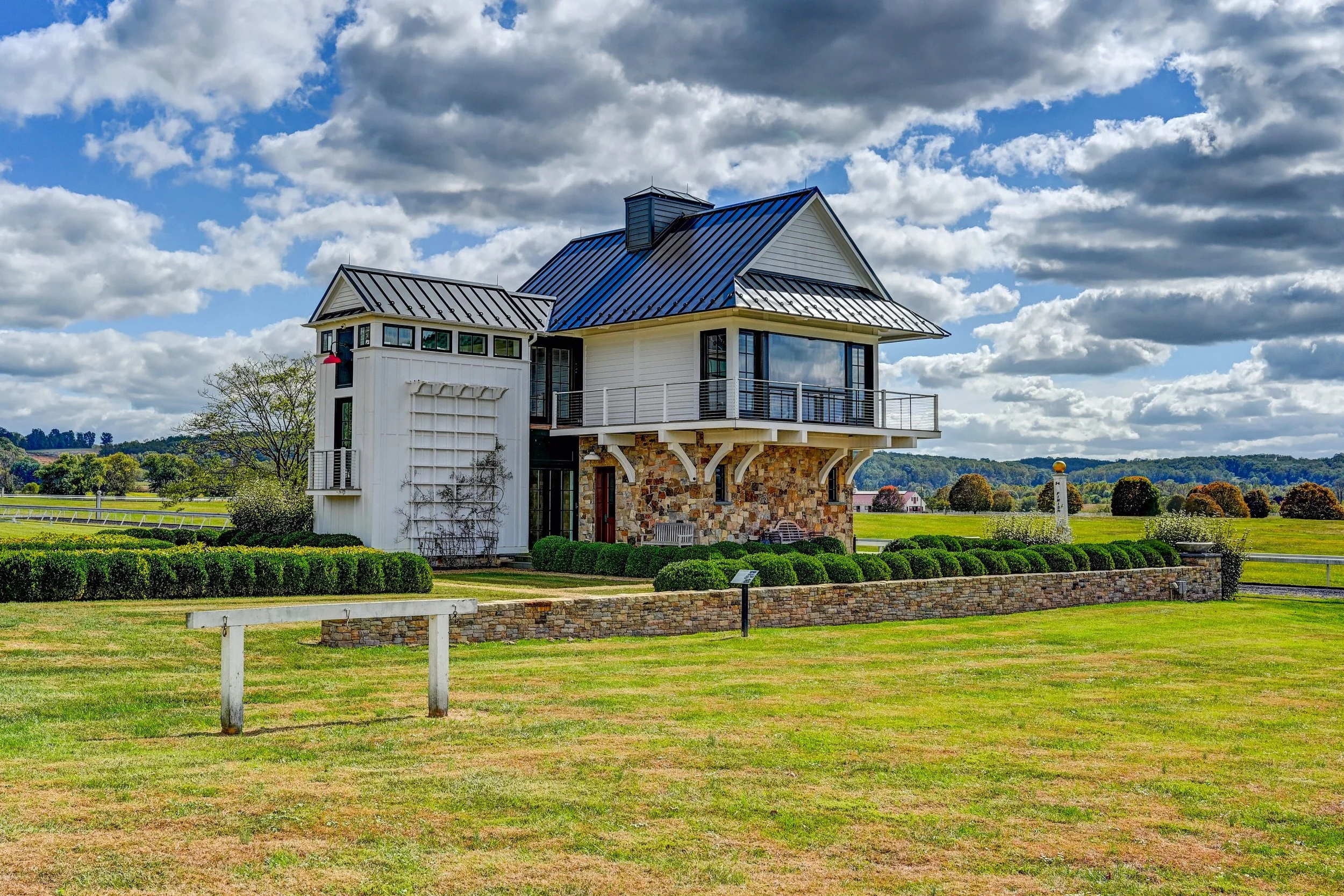
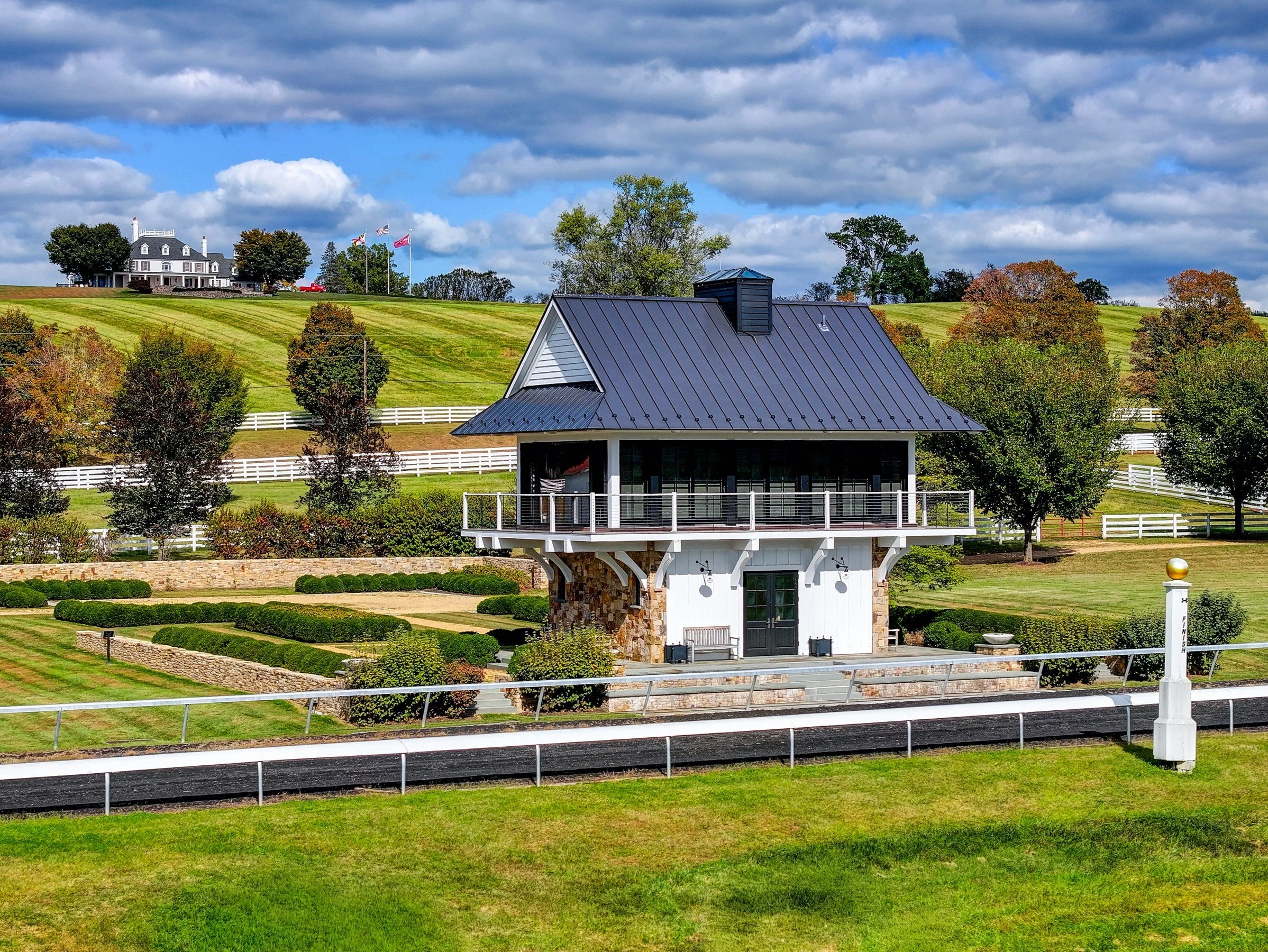
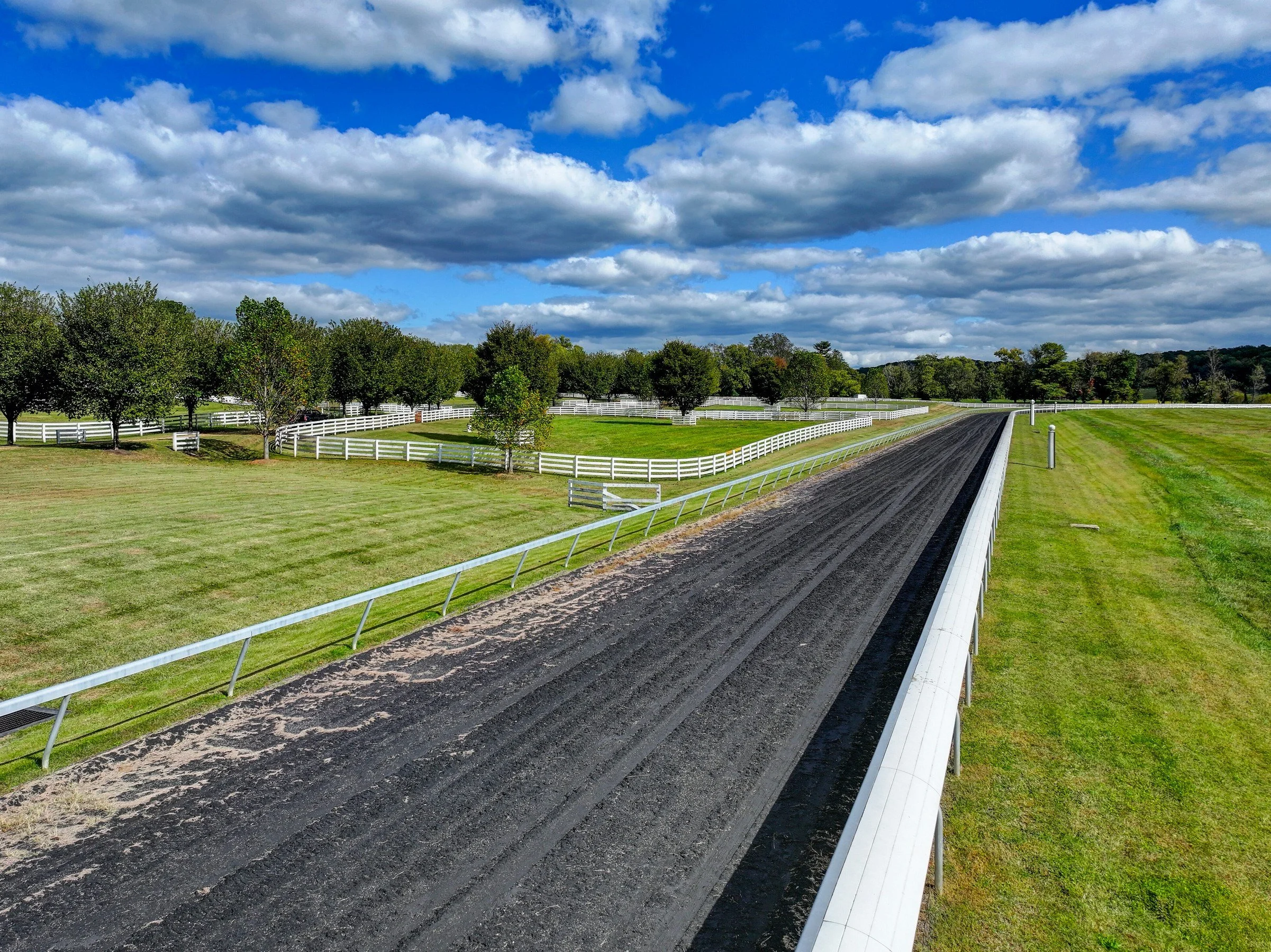
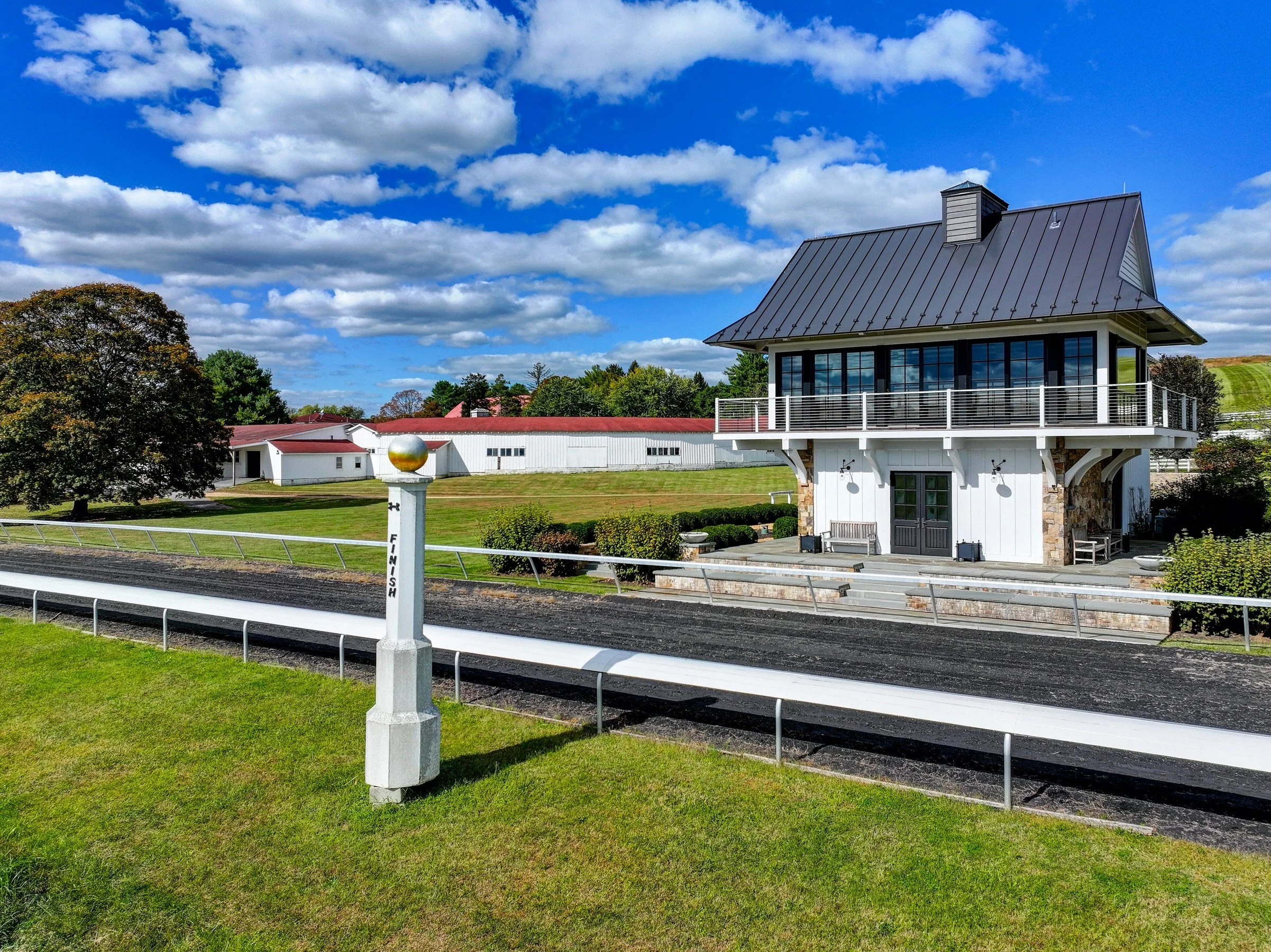
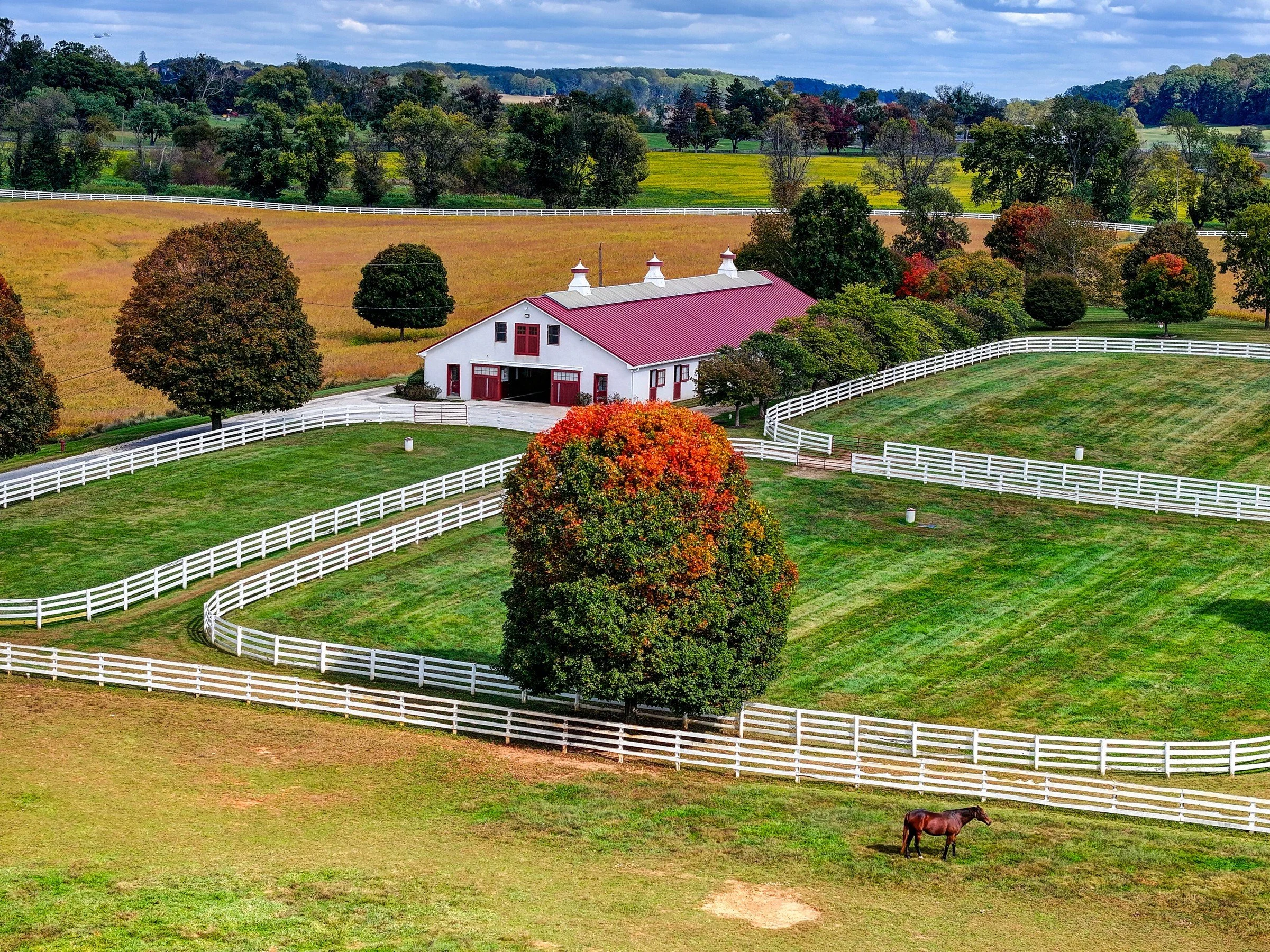
Following a multi-million dollar investment in upgrading the infrastructure, the property includes multiple barns, expansive paddocks, a ¾-mile synthetic training track, and a clocker’s tower overlooking the grounds.
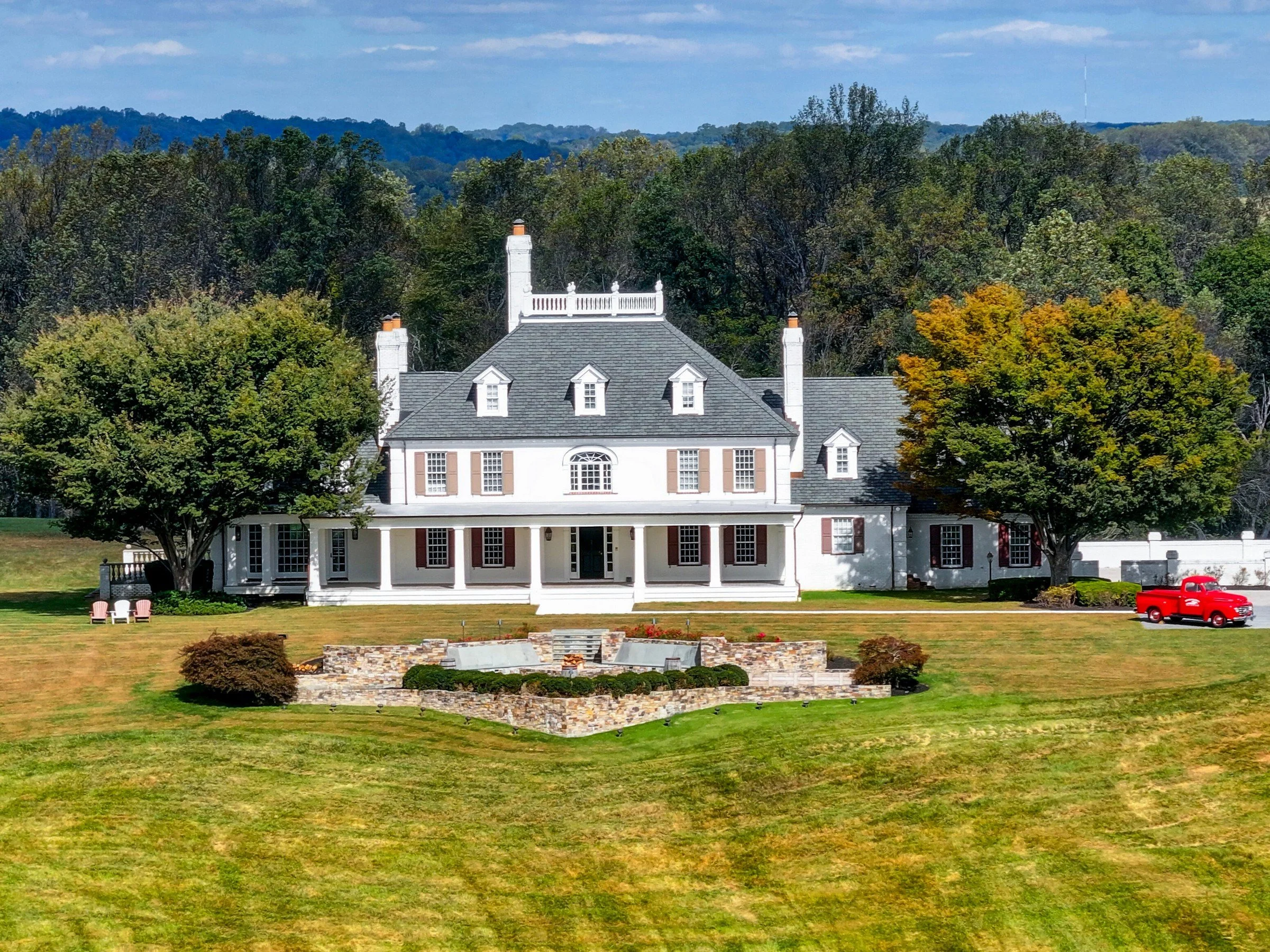
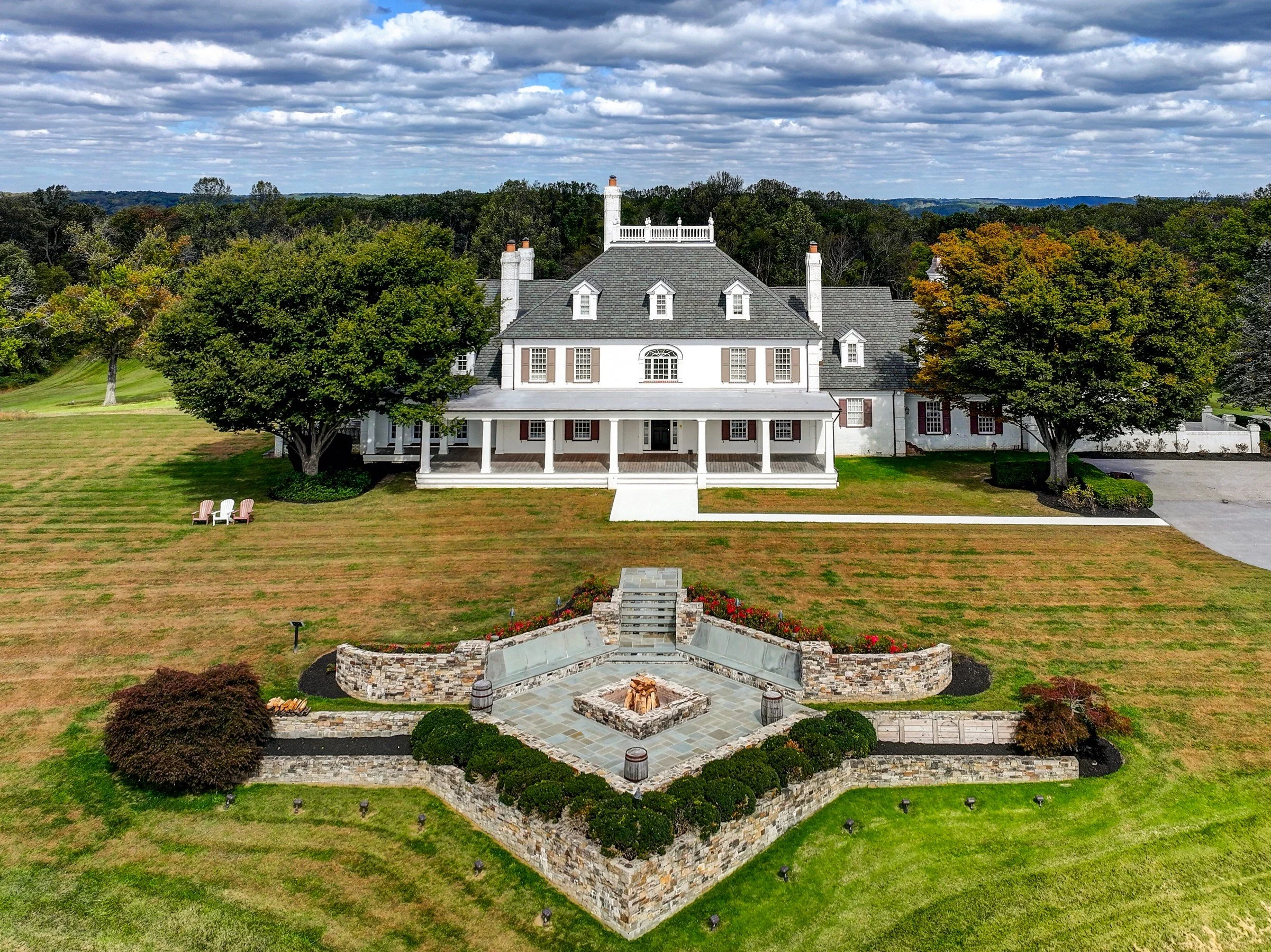
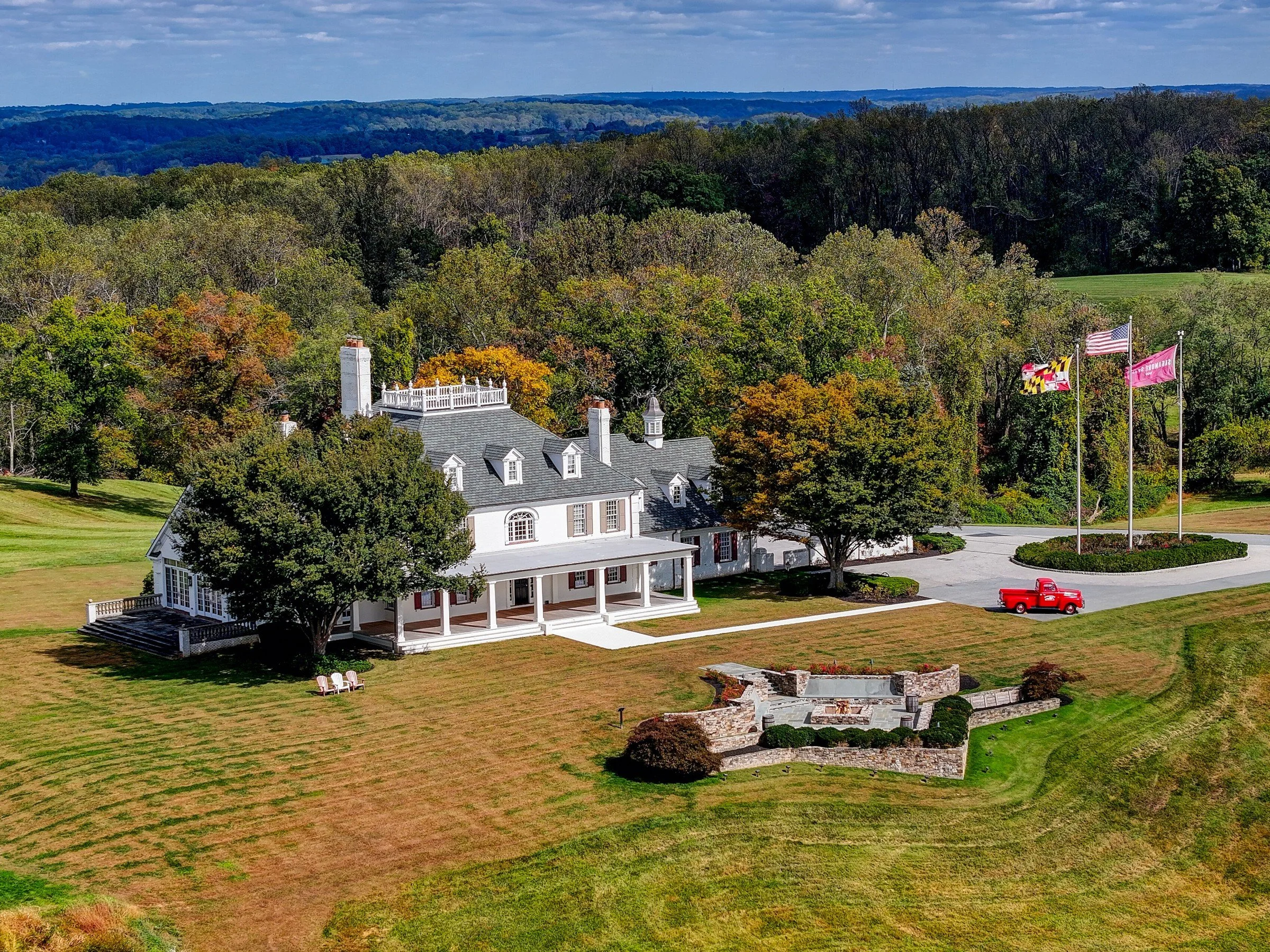
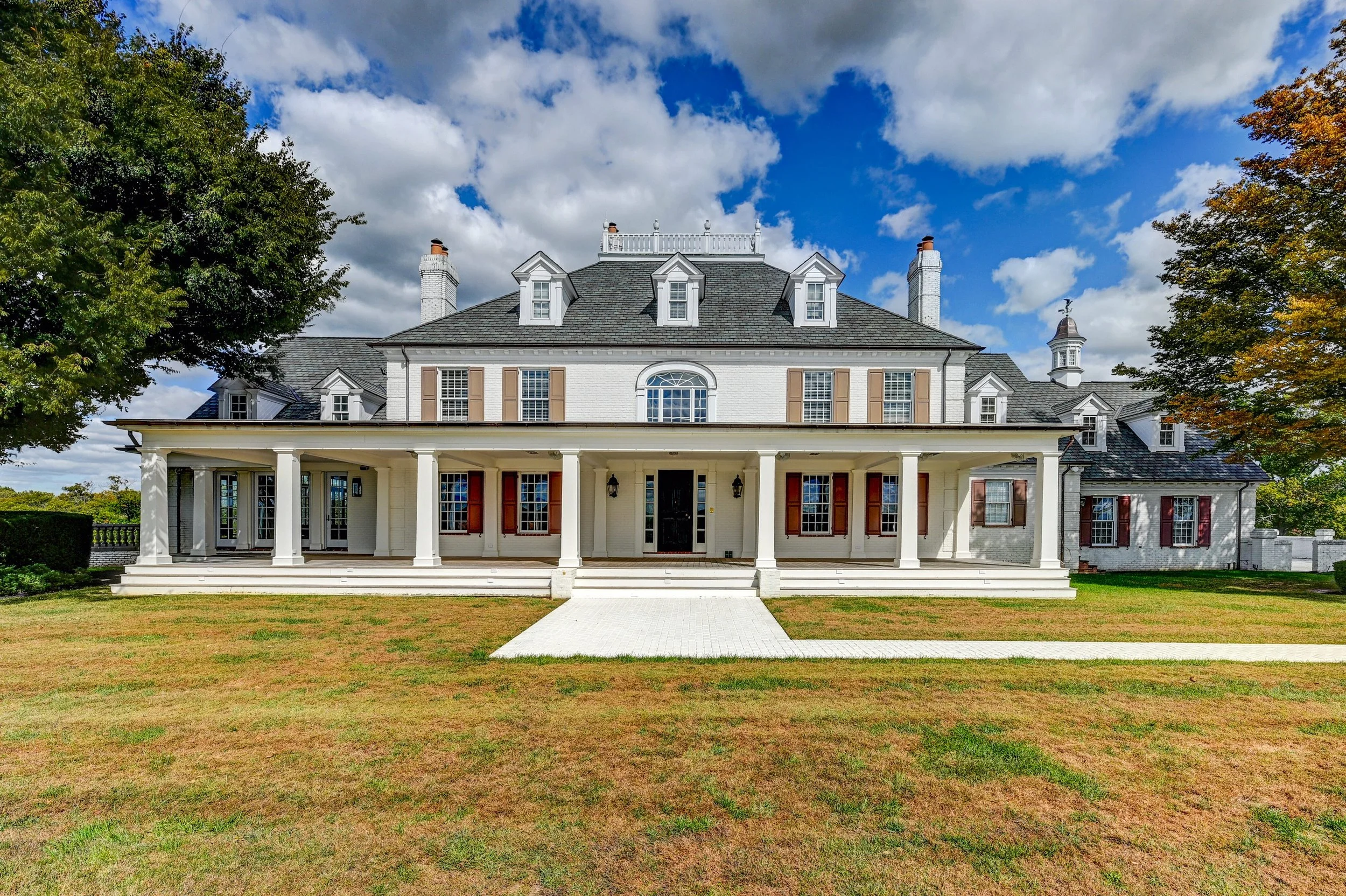
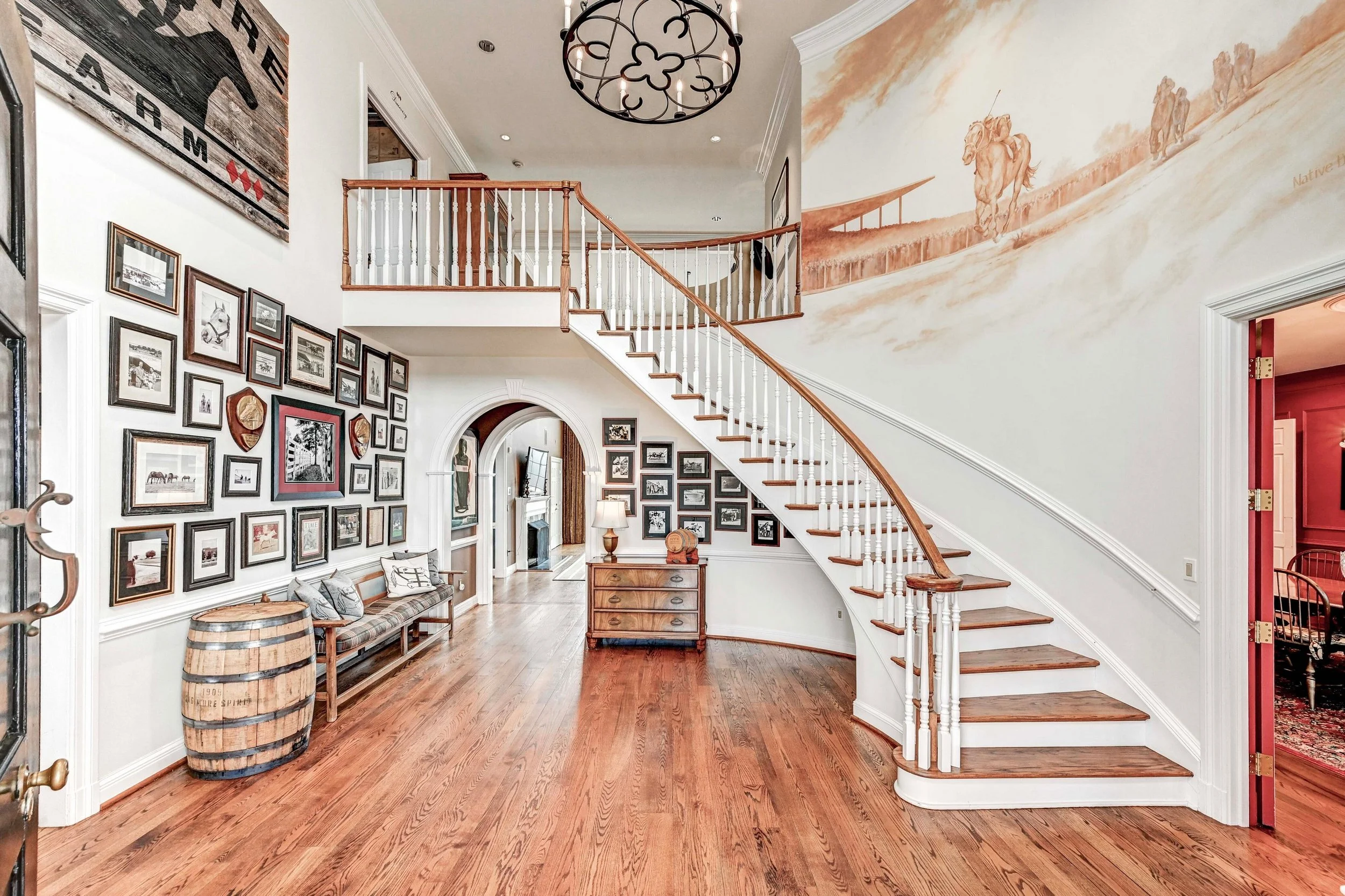
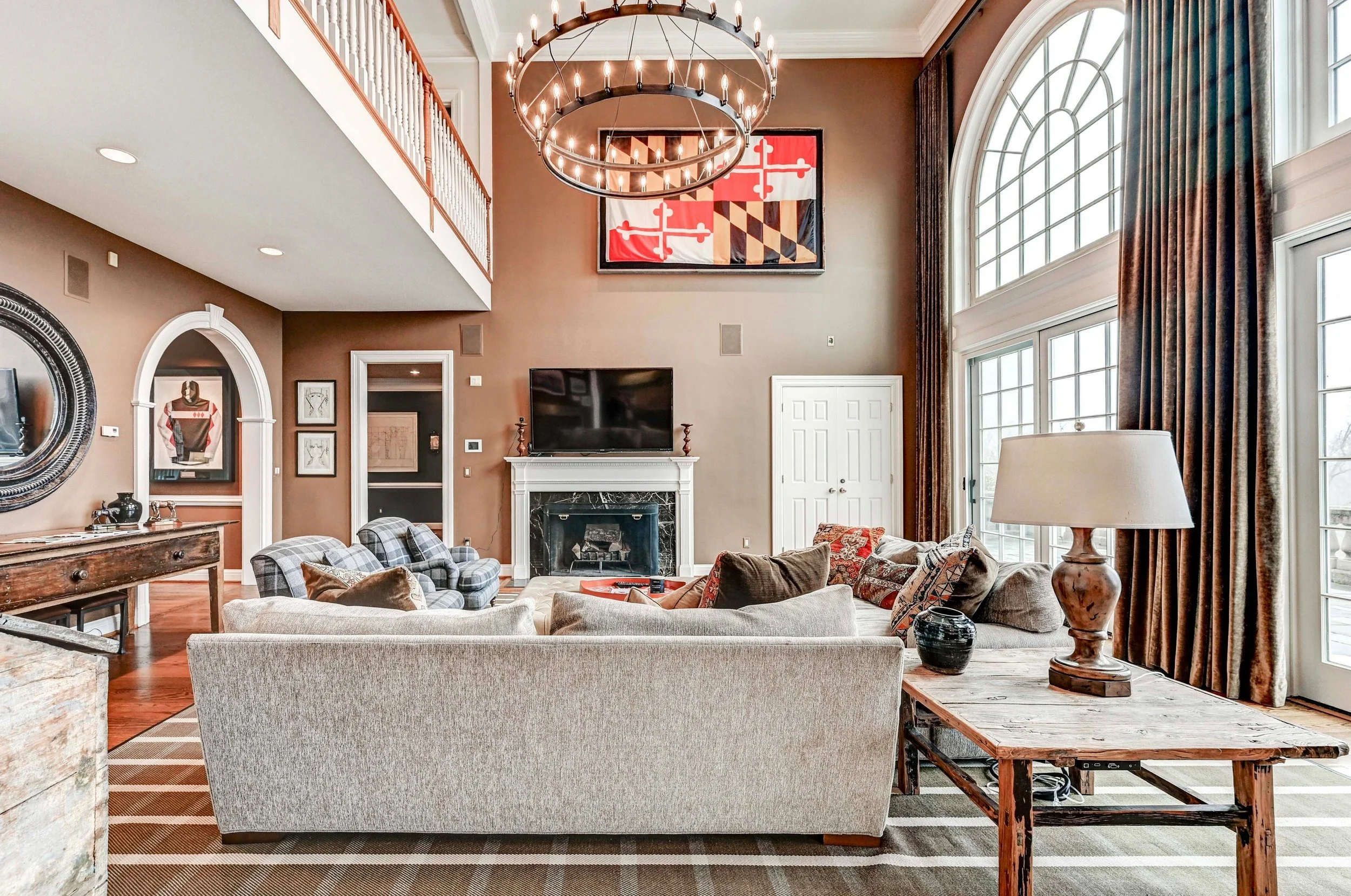
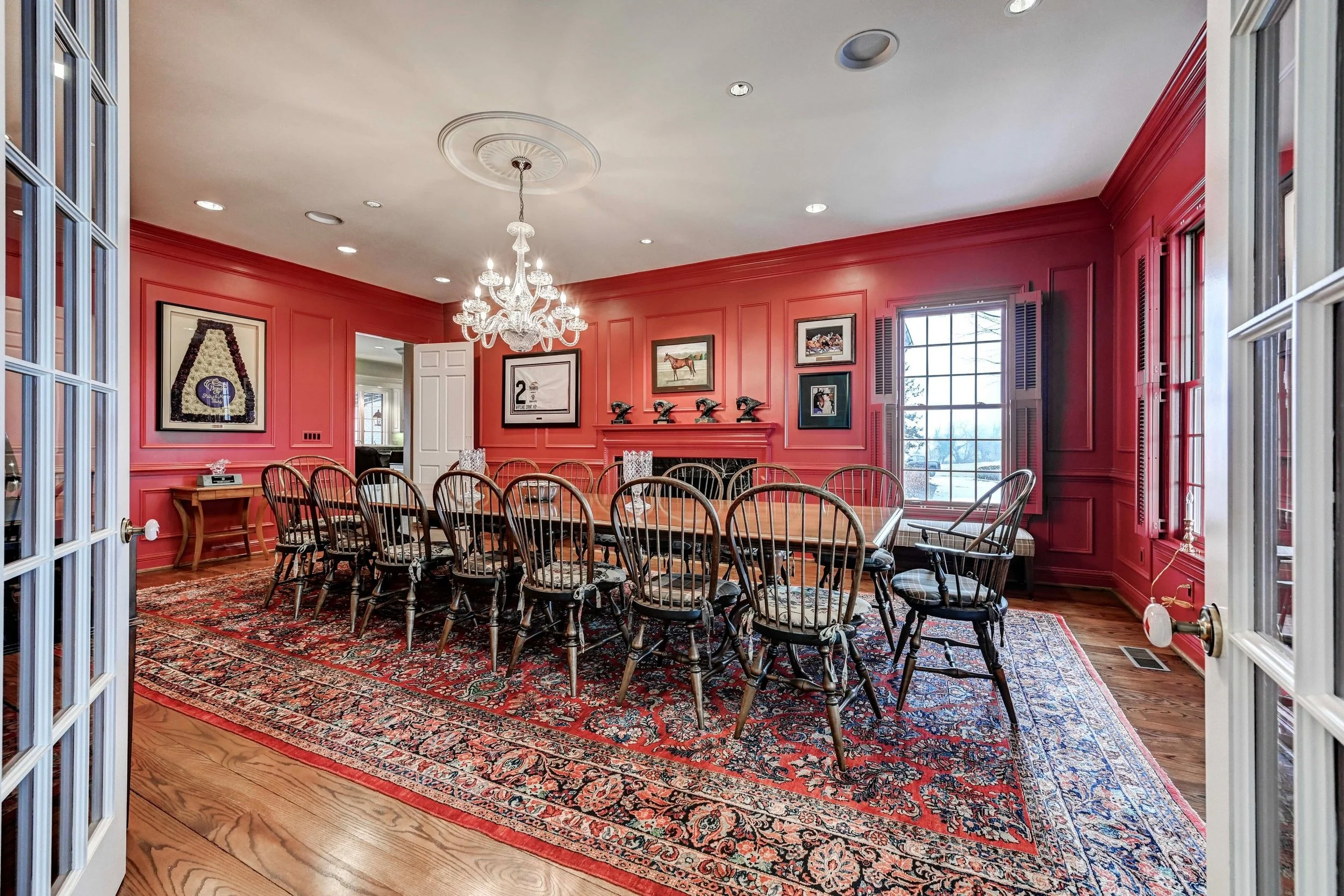
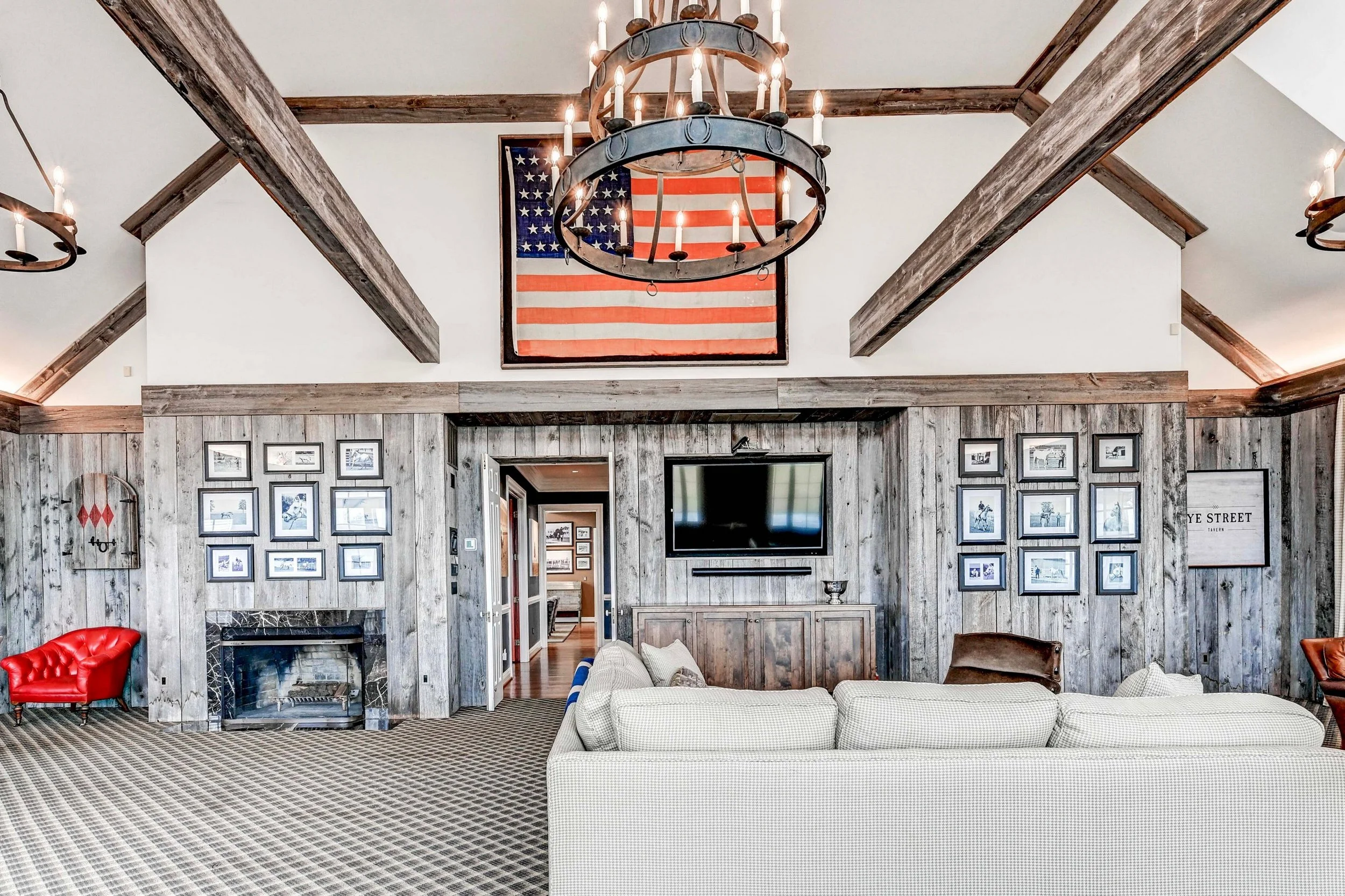
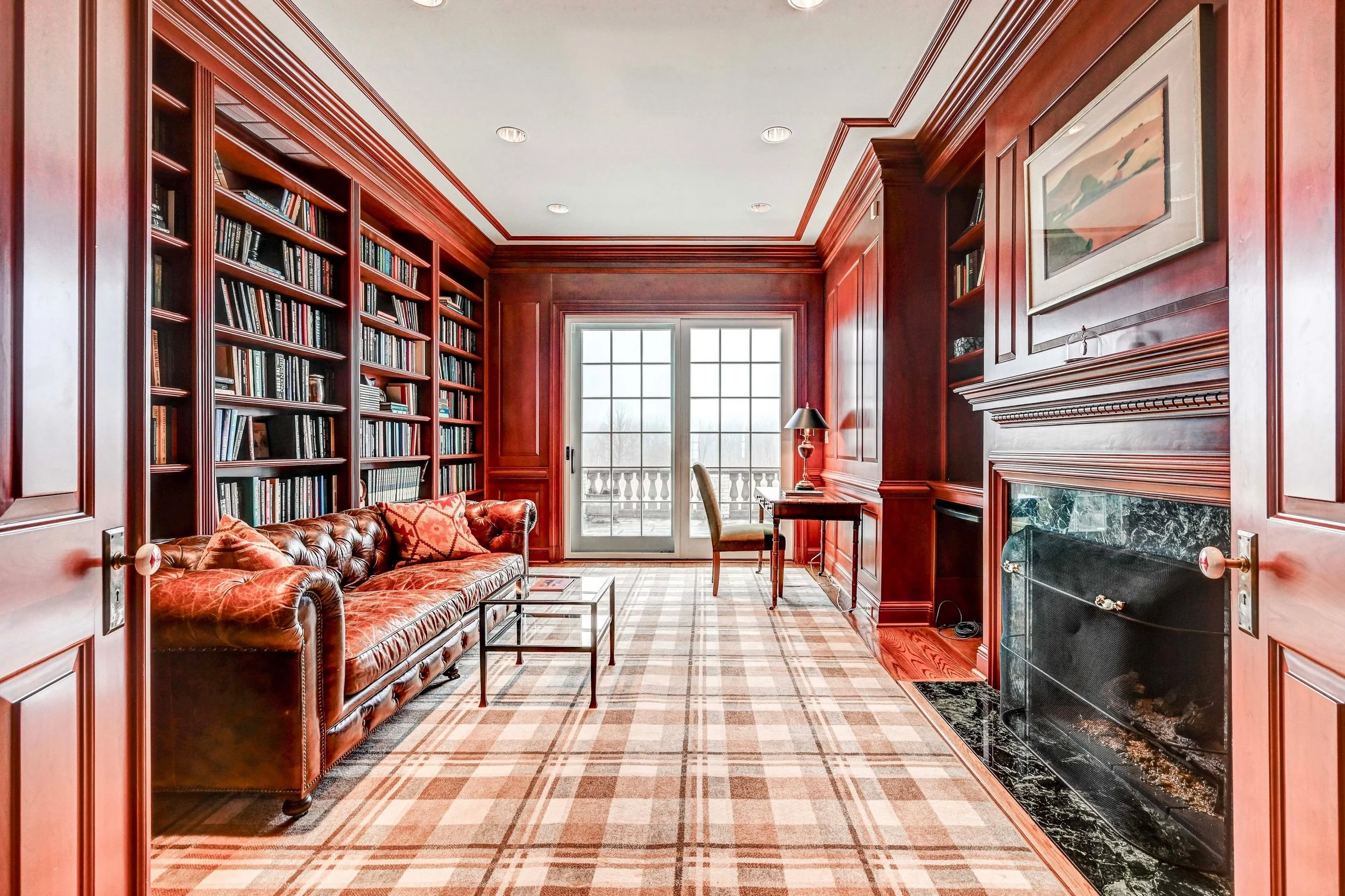
At the center of the property is a main 7-bedroom residence of more than 16,000 sq ft (about 1,500 m²), arranged for large-scale entertaining and estate living, with formal reception rooms, multiple fireplaces, a substantial dining room, and a library opening onto the terraces.
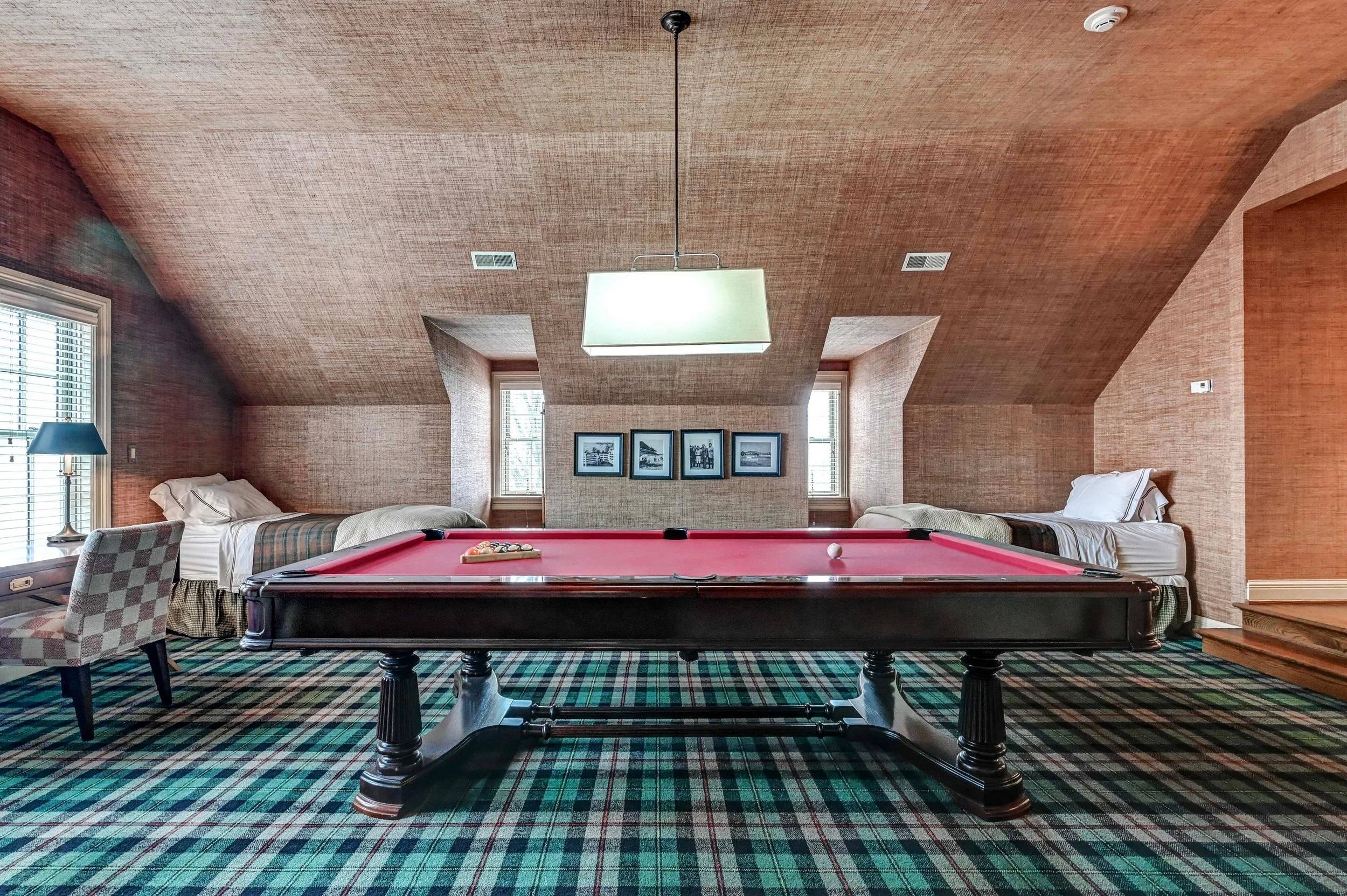
The residential infrastructure extends beyond the main house. Vanderbilt’s original home remains on the grounds and is currently used as the estate manager’s residence, while a separate bunkhouse provides apartment-style accommodation for staff and jockeys.
This is no hobby farm, but rather a production site for elite sport, and one of the most historically significant thoroughbred estates in the United States.
Industrial Wealth and Racing Power
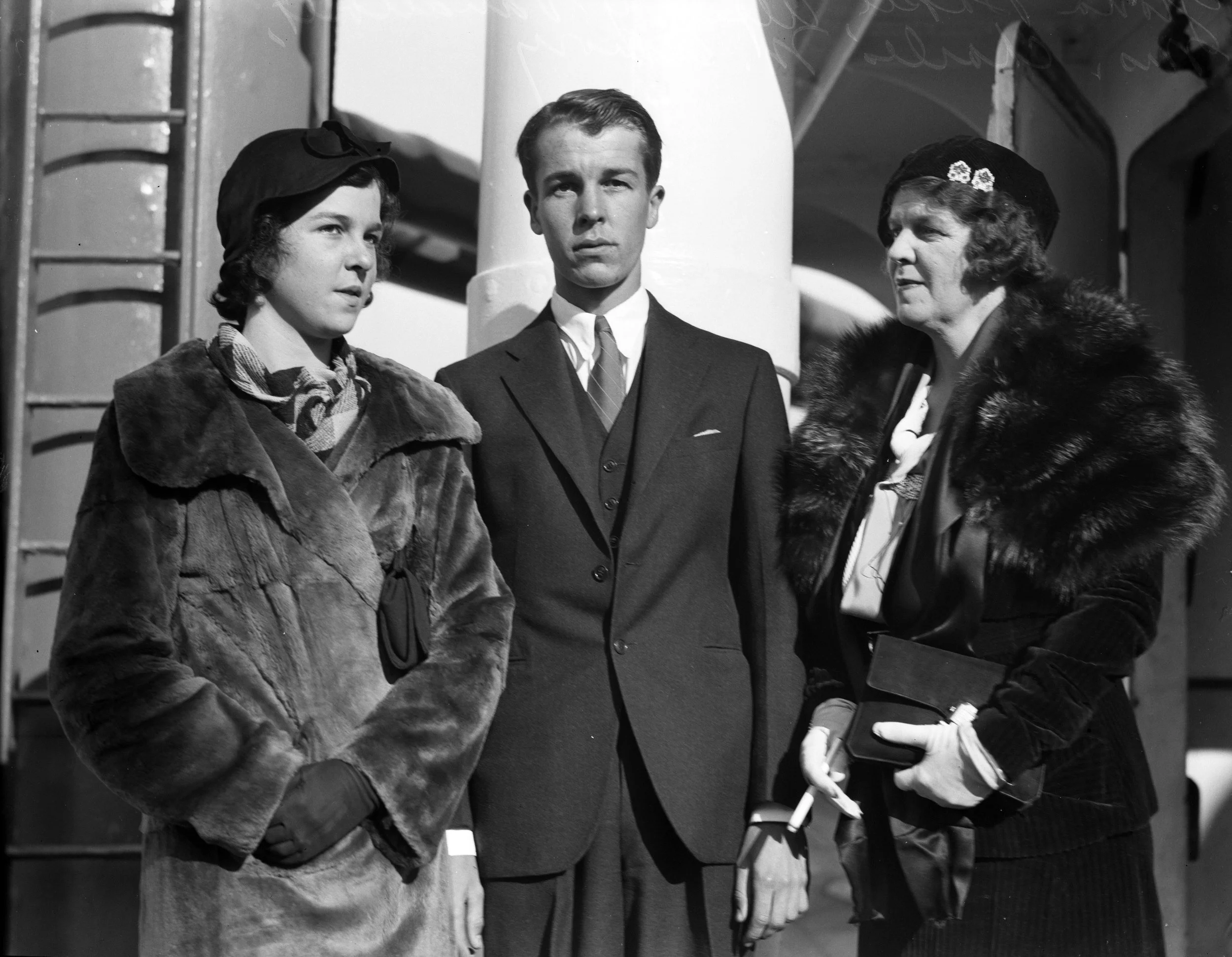
Gloria Baker, Alfred Gwynne Vanderbilt, and Margaret Emerson, Circa 1937, LA Times Photographic Collection, UCLA Library
Sagamore Farm was founded in 1925 by Isaac Emerson, a Baltimore entrepreneur who built Bromo-Seltzer into one of the first nationally recognized headache remedies, comparable in reach to modern over-the-counter brands like aspirin. He assembled the estate as a gift for his daughter, Margarett Emerson.
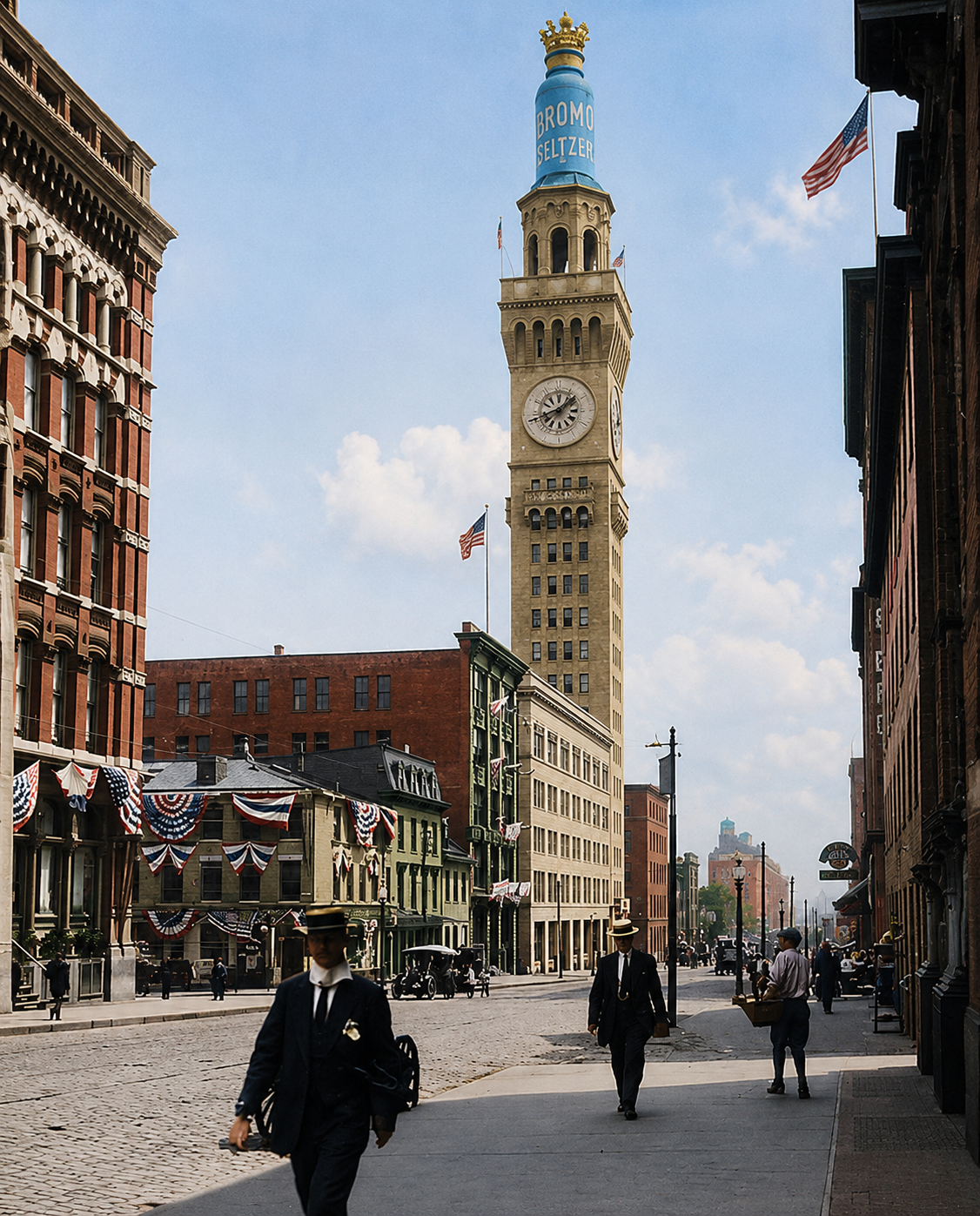
The Bromo Seltzer Tower in downtown Baltimore was originally topped by a 51-foot illuminated blue Bromo-Seltzer bottle.
Its greatest period, however, began under Alfred G. Vanderbilt Jr., who was gifted the estate by his mother, Margaret, on his 21st birthday.
In the 1930s, Vanderbilt transformed Sagamore into one of the premier Thoroughbred operations in the United States, placing the Maryland farm within the East Coast racing corridor that ran between Baltimore, New York, and Saratoga. This was the region where American racing was closely tied to Gilded Age wealth, rail-connected cities, major horse race tracks, and the social world of financiers, industrialists, and sporting dynasties.
Vanderbilt’s influence extended well beyond Sagamore itself. At age 20, he bought Pimlico Race Course in Baltimore, the home of the Preakness Stakes, one of the three races that make up the Triple Crown. He later served as president of Pimlico and held major leadership roles at Belmont Park on Long Island, home of the Belmont Stakes, as well as the New York Racing Association, which oversees several of the most important racetracks in the country. He was also one of the youngest members ever elected to The Jockey Club, the institution responsible for maintaining the American Thoroughbred registry.
Together, those roles placed Vanderbilt at the center of the sport’s power structure, from the tracks where elite horses competed to the institutions that shaped the breed itself. Sagamore was the private base behind that public influence: the Maryland farm where he bred, raised, and trained horses that competed across the East Coast circuit, including Native Dancer, whose bloodline would become one of the most influential in modern Thoroughbred history.
The result was not simply a successful racing farm, but an operation embedded in the structure of American racing itself.
A Legacy Written in Bloodlines
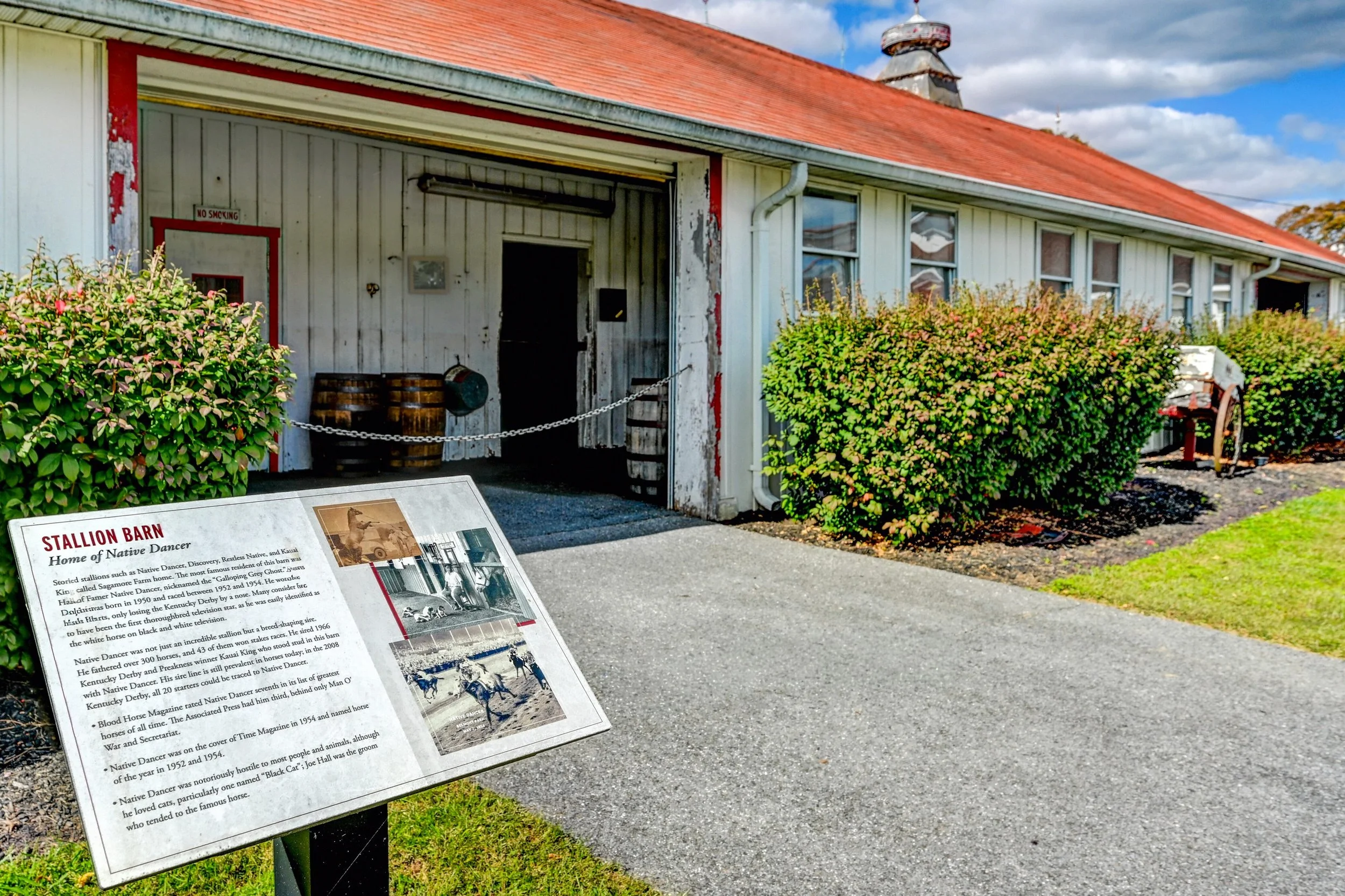
Sagamore’s greatest significance is tied to the horses it produced—most notably Native Dancer, the legendary “Gray Ghost.” Native Dancer won 21 of his 22 career races and became one of the most celebrated racehorses of his era. The near-undefeated horse became a national celebrity and one of the first stars of the television era, drawing massive crowds and nationwide attention wherever he raced. But his greater impact came after his racing career, as a sire whose lineage would become one of the foundational pillars of modern thoroughbred breeding.
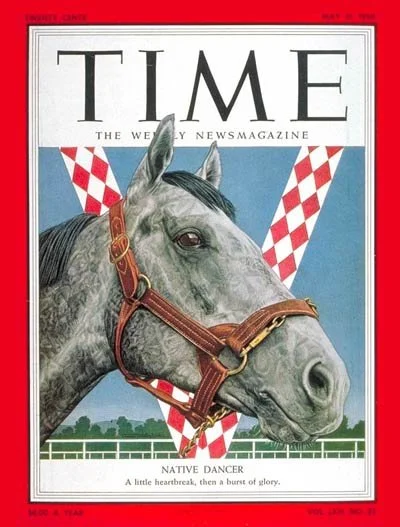
Native Dancer, on the cover of Time Magazine, 1954
Through successive generations, that bloodline spread across the sport, shaping pedigrees in North America, Europe, and beyond. Today, descendants of Native Dancer appear throughout elite racing, forming part of the genetic backbone of the global thoroughbred industry. In fact, the modern thoroughbred gene pool traces back to only a small number of dominant sire lines—of which Native Dancer is one of.
Under Alfred G. Vanderbilt Jr., Sagamore Farm became far more than a country estate. He developed it into one of the earliest fully integrated Thoroughbred breeding and training operations in American racing, where the farm’s land, facilities, breeding program, and daily training routines all worked together toward a single goal: producing more competitive racehorses.
That approach helped place Sagamore at the forefront of modern American racing.
Seabiscuit vs. War Admiral
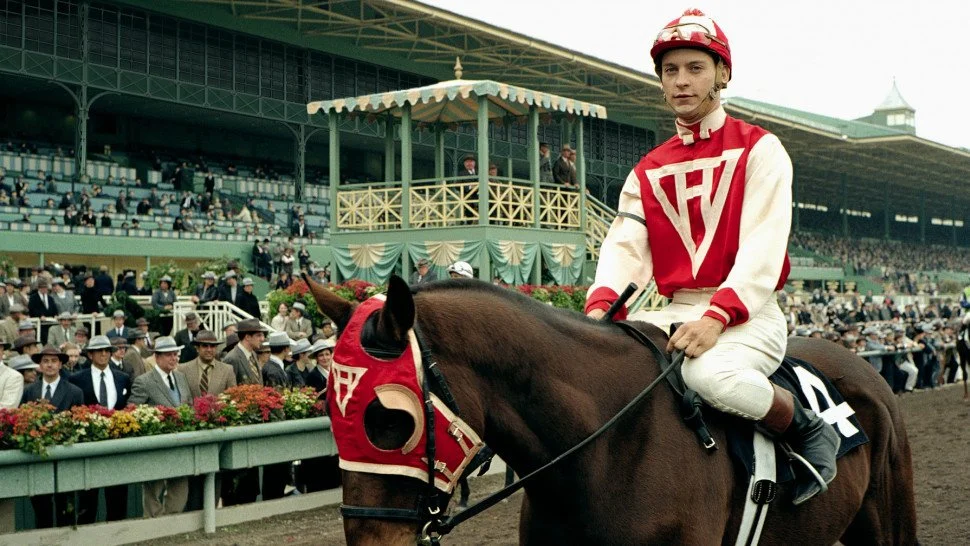
Still from Seabiscuit (2003). © DreamWorks Pictures.
One of the most famous moments in American sports history also passed through Vanderbilt’s world. On November 1, 1938, Seabiscuit faced War Admiral at Pimlico Race Course in a highly anticipated match race followed by an estimated 40 million radio listeners nationwide. During the Great Depression, the event captured the country’s imagination by framing Seabiscuit as the unlikely underdog challenger against the dominant Triple Crown champion War Admiral. At the time, Pimlico was owned by Alfred G. Vanderbilt Jr., who had purchased a controlling interest in the racetrack in 1932 before later becoming its president. The race transformed Pimlico into a national stage and became one of the defining sporting spectacles of its era, later immortalized in books and the 2003 film Seabiscuit starring Tobey Maguire, Elizabeth Banks, Jeff Bridges, and Chris Cooper.
Royal Ties — Queen Elizabeth II & The Aga Khan
In 1940, as World War II disrupted European racing and the Aga Khan’s French breeding operations were seized, Alfred G. Vanderbilt Jr. joined Walter P. Chrysler Jr. of the Chrysler automotive empire and two other young investors to purchase Bahram, the Aga Khan’s undefeated English Triple Crown winner, for nearly $250,000 — roughly $5.8 million today. The acquisition drew international attention and was documented by Time, which described Bahram as “the best race horse bred in England since World War I.” Bahram was brought to the United States and stood at stud at Sagamore Farm, a sign of the farm’s growing importance within international bloodstock circles.
Sagamore’s global stature was reinforced again in 1963, when Queen Elizabeth II sent her mare Near Miss to be bred to Native Dancer at the farm. That decision was an extraordinary signal of trust in Sagamore’s breeding program and its place within elite international racing networks.
Together, these moments reveal Sagamore’s deeper legacy. It was not simply a farm that produced great racehorses; it became a cornerstone in the development of modern Thoroughbred bloodlines, where a small number of exceptional horses helped reshape the genetics of the sport worldwide.
Revival and Reinvention
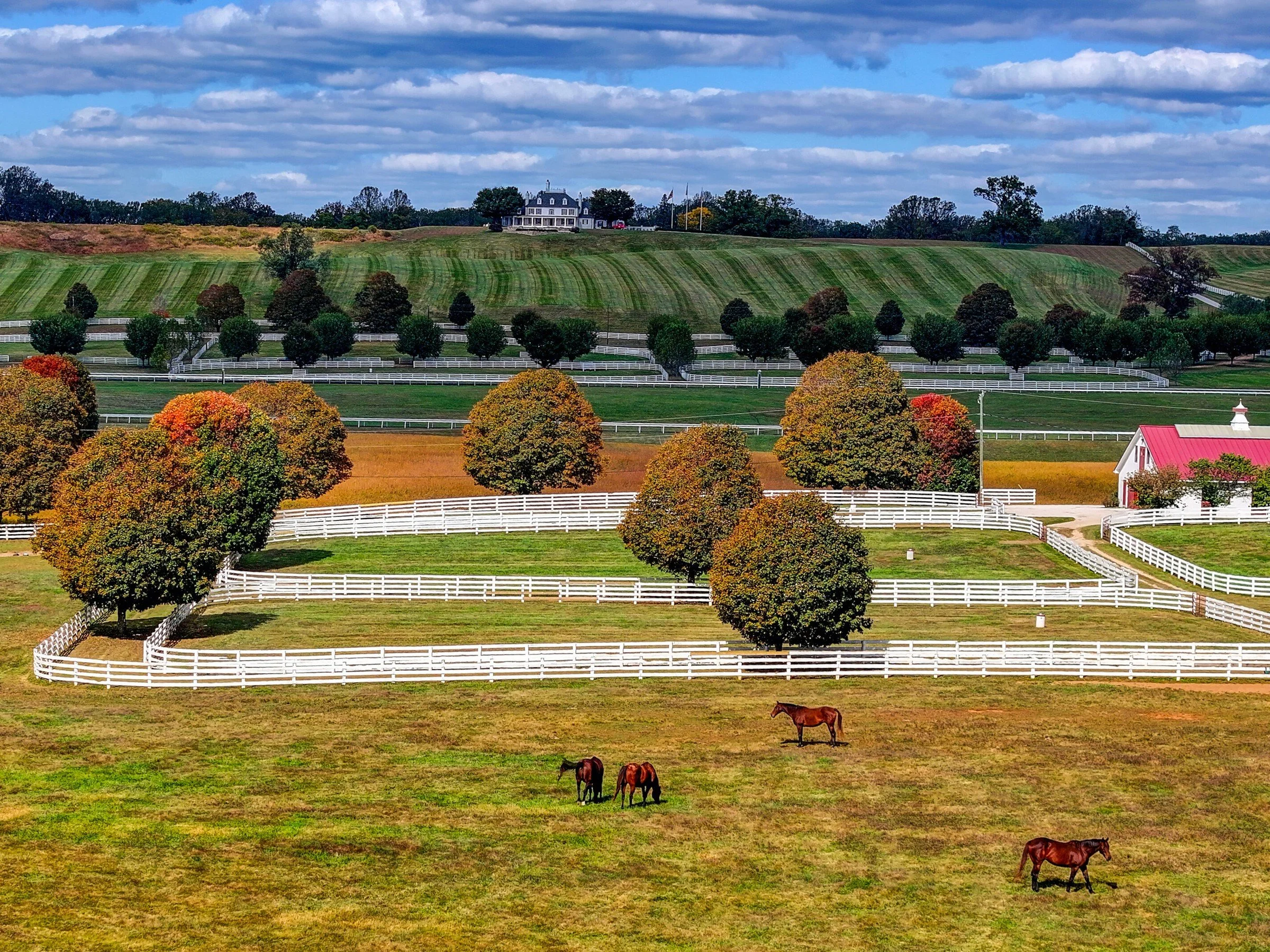
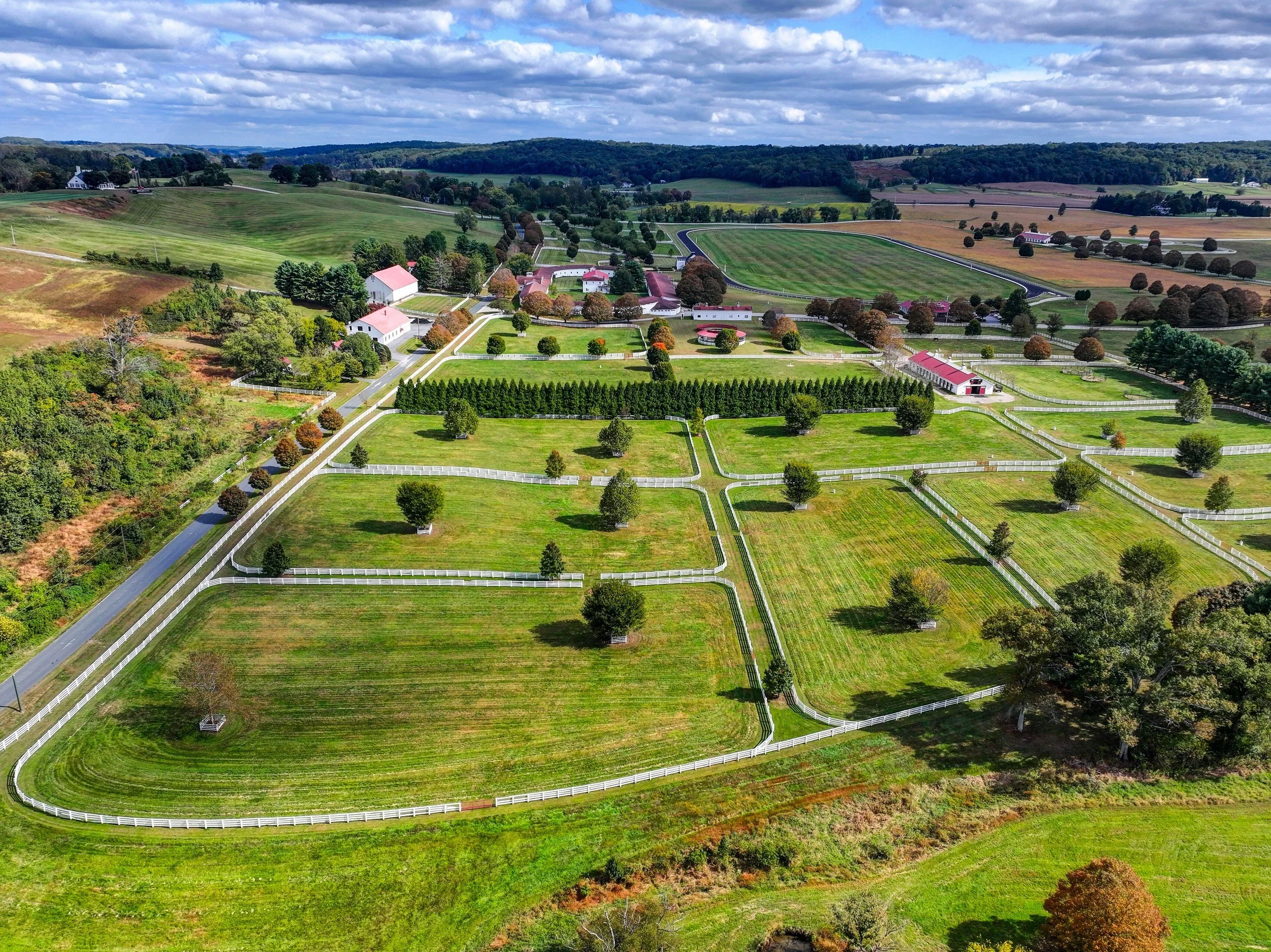
Following its mid-century peak under Vanderbilt, Sagamore Farm continued as an active racing and breeding operation, though its dominance gradually receded as the industry consolidated in Kentucky and other major breeding centres.
By the mid-1980s, it no longer held the same strategic position within American racing, leading to its sale in 1986.
By the time Under Armour founder Kevin Plank acquired Sagamore Farm in 2007, the estate’s infrastructure required significant restoration and modernization.
Plank did not come from the traditional world of horse racing, but he purchased the property shortly after Under Armour went public in 2005 and began an ambitious effort to restore it, starting with the 17 miles of white-picket fence surrounding the property. What followed was not simply a real estate acquisition, but the attempted revival of one of America’s most storied thoroughbred estates.
At a time when Maryland’s racing industry was struggling, he set out to prove that elite thoroughbreds could once again be bred and trained in the region.
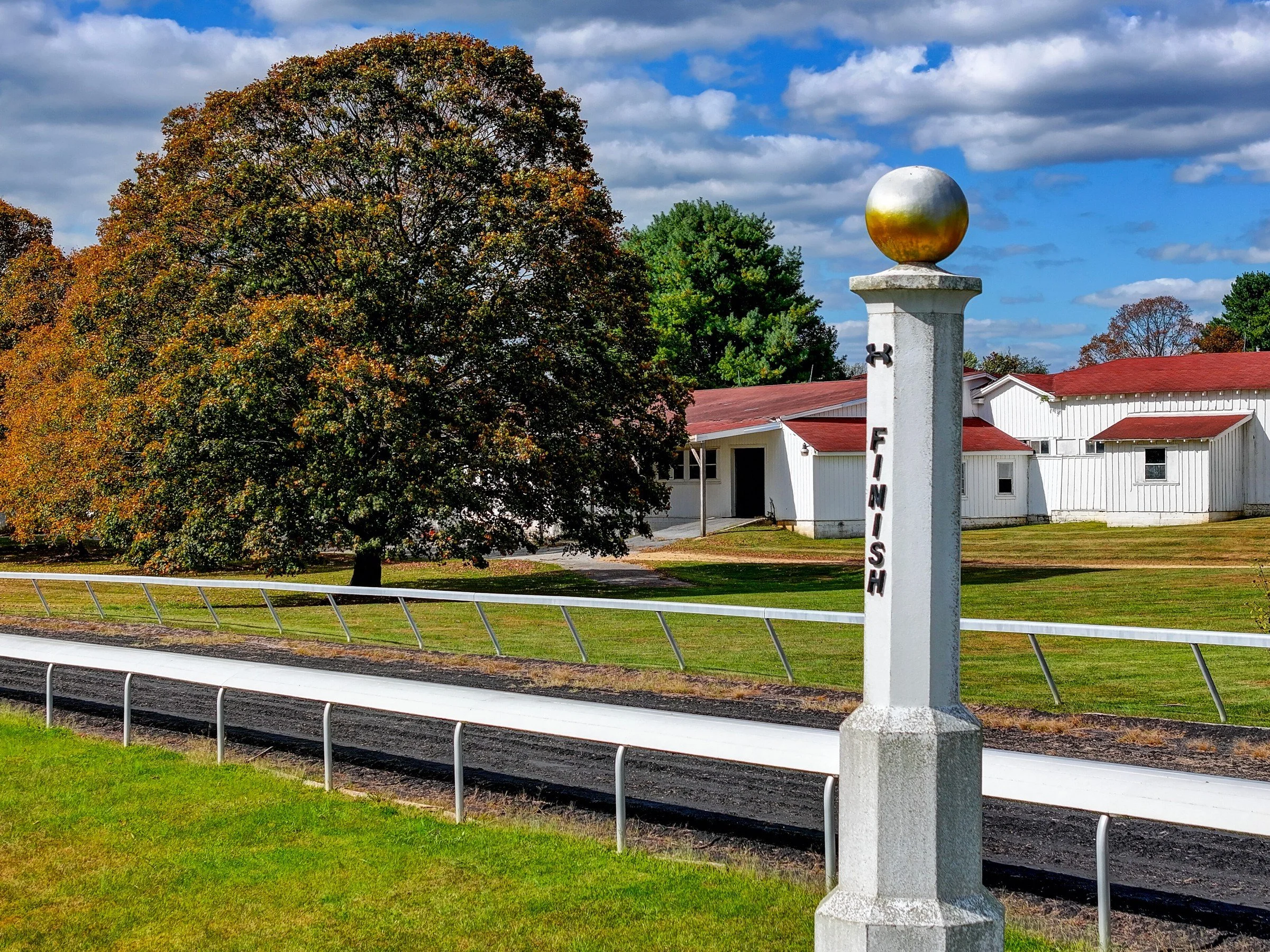
According to the Wall Street Journal, Plank said he spent more than $22 million on the land and renovations to modernize the farm—renovating barns, upgrading infrastructure, and installing a synthetic training track surfaced with Tapeta, designed to provide safer, more consistent footing, and famously made with fragments of recycled Under Armour shirts integrated directly into the track.
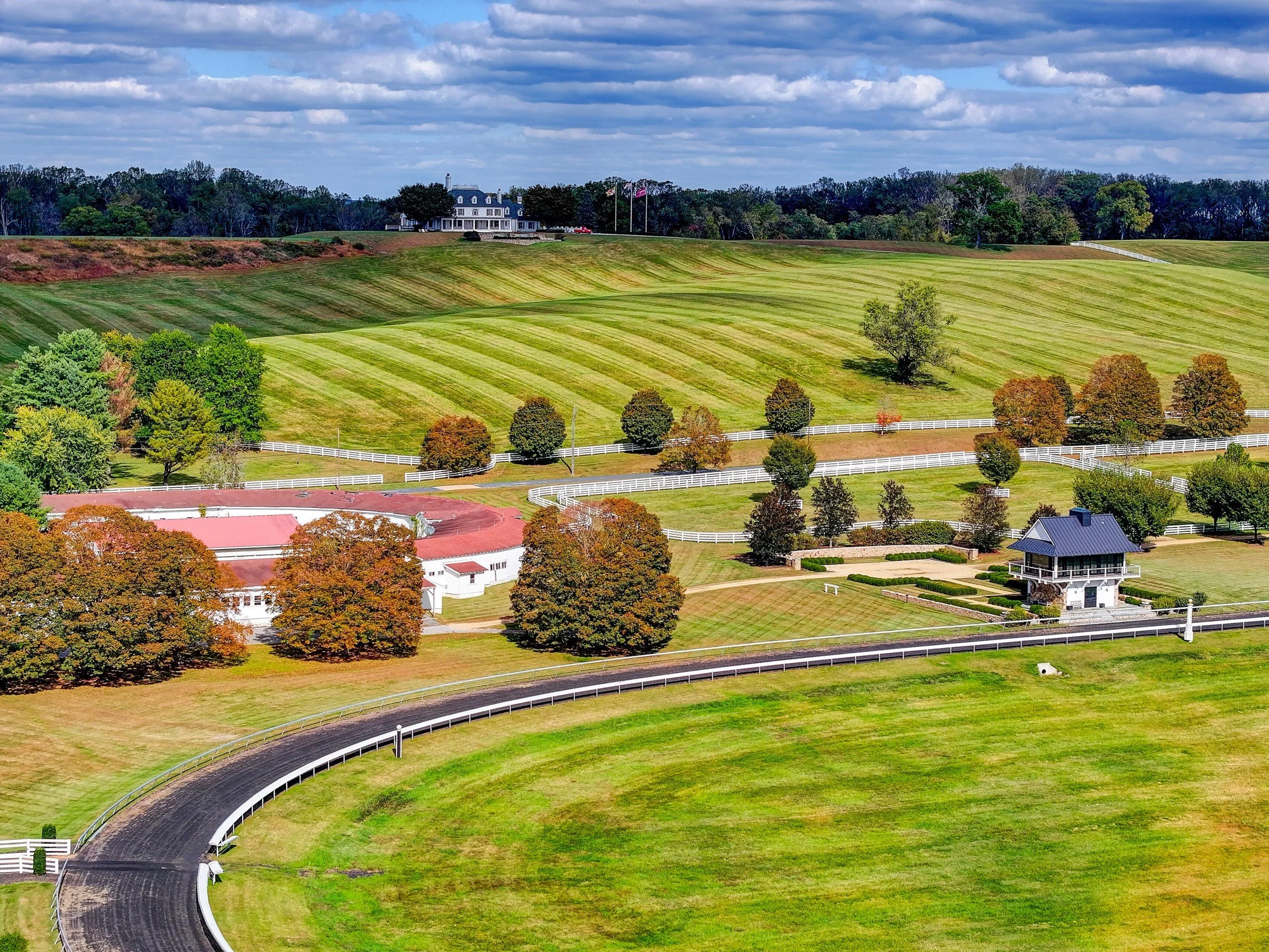
Plank modernized the farm’s training track with a synthetic surface that famously included recycled Under Armour shirt material.
Plank rebuilt Sagamore as a fully operational racing and breeding program, restoring the farm’s ability to compete seriously within the sport. At its height under his ownership, the farm housed around 100 horses and produced nationally significant results, including Shared Account’s 2010 victory in the $2 million Breeders’ Cup Filly & Mare Turf.
The achievement mattered because Sagamore’s historic importance has always rested on bloodlines as much as buildings. Under Plank, the estate was not only restored as a physical property; for a period, it again produced horses capable of competing at the highest level.
These accomplishments took a lot of effort, time, and devotion, which underscored the challenges facing the sport.
A Changing Industry
Horse racing today operates very differently from the system that produced Sagamore’s golden era.
In the early 20th century, the sport was structured around regional estates and the wealthy families who owned them. Maryland, alongside New York and Kentucky, formed a central axis of racing power, with farms like Sagamore serving as both production centers and cultural institutions.
Over time, that model has given way to a more global and consolidated industry. Breeding has concentrated in specialized hubs, ownership has internationalized, and the economics of the sport increasingly revolve around major events, media, and large-scale investment.
In this environment, the role of large, independent estates has diminished.
More Than a Sale
Like earlier industrial fortunes that flowed into land and sport, Plank’s investment aligns with a long-standing East Coast tradition of estate ownership tied to Thoroughbred racing. But in contrast to earlier generations, he undertook it while continuing to lead a global company. It also reflected something more specifically local: Plank’s recurring interest in investing in Maryland institutions, landscapes, and heritage assets.
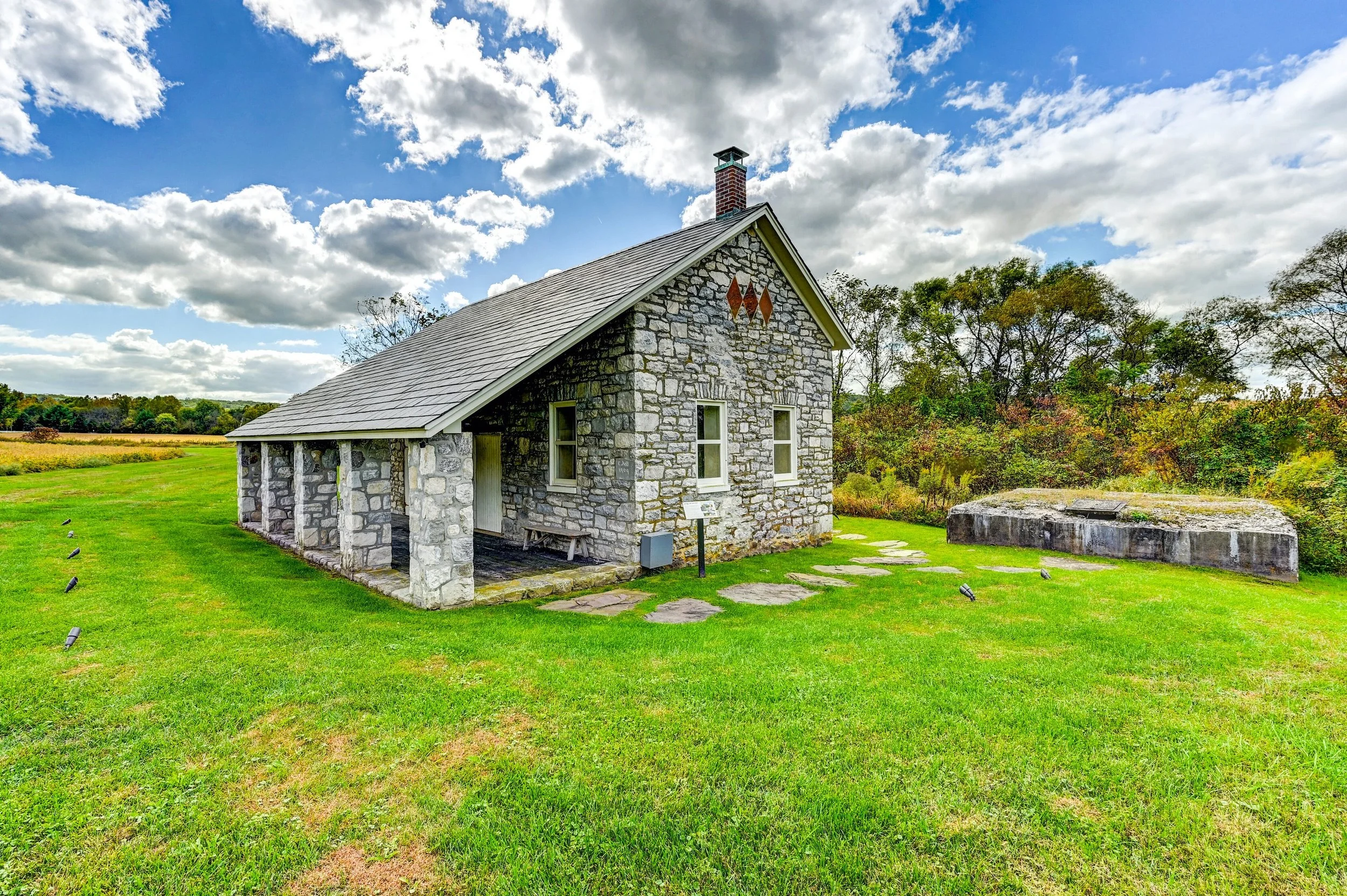
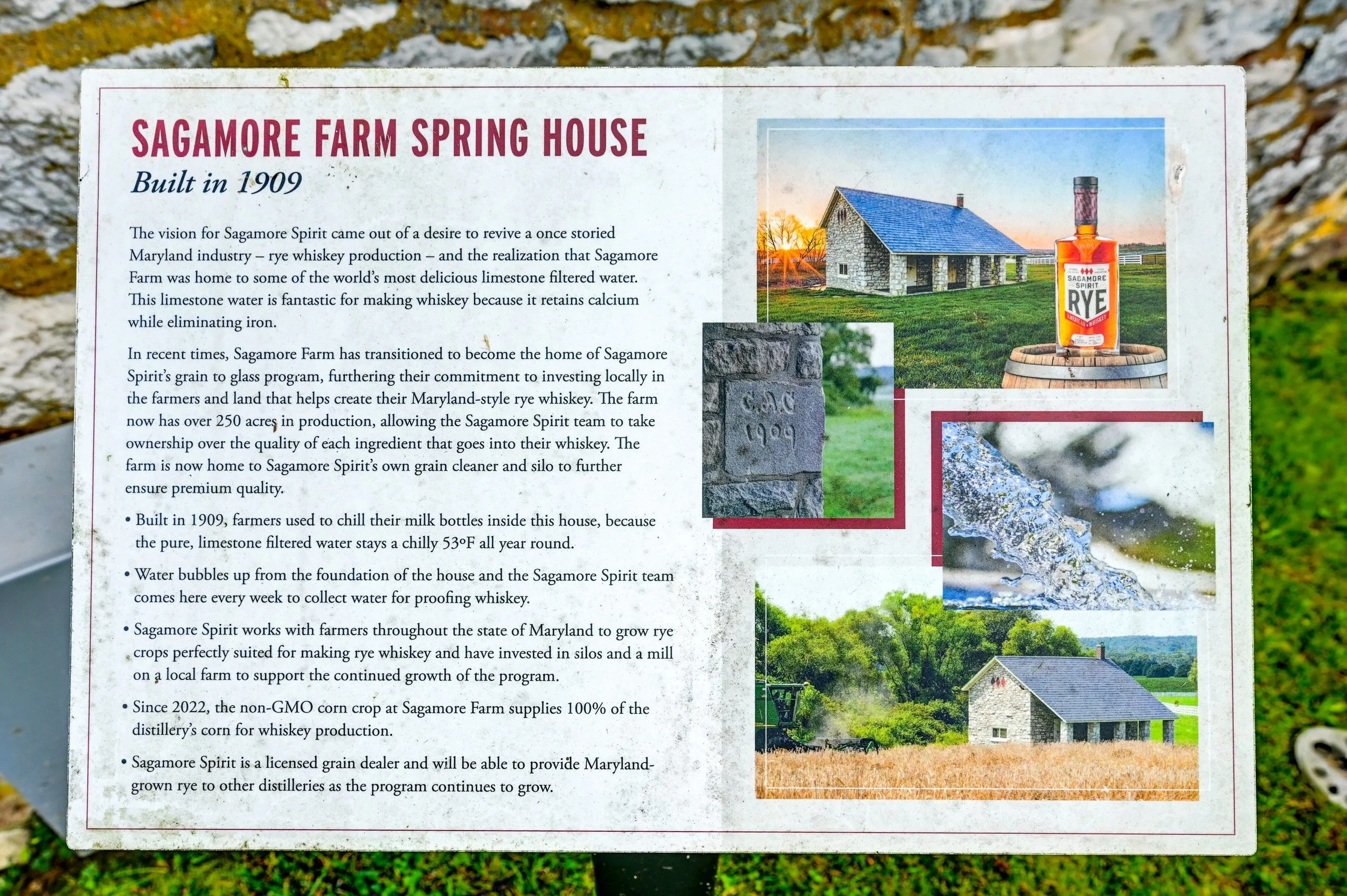
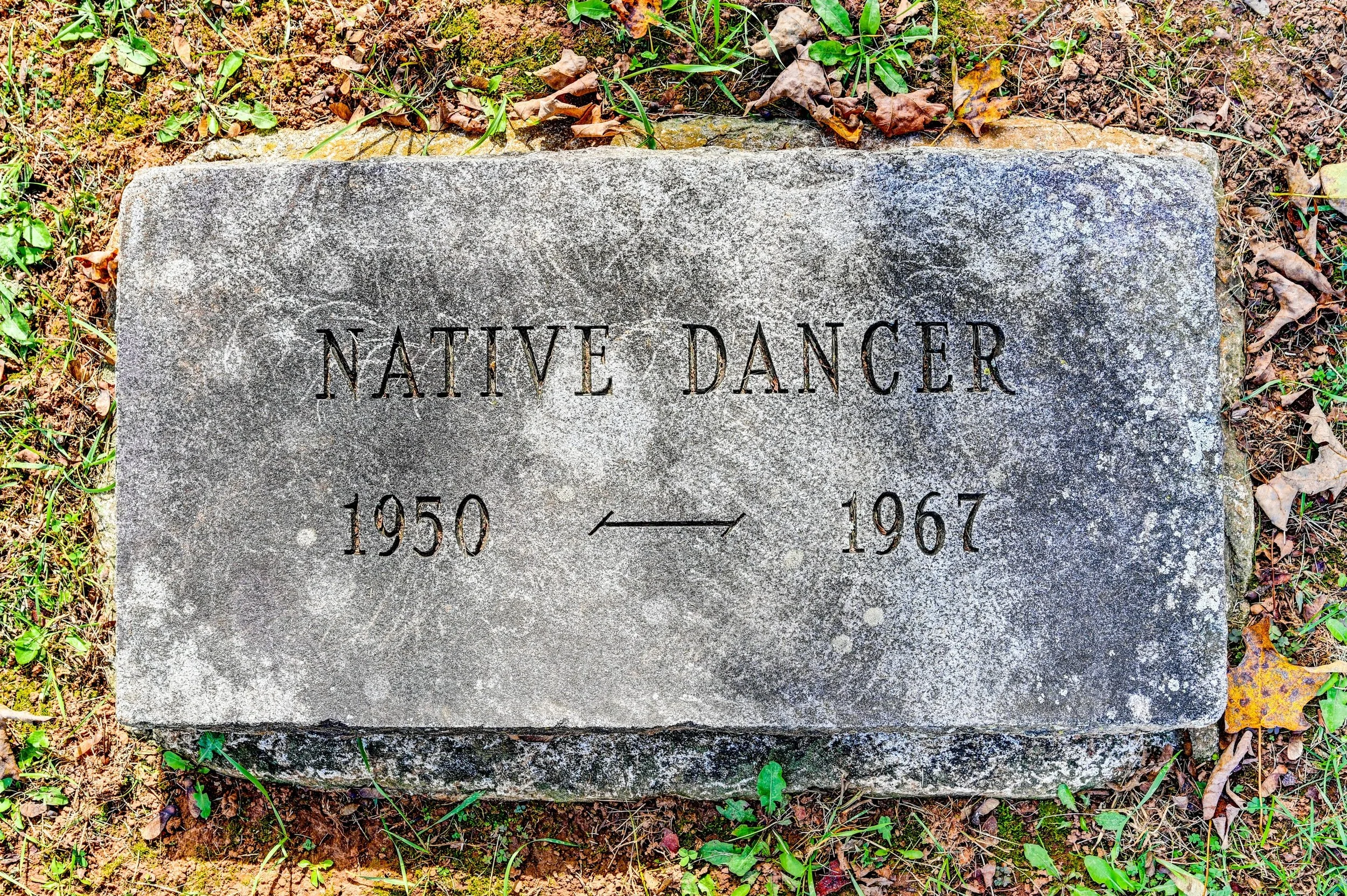
Running alongside this revival, Plank launched Sagamore Spirit in 2013, positioning it as part of a broader effort to reestablish Maryland’s historic rye whiskey tradition. One of the property’s more enduring features is a spring house built in 1909, fed by naturally limestone-filtered water that remains a constant 53°F year-round. Historically used to chill and preserve dairy, the spring continues to serve a functional role today, with its water collected and incorporated into the production of Sagamore Spirit’s Maryland-style rye whiskey. Nearby, Native Dancer — Sagamore’s most famous horse — remains buried on the property, tying its modern reinvention back to its racing legacy.
Plank’s investment in Sagamore Farm fit within that larger Maryland-focused portfolio. Through Sagamore Development, Sagamore Ventures, and Plank Industries, he backed projects that tied business to place, including the planned $5.5 billion Port Covington/Baltimore Peninsula redevelopment, the Sagamore Pendry hotel in Baltimore’s restored Recreation Pier, and Rye Street Tavern beside Sagamore Spirit. In that context, Sagamore Farm was not an isolated estate purchase, but part of a broader pattern of investing in Maryland identity through land, hospitality, sport, and heritage.
Plank began scaling back Sagamore’s racing operation in 2019 and announced in late 2020 that the farm would exit Thoroughbred racing and breeding. By 2021, the property was no longer operating as an active racing and breeding program, with portions of the land redirected toward growing corn and rye for Sagamore Spirit.
Plank has since stepped away from professional racing operations, refocusing on his role at Under Armour. Plank later acknowledged the demands of running Sagamore as a serious racing operation, telling The Wall Street Journal, “That’s a business you don’t want to be in unless you’re in it all the time.”
All photographs courtesy of the listing agency. See more on Monument Sotheby’s International Realty.