For Sale: A Private Tuscan Village on 1,063 Acres with a 15th-Century Villa, Vineyards, and Agriturismo
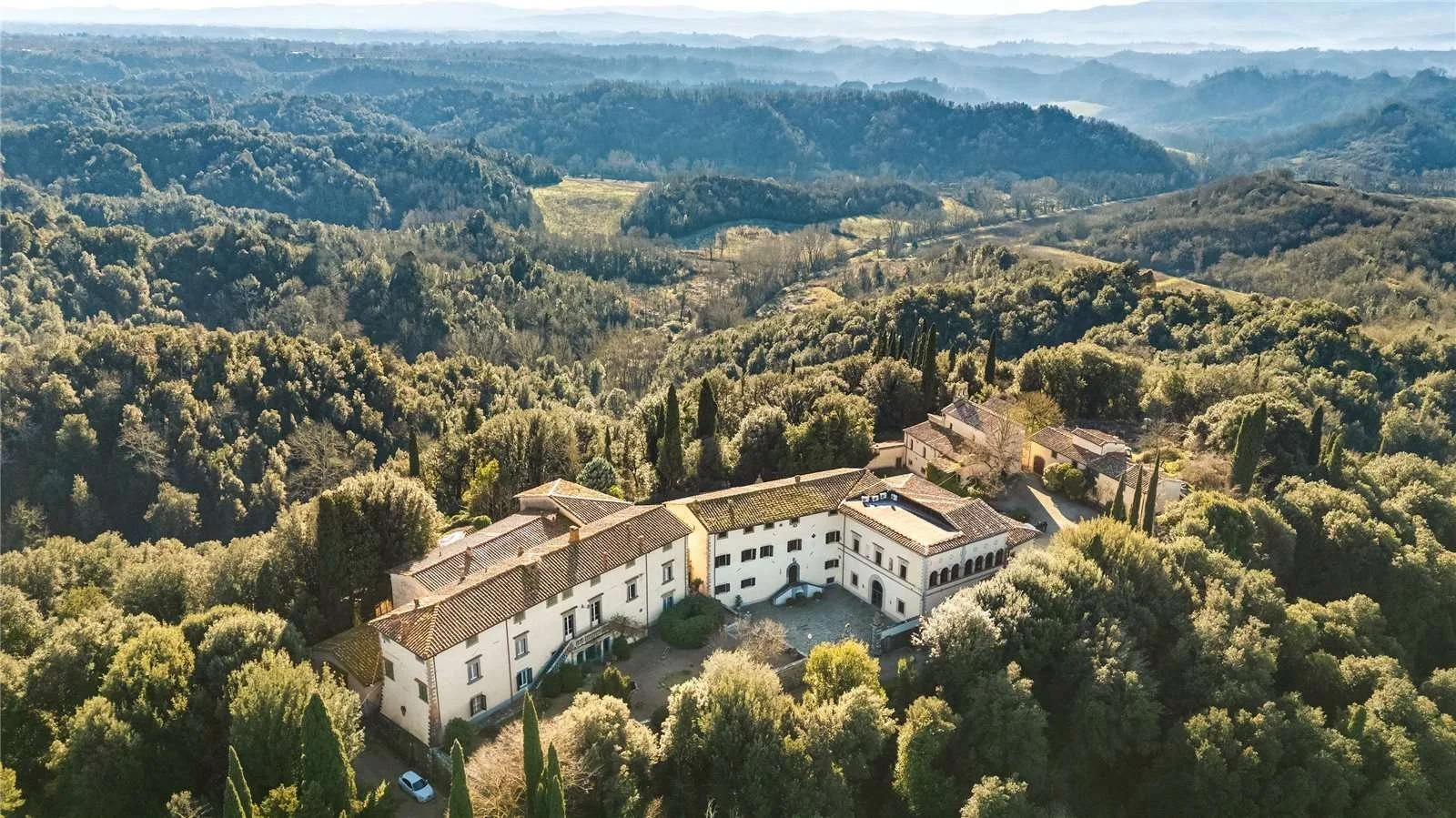
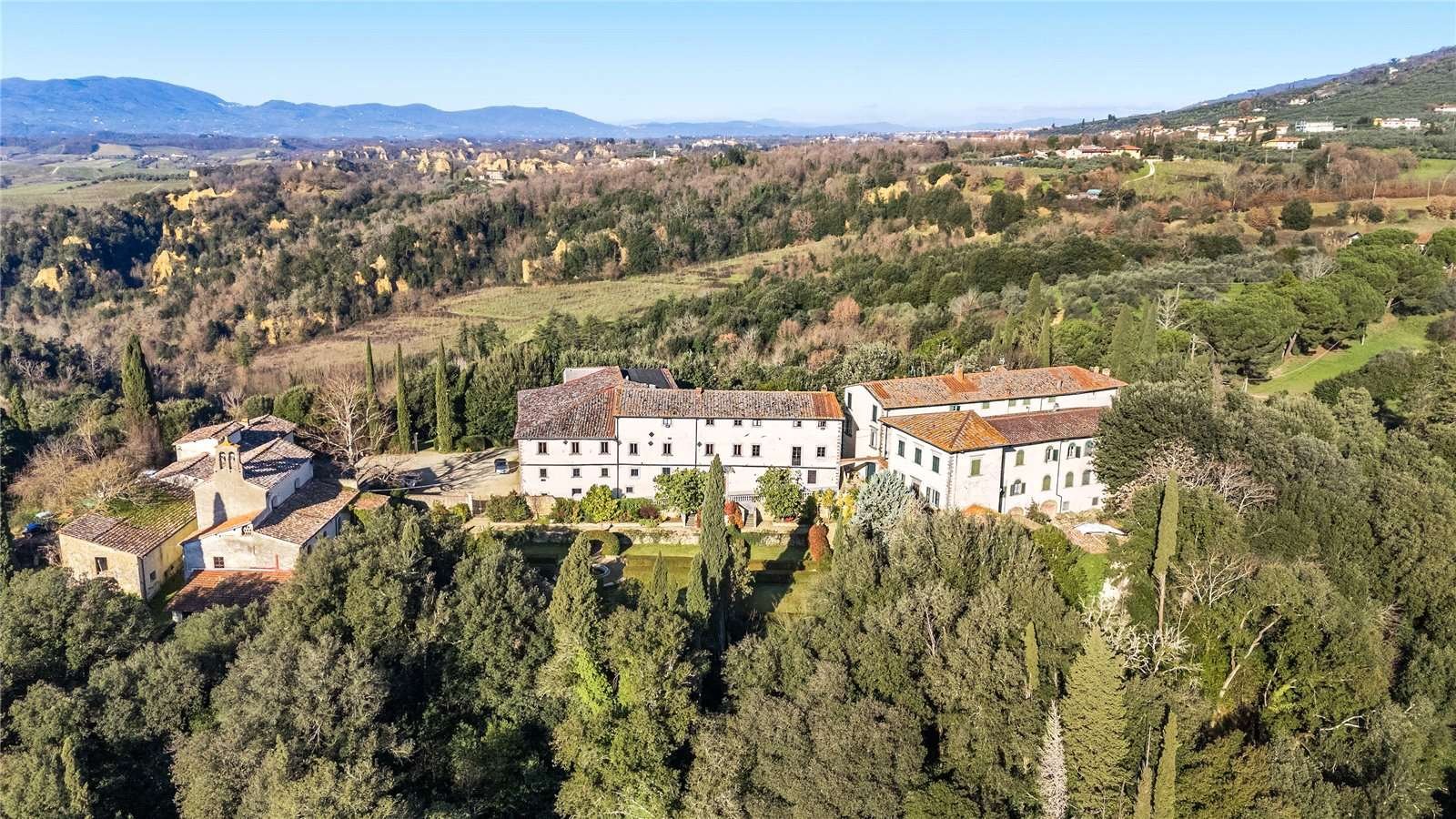
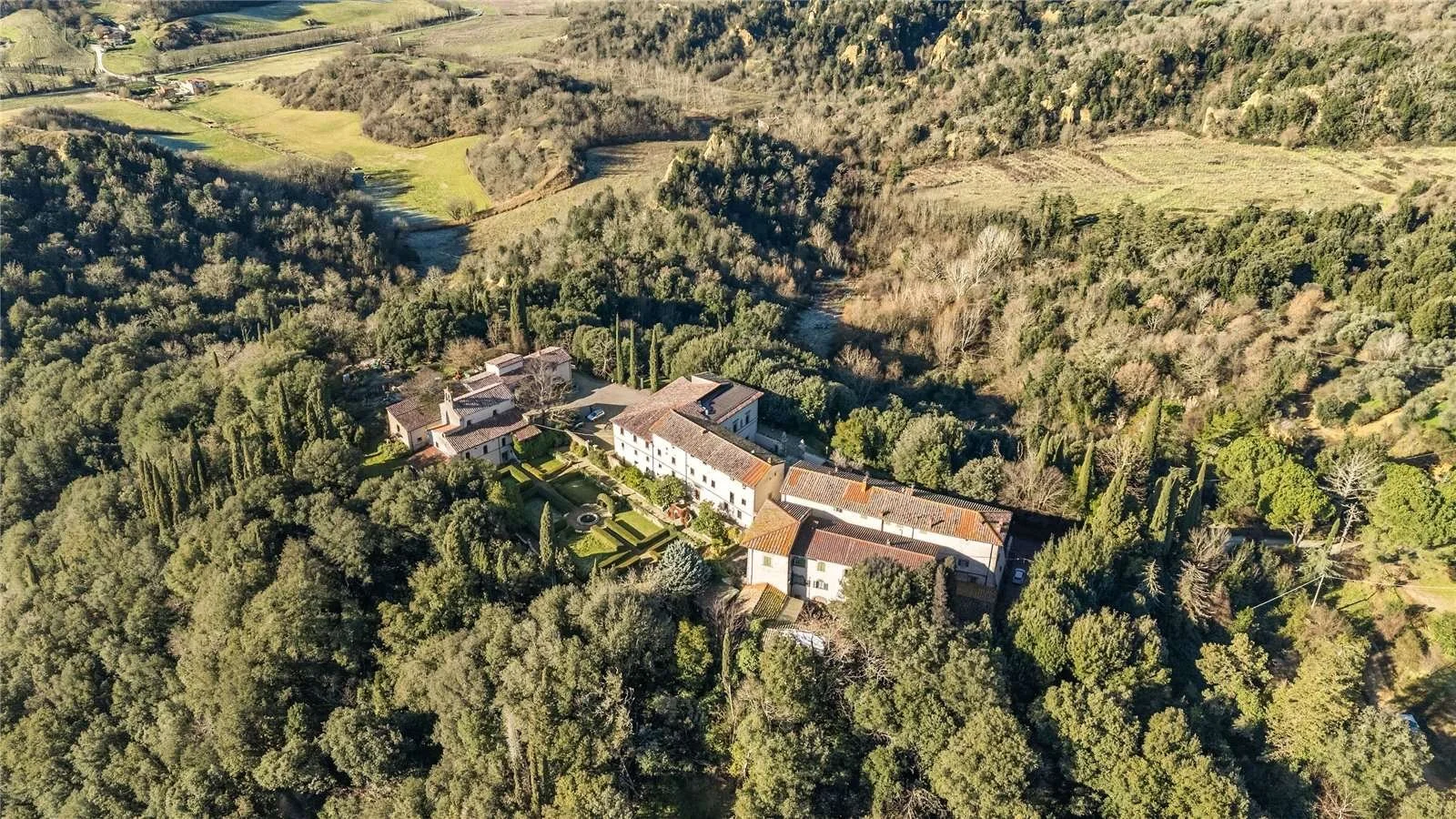
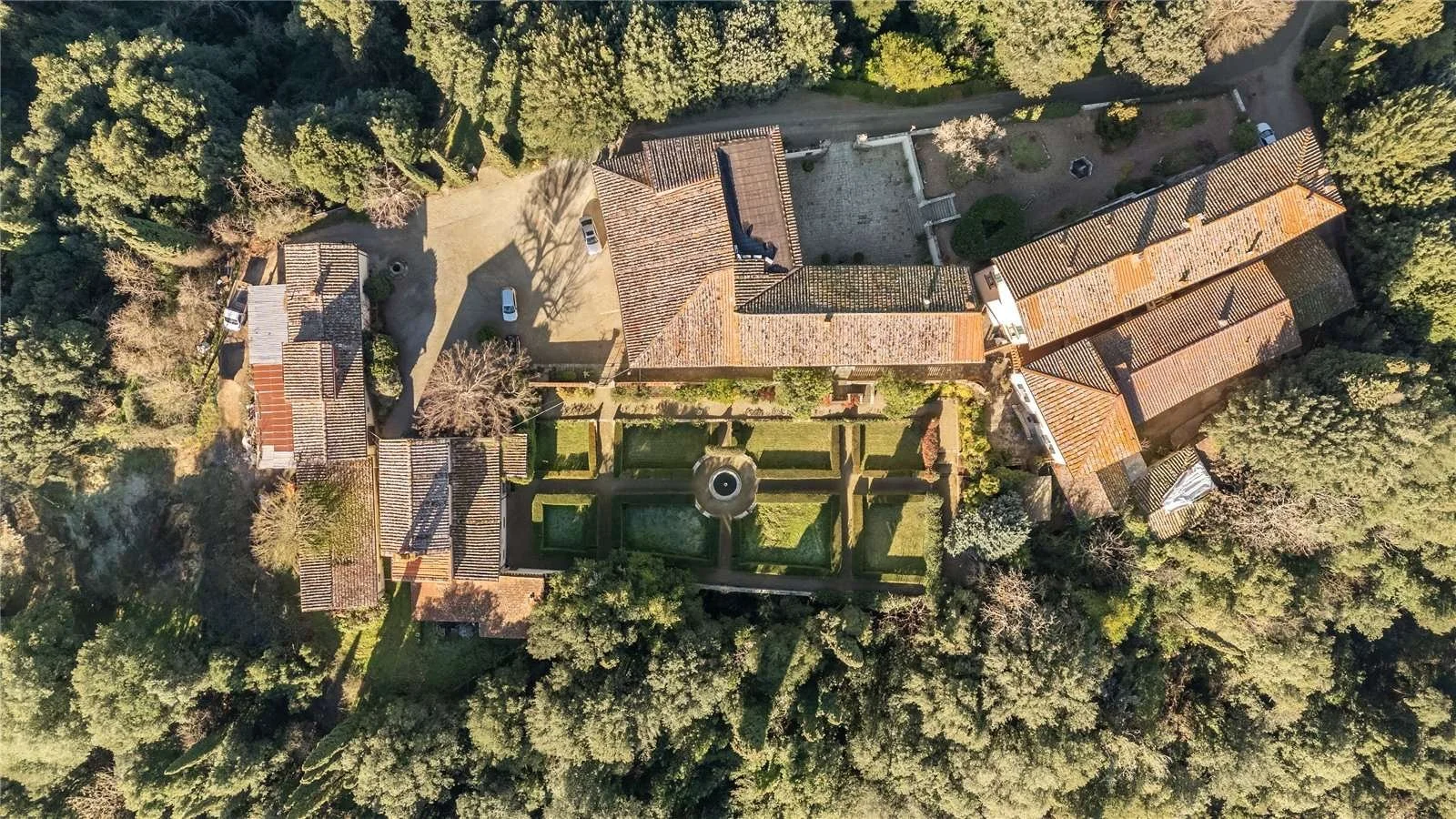
Amenities: 14 buildings, 15th-century historic villa, 18th-century manor house, private chapel, original frescoes, Renaissance-era cellar, reception and event spaces, courtyards, gardens, panoramic Valdarno views, restored agriturismo, large swimming pool, stone olive oil mill, 7,000 olive trees, 40 hectares of olive groves, Leccino, Moraiolo and Frantoio olive cultivars, 15 hectares of Chianti DOCG vineyards, 130 hectares of arable land, 70 hectares of woodland, pasture and fallow land, agricultural annexes, 11 independent farmhouses, internal passages, hunting reserve paths, hiking and horseback-riding potential.
Tenuta Poggitazzi, a historic 1,063-acre estate near Arezzo in Tuscany, is available through Alex Iyamu. Pricing and further details are available upon request.
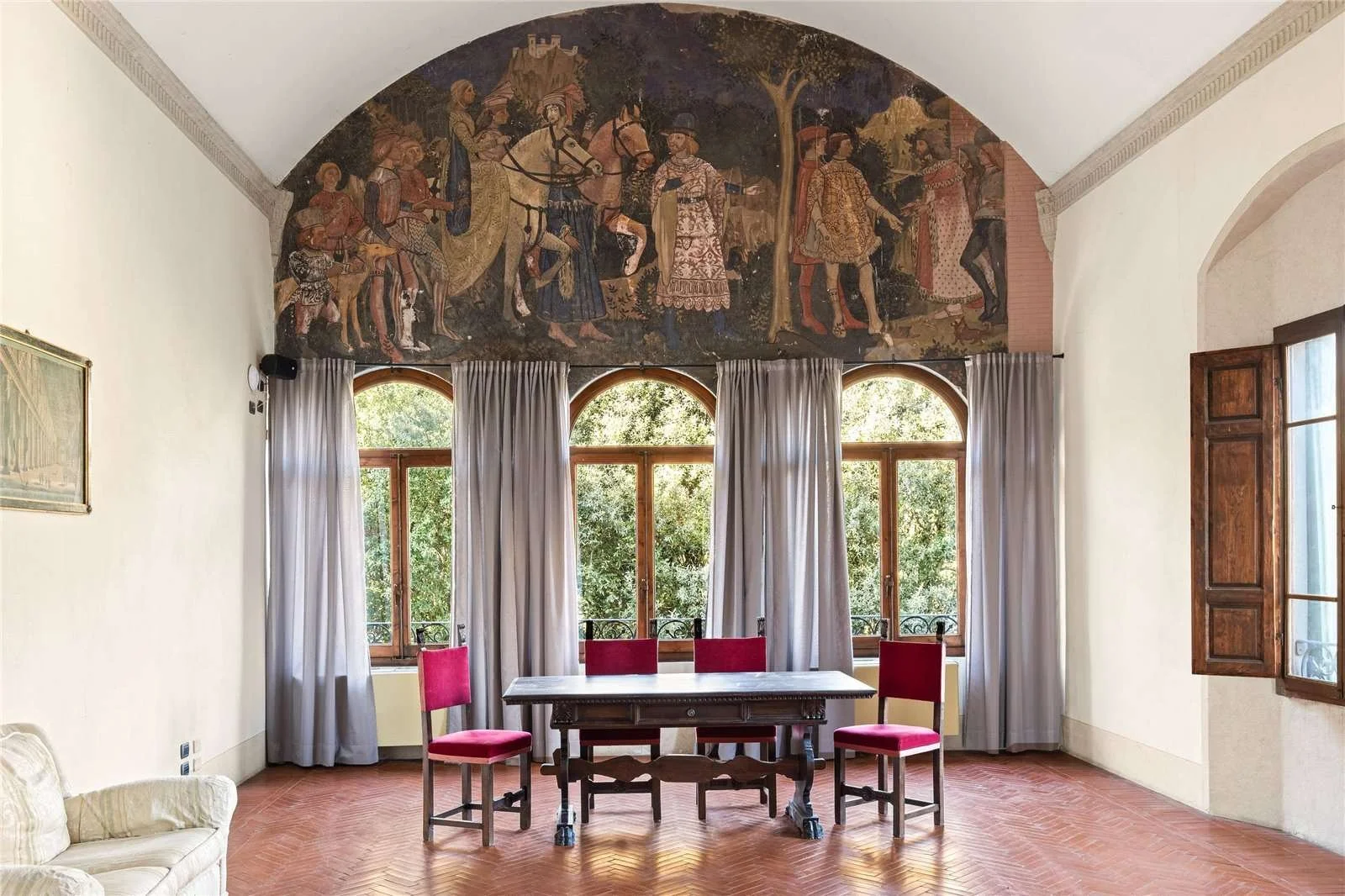
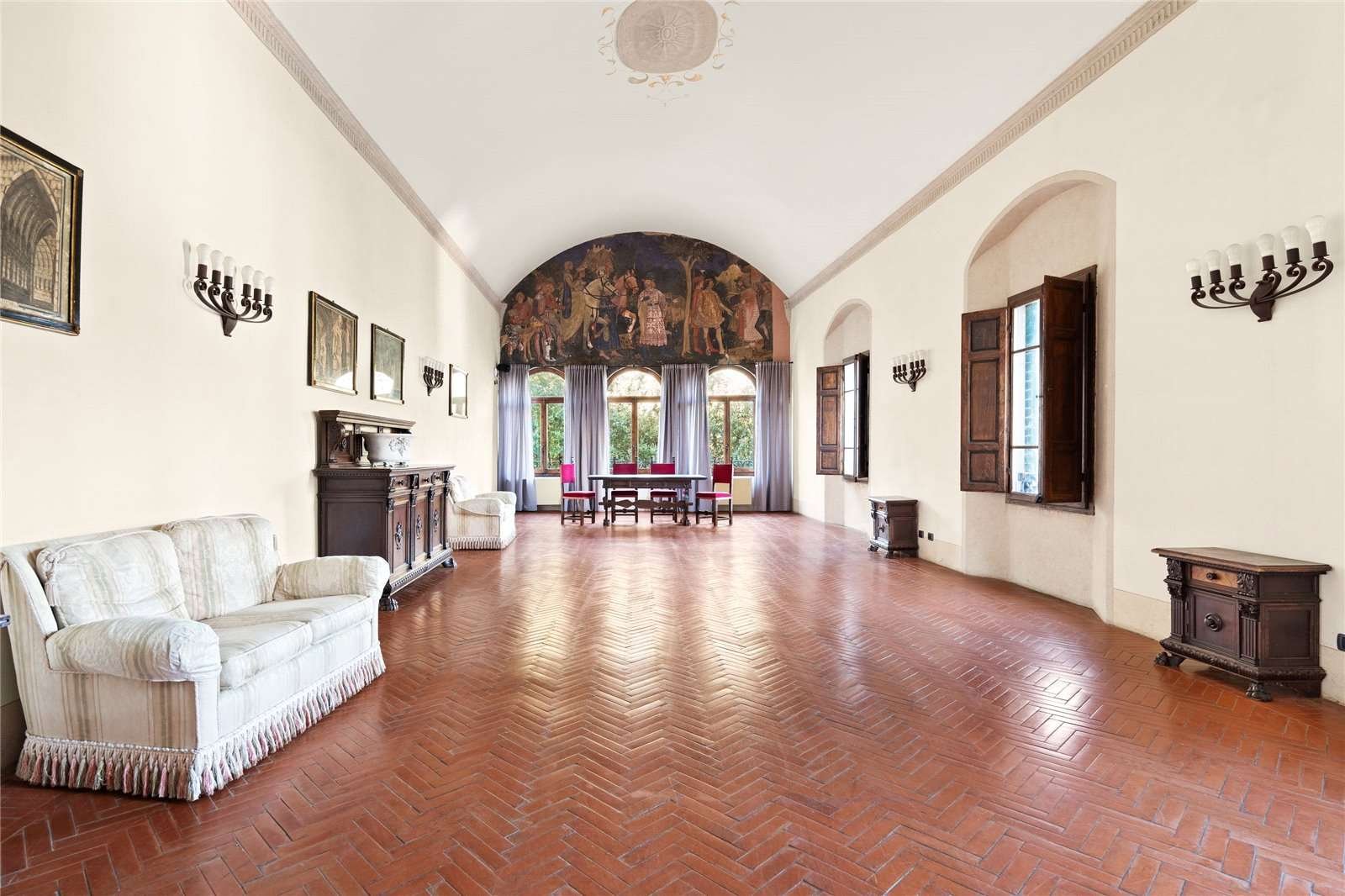
The Tuscan estate combines a 15th-century villa, an 18th-century manor house, a private chapel, frescoed interiors, agricultural buildings, olive groves, Chianti DOCG vineyards, and an established agriturismo.
Set in Valdarno, between Florence, Arezzo, and Siena, Tenuta Poggitazzi occupies one of central Tuscany’s most historic regions, close to the route of the ancient Cassia Vetus, a road of Etruscan and Roman origin that once connected Rome with Florence.
The property includes 14 buildings arranged across an ancient rural village estate, with approximately 25,000 square meters / 269,098 square feet of internal space.
Savills — Florence
Even the name Poggitazzi has a darker history. It is believed to derive from “Poggio dei Pazzi,” linking the estate to the medieval Pazzi family of Valdarno — and the great Italian poet Dante Alighieri was not particularly kind to them. In the Inferno, the first part of his Divine Comedy tracing a journey through Hell, Rinieri de’ Pazzi is placed among violent highway robbers, while Camicione de’ Pazzi appears much deeper, frozen among those condemned for betraying their own families. It is an unexpectedly sinister thread running through the history of an otherwise idyllic Tuscan estate.
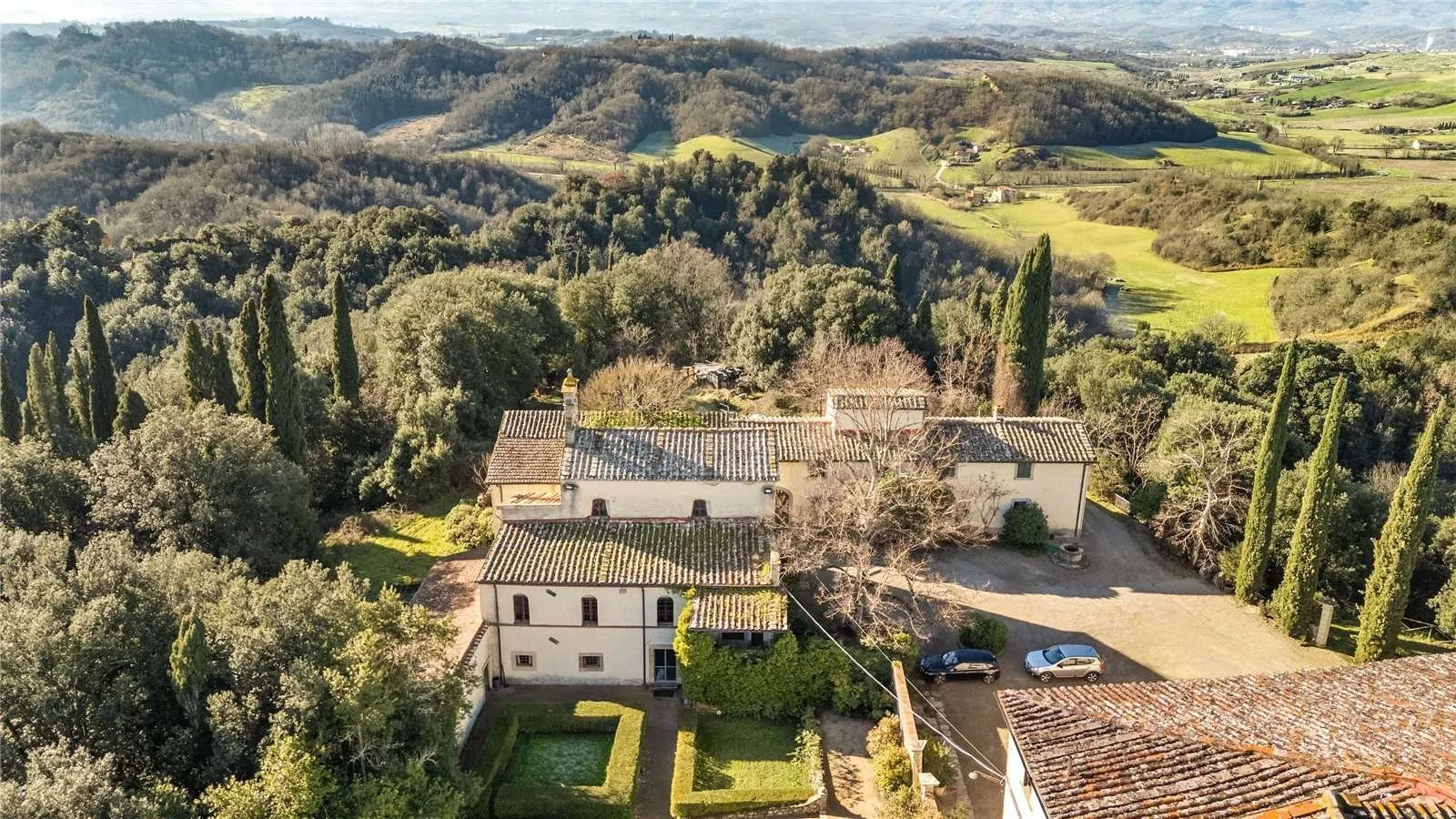
At the centre of the property is the historic village complex. The main villa is said to have been built over the remains of an earlier Ghibelline fortification, destroyed around 1270 during the medieval conflicts between the Guelphs and Ghibellines and rebuilt from the 14th century onward.
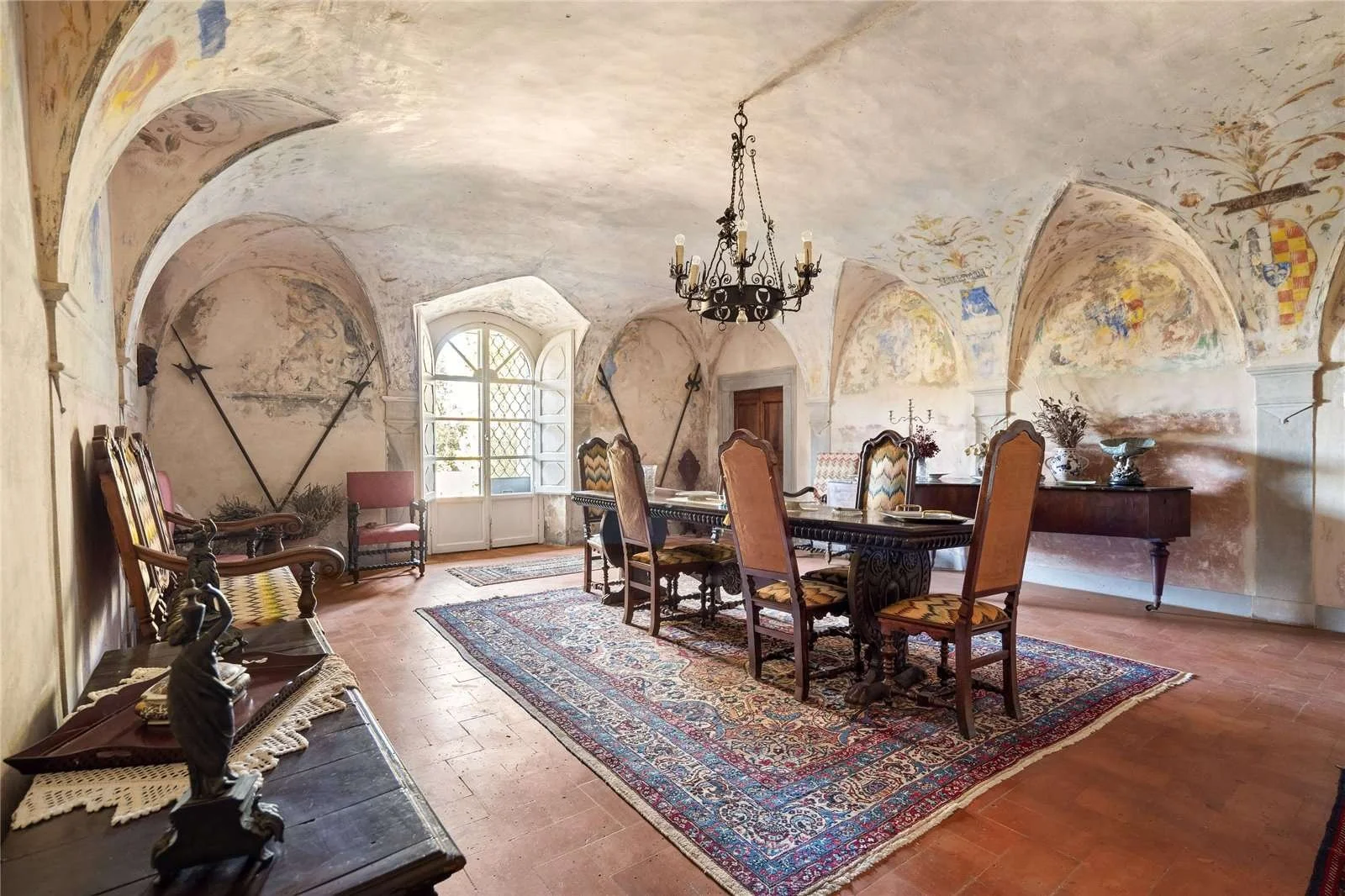
The estate later passed to the Libri family, an old Florentine family of notaries said to have taken possession in the early 1300s after the Battle of Campaldino. Their coat of arms remains associated with the property.
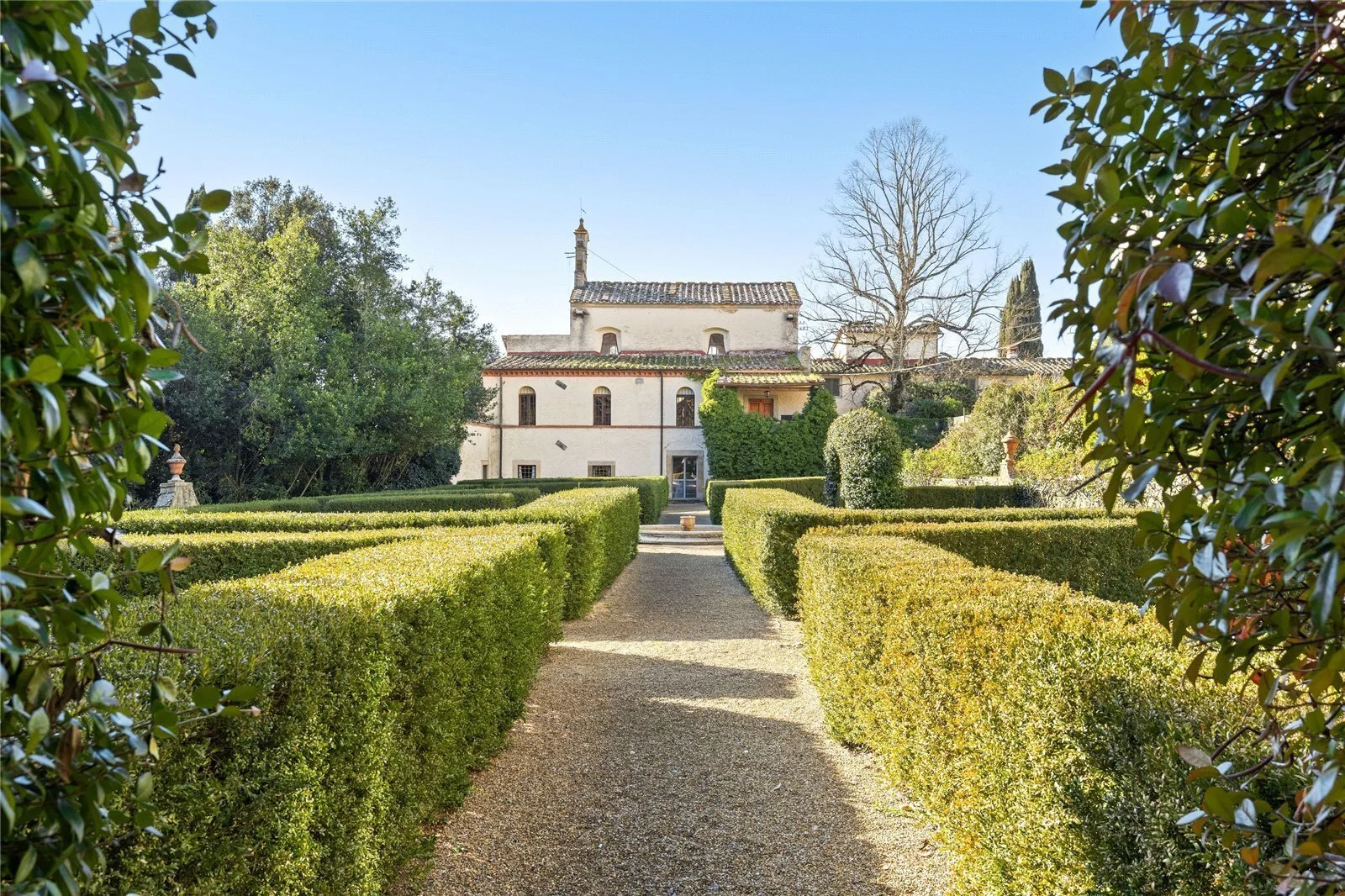
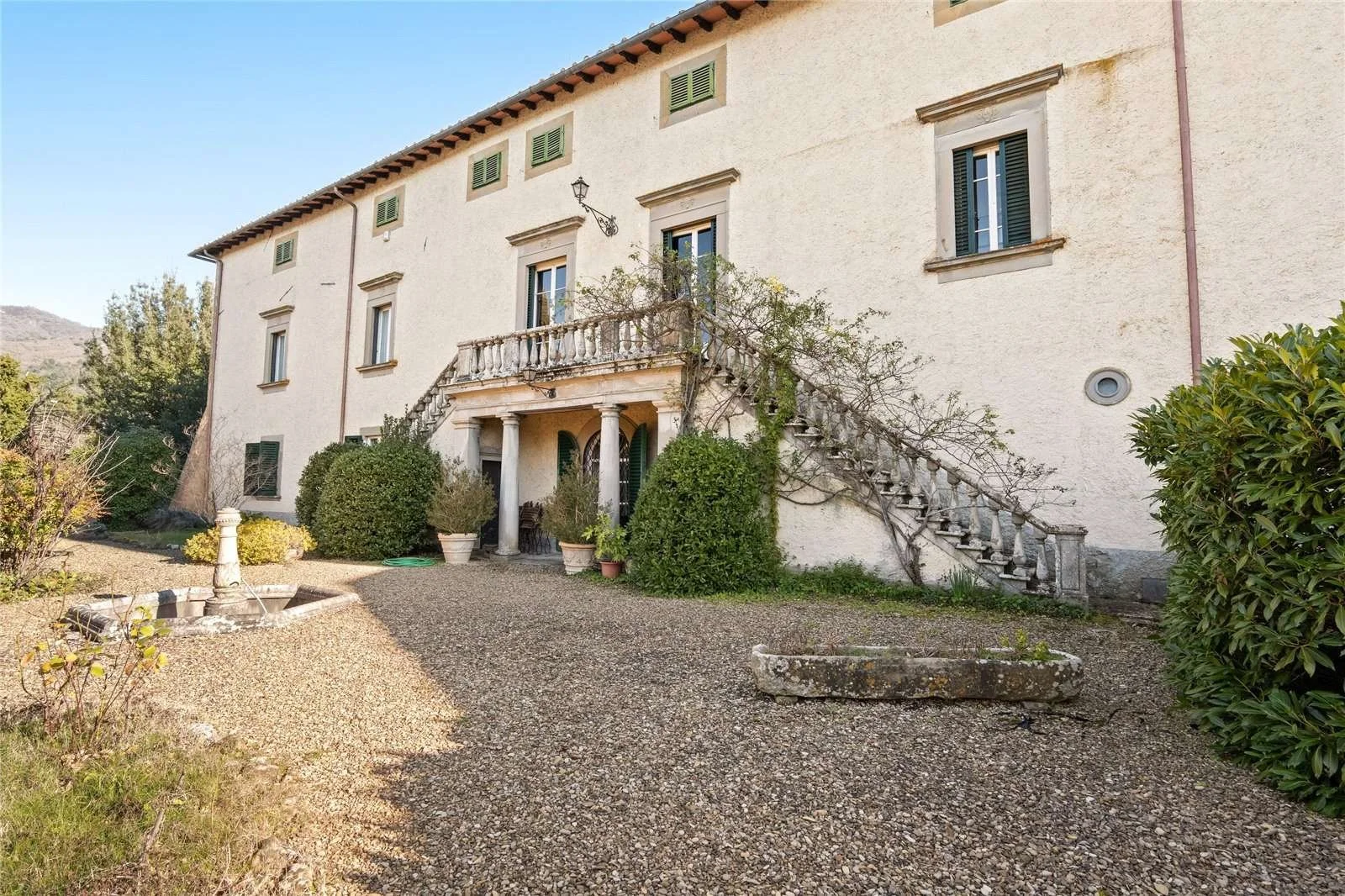
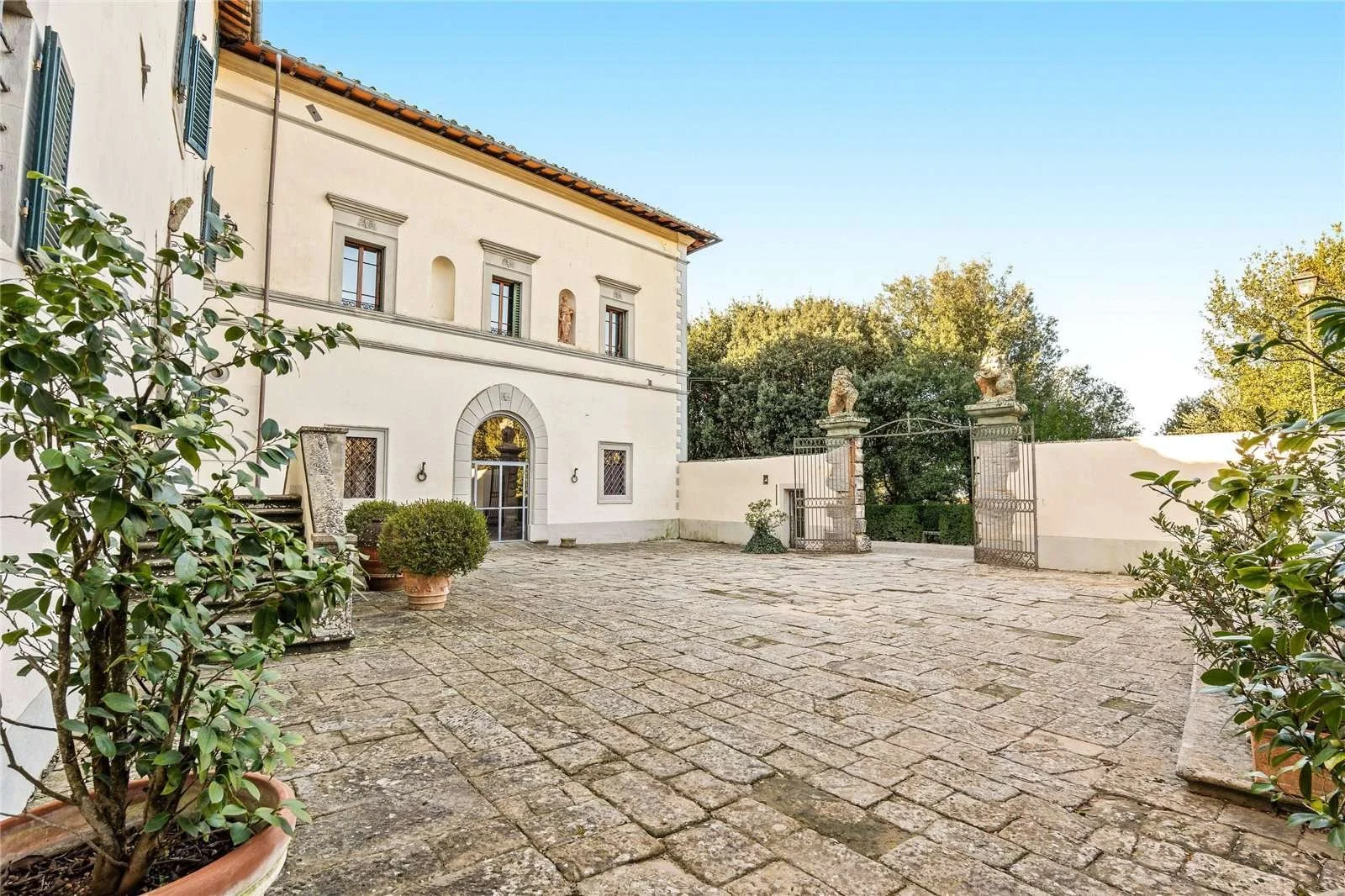
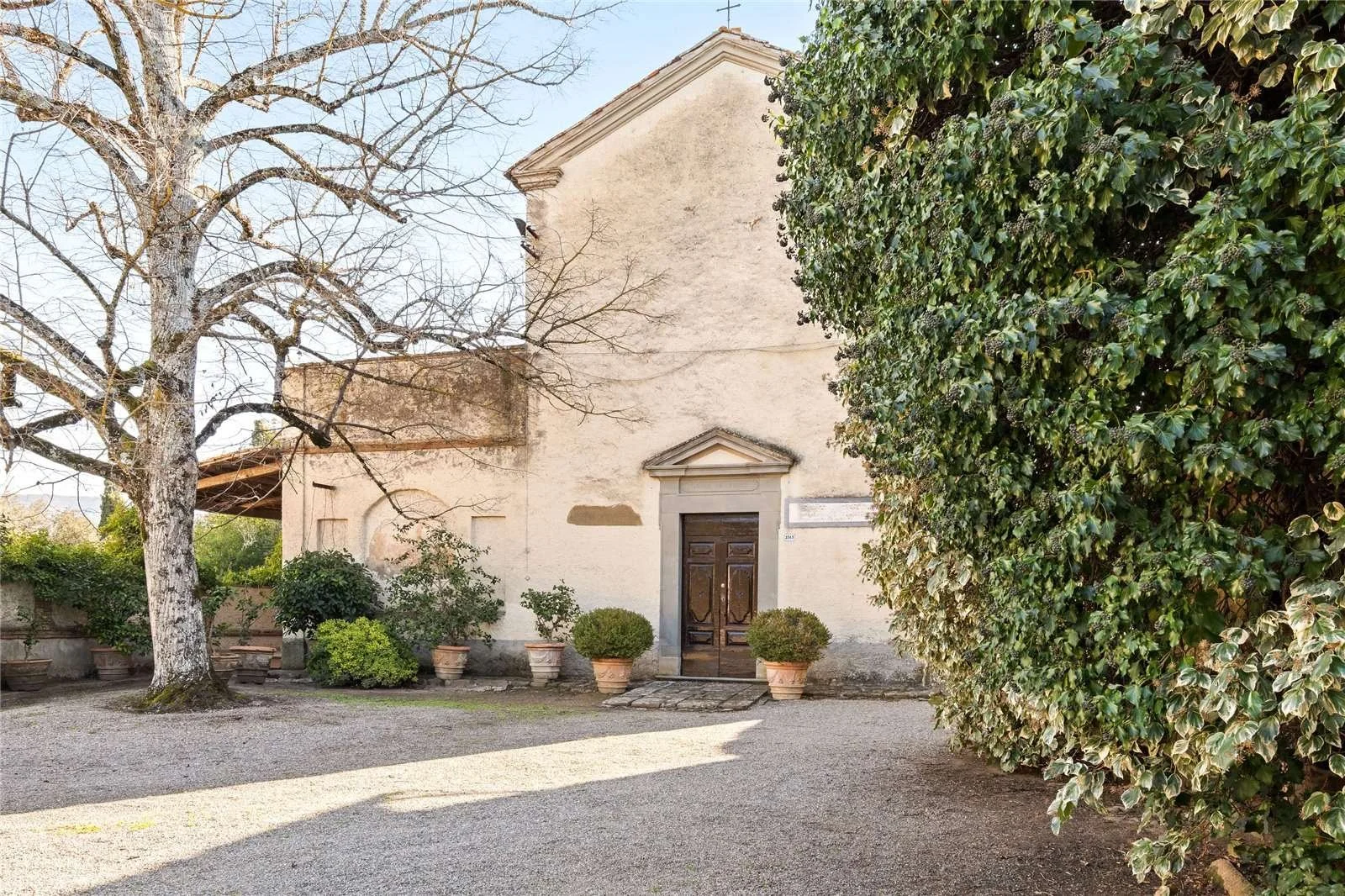
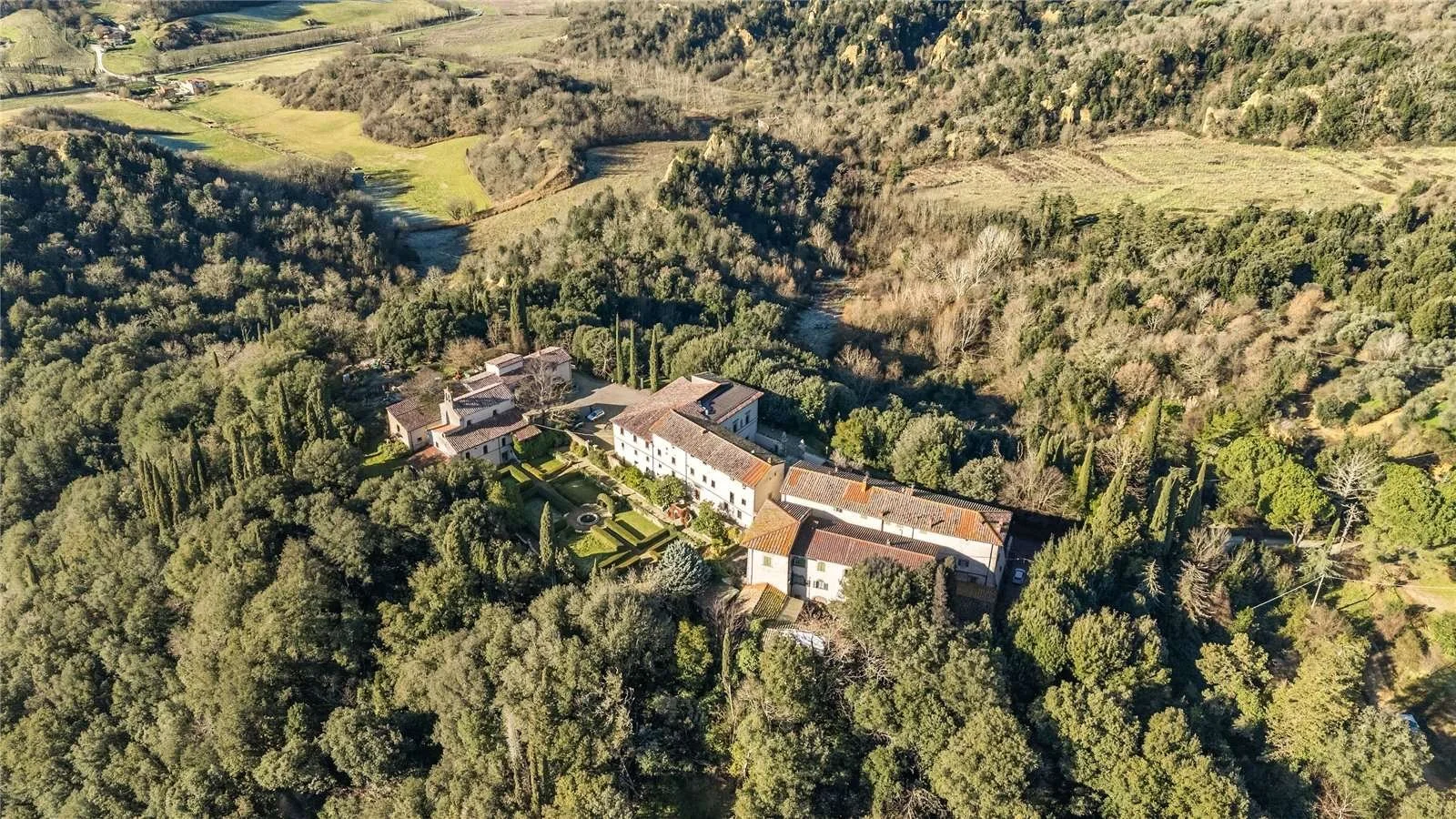
Over the centuries, the fortified rural holding evolved into a more formal Tuscan manor complex. Its architectural core now includes the 15th-century villa, an 18th-century manor house, agricultural annexes, and a private church.
Savills — Florence
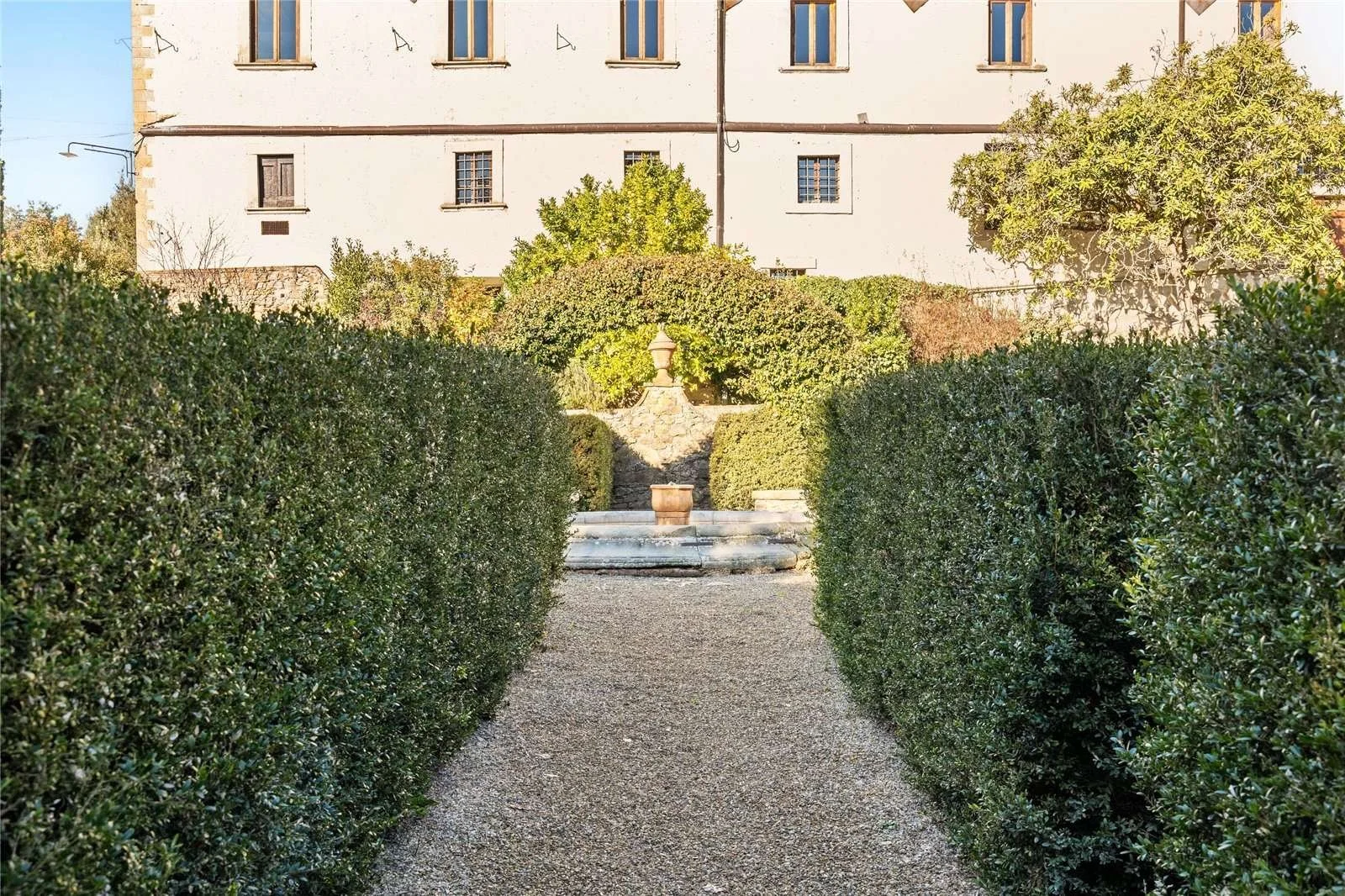
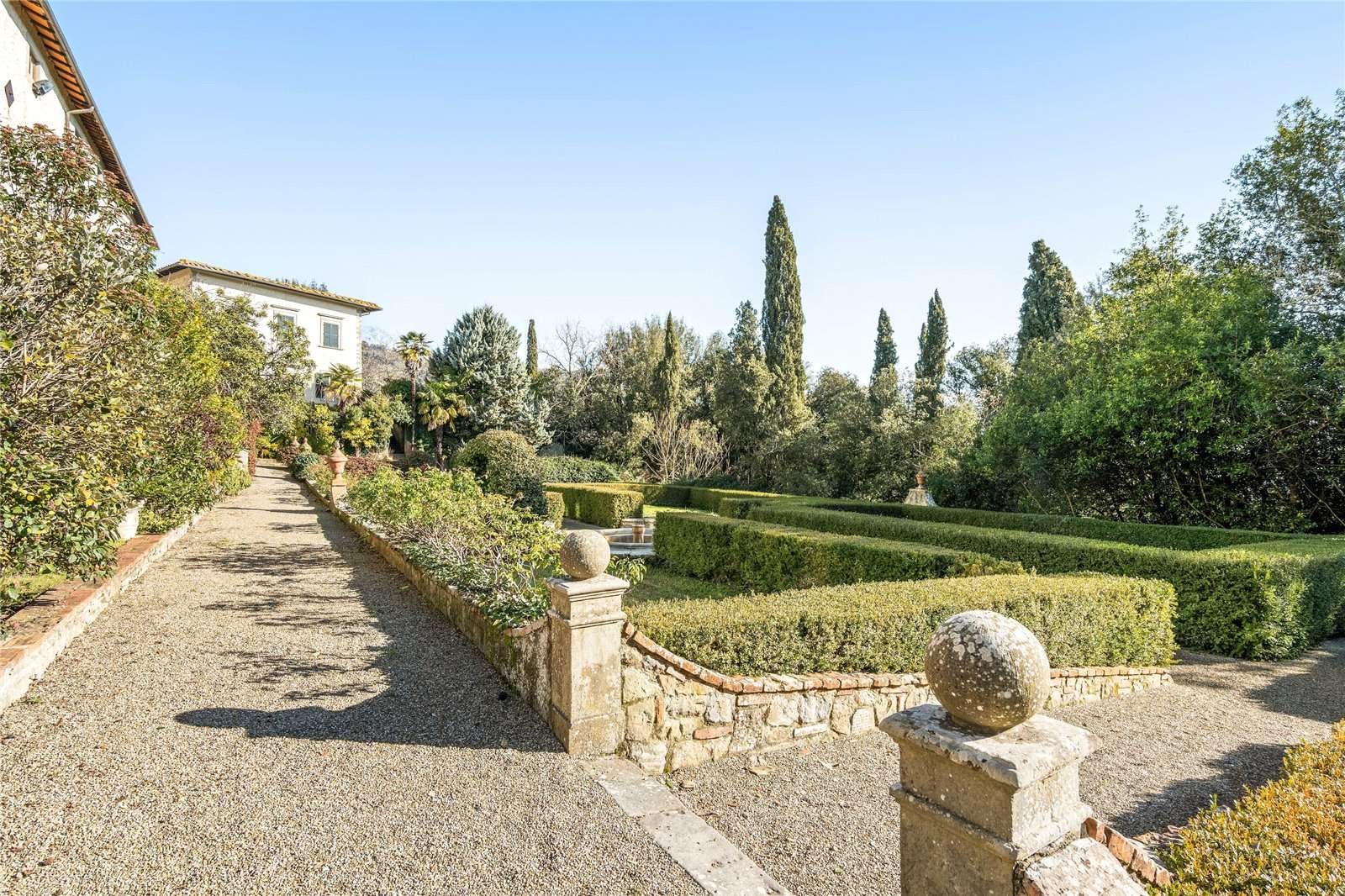
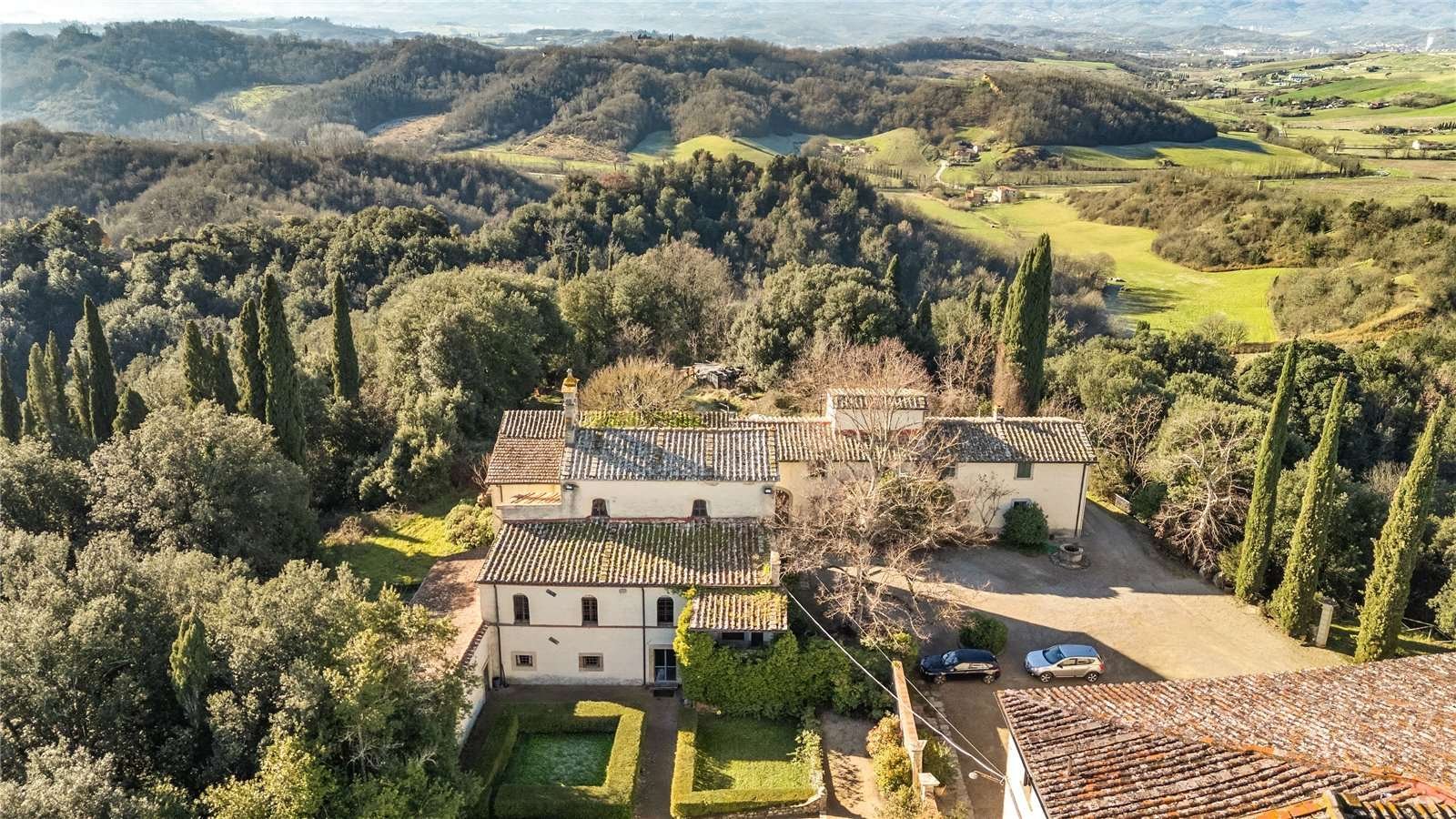
Three of the principal historic buildings are interconnected through underground passages and internal hallways, with courtyards linking the complex outside. The buildings are arranged around two gardens and extend over several levels, with panoramic views across the surrounding Valdarno countryside.
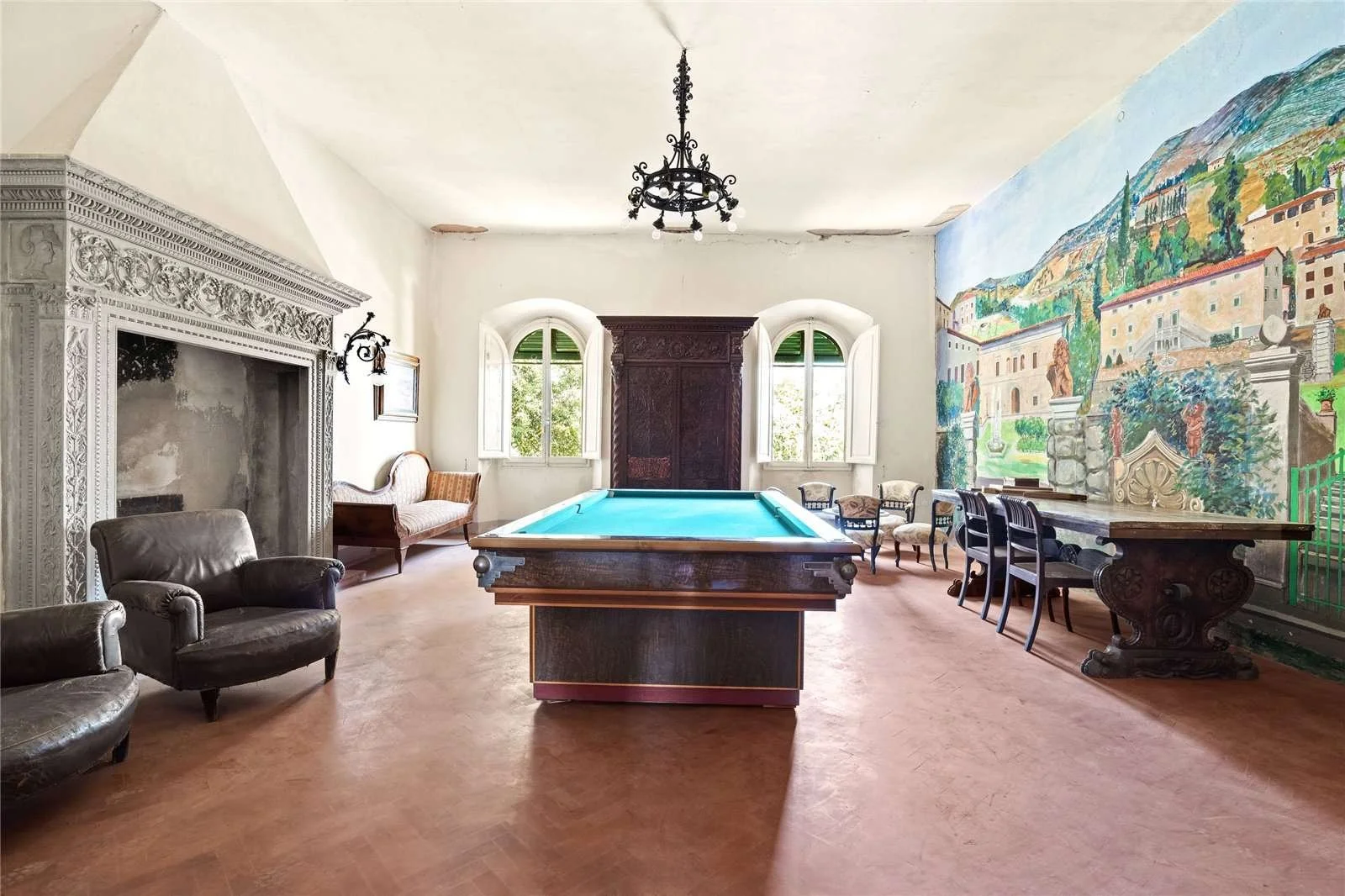
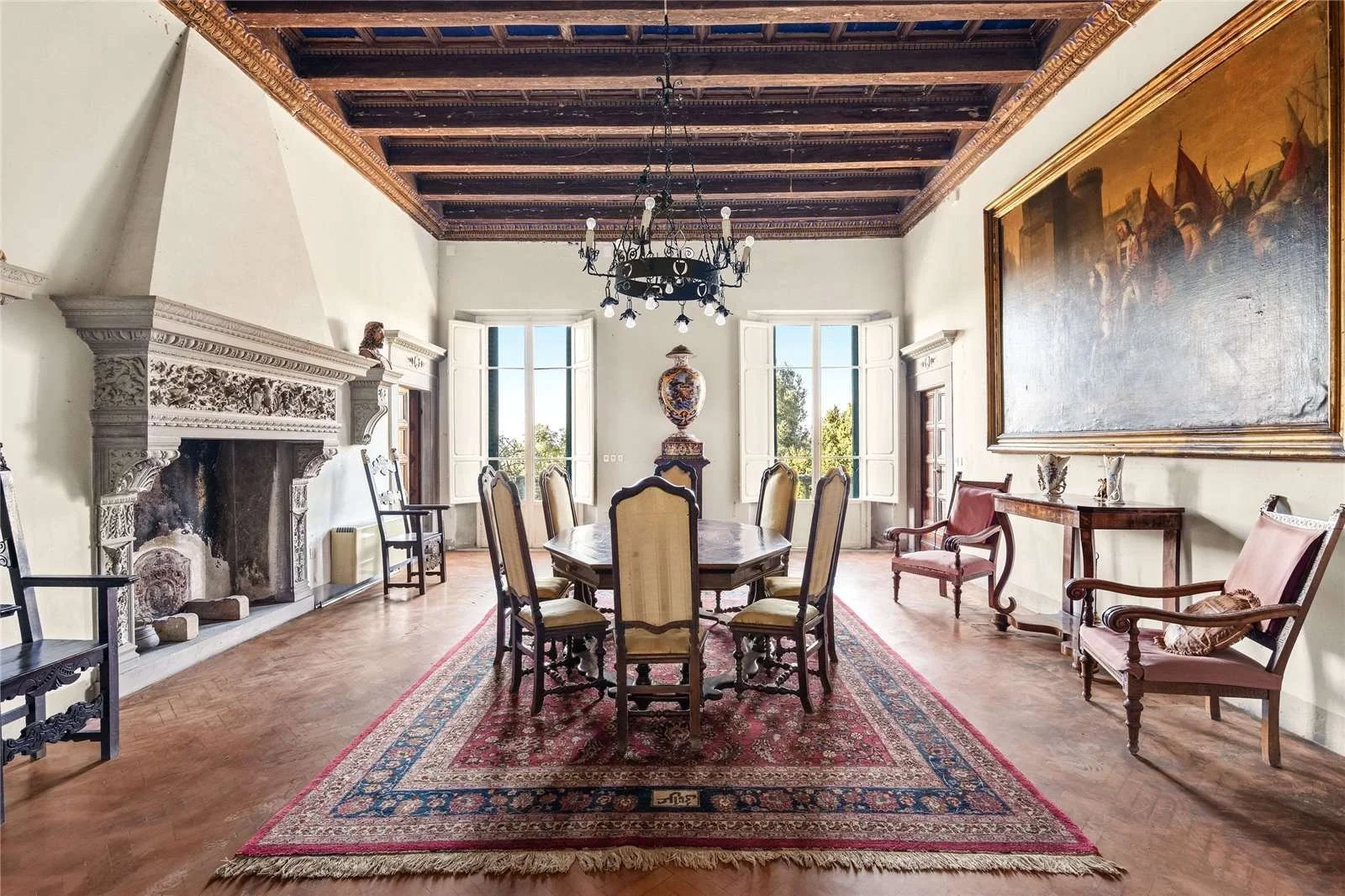
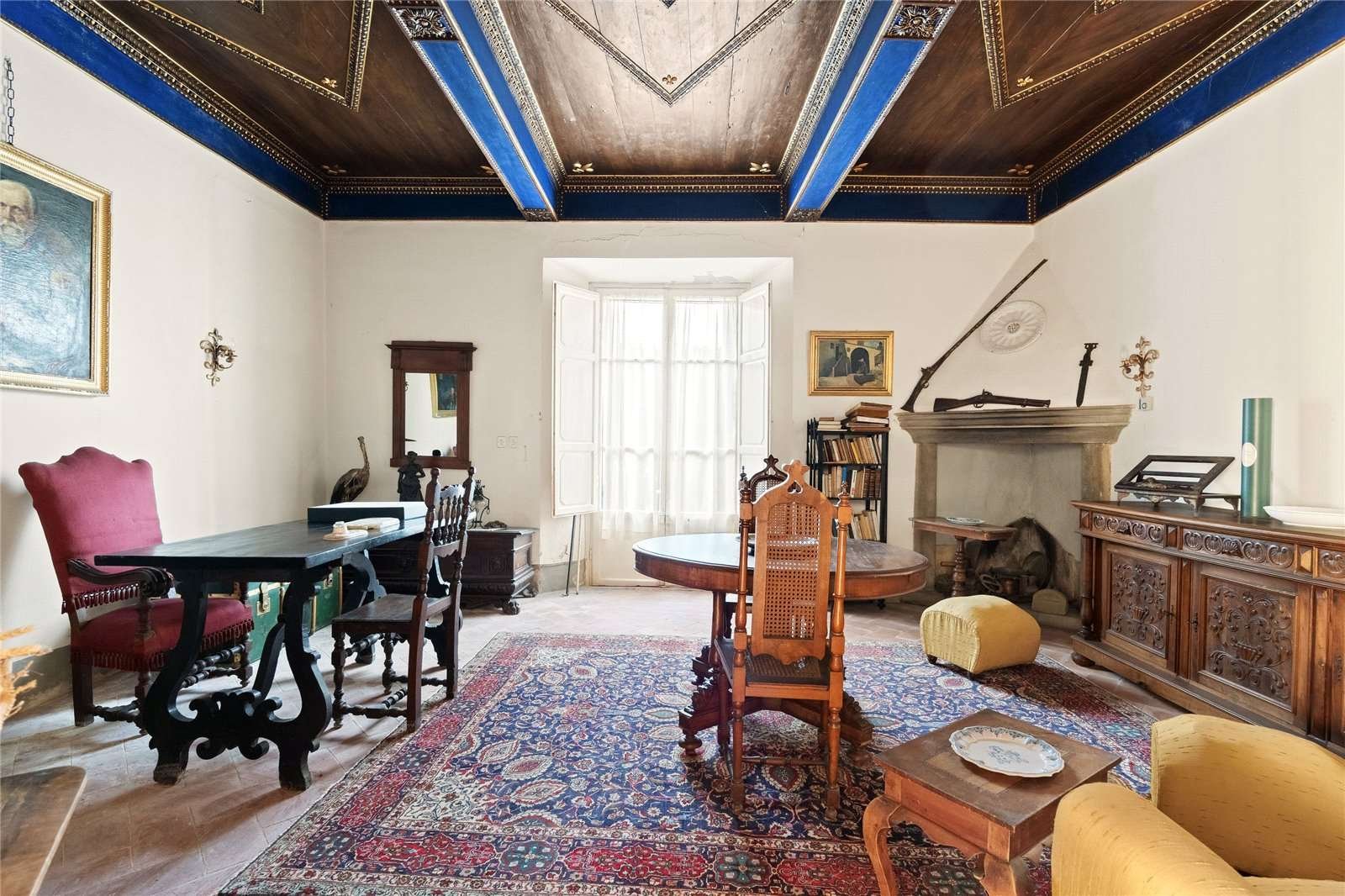
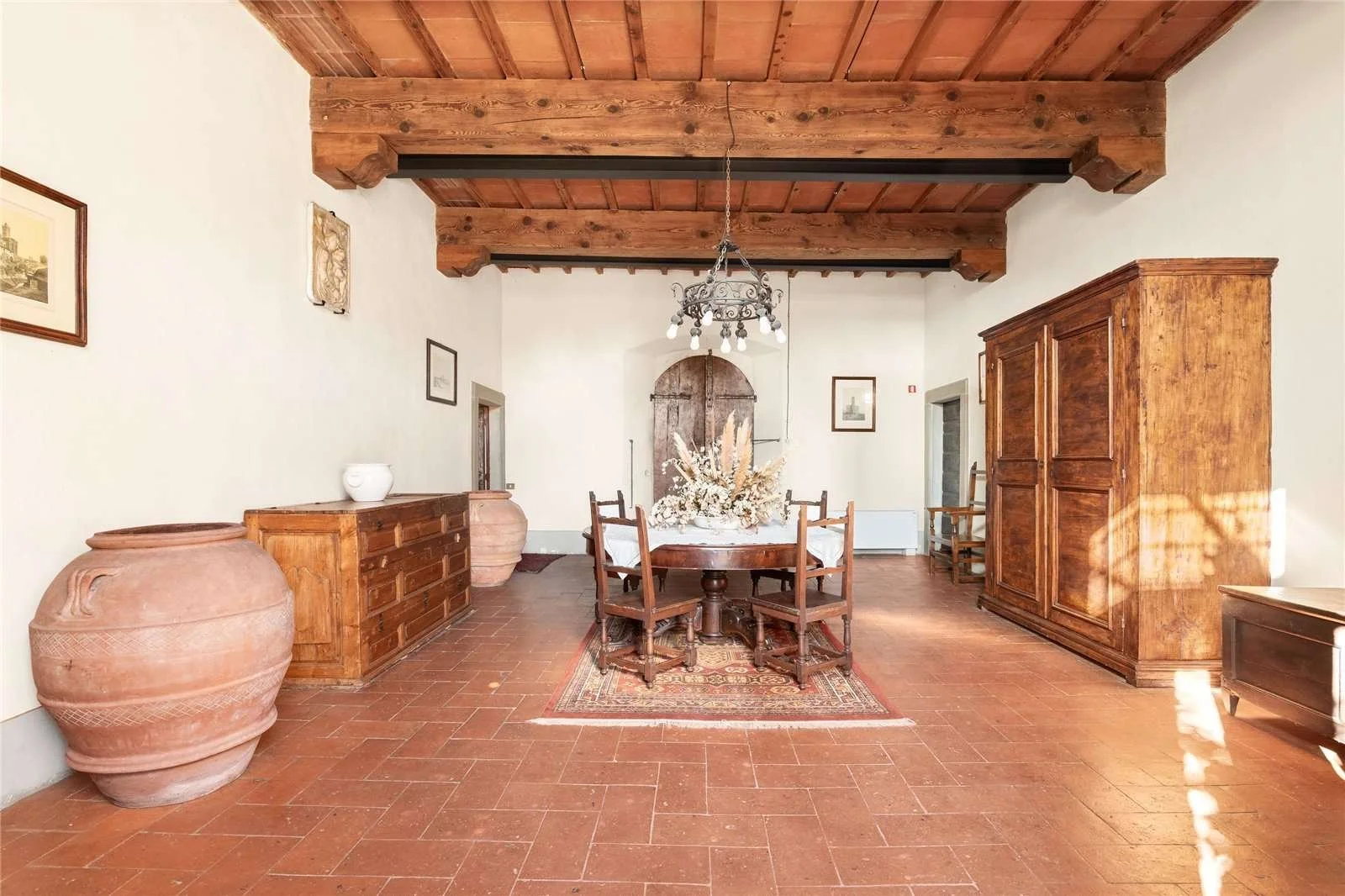
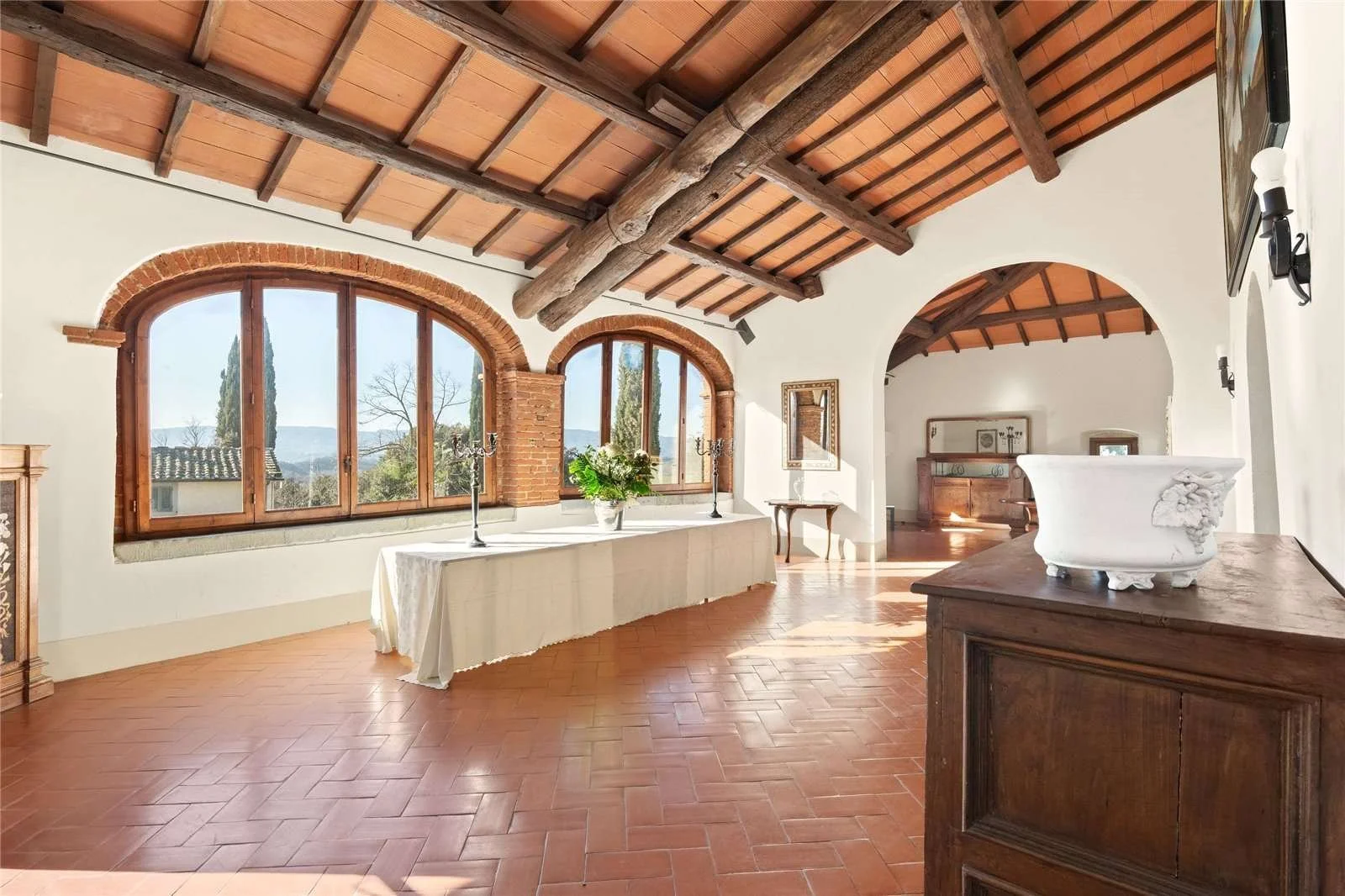
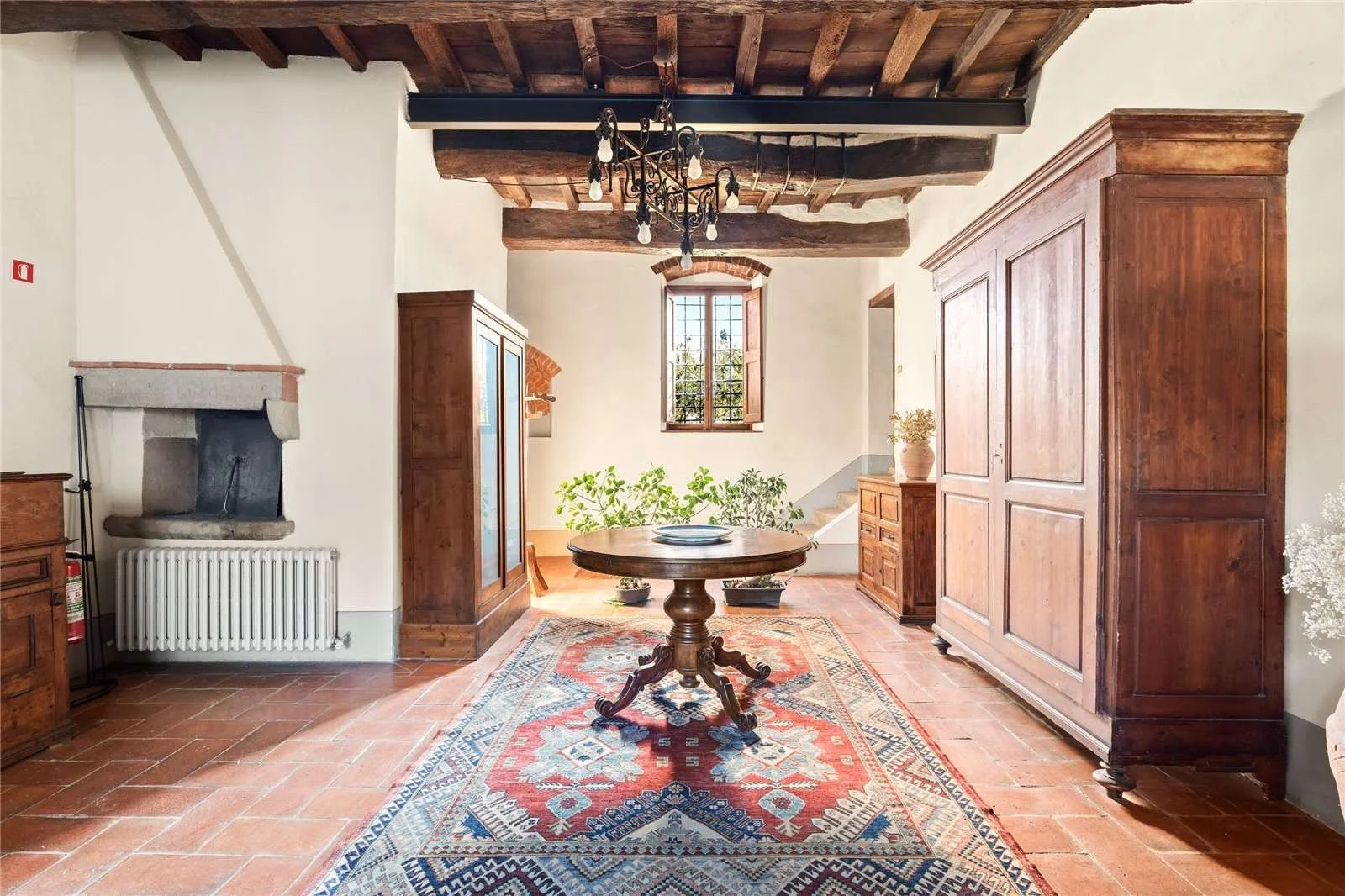
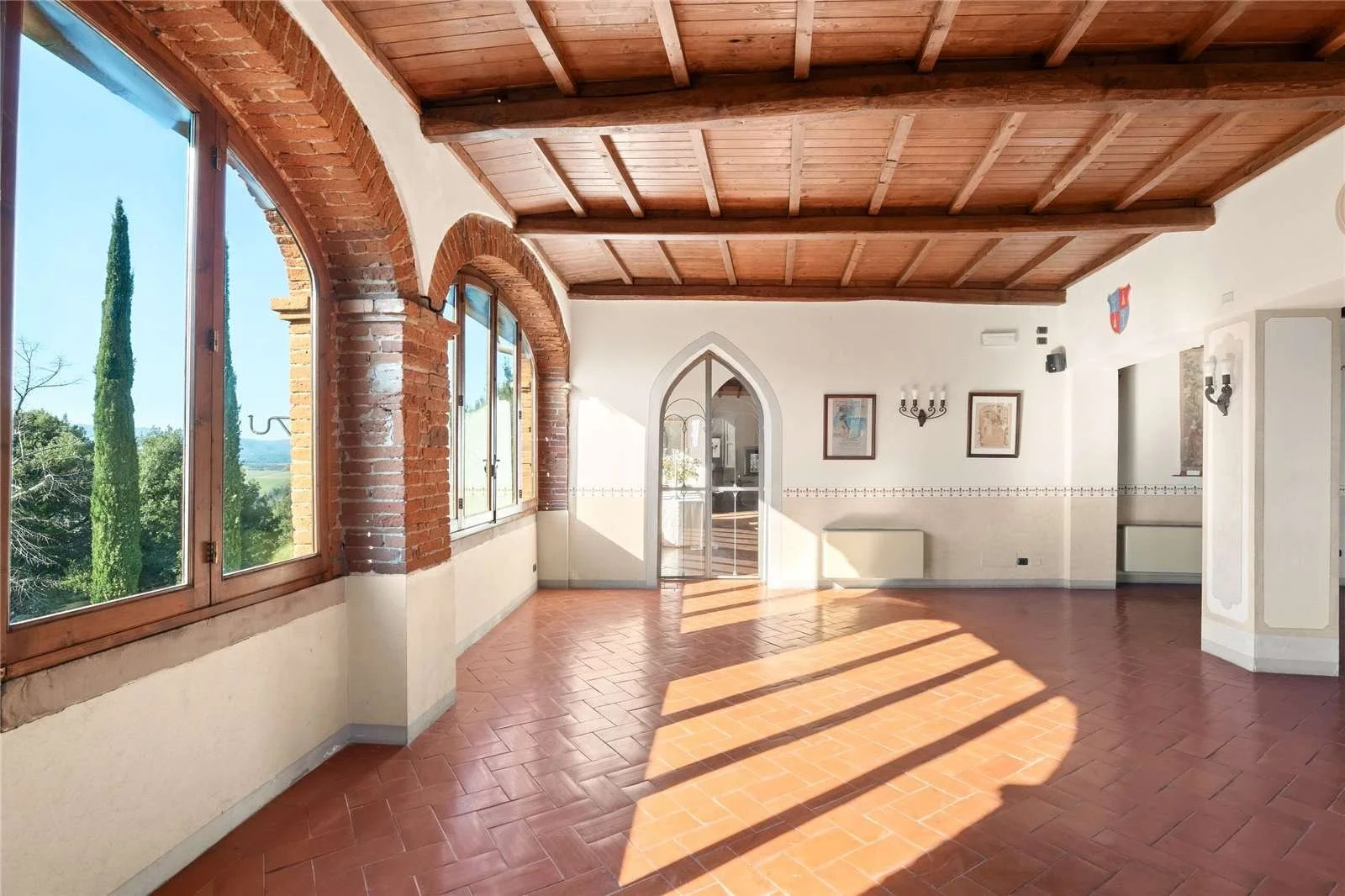
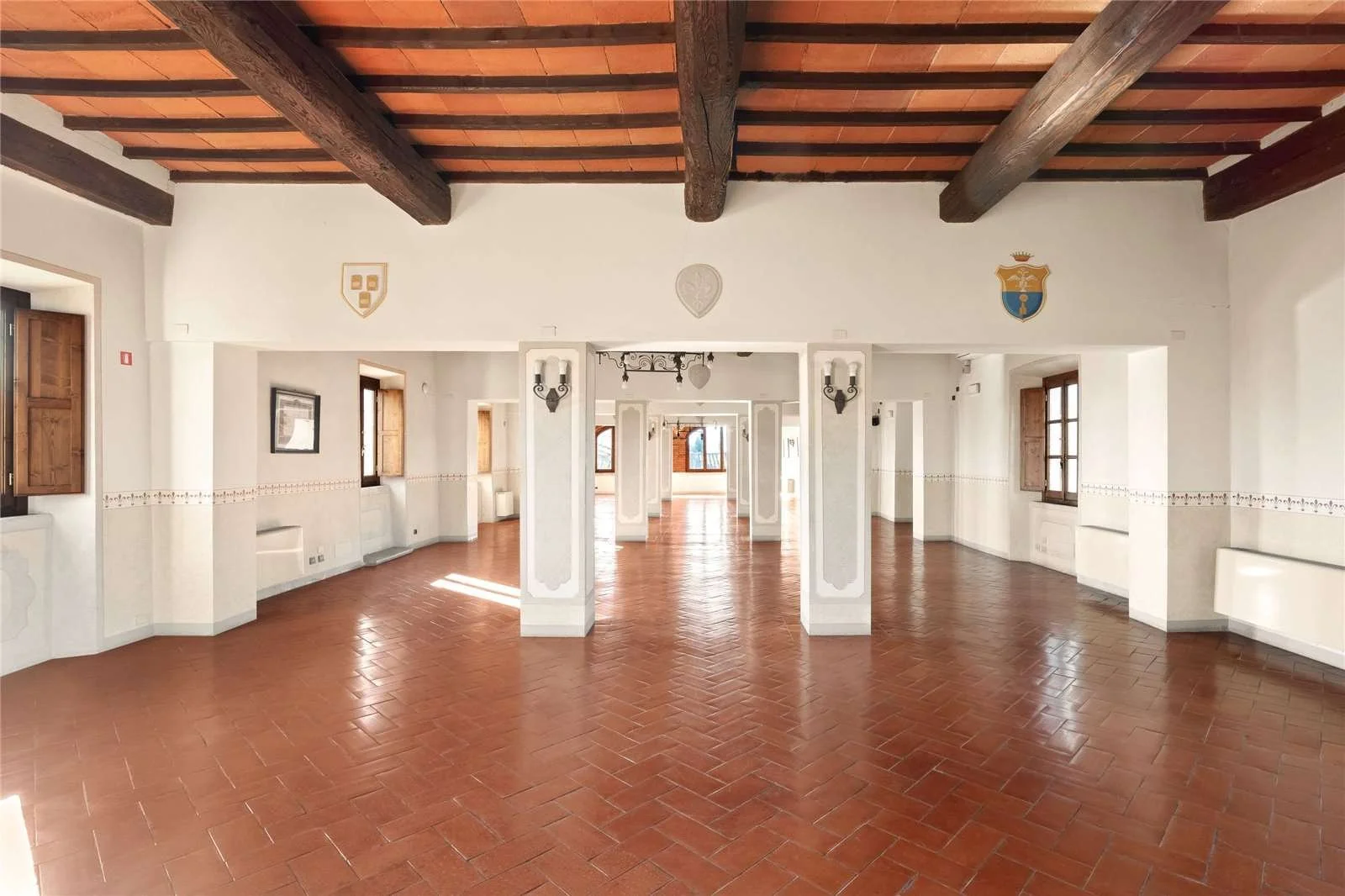
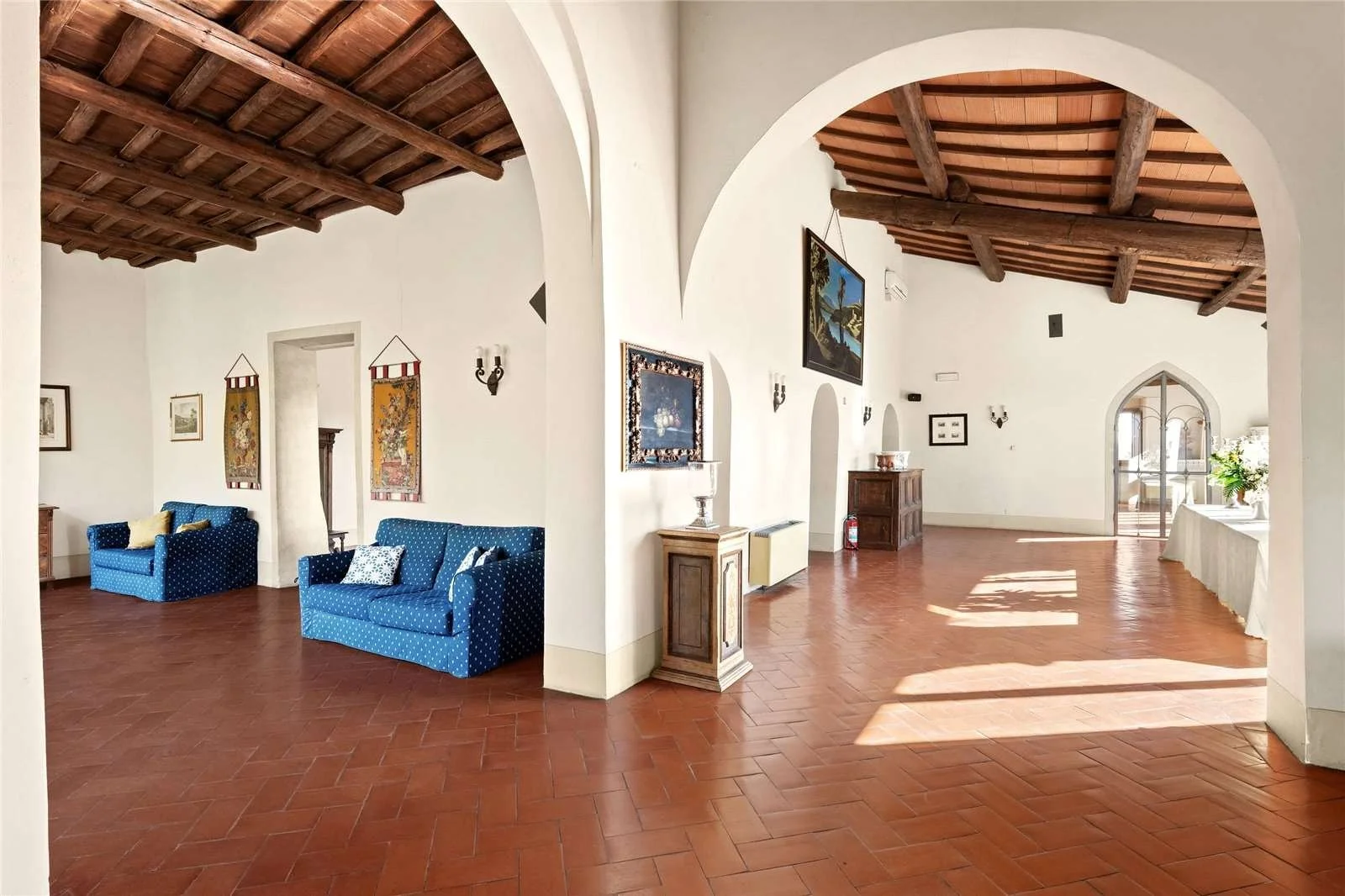
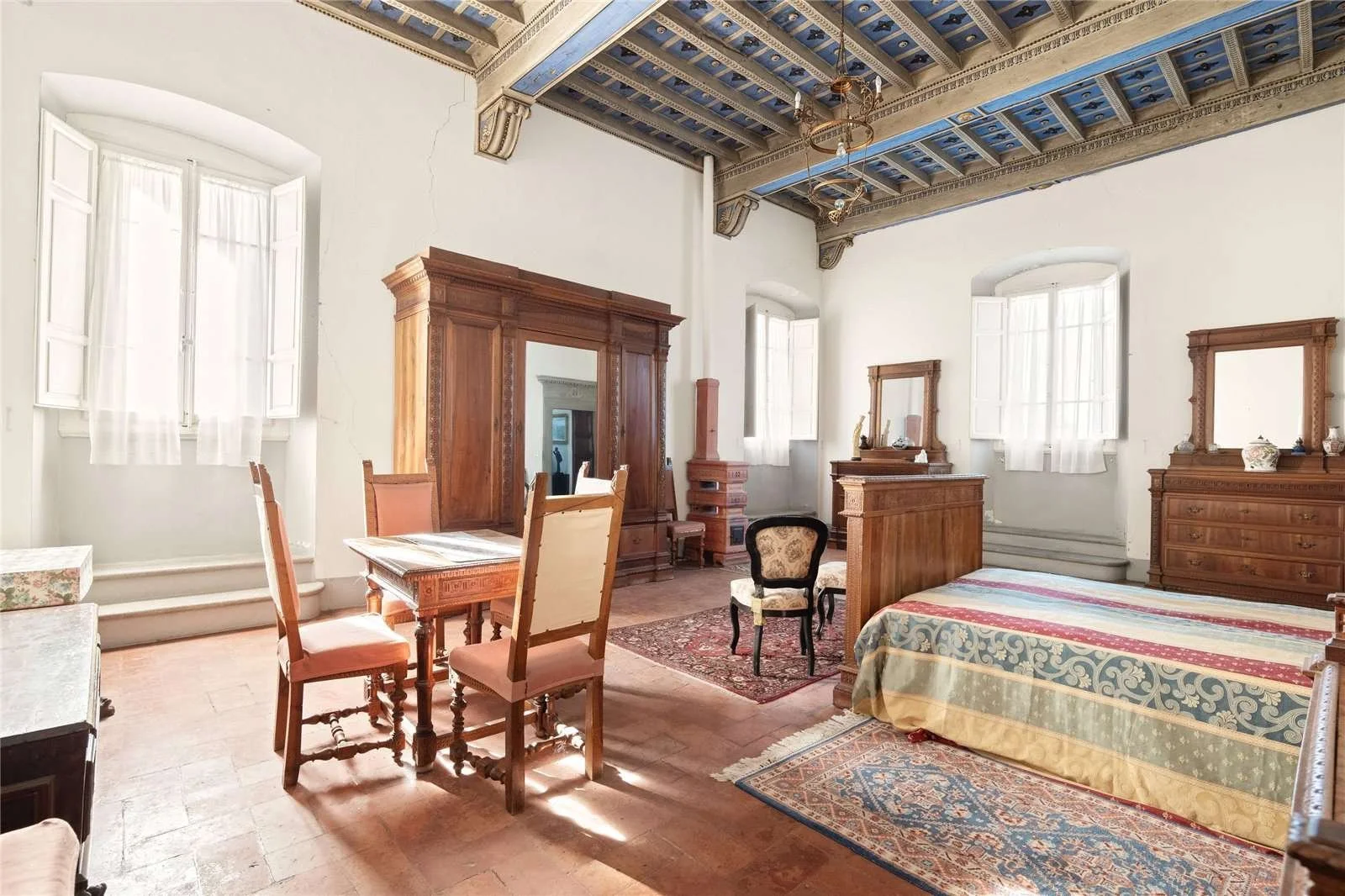
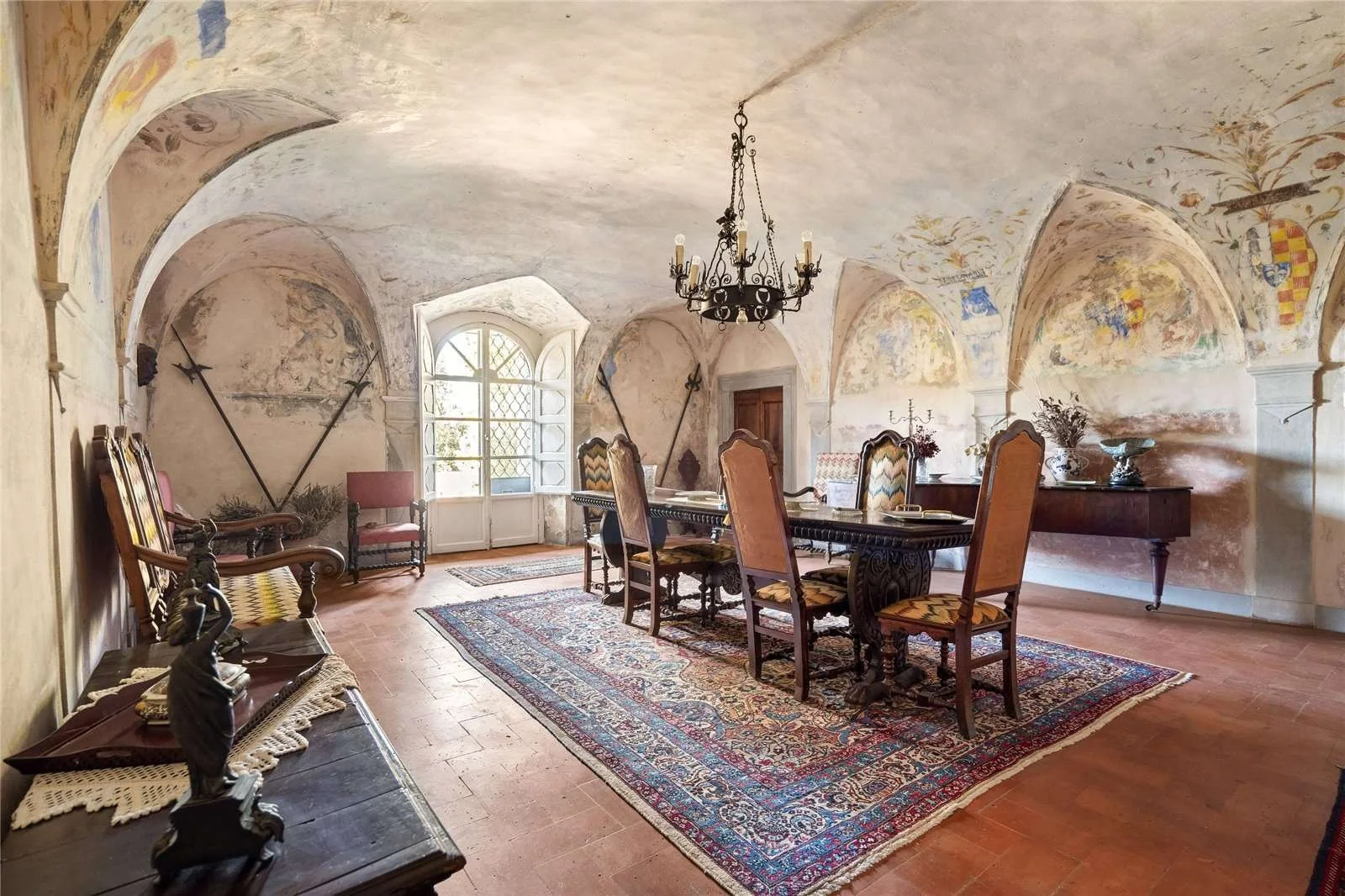
Inside the 18th-century manor house, an entrance opens to a living room, dining room, and kitchen with a traditional fireplace. Upstairs are further frescoed rooms, formal reception spaces, and areas intended for guest accommodation. The older villa contains large halls currently used for receptions, ceremonies, meetings, and conferences.
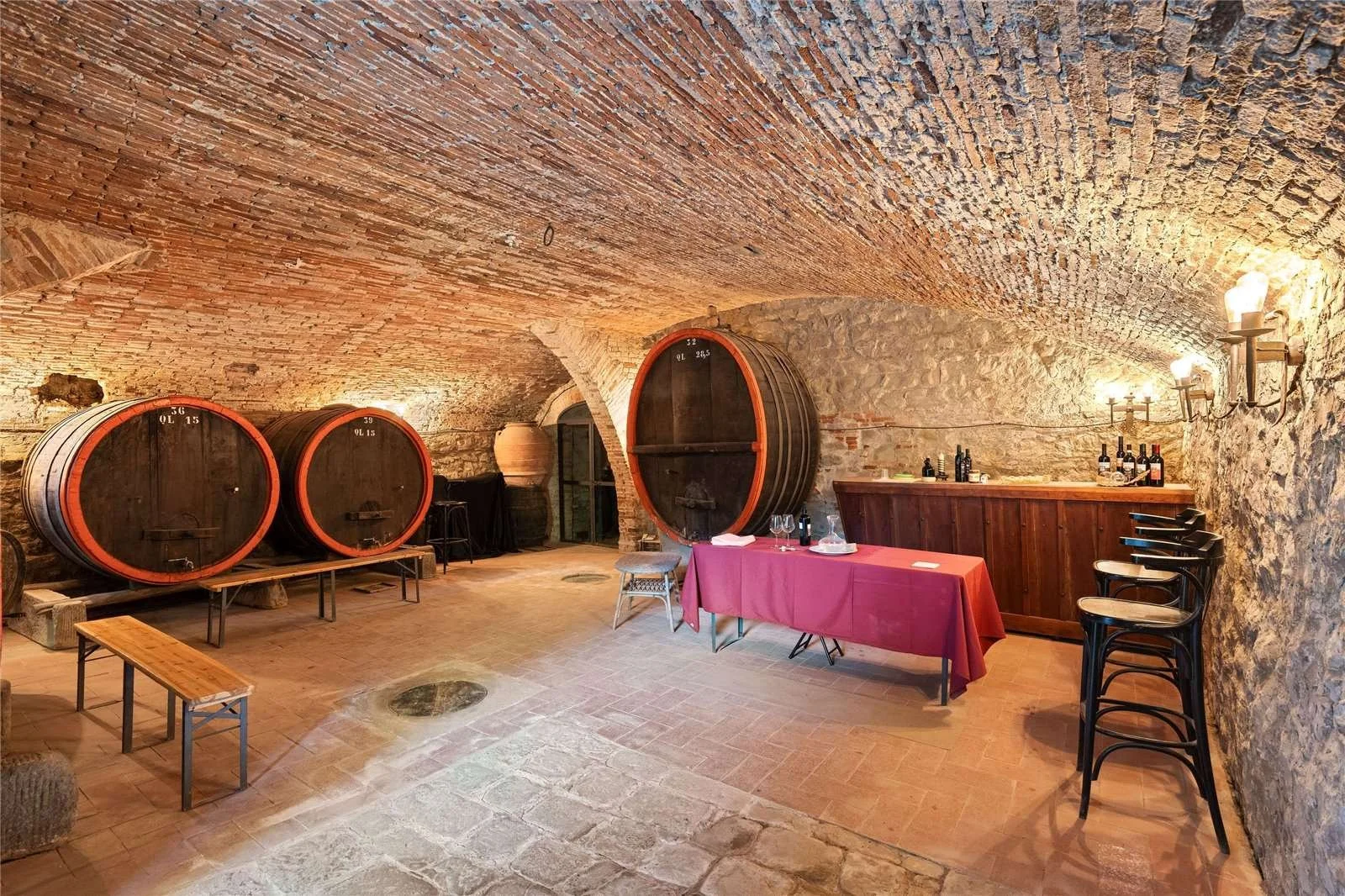
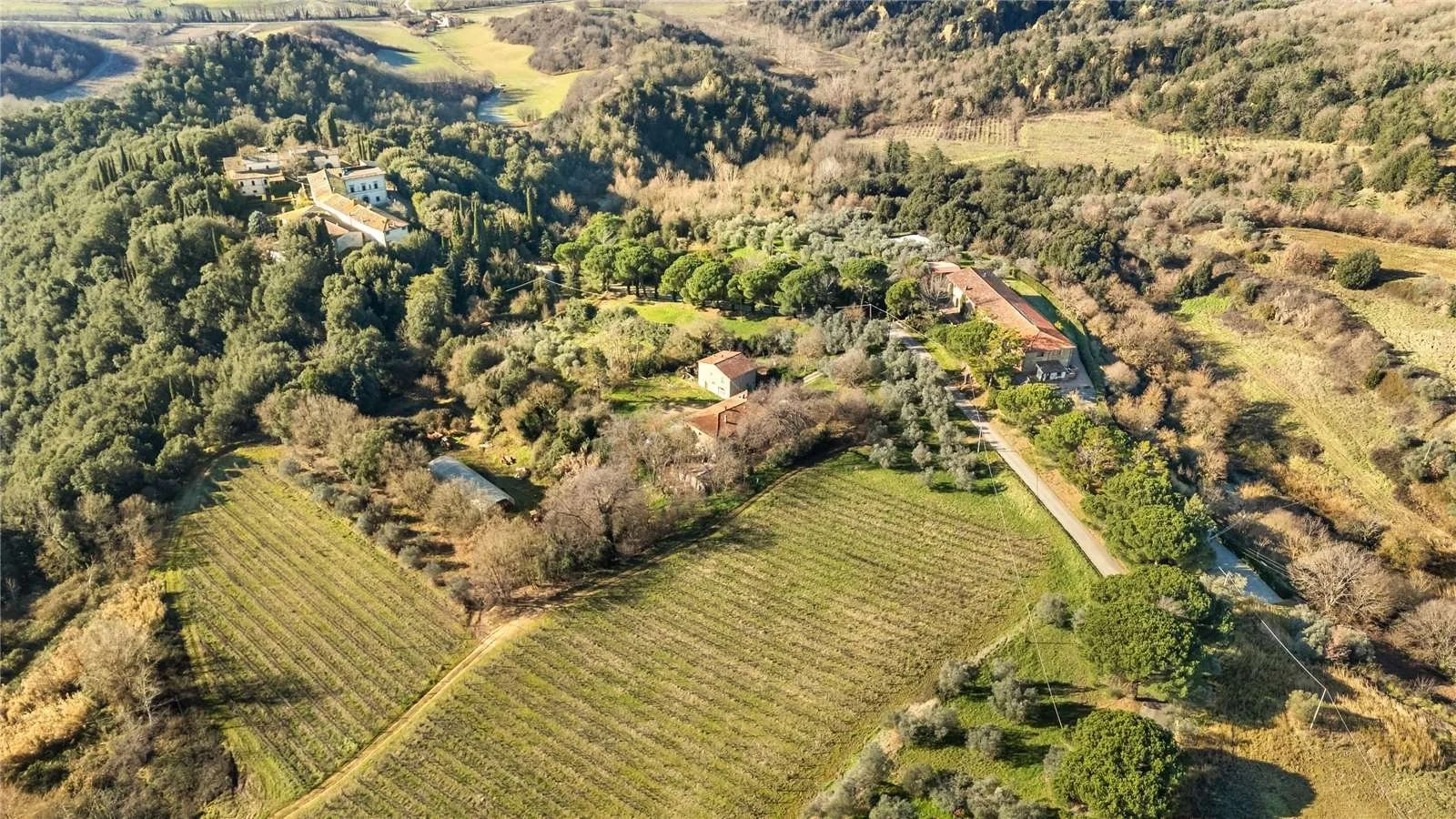
The agricultural side of Poggitazzi is just as substantial. Approximately 40 hectares are planted with around 7,000 Leccino, Moraiolo, and Frantoio olive trees. On the ground floor of the historic villa is a stone mill used for cold milling the estate’s extra virgin olive oil, while a cellar dating to the Renaissance period reflects the property’s long association with wine production.
A further 15 hectares are planted with Chianti DOCG vineyards. The wider estate also includes around 130 hectares of arable land and 70 hectares of woodland, alongside pasture and fallow ground. Paths cross the property for agricultural use and through the hunting reserve.
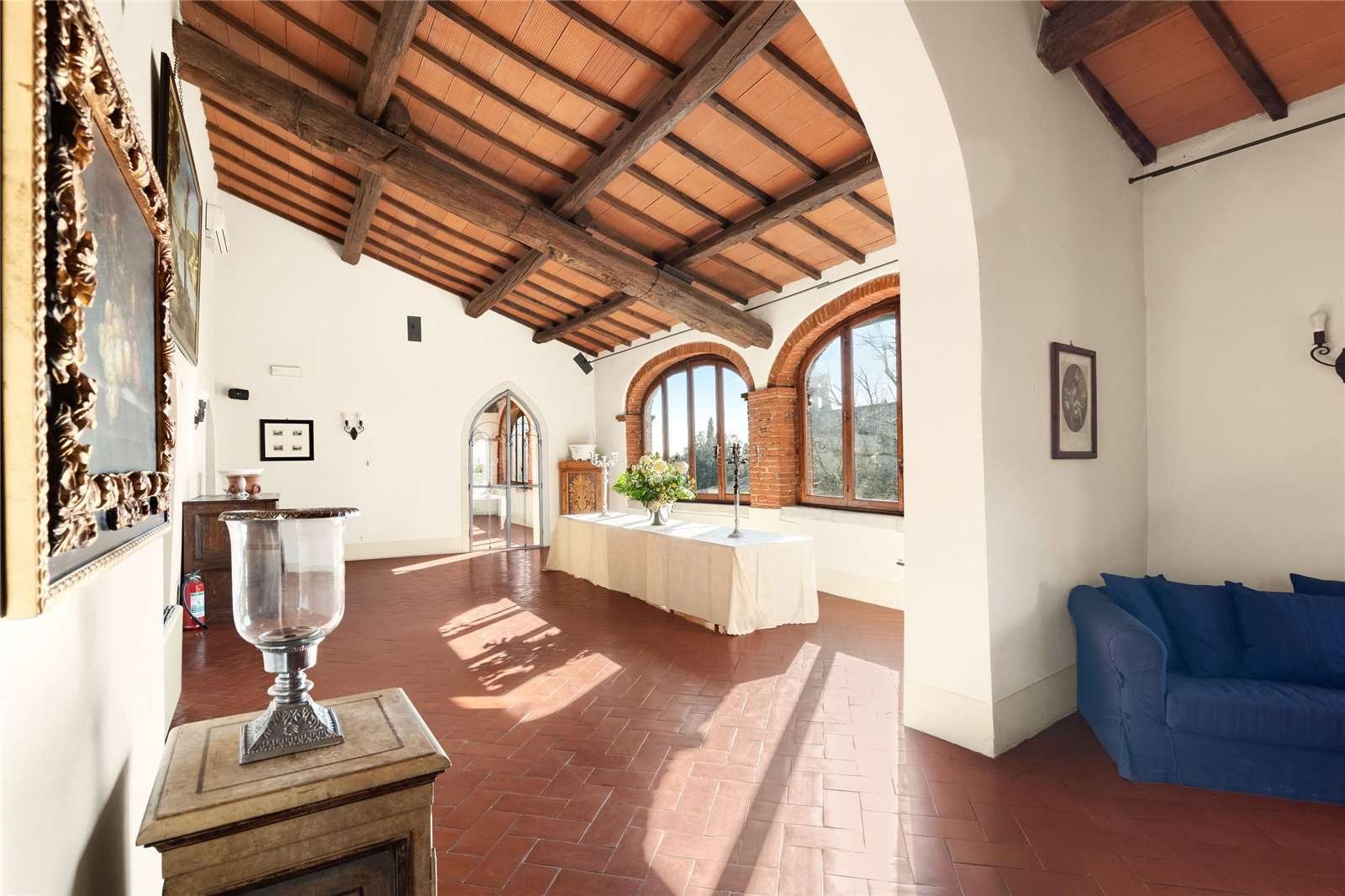
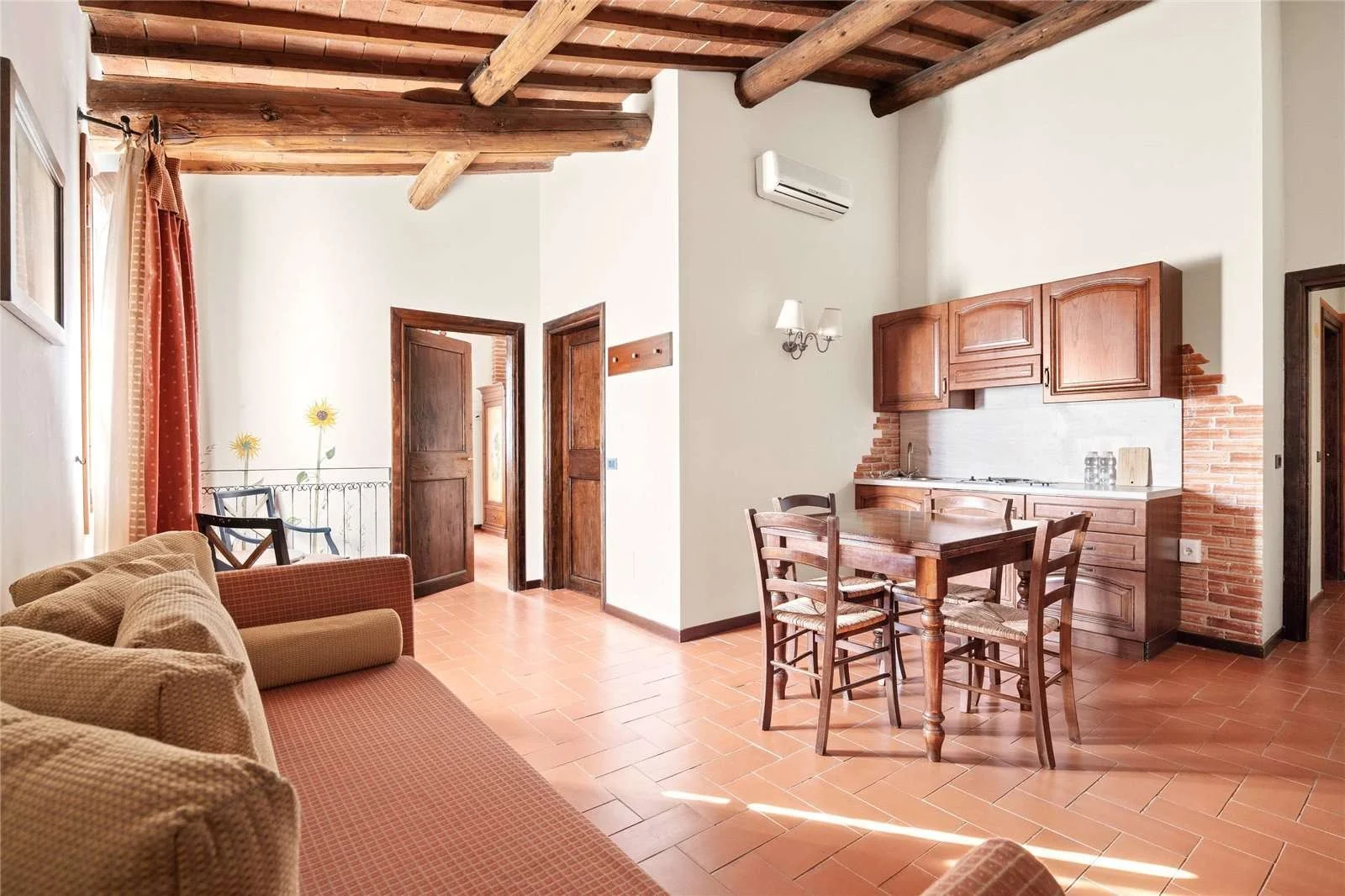
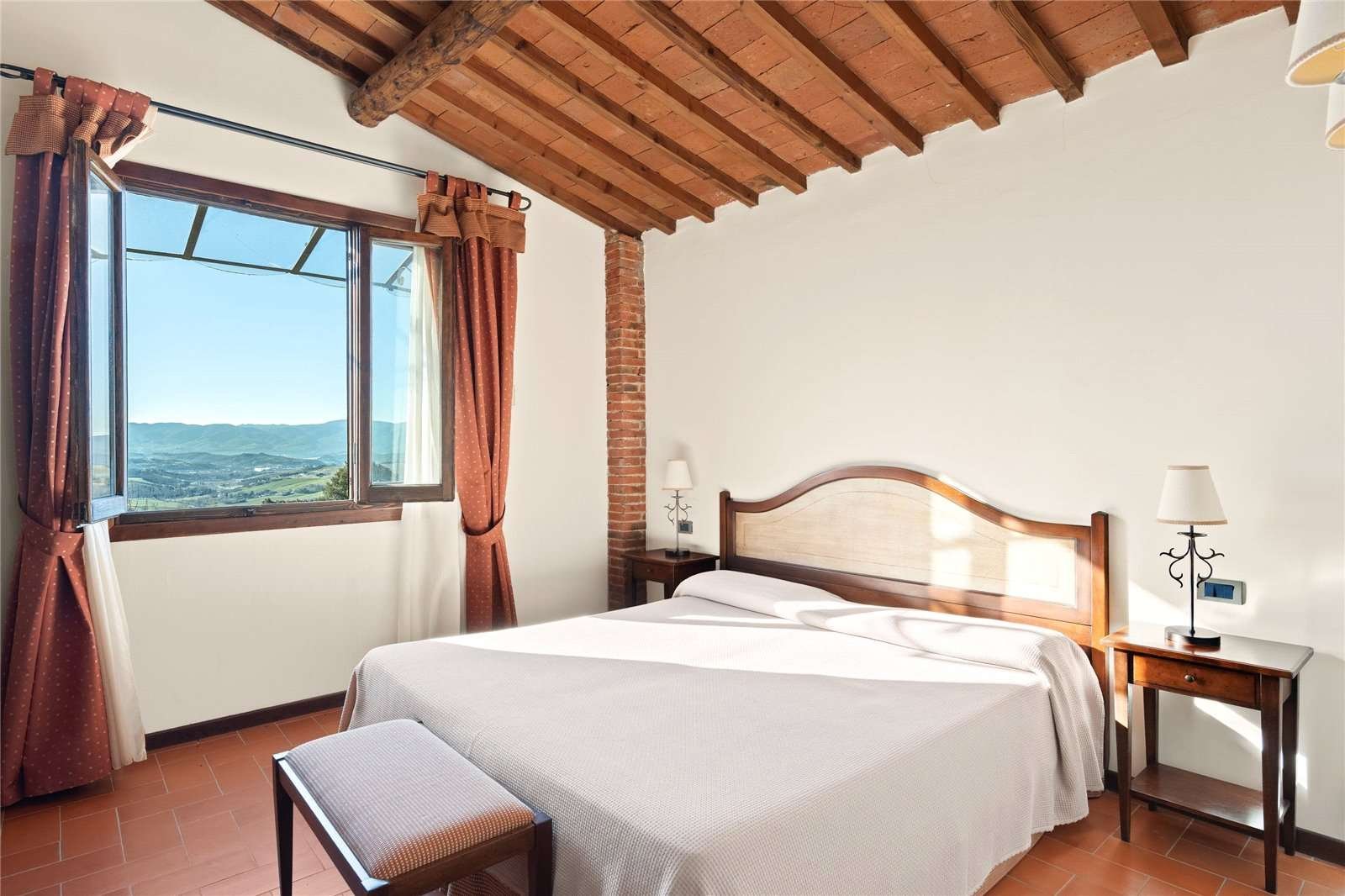
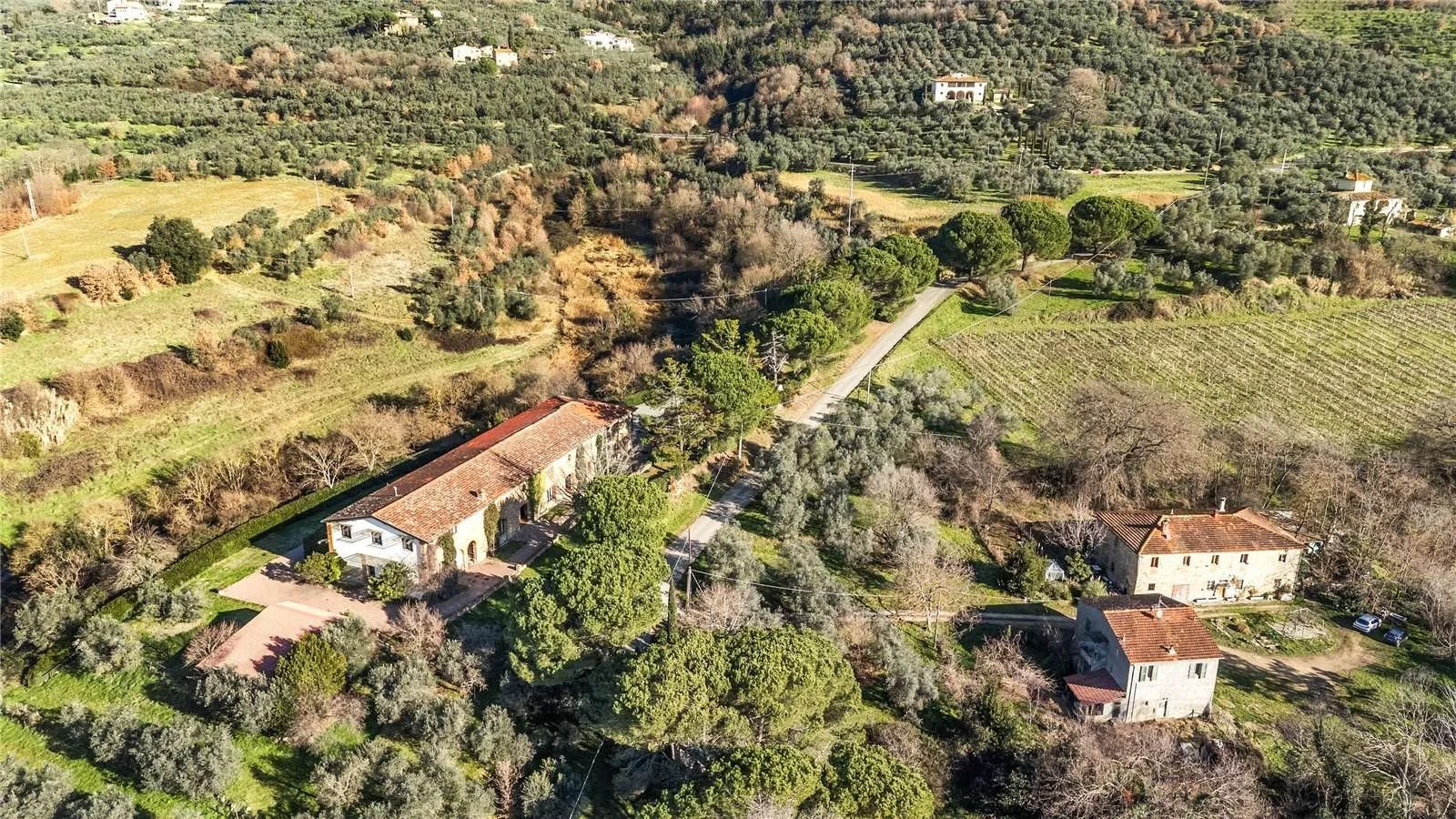
Around 200 metres from the historic village, a restored farmhouse now operates as the estate’s established agriturismo. The building retains the familiar character of rural Tuscany, with exposed timber beams, terracotta floors, wrought-iron details, and traditionally furnished interiors.
Between the farmhouse and the village, a large swimming pool has been set into the olive grove, overlooking the valley and surrounded by boxwood hedges and mature olive trees.
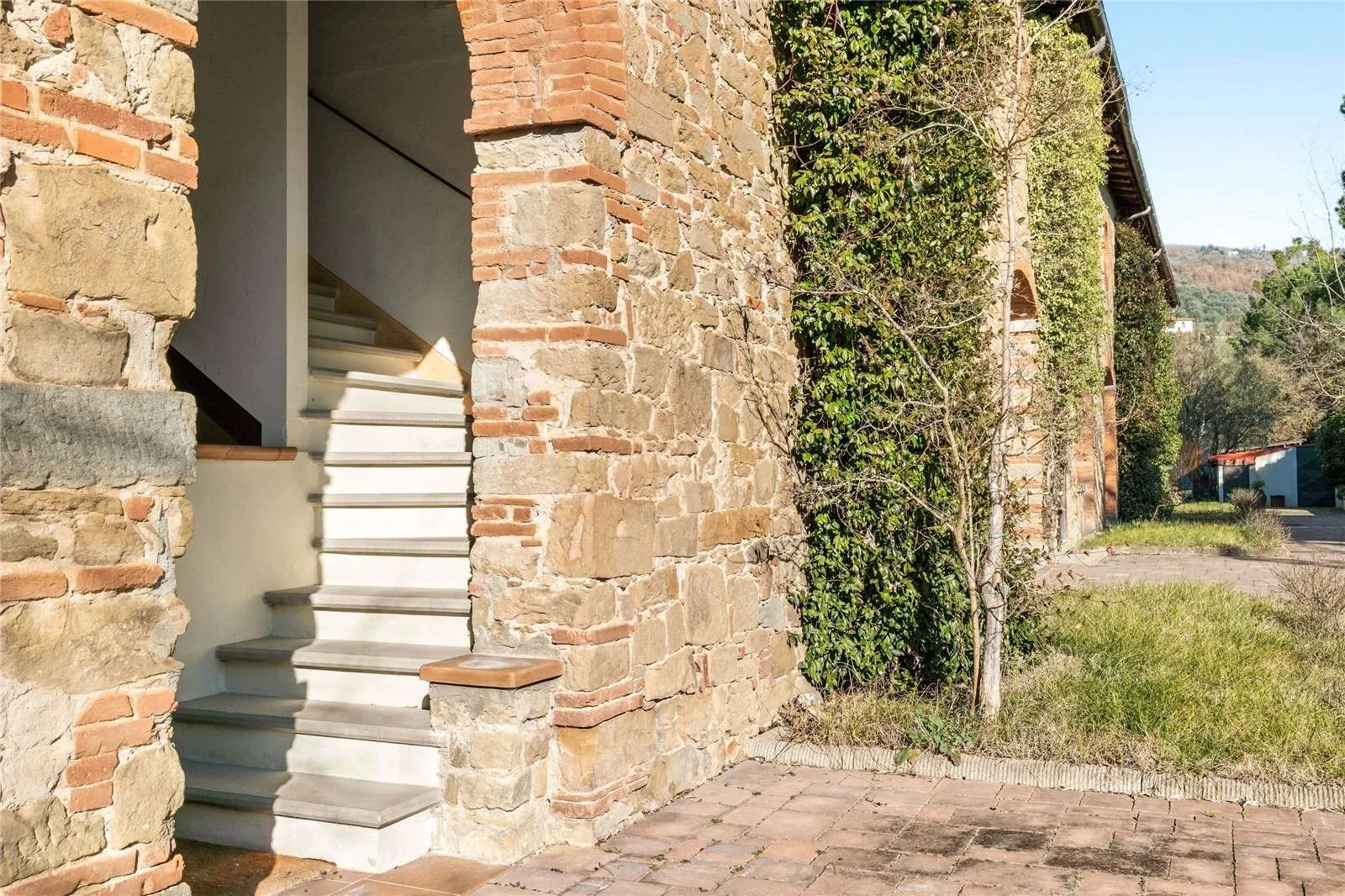
Beyond the historic core and agriturismo, Tenuta Poggitazzi includes 11 independent farmhouses, each positioned within its own portion of the estate. According to the listing, the buildings offer further restoration potential and could be developed as private villas surrounded by their own green space.
With its scale, architecture, agricultural production, and layered history, Tenuta Poggitazzi is more than a country house. It is a private Tuscan village estate: part historic residence, part working farm, part hospitality property, and part medieval story embedded in the Valdarno landscape.
All photographs belong to the listing agency, Savills — Florence.