Voltaire’s Former Paris Apartment Overlooking the Louvre, Listed for €8.9 Million
Bedrooms: 3 Interior: 246.69 m² / 2,655 ft²
Features: Étage noble / first floor setting, Seine views, Louvre and Tuileries views, 3 reception rooms, protected historic interiors, Versailles parquet, marquetry floors, ceilings over 3.5 m / 11.5 ft, courtyard balcony, lift, resident caretaker
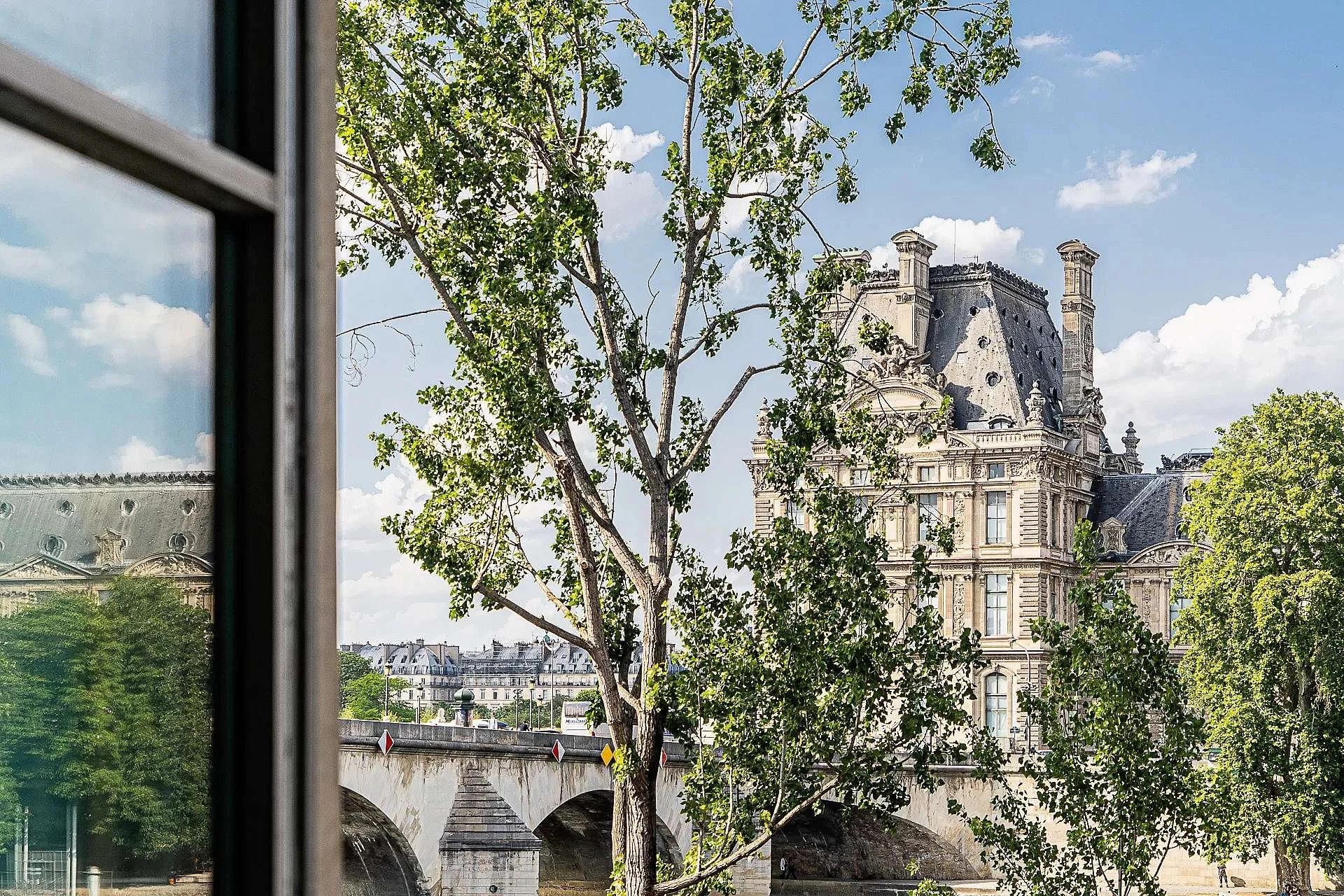
At 27 Quai Voltaire, on the Left Bank of the Seine directly opposite the Louvre and the Tuileries, Voltaire’s former Paris apartment has come to market for €8.9 million with Iconic Paris.
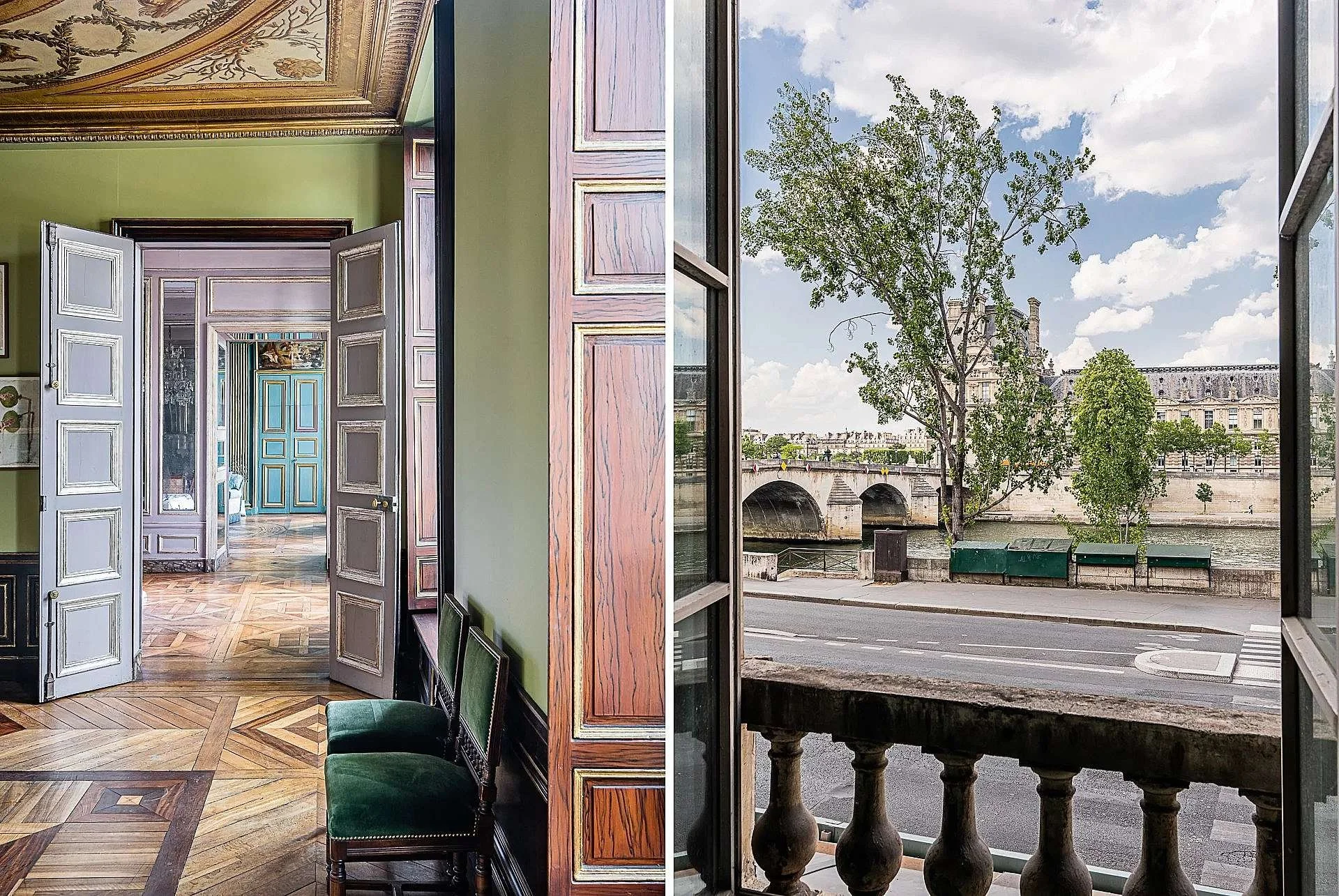
The address sits in the heart of Paris’s 7th arrondissement, along a stretch of riverfront lined with historic hôtels particuliers between Saint-Germain-des-Prés and what is now the Musée d’Orsay. From the apartment’s first-floor windows, the view extends across the Seine toward the Louvre, once a royal palace, and the Tuileries beyond it. Today it is one of the most recognisable cultural landscapes in Paris. In 1778, it became the setting for the final chapter in the life of François-Marie Arouet, better known as Voltaire.
Voltaire was one of the defining writers and thinkers of the French Enlightenment, the 18th-century intellectual movement that challenged inherited authority and argued that reason, evidence and individual liberty should play a greater role in public life. Through plays, histories, philosophical tales, essays and an enormous correspondence, he attacked religious fanaticism and intolerance, questioned censorship and abuses of power, and argued repeatedly for freedom of thought and a more rational and humane society.
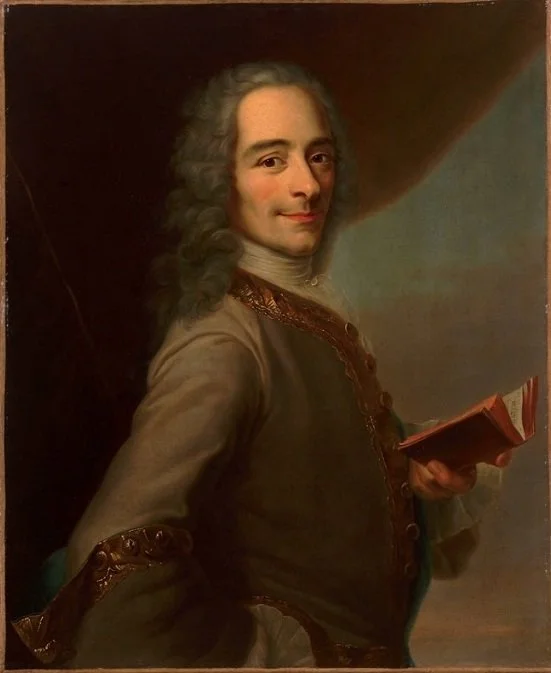
Voltaire, after Maurice Quentin de La Tour, circa 1736. The portrait shows the philosopher in middle age; the original is lost, but copies survive in French national collections, including at Versailles and in Voltaire’s bedroom at the Château de Voltaire in Ferney. Public domain, via Wikimedia Commons.
Works including Candide, Letters on the English and the Philosophical Dictionary carried those ideas to readers across Europe. He was not a revolutionary in the later sense, nor an advocate of modern democracy, but he became one of Europe’s most influential public intellectuals.
By the time Voltaire arrived at the Hôtel de Villette in 1778, he was 83 years old and had been absent from Paris for almost three decades. His writing had repeatedly brought him into conflict with political and religious authorities. As a young man he had been imprisoned in the Bastille, he was later forced into exile in England, and controversial works throughout his career were censored, banned or condemned.
After periods at European courts, including that of Frederick the Great in Prussia, he eventually settled near Geneva before acquiring an estate at Ferney in 1759. Close to the French-Swiss border, it gave him greater independence from Paris. From there he continued to write, received visitors from across Europe and publicly took up cases involving religious persecution and wrongful convictions.
By the 1770s, the writer who had spent much of his life challenging the French establishment had become one of the most celebrated intellectual figures in Europe.
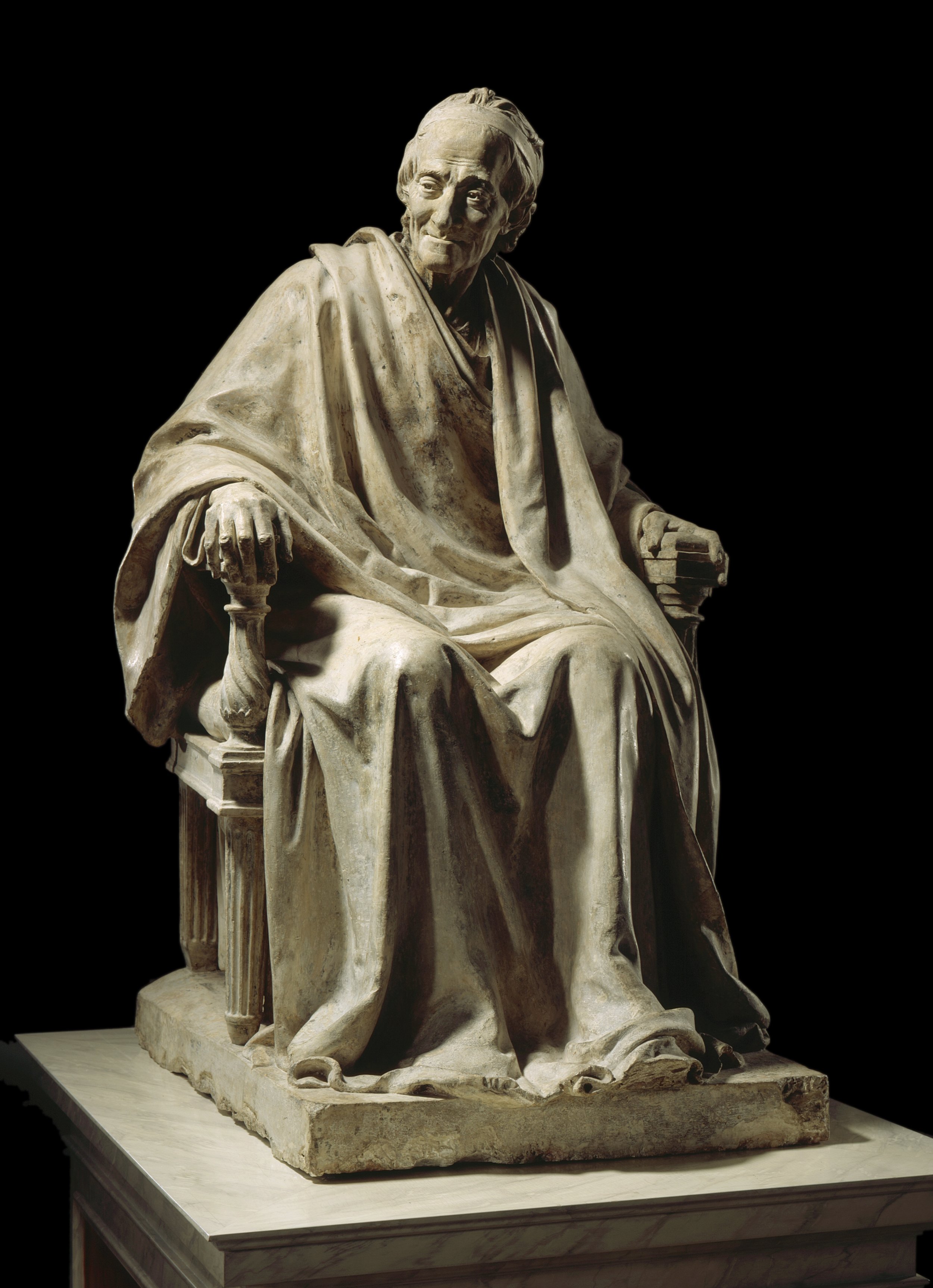
Jean-Antoine Houdon, Voltaire assis (Seated Voltaire), 1781. One of the most recognisable sculptural images of the philosopher, Houdon’s seated Voltaire was modeled after his triumphant return to Paris in 1778.
Then, in February 1778, Voltaire returned to Paris after 28 years away. What followed was less a quiet homecoming than a public triumph. Admirers and visitors came to see him, and over the following weeks Paris effectively reclaimed a figure it had spent decades keeping at a distance. The Bibliothèque nationale de France records that he was met by crowds on his arrival before being triumphantly received the following month at the Académie Française and Théâtre-Français.
Throughout that extraordinary return, Voltaire was staying at the Hôtel de Villette as a guest of Charles-Michel, Marquis de Villette, and his wife, Reine-Philiberte de Varicourt.

Pedro Américo, Voltaire Blessing Franklin’s Grandson in the Name of God and Liberty, 1889–1890. The Brazilian academic painter, known for large-scale historical scenes, imagined the 1778 meeting more than a century later. Public domain, via Wikimedia Commons.
Among those who came to see him was Benjamin Franklin, then in France representing the newly independent United States. Franklin brought his grandson and asked Voltaire to give the boy his blessing. In a letter written days later, Voltaire recalled that he had pronounced only two words: “God and liberty.” The visit took place within days of France signing its treaties with the United States.
Voltaire’s Parisian return reached its high point on March 30, when he was received at the Académie Française before attending a performance of his tragedy Irène at the Comédie-Française. That evening, the audience gave him an extraordinary public tribute, crowning his bust with laurels in one of the defining moments of his final months in Paris.
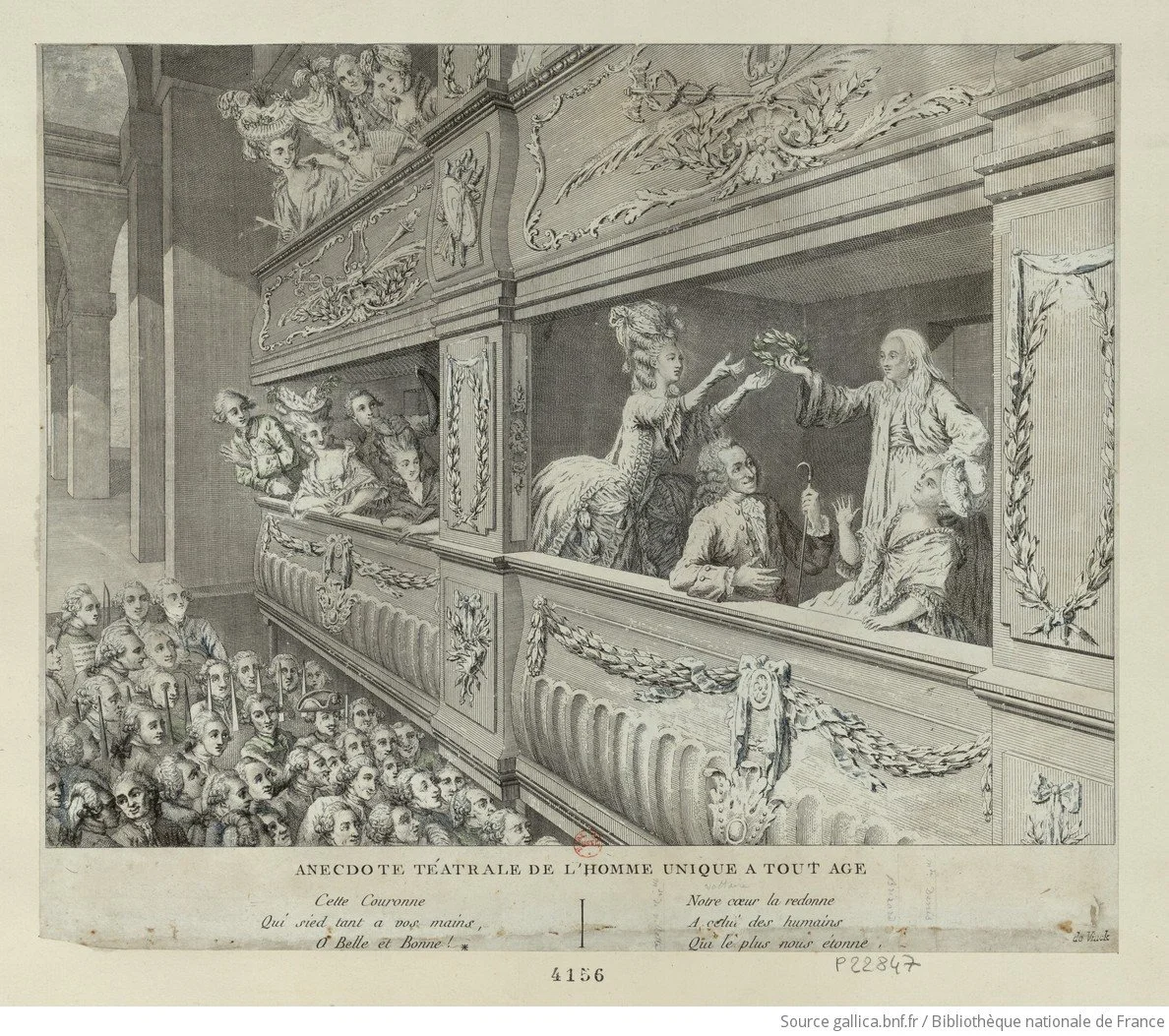
The crowning of Voltaire at the Théâtre-Français in 1778, showing the philosopher receiving a laurel crown during the public celebrations surrounding Irène. Engraving by Jean-Baptiste Le Vachez. Bibliothèque nationale de France / Gallica.
His health, however, was already failing. Just over 3 months after arriving in Paris, Voltaire died at the Hôtel de Villette on May 30, 1778.
The French Ministry of Culture still identifies him as the historic figure associated with the building and specifically records that he died there.
The physical record of the rooms survives, too.
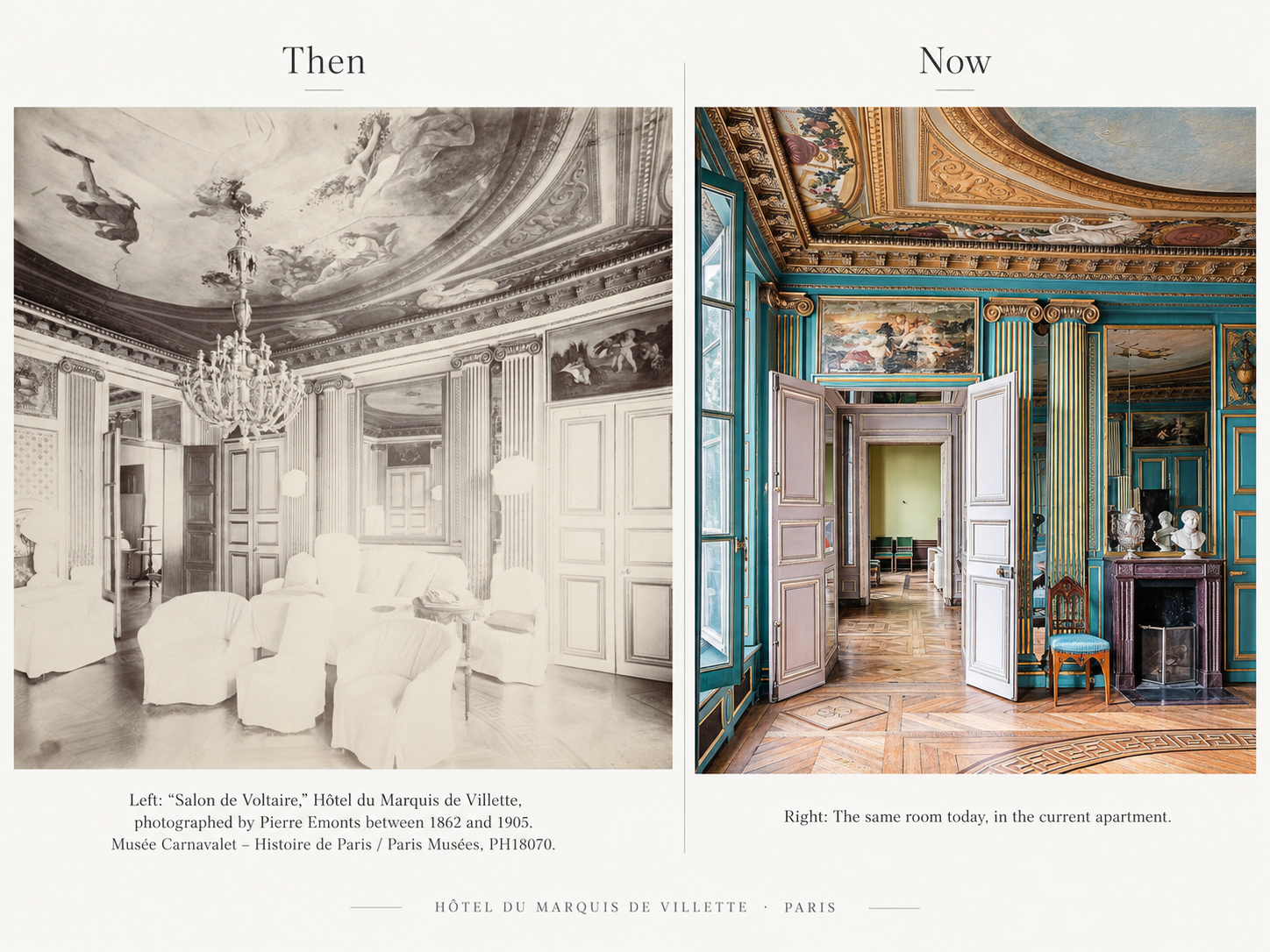
Pierre Emonts photographed the interiors of the Hôtel de Villette sometime between 1862 and 1905. Among the images now preserved by the Musée Carnavalet is one explicitly identified as the “Salon de Voltaire,” showing its painted ceiling, wall panelling and furnished interior. A separate Emonts photograph documents the first-floor, courtyard-facing bedroom that the museum identifies specifically as the room in which Voltaire died.
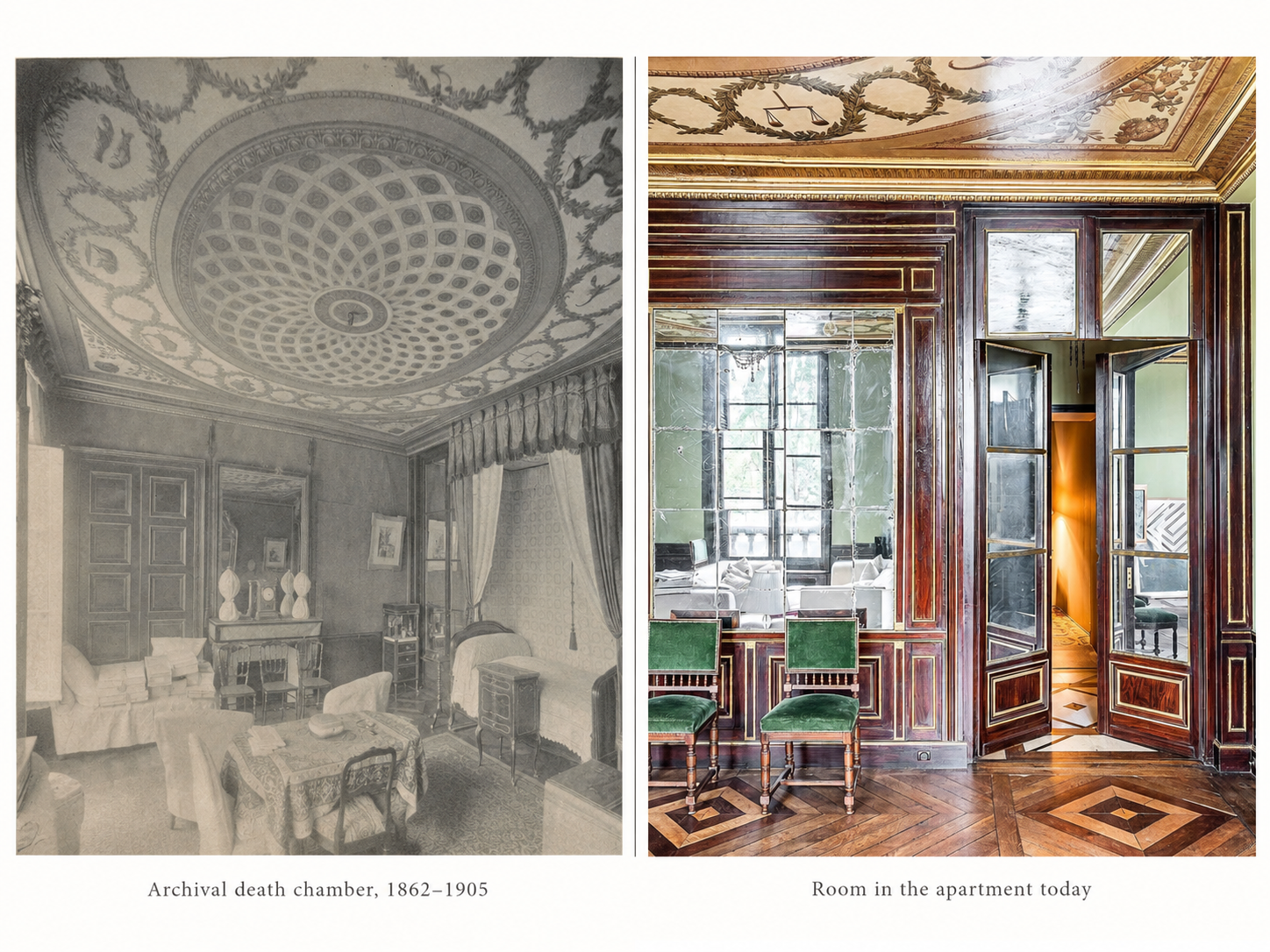
Then and now? Left: the first-floor, courtyard-facing bedroom identified by the Musée Carnavalet as the room in which Voltaire died, photographed by Pierre Emonts between 1862 and 1905. The archival photograph shows Voltaire’s death chamber still furnished in the late 19th or early 20th century, with much of its architectural decoration intact. The Musée Carnavalet does not indicate that the furnishings themselves date from Voltaire’s lifetime.
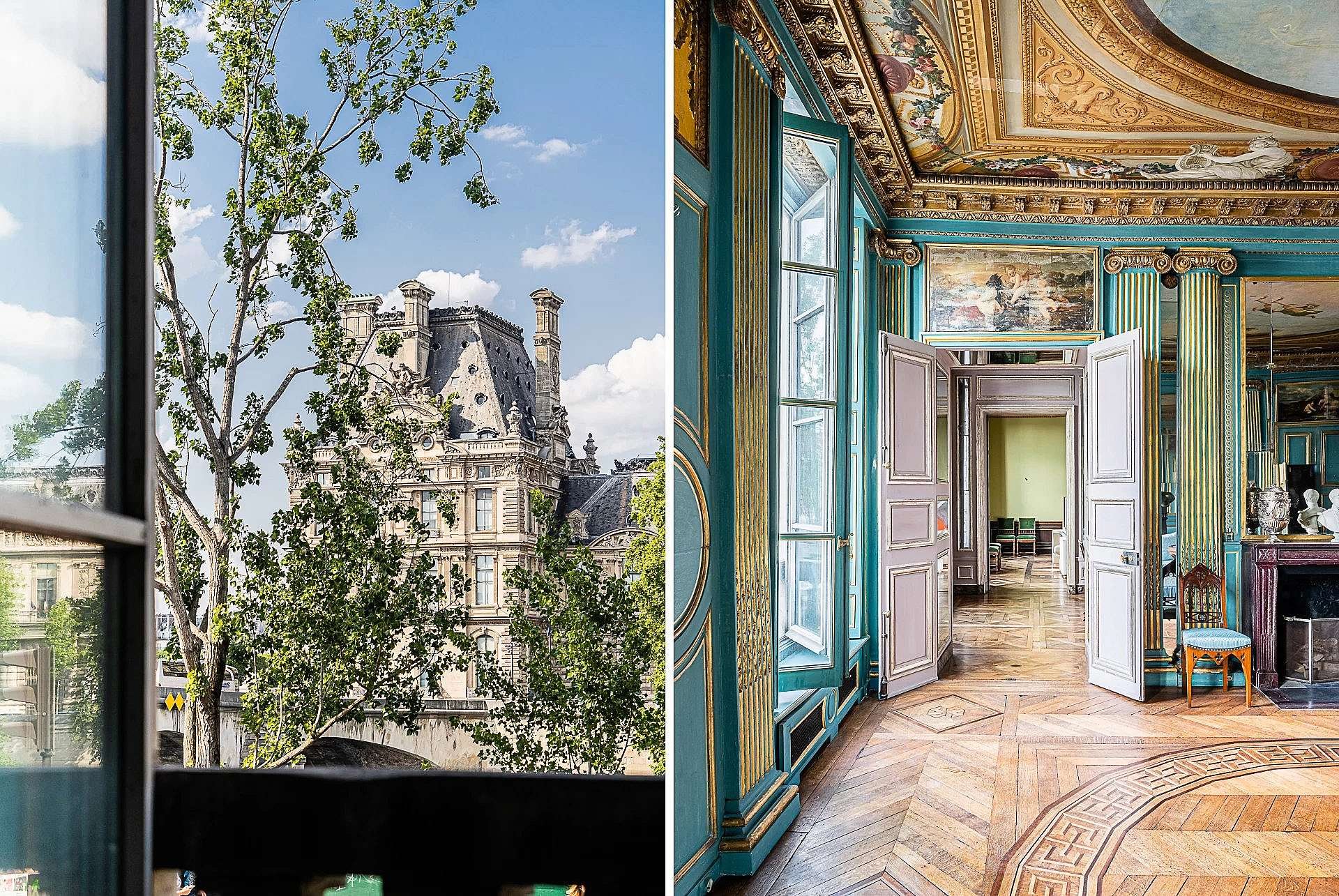
Right: a room in the apartment today, where the dark wood panelling, gilded detailing, parquet and decorated ceiling show striking similarities.
Francis York has not independently confirmed that the 2 images depict the same room. Archival photograph: Pierre Emonts, Musée Carnavalet – Histoire de Paris / Paris Musées, PH18069. CC0.
The Château de Voltaire at Ferney
Before returning to Paris in 1778, Voltaire had spent about 20 years at Ferney, near Geneva, where he rebuilt the château into both a residence and an intellectual headquarters. It was here that he wrote, received visitors from across Europe and developed the reputation of Ferney as a pilgrimage site for Enlightenment thinkers.
After Voltaire died at the Hôtel de Villette, his friend the Marquis de Villette bought Ferney from Madame Denis and turned part of the château into a memorial. Voltaire’s preserved heart was displayed there in a reliquary, surrounded by portraits of friends and intellectual figures associated with him, including Benjamin Franklin.
Catherine the Great, a longtime admirer and correspondent, later bought Voltaire’s library and manuscripts and even commissioned plans, fabric samples and a scale model with the intention of recreating Ferney in Russia. The replica was never built, but that documentation later became important to the château’s restoration.
Today, Ferney survives as the Château de Voltaire and is open to the public, while his final Paris residence remains a private apartment.
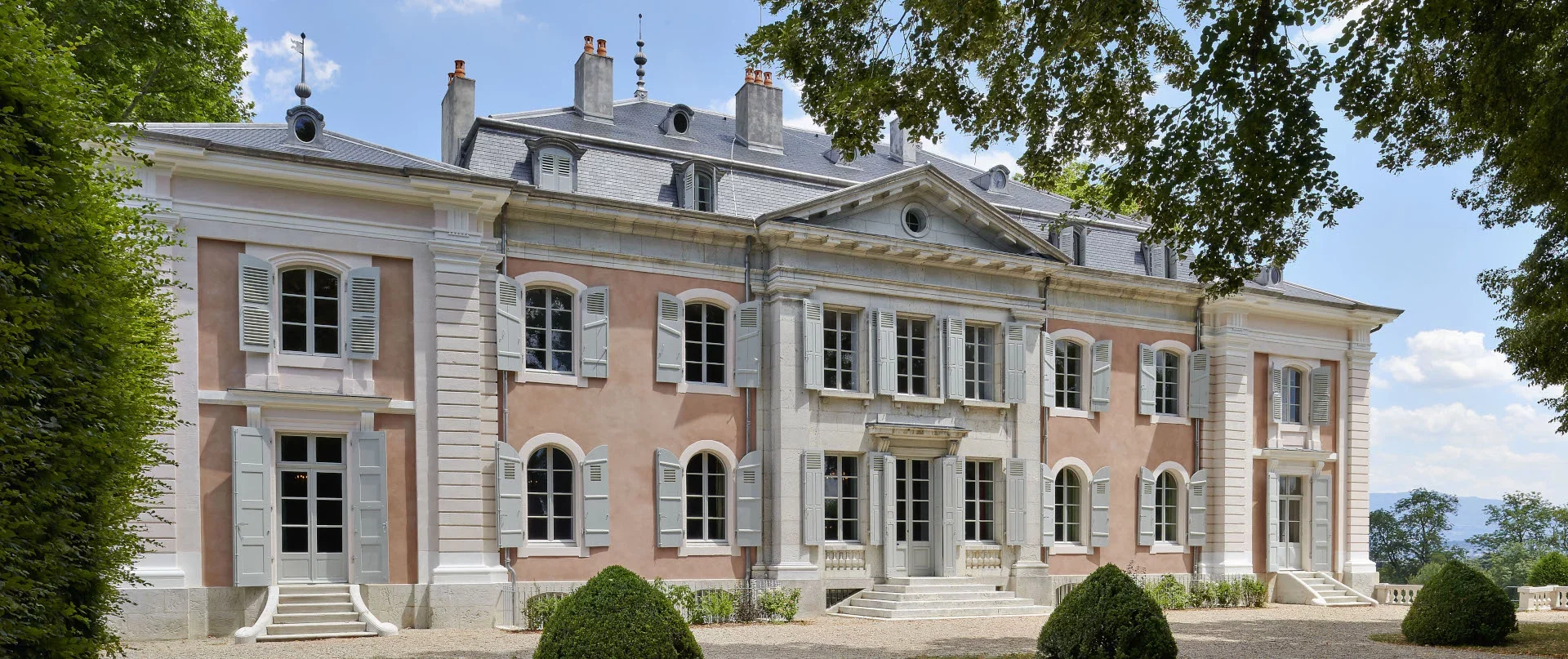
The Château de Voltaire at Ferney, where Voltaire lived from 1759 until his return to Paris in 1778. After his death, the Marquis de Villette acquired the estate and transformed parts of the château into a memorial to the philosopher. Today, the château is owned by the French state, managed by the Centre des monuments nationaux and open to visitors.
A historic Paris hôtel particulier
The Hôtel de Villette is one of the historic hôtels particuliers lining this stretch of the Left Bank, at 27 Quai Voltaire and 1 Rue de Beaune. The French Ministry of Culture records its principal construction campaign as dating to the 18th century, but its significance today lies just as much in what has survived inside.
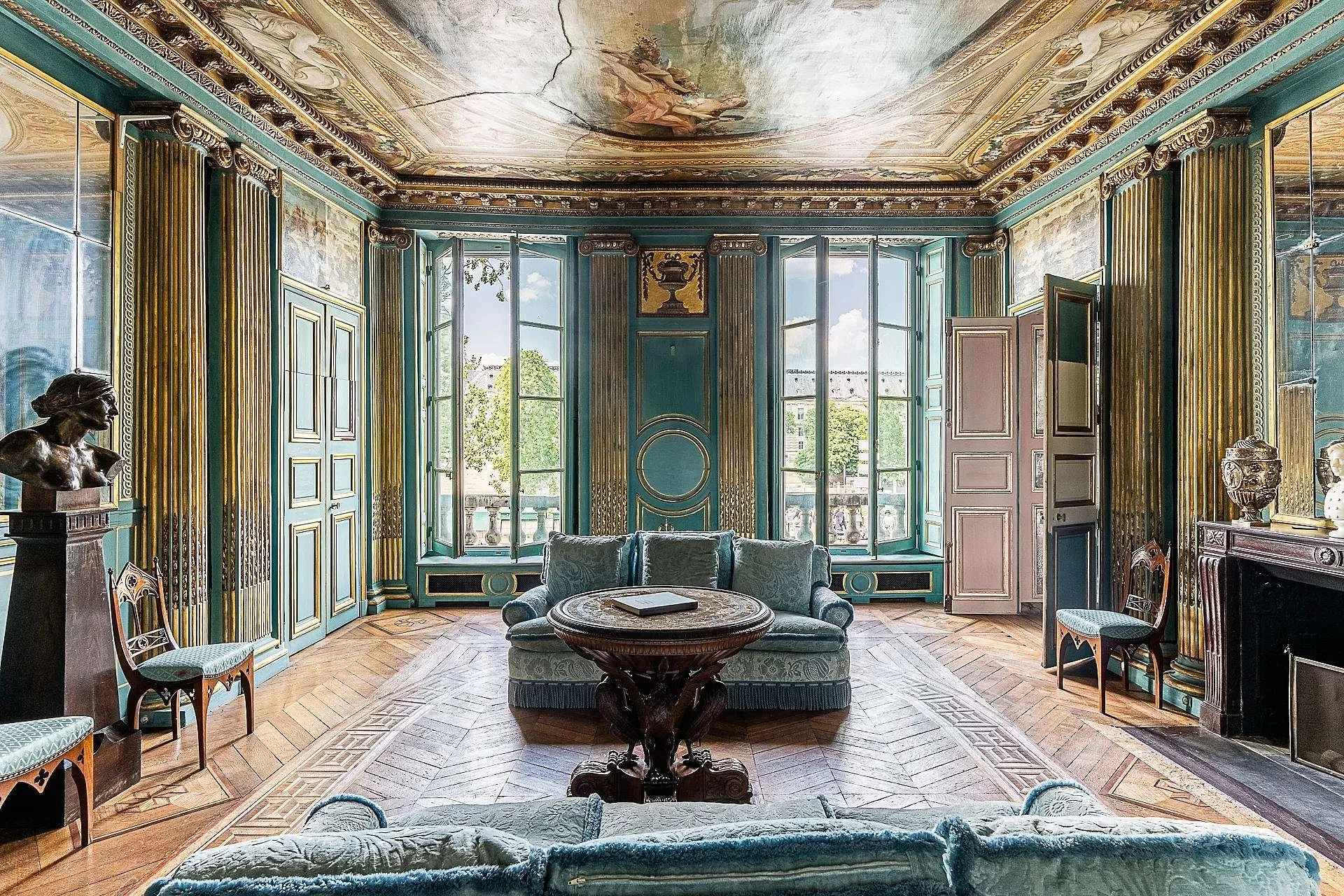
The apartment occupies approximately 246.69 m², or 2,655 ft², across the building’s étage noble, historically the principal reception floor and typically the level with the grandest rooms and highest ceilings.
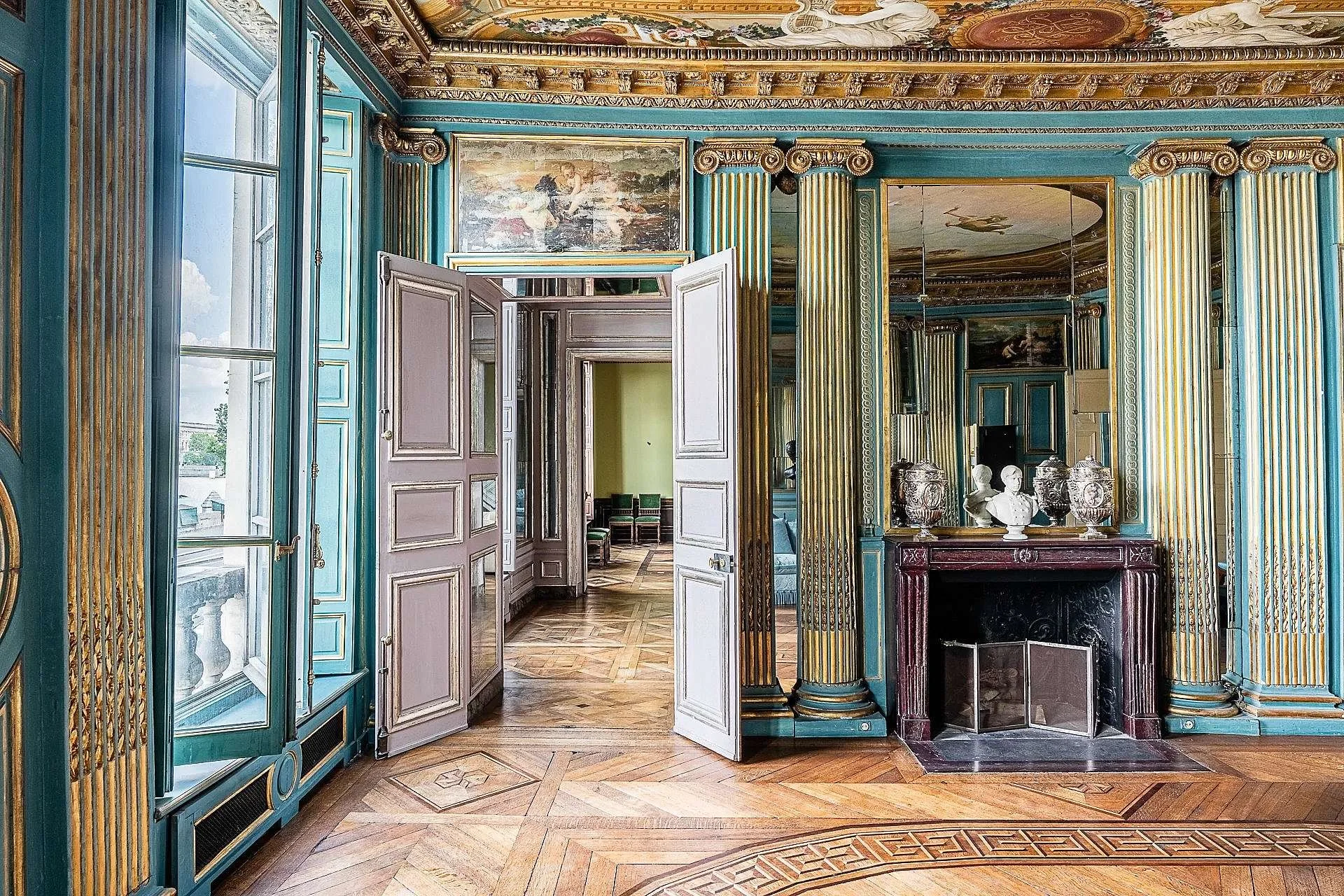
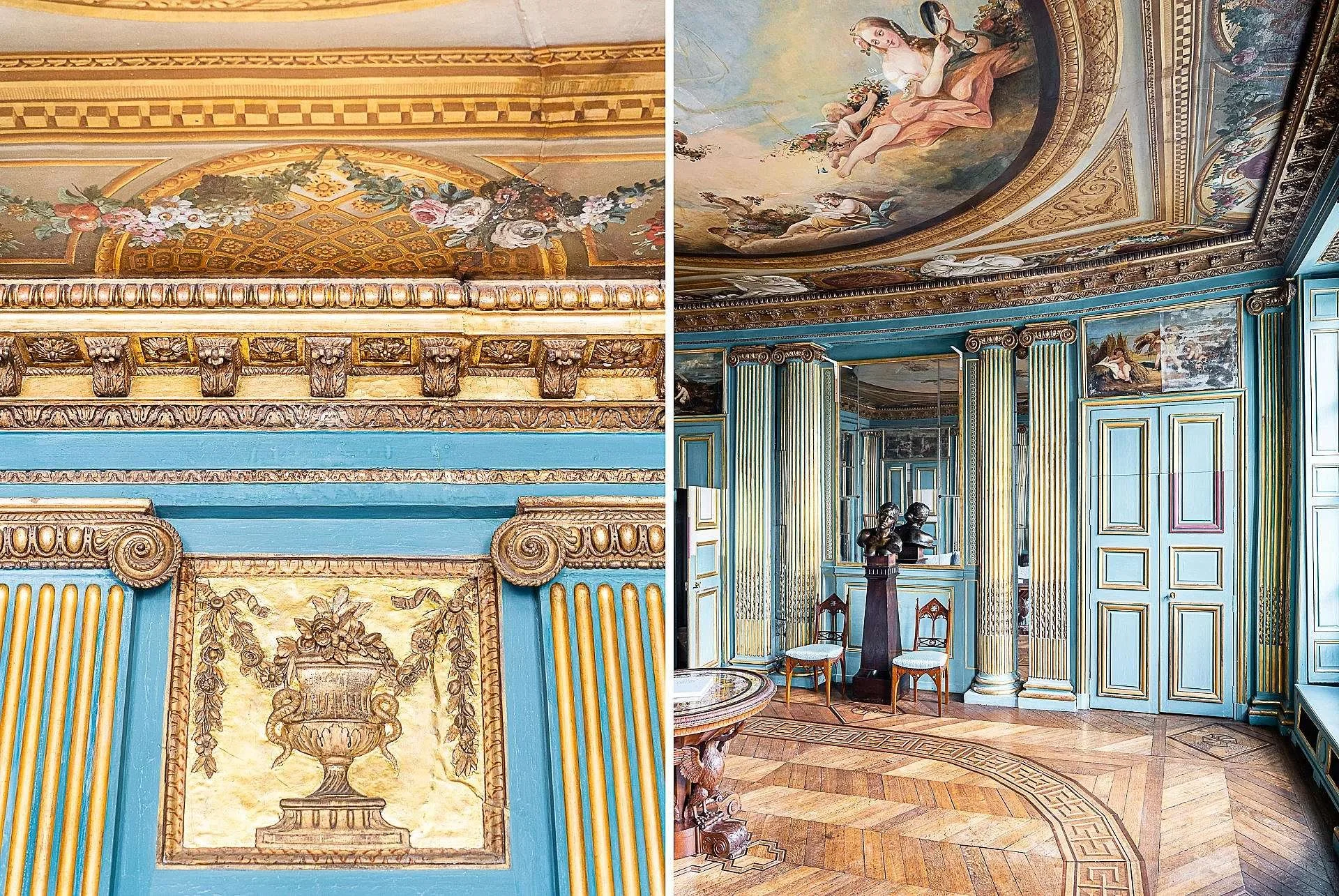
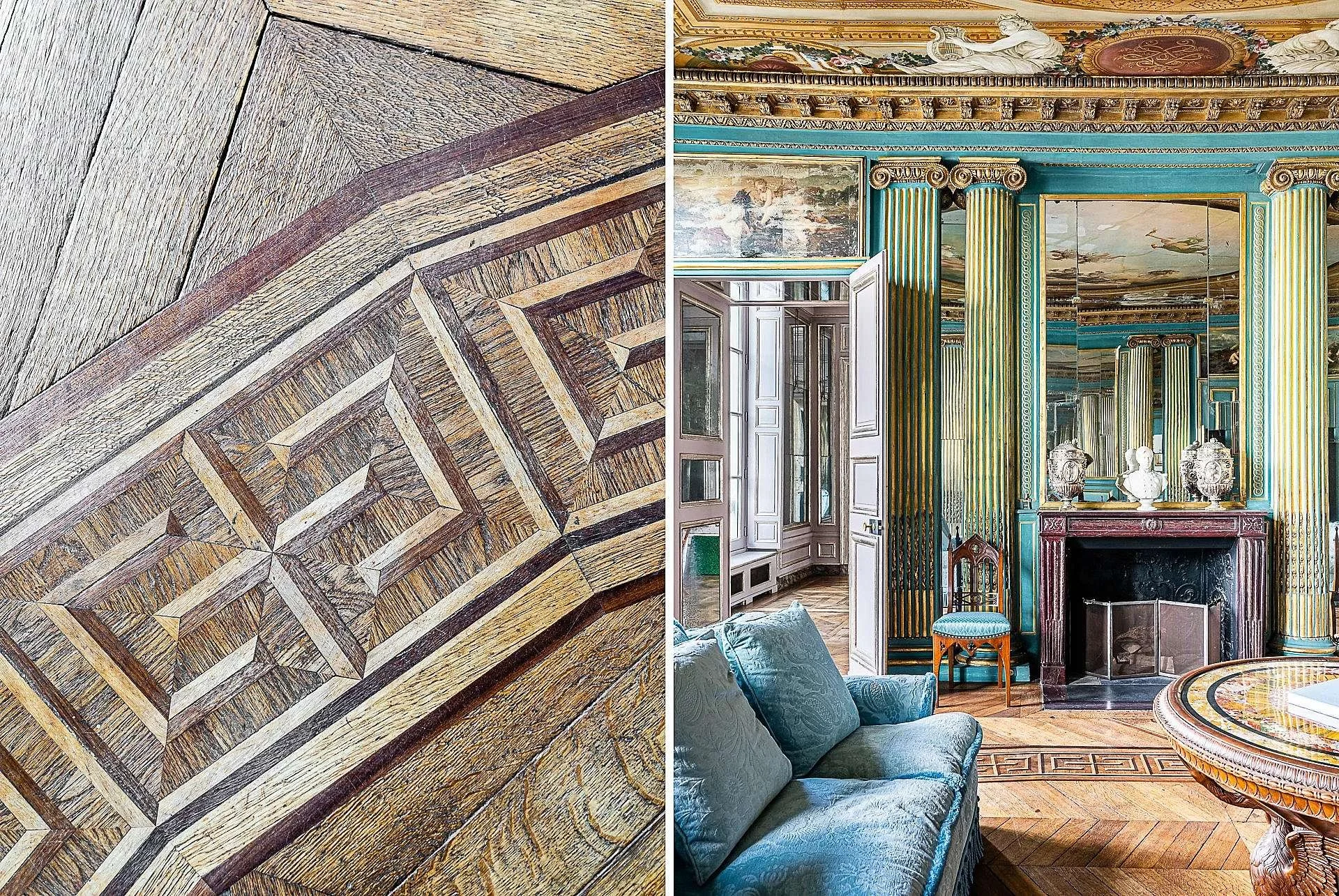
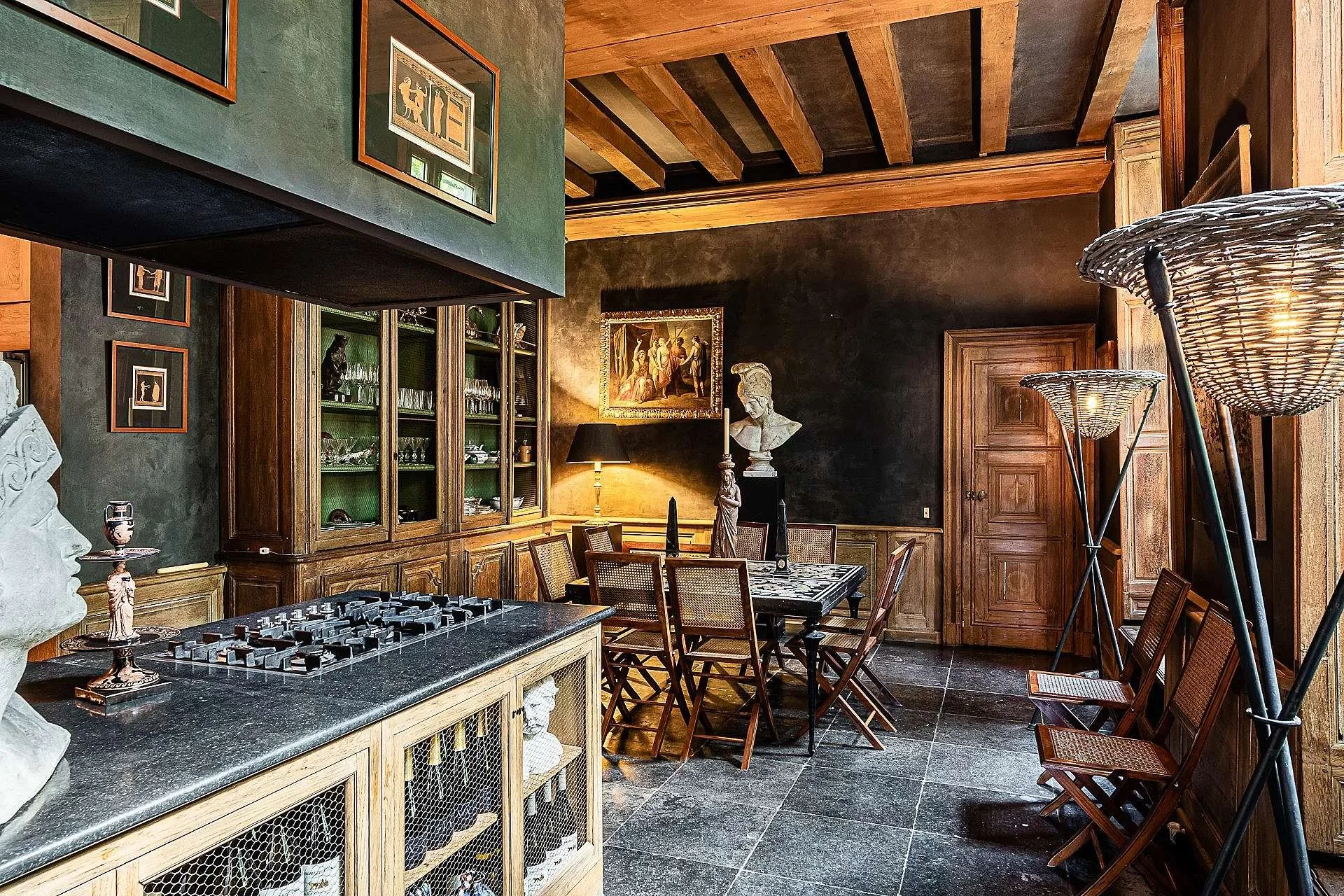
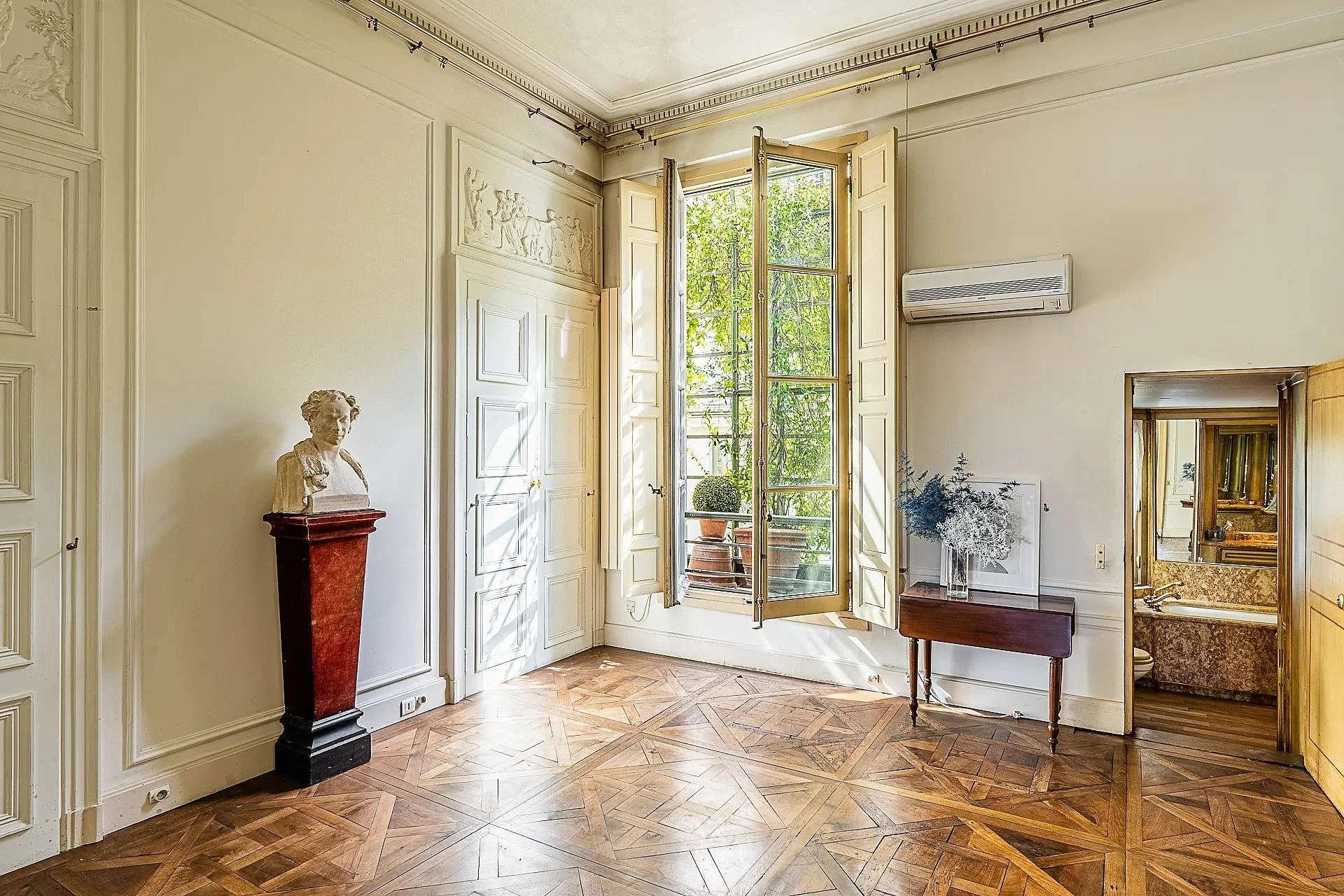
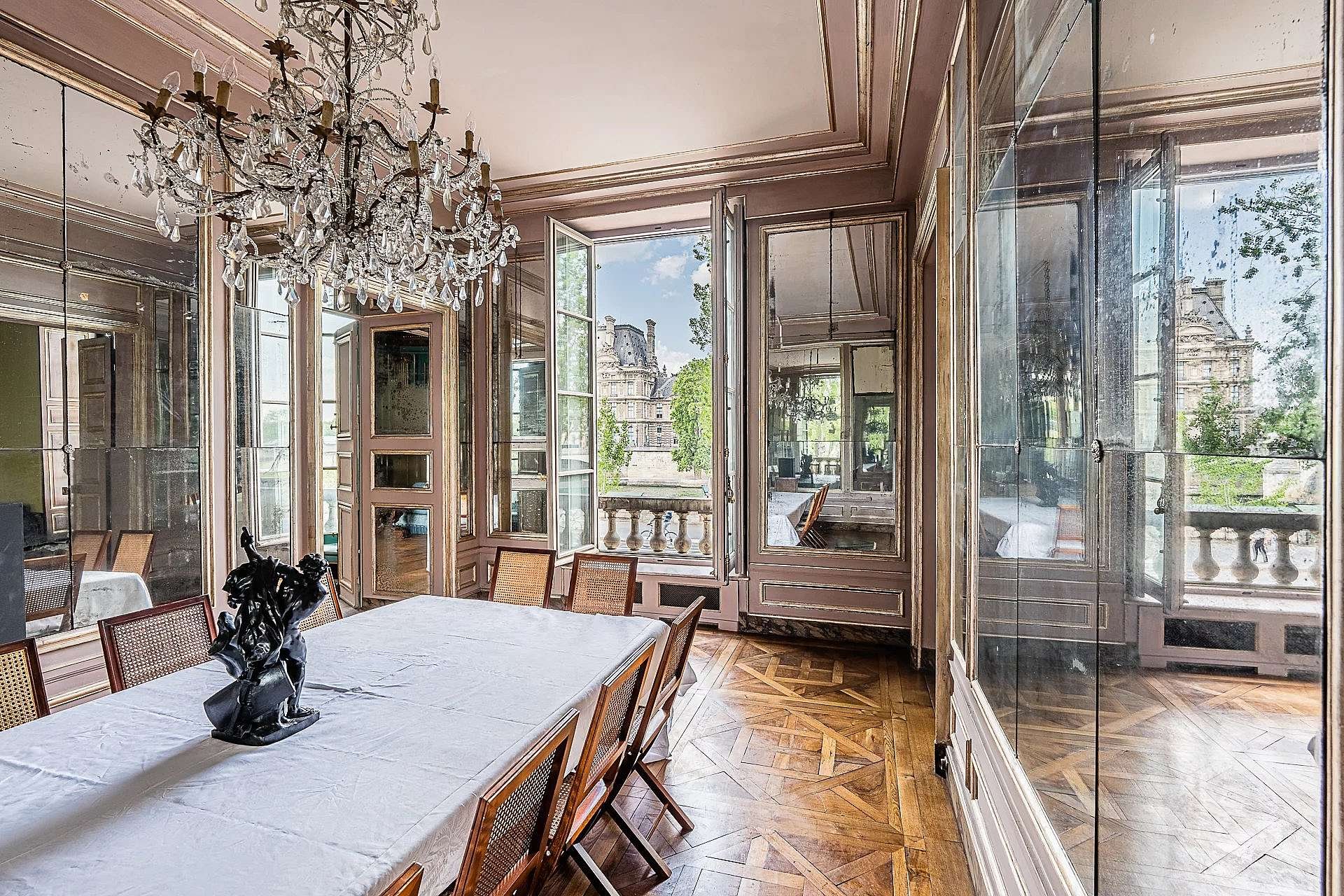
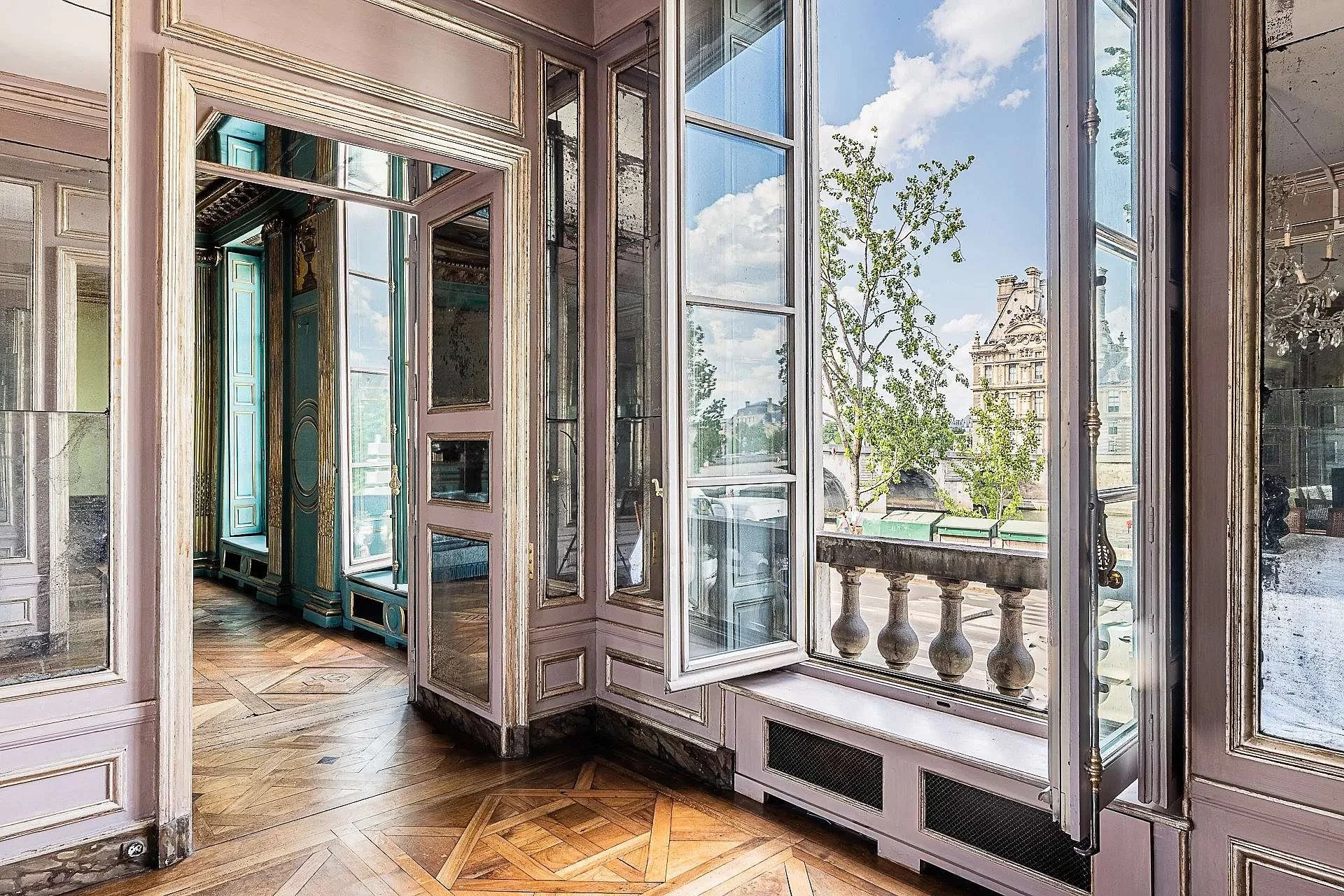
A large entrance hall opens into 3 principal reception rooms where much of the historic decorative fabric remains intact, including ornate ceilings and mouldings, Versailles parquet, varied marquetry, fireplace overmantels and alcoves. Ceiling heights rise above 3.5 metres, or approximately 11.5 feet.
And this isn’t just period styling.
The Hôtel de Villette is partially protected as a Monument Historique, with different elements receiving protection in stages beginning in 1926. Most significantly for the apartment now for sale, the French Ministry of Culture specifically protects the first-floor grand salon and adjoining boudoir or cabinet together with their décor, as well as the decorated ceiling of a second salon. The building’s street wall and entrance doors and an oval boudoir elsewhere in the property are also protected.
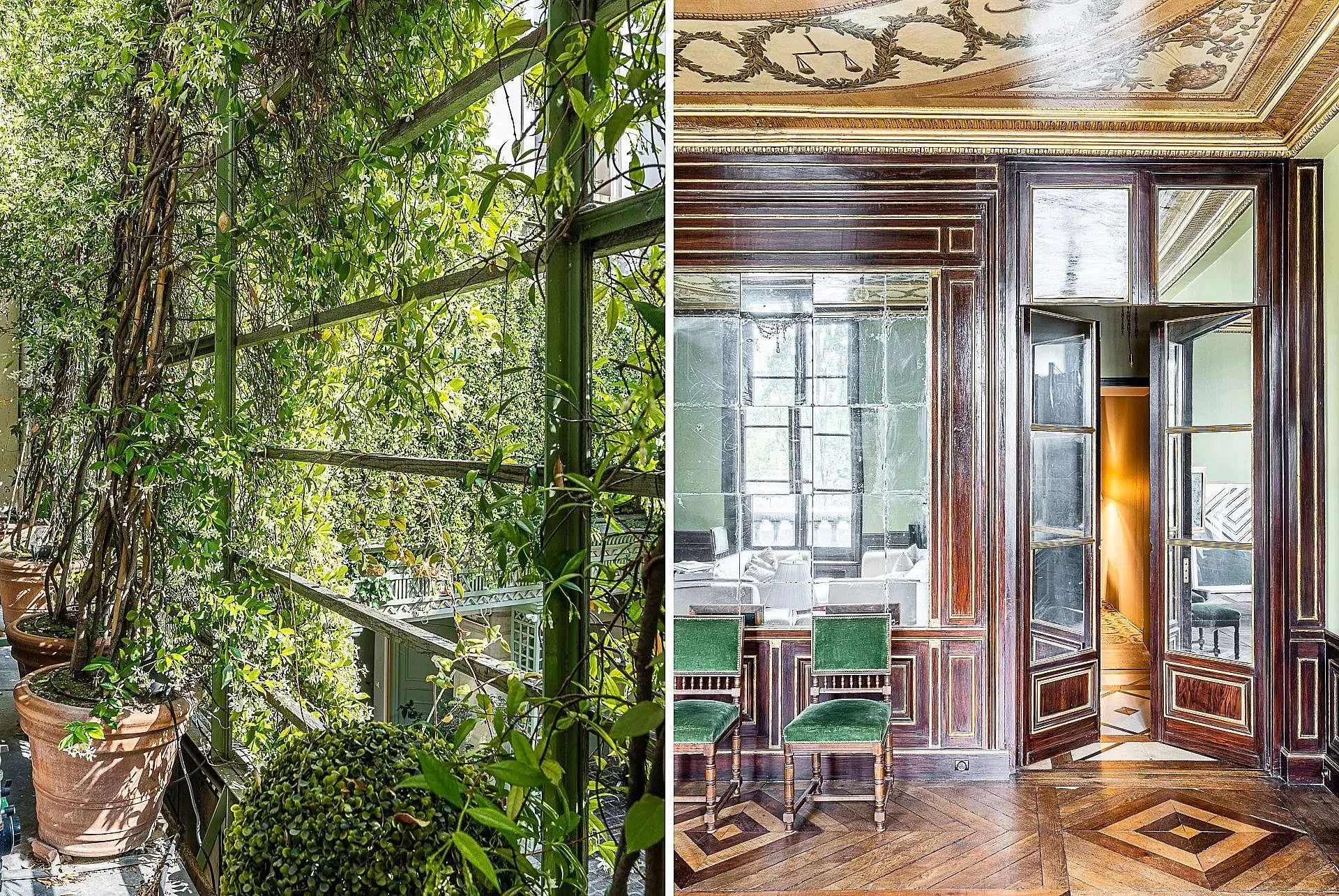
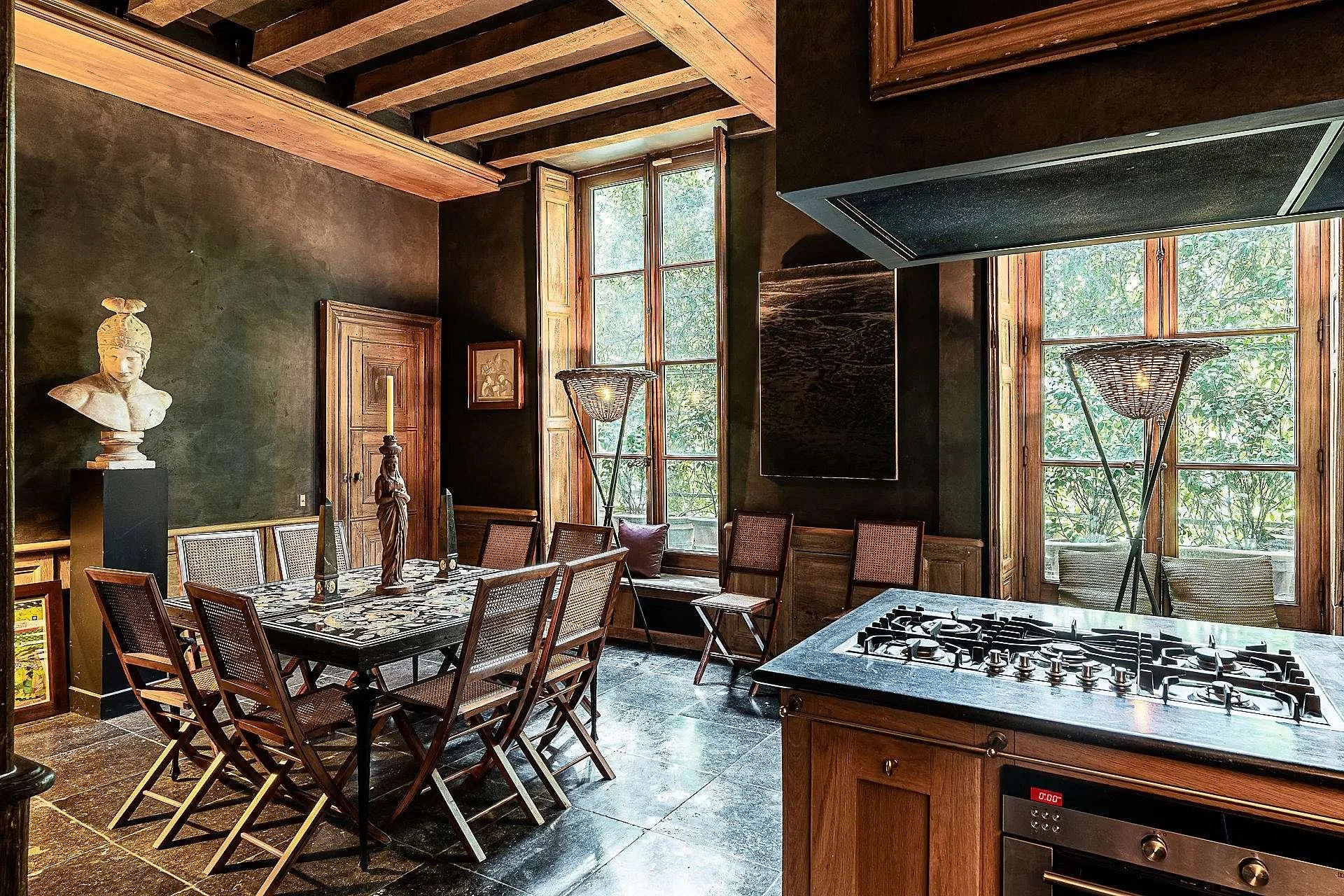
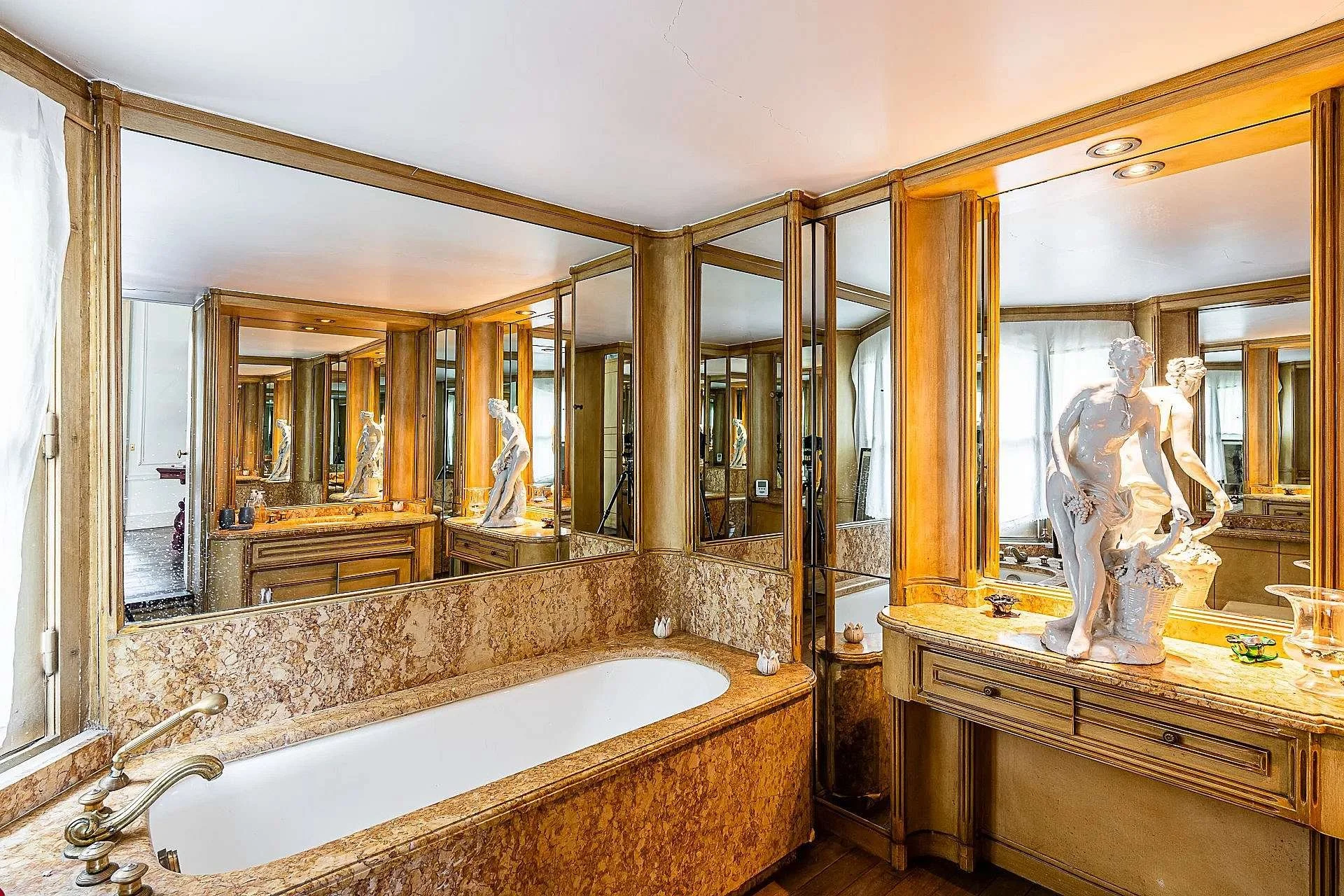
Beyond the formal reception rooms, the apartment contains a principal bedroom suite and 2 further bedrooms. Iconic Paris notes that en-suite bathrooms could be created for the 2 secondary bedrooms. A spacious separate kitchen connects with the dining room, which opens onto a flower-filled balcony overlooking the internal courtyard.
On the opposite side of the apartment, the principal rooms face the Seine, with views extending across the river toward the Louvre and the Jardin des Tuileries. The building also has a lift and resident caretaker.
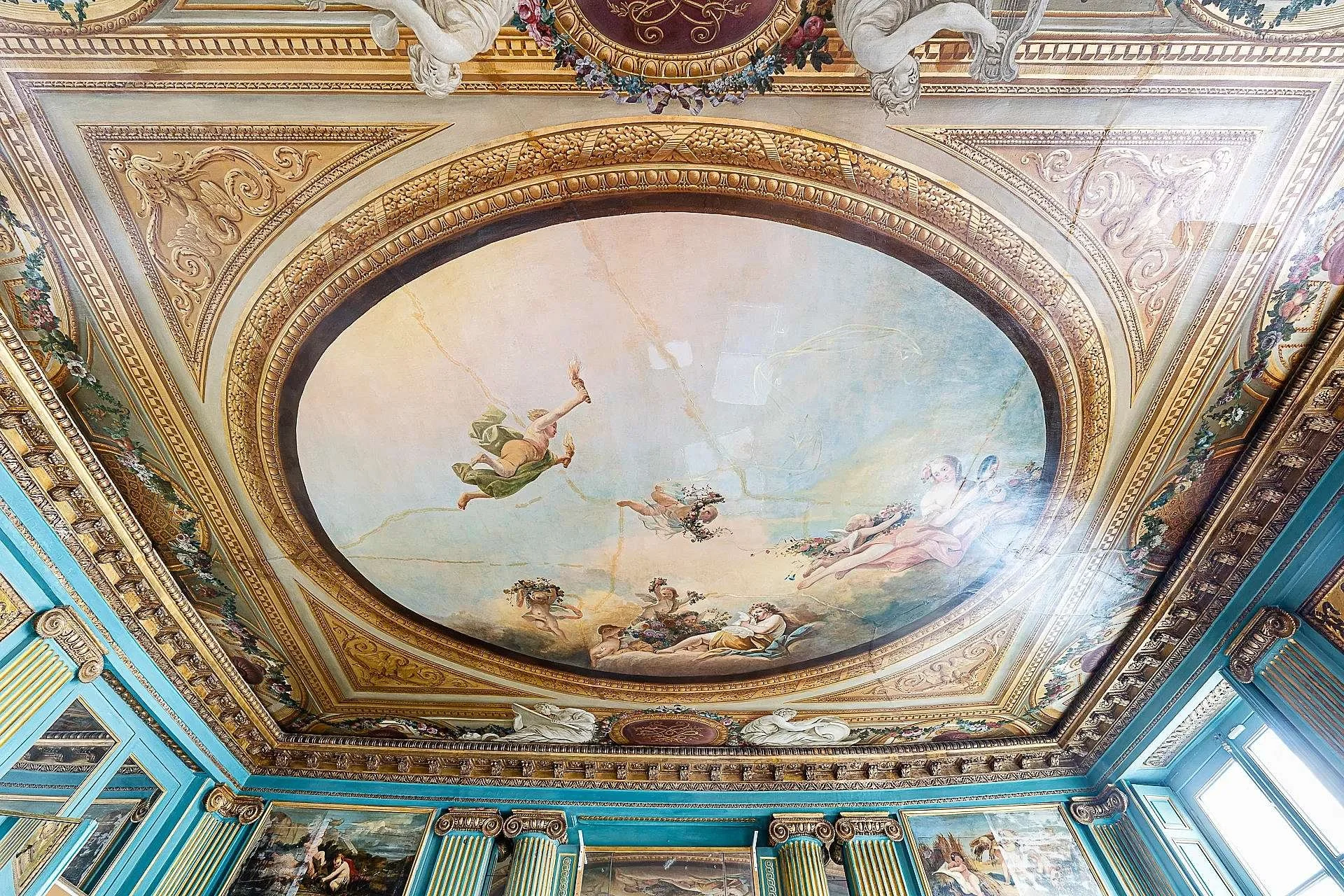
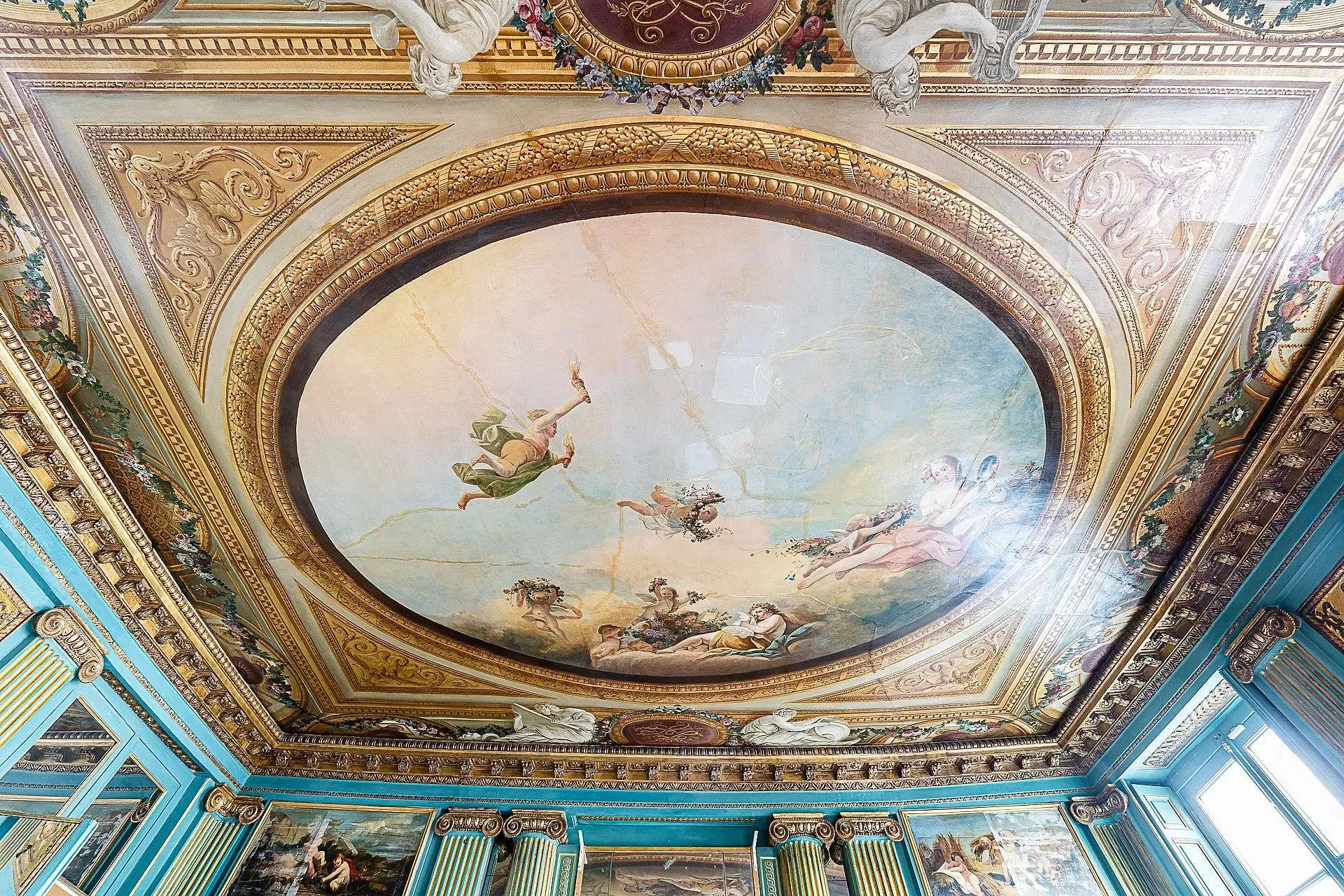
Detail of the painted and moulded ceiling decoration within the Hôtel de Villette’s first-floor reception rooms.
One of the Left Bank’s most coveted addresses
The setting remains as significant as the interiors themselves.
Apartments directly on the quai are particularly scarce, especially on the étage noble and with uninterrupted river views. Here, that outlook is paired with something increasingly difficult to find even at the highest end of the Paris market: historic interiors whose architectural character has not been stripped away.
Even the address itself became part of Voltaire’s story. During his lifetime, this stretch of riverfront was known as the Quai des Théatins. It was later renamed Quai Voltaire, permanently associating the philosopher with the part of Paris where he spent his final months.
All listing photographs belong to the listing agency. See more on Iconic Paris.