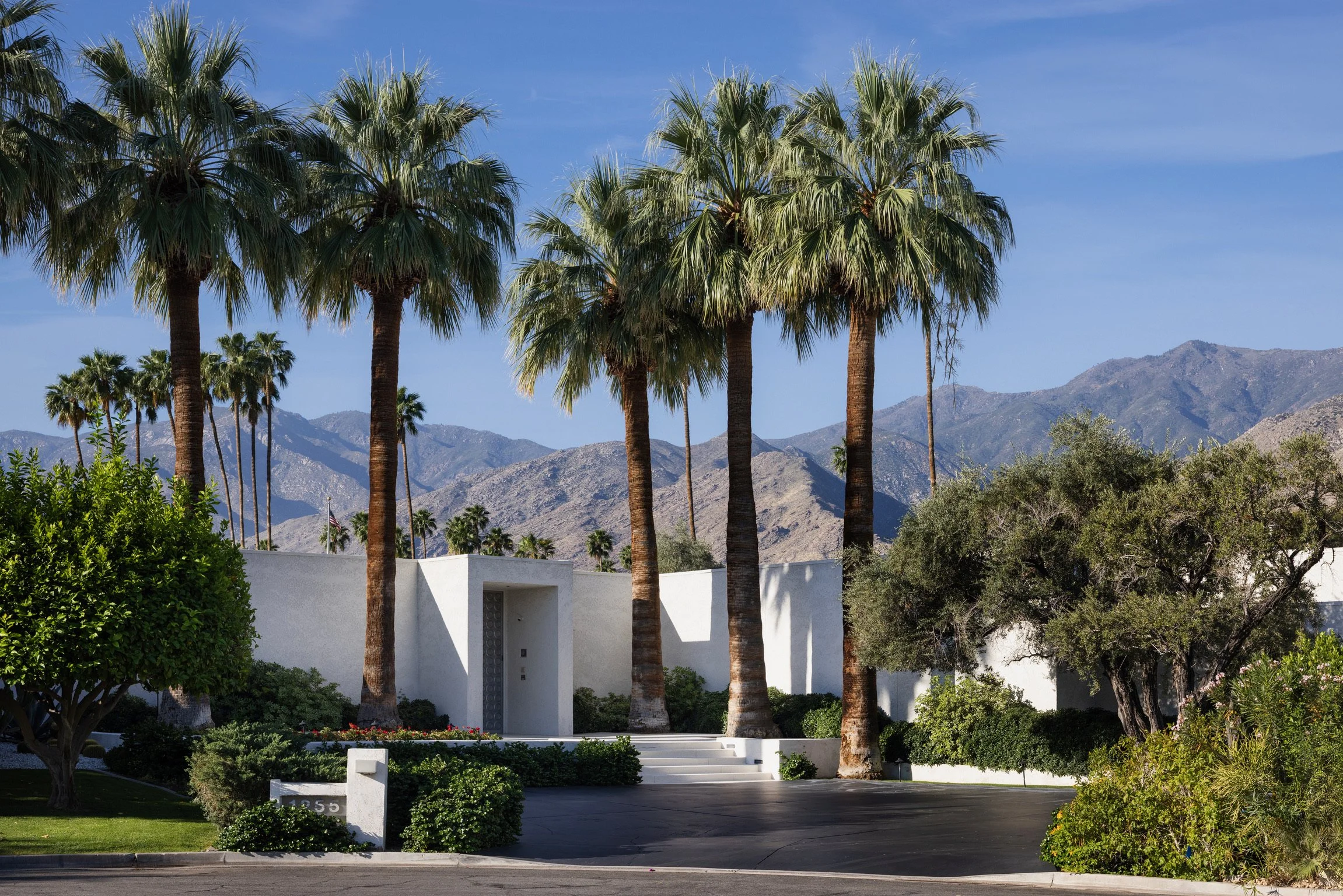
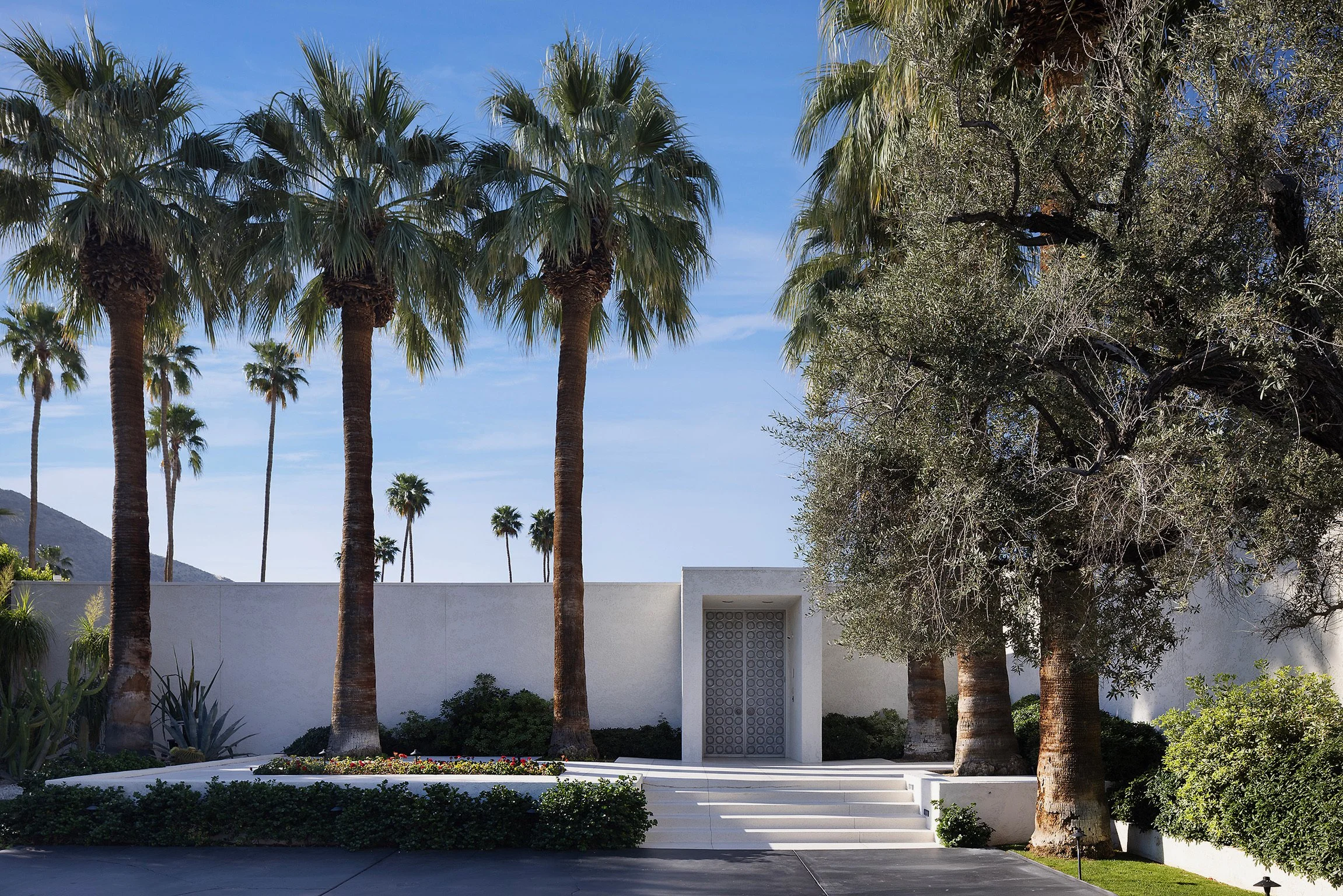
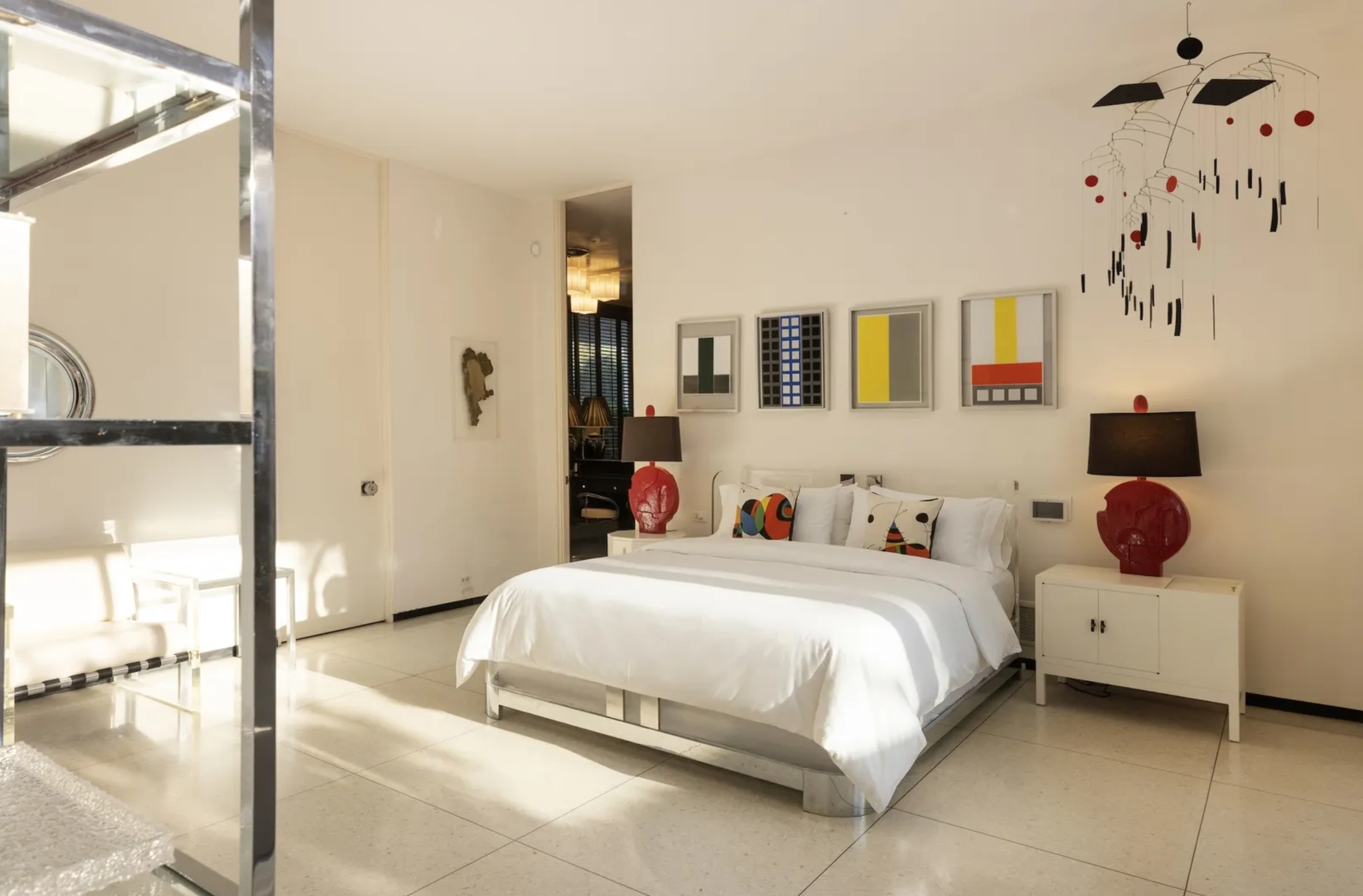
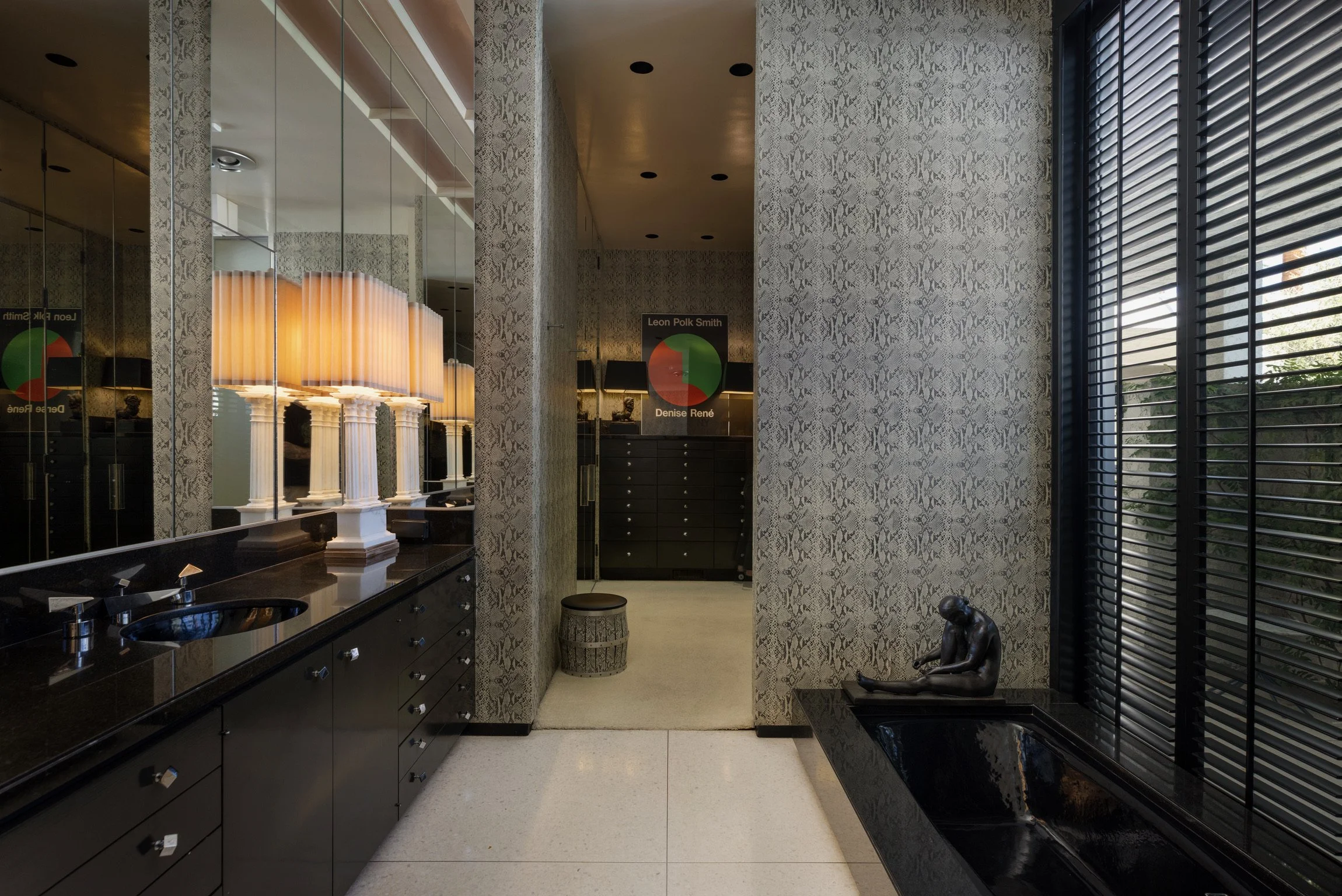
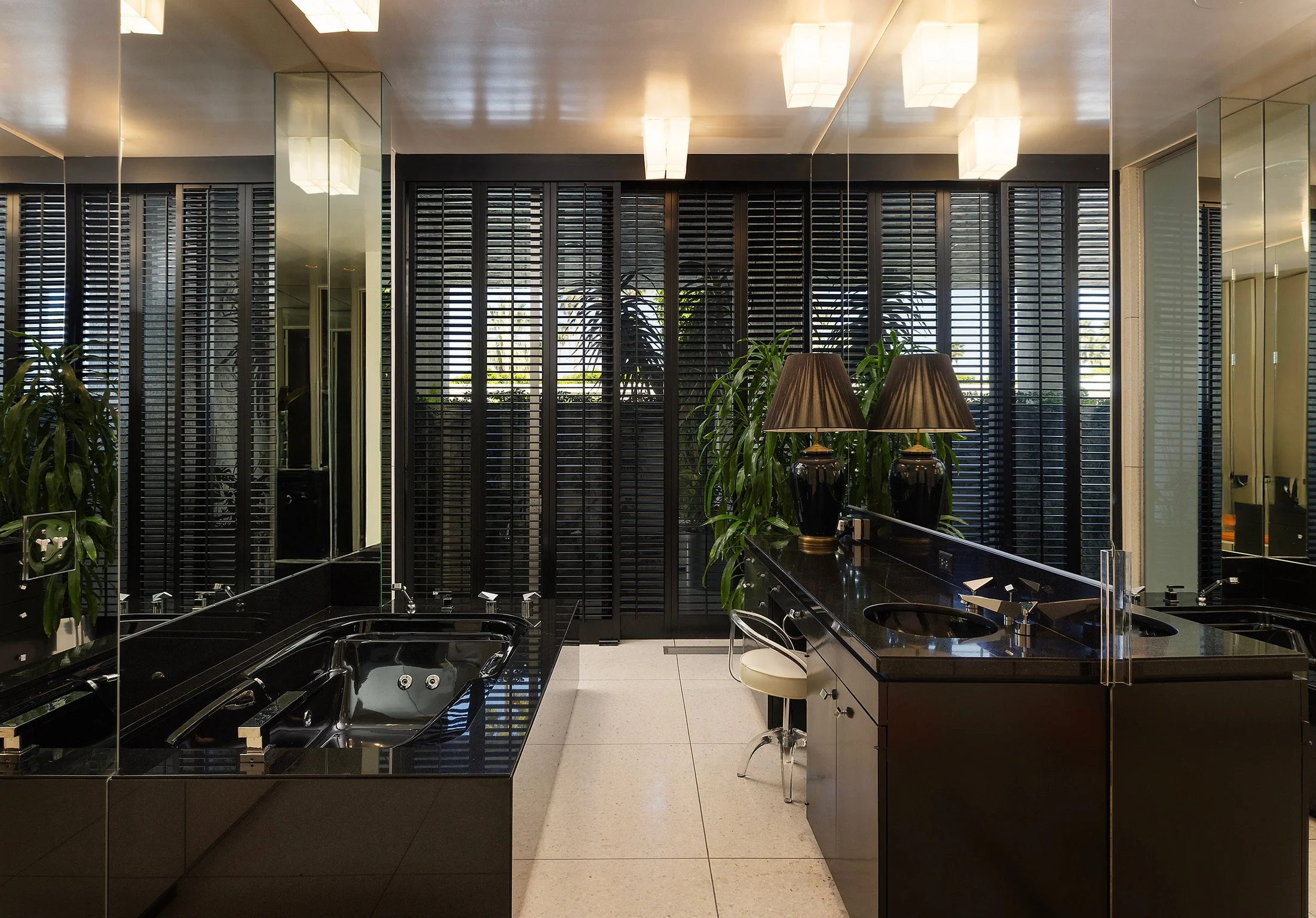
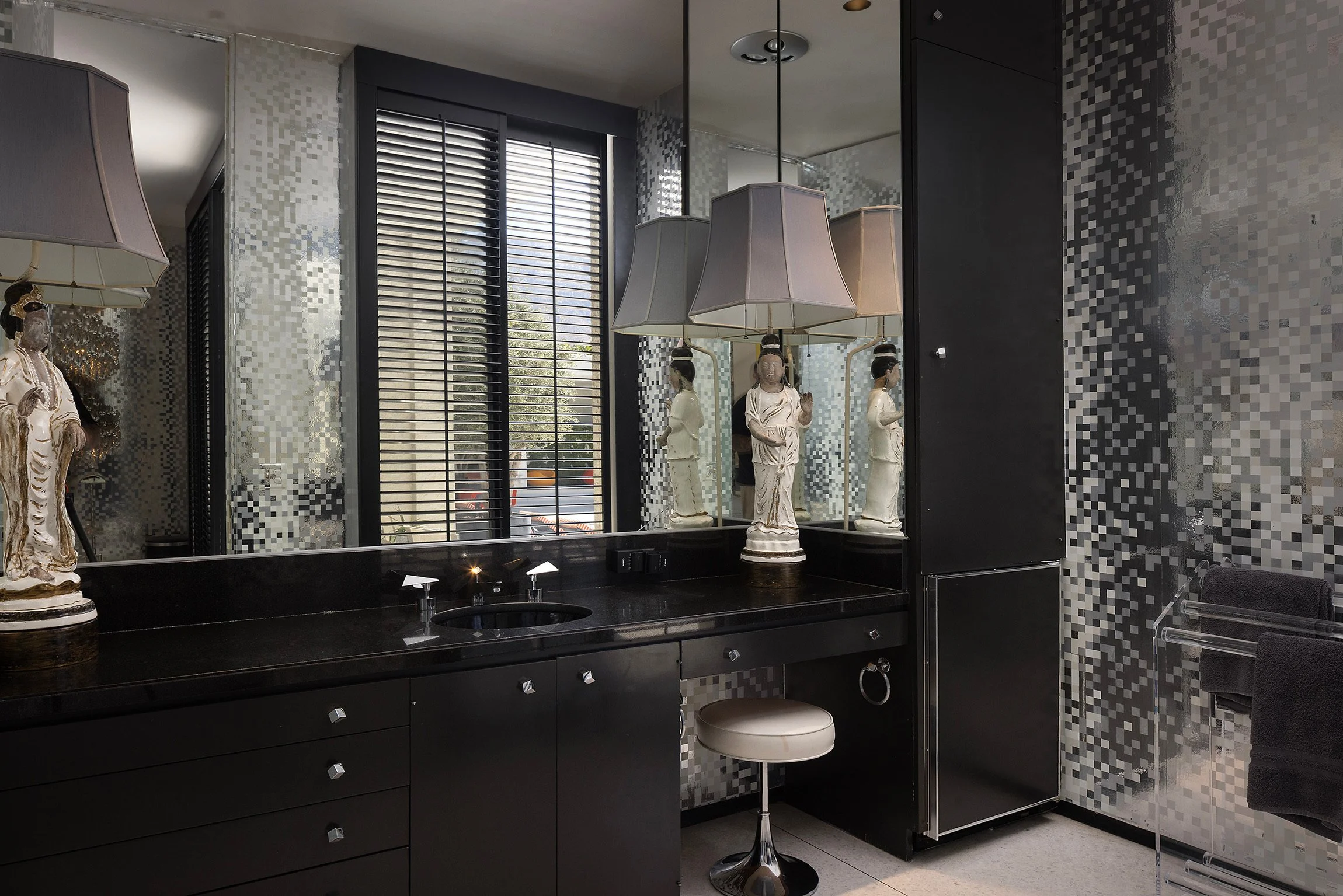
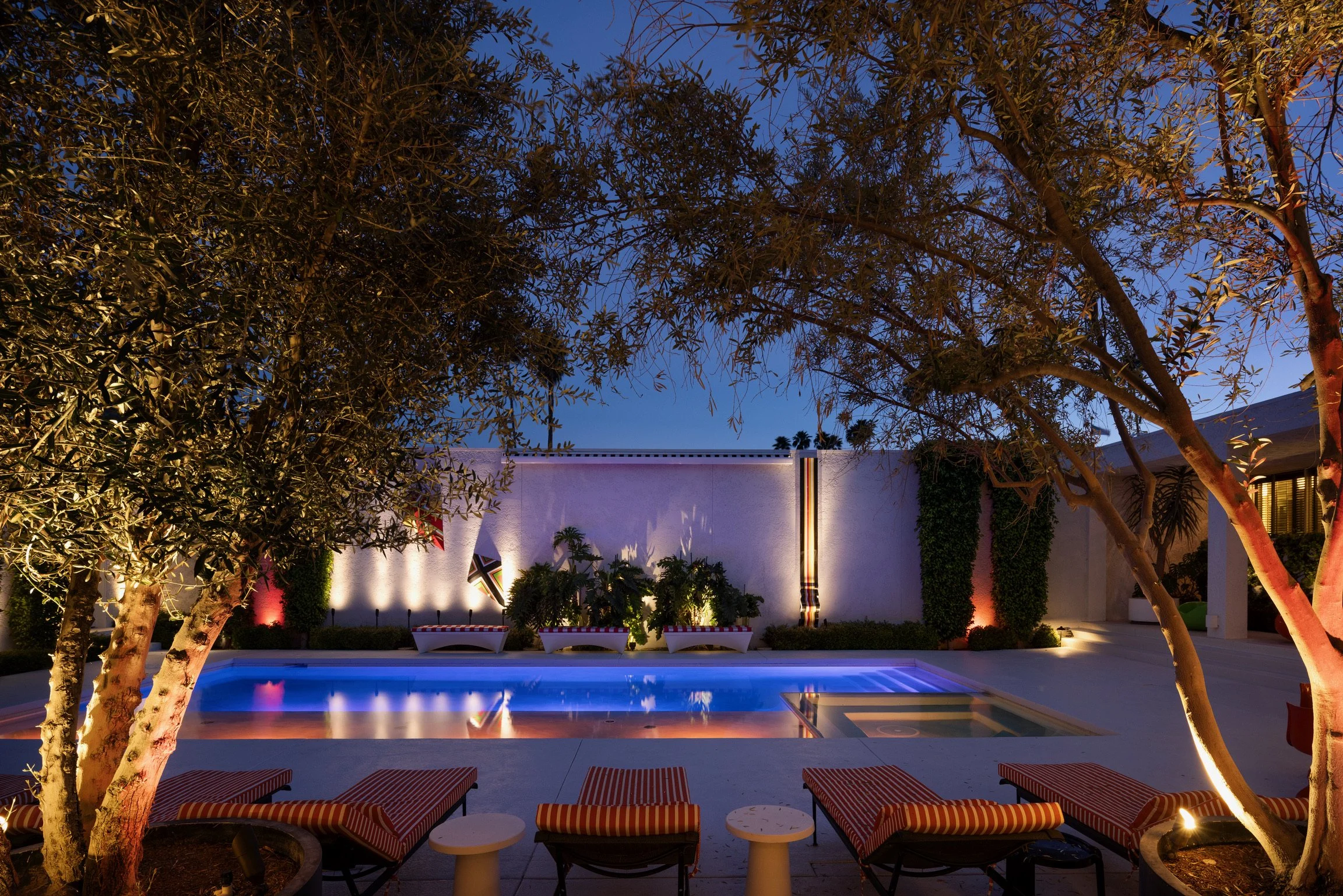
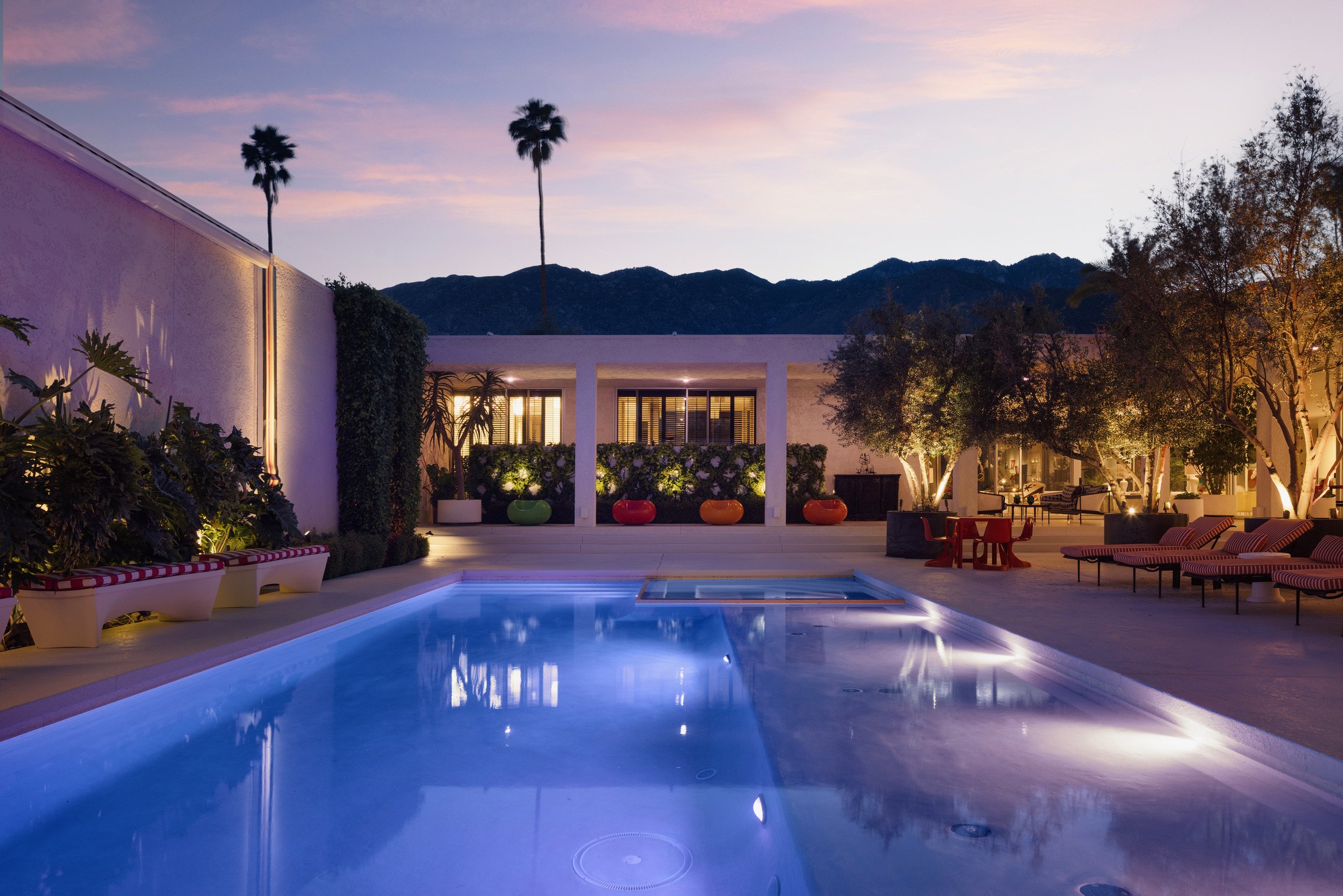
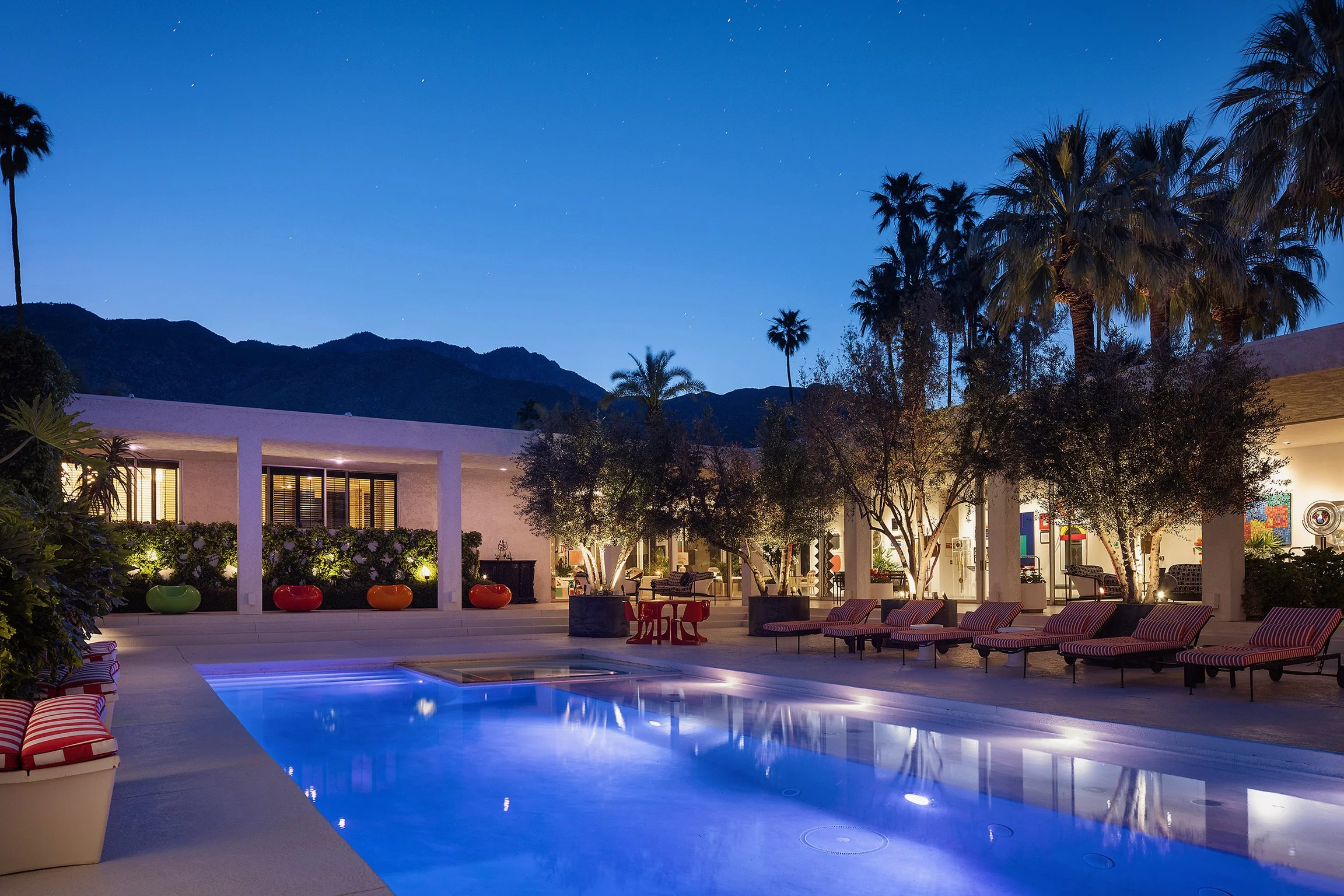
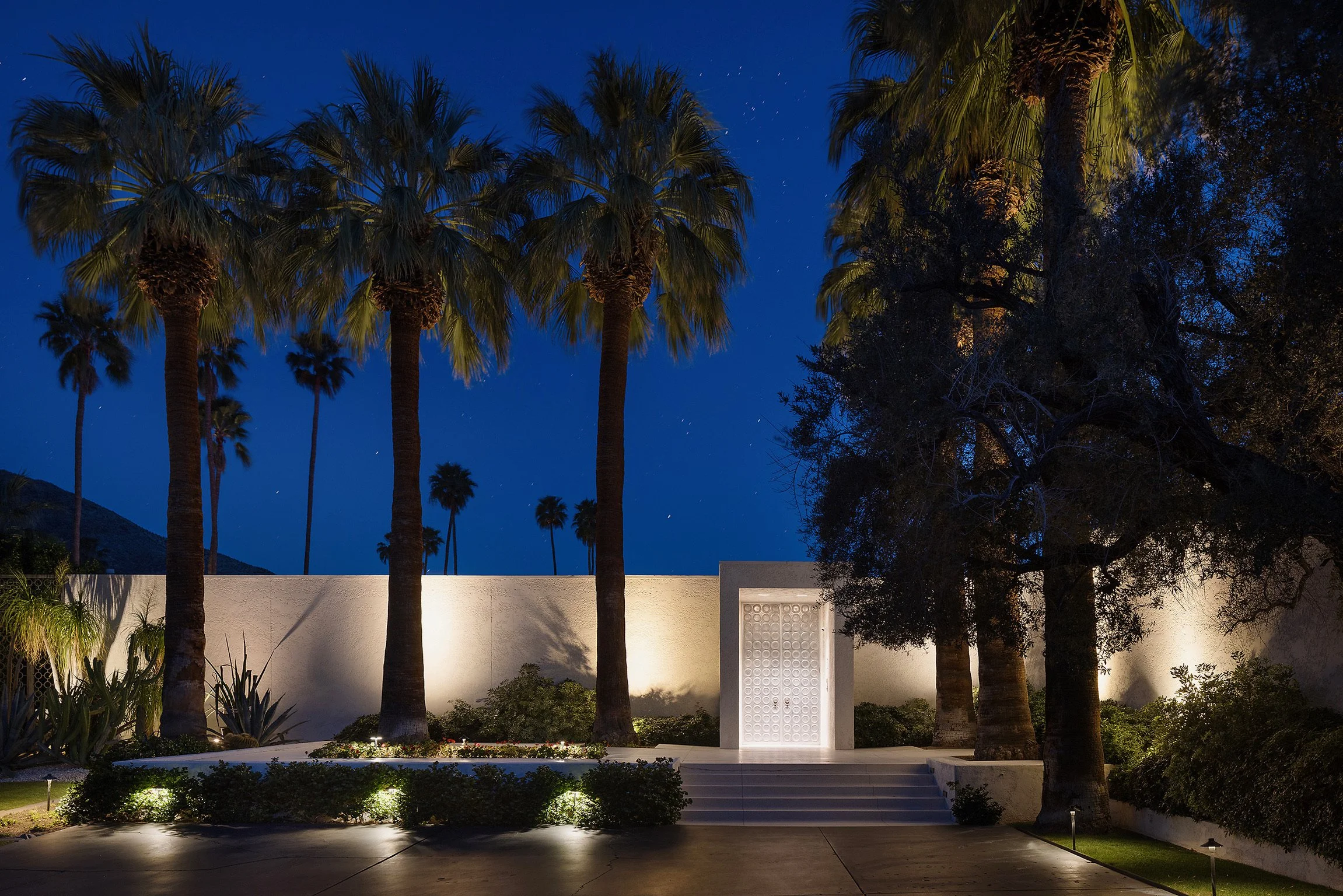
Behind the nearly windowless facade of the Factor Residence lies a larger-than-life family saga with all the makings of a Hollywood epic: the eight-day kidnapping of Jerome Factor, the man who built it; ties to the Chicago Mafia and figures like Al Capone, rigging the tables at Monaco’s Monte-Carlo Casino to “break the bank”; reportedly swindling a future King of England, a presidential pardon from John F. Kennedy, and even a connection to the invention of modern make up.
Then there’s the question of the money. Jerome Factor, who built the house on one of the premier lots in Palm Springs' Canyon Country Club, was described as a venture capitalist, but the origins of his fortune are considerably murkier.
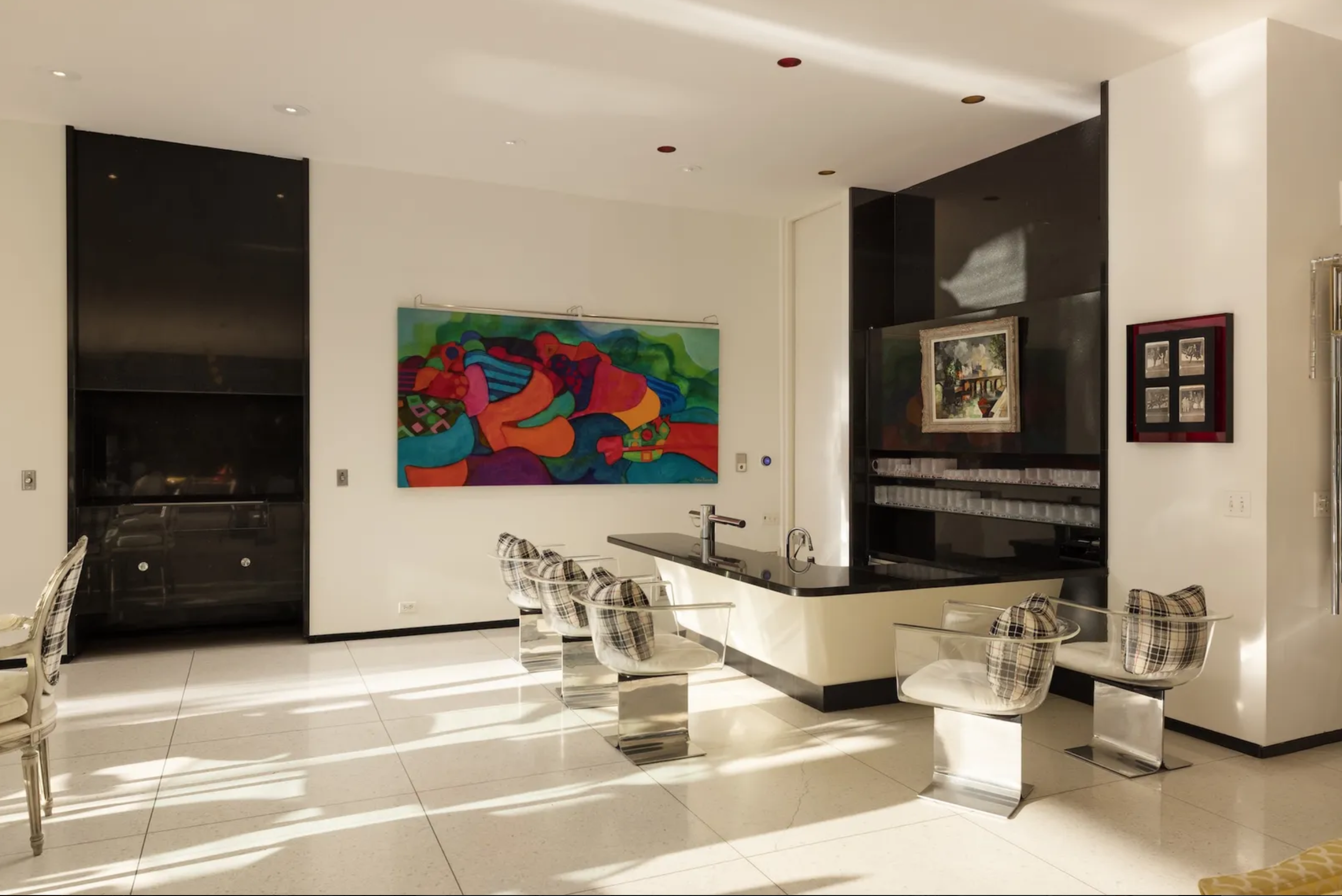
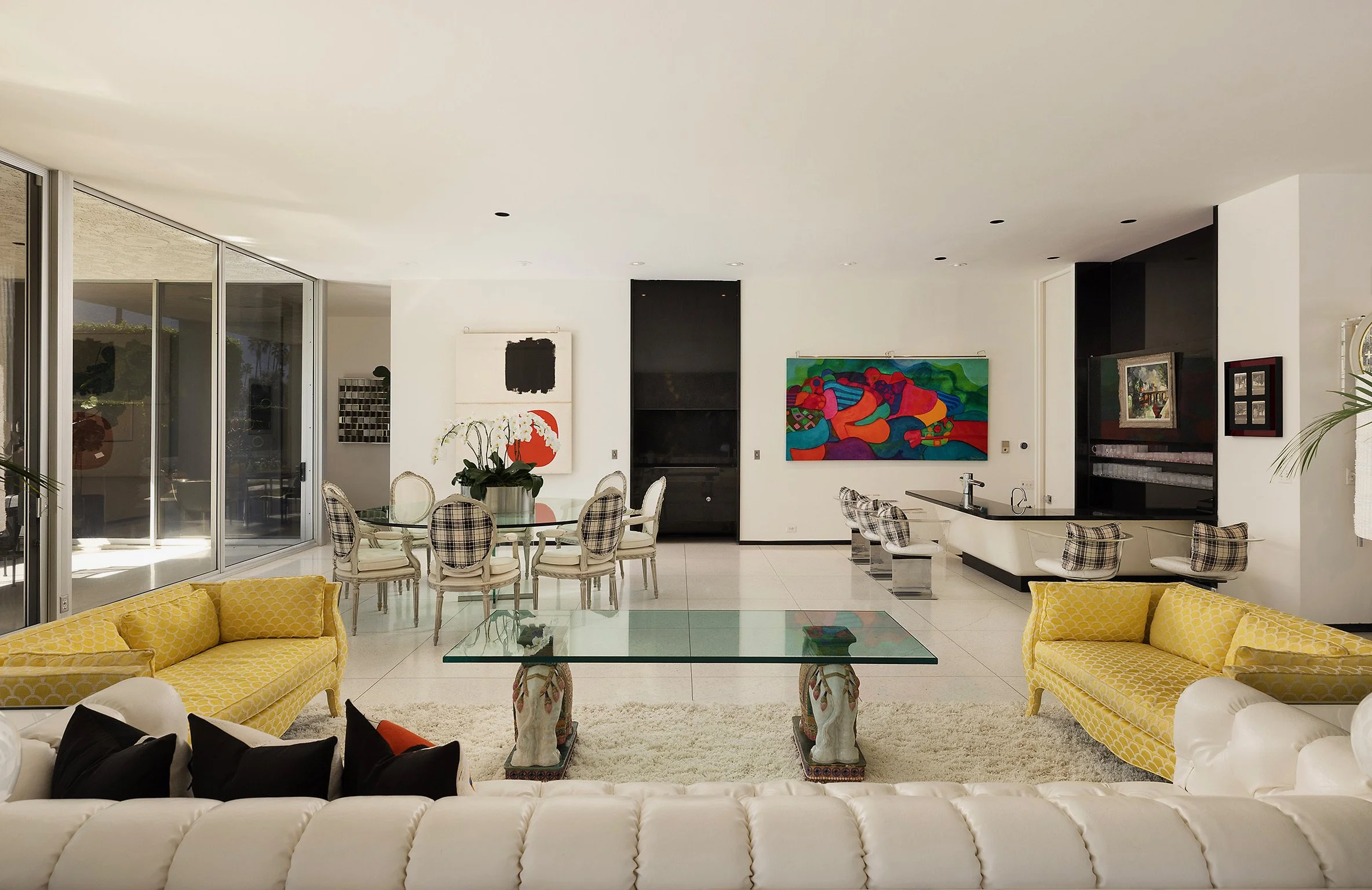
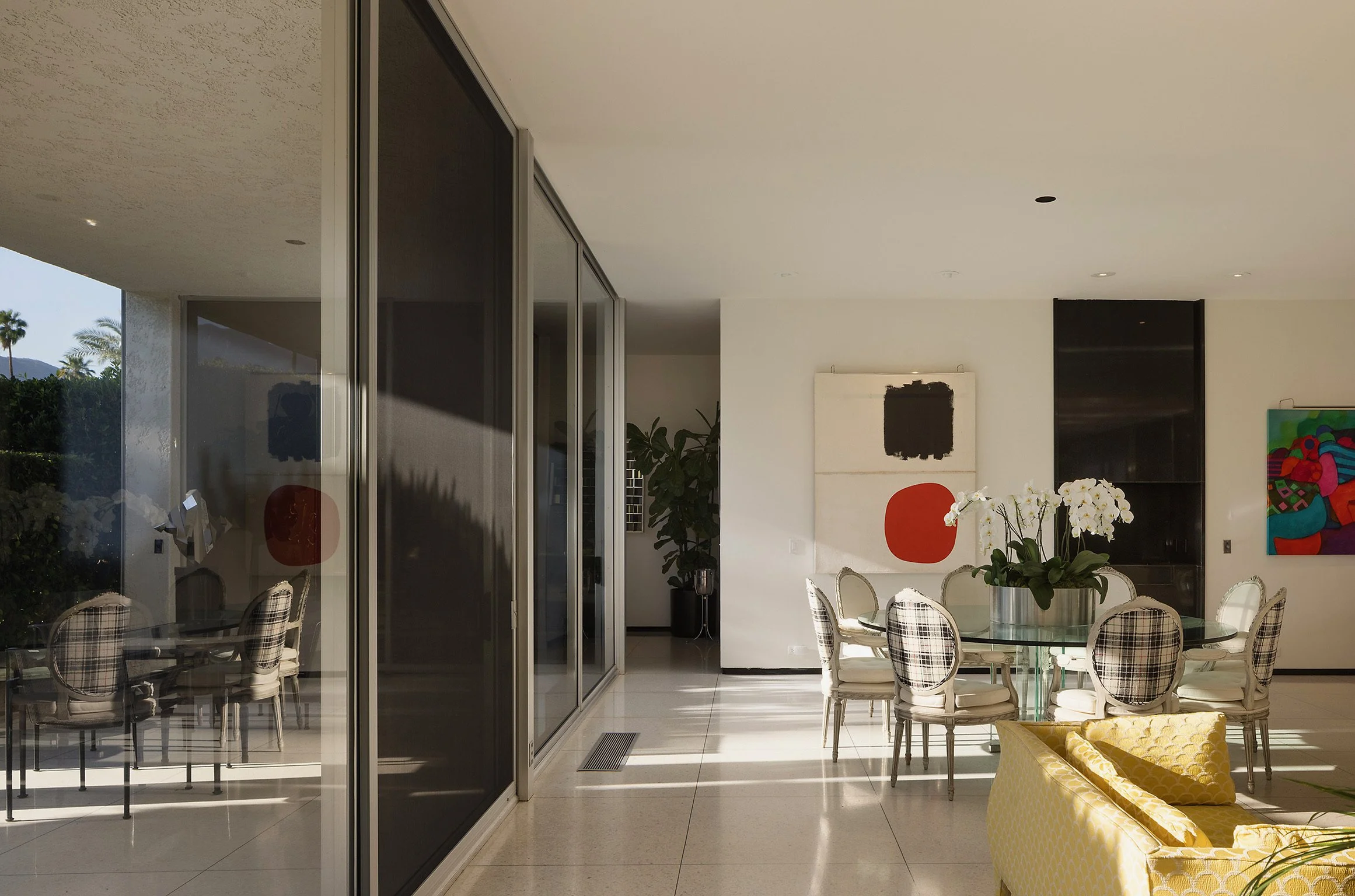
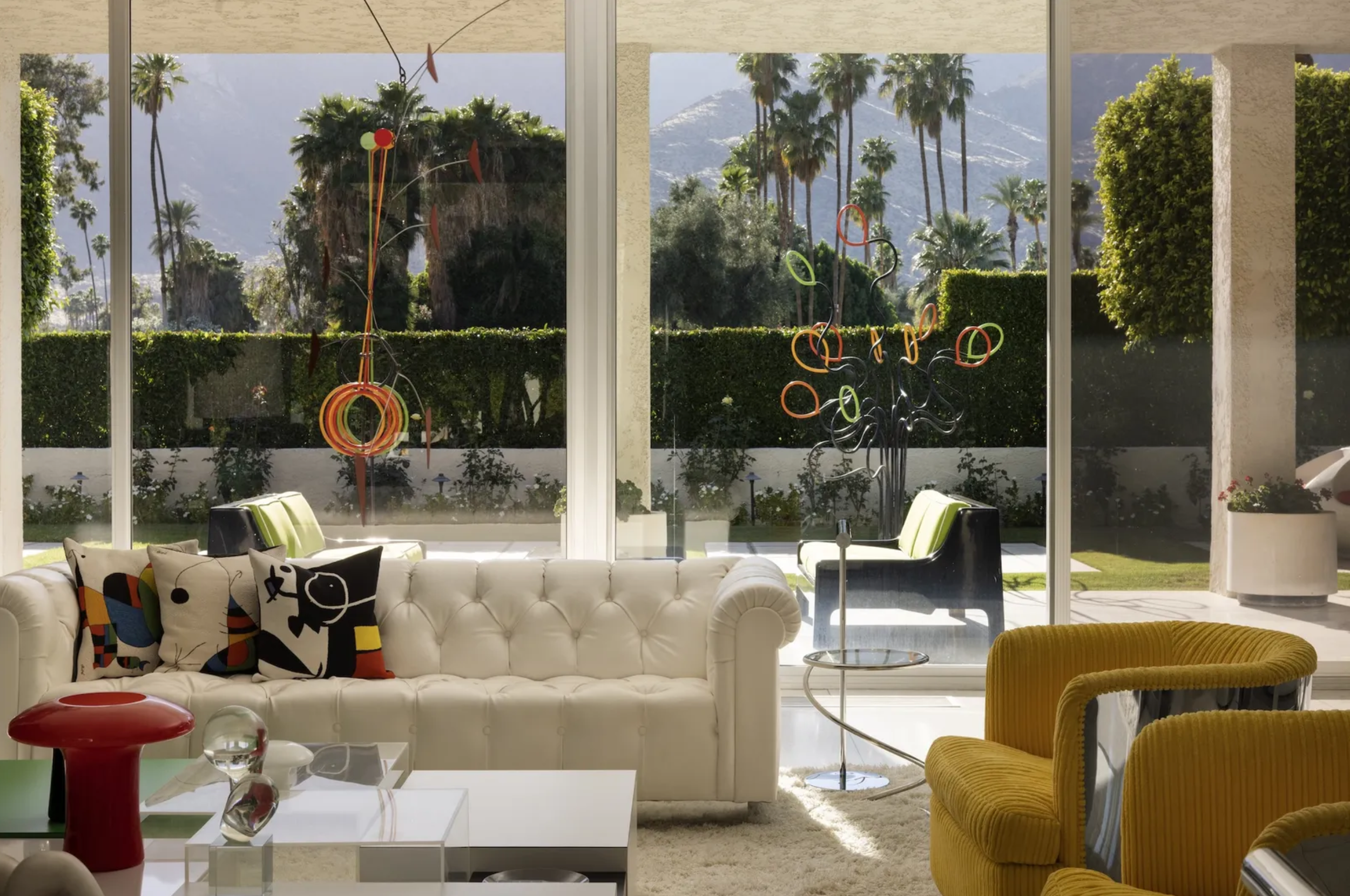
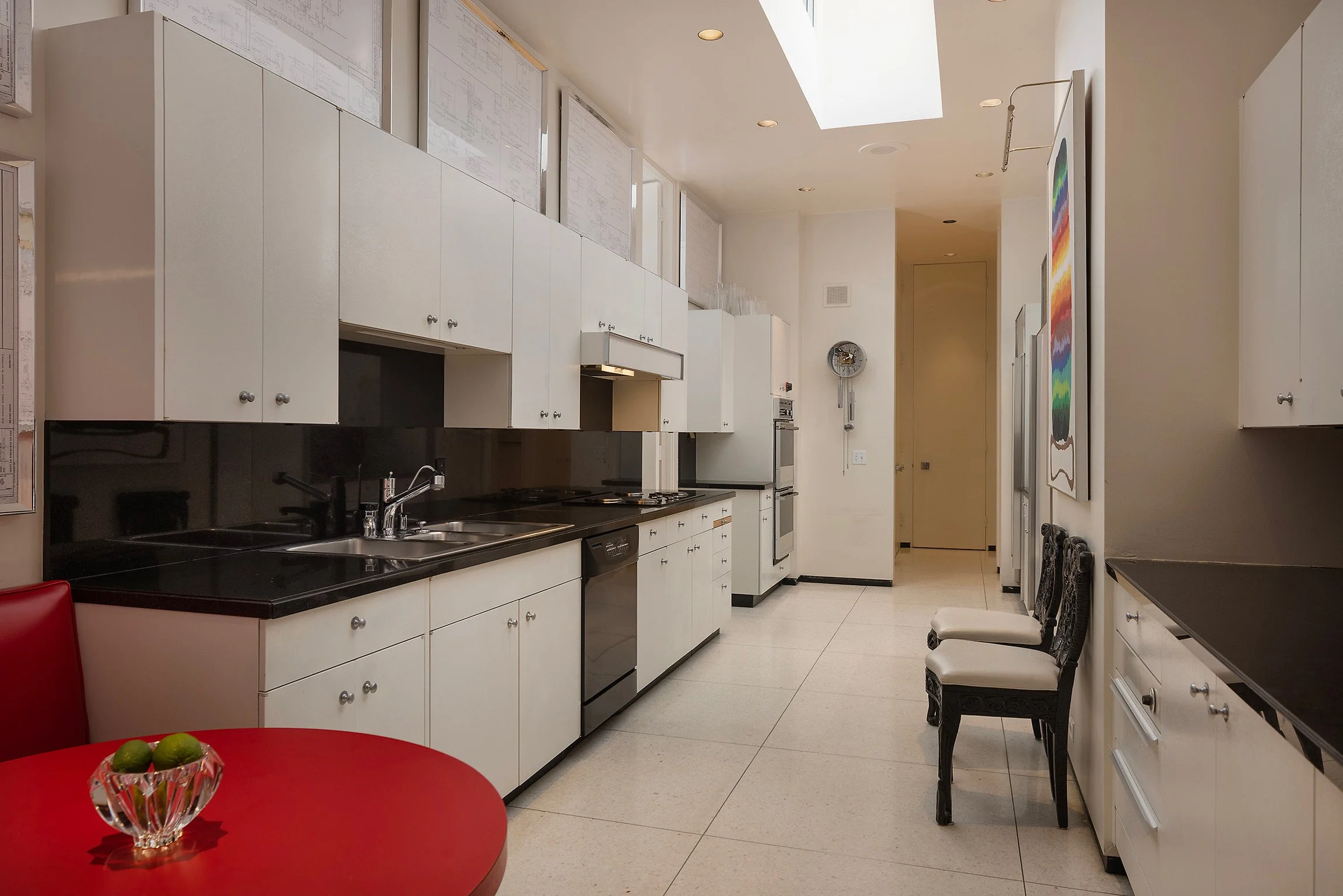
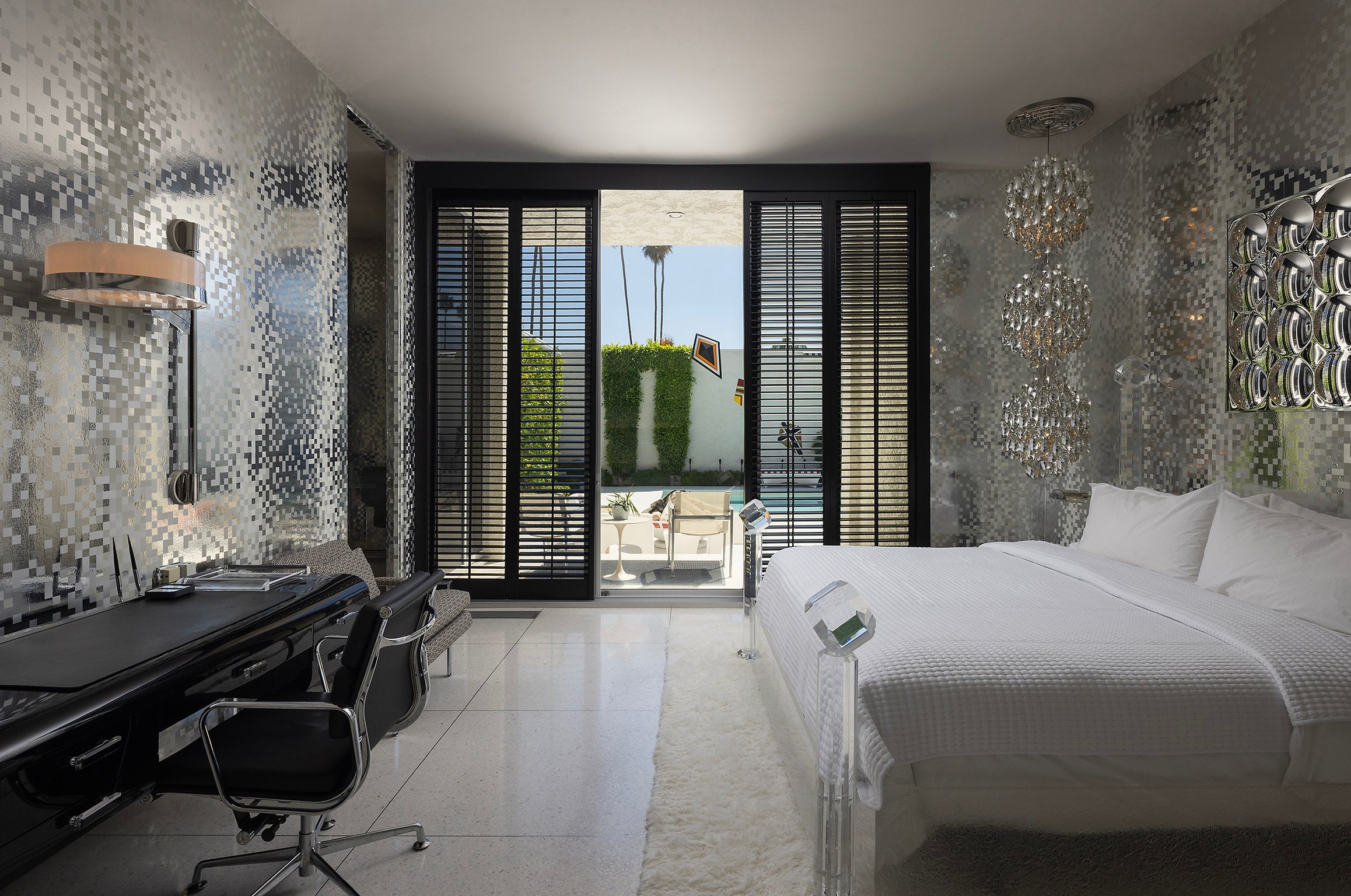
More than 50 years later, almost everything the Factors put into the house is still there. The original art collection, the furniture, and built-ins. Eric Lavey, the listing agent, points out that even the original cocktail napkins are still at the bar. It’s like the owners just stepped out.
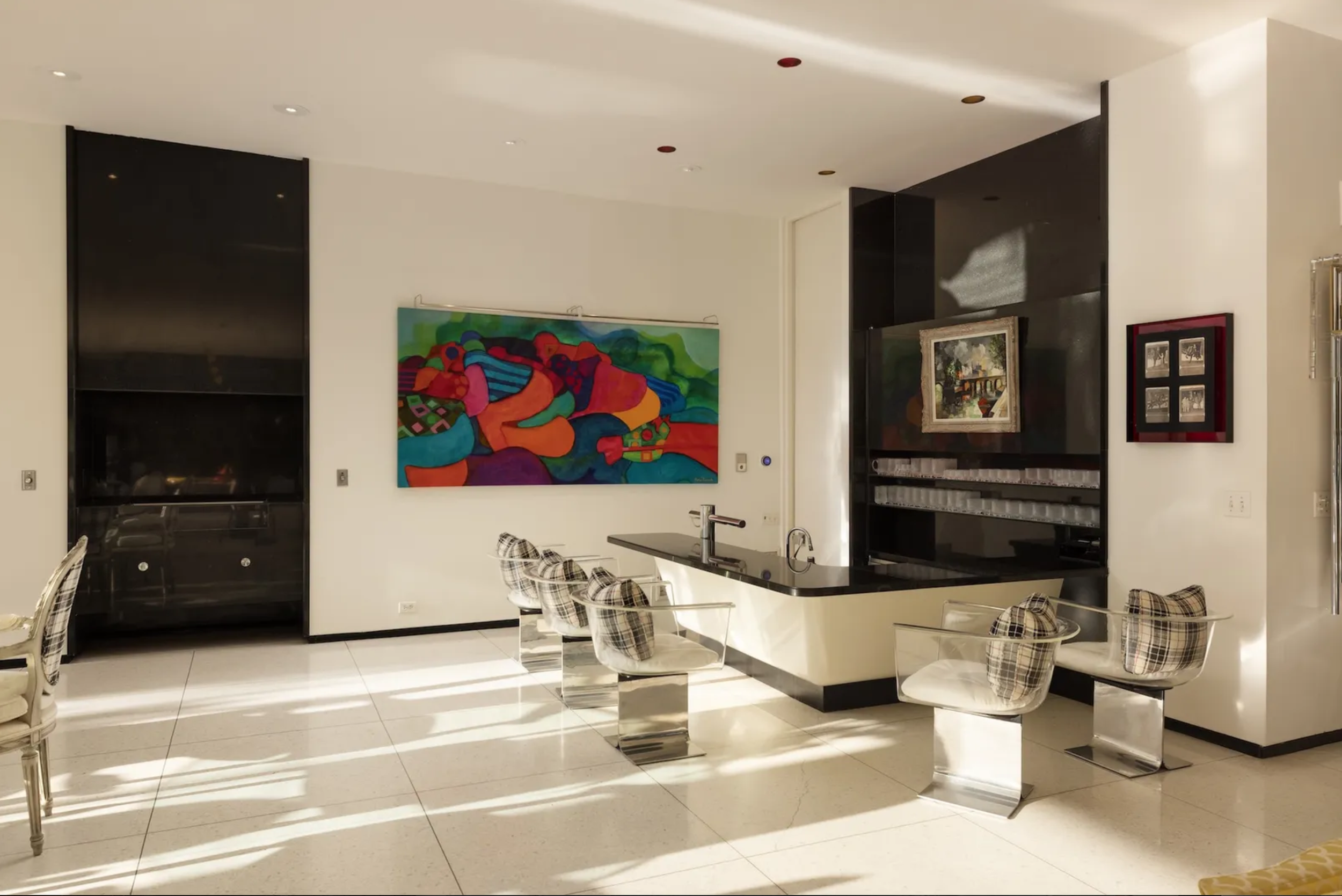
The granite-topped sunken bar featured a built-in hibachi, and a concealed pass-through connected the entertaining spaces to the kitchen.
California Dream
The Factor Residence was built in 1969, when a new kind of life was taking shape across California. The state had become more than a place. It had become a fantasy in the American imagination and an icon for the American dream. It stood for sunshine, youth, freedom, sex, mobility, informality, and the idea that you could leave behind older social rules and invent a new kind of life.
That dream was drawing people west in extraordinary numbers. Between 1950 and 1970, California’s population grew from approximately 10.6 million to nearly 20 million. In the middle of that migration, the Mamas & the Papas released “California Dreamin’” in 1965. Soon it was playing on car radios as millions of Americans drove west, singing about the place they were going and the life they hoped to find there.
Palm Springs’ public image and social life were built around pleasure, escape and modern luxury at exactly the moment the rest of the country was becoming increasingly unstable. Nationally, the decade was turbulent — Vietnam, civil rights, protest movements, the counterculture, the sexual revolution — but Palm Springs existed almost as a parallel universe to that.
By the 1950s and 1960s, Palm Springs had long since become Hollywood’s glamorous desert playground. Its location roughly two hours from Los Angeles was part of the reason. During the studio era, actors were often bound by the so-called “two-hour rule,” requiring them to remain close enough to return to the studios on short notice. Palm Springs sat conveniently within that radius about 100 miles from LA.
At first, many stars, entertainers and wealthy business figures stayed in Palm Springs’ resorts and clubs, but increasingly they bought land and commissioned private homes of their own. Frank Sinatra built Twin Palms; Dinah Shore hired Donald Wexler. Architects including Richard Neutra, Albert Frey, William Krisel and E. Stewart Williams were helping give the city the modernist identity it’s known for today.
Sinatra, Dean Martin, Sammy Davis Jr. and Cary Grant became fixtures of Palm Springs life. At night, the Rat Pack drew crowds to local clubs; by day, Hollywood stars disappeared behind the walls of private desert homes, spending their time around pools, golf courses and tennis courts.
It was the world Slim Aarons would capture. His famous photographs at Richard Neutra's Kaufmann Desert House were made in January 1970 — just months after the Factor house was finished. In Poolside Gossip, glamorous women in bright resort clothes sit around a turquoise pool, framed by modern architecture, palm trees and mountains.
It was into this world that Los Angeles architects Hank Webber and Don Staska designed the Factor Residence in 1969. Like much of Palm Springs’ modern architecture, the house was conceived around privacy, views and indoor-outdoor living — but from the street, Webber and Staska gave those ideas an unusually imposing form.
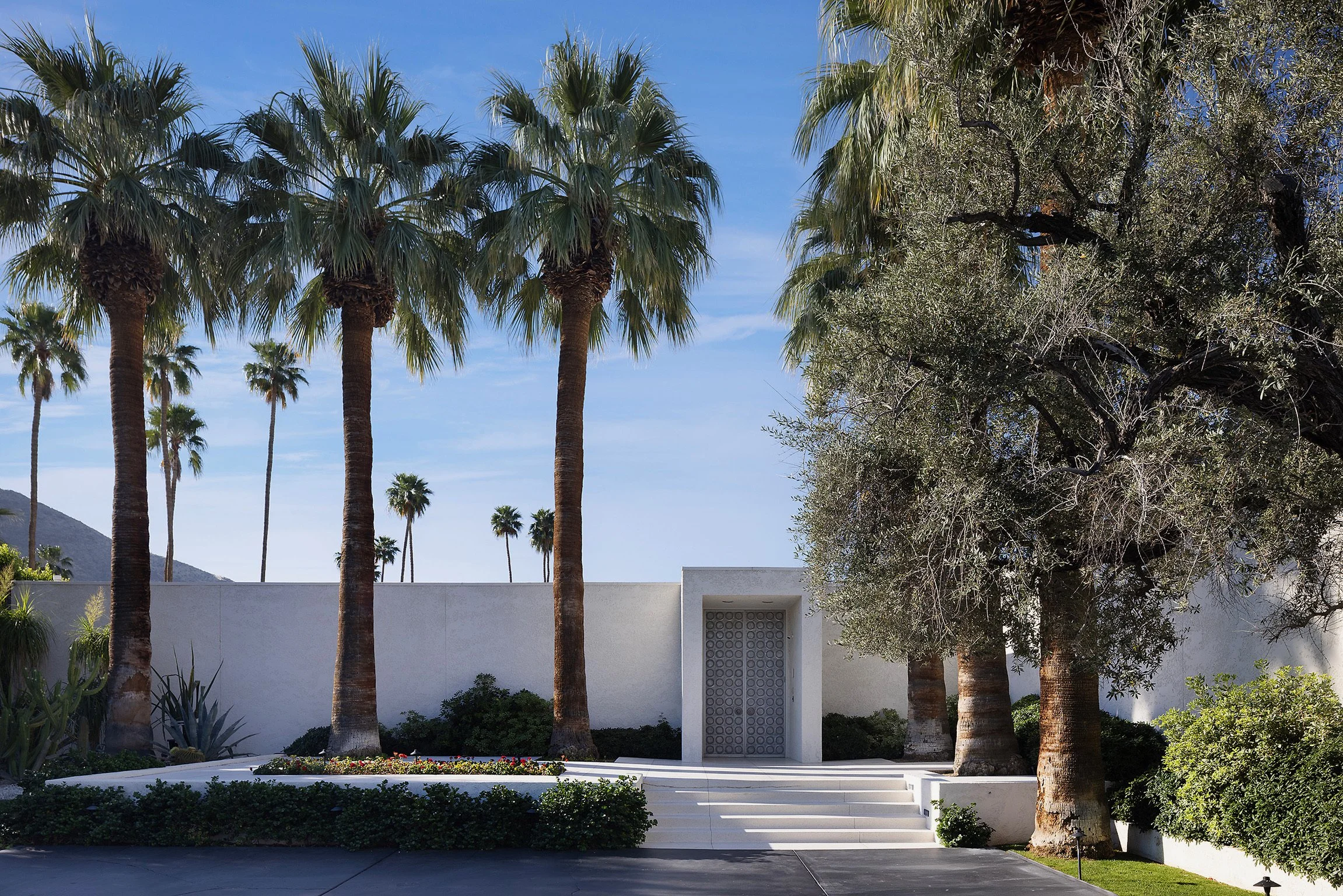
Behind the nearly windowless facade of the Factor Residence lies a larger-than-life family saga with all the makings of a Hollywood epic.
The Factor Residence
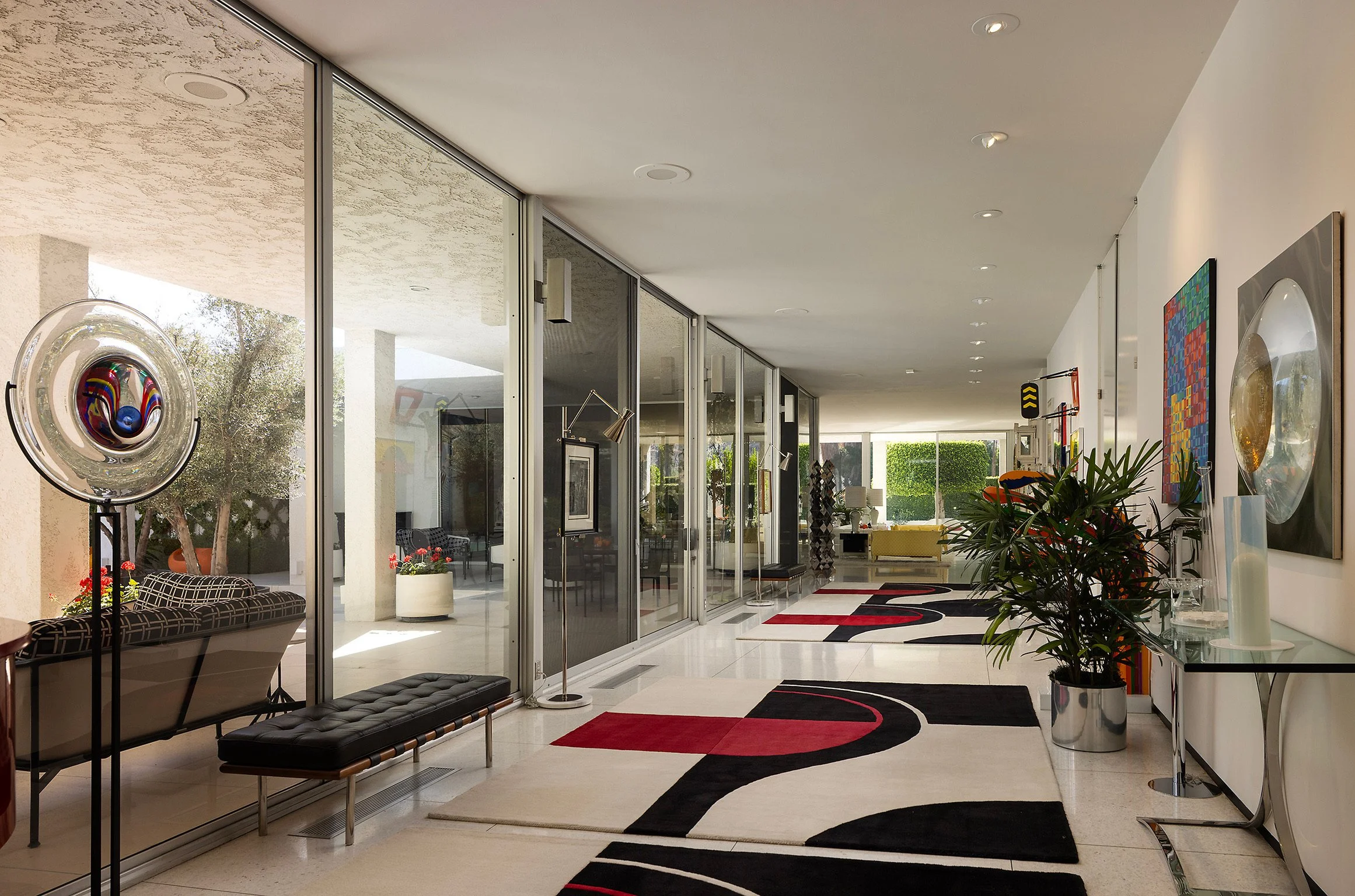
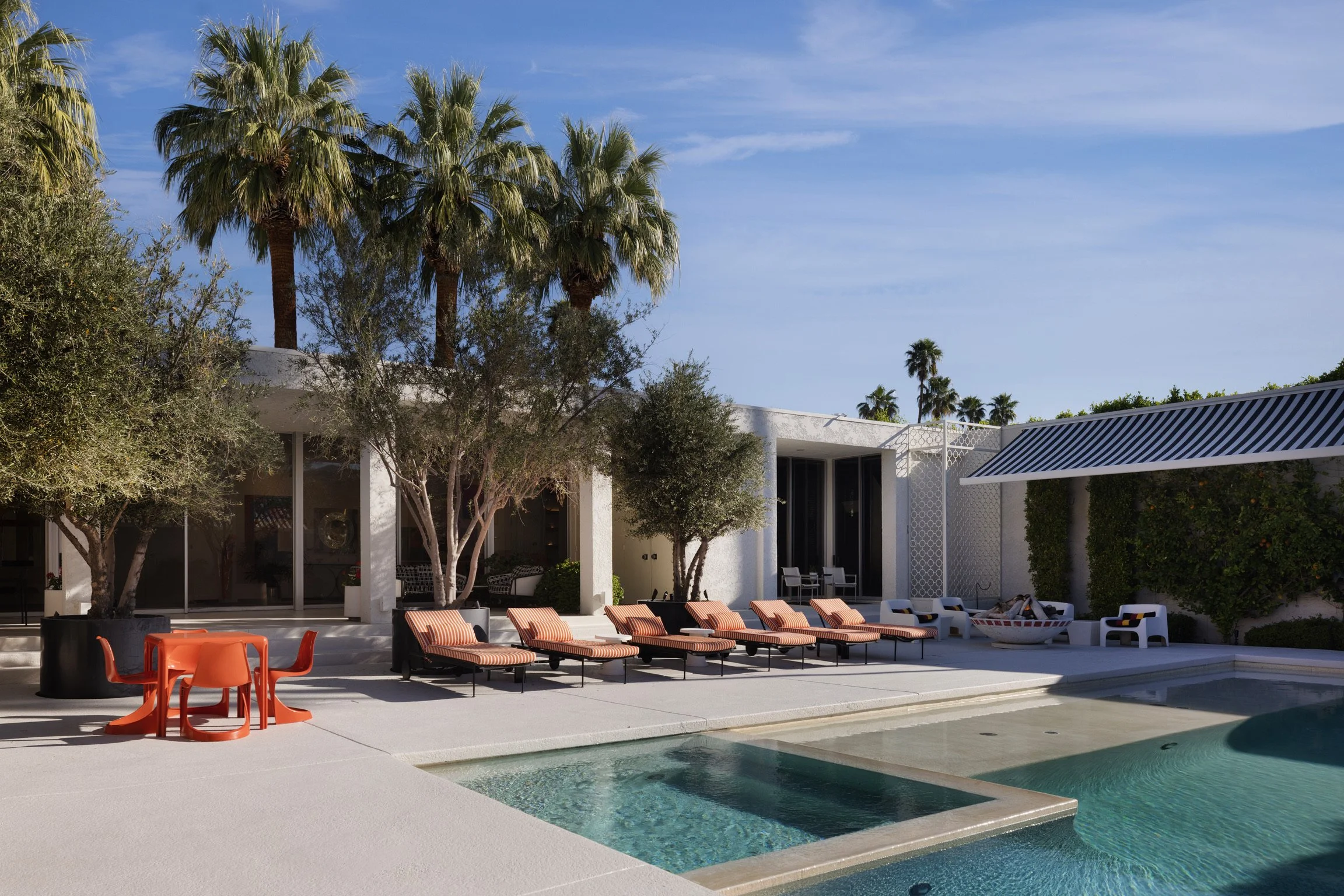
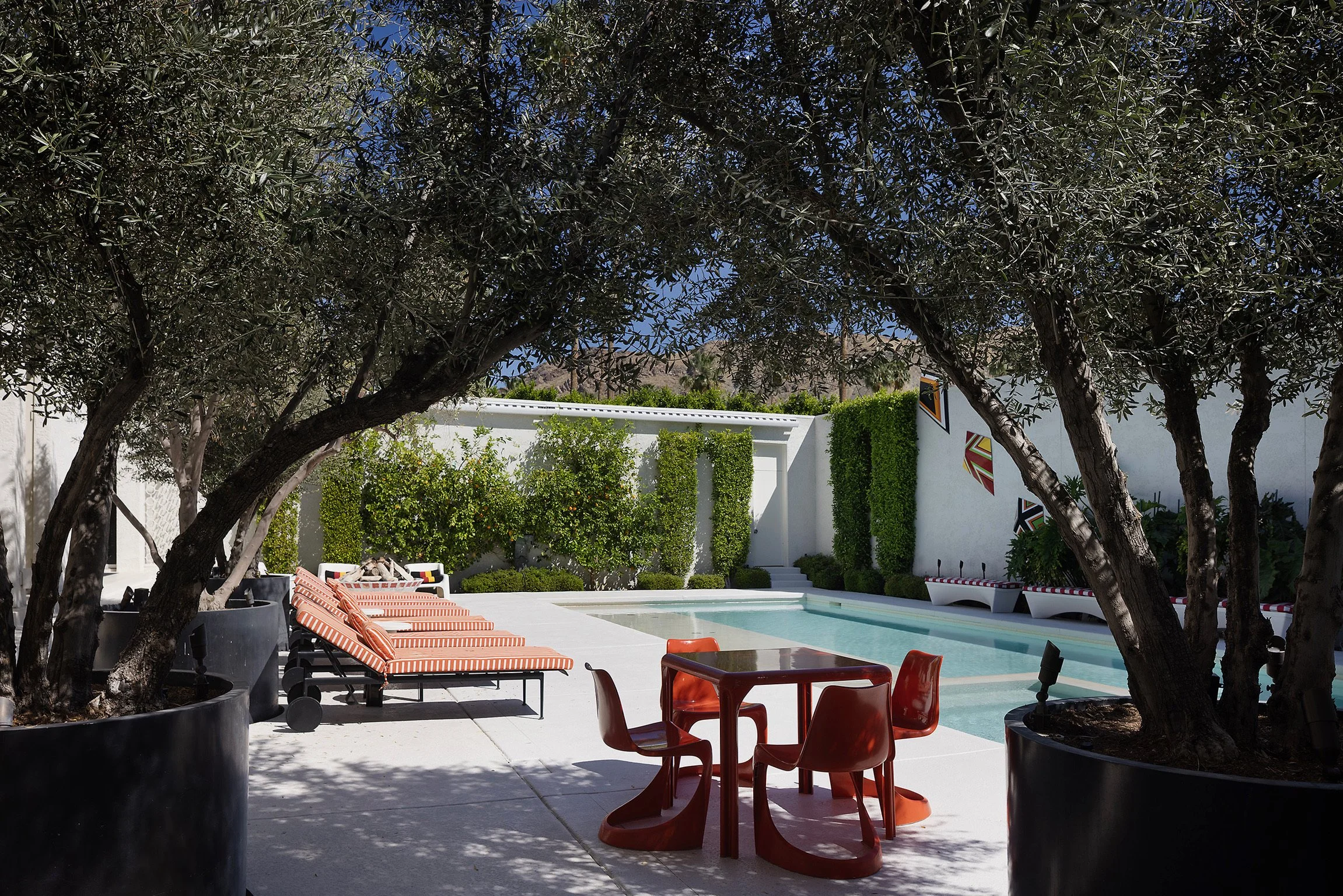
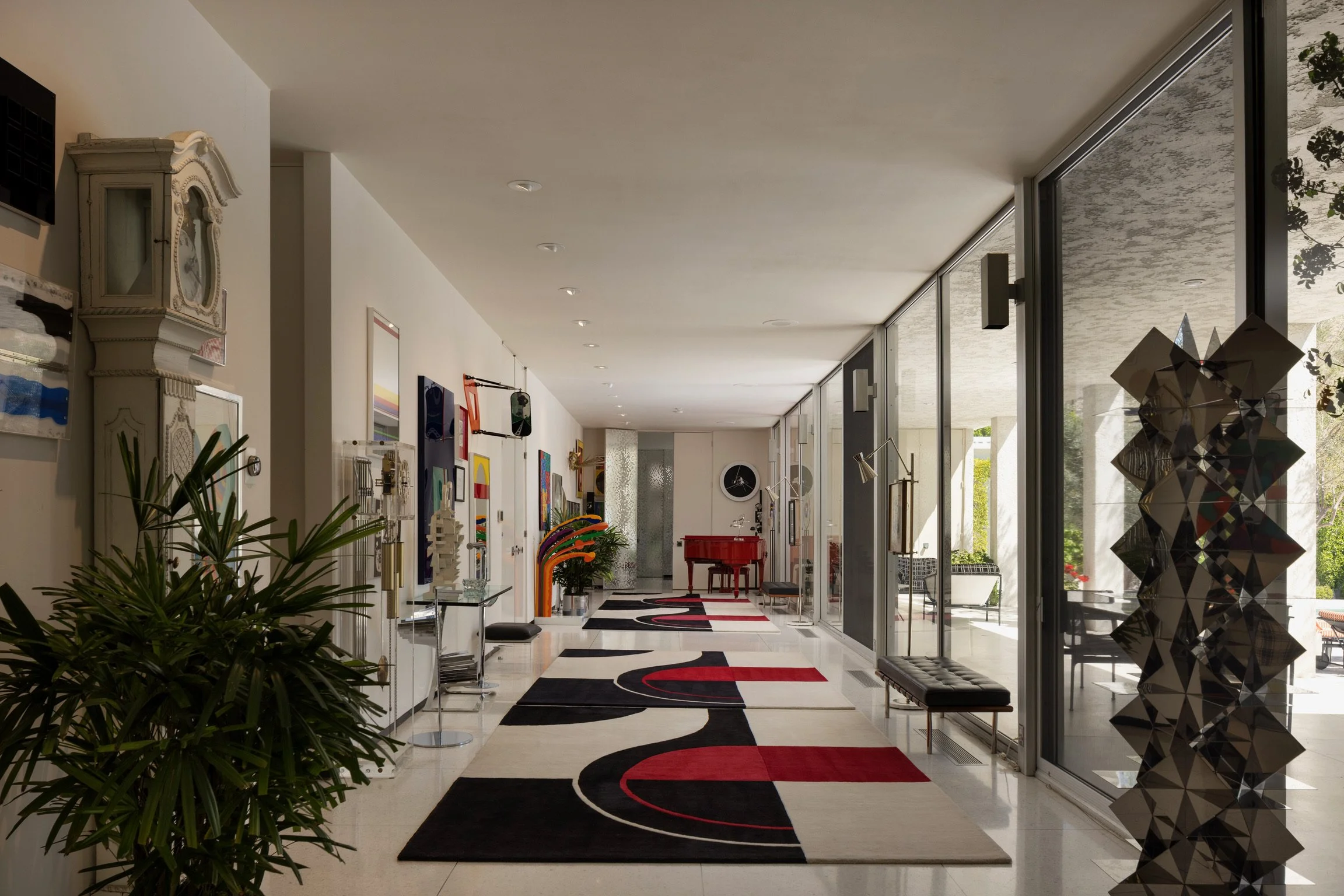
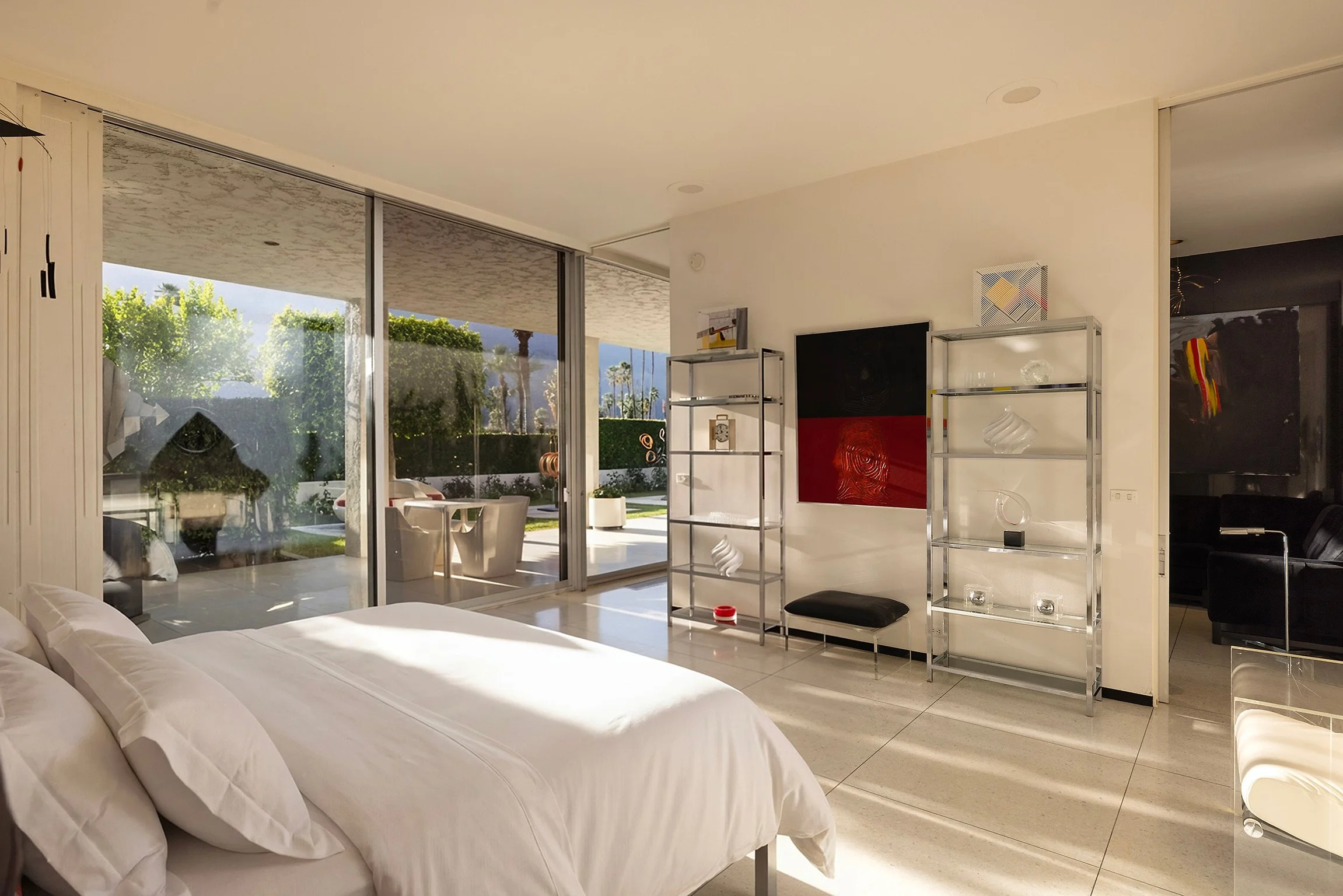
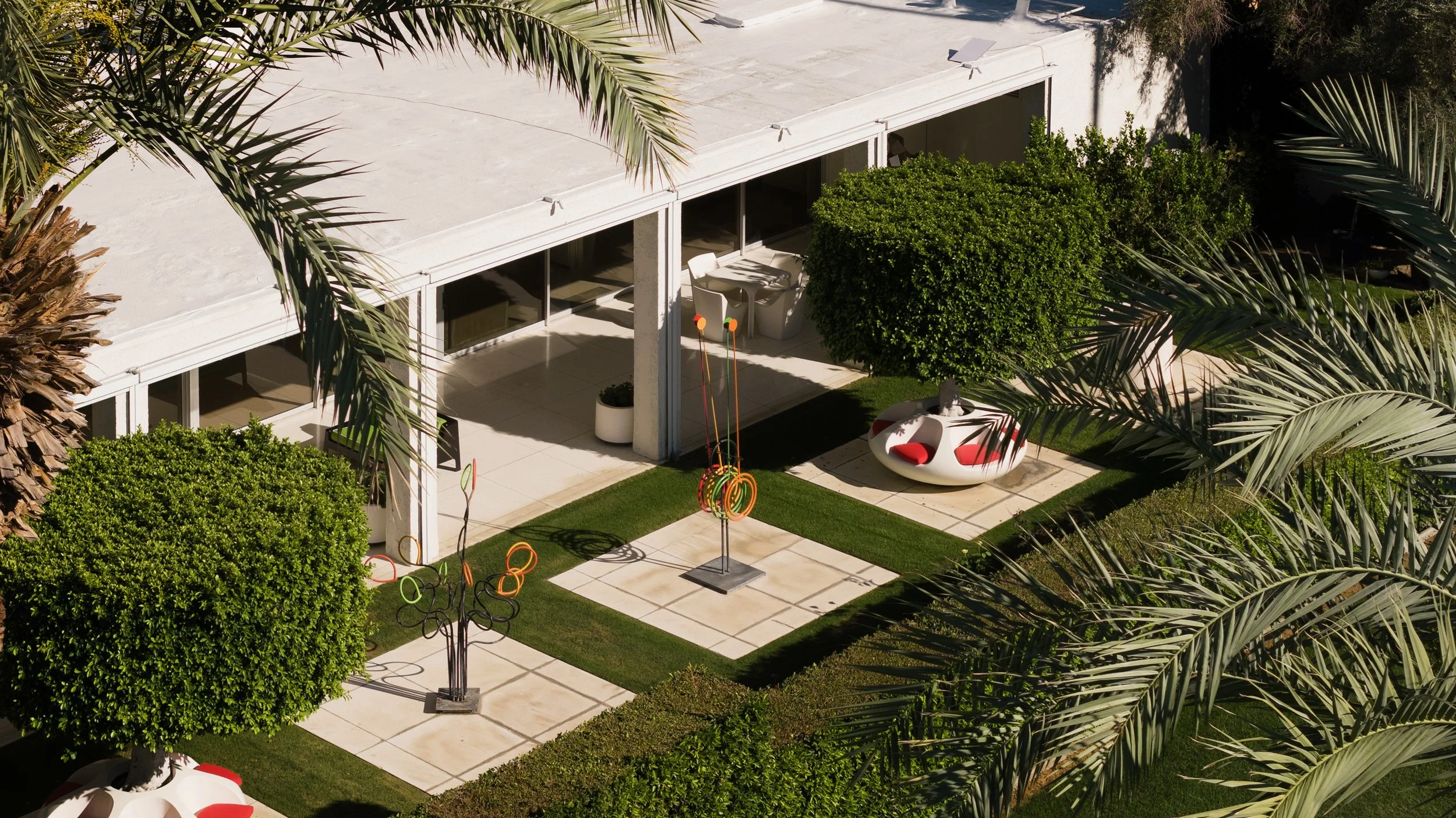
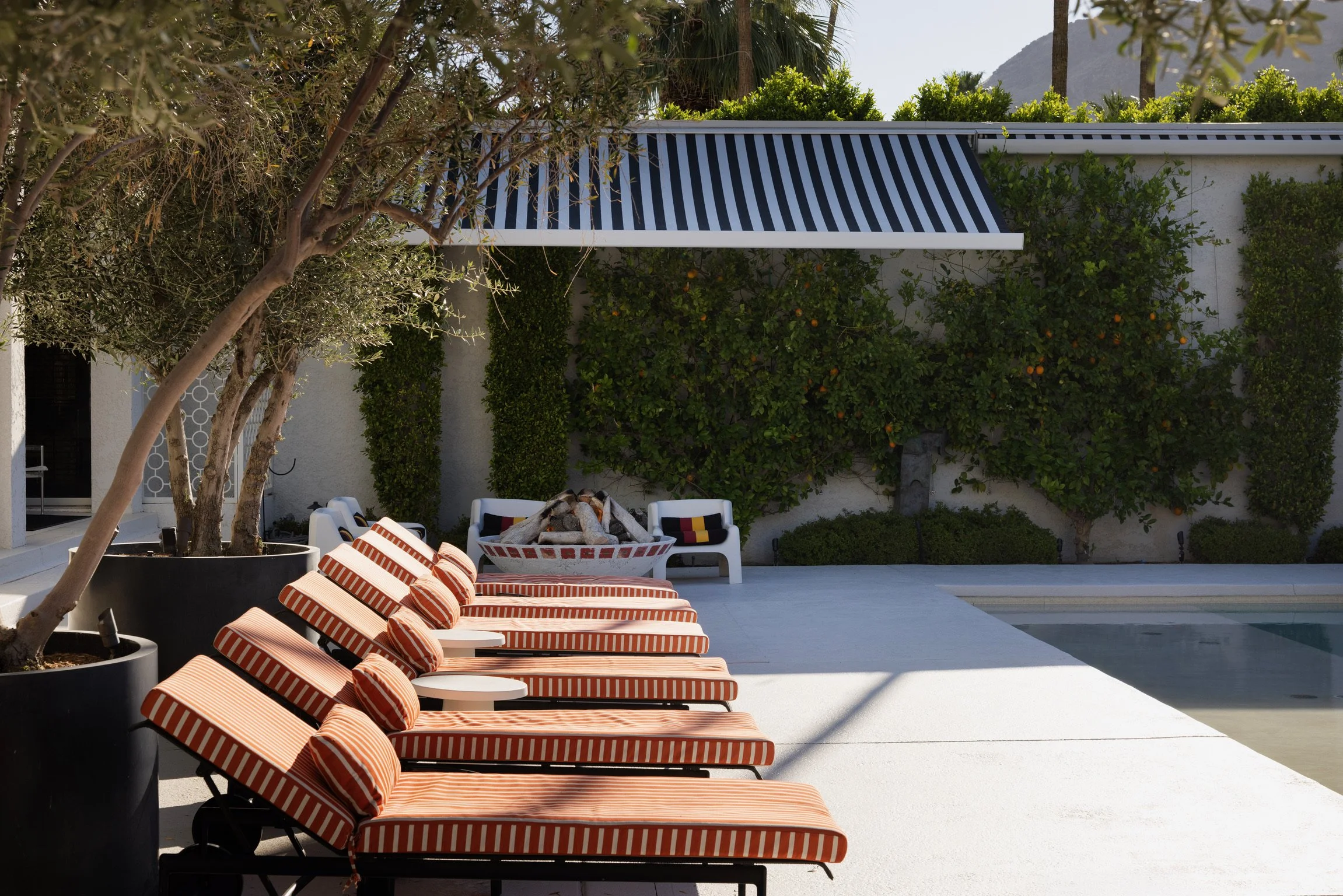
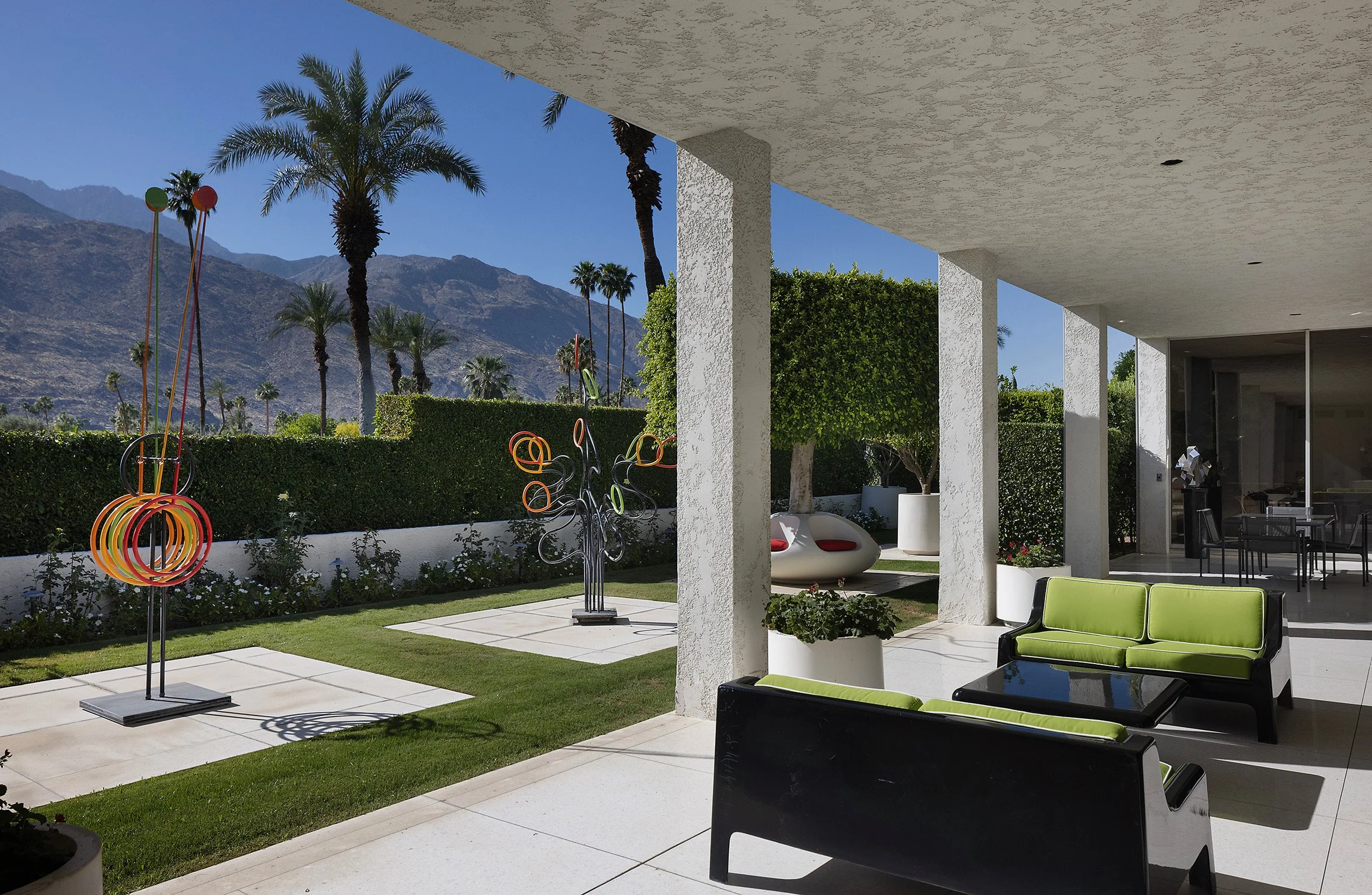
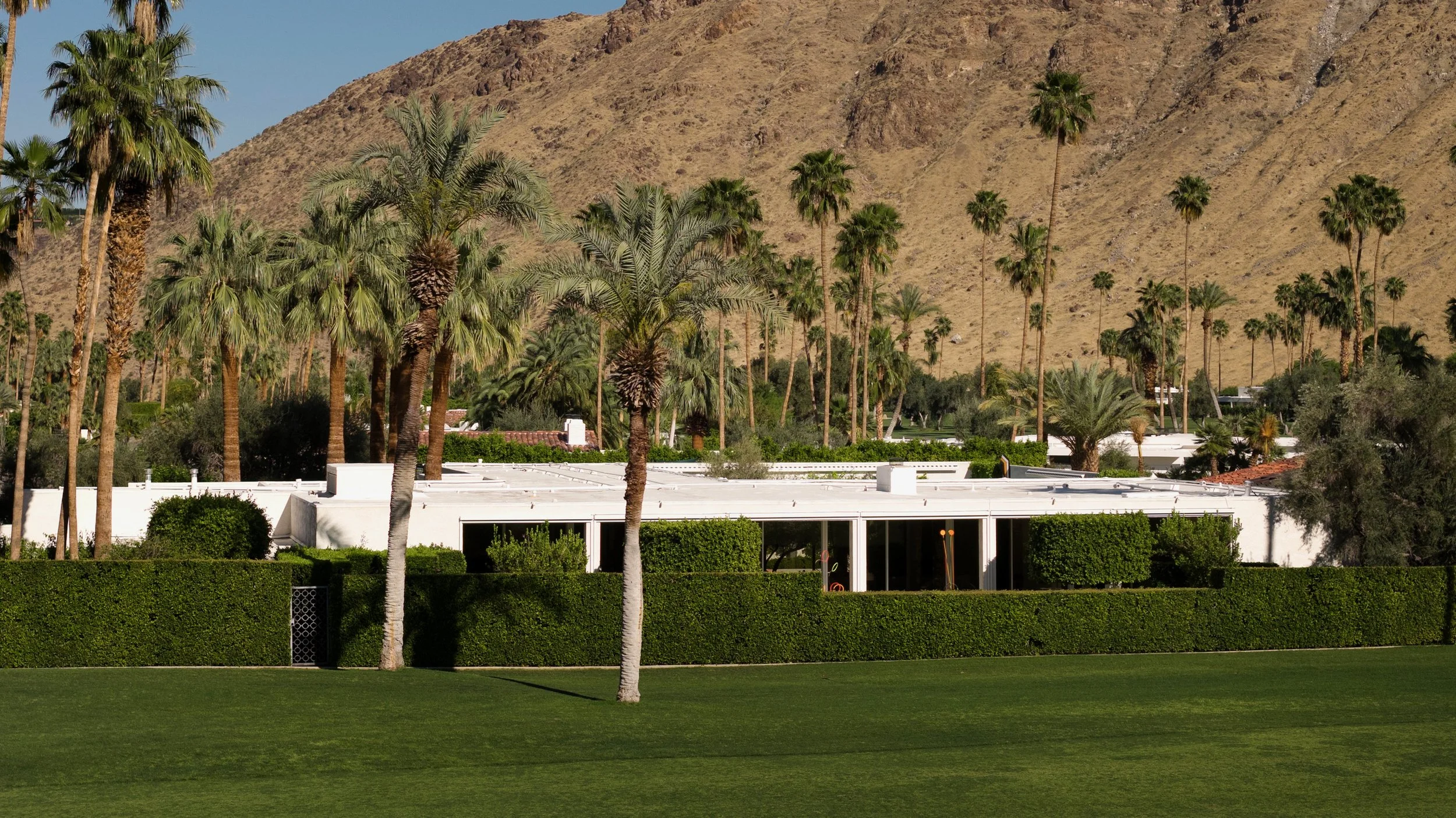
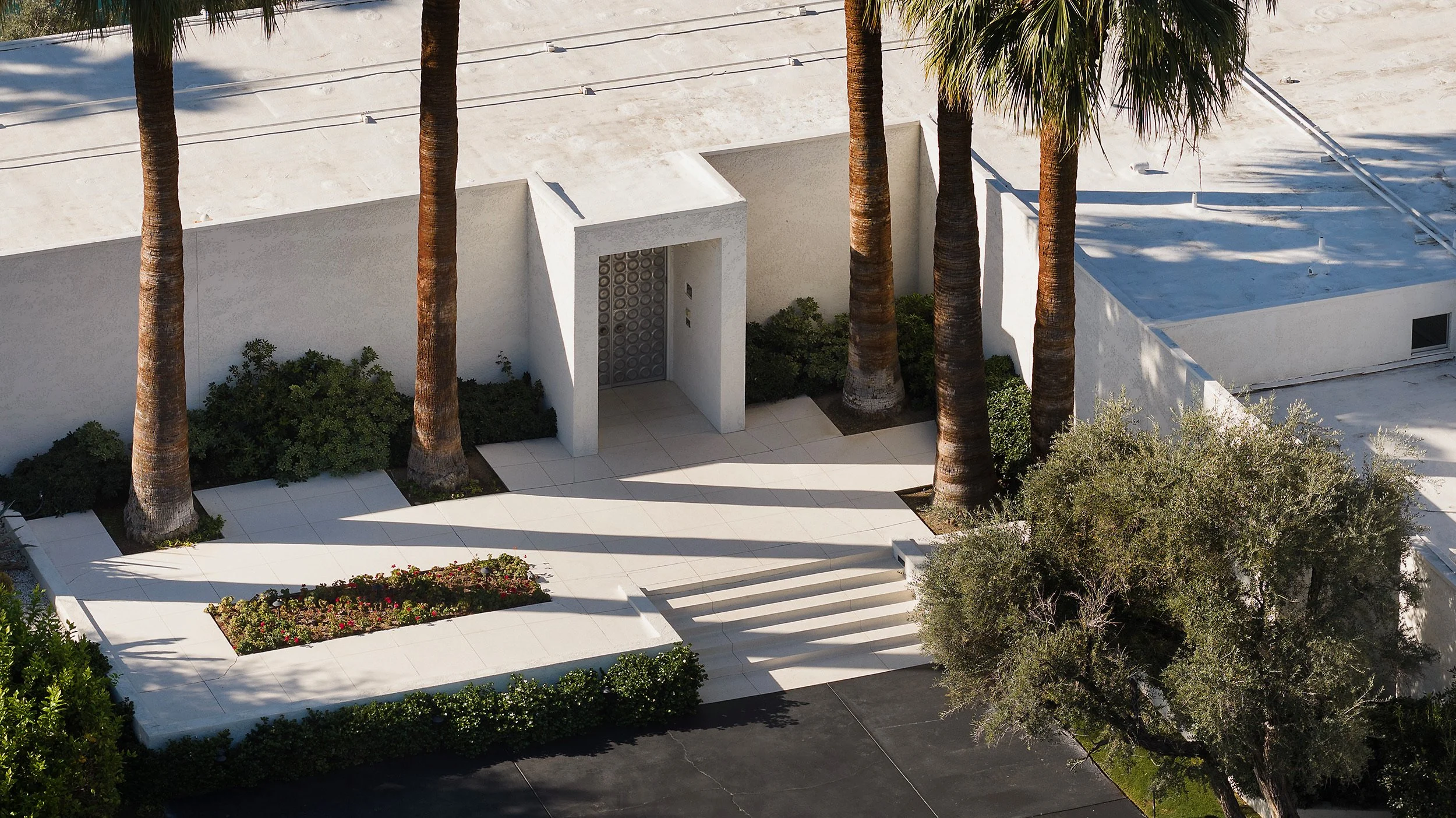
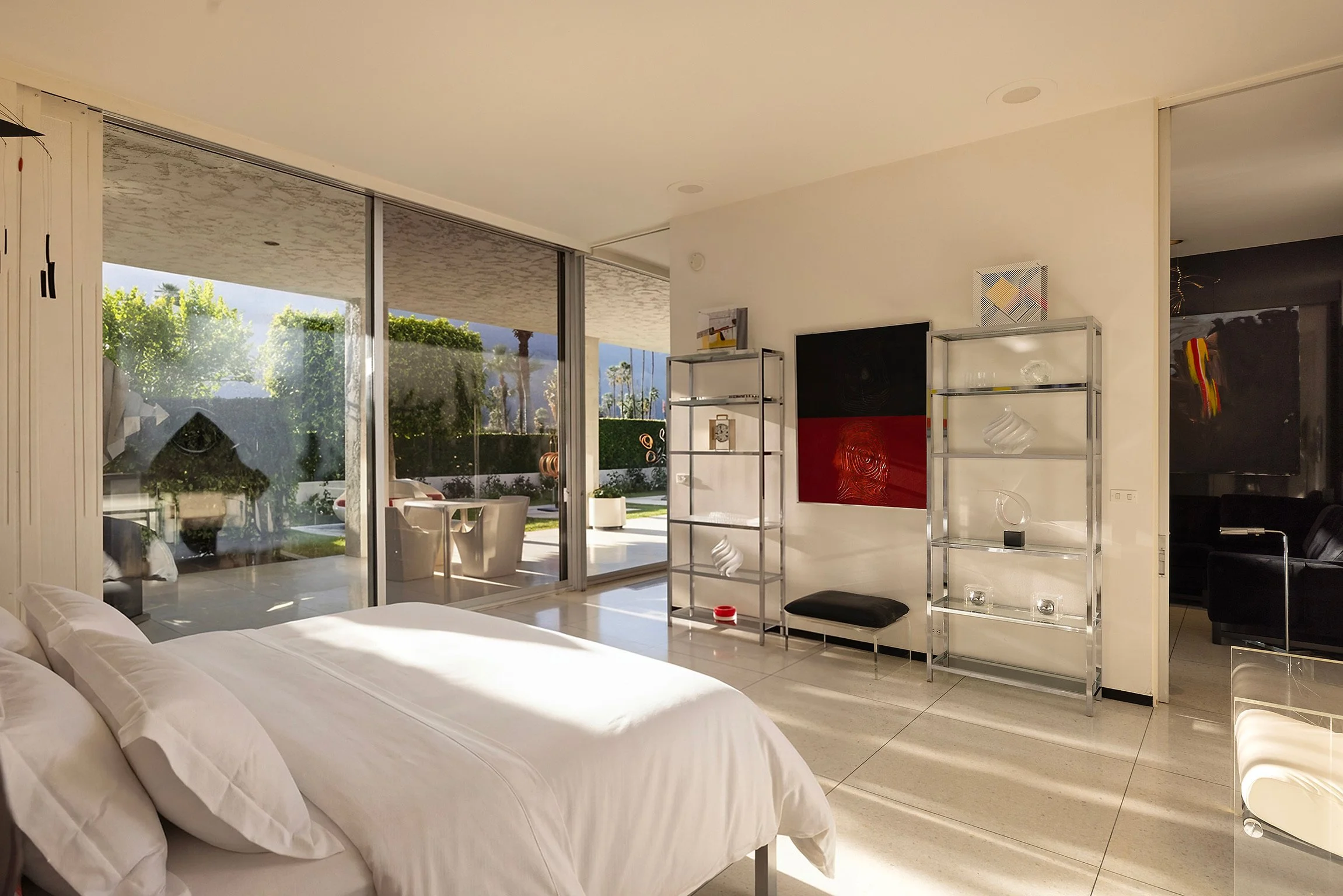
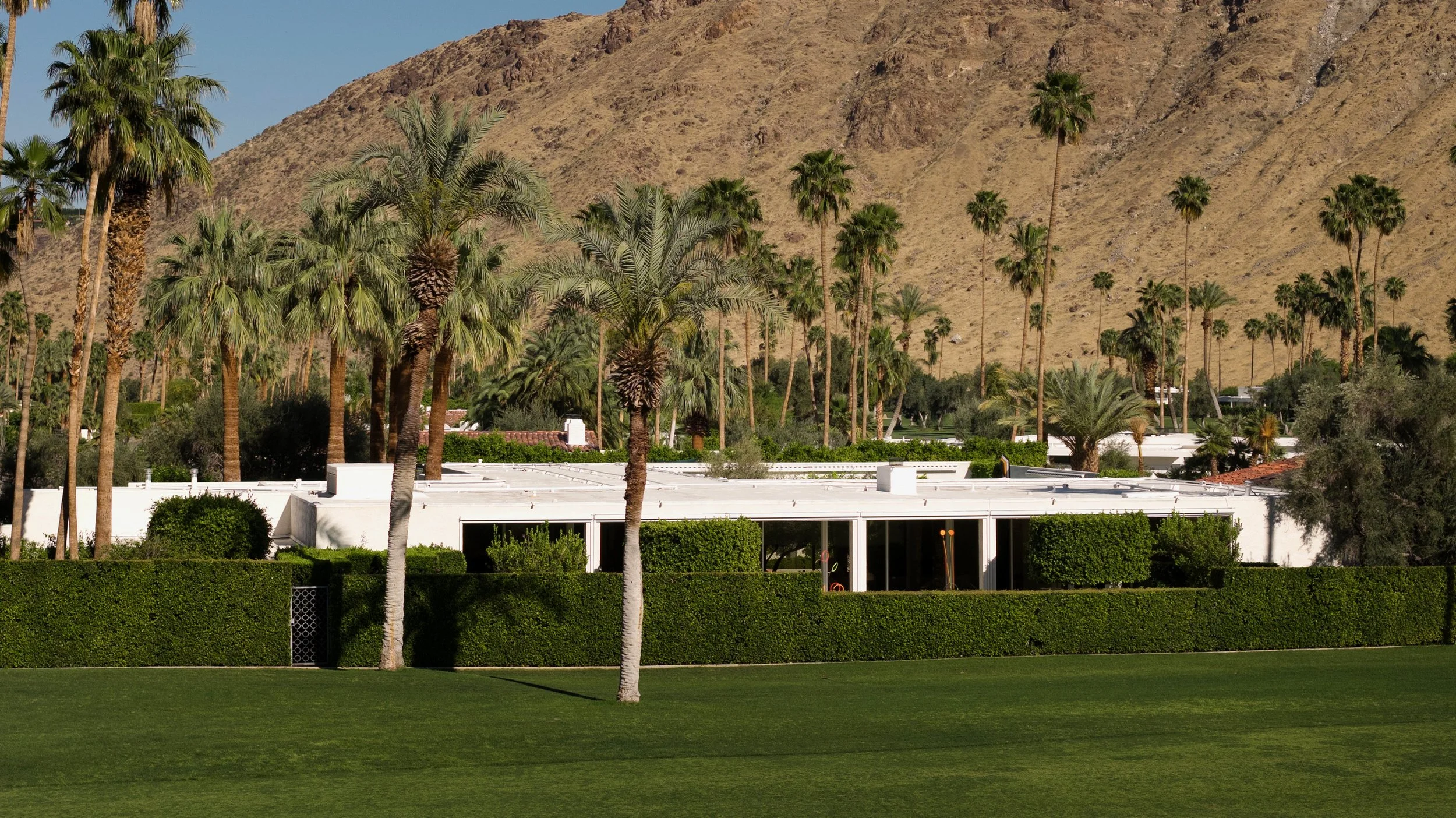
A long, windowless, 12-foot-high wall of pale stucco faces the quiet cul-de-sac, interrupted only by a pair of 10-foot-tall aluminum entrance doors. “It starts with what you don’t see,” Lavey says. Pass through the doors and the monolithic exterior gives way to a 5,500-square-foot house arranged around a courtyard with a swimming pool. Broad walls of glass open toward landscaped grounds and the San Jacinto Mountains, while a vast entry hall leads into open-plan living and entertaining spaces designed around the original owners’ collection of contemporary art.
That fortress-like appearance has generated plenty of lore around the couple who built it, Jerome and Alida Factor, and it’s easy to see why. Jerome’s father was John “Jake the Barber” Factor, a man who moved through the most notorious circles of American organized crime and gambling in the twentieth century. He was a well-known underworld figure in his own right, with ties to many of the era’s most infamous mobsters and casino operators.
The family had also lived through an extraordinary sequence of kidnappings. Jerome was abducted in 1933, when he was 19, and his father Jake was kidnapped only months later. Those episodes became part of the Factor family mythology and make the house’s intense emphasis on privacy and security especially hard to ignore. A history of the Canyon Country Club reports that the glass facing the golf course was bulletproof and that the house had an early camera-enabled security system, features thought to have been intended to protect Jake Factor, who was reportedly a frequent visitor to the Palm Springs house.
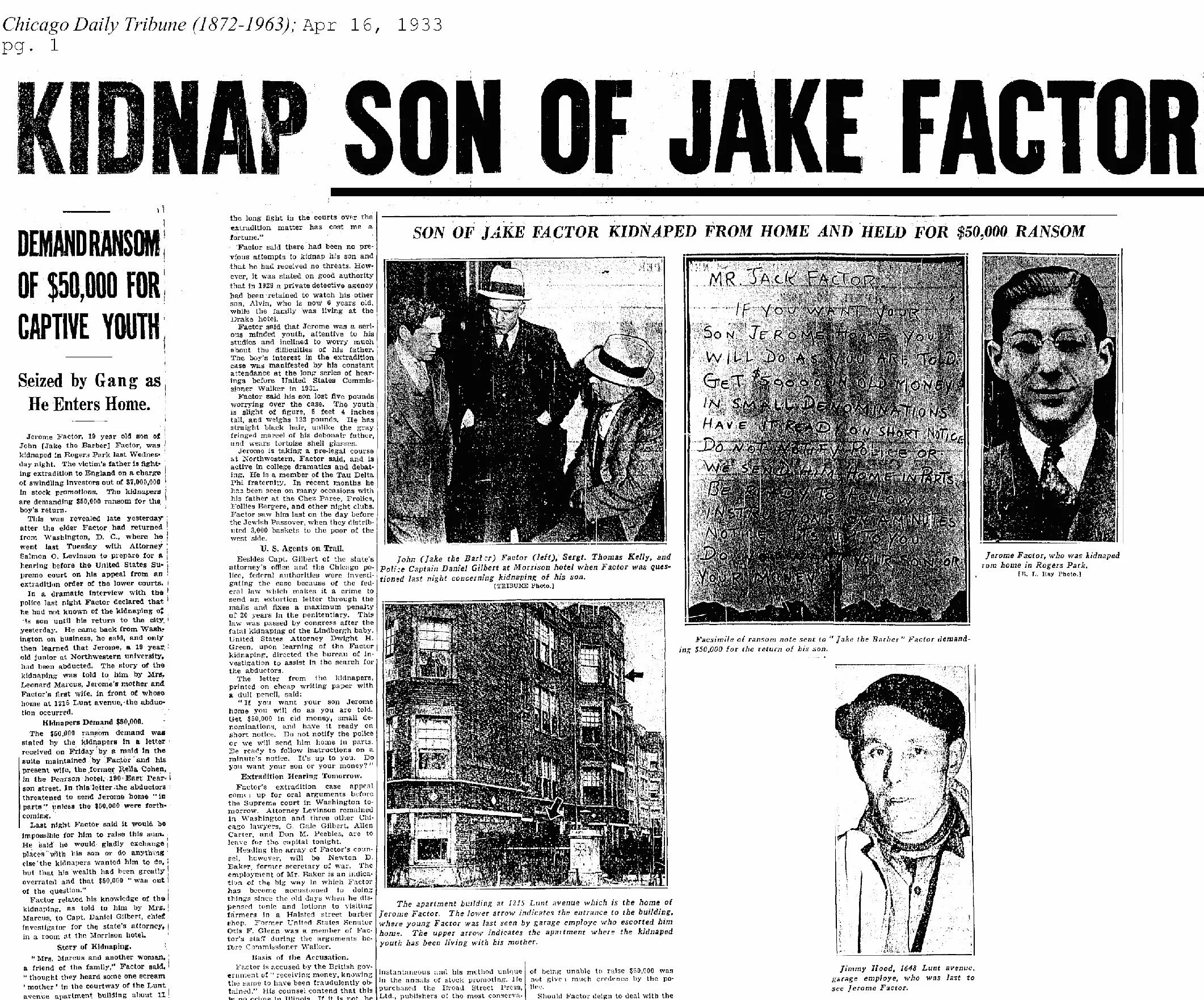
The front page of the Chicago Daily Tribune on April 16, 1933, reports that 19-year-old Jerome Factor was kidnapped in Chicago’s Rogers Park neighbourhood. The paper reproduced the note demanding $50,000 for his return. Factor would later commission the Palm Springs residence that bears his name.
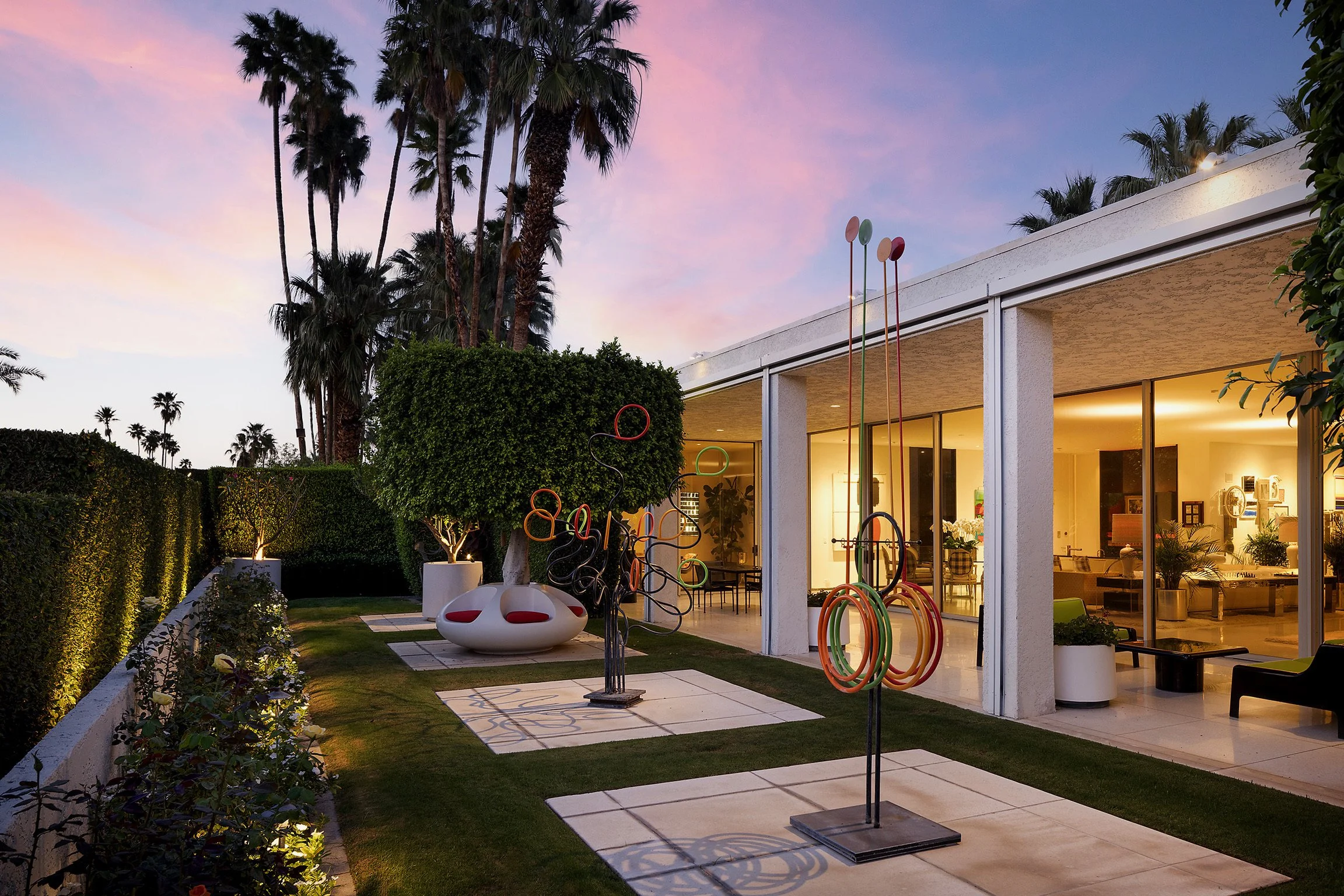
Jerome and his wife were serious collectors, and their home was planned around the work they owned. The long terrazzo gallery, with its 12-foot ceilings and broad uninterrupted walls, gave paintings and sculpture the kind of space normally associated with a gallery or museum.
What stands out to Eric Lavey, after roughly 25 years working with exceptional historic properties, is how remarkably intact the Factor Residence remains. He estimates that 99.5% of what was originally there survives.
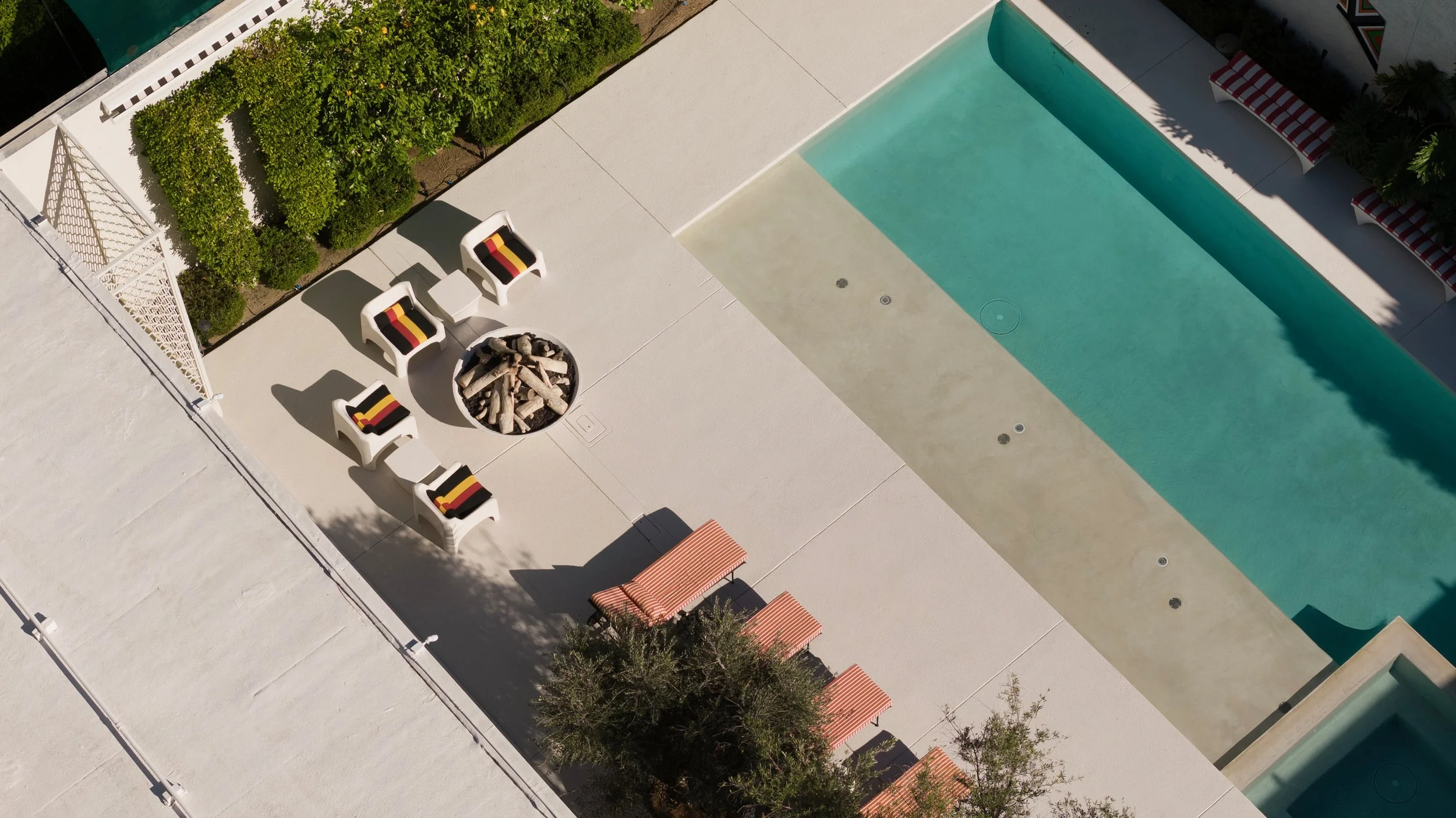
Part of the reason is simply that so few people had the chance to change it. Lavey says the house had one owner after the Factors who barely used it before Jamie McFate and his partner Nick Bouchard bought the property in 2017. McFate, a longtime Limited Brands executive (the retail empire behind brands including Victoria’s Secret, Bath & Body Works)., and Bouchchard refreshed the pool terrace, but left the original interiors intact.
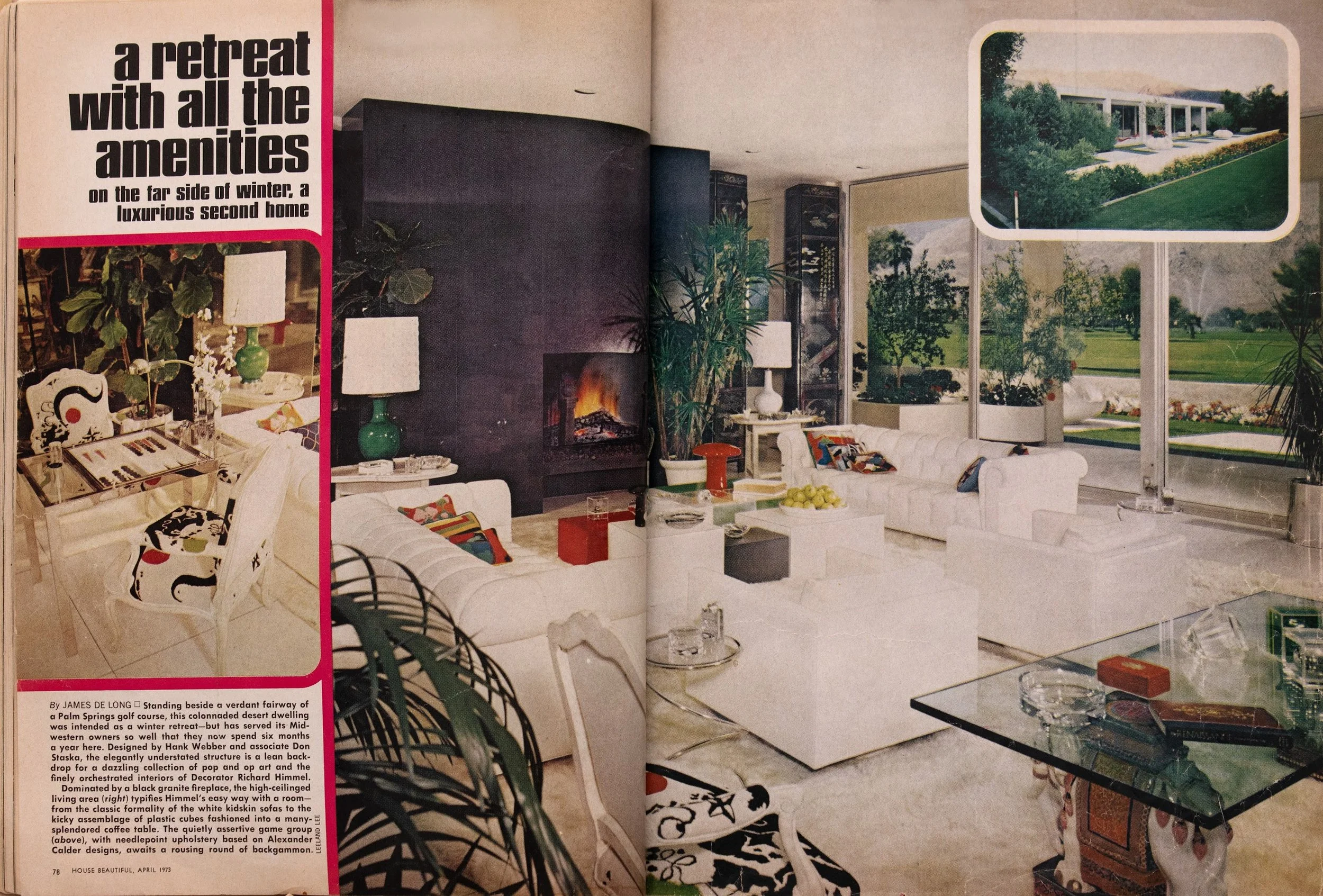
Art was not separated from the social life of the house. Drinks, dinner and parties happened in the middle of it. A 1973 House Beautiful article on the home described entertaining on a grand scale: the pool could be covered for dancing, while the walled grounds could be tented for dinners seating as many as 300 guests.
House Beautiful photographed the residence across six pages in April 1973, only four years after it was completed. When photographer Tim Street-Porter featured the Factor Residence in his 2018 Rizzoli book, Palm Springs: A Modernist Paradise, he remarked on how closely the house still resembled those 1973 photographs, describing it as “a perfect ‘70s time capsule".
Lavey compares the house to a concours-grade collector car, where much of the value comes from how original it remains and how little it has changed over time.
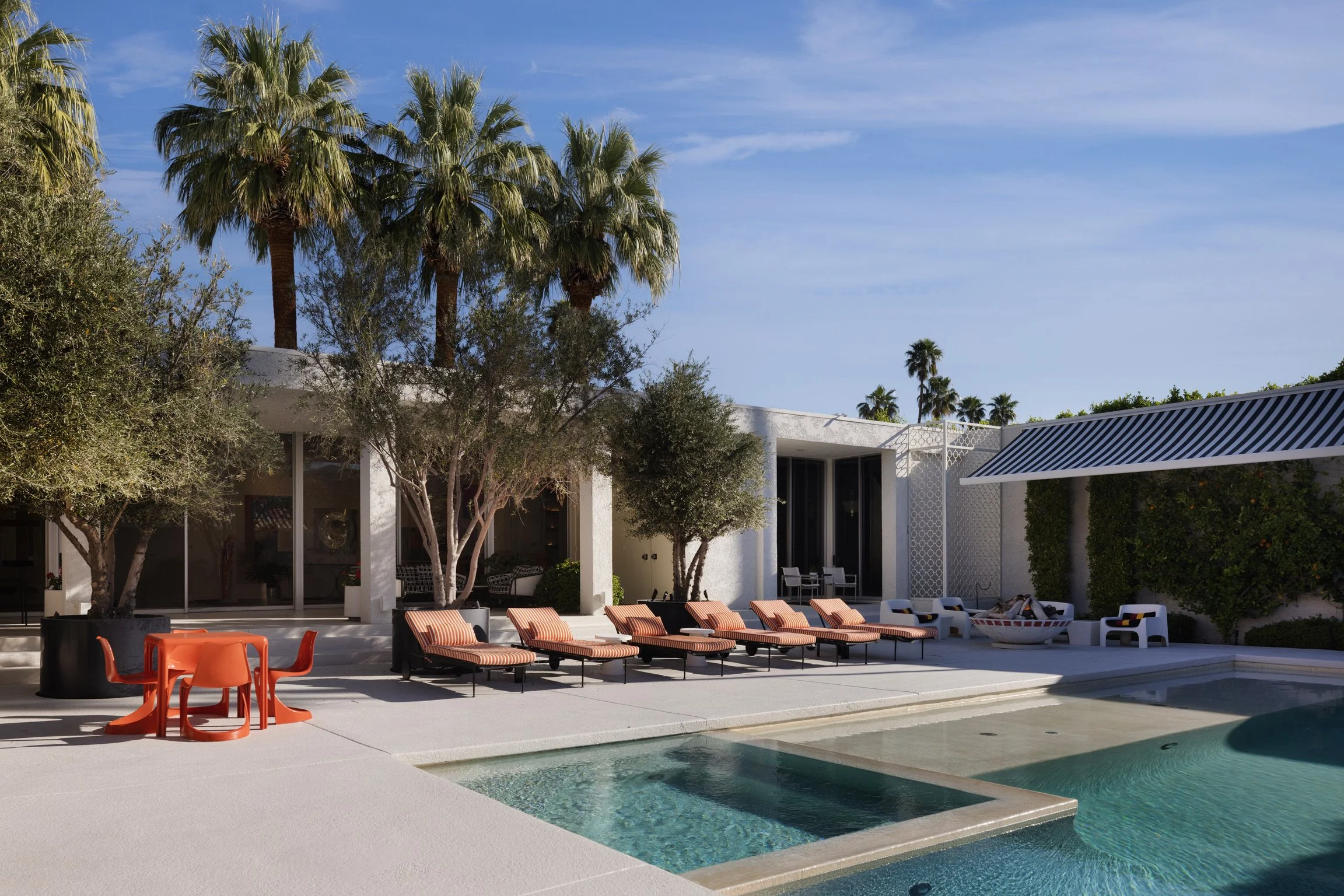
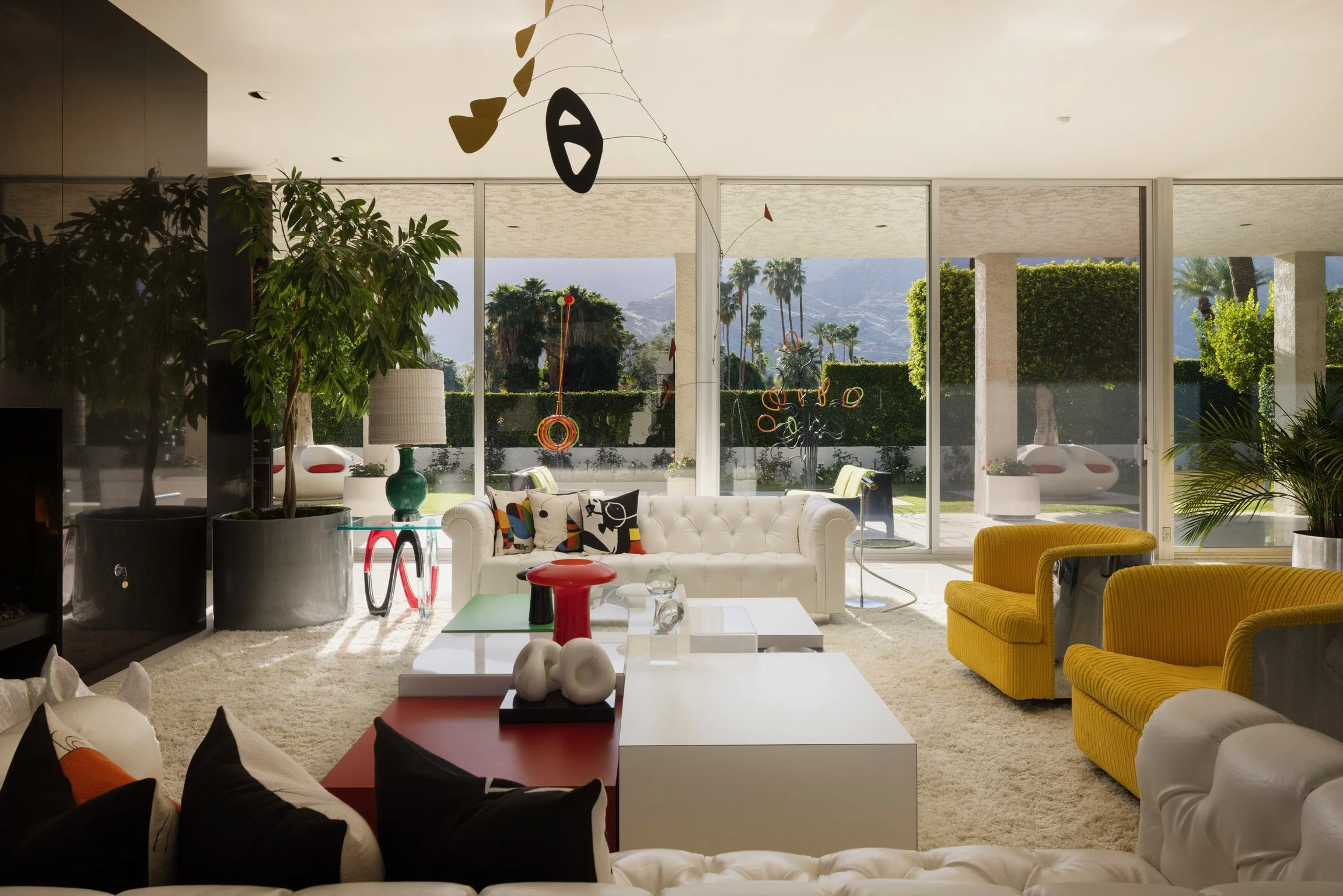
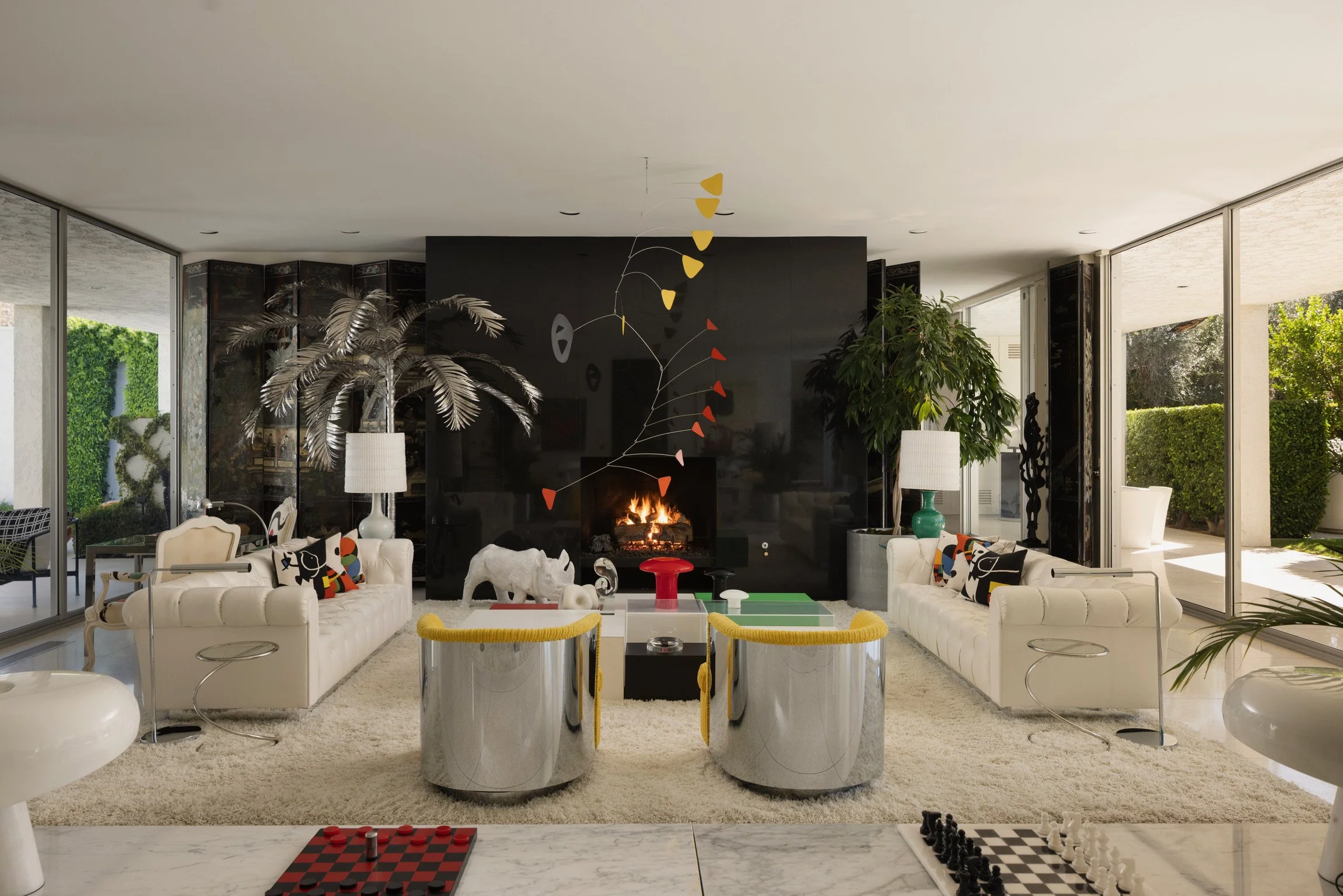
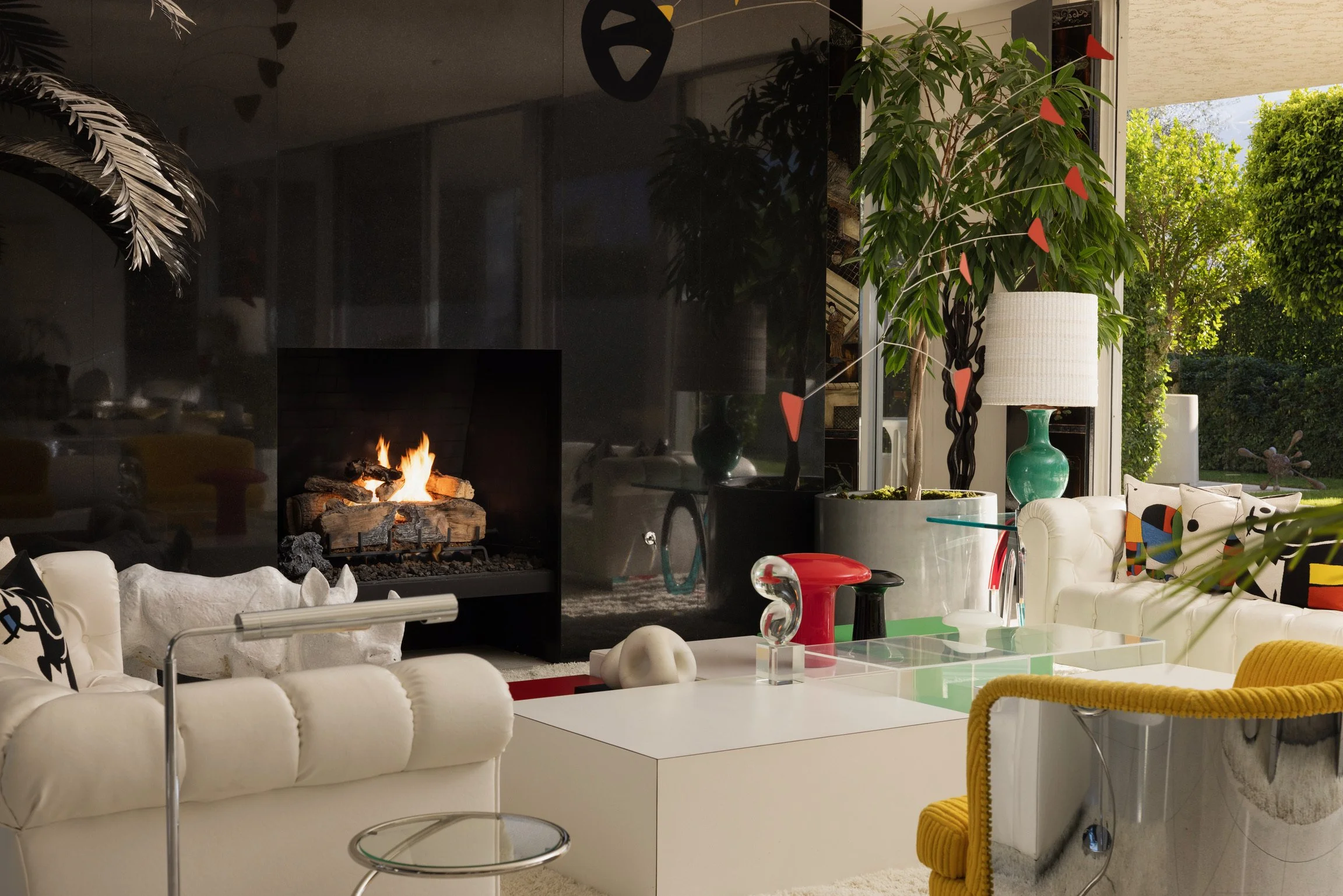
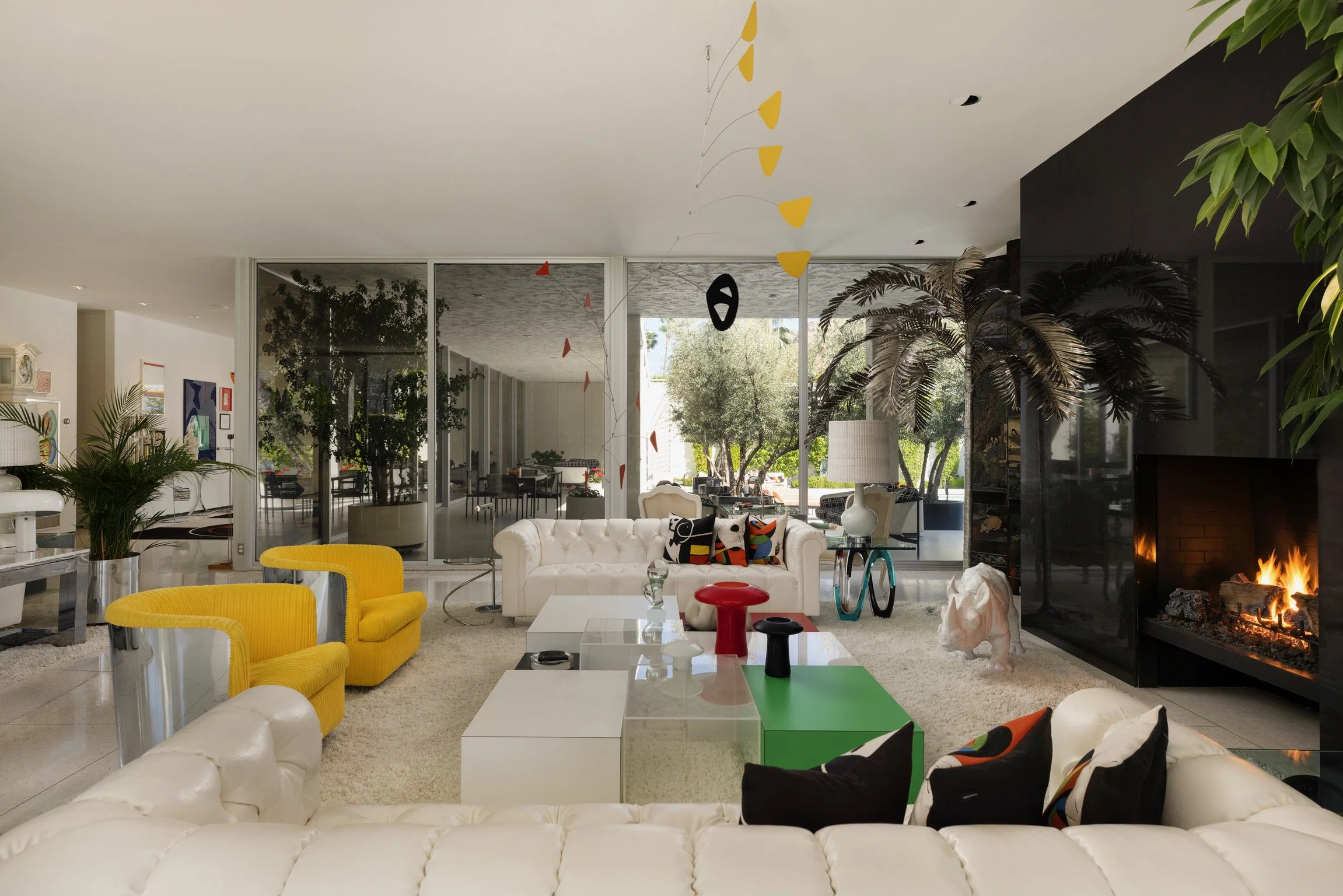
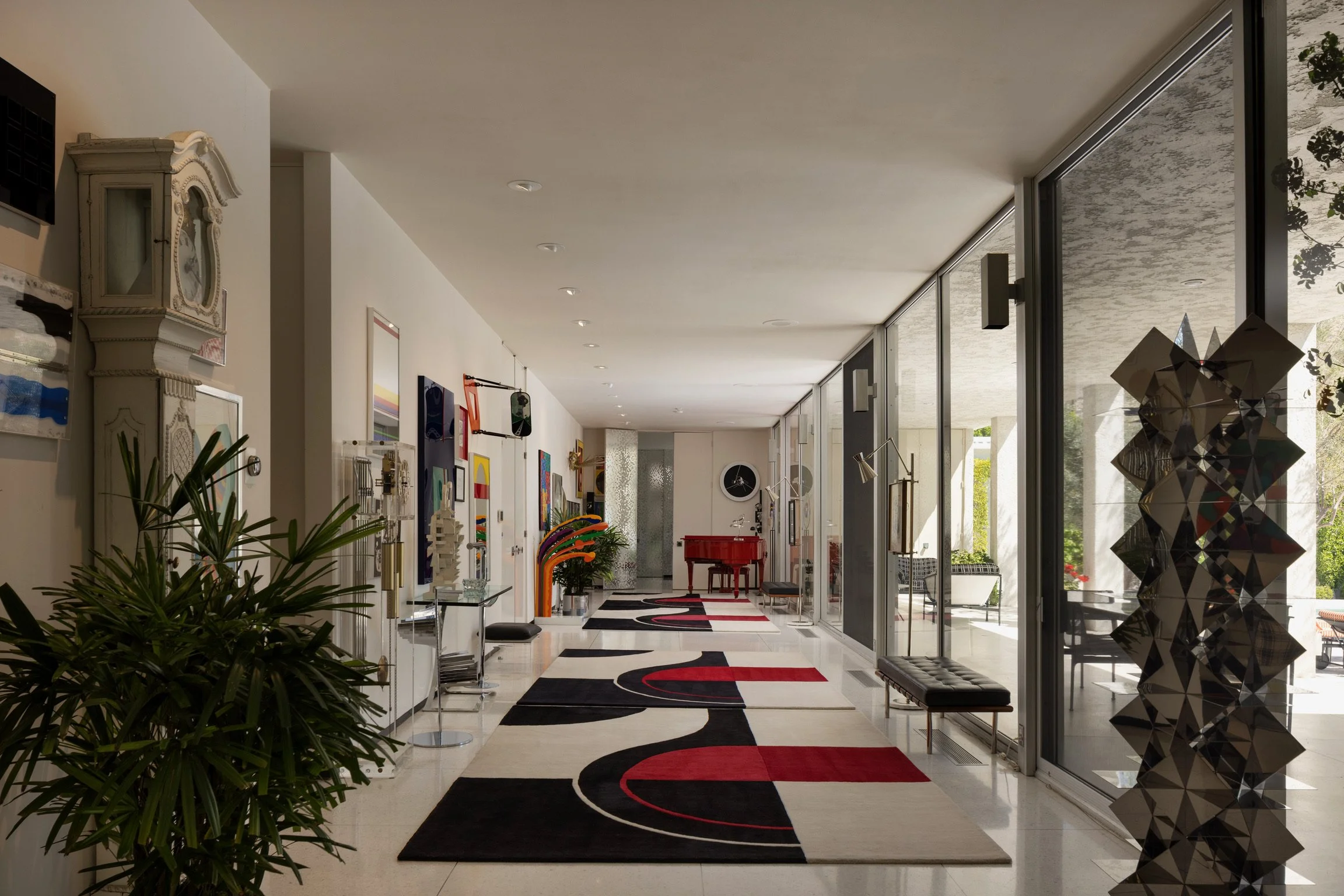
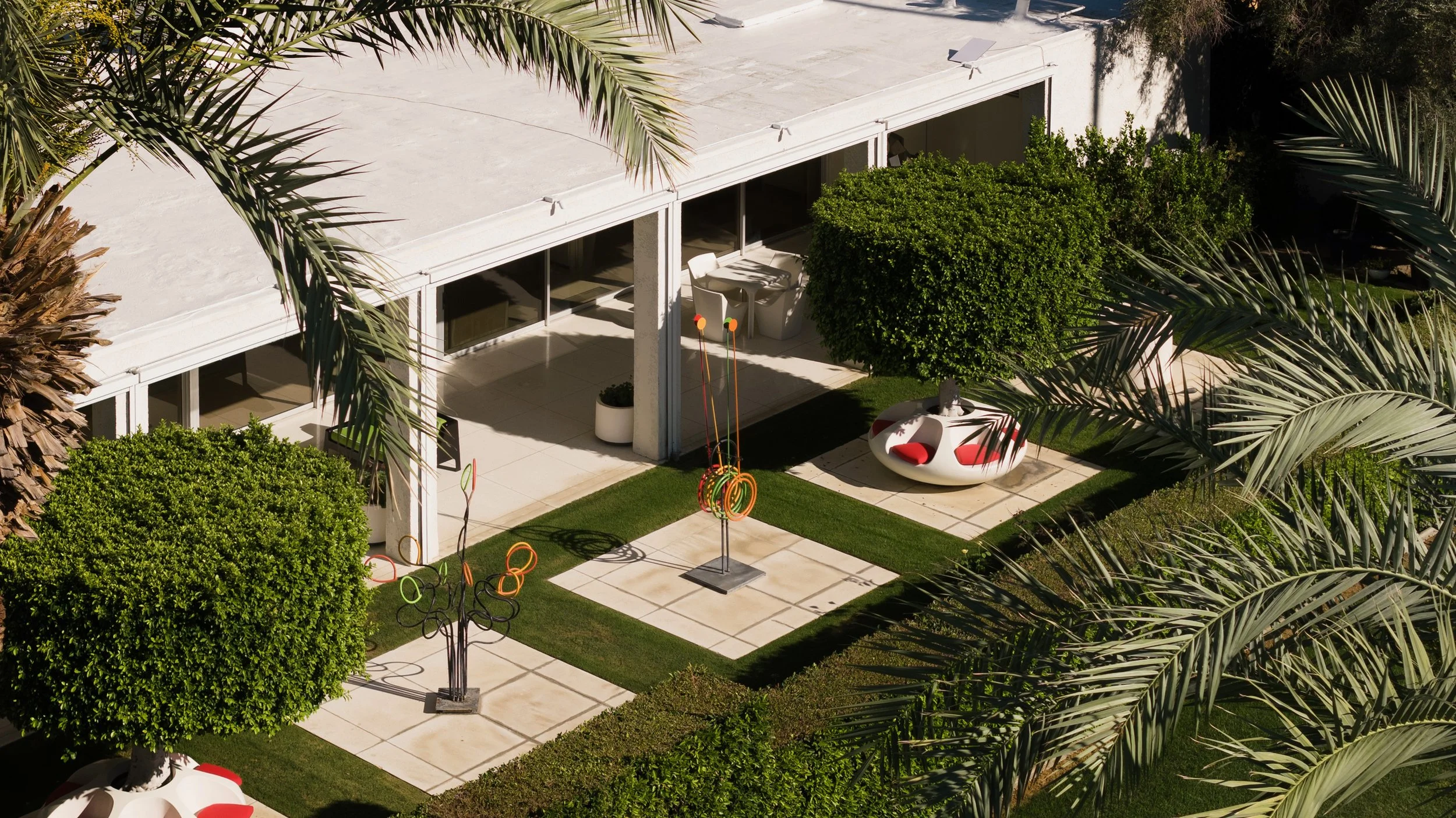
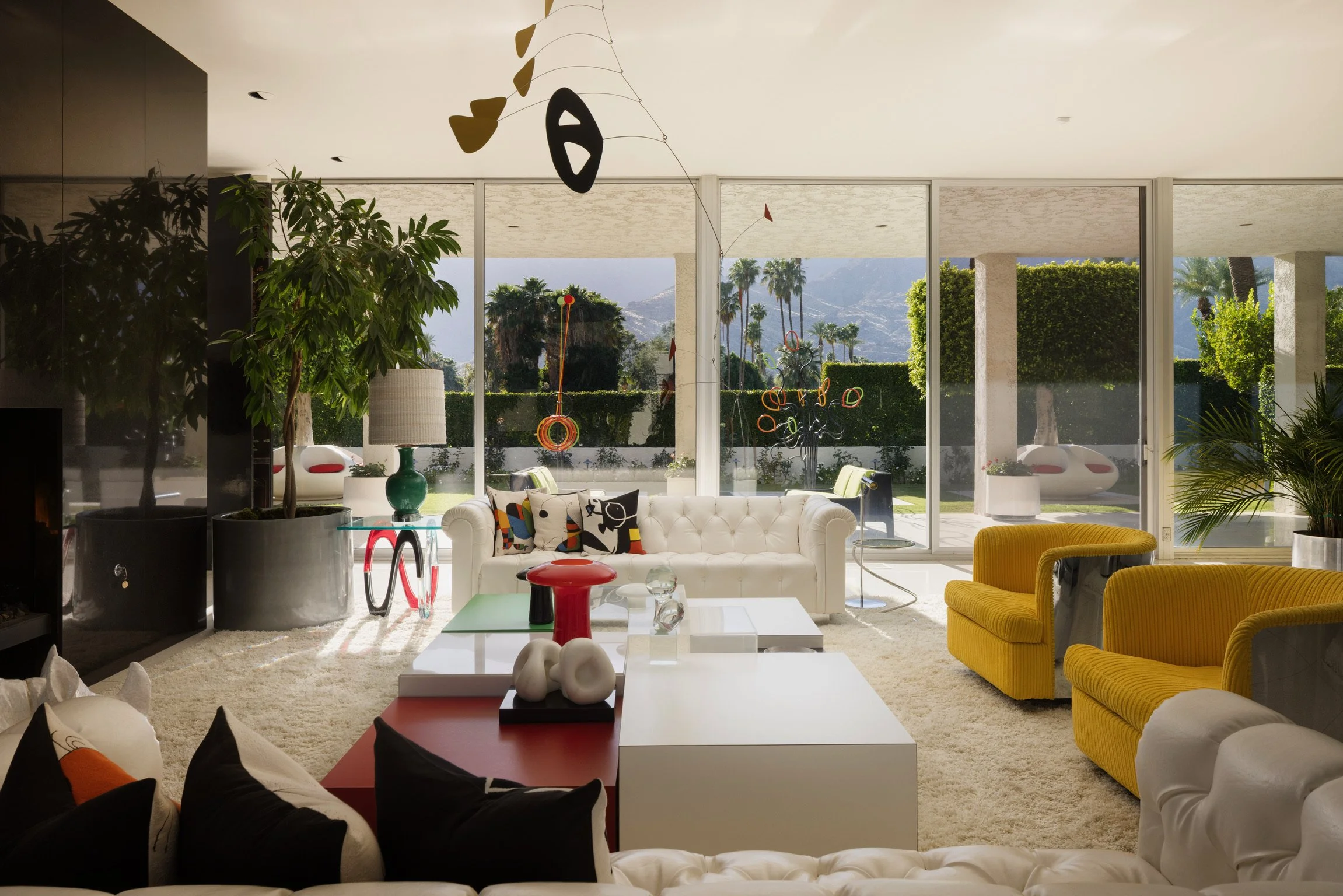
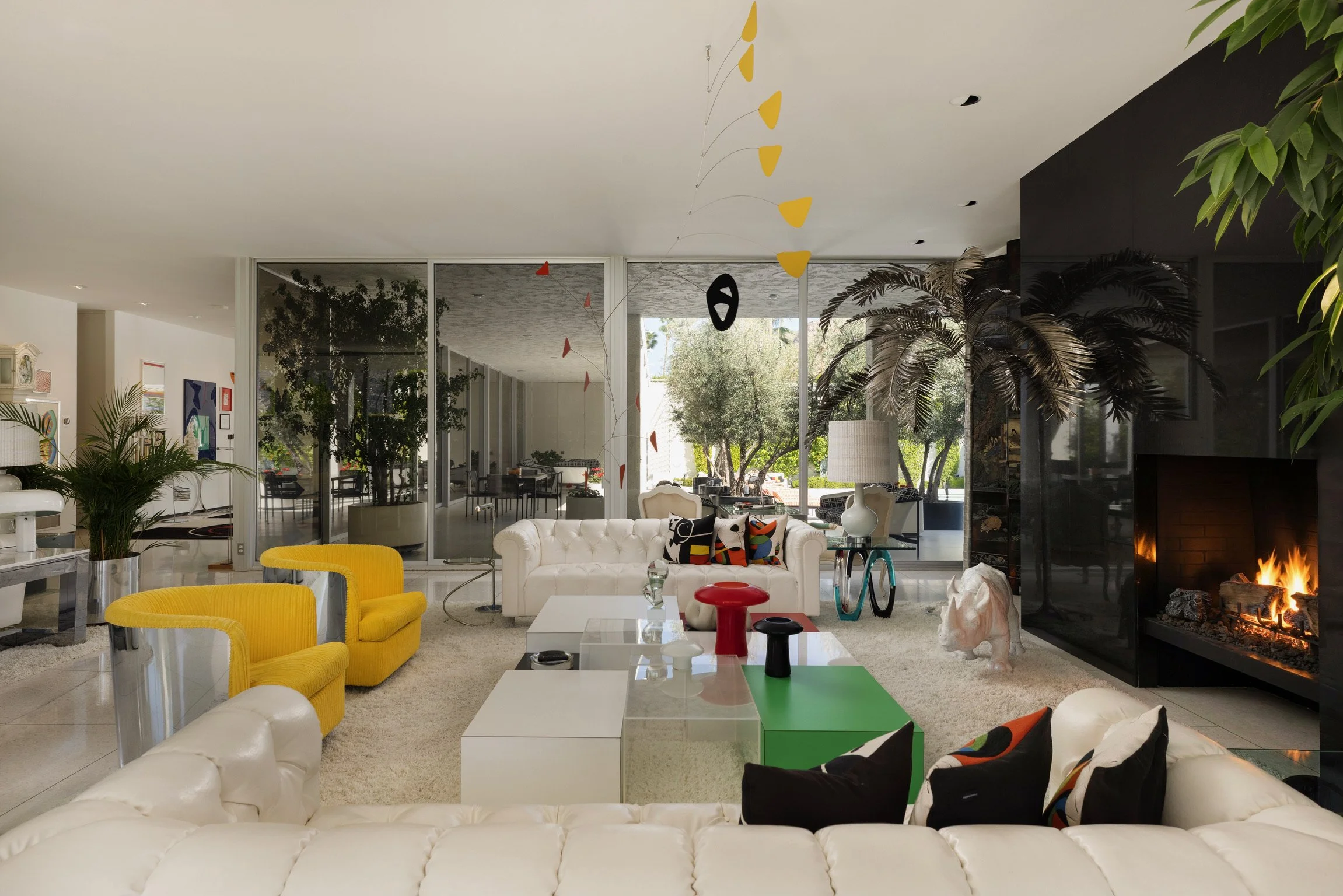
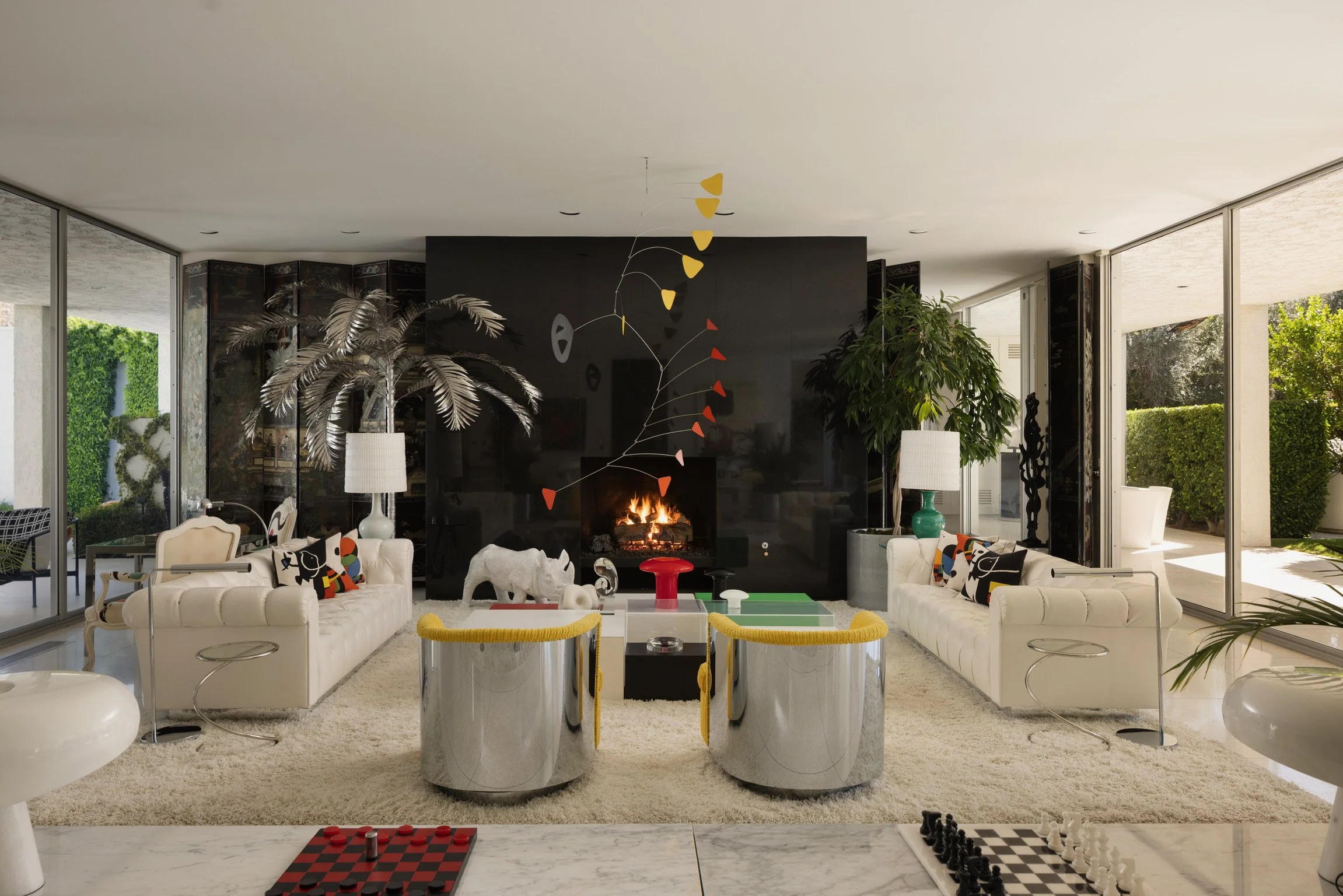
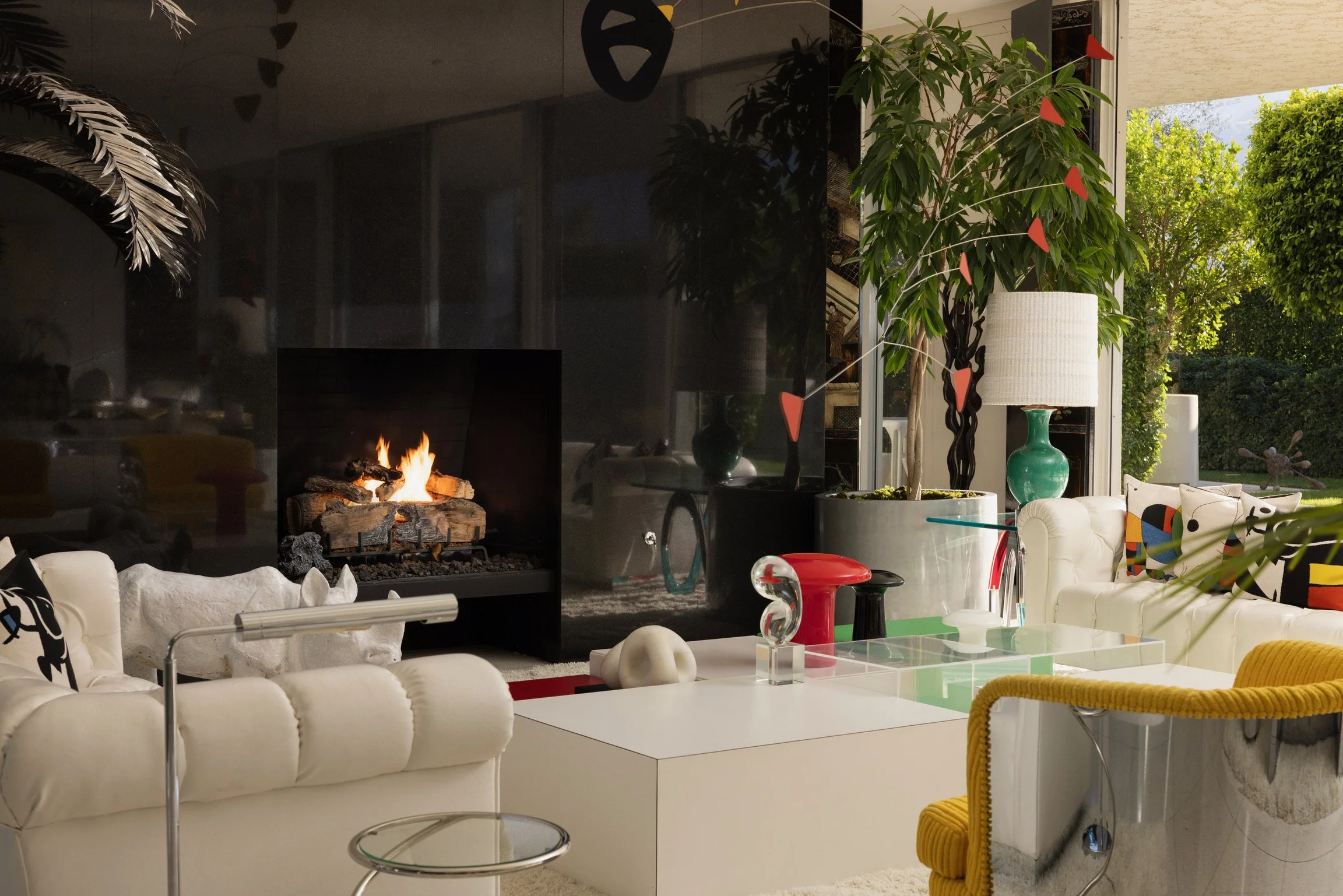
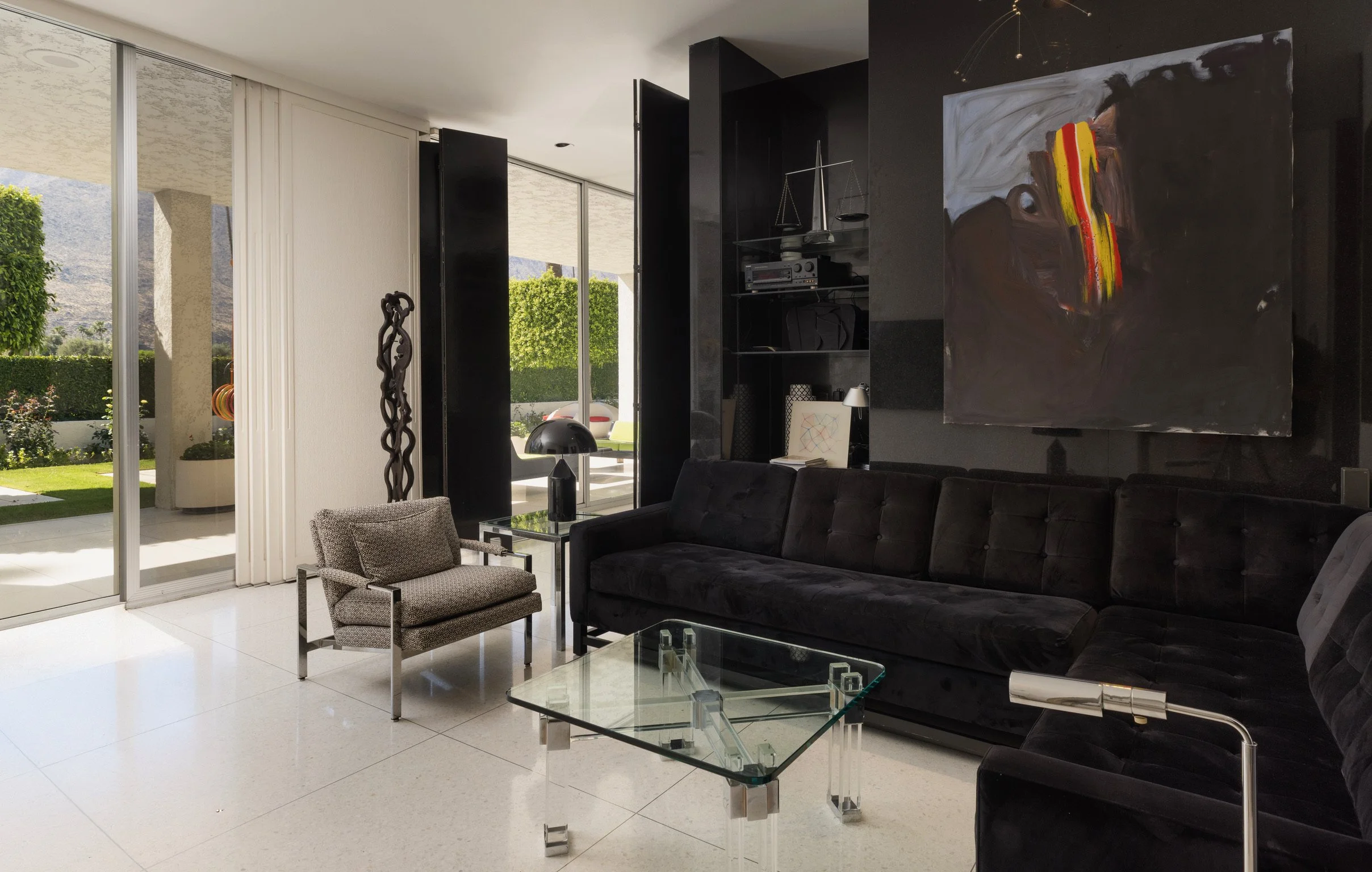
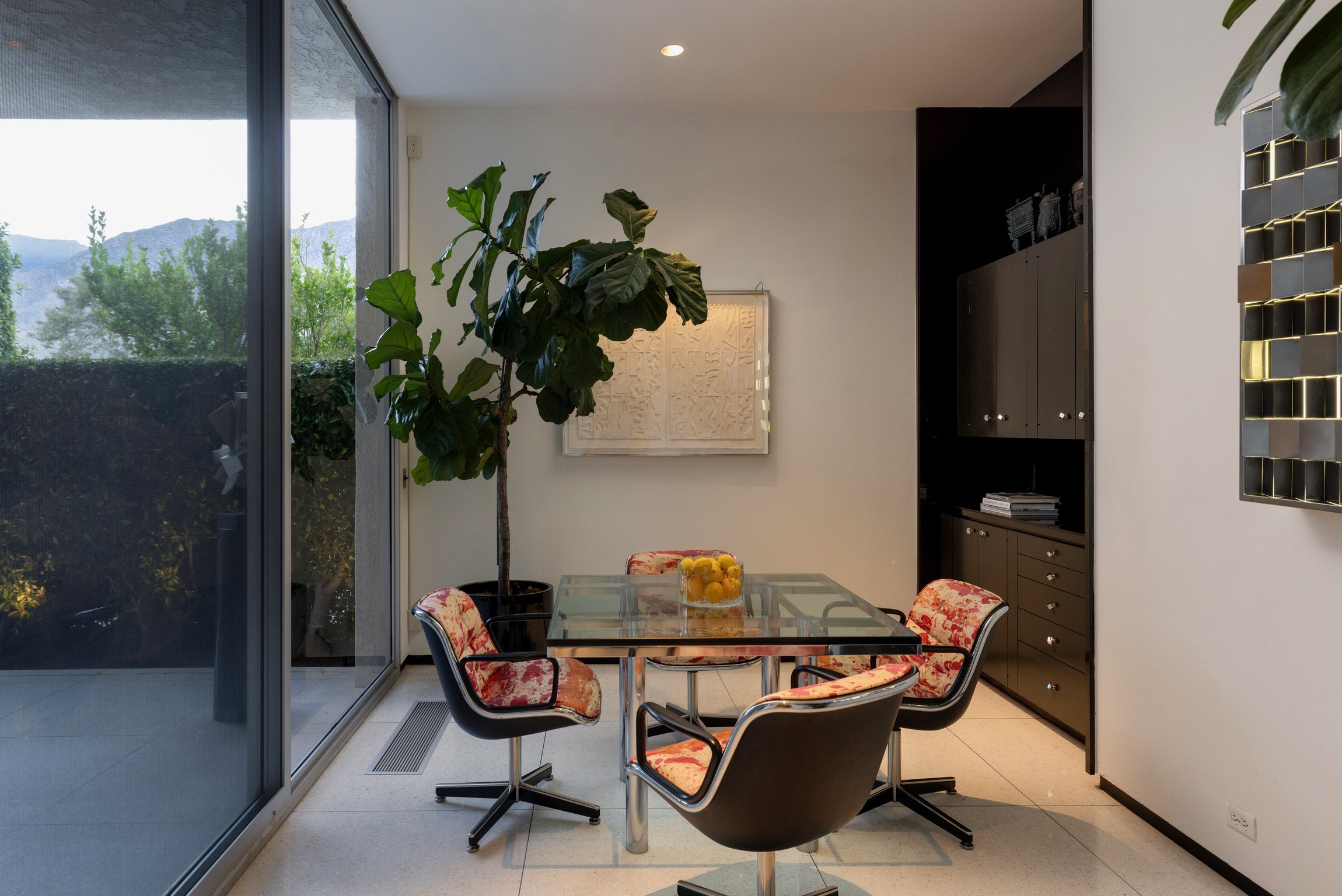
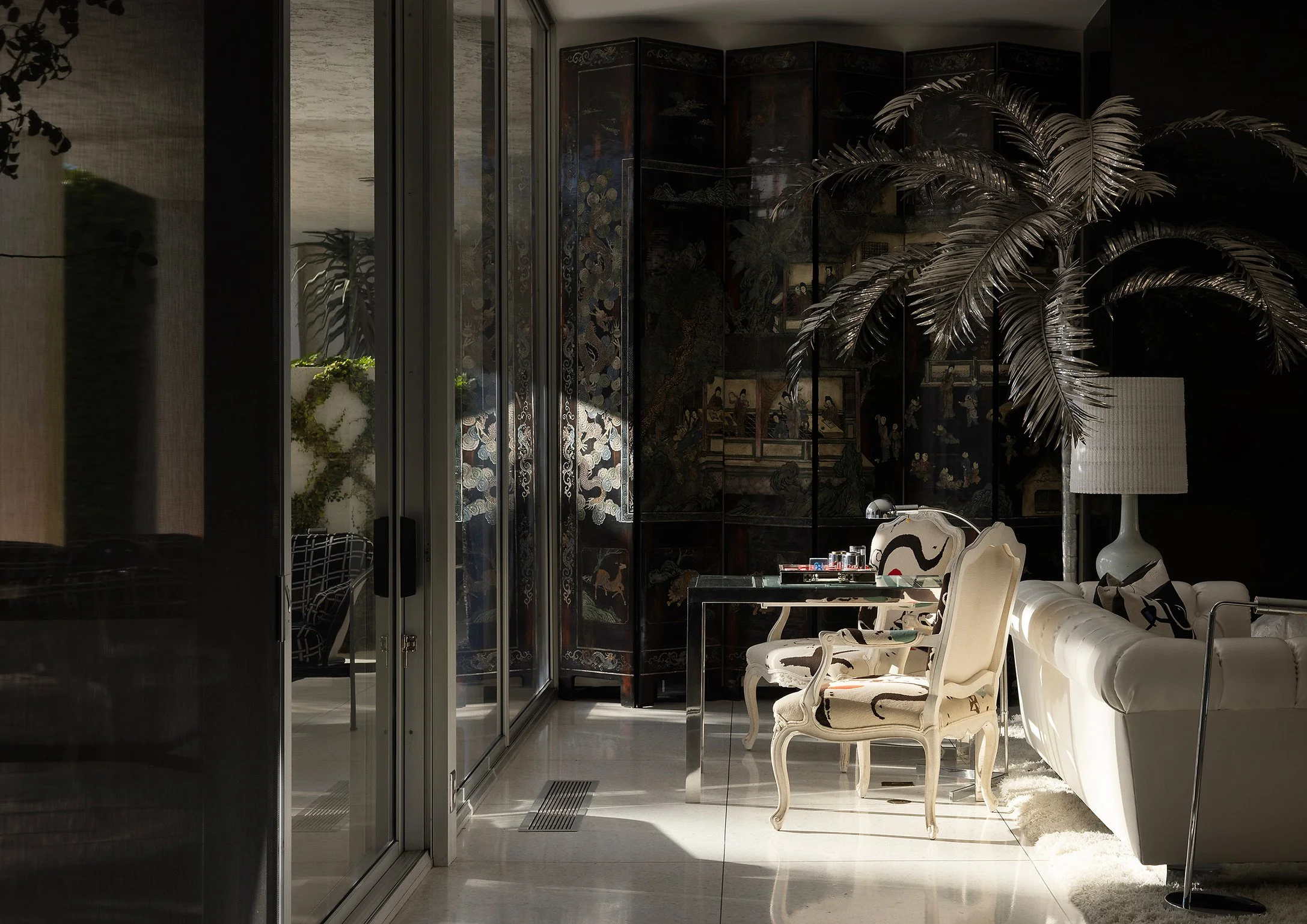
The same spaces were designed for entertaining, with a polished black-granite fireplace anchoring the main living room. The breakfast room was positioned to catch the morning sun, while the main rooms opened toward the pool, golf course and mountain landscape.
Richard Himmel Interiors
For the interiors, the Factors hired Richard Himmel, one of Chicago’s best-known interior and furniture designers. The New York Times called him “Chicago’s most successful interior designer,” and in 1985 he was among the first designers inducted into the Interior Design Hall of Fame.
Himmel had made his name after the war by treating antique furniture with a distinctly modern eye, putting bright contemporary fabrics on old chairs and mixing periods without much concern for conventional rules. At the Factor Residence, 19th-century Chinese Coromandel screens sit beside black granite, mirrored sculpture, Lucite, chrome and contemporary art. More than fifty years later, the screens are still there.
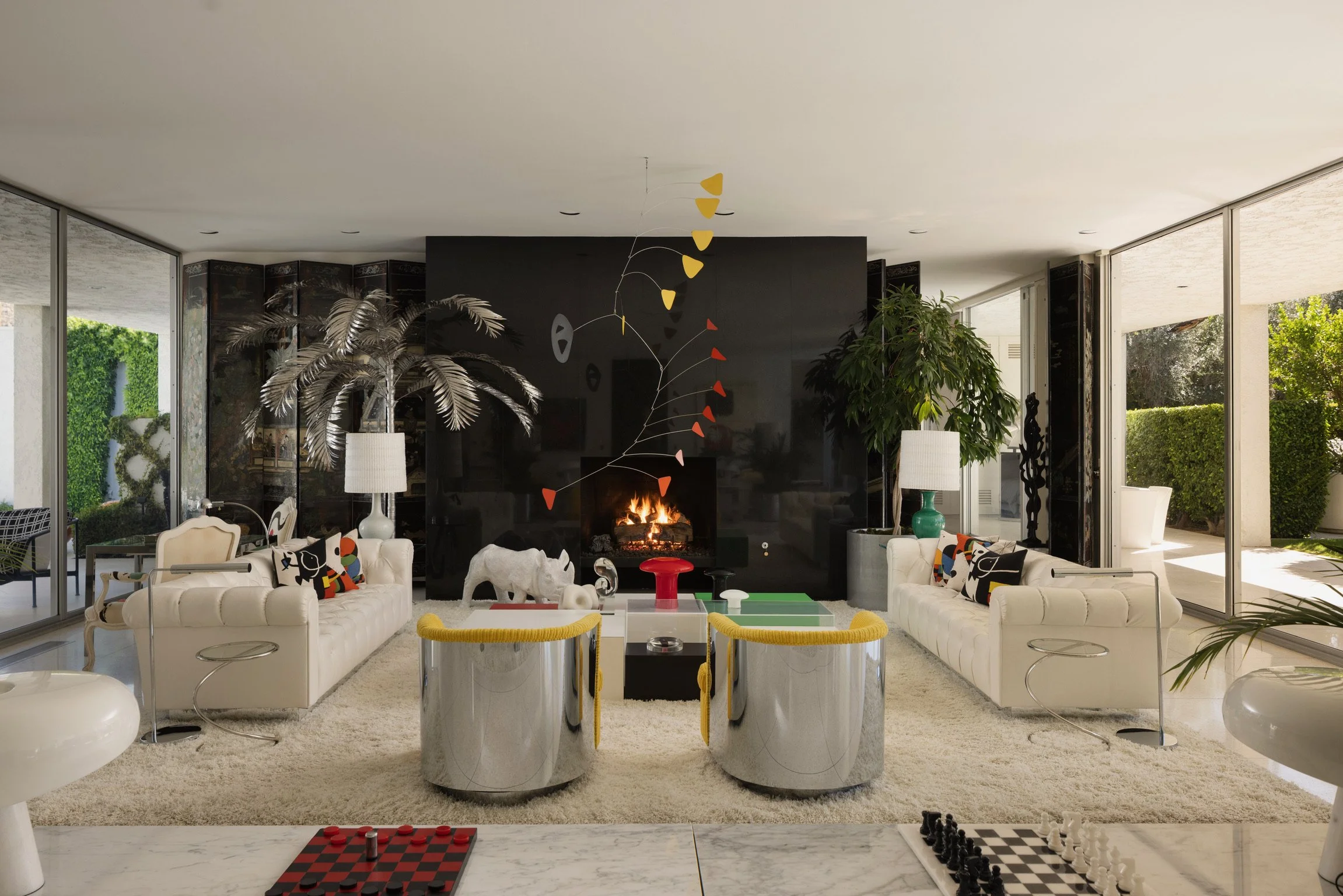
Himmel understood the theatrical side of entertaining as well. Around the same period, Himmel worked for Hugh Hefner on the interiors of the new Playboy Club and Resort at Lake Geneva, a sprawling pleasure palace of bars, lounges, restaurants, guest rooms and entertainment spaces that opened in 1968. Its headline bookings included many of the same familiar faces who helped define Palm Springs glamour — Frank Sinatra, Dean Martin and Sammy Davis Jr. — alongside Tony Bennett, Liza Minnelli, Sonny & Cher and Peggy Lee.
His career was unusually wide-ranging. During the Second World War, Himmel served on General George Patton’s staff, producing military pamphlets and instructional material. “They would throw things at him,” his son John Himmel recalled in a University of Chicago Magazine profile. “We need a pamphlet for how to recognize Japanese aircraft. He would just do it.” He also produced a primer on the Japanese language.
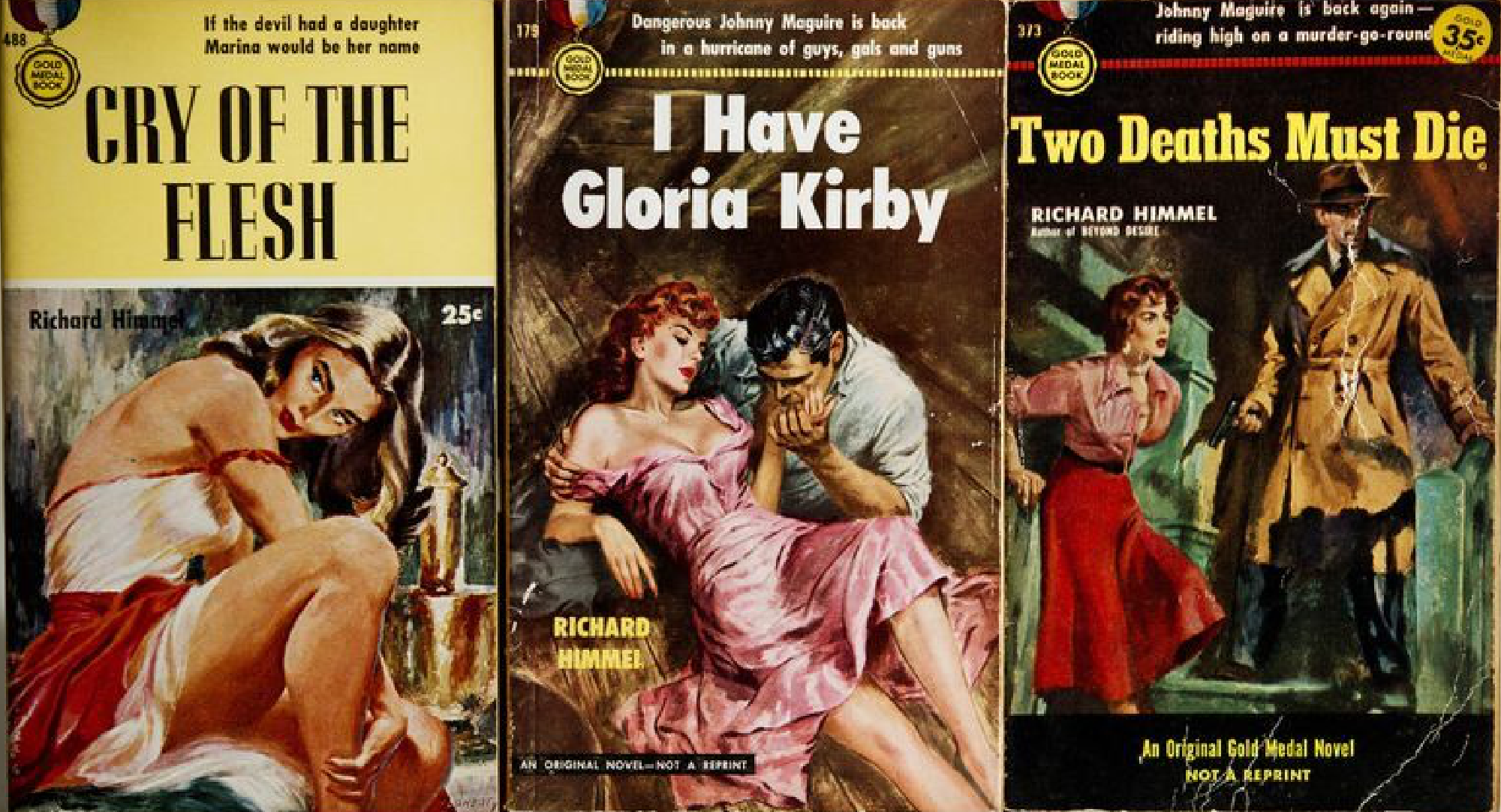
Himmel wrote a dozen novels as well, moving between crime fiction and later spy thrillers. He took a 20-year hiatus from publishing while his design career consumed most of his time, though John said his father never really stopped thinking about writing.
That range was simply part of who Himmel was. “My dad was a generic genius,” John said. “It didn’t matter what he did. He was brilliant.”
Factor Residence Landscape
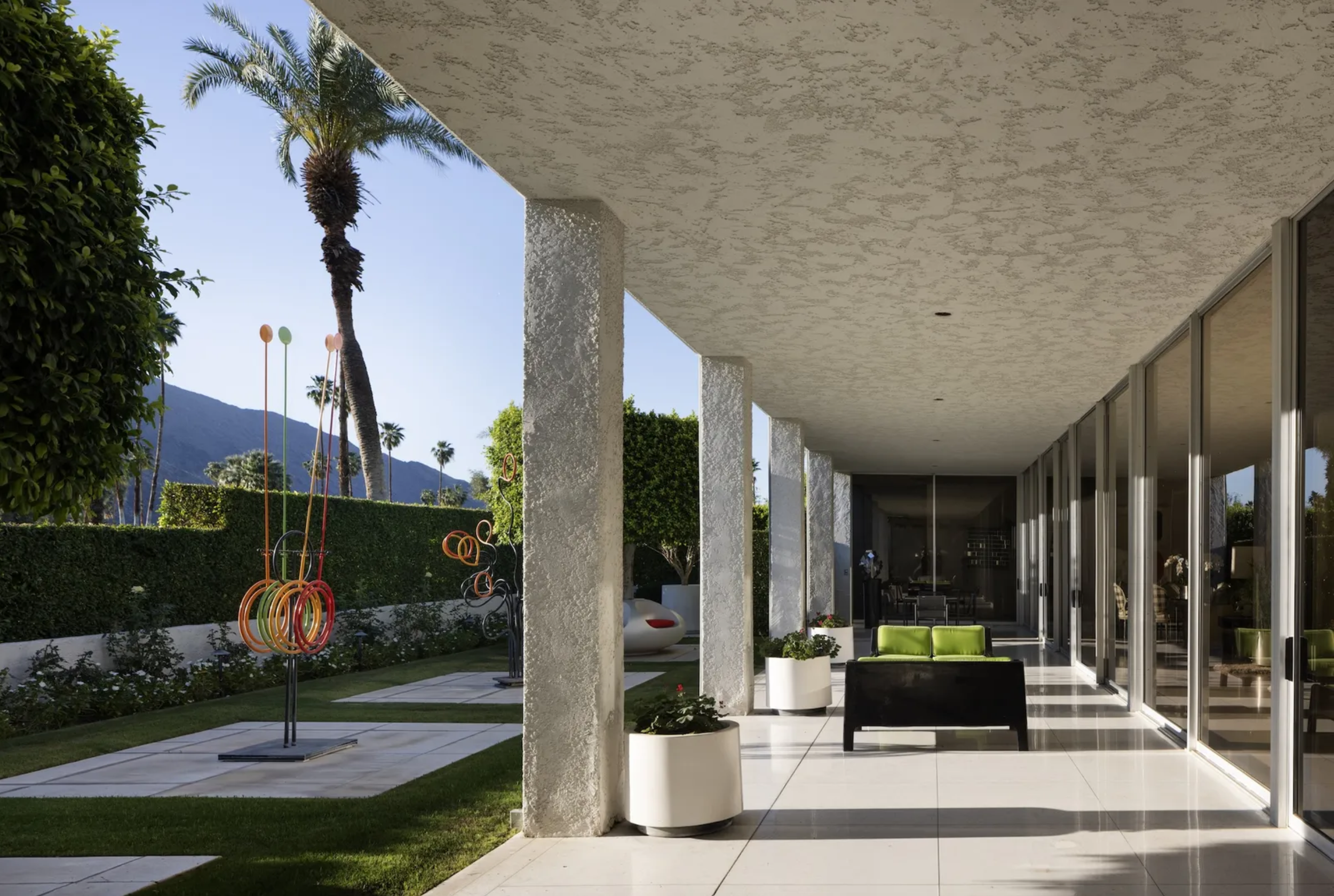
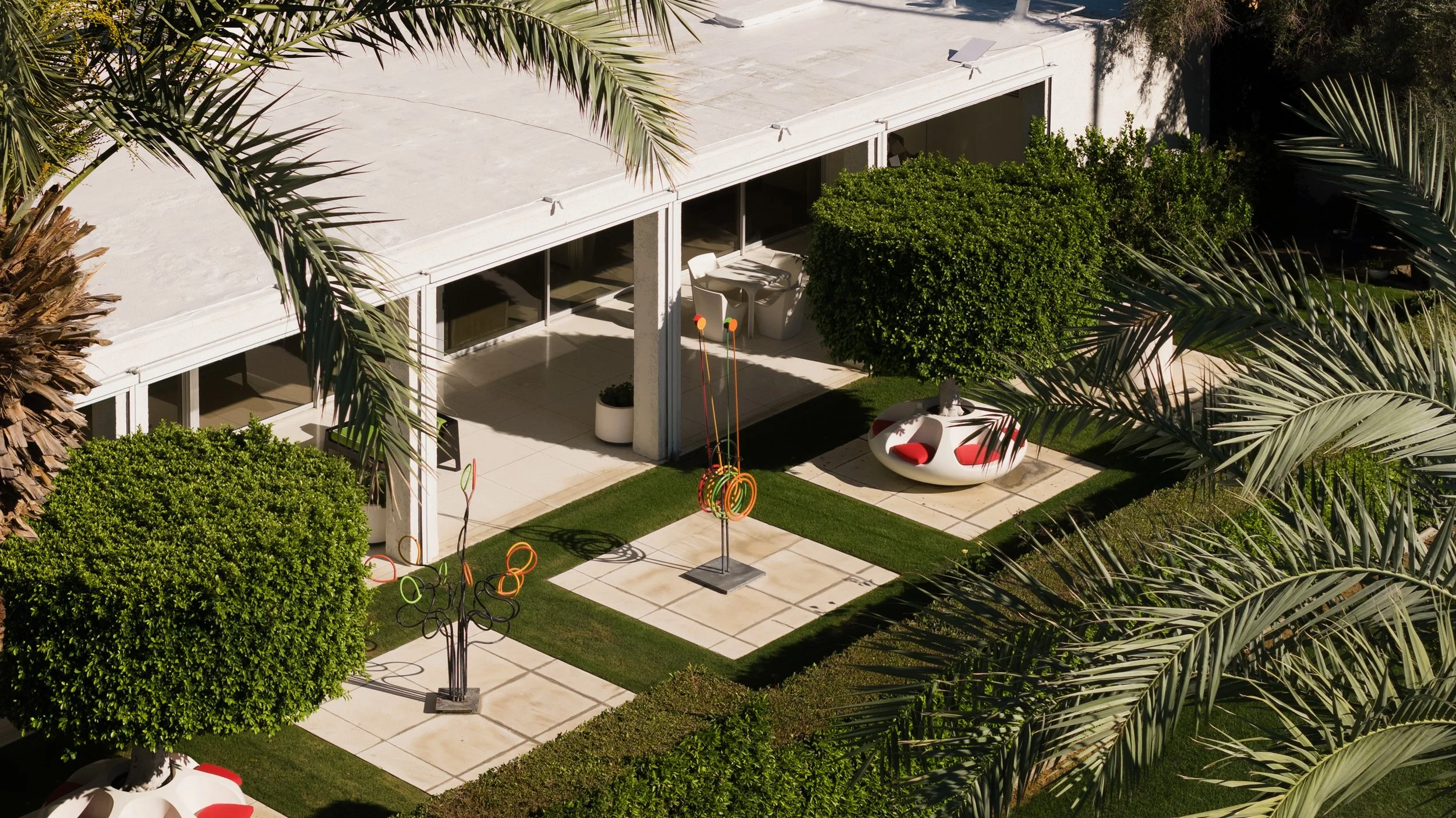
The private landscape was part of the same composition. The original grounds were designed by David Hamilton, ASLA, an important figure in Coachella Valley landscape design who also worked on the larger Canyon Country Club development. At the Factor Residence, he designed the pool courtyard, sculpture and rose gardens, palms and golf-course frontage.
The Art
The Factor’s contemporary art collection includes work by Victor Vasarely, Francisco Sobrino and Jesús Rafael Soto, artists experimenting with optical effects, movement, reflection and geometry, alongside Alexander Calder and other major postwar names.
The Factor Residence’s art collection still feels current, particularly in a year that brought renewed attention to Alexander Calder. This spring and summer, Fondation Louis Vuitton in Paris brought together nearly 300 works for Calder. Rêver en équilibre, one of the largest exhibitions ever devoted to the artist. On November 17, Calder’s Snow Flurry, May 14, a 1959 hanging mobile made of white-painted sheet metal and wire, sold for $7.46 million at Phillips in New York.
Mrs. Factor’s enthusiasm for Alexander Calder went beyond collecting his work. Calder designs reportedly appeared on the living-room chairs and even on the powder-room wallpaper, blurring the line between the art collection and the interiors themselves. But the art may not have to leave. The house is being sold separately from the art and furniture, but the collection is also available. A buyer has the rare opportunity to acquire not only the 1969 residence, but all of the art and furniture.
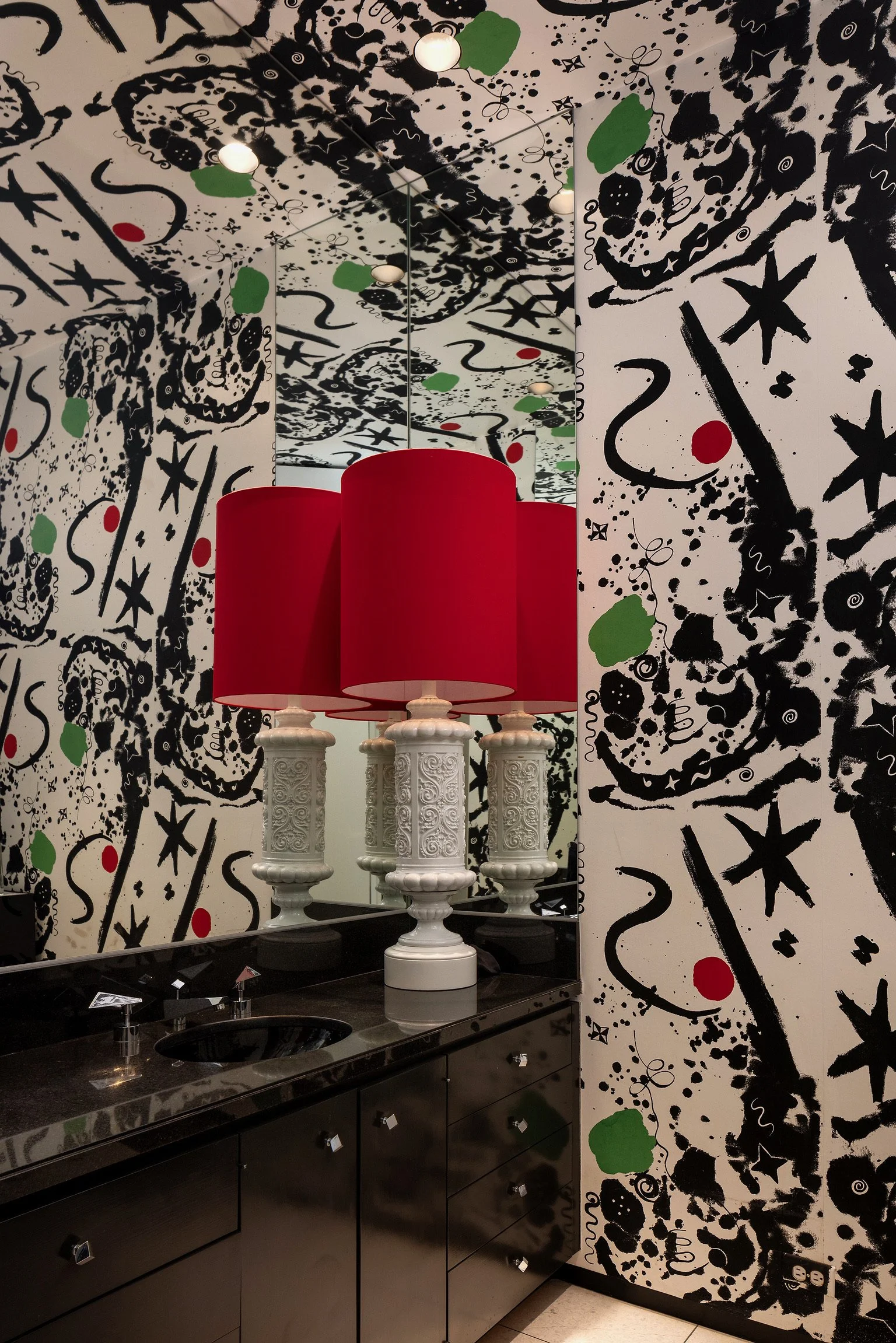
Calder wallpaper in the powder room at the Factor Residence
The Factor Family Saga
The art collection tells one story about the Factors: a life of wealth, taste and glamorous winters in Palm Springs. How the family reached that world is another story entirely.
Jake Factor began life far from the hotels, casinos and criminal circles that would eventually make his name notorious. Born Iakov Faktorowicz in Łódź in 1892, when the Polish city formed part of the Russian Empire, he was the youngest of ten children in a poor Jewish family headed by his father, Abraham, who was described as a rabbi. He later recalled little formal schooling, while his mother reportedly helped support the family by working as a street peddler.
In March 1906, when Jake was approximately 13 years old, the family crossed the Atlantic aboard the S.S. Haverford, arriving in Philadelphia before joining relatives in St. Louis. Factor later made his way to Chicago, where, while still a teenager, he went to work cutting hair in his brother’s barbershop on the West Side, reportedly using his earnings to help support his parents.
He later found work in the barbershop of the grand Morrison Hotel, where Chicago’s wealthy men settled into his chair while he trimmed their hair and sideburns. Later accounts suggest that the job introduced him to the businessmen and speculators whose world he would soon enter, although the precise circumstances of his transformation remain obscure.
It was this early trade that gave him the name Jake “the Barber.” The nickname followed him long after he put down the scissors, through fraudulent fortunes, kidnappings, prison, Las Vegas casinos and presidential politics. Factor reportedly hated it so much that he sometimes paid newspapermen not to print it. Factor left the barbershop to sell securities during the booming market of the late 1910s.
Modern Makeup: Another Branch of the Family
While Jake was beginning the series of schemes that would make him notorious, another branch of the Factor family followed a remarkably different path. His older half-brother, Max Factor, went to Hollywood and began making makeup for the emerging film industry, working with some of its biggest stars before selling that same idea of Hollywood glamour to women around the world. He is often credited with inventing the word “make-up.” The term already existed backstage in the theatre, but Max was responsible for bringing it into everyday use and making it socially acceptable.
Max died in 1938, but his family continued growing the company into an international cosmetics empire. By 1972, Max Factor was America’s fourth-largest cosmetics company, with annual sales of approximately $200 million, roughly $1.5 billion in 2026 dollars, and 23 international branches. The family sold it the following year for $480 million, roughly $3.5 billion in 2026 dollars.
After changing hands several times, Max Factor was sold alongside the German cosmetics company Betrix to Procter & Gamble for $1.14 billion in 1991. P&G later included it among the beauty brands transferred to Coty in 2016 as part of a much larger $11.6-billion transaction.
Jake Takes Another Path
By 1919, Jake had already been indicted under a federal warrant for stock fraud. The case was reportedly closed after he returned the money, but further indictments followed in Florida in 1922 and 1923, this time involving supposedly improved building lots that were largely worthless—and, according to one account, sometimes underwater. Factor was learning that greater fortunes could be made by selling the promise of wealth than by earning it himself.
By the middle of the 1920s, his schemes had grown sufficiently ambitious to attract Arnold “the Brain” Rothstein, the New York gambler and criminal financier. Rothstein was not just another gangster. He transformed the American criminal underworld from small local gangs into the large, organized crime businesses we recognize today. This was Prohibition, when enormous profits from making and selling alcohol illegally allowed men like Rothstein in New York and Al Capone in Chicago to build criminal empires with national reach. Rothstein acted as a banker and dealmaker, putting money behind alcohol smuggling, gambling, stock-market frauds and other criminal enterprises. Factor’s schemes took shape within this fast-growing underworld.
Rothstein advanced Factor $50,000 to take his operation overseas. The former Chicago barber was going to Britain.
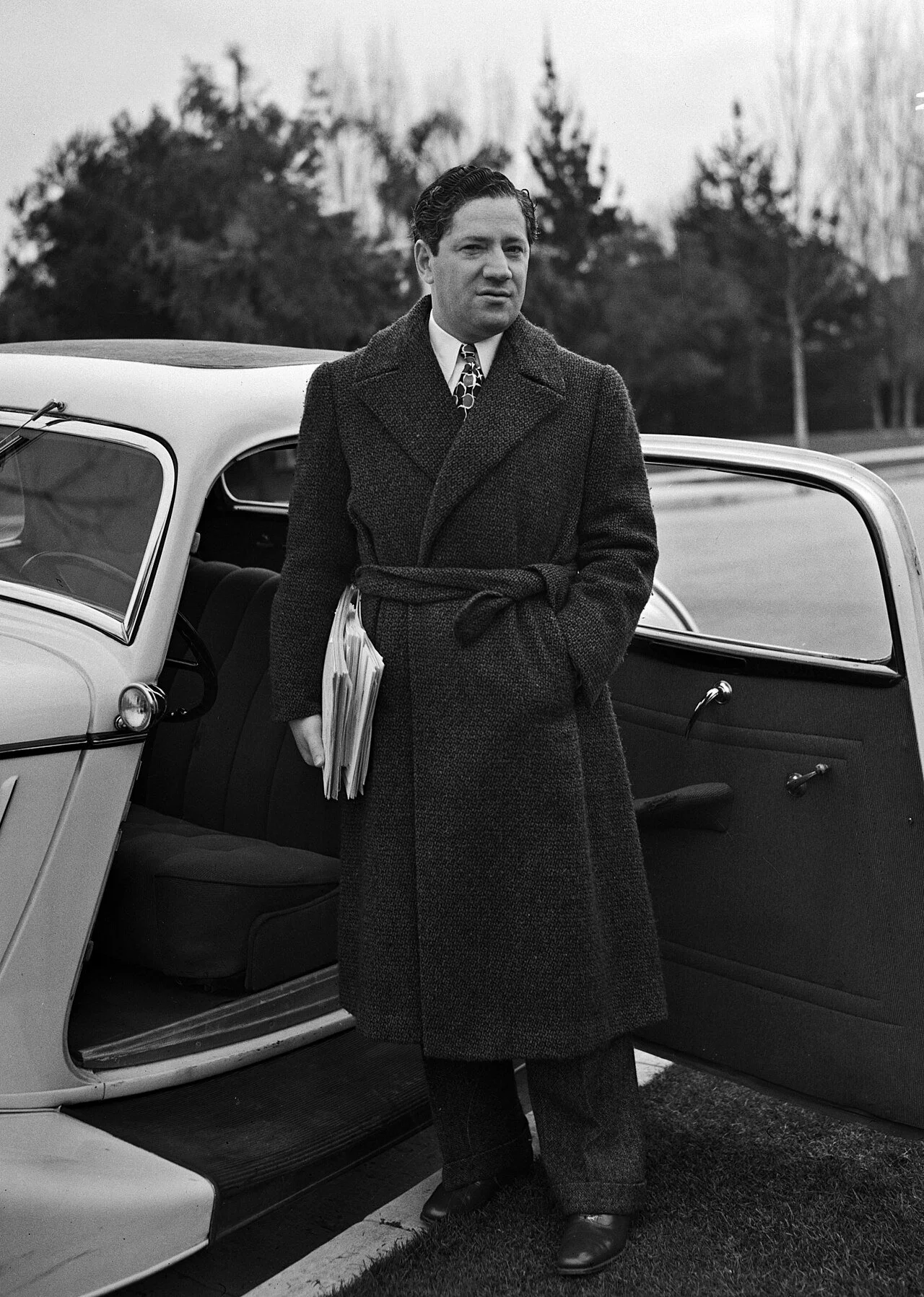
Jake Factor in 1936, Los Angeles Times
Europe
There, Factor created brokerage firms and financial newsletters that appeared legitimate, then used them to promote supposedly valuable oil and mining companies. Early investors were paid attractive returns, building confidence and encouraging them to bring in their friends. Once he had earned their trust, Factor steered them into shares that were largely worthless.
Even the Prince of Wales may have been caught in the scheme. American investigators reportedly believed that Edward—the future King Edward VIII—was among Factor’s victims. Jake claimed that he knew the Prince socially, casually referred to him as “Eddie Windsor”, had played baccarat and drunk with him at Le Touquet, the fashionable French seaside resort popular with British high society. Casino workers reportedly remembered the two men at the same table, although the true extent of their relationship remains unclear. The royal household denied that Edward had ever done business with Factor, and no evidence has been found proving that he invested in one of the fraudulent companies.
Factor’s British operation was eventually estimated to have taken in as much as £1.6 million—commonly reported at the time as around $8 million, or approximately $160 million in 2026 dollars. As the scheme collapsed and British authorities began closing in, Factor fled to France, moving through the fashionable gambling resorts of Deauville and Monaco.
The proceeds placed Factor in Europe’s highest-stakes gambling circles. In August 1930, Time reported that he lost $360,000 in just four hours of baccarat at Deauville, the Normandy resort—approximately $7.2 million in 2026 dollars. Later accounts claimed that Factor organized another scam at the Casino de Monte-Carlo, rigging the tables and winning enough to “break the bank”, exhausting the money held at a particular table and forcing the casino to replenish it.
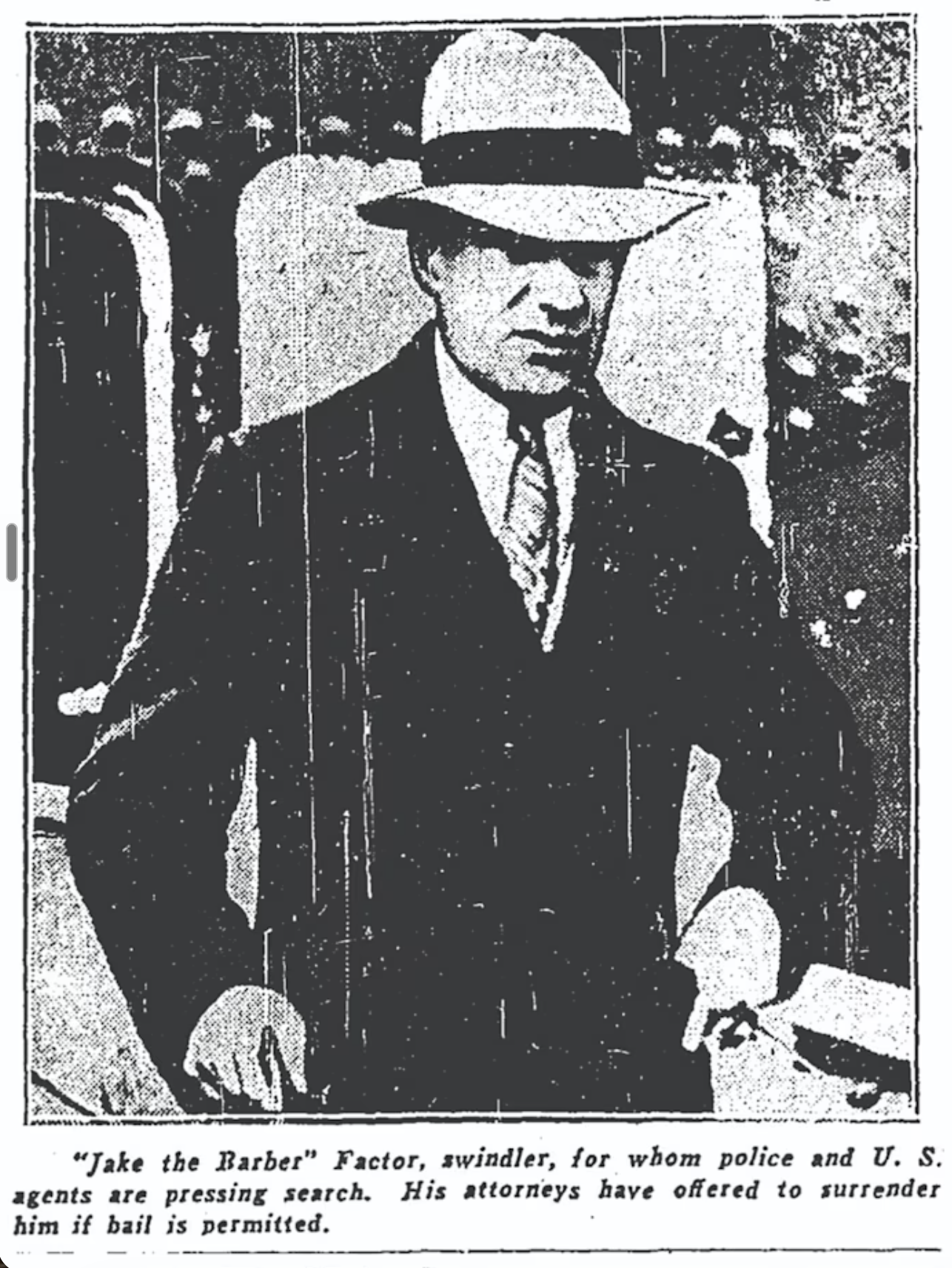
John Factor in 1931, The Chicago Tribune
Return to America
By the end of 1930, Factor was back in the United States. He entered through El Paso after traveling by way of Mexico, admitted into the country as a temporary visitor. Britain was already pursuing the money from his collapsed companies and soon began trying to extradite him to face criminal charges.
Factor did little to disguise his sudden wealth. In May 1932, while the extradition fight was underway, he bought a Duesenberg Model J convertible coupe with a body handmade by the celebrated California coachbuilder Walter M. Murphy. The Model J was among the fastest, most powerful and most expensive cars in the world—the—the American equivalent of combining a Rolls-Royce with a modern supercar.
A completed Model J typically cost between $13,000 and $19,000—approximately $320,000 to $470,000 in 2026 dollars—while the most elaborate examples could reach the modern equivalent of more than $600,000. At a time when an ordinary new Ford cost around $500 and an American physician might earn less than $3,000 a year.
Factor kept his first Duesenberg for only a few months before trading it for an even more dramatic Model J: a torpedo-style convertible coupe with a roof designed to disappear beneath the rear bodywork. He had returned to America with British authorities pursuing him for one of the largest frauds of the period, yet he was moving through the country in automobiles built for movie stars, industrialists and royalty.
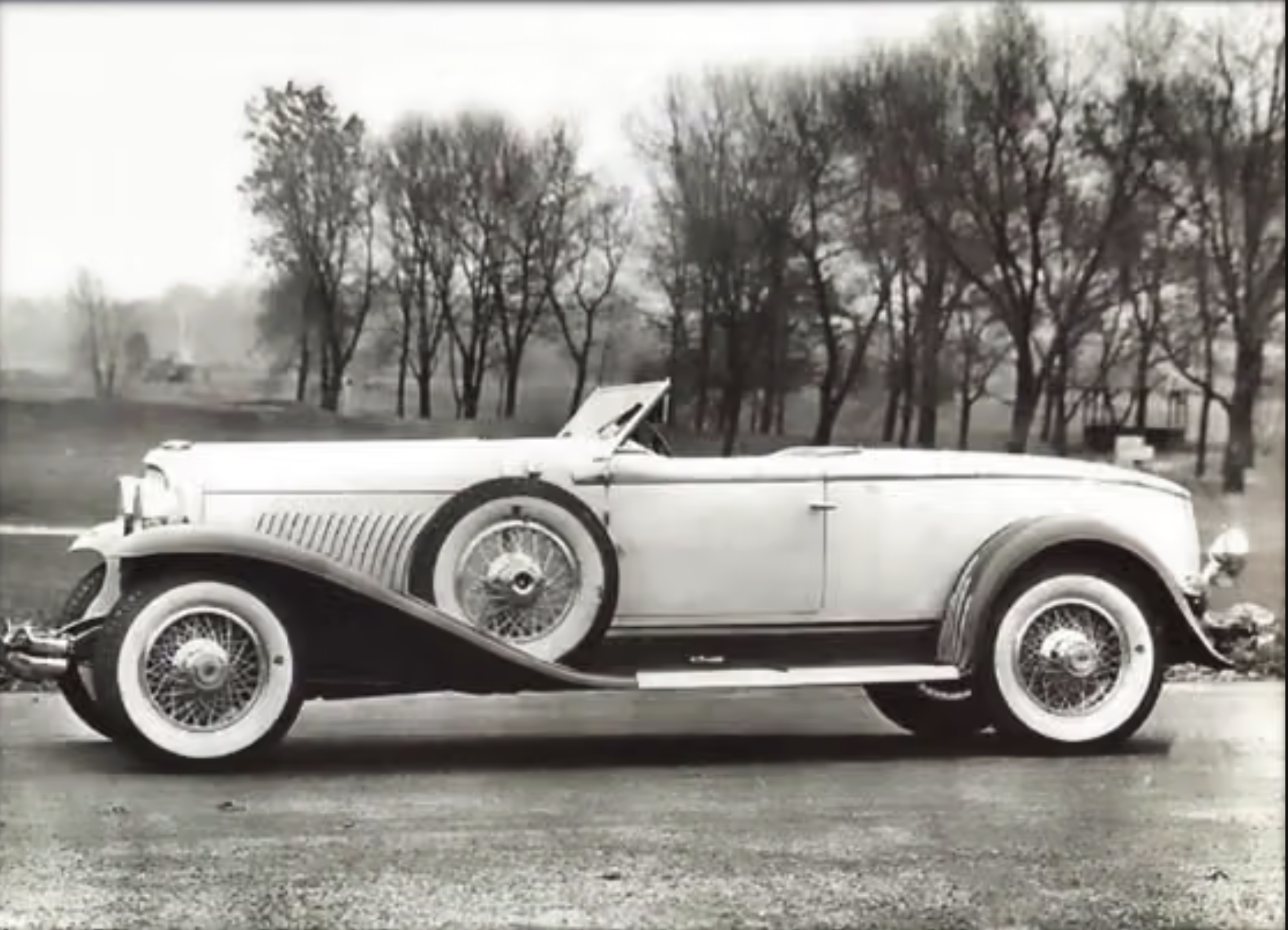
1930 Duesenberg Boattail Speedster which once belonged to gangster John Factor. Martin Auto Museum
Both cars survived. Factor’s first Model J, known by its engine number J-143, sold at auction for $880,000 in 2004 and returned to the auction block in 2020, when RM Sotheby’s sold it for $1,132,500. The disappearing-top Duesenberg he acquired next, J-249, was sold at auction in 2012 for approximately $484,000.
In December 1931, a US commissioner in Chicago ruled that Factor should be extradited to Britain. Factor appealed, beginning a long legal battle that would eventually reach the United States Supreme Court.
When Factor returned to Chicago, his European fortune made him an obvious target for the city’s kidnappers. By then, he had developed connections to the criminal syndicate that would become known as the Chicago Outfit. In around 1931, while he was fighting extradition to Britain, Factor reportedly paid its leader, Al Capone, to warn the underworld to leave him alone. According to Time, Capone’s message was simple: “Lay off Jake Factor—or else.”
But in 1931, Capone was convicted of federal income-tax evasion, and in May of the following year he began the prison sentence that removed him from Chicago. The man Factor had reportedly relied upon for protection was no longer there.
The Kidnappings
On April 18, 1933, the same day the United States Supreme Court heard arguments over whether Factor could be extradited to Britain, his 19-year-old son Jerome was kidnapped in Chicago. Jerome was held for eight days and released unharmed after Factor reportedly paid a ransom.
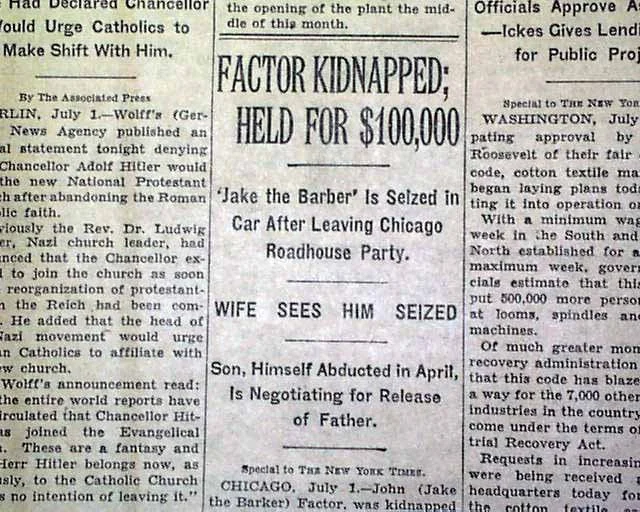
Little more than two months later, Jake claimed that he too had been kidnapped. He disappeared for nearly two weeks before returning bruised and burned, saying that he had been tortured and that another ransom had been paid. Many observers found the timing of the two abductions too convenient and suspected that Factor may have arranged them himself to strengthen his case against extradition.
Factor accused Roger “the Terrible” Touhy, the leader of a gang at war with the Chicago Outfit, of kidnapping him. Touhy was convicted and sentenced to 99 years in prison, although he insisted for the rest of his life that Factor and the Outfit had staged the crime to frame him. The prosecution made Factor an important witness in the American courts, helping to keep him in the United States even after the Supreme Court cleared the way for his extradition in December 1933. Britain never succeeded in bringing him back for trial.
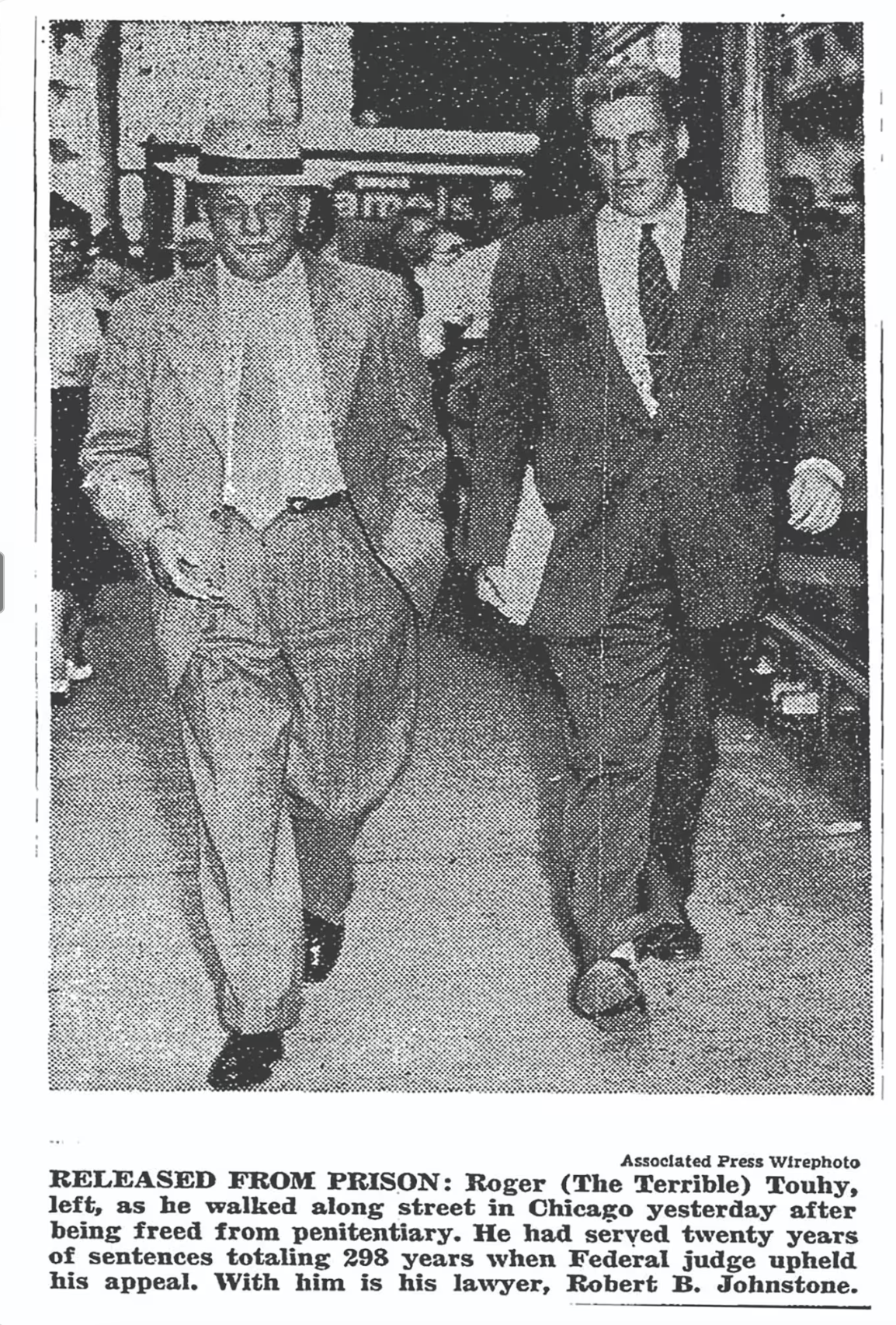
Touhy with lawyer Robert Johnstone (The New York Times, 1954)
Factor eventually faced prison for an unrelated American fraud. During the early 1940s, he was convicted of using the mail to sell fraudulent investments and sentenced to ten years in federal prison. He served approximately six years before being released in 1948.
Viva Las Vegas
By the 1950s, Factor had resurfaced in Las Vegas, where the rapidly growing casino industry offered organized crime a new way to turn enormous amounts of money into apparently legitimate wealth. In 1955, he became involved with the unfinished Stardust Hotel, reportedly acting as a front man for the Chicago Outfit.
With his criminal record, Nevada would not grant him a gambling license, so ownership was placed in the name of his wife, Rella. Her group bought the resort and paid approximately $4.3 million in 1958—roughly $49 million in 2026 dollars—before putting millions more into completing it.
When the Stardust opened that July, it was the largest hotel in the world, with more than 1,000 rooms, an enormous casino, a landmark sign covered in thousands of lights and the French stage spectacular Lido de Paris. The Factors remained the owners of record, while a group connected to the Desert Inn operated the casino and reportedly paid them approximately $100,000 a month—more than $1 million a month today.
Later accounts estimated that the Stardust allowed the Chicago Outfit to remove between $50 million and $200 million during the years Factor was associated with it. Expressed in early-1960s dollars, that would be roughly $550 million to $2.2 billion in 2026.
The Factors sold their ownership in 1962. Published accounts place the transaction somewhere between $7 million and $14 million—approximately $75 million to $150 million today. The price was considered unusually low for a property of the Stardust’s size and profitability, adding to suspicions that the Factors were not its true beneficiaries. The ownership arrangements and sale later attracted scrutiny from Robert Kennedy’s Justice Department, which was investigating who actually controlled the casino and where its money went.
The Stardust’s ties to organized crime didn’t end when Factor sold it. During the 1970s, Frank “Lefty” Rosenthal ran the casino for interests connected to the Chicago Outfit, while millions of dollars were skimmed before reaching its official accounts. That period inspired Martin Scorsese’s 1995 film Casino. Robert De Niro’s character, Sam “Ace” Rothstein, was based on Rosenthal, while the fictional Tangiers casino was based largely on the Stardust. The movie is not about Factor, but it depicts the same casino and system of hidden mob control that began while the Factors owned it.
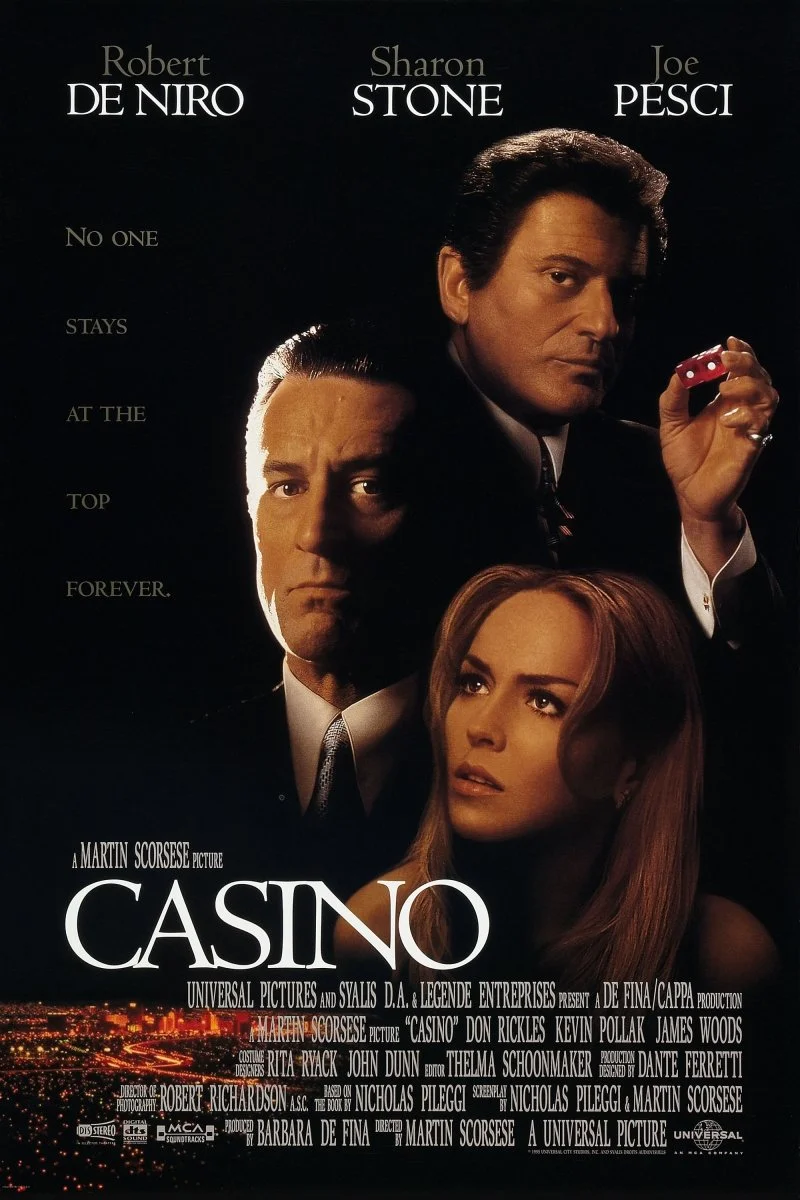
Theatrical release poster of Casino, 1995.
Going Legit?
The Stardust fortune allowed Factor to reinvent himself once again. He began donating large sums to charities, supporting community projects and giving money to Democratic politicians. By the 1960s, he had replaced much of his old public identity with that of John Factor, successful businessman, political supporter and philanthropist.
The rest of the family was also building a more respectable business empire. Jake, Rella and their sons had large interests in insurance, advertising and real estate in Chicago, Kansas City and Beverly Hills.
JFK and the Invasion of Cuba
In 1960, Factor became one of John F. Kennedy’s largest campaign donors, contributing approximately $20,000, around $220,000 in 2026 dollars. Kennedy defeated Richard Nixon in one of the closest presidential elections in American history, winning the national popular vote by about 112,800 votes and carrying Illinois by just 8,858. Chicago election irregularities have been debated for decades, as has the broader allegation that the Chicago Outfit helped deliver Illinois for Kennedy. That claim has never been proved, but it remains part of the political mythology surrounding the election.
The following year, the CIA backed an invasion of Cuba by exiles attempting to overthrow Fidel Castro. The Bay of Pigs invasion failed within three days, leaving almost 1,200 survivors imprisoned in Cuba.
A private fundraising campaign, supported by the Kennedy administration, was established to secure the prisoners’ release by assembling the food, medicine and other supplies demanded by Castro in exchange for them. Factor contributed $25,000, approximately $275,000 in 2026 dollars, to the effort. The prisoners returned to the United States in December 1962 after the campaign assembled $53 million in food and medicine, roughly $570 million in 2026 dollars, for delivery to Cuba.
Factor had completed his prison sentence years earlier, but his mail-fraud conviction was now being used as grounds to deport him. His supporters presented him as a rehabilitated businessman and philanthropist deserving clemency. On December 24, 1962, one day after the first prisoners arrived, Kennedy granted him a full presidential pardon, allowing him to remain in the United States.
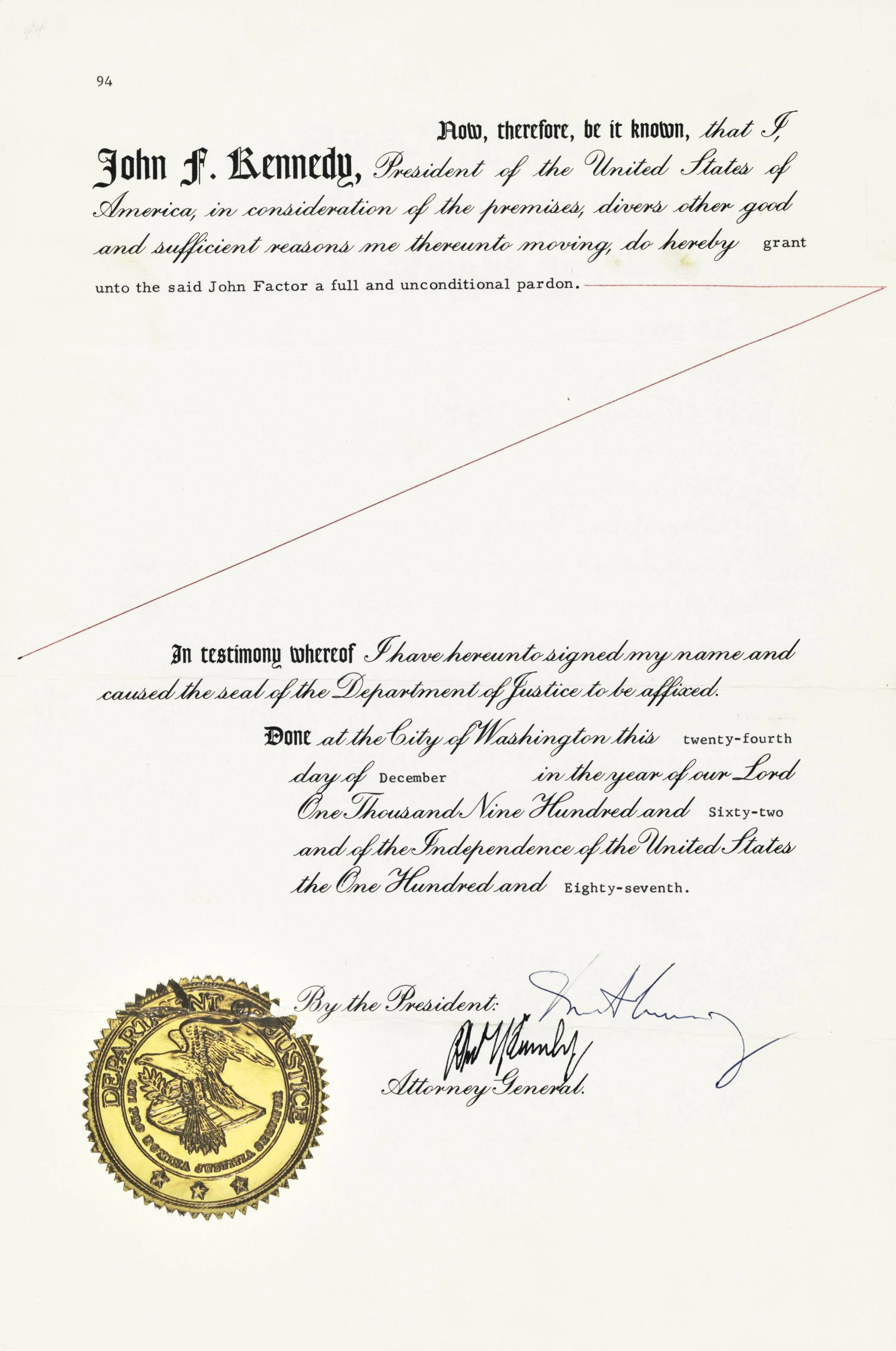
The presidential pardon of John “Jake the Barber” Factor, father of Jerome Factor, signed by President John F. Kennedy and countersigned by Attorney General Robert F. Kennedy on Christmas Eve, 1962. View the auction lot at Christie’s
The timing raised questions about political influence. Factor had donated to Kennedy’s campaign, supported a major administration cause and then received the pardon that prevented his deportation. It invites scrutiny, but it does not prove that his contributions and pardon were exchanged for one another.
On July 16, 1963, after living in America for more than 57 years without becoming a citizen, Jake Factor finally took the oath of American citizenship. It completed an extraordinary reinvention. The former British fugitive, convicted swindler and Las Vegas casino owner had remade himself as John Factor, an American businessman, political supporter and philanthropist with connections reaching into the White House.
Jerome Factor, a Venture Capitalist
Given Jake Factor’s history, the obvious question is whether his son’s fortune came from his father’s frauds or criminal connections. The records reviewed so far do not show that it did.
Jerome had been building a business career of his own for decades. By 1939, he was managing the radio department at the Ted H. Factor Agency, an advertising company founded by his cousin Ted Factor. The agency later became Factor-Breyer and, in 1954, merged with Doyle Dane Bernbach, one of the most influential advertising agencies of the postwar period.
In the early 1960s, Jerome invested in National Central Life Insurance Company, a young Kansas City insurer organized in 1961. The investment came during a period of rapid expansion in American life insurance. From 1960, industry assets grew from $116 billion to $201 billion by 1970, while hundreds of newly formed insurers were entering the market. National Central could raise money by selling shares, giving early investors such as Jerome an opportunity to acquire large positions in the company that could become considerably more valuable if it later went public or was sold. Jerome owned nearly 69 percent of the company. His stake was worth approximately $1.44 million in 1962 (approximately $15.9 million in 2026 dollars).
One year later In 1963, National Central went public, offering shares at $10 each. Jerome’s stake would have been valued at about $4.75 million (approximately $51.8 million in 2026). In 1968, Pennsylvania Life acquired National Central. If Jerome had retained his original holding, it would have been worth more than $31 million in 1968 (approximately $297.5 million in 2026 dollars). We do not know how many shares he still owned by then, so that figure remains hypothetical. But it makes the later description of Jerome as a venture capitalist considerably easier to understand.
There is one loose thread. Jerome’s father also had interests in the insurance business. Organized crime groups had a history of using insurers, insurance brokerages and union insurance contracts to generate kickbacks, disguise payments and move money into legitimate businesses. Jake owned the Chicago-based National Life Insurance Company of America. During an investigation into his finances, federal investigators found that he had sold Chicago Outfit figure Murray Humphreys shares in the company for $8,000, then bought them back for $50,000. Humphreys made a $42,000 profit, approximately $450,000 in 2026 dollars. The IRS reportedly treated it as payment for services rather than an ordinary investment gain.
By the early 1960s, as Jerome’s investments were building his fortune, he and his family were already living a remarkably glamorous life. In Highland Park, outside Chicago, he and his wife commissioned a sprawling modern house on more than two acres overlooking Lake Michigan. Designed around their growing art collection and frequent entertaining, it anticipated much of what they would later create in Palm Springs.
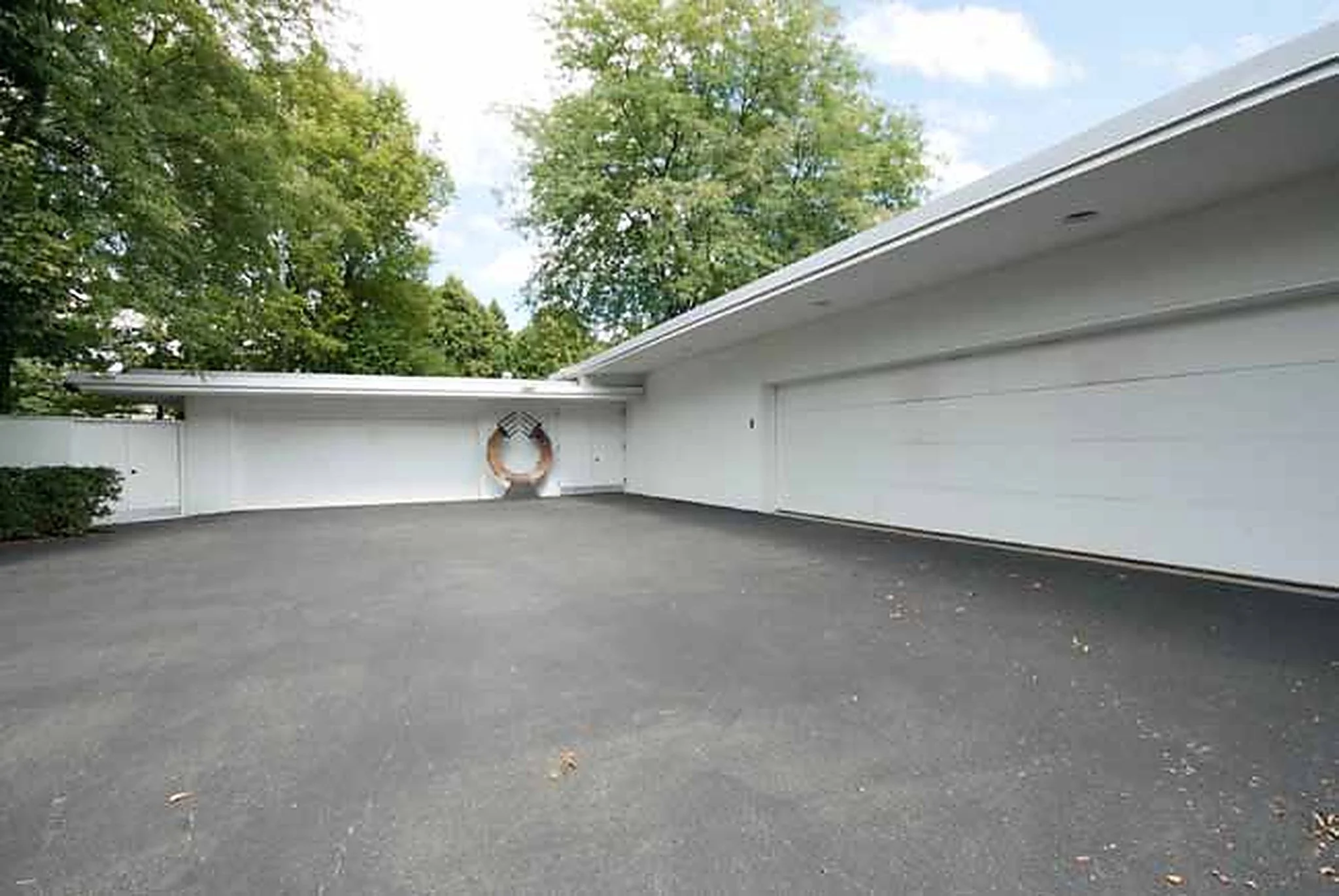
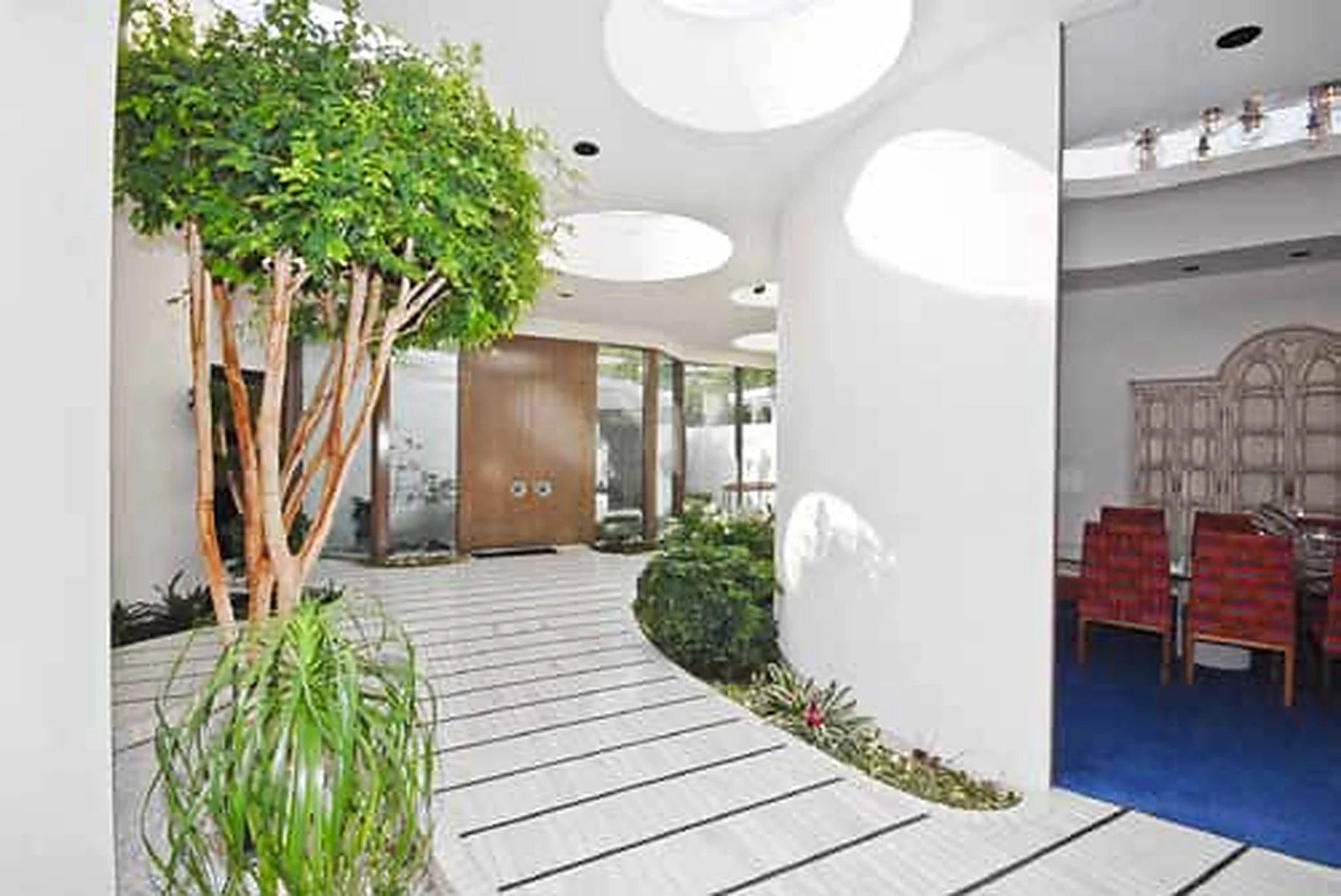

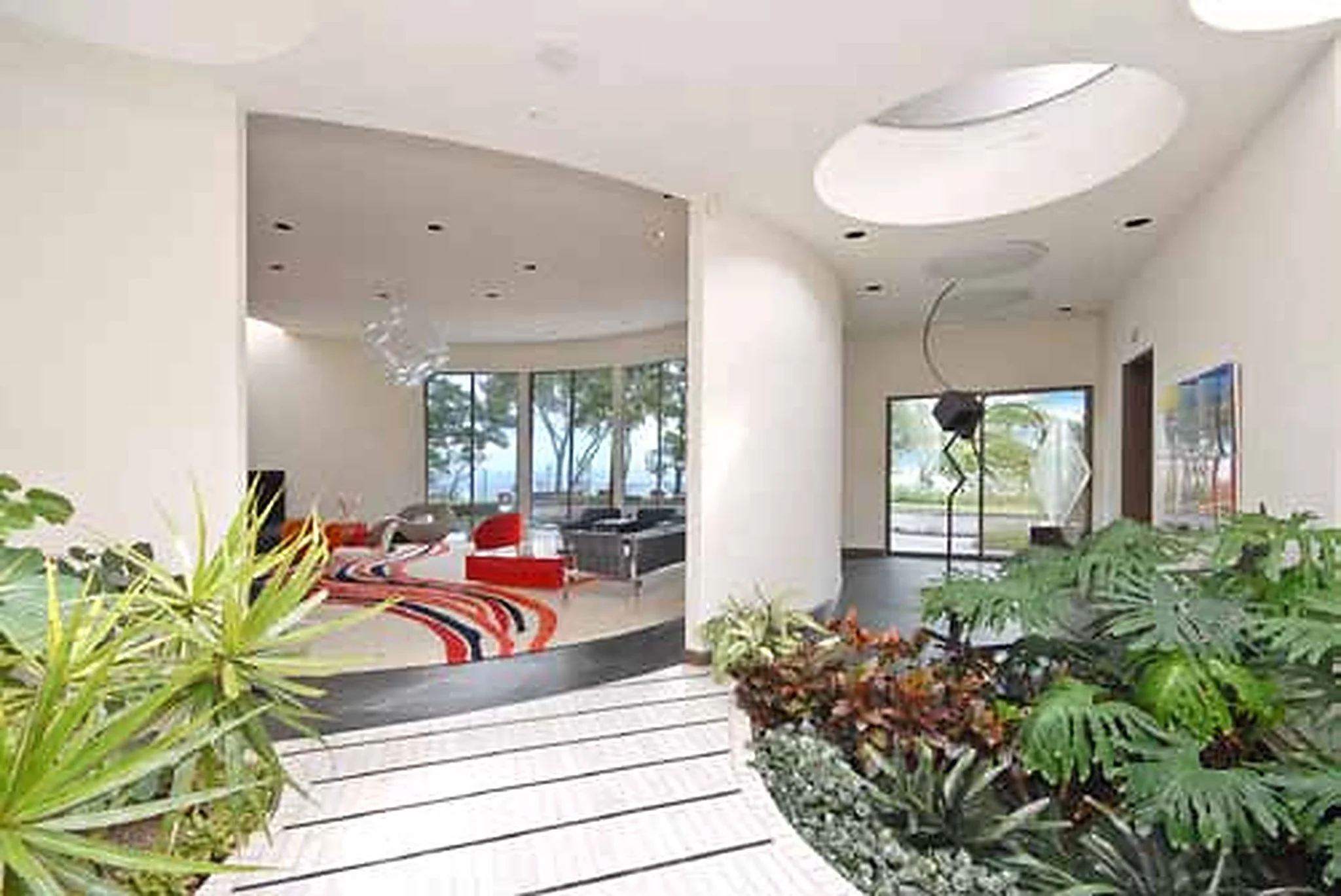
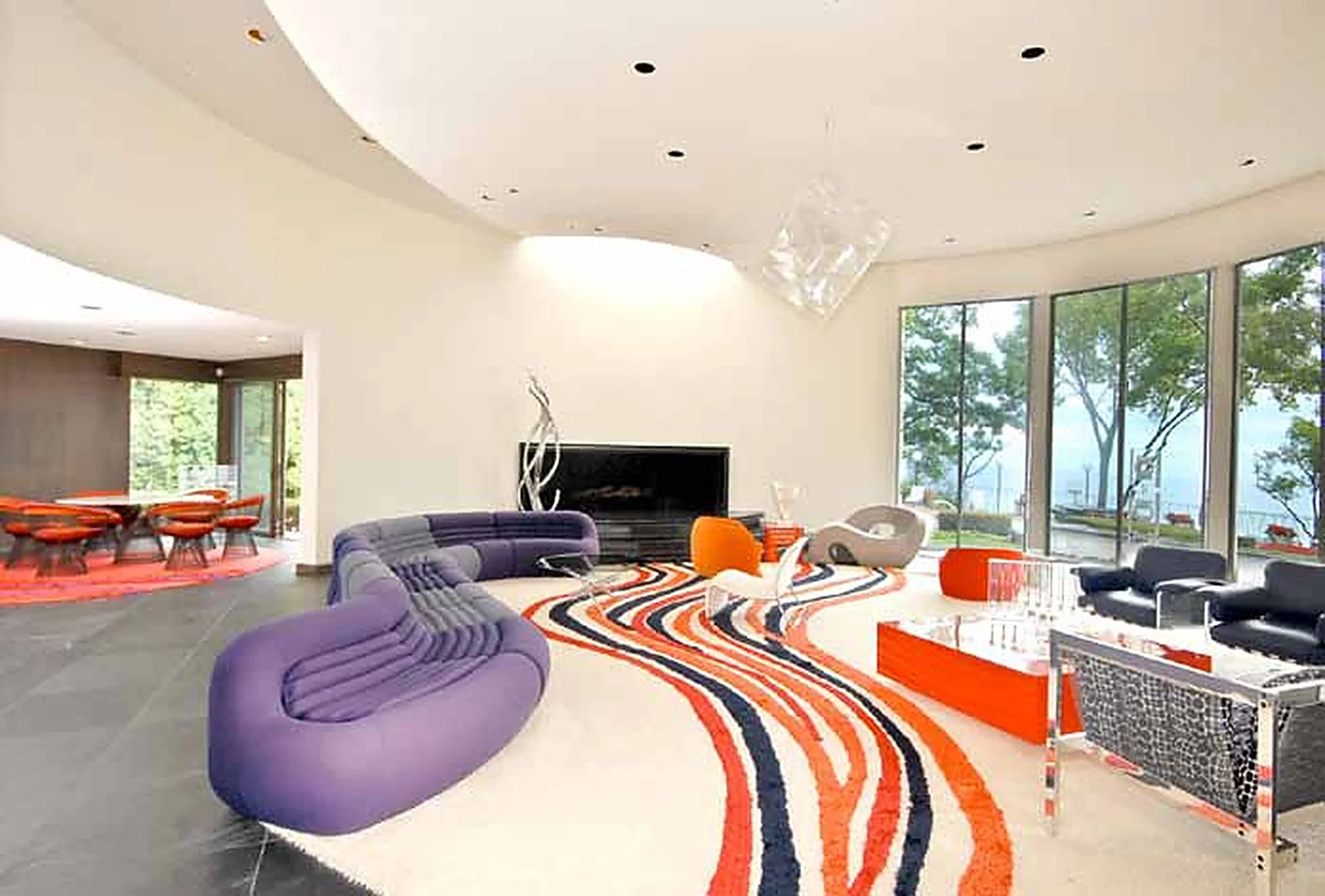
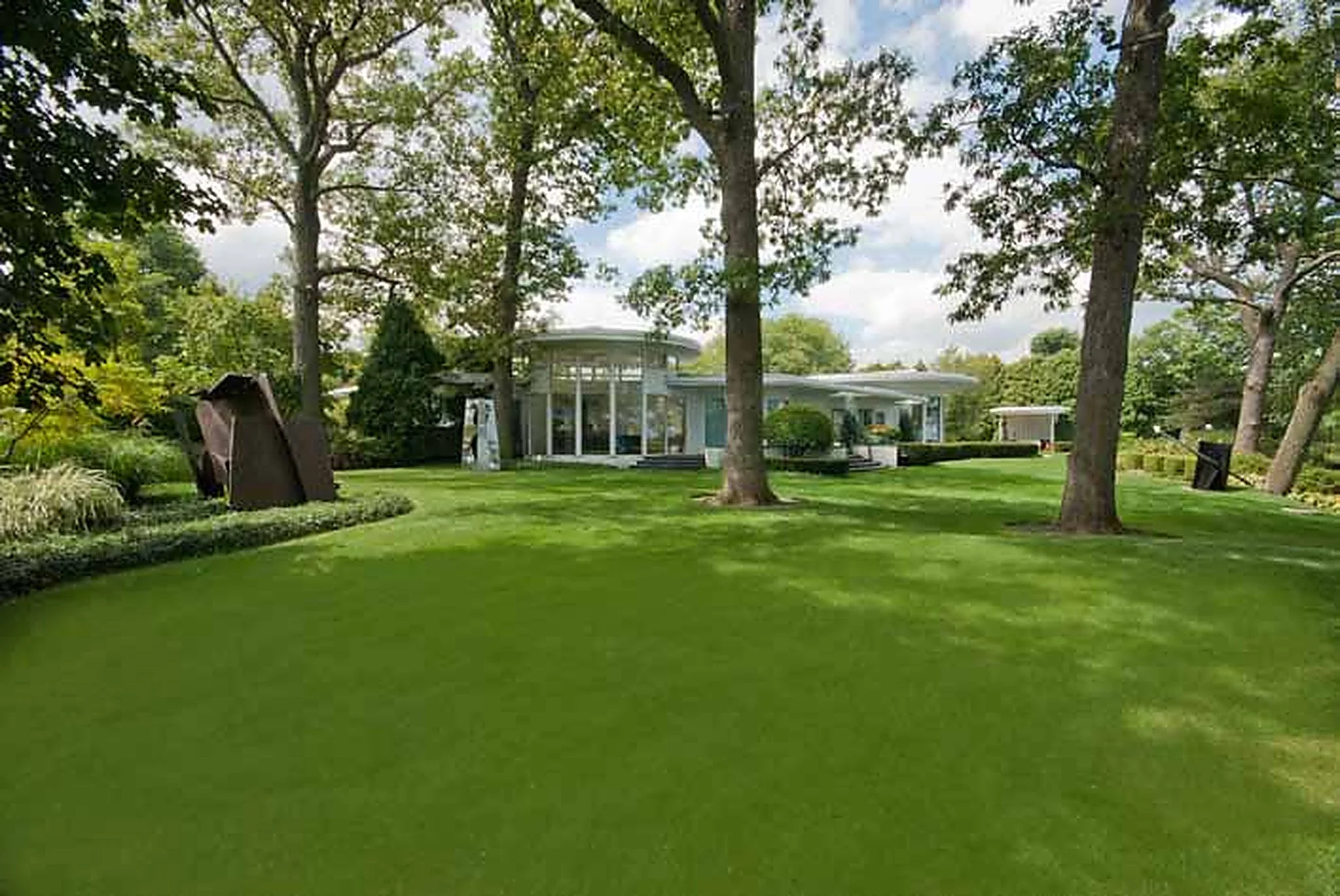
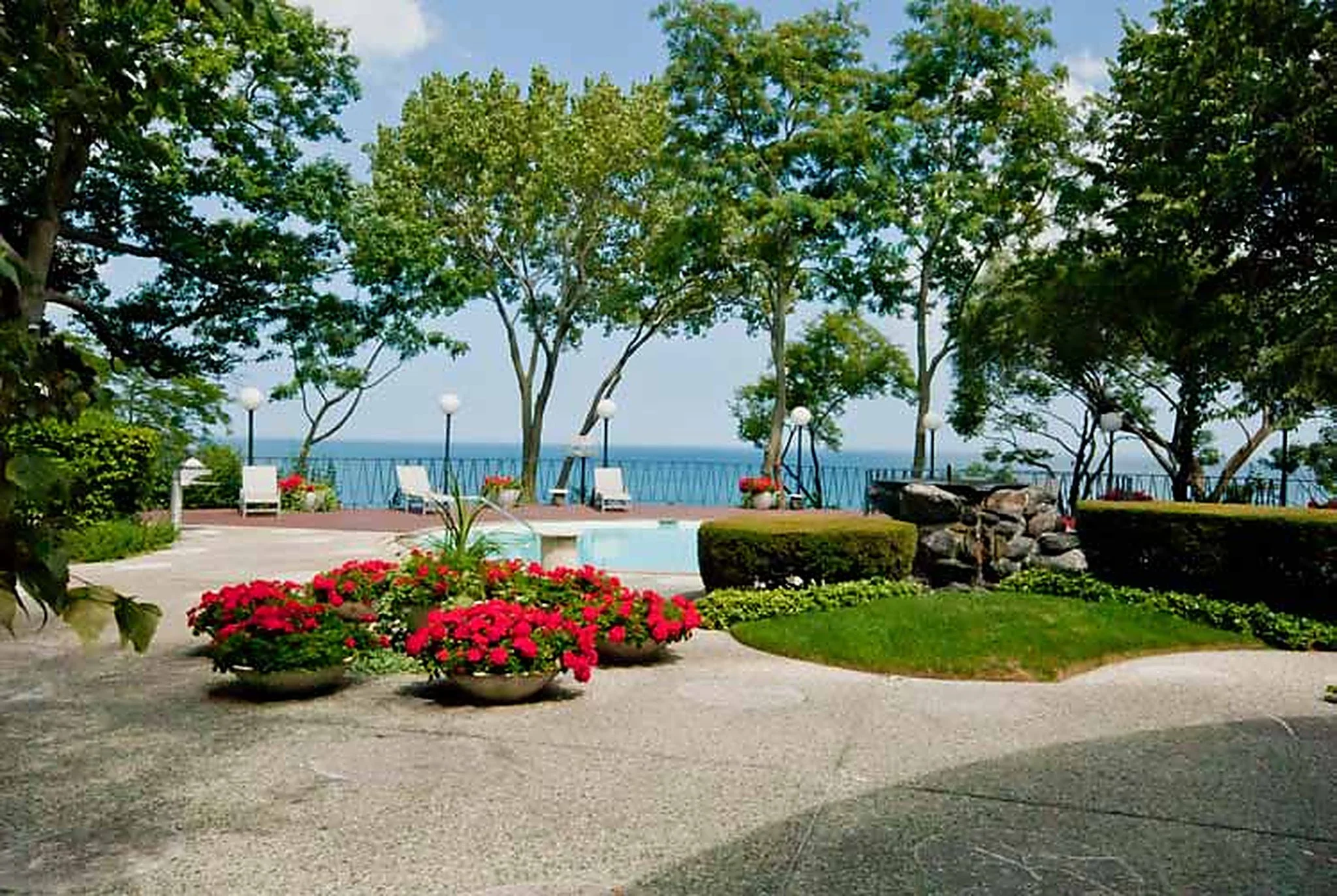
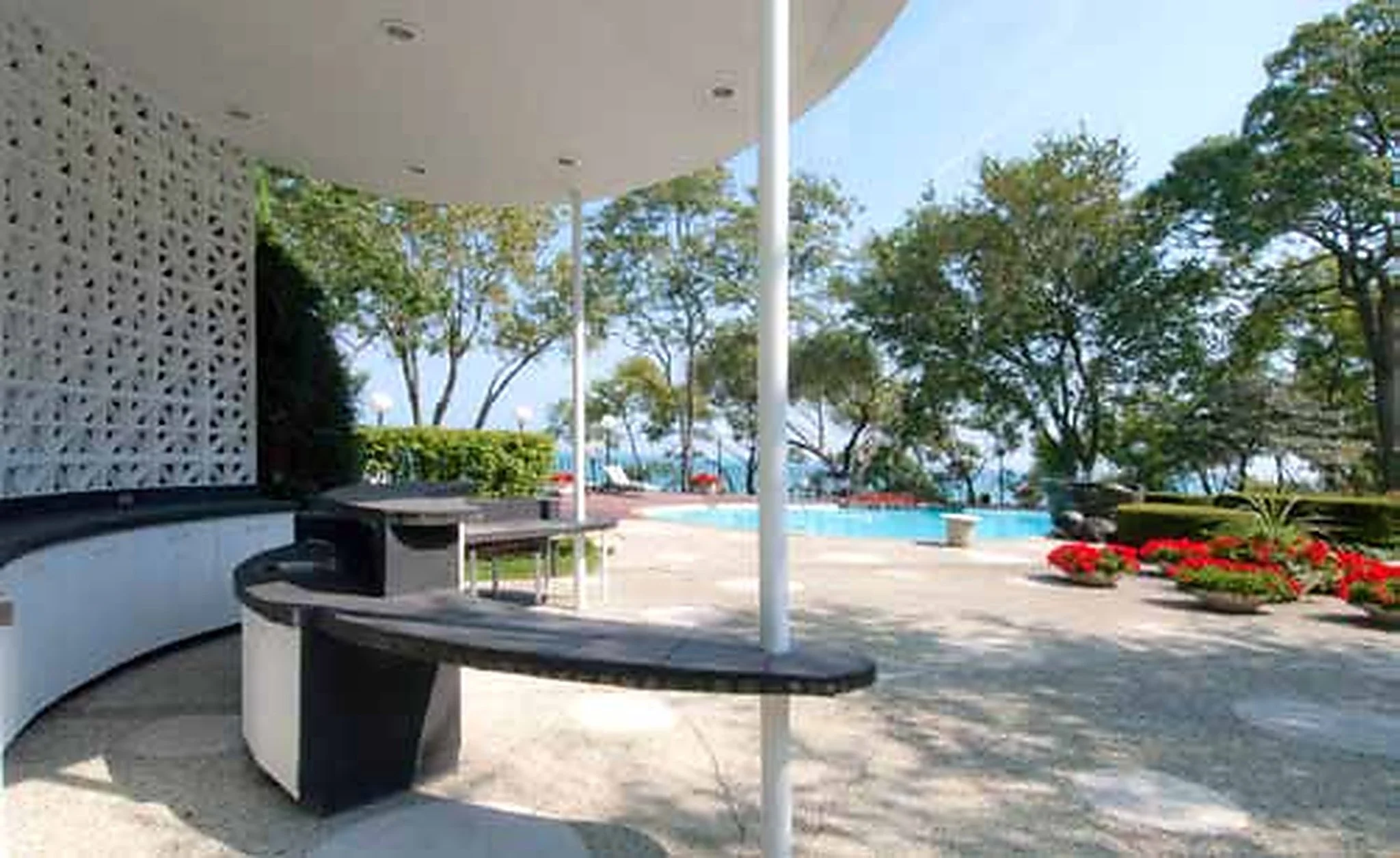
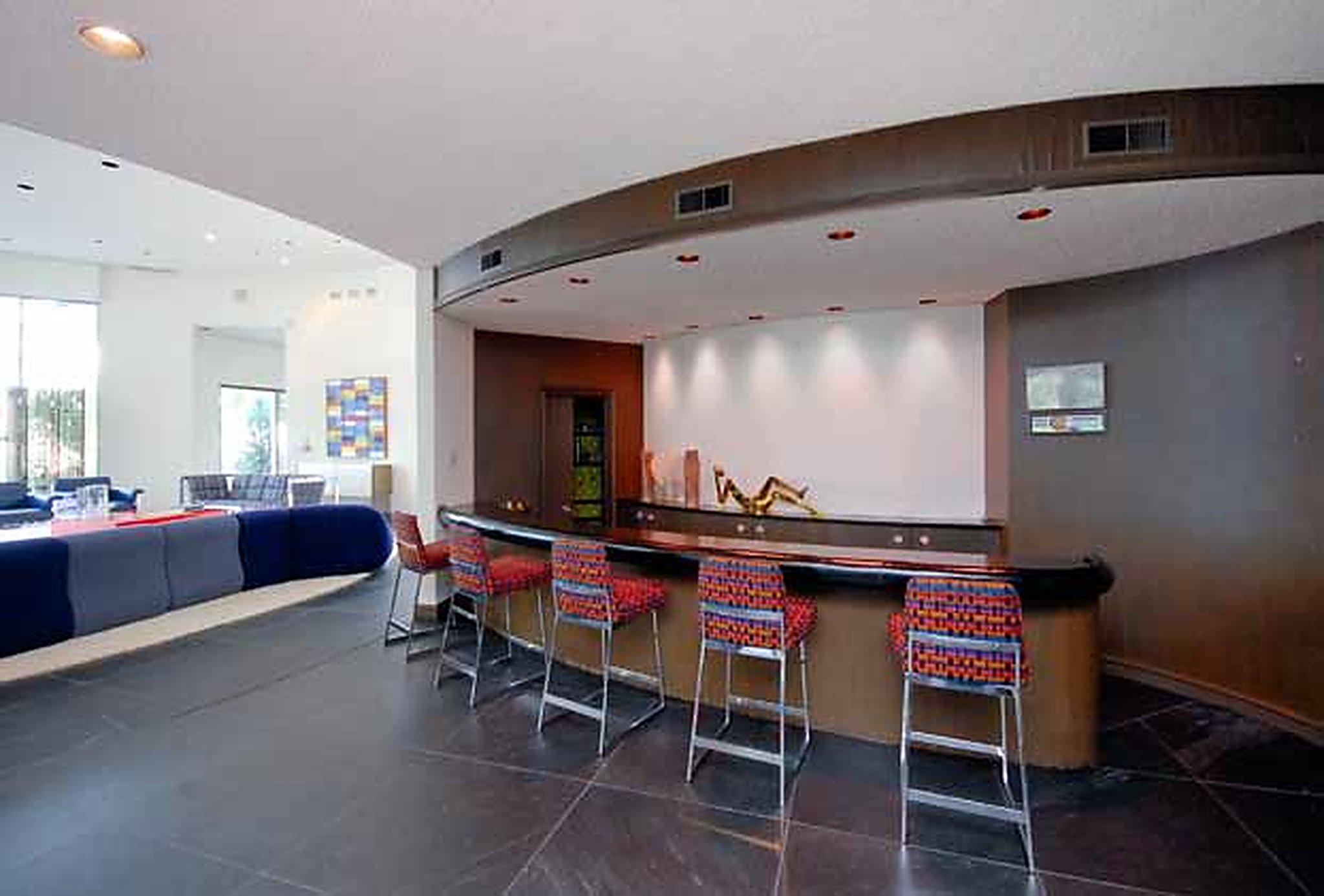
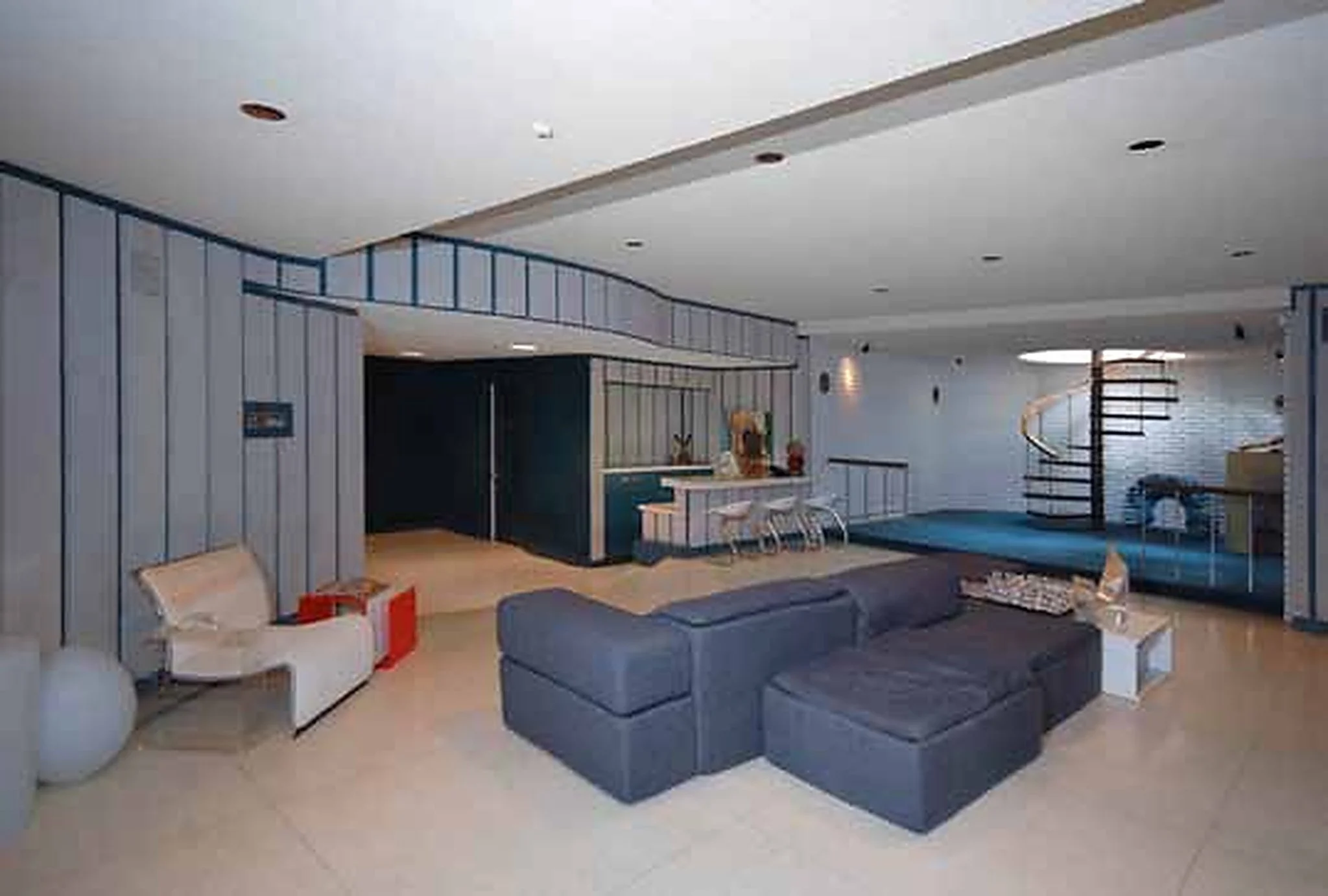
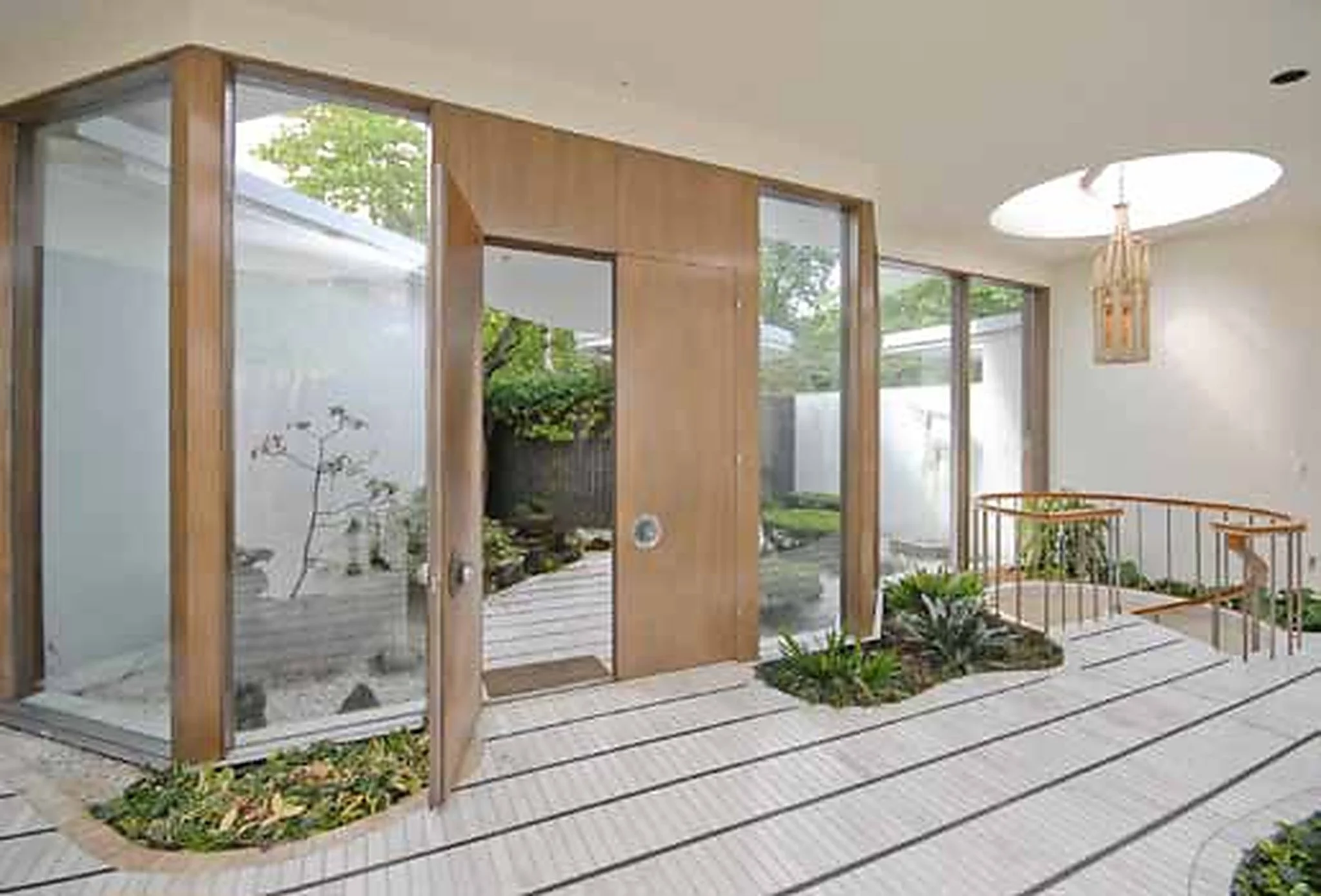
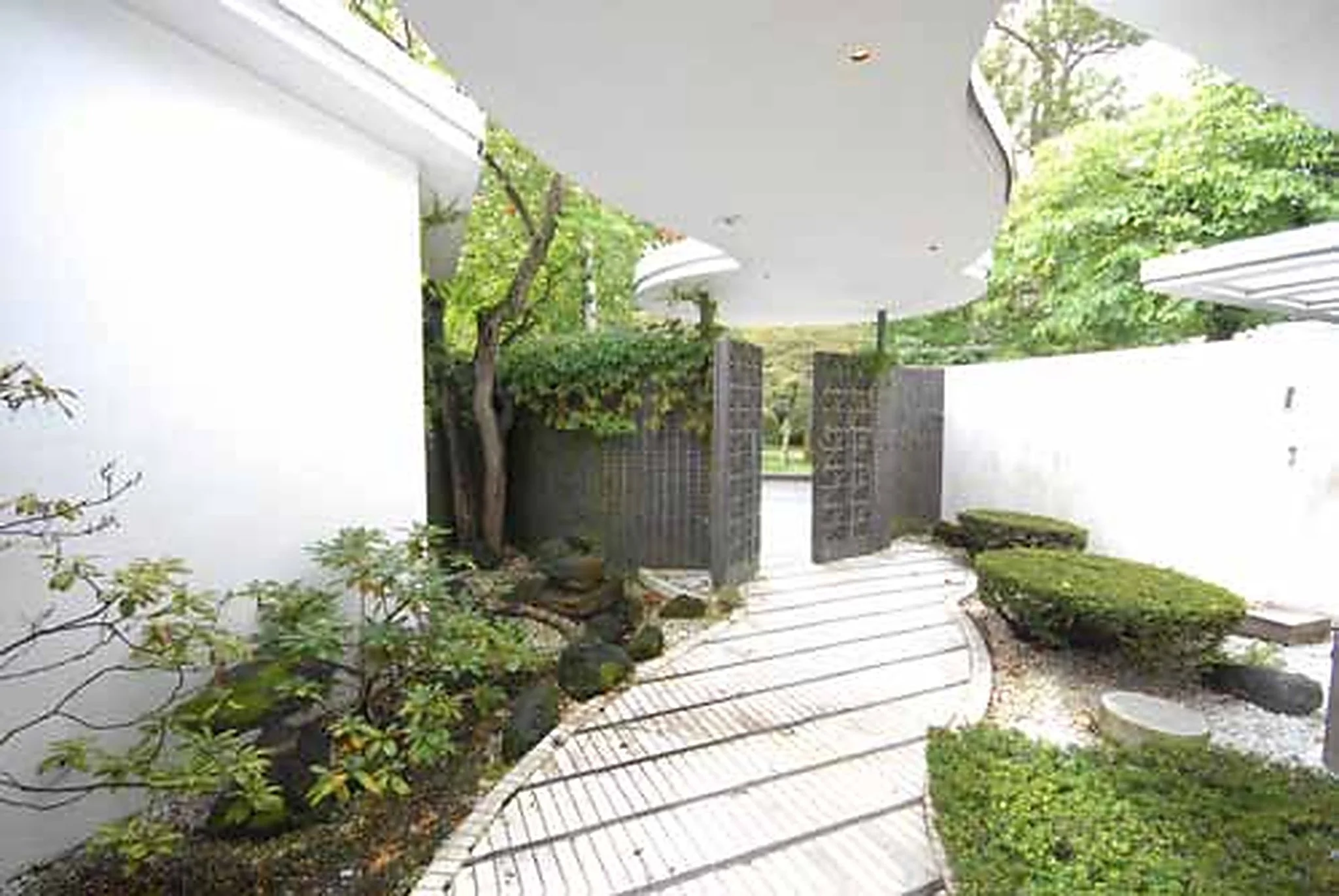
Before commissioning his Palm Springs residence, Jerome Factor hired architect Arnold S. Schaffner to design this Lake Michigan home at 65 Vine Street in Highland Park, Illinois. Completed in 1964, the house was listed on September 20, 2010, for $7,495,000 with Joanne Hudson of The Hudson Company.
Their daughter Vicki’s interest in horses also grew into something much bigger. She had first taken to riding at summer camp in Maine, where an instructor was impressed enough to call Jerome and tell him she had a way with horses. Lessons followed, then show horses, and eventually the family began talking with veteran trainer Ben Segalla about moving to his Country View Stables.
“Dad didn’t really want to do the public barn thing,” Vicki later recalled. So the Factors bought Segalla’s farm instead, kept him on as trainer and renamed it Victoria Farm. What began with their daughter’s childhood interest developed into one of the country’s leading show stables, with the family eventually showing as many as 20 to 25 horses, including several world and national champions.
The Factors had already built a glamorous life around modern architecture, art and entertaining. Palm Springs was less a departure than a continuation of it, adapted to the desert.
That adaptation had its own architectural language. To understand the Factor Residence, it helps to understand the California Modernism and Desert Modernism Webber and Staska were working within.
From European Modernism to California Modern and Desert Modern Architecture
Modernism emerged in Europe between the 1910s and 1930s. It introduced new materials and a different way of building. Steel, reinforced concrete, aluminum, post-and-beam construction and increasingly large panes of glass allowed architects to create wider spans, open plans, thin rooflines and entire walls of glass. Modernism then came to the United States through architects including Walter Gropius, Ludwig Mies van der Rohe and Richard Neutra, and split into several regional forms.
California’s climate allowed architects to take it somewhere Europeans largely could not. Entire rooms could open to the outdoors, turning patios, pools and gardens into extensions of the interior. Instead of a house with a yard behind it, the whole property became one continuous living space.
The Factor Residence
That approach perfectly suited the hills in and around Los Angeles. Unlike a traditional suburban house set behind a front lawn, architects often pushed the building as close to the street as local setbacks allowed, turning the street-facing side into an almost solid wall. Garages, kitchens, bathrooms, storage and other utilitarian spaces were placed along this edge, where windows and views aren’t important.
With houses close to the road and neighboring properties, there was little reason to open the main rooms toward the street. Instead, living rooms and bedrooms faced the back of the property, where glass walls, terraces and gardens could open toward the landscape and distant views. Many of the latest houses being built in the Los Angeles hills still follow the same arrangement.
The Factor Residence’s architect, Hank Webber, was already working within this architectural world in Los Angeles and had a connection to the Factor family. His firm had designed a Beverly Hills house for Jerome’s cousin Ted Factor and his wife, featured in the September 1969 issue of House & Garden under the title “Living in a Garden.” The Beverly Hills house was completed around the same time as the Factor Residence. Although Webber never achieved the household-name recognition of Richard Neutra, A. Quincy Jones or Pierre Koenig, his houses appeared regularly in the national design press.
One of the photographers documenting that world was Julius Shulman, whose images helped define how the world saw postwar California. Shulman was the principal photographer of the Case Study House program, launched by Arts & Architecture magazine in 1945 to commission experimental homes for postwar California. His best-known image, taken in 1960 at Koenig’s Stahl House, Case Study House #22, shows two women inside a glass room floating above the lights of Los Angeles. Widely regarded as one of the most iconic architectural photographs ever taken, it also became one of the defining images of Los Angeles itself. That house is currently on the market for $20 million.
Four years before taking that famous photograph, Shulman had photographed a Beverly Hills home Webber designed for the Rantz family. The house was subsequently featured in House & Garden. Although it was not part of the Case Study House program, Shulman’s photographs placed Webber’s work firmly within the same architectural world.
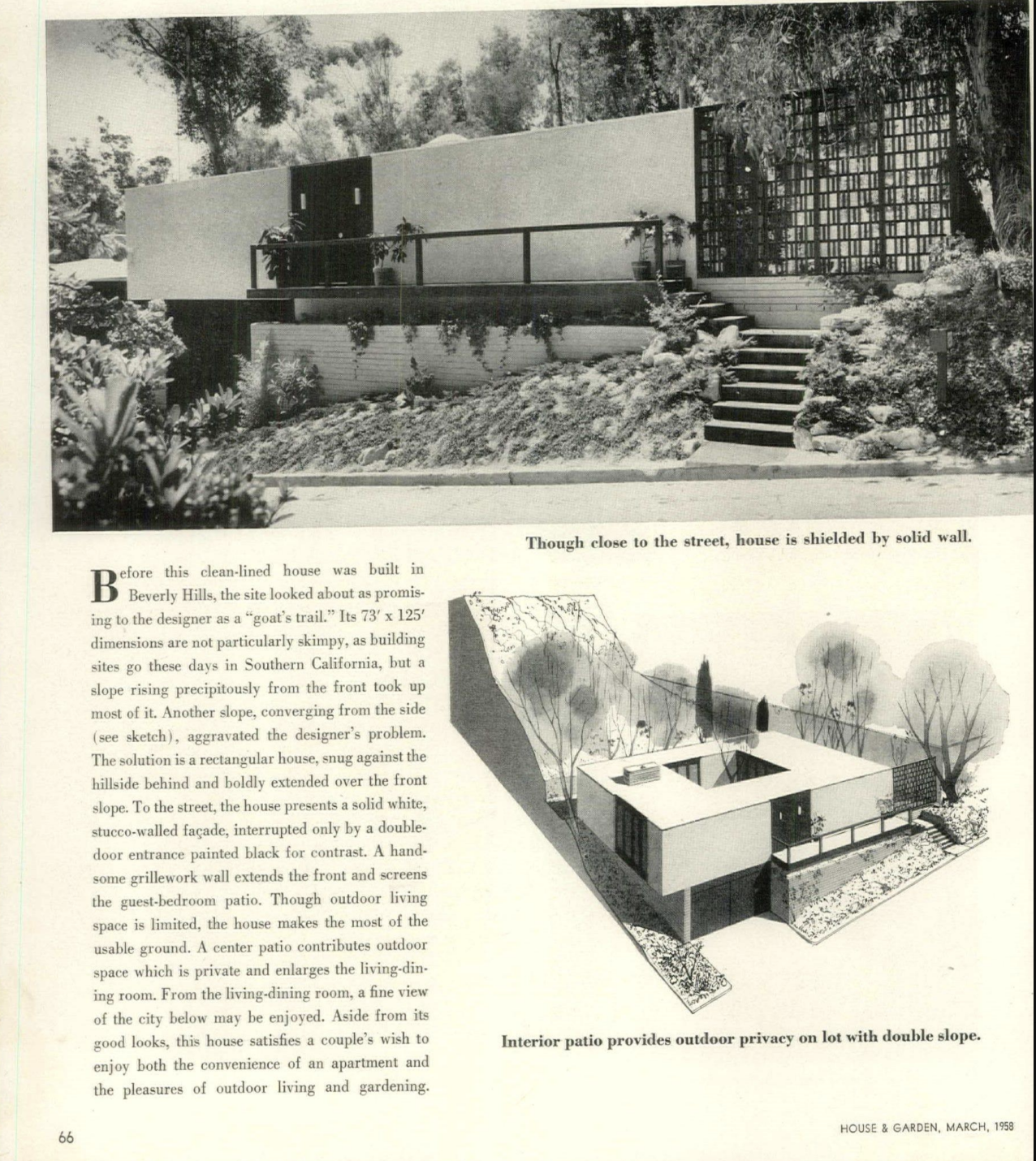
When the Rantz House appeared in House and Garden in 1958, its description could easily be mistaken for one of the Factor Residence: “To the street, the house presents a solid white, stucco-walled façade, interrupted only by a double-door entrance.”
More than a decade later, Webber transplanted that same idea to Palm Springs on a much grander scale. Like the hills of Los Angeles, Palm Springs gave architects almost everything they could want: dramatic mountains, open land, privacy and wealthy clients willing to try something new. But California Modernism had to be adapted to the desert heat. Architects used solid walls, deep overhangs, shade and carefully placed glass to keep the direct sun out and the interiors cooler, while still opening the house toward protected courtyards, pools and mountain views.
This balance—open to the landscape but protected from the sun—turned California Modernism into Desert Modernism. Architects including Richard Neutra, Albert Frey, William F. Cody, Donald Wexler, E. Stewart Williams and John Lautner helped define the style.
What can initially appear bunker-like (and irresistibly allude to Factor's kidnapping as a teenager) is better understood as a particularly private expression of Desert Modernism.
A Palm Springs Renaissance
Palm Springs itself is having another moment.
The city has always traded on its combination of modern architecture, desert light and old Hollywood glamour, but the architecture has increasingly become a destination in its own right.
Modernism Week brought more than 111,000 visitors to the city in 2026.
People are no longer coming only for the pools, hotels and winter sun. They are coming to see the architecture.
For the Factor Residence, that renewed attention arrives at an unusual moment.
For a city that people now travel across the world to see through its architecture, the Factor Residence offers something increasingly difficult to find: not a recreation of Palm Springs in 1969, but one of its private worlds that never entirely disappeared.
Address: 1255 E Via Estrella, Palm Springs, CA 92264
Bedrooms: 3
Bathrooms: 5
Interior: 5,471 sq ft / 508 m²
Lot: 0.56 acre / 0.23 ha
Parking: 3 spaces
Year: 1969
Architecture: Hank Webber / Hank Webber & Associates, Don Staska
Interiors: Richard Himmel
Landscape: David Hamilton, ASLA
Features: Swimming pool, sunken bar, built-in hibachi, art gallery, steam shower, extensive dressing rooms, covered entertaining terrace, sculpture and rose gardens, golf-course frontage.