Written by Patrycja and Michael Maka
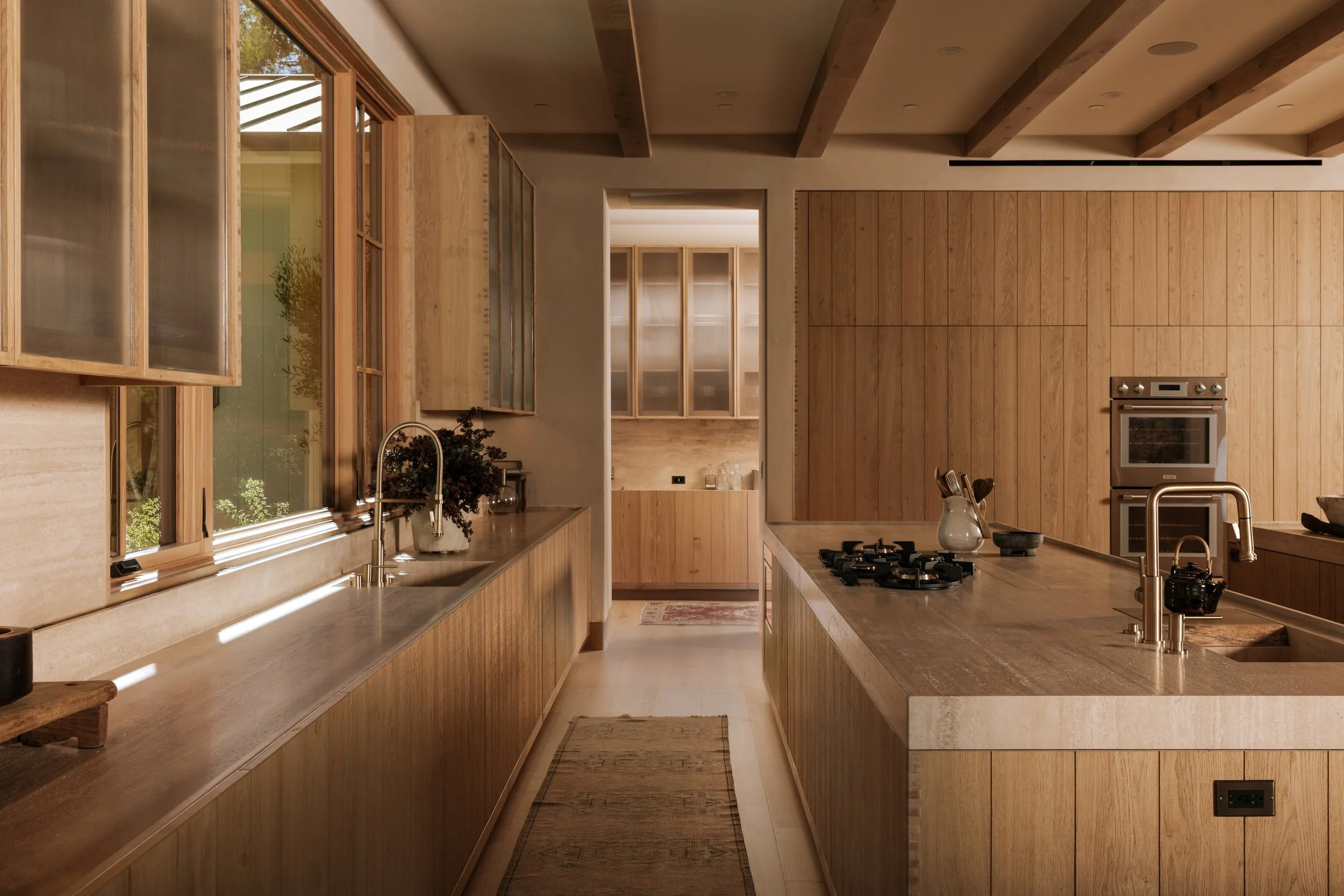
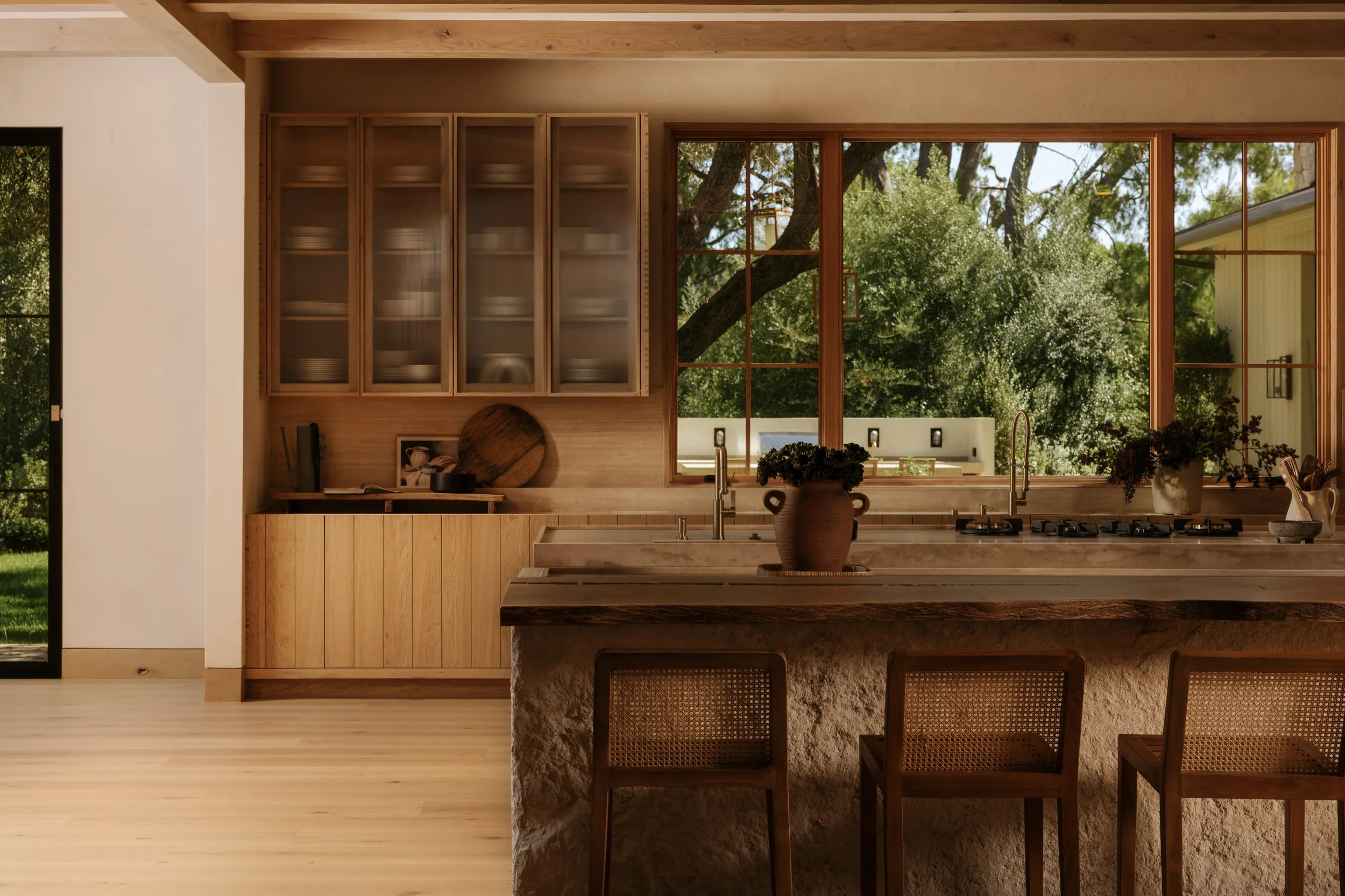
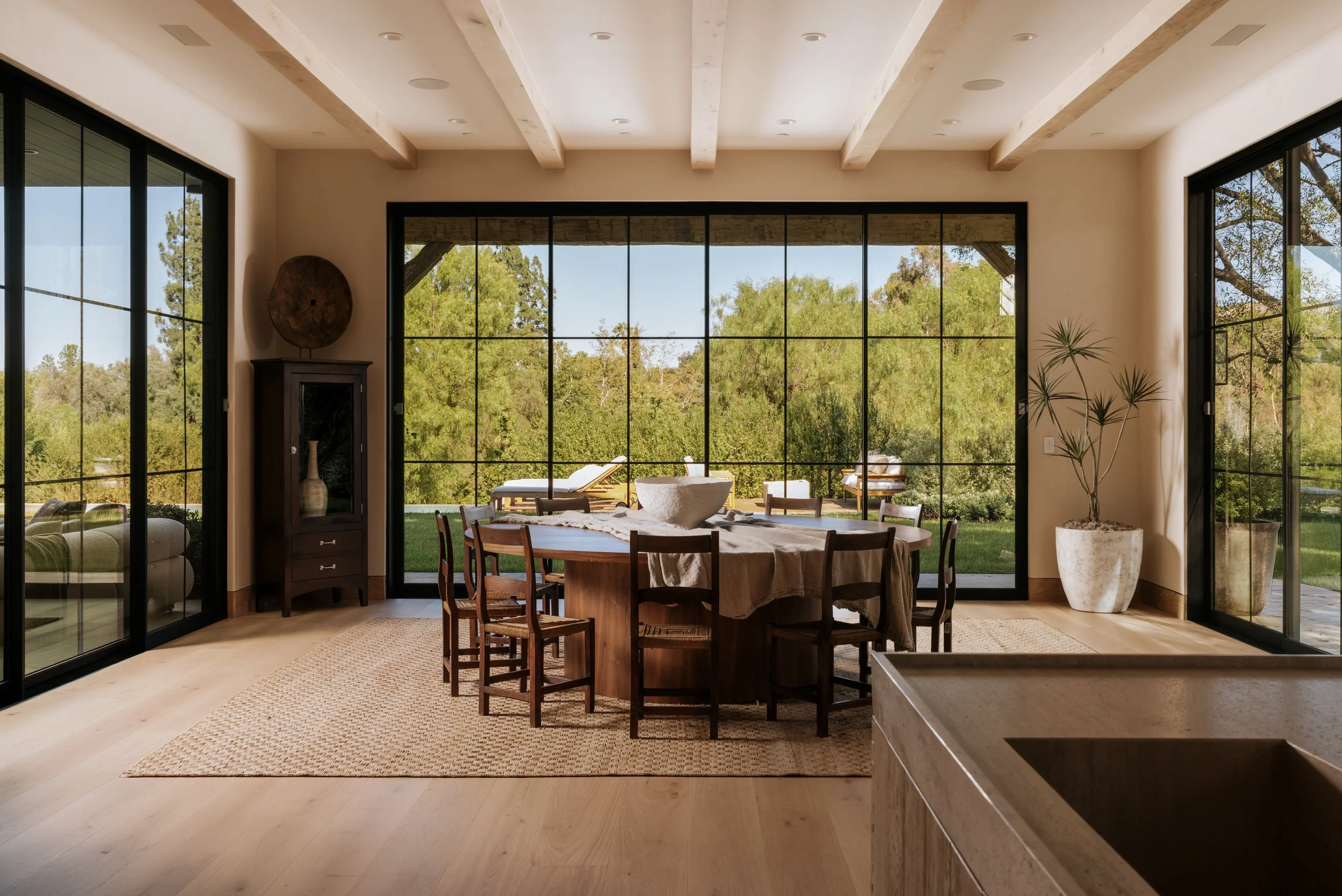
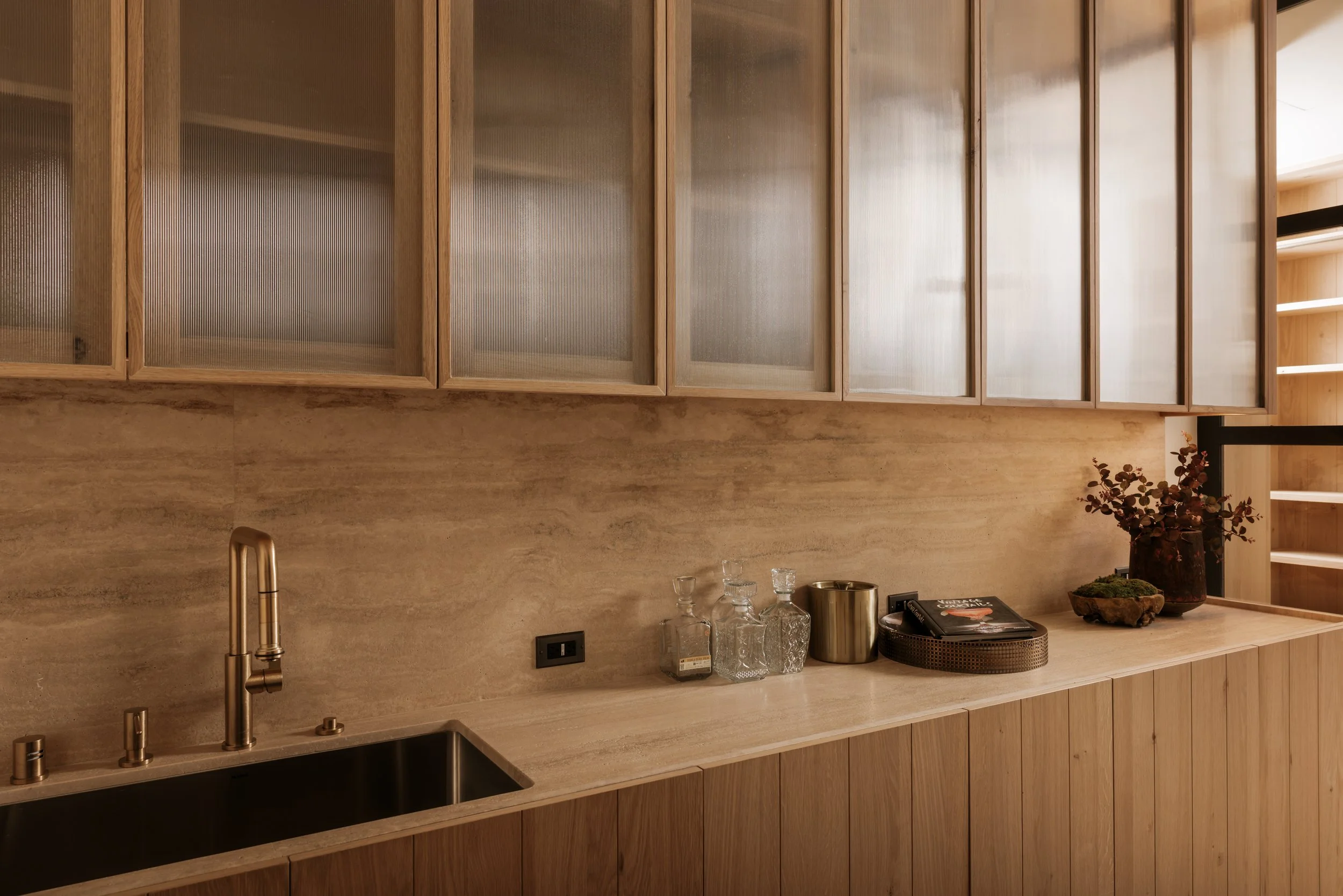
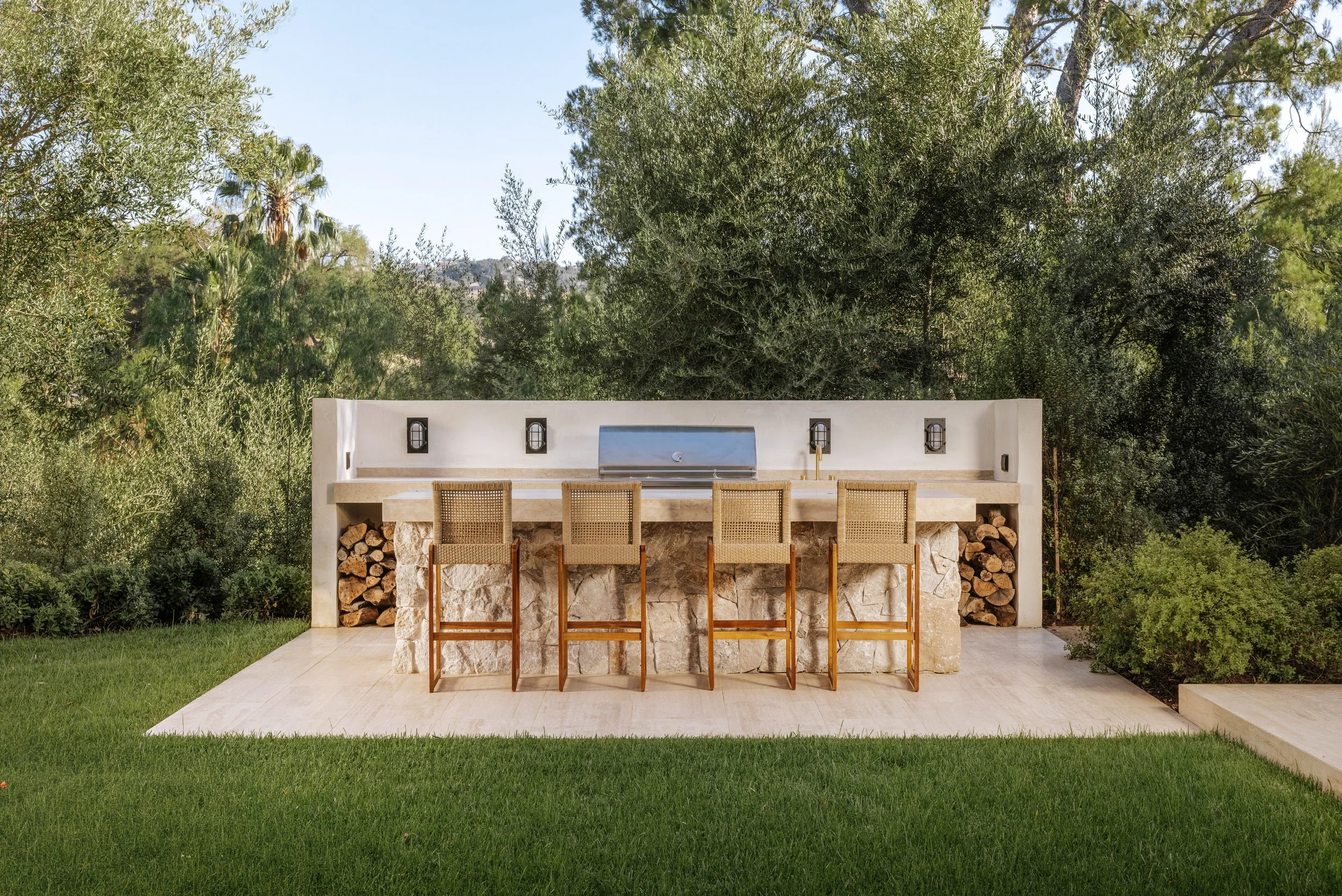
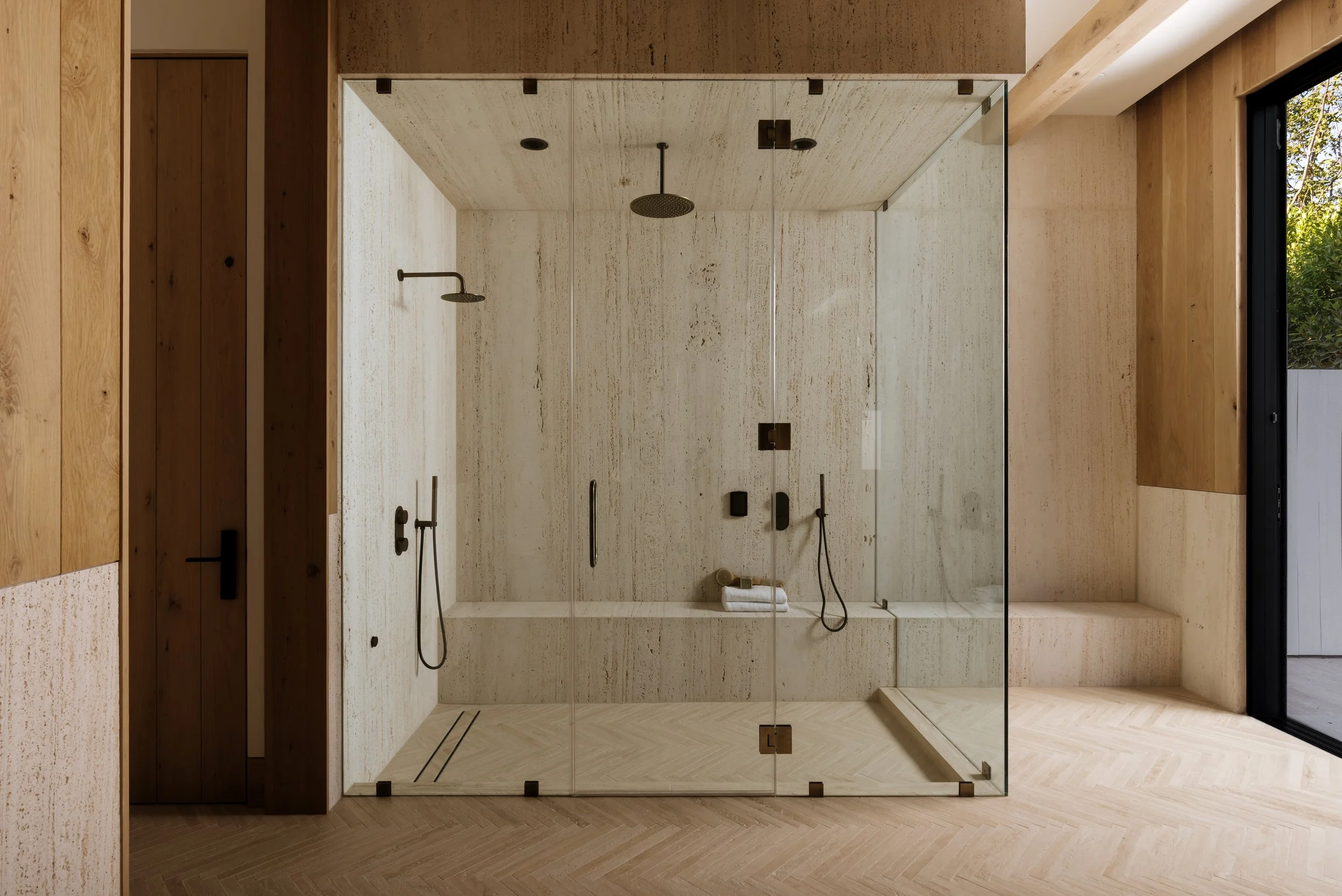
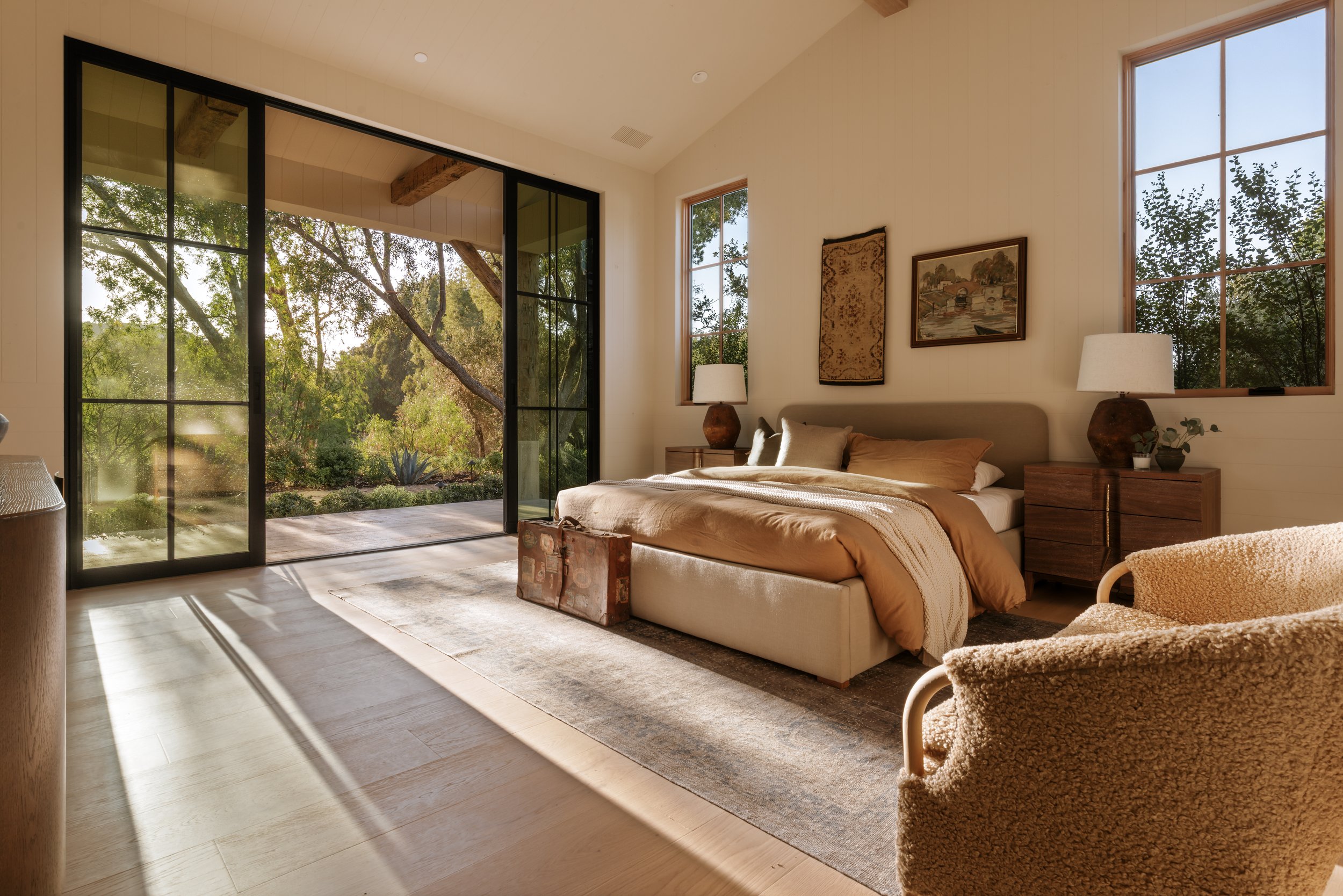
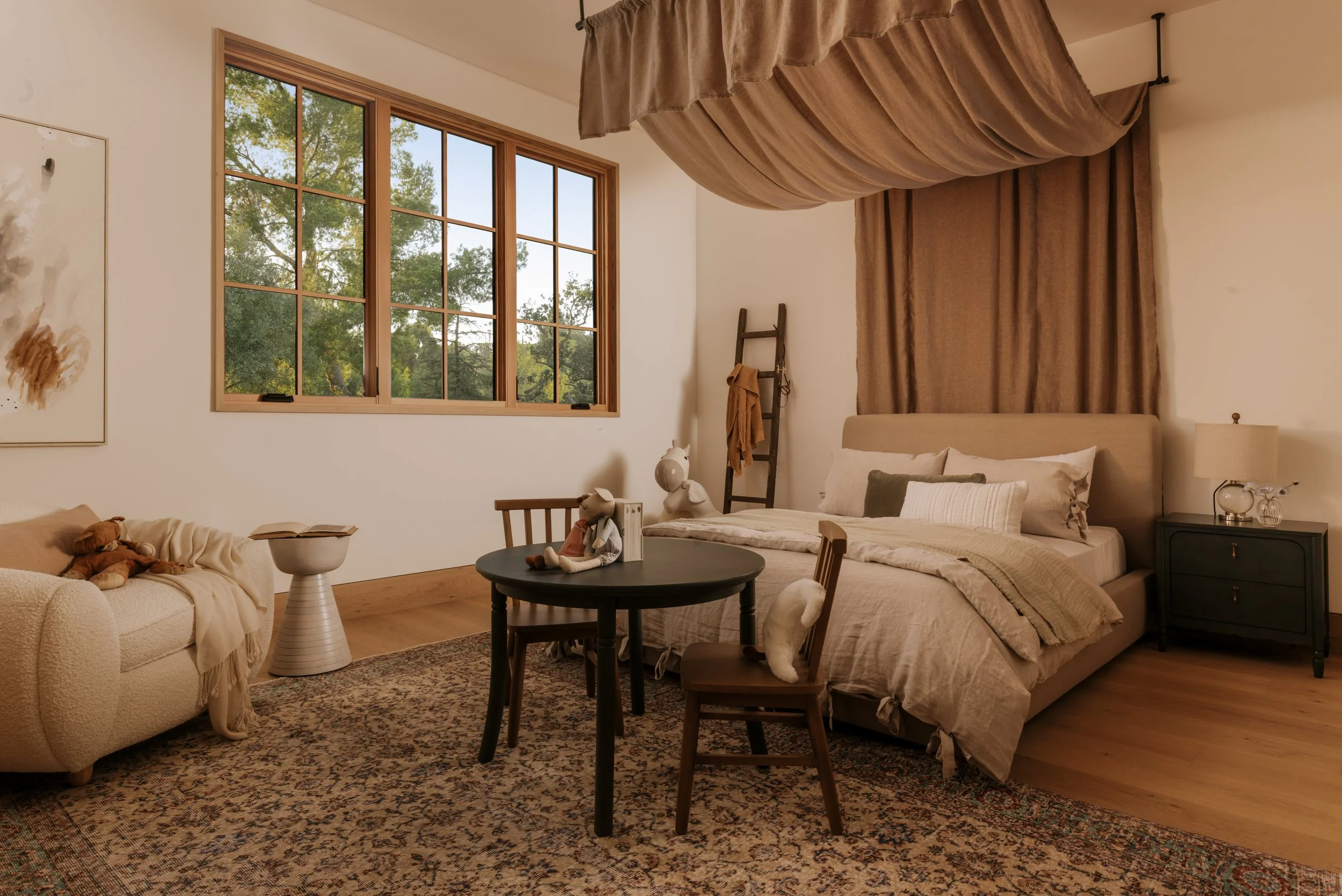
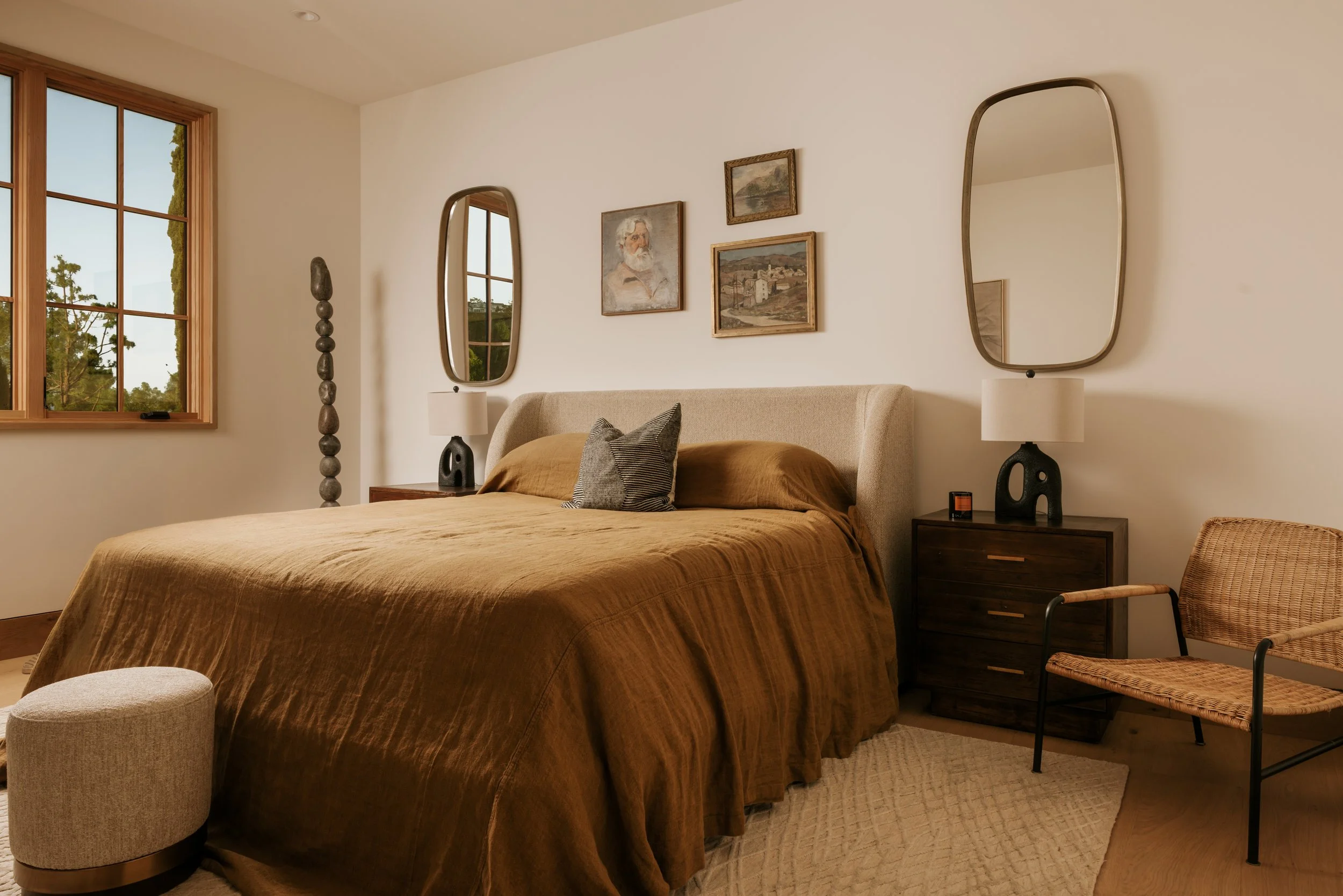
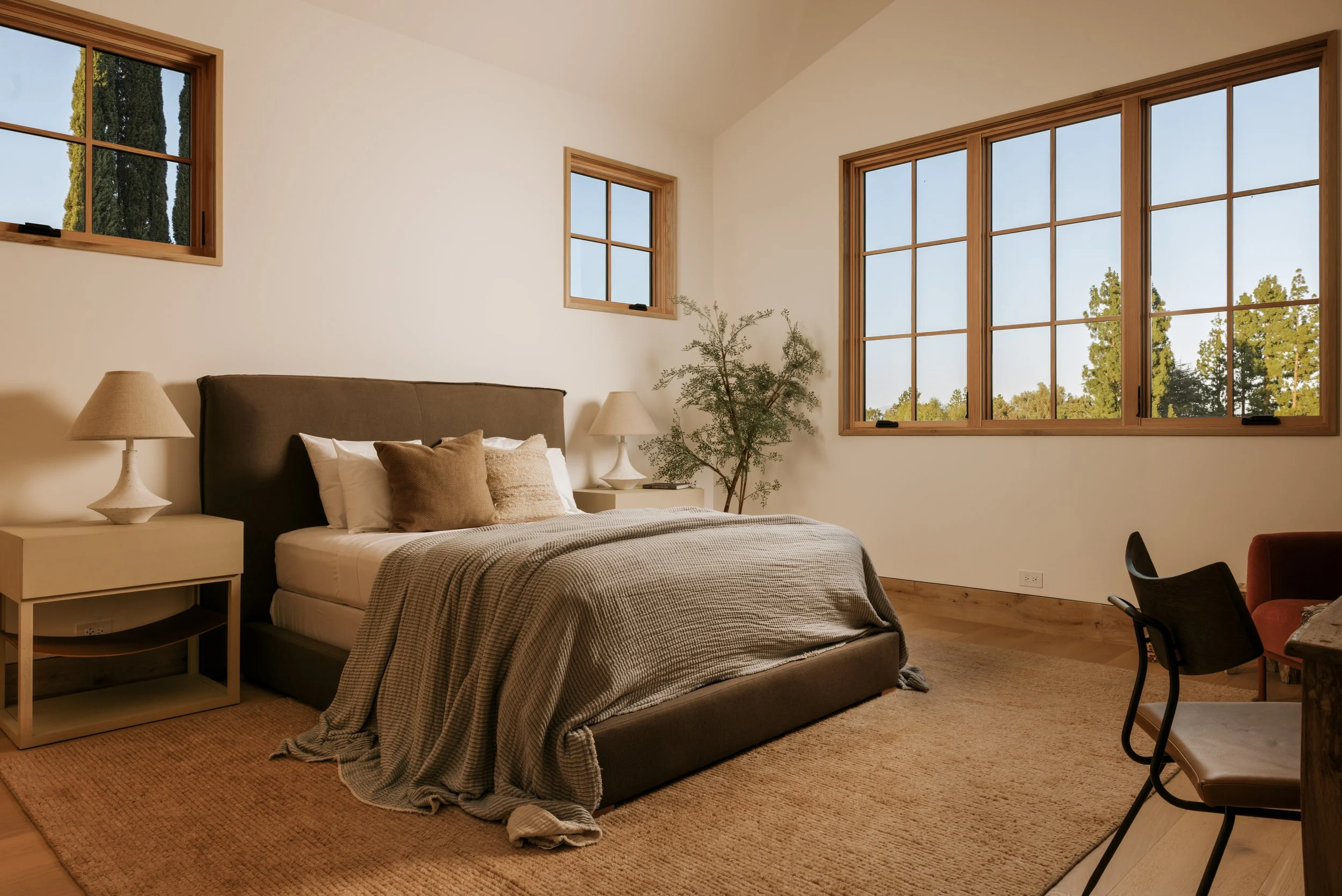
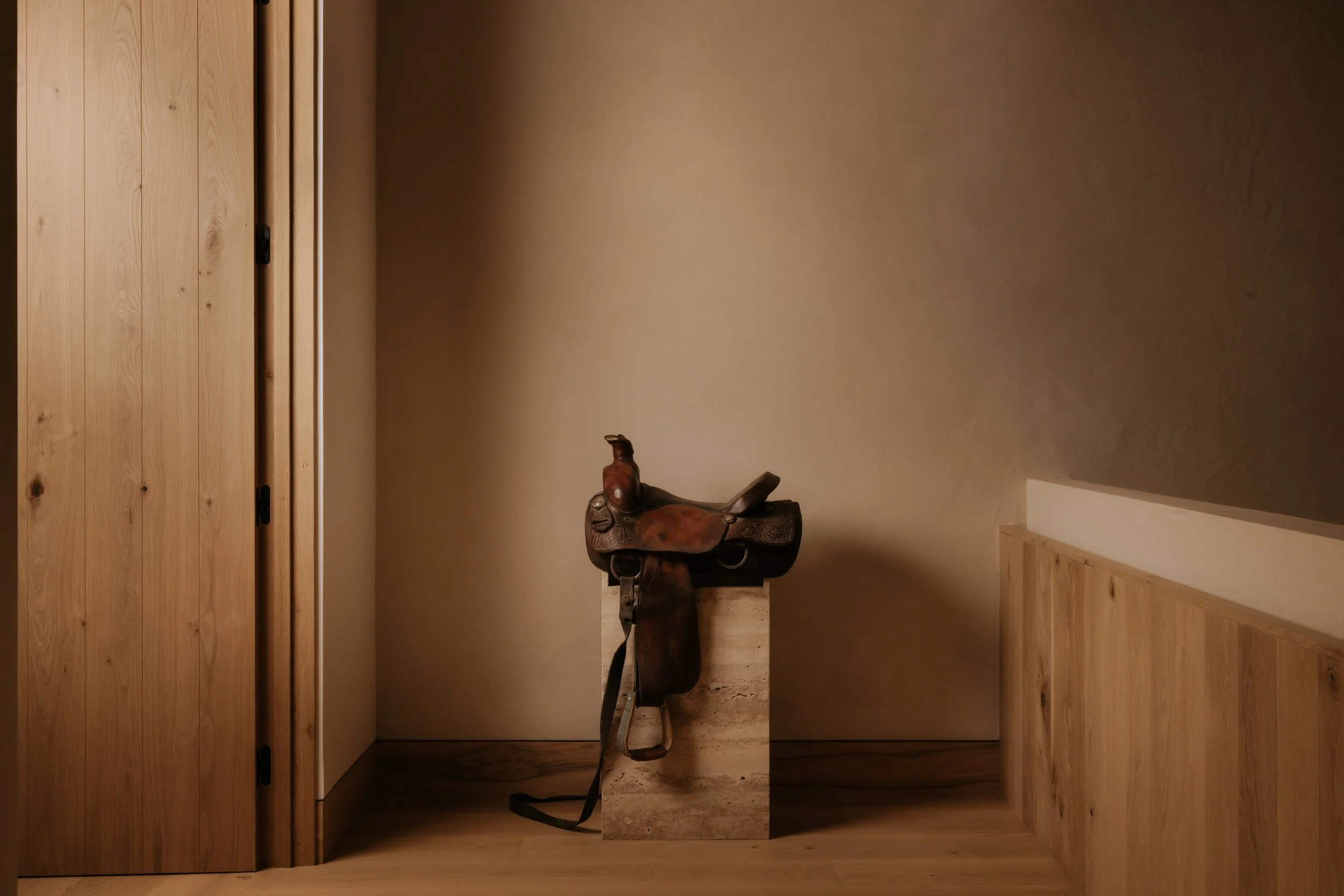
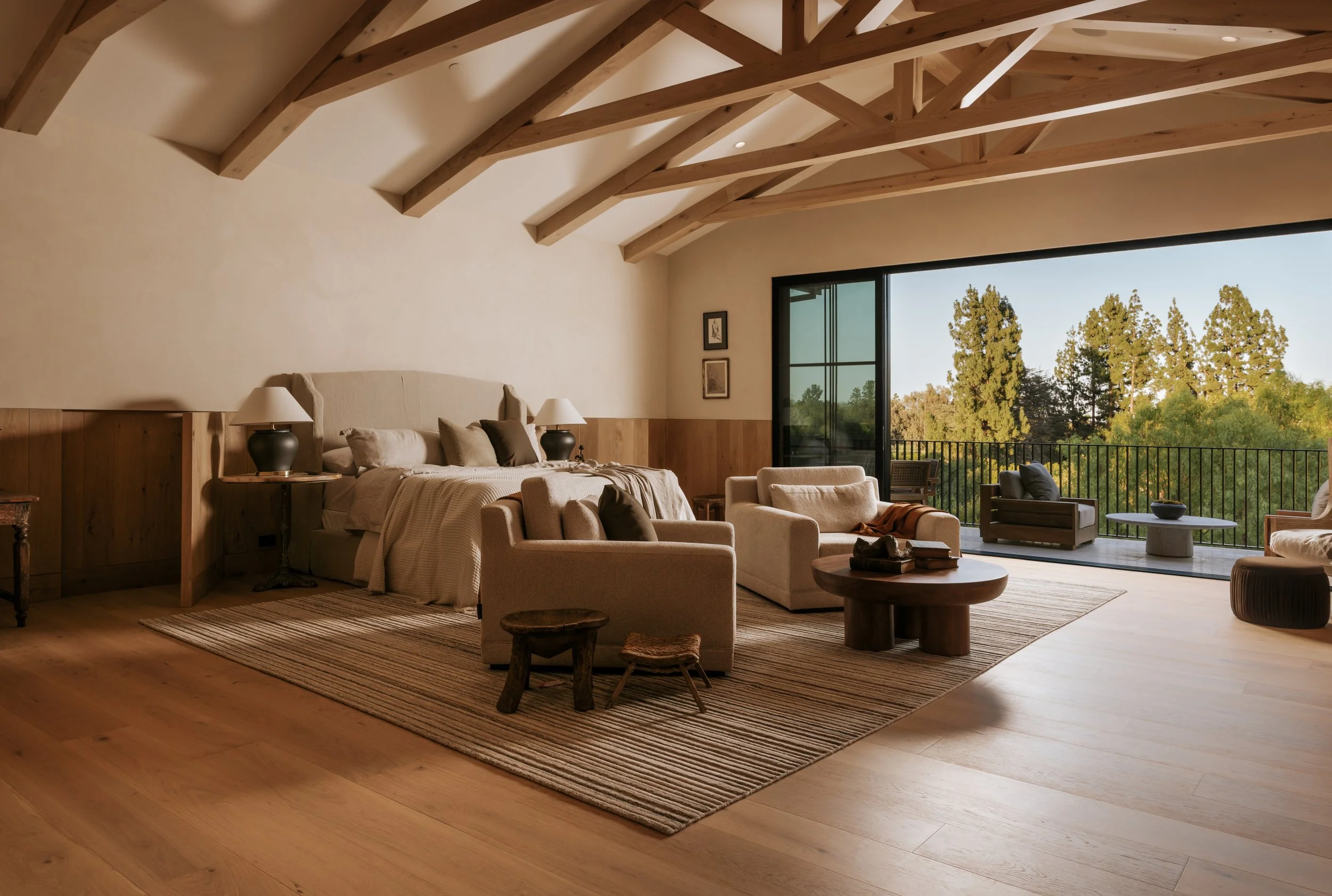
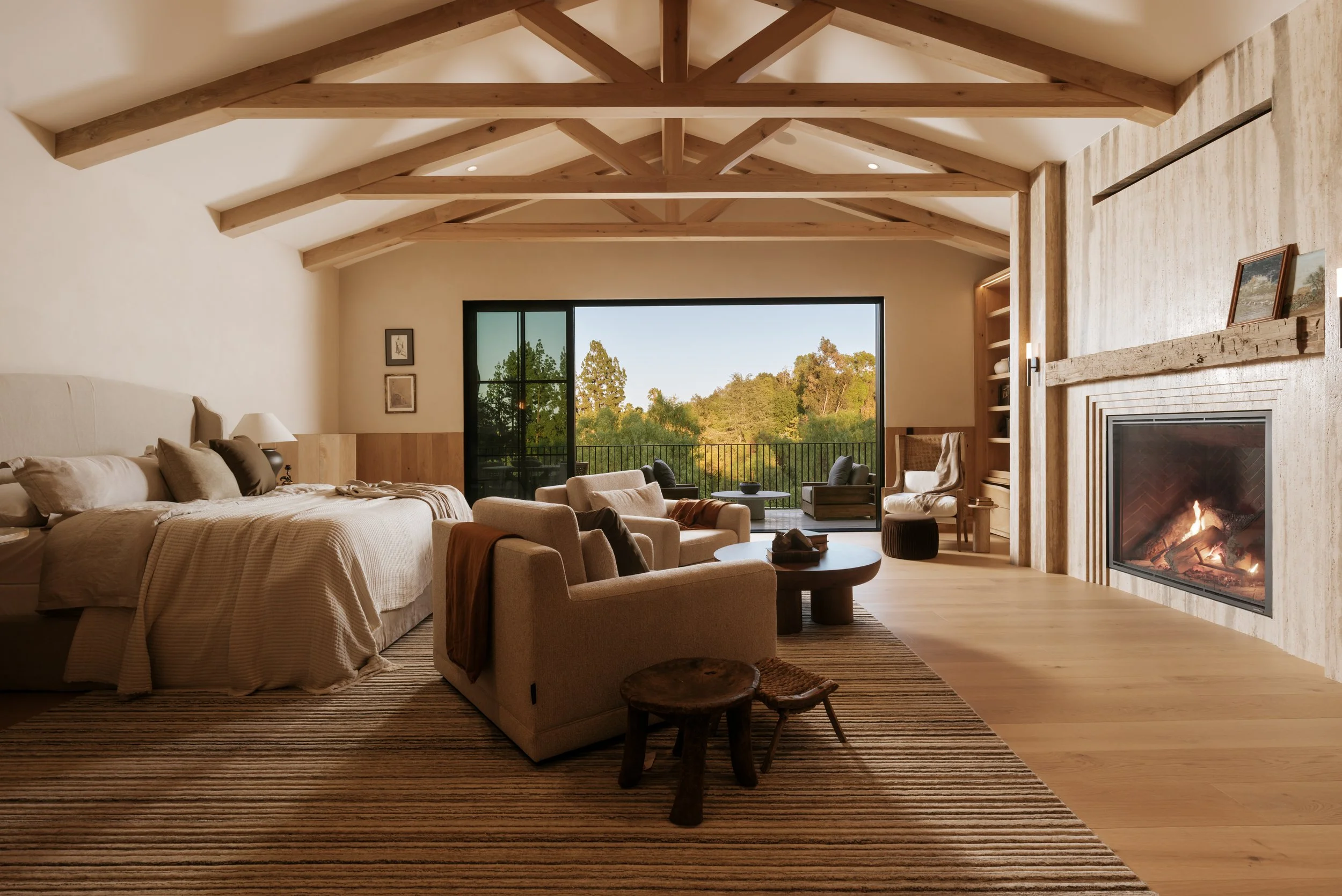
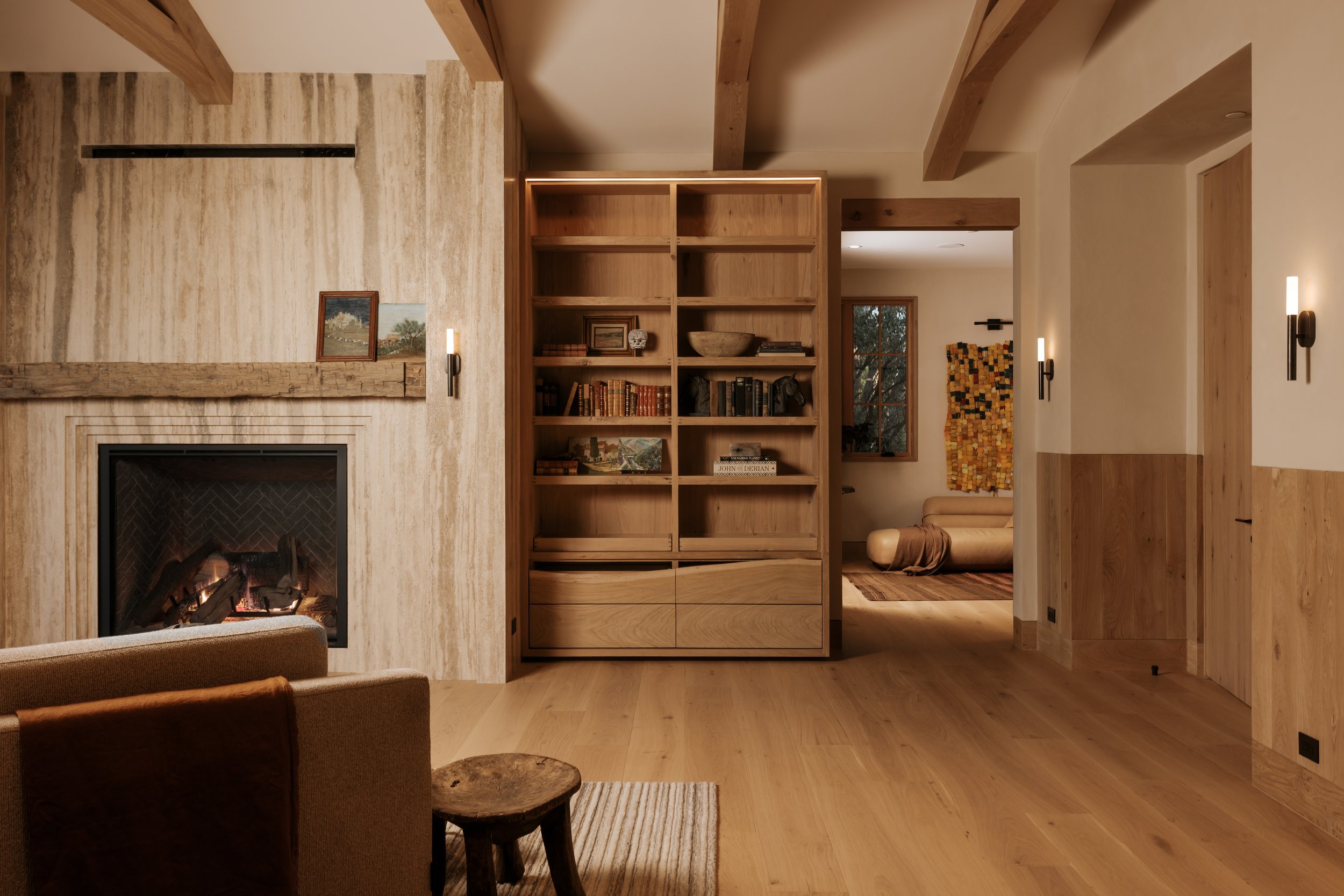
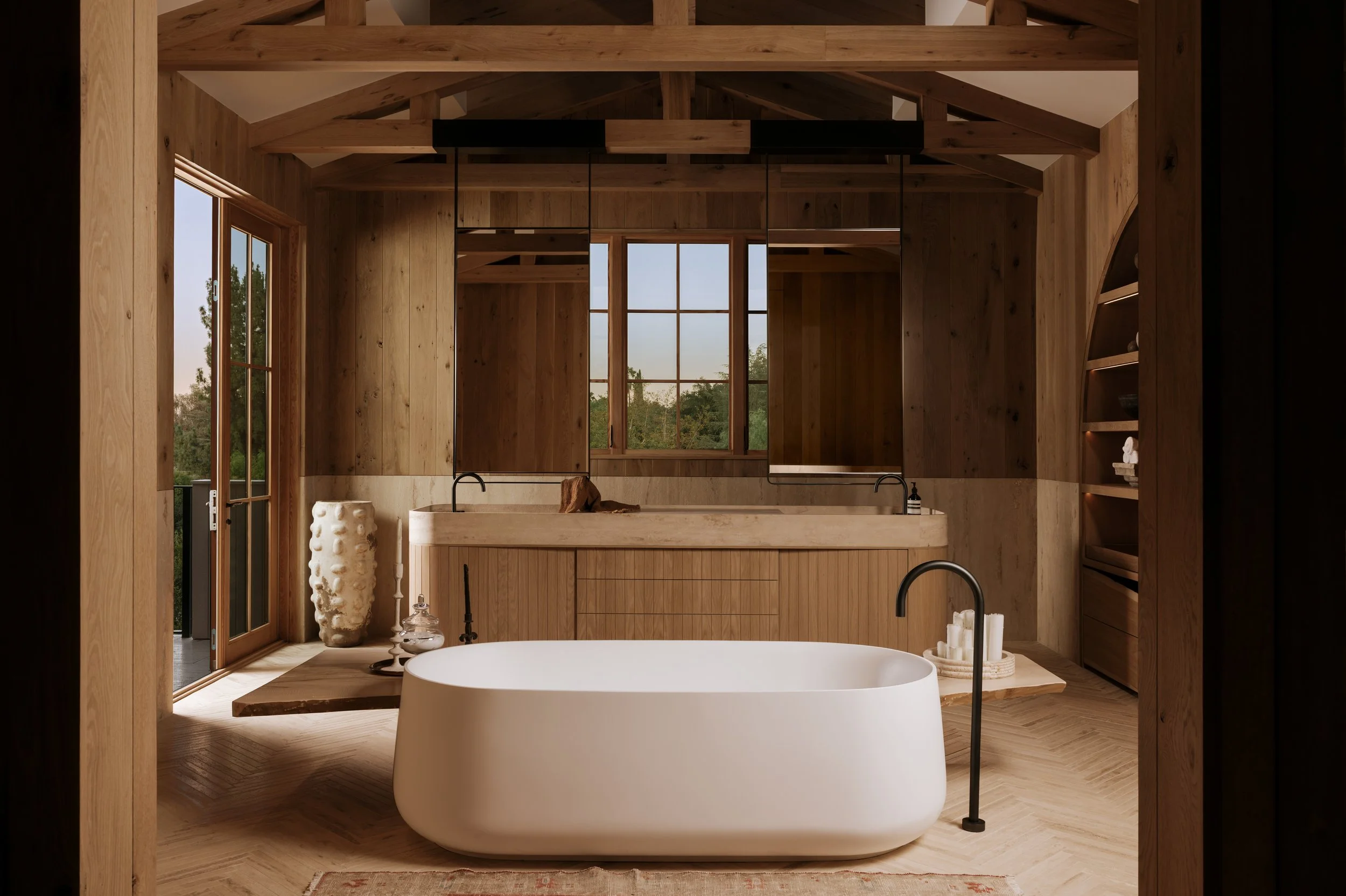
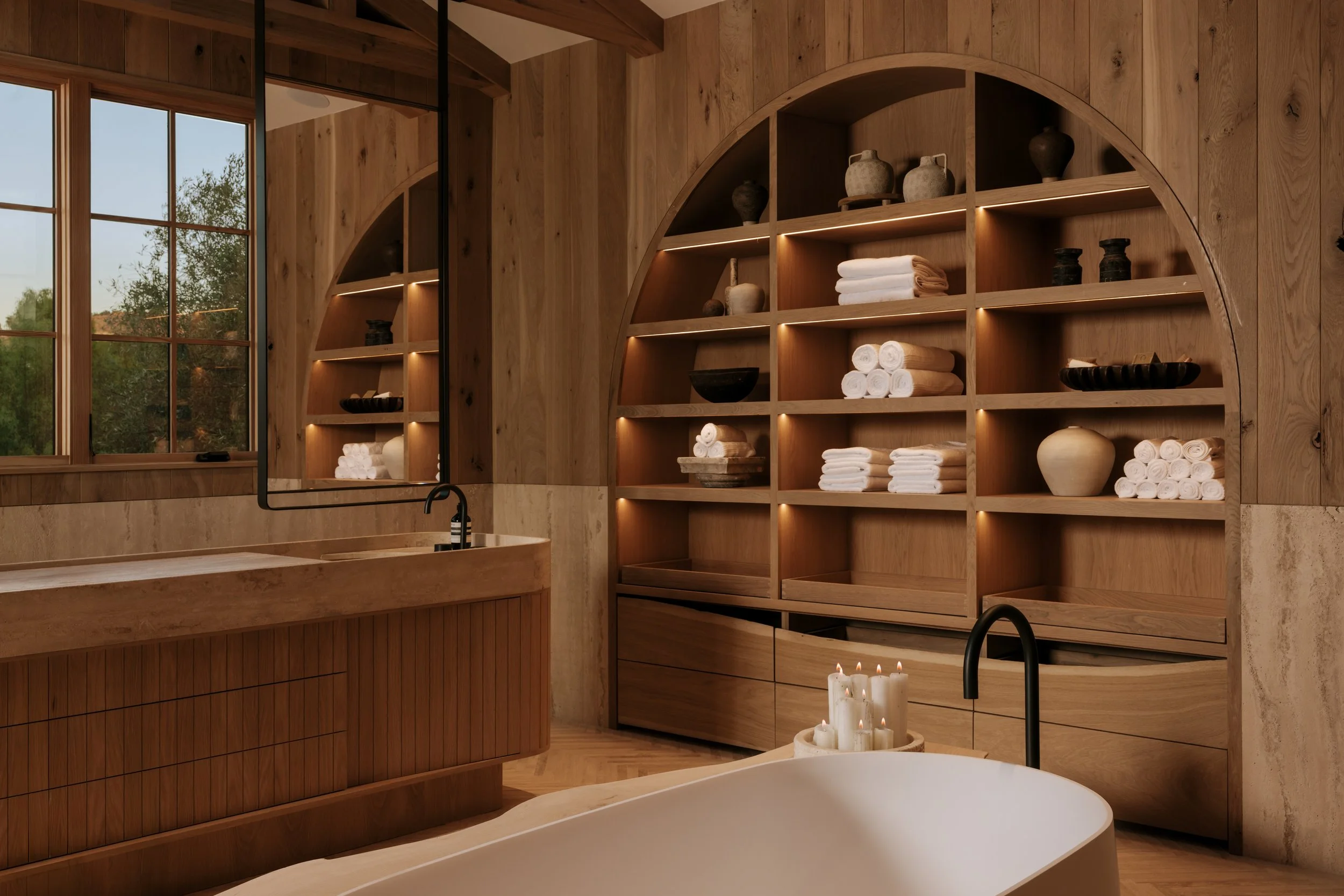
Jae Omar’s investment partners had a question: were they really going to base a $20 million house on a Welsh word?
“Yes, that’s exactly what you’re going to do,” the designer recalls telling them.
Omar is a designer and developer building speculative homes, designed and built for sale rather than commissioned by a homeowner, in one of the world’s most competitive luxury real estate markets. In Southern California, “you might sell your home on the first day or it might be two years later,” he says. His latest project, Hiraeth, attracted several interested buyers and went under contract within seven days.
For Hiraeth, he describes it as an opus for this particular moment in his life, his greatest work, though he hopes the next project surpasses it. In explaining its significance, he considers whether to say career or life, then concludes that, for him, the two are inseparable.
Omar is a designer in the prime of his career, after years of honing his skills in residential design and development. On the surface, he is a successful businessman juggling multiple multi-million-dollar luxury developments. Underneath is an artist whose work is guided by deeply personal philosophies and life experiences.
The business behind the vision
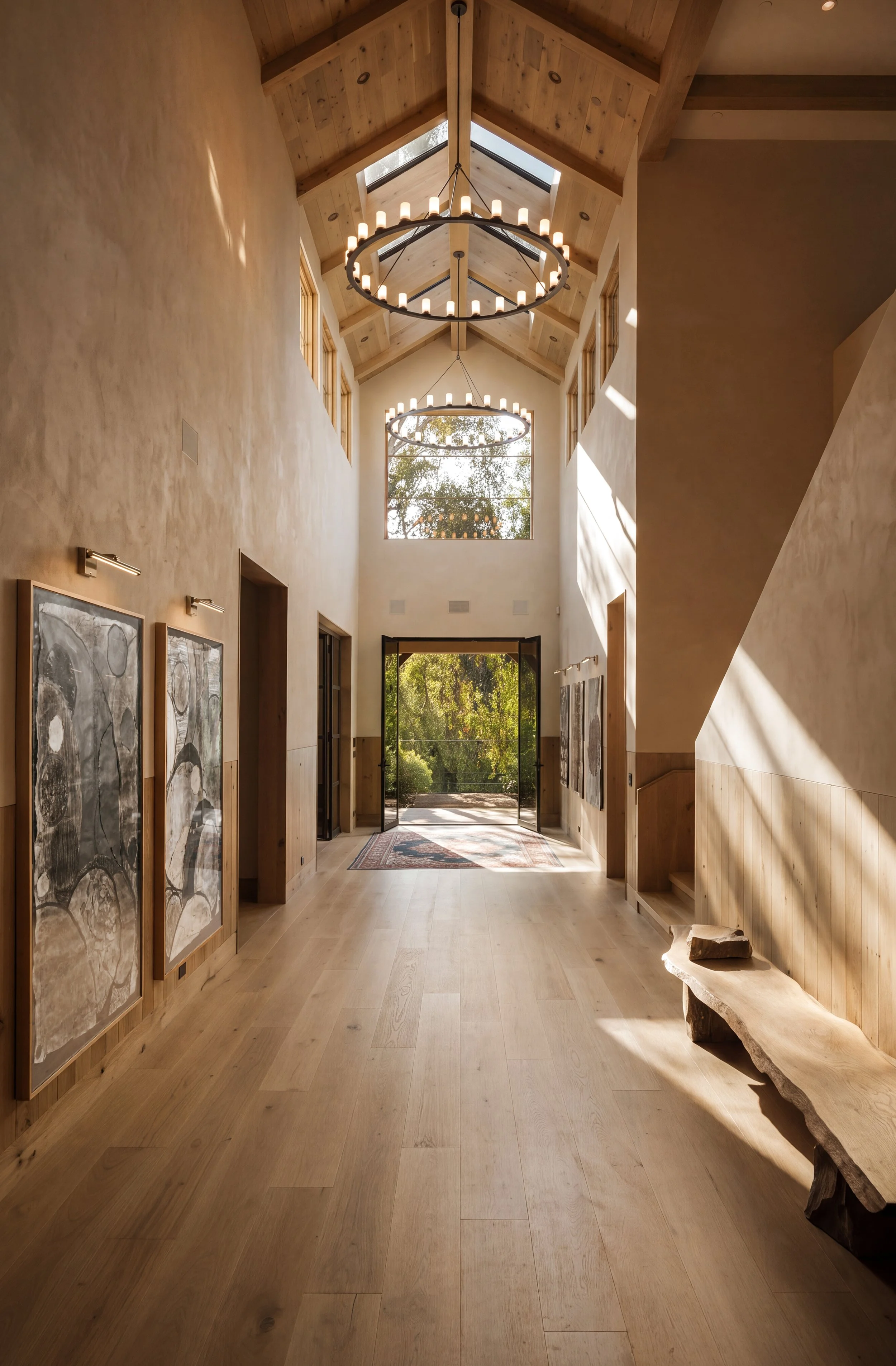
He gives his larger projects an identity, usually expressed in a single word, that shapes and guides the design of the entire home. This is part of his successful strategy to distinguish his projects in the market.
Omar’s official title is an interior designer, but the role requires him to wear many hats and he personally oversees nearly every aspect of his projects, working with the project architect, landscape designers and his own team to develop these elements alongside one another. Carrying a project through construction can require coordination among sometimes hundreds of people.
For Omar, the care devoted to these decisions also has a commercial purpose. He believes buyers paying $10 million, $20 million or more should expect homes that offer the sense of restoration they seek when travelling to exceptional hotels and resorts. Delivering that requires a standard of design and construction he has spent years encouraging his partners to support.
A difficult market, in his view, makes that commitment more valuable. Buyers have time to compare properties and become more selective about what they will accept. In a crowded market, he believes his approach in creating a better designed and high quality home makes his projects stand out.
“Buyers see it and they buy the gem,” he says.
This approach depends on financial partners who share the ambition. Omar is increasingly selective about working with investors focused solely on the return from an individual house. He sees value building through successive projects, as buyers learn what his team delivers and become willing to pay more for it.
Hiraeth’s success is proof of concept for his approach.
Jae Omar
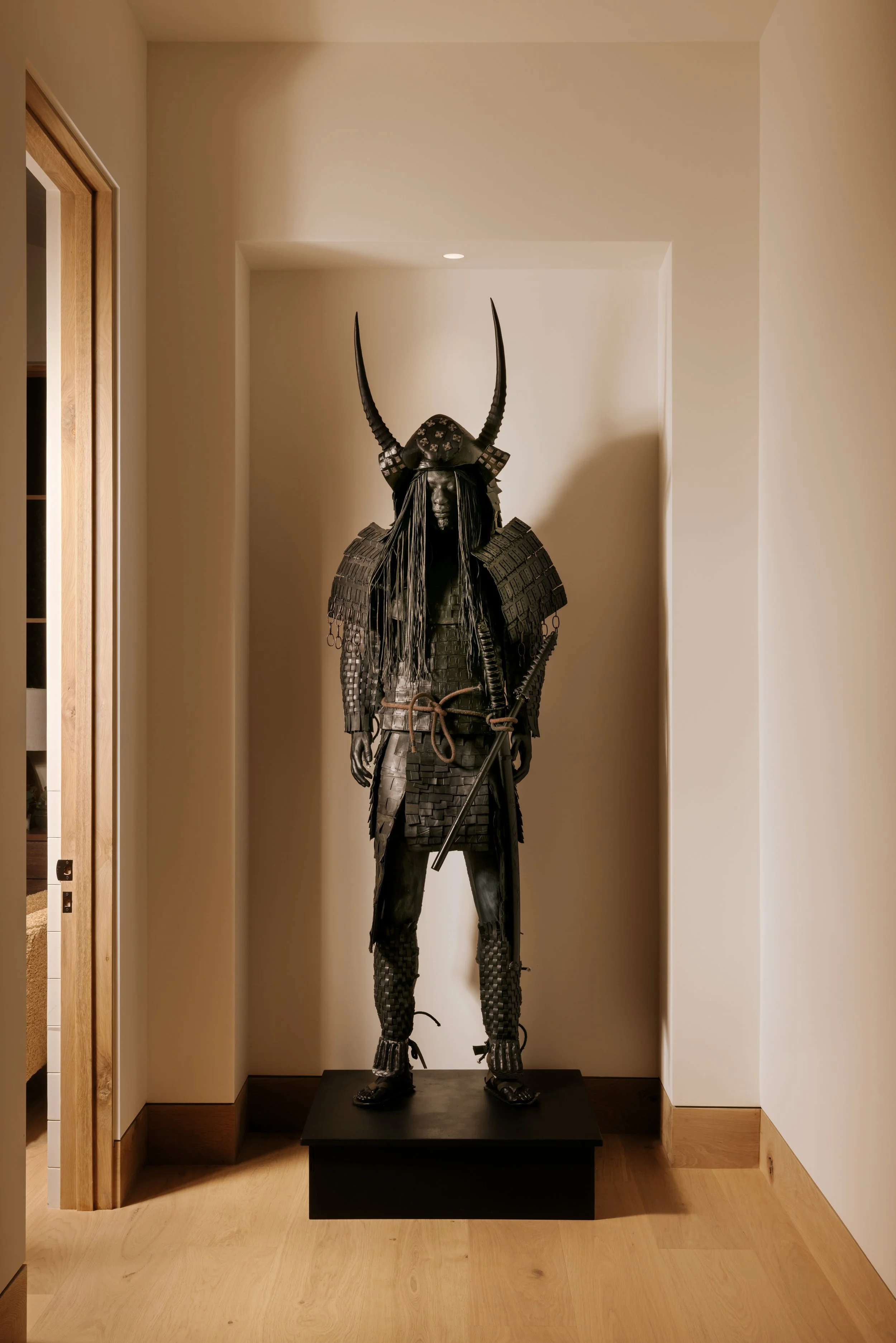
Spend some time talking with Jae Omar, and you quickly realize he approaches his work as an artist, using real estate development as his medium. His interest in art and design was shaped during his childhood by his mother, who was herself an artist. He describes their home as one ruled by “beauty and curiosity.”
Those early sparks were fanned in young adulthood, when he moved to Europe for several years. Living there brought what he describes as a dramatic shift in his perspective on life, history, design, architecture and art.
He returned to the United States in the early 1990s and opened a series of antique shops on LA’s Westside. Working with furniture led him to develop his own collection, distributed through design centre showrooms around the world. High-end residential design followed, then an invitation from a friend to try developing a house for the speculative market.
That move introduced a different design challenge. A commissioned home develops through conversations with someone whose needs, habits and preferences are known. A spec home must appeal to a buyer who has yet to appear, while offering enough character to distinguish it from competing properties.
“It’s a very delicate dance between being too specific and too curated and too bespoke, and it being bland,” Omar says. With Hiraeth, that approach became his most personal work yet. While his earlier projects drew on history and mythology, this one drew on his own life. “Hiraeth’s story is my story,” he says.
Hiraeth
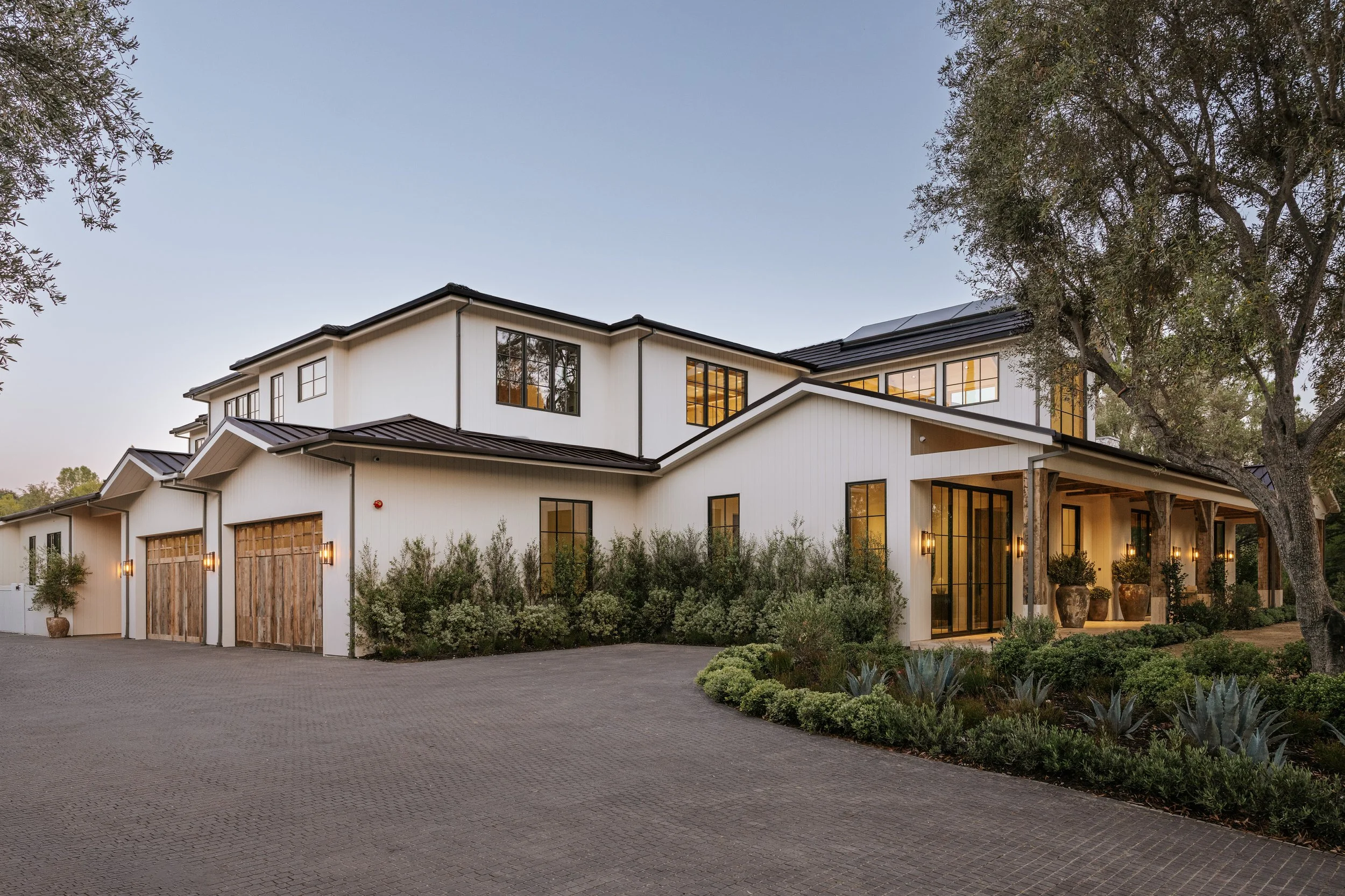
Hiraeth is located in Hidden Hills, a tiny, gated city just outside LA. It was created as a semi-rural equestrian community with 600–700 homes and around 2,000 residents, spread over about two square miles. It has attracted celebrities including Madonna, Drake and members of the Kardashian family.
It exploded in popularity with celebrities for its extreme privacy. The entire municipality is effectively behind gates, with controlled entrances and fencing around the perimeter. That makes it much harder for tour buses, paparazzi and random visitors to cruise past someone's house than in Beverly Hills or the Hollywood Hills.
The home was developed with H2 Development and takes its name from a Welsh expression of longing for place, a time or a sense of home.
For years, images of Napa stirred a feeling Omar struggled to explain. He had never visited, yet seeing the landscape on a screen brought an ache he describes as homesickness. When he finally went, the familiarity was almost unsettling. Discovering the word hiraeth gave him a way to understand that experience, and a starting point for a house that would bring together places and memories from his own life.
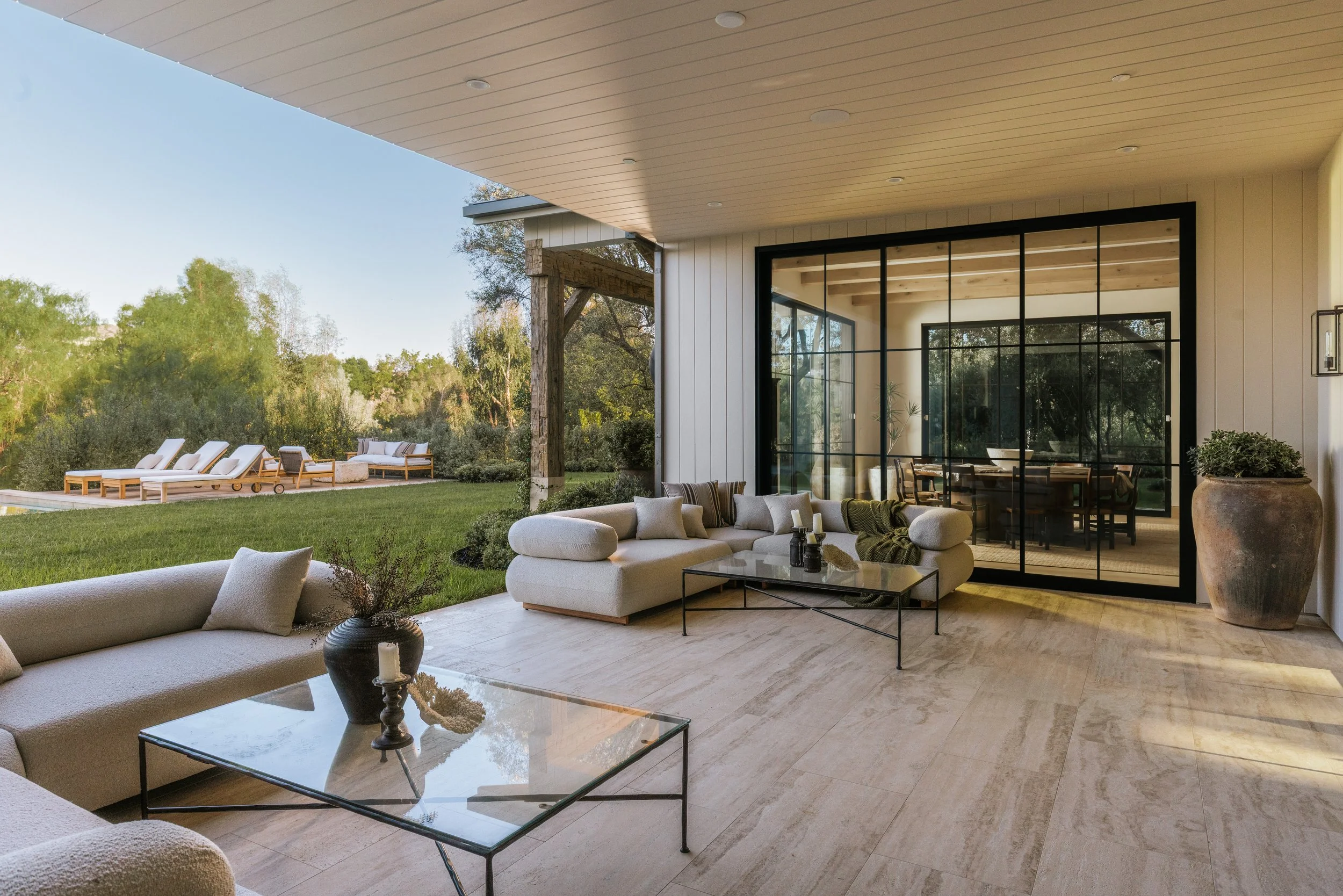
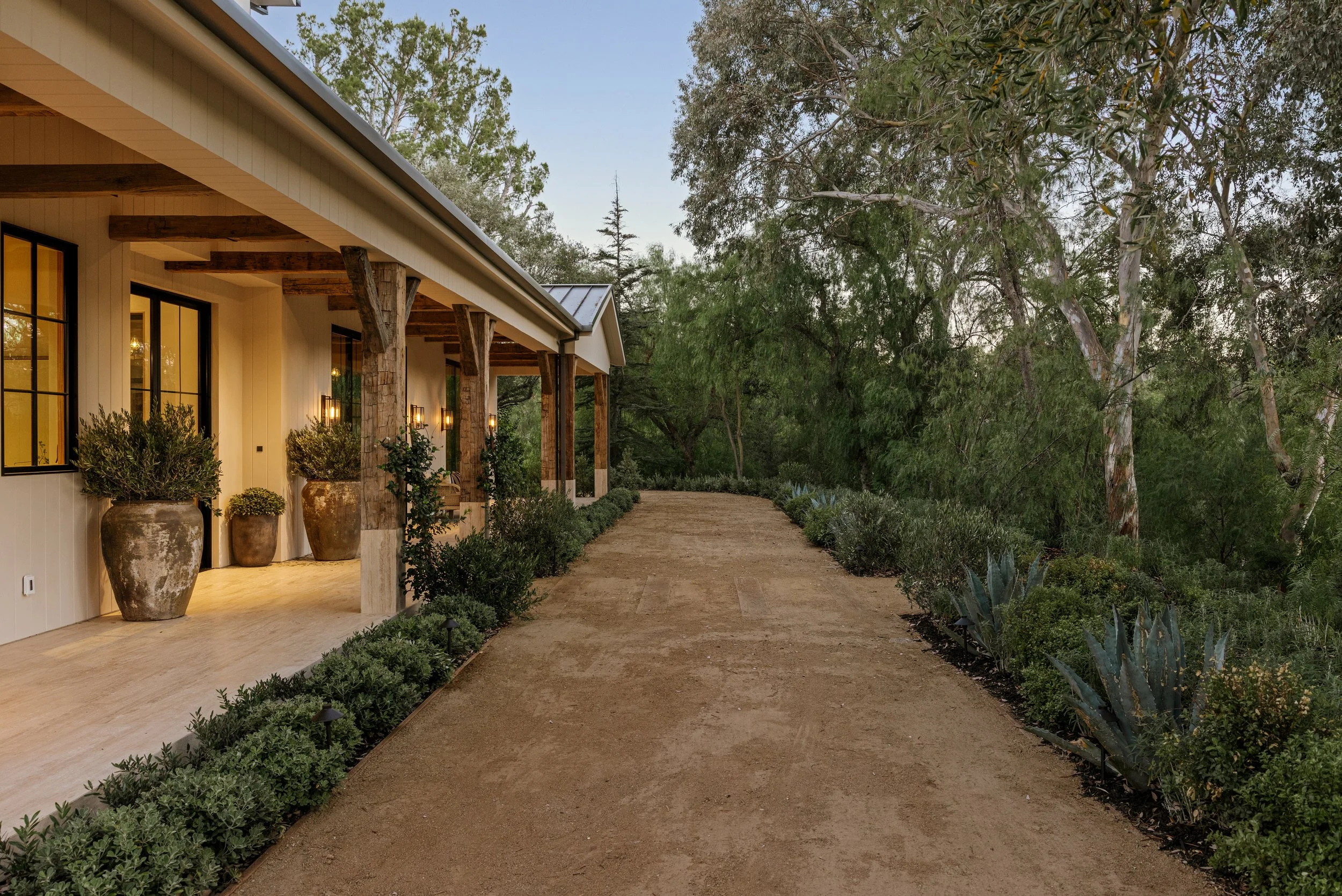
Omar imagined the arrival at Hiraeth as a passage from one reality into another, where visitors would feel safe and nurtured. A long driveway lined with olive trees leads into the property, separating the house from the street and giving a sense of privacy.
Inside Hiraeth
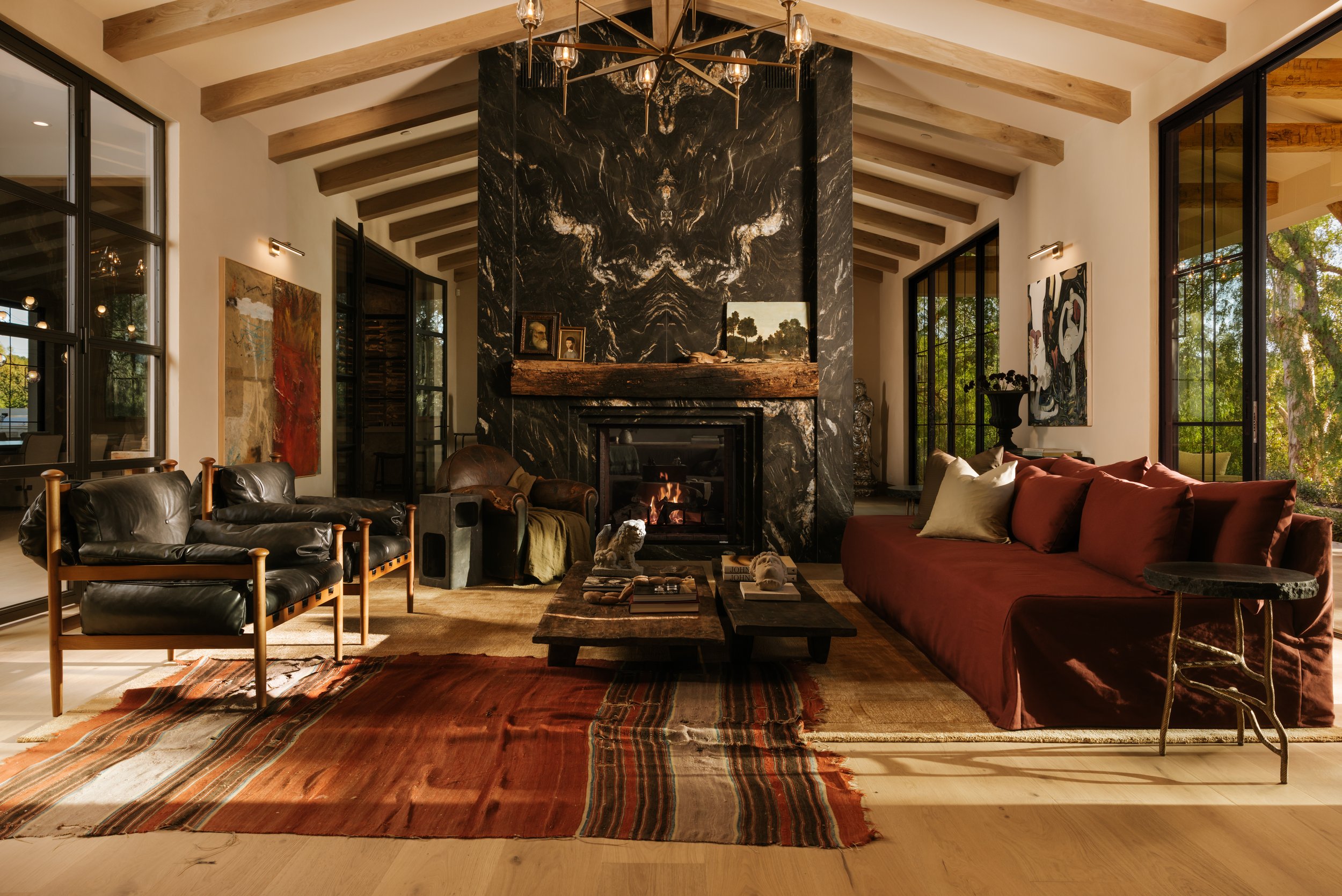
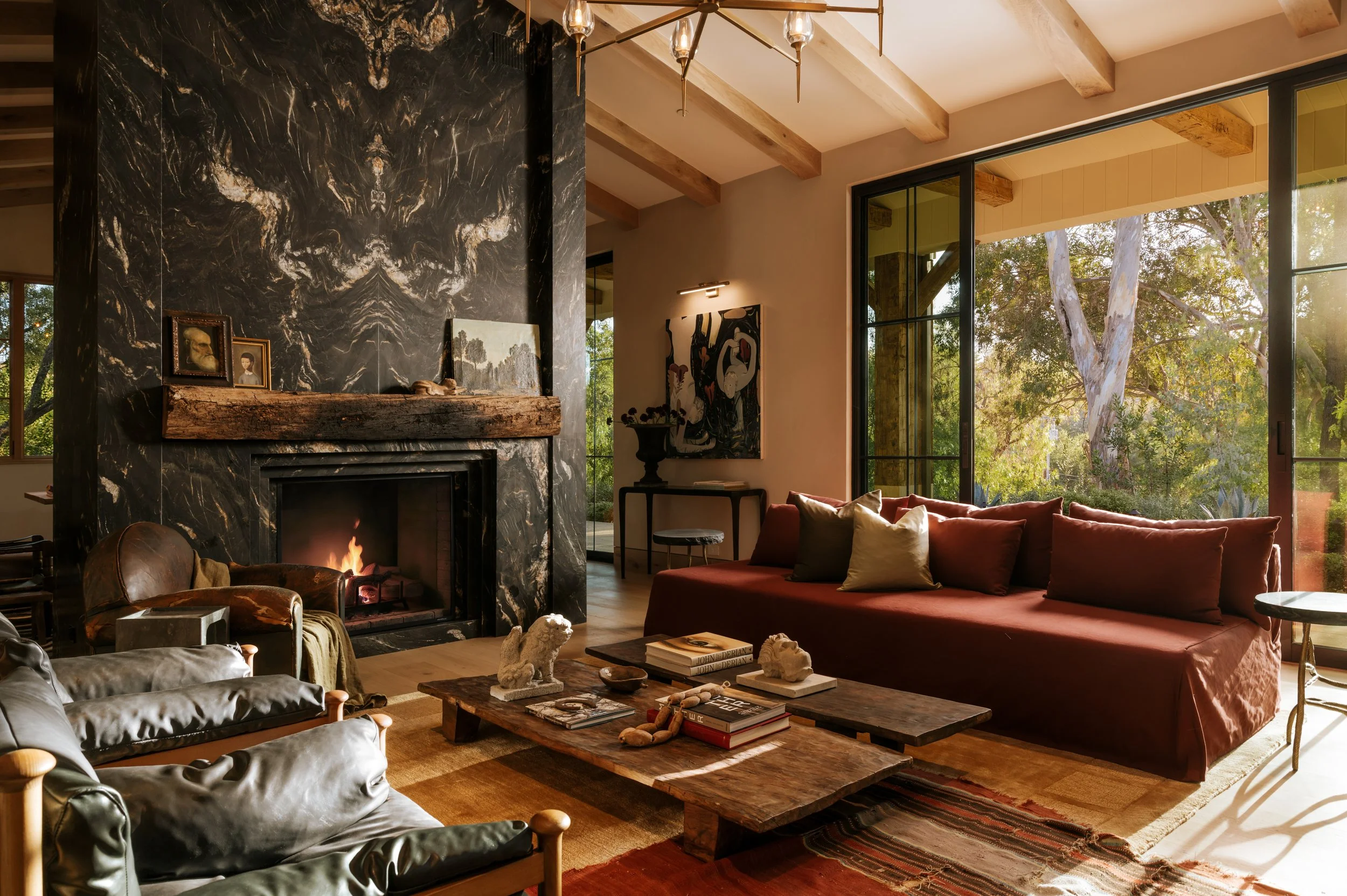
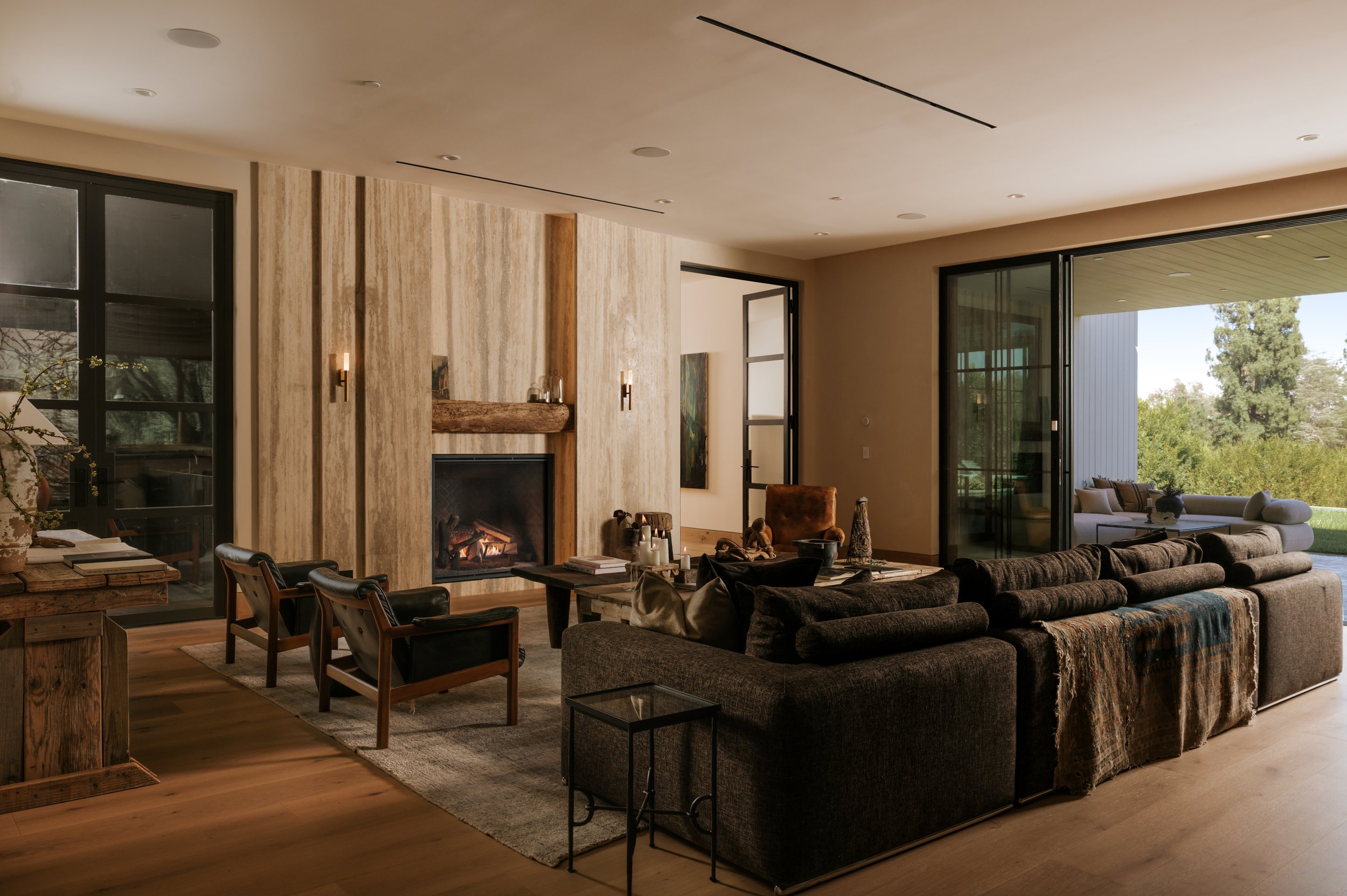
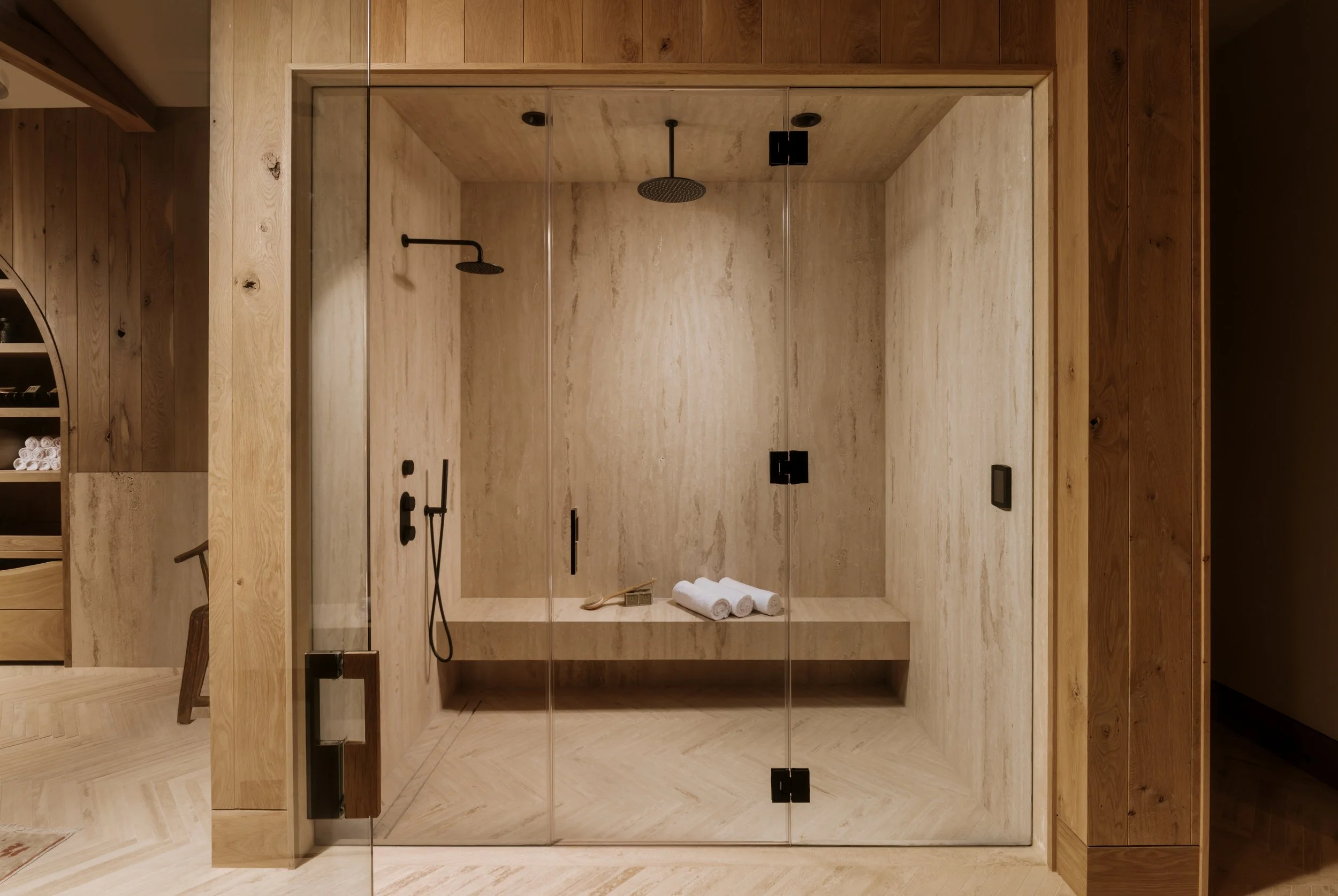
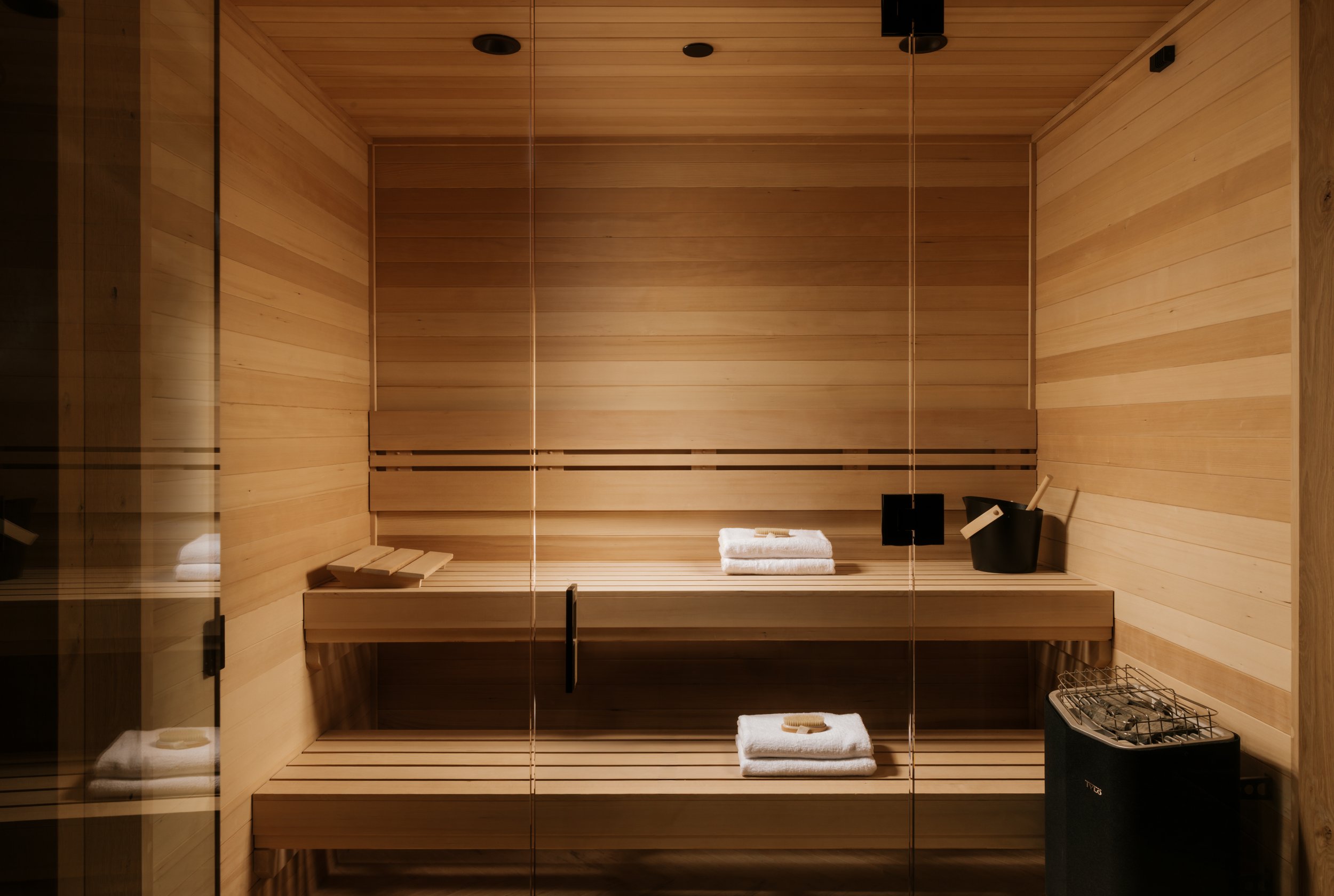
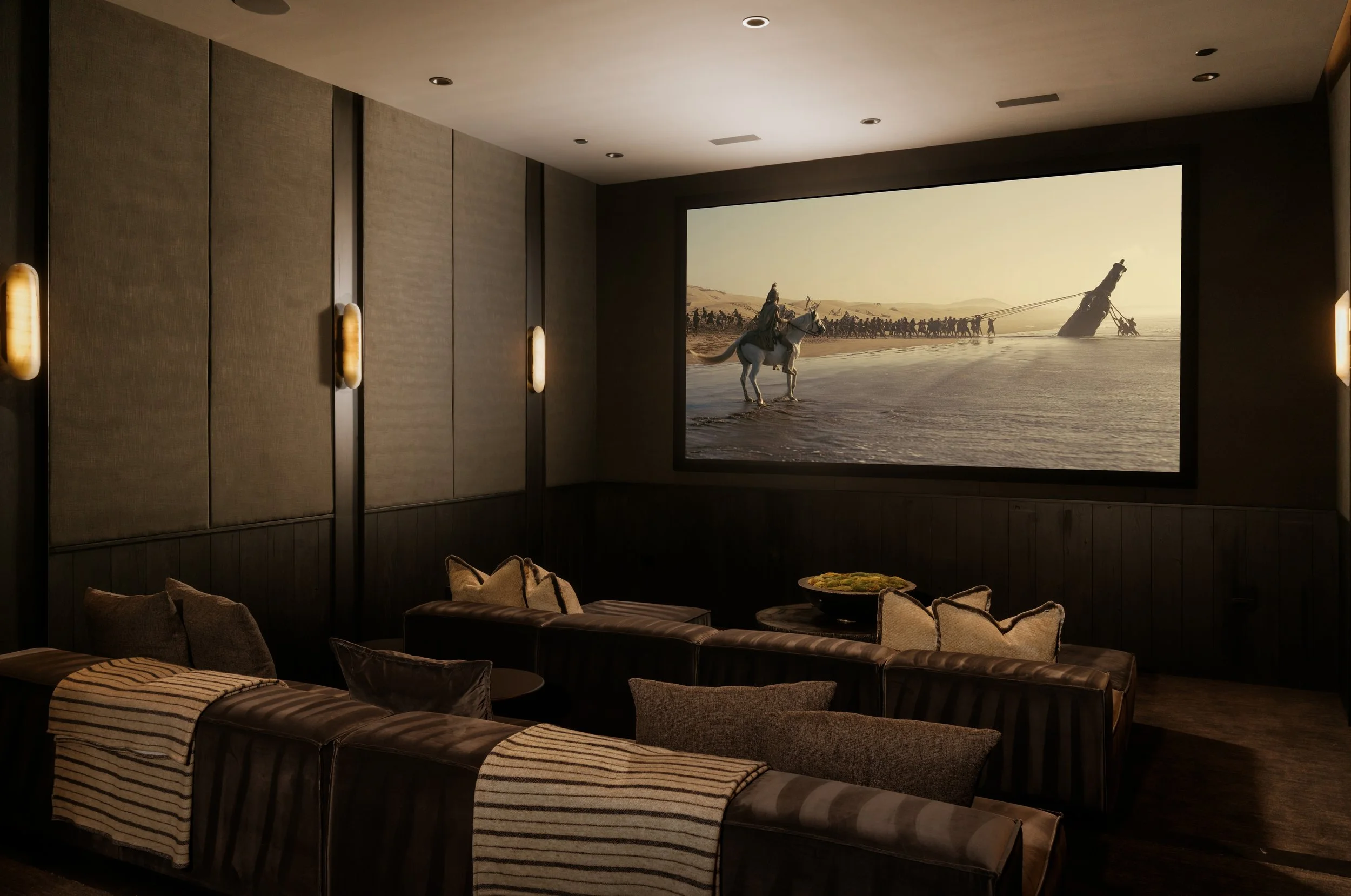
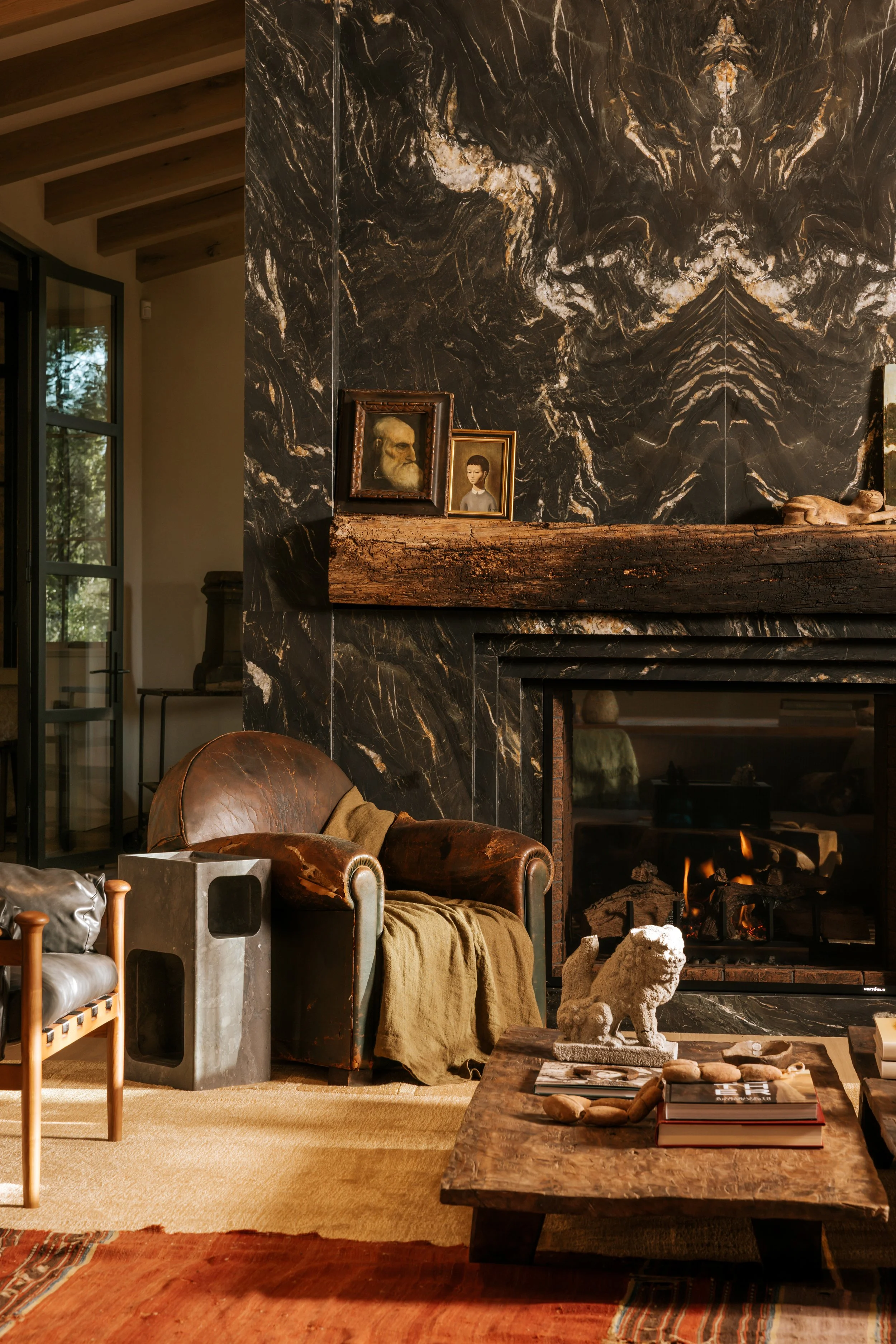
At Hiraeth, Omar’s personal experiences take shape in the architecture, materials and objects throughout the house. Memories of Napa, Santa Barbara and Paris informed particular spaces, while historic materials gave the newly built property a sense of age.
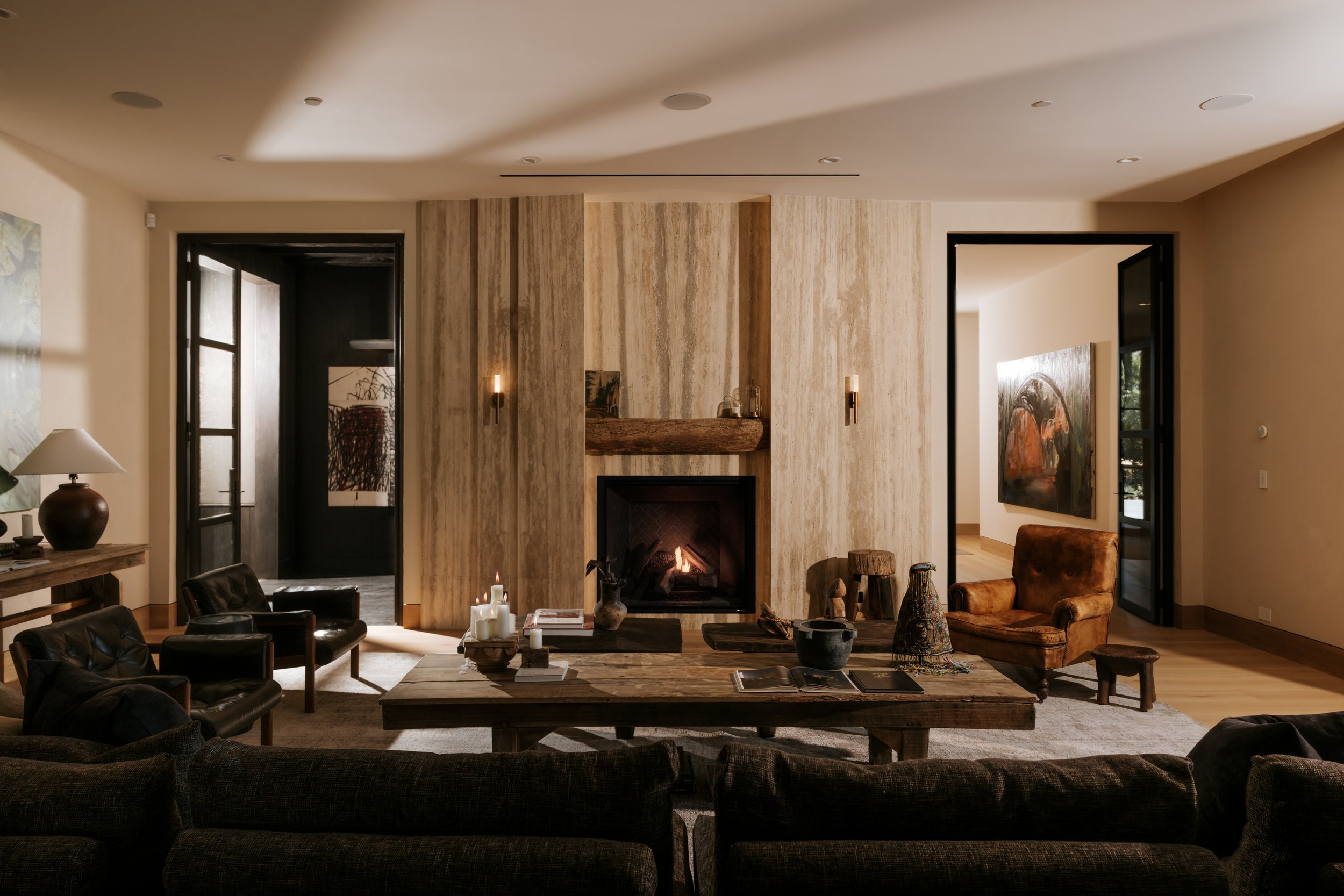
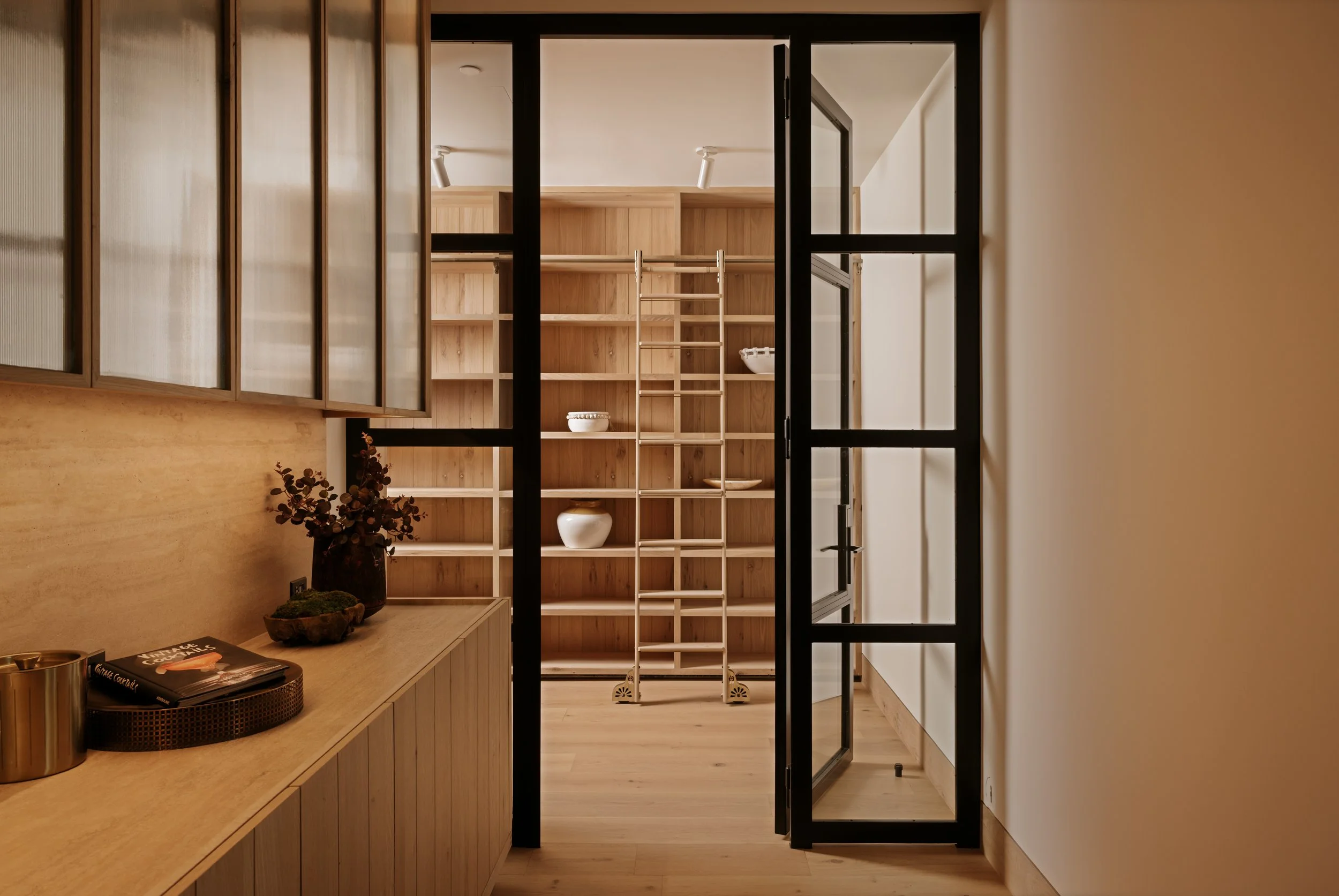
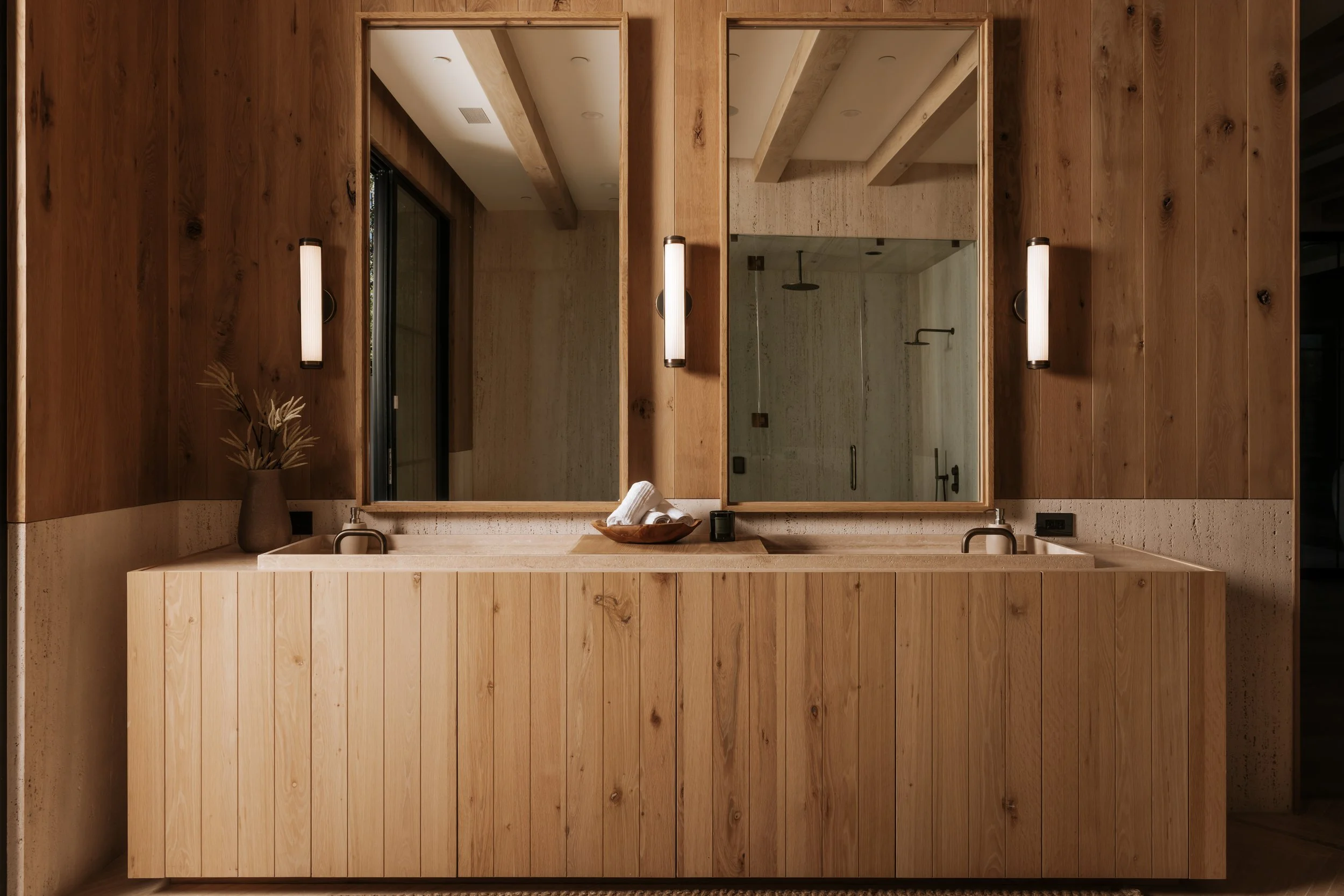
The beams and posts framing the deep covered entrance porch were reclaimed from East Coast barns and industrial buildings that Omar says were at least 200 years old. Inside, reclaimed beams and vintage fireplace mantels were used throughout the home.
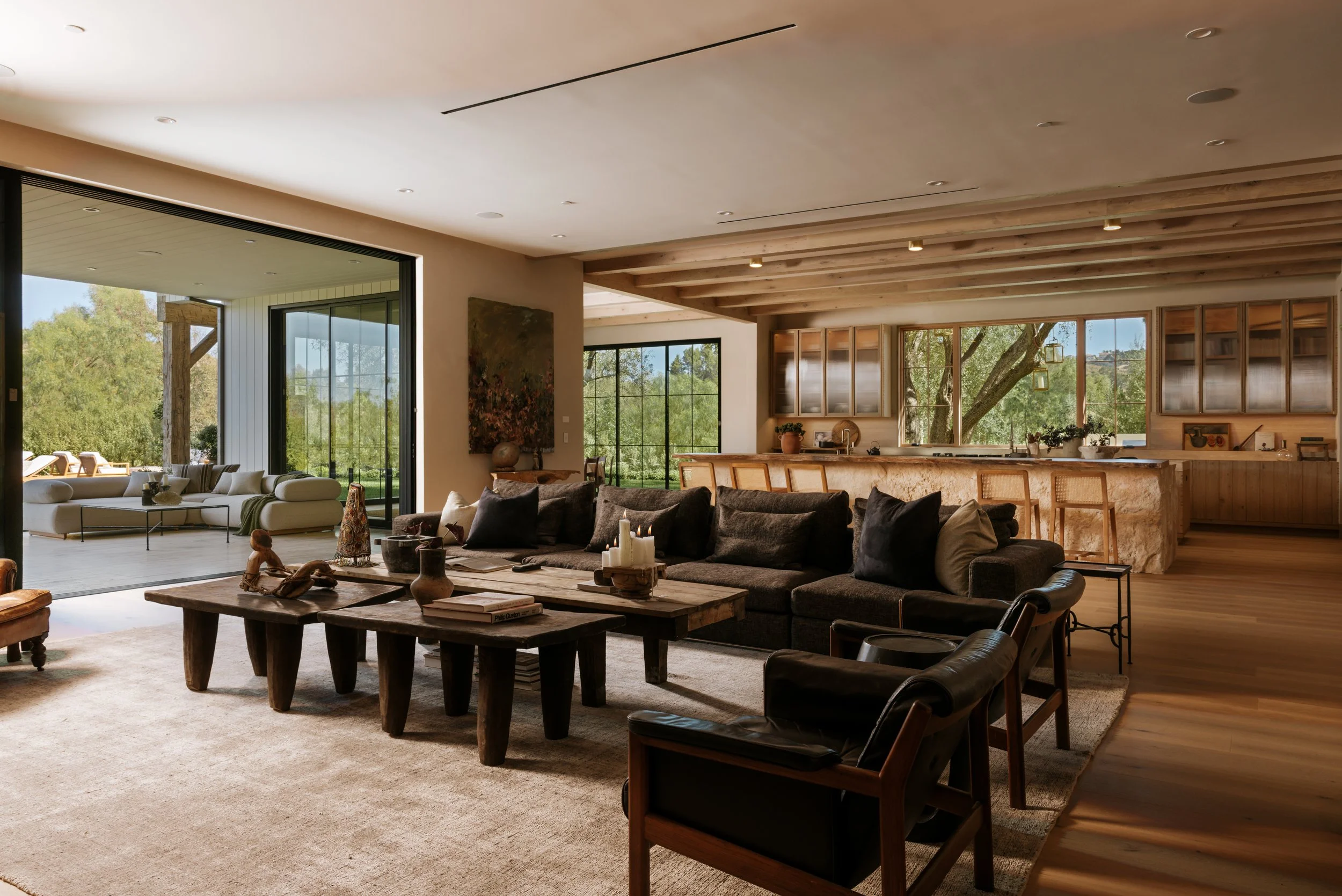
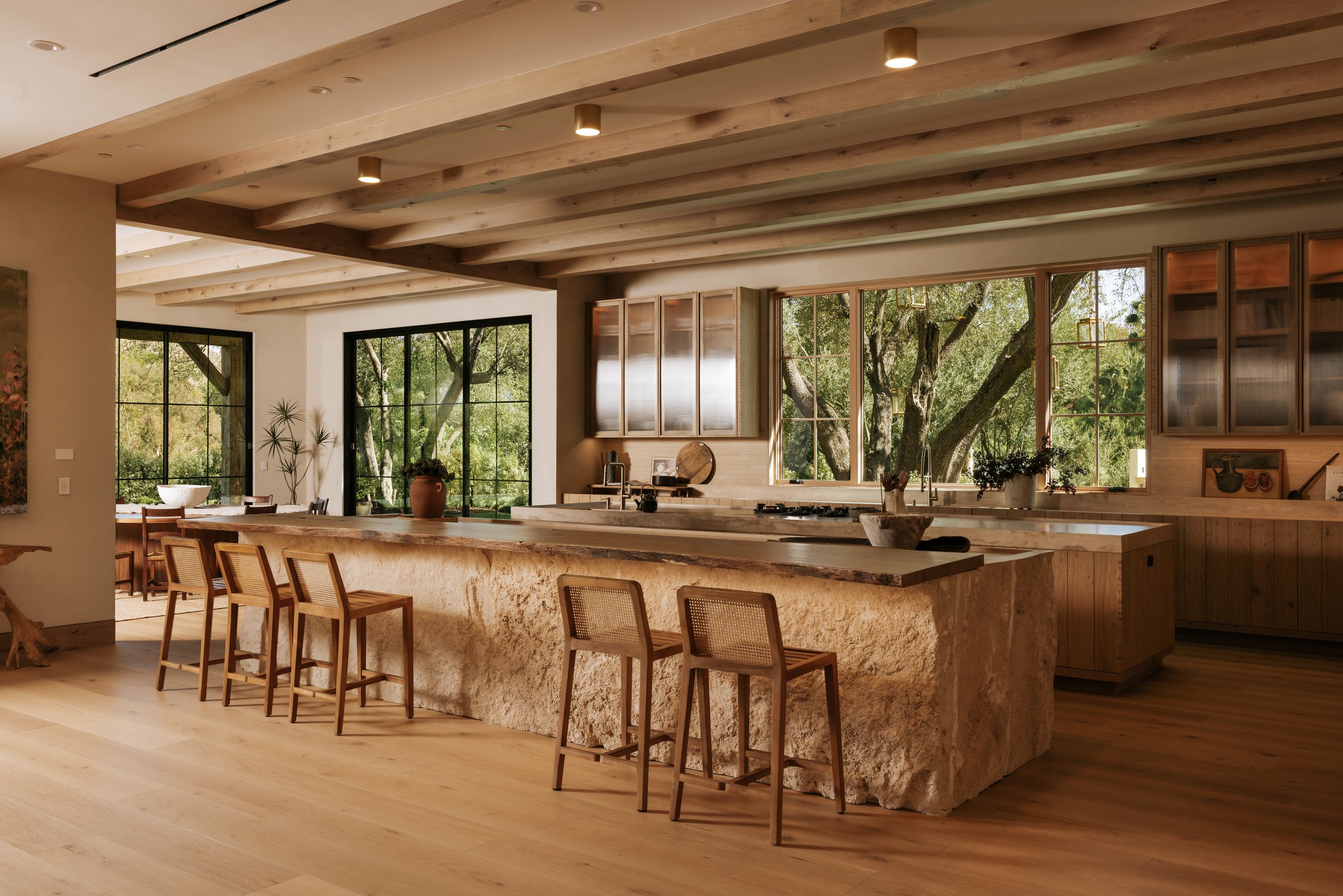
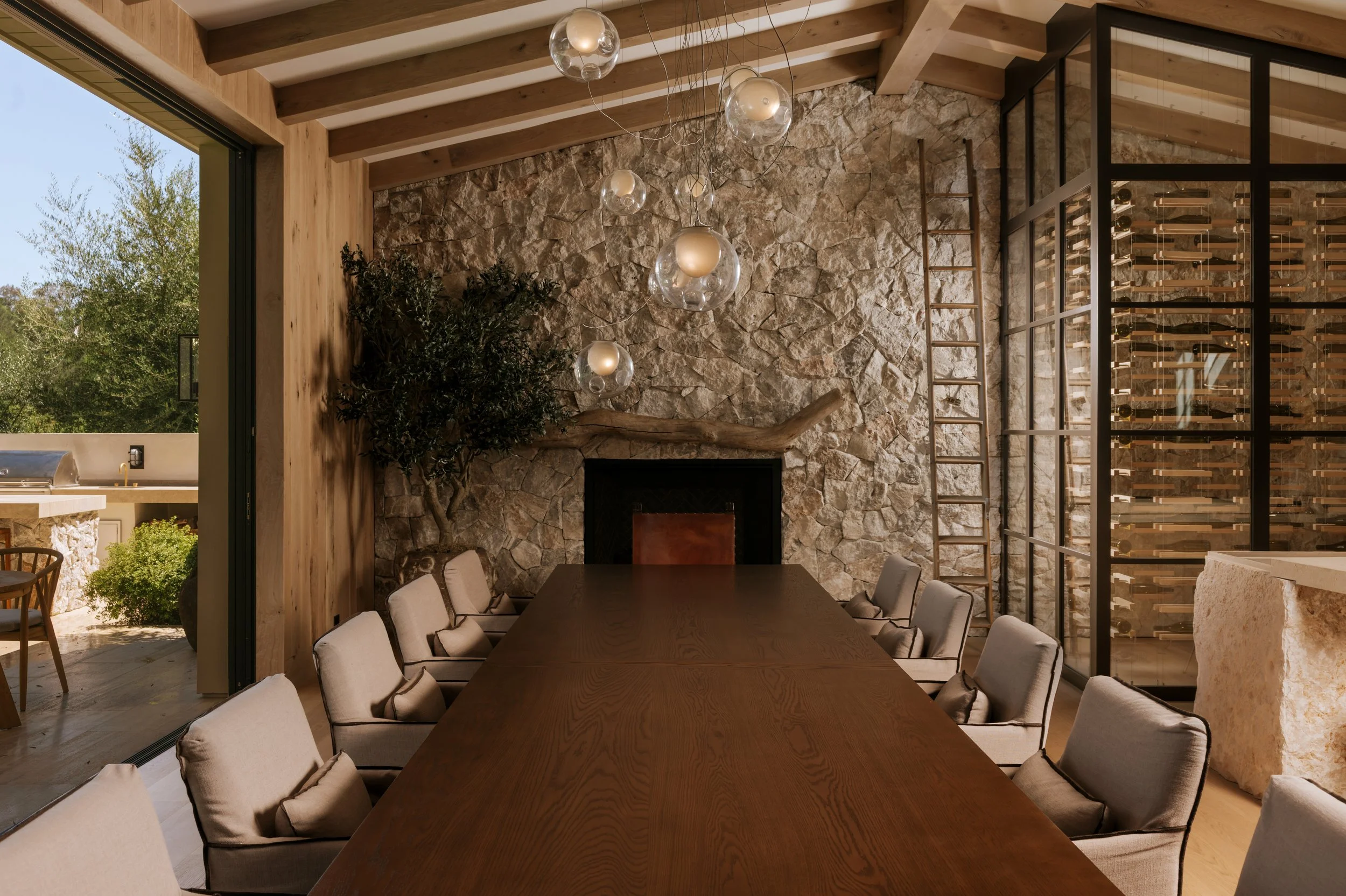
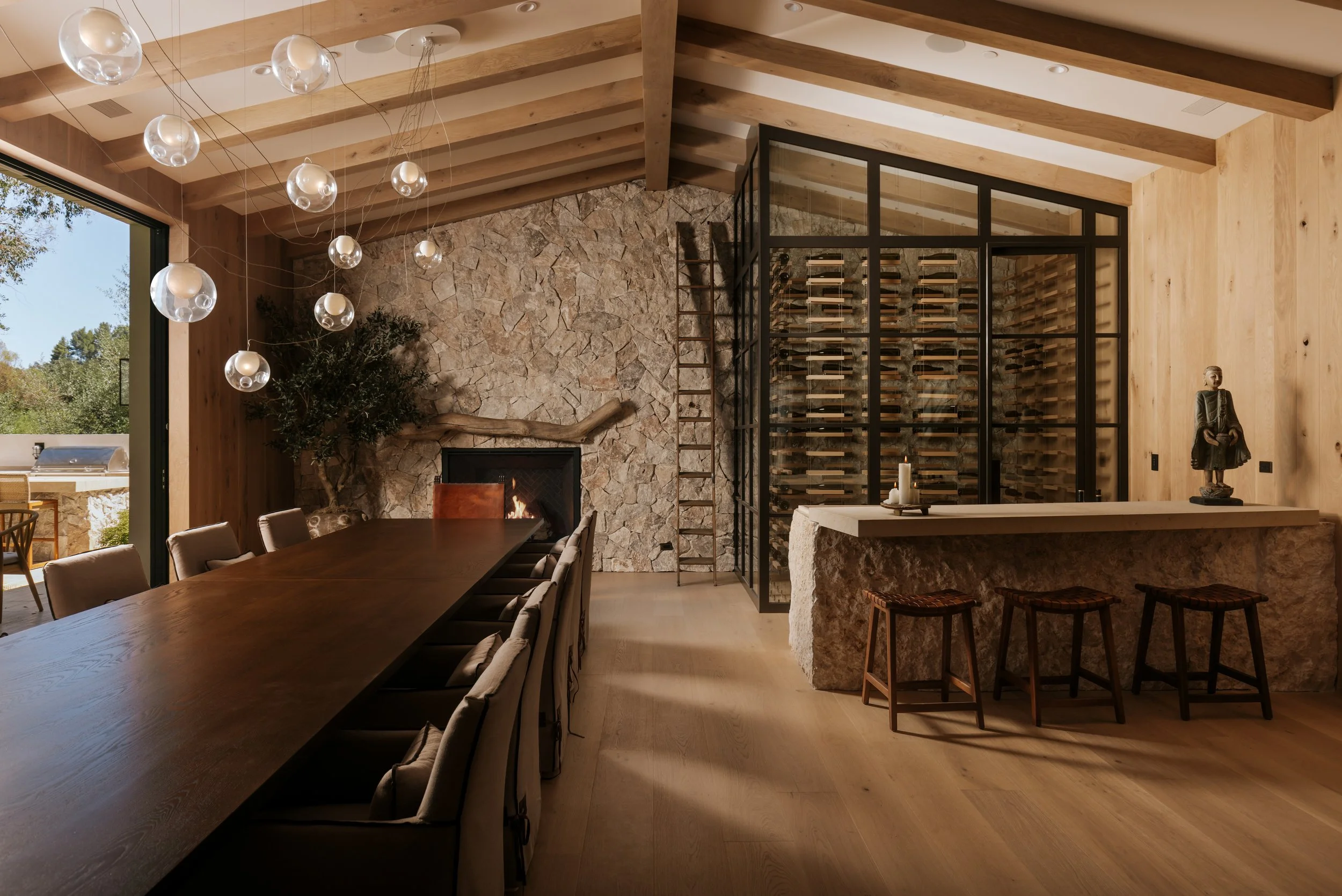
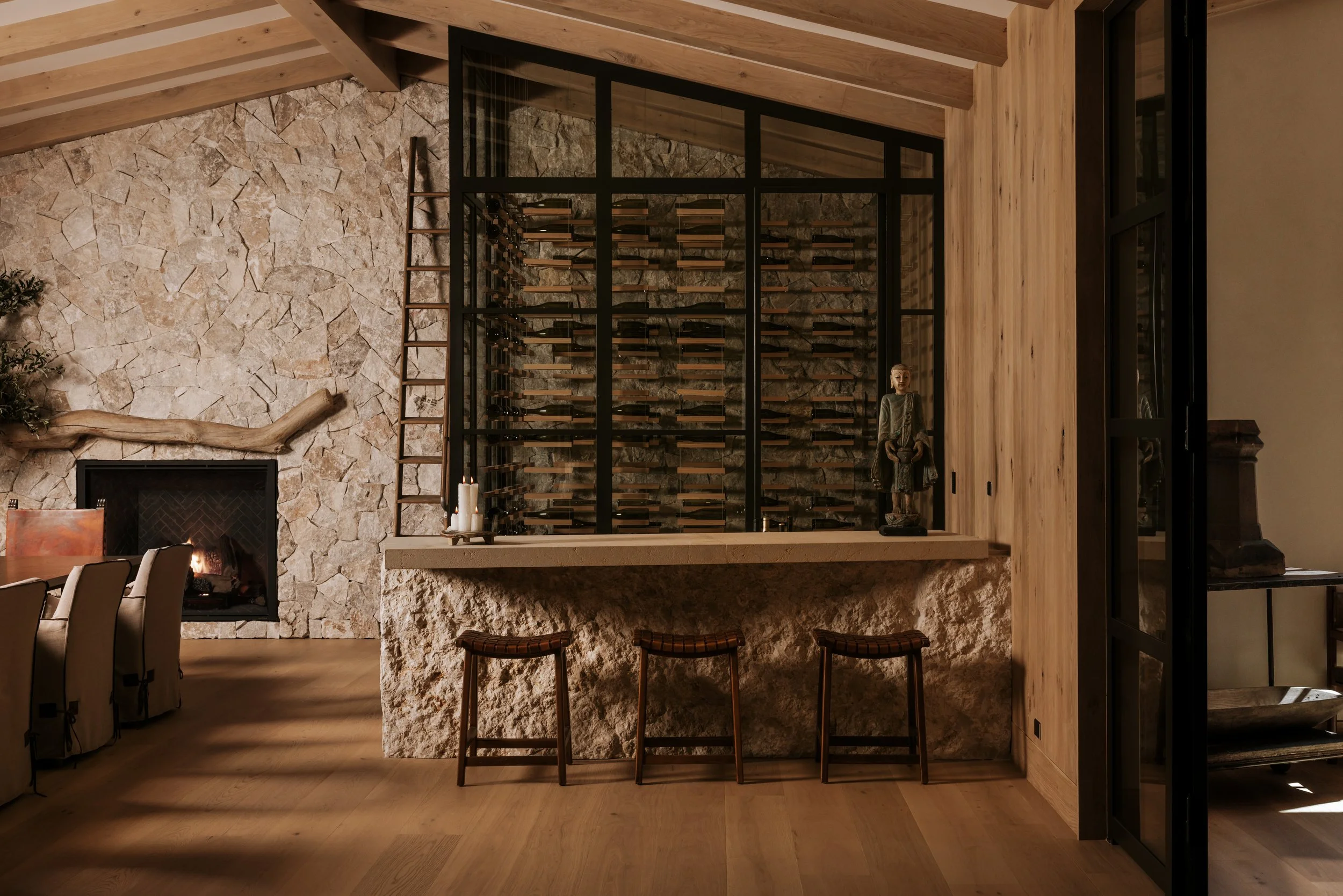
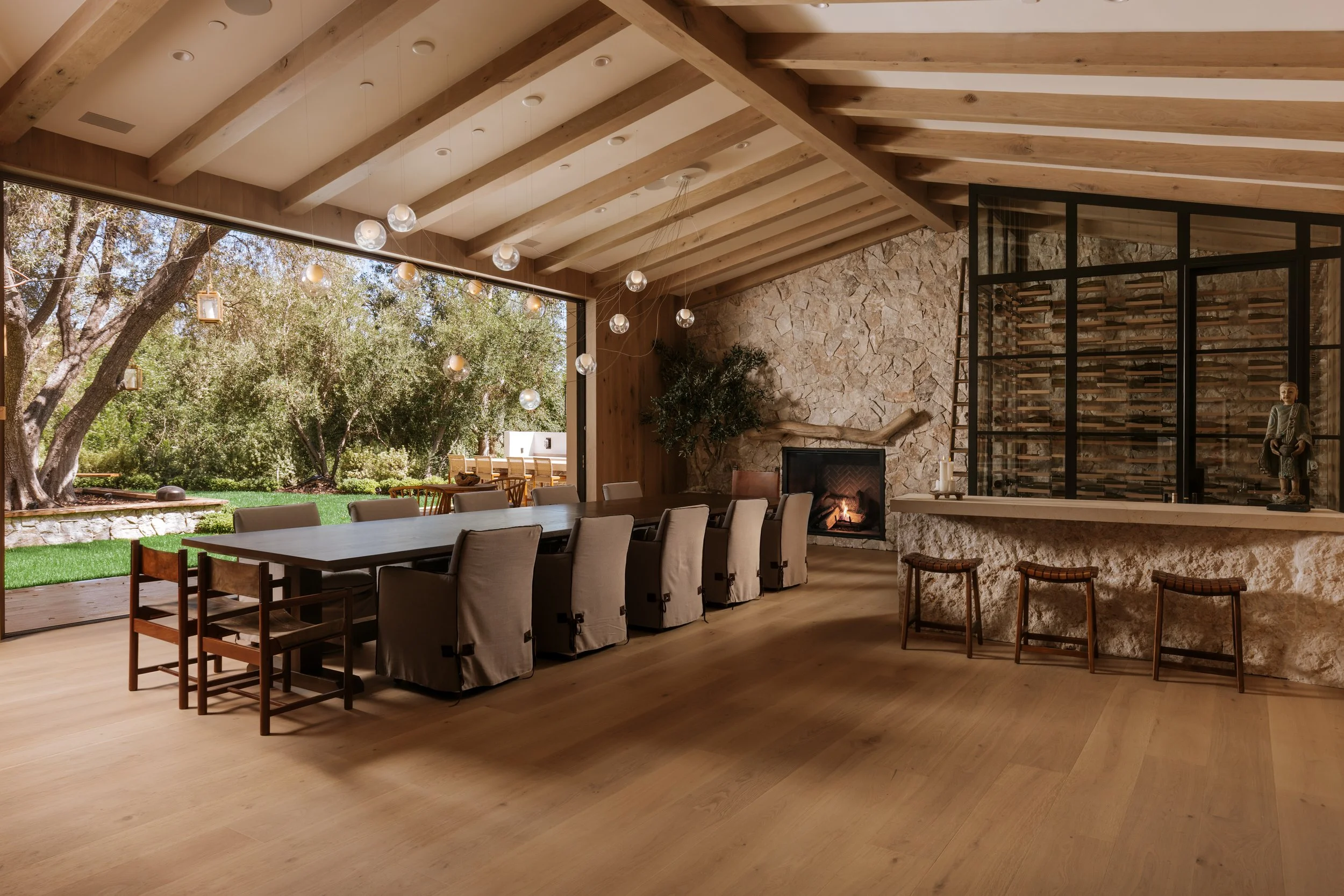
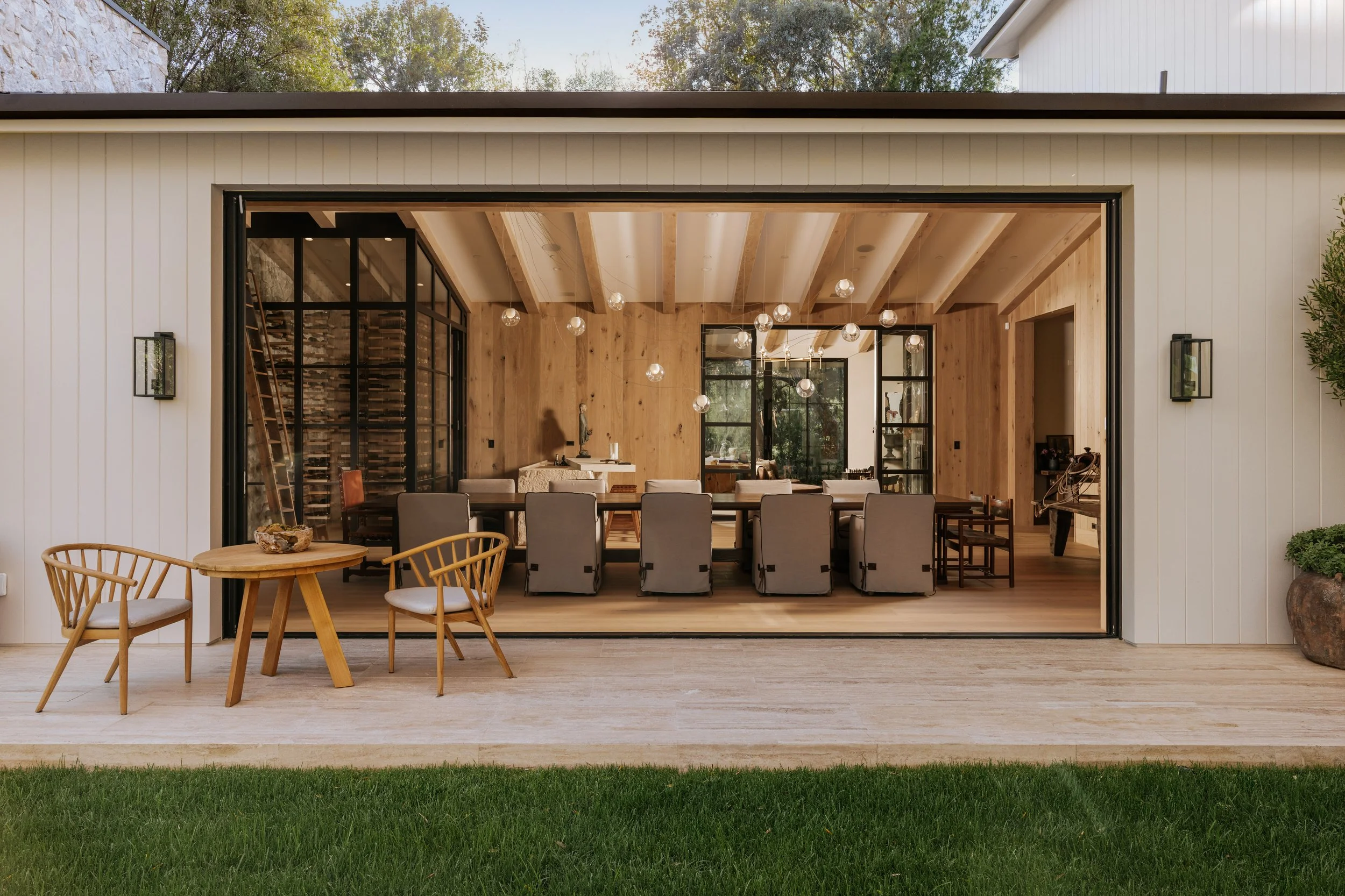
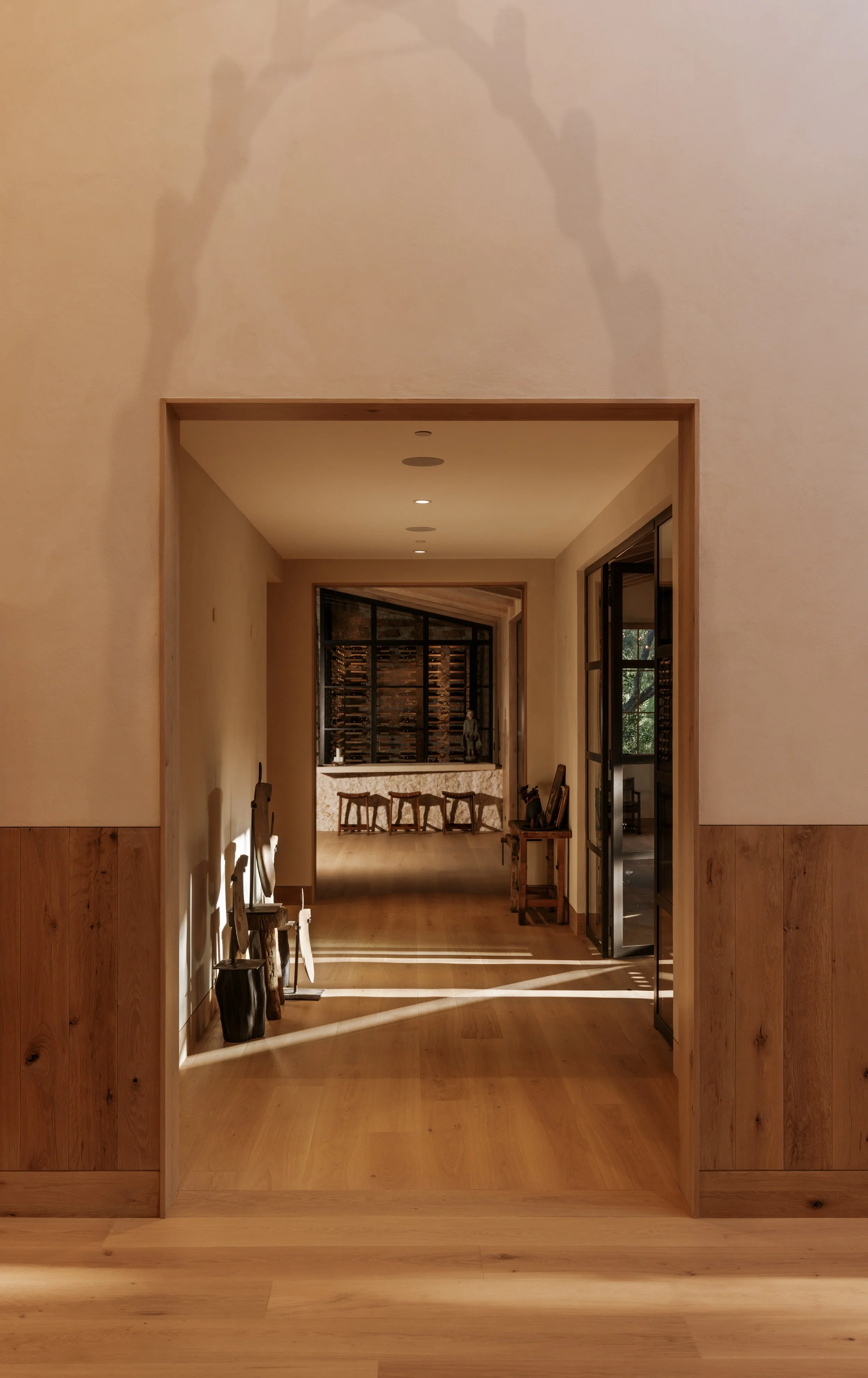
In the dining room, his connection to Napa informed a space he calls a “dining entertainment complex.” During framing, he saw how the light filled the room and how it looked out onto an old-growth olive tree, and decided against a planned dividing wall.
He kept the space open, integrating a wine bar and glass-enclosed wine cellar into the dining area. Natural cut stone covers the 14-foot-high back wall, while white oak clads the remaining walls, painstakingly wire-brushed by hand on site for over a month to bring out its grain and give it a textured, weathered appearance. “It’s Napa,” he says.
In the nearby powder room, a piece of driftwood Omar dragged off a beach in Santa Barbara forms the base beneath the sink. An engineered, concealed metal support makes the wood appear to float before an 11-foot wall of backlit green onyx. The illuminated stone reflects a fascination that began early in his design career.
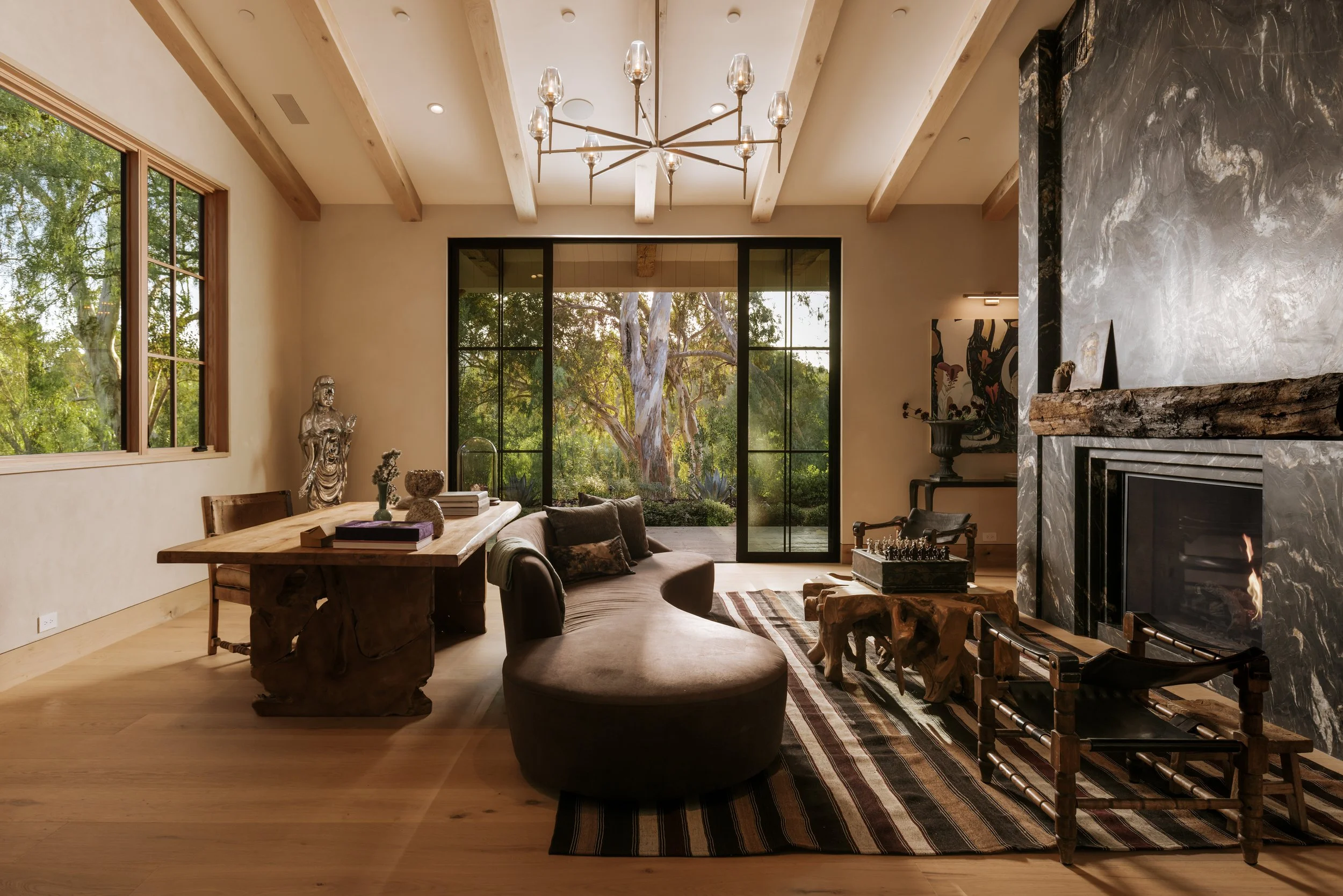
The formal living room and study draw inspiration from his third apartment in Paris, where a secret room lined with velvet, with antique mercury-glass mirrors at one end, and cabinets, where he found a collection of vintage porn magazines stashed away. “It was vintage French. It served as the inspiration for the formal living room and study. The decadence, the heaviness, the weight of it.”
Other references come from childhood and from difficult as well as pleasurable experiences. Omar says he still gets goosebumps entering the finished house: turning a corner can bring back a particular moment in his life, even in a space he has seen hundreds of times.
Curated, not Staged
That personal history also shaped the furnishings and art. Omar wanted the home to feel as though a private collector had spent years searching the world for objects to live with.
A European art and antique dealer with whom he had a longstanding working relationship sourced antiques and collectibles. Creative Art Partners joined the process months in advance, participating in the development of the narrative and selecting works that supported it. Furnishings that were not vintage or antique were custom-made for the space.
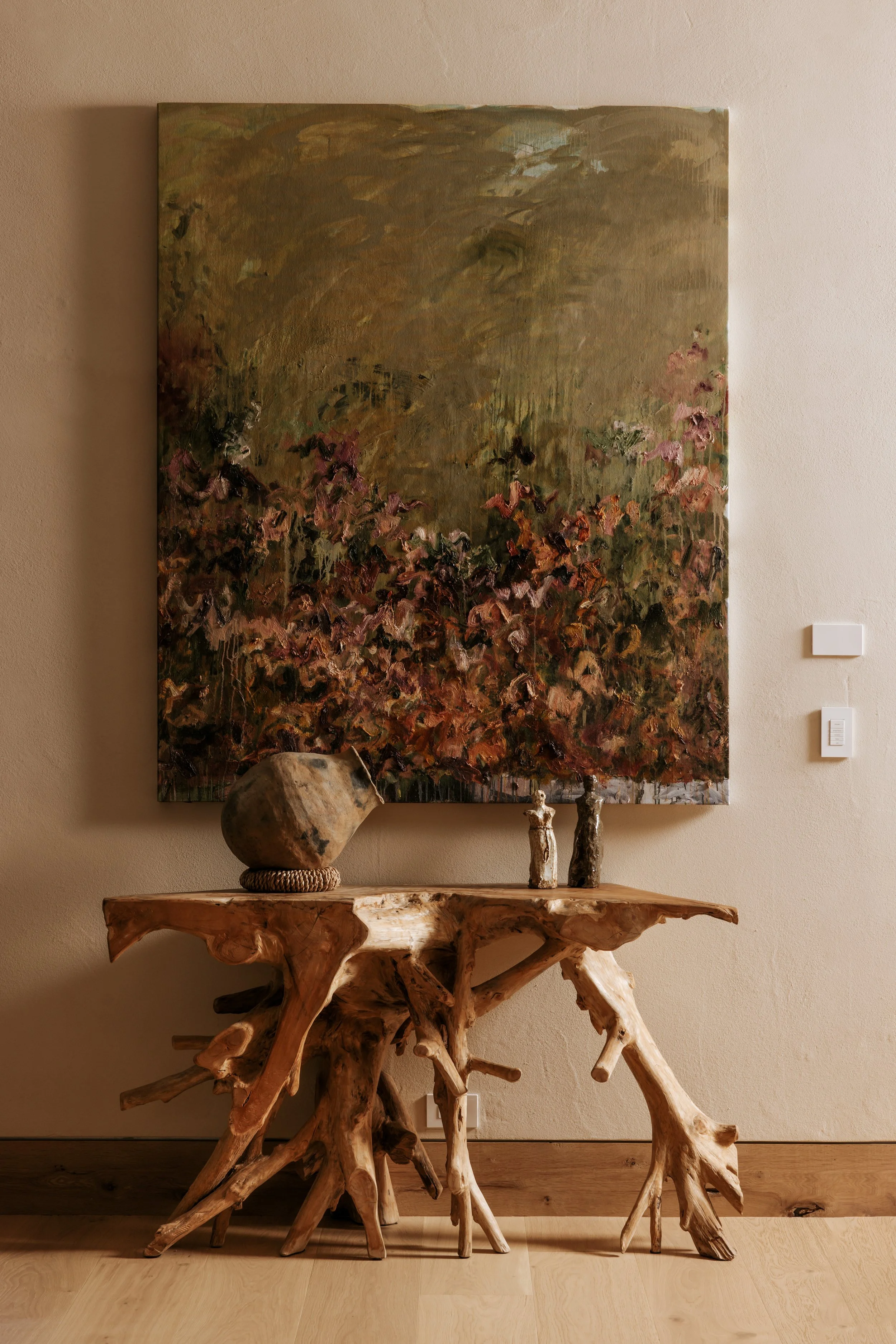
These decisions allowed the rooms and their contents to develop together. Omar reviewed the objects, furniture and art as part of the same creative process that shaped the house.
“We carried that all the way through to the very end, to the last book on the coffee table,” he says.
At the time of the interview, negotiations over the furnishings and art were continuing, with a substantial portion expected to remain. Omar says he is seeing more buyers interested in keeping the pieces selected for his homes. To him, that suggests they recognize a connection between the objects and the architecture.
“They don’t know what that looks like, but they know how it feels,” he says of authenticity.
A buyer does not have to understand every reference to appreciate the result. Omar usually conducts the significant showings himself, adjusting how much he shares according to the visitor’s interest. One prospective buyer, an artist, wanted to hear all of the deep stories behind the choices.
Bringing the story to market
Omar now wants the way his properties reach buyers to receive the same attention as their design. He is working with real estate partners on a more considered approach to photography, films and events, with the house and its story guiding the presentation.
For Hiraeth, one idea was a property film with the feel of a vintage European independent production. Slower pacing would give viewers time to take in the rooms, with photography and video reflecting the atmosphere developed inside. Curated events would offer interested buyers a similar opportunity to engage with the property.
He is developing the process. Omar says he and his partners are committing substantial time and resources to finding the right approach. He wants to concentrate those efforts on a more committed audience, what he calls “a thousand true believers”: buyers and partners who understand his vision.
The business strategy ultimately supports his ability to create. He thinks about how to give the brand an advantage “in order to do the art,” he says. Building its reputation and audience gives him greater freedom to pursue his ideas.
This is actually a similar approach that we're seeing across the entire luxury space, from fashion and collectible design to hotels and travel experiences, where craftsmanship, attention to detail and storytelling create an emotional connection, making objects and experiences coveted by collectors and people who appreciate design and art.