A €1.5 Million Private Island in the Finnish Archipelago With Plans for a Scandinavian Cabin Retreat
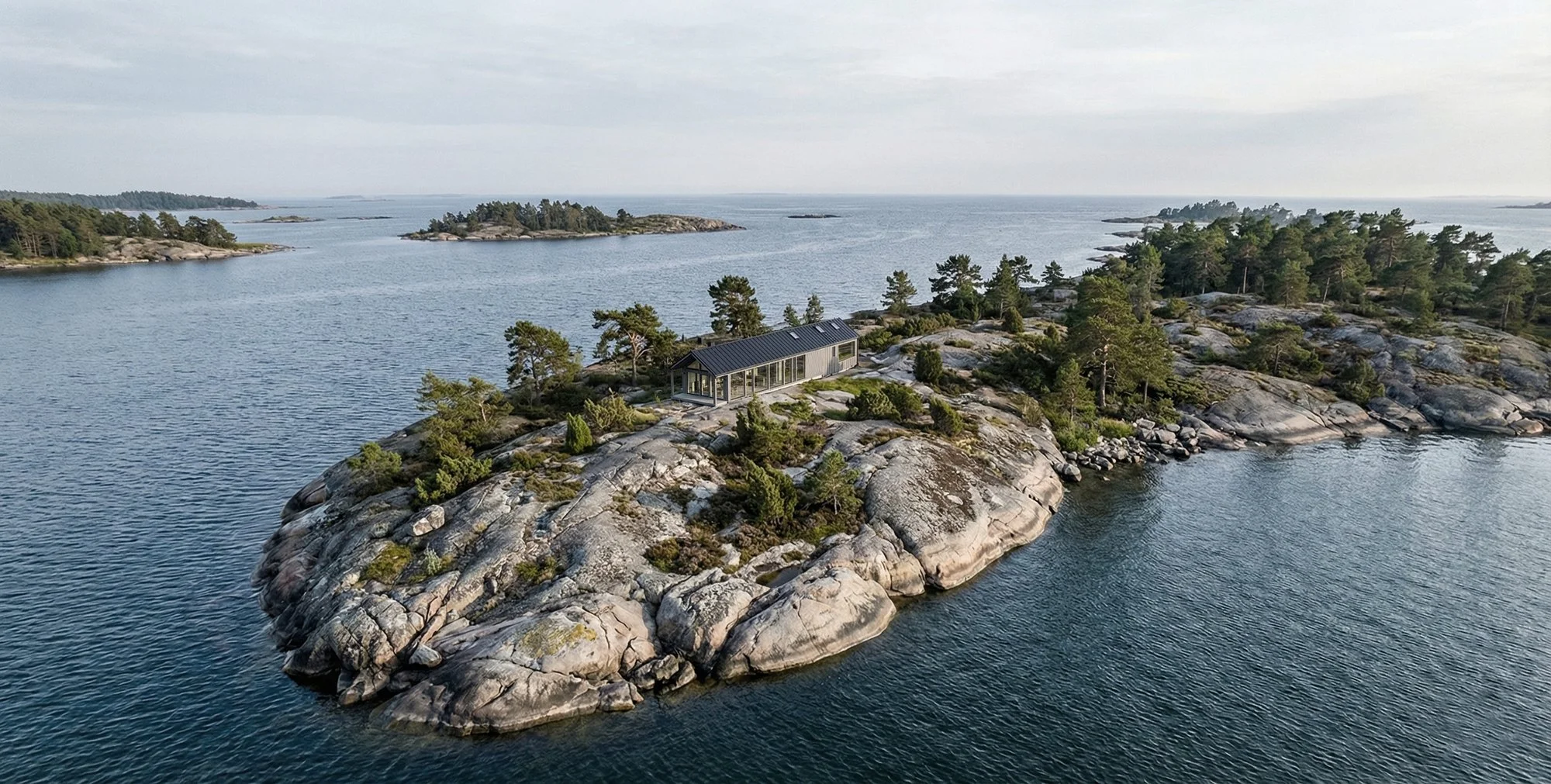
The old Scandinavian cabin ideal was simple: a modest summer house close to nature, built for quiet days, cold swims, and long evenings outdoors.
With Project Ö, that familiar Nordic idea became an international design reference point — still compact and rooted in the landscape, but more self-sufficient, more considered, and more architecturally refined.
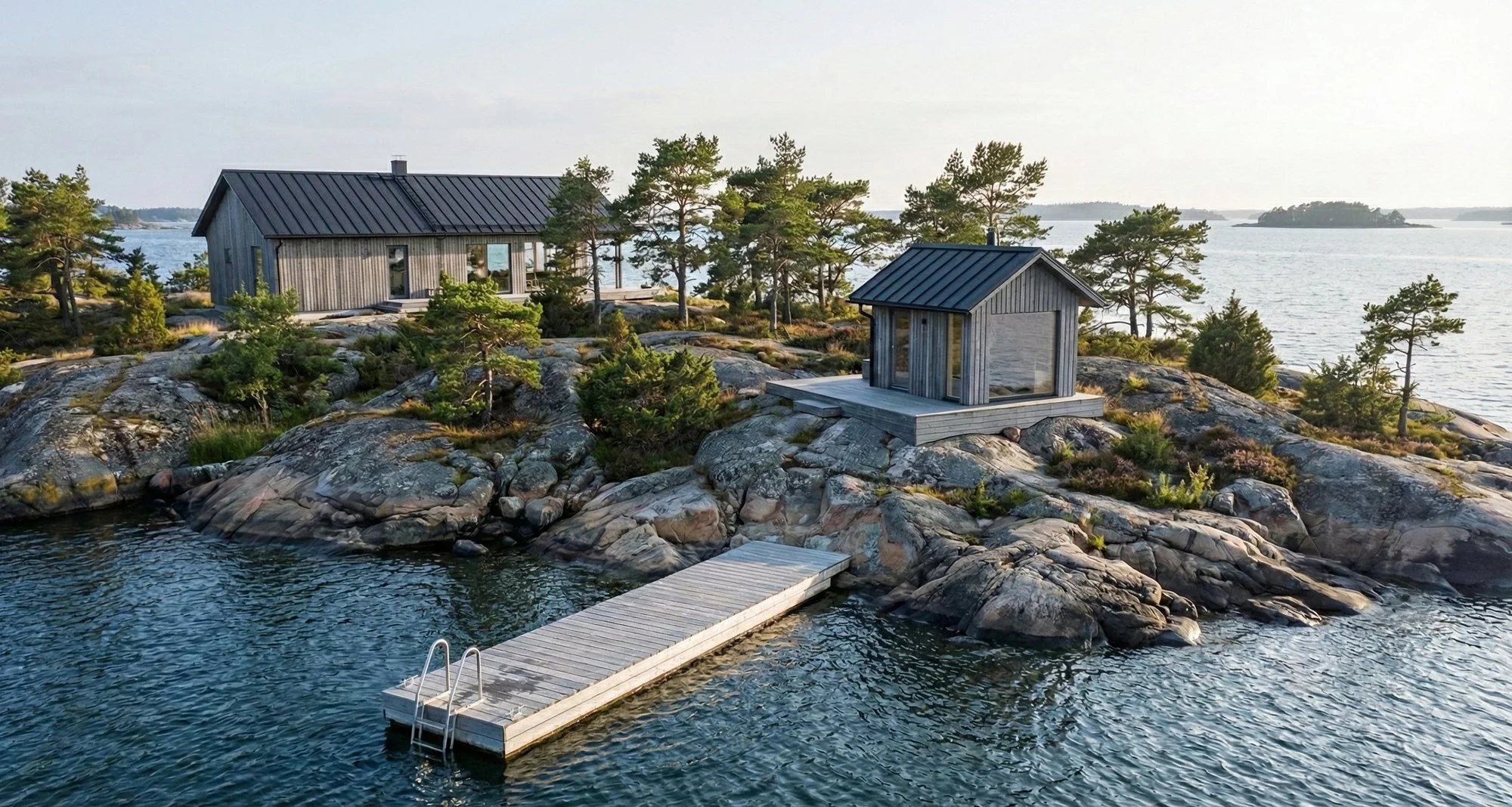
Created by Finnish spatial designer Aleksi Hautamäki and creative director Milla Selkimäki, Project Ö distilled the Scandinavian island dream into its clearest form: compact timber architecture, solar power, filtered seawater, a wood-fired sauna, and a way of living shaped by rock, pine, sea, and weather.
Now, the couple are offering a new private island in the same archipelago, not as a completed house, but as a chance to commission the next evolution of that idea.
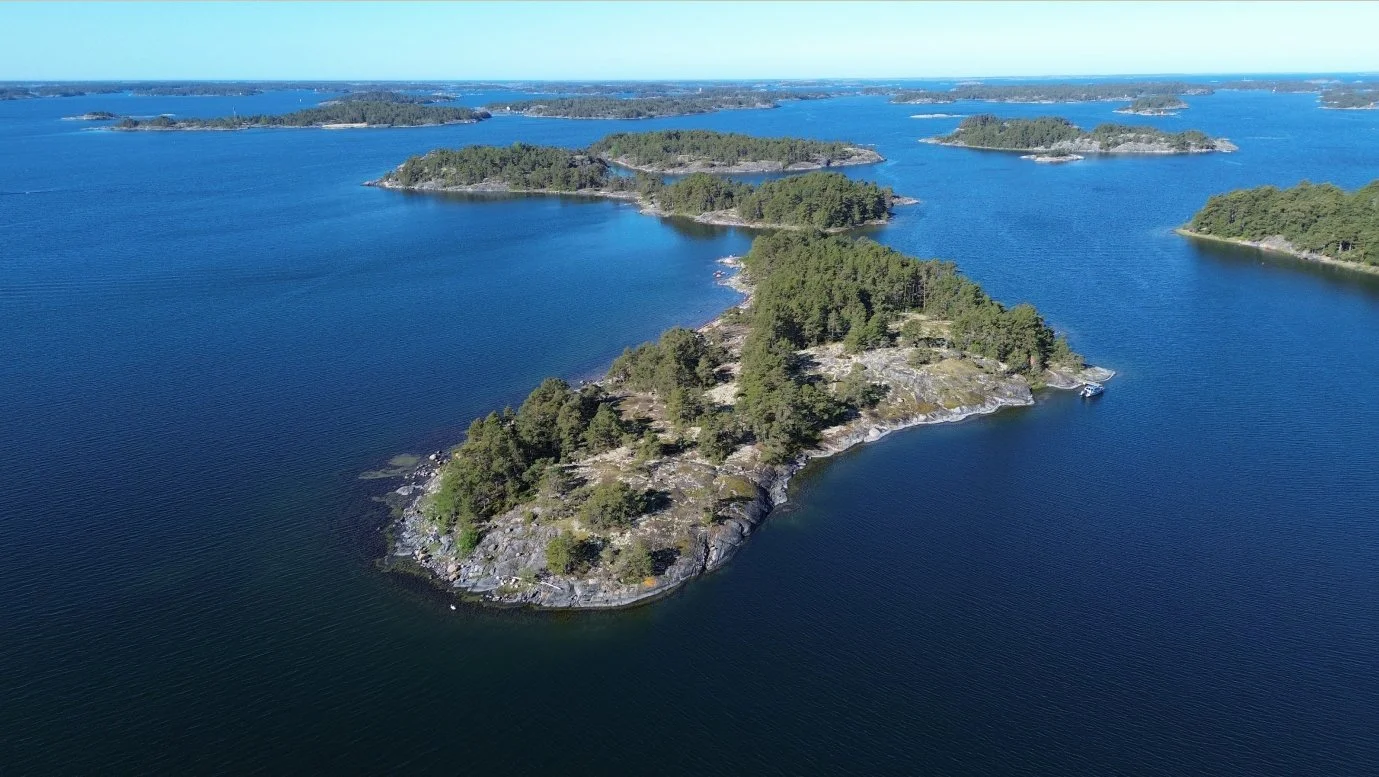
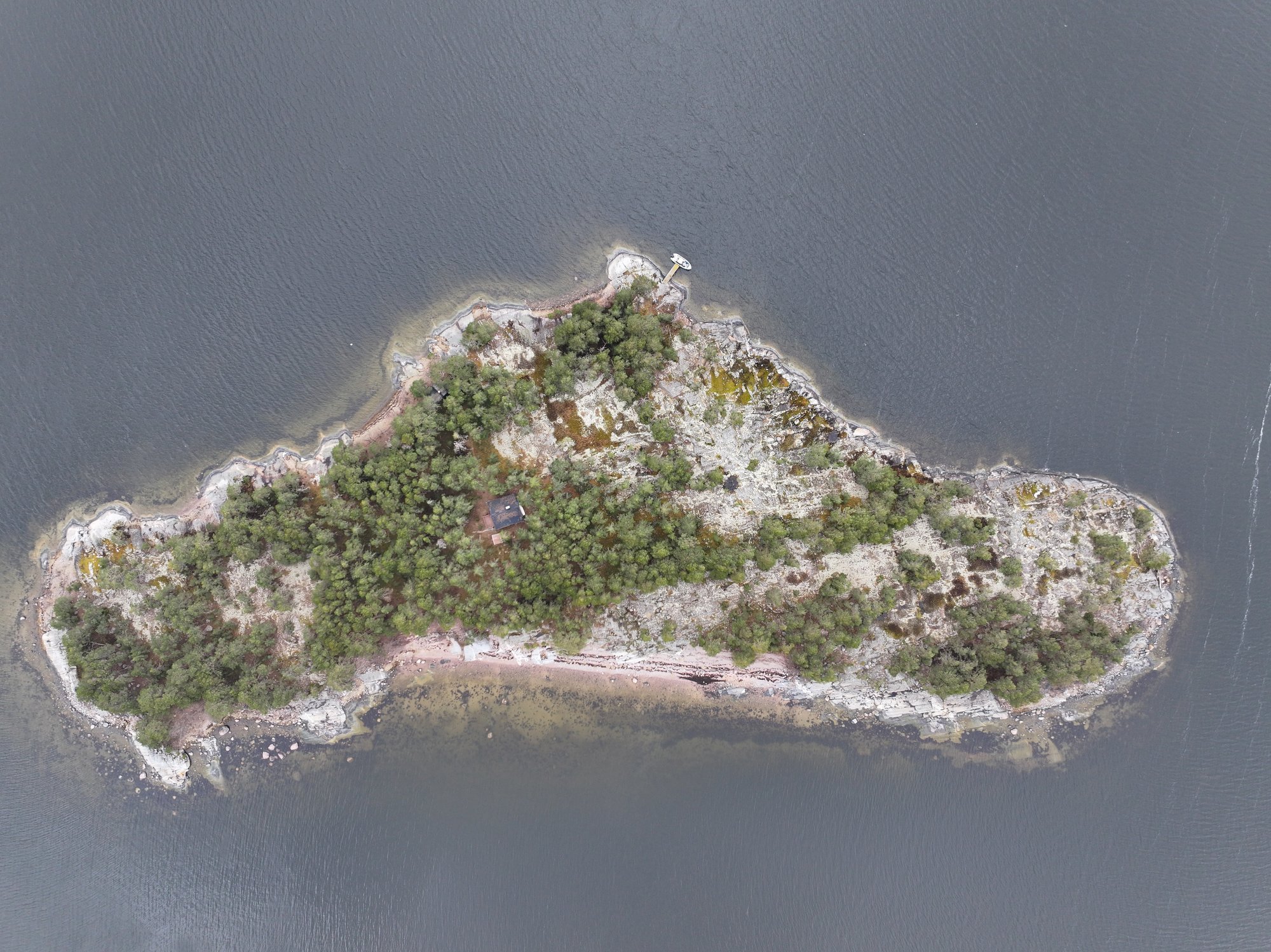
Gråskär is located around five minutes by boat from Kasnäs harbour, at the threshold between Finland’s inner and outer archipelago. From Helsinki, Kasnäs is approximately 2.5 hours by car, while Turku is around 1.5 hours away, giving the island the rare balance of genuine privacy and practical access.
That balance matters. Private islands often come with the romance of isolation, but also the friction of logistics. Gråskär offers something more usable: the feeling of being surrounded by sea, forest, and open sky, without being cut off from the mainland for long stretches of time.
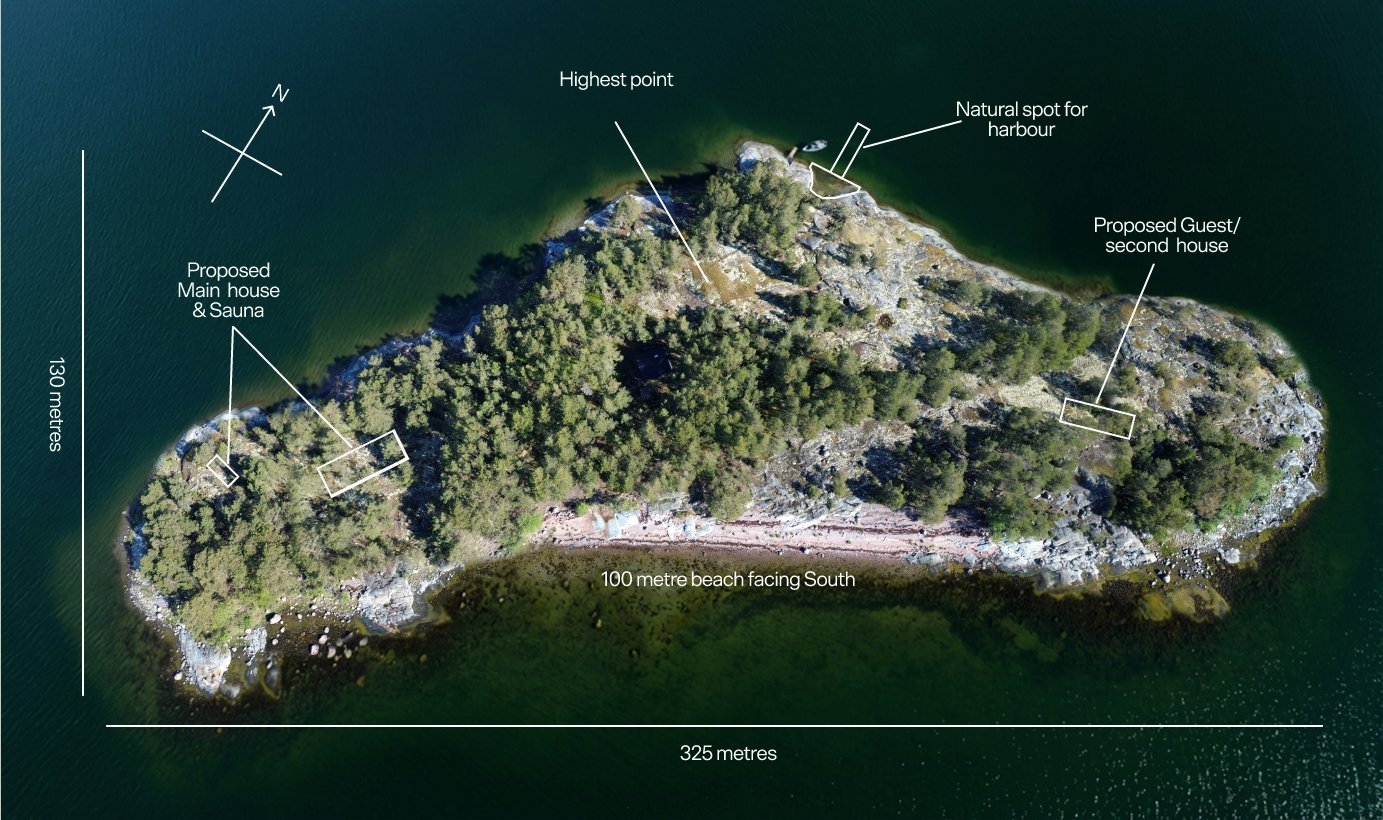
The island spans approximately 2.6 hectares, or 6.4 acres. Gråskär could be developed as one private estate, a main residence with guest accommodation, or two independent retreats that remain fully invisible from one another.
Project Ö
The practical framework is already in place. Gråskär is offered as a development opportunity, with a comprehensive master plan prepared for the island. The plan defines the overall structure, access points, and placement principles, while leaving the individual buildings open to be designed around the future owner’s brief.
That is the real appeal. This is not a finished house where the buyer inherits someone else’s taste. It is a chance to commission a retreat from the landscape outward, with the benefit of a tested design sensibility already behind it.
The island also comes with two separate building rights, and the entire island is zoned as buildable land — an uncommon level of freedom in Finnish coastal planning. Rather than being limited to a single predetermined building envelope, the architecture can respond to the terrain, views, wind, shoreline, and privacy of the site.
Each part of the island suggests a different way of living with the water. On the northern side, steep, deep water creates the natural setting for a private harbour and protected jetty. To the west, the shoreline is well suited for a sauna building placed directly at the water’s edge, with open views toward the evening light and northwest sunsets. Along the southern side, a long sandy shoreline forms a rare sun-facing beach, offering sheltered swimming and a softer counterpoint to the rock and forest.
It is easy to imagine the rhythm of the place: arriving by boat, walking over timber decks and low-impact paths, spending the afternoon between the beach and the rocks, then ending the day with a wood-fired sauna and a cold plunge into the Baltic Sea.
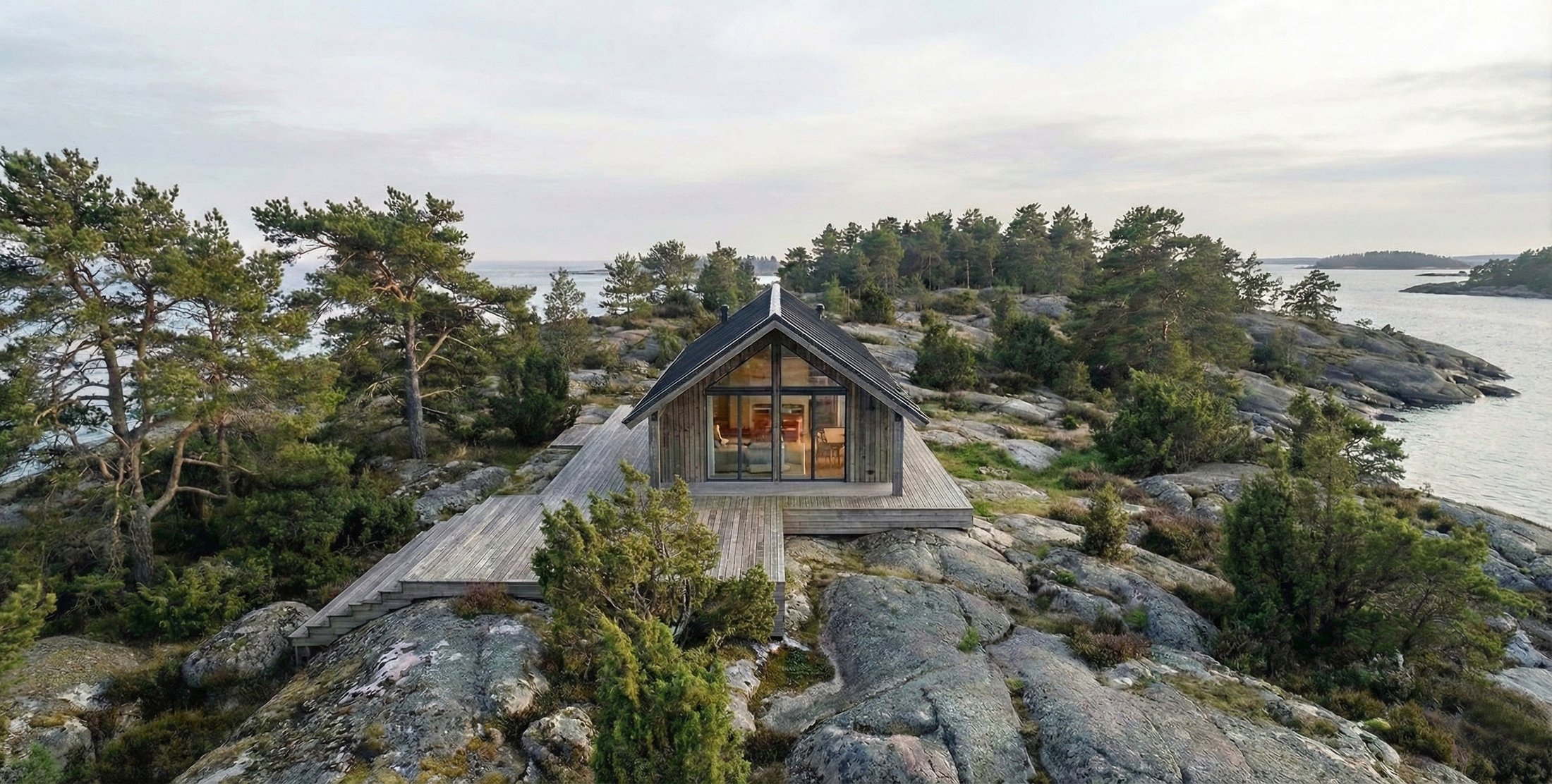
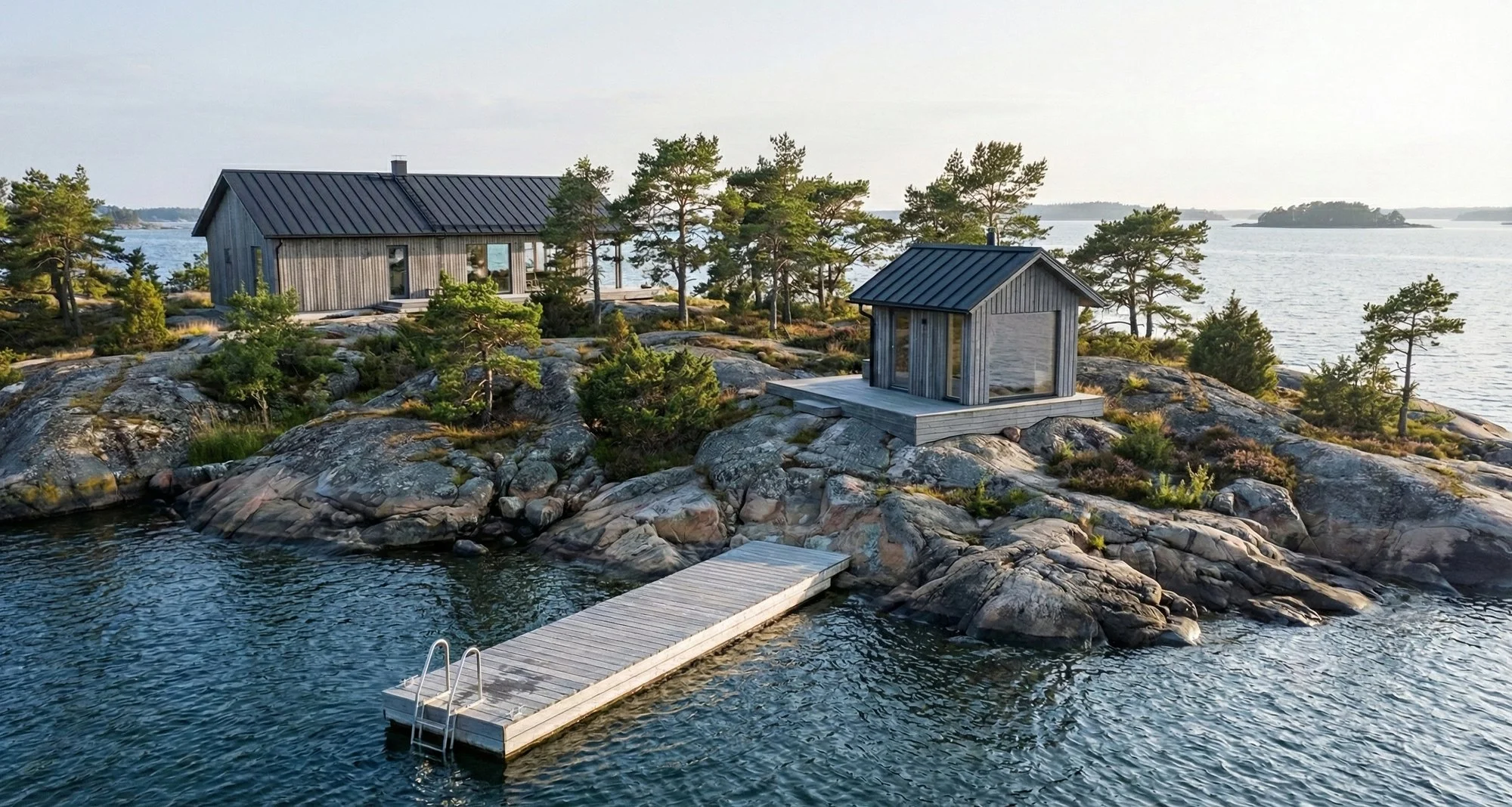
The reference point, of course, is the original project by Project Ö. Built on a five-acre island near the edge of Archipelago National Park, the retreat showed how a remote island could feel self-sufficient without feeling primitive. Its compact cabins use solar power, filtered seawater, running water, flushing toilets, heating, cooling, and a fully equipped kitchen.
The cabins pay tribute to traditional Finnish archipelago buildings, with gabled roofs, long eaves, extended gutters, and vertical timber cladding.
Their long, narrow shape allows for large windows and changing views throughout the day, while also letting different parts of the cabin serve different uses — from quiet sleeping areas to open social spaces for sauna, cooking, and evening drinks by the water.
Gråskär is offered as a development opportunity, with a comprehensive master plan prepared for the island. The plan defines the overall structure, access points, and placement principles, while leaving the individual buildings open to be designed around the future owner’s brief.
At Gråskär, the future owner can shape the private island.
Whether imagined as compact family retreat, a larger private estate with a guest house and a sauna pavilion at the water, or an off-grid residence designed for longer stays.
The price reflects an estimated completed development, including one main residence, a sauna building, dock and walkways, technical systems for water and electricity, and the necessary permits and approvals.
In other words, the opportunity is not only to buy a private island. It is to create a complete world on one.
For a buyer drawn to the Scandinavian dream — quiet architecture, sauna culture, cold-water swimming, off-grid systems, summer evenings outdoors, and a direct relationship with the sea — Gråskär offers something increasingly rare: a raw island with privacy, planning flexibility, design credibility, and a clear path toward becoming a contemporary Nordic retreat.