A 500-Year-Old Tuscan Villa With Frescoed Interiors Near Lucca Comes to Market
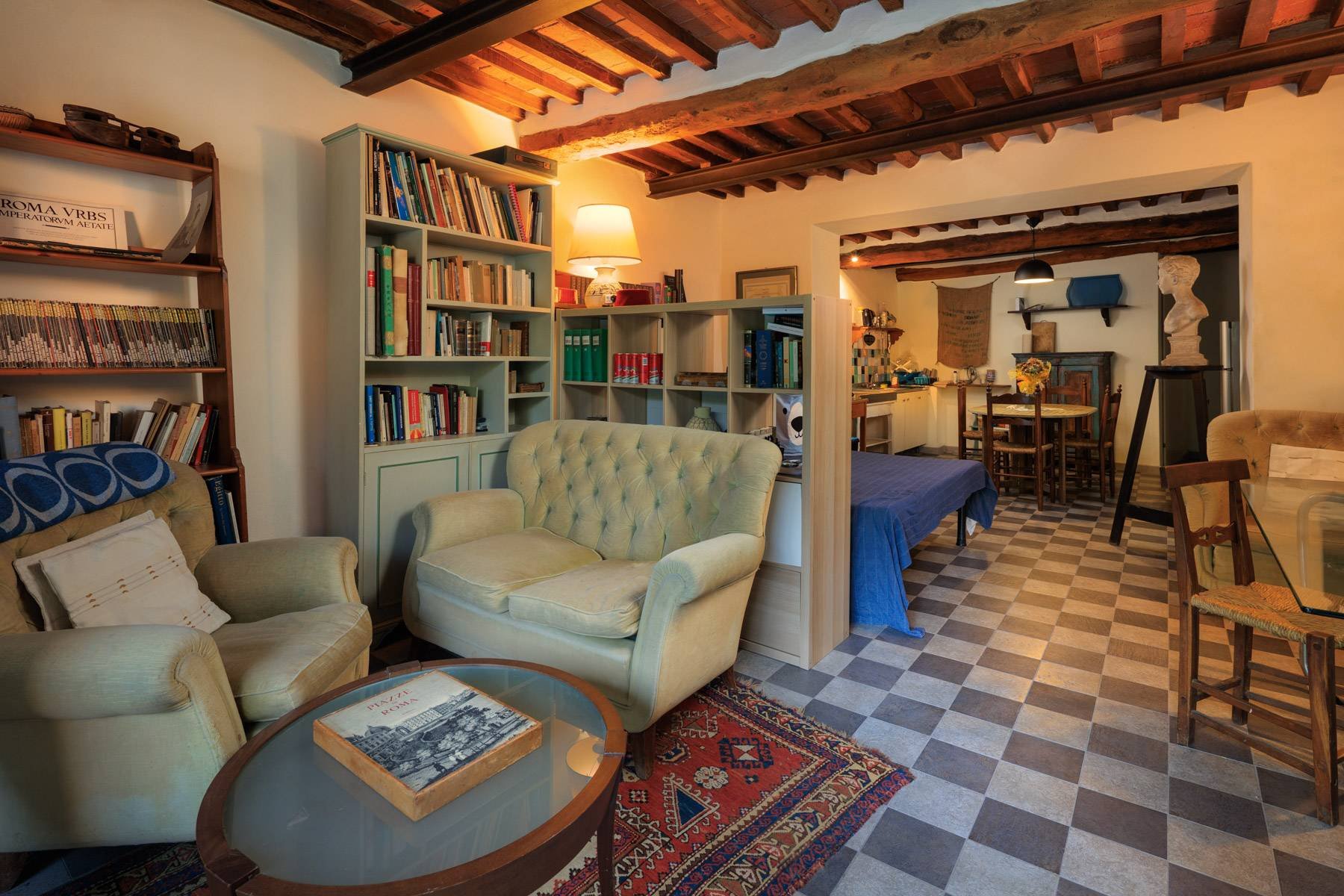
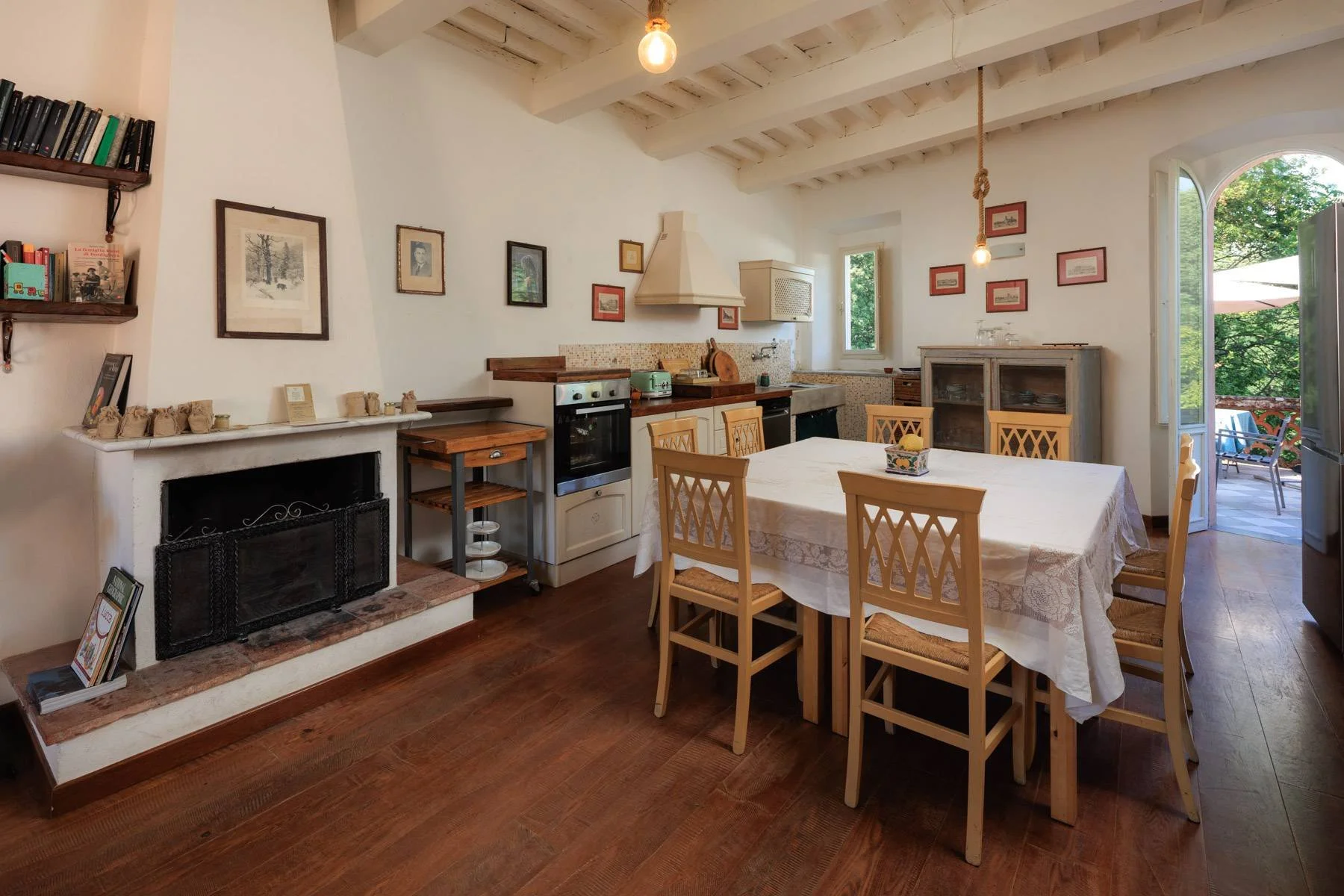
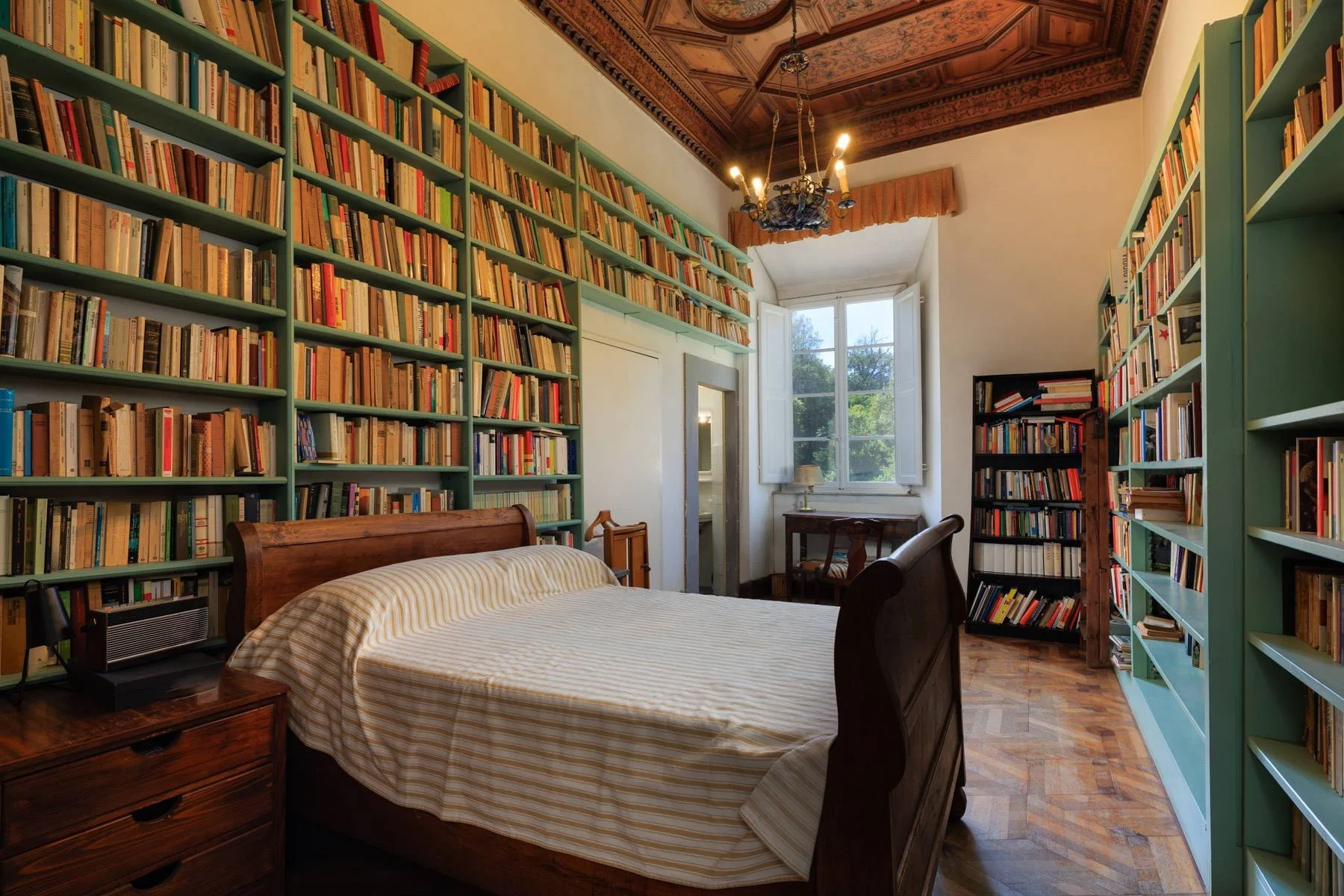
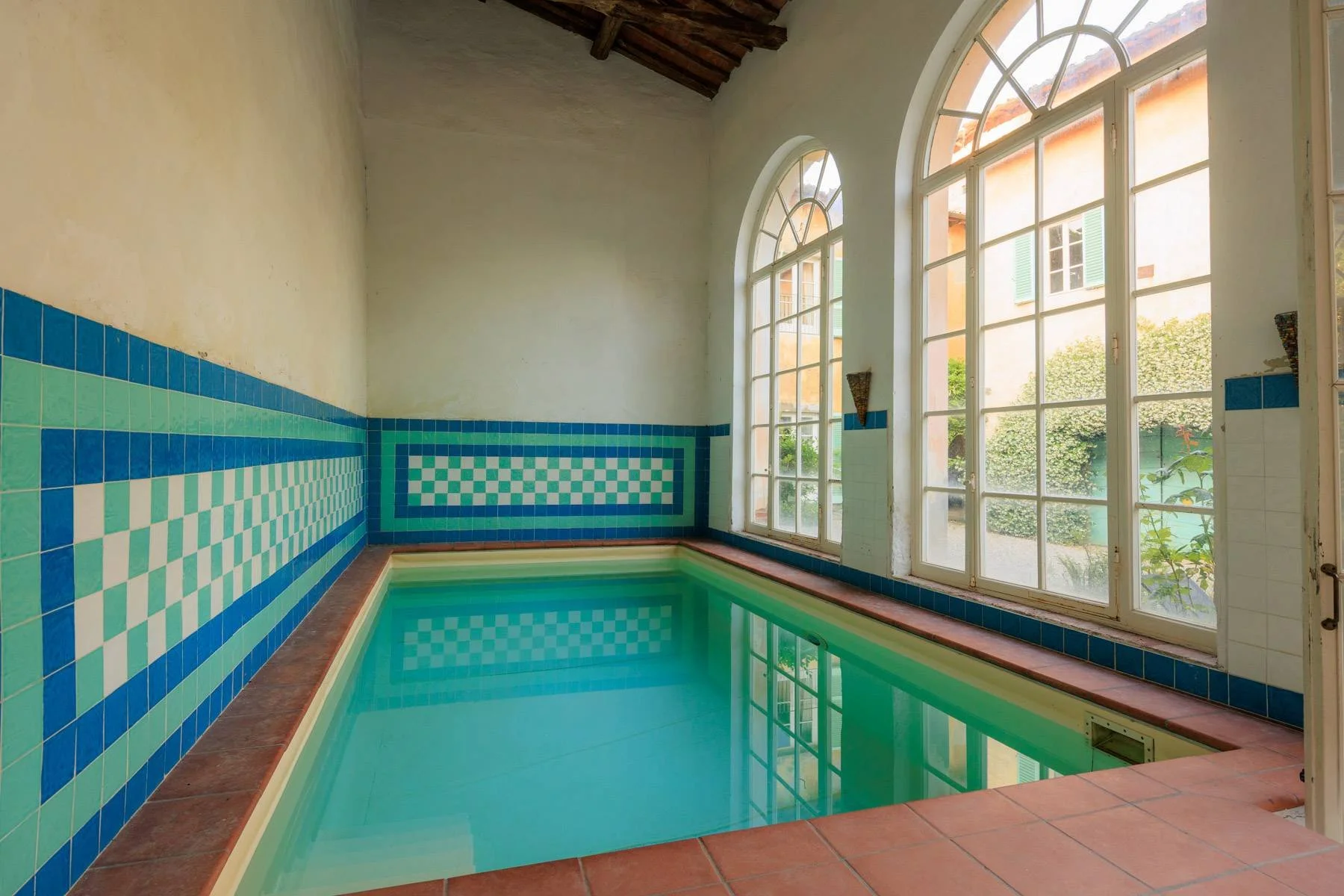
Bedrooms: 28 Bathrooms: 22 Interior: 3,310 m² / 35,629 ft² Grounds: 11 hectares / 27 acres
Amenities: Two historic residential complexes, frescoed reception rooms, monumental ballroom, Hall of Imperial Portraits, frescoed loggia, library, private chapels, multiple salons, renovated apartments, limonaia with indoor pool, restored farmhouse, olive groves, vineyards, woodland, historic landscaped park and lotus lake
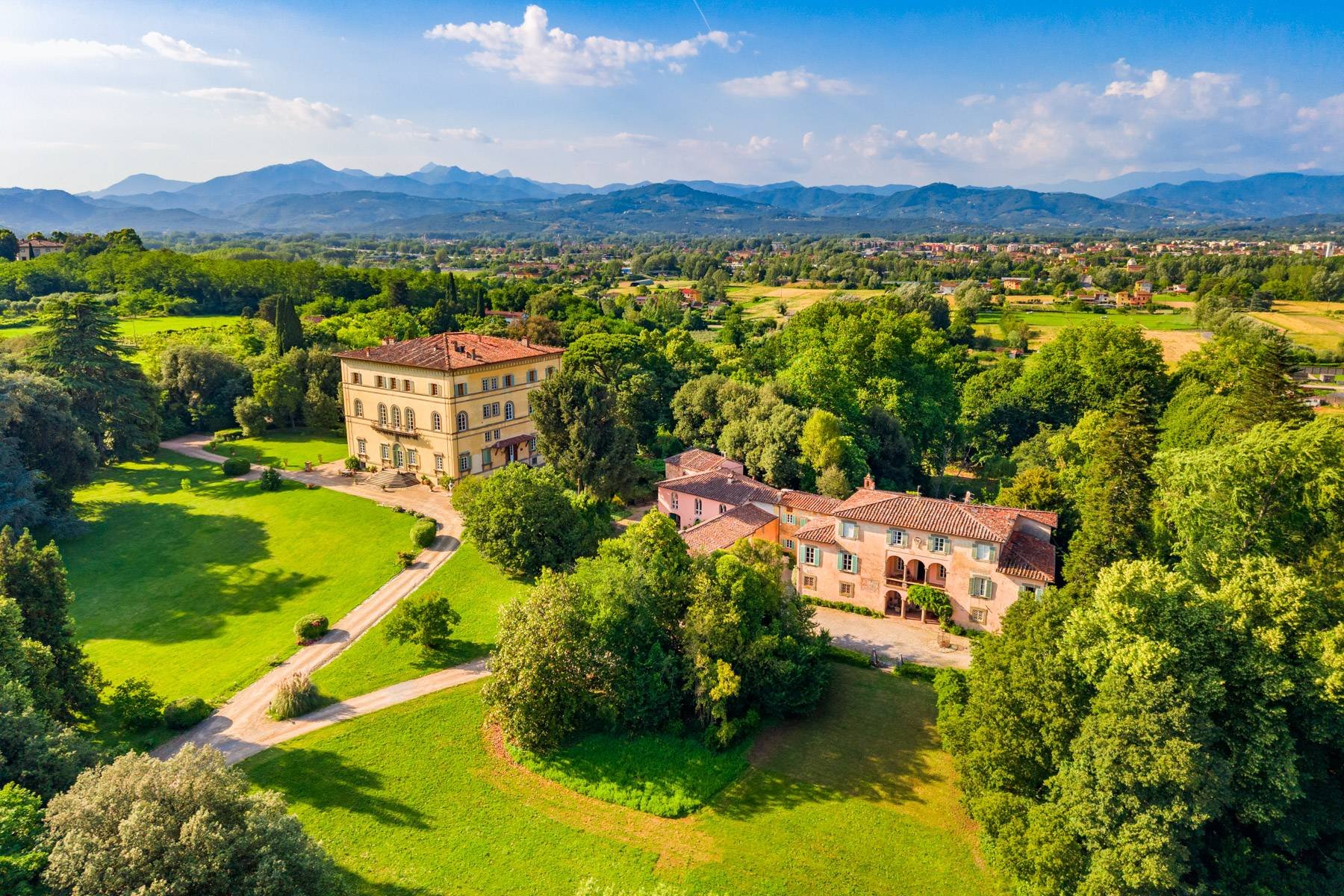
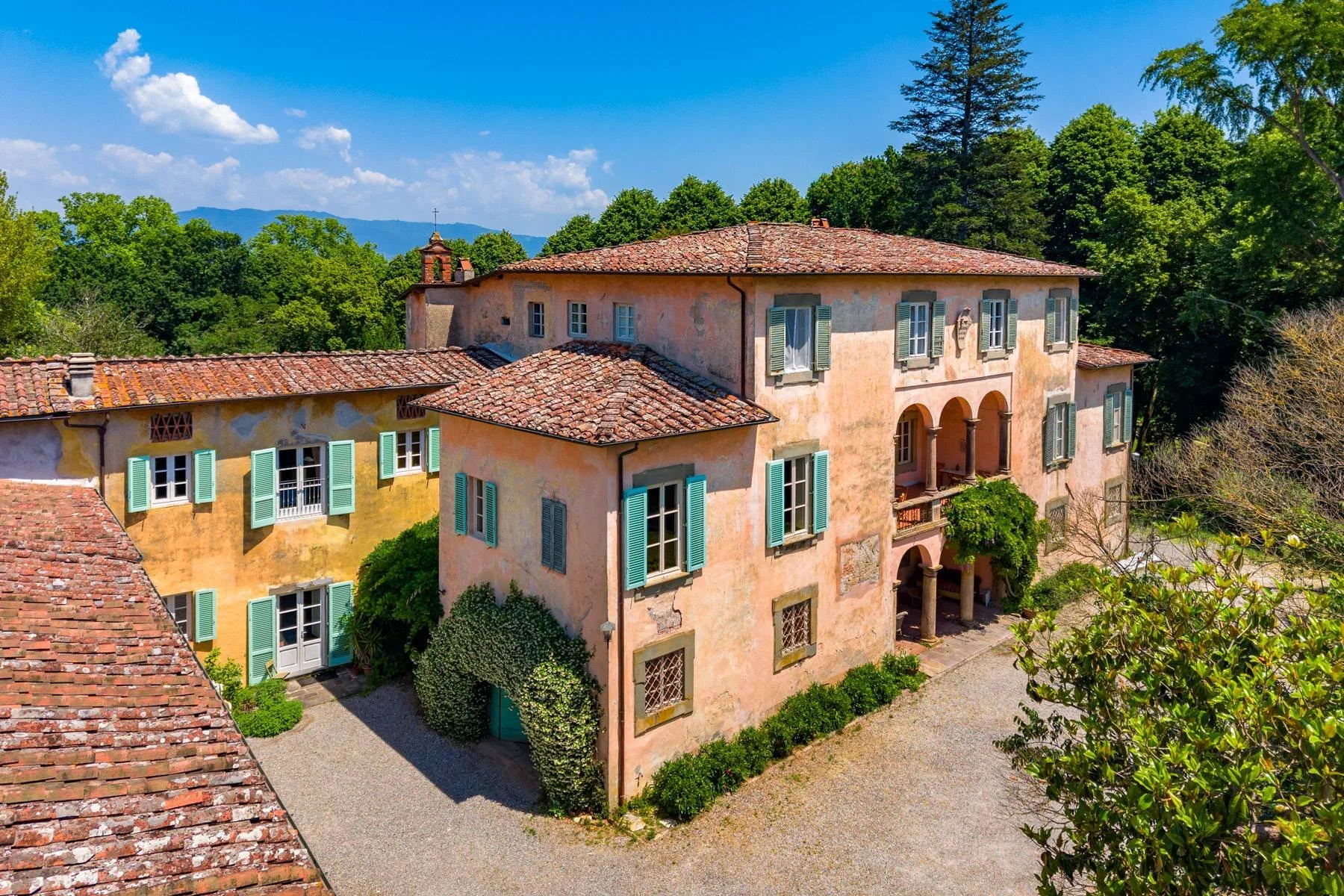
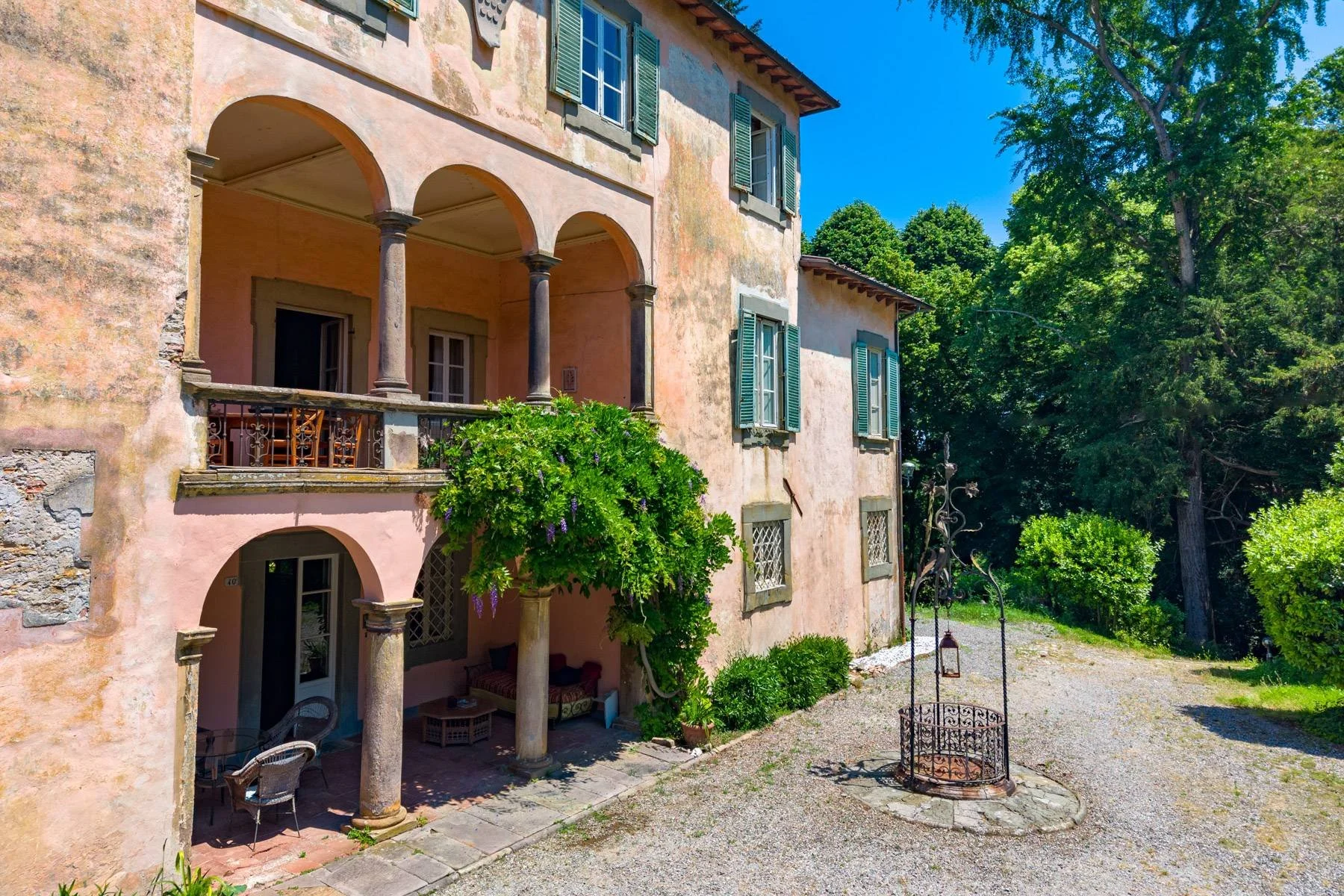
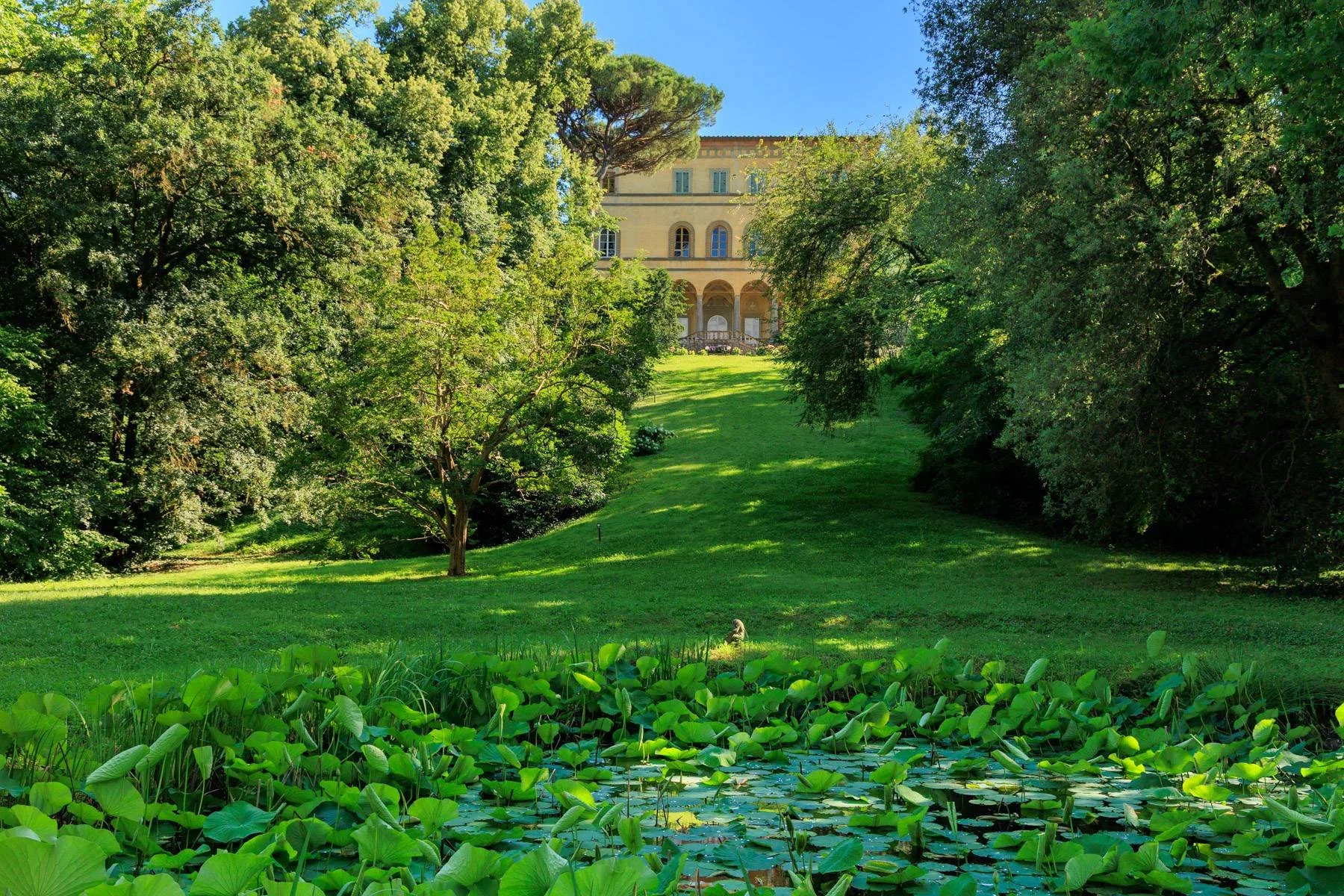
Set across approximately 11 hectares (27 acres) in the countryside near Lucca, this monumental Renaissance estate centres on a frescoed villa of more than 2,300 m² (24,757 ft²). The property also includes a second historic residential complex of approximately 1,000 m² (10,764 ft²), several restored buildings, olive groves, vineyards, woodland and a centuries-old landscaped park.
Altogether, the Tuscan estate for sale offers approximately 3,310 m² (35,629 ft²) of interior space, with 28 bedrooms and 22 bathrooms.
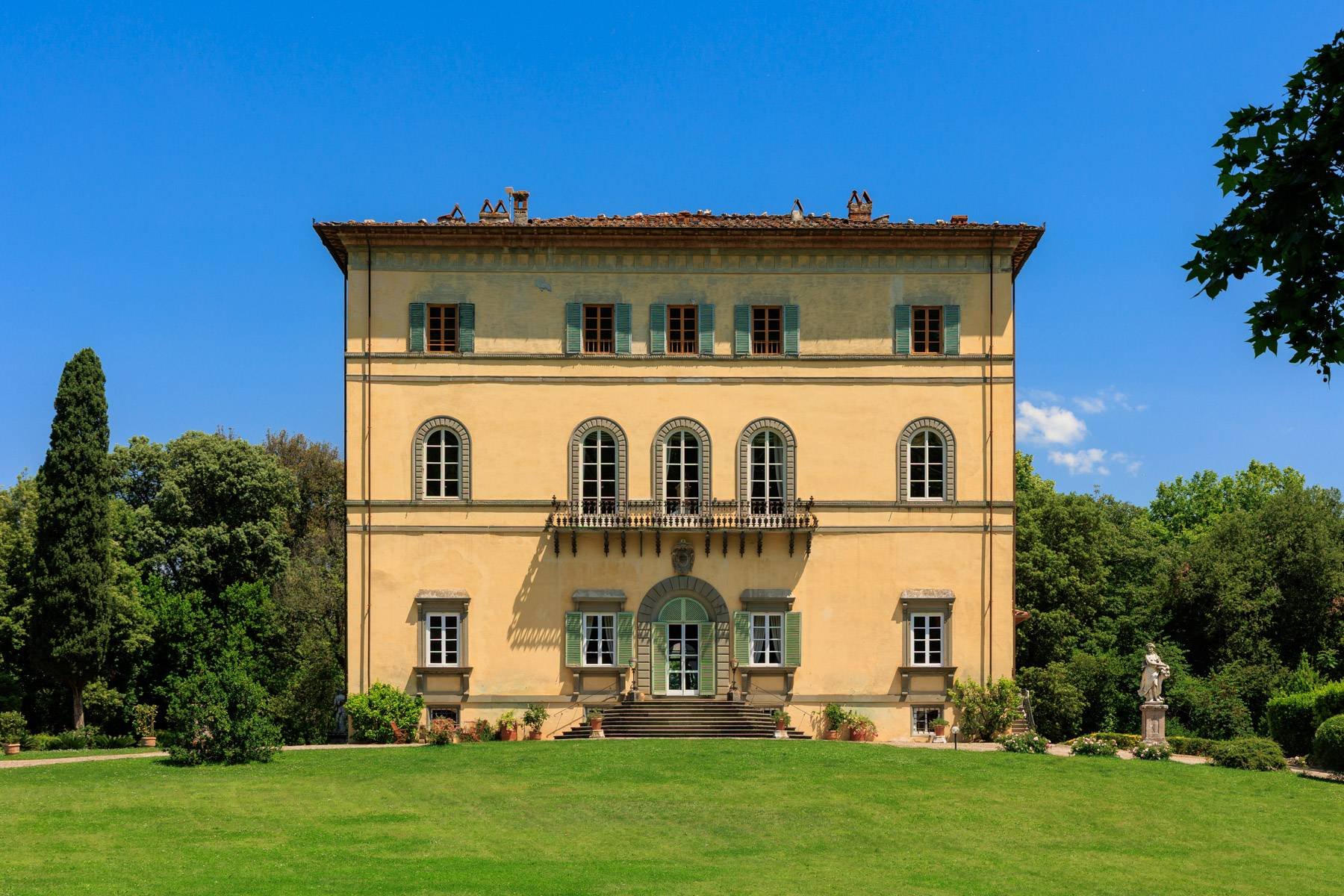
For a buyer looking for a historic Tuscan estate, the property already has an established events business and could also be developed further as a hospitality destination or private residence. Italy Sotheby’s International Realty
The main villa was built during the first half of the 16th century and is traditionally attributed to Nicolao Civitali, a Renaissance sculptor and architect whose work helped introduce Florentine architectural ideas to Lucca.
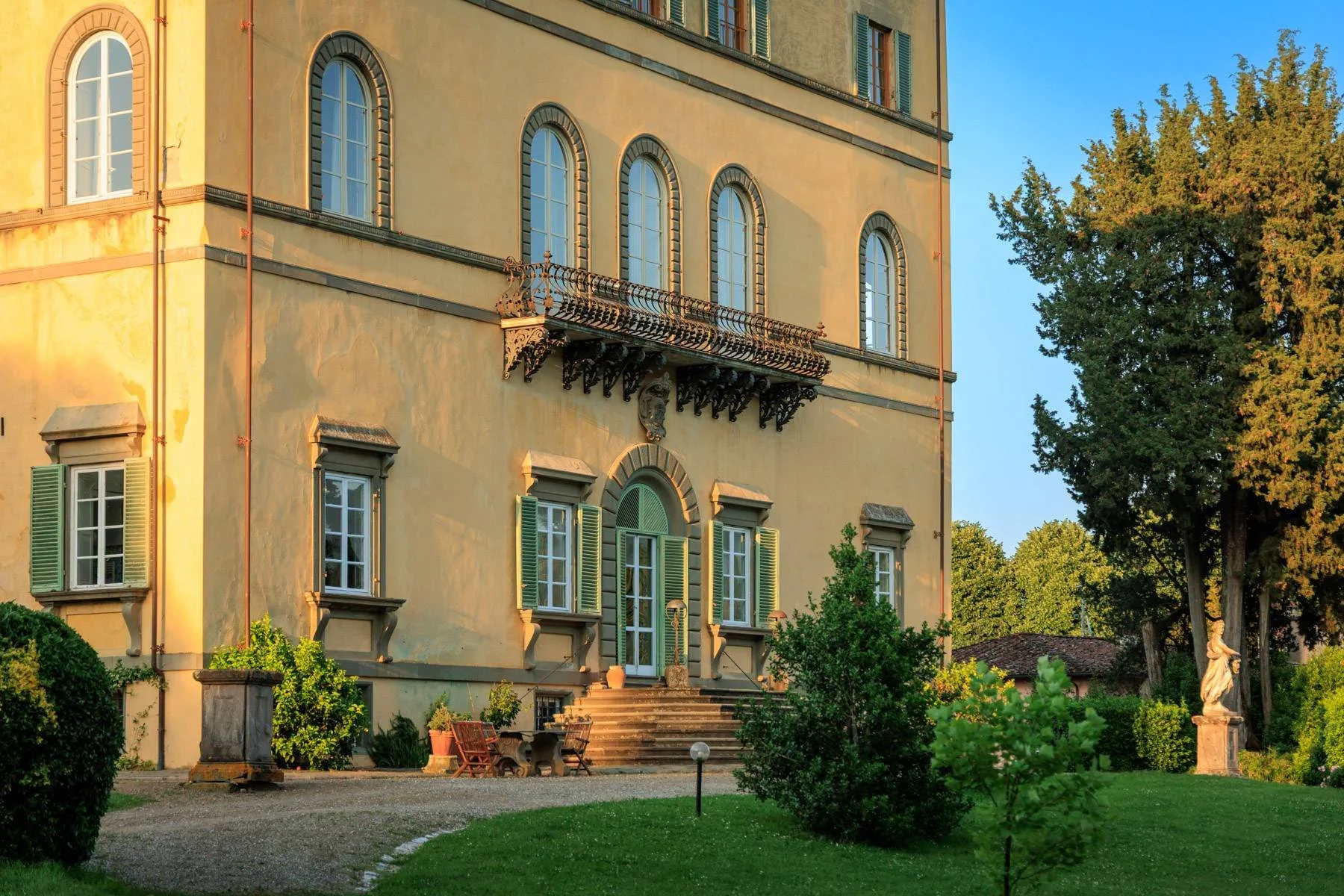
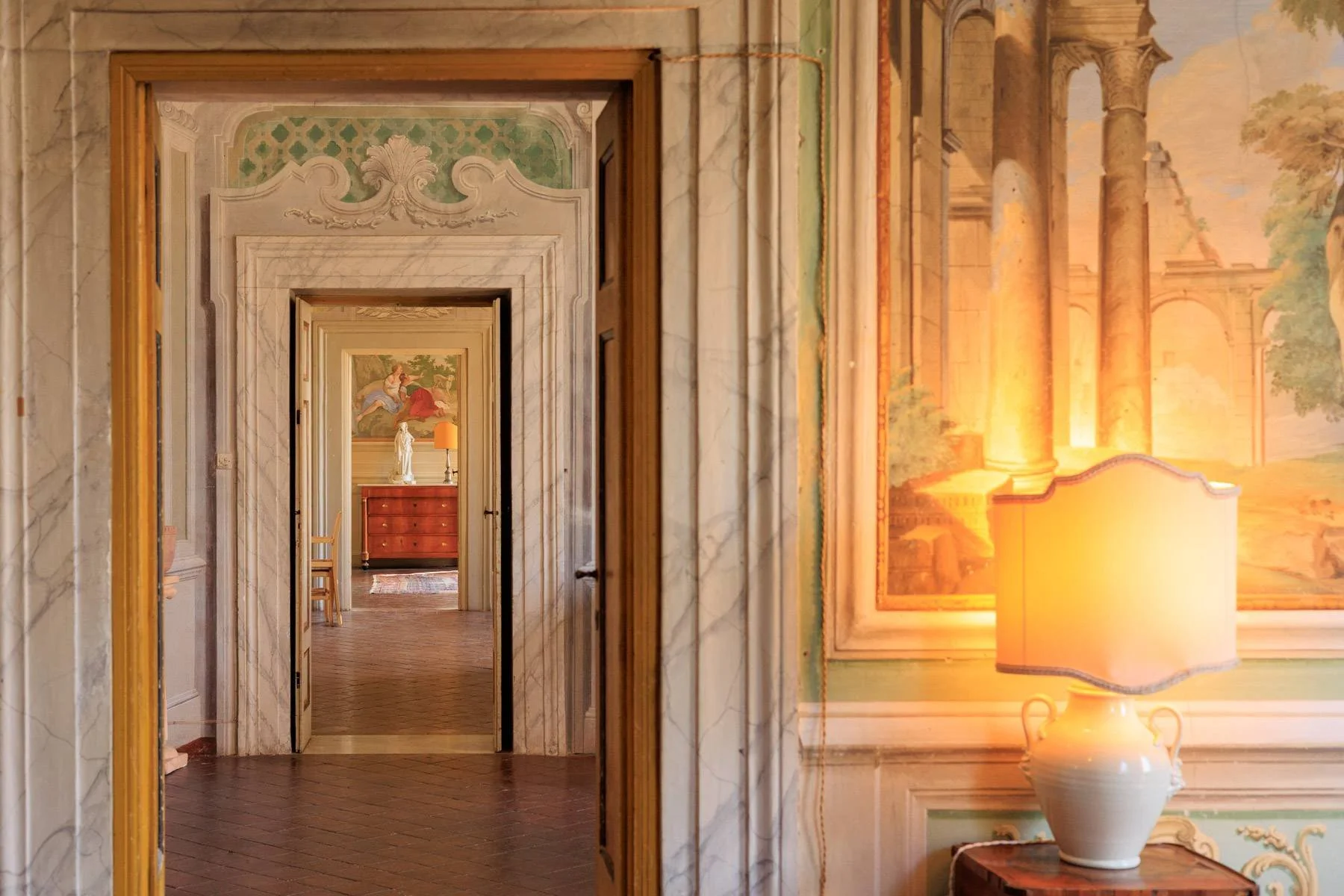
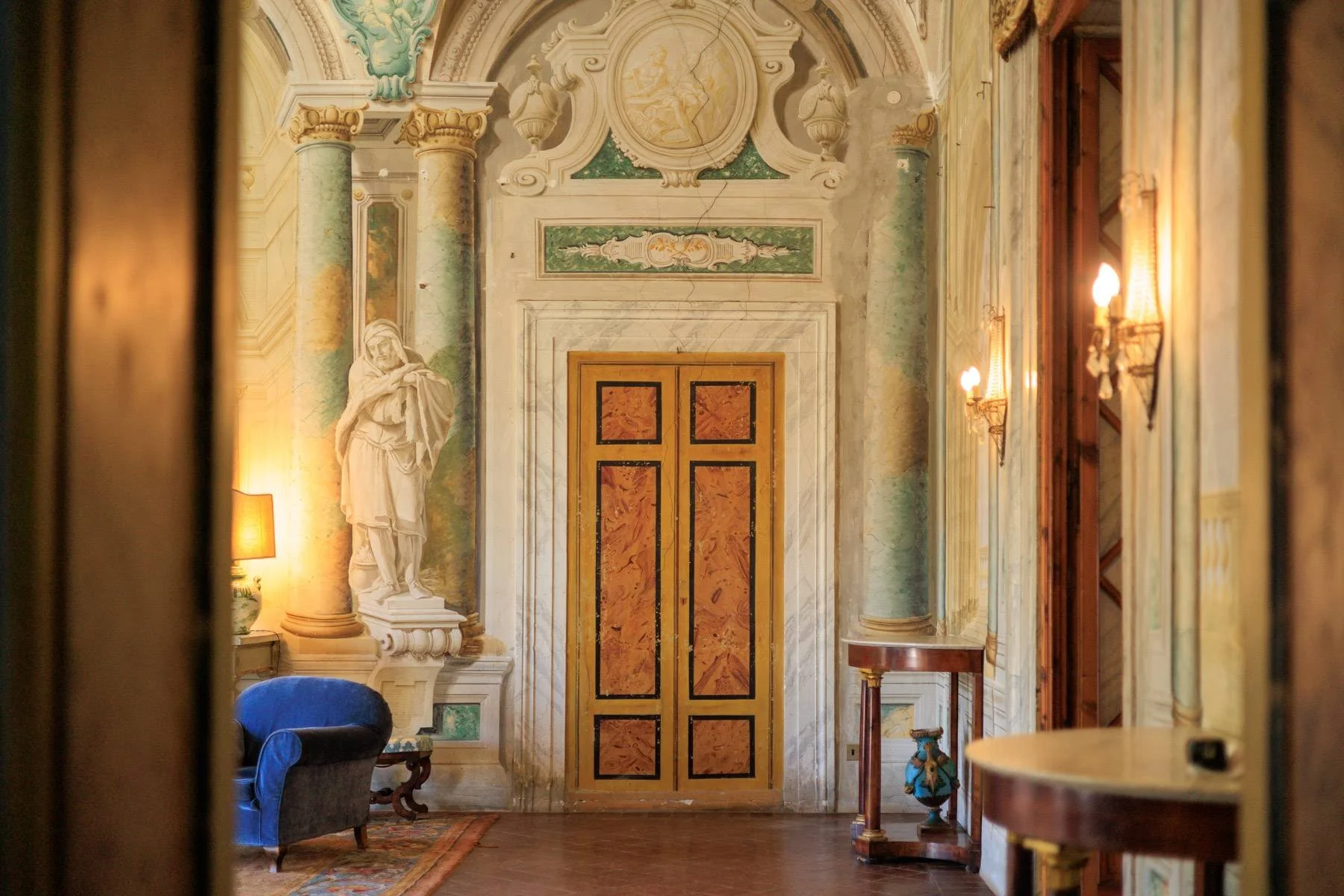
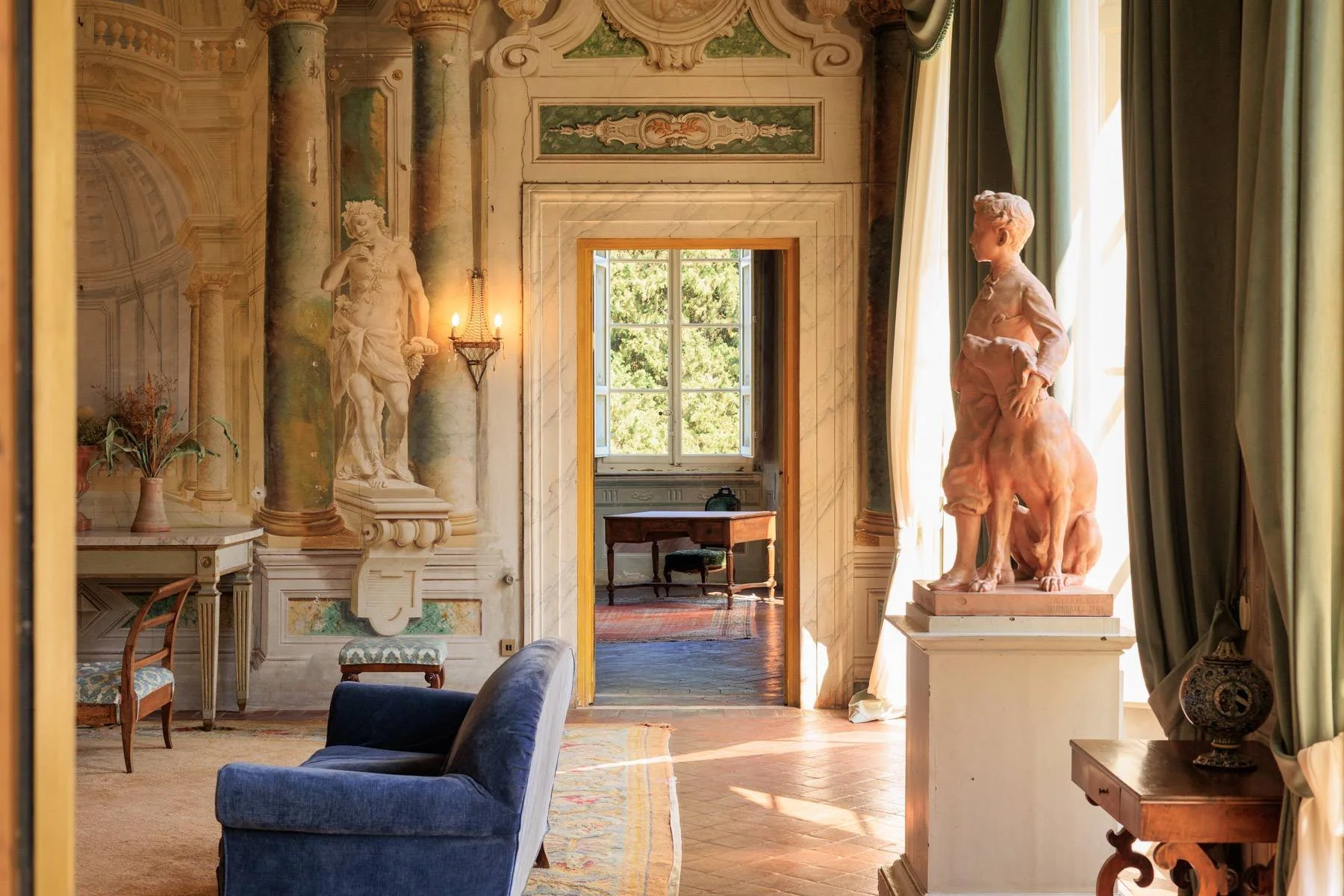
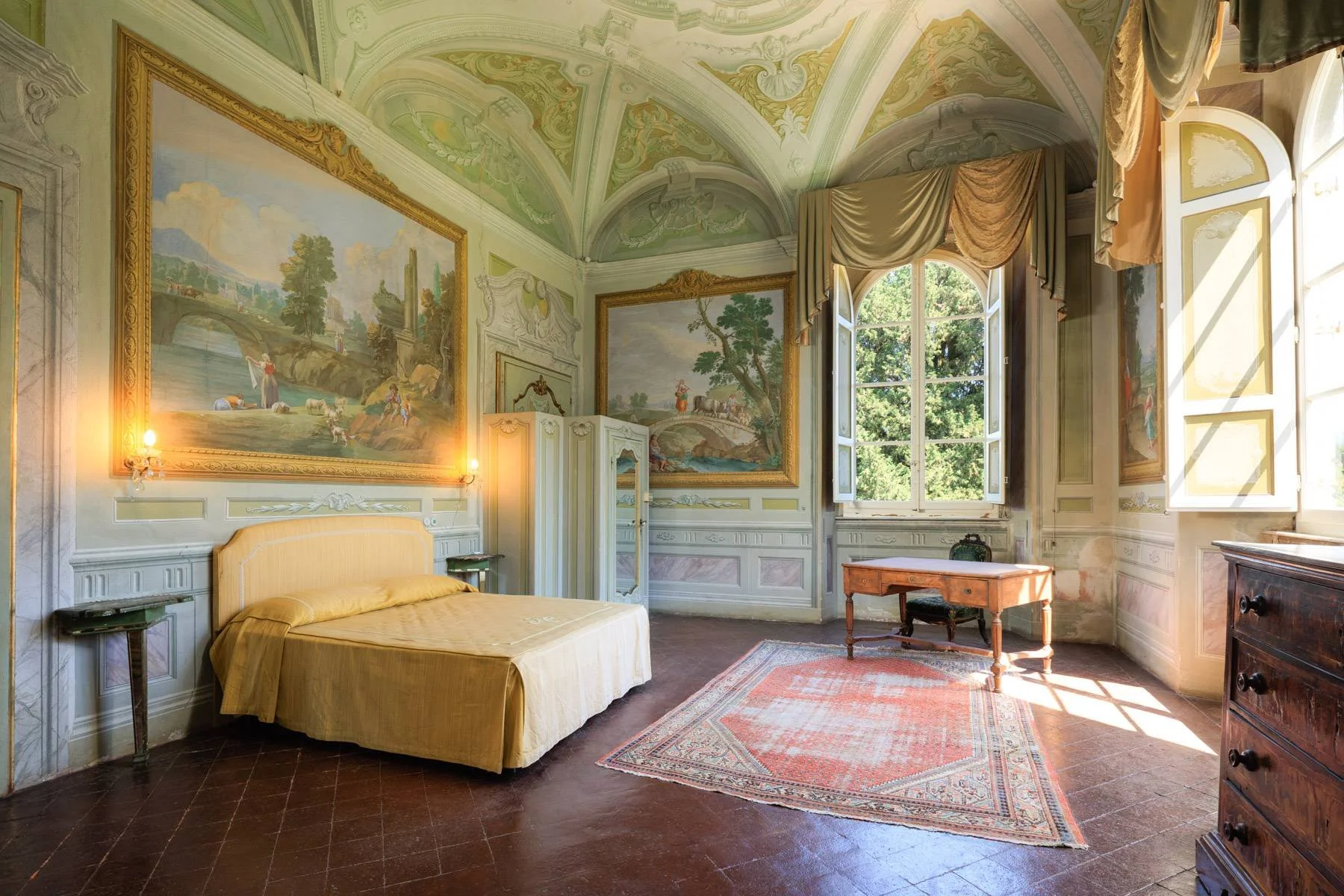
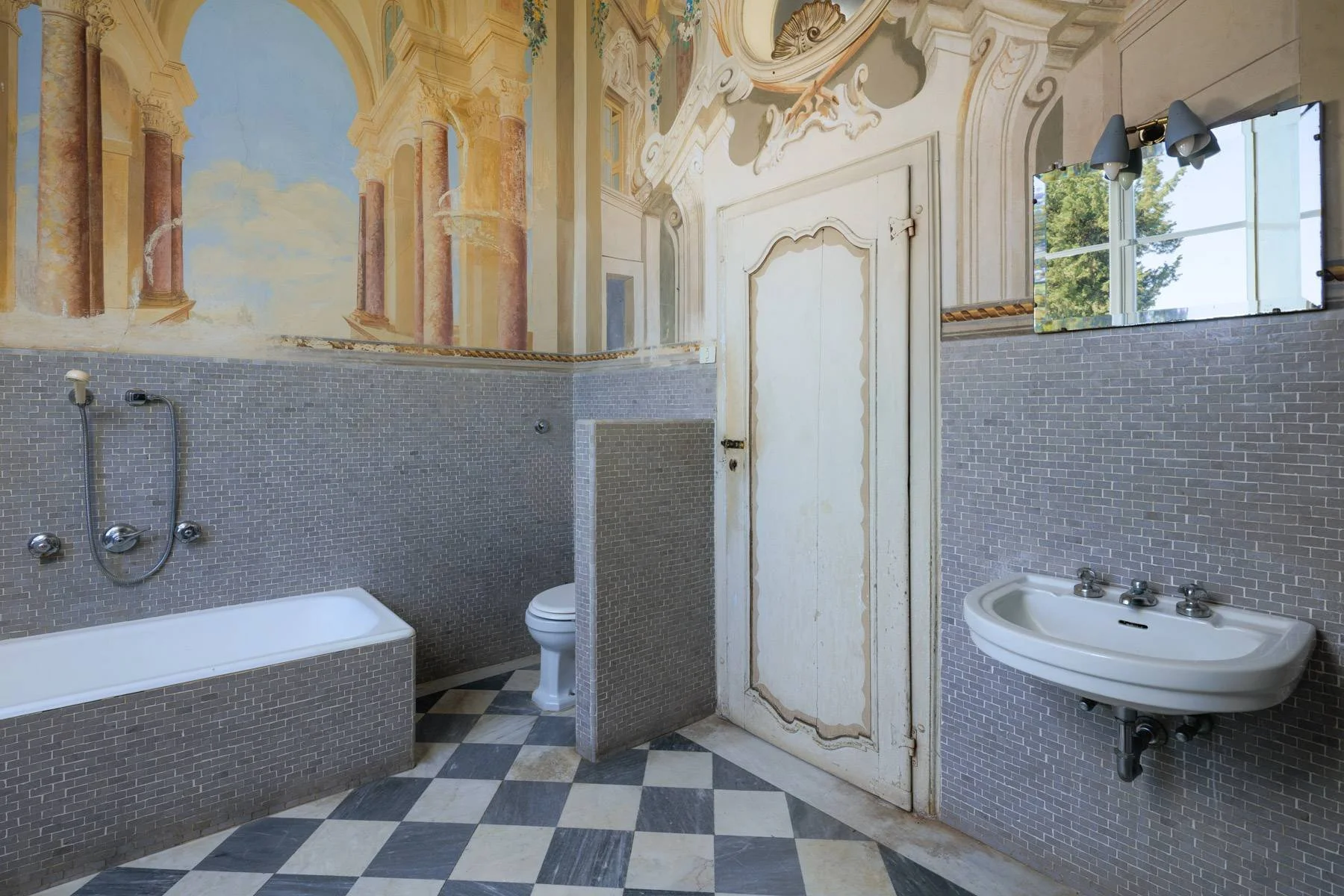
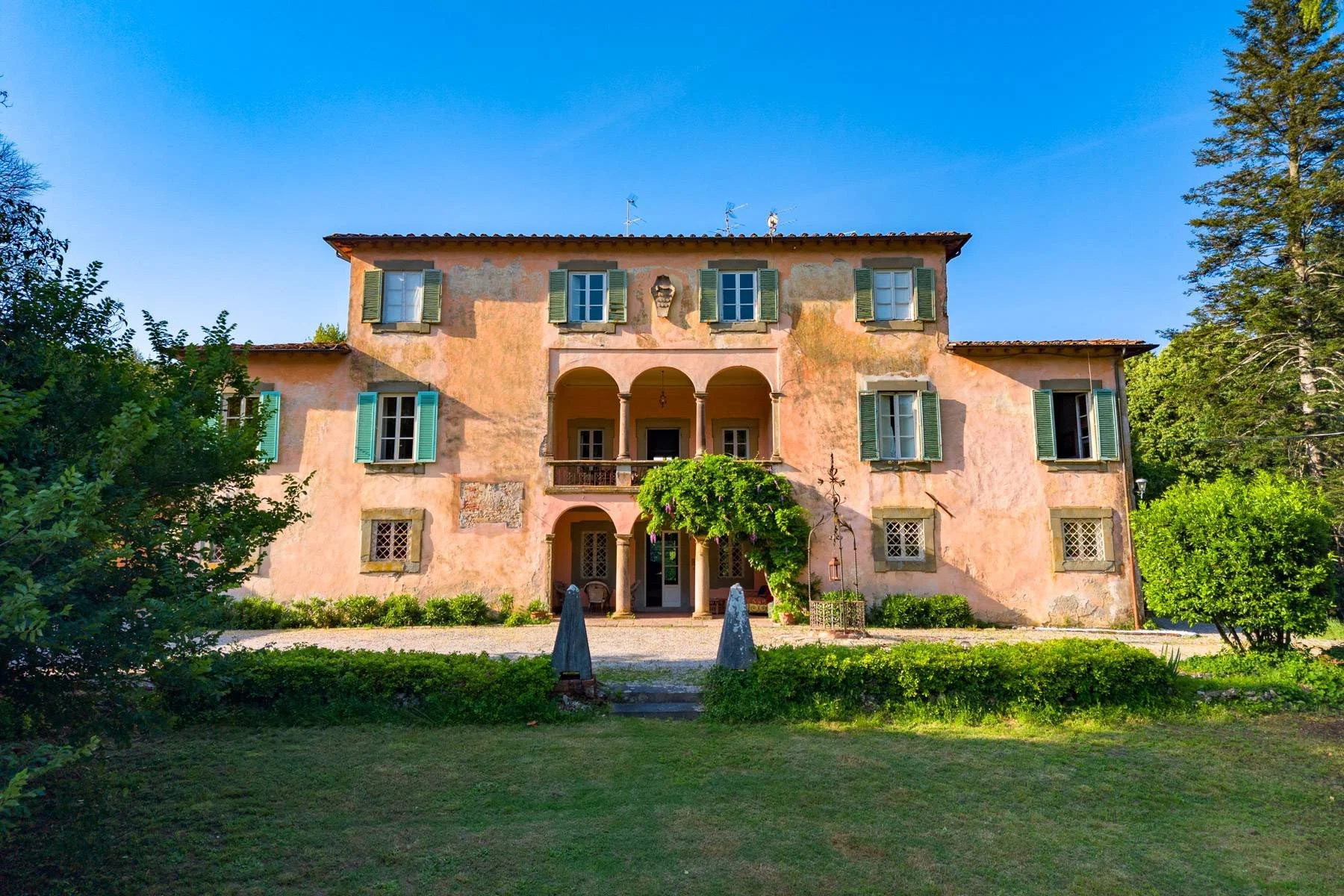
The exterior is formal and restrained, giving little indication of the richly decorated rooms inside. Over several generations, the villa was transformed with frescoed halls, painted loggias and ceremonial salons, much of the surviving decoration dating from the 17th century.
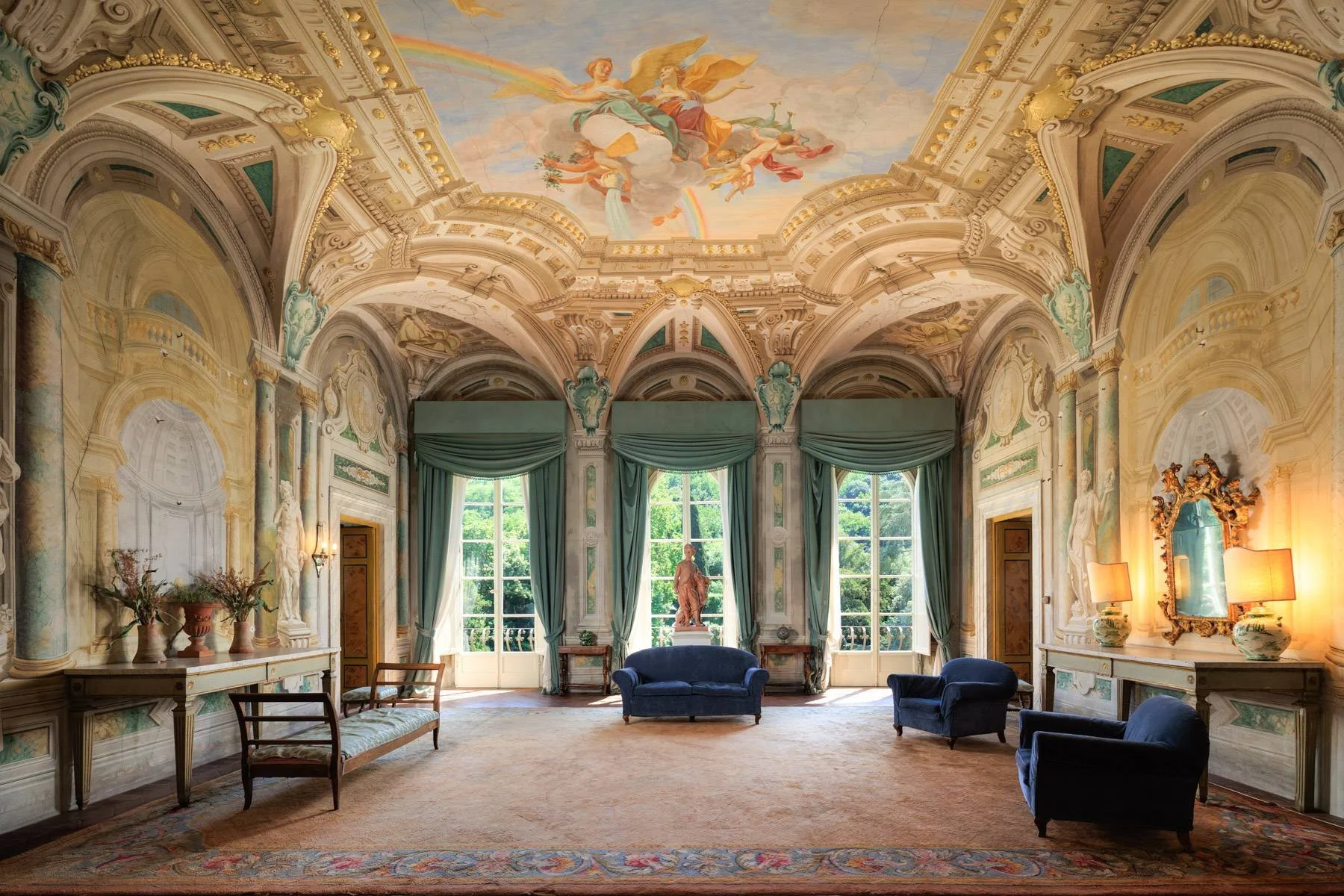
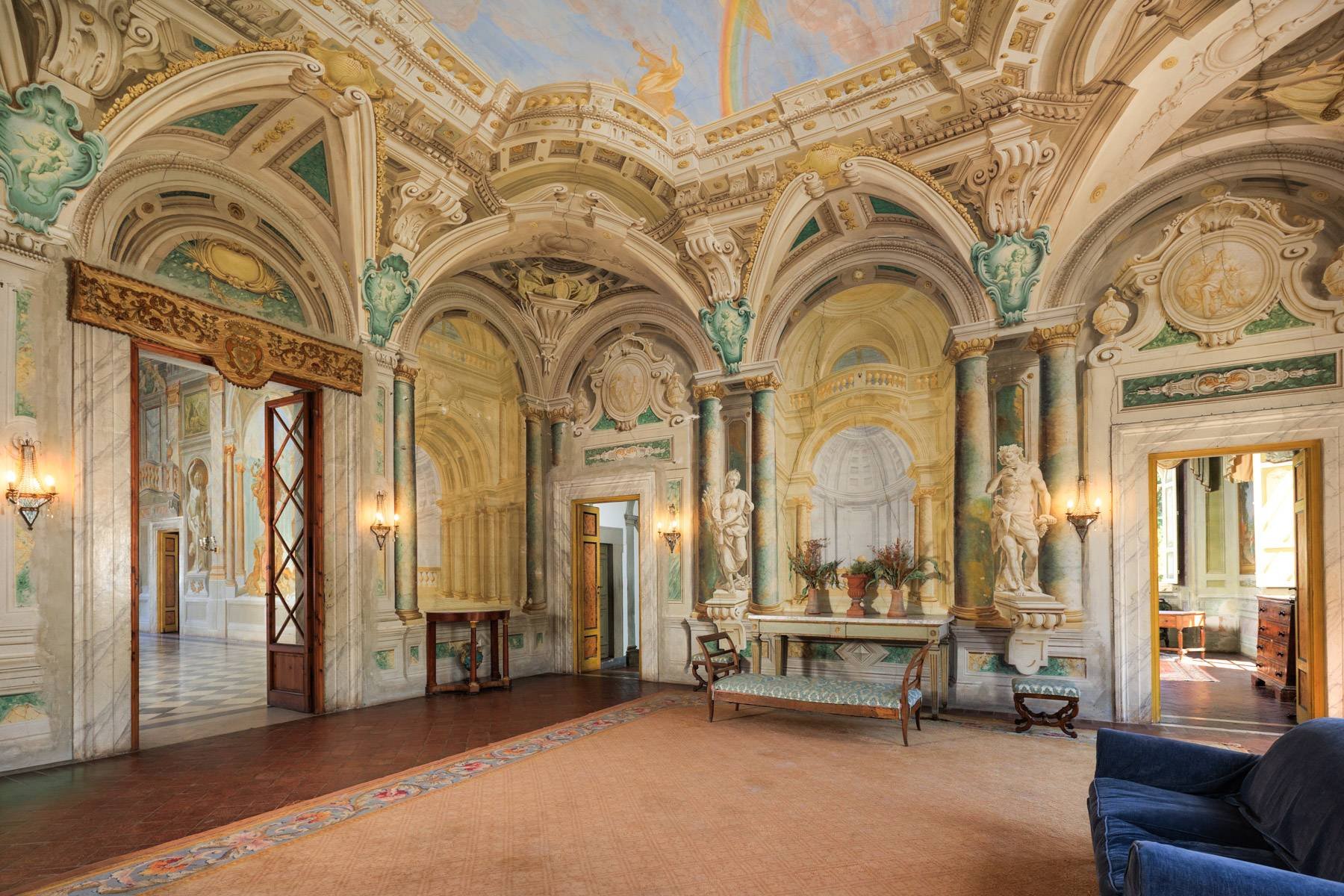
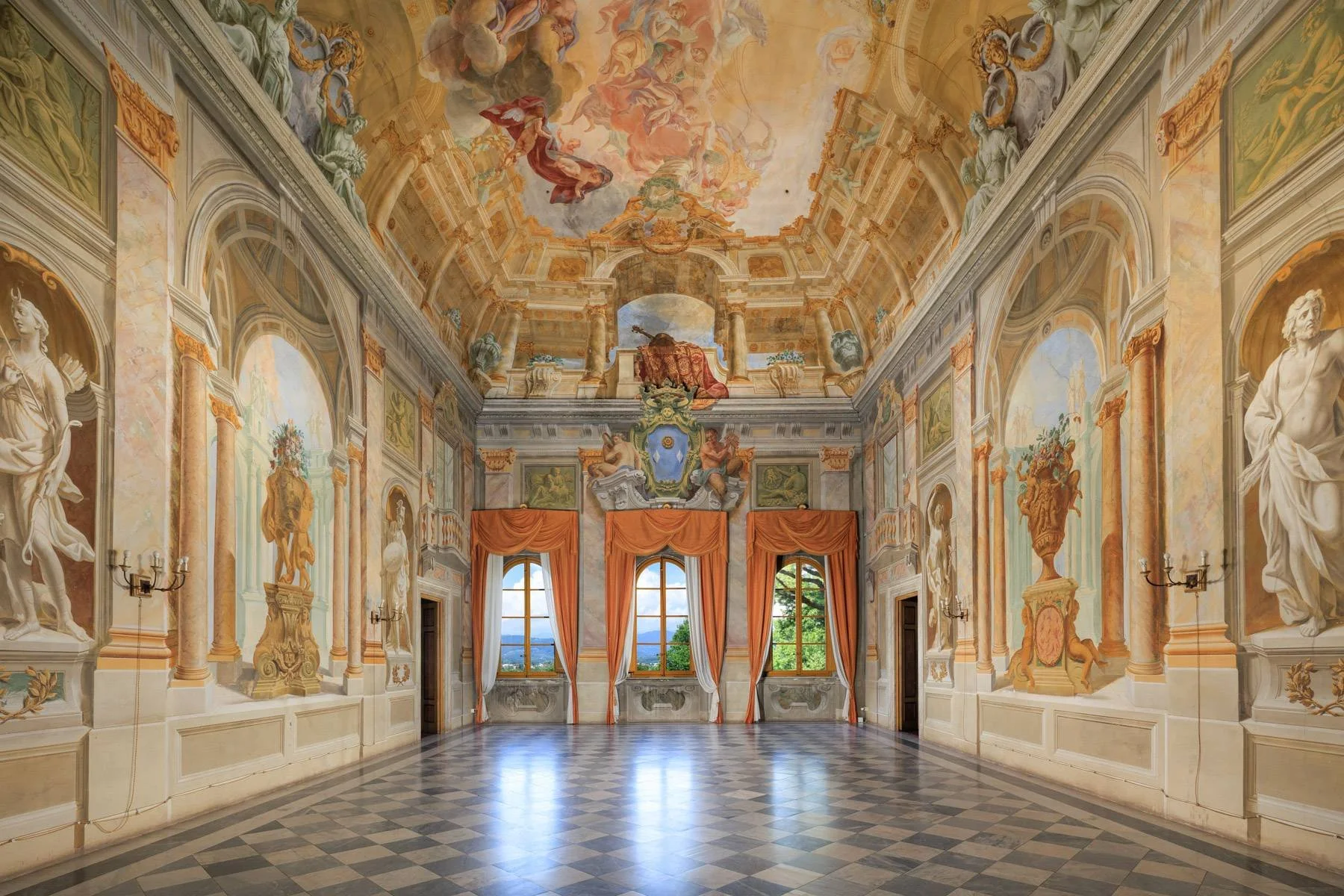
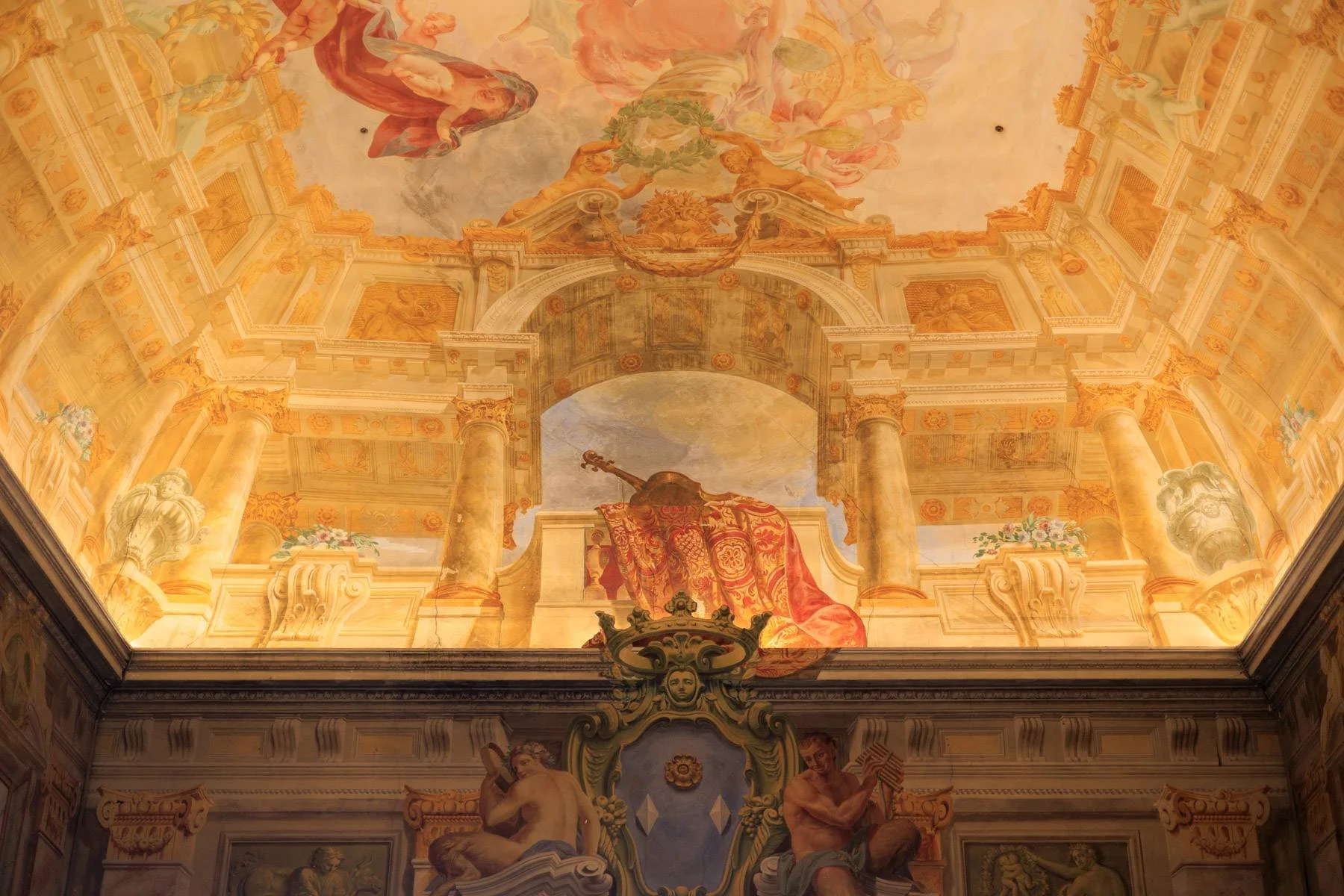
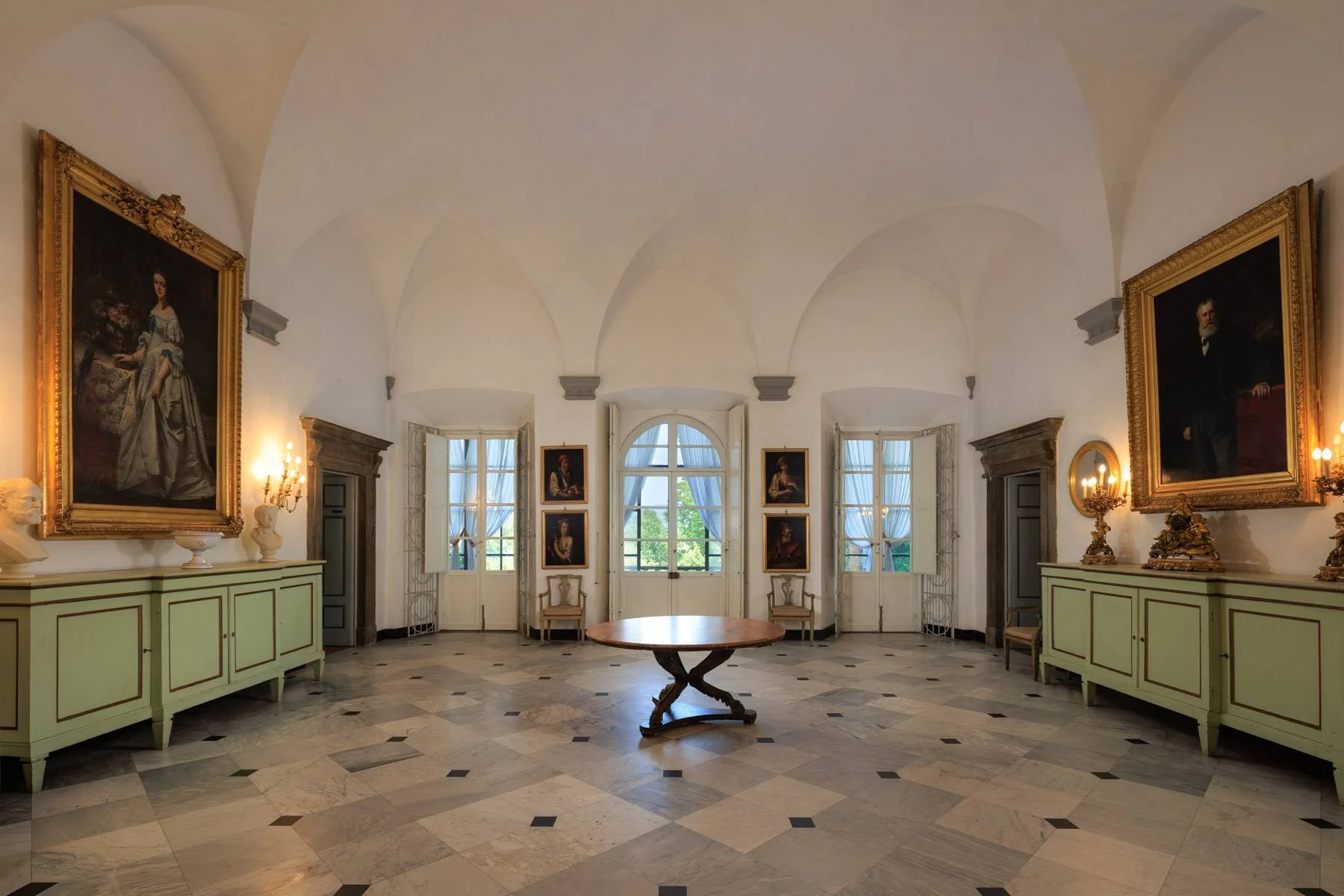
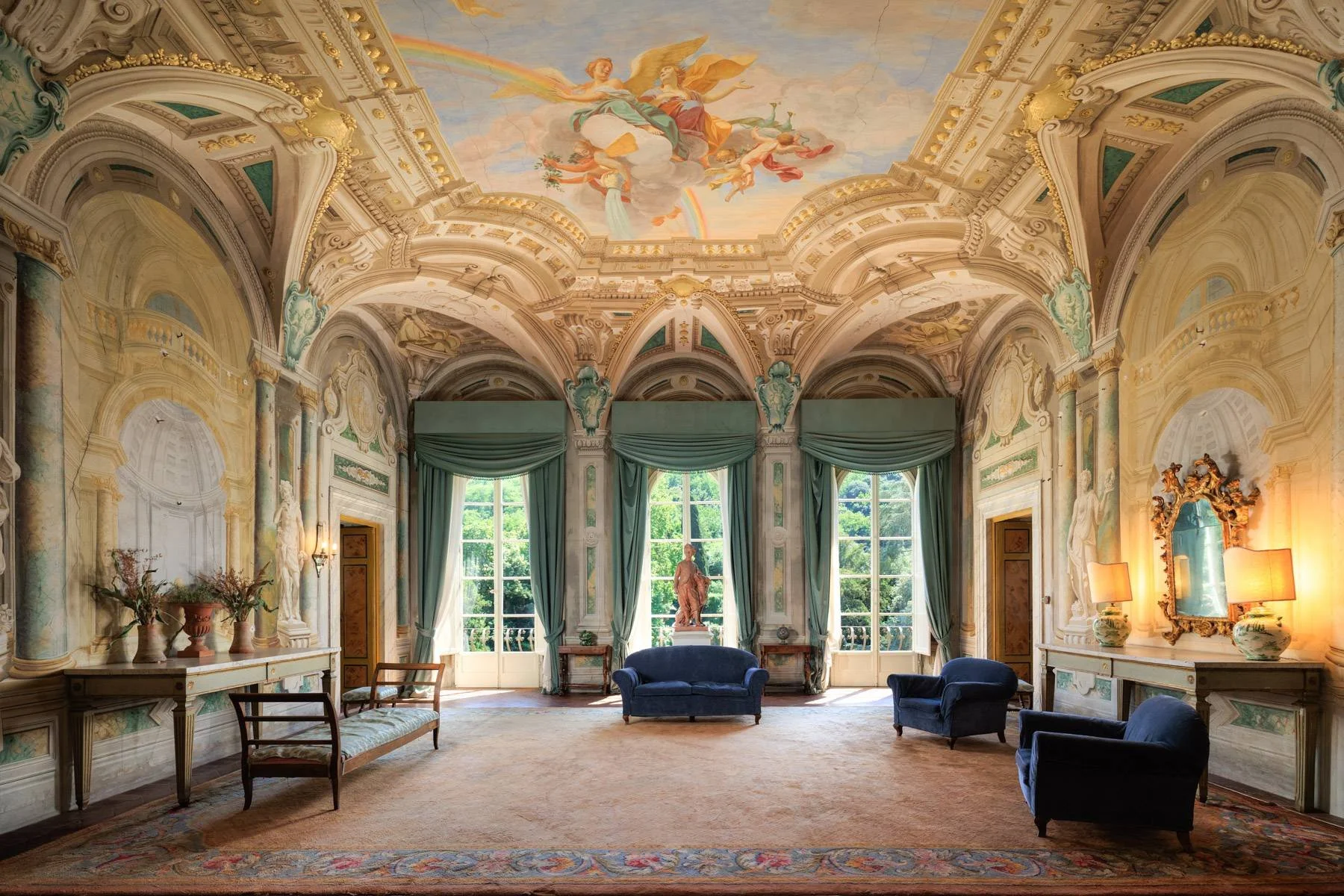
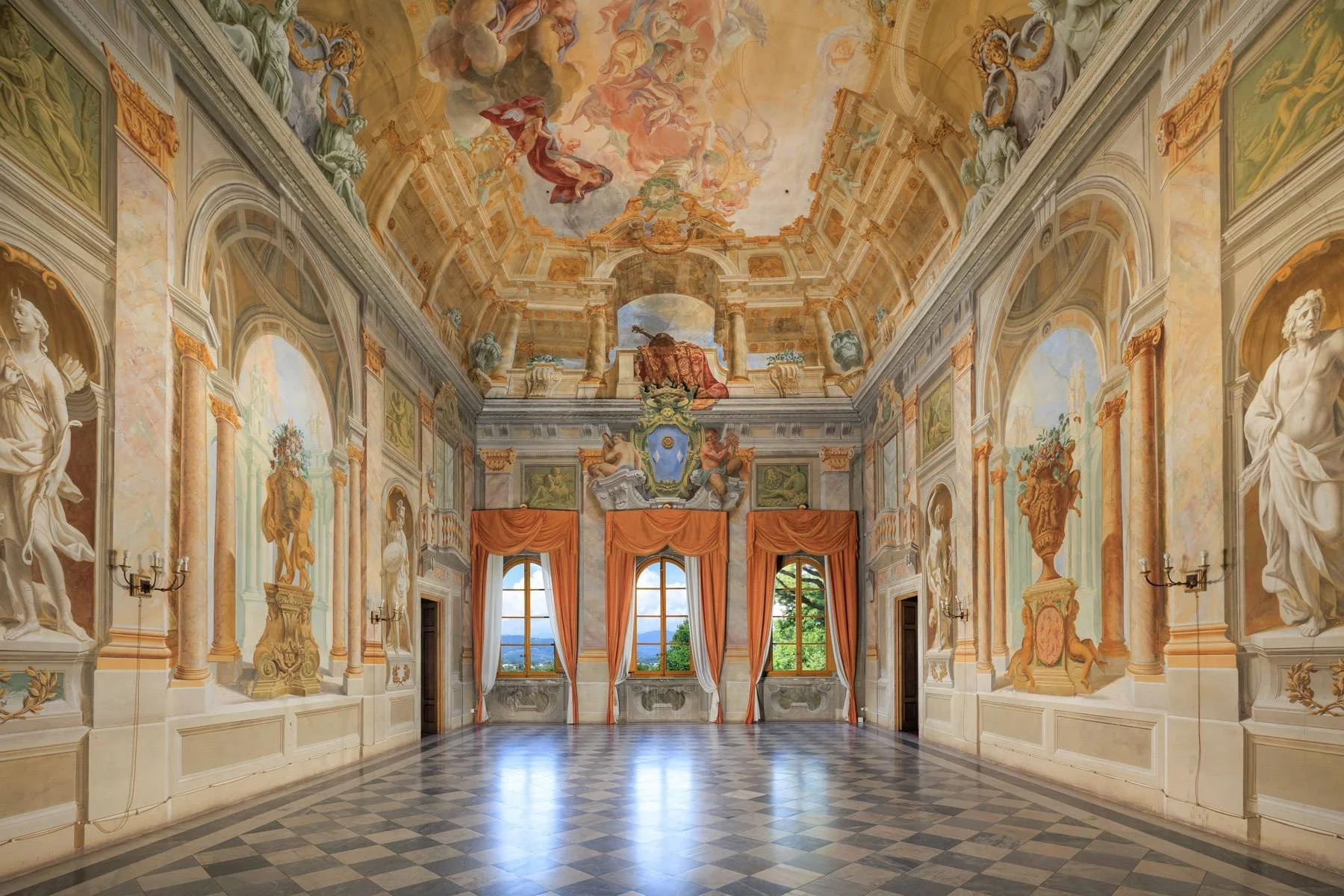
The first floor, or piano nobile, contains the principal reception rooms. At its centre is a grand ballroom beneath a frescoed vaulted ceiling rising approximately 16 metres, or 52 feet. The room can seat around 120 guests, with Greek and Roman deities painted across the walls and ceiling and signs of the zodiac set within green panels.
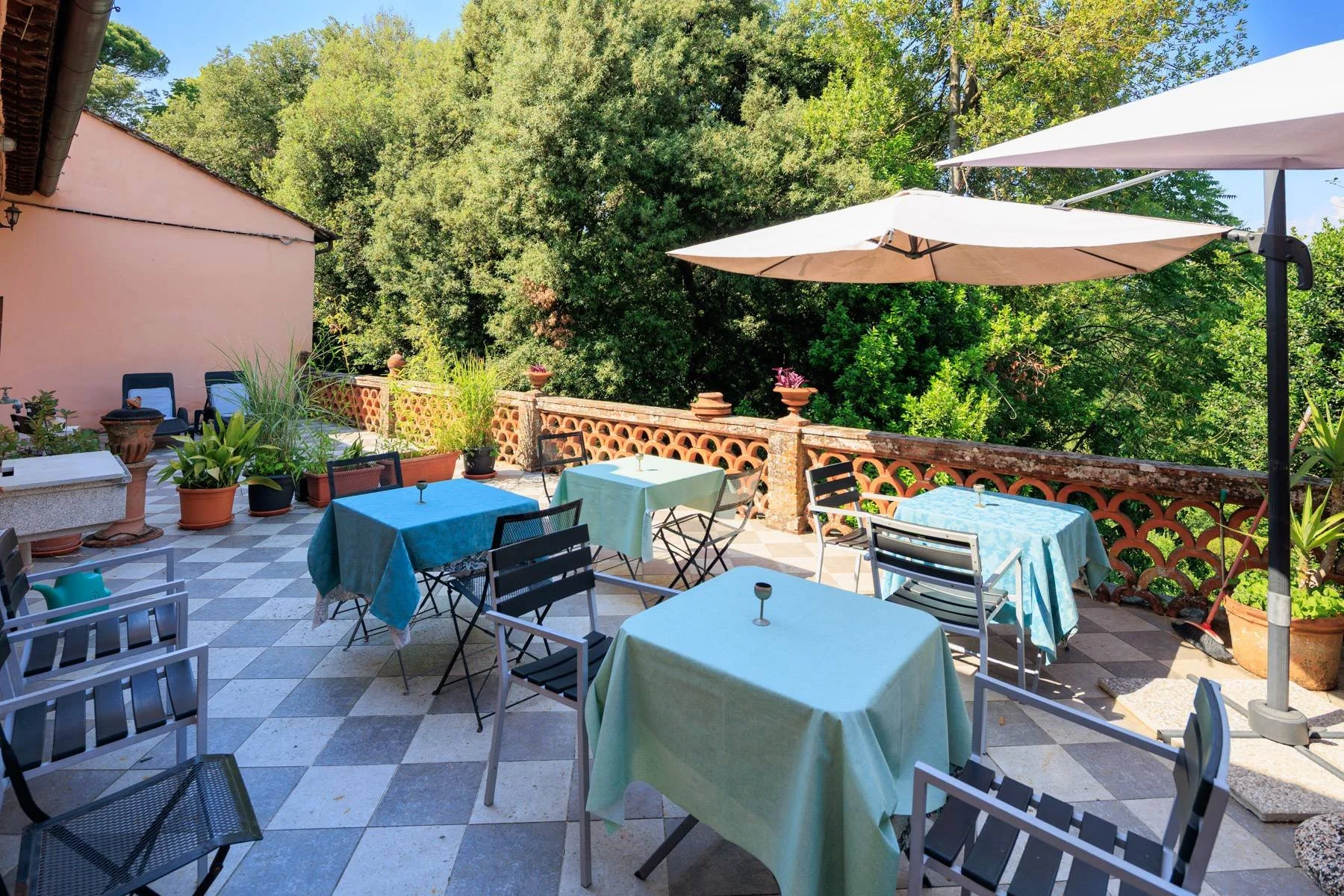
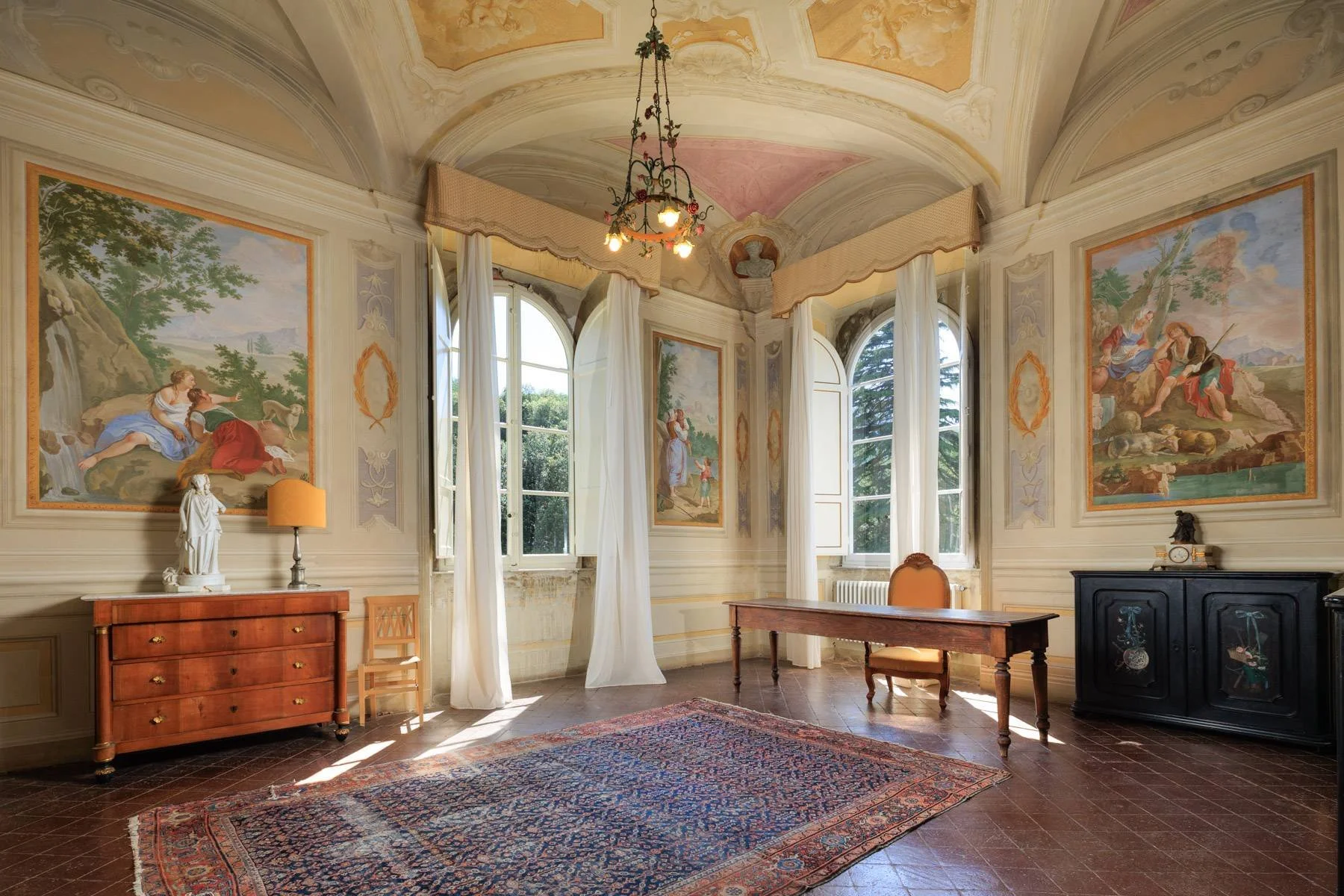
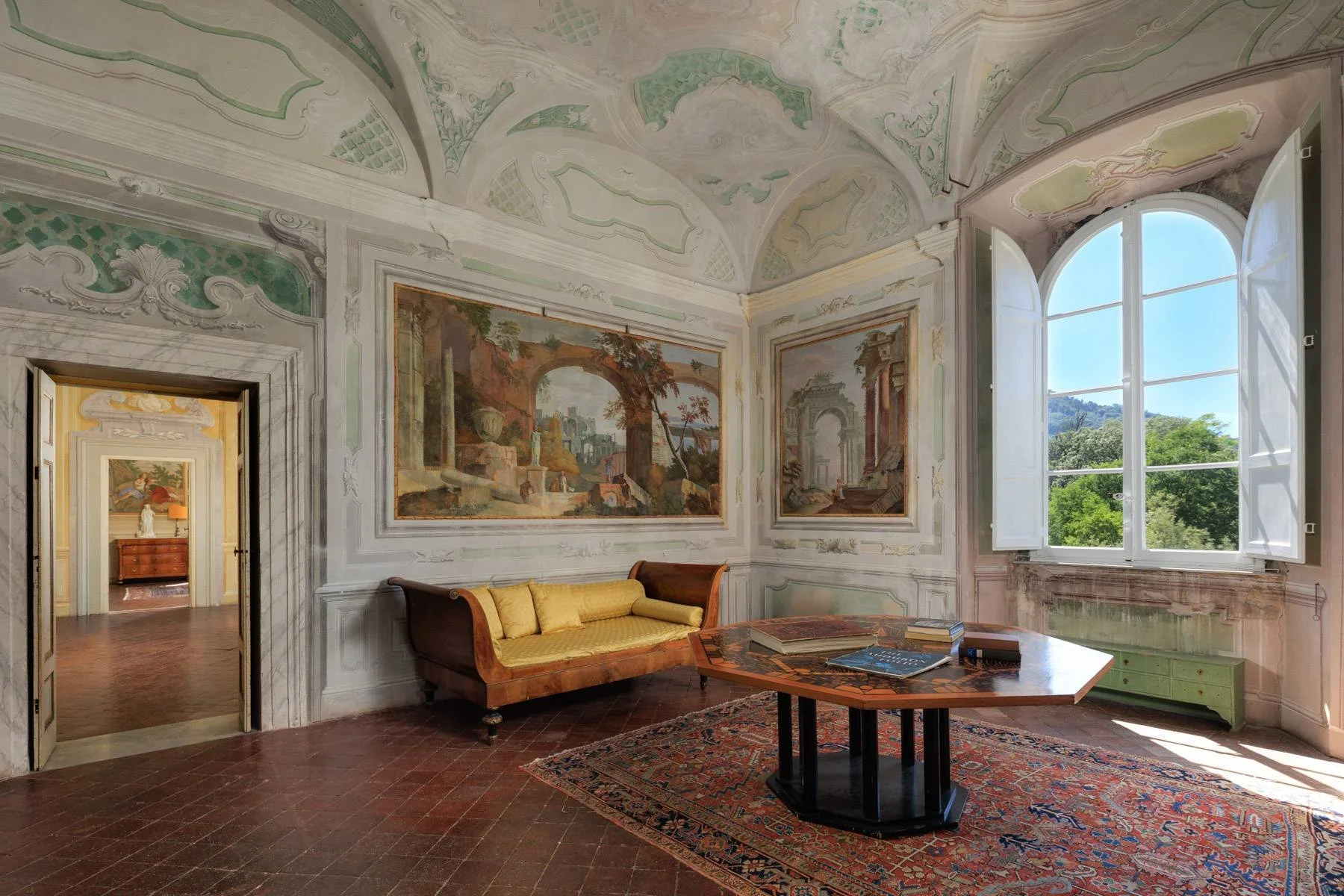
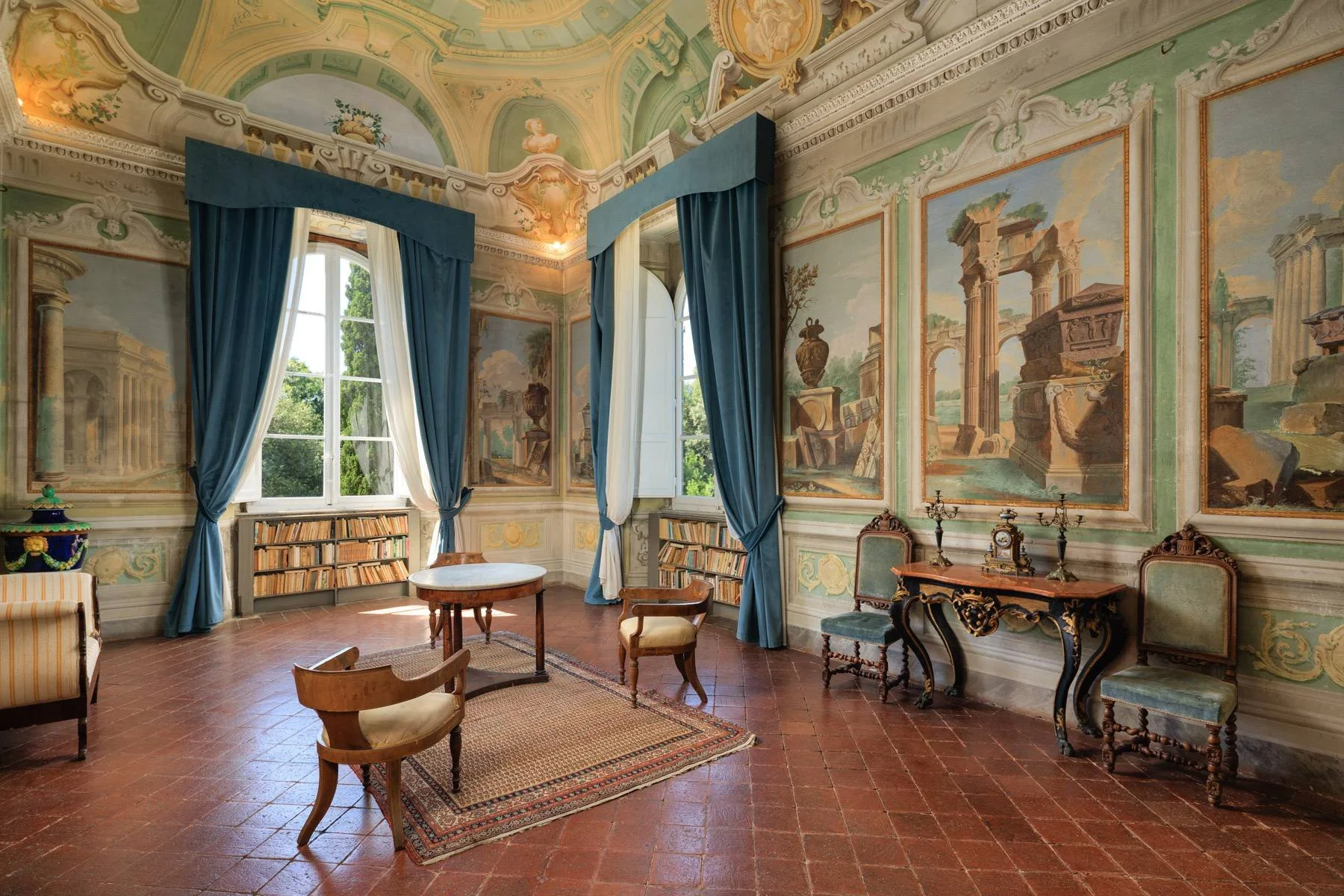
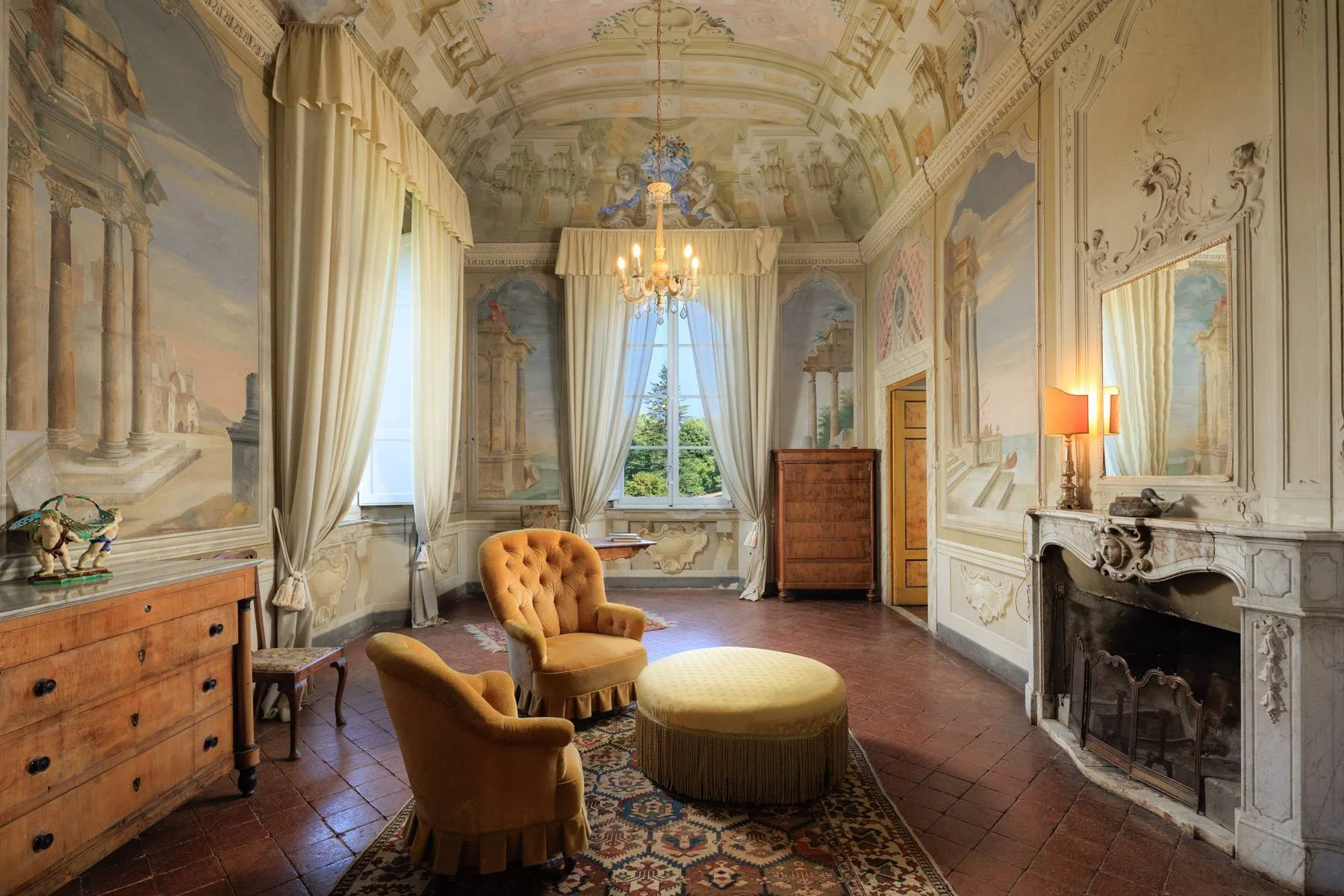
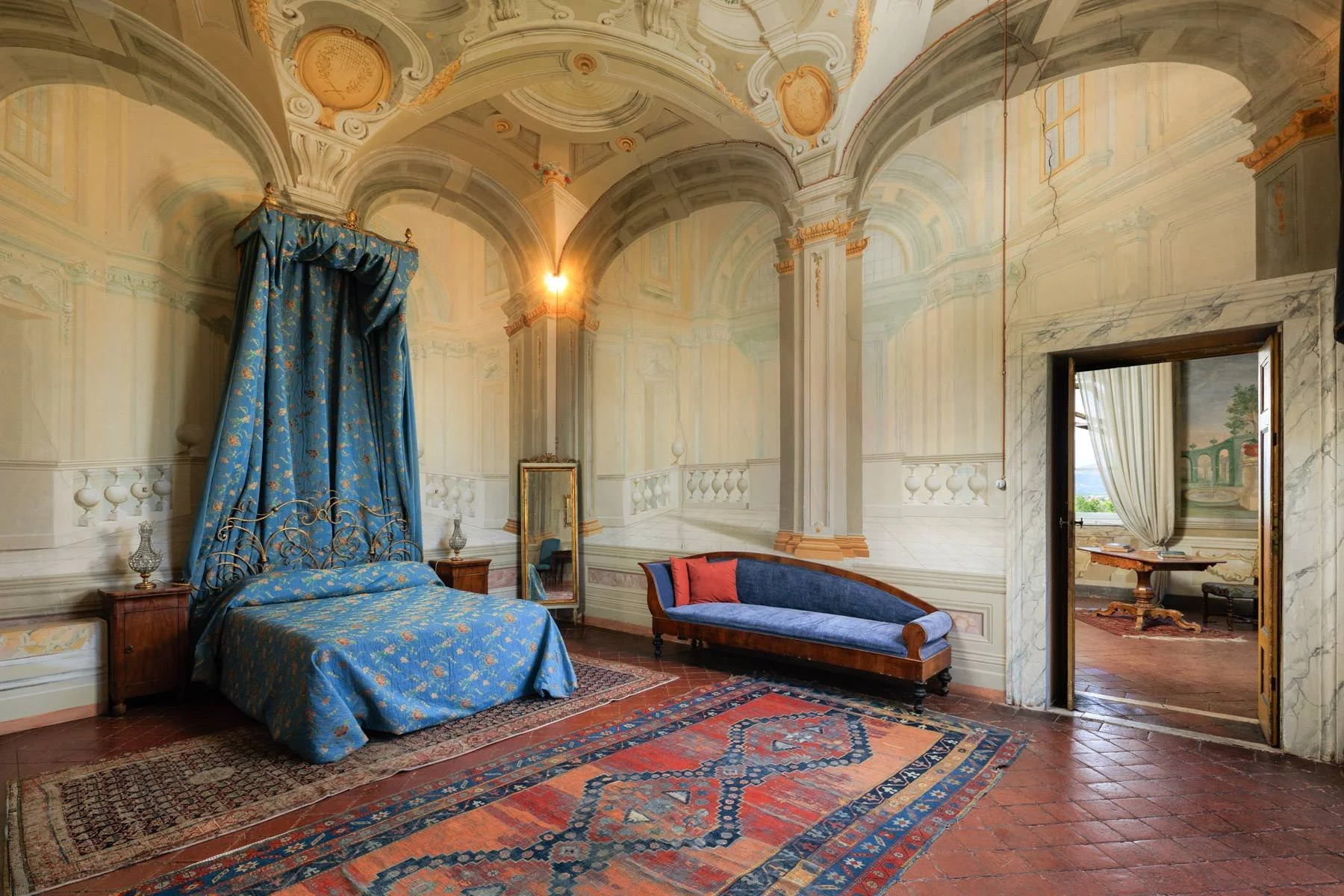
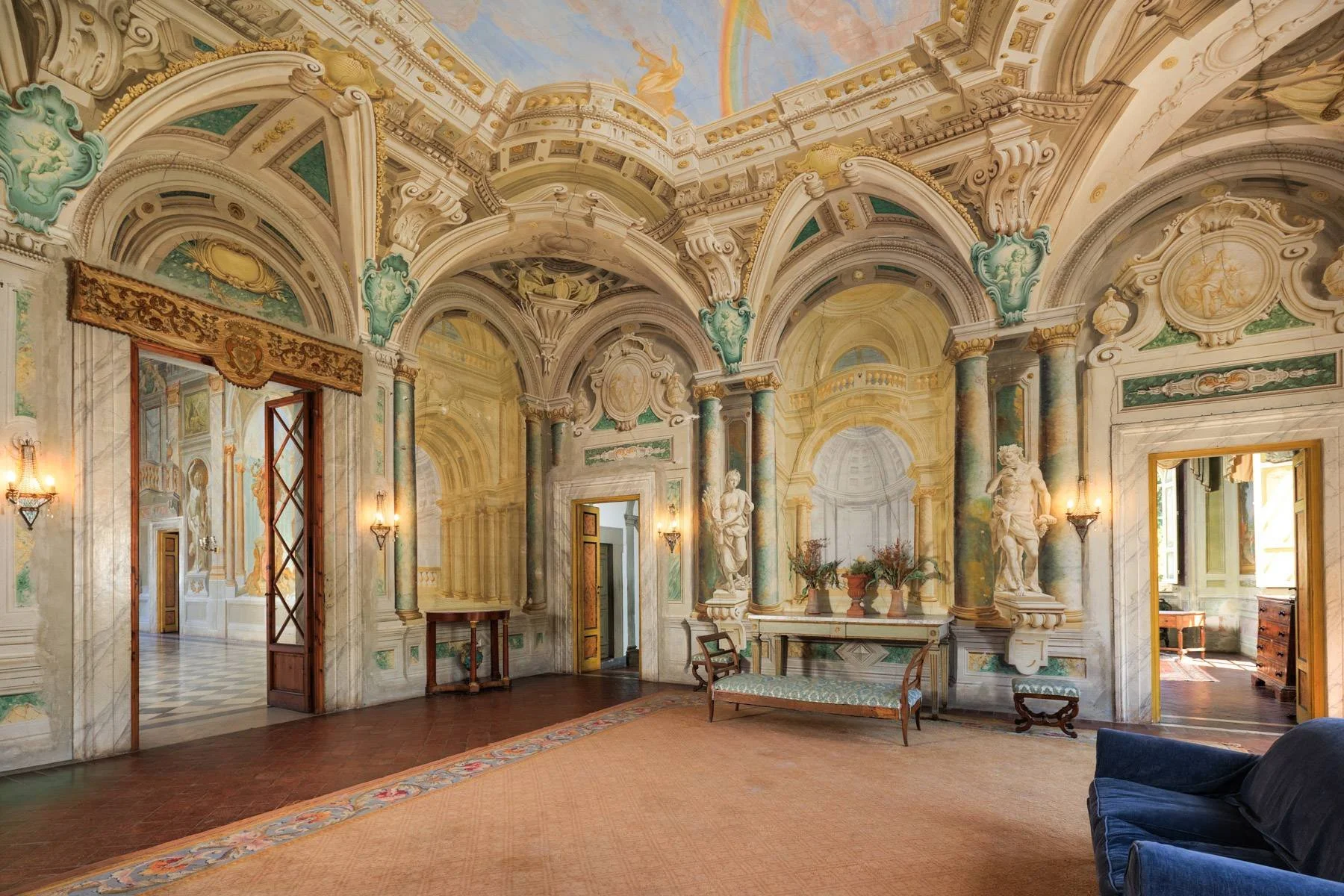
Four adjoining salons continue the decorative scheme with Baroque frescoes featuring landscapes, classical figures and painted architectural details. Another large reception room opens onto a terrace overlooking the gardens. Together, the ballroom and surrounding rooms can accommodate events of up to approximately 350 guests.
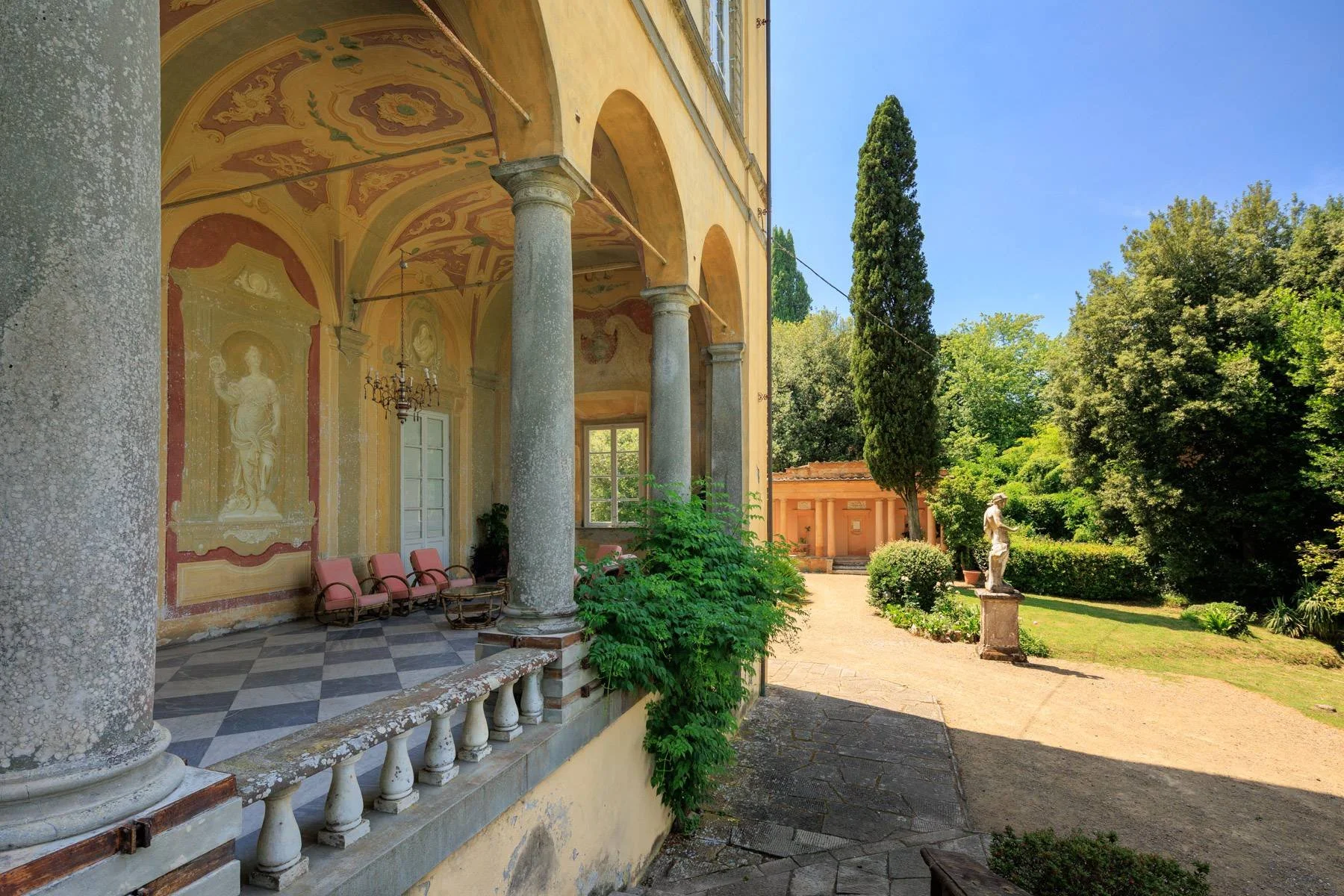
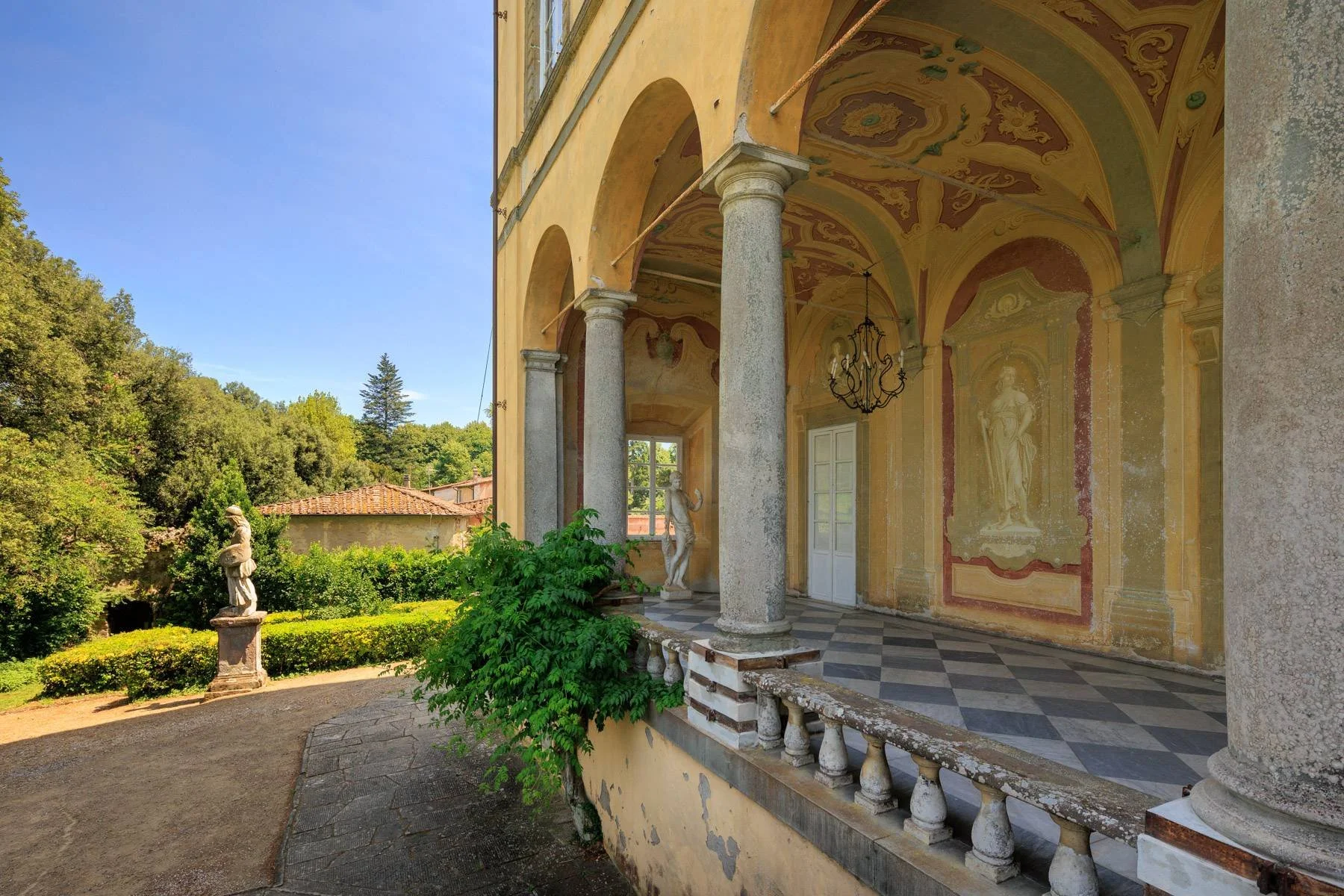
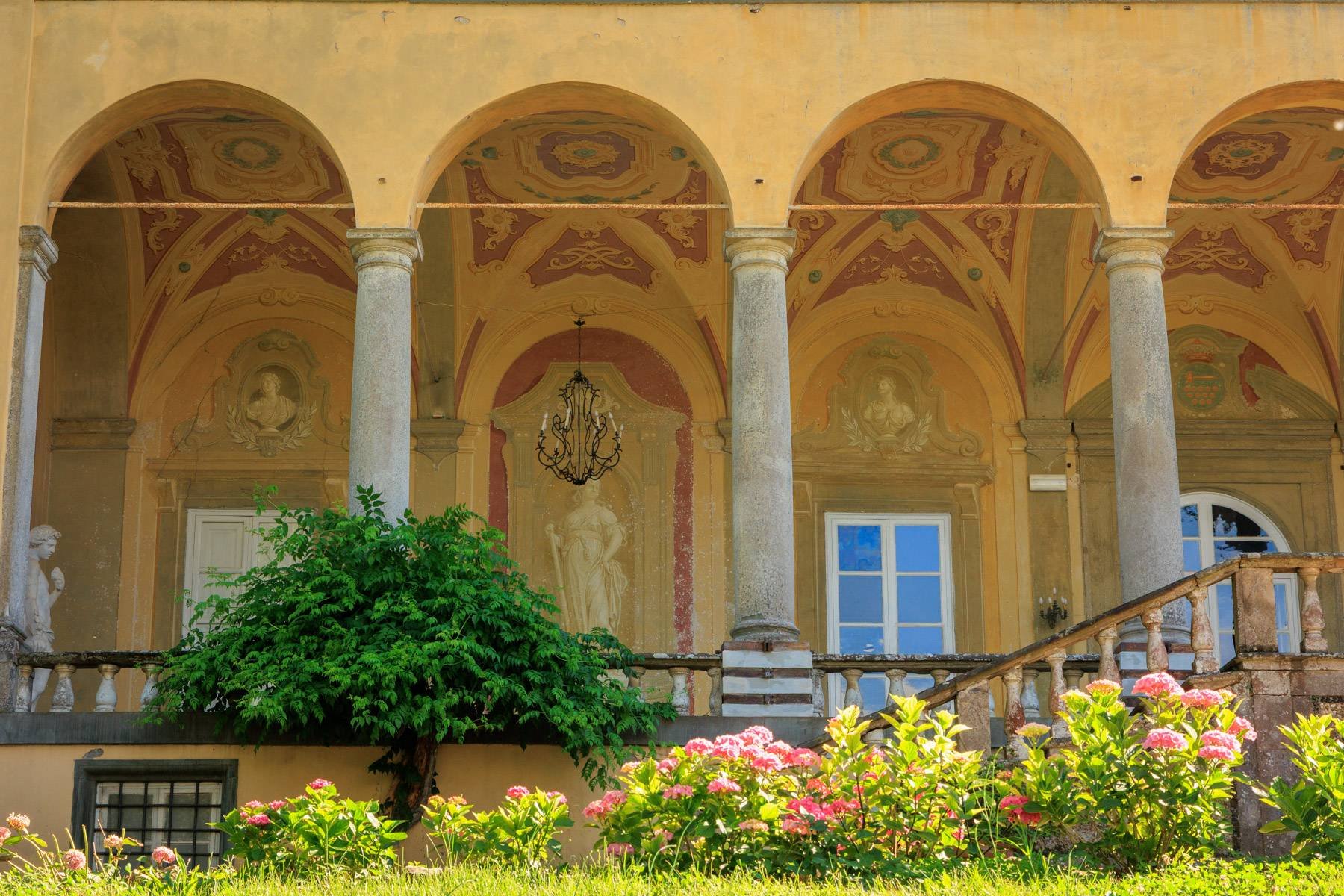
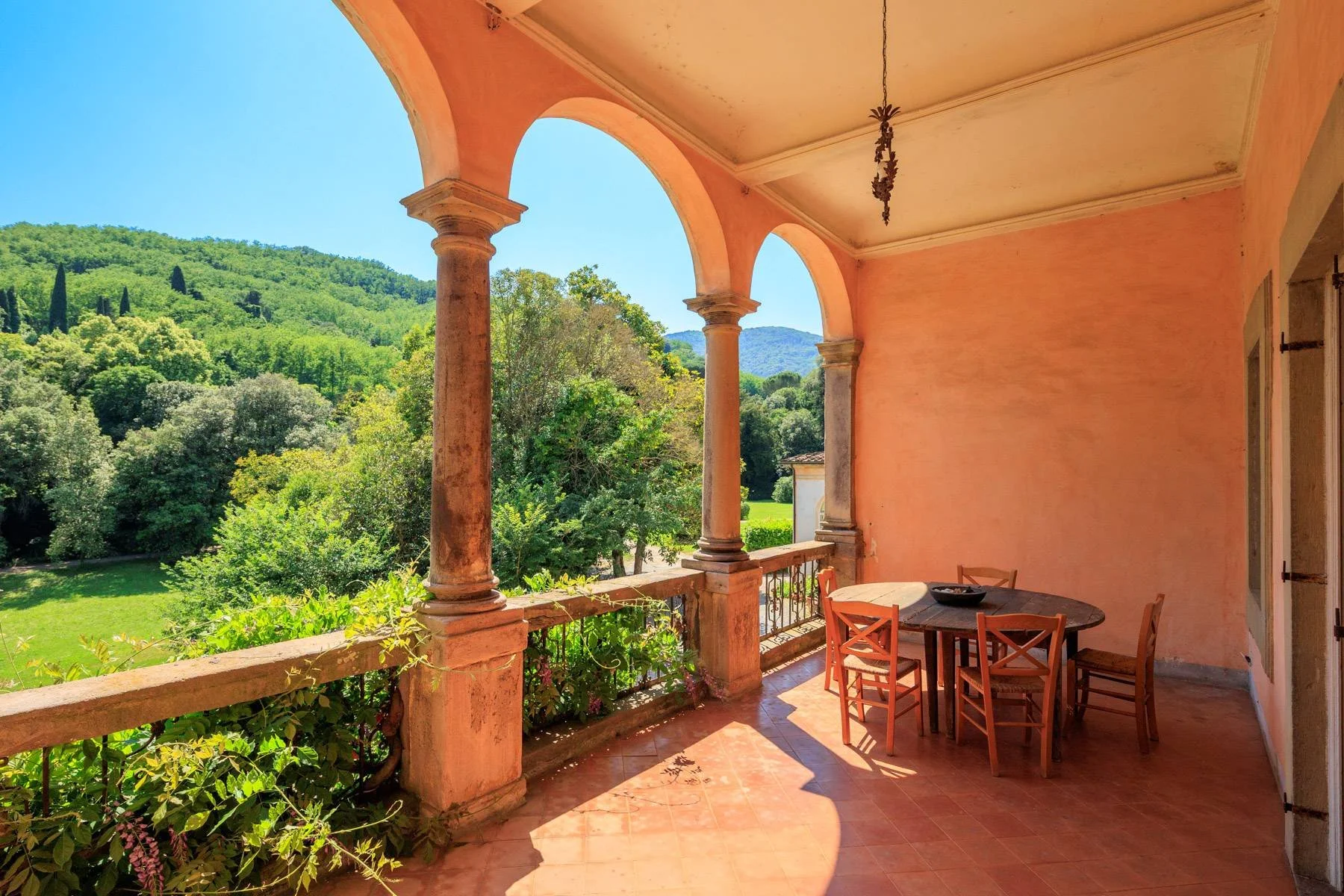
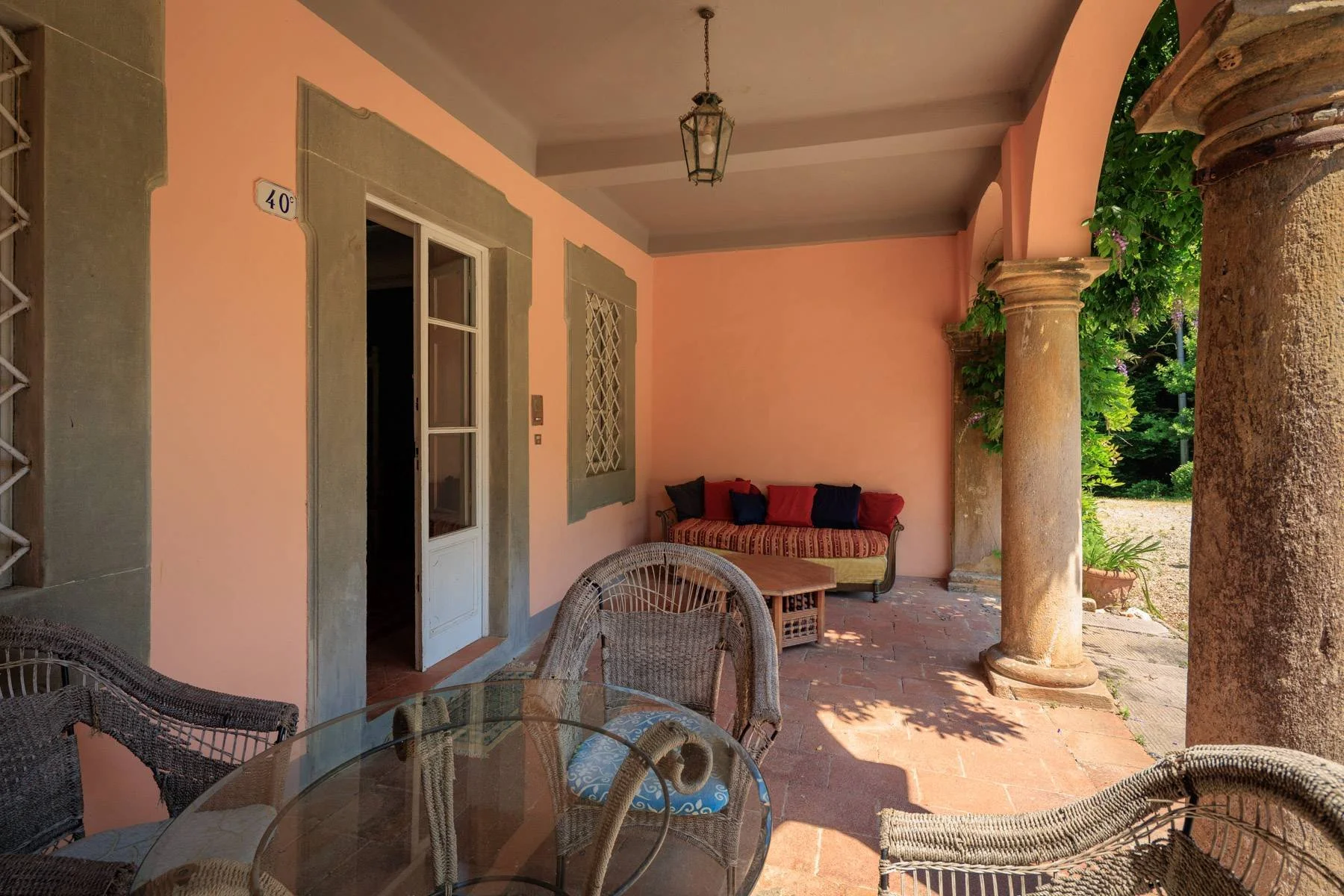
On the ground floor, the Hall of Imperial Portraits opens onto a 25-metre, or 82-foot, covered terrace supported by columns and overlooking the park and lotus lake. Known in Italian architecture as a loggia, it is decorated with delicate Baroque frescoes in shades of pink and gold.
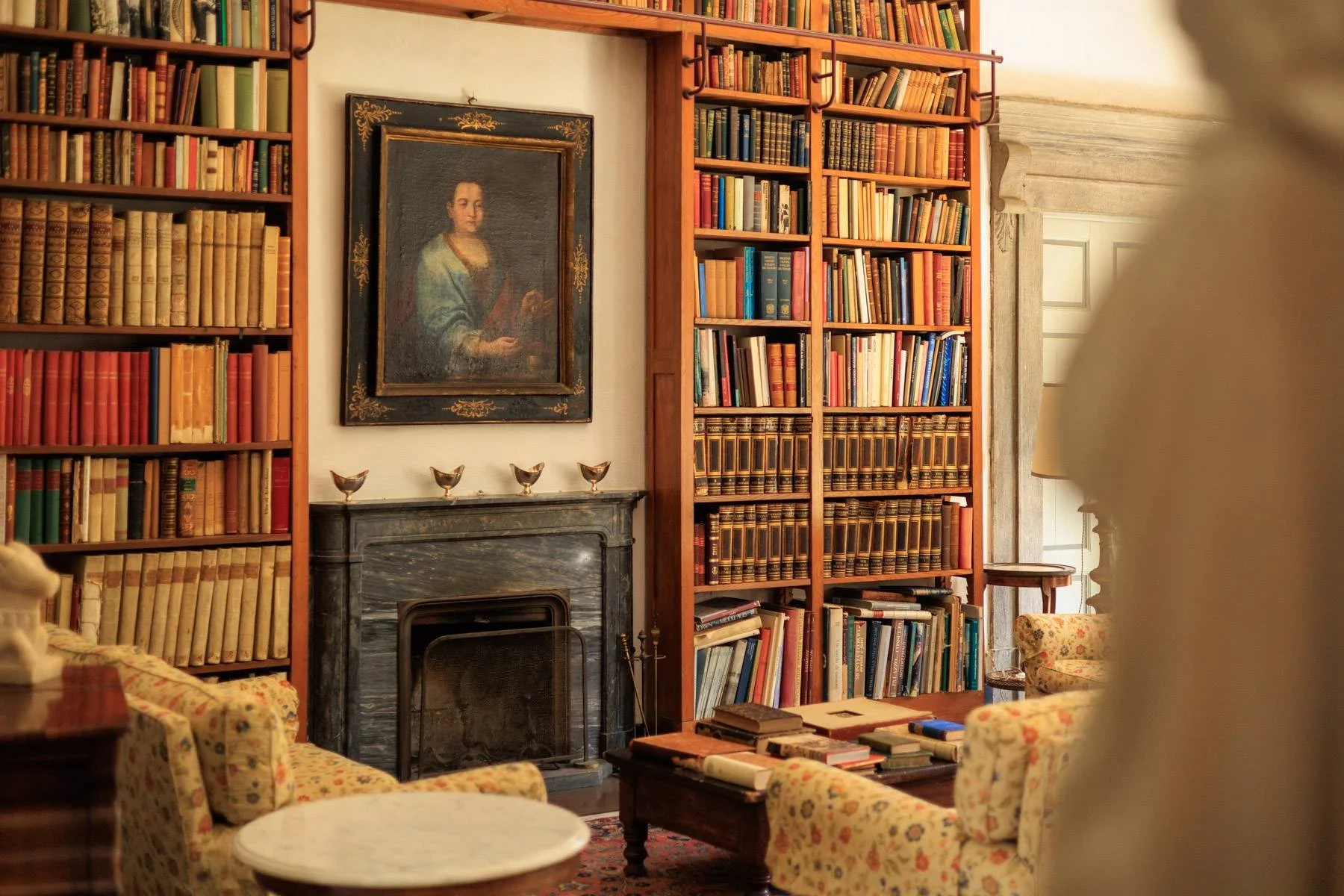
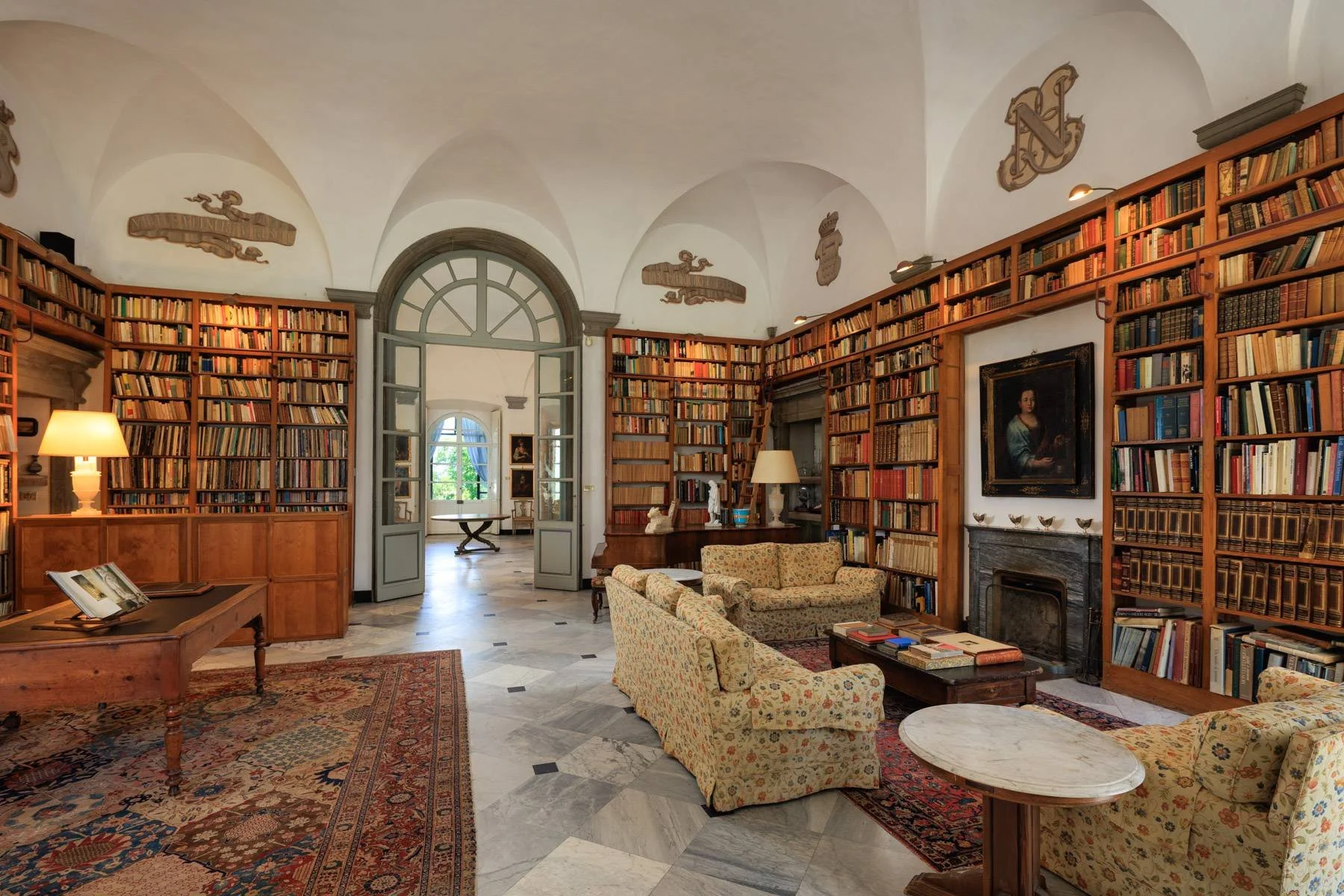
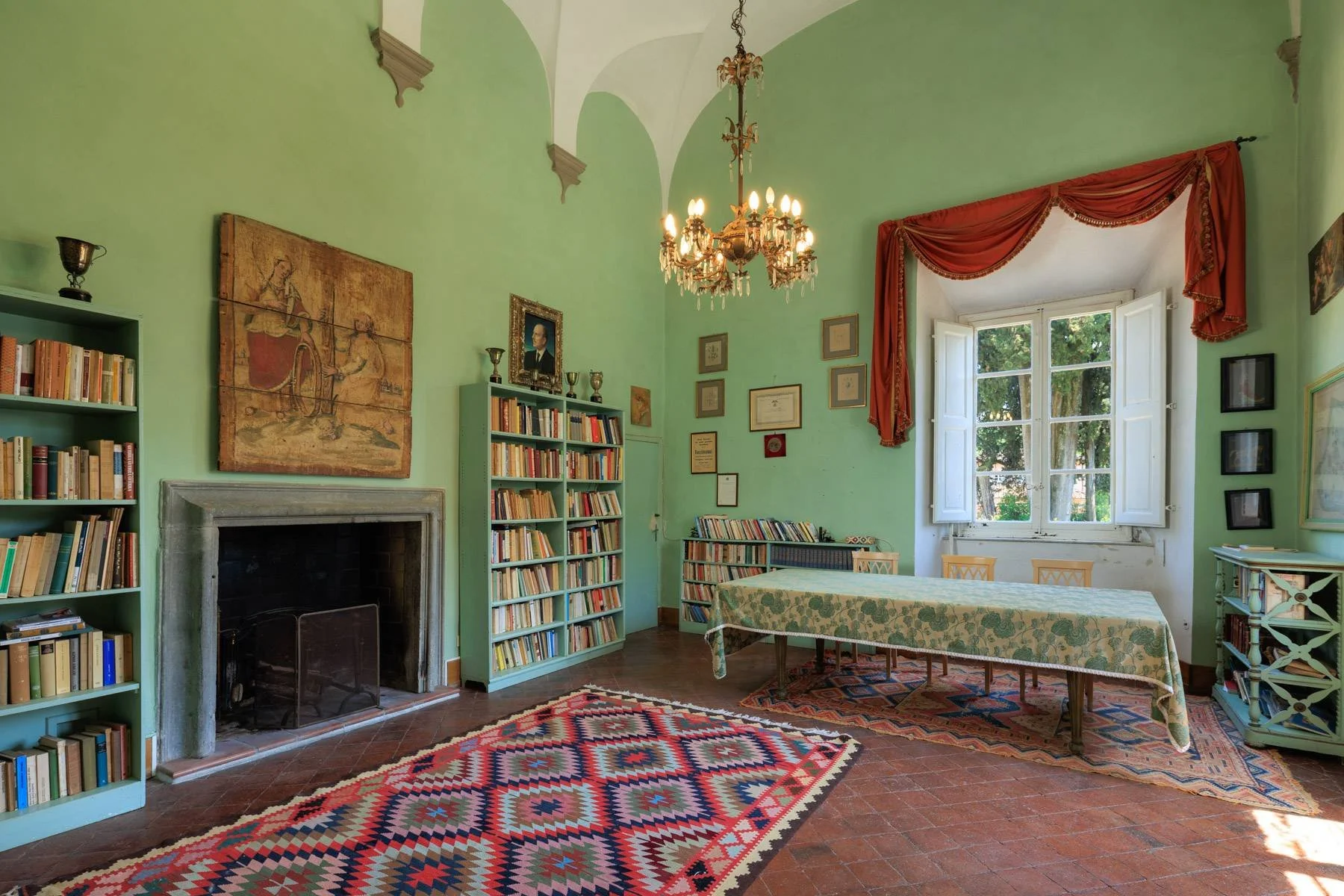
The library contains historic volumes and family memorabilia, while many of the principal rooms remain furnished and in active use rather than presented as empty museum interiors.
The estate currently hosts weddings, civil ceremonies, private receptions and other events. Its size, independent accommodations and extensive grounds could also support a boutique hotel, destination venue or other luxury hospitality project, subject to the necessary approvals.
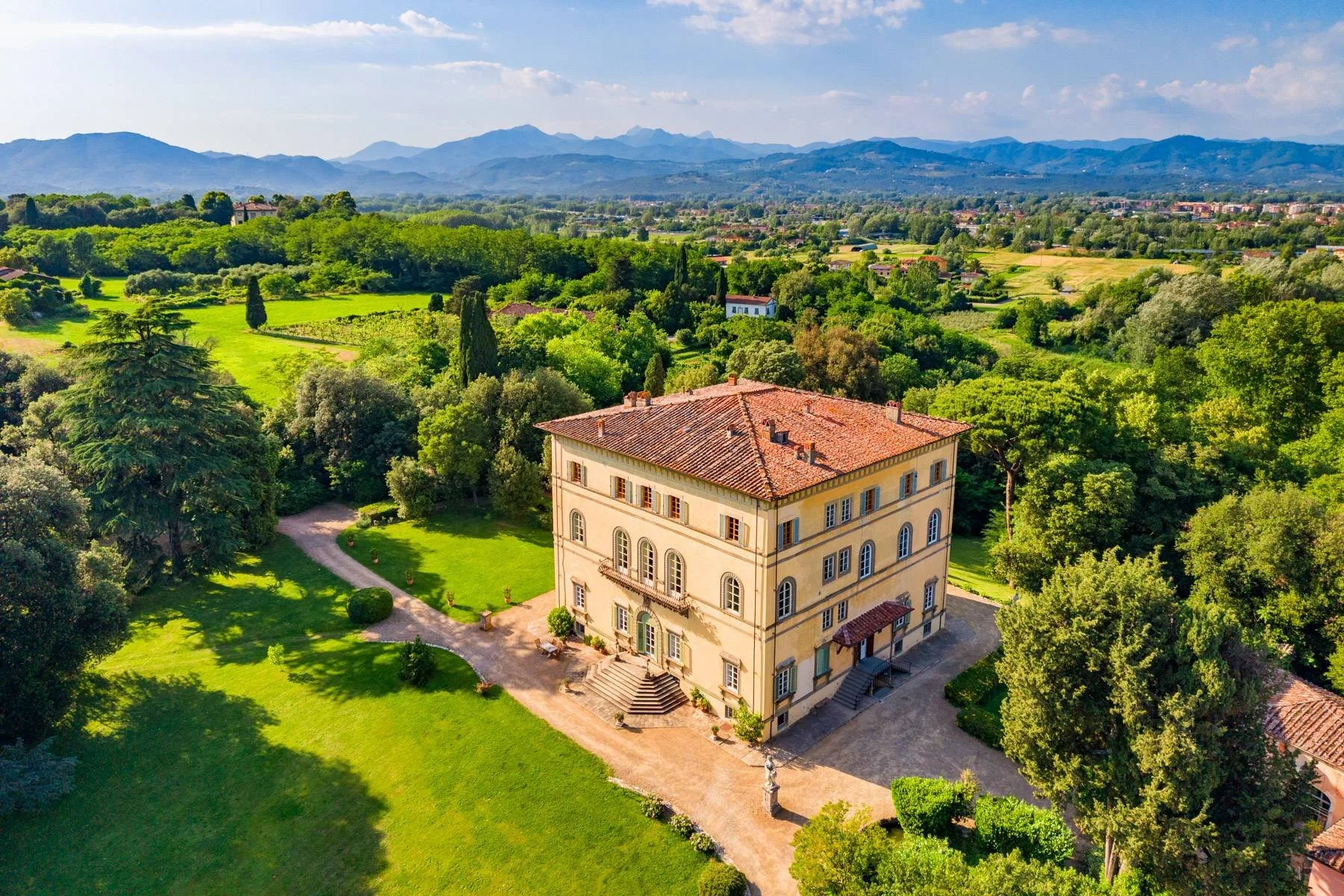
The estate lies approximately five kilometres, or just over three miles, from Lucca’s historic centre, placing its parkland setting within a short drive of the city’s Renaissance walls. Italy Sotheby’s International Realty
Yet the estate’s most distinctive feature may be the way its history repeatedly intersects with political change.
The house was commissioned by an early advocate of republican rule and, centuries later, became home to a jurist who helped draft the constitution of modern Italy.
A Villa Born From Republican Ambition
The villa was built for Francesco Burlamacchi, one of the leading political figures of the Republic of Lucca during the first half of the 16th century.
Burlamacchi served several terms as Lucca’s gonfaloniere, the highest civic office in the independent republic. At the time, the Medici had transformed Florence from a republic into the centre of a powerful hereditary state and were extending their control across Tuscany. Smaller independent cities such as Lucca and Siena faced growing pressure from stronger regional and imperial powers.
Burlamacchi developed a plan to unite Lucca, Siena and other Tuscan cities in a federation of independent republics. His aim was to preserve their autonomy and resist further Medici expansion.
The plan was discovered before it could be carried out. Burlamacchi was arrested, transferred to Milan and executed for treason in 1548. The estate he had commissioned was confiscated and passed to Ferrante Gonzaga, Duke of Amalfi, before being offered for sale during the following decade.
The villa’s history therefore began with a political project that destroyed the man who created it. Burlamacchi would later be remembered in Lucca as a defender of republican independence and an early precursor of Italian unity.
A Renaissance House Transformed Over Time
The villa was built in the early 16th century, and its symmetrical exterior and balanced proportions are characteristic of Renaissance architecture.
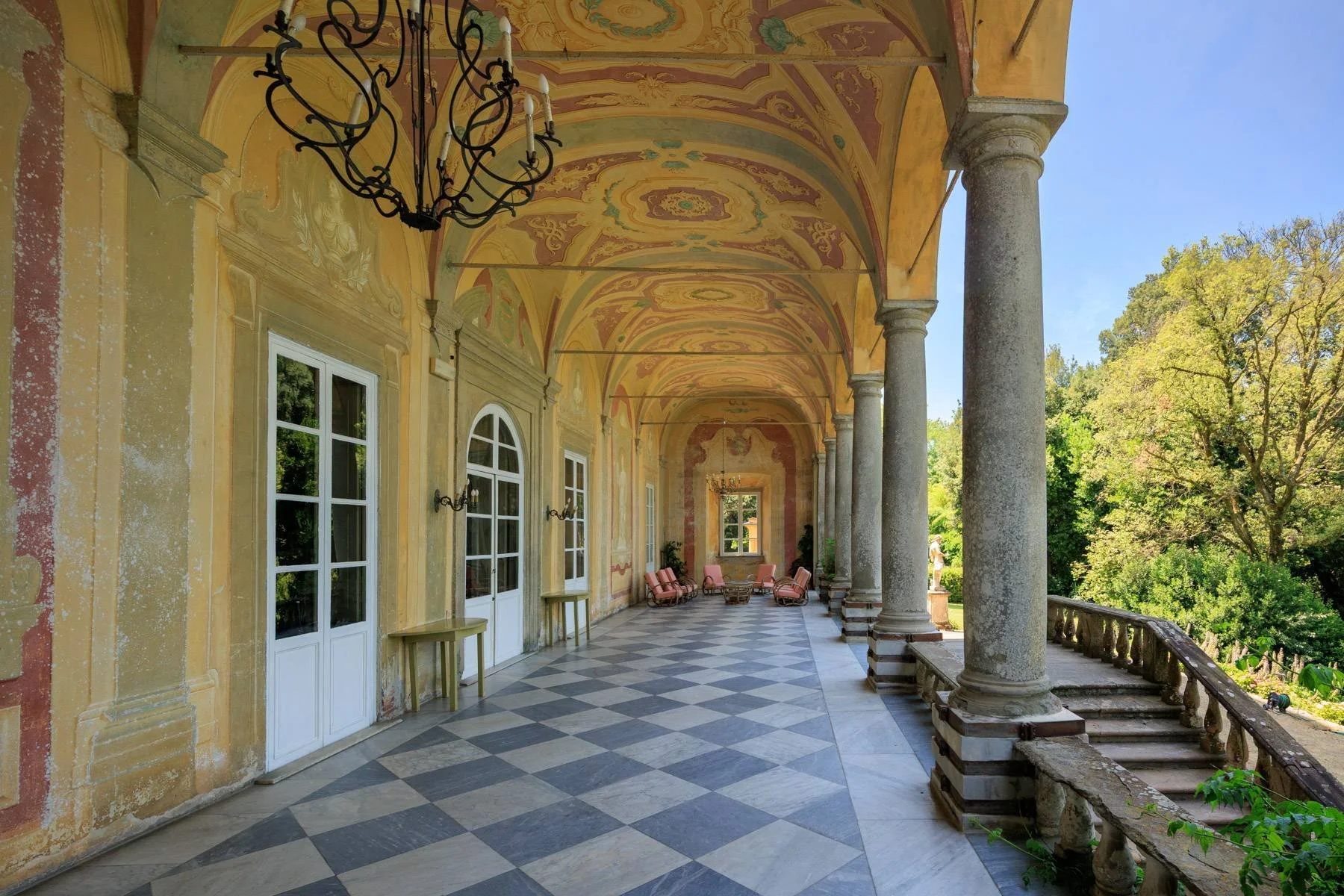
Along the back of the house, the 25-metre ground-floor loggia overlooks the gardens. Italy Sotheby’s International Realty
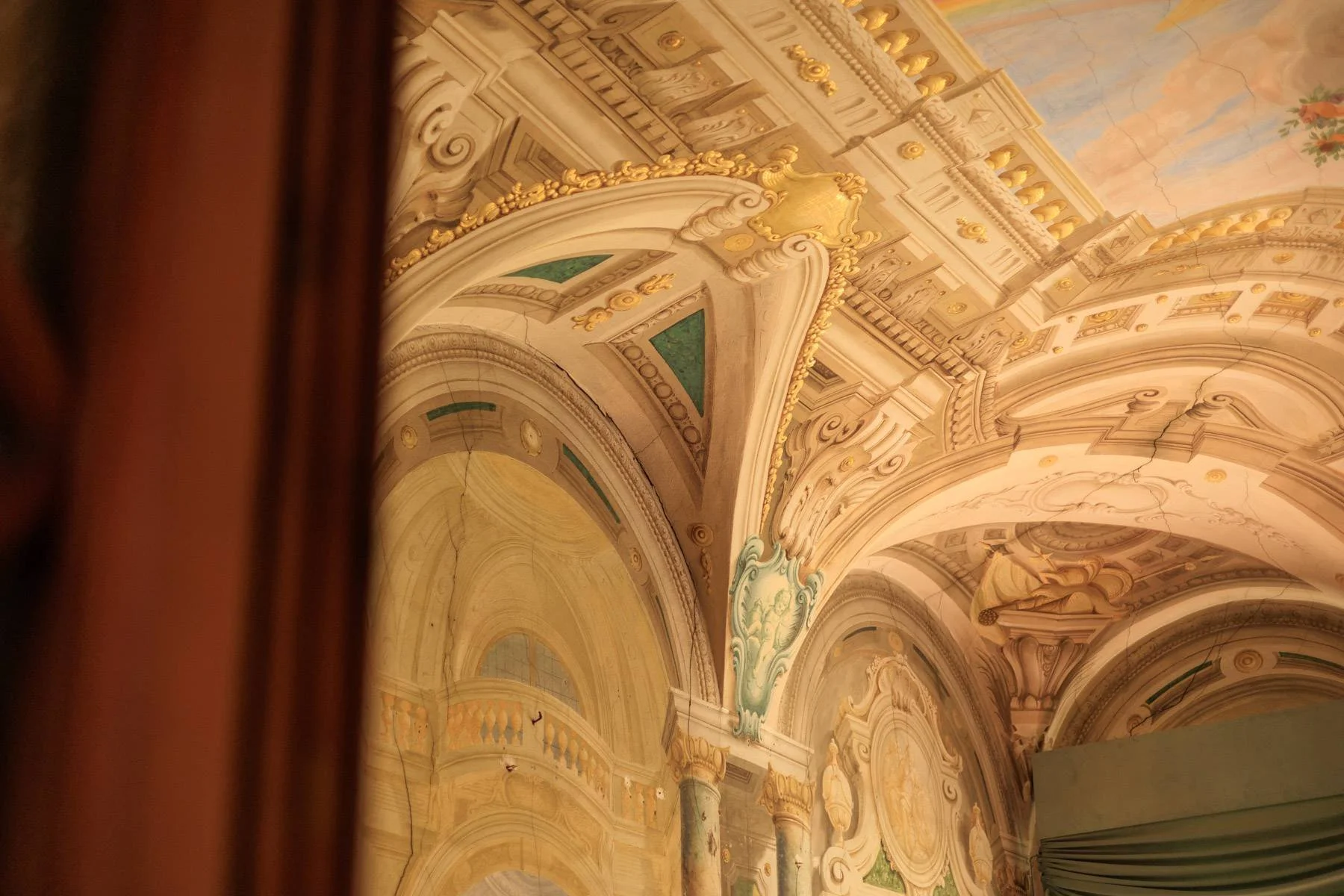
The frescoed interiors were added later, in stages during the late 17th and early 18th centuries. Local histories attribute much of the work to Francesco Antonio Cecchi and Bartolomeo De Santi, two fresco painters known for decorating villas, churches and palaces in and around Lucca. Cecchi is believed to have painted rooms on the main floor and the seven-arched loggia around 1720, while De Santi specialized in painted columns, arches and other architectural details.
The frescoes include mythological scenes, classical gods, pastoral landscapes and decorative architectural elements. In the ballroom, Greek and Roman deities appear alongside signs of the zodiac set within green panels. The adjoining salons are painted across their walls and ceilings with landscapes, allegorical figures and architectural details.
The grounds were also changed over time. In the late 18th century, Marianna Montecatini expanded the park and redesigned it in the more natural English style then becoming popular across Europe.
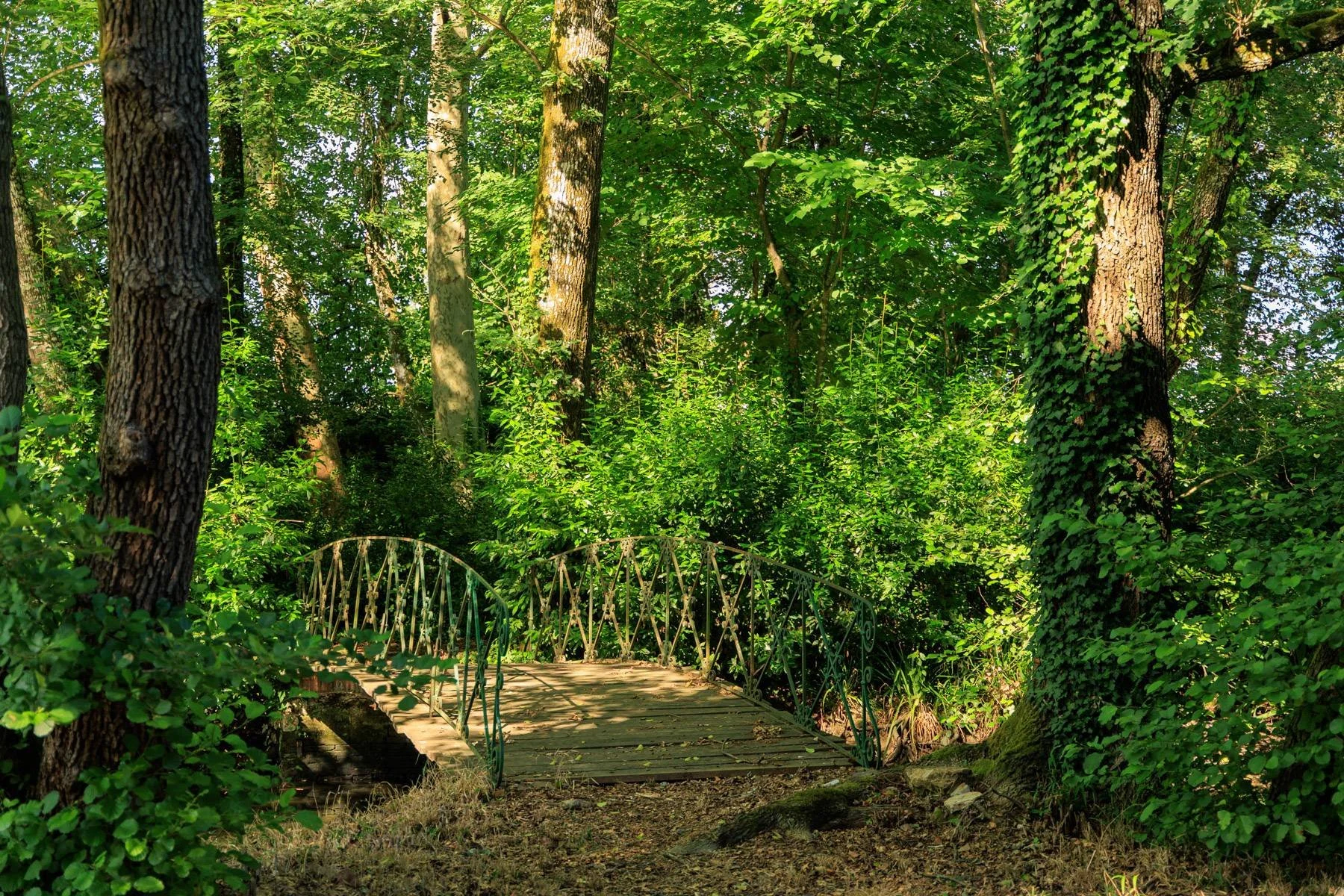
The formal gardens near the house were extended with winding paths, mature trees and open parkland. Today, the grounds include a lotus lake, centuries-old camellias and large specimen trees, as well as vineyards and olive groves.
The Italian Exile of Napoleon III’s Arts Chief
The villa’s next major political chapter began after the collapse of France’s Second Empire, when it became the home of one of the most powerful figures in Napoleon III’s official art world.
Count Émilien de Nieuwerkerke was a sculptor, collector and cultural administrator. He became director of France’s museums in 1849 and served as superintendent of fine arts from 1863 until the fall of the Second Empire in 1870. In that role, he oversaw the Louvre, the Luxembourg Museum and the historical collections at Versailles, later adding the newly created museum at Saint-Germain-en-Laye. He was also responsible for works of art kept in the imperial palaces, supervised official commissions of paintings, sculptures and engravings, and helped organize the annual Paris Salon.
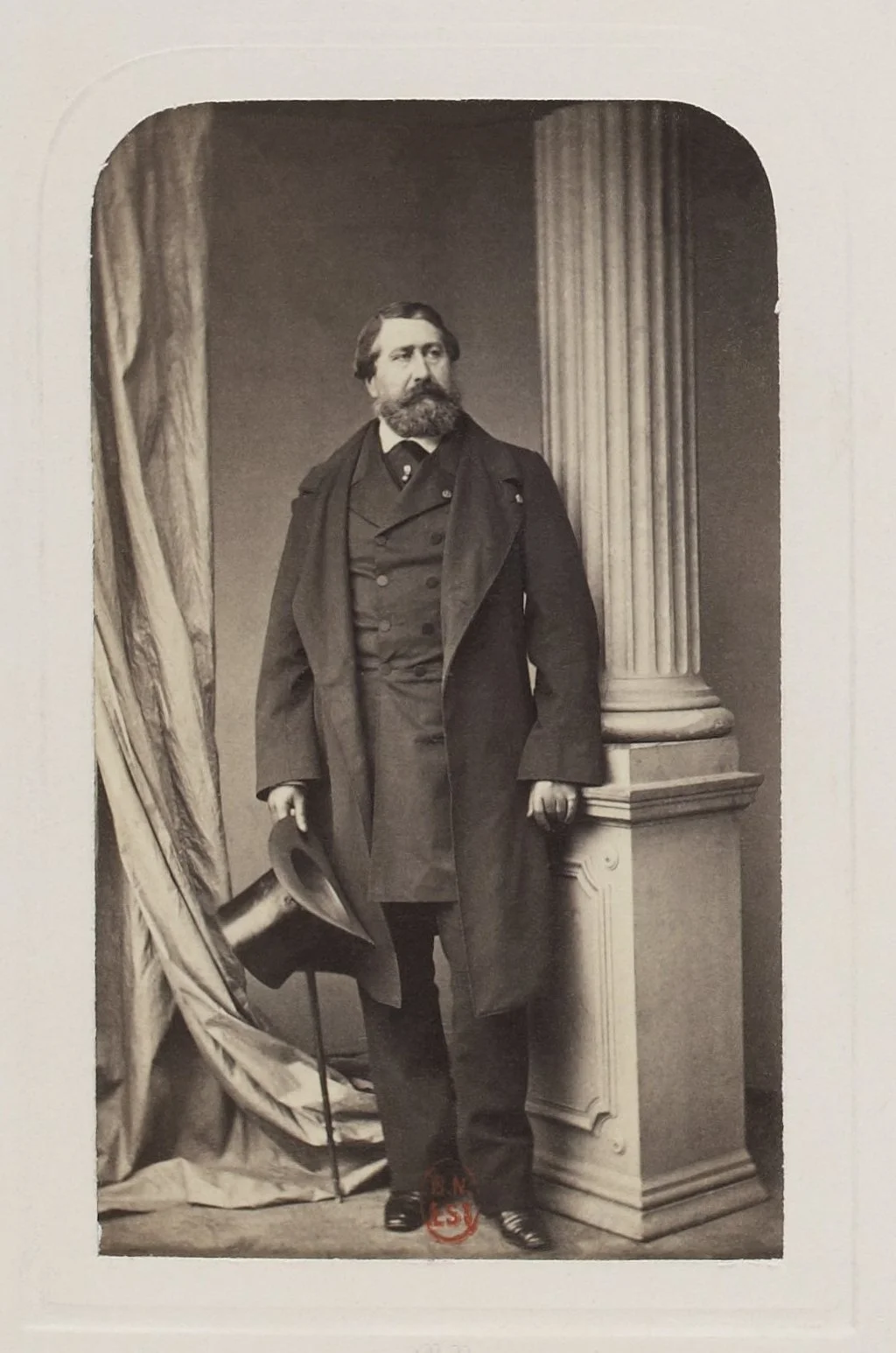
Count Émilien de Nieuwerkerke (1811–1892), the French sculptor, collector and director-general of the imperial museums under Napoleon III. Photograph by Eugène Disdéri. Bibliothèque nationale de France
Following Napoleon III’s surrender at Sedan, Nieuwerkerke resigned on September 5, 1870, and fled to England, reportedly narrowly avoiding arrest. His position had disappeared with the regime, and he soon began selling the material world he had built around it.
At almost exactly the same moment, Richard Wallace unexpectedly inherited the property and art collection of the 4th Marquess of Hertford, widely believed to have been his illegitimate father. The inheritance already contained an exceptional group of Old Master paintings, French furniture, Sèvres porcelain and 18th-century French art. Wallace, who had not been expected to inherit, was now in a position to make his own mark on the collection.
Nieuwerkerke initially attempted to sell part of his collection to the South Kensington Museum, but in August 1871 Wallace acquired acquired Nieuwerkerke’s collection as a single group. Estimated by later scholarship at around 800 objects, it included medieval and Renaissance decorative arts, sculpture, Venetian glass, maiolica and princely arms and armour.
Nieuwerkerke’s collection did not create the Wallace Collection as a whole; the 4th Marquess had already assembled many of its greatest paintings and French decorative works. But the purchase helped transform Wallace from the recipient of a family collection into an important collector in his own right.
It strengthened the medieval and Renaissance holdings, helped build what became one of Britain’s finest collections of princely armour and may even have encouraged Wallace to enlarge Hertford House to accommodate his growing collection.
Today, many of Nieuwerkerke’s former objects remain in London’s Wallace Collection, one of the world’s most celebrated museums of fine and decorative art and home to an exceptional collection of Renaissance arms and armour.
The transaction also marked a turning point for Nieuwerkerke.
The collection went to Wallace in London; its former owner went to Tuscany.
The collection went to Wallace in London; its former owner went to Tuscany. In 1872, Nieuwerkerke acquired the Renaissance villa near Lucca, where he lived for the remaining 20 years of his life with Princess Marie Cantacuzène and her daughter Olga. Close friends who had helped him reach London after the fall of the Second Empire, the two women became part of his household in Italy. Olga later married Prince Lorenzo Altieri and was named Nieuwerkerke’s principal heir.
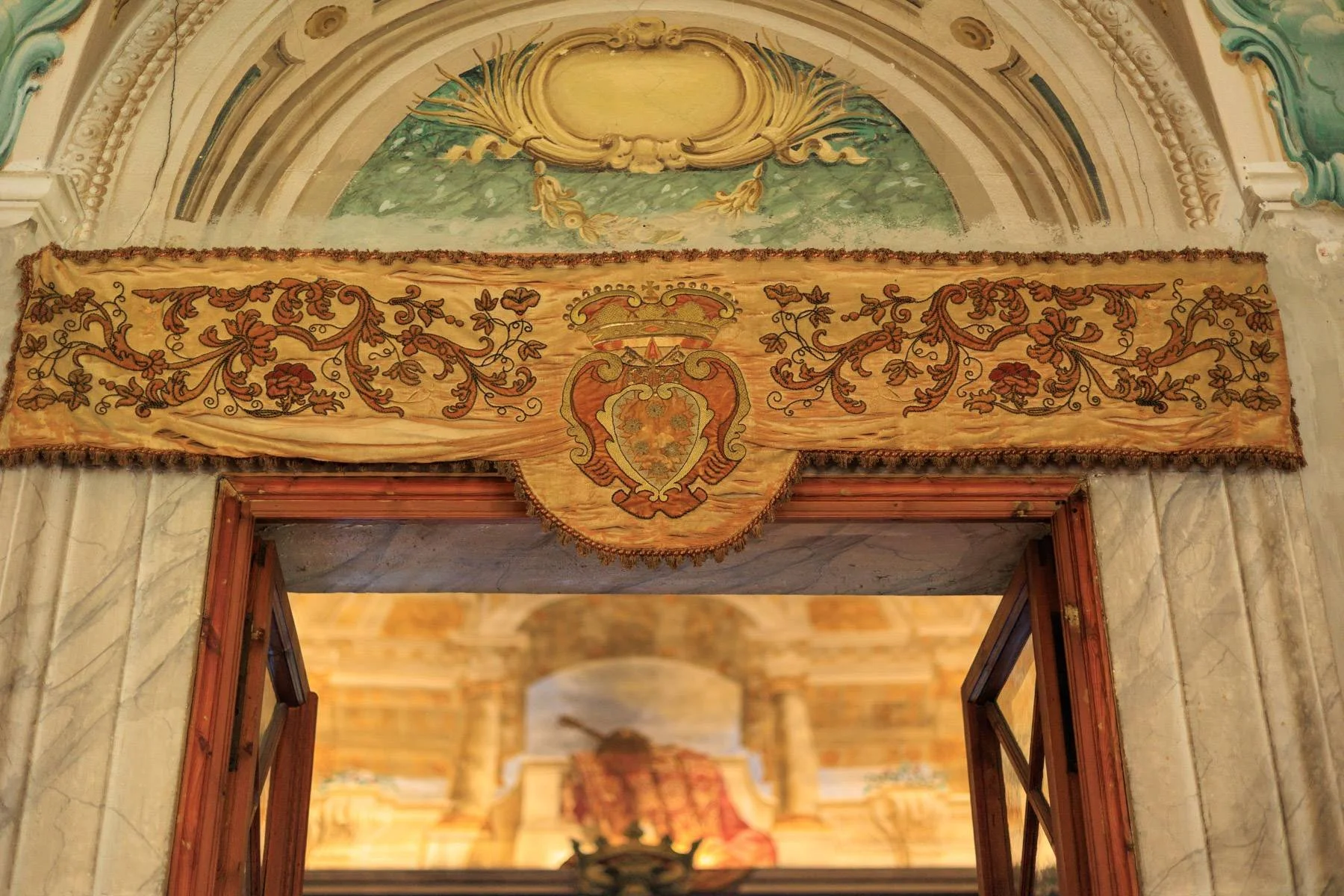
Some traces of Nieuwerkerke’s former art world remain in the house, including portraits of Napoleon III and Empress Eugénie, along with sculptures and personal objects connected with France’s Second Empire. A history published by Dimora Magazine also records a cast of the hand of Princess Mathilde Bonaparte among the library’s objects.
Italy Sotheby’s International Realty names Napoleon III as one of the villa’s notable guests, although the known dates make that visit difficult to confirm.
Following his defeat in September 1870, Napoleon III was held as a prisoner in Germany for 195 days. He was released in March 1871 and joined Empress Eugénie at Camden Place in Chislehurst, England, where he remained in exile until his death in January 1873.
Nieuwerkerke did not acquire the villa until 1872, leaving only a short period in which the former emperor could have visited. No independent archival record of such a trip has yet been identified.
Whether or not Napoleon III personally entered the house, its connection to the Second Empire is clear. One of the regime’s most influential cultural officials made it his home after losing the position, collection and public world that had shaped his life.
From Antifascism to the Italian Republic
Another political chapter began in 1940, when antifascist lawyer Paolo Rossi and his wife, Giuseppina Bagnara, acquired the estate. More than eight decades later, the property remains inhabited and managed by their descendants.
Paolo Rossi was an antifascist lawyer and legal scholar who came under pressure from Benito Mussolini’s regime. He contributed to antifascist publications, and his legal and political writing placed him in opposition to the authoritarian state.
The family eventually moved to the estate near Lucca. During the Second World War, Rossi joined the Resistance. Family accounts describe the villa as a place where Jewish people, political dissidents and young people avoiding Fascist roundups were hidden or assisted.
The war also left physical marks on the house. According to Dimora Magazine, German soldiers used the ballroom as a camp and badly damaged its floor. It was rebuilt after the war. Cracks visible in the frescoed ceiling are instead attributed to an earlier earthquake in northern Tuscany.
After the war, Rossi was elected to Italy’s Constituent Assembly and took part in the work that produced the country’s new Constitution. He later served as minister of public education, became a member of parliament and eventually presided over Italy’s Constitutional Court.
A house commissioned by an early advocate of republican rule had, four centuries later, become home to a jurist who helped draft the constitution of modern Italy.
Rossi’s daughter, the novelist Francesca Duranti, spent part of her childhood at the estate. She later described wartime aircraft and bombing among her earliest memories, and the house became part of the world of her writing. Her novel Progetto Burlamacchi directly refers to the villa’s original commissioner.
Italy Sotheby’s International Realty
The Wider Estate
The sale includes much more than the principal frescoed villa.
A second historic residential complex extends to approximately 1,000 m² (10,764 ft²). Its principal 17th-century building covers roughly 600 m² (6,458 ft²) across three floors and includes covered colonnaded loggias and terraces.
The ground floor contains a small private chapel and a recently renovated apartment. Two more large, independent apartments occupy the upper levels, allowing the building to accommodate guests, extended family or separate hospitality functions.
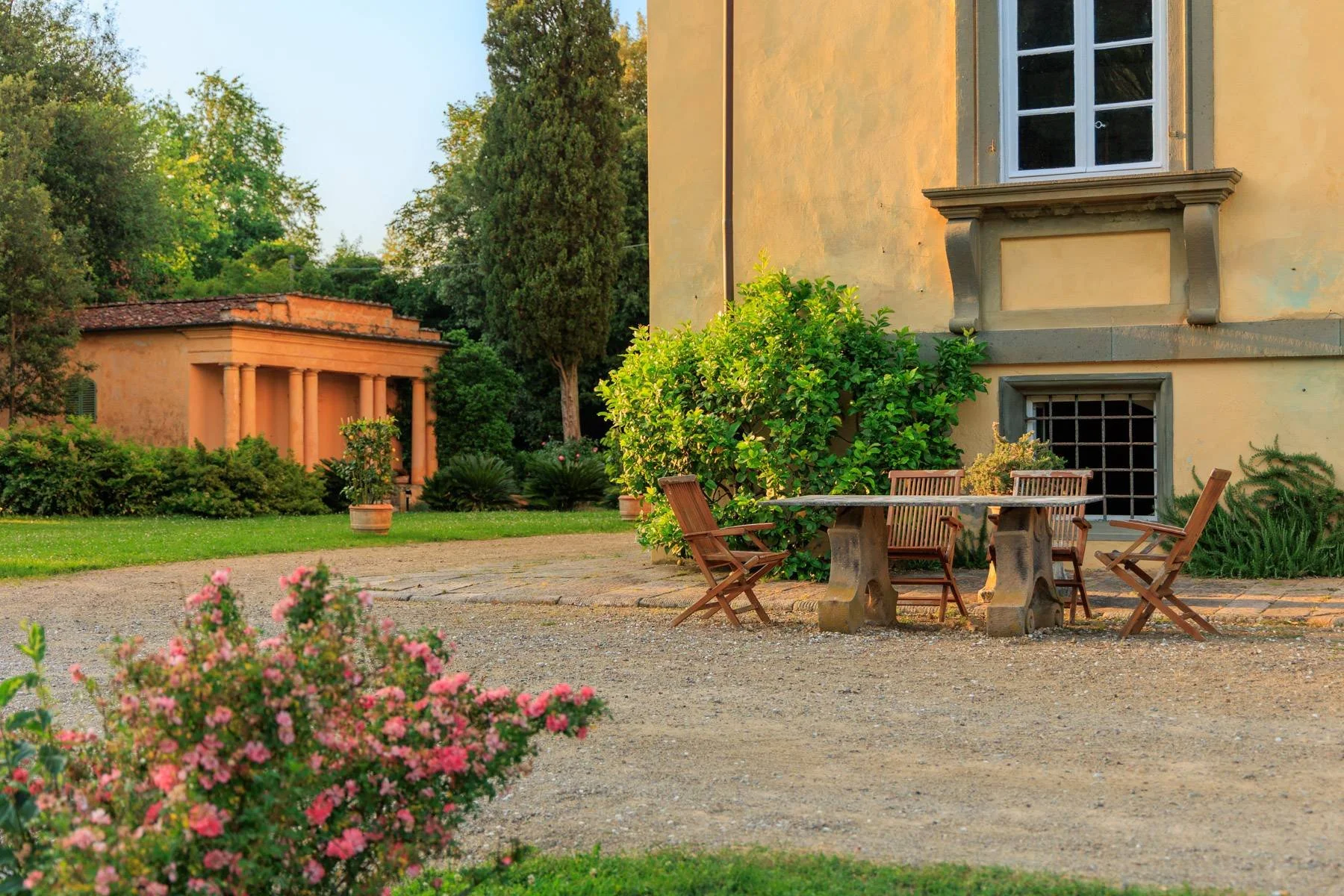
Other structures include a historic limonaia, or lemon house, now featuring an indoor pool, and a restored farmhouse which is noted as the oldest surviving building on the property.
This range of accommodations gives the estate unusual flexibility. Its current use as a wedding and events venue could continue, while the separate residences and extensive grounds could support a boutique hotel or another luxury hospitality project. It could also appeal to a buyer seeking a Tuscan investment property with an established events function or to a family looking for a large private estate with independent guest residences.
Despite its scale—28 bedrooms, 22 bathrooms and approximately 3,310 m² (35,629 ft²) of interior space—the property still reads as a private estate rather than a formal monument. Its frescoed rooms remain furnished and usable, while the architecture opens naturally onto terraces, gardens, farmland and woods.
Across five centuries, the estate has outlasted the political systems that shaped the lives of its owners: an independent city republic, aristocratic courts, an empire and a dictatorship.
What remains is both an exceptional Tuscan estate for sale and a historic record of how public events can reshape private lives.
Sources
Treccani, Dizionario Biografico degli Italiani — Francesco Burlamacchi
Treccani, Dizionario Biografico degli Italiani — Nicolao Civitali
Treccani, Dizionario Biografico degli Italiani — Paolo Rossi
The Wallace Collection — Venetian glass acquired from Nieuwerkerke
Fondation Napoléon — Le comte Nieuwerkerke: Art et pouvoir sous Napoléon III
Fondation Napoléon — Émilien de Nieuwerkerke under Napoleon III