A 17th-Century French Château That Brought Armagnac Brandy to Versailles
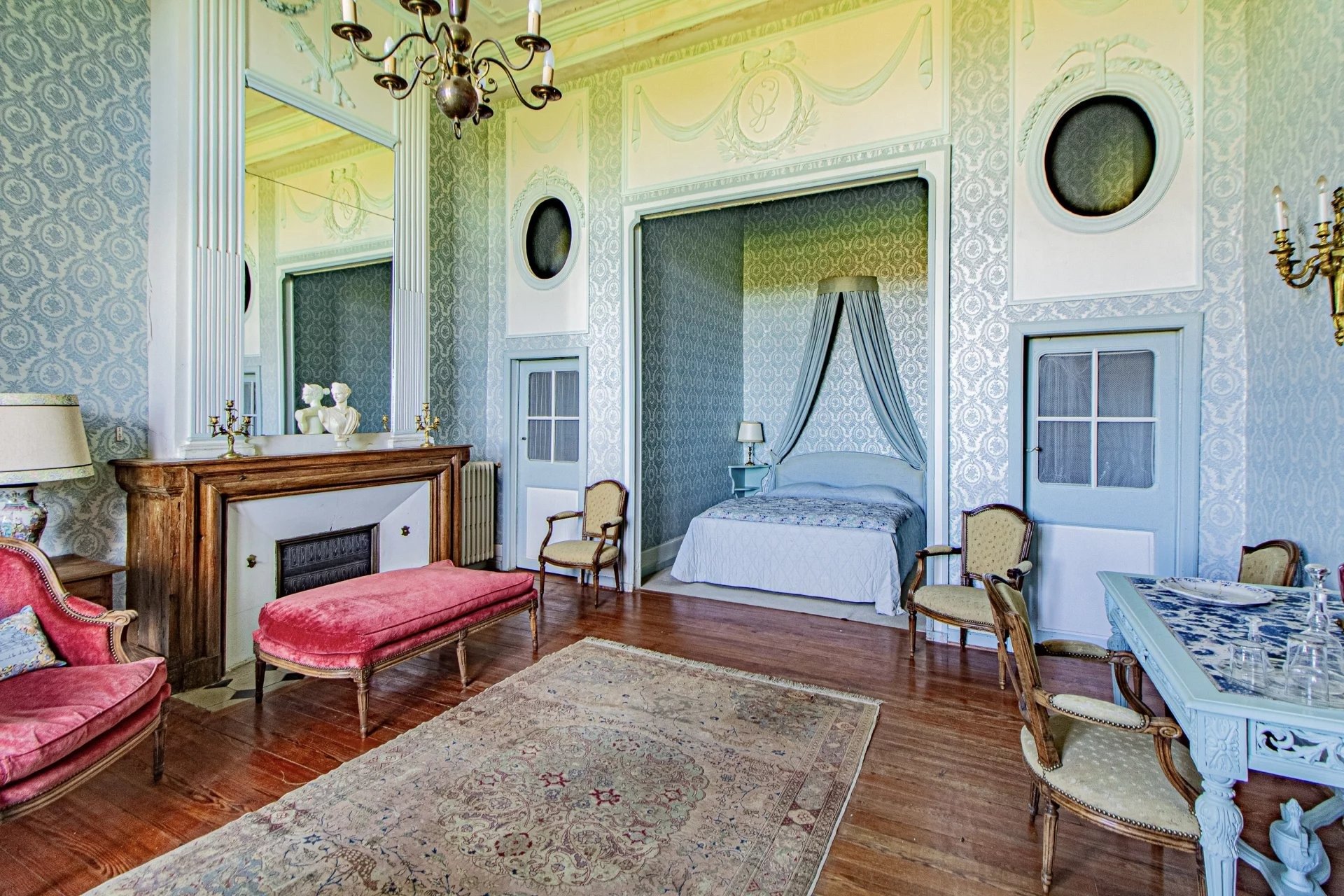
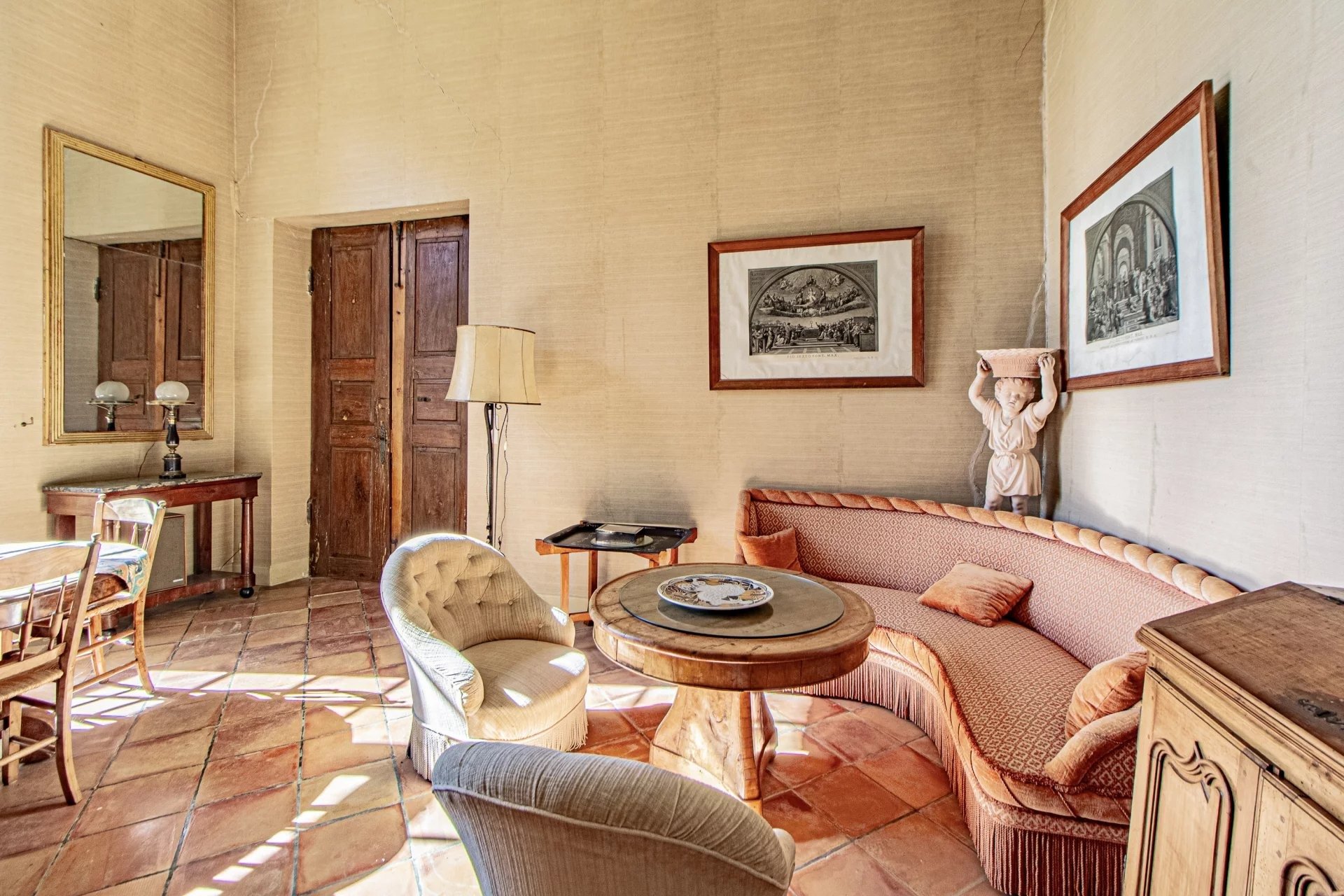
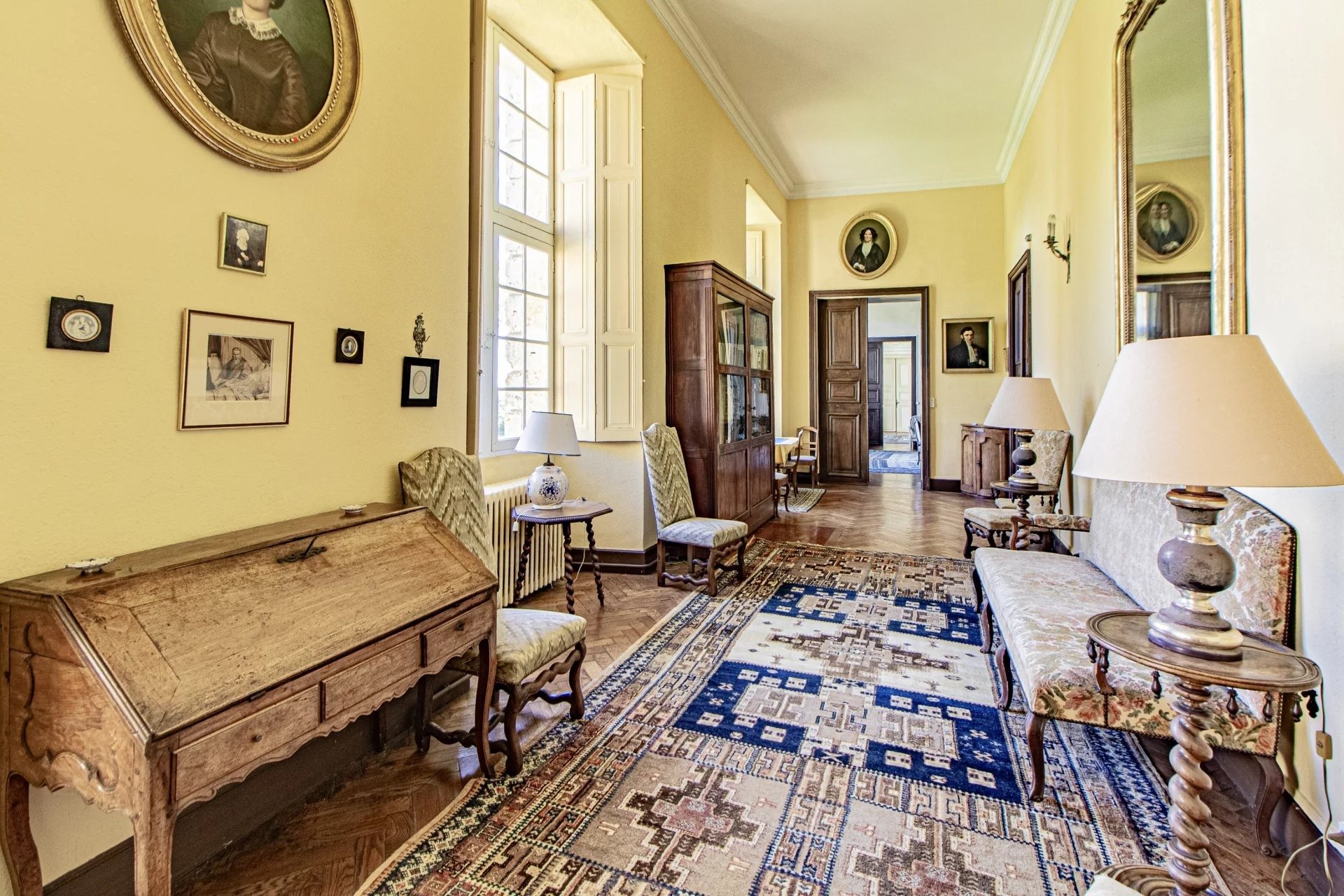
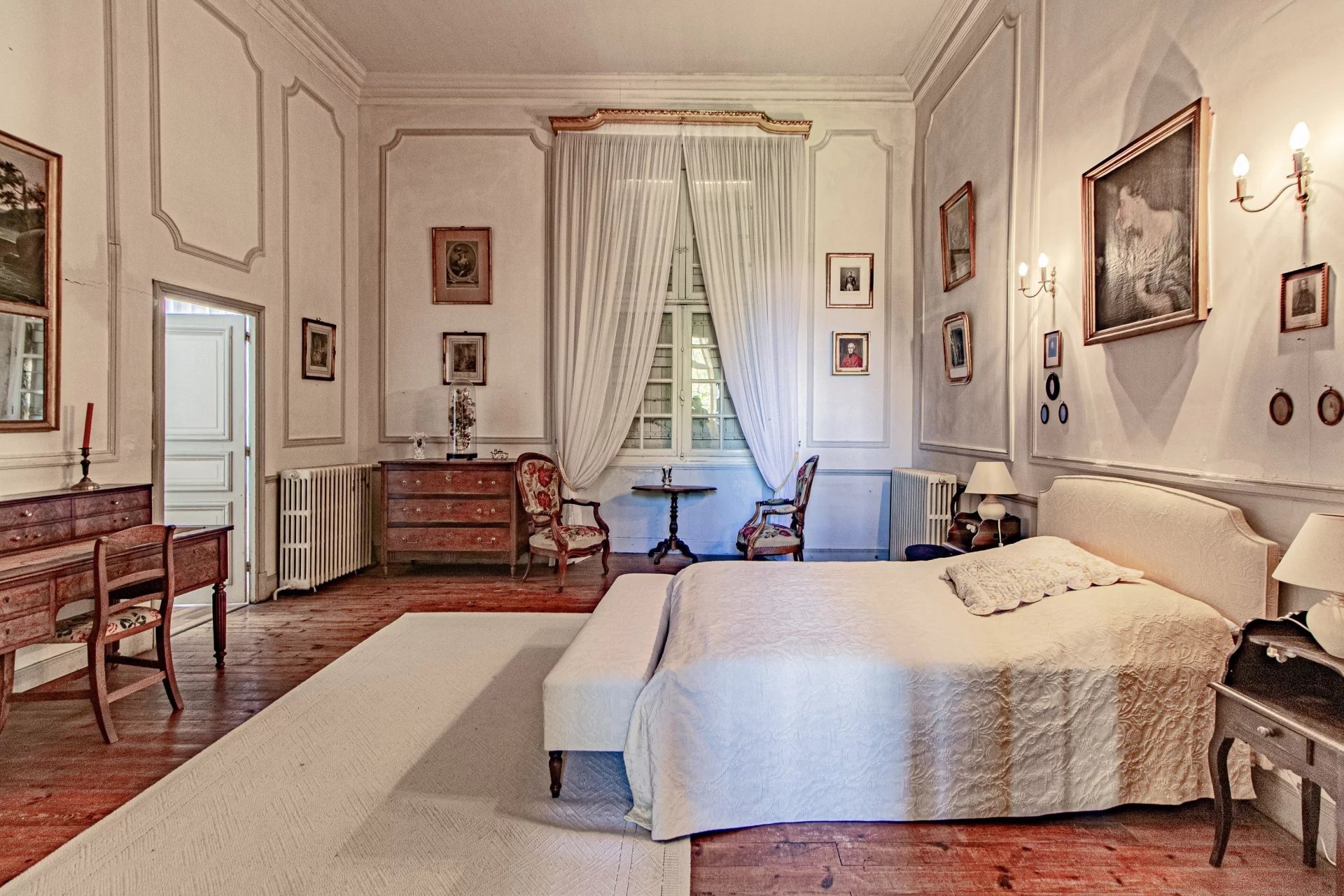
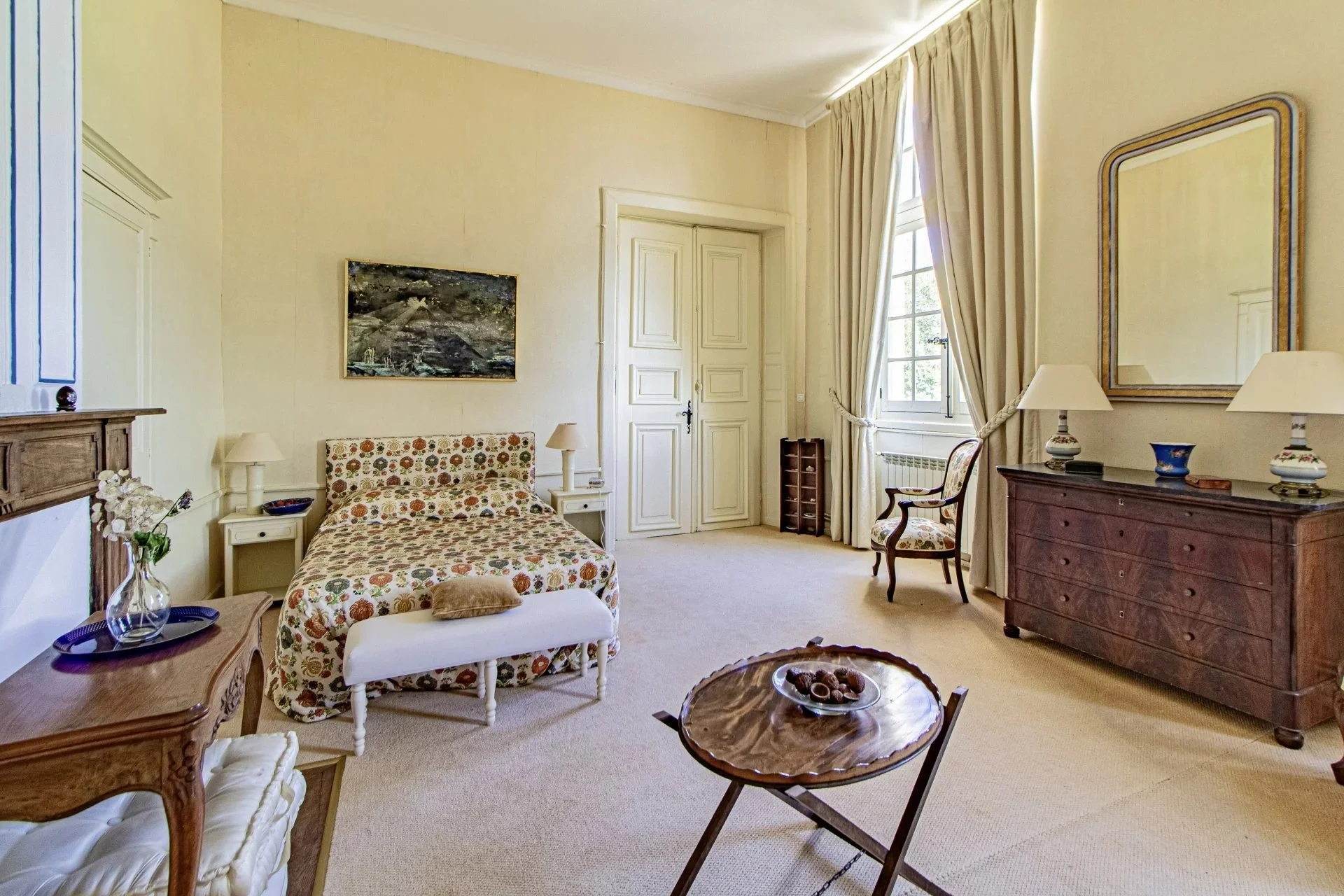
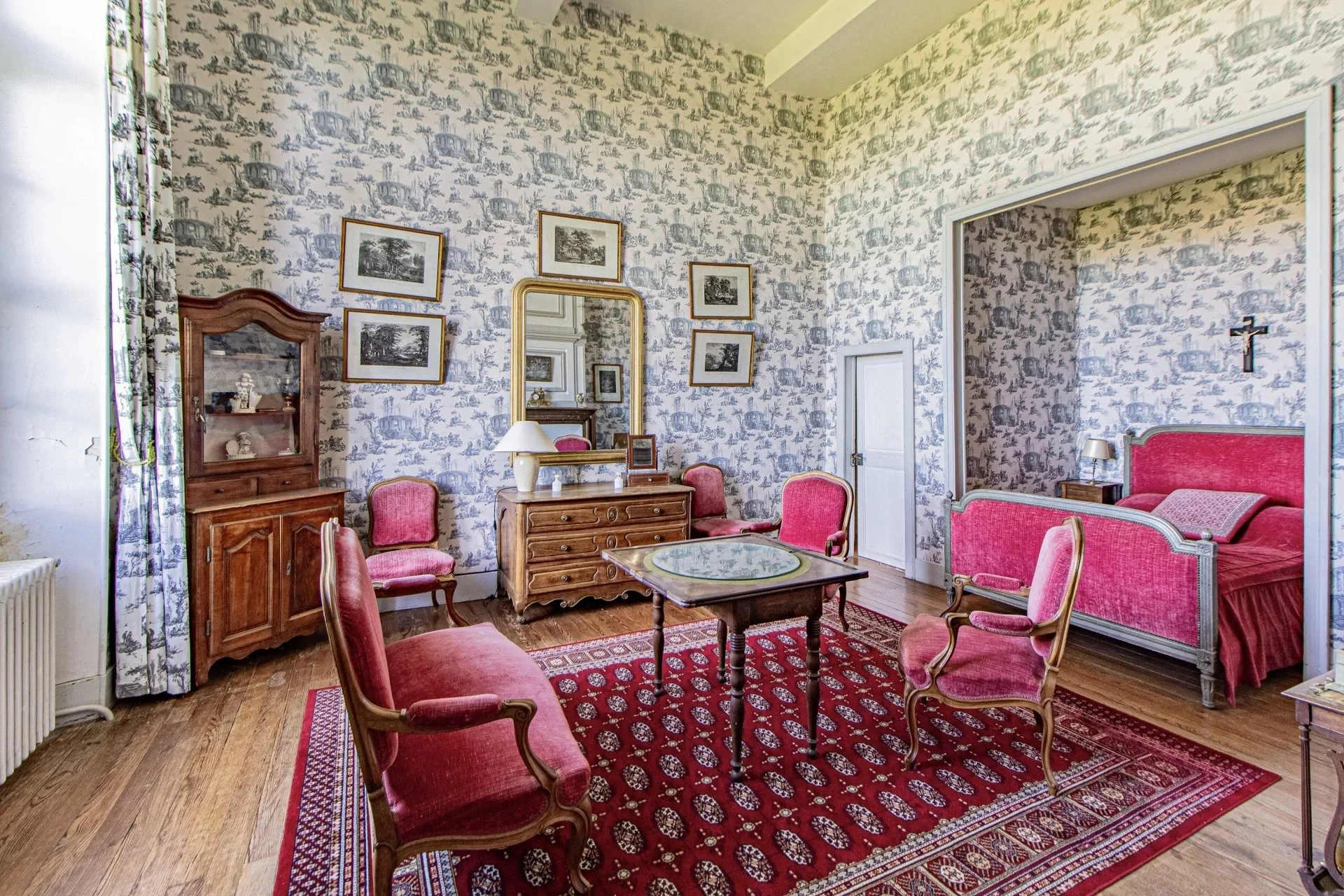
Bedrooms: 11 Bathrooms: 8
Interior: 4,035 m² / 43,433 ft² Lot: 8.75 ha / 21.6 acres
Features: Grand reception rooms, monumental staircase, library, chapel, central courtyard, wine cellar, gardens and outbuildings.
There's a 17th-century château in the French countryside with a rather unusual claim to fame. Once home to one of Gascony's earliest Armagnac distilleries, its former owner is credited with introducing the region's famous brandy to the royal court at Versailles during the reign of Louis XV. Now, after more than 220 years in the same family's ownership, Château du Busca-Maniban is for sale for €2,600,000, listed with Beaux Villages Immobilier.
A 17th-Century Château in the Heart of Gascony, France
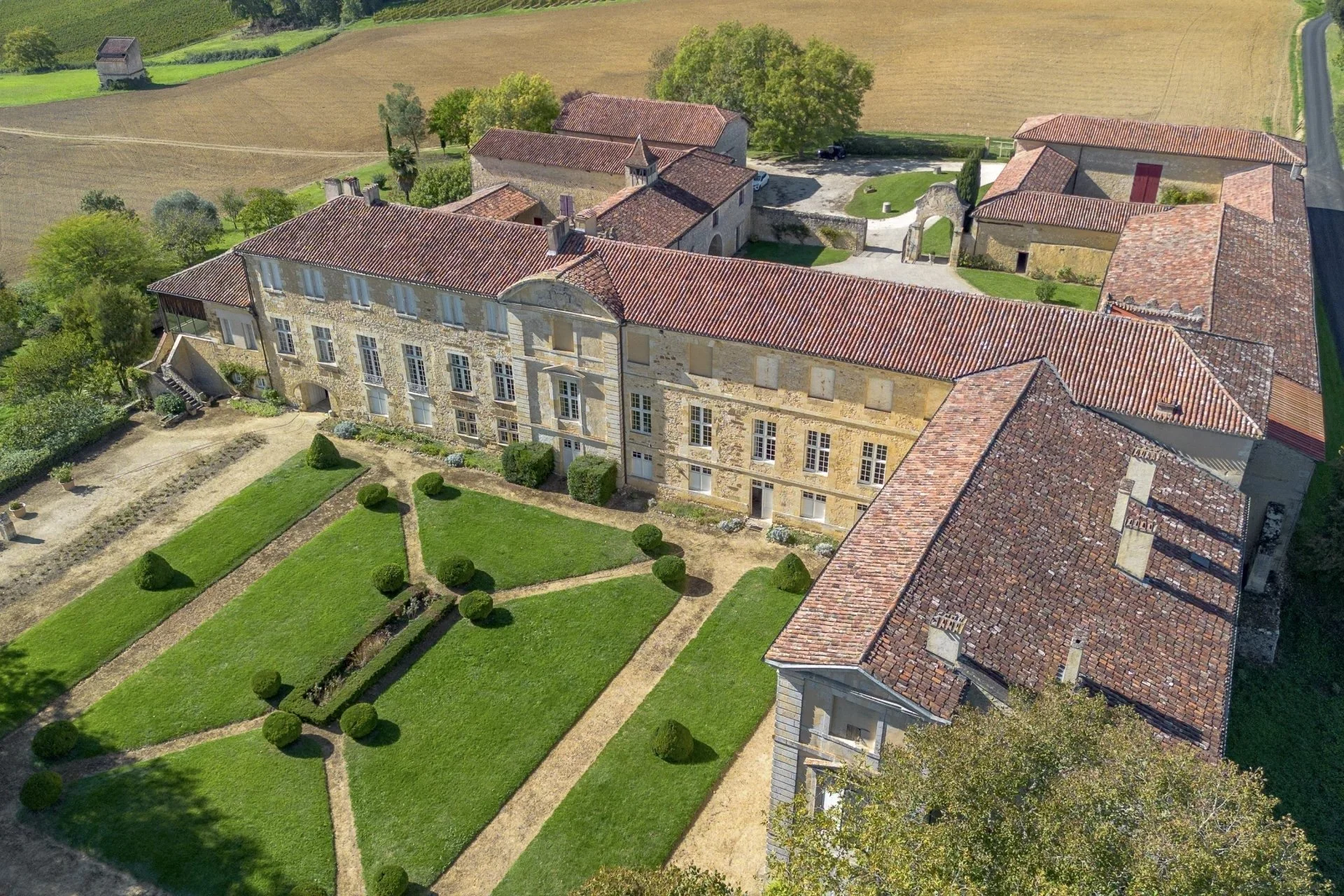
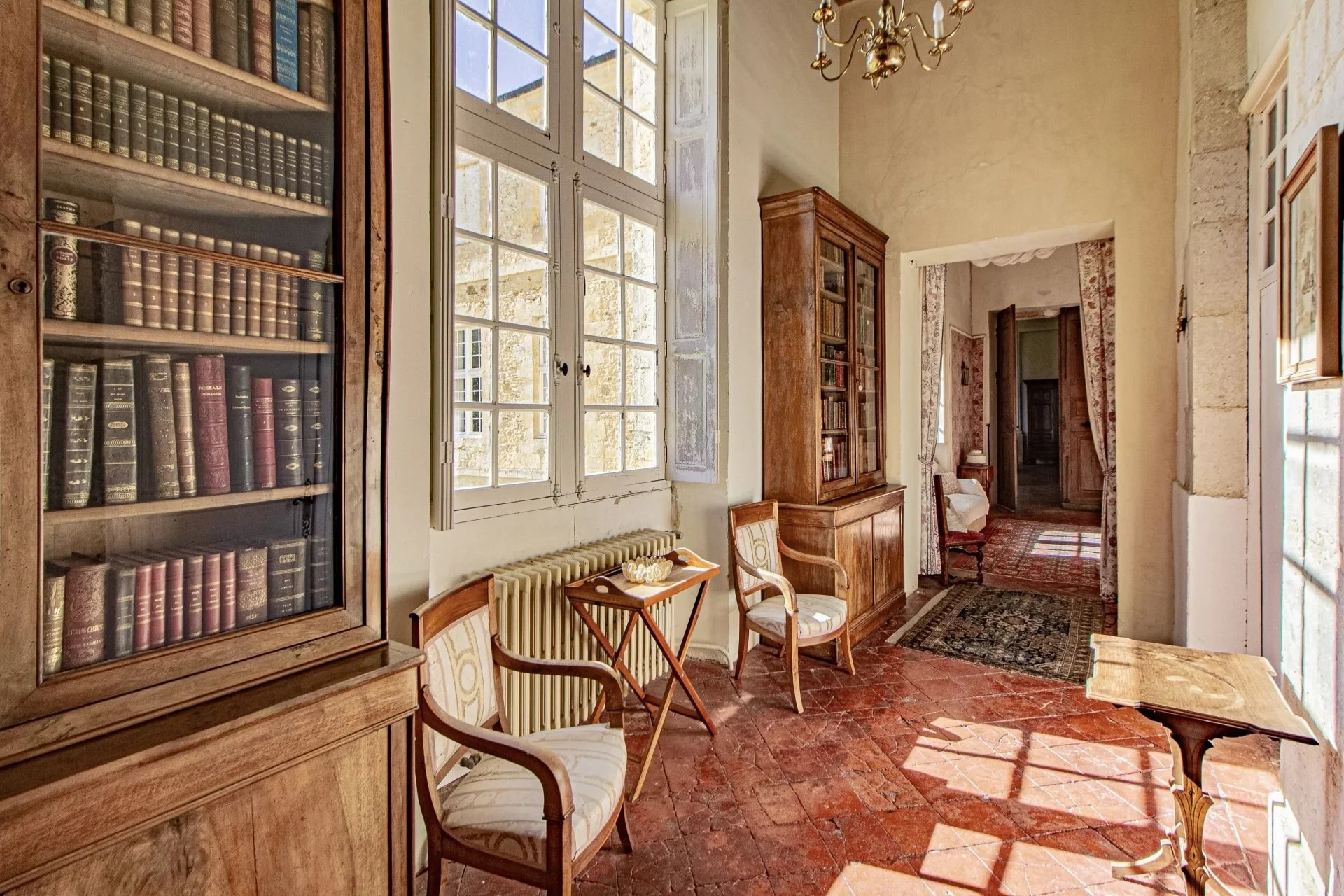
The château sits on approximately 21.6 acres (8.75 hectares) of countryside near Valence-sur-Baïse, with panoramic views over the surrounding hills. It has some 43,433 square feet (4,035 m²) of habitable space, including 11 bedrooms and 8 bathrooms, along with grand reception rooms, a library, chapel, wine cellar and several outbuildings.
The property is in Gascony, a historic region of southwestern France known for its rolling hills, medieval villages, vineyards and Armagnac production. Located in the Gers department, roughly 90 minutes from Toulouse and two hours from Bordeaux by car, this quieter corner of France has largely escaped the international attention given to Provence and the Dordogne. Nearby are the town of Condom and the 12th-century Abbaye de Flaran, one of the best-preserved Cistercian abbeys in southwestern France.
The History and Architecture of Château du Busca-Maniban
The story of Busca-Maniban begins in 1649, when Thomas de Maniban, avocat général of the Parlement of Toulouse, began building a grand country residence on the site of an earlier medieval fortress. The family belonged to France's influential noblesse de robe, an aristocracy whose wealth and position came from holding senior judicial and administrative offices rather than military service.
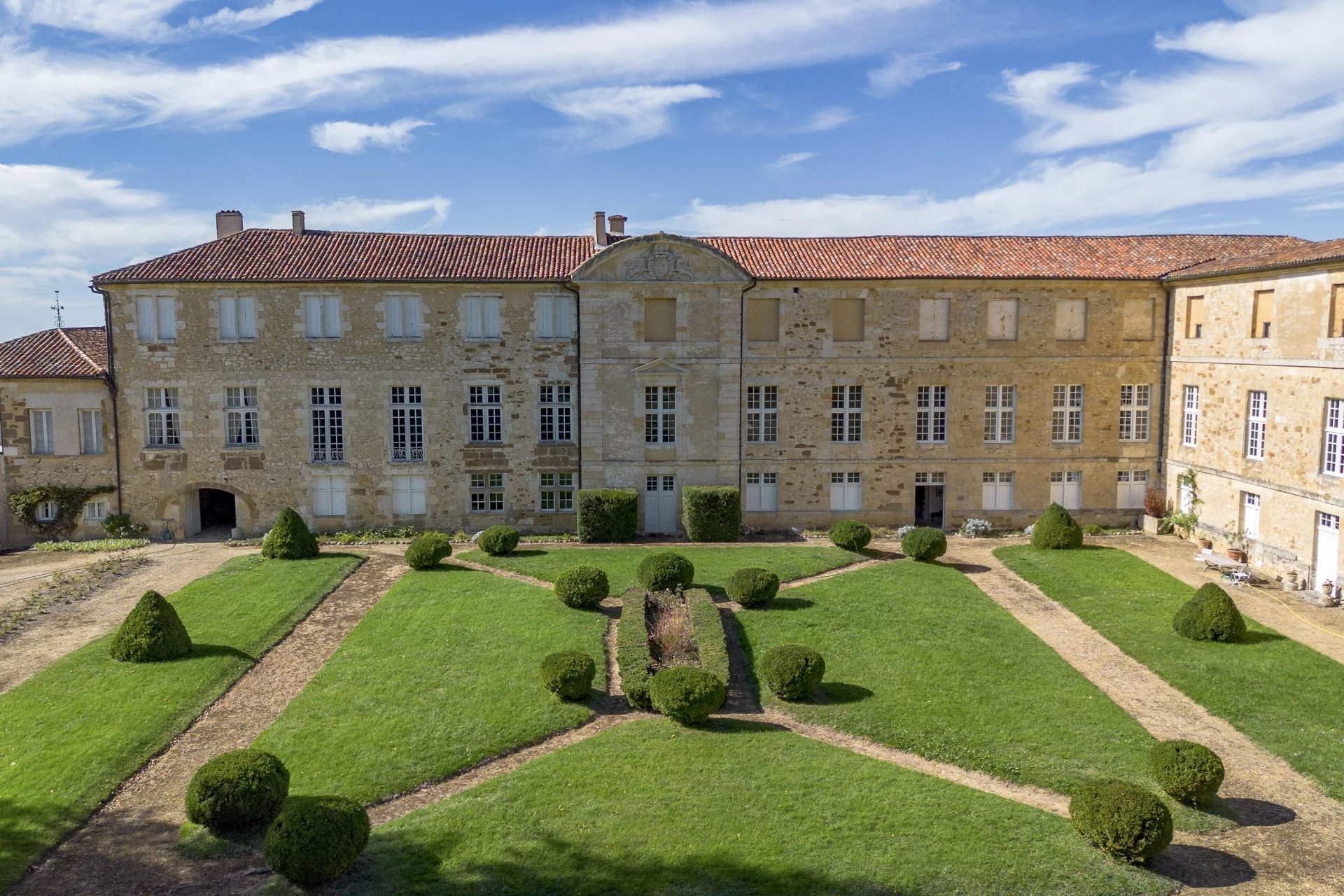
Built around a large central courtyard, the château has the symmetry and grand proportions of 17th-century French classical architecture. Its long stone façades, tall windows and formal gardens were designed for a family accustomed to wealth and influence. Thomas's grandson, Joseph-Gaspard de Maniban, continued work on the property and went on to become First President of the Parlement of Toulouse, one of the region's highest judicial offices.
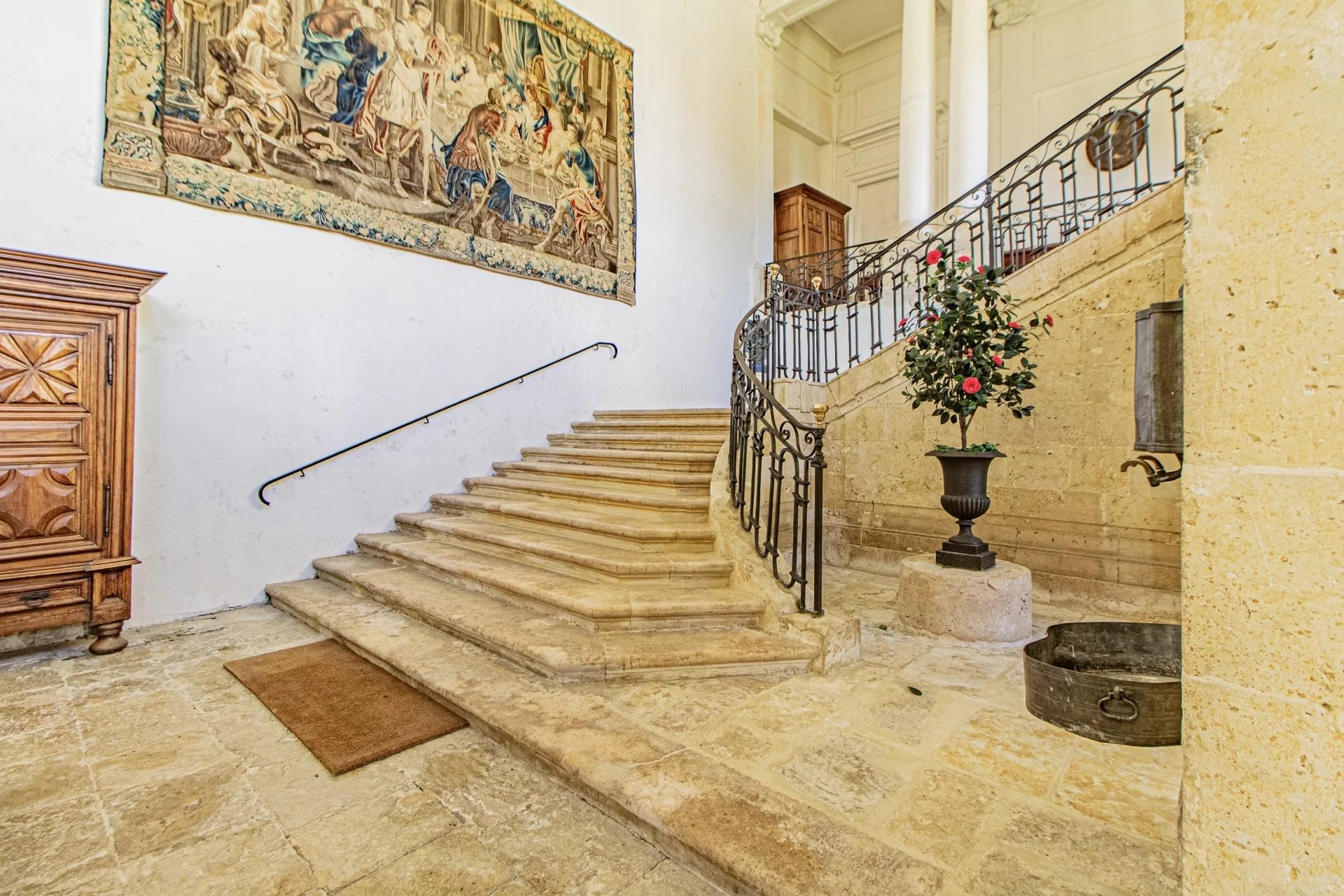
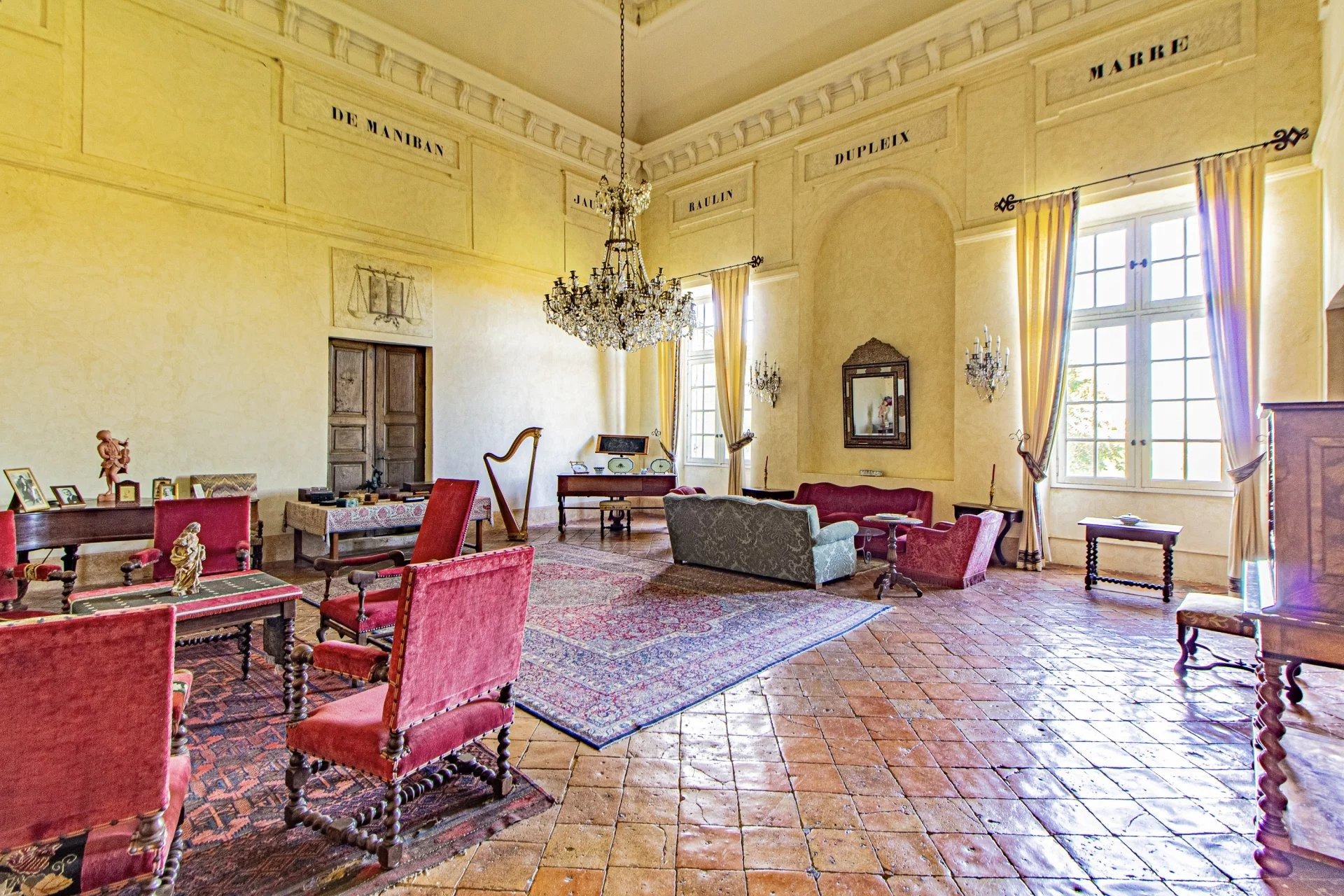
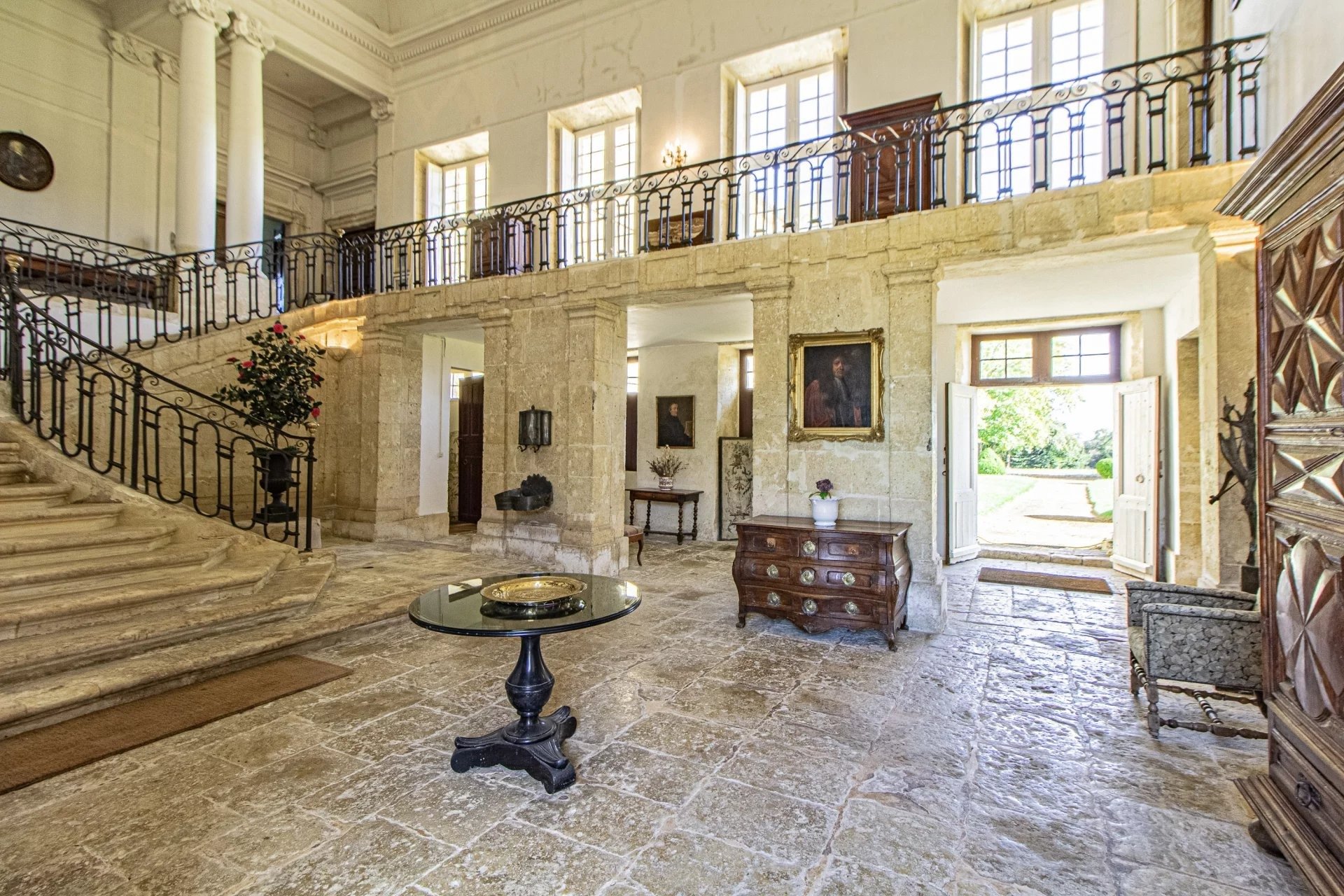
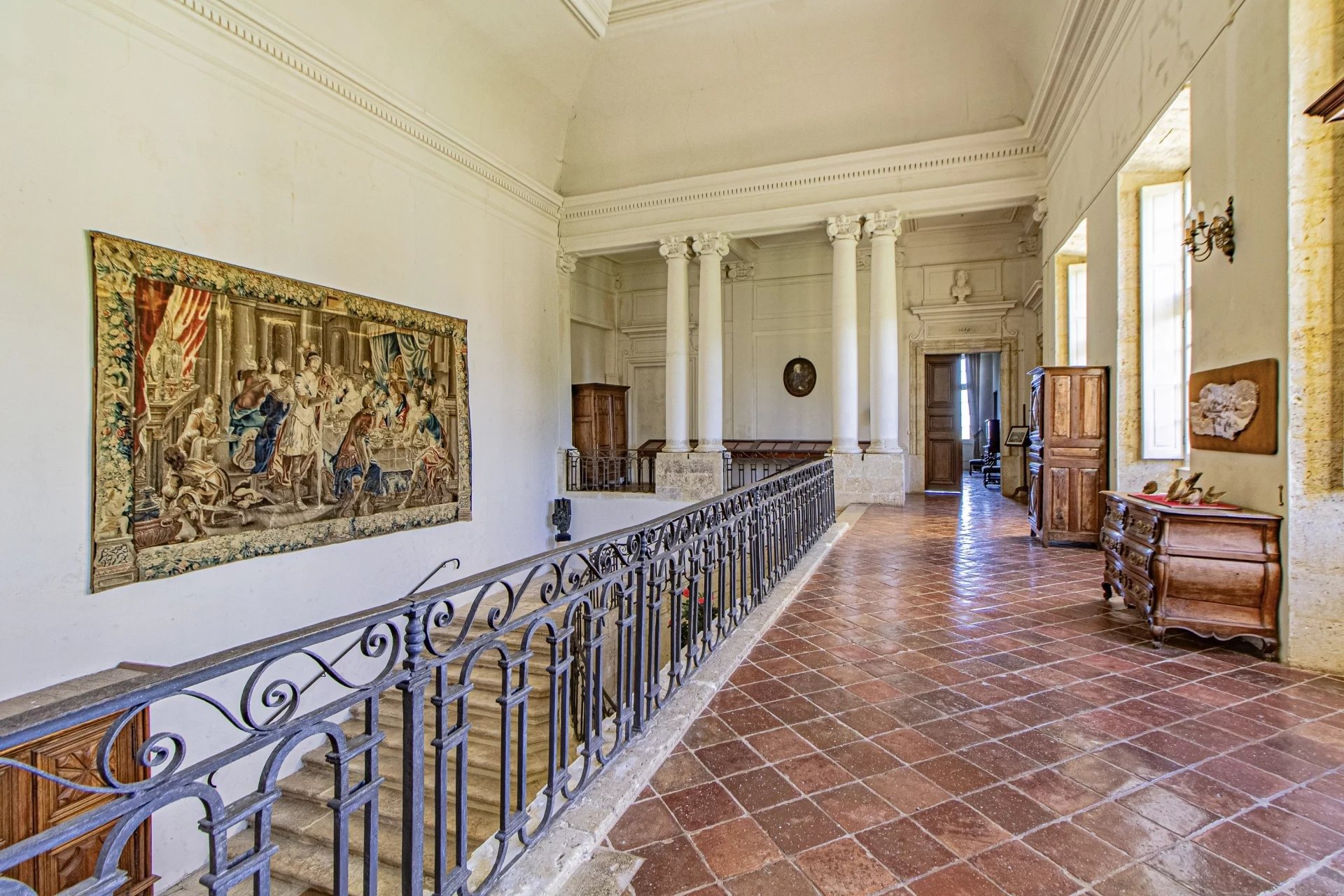
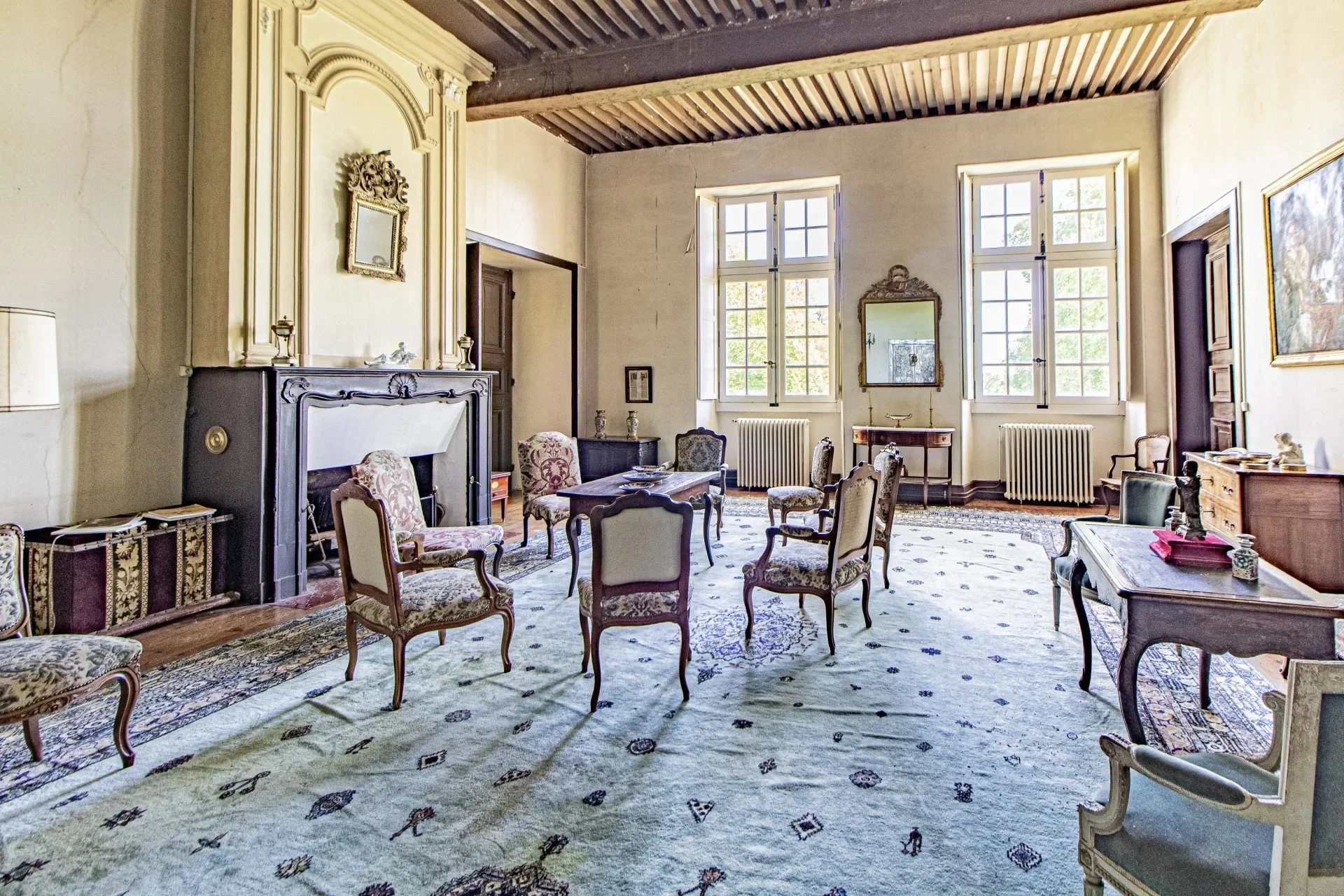
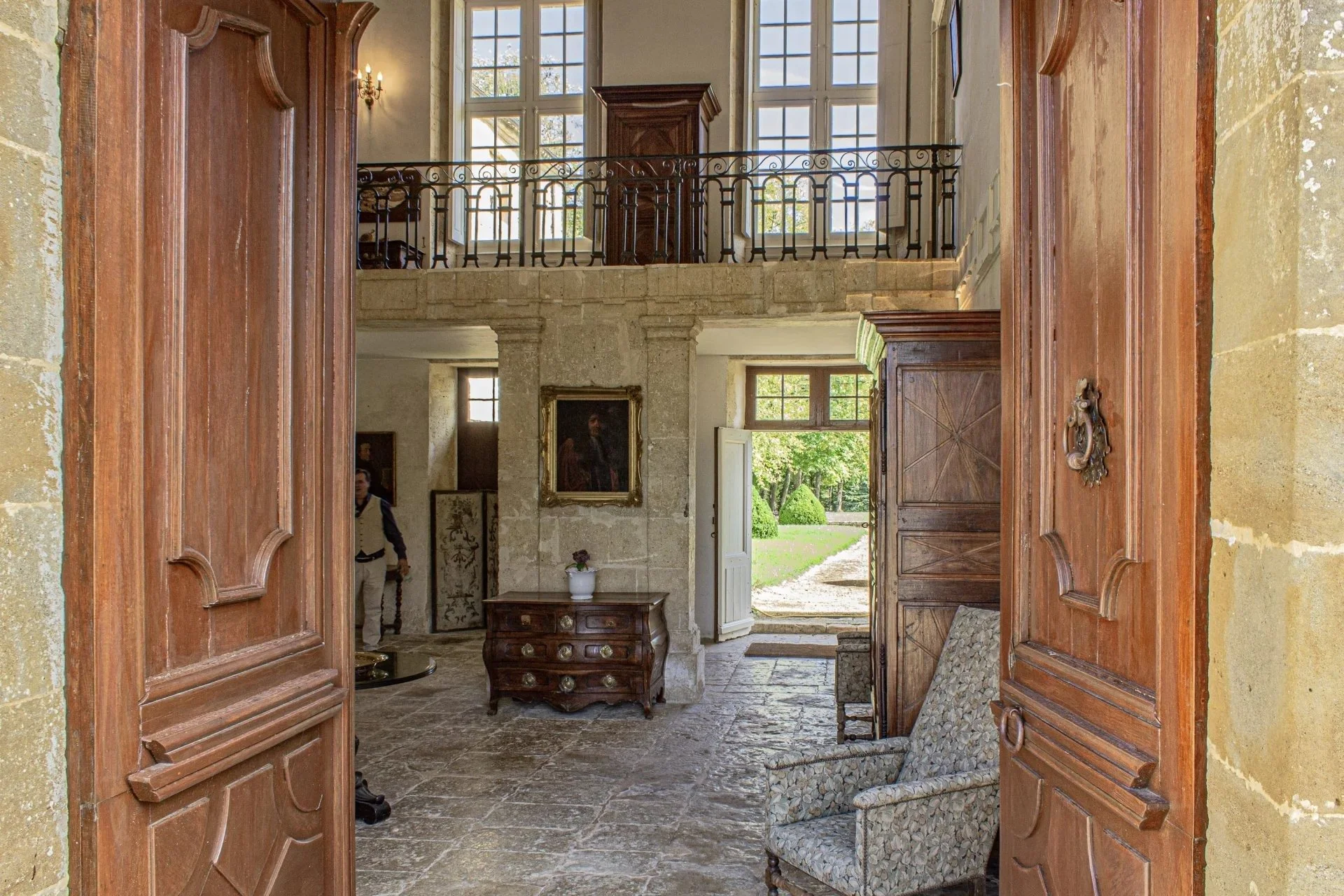
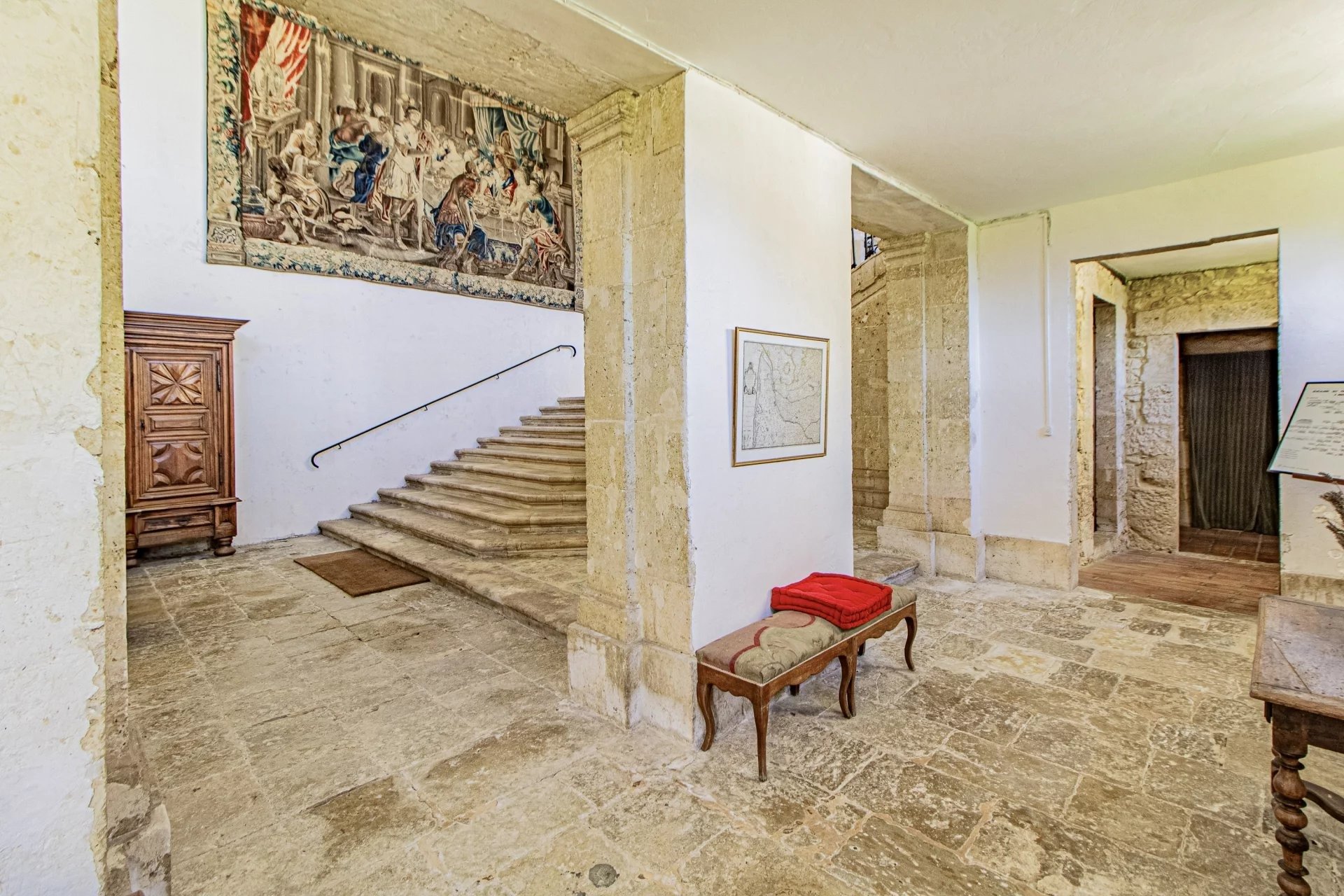
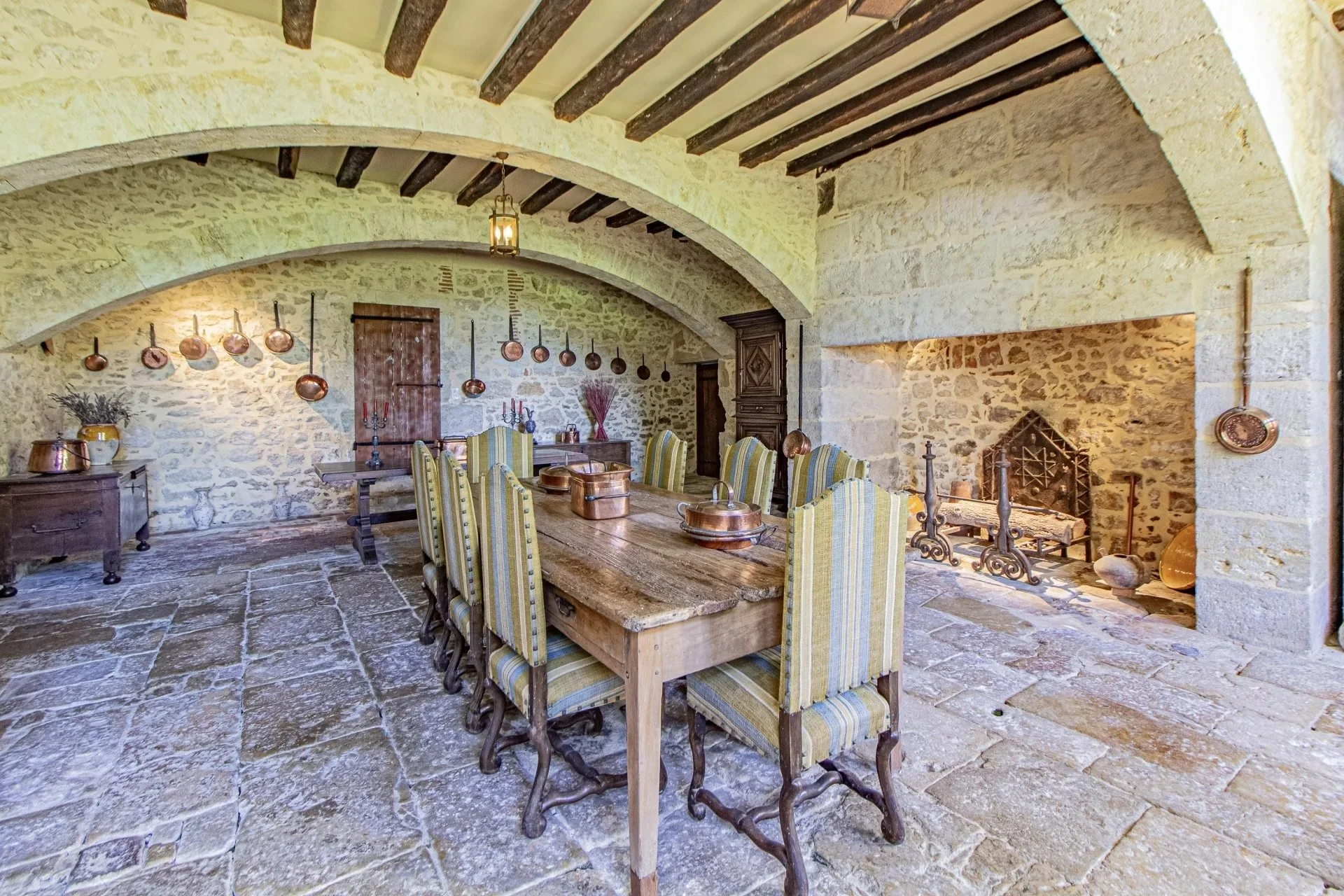
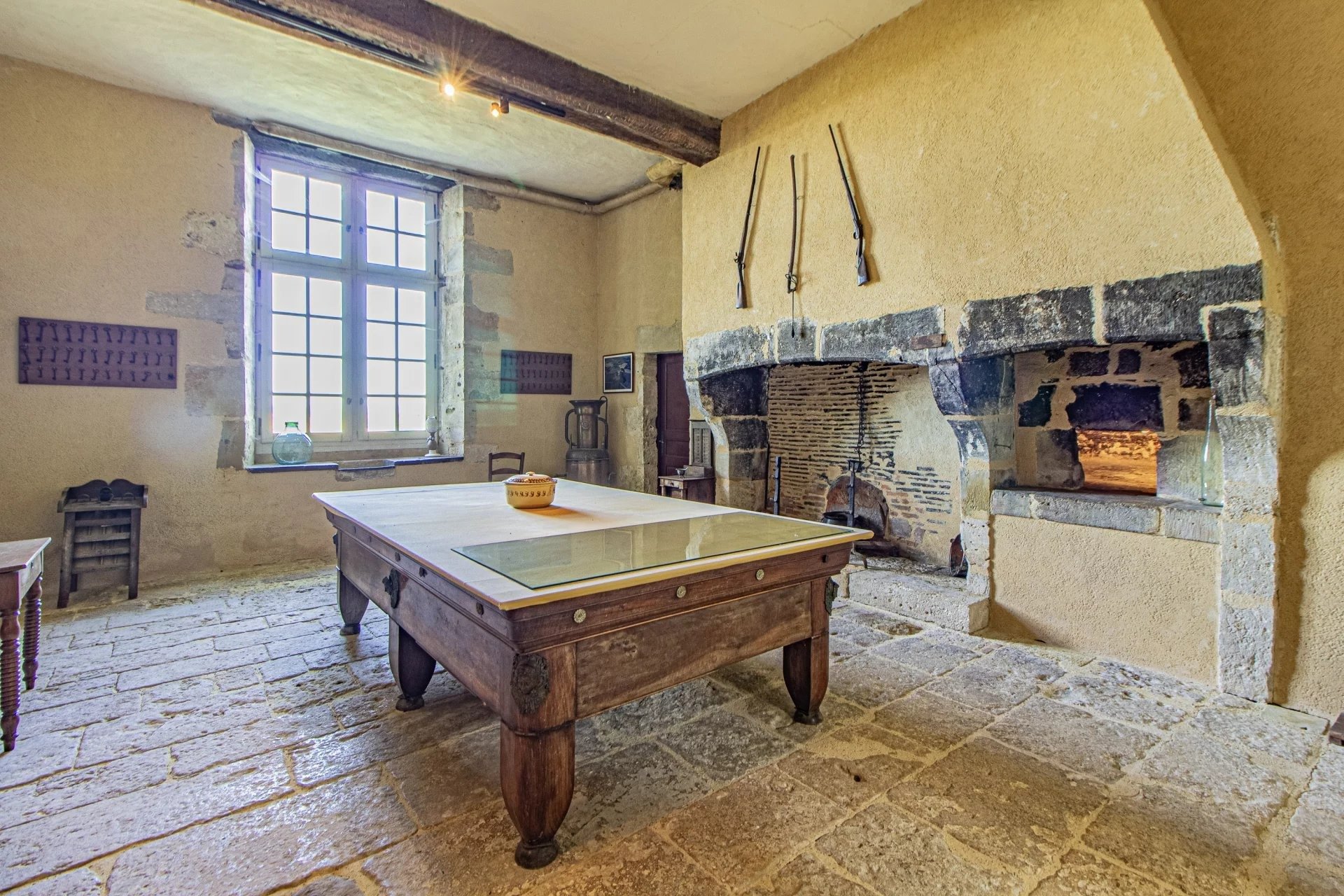
Inside, a monumental staircase rises from the entrance hall, with Ionic pilasters and wrought-iron balustrades. The château also has a former guardroom with a large stone fireplace, a private chapel and an Italian-style ceremonial room with a vaulted ceiling. Many of the rooms retain their historic architectural details, from the fireplaces and decorative plasterwork to the tall windows overlooking the grounds.
But perhaps the most interesting part of Busca-Maniban's history happened beyond its reception rooms, in the vineyards and distillery once associated with the estate.
Armagnac: France's Oldest Brandy and Its Royal Connections
Armagnac is France's oldest documented grape brandy, made by distilling white wine and aging the resulting spirit in oak barrels. Its history reaches back at least to 1310, when a cleric named Vital du Four described the supposed medicinal properties of a local spirit known as aygue ardente, or burning water. By the 15th century, Armagnac was being traded commercially, although production remained closely tied to the farms and vineyards of Gascony.
Unlike Cognac, which became internationally famous through large trading houses, Armagnac developed around smaller estates and family producers. Distillation was often carried out close to the vineyards, with spirits stored in local cellars and shared among relatives, neighbours and guests. The region eventually became known for its distinctive brandies, traditionally distilled only once and matured in oak, developing flavours of dried fruit, spice and wood.
Busca-Maniban was part of that history. The estate had its own distillery, or brûlerie, dating to the middle of the 17th century. The Bureau National Interprofessionnel de l'Armagnac, the organisation representing the region's producers, identifies it as one of the earliest distilleries in Armagnac's history. At the time, the château was surrounded by vineyards, and the family produced its own brandy.
The château is no longer an operating Armagnac distillery, and the property is not currently marketed as a working wine estate. Historic accounts describe a separate distillery building near the château, along with cellars and other agricultural buildings used during its wine-producing past. The estate today retains a wine cellar and several outbuildings, although it is unclear whether the original distillery building forms part of the current offering.
How Marie-Christine de Maniban Introduced Armagnac to Versailles
Its most famous connection came through Marie-Christine de Maniban, the great-granddaughter of Thomas de Maniban. She inherited the château from her father, Joseph-Gaspard, who died in 1762. By then, the family had accumulated substantial estates and vineyards across Gascony, and Armagnac was already being produced on their land.
Marie-Christine married the Marquis de Livry, a senior official in the household of King Louis XV at Versailles. She also acquired a residence in Paris, where she regularly hosted salons for the city's aristocracy. At these gatherings, she introduced her guests to Armagnac produced at her family's distillery in Gascony, a potent brandy known as l’eau ardente, or “fiery water.”
As the spirit gained popularity among Parisian high society, Marie-Christine used her connections at Versailles to introduce it to the royal court. The Armagnac producers' association credits her as the “first ambassador of Armagnac” for helping bring the regional brandy to a wider and more influential audience.
The château's history continued long after the de Maniban family's prominence at court. In January 1803, following the upheavals of the French Revolution, the estate was acquired by Jean-Robert Rizon, a physician from the nearby town of Condom. It subsequently passed through his descendants, with the property eventually divided between branches of the family.
More than two centuries later, Busca-Maniban retains much of its original architecture. Its façades and roofs, grand staircase, former arms room and chapel have been protected as French Monuments Historiques since 1972, while its historic dovecote received protection in 1967.
A Historic French Château for Sale in Gascony for €2.6 Million
Today, the château offers the possibility of continuing its life as a private country residence or adapting it for a new purpose. Its large reception rooms, courtyard, gardens and outbuildings could lend themselves to a boutique hotel, guest estate or exclusive event venue, subject to the necessary approvals. Its scale also offers considerable flexibility for a buyer interested in restoring or adapting the property while preserving its historic character.
The location is another part of its appeal. Gascony remains one of France's less internationally recognised château markets, with historic properties set among working farmland, vineyards and villages where agricultural traditions remain central to daily life. Around Valence-sur-Baïse and Condom, the landscape is defined by the vineyards of the Armagnac-Ténarèze appellation, country roads, market towns and centuries-old stone buildings.
After more than 220 years in the same family's ownership, Busca-Maniban is looking for its next owner. With its connection to the court of Louis XV, its place in the history of Armagnac and more than four centuries of architecture, the château offers a rare opportunity to own a part of Gascony's heritage.
All photographs belong to the listing agency. See more on Beaux Villages Immobilier.