A Medieval Château in the Jura Wine Region Where Henri IV Once Stayed is Listed for €1.3 Million
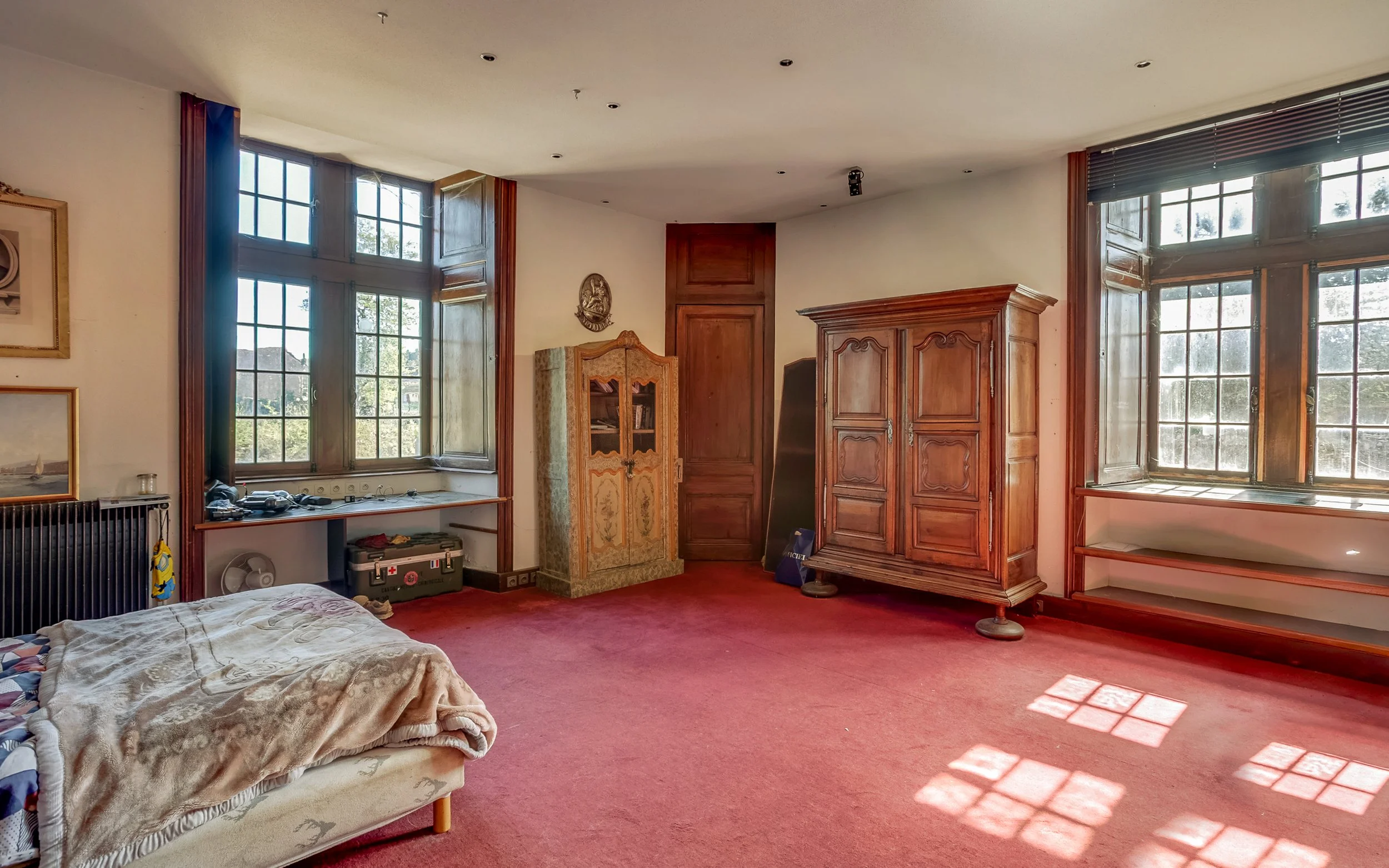
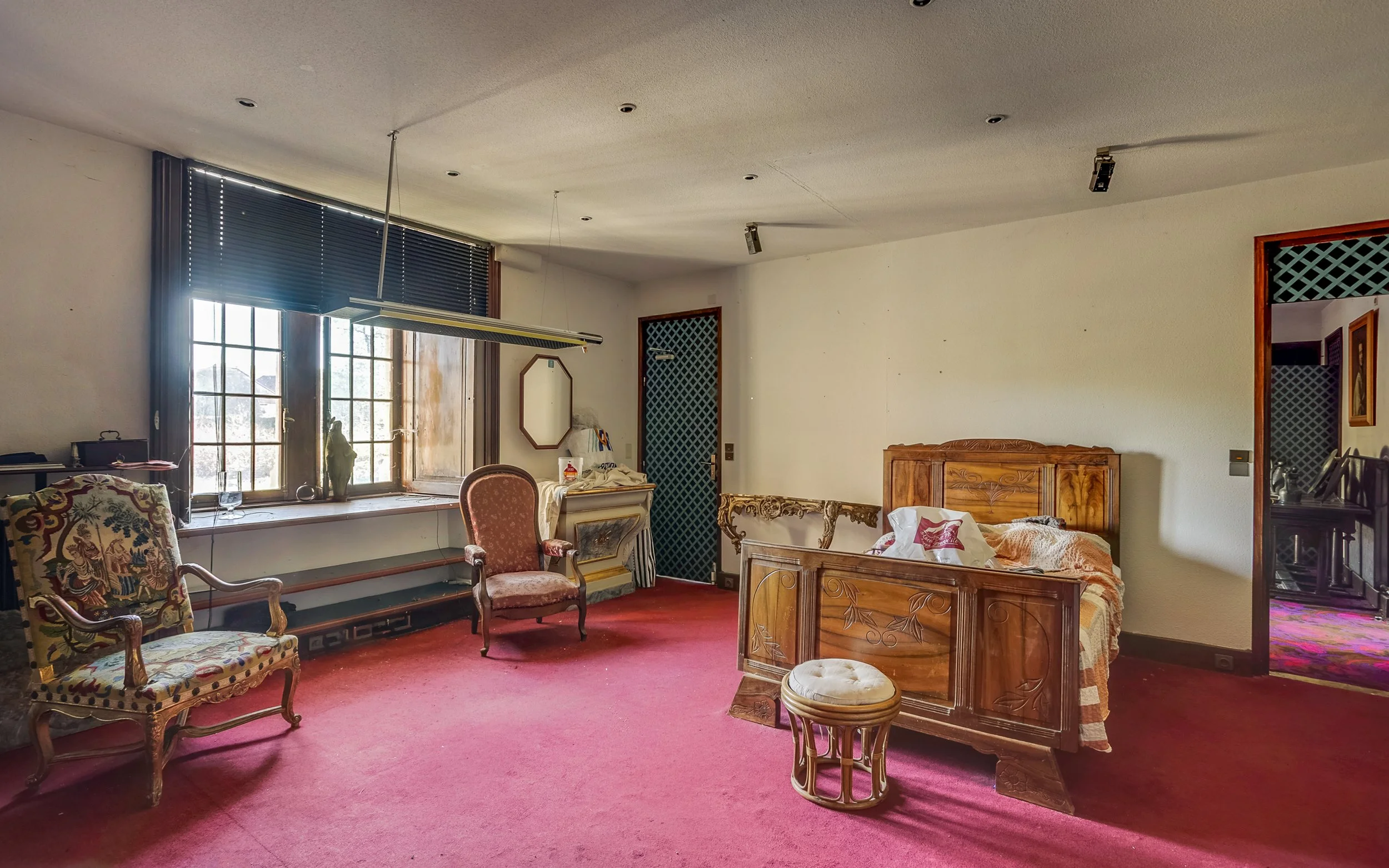
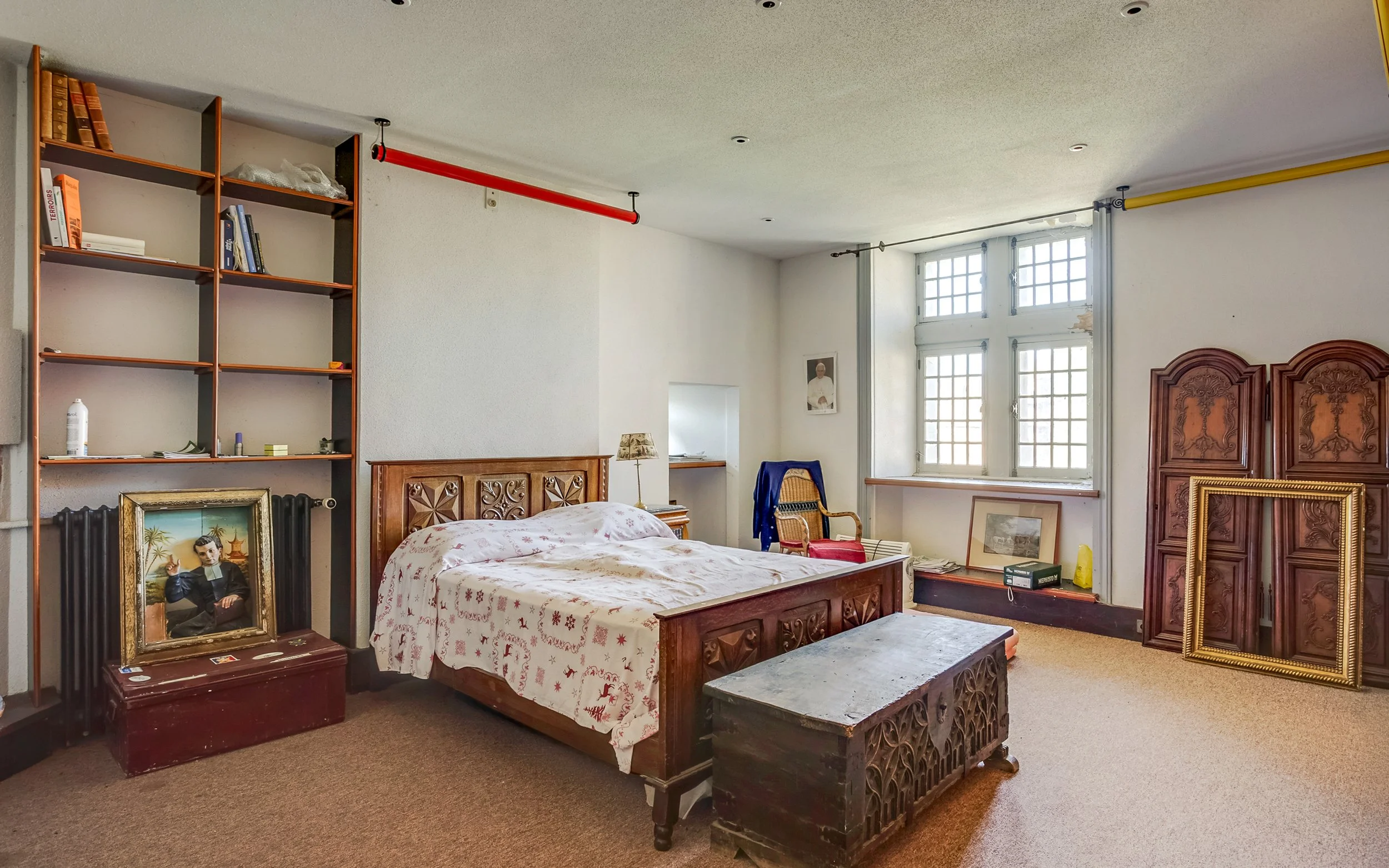
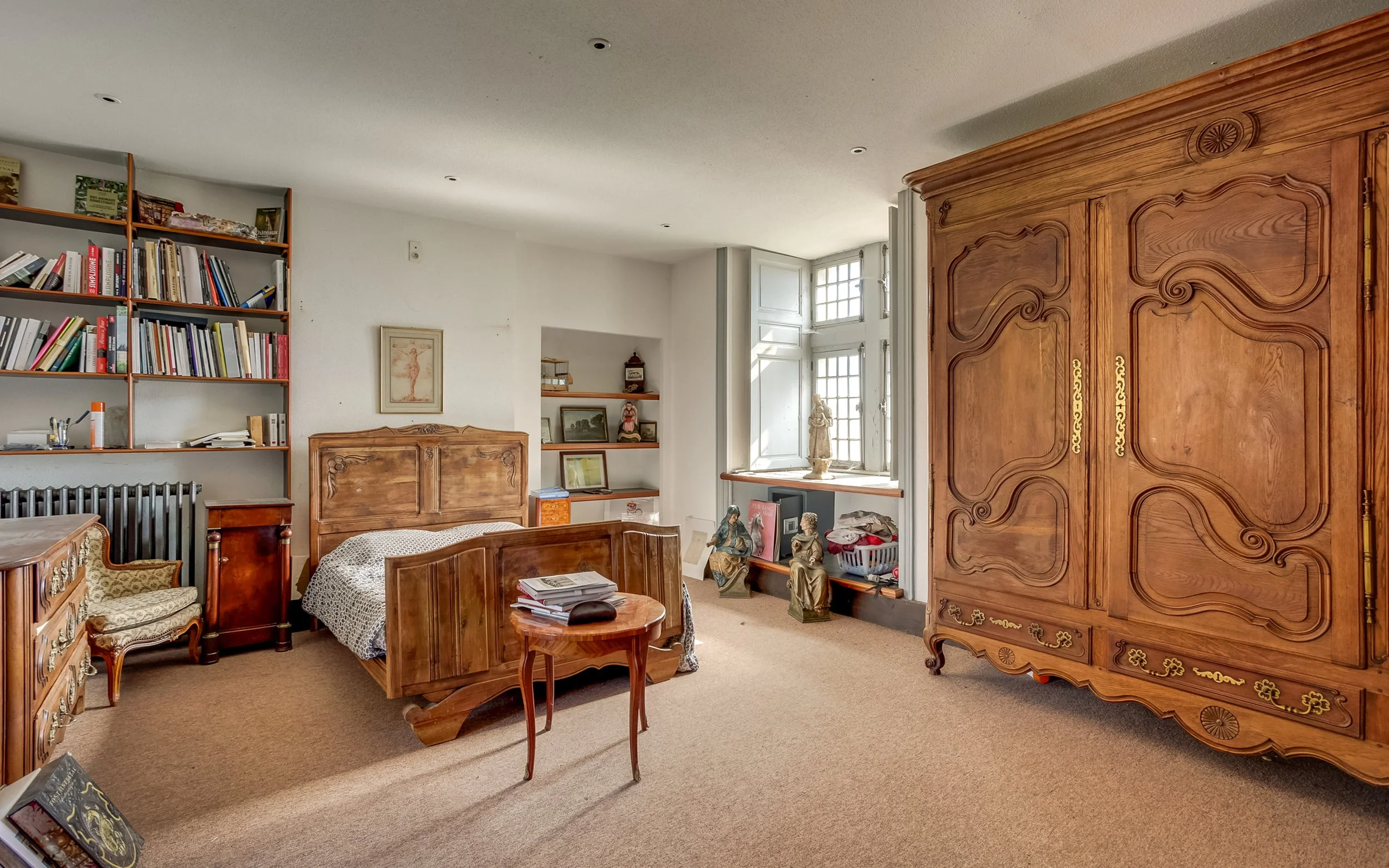
Bedrooms: 7 Bathrooms: 2 Interior: 800 m² (8,611 ft²)
Lot: 7 ha (17.3 acres)
Amenities: Pond, swimming pool, orchard, natural springs, mature parkland, former stables, barn, orangery, workshops, cellars and extensive attic spaces.
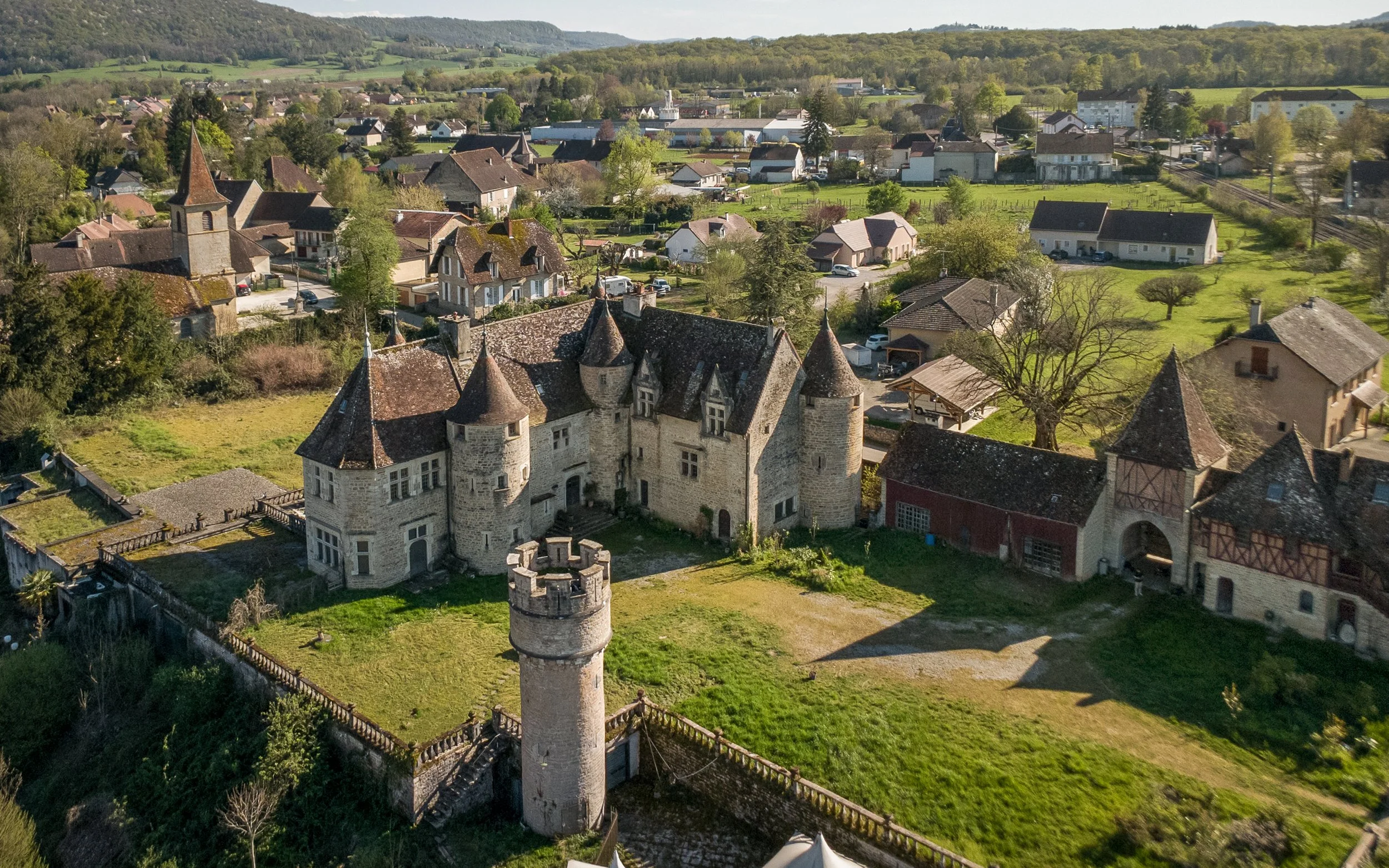
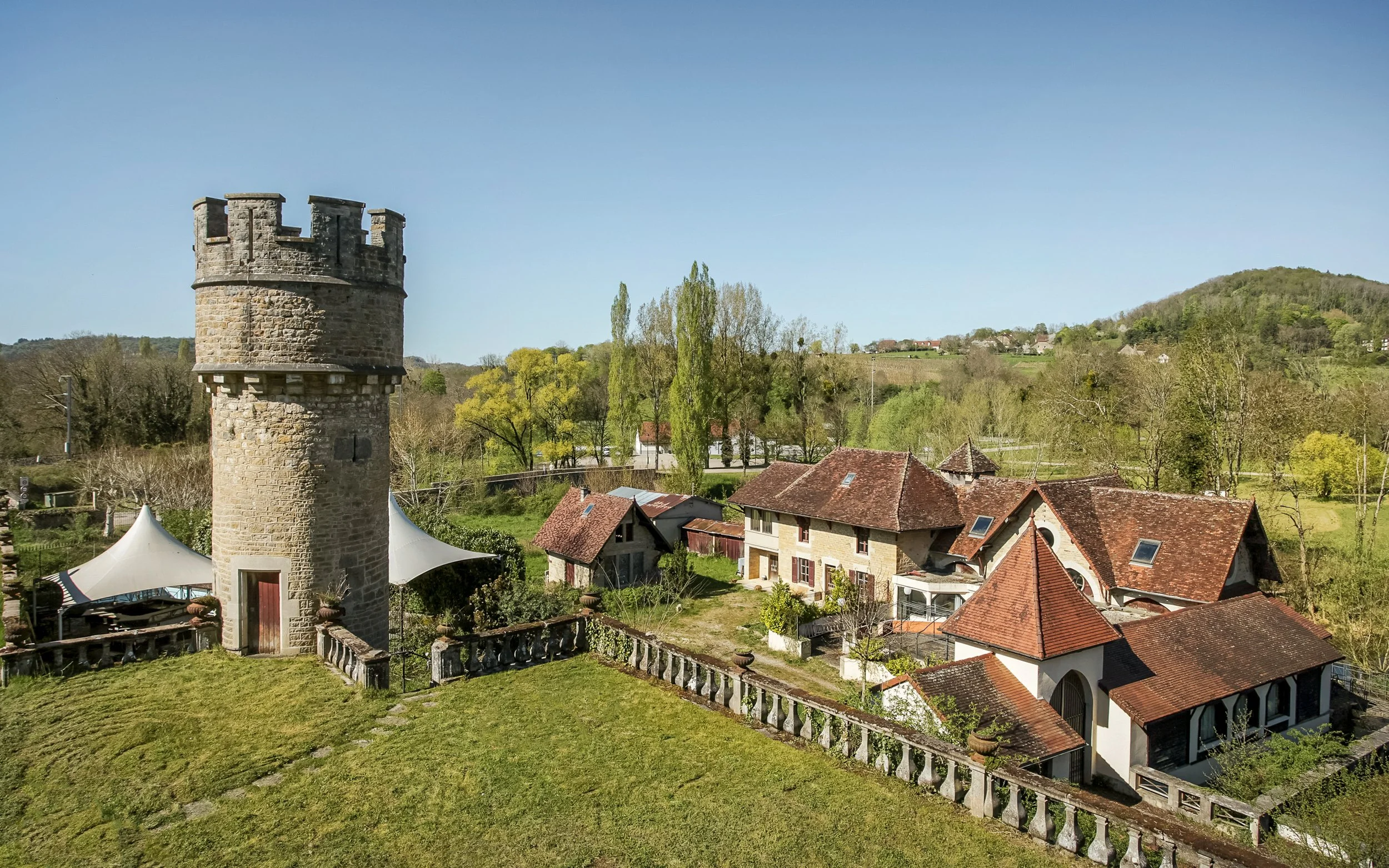
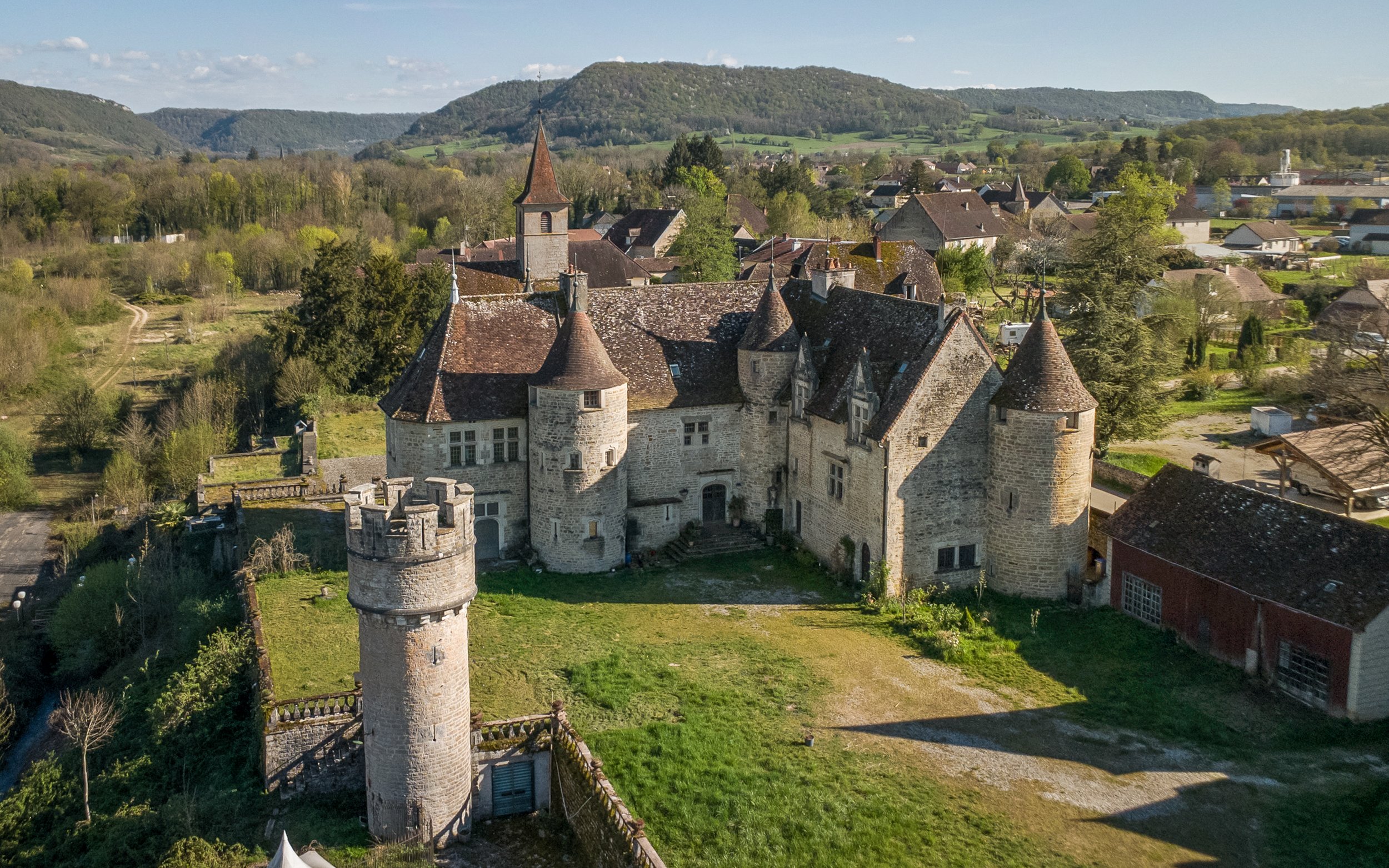
In the small village of Domblans, surrounded by vineyards in France’s Jura wine country, a medieval château with nearly six centuries of history has come to market. Listed for €1,300,000 with Arrière-Cour Immobilier, Château de Domblans offers nearly 800 m² (8,611 ft²) of living space, 7 bedrooms and a 7-hectare (17.3-acre) estate with a pond, swimming pool, orchard, natural springs and a collection of historic outbuildings.
The Medieval Origins of Château de Domblans
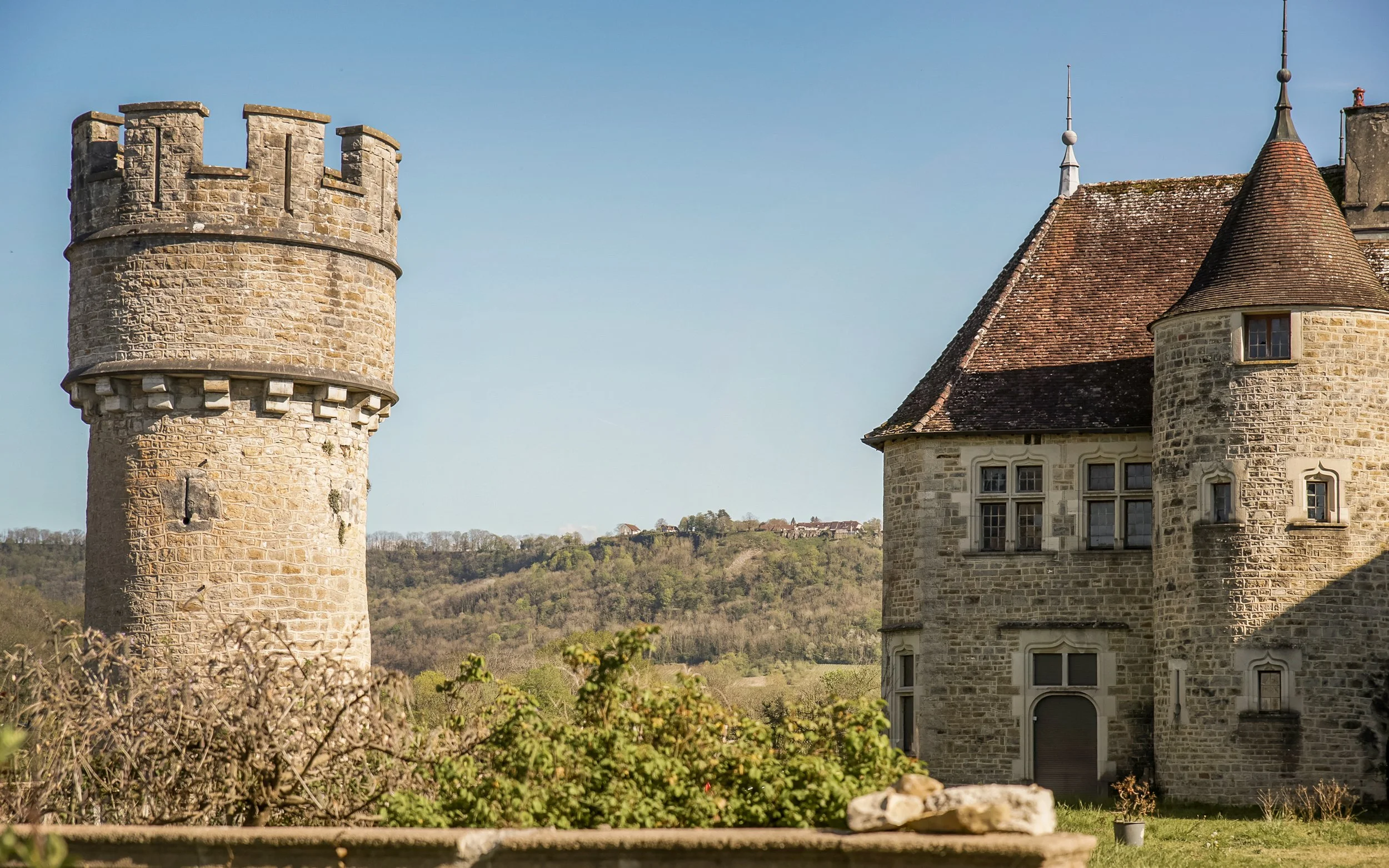
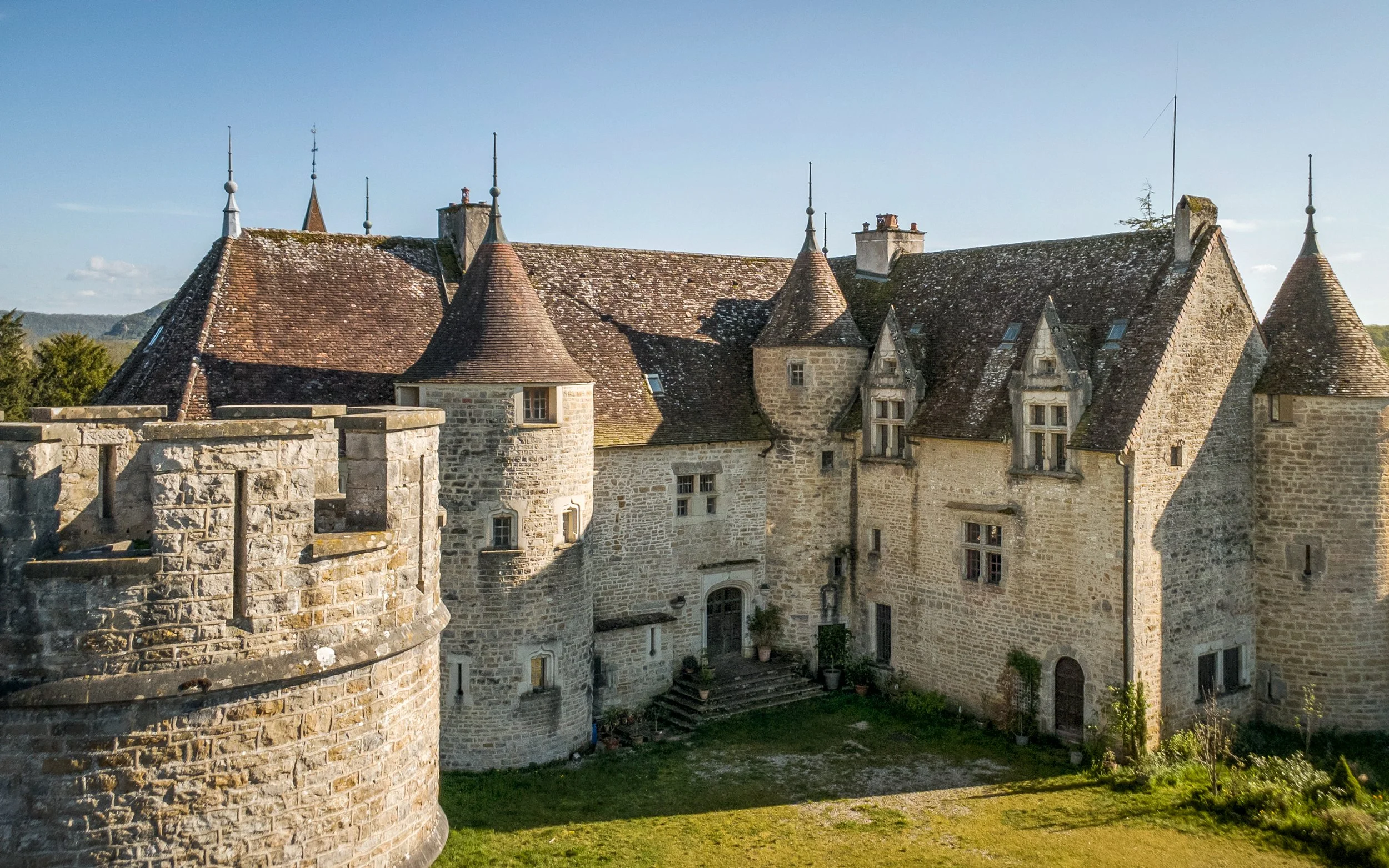
The château standing today largely dates to the 15th century, although the history of the site appears to stretch considerably further back. According to local historian Roger Nozière, the present building was constructed over the remains of an earlier fortified castle, possibly dating from before the 10th century, which is said to have resisted an English assault during the Hundred Years’ War.
The château as we know it began to take shape in the 1440s. Claude de Vautravers acquired Domblans in 1444 and two years later received permission from Philippe the Good, Duke of Burgundy, to rebuild the earlier stronghold after it had been damaged during the war.
Arrière-Cour Immobilier
Claude de Vautravers and the Dukes of Burgundy
Vautravers was not simply a local landowner. He served as cupbearer to the Duke of Burgundy, placing Domblans within the orbit of one of the most powerful courts in 15th-century Europe.
Charles the Bold Stayed at Château de Domblans in 1476
The Burgundian connection continued. Local histories record that Charles the Bold stayed at Domblans in August 1476, during the final dramatic year of his life. Only weeks earlier, he had suffered a devastating defeat against the Swiss at the Battle of Morat. Less than six months later, he would be killed outside Nancy.
Henri IV and Château de Domblans
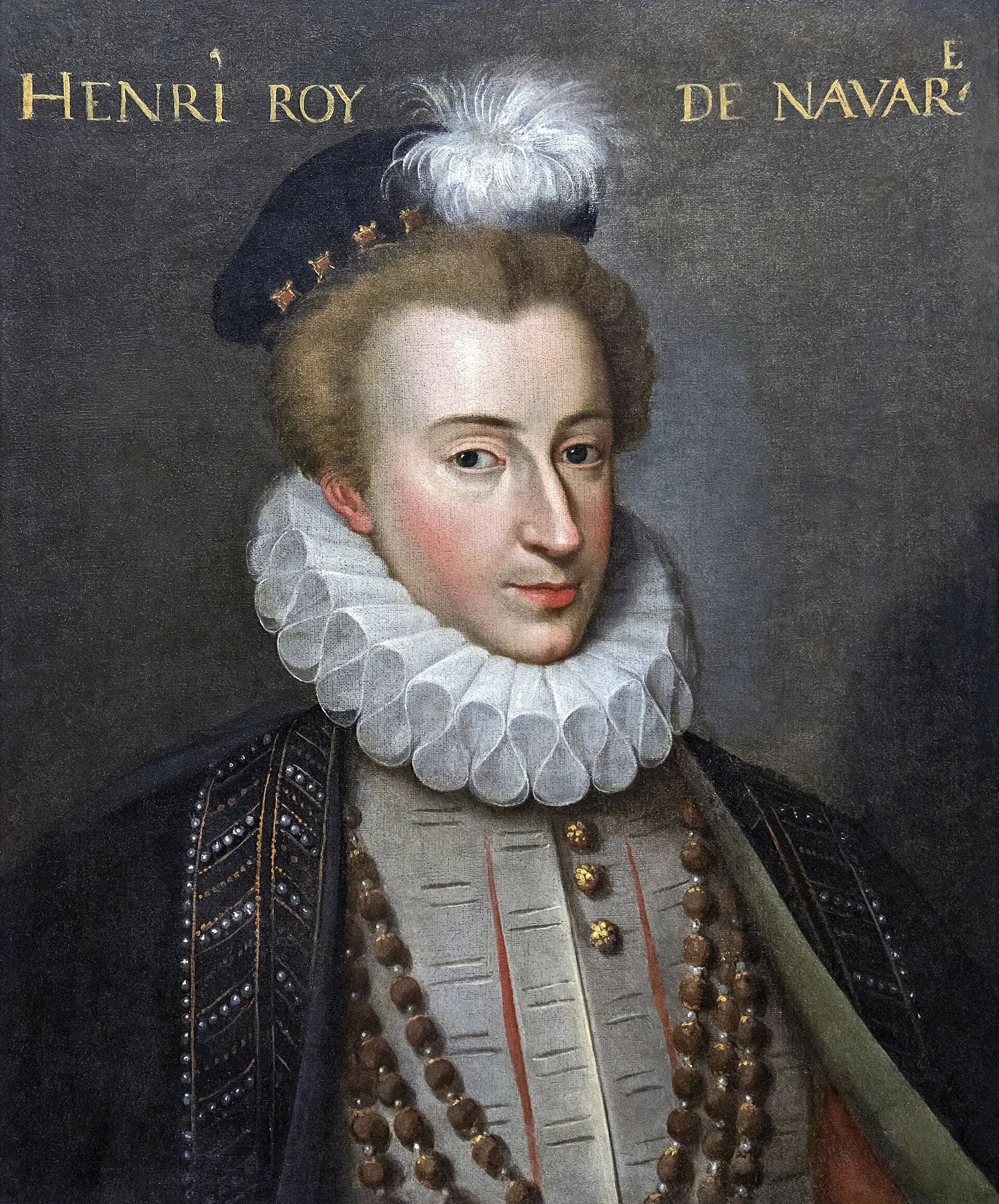
Henri de Bourbon, then King Henri III of Navarre and later Henri IV of France, c. 1575. Oil on canvas, Château de Pau. Photo: Didier Descouens / Wikimedia Commons.
Henri IV was one of the most important kings in French history and the first monarch of the Bourbon dynasty. Born Henri de Bourbon, he was originally King of Navarre and one of the leading Protestant figures during the French Wars of Religion before inheriting the French crown in 1589. His accession was fiercely contested, and he spent the early years of his reign fighting to secure the kingdom.
In 1593, he converted to Catholicism, clearing the way for him to enter Paris the following year. The decision gave rise to one of the most famous lines associated with any French king: “Paris is well worth a Mass.” The exact quote may not be authentic, but it neatly captures the political pragmatism for which Henri IV became known. He would later help bring an end to decades of religious conflict and issue the Edict of Nantes in 1598, granting significant protections to French Protestants.
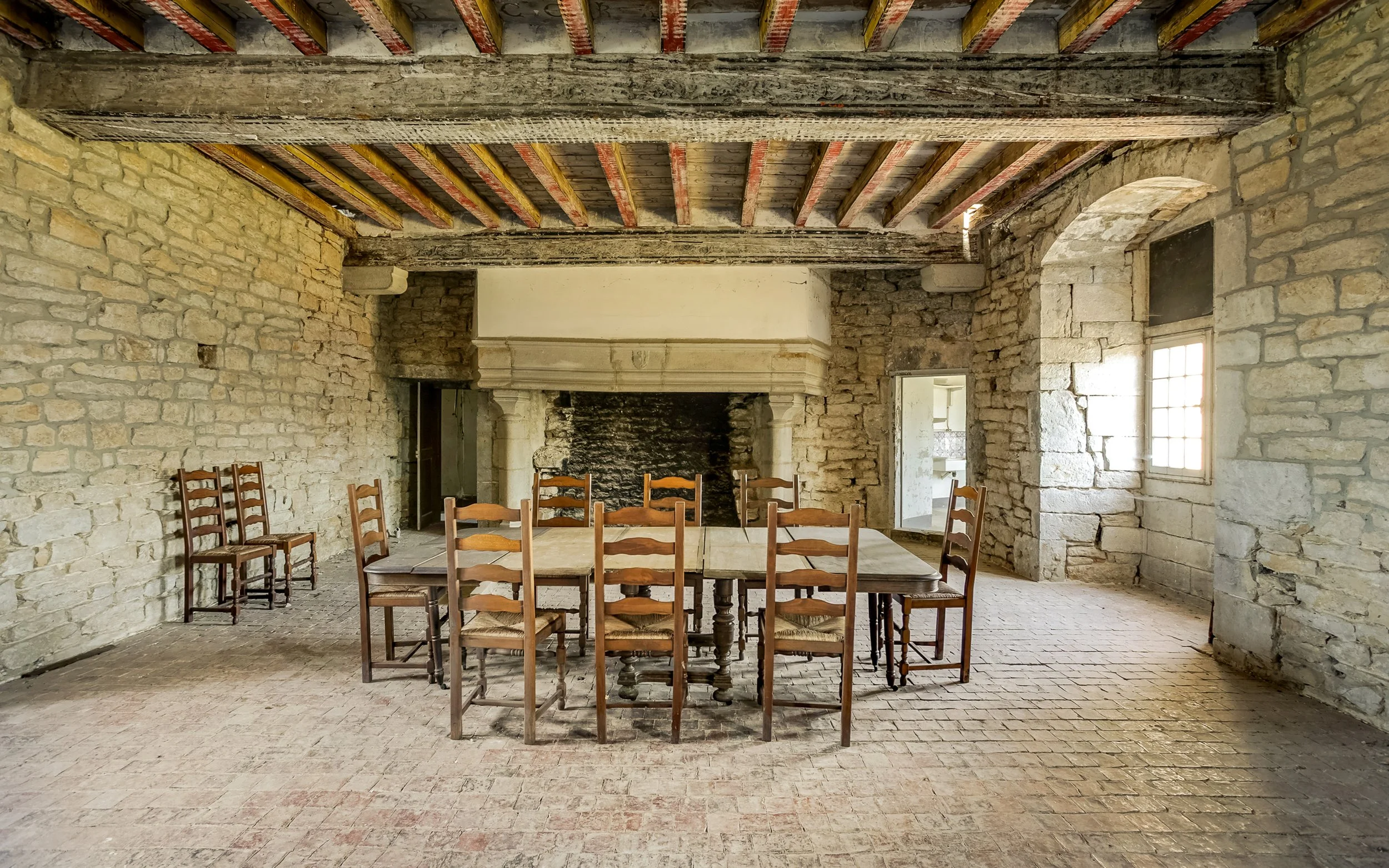
From August 15 to 19, 1595, Henri IV stayed at Château de Domblans, hosted by the widow of Philibert de Vautravers. According to local tradition, Henri IV slept in a room known as the chambre rouge, or Red Room. The château’s historic chambre rouge was described as a grand room with vermilion-painted beams and a large fireplace.
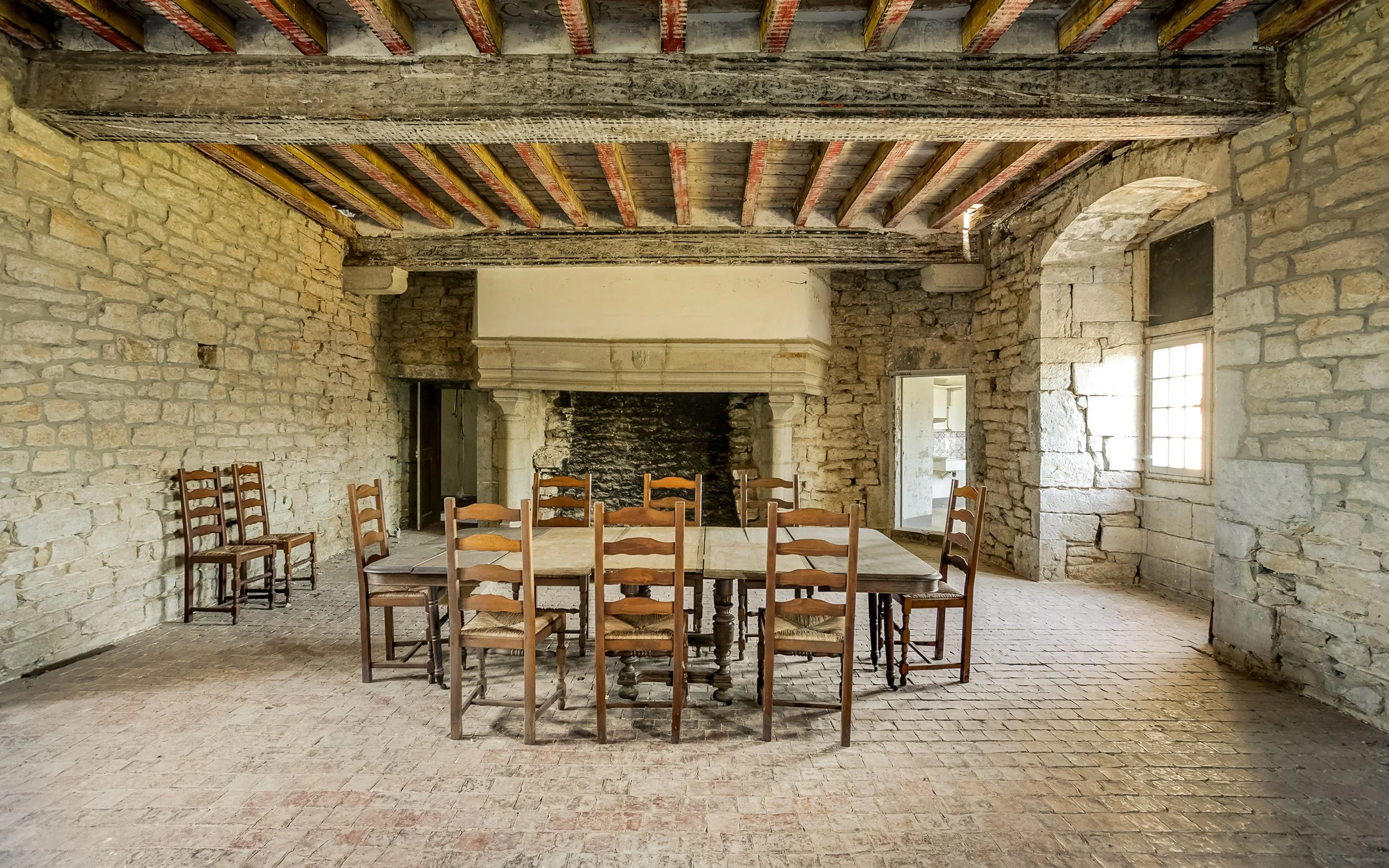
Could this red-beamed room be where Henri IV slept? According to local tradition, the Bourbon king stayed in the château’s chambre rouge during his visit in 1595. Arrière-Cour Immobilier
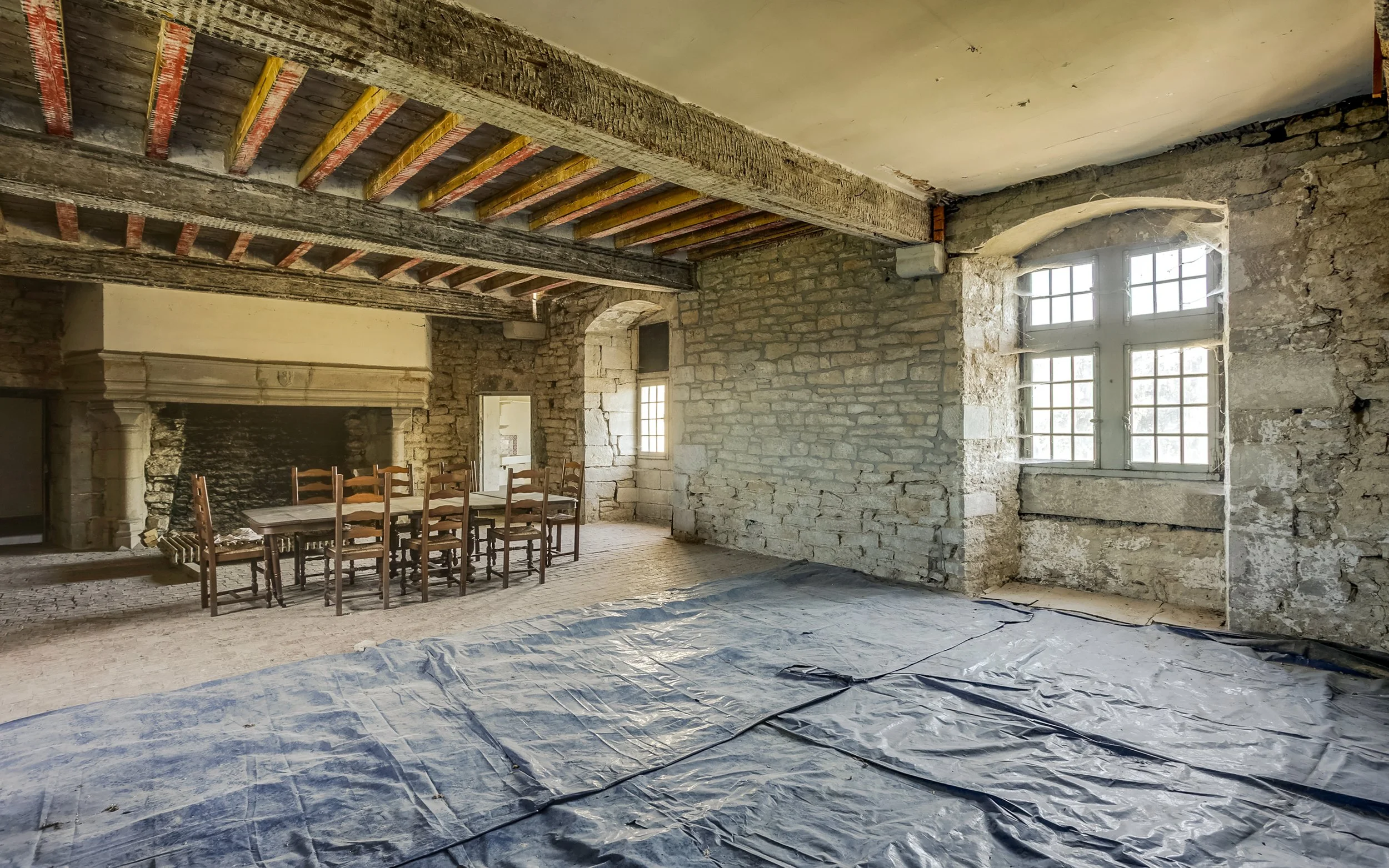
One of the few interiors pictured in the current listing makes that detail particularly intriguing. The room has a monumental stone fireplace and a heavy timber ceiling still marked by conspicuous bands of red paint. The listing does not identify it as Henri IV’s historic chambre rouge, so there is no way to confirm the connection, but it could conceivably be the room associated with his stay.
When the Jura Was Still Part of Spanish-Controlled Franche-Comté
The timing of Henri IV’s visit makes the story even more interesting. In 1595, the Jura was not part of France. Franche-Comté belonged to the Habsburg domains ruled by Philip II of Spain, and Henri IV was campaigning through the region during France’s war with the Spanish crown.
So this was not simply a king stopping for a few nights at a country château. Henri IV was only six years into his reign and was effectively a French king staying in Spanish-controlled territory during a military campaign.
Franche-Comté would remain outside France for much of another century before becoming permanently French under Louis XIV in 1678.
Arrière-Cour Immobilier
The Architecture and 19th-Century Restoration of Château de Domblans
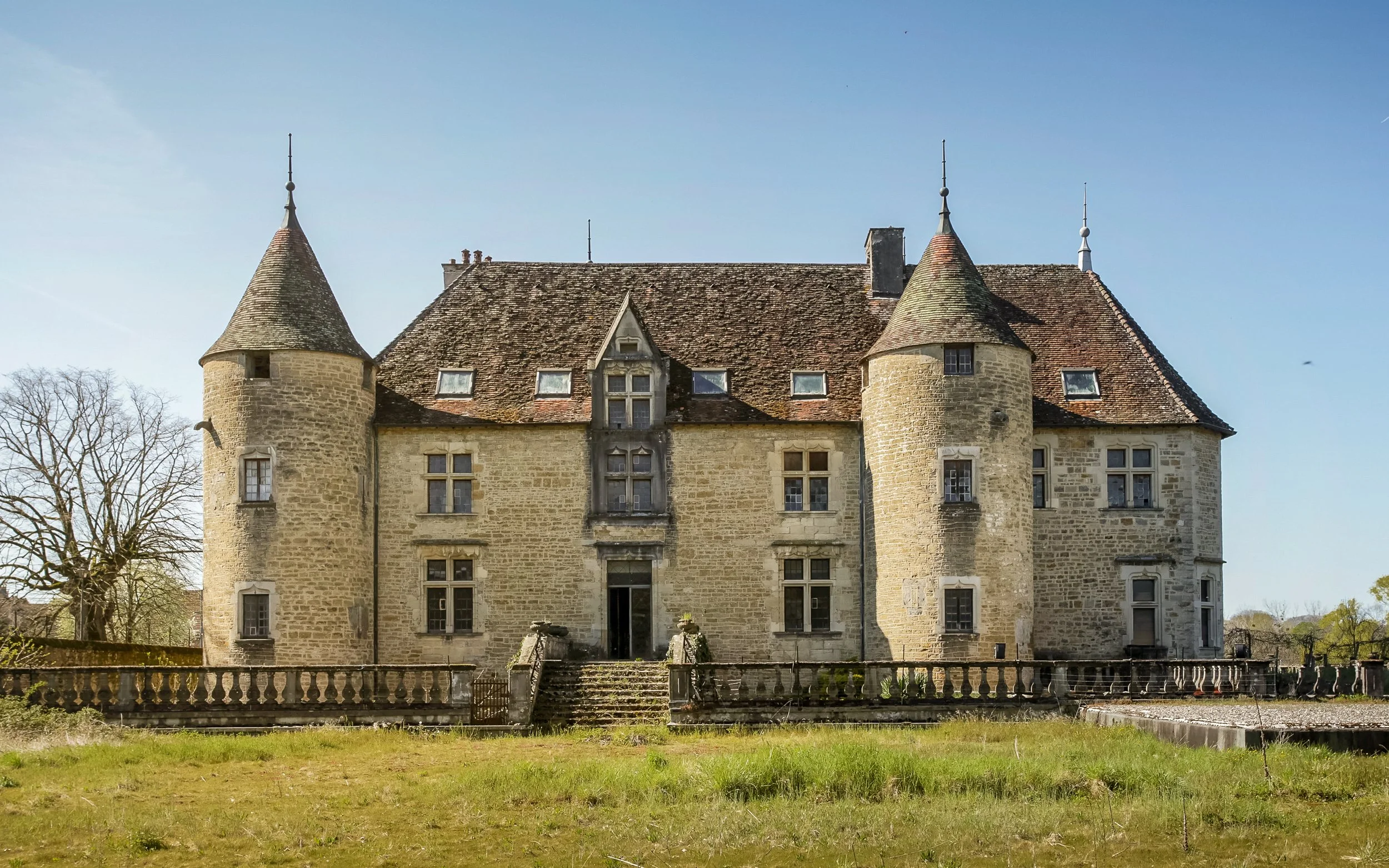
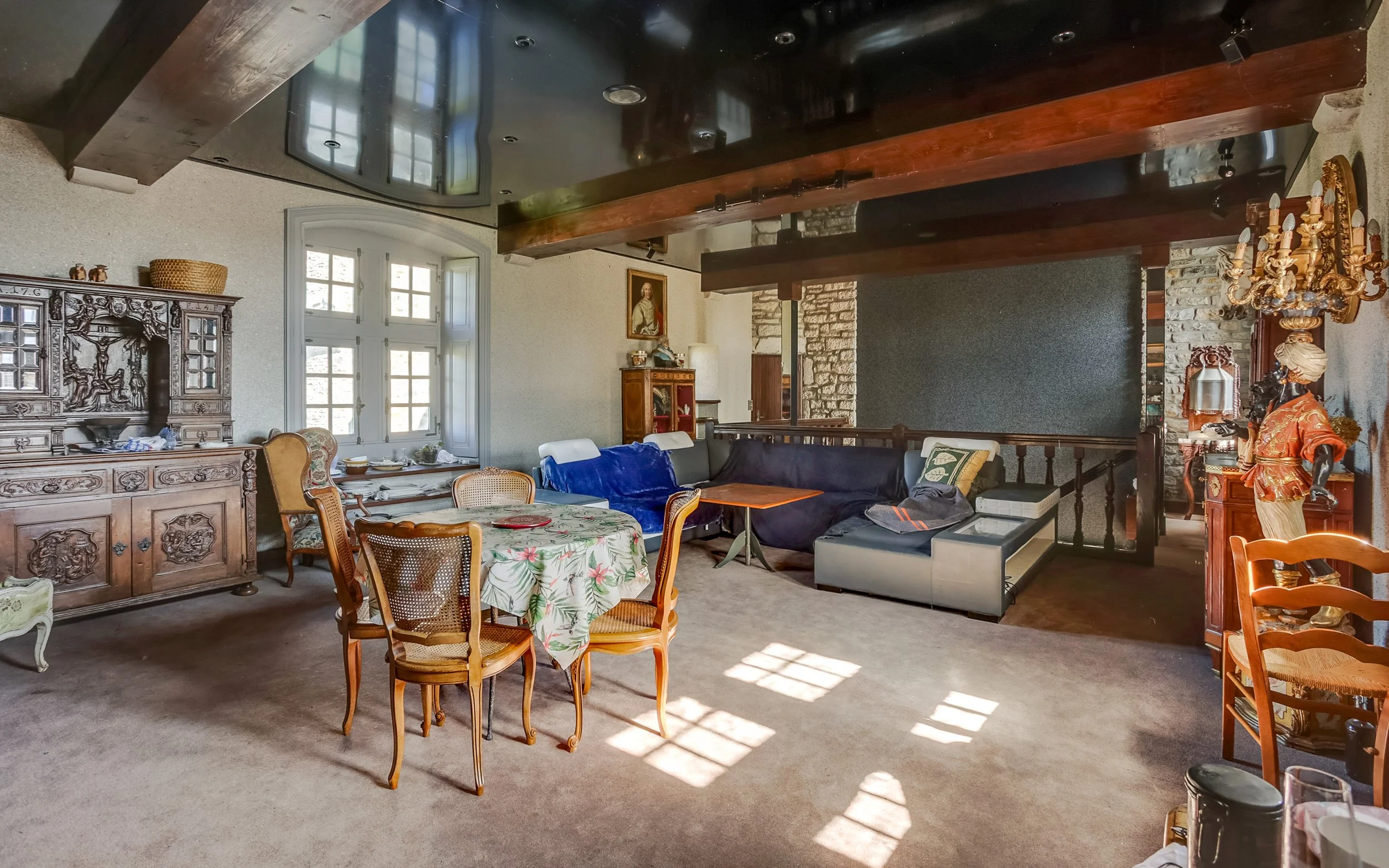
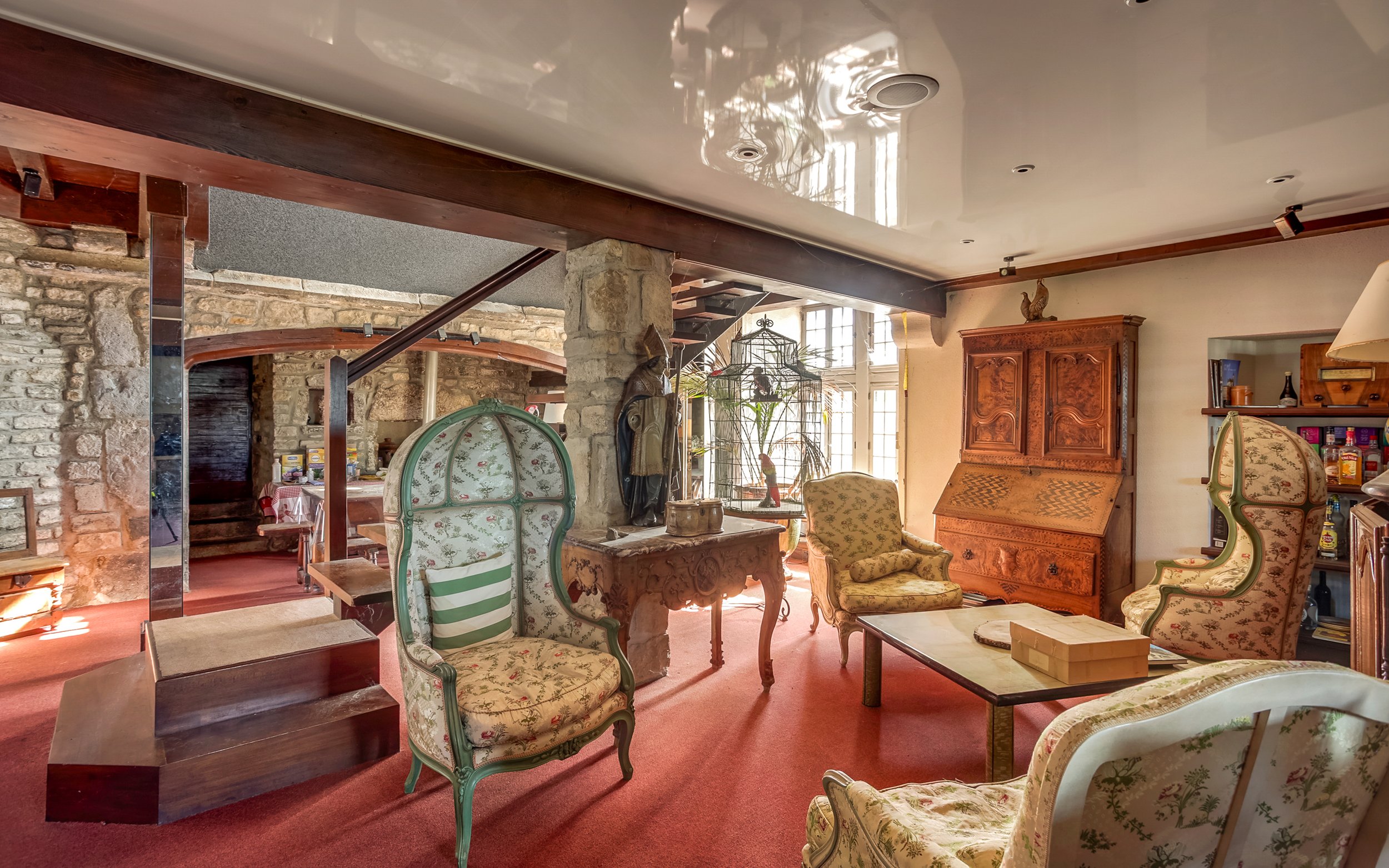
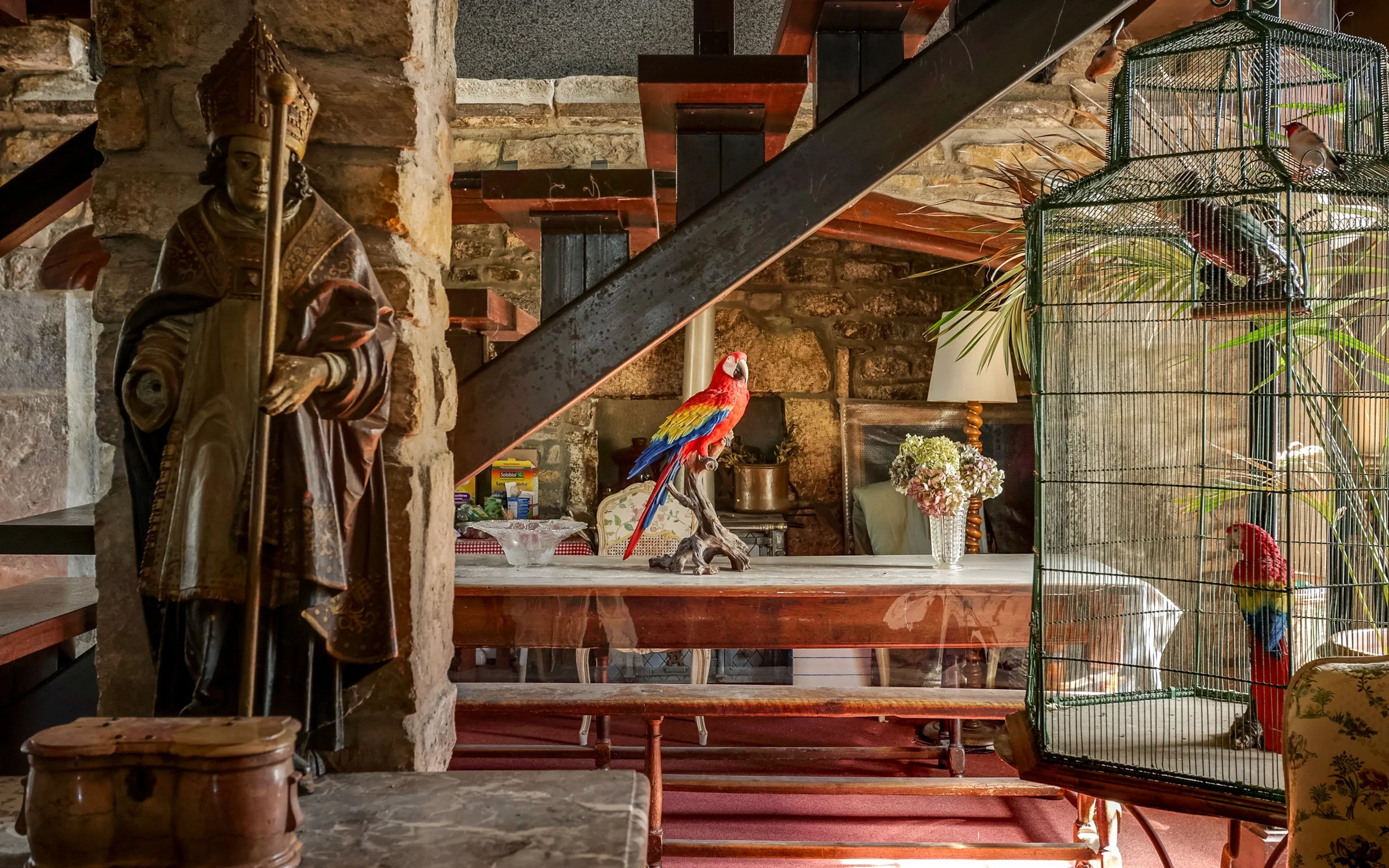
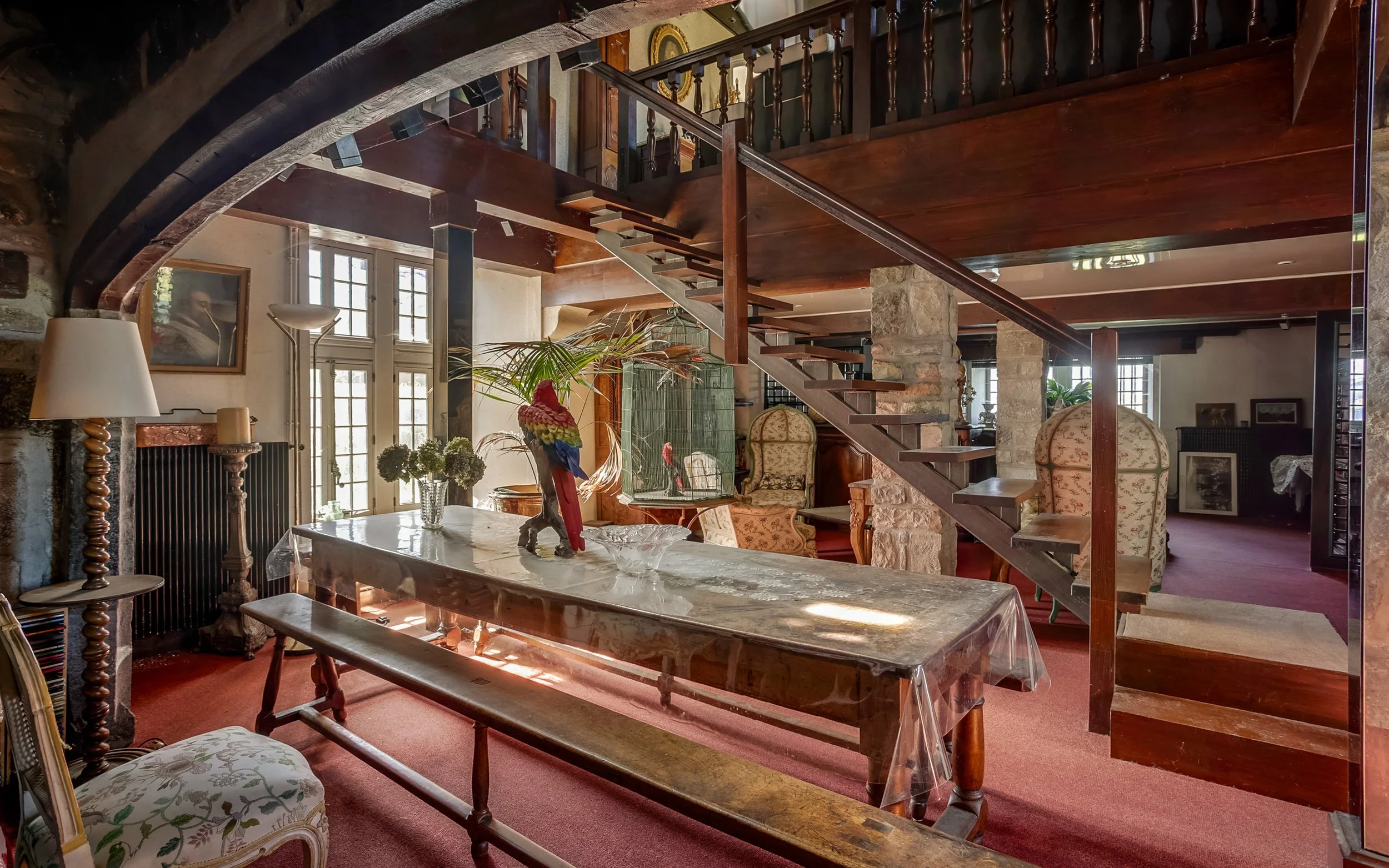
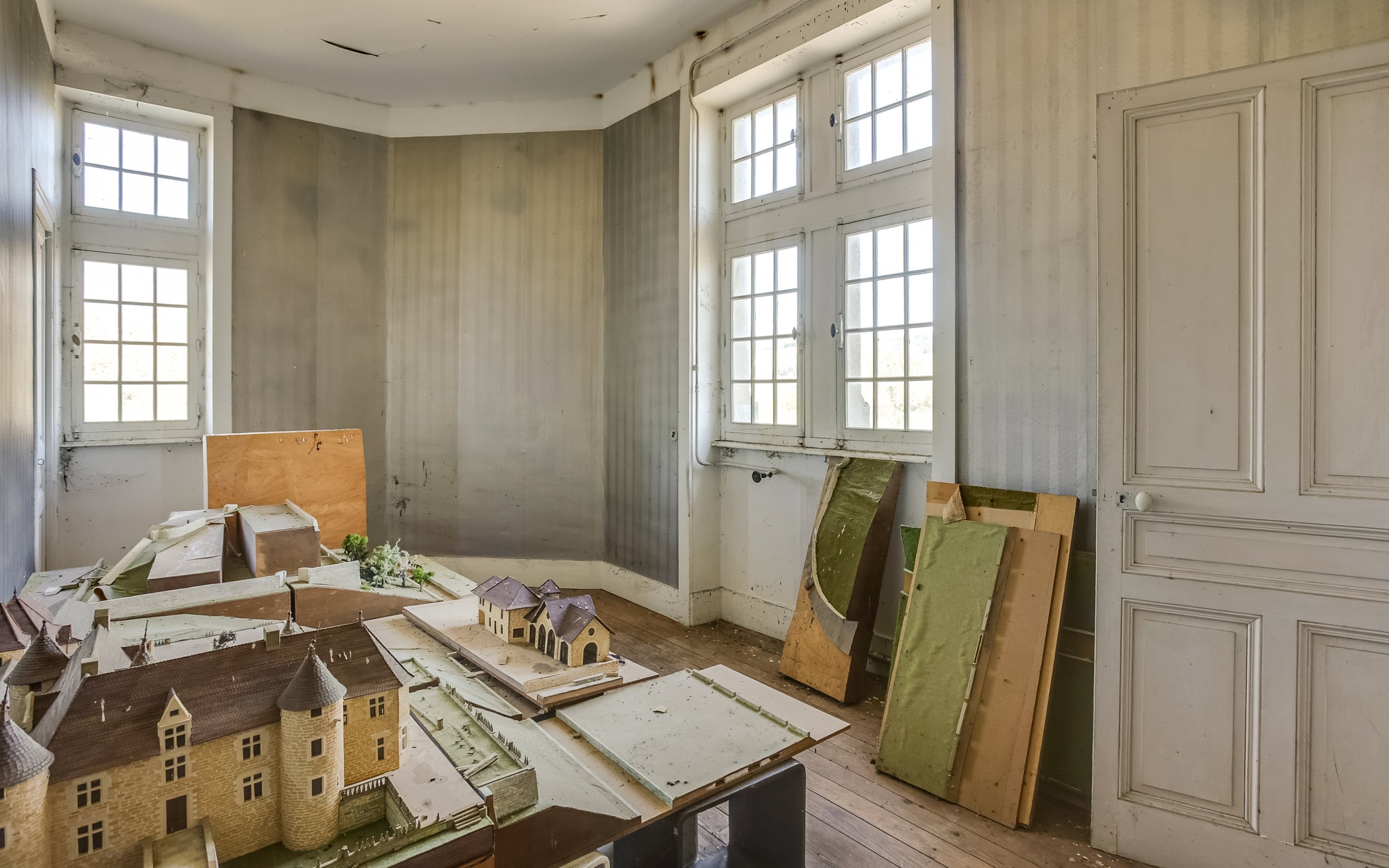
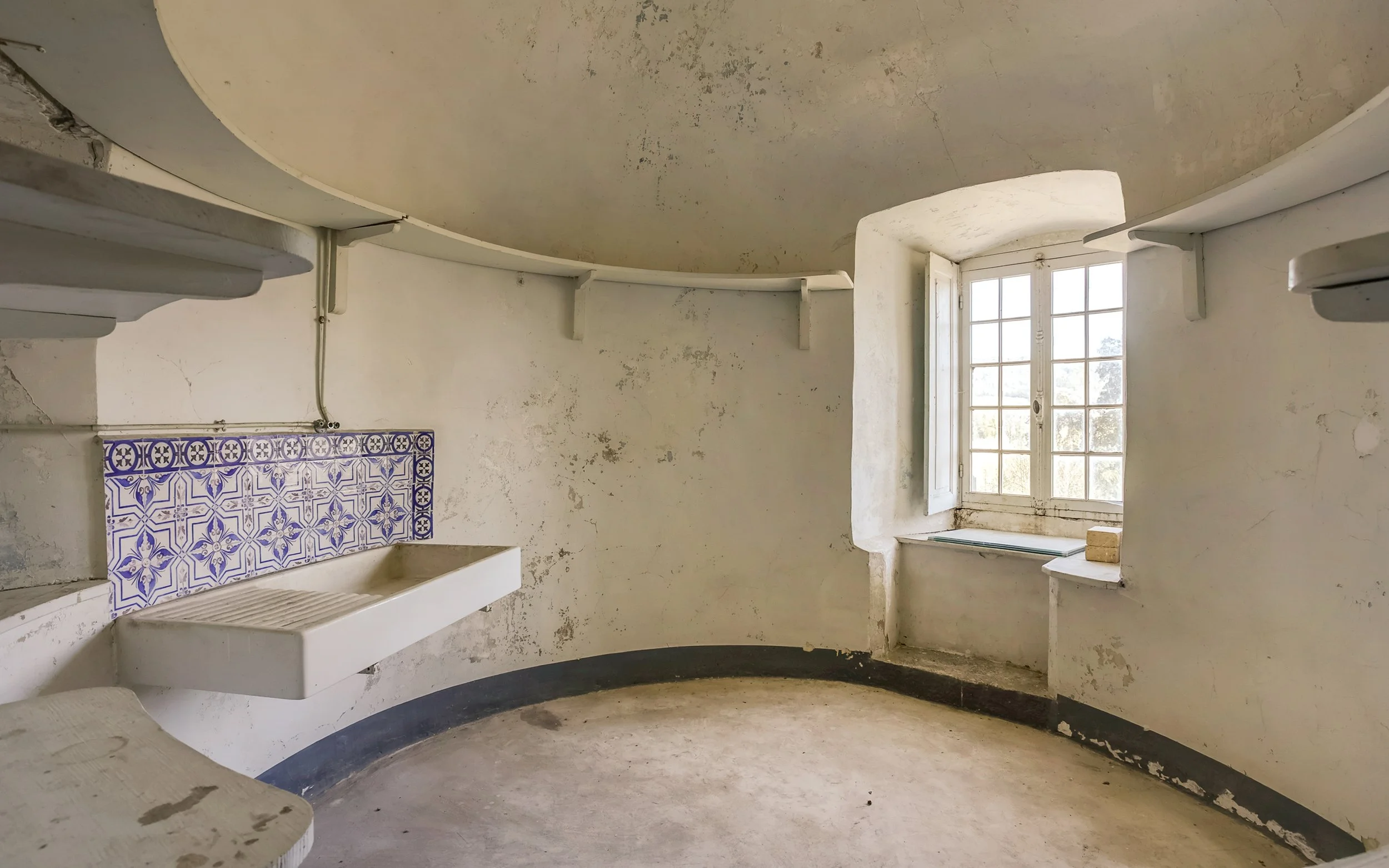
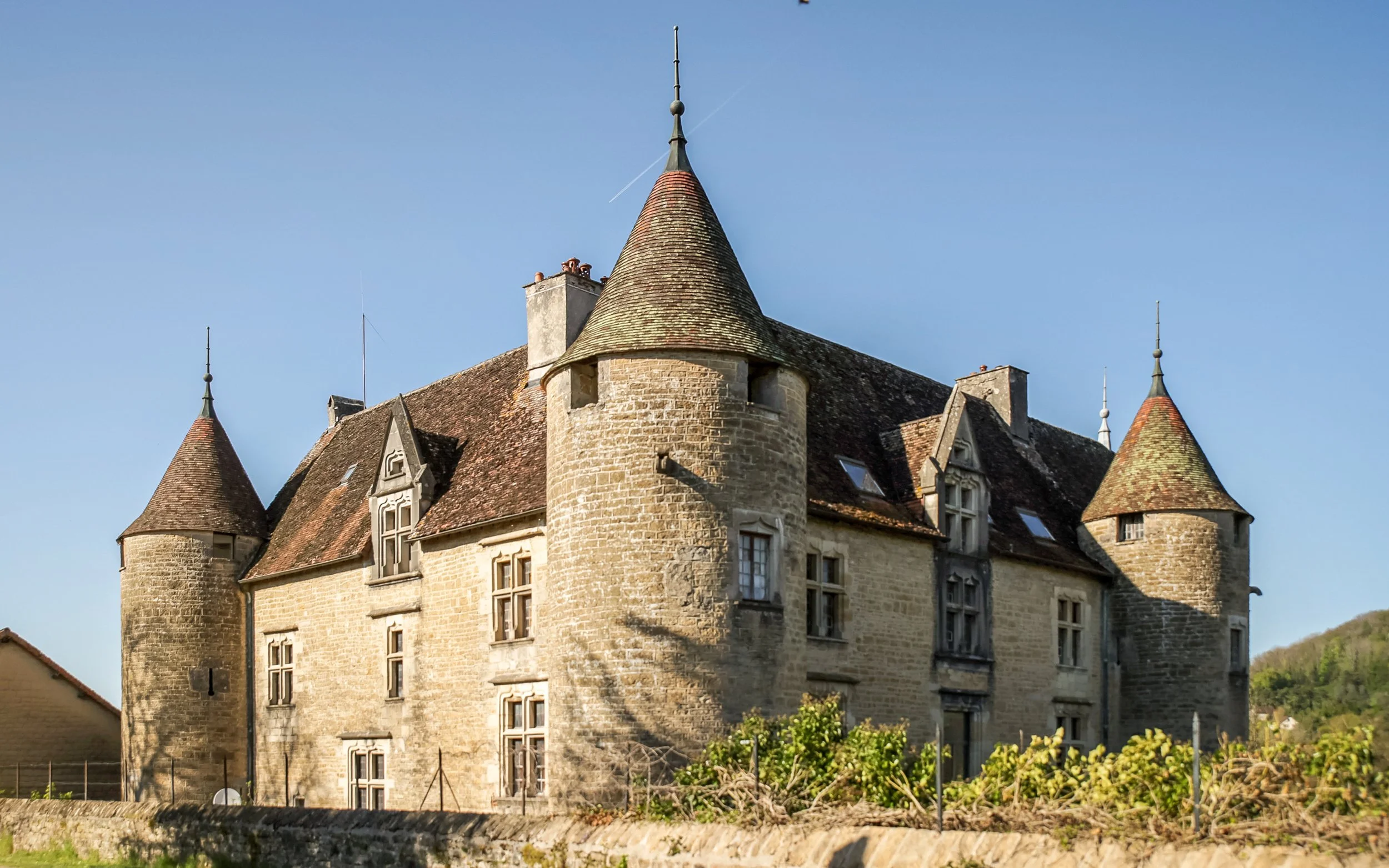
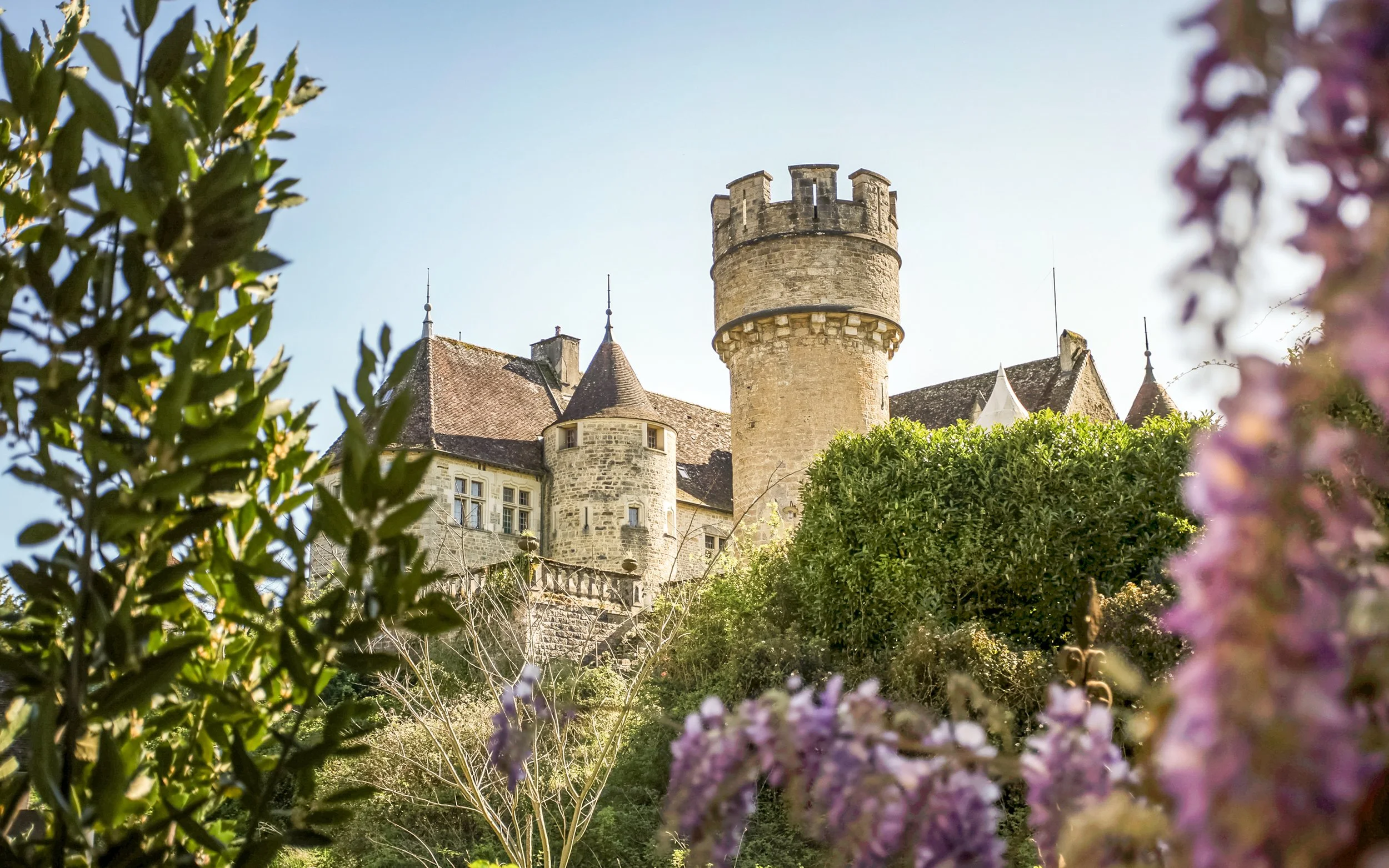
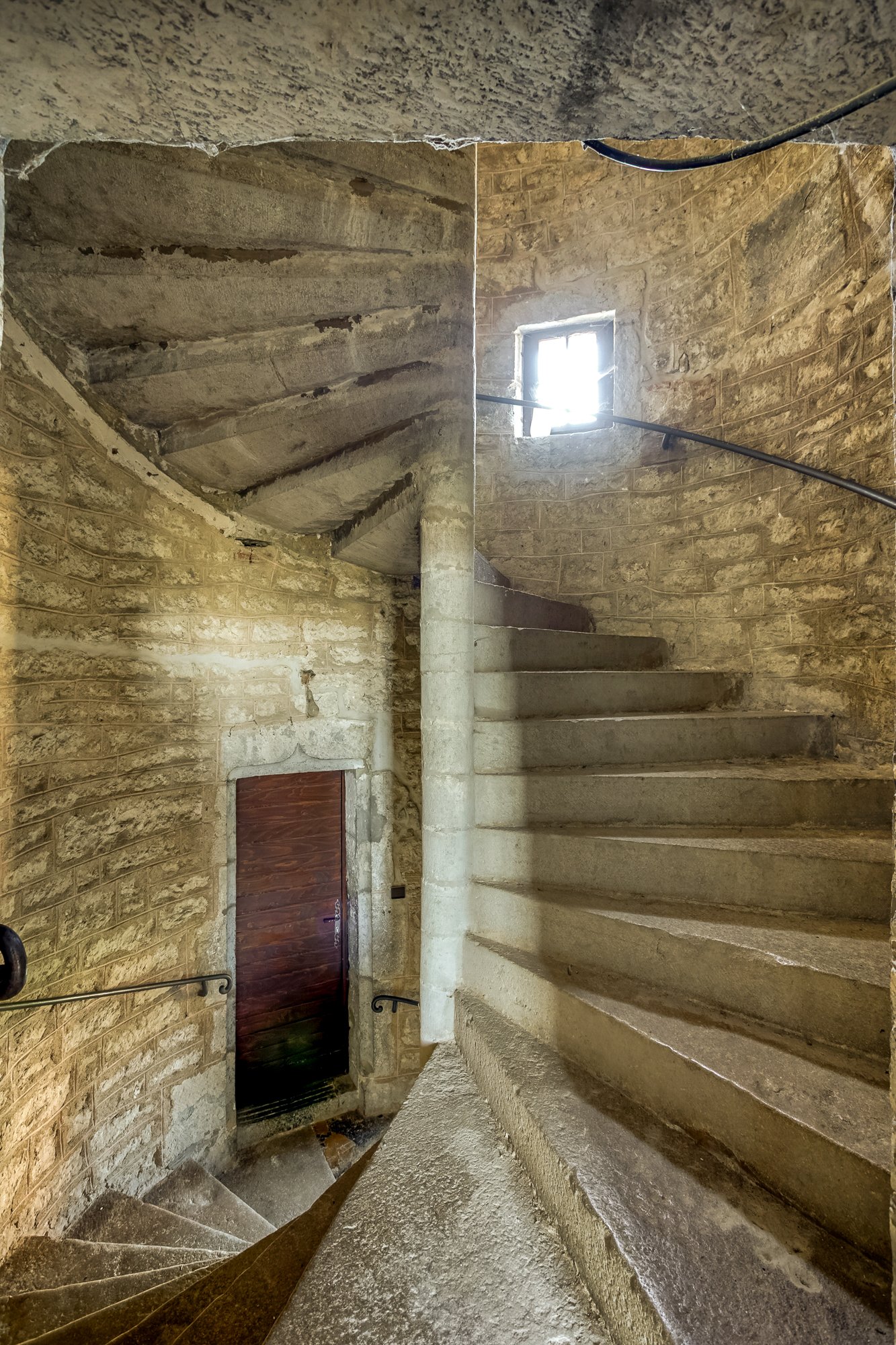
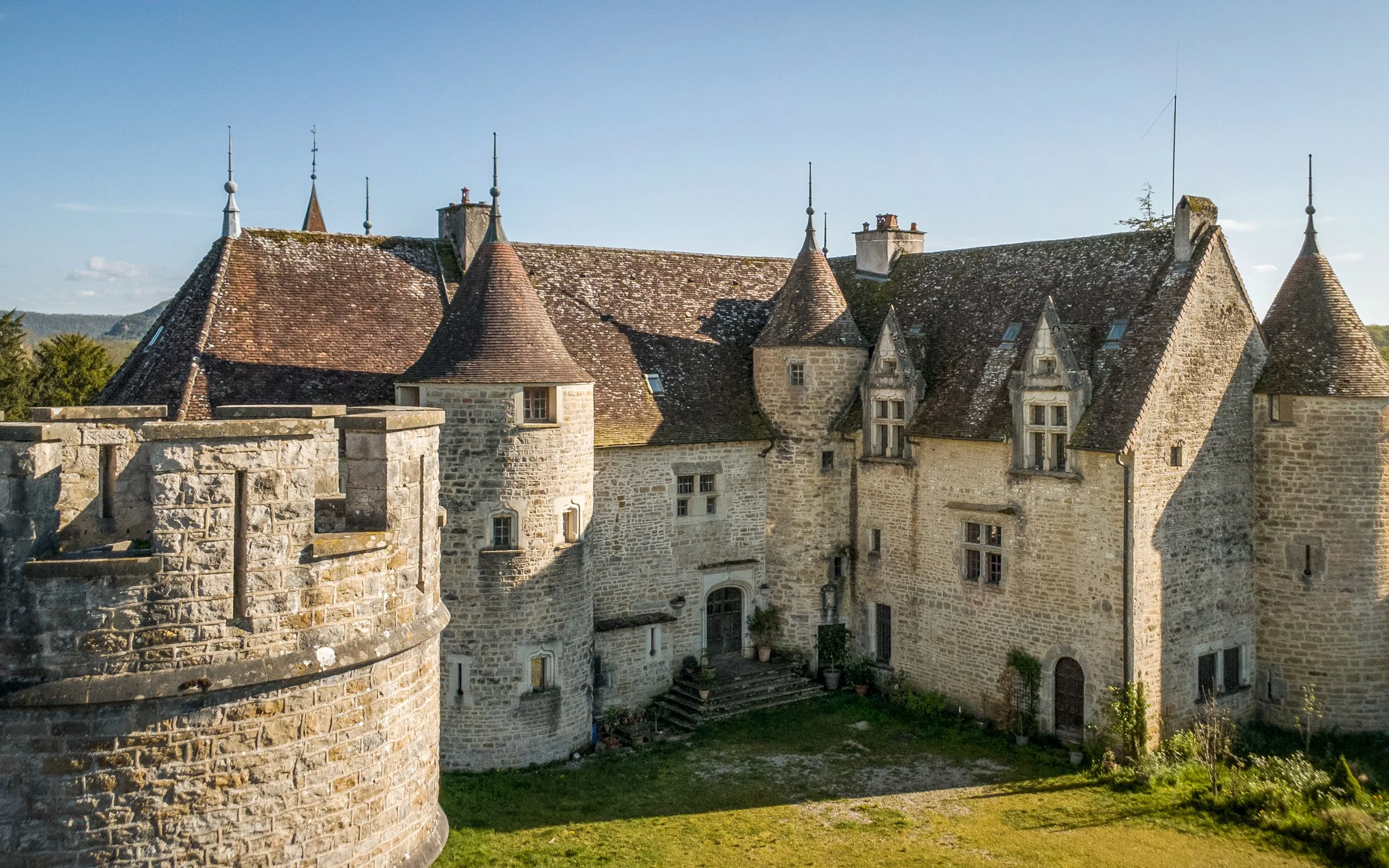
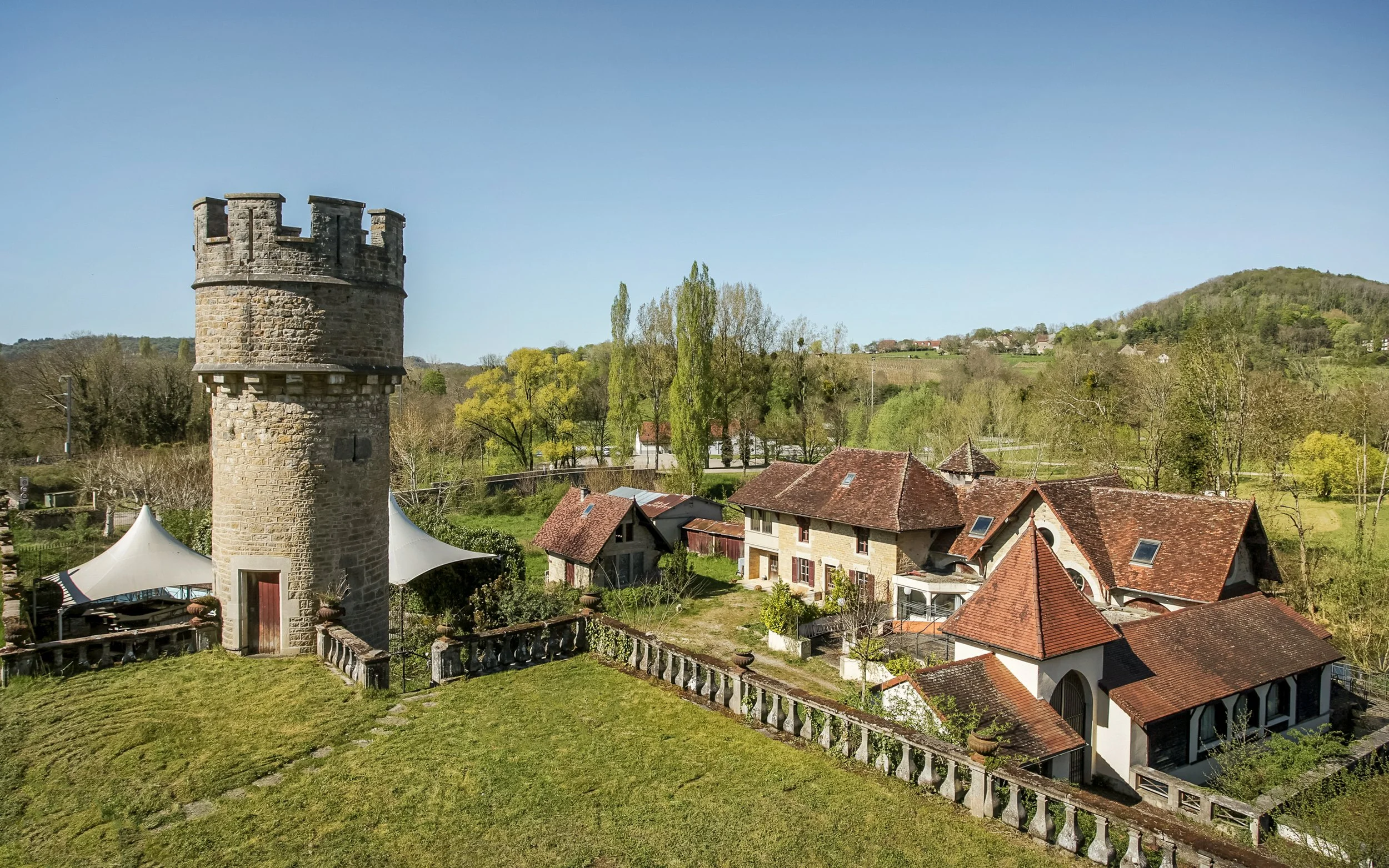
Despite the centuries that followed, the château still reads unmistakably as a medieval residence. Two principal wings meet at right angles, punctuated by round towers with steep conical roofs. Inside, the limited photographs released by Arrière-Cour show thick stone walls, vaulted spaces, monumental fireplaces, old floors and heavy timber ceilings.
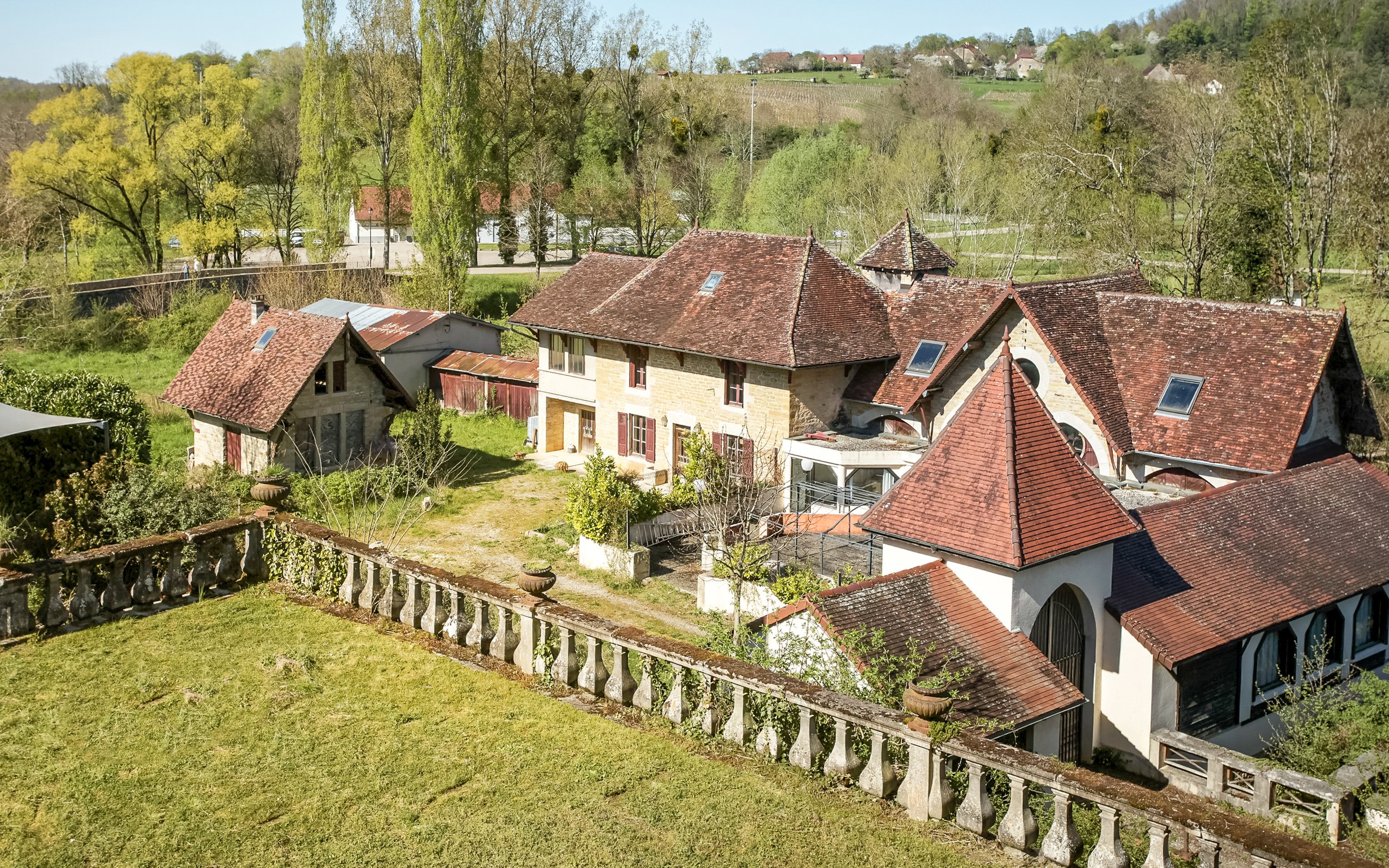
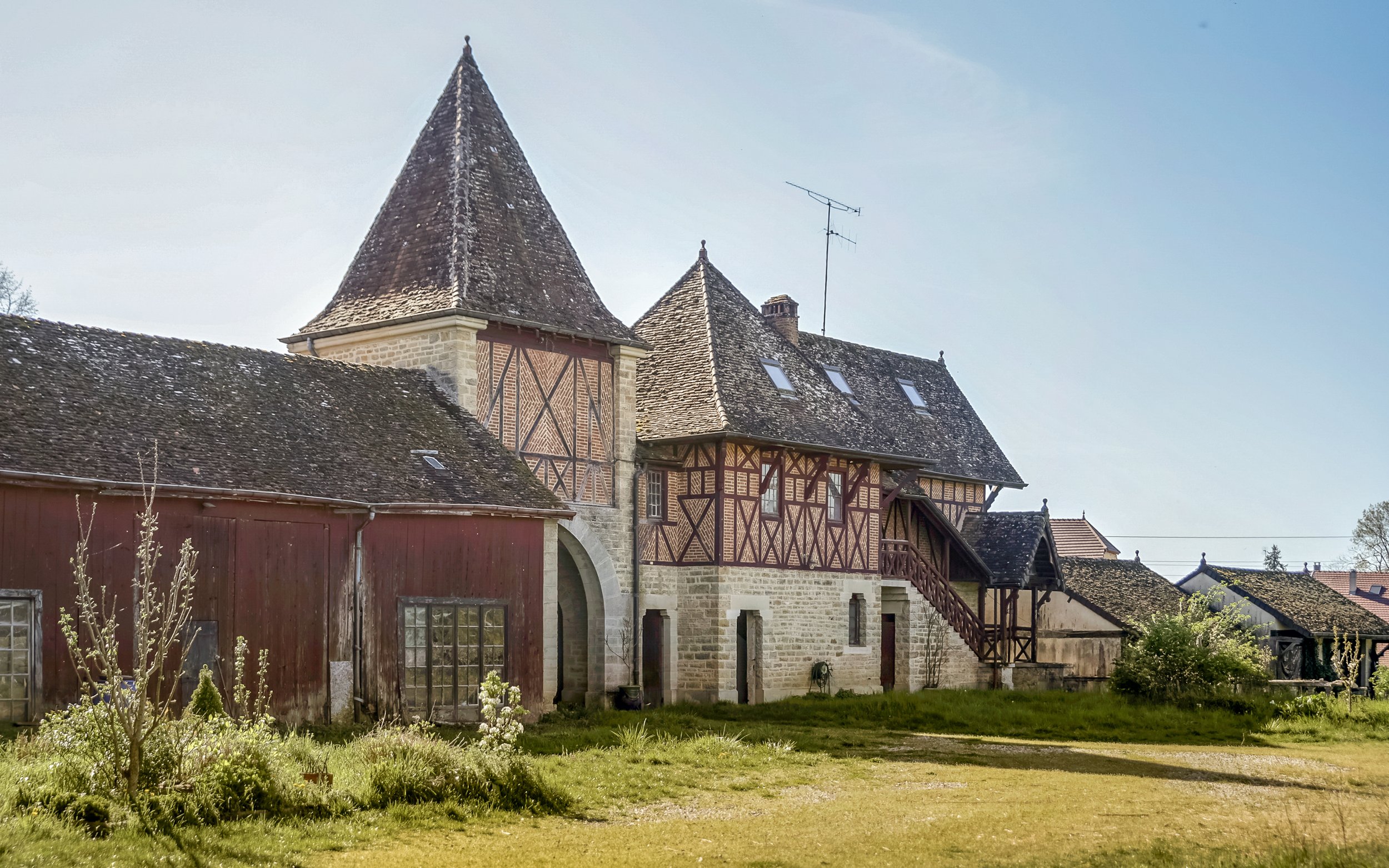
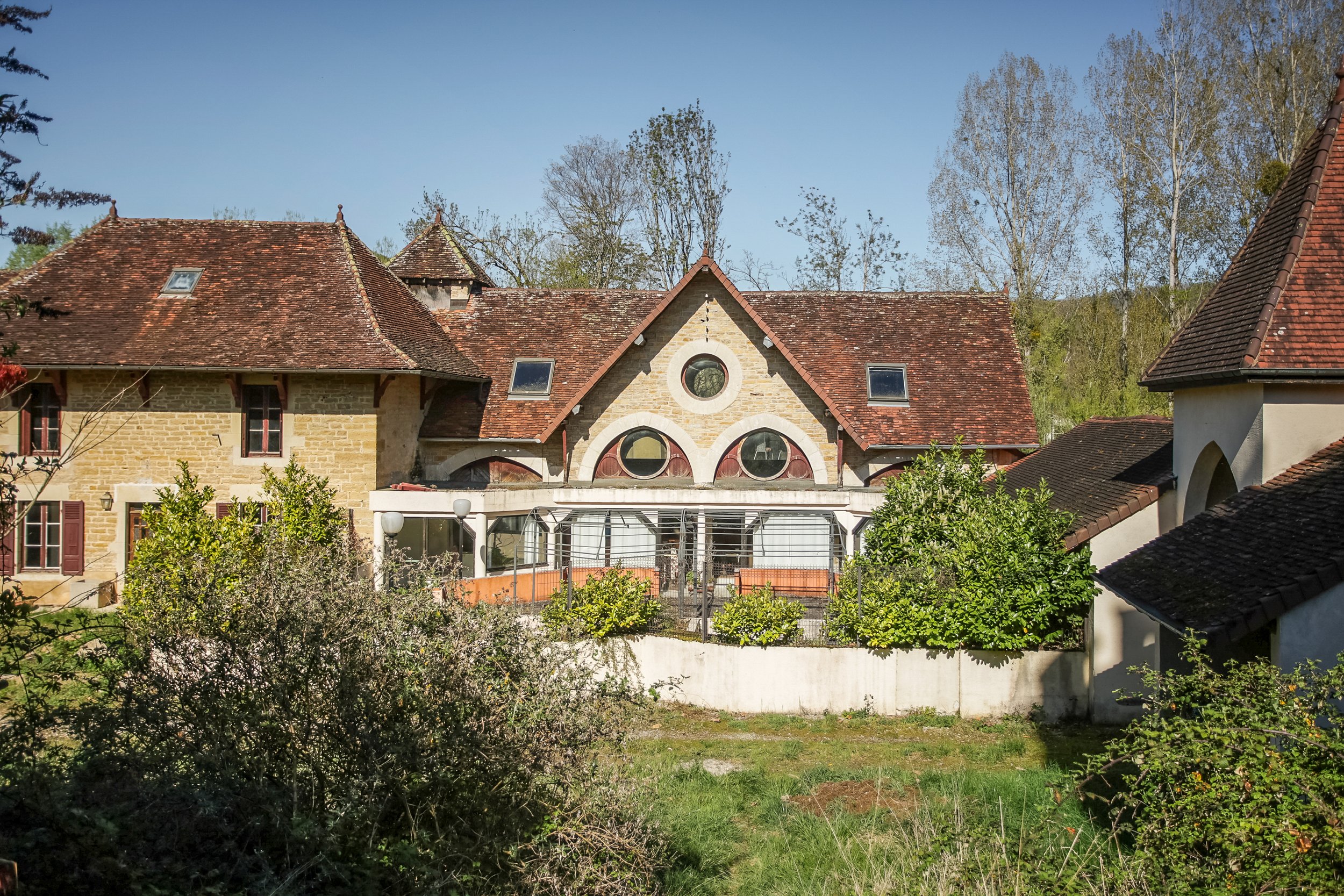
The property was restored and altered again in the 19th and early 20th centuries by the Vermot family, industrialists who also added substantial stables to the estate. Those buildings remain part of the collection of dependencies arranged around the château today.
Le Babylone: The Nightclub Inside Château de Domblans
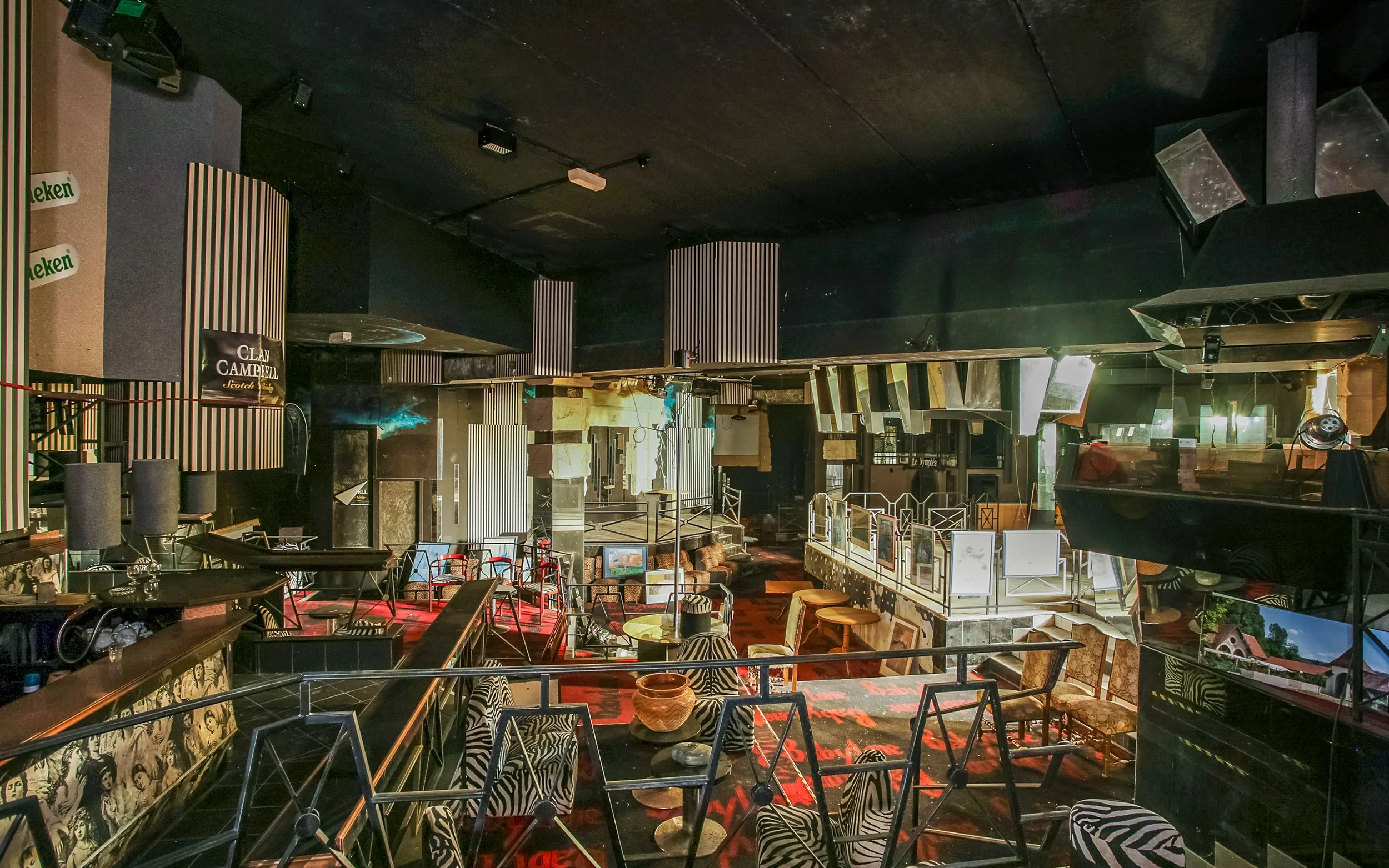
Around 1980, the château entered one of its most unexpected chapters when Jean-Marie Adam, a Besançon-born interior architect who had designed or decorated around 100 nightclubs, acquired the property and created Le Babylone. The club spread through five rooms beneath and within the château, with theatrical interiors ranging from Easter Island statues to Egyptian-inspired sculpture, and became one of the best-known nightclubs in Franche-Comté.
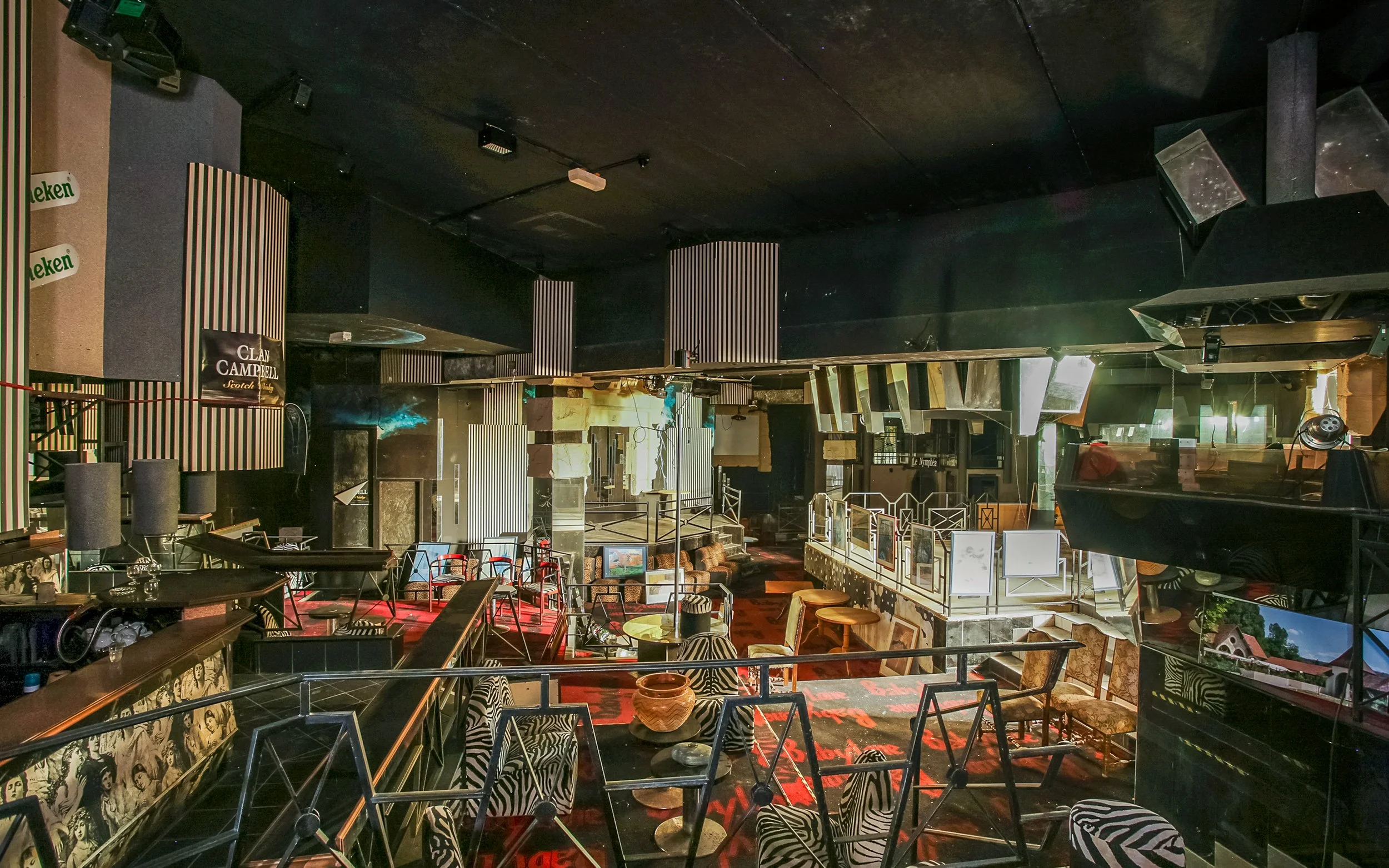
Le Babylone was spread across five dance floors and two terraces, each with its own atmosphere, from electro and 1980s disco to R&B, karaoke and a lounge-style rum bar. Arrière-Cour Immobilier
After roughly three decades, Le Babylone was ordered closed to the public on April 28, 2012, following fire and electrical safety concerns. Adam died three years later, in July 2015, at the age of 74.
For a building connected to the Dukes of Burgundy and Henri IV, spending the latter part of the 20th century as a nightclub is an unusually good plot twist.
From Restaurant to the Jura’s First Antiques Village
The property changed hands again in 2017, when Jean-Roger Fady-Clerc and Tiago Vasconcelos-Michel acquired the estate. A restaurant, La Table du Notaire, later operated here under the pandemic, and then in 2021 the former restaurant and 19th-century stable buildings were reorganized into what was described as the Jura’s first antiques village.
Arrière-Cour Immobilier
The former stables became a 150 m² (1,615 ft²) showroom displaying furniture from different periods, Aubusson tapestries, ceramics, paintings, bronzes and tableware. An adjoining building offered another approximately 450 m² (4,844 ft²) of space.
The 7-Hectare Château de Domblans Estate
Today, the estate extends across around 7 hectares (17.3 acres). Beyond the château are mature parkland, an orchard, natural springs, a pond and a swimming pool, while the outbuildings include the former stables, a barn, orangery, workshops, cellars and extensive attic spaces.
Château de Domblans in the Jura Wine Region
Domblans sits on the western edge of the Jura mountains, around 12 km (7 miles) north of Lons-le-Saunier, in a landscape of wooded hills, river valleys and vineyards.
Château-Chalon, one of the Jura’s most emblematic wine villages, is only around 6 km (3.7 miles) away by road. Perched dramatically above the vineyards, it gives its name to an appellation devoted exclusively to vin jaune, the region’s distinctive Savagnin wine aged for years under a veil of yeast. Domblans itself falls within the geographical area associated with the Château-Chalon appellation.
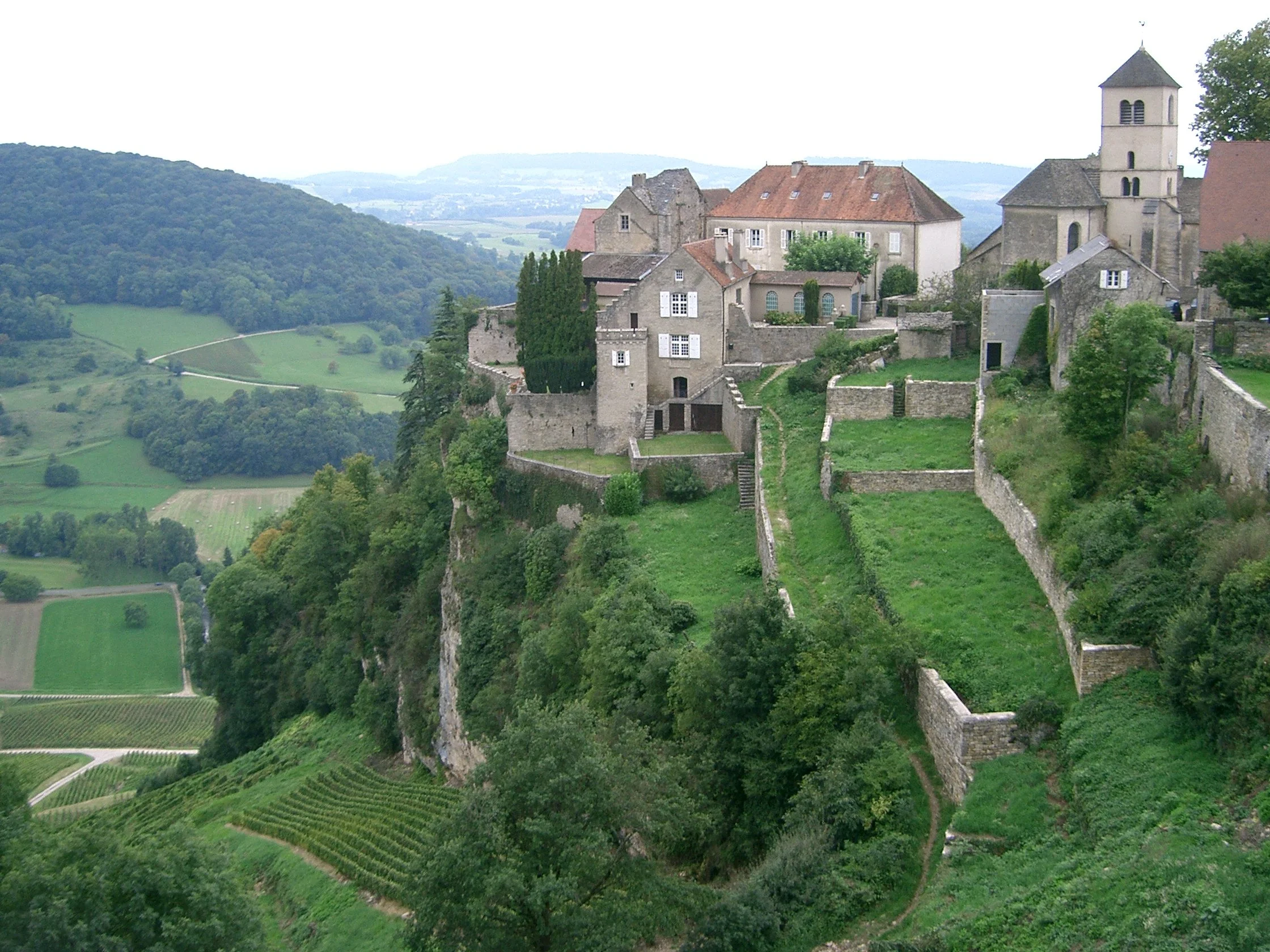
Château-Chalon, Jura. Photo: PRA / Wikimedia Commons, CC BY 3.0
Why Jura Wine Has Developed a Cult Following
The Jura has developed something of a cult following in the wine world.
With only around 2,000 hectares (4,942 acres) under vine, the Jura is tiny by French wine standards, and has even been described by Vogue as France’s smallest wine region. Despite its size, its influence has become disproportionately large, particularly among sommeliers, collectors and drinkers drawn to natural and low-intervention wines.
Small Jura producers were working with indigenous grapes, long ageing, oxidative styles and relatively minimal intervention long before those ideas became fashionable internationally. Grapes like Savagnin, Poulsard and Trousseau, once little known outside the region, have since developed something of a cult following and are now familiar names on serious wine lists well beyond France.
Not every Jura producer identifies with the natural-wine movement, and the region’s traditions long predate it, but the overlap helped bring international attention to a wine culture that had previously sat somewhat in the shadow of neighbouring Burgundy.
Château-Chalon represents another side of that history, perched above the vineyards and particularly associated with vin jaune, the Jura’s distinctive Savagnin wine traditionally aged for more than six years under a veil of yeast.
Where Is Château de Domblans?
Despite the Jura’s growing cultural cachet, Domblans remains decidedly rural.
The village is around 87 km (54 miles) from Dijon, 156 km (97 miles) from Lyon and 116 km (72 miles) from Geneva by road. Paris is roughly 400 km (249 miles) away by road, while travelling by train from Domblans-Voiteur to Paris generally takes around four hours depending on the connection.
All photographs courtesy of the listing agency. See more on Arrière-Cour Immobilier.