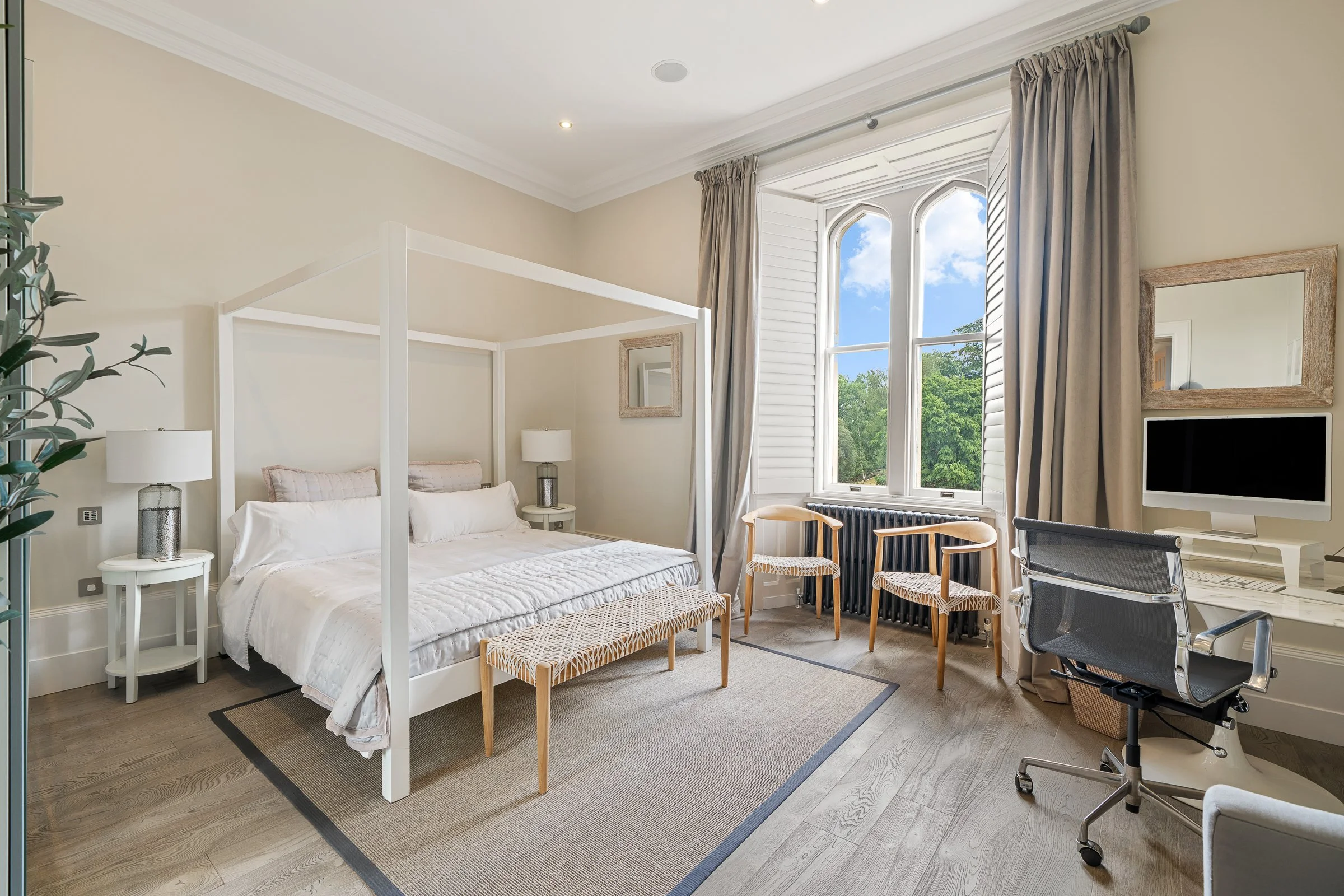
Private Apartment for Sale Inside a Gothic Revival Mansion from the Early 19th Century
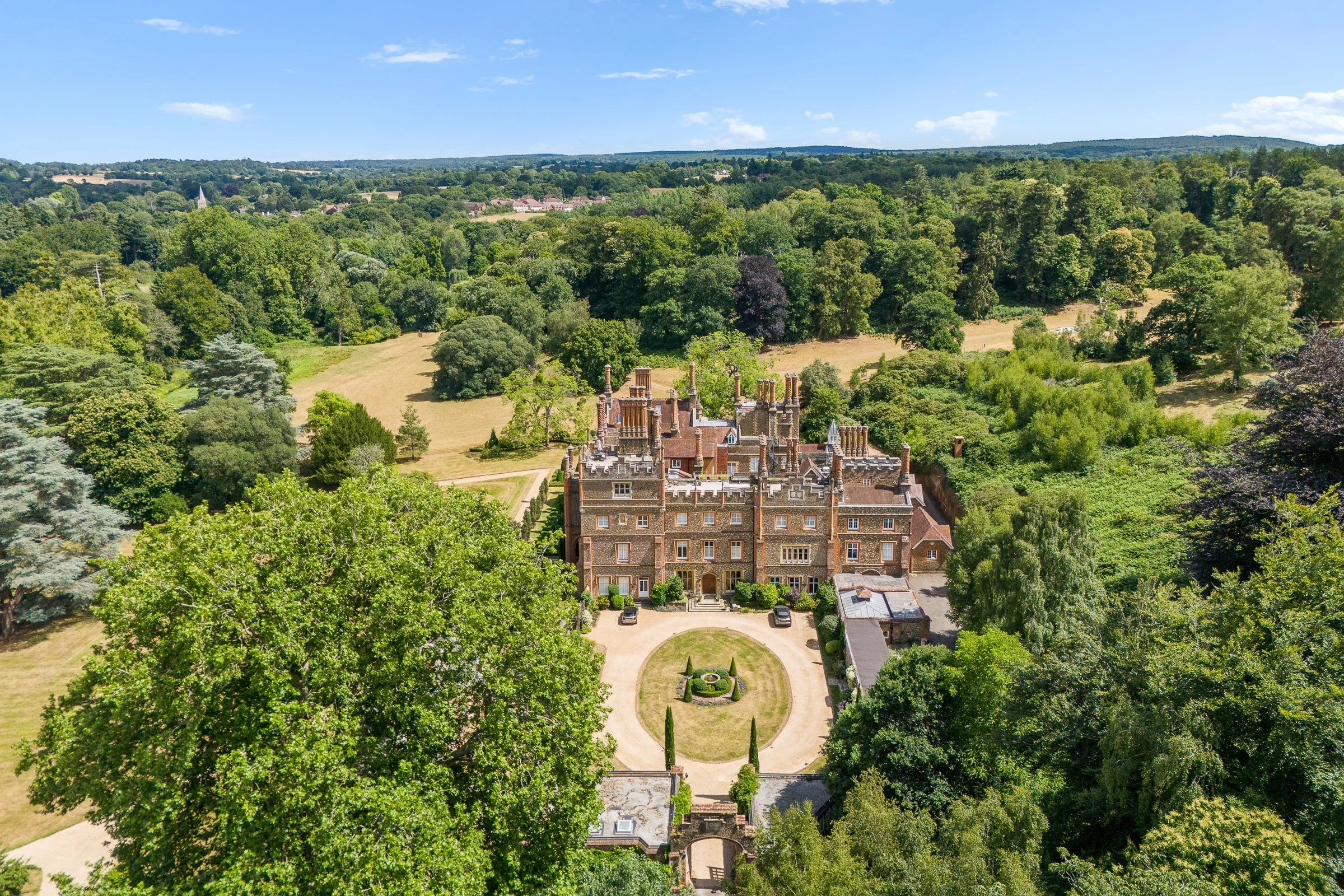
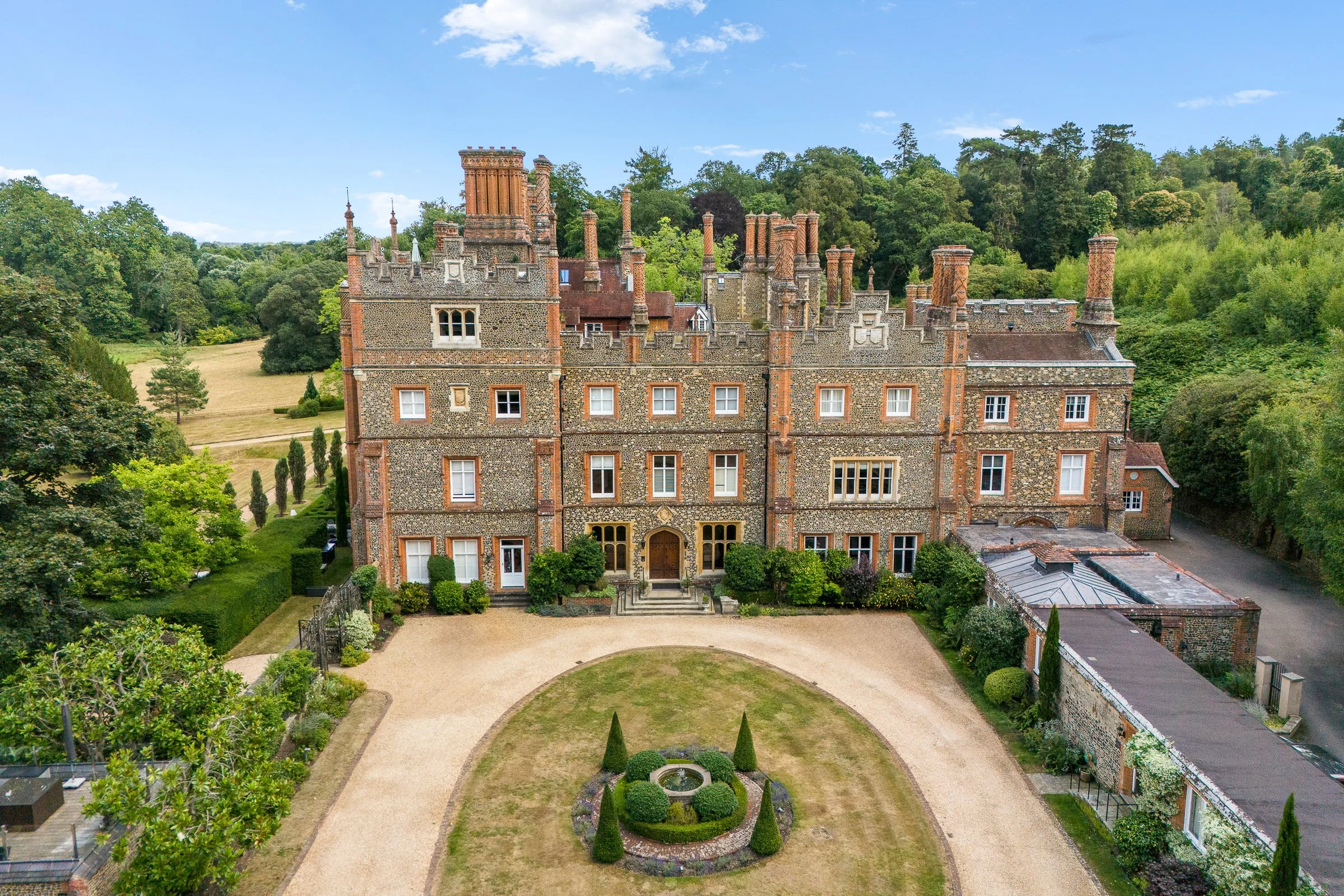
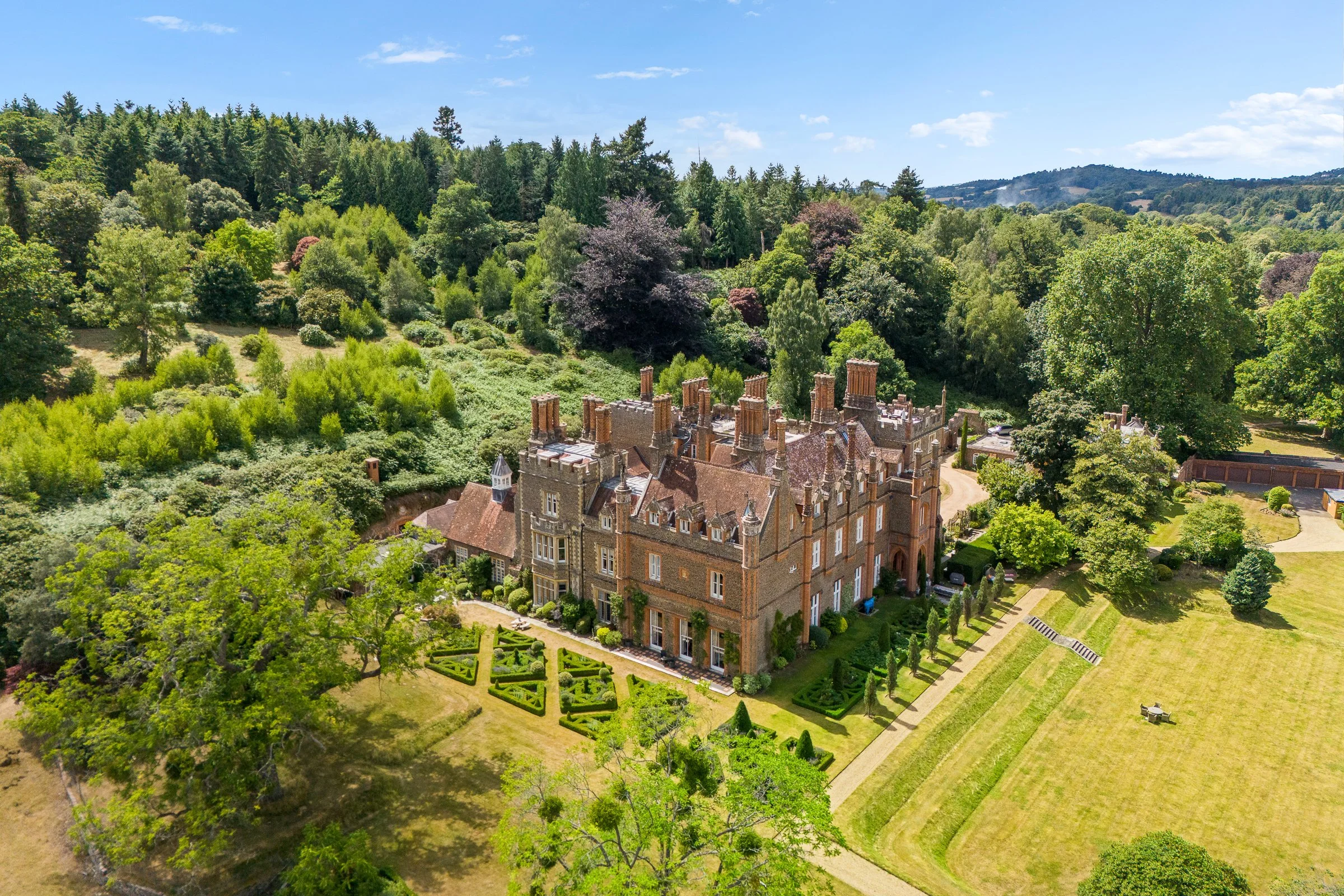
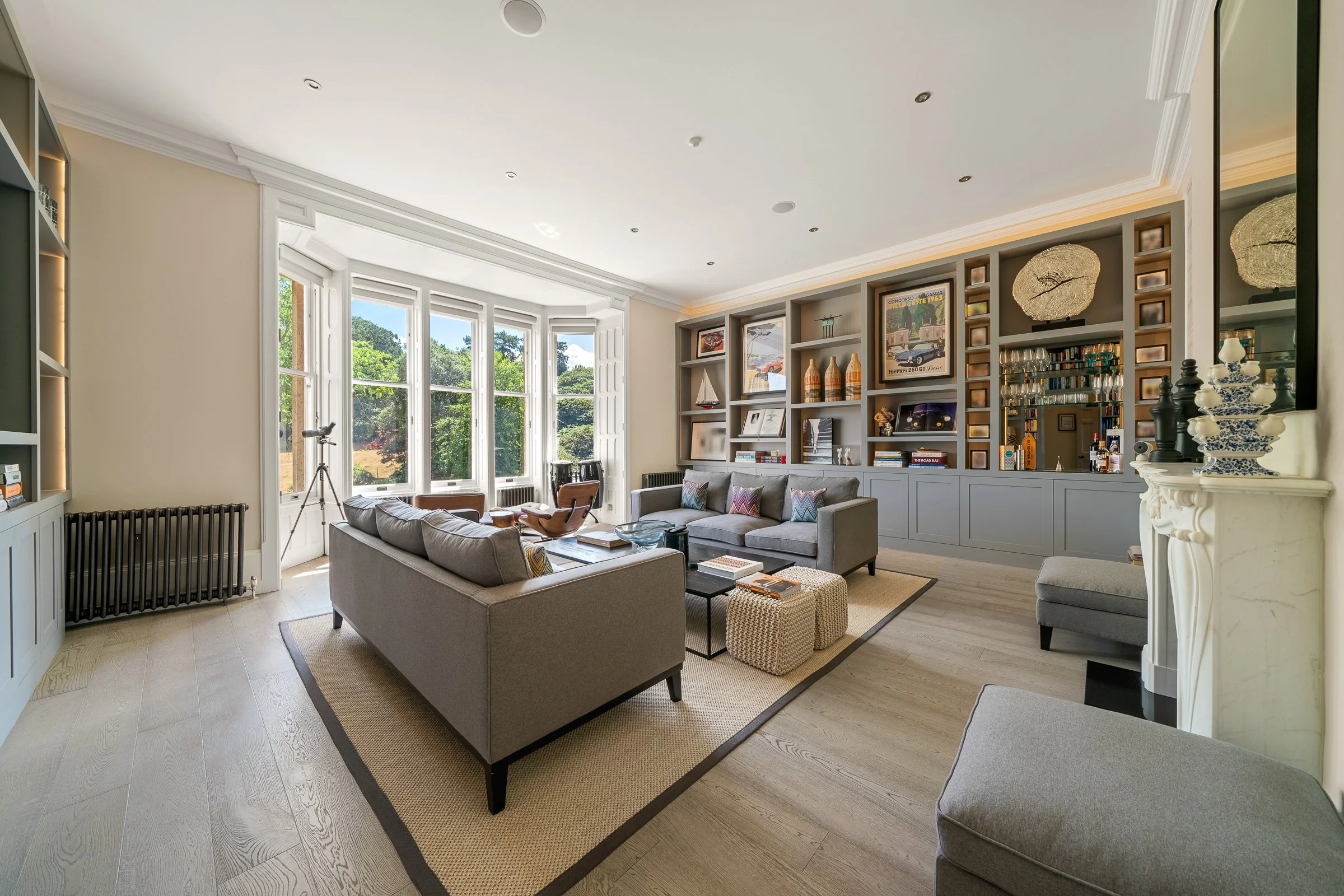
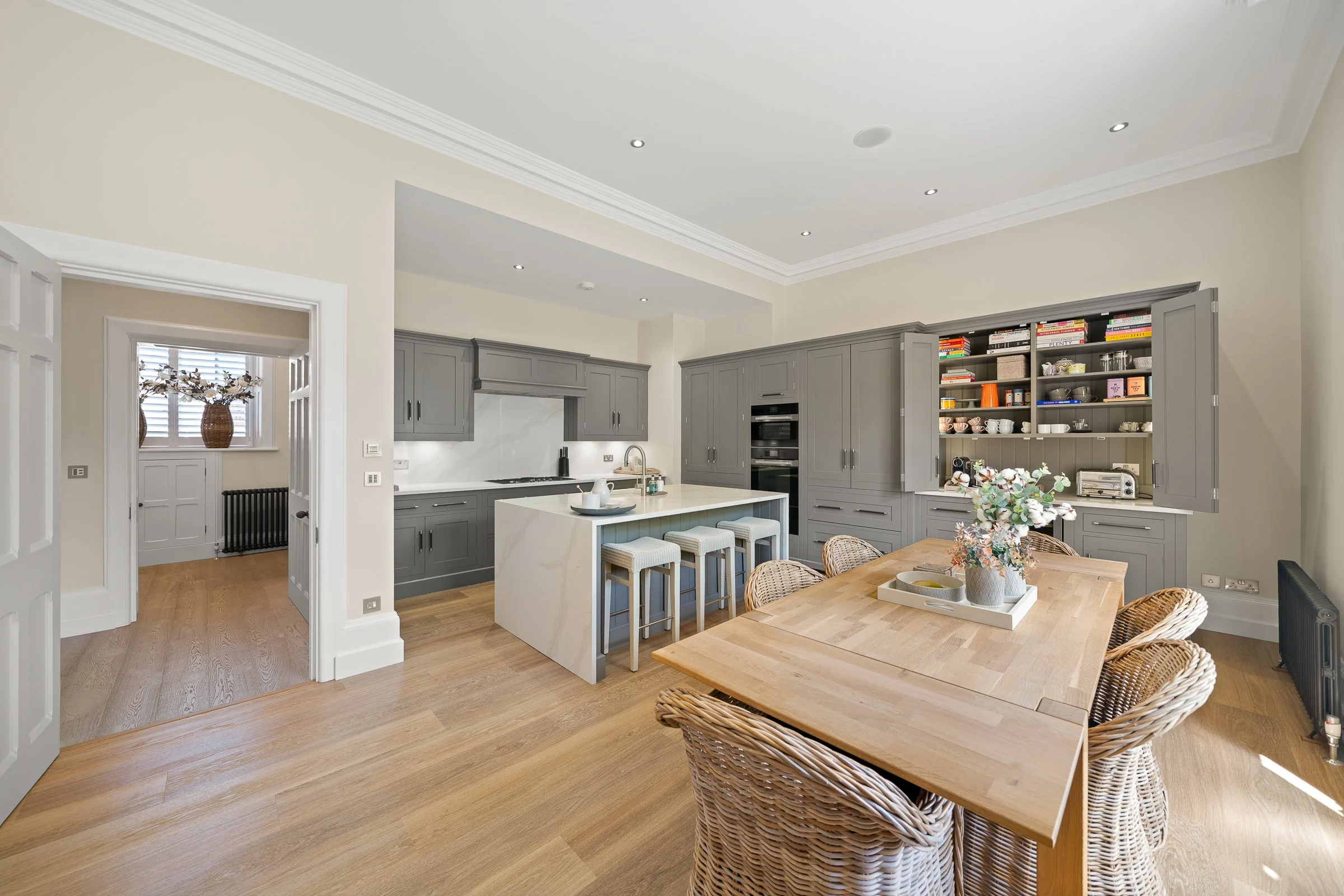
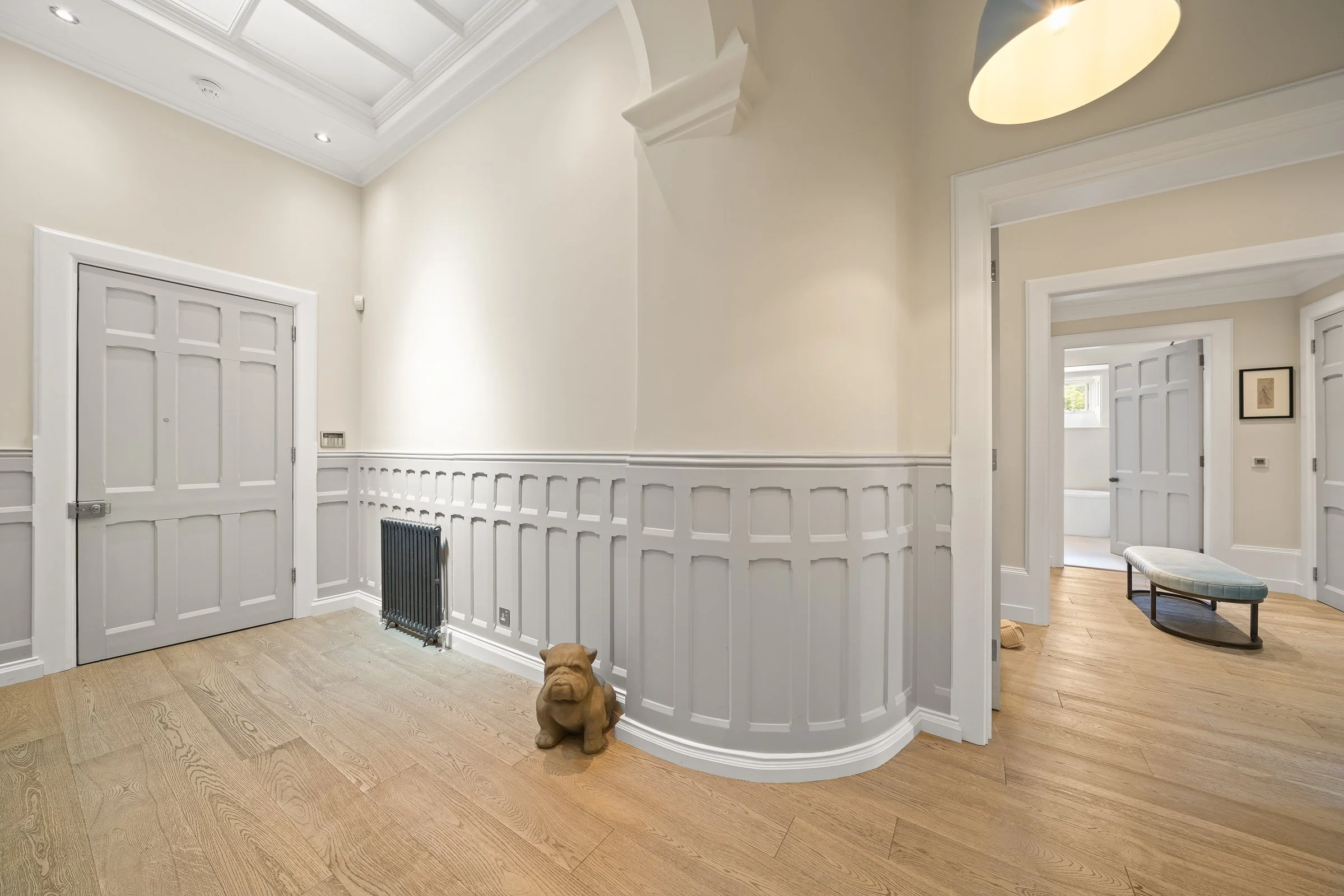
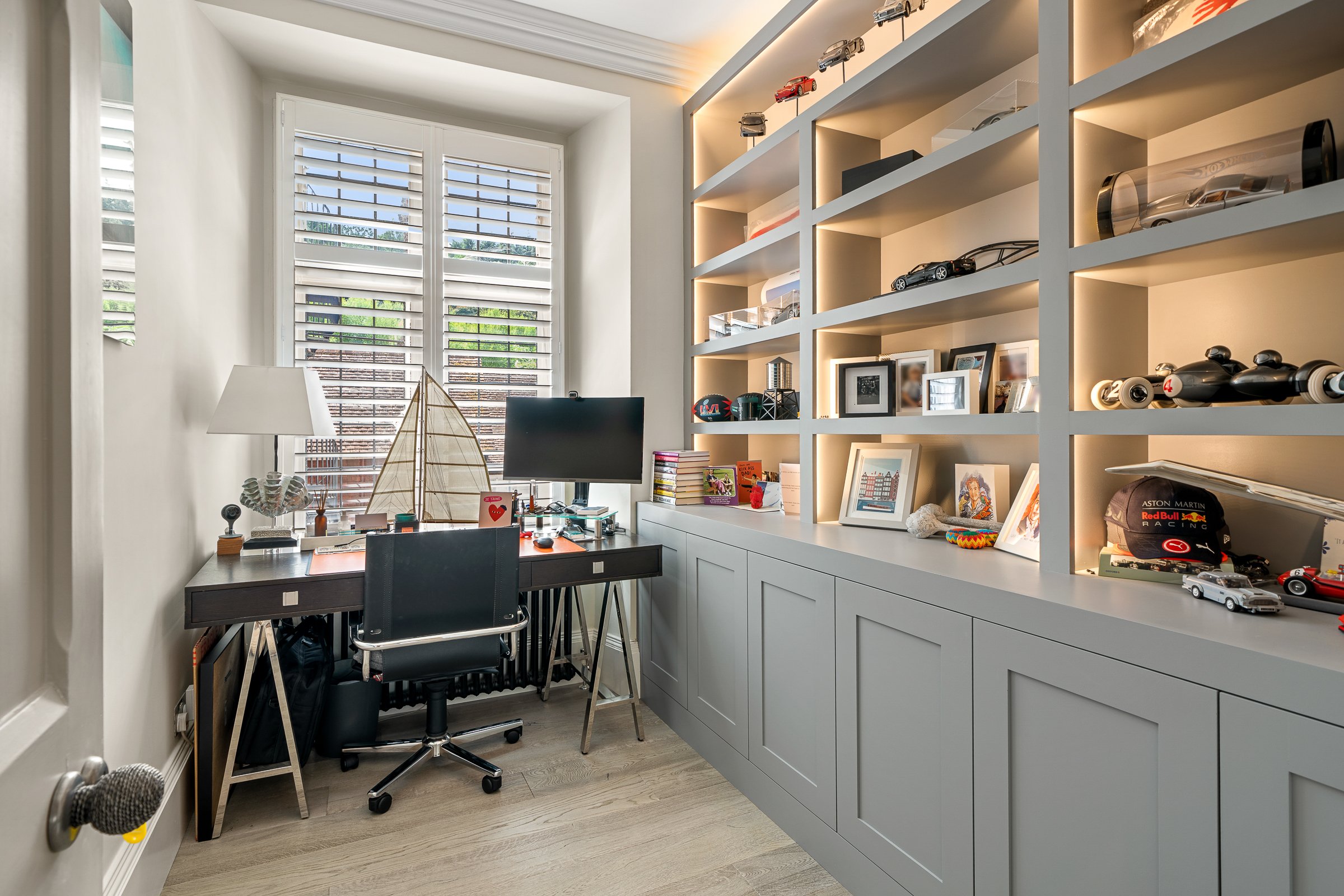
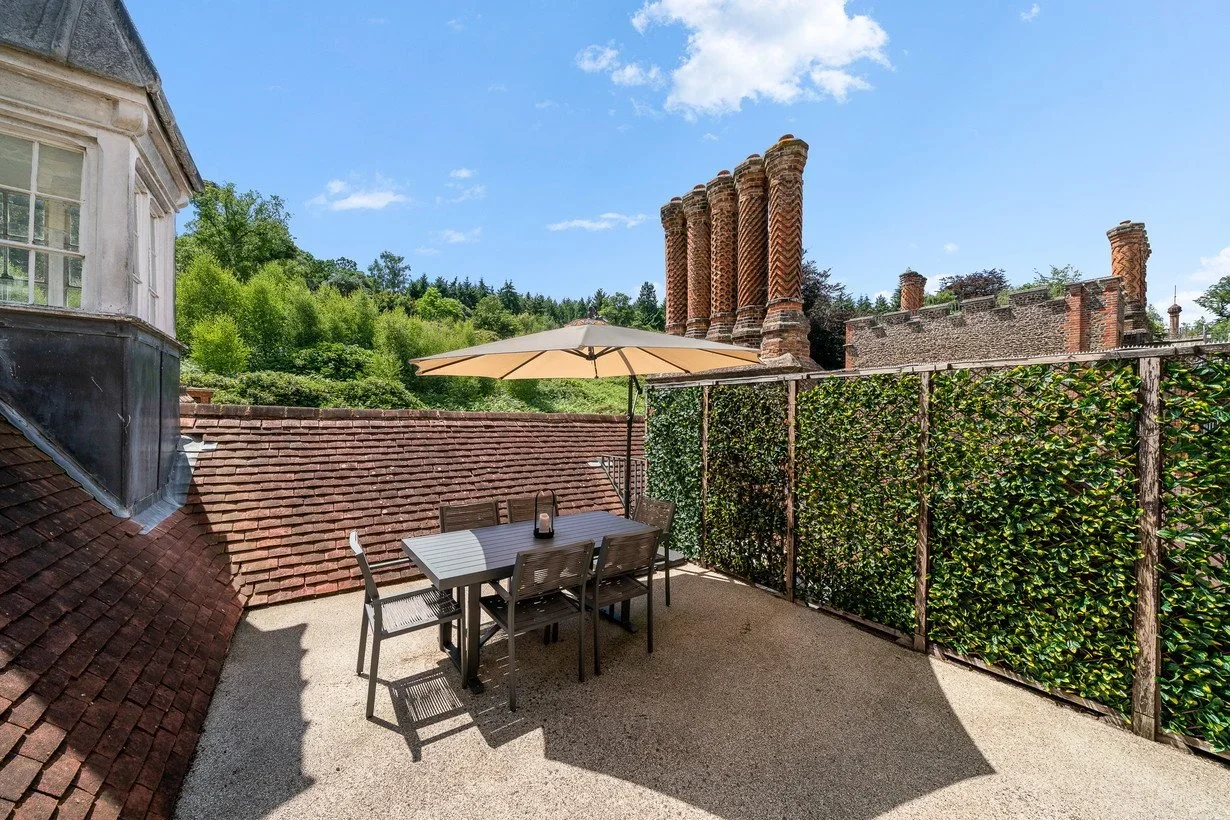
Listed for £1,795,000 (approximately $2,468,000) with United Kingdom Sotheby’s Realty , this private apartment is located within Albury Park Mansion, set on one of the oldest recorded estates in England, first documented in the Domesday Book of 1086. Its history links figures as distant as William the Conqueror and Augustus Pugin, the nineteenth-century Gothic Revival architect who worked extensively on the Palace of Westminster, including its famous clock tower.
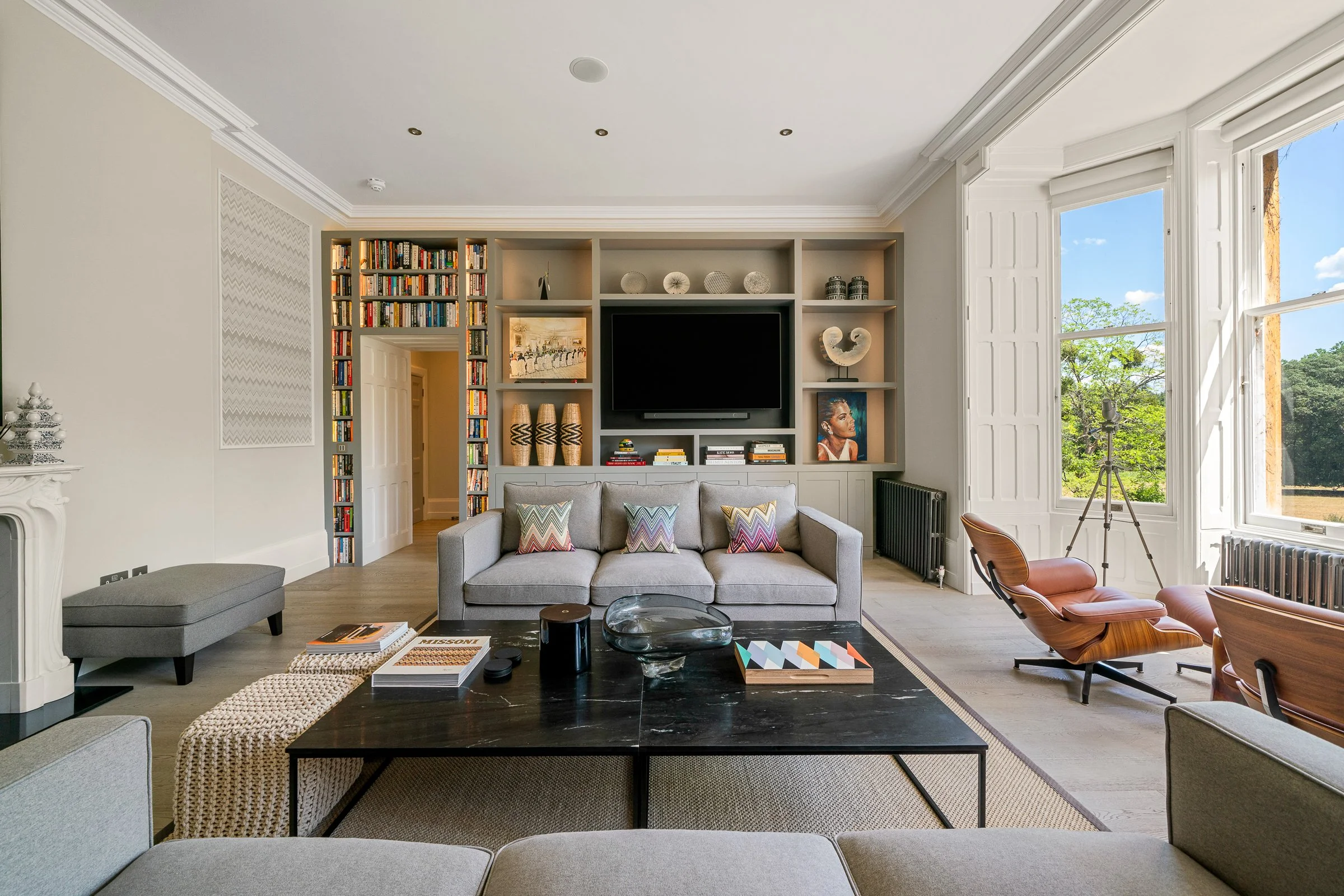
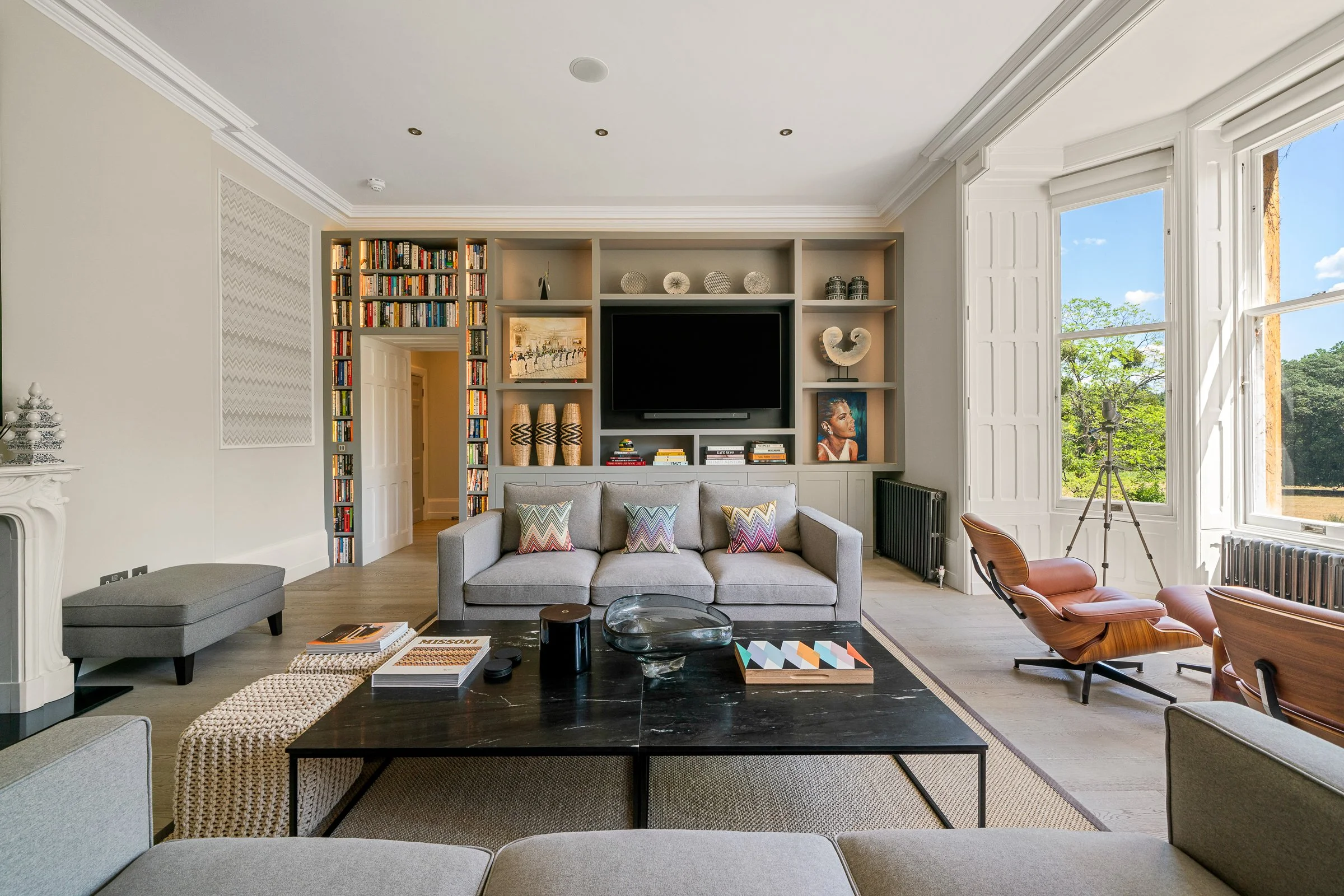
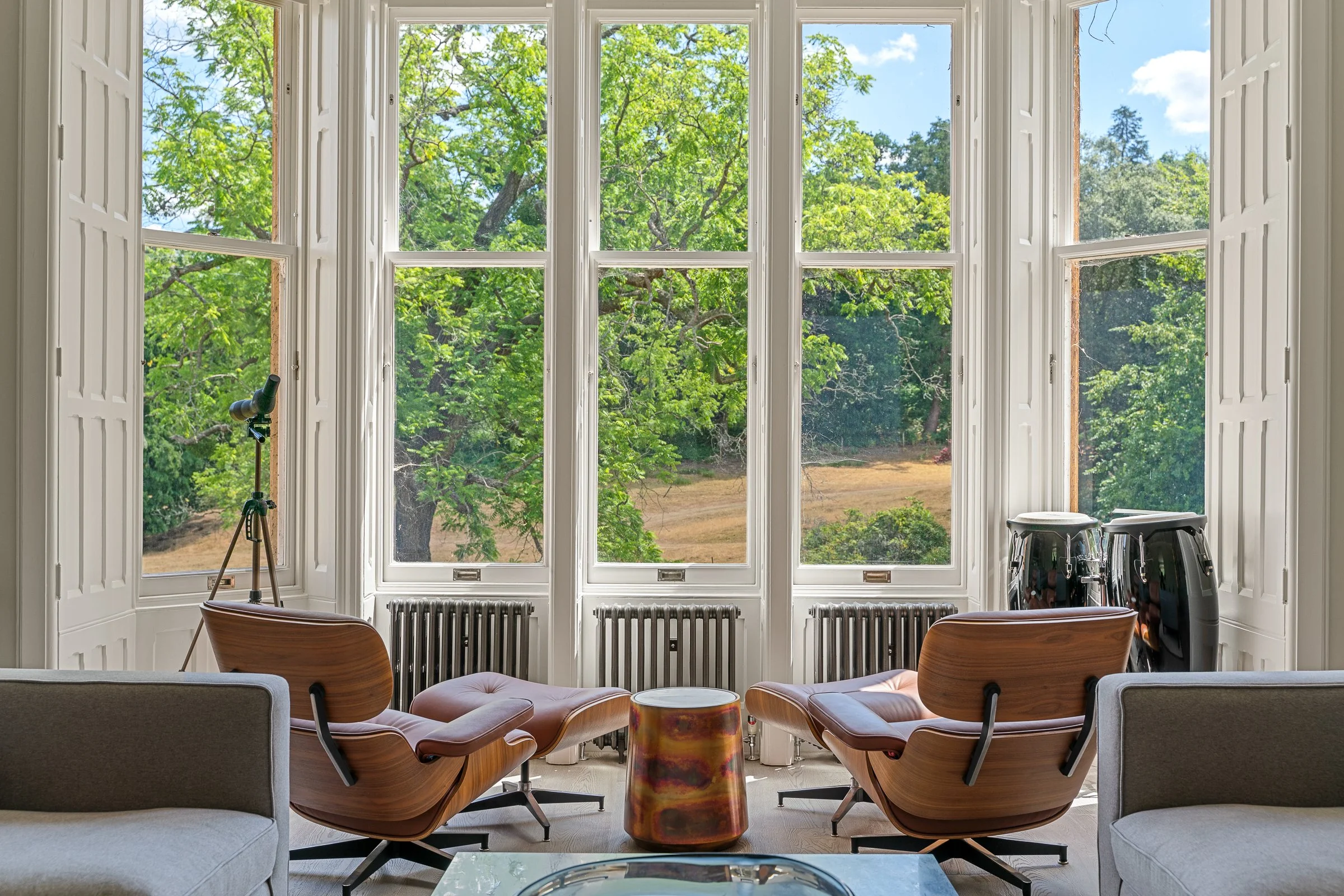
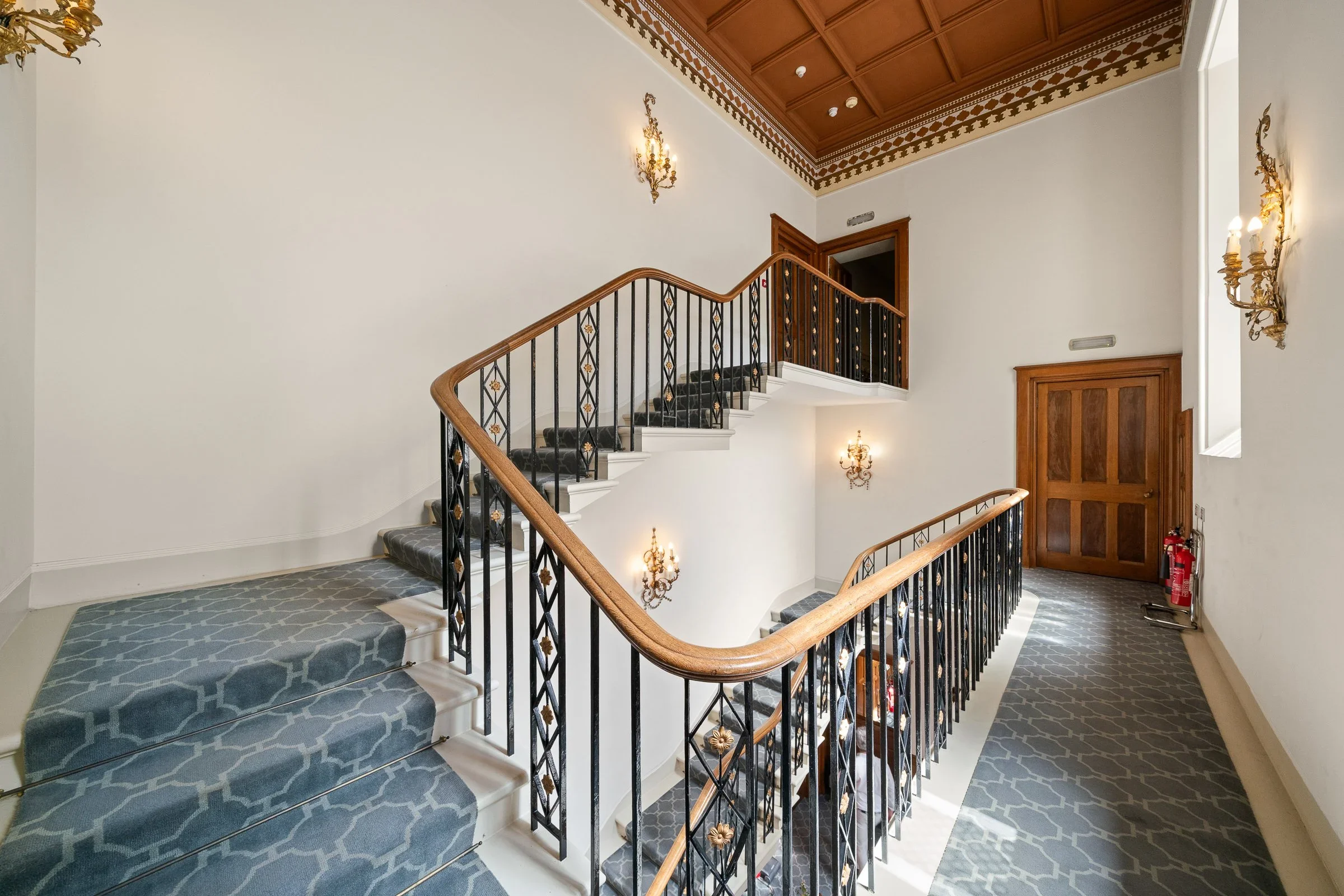
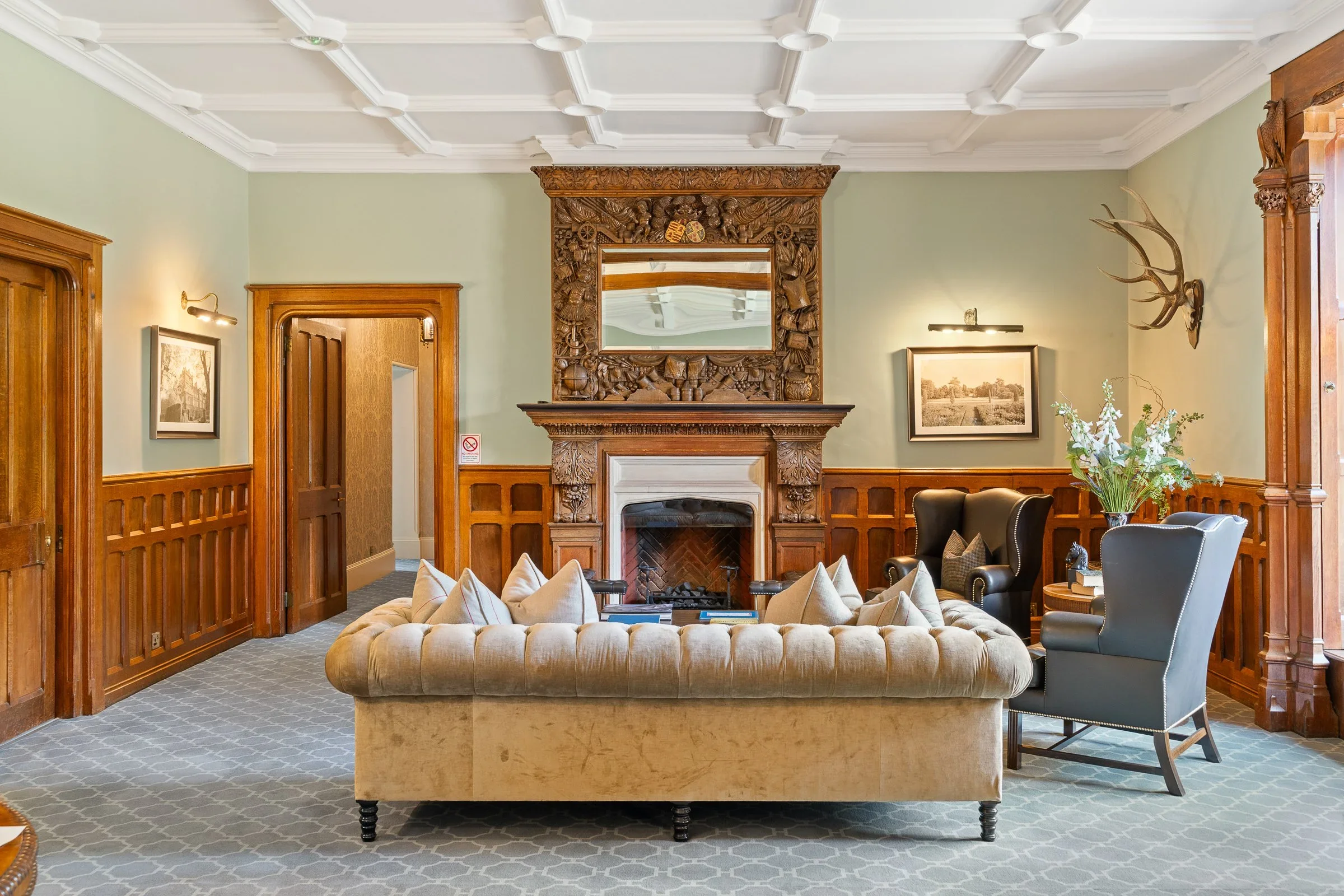
The 3 bedroom apartment occupies part of the original house and is about 3,003 sqft (279 sqm). Residents also have access to the communal areas of the mansion and landscaped grounds within the Surrey Hills Area of Outstanding Natural Beauty.
Historical Context of Albury Park Mansion
Early Origins and Landscape Creation
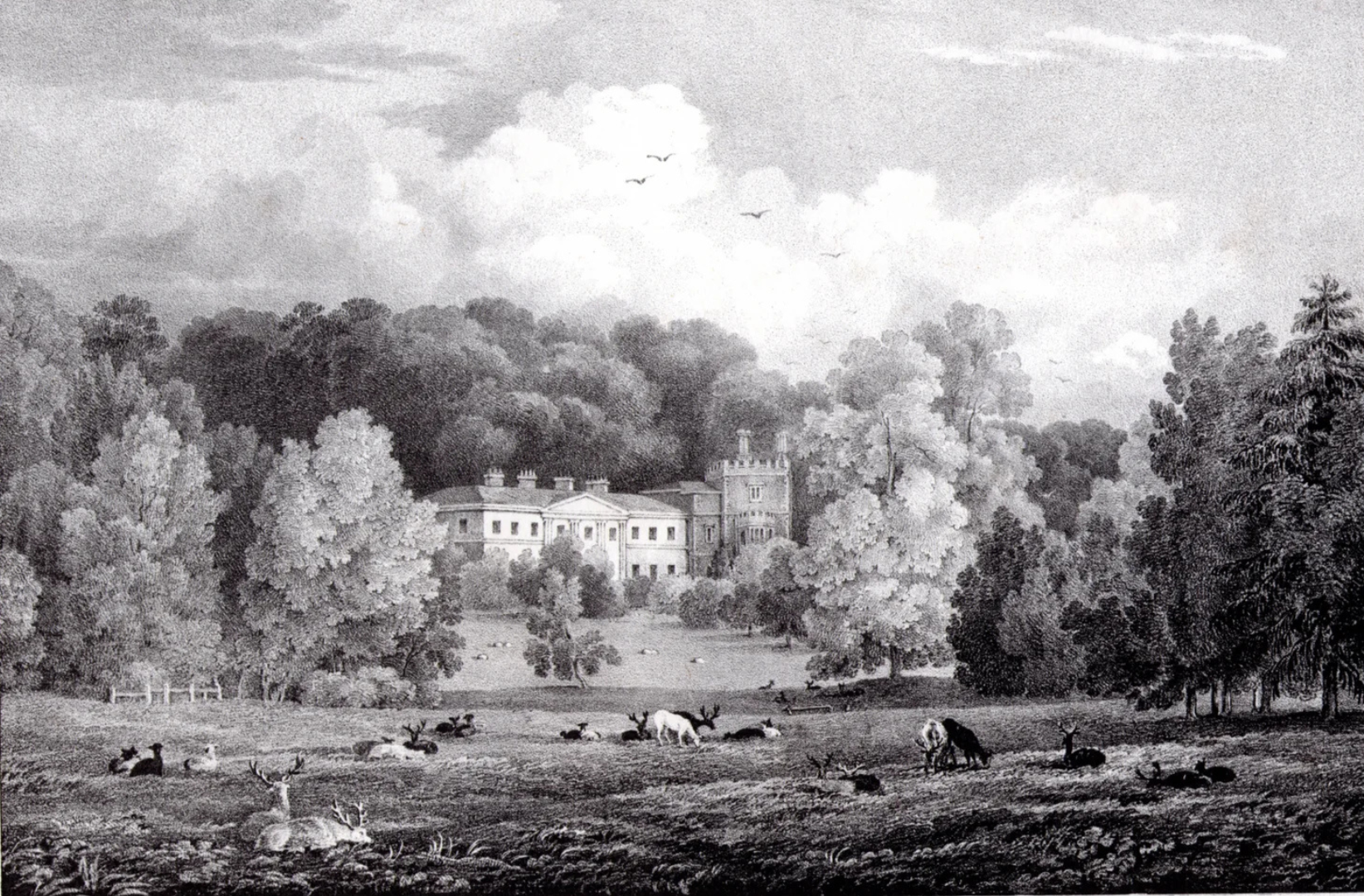
Engraving of North front for Henry Drummond by G F Prosser circa 1830
Albury Park’s story extends back almost 1000 years. The estate itself is mentioned in the Domesday Book of 1086, at this time, it had a church and a mill listed as its assets, along with 11 villagers.
The mansion dates from the seventeenth century, with its first defining transformation beginning in the 1670s, when John Evelyn, the celebrated diarist and landscape gardener, laid out the 14-acre pleasure grounds for Henry Howard, later 6th Duke of Norfolk. Evelyn’s scheme included a quarter-mile-long terrace, a vineyard, a 160-yard tunnel driven through Silver Wood, a Roman-style bath chamber beneath the terrace, and a wide canal fed by the River Tillingbourne, later drained in the early nineteenth century. Much of Evelyn’s influence survives today in the structure and layout of the park.
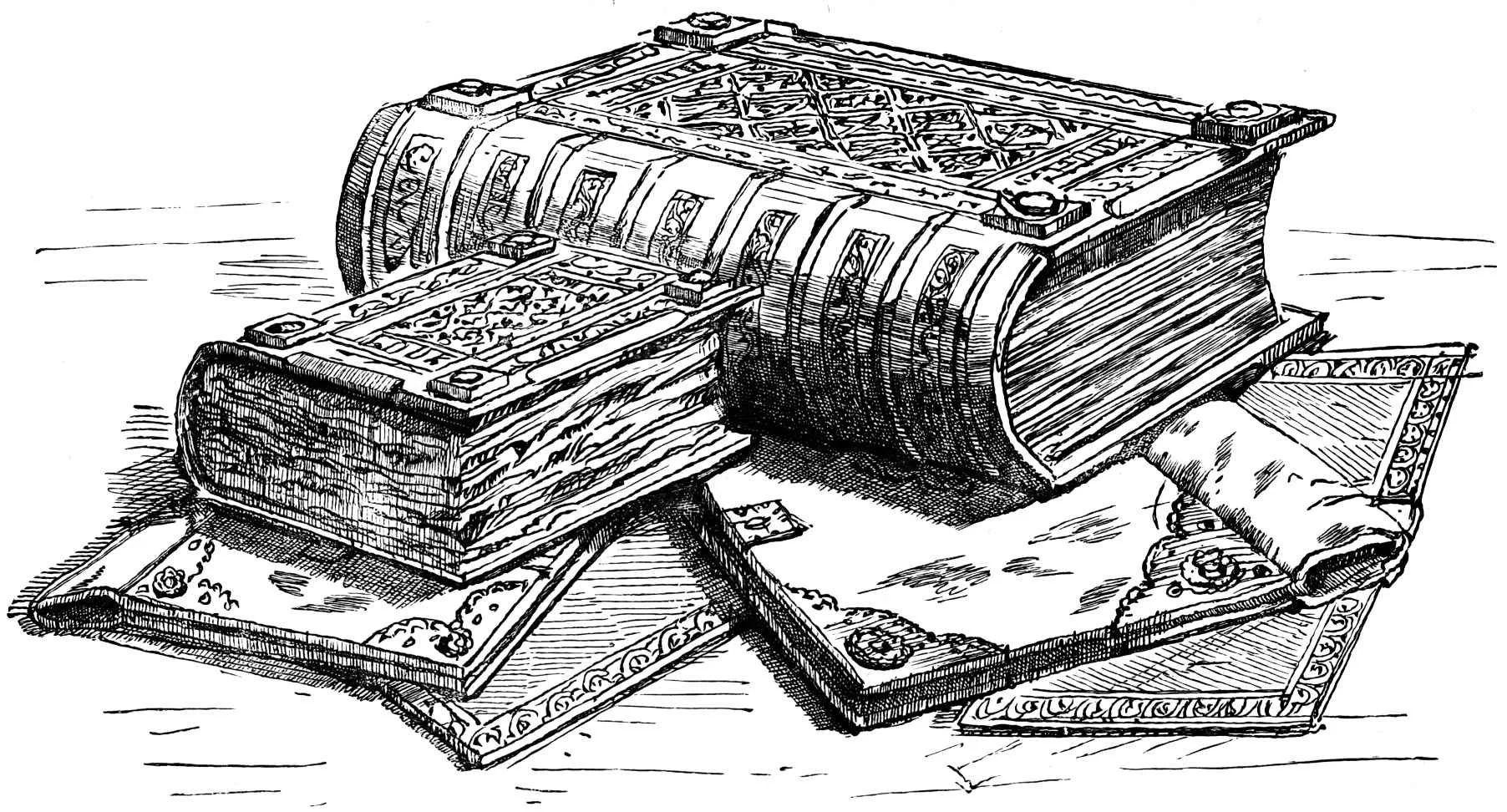
The Domesday Book
The Domesday Book is essentially medieval England’s master spreadsheet. Commissioned in 1086 by William the Conqueror, it was an ambitious nationwide survey recording who owned land, how it was used, and what it was worth.
William ordered it after conquering England in 1066 to tighten control over his new kingdom and ensure taxes were being properly collected. For its time, it was the most complete and organised record of the country ever made. Like a modern spreadsheet, it systematically listed data: landowners, acreage, resources such as farmland, woodland, mills, and livestock, and the taxable value of each holding. Nothing comparable had ever existed before.
Once something was recorded in the Domesday Book—who owned land, how much it was worth, what was owed to the Crown—there was no appeal. The king’s record was the ultimate authority. This finality is why its rulings were compared to the biblical Day of Judgment, known in medieval English as Doomsday. In short, the book had the last word.
More than a record, the Domesday Book was a centralized database of England’s wealth and land, and one of the most effective tools of royal power in medieval Europe. Nearly a thousand years later, it remains an extraordinary snapshot of England at the moment it was reshaped by conquest.
-
William the Conqueror (c. 1028–1087) was a Norman duke from Normandy who became King of England in 1066. The Normans originated as Viking raiders who attacked Paris and the Seine valley in the 9th and early 10th centuries. In 911, the French king granted land along the lower Seine to the Viking leader Rollo in return for an end to the raids, creating the Duchy of Normandy.
William was directly descended from these Norman rulers. He was the great-great-great-grandson of Rollo and the illegitimate son of Robert I, Duke of Normandy. William inherited the duchy as a child and, despite repeated rebellions and threats, secured control of Normandy through military force and political skill. By the 1050s, he was one of the most powerful rulers in northern Europe.
William’s claim to the English throne rested on several pillars. He was first cousin once removed of Edward the Confessor, King of England. William’s great-grandfather, Duke Richard I of Normandy, was Edward’s grandfather through Edward’s mother, Emma of Normandy, placing William within Edward’s extended Norman ducal family. Edward had spent many years in exile in Normandy and died without children, strengthening William’s dynastic claim.
According to Norman sources, Edward the Confessor promised William the English throne around 1051. Although English sources are sceptical or largely silent, such a promise—if accepted—carried significant political weight in the 11th century, when royal succession was often informal and contested.
A second key element involved Harold Godwinson, the most powerful noble in England. In 1064, Harold travelled to Normandy, where William claimed Harold swore an oath to support William’s succession. When Edward died in January 1066, no universally accepted heir existed. The Witenagemot chose Harold Godwinson as king, but William rejected this decision, portraying Harold as an oath-breaker and usurper.
William appealed to Pope Alexander II, arguing that Harold had violated a sacred oath. The pope endorsed William’s claim and sent a papal banner, granting religious legitimacy to the invasion.
In September 1066, William invaded England. He defeated and killed Harold Godwinson at the Battle of Hastings on 14 October 1066 and was crowned king on Christmas Day 1066. As king, William reshaped England’s political and social structure by redistributing land to Norman followers and commissioning the Domesday Book, securing his rule and transforming the English monarchy.
-
Rollo (c. 835/870–933), was a Viking war leader who became the first ruler of Normandy. A Norse chieftain—often described as Danish or Norwegian—Rollo rose to prominence during the Viking incursions into the Frankish kingdom in the late 9th and early 10th centuries.
Rollo was among the Viking leaders who raided the Seine valley and took part in major assaults on Paris, including the prolonged Siege of Paris in 885–886. By the early 10th century, Norse forces had established a permanent foothold along the lower Seine, with Rollo emerging as a dominant military figure.
In 911, following continued pressure on the Frankish kingdom and after the Siege of Chartres, Rollo reached a decisive agreement with Charles the Simple, King of West Francia. Under the Treaty of Saint-Clair-sur-Epte, Rollo was granted land between the River Epte and the sea—centred on Rouen—in exchange for ending Viking raids, swearing loyalty to the Frankish crown, converting to Christianity, and defending the region against other Norse raiders.
This territory became known as Normandy, meaning “land of the Northmen,” and Rollo ruled as Count of Rouen, effectively founding the Norman state. His descendants would rule Normandy as dukes, creating one of the most powerful dynasties in medieval Europe.
The Norman line culminated in William the Conqueror, Rollo’s great-great-great-grandson, who crossed the Channel and conquered England in 1066, permanently altering English history.
Popular Culture Note*
Modern portrayals—most notably the television series Vikings—have reimagined Rollo as the brother of Ragnar Lothbrok, played by Clive Standen. While influential in popular culture, there is no historical evidence to support a personal or familial connection between the two figures.
Fire, Rebuilding, and Finch Family Stewardship
In 1697, much of the earlier house was destroyed by fire. At the time, the estate was owned by Heneage Finch, later 1st Earl of Aylesford and Solicitor-General to Charles II, who rebuilt the mansion. The house remained in the Finch family throughout the eighteenth century, during which Albury Park hosted the coronation banquet of King George III in 1761, an event that secured its place in national social history.
In 1782, the estate left the immediate Finch line when the 4th Earl of Aylesford sold it to his brother, Captain William Clement Finch, a Royal Navy officer. Finch had made his fortune at sea, earning significant prize money from the capture of enemy ships during wartime. Contemporary and later accounts describe one of these as a particularly valuable Spanish prize, and his share of the proceeds is said to have totalled around £74,000, an extraordinary sum at the time and more than enough to secure the purchase of Albury Park.

King George III
George III is the longest-reigning male monarch in British history and was often known as 'Mad King George' due to his mental illness
19th-Century Reinvention Under Drummond and Pugin
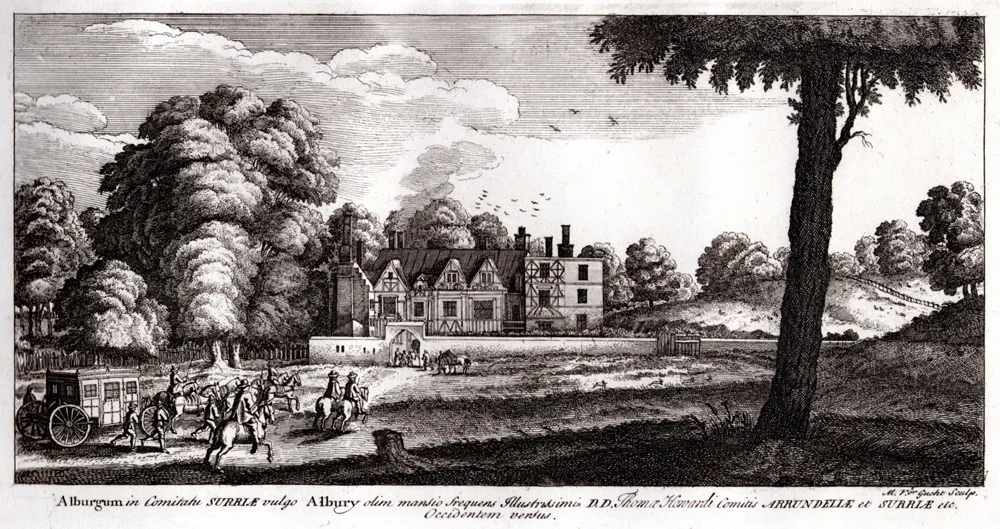
Engraving of West front for Thomas Howard in 17th century
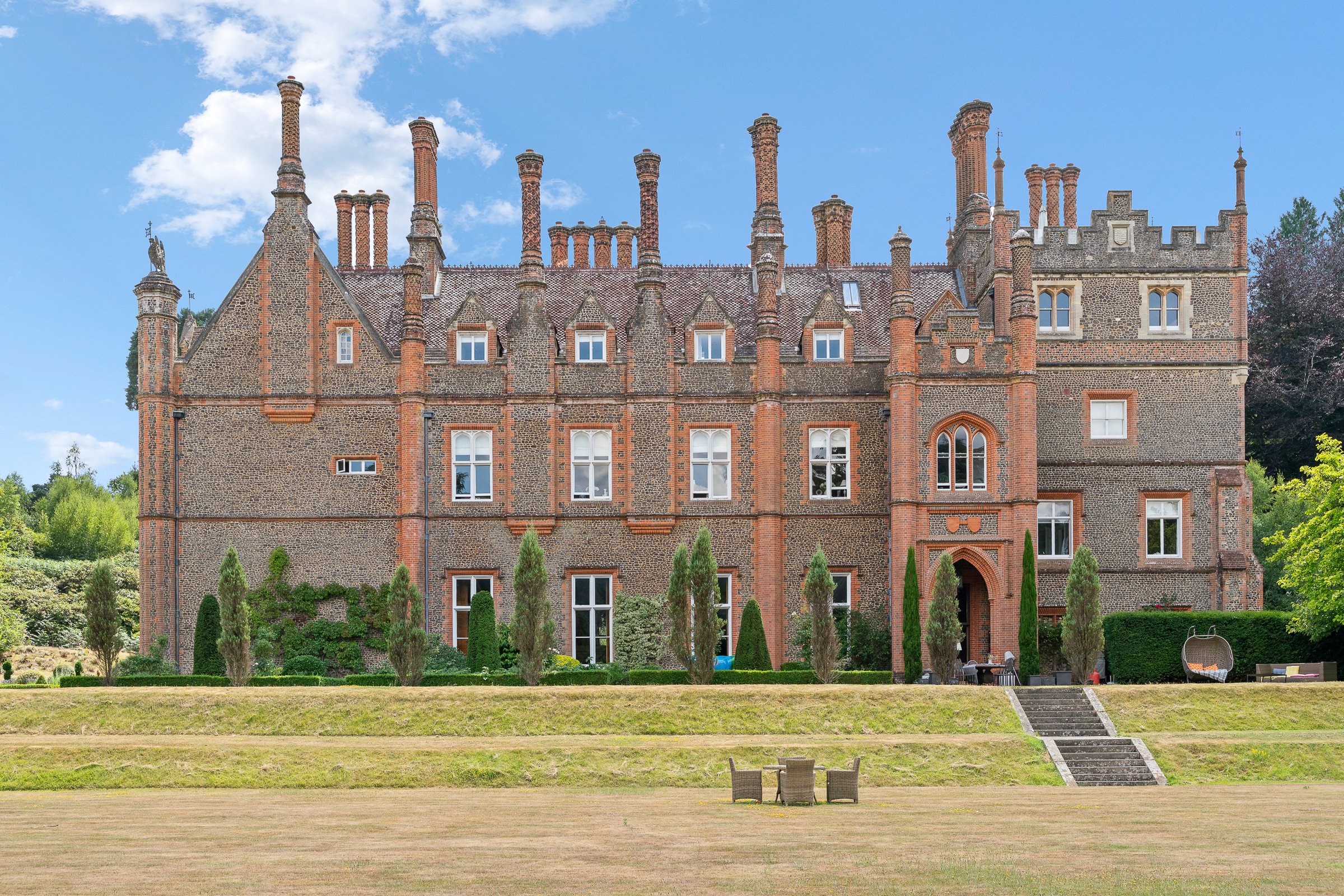
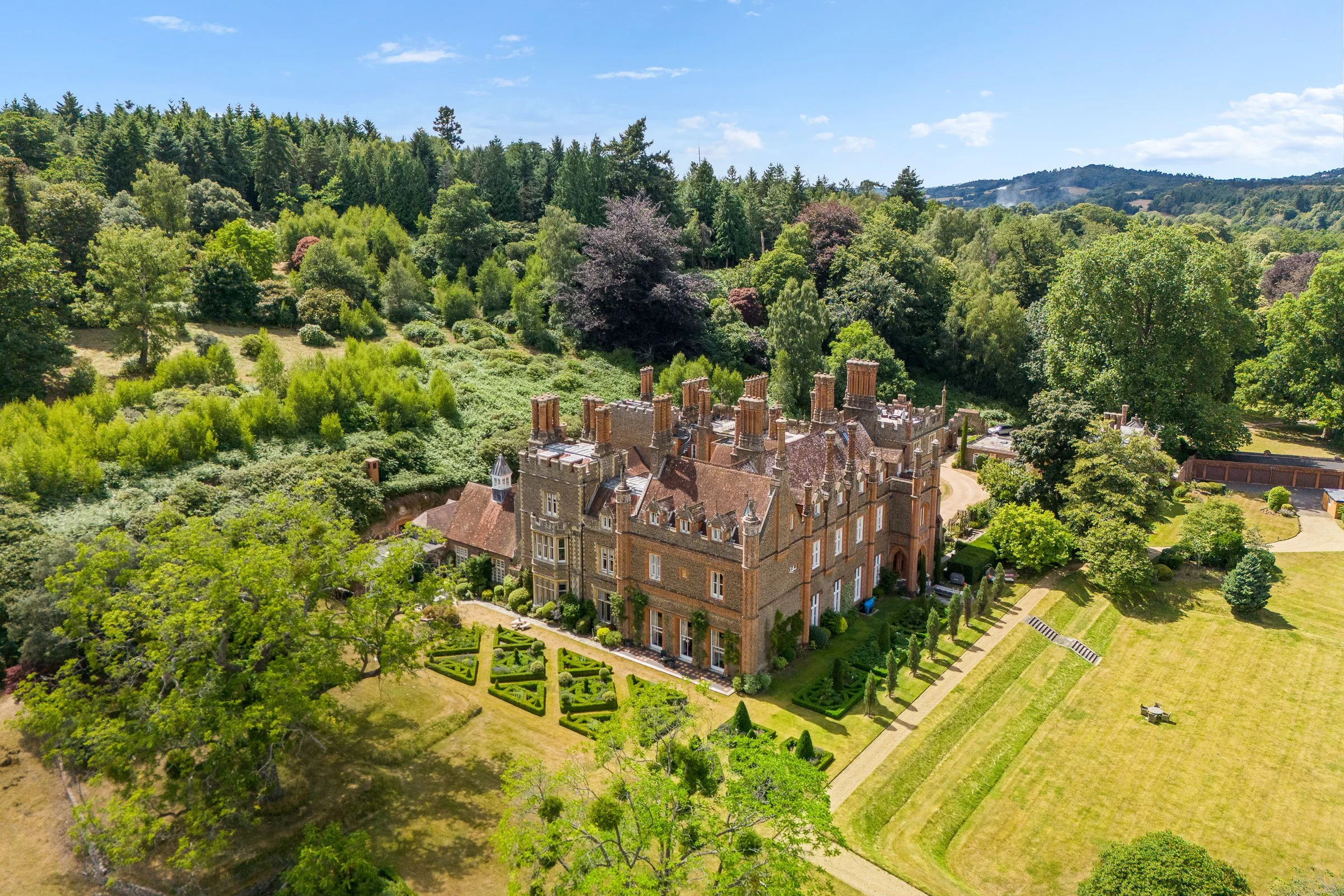
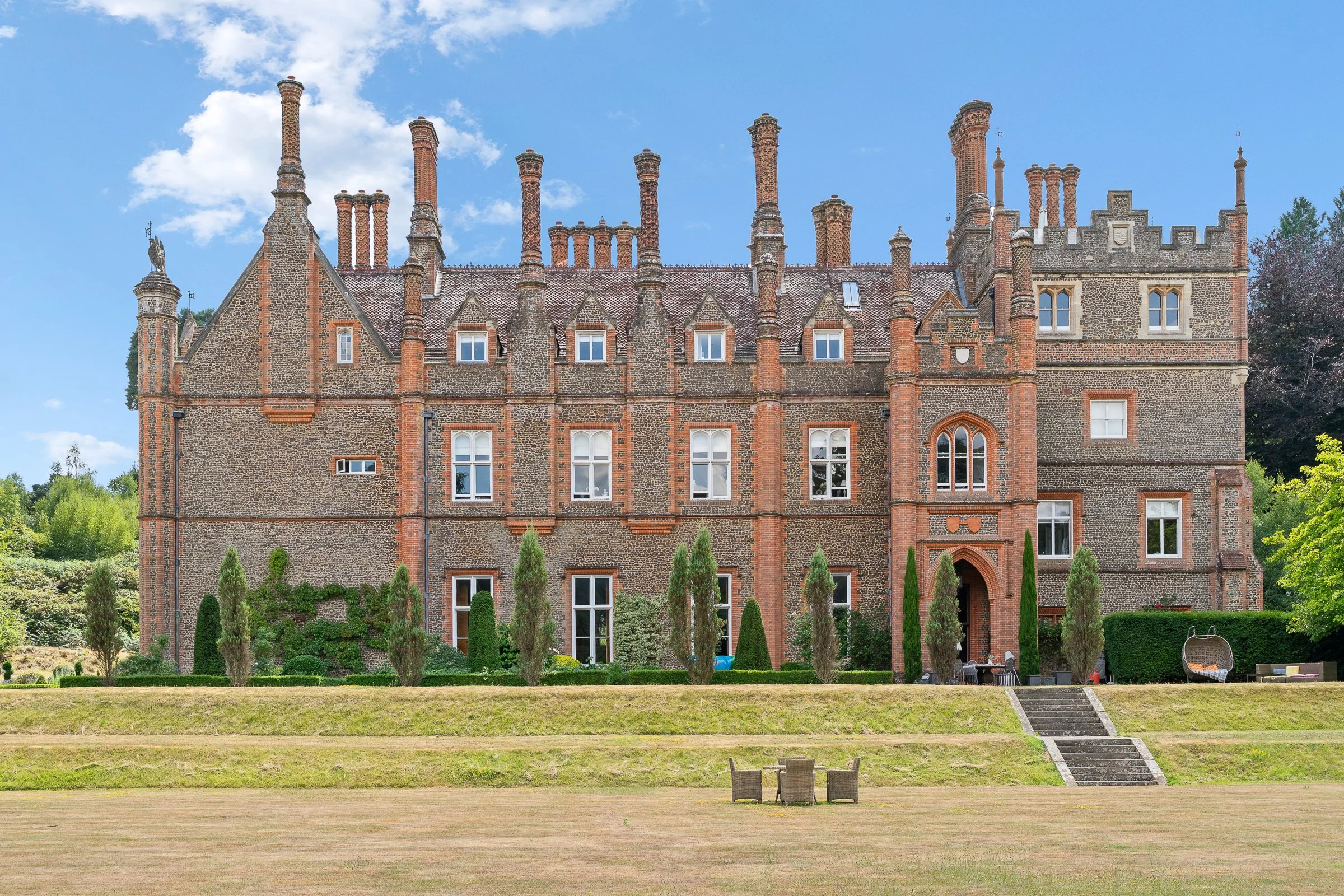
In 1819, Henry Drummond, a banker and politician, acquired the estate. He commissioned Augustus Welby Northmore Pugin, a leading figure in the Gothic Revival movement and later known for his work on the Palace of Westminster, to remodel the mansion. Under Pugin’s influence, the building acquired its distinctive Gothic character with 63 individually designed brick chimneys and a battlemented stone tower at the north-west corner. Drummond also enriched the park with many rare trees.
20th and 21st Century: Conversion
In 1969, the mansion and a small portion of its surrounding land were sold, marking its separation from the wider estate. The majority of the historic parkland remained in separate ownership. Following later ownership changes, the building was converted in the early 2000s into 14 luxury apartments,.
The estate’s has also shown up in popular culture: scenes from the 1994 British film Four Weddings and a Funeral, starring Hugh Grant, were filmed on the grounds of Albury Park.