A Restored 1891 Stockholm Apartment Built for an Industrialist Comes to Market
Bedrooms: 3 Bathrooms: 2 Interior: 259 m² / 2,788 sq ft
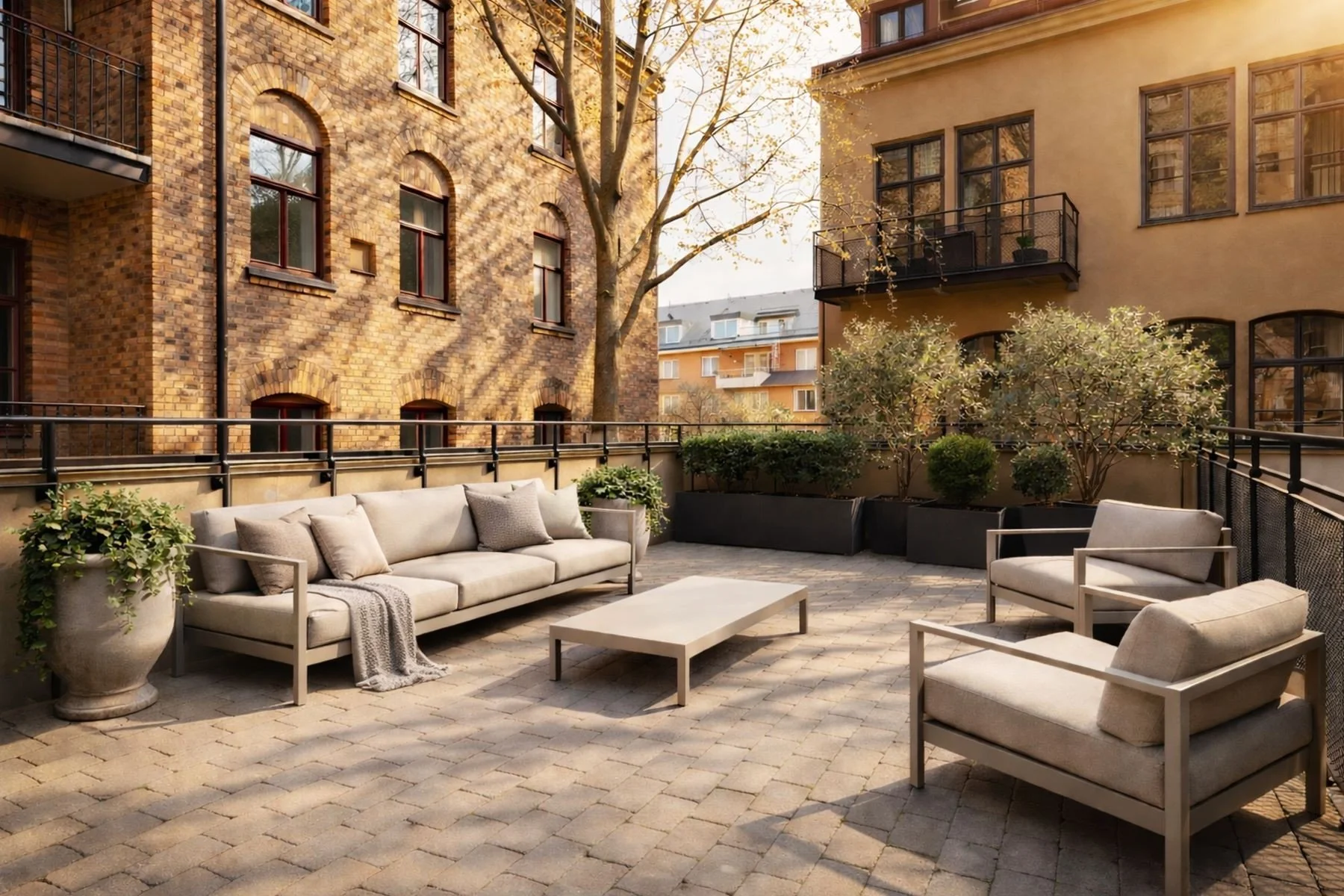
Amenities: Heritage-protected salons, painted ceilings, ornamental stucco, kakelugnar tiled stoves, mirrored doors, private terraces
A self-made industrialist hired a self-made architect. Following an award-winning heritage restoration, this Stockholm apartment now preserves some of the city’s most remarkable surviving 19th-century residential interiors.
Listed with Skeppsholmen Sotheby's International Realty, the Kungsholmen residence spans approximately 259 square metres / 2,788 square feet and includes seven rooms, three bedrooms, two bathrooms, two terraces, and four heritage-protected salons. It sits within an 1891 building by Alfred Hellerström in Kungsholmen, one of Stockholm’s central residential districts, known for its historic architecture and waterfront setting.
The apartment was built for Carl Becker and his wife Elisabeth Becker. Becker was a German-born chemist and entrepreneur who arrived in Sweden in the 1860s and built what became the Beckers industrial company, a major name in Sweden’s paint and coatings industry.
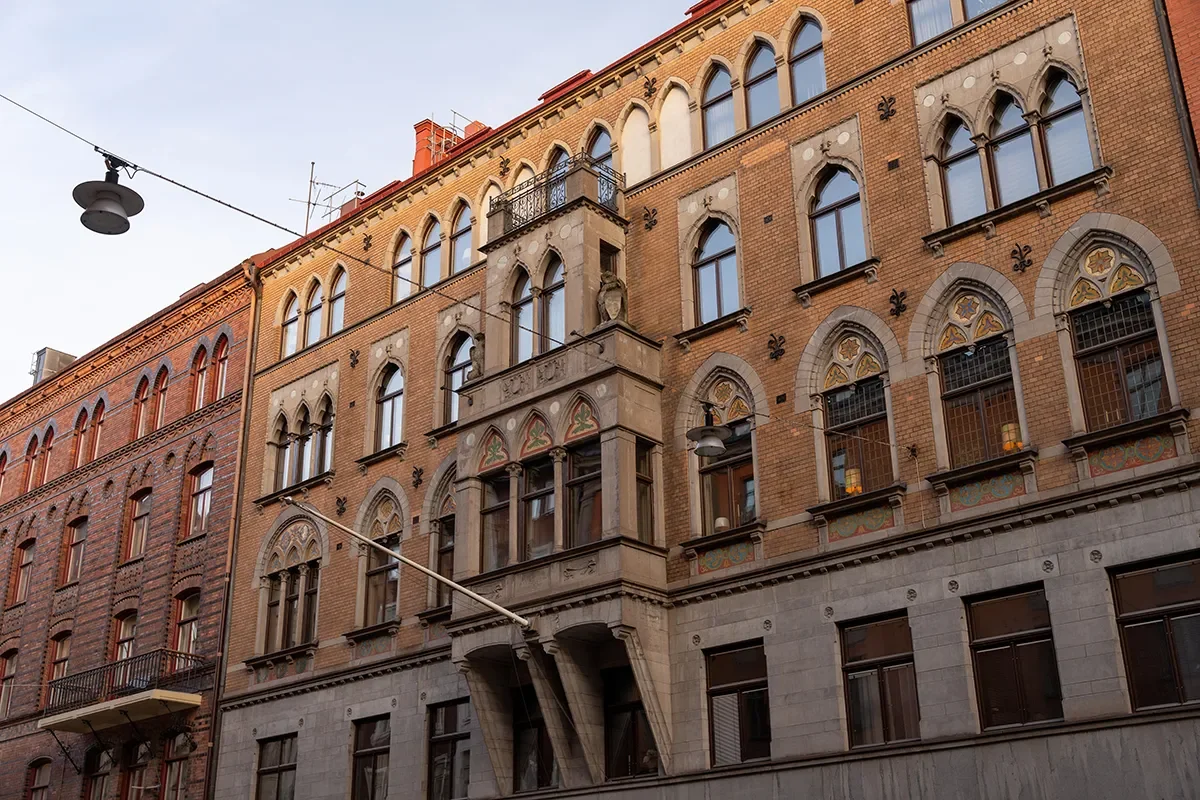
Thomas Diös, Florbrant Svanberg for Sweden Sotheby’s International Realty
This was not old aristocratic money. It was industrial-era ambition. A private residence built for a family whose fortune came from chemistry, manufacturing, and the rise of modern Sweden.
Alfred Hellerström’s life reads almost like a novel. His route into architecture was unusually hard-won. Born in 1863, the son of a carpenter and one of seven children, he left school young and went to work in construction. His first education was practical: building sites, materials, structure, and craft.
He wanted to move from the technical track into the final stage of architectural education at the Royal Academy of Fine Arts, but he lacked a studentexamen, the formal upper-secondary qualification normally required for admission. That missing credential blocked him more than once.
He first entered what is now KTH as an extra student, helped by his older brother August Hellerström’s contacts in Stockholm’s architectural circles. After three years, he had strong results, especially in architectural composition. But when he applied to the Royal Academy of Fine Arts, the same problem returned: he still did not have the conventional school qualification.
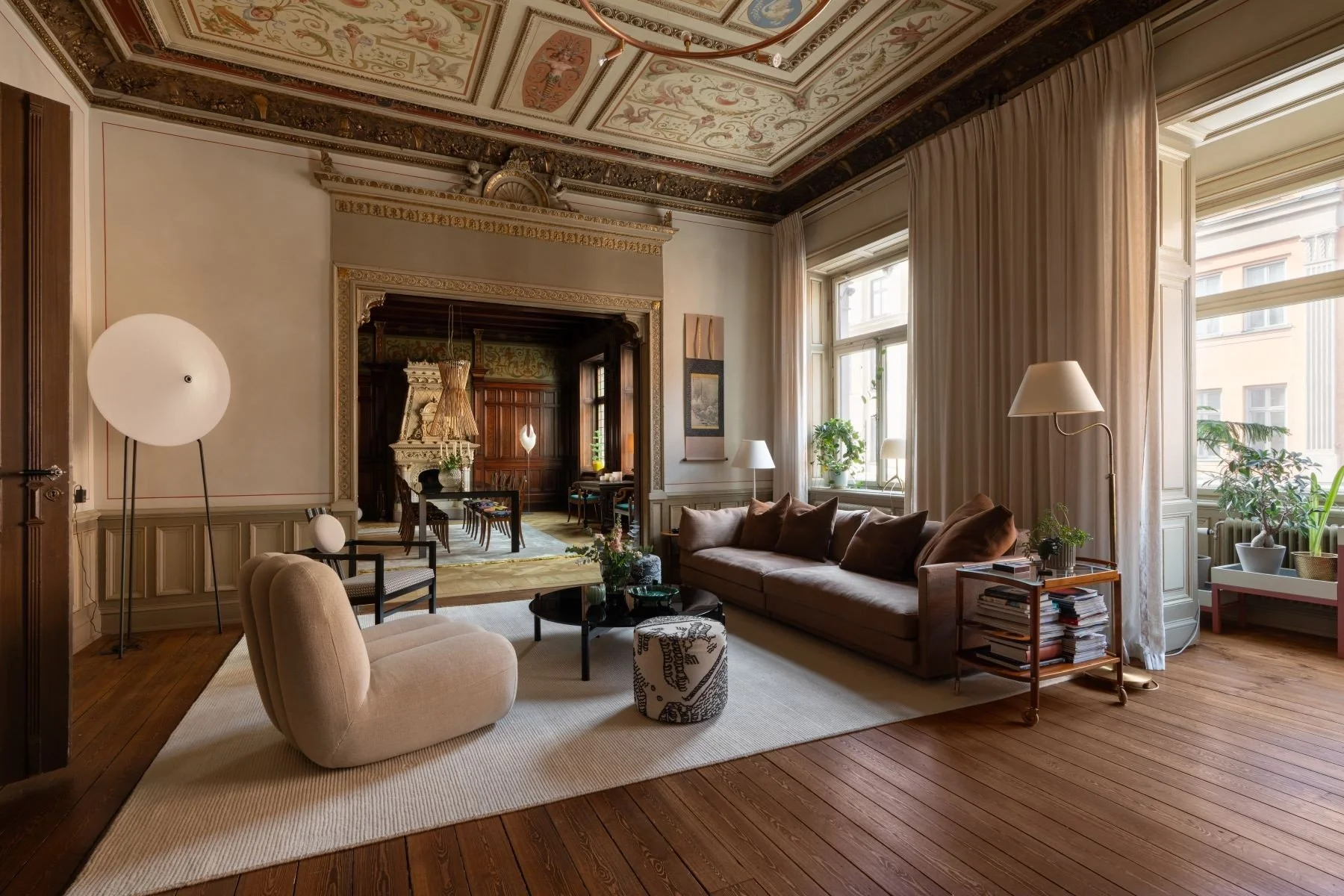
Thomas Diös, Florbrant Svanberg for Sweden Sotheby’s International Realty
At one point, professor Magnus Isæus reportedly offered to fund his studies at the architecture school in Vienna, but Hellerström’s father forbade him from accepting. Instead, on the advice of an old teacher, he applied directly to the royal authority, Kunglig Majestät, literally Royal Majesty, submitting his KTH results and a large roll of drawings. He was admitted by kunglig dispens, or royal dispensation.
He went on to become one of the country’s important architects, later designing Lund University Library, which has been named Sweden’s most beautiful building.
In Kungsholmen, his client was Carl Becker, another self-made figure. The pairing gives the apartment its deeper story: a self-made industrialist commissioning a self-made architect to create a formal urban residence at the height of Stockholm’s industrial expansion.
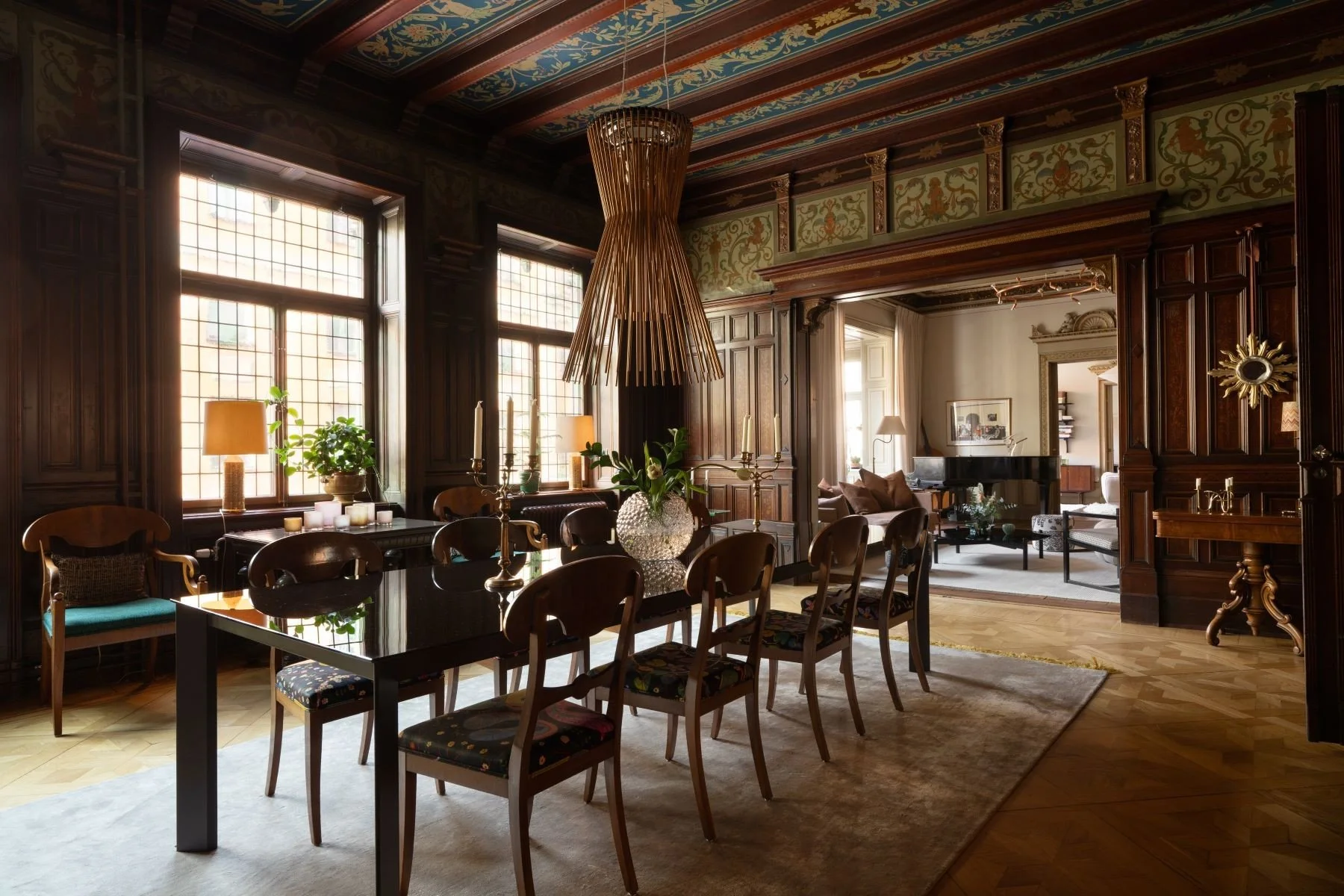
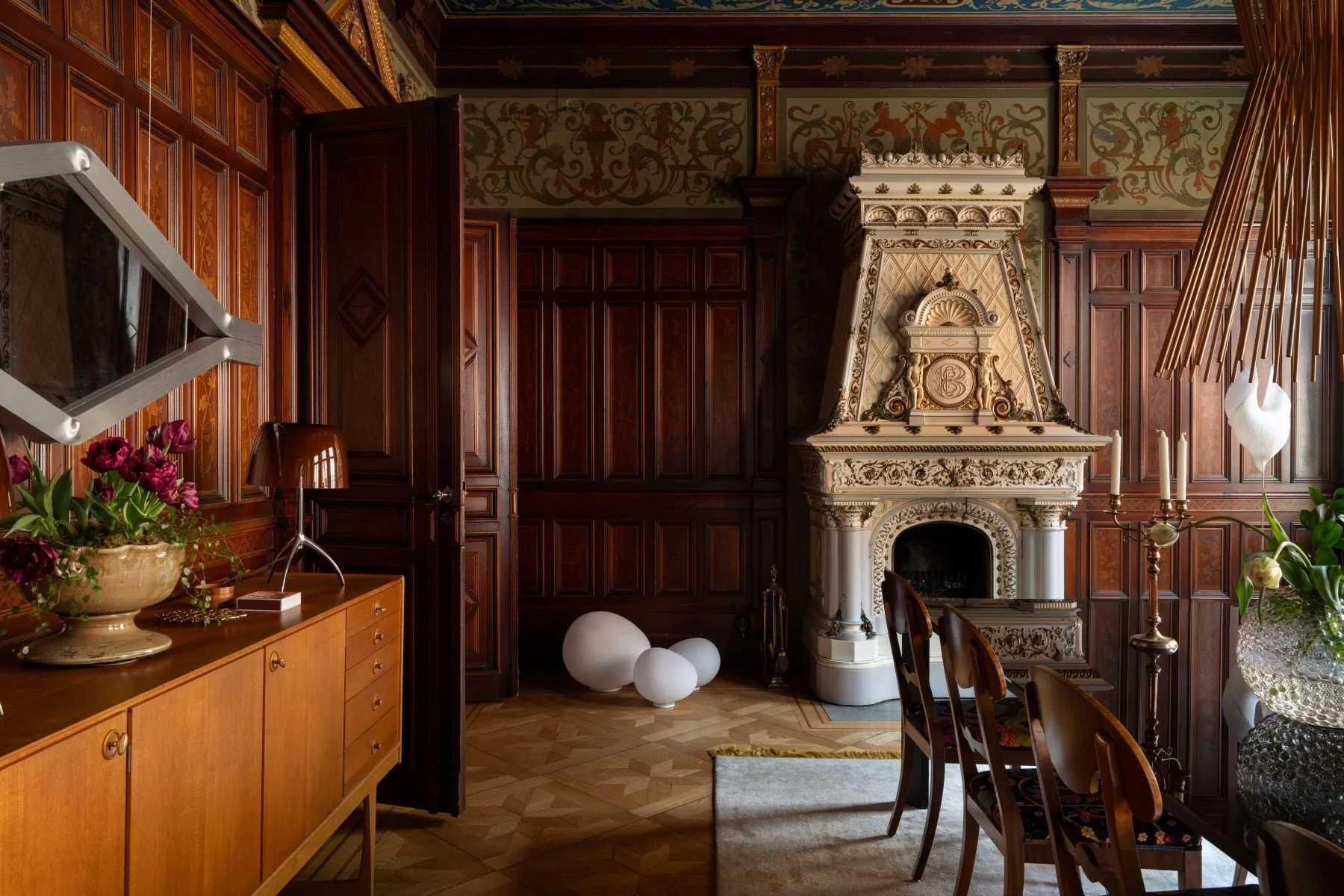
Carl and Elisabeth Becker lived in the residence for decades, with Elisabeth remaining there until the 1930s. After that, the apartment served as office premises for many years.
That could have erased much of the original interior. Historic apartments used as offices are often divided, simplified, and stripped of their decorative character. Reception rooms become workspaces. Lighting changes. Doorways are altered. The original sequence of rooms breaks down.
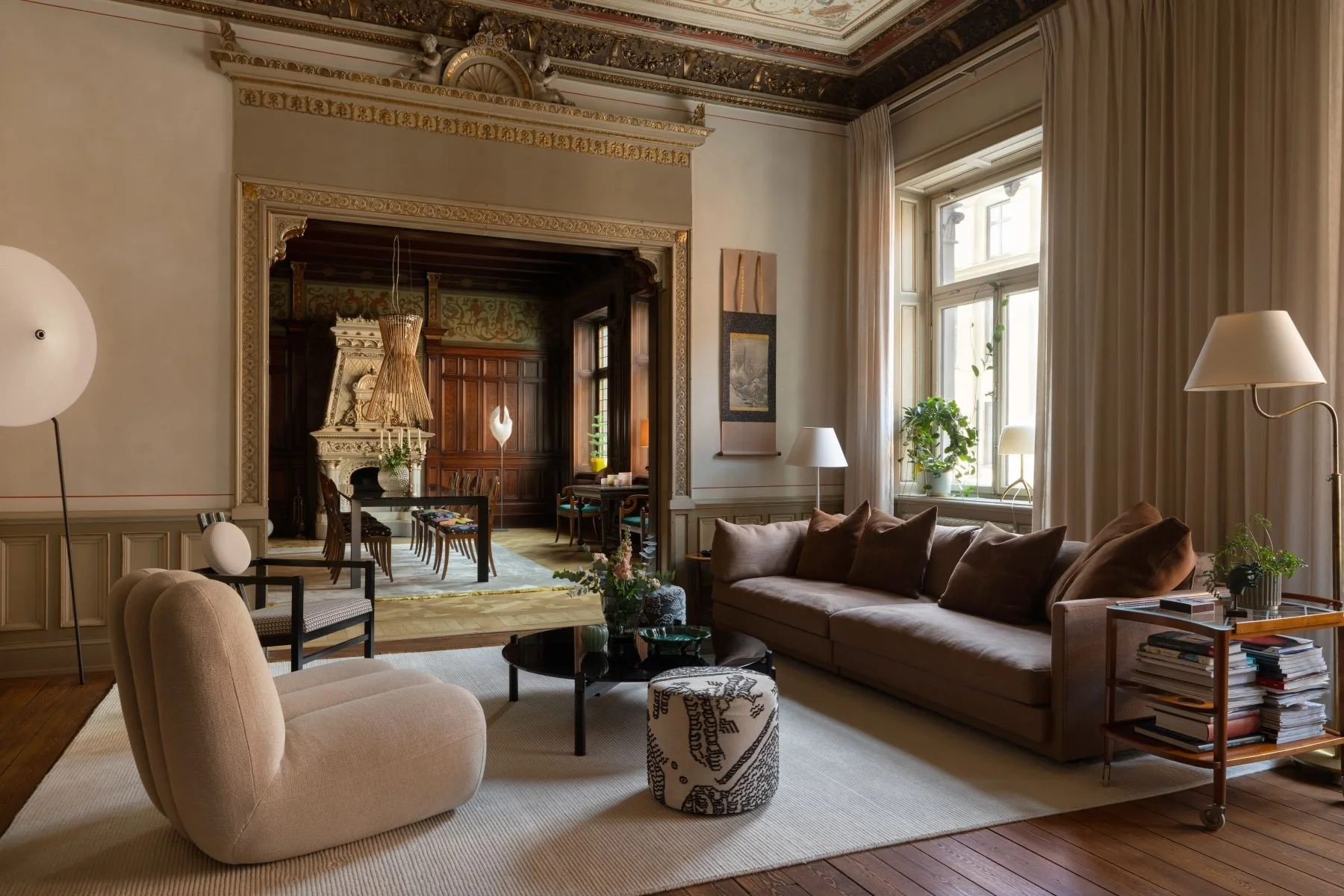
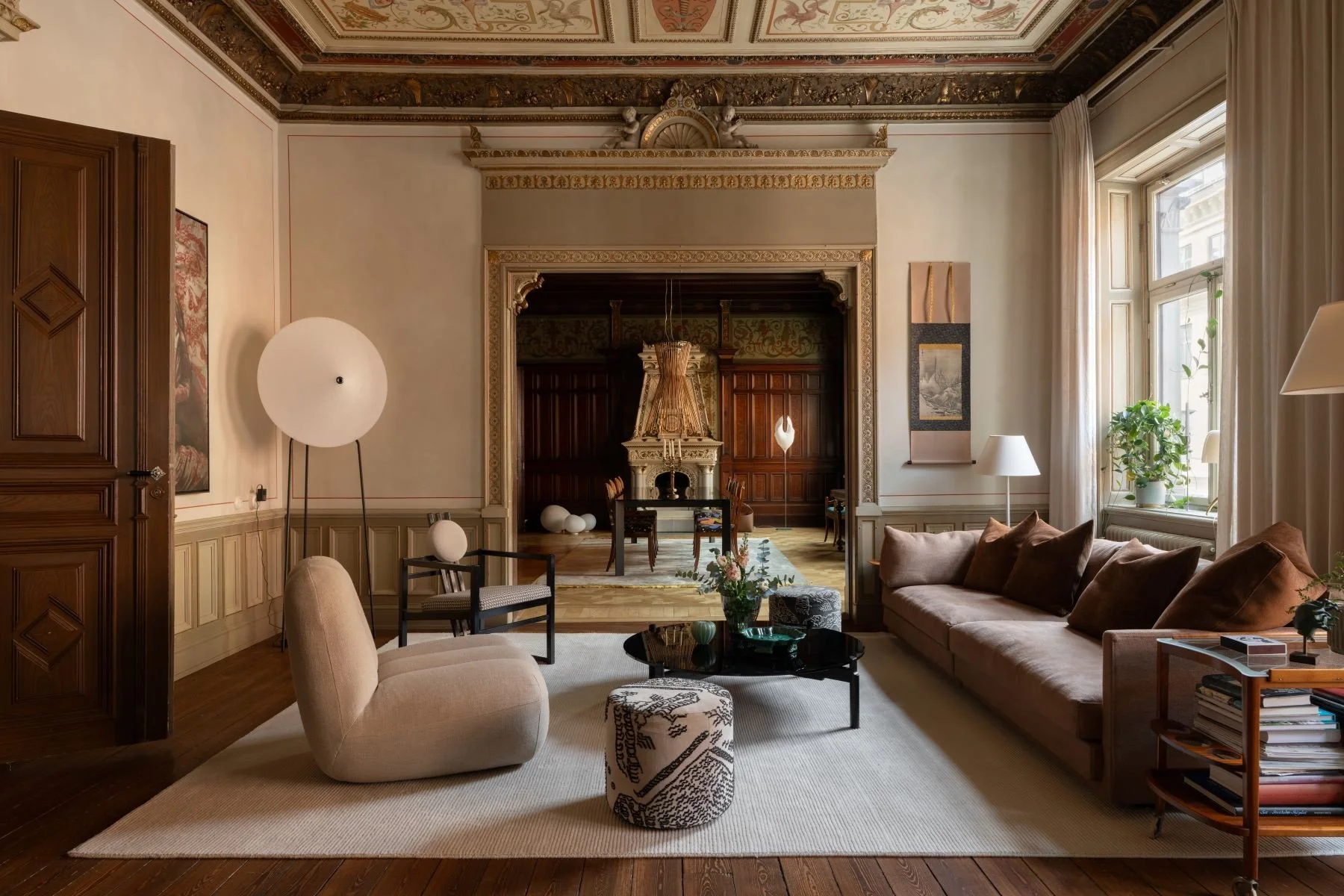
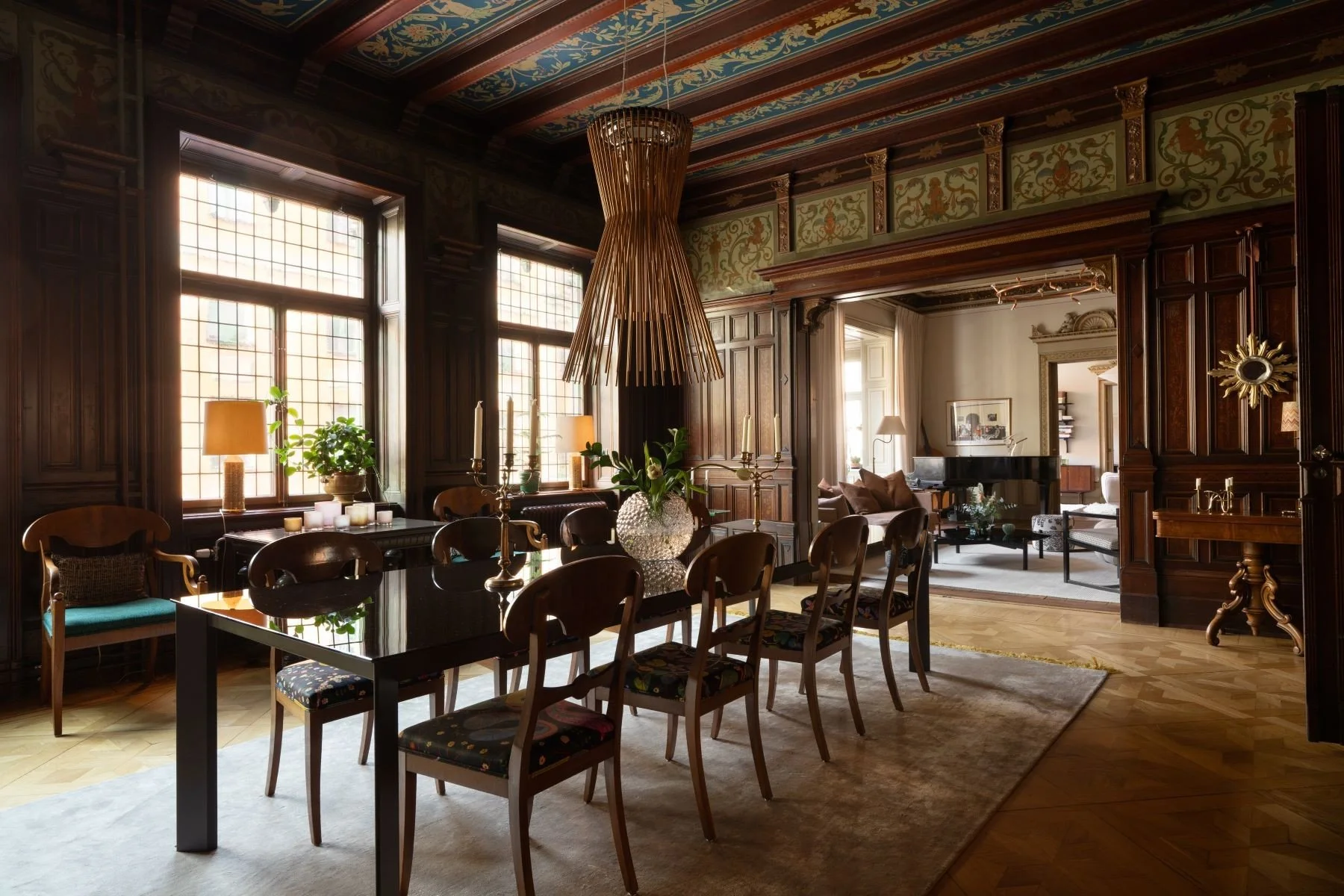
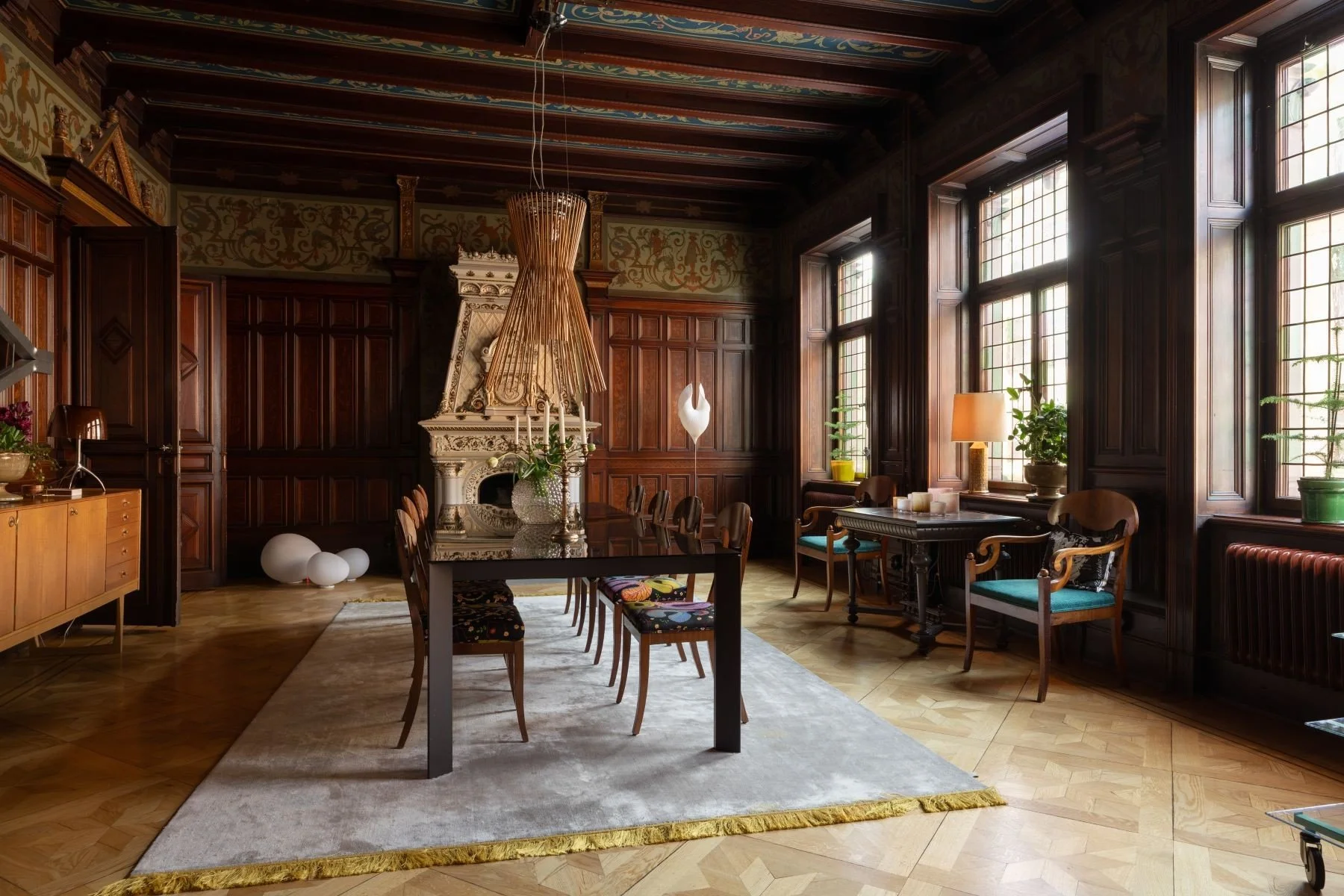
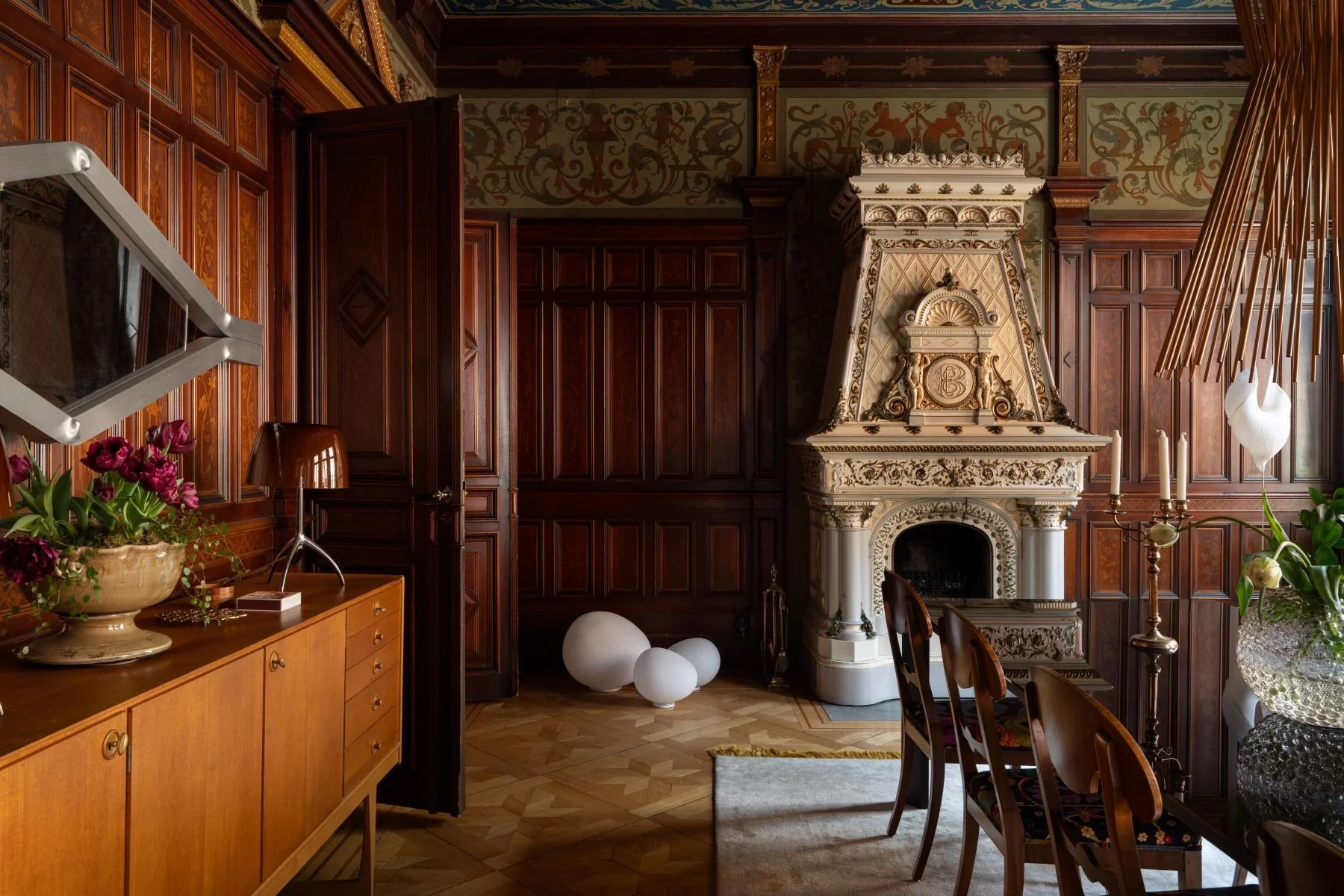
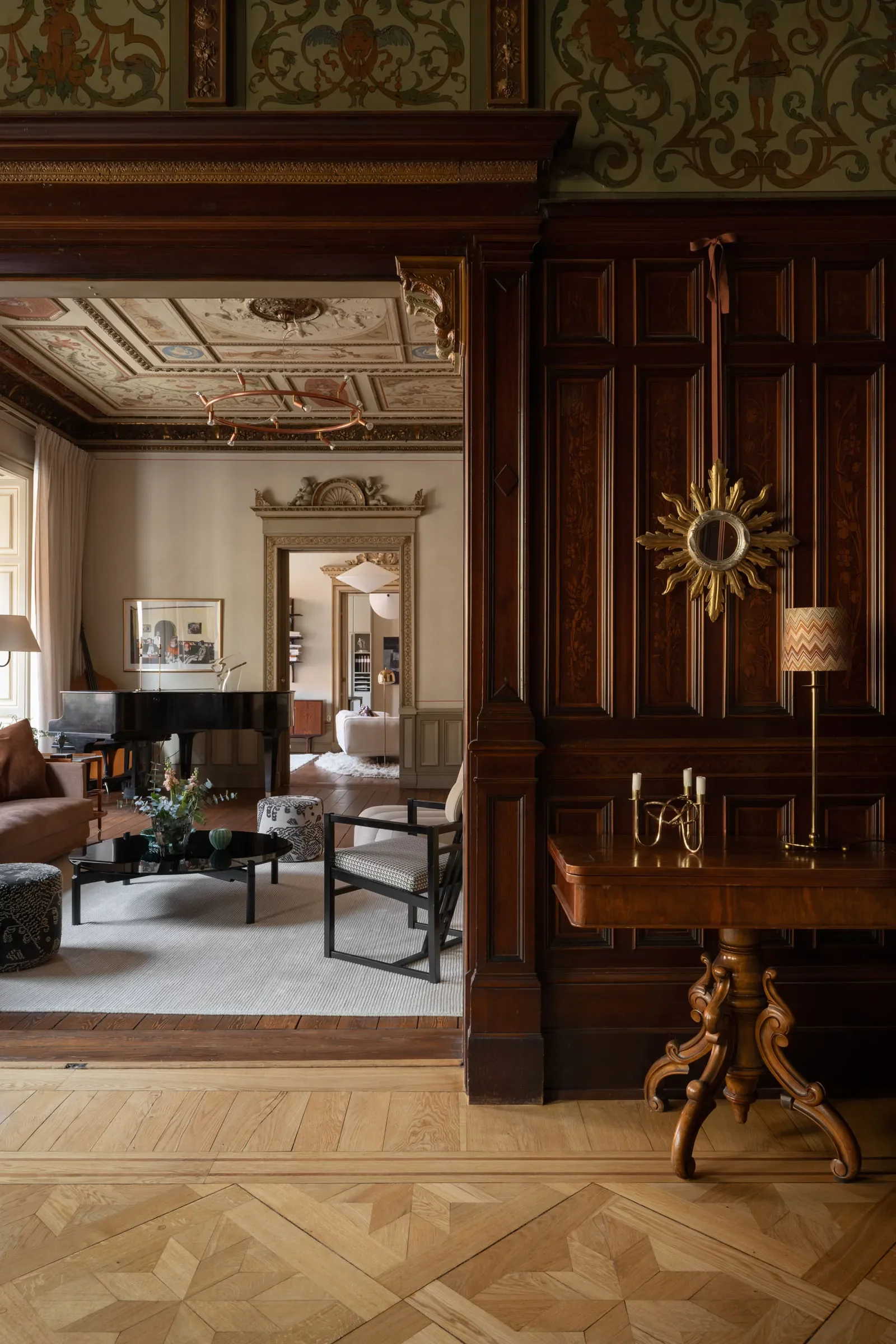
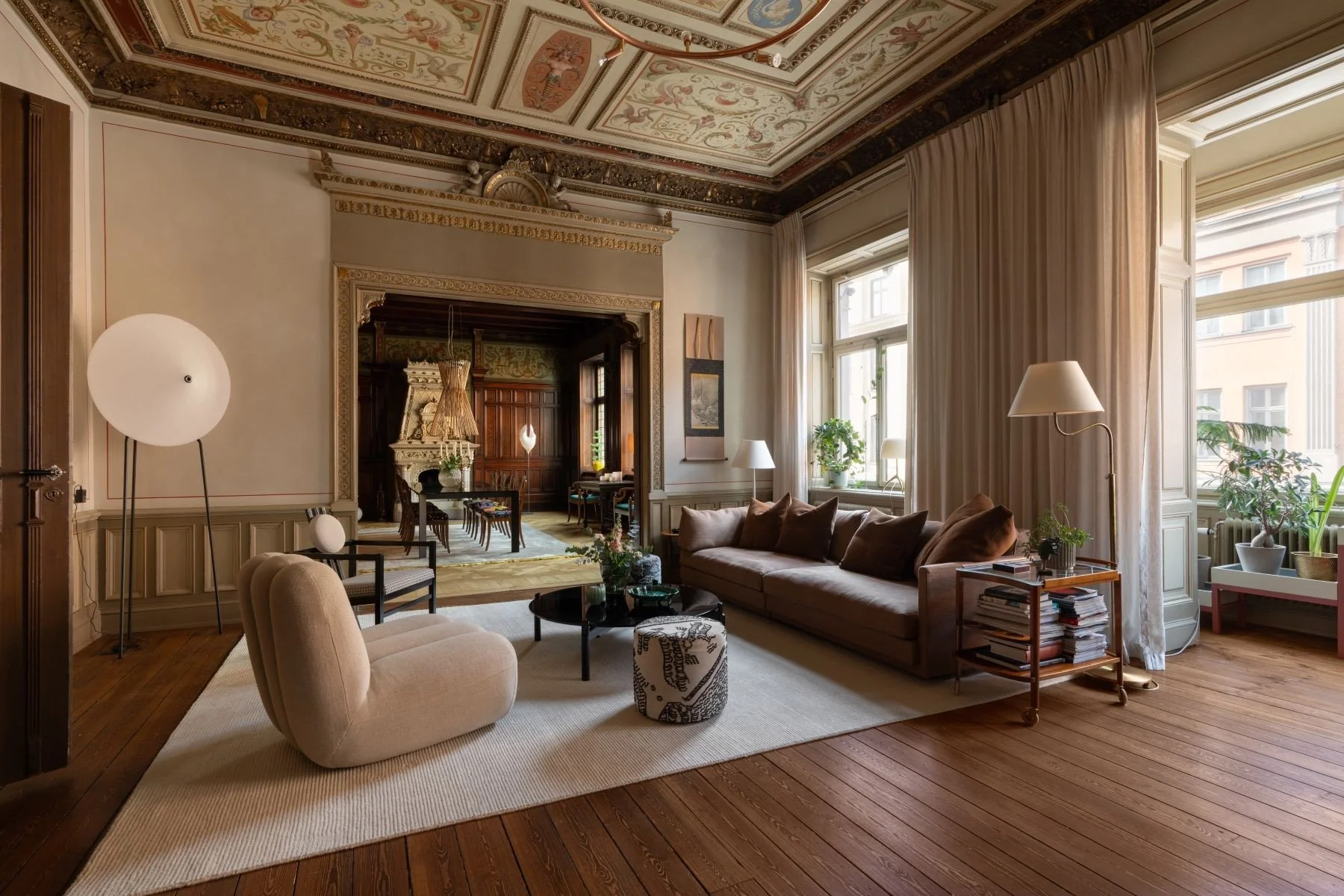
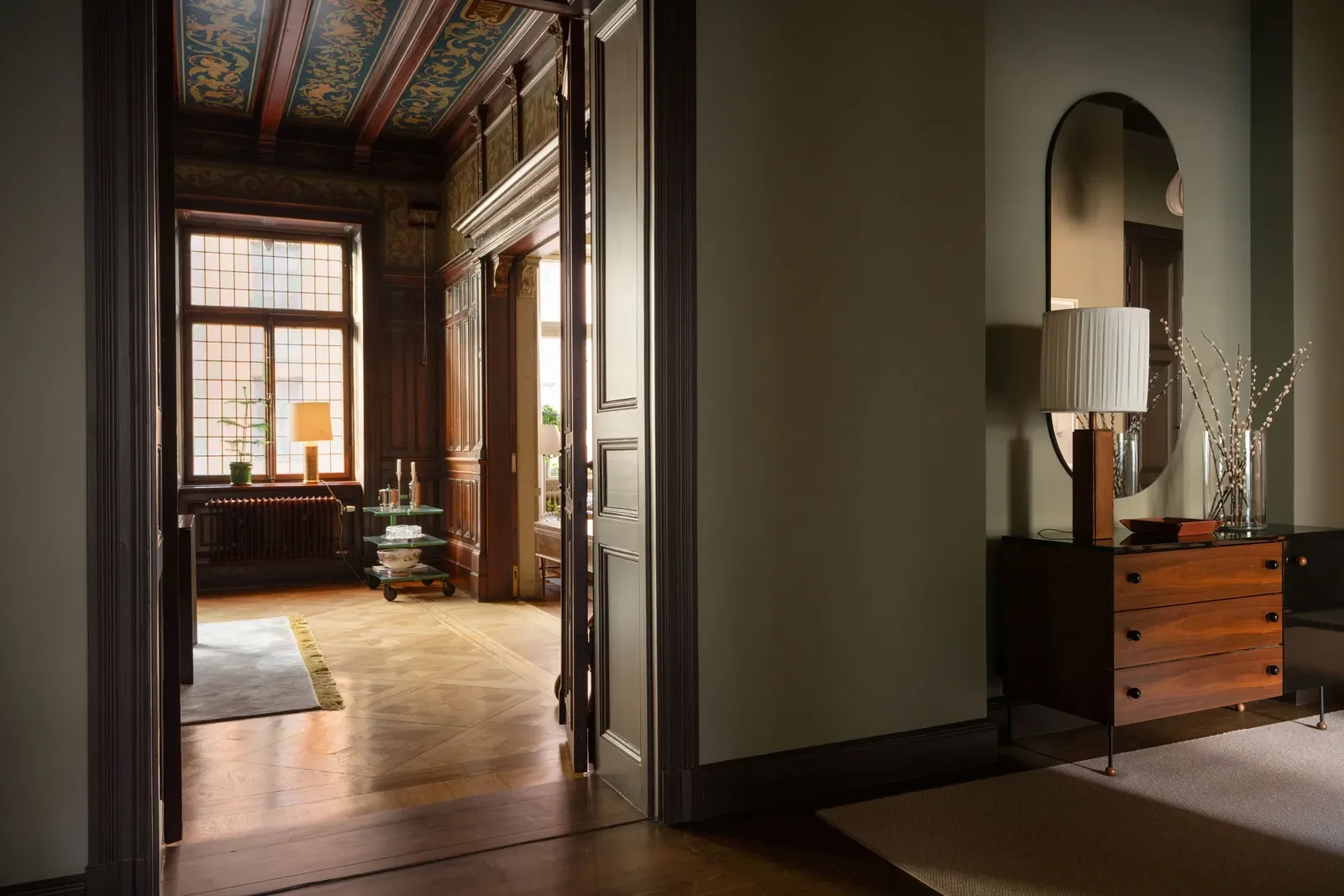
Here, the four formal reception rooms remained unusually intact. They are arranged in a formal enfilade, a French architectural term for rooms aligned in sequence, with doorways placed so each room opens into the next. The layout was designed for receiving guests and moving through the residence in a clear progression, not for casual open-plan living.
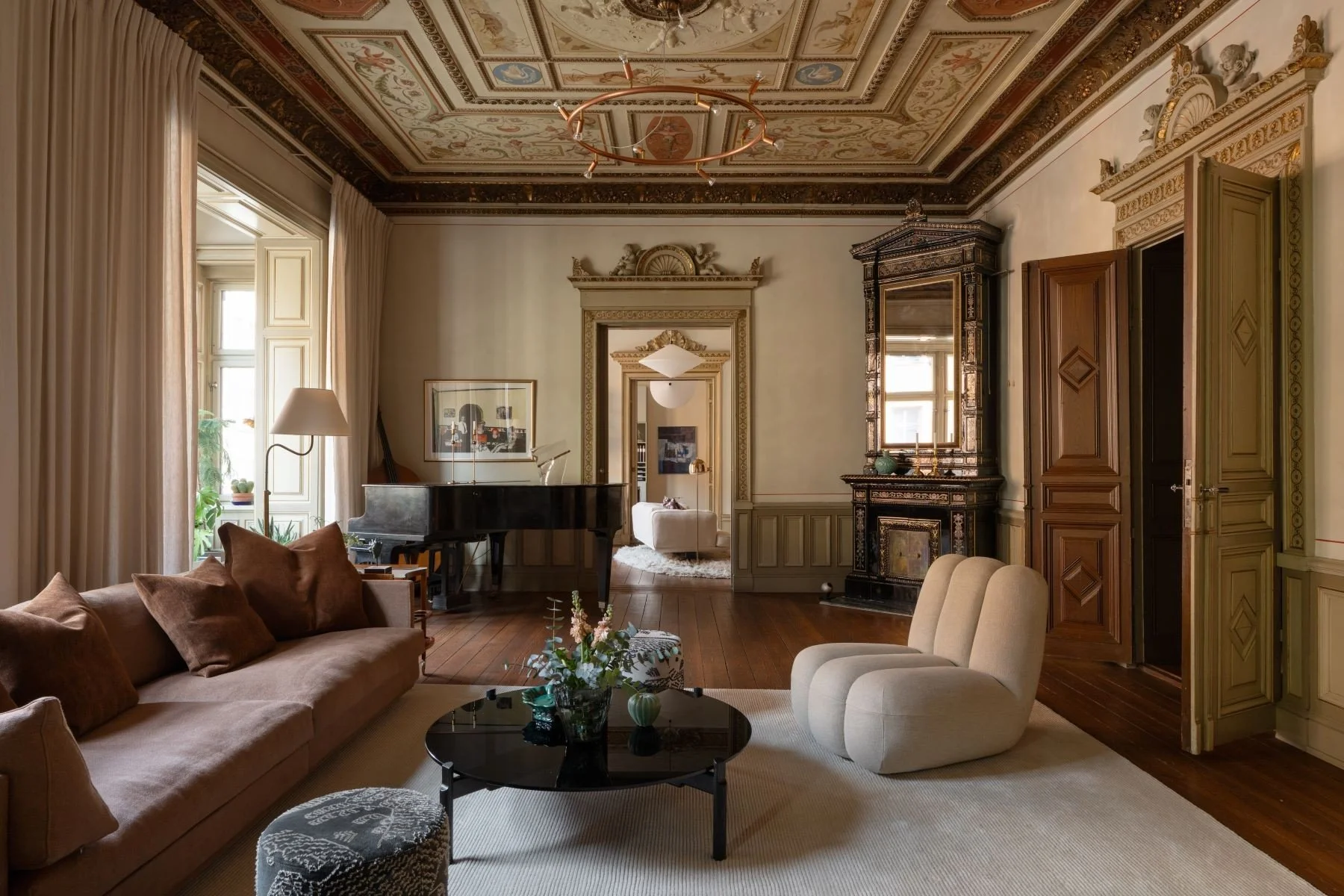
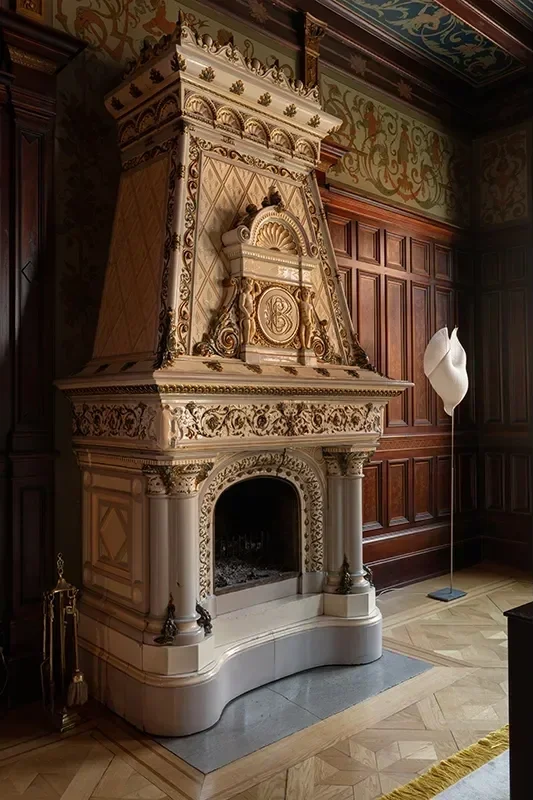
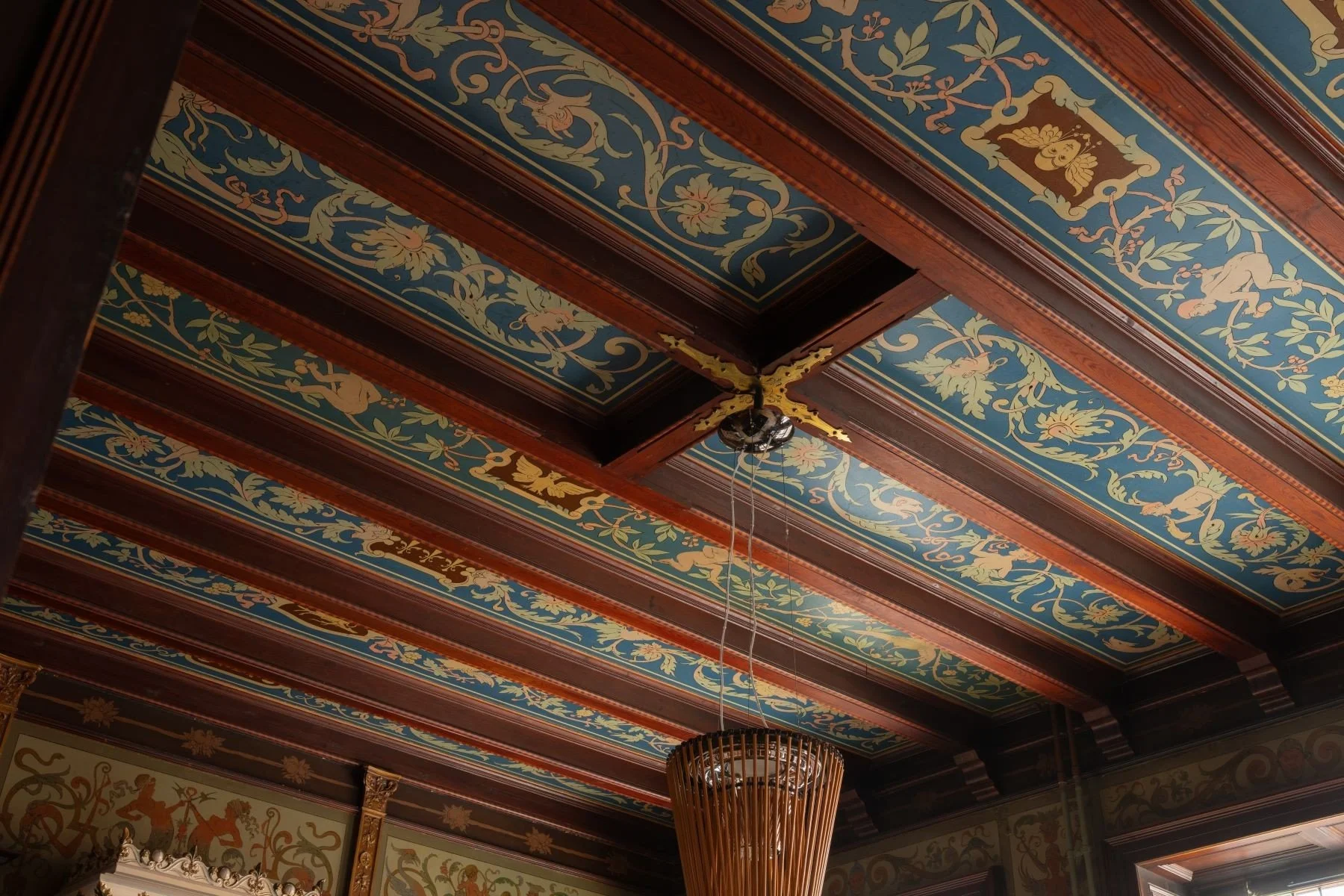
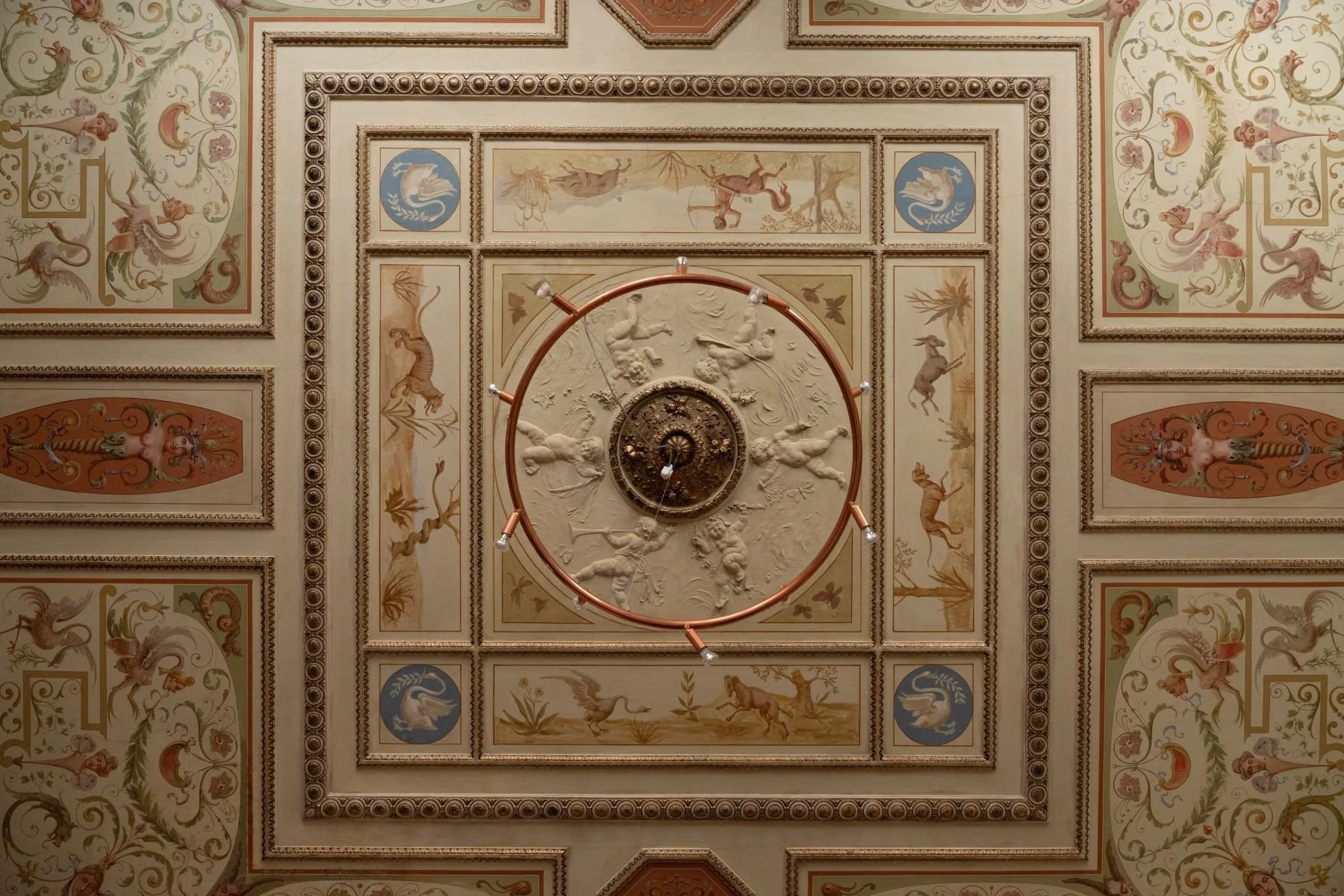
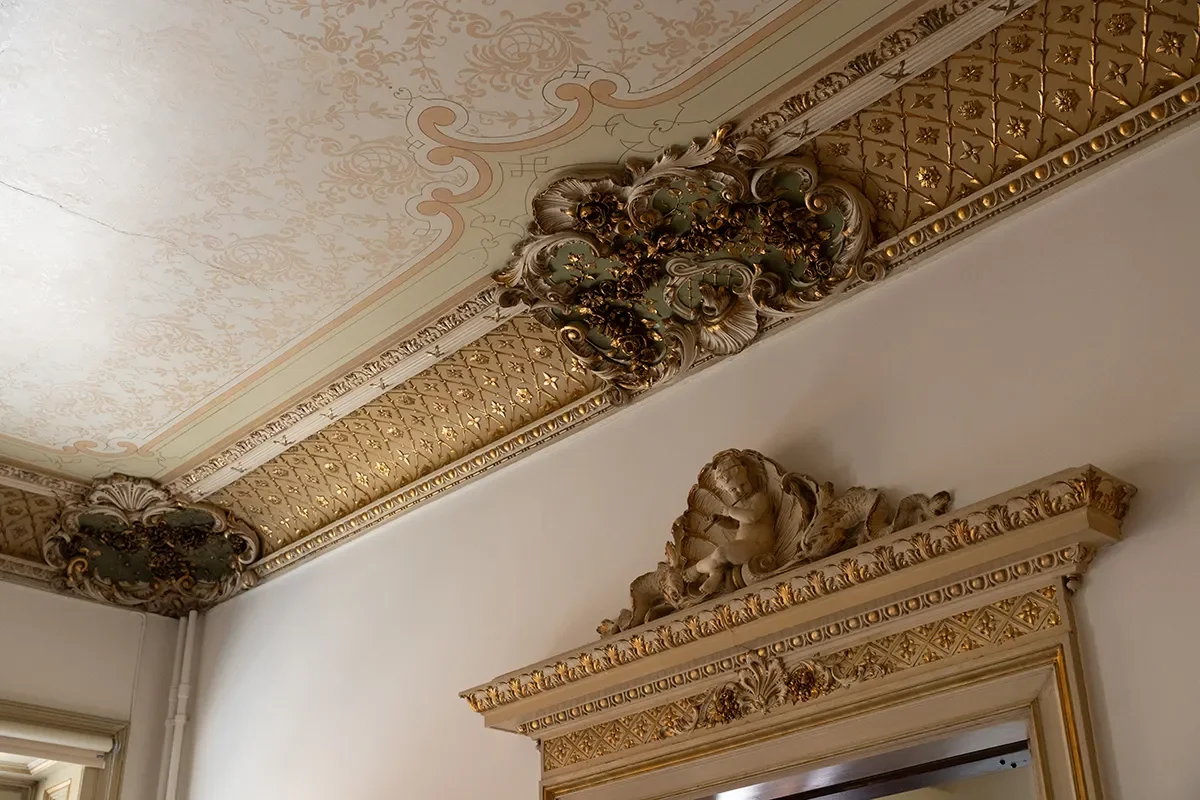
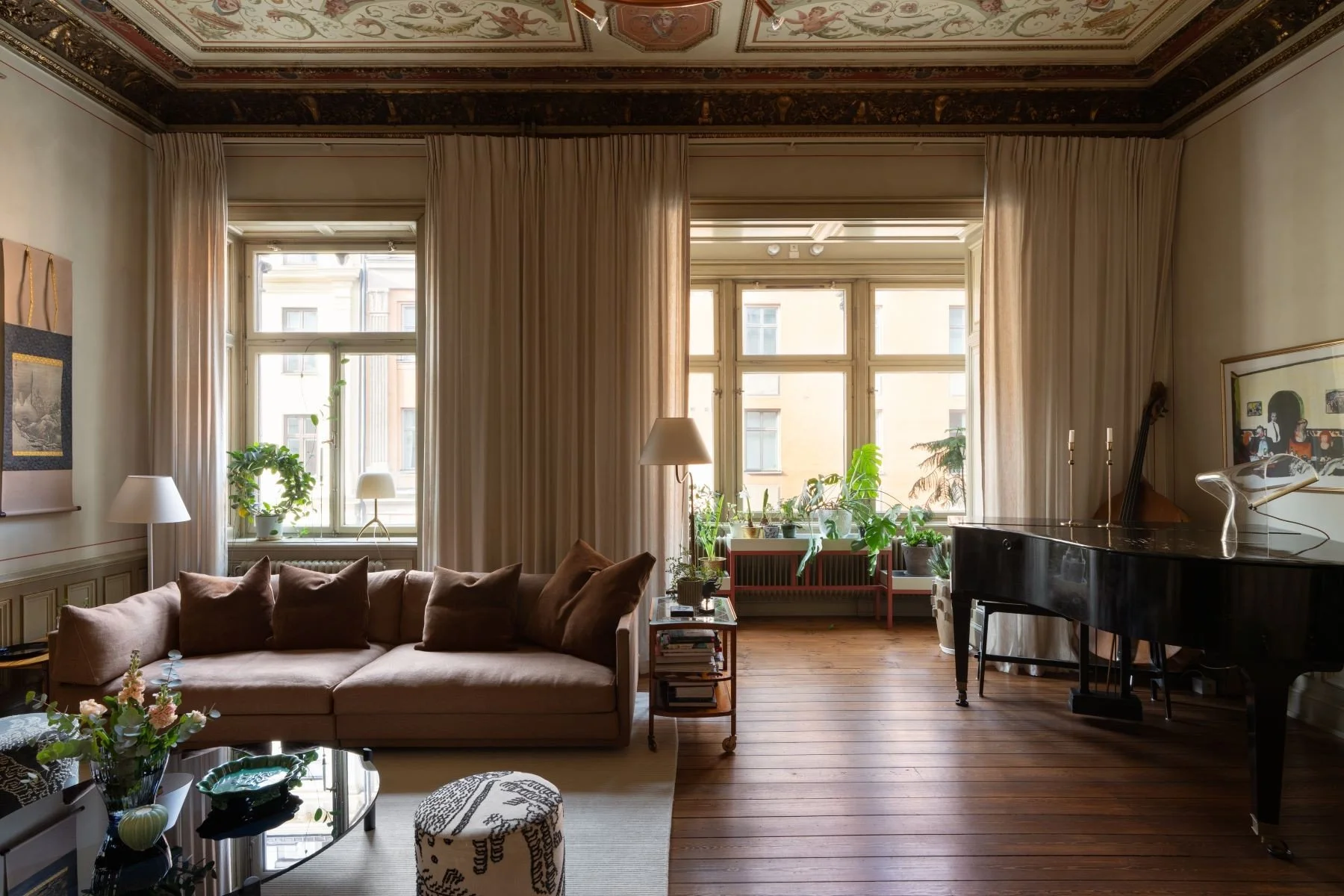
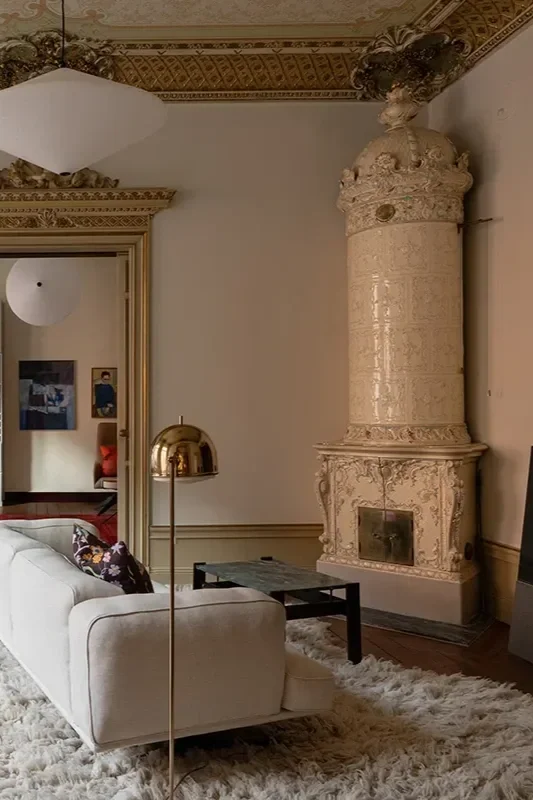
The rooms retain painted ceilings, ornamental stucco, mirrored doors, deep window niches, original decorative detailing, and kakelugnar, the traditional Swedish tiled stoves that remain among the apartment’s most distinctive historic features.
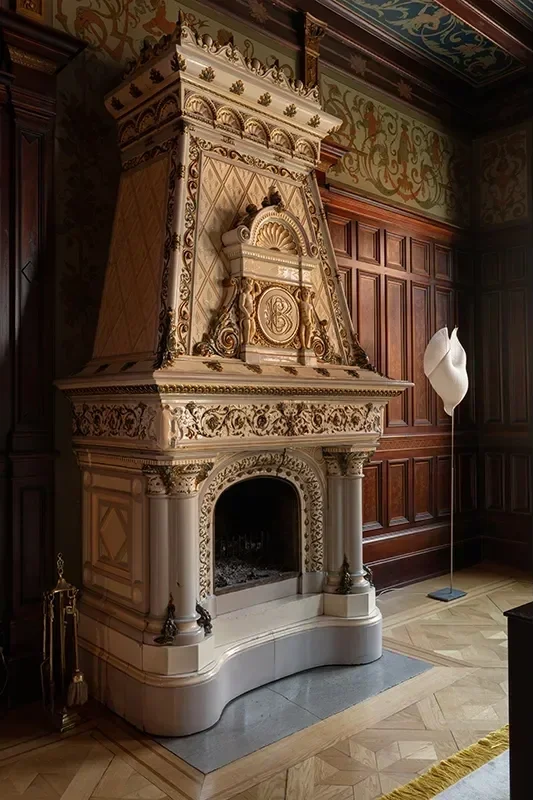
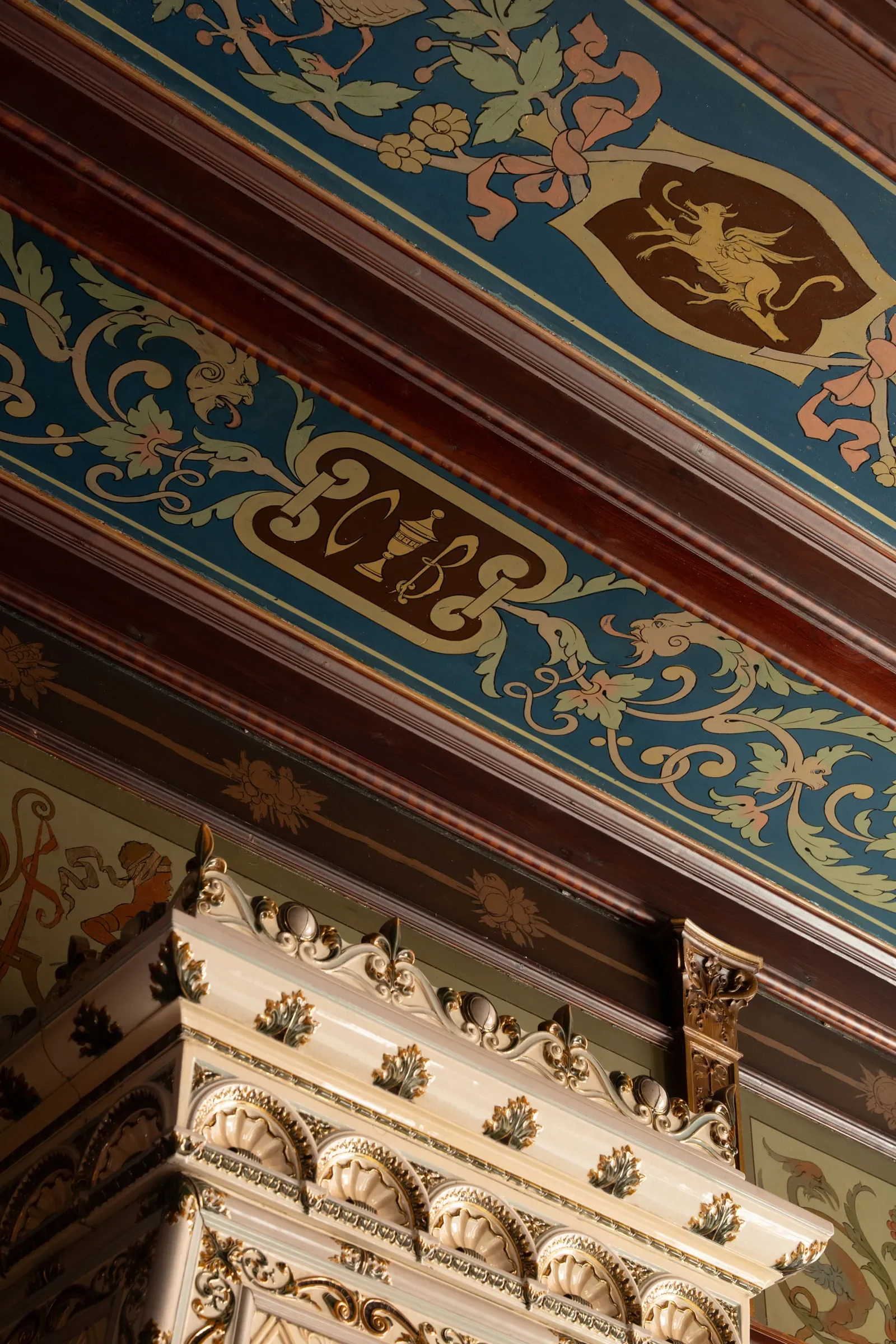
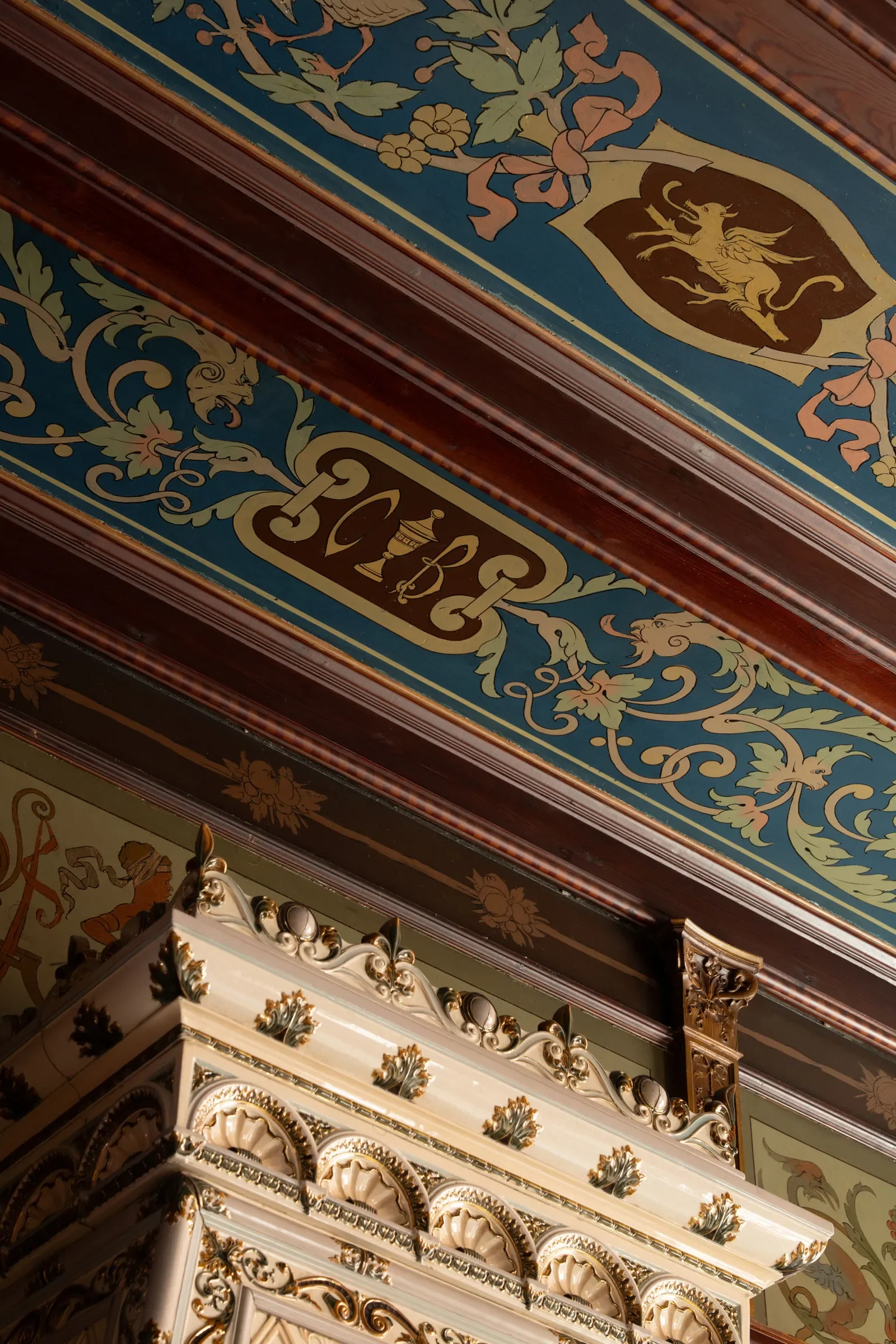
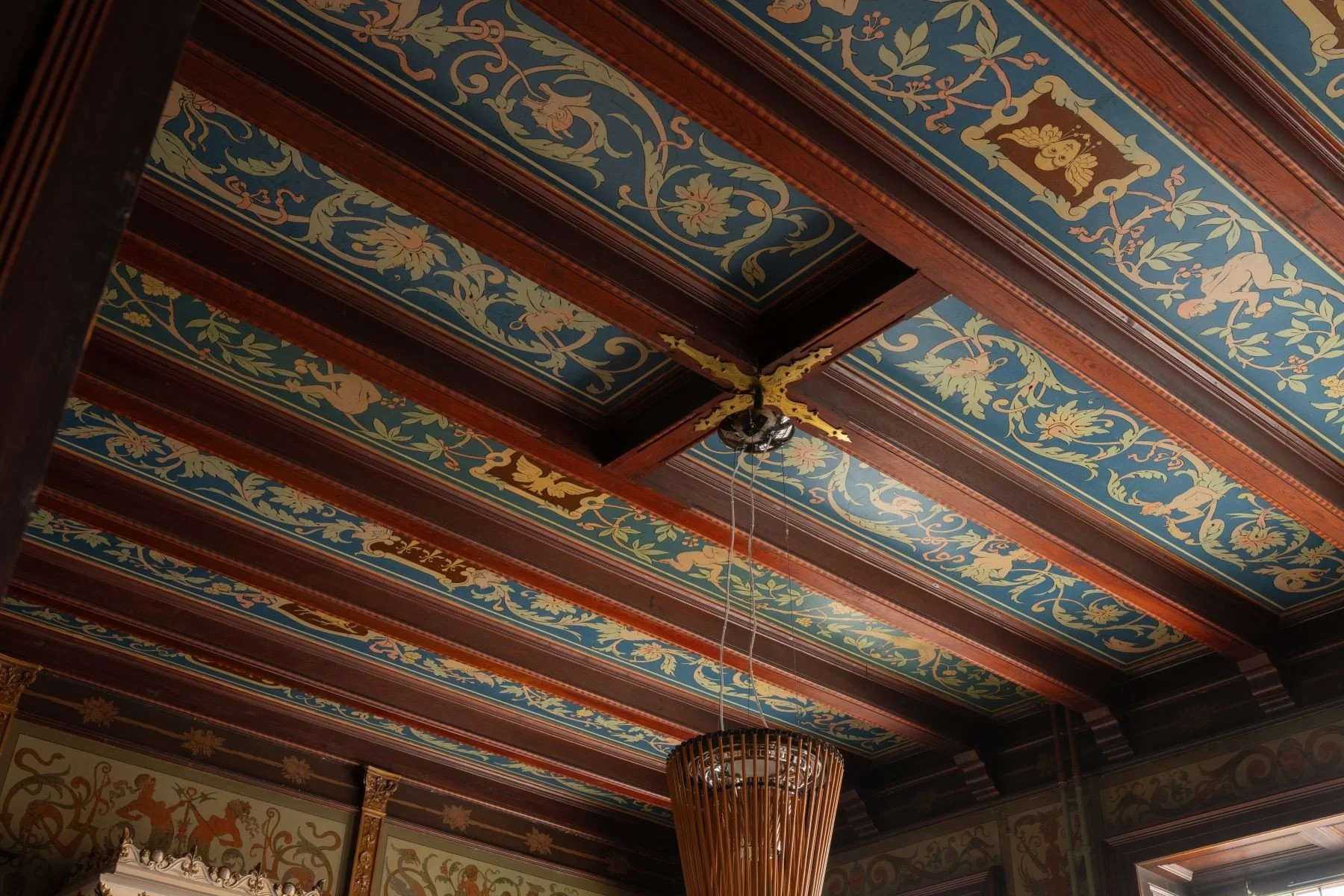
The ceiling paintings are especially important. They were created by Vicke Andrén, an artist whose work also appeared in major Swedish cultural buildings including the Royal Swedish Opera, Oscar Theatre, and Van der Nootska Palace. In this apartment, they are not generic period decoration. Decorative painted ceilings were a hallmark of elite Scandinavian interiors around the turn of the century but were frequently lost through modernization, subdivision, or post-war renovations.
In 2010, the four protected salons underwent a major restoration under the supervision of Stockholm’s City Antiquarian. The work returned the rooms closer to their original appearance, preserved the historic room sequence, and treated the apartment as a heritage object rather than a standard renovation. In 2012, the project received the Stockholm Heritage Association’s Building Prize.
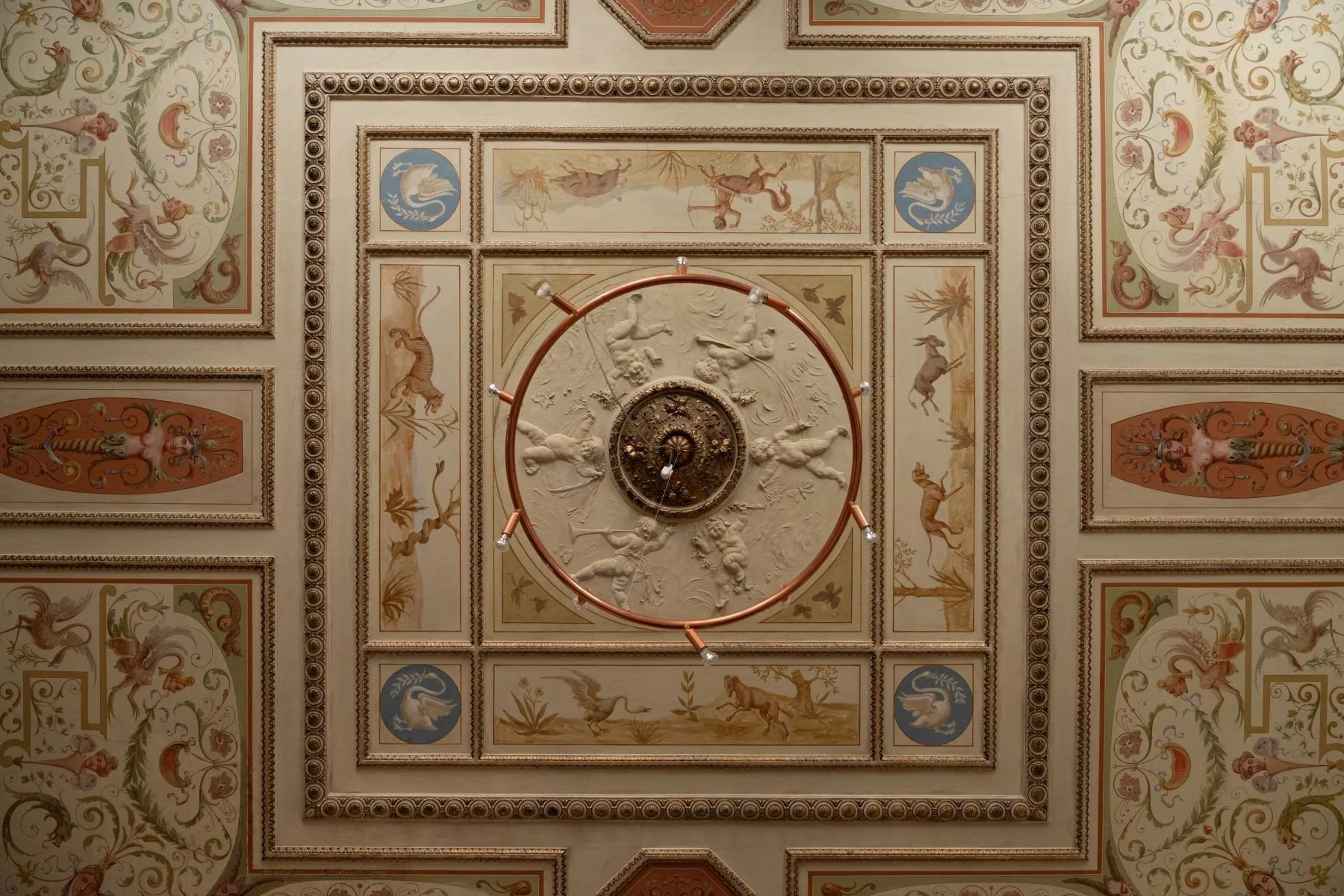
That recognition matters. This was not simply a luxury refurbishment. It was a conservation-led restoration focused on recovering and preserving the late-19th-century character of the residence after decades of commercial use.
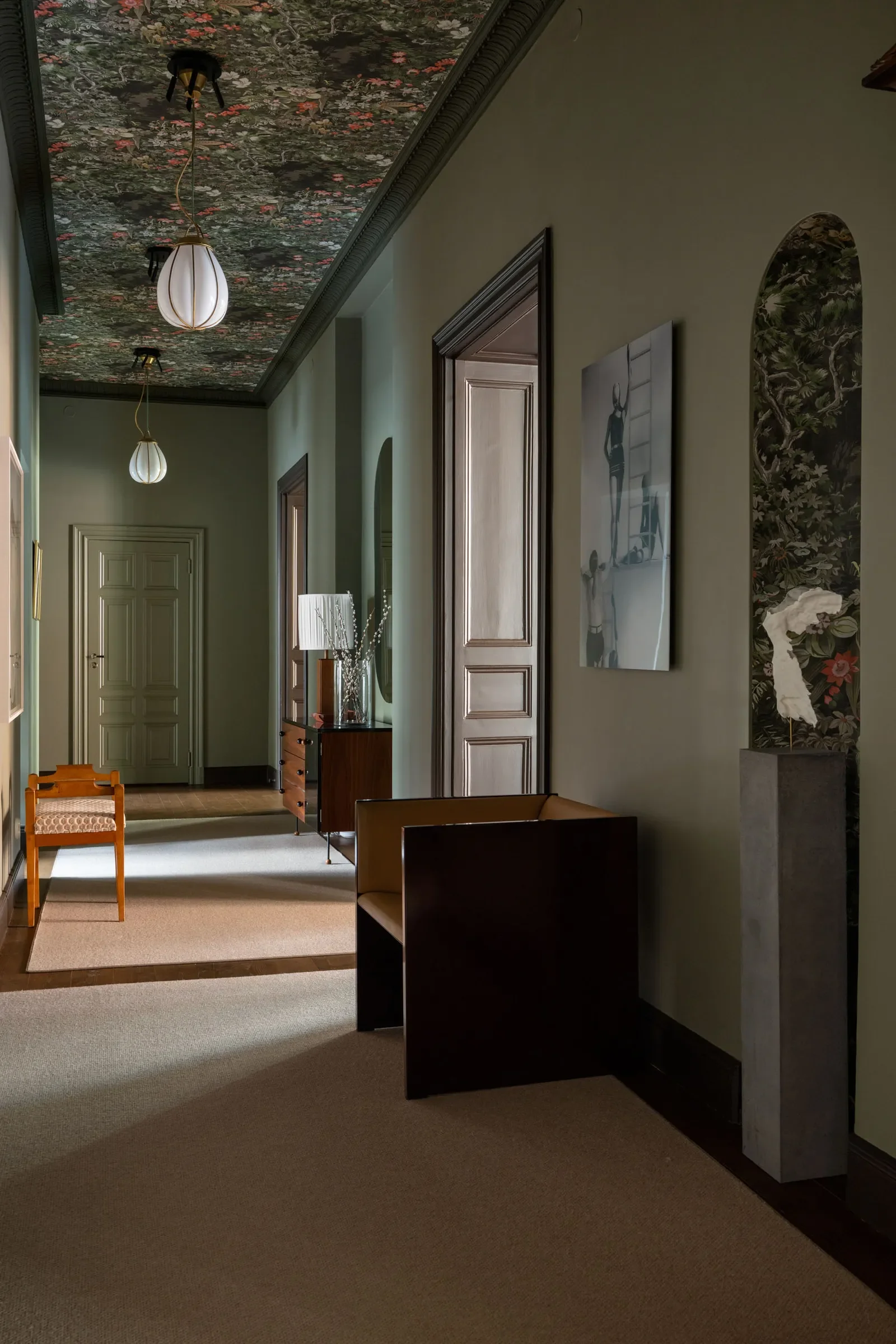
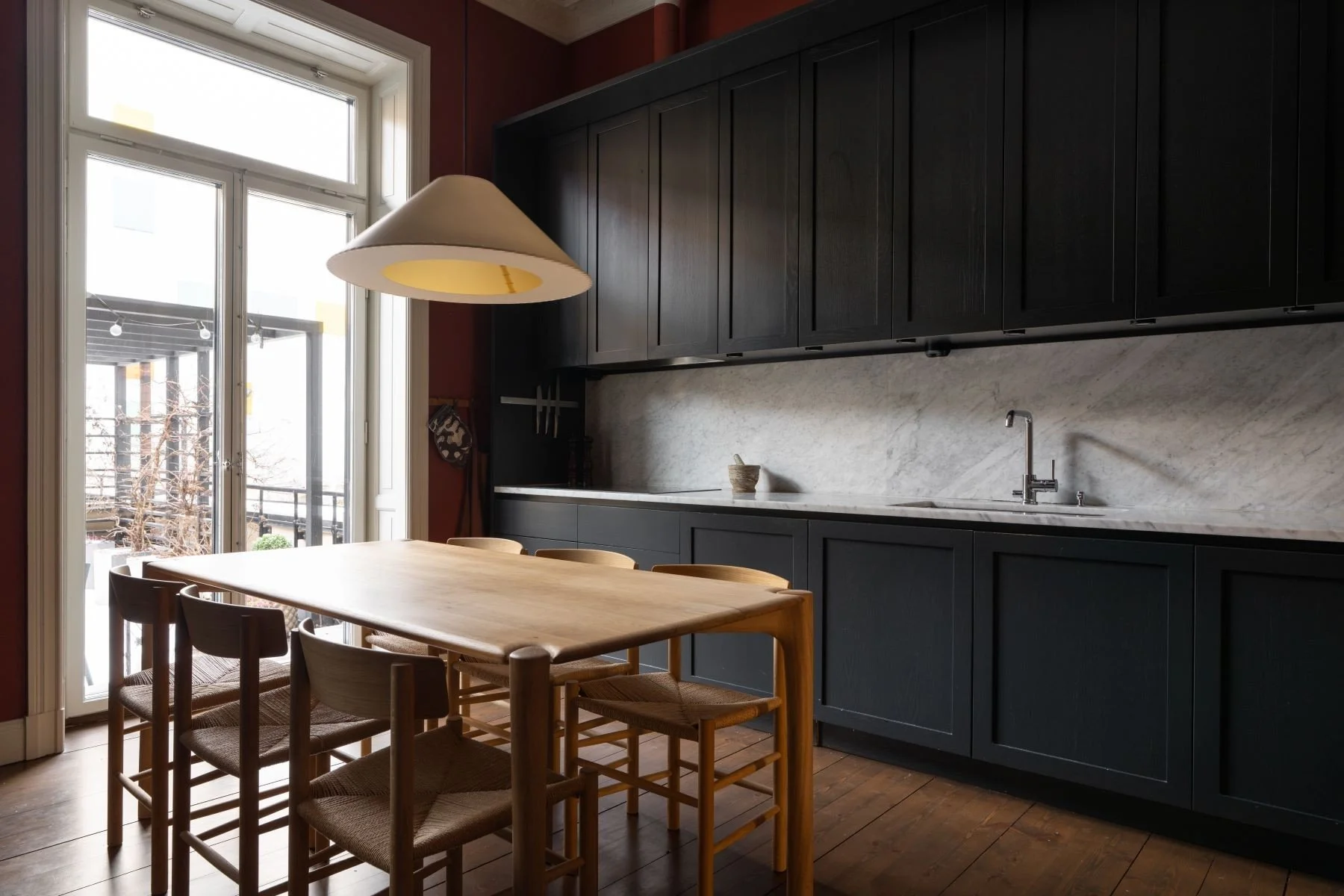
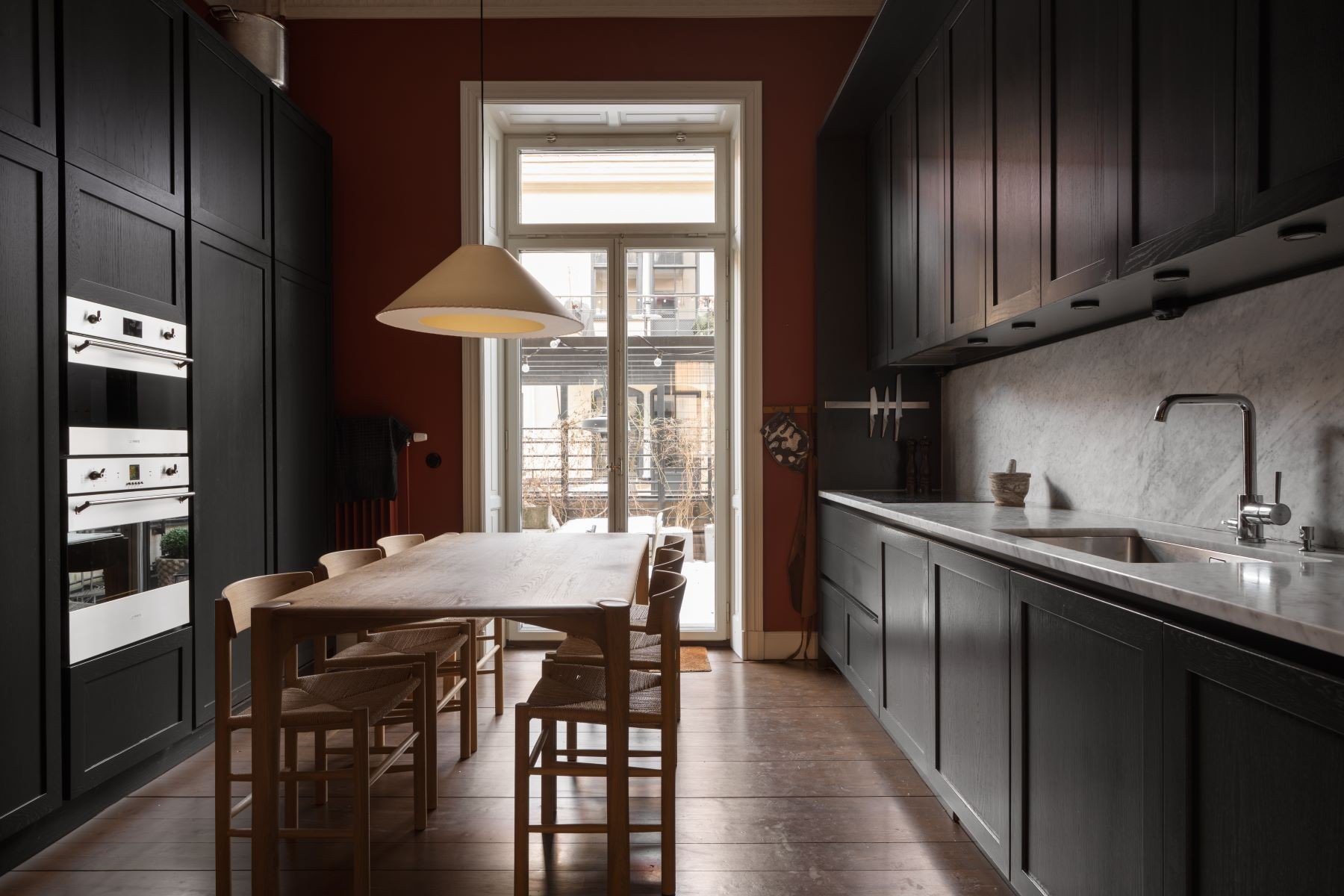
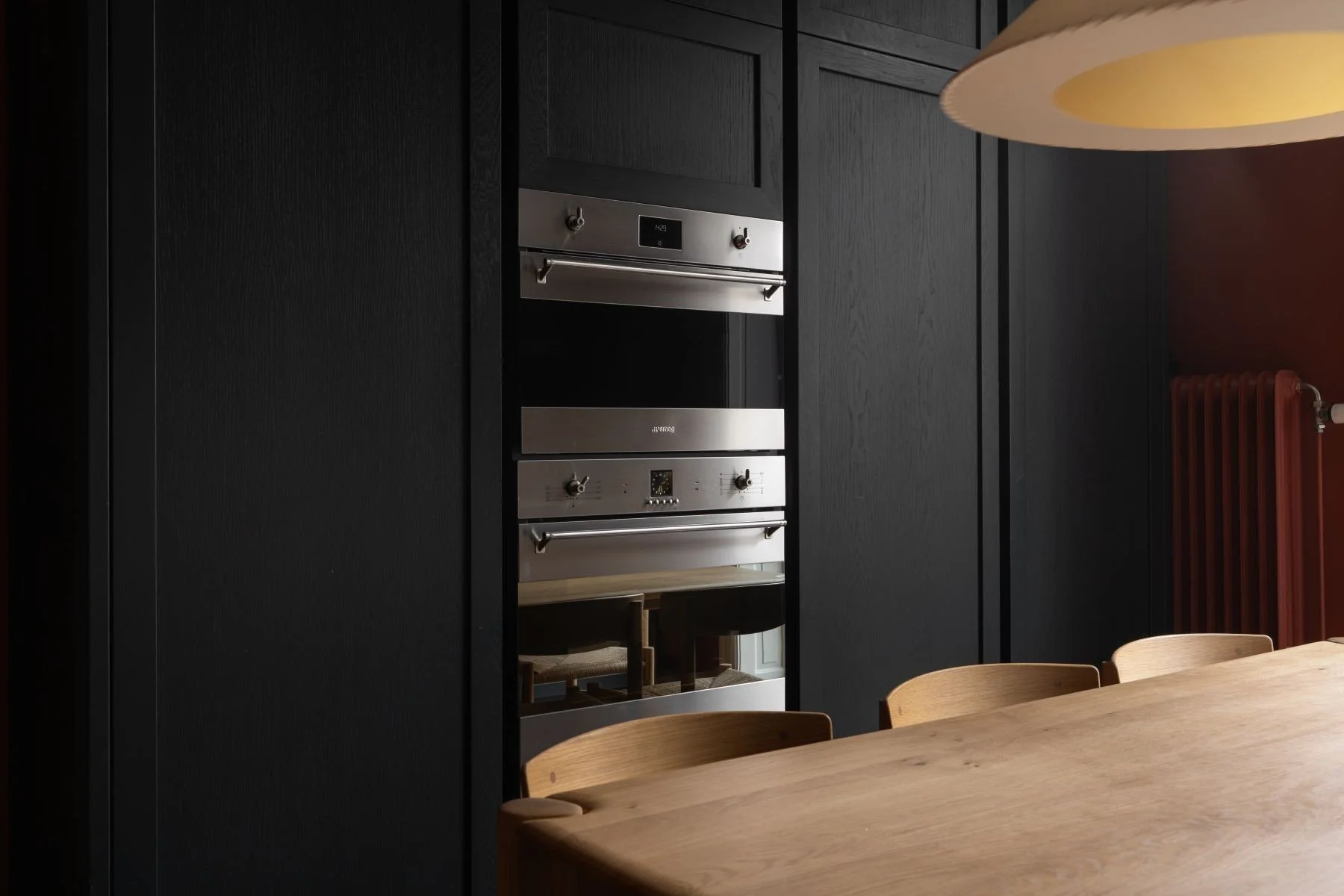
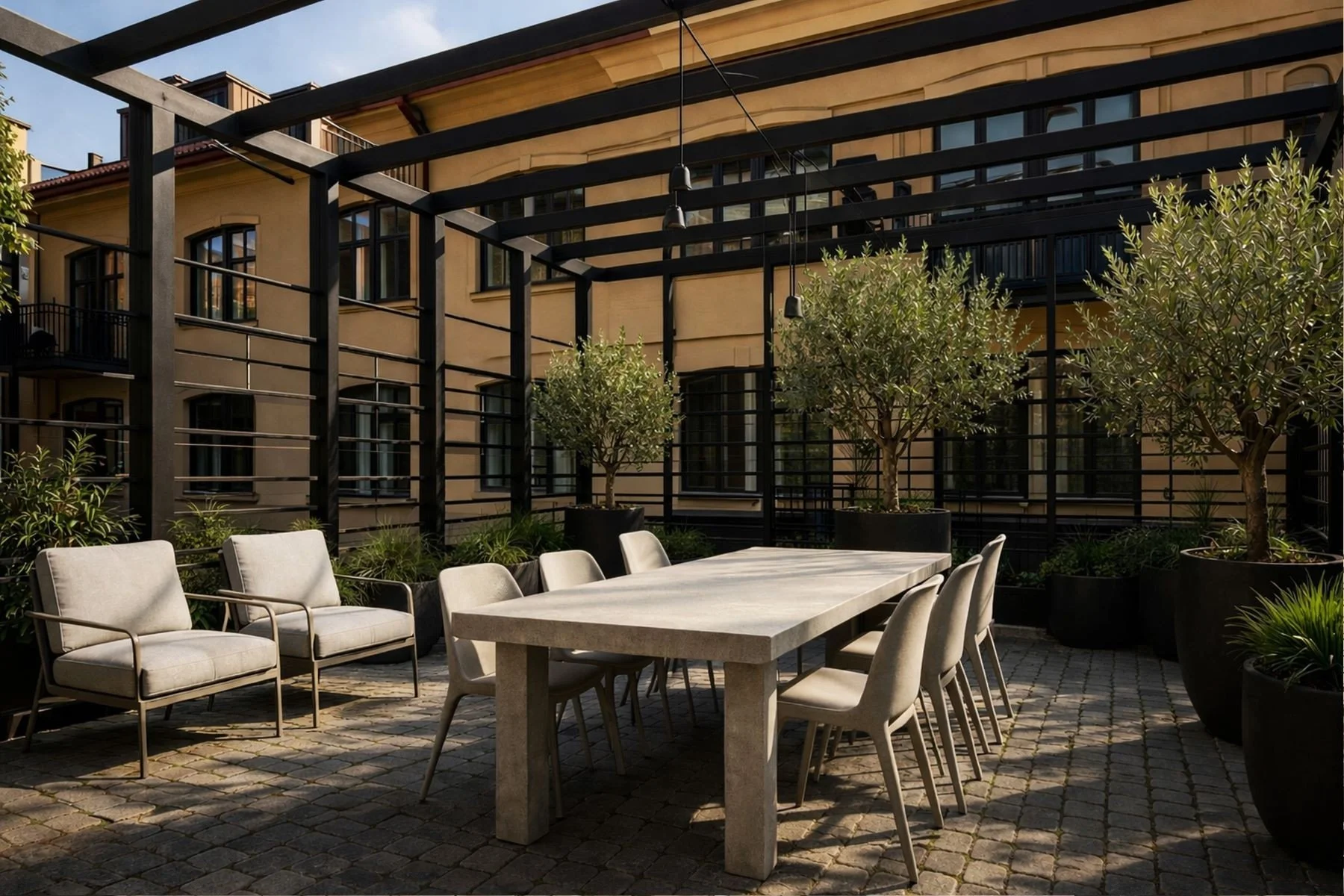
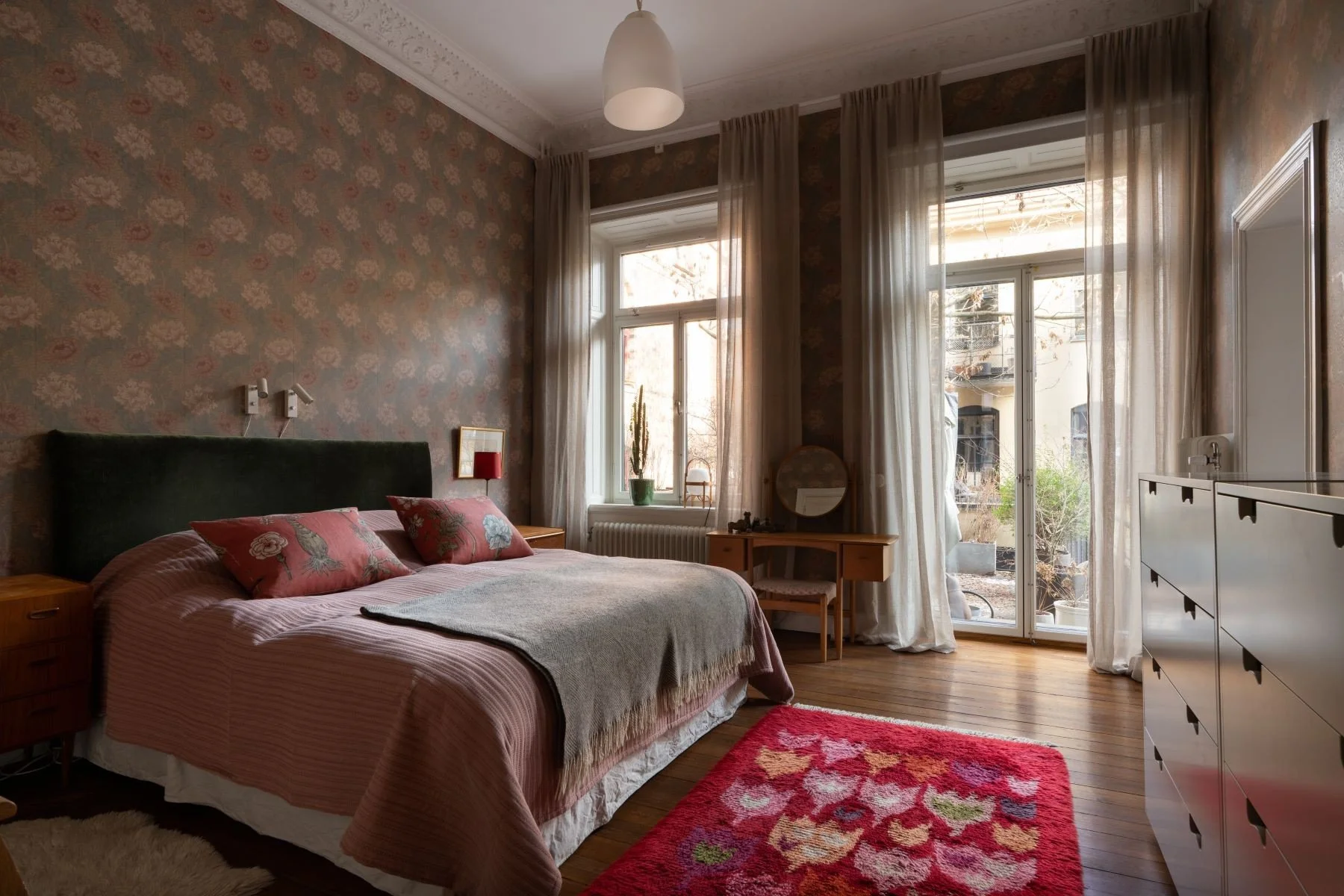
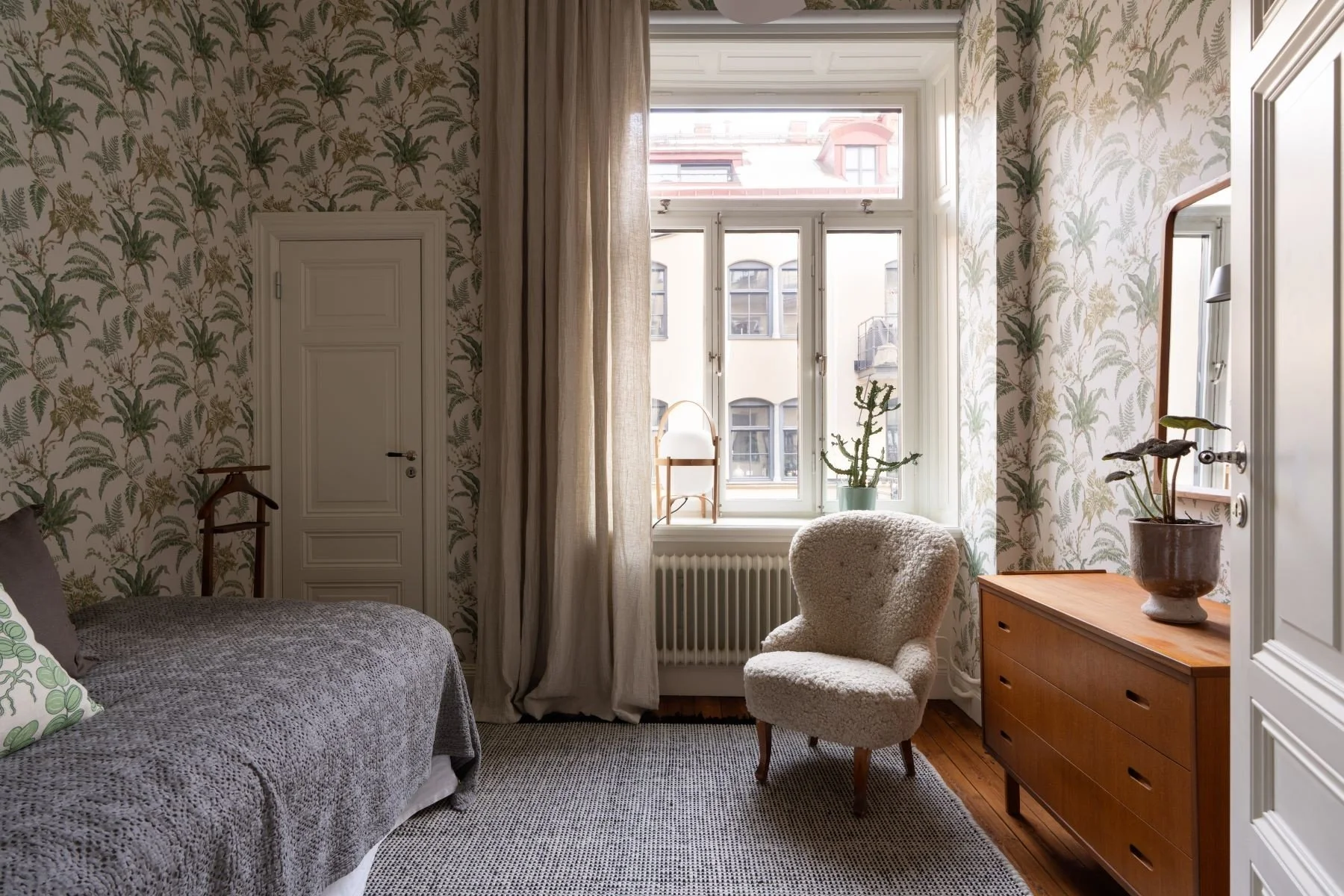
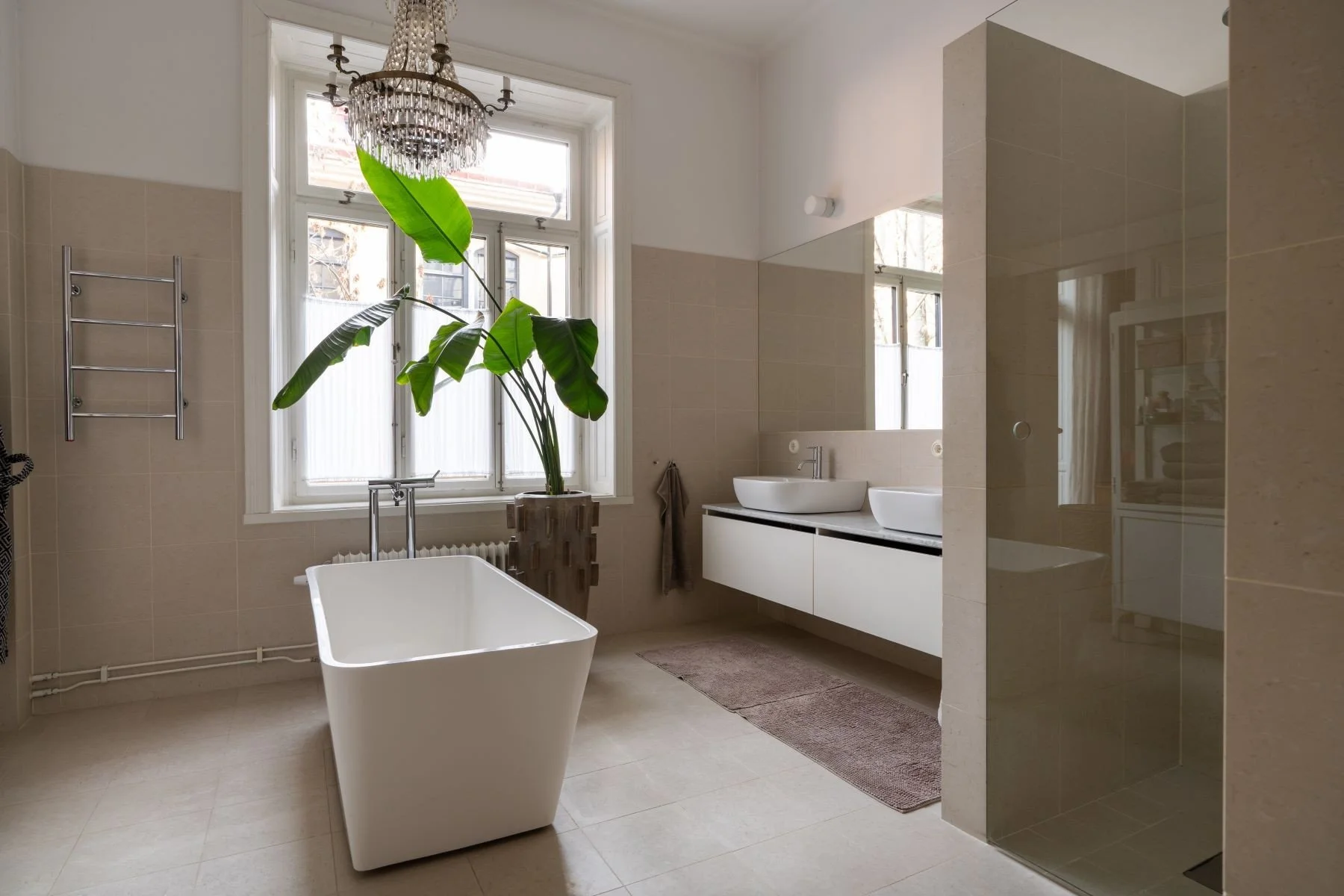
Today, the residence still has the practical structure of a contemporary city home: three bedrooms, two bathrooms, kitchen and dining space, and two private terraces. But the reason it stands apart is the survival of the original reception rooms, with their painted ceilings, kakelugnar, mirrored doors, stucco, and formal sequence still intact.
A self-made industrialist commissioned it. A self-made architect designed it. More than 130 years later, the most important parts are still there.
All photographs by Thomas Diös, Florbrant Svanberg. See more on Sweden Sotheby’s International Realty.