
High Above New Zealand’s Black-Sand Piha Beach: A Four-Storey Home Overlooking Lion Rock and the Tasman Sea
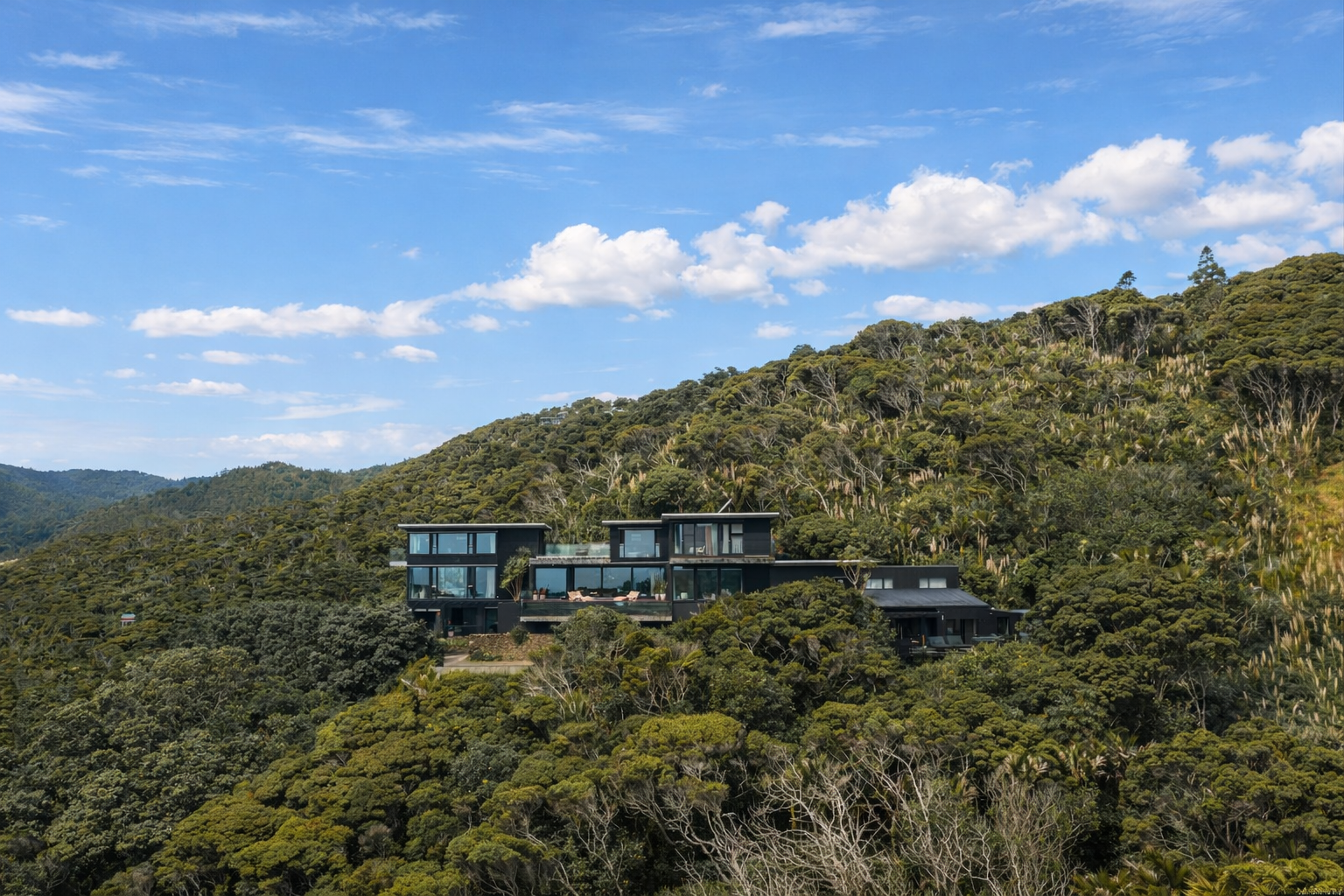
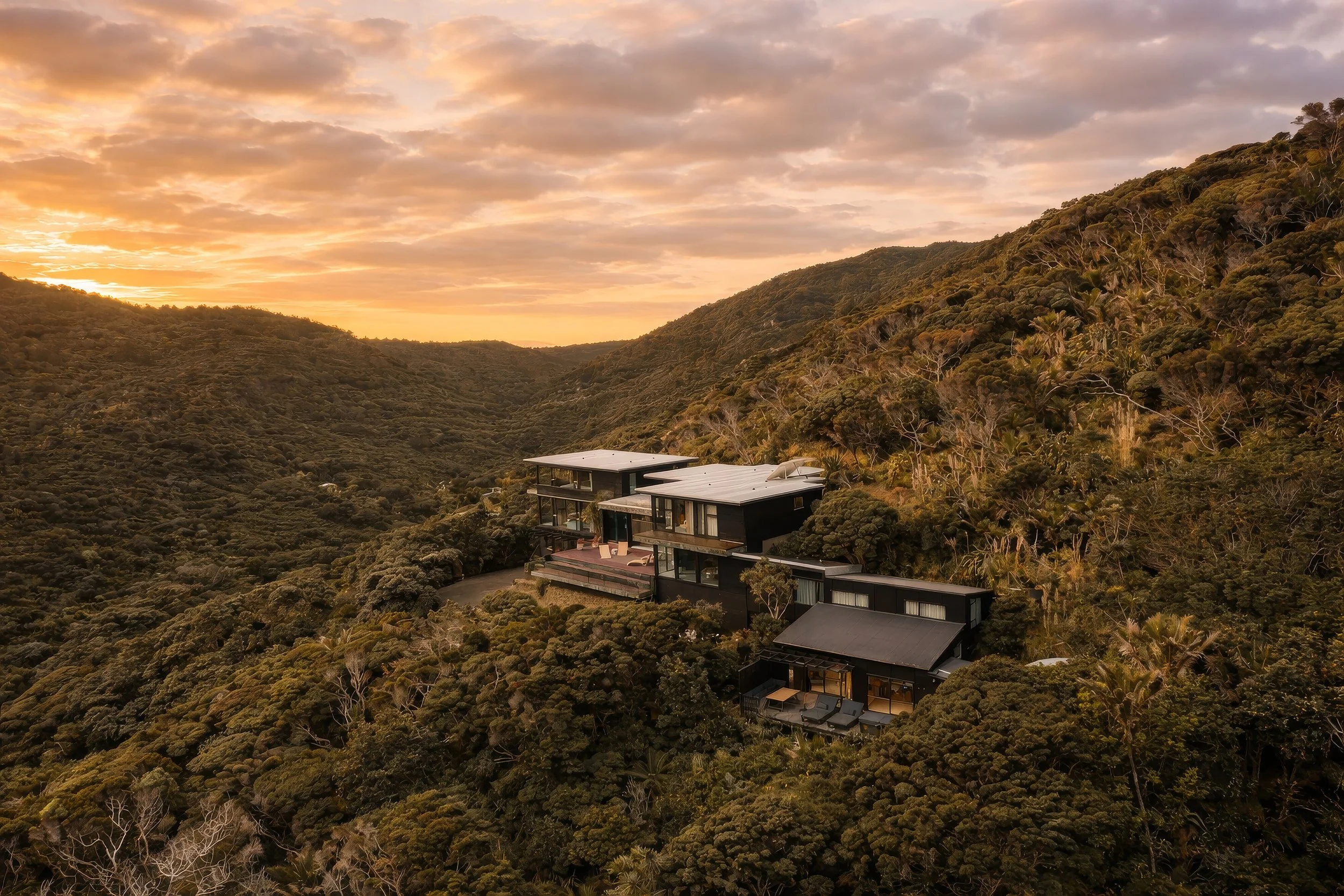
Now on the market with Scarlett Wood of New Zealand Sotheby’s International Realty, The Louises sits high above Piha Beach on New Zealand’s North Island. The house is the result of an architectural story that has unfolded over nearly two decades. What began as a modest 1970s bach — the New Zealand term for a holiday home — was expanded into an ambitious four-storey house, but the original vision was never fully completed. Its current owners, Jenene Crossan and Scottie Chapman, have spent the past several years finishing it and reshaping the way the house sits within its dramatic hillside setting.
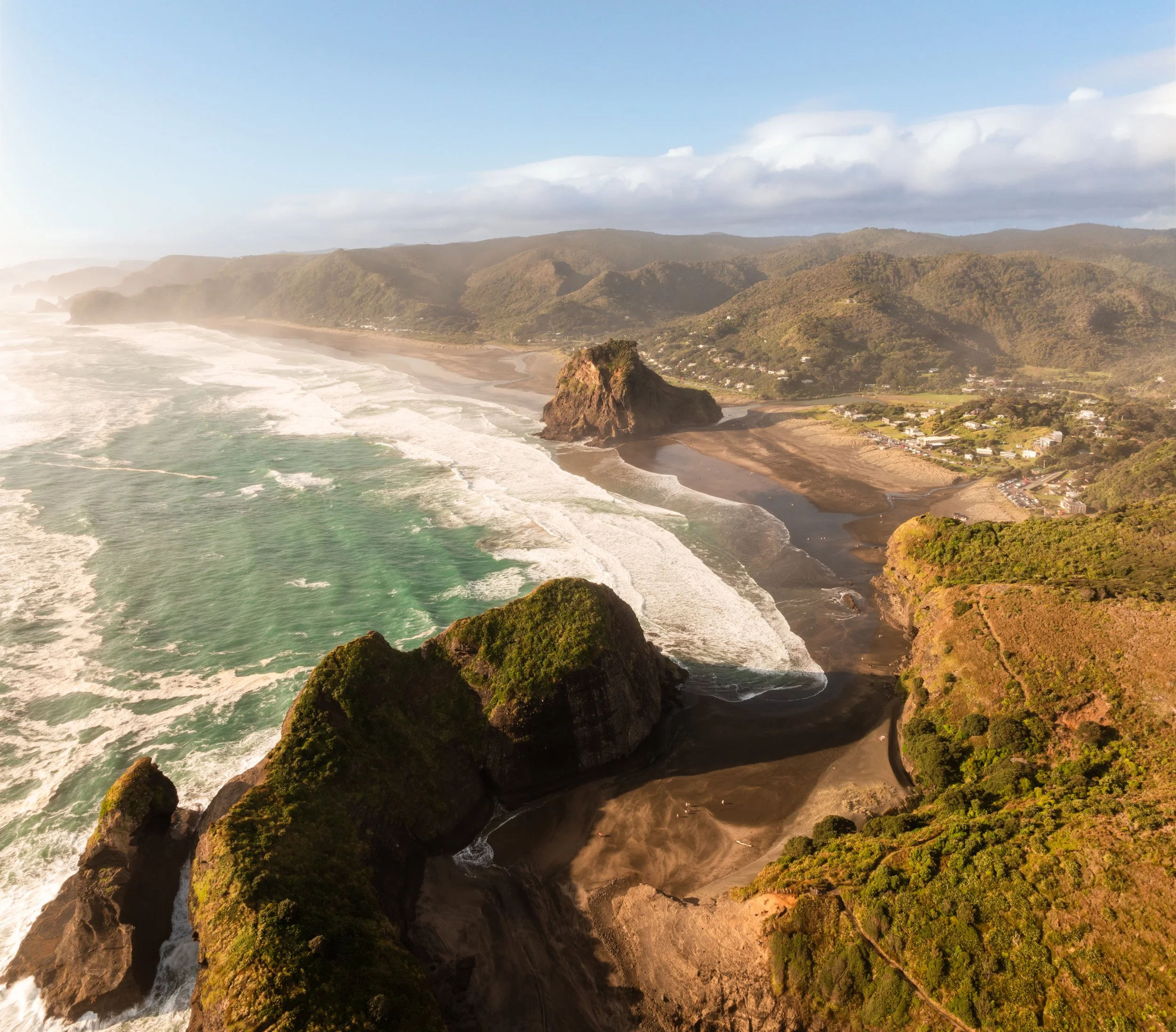
Piha, New Zealand: black-sand beaches and surf culture
Piha is on the west coast of New Zealand’s North Island, around 45 minutes west of Auckland, the country’s largest city. The small surf community sits beyond the Waitākere Ranges, where dense native forest falls toward the Tasman Sea and black-sand beaches line Auckland’s rugged western coast. Despite being less than an hour from central Auckland and Auckland International Airport — which has direct flights from Los Angeles — Piha feels much farther removed from the city, surrounded by steep bush-covered hills, powerful surf and a volcanic landscape.
The beach itself is unusually dark because of iron-rich volcanic minerals found along much of the western North Island. Surfing is equally important to Piha’s identity. The beach played a role in the development of modern surfing in New Zealand, and the sport remains part of everyday life here.
At its centre is Lion Rock, an ancient volcanic monolith that rises from the black sand and surf. It has become Piha’s most recognisable landmark.
For Te Kawerau ā Maki, the Māori people of the Waitākere area, Lion Rock and the surrounding area have longstanding cultural significance. The name Te Piha refers to the way water moves around the front of a waka, a traditional Māori canoe, while the fortified settlement that once stood on Lion Rock was known as Whakāri.
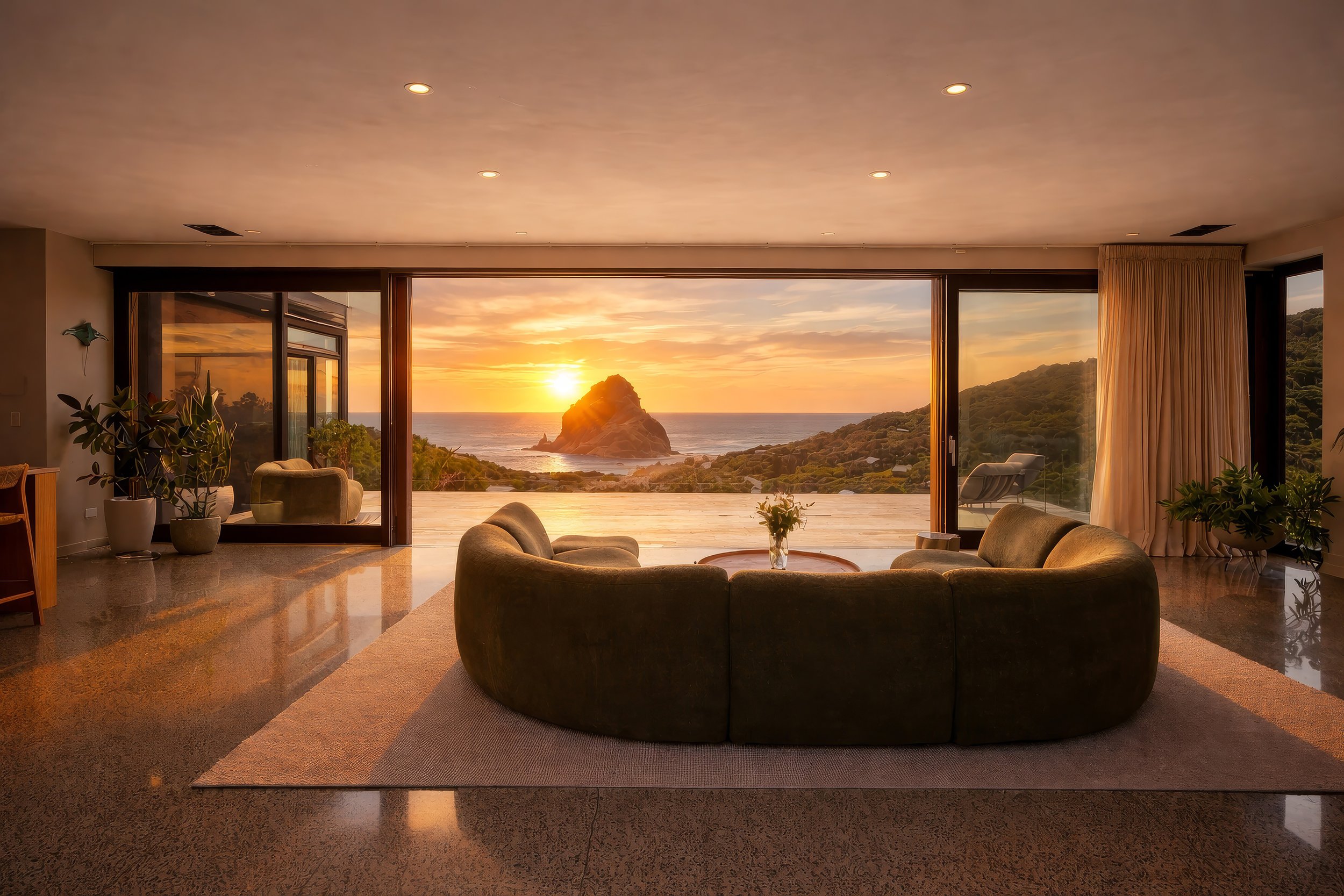
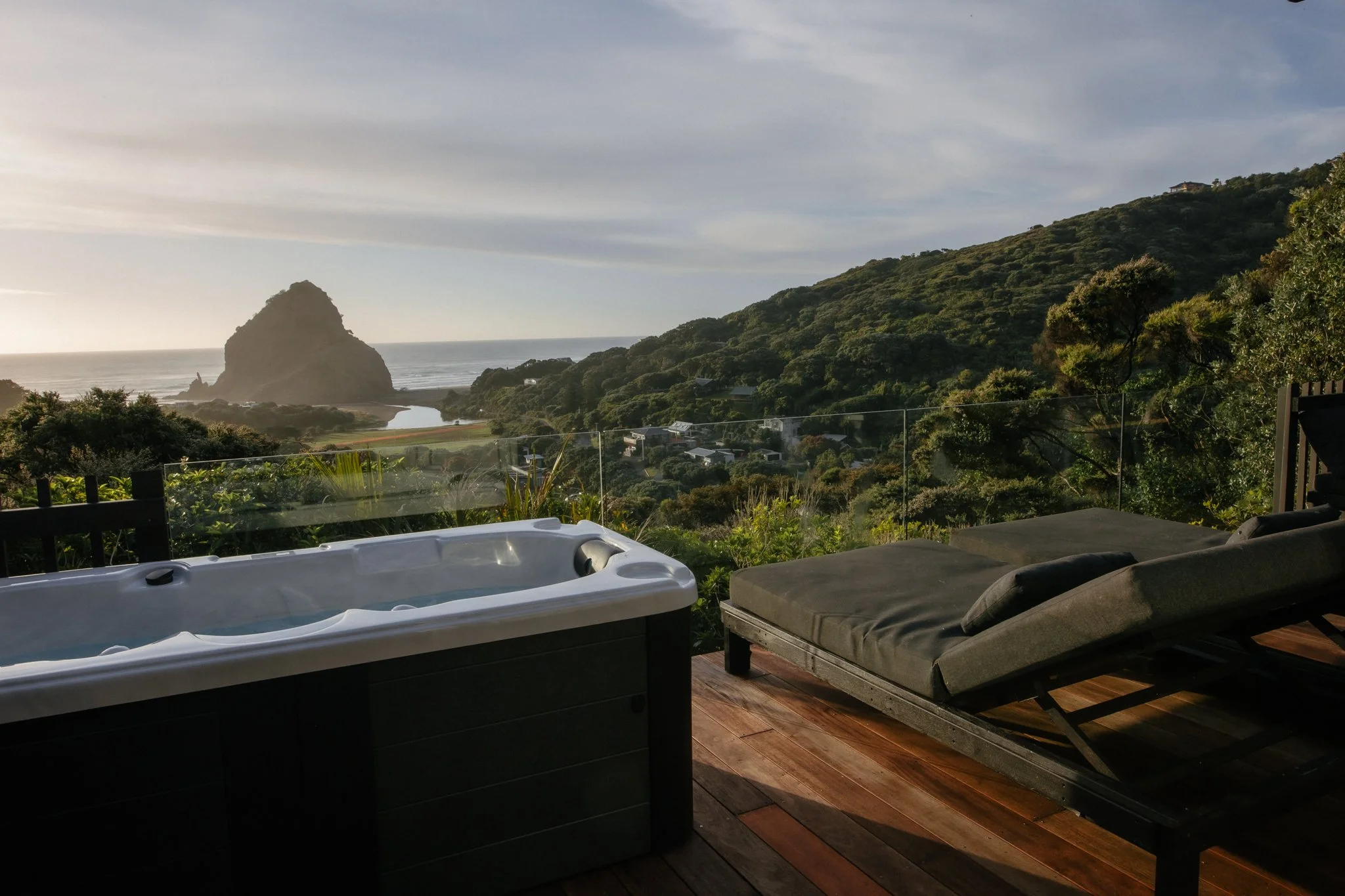
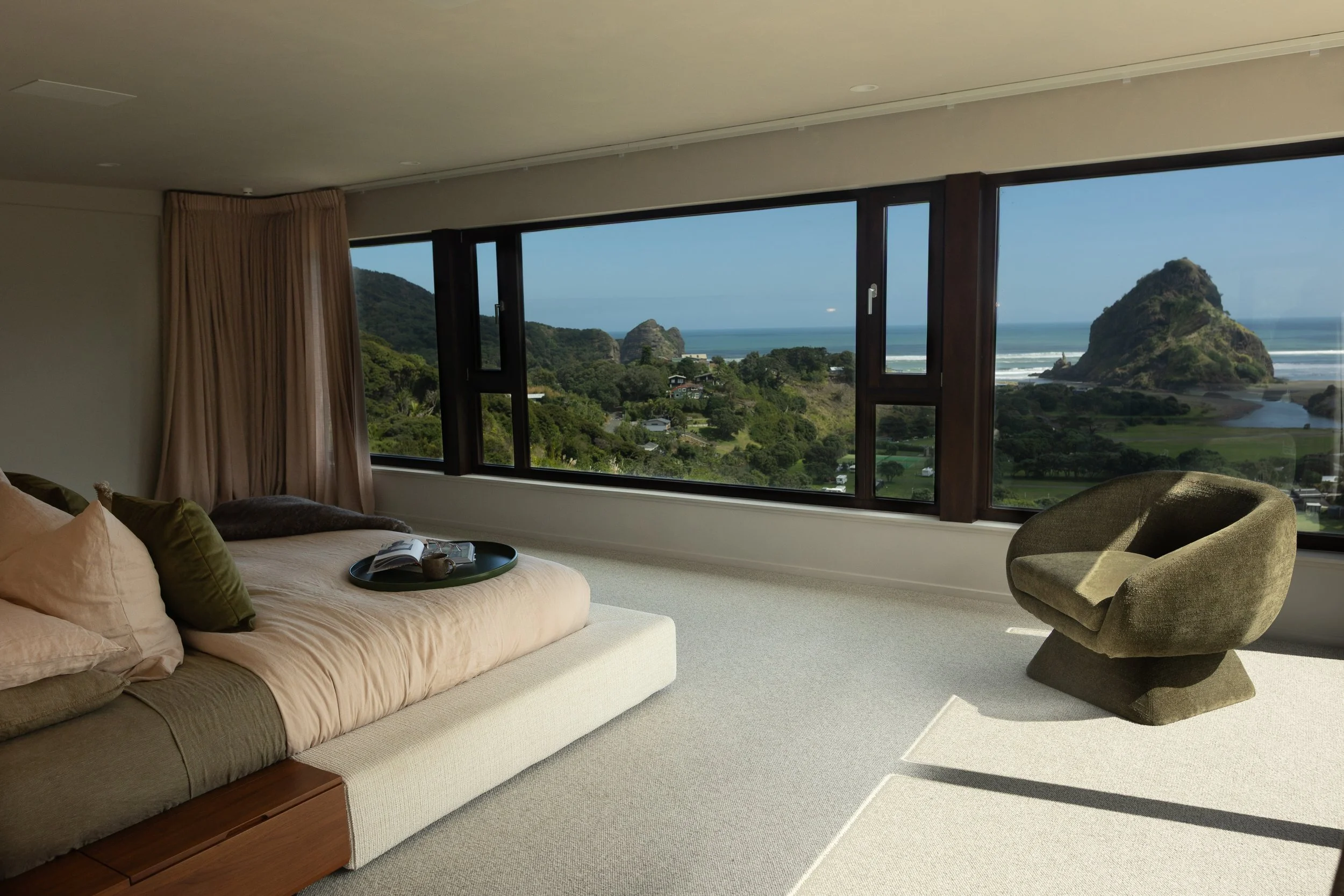
The Louises looks directly toward Lion Rock and the Tasman Sea. As you move through the house, the view changes from room to room and from one level to the next: the beach and sea through the windows, clouds moving in from the sea, changing light across the water and birds sometimes passing almost at eye level. The house is large, but the surrounding landscape still feels larger.
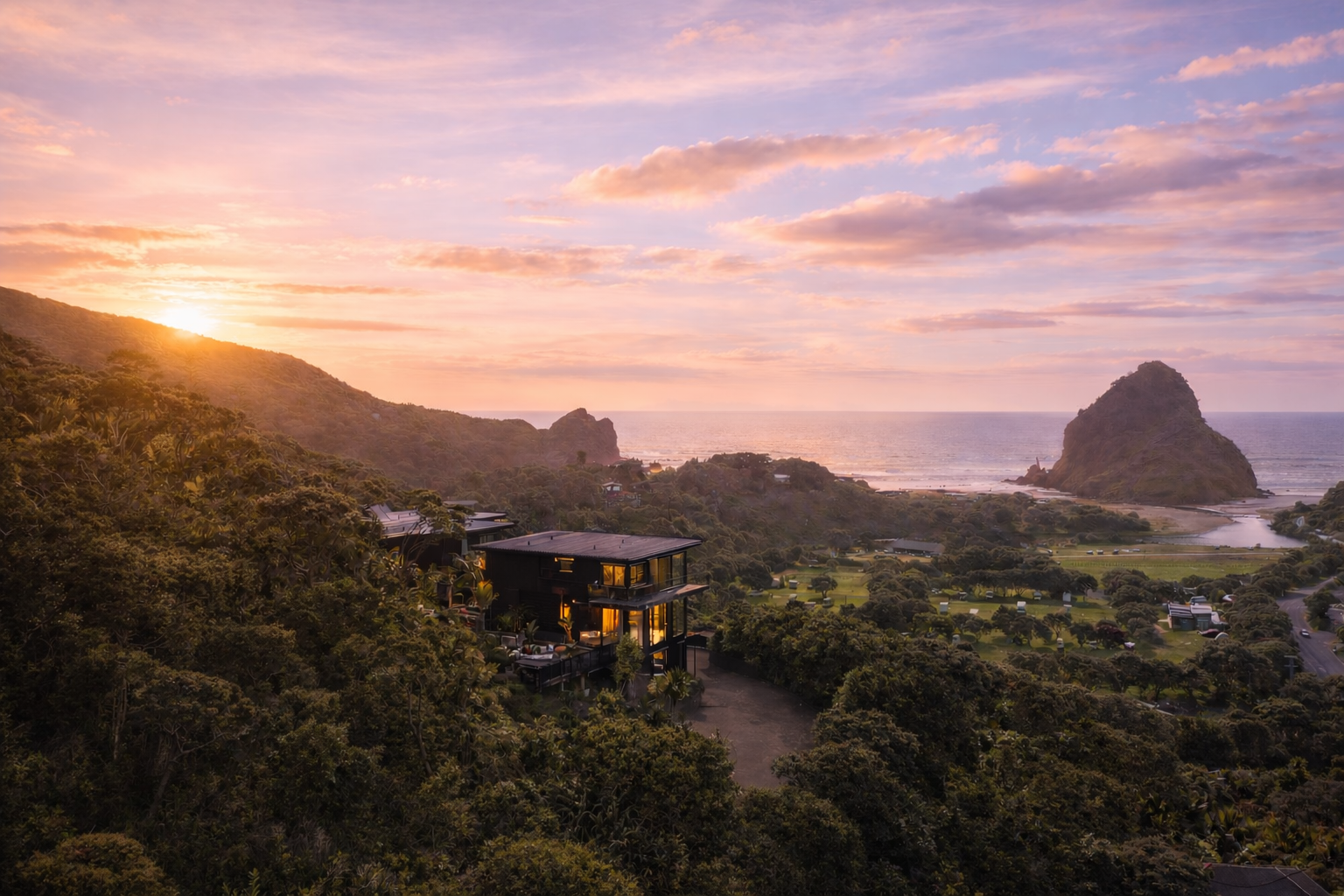
Finding The Louises above Piha Beach
It was that setting, more than the house itself, that first brought Crossan and Chapman to Piha. In August 2020, during the pandemic, Crossan typed “Piha” into a New Zealand property website and came across a listing with, as she remembers it, essentially one photograph. It didn’t show the house. It showed Lion Rock. “I was just mesmerised,” she recalls.
Crossan and Chapman knew almost nothing about the property when they first drove out to see it. They had never visited Piha together and had little idea what to expect. The house itself came as a surprise: enormous, unfinished in places and immediately “confronting,” as Crossan remembers it. But that changed as they moved through the building. “We came up the stairs and it connected us to the view,” she says. “I very clearly remember being quite jaw-dropped by the moment.”
They spent nearly two hours inside, partly because of the size of the house, but also because they kept stopping to look out. Room after room brought them back to Lion Rock, the sea and the western horizon. Beneath the weathering and unfinished details, Crossan saw a house with unusually strong bones in a location that would be difficult to reproduce. “This is incredible,” she remembers thinking. “We could do something with this.”
She has since described buying it as an “instinctive, bold and entrepreneurial decision.” One of her closest friends had grown up in Piha, yet Crossan didn’t even call her before committing. “I wasn’t looking to get people’s opinions on whether this was a smart decision. I knew it was the right path for us, or at least I was willing to find out,” she says. She and Chapman knew they wanted something different from the suburban life they had left behind, even if that meant taking some risks. Piha also seemed to offer something less tangible: community, participation and the possibility of living at a different pace.
From a 1970s bach to a four-storey home
The house had already been through several major changes by then. It began as a modest 1970s bach, before four brothers living overseas commissioned West Auckland artist, designer and architect Gerard Commissaris in 2008 to rethink it as a shared holiday home for their extended families. What had been a small coastal retreat became a large multigenerational house spread across four levels.
The project never quite reached the conclusion Commissaris had envisioned. The structure itself was substantially complete, but the family’s plans eventually stalled and the remaining work was brought to a close before the architectural vision had been fully resolved. By the time Crossan and Chapman bought the property in 2020, Commissaris had passed away six years earlier and they didn’t have access to his original drawings.
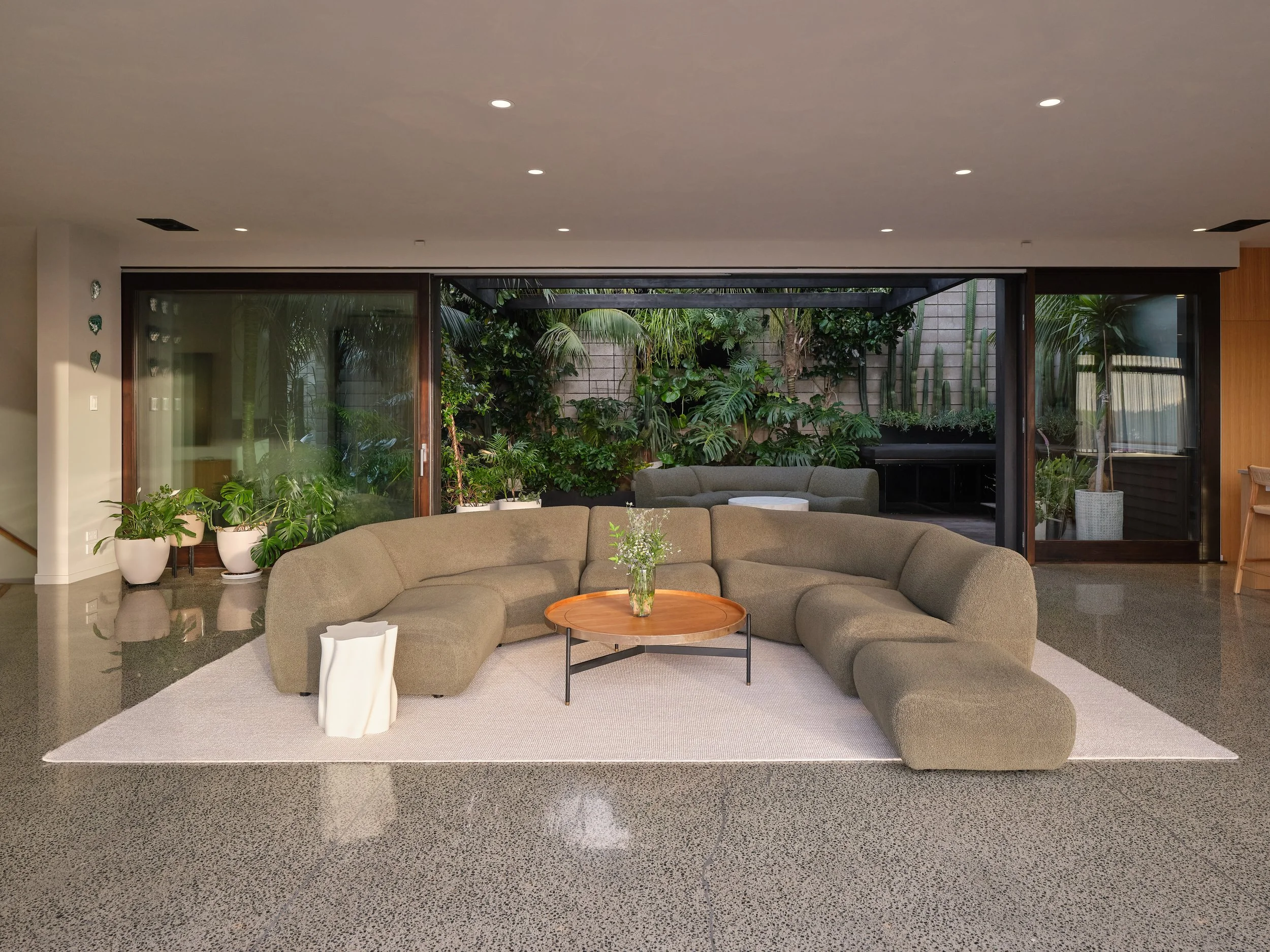
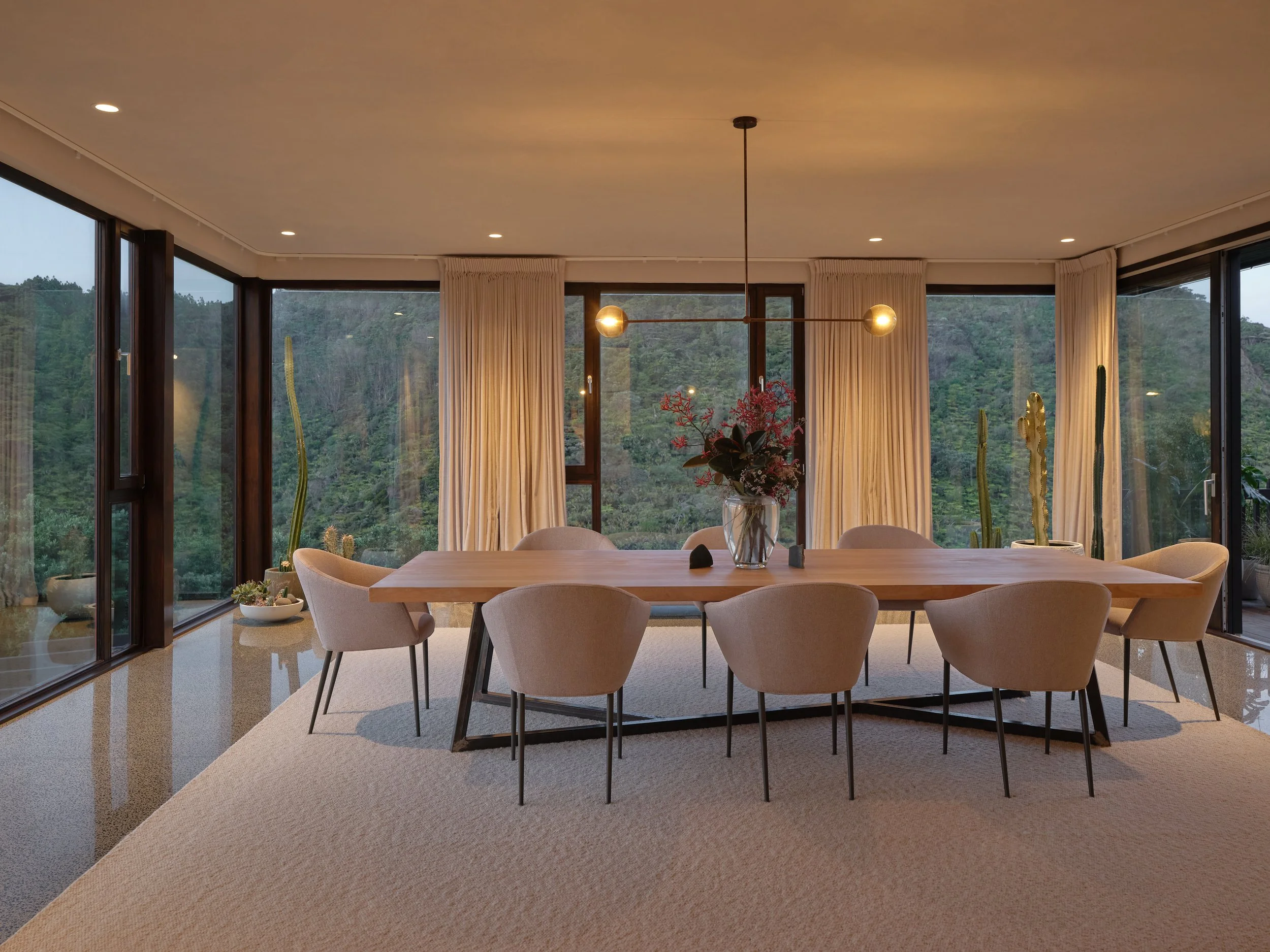
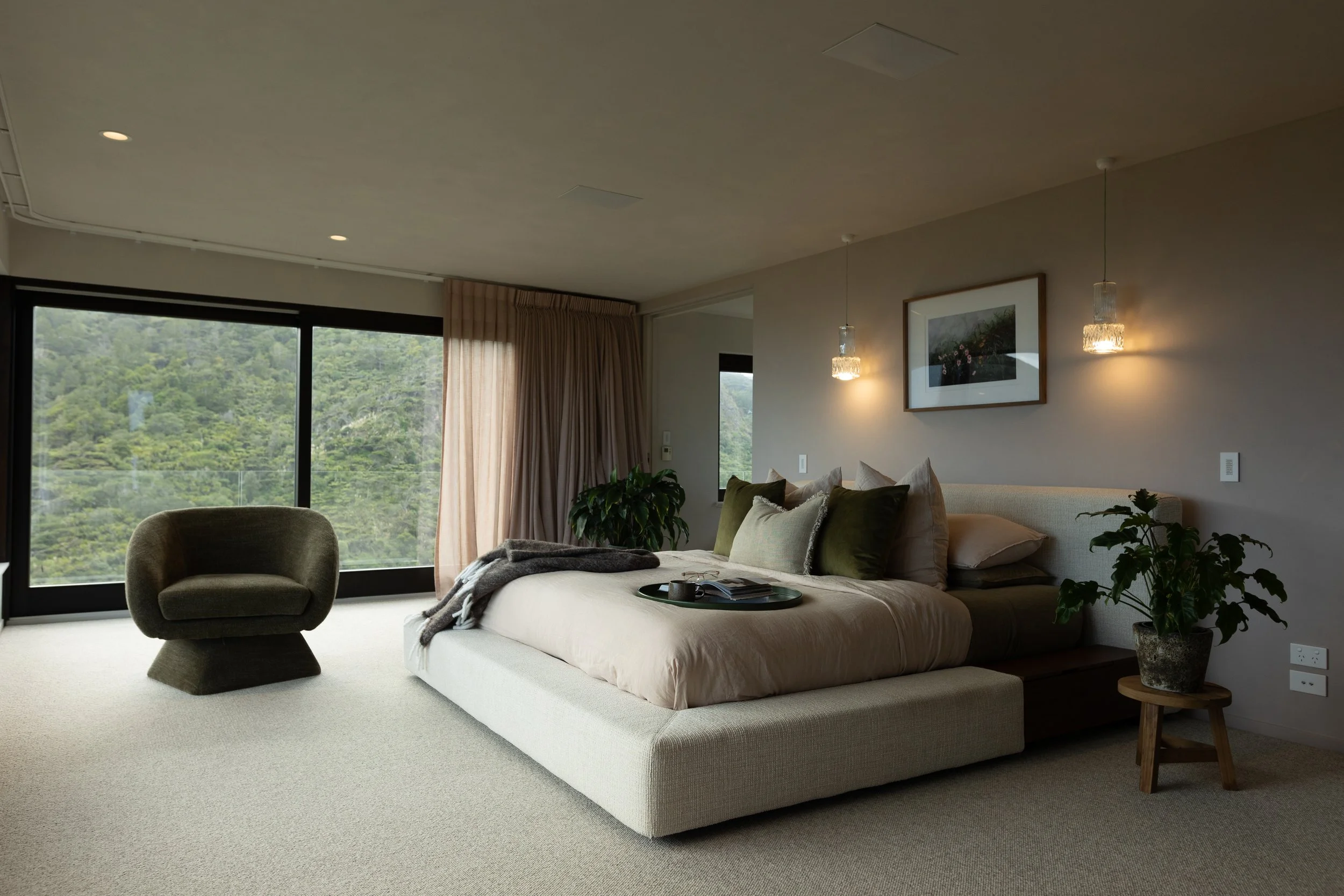
The main house stretches across four levels and 596 square metres, or about 6,415 square feet, with seven bedrooms, including two primary suites, and six bathrooms. Large windows take in Lion Rock, the Tasman Sea and the surrounding Waitākere landscape, while sliding walls and several outdoor areas allow rooms to open toward the view or become more enclosed. Elsewhere are a media room, massage room, a substantial home office and meeting space, and a secondary kitchenette reached through secret doors.
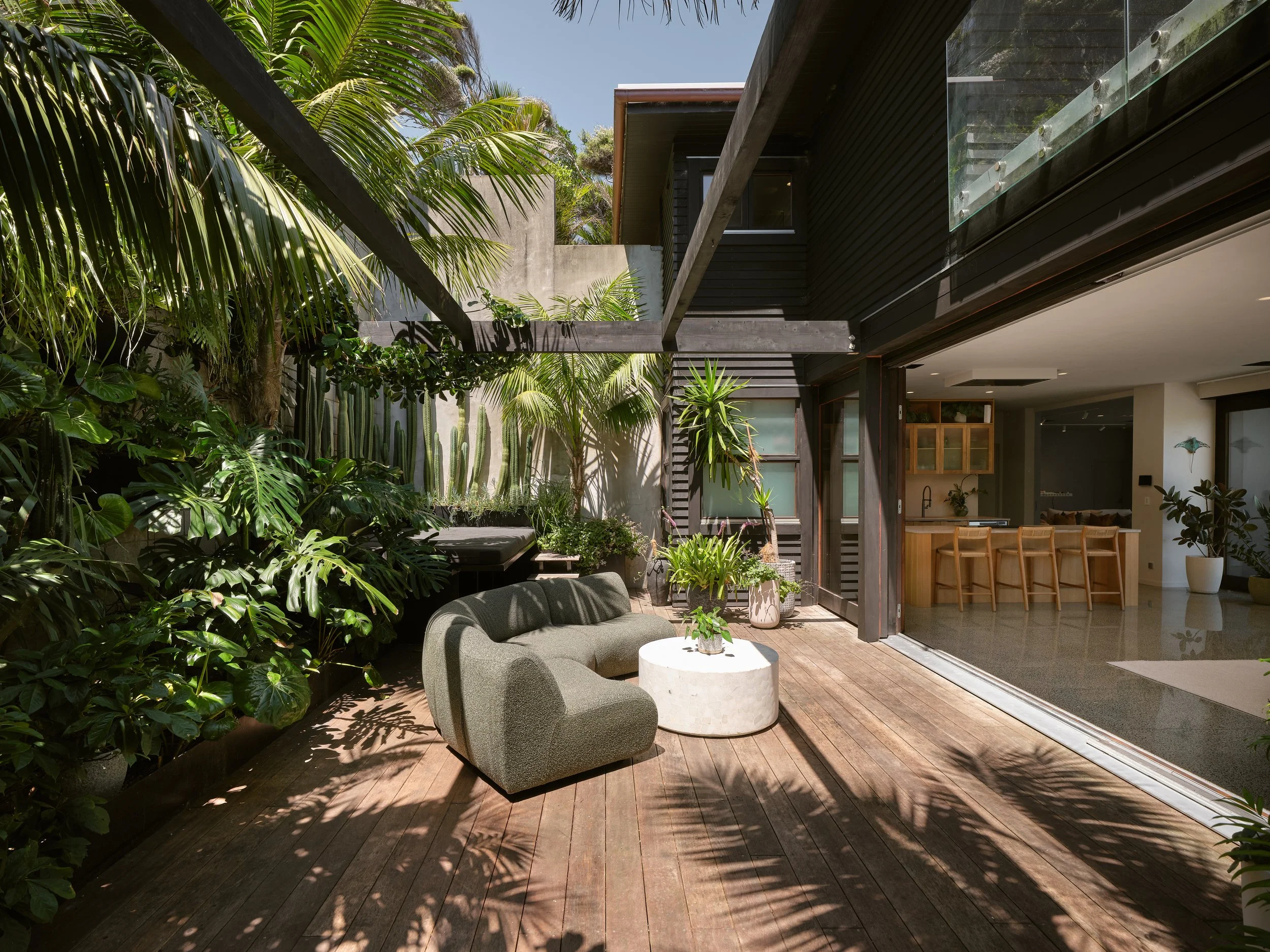
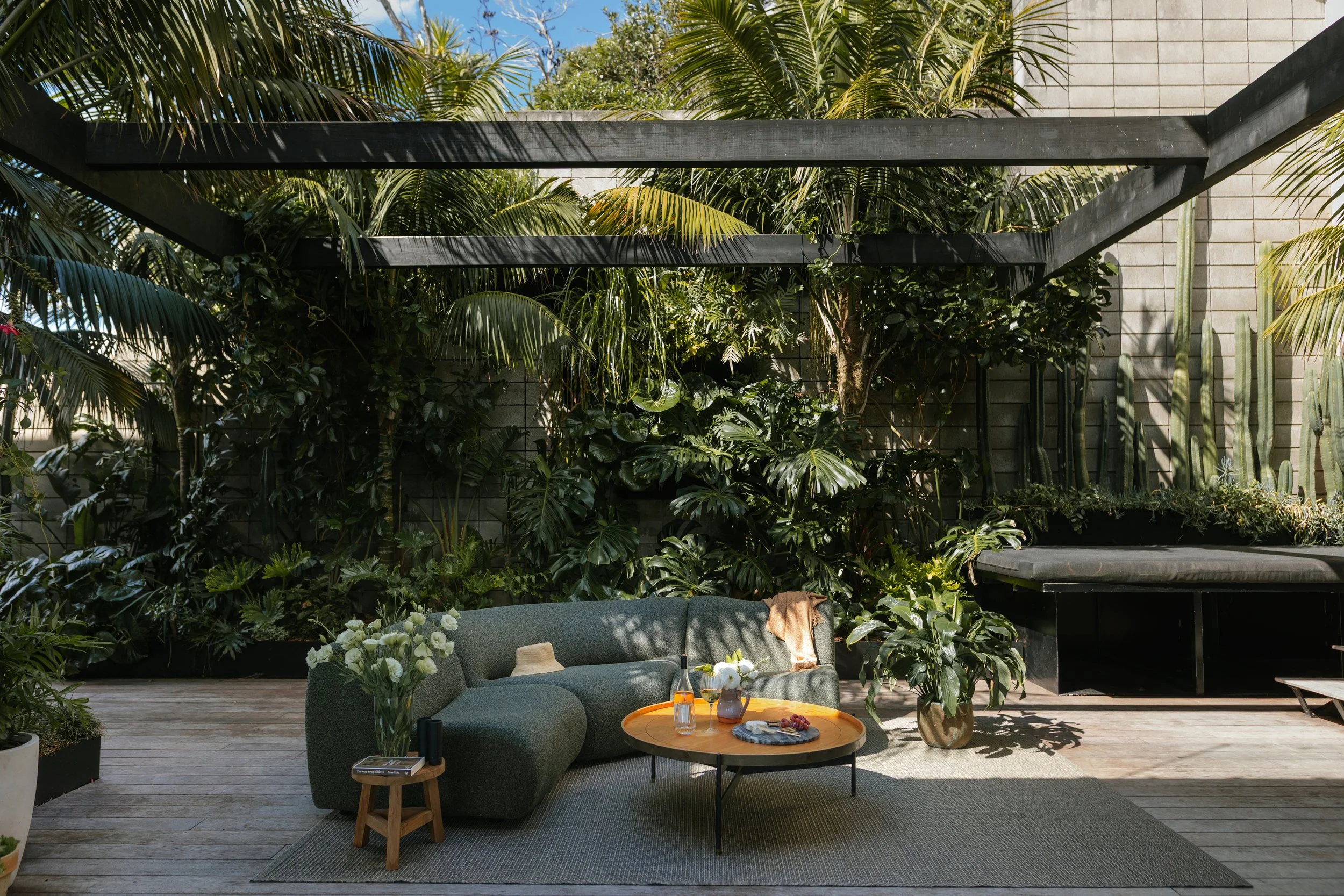
The wider 3.06-hectare, or 7.56-acre, property is surrounded by native bush. For all the house’s exposure to the sea and western weather, it also has quieter, more protected spaces. At its centre is a planted courtyard, enclosed by the architecture and sheltered from the conditions outside.
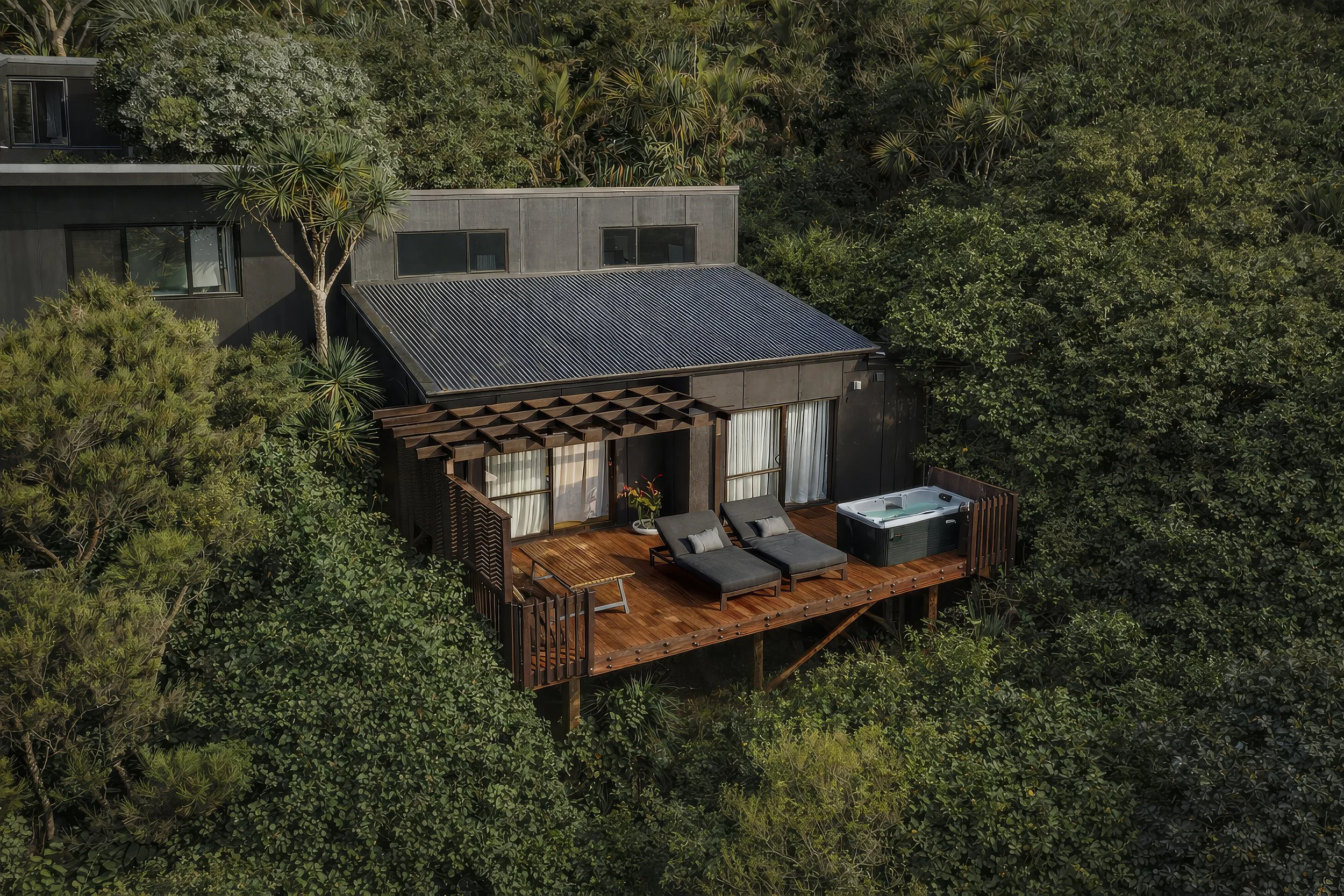
The property also includes Little Louises, a separate self-contained retreat that currently operates as an Airbnb Luxe stay. It has its own entrance, so guests can come and go without passing through the main house, giving it a high degree of privacy.
Completing Gerard Commissaris’s original vision
Without Commissaris’s drawings, Crossan began studying some of his other houses and trying to understand his intentions through the buildings he had left behind. She found a recurring interest in the relationship between architecture and place: substantial houses that still tried to sit comfortably within their surroundings. At The Louises, much of that thinking was already there. The orientation, the way rooms framed the views and the handling of natural light all felt considered. Crossan says there were essentially no walls she wanted to remove or add.
What felt less resolved was the way the house sat within the hillside. Its sheer size still felt abrupt against the site, so Crossan and Chapman did something slightly unusual: rather than beginning with the interiors, they started outside. For the first few years, they concentrated heavily on planting, allowing their ideas to change as they lived there and became more familiar with Piha’s weather, seasons and growing conditions. By the time the principal work on the house was finished, the garden had begun to soften the scale of the architecture and settle it more naturally into the hillside.
Crossan describes the process as one of “percolation,” the gradual blending of one vision into another. The construction itself was considerably less gentle. She had completed only a couple of renovations before this one and nothing approaching its scale, yet largely project-managed the four-storey undertaking herself. Cranes were regularly needed to move materials around the steep site, and on one particularly busy day she remembers counting 16 ute trucks in the driveway. “I was learning a lot on the job about construction project management,” she says.
That level of activity was difficult to hide in a small community, and Crossan was very aware that she and Chapman had arrived as outsiders and taken on one of the largest houses in Piha. “We didn’t want to feel like we were imposing ourselves,” she says. They deliberately hired locally wherever possible, with almost everyone involved in the work coming from the surrounding area. They also tried to understand the community itself — what Crossan jokingly calls learning “who’s who in the zoo”: how Piha worked, where its sensitivities lay and how they might contribute.
Neighbours, in turn, began sharing stories about the property’s earlier years. Through kōrero, a Māori word meaning conversation and the sharing of stories, Crossan and Chapman gradually pieced together more of the history of the original bach and its later transformation.
Softening the architecture through interiors and landscape
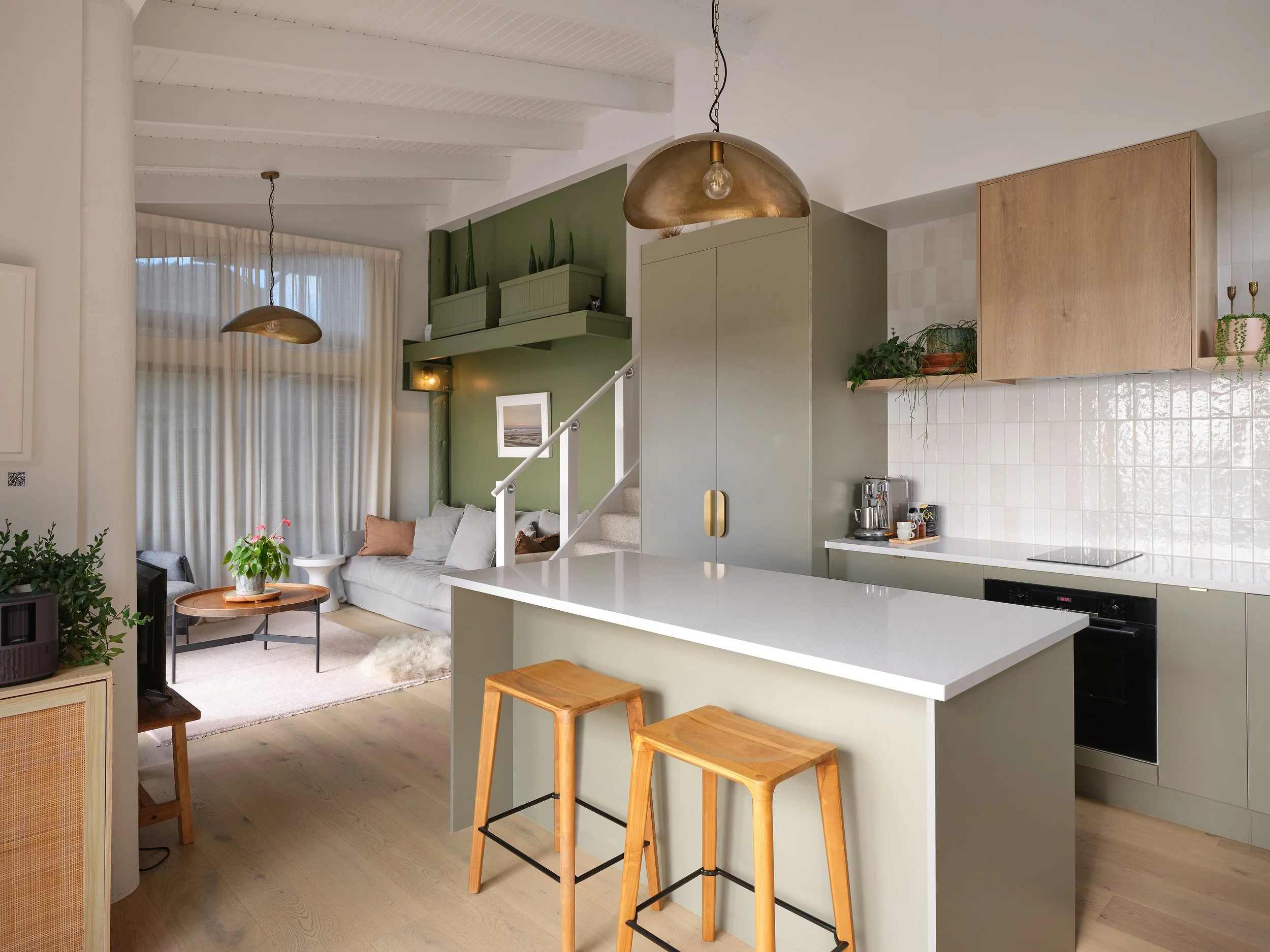
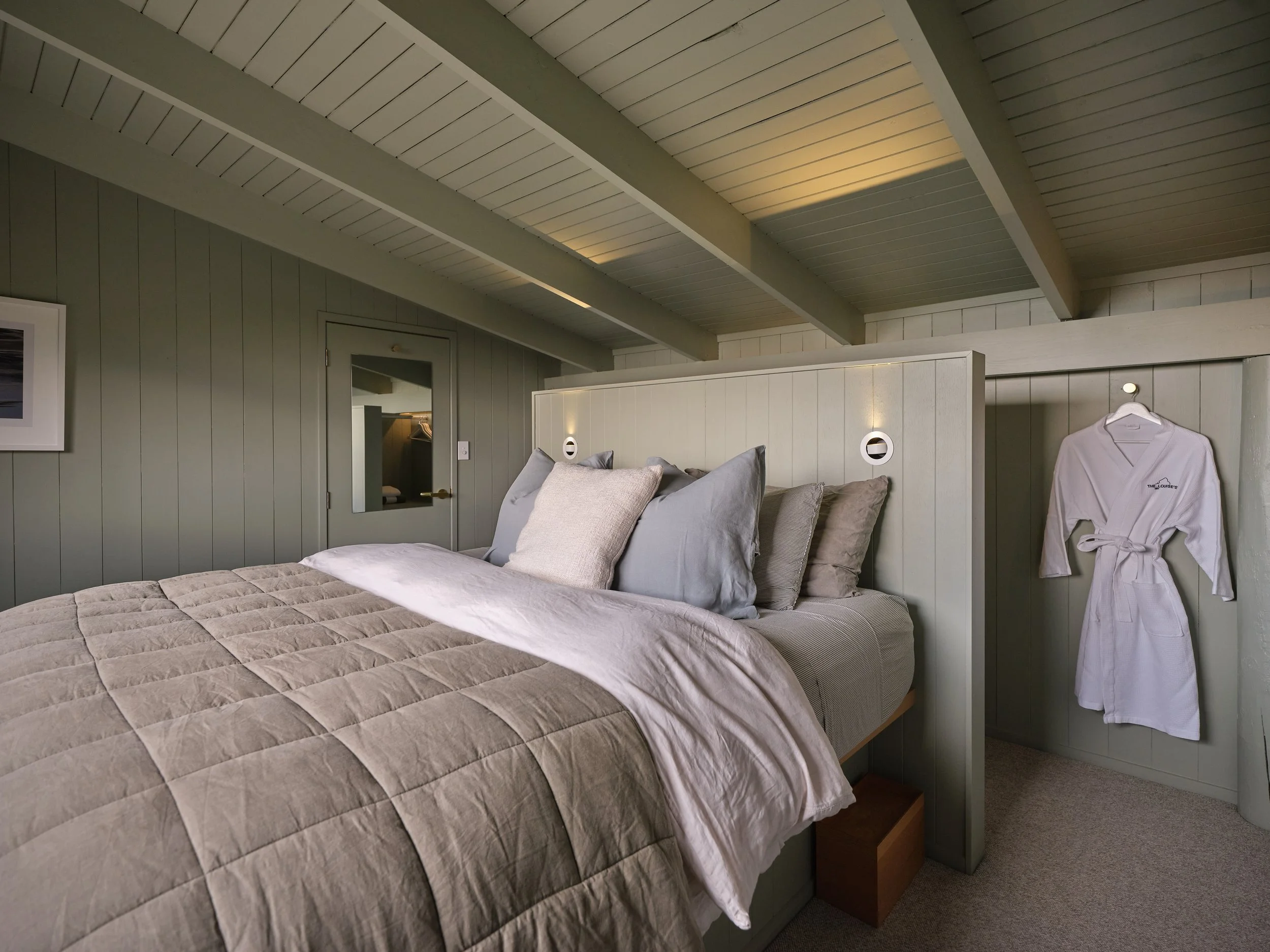
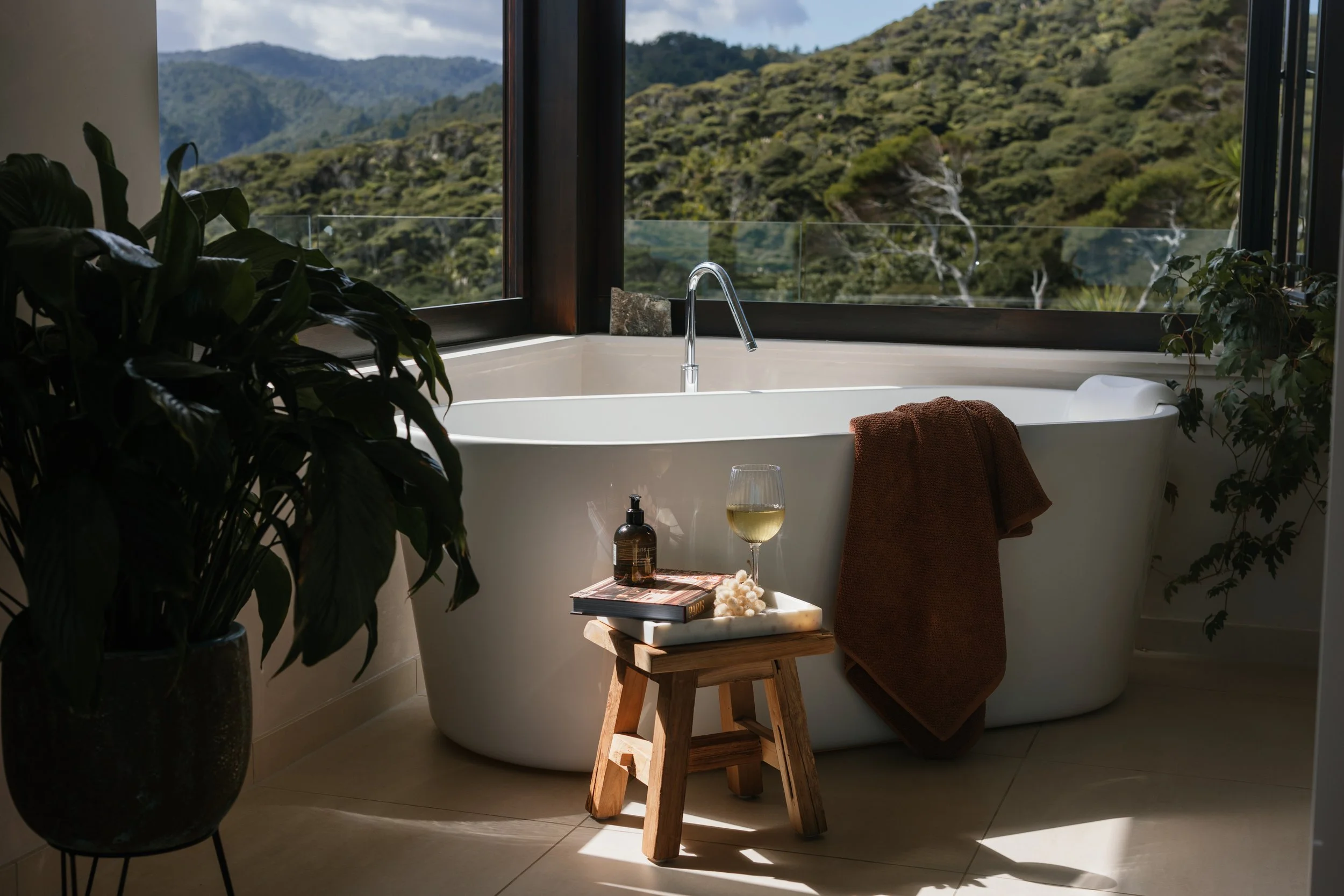
The interiors were approached with similar restraint. Crossan didn’t want the rooms to compete with the sea, sky and bush outside, so natural textures, a muted palette and greenery form the background, while stronger colour comes principally through art, including works by New Zealand and West Auckland artists.
One of the simplest changes ended up having one of the biggest effects. Interior designer Alex Walls walked through the house and told Crossan, “If you do nothing else, put in curtains.” Crossan admits she didn’t initially understand why, but the effect became obvious once they were installed. “It softened it, created a filter for the light without removing the view and made it playful, but also romantic,” she says.
That same desire to soften the architecture continued into the garden. At the centre of the house, Crossan worked with landscape designer Liam Greenway and planting designer Xanthe White, a Chelsea Garden Show winner, to create a sheltered courtyard filled with greenery. The planting brings the landscape into the middle of the house while providing a protected counterpoint to Piha’s exposed western coast.
Across the wider property, the landscape is productive as well as ornamental. Vegetables are grown on the land, sheep graze in the paddock, and Crossan says one of the first things she notices after time away is what has grown or changed. Several large tanks store hundreds of thousands of litres of rainwater, while solar-heated water and EV charging give the property a degree of self-sufficiency, with scope to take it further off-grid in the future.
Why Piha feels different from how it looks
In photographs, friends often describe The Louises as modern or minimal, with its concrete structure, strong lines and restrained materials. Crossan understands the description, but says the house feels much softer in person. She sees something similar in the way outsiders talk about Piha. People unfamiliar with Auckland’s west coast tend to reach for words like wild, rugged or raw when they see the black sand, large surf, thick bush and weather arriving from the Tasman.
Crossan feels those words describe how Piha looks from the outside more than how it feels to live there. “It’s an outsider’s point of view looking at something as opposed to experiencing it,” she says. “It’s like seeing a photo of big waves and assuming that that must feel like living in big waves.”
Her own vocabulary is noticeably gentler. “I find Piha to be a salve, a balm,” she says. The bush is cathartic; the cool water of the falls restorative; the rain cleansing and the wind refreshing. “It’s real as opposed to raw.”
She thinks people sometimes misread the house in much the same way. In photographs, its size, concrete structure and strong geometry can make it look harder or more severe than it feels in person, just as Piha’s surf and black sand can make the landscape seem harsher than the experience of actually living there.
“If you were to ask our friends and family who come and stay with us,” she says, “they would tell you that it’s very tranquil, that it has a serene quality to it, and that what we have created is a sanctuary. They feel at peace here.”
Life in the Piha community
Piha is laid-back, and Crossan talks about neighbours with Academy Awards and Grammys who are simply neighbours here. “They’ll care about whether you’re a nice person and the value you add into the community through kindness,” she says. She describes strangers stopping to talk on the beach, forgotten wallets being quietly covered at the local shop and well-known residents moving through the community without much comment. It gives Piha a particular kind of privacy: you can be part of the community without giving up your anonymity.
Māori heritage, tūrangawaewae and a sense of belonging
Over time, Crossan’s connection to Piha became a much stronger sense of belonging. She is of Ngāi Tahu Māori descent — Ngāi Tahu is one of New Zealand’s major Māori iwi, or tribes — and says living in Piha helped her understand the idea of tūrangawaewae, a Māori concept that describes a place where you feel a deep sense of belonging.
Piha is not Crossan’s ancestral home, but she says it became a place where she felt deeply connected. That feeling became clear during a walk along Piha Beach, when she was suddenly struck by the sense that she was home. Later that day, someone introduced her to the concept of tūrangawaewae. “I just knew instantly that what I had experienced was a connection,” she says.
Crossan says her understanding of that connection is shaped by her Māori heritage and her Ngāi Tahu ancestry, but she does not see the feeling itself as something exclusive to Māori culture. “You don’t have to be Māori to feel this,” she says.
For her, Piha became more than a beautiful place to live. Over time, the beach, the bush, the weather and the community became part of her sense of home and belonging.
Passing on The Louises
“I’ve never really felt that we owned The Louises. We are its kaitiaki / custodians for a period of time. We inherited something extraordinary, we finished what had been started, we cared for the land and the house, and we added our chapter to its story. Now it feels like the right time for someone else to take that on — to love it, care for it and make it their own, while understanding that eventually they’ll pass it on too.”
The Louises is currently offered at NZD$11 million (approximately USD$6.2 million at the time of publication). See more on New Zealand Sotheby’s International Realty.