No. 7 Dale: The Last Condo to be Built in Rosedale, Toronto’s Historic Enclave
Nearly a decade ago, developer Boris Shteiman received a call about an opportunity that rarely surfaces in Rosedale: the chance to assemble three adjoining mid-century properties backing directly onto the ravine.
Individually, each site would have been unremarkable. Together, they formed a configuration that had not previously aligned in the neighbourhood — a set of physical and planning conditions that would ultimately allow a form of development seldom permitted here.
Each was rated C under the Rosedale Heritage Conservation District, in a neighbourhood where most of the 100-year-old homes are A-rated and cannot be altered or demolished.
During the approvals process, Platinum Vista conducted a comprehensive review of lot configurations across the neighbourhood to demonstrate that this site was an anomaly rather than a precedent. The conclusion was clear: No. 7 Dale was the only location where a multi-residential project could be approved, and the circumstances that allowed it are not repeatable.
Starting From $5.5 Million
Only a Few Residences Remain – Inquire via info@7dale.com for availability.
Rosedale, Toronto’s Garden Neighbourhood
Rosedale has long been the quiet heart of Toronto’s old wealth, home over generations to many of the country’s most influential figures, including premiers, philanthropists, cultural leaders, business families and the Bay Street titans who helped shape modern Canadian finance. A park-like enclave full of mature trees, winding ravines and century-old mansions, it offers a deep sense of privacy. It remains one of Toronto’s most historic and beautiful neighbourhoods.
A place where foxes move through the ravine, deer appear on the slopes and the streets are lined with century-old homes.
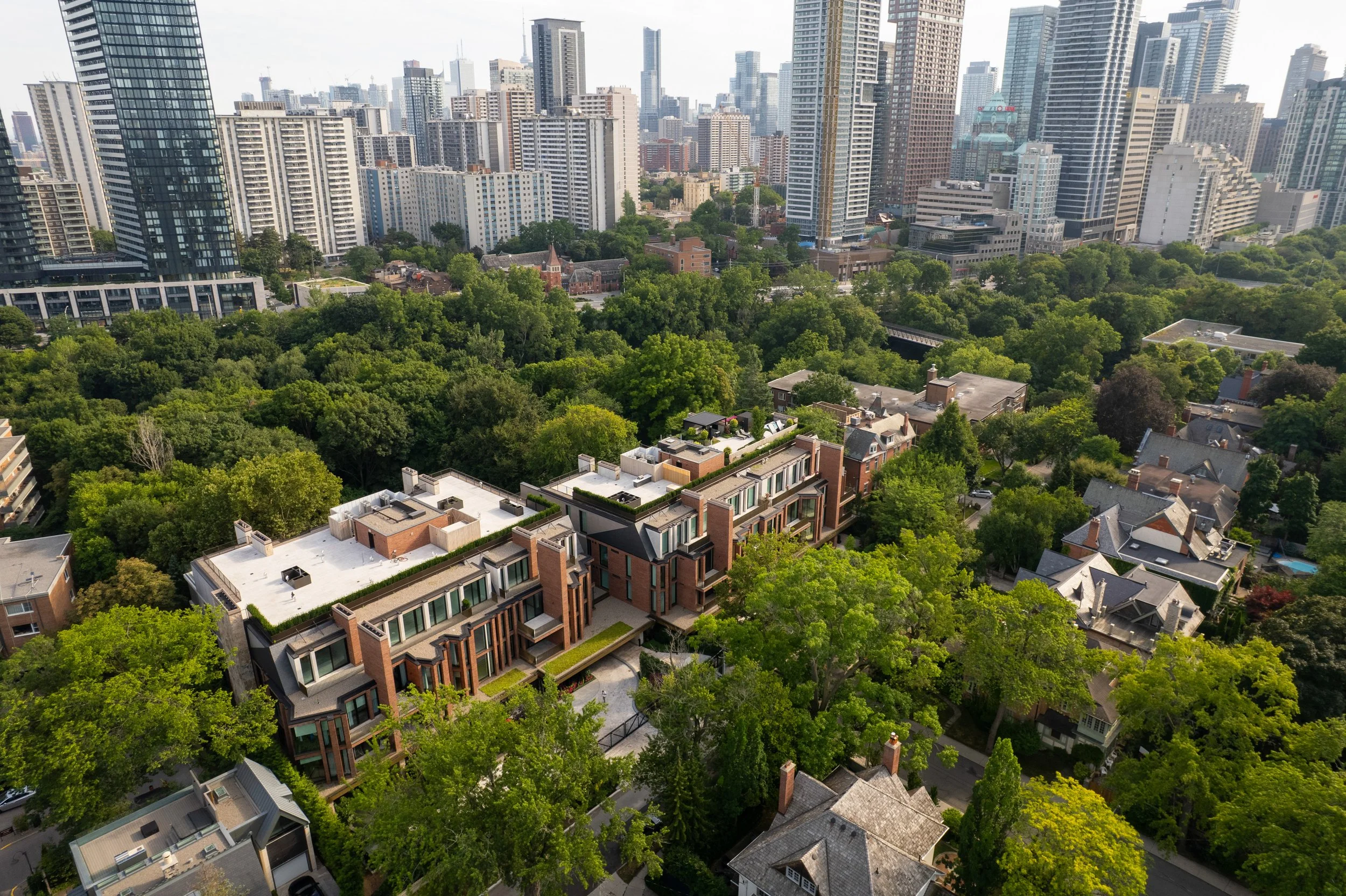
This is part of what makes No. 7 Dale so special: it exists in a place where new development almost never does. It’s a four-storey, ultra-luxury residence set on the edge of Rosedale Valley, yet still only minutes from Yonge & Bloor, the city’s busiest and most connected intersection, and Yorkville, the centre of Toronto’s luxury scene. It offers a contrast rarely found in major international cities: deep residential seclusion within walking distance of the urban core.
The Story Behind The Building
When Platinum Vista, the developer, first approached the City, the response was direct: “This is Rosedale. You can’t touch anything here.” The developer understood early that for the project to become a reality, the building would have to be exceptional. Bringing in Hariri Pontarini Architects onto the project helped shift the tone. Their work for McKinsey & Company’s headquarters had been designated a heritage landmark by the city of Toronto, and gave city planning staff confidence that a contemporary building could be designed in a way that respected Rosedale’s rich character.
Studio Munge was brought in for the interiors, drawing on a Canadian and international portfolio that includes brands like Nobu, Ritz Carlton, Rosewood Hotels, and MGM.
The team retained Janet Rosenberg & Studio, one of the country’s leading landscape architecture firms having worked on the Royal Botanical Gardens, several major residential projects, and estate homes in Rosedale.
Even so, the development process stretched over nearly a decade. It involved multiple redesigns, extensive heritage review, consultations with ravine authorities and urban forestry, the preservation of an original mid-century garden by Dunington-Grubb, and ongoing engagement with the Rosedale residents. Only after this iterative process—design, revise, review, repeat—did the project receive approval.
The result is “essentially 26 custom homes under one roof,” says Josh Shteiman, vice-president of development operations at Platinum Vista Inc.
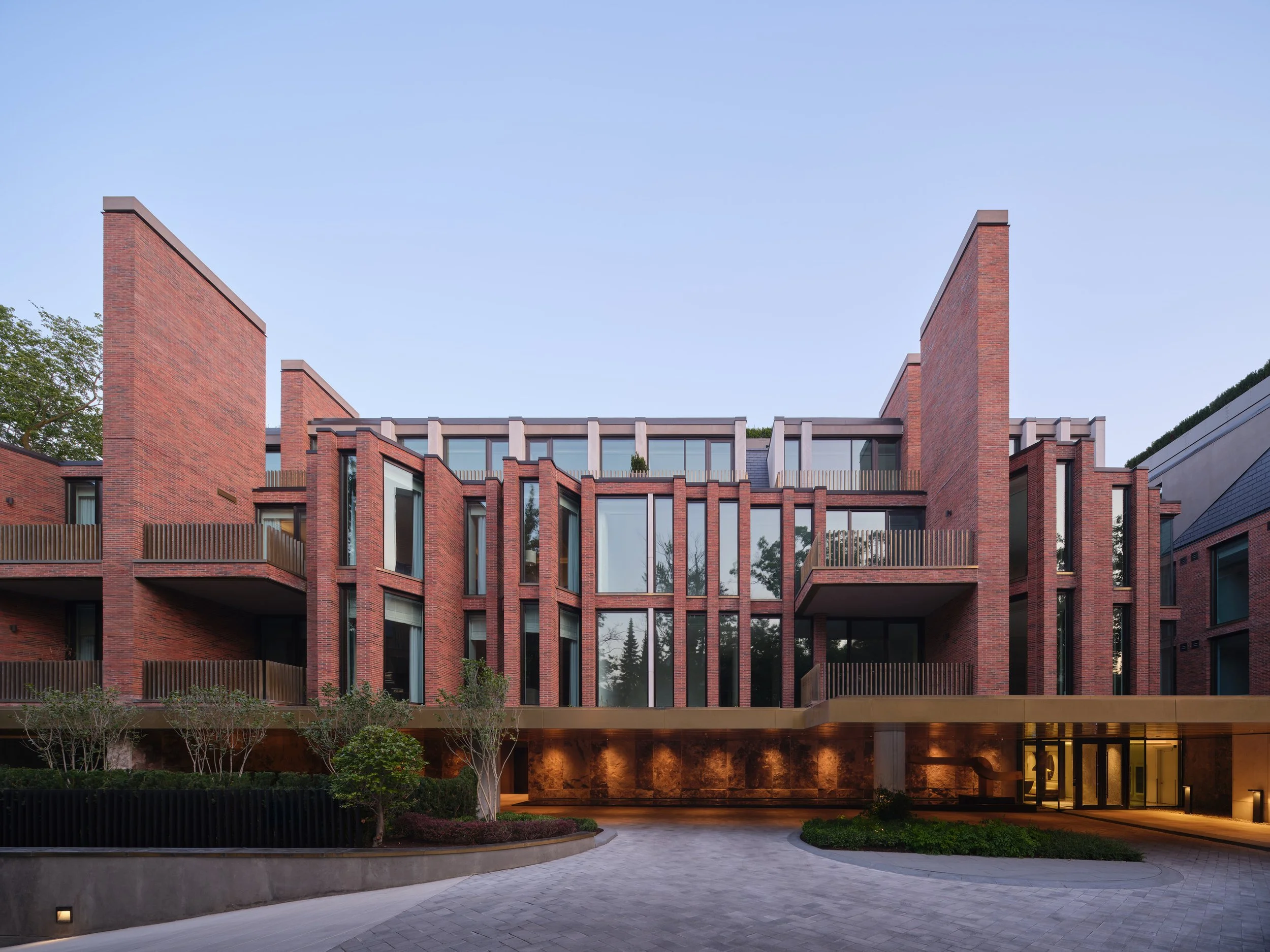
Architect Siamak Hariri compares the building to Janus—the Roman god traditionally shown with two faces, one looking to the past and one to the future. At No. 7 Dale, the idea becomes architectural: the north façade, facing the historic streetscape, draws from Rosedale’s Victorian and Edwardian homes, using red brick from Denmark, Algonquin limestone, and architectural forms that echo bay windows and chimneys.
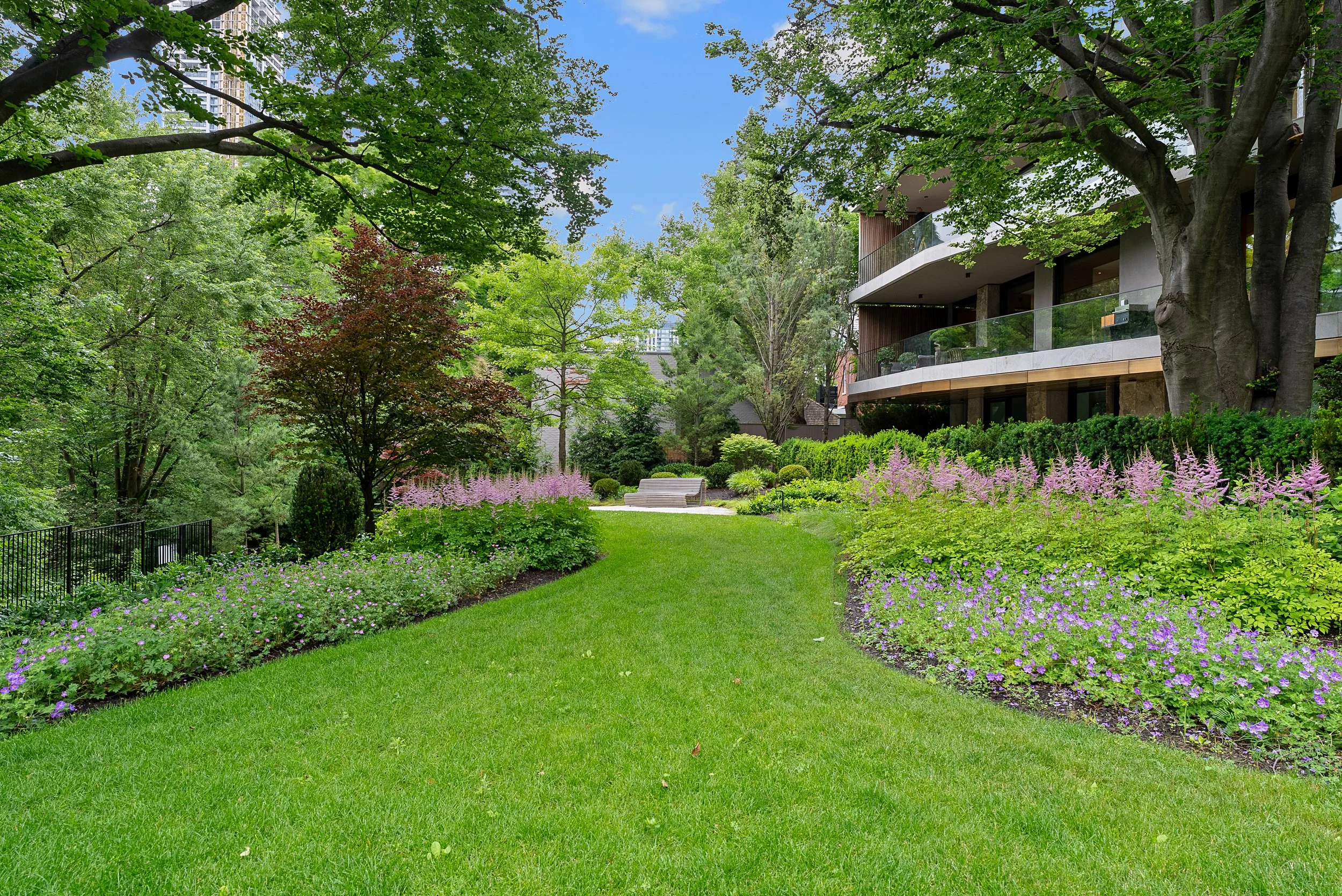
The south façade is a modern pavilion with floor-to-ceiling windows and terraces. Built around mature trees, some of which are more than 150 years old, residents are surrounded by lush green nature.
Only a Few Residences Remain – Inquire via info@7dale.com for availability.
A Limited Collection of Residences Located in Historic Rosedale
Suites are priced from roughly $5.5 million to more than $20 million and range from 2,500 to over 5,000 square feet. The penthouse terraces sit in the treetops, with Toronto’s skyline rising in the distance, a view comparable to those seen from Central Park in Manhattan.
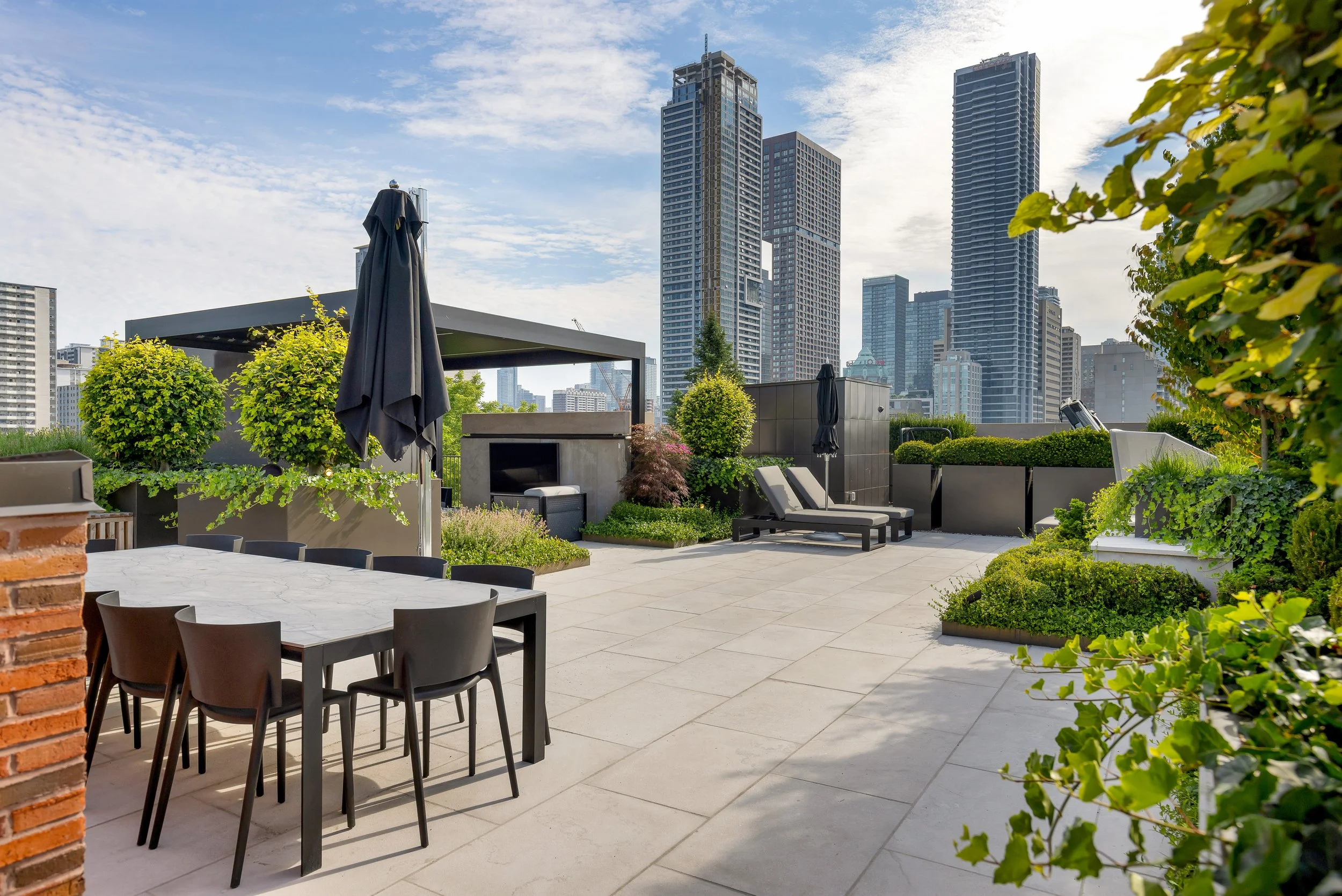
“On the upper levels, you’re floating in the canopy. You’re living in the trees,” says developer Josh Shteiman.
Some terraces approach 5,000 square feet and include gas, water and electrical connections that allow for a complete outdoor kitchen, from BBQs to sinks and full prep areas, supported by reinforced structural zones designed to accommodate the weight of pools, saunas and landscaped gardens. One of the penthouse terraces even has a fully irrigated vegetable garden.
Behind the finishes, the construction adopts methods more commonly found in custom-home building. “We wanted people to feel confident that when they are inside their home, it’s their space,” says developer Josh Shteiman. “So if you think, ‘What am I sacrificing by moving to a condo?’—nothing here. Absolutely nothing.”
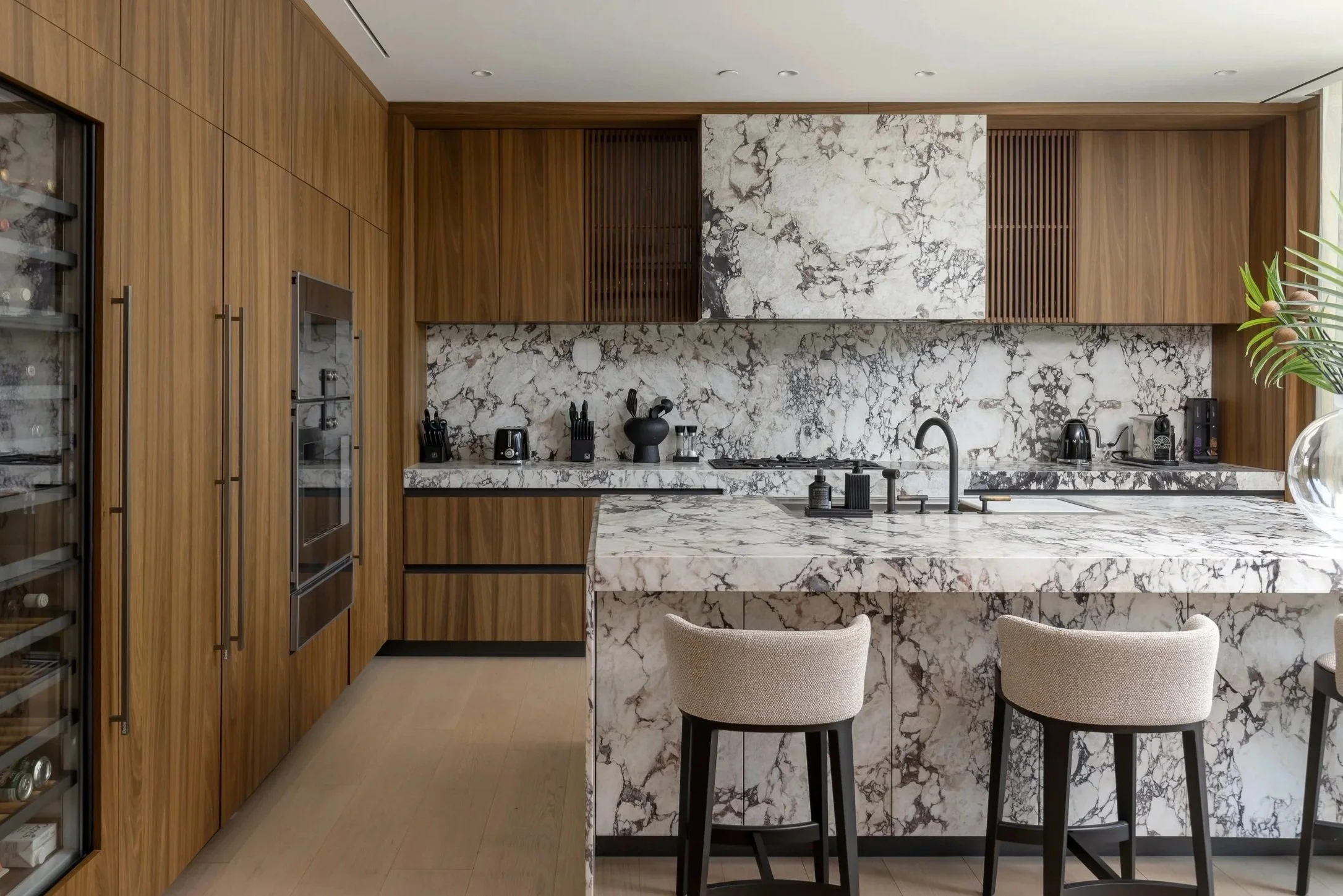
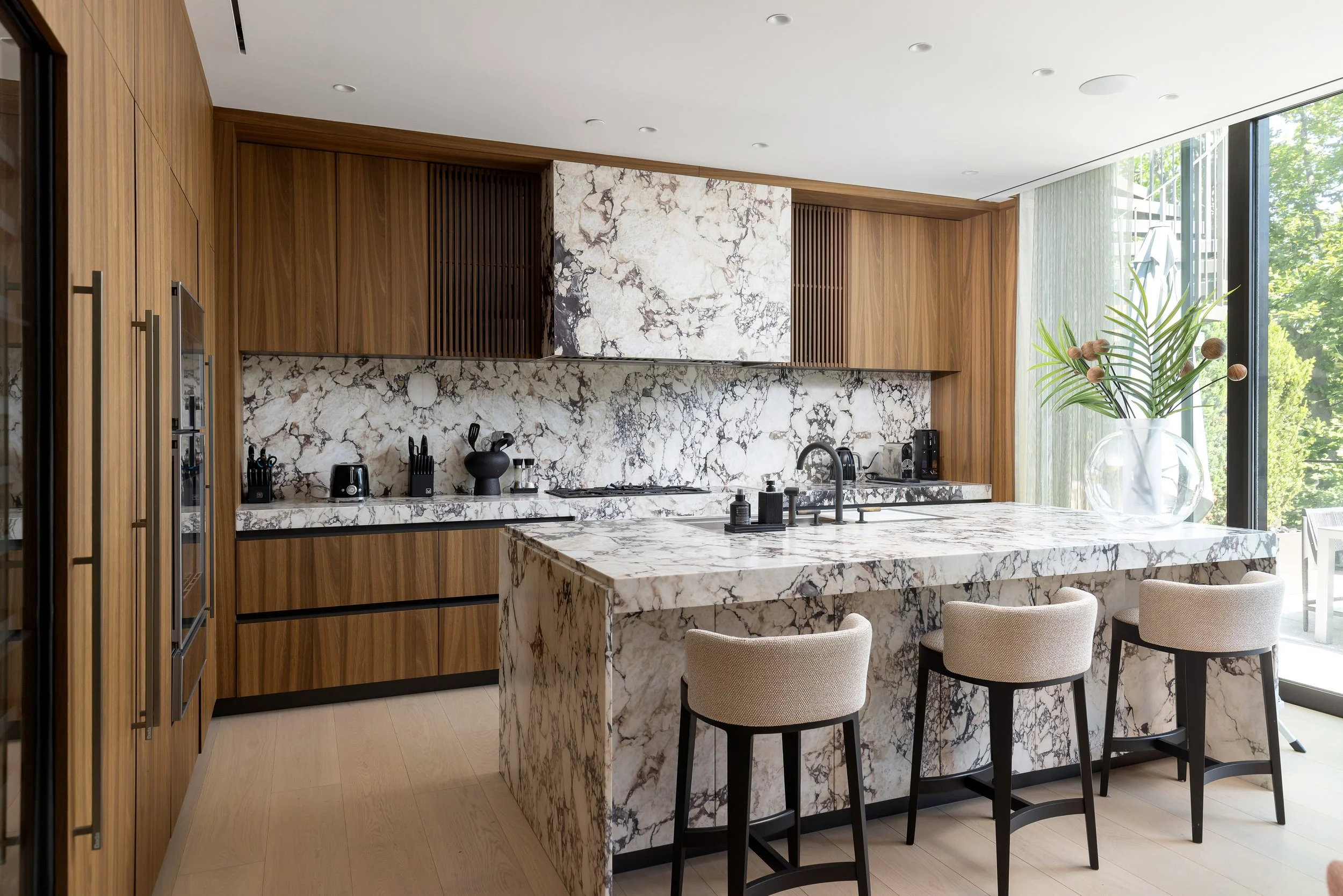
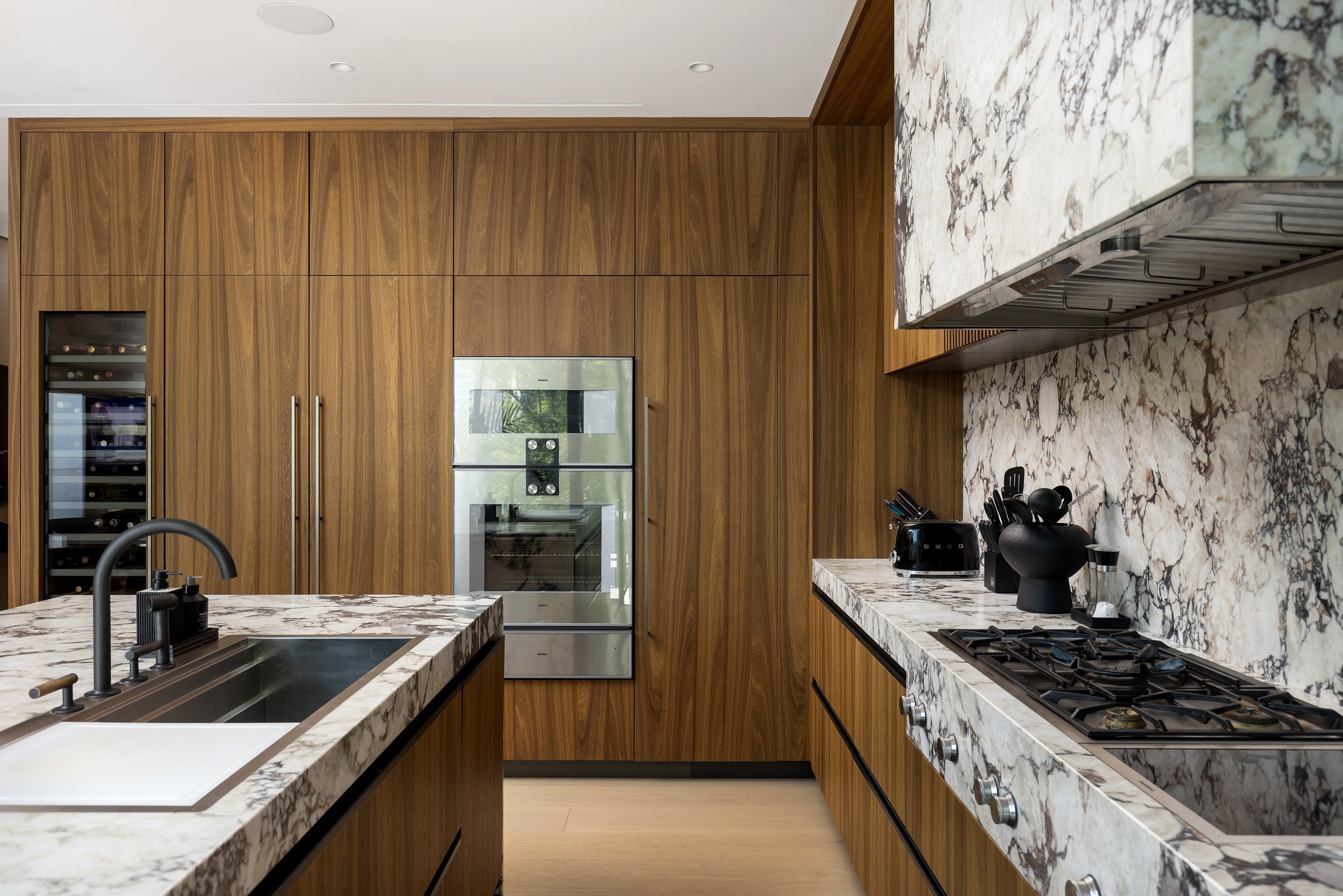
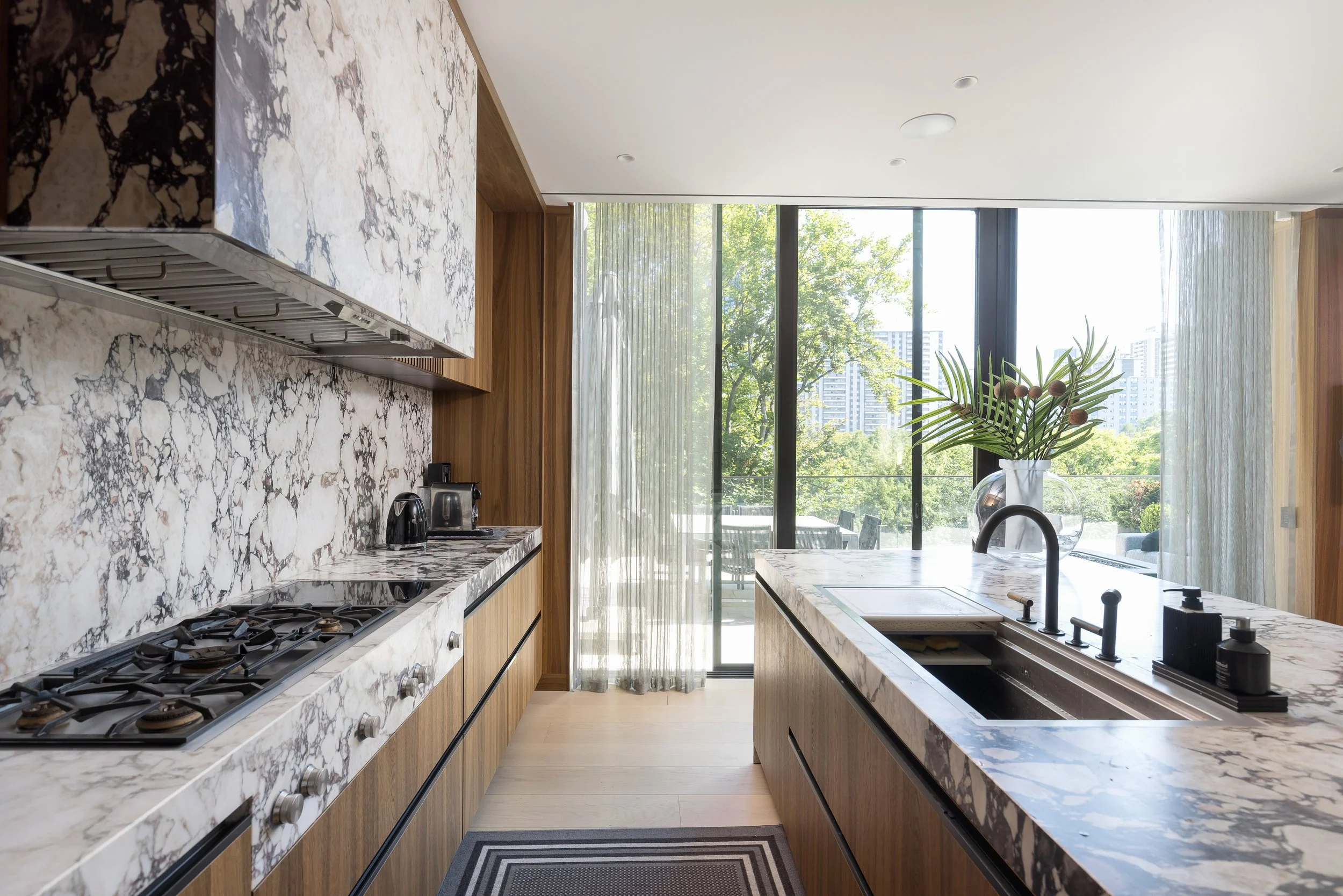
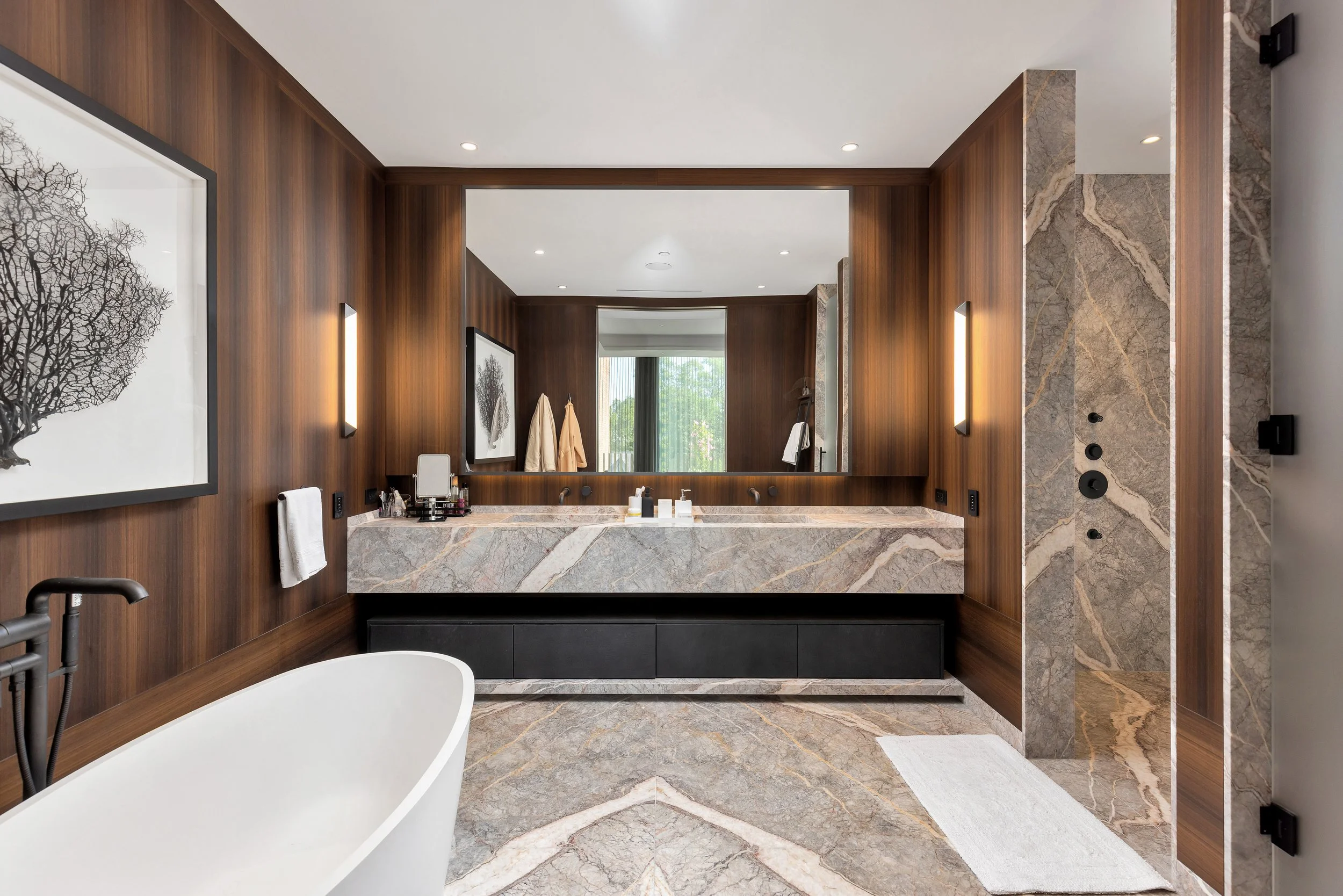
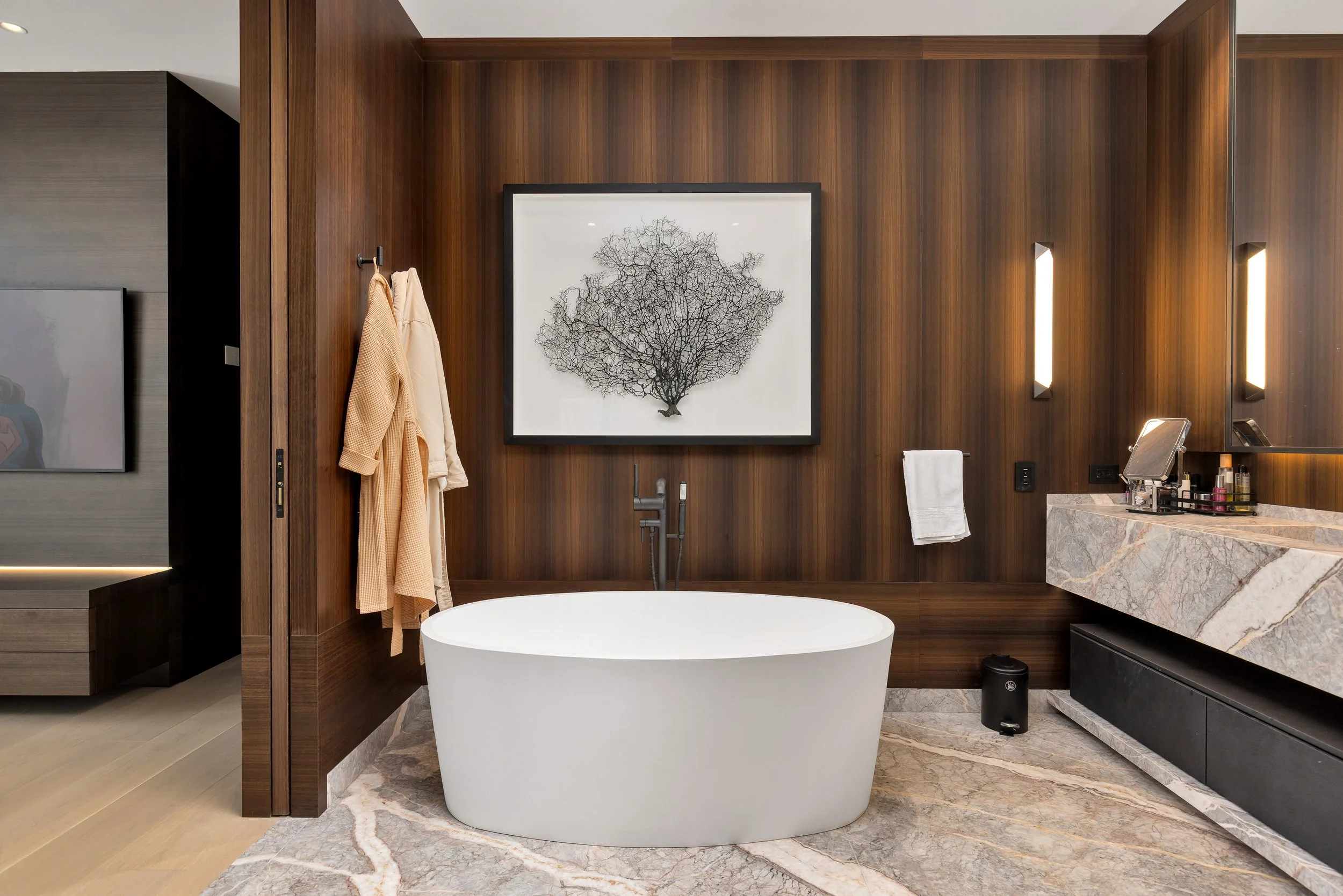
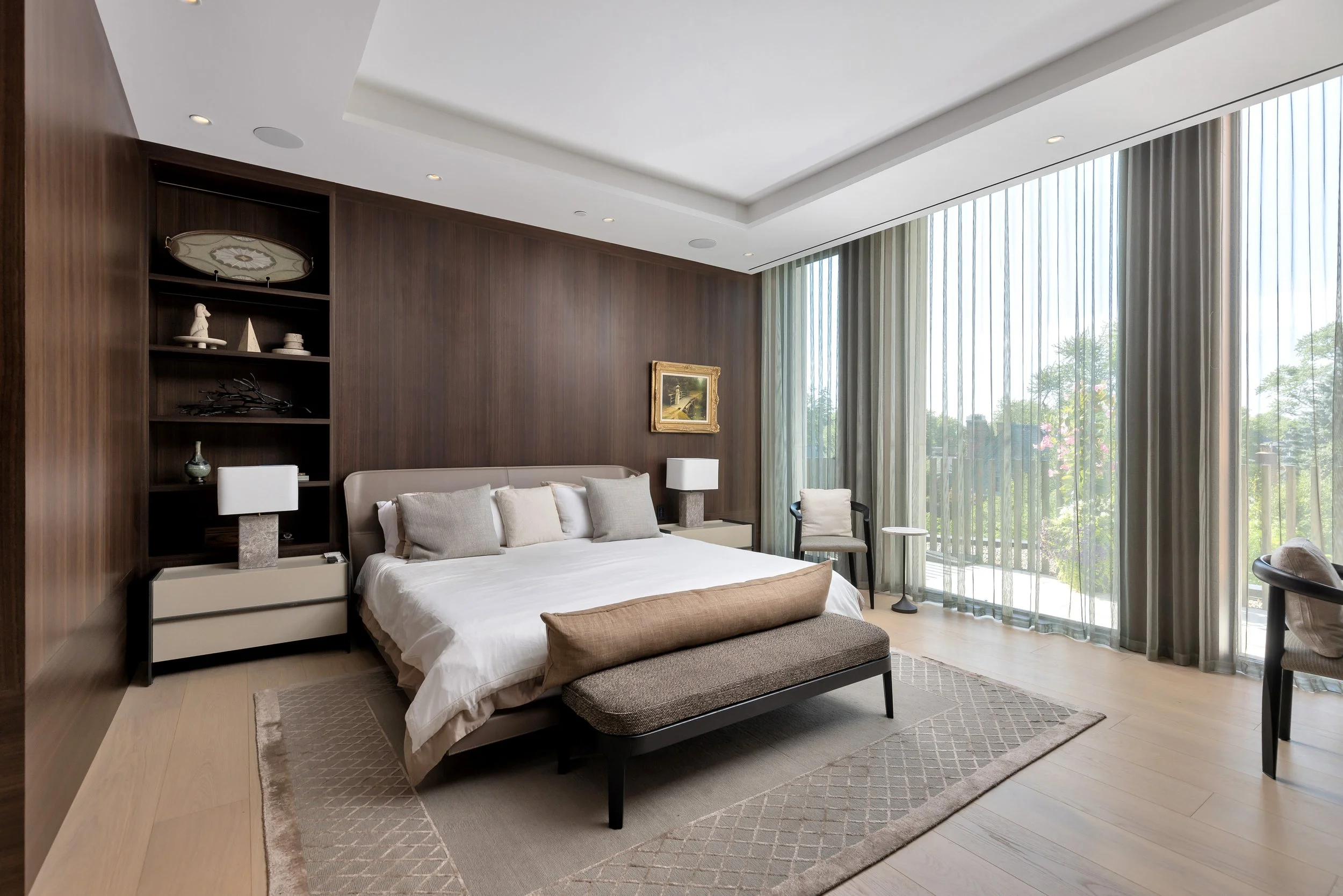
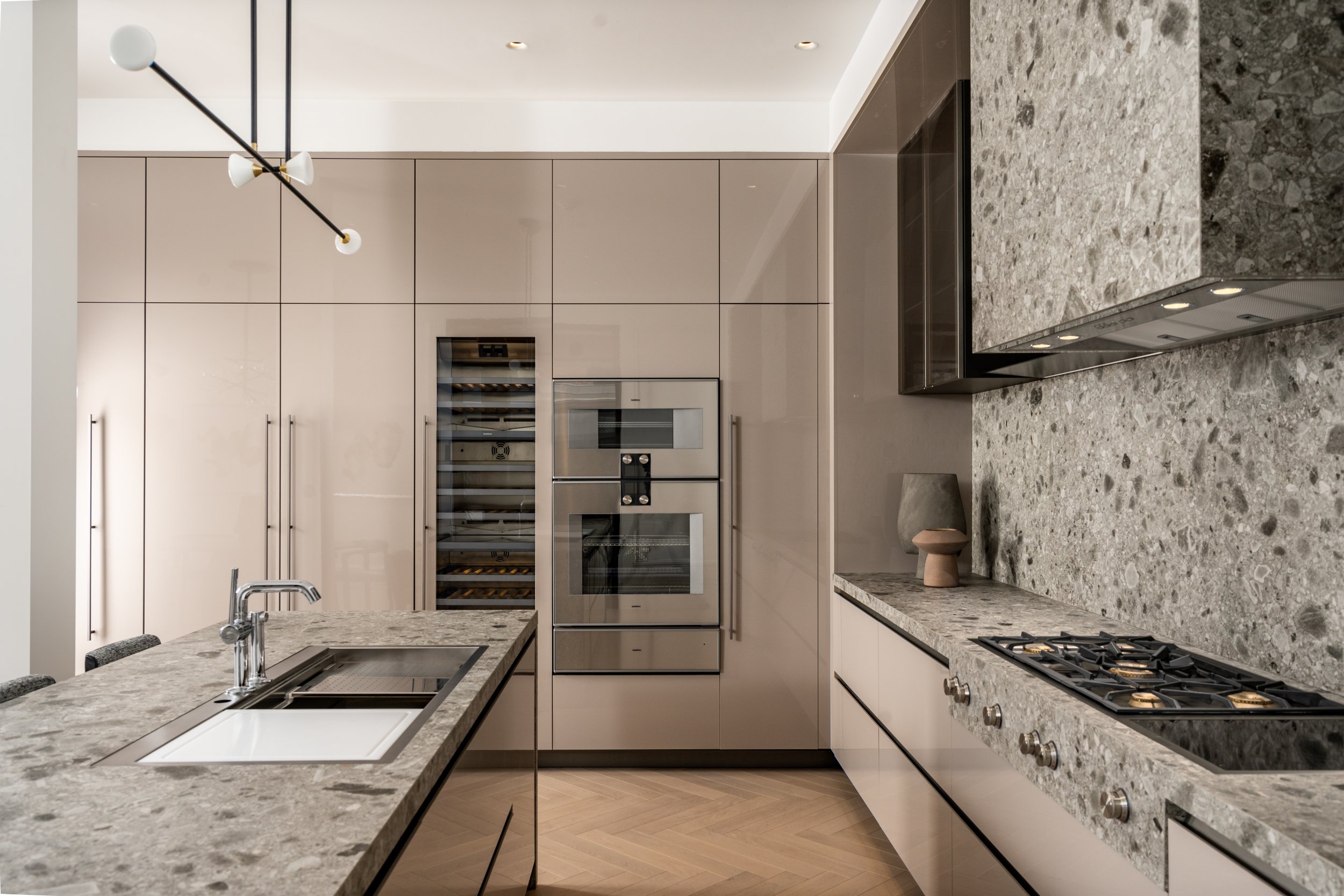
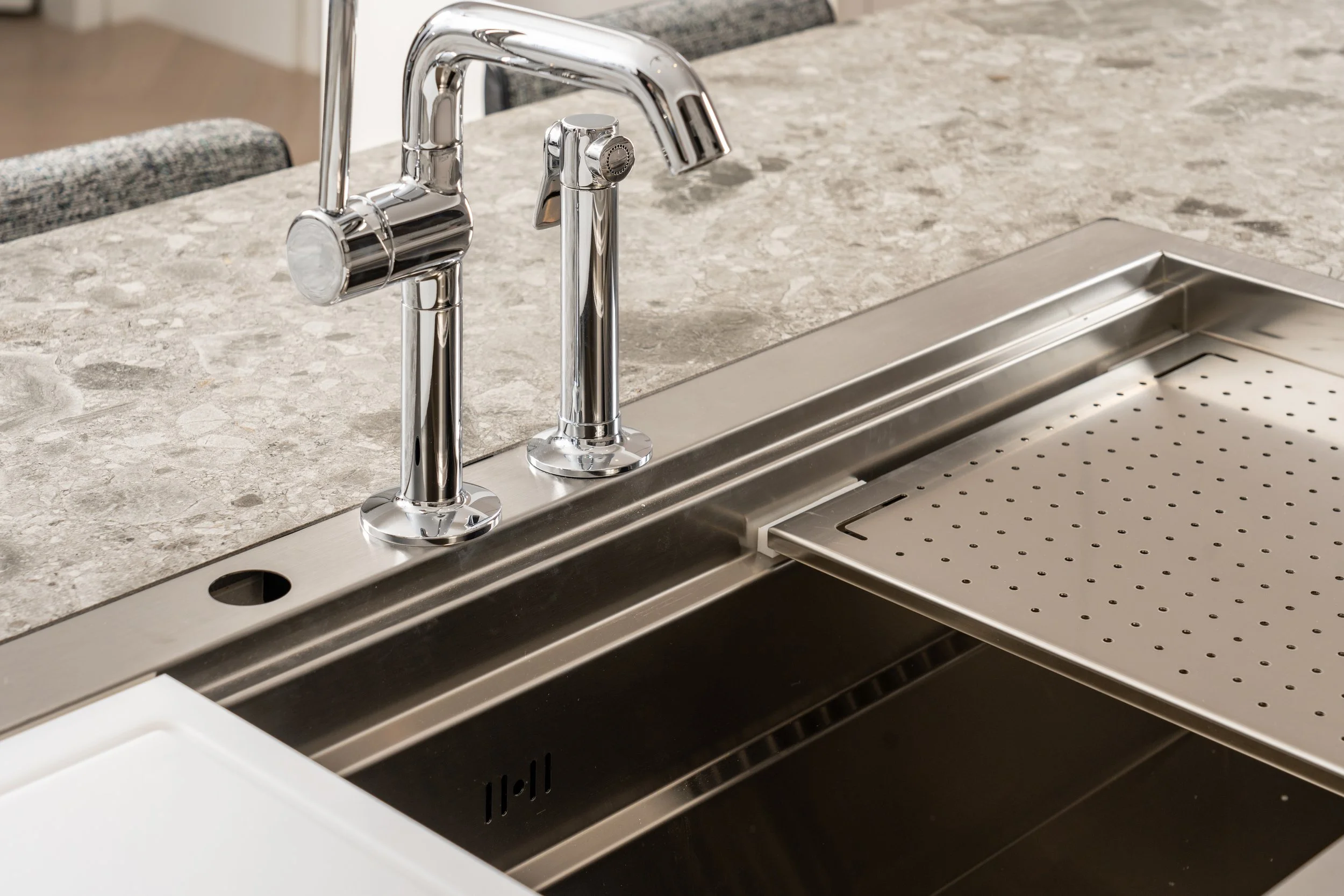
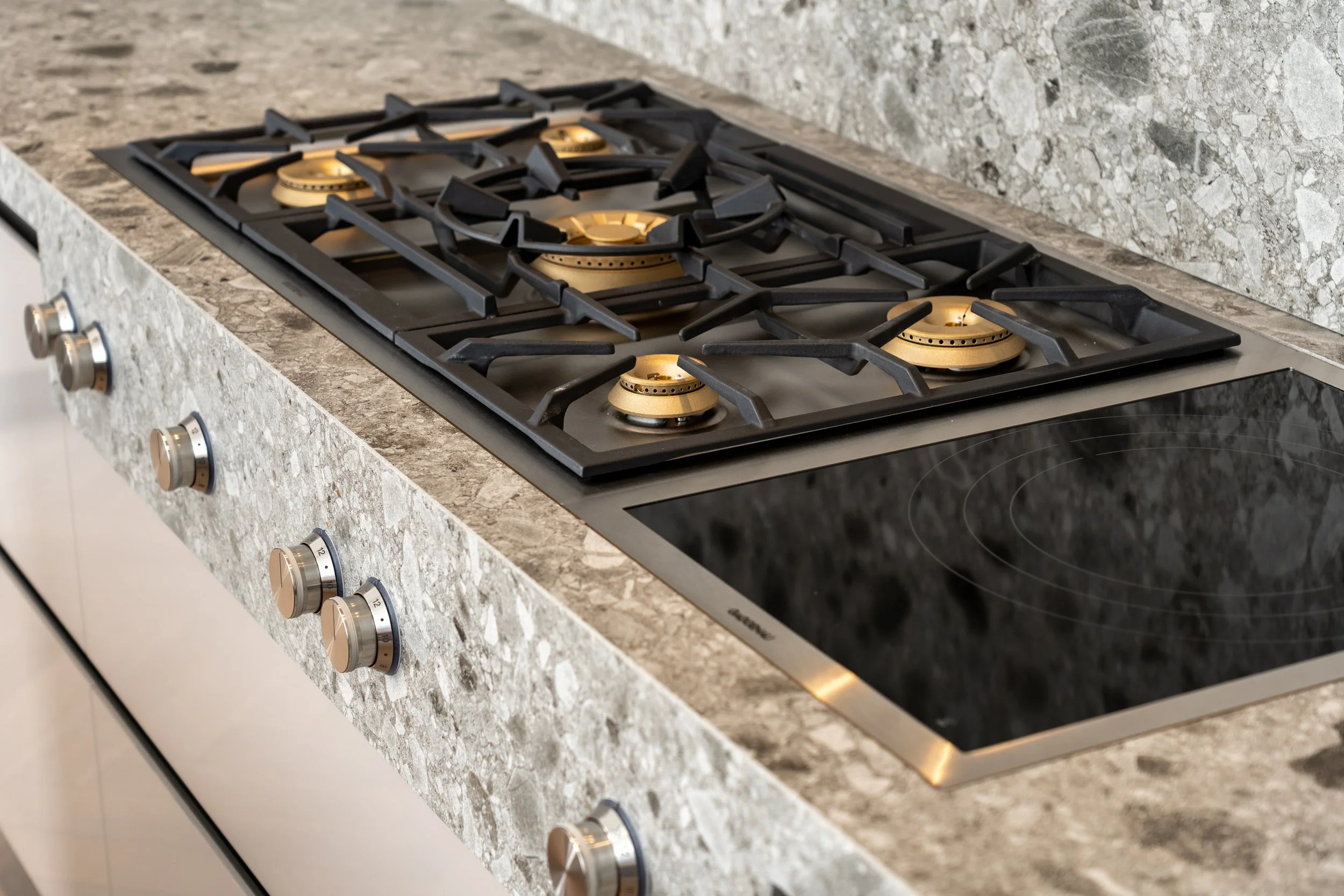
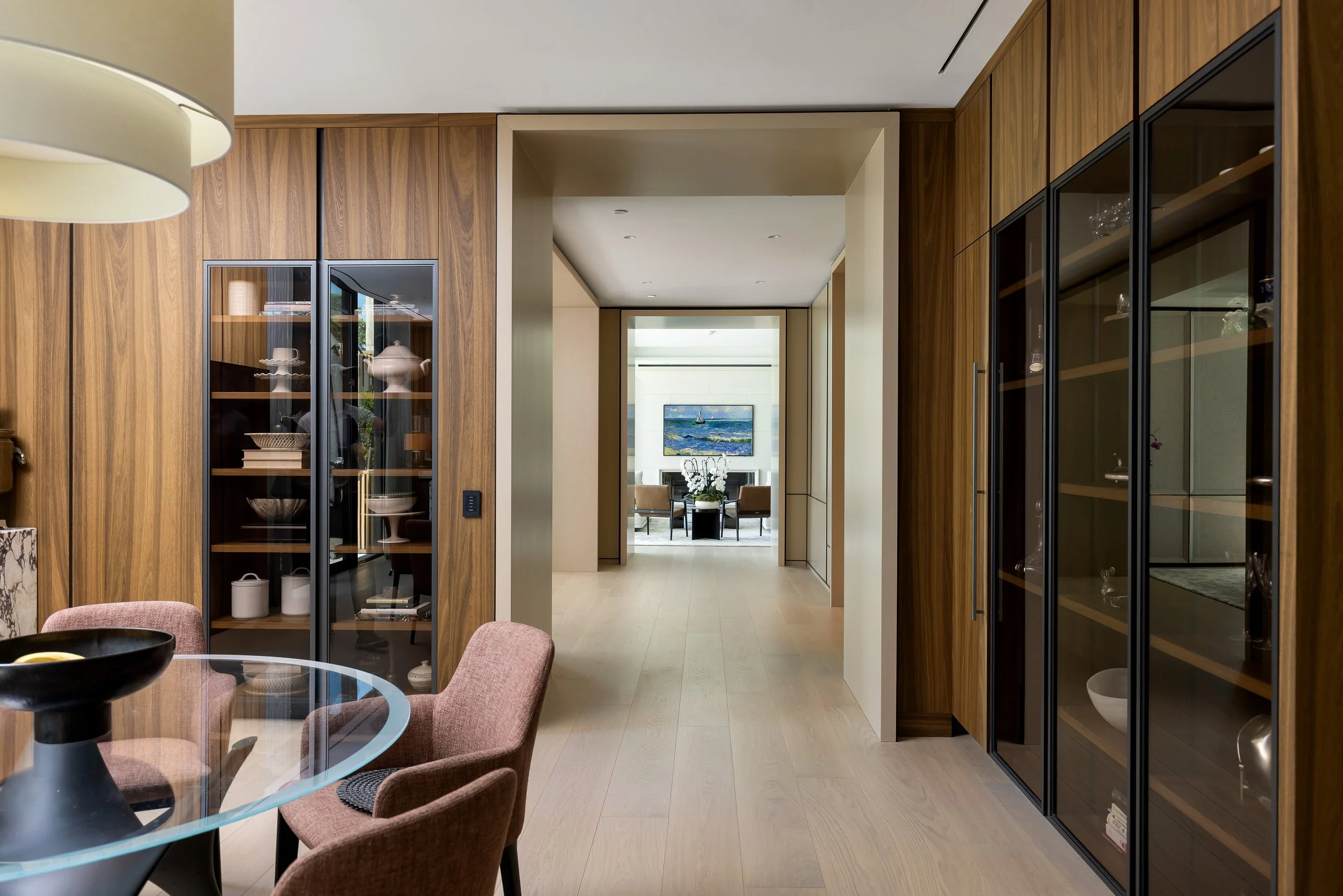
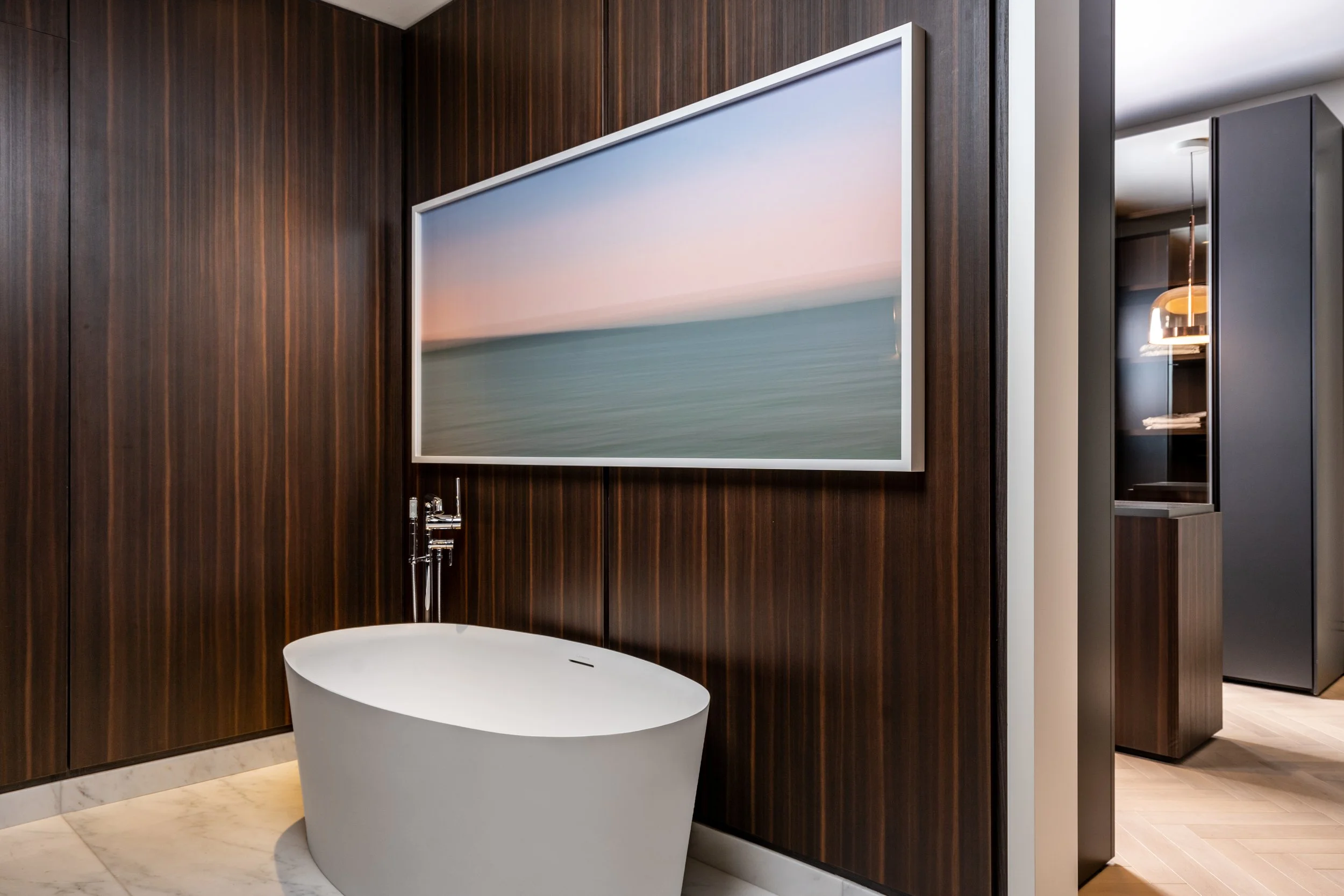
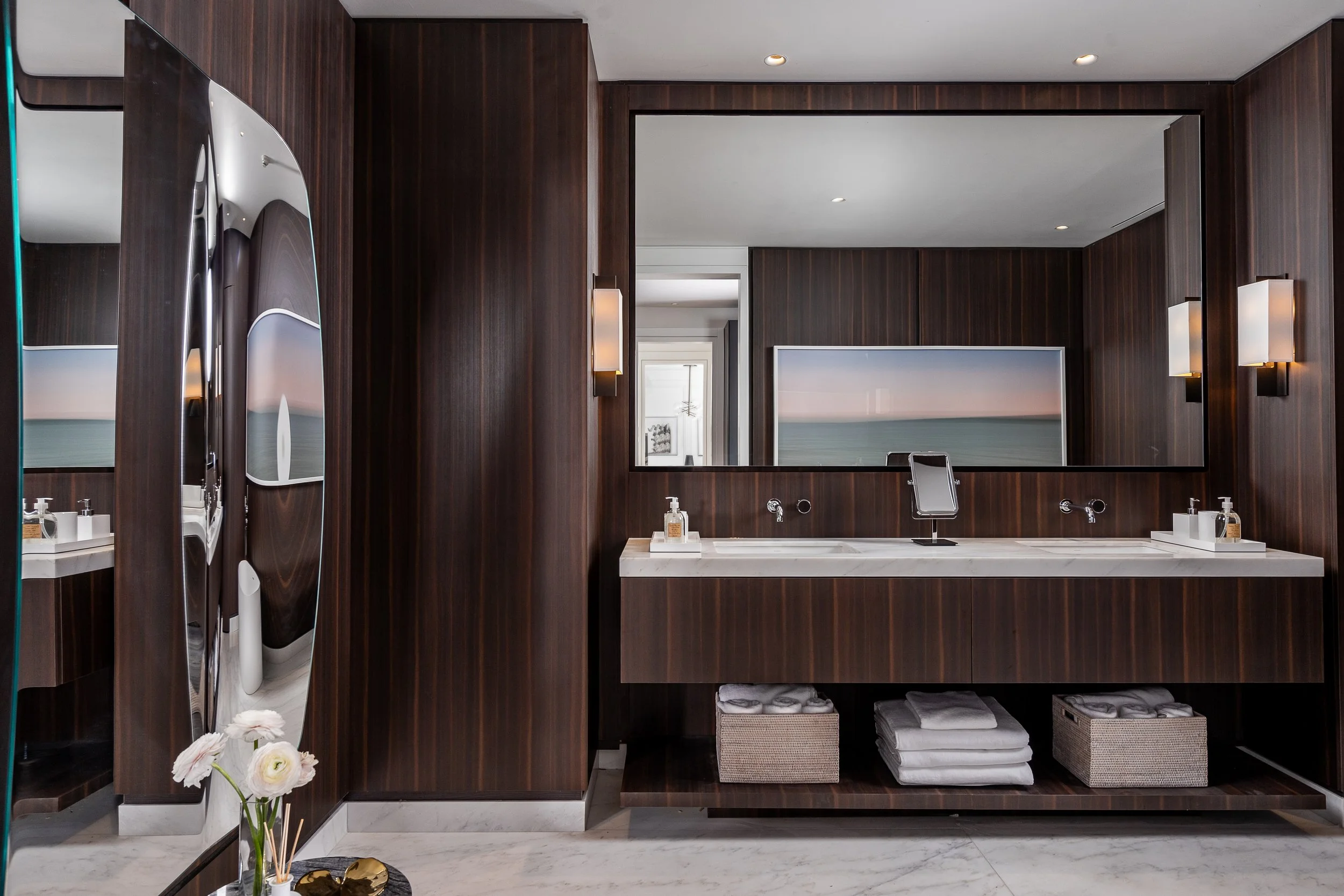
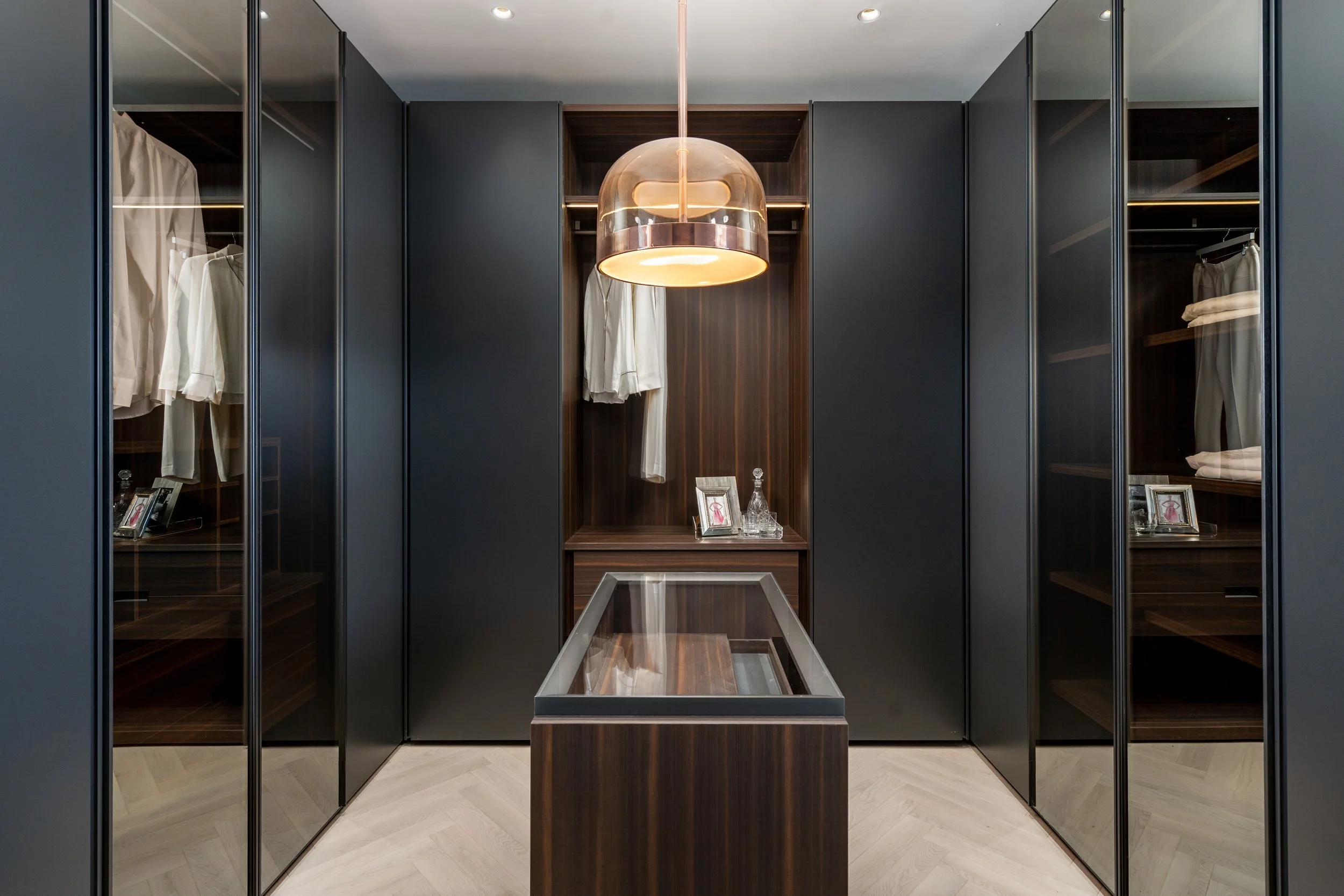
The entire building feels like an ultra-luxury boutique hotel. Inside the units, there is absolutely no expense spared: double-width Italian white oak laid in herringbone, picture-frame wall millwork, not a single porcelain tile was used–everything is in marble, and Waterworks fixtures throughout.
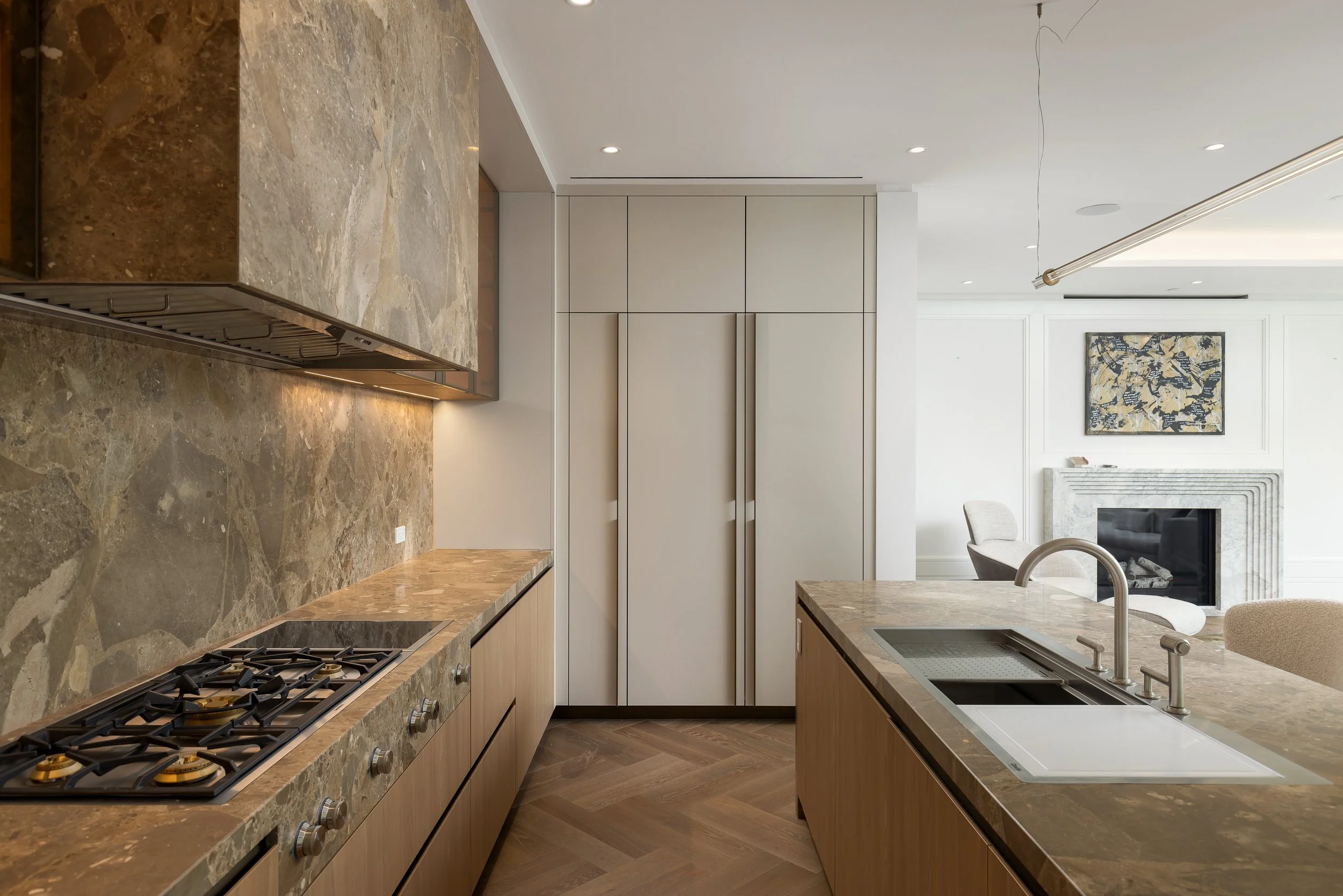
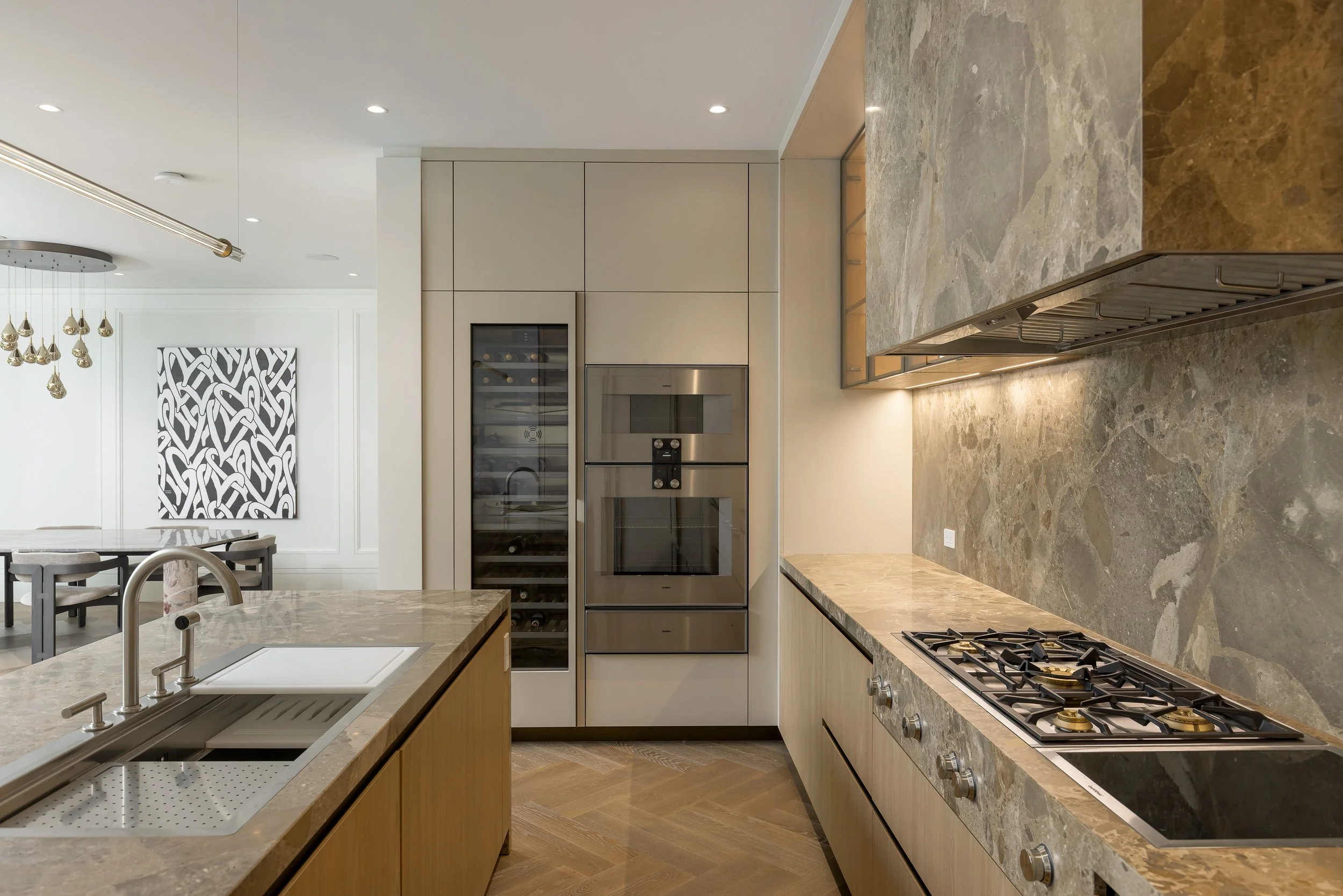
This is the first project in Canada that used exclusively Dada / Molteni&C kitchen millwork systems. Dada kitchens are a division of Molteni&C, one of the highest-end furniture companies in the world, based out of Milan. The closet systems are Molteni&C again. The vanities, the wall coverings inside the bathrooms—all Molteni&C. Primary ensuites function as private spa rooms, with marble-slab vanities, freestanding tubs, heated floors and frameless glass showers illuminated with recessed lighting.
Interiors feature open, airy spaces filled with natural light, designed by Studio Munge in two palettes — light or dark, and 10-foot ceilings are standard.
The residences were designed to guarantee acoustic privacy. And if you’re wondering, “Will I hear my neighbours?” or “Will I get a noise complaint?”—the answer, by design, is no.
“The slab thicknesses between floor-to-floor and unit-to-unit laterally is astronomical,” Josh says. Additional insulation is pinned to the underside of the concrete, and a layer of cork sits beneath the hardwood to further dampen sound.
The result is a standard of construction far above Toronto’s conventional multi-residential market, aligning more closely with what buyers encounter in Milan, Geneva or Paris than anything typically built here.
The entire building runs like a Swiss watch. Behind the scenes, mechanical systems include a VRF forced air system—common in top European and Asian residences but still rare in North America— which means every unit has its own private ventilation system where fresh, filtered air is continuously supplied to each suite while stale air is exhausted out, supporting healthy indoor air quality. There’s also a full-building water-filtration system.
No. 7 Dale was not built like a condo at all. It was founder Boris Shteiman’s swan song — a project created by a family of custom-home builders who wanted to leave something lasting in a neighbourhood that rarely lets anything new take shape.
Boris’ passion for the project is so strong that he lives in one of the penthouses. Buyers touring his private unit during construction compared the design and feel to what they had experienced at Aman, one of the world’s most exclusive hotel groups.
Lifestyle Amenities
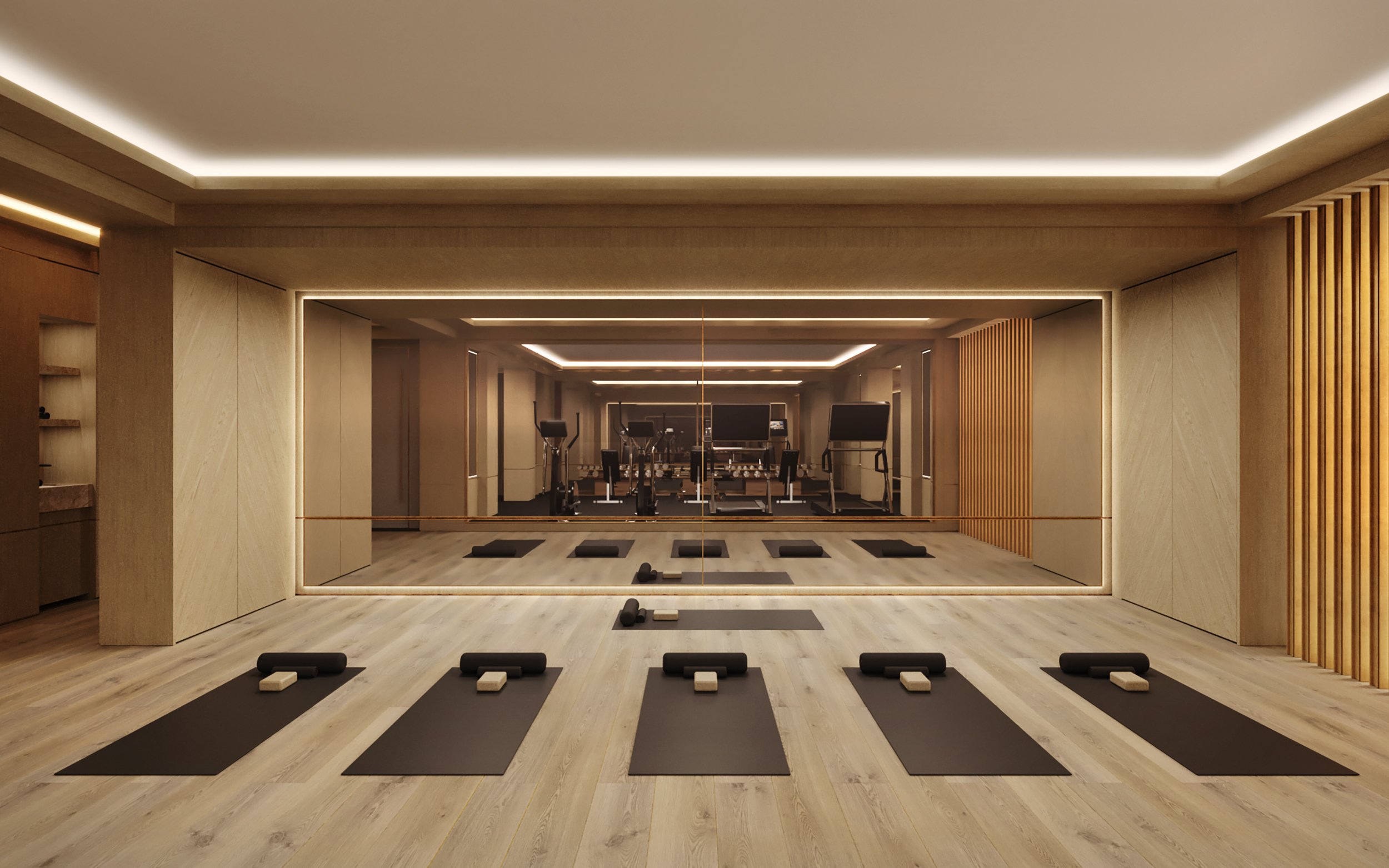
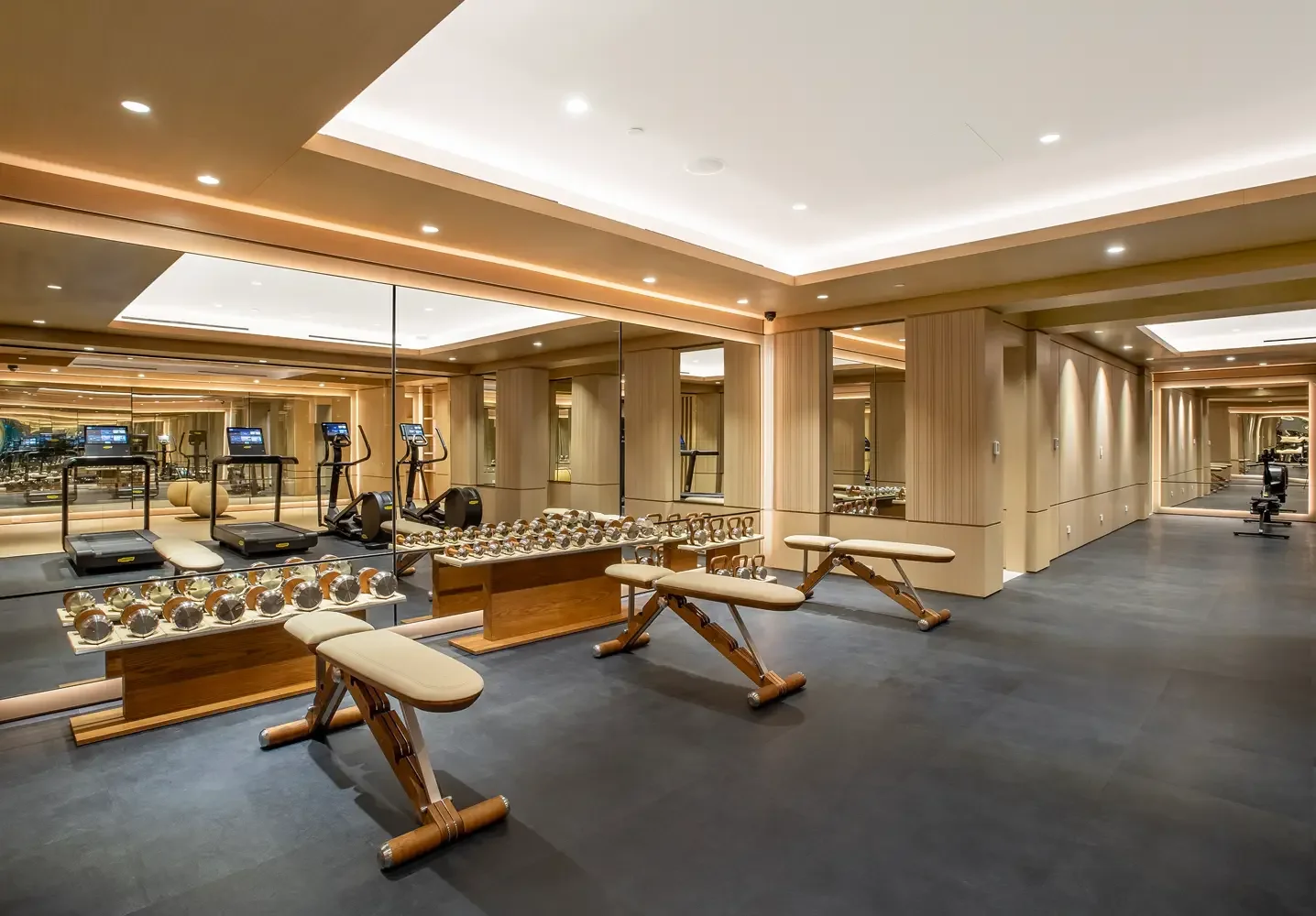
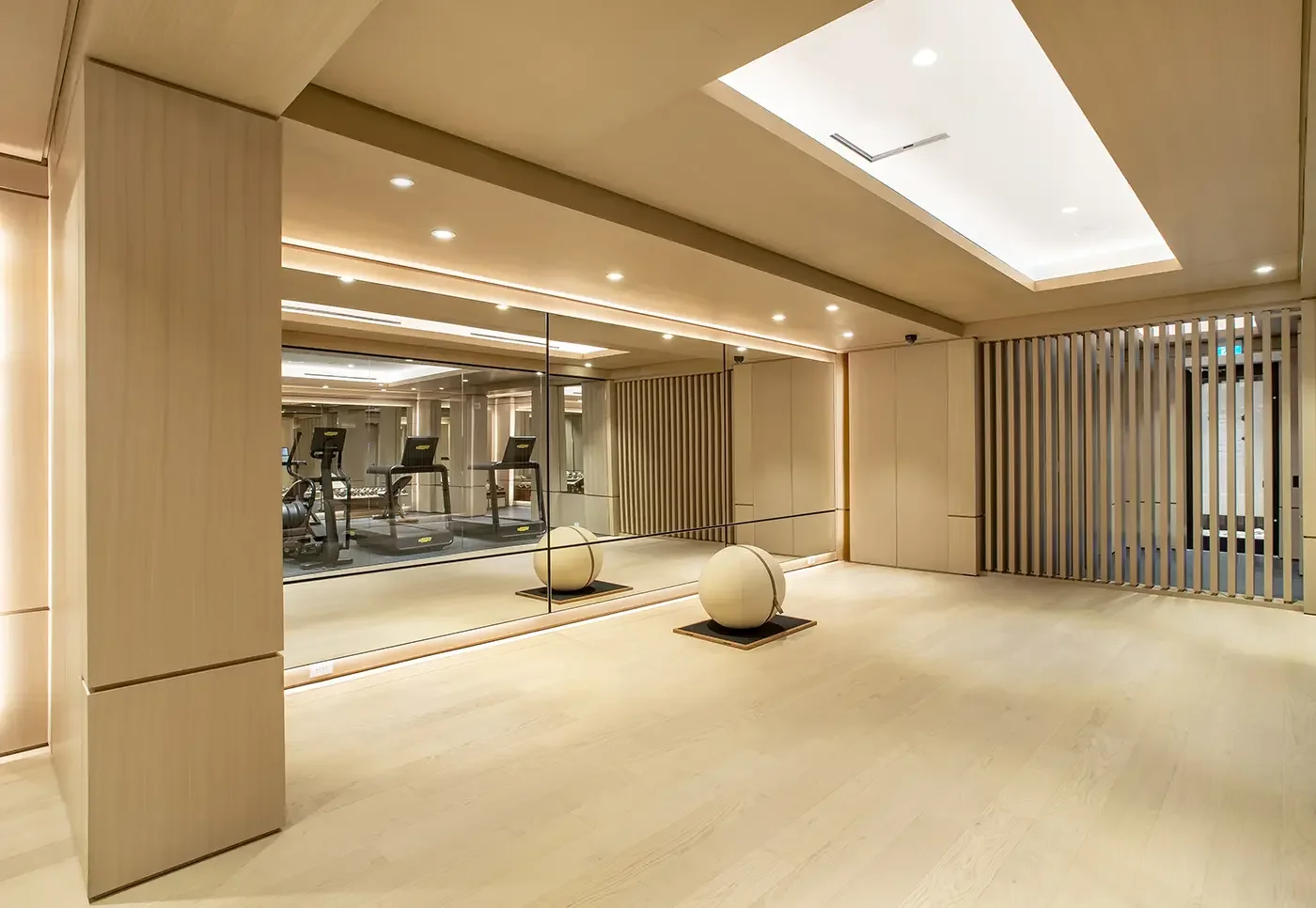
The fitness centre is arguably one of the best designed private gyms in North America. PENT equipment typically found on yachts, alongside Technogym machines, neighbouring a dedicated yoga studio with a Pilates Reformer, set behind privacy glass. The spa is finished in white oak and sandblasted marble, with private change rooms, marble-lined steam and rain showers, and an infrared sauna for deep recovery.
The level of service at No 7. Dale is highly personal. You have the concierge here who can go into your unit, water your plants for you, all that level of detail and service. They act as a valet; they can bring up your groceries, make you reservations—whatever you might need.
Garage entry is controlled through a license-plate recognition system, double-height parking bays can accommodate car lifts for residents with multiple vehicles, and electrical outlets for trickle charging complement dedicated EV-charging capability. There’s also bicycle storage and a workshop area.
Residents also have access to a private park at the rear of the property, where elements of the original 7 Dale garden — including mature trees, stone walls and a historic teahouse — have been preserved and integrated into new landscape work. The original garden was designed by Dunington-Grubb, the husband-and-wife team behind some of Canada’s most significant early landscapes, including major portions of the Niagara Parks system, and founders of Sheridan Nurseries.
As part of the approval process, the developer also transferred roughly 40% of the site back to the City for public ravine use. The project included ravine-edge re-naturalization, with 1200 native species of trees planted.
Working with Janet Rosenberg & Studio, Mike Verbancic led the landscape installation at No. 7 Dale, restoring elements of the original garden and craning in mature trees as part of the ravine-edge naturalization. Verbancic and his son continue to steward the grounds, maintaining the gardens year-round.
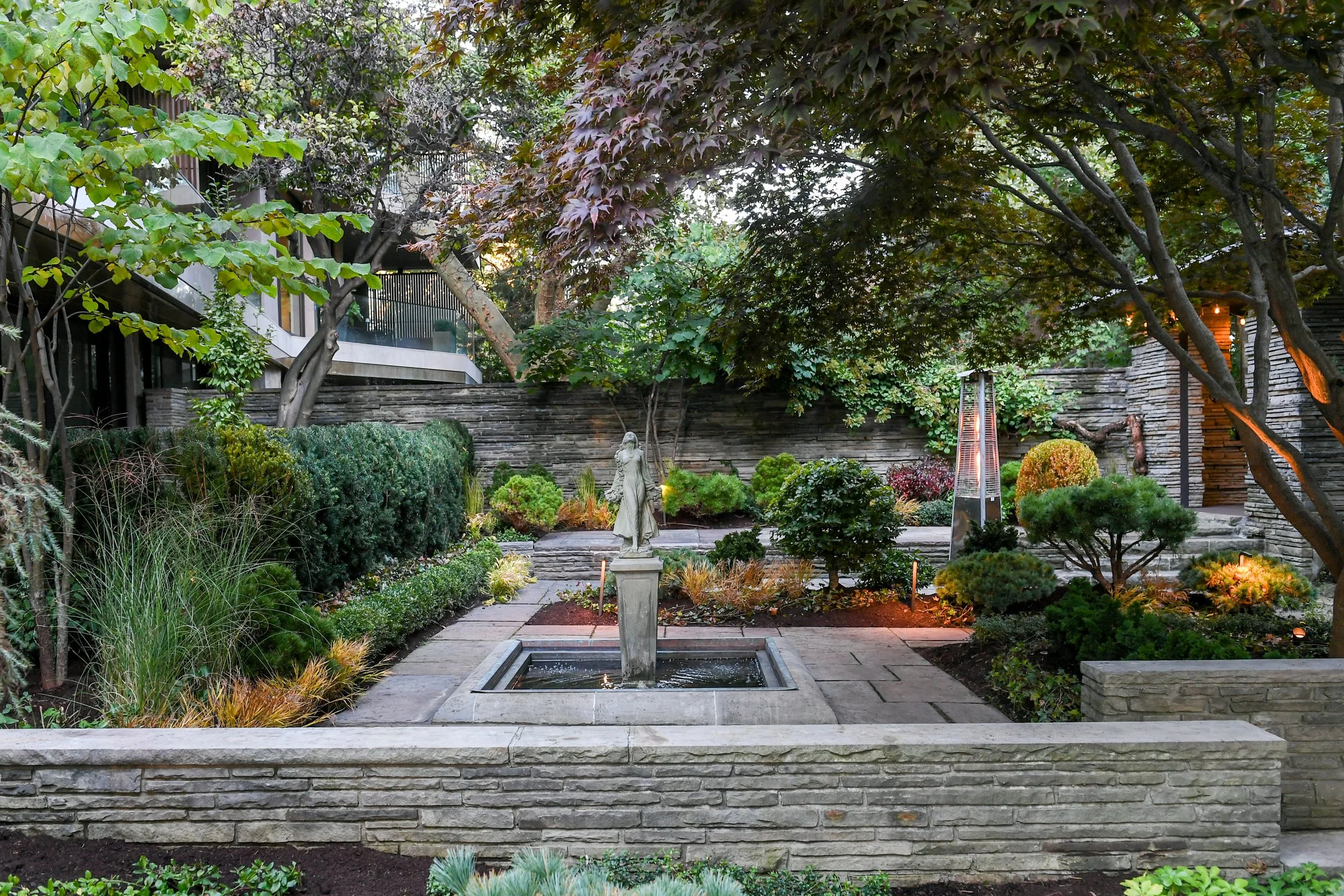
The landscape at No. 7 Dale is maintained by Mike Verbancic and his son, stewards of its gardens and their enduring beauty. Through each season, they tend the grounds with care, ensuring that planting beds, pathways, and landscape elements are consistently maintained while reflecting the character of the time of year.
Neighbourhood
Rosedale’s ravine network connects directly to the Don Valley trails and the Evergreen Brick Works, giving residents access to kilometres of protected greenspace — a quiet refuge for morning runs, weekend walks and dog-friendly routes just minutes from home.
Rosedale’s position also offers residents world-class amenities in the neighbourhood, from shopping to restaurants to nightlife. Nearby is Summerhill, with its boutique shops and the historic North Toronto railway station, now home to one of LCBO’s flagship locations. The store is known for its curated selection of premium wines and spirits, including limited-release whiskies and allocated bottles that seldom appear elsewhere in the city. The area’s specialty grocers, cafés and gourmet shops — including the beloved Rosedale Market — give the neighbourhood a village-like rhythm, despite being minutes from Yorkville’s restaurants, hotels and cultural institutions. For many residents, this balance of intimacy and urban convenience is part of Rosedale’s enduring appeal.
There is a pattern in luxury. True craftsmanship is often recognized only after the fact. Toronto saw it with the Ritz-Carlton residences. Once ahead of their time, today those units are some of the most sought-after residences in the city, treated as trophies. We’ve seen this across other categories, among car collectors, watch connoisseurs and even luxury handbags. These are objects defined by intent and scarcity rather than mass production.
In many ways, No. 7 Dale follows that same logic. It is a building shaped by craftsmanship, constraint and a rarity that cannot be recreated.
This was the only site where the planning conditions aligned, the only moment when the approvals could converge and the only family that would build into existence, as something they intended to live in themselves.
You do not choose No. 7 Dale to track the condo market. You choose it because there are only 26 keys and Rosedale is unlikely to allow anything similar again. For a neighbourhood defined by what does not change, No. 7 Dale is an outlier, not because it challenged Rosedale but because it understood it.
Only a Few Residences Remain – Inquire via info@7dale.com for availability.