A 1913 Waterfront Estate in British Columbia With Royal Ties
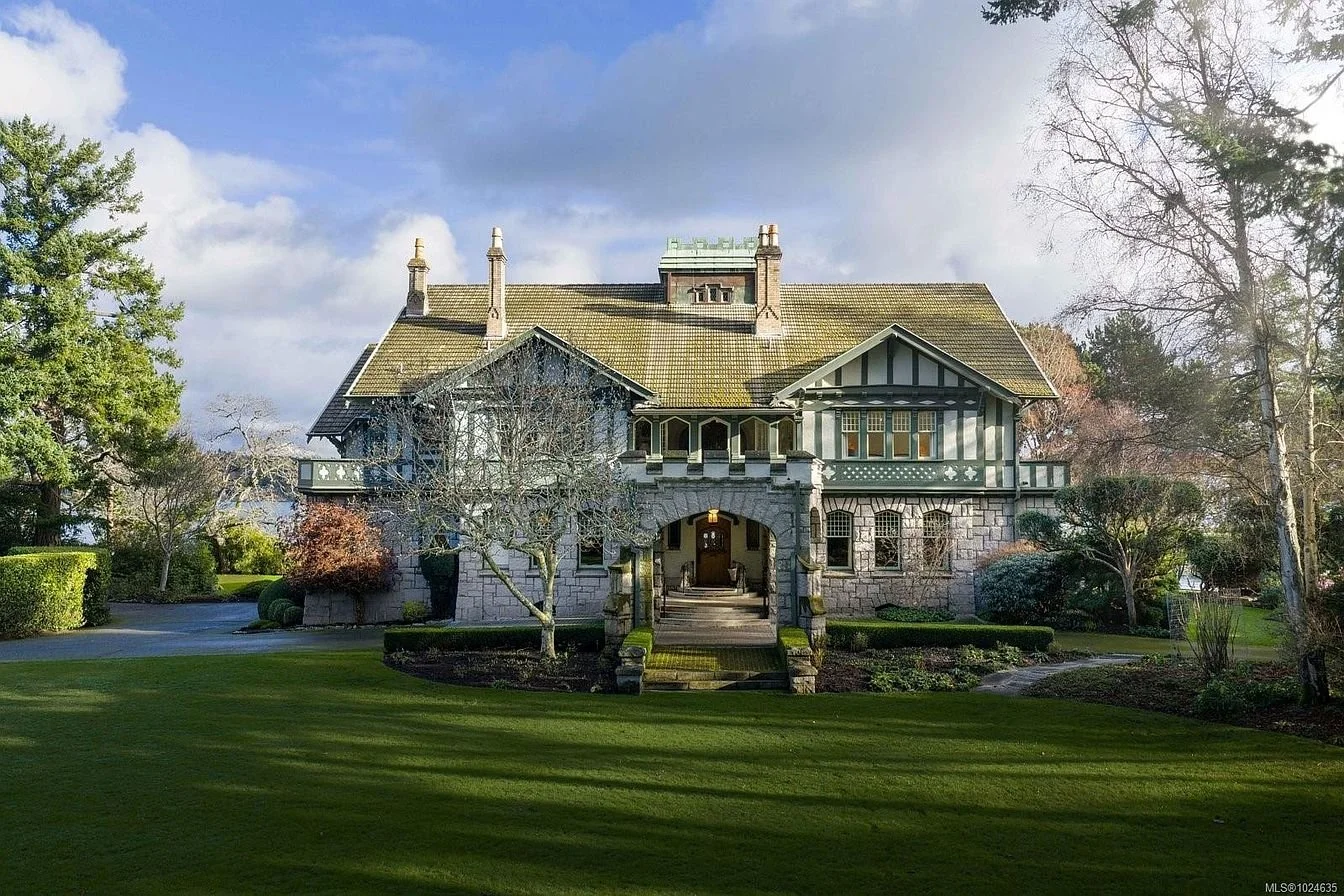
A historic home on the shores of British Columbia, with connections to both the British Royal Family and the planning legacy of Manhattan’s Central Park is on the market. Currently offered for sale at $27,999,000 by The Agency Victoria.
Built between 1911 and 1913, Riffington was constructed as the model home for the planned Uplands subdivision in Oak Bay, British Columbia.
A Planned Landscape
Planning for the Uplands began in 1907, when developer William Hicks Gardner commissioned John Charles Olmsted of the Olmsted Brothers to design a residential subdivision east of Victoria. Olmsted was the nephew and professional successor of Frederick Law Olmsted, whose work included Central Park in New York.
The subdivision was laid out using garden-city planning principles. Streets followed the natural contours of the land rather than a rigid grid. Lots were large, and setbacks were generous. In a move that was unusual at the time, all utility wires were placed underground, eliminating overhead poles within the neighbourhood.
Riffington was built within this plan as the subdivision’s primary model home.
Residential districts of this kind were more typically associated with a limited number of early garden suburbs in Britain and select American enclaves. In Canada, purpose-planned neighbourhoods developed with comparable scale, controls, and long-term intent were rare, appearing only in a small number of early residential districts, such as parts of Toronto’s Rosedale.
The House
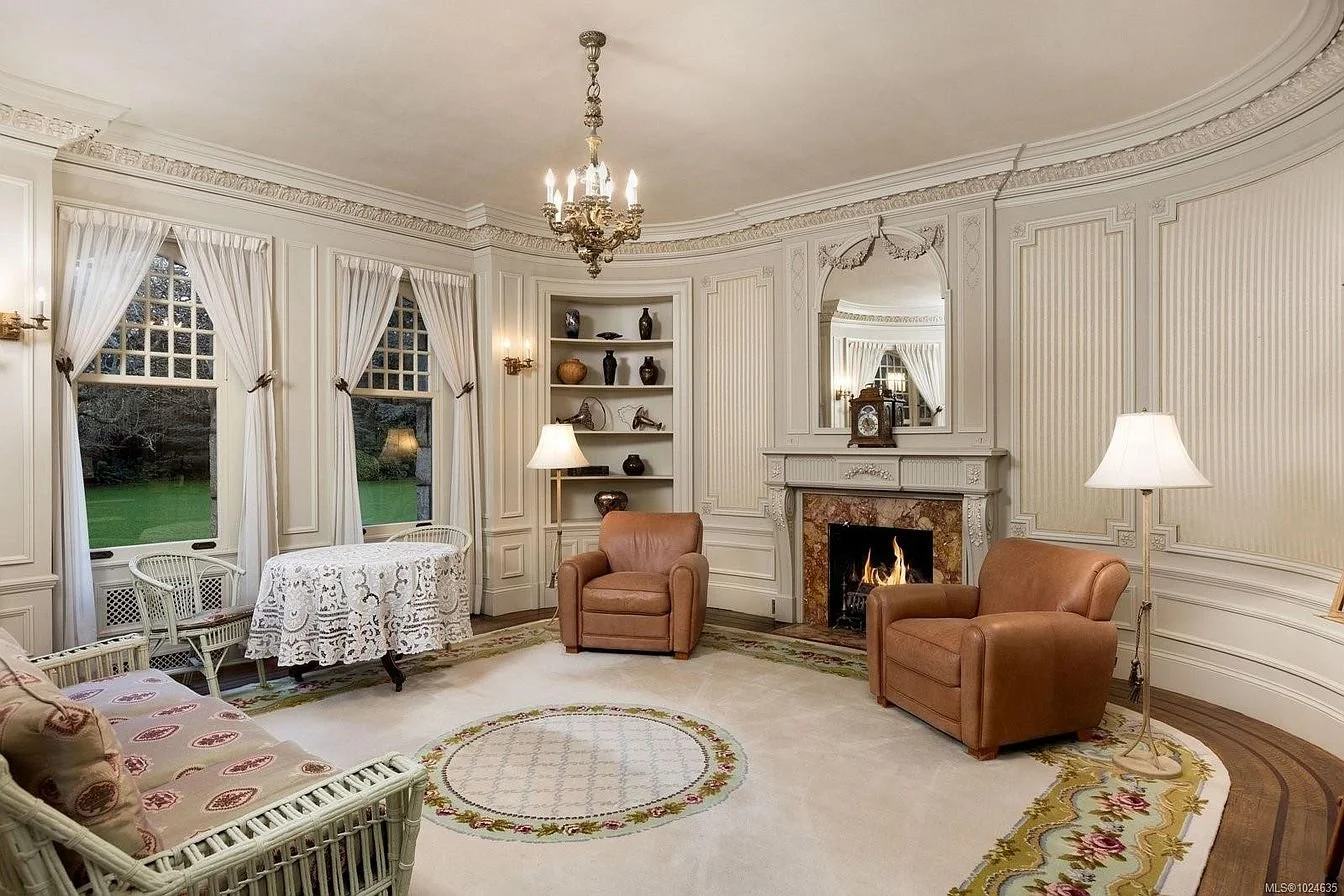
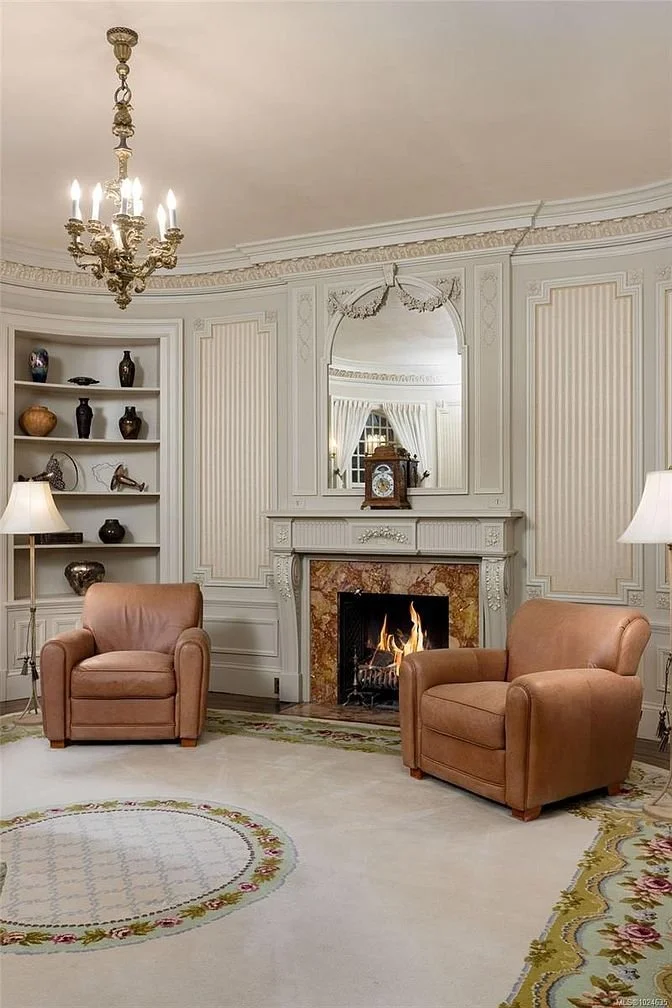
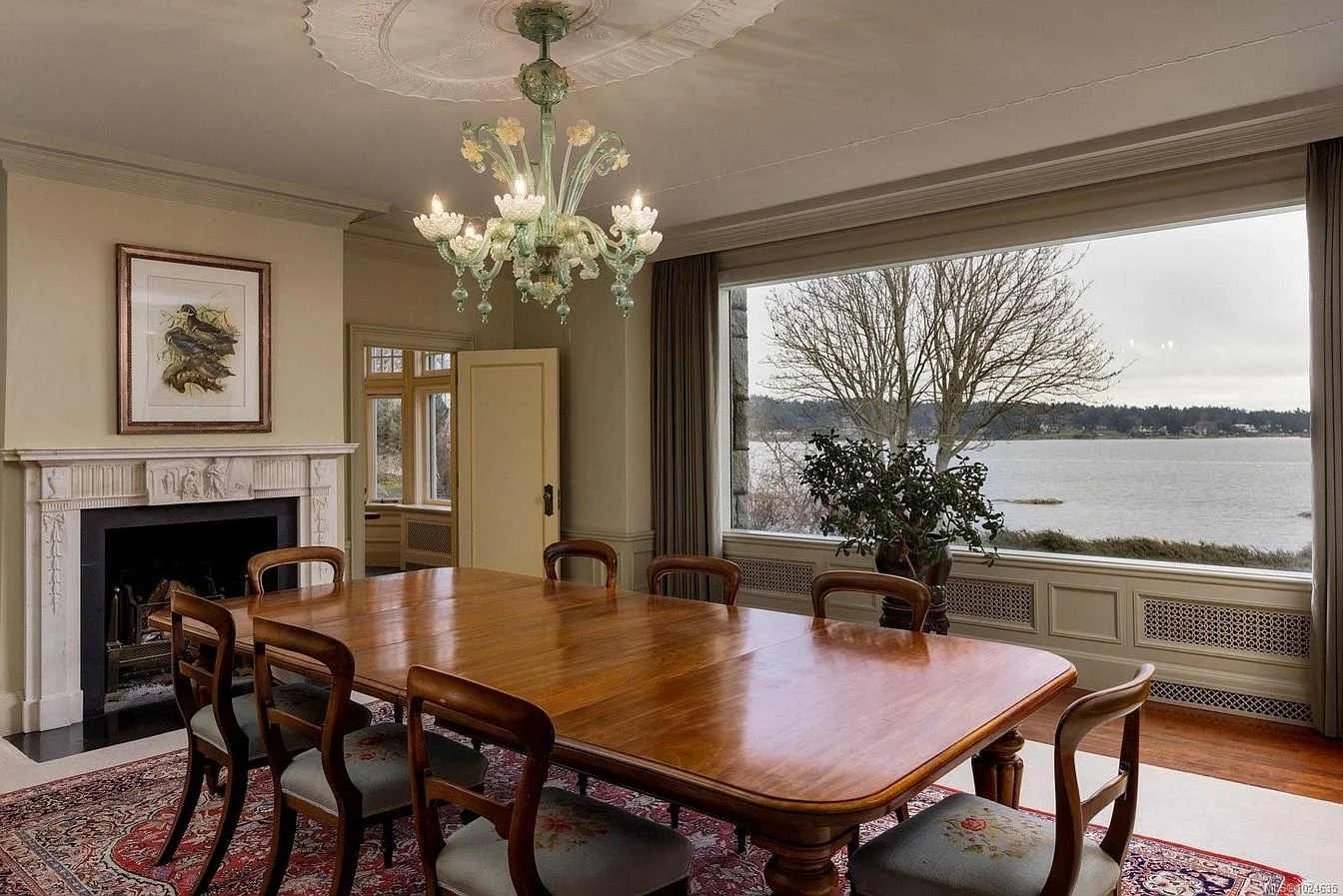
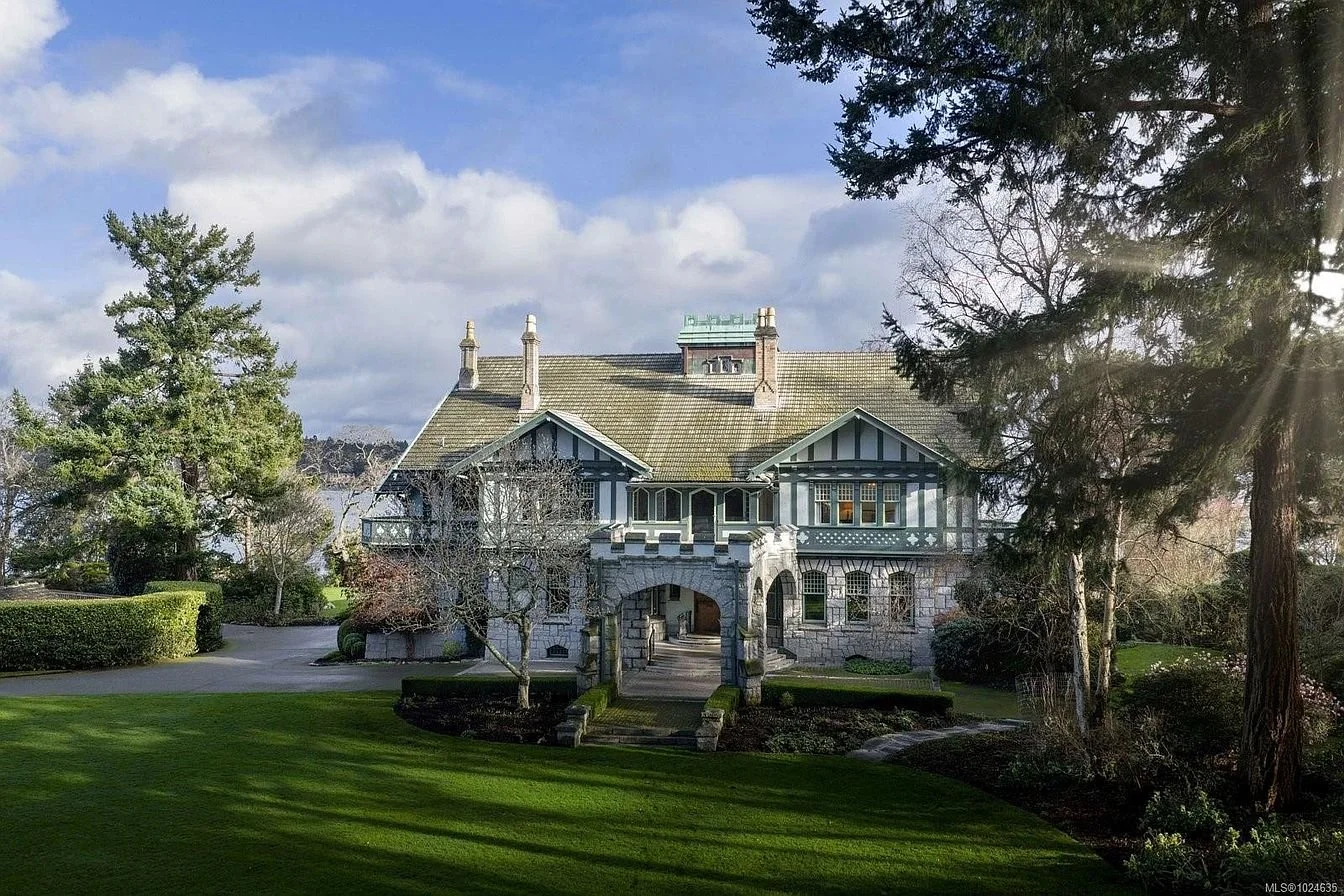
Designed by Vancouver architect Philip A. Jullien, Riffington was designed in the Tudor Revival style. Its layout emphasizes formal reception rooms and a clear separation between public and private spaces, consistent with its original use as a show home and later as a hosting residence.
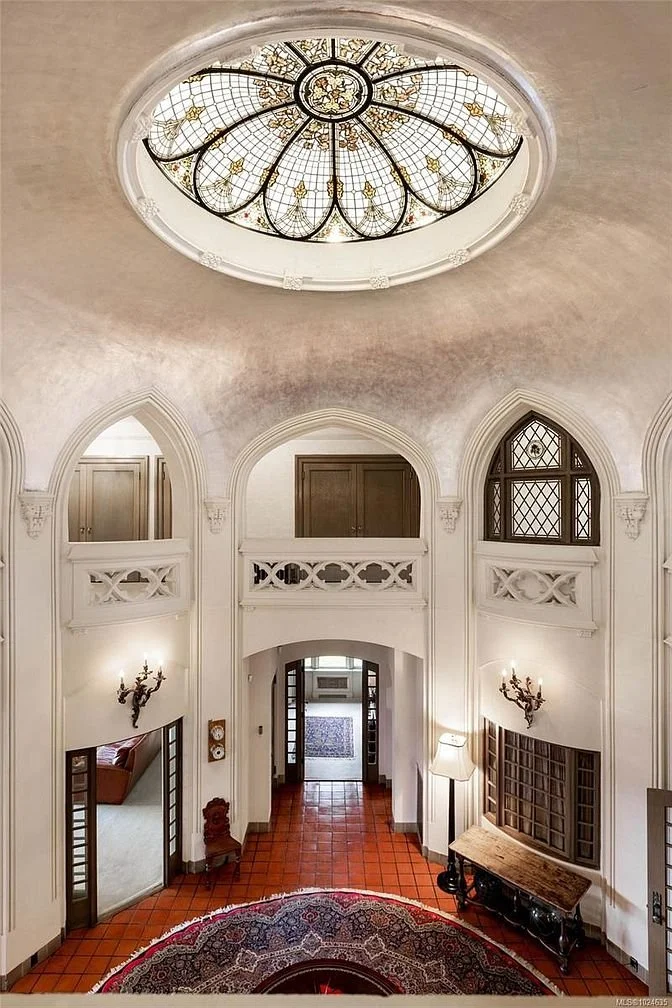
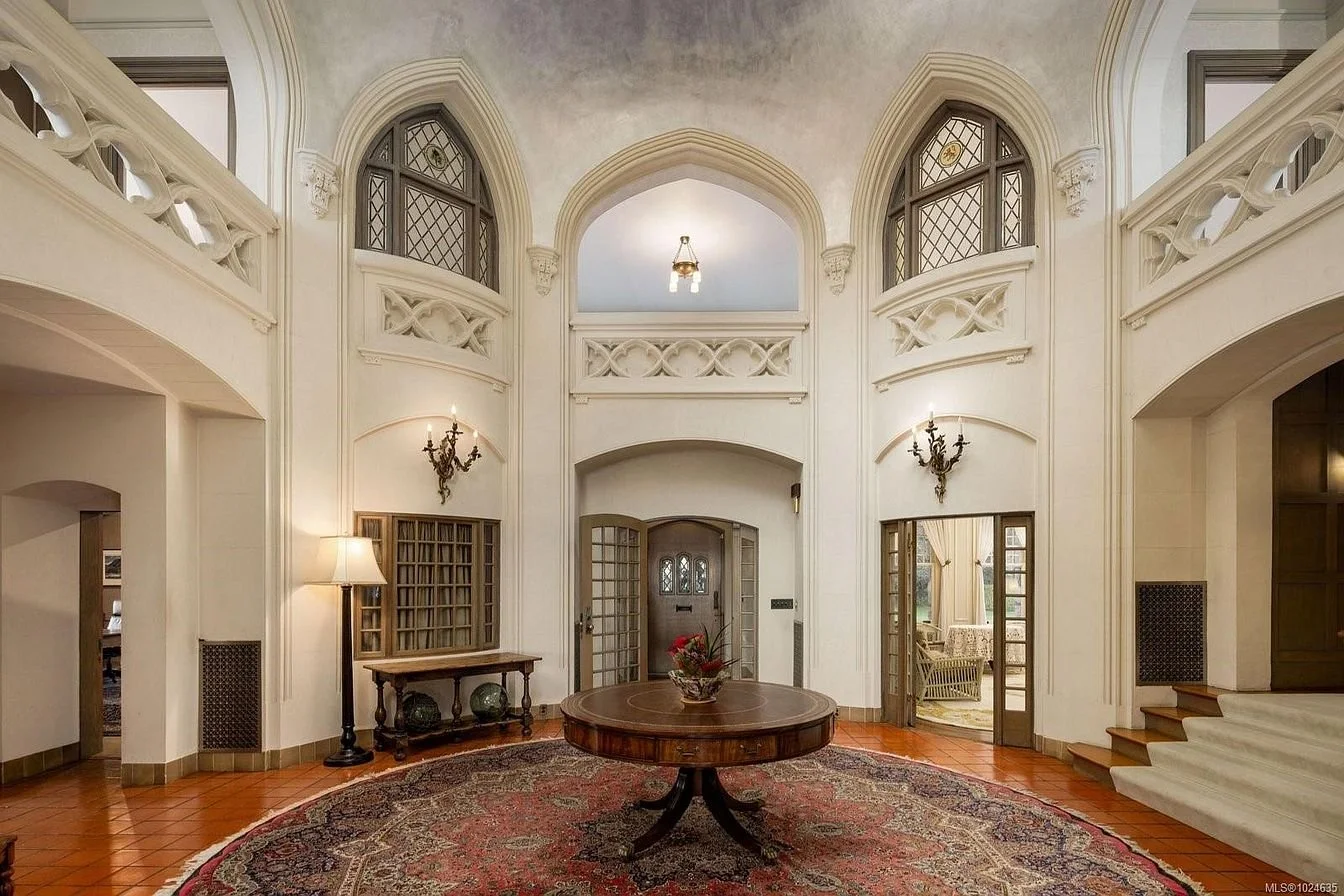
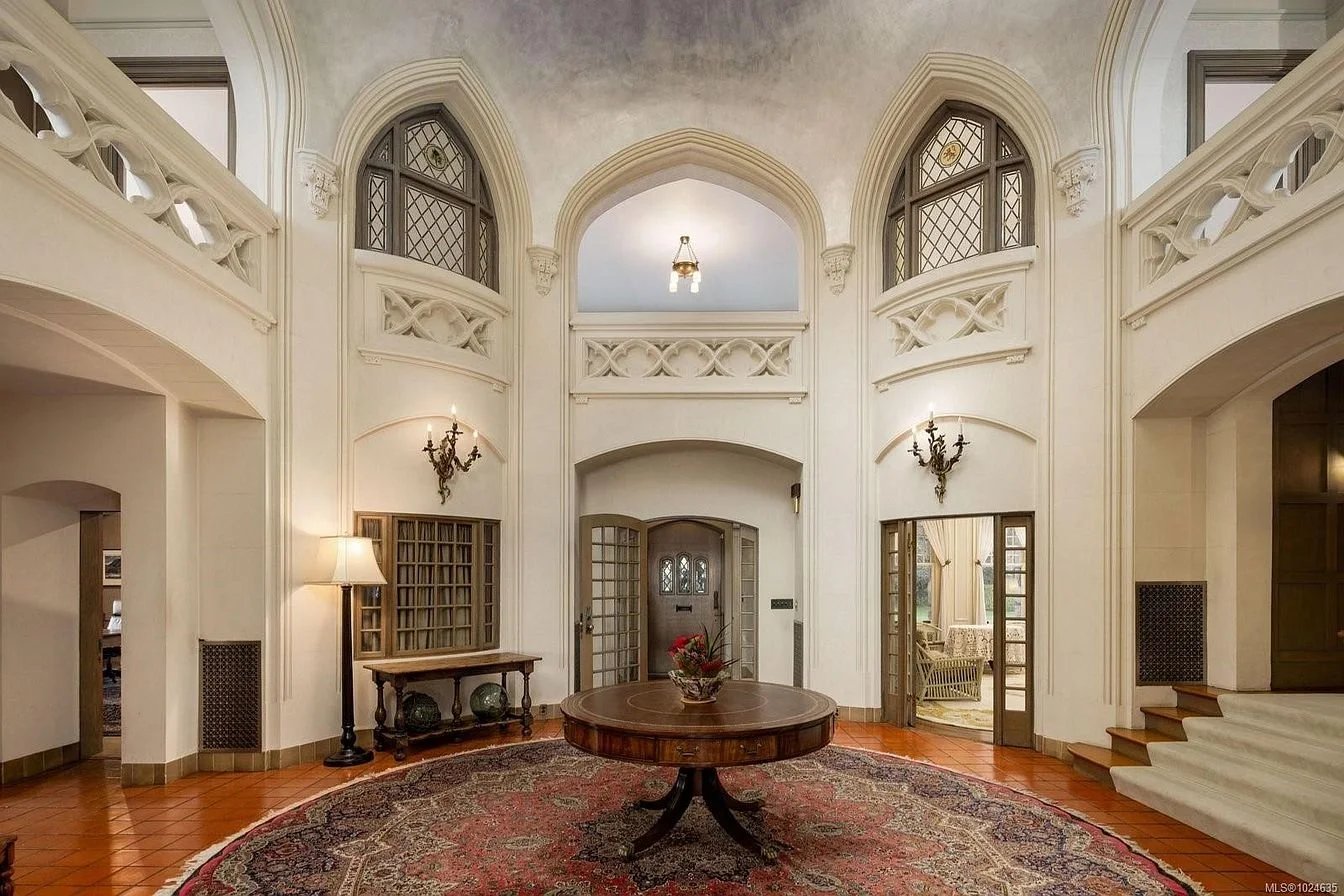
At its centre is a two-storey octagonal entrance hall, lit from above by a domed, stained-glass skylight. The hall functions as the primary point of arrival, with the principal rooms of the house arranged around it.
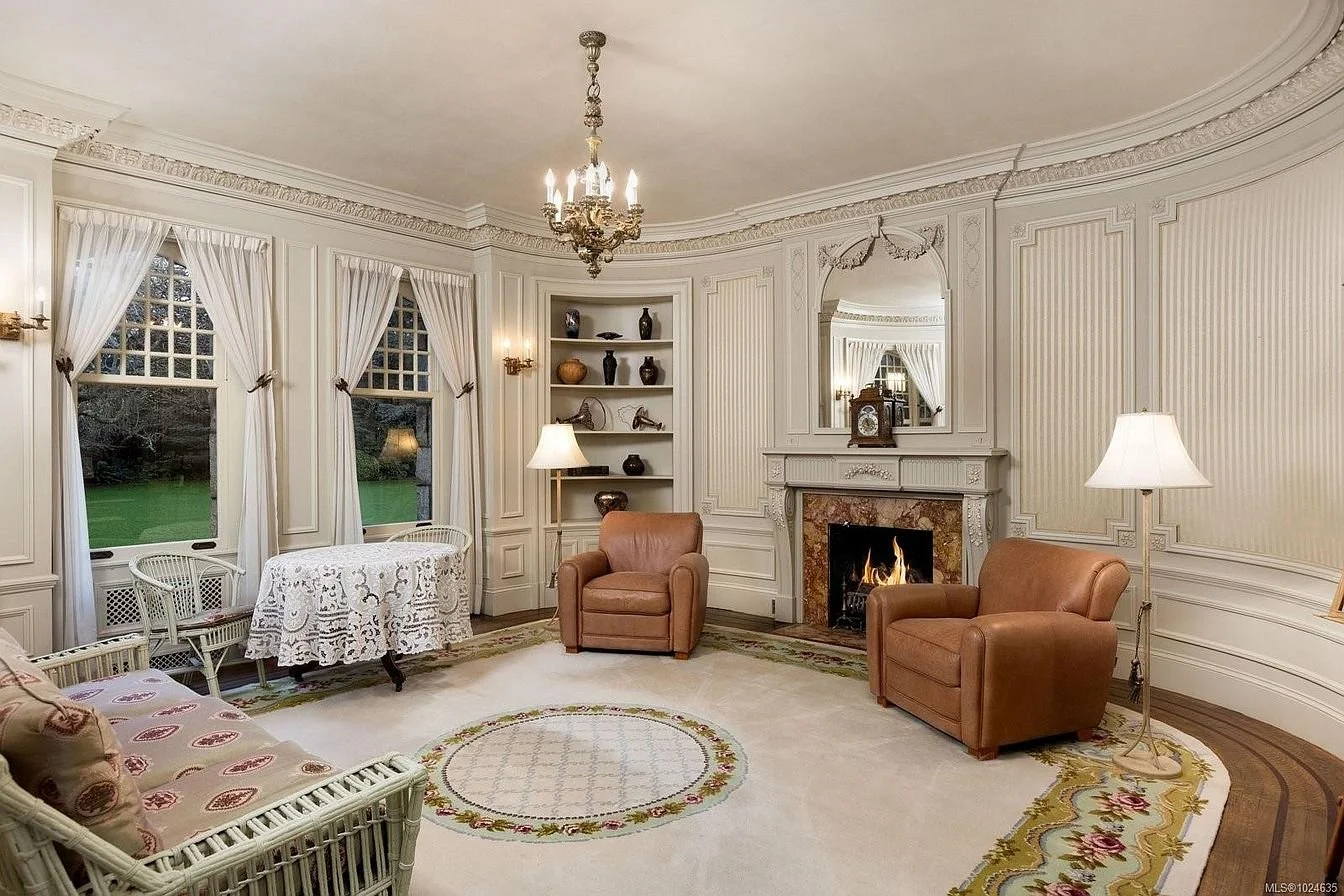
A French drawing room is located to the left of the entrance. The room contains decorative mouldings and was originally finished with striped silk wall panels.
The dining room is fitted with a hand-carved Adam-style fireplace mantel dating to the late 18th century.
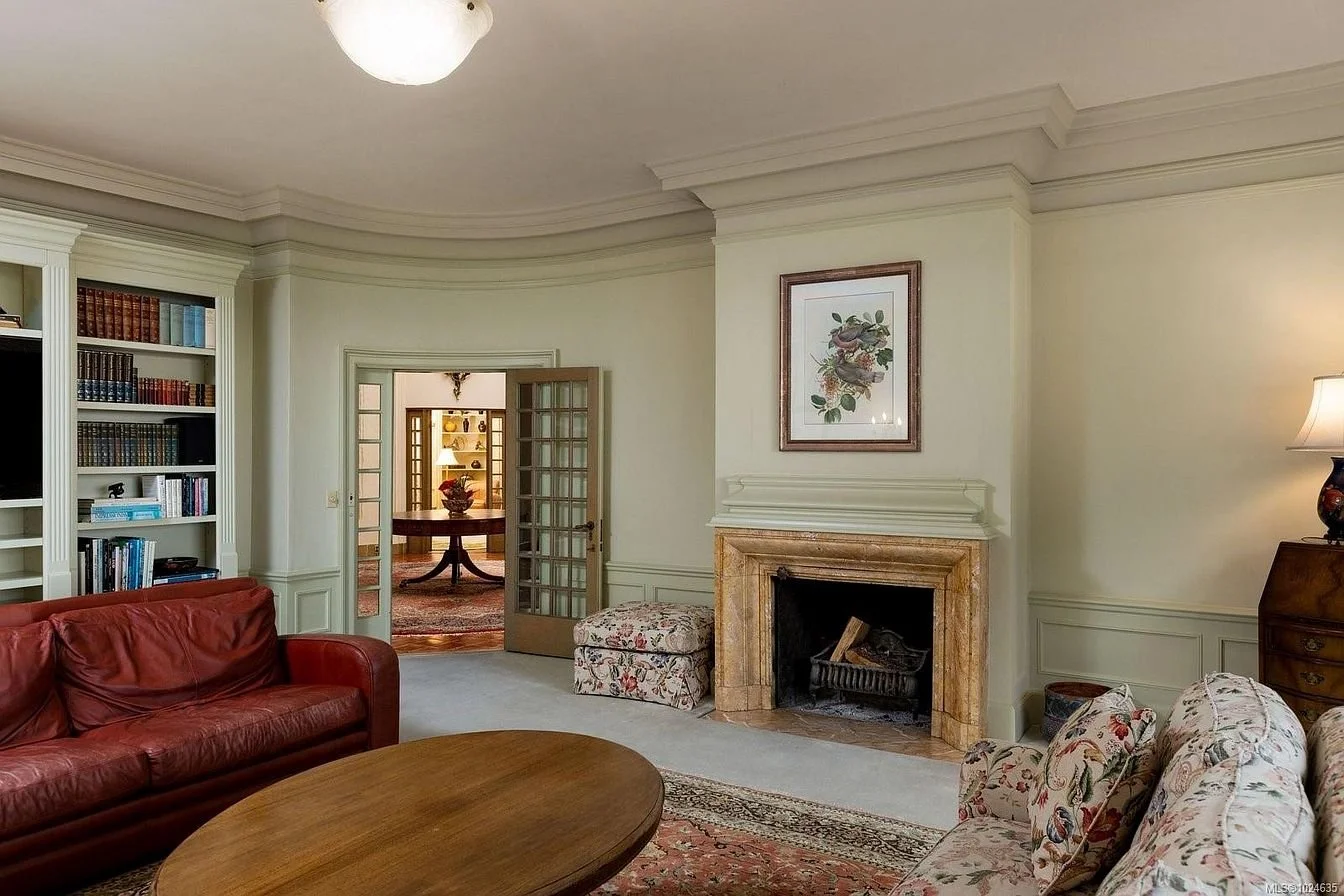
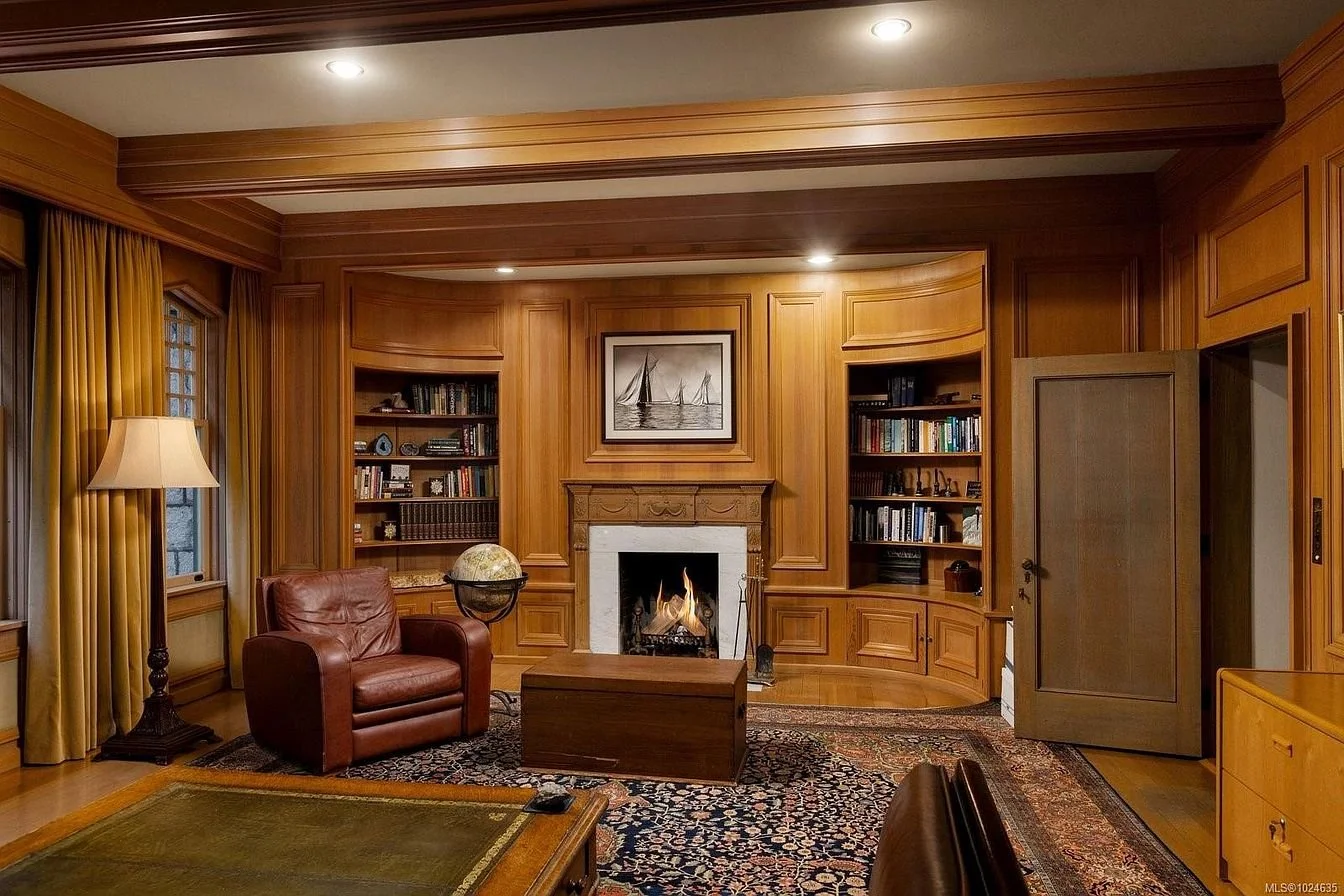
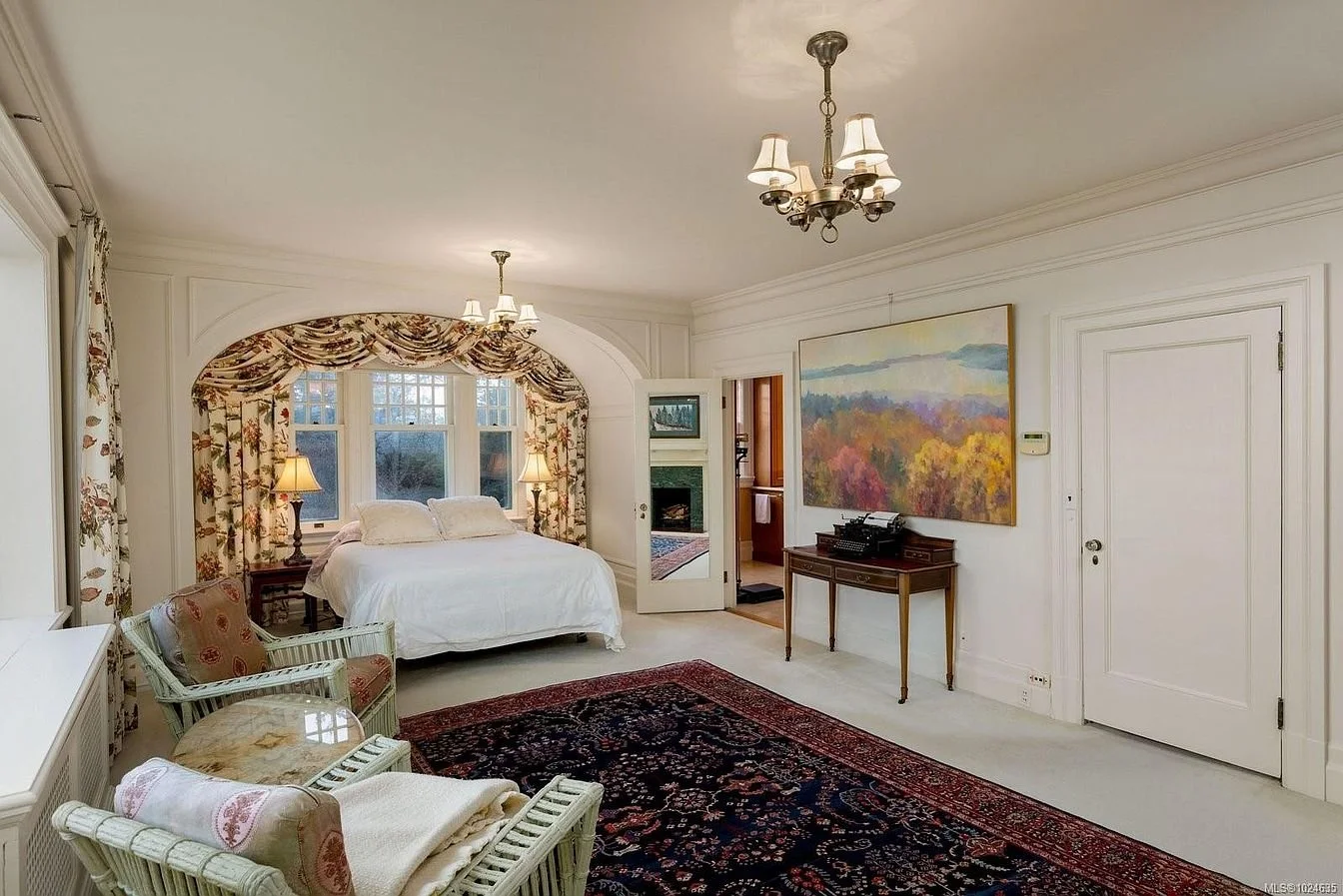
The main house contains 9 bedrooms and 7 bathrooms, arranged over multiple levels, with approximately 12,400 square feet (about 1,150 m²) of interior space. A series of formal reception rooms, libraries, and dining areas are oriented toward the water, and 10 fireplaces are distributed throughout both the principal and private rooms. Across the property as a whole, including the secondary buildings, the combined interior area totals 14,629 square feet (approximately 1,360 m²).
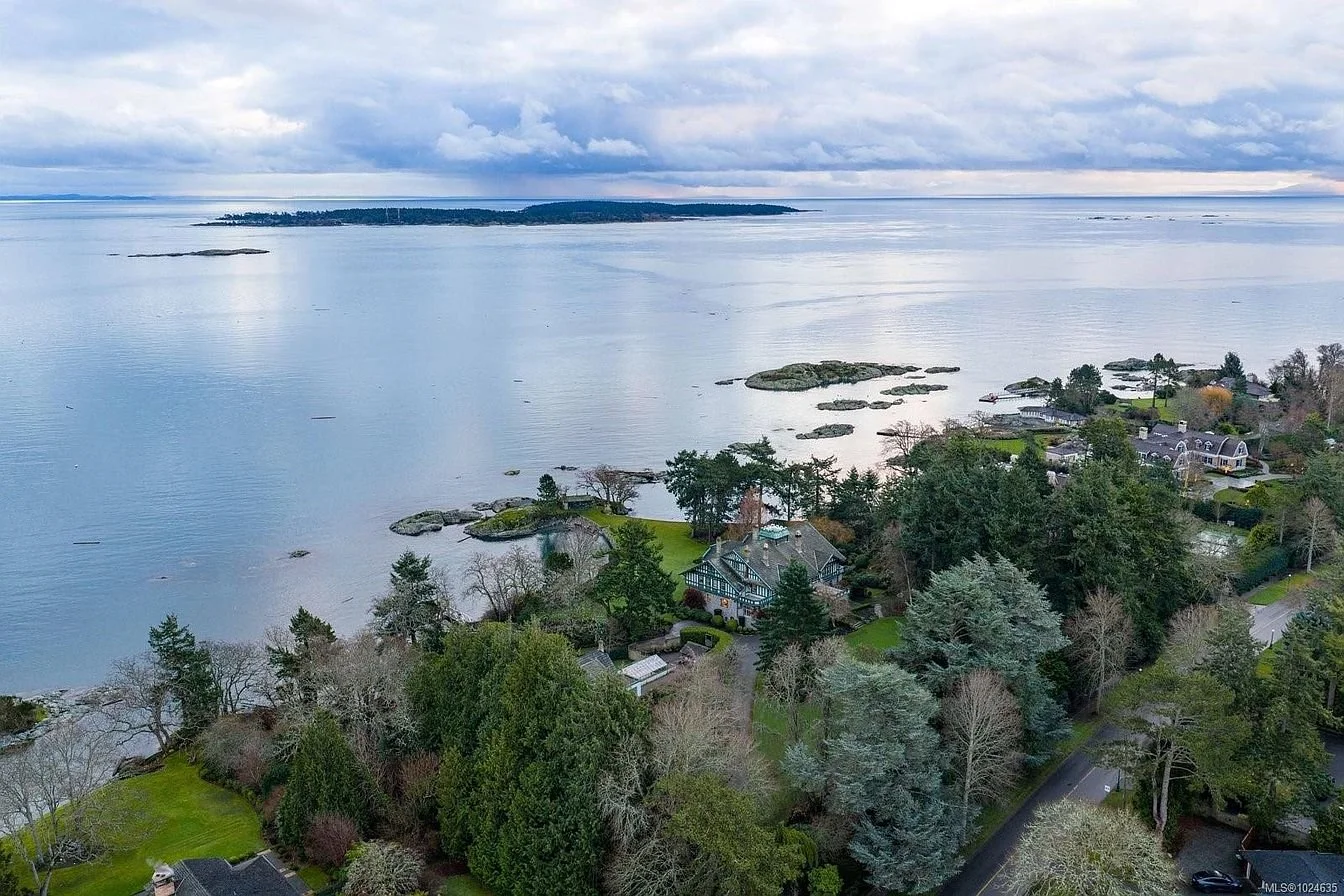
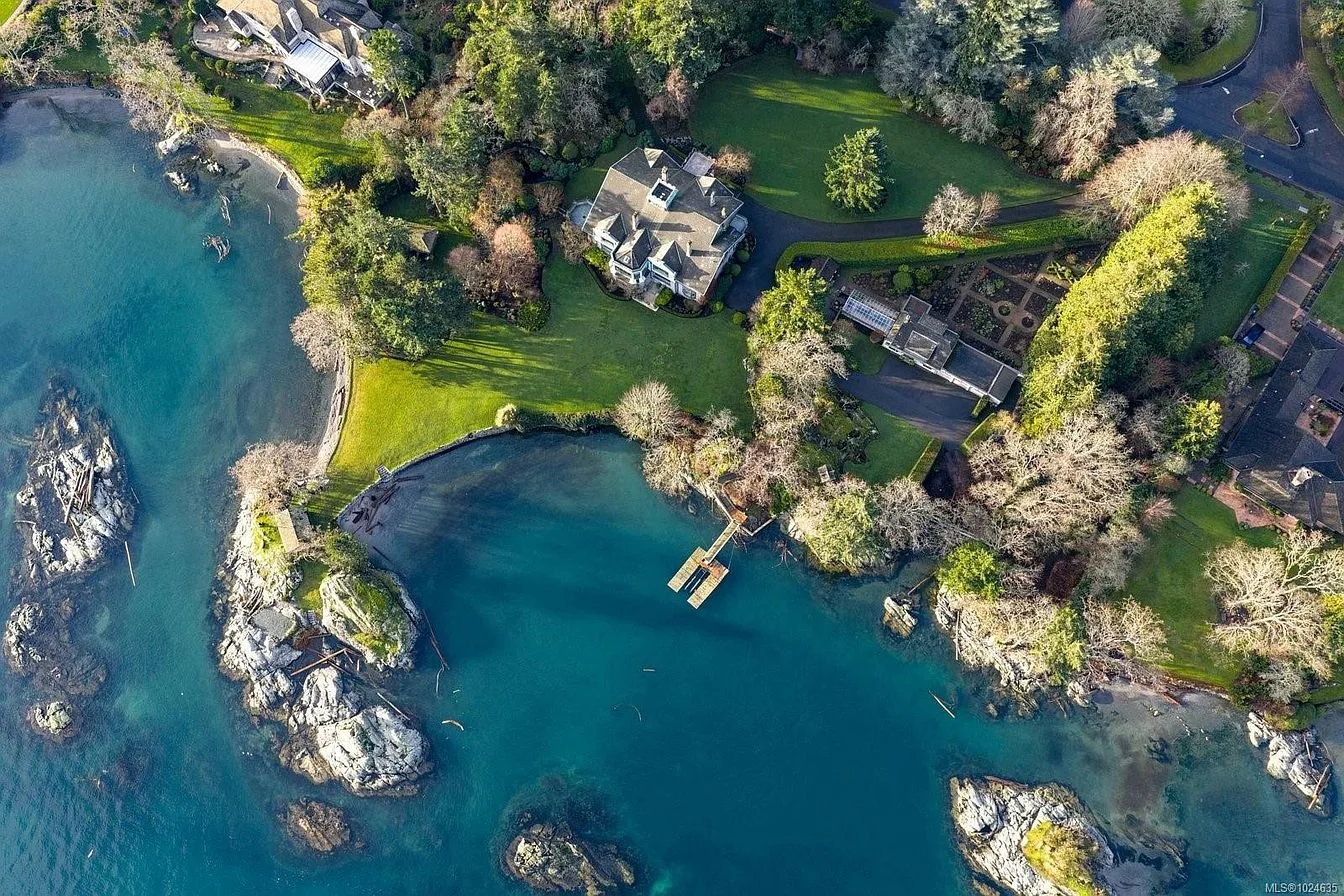
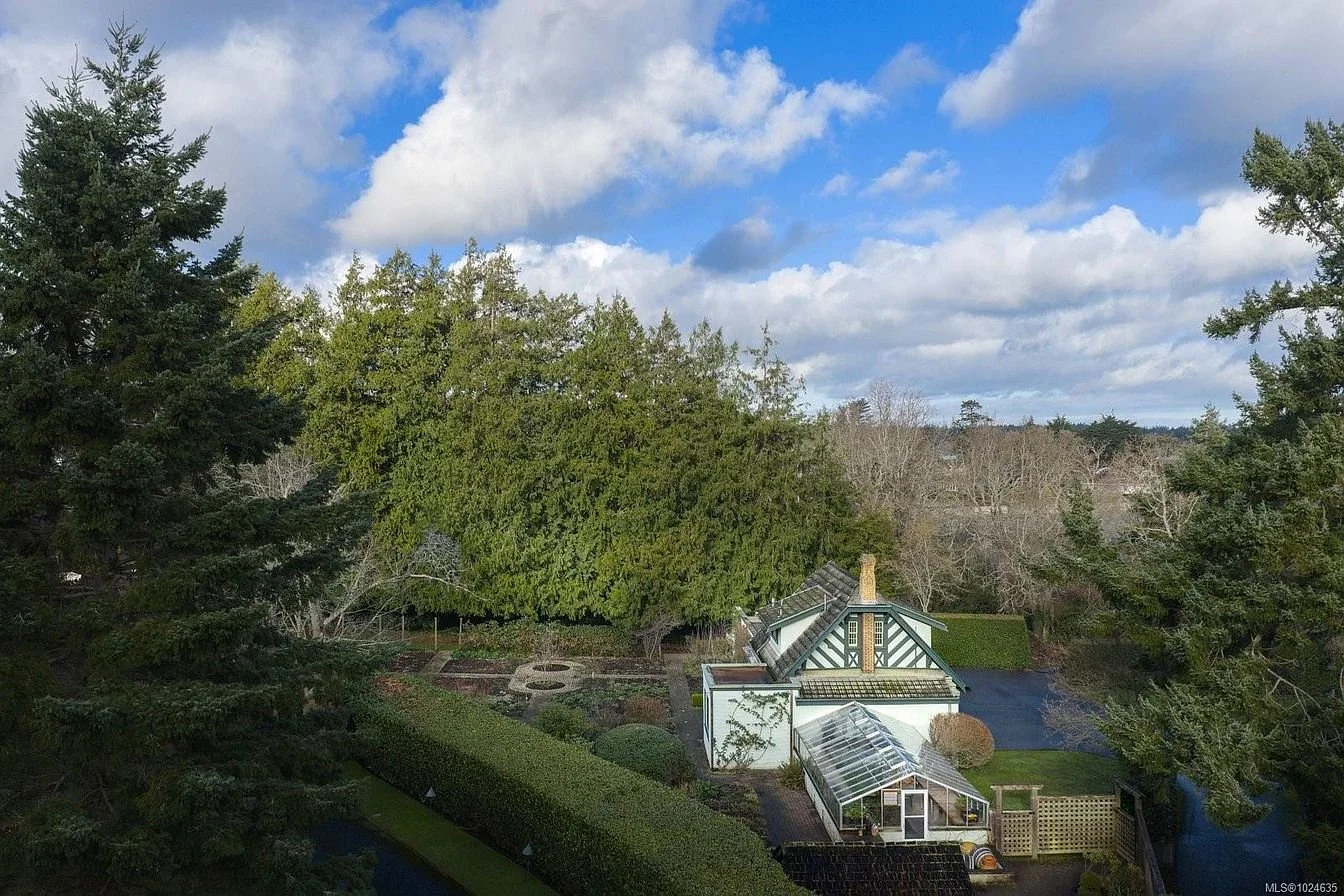
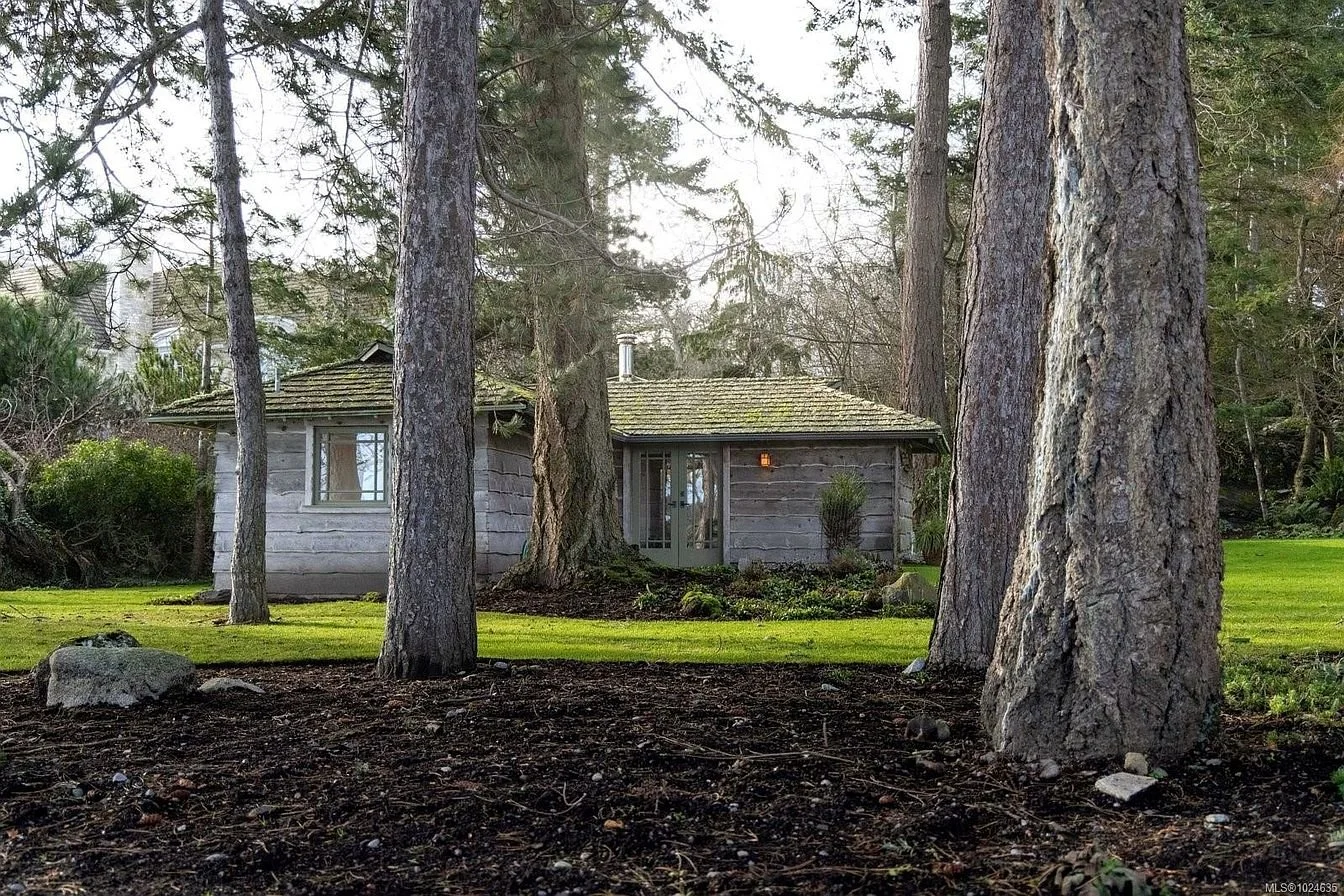
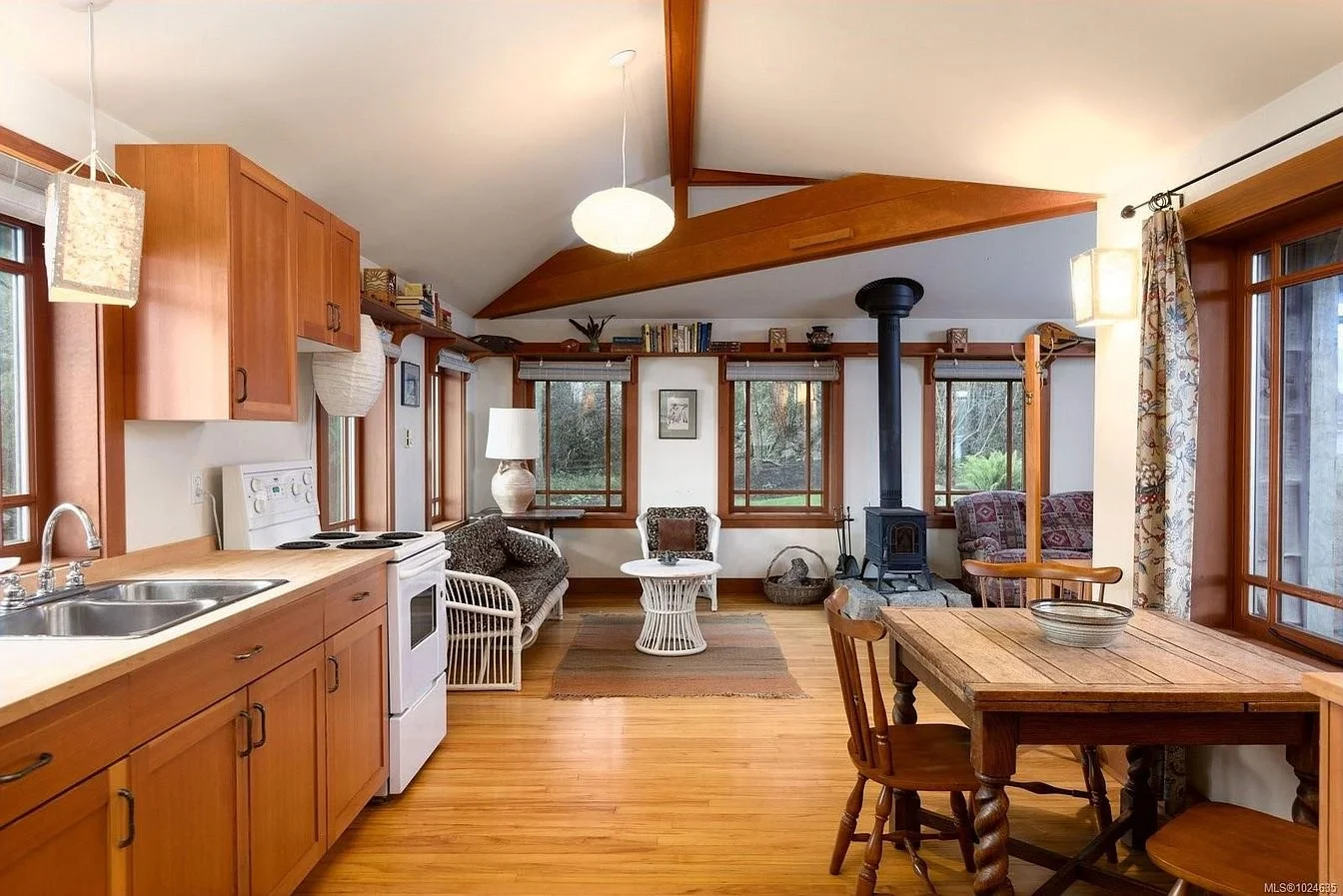
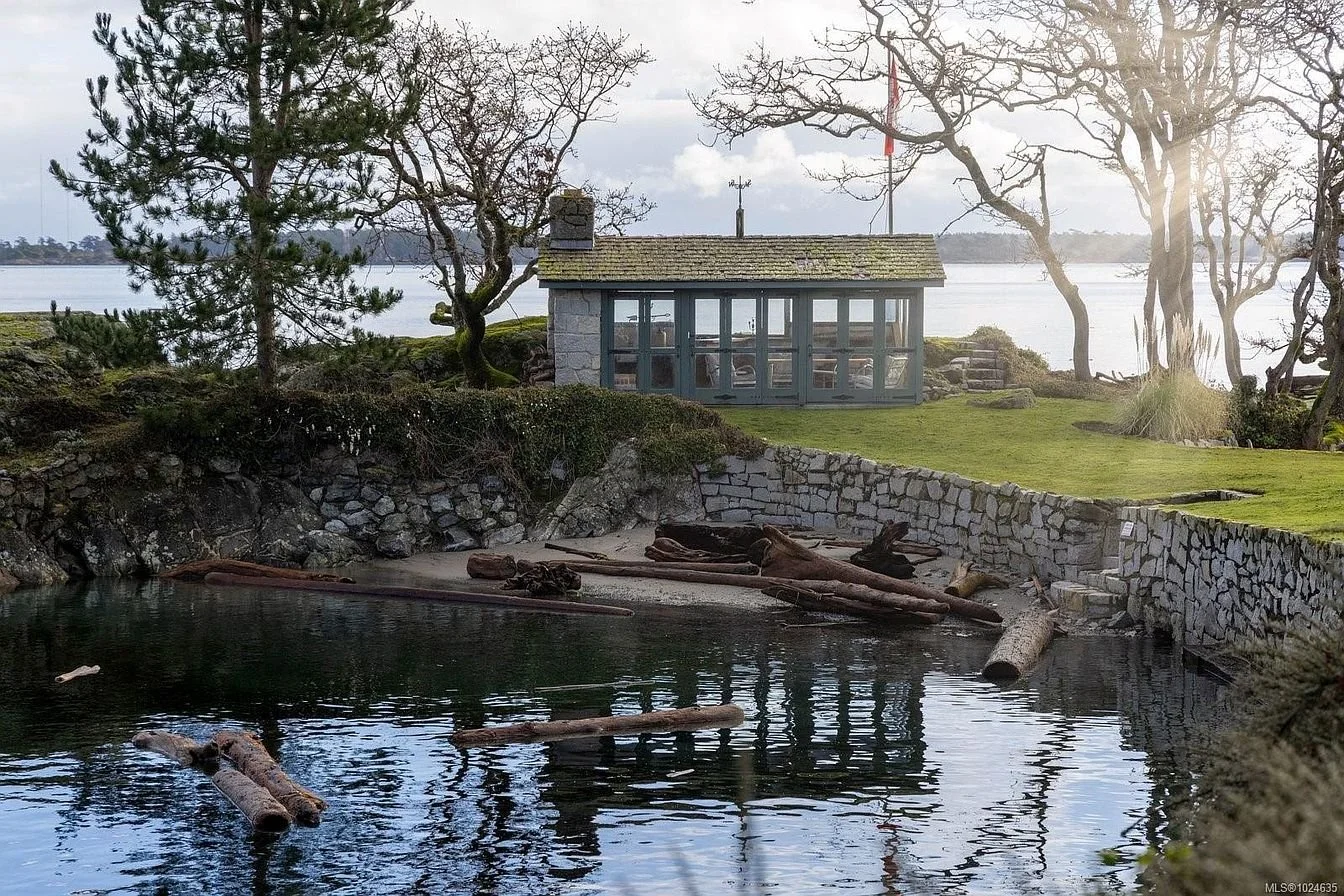
In addition to the main residence, the property includes several secondary structures, among them a carriage house, a seaside cottage, and a waterfront pavilion. The grounds also include direct access to the shoreline and a private dock, reflecting the estate’s long-standing relationship to the water.
British Royal Family
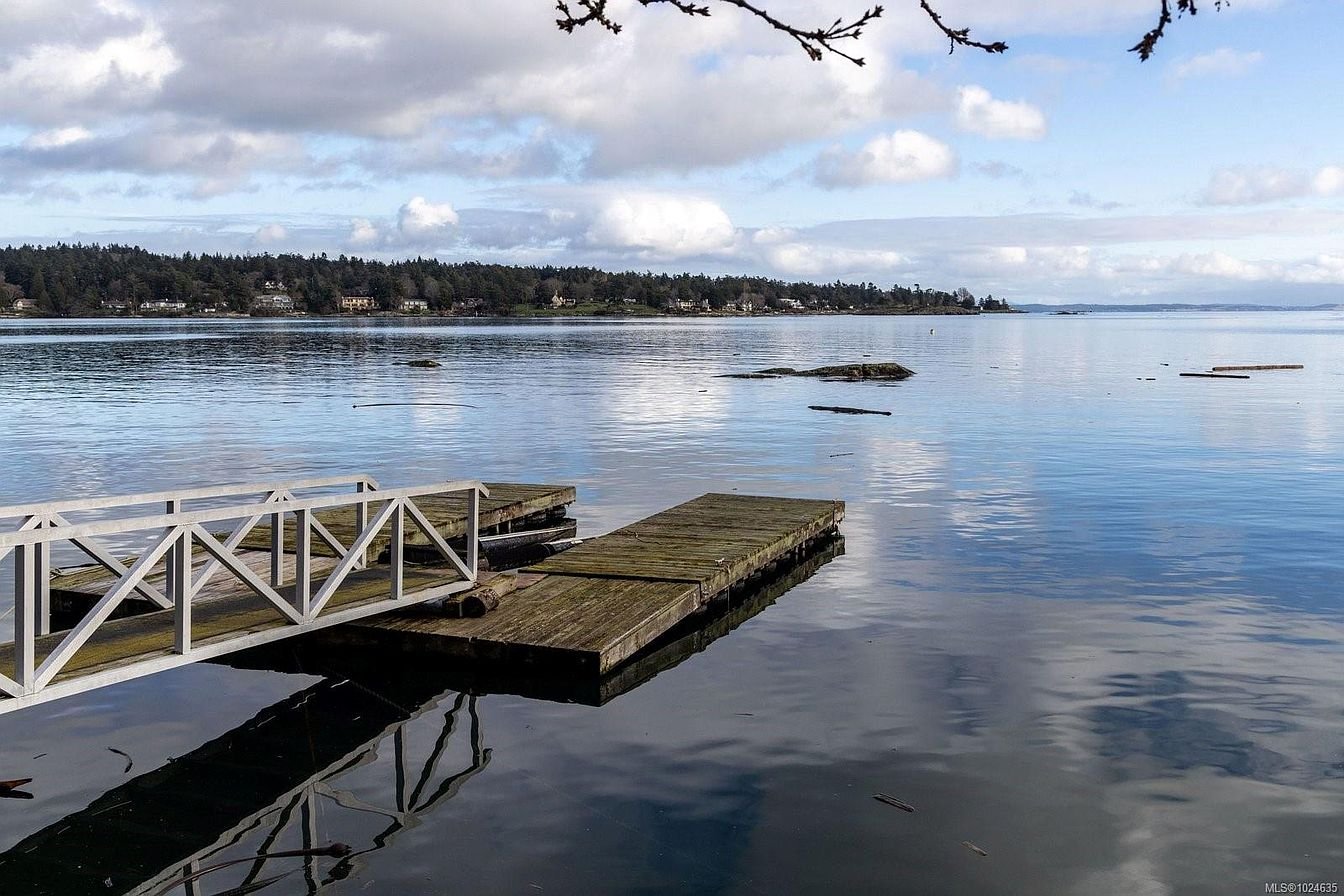
By the mid-20th century, the western edge of the property included an Olympic-size, tidal salt-water swimming pool and a cabana, both of which no longer exist. During this period, a former Duke of Kent is recorded as having swum in the pool while staying at the house, and Princess Margaret was later received at the property as a guest.
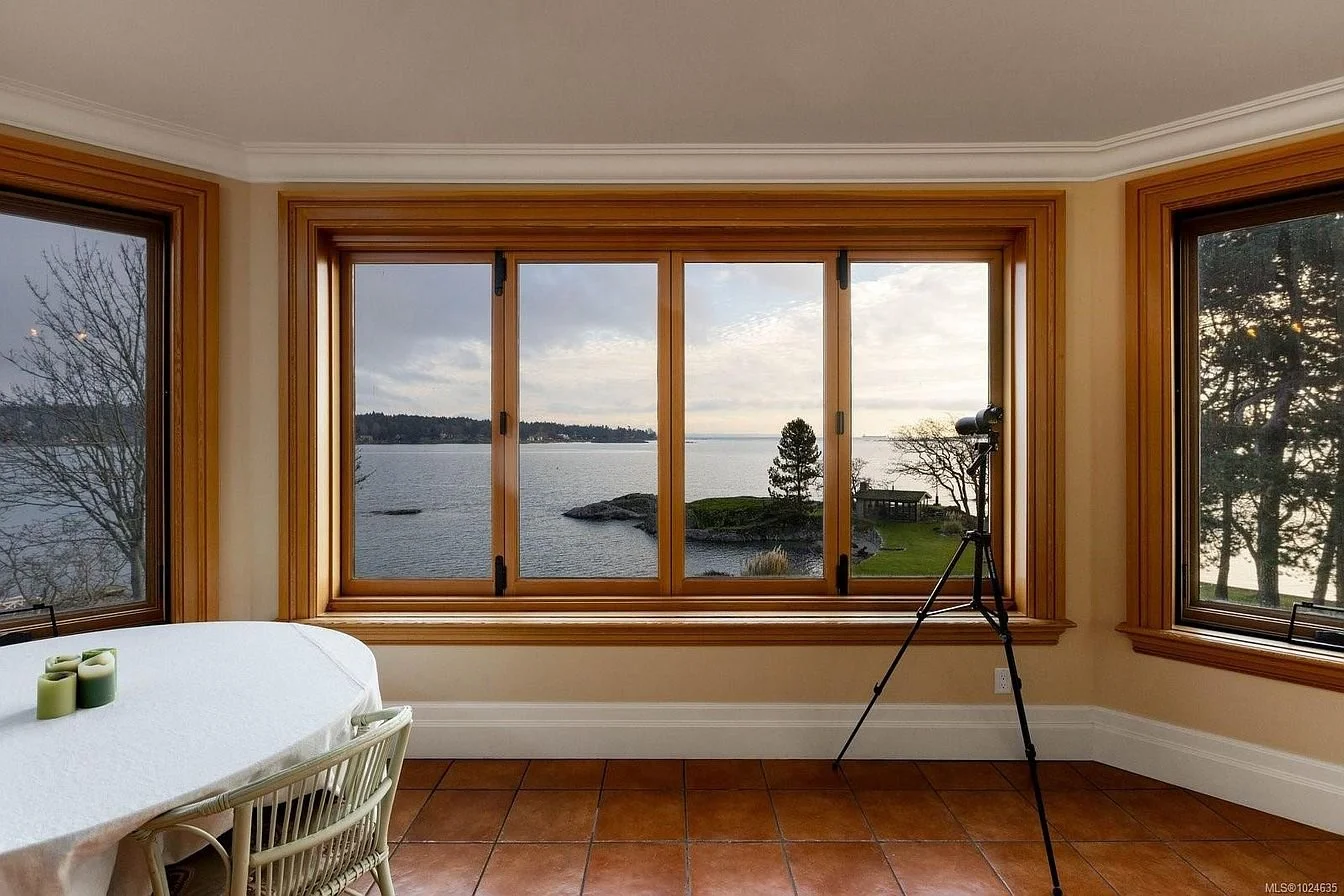
While these features no longer remain, the property today is defined by its direct ocean frontage, natural sandy beach, and private dock. The estate occupies approximately 3.23 acres (1.5 hectares) of oceanfront land, with roughly 900 feet of shoreline and long views across the Salish Sea toward Mount Baker. In addition to the main residence, the grounds include a separate seaside cottage and a waterfront pavilion.
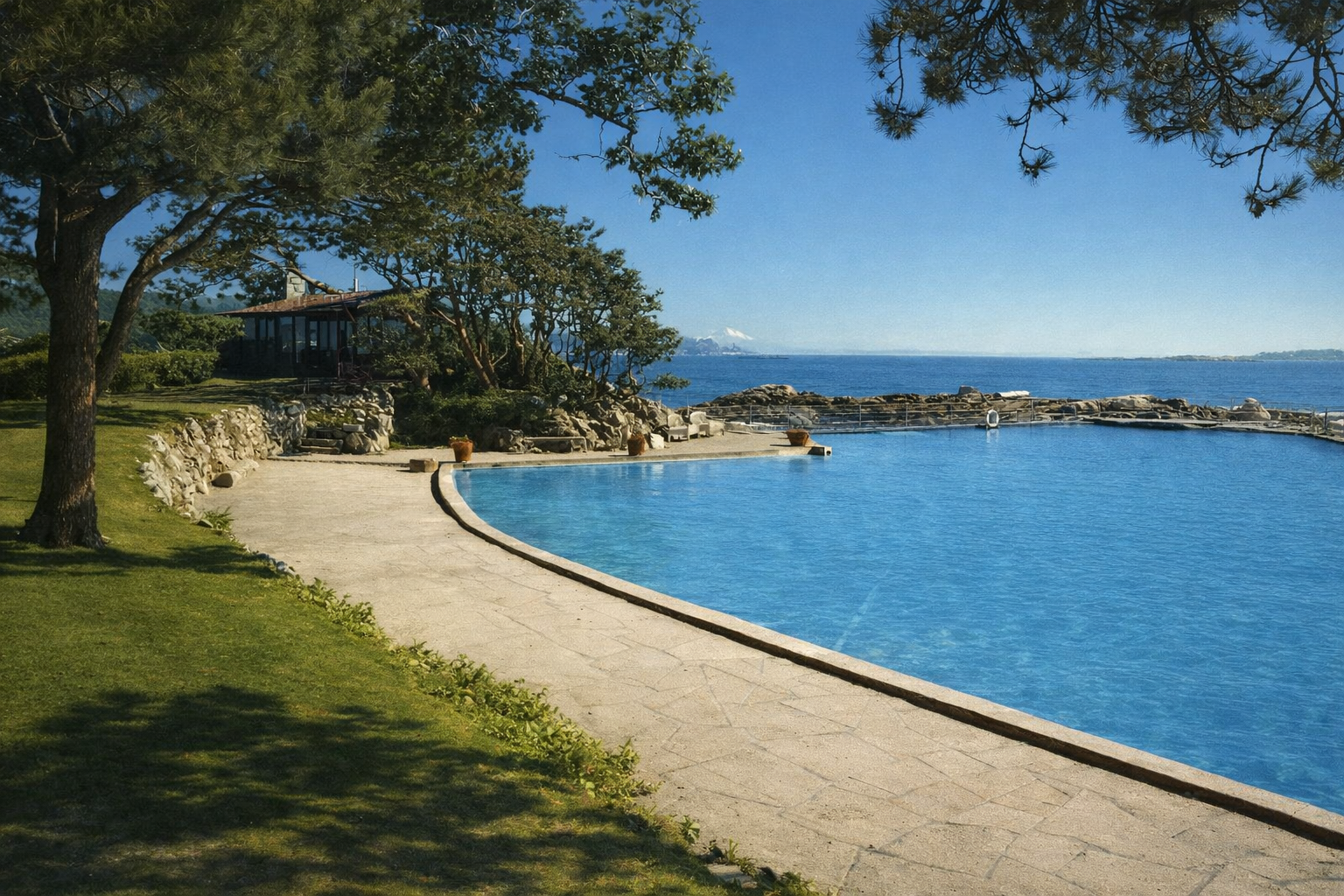
British royals are documented as having used the estate’s former 743-square-metre tidal saltwater swimming pool and private sandy beach. Source: Western Living, June 1985. Read the full article here.
Diplomatic Use
From 1928 to 1942, Riffington served as the residence of the United States Consul in Victoria.
Later Ownership
In later decades, the property was owned by David Holmes Black. David established Black Press in 1975, beginning with a single community newspaper.
By 2002, Black Press published 88 newspapers, operated 11 printing plants, and reported approximately $240 million CAD in annual revenue. That year, Torstar Corporation, owner of The Toronto Star, one of Canada’s largest newspapers, invested $20 million for a 19.35% minority stake in the Black Press.
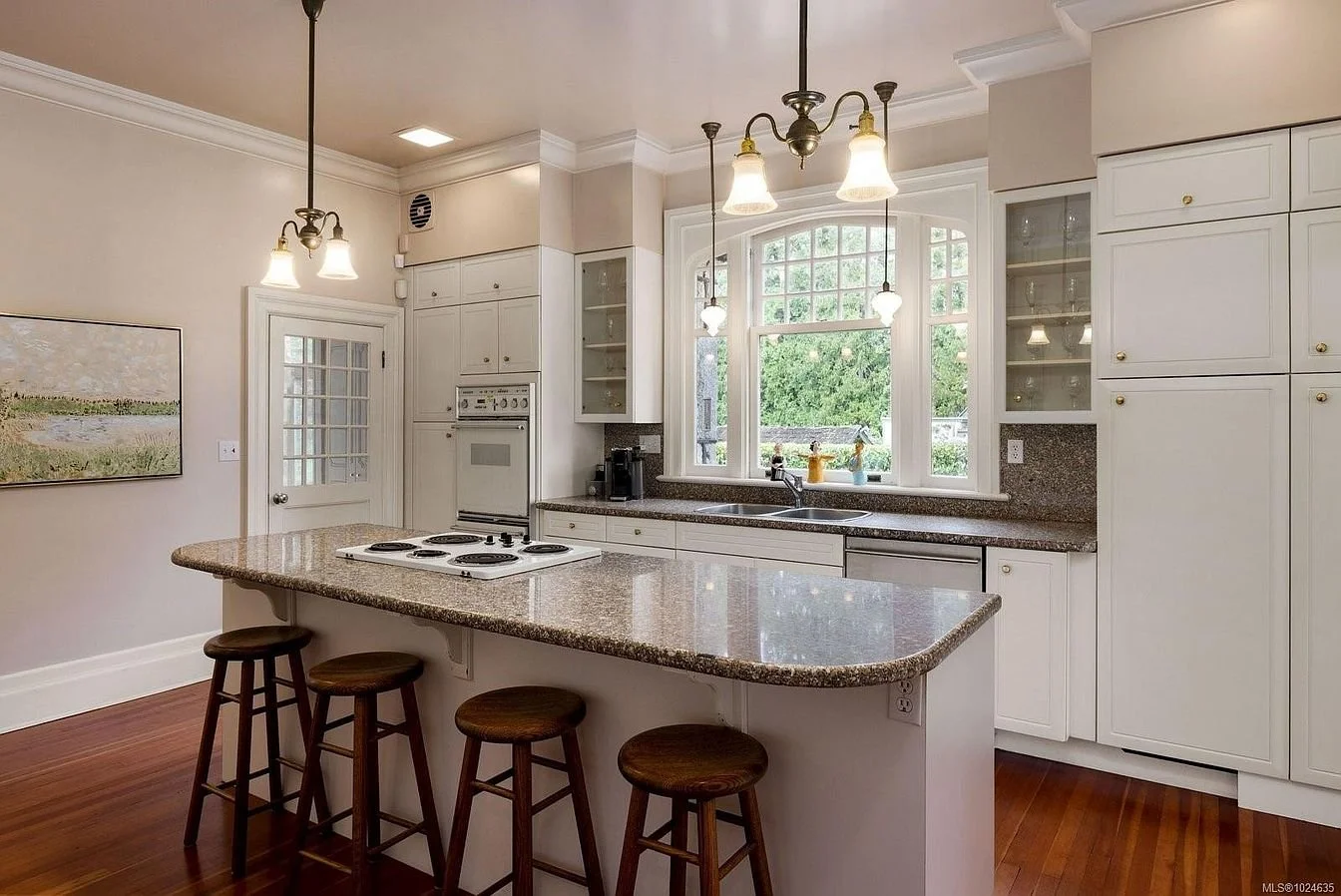
All photos belong to the listing agency. See The full Listing Photos
All photos belong to the listing agency.