
The Naples Palazzo Where Modern Italy Was Declared Is on the Market
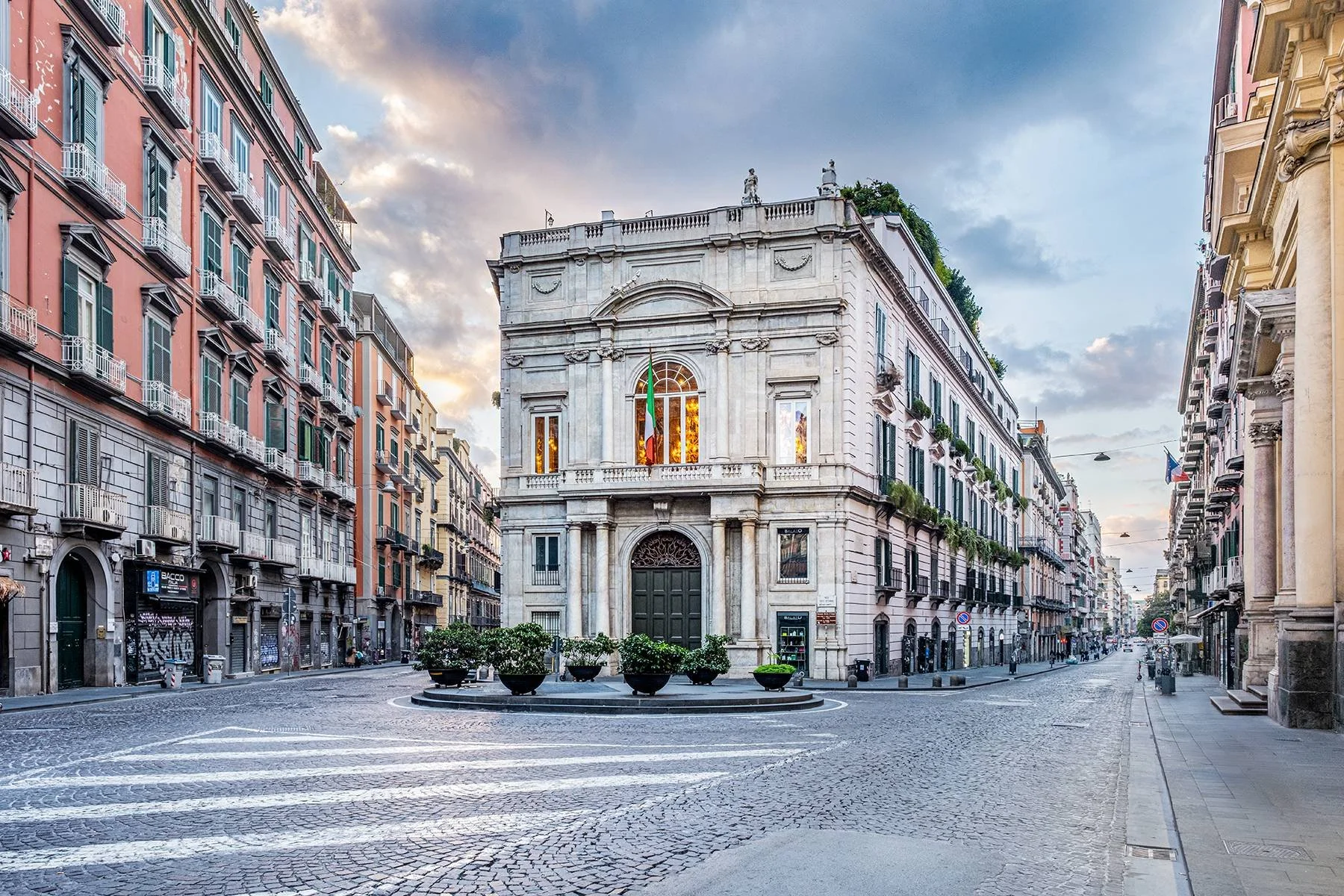
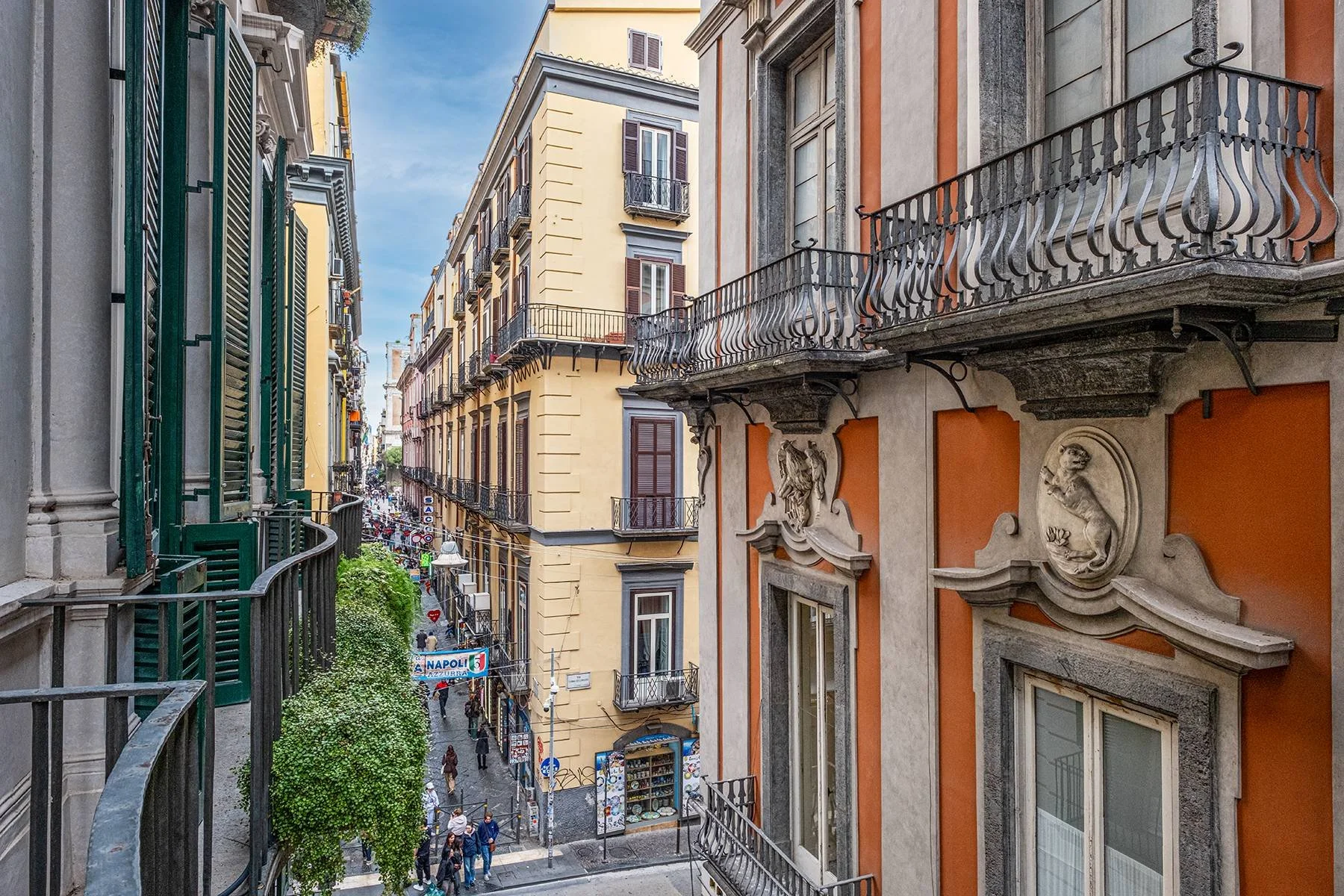
Where the modern nation of Italy was born. Listed at €15,000,000 with Italy Sotheby’s International Realty, Palazzo Doria d’Angri stands at one of the most historically charged intersections in Naples, directly facing Piazza VII Settembre.
On September 7, 1860, Giuseppe Garibaldi—the military commander and national figurehead of the movement to unify Italy—stepped onto the palace’s principal balcony and publicly declared the annexation of the Kingdom of the Two Sicilies. At the time, Italy did not yet exist as a single nation. Garibaldi’s declaration marked the collapse of Bourbon rule in the south and cleared the final political path toward unification months later. The square below was subsequently renamed Piazza VII Settembre, permanently tying the building to that moment.
The palace’s prominence was intentional long before that day. In the late 18th century, Marcantonio Doria—a Neapolitan nobleman from the powerful Doria family, whose influence extended from Genoa across Italy and into European courts—commissioned the reconstruction of the palazzo under Luigi Vanvitelli, the era’s most important architect and the designer of the Royal Palace of Caserta. The building was conceived as a public-facing statement, deliberately positioned so it would be seen by monarchs traveling between Capodimonte and the Royal Palace.
In short: long before it became the stage for Italy’s unification, Palazzo Doria d’Angri was built to signal power, permanence, and presence in the city.
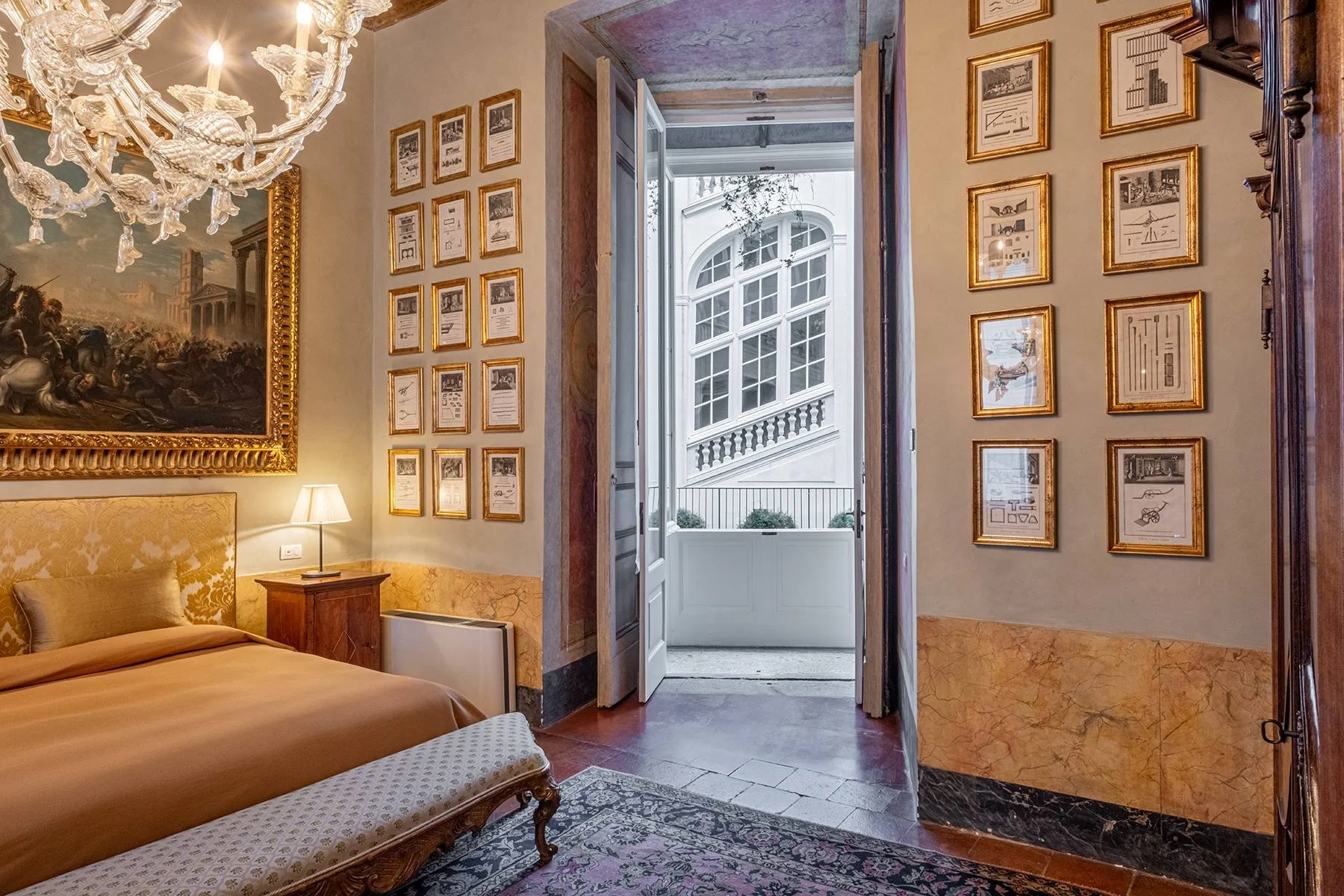
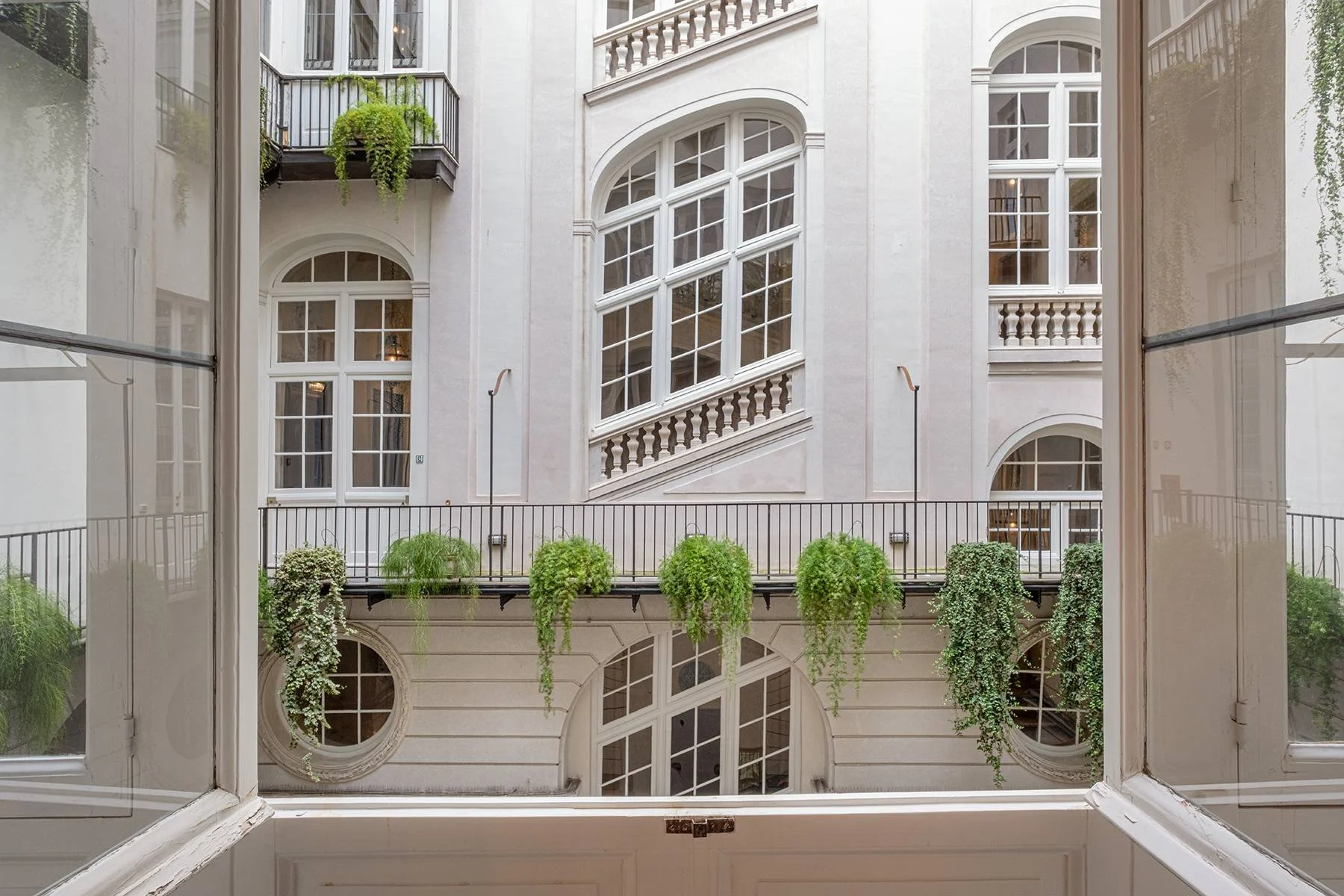
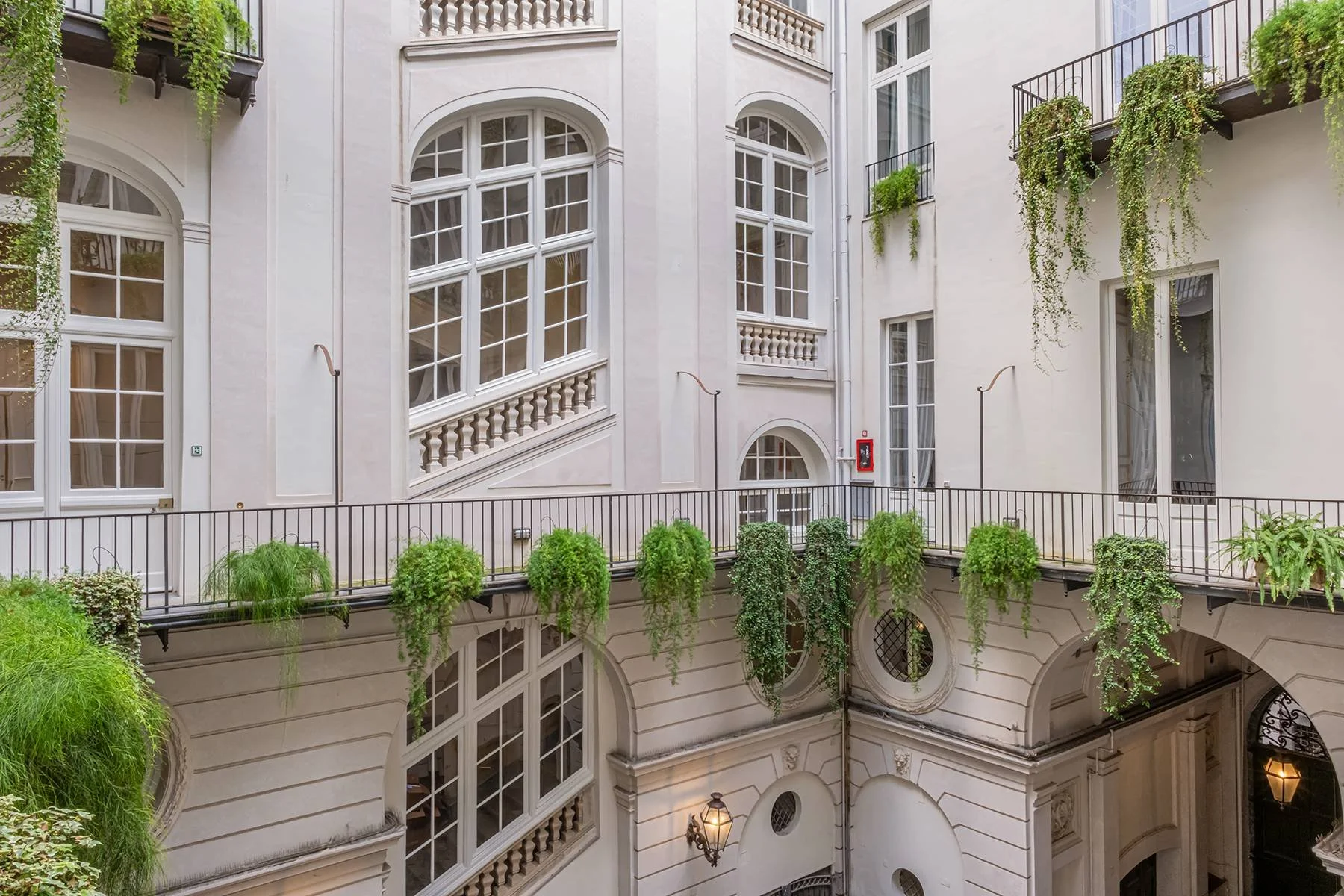
A monumental marble façade anchors the palazzo at the meeting point of major historic routes through Naples. Inside, the building is organized around two large internal courtyards, aligned to draw daylight deep into the structure and create clear sightlines through the interior—an unusually advanced approach for its time and one that still gives the palazzo a sense of scale and openness.
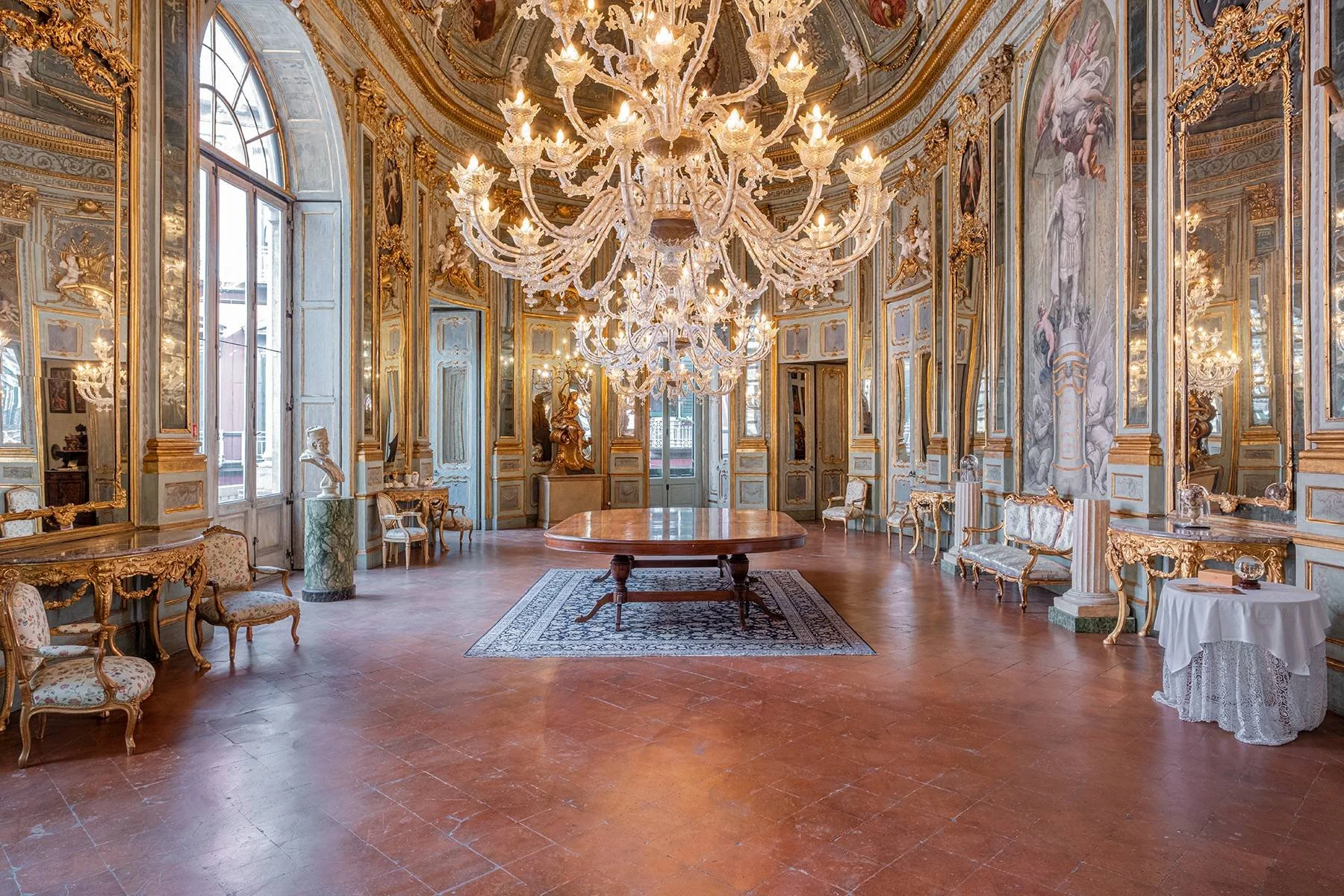
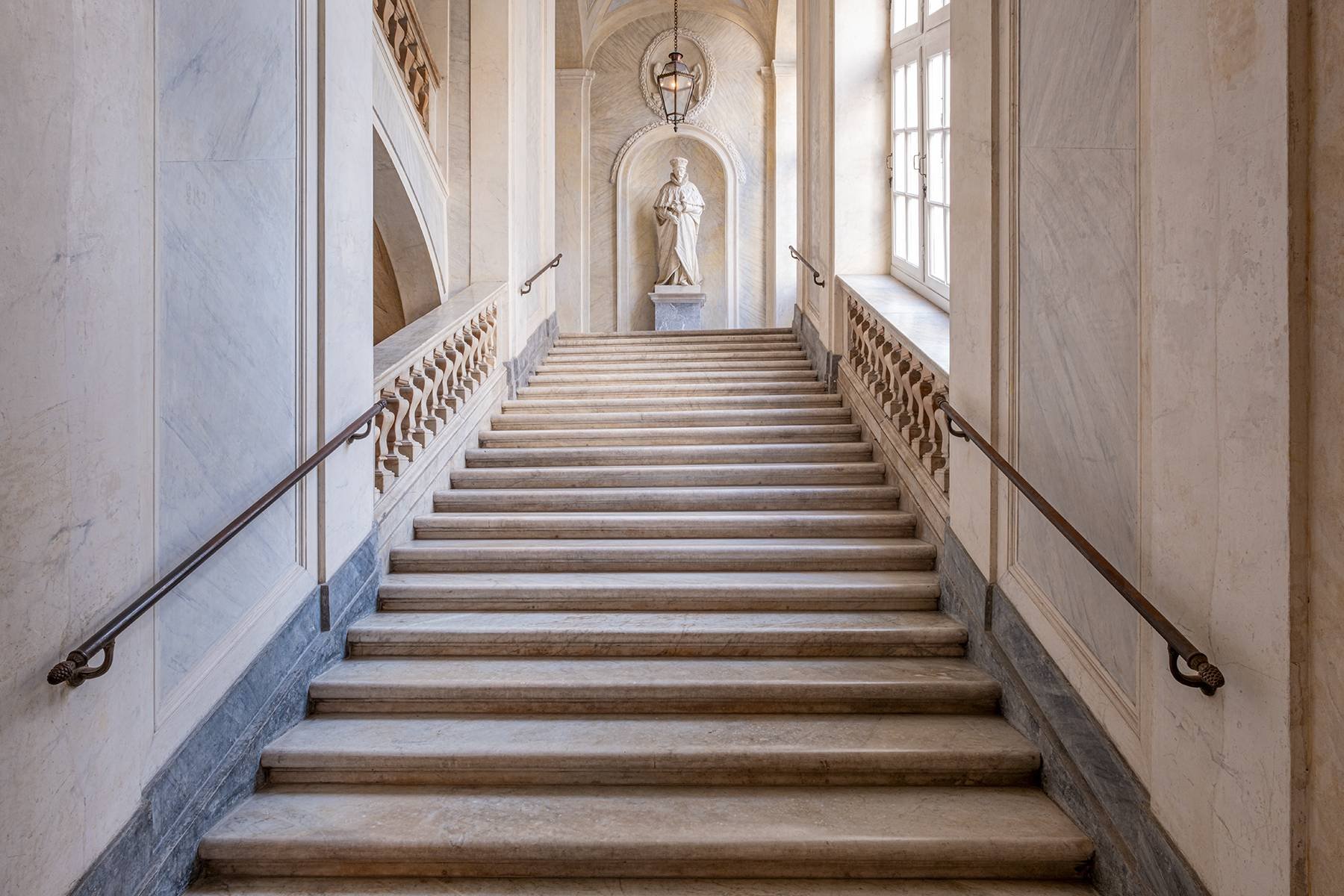
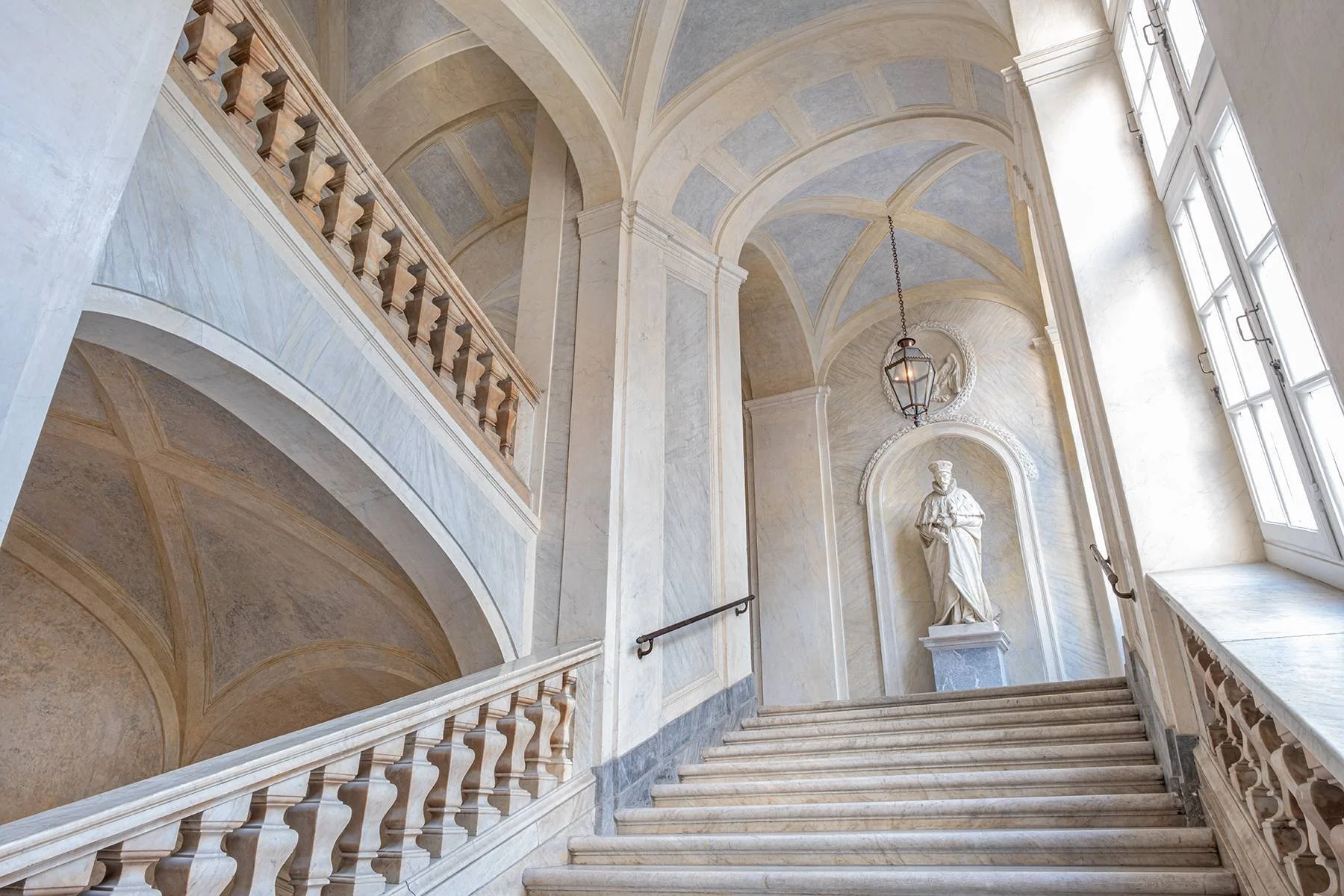
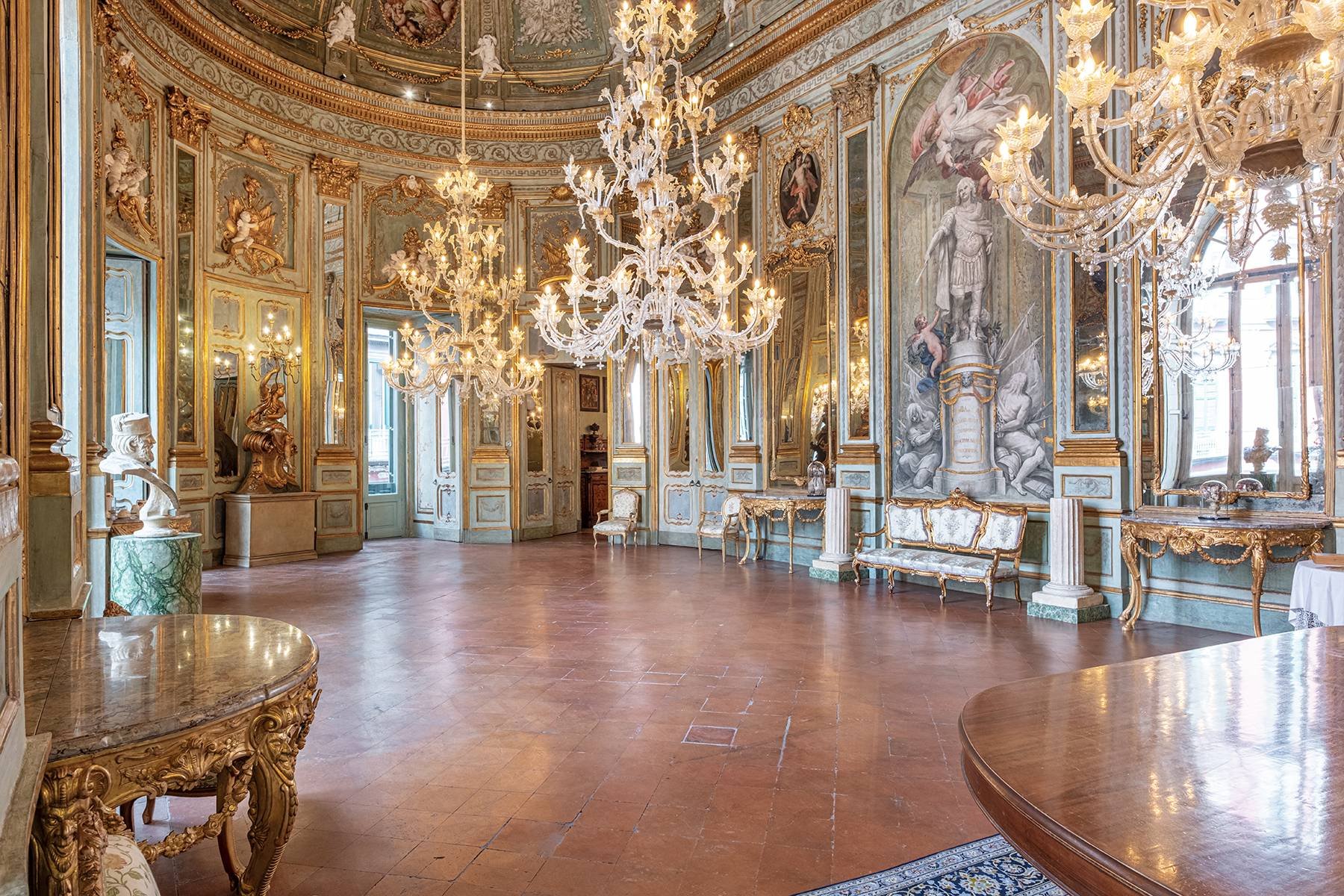
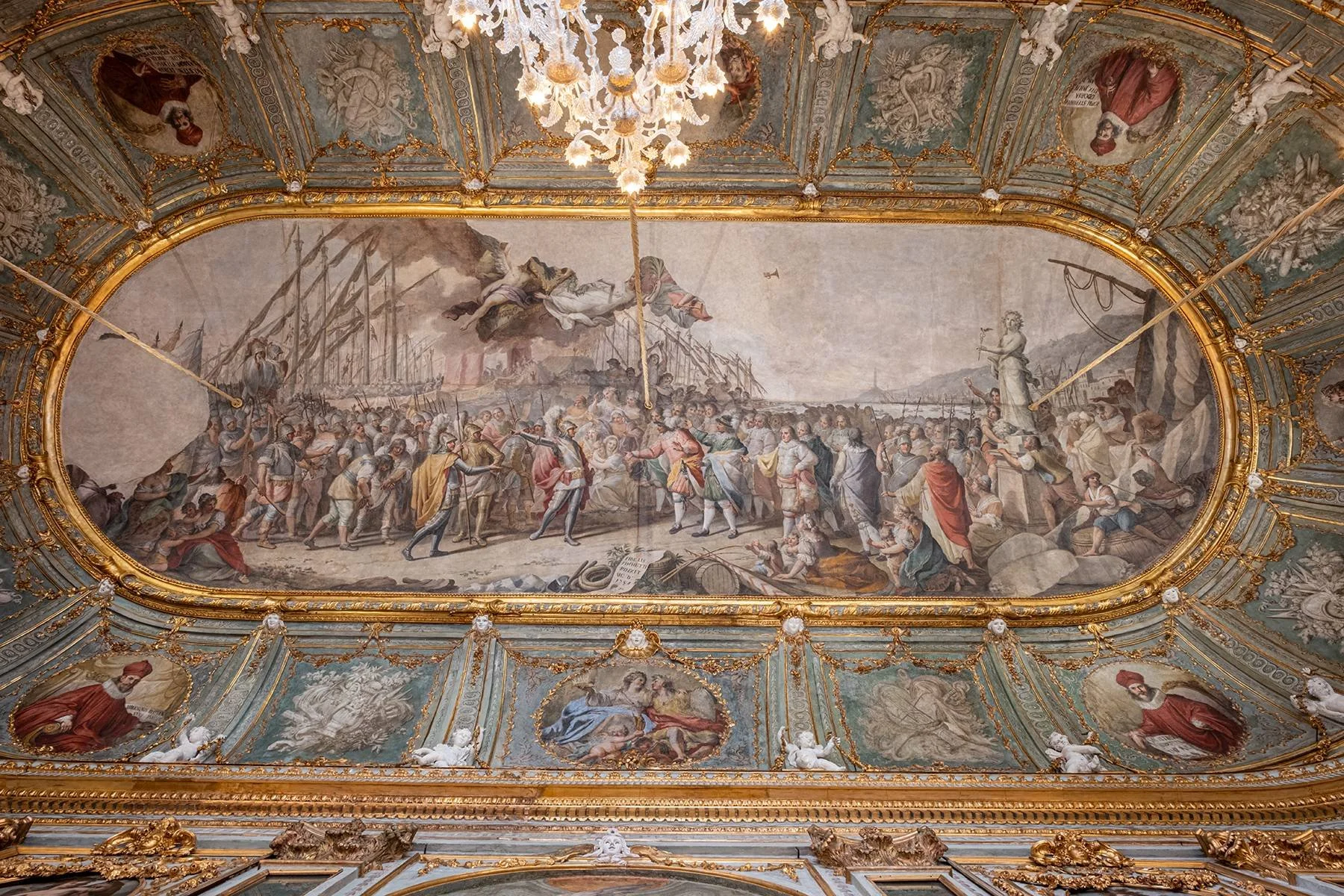
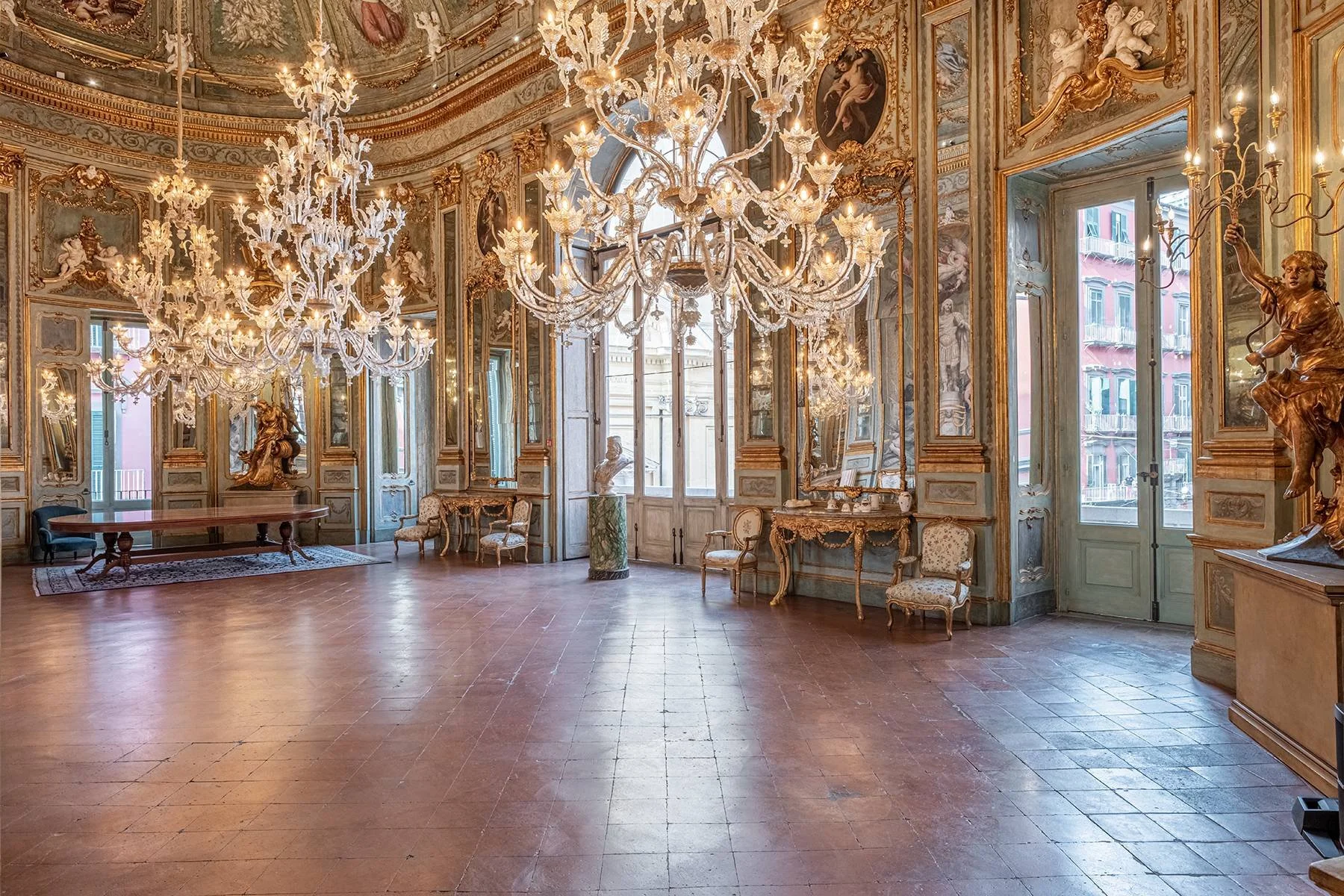
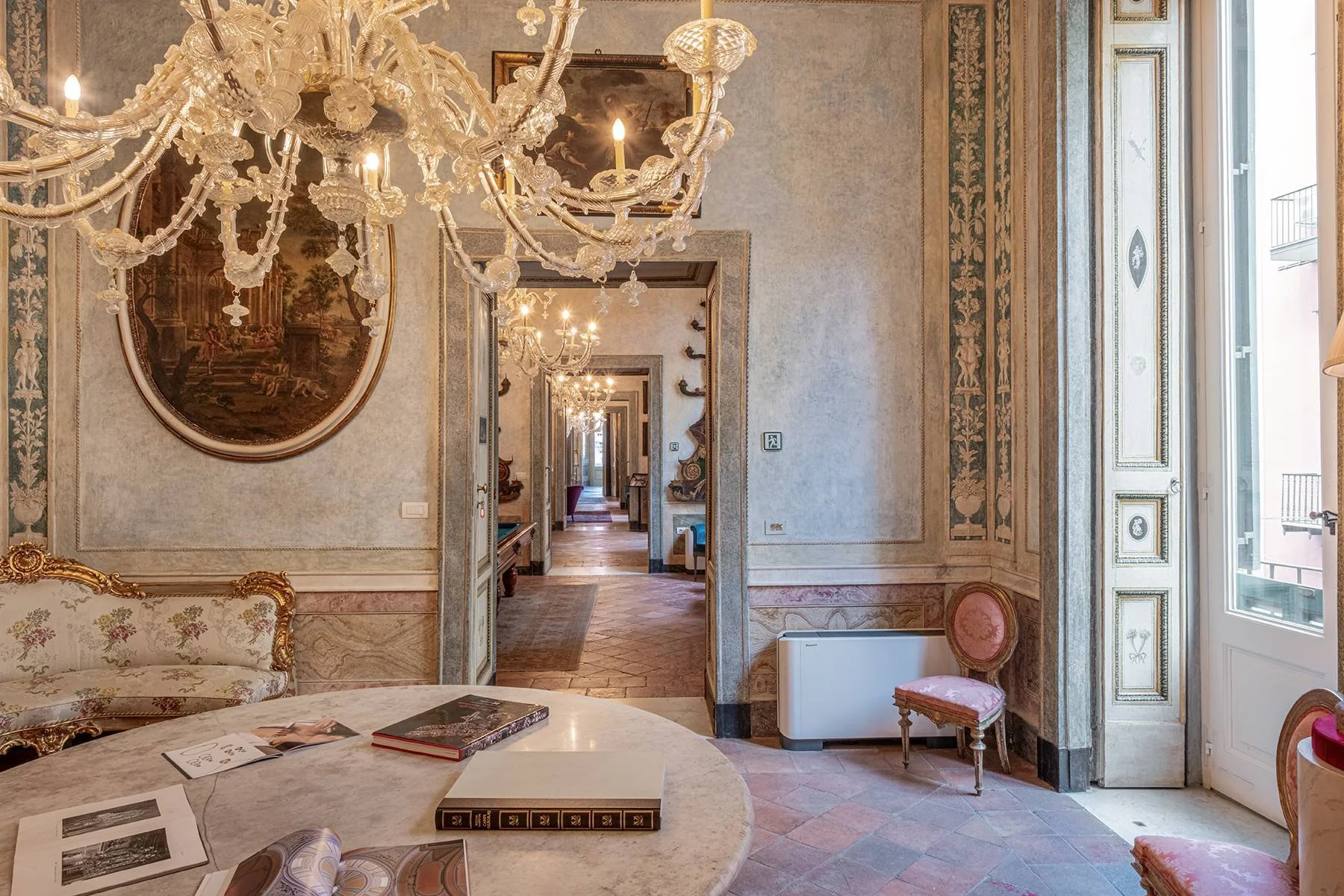
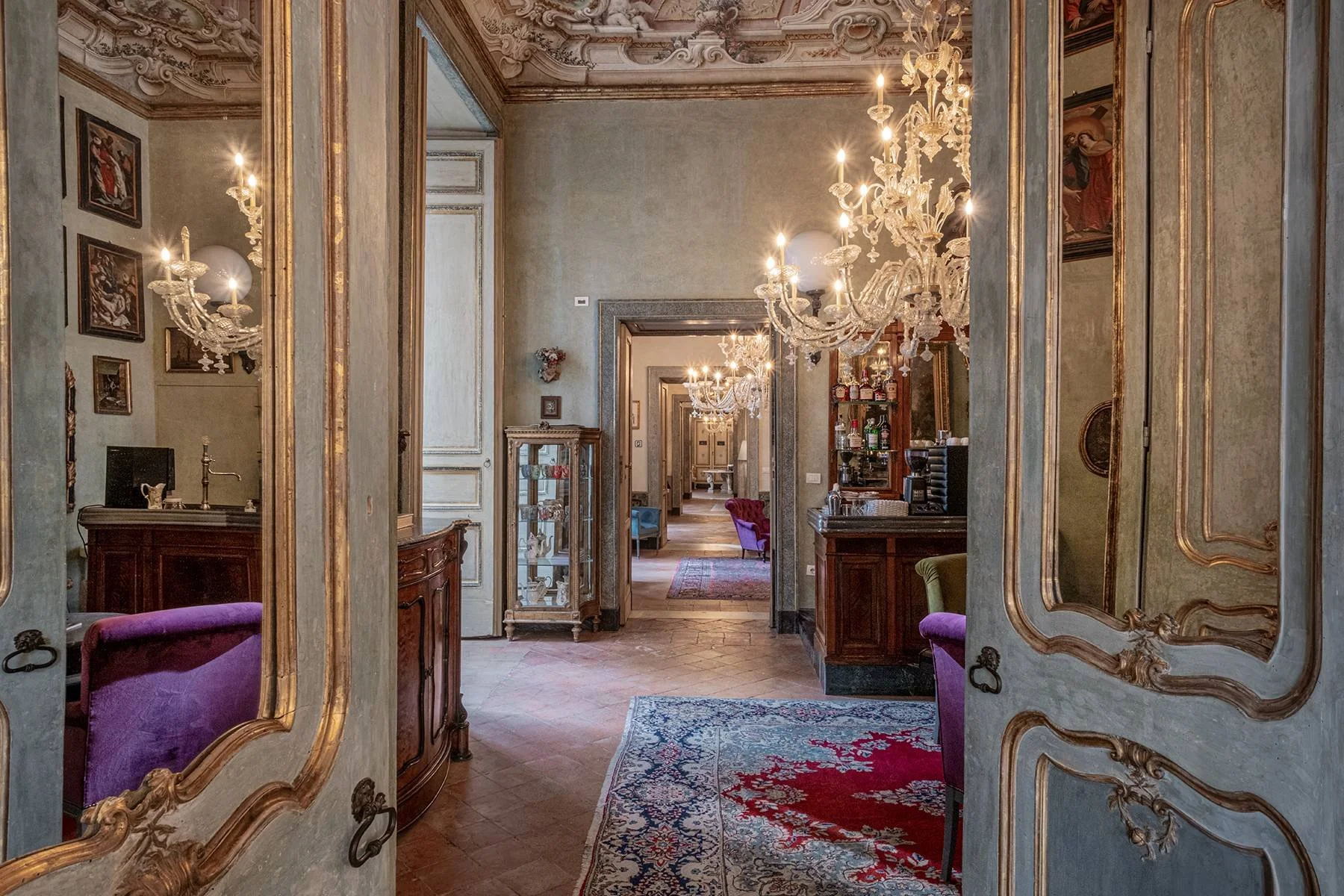
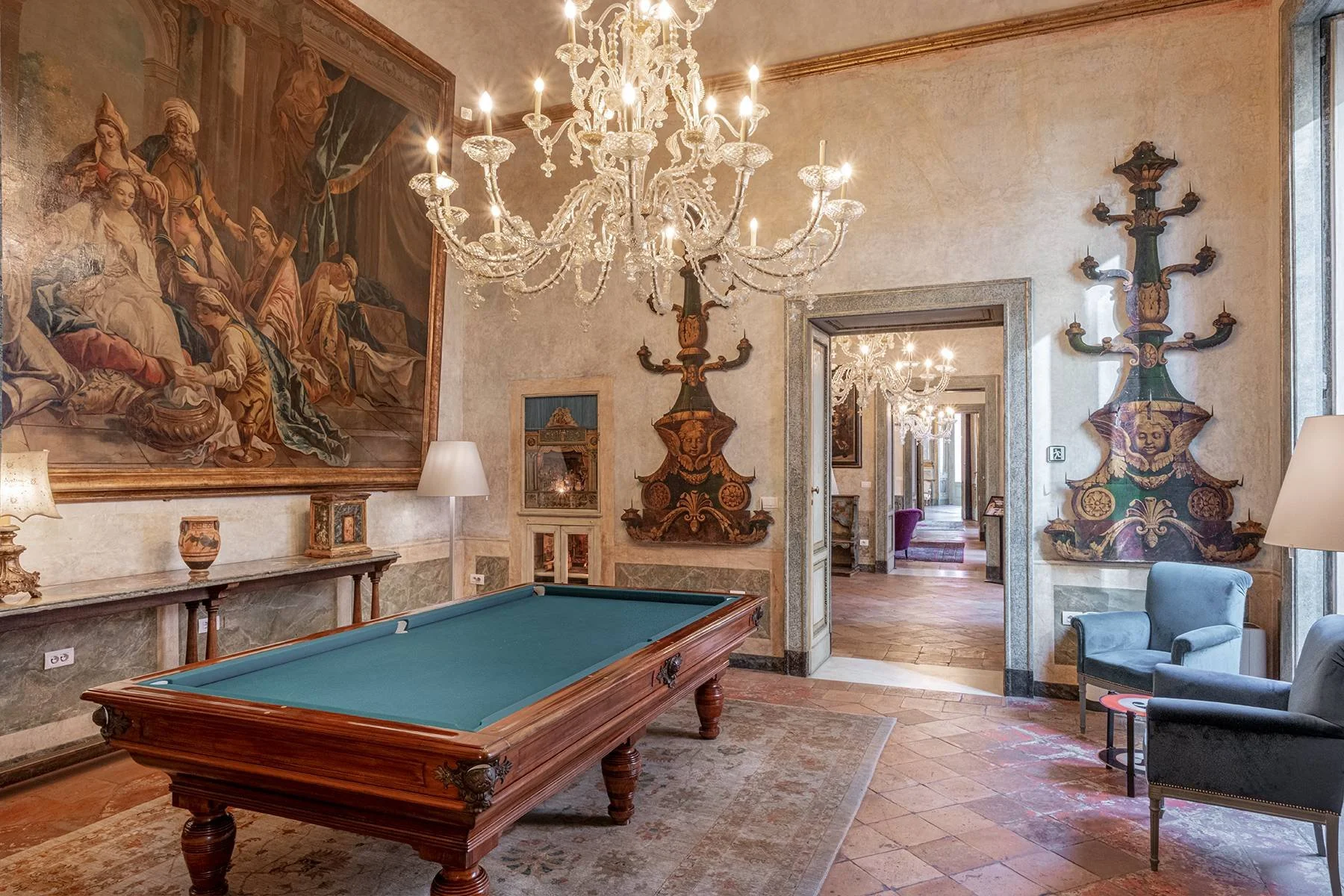
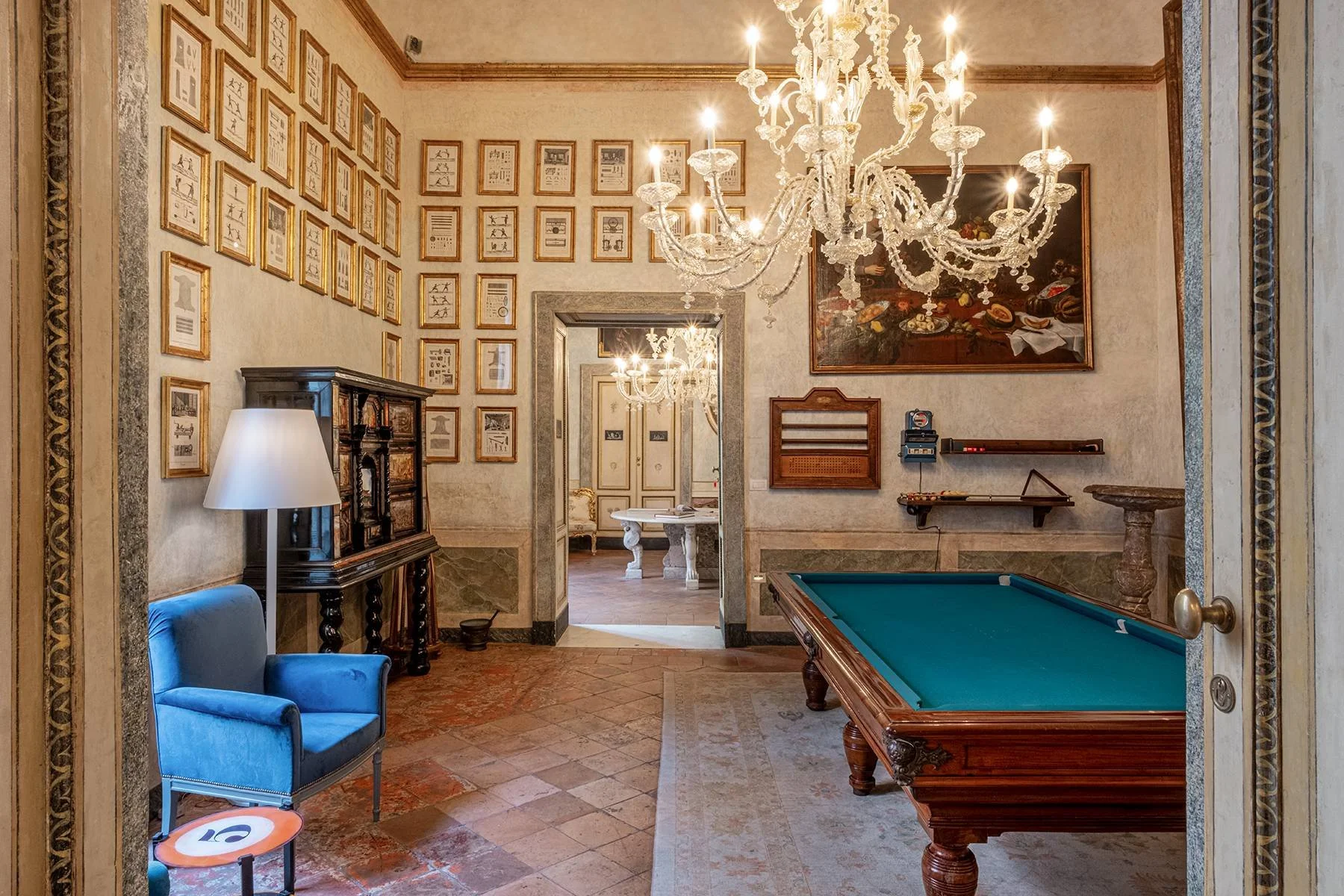
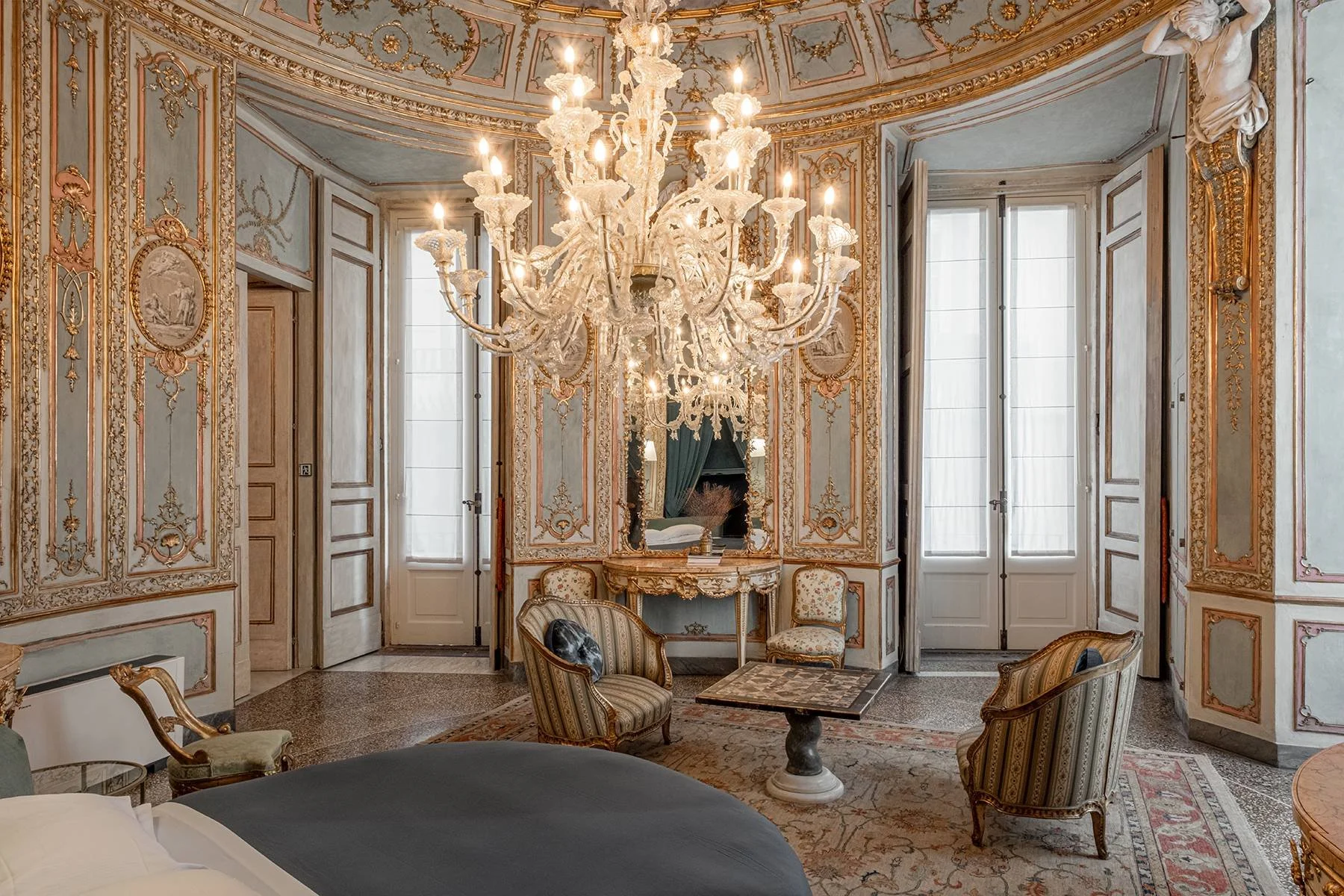
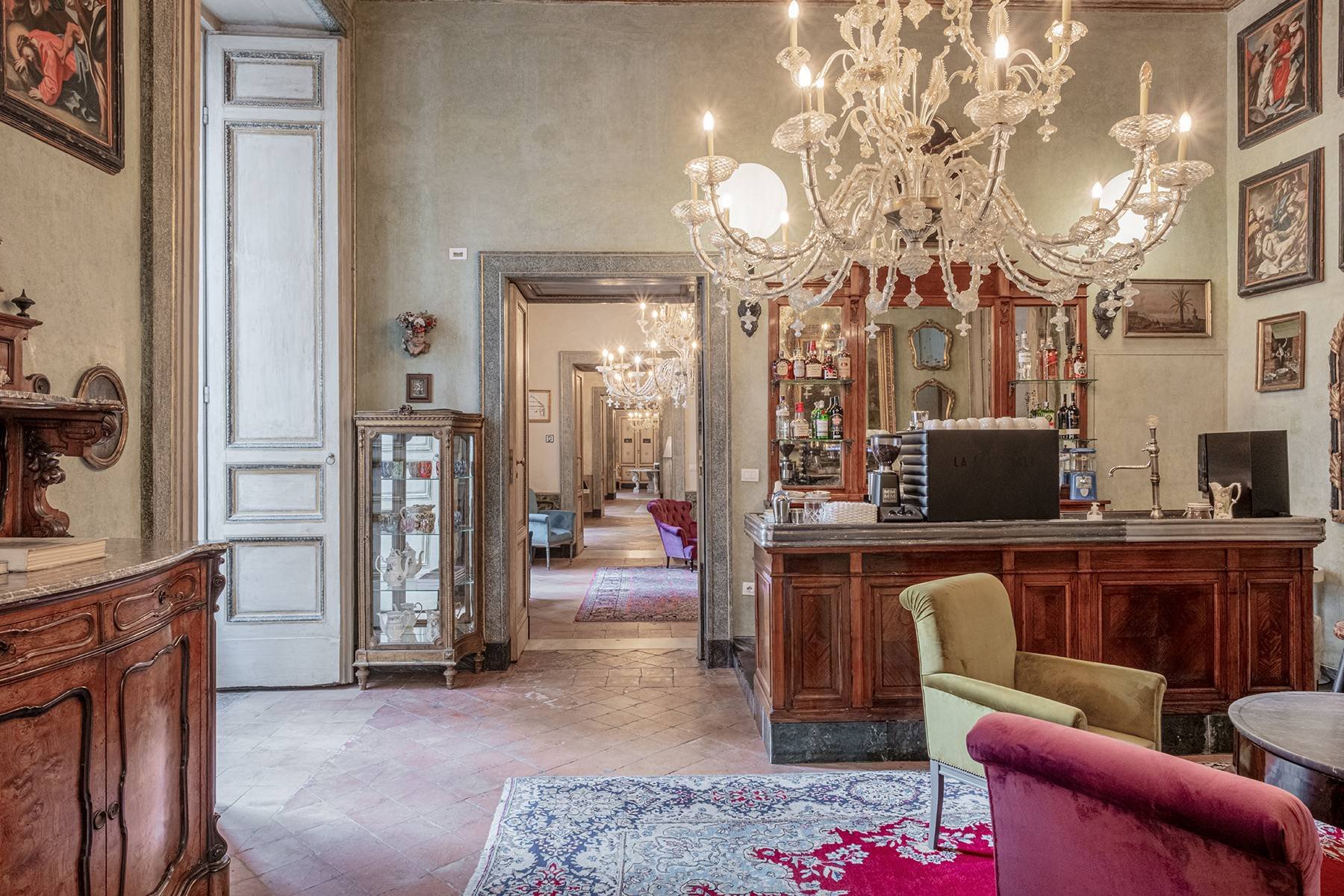
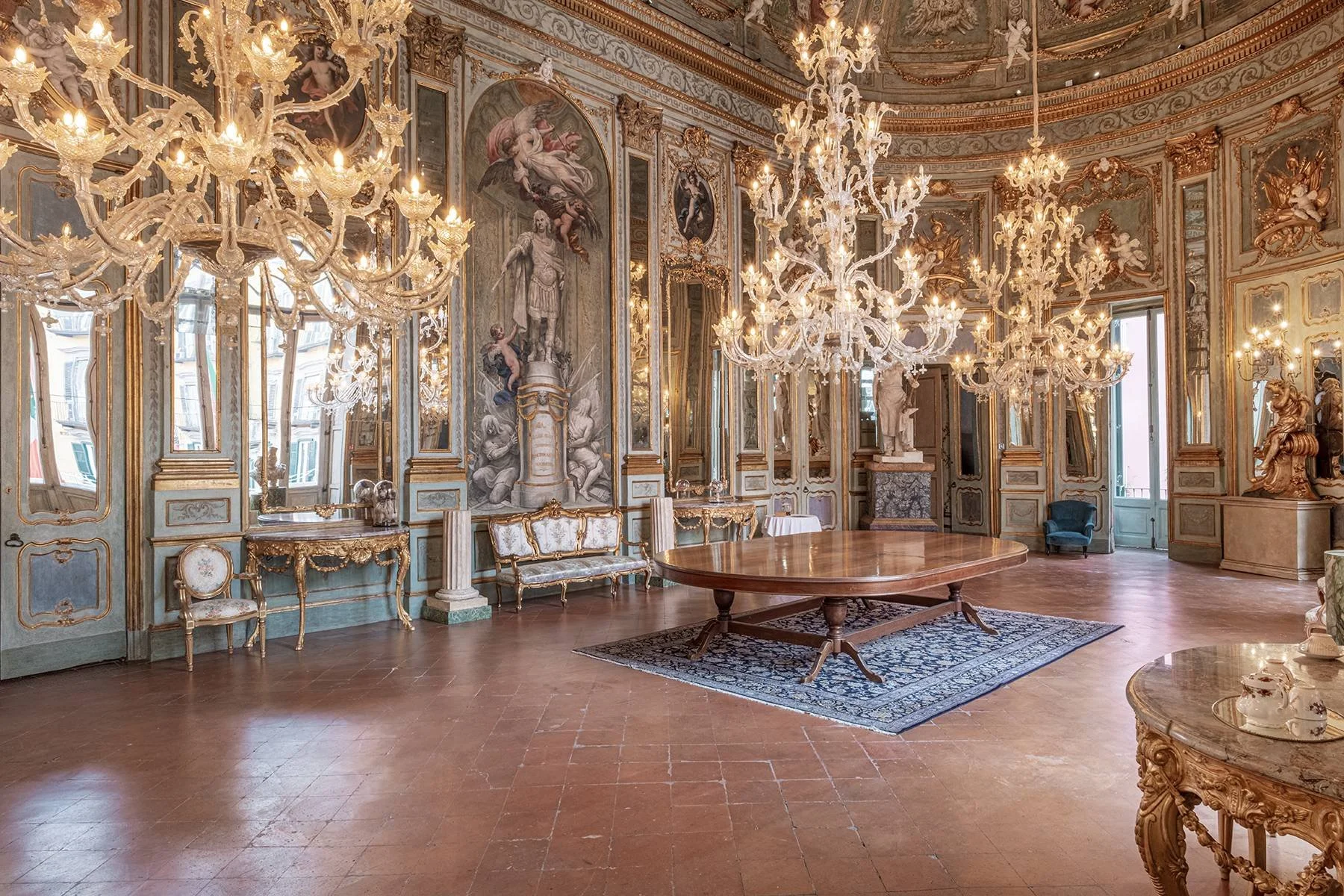
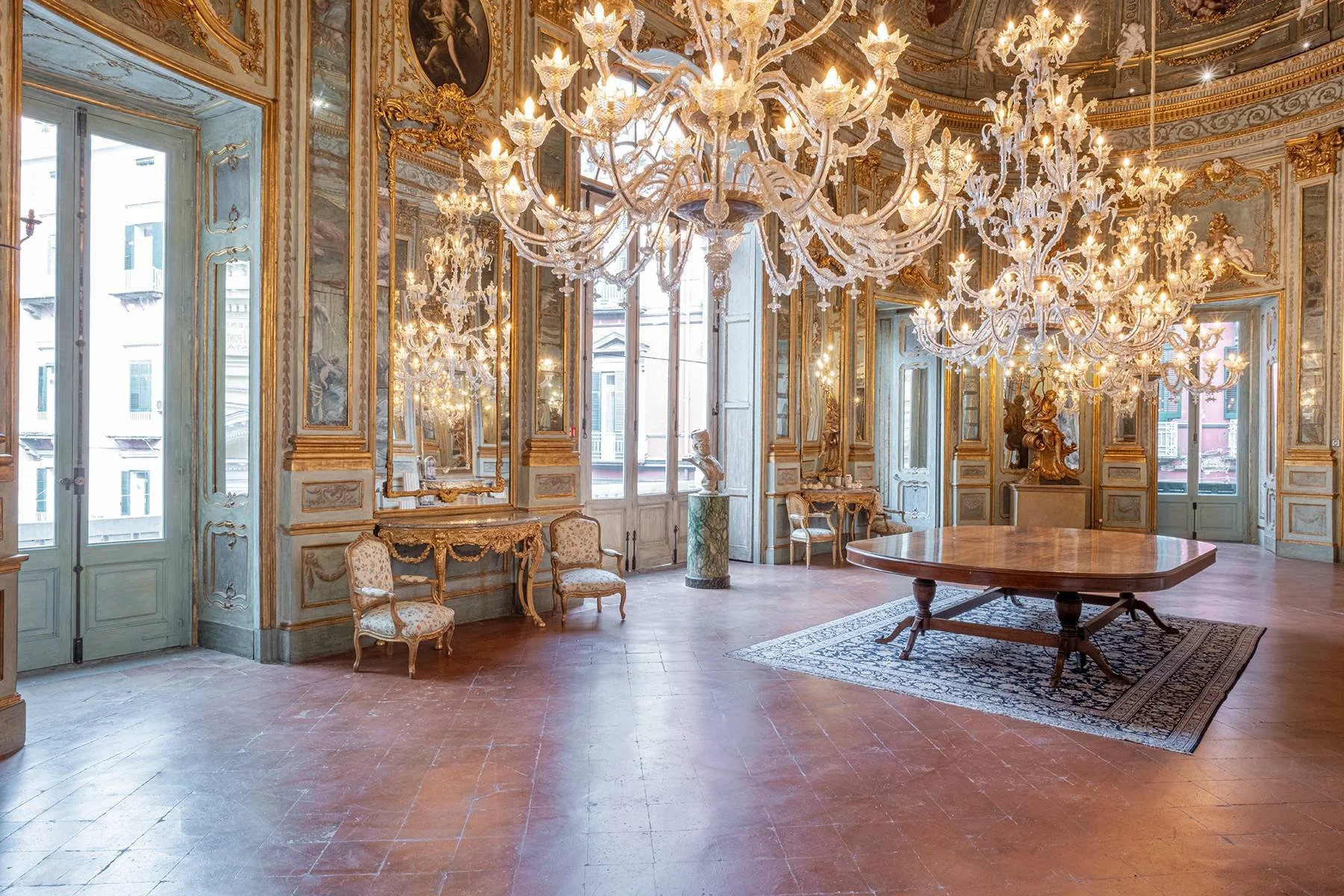
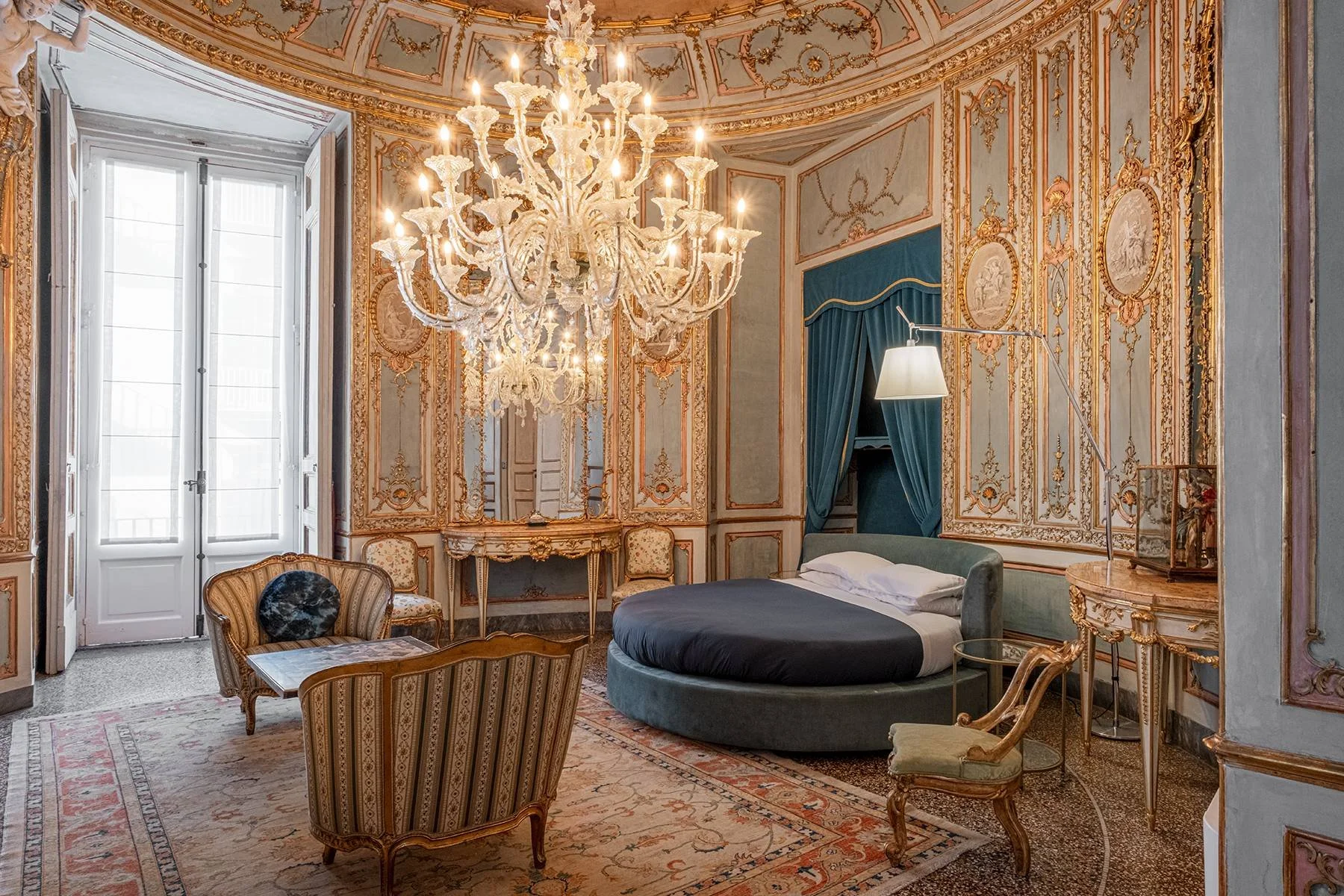
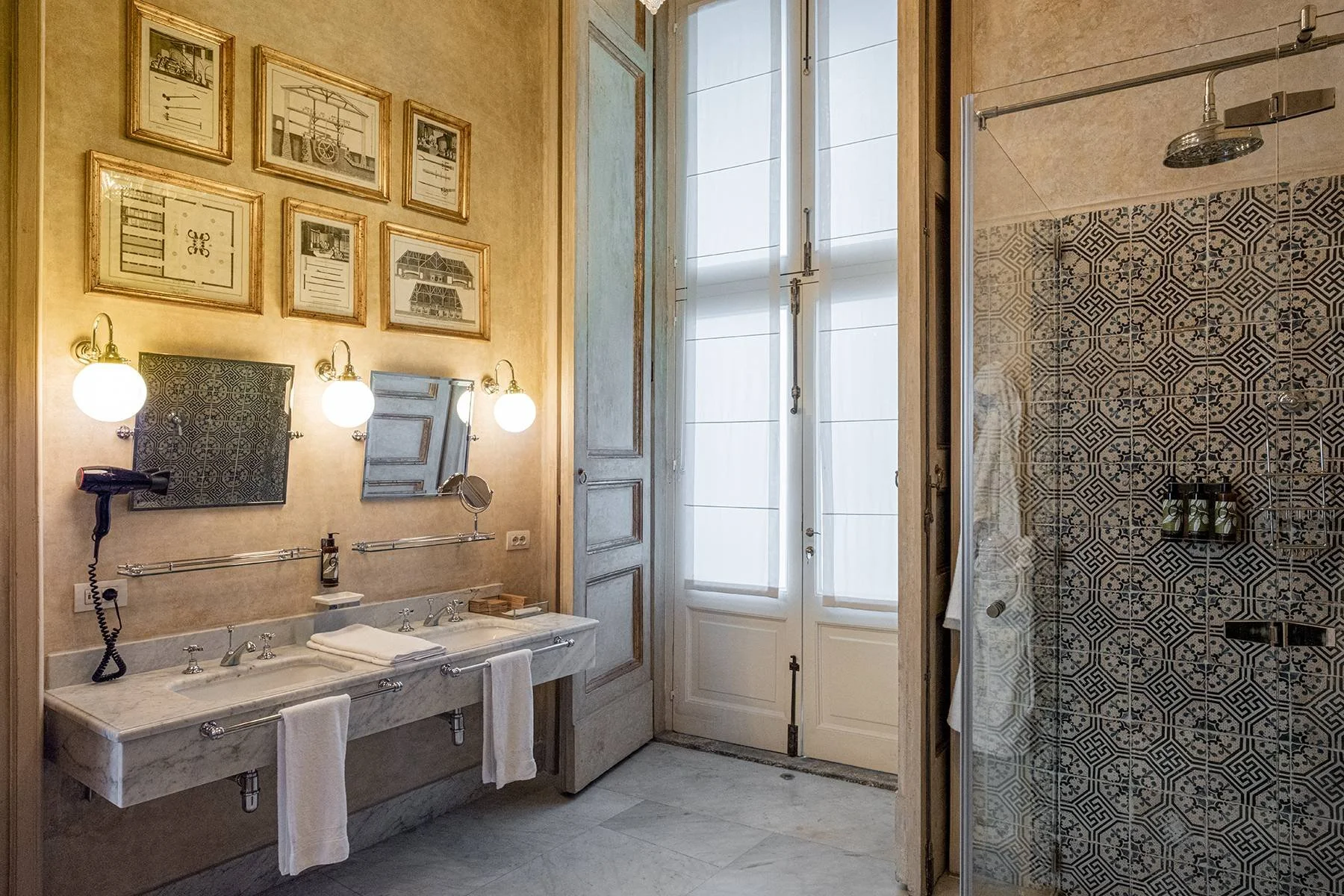
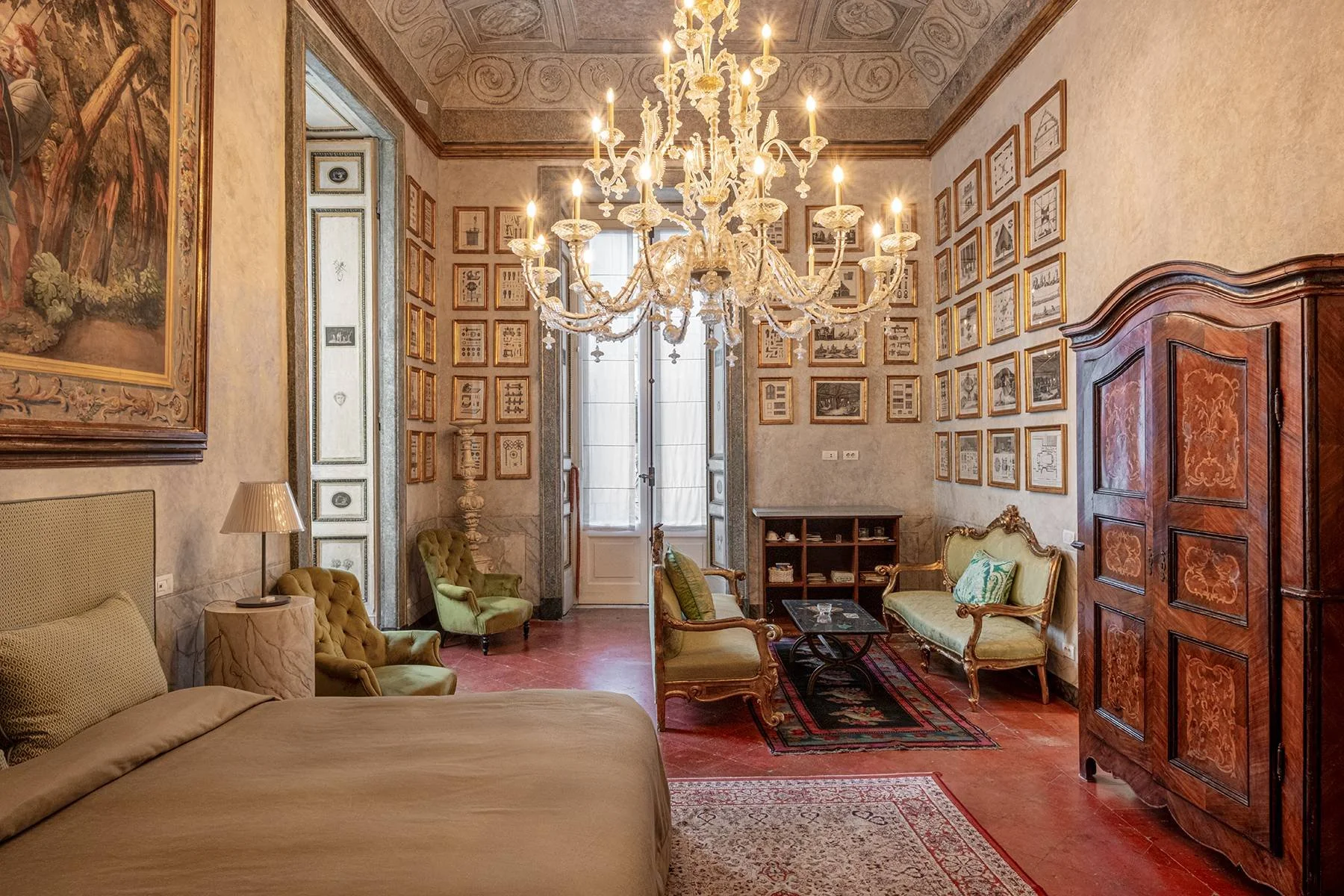
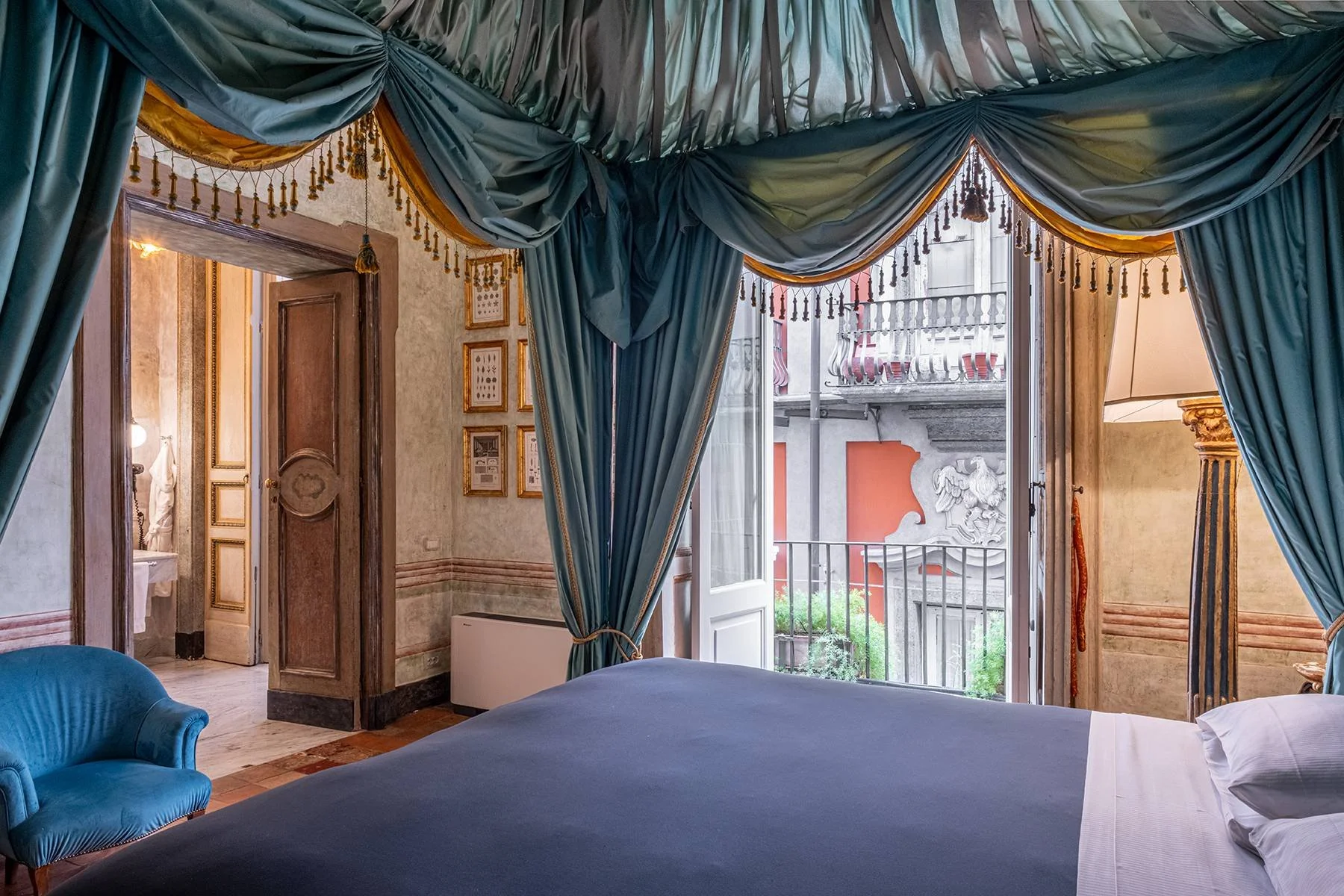
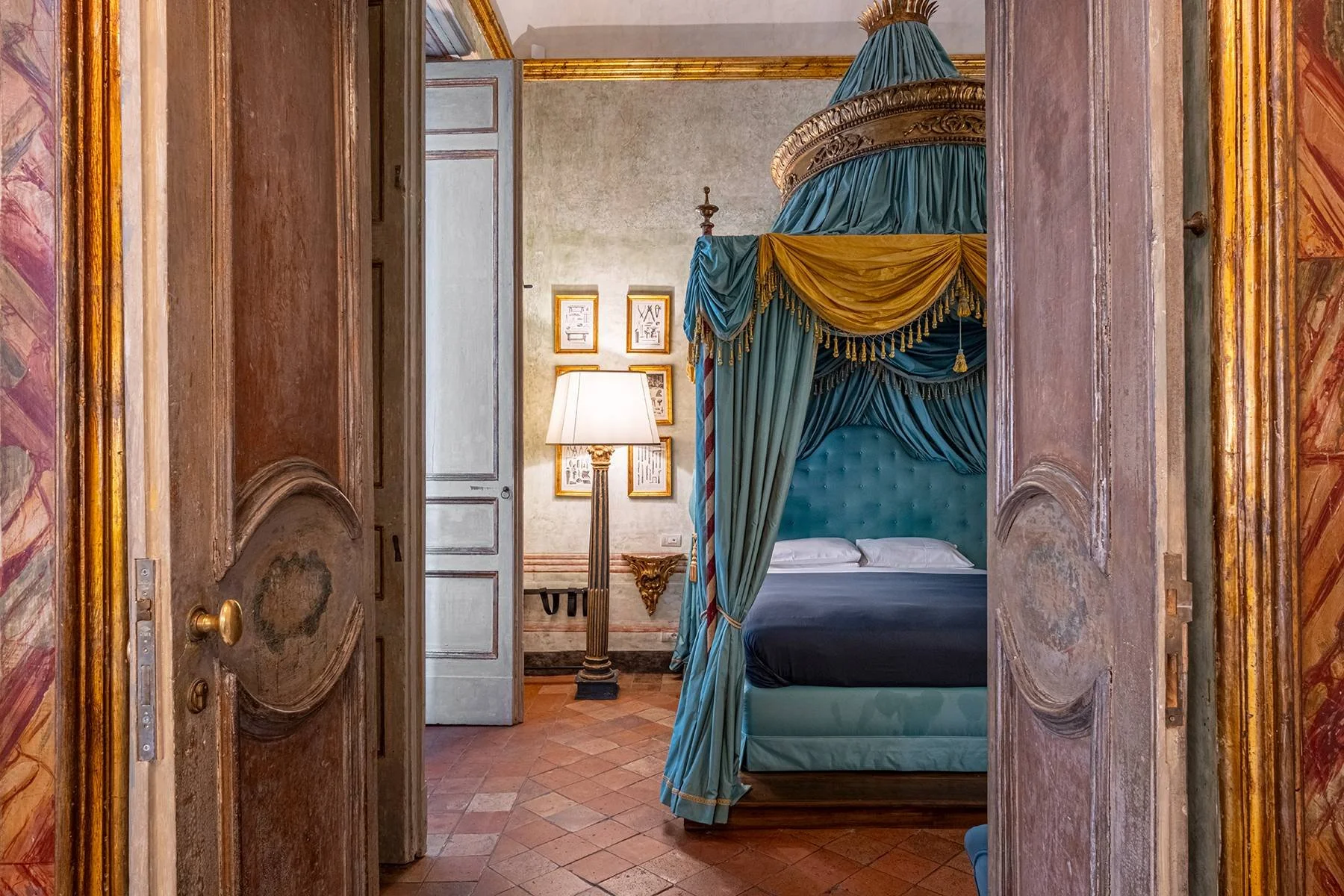
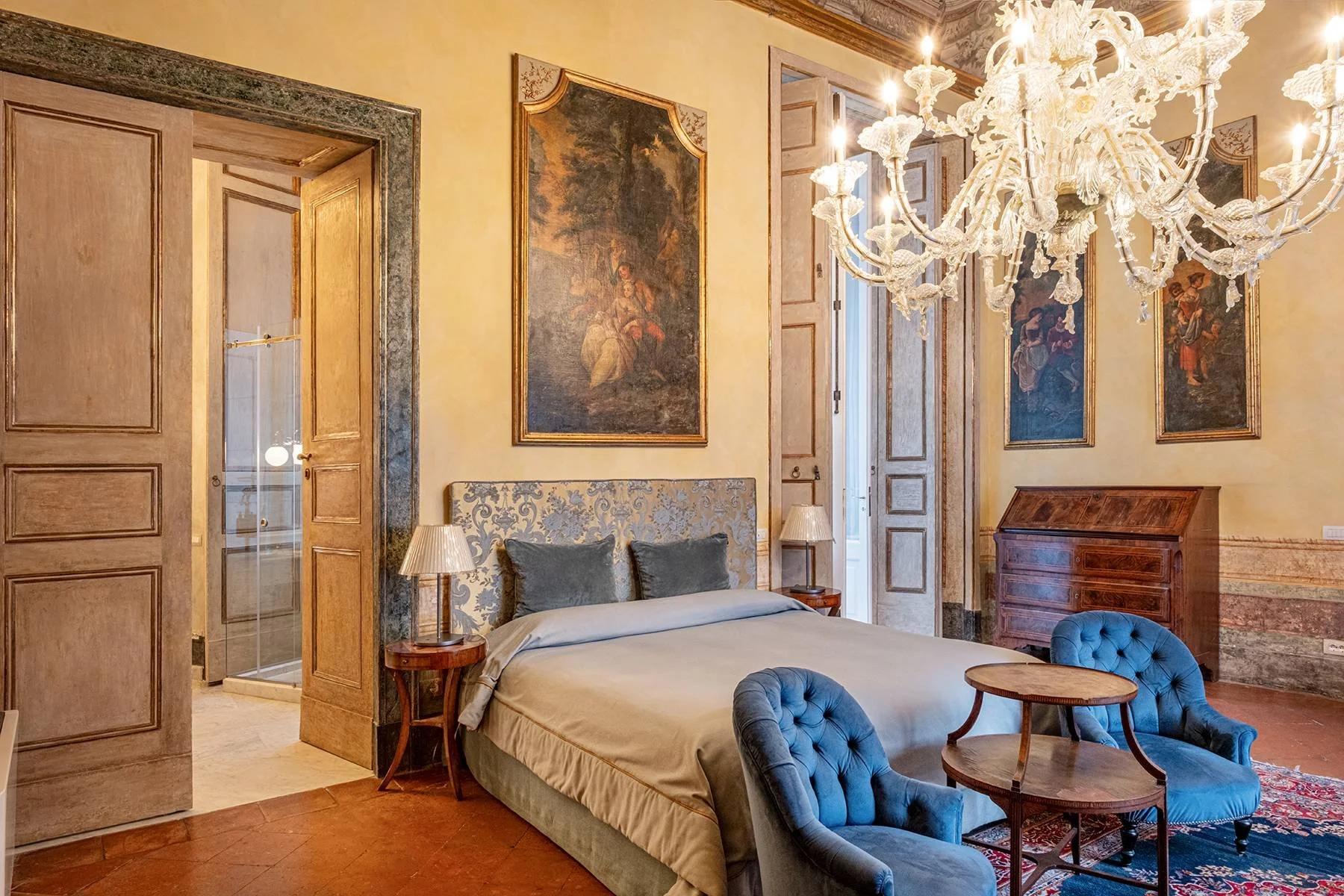
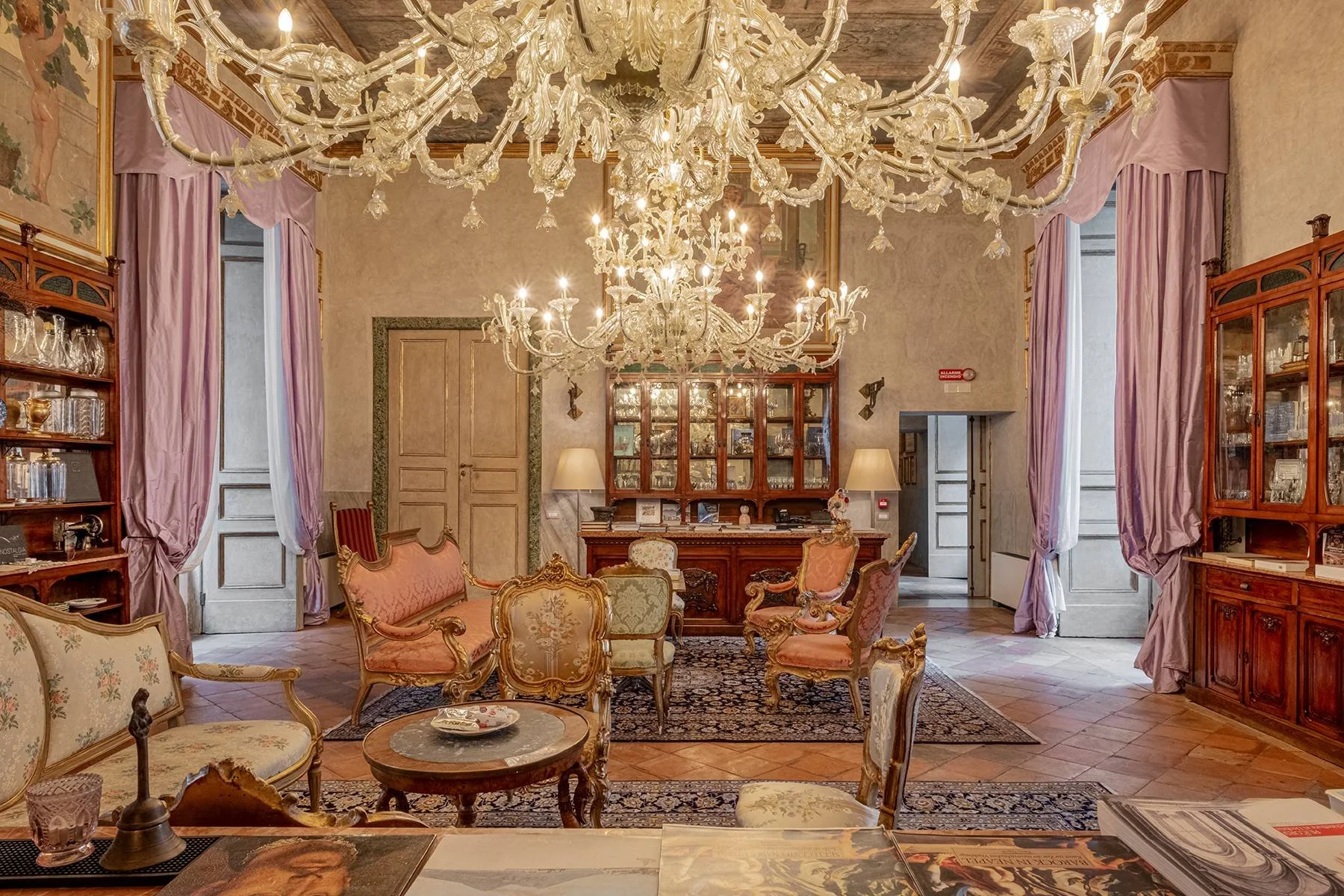
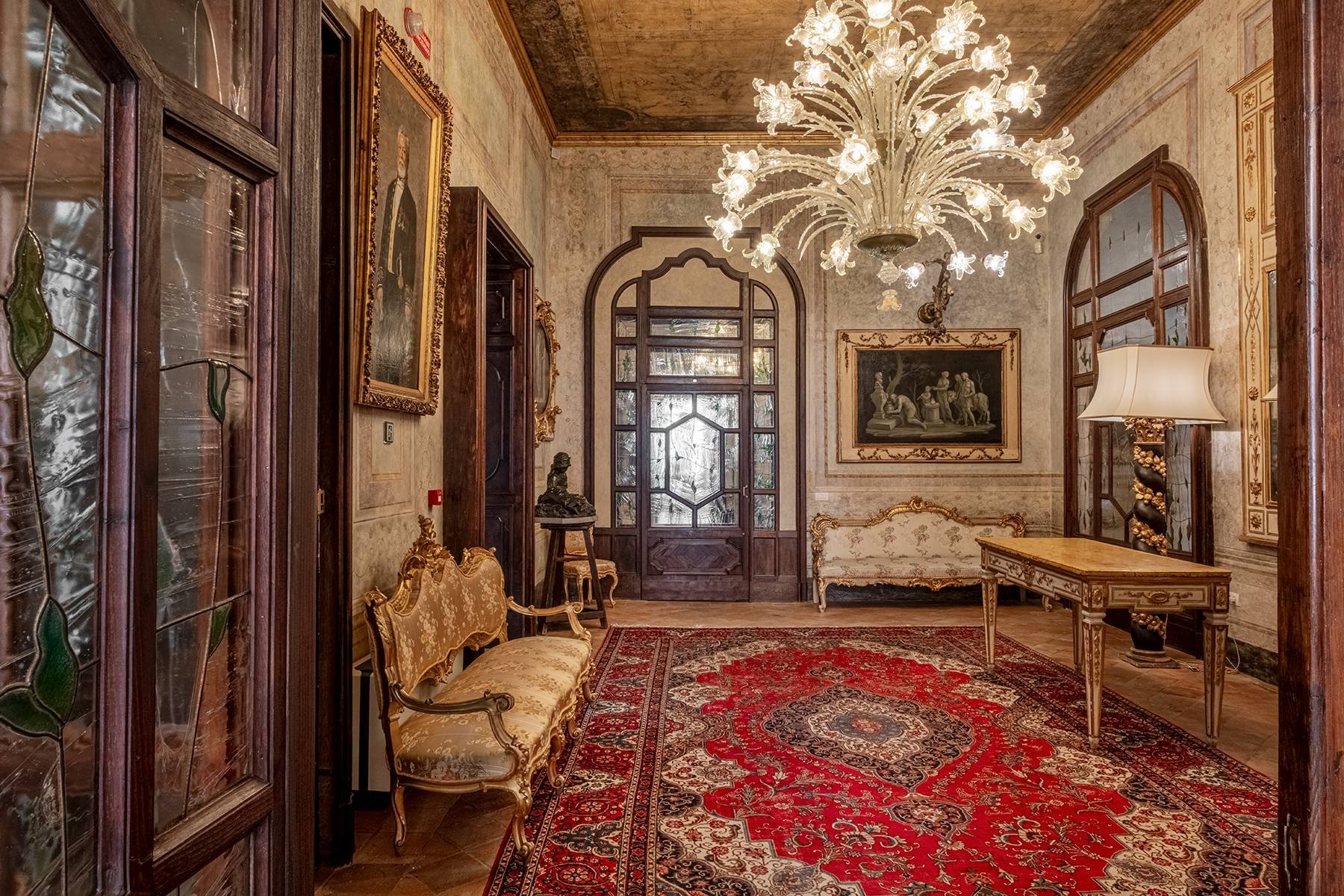
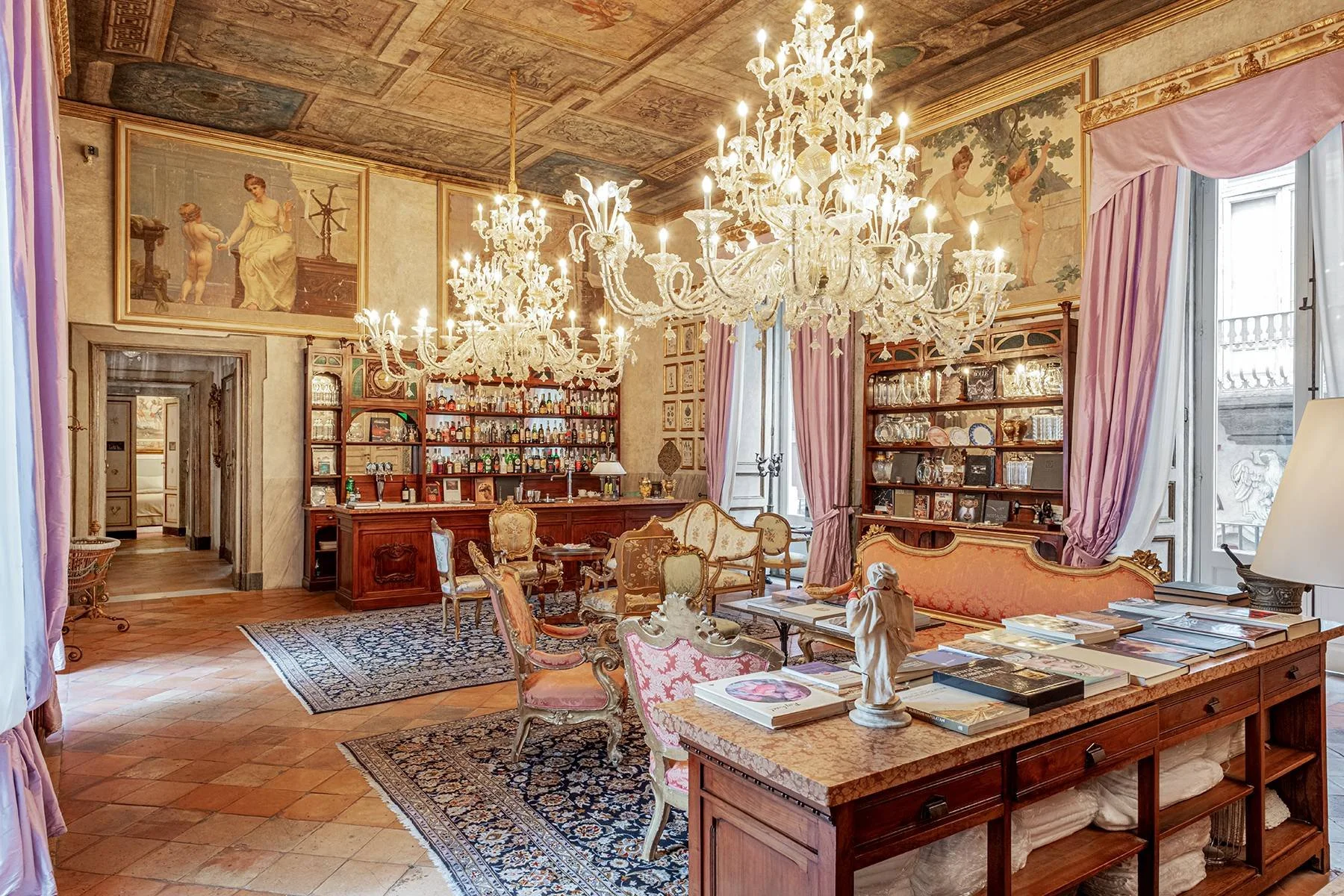
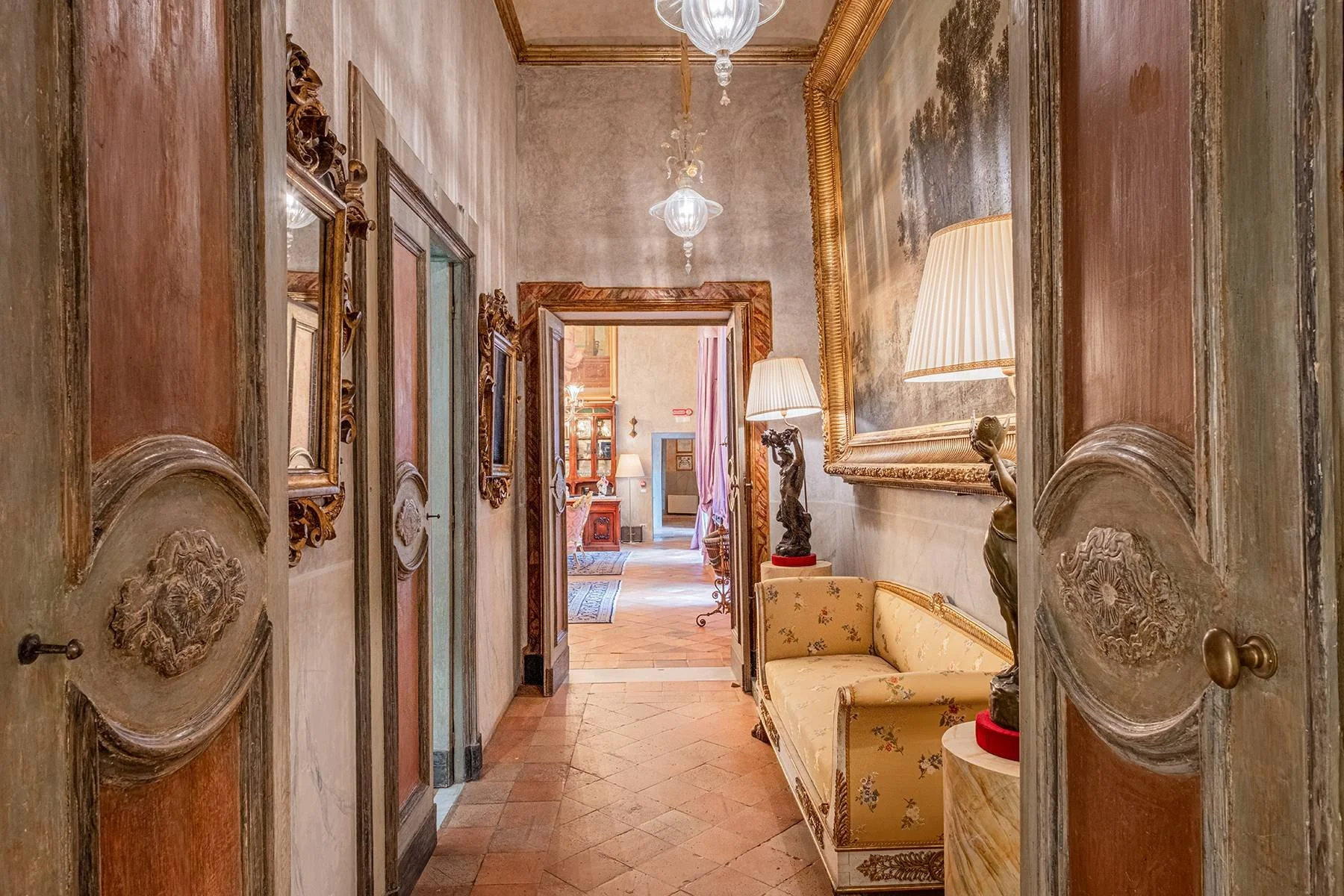
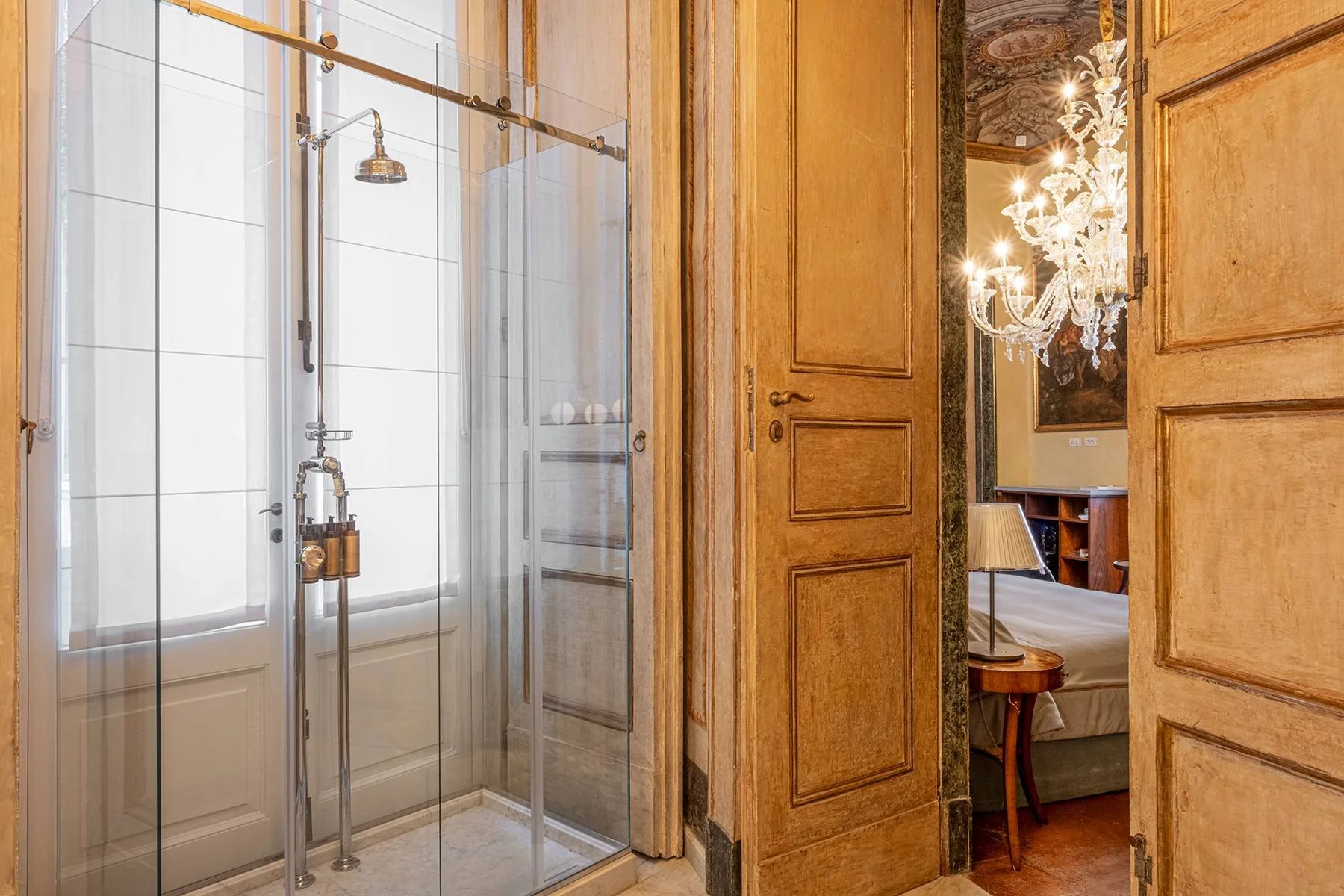
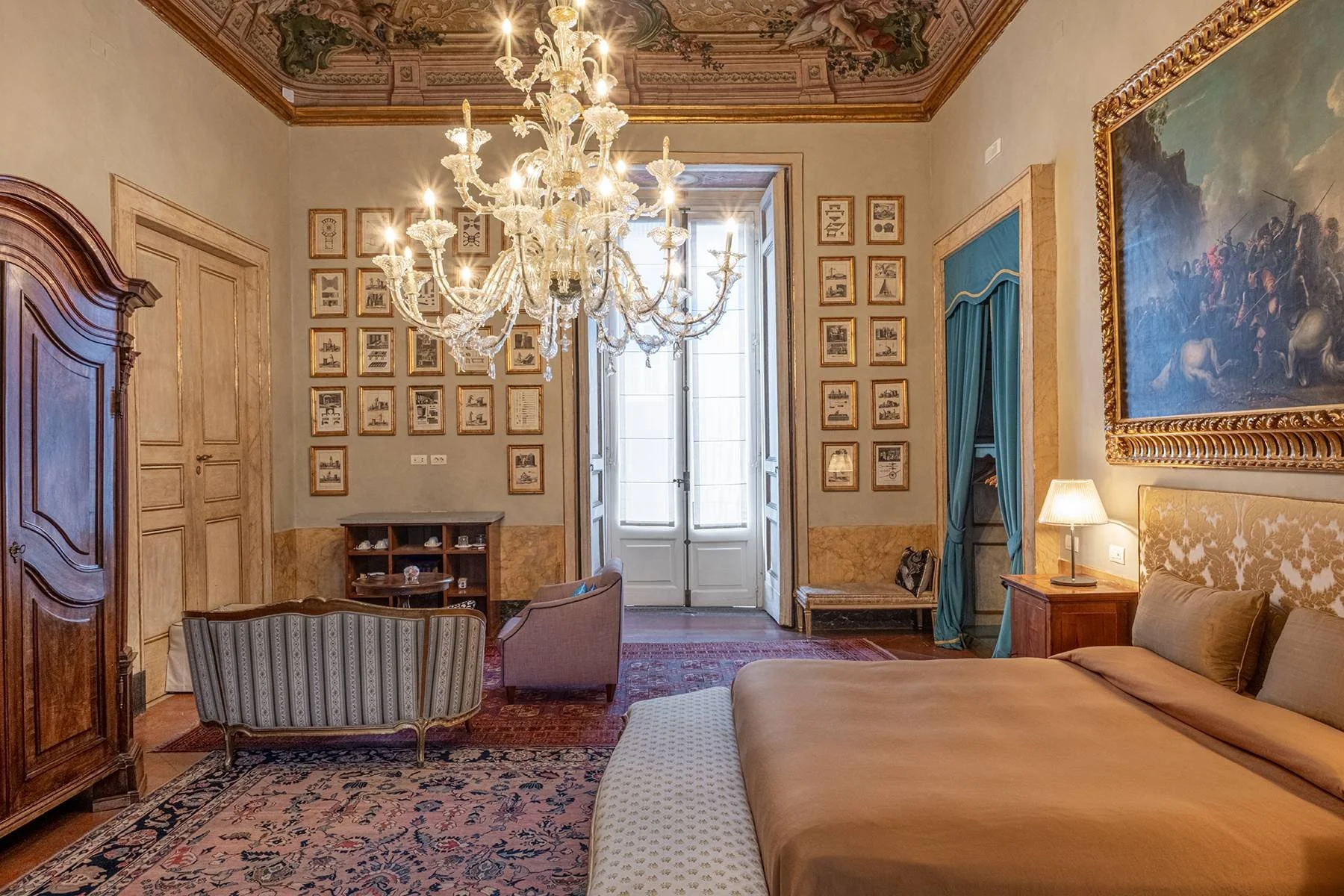
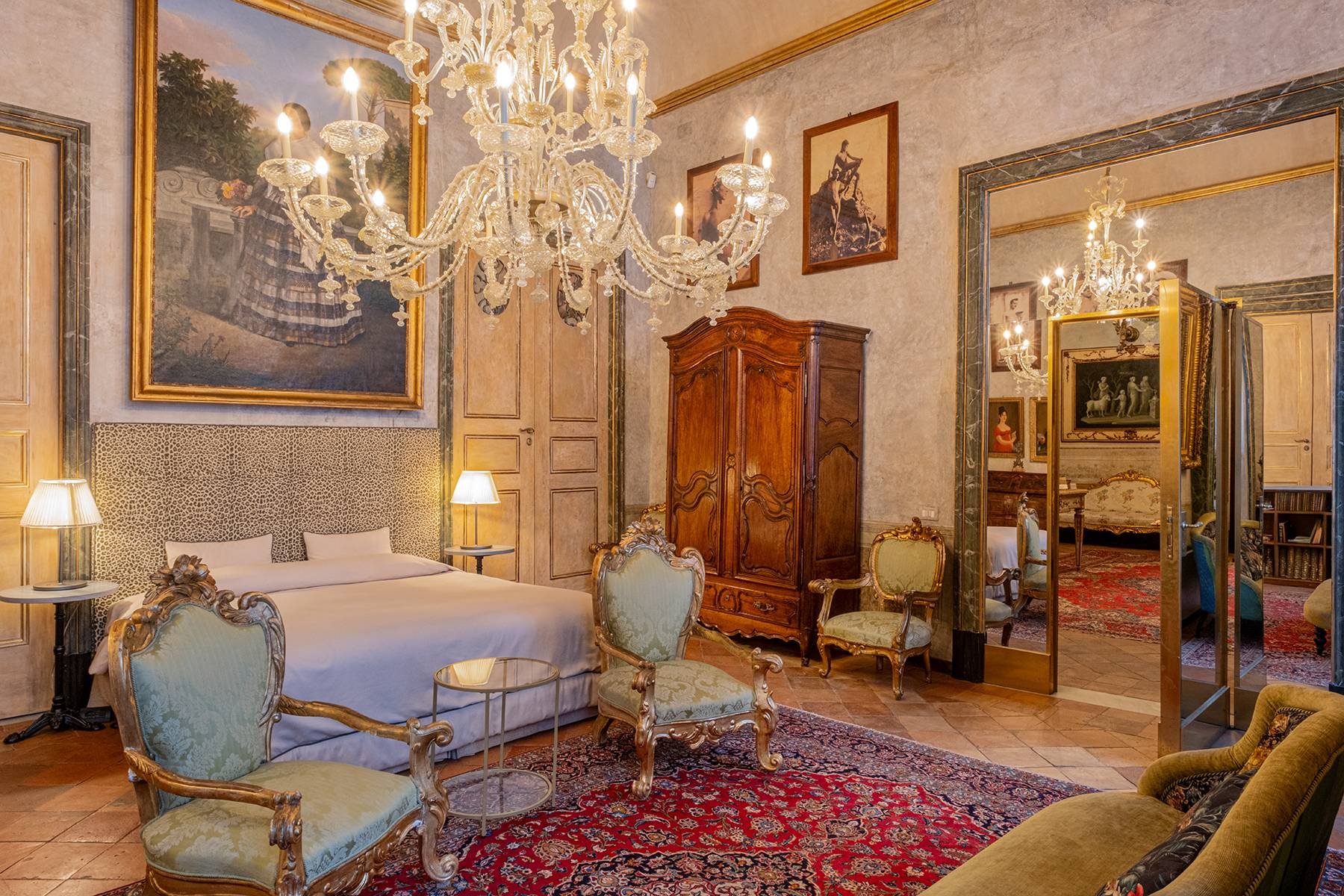
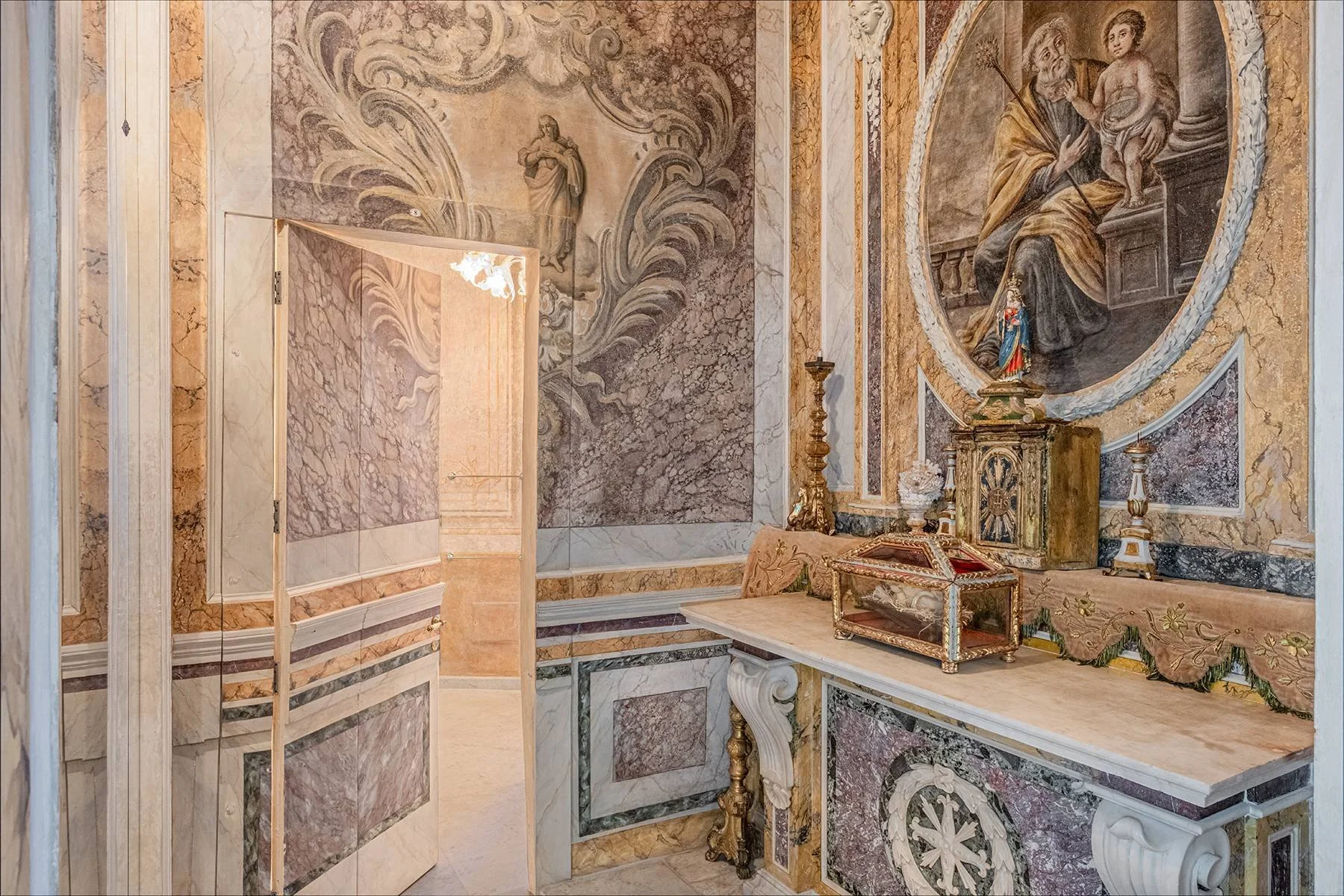
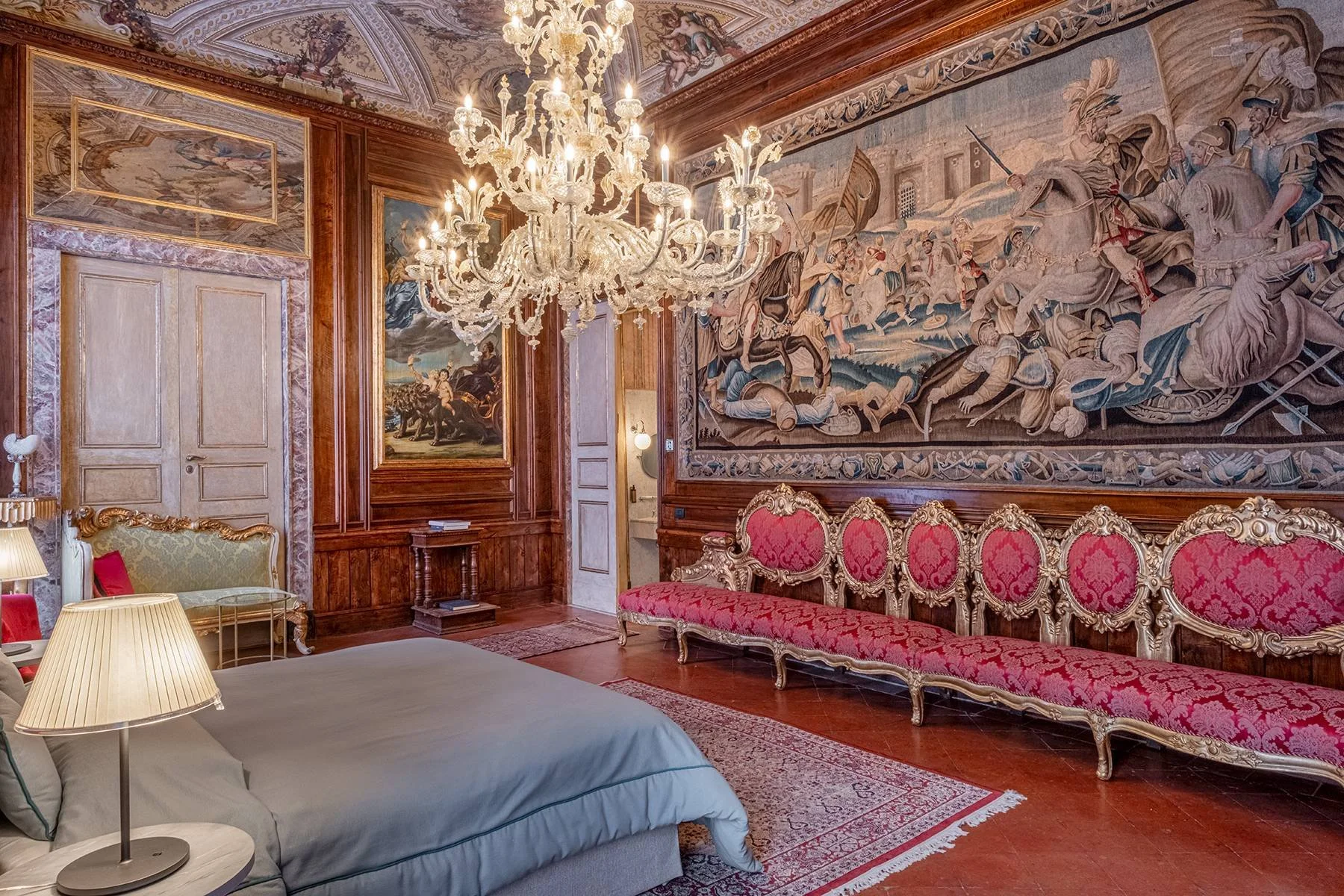
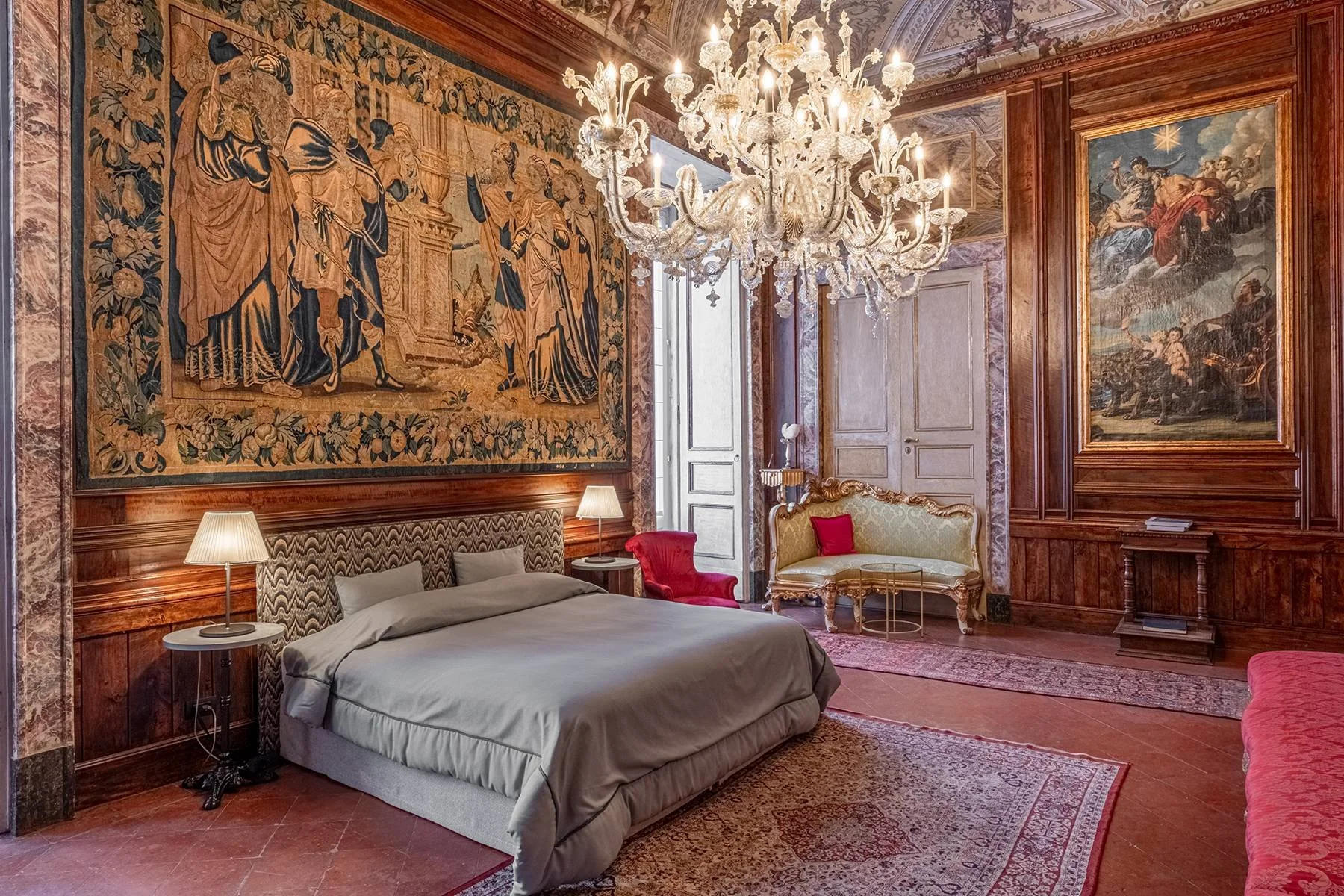
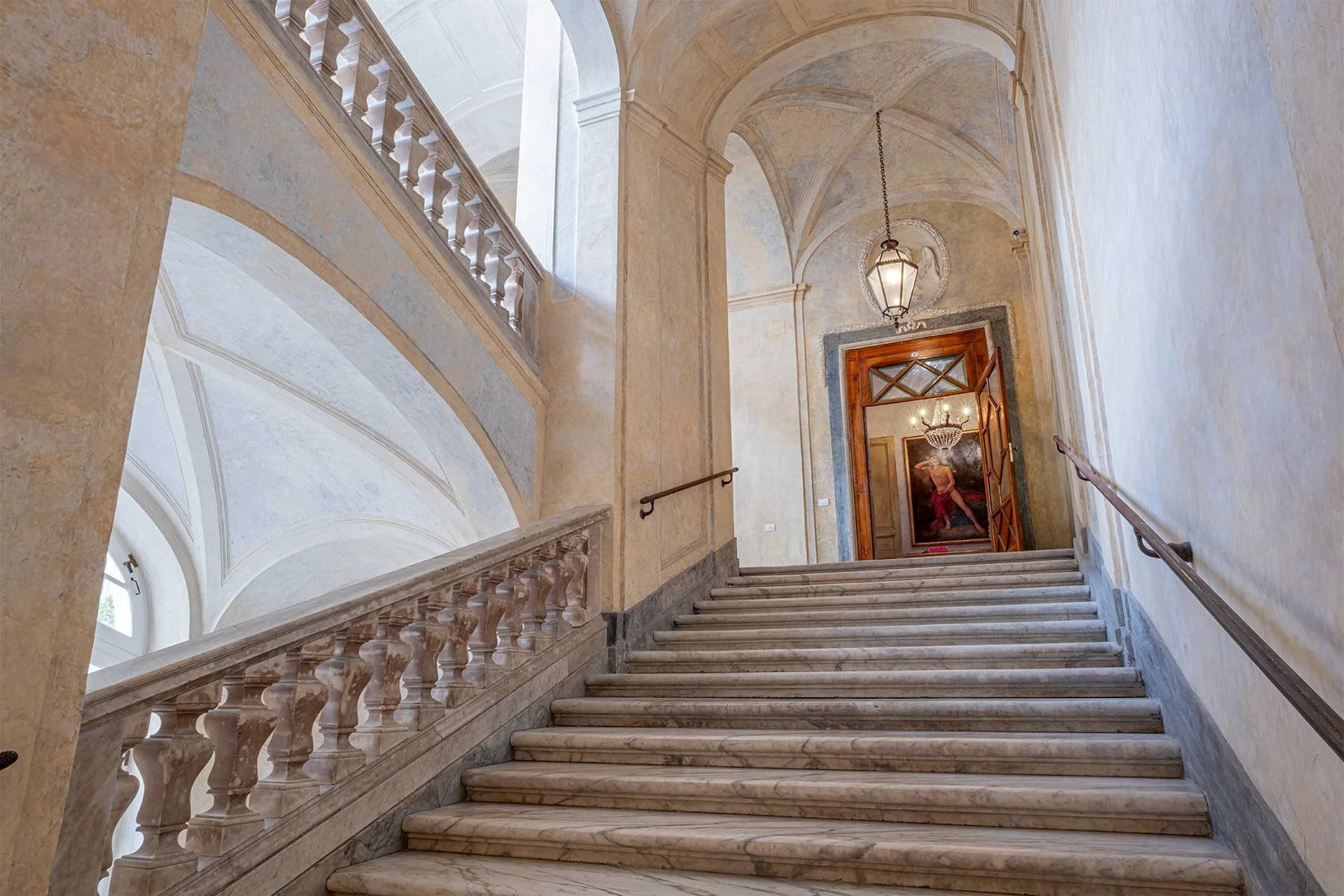
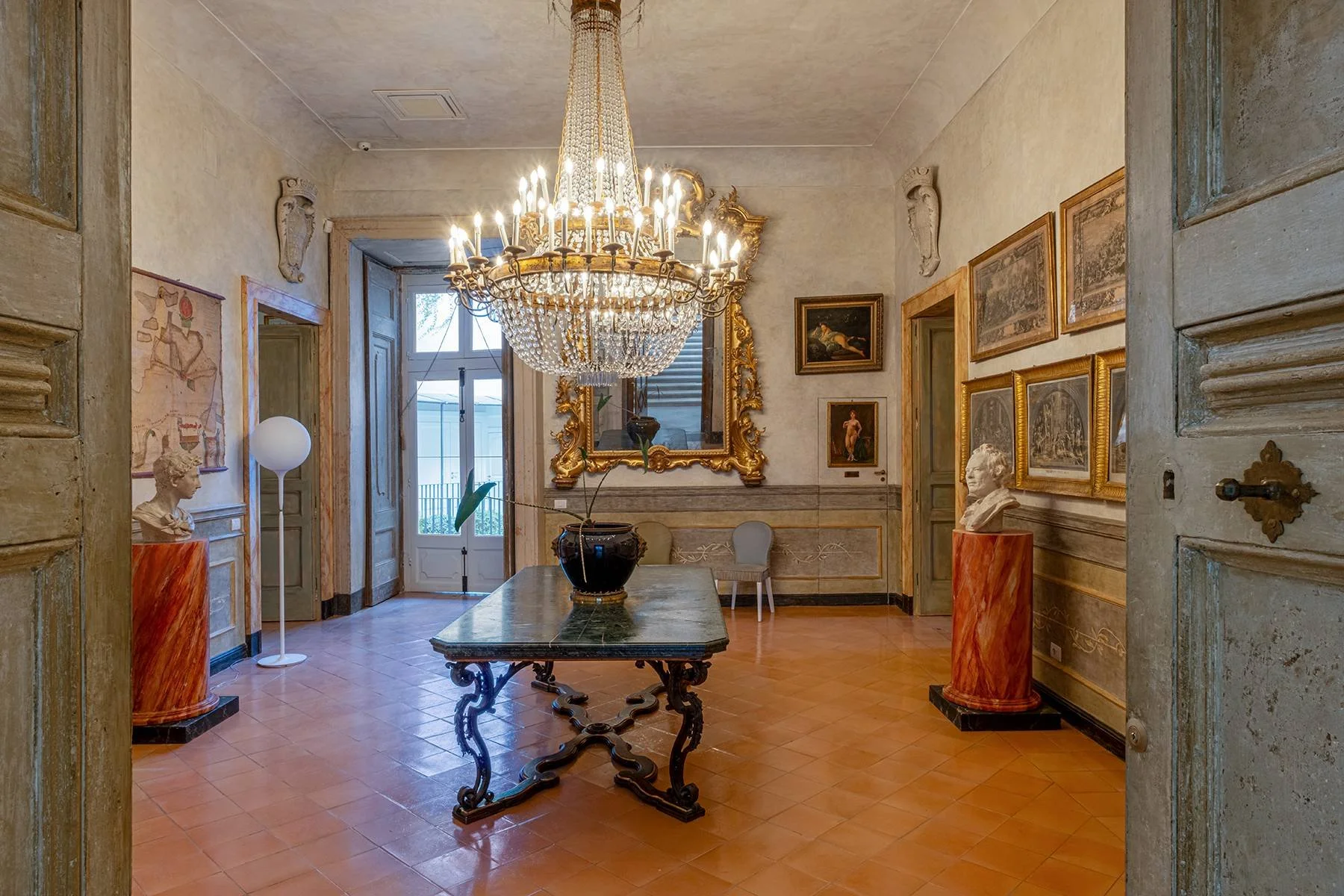
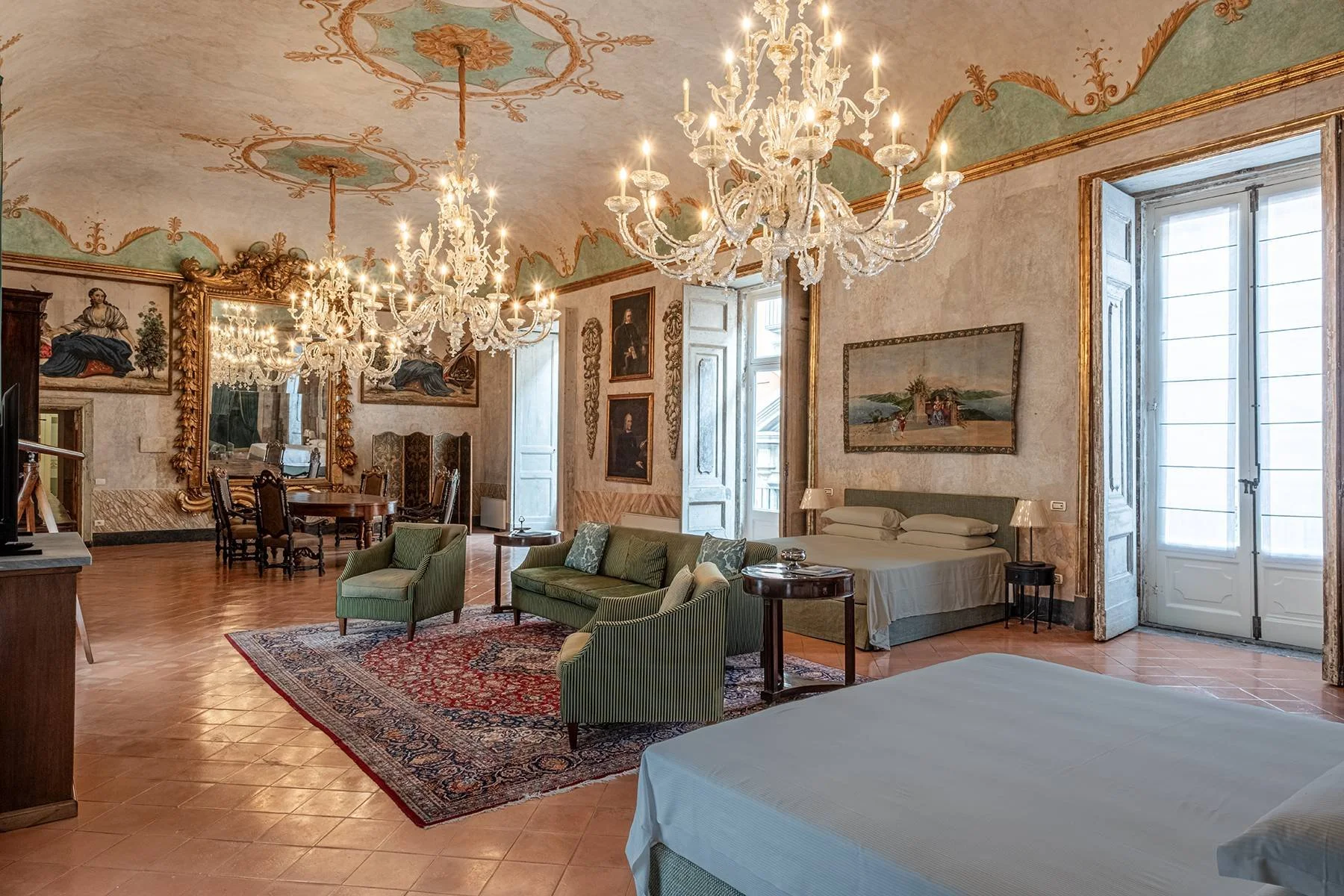
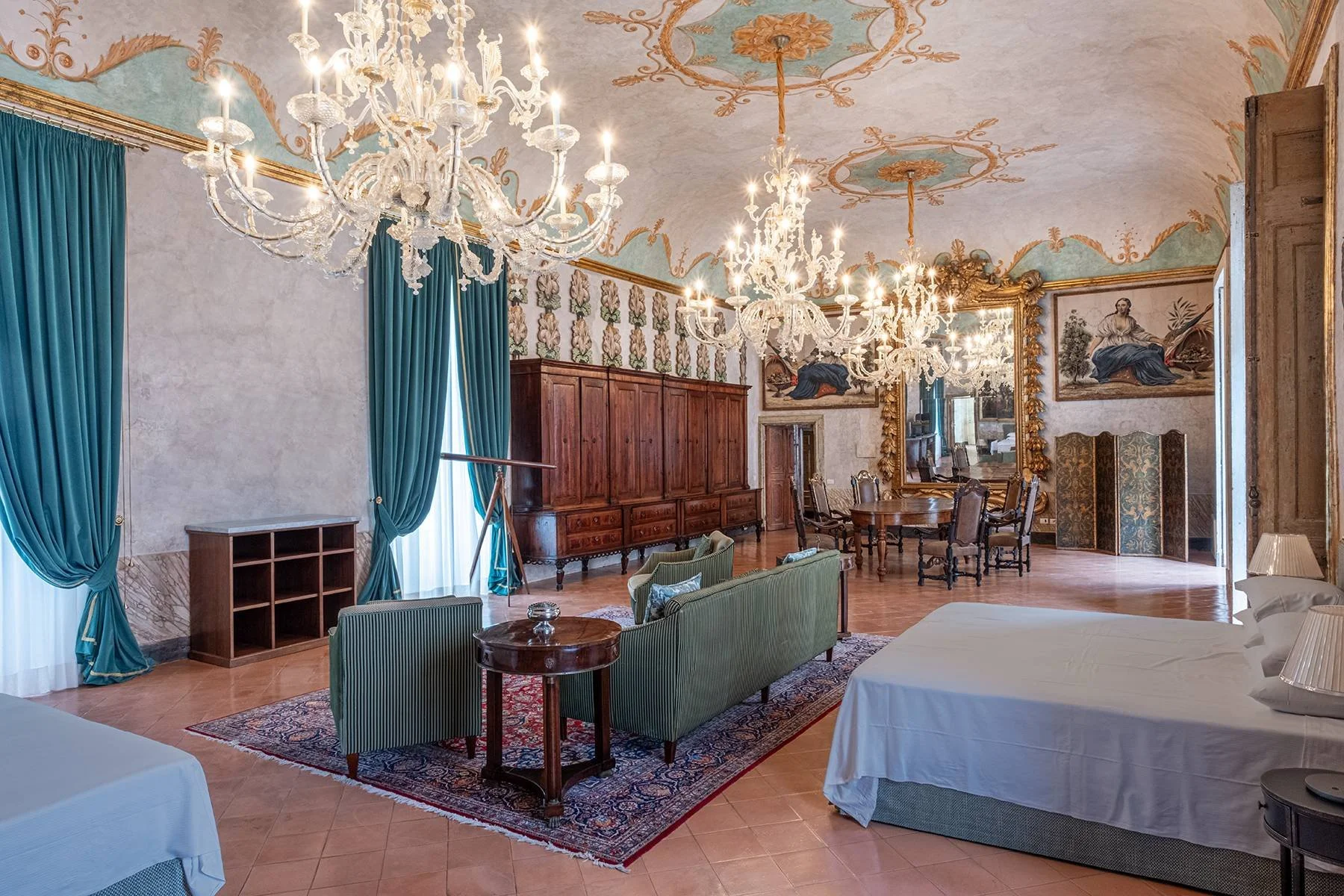
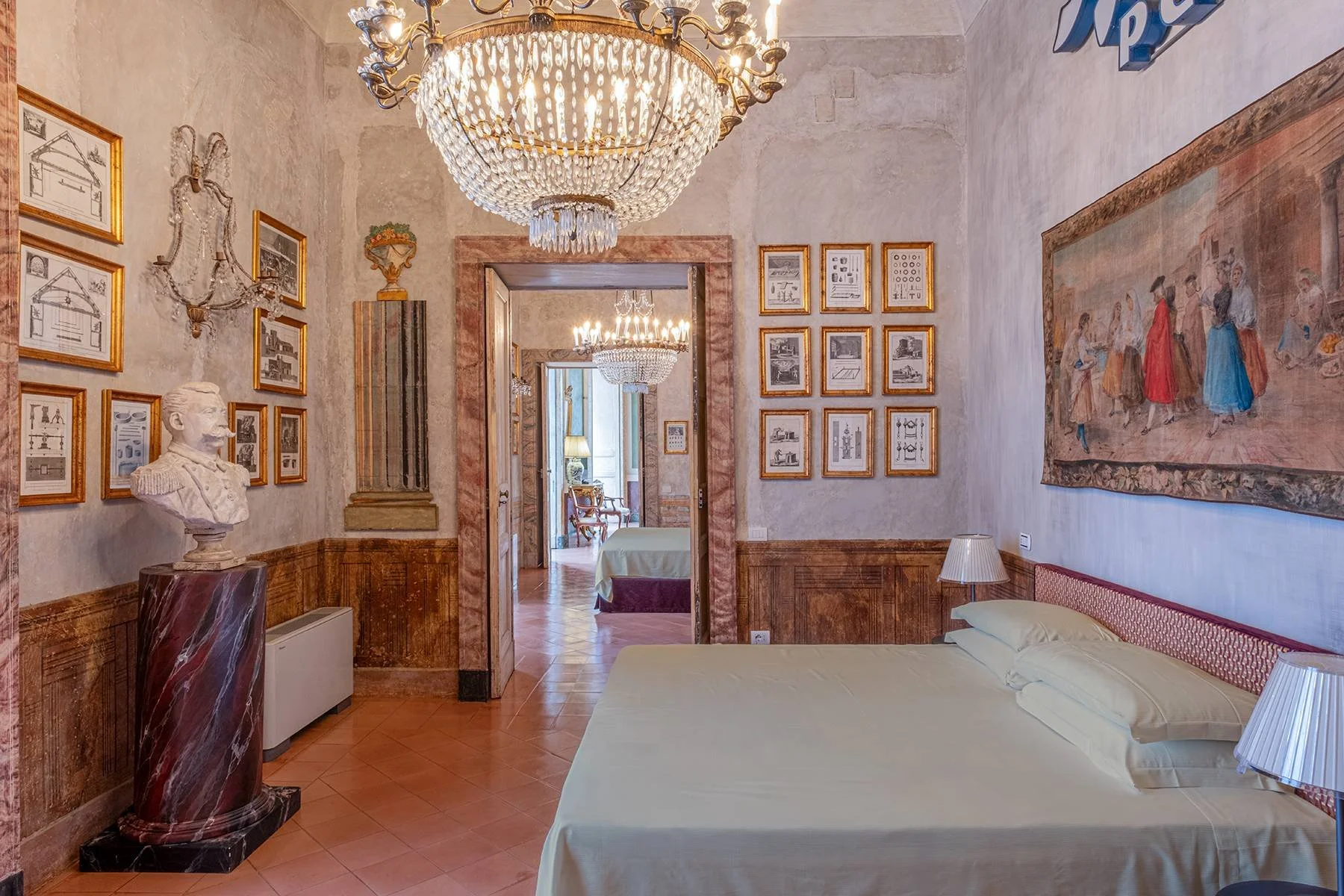
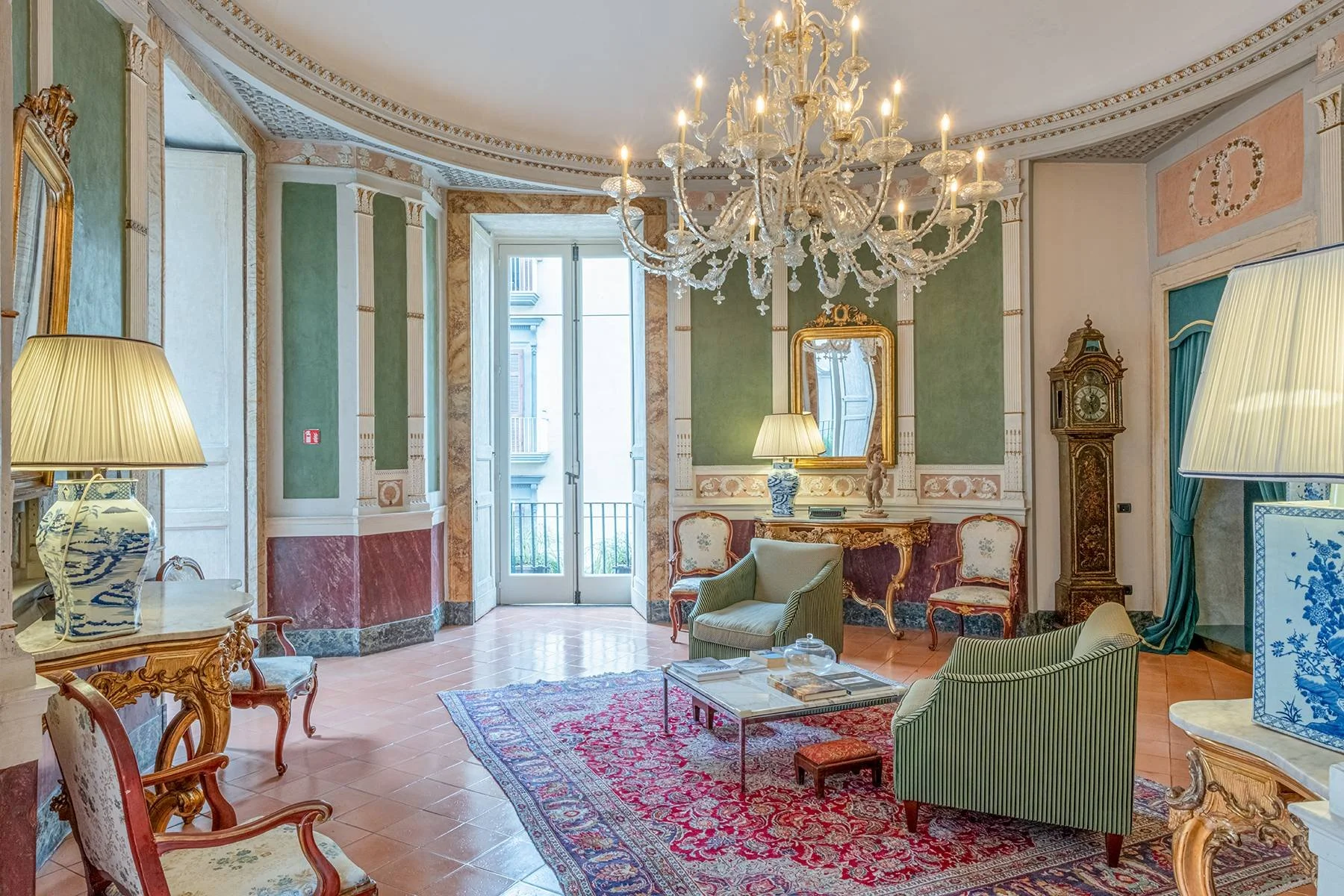
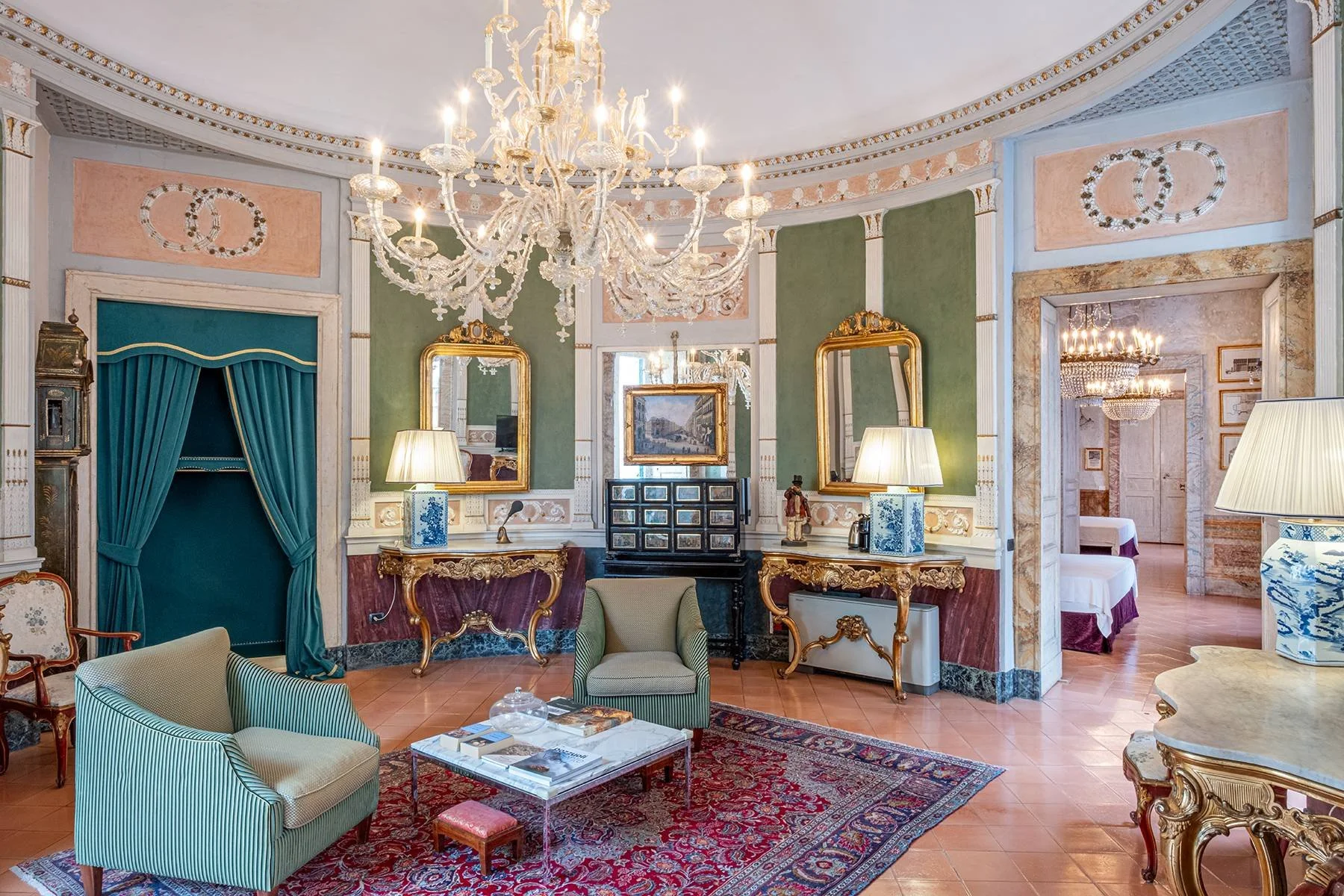
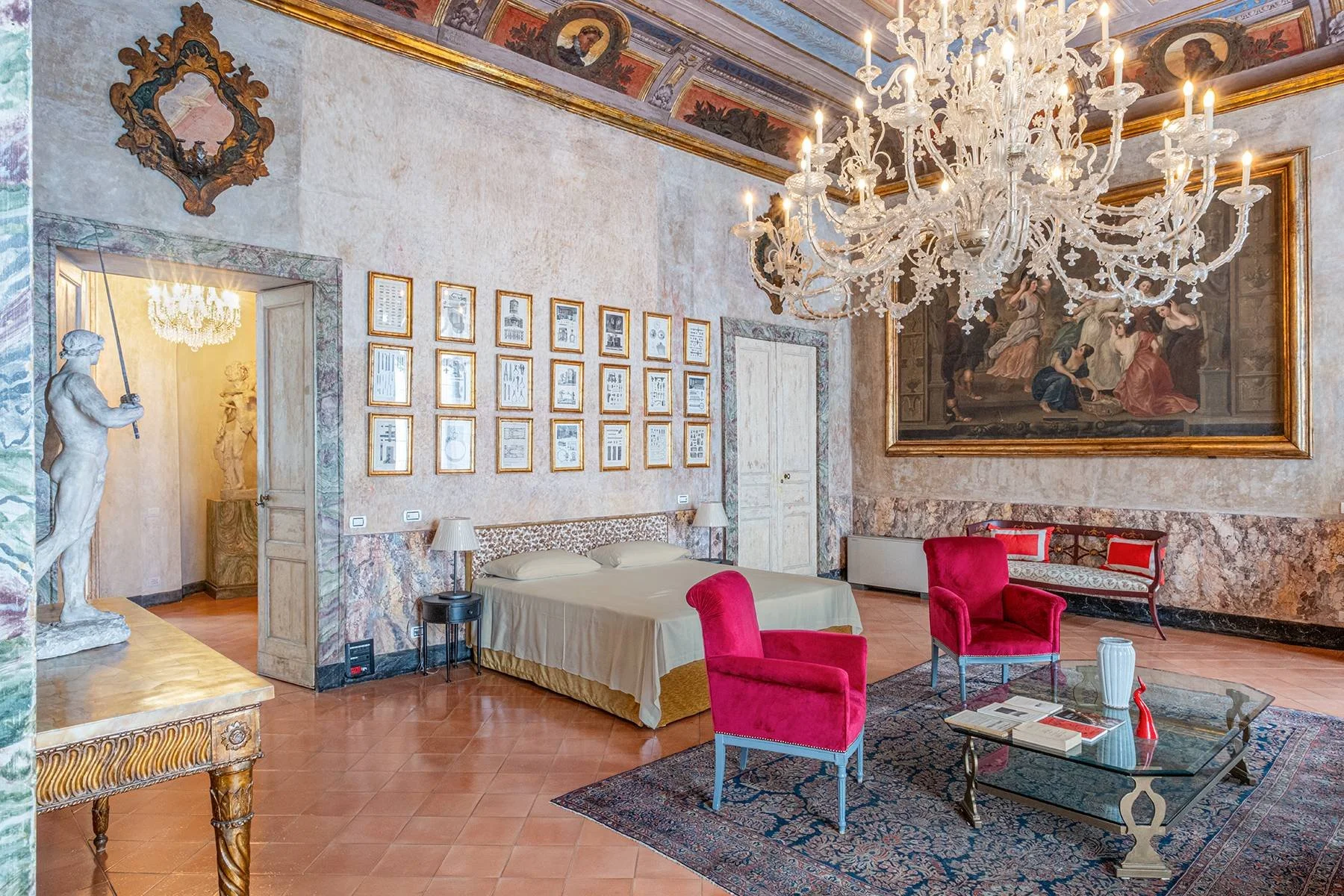
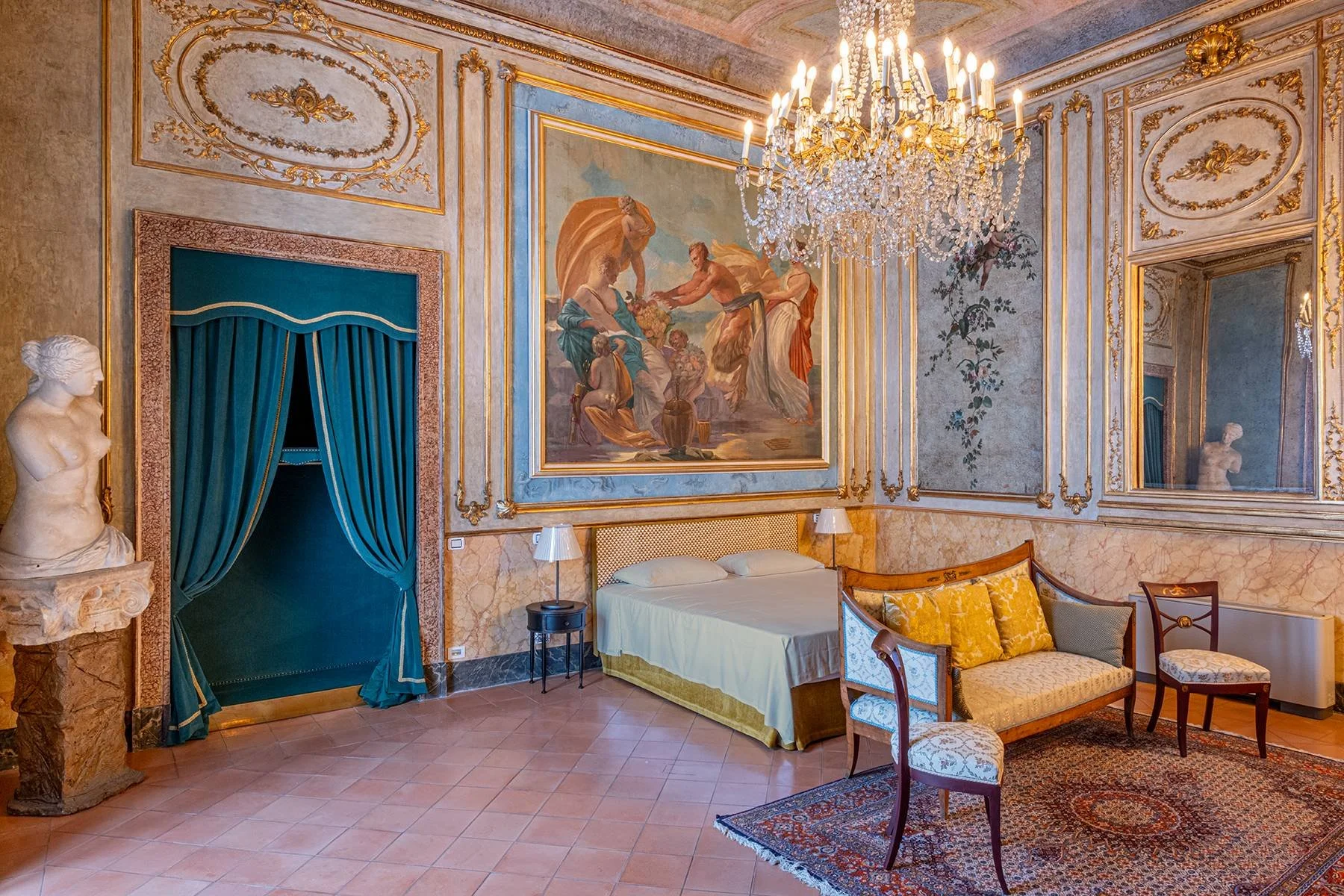
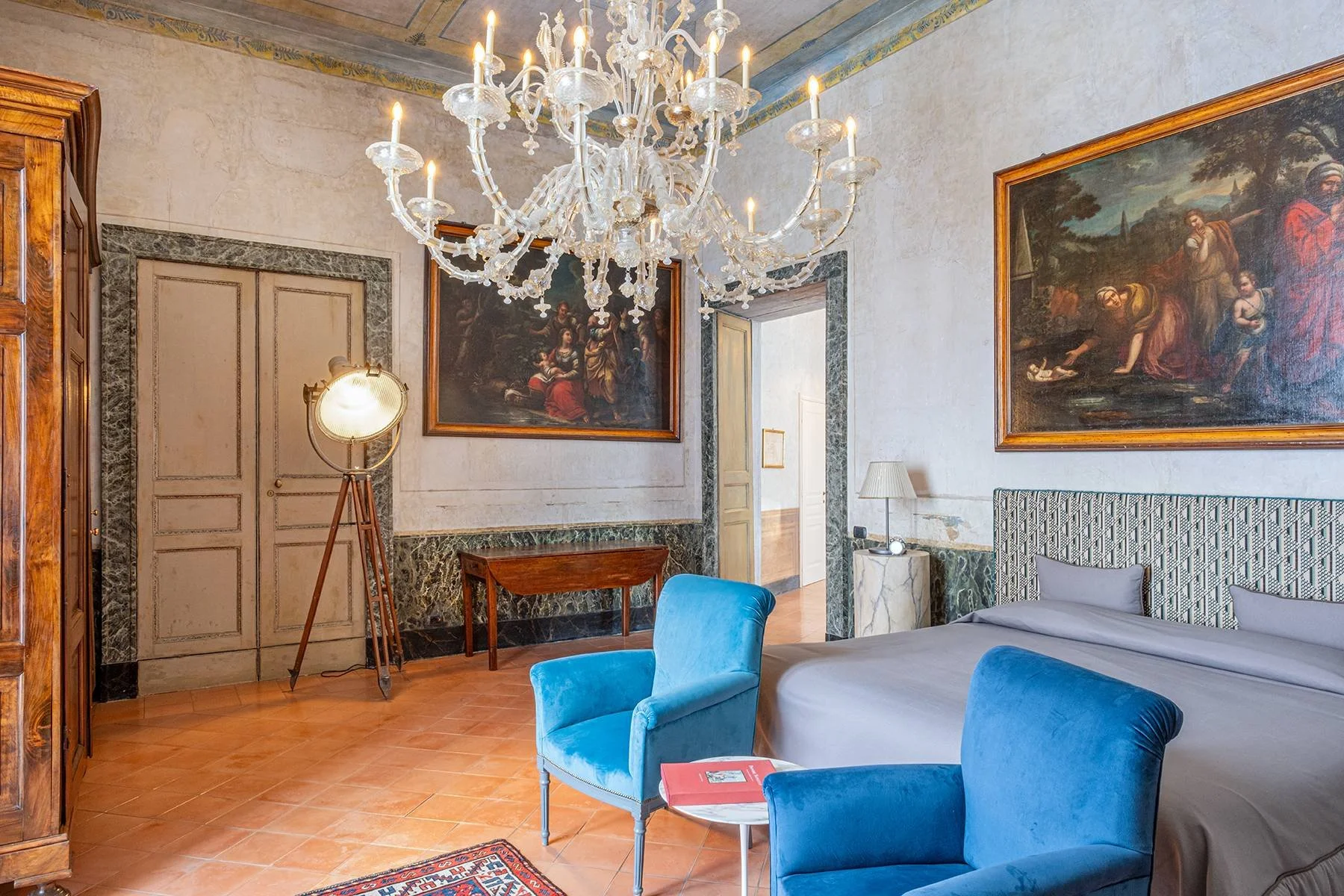
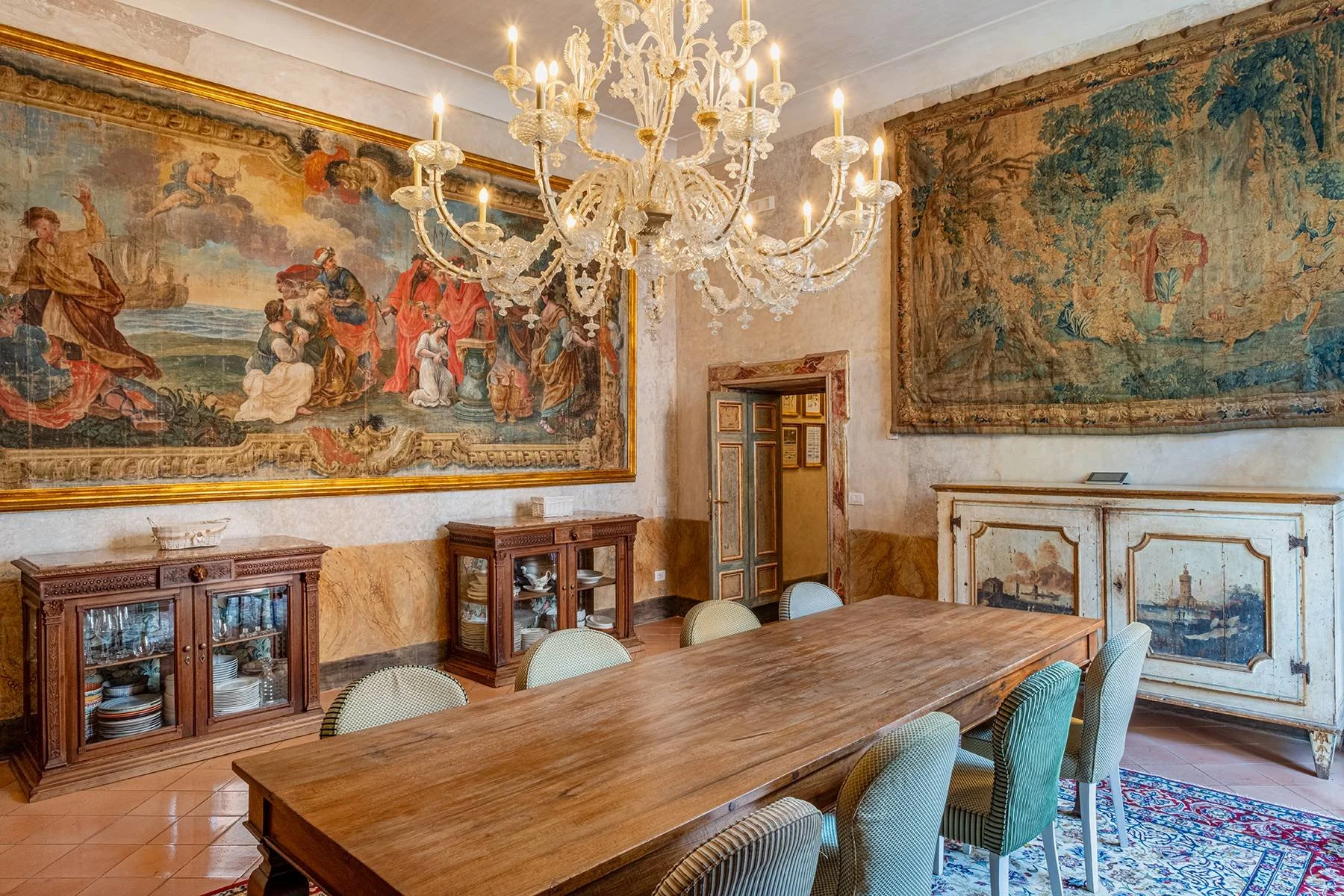
A grand ceremonial staircase leads to two noble floors totaling approximately 2,000 sq m (21,528 sq ft). These levels unfold as a sequence of formal reception rooms rather than a conventional residential plan. Frescoed ceilings, hand-painted decorative elements, 43 Murano chandeliers, 12 columns, and 29 statues—including a half-bust of Garibaldi—define the interiors. A large stained-glass window anchors the main hall, while the contents read more like a private collection than décor: 110 artworks, over 500 prints, 32 mirrors, 21 consoles, and six tapestries.
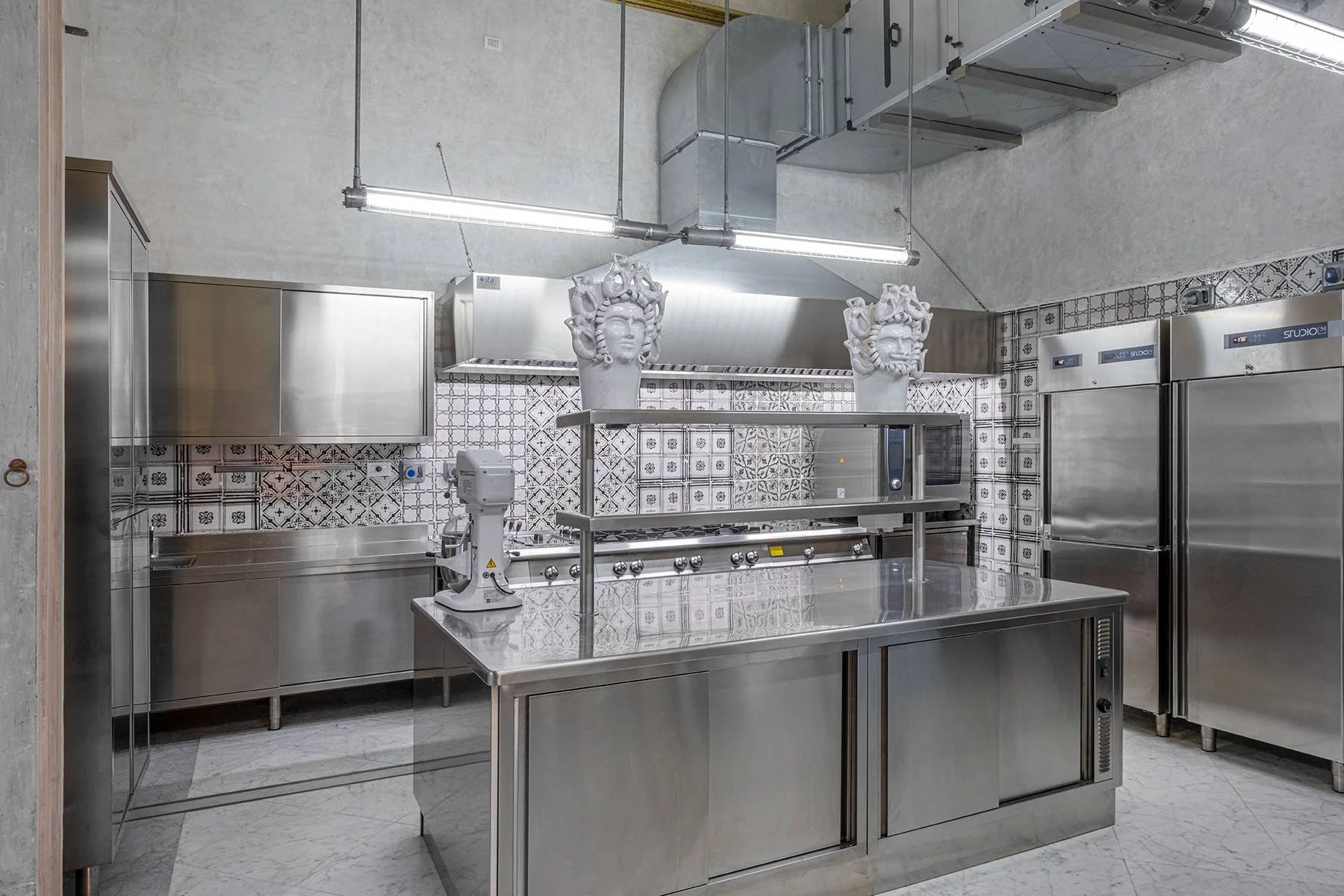
A recent restoration has discreetly introduced modern infrastructure, allowing the palazzo to function today without flattening its historic character.
Naples provides essential context. Located along Italy’s southern Tyrrhenian coast, the city sits roughly one hour from Rome by high-speed train and within easy reach of the Amalfi Coast, Capri, and Ischia. Long underestimated internationally, Naples has reasserted itself as one of Italy’s most culturally and architecturally dense cities—layered, complex, and unapologetically historic.
With 15 bedrooms, 22 bathrooms, an elevator, garage, cellar, and parking, Palazzo Doria d’Angri is not positioned as a conventional residence. It is a civic-scale interior—part private palazzo, part national landmark—offered intact, in the exact place where Italy formally became Italy.
All photos belong to the listing agency.