

28,000 Sq Ft Jacobean Estate on 58 Acres with One of England’s Finest Private Gardens Listed for £9.95 Million
Set high above the Dorset Downs, Chedington Court combines a historic water garden fed by a natural river source with a fully modernised country estate. The result is a rare balance of landscape, infrastructure, and setting.

An Architect Converted a Former Factory in Florence into a Loft with a Suspended Indoor Pool
Located near Piazza Santo Spirito, this 19th-century tower was reimagined by Stefano Tozzi, a Florentine architect with experience at renowned studios like Natalini and Arata Isozaki and collaborations with celebrated architects Daniel Libeskind and Zaha Hadid.

A French Manor Estate in Burgundy With Private River and Waterfalls
Set in the Burgundy countryside near the village of Vézelay, this French manor estate extends across 17 acres of parkland within a quiet, historic pocket of the region.

A Rare Provençal Estate Minutes From the Center of Aix-en-Provence
Domaine La Grange includes a historic bastide, converted farm buildings, and 23 bedrooms across the 4.5-hectare (11-acre) estate. An orangerie, chapel, tennis court, and two swimming pools complete the grounds.

Aaron Paul Cuts Price on 1920s Spanish Revival With 100-Year-Old Gardens in LA to $8,195,000
“Aberdeen is a home with a deep soul,” says the Breaking Bad actor. Past owners include Tim Curry, Robert Pattinson, Kareem Abdul-Jabbar, and Jim Parsons, who sold the property to Paul in 2019 for $6.95 million.

A Sea-View Estate in a Quiet French Riviera Enclave Near Saint-Tropez Asks €6,500,000
Just 180 meters from the Mediterranean in Rayol-Canadel-sur-Mer, once described by The Times as the “Secret South of France.”
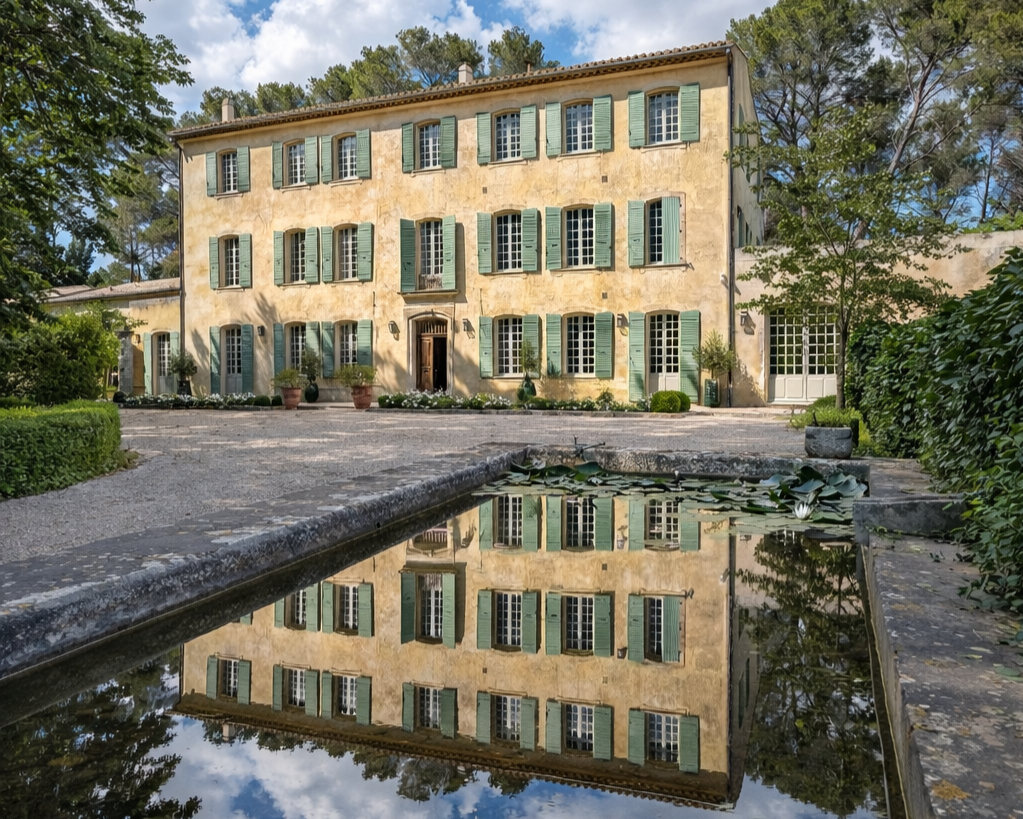
A 1780 Provençal Bastide on 25 Acres in the Alpilles Near Saint-Rémy-de-Provence
Near Saint-Rémy-de-Provence in the Alpilles, the restored estate includes multiple residences, landscaped gardens, and a wellness pavilion with hammam and sauna.

A Victorian Lakefront Estate in Menaggio on Lake Como
One of the largest properties in Menaggio, with 1,050 feet of private lake frontage, Villa Olivetta is a Victorian outlier among the Italianate and Liberty-style estates that define Lake Como, built in the late 19th century by London-born engineer Herman Mylius.

An 18th-Century Manor House in Burgundy’s Wine Village of Givry
In Givry, a village at the heart of Burgundy’s Côte Chalonnaise, this former bishop’s residence combines 18th-century architecture, private parkland, and proximity to world-renowned vineyards.

This Canadian Estate Near Montreal Was Inspired by the Châteaux of the Loire Valley
Bois-de-la-Roche is located in the affluent Senneville Historic District, a lush enclave where some of Montreal’s most prominent politicians, bankers, and merchants built their estates at the turn of the 20th century.