Neo-Renaissance Chateau and 185-Acre Estate in Brittany, France
With its rich architectural details, vast parklands, and historical significance, this 19th century chateau is more than just a property; it is a piece of history, a work of art, and a potential dream home in the French countryside.
Discover this hidden gem, a beautifully preserved French chateau and expansive woodland estate, complete with a rented stud farm, set in the picturesque region of Morbihan, near Ille-et-Vilaine.
This listed (L’inventaire supplémentaire des monuments historiques) chateau was built in 1898, constructed from granite with high slate roofs in the classic Louis XIII style, and spans approximately 30,139 ft2 (2,800 m2) over three stories, with a total of 27 bedrooms and 20 bathrooms.
The chateau's imposing structure features a superb colonnaded entrance hall with a majestic stairway adorned with a carved wooden banister.
This entrance sets the tone for the rest of the property, with a series of lounges (totaling 2282 ft2, or 212 m2) featuring original decorations, herringbone or patterned parquet flooring, and large fireplaces.
The high ceilings of this 19th century French chateau give the rooms a perfect proportion, enhancing the sense of space and elegance.
On the ground floor, you will also find a bedroom, a study, and a small kitchen, all meticulously preserved in their original state.
The first floor houses fourteen large bedrooms, each with its own bathroom or dressing room and alcove wardrobe.
A large, bright open-plan room features a billiard table in perfect condition, making it an ideal space for leisure and entertainment.
The second floor, accessible via two staircases, includes large utility rooms and thirteen additional bedrooms, offering magnificent views over the gently undulating countryside.
The estate's historical significance is further highlighted by its remnants of dry moats and three original 16th-century pavilions, adding a touch of medieval charm.
The parklands, covering approximately 7 hectares, include large pastures and an English-style avenue bordered by magnificent trees, leading to the adjoining 68 hectares of woods.
These woods are crisscrossed by large driveways, closed at their ends by beautiful old gates, creating a serene and secluded environment.
On either side of the parklands, the outbuildings, invisible from the chateau, are laid out around a stable courtyard and a lower courtyard.
The entire estate is offered for sale for the first time in its history, with the chateau priced at €1,575,000 including fees. Additional purchase options include 40 hectares of woods for €696,800 and a rented stud farm on 6 hectares of land for €268,000.
The chateau is conveniently located 6 kilometers from a town with basic shops and services, including a hospital and a supermarket.
It is 60 kilometers from the sea and the Gulf of Morbihan, 50 kilometers from Vannes, a historic city with TGV access, and 60 kilometers from Rennes, which has an airport and TGV connections to Paris in just 1.5 hours.
Nantes, another major city, is 100 kilometers away, making this estate both secluded and accessible.
This Neo-Renaissance chateau in Brittany is more than just a property; it is a piece of history, a work of art, and a potential dream home in the French countryside.
Its rich architectural details, vast parklands, and historical significance make it a unique opportunity for those looking to own a piece of French heritage.
While it requires modernization, the chateau's timeless beauty and grandeur offer endless possibilities for its future owner. Whether as a private residence, a luxury retreat, or a historical landmark, this estate is a rare gem waiting to be rediscovered.
All photos belong to the listing agency.
Historic Chateau in The Heart of The Jura Region in Eastern France
Château d'Éclans enjoys a privileged location in the Jura, a renowned wine region in France sandwiched between Burgundy and Switzerland.
Nestled amidst the picturesque landscapes of the Jura region in Franche-Comté, France, lies a timeless treasure - Château d'Éclans.
Originally built in 1674 by Charles Petrey de Champvans, a prominent figure in the Dole Parliament, Château d'Éclans was further expanded in the 18th and 19th centuries and exudes an aura of aristocratic charm with its elegant façade, adorned with intricate detailing.
The French chateau offers over 8000 square feet of living space across two levels with more than 20 rooms, including lavish salons, and 11 bedrooms.
Original period details can be admired in the parquet flooring, ornate fireplaces, and intricately crafted panelling throughout.
Surrounded by a sprawling 39.5 acre parkland, Château d'Éclans is a sanctuary of natural beauty and tranquility, nested in just over 7 acres of landscaped gardens with a gentle stream meandering through the property.
Château d'Éclans enjoys a privileged location in the Jura, a renowned wine region in France sandwiched between Burgundy and Switzerland.
The French country estate is just 15 minutes from the historic town of Dole, offering direct connections to Paris by TGV in just 1 hour and 30 minutes.
All photos belong to the listing agency.
Historic Castle With Royal Ties Set in the Heart of Spain
Once owned by the Catholic Monarchs, this beautifully restored architectural marvel is a treasure trove of Spain's rich cultural heritage, just one hour from Madrid.
Offering panoramic views, the castle’s striking crenellated turrets, draped in ivy, rise dramatically from the rolling parkland, creating a picturesque silhouette that captures the imagination.
Nestled in the picturesque province of Segovia, a mere 75 km from the bustling city of Madrid, this extraordinary castle with an illustrious history awaits the new chapter in its storied existence.
This beautifully restored architectural marvel is a treasure trove of Spain's rich cultural heritage and is ideally positioned to create a spectacular luxury hotel in the Spanish countryside, just one hour from the capital.
Presently, the Spanish castle has 25 en-suite bedrooms as well as extensive reception rooms and conference facilities, and the picturesque property is frequently rented for weddings and private events.
The castle’s 5,950 m2 (64,045 ft2) built area is a testament to meticulous restoration, blending historical authenticity with modern comforts.
The Royal Lounge, with its opulent decor, provides a perfect space for relaxation, while the stunning central courtyard offers a serene environment for social gatherings.
The atmospheric library, filled with antiquarian books and artifacts, invites guests to immerse themselves in the castle's rich history.
In 1931, this magnificent edifice was declared a cultural landmark, cementing its status as a symbol of Spain's noble heritage.
Although its precise origins remain shrouded in mystery, historians believe there may have been a fortress on this site since the reign of Abd-al Rahman I in the eighth century.
The earliest sections of the current structure date back to the 12th and 13th centuries, showcasing a rich blend of Gothic-Mudejar architecture with traces of Moorish, Elizabethan, and Neo-Classical influences.
Over the centuries, the castle has been passed down through several of Spain's royal dynasties, including the Catholic Monarchs.
The castle was lived in by Queen Isabella I of Castile and King Ferdinand II of Aragon during their travels through the country, and at one point it was also the home of their daughter, Juana I of Castile.
Set on a sprawling 79-hectare (195-acre) estate with several swimming pools, the castle is surrounded by ancillary buildings that add to its charm and functionality.
A charming watermill, in excellent condition, offers the potential for a caretaker’s house or an activity centre. Several stone warehouses, currently used for exhibitions, provide versatile spaces for various uses.
The intriguing pyramidal folly and a lovely chapel on the estate present picturesque settings for weddings and other special events.
This extraordinary castle is not just a property; it’s a piece of Spain’s noble and colourful past. With its superb investment potential, it offers a once-in-a-lifetime opportunity to own a piece of history.
All photos belong to the listing agency.
One-of-a-Kind Italian Estate in the Egadi Islands, Sicily
The renovated former stronghold is set in a commanding position within a protected 22-acre estate, accessed by following the path that leads to the historic lighthouse of Capo Grosso on the northern tip of the island.
Nestled in the Egadi Islands' Naturalistic Area, Levanzo is one of those islands that are whispered about like secrets.
Easily accessible from the port of Trapani, the island of Levanzo is the smallest and perhaps the most picturesque of the Egadi Islands in the Mediterranean Sea, west of Sicily, Italy.
Levanzo offers a wealth of natural beauty with its dreamy beaches and stunning coves, with only one charming white village on the island overlooking the gulf.
Promising a tranquil pace of life, Levanzo is a place where there are more boats than residents (there are only about 200 inhabitants) and there are no motor vehicles on the island, which is less than 4 miles wide and easily walkable.
The former stronghold is set in a commanding position within a protected 22-acre estate, accessed by following the path that leads to the historic lighthouse of Capo Grosso on the northern tip of the island.
Remote and private, this unique property in Levanzo is the dream for those who wish to live by the Latin proverb, dolce far niente—Italian for ‘the sweetness of doing nothing’.
Offering panoramic views of the sea, the property encompasses six main residential structures dating back to the early 1900s. Meticulously restored, they offer over 10,000 square feet of interior space , with soaring ceilings and an abundance of natural light.
Paying homage to the island’s rich history, the revitalization of the property includes its trails, along with the creation of dry walls and stepped terraces, as well as crystal-clear water pools. The property also boasts self-sufficient electricity and water supply.
Additional sea-facing structures on the estate can be restored and offer a further 4300 square feet of interior space.
All photos belong to the listing agency.
Stunning 17th Century French Chateau, Just 35 km From Paris
The beautifully maintained French chateau and its award-winning romantic gardens are set within a 111 acre estate in the Hurepoix region near Paris, France.
The French chateau for sale is set in a romantic 111 acre estate in the heart of the historic Hurepoix region, located in the metropolitan area of Paris (Métropole du Grand Paris).
Surrounded by a landscape of woodland and a botanical park, the property dates back to the 16th century, built as a manor house for Gilles Lemaître, general counsel to François I.
The property was transformed into a spectacular chateau in the 17th century by the Lamoignon family, along with the addition of a formal French style park in the style of French landscape architect, André Le Nôtre.
In 1755, the castle was sold to Guillaume Joseph Dupleix de Bacquencourt and later inherited by Anne-Rose-Zoé de Montesquiou, who had just married Jean-Thomas Arrighi de Casanova.
A second cousin to Napoleon Bonaparte, he was granted a title of nobility for his military prowess in the Imperial Fleet: the Duke of Padua.
The Dukes of Padua would launch a spectacular restoration of the chateau and grounds in 1820, transforming the French formal gardens into a romantic landscape park by Louis-Martin Berthault, with the addition of an artificial lake to the grounds, with the help of the famous landscape architects of their day, the Bühler brothers.
In 1980, the chateau’s owners enlisted the help of the globally-admired landscape designer Timothy Vaughan to revive the gardens.
Considered one of the most romantic gardens in France, they were awarded the “Jardin Remarquable” (Remarkable Garden) Label in 2004.
Inside, the 17,700 square foot chateau features rich period detailing, especially notable in the "Napoleon III salon", a striking 2-storey drawing room with a trompe-l'oeil balustrade and a striking ceiling mural depicting a spring sky.
The aristocratic French residence has classic chateau detailing throughout, with panelled walls, oak parquet, as well as black and white cabochon floors, and magnificent fireplaces, all of which are beautifully maintained.
The yellow sandstone and brick chateau is flanked with several outbuildings, including stables, a historic water tower, caretaker’s accommodations, and two greenhouses.
All photos belong to the listing agency.
Baroque Hunting Lodge in Umbria That Once Hosted Galileo Galilei
Known as Tenuta Galileo, the restored Baroque hunting lodge is named after its most well-known visitor and the father of modern science, Galileo Galilei, and features a room especially frescoed for him.
This historic lodge dates back to 1580 and is located in the picturesque Valle dei Castelli di Baiano in Spoleto, Umbria, set within 235 acres of private parkland which includes wooded hills, olive groves, natural springs, and arable land.
The Baroque hunting lodge is unique as it is the only sixteenth-century example that preserves the original layout, built around two pre-existing dovecote towers connected by a suspended gallery.
The main facade is simple yet elegant, with a lovely doorway framed by columns and topped with a balcony featuring a French window framed with stylish 18th-century moldings.
The 6-bedroom, 10-bath manor house has been meticulously restored by the current owners and the residence features original floors, arches, fountains and period fireplaces in large and sumptuous rooms.
The period property features wonderful frescoes throughout, with works by Guttuso, De Chirico, and Balla, as well as 16th century paintings, and is today also a tourist destination, open to the public during themed events which in recent years have attracted tens of thousands of visitors.
IIt was originally owned by Benedetto Gelosi, a notable merchant from Spoleto, who was known to rub shoulders with scientists who followed heliocentrism.
This included his friend, the Dutchman Johannes van Heeck, one of the founders of the Accademia dei Lincei, one of the oldest and most prestigious European scientific institutions.
Known as Tenuta Galileo, the Baroque hunting lodge is named after its most well-known visitor, the famous Galileo Galilei who is considered the father of modern science.
Galileo visited the estate in 1624 during his visit to the nearby Acquasparta Palace of Prince Federico Cesi (another founder of the Lincei) and Gelosi had a room especially frescoed for him in anticipation of his arrival.
These interactions highlight the estate's importance as a hub for intellectual and scientific discussions during the Renaissance.
Today, the frescoes in "Galileo's Study", the room where Galileo once stayed, remain in excellent condition.
The property includes several outbuildings, such as an old hen house and shelters, which can be converted into additional living spaces. There is also potential to add a swimming pool
The estate also comes with a frescoed, 17th century chapel dedicated to the Madonna del Rosario, flanked by a warehouse and a row of cypress trees that continue along the avenue towards the village of Baiano.
All photos belong to the listing agency.
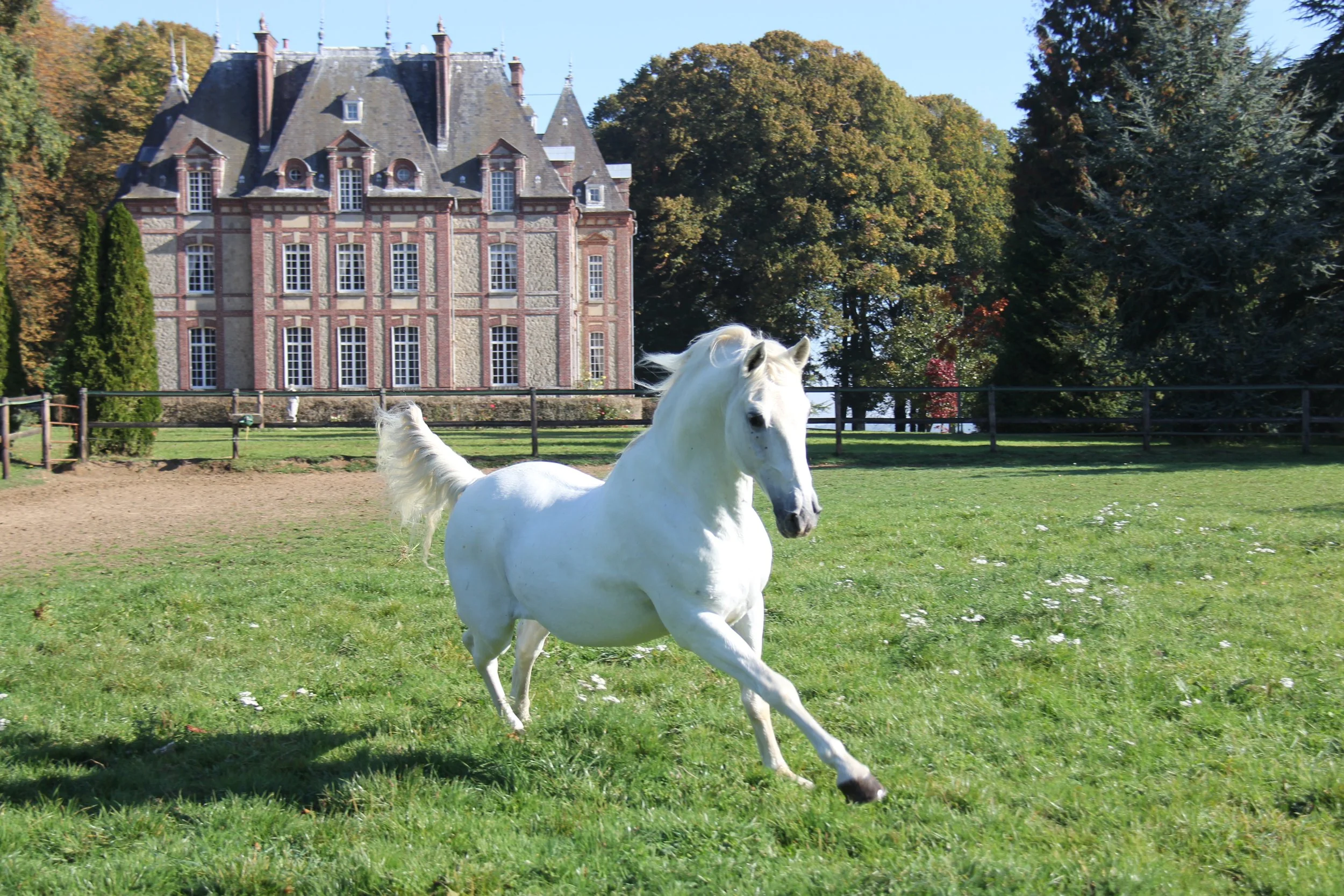
19th Century Chateau and Equestrian Estate in Normandy, France
This French chateau for sale is nestled in 84 acres of private grounds, surrounded by an enclosed park and complete with an equestrian complex with 40 horse boxes and an indoor riding arena.
Set at the gates to Normandy, this French chateau for sale is nestled in 84 acres of private grounds, surrounded by an enclosed park with woodland, meadows, and rose gardens.
Built in 1895, the chateau offers 8760 square feet of living space with 14 bedrooms and several reception rooms, featuring fine period detailing throughout.
With numerous outbuildings, two gites, and a caretaker’s house, the French country estate presents a wealth of opportunity for conversion.
The French country estate has a tennis court, as well as an equestrian complex with 40 horse boxes and an indoor riding arena.
All photos belong to the listing agency.
Historic Castle Set at the Foot of the Italian Alps
Originally constructed as a defensive fortress in the 9th century, Castello di Pavone rises majestically against the backdrop of the Italian Alps, a short drive from the historic town of Ivrea.
A short drive from the historic town of Ivrea near Turin, the Castello di Pavone rises majestically against the backdrop of the Italian Alps, overlooking the serene plains below.
Originally constructed as a defensive fortress in the 9th century, the Castle of Pavone was built to protect the village of Pavone Canavese from invaders like the Hungarians and Saracens.
Over the centuries, it has been expanded and transformed, each era leaving its indelible mark on the structure.
Today, its majestic towers, battlement walls, and intricate internal courtyards stand as a testament to its storied past and it is considered one of the most beautiful castles in Italy.
Throughout its history, the Castle of Pavone has been home to some of the most notable figures in Italian history.
Initially, it was owned by King Arduino, a legendary monarch known for his resistance against the Holy Roman Empire.
Later, it passed into the hands of the Bishop of Ivrea, before becoming a prized possession of the House of Savoy, one of Italy's most influential dynasties.
The Castle of Pavone is a masterpiece of medieval architecture, featuring majestic towers, battlement walls, and intricate internal courtyards. Inside, the castle is a treasure trove of artistic beauty.
Declared a national monument in 1981, the Castle of Pavone has been lovingly restored to blend its historical essence with contemporary comforts.
Today, it functions as a refined hotel-restaurant, featuring 28 en-suite bedrooms and a state-of-the-art conference center. Each room combines antique charm with modern amenities, offering guests a unique and luxurious experience.
The Noble Courtyard, with its evocative Well of the Mysteries, and the lush Rose Garden, capable of hosting up to 300 guests, add to the castle’s enchanting charm.
Steeped in legend, the Castle of Pavone is often referred to as a "lucky castle." It is believed to bestow luck, love, and prosperity upon all who visit, even if only for a short stay.
This enduring legend adds a touch of mystical charm to the castle’s already captivating presence.
All photos belong to the listing agency
Dream Farmstead to Restore on a French Mediterranean Island
La Ferme Notre Dame presents a unique opportunity to create a dream home on the island of Porquerolles in the Hyères archipelago, located on the Mediterranean coast between the towns of Toulon and St. Tropez.
Set at the southernmost part of Provence, the island is considered a Mediterranean jewel, renowned for its natural beauty, pristine beaches, and timeless tranquillity.
Dating back to 1856, La Ferme Notre Dame showcases Roman-inspired architecture radiating a majestic aura that calls for a loving restoration to fully revive its splendor.
Despite the renovation needed, the property's historical charm remains intact, promising an exclusive retreat where history and future potential seamlessly converge.
The main building offers 5920 square feet of interior space, with the possibility of an additional 1237 square feet and 600 square feet in the annexes.
The French island estate spans over 32 acres, with 12 acres dedicated to viticulture, olive groves, and fruit trees, embodying the essence of Mediterranean agriculture.
La Ferme Notre Dame's location is nothing short of ideal.
Nestled in a private, serene setting, it is just a 7-minute walk from the stunning Notre Dame beach, one of the island’s most beautiful and tranquil spots.
The property is also conveniently close to the vibrant heart of Porquerolles and its bustling port, only 4 km away, offering a perfect balance between seclusion and accessibility.
It’s not just a property; it’s a lifestyle, an investment in history, and a legacy waiting to be shaped.
Imagine a life where every day is framed by the natural beauty and peaceful rhythm of Porquerolles, where your home is a testament to both past and future.
La Ferme Notre Dame awaits the discerning buyer ready to embrace this extraordinary opportunity.
All photos belong to the listing agency.
Beautifully Restored Provençal Farmhouse Near Saint-Rémy-de-Provence
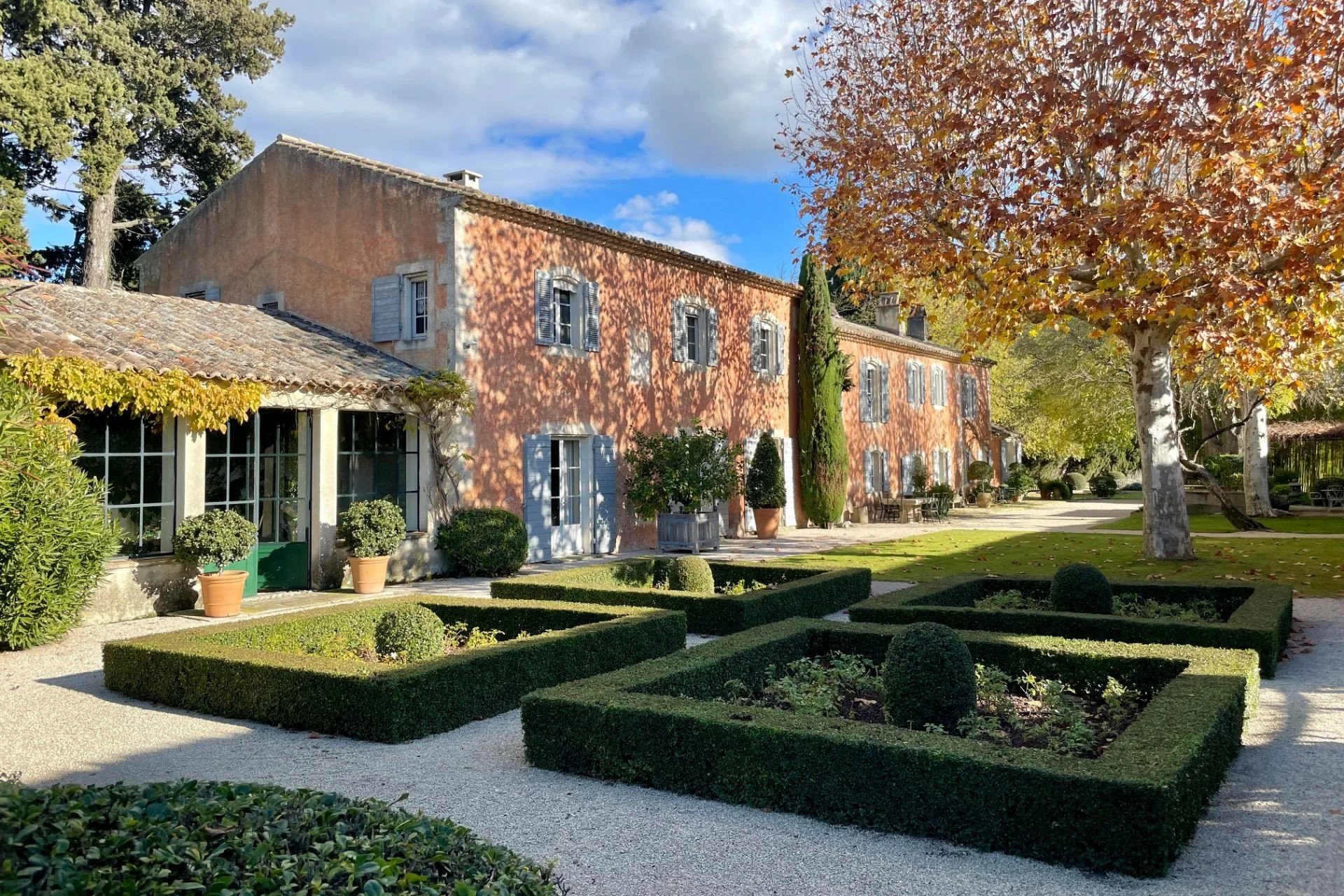
Discover a meticulously restored farmhouse, set on 14.67 acres near the center of Saint-Rémy-de-Provence, the capital of the Alpilles and one of the oldest villages in France.
Saint-Remy’s appeal lies in its ability to offer a quintessential Provençal lifestyle—a medley of art, gastronomy, and the famed Provençal markets—all within the tranquil embrace of the Alpilles mountains.
A true hidden gem, this farmhouse epitomizes the art of Provençal living, set behind old gates and approached via an enchanting path flanked by olive and fruit trees, leading to a grand entrance adorned with Anduze vases.
The beautifully manicured grounds feature topiary gardens, a vegetable garden, meadows, a pine forest, a boulodrome, and a swimming pool framed by two square pavilions.
Behind its pink, patinated facade, the restored farmhouse has been divided into a 2-bedroom janitor’s cottage with a private courtyard on the parking side, and the main, 7-bedroom farmhouse overlooking the gardens.
The interiors are a showcase of Provençal opulence, with bright rooms, a winter garden, a formal dining room, and a fully equipped kitchen.
The upper level reveals intimate retreats with master suites and cozy bedrooms, seamlessly blending modern luxury with timeless elegance.
This restored farmhouse is not merely a residence; it is a haven that encapsulates the true essence of Provence.
A dream retreat for those enamored with the region's soul, it invites you to savor the Provençal way of life and also provides an ideal vantage point to experience the unique charm of Saint-Remy-de-Provence.
All photos belong to the listing agency.