
Italian Liberty-Style Villa in Verona Overlooking the Adige River
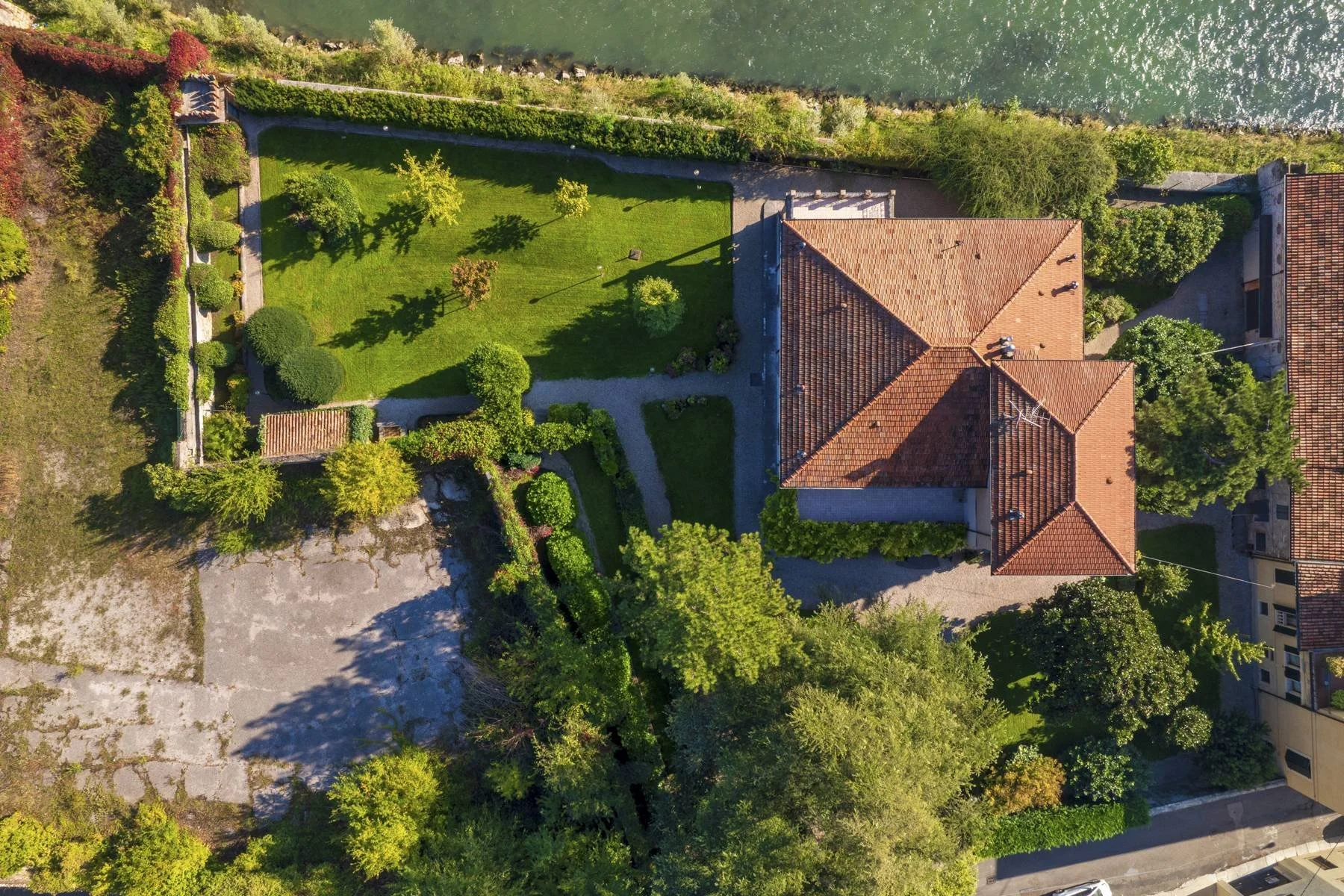
Listed with Italy Sotheby’s International Realty for $4.9 million (€4.5 million), this Liberty-style villa is located in Verona’s historic San Zeno district, just steps from Piazza Bra, the Arena, and the city’s principal cultural landmarks. Set within a private garden of approximately 2,000 square meters (21,528 square feet), the property overlooks the Adige River while remaining firmly embedded in the historic center.
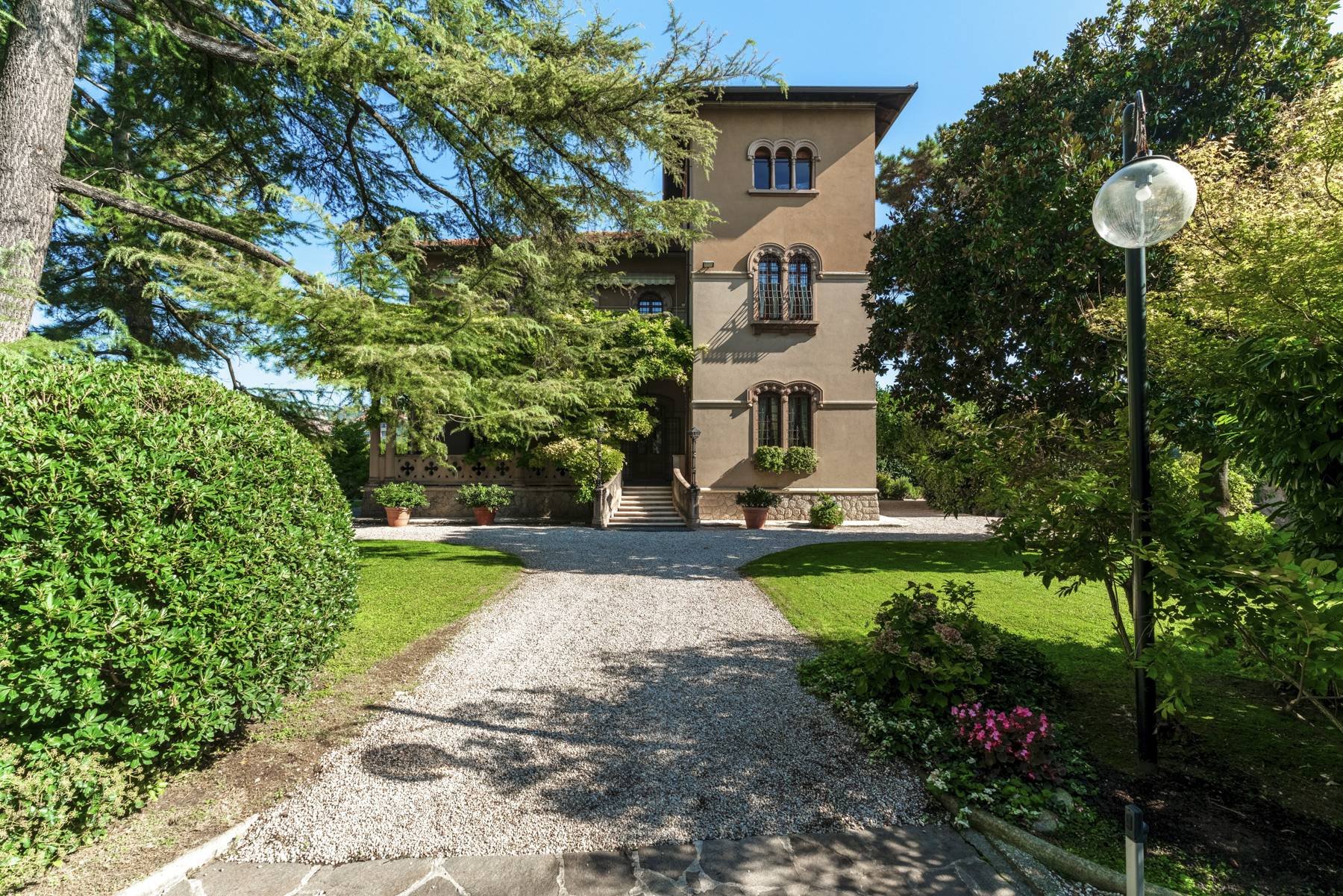
Constructed between 1919 and 1921, the villa represents a late and well-preserved example of Italian Liberty architecture, the Italian expression of Art Nouveau that emerged in the early 20th century. In northern Italy—and particularly in cities such as Verona—Liberty-era residential buildings often combined decorative ironwork and ornamental detailing with traditional masonry construction and restrained façades, reflecting both local building traditions and lingering Central European influences.
Arranged across four above-ground levels, the residence offers approximately 840 square meters (9,042 square feet) of interior space, including large reception rooms, studies, kitchens, and six bedrooms.
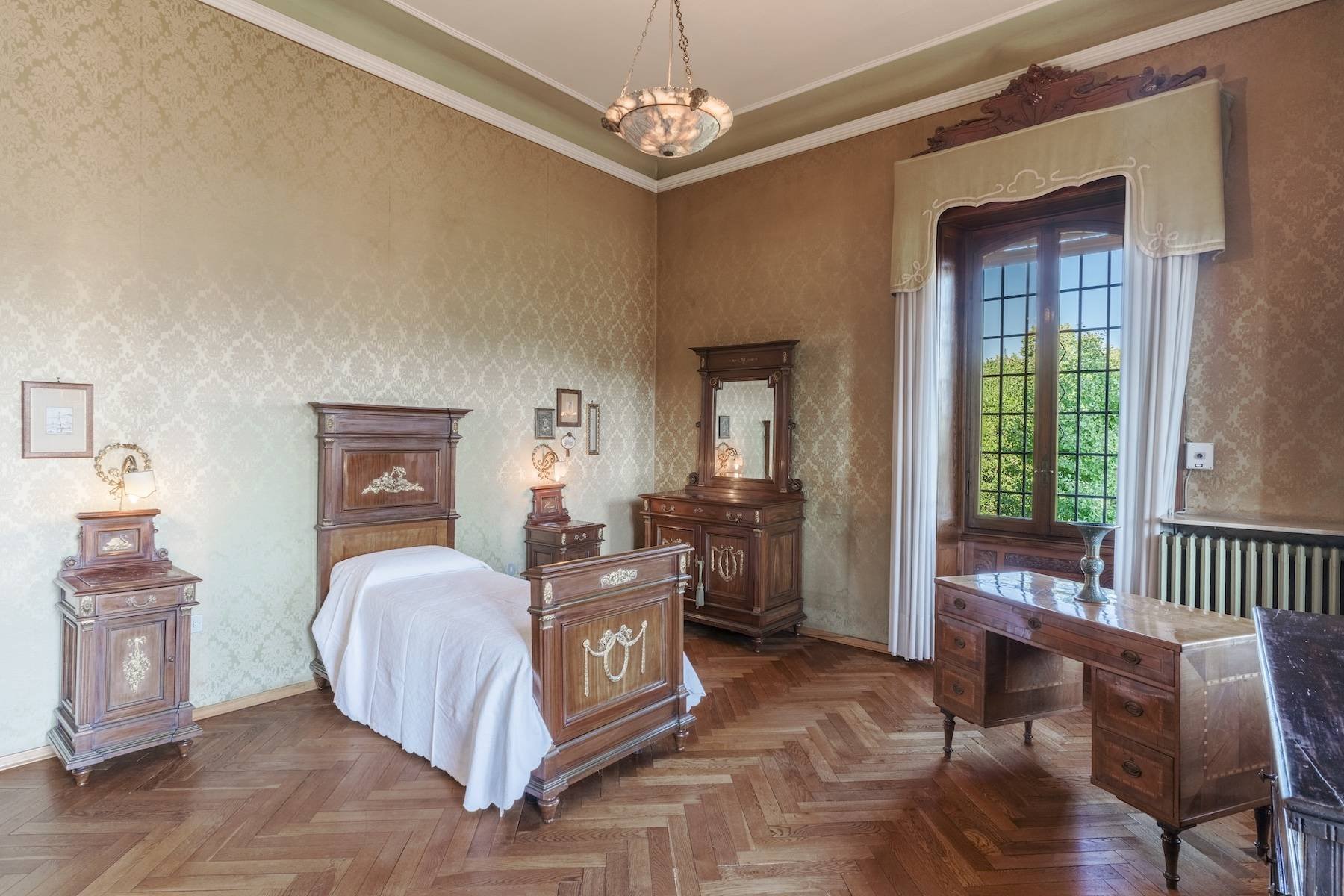
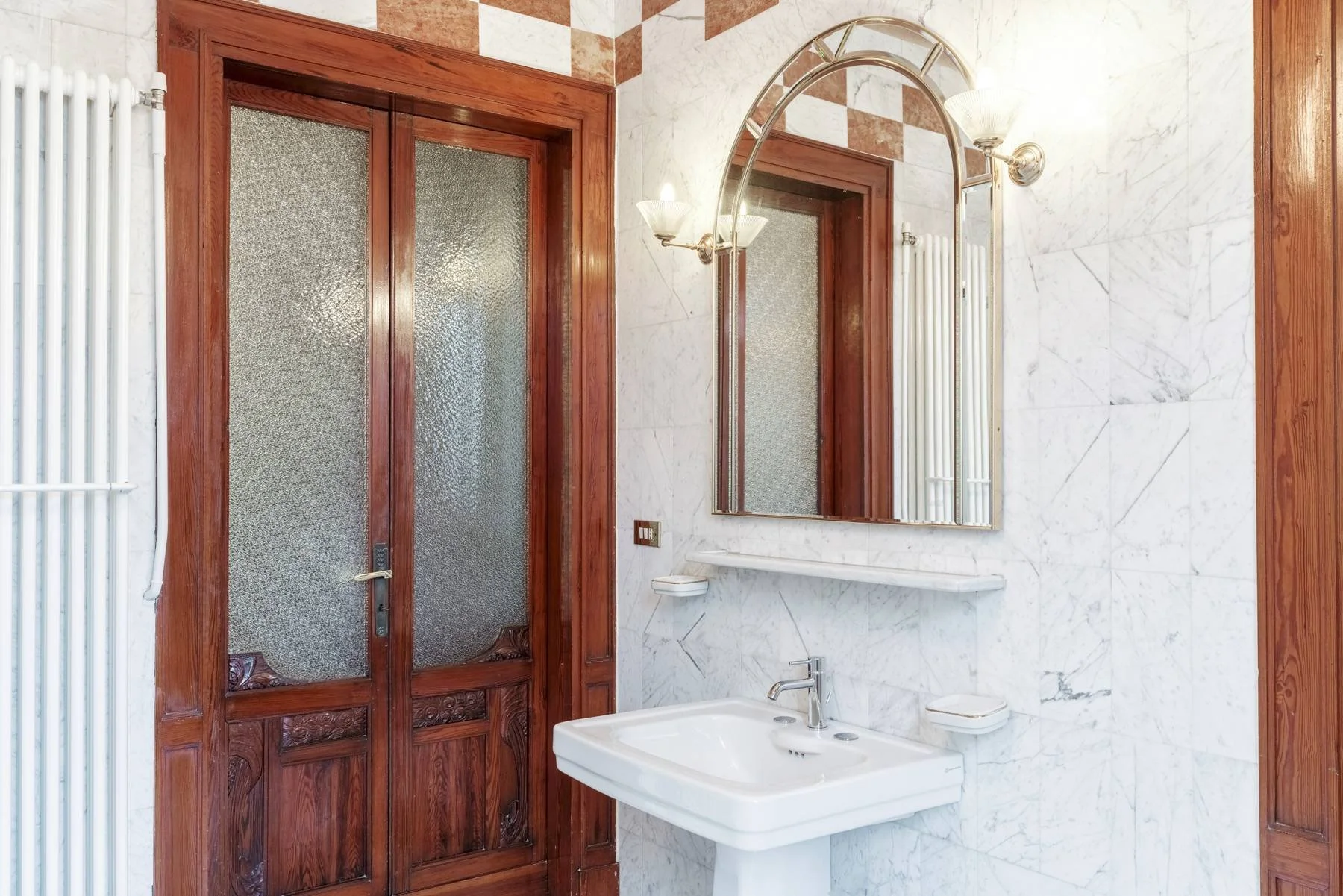
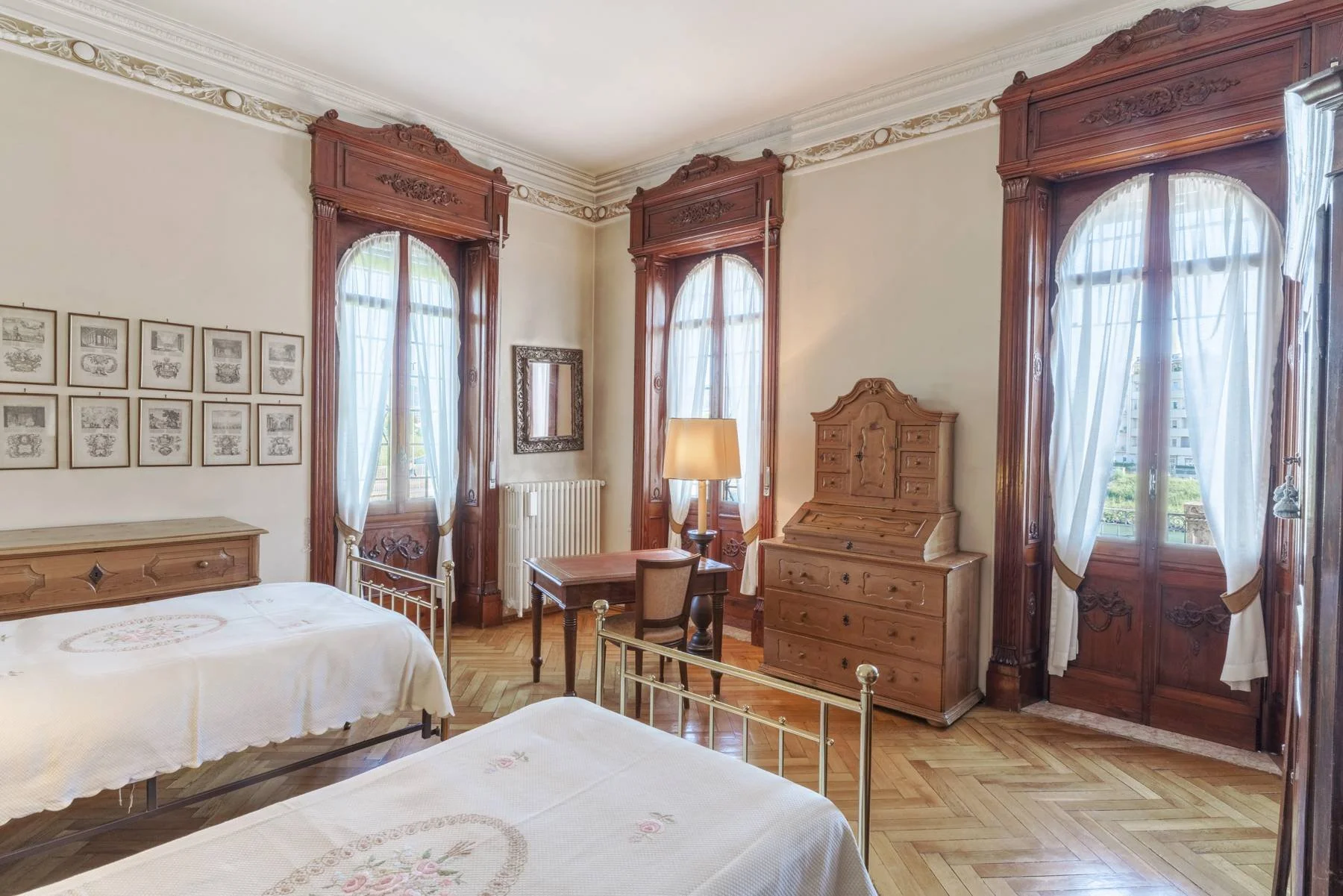
Original period details have been carefully preserved throughout, including inlaid woodwork, marble fireplaces, wrought-iron railings, decorative columns, and graniglia flooring in the loggia. On the raised ground floor, a distinctive salon features decorative elk antlers sourced from a former Hungarian hunting lodge once owned by Emperor Franz Joseph of Austria, an unusual detail that underscores the cultural crosscurrents present in northern Italy during the early 20th century.
Several terraces are oriented toward the river, providing elevated views over the Adige. The surrounding garden, planted with mature trees, offers a notable degree of privacy despite the villa’s central location. Architectural elements such as a panoramic turret and arched loggias contribute to the building’s sculptural presence and reinforce its Liberty-era character.
Additional spaces include a basement level with a large room and fireplace suitable for ancillary use, a garage, and a separate building within the grounds containing an independent apartment in need of renovation, suitable for guest or staff accommodation.
Verona, a UNESCO World Heritage city, is known for its Roman and medieval architecture, compact historic center, and year-round cultural calendar anchored by the Arena di Verona. Its scale, walkability, and proximity to Lake Garda, Milan, and Venice have long made it appealing as both a primary residence and a discreet second base in northern Italy.








All images courtesy of the listing agency.