This 1960s Modern House Is One of LA’s Most Iconic — and It’s on the Market
Perched above the Sunset Strip, the Stahl House has long stood as shorthand for Los Angeles itself. Designed in 1960 by modernist architect Pierre Koenig, the glass-and-steel residence—officially Case Study House No. 22 and a defining work of midcentury modern architecture—is now available for the first time since its completion, offered at $25 million after 65 years of single-family ownership, listed with William Baker of The Agency Beverly Hills.
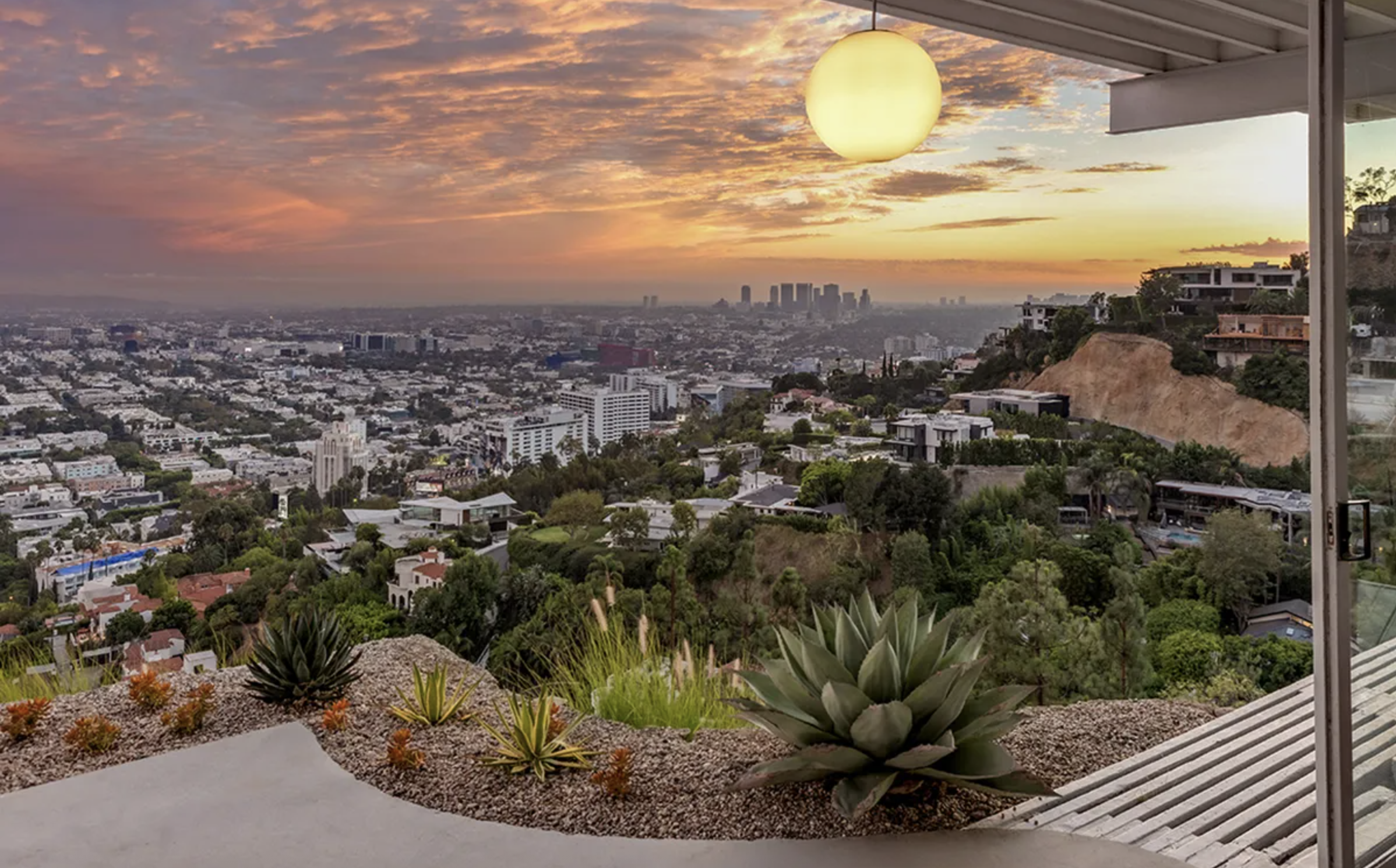
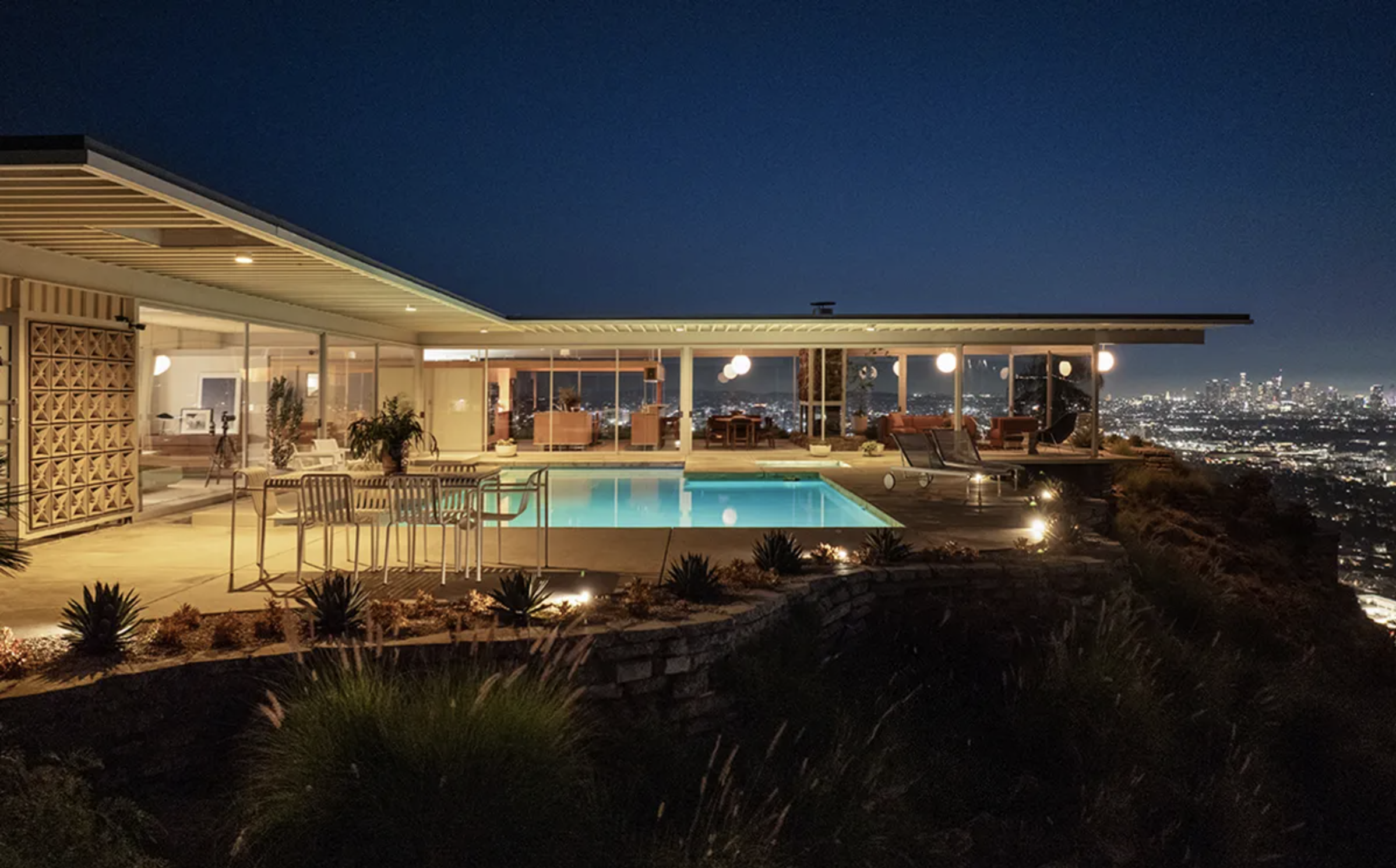
The house was conceived as part of the Case Study House Program initiated by Arts & Architecture magazine, an ambitious postwar experiment that shaped the trajectory of residential architecture in California and far beyond. Koenig’s contribution is among the program’s most disciplined and enduring: a rigorously gridded steel structure, cantilevered over a steep promontory, its geometry mirroring the city streets laid out below.
Commissioned by C.H. “Buck” Stahl, a graphic designer and sign painter, and his wife Carlotta, the project began years before construction. The couple purchased the site in 1954 for $13,500 and spent weekends hauling leftover concrete from city construction projects to stabilize the sloped terrain—one carload at a time. By the time Koenig was engaged in 1957, the vision was already precise. A scale model followed, and soon after, Koenig presented the design to editor John Entenza, securing its inclusion in the Case Study program just weeks before groundbreaking.
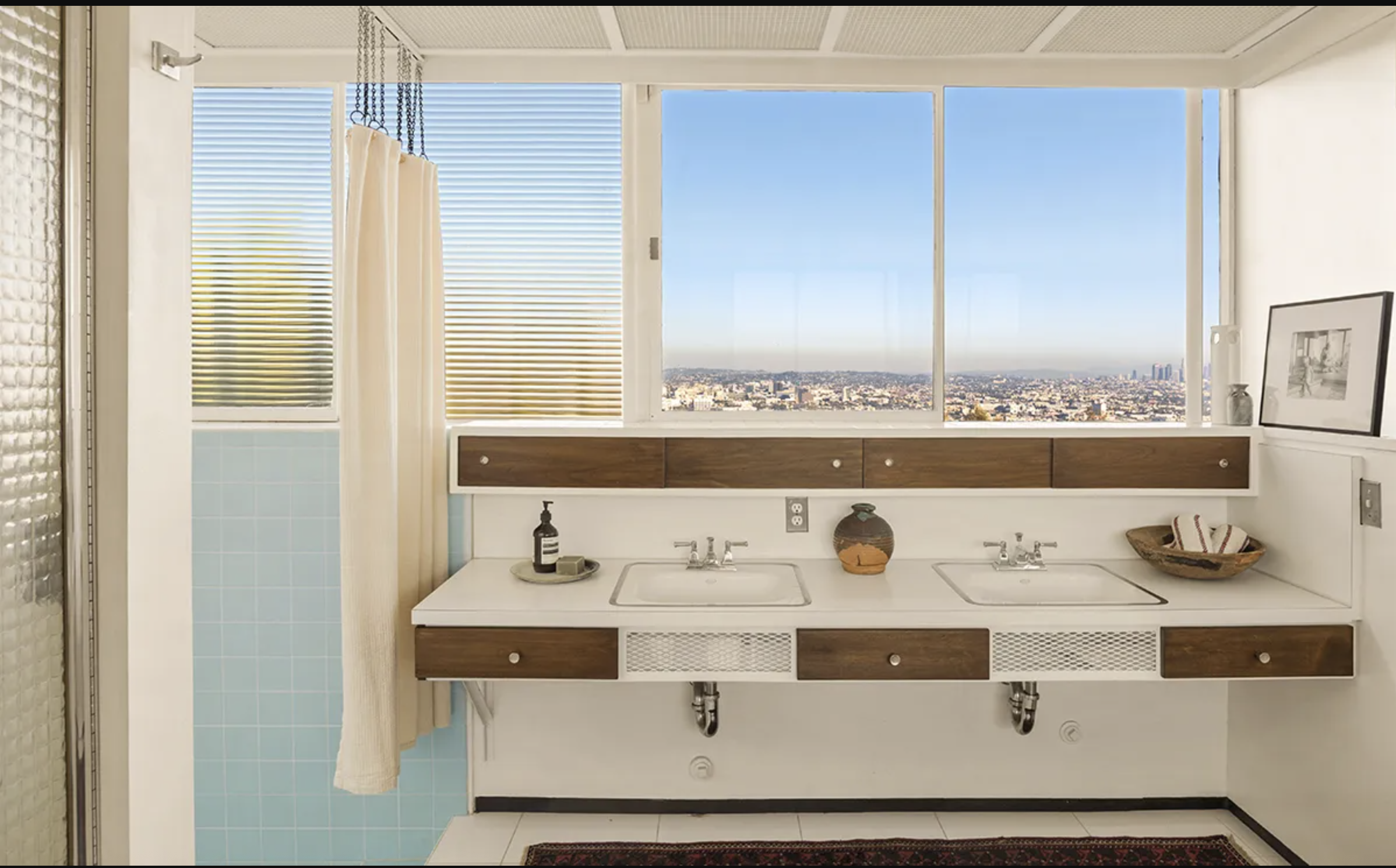
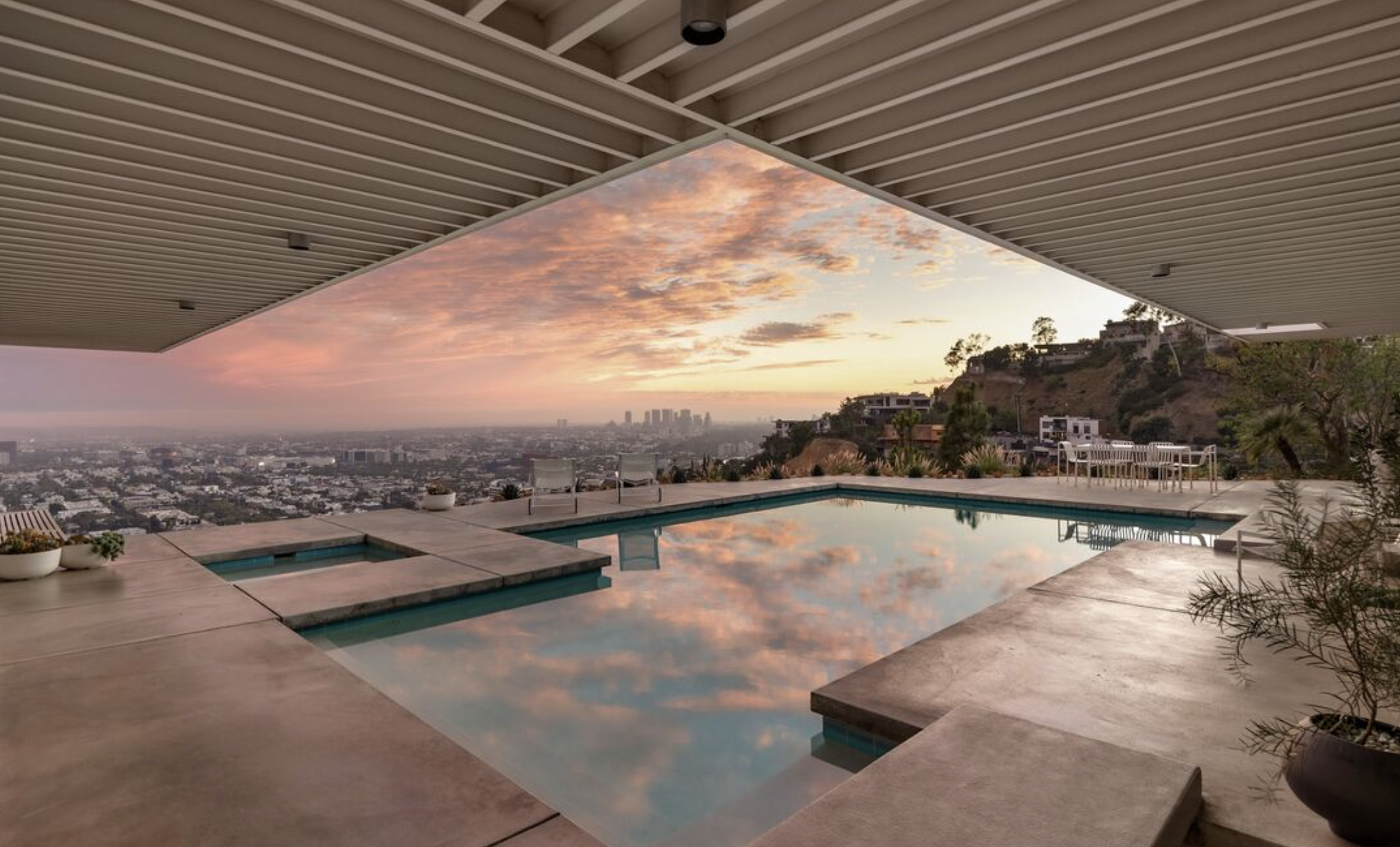
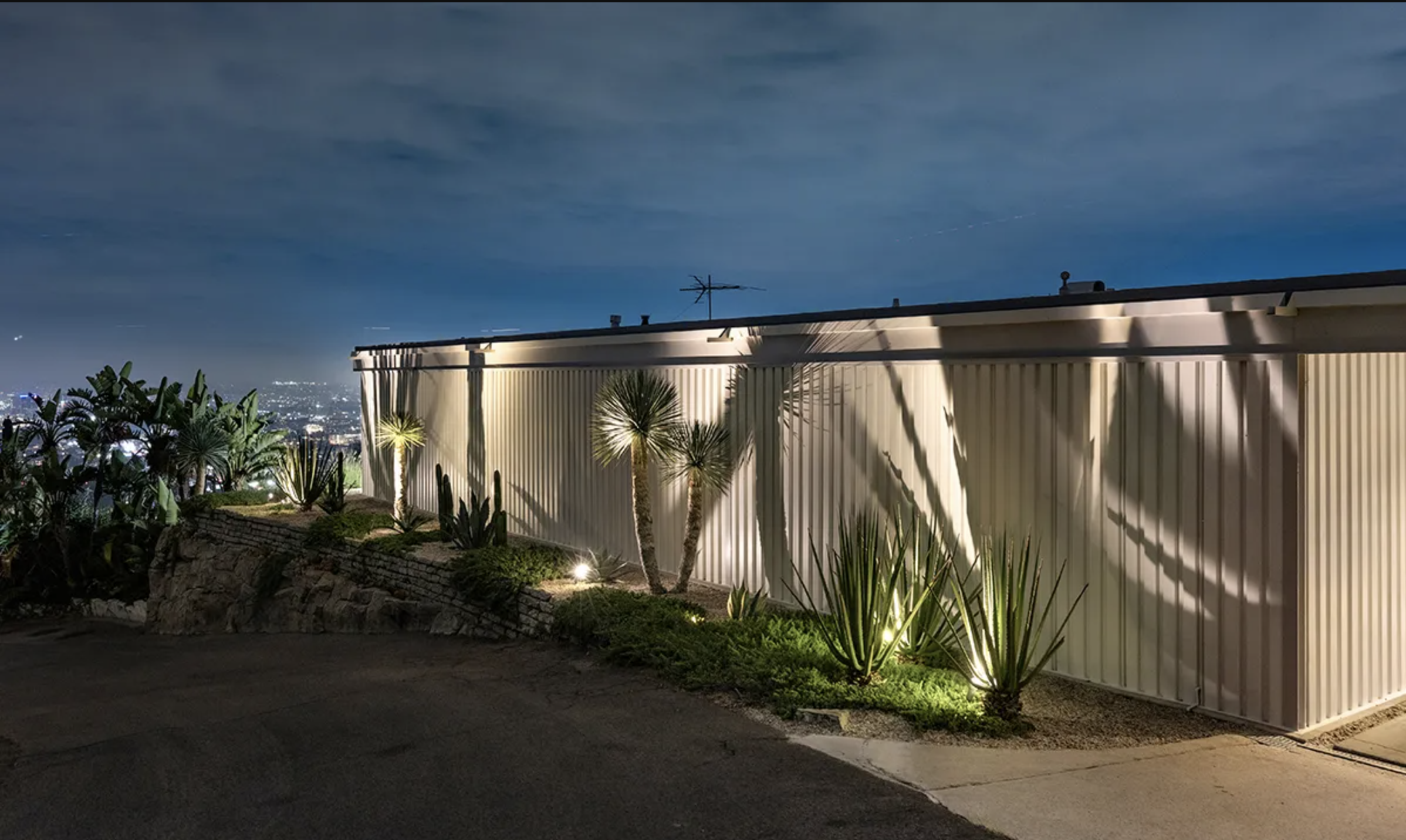
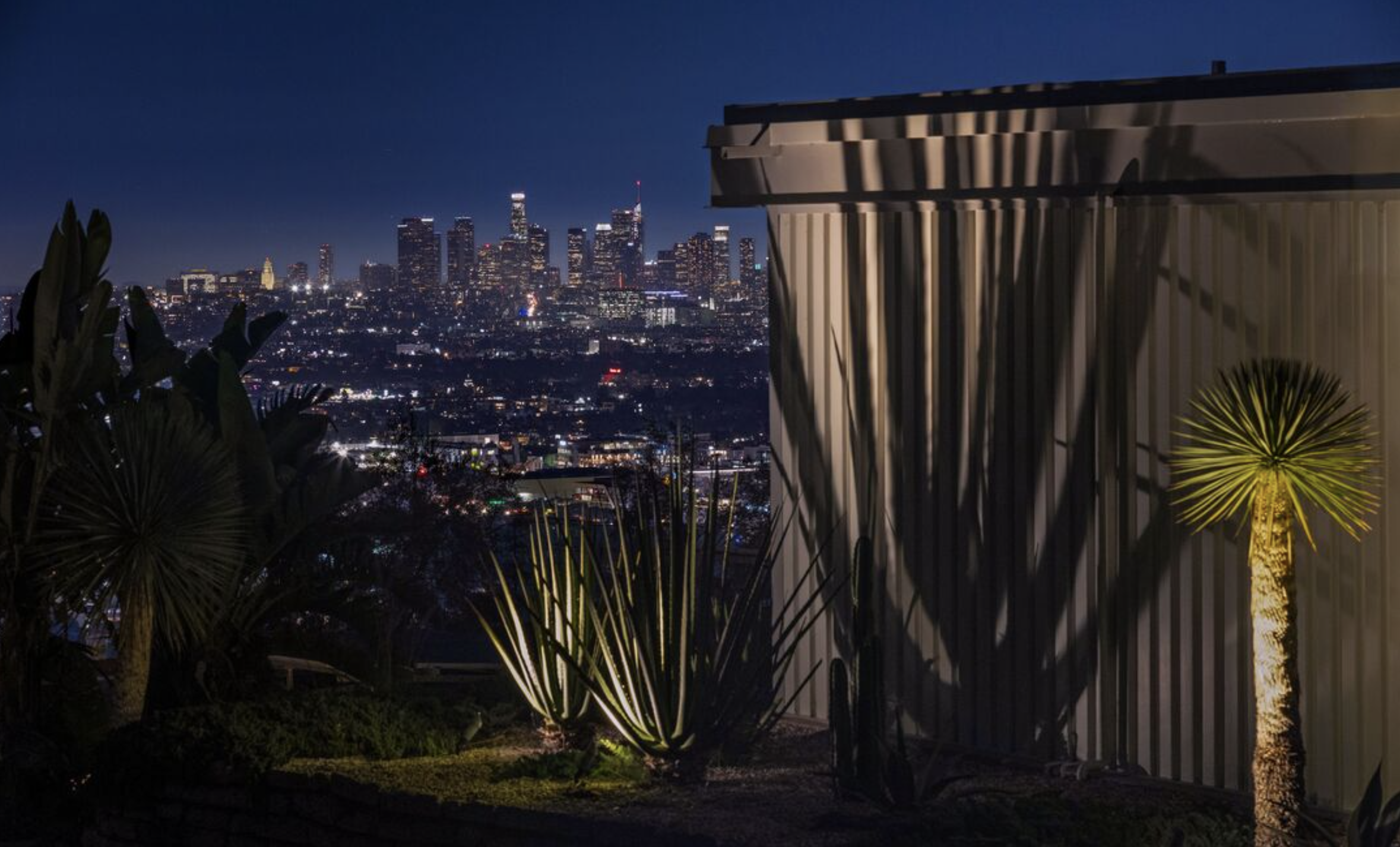
Completed in 1960, the house spans 2,200 square feet with two bedrooms and two-and-a-half baths. Entry is via a concrete footbridge that passes over the pool from the carport, a sequence that immediately signals the house’s choreography of movement, structure, and view. A steel decking wall shields the street-facing elevation, preserving privacy while the opposite façade dissolves entirely into glass.
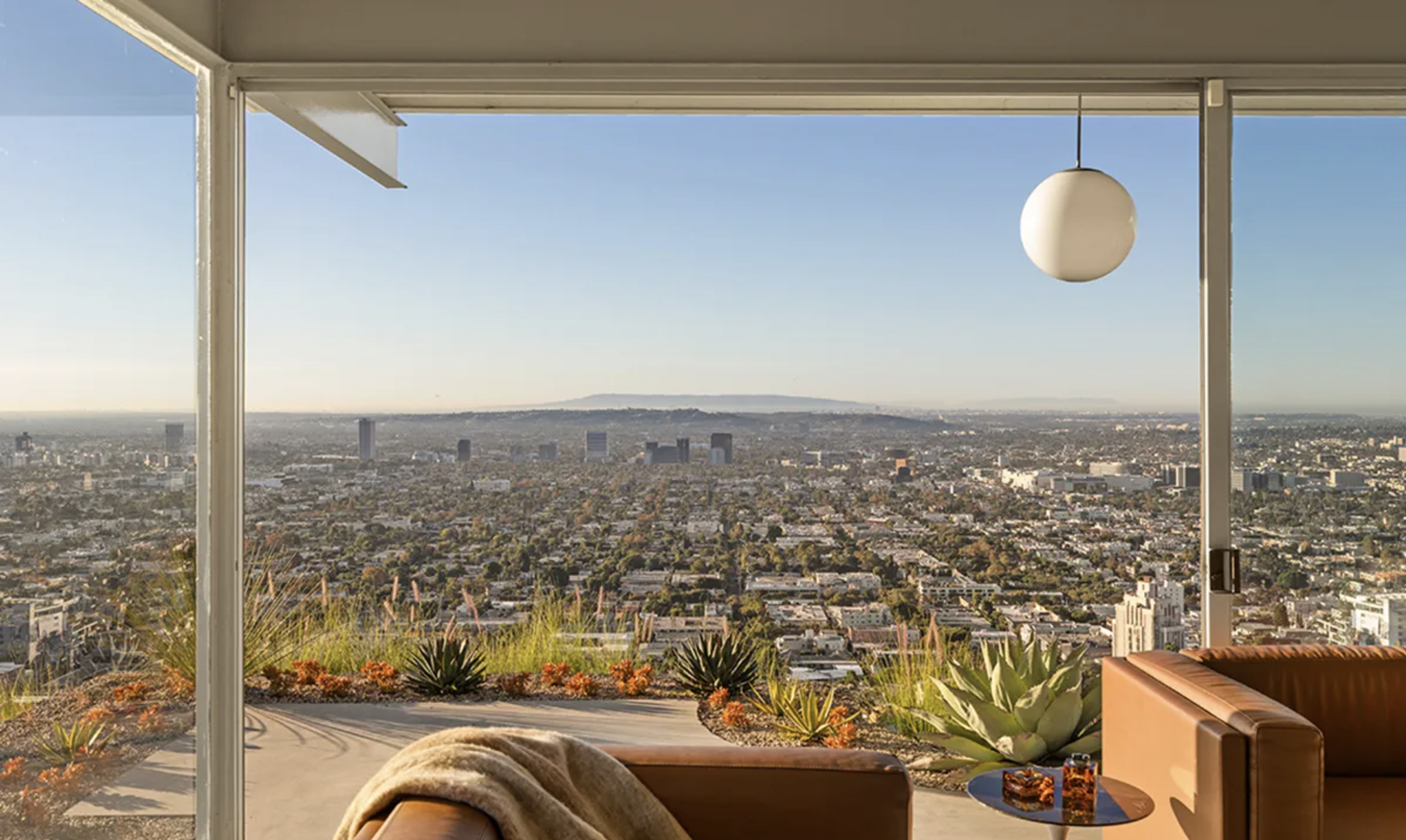
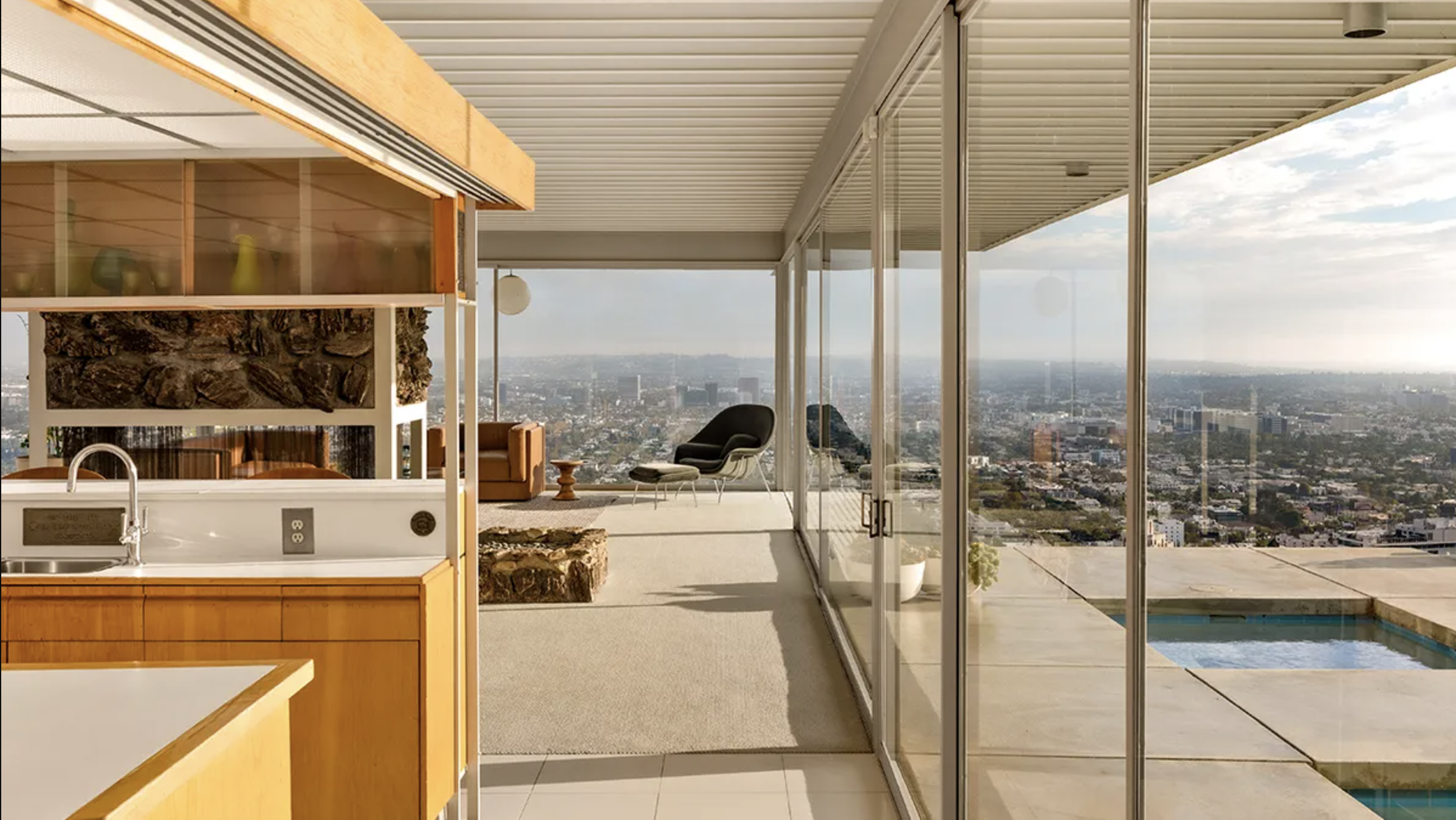
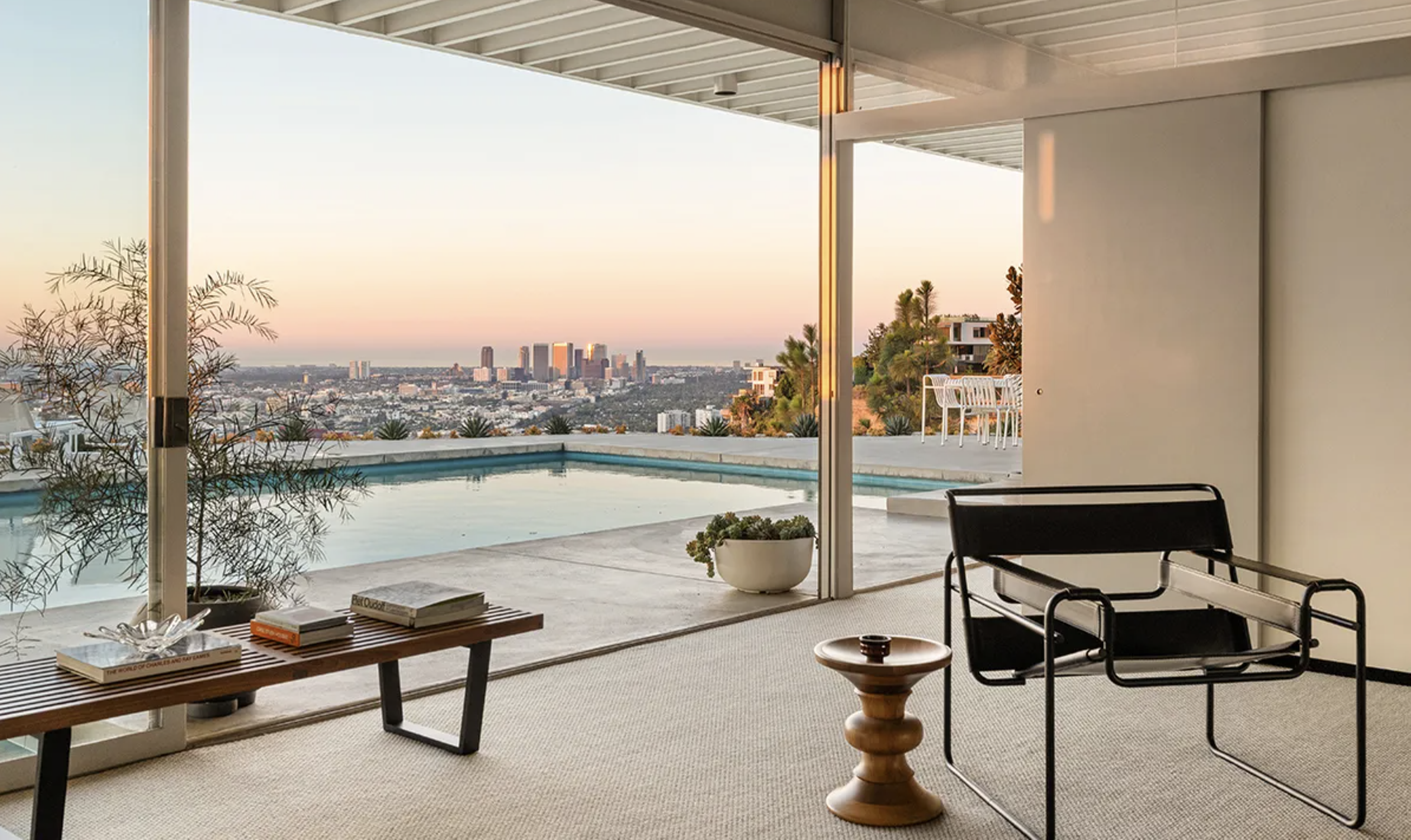
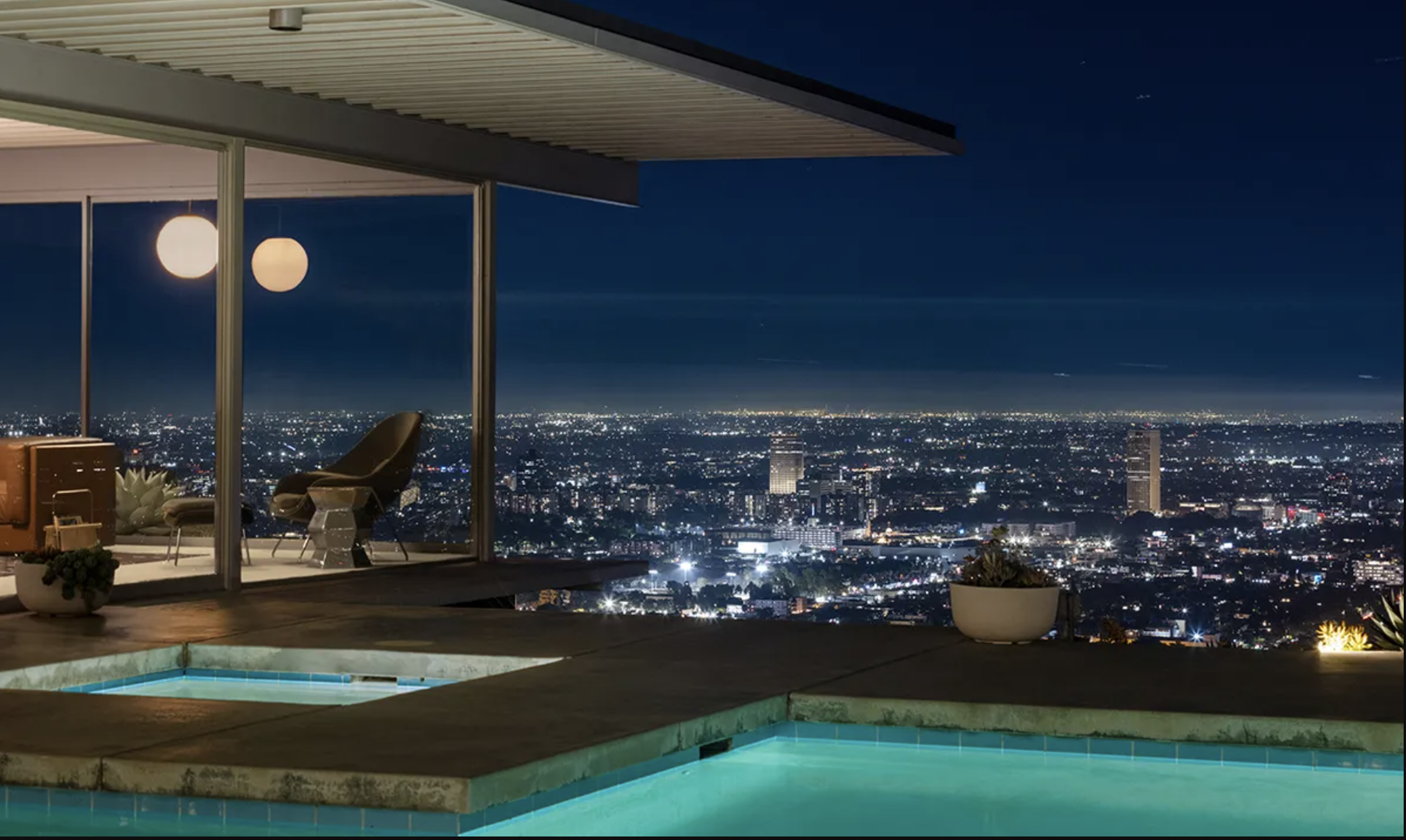
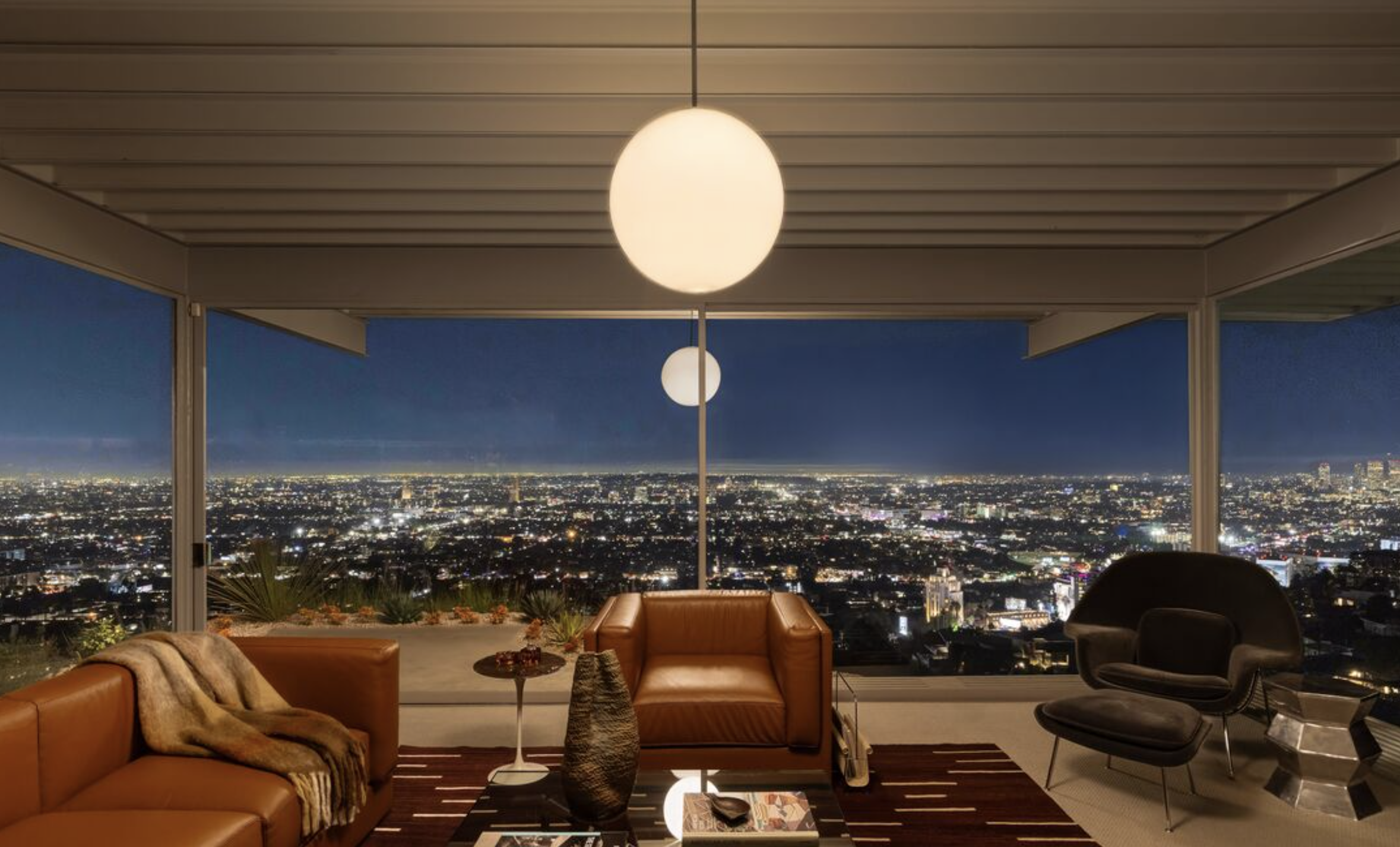
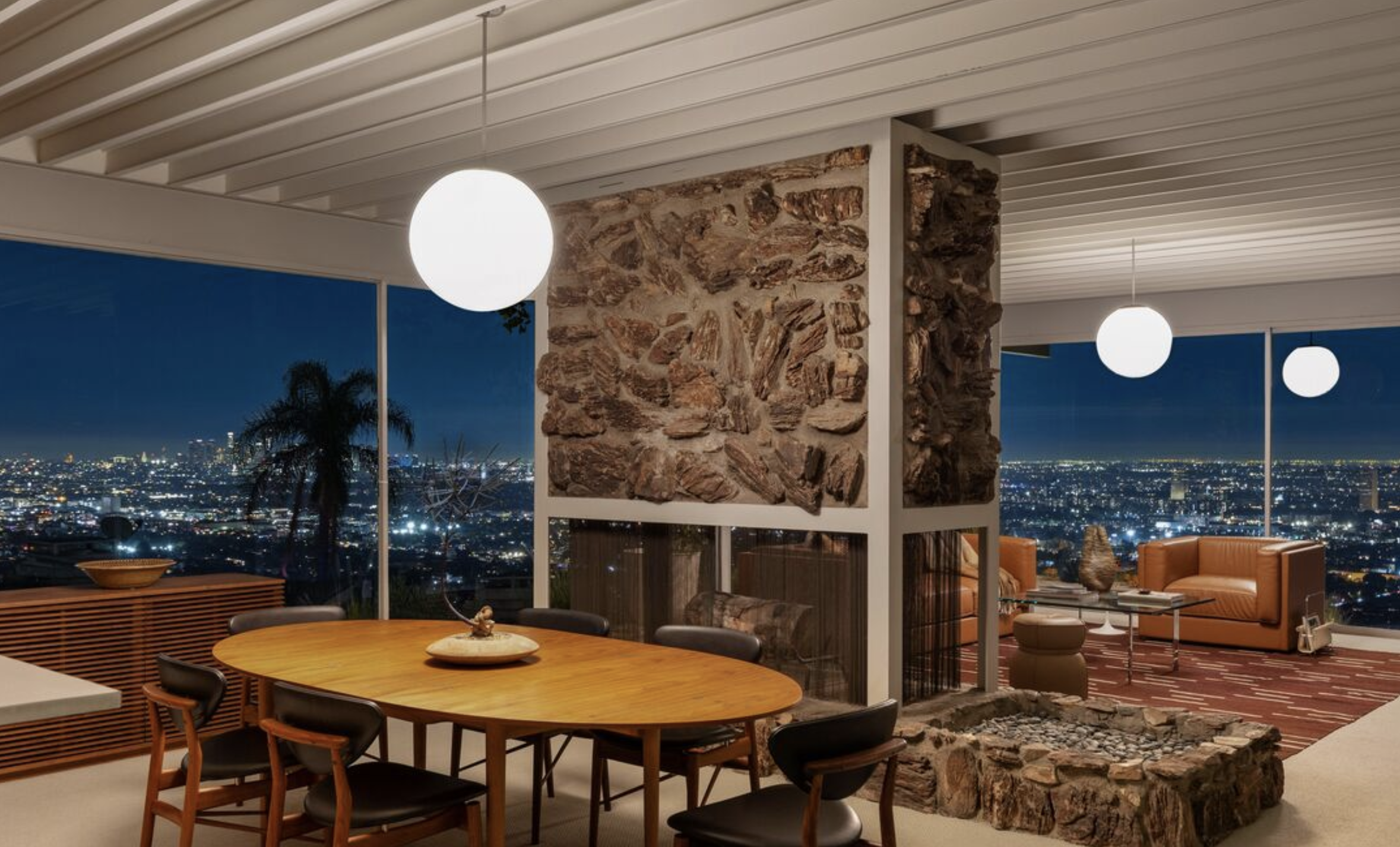
Inside, living and dining spaces are loosely divided by a freestanding natural rock fireplace, a rare tactile counterpoint to the home’s otherwise elemental palette of steel, glass, stone, and plywood. Deep overhanging eaves temper light and heat, while floor-to-ceiling glazing allows the interior to hover above the city. At night, the living room appears suspended in midair, framed by a 270-degree panorama stretching across the Los Angeles Basin toward the mountains and the Pacific beyond.
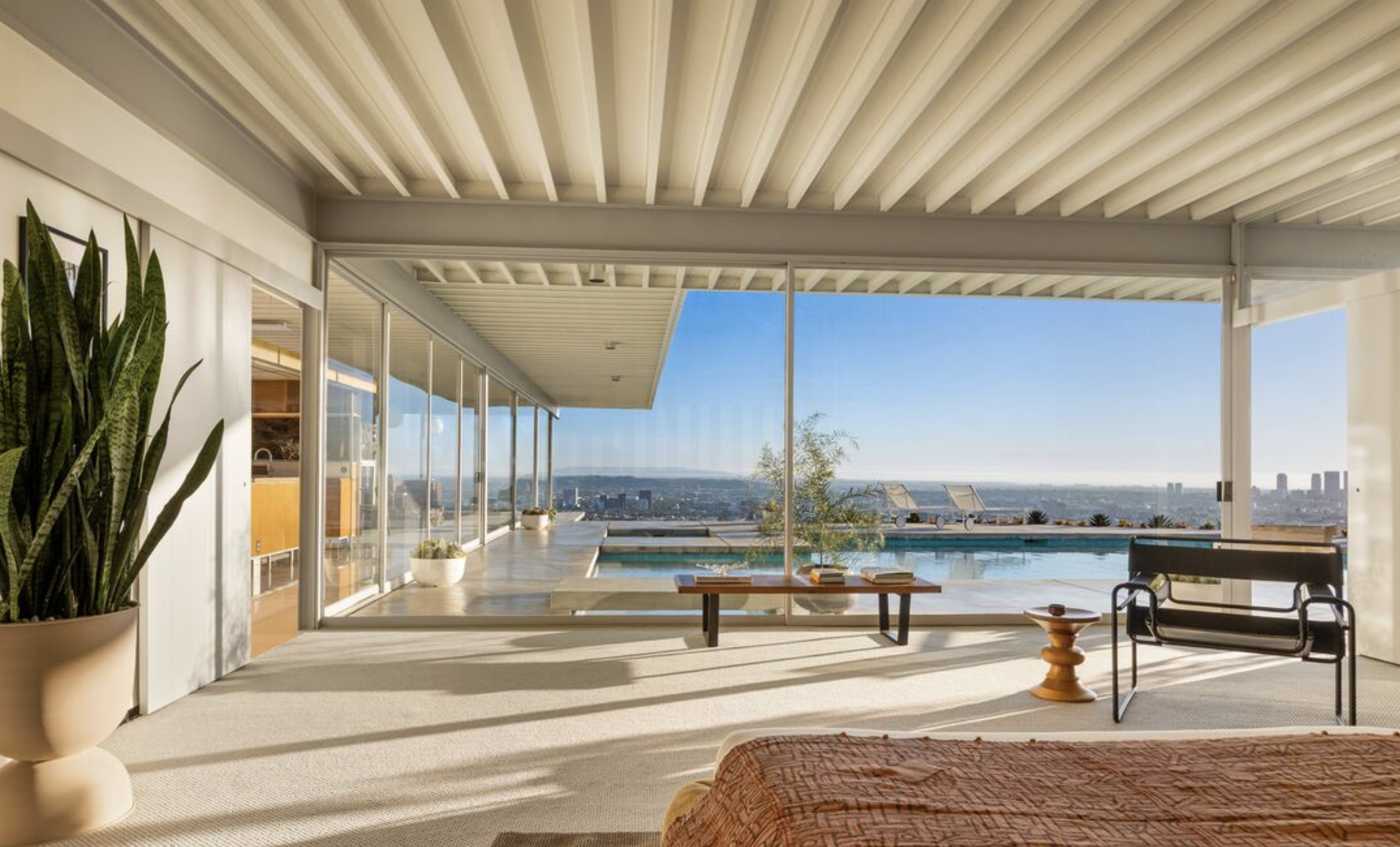
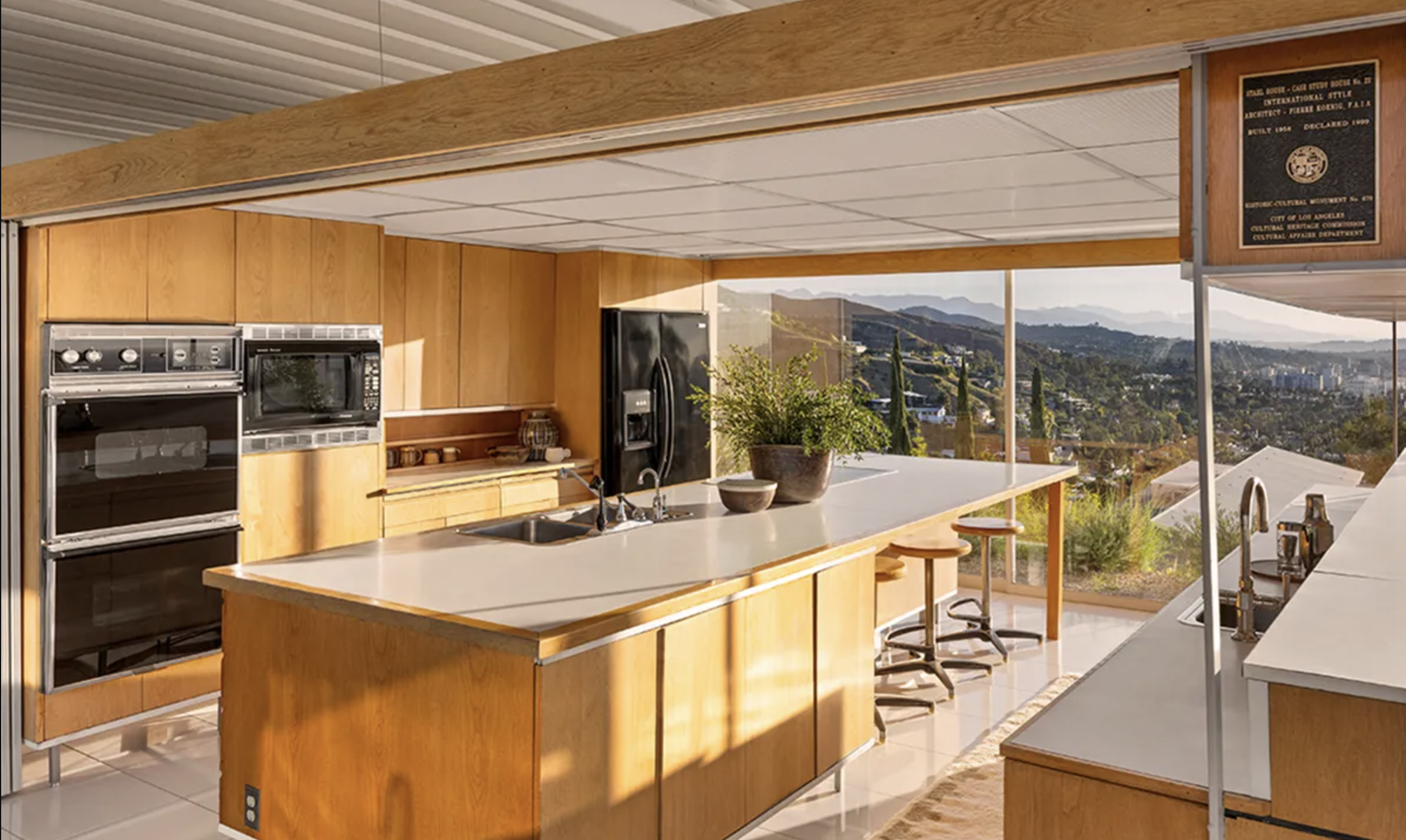
The kitchen—plywood-clad and largely unchanged since the 1960s—retains its original logic and layout, underscoring how carefully the house has been preserved. Bedrooms are discreetly separated into their own wing, with the primary suite tucked behind the kitchen. Outdoors, a rectangular swimming pool and raised spa sit alongside a wraparound terrace, all positioned on a lot spanning nearly a third of an acre.
The Stahl House’s global recognition owes much to photographer Julius Shulman, whose 1960 black-and-white image of the home—two women seated inside the illuminated pavilion, city lights below—became one of the most influential architectural photographs of the 20th century. The image has since been cited by Time magazine as among the most impactful in its history, cementing the house’s place not only in architectural discourse but in visual culture at large.
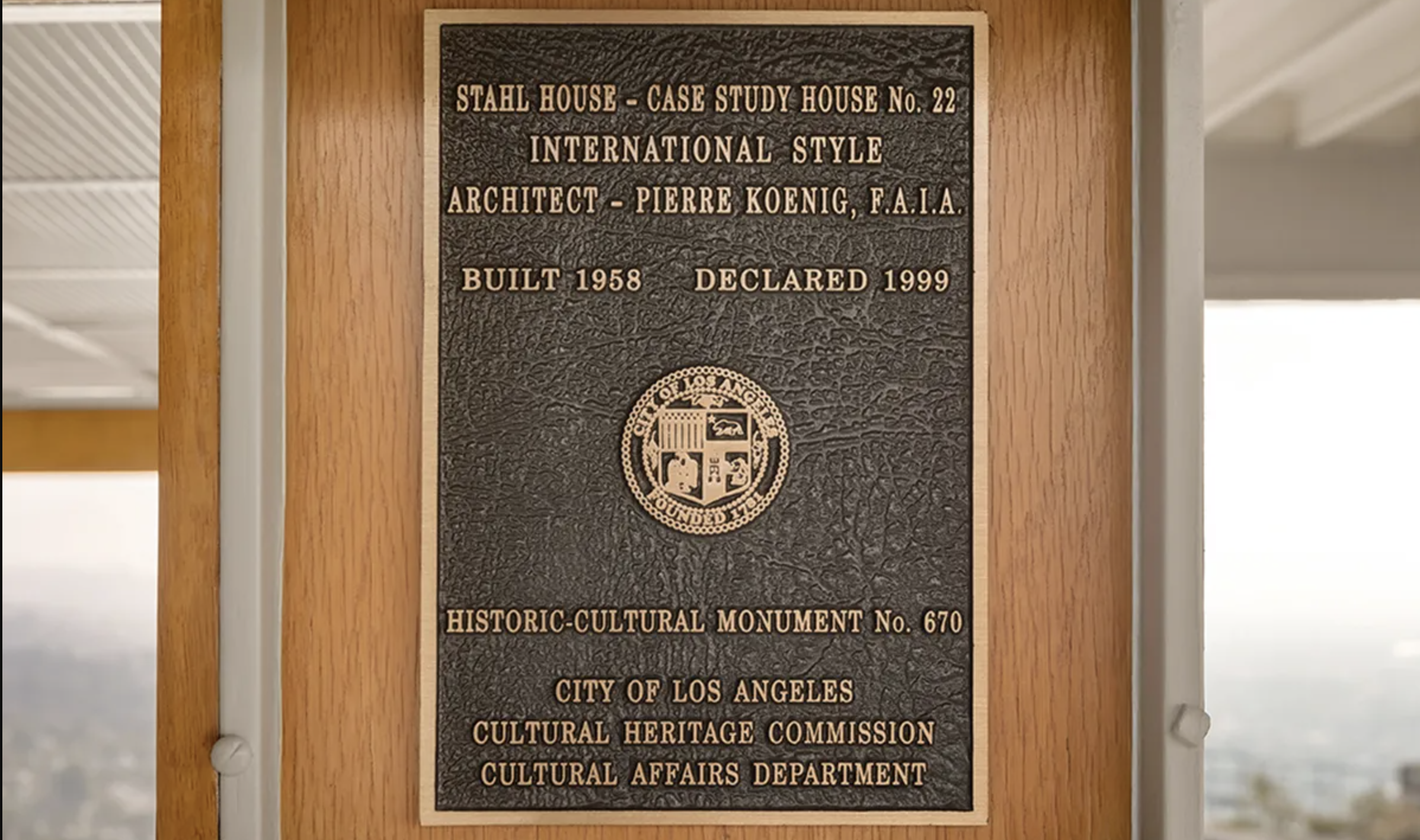
Official recognition followed. The property was designated a City of Los Angeles Historic-Cultural Monument in 1999, listed by the American Institute of Architects among “America’s Favorite Architecture” in 2007, named one of Los Angeles’s top ten houses by experts in a Los Angeles Times survey in 2008, and added to the National Register of Historic Places in 2013. It has also appeared in films and television, including Columbo, Galaxy Quest, and Nurse Betty.
Now offered by William Baker of The Agency Beverly Hillsos-angeles-ca-us-90069-25621475, the house is being presented as what it has always been: an architectural artifact, preserved with exceptional care and carrying a Mills Act designation. Security features include a gated drive, a high steel perimeter wall, and exterior cameras, balancing discretion with stewardship.
In a statement released by the sellers, Bruce Stahl and Shari Stahl Gronwald, the children of the original owners, the decision to sell was framed not as a departure but a handoff—an acknowledgment that the house now requires a new custodian who understands both its architectural purity and its cultural weight.
In a city filled with remarkable houses, there remains only one Stahl House. Its appearance on the market is less a listing than a moment of transition in the life of a building that helped define how Los Angeles sees itself—and how the world sees Los Angeles in return.
All photos belong to the listing agency.