A Renovated 17th-Century French Manor on the Edge of Champagne
Set in southern Champagne’s Côte des Bar, the manor occupies a transitional landscape where Champagne gives way to Burgundy. The area has become increasingly sought after for its vineyards, lakes, forests, and historic market towns—offering scale and breathing room that more established wine regions no longer can—while remaining within two hours of Paris.
The property lies just east of Troyes, a well-preserved medieval city long associated with Champagne’s historic wealth, trade routes, and early wine commerce. Today, Troyes functions as a livable regional capital, defined by its half-timbered streets, cathedral quarter, and compact historic centre, alongside everyday infrastructure including markets, restaurants, schools, and direct rail access. For buyers, the appeal is clear: cultural depth and year-round life without the pricing pressure or density of Paris, Reims, or Beaune.
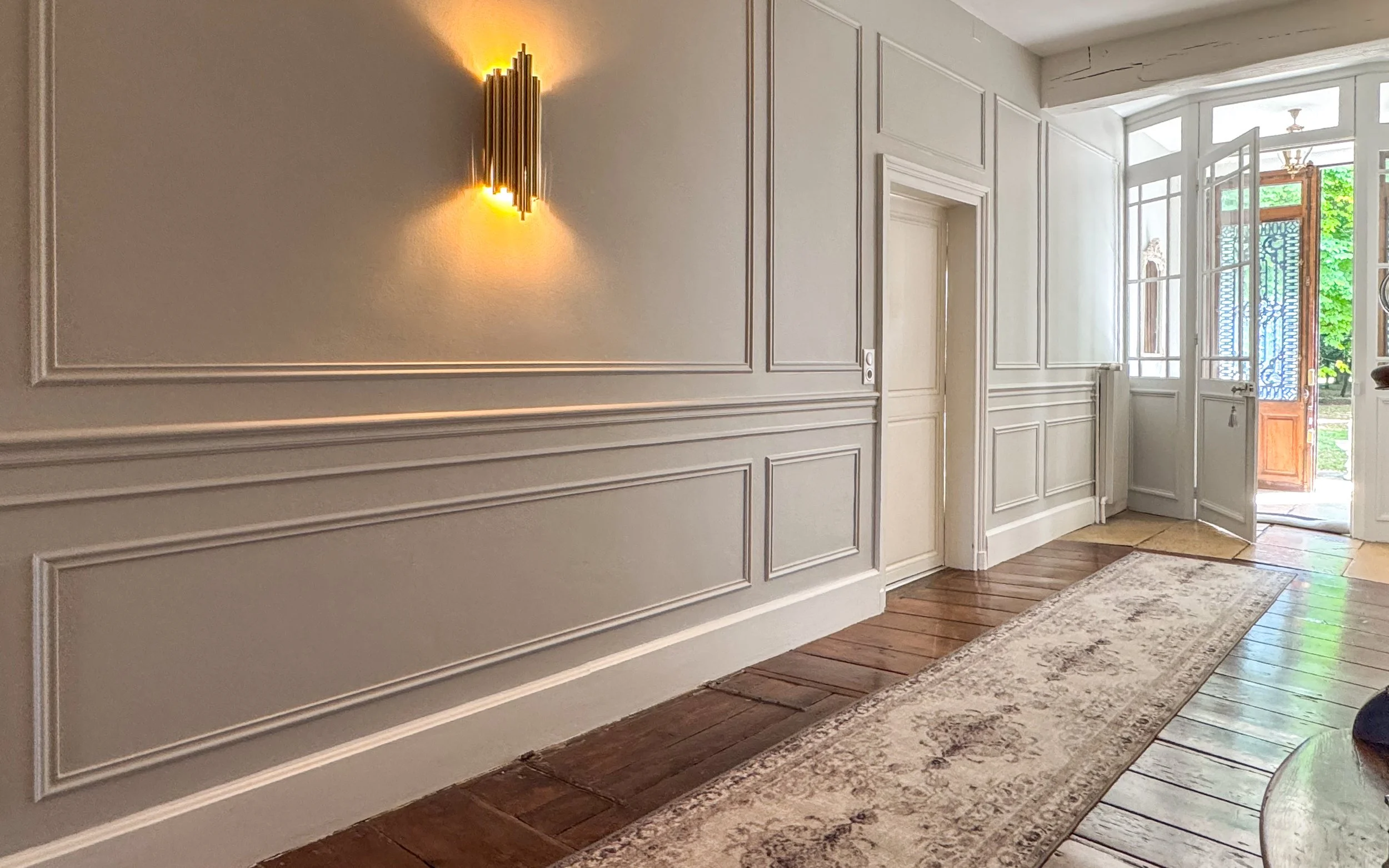
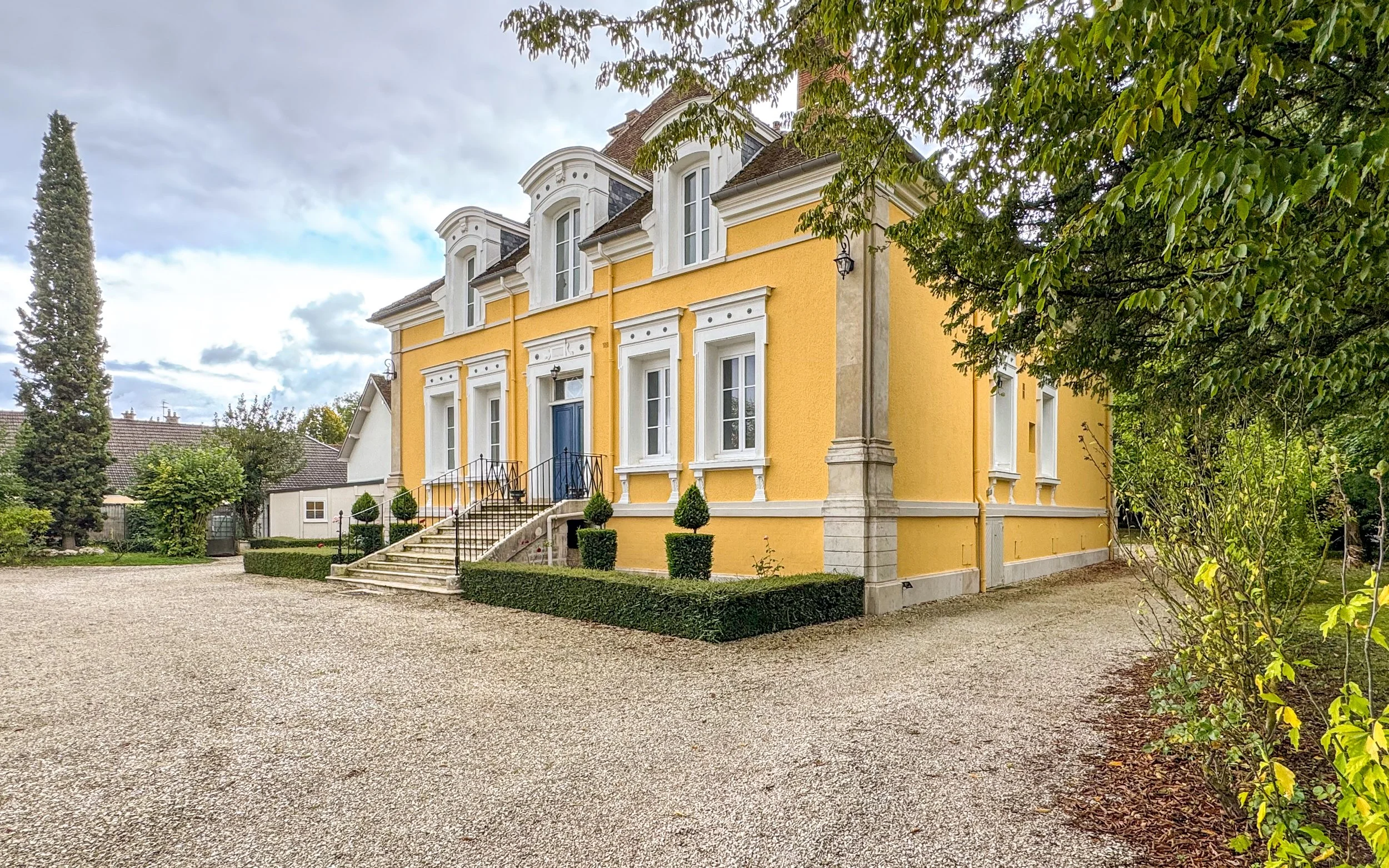
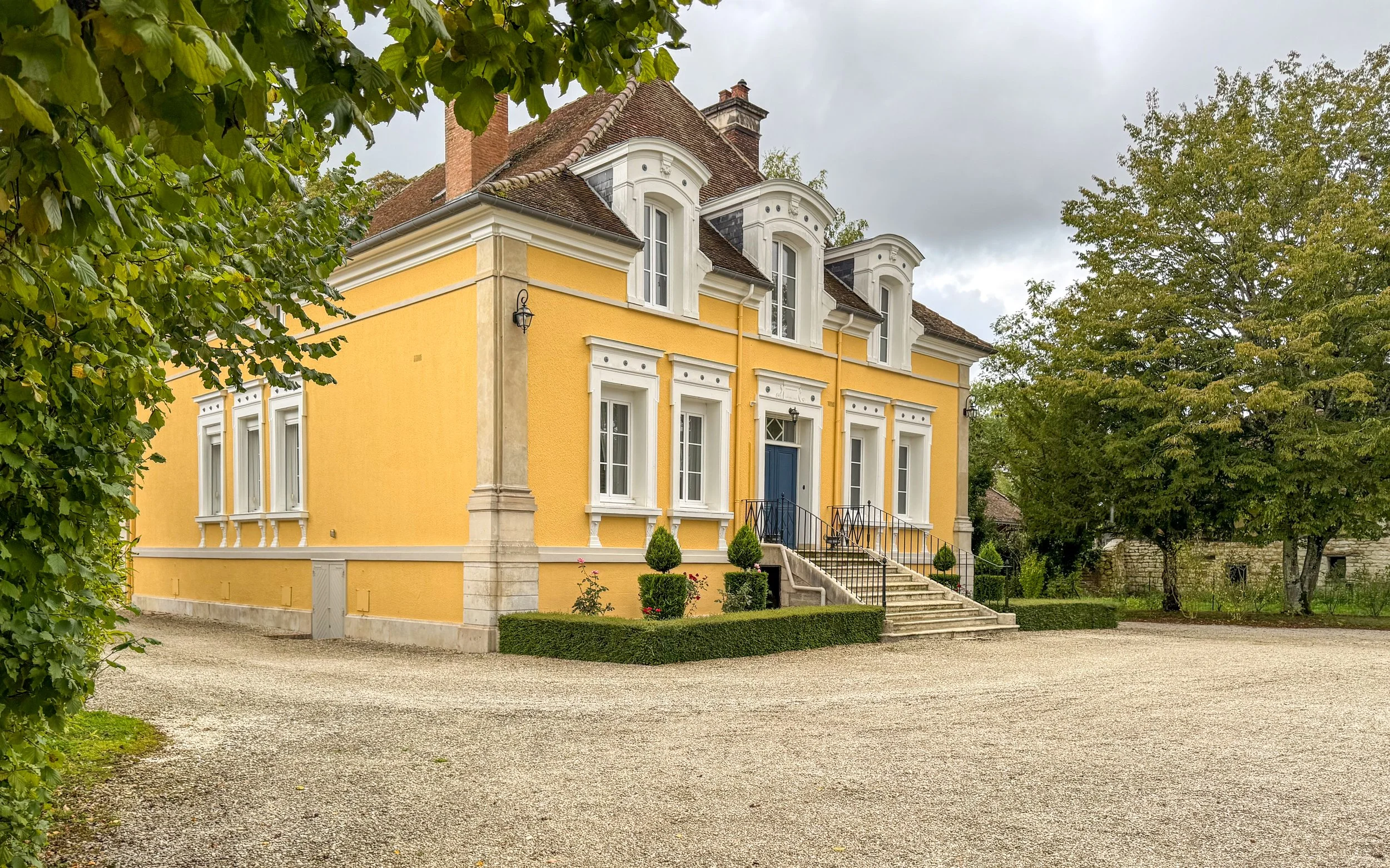
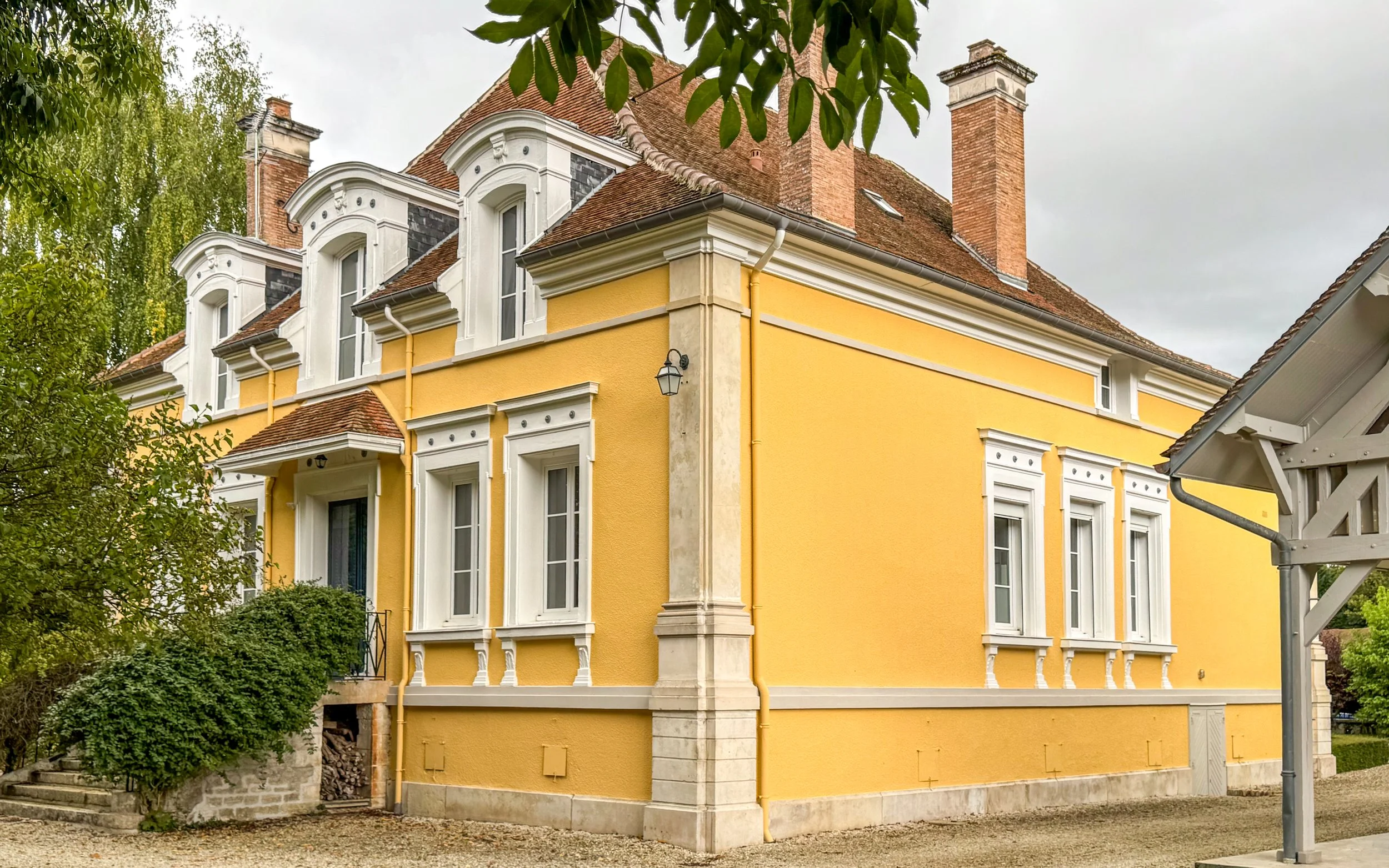
Built around 1700, the stone-fronted residence has undergone a comprehensive renovation completed in 2021. Spanning approximately 440 m² (4,736 ft²), the interiors have been reworked to meet contemporary standards without erasing the building’s original character. Period parquet floors, wood panelling, mouldings, and wrought-iron details remain intact, while circulation and amenities have been modernised to suit year-round living.
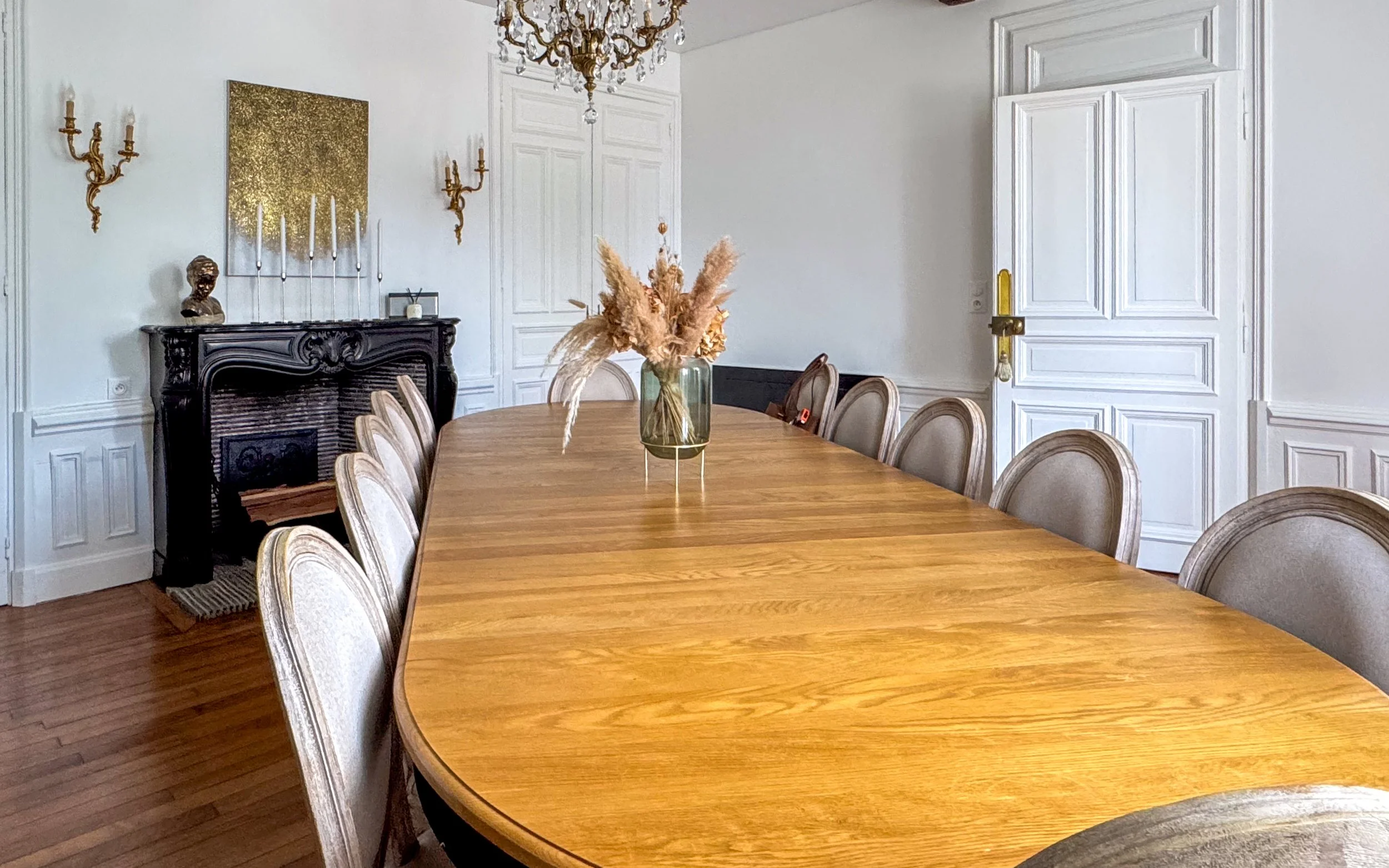
A large through-hall anchors the plan, organised around a central staircase that links the two principal levels. Reception rooms follow in sequence, offering generous proportions and natural light suited to both private use and larger gatherings. The kitchen has been fitted to a high specification and positioned as a functional centre rather than a secondary service space.
The upper floor is arranged around five en-suite bedrooms, each conceived as a self-contained suite. A principal bathroom incorporates a sauna and whirlpool bath, reinforcing the house’s positioning as either a private residence or a hospitality-ready property. Additional volumes—including convertible attic space and an independent guesthouse with a reception room overlooking the grounds—allow for further adaptation, whether residential or professional.
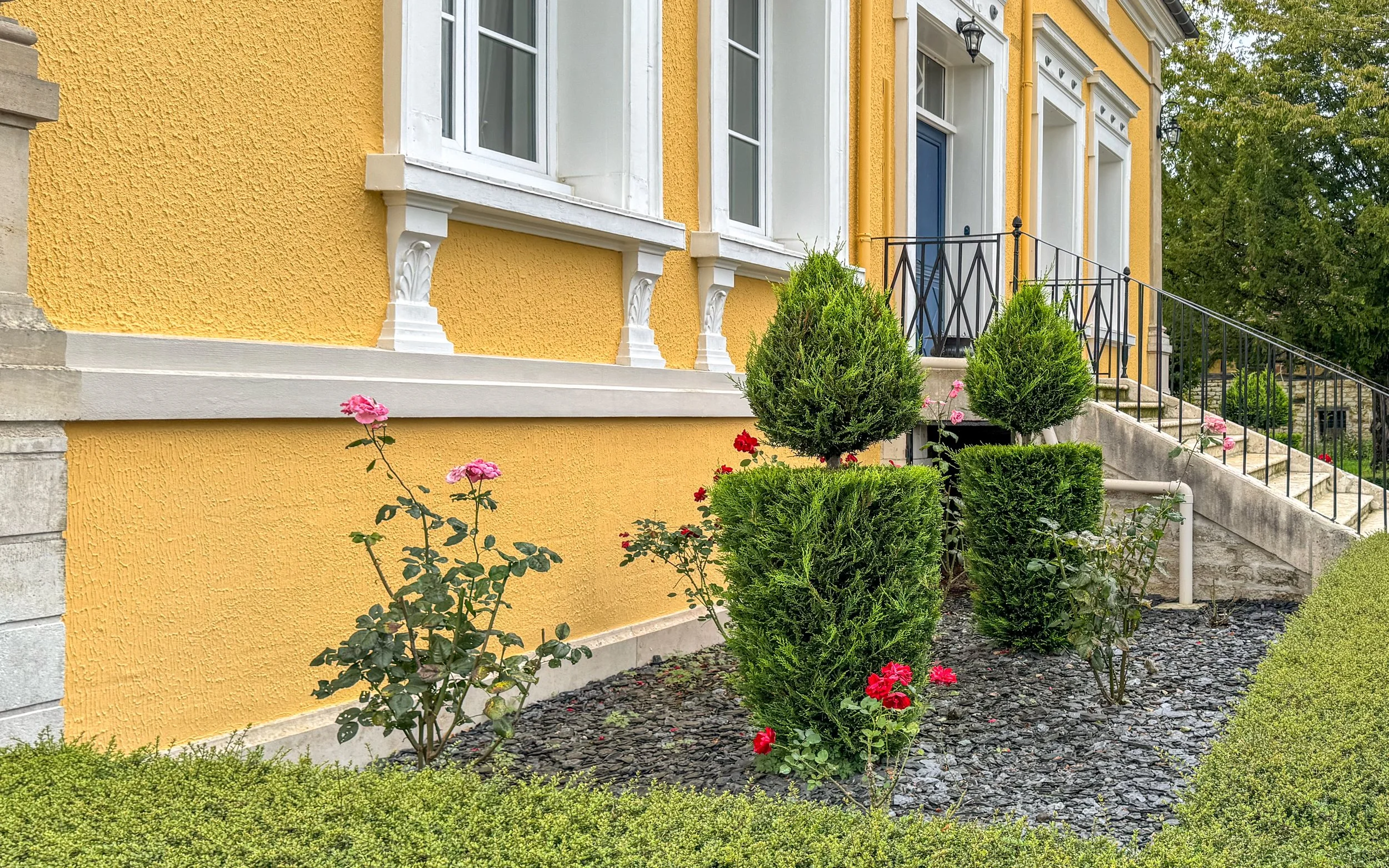
The manor sits within nearly one hectare of enclosed parkland, a notable feature given its central village location. Lawns, mature trees, clearings, and productive areas including an orchard and vegetable garden create a setting that feels rural while remaining walkable to local amenities. Outbuildings—among them a wine cellar, garage, small shelters, a guest gîte, and a distinctive brick tower—extend the property’s practical and architectural footprint.
From Lusigny-sur-Barse, Troyes’ historic centre is reached in around twenty minutes, while the lakes of the Forêt d’Orient Regional Natural Park lie less than two kilometres away. The surrounding area offers sailing, swimming, cycling, and golf, alongside access to Champagne’s southern vineyards and the broader Burgundy borderlands. Paris and Dijon are each approximately two hours by car, positioning the house as a realistic primary residence, second home, or operational hospitality asset.
Fully restored and immediately usable, the property stands out less for spectacle than for balance: architectural depth, a meaningful renovation, and a location that combines village life with regional reach at the edge of Champagne.
All photos belong to the listing agency.