Europe, France, Historic, Market Watch, Notable Patrycja . Europe, France, Historic, Market Watch, Notable Patrycja .

Paris-Area Pavillon de Musique Built for Madame du Barry Sells for $44.8M

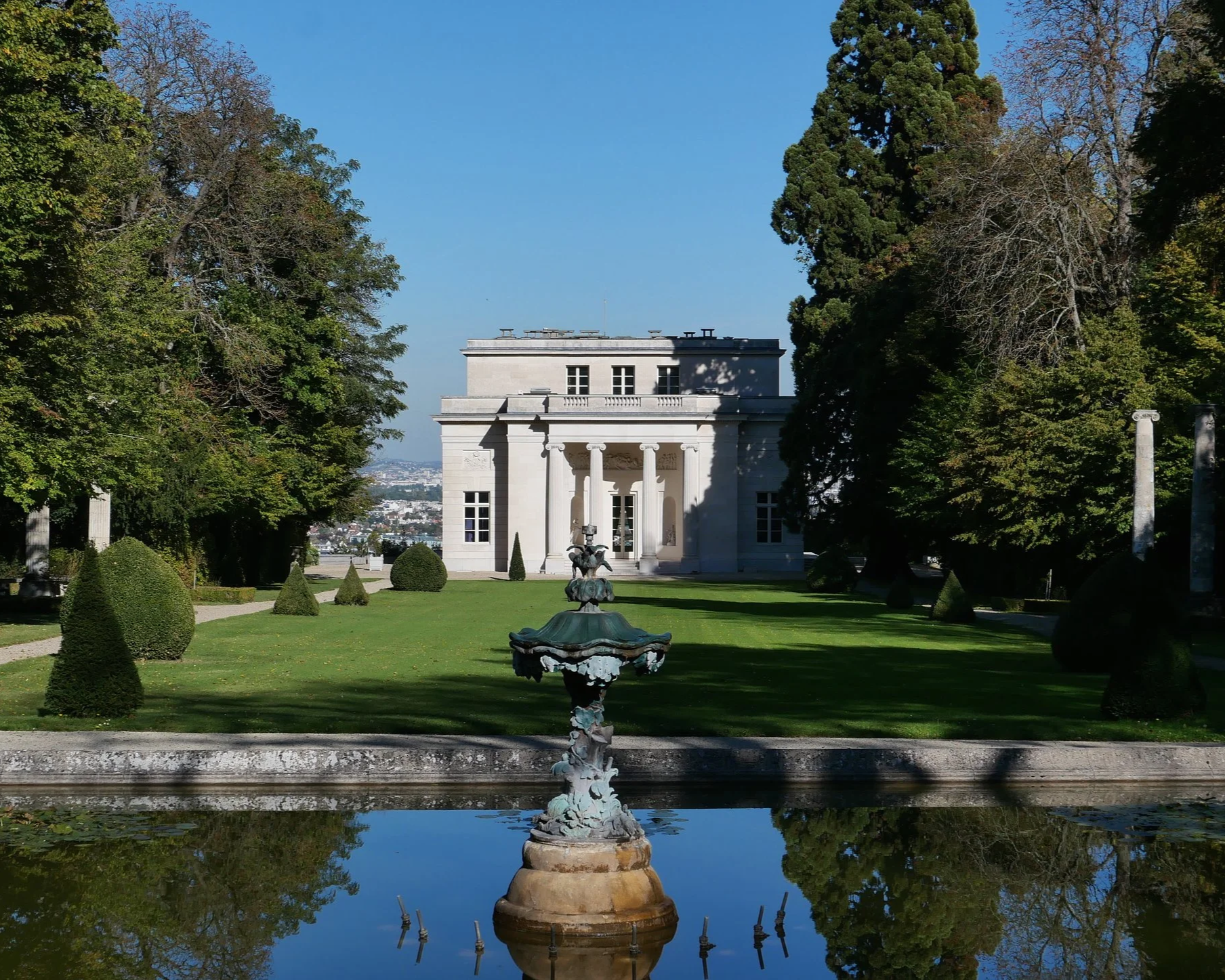
A neoclassical pleasure pavilion designed by Claude-Nicolas Ledoux has reportedly sold just west of Paris after years on the market. Built in 1771 for Madame du Barry, the last official mistress of Louis XV, the Pavillon de Musique du Barry remains one of the most architecturally significant heritage estates to trade hands in recent years.
As reported by Bloomberg in November, one of the most closely watched French heritage property transactions of recent years has taken place just west of Paris. The Pavillon de Musique du Barry, the neoclassical pleasure pavilion built around 1770 for Madame du Barry — the last official mistress of Louis XV — has reportedly been acquired by French entrepreneur Xavier Niel for €38.7 million ($44.8 million).

Located in Louveciennes, approximately 14 kilometres west of central Paris, the pavilion occupies a rare position at the intersection of architecture, court history, and contemporary cultural relevance. The property had been on the market for several years with an asking price of €44 million, with the sale handled by Denniel Immobilier.

Designed by Claude-Nicolas Ledoux, the Pavillon de Musique was conceived as a maison de plaisance rather than a residence. In architectural terms, this placed it closer to what would later be described in English as a folly: a standalone pleasure structure intended for music, entertaining, and display, rather than everyday domestic life. Such buildings were highly symbolic, and Ledoux’s design was unusually monumental for its function, adopting a temple-like neoclassical language more often reserved for royal or civic architecture.

Built in roughly nine months, the pavilion was designed specifically for formal entertaining. A sequence of grand reception rooms arranged en enfilade occupies the ground floor, while five bedrooms are located on the first floor, all opening onto a continuous balustrade with long views toward Paris — sightlines that today extend as far as the Eiffel Tower and La Défense. Kitchens are located on each level of the building, connected by a service dumbwaiter, reflecting the carefully orchestrated nature of 18th-century courtly hospitality.

The main pavilion sits within a landscaped park of approximately four hectares (around ten acres), planted with mature plane trees, platanes, and sequoias. In addition to the Pavillon de Musique itself, the estate includes a pavillon d’accueil containing two apartments, an apartment in the former stud farm, two garages, and a later 19th-century turreted outbuilding in brick and stone, incorporating a reception space and a caretaker’s house.

Built as a reception pavilion for Jeanne Bécu, later titled Comtesse du Barry, the property was used for private concerts and intimate dinners adjacent to her principal residence. Its original use came to an end with the French Revolution, during which Madame du Barry was executed.

Beyond its architectural pedigree, the pavilion has remained visible within contemporary cultural life. In September, it served as the setting for a Dior campaign, a detail noted by Libération, underscoring the site’s continued symbolic relevance more than two centuries after its construction. Delphine Arnault, chairman and CEO of Christian Dior Couture, and the long-time partner of Niel, leads the LVMH-owned fashion house.

For Niel, whose recent acquisitions include Hôtel Lambert on the Île Saint-Louis and Hôtel de Coulanges on the Place des Vosges, the reported purchase adds another significant historic property to a growing Paris-area portfolio. While no future use has been disclosed, the transaction marks a notable moment for one of the most architecturally refined pleasure pavilions to survive from the final decades of the Ancien Régime.

All photos belong to the listing agency, Denniel Immobilier.

Read More

A Romantic 18th-Century Château in Southwest France

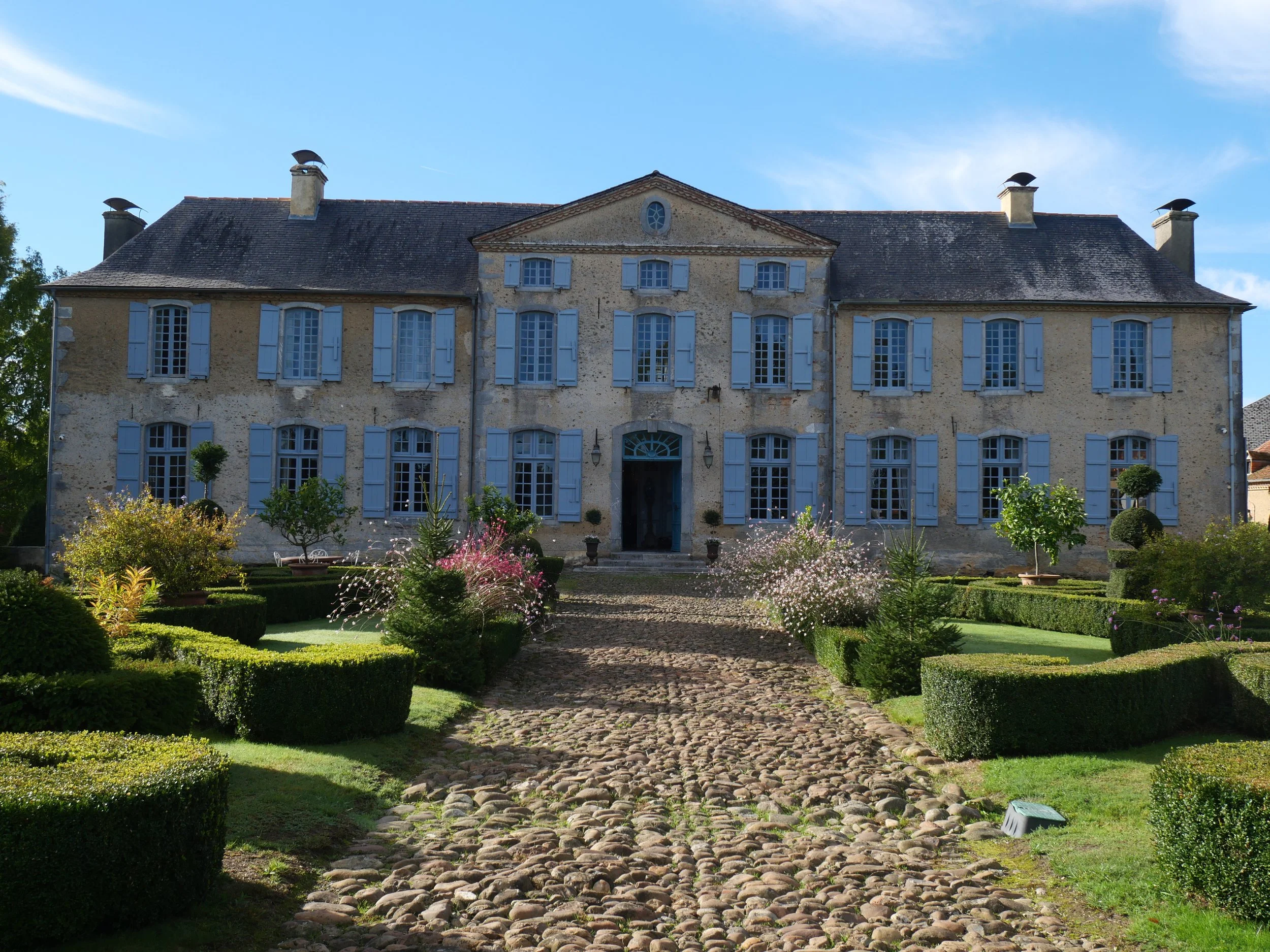
The château occupies a rare position in southwest France, on the historic borders of Gascony—set on the edge of a small village, yet oriented almost entirely toward its own private grounds.
The château occupies a rare position in southwest France, on the historic borders of Gascony—set on the edge of a small village, yet oriented almost entirely toward its own private grounds.

Its south-facing façade looks onto the village square, church, and town hall, a reminder that houses of this period were often designed to play a civic role rather than sit apart from local life. Step around to the other side and the atmosphere shifts: the park-side façade opens onto formal gardens, an orangery, and a series of landscaped follies, all private and without overlooking neighbours.

Built around 1750 on earlier foundations, the château is now on the market with Denniel Immobilier for €1.68 million. Listed as a Monument Historique, it offers approximately 800 sq m (8,600 sq ft) of interior space and has been restored gradually over more than 20 years, with a clear emphasis on preservation rather than reinvention. The architecture retains its classical symmetry and human-scale proportions, typical of refined 18th-century country houses rather than grand aristocratic estates.

Much of the original fabric remains intact. Floors alternate between wide planks, Versailles parquet, terracotta tiles, and stone paving, while period woodwork, fireplaces, wainscoting, overmantel mirrors, and original doors appear throughout the principal rooms. The ground floor is arranged as a sequence of five interconnected reception rooms, all dual-aspect and filled with natural light, alongside a wood-paneled dining room, an Empire-style library, a study with painted wood paneling designed to resemble marble, and an 18th-century alcove bedroom. Circulation is straightforward and intact, centered on an entrance hall with its original stone floor and a grand staircase with a carved wooden banister.

Upstairs, a central hall leads to eight bedrooms, many finished with museum-quality, hand-blocked wallpaper, fireplaces, mirrors, and built-in wood-paneled storage. Two bathrooms serve this level, including one with marble flooring and an early 20th-century marble and pitch pine vanity. Below, extensive cellars include the original château kitchen with its monumental fireplace, along with pantries and service rooms that preserve the historical working layout of the house.

The estate extends to approximately 1.5 hectares (3.7 acres). The gardens were designed and planted around 20 years ago and are now fully mature. Formal boxwood parterres and topiary establish strong axial views facing the château, linked by a central walkway paved in traditional calade stone. Beyond a small bridge crossing the former moat, the landscape opens into a series of garden rooms, including a green theatre with semicircular tiered seating set around a schist-lined pond, sculptural vistas framed by hornbeam and beech hedges, and a rare beech-hedge labyrinth inspired by the great gardens of the 18th century. A swimming pool is discreetly integrated into ornamental basins with marble coping.

The outbuildings form a coherent extension of the château. The most striking is a monumental orangery, fully restored around seven years ago, with three south-facing arches beneath a soaring ceiling, finished with refined acroteria and Louis XIV–style finials. A large barn, now fitted with a professional kitchen, is currently used as an event space. Additional structures include a farmyard, former service buildings with conversion potential, and a discreet chapel featuring a 17th-century polychrome carved wooden altarpiece beneath a painted blue vault.

From a technical standpoint, the property is in excellent overall condition, including the gardens. The roof was fully redone in 2000 and inspected in July 2025. The orangery and outbuildings are well maintained. The only noted update required is the sanitation system, which is currently non-compliant.

The château lies within easy reach of regional transport, approximately 26 km (16 miles) from Pau Airport, 20 km (12 miles) from Tarbes, and 30 km (19 miles) from Lourdes Airport. The Atlantic coast and Biarritz are around 143 km (89 miles) away, under two hours by car, keeping the property firmly inland while still connected to the coast. The cultural life of the Gers, including Marciac’s jazz festival, is about 40 minutes away. Annual property tax is €549.

What sets this château apart is not scale or isolation, but coherence. Architecture, interiors, gardens, and village setting remain legible and intact, shaped by long-term stewardship rather than redevelopment. It is a property defined by balance—between public presence and private life, history and daily use—now offered as a complete ensemble.

The estate extends to approximately 1.5 hectares (3.7 acres). The gardens were conceived and planted around 20 years ago and are now fully mature. Formal boxwood parterres and topiary establish strong axial views facing the château, connected by a central walkway paved in traditional calade stone. Beyond a small bridge crossing the former moat, the landscape opens into a sequence of garden rooms, including a green theatre with semicircular tiered seating set around a schist-lined pond, sculptural vistas framed by hornbeam and beech hedges, and a rare beech-hedge labyrinth inspired by the great gardens of the 18th century. A swimming pool is discreetly integrated into ornamental basins with marble coping.

The outbuildings form a coherent architectural extension of the château. The most notable is a monumental orangery, fully restored approximately seven years ago, with three south-facing arches beneath a soaring ceiling, crowned with refined acroteria and Louis XIV–style finials. A large barn, now equipped with a professional kitchen, is currently used as an event space. Additional structures include a farmyard, former service buildings with conversion potential, and a discreet chapel featuring a 17th-century polychrome carved wooden altarpiece beneath a painted blue vault.

From a technical standpoint, the property is in excellent overall condition, including the gardens. The roof was fully redone in 2000 and inspected in July 2025. The orangery and outbuildings are well maintained. The only noted upgrade required is the sanitation system, which is currently non-compliant.

The château lies within easy reach of regional transport links, approximately 26 km (16 miles) from Pau Airport, 20 km (12 miles) from Tarbes, and 30 km (19 miles) from Lourdes Airport. The Atlantic coast and Biarritz are around 143 km (89 miles) away, under two hours by car, keeping the property firmly inland while remaining connected to the coast. The cultural life of the Gers, including Marciac’s jazz festival, is approximately 40 minutes away. Annual property tax is €549.

What distinguishes this château is not scale or isolation, but coherence. Architecture, interiors, gardens, and village setting remain intact and legible, shaped by long-term stewardship rather than redevelopment. It is a property defined by balance—between public presence and private life, history and use—now offered as a complete ensemble.

All photos belong to the listing agency.

Read More

One of the Finest Classical Châteaux in Provence — the “Little Trianon”

An exceptional example of early 18th-century French classicism, this estate carries the architectural ambition of the period that produced it. Its history spans the speculative boom of 1720 and the enduring Revolutionary-era anecdote that links it, however loosely, to Marie Antoinette.
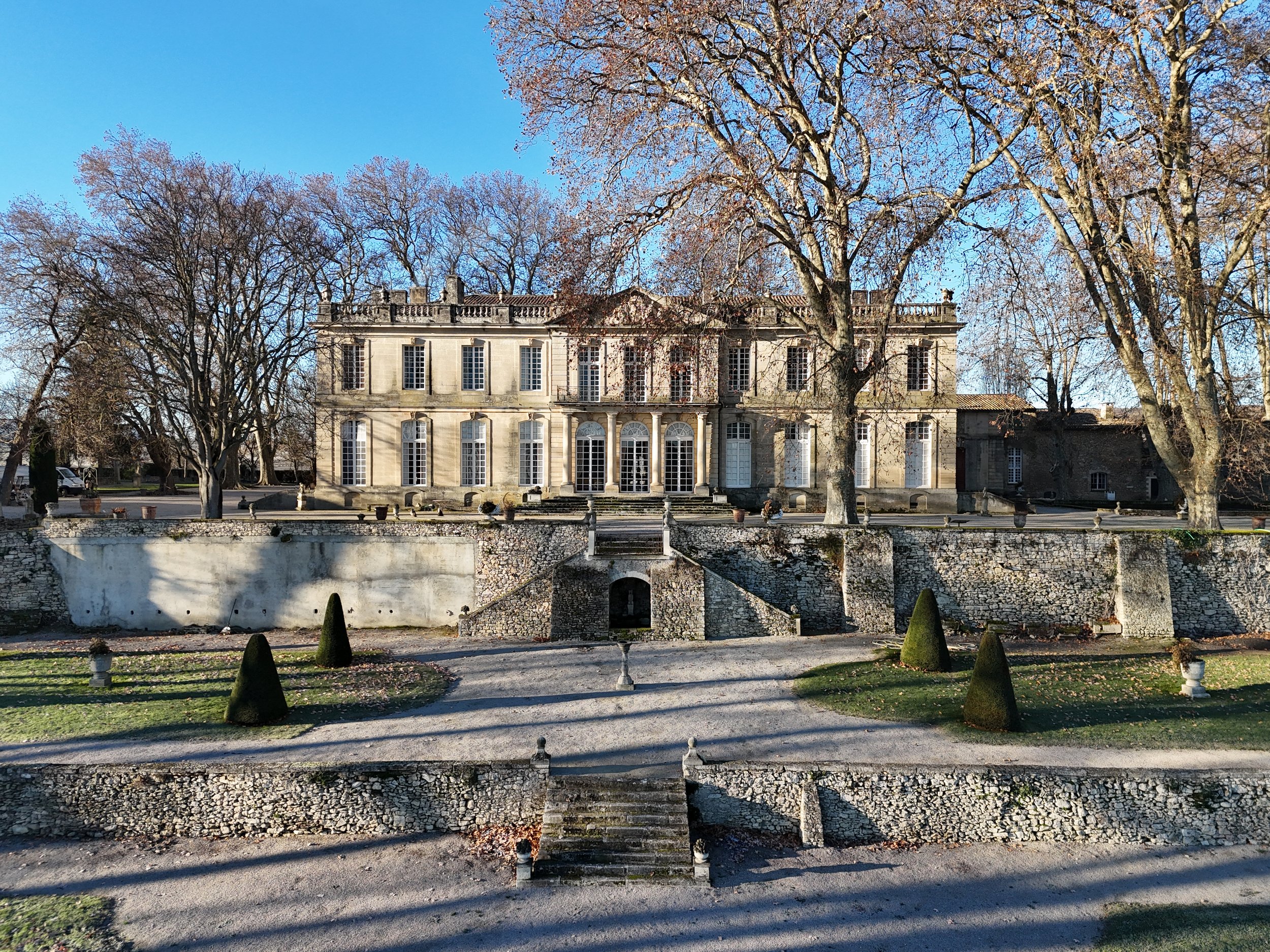
Set within a sweeping Provençal landscape, this early 18th-century classical estate is regarded as one of the region’s finest châteaux of its period and it’s on the market for 5.9 million with Denniel Immobilier. 

 Built in the early 1720s, the estate was designed by Pierre-Alexis Delamair—the Parisian architect behind the Hôtel de Soubise in the Marais, now part of the French National Archives—and executed by Jean-Baptiste Franque, one of Provence’s foremost 18th-century master builders. Commissioned for the Forbin-Janson family, an established noble lineage, its symmetry, refined classical lines, and expansive formal layout later earned it the long-standing nickname “the Little Trianon of Provence.”

Across 2,200 m² (23,680 sq ft) and 40 rooms, including 19 bedrooms, the estate mirrors the architectural ambition of the Régence era. The main façade centers on a three-bay avant-corps crowned by a pediment, while the garden elevation features a rare portico of four freestanding columns—an architectural gesture typically reserved for the highest ranks of nobility. Inside, ceilings rise over five metres, and natural light fills the enfilade of salons. The through-hall opens onto an 80 m² grand salon articulated with Ionic pilasters, while a sweeping open staircase—one of the most remarkable private 18th-century staircases in France—ascends to a 45-metre-long gallery.

The ground floor includes a suite of salons, a music room with mezzanine balustrade, a large dining room, and two rooms formerly used as visitor shops. Private quarters occupy the upper level, alongside a billiard-library room and chapel. Extensive vaulted cellars, wine storage, and a long tunnel sit below. The broader program includes two gîtes, a three-bedroom dwelling, a former orangery converted into a 150-guest reception hall with a professional kitchen, and a swimming pool—all set within 13.6 hectares (33.6 acres) of grounds.

Ambitiously built during the speculative boom triggered by John Law’s financial system in the early 1720s, the estate reflects a rare moment when France was flooded with newly issued paper money—made legal tender by Law’s Banque Royale—and when shares in his Mississippi Company soared on promises of vast colonial wealth. The sudden liquidity encouraged aristocratic families to embark on unusually grand architectural projects, particularly in Paris and Provence. Although no primary record details the Forbin-Jansons’ exact exposure to the system, the estate is frequently cited by historians as an example of the era’s boom-and-bust dynamic: when Law’s financial structure collapsed in 1720 and fortunes evaporated almost overnight, several salons were left in their original, unfinished state, preserving the abrupt shift in circumstances that ended the speculative frenzy.

A layer of Revolutionary intrigue surrounds the estate through an unverified but persistent regional retelling involving Sophie de Galléan Forbin-Janson. Said to resemble Marie Antoinette, Sophie is portrayed in 19th-century accounts as offering both her identity and her fortune to take the queen’s place in a clandestine escape from the Conciergerie. In these narratives, the queen is said to have refused the gesture, sending a final note that read, “I must not, nor will I accept the sacrifice of your life, farewell.” Though unsupported by surviving archival evidence, the story endures in local memory and adds a dramatic dimension to the estate’s Revolutionary-era history.

The landscaping restores another aspect of the estate’s original grandeur. The formal gardens were restored in 2023, recreated from Delamair’s 18th-century plans to revive their classical axial geometry, a defining feature of early French garden design. Terraced lawns, embroidered parterres, a large basin, monumental obelisk, and an 18th-century double-flight staircase structure the garden along a long visual axis, re-establishing the classical order intended by the original architect. Peacocks, long visible in publicly documented views of the estate, animate the terraces and formal gardens.

Located within easy reach of nearby villages, hotels, and services, and approximately one hour from Aix-en-Provence, the estate combines architectural pedigree, expansive grounds, and historical depth. As one of Provence’s most distinguished classical properties, it stands today as a rare Régence-era landmark with its defining features remarkably intact.

All photos belong to the listing agency.

Read More

To Restore: A French Château Built Across Six Centuries — €3.18 Million

A rare restoration opportunity: a fully classified estate with the highest heritage status France grants — reserved for nationally important sites — just two hours from Paris.

Back on the market at €3.18 million with Denniel Immobilier, this fully classified Monument Historique estate is the kind of property that moves quietly among heritage buyers, long-term investors, and family offices—not the broader market. It sits just two hours from Paris at the edge of a small Perche village, offering the exact combination that serious preservation-focused buyers look for: scale, architectural integrity, and a site that has evolved coherently across six centuries.

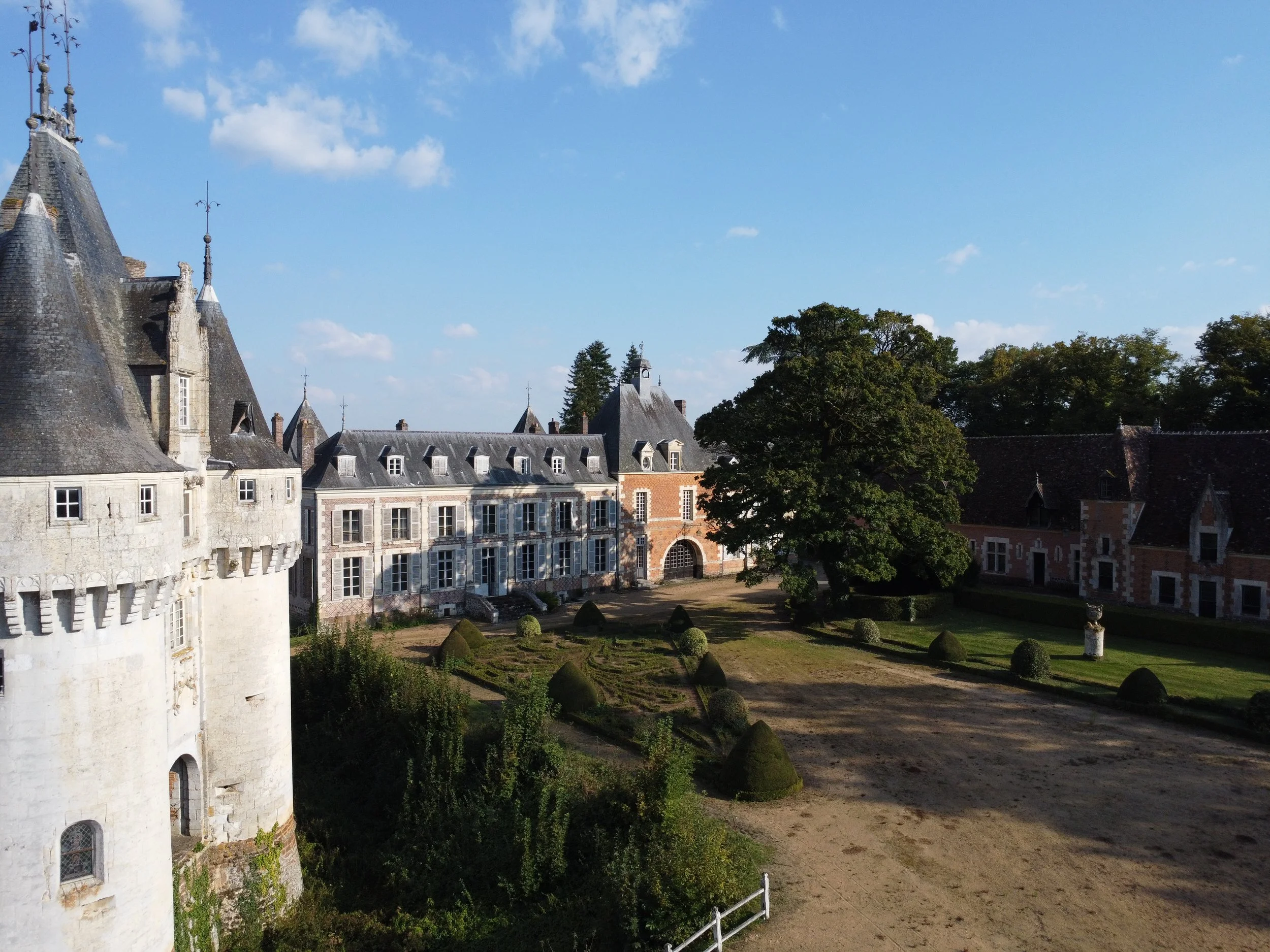
The château stands on the footprint of an earlier medieval fortress burned in the first half of the 15th century by the Earl of Salisbury during the Hundred Years’ War. The fortified structures that followed—rebuilt at the end of that century—form the architectural anchor of the property today. They are exceptionally uncommon in this condition.

At the centre is the 15th-century fortified donjon, a true medieval châtelet with round towers, machicolations, poivrière roofs, a vaulted seigneurial chapel, and even the remnants of a garderobe or oubliette. In multi-era estates, defensive gatehouses are usually the first casualties of time: many were destroyed in the Wars of Religion, dismantled in the 17th–18th centuries for comfort, or heavily reworked in the 19th century. A medieval châtelet surviving in its original form—and still structurally legible inside a larger ensemble—is rare. Surviving in private hands is rarer still. This element alone elevates the estate into a different heritage category and explains much of its significance.

The property is organized around five principal buildings, each marking a different period of development:

• the 15th-century donjon and its chapel;

• the Saint-François Tower, encircled mid-height by a carved Franciscan cord;

• a Renaissance and Louis XVI pavilion with its distinctive bell-shaped tower;

• the village-side Pavillon du Bourg, developed from the 16th to 18th centuries;

• and a long line of 16th–20th century outbuildings with notably early timber frames.

Together, these structures frame a U-shaped courtyard, opening onto a 200-metre west-facing terrace, topiary-edged parterres, a canal, and meadows leading into mature woodland across nearly 50 acres.

The structural envelope is reported to be sound, but the interiors require full restoration. For lifestyle buyers, this signals work. For heritage-minded owners, it signals possibility: a protected architectural ensemble that has not been diluted by later interventions and can be restored with coherence.

Heritage Note (for serious buyers)

Most French châteaux are protected only in part—a staircase, a façade, a salon, or certain alleys of a formal park. Full Monument Historique classification of an entire estate—château, outbuildings, and park—is strikingly uncommon. It means the site has kept its original spatial logic, free from the fragmentation or 20th-century additions that complicate many restorations. For investors, that distinction matters: you’re not spending the first years undoing a century of incoherent choices. You’re working from an intact baseline—rare, valuable, and increasingly impossible to find.

Full classification places the property in the small group recognized by the French State as having national-level historical, artistic, or architectural importance. It isn’t simply old or beautiful. It is nationally significant, and the restoration framework reflects that. Fully classified estates can access DRAC grants, Fondation du Patrimoine support, regional cultural subsidies, and the specialized heritage restoration teams reserved for top-tier patrimony—covering, in some cases, 20–40% of major works. For UHNWIs and family offices, the fiscal structure is equally relevant: 50–100% tax deductions on restoration, deductible maintenance, and eligibility for mécénat or foundation vehicles that make long-term stewardship economically rational. In short: this is a legacy asset, backed by a heritage framework designed for serious custodians.

With 20 hectares, a preserved architectural sequence spanning 600 years, and motorway access within reach, the château’s valuation reflects scarcity rather than finish. And while two hours from Paris isn’t “close” in the commuter sense, it is the radius where cultural foundations, Parisian families, and long-horizon investors quietly acquire estates with real depth. The Perche appeals precisely because it offers distance without isolation, authenticity without performance, and enough landscape to take on a meaningful restoration.

For a buyer who thinks in decades—not seasons—this is the kind of opportunity that rarely returns to market.

All photos belong to the listing agency.

Read More

After 700 Years in One Family, This Burgundy Château Comes to Market

About 1h20 from Paris near Sens in Burgundy, this 17th-century chateau sits on 60 hectares (148 acres) of land, with another 95 hectares (235 acres) of leased farmland.
Held by one family since the 14th century, the French château—listed as a Historic Monument (Inscrit au titre des Monuments Historiques) —was built in the early 17th century and redecorated in the 18th century.

Located in historic Burgundy near Sens, the estate is 124 km (77 mi) from Paris—about 1h20 by road and ~1h10 by train—and set at the end of a 500-metre (0.31-mi) approach within 60 hectares (148 acres) of land, and an additional 95 hectares (235 acres) of rented farmland.

Surrounded by centuries-old trees and formal gardens and overlooking a canal and the remnants of a medieval moat, the château presents a symmetrical brick-and-stone façade centred on a coat-of-arms portal beneath a marquis’ crown, flanked by two round towers. There’s a grand double-flight exterior staircase, similar to the one at Château de Fontainebleau, some 65 km (40.4 mi) away.

Inside, the château spans 1,500 m² (16,146 ft²) of living space with 14 bedrooms and several principal rooms, including a triple-aspect salon of about 90 m² (969 ft²) with eight tall windows, herringbone parquet and paired marble fireplaces; a second large dual-aspect salon; a music room; an oratory; and both tower and winter dining rooms. The garden-level tower contains a recently fitted kitchen with an AGA and its own timber staircase linking to the tower dining room.

A central stone staircase with a wrought-iron balustrade connects the levels, overlooked by a stained-glass window. The first floor arranges six mainly east-facing bedrooms, several with 18th-century boiseries, trumeaux and marble chimneypieces; one alcove bedroom retains a painted trumeau. The second floor sits beneath an exposed roof frame with two library rooms and additional bedrooms, including a tower room.

Below, the stone-vaulted cellars include a guard room with a large fireplace—dating to the 14th century and supported by four Fontainebleau sandstone pillars—alongside a wine cellar, an office with an 18th-century fireplace and a recent Viessmann oil-fired boiler room. The north tower, overlooking the former moat, is configured to run semi-independently with its own boiler room and a bedroom.

Outbuildings offer further accommodation: a converted dovecote apartment (kitchen, living room, bedroom), a three-bedroom caretaker’s house with garage, and a cottage with new windows and roof ready for interior restoration. Two gated drives serve the grounds, which include lawns, woodland, bridleways, a vegetable garden and a greenhouse to restore.

The sale includes about 40 hectares (99 acres) of land (unleased). By separate negotiation, there is an option to acquire about 115 hectares (284 acres) of leased agricultural land attached to a rented farm.

Shops and services are within ~10 km (6.2 mi); Sens is ~30 km (18.6 mi) and Fontainebleau ~65 km (40.4 mi). At the crossroads of Île-de-France and Burgundy, Sens combines practical access—124 km (77 mi) from Paris; TER to Paris-Bercy in ~55–75 min—with heavyweight heritage at Cathédrale Saint-Étienne. Weekend options range from canal cruising and cycling on the Burgundy and Nivernais canals to tasting trips in Chablis, Irancy, and Saint-Bris.

All photos courtesy of the listing agency.

Read More

A Restored Château With Some of France’s Largest Private Greenhouses

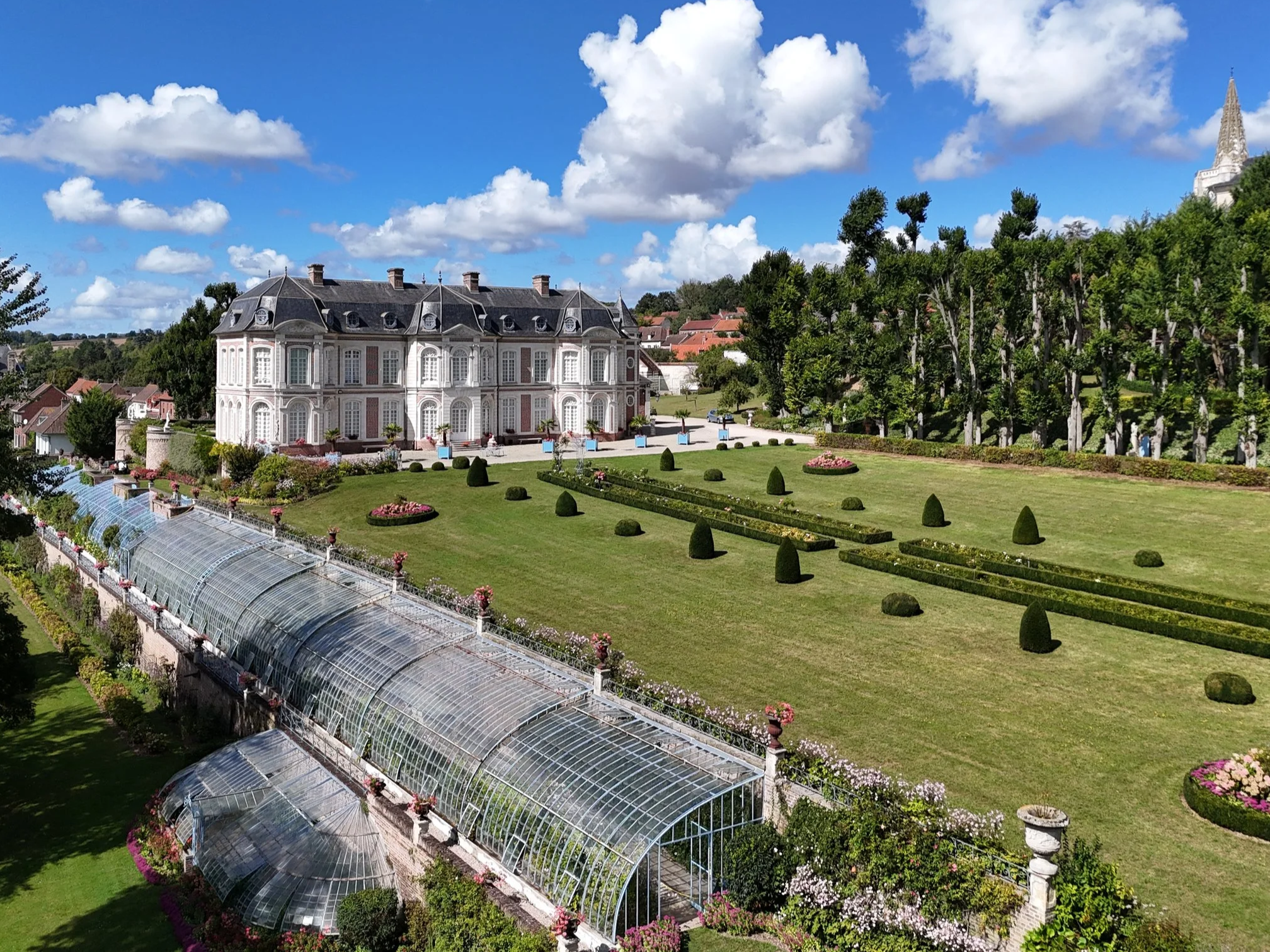
Set above the Somme River near Abbeville (1h40 from Paris), this 18th-century pink-brick residence is positioned atop a series of terraces with century-old greenhouses—each nearly 100 metres (328 feet) long—among the largest in private ownership in France.

Set above the Somme River near Abbeville, the 18th-century pink-brick residence rises on a series of terraces with century-old greenhouses—each nearly 100 metres (328 feet) long—among the largest in private ownership in France.

Commissioned in 1733 by Pierre de Buissy and designed by Charles-Étienne Briseux, the Paris architect behind L’Art de bâtir les maisons de campagne (1743), the château embodies his ideas of symmetry, proportion, and light.

Stylistically, it shares the harmonious proportions of the Hôtel de Biron in Paris—now the Musée Rodin—though its pink-brick façades are typical of the classical architecture of northern France. The château has also been nicknamed Le Petit Versailles for its aristocratic history and Rococo interiors, decorated by Versailles painter Jean-Baptiste Huet.

The main residence spans approximately 1,500 m² (16,145 ft²) across three levels, centred on an oval stone hall with black-and-white cabochon flooring and antique-style pilasters. On the ground floor, a dining room features painted wood panels and two oil paintings on the theme of love by Huet (1745–1811), whose works now hang in the Louvre, the Metropolitan Museum of Art, and the Victoria and Albert Museum.

Adjoining rooms include a gilded salon with a marble fireplace and the distinctive Zodiac Salon—illuminated with natural light from three walls of windows, and decorated with twelve paintings representing the signs of the zodiac.

The upper floors contain nine bedrooms along with several salons, studies, and a library, all connected by a wrought-iron staircase painted in faux marble. Including the guest accommodations within the outbuildings, the estate offers a total of 14 bedrooms.

The outbuildings, designed with the same classical symmetry, include a former orangery converted into a “museum room,” a caretaker’s house, barn, dovecote, stable, and an independent guest house.

Set within 18 hectares (44 acres) of enclosed parkland, the estate includes formal gardens, a five-hectare (12-acre) pond, and nearly one kilometre (0.6 miles) of river frontage along the Somme. The restored 19th-century greenhouses extend along the terraces and shelter luxuriant vegetation year-round.

Classified in its entirety as a Monument Historique since 1944—with façades, roofs, and outbuildings later added in 2003—the château remains one of northern France’s most complete and well-preserved 18th-century estates.

The property lies less than two hours from Paris, 40 kilometres (25 miles) from the coast, with direct access to Abbeville and Amiens by motorway or train.

All photos courtesy of the listing agency.

Read More

Neoclassical-Style Château Near Monet’s Gardens, 1 Hour from Paris

This château was built in 1910 in the style of 18th-century French neoclassicism, specifically the Château de Bellevue, which was commissioned by King Louis XV for his mistress, Madame de Pompadour.
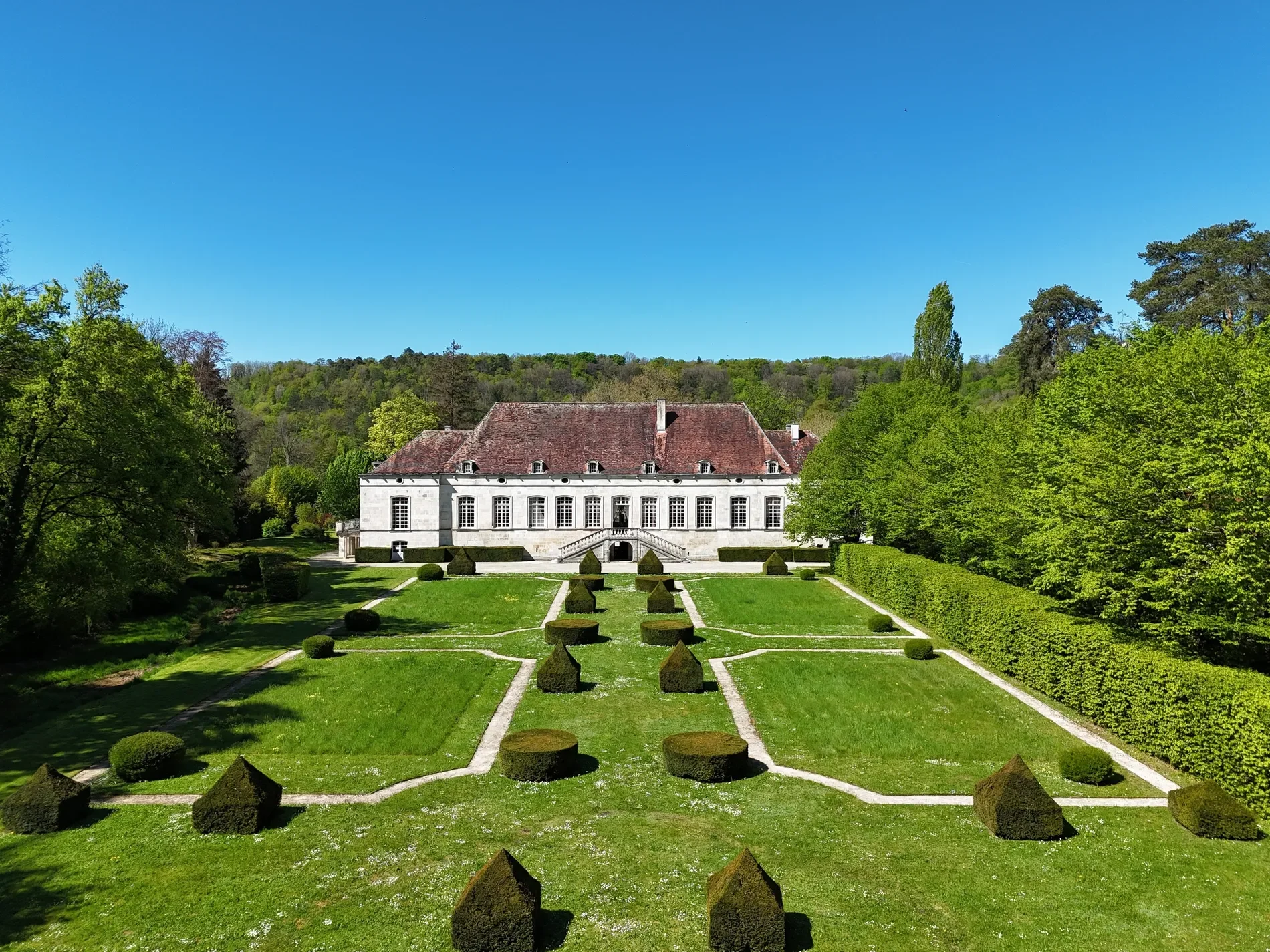
On the market with Denniel Immobilier and recently reduced to €2,100,000, it’s located 1 hour from Paris and about 30 kilometers (19 miles) from Giverny, home to Monet’s celebrated gardens.

This château was built in 1910 in the style of 18th-century French neoclassicism

The château’s architectural style was inspired by Ange-Jacques Gabriel, architect to King Louis XV. Specifically, his work on Château de Bellevue, commissioned by the king for his mistress, Madame de Pompadour.

Gabriel (1698–1782) served as Premier Architecte du Roi (Royal Architect) under Louis XV, and his works include the Petit Trianon at Versailles and Paris’s Place de la Concorde (Concorde Square). His style came to define the elegance of 18th-century French neoclassicism.

Inside, the château is a time capsule of French decorative arts mixing various styles and periods. A Louis XVI salon features a carved marble fireplace and cabochon stone floors; the Regency-style salon displays finely paneled boiserie (ornamental wood panelling); and the dining room is lined with intricate Rocaille panelling, and the grand staircase has gilded wrought-iron bannisters. Large French windows flood the interior with natural light.

Other highlights include an octagonal library with herringbone parquet and a Rococo-style trumeau (gilded mirror) above the grand fireplace. The French kitchen has retained all of its original charm and fittings, with a tiled range hood and a built-in wooden buffet.

The château has 19 bedrooms across about 1,000 square meters (10,800 square feet) of living space. Restored between 2020–2024 by a Historic Monuments–specialist company, the chateau has been meticulously preserved and updated, including a restored roof and the addition of an indoor spa pool.

Set in 3.7 hectares (9 acres) of enclosed parkland, the grounds have century-old plane trees, statues, grottos, and a Moorish pavilion. There’s also a rare 18th-century boulingrin—a formal sunken lawn framed by yew and box topiaries, leading the eye to a marble statue of Diana of Versailles.

Located 1 hour from Paris and 30 kilometers (19 miles) from Giverny, the château stands within easy reach of both the capital and the cultural landscape of Normandy.

All photos courtesy of Denniel Immobilier.

Read More

Under €1M: 18th-Century Château on a Private Island on the Marne River

In the Haute-Marne, a classical château has quietly changed hands — and it’s no surprise. A classical residence with intact gardens, year-round habitability, and a private island setting — and all under €1M — seldom lingers on the market.

In the Haute-Marne, a classical château by Jean-Baptiste Bouchardon has quietly changed hands — and it’s no surprise. On the market for €986,240 and exclusively represented on both sides by Denniel Immobilier, the 18th-century estate is no longer available, with the agency confirming a signed purchase agreement for the property.

Completed in the early 1700s, the château is attributed to Jean-Baptiste Bouchardon (1667–1742), an architect and sculptor from one of France’s most distinguished artistic dynasties. While his son, Edmé Bouchardon, would go on to serve as royal sculptor at Versailles under Louis XV, Jean-Baptiste left his mark on Haute-Marne through both religious and civic commissions. At this estate, he designed not only the limestone château itself but also its gardens — an unusually complete artistic vision outside of royal patronage. Elevated to a marquisate in 1745, the property remains a rare example of Enlightenment architecture and landscape conceived in unison.

Tastefully restored around 1960, the château remains in very good condition and has been lived in year-round, unlike many historic estates that fall into disuse. Its exceptional garden — designed in 1736 and restored in the 1970s — is considered among the finest in the region, now in full maturity and occasionally open to the public.

At 600 sqm (6,458 sq ft), the interiors balance authenticity and comfort: cabochon stone floors, oak paneling, marble fireplaces, and a library with Corinthian pilasters. Expansive windows line the main floor, opening to formal parterres, terraced lawns, and mature parkland. Secondary buildings include a restored gîte and a vast attic of 350 sqm (3,767 sq ft) with potential for conversion.

The estate spans 5 hectares (12.35 acres), entirely encircled by two branches of the Marne River. Its landscape combines clipped symmetry to the east and more naturalistic compositions to the west, punctuated by a medieval dovecote, arcades, and later additions such as a rose garden and open-air theater.

Located just 2.5 hours from Paris by road or train, the château’s setting is both secluded — on its own private island — and convenient, within minutes of Chaumont and direct rail links to the capital.

It’s no surprise the château changed hands so quickly. A classical residence with intact gardens, year-round habitability, and a private island setting — and all under €1M — is the kind of complete ensemble that seldom lingers on the market.

All photos belong to the listing agency.

Read More

17th Century Chateau in Western France to Restore

Restoring this chateau to its former glory is no small feat, but for the right buyer, it’s a dream come true as the property has been largely untouched.

This magnificent 17th-century chateau is set in a sprawling 64 acres of land at the edge of a village, nestled in the tranquil countryside of Nouvelle-Aquitaine in western France.

With its grand limestone façade and symmetrical design, it immediately captivates with its regal presence.

Majestic access pillars mark the entrance, leading you into a courtyard flanked by two wings of outbuildings.

The chateau’s exterior boasts a large central pavilion, adorned with intricate details such as ringed columns, a domed roof, and pedimented dormers.

Inside, the chateau features a wealth of period detail waiting to be restored: the staircase, with its central core and half-landings, is adorned with pilasters, mascarons, and balusters, setting the tone for the rest of the chateau.

Each room tells its own story: from the 18th-century woodwork in the bedrooms to the Louis XIV style marble fireplace in the grand living room.

The herringbone floors, coffered ceilings, and trumeau-adorned fireplaces add layers of character that make this chateau an unparalleled canvas for restoration.

The chateau estate includes approximately 200 oaks ready to be felled, with an estimated value of 100,000 Euros—though, as with any venture of this scale, expert advice is a must.

A 19th-century turret adds a whimsical touch to the park, while the terraced gardens, arcaded sheds, and stables speak to the estate’s rich heritage. There’s even a large bridle path lined with oaks, perfect for leisurely strolls or equestrian pursuits.

Restoring this chateau to its former glory is no small feat, but for the right buyer, it’s a dream come true as the property has been largely untouched, waiting for a visionary to breathe new life into its venerable walls.

Despite its peaceful setting, the chateau is well-connected. The nearest shops and services are less than 10 miles away in Loudun, while the historic town of Saumur and the famous Loire Valley vineyards are just a 30-minute drive

With its sumptuous interiors, vast estate, and a location that combines seclusion with accessibility—Saumur and Chinon are both within a short drive, and Paris is just two hours away by TGV—this chateau is the epitome of a fixer-upper with endless potential.

All photos belong to the listing agency.

Read More