A Grand Canal Palazzo Returns to the Market After Restoration
A 15th-century Grand Canal palazzo returns to the market following major structural restoration—securing the most complex phase of work in a city where such interventions are rare. Ca’ Dario is now positioned for completion with architectural integrity intact.
Set directly on the Grand Canal in Dorsoduro, Ca' Dario is one of Venice’s most recognizable private palazzi—and one whose return to the market with Engel & Völkers Private Office merits attention.
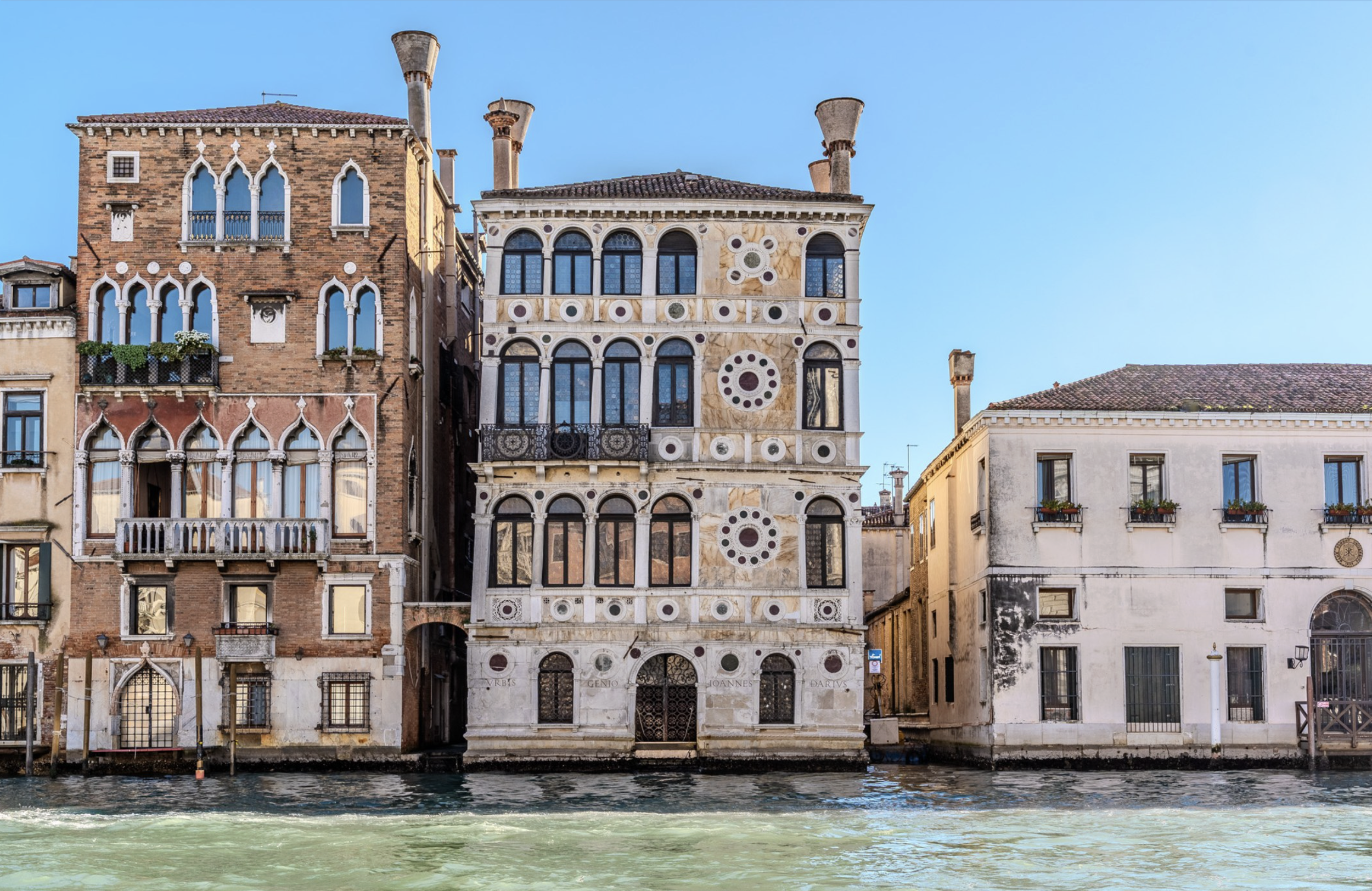
Ca’ Dario on the Grand Canal, positioned between the Accademia and the Basilica di Santa Maria della Salute in Dorsoduro.
The palace was commissioned in 1489 by Giovanni Dario, secretary to the Venetian Senate and a senior envoy to the Ottoman court under Mehmed II, following his successful negotiation of peace and trade agreements between Venice and the Ottoman Empire. Those agreements brought Dario both political standing and the means to build on the Grand Canal. The architecture reflects that background, moving away from Venetian Gothic convention toward a more measured Renaissance language shaped by Dario’s international diplomatic life.
The influence here isn’t Ottoman ornament or exotic motifs. It’s confidence and early adoption. At a time when much of Venice was still building in a late Gothic idiom, Ca’ Dario’s Grand Canal façade instead favors symmetry, proportion, and balance over vertical emphasis. Attributed to Pietro Lombardo, the façade’s polychrome marble inlays, circular stone motifs, and crisp surface articulation align it with the humanist architecture circulating through Italy and the eastern Mediterranean. This approach was not yet standard in Venice and points to an owner looking beyond local convention, using architecture to project authority rather than decoration.
That contrast continues at the rear. Facing Campiello Barbaro, the palazzo retains its Gothic arches, chimneys, and loggia—an intentional split between public and private faces. Toward the Grand Canal, the building presents a formal, outward-looking identity; behind, it remains grounded in Venetian tradition. The result is a palazzo that reflects both the city’s global reach and Dario’s position within it.
In the late 19th century, Ca’ Dario entered a new phase of stewardship under Countess Isabelle Gontran de la Baume-Pluvinel, who restored the interiors with a clear Renaissance sensibility while preserving the palazzo’s original scale and proportions. This period ensured the building’s continuity as a private residence rather than a subdivided artifact.
Claude Monet (1840-1926), Le Palais Dar
The palazzo’s presence on the Grand Canal also drew artists: in 1908, Claude Monet painted a series of studies of the façade, drawn to its color, rhythm, and relationship to the water. Within Dorsoduro, the setting remains notably residential, close to major cultural institutions yet removed from Venice’s most congested routes.
Ca’ Dario has long been associated with a popular narrative describing it as a “cursed” palazzo—a reputation built from a series of loosely connected anecdotes involving former owners and occupants. Historians note that many of the events most often cited occurred elsewhere, years after any association with the building, or involved individuals who were never full-time residents. In Venice, where centuries of aristocratic life were shaped by political instability, financial reversals, and short life spans, similar stories can be attached to many historic palazzi. What distinguishes Ca’ Dario is not an unusual concentration of documented events, but the way unrelated episodes were later grouped together and repeated—particularly during extended periods when the building stood vacant and without a clear future. Today, that mythology sits at odds with the palazzo’s documented history and present condition. With its structure consolidated and its next use clearly defined, Ca’ Dario is best understood not as folklore, but as a significant private residence that has endured—and adapted—across five centuries of Venetian history.
The palazzo now returns to the market following major structural restoration works, including comprehensive interventions to the roof, façade, foundations, and primary structural elements. In Venice, where engineering complexity and regulatory oversight make such projects rare, this phase represents the most technically demanding and capital-intensive part of any restoration. The building stands structurally secured for long-term use. Portions of the interiors retain historic detailing and finished rooms, while other areas are intentionally left open—allowing a future owner to complete the interior fit-out according to their own requirements without compromising the building’s integrity.
Arranged across four levels and spanning approximately 1,055 m² (11,356 sq ft), the palazzo includes two noble floors with grand reception rooms overlooking the canal, formal spaces such as the Sala Maometto, a library and service areas, and nine bedrooms with eight bathrooms. Contemporary amenities—including a private cinema, wine cellar, and elevator—are integrated discreetly within the historic envelope. A private walled garden, panoramic terrace, and direct access to the Grand Canal via a private dock further distinguish the residence.
Across Europe, ultra-luxury hospitality groups are once again underwriting historic properties once considered too complex to modernize. From Venice to Paris, palazzi and hôtels particuliers are being structurally restored at scale—quietly validating these assets for contemporary use and, by extension, for the private market. Globally, high-net-worth buyers are showing growing interest in properties that combine the scale and privacy of private homes with hospitality-level service. Whether through branded residences affiliated with luxury hotel groups or fully serviced villas offering concierge, chef, and housekeeping support, this shift reflects a preference for discretion and bespoke experience alongside traditional high-end hospitality.
Recent and forthcoming projects by Aman Venice, Rosewood Hotel Bauer, and Nolinski Venezia reflect a broader recalibration of Venice’s luxury landscape—one that favors permanence and stewardship over short-term conversion. Within Italy’s prime property market, this has reinforced the value of historically significant buildings that have already absorbed the most complex phase of restoration.
In that context, Ca’ Dario stands out not as a finished product, but as a structurally prepared Grand Canal palazzo—rarely available, increasingly difficult to replicate, and aligned with how Venice’s most important historic properties are being re-used today.
All photos belong to the listing agency.
1800s Hudson River Estate Linked to One of America’s “First Families”
On 34.5 acres with more than half a mile of Hudson River frontage, Ulster Landing is a circa-1800s Hudson River estate once held by one of America’s influential dynasties, the Livingston Family.
Ulster Landing is an estate from the 1800s located on the Hudson River, once held by one of America’s influential families. Listed for $8,350,000 with The Lillie K. Team of Four Seasons Sotheby’s International Realty, the estate spans 34.5 acres in Kingston, New York, with an impressive ½ mile of frontage on the Hudson River.
The History
The Livingston family traces its American roots to Robert Livingston the Elder (1654–1728), a Scottish immigrant who came to the British colonial Province of New York in 1674. It was in 1715 King George I of Great Britain granted Robert royal patent to 160,000 acres (650 km2/ 250 sq mi) of land along the Hudson River, making him the first Lord of Livingston Manor.
Over the next 300+ years the Livingstons would be heavily involved in the US, often referred to as one of America’s “first families” ; their legacy includes Philip Livingston, a signer of the Declaration of Independence, and Robert R. Livingston, who administered George Washington’s presidential oath of office and negotiated the Louisiana Purchase. The town of Livingston, New York was even named after the family.
Descendants of the Livingstons include Presidents of the United States George H. W. Bush and George W. Bush, First Lady of the United States Eleanor Roosevelt, and members of the Astor family.
The original 160,000 acre Livingston Manor estate would be divided between the descendants over the coming centuries, and some of the original land is still owned by descendants.
Ulster Landing
1777 Map of the original 160,000-acre Livingston Estate, located about 40–50 miles (65–80 km) north of Ulster Landing (marked in red), which is the only known Livingston property on the west side of the Hudson River.
Located in Kingston, NY, the estate is about 40–50 miles (65–80 km) south of the former Livingston Manor and is the family’s only known estate on the west side of the Hudson, underscoring its unusual place in the dynasty’s riverfront story.
Ulster Landing was purchased by the Livingstons in the early 1800s and the present-day house was rebuilt by Charles Livingston in the mid-19th century after a fire.
The estate was owned by the family until about 1970. Sometime after 2020 the present owners purchased property and updated the house infrastructure, interior and grounds, transforming and preserving the property for modern living. The owner’s, who live in New York City, stated to Bloomberg that it’s “bittersweet” to sell the home. “It’s such a cool property,” the owner stated. “But it just didn’t feel like it made sense for us anymore.”
Then and Now
Life at Ulster Landing
Archival photos courtesy of the Lillie K. Team of Four Seasons Sotheby’s International Realty.
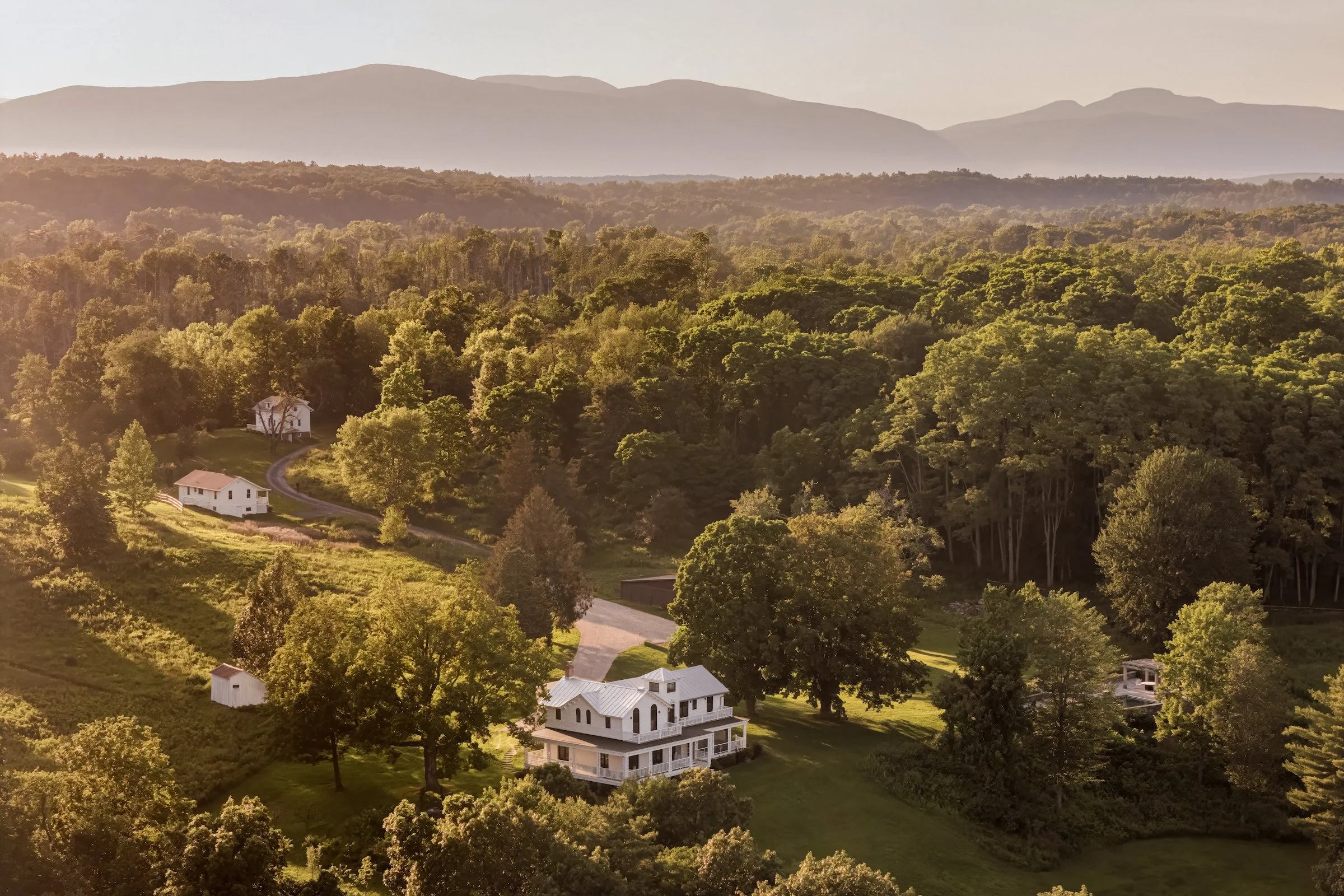
Approached by a long, tree-lined drive bordered by wildflower meadows and immense Catalpa trees, the main house retains its distinctive facade and original millwork. The 6,900-square-foot residence includes 6 bedrooms and 7 baths. Inside, the formal living and dining rooms overlook the river with French doors that open to a wraparound porch and bluestone terrace.
The interiors balance heritage and color with a carefully considered palette. A deep red custom kitchen, crafted with a local craftsmen, anchors the home with an AGA range, elaborate millwork, and restored cabinetry. The adjoining family room contrasts in moodier tones, preserving tin ceilings and cabinetry that houses the original dumbwaiter. In the library, shelves are lined with indigo Antoinette Poisson wallpaper, while upstairs, playful Swedish stripes define the children’s suite. Even utility spaces carry character — the ochre-painted flower and laundry room, with built-in cabinetry and an oversized sink, feels designed as much for rhythm of use as for visual effect.
The second floor is divided into owner and guest wings. The vaulted primary suite opens to a balcony above the Hudson, with a fireplace and adjoining dressing room that could serve multiple functions. Its bath features a freestanding soaking tub framed by original arched windows. Across the landing, the guest wing offers vaulted suites with French-door balcony access, maintaining separation while preserving views.
Across its 34.5 acres, the estate blends landscaped and natural elements: rolling meadows, centuries-old flowering trees, and a private pebble beach along the Hudson. A heated gunite stone pool and spa sit high above the river with a bluestone terrace, outdoor shower, and concealed storage below.
Historic outbuildings add to the property’s layered charm. A circa-1800s barn contains original carriage equipment; a mid-century Playhouse offers light-filled living space, kitchenette, and gym; and the Gatehouse, original to the estate, now serves as a one-bedroom guest cottage.
The Hudson Valley Setting
Ulster Landing lies minutes from Kingston’s historic district, with its restaurants, shops, and weekly farmers’ market. Rhinebeck, Tivoli, and Hudson are nearby cultural anchors, while the Rhinecliff Amtrak station connects directly to New York City in under two hours. Today, the combination of heritage, cultural vitality, and direct river access explains why this stretch of the mid-Hudson Valley ranks among the region’s most desirable places to live.
All photos courtesy of The Lillie K. Team of Four Seasons Sotheby’s International Realty.
A Copper Heiress’s Connecticut Estate, Empty for Decades, Now Restored
Copper heiress Huguette Clark bought the 1938 mansion as a Cold War refuge but never lived in it, leaving the mansion untouched for more than 60 years. Restored by Reed and Delphine Krakoff and featured in Architectural Digest, the estate is now on the market for $25,500,000.
The house itself was built in 1937 for U.S. Senator David Aiken Reed of Pennsylvania, with design by the New York firm Voorhees, Gmelin & Walker—known in Art Deco Manhattan for landmarks such as One Wall Street and the New York Telephone Building at 140 West Street.Constructed of steel and concrete at a reported cost of $275,000—more than 40 times the price of an average American home at the time, and roughly $6 million in today’s dollars.
Copper heiress Huguette Clark purchased the nine-bedroom, eleven-fireplace French-style mansion in 1952 as a sanctuary amid Cold War–era fears of nuclear Armageddon, specifically a Russian attack on the United States.
But she never furnished or lived in the home, as detailed in Empty Mansions: The Mysterious Life of Huguette Clark and the Spending of a Great American Fortune. She died in 2011 at the age of 104, leaving behind a house that had remained unoccupied for more than sixty years—its pristine condition maintained by a devoted caretaker, its floors polished to a near-mirror shine.
In 2014, The Clark House was purchased by fashion designer Reed Krakoff and his wife, interior designer Delphine Krakoff, who undertook its restoration. Their aim was to preserve the château’s historic integrity while infusing it with modern livability. Featured in Architectural Digest, the renovation emphasized proportion, light, and restraint—bringing spare modern elegance to the fortress-like structure.
The 14,266-square-foot residence combines soaring ceilings, expansive windows, and grandly scaled rooms that now flow with clarity and ease. A restored curved staircase leads to a third-floor lounge, while a newly created theater room on the lower level—fitted with vintage cinema seats sourced by Delphine—adds a layer of playful intimacy. Adjacent to the dining gallery, a walled garden and custom pavilion provide a refined setting for entertaining.
Outdoors, the Krakoffs collaborated with landscape architect Perry Guillot to transform the acreage into private parkland. A meandering drive opens to a great lawn, streams, waterfalls, and woodland trails, balanced with specimen trees and wildflower gardens. A 60-foot granite pool and tennis court integrate seamlessly into the landscape, while two gatehouses at the estate’s discreet entry complete the offering: one a caretaker’s residence, the other converted into a private gym.
Today, The Clark House stands as a rarity in Fairfield County. Once abandoned by one of America’s most enigmatic heiresses, it has been revived by two of the design world’s most influential figures into a world-class property.
All photos belong to the listing agency.
This Restored Medieval Castle on 600+ Acres is 45 Minutes from Paris
Just 28 miles from Paris, this 13th-century fortress—restored over 14 years to heritage standards—now operates as a five-star hotel and events venue.
Operated as a luxury hotel and events venue with five-star services, Château de Farcheville is one of the most significant medieval castles for sale in France. On the market with Sotheby’s International Realty France for €26,250,000 (approx. $30.58M), the property offers the rare chance to live like nobility in your own fortified estate just outside Paris.
Built between 1290 and 1304 for the Bouville family—chamberlains to King Philip IV—the castle is among the few surviving rural “open-filled” medieval fortresses in the country. It underwent a 14-year restoration under the direction of a master architect of historic monuments, with work carried out by France’s leading heritage craftsmen to preserve its 13th-century architecture while integrating modern infrastructure.
The château spans more than 64,500 square feet and includes 19 double rooms, three dining rooms, four kitchens, a 600 m² orangery, a spa, and a consecrated 13th-century chapel. A 25-metre (82-foot) indoor pool is set beneath a 19th-century Beaux-Arts–style glass and wrought-iron canopy reminiscent of the Grand Palais.
Leisure facilities are as refined as the architecture: a plush velvet-clad theater for private screenings, a state-of-the-art fitness centre, a tennis court, pétanque court, and 10 hectares (25 acres) of formal gardens within 600 acres of landscaped grounds and hunting forest.
Located 45 minutes from Paris, this French château offers both private retreat and commercial potential, with permits pending for up to 40 additional suites. The listing notes potential full-year sales in the €5–6 million range, making it as viable for luxury hospitality as it is for private ownership.
All photos belong to the listing agency.
This 16th Century Tuscan Villa Was Once The Home of The Mona Lisa
Accessible by a long cypress-lined driveway, this gorgeous hilltop villa is located just 3 miles from Florence, set in the infamous Tuscan wine region of Chianti.
Luxurious in size and style, the villa is spread across three levels with elegant living rooms, kitchens, 14 bedrooms including one with a panoramic veranda, 15 bathrooms, a library, a gym, and a large terrace in the clocktower with views of the Florence plain.
The historic villa has been restored over the years and features fine period detail throughout its 30,000 square feet of interior space.
The villa is set in 66 acres of parkland with tree-lined alleys, vineyards and olive groves - there’s also a lemon conservatory, in addition to various outbuildings. The property also includes a tennis court and a swimming pool.
But what truly sets this villa apart is its historic pedigree.
The property’s fascinating history predates even this incredible cultural reference: in the 14th century its resident was Baldo d’Auguglione, who was involved in the exile of the poet philosopher, Dante, from Florence —he was cited twice as the villain in Dante’s Divine Comedy.
In the 16th century, Villa Antinori Di Monte Aguglioni belonged to the Del Giocondo family and in 1505, Leonard da Vinci was commissioned to paint a portait of the the wife of Francesco Del Giocondo.
The Mona Lisa, Wikicommons
Famous world-wide, the “The Mona Liaa”, formerly known as La Giaconda, has been on display at the Louvre in Paris since the late 1700s.
In 1928, the villa was purchased by the Antinori family, who had been producing wine in Italy beginning in 1385 when their ancestor Giovani di Piero became a member of the “Arte Fiorentina dei Vinattieri” (the Florentine Winemakers’ Guild).
It was the Marquise Nathalie Antinori who was responsible for tastefully renovating and restoring the villa in the early 20th century. She enlisted her brother, architect Egisto Fabbri to restore the villa’s facade and add the clock tower.
She also enlisted English architect Cecil Pinsent to design the Italian gardens which surround the home.
Two views of the Villa Antinori; the picture below represents Egisto Fabbri's remodeling.
Source: Rootsweb
According to Piero Antinori’s family history, (The Hills of Chianti: The Story of a Tuscan Winemaking Family, in Seven Bottles,
published in 2014), it was Nathalie’s sister, Ernestina Ludolf, who drew the villa’s facade for use on the wine label, a novel concept in Italy at the time, but a rival to France’s wines.
One of the biggest wine companies in Italy today, Villa Antinori wine can be found in the most prestigious cellars around the world.
The Antinori family sold the property to a prominent family of Florentine industrialists in the late 1940s, although you may recognize the iconic facade and double staircase from the label of the famous Chianti Classico wine, Villa Antinori.
Just 3 miles from the historic center of Florence, Villa Antinori di Monte Aguglioni is one of the most excpetional properties in the Tuscan countryside.
All photos belong to the listing agency.
The 'Spelling Manor' is Back on the Market for $165M
One of the greatest estates in the world and an iconic piece of Los Angeles history, The Holmby Hills mega-mansion is one of the largest private residences in the US.
The property is listed with Drew Fenton and Jeff Hyland of Hilton & Hyland.
The Los Angeles mega-mansion is on of the largest private residences in America, set on nearly 5 acres of grounds in Holmby Hills.
Built in 1988 for the prolific television producer Aaron Spelling, behind hits like Charlie's Angles, Beverly Hills 90210, and The Love Boat.
Built in 1988 for the most prolific television producer Aaron Spelling, behind hits like Charlie's Angles, Beverly Hills 90210, and The Love Boat.
Previously described as the "greatest entertainment house ever”, his wife Candy Spelling once recalled how “all the stars came through'' at events, including Jackie Kennedy, Prince Charles, and “every star from every one of Aaron’s shows.”
‘The Love Boat’ Party at Spelling Manor. Right, Aaron Spelling
The Manor spans 56,000 square feet , with 123 rooms, including 14 bedrooms, 27 bathrooms, multiple living rooms, four bars, and three kitchens.
Amenities include a Hollywood-approved screening room, a wine cellar, and a spectacular library. There’s also a gym, bowling alley, and hair salon.
On the grounds are a swimming pool, tennis court and four two-car garages with a parking lot with space for another 100 vehicles.
The Holmby Hills property made history in 2011, when Candy Spelling sold the home to British heiress Petra Stunt, the daughter of Formula 1 racing magnate Bernie Ecclestone.
Petra Ecclestone
At age 23, Stunt purchased the palatial estate for $85 million in cash, and invested an additional $20 million to remodel the property with a team of 500 under Los Angeles interior designer, Gavin Brodin.
The interiors were updated with a monochrome and Euro-chic aesthetic, although the redesign kept much of the property’s original integrity intact.
Aaron Spelling’s original film editing room (located behind the screen of the movie theater) was preserved during the remodel, complete with his hand-written notes.
The mega-mansion was last sold in 2019 for a record-breaking $119.7M to an anonymous Saudi Arabian buyer who purchased Holmby Hills mega-mansion “sight unseen”.
At the time, ‘The Manor’ broke the record as the highest price for a sold home in California.
One of the greatest estates in the world and an iconic piece of Los Angeles history.
A Muse, Mistress, and Patron of the Arts: The Story Behind Château de Menars
It’s any billionaire’s dream pad, but there is more to the story behind one of the few privately-owned châteaux in Loire Valley.
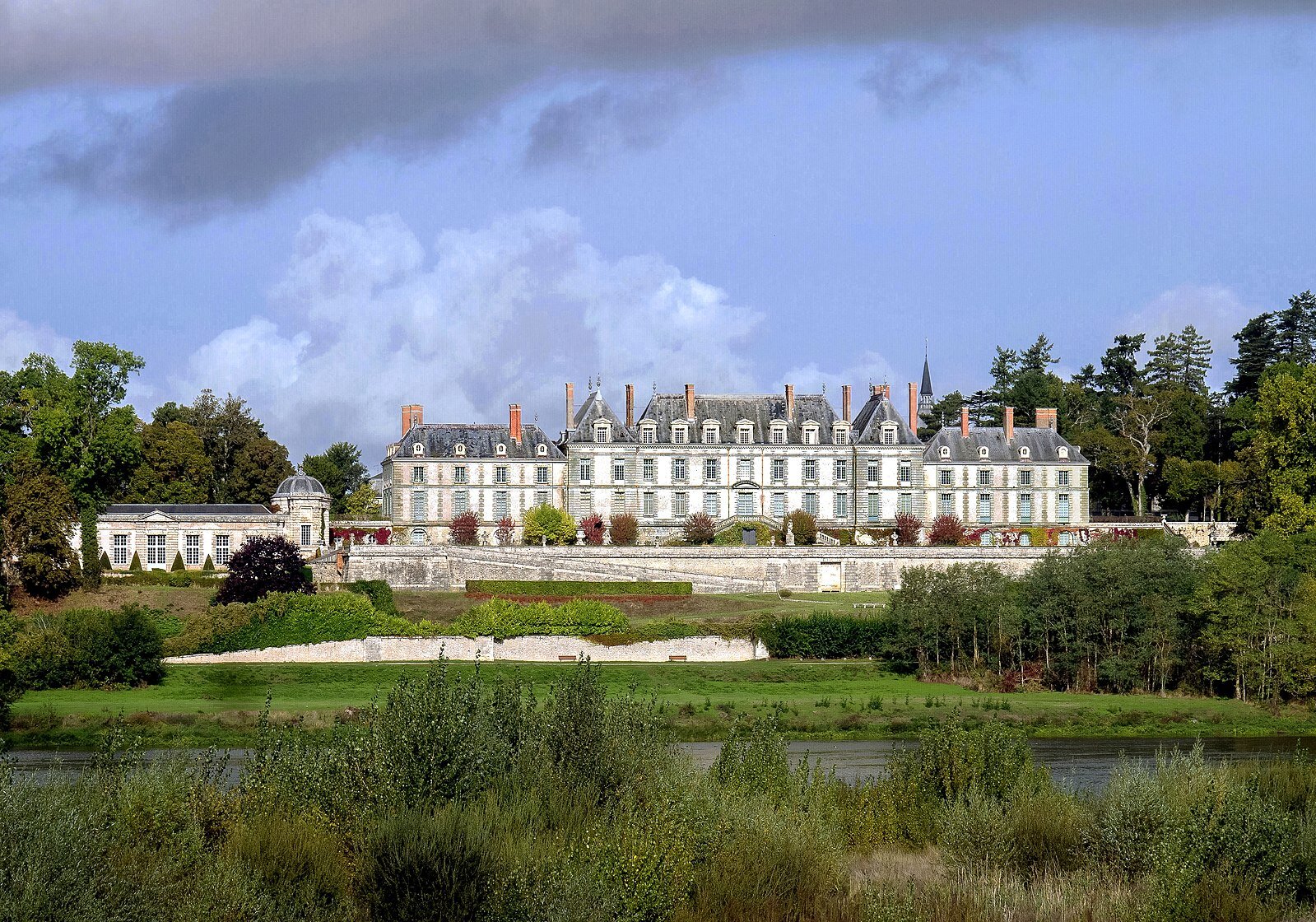
This property is listed for €15,750,000 by Val de Loire Sologne Sotheby's International Realty.
It’s any billionaire’s dream pad, but there is more to the story behind one of the few privately-owned châteaux in Loire Valley.
Château de Menars belonged to Edmond Baysari, a Lebanese-born, Monaco-based property developer with a passion for art, architecture, and history. Well into his 80s and without apparent heirs, the UNESCO-listed property was put on the market in 2017. Baysari passed away in 2018.
The price tag is a fraction of the €100M to restore it over 30 years, and he had hoped the property stays intact. It is rumoured he has turned down 9-figure deals from Russian Oligarchs and Middle Eastern billionaires.
Château de Menars, (Starus via Wikimedia Commons)
The annual upkeep of the 50-bedroom château is roughly €400K. This includes the maintenance of lavish geometric gardens designed by famed landscape architect Le Nôtre, the principal gardener of King Louis XIV of France who also designed the gardens are Versailles.
The property boasts the longest avenue of century-old lime trees in Europe, stretching 4 km long. The terraces extend to the banks of the Loire, dotted with 18th century statues of Roman emperors. Vineyards on the property yield pinot noir and there is a 30,000 bottle wine cellar.
Baysari referred to his 130,000 square foot, 104-acre estate as "Palace Pompadour", after his muse.
The 30-year restoration project is a labour of love. "Very early I came across this woman in my readings, and I was immediately passionate about her," said Baysari, recalling when he first heard of Madame de Pompadour as a young child.
Château de Menars once belonged to Madame de Pompadour, the maîtresse-en-titre (Royal Mistress) of King Louis XV, a true Renaissance woman whose influence on art, style, and politics changed the world.
Detail from Madame de Pompadour, 1756, by François Boucher, Wikipedia
How can Madame de Pompadour be a ‘Renaissance woman’ when she was born in 1721? The term ‘Renaissance woman' (or man) was originally used to describe the qualities of a polymath from the Renaissance period.
A basic tenant of Renaissance humanism is that humans are limitless in their capacity for development. Leonardo da Vinci has often been described as the archetype of the Renaissance man, a man of "unquenchable curiosity" and "feverishly inventive imagination".
The term was first recorded in the early 20th century to refer to the qualities of Renaissance polymaths, although today it is commonly used to describe someone who has broad intellectual interests and is good at many things.
Baysari's lawyer, Jack Anderson, reportedly said "She was a Renaissance woman, and he was a Renaissance man”, when explaining Baysari’s fascination with Pompadour.
Born Jean Antoinette Poisson in 1721 to a promiscuous mother and a penniless father who fled the country to escape his debts, she was just four years old when she came under the legal guardianship of Jean Pâris de Montmartel. A wealthy tax collector who paid for her education, he was rumoured to be her biological father.
At the age of nine, her mother took her to a fortune teller who predicted she would “one day reign over the heart of the King”. Her destiny was sealed: from that time she was called “Reinette”, meaning "little queen". Her family set out to groom Jean Antoinette to become the mistress of Louis XV, and she was educated in dancing, drawing, painting, engraving, theatre, the arts, and attained the ability to memorize entire plays.
Even her marriage at 19 to her guardian’s nephew, Charles-Guillaume Le Normant d’Étiolles, did little to prevent her from fulfilling her destiny. Shortly after they wed, Jeanne-Antoinette and her husband acquired a château in Senart near Louis XV’s hunting lodge, where she would ride horseback on the King’s hunt days hoping to catch his eye.
In 1745, she received an invitation to a lavish masquerade at Versailles in celebration of the marriage of the Dauphin of France and Maria Theresa, Infanta of Spain.
Winners of Best Costume? Six gargantuan turbaned Turks are seen in this 1764 etching of the Yew Tree Ball in 1745, celebrating the marriage of Louis XV's son, Dauphin of France, and Maria Theresa, Infanta of Spain. Charles Nicolas Cochin, (The Met Museum)
Held in the Hall of Mirrors, there were 1,500 in attendance. Many were costumed in elaborate Turkish and Chinese costumes, reflecting the exoticism that was vogue in 1740s Paris. Jeanne-Antoinette arrived dressed as Diana, the Roman goddess of the hunt.
Louis XV, dressed as a topiary yew tree along with several servants alongside him, dramatically unmasked himself and finally declared his reciprocated feelings for her that night. That event came to be known as the Yew Tree Ball because of the King’s costume.
Within a month, she had abandoned her husband and daughter for the King. Given the title of the Marquise de Pompadour, she moved into a private apartment in the palace, with a private circular staircase giving her direct passage to the Kings chambers.
Madame Pompadour, by Francois Boucher (Wikimedia Commons)
The passionate nature of their relationship was no secret in court. The King allegedly moulded the traditional French champagne glass into the shape of one of her breasts; he also commissioned a diamond cut in the shape of her lips. The first of its kind, the cut became known as the Marquis cut, although it is also known as the “navette”.
Designed in the shape of the Marquise of Pompadours lips, the Marquis diamond cut, is also known as the navette cut.
After four years at court, Pompadour would even be elevated to lady-in-waiting to the Queen, the most noble rank possible for a woman at court. Madame de Pompadour got along so well with Queen Marie, that she allegedly remarked "If there must be a mistress, better her than any other."
Ultimately, she would became his trusted advisor, but she grew her influence over the king as a friend who enriched his life with gaiety and lightness. Before their relationship, the King’s main pastime was hunting. She would never tire of entertaining the easily bored royal, often writing and acting in plays for the King to uniquely showcase her wit and charm.
She expanded his worldview with books, art, and culture with her collections of object d’art: a “myriad of paintings, sculptures, and chinoiseries that Pompadour patronzized, commissioned, and collected” (It is said that the sale of her effects after her death lasted for more than a year.)
King Louis XV, Portrait by Maurice-Quentin de La Tour, 1748
Pompadour’s position in court was highly sexualized and highly politicized in a time when courtiers were openly vying for power and influence with Louis XV. The Marechale I de Mirepoix used to say to Madame de la Pompadour “It isn’t you he loves, it’s your staircase”, but their relationship was much more than just physical.
According to Columbia University art historian Susan Wager, "She was mediating between members of the court and the king. They would say 'I want to say this to the king.' And she'd say, 'No, wait, let me tell him. Let me translate it into my own words and I'll come back to you.' She was, in all sorts of ways, manipulating this idea of the staircase — of the passage — in an artistic, in an intellectual and in a political way.”
She is said to have declared unapologetically, "I am stubborn in the service of the King and I won't hold back in anything”, and “effectively played the role of prime minister, becoming responsible for appointing advancements, favours, and dismissals, and contributing in domestic and foreign politics”.
When the relationship changed in 1750 (diaries and letter report that Pompadour switched floors in Versailles), Wagner states "What's really remarkable is that she still remained at court in the position of official mistress for the rest of her life even though there was no longer a sexual relationship".
As the King’s mistress, Pompadour was no stranger to controversy. As a contemporary and friend of Voltaire, a thought leader of the Enlightenment, she was also outspoken about her beliefs as a champion of free thought.
She openly opposed the Catholic Church by supporting the creation of the French Encyclopedia, which discussed ideas of the Scientific Revolution. She made waves in political circles, ultimately influencing the King to break a Peace Treaty with Prussia and she was ultimately blamed for the brutal defeat in the following Seven Years War.
Pompadour’s influence on French society and culture was vast-reaching, and she is often credited with making Paris the capital of taste and culture in Europe. Her love of porcelain led to Louis XV purchasing a porcelain factory in Sèvres in 1759, giving her influence on styles and designs of Sèvres Porcelain. The Chief chemist of Sèvres, Jean Hellot, was enlisted to create the most beautiful pink color ever seen, a shade named “Rose Pompadour”.
She helped bring on the European Rococo movement with her influence of the Rocaille style used liberally in the decorative arts. The light-hearted, French Rococo style she championed became known as the Louis XV style. She would decorate and often redecorate the 15 residences she had with the King, and was known for being a patron of both Rococo artists and the greatest royal patron of portraiture. She commissioned many portraits from leading artists of the day, and was often involved in the composition and direction of the paintings, which was unusual for patrons in this time.
Madame de Pompadour by François Boucher, 1758.
In architecture, she sealed her influence when she elevated her brother Abel Poisson to the title of the Marquis de Marigny and gave him a new position as General Directeur des Batiments. An official government role, he worked alongside Madame de Pompadour and King Louis XV to plan and build several important French monuments and buildings, such as the École Militaire and the Place Louis XV – today the Place de la Concorde.
The Petit Trianon at Versailles via Wikimedia Commons
After hiring architect Anges-Jacques Gabriel to build the Petit Trianon in Versailles, in 1760 she enlisted his expertise for what would be her last great work at Menars: a residence all her own.
She purchased it herself after selling off the Château de Bellevue to the King for his daughters; other reports suggest she sold jewelry and pearls to pay for the first instalment of construction. The château de Menars was part of her arrangements, should she outlive Louis XV or be forced to leave court.
Château de Menars was originally built in 1642 and Pompadour had big plans to refurbish the castle and build her dream home, adding flanking wings to the main château. Unfortunately she would never see Menars complete: Jeanne-Antoinette died in 1764 from tuberculosis. She was 42.
Watercolor “portraitist” of houses, Nicolas Pérignon visited Château Menars and depicted what the palace would look like once complete (1761-64).
Her brother, the Marquis de Marigny, would finish the restoration, but the property would sit quietly for over two centuries. In 1980 the property belonged to Saint-Gobain, a Parisian glass making company who would use the château for company retreats. When the company was nationalized by the French government, they were forced to sell Menars.
That’s when Sotheby’s chairman Peter Wilson told Baysari about the sale. With a fortune amassed from a successful real estate career (he had retired at just 32), Edmond purchased the château for about €2M in 1983.
Born in Lebanon, then under French colonial rule, Baysari left for the Americas as a teenager. After receiving a Harvard education, Baysari opened a widely successful real estate business in Venezuela in the 1960s. He then returned to Harvard for a master’s degree in nuclear engineering, before ending up on Wall Street working as a consultant. After, he traveled the world and settled in Monaco as a full-time philanthropist, focused on the arts.
A close friend of Ronald Reagan, Baysari also contributed to the Art in Embassies program in 1990, an art sharing program between U.S. embassies. which would eventually grow into a worldwide network. The crowning achievement of his curatorship was undoubtedly Château de Menars.
U.S. President Ronald Reagan would visit Chateau de Menars for an informal summit with Soviet leader Mikhail Gorbachev, organized by Baysari. Other notable guests include Mick Jagger and Britain’s Prince Charles. Sir Gawain (Wikimedia Commons)
In 1989, Baysari finally “decided [he] wanted to make a gift to Madame de Pompadour and put it back to the way she would have it if alive today," employing the exact methods used in the mid-18th century to “revive” Menars.
Even with the €100M invested into the château, the ground-floor apartments that were once Madame de Pompadour’s bedrooms are still unrestored. "I don't want to do it. I don't think I'm qualified," says Baysari, "I would rather that when she comes back, she does it herself."
Baysari passed away in 2018 without a will. The sale of the property belongs to his estate is being managed by his niece and the Baysari group.
This incredible 100-acre estate is one of the largest châteaux on the market in the Loire Valley, and offers views looking over the Loire river. The property is being sold as a unique business opportunity for the right investor and includes an introduction to an international 5-star hotelier to develop the property. It’s an exciting project for an extravagant hotel complex in the most visited country in the world.
If you've enjoyed this article, please share it with a friend or post it on your social media:
Twitter | Facebook | LinkedIn.
Sources:
Articles:
Forbes, “France's $100 Million Palace Pompadour: A Royal Chateau Restored By A Press-Shy Philanthropist”, Morgan Brennan, 2013.
History Today, “Madame de Pompadour's Staircase”, Nancy Mitford, Published in History Today Volume 4 Issue 1 January 1954.
La Nouvelle Republique, “Ménars. Le propriétaire du château de Mme de Pompadour est décédé”, Catherine SIMON, 2018
NPR, “More Than A Mistress: Madame De Pompadour Was A Minister Of The Arts”, Sunsan Stamberg, 2016.
Reuters, “Labor of love French chateau on market for $30 million”, Johnny Cotton, 2017.
Books:
Goodman, Elise. “The portraits of Madame de Pompadour: Celebrating the Femme Savante” (Berkeley: University of California Press, 2000)
Hooper-Hamersley, Rosamond. “The Hunt After Jeanne-Antoinette de Pompadour: Patronage, Politics, Art, and the French Enlightenment” (Lexington Books, 2011)
Medici Villa Outside Florence
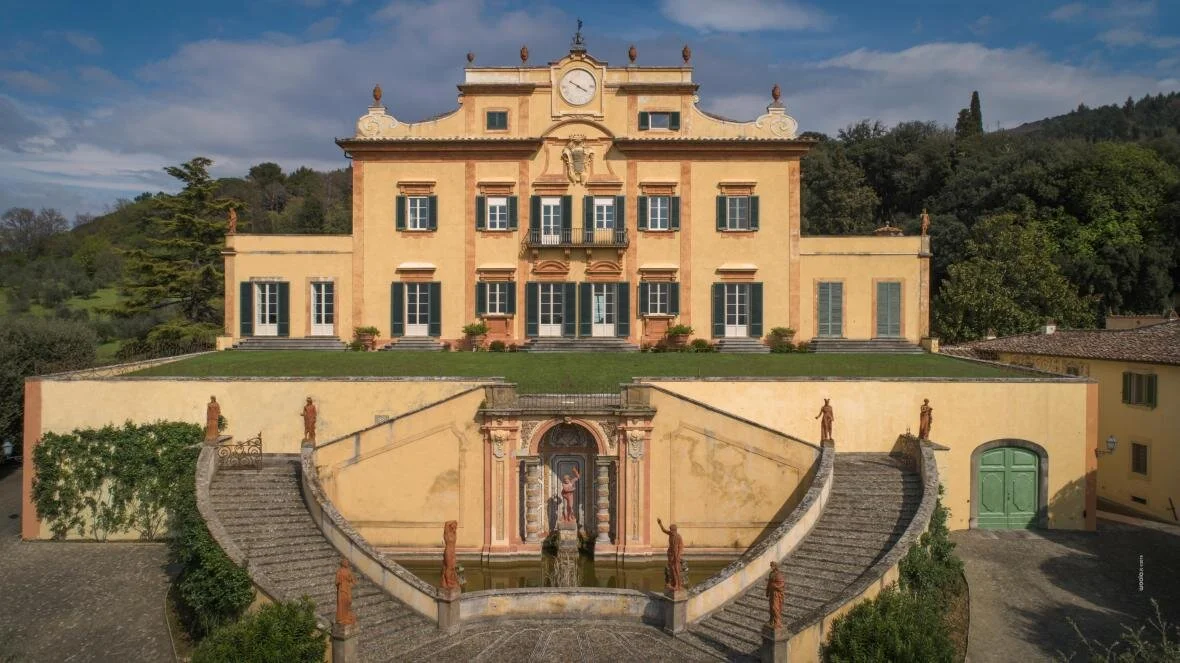
Set in the heart of Tuscany with views over the Arno River stands Villa La Tana, a majestic Renaissance villa surrounded by formal Italian gardens.
This property is on the market with Knight Frank. Price is disclosed upon application with the listing agency.
Set in the heart of Tuscany with views over the Arno River stands Villa La Tana, a majestic Renaissance villa surrounded by formal Italian gardens. The property is located just 13 km from the city of Florence.
Built in the 16th century, the villa was the setting of a great Medici love story: the Grand Duke Francesco I de Medici, heir to the Grand Duchy of Tuscany, gifted the villa to his lover, the beautiful Venetian noblewoman, Bianca Cappello, who he would go on to marry.
Bianca Cappello by Alessandro Allori
The property would be their familial home until their death, when it was purchased by the Santa Maria Nuova hospital. The property was never used as a hospital, but rather the villa and the several hundred acres of land were put to use for making wine, olive oil, and other food sold in the city.
The villa that stands today is the realization of its next owners, the Ricasoli Firidolfi, and the present-day villa bears their coat of arms on the facade. Villa La Tana, then a manor home, was purchased in 1631 by Baron Ricasoli from the Hospital of Santa Maria Nuova. (Today, Ricasoli’s descendants produce Chianti wine in Tuscany.)
Although renovations began almost immediately, major changes to the structure occured in 1740, thanks to Leon Pasquale Francesco Ricasoli, who hired the architect Giulio Foggini to transform the property into the magnificent villa we see today.
The interiors were also updated in the 18th century, most notably on the first floor. The rooms were eliminated to make space for a grand hall featuring stunning seascape frescos by Antonio Carocci (1722). The artist described Villa la Tana as “the most beautiful among the villas in this part of Florence’s surroundings.”
In the 19th century, architect Poggi (responsible for eliminating the walls around the city of Florence and designing the Viale Michelangiolo) updated the villa once more with a grand, cypress-lined driveway leading up to the villa, where visitors are greeted by a grand staircase divided into two ramps flanking a beautiful grotto area with a statue of Poseidon.
The present day formal italian gardens are much unchanged from the 18th century, with geometric iris and azalea beds. The fragrant gardens of this Renaissance villa - as well as the legacy of Bianca Capello - are what inspired the current owner, Simone Cosac Naify to create her first perfume for her brand Simone Cosac Profumi: "Perle di Bianca".
The villa features 5 grand reception rooms, 11 bathrooms, and 6 bedrooms. The property spans 31.14 acres with a pool, gardens, several outbuildings, and additional staff quarters.
All photos belong to the listing agency.
The Hearst Estate in Beverly Hills
The Hearst Estate has become an emblem of Hollywood’s Golden Era. The legendary property is back on the market again, co-listed with Hilton & Hyland, Amalfi Estates, and Rodeo Realty.
The property is on the market for $89,750,000, co-listed with Hilton & Hyland, Amalfi Estates, and Rodeo Realty.
This legendary property has become an emblem of Hollywood’s Golden Era. Scenes of the The Godfather were shot there (remember that horse head?), as was scenes from The Bodyguard.
The Hearst Estate was the former estate of newspaper magnate, William Randolph Hearst, and his mistress, actress Marion Davies, whose scandalous love affair is believed to have been the inspiration for Citizen Kane.
The Hearst Estate served as the destination for Jackie and John F. Kennedy’s honeymoon and later as his West Coast Presidential Election HQ. It is a world-renowned trophy estate, and not just because of its Hollywood ties.
The residence was built by Gordon Kaufmann, the architect behind several Beverly Hills estates and the Hoover Dam. With 55,000 sq ft of extravagance, the residence features 22 foot ceilings, a grand 101-foot long hallway upstairs (an 82-foot one below), and ceiling murals and a fireplace imported from Hearst Castle in San Simeon.
The Hearst Estate sits on 3.5 acres, has 18 bedroom suites, several grand reception rooms, and two projection / screening rooms. Outside, an Olympic-sized swimming pool and lighted tennis courts can be found, in addition to several terraces that can accommodate up to over 400 guests for seated dinners (the home also has a commercial grade kitchen), and four security gates and several perimeter housing structures.
A Spanish colonial home of epic proportions it’s a true California compound. The property offers total privacy, just 3 blocks from Sunset Boulevard and the Beverly Hills hotel.
The listing has made headlines in recent years as it’s been on and off the market. Leonard Ross purchased the property in 1976 for a reported $2,000,000, and in 2010 he and 5 companies he controlled filed for bankruptcy, reportedly owing $60,000,000.
The property was listed as high as $195,000,000 back in 2016, with no luck. Now owing $50,000,000 on the rpoertyThe property is back on the market for just under $90M after a successful petition in bankruptcy court to force the sale.
All photos belong to the listing agencies.
A Provençal Château With Picasso Frescos
“Give me a wall!” said Picasso in 1962, when he visited the chateau. Five engraved floor-to-ceiling frescos adorn the terrace walls of this iconic property, on the market with Uzès Sotheby’s.
This unique 18th century château is built upon a 13th-century fortress foundation. Its iconic style and Doric columns were added by its former owner, Gabriel Joseph de Froment, the Baron de Castille, who nicknamed the home “the chateau with a thousand columns”.
In the 1950s, Château de Castille was purchased by Douglas Cooper, a British art-historian and renowned collector. It is now on the market for the first time in over 50 years.
Cooper possessed one of the greatest 20th century art collections and was known to rub shoulders with artists like Braque, Léger, Klee, de Staël and Pablo Picasso, who frequented the château and tried to purchase it from Cooper.
Cooper had admired Picasso’s drawings engraved in concrete during a trip to Barcelona, and when Picasso visited Château de Castille in 1962, he exclaimed: “Give me a wall!”.
Picasso designed the drawings, which were later engraved by the Norwegian painter and sculptor, Carl Nesiar, a frequent Picasso collaborator. The five floor-to-ceiling frescoes which adorn the terrace walls of the eastern veranda were inspired by David’s “The Rape of the Sabine Women” and “Le Déjeuner sur l’herbe” by Manet.
The pieces, which cannot be removed due to the property’s historic monument status, could be worth millions. In 2020, Pablo Picasso’s painting “Nude, Green Leaves and Bust” set a new price record at auction, and sold for $106.5M in just 8 minutes.
The 20 room chateau offers 8611 square feet of interior space, with several living rooms, a unique dining room, library, 7 bedrooms, and 8 bathrooms. The interiors of the property are by renowned Provencal interior designer, Dick Dumas, with a mix of traditional French fabrics throughout, juxtaposed with modern prints, and featuring both antique furnishings and modern artwork.
The imposing property is accessible through a gorgeous tree-lined drive, and the 4.94 acre property features formal gardens with a central water features and historic garden ornaments, and a park. Additional outbuildings and a staff house complete the estate.
Château de Castille has been classified as a “Historic Monument” by the French State, in addition to the 5 Picasso frescos. A rare opportunity to own a piece of art and history, this property is truly one-of-a-kind.
All photos belong to the listing agency.